STUDY LIKE IT’S 1995

finalassignment donotdelete




finalassignment donotdelete
Editor
Phoebe Robertson
Designer & Cartoonist
Jim Higgs
Sub-Editor
Holly Rowsell
News Writers
Dan Moskovitz
Martha Schenk
Otis Whinney
Ali Cook
Columnist
Guy van Egmond
Critic-at-large
Jackson McCarthy
Comic Artists
Grace Elzenheimer
Jack Graham
Contributing Writers
Tamanna Amin
Zia Ravenscroft
Christopher Curtis Ryan Cleland
Social Media Manager
Will Tickner
Photographer Sophie Spencer
Centrefold Artist
Eliza Williams
Advertising advertising@vuwsa.org.nz
Read Online salient.org.nz issuu.com/salientmagazine
Follow Us @salientgram
Want
To contribute to Salient, you can submit poetry, creative writing, artwork, comics, puzzles, features, and other ideas. Feature articles must be pitched to the Editor before writing; send pitches to editor@salient.org.nz. Artwork should be sent to designer@salient.org.nz. Creative writing submissions are accepted through the form on our website. All other contributions, including puzzles and general ideas, should be emailed to the Editor. Submissions are welcome from first-time and returning contributors.

scan here to find out more!

Sometimes, we find ourselves emotionally invested in relationships that make very little sense.
For me, that includes Love Island couples who say things like “I’m closed off” while actively flirting with other people. Did I expect to care this much about whether two people in a villa are “exclusive” but not “official”? No. But here we are, once again, trying to decode whatever Kayda and Zack are doing.
A situationship is the grey area of modern dating. Not quite dating, not quite single, not quite together. Usually, the signs are obvious: no label, no consistency, no clear plan, and a “what are we?” conversation that somehow makes things more confusing.
Which brings us to Kayda and Zack. They want to be exclusive, but they do not want to be boyfriend and girlfriend. They have agreed not to date other people, and apparently they are “working toward” a relationship. So technically, there is commitment. Technically, there is a future plan.
But technically is doing a lot of heavy lifting here.
Zack lives between Australia and the UK. Kayda lives in the United States. That is not long distance. That is a world tour. If you are going to be exclusive across three countries, there needs to be more than vague reassurance. Who is moving? When are you seeing each other next? What does “working toward a relationship” actually mean when the relationship requires multiple passports?
Then there is the consistency. Zack does not exactly seem to be showering Kayda with romantic effort, thoughtful gestures, or anything that suggests, “I am seriously building something with you.”
So, is it a situationship?
Unfortunately, yes.
Maybe it is a situationship with good intentions. Maybe it is a situationship with international roaming. Maybe it is a future relationship in a situationship costume. But if there is no label, no concrete plan, and not enough consistency, we need to call it what it is.
This is not an anti-Kayda and Zack editorial. I wish them well. I hope they figure it out. I hope someone books a flight, writes an itinerary, and does something romantic enough to make the internet believe in love again.
But while they are busy navigating whatever this is, please do not treat Salient as a situationship.
We are not toxic. We are not emotionally unavailable. We are not going to tell you we are “working toward” commitment while refusing to define the relationship. We love you. We are consistent. We show up every week. And now that Love Island USA and Love Island UK are wrapping up, we are here to fill that villa-shaped hole in your heart.
So enjoy the issue. Read the news. Argue with the columns. Read Zia Ravenscroft’s piece about their mum, Pam, studying at Te Herenga Waka in the 90’s. Read Pluto Rennie’s personal essay about how to find hope, and community, when the future can feel against us. Do some puzzles—there’s some extra, we heard your feedback.
And if you must be exclusive with something this week, make it us.



Dear editor,
During the most recent break I started to bring things home for when I am finished Uni here in Wellington as my time is running out. I started to think what would I like to bring with me, to remind me of this amazing city and its amazing experiences?
The Salient magazines were chosen; So I packed as many as I could and took them home which is roughly 10 hours away.

Tell me why you were already there ? A copy, not one of my collection, is in my home already.
A home that only has my parents, occasionally my aunts and uncles and my dog. No wellington people ...........
How. leave my family alone. leave them out of this.
sincerely, I know you're a wizard, Viv
THANK YOU FOR THE CRYPTIC CLUES THEY ARE
I NEED more of the choose your own adventures!
@callan._kinsella._
Best letter each week will win a
PIZZA from the Hunter Lounge!


Can every issue have this many puzzles pls
@freddddy_jarman
Week of July 13 - July 19, 2026
Tues 14/7 - SPEED Aotearoa Tour Alt, Metal, Punk/Hardcore 6pm @ Massey
Wed 15/7 - Eyegum Free Wednesday Fine Wine Social Club, Lucy Summerfield, Mother Weasel - 8pm @ San Fran
Fri 17/7 - TACA: for Palestine Bass, Garage, Electronic 8pm @ Moon
Fri 17/7 - Ekko and Sidetrack Electronic, Dance 10pm @ Afters
Fri 17/7 - Menzies Album Release Menzies, Felix Bird, and Sig Wilder 8pm @ Meow
Fri 17/7 - Mehana Balkan 7pm @ Vogelmorn (upstairs)
Sat 18/7 - Bunchy’s Big Score Alt, Pop, Rock, Art/Noise 8.30pm @ Moon
Sat 18/7 - Cousin Fight, Veale Moss, Freagg Alt, Art/Noise, Electronic 8pm @ Pyramid Club
Sun 19/7 - Sunday Jazz ft. Interphallic Jazz 3pm @ Undercurrent
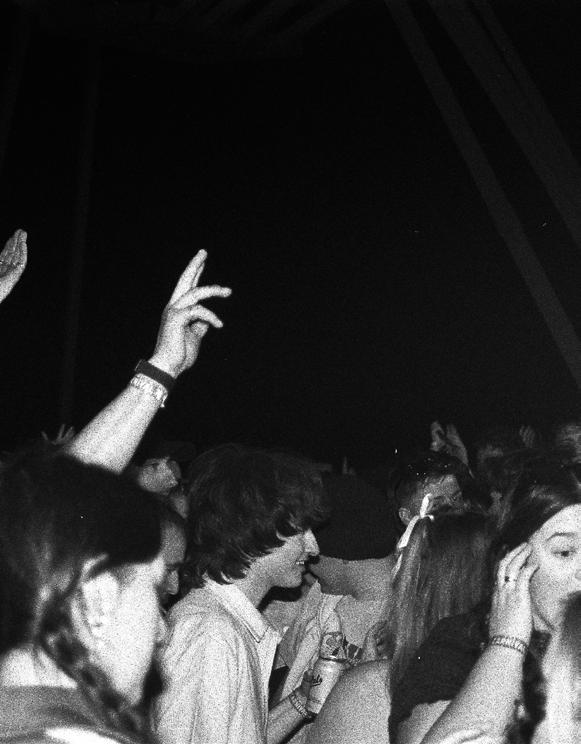
Gig guide and photography by Sophie
Spencer

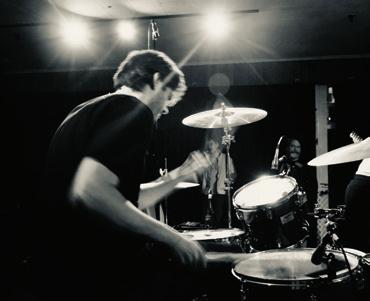
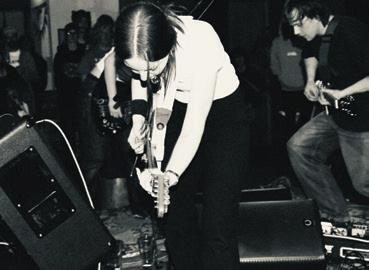
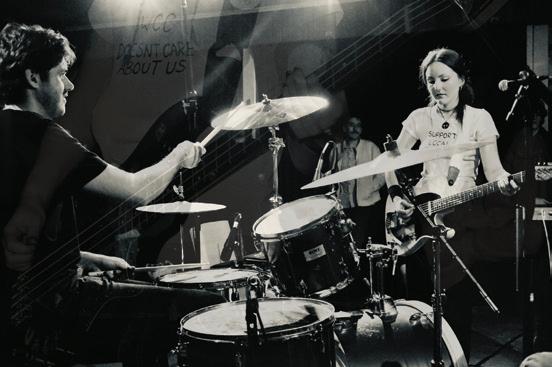
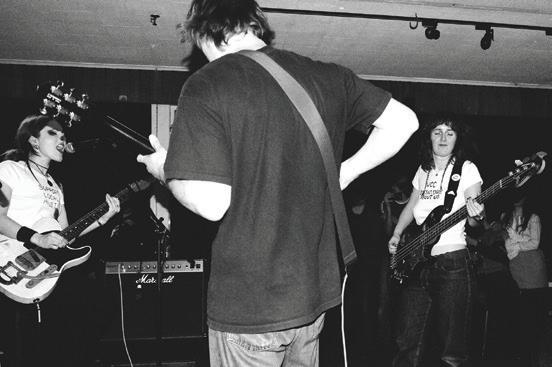
Cruelly, the Grungegaze/Noise-Rock quad from Te Whanganui-a-Tara, carry a juxtaposition of screeching feedback to harmonic mellows with all the anger inbetween on their sleeves.
Inspired by the Alternative Rock sphere in Aotearoa, Cruelly's tight-knit community is built on mutual respect and love for what the country's arts scene has to offer. With three years of shows under their belt, they have opened for bands such as Earth Tongue, Dartz, Office Dog, and Ringlets. Already having completed a nationwide tour, they will soon be touring Japan with their debut release. Cruelly are on an upward trajectory and they set their sights high in every venture. The band is made up of Haylee Hailwood (guitar, vocals), Sam Carpenter (guitar), Amber Rose (bass, vocals), and Milan Raxworthy (drums).





Documents revealed by the Official Information Act (OIA) show the Government scrapped Fees Free without consultation with universities or student unions, and without evidence on the impact of its final-year model.
Fees Free had four goals when it was announced in 2018: removing financial barriers to education, reducing learner debt, supporting life-long learning, and increasing tertiary participation. A 2024 Ministry of Education analysis found the policy only succeeded at reducing debt.
Finance Minister Nicola Willis used that analysis to justify discontinuing the scheme, saying it had not increased student numbers and had failed to bring more disadvantaged people into tertiary education.
But Willis and the Government were comparing apples with oranges.
In 2025, the Government changed the scheme from first-year Fees Free, as introduced by Labour in 2018, to a final-year Fees Free model. It then scrapped the policy entirely in this year’s Budget.
The first university students who would have been eligible for final-year Fees Free began studying in 2025, meaning they had not received any subsidy before the scheme was scrapped.
Tertiary Education Minister Penny Simmonds confirmed to Salient in a written statement that there was no evidence on the efficacy of final-year Fees Free.
“Final-year Fees Free was introduced on 1 January 2025, so there is not yet outcome data on its direct impacts,” Simmonds said.
“However, officials assessed the policy using evidence from the first-year Fees Free scheme, international research on fees-free policies, and analysis of participation, completion, student loan repayment patterns, and the scheme's long-term fiscal costs.”
Relevant parties impacted by the policy were also blindsided by the announcement, with no universities or student unions being consulted beforehand. OIA responses confirmed only the Ministry of Education and other government ministries were consulted.

Simmonds said this was “standard practice,” as potential budget decisions are not usually consulted on to maintain confidentiality.
VUWSA president Aidan Donoghue said the decision-making process was unsurprising but disappointing, and that VUWSA had heard nothing from the Government.
“I think this government just looked at the dollar amount and went yup, if we’re going to cut something it’s going to be students and low earners first,” Donoghue said.
“The fact that it’s not even phased out is so horrific for those first and second year students who thought they were going to get a year free and all of a sudden it’s just gone.”
The axing of Fees Free will save the Government $1 billion. In responses to written parliamentary questions, Simmonds stated just 8.4 percent of the savings would be put back into the tertiary sector.
Simmonds has also allowed tertiary providers to increase course fees by 6 percent. Between 2014 and 2024, course fee increases were limited to between 2 and 2.8 percent.
Given the impact of the Government’s decisions on student finances, Salient requested an interview with Simmonds and


Dan Moskovitz
What’s the most effective way to make change? Have a broad church representing multiple interests? Or have small, targeted groups trying to make incremental change in specific areas?
It’s a question now being posed by Te Herenga Waka academics. Law professor Nicole Moreham and biology professor Wayne Patrick have formed the University Academics Union (UAU), with a focus on academic protections and problems at universities.
Why the new union? Moreham attributes it to fear of losing academic voice, citing recent attacks on academic freedom in the United States and the financial vulnerability of most academic institutions.
“I don’t think we’re immune from that here in Aotearoa," said Moreham.
“We in the university know about this, but if you go and talk on a cricket sideline or in a pub, it’s unlikely that people are hearing about it.”
The idea is to get a voice by academics, for academics, in the circles which require it, like university governance boards. The UAU has already been active in this area, releasing a report detailing how academics at Te Herenga Waka are paid less than their colleagues at Aotearoa’s other universities at every career step.
One snag. There is already a union representing academics in NZ; the Tertiary Education Union (TEU), who represent not just university academics, but also the non-academic staff, and employees at polytechnics and training colleges. Their initial response to the formation of the UAU didn’t mince words. In an email to all members at Te Herenga Waka, seen by Salient, they wrote “small unions splinter membership cohesion, weaken bargaining strength and play into the employer’s hands.”
So, why couldn’t Moreham and Patrick’s priorities be carried out from within the TEU?
“The TEU is a broad church,” said Moreham. “It’s got to do a lot of things. It’s got to represent [people dealing with] the merger of the polytechnics, and negotiate separate collective agreements for all of the universities, polytechnics, and training colleges.”
“Academics have some quite unique interests given our position as society’s critic and conscience. The TEU are obviously interested in that, but it’s a small part of what they do, whereas for us it’s the entire operation.”
When the same argument was posed by Salient to TEU Te Pou Ahurei | National Secretary Amy Ross, her response was a quick “show me the evidence.”
“We had a specific conference on academic freedom last year,” said Ross. “We have academics in the TEU who specialize in this. We do submissions and meet regularly with politicians.
“We hold significant influence within society to protect and stand up for academic freedom, far more than a small group of people in a brand new union would.”
There’s a philosophical debate at play here: is bigger better? Moreham noted how there are separate unions for resident doctors, senior doctors, hospital workers, and nurses. Could a single-minded focus result in better outcomes?
Ross, unsurprisingly, disagreed.
“When there are multiple unions, one group can undermine the other,” she said. “If you want a particular amount of pay and one group settles, it immediately weakens everybody else who might want to push for something better. It doesn’t work the other way.
“I think we play on people’s egos a little bit, when we say yes, you’re very special and you need special representation. As if that can’t be delivered when you stand in solidarity with other people.
“Why would they [the UAU] achieve anything different to us, when they have such a small number of members that they represent?”
The UAU is (for now) solely Te Herenga Waka-based, meaning its numbers will always naturally be smaller than the TEU’s. It’s also unclear which union currently commands a plurality of academics at Te Herenga Waka, though as the UAU is newer, it appears likely to be the TEU.
Moreham refused to say exactly how many members they have, but ten are required to register as a union, and the number is now “considerably more than ten.”
“We’re in such a growth phase that if we give you the number now, it could be out of date quite quickly. A lot of people are waiting and seeing to see if we’re going to get our act together and actually get into bargaining.”
There’s little evidence favouring either the TEU’s mega-union approach or the UAU’s targeted union strategy. In fairness, it’s a hard point to prove—if a targeted union approach results in a 4% wage increase, you don’t have the counterfactual as to what would have been achieved with a mega-union. Still, what little research has been done on the subject doesn’t seem to have found one strategy being necessarily better than the other.
One potential advantage of the targeted strategy is how membership of the UAU is cheaper than the TEU, but unlike the TEU, it does not (yet) offer representation in employment disputes. While one could be a member of both, by the TEU constitution, only the TEU can negotiate on behalf of their members in bargaining.
Both unions were asked what relationship they currently have with each other. Neither appears to have one.
The debate over the future of unionism in the tertiary sector is underway.
Martha Schenk
The newly erected Student Support Hub on Level Two of the Kelburn Library has drawn criticism from students in the wake of loud construction noise during Trimester One’s assessment period.
The role of the improved Student Support Hub is to provide students and staff with an accessible, visible, and welcoming integrated service desk that can assist them with general enquiries, enrolments, course changes, transcripts, and letters.
New upgrades to the space include cordoned desks for private conversations, versatile workstations for student-facing teams, better signage, and more space for workshop hosting and engagement activities.
However, the construction, which began on 25 May and was completed by 30 June, coincided with Trimester One’s study and assessment period which ran from 1 June through to 20 June. As a result, students attempting to study or complete assessments at Kelburn Library encountered, and were at times disrupted, by loud construction noise.
In response to a callout on Salient’s Instagram asking for thoughts on the library construction, one student wrote “who the hell scheduled it during exams? dick move.” Another added that “it was a stupid idea to do it during the period the library gets the most use.”
Others agreed, asking “why would they schedule it during the most stressful part of the trimester?” and “Could they not pick a better time than literally finals?”
Some students expressed confusion and frustration about the communication from the University, one writing “I think it would be nice if they’d actually show or tell us what was being built,” another adding “too fucking loud, and for what?”
One student said that “it was very disruptive and made it difficult to study at [Kelburn Campus],” another pointing out that the noise could be heard in the Accessibility Suite of the Library.
Some students agreed that the timing of the construction “could be better” but described it as “needed but annoying,” while others expressed gratitude: “Glad they’re fixing shit though.”
In response to a poll conducted on the Salient Instagram, 72 percent of responders noticed the construction, and 45 percent of those claimed it disturbed their study.
University Deputy Vice-Chancellor Logan Bannister informed Salient that the University “recognised that some construction noise would be unavoidable and took steps to minimise disruption wherever possible,” adding that “Construction noise was monitored throughout the works, with adjustments made where feasible.”
“Higher-noise activities were carefully planned to be managed in the early morning or between exams. The project team monitored noise levels to the adjoining Maclaurin Lecture theatres, but no concerns of disruption were raised.”
She wrote that “The project was intentionally timed to ensure the new Student Support Hub was operational for the start of Trimester 2.” She noted how “the timing also coincided with a period of lower foot traffic in the area and reduced demand on Student Service Centre services.”
“Students and staff were proactively informed about the project and potential impacts through a range of communication channels, including Whītiki, University and Library social media, and digital screens within the Library.”
The library posted to their Facebook page on 25 May that students could “expect moderate noise and vibration on Levels 1-2 from grinding and drilling” and recommended “heading upstairs to a quieter floor.” This post was updated on 28 May and advised students that intermittent noise was to be expected on the 28 and 29 of May for aluminium cutting. The post received one like.
The student communication Whītiki is unavailable on the Te Herenga Waka website and did not extend to staff.
While the new Student Support Hub is a much-needed upgrade and a valuable asset to the University, the student reaction toward the timing of its construction indicates gaps in communication channels that could be bridged to avoid future learning disruptions.



Phoebe Robertson
At the tail end of Trimester One, something unusual appeared in the Hub.
For the first time in recent memory, a piano was placed in one of Te Herenga Waka’s busiest communal spaces. Out of thin air? Out of Te Kōkī—New Zealand School of Music? Salient investigates.
In a statement attributed to Vice-Chancellor Bryony James, the University said the piano was installed “as a way to bring people together through music and create a stronger sense of community across the University.”
James said the idea came after she and former Vice-Chancellor Nic Smith saw students playing a piano in a communal space at another university, and thought something similar could work at Te Herenga Waka.
“We approached Te Kōkī—New Zealand School of Music Head of School, Kim Cunio, about the idea and worked together with NZSM to make it happen,” James said.
The intention, according to the University, is for the piano to be available to all students—not just those studying music. Since being installed, it has reportedly been well-used, with students regularly stopping to play throughout the day.
The University says the piano is intended to remain as a long-term installation in the Hub. It is currently out of order due to two broken strings, which the University says will soon be repaired.
Cunio said the piano could help make music more accessible for students.
“I feel strongly about this,” Cunio said. “Playing a piano can be the way that a person who never had lessons as a child can find a pathway to music, or for a person who played piano but no longer has access to one to keep their music up while at uni.”
Student feedback, however, has been mixed.
In a Salient Instagram poll, 266 respondents (82%) said they had not used the piano, while 51 respondents (18%) said they had. When asked whether they liked the piano, 230 respondents (75%) said yes, while 78 respondents (25%) said no.
The response was unusually strong. Salient received 70 pieces of written feedback from students to date—the most feedback we have received on similar polls. While many students praised the piano for adding charm and atmosphere to the Hub, others said it was disruptive, particularly for those studying in the library’s Blue Zones above the Hub.
“Love the piano, [it] romanticises my walks between lectures,” one student said.
Another wrote: “It makes me feel like an episode of Glee could happen at any moment.”
“Genuinely the easiest way to track my piano-playing friends when I lose them,” one respondent said.
Others argued that the Hub was already a noisy space, and that the piano suited the environment.
“The Hub is already loud as hell and has marching bands sometimes. The piano is GREAT,” one student said.
But for students trying to study nearby, the music has not always been welcome.
“[It] gets annoying when trying to study in the Blue Zone on [level three] in the library,” one student said.
Another wrote: “I’m gonna be so for real, I don’t mind it, but during the exam period it was like my last straw.”
One student said the sound carried into supposedly quiet study areas: “It actually does my head in. I’ll be in the SILENT BLUE ROOM above the Hub being serenaded. SOS.”
Another described a more unsettling late-night experience: “It is so so cute until you’re leaving the library at 11.45pm and you hear it playing, proper horror movie shit.”
The piano appears to have achieved exactly what a public instrument in a busy university space was likely to do: create atmosphere, invite spontaneous performance, and divide opinion.
For some students, it makes the Hub feel warmer, more communal, and more alive. For others—especially those studying above it—the sound spills into places where quiet is expected.
If the University wants the piano to remain a long-term fixture, it may need to consider whether the Hub is the right home for it—or whether a nearby space could preserve the music without disrupting students trying to study.

Holly Rowsell
On 5 July, National MP and Minister of Health, Energy, and State Owned Enterprises Simeon Brown posted an image of a new National billboard to his Facebook.
The advertisement read “TRIPLE + YOUR + TAXES,” with the line “GO WITH LABOUR, GET THE GREENS, AND TE PĀTI MĀORI” underneath.
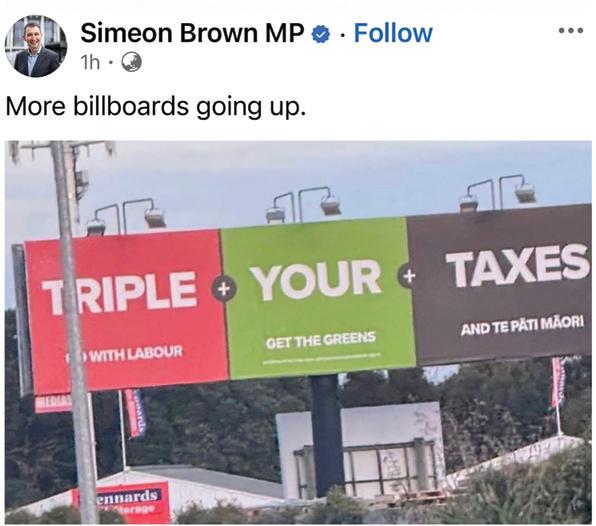
The apparent message was that a vote for a Labour-led coalition government in this year's General Election would mean significant tax increases.
All paid advertising—such as election pamphlets and billboards— is subject to the Advertising Standards Code (ASC), regulated by the Advertising Standards Authority (ASA).
The ASA describe themselves on their website as “the organisation that sets the standards for responsible advertising in New Zealand.” They field complaints regarding any advertisement that is targeting New Zealanders, which are considered in relation to the ASC.
The ASA “runs a voluntary process,” whose work is “complementary to legislation,” so should an advertisement be found to breach code, the organisation can only ask the advertiser to remove the content or delegate to a Government agency.
Rule 2 (e) of the ASC concerns Advocacy Advertising and states that “Opinion in support of the advertiser’s position must be clearly distinguishable from factual information. Factual information must be able to be substantiated.”
Labour has not announced a policy that would triple any form of tax in Aotearoa. Its announced tax policy is a capital gains tax, which Labour describes as “a 28 percent tax on any profit made after 1 July 2027 when a commercial or residential property (excluding the family home) is sold.”
The closest existing system in Aotearoa is the bright-line test, which applies tax to properties sold within 2 years of purchasing in an effort to discourage property flipping. The tax rate scales according to income, falling between 10.5 and 39 percent.
By comparison, Labour’s proposed capital gains tax would be set at 28 percent. While the systems are not directly equivalent, those figures do not support a claim that the tax would be tripled.
The ASA has already received complaints against National Party billboards during this election cycle. On 8 June, it announced the outcome of “No Further Action” regarding complaint 26/117, which concerned a National Party billboard. The complaint argued “Parties have a right to advertise their own policies and what they stand for. This is instead literally bad mouthing their opponent…”
The complaint cited Rule 1 (c) (Decency and Offensiveness) and 2 (e) (Advocacy Advertising) of the ASC. While it was not specified which billboard the complaint was referring to, it was lodged after the launch of National’s “LONG TERM PAIN OR LONG TERM PLAN” billboards. The ASC Chair decided that “… the issue you raised does not reach the threshold to breach the relevant Advertising Standards Authority Codes…”
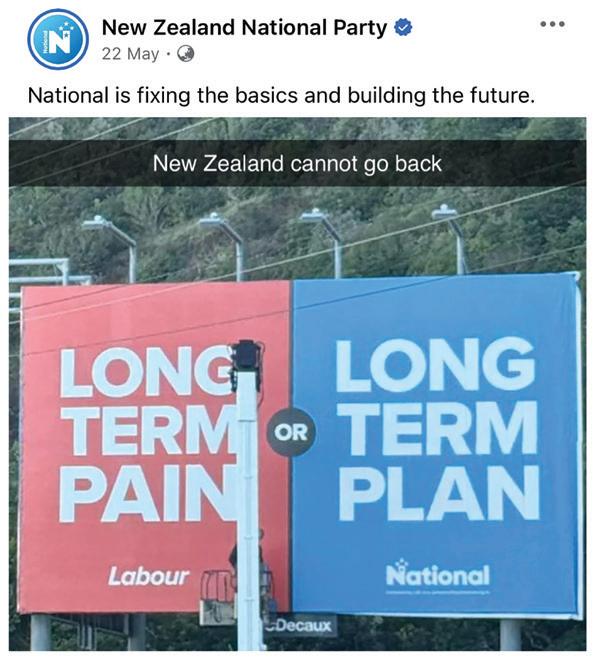
Political content creators The Bike Shed, Jordan Rivers, and Paul the Other One collaborated on a 6 July Facebook post calling attention to National’s allegedly misleading advertising practices. They encouraged readers to hold their government accountable: “If you spot a claim that looks misleading,” the post read, “report it at the ASA.”
The changing climate, fallout from foreign wars, and the ongoing drug crisis are just some of the reasons security has been at the forefront of any discussion between Pacific Island nations and their allies. The question of how to remain sovereign in a world where great powers seem content to throw their weight (and missiles) around to get their way is also permeating the minds of Pacific politics. Matthew Wale, who has done the rounds in the region after taking the place of Jerimiah Manele as Prime Minister of the Solomon Islands, has proposed a possible solution.
Wale took Manele’s place after accusations of corruption and a vote of no confidence. He inherited a country divided on their relationship with the rest of the world, but mainly China. Manele, while always attempting to present a balanced image, had overseen a strengthening in relationships with China in areas like defence and infrastructure, much to the chagrin of Australia and the United States, who remain in lock-step trying to contain Chinese influence in the region. Wale’s ascension to the role of Prime Minister seems to be a welcome development for the Australians. He and Australian Prime Minister Anthony Albanese met in June, where the two nations put old beef aside to begin rebuilding the relationship between the Solomon Islands and Australia. Talks are underway for a new bilateral agreement between the two countries, and Australia announced new monetary aid to assist with the ongoing fuel supply issues caused by the Israeli-American war on Iran. Wale has pledged to review the older security pact with China, which was undoubtedly music to Albanese’s ears, but Wale also brought forth a more ambitious proposal that would need more than just Australia’s support.
A Pacific-wide security agreement, with Pacific leaders at the forefront of security arrangements in the region, was proposed to Albanese by Wale during this meeting. While the idea is still just an idea for the time being, it reflects Wale’s apparent caution around both China and the other competing powers. While he’s reopened discussion with Australia, he seems to be doing his best to not antagonise China with his rhetoric, stressing his intention to remain friendly with all present in the region. A Pacific-led security arrangement would align with this. Putting more control in the hands of the nations that actually inhabit the region would probably be attractive to a lot of the smaller Pacific island nations who are constantly balancing the interests of competing powers, but countries in Australia's position, for example, may be hesitant. I mean, they are the ones helping keep this competition alive. Wale brought similar ideas to his visits to Papua New Guinea and New Zealand, and while no one has come out in full-support of the Pacific-wide security agreement, none have seemed strongly opposed either.
For now, Australia’s strategy remains focused on bilateral deals with other Pacific nations. A very significant military alliance was signed between them and Fiji where, among other things, it was agreed that if either nation was attacked then the other would be obligated to come to their aid. China has come out against this agreement, and not long after China let the region know of a planned missile test to be conducted in the Pacific ocean. I doubt this missile test was done in response to the deal, primarily due to the short time between these events, but it does give Australia and many other western-aligned nations in the region plenty of ammo to continue this back-and-forth competition. It remains to be seen whether that was China’s intention.
In terms of a Pacific-wide agreement, it's hard not to see why the idea is appealing. It would be wonderful if we didn’t have any need for anyone but us to keep ourselves safe, but the landscape of Pacific politics presents many obstacles to achieving this. Any Pacific-wide agreement that includes Australia, for example, would find it very hard to separate themselves from the US considering the closeness of those two states, and indeed Australia is not the only place with deep ties to US interests in the region (the many US-Pacific territories, for example). The French empire still rules large swathes of the Pacific, meaning their inclusion would tie the agreement to the political interests of the French as well as the Pacific peoples who live in these occupied areas. If we are to assume that this agreement is being proposed for the benefit of Pacific peoples in the Pacific, the deeprooted connections to these foreign powers would have to be addressed.
In my view, part of the reason this competition for dominance in the Pacific has survived is that Pacific nations have had little choice but to try and leverage it for their own gain. A move away from relying on foreign powers could spell trouble for countries who have become deeply connected to trade, aid, and allyship with these great powers, and for many Pacific people they really have no choice in who they align with, anyway. Those in Kanaky, or the Papuans of West Papua, for example, would be hard pressed to maintain a Pacific-led security agenda under the foreign regimes that still dominate their countries. The security blanket of the status quo, while certainly far from perfect, is more certain than risking it all for an ambitious new arrangement where we would have to rely far more on ourselves.
This partially explains why Wale’s idea doesn’t exist yet, hence why Australia has put their effort towards these agreements of mutual defence as opposed to anything focused on halting the endless Pacific-contest between powers. Wale’s proposal has plenty of merit, but if we are to pursue this idea, I believe there is a lot of work to do.




assignment3 1994 donotdelete!!!



There are a handful of moments from my first few years at university that I consider quintessential student experiences. Taking the equivalent of five coffees to the library in a drink bottle to write an essay in one sitting. Sneaking vodka into bars in bottles of hand sanitiser and micellar water. The RAs shutting down every hallsconfession page. My theatre lecturer making us promise that no matter how late we stayed in Studio 77 painting our set, we would not sleep there overnight. Going to the Botanic Gardens to drink nearly every weekend in first year, looking down at the harbour through soju-blurry eyes. Wellington didn’t quite feel like home yet, but I knew it would be.
But what about being a student in Wellington thirty years ago? Before the internet, before looking at the job market and deciding that an Honours year was preferable, before the Student Union building and Te Aro campus had even been built. Was life simpler? Was life better? I don’t have the answers. Luckily, I am a dedicated research student and know someone who does: my mum.
My mother, Pam, was a student from 1991–1995. Her first year was at Massey University in Palmerston North, where she met my dad, before she moved to Wellington to complete her Bachelor of Building Science and Bachelor of Architecture degrees. It was a lot busier than the Manawatū, and still is. Pam remembers being amazed that some cafés were still open in the evening, a sentiment I shared thirty years later.
In 1992, Pam lived in Everton Hall and is still friends with Nicola, one of her flatmates from that year. I was in Everton in my second year too, and we could see Pam’s




old flat from my lounge window when she helped me move in. She would take over the dining table for her big architecture drawings and barely went to any of the social events the hall offered because she was so busy with coursework. I rearranged the sofas to create more floor space for theatre rehearsals and regularly broke the rules about guests staying overnight. My best friend visiting from Auckland slept on my couch for over a week when his Grindr daddy cancelled on him. If the RAs didn’t notice, that’s on them. I ran my heater non-stop because we paid a flat $15 a week for power. There was an electricity shortage in ‘92 due to the hydro lakes running low, and Pam got chilblains that winter. No chilblains for me, but I did get strep throat and tonsillitis in my Everton winter from an unfortunate dalliance in the Ivy disabled bathroom, which is basically the same thing.
In her third year, Pam moved to the glamorous Durham Street in the equally glamorous Aro Valley. She describes this as a ‘typical student flat,’ with cockroaches coming
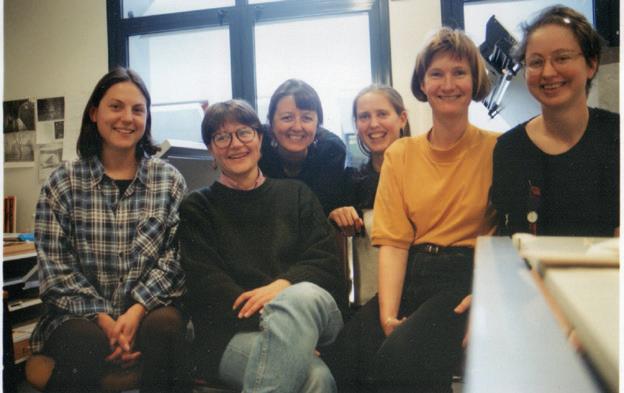

out of the sink drain and no vacuum cleaner because her other flatmates had lent it to a friend and never bothered to get it back. Those flatmates were older musicians who were never home, and she left halfway through the year because she didn’t want to feel like she was flatting by herself. Despite the cockroaches and absent flatmates, she could hear ruru every night and watch lizards in the garden. There was a sunroom where she put her first drawing board. There wasn’t enough space in the old architecture school—Studio 77, before the theatre kids moved in—for everyone to have their own drawing board, so a lot of students worked from home.
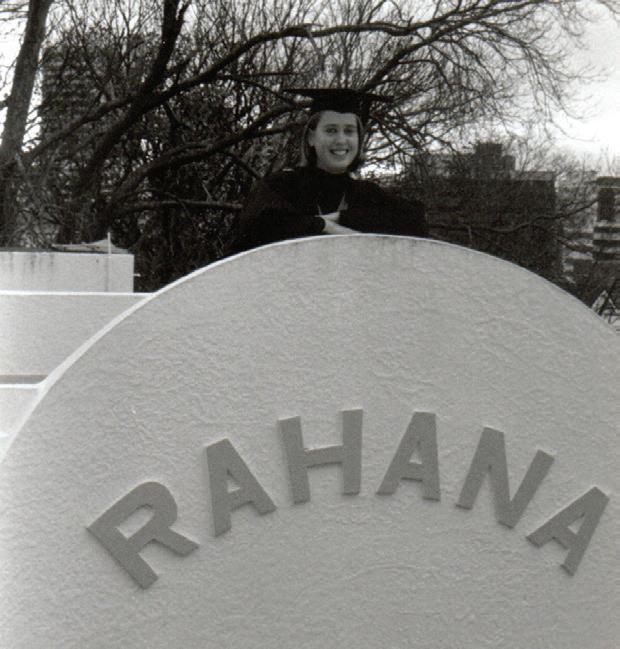
Her next flat was further up Aro Valley, and even more of a dive. When Pam moved in, she realised she’d been to parties there before, as it was ‘fairly notorious.’ The hot water in the bath didn’t work and there was no shower, so you had to crouch under a trickle of cold water even in winter. There were mice in the kitchen and no light in the toilet. My first official flat in Hataitai—which saw me through the next half of my BA—wasn’t quite as bad as these, thankfully. We just had one bedroom that was too small to be legally counted as one, walls thin enough to hear our neighbours loudly playing Pink Floyd every time they got high, and a fire escape with half a railing we lovingly called our balcony.
My new-since-January flat in Berhampore was built in 1900 and very obviously redecorated in the ‘70s. The orange-and-brown floral wallpaper in the lounge is a bit of a giveaway. The electrician who reconnected us when we moved in burst out laughing when I opened the door and told me he used to go to crazy parties here last century. Pam moved into an apartment at the top of Abel Smith Street for her last two years of uni. The building is still there and a very boring shade of grey now, but it was bright pink in my mum’s time there. Her two flatmates, who shared the last Aro Valley flat, moved in over summer and chose their bedrooms first.
Pam was stuck with one that had a window opening onto the roof deck anybody in the building had access to, and there would be a bunch of people outside her window when there were parties. She got the landlord special once: when there was mould on the ceilings, so the landlord came in to spray them. He got the spray all over a beautiful new dress Pam had bought with prize money from an architecture competition.
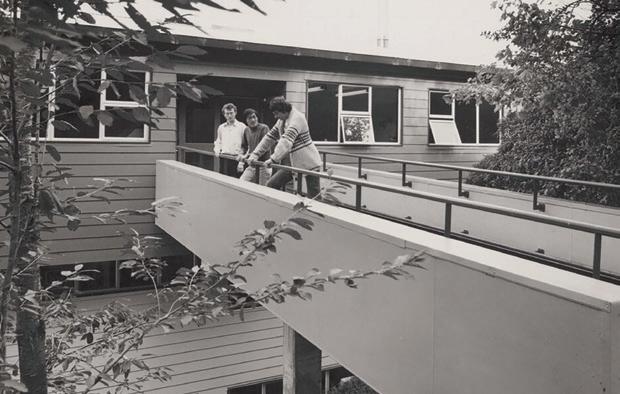
Architecture was ‘all-consuming’ and insular to study, with full workloads and long hours. A more typically rowdy student experience doesn’t really apply to my mum, which is funny because the hardest partiers I’ve known have been architecture students. Pam carried her big drawings and models up and down from Everton or Aro Valley to Fairlie Terrace, worried the wind would blow her drawing folder away, but didn’t study much at Studio 77 because there was such limited space. The Te Aro campus opened at the start of her fourth year, and it was ‘amazing to be the first cohort studying there.’ Everything was brand new, from the dedicated architecture library and printing room to the common room and a studio finally big enough for everyone to have their own drawing board. Crits—the design critiques at the end of a course—were terrifying. The Student Union building was also built during my mum’s time at Vic, and she remembers all the architecture students thought the glass atrium was really cool. I mostly think it’s far too hot in summer. It was designed by famous Wellingtonian architect Ian Athfield, whose son was in Pam’s class.
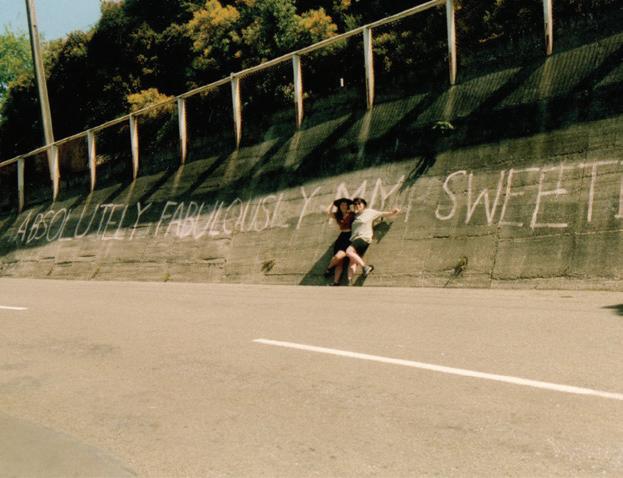
There were about fifty people in Pam’s year, and gossip spread fast in such a small course. A popular lecturer and one of his tutors were seen kissing once in the Botanic Gardens, and the news went around arch school in about ten minutes. Only ten or fifteen people in her course were women. She describes this group of women as wonderfully close and supportive, and they were called ‘the witches’ by the men in her classes. They would take over the common room to have potluck lunches, which pissed off the guys, and put all their drawing boards next to each other. The gender divide was noticeable and the programme was ‘very much a boys’ club.’ The figure of the architect was always thought of as one white man, or ‘stale pale male,’ as Pam has said my entire life.


The women in her course were doing a lot of collaborative work, which was really groundbreaking for architecture school. Collaboration is more like real life than individual coursework; unless you’re a solo practitioner, architecture is about teamwork and everyone playing a role. Wanting to take sole credit for a project instead of acknowledging everyone’s unique contribution felt too hierarchical, and like a particularly male phenomenon. In her last year, Pam and her friend Rebecca did their final design project together, which was also a nationwide competition where they placed second. This was only the second time a collaboration had placed, and the first time more than one woman had placed.
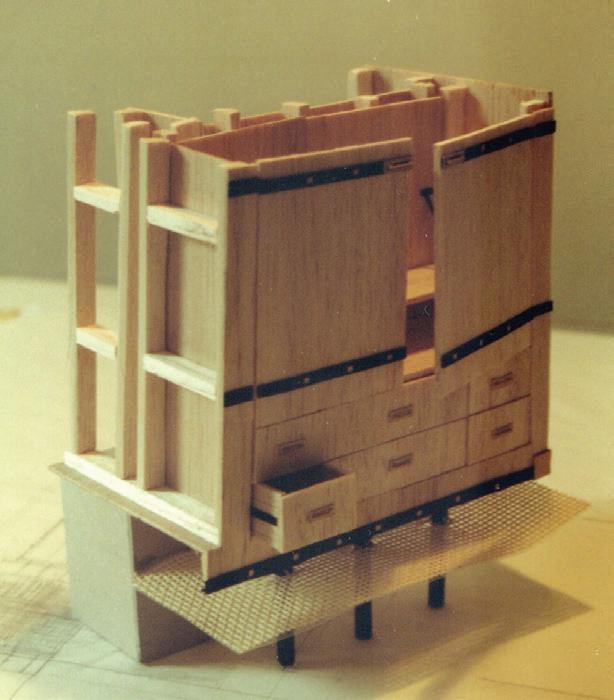
My mum has always been interested in feminism and gender studies, and I feel extremely grateful for the knowledge and perspective she raised me with. Her final research project, similar to an Honours-level thesis, was an exploration of the underrepresentation and ‘slippages’ of women in famous architectural pairs, and what a truly feminist architecture that disrupted patriarchal norms could look like.
Once a week, the ‘witches’ went to a café on Cuba Street and shared a few $5 seafood pizzas for lunch in between their long studio hours. Some of their classmates lived in huge warehouses they’d fitted out themselves and would host class dinner parties at a huge dining table. Pam’s drink of choice was cask wine because a box would last her ages. My drink of choice in first year was a potion consisting of cheap moscato, mystery-flavoured Nitro, and plain soju. I swear I’m a classy G&T or white wine guy now. My mum says she didn’t have much spare money, which is all too relatable. Her weekly allowance just covered her rent and essentials. Being in a long-distance relationship (which I have luckily managed to avoid the last four years) also affected what little spare time and money she had. My dad was in Palmerston North or Auckland during these years, so every second weekend Pam would go back to Palmy to see him and her family, or he would come to Wellington to see her.
A highlight of the social calendar was the elaborately themed Architecture balls. When the Te Aro campus opened, the theme was ‘unveiling’ and the ball was held in the atrium. Pam borrowed her flatmate’s black velvet curtains and draped them around herself. The next one was space-themed, so she bought silver quilted material and made a space-age minidress. As a drag performer, there is nothing I hold more sacred than a good Pete’s Emporium trip. Pam went from wearing all black in high school to making a lot of her own short dresses to wear with leggings, with screenprinted designs in lime green and orange. She remembers a pair of green suede shoes she wore all the time, as well as a pair of brown leather boots. She liked the boots because they were a little different: handmade, from a shop on Cuba Street, and not Docs, which everyone else wore. I have my own iconic pairs of shoes I cherish, from star-patterned kneehigh sneakers to a pair of tall leather boots I got for $5 from an op-shop in Karori.
She listened mostly to alternative music, including The Cure and Sonic Youth, and saw the latter live at St James Theatre once. She inherited my dad’s record player and collection when he got a flash new CD player. Everyone used to watch Shortland Street when it first aired. My studies, meanwhile, have been soundtracked by new albums from Ethel Cain, Rina Sawayama, Lady Gaga, and Slayyyter. I’ve held movie nights for classics such as Sharknado, Jesus Christ Vampire Hunter, and Morbius (as well as genuinely critically acclaimed movies, I promise). There was a concrete wall in Aro Valley with ‘ABSOLUTELY FABULOUS MY DARLING’ graffitied onto it because Absolutely Fabulous was hugely popular. Pam remembers her mum picking her up from the train station in Palmy once and saying there’s this new TV show she had to watch about a terrible mother.
Was studying in the ‘90s absolutely fabulous? Probably not. Life was still expensive and students were still stressed, although not to the extent we are now about the various crises the world is in. Pam spent a summer as a research assistant for Victoria’s first green architecture course, and said they were really thinking about climate change and the environment even then. I’m perhaps not quite as disciplined of a student as my mother was, and I’m not sure if she ever stayed at a party late enough to hear the birds singing like I have. I find it motivating that getting a degree—and surviving this city—runs in the family. If my mum did this shit thirty years ago, so can I.



The future has started to feel strangely empty.
Not empty in the literal sense. If anything, we are surrounded by “future” constantly. AI-generated images flood social media feeds, every second Netflix show is dystopian, and climate apocalypse has become both a political reality and an aesthetic. Even trends feel posthumous now. Y2K revival. Indie sleaze revival. We recycle the past while acting like the future has already been cancelled.
I started thinking about this after Future Perfect by Ellen Van Neerven was discussed in one of my education lectures. Around the same time, one of my friends was interning on Qua Nullius: Toe Fai! And Talaucaka, a Pasifika sci-fi theatre production. They ended up weirdly connected in my head because both made me think about futurity: not just the future itself, but the ability to imagine yourself existing within it.
A lot of queer theory talks about this. José Esteban Muñoz describes queerness as future-oriented because queer people are often forced to imagine worlds beyond the limitations of the present. But queer futurity is complicated by the fact that queer people have also historically been denied stable visions of adulthood and permanence. There is a reason so many queer people talk about never imagining themselves growing old. For a long time, queer life was culturally framed as temporary, tragic, or impossible. Even now, queer narratives are still often built around suffering, rejection, or crisis. The future becomes something you survive day by day rather than something you confidently picture yourself inhabiting.
What struck me most about Future Perfect, though, was that it refuses that idea entirely. The poem’s

vision of the future is incredibly intimate and quietly optimistic. It does not imagine futurity through technological progress or some sleek sci-fi utopia. Instead, it imagines a future through domesticity, friendship, routine, and love. “My future love,” it begins. Friends come over and pick olives from the tree, the speaker imagines being remembered, and the future feels unstable at times, “opening, and then it’s shutting,” but it still exists. Queer futurity in the poem is not presented as impossible. It is cautious, vulnerable, and deeply human.
I think that is part of why it stayed with me. In a cultural moment obsessed with apocalypse, there is something surprisingly radical about imagining yourself growing older with other people. About imagining community at all.
The future in the poem is not grand or spectacular. It is protective circles made from string, a house that “knows” you, a heart as a T-shirt “ripping under the arms.” It feels fragile and makeshift, but alive. The poem treats futurity less as certainty and more as an act of care, something built and maintained collectively rather than promised automatically.
Qua Nullius approaches futurity differently, through Indigenous and Pasifika speculative storytelling. Indigenous futurism pushes back against colonial narratives that position indigenous people as belonging only to the past. Colonialism constantly frames Indigenous cultures as disappearing or premodern, so imagining indigenous futures becomes political in itself. A title like Qua Nullius immediately plays on terra nullius, the colonial idea that land was “empty” before colonisation. Reworking that language through sci-fi feels intentional. It takes a genre that has holistically centered Western
empires and technological domination and instead imagines futures grounded in kinship, ancestry, survival, and sovereignty.
What interests me is that both queer futurity and Indigenous futurism are fundamentally concerned with continuation. They ask what it means to imagine yourself surviving, loving, and existing in a world that has historically expected your disappearance.
And honestly, I think that is part of why mainstream futurism feels so bleak right now. Most contemporary visions of the future feel emotionally vacant. AI-generated “future” aesthetics look imaginative without actually imagining anything. They recycle the same cyberpunk skylines, chrome bodies, neon cities, and dystopian wastelands over and over again. It is futurism stripped of politics, memory, or humanity. Just endless content feeding back into itself.
At the same time, the apocalypse feels easier for people to imagine than collective survival. Mark Fisher famously wrote that it is easier to imagine the end of the world than the end of capitalism, and honestly that feels visible everywhere now. We can imagine burning cities, environmental collapse, mass extinction, AI takeover, nuclear fallout. Entire genres are built around it. But imaging futures organised around care, interdependence, social justice, indigenous sovereignty, or collective

wellbeing somehow feels unrealistic to the general population. Hope sounds naive while dystopia sounds intellectually serious.
That has to be psychologically damaging over time. When every imaginable future is framed through collapse, optimisation, or survival, it becomes harder to picture ordinary happiness. Harder to imagine yourself aging, building a life, existing softly and continuously in the world. Capitalism demands constant productivity while simultaneously convincing young people there may not even be a future waiting for them. No wonder so much contemporary culture feels suspended between nihilism and nostalgia.
This is why these smaller, more personal futurisms are so important. They are not trying to predict what the world will look like in two hundred years; they are trying to reclaim futurity from hopelessness. They insist that the future is not just technology or catastrophe, but also friendship, memory, intimacy, routine, and survival.
And maybe that is what makes works like Future Perfect and Qua Nullius feel genuinely futuristic. Not because they offer polished visions of tomorrow, but because they still believe in the possibility of people being there to reach it together. Despite everything, we are still allowed to imagine ourselves alive, loved, and old.

Love, death, and the very essence and origin of hard rock.
The disbanding of legendary band Cream in 1968 changed music history. The supergroup featured Eric Clapton, Jack Bruce, and Ginger Baker, who all went on to have solo careers of their own—to varying degrees of success—while others were left in the fallout. One such example was their producer and frequent collaborator Felix Pappalardi—a man who would go on to lead a career which was, more than anything, chaotic.
Pappalardi continued to work with a few bands across the fast-developing Rock ‘n’ Roll scene of the late sixties, including a Long Island-based R&B crew named The Vagrants, featuring a guitarist named Leslie West. Eventually, West sought to make his own group, and collaborated with Pappalardi once again. Not long after, Mountain was formed.
With this formation, the pair ditched the smooth R&B for raw, rogue, and restless Rock ‘n’ Roll. They began playing very well-received live shows, and by their third gig, they were performing at Woodstock ‘69 alongside names like Jimi Hendrix, The Who, and Sly & the Family Stone.
Now fully immersed in the rockstar lifestyle, Mountain thundered into 1970, which would turn out to be the biggest year (musically, at least hint, hint!) in their careers. Internal quarrels drove drummer Steve Knight to leave the band just before the turn of the decade, which saw him replaced by Canadian drummer Corky Laing who arrived in time to play drums in their landmark 1970 album Climbing!

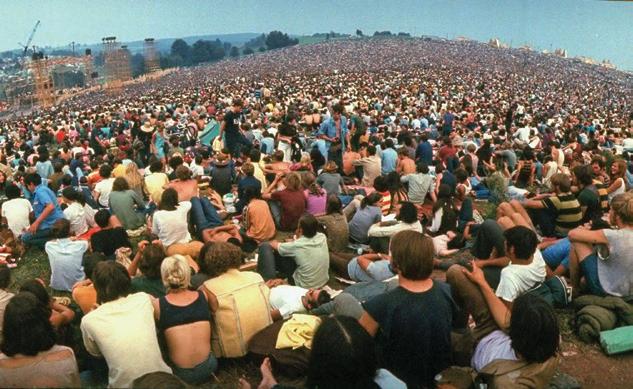
The peak of the band’s success came with the album’s lead single, “Mississippi Queen,” an exhilarating two and a half minutes of rousing vocals, slick cowbell, and one of the most iconic guitar solos in the history of rock. At its best, the track sat #21 on the Hot 100 and is immortalised as one of the most legendary rock songs in history. You may know it—as I do—from one of the best scenes in Regular Show.
Though the rest of the tracks on the album never really matched the commercial success or reputation of “Mississippi Queen,” there’s still plenty of quality to be found in the project. With its picturesque cover (designed by Pappalardi’s wife Gail), it boasts a healthy blend of audacious energy and sore solemnity, with the presence of anthems both zealous and withdrawn. West and Pappalardi both flex their more-than-respectable vocal abilities, but still leave room for the sensational and forceful instrumental work Mountain built their reputation (and lifestyle) on.

But soon enough, this lifestyle would catch up to them. In the early 70s, Pappalardi was forced to retire from performing live due to severe and sustained ear damage, resulting in partial hearing loss. West reported similar hearing issues. The cause of this? The signature highvolume (and lack of ear protection) which Mountain built their shows on.
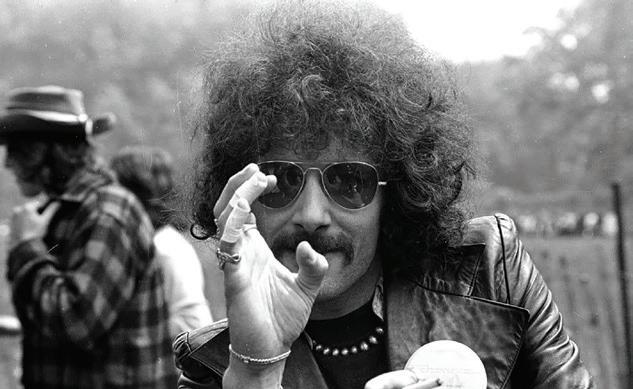
The problems continued into their personal lives too, and Pappalardi in particular had a healthy share of issues. Following his hearing loss, his drug abuse worsened—all the while his open relationship with his wife Gail created a rift in their marriage, resulting in an abundance of fights between the two. These disputes culminated with an incident in which Gail, enraged by Felix bringing home yet another mistress, shot the musician in the neck with a pistol that he had gifted to her a few months prior: a derringer pistol—the same type used to kill Abraham Lincoln.
Mountain remain a towering influence over Rock ‘n’ Roll to this day. Their work, particularly Leslie West’s on guitar, has been cited as a key influence on bands like Van Halen, Red Hot Chilli Peppers, and even the Beastie Boys. Though revered, their career—particularly Pappalardi’s—remains an infamous example of how some flames burn out too quickly for their own good.
“Mississippi Queen” - 10/10
Fun, loud, and undoubtedly Rock ‘n’ Roll. Worthy of every bit of praise it’s received in the 56 years since its release.
“Theme for an Imaginary Western” - 9/10
A nice take on the original version by Jack Bruce (which was also produced by Pappalardi). Great instrumental - a version of an acoustic ballad renewed with a rock twist, rounded off with a solid vocal performance by Felix Pappalardi and a mighty guitar solo by West. Personal fave.
“Never In My Life” - 6.5/10
A solid riff. A good song held back by how repetitive it gets.
“Silver Paper” - 6.5/10
Not bad. Not outstanding. Needs time to grow on you.
“For Yasgur’s Farm” - 8/10
Named for the venue of Woodstock ‘69. An enjoyable bluesy rock song with a good balance of highs and lows. Only hampering it is that by this point, the album is starting to drag a little bit, lacking variety.
“To My Friend” - 7/10
A change. A softer acoustic instrumental, and a great demonstration of Leslie West’s skill on a guitar. You’d either love it or not. I don’t think I do - but there’s still an undeniable quality there.
“The Laird” - ??/10
A psychedelic detour. Very different. I’m honestly not sure how to rate it. You’d have to listen for yourself.
“Sittin’ On a Rainbow” - 6/10
A jump right back into the upbeat. Short and fun enough. Nothing outstanding.
“Boys In the Band” - 5.5/10
By now, the lack of variation is starting to seriously drag out.
“For Yasgur’s Farm (Live)” - 7/10
A solid performance.
- 6.5/10
Though the flame of unparalleled energy awkwardly fizzles out over its 37 minute runtime, Climbing! undoubtedly laid the groundwork for rock as we know it today.

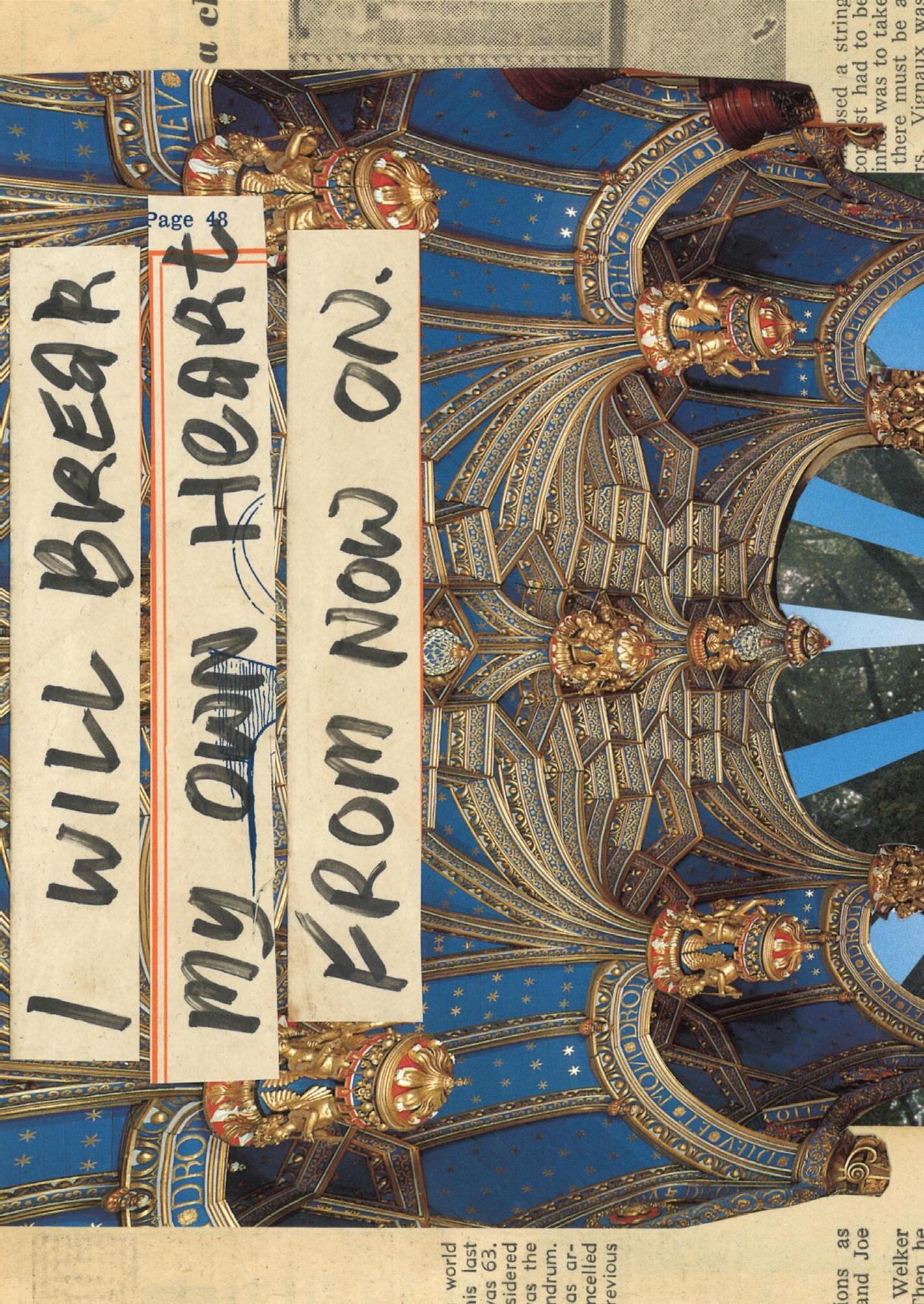
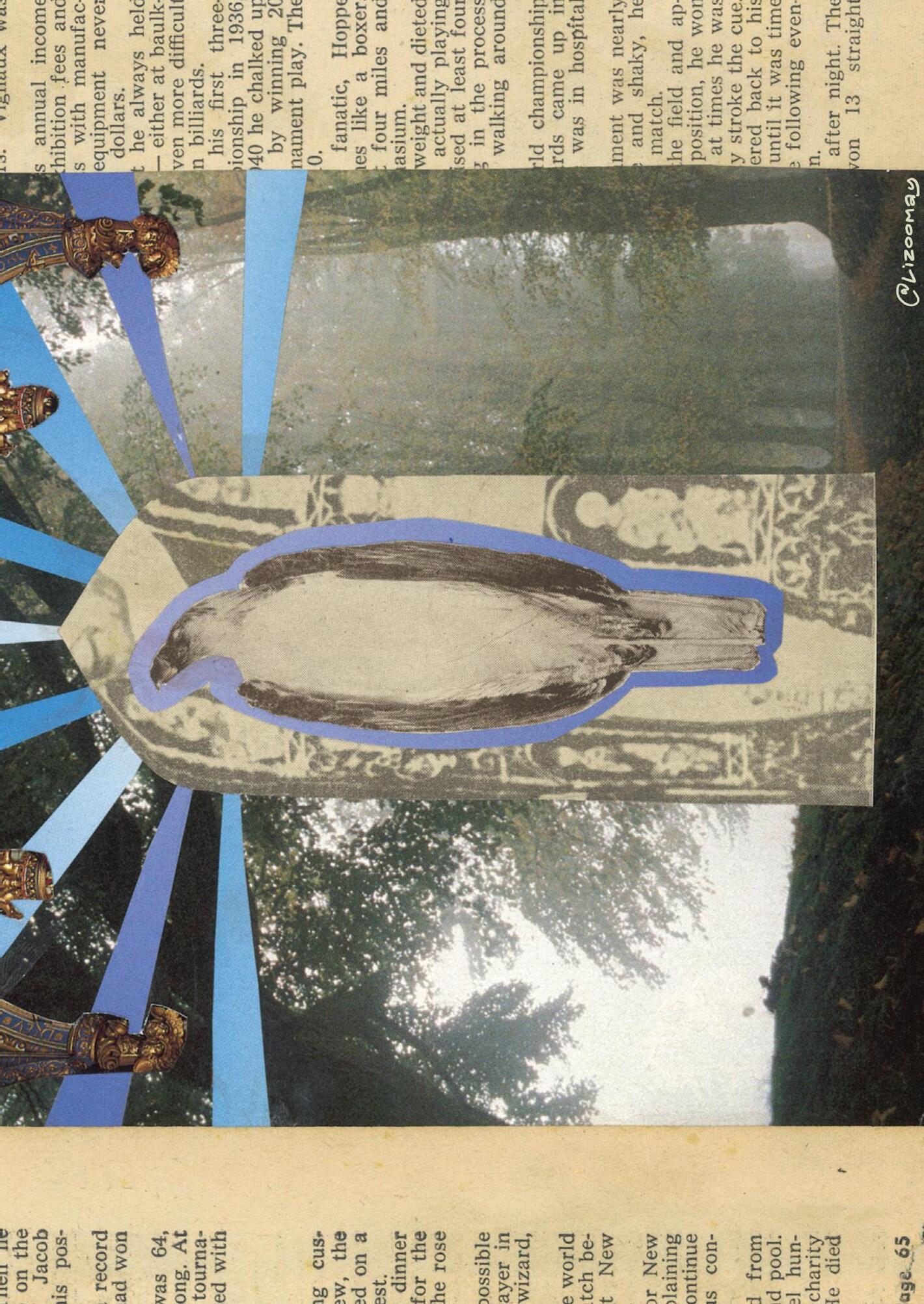

The wind takes up the most space between us now. If I lie on my back and stick out my tongue, all you have to give me is one hundred years and a few more days, and I’ll grow moss like all the other gravestones that brave the wind. I’m braving it.
The air looks thick, rosé and grabbable, floating just out of my swipes.
I glare at the overbearing clouds, repugnant of their dominion. Moody teenage weather, I cussed it out, but all it could hear was something like unhee unhay ehuh.
Meditation is preached for a reason, so I took a microdose as I waited for the next century.
Randomly, out of the stink, I found a gritty little bit of wisdom mistakenly dropped by my regular, who told me to leave school and bet on horses because horses can’t email you DEATH THREATS. I keep it on me like a butterfly blade, and get told I look like I could peel an orange in my pockets.
Taking the high ground, through a scientific guise, these people look like bog bodies already, I thought glumly, those poor gaunt and waxy ones, leading each other like camels grabbed and got and stomped and mashed into the mud by the evil hooves they think actually exist.
What these blokes don’t know will hurt them, I brooded uneasily and decided to get on with it. I resiled my tongue, which had only managed to grow a speck of lichen and the faint outline of your name and death carved into its porous surface.




righto, time for a quick bus into town!
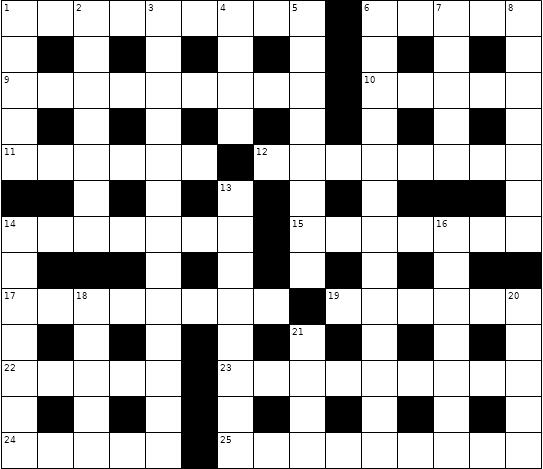
1 Musician with lead vocals on 'Uptown Funk' (5,4)
6 New Zealand band that won Single of the Year in 2006 for 'Long White Cross' (5)
9 North or south, for example (9)
10 Assignment type that might follow the 'three paragraph' rule (5)
11 Actor Wood who played Frodo (6)
12 2009 film in which Morgan Freeman played Nelson Mandela (8)
14 With 15-Across, singer who passed away nine months after Queen's 'Innuendo' was released (7,7)
15 See 14-Across
17 East Coast city that hosts Rhythm and Vines (8)
19 What you might be solving this crossword with (6)
22 Pacific nation that has 171 islands (5)
23 Spanning; traveling to visit (5,4)
24 Word that can precede Navy, blue, and flush (5)
25 Band that covered Smokey Robinson's 'Get Ready' in 1970 (and made it seven times as long for some reason) (4,5)
DOWN
1 It might feature your name and pronouns, or your most recent Girl Guides achievement (5)
2 It's the largest country entirely within Europe (7)
3 "We'll never have to go through that again!" (4,3,3,3)
4 x or y, in a twodimensional graph (4)
5 Words that mean the same thing (8)
6 West Ham United and the Wolverhampton Wanderers play in it (7,6)
7 Distressed; overturned (5)
8 Source material for a Christopher Nolan film coming out this month (7)
13 One of many voting this year for the first time (check you're registered!) (8)
14 Warrior; combatant (7)
16 Reveal (7)
18 Youngest of the Baudelaire siblings, in 'A Series of Unfortunate Events' (5)
20 Move suddenly and violently; butler in 'The Addams Family' (5) 21. Fashion designer Christian (4)
Due to the overwhelmingly positive response to our Puzzle Edition, we have included an extra two pages of puzzles. Will this happen every week? Who knows! Only if you behave and attend all of your lectures and ace your assignments. Definetely don't spend all of your time on these puzzles instead!

A Crypto-list is a list of ten members of a category, translated into a substitution code. Solve the puzzle by cracking the code. A letter will always be represented by the same substitution - for example, all the As in the answer might be represented by Qs. There are two ways of starting on a Crypto-list: either think of answers that might fit the category and see if any of them match the word lengths and letter patterns, or look for common letters or words and use them as a starting point.
Example: STARRY NIGHT
UBMRQEKAIE YDIMMQEK ART FTXBUBDT
XGEYRTIE QE ART KDBMM
ART EBVTF PBLB
ART KBDFTE IS TBDARXO FTXQKRAM
KGTDEQYB
ART HTDMQMATEYT IS PTPIDO
UBATD XQXQTM
ART XBMA MGHHTD
EQKRARBUVM
XBM PTEQEBM
absolute crossword
1 Abbreviation for osteoarthritis (2)
3 Poker features a royal one(5)
6 Shade of purple with a pit in the middle (4)
10 Classy (4)
12 Twelfth letter of the Greek alphabet (2)
14 Smith who doesn't wanna miss a thing (4)
15 Solo of Star Wars (3)
16 Leonard Shelby's condition in Nolan's 2000 film Memento (6)
20 African venomous snake (3)
21 Synonym for the web (3)
23 Asian-American celebrity chef Eddie ___ (5)
24 Key lime or pecan (3)
26 Famous Lisa (4)
28 This is probably set at a Michelin restaurant (4)
30 What we're in the second week of (6,9)
35 Steamy drama or beverage (3)
36 Developer of sports video games (2)
37 David Lynch's directorial debut ___head (6)
38 1998 DreamWorks film unfortunately starring Woody Allen (4)
40 Name for a slightly erect penis (4)
42 Plastic airtight food storage vessel (6)
46 Abbreviation for technology which overlays digital AR graphics over real-world environments (2)
48 Word connecting Dick and Dyke (3)
49 What your therapist is doing (15)
53 Uniforms worn by football players (4)
54 1954 Hitchcock film ___ Window (4)
55 Descriptor for those who feel little to no romantic attraction (3)
57 World's largest digital distribution platform for PC games (5)
59 Australian state home to Sydney and Melbourne (3)
62 Label next to blinking red light on a camera screen (3)
63 Classic NZ sausage brand (7)
65 Unit of corn (3)
67 Pal, bud, homie (4)
69 One responsible for those living in Boulcott or Weir (2)
70 Opposite of evens (4)
71 Air pollution found in London or San Francisco (4)
72 Blamed for the popularity of band Geese (5)
73 Opposite of don't (2)
“Absolute Crossword” Author is Holly Rowsell
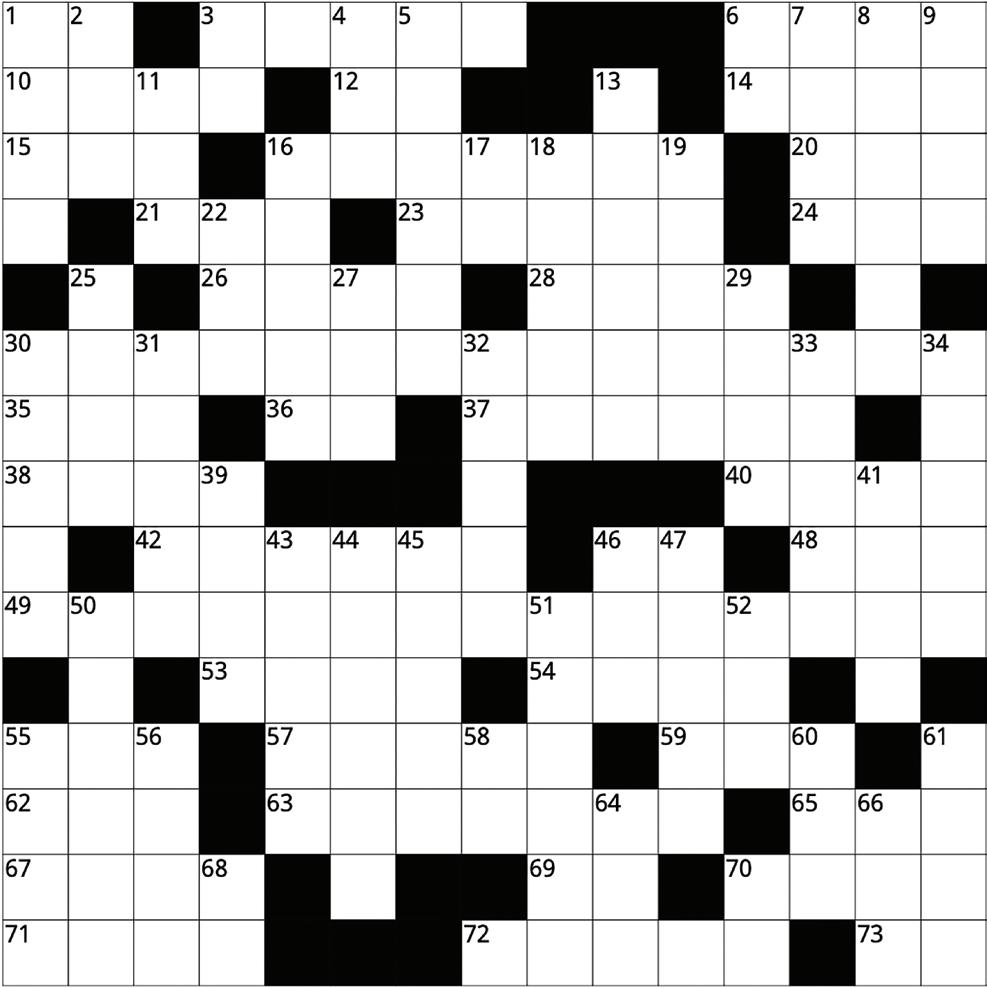
DOWN
1 Eight in Spain (4)
2 Band behind hit song "Take On Me" (3)
3 Prefix for Barcelona; Suffix for Arsenal (2)
4 Noise of uncertainty (3)
5 Accessory for UV protection (6)
6 Andrea Sachs to Miranda Priestly (2)
7 Movement made in faith (4)
8 Of or relating to bears (6)
9 Be sad (4)
11 Accomodation for a weary traveller (3)
13 Meme picturing Martin Scorsese that reads "ABSOLUTE ____" (6)
16 Make amends for a wrongdoing (5)
17 Group consisting of 27 countries (2)
18 Former French footballer Nasri (5)
19 Godmother of the French New Wave, ___ Varda (5)
22 Potential label for a MCR fan (3)
25 Pennsylvanian rock band with 1997 hit Ocean Man (4)
27 Some celebrities make their partners sign one of these (3)
29 3-in-1 shampoo has many of these
30 Found in the corner of a postcard (5)

31 Spiteful; Feline-esque (5)
32 Performed after the accidental spilling of ashes (5)
33 Roman fountain filled with $1.5 million Euro a year (5)
34 Feeling intense regret (5)
39 Nickname of Facebook founder (4)
41 Name of Ginny's friend group in Netflix show Ginny & Georgia (4)
43 Misspelt animal name of Vermont rock band (5)
44 One who makes ceramic vessels (6)
45 Stand for a canvas (5)
46 Found on tap (3)
47 Gosling and Reynolds (5)
50 Body of water or Twitch broadcast (6)
51 Suppliers of weapons (6)
52 Old people abbr. (3)
55 A 56-down has eight (4)
56 Prefix for pussy in 1983 Bond film (4)
58 Weird guy (2)
60 Married (3)
61 More or less (2, 2)
64 Charles or Liotta (3)
66 Combine (3)
68 Exempli gratia (2)
70 Abbreviation often found in Reddit threads (2)
This week's focus: animation! Though this genre has become somewhat synonymous with family-friendly films (which do deserve credit themselves—The LEGO Batman Movie (2017) is in my top 4, after all), animation can also feature adult themes for older audiences such as yourselves to enjoy. This doesn’t necessarily mean sexy stuff—theres plenty of melancholia to go around. Arovision has a lovely selection of artsy animation, so go to ondemand.arovideo.co.nz and get watching!
My Life as a Zucchini (2016) - $5
dir. Claude Barras, France
“lumps of clay that speak french made me cry?????” — deathproof, Letterboxd
You know I had to feature some claymation in here. This movie opens with a kid drawing on a kite while sitting on a beer can strewn floor, which pretty much sets you up for the emotional punches to be packed. My Life as a Zucchini follows the blue-haired namesake character who, after accidentally killing his alcoholic mother at minute five, is sent to a home for abandoned children. There, he meets a cast of other troubled but loving kids who welcome him into their little found family. Despite the traumatic backstories of these characters, this is a really wholesome movie—actually, the most wholesome movie I’ve seen in a while. You’ll end up feeling all warm and fuzzy, promise. At only an hour and five minutes, it’s a really nice bite-sized watch. And you’ll get to see a claymation redhead do a moonwalk, which is pretty cool. My biggest rec this week.

Robot Dreams (2023) - $5
dir. Pablo Berger, Spain
“The bittersweet romance of waiting. The aching reality of big city solitude. The damn good jams of Earth Wind & Fire.” — ggnz, Letterboxd
A lovely dialogue-less film about a lonely dog and his mail-order robot friend. The combo of ambient noise and jazzy soundtrack make for a really relaxing watch—this movie’s a great way to reset your cortisol levels. The plot manages to stay super wholesome while teetering over the edge of pervasive loneliness. Its bright colours and cutesy animation style lets Robot Dreams remain lighthearted even in moments of deep introspection. Some Letterboxd reviewers like to draw parallels to another 2023 film, Celine Song’s Past Lives (also on my top 4!). I’ll welcome this comparison; both are great movies in their own right. Do watch Past Lives if you haven't already—it's also streaming on Aro!
Fantastic Planet (1973) - $6
dir. René Laloux, France
“exactly how i imagined french people” — mycatsbirthday, Letterboxd
Crazy stuff. This was released in ‘73, meaning the animation is all done by hand. Fantastic Planet was made by meticulously moving hand-drawn paper figures and cross-hatched illustrations to create each individual frame. Besides its visual appeal (which is major), the story itself is just great sci-fi. The film’s world surrounds the dynamic between two species sharing an alien planet; the tiny humanoid Oms, and the massive, blue, super-intelligent Draags. The little Oms are oppressed by the Draags, until Om Terr escapes from his owner's home with her telepathic learning headband. You can never really tell where this movie is going next. Also, the score is awesome. If you’re not going to watch it, at least listen to that.
“everyone in this movie is so ugly i love it”
Had to include a classic crowd-pleaser, and what better way to go than RANGO! Arguably a perfect modern western. I saw this at the cinemas when I was seven and then completely forgot about it. Upon a rewatch with my flat earlier this year, I realised just how much this went over my head as a kid. First of all, I definitely did not appreciate the animation. The use of lighting, the ugly character design, the way POV moves through action sequences… that wagon chase scene really scratches my itch for high-octane country-western. This was made by the guy who did Pirates of the Carribean, so you just know the world of Rango is incredible in detail and design. Also, there's a good moral to be found. This film is super funny, a little freaky, and really worth a watch.
Memoir of a Snail (2024) is such a feat of stop-motion animation. I got to see the sets for this in a museum once and I still can’t get my head around how they made these movies. So many hours… This is such a beautiful work, but it is a bit sad so I’ve chosen not to give it a formal rec this week. Too early in the trimester for that.
You’ve likely already seen Flow (2024) floating around—it’s rightfully received its fair share of internet recognition after taking out the Academy Award for Best Animated Feature in 2025. This is another silent animal animation, following Cat as it navigates a world devastated by flooding. If you’ve been meaning to watch this, here's your reminder. If you haven't heard of it, now you have.
I love Charlie Kaufman, so I’ll also tell you to watch Anomalisa
Just as a bonus.
Did you know? Arovideo runs a secret cinema screening each month! Last Wednesday of the month, 7.00pm @
15
Tickets: $17.60 (inc. fees) OR buy a multi-ticket pass!
next screening: 29 July
Hey Hunk Unc! i wanna start fwb with this guy but we live together and he’s my ex’s best friendhow cooked am i?
Before we begin, this Unc has unfortunately gotten into the FIFA, so expect a few references throughout. I’m sorry. I contain multitudes now.
Well, I think the question is this: how much do you want to burn bridges with your ex?
Because, realistically, that’s what you’re asking me. This is not just a harmless little situationship. This is you voluntarily walking into the knockout stage of your social life with no subs left, one yellow card already, and the group chat watching from the stands.
If there is any chance—and I mean any chance—that you want to stay friends with your ex, keep mutual friends, or preserve whatever fragile ecosystem is currently holding your friend group together, then this is a Terrible Idea. Do not do it.
Likewise, this Unc always advises against starting romantic relationships with people you’re flatting with. There’s simply too much risk of everything ending terribly. It’s easy enough to argue with someone or drop them when you don’t live together, but trying to break things off with a flatmate will make your home, and your living situation, that much harder. So think twice. Especially if you’re on a fixed-term lease.
Unlike the 2026 World Cup, you do not have 16 host cities across three countries to spread the damage around. You have one flat, one bathroom, one fridge shelf, and a bond you probably want back.
But, in saying all this, because you’re writing to your Unc about it, I think you’ve probably already made up your mind to sleep with him. And for that, I have this piece of advice: you are very, very cooked.
Think, too, about the reasons you and your ex broke up. If you were only together for a couple of months, that’s probably alright. If you had a longterm “I love you” relationship, why are you trying to sleep with his best friend anyway? Surely there was some relationship-ending, ick-building reason
why it all didn’t work out. And if your ex had that trait, what makes you think his best friend will be any different? Birds of a feather and all that.
I think you also need to ask yourself how private you are with your situationships. If this is purely a fuckbuddy situation, then maybe it’s on your ex’s best friend to reject you, since, you know, you’re his best friend’s ex. There is a very obvious offside line here, and he should be able to see it without needing VAR. And if he doesn’t do that, then that’s on him—but it’s still a risky game you’re playing.
This Unc says think it through: if not because he’s your ex’s best friend, then because you live with him, and it could create a horrible living situation. But if you want to ignore all of Unc’s advice, then at the very least: use protection and be discreet. You’ll be sitting on a time bomb, but maybe that makes it all the hotter?
HEY
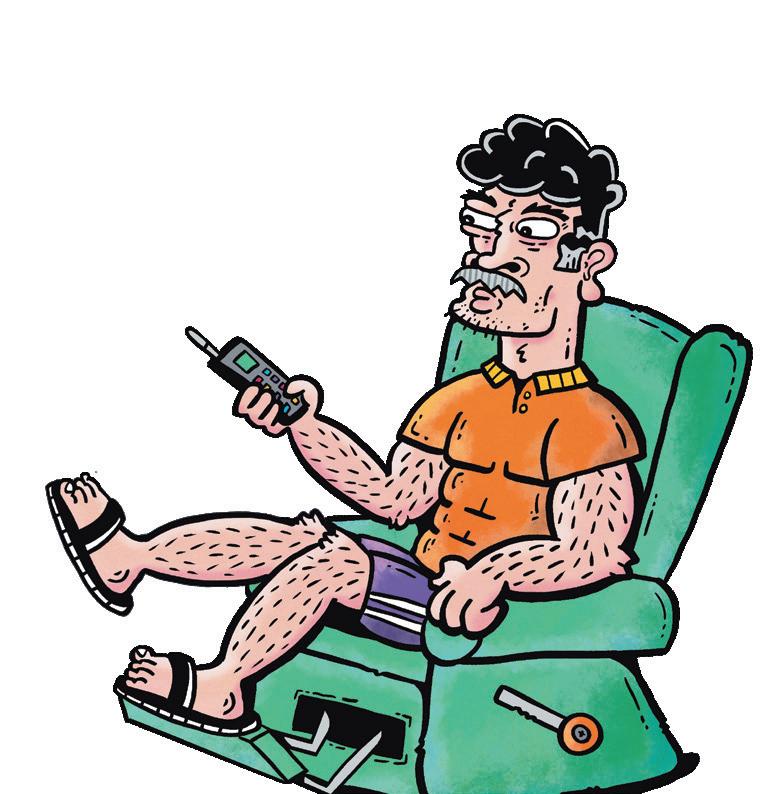
the heart rate is up, the palms are sweaty, and you’re thinking, please, God, not another unsolicited kitchen conversation.
Hey Hunk Unc (big fan btw), I find that I am increasingly packing dinner along with my lunch to go to uni. How do you deal with not wanting to be at home with my flatmates? Like nothing's bad besides the occasional dinner dishes left undone and food on the counter (which we have talked about). I just find I'm happier at the uni campus rather than at home with my flatmates.
First of all, big fan of you too.
Second of all, it’s a double feature this week because Unc was busy last week yelling at the All Whites, and he’s got advice to make up.
I think the answer to this question depends: are you living with friends or strangers? If you’re living with strangers, then there’s nothing wrong with preferring to be at uni. You’re paying so much in course fees anyway, I’d actually encourage you to use the space. And, if you’re taking dinner with you, you’re staying economical about it, so this Unc approves.
Not everyone needs their flat to be the main stadium. Sometimes home is just where your bed, charger, and least-mouldy towel live. Sometimes the real tournament is happening elsewhere.
If you find yourself actively avoiding spending time with them, then there’s probably an underlying reason why. Now, I can’t answer what that is for you, but have a think about this: next time you spend time with a flatmate, pay attention to how you feel afterwards. Are you excited and happy? Are you drained and unmotivated? Are you annoyed that you didn’t get to be by yourself in peace? I implore you to really dig deep into how you’re feeling, and to try to pinpoint exactly what is making you avoid them.
And the answer could just be this: you would prefer to live alone. Some people are like that. No matter how perfect or fine the flat is, they’d just rather live by themselves. And that’s fine to know. Wait to graduate, save up an emergency fund, then find yourself a little studio apartment.
But if you’re surrounded by friends, finding yourself actively avoiding them, and feeling drained after being around them? Then there’s probably an underlying issue with your friendships—one worth exploring before you commit to another year in the flat, or a lifetime of feeling flat after being around them.
To submit a question, scan the QR code to the right. Hunk Unc might just get back to you...



There’s a new kid on Cuba Street, who might make you double-take, and then double-take again. Just up from the Bucket Fountain, left of the red brick podium that hosts a weekly rotation of swing dance groups, high school buskers, and Falun Gong protesters, sits Jugnu’s Little India. Or what was his Little India and is now Jugnu’s Duniya (meaning ‘world’). Many will be familiar with the bright pink and orange storefront of the other Little India, just off the far end of Courtenay Place. It was this proximity that led to the two sibling restaurants competing and prompted the switch to a broader, international cuisine.
Which, in short, was a poor choice. But we’ll get to that in a second. Because the second double-take-worthy facet of Jugnu’s Duniya is their menu, which is split into two columns of $5 and $10 meals. Nothing here goes beyond that price, which does make it incredibly attractive for those on a budget. On top of that, there’s a blanket 5 percent student discount, which is a nice touch. I might expect this from a small side-hustle store or a community cafe, but for a 30-year-old franchise with 4 restaurants across the region (in Porirua and Paraparaumu, too) to actually use its commercial stability to help support people is wonderful.
And unsurprising, now, having sat inside. The decor at Jugnu’s is bold swaths of teal and mustard, with accents of hot fuschia. One wall is dominated by gold framed photographs of Jackie Kennedy’s visit to Rajasthan in 1963, against a beautifullypatterned wallpaper. The hostess, a kind and motherly figure, was happy to elaborate on the menu’s Indian classics such as Papri Chaat and Roohafza. All this together gave the place a beautiful and homely feel, personal and loved and people-oriented.
But, of course, no one goes to a restaurant to sip on rose cordial and look at Jackie Kennedy riding an elephant. You go for a meal; which is where Jugnu’s Duniya stumbles. The menu is diverse, from pastas and pizza to pad thai and pork ribs. There are also a handful of fusion options, such as the Aloo Tikki Burger and the Chicken Tikka pizza, but the Indian subcontinent on its own is still featured the most.
What: South-Asian + ‘world’ cuisine
Price: $5.00 - $10.00
When: 11:30am - 6:00pm, Mon-Sun
A nice idea for a very nice price, but overreaching. munch
(2 stars)
Their familiar dishes are, by far, what the kitchen pulls off best. The Papri Chaat was a curious mix of crispy friend crackers topped with yoghurt, sweet tamarind, and mint chutneys. It was a lovely sweetsavoury appetizer, but barely satisfying. The Vada Pav was a heftier option from the $5 menu, a mustard and caraway-spiced potato patty trying its best to stand out in a thick white-bread slider. I would’ve preferred the patty on its own, maybe a stack of three with a dipping sauce. But you take what you get for $5.
On the $10 side, the Butter Paneer was silky and properly buttery, with a soft sweetness and a slight tomato acidity to cut through it. My friend who joined me for this meal proclaimed it to be the best paneer she’d ever had. However, creamy tomato over white rice gets old after a while; this curry could have done with a hint of smoke or chilli for depth. The same goes for Our Special Pasta, another creamy tomato sauce which we chose to have with chicken. Had this been a pasta sauce from a jar, I wouldn’t have noticed the difference. It was just a bit bland, over dry spaghetti that had nothing unique to it. Jugnu’s unfortunately suffers from a case of ‘quantity over quality’ when they branch beyond their family’s recipebook.

Jugnu’s Duniya is a tricky place to review, especially with a simple star system. I’ve found next to nowhere else like it in Wellington—a place determined to keep their prices low. However, the food and portions do suffer from this. To leave here feeling full, I would still end up paying $20. Where I think it could really work is for hosting big groups of students, either at the long central table or by hiring the entire venue for free. Sharing a selection of $5 and $10 plates with a crowd of friends, with the 5 percent discount over everything, could work out quite reasonably once the bill is split. However, on my own, I’d still much rather pick the deals out of a better quality menu.
(Note: since this writing, Jugnu’s Duniya has ‘temporarily closed’ until an undetermined date.)
Am I talking shit or shit-talking your favourite restaurant? Or have I overlooked a place that readers really need to know about? Send me something to chew on at:
guy@salient.org.nz










Madonna’s Confessions II
Madonna’s dance music has always been social. This might sound obvious; isn’t all dance music social?; aren’t dance floors literally composed of a mass of people? But if you’ve been to a techno or trance gig recently you might be able to hear the difference. (And see the difference, too; as in, a disconcertingly large number of promising young lads slumped over in a K-hole.) Some dance floors are focussed on a self-pleasure kind of hedonism, where the dissolution of oneself into the larger substrate of the floor is a big part of the floor’s—and indeed the music’s—object. These experiences have their own deep meaning, absolutely—it strikes me that precisely the behaviours people use to “forget their woes,” “shake off their working weeks,” and “lose themselves” (or whatever other redundant things people want to say about dance cultures) are embodied behaviours. Taking drugs, dancing, staying up late, having sex, feeling anonymous in the dark... The things that might appear to promise escape are in many ways actually reminders of the inescapability of our embodiedness. What appears as an exit from personality is instead a way that personality enters with what it stubbornly would like to think is its antonym: the body, which is temporary, and which, like any high or sexual pleasure, we know cannot last forever.
Enter Madonna, who, from her first ever single, “Everybody,” with its happy-go-lucky chorus (“Everybody, c’mon, dance and sing / Everybody, get up and do your thing”!) has been working in a postdisco idiom that recaptures the social goodwill and excess of that brief but influential era. Madonna’s dance music, because it is good and popular dance music, does what I’ve described above with respect to trance and techno—but it complicates the picture I’ve painted. Take “Get Together,” the extremely brilliant sleeper from her 2005 album Confessions on a Dance Floor, as an example. Flitting between major and minor tonal centres and never quite resolving, the music’s bottled-up hopefulness is reflected in its lyrics, which are often subjunctive in tense, asking questions, probing possibilities, and seeking a resolution they can’t attain just yet: “Find the secret”; “Turn your head around”; “Do you believe in love at first sight?”; “Can we get together?” The song anticipates something—namely, erotic unity—
that lies just beyond its reach, it being, after all, a song. Like the bodies it inspires to movement, the music seeks to surpass its very medium but cannot. The artfulness in Madonna’s dance music is involved in how it skewers the private and the social, and in how it does this by marking out the formal boundaries of songs themselves. In doing that, it captures something too of the body’s mortality, which, as I’m arguing, is one of the major subjects of night life.
“People think that dance music is superficial / But they've got it all wrong / The dance floor is not just a place, it's a threshold / A ritualistic space where movement replaces language”—so comes one of Madonna’s spoken-word breaks on her new track “One Step Away.” Billed as a sequel to her 2005 album, Confessions II follows in its predecessor’s musical language and its structure, being mixed as a continuous DJ set. Its opener, “I Feel So Free,” was rightly chosen as the album’s lead single: an improvisatory riff on Lil Louis’ 1989 track “French Kiss,” it displays Madonna in a new directness as a kind of dance philosopher or disco sage, thinking out loud about what it means to be part of a dance culture. As in “One Step Away,” the spoken-word passages are where all pretense falls away: “Honestly, I wish I could be like other people / And just not care / But out here on the dance floor / I feel so free.” Still, even in this direct and speechy setting, Madonna retains her genius for everyday poetry, making refrains (and T-shirts!) out of such generic phrases as “Don’t be a vibe kill.” Everything ordinary is, in a Madonna lyric, raised to a higher level of focus, evocation, and intensity. Her collaborator both on this record and back in 2005 is the excellent Stuart Price, who brings to his heady production on this track a Donna Summer interpolation set off against a needling acid line buzzing through the haze. Price proves himself across this record as king of the low-pass filter, playing his fader like it’s an instrument all of its own—and it's a thrill each time he does, in the same way that a thunderous Beethoven coda is always a thrill, even though (or precisely because) you know where it’s headed. You’re tempted to call it IDM, but really it’s just bloody well done.
Blood indeed is the emphasis of the album’s first nine tracks, which uniformly are strong and some of the best since 2005. “Danceteria” is a particular—and particularly, delightfully naff—highlight. It remembers the singer’s time at the eponymous nightclub where she first got her break; and remembers, too, the star-studded generation of artists she came up alongside. “I got something I wanna talk about” is the vocal line, looped from the previous track, “Bring Your Love,” that melts us into “Danceteria” in the continuous mix of the album—and so Madonna proceeds to tell us what’s on her mind. Her personal memories collide with the chorus, dissolving into the kinds of aphoristic commands Madonna specialises in—“Everybody get up and dance / Everyone here is a work of art”—but the chorus’ aphorisms double as an echo of her own earlier work (see “Everybody”). There’s that
Jackson McCarthy is Salient's Critic-at-Large. His first book of poetry, Portrait, is out now with Auckland University Press.
want to get in touch, tip me off, or rage at me electronically?
jackson@salient.org.nz
social element: together we become beautiful and brief, a work of art. It’s compounded by the lovely later track “Love Sensation,” whose chorus speaks limerence to its fruition: “Baby, come and get with me / There's something that I gotta do / Baby, when you're here with me / There's nothing that we cannot do.”
But in some ways, Confessions II can’t be what it sets out to be, largely because house music itself is no longer what it set out to be. Originally the domain of queer, black artists making what they could of the dregs of disco and setting it hard against the emergence of drum machine tech, house music today has become so mainstream that you’ll hear it at a coffee shop on a Sunday morning—thanks in large part to the adoption of its idioms by superstars like Madonna. As a further point, it’s worth noting here that a large part of the “cringe” surrounding Madonna is due to how she’s seen as a cultural magpie who skims or scalps whatever happens to take her eye. Tim Perlich’s review for NOW Magazine of her 1998 masterwork Ray of Light sums things up curtly: “The predatory shakedown of gifted fringe artists by pop-music synthesists like Madonna is too often hailed as groundbreaking innovation when, in fact, it's merely lowestcommon-denominator homogenization.” Unfortunately for this postmodern loser, Ray of Light is good—it’s that one thing that critics of the late 20th-century have had a hard time dealing with—and the real difficulty in Madonna indeed is that she’s quite good at this whole music thing. The question of how you square ethics with aesthetics is not only one that permeates the discourse surrounding her work, it’s also one of her pet subjects: “We all learn from what’s outside / But love from within” (“Love Without Words”).
Confessions II is changed also because Madonna has changed, grown older and wiser, and is reading closely the melancholies that come with her achievement, fame, and age. From the tenth track onwards, the album takes a noticeably darker turn, and a spattering of conversation poems close out (or close in?), taking heavy inspiration from the trip-hop eclecticism of Ray of Light. “Bizzare” remembers her marriage to Sean Penn; “Fragile” her increasingly-fraught relationship with her late brother Christopher; “The Test” her relationship with her eldest daughter, thrust into the spotlight before she could choose it for herself; and “L.E.S. Girl” her time before fame, living in New York’s Lower East Side. This memoiristic tendency links to the earlier track “Danceteria” and plays off remarkably well against the intellectual fervor of tracks like “I Feel So Free,” “One Step Away,” and “Love Without Words,” among others, because the dance floor both destabilises and centralises personhood; throws the former into counterpoint with the latter. The generic, proverbial, and aphoristic come into contact with the specific, the individual—in other words, the body is in dance. And it turns again to what all dancers know is to come in the album’s final pronouncement: “Everything fades away.”
Speaker 1 (regular)
Speaker 2 (a newbie)
Dear dating diary,
As of late, my wonderful friend (who is co-writing this with me) and I have been humbled by men who frankly care a little too much. I was casually seeing this one guy from uni and we had gone on one (1!!!) date before both going to the same gig (separately, of course). We spent some time together that evening before parting ways and never texting again. I felt completely and utterly okay about this; it was a mutual ghosting.
The issue came when I saw him at uni a couple of weeks later and decided to be friendly and say hi. I thought nothing of it until I got a message from him an hour later. Full transparency, I had lowkey blacked out at the gig and did not remember much, BUT apparently he and his friends did. He reached out to let me know he had decided not to text me because that same evening his friends saw me kissing someone else. I also apparently hit on one of his friends, and he was “not about that.” Obviously, feeling embarrassed, I sent him a message apologising, as that definitely would not have been the nicest thing for him to experience. The only thing that made me feel better was that my friend had gone through the same thing a couple of weeks beforehand…
In my defense, I was borrowing my friend’s slutty little skirt! Guys. Binge drinking is no joke, as I have discussed with my Mauri Ora appointed counsellor (shout out VUW). We were celebrating the birthday of a beloved friend, and as the night took a turn towards the bar, I used the last of my data to hit up the cutie in my DMs. Long story short, I forgot about these coms, had a wee kiss with another individual I had locked lips with a month prior, and then stopped hanging out with them once the bae I messaged showed up… Guy 2 & I chatted the night away (I think) and to be FUNNY, I gave guy 1 a wee salute as I exited the premises.

My memory of the night is unfortunately hazy at best. This was a problem when a week later, I showed up at a party attended by guy 1 and he was acting WEIRD. I pestered and pestered and we had a 20 minute sit down convo about my behaviour the previous Friday. Readers, I made him feel like an object. Okay, fuck. Uh #feminism? I had to go outside and sit on the street to reflect. Of course everyone reserves the right to not kiss me (sad) but I felt like I had been broken up with by someone I had (spontaneously) kissed, only twice. Has no one else had someone that you have made out with get with someone else at the same event!? This happened to me at my Year 13 afterball…
Don’t get us wrong, we are sympathetic to the fact that it feels like shit when someone you are interested in gets with someone else. But it truly does bring up some Questions for the Culture Considering our limited previous interactions and casual relationship, is it really your place to shame us for our actions? Like are we only allowed to kiss one person per week? Were these unemployed, moustached dudes secretly planning to wife us? Are they actually feeling objectified or just mad they didn’t pull and weren’t used to ‘rejection’... All we know is that there is no Loneliness Epidemic for hot girls.
Being humbled by these conversations most certainly doesn’t feel nice and perhaps should initiate some selfreflection. However, it isn’t the end of the world, and you should not dwell on it! It is incredibly easy to stress over awkward interactions and past mistakes you’ve made when drunk. It is best to meet people where they are at and apologise for how you made them feel, if the situation seems to require it. But also, be so fucking for real. 1. it is not that deep, 2. you’ve survived this long without knowing what you did, and 3. your friends still love you and probably find the whole situation entertaining. Life is all about finding the balance between being young, hot, and charming while also not fucking embarassing yourself. Sometimes that line is crossed.




@ Kelburn campus moped carpark (uphill one with lot of traffic, people walking past etc) middle of day. She was sitting behind me, holding my waist to hold on to my really cool moped (custom wrapped) and slowly ran her hands under my chinos and closer to my… you know… and basically while we were on the moped she ended up very vigorously and rapidly jerking me the freak off (kinda hurt — am uncut) and I jizzed while riding a moped… stained the wrap but worth it lowk…
submitted by anonmous

it’s a lonely Saturday night all my flatmates are at work and I’m procrastinating my assignments. I proceed to match with a guy on tinder, have a few drinks and head to his house. As soon as I get there I recognise the flat from a party but think nothing of it and awkwardly say hi to his flatmates. I ask him what he’s done today and he says ‘nothing’. This man is a BUM but I’m already here and might as well go through with it. We get freaky, but not before he shows me some videos of him doing skate tricks on his phone. He gives surprisingly good head but this is besides the point and alas he cums in 2 seconds. Afterwards we’re laying there and he informs me of his flatmate who I know

Oh Yes, Oh No is where sex stories go to be judged. Was it hot? Was it a disaster? You decide. All stories are submitted by readers, published anonymously, and guaranteed to make you say 'oh yes' or 'oh no'. Scan the QR code to submit your own and see if it makes the cut.

Me and my girlfriend of 3 years made a stroll down to the law school one night. We stumbled upon the common room, but no one was around (I thought law students were SOOO hard workers). It was late and dark- so we rested on the leather couches. Let’s just say we decided to spice up the common room, and I fingered her right there. She eventually squirted all over the couch, and we had to use the towels from the kitchenette to clean it. I always wonder whether any of my flatmates (who do law) have since sat there.
as notorious mysodginist bum who my friend unfortunately had dealing with. I gasp and excuse myself to the bathroom where there is no toilet paper. I drip dry and furiously text my friend who promptly tells me this man throws around slurs and I must get out. I gather what dignity i have left ask if he can get me an uber and he says he can’t afford it, I leave. The moral of this story is to ALWAYS run your hook ups by your friends and even beautiful women make mistakes sometimes
submitted by anonmous
1 Found family celebrated during Pride (three members of which have turned up in this puzzle!) (5,6)
7 UFO pilot, presumably (5)
8 Shaggy American mammal with horns (5)
9 Private eye (9)
13 Pleasant smell (5)
14 Squiggly symbol sometimes seen in Spanish (5)
1 Wellington's Lambton or Jervois, for example (4)
2 French author who wrote a cycle of 20 novels called 'Les Rougon-Macquart' (5,4)
3 Sprint; smear like mascara (3)
4 What a nun or a smoker might get into? (5)
5 State capital of Tennessee (9)
6 Bone in the forearm (4)
10 Chris who starred in

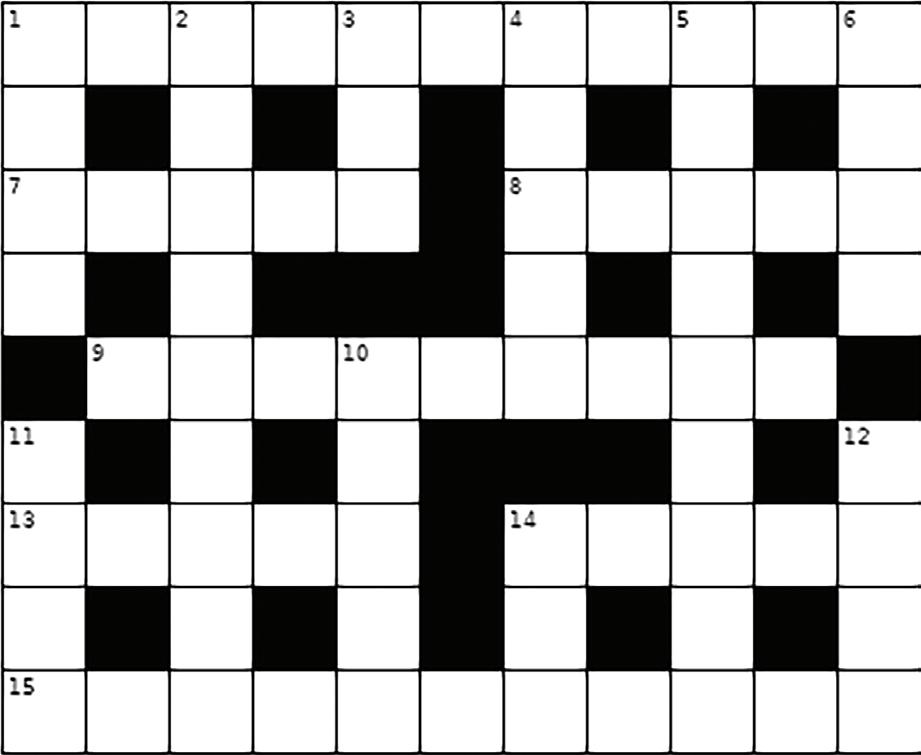
Send us your photos from around campus. It can be a cool bird, a broken vending machine, or anything else you think belongs in the magazine. DM your photo to @Salientgram on Instagram along with a caption. The best images will be chosen each week to be featured, and the winner gets a Hunter Lounge Bacon Butty.
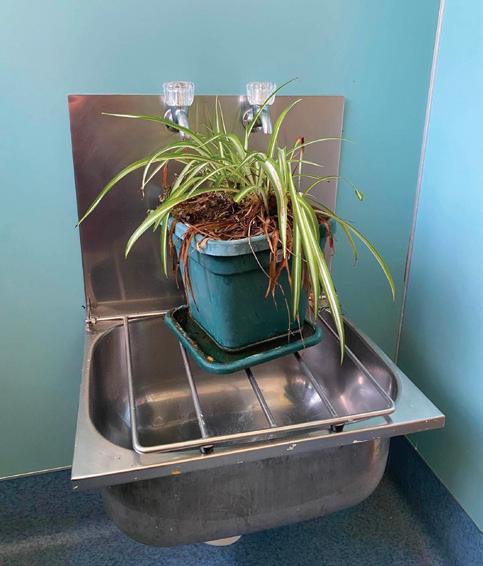
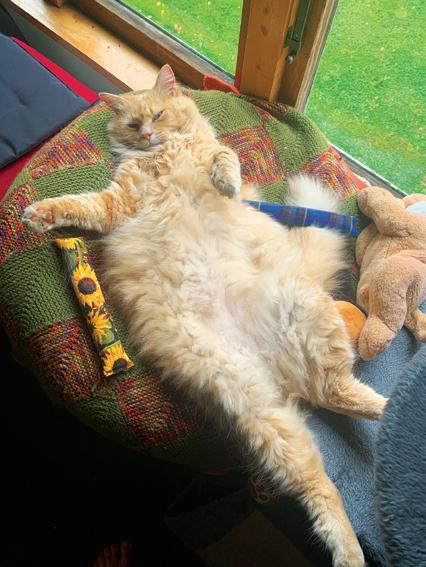

1 Players who hide in one spot to ambush enemies, often done at spawn point (7)
5 A subscription-based hosting service for a personal Minecraft server (5)
7 You use a furnace to do this to turn sand into glass (5)
8 Elitra gives you ____ (5)
10 A one on one battle between two players (3)
12 Games of Cops n Robbers took place in one of these (6)
14 You use these to chop down trees (plural) (4)
16 Its really fun to ___ on a slime block (4)
17 You want to keep your base ___ and tidy (4)
20 Another name for the ocean biome (3)
22 A combat event where hostile mobs attack a village in waves (7)
24 Animals which you can sheer for wool (5)
25 You find these inside a Nether fortress (5)
26 One of the 11 cat variants in the game (7)
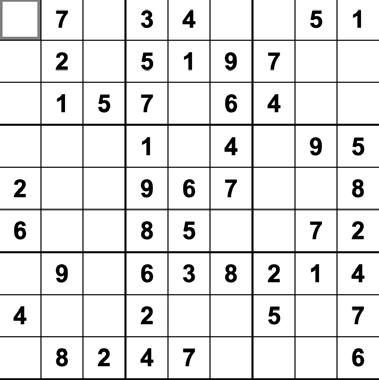
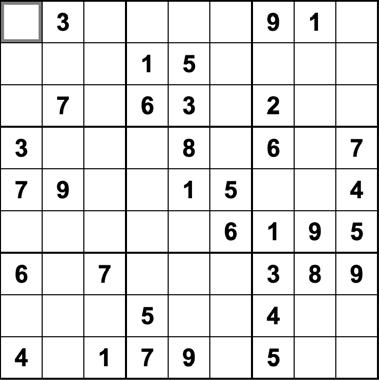
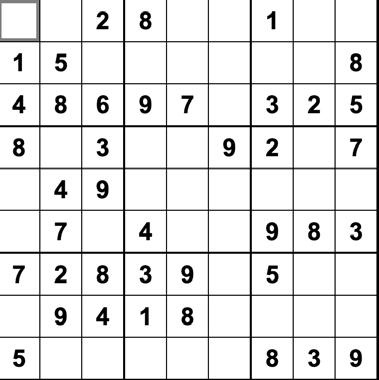
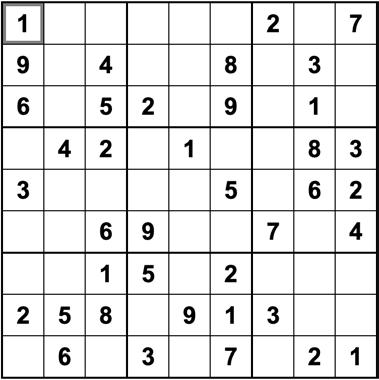
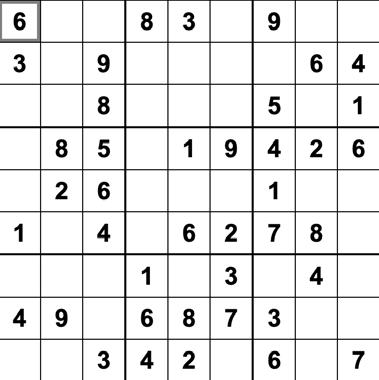
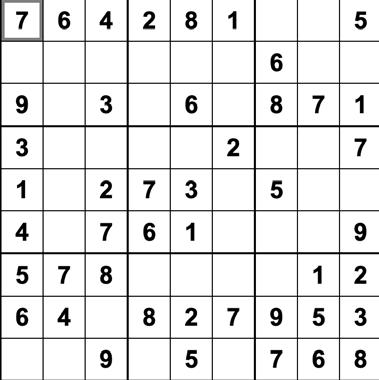
DOWN
2 You want to __ (3) __ (3) the head in player vs player battles (6)
3 Something you do to regain hearts (3)
4 Be careful not to fall from ___ cliffs (5)
5 Eating ___ meat fills less hunger bars (3)
6 The first thing you do after spawning is punch for these (4)
9 "__" you can't have all my diamonds (2)
11 You ___ a crafting table to make items (3)
13 A server filled with people collaborating can be abbreviated to this; Dream___ (3)
15 If your mum calls you to dinner, you say you'll be there "__ (2) _ (1) minute" (3)
18 A real life example of a snowy taiga biome; US state (6)
19 ____shaft (4)
21 You build these to keep mobs out (4)
23 This block causes ridden boats to move extremely fast, often used in the Nether for fast travel (3)
+(&7256'2/3+ ,1
%,2',9(56,7< 1$7,9(3/$176 %((&+)25(67 :,/'(51(66
6,/9(5)(51 &2$67/,1( 5,9(5%$1.



If you have a story, confession, or experience you’d like to share—whether it’s an anonymous crush, workplace drama, or something else entirely—you may submit it
I'm currently in a relationship with my boyfriend for like 6 months now. For some weird reason, I have developed a small crush on this other person in my course. I haven't told anyone this. I really like my boyfriend. I'm confused
- anonymous

Welcome to the puzzle page from Puzzhead, your resident Puzzler.
These puzzles are provided to be fun and challenging. The Salient team and our contributors aim for accuracy, but occasional errors may occur. If you notice an error, you may write to editor@salient.org.nz. Please note that our puzzlers and contributors are doing their best, and none are professionals or working on these puzzles full time. For the word find, words may appear diagonally and backwards. To access solutions for the crosswords and connections puzzles, scan the QR code next to Puzzhead.

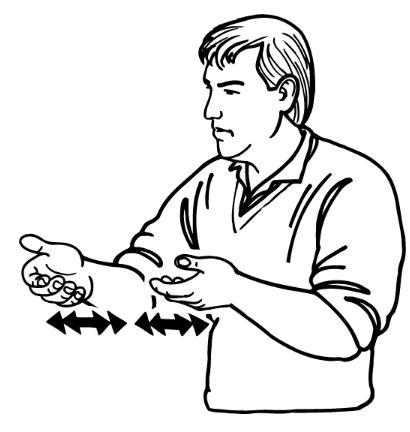
Notes: M S O U H O R A P set square word wheel
To solve a Set Square, use arithmetic and logical reasoning. You are given a grid containing six sums: three reading across and three reading down. The arithmetic operations (division, multiplication, addition, and subtraction) are shown between the grid spaces. Place each of the numbers 1 to 9 exactly once into the grid so that all six sums are correct. Note that calculations are carried out in left-to-right order, not according to BEDMAS.
To solve connections, group the sixteen words into four sets of four based on a shared connection. Each word belongs in only one group. Continue until all four groups are identified. On our website, the groupings are uploaded one at a time, so if you get stuck, you can view the answer for a single connection without revealing the full solution.
To solve Word Wheels, form words of four letters or more using the letters in the nineletter wheel. Every word must include the central letter. Each letter may be used only as many times as it appears in the wheel. The aim is to find as many valid words as possible from the target word list, including the nine-letter word that uses all the letters.
50 possible words


You’re Portugal this week. You’ve been leaning hard on one obvious strength, much like Portugal leans on Ronaldo. But life is not won by being brilliant in one area and ignoring the rest of the pitch. Broaden your game, Aries. You have more to offer than your usual winning move.

You’re Belgium. Things are finally clicking: the talent is there, the momentum is building, and people are starting to notice. But potential is only useful if you actually do something with it. Do not sit around waiting for the perfect moment, Taurus. This is your window—use it before it closes.
You’re England. You have the absurd confidence of a team that insists it is “coming home,” despite not winning the World Cup since 1966. Is it delusion? Maybe. But somehow, that makeshift confidence is working for you. Keep believing in yourself, Leo—even when the evidence is limited.



You’re Brazil. And like the football team, someone is feeling a little disappointed in you. It might be time for a hard conversation about where things went wrong and what needs to change. But do not spiral. This is not the end of the road— it is a chance to improve.
You’re the USA. You keep trying to play by your own rulebook, bending the game in your favour, and somehow you still can’t win. You’ve been relying on shortcuts without realising that the only person you’re really cheating is yourself. Snap out of it, Virgo. Play by the rules, just like everyone else.


You’re Spain. You have a big name for yourself, but this week, you may not be fully living up to it. Reputation can open doors, but it cannot carry you forever. At some point, you have to match the hype. Keep that in mind, Capricorn.



Strange travellers from distant constellations have beamed you up to the Mothership to deliver some good news and hard truths. Consider the gravity of their words (or don't).


You’re Germany. The expectations have been high, and lately, you may feel like you’ve been falling short. That does not mean you’ve failed. It just means you need to regroup, rethink the strategy, and come back sharper. Get up, dust yourself off, and get back to work.


You’re Argentina, and you have a secret weapon: Messi. This week, use your gifts for good. Inspire people. Give back. Lead with grace. And when life knocks you around, do what the greats do: get back up and keep playing.




You’re Norway. You are the supportive friend who somehow makes it far by simply showing up for people. You would fill a stadium for a sport you barely understand just to cheer on your fellow Vikings. Well done, Aquarius. This week, you’re being the kind of friend everyone needs.
You’re Cabo Verde You are the underdog everyone is suddenly paying attention to. Your hard work is finally starting to show, and people are realising they underestimated you. Take the wins as they come, Scorpio—but don’t get too cocky. The tournament is not over yet.
You’re New Zealand
People are sympathetic to you, and you are very good at explaining the 100 different ways things could have gone better if only the odds had been fair. But sometimes, Cancer, you also need to look in the mirror and admit you were simply not the best team on the day. That does not mean you didn't have a good run.




You’re Paraguay. So maybe you lost, but you made it further than people expected, and that counts for something. Take your wins where you can find them. But remember: you do not need to fight everyone on the way out. The other team is not always your enemy. You are doing better than you think, Pisces—but you could be kinder.
21July 22