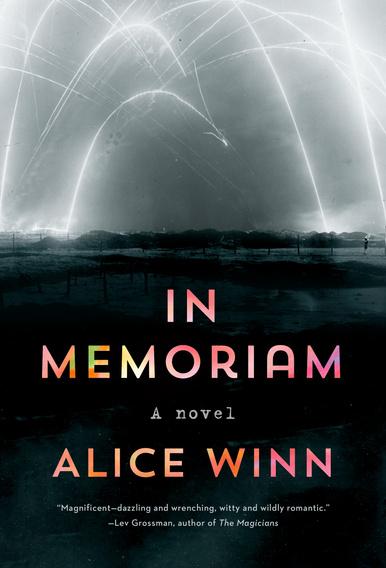
Summer Reading is meant to be only the start of something great for each student. Your reading shouldn’t end with the books you finish for September or assessments. The books you reach for throughout the year should stimulate and provide reasons for perspective, solace, discourse, wonder, inquiry, growth…
I asked Senior School Faculty what they were looking forward to reading this July and August. Check out their responses! Like you, we also need to carve out time and bring ourselves to stillness. We may reach for different material, but we read alongside our students.
When we come across something good, we want to share it — hence the titles here. They are merely beginnings.
The two student lists (Junior for Grades 8 and 9, Senior for Grades 10 through 12) include a wide range of voices, genres, and themes, reflecting the diversity of human interests and lived experiences. Many books touch on real-world issues such as grief, identity, racism, mental health, and resilience. Some authors put characters both like and unlike us in difficult situations, use provocative language, and show, at times, the complexity of life in raw, unflinching ways.
Knowing that no two readers are exactly alike, we’re giving students options. These vary in accessibility of language and maturity of subject matter. There isn’t a single text that will appeal to or suit absolutely everyone. Among these titles, find the book that’s right for you.
Even with choice, you might encounter challenging moments in the course of your reading. Pause. Reflect. Talk it through with someone you trust. Reading independently means learning how to respond thoughtfully to new or difficult ideas.
The goal is to foster a meaningful engagement with books that builds confidence, curiosity, and critical thinking over time.
So this summer, no matter what grade you’re going into, or what kind of a reader you’ve been: start here, with 1) something on the list you’ve not read before — and then, 2) branch out.
Read something else of substance that’s not a textbook or manual. That other title should have some literary merit, whether it be a novel, a short story collection, a memoir or other life writing, or a serious work of non-fiction from any discipline. (Seniors, please note: If you are enrolled in Honours 11 or AP 12, you are expected to do additional reading, in keeping with the more rigorous expectations associated with those English courses.)
Come September, be ready to share: where you started and what you read next — and the connection between the two; what you noticed, enjoyed, or found challenging; how the experience shaped your thinking: about some aspect of the universe, about being human and alive, about yourself… with concrete details and original commentary, of course!
Read widely, read thoughtfully, and let your choices tell a story about who you are and what matters to you
We look forward to everything you’ll discover and bring back. Take on the Learning Commons’ annual Blackout Challenge; join Book Club (we meet once a term!); write for Opus. So much is open to you...
Ms. Chan
Head of English
What are YOU READING this summer?
JUNIOR OPTIONS
Entering
Gr8/9:
Start your summer with ONE of these; then, move onto ANOTHER BOOK of your choice! >>> What will it be, and WHY???
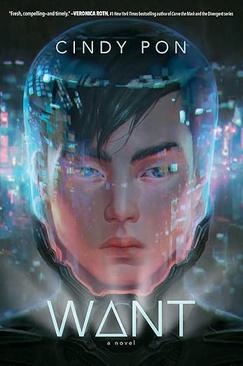
Jason Zhou survives in a divided society where the elite use their wealth to buy longer lives. The rich wear special suits that protect them from the pollution and viruses that plague the city, while those without suffer illness and early deaths.
(via Goodreads)
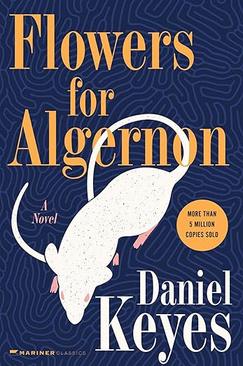
A man’s mind is enhanced to genius levels — but what happens when the experiment starts to fail?
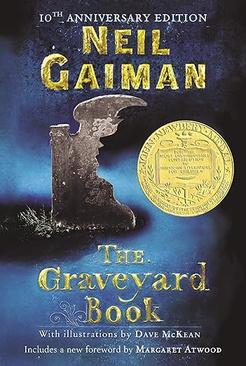
“In this moonlit place, the boy — who is given the name Nobody Owens, or Bod for short — has adventures, makes friends (not all of them dead), and begins to learn about his past and consider his future. Along the way, he encounters hideous ghouls, a witch, middle school bullies and an otherworldly fraternal order that holds the secret to his family’s murder.“
(New York Times)
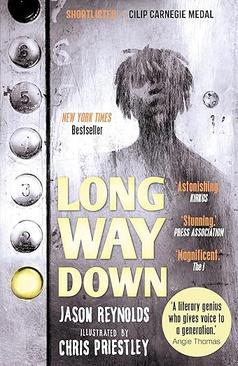
After 15-year-old Will sees his older brother, Shawn, gunned down on the streets, he sets out to do the expected: the rules dictate no crying, no snitching, and revenge...Told in free-verse poems, this is a raw, powerful, and emotional depiction of urban violence.
(Kirkus)
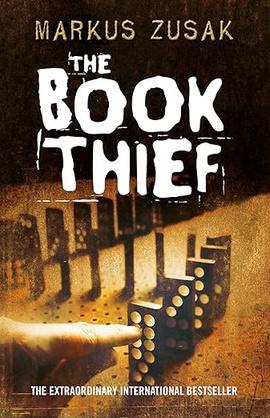
“It's one thing to write a long book about, say, a boy who happens across a dragon's egg; it's quite another to write a long, achingly sad, intricately structured book about Nazi Germany narrated by Death itself.” (John Green for the New York Times)
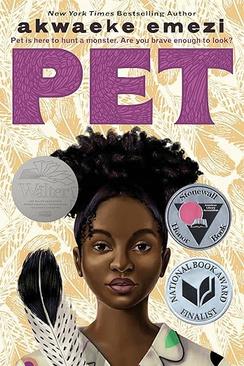
“Emezi’s characters are diverse in race, physical ability and especially gender.... Readers might see in Jam’s surroundings a version of a world that they, like Jam, might choose to fight for.” (BookPage)
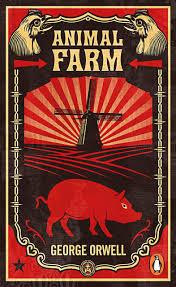
A farm is taken over by its overworked, mistreated animals. With flaming idealism and stirring slogans, they set out to create a paradise of progress, justice, and equality. Thus the stage is set for one of the most telling satiric fables ever penned — a razor-edged fairy tale for grown-ups that records the evolution from revolution against tyranny to a totalitarianism just as terrible.
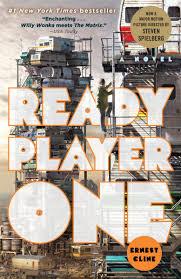
“An action-packed, highly entertaining, nostalgic thrill ride through the past combined with the danger and excitement of a not-toodistant future. It marries the fantastical world of Harry Potter with a touch of Orson Scott Card — where fantasy is reality, geeks are cool, and the possibilities are endless.” (New York Journal of Books)
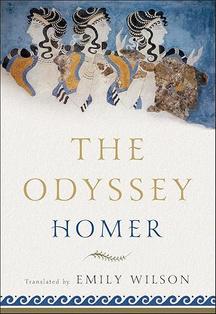
“The Greek epic about Odysseus’s tortuous, adventure-filled journey home after the end of the Trojan war, composed probably between the late 8th and late 7th century BC, is surfacing in our culture right now.... Translation is a game of choice and compromise.” (The Guardian)
A debut novel — “... at once epic and intimate, humorous and profound, a vivid rendering of the madness and legacy of the First World War as seen through the lens of a schoolboy love affair” (The Guardian)
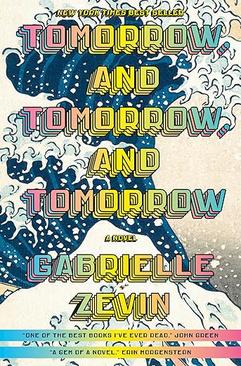
“...the story of a friendship that waxes and wanes and evolves over the years, the kind that seldom gets depicted in fiction. Plus, it’s a love letter to video games, the stories they tell and the way we use art to try to make meaning in our lives.”
(Celeste Ng)
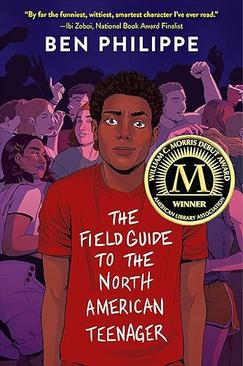
Norris Kaplan is clever, cynical, and quite possibly too smart for his own good. A Black French Canadian, he knows from watching American sitcoms that those three things don’t bode well when you are moving to Austin, Texas....
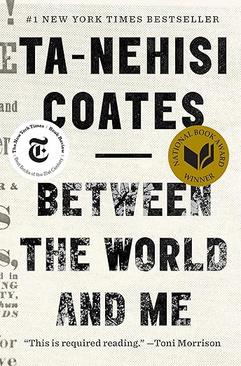
“Rife with love, sadness, anger and struggle, Between the World and Me charts a path through the American gauntlet for both the black child who will inevitably walk the world alone and for the black parent who must let that child walk away.” (Newsday)
SENIOR OPTIONS
Entering Gr10-12: Start the summer with ONE of these; then move onto ANOTHER BOOK of your choice! >>> Where will you go from here?
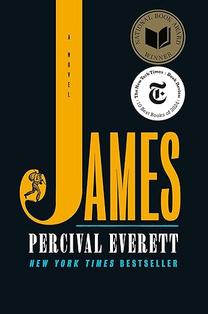
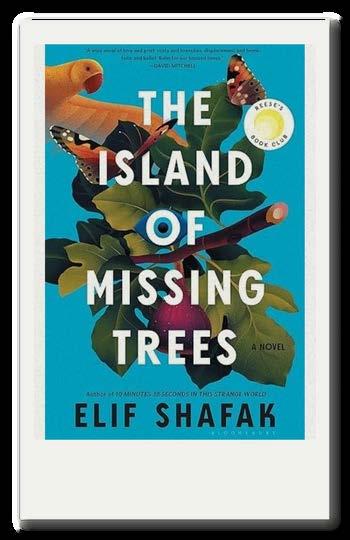
2025 Pulitzer Prize Winner — “While The Adventures of Huckleberry Finn lampooned American society through the naiveté of its young narrator, James critiques White racism with the sharp insight of a character who’s felt the lash.... What’s most striking, ultimately, is the way James both honours and interrogates Huck Finn, along with the nation that reveres it.” (The Washington Post)
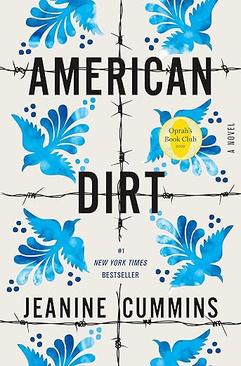
“[Mother and child] Lydia and Luca are utterly believable characters, and their breathtaking journey moves with the velocity and power of one of those freight trains. Intensely suspenseful and deeply humane, this novel makes migrants seeking to cross the southern U.S. border indelibly individual.”
(Kirkus Reviews)
Novel for COMP11-HON
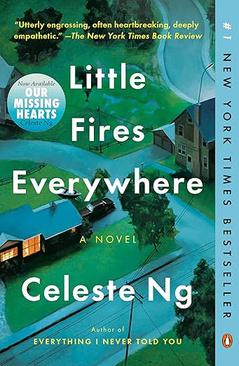
“Yes, it's the story of one Ohio town, but Little Fires Everywhere is not that familiar tale of the underside of the American suburb. It's a powerful work about parenthood and politics, adolescent strife and artistic ambition, and the stark choice between conformity and community.”
(Rumaan Alam)
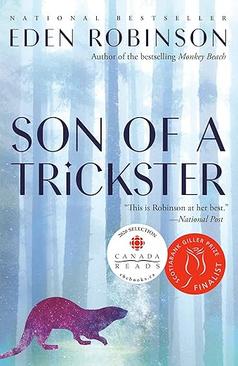
“...a novel that shimmers with magic and vitality, featuring a compelling narrator, somewhere between Holden Caulfield and Harry Potter. Just when you think Jared’s teenage journey couldn’t be more grounded in gritty, grinding reality, his addled perceptions take us into a realm beyond his small town life, somewhere both seductive and dangerous” (2017 Giller Prize Jury)
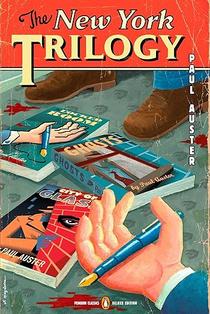
3 interconnected stories set off by a phone call — “The plots twist, the dialogue snaps and the humour stings. Auster’s obsessions with identity, language, ambiguity and defeat are revealed on the long, tailing walks through the metropolis that give his labyrinthine novels their switchback shape, and New York looms throughout like a modernday Babel.” (New York Times Magazine)
Students enrolled in HON11 and AP12 are responsible for the additional reading marked here.
I do a Goodreadschallenge of 50 bookseach year, and summer allowsme more time to read. Because of this, I tend to tackle the larger bookson my list.
First two bookson my summer list are Bill Bryson'sA SHORT HISTORY OF NEARLY EVERYTHING and Brandon Sanderson'sTHE WAY OF KINGS.
— Mr. Murray | Music
The first two are picture books, because I spend a lot of time reading to/with my 3-year-old son: THE RETURN OF THE UNDERWEAR DRAGON — we loved the first, which was a book about a young knight that had some great one-liners; and WE ARE DEFINITELY HUMAN, about aliens trying to pass as human and get their spaceship fixed. I also feel definitely human, 100%.
I am looking forward to finishing MEDITATIONS by Marcus Aurelius...
and picking up the new bookby Guy Gavriel Kay, WRITTEN ON THE DARK.
— Mr. Johnston Director of Learning
JOHN ADAMS and 1776 — I really enjoy the workof historian David McCullough. Reading hisbooks feelslike going on a walk through history with a trusted guide who sees not just the events, but the unique individualswho shaped them. Hiswordsturn dusty archivesinto living, breathing worlds. He invitesusto fall in love with the past, not assomething distant and cold, but assomething relevant, human, and alive. In his hands, history becomesa grand, unfolding story.
(Anthony Doerr) over Christmas— a masterfully fantastical, yet cerebral escape that takesyou on a journey acrossthe millennia. I could hardly put it down! May read again over the summer.
I'm currently in the middle of Here One Moment by Liane Moriarty... Really enjoying that aswell.
— Mr. Tweedle | Math
I’ve got a wide variety of books I’m hoping to read over the summer: a local author’snovel written in the 1990swhich takesplace in GibsonsBC, a Star Wars“historical” text which chroniclesthe rise and fall of the Galactic Empire, and the first draft of a magical realism novel authored by a writing partner of mine. Excited for them all!
—Mr. Morris| Library Technician
I’m planning on reading China Miéville’s EMBASSYTOWN thissummer. I’ve read one other bookby thisauthor and was disappointed, but hisname keepscoming up in discussionsof recommended Science Fiction authors, and I thought I’d give him another try. Thisbookseemsto be an interesting exploration of culture clash in the distant future.
— Mr. Crompton Head of Sr. Learning Commons
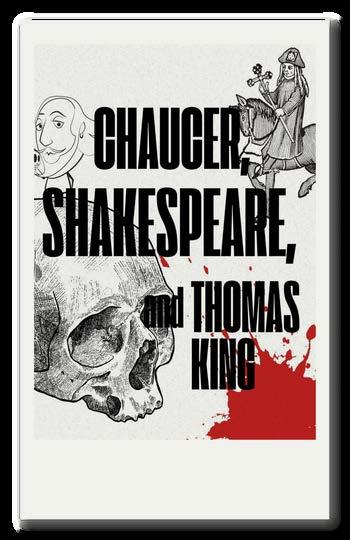
I am looking forward to reading the new Thomas King mystery, the 8th book in the DREADFULWATER series. King is funny, and a master at writing dialogue between his characters. I was first hooked by his radio series on the CBC: "The Dead Dog Cafe". It reminded me of growing up with my Indigenous stepmom's extended family, and their understated yet riotously dry sense of humour. — Mr. Kyba Visual Arts
FACULTY READS this Summer
My teacher friend wrote a bookwhich he just self-published, called THE WOLF AT DAWN. I’ve often envied hisstudents, so reading hisworkwill be like sitting in Philosophy of Religion classes I never got to take. It might also help me get through Hanya Yanagihara’s not-so-little A LITTLE LIFE
— Ms. Chan | Head of English
I am looking forward to reading the rest of THE HOUSEMAIDseries by Freida McFadden. Book#1 was such a suspenseful page- turner that I finished it in one day, and I need something that will keep me on my toes. Plus, the movie iscoming out thiswinter!
— Mme. Sever | Head of. Languages
Really looking forward to reading THE MIGHTY RED. Louise Erdrich's my favourite author, for sure. Highly recommend The Sentence, The Round House, LaRose, and Love Medicine if you want some really great contemporary literary fiction! — Mr. Donnici | Theatre, English
Topofmylist:
THE LIBRARY ATMOUNT CHAR — a mix of fantasy,horror, mystery. Reviewssound ridiculous, so I thinkit is goingtobeabit ofa rollercoaster ride!
SAY NOTHING: A TRUESTORY OF MURDERAND MEMORY IN NORTHERNIRELAND—I am lookingtounderstandmoreof "TheTroubles" as itwas where/whenmy mom grew up... Excitedtosee everyoneelse’s recommendations! Asifmy to-read list isn't already long enough...
—Ms.Pierse | Administrative Assistant, Athletics
I picked up RAIDERS & REBELS: A HISTORY OF THE GOLDEN AGE OF PIRACY from a free library in my neighbourhood recently and I'm looking forward to having some more time in the summer to read it
— Ms. Wenner | Head of Social Studies
I amhoping to re-read J.G.Ballard's EMPIRE OF THE SUN thisSummerBreakif allgoes according toplan.
— Mr.Backhouse | Latin
I’m on the second bookof the OLDMAN’S WAR series(John Scalzi), and I’m excited to finish all six booksby the end of the summer. What I love most about sci-fi is itsability to sparka sense of wonder through imaginative worldsand futuristic technologies. Beyond that, I’m especially drawn to how the genre often explores complex social issuesand philosophical questionsthat reflect or comment on challengesin our own society.
— Mr. Vidic | Math
I'm currently reading THE WEDDING PEOPLE and have JAMES AND THE NIGHTINGALE planned for summer reading. I will also be reading the books my son has on his Grade 8 summer reading list.
— Ms. Loscerbo | Library Clerk
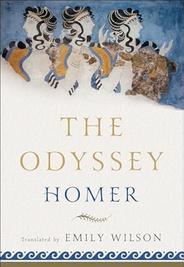
I am looking forward to reading THE ODYSSEY, with a new translation by Emily Wilson. It will be a challenge for me, but my bookclub members have assured me I will enjoy it.
— Mr.
Ziff | Deputy Associate Principal, Academics
I picked up CONCLAVE shortly after my son was born with the intention of reading it during my pat leave, never did and have done my absolute best to ignore everything about the associated film until I finally read the book. Seems timely to finally read it!
I read Robert Harris’ trilogy on Cicero which I really enjoyed and made me nerd out on ancient Roman history and philosophy for a little while.
— Mr. Chapman | University Counselling / Socials
After hearing such strong praise for her earlier novel, Black Cake, I’m excited to see how Charmaine Wilkerson weaves together complex family stories with deeper themes like identity, heritage, and the legacies we inherit.
GOOD DIRT is at the top of my “Want to Read” list because it promises not only a compelling narrative, but also a thought- provoking look at how the past continues to shape the present.
— Ms. Suleyman-Cuttilan | English
I'm looking forward to reading George Saunders' A SWIM IN THE POND IN THE RAIN with a friend this summer. I was listening to a podcast, and it recommended this based on an AI discussion: As AI outperforms humans, what will remain for humans to do? I've heard the claim that this book made it seem, for one reader, that the way we determine meaning from stories is something that, for now, is uniquely human.
— Mr. Dacanay Associate Faculty
Looking forward to filling the gap in my Lucas & Letty Davenport PREY series from John Sandford. Just finished Toxic Prey which has overtones of Dan Brown's Inferno.
— Mr. A. Jones | University Counselling / Math
I can't wait to read I REGRET ALMOST EVERYTHING, a memoir by restaurateur Keith McNally! After listening to the Audible preview, I was immediately hooked. A closet foodie, I'm hoping to get a glimpse into the behind-the-scenes world of his famous restaurants, some culinary expertise, and the bumpy path he’s taken to get him where he is today.
— Ms. Peters | Languages / House Parent
There’s DEATHON GOKUMONISLAND (Seishi Yokomizu). I enjoy the DetectiveKindaichi books. They arefun murder mysteries, setpost-WW2usually, andexplore traditions/societalviews.
I’ve started Gao Xingjian’sSOULMOUNTAIN several times,butnever finished. It's a deeplypoetic exploration of nature,love and connection to others andculture.
Continuing to build on my ideas aroundceramics with Kevon Petrie’sTHE CERAMICS READER,ananthology of academic writingson ceramics.
Alsocontinuing to buildonmy ideasaround landscapeand photography (which wasthe basisfor my master'sthesis) with Liz Wells’ deepexploration ofthis subject in LANDMATTERS.
I haveatendencyto be very scattered in myreading, havingmultipletitlesonthe go at a time!
—Mr. Stenhouse |Ceramics
I’m travelling to Dominica this summer, an islandinthe Caribbean where my dad and family are from. I’m excitedtodelve into the history andculture with THE DOMINICA STORY: AHISTORYOF THE ISLAND!
I hear MichaelCrichton’s JURASSICPARKisjustas funas themovie. Sounds likeaperfectbeachread.
NORTH WOODS byDaniel Mason isa seriesofstoriesthatalltake place in one location (an appleorchard)over time. Each chapter iswritten in a different style thatreflects thetimeperiod.Not mynormaltypeof book, butI’m curiousaboutitsstructure.
I'vereadaverycompellingexcerpt from Tanya Talaga’sSEVENFALLEN FEATHERS: RACISM,DEATH,AND HARD TRUTHSIN ANORTHERN CITYandhavewanted to read thefull booksincethen. I'mhopingto bring achapterinto ContemporaryIndigenous Studies12nextyear.
—Ms.Konopaki|Head ofGrade11/Socials
THE MORALCONSEQUENCESOF ECONOMICGROWTH (B.M.Friedman)
OFBOYSAND MEN (RichardV.Reeves)
LIVEBY: THE COMPUTER SCIENCE OFHUMAN DECISIONS (Christian andGriffiths)
—Mr. Rodrigues|Ed TechCoordinator
I always like to start my summer holidays with a murder mystery and a dose of historical fiction; this year I've got IN MY DREAMS I HOLD A KNIFE (Ashley Wikstead) and THE LOST APOTHECARY (Sarah Penner) lined up.
I've also got two gardening books that I'm excited to dive into this summer, to go along with my new community garden plot!
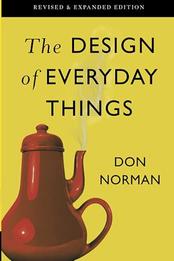
What happens when we rely too much upon external knowledge, be it knowledge in the world, knowledge of friends, or knowledge provided by our technology?
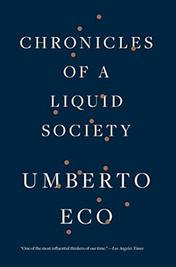
The crisis in the concept of community gives rise to unbridled individualism: people are no longer fellow citizens, but rivals to beware of.... What can replace this liquefaction?
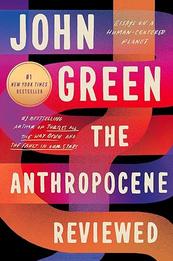
It may seem paradoxical to claim that we can improve judgments when we cannot verify whether they are right. But we can...
“I guess sometimes when you’re writing for the mainstream... people may not be ready for the edge of the truth.,’ she says.
According to the dust jacket: Three centuries and three different versions of the American experiment: lovers, family, loss, and the elusive promise of utopia.
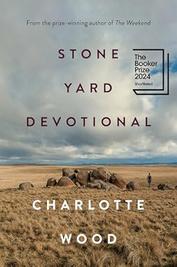
Yanagihara has been sitting on my shelf for over a year, but A Little Life is HEFTY in volume and subject matter — I’ve been waiting for the right time. Found her newer release in hardcover at the VWF Book Sale for $5. Perfect strangers wanted to know what I was carrying! Books and honest exchange bring people together. That’s how Todd and Rafi initially bond. The boys wanted to one-up each other in Chess and then Go; after, they just wanted to play.
It was dark in the cove, and there was little loose light in the sky, and I realised that I could not see myself, only the phosphorescence that surrounded me, so that it appeared as though I were not there in the water at all: my body was unclear, defined only as a shape of darkness set against the swirling acqueous light.
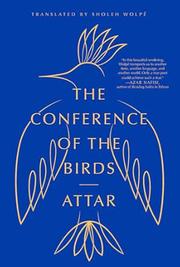
My favourite image from the book emerges when we learn how the Beloved is like a great ocean that does not turn away any soul. Some arrive at it as pure drops of water, enter, are absorbed, and become one with the Ocean; others arrive trapped inside themselves...
Odysseus is a migrant, but he is also a political and military leader, a strategist, a poet, a loving husband and father, an adulterer, a homeless person, an athlete, a disabled cripple, a soldier with a traumatic past, a pirate, thief and liar, a fugitive, a colonial invader, a home owner, a sailor, a construction worker, a mass murderer, and a war hero.
Pitch black is the most fearsome kind of darkness... In the dark we become acutely aware of our limitations as a species.
The trick of riding backward is to understand that this orientation of travel is timehonored and classical. It is like rowing a boat: you enter the future backward, while watching scenes of the past recede.
As Wittgenstein wrote, “The limits of my language are the limits of my world.”
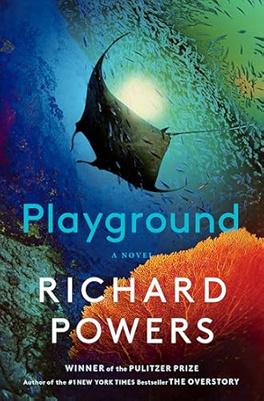
Every student will start with ONE book from the published list on the other pages (Junior or Senior, depending on grade level), then go on to read something else. THIS SPREAD IS JUST AN EXAMPLE of where a single text can take you. I’ve read Richard Powers before, but the 3rd and final Book Club of the 2024-25 academic year is really the primary reason I cracked into Playground now, ahead of many other books I could have picked up for personal interest. But I PRIORITIZED THIS for the sake of student discussion. I’m glad I did — because there were parts of this book that took me by surprise, and, as you can see here, brought to mind so many possibilities for further reading. Where did these come from? A habit of browsing. YOU CAN DO IT, TOO. Not just the World Wide Web, but libraries, local and independent bookstores, other people’s shelves.... Now, the question is: what am I in the mood for? What would you gravitate towards? THE SUMMER IS LONG... I won’t get through most of these, but I’ll make it through something. There’s no guarantee I’ll like any of it, of course; I just don’t think it’s possible to lose with a book. As we read, other pathways will emerge. Neither you nor I will return to the same place from where we began; or we’ll return different people. I share this map with you in the not-so-wild hope that as you embark on your summer reading, you’ll see ever-expanding horizons. CHOOSE YOUR OWN ADVENTURE. We will want to hear about it, so maybe take notes along the way? — Ms. Chan
Prophet Song).
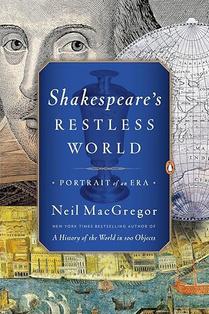
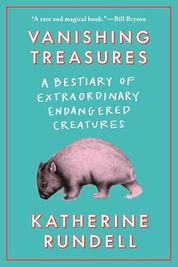
What does Shakespeare have to do with anything here? (I’m an English teacher — Shakespeare has to do with everything!) But, actually, there are nods to the Bard’s final solo venture, The Tempest, in Playground. Restless World belongs more to history (which is my other love). I do like books that explore the world at a particular time and its values through tangible things. MacGregor presents “lead objects”; Rundell, wonderful animals.
I am glad not to be a Greenland shark; I don’t have enough thoughts to fill 500 years. But I find the very idea of them hopeful.... These slow, odorous, half-blind creatures are perhaps the closest thing to eternal this planet has to offer.
If the generation born around 1560 survived into adulthood these were the people who in their thirties and forties first saw Shakespeare’s plays: they had to confront a world radically unlike that of their parents, a world recently expanded in size, yet collapsed in many of its central assumptions.
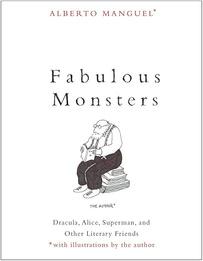
... one half [of our own ideal library] should consist of books we have read and that have meant something for us, and the other half of books which we intend to read and which we suppose might mean something to us. We should also leave a section of empty spaces for surprises and chance discoveries.
My reading was not indiscriminate. I preferred books that were old and thick and hard. I made vocabulary lists.
I have always thought of my life as the turning pages of many books
Sendak, author/illustrator of Where the Wild Things Are] said, “I’m finding out as I’m aging that I’m in love with the world.”
Notwithstanding all the non-fiction options here, novels really are my go-to. Titles that get shortlisted by the Booker Prize are typically very much my cup of tea. (For the record, still not over Paul Lynch’s