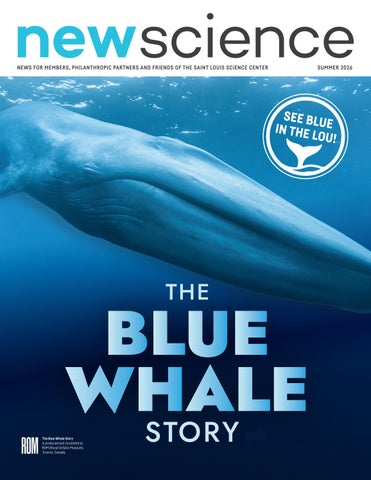
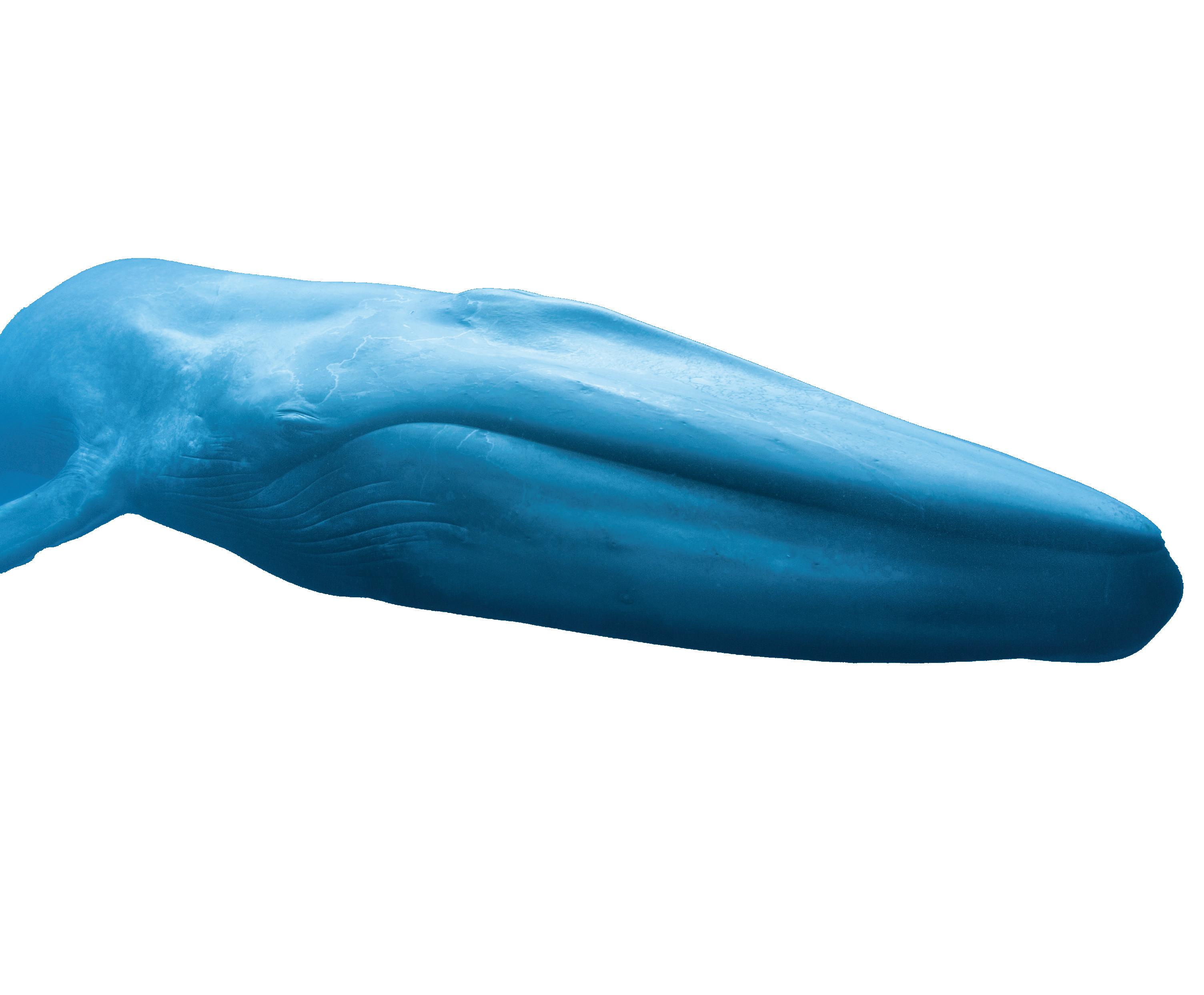
Science is making a splash here at your Science Center with the recent arrival of The Blue Whale Story, our latest traveling special exhibition. As we head into the summer and beyond, this exhibition will immerse guests of all ages in the underwater wonder of blue whales. From hearing surround-sound whale calls and exploring the only full-scale blue whale heart model in the world to standing face-to-fin with a life-sized replica of a blue whale skeleton, the experiences inside are truly awe-inspiring, and we are excited for our community to discover more about these incredible creatures.
But that’s not all we have in store! In this summer issue of NewScience, we are pleased to share a look at more of the curiosity-sparking experiences and events coming up at your Science Center.
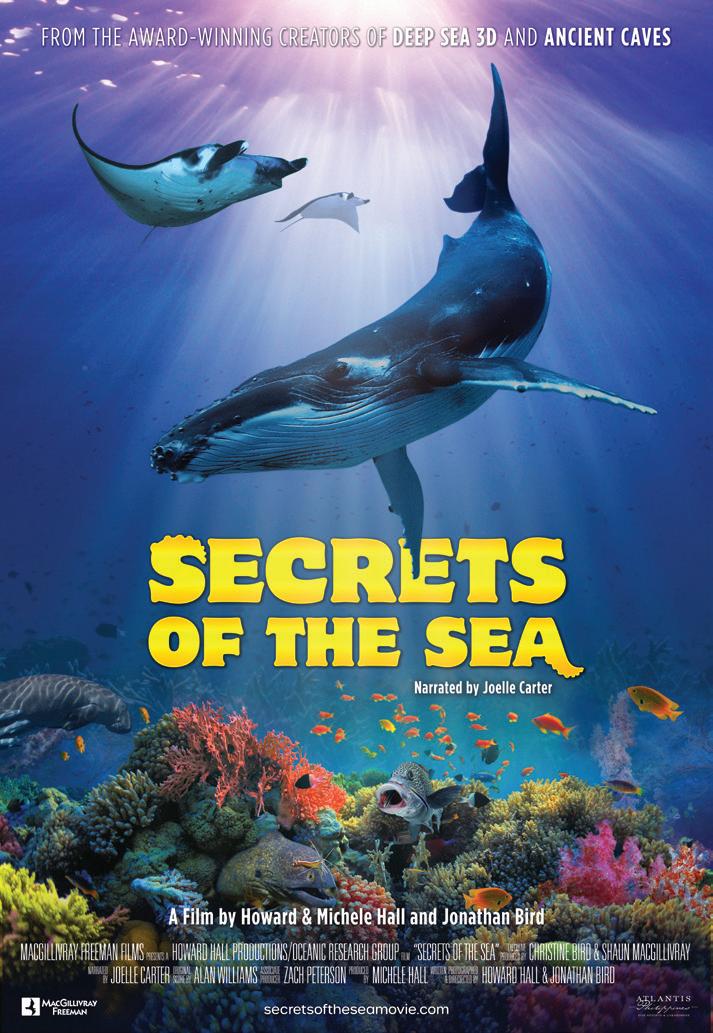
Dive deeper into our newest OMNIMAX® Theater documentary, Secrets of the Sea, with an exclusive interview featuring the film’s co-directors, Howard Hall and Jonathan Bird. Learn more about the next generation of McDonnell Planetarium shows powered by our new hybrid projection system and upgrades to the Bill and Laura Orthwein StarBay. And in our Gallery Spotlight, we celebrate the 10th anniversary of GROW with a look back at how the gallery started and has evolved over the past decade.
Of course, bringing STEM to life for our community takes the collective support and advocacy of friends like you. Be sure to find information about our collaboration with Hi-Pointe Drive-In to see how purchases at Hi-Pointe locations can support our mission (and how Science Center members can receive an exclusive discount).
Meet Science Center member and volunteer Pat Amick in our Member Spotlight. Get a sneak peek at some of the exciting events in store for our Einstein Society. And if you are looking for an out-of-this-world way to celebrate and support our mission, consider joining us for Club WONDER: Light Years Ahead in October. This next event in our signature WONDER series will surprise, delight, and inspire as you experience the museum in a fresh and immersive way, and we cannot wait to see you there.
Thank you, as always, to our members, donors, partners, and community for your dedicated support. Your commitment and passion for our work ensure that the wonder of science is open to everyone, every day at their Saint Louis Science Center.
With gratitude,
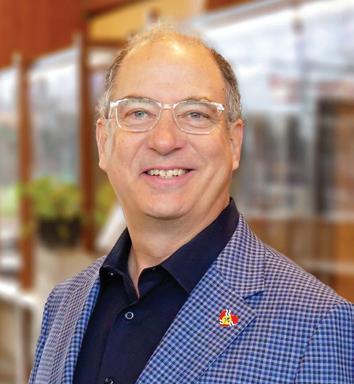
Ray Vandiver President and CEO
To inspire everyone to be curious and engaged in science. Mission of the Saint Louis Science Center
Host your next private event at the Saint Louis Science Center. Services and catering provided by Saint Louis Science Center Events. For information: 314.286.4667.
Accessibility
Complimentary wheelchairs and strollers are available in the lobby. Motorized scooters are available for a rental fee. Personal Hearing Assistance Devices are available at the OMNIMAX® Theater and Planetarium. Captiview caption devices are available for all OMNIMAX® films.
Official Partners
The Saint Louis Science Center gratefully acknowledges the support of our Official Partners.
Connect with us for updates, special events and fun science.
In This Issue...
Membership Matters
Learn about special opportunities for the Einstein Society and our upcoming event, Club WONDER. 4 6 8 12 14 22 18
Meet Pat Amick, who’s both a member and a volunteer, and learn about upcoming member events.
Science Today
Our scientist in residence, Dr. Jean Potvin, explains how he and a team of students are using baleen as an inspiration for filtration systems.
Gallery Spotlight
Celebrate ten years of growth with us as we look back at the first decade of our GROW Gallery and Pavilion.
Science Never Stops
Find out what it’s really like below the ocean’s surface from the co-directors of Secrets of the Sea, learn about mineral salts produced here in St. Louis, and prepare for this summer’s astronomy dates.
Join Us
Discover the importance of whales to the ocean ecosystem in The Blue Whale Story, learn about our brand-new Planetarium Star Shows, and so much more.
Community
We’re teaming up with some local favorites this year, from the St. Louis Symphony Orchestra to the Cardinals and more! Plus, meet this year’s Loeb Prize winner.
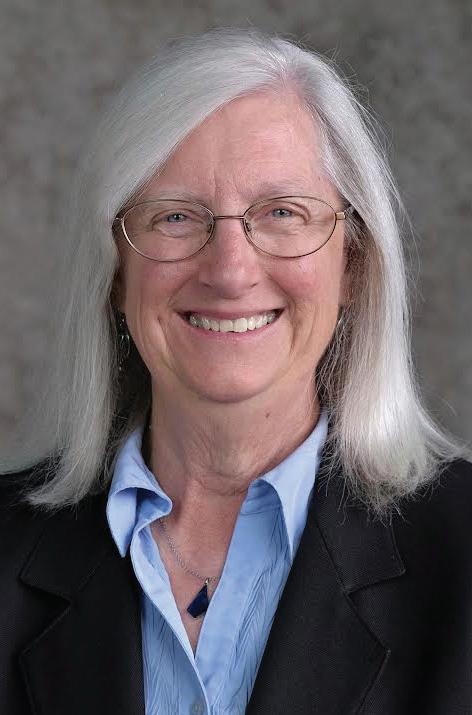
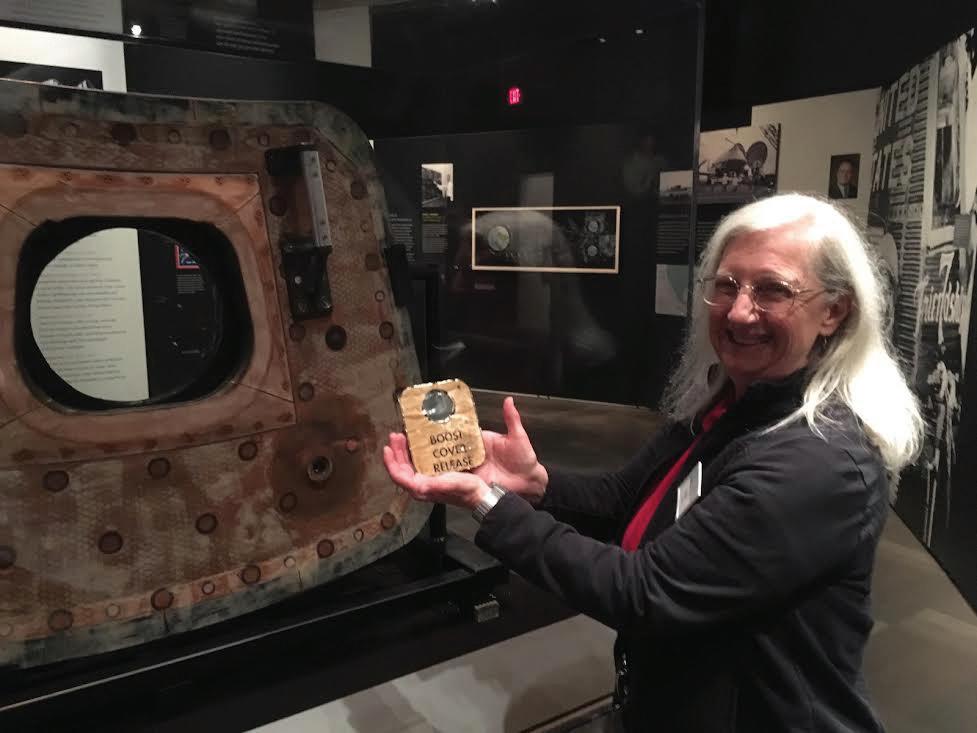
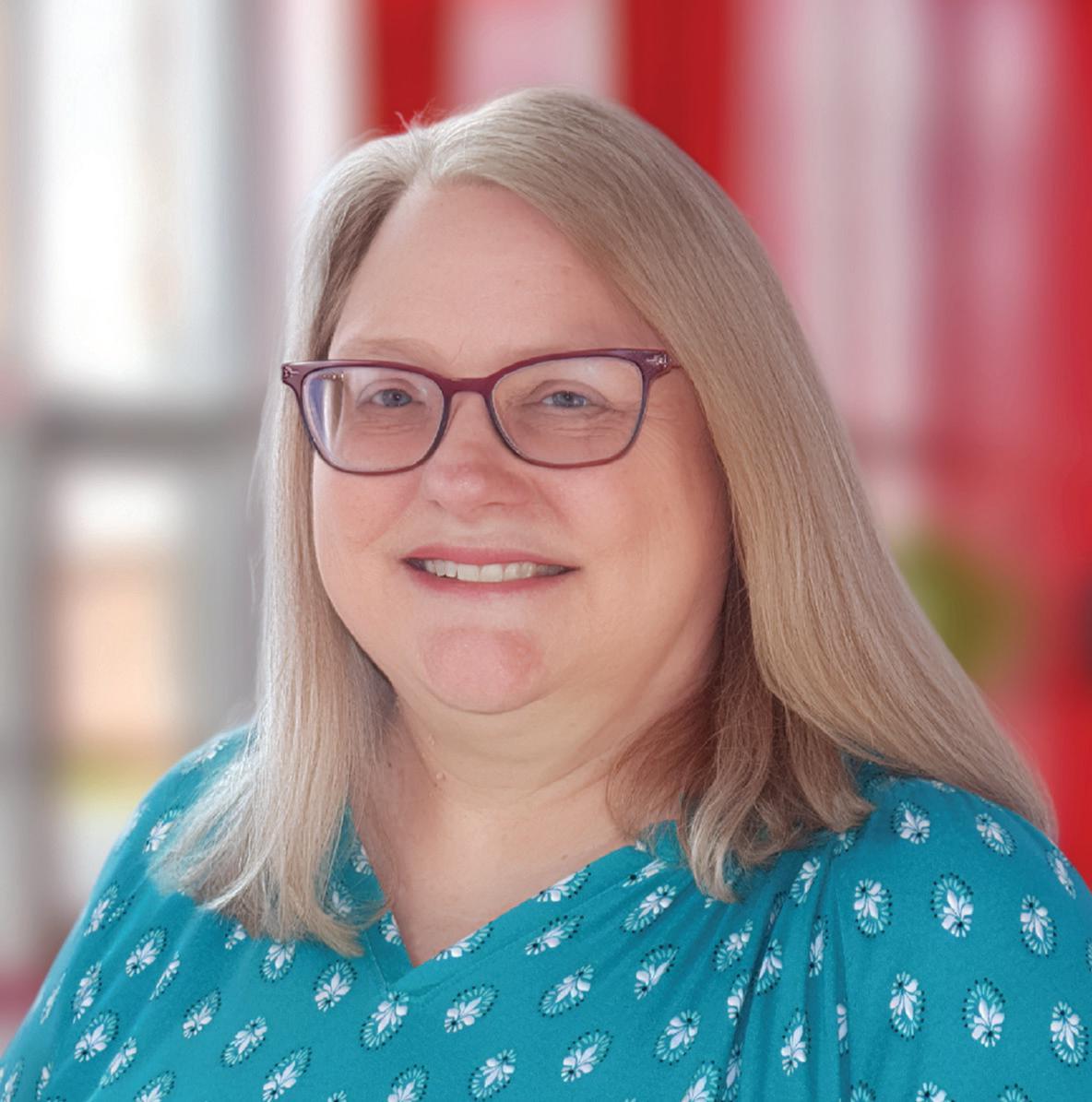
If you’ve been to a special exhibition in the past, you may have met Pat Amick, who has volunteered with us for nearly ten years. Make sure you say hello to Pat if you see her at our newest special exhibition, The Blue Whale Story!
How long have you been volunteering at the Saint Louis Science Center, and what types of work have you done here?
I have been volunteering at the Saint Louis Science Center since December 2016, right before my retirement from the Boeing Company. I have volunteered primarily in Special Exhibitions. I also volunteered in the Planetarium and in Take the Controls. All my volunteer experiences have been a lot of fun.
How did you spend your career? Did your professional background have anything to do with choosing to volunteer with the Science Center?
I went to work for McDonnell Douglas after graduate school (MS Physics) to work on research and development. After the Boeing Company acquired McDonnell Douglas, I worked primarily on the F-15 programs as an electronics manufacturing lead. I also taught numerous Boeing personnel, USAF personnel, and electronics suppliers over the years. I was later honored to become a Technical Fellow of the corporation. All my career experiences influenced my decision to give back to one of my favorite places in St. Louis, the Saint Louis Science Center, through both membership and volunteering.
Regarding membership, I became a member in 1985 during a fundraising drive and have maintained my membership to this day.
Tell us a favorite memory or two about the time you’ve spent with us.
When I was growing up, I remember being very excited that a planetarium was being built, since I already loved looking at the stars. After the James S. McDonnell Planetarium was completed, I remember being fascinated with the big pendulum, seeing Star Shows, and looking at the big dinosaur skull. Once, in 1973, the public was invited to go up to the very top of the Planetarium to observe Comet Kohoutek. The comet was a disappointment because it was barely visible, but going up to the top of the Planetarium was very fun.
Regarding volunteering memories, I especially love volunteering in Special Exhibitions. I have learned so much about the space program, Jane Goodall’s work, Pompeii, DaVinci, dinosaurs, King Tut, and other topics. One fond memory was Destination Moon: The Apollo 11 Mission, which was my favorite special exhibition. I would go up to people and ask if they remembered watching the moon landing on TV in 1969. Most of them did. They would tell me where they were and what they were doing. I would then tell them my story about watching the landing that night. It was fun to interact and share such fond memories.
A recent volunteering memory was last year’s POMPEII exhibition and the interactive table discussing the plants and smells of Pompeii. Both the kids and adults loved smelling the various scents and comparing them. They also liked hearing the fascinating story of how scientists figured out what plants grew during the time of the Vesuvius eruption in 79 AD.
What is your favorite part of volunteering here?
I have several favorite parts of volunteering. I love talking and interacting with people in the exhibits, especially children. I love teaching the kids something new and seeing them react to what I am talking about. In the two dinosaur-focused special exhibitions that I have worked on, I was amazed at how much some children already knew about dinosaurs. So teaching them something new was a lot of fun.
I also love working with the Science Center team. Their knowledge and dedication are amazing, especially the management. They also are very open to ideas about how to improve experiences for our guests to make them more fun and educational.
Something else I really love about volunteering is learning all about a new exhibition. I enjoy doing research about a subject prior to and during the time an exhibition is open. I have learned so much about so many new topics since I started volunteering. The Science Center continues to broaden my horizons just as it did when I was a child.
Why would you recommend a membership to anyone who’s considering one?
I highly recommend membership to anyone who wants to learn new things and have great new experiences. The Science Center gives everyone the opportunity to experience all types of fields, including astronomy, space science, paleontology, marine science, agriculture, physical science, and other scientific fields, in very fun environments. Also, almost everything here is free, especially with membership, and that allows people of all backgrounds access to these experiences. The Science Center is a wonderful asset in our community. The people in the St. Louis area are fortunate to have it here and, hopefully, take advantage of the great opportunities the Science Center brings into our lives.
UPCOMING MEMBER EVENTS
THURSDAY, JUNE 18 | 5:00–8:00PM
Member Appreciation Night
Tickets available May 21
Join us for an exclusive members-only night at the Saint Louis Science Center. Members will be able to enjoy our gallery spaces and access our latest special exhibition, The Blue Whale Story. Additionally, this event will include the OMNIMAX® Member Preview of our newest documentary, Secrets of the Sea. Don’t miss our scientist in residence, Dr. Jean Potvin, at the Energy Stage as he shares his knowledge of whales.
Make sure you are receiving our monthly e-newsletter for updates about other upcoming member events and opportunities! If you aren’t receiving it and you would like to, please call 314.289.4414 or email memberships@slsc.org and let us know!
Visit slsc.org/member-events for more information!
Dr. Jean Potvin is a professor of physics in the Department of Electrical and Computer Engineering at Saint Louis University (SLU). He is also a Primary Investigator at SLU’s WATER Institute. He is a graduate of Université Laval (Quebec City, Canada) where he got a BS Physics degree and the University of ColoradoBoulder where he got a PhD, also in Physics.
Dr. Potvin’s research has focused on a variety of applied fluid dynamics problems, including the inflation flows of parachutes and the hydrodynamics of baleen whale swimming and oral filtration. In 2023, he began studies of bio-inspired filtration systems for the removal of micro- and macro-plastics. His work has encompassed the use of fluid dynamics computer simulations, wind and water tunnel testing, and drops from aircraft (for his parachutes). Currently, Dr. Potvin is operating a custom-built flume for the study of small-scale, low-pressure and low-power baleen-inspired crossflow filter systems as part of Project BALEENmp (Bio-inspired Architectures for Large-scale Extraction of Environmental Nondegradable milli/meso/macro particulates).
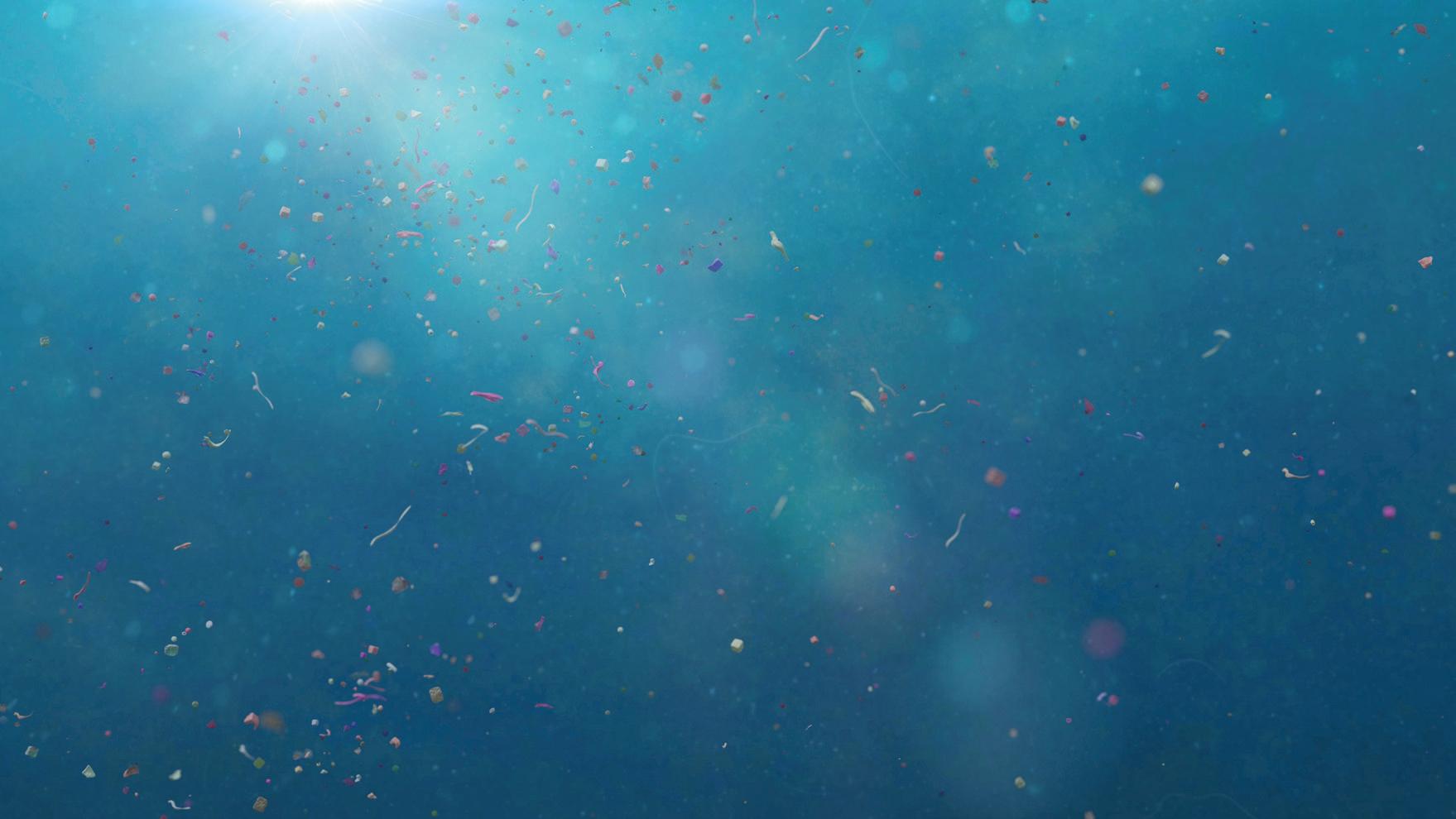
With colleagues of the WATER Institute at SLU, I initiated Project BALEEN in 2023 to develop bio-inspired filters that remove millimeter-to-centimeter-sized plastic debris from the water pouring out of storm drains and into creeks and rivers. As with most other forms of air- and water-borne pollution, long-term plastics exposure is expected to be harmful to health. By now, microplastics have been found worldwide and in the bodies of many animal species.
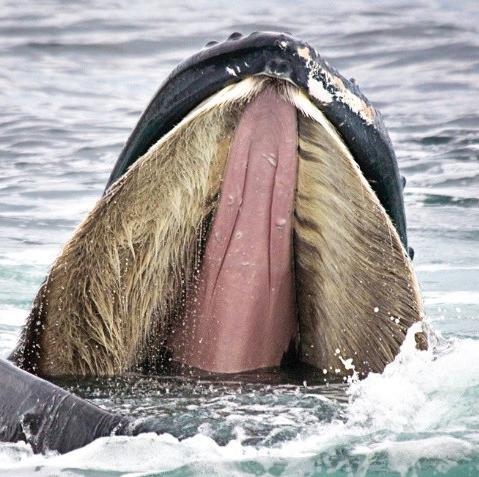
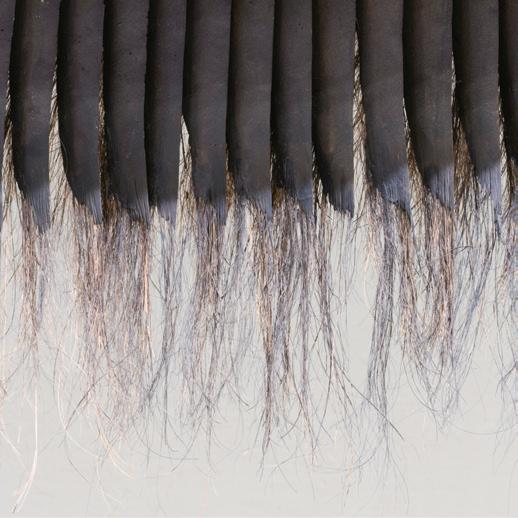
To combat this issue, my students and I have built water tunnels and conducted computer simulations to study the flow patterns of water and particulates moving past and through filtration surfaces. Of particular interest have been the filters found in the mouths of baleen whales, such as blue, bowhead, and humpback whales. These filters are made of baleen plates and bristle mats rather than teeth. Baleen and mats are built with protein material, not unlike human hair and nails (fig 1). Given that the whales’ prey of choice – copepods and krill – are similar in size to plastic particulate pollution, baleen-based filtration architectures are the most appropriate sources of inspiration for the design of plastic collection devices. The team’s goals include, first, finding out how efficient whale filter models are at gathering particles at the lowest energetic cost; and secondly, constructing whale-like filters for integration into municipal piping systems, as well as in the discharge sites of creeks and rivers.
All baleen whales, including the blue whale, are toothless cetaceans that use an oral filter made of rows of baleen plates instead of rows of teeth. What’s more, baleen, being made of a softer material, erodes into mats of bristle to make the large filter that is used to capture prey while at the same time filtering the water out of the mouth.
Baleen whales comprise mainly two groups: the rorquals, of which blue whales and humpback whales are the best-known species; and the balaenids, including right whales and bowhead whales. The prey of choice of all rorquals are the krill, which are inches-long, shrimp-like animals. But smaller and more maneuverable rorquals such as humpback whales also feed on schools of small fish such as anchovies. In this group, blue whales are krill-eating specialists
coiled coil terminal domains
calcium salt crystallites
baleen plate
bristle
tubule
matrix—surrounds intermediate filaments and calcium salt crystallites
intermediate filament— made up of eight protofilaments,
because of their very large size. Balaenids, on the other hand, eat mostly small plankton such as copepods.
Although possessing a similar filter architecture, each group captures prey and filters the water differently. Balaenids do it in the simplest manner possible by swimming through a patch of prey with their mouths open while keeping the food in and letting the water out. This is analogous to our use of vacuum cleaners at home, but without the suction. (The whales’ forward motion makes both prey and water drift into the mouth without the need for suction.) Rorquals, on the other hand, rapidly lunge towards a prey patch, then engulf the prey with the water it is swimming in. After closing their mouths seconds later, they use the muscle embedded in their ventral pouch to squeeze the water through the bristle mats and out, while keeping the prey in. Here, the diverging paths of the water and prey during the filtration process are more complicated and not completely understood (since it takes place out of view).
Our research team at SLU uses the simpler balaenid filtration mechanism as a source of inspiration to design filter systems aimed at collecting small and large synthetic debris found in creeks and rivers, as well as in the pipes of municipal drainage and wastewater systems. This is particularly crucial for the collection of microplastic debris, bits of plastic measuring fractions of inches. Another attractive feature of the balaenid filter is its use of baleen plates and bristle mats (found on the side of a whale’s
tubular horn cell
intertubular horn cell
detail of baleen
tongue), which can be approximately reproduced in the laboratory and reshaped to fit in many pipe systems.
The custom-built flume our team uses is about ten feet long, five feet high, and three feet wide. It is a water tunnel in which our filtration models are placed for study. We can see and film the patterns of water currents circulating about the filter models.
Our filtration surface, like that of whales, is made of bristle-like mats oriented at a shallow angle with respect to the oncoming flow, to separate particulates from the water via a process known as crossflow filtration. The filtration system is both low pressure and low power; costs are minimal as no external power supply is needed. Most importantly for our designs, the whales’ oral filter works without having to ever replace their filtration surface, thereby requiring – for them and for us – a minimum of maintenance. Such an arrangement is also easy to clean via backwashing (or, in the case of whales, tongue scraping). The wide variability in whales’ body lengths as they grow from newborns to mature adults also points to the wide range in filtration surface areas that can be engineered.
Alongside advancing innovative environmental solutions, Project BALEEN engages students directly in research and technology development, thereby preparing the next generation of engineers to tackle plastic pollution. I am hopeful that these engineers will be able to make a significant difference in the health of generations to come.
Ten Years of Growth
By Maddie Earnest
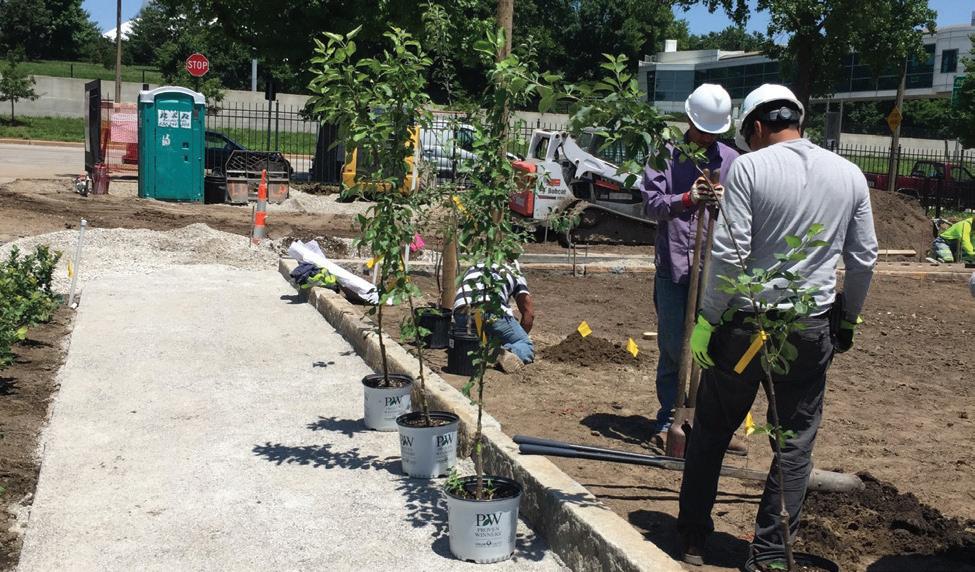
My first day at the Saint Louis Science Center was March 7, 2016. I was hired as the first manager of the notyet-existent GROW Gallery. I remember looking at the grounds that were to be GROW and thinking that there was no way we would be able to open to the public in June of that year. The pavilion was not yet in place, it was a muddy mess on the grounds, and not a single plant was in place. It was hard to believe we could get it all done. But we did!
Three months later, on June 16, 2016, GROW opened to the public with a beautiful new pavilion, plants in the ground, chickens in the coop, a combine in place, educational programs ready for delivery, and my small team and I, along with about 15-20 volunteers, were ready to welcome guests. But that’s the thing about big projects: they come together quickly at the end. Because by the time I started, 90 percent of the planning was done, exhibits were in progress, and dozens of partners had worked alongside the Science Center project teams for the past two years. It was a very hectic time, but I remember it so fondly. It is fortunate to experience and witness the beginnings.
Now, ten years later, I am still at the Science Center, but in a different role. Hannah Reinhart, who planted those first gardens, is thankfully still a part of the GROW team. Under her very green thumb, the grounds have evolved, filled out, and thanks to her rigor and that of a few dedicated volunteers, unwanted plants are kept out, and the plants we do want are thriving.
Over ten years, GROW has had four different flocks of chickens, ten installed bumble bee colonies, and at least 12 different combines. The team has grown three giant pumpkins and around 15,000 pounds of produce, and we’ve welcomed 1.6 million people to the GROW Gallery. We’ve opened new interactive exhibits in the space and hosted several temporary pieces that highlighted current agricultural technologies.
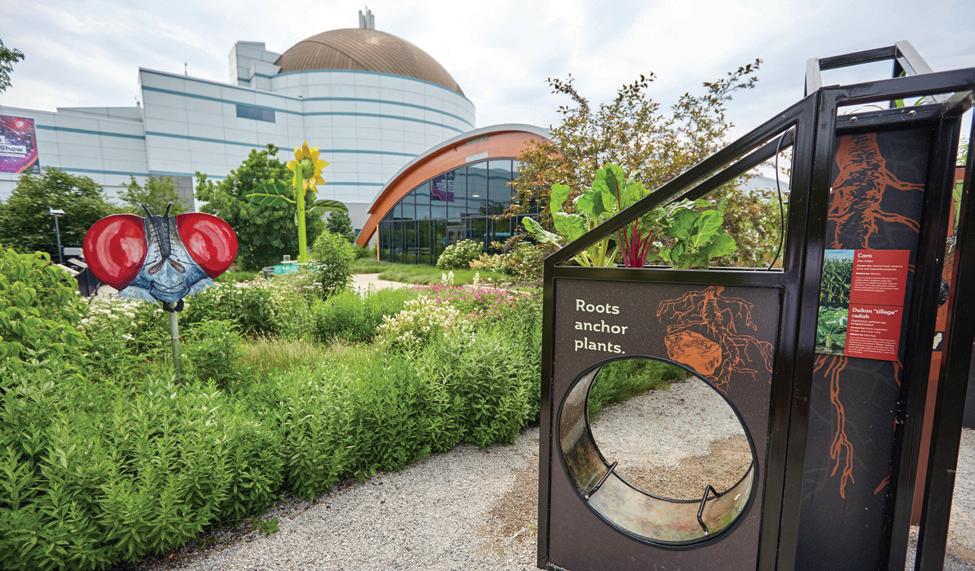
The first large new installation was the “All-American Soils” exhibit of soil cores featuring an example from every state and U.S. territory. In 2019, we added Harvest to Home, allowing guests to explore the journey from corn kernel to thousands of household foods and products. And the Root Towers, installed in 2021, made possible through a USDA award, provides guests the opportunity to see the bottom half of nine different plants and learn more about the underappreciated role of roots.
Outside, in the very popular Water Works exhibit, the path of water through agricultural systems also provides a cooling water area in hot St. Louis summers. An updated rendition of Water Works opened in 2023. Finally, the area we call the GROW Lab (located in the pavilion inside a canvas grow tent) displays indoor hydroponic technology. The talented GROW team is using this to manage a multi-year pepper breeding project to hopefully produce a Science-Center-specific variety of pepper that can be shared with guests. These are some of many evolutions and changes over ten years. The trees are taller, the tiny tractor ride is gone, and thousands of plants and insects (and rabbits!) now call GROW home.
And we are just getting started.
The St. Louis metropolitan region is home to more than 1,000 PhD-level plant science professionals. This makes our region one of the highest concentrations of plant scientists in the world. Our region is home to dozens of ag-tech startups and a venture capital community that is growing alongside these innovations. Missouri and Illinois are leaders in the production of commodity crops like corn, soy, beef, and even rice, and Missouri is second only to Texas in the number of small farms.
GROW’s mission is to provide guests of all ages and knowledge levels about where their food, fuel, and fiber come from and to help our guests see how they are part of this story of agriculture. Thanks to the support of some key founding partners, including;
GROW opened its doors to guests in June of 2016. We were then and are now an agricultural community. The Science Center is dedicated to continuing to showcase this regional marvel.
So please, come visit our team in GROW. Depending on the day, you could find yourself weaving, making paper from flax, creating your own soymilk, attending a combine demonstration, grinding corn, or even making butter. There is always more….so GROW on.
DISCOVERING THE
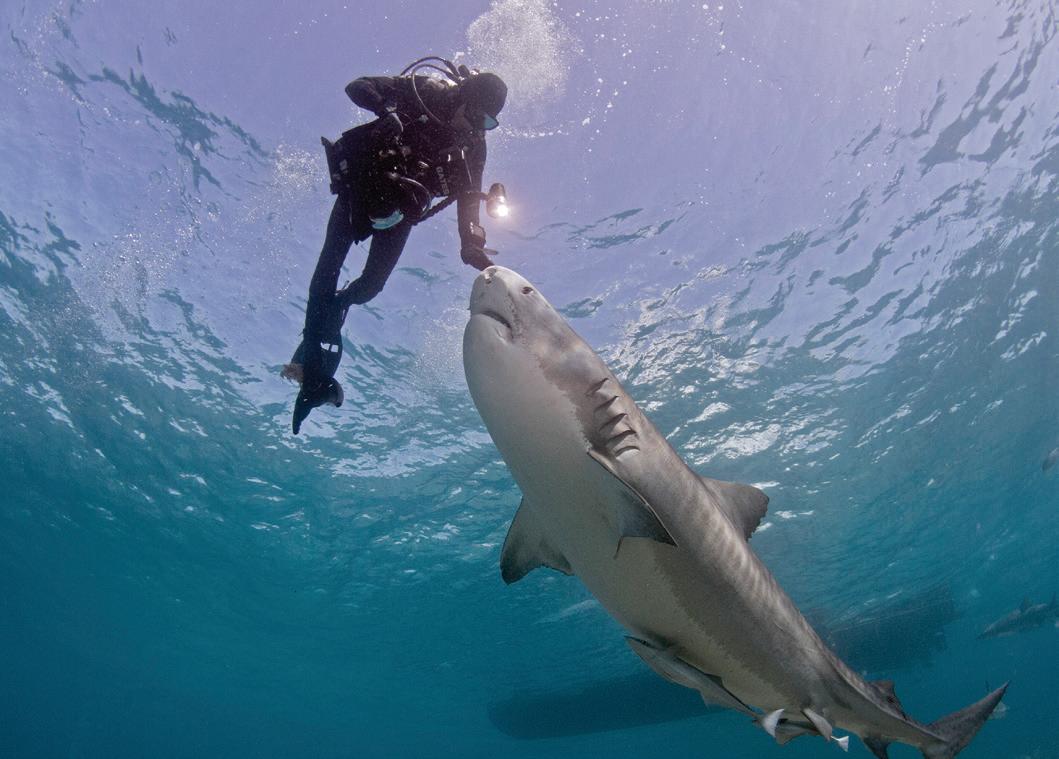
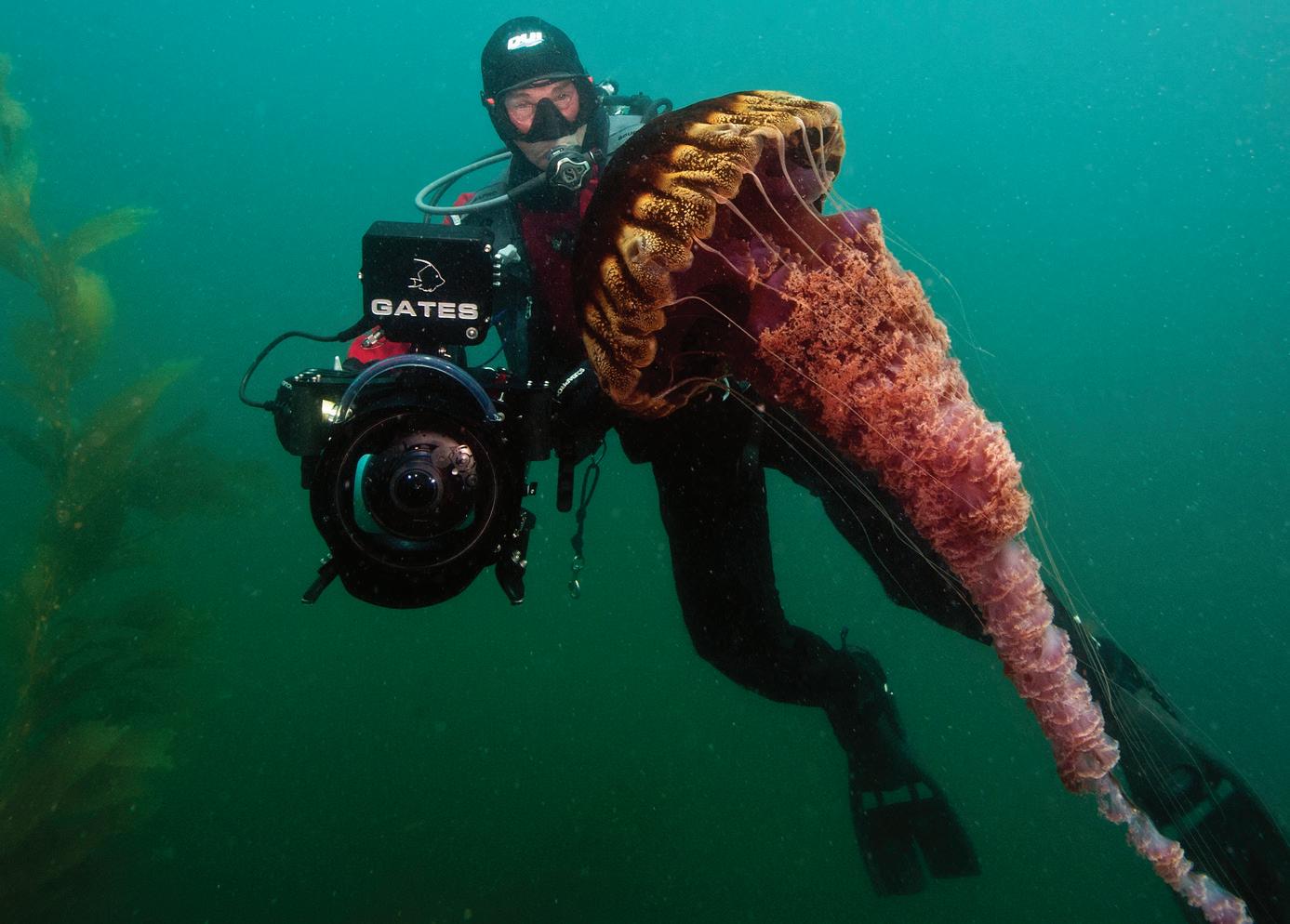
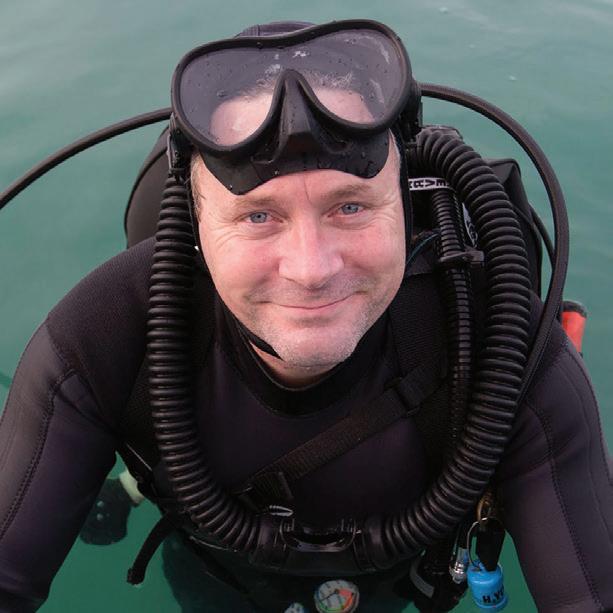
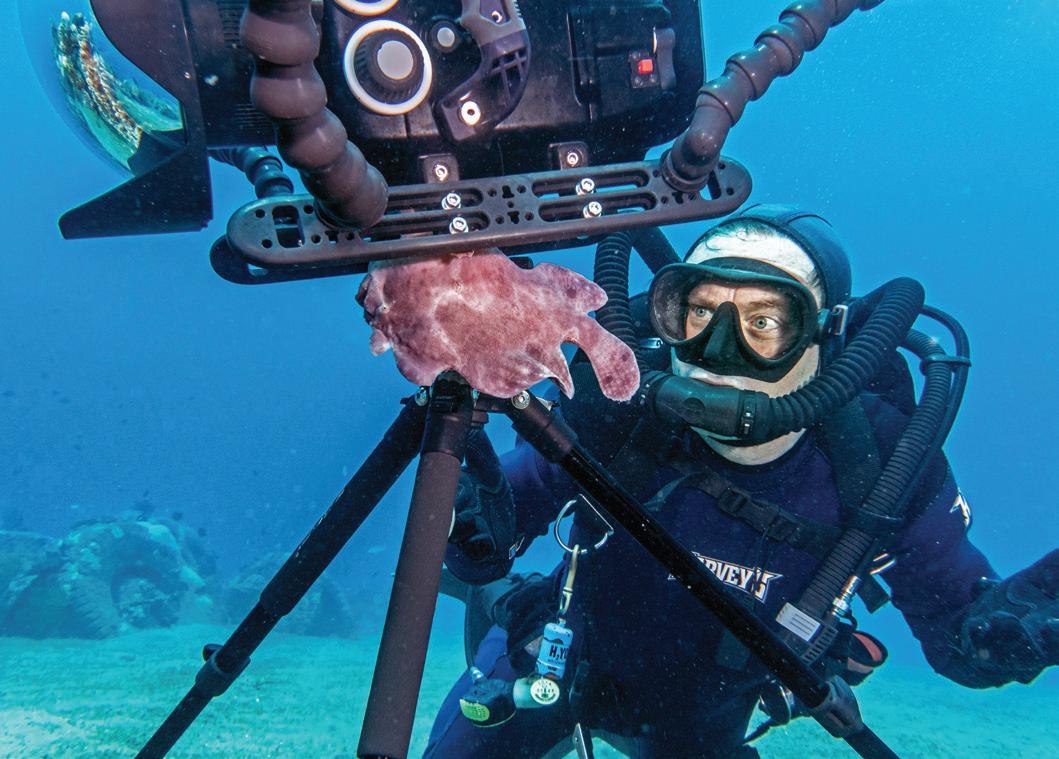
NewScience’s managing editor Lizzy Shake was pleased to talk with co-directors Howard Hall and Jonathan Bird ahead of the Science Center’s premiere of their IMAX® documentary film, Secrets of the Sea. These two aren’t typical film directors; they shoot primarily in the ocean, discovering previously unknown facts about the creatures they film. As Bird explained, “If you spend enough time in the ocean, you’re going to see things that are new to science.”
In fact, back in 1989, Hall was the first to capture blue whales on film – and he was also the first to capture them feeding. After Bird boasted on Hall’s behalf about those pioneering whale shots, Hall humbly admitted, “I got those shots, which were somewhat revolutionary at the time. Now there’s lots of people who have filmed them and done a better job.” Bird, whose career was inspired greatly by Hall’s mentorship, shook his head to disagree and added that much of the high-quality blue whale footage that exists is due to Hall’s extensive undersea film work.
“They’re obviously spectacular to see,” Hall enthused. “You’ve seen lots of footage of humpback whales with the long pectoral fins. What’s amazing is a humpback whale, a big one, would be 45 feet long. But a blue whale is 80, 90 feet, maybe even 100 feet long. So we’re talking about an animal that’s twice as long as a humpback whale. The size is just mind-blowing. You kind of lose perspective, because you think you’re much closer to it than you are because it’s so big. The skin looks shiny, almost like pewter. And it’s built for speed. Blue whales can swim very fast, and they’re just…awesome.”
Secrets of the Sea explores the idea that, despite depictions of the ocean in popular culture as a dangerous bloodbath, it’s more of a
peaceful place where creatures are more likely to help than eat their neighbors. Hall explained, “You almost never see actual predation under water. What you do see is constant cooperation between species, all kinds of symbiotic behaviors where animals are helping each other. It’s really not that violent a world.”
“And that was Howard’s whole concept for the film,” Bird added. “He’s like, ‘There’s this preconception that the ocean is full of all these random attacks and death and destruction, and it’s not like that. Maybe it would help people understand the ocean better to make a film like that.’”
Why do we view the ocean as so dangerous? Depictions of creatures like Jaws or the Kraken would lead us to believe the ocean is anything but symbiotic. And admittedly, filmmakers know that their audiences love action.
“I think in the past [we] tried to emphasize the danger and the brutality because that helps sell films,” Hall said. “But in recent years, we’ve become interested in the fact that it’s not that brutal. And these animals aren’t eating three meals a day. A lot of fish only eat once every few days. And for you to be there when they do that is a little unusual.”
Bird continued, “There’s a lot more cooperation in the ocean than there are crazy feeding frenzies. And that’s the one thing that you will see if you go down and observe a coral reef, almost everywhere you look – is animals working together.”
The film depicts several examples of symbiosis between ocean residents. For example, some animals, like sea anemones, will
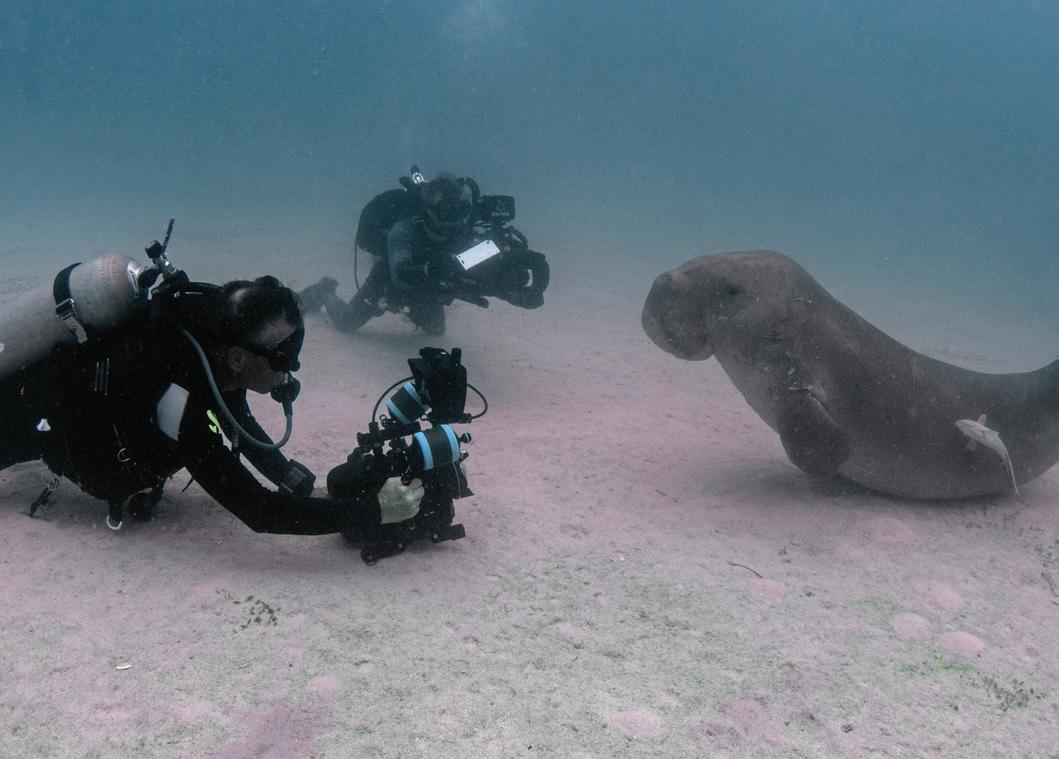
provide camouflage and safety for others. And some creatures, like remoras, will suction themselves to larger animals like sharks, whales, or dugongs, and catch a ride. Often that ride includes a meal of parasites, making this not just a case of symbiosis – one creature helping another – but mutualism, when both animals benefit.
However, Hall and Bird discovered something surprising while filming dugongs. When remoras hail a dugong taxi, it’s not the parasites they’re hoping to eat, but the dugong’s waste. Dugongs seem a little shy even when they’re not in such an awkward situation, and perhaps that’s why they react so differently toward their remora passengers than seemingly unfazed sharks, whales, or manta rays.
“[The dugongs] don’t like the remoras; they try to fight them off, and I never knew that was an issue before. But in the process of capturing the film, we could see that they were really bothered,” Hall explained.
When asked what animal from the film they most identified with, Bird laughed, “I’m probably a dugong. Kind of slow and lethargic.”
Hall replied, “I’d go with the sea lions. They obviously have fun all the time.”
Both Hall and Bird believe that the world could use more scuba divers; Bird proclaimed that “the great ocean conservationists, the people who are the most passionate about ocean conservation, are divers, because they’re the people that see what is happening under water, and they’re also the people that have fallen in love so much with that environment.”
And once you’re down there, what do you do? Many divers have preferred tasks, like exploring shipwrecks or underwater caves. Bird and Hall are happiest with a camera.
“I used to be a spearfisherman,” Hall said. “But now I use a camera. I go out and hunt for particular animals or particular behaviors, and I go down with a camera and I shoot them, and then metaphorically take them home and eat them if I sell the images. So it satisfies all my hunting instincts.”
Shake had to ask: what’s the most unique creature you’ve ever seen in the sea?
“I can answer that one easily,” volunteered Bird. “I saw an oarfish once, and at the time, it was the first living specimen that had ever been seen. The observation was new enough to science that it warranted a scientific paper. I was diving at a place called the Tongue of the Ocean in the Bahamas, where there’s a 10,000-footdeep trench, and up comes this deep-sea fish, this big, long, ribbonlike thing with big eyes, and big antennae sticking out. And it was weird – it came up like an elevator, rotated and looked around, and it went back down, vertical, like an elevator. And it was only up for maybe 30 seconds. I was shooting a still camera, and I got maybe three pictures, and then poof! It was gone.” Bird said the oarfish was around ten feet long, and that they get to be 40 or 50 feet long.
Hall said he had only seen an oarfish once, as well, but the one he saw was only around ten inches long. It’s no wonder Hall was more impressed by his encounters with the massive, majestic blue whales.
Howard Hall (Left) Jonathan Bird (Right)
Wonder of... Mineral Salts
What’s salt got to do with it?
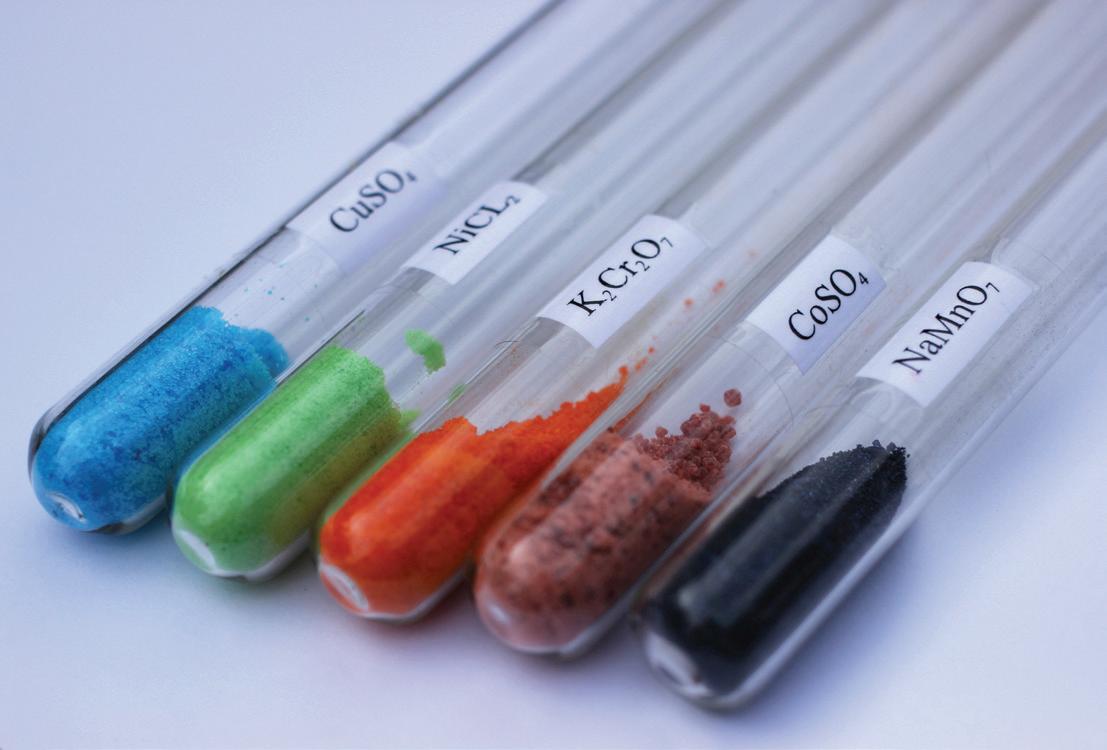
Most people don’t think about mineral salts when they wake up, but they likely interact with the work we do at Jost Chemical Company before they even finish breakfast. If you take a multivitamin, drink an electrolyte-enhanced beverage, feed formula to your newborn baby, brush your teeth, or rely on certain medical treatments, you are benefiting from the chemistry we refine. Most people will never visit a chemical manufacturing plant, yet they interact with our work daily.
Like table salt (NaCl), mineral salts are essential “nonenergetic” nutrients that provide no calories but are vital for survival. They act as electrolytes, conducting electrical impulses necessary for heart rhythm, nerve signaling, and muscle contractions. Key macrominerals like sodium and potassium regulate fluid balance and blood pressure, while calcium and magnesium support bone density and enzymatic reactions. Trace elements like iron and zinc are crucial for oxygen transport and immune function. Because the body cannot synthesize these minerals, they must be replenished daily through a varied diet to prevent deficiencies.
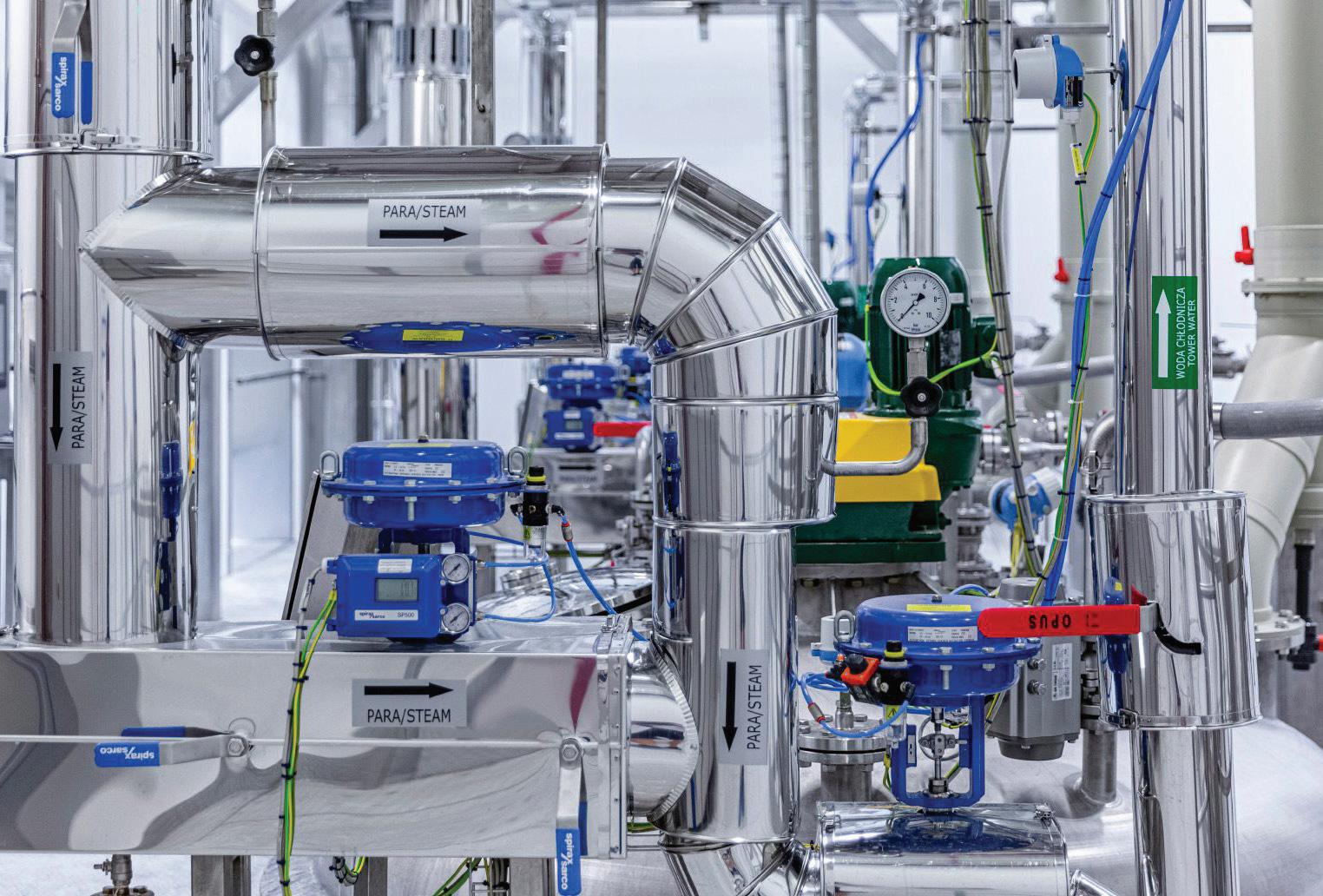
At Jost Chemical, we produce over 250 high-purity mineral salt products, particularly for the pharmaceutical, nutritional, and biotech industries. Headquartered in St. Louis, we ship our products to more than 60 countries worldwide. Jost also operates a manufacturing facility located in Koscian, Poland. We aren’t just making “bulk” chemicals. We are making the “elite” versions – high-purity reagents and ingredients.
I began my career at Jost Chemical as a research and development chemist, working to improve processes and develop new ones, provide technical support for the factory, and qualify new raw materials. Transitioning from the laboratory to leadership meant learning to create a
new kind of reaction: combining human talent, cuttingedge technology, and market demand. My role is a unique hybrid of high-level scientific inquiry and global operational strategy. On any given day, my work might involve reviewing data from a pilot plant run, meeting with international teams to discuss shifting regulatory landscapes in Europe or Asia, or strategizing the next level of purity of mineral salts.
However, the role is not without its challenges. The most difficult aspect of it is the sheer complexity of international synchronization. Chemistry is a universal language, but global regulations are not. Navigating the differing requirements of the Food & Drug Administration (FDA), the European Union, and various other international bodies, while maintaining the speed of innovation, requires precision that goes far beyond the beaker.
There is a profound sense of pride in knowing that a patient in a hospital halfway across the world is recovering because of a high-purity ingredient that our team perfected in St. Louis. We provide the “hidden essentials” that make modern medicine and nutrition possible.
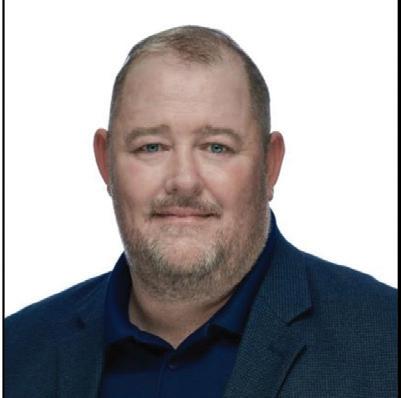
Joseph (Joe) Hardimon is the Global Research Director at Jost Chemical Company. Hardimon received BS and MS degrees in Organometallic Chemistry from Southern Illinois University. As Global Director, he manages the process, analytical, and physical science research groups, as well as providing executive oversight of regulatory compliance, sales, and marketing of Jost products. He is the owner of numerous patents for Jost Chemical Company.
5 Things to Know About High-Purity Chemistry
1. Purity isn’t Binary: It’s not just “pure” or “impure.” In our world, we deal with “ultra-purity,” where even parts-per-billion of contaminant matter.
2. Consistency is Key: Making a pure gram of a substance is easy; making 100,000 kilograms the same way, every time, is the real science, made possible through innovative engineering and quality systems.
3. Regulation Drives Innovation: Strict FDA and international standards aren’t just hurdles; they are the benchmarks that push us and our product lines to be better.
4. Chemistry is Collaborative: No breakthrough happens in a vacuum. It takes a global village of scientists, engineers, and quality control experts.
5. Quality is a Culture: You cannot test the quality of product into compliance; you must build it into the research and manufacturing process from the very first step.
Astronomy Dates
JUNE 9
Conjunction of Venus and Jupiter
The two brightest planets will meet in the western sky at sunset. A conjunction occurs when two objects share the same right ascension, appearing close together in the sky. On this night, Venus and Jupiter will appear about 1.5⁰ apart.
JUNE 17
Daytime Lunar Occultation of Venus
A lunar occultation occurs when the Moon passes in front of a more distant object, blocking it from view on narrow paths of the Earth. The Moon will occult Venus from approximately 2:21PM CDT through 3:49 PM CDT in St. Louis.
WARNING: Use caution when practicing daytime observing. Never look directly at the Sun without proper protection.
JUNE 21
Summer Solstice
The Summer Solstice on June 21 marks the beginning of astronomical summer in the Northern Hemisphere. After this date, the Sun will get lower each day at local noon, and our days will grow shorter.
JULY 6
Earth at Aphelion
Aphelion is when the Earth reaches its furthest point from the Sun in our yearly elliptical orbit. While at our farthest from the Sun, the Northern Hemisphere still experiences summer and warm weather due to the planet’s approximately 23.5⁰ tilt.
AUGUST 12–13
Perseid Meteor Shower Peak
The Perseid meteor shower is typically one of the year’s best opportunities to see shooting stars. Produced by debris left from comet Swift-Tuttle, upwards of 100 meteors per hour can be spotted during the peak. Observing prospects for 2026 are strong with the shower peaking near new moon.
AUGUST 27–28
Deep-Partial Lunar Eclipse
St. Louis will be treated to a deep-partial lunar eclipse where over 93% of the Moon’s surface will be within the darkest part of the Earth’s shadow. This event begins at sunset with maximum eclipse at 11:12 PM CDT, making it an easy event to observe without having to get up in the middle of the night.
A WHALE OF AN IMPACT
Majestic blue whales and vast oceans may be hundreds of miles away, but we can feel their impact every day, because the story of the blue whale is not just a marine story — it’s a human one. The Blue Whale Story, now open, invites guests to explore the evolution, growth, and influence — both in our ocean waters and in our everyday lives — of the largest animal to ever live.
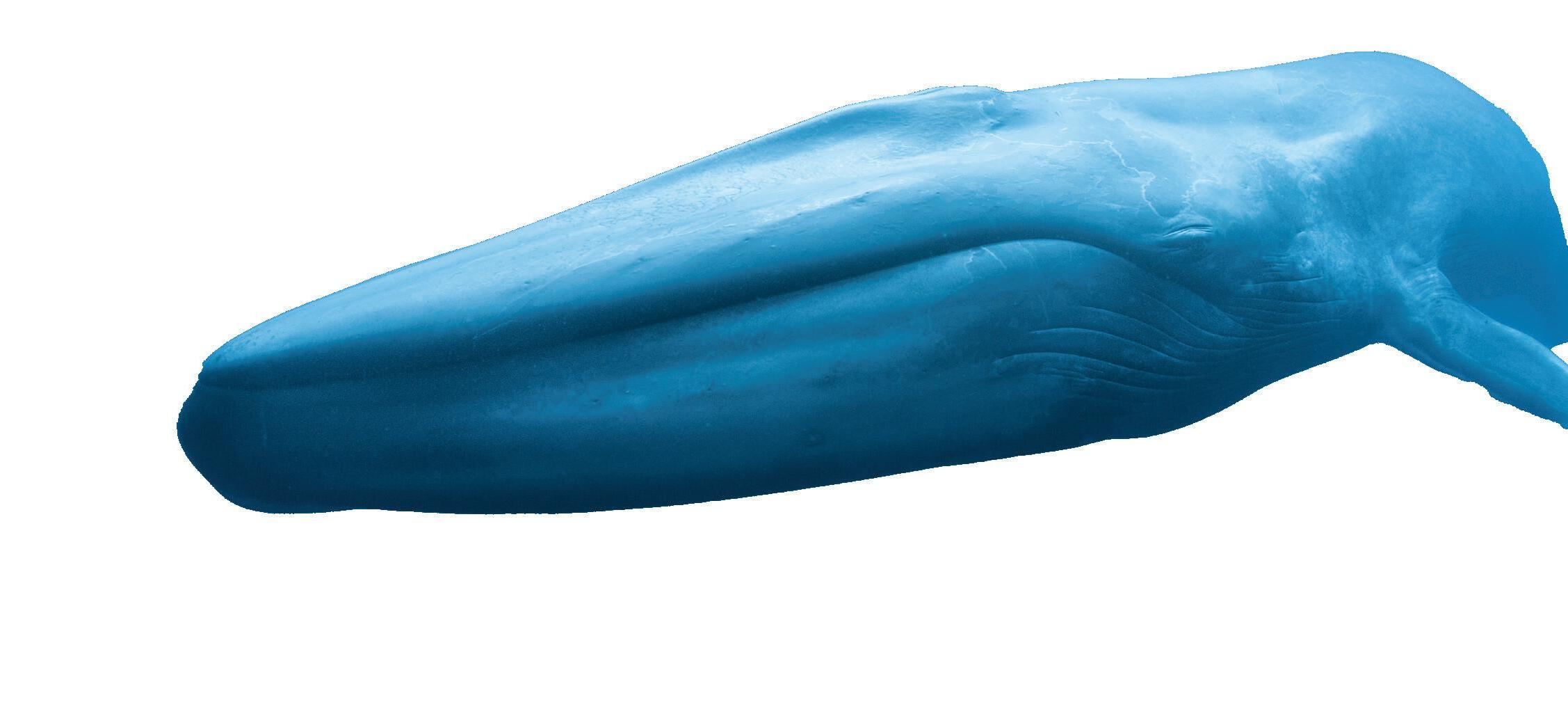
Fully grown blue whales can measure up to 100 feet; that’s longer than a basketball court. If that’s not impressive enough, they weigh around 200 tons (400,000 pounds). This enormity became possible through millions of years of
Blue whales indicate ocean health.
Blue whales are powerful indicators of a healthy ocean. Because they rely on enormous swarms of krill for food, their survival depends on thriving phytoplankton, balanced food webs, and clean, stable marine environments. When blue whales are present and feeding successfully, it signals that this entire chain — from phytoplankton to krill to top predators — is functioning as it should.
History has shown what happens when that balance is disrupted. During the industrial whaling era in the early 20th century, it is estimated that nearly 340,000 blue whales perished. The consequences of whaling are still being studied, and the effects are still being felt today. Be sure to explore the Save the Blues interactives to learn what Canada is doing to protect blue whale populations.
As whale populations slowly recover, researchers increasingly recognize their role in strengthening ocean resilience. By recycling nutrients, supporting biodiversity, and helping regulate the carbon cycle, blue whales do more than inhabit the ocean; they help sustain it. When blue whales thrive, it is often a hopeful sign that the broader marine ecosystem is regaining its balance.
In landlocked Missouri, the blue whale and the ocean ecosystem can feel a world away, but their health is deeply connected to the choices we make in our daily lives. Rivers like our own mighty Mississippi flow to the sea, carrying with them everything we flush into our waterways.
evolution, during which blue whales evolved from four-legged land creatures to fully aquatic ocean giants. Freed from the force of gravity by the buoyancy of water, they grew larger than any land animal ever could. Today, they glide through the ocean, undertaking migrations of thousands of miles between feeding and breeding grounds.
Yet the wonders of blue whales extend far beyond their size. Blue whales play a surprising and powerful role in maintaining the health of our oceans, and even in combating climate change. So how do they do it?
An exhibition like The Blue Whale Story is a vivid reminder of how interconnected we are, and the encouraging news is, you don’t have to live on the coast to make a difference for blue whales or our ocean’s health. Right here at home, you can make a difference by advocating for conservation and sharing what you’ve learned with friends and family; reducing carbon emissions through energy-efficient choices like carpooling or biking; protecting local waterways by limiting fertilizer and pesticide use and joining river cleanups; and reducing plastic use by choosing reusable bags, bottles, and containers.
Today, blue whales are considered endangered. They continue to encounter daily threats from climate change, ship strikes, and pollution. It is estimated that there are only between 10,000-25,000 blue whales alive. These numbers are slowly growing thanks to international protections and bans on whaling. Their story is one of awe and resilience, and even from hundreds of miles away, we are part of that story. By protecting local rivers and streams, we protect not only the largest animal ever to live, but also the delicate balance that sustains our shared planet.
The Blue Whale Story is produced and circulated by ROM, Toronto and is open now. Members receive 50% off tickets! Visit slsc.org to learn more about our new special exhibition and purchase tickets.
Blue whales store carbon and support deep-sea ecosystems.
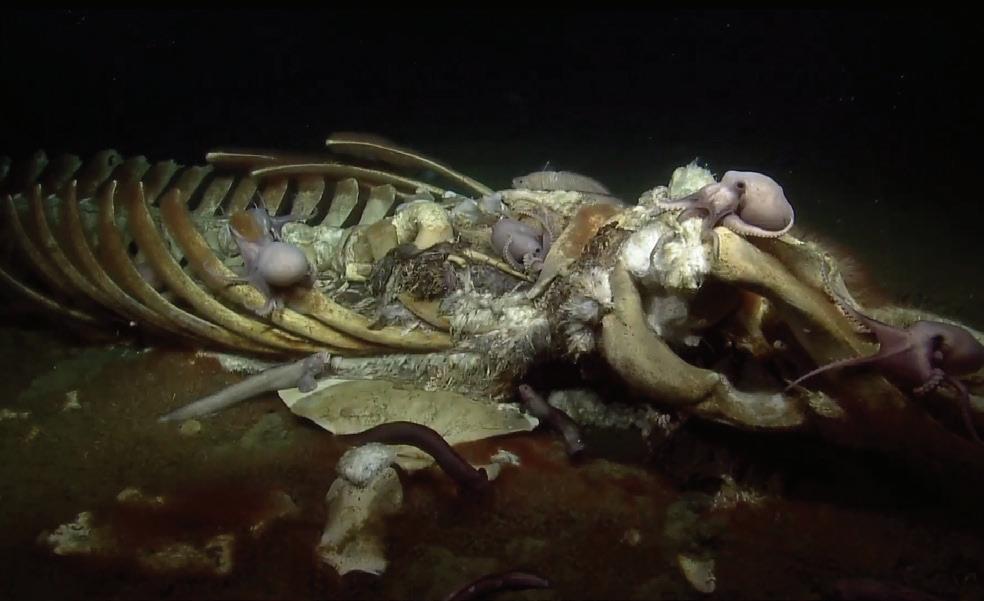
Even after death, an adult blue whale continues to impact the carbon cycle. Its massive body can store around 33 tons of carbon, and when it sinks to the ocean floor in a “whale fall,” that carbon is effectively locked away for decades — and brings nutrients to life in the deep sea, where food is usually scarce. A single whale fall can support entire communities of organisms for decades, providing shelter, food, and nutrients for hundreds of species and linking surface ocean ecosystems to the world of the deep sea.
Blue whales fertilize the ocean.
Blue whales release nutrient-rich waste near the water’s surface. Be sure to check out the Whale Poo interactive to see this process in action! Known as the “whale pump,” it recycles nutrients like nitrogen and iron back into surface waters, fertilizing phytoplankton — microscopic plants that form the base of the marine food web, feeding fish, seabirds, and marine mammals. These tiny but powerful organisms also produce about half of the world’s oxygen while absorbing large amounts of carbon dioxide.
Blue whales regulate the krill population.
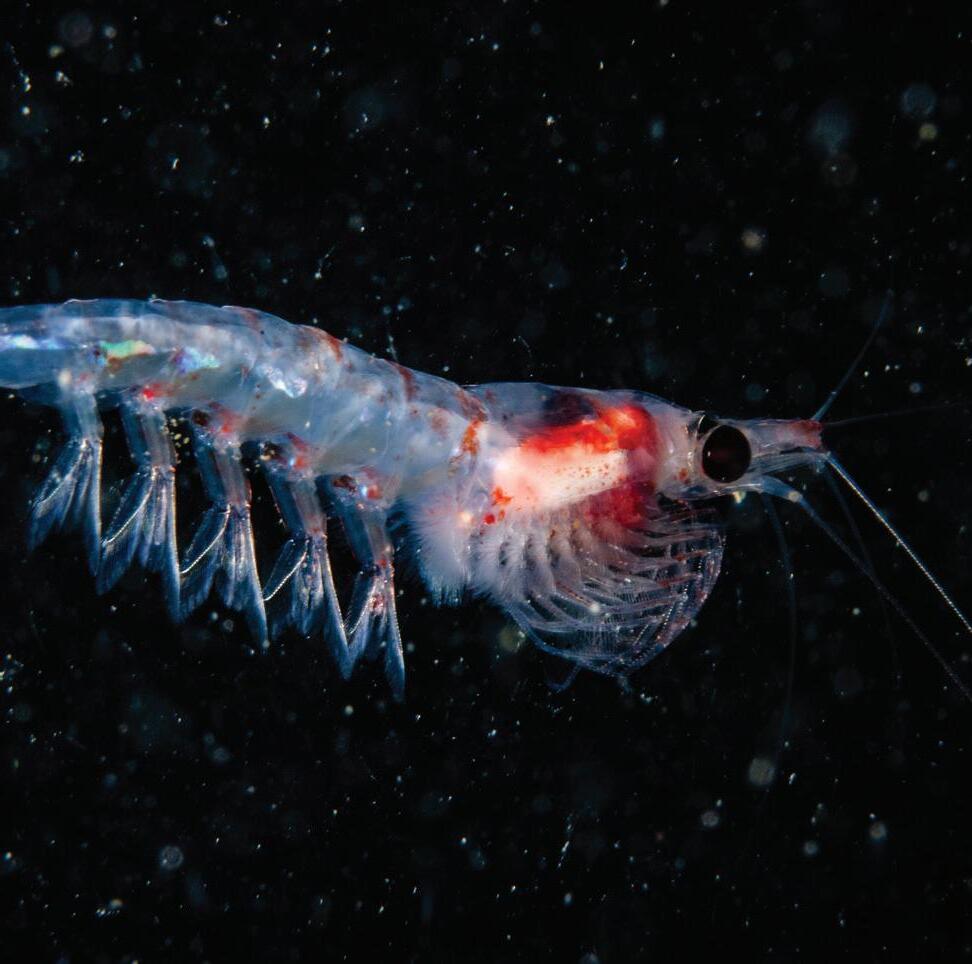
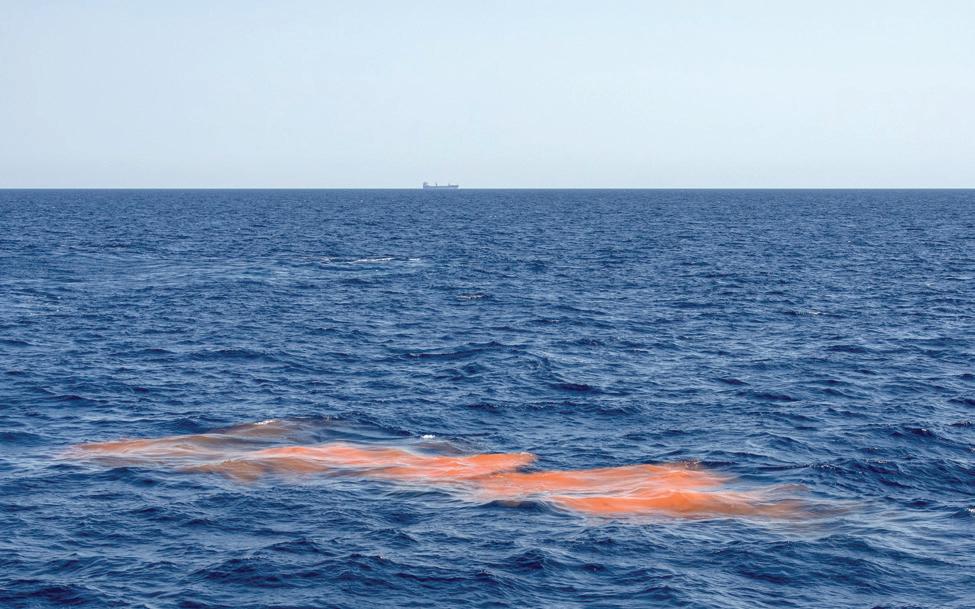
It’s hard to fathom that the world’s largest animal survives by feeding on animals that are small enough to sit in a teaspoon. Don’t miss the License to Krill game, where you can lead a blue whale on a hunt for krill – or even put on a krill costume and stand inside a blue whale’s mouth! Individual krill are tiny, but together, they gather in massive swarms that can stretch for miles and contain millions. These dense swarms allow blue whales to consume 3-4 tons of krill per day during peak feeding season.
While blue whales consume krill, their nutrient-rich waste stimulates the growth of phytoplankton, the very food krill depends on. Rather than simply reducing krill numbers, blue whales are part of a cycle that supports long-term balance. A stable krill population helps support a stable ocean ecosystem.
Photo: OET/NOAA
A UNIVERSE OF WONDER
The next generation of Planetarium Star Shows will arrive this summer at the James S. McDonnell Planetarium, powered by our new hybrid projection system and upgrades to the Bill and Laura Orthwein StarBay. Breathtakingly realistic stars, immersive 360-degree visuals, and enhanced surround sound will bring the universe down to Earth like never before.
Our live, educator-led shows are unique to St. Louis and uniquely St. Louis. Explore the stars visible from here at home
to the edge of the observable universe over 13.8 billion light years away, and everything in between. The latest space imagery and discoveries are streamed into the Planetarium each day, ensuring that every visit is an opportunity to discover something new.
From planets to black holes and constellations to nebulae, come armed with questions and leave feeling closer to the infinite.
New Planetarium Shows to Premiere at the James S. McDonnell Planetarium this Summer
SKY TONIGHT
The The Ear th Today:
The Sky Tonight has been offered at the McDonnell Planetarium in various forms since we opened in 1963, but The (New) Sky Tonight allows you to travel deeper into space than ever before! Utilizing the full capability of our GOTO Chiron III star projector hybrid with Digistar full-dome visualization system, live educators guide audiences to explore the cosmos and ensure that every show is unique.
No longer limited to only the sky as viewed from Earth, full-dome visuals will transport you to the rings of Saturn, the Andromeda Galaxy, distant exoplanets, and beyond.
Whether you are just starting to learn about the night sky or have been studying the stars for decades, The (New) Sky Tonight invites audiences to reconnect with the stars, stories, and science visible overhead each night in our region.
Supported by a grant from the American Physical Society and produced by the McDonnell Planetarium, this premiere program turns the traditional “Star Show” on its head.
Our planet changes every day, and this Planetarium Show will give a new view of Earth on every visit! Learn how to spot the increasing number of satellites visible from the ground in St. Louis, then join them in orbit to discover the immense amount of information they collect about weather, life, and Earth’s connected systems.
Live educators will guide exploration of the Earth today using real-time geospatial data, providing insights into current events and tangible impacts on our day-to-day lives. Audiences will then travel beyond the Earth as it is today to learn how scientists use data to create models and track long-term changes.
Since Earth is our one and only home in a vast universe, The Earth Today reminds us to look back, in addition to looking up.
A St. Louis classic returns for the next generation! New 360-degree visuals take advantage of the Planetarium’s entire dome to surround audiences in this timeless story. A live introduction now welcomes guests to the Planetarium environment and to sights visible from their own backyards.
Ideal for our youngest stargazers, this program follows a yellow star on its search for planets. Meet stars of different colors, sizes, and temperatures, learn what makes all stars special, and explore the planets of our Solar System in this beloved original production of the Saint Louis Science Center.
UP LATE Update: Experience Sound Returns!
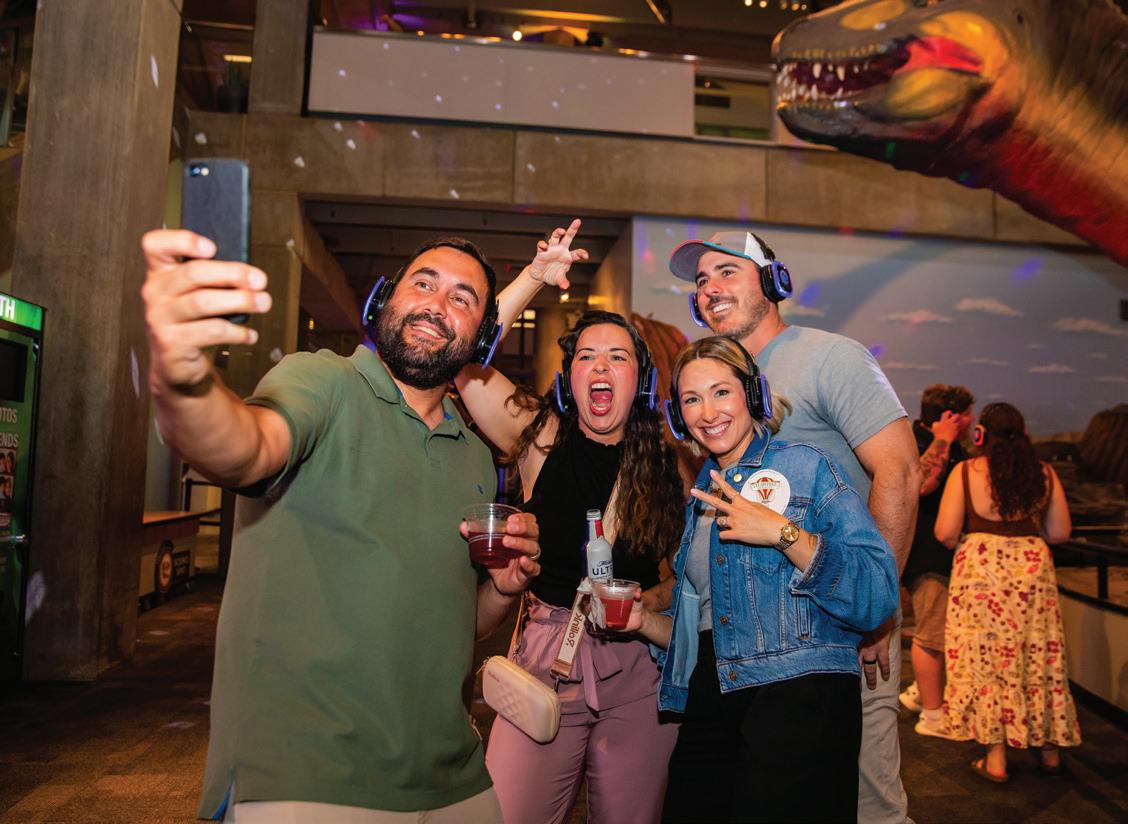
We’re rewinding the tape and bringing back Science Center Up Late: Experience Sound. The popular 21+ event returns this July 25 for an encore presentation sure to get a standing ovation!
Starting June 4
We’ll feature classic hits like Silent Disco with our T. rex, our incredible Energy Stage shows, and a hands-on Makerspace activity. We’ll also bring in some new players to turn this one up to eleven.
New highlights include:
• Sight and sound working together for incredible immersive experiences with new partners from SnapPro AV.
• Get a sneak peek The Blue Whale Story with Scientist in Residence, Dr. Jean Potvin.
• Watch local musicians perform live in our famous OMNIMAX® Theater, complete with visualized sound on the dome!
• Check out a pop-up music listening room and learn more about different system types with Audio Advice.
• And so much more!
Special themed food and beverages will be available for purchase throughout the building. All tickets include free Planetarium shows featuring our brand-new star projector system!
Science Center Up Late: Experience Sound Saturday, July 25 from 6:00-10:00pm. Must be 21 and up to attend. Tickets are on sale now at slsc.org
Offering More Play, Wonder, and Learning All Summer Long!
Little learners are naturally curious—and this summer, we’re giving that curiosity plenty of room to grow!
Our Preschool Science Series will become an open exploration Learning Lab for Small Scientists, designed around research that shows children learn best through play, inquiry, and shared experiences with the adults who care for them.
From 9:30–11:30am, our Life Science Lab will be open for small scientists ages 18 months to 5 years and their caregivers. Families are welcome to drop in, explore, and play at their own pace as space allows—stay for a little while or linger longer!
Inside the Learning Lab, you’ll discover:
• Hands-on experiments and playful STEM activities
• Opportunities to build motor, language, and thinking skills through doing
• Open-ended materials that invite tinkering, testing, and trying again
• Simple take-home ideas to help grownups keep the learning going
This flexible, joyful format lets children follow their interests, revisit favorite activities, and experience science as a playful adventure—together with you.
Come wonder, explore, and discover with us all summer long!
Picture the Music, Hear the Science
The Saint Louis Science Center is proud to have partnered with the St. Louis Symphony Orchestra this spring in support of their 36th annual Picture the Music contest. This free, cross-curricular program invites students in grades K-8 to create artwork that expresses creative thought and emotion inspired by classical music.
The 2025/2026 composition titled Contact, “Codes” (Mvt. II) by St. Louis composer Kevin Puts features rapid notes throughout inspired by possible radio transmissions sent from a distant planet.
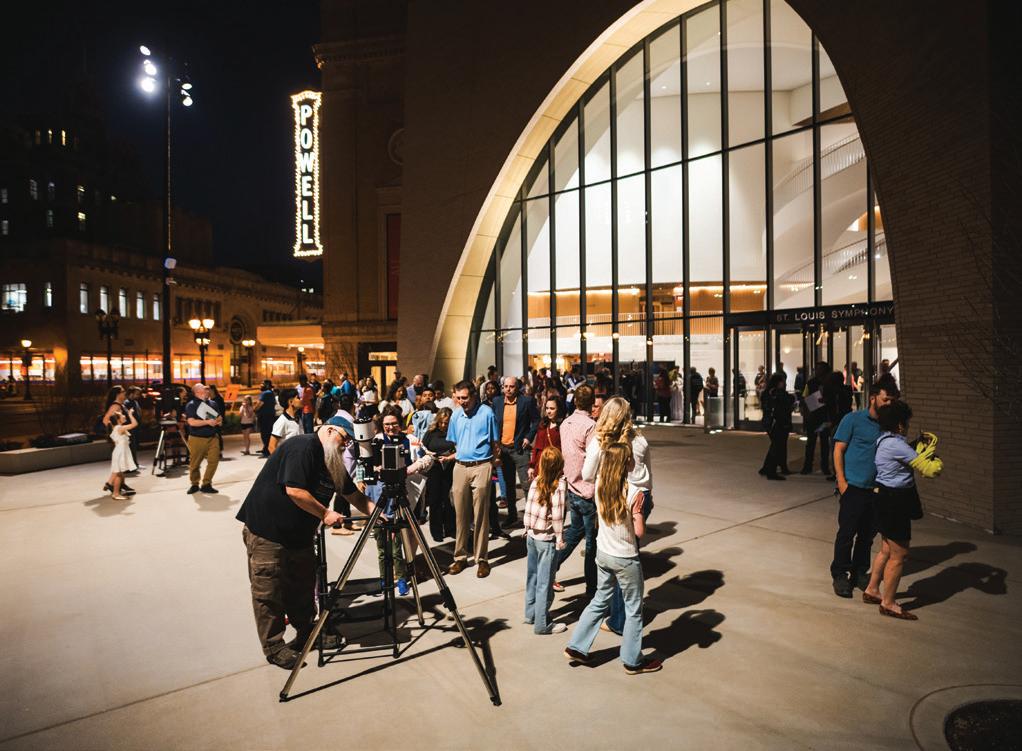
At the awards ceremony for student finalists in late March, McDonnell Planetarium educators led a telescope viewing session at the Symphony’s newly renovated Powell Hall and allowed students to experience close-up views of Venus, Jupiter, and the Moon. The winning students’ artwork was then displayed in the Planetarium’s Holekamp Family Lobby in late April for Science Center guests to enjoy.
SciFest: Play and Creativity Expo
SATURDAY, AUGUST 8 | 9:30AM–4:30PM
Meet, work and play alongside innovators, STEM experts, creatives, and entrepreneurs. Get involved and engage your own creativity and bright ideas. See the latest news about SciFest at slsc.org/scifest
@ Hi-Pointe Drive-In!
Don’t delay – this offer ends July 6.
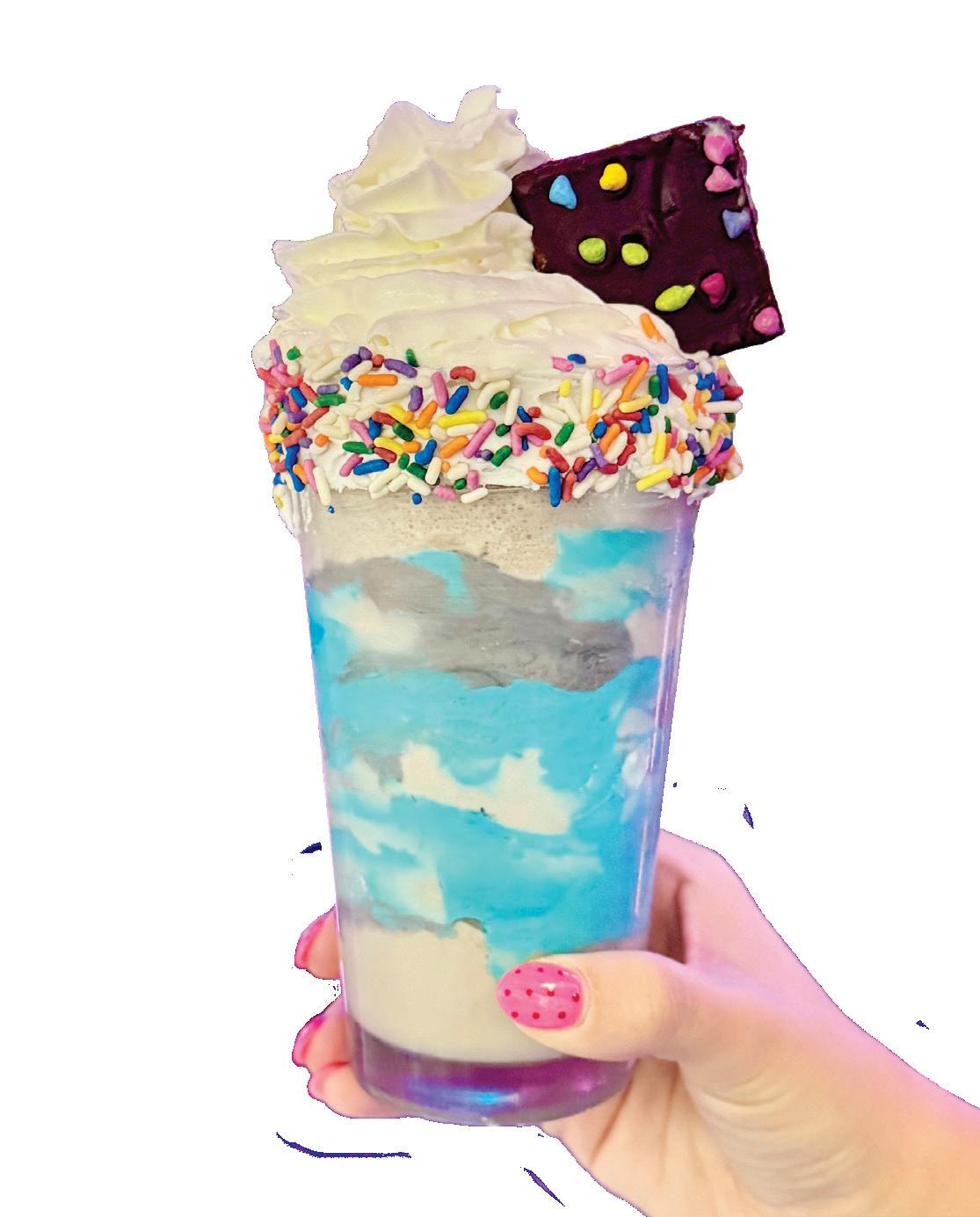
If you haven’t tried Hi-Pointe Drive-In’s Intergalactic Brownie Shake yet, there’s still time to support STEM at the Science Center while you enjoy it. Summer is the perfect time to try this treat at any of the six area Hi-Pointe Drive-In locations. In fact, we hear it pairs nicely with a visit to the cosmos in our newly updated McDonnell Planetarium!
Beginning in April, Hi-Pointe has donated a portion of proceeds from this space-age milkshake to support the Science Center’s STEM education programs and hands-on learning experiences, inspiring wonder and curiosity in thousands of students and families across the St. Louis region.
But this deal isn’t just delicious – it’s also the gift that keeps on giving! Science Center members can show proof of membership at any Hi-Pointe Drive-In location to receive a discount of their full meal ticket, while Hi-Pointe customers who bring their restaurant receipt to the Science Center can enjoy a discount on Family & Friends or Family & Friends MAX memberships.
Thank you to our friends at Hi-Pointe Drive-In for collaborating with us to make science in St. Louis even sweeter!
Weather Day: A Home Run for Area Students
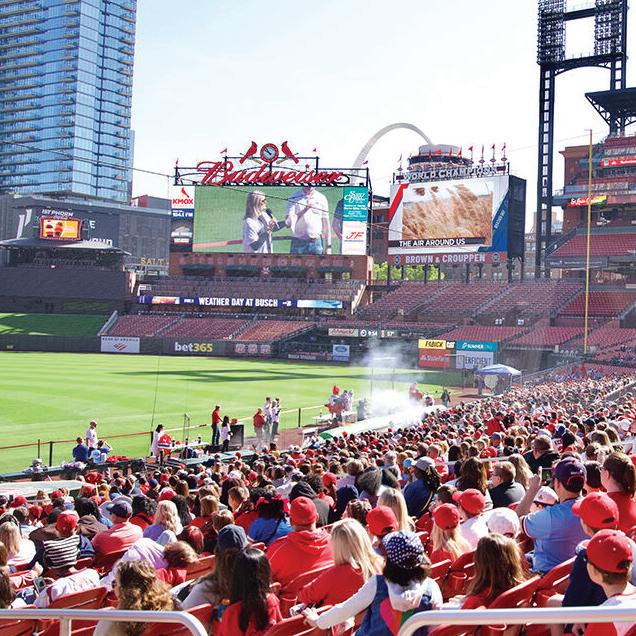
WHOOSH! CRACK! ROAR! The sounds of St. Louis returned to our downtown area this spring. Sometimes, those booming sounds thunder out of Busch Stadium during Cardinal baseball games, but other times they are generated by oncoming severe weather.
To help local schoolchildren understand the science behind these sounds and other weather phenomena, Science Center team members have joined the St. Louis Cardinals, Fox 2, and other area organizations to host Weather Day at the Ballpark. Thousands of students from throughout the bi-state area have participated in the event over the years.
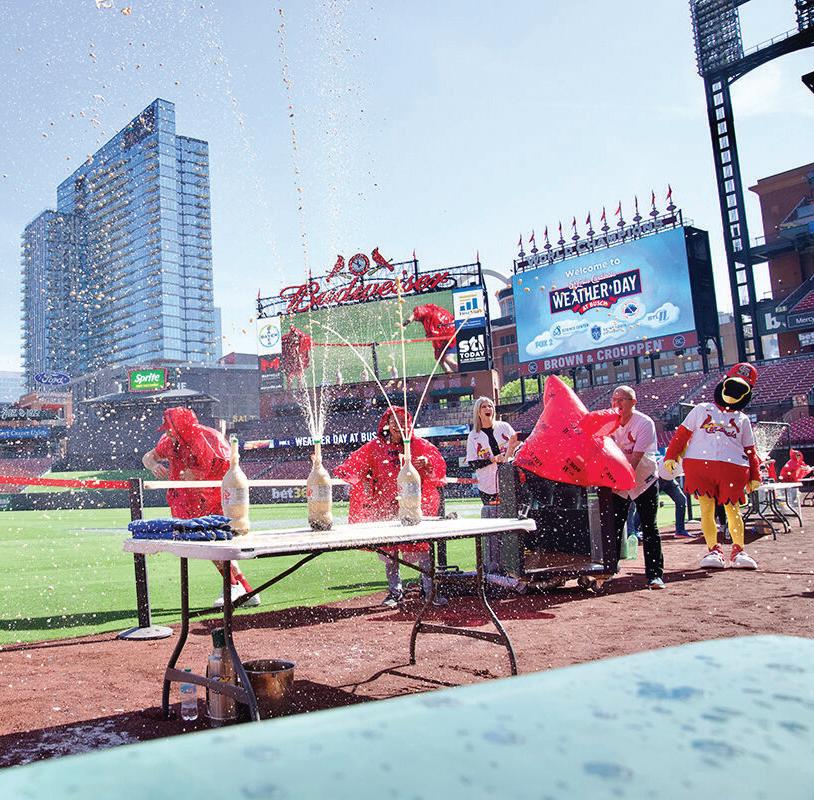
This year’s event on April 15 turned Busch Stadium into the largest science classroom in the region. During an on-field, hour-long show, Science Center team members and Fox 2 meteorologists joined Fredbird and Cardinals players to explain why changing hot and cold fronts cause the heavy winds, lightning, hail, and threats of severe weather we often see in the spring.
Through Jumbotron presentations, in-person demonstrations and special surprises, each year Weather Day demonstrates how fun weather can be and how understanding why weather events happen can make them less scary. Following the presentation, participants enjoyed the Cardinals game that afternoon.
Announcing This Year’s Winner of The Carol B. and Jerome T. Loeb Prize for Excellence in Teaching Science and Mathematics
For over 30 years, the Loeb Prize has honored outstanding science and math educators in the St. Louis area who demonstrate a passion to inspire learning.
This year, Christy Lewis, who teaches algebra, geometry, pre-calculus, and cybersecurity at Hazelwood West High School was awarded the Carol B. and Jerome T. Loeb Prize for Excellence in Teaching Science and Mathematics at an event celebrating the finalists at the McDonnell Planetarium on May 21.
This year’s event also honored Christian Viernes, from Hazelwood Central High School, as the second-place honoree. Other finalists included Benjamin Martin from Little Creek Nature Area and Ferguson Florissant School District, April Grob from John-Wabash 6th Grade Center, and Heather Beasley from Northview Elementary.
“Great teachers create a strong foundation and a love of learning for their students,” said Carol Loeb, a math teacher for more than 60 years, who along with her husband, the late Jerome T. Loeb, established the Loeb Prize in 1995 in partnership with the Saint Louis Science Center.
“This year’s nominated teachers are an extraordinary group of highly qualified and dedicated educators. They are masters of their subjects, technologically savvy, innovative in their classrooms and consummate professionals. It is most rewarding to be able to recognize these outstanding teachers of tomorrow’s STEM leaders.” Carol Loeb is also a long-time member of the Science Center’s Board of Trustees.
“The Science Center is proud to celebrate our 30-year partnership with the Loeb Family in recognizing and rewarding outstanding teachers dedicated to STEM education and shaping the future,” said Dr. Ray Vandiver, president and CEO of the Saint Louis Science Center.
“I believe students perform at their highest levels when they feel seen, valued, and supported. Strong bonds create the foundation for academic risk-taking and growth. Equity ensures that every student— regardless of background, identity, or ability—has meaningful access to rigorous learning opportunities.”
- Loeb Prize 2026 Winner Christy Lewis
SMITHSONIAN IN YOUR STATE
In 2026, the Smithsonian Institution is helping America celebrate two major milestones: the 250th anniversary of the United States Postal Service (which was in 2025) and, of course, the 250th anniversary of the United States itself! As one of Missouri’s Smithsonian Affiliates, the Saint Louis Science Center is excited to participate in their upcoming video series, Smithsonian in Your State.
Smithsonian in Your State is designed to connect every corner of America to the treasures of the Smithsonian and its valued Affiliate partners, bringing engaging digital content to elementary students, educators, libraries, and homes. For the Science Center, it’s an opportunity to collaborate on a project that reflects both local and national history. St. Louis played a major role in the Space Race and the eventual moon landing, so we will be highlighting the work of
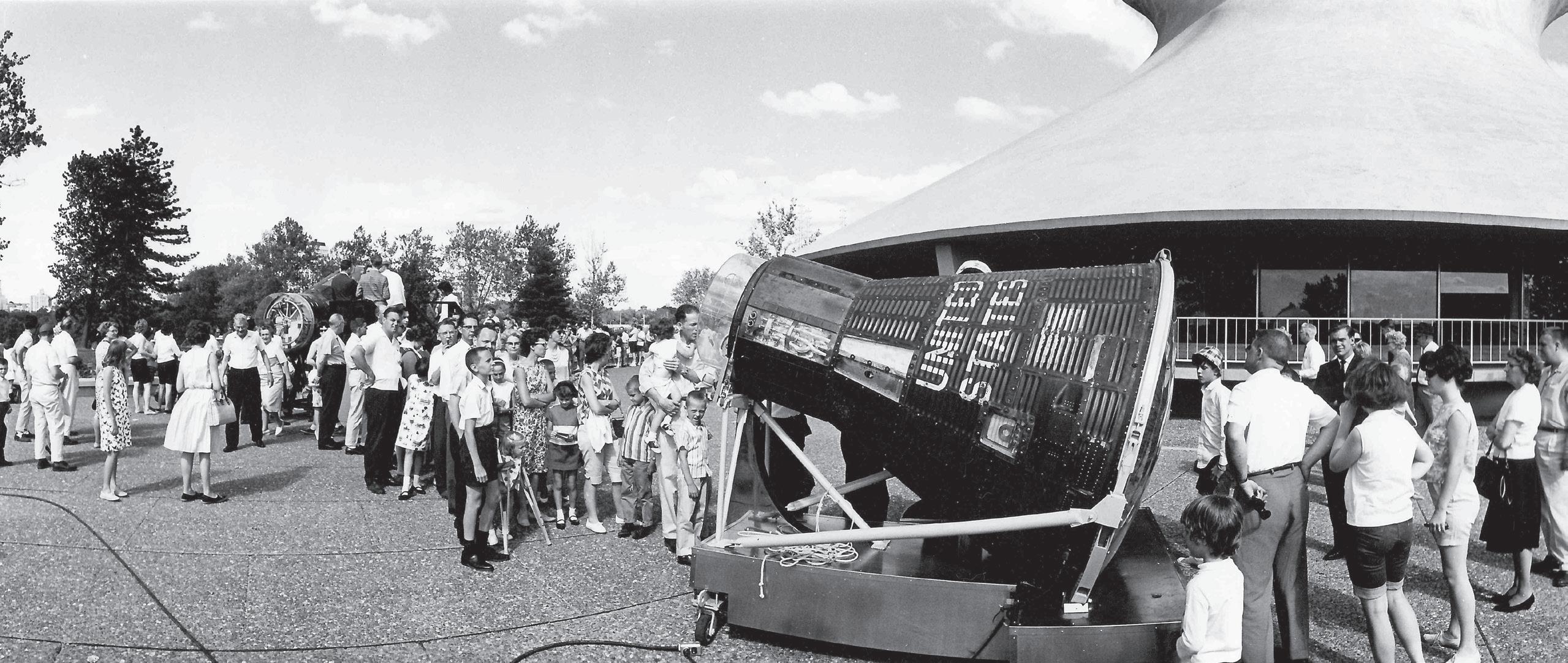
McDonnell Aircraft, who developed America’s first and second space programs, Mercury and Gemini.
Focusing on Gemini 3A, the test capsule on display at the James S. McDonnell Planetarium, we will create a short video to share the historic triumphs of the Gemini program, which McDonnell Aircraft produced here in St. Louis. Educators at the National Postal Museum will then connect relevant stories from their collection with ours, creating an opportunity to link our local story with national history.
Filming for the project is set to conclude by late summer, and the aim is to create 52 videos, one for each state, as well as the District of Columbia and Puerto Rico. The Smithsonian hopes to release these videos by year’s end. Stay tuned to our social media channels for updates!
Join us for our signature fundraising event
Saturday, October 3, 2026
Chairs: Edward and Margot Monser
Co-Chairs: Mark and Anna Sears
A night to support the mission of the Saint Louis Science Center and champion the spirit of discovery, innovation, and momentum that carries us forward, Club WONDER invites you to be part of a high-energy, activity-driven celebration and experience the Science Center in a fresh, social, and immersive way.
Explore captivating science experiences; enjoy delicious hors d’oeuvres, cocktails, and refreshments; and help ignite curiosity as part of a community of supporters who believe the wonders of science belong to everyone.
Trillions of miles from the typical sit-down gala, Club WONDER: Light Years Ahead will surprise, delight, and inspire with signature moments taking you to new planets, stars, and beyond—all without ever leaving your Science Center.
Sponsorship opportunities for Club WONDER: Light Years Ahead are now available. More than traditional event visibility, Club WONDER gives partners the chance to be part of one of the Science Center’s signature philanthropic evenings; an energetic, immersive experience that helps underwrite the full breadth of our work year-round. With a limited number of sponsor moments woven directly into the guest experience, this is a meaningful opportunity to engage audiences and support lasting community impact.
Scan the QR code or visit slsc.org/club-wonder to learn more.
EINSTEIN SOCIETY CORPORATE PARTNERS
Mission Moments &
FEBRUARY 2026
MIX, MAKE, MINGLE
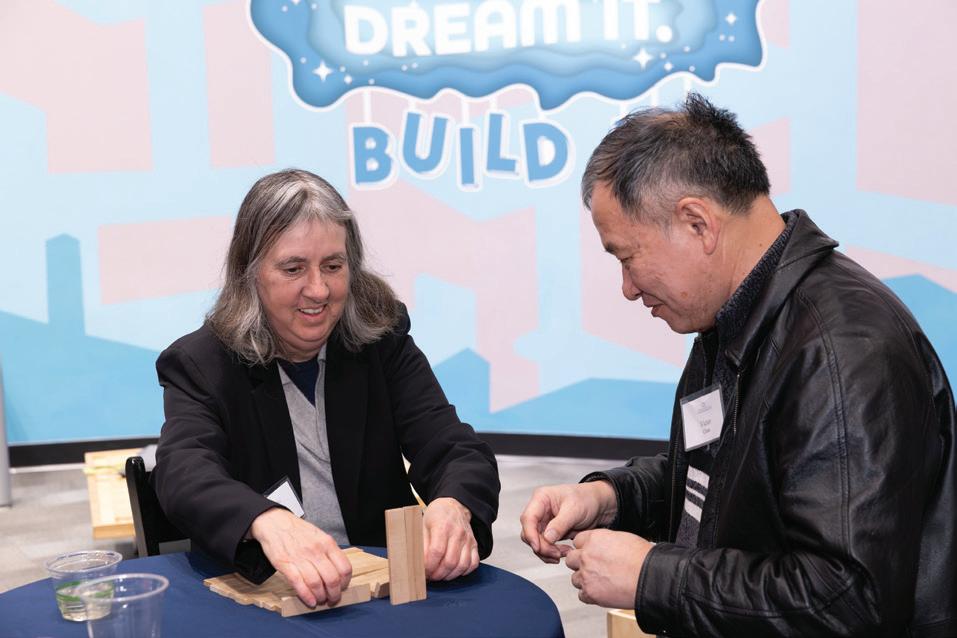
Members of the Saint Louis Science Center’s Einstein Society and Corporate Partners gathered in the Makerspace gallery for a taste of why making matters.
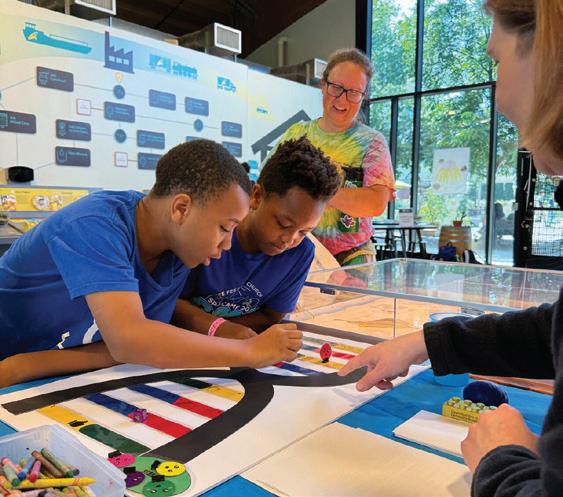
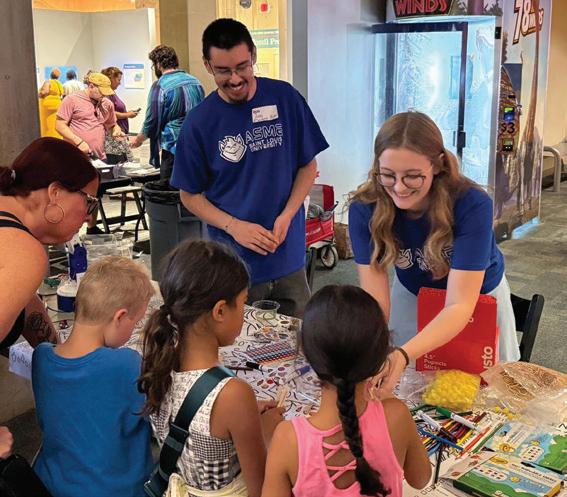
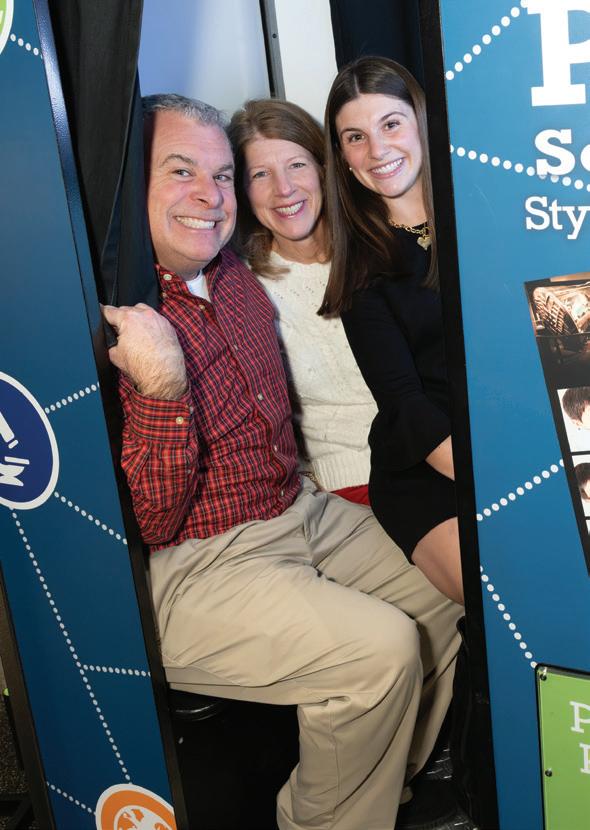
The evening celebrated the joy of learning by doing, which empowers everyone to think, learn, experiment, collaborate, and problem solve. Guests tested their engineering skills with a KEVA Block Challenge, tinkered with Rigamajig components and LEGO tables, explored hands-on activities in the Makerspace Classroom and 3-D printing in the Garage, expressed their creativity through a “community build” art piece, designed snacks at a build-your-own pasta bar, and mingled with each other and Science Center President and CEO Ray Vandiver. Guests also made their own keepsakes of the night in the Science Center’s photo booth.
“As one of the few free-to-enter science centers in the country, the Saint Louis Science Center relies on Einstein Society and Corporate Partner members to ensure that everyone has the chance to explore, question, and discover with us,” says Chief Institutional Advancement Officer Bobby Sanderson. “So much of this happens in the Makerspace, and it was a pleasure to showcase it with such a dedicated community of leaders.”
MARCH 2026
Science on the Move Tour of the Purina Institute
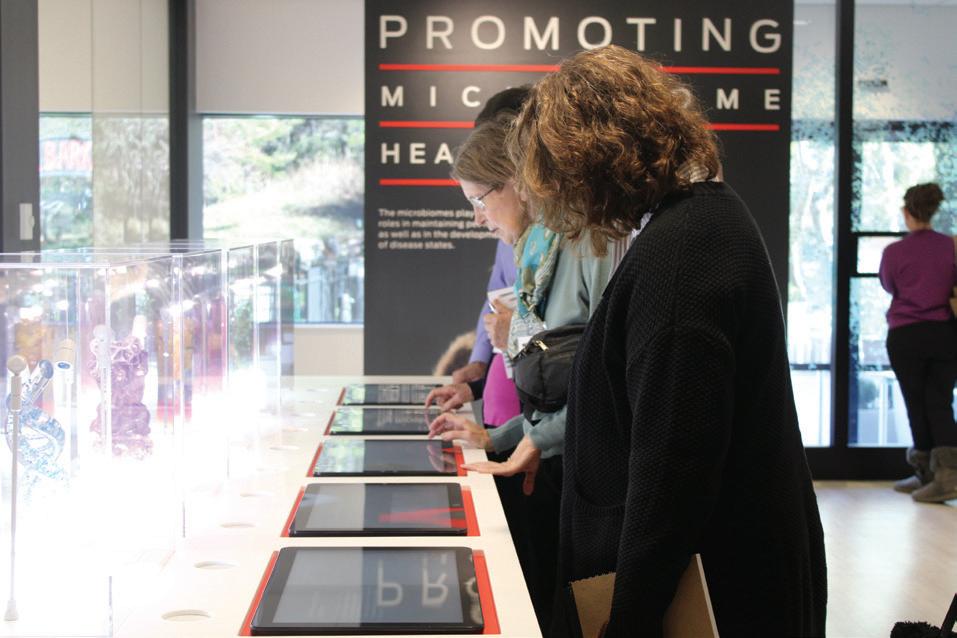
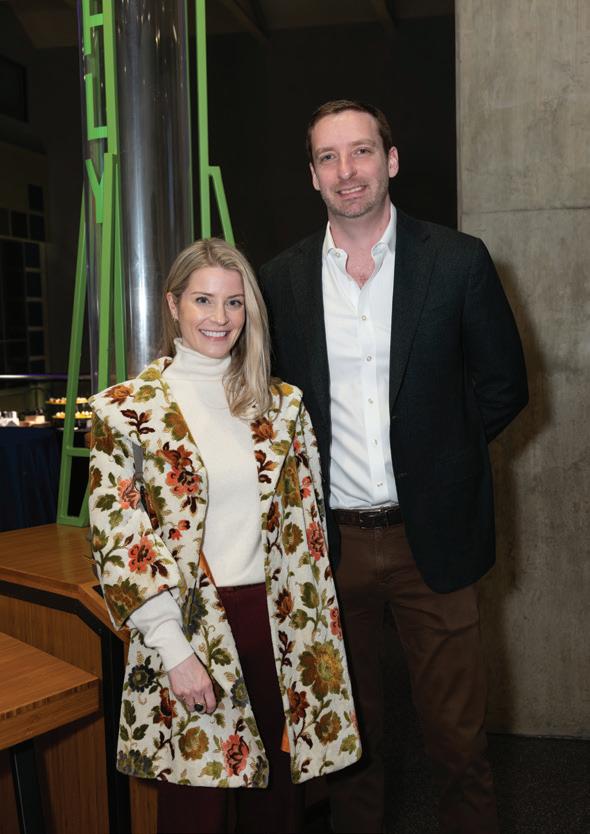
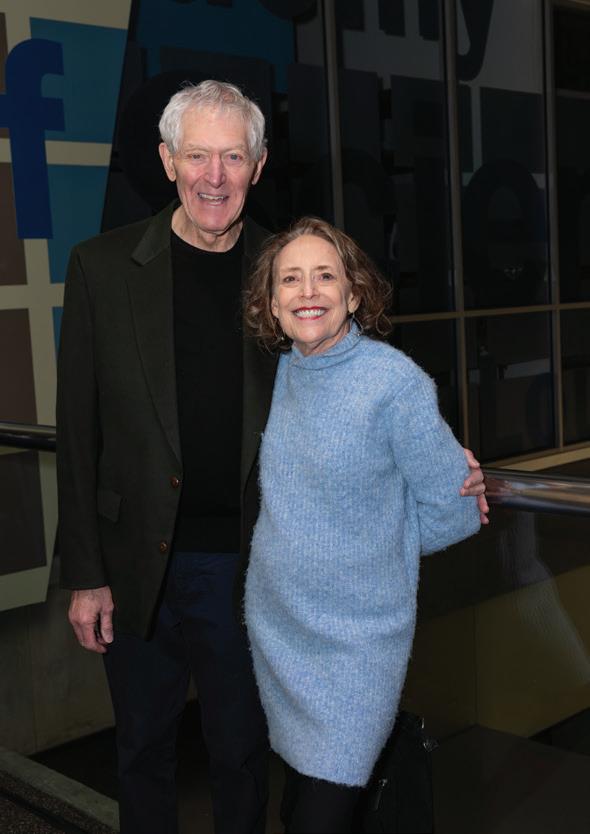
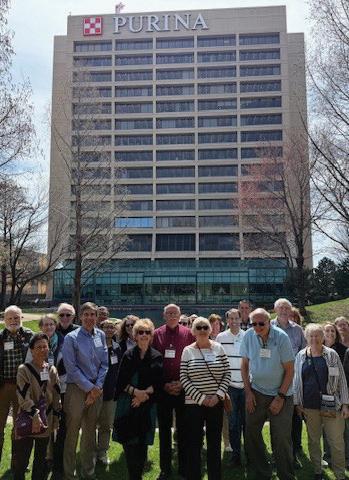
Einstein Society members connected with local innovation at a special tour of a global leader in unlocking nutrition to help pets live better, longer lives. Located on the Nestlé Purina campus near downtown St. Louis, The Purina Institute shares its own leading-edge research and evidence-based information from the wider scientific community in an accessible, actionable way to empower veterinarian professionals and pet care givers around the world.
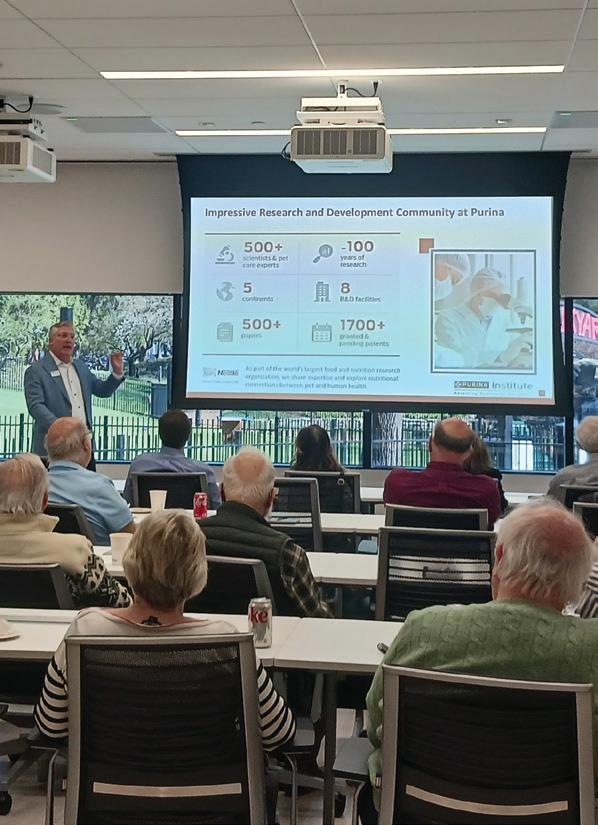
Guests enjoyed a guided tour of the beautiful Nestlé Purina campus, then met the Purina Institute’s Dr. Jason Gagne, who shared the latest in how they are harnessing the power of research into nutritional technologies that help improve and extend the lives of cats and dogs. Guests also explored the Purina Institute’s state-of-the-art interactive exhibit space with Dr. Kimberly May, enjoying a hands-on showcase of nutrition science and breakthrough discoveries.
Many thanks to our Einstein Society members for spending an afternoon with us surrounded by science, and to Nestlé Purina – also a direct supporter of the Science Center’s mission as a corporate sponsor – for hosting us.
Einstein Society members and Corporate Partners made gadgets, structures, and memories at an adults-only evening in the Makerspace gallery.
Einstein Society members learned the latest in pet nutrition innovation through hands-on exhibits and scientists leading the way.
Opportunities like this are just one way our Einstein Society and Corporate Partner Members enjoy deeper engagement with the Science Center community. If you’ve ever wondered what it feels like to step behind the scenes and experience science in action, this is the kind of moment waiting for you when you join at these levels.
Saint Louis Science Center
The Einstein Society is a catalyzing community of supporters who share our vision for a world where everyone is empowered to discover what science makes possible.
Saint Louis Science Center
Saint Louis Science Center
Learn more about the Einstein Society at slsc.org/einstein-society.
CORPORATE PARTNERS
Saint Louis Science Center CORPORATE PARTNERS
Partner with the Saint Louis Science Center to make a tangible difference in young lives, foster economic growth, and create a more inclusive, skilled workforce.
Learn more about the Corporate Partner Membership program at slsc.org/corporate-partners.
Partner Pop Up Brings Neuroscience Innovation to Life
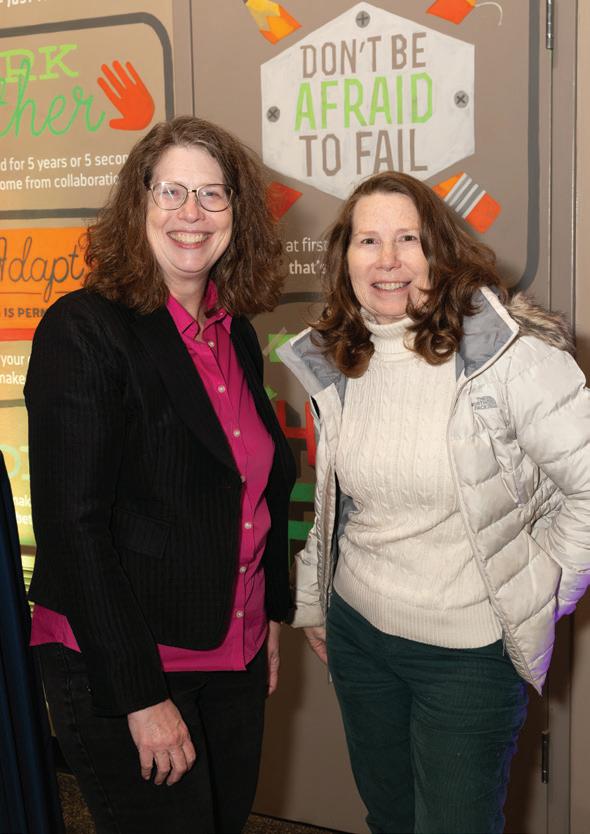
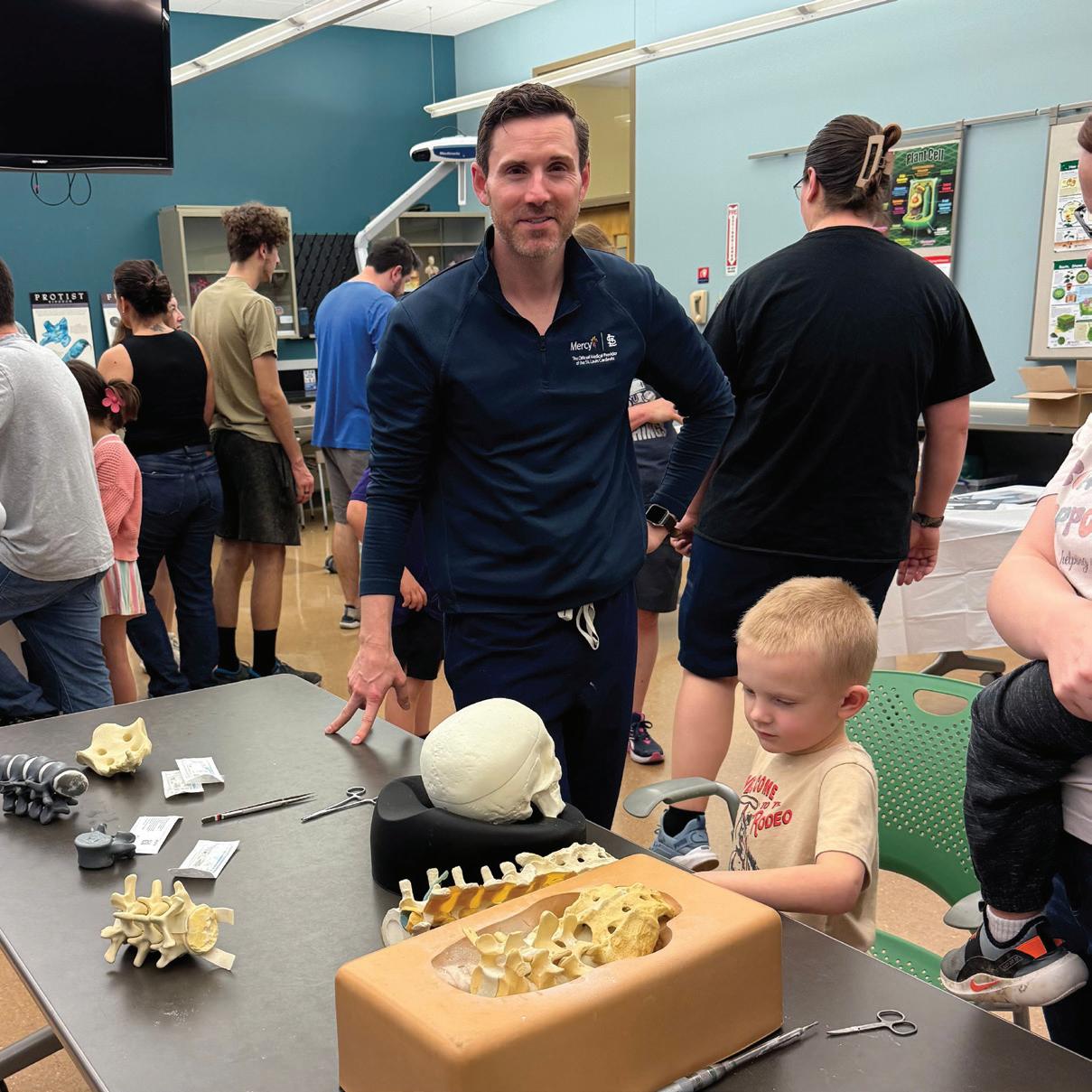
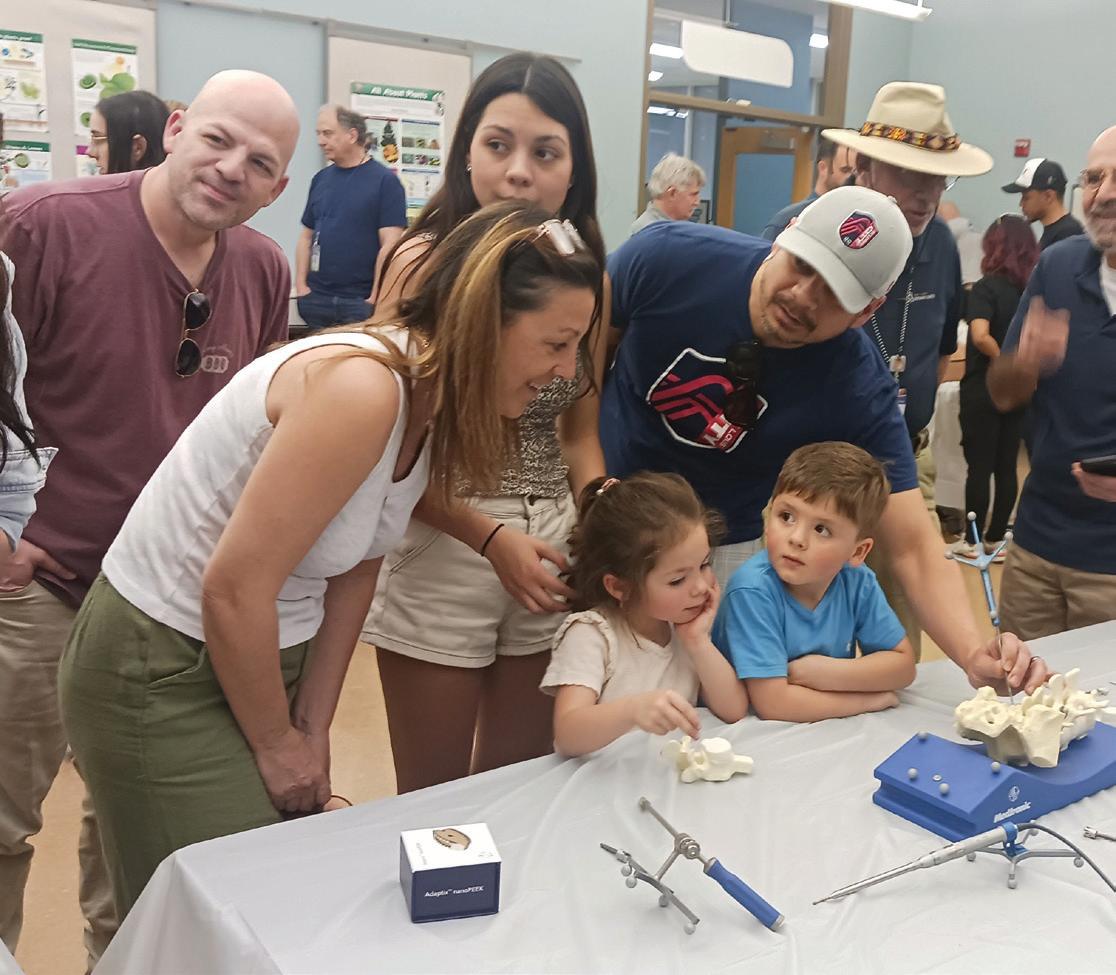
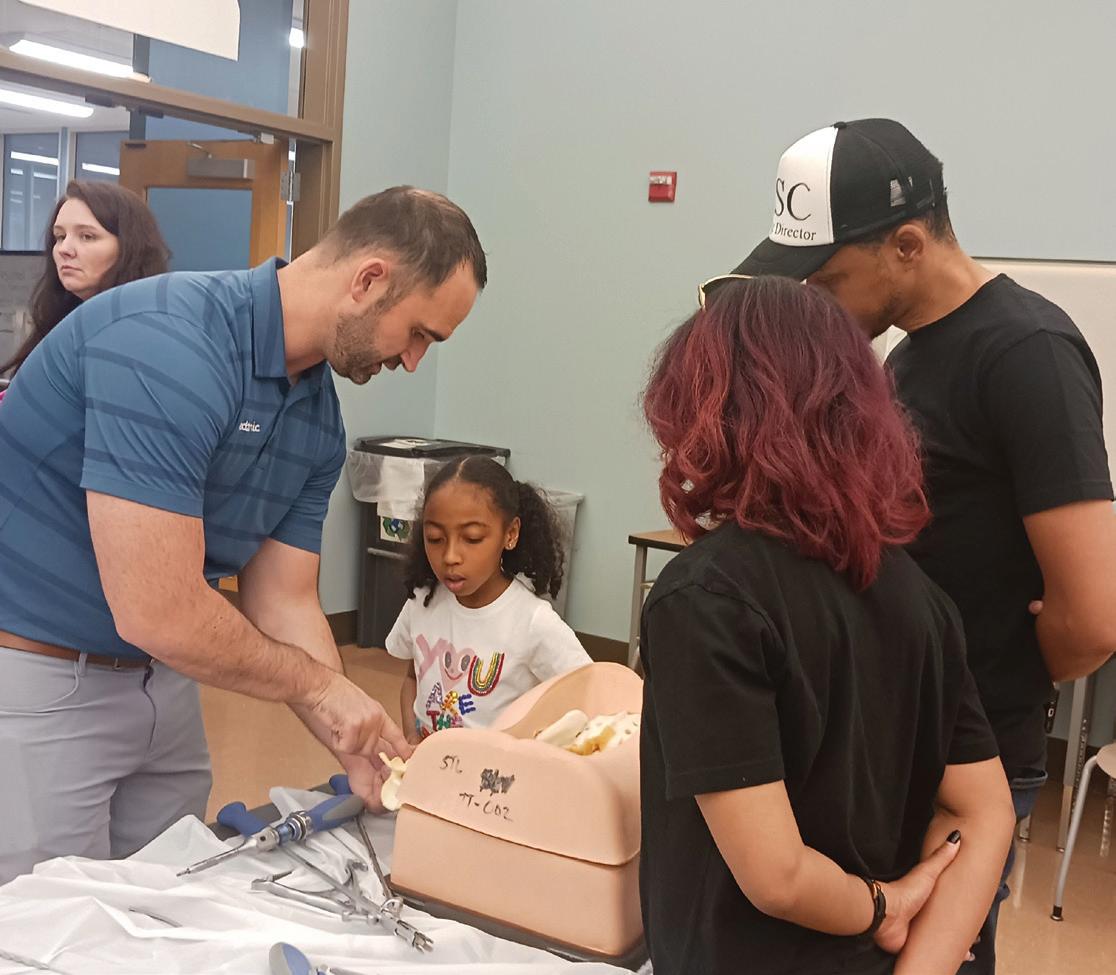
Have you ever wondered what it would be like to step into the shoes of a neurosurgeon? On March 21, guests at the Saint Louis Science Center got that chance during a Partner Pop Up with Alex Michael, MD, FACS and Medtronic.
At stations in the Life Science Lab, children, teens, and adults were able to attempt using a bone drill, suturing, and probing brain models using minimally invasive technology and state-of-the-art imaging.
“Our goal was to showcase how augmented reality and surgical navigation tools are transforming modern brain and spine surgery,” said Dr. Michael, who currently serves as chief of the neurosurgery section at Mercy Hospital South and will join the faculty of the Taylor Family Department of Neurosurgery at WashU Medicine in July 2026. Dr. Michael added, “By offering the public a hands-on, high-tech glimpse of the kind of demonstrations typically seen at national neurosurgical conferences, we hope to inspire future generations to consider careers in medicine and science.”
Science Center President and CEO Ray Vandiver said, “The Partner Pop Up with Dr. Michael and Medtronic lit up the Life Science Lab like no one has ever seen.” We look forward to offering more hands-on, STEM-based Partner Pop Ups like this one in the future!
Alex Michael, MD, FACS, leading the Partner Pop Up with Medtronic.
SCIENCE on the M O V E SCIENCE on the M O V E
Behind-the-Scenes Experiences Connecting Einstein Society Members with Science and Innovation Emerging in St. Louis
Upcoming Events
JUNE 2026
Tour of Ponce Health Sciences University
Visit our region’s newest educator of future physicians, nurses, and clinical psychologists. Einstein Society members will see how the latest technology is integrated into the learning environment, empowering students through rigorous academics, hands-on training, and a global perspective. Attendees will also try their hand at diagnosing in the Clinical Simulation Lab. Space will be limited
SEPTEMBER 2026
Tour of 4 Hands Brewing Company
Einstein Society members will see the science of brewing and distilling at the source with a guided, behind-the-scenes experience among the tanks and stills. Then, stay for snacks and a complimentary beverage in the Tasting Room! Space will be limited
Learn more about the Einstein Society at slsc.org/einstein-society.
5050 Oakland Ave. St. Louis, MO 63110
NewScience is always GREEN
The Saint Louis Science Center is a committed steward of the environment. We are proud to continue to offer the digital and interactive version of NewScience at slsc.org/newscience
If you would like to opt for a sustainable choice and only view NewScience digitally, please send an email to us at memberships@slsc.org to no longer receive a paper subscription.