JUNE 2026
VOL. 1 | ISSUE 2
LIGHTINGTHEWAY A physician publication of Saint Francis Health System
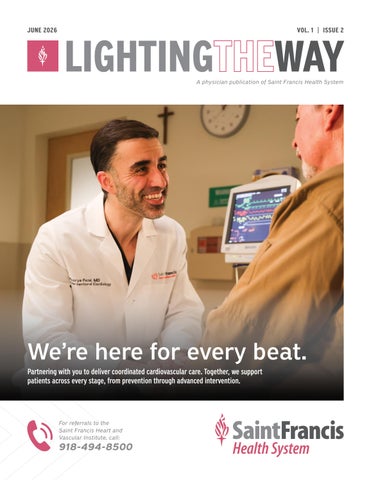
We’re here for every beat. Partnering with you to deliver coordinated cardiovascular care. Together, we support patients across every stage, from prevention through advanced intervention.
For referrals to the Saint Francis Heart and Vascular Institute, call:
918-494-8500
TABLE OF
CONTENTS 4 The Pulse of Change 6 ECMO Program Regional Leader 7 About Shock Team 8 Vascular & Thoracic Surgery 10 Advanced Plaque Analysis 12 Noninvasive Cardiology 13 Structural Heart Care 14 Comprehensive Arrhythmia Care 15 Advancing Heart Failure Care 16 Women’s Heart Health 18 Advancing VTE Care in Oklahoma 19 Cutting Edge Cardiac Research Lighting the Way is a publication created by physicians for physicians, and is published by Saint Francis Health System— Northeastern Oklahoma’s largest healthcare network. Based in Tulsa, Saint Francis is a Catholic, not-forprofit health system anchored by Saint Francis Hospital, a 1,112-bed facility, that is the largest hospital in Oklahoma. The health system also includes hospitals in south Tulsa, Muskogee, and Vinita; the Laureate Psychiatric Clinic and Hospital; and more than 100 Warren Clinic locations. For more information, visit saintfrancis.com. To learn more about this publication or to opt out of receiving it, email dmhaley@saintfrancis.com. Tina Ames
Vice President of Marketing and Communication
Kelly Green
Director of Marketing and Communication
Wayne Greene Communication Manager
Robbie Ulrich
Creative Services Manager
2
L I G H T I N G T H E WAY
DEAR COLLEAGUES, At Saint Francis Health System, we are committed to a simple but profound standard: to provide exceptional care for every patient, every time. Nowhere is that commitment more evident than in the work of the Saint Francis Heart and Vascular Institute, where innovation, team-based care and compassion come together to transform lives. We are proud to distribute the latest edition of “Lighting the Way,” a publication created specifically for the medical community. This magazine is more than a collection of stories—it is a window into the advanced clinical care, groundbreaking research and collaborative spirit that define our approach to cardiovascular medicine. The magazine is written for physicians by physicians, emphasizing what you want to know. Inside, you will discover: • Clinical spotlights on complex interventions and surgical advancements • Forward-looking features on emerging technologies and innovative therapies • Useful information to help connect your patients to the best cardiovascular care in Oklahoma when they need it Our goal is to share knowledge, foster collaboration and strengthen the connections that make our state’s medical community so extraordinary. Whether you practice in a large metropolitan hospital or a rural clinic, we hope this magazine informs you and offers insights that enhance your ability to provide great care to your patients. Thank you for your dedication to improving the health and well-being of Oklahomans. Together, we can continue to raise the standard of cardiovascular care and ensure that every patient receives the best possible outcome. Respectfully,
Cliff Robertson, MD
President and Chief Executive Officer Saint Francis Health System
Reetu Singh, MD
Chief Medical Officer Saint Francis Health System
S A I N T F R A N C I S H E A LT H S Y S T E M
3
THE PULSE OF CHANGE From rapid expansion to elite distinction, Heart and Vascular Institute rises as a regional referral center with national impact.
Who makes up the Heart and Vascular Institute Clinical Team
BY POORYA FAZEL, MD The pace of transformation at Saint Francis Heart and Vascular Institute (HVI) has accelerated dramatically—and the results speak for themselves. In November, DNV Healthcare designated HVI as a Cardiac Center of Excellence, with certifications in advanced heart failure, extracorporeal life support (ECMO), and ventricular assist device (VAD) therapy. This distinction places us among an elite group—only six hospitals nationwide hold this combination of accreditations. It is a clear signal of what HVI is becoming: a regional referral center with a national reputation, offering the full spectrum of cardiovascular care. 4
L I G H T I N G T H E WAY
Growth and Vision
In just three years, HVI has doubled in size, now including: 35 cardiologists, 4 CV surgeons, 3 vascular surgeons, 5 cardiac hospitalists and 38 advanced practice providers. This growth reflects more than volume—it represents a philosophical shift toward building a comprehensive, multidisciplinary institute capable of handling the most complex cases.
38 35 5 4 3
Advanced Practice Providers Cardiologists Cardiac Hospitalists CV Surgeons Vascular Surgeons
“
As one of six hospitals nationwide holding four DNV designations, our guiding principle is simple: deliver world-class care close to home.
- Dr. Poorya Fazel
”
”
Key Milestones
This is an exciting time at HVI. Recent highlights include:
COMPREHENSIVE HEART FAILURE SERVICE
• Launch of a comprehensive heart failure service, including a growing durable LVAD program • A robust ECMO program led by Dr. Aly El Banayosy, which has treated more than 100 cases in the past year
100+ ECMO CASES LAST YEAR
• National recognition in venous thromboembolism management and guideline development
NATIONAL RECOGNITION VENOUS THROMBOEMBOLISM
• Growth from one to four electrophysiologists, now operating the busiest catheter ablation program in Oklahoma • Expansion of the structural heart program, offering all FDA-approved structural heart devices
NOW OFFERING ALL FDAAPPROVED STRUCTURAL HEART DEVICES
• A state-leading cardiac surgery program, led by Dr. Robert Garrett • A thriving vascular surgery service addressing the full spectrum of peripheral vascular and venous disease • A growing research portfolio, including current trials in heart failure, structural heart disease and peripheral vascular disease that bring state-of-the-art care close to home for Oklahomans • A commitment to education in partnership with the OSU Center for Health Sciences as a primary training site for OSU’s cardiology and interventional cardiology fellowships
4
ELECTROPHYSIOLOGISTS STATE LEADING CARDIAC SURGERY PROGRAM
Impact on Patient Care
The difference this makes for patients is profound. Consider those with critical valvular disease who were once deemed inoperable. A decade ago, these patients were sent home without options. Today, transcatheter valve interventions routinely restore quality and longevity. This is not the exception at HVI; it is the standard. Every day, our teams deliver life-changing, life-sustaining care.
Looking Ahead
What’s next: expanded access. HVI currently operates at Saint Francis Heart Hospital and 10 satellite sites, but our goal is to bring this level of care to every corner of Eastern Oklahoma, especially underserved communities. We are fortunate to work in a health system that values patient-centered care, clinical innovation and physician engagement. There is no finish line, only continuous growth and improvement. Thank you for your partnership in advancing cardiovascular care. Together, we are shaping the future of heart health in our region and beyond. Poorya Fazel, MD, is the System Medical Director, Saint Francis Heart and Vascular Institute.
S A I N T F R A N C I S H E A LT H S Y S T E M
5
ECMO PROGRAM BECOMES REGIONAL LEADER IN FIRST YEAR Expanding access to advanced ECMO care as a source of comprehensive circulatory and respiratory support.
“
Since launching our new ECMO program in May 2024, Saint Francis Hospital has rapidly expanded its capabilities, infrastructure and outcomes to become a leading regional center for advanced mechanical circulatory and respiratory support. One of our earliest milestones was staffing the cardiovascular ICU with 24/7 dedicated cardiovascular intensivists. With five cardiac intensivists and six advanced practice providers specialized in ECMO, LVAD and Impella management, we now deliver the highest level of continuous, expert critical care without the need to transfer our highest risk patients elsewhere. Among the accomplishments I am most proud of is our portable “suitcase ECMO” program, which allows us to transport a fully functional ECMO system to outside hospitals, initiate support on-site and safely transfer patients back to Saint Francis accompanied by an intensivist on an ambulance. This capability has been transformative for referring facilities and lifesaving for patients who otherwise would not survive transport. My own experience with ECMO dates back to 1986 in Germany, when early-generation pumps caused significant blood trauma and restricted support duration to only a few days. Today’s magnetically levitating pumps, improved oxygenators and 6
L I G H T I N G T H E WAY
To date, we have successfully managed more than 130 veno-venous and veno-arterial ECMO cases.
“
BY ALY EL BANAYOSY, MD
advances in hemocompatibility allow us to maintain support for weeks to months, paired with a highly trained, multidisciplinary team of more than 100 professionals.
As technology evolves, I continue to learn—always. We report our outcomes to the international ECMO registry, and I am pleased that our survival exceeds expected rates. For patients with an anticipated mortality of 75%–90%, our current survival is better than 50%, even as we accept some of the most severe and high-risk cases, not restricting the patients to those with a better prognosis. Looking ahead, our next major initiative is implementing an ECPR program, including out-ofhospital ECPR in collaboration with EMSA, with the goal of providing immediate ECMO initiation for any arrest within 30 minutes of our center. Our vision is clear: to establish Saint Francis as the regional leader in advanced circulatory support. Dr. Aly El Banayosy is the Medical Director Acute Circulatory Support and Specialty Critical Care Saint Francis Heart and Vascular Institute.
ABOUT SHOCK TEAM REWRITING THE PROGNOSIS FOR CARDIOGENIC SHOCK BY DOUGLAS ENSLEY, MD For patients presenting in profound cardiogenic shock—often an acute myocardial infarction compounded by critically low blood pressure—our options were once extremely limited. Historically, these patients relied solely on vasoactive infusions in the ICU, and mortality for cardiogenic shock exceeded 50%. Many were so unstable that survival beyond the first hour was uncertain. Today, supported by ECMO and a comprehensive shock algorithm, we have a vastly expanded toolkit. Consider a patient arriving with STEMI and a blood pressure of 70/50. Years ago, balloon angioplasty alone offered only a modest chance of survival. Now, mechanical circulatory support can be initiated early, dramatically improving outcomes.
- Dr. Douglas Ensley
Our shock response is fully protocolized. A STEMI alert triggers immediate mobilization of cardiology, the cath lab, echocardiography and our cardiovascular ICU team. These critically ill patients require meticulous, coordinated oversight, and our multidisciplinary approach ensures they receive the highest level of care. The key word here is team.
Physicians sometimes function in their own silos, and that works well for many medical conditions. In the case of shock, however, a multidisciplinary approach is absolutely critical. Many consulting specialties are involved in the care of these patients with the core team being cardiac intensivists, cardiovascular surgeons and heart failure cardiologists. We are extremely proud of the way these three physician groups have worked together as a team at all hours of the day and night. Thanks to advanced technology and an integrated team, Saint Francis now can deliver fullspectrum shock management close to home. Dr. Douglas Ensley is a cardiologist specializing in advanced heart failure.
“
Thanks to advanced technology and an integrated team, Saint Francis now can deliver full-spectrum shock management close to home.
One major advancement is the Impella platform. Inserted percutaneously via the femoral artery or surgically through the axillary artery, the device supports left ventricular output while the myocardium recovers, increasing survival for acute MI with shock to 70% to 80%. For more severe cases, we employ the Impella 5.5 or additional ventricular assist devices for right or biventricular failure.
S A I N T F R A N C I S H E A LT H S Y S T E M
7
”
VASCULAR & THORACIC SURGERY: INNOVATION VASCULAR SURGERY: HYBRID PROCEDURES AND LONGITUDINAL CARE BY ANDRES GUERRA, MD, MS Vascular surgery has advanced considerably since becoming a distinct specialty in the late 1990s, and ongoing innovations in endovascular technology continue to transform the field. Today, we manage all major blood vessels below the skull, treating the full spectrum of vascular disease, including peripheral arterial disease, limbthreatening ischemia, and thoracic and abdominal aortic aneurysms. Many aneurysms can now be repaired with endografts, often allowing next‑day discharge. A significant development is the increasing use of hybrid procedures that integrate endovascular and open surgical techniques. This approach provides multiple options—plan A, plan B, and the ability to transition to open repair if required. As a result, we can offer effective interventions for patients in their 70s, 80s, and even 90s who previously would not have been candidates for surgery.
ANSWERING YOUR CALL:
8
L I G H T I N G T H E WAY
Vascular disease often presents as other conditions—leg pain, for example, may appear arthritic when the underlying cause is
We also deliver long-term dialysis access management and comprehensive venous care, often following patients throughout their lives. Our practice is inherently longitudinal and focused on optimizing the quality of life. As a tertiary center, Saint Francis participates in device trials and early-adoption studies, allowing us to employ emerging technologies sooner and with greater precision. Recently, we performed one of the first complex thoracoabdominal endovascular aneurysm repairs in Oklahoma using a customized device—an option that would have been unattainable only a few years ago. Dr. Andres Guerra is a vascular surgeon.
vascular. Early evaluation improves outcomes, so I encourage referring physicians to send patients whenever vascular disease is even
a possibility. We maintain open communication and can frequently see urgent cases the same day. - Dr. Andres Guerra
N & COLLABORATION
CARDIOTHORACIC SURGERY: MINIMALLY INVASIVE TECHNIQUES EXPAND CANDIDATE BASE BY HOPE CORDOVA, DO The cardiothoracic surgery program at Saint Francis Heart and Vascular Institute provides comprehensive care for the full spectrum of thoracic diseases, including esophageal and lung cancer, coronary artery disease, valvular heart disease, chest wall masses and tracheal stenosis. Minimally invasive approaches have significantly advanced thoracic oncology, expanding treatment options while improving patient recovery. Where thoracotomy once required one to two weeks of hospitalization with substantial postoperative discomfort, current techniques allow for markedly reduced pain, shorter stays, and faster return to function These advances have broadened the candidate base for surgery. Patients previously considered too frail, as well as cases once viewed as borderline, may now be appropriate for intervention—though such approaches require a
dedicated, highly specialized surgical practice. Saint Francis benefits from a multidisciplinary thoracic oncology conference convened weekly with pulmonology, oncology, pathology and interventional radiology. This real‑time collaboration supports timely, coordinated evaluation of complex cases, which is essential in cancer care. Clear, direct communication with referring physicians remains a program cornerstone, with coordination prior to surgery and comprehensive postoperative plans provided upon return of care.
Tracheal Stenosis
The program also manages tracheal stenosis, an urgent and potentially life‑threatening condition. Pulmonology specialists provide immediate temporizing interventions, followed by definitive surgical repair available at Saint Francis, representing a capability unique within the region. Dr. Hope Cordova is a cardiothoracic surgeon.
ANSWERING YOUR CALL:
As subspecialization expands, determining whether thoracic or vascular surgery is the appropriate starting point can
be challenging. My guidance is simple: If the pathology is within the chest and uncertainty exists, refer the patient or
contact our clinic. Our cardiothoracic and vascular teams collaborate closely, and we will ensure patients are triaged
to the appropriate subspecialist. - Dr. Hope Cordova
918-494-8500
S A I N T F R A N C I S H E A LT H S Y S T E M
9
A MORE PRECISE APPROACH TO CORONARY RISK STRATIFICATION
How advanced coronary CT plaque analysis is enabling more personalized, earlier and informed cardiovascular prevention than calcium scoring alone.
BY NEIL AGRAWAL, MD A newer imaging approach may help many patients receive a more complete assessment of coronary artery disease risk than calcium scoring alone can provide. Coronary artery calcium scoring remains a highly useful and well-validated tool for cardiovascular risk assessment. However, calcium scoring detects only calcified plaque. It does not directly visualize non-calcified or “soft” plaque, which can be present earlier in the disease process and may contribute to future cardiovascular events. Contrast-enhanced coronary CT angiography, or CCTA, allows physicians to see both the coronary artery lumen and the arterial wall. When combined with advanced plaque-analysis software, CCTA can help quantify total plaque burden and characterize plaque composition, including calcified, non-calcified and higher-risk plaque features. This represents an important shift toward more personalized preventive cardiology. Rather than relying only on traditional risk factors such as age, cholesterol levels, blood pressure and family history, plaque analysis can provide direct anatomic information about the amount and type of coronary atherosclerosis present.
10
L I G H T I N G T H E WAY
These findings may help refine treatment decisions. For example, a patient with low or borderline calculated risk but a significant plaque burden may benefit from earlier or more intensive preventive therapy, including lifestyle intervention and lipid-lowering treatment. Conversely, reassuring imaging findings may help guide shared decision-making and avoid unnecessary escalation in selected patients. Plaque analysis is particularly useful in carefully selected patients, including those with symptoms suggestive of coronary disease, intermediate risk, a strong family history of premature cardiovascular disease or discordant findings between traditional risk scores and clinical concern. With expanding payer coverage, including regional Medicare coverage that began in late 2024 for selected indications, CCTA-based plaque characterization is becoming increasingly accessible in clinical practice. This technology is now offered at Saint Francis Heart and Vascular Institute as part of our commitment to precision cardiovascular prevention. Dr. Neil Agrawal is a noninvasive cardiologist.
COMBINED PATIENT SELECTION FRAMEWORK FOR ADVANCED CARDIAC IMAGING & PREVENTIVE CARDIOLOGY 1. Symptoms or Concerning Presentations • Unexplained chest pain or dyspnea despite normal or inconclusive initial tests • Inconclusive or discordant prior stress testing or echocardiography • Arrhythmia evaluation, including unexplained ventricular arrhythmias or suspected myocarditis 2. Elevated Atherosclerotic Risk or Abnormal Biomarker • Strong family history of premature CAD • Diabetes, metabolic syndrome or resistant hypertension • Elevated calcium score or early plaque on CTA or CCTA for appropriate patients • High Lipoprotein(a), ApoB, or other risk-enhancing biomarkers 3. Genetic or Metabolic Lipid Disorders • Heterozygous or homozygous familial hypercholesterolemia • Familial combined hyperlipidemia • Statin intolerance • Severe hypertriglyceridemia • Lipid disorders related to liver or kidney disease • These patients benefit from both advanced imaging (CAC, CTA, plaque analysis) and metabolic risk management. 4. Structural, Congenital or Cardiomyopathic Disease • Valvular disease requiring detailed morphology • Congenital heart disease (new evaluation or lifelong follow-up) • Cardiomyopathy or heart failure (ischemic vs non-ischemic evaluation, viability, fibrosis, infiltrative cardiomyopathies) • Suspected anomalous coronary anatomy 5. Procedural Planning or Post-Event Assessment • Pre-procedural planning for TAVR, mitral repair, congenital repair, LAAO or complex EP procedures • Post-MI or post-revascularization evaluation (scar burden, residual ischemia, remodeling) S A I N T F R A N C I S H E A LT H S Y S T E M
11
NONINVASIVE AND PREVENTIVE CARDIOLOGY: HELPING PATIENTS BEFORE THEY REACH A CRISIS BY PATRICK HENDERSON, DO A critical component of cardiovascular care is identifying heart‑health risks before they progress into acute events. Noninvasive and preventive cardiology play a central role in this effort. Through appropriate diagnostic testing, clinicians can detect early markers of disease, monitor changes over time, and guide treatment decisions without subjecting patients to unnecessary procedures. The noninvasive cardiology program at Saint Francis Heart and Vascular Institute utilizes a broad range of diagnostic modalities, including echocardiography, stress testing, coronary calcium scoring, cardiac CT, cardiac MRI, vascular ultrasound and
rhythm monitoring. These studies enable detailed assessment of cardiac structure, blood flow, valve function, arrhythmias and the performance of prior revascularization. They provide high‑value information with minimal risk: Ultrasound involves no radiation; cardiac MRI avoids radiation entirely; and advancements in cardic CT continue to improve imaging quality and diagnostic precision. I encourage referring providers to consider cardiology evaluation when patients present with subtle but clinically meaningful symptoms such as shortness of breath, new‑onset fatigue, atypical chest discomfort,
palpitations, edema, dizziness or near‑syncope. Additional risk factors—including significant family history, difficult‑to‑control hypertension, dyslipidemia, diabetes, obesity, tobacco use and chronic kidney disease—should also prompt further assessment. Coronary calcium scoring is an effective tool for risk stratification in asymptomatic patients; however, it is not appropriate for those with active symptoms. When questions arise regarding the most suitable diagnostic pathway, the cardiology team is available for consultation to support appropriate testing and coordinated patient care. Dr. Patrick Henderson is the Medical Director of the noninvasive cardiology program.
Patient presents for routine care or with general concerns. Does the patient report any subtle or atypical cardiopulmonary symptoms?
YES
Refer or call cardiology
YES
Consider calcium scoring or referral
YES
Consider noninvasive testing or referral
Is the patient asymptomatic but seeking risk clarification?
YES
Calcium scoring may be appropriate
Is the patient symptomatic?
YES
Full diagnostic evaluation recommended, not screening
NO Is there a strong family history of early heart disease? NO Does the patient have one or more concerning risk factors? NO
12
L I G H T I N G T H E WAY
Not sure which test fits? Call Saint Francis Heart and Vascular Institute 918-494-8500
ADVANCED PATIENT CARE THROUGH STRUCTURAL HEART INNOVATION: FIXING THE HEART FROM THE INSIDE BY TOM HU, DO At Saint Francis Heart and Vascular Institute, we continue to expand minimally invasive treatment options for patients with structural heart and valve disease. Many of the individuals we evaluate are not ideal candidates for open-heart surgery due to age, comorbidities or prior cardiac procedures. For these patients, transcatheter approaches offer a safer pathway with a significantly faster recovery.
has a substantial impact on both quality of life and patient satisfaction.
help us treat patients who would otherwise face prohibitive surgical risk.
Our team provides transcatheter solutions across all four valves, including TAVR for aortic stenosis and TEER for mitral and tricuspid regurgitation. Many of these procedures are performed under conscious or moderate sedation, allowing us to mobilize patients early and reduce the length of stay.
A recent case involved a 79-year-old with an unsuccessful prior TAVR. Using BASILICA followed by redo TAVR, we achieved immediate symptom improvement and next-day discharge.
As we assess candidates, recovery remains one of the most meaningful differences we see. Most patients are able to walk the same day and return home the next, which
We also perform advanced electrocautery-assisted procedures such as LAMPOON and BASILICA, which allow us to safely modify leaflets from inside the heart. These techniques
We welcome collaboration with referring providers and are available to discuss complex valve cases or evaluate patients with symptomatic aortic stenosis, mitral or tricuspid regurgitation, or other structural concerns. Dr. Tom Hu is an interventional cardiologist.
S A I N T F R A N C I S H E A LT H S Y S T E M
13
COMPREHENSIVE AND PRECISE ARRHYTHMIA CARE
Applying advanced mapping and device technology to enhance rhythm care. At Saint Francis, the electrophysiology (EP) program delivers comprehensive, high-volume arrhythmia care supported by advancing technologies, efficient procedural pathways and strong collaboration across subspecialties. Electrophysiologists David Robert Okada, MD, and Venkatesh Ravi, MD, describe the program’s capabilities through a clinical lens.
HIGH VOLUMES AND SHORTER STAYS BY DAVID ROBERT OKADA, MD Our program is built around high-quality, high-volume, comprehensive arrhythmia care, with individualized treatment plans and close follow-up — so both the patient and the clinical team are satisfied with long-term results. We manage the full spectrum of ablation procedures for rhythm disorders, including atrial flutter, supraventricular tachycardia and ventricular tachycardia. We perform pacemaker and defibrillator implantation and extraction. I also have a special interest in physiologic and leadless pacemakers. The majority of our EP procedures are performed on an outpatient basis, including atrial fibrillation ablations under general anesthesia. Same-day discharge became the standard of care as we learned during COVID that most patients could be discharged after four hours of bed rest. In our practice, we’ve found that arrhythmias are markedly easier to manage before they become persistent or longstanding. For this reason, we recommend early referral and timely evaluation to optimize effectiveness of treatment. Dr. David Robert Okada is the Medical Director of the electrophysiology program.
14
L I G H T I N G T H E WAY
PRECISION TOOLS FOR GREATER EFFICACY BY VENKATESH RAVI, MD Advances in mapping and ablation technologies have helped move electrophysiology as a field toward earlier, more procedure-based interventions. Three-dimensional mapping allows for an ablation strategy that is individualized, safer and certainly shorter as we are able to target the exact area and prevent damage to surrounding tissues. This optimizes effectiveness and safety. Pulse field ablation (PFA), the non-thermal energy source for atrial fibrillation, has been an important step forward as it also provides tissue selectivity with significantly reduced risk to nearby structures—while improving procedural efficiency. In addition, the range of cardiac devices, including leadless pacemakers, subcutaneous ICDs and robust remote monitoring systems, allows us to provide high-quality arrhythmia management for patients. With remote monitoring, we are able to catch things earlier and patients are happy with the convenience and the level of care it enables. Dr. Venkatesh Ravi is an electrophysiologist.
ADVANCING HEART FAILURE CARE ACROSS THE CONTINUUM AN APPROACH CENTERED ON EARLY INTERVENTION AND A PATIENT’S WELL-BEING JAIME HERNANDEZ‑MONTFORT, MD, MPH, MSC My path into medicine was shaped early. Both of my parents were physicians, and conversations around our dinner table often centered on patients—their stories, their outcomes and the responsibility inherent in caring for them. Medicine was never abstract in my upbringing; it was personal. Strong mentorship throughout medical school and residency further reinforced that calling. During medical school, my grandfather developed advanced heart failure. Witnessing the progression of his disease—and the gaps in access to specialized care—was formative. It highlighted both the devastating natural history of heart failure when not optimally treated and the opportunity we have, as clinicians, to meaningfully alter that trajectory. That experience continues to inform my work. What has always drawn me to advanced heart failure is the longitudinal nature of the care. This is not episodic medicine. It is a journey that allows us to engage patients across multiple stages of disease, with the goal of improving not only survival, but functional status, quality of life and clarity around prognosis. When done well, it is among the most meaningful work we can do as physicians. My training has focused on the intersection of clinical innovation, systems of care and health economics. While completing a Master of Public Health at the University of Massachusetts Amherst, I was involved in building mechanical circulatory support teams and cardiogenic shock programs—models that are now widely recognized as standards of care. In parallel, we developed research registries that evolved into an international consortium, enabling shared learning in the management of some of the most complex and lethal cardiovascular conditions. Later, completing a Master of Science in Health Economics at the London School of Economics provided tools to better understand and model
the real‑world implications of advanced therapies, including durable mechanical support and heart transplantation. At Saint Francis, we have the opportunity to elevate an already strong heart failure program to the next level: consolidating mechanical circulatory support, reopening the transplant program and expanding advanced heart failure services across the region. Our vision is to engage patients earlier, not only when they require high‑profile interventions, but when functional decline, diagnostic uncertainty, or quality‑of‑life concerns first emerge. Advanced heart failure care is inherently team‑based. Our success depends on an integrated group of coordinators, navigators, specialized nurses, advanced practice providers and physicians working in synchrony. Together, we aim to deliver care that supports patients across the full continuum of disease, with a singular goal: longitudinal well‑being. Dr. Jaime Hernandez-Montfort, MD, MPH, MSc, is the new System Chief for Heart Failure, Mechanical Circulatory Support and Transplantation Director at Saint Francis Heart and Vascular Institute. Dr. Hernandez joins Saint Francis from Baylor Scott & White Health. He specializes in cardiogenic shock, heart failure and mechanical circulatory support, with a focus on hemodynamic profiling and ventricular recovery. His work pioneering programs in advanced cardiopulmonary disease and recovery includes co-chairing the Heart Failure System Council and directing the Advanced Heart Disease Recovery & Replacement Program at Baylor Scott & White Health, directing the Acute MCS Program and Cardiovascular Research at Cleveland Clinic, and directing the Cardiogenic Shock Program at The University of Texas Medical Branch.
S A I N T F R A N C I S H E A LT H S Y S T E M
15
WOMEN’S HEART HEALTH: BEYOND AWARENESS
Equipping patients and primary care physicians to identify cardiovascular risk during pregnancy and menopause
BY NINA WILLIAMS, MD When we talk about “women’s heart health,” patients often think of the awareness campaigns. And to be fair, those efforts have done a good job of elevating the general conversation. In my practice, I see that many women do recognize certain traditional cardiovascular risk factors—family history, high blood pressure or obesity. But awareness of the issue can only take us so far. What often gets missed are the risk factors unique to women, especially those that surface during pregnancy and later in life. Regarding pregnancy-related conditions like gestational diabetes, gestational hypertension and preeclampsia, these are not temporary inconveniences; they are early warning signs. Preeclampsia in particular is a gender-specific cardiovascular risk factor. We focus on these conditions heavily during maternity care, but we do not always close the loop afterward. These patients 16
L I G H T I N G T H E WAY
BY SARAH SHAW-DRESSLER, DO
are more likely to develop chronic hypertension, and their lifetime risk of type 2 diabetes rises sharply. Those two conditions alone are powerful accelerators of heart disease. This is where ongoing risk-factor modification matters. Women who have experienced pregnancy-related complications benefit from long-term follow-up, education about blood pressure monitoring and guidance on how weight, physical activity and family history fit into their personal risk profile. While the traditional culprits—blood pressure, obesity, diabetes, cholesterol, tobacco use and genetics—still matter, pregnancyrelated complications further augment a woman’s risk. It is important both patients and their providers recognize this. As women age, another shift occurs. Perimenopause and menopause bring changes in blood pressure, metabolism, cholesterol, weight—all
influenced by declining estrogen. Add to that several biologically female-specific factors—smaller coronary vessels, increased propensity for plaque erosion rather than rupture and the higher prevalence of autoimmune disease—and the cardiovascular risk picture becomes more complex. Chronic inflammation, obesity and psychosocial factors, such as depression and anxiety, often carry greater weight in women as well. Primary care is truly the front line for these women once their pregnancy chapter ends. A vigilant primary care provider can pick up early signs and recognize them as risk factors. Better yet, they can empower the patient to recognize their own risk factors.
Behavior also plays a role. Women tend to “power through” nonspecific symptoms, such as unusual new onset fatigue or atypical chest discomfort, while serving as the primary caregiver of the household and frequently putting themselves second. I regularly meet women who have been to the ER for a cardiac event who tell me they’d thought they were “just being paranoid or anxious” or “didn’t want to make a fuss,” only to realize in retrospect their symptoms were present for weeks. This is why I’m passionate about reaching women early— especially those in child-bearing years. At the Saint Francis Heart and Vascular Institute, we are fortunate to have four women cardiologists, each at different stages of career and focus areas, which is a rarity in many groups. What I want primary care providers to know is simple: If your patient checks any of these boxes—pregnancy-related complications, perimenopausal changes, autoimmune disease, or a concerning cluster of traditional risk factors—refer them. Whether they are returning to baseline after a complicated pregnancy or navigating the metabolic changes of menopause, we can partner with them early, help them understand their risks, and ultimately prevent the problems that show up years down the road. Dr. Nina Williams is a cardiologist. Dr. Sarah Shaw-Dressler is a cardiologist.
S A I N T F R A N C I S H E A LT H S Y S T E M
17
ADVANCING VTE CARE IN OKLAHOMA
PREVENTING COMPLICATIONS THROUGH EARLY DETECTION AND TREATMENT OF VENOUS THROMBOSIS. BY TUCKER HARRISON, DO Venous thromboembolism (VTE), including deep vein thrombosis (DVT) and pulmonary embolism (PE) remains a serious and often preventable condition. In Oklahoma, we see its impact daily, with several cases occurring per 1,000 adults each year. At Saint Francis Heart and Vascular Institute, my focus is early recognition, prevention and timely treatment to reduce complications and improve long-term outcomes. Certain patients face higher risk: those recovering from surgery or trauma, individuals with cancer,
people on prolonged bed rest, and those who are pregnant or using hormone therapy. Even extended travel or sitting for long periods can increase the chance of clot formation. Prevention starts with simple steps: early mobility, compression, and appropriate anticoaglation. Just as important is education. When patients and care teams recognize leg swelling, redness, pain, shortness of breath or chest discomfort, we can intervene sooner. When a clot does occur, rapid evaluation is essential.
At Saint Francis, we use advanced therapies such as catheter-directed thrombolysis, mechanical thrombectomy and percutaneous right-ventricular support for higher-risk cases. Early intervention often leads to faster recovery and shorter hospital stays. Improving VTE outcomes requires teamwork, vigilance and access to advanced care—and we are committed to providing all three. Dr. Tucker Harrison is an interventional cardiologist.
EARLY RECOGNITION + PREVENTION + TIMELY TREATMENT = REDUCES COMPLICATIONS AND IMPROVED LONG-TERM OUTCOMES
18
L I G H T I N G T H E WAY
HEART AND VASCULAR INSTITUTE AIMS FOR THE CUTTING EDGE OF CARDIAC RESEARCH ADVANCING CARE THROUGH CLINICAL RESEARCH THAT DIRECTLY IMPACTS PATIENT OUTCOMES. BY DOUGLAS ENSLEY, MD When Saint Francis President and CEO Dr. Cliff Robertson challenged us to build a research program, his message was clear: “We need clinical research. We can’t be a leader unless we’re doing this sort of work.” That vision became our mandate—to build infrastructure for cutting‑edge trials, beginning with cardiology. Today, it’s becoming reality as Saint Francis Heart and Vascular Institute emerges as a destination for innovative cardiovascular research. Heart failure care has long centered on medication, but device‑based therapies are transforming the field. Saint Francis is proud to participate in multiple pivotal trials across both reduced and preserved ejection fraction, aiming to improve survival, quality of life and reduce hospitalizations. Saint Francis Heart and Vascular Institute currently has seven active trials and seven more coming onboard soon. Let me tell you about two of the active trials:
AIM HIGHER: CARDIAC CONTRACTILITY MODULATION FOR HFPEF The AIM HIGHer trial explores cardiac contractility modulation (CCM) in patients with heart failure and preserved ejection fraction (HFpEF). The CCM device—Optimizer Smart by Impulse Dynamics— resembles a pacemaker but instead of increasing the heart rate, it strengthens contraction and accelerates calcium reuptake, improving both systolic and diastolic performance. FDA-approved in 2019 for HFrEF, early data suggest CCM may benefit HFpEF patients as well. We began enrolling eight months ago, and the study will continue for another 16 months.
EMPOWER HF: MECHANICAL VENTRICULAR REMODELING In HFrEF, ventricular dilation creates a vicious cycle of rising wall stress and worsening mitral regurgitation. The Empower HF trial evaluates the Carillon device, which mechanically reduces left ventricular size via a transvenous implant in the coronary sinus. This 45-minute procedure cinches the mitral annulus, reducing chamber diameter and regurgitation. Enrollment began about a year ago and will continue for two more years. This approach represents a paradigm shift—from pharmacologic remodeling to structural intervention—with the potential to improve survival and functional status.
BUILDING A RESEARCH CULTURE Our research program has grown from concept to a robust infrastructure with dedicated coordinators and streamlined processes. Industry partners now seek us out, recognizing Saint Francis as a high-performing site. My aspiration is simple: When a new cardiovascular therapy is under consideration, I want investigators to say, “We need Saint Francis on this team.” We are well on our way. Clinical research is not an abstract goal—it is a commitment to our patients. Every trial we undertake reflects the mission of the HVI Heart Failure Clinic: We help patients feel better, live longer and stay out of the hospital. That is the heart of what we do and why research matters. For referrals to our Heart Failure Clinic or to explore trial participation, call 918-494-8500. Dr. R. Douglas Ensley, a cardiologist who specializes in advanced heart failure, started and led the program that resulted in the first heart transplant at Saint Franics Hospital in 1993. He leads research efforts at Saint Francis Heart and Vascular Institute. S A I N T F R A N C I S H E A LT H S Y S T E M
19
Lighting the way in quality care for LIGHTING THE WAY IN CARDIOVASCULAR CARE FOR our O UR communities COMMUNITIESinINNortheast NORTHEAST Oklahoma. OKLAHOMA. Bartlesville
Vinita Monkey Island Langley
Owasso Sand Springs
TULSA
Claremore
Broken Arrow
Jenks Glenpool
HOSPITAL LOCATIONS
Bristow
Fort Gibson
• Saint Francis Hospital • Saint Francis Hospital South • Saint Francis Hospital Vinita • Saint Francis Hospital Muskogee • Laureate Psychiatric Clinic and Hospital • Saint Francis Glenpool - ER • Saint Francis Bristow - ER
Hatbox
Glenpool Jenks Langley McAlester Monkey Island Muskogee North Tulsa Owasso
Sand Springs Tulsa Vinita Xavier
6161 S. Yale Ave., Tulsa, OK 74136
6161 S. Yale Ave., Tulsa, OK 74136
Muskogee
Eufaula
CLINIC LOCATIONS Bartlesville Bristow Broken Arrow Claremore Coweta East Tulsa Eufaula Fort Gibson
Coweta
McAlester
Hospitals
Clinic Locations
NON-PROFIT ORGANIZATION U.S. POSTAGE PAID TULSA, OK PERMIT NO. 1367