Saint Francis High School Academic Scheduling Guide and
Course Bulletin
2026 - 2027
Table of Contents
Section 1 - Mission of the Holy Cross
Graduation Outcomes
Scheduling Philosophy
Section 2 - Curriculum Guide
Religious Studies
English
Math
Science
Social Studies
World Language
Visual & Performing Arts
Ethnic Studies
Health and Fitness
College Preparatory Electives
Section 3 - Academic Policies
Scheduling
Course Drop Policy
Course Load
Summer School
Community Service Program
Section 4 - College Entrance Requirements
Section 5 - Course Bulletin
Design Department
English Department
Ethnic Studies Department
Health & Fitness Department
Mathematics Department
Religious Studies Department
Science Department
Social Studies Department
Visual & Performing Arts Department
World Languages Department
Academic Support
Section 6 - Contact Information
Educating the Heart and Mind
“We shall always place education side by side with instruction; the mind will not be cultivated at the expense of the heart.”
Blessed Basil Moreau, Circular Letter 36; 1849
Saint Francis High School
Mission Statement
In the tradition of the Catholic Church and the spirit of Holy Cross, Saint Francis High School is committed to providing the finest college-preparatory program in an inclusive family environment, encouraging students to achieve their highest potential through:
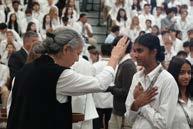
Spiritual Development, which expresses their Christian values in the convictions of their heart and the actions of their hands;
Intellectual Development, which translates their knowledge and skills into independent and creative thinking;
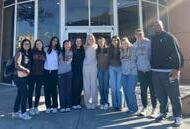
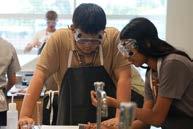
Social Development, which transforms their activities and experiences into leadership in and service to the community.
Graduation Outcomes
The Saint Francis graduate embodies the Holy Cross charism and is expected to be
» A person of faith who imparts Holy Cross values in the Catholic tradition by
» Demonstrating a basic understanding of the life and teaching of Jesus Christ and the essential doctrines and practices of the Catholic Church.
» Recognizing and respecting the dignity of the human person, and responding to the call to love and serve in the tradition of Catholic moral and social teaching.
» Serving the community particularly by reaching out to those most in need.
» Participating in and embracing our faith-filled community.
» An intrinsically motivated scholar who pursues lifelong learning by
» Thinking critically and creatively to solve problems and make decisions, both independently and as members of a team.
» Listening effectively, reading critically and using language precisely in speech and writing.
» Interpreting and evaluating complex information presented through various media.
» Utilizing and adapting technology resources productively and responsibly.
» An engaged individual who demonstrates personal and social responsibility by
» Understanding the rights and responsibilities of a local, national and global citizen.
» Demonstrating critical interpersonal skills of clear communication and meaningful collaboration.
» Becoming self-directed, resilient individuals who are able to set goals to maintain physical and emotional well-being.
» Exploring new and diverse opportunities and embracing the call to lead.
Saint Francis High School is committed to lifelong learning, a vision that we share with our parents and students. As a community of teachers and learners, we share the responsibility to encourage the advancement of our Intended Student Outcomes.
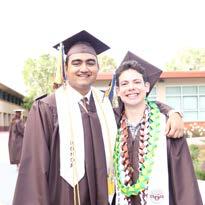
Scheduling Philosophy
The scheduling process reflects the Saint Francis commitment to educate the whole student and to empower them to be engaged and motivated people of faith. In partnership with the family, Guidance Counselors advise students on the path that is most appropriate for the student’s development, academically and personally. Students are encouraged to select classes that align with their strengths and interests and also complement their extracurricular activities.
Guidance From Social
Emotional Learning Program
Create a schedule that is balanced. Account for the things you have to do and provide enough time for the activities and values that are most important to you. Consider your classes, clubs, sports, extracurricular activities, jobs, chores, and sleep. Your schedule also needs to make space for down time to play and create, to relax and recharge, and to connect and share with others.
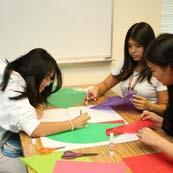
Guidance From The Counseling Department
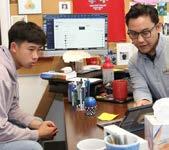
It is imperative to select courses that interest you when considering advanced honors or AP level choices. Consider how much time outside of the classroom you will need to spend on homework, projects, and studying. What other activities and interests do you have outside of the classroom environment that you would like to spend time pursuing? Ensure you are providing enough time in your day to complete your academics and extracurriculars, while maintaining a well balanced schedule to prioritize your mental health and maintain your sleep schedule.
Guidance From Student Athletics
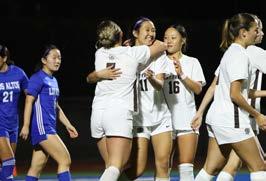
On average, student athletes commit 10-15 hours per week to their team. Contact the Athletic Director for more specific questions regarding the time commitment of your sport. League (as well as non-league) competition involves travel to and from sites that may account for additional hours in the week over the course of the season.
Guidance
From
Student Activities
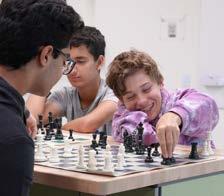
Social interactions with your peers is a very important component of your high school experience. We encourage you to explore your interests and sample new activities as you consider joining clubs or attending events. Many of these shared experiences will be where you meet lifelong friends and create lifetime memories. Be careful not to over-commit. Always remember that “balance” is important - it is the richness of your involvement that is key to your overall health and wellness.
Guidance From Health and Wellness
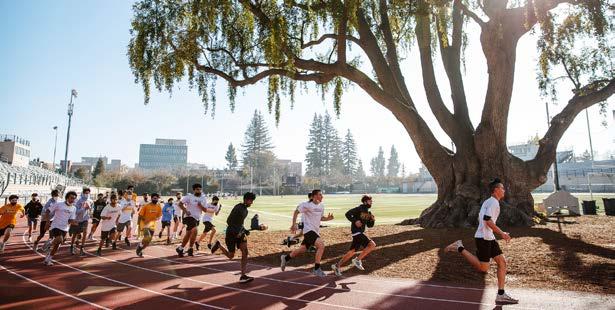
Sleep is vital to your well-being, as important as the air you breathe, the water you drink and the food you eat. It can even help you to eat better and manage the stress of being a teen.
The National Sleep Foundation
Recommends
8 - 10 hours of sleep for teenagers between 14 and 17
Lack of sleep (less than 8 hours) may:
» Limit your ability to learn, listen, concentrate and solve problems. You may even forget important information like names, numbers, your homework or a date with a special person in your life.
» Contribute to illness, not using equipment safely or driving drowsy.
» Excessive daytime sleepiness and daytime impairment such as reduced concentration, slower thinking and mood changes.
Graduation Requirements
“How we educate the mind will change with the times; how we cultivate the heart is and will remain timeless.”
Blessed Basil Moreau, Christian Education
Graduation Requirements
In order to graduate from Saint Francis High School, a student must successfully complete a minimum of 240 semester credits of coursework.
Courses required for graduation must be taken at Saint Francis High School. Counselors will support students in selecting an individual and balanced schedule. They will select coursework that meets both Saint Francis graduation requirements and minimum UC/CSU A-G requirements.
The Counseling Department encourages students to take challenging courses (Honors and AP courses) that are appropriate for their level and academic interests. Included within credits completed satisfactorily are the following course requirements:
Curriculum Guide
“Our zeal is always guided by charity. Everything is done with strength and gentleness.”
Blessed Basil Moreau, Christian Education
Curriculum Guide
Saint Francis High School offers a large variety of courses, including College Preparatory, Honors and Advanced Placement, academic support, and electives. The purpose of this section is to provide a curriculum snapshot to assist in course selection. Complete course descriptions are listed in the Course Bulletin at the back of this booklet.
College Preparatory Program
The school’s College Preparatory courses intend to prepare a student for admission into the University of California system, the California State University system and most private universities.
Honors and Advanced Placement Program
Honors and Advanced Placement (AP) classes are designed to challenge students who have demonstrated firm foundational skills and who have shown keen interest in various subject areas. A student taking any of these courses can expect much more rigorous assignments and work with topics not dealt with in other courses at the same grade level. Four years of Honors or AP classes are available.
• We require an acknowledgement of the rigor and expectations of the class signed by students and parent/ guardian.
• Students will be prepared to take the AP exams given in May (at a cost to the student). Freshmen, sophomores and juniors are required to take the AP exams. Seniors may choose to take the AP exams. Seniors who do not take the AP exam will have to take the Semester 2 final exam for the course (unless the student meets the “A-” exemption).
• Many Honors and AP classes receive an additional point for the weighted grade point average. UC/CSU does not award an Honors point to Level 1 or 2 coursework, e.g. English 1 Honors or Advanced Algebra 2 / Trig Honors.
• For courses with required prerequisites, students who do not meet those prerequisites will be removed from the course and placed in the appropriate level of the subject.
Academic Support Courses
Saint Francis provides academic support courses for students with demonstrated needs. Some students may choose to take one or more of these courses because of agreed needs. Some students will be required to take one or more of these courses as a prerequisite of their acceptance into Saint Francis.
• Algebra 1A/1B is a two-period math support course for freshmen whose HSPT Math score and 7th and 8th grade math grades indicate a need for additional support. The Math Department offers additional appropriately-paced courses to support students as they advance through the curriculum.
• Resource Lab courses are offered at every grade level. These courses provide support in a variety of subjects, as well as organization, test-taking, and study skills.
• American Sign Language is available and recommended as the World Language course for students with diagnosed language-based learning disabilities, particularly in the areas of auditory processing and/or reading or who are deaf, hard of hearing or CODA.
Elective Courses
Saint Francis offers a variety of electives, which are designed to help enhance a student’s educational background and to provide experience in a variety of areas of interest.
Religious Studies - 8 Semesters Required
Four years of Religious Studies is required to graduate. Religion is required each year, following a prescribed pathway until senior year, when students choose a semester selective.
Grade Level
Religious Studies Classes
Freshman Religion 1: Sacred Stories
Sophomore Hebrew Scriptures/New Testament
Junior Ethical Reasoning and Social Justice
Senior Christian Vocation AND Semester Selective - choose one:
» Contemporary Christian Spirituality
» Introduction to Philosophy
» Racial Justice and the American Church*
» Spiritual Ecology
» Sports and Spirituality
» World Religions
*Fulfills the second semester of Ethnic Studies
English - 8 Semesters Required
Four years of English is required to graduate. English is required each year, and at each level students can choose between college preparatory and Honors/AP options, based on interest and meeting of prerequisites. Summer reading is required for all courses.
Grade Level
Freshman
English Class Options
Sophomore
English 1 --- OR ---
English 1 Honors
» A national score of 85% or higher on the HSPT Reading section is required.
English 2 - American Literature and Writing --- OR ---
English 2 Honors - American Literature and Advanced Writing
» Current English 1 Honors Students: open enrollment
» Current English 1 Students: minimum of “A-” in English 1, plus application
Junior English 3: British Literature and Analytical Writing with Semester 2 Selective (below):
» Activist Literature*
» Dystopian Literature
» Feminist Literature*
» Indigenous People’s Literature*
» Sports, Literature, and Culture* --- OR ---
AP English Language*
» Open enrollment
Senior English 4: World Literature with Semester 2 Selective (below):
» Contemporary American Authors
» Contemporary Poetry*
» Culture and Voice*
» Film as Literature
» Mystery and Detective Fiction
» Science Fiction & Fantasy --- OR ---
AP English Literature
» Open enrollment
*Fulfills the second semester of Ethnic Studies
Math - 6 Semesters Required
Three years of math are required to graduate. Students can choose to take math every year, and, depending upon their placement, may double up on math courses in either junior or senior year by taking AP Statistics along with another course. Incoming freshmen students are placed in Algebra 1 or may choose to take a proficiency exam to be placed into a higher level with informed enrollment. All math placement ultimately will be done by the Math Department Chair in conjunction with the math teachers.
Algebra 1 Course Options
There are three Algebra course options to serve different math levels. These courses are open to freshmen.
Algebra 1A/1B
» For 9th grade students who need extra support in math
» Placement determined by HSPT score and math grades in 7th and 8th grade
Descriptive
Geometry
» Successful completion of Algebra 1A/1B Geometry
» Minimum of “A” and teacher recommendation in Algebra 1A/1B Summer Geometry
» Minimum of “A” and teacher recommendation in Algebra 1A/1B
Algebra 1
» Open to all 9th graders
Next Math Class Options:
Descriptive Geometry
» Students who do not meet the prerequisites for Geometry. Geometry
» Minimum of “C” in Algebra 1 Geometry Honors
» Minimum of “A” in Algebra 1 Summer Geometry
» Minimum of “C” in Algebra 1
Algebra 1 Honors
» A national score of 70% or higher on the HSPT Math section is required
Geometry
» Minimum of “C” in Algebra 1 Honors
Geometry Honors
» Minimum of “B” in Algebra 1 Honors
Summer Geometry
» Minimum of “C” in Algebra 1 Honors
Geometry Course Options
Geometry follows Algebra 1. There are three Geometry course options to serve freshmen who qualify via the placement exam, and sophomores who took an Algebra 1 course as freshmen. Placement for freshmen is based on qualifying exam results. Placement for sophomores is based on Algebra 1 coursework and grades.
Descriptive Geometry
Intermediate Algebra
» Successful completion of Descriptive Geometry
Algebra 2
» Minimum of “A-” in Descriptive Geometry
Geometry Geometry Honors
Next Math Class Options:
Intermediate Algebra
» Students who do not meet the prerequisites for Algebra 2 Algebra 2
» Minimum of “C” in Geometry and Algebra 1
Algebra 2 Honors
» Minimum of “A-” in Geometry Advanced Algebra 2/Trigonometry Honors
» Minimum of “A-” in Geometry and satisfactory achievement on the qualifying exam
Algebra 2
» Minimum of “C” in Geometry Honors
Algebra 2 Honors
» Minimum of “B” in Geometry Honors
Advanced Algebra 2/Trigonometry Honors
» Minimum of “B” in Geometry Honors and satisfactory achievement on the qualifying exam
Algebra 2 Course Options
Algebra 2 follows Geometry. There are four Algebra 2 course options to serve freshmen who qualify via the placement exam, and sophomores and juniors who completed Geometry at Saint Francis. Placement for freshmen is based on qualifying exam results. Placement for sophomores and juniors is based on prior coursework and grades.
Intermediate
Algebra Algebra 2 Algebra 2 Honors
Next Math Class Options:
Trigonometry/ Analytic Geometry
» Minimum of “A” in Intermediate Algebra Statistics
» 12th grade standing
Trigonometry/ Analytic Geometry
» Minimum of “C” in Algebra 2 Precalculus
» Minimum of “B” in Algebra 2
Summer Trigonometry (to enroll in AP Precalculus)
» Minimum of “A” both semesters of Algebra 2
» Recommend “A-” in Summer Trigonometry; minimum “B+” to move to AP Precalculus. Students who do not meet this grade will automatically move to Precalculus.
Statistics
» Senior standing AP Statistics
» Juniors: Concurrent enrollment in Precalculus or AP Precalculus
» Seniors: Minimum of “B-” in Algebra 2
Trigonometry/ Analytic Geometry
» Minimum of “C-” in Algebra 2 Honors Precalculus
» Minimum of “B-” in Algebra 2 Honors Summer Trigonometry (to enroll in AP Precalculus)
» Minimum of “B” both semesters of Algebra 2 Honors
» Recommend “A-” in Summer Trigonometry; minimum “B+” to move to AP Precalculus. Students who do not meet this grade will automatically move to Precalculus. AP Precalculus
» Minimum of “A” both semesters of Algebra 2 Honors
» Summer Trigonometry is still strongly recommended, but not required Statistics
» Senior standing AP Statistics
» Juniors: Concurrent enrollment in Precalculus or AP Precalculus
» Seniors: Minimum of “B-” in Algebra 2 Honors
Advanced Algebra 2/Trigonometry Honors
AP Precalculus
» Minimum of “B” in Advanced Algebra 2/ Trigonometry Honors Calculus
» Minimum of “B” in Advanced Algebra 2/ Trigonometry Honors AP Calculus AB
» Minimum of “A-” in Advanced Algebra 2/ Trigonometry Honors
AP Statistics
» Juniors: Concurrent enrollment in Precalculus or higher level math
» Seniors: Minimum of “B-” in Advanced Algebra 2/ Trigonometry Honors
After Algebra 2
Following the Algebra 2 level, pathways become more diverse. There are many different sequences a student may follow based on their coursework and grades.
Trigonometry
Precalculus
» Minimum of “C-” in Trigonometry AP Precalculus
» Minimum of “A” in Trigonometry Statistics
» 12th grade standing AP Statistics
Next Math Class Options:
Calculus
Precalculus
» Minimum of “B” in Precalculus AP Calculus AB
» Minimum of “A” in Precalculus Statistics
» 12th grade standing AP Statistics
» Juniors: Minimum of a “B-” in Trigonometry AND concurrent enrollment in Precalculus or AP Precalculus
» Seniors: Minimum of a “B-” in Algebra 2 or Trigonometry
Calculus
Precalculus
» Minimum of “B-” in AP Precalculus AP Calculus AB
» Minimum of “B+” in AP Precalculus AP Statistics
» Juniors: Concurrent enrollment in Calculus or AP Calculus AB
» Seniors: Senior standing AP Statistics with Data Science
» Juniors: Concurrent enrollment in AP Calculus AB
» Seniors: Senior standing Statistics
» 12th grade standing
» Juniors: Concurrent enrollment in Calculus or AP Calculus AB
» Seniors: Senior standing
Next Math Class Options:
AP Calculus BC
» Minimum of “B-” in AP Calculus AB AP Statistics
» Juniors: Concurrent enrollment in AP Calculus BC
» Seniors: Senior standing AP Statistics with Data Science
» 11th graders: Concurrent enrollment in AP Calculus BC
» 12th graders: Senior standing Statistics
» 12th grade standing
Ordinary Differential Equations
» Completion of AP Calculus BC AP Statistics
» 12th grade standing AP Statistics with Data Science
» 12th grade standing
Science - 6 Semesters Required
Three years of science are required to graduate, including one year of biology and one year of physical science. Students can choose to take up to five years of science courses by taking two courses in either junior or senior year. Science choice may be informed by math placement.
All freshman students take a Biology course, choosing between a college preparatory and Honors option. Sophomores choose from among three physical science options based upon interest and prior coursework and grades. Students may request one science course each in freshman and sophomore years.
Grade Level
Freshman
Biology
--- OR ---
Biology Honors
Science Class Options
» A national score of 85% or higher on the HSPT Math section is required
» Concurrent enrollment in Geometry or a higher level math
Sophomore+
» Requires 10th, 11th or 12th grade standing.
Chemistry
» Concurrent enrollment in Algebra 2 or higher level math is recommended
Chemistry Honors
» Minimum of “A” in Biology or “B” in Biology Honors
» Concurrent enrollment in Algebra 2 or higher level math is required
» Satisfactory achievement on the qualifying exam
Conceptual Physics
» If students take this course, they will not take Physics or Physics Honors
Science class options grow in the junior and senior years, with college preparatory and Honors/AP options available. If students want to take a fifth year of science, they can double up on courses in either junior or senior year.
Grade Level
Junior+
» Requires 11th or 12th grade standing.
Senior
» Requires 12th grade standing.
Physics
Science Class Options
» Minimum of “B-” in Biology or Chemistry, or “C+” in Biology Honors or Chemistry Honors
» Concurrent enrollment in Trigonometry or higher math course is required
Physics Honors
» Minimum of “A” in Biology or Chemistry, or “B” in Biology Honors or Chemistry Honors
» Completion of a Trigonometry-based course with “B” or higher is required.
Marine Biology
» Completion of biology and physical science
Environmental Science
» Completion of biology and physical science
AP Environmental Science
» Minimum of “A” in Biology and Chemistry, or “B” in Biology Honors and Chemistry Honors
» Summer reading is required
Exercise Science & Sports Medicine
» Completion of biology and physical science
AP Biology
» Completion of Biology, Chemistry, and Physics
» Recommended grades: Minimum of “A-” in Chemistry and Physics or “B” in Chemistry Honors and Physics Honors
» Seniors who have taken Biology and Chemistry and who wish to take the class concurrently with Physics may enroll on a space-available basis.
» Meets for one extra period per week for lab
» Summer reading is required
AP Chemistry
» Completion of Biology, Chemistry, and Physics
» Recommended grades: Minimum of “A-” in Chemistry and Physics or “B” in Chemistry Honors and Physics Honors
» Seniors who have taken Biology and Chemistry and who wish to take the class concurrently with Physics may enroll on a space-available basis.
» Meets for one extra period per week for lab
» Summer work is required
AP Physics C
» Completion of Biology, Chemistry, and Physics
» Recommended grades: Minimum of “A-” in Chemistry and Physics or “B” in Chemistry Honors and Physics Honors
» Prior completion of some calculus class is required; students are expected to have proficiency in the calculus skills of derivation and integration and these skills will not be taught during the course
» Summer work is required
*For AP science courses: If the course is overenrolled, priority will be given based on previous science coursework and grades. If AP Environmental Science is overenrolled, priority is also given to seniors.
Social Studies - 6 Semesters Required
Three years of Social Studies are required to graduate. Students take their core courses in the sophomore, junior, and senior years. At each level students can choose between college preparatory and AP options, based on interest and qualifications.
Grade Level
Sophomore World History
--- OR ---
AP World History
Science Class Options
» Recommended grades: Minimum of “B” in English 1 Honors or “A” in English 1
» Summer reading is required
Junior US History
--- OR ---
AP US History
» Recommended Social Studies grades: Minimum of “B” in AP World History or “A” in World History
» Recommended English grades:Minimum of “B” in English 2 Honors or “A” in English 2
» Summer reading is required
Senior US Government
--- OR ---
AP US Government
» Recommended grades: Minimum of “B-” in AP US History or “A-” in US History
» Summer reading is required
------------ AND ------------
Economics
--- OR ---
AP Macroeconomics
» Students must be concurrently enrolled in or have completed AP Calculus AB or AP Calculus BC or higher
» Summer reading is required
World Languages - 4 Semesters Required
Two years of the same language are required to graduate. Freshmen are placed in Level 1 or may choose to take a proficiency exam to place into Levels 2, 3 or 3 Honors. For all level three and higher world language courses, students who do not meet the prerequisites may become eligible to enroll in the course through commitment to a summer enrichment or review program which increases proficiency in the language.
American Sign Language
Class Progression
American Sign Language 1
» Priority for ASL 1 is given to students with diagnosed language-based learning disabilities, particularly in the areas of auditory processing and/or reading, and students who are deaf, hard of hearing or CODA
American Sign Language 2
» Demonstrates novice proficiency in the target language
American Sign Language 3
» Demonstrates intermediate proficiency in the target language
American Sign Language 4
» Demonstrates intermediate to advanced proficiency in the target language
Chinese
Class Progression
Chinese 1
» » Open to all students; no prior Chinese language knowledge required
Chinese 2
» » Demonstrates novice to intermediate proficiency in the target language
Chinese 3
» » Demonstrates intermediate proficiency in the target language --- OR ---
Chinese 3 Honors
» » Demonstrates intermediate-high proficiency in the target language
Chinese 4
» » 10th, 11th or 12th grade standing
» » Demonstrates intermediate-high to advanced proficiency in the target language --- OR ---
AP Chinese Language and Culture
» » 10th, 11th or 12th grade standing
» » Demonstrates advanced proficiency in the target language
French Class Progression
French 1
» Open to all students; no prior French language knowledge required
French 2
» Demonstrates novice to intermediate proficiency in the target language
French 3
» Demonstrates intermediate proficiency in the target language --- OR ---
French 3 Honors
» Demonstrates intermediate-high proficiency in the target language
French 4
» 10th, 11th or 12th grade standing
» Demonstrates intermediate-high to advanced proficiency in the target language --- OR ---
AP French Language
» 10th, 11th or 12th grade standing
» Demonstrates advanced to superior proficiency in the target language
French 5 Honors
» 11th or 12th grade standing
» Demonstrates advanced to superior proficiency in the target language
Spanish Class Progression
Spanish 1
» Open to all students; no prior Spanish language knowledge required
Spanish 2
» » Demonstrates novice to intermediate proficiency in the target language
Spanish 3
» Demonstrates intermediate proficiency in the target language --- OR ---
Spanish 3 Honors
» Demonstrates intermediate-high proficiency in the target language
» Command of the present, preterite, and imperfect tenses is necessary
Spanish 4
» 10th, 11th or 12th grade standing
» Demonstrates intermediate-high to advanced proficiency in the target language --- OR ---
AP Spanish Language
» 10th, 11th or 12th grade standing
» Demonstrates advanced proficiency in the target language
AP Spanish Literature
» 11th or 12th grade standing
» Demonstrates advanced to superior proficiency in the target language
Visual & Performing Arts - 2 Semesters Required
A one year introductory course is required to graduate, and students can choose from among a variety of options in both the visual and performing arts. Students may opt to take more than one of these courses over their four years, and additional VPA courses can be found in the College Preparatory Electives section.
Visual Arts Class Options
» Basic Design/Drawing 1
» Beginning Journalism 1: Design
» Digital Video Production 1
» Graphic Arts
Performing Arts Class Options
» Concert Band
» Dance 1
» Drama 1
» Introduction to String Ensemble
» Treble Choir
Ethnic Studies - 2 Semesters Required
Two semesters of coursework in Ethnic Studies are required to graduate. Students typically begin with the foundational Ethnic Studies course, ideally taken during the freshman or sophomore year, and then enroll in a cross-listed interdisciplinary course to complete the requirement. Students may also choose to take AP African American Studies, a year-long elective that fulfills the full requirement, either after the introductory course or in place of it.
Core Ethnic Studies Courses
• Ethnic Studies
» One semester course
» Open to all students
• AP African American Studies
» One year course
» 10th, 11th or 12th grade standing
» Can be taken after the Ethnic Studies introductory class or as a stand-alone class to fulfill the ES requirement
Interdisciplinary Ethnic Studies Courses
• Religious Studies
» Racial Justice & the Catholic Church (Senior Selective)
• English
» Activist Literature (Junior Selective)
» AP English Language (Junior Course)
» Feminism (Junior Selective)
» Indigenous People’s Literature (Junior Selective)
» Sports & Culture (Junior Selective)
» Contemporary Poetry (Senior Selective)
» Culture & Voice (Senior Selective)
• Visual and Performing Arts
» Art and Resistance
Health and Fitness - 2 Semesters Required
Two semesters of Health and Fitness are required to graduate. Freshman students may take a full year or a semester of freshman Health and Fitness. If they take a semester, they must also complete the graduation requirement with a full season of a sport at Saint Francis by the end of junior year or a semester elective in 10th to 12th grade. Students may opt to take additional courses as electives in sophomore, junior and senior year.
Pathway 1
• Health and Fitness
» Course 900: full year course
Pathway 2
• Health and Fitness
» Course 917: semester course
------------ AND ------------
• 1 semester of a Health and Fitness Elective
» Speed, Power and Agility
» Advanced Strength 1
» Mindfulness
*Elective offerings dependent upon adequate enrollment and may shift over time
Pathway 3
• Health and Fitness
» Course 917: semester course
------------ AND ------------
• Full season of a Saint Francis sport
» Must be completed by the end of junior year
College Preparatory Electives - 6 Semesters
Six semesters of elective courses are required to graduate.
Design Department
Grade Level
Freshman+
» Open to all grades.
Sophomore+
» Requires 10th, 11th or 12th grade standing.
FULL YEAR Course Option:
Elective Class Options
SEMESTER Course Options:
Junior+
» Requires 11th or 12th grade standing.
• Computer Science Principles and Algorithms (CS PANDA)
» Assumes a good understanding of Algebra 1 concepts and minimum “B” average in high school level math classes
» No prior CS experience required
» This class receives UC approved Math credit
• Creative Apps for Mobile Devices
• Design Thinking
• Robotics 1
• Robotics 2
» Completion of Robotics 1 or participation for a year in Robotics Club and competition at Saint Francis
» Enrollment requires participation in the Robotics Club in second semester
All sophomore through senior courses are FULL YEAR:
• AP Computer Science Principles
» Sophomores: Completion of CS: PANDA or an equivalent introductory college-level CS course (online or in-person) by May with a “B” minimum; transcript due to the Academic Office in May
» Juniors: Completion of CS: PANDA or Trigonometry or a higher level math with a “B” minimum
» Seniors: Concurrent enrollment in Trigonometry or higher level math
» This class receives UC approved Math credit
• Biotechnology
» Sophomores: Completion of Biology Honors with a “B” minimum, and concurrent enrollment in Chemistry or Chemistry Honors. Biology students with an “A” can appeal
» Juniors and Seniors: Completion of or concurrent enrollment in Chemistry
» This class receives UC approved Science credit
• Entrepreneurship
• AP Computer Science A
» Juniors: Completion of CS PANDA, AP CSP, or Trigonometry or a higher level math class with a “B” minimum
» Seniors: Concurrent enrollment in Trigonometry or higher level math
» This class receives UC approved Math credit
• Engineering
» Completion of Biology and a physical science with a “B” minimum
» This class receives UC approved Science credit
• Student Leadership in Action
» Student leader on campus
English Department
Grade Level
Freshman+
» Open to all grades.
Sophomore+
» Requires 10th, 11th or 12th grade standing.
Ethnic Studies Department
Grade Level
Freshman+
» Open to all grades.
Sophomore+
» Requires 10th, 11th or 12th grade standing.
Elective Class Options
All courses are SEMESTER:
• Argumentation and Debate
• Speech
• Creative Writing
Elective Class Options
SEMESTER Course Option:
• Ethnic Studies
» Core requirement unless AP African American Studies is taken instead
» This does count as an elective
SEMESTER Course Option:
• Ethnic Studies: Art and Resistance
» cross listed with VPA Department FULL YEAR Course Option:
• AP African American Studies
» Can be taken in addition to or in lieu of the Ethnic Studies course
Health and Fitness Department
Grade Level
Sophomore+
» Requires 10th, 11th or 12th grade standing.
Elective Class Options
SEMESTER Course Options:
• Speed, Power, and Agility
• Advanced Strength and Conditioning 1
• Advanced Strength and Conditioning 2
• The Science and Practice of Mindfulness
Social Studies Department
Grade Level
Sophomore+
» Requires 10th. 11th or 12th grade standing.
Junior+
» Requires 11th or 12th grade standing.
Elective Class Options
SEMESTER Course Options:
• Introduction to Psychology
• History and Politics of the Olympics
FULL YEAR Course Option:
• AP Psychology
» Recommended grades: Minimum of “B-” in previous AP/Honors Social Studies and English courses or an “A-” in previous college preparatory Social Studies and English courses
SEMESTER Course Options:
• Biomedical Ethics
• History and Theory of Socialism
• Personal Finance
Visual & Performing Arts Department
Grade Level
Freshman+
» Open to all grades
Visual Arts Elective Class Options
FULL YEAR Course Options:
• Basic Design/Drawing 1
• Beginning Journalism 1: Design
• Digital Video Production 1
• Graphic Arts
Grade Level
Sophomore+
» Requires 10th, 11th or 12th grade standing. All of these require completion of one year of an introductory VPA class first. Additional pre-reqs are listed.
Visual Arts Elective Class Options
YEAR-LONG Course Options:
• Digital Video Production 2
» Completion of Video Production 1 or department chair approval
• Advanced Journalism: Design, Production, and Leadership (Level 3)
» Completion of Beginning Journalism or Journalism 2 + Yearbook Zero Period or instructor approval
• Advanced Journalism 4 Honors: Yearbook Design and Production
» Completion of Advanced Journalism: Design, Production, and Leadership (Level 3) or instructor approval
SEMESTER
Course Options:
• Ceramics 1
• Ceramics 2
» Completion of Ceramics 1
• Drawing 2
• Painting 1
• Advanced Studio Art
» Completion of Ceramics 2, Painting, Drawing 2, or Advanced Photography
• Digital 2D Animation
• Advanced Digital 2D Animation 2
» Completion of Digital 2D Animation
• Introduction to Game Design Art
• Advanced Photography
» Completion of Graphic Arts, Video Production or department chair approval
• Journalism 2
Senior
» Requires 12th grade standing.
FULL YEAR Course Option:
• AP Studio Art
» Department chair approval required
» Multiple prior art classes at Saint Francis strongly recommended
» Also meets during Advisory
» Summer work is required
Grade Level Performing Arts Elective Class Options
Freshman+
» Open to all grades. These are year-long courses.
Sophomore+
» Requires 10th, 11th or 12th grade standing. All of these require completion of one year of an introductory VPA class first. Additional pre-reqs are listed.
FULL YEAR Course Options:
• Concert Band
» At least one year of music lessons and/or band experience
• Dance 1
• Drama 1
• Introduction to String Ensemble
» Background in a string instrument
• Treble Choir
FULL YEAR Course Options:
• Drama 3
» Minimum of “B” in Drama 2 or 2A/2B and teacher recommendation
• Chamber Choir
» Completion of Treble Choir
• Symphonic Band 2
» Completion of Concert Band
• Symphonic Band 3
» Completion of Symphonic Band 2
• Symphonic Band 4
» Completion of Symphonic Band 3
• Symphonic Band 5
» Completion of Symphonic Band 4
SEMESTER Course Options:
• Dance 2
» Completion of Dance 1
• Drama 2A
» Minimum of “B” in Drama 1
• Drama 4
» Completion of Drama 1, 2 and 3
• Acting for Musical Theater
• Band Tech
» For students with limited or no prior instrumental music experience
Additional Zero Period Option
Jazz Ensemble
» Approval of the Band Director and audition
Academic Policies
“I have the firm confidence that God will bless our educational program since God is giving us the means to realize it.”
Blessed Basil Moreau, Circular Letter 36; 1849
Scheduling
Saint Francis High School reserves the right to modify all courses listed in the Course Bulletin and to withdraw courses for which too few students register. Students should consult the Course Bulletin (at the end of this document) for course descriptions and prerequisites. The timeline for scheduling for the 2026-2027 school years is as follows:
January – Early February, 2026
Preparation for Course Requests
This is the period during which students should start to decide which courses to request for next year.
Saint Francis provides support in this process through a counseling presentation in English classes, department-specific information provided in various classes, an electives fair, class-specific information sessions, placement exams for select courses, and open office hours in Counseling. See the Counseling Dashboard for details: https://www.sfhs.com/course-scheduling-information
Students should discuss their course requests with parents and counselors, and reach out to teachers for guidance as needed.
February 6-13, 2026
Course Request Entry in PowerSchool
Students will have one week to enter course requests into PowerSchool. Please note:
» Core courses are a top priority in the scheduling process; elective courses are a lower priority.
» For placement in electives, priority will be given based on class standing (seniors have the highest priority).
» Students who do not meet all prerequisites (for those courses that require prerequisites) may not request the course in question.
» Students must select alternates for elective and selective courses. Students who do not provide alternate elective options will be given a free period, study hall or office assistant if we are unable to fulfill the primary request. Students who do provide alternate selectives may be placed in a different selective in the event we are unable to fulfill the primary request.
If students need to request a course change after February 13, they may discuss the request with their counselor. Requests should be limited to placement or other serious concerns as we build the number of class sections based on student request numbers during this time. After May 1, no student-initiated course change requests will be accepted until the book lists become available in July.
February 20, 2026
AP/Honors Acknowledgement Forms Due
Honors and AP courses require a signed acknowledgement (by student and parent) of the commitment required for challenging classes. Acknowledgement forms must be submitted to the Counseling Office.
July 2026
Course Lists and Primary Schedule Change Window
Students’ final course list will be provided in July when the book list becomes available online.
At that point, students may fill out the schedule change request form (link on the website) to request a change to their course list. The form must be completed by July 31, 2026
» This is the primary schedule change window. Changes are much harder to make and less likely to be fulfilled during the schedule change period in the first week of school.
» All change requests are subject to space availability. Core course changes will be given a higher priority than elective change requests. No change requests will be considered after July 31 until classes start.
First Week of School Secondary Schedule Change Window
» After the first two days of classes, students will have three school days to request a change to courses for either semester.
» It is more difficult to make changes during this window than during the July period. Requests may not be able to be fulfilled. Requests that are fulfilled may result in the student schedule being changed significantly - these changes cannot be reversed.
» Teacher change requests may only be made if the student had the teacher previously for a class and must be made in that three-day window.
Course Drop Policy
Once a student is enrolled in a course, they are enrolled for the duration of the course. All students must attend the first full day of the class. They then have three days at the beginning of the semester for dropping any course in that semester.
» Dropping the course may result in a free period, study hall, or office assistant period (there are no free periods or study halls during 4th or 5th period), depending on the availability of alternatives.
» All course changes must be submitted to the student’s counselor.
Exceptions to the drop policy can occur only at the first 6-week progress period of each course.
» Classes cannot be changed after the 6 week progress period.
» In extreme health cases or changes in life circumstances, a drop may be considered.
Students Requesting a Level Change to a Parallel Course:
» A student earning a “D” or lower grade in a course of multiple levels may request a level change to a parallel course at the first 6-week progress period if supported by a recommendation by the teacher.
» The progress grade from the original class will be transferred to the new class. The semester grade will be the cumulative grade at the end of the semester.
Students Requesting to Drop a Course:
A student earning a “D” or lower grade by the first 6-week progress period or for the first semester grade in a course that is not required for graduation may request to drop it. The dropped course will be replaced with a study hall, office assistant, or free period.
Course Load
Each student is required to take six courses each semester.
» The maximum course load per semester is seven classes.
» Seniors may petition to take five academic classes if they have valid reason and present a signed parental consent form.
Summer School
Courses for Advancement and Remediation
» Courses taken during summer school may NOT be taken in lieu of courses offered at Saint Francis High School, nor may such courses be taken for the purpose of skipping levels (i.e. math or world language). The two exceptions are Geometry and Trigonometry for the purpose of advancement; the class and grade will be recorded on the transcript.
» A student who fails one or more semesters of a required course during the academic year must remediate the course in summer school if the student wishes to return to Saint Francis High School for the following academic year.
» Also, a student who receives a semester “D” grade in a college-required course should repeat the course in summer school to earn a minimum grade of “C”.
» Grades for classes that are repeated are listed on the Saint Francis transcript and are calculated into the GPA.
» The summer school grade for remediation is an addition to the transcript, not a replacement of the original grade.
Courses for Enrichment
» The grade earned in any enrichment course has no impact on the student’s Saint Francis grade point average nor does the student receive any credit toward graduation.
» Courses taken outside of Saint Francis for enrichment will not be included on the Saint Francis transcript.
» Students may wish to take additional coursework at community colleges. This may not be in lieu of a graduation requirement course at Saint Francis and will need counselor approval. Students should maintain those external transcripts to submit in addition to their Saint Francis transcript when applying to university.
Community Service Program
The Saint Francis High School Community Service Program is a four-year graduation requirement.
» Freshmen are responsible for a minimum of 10 hours.
» Sophomores are responsible for a minimum of 15 hours.
» Juniors are responsible for a minimum of 15 hours.
» Seniors are responsible for a minimum of 10 hours.
» These hours are to be completed by the due date.
» Students who have not completed their hours will not be allowed to return to Saint Francis or graduate.
» Students may complete service hours during the summer prior to their academic year (e.g. a sophomore may complete service hours in the summer before beginning his/her junior year).
College Entrance Requirements
“Even though we base our philosophy course on the data of faith, no one need fear that we shall confine our teaching within narrow and unscientific boundaries. No, we wish to accept science without prejudice and in a manner adapted to the needs of our times. We do not want our students to be ignorant of anything they should know. To this end, we shall shrink from no sacrifice.”
Blessed Basil Moreau, Circular Letter 36; 1849
College Entrance Requirements
Saint Francis High School is fully accredited by the Western Association of Schools and Colleges and the Western Catholic Education Association. This means that credits earned at Saint Francis High School are acceptable for admissions purposes at any college or university in the United States. However, a diploma from Saint Francis High School does not automatically guarantee admission to any college or university. Acceptance depends upon different factors including a student’s GPA, the level of academic rigor taken, standardized test scores, participation in school activities and personal character.
In order to be accepted into the college of his or her choice, it is important that a student begin planning early in order to be sure to meet all subject requirements and participation requirements. The following pages outline course requirements for a variety of types of colleges and universities. A student desiring to attend a particular college, however, should examine the admission requirements of that school and seek advice from teachers, parents and guidance counselors before the senior year.
Meeting College Requirements
There are three types of institutions of higher learning that a student may choose to attend upon graduation from Saint Francis High School: two-year community colleges, four-year private institutions, or four-year public institutions.
The only requirement for admission to California Community Colleges is that an applicant possesses a valid high school diploma or a Certificate of Proficiency, or that an applicant has reached the age of 18. No tests are required for admission although tests may be required for proper placement in English, mathematics, science or foreign language. A transcript of all high school work is required.
Admission requirements for private institutions can be found in the catalog on the particular college website. The admission requirements for public four-year institutions in California are listed on the following pages.
California Public College Entrance Requirements
G.
(chosen from the areas of history, English, advanced math, lab science, social science, fine arts, ethnic studies, world language, design, computer science, health and fitness)
All required courses must be completed with grades of “C” or higher.
Both the UC and CSU systems assign extra points for up to four units (8 semester grades of AP or Honors courses): A = 5 pts; B = 4 pts; C = 3 pts; “D” grades are not included in these calculations and receive one point only. They do not award an Honors point to Level 1 or 2 coursework, e.g. English 1 Honors or Advanced Algebra 2 / Trig Honors.
Please Note: Electives listed in the Course Bulletin which meet UC/CSU admissions requirements will be noted “UC” and/or “CSU” under prerequisites/comments for the course.
Course Bulletin
“Holy Cross will grow like a mighty tree and constantly shoot forth new limbs whose branches will produce yet others, and all nourished from the same sap and endowed with the same life.”
Basil Moreau, Circular Letter 65
Design Department
702 COMPUTER SCIENCE: PARADIGMS & ALGORITHMS (CS PANDA)
Full Year
This course serves as an introduction to the major concepts and ideas of programming and calls on students to analyze and explain the social implications of computing. Students will use critical thinking and creativity to come up with algorithms for solving programming problems. Students will translate their ideas into code using the visual-based programming language Snap!, developed by and used at UC Berkeley to teach CS. After establishing a solid knowledge base of CS concepts, students will go on to write programs using Python. Students will learn about components of a modern computer and how to program for a physical device versus a simulated system. Students will learn to analyze past and current events and innovations that make up the momentous history of computer science. Students will research, develop evidence-based arguments, and write analyses of important CS events, such as the development of the internet, cybersecurity, and online privacy.
Prerequisites/Comments
This course assumes a good understanding of math concepts in Algebra 1 and at least a “B” average in high school level math classes. No prior computer science experience required. This course receives UC approved Math credit. UC/CSU Area G.
704 ADVANCED PLACEMENT COMPUTER SCIENCE A (AP CSA) Full Year
It is highly recommended that all students taking AP CSA take CS PANDA and AP CSP first; AP CSA builds upon the key concepts established in both of these CS courses.
This course is designed to build upon fundamental CS concepts, which were taught in CS: Paradigms & Algorithms (CS PANDA) and AP Computer Science Principles (AP CSP). This course will teach the basics of the Java programming language in order to help equip students to successfully pass the AP exam given in May and prepare them for college-level programming classes. Students will apply CS concepts learned during lectures in Java labs and projects by thinking critically, writing algorithms, and working collaboratively with others. By the end of this course, students will be equipped in the following computational thinking practices: program design and algorithm development, code logic, code implementation, testing, documentation, and ethical computing.
Prerequisites/Comments
11th or 12th grade standing. To take this course as a junior, students must have completed either Computer Science: Paradigms and Algorithms (CS PANDA), AP Computer Science Principles (AP CSP), or Trigonometry or a higher level math class with a minimum grade of a “B”. You may be concurrently enrolled in Trigonometry or a higher level math class to take this course as a senior. An AP exam will be administered in May (at a cost) and is required of all underclass students enrolled in the course. The test is optional for seniors. This course receives UC approved Math credit. UC/CSU Area C.
705 ADVANCED PLACEMENT COMPUTER SCIENCE PRINCIPLES (AP CSP)
Full Year
It is highly recommended that all students taking AP CSP take CS PANDA first; AP CSP builds upon the key concepts established in CS PANDA.
This course builds upon the universal concepts established in the Computer Science: Paradigms and Algorithms (CS PANDA) course. AP Computer Science Principles offers a multidisciplinary approach to teaching the underlying principles of computation. The course will introduce students to the creative aspects of programming, abstractions, algorithms, large data sets, the Internet, cybersecurity concerns, and computing impacts. AP Computer Science Principles will give students the opportunity to use technology to address real-world problems and build relevant solutions. Together, these aspects of the course make up a rigorous and rich curriculum that aims to broaden participation in computer science. By the end of this course, the students will have a portfolio of projects they programmed as well as a better understanding of the social implications of computing in our everyday lives.
Prerequisites/Comments
10th, 11th or 12th grade standing. To take this course as a sophomore, students must have completed Computer Science: Paradigms and Algorithms or an equivalent introductory college-level computer science course (online or in-person) by May with a minimum grade of “B.” If taking an outside course, students must send their transcript to the Academic Office by May. To take this course as a junior, students must have completed either Computer Science: Paradigms and Algorithms or Trigonometry or a higher level math class with a minimum grade of a “B.” You may be concurrently enrolled in Trigonometry or a higher level math class to take this course as a senior. An AP exam will be administered in May (at a cost) and is required of all underclass students enrolled in the course. The test is optional for seniors. UC/CSU Area D.
713 ENTREPRENEURSHIP
Full Year
This course will introduce students to the fundamentals of business through the eyes of an entrepreneur. Students will learn essential knowledge and necessary skills to launch and operate a business (e.g., opportunity identification, business planning, marketing and sales, operations management, and financial tracking) within the economic environment in which a new venture operates. Ultimately, students will work in small teams to craft a business plan, bring their offer to market, and afterwards share an evaluation of their small business’s performance at the Design Showcase.
Prerequisites/Comments
10th, 11th or 12th grade standing. UC/CSU Area G.
714 ROBOTICS 1
Semester
This project-based course explores the interaction of science, math and technology. Students will use robotics as an introduction to mechanical, electrical and computer engineering. Using the engineering design team concept as a model, students will work in groups to research, design, program, and construct a robot to compete in class competitions as well as the US First competition. The course teaches the basics of robot programming and elementary electronics using VEX robotics kits, Mechanical Computer-Aided Design (CAD), 3D printers and basic CNC machining. Integrated throughout the course are career preparation standards that include basic academic skills, communication, interpersonal skills, problem solving, workplace safety, technology, and employment literacy.
Prerequisites/Comments
Open to all students. This course will not fulfill the physical science graduation requirement. UC/CSU Area G.
724 ROBOTICS 2
Semester
Students will continue their work from Robotics 1 to work in engineering teams to design, build and test increasingly complex robots. The course will illustrate the engineering design process, the importance of integrating sensors, and complex machine control, and briefly discuss robot learning and multi-robot systems. Students will be expected to solve challenges using physical robots and computer simulations. Students will work in teams to complete a larger design problem and participate in local and regional competitions. Special attention will be paid to the design process and its communication through both presentation and documentation. Students will explore additional hardware and software solutions to robotics problems. Students will learn advanced hardware and software techniques, as well as the mathematics and physics to understand them. Students enrolled in the course are expected to be active participants in the after-school Robotics program.
Prerequisites/Comments
Successful completion of Robotics 1 or a year of Robotics club and competition at Saint Francis. Enrollment in this course requires participation in the Robotics Club during the semester enrolled in the course. UC/CSU Area G.
715 INDEPENDENT INQUIRY
Full Year
Independent Inquiry provides a space for students to pursue a year-long individual project of their own design. To qualify, a project needs to incorporate research, connect to Holy Cross values, and provide something tangible for the community to use or experience. The course will provide an academic framework to help students through the entire process, from project ideation through completion. Students do not need to have a project idea prior to entering the course.
Prerequisites/Comments
11th or 12th grade standing. UC/CSU Area G.
716 BIOTECHNOLOGY 1
Full Year
Biotechnology 1 is designed to introduce students to the scientific concepts and laboratory research techniques that are currently used in the field of biotechnology. Students will use scientific methodology to develop laboratory skills, critical thinking skills, and communication skills as they explore the field of biotechnology. This course integrates academic and technical objectives throughout the course, helping the student to make real world connections with the biotechnology industry. The ethical implications of biotechnology from a Catholic perspective will be explored and then emphasized as foundational tenets throughout the course.
Prerequisites/Comments
10th, 11th or 12th grade standing. To take this class as a sophomore, students must have completed Biology Honors with a B or higher, and be concurrently enrolled in Chemistry or Honors Chemistry. To take this class as a junior or senior, students need to have completed or be concurrently enrolled in Chemistry. This class receives UC approved Science credit. UC/CSU Area D.
718 STUDENT LEADERSHIP IN ACTION
Full Year
This class is designed for student leaders on campus to reflect on their roles as leaders, and to accomplish the many events that they are tasked with completing in the school year. The class is for students who have known leadership positions on campus, such as ASB leaders, Student Council members or Rally Board members, but it is not limited to those groups alone. It will accept any student who has known leadership responsibilities on campus. The class will be student-paced, and project oriented. Effectively, students will be asked to create objectives for some big event or activity they are responsible for, they will have to then execute that project or event, and then reflect on their efforts. Outside of event management, students will be asked to consider campus issues and find creative ways to make positive contributions to the community of Saint Francis High School. All of this work will be supplemented with discussions on leadership, regular academic assessments and reflection. The course hopes to instill students with communication skills, critical thinking skills, problem solving, and basic leadership techniques. Additionally, this class will give academic incentives for the student’s efforts to contribute to the social well-being of the Saint Francis community.
Prerequisites/Comments 11th or 12th grading standing. Student leader on campus. UC/CSU Area G.
719 DESIGN THINKING Semester
Design Thinking is a human-centered project-based course, where students use the design thinking process and problem solving skills to address real world challenges. Students start the course by learning about empathy in order to better understand and approach the variety of design challenges presented to them throughout the semester. Skill building activities include design sprints and rapid prototyping. At the end of the semester, students work in teams to develop their proposed solution for an organization-sponsored challenge. The topics of the projects are directly related to the interests of the class as a whole. Students will learn how to be inquisitive learners, critical thinkers, self-directed problem solvers, team players, and professional communicators.
Prerequisites/Comments
Open to all students. UC/CSU Area G.
723 ENGINEERING DESIGN AND ANALYSIS
Full Year
This course engages students in authentic engineering practices and inspires them to embrace an engineer’s habits of mind. Collaborative, student-directed projects build resilient problem-solving skills and empower students to think like engineers, to adopt engineering processes, and to pursue engineering disciplines for the betterment of our world.
Prerequisites/Comments
11th or 12th grade standing. Completion of Biology and a physical science with a minimum of a “B” grade.This course does not fulfill the Saint Francis physical science graduation requirement. This class receives UC approved Science credit. UC/CSU Area D.
725 CREATIVE APPS FOR MOBILE DEVICES (CAM-D)
Semester
This course will introduce object-oriented programming tools to create applications for modern mobile devices. Adopting the latest “no-code paradigm” of programming, this course will empower students to create and use the benefits of programming without the need to learn how to write code. Topics include planning and design, modularity, user interface (UI), and software development cycle. Students will use drag-and-drop block coding to create apps for Android and iOS devices. Labs will start with basic layout and screen design, programming objects to respond to events and triggers, and sprite movement and animation. The semester will conclude with a capstone project where students will apply all that they have learned in the course to create an educational app.
Prerequisites/Comments
Open to all students. No prior computer science experience required. UC/CSU Area G.
726 INTRODUCTION TO WOODWORKING Semester
Introduction to Woodworking is a project-based course introducing students to the fundamentals of woodworking and joinery. Students will implement the design-thinking process while they learn about shop safety, hand tools, materials, and basic techniques. Students will gain practical woodworking experience and develop their creativity and problem-solving skills through the planning and execution of a series of hands-on projects.
Prerequisites/Comments
10th, 11th or 12th grade standing. Geometry preferred but not required. UC/CSU Area G.
English Department
Note: Summer reading is required for all English literature courses. Reading lists will be available online.
211 ENGLISH 1
Full Year
This course provides the freshman student with a strong foundation in literature while emphasizing analytical writing. Effective techniques for written composition will be stressed with an emphasis on writing fluency and the structure and style of the paragraph. Students will master the paragraph, including a thesis statement and the claim, lead-in, evidence, reasoning paragraph format, leading to a multi-paragraph essay. The study of literature includes reading, discussing, analyzing and synthesizing writing styles and literary techniques in a variety of mediums. Vocabulary and grammar are emphasized within the context of the writing and literature curriculum. The writing process and skills taught in this course are foundational to writing in all English classes at Saint Francis.
Prerequisites/Comments
9th grade standing. UC/CSU Area B.
212 ENGLISH 1 HONORS
Full Year
This course is designed for freshmen who have demonstrated a passion and strong foundation in English, including reading comprehension and writing mechanics. English IH focuses on developing analytical writing, oral communication, and insightful critical thinking as students read and analyze both classic and contemporary poetry, short stories, and novels. The course challenges students to comprehend, apply, and synthesize basic literary theories and terms in works of literature in order to foster and create ideas for multiple paragraph essays and projects. The writing process and skills taught in this course are foundational to writing in all English classes at Saint Francis.
Prerequisites/Comments
9th grade standing. A national score of 85% or higher on the HSPT Reading section is required. UC/CSU Area B.
221
ENGLISH 2 – AMERICAN LITERATURE
AND WRITING
Full Year
English 2 offers a justice-oriented overview of American literary topics and themes explored through both classic and contemporary texts. This course requires the comprehension and analysis of poetry, short stories, novels, nonfiction, and drama. Students will practice the analysis and annotation of literary texts, learn to craft an argumentative thesis statement, and develop their writing into multi-paragraph essays with fully developed introductions and conclusions. English 2 asks students to apply critical thinking skills to the historical inequities both present in and critiqued by the literature.
Prerequisites/Comments
10th grade standing. UC/CSU Area B.
222 ENGLISH 2 HONORS – AMERICAN LITERATURE & ADVANCED WRITING
Full Year
The principal aim of English 2H is to provide an introduction to, and an examination of, a broad chronological survey of prose, drama and poetry from a range of North American history. From the Puritans onward, this literature has stood between the animating ideals of our society and the lived experiences of actual people. In a sense, our literature is the story we tell ourselves about our country. In order to grasp this varied and dynamic literature as both an expression of and a commentary on our ideals and lives, this literature class will also draw upon history, geography, politics, art, mass culture and philosophy. As a practical matter, the course will rely primarily upon extensive reading, critical analysis of that reading, and writing that flows from these sources. This writing culminates in an independent literary analysis research paper, using all the skills students develop throughout the year.
Prerequisites/Comments
10th grade standing. Current English 1 Honors students: Open enrollment. Current English 1 students: Minimum of A- in English 1, plus application. UC/CSU Area B.
ENGLISH 3 – BRITISH LITERATURE AND ANALYTICAL WRITING*
In this semester-long course, students will explore the paired concepts of identity and power in literature through readings in fiction and nonfiction. We will examine snapshots in the time of Britain through various lenses of personal, social, traditional, cultural, and gender experience. This course examines the cultural moments of the Renaissance, Romanticism, and post-colonial immigration within British Literature, introducing the culture and social trends in various periods and exploring the development of literature from the Early Modern Period to the Postmodern era. Students will respond to literature in a skills-based environment, focusing on proficiency in writing, critical reading, and oral communication. Emphasis will be placed on writing the analytical essay; however, students will also work on personal and reflective pieces and learn to research and integrate secondary sources into their writing.
Prerequisites/Comments
11th grade standing. UC/CSU Area B.
*This course is taken with a selective listed below.
233 ENGLISH 3 — ACTIVIST LITERATURE/BRIT LIT
Full Year
This semester-long course will examine the intersecting relationship between literature, social change, and activism. How is literature a vehicle for social and cultural change? How does literature shape our understanding of social justice issues? Students will explore how literature operates as a form of civic engagement — often from within a larger movement — in response to global inequities. We will focus on reading that ask moral and ethical questions on topics such as global human rights, race, class, economy, and incarceration. Using cultural and socio-economic lenses, literary criticism will be incorporated throughout the semester, including the writing of a critical research essay. Through this course, students will be encouraged to creatively think about how they can be positive and influential change agents in our ever-changing world. This class fulfills the second semester Ethnic Studies requirement.
Prerequisites/Comments
11th grade standing. UC/CSU Area B.
234 ENGLISH 3 — DYSTOPIAN LITERATURE/BRIT LIT
Full
Year
In this semester-long course, students will explore the paired concepts of utopia and dystopia in literature through readings in fiction, political philosophy, aesthetics, and social theory. Through reading a range of literature, highlighting successful and problematic societies, we will be exposing assumptions that help maintain inequities. The course’s major texts start with utopian visions, but quickly move into dystopian and apocalyptic tales. By imagining both the heights to which human cultures might ascend and the depths to which they might fall, these stories make explicit what often stays implicit in our criticism of social order. Ranging from early 20th-century well into 21st-century literature, they offer dramatic tales of the dual capacities for leadership and corruption. Literary criticism, particularly with a feminist and sociological lens, will be incorporated throughout the semester, including the writing of a critical research essay. In the second half of the course, we will turn to works that explore the sources of our fears, hatred, and violence, ultimately creating a vision of the world we would like to pass on to future generations.
Prerequisites/Comments
11th grade standing. UC/CSU Area B.
235 ENGLISH 3 — FEMINIST LITERATURE/BRIT LIT
Full
Year
In this semester-long course students will learn about the history of feminism while reading and analyzing a variety of fiction and nonfiction works. Literary criticism, particularly with a feminist lens, will be incorporated throughout the semester, including the writing of a critical research essay. Students will also explore issues of intersectionality in conjunction with feminism. Questions to be addressed: What is feminism and how has it evolved over time? How is feminist literature included in or excluded from the literary canon? How does a feminist approach inform reading and analysis? How does literature challenge or shape the understanding of feminism? In what ways
does feminist literature illuminate or participate in racism, homophobia, or other intersecting forms of oppression? This class fulfills the second semester Ethnic Studies requirement.
Prerequisites/Comments
11th grade standing. UC/CSU Area B.
236 ENGLISH 3 — INDIGENOUS PEOPLES LITERATURE/BRIT LIT
Full Year
This semester-long course will examine the rich and varied history of Indigenous People. With a particular emphasis on the North American continent, we will explore and embrace indigenous people’s lived experiences. By combining guest speakers, poetry, film, sculpture, historical documents, and in-person trips to local sites of interest, we will cultivate a collective understanding of the sins of European colonizers and the path we must take as informed global citizens in righting the wrongs of the past. This class fulfills the second semester Ethnic Studies requirement.
Prerequisites/Comments
11th grade standing. UC/CSU Area B.
238 ENGLISH 3 — SPORTS, LITERATURE AND CULTURE/BRIT LIT
Full Year
This semester course focuses on society and how sports help shape, change and form people’s ideas on culture. Sport creates myths and heroes and those figures go on to affect the way we view each other. Sports is also used, at a very young age, to teach ethics and morals - should it? Should sports be held up as a paragon of culture or are we putting sport and athletes on an unfair pedestal? These questions will guide the reading, discussion and writing of the course. Nothing creates more heated and open debates than sports and we will use that as a gateway to forming opinions and supporting them effectively. This class fulfills the second semester Ethnic Studies requirement.
Prerequisites/Comments
11th grade standing. UC/CSU Area B.
232 ADVANCED PLACEMENT ENGLISH LANGUAGE
Full Year
This course studies the nature of rhetoric and argumentation in preparation for the Advanced Placement English Language exam. The focus concerns how writers employ rhetorical strategies to impact a particular audience. Students are asked to engage with the language of literary texts to unravel the tactics that a writer utilizes to achieve such impact; likewise, student writing will revolve around articulating those strategies, as well as employing them in their own writing. This class fulfills the second semester Ethnic Studies requirement.
Prerequisites/Comments
11th grade standing. Open enrollment. An AP exam will be administered in May (at a cost) and is required of all students enrolled in this course. UC/CSU Area B.
ENGLISH 4 - WORLD LITERATURE*
This course will introduce students to the literature of world cultures, with an emphasis on contemporary works in developing regions of Latin America, Africa, Europe, and Asia. Some background study of foreign culture, history, and philosophy will be integrated into the literature studied. Continued development of critical writing skills for college, vocabulary study, listening and speaking skills will be stressed. This course is the first semester of the following courses.
Prerequisites/Comments
12th grade standing. UC/CSU Area B.
*This course is taken with a selective listed below.
247 ENGLISH 4 – SCIENCE FICTION AND FANTASY/WORLD LIT
Full Year
This one semester course allows students to see science fiction as prophecy, as myth, as a comment on our time, as an art form, and as mainstream literature. The study of science fiction literature and thought encompasses novels and short stories. Critical and evaluative papers are generated from the literature. Such writers as Asimov, Clark and Bradbury are featured in this course.
Prerequisites/Comments
12th grade standing. UC/CSU Area B.
248 ENGLISH 4 – CONTEMPORARY AMERICAN AUTHORS/WORLD LIT
Full Year
This one semester course explores the changing face of contemporary American literature, focusing on living American authors, poets, and playwrights. Students will read both traditional and experimental works from popular contemporary authors.
Prerequisites/Comments
12th grade standing. UC/CSU Area B.
249 ENGLISH 4 – FILM AS LITERATURE/WORLD LIT
Full Year
This one semester course will explore the history and form of film, with an emphasis on scene and f ilm structure, genre and theme, and the historical and sociopolitical significance of film. The course will provide students with the tools for critically analyzing film and understanding how film speaks as an artistic or literary form. Students will learn to “read” the forms, conventions, and meaning of films in a critical manner. As a result, they should be able to confront new films that they see within the context of the historical, ideological, and aesthetic trends of modern cinema. Additionally, they should be able to think, write, and speak critically about the form, style, and content of those films.
Prerequisites/Comments
12th grade standing. This course is not an NCAA approved core course. UC/CSU Area B.
251 ENGLISH 4 – CULTURE AND VOICE/WORLD LIT
Full Year
This course is a senior selective English course that covers literature written by authors whose experiences are least represented. Students will have the opportunity to read and explore supplemental texts as well, to gain a deeper understanding of each of these groups. Students will read literature from women, immigrants, and ethnic and racial minorities to gain a perspective of the challenges these groups have had and continue to face. This class will provide a safe space for sharing experiences to better understand each other and those within our community at large. This class fulfills the second semester Ethnic Studies requirement.
Prerequisites/Comments
12th grade standing. UC/CSU Area B.
253 ENGLISH 4 – CONTEMPORARY POETRY/WORLD LIT
Full Year
Contemporary Poetry is a senior selective English course that studies poetry written after the second world war. Students will have the opportunity to read and explore supplemental texts as well, to gain a deeper understanding of poetic craft, as both readers and writers of poetry. Students will read and discuss poems in small groups, write and share poems in a workshop-type setting, which will elevate both their writing and analytical skills. Students will come to know their classmates and see others through a lens that connects, rather than divides. Students will leave the course with unique writing skills, an appreciation for art and poetry, and with stronger reading skills in all forms of writing.
Prerequisites/Comments
12th grade standing. UC/CSU Area B.
246 ENGLISH 4 – MYSTERY AND DETECTIVE/WORLD LIT
Full Year
This one semester course covers the genre of mystery and detective fiction from its 19th century origins, to the classic Golden Age puzzle, to the American hard-boiled detective fiction of the 1990s. The course examines the development of the traditional mystery story and the hard-boiled detective story in terms of how each reflects the values and social issues of the culture that produced it. Students will examine the history and structure of mystery and detective fiction through short stories, novels, plays and film from both American and European authors.
Prerequisites/Comments
12th grade standing. UC/CSU Area B.
252 ADVANCED PLACEMENT ENGLISH LITERATURE
Full Year
This course is designed to be similar to an introductory college English class which involves close reading of poetry, drama, prose and the essay on an advanced level. There is special emphasis on the refinement of critical thinking and writing skills. Students will craft literary interpretations through the lenses of modern literary theory. AP Lit students should expect to critique and expand their definition of “literature,” capably identifying the systems of oppression that underpin literary study and publishing.
Prerequisites/Comments
12th grade standing. Open enrollment. An AP exam will be administered in May (at a cost) and is optional for seniors. UC/CSU Area B.
English Electives
202 CREATIVE WRITING
Semester
In this one semester writing course, students discover their own writing talents through a workshop atmosphere while exploring a variety of literary forms, to include short stories, poetry, drama, nonfiction, and journal writing.
Prerequisites/Comments
10th, 11th or 12th grade standing. UC/CSU Area G.
204 SPEECH 1
Semester
Public speaking is an important component of academic, work and social life. This class is a practical course designed to offer the novice speaker opportunities to speak in front of large and small groups. Students will learn a variety of formats for public speaking and techniques for managing communication anxiety. In this class, students will practice different delivery styles and learn effective language, gestures and organization techniques. Students will learn how to plan, research, compose, practice and deliver different kinds of speeches (informative, persuasive) and how to incorporate well-designed visual and multimedia aids in presentations. The final assessment will be a persuasive speech.
Prerequisites/Comments
Open to all students and intended for beginners. UC/CSU Area G.
205 ARGUMENTATION AND DEBATE
Semester
This course is a beginning debate class that stresses the fundamentals of research, argument development and oral presentation. This is a practical (and fun) class designed to help students in both their academic classes and the world of work. Students will learn to research and gather data, construct arguments and cases, present arguments and critique opposing arguments. Students will practice a version of debate similar to public forum and have a secondary focus on public speaking skills. The final assessment will be a series of debates.
Prerequisites/Comments
Open to all students and intended for beginners. UC/CSU Area G.
Ethnic Studies Department
417 ETHNIC STUDIES
Semester
This Ethnic Studies course is designed for students to be politically, socially and economically conscious about their personal connections to local and global histories and to the study of contemporary issues in the field of Ethnic Studies. By studying the histories of race, ethnicity, nationality, and culture, students will cultivate respect and empathy for individuals and solidarity with groups of people locally, nationally, and globally so as to foster active social engagement and community building. Topics will vary from semester to semester, but may include topics such as pandemics, monuments, Black Lives Matter, social movements, immigration, and health disparities. Particular focus will be given to the contributions, and struggles of different racial and ethnic groups for liberty, equality, and justice in the United States. Students will investigate and analyze the historical factors of power and privilege and the subsequent impact on historically disadvantaged groups’ ability to navigate and mitigate internal and external structures that influence their human experience. This course is intended to help build inter-ethnic understanding and socio-cultural bridges in an increasingly more multicultural and multiethnic nation, which is imperative to creating a just society.
Prerequisites/Comments
Open to all students. Strongly recommended to take in freshman or sophomore year. UC/CSU Area G.
429
AP AFRICAN AMERICAN STUDIES Full Year
AP African American Studies is an interdisciplinary course that examines the diversity of African American experiences through direct encounters with varied sources. Students explore key topics that extend from early African kingdoms to the ongoing challenges and achievements of the contemporary moment. Given the interdisciplinary character of African American Studies, students in the course will develop skills across multiple fields, with an emphasis on developing historical, literary, visual, and data analysis skills. This course foregrounds a study of the diversity of Black communities in the United States within the broader context of Africa and the African diaspora.
Prerequisites/Comments
10th, 11th or 12th grade standing. Students with a strong interest in Ethnic Studies may take this class without the introductory Ethnic Studies course to fulfill the ES requirement. They are also encouraged to take the introductory course first and then continue into the AP class to deepen their learning. UC/CSU Area G.
ADDITIONAL SECOND SEMESTER OPTIONS:
Please see the course descriptions for the following courses in their primary academic department section: Religious Studies
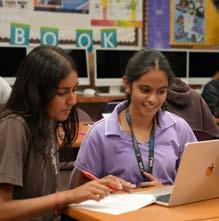
Health and Fitness Department
900 FRESHMAN HEALTH AND FITNESS Full Year
This year-long course completes the graduation requirement and will enhance the student’s interpersonal and social skills through participation in a variety of sports and activities. Understanding and improving the individual’s health related fitness components (cardiovascular endurance, flexibility, muscular strength and muscular endurance) in addition to mastering foundational movement patterns, will create the basis for participation in various training methods, exercises, and skills. The basics of nutrition for general health will be studied as part of a curriculum designed to enhance the overall wellness of each student. In addition, societal, interpersonal, and behavioral issues facing students will be addressed and discussed.
Prerequisites/Comments
9th grade standing. Completion of this course fulfills the Health and Fitness graduation requirement.
917 FRESHMAN HEALTH AND FITNESS Semester
Paired with a full season of a sport or an elective Health and Fitness class later in Saint Francis coursework, this semester course will develop and enhance the student’s interpersonal and social skills through participation in a variety of sports and activities. Understanding and improving the individual’s health related fitness components (cardiovascular endurance, flexibility, muscular strength and muscular endurance) in addition to mastering foundational movement patterns, will create the basis for participation in various training methods, exercises, and skills. The basics of nutrition for general health will be studied as part of a curriculum designed to enhance the overall wellness of each student. In addition, societal, interpersonal, and behavioral issues facing students will be addressed and discussed.
Prerequisites/Comments
9th grade standing. Completion of this course fulfills half of the Health and Fitness graduation requirement.
910 SPEED, POWER AND AGILITY
Semester
This course will introduce the students to the principles of speed training by developing the skill related components necessary to increase and improve dynamic flexibility, speed, power, and agility. Proper form and technique will be emphasized along with speed training for various distances and sports. Plyometrics, sport loading, and over-speed drills will be used along with agility ladders and other tools used to improve footwork.
Prerequisites/Comments
10th, 11th or 12th grade standing.
These one semester courses will introduce the students to the principles of strength training and physical conditioning with an emphasis on developing a strength and conditioning program that meets the individual needs of the student. Resistance training, the overload principle, aerobic training, anaerobic training, cross training and plyometrics will be performed. Students will learn and demonstrate knowledge of the anatomy used to perform specific exercises and the physiology of how specific training allows them to achieve their goals. In addition, the specific nutritional needs of athletes and injury care and prevention will be discussed.
Prerequisites/Comments
10th, 11th or 12th grade standing.
918 THE SCIENCE AND PRACTICE OF MINDFULNESS
Semester
This semester elective for sophomores, juniors and seniors will focus on the basics of the science of the brain, and mindful practices such as breathing techniques, mindful movement, and various forms of meditation. Students achieve goals where they improve their daily habits of sleep, screen time, health, and academic performance. This course integrates multiple fitness practices such as tai chi, yoga, pilates, stretching, and balance. Students improve upon their social-emotional skills through interactive activities. In this course, you will learn to have better stress management, by responding to your emotions and reactions through awareness.
Prerequisites/Comments 10th, 11th or 12th grade standing. UC/ CSU Area G.
Mathematics Department
501/502 ALGEBRA 1-A / ALGEBRA 1-B
Full Year*
The concepts needed for the further study of math are covered with the emphasis on problem solving. The student will develop the understanding of the real number system and perform the four basic operations on polynomial, rational, and radical expressions. The concepts of simplifying and evaluating mathematical expressions, determining the solutions to equations and inequalities, and the development of graphing are all used in the context of applications to real world situations. There will be emphasis on reviewing basic arithmetic skills and the practical applications of algebra and arithmetic in everyday life. In the second semester, the course will concentrate on factoring, simplifying rational expressions, graphing in the coordinate plane, solving systems of equations, and identifying functions.
Prerequisites/Comments
9th grade requirement for students who need additional support in math. In order to better prepare students for further math courses, this class will meet every day.
*Enrollment in this course represents two courses for scheduling purposes. Placement in this class is based upon the math score on the High School Placement Test (HSPT) and math grades in the 7th and 8th grades. Recommendation from the 8th grade math teacher may be considered as well. UC/CSU Area C (Algebra 1B only).
511 ALGEBRA 1 Full Year
The concepts needed for the further study of math are covered with the emphasis on problem solving. The student will develop the understanding of the real number system and perform the four basic operations on polynomial, rational, and radical expressions. The concepts of simplifying and evaluating mathematical expressions, determining the solutions to equations and inequalities, and the development of graphing are all used in the context of applications to real world situations. There will be constant emphasis on arithmetic skills and their applications.
Prerequisites/Comments
9th grade requirement, unless scheduled for an accelerated course. UC/CSU Area C.
512 ALGEBRA 1 HONORS Full Year
The student will develop an understanding of the real number system and be able to apply the four basic operations on polynomial, rational, and radical expressions. The steps leading to solutions of linear and quadratic equations and of inequalities are geared to problem solving. Graphing on the coordinate system will aid in the basic understanding of functions. There will be an emphasis on the solution of real world problems.
Prerequisites/Comments
A national score of 70% or higher on the HSPT Math section is required. UC/CSU Area C.
520 DESCRIPTIVE GEOMETRY
Full Year
Using definitions, basic postulates, and theorems, students will learn to solve problems involving triangles, other polygons, circles, and solids. Other elements consist of areas of plane figures, areas and volumes of solids, and the applications of coordinate geometry and basic trigonometry. The course includes a constant review of arithmetic and algebraic skills.
Prerequisites/Comments
Successful completion of Algebra 1A/1B or Algebra 1. UC/CSU Area C.
521 GEOMETRY
Full Year
Students will be presented units that develop an understanding of applications of the basic theorems, postulates and definitions of geometry. Using these basic concepts will enable the student to study congruent and similar figures, discover the properties of geometric figures (especially triangles and rectangles), perform geometric constructions, use the basic elements of coordinate geometry and trigonometry, develop the properties of measurement, and learn the principles of logical inference and proof.
Prerequisites/Comments
Minimum of a “C” grade in Algebra 1 or Algebra 1-H or an “A” and teacher recommendation in Algebra 1A/1B. Freshman students will be placed based on placement exam. UC/CSU Area C.
522 GEOMETRY HONORS
Full Year
Geometry is the study of figures and their properties. There is an emphasis on the study of congruent and similar figures, the properties of various figures (especially triangles and rectangles), the use of coordinate geometry, the methods of measurement, three-dimensional geometry, and an introduction to trigonometry.
Prerequisites/Comments
Minimum for both semesters of a “B” in Algebra 1H or an “A” in Algebra l. Freshman students will be placed based on placement exam. UC/CSU Area C.
530 INTERMEDIATE ALGEBRA
Full Year
Much of the work in this course will be a review of the material covered in first year algebra and geometry courses. The last part of the course will include the study of radicals, quadratic equations and relations, conic sections, and a study of exponential and logarithmic functions. The emphasis is on understanding the concepts, problem solving techniques, and applications on various models.
Prerequisites/Comments
Successful completion of Descriptive Geometry or Geometry. UC/CSU Area C.
531
ALGEBRA 2
Full Year
In addition to both reinforcement and a more advanced study of the concepts studied in Algebra 1, this course develops the concepts of radicals, complex numbers, functions, including quadratic, exponential, logarithmic, and trigonometric, and the real-life applications of trigonometry.
Prerequisites/Comments
Minimum of a “C” in both Geometry and Algebra 1. Students enrolled in Descriptive Geometry must have an “A-“ to take this course. Freshman students will be placed based on a placement exam. A TI-83+, TI-84 Silver, or TI-89 graphing calculator is required. UC/CSU Area C.
534 ALGEBRA 2 HONORS
Full Year
This course is a continuation of the material studied in Algebra I. There is a review and further development of the structure of the real number system, the solving of equations and inequalities, the manipulation of polynomial and fractional expressions and graphing. This is followed by the study of radicals, complex numbers, quadratics, functions, analytic geometry, exponents, logarithms and trigonometry.
Prerequisites/Comments
Minimum of an “A-” in Geometry or Summer Geometry or a “B” in Geometry Honors. Freshman students will be placed based on a placement exam. A TI-83+, TI-84 Silver, or TI-89 graphing calculator is required. UC/CSU Area C.
532 ADVANCED ALGEBRA/TRIGONOMETRY HONORS
Full Year
This course is a continuation of the material studied in Algebra 1. There is a review and further development of the structure of the real number system, the solving of equations and inequalities, the manipulation of polynomial and fractional expressions, and graphing. This is followed by the study of radicals, complex numbers, quadratics, functions, analytic geometry, exponents, logarithms, and sequences. The last quarter of the year is devoted to the study of trigonometry from the point of view of circular functions.
Prerequisites/Comments
Minimum of an “A-” in Geometry Honors or Geometry and a passing score on the qualifying exam. Freshman students will be placed based on a placement exam. A TI-83+, TI-84 Silver, or TI-89 graphing calculator is required. UC/CSU Area C.
540 STATISTICS
Full Year
This introductory course is designed to teach students the principles of statistical reasoning. Students will learn to collect, organize, analyze and interpret data to make appropriate conclusions. Students will sharpen their critical thinking skills through investigations and hypothesis testing. Technology will be used extensively for analysis, simulations, and graphical representation of data. This course provides a foundation for a college statistics course. These goals will be achieved by examining the statistical process through the world of sports.
Prerequisites/Comments 12th grade standing. UC/CSU Area C.
541 TRIGONOMETRY/ANALYTIC GEOMETRY
Full Year
Trigonometry is presented as the study of properties and applications of circular functions. There will be an emphasis on graphing trigonometric functions, discovering identities for right triangles, solving trigonometric equations, and solving problems involving the sides and angles of triangles and their applications to real life situations. Analytic Geometry is primarily the in-depth study of the properties and graphs of lines, conic sections, as well as quadratic and other functions with an emphasis on the equation of each figure.
Prerequisites/Comments
Minimum of a “C-” in Algebra 2 Honors, “C” in Algebra 2, or an “A” and teacher recommendation in Intermediate Algebra. UC/CSU Area C.
542 PRECALCULUS
Full Year
This course includes the study of functions and graphs, trigonometry and its applications, polynomial, radical, rational, exponential and logarithmic functions, conics, progressions, and a brief introduction to the concepts of Statistics and Calculus.
Prerequisites/Comments
Minimum of a “C-“ in Trigonometry/Analytic Geometry or Advanced Algebra 2/Trigonometry Honors, minimum of a “B-” in Algebra 2 Honors, or minimum of a “B” in Algebra 2. A TI-83+, TI-84 Silver, or TI-89 graphing calculator is required. UC/CSU Area C.
545 AP PRECALCULUS Full Year
AP Precalculus builds off students’ Algebra, Geometry, and Trigonometry skills. The course includes the study of the theory of equations, graphing, regressions, exponential and logarithmic functions, conics, and a review of trigonometry. The course concludes with an overview of limits, derivatives and the fundamental theorem of calculus. Through regular practice, students will build deep mastery of modeling and functions as they examine scenarios through multiple representations. AP Precalculus prepares students for calculus and other college-level mathematics courses and provides the opportunity for Saint Francis students to earn college mathematics credit.
Prerequisites/Comments
Minimum of a “B” in Advanced Algebra/Trigonometry Honors, an “A” in Algebra 2 Honors, or an “A” in Trigonometry/Analytic Geometry. Algebra 2 students with an “A-” or better and Algebra 2 Honors with a “B” or better are eligible to take the Summer Trigonometry class and will qualify for this course with a “B+” or better in Summer Trigonometry. Summer Trigonometry is recommended, but not required, for students with an “A” in Algebra 2 Honors. A TI-83+, TI-84 Silver, or TI-89 calculator is required. UC/CSU Area C.
544 CALCULUS Full Year
This course offers students the opportunity to explore the fundamental principles of Calculus at a pace that provides students time to understand, appreciate, and apply these concepts ultimately preparing students for a first-year college Calculus course. Topics include limits, some techniques of differentiation and integration, and applications.
Prerequisites/Comments
Minimum of a “B” in Precalculus, a “B-” in AP Precalculus, or a “B” in Advanced Algebra/Trigonometry Honors. UC/CSU Area C.
551 ADVANCED PLACEMENT CALCULUS AB Full Year
This course of study follows that of the Advanced Placement Program. The course consists of the study of differentiation and integration of polynomial, rational, irrational, logarithmic, exponential and trigonometric functions and their numerous applications. Students who progress satisfactorily in the course can take the Advanced Placement Calculus AB Examination in early May. Most colleges will award college credit for a calculus course to students who pass this examination.
Prerequisites/Comments
10th, 11th or 12th grade standing. Minimum of an “A” in Precalculus, a “B+” in AP Precalculus, a “B-” in Calculus, or an “A-” in Advanced Algebra 2/Trigonometry Honors. An AP exam will be administered in May (at a cost) and is required of all underclass students enrolled in this course. The test is optional for seniors. A TI-83+, TI-84 Silver, or TI-89 calculator is required. UC/CSU Area C.
552 ADVANCED PLACEMENT CALCULUS BC Full Year
Intended as a continuation of Calculus AB, material consists primarily of the study of graphs, differentiation, and integration of vector, polar, and parametric equations. Students will study more advanced forms of integration and the applications of the derivative and integral. The course will conclude with the study of sequences and series. Students who progress satisfactorily in this course can take the Advanced Placement Calculus BC Exam offered in May. Passage of this test can enable the student to receive a full year of college calculus credit.
Prerequisites/Comments
Minimum of a “B-” in AP Calculus AB. An AP exam will be administered in May (at a cost) and is required of all underclass students enrolled in this course. The test is optional for seniors. A TI-83+, TI-84 Silver, or TI-89 calculator is required. UC/CSU Area C.
553 ADVANCED PLACEMENT STATISTICS
Full Year
This course is an introduction to the major concepts and tools for collecting, analyzing, and drawing conclusions from data. Students will explore data, plan a study, anticipate patterns, and use statistical inference.
Prerequisites/Comments
11th or 12th grade standing. Juniors may take this course only with concurrent enrollment in Precalculus or a higher level math (dual math enrollment required). Seniors may take this course with a “B-” minimum in Algebra 2 or Trigonometry, or completion of a higher level math; seniors may take this as their only math course or concurrently with another. An AP exam will be administered in May (at a cost) and is required of all underclass students enrolled in this course. The test is optional for seniors. A TI-83+ or TI-84 Silver calculator is required. UC/CSU Area C.
555 ADVANCED PLACEMENT STATISTICS WITH DATA
SCIENCE
Full Year
AP Statistics with Data Science is a more rigorous course than AP Statistics. It is designed to fulfill college level requirements for AP Statistics, while also providing basic understanding of data science principles. These principles include problem workflow, variable types, visualization, modeling, programming, data management and cleaning, inferential procedures, and big data. Students will exit the course with a foundational understanding of exploratory analysis, and the opportunity to pass the AP Statistics exam for college credit.
Prerequisites/Comments
11th or 12th grade standing. Juniors may take this course only with completion of an AP math course and concurrent enrollment in AP Calculus AB or higher (dual math enrollment required). For seniors, completion of an AP math or computer programming course is strongly recommended; seniors may take this as their only math course or concurrently with another. An AP exam will be administered in May (at a cost) and is required of all underclass students enrolled in this course. The test is optional for seniors. A TI-83+ or TI-84 Silver calculator is required. UC/CSU Area C.
554 ORDINARY DIFFERENTIAL EQUATIONS
Full Year
This course is a year-long advanced math class designed to give those students who have completed Calculus BC the opportunity to continue developing their calculus skills. Students will leave the course with the ability to use modeling skills to represent properties of real-world problems mathematically, solve a variety of differential equations, including those based on realworld problems, and use solutions to analyze the behavior of real-world systems.
Prerequisites/Comments
Successful completion of AP Calculus BC. UC/CSU Area C.
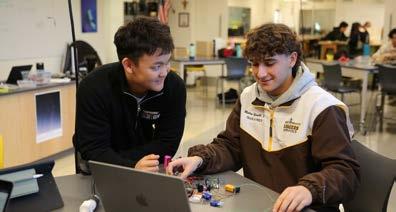
Religious Studies Department
111 RELIGIOUS STUDIES 1: SACRED STORIES
Full Year
What is spirituality? What is religion? What does it mean to be a member of a Catholic, Holy Cross school in the 21st century? How can an understanding of religious truths in the Bible contribute to one’s understanding of oneself, others, and society? In particular, this course explores bible stories from Adam and Eve and Creation through Moses and the Exodus, while introducing the student to our Catholic, Holy Cross charism, the presence of the Divine, Sacraments, and the life and teachings of Jesus Christ. Special emphasis will be placed on the critical interpretation and evaluation of cultural meanings within the Bible and within our society. A Christian Service reflection project is required in this course.
Prerequisites/Comments 9th grade requirement.
123 HEBREW SCRIPTURES/NEW TESTAMENT
Full Year
This course continues the Jewish Covenantal Master stories and connects them to the person of Christ as found in the Hebrew Scriptures and the New Testament, with particular emphasis on the Gospels and St. Paul’s epistles. The course will include an understanding of ancient Jewish and early Christian culture, historical geography, comparisons and criticisms of literary types, and how the roots of early Jewish and Christian religious practice affect contemporary religious practice. Critical to an understanding and appreciation of Sacred Scripture are an examination of issues in Biblical hermeneutics and interpretation, and an exposure and understanding of major motifs found in the Biblical texts. Throughout the course, there will be a continuous comparison and application of such motifs into the realities and challenges of adolescent life, creating an increased desire to encounter God through Scripture. Adolescent issues covered in this course include self-esteem, responsible decision making, stress management, healthy relationships, and the overriding call of personal integrity. A Christian Service reflection and a class service learning day are required in this course.
Prerequisites/Comments
10th grade requirement. UC/CSU Area G.
130 ETHICAL REASONING AND SOCIAL JUSTICE
Full Year
This course investigates contemporary ethical and social justice issues through critical analysis, reflection, and practical application. Students will explore universal ethical reasoning, human rights, and justice issues such as economic, ecological, and racial justice. By using analytical frameworks such as “see, evaluate, act,” students will develop the ability to critically assess social and ethical challenges, compare cultural perspectives, and engage in ethical decision-making. The course emphasizes developing skills in critical thinking, argumentation, evidencebased evaluation, and personal accountability. Students will also engage in service learning through a yearlong capstone project, collaborating with local organizations involved in social justice work. This project will allow students to apply their learning to real-world problems, culminating in a presentation that demonstrates their ability to synthesize course content and propose solutions to complex societal issues.
Prerequisites/Comments
11th grade requirement. UC/CSU Area G.
140 CHRISTIAN VOCATION
Semester
This course explores the source, meaning, implications, and applications of the Christian call to love and serve. The nature of spiritual discernment is addressed in relation to various aspects of life, including identity, work and careers, the Christian understanding of suffering and healing, an approach to money and possessions, and traditional Christian vocations: single life, married life, and religious life/priesthood. The course challenges students in their understanding of theological principles and vocational discernment, as well as how these apply to the concrete realities of society. Christian Service with reflection is integral to this course.
Prerequisites/Comments
12th grade requirement.
141/144
WORLD RELIGIONS
Semester
The purpose of this course is to understand one’s own beliefs and convictions more completely and with a new perspective through the study of the many wisdom traditions of our world. Students will be acquainted with some of the major ways humans have expressed and celebrated their religious experience through non-Catholic and non-Christian traditions. Comparative theology will be utilized to reflect on each tradition in light of Roman Catholicism. This class is geared toward experiential understanding. This understanding hinges upon students’ ability to step outside of themselves and to honestly and openly engaged the views and belief systems of others. Students will intentionally engage, question, and enter into dialogue with these religious traditions. One may find more questions than answers, but will be guided to more fully recognize and appreciate our shared humanity.
Prerequisites/Comments
12th grade standing. UC/CSU Area G.
142/145
CONTEMPORARY CHRISTIAN SPIRITUALITY
Semester
This course explores the life stories of contemporary Christians, with concentration on both the commonalities and uniqueness found in each person. Students will study the ways in which people encounter God, respond in faith, and grow spiritually. Students will also experience several types of prayer styles, including different forms of meditation and Sacramental encounters. Insights and writings on theology, spirituality and psychology will be used. Christian service with reflection is integral to this course. Seniors who enroll for the Sacrament of Confirmation will be enrolled in this course.
Prerequisites/Comments
12th grade standing. This class is required of students in the Saint Francis Confirmation Program.
143/146 INTRODUCTION TO PHILOSOPHY
Semester
In this course, students wrestle with the same difficult questions that humans have struggled to answer for thousands of years: Why are we here? How did we get here? What should we do about it? Beginning with the ancient Greeks, students work their way through the history of philosophy to educate themselves in the ideas of thinkers in this broad field. Students will analyze the arguments and conclusions of both secular and Christian philosophers using logic and reasoning, all the while delving into the depths of one’s inner being as students seek the truth about human existence.
Prerequisites/Comments
12th grade standing. UC/CSU Area G.
154/155 SPORTS
AND SPIRITUALITY
Semester
This is a semester selective course for seniors who will explore Catholic spirituality through the analogy of sports. Students will determine how human beings encounter the Holy in the midst of everyday life with emphasis on athletic experiences as an athlete and/or as a fan (of specific athletes, teams and/or sporting events). Students will also examine the relationship between competitive, organized athletics and elements of communal religious practice and purpose. Included is a study of embedded meaning associated with the movement of the human body, an analysis of ritual practice, a survey of major events where sports and religious practice intersect, and a differentiation between religious practice and personal spirituality. Ultimately, students will come to know more deeply the ways in which one relates to the Holy or the Transcendent in the course of their own faith journey, and how personal faith contributes to communal practice and celebration of what is Holy and Transcendent.
Prerequisites/Comments
12th grade standing. UC/CSU Area G.
156/157
RACIAL JUSTICE AND THE AMERICAN CHURCH
Semester
This course is a one semester senior selective course that aims to explore the roots, varied expressions, and complex dynamics of religious faith related to race and American politics and culture. Particular emphasis will be
placed on the rise of various liberation theologies as challenge and critique to the established religious belief system at the founding of the United States. Discovery will include confronting the important assumptions made when we say America is “one nation under God” and “in God we trust”. We will ground our exploration in Jesus’ own mission to “bring glad tidings to the poor...proclaim liberty to captives and recovery of sight to the blind, to let the oppressed go free, and to proclaim a year acceptable to the Lord.” (Luke 4:18-19) This course will challenge and inspire students to imagine and re-imagine what it looks like to be American, a person of faith, and to work for social justice in order to realize true liberty and freedom for all. This class fulfills the second semester Ethnic Studies requirement.
Prerequisites/Comments
12th grade standing. UC/CSU Area G.
158/159 SPIRITUAL ECOLOGY Semester
This one semester senior selective course provides students with both a conceptual and applied understanding of spiritual ecology. Through theological reflection, experiential place-based learning, and anthropological study, students will explore the spiritual dimensions of the environmental movement. Foundations of environmental stewardship will be explored in depth in the writings of Saint Francis, Pope Francis’ document Laudato Si’ and other faith traditions. Indigenous wisdom about the right relationship with the earth will be contrasted with modern-day destructive cultural and behavioral practices. The studies and activities in this course will call on students to work regularly in nature, to develop tangible pathways to put kinship with creation into daily practice, and to follow the Holy Cross call to have the competence to see and the courage to act. Furthermore, the course invites students to work personally and collectively as catalysts for bringing forward an environmentally sustainable, spiritually fulfilling, socially just human presence on this planet.
Prerequisites/Comments
12th grade standing. UC/CSU Area G.
Science Department
621 BIOLOGY
Full Year
Biological concepts are introduced through the lens of sustainability on planet Earth including science literacy, ecology, energy and matter in ecosystems and organisms, feedback and homeostasis, genetics, and evolution. An emphasis is placed on developing skills valued by the scientific community, such as critical thinking, arguing from evidence, and evaluating scientific data. Labs and activities will be used to demonstrate the application of topics. This course is aligned with the California NGSS 3-course model for The Living Earth: Integrating Biology and Earth Science.
Prerequisites/Comments
9th grade standing. For continuation into Chemistry/Chemistry-Honors during sophomore year, students will need to complete the math requirements for those courses and pass a qualifying exam for the honors course. See prerequisites below for each course. UC/CSU Area D.
622 BIOLOGY HONORS
Full Year
The investigative approach is used to acquire basic biological concepts and skills. Topics covered include cell chemistry and physiology, plant and animal morphology, evolutionary development, genetics, and ecology. The course addresses the social consequences of our actions as we attempt to solve the biological problems we face. This class places emphasis on applying the concepts of modern biology to relevant current topics during laboratory and other activities in the classroom. There will be long-term projects during each semester. The pace of Biology Honors is faster and covers topics in more depth than Biology. This course is aligned with the California NGSS 3-course model for The Living Earth: Integrating Biology and Earth Science.
Prerequisites/Comments
9th grade standing. A national score of 85% or higher on the HSPT Reading section and placement into Geometry or a higher level math are required. UC/CSU Area D.
631 CHEMISTRY Full Year
The basic concepts of chemistry are introduced with a focus on changing Earth systems. Students will gain an understanding of the nature of matter through an exploration of its properties and interactions on both the microscopic and macroscopic scales. The units of this course are presented thematically to build both qualitative descriptive skills and quantitative problem-solving skills that are fundamental to the physical sciences. Through their coursework, students would be able to describe the chemistry of the Earth’s three main systemsatmosphere, hydrosphere, and geosphere - including the impacts that human activities have on each. They should be able to make evidence-based forecasts of the current rate of global and regional climate change and associated future impacts. An emphasis is placed on problem-solving and the application of concepts to the real world through laboratory work, discussions, and report writing. This course is aligned with the California NGSS 3-course model for Chemistry in the Earth System.
Prerequisites/Comments
10th, 11th or 12th grade standing. Successful completion of Biology or Biology Honors. Concurrent enrollment in Algebra 2 or a higher-level math course is recommended. For continuation into Physics or Physics Honors, students will need to complete the math requirements for those courses and take a qualifying exam for the honors course. UC/CSU Area D.
632 CHEMISTRY HONORS
Full Year
This rigorous course involves an introduction to the fundamental principles of modern chemistry as centered on the current theories that describe matter. Topics covered include atomic theory, the mole concept, the states of matter, thermodynamics, chemical bonding, chemical periodicity, equilibrium characteristics of chemical reactions, acid-base behavior, and nuclear chemistry. An emphasis is placed on complex problem-solving through independent analysis and thorough laboratory report writing. The pace of Chemistry Honors is faster and covers
topics in more depth than Chemistry. This course is aligned with the California NGSS 3-course model for Chemistry in the Earth System.
Prerequisites/Comments
10th, 11th or 12th grade standing. Completion of Biology with an A or Biology Honors with a B or higher. Concurrent enrollment in Algebra 2 or a higher math course is required. The following criteria will be used as qualification for the course: satisfactory achievement on the qualifying exam administered by the science department and previous science and math grades. UC/CSU Area D.
640
CONCEPTUAL PHYSICS
Full Year
This course is a laboratory-based introduction to the main principles of physics as seen in our daily lives. The content emphasizes the conceptual exploration of the topics of motion, forces, energy, properties of matter, thermodynamics, waves, electricity, and magnetism. Students will utilize f irst-year algebra skills to solve problems and analyze data. Classroom learning will include handson laboratory work incorporating direct data collection and analysis, demonstrations, whole class discussion, and small-group projects.
Prerequisites/Comments
10th, 11th or 12th grade standing. Successful completion of Biology or Biology Honors and Algebra 1. This course will satisfy the Saint Francis physical science graduation requirement and will be the only non-AP level physics course a student may take. UC/CSU Area D.
641
PHYSICS
Full Year
This course is an introduction to some of the principles of physics, with primary emphasis given to understanding the fundamental aspects of nature and the interrelationship of energy and matter. Course material includes motion, force, energy, waves, sound, light, electricity, magnetism, plate tectonics, and astronomy. Emphasis is placed on the uses of technology, demonstrations, hands-on laboratory experience, and project-based learning and their application of principles and concepts to real-world problems. This course is aligned with the California NGSS 3-course model for Physics in the Universe.
Prerequisites/Comments
11th or 12th grade standing. Successful completion of Biology or Chemistry with a “B-” or higher or Biology Honors or Chemistry Honors with a C+ or higher. Concurrent enrollment in Trigonometry or a higher math course is required. UC/CSU Area D.
642
PHYSICS HONORS
Full Year
This course provides a systematic introduction to the main principles of physics, with primary emphasis given to understanding the fundamental aspects of nature, and the interrelationship of energy and matter. Students will explore underlying concepts and incorporate them into analyses and problem-solving techniques. Course material includes topics in both classical and modern physics: motion, force, energy, fluids, thermodynamics, waves, optics, electricity, magnetism, relativity, and cosmology. Students learn through lectures, demonstrations, computer modeling and simulations, hands-on laboratory experience, and engineering-based projects. Emphasis is on application of concepts to real-world problems. This course is aligned with the California NGSS 3-course model for Physics in the Universe.
Prerequisites/Comments
11th or 12th grade standing. Successful completion of Biology or Chemistry with an “A” or Biology Honors or Chemistry Honors with a B or higher. Completion of a trigonometry-based course with a B or higher is required. The following criteria will be used as qualification for the course: satisfactory achievement on the qualifying exam administered by the science department and previous science and math grades. UC/CSU Area D.
643 EXERCISE SCIENCE & SPORTS MEDICINE
Full Year
This course will introduce the students to the anatomy and physiology of the human body and examine how the body systems (skeletal, muscular, nervous, cardiovascular, respiratory, endocrine, and digestive) interact with each other through sport. The students will learn the ways in which the body obtains energy for exercise and how to train those systems for specific sports and activities. Students will learn basic nutritional principles and will analyze their diet to maximize sports performance and maintain general health. The principles and components of fitness and sport will be discussed, and students will perform a variety of field tests and labs designed to help them analyze their own level of fitness. Students will be required to build a fitness and nutrition program based on their individual needs and interests.
Prerequisites/Comments
Open to 11th and 12th grade students who have completed biology and physical science requirements. UC/CSU Area D.
644 MARINE BIOLOGY Full Year
This is a laboratory science course intended for students who wish to take a more specific Biology course. An investigative approach is used to apply biological concepts to marine ecosystems. Topics covered include oceanography, a survey of the phyla of marine organisms, ecology, and the interdependency of the marine ecosystems and their surrounding terrestrial ecosystems. There will be trips to the ocean each semester to gather data and observe organisms in their natural environment.
Prerequisites/Comments
Open to 11th and 12th grade students who have completed biology and physical science requirements.
UC/CSU Area D.
645 ENVIRONMENTAL SCIENCE
Full Year
Environmental Science is designed to be an introductory course. Environmental science is an interdisciplinary field that integrates a wide variety of science disciplines, including geology, biology, environmental studies, environmental science, chemistry, demography, and geography. It also incorporates a sociological and political perspective. This course is taught through the lens of sustainability with an emphasis on the “triple bottom line” of environmental stewardship, social equity, and economic stability. The goal of the course is to provide students with a basic understanding of scientific principles, concepts, and methodologies required to understand the interrelationships of the natural world, to identify and analyze environmental problems, both natural and manmade, to evaluate the relative risks associated with these problems and to examine alternative solutions for resolving and/or preventing them. The course integrates laboratory work and fieldwork within the course content and requires students to submit written laboratory reports that analyze and interpret collected data. The major topics covered are earth systems and resources, ecosystem biology, human population dynamics, land and water use, renewable resources, energy resources and consumption, human impact on environmental systems (pollution), and sustainability of human communities.
Prerequisites/Comments
Open to 11th and 12th grade students who have completed biology and physical science requirements. UC/CSU Area D.
651 ADVANCED PLACEMENT ENVIRONMENTAL SCIENCE
Full Year
AP Environmental Science is designed for students who wish to take a challenging introductory college-level course in environmental science. The course stresses interdisciplinary scientific principles and analysis, including a laboratory component. Major topics of instruction include earth systems and resources, ecosystem structures and changes, population ecology including human population dynamics, land and water use, energy resources and consumption, water and air pollution, agricultural and food systems, toxicology, and global environmental change. Laboratory and field investigations will be an integral component of the course. NOTE: This course requires substantial reading of college-level material.
Prerequisites/Comments
Open to 11th and 12th-grade students who have completed biology and chemistry. Completion of Biology or Chemistry with an “A” or Biology Honors or Chemistry Honors with a “B” or higher. If the course is overenrolled, priority will be given to seniors and based on previous science coursework and grades. Summer reading, which reviews biology and chemistry, is required. An AP exam will be administered in May (at a cost) and is required of all underclass students enrolled in this course. The test is optional for seniors. UC/CSU Area D.
652 ADVANCED PLACEMENT BIOLOGY Full Year
AP Biology is designed for students who wish to take a challenging introductory college-level course in biology as a foundation for future studies in science and pre-health-related majors. Students cultivate their understanding of biology through inquiry-based investigations as they explore topics like evolution, energetics, information storage and transfer, and system interactions. Laboratory work constitutes approximately one-fourth of the course. NOTE: This course is scheduled for an extra period once a week for extended laboratory work.
Prerequisites/Comments
Open to seniors who have completed Biology, Chemistry, and Physics. Students are recommended to have completed Chemistry/Physics with an “A-” minimum or Chemistry Honors/Physics Honors with a “B” minimum. If the course is overenrolled, priority will be given based on previous science coursework and grades. Seniors who have taken Biology and Chemistry and who wish to take the class concurrently with Physics may enroll on a space-available basis. This course will also meet for one extra period per week for lab. Summer reading, which reviews biology and chemistry, is required. An AP exam will be administered in May (at a cost) and is optional for seniors. UC/CSU Area D.
653 ADVANCED PLACEMENT CHEMISTRY
Full Year
AP Chemistry is designed for students who wish to take a challenging introductory college-level course in general chemistry as a foundation for future studies in science, pre-health, and engineering-related majors. Students will cultivate their understanding of chemistry through inquiry-based lab investigations as they explore the four Big Ideas: scale, proportion, and quantity; structure and properties of substances; transformations; and energy. Major topics of instruction include atomic theory of matter, properties and states of matter, chemical periodicity, reactions of matter including equilibrium, kinetics and thermodynamics, acid-base theory, and electrochemistry. Laboratory work constitutes approximately one-fourth of the course. NOTE: This course is scheduled for an extra period once a week for extended laboratory work.
Prerequisites/Comments
Open to seniors who have completed Biology, Chemistry, and Physics. Students are recommended to have completed Chemistry/ Physics with an “A” minimum or Chemistry Honors/Physics Honors with a “B” minimum. If the course is overenrolled, priority will be given based on previous science coursework and grades. Seniors who have taken Biology and Chemistry and who wish to take the class concurrently with Physics may enroll on a space-available basis. This course will also meet for one extra period per week for lab. Summer work, which reviews first year chemistry, is required. An AP exam will be administered in May (at a cost) and is optional for seniors. UC/CSU Area D.
654 ADVANCED PLACEMENT PHYSICS C
Full Year
AP Physics is designed for students who wish to take a challenging introductory college-level course in calculusbased physics as a foundation for future studies in one of the physical sciences or engineering. Students cultivate their understanding of physics through classroom study and activities as well as hands-on laboratory work as they explore concepts like change, force interactions, fields, and conservation. All units contain some use of calculus.
Prerequisites/Comments
Open to seniors who have completed Biology, Chemistry, and Physics. Students are recommended to have completed Chemistry/Physics with an “A” minimum or Chemistry Honors/Physics Honors with a “B” minimum.
This is a calculus-based course and prior completion of some calculus class is an absolute necessity before enrollment. Students are expected to have proficiency in the calculus skills of derivation and integration and these skills will not be taught during the course. If the course is overenrolled, priority will be given based on previous science coursework and grades. Summer work, which reviews first year physics and math, is required. An AP exam will be administered in May (at a cost) and is optional for seniors. UC/CSU Area D.
Social Studies Department
411 WORLD HISTORY
Full Year
This course is a survey of major events that have shaped western history from the Industrial Revolution to the present. Students will look at history, religion, geography, philosophy, culture, politics, and economics and how they have impacted human society as well as the individual. TIme is also spent developing critical thinking skills, with particular emphasis placed on document analysis, historical writing and research.
Prerequisites/Comments
10th grade standing. UC/CSU Area A.
428 ADVANCED PLACEMENT WORLD HISTORY
Full Year
In this course students will investigate significant events, individuals, developments, and processes from 1200 to the present. Students develop and use the same skills, practices and methods employed by historians: analyzing primary and secondary sources; developing historical arguments; making historical connections; and utilizing reasoning about comparison, causation, and continuity and change over time. The course provides six themes that students explore throughout the course in order to make connections among historical developments in different times and places: humans and the environment, cultural developments and interactions, governance, economic systems, social interactions and organization, and technology and innovation. Students should note this is a rigorous course with significant reading and writing; hard work and dedication are essential to success.
Prerequisites/Comments
10th grade standing. Recommended grades: minimum of a “B” in English 1 Honors or an “A” in English 1. Summer reading is required. An AP exam will be administered in May (at a cost) and is required of all students enrolled in this course. UC/CSU Area A.
431 UNITED STATES HISTORY
Full Year
This course examines major turning points in American history as they reflect continuity and change over time. The course begins in the 1850s with the lead up to the Civil War, and finishes with the current day. Students will conduct research of both primary and secondary sources with a focus on social justice in order to complete a semester and year long project. Students will develop skills in comprehending, analyzing, and evaluating main ideas, as well as making historical interpretations and perceiving historical relationships.
Prerequisites/Comments
11th grade standing. UC/CSU Area A.
435 ADVANCED PLACEMENT UNITED STATES HISTORY Full Year
This course is a college-level survey course designed to prepare students to take the AP exam given in the spring. Through this course students will be provided with content, practical knowledge of U.S. history, an understanding of historical thinking skills, including chronological reasoning, comparing and contextualizing, crafting historical arguments using historical evidence, and interpreting and synthesizing historical narrative, and effective writing techniques that will better prepare them for the exam and future educational endeavors. The content is organized thematically and there are key concepts that the students will understand by the end of the year. This is a rigorous course; hard work and dedication are essential to success.
Prerequisites/Comments
11th grade standing. Recommended grades: minimum of a “B” in AP World History and English 2 Honors or an “A” in World History and English 2. Summer reading is required. An AP exam will be administered in May (at a cost) and is required of all students enrolled in this course. UC/CSU Area A.
441 US GOVERNMENT Semester
This course is an integrated treatment of national, state, and local government. The fundamental principles and basic functions of government in a democratic society are studied. Subject matter covered includes the study of the Constitutional basis of the American government, civil rights and civil liberties, institutions and policy-making, and political beliefs and voting. Special attention is paid to the development of the principles of the Constitution and application of these principles to American life via current events analysis.
Prerequisites/Comments
12th grade standing. UC/CSU Area A.
445 ADVANCED PLACEMENT US GOVERNMENT & POLITICS Semester
The Advanced Placement Program is intended for qualified students who wish to complete studies in secondary school equivalent to a one-semester college introductory course in American Government & Politics. This course is designed to give students a critical perspective on politics and government in the United States. The class involves both the study of general concepts used to interpret American politics and a review of historical and current events that illustrate those concepts. It also requires familiarity with the various institutions, groups, and ideas that make up the American political reality. The major topics of study are: 1) the political theory of democracy; 2) the constitutional underpinnings of American government; 3) the theory and practice of federalism; 4) the institutions and policy processes of national government; 5) and civil rights and civil liberties.
Prerequisites/Comments
12th grade standing. Recommended grades: minimum of a “B-” in AP US History or an “A-” in US History. Summer reading is required. AP exam will be administered in May (at a cost) and is optional for seniors. UC/ CSU Area A.
442 ECONOMICS
Semester
This course provides students with a foundation in the fundamentals of economics necessary to understand the world around them. The course starts by introducing basic economic concepts to understand scarcity, opportunity costs, and trade-offs within the context of a market economy. The role of government in promoting public welfare is analyzed and students learn about externalities, public goods, and taxes and debate public opinions regarding these. This subject is explored in depth as students will propose, in the form of a research paper, government policy that promotes that general economic welfare, thus developing critical social studies skills along the way. Afterwards, students examine microeconomic concepts, focusing in particular on supply and demand and the effects their shifts have on market prices. The course then closes with an examination of macroeconomics, focusing on statistics like GDP, unemployment, and CPI, as well as government fiscal and monetary policies.
Prerequisites/Comments
12th grade standing. UC/CSU Area G.
408 ADVANCED PLACEMENT MACROECONOMICS Semester
This course covers the “aggregates” of the economy; its purpose is to analyze the “big picture” of the economy as a whole. Particular areas of emphasis include basic economic concepts, measurement of economic performance, short run and long run aggregate supply and demand, the examination of national income and price-level determination, and the ability of students to recognize and evaluate economic performance measures, the financial sector, stabilization policies, economic growth, and international economics. In addition to strong critical reading and studying skills, a high level of conceptual thinking and proficiency in math are required.
Prerequisites/Comments
12th grade standing. Students must be concurrently enrolled in or have completed AP Calculus AB or AP Calculus BC or higher. Summer reading is required. AP exam will be administered in May (at a cost) and is optional for seniors. UC/CSU Area G.
Social Studies Electives
401 HISTORY AND POLITICS OF THE OLYMPICS Semester
This course will examine the politics that have affected significant Olympic games throughout history. Starting with the Ancient Olympics and the foundations established there, the students will explore the invention of the modern Olympics in 1896, Berlin 1932, Mexico City 1968, Munich 1972, the boycotts in 1980 and 1984, and the Beijing Olympics in 2008. Students will analyze the importance of international politics and how the Olympics have worked to bring nations together, while also being directly impacted by strife between specific nations. Specific emphasis will be placed on the 2020 Tokyo Summer Games.
Prerequisites/Comments
10th, 11th or 12th grade standing. UC/CSU Area G.
414 ADVANCED PLACEMENT PSYCHOLOGY Full Year
AP Psychology offers an overview of the biological and social impacts on behavior. The course begins with an investigation of the effects of biological processes on human behavior, including brain structures and functions, genetics, and physiological response systems. Then the course investigates the environmental aspects of human behavior, including human development, personality, and societal factors. AP Psychology is a college-level course that includes reading from the textbook and psychological studies, requires critical thinking skills to apply learned knowledge, and gives students the opportunity to demonstrate their knowledge in a variety of mediums.
Prerequisites/Comments
11th or 12th grade standing. Recommended grades: minimum of a “B-” in previous AP/Honors Social Studies and English courses or an “A-” in previous college preparatory Social Studies and English courses. An AP exam will be administered in May (at a cost) and is required of all underclass students enrolled in this course. The test is optional for seniors. UC/CSU Area G.
416 BIOMEDICAL ETHICS
Semester
This course will familiarize students with the predominant lines of contemporary reflection in biomedical ethics from a multitude of viewpoints. The focus will be on challenging issues that students will most likely see in their daily life, particularly those issues that they will face as they grow into young adults entering life after high school. Since biomedical issues are viewed through many different lenses, the course will be built around mainstream beliefs on various ideologies that students are most likely to be exposed to in the United States. Notably, as a social studies course this class will not tell students what to believe but instead introduce them to what various groups believe and why. An example of possible topics includes: abortion, cloning, chimeras, euthanasia, execution, gene manipulation, GMOs, organ donation/sales, and stem cell research. At its best, this course will eventually lead students to be better able to define and defend their own stances on these issues while also better understanding the thoughts of those around them. Ideally, this will aid in the development of productive and empathetic dialogue on many controversial topics of today.
Prerequisites/Comments
11th or 12th grade standing. UC/CSU Area G.
419 HISTORY AND THEORY OF SOCIALISM Semester
For some, the word is an epithet; for others, it is a badge of honor. “Socialism,” in one form or another, has been around for a long time, but the idea has also emerged, with new force, in the age of the gig economy and Amazon fulfillment centers. This class is designed to explore the historical and theoretical development of socialist thought and practice with an eye towards understanding our current social life. We will begin by examining the pre-history of 19th century socialism - the socialism of hunter-gatherers and of religious communities - before moving on to the development of socialism that coincided with the rise of capitalism and industrialism. We will explore the philosophy and economics of Karl Marx before examining the complicated interaction between Marxism and socialism in the wake of the Bolshevik Revolution. Finally, we will explore the sometimes fraught relationship between socialism and other movements for human liberation during the course of the 20th and 21st centuries. At all times we will examine how the history of this philosophy sheds light on current dilemmas, conflicts, and calls for social justice.
Prerequisites/Comments
11th or 12th grade standing. UC/CSU Area G.
420 PERSONAL FINANCE
Semester
The Personal Finance course focuses on basic financial literacy skills relevant to teens and young adults. Core topics include career skills, budgeting, investing, college planning, and more. The purpose of the course is to empower students so they are more equipped to make financial decisions confidently. The course promotes financial independence as a personal goal for each student by emphasizing the importance of investing from an early age, and knowing the difference between assets and liabilities. Students will read excerpts from various books including Rich Dad, Poor Dad and The Psychology of Money. The course culminates in a higher education planning project that challenges students to think about college as an investment, in the face of rising costs, and requires them to analyze that investment from a cost benefit analysis.
Prerequisites/Comments
11th or 12th grade standing. UC/CSU Area G.
424
INTRODUCTION TO PSYCHOLOGY Semester
This course is a survey in social science with an emphasis upon developing a student’s understanding of the historical, clinical and developmental processes in psychology. Students will conduct experiments and complete surveys to enhance their ability to solve problems in a social context. The exposure to literature and theories will build a strong foundation for future course work.
Prerequisites/Comments
10th, 11th or 12th grade standing. UC/CSU Area G.
Visual & Performing Arts Department
810
DANCE 1
Full
Year
This course is tailored for all students, whether or not they have prior formal dance experience. The curriculum encompasses a range of dance genres, such as, Jazz, Contemporary, Hip Hop, and Salsa. Emphasis is placed on jazz vocabulary and movement, serving as the foundational form for other dances. Students will engage in whole class and small group dance performances throughout the school year. As the year progresses, students will learn about key figures and historical background in each style of dance.
Prerequisites/Comments
Open to all students. UC/CSU Area F.
839
DANCE 2
Semester
Dance 2 is a dance course for students who have completed Dance 1 or demonstrate a proficient level of dance technique through formal training. The curriculum includes the ongoing style of various dance genres, such as Jazz, Contemporary, Hip Hop, and Salsa with a particular focus on how to create choreography. Students will have the opportunity to engage in whole class, small group, and individual dance performances, as well as create original choreography for Dance 1 students.
Prerequisites/Comments
Completion of Dance 1 or demonstrated proficiency and instructor permission. UC/CSU Area F.
811
DRAMA 1
Full
Year
This class caters to the individual who may have lots of drama experience or none at all and is an introduction to the study of the theater through the ages. Throughout the full-year course, students will learn about the basics of drama through different units, each with an end product. Acting techniques, body movement, pantomime, voice projection, articulation, and characterization will encompass a bulk of the course and will help students gain knowledge of the various aspects of theater through continual researching, reading, writing, performing, observing, oral evaluation, and “hands on” experience. The goal of this course is to create a comfortable classroom environment where students are able to express themselves through this beloved art form and physically show what they have learned.
Prerequisites/Comments
Open to all students. UC/CSU Area F.
866 DRAMA 2A
Semester
The content of this performance-oriented semester-long course will dive deeper into dramatic basics learned in Drama 1. Through several different units, students will have the opportunity to showcase their enhanced performance skills by working with more difficult material in addition to learning more about the technical side of theatre. The class focuses on developing an ongoing workout for the actor–both physical and vocal, learning to create an ensemble approach to working, developing specific stage techniques, discovering style acting, and developing auditioning techniques. A major focus is to enhance student knowledge in theater history, both from the emergence of the art form and in relation to the current challenge for the representation of non-dominant cultures. The course also provides Drama 2 students with the unique opportunity to be directed by their Drama 3 peers.
Prerequisites/Comments
Minimum of a “B” in Drama 1. UC/CSU Area F.
841 DRAMA 3
Full Year
The content of this course will steer away from the acting portion of drama education and focus on directing. Drama 3 students will have various projects throughout the semester where they direct their Drama 2 peers, learning how to think and act as directors. Students will have the opportunity to learn the psychology and application of directing, and complete a director’s project of a play. Each student will take part in all of the major technical roles of design and application of production. Students must have taken Drama 1 and 2 in order to enroll in this course.
Prerequisites/Comments
Minimum of a “B” in Drama 2 semester course or the full year Drama 2 course and teacher recommendation. UC/CSU Area F.
851 DRAMA 4
Semester
The content of this course will enable all students to expand upon their crafts in various different ways. Units will alternate depending on student interest, alignment with production educational opportunities, and more. Possible units may include stage combat, puppetry, playwriting, or contemporary theatre studies, among others. The goal is for students to become acquainted with other areas in the art form that can lead them toward well-rounded theatrical artists.
Prerequisites/Comments
Successful completion of Drama 1, 2, and 3, and teacher recommendation. UC/CSU Area F.
802 ACTING FOR MUSICAL THEATER
Semester
Designed for the actor, this course will explore the intricacies of acting through song. In the duration of this semester-long course, students will work on several musical theatre pieces to help build their understanding of vocal technique and acting through song.
Prerequisites/Comments
10th, 11th or 12th grade standing. Successful completion of one year of Visual or Performing art class.
812 BASIC DESIGN/DRAWING 1 Full Year
This course introduces the student to the basic elements of design and drawing. During the first semester, students investigate line, value, shape, texture, color, and composition. The principles of art are introduced through projects in composition, design and critiques. The study of specific artists and periods in art history will illustrate the basic concepts that are learned. During the second semester, the course investigates methods of drawing and composition. Students draw from life and photographed visual resources. Contour, perspective, gesture and expressionist drawing are some areas that are explored along with a review of the elements and principles of design. Experience in charcoal, pastel, pencil, pen and ink, watercolor and other media is featured. Supplemental art history will accompany art projects.
Prerequisites/Comments
Open to all students. UC/CSU Area F.

813 GRAPHIC ARTS
Full Year
This course is project-based, emphasizing the elements and principles of design, featuring the desktop version and the iPad Photoshop app. Concepts and skills learned align with the Adobe Photoshop, Illustrator and Premiere apps and are related to future digital workflows. Students will develop fundamental techniques and skills in media production. Various methods of graphic communication: poster and product design, audio visual presentations, foundations of typography, photography, composition and editing are integral to the course. A framework of reading, writing and design exercises will lay the groundwork for digital literacy and practical applications. Students will describe, analyze, interpret and judge professional artwork as well as evaluate their own projects and that of peers. The goal is to enable understanding of graphic design aesthetics, hone and implement unique problem solving skills, incorporate critical thinking relating to each graphic design project, and build confidence in selfexpression and communication using digital media. The iPad allows studio work to be done off campus with the full Photoshop app.
Prerequisites/Comments
Open to all students. UC/CSU Area F.
213 BEGINNING JOURNALISM 1: DESIGN Full Year
The foundational understandings of journalistic writing, design, and publication are explored in this introduction to journalism course Students will employ various journalistic writing styles to investigate topics of importance within their school community Class project areas include photography, interviewing, page design, and layouts. Students will progress in their ability to defend – both orally and in writing – decisions regarding the medium and style of their journalistic output, and its legal and ethical soundness. Students will analyze the writing styles and perspectives of their peers, while also frequently reflecting on the styles, perspectives, and values represented in their own publication. Similar to other performing arts courses, components of this class require students to perform duties as a journalist outside of the school day, such as attending sports games and community events to practice interviewing and reporting. Students will have the chance to select their reporting dates once the school event calendar is available.This course serves as a prerequisite for enrolling in future Advanced Journalism courses.
Prerequisites/Comments
Open to all students. UC/CSU Area F.
215 JOURNALISM 2
Semester
This course is for all students interested in joining the Poverello staff and producing the school’s annual yearbook. The foundational understandings of graphic design, photography, journalism, and of publications are explored in. Students will employ elements of art and principles of design in combination with journalistic writing styles to investigate topics of importance within their school community, and will work together to develop and print a yearly publication. Class project areas include photography, interviewing, page design, and layouts. Students will analyze the artistic choices and writing styles and perspectives of their peers, while also frequently reflecting on the styles, perspectives, and values represented in their own publication. This course serves as a prerequisite for enrolling in future Advanced Journalism courses. Attendance at a once a month Friday production night from 2:30-10 pm is required. Dates are provided at the beginning of the school year.
Prerequisites/Comments
10th, 11th or 12th grade standing. UC/CSU Area F.
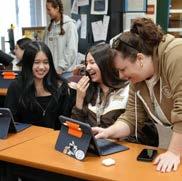
214 ADVANCED JOURNALISM: DESIGN, PRODUCTION, AND LEADERSHIP (LEVEL 3) Full Year
This course builds off of the foundational understandings of journalistic writing, design, and publication that are explored in the previous journalism courses that culminates in the production of the school’s annual yearbook. Students enrolled in this course will have similar journalistic experiences as they did in the Beginning Journalism or Journalism 2 course, but to a higher and deeper degree developing a level of mastery over journalistic principles. This course has the added focus of student leadership as students may hold various editorial roles and responsibilities that give them the opportunities to make larger creative decisions as well as direct and organize younger staffers. In addition to peer editing responsibilities, students will work to create a sense of community, foster the development of good journalistic practices, help each other and their younger peers in the selection of story ideas, and conduct primary research. Attendance at a once a month Friday production night from 2:30-10 pm, and a weeklong production week in March from 2:30-8 is required. Dates are provided at the beginning of the school year.
Prerequisites/Comments
11th or 12th grade standing. Successful completion of Beginning Journalism or Journalism 2 + Yearbook Zero Period or instructor approval. UC/CSU Area F.
217 ADVANCED JOURNALISM 4 HONORS: YEARBOOK DESIGN AND PRODUCTION Full Year
This course works in unison with Journalism 2 and Advanced Journalism 3 to design and compose the Poverello yearbook. Functioning as a capstone to the subsequent journalism courses offered at the school, students will have successfully completed prerequisites in design/ photography and journalism production and writing. This leads to a year of serving in a leadership role making crucial design, marketing, concept, and management decisions which result in students demonstrating mastery of all design principles, technical mastery of digital printing, and planning a comprehensive design scheme for print production. In addition to the responsibility of creating content for the yearbook, Honors yearbook staff will mentor new yearbook students, edit pages completed by fellow staffers offering suggestions for improvements, and check for detailed cohesion within the book as a whole. Continuing students enjoy both more responsibility for and more input toward not only the yearbook as a publication but also in the functioning and duties of the staff as a whole. Attendance at a once a month Friday production night from 2:30-10 pm, and a weeklong production week in March from 2:30-8 is required. Dates are provided at the beginning of the school year.
Prerequisites/Comments
12th grade standing. Successful completion of Advanced Journalism: Design, Production, and Leadership (Level 3) or instructor approval. UC/CSU Area F.
820 DIGITAL VIDEO PRODUCTION 1
Full Year
In this full-year course the students will be exposed to the historical and basic elements of film and video making. This will include viewing and analysis of different genres and current works as a way to explore and understand how video/media technology has evolved and the impact it has had on culture and world events. Students will also study the impact of digital video on our society from a social, economic, and political viewpoint. Students will convey creative expression and develop ideas individually or within a group, compose an outline/proposal, and write a script from the outline. “Preproduction” will include planning, scripting, storyboarding and the organizing of talent and all aspects of the upcoming shoot. In “production” students will work with the talent and direct the coordination of the production crews, camera men, lighting, sound, etc. In “post-production”, the students will learn to edit and finalize their work to be presented in multiple formats. Students will have the opportunity to be involved in the performance task of creating a live TV studio broadcast. Students will learn to collaborate and manage the TV studio shooting space and production booth, and will understand all of the equipment that is used in order to accomplish the task. Students will collaborate with each other and demonstrate the ability to coordinate all responsibilities to successfully produce a live broadcast that will disseminate important school information to the entire campus.
Prerequisites/Comments
Open to all students. UC/CSU Area F.
821 DIGITAL VIDEO PRODUCTION 2
Full Year
Video Production 2 is organized around the five major standards of the California Arts Curriculum and National Core Arts Standards at the accomplished level. Students will research film genres in order to understand the complexity of media art and its role in film history. As each standard is introduced, students will apply and practice the principles learned in that standard through a major course project. Each project will require the application of sophisticated videography techniques as outlined in the arts standards. The course projects will be included in the students’ cumulative portfolio. Students will also have the opportunity to be directors and on screen talent during a live TV Studio broadcast on a weekly basis. They will collaborate and manage the TV studio shooting space and production booth, including teaching Video Production I students how to use and maintain the equipment used in order to accomplish a live studio broadcast. All students will perform and understand the various roles which are required in order to collaborate successfully such as technical director, set director and grips. Students will collaborate with each other and demonstrate the ability to coordinate all responsibilities. Students will be involved with critiquing their own broadcast and implementing improvements to future expand the concept of having a streaming broadcast station on campus.
Prerequisites/Comments
10th, 11th or 12th grade standing. Successful completion of Video Production 1 or department chair approval. UC/CSU Area F.
822 ADVANCED PHOTOGRAPHY
Semester
This course will enable students who have taken Graphic Arts or Video Production to explore further the field of digital photography as a compositional medium. The class will focus on the principles of photography and the basic concepts of image enhancement using Adobe Photoshop; those being visualizing, capturing, enhancing and output. This course is designed to familiarize students with photographic equipment as well as to develop their aesthetic sense and artistic techniques.
Prerequisites/Comments
10th, 11th or 12th grade standing. Successful completion of Graphic Arts, Video Production or department chair approval. UC/CSU Area F.
823 DRAWING 2
Semester
This course continues the study of drawing methods in both wet and dry media. Emphasis is placed on the act of really seeing and drawing as opposed to preconceived concepts of reality. Imaginative creative drawing styles are explored, encouraging students to develop the ability to express themselves visually using fantasy as well as realism. Projects include portraits, figure drawing, landscape, as well as review of perspective drawing. Art history will focus on particular artists and movements illustrating drawing concepts and building visual vocabulary.
Prerequisites/Comments 10th, 11th or 12th grade standing. Successful completion of one year of Visual or Performing art class. UC/CSU Area F.
824
PAINTING 1 Semester
This course reinforces the foundation of visual art: the elements and principles of design, and expands visual vocabulary. Students explore painting techniques and processes in watercolor, tempera, collage, pastel and experimental mixed media. Relationships between communication of ideas and styles throughout art history, (i.e., symbolic, social, and cultural content), is integrated into the experience. Written critiques develop students’ ability to correlate, describe, analyze, interpret and judge art based on their own personal experience and work, and that of their peers. The course challenges students to think creatively, critically, and develops confidence in visual problem solving and communication.
Prerequisites/Comments
10th, 11th or 12th grade standing. Successful completion of one year of Visual or Performing art class. UC/CSU Area F.
825 CERAMICS 1
Semester
This course explores design in three dimensions with emphasis on form, space and concept. The projects in this class focus on the use of modeling/manipulation, additive, subtractive, and substitution sculpting techniques. The study of the cultural and the historical context of three dimensional art will be emphasized in projects, classroom discussion and lectures.
Prerequisites/Comments
10th, 11th or 12th grade standing. Successful completion of one year of Visual or Performing art class. UC/CSU Area F.
826 CERAMICS 2
Semester
This ceramics class will enable the student to learn advanced techniques used in creating vessels and sculpture on the potter’s wheel. Through the use of clay, subject matter, symbols, meaningful images and visual expressions students will learn to express their ideas and to evaluate the merits of their efforts. Students will exhibit competence in visual, aural, oral and written form. They will develop and apply effective critical thinking and speaking skills. Students will understand and evaluate influences of literature, cultural traditions, and other art forms in crafting a global visual art heritage. They will learn to deeply experience and to critically evaluate the development of art as a worldwide expression of life issues. During lectures, students will be exposed to visual presentations using Powerpoint, slides, videotapes, and related websites.
Prerequisites/Comments
10th, 11th or 12th grade standing. Successful completion of Ceramics 1. UC/CSU Area F.
830
AP STUDIO ART Full Year
The AP Studio Art program enables highly motivated students who intend to pursue the arts as a career to do college level work in student art while still in high school. The AP Studio Art exam is not based on a written test, but rather an evolving portfolio of work that will be evaluated throughout the school year. Students are required to fully explore all three sections of the portfolio, which includes quality, breadth, and concentrations. The students are required to develop a theme for their concentration section almost immediately upon beginning the course. Students should have put considerable work into this during the summer leading up to the AP course. Throughout this process students will experience a wide variety of examples, techniques, and exercises designed to stimulate ideation and work towards the completion of the final AP portfolio.
Prerequisites/Comments
12th grade standing. Students must meet with and obtain the approval of the Visual and Performing Arts department chair to enroll in this course. Strongly recommended that you have taken multiple art classes at Saint Francis. This course will also meet during Advisory. Summer work is required. UC/CSU Area F.
836 ADVANCED STUDIO ART
Semester
This course content is designed to advance art technique to students of intermediate levels. The students will develop their skills through the artistic process of creating, displaying, presenting, producing and connecting all the elements of art & design in a more business and professional way. The students will develop knowledge of structures in design and composition within the elements of art theory using multiple mediums including, but not limited to, acrylic paint, watercolor paint, oil pastels, ink, chalk pastels, charcoal, graphite, pencils, collage, digital imagery and 3 dimensional design. Students will create their own original works of art using industrial design, architecture with expressive qualities that pertain to the mission of Saint Francis and its environmental concerns. The students will learn to present their work in a very attractive and professional manner to colleges and businesses alike.
Prerequisites/Comments
10th, 11th or 12th grade standing. Successful completion of Ceramics 2, Painting 1, Drawing 2, or Advanced Photography. UC/CSU Area F.
845 INTRODUCTION TO GAME DESIGN ART Semester
This course takes students through the game design pipeline. Utilizing computers, students will learn to create 3D assets in Blender, create textures in Substance Painter, and ultimately build and design a single level in the Unreal Engine. Over the semester students will perfect their process, working in multiple industry standard programs, showcasing a finished open world level.
Prerequisites/Comments
10th, 11th or 12th grade standing. Successful completion of one year of Visual or Performing art class. UC/CSU Area F.
846 DIGITAL 2D ANIMATION
Semester
This semester course will provide students with the fundamental skills to produce traditional style animation and the knowledge of the principles of animation. Students will develop the drawing skills while learning the principles of squash and stretch, follow-through and overlapping, anticipation, timing, key frames, and in-betweens. Students can also apply skills learned in this class in other areas including motion graphics, stop motion and basic traditional animation. This course will offer skill development in the use of software to develop storyboards and 2D animation including creating, importing and sequencing media elements to create multimedia presentations. Emphasis will be on conceptualization, creativity, and visual aesthetics. This course takes the students through various aspects of animation using 2D software. Develop concepts, storyboarding and production of several 2 dimensional animations will be accomplished. Students work to improve their technical ability to draw, pose, breakdown and in-between characters for 2D animation, focusing on weight, balance, timing, and movement to achieve well structured and fluid animation.
Prerequisites/Comments
10th, 11th or 12th grade standing. Successful completion of one year of Visual or Performing art class. UC/CSU Area F.
847 ADVANCED DIGITAL 2D ANIMATION 2
Semester
Advanced Digital 2D Animation will continue to build a student’s knowledge of animation techniques. This course will focus on character and story. Students will learn to create voice-over animations and character animations, culminating in an extended animation short as a final project.
Prerequisites/Comments
10th, 11th or 12th grade standing. Successful completion of Digital 2D Animation. UC/CSU Area F.
848 ETHNIC STUDIES: ART AND RESISTANCE
“The role of the artist is to make the revolution irresistible”
- Toni Cade Bambara
Semester
Art plays an essential role in social resistance and political organizing against oppression. It is a key to shifting cultural consciousness and mainstream perspectives. Students will learn the history of racial diversity, equity, and inclusion in both the performing and visual arts. Students will explore questions including: What social and/or political conditions have visibly and invisibly shaped your life? What is the role of technology and social media in art and activism today? What are the possibilities and problems with allyship in artistic activism?
Prerequisites/Comments
10th, 11th or 12th grade standing and completion of the Ethnic Studies course. This course satisfies the second semester requirement for the Ethnic Studies graduation requirement. UC/CSU Area G.
815 BAND TECH Semester
This course gives the beginning music student the opportunity to learn a wind or percussion instrument of his or her choice. Individual and group instruction is given daily. A limited number of school instruments are available for student use. The class will join with the Concert Band for the Christmas Concert and will participate with the Concert and Symphonic Band for marching season. Performance is required by all students who are enrolled in a band class.
Prerequisites/Comments
10th, 11th or 12th grade standing. This course is for students with limited or no prior instrumental music experience. Course fee required. UC/ CSU Area F.
816 CONCERT BAND Full Year
Class instruction will emphasize improving sight-reading skills, study of music theory and music history, improving instrumental skills through technical training and exploring concert band literature. This group will perform independently at school concerts and band festivals. Concert Band will join with Symphonic Band for marching season. During the months of September through November the group will rehearse on Wednesdays from 5-8:30 PM and Saturdays as part of the Marching Band. Concert Band receives 5 Physical Education credits for Marching Band participation. Students enrolled in Concert Band are eligible to travel on the annual Music Tour.
Prerequisites/Comments
Open to all students with at least one year of music lessons and/or band experience, or instructor approval. Course fee required. UC/CSU Area F.
819 INTRODUCTION TO STRING ENSEMBLE Full Year
This course is designed for students to explore music through the study and playing of music designed for string orchestra. Focus on basic musical elements, (notation, rhythm, meter harmony etc,) as described in the National Standards of Music Education will be used in order to enhance the performance of small and large groups. Students will use their acquired skills in large group performances. Weekly rehearsals after school required, up to two hours per week. Up to four performances per semester outside the school day, including concerts and festival performances. Students enrolled in String Ensemble are eligible to travel on the annual Music Tour.
Prerequisites/Comments
Open to all students who have the background in a string instrument to be able to participate in instrumental music activities. Course fee required. UC/CSU Area F.
832 SYMPHONIC BAND 2
862 SYMPHONIC BAND 5
These courses offer the advanced music student the opportunity to perform in a top-level performing ensemble. Appreciation is gained through performance of a wide variety of musical literature. Instruction of music theory is continued. Participation outside of class will be required for some football and basketball games, extra rehearsals, a band festival, parades, rallies, concerts and one major extended trip each year. Academic credit is given for this class, which counts toward the overall GPA, and this class fulfills the activity requirement. Athletes participate in their sport during that season without penalty, as long as daily musical progress is made. During the months of September through November, this group will rehearse on Wednesday from 5:00 - 8:30 p.m. and Saturdays. Students enrolled in Symphonic Band are eligible to travel on the annual Music Tour.
Band 2
Mastery and performance of challenging band literature will be experienced by the year’s end. Musical independence will be accomplished and demonstrated.
Band 3
Section leader positions should be sought. Ensemble participation in outside concerts is encouraged.
Band 4
Solo preparation necessary. Honor Band audition is encouraged. Leadership skills must be demonstrated. Emphasis is on performance and music composition.
Band 5
Reserved for students who enter the Saint Francis band program at the freshman level with musical skills beyond the Concert Band curriculum. Students must prepare solo works and audition for the county and state Honor Bands. Symphonic Band 5 students will be section leaders in the band.
Prerequisites/Comments
10th, 11th or 12th grade standing. Students must complete the prior level for advancement into the next one (ex. completion of Concert Band to take Symphonic Band 2; completion of Symphonic Band 2 to take Symphonic Band 3, etc). Course fee required. UC/CSU Area F.
805 JAZZ ENSEMBLE
Special Class
This class will explore a broad repertoire of jazz styles as experienced in big band literature (i.e. swing, rock, Latin). Emphasis will be placed on improvisation and the study of great jazz performers of the past and present. This class meets 3 days per week during zero period (Monday, Wednesday, and Friday at 7:00 A.M.). The most advanced players will be chosen for this ensemble. Regular performances are scheduled and this group will tour once a year.
Prerequisites/Comments
Approval of the Band Director and audition. Course fee required. Three (3) credits toward graduation are not averaged into the GPA.
818
TREBLE CHOIR Full Year
In this course in choral singing, students learn and perform a wide variety of choral literature, both sacred and secular. Included in the course objectives are learning proper techniques for singing, learning rhythm and sightreading, and understanding a vocal musical score and the musical terminology needed to properly interpret dynamics and style. As this is a performance-based course, students will be evaluated on their participation, effort and attitude in class. Public performance of the works being rehearsed will include performance at the Winter and Spring music concerts, as well as other opportunities such as participating at all-school liturgies and music festivals.
Prerequisites/Comments
Open to all students. Course fee required. UC/CSU Area F.
844 CHAMBER CHOIR
Full Year
The Chamber Choir is an audition-only choir for advanced students who wish to improve their singing and musical knowledge. The emphasis of this choir is to sing music of various styles. Students will learn sight-singing, vocal techniques and proper performance etiquette. The choral literature will consist of works from the Middle Ages through the 21st century. This course does not fulfill the introductory UC visual and performing arts requirement.
Prerequisites/Comments
10th, 11th or 12th grade standing. Successful completion of Treble Choir. UC/CSU Area F.
World Languages Department
311 FRENCH 1
Full Year
This course is designed to help the student develop the four language skills of listening, speaking, reading, and writing. Basic concepts of French grammar and syntax are reinforced through a variety of exercises including audio-visual devices such as films, songs, recordings, pictures and language games. Emphasis is placed on oral proficiency, pronunciation and rhythm using everyday situations to make this first year a realistic learning experience. Culture projects will bring insights into francophone (French speakin traditions.
Prerequisites/Comments
Open to all students; no prior French language knowledge required. UC/CSU Area E.
321 FRENCH 2
Full Year
This course is designed to continue the basic grammatical concepts of the French language learned in the first year. The course is organized in segments of vocabulary, pronunciation, video, grammar, verb tenses (present, past, future), and culture to help students advance their reading, listening, speaking, and writing skills on interpersonal and presentational levels. The cultural focus of the course is on products and practices in ordinary life in France and the French-speaking world. French 2 focuses mostly on daily life, routine, living experience, and technology. Students may opt into taking the level 2 National French Exam “Grand Concours” in the early spring.
Prerequisites/Comments
Successful completion of French 1 or placement exam results. Demonstrates novice to intermediate proficiency in the target language. UC/CSU Area E.
331 FRENCH 3
Full Year
French 3 reviews and builds upon the grammatical concepts learned in French 2. The class focuses on developing more in depth reading comprehension, understanding spoken conversational French, and practicing oral skills for presentations, as well as writing short essays. Special emphasis is placed on engaging in conversation through integration of vocabulary and grammatical mastery (past, present, future, conditional, subjunctive). The cultural focus is on contemporary French-speaking life and society. Topics in French 3 include relationships, civic life, media, family life, and science and technology. French is the primary language of instruction in this class. This course is combined with French 3 Honors, however French 3 students have alternate assessments and homework. Students may opt into taking the level 3 National French Exam “Grand Concours” in the early spring.
Prerequisites/Comments
Successful completion of French 2 or placement exam results. Demonstrates intermediate proficiency in the target language. UC/CSU Area E.
337 FRENCH 3 HONORS
Full Year
French 3 Honors reviews and builds upon the grammatical concepts learned in French 2. The class focuses on development of advanced reading, listening, oral, and persuasive essay writing skills. Special emphasis is placed on engaging in conversation through integration of the use of a variety of vocabulary and grammatical mastery (past, present, future, conditional, subjunctive) acquisition. The cultural focus this year is on contemporary Frenchspeaking life and society. Topics in French 3 Honors include relationships, civic life, media, family life, and science and technology. French is the primary language of instruction in this class. This course is combined with French 3, however French 3 Honors students have alternate assessments and homework. Students may opt into taking the level 3 National French Exam “Grand Concours” in the early spring.
Prerequisites/Comments
Successful completion of French 2 or placement exam results. Demonstrates intermediate-high proficiency in the target language. UC/CSU Area E.
341 FRENCH 4
Full Year
Students continue to progress from intermediate skills learned in French 3 to advance their written and spoken skills. The cultural content of this course focuses primarily on the francophone (French speaking) world through understanding products, practices, and perspectives in francophone communities. Students read sources from contemporary culture, short stories, fairy tales, and excerpts from novels (including graphic novels). Listening passages are taken from film, authentic video, and interviews. Students have the opportunity to read, comprehend, and present on cultural and literary topics relating to thematic units (environment, work, family, tradition, etc.). The course is taught primarily in French. This course is combined with French 5 Honors and/or AP French, however French 4 students have alternate assessments and homework. Part of class time is spent working independently on projects, as it is combined with other levels. Students may opt into taking the level 3 or 4 National French Exam “Grand Concours” in the early spring.
Prerequisites/Comments
10th, 11th or 12th grade standing. Successful completion of French 3 or placement exam results. Demonstrates intermediate-high to advanced proficiency in the target language. UC/CSU Area E.
346 AP FRENCH LANGUAGE
Full Year
This course is designed to prepare students who want to prepare for the Advanced Placement Examination in French Language and Culture. Students progress from advanced to superior fluency through expansion of ideas about social issues in the francophone world (family/community, esthetics, science/technology, contemporary life, world issues). Authentic listening/reading sources come from literature, current events, interviews, and media sources such as podcasts, radio and television broadcasts, newspapers, films, and modern publicity. There is an emphasis on polishing grammatical structures to convey meaning through email replies, persuasive essays, simulated conversation, and cultural comparison. French is spoken primarily in this class, and classroom participation is essential. Students may opt into taking the level 4 National French Exam “Grand Concours” in the early spring.
Prerequisites/Comments
10th, 11th or 12th grade standing. Successful completion of French 3/4 or placement exam results. Demonstrates advanced to superior proficiency in the target language. Summer reading is required. UC/CSU Area E.
351 FRENCH 5 HONORS
Full Year
Students continue to progress from advanced skills learned in AP or French 4 to superior/distinguished written and spoken skills. The cultural content of this course focuses primarily on art, literature, and film from the francophone (French speaking) world through understanding products, practices, and perspectives in francophone communities. Students choose a short book in French to read in the first semester. Listening passages are taken from film, authentic video, and interviews. Students have the opportunity to read, comprehend, and present on cultural and literary topics relating to thematic units. Student participation is essential, and the course is taught primarily in French. Students may opt into taking the level 4 National French Exam “Grand Concours” in the early spring.
Prerequisites/Comments 11th or 12th grade standing. Successful completion of French 4 or AP French Language. Demonstrates advanced to superior proficiency in the target language. UC/CSU Area E.
312 SPANISH 1
Full Year
This course is designed to help the student develop the four language skills of listening, speaking, reading, and writing. Emphasis is placed on comprehension and production, using everyday situations and conversations. In addition to the vocabulary presented in the text, commonly used idioms and basic vocabulary will be supplemented. Beginning readings in Spanish will be augmented by insights into Spanish culture and traditions. Basic concepts of Spanish grammar and syntax are introduced and reinforced through a wide variety of written and oral exercises.
Prerequisites/Comments
Open to all students; no prior Spanish language knowledge required. UC/CSU Area E.
322 SPANISH 2
Full Year
This course is a continuation of course work covered in Spanish 1. Students complete a thorough study of Spanish language, grammar and syntax. Knowledge of cultural backgrounds and customs of the various Spanish-speaking communities is reinforced with supplemental materials. Emphasis is placed on all four language skills: listening, speaking, reading, and writing. Students internalize present and past tenses in Spanish in order to be able to communicate in written and oral forms. Students begin reading short cultural articles in the target language.
Prerequisites/Comments
Successful completion of Spanish 1 or placement exam results. Demonstrates novice to intermediate proficiency in the target language. UC/CSU Area E.
332 SPANISH 3
Full Year
The Spanish 3 course is designed to further develop students’ intermediate proficiency in the Spanish language and deepen their understanding of Hispanic cultures. Emphasis is placed on the four core skills of communication: listening, speaking, reading, and writing. Students will focus on expanding their vocabulary and mastering more complex grammatical structures. The course aims to instill cultural appreciation through the exploration of traditions, history, and contemporary life in Spanish-speaking countries. Students will gain the confidence to communicate effectively in a variety of contexts, paying a great emphasis on oral presentations By the end of this course, students will have been exposed to the following verb tenses, including present, preterite, imperfect, future, subjunctive, and conditional. Instruction is conducted primarily in Spanish.
Prerequisites/Comments
Successful completion of Spanish 2 or placement exam results. Demonstrates intermediate proficiency in the target language. UC/CSU Area E.
335 SPANISH 3 HONORS
Full Year
Spanish 3 Honors reviews and builds upon the grammatical concepts learned in Spanish 2. Spanish 3 Honors focuses on development of advanced reading, listening, oral, and persuasive essay writing skills. Special emphasis is placed on engaging in conversation through integration of the use of a variety of vocabulary and grammatical mastery (past, present, future, conditional, subjunctive) acquisition. This intensive honors course at Level 3 is conducted in Spanish and students are expected to use only Spanish in class. The students’ listening and speaking skills are further developed, with an emphasis on original and spontaneous self-expression. Students are introduced to literature in Spanish and engage in oral and written discussion based on their reading. In addition, the use of more complex written discourse is developed through essays on varied topics. Emphasis is placed on learning of cultures of the Spanish speaking world, as well as important people, art, and historical events.
Prerequisites/Comments
Successful completion of Spanish 2 or placement exam results. Demonstrates intermediate to advanced proficiency in the target language. Command of the present, preterite, and imperfect tenses is necessary. UC/ CSU Area E.
342 SPANISH 4
Full Year
This course is designed for students who plan to continue their study in upper division Spanish, who wish to refine the skills acquired in the first three years and study more advanced structures. Students concentrate on sustained language production, both oral and written, and will develop their critical thinking skills in reading and writing, as well as listening and conversational skills. Students use Spanish exclusively and Spanish is the language of instruction in this class. Students will be expected to give their point of view on a variety of topics, engage in discussions with peers, and present content to others.
Prerequisites/Comments 10th, 11th or 12th grade standing. Successful completion of Spanish 3/3H or placement exam results. Demonstrates intermediate to advanced proficiency in the target language. UC/CSU Area E.
345 AP SPANISH LANGUAGE AND CULTURE
Full Year
This demanding, college-level course is conducted entirely in Spanish and offers a challenging, immersive experience in language and culture. The course prepares students for the AP Spanish Language and Culture Exam by developing advanced communication skills and the ability to use complex grammar and nuanced vocabulary in essays, formal correspondence, conversations, and culturally informed presentations. Course materials are drawn from authentic sources such as literature, interviews, podcasts, radio and television broadcasts, newspapers, and contemporary media. Active participation, consistent preparation, and thoughtful use of Spanish are key components of success in this course.
Prerequisites/Comments
10th, 11th or 12th grade standing. Successful completion of Spanish 3/3H/4 or placement exam results. Demonstrates advanced proficiency in the target language. Summer reading is required. UC/CSU Area E.
352 AP SPANISH LITERATURE AND CULTURE
Full Year
This course is designed for students who take the Advanced Placement Examination in Spanish Literature in May. Students will read, discuss, and analyze Latin American and Spanish literature of all genres from the 12th-20th century, using required AP reading lists as well as a wide selection of art pieces. Students will be trained in writing short essay questions. Additionally, students will be required to write 4-5 paragraph analysis and comparison essays. This course is comparable to a third year college literature course. Spanish is spoken exclusively and Spanish is the language of instruction in this class.
Prerequisites/Comments
11th or 12th grade standing. Successful completion of Spanish 4 or AP Spanish Language. Demonstrates advanced to superior proficiency in the target language. Summer reading is required. UC/CSU Area E.
313 CHINESE 1
Full Year
Chinese 1 introduces students to the four basic skills of listening, speaking, reading and writing in Mandarin Chinese. The students will also be introduced to the customs and life of the modern Chinese. Emphasis is placed on developing accurate pronunciation using everyday situations and conversations, and reading and writing Chinese characters. Cultural activities are arranged to provide each student with opportunities to enhance language and cultural learning.
Prerequisites/Comments
Open to all students; no prior Chinese language knowledge required. UC/CSU Area E.
323
CHINESE 2
Full Year
This course is a continuation of the first year of Chinese including further acquisition of an additional 200 characters and phrases, training in the skills of reading, writing, and speaking official Chinese. This class further develops the Chinese language and cultural understanding through regular practice in class and homework. The students will learn to express themselves using more sophisticated language structures. Major themes for the second year Chinese are making appointments, studying languages, school life, shopping, talking about the weather, and transportation. The pinyin and traditional Chinese characters will be taught. The four-tone system in Chinese pronunciation will be required. The students will have to write in simplified style Chinese characters for quizzes and exams. Cooperative group learning is highly emphasized.
Prerequisites/Comments
Successful completion of Chinese 1 or placement exam results. Demonstrates novice to intermediate proficiency in the target language. UC/CSU Area E.
333 CHINESE 3
Full
Year
This course is a continuation of the second year of Chinese including further acquisition of additional characters and phrases, and training in the skills of reading, writing, and speaking official Chinese. This class further develops the Chinese language and cultural understanding through regular practice in class and homework. The students
will learn to express themselves using more sophisticated language structures. Major themes for this course are talking about the weather, dining, travel and directions, visiting a doctor, renting an apartment, dating and sports. This course will prepare the students to take the SAT Subject Test in Chinese.
Prerequisites/Comments
Successful completion of Chinese 2 or placement exam results. Demonstrates intermediate proficiency in the target language. UC/CSU Area E.
336 CHINESE 3 HONORS
Full Year
This course builds upon the grammatical concepts learned in Chinese 2. The Chinese 3 Honors course focuses on the development of advanced reading, listening, oral, and persuasive essay writing skills. Special emphasis is placed on conversation and interpersonal writing through the use of a variety of vocabulary and grammatical acquisition. The cultural focus this year is on contemporary Chinese-speaking life and society. Chinese is the primary language of instruction in this class.
Prerequisites/Comments
Successful completion of Chinese 2 or placement exam results. Demonstrates intermediate-high proficiency in the target language. UC/CSU Area E.
343 CHINESE 4
Full Year
Chinese 4 is a continuation of the content learned in Chinese 3. The goal of the class is to advance the student’s communicative competence in all four skills of language learning: listening, speaking, reading and writing. The course will cover 12 lessons that enable students to become proficient in areas of content highly relevant to their lives as students. Students will improve their oral skills through regular dialogue practice, participation in skits and discussions about the course themes. Writing skills will be developed through frequent paragraph and essay practice, as well as through several writing projects. Listening will be enhanced through frequent use of audio content from the textbook and outside resources including narrations, stories, talks, and movies. Reading skill improvement will be achieved by regular reading of the text, article, websites, and stories. There will be extensive use of multimedia resources and a mobile language lab.
Prerequisites/Comments
10th, 11th or 12th grade standing. Successful completion of Chinese 3 or placement exam results. Demonstrates intermediate to advanced proficiency in the target language. UC/CSU Area E.
347 AP CHINESE LANGUAGE AND CULTURE Full Year
The AP Chinese Language and Culture course is designed to be comparable to a college/university course in Mandarin Chinese. These college courses, which deepen students’ immersion into the language and culture of the Chinese-speaking world, typically represent the point at which students complete approximately 250 hours of college-level classroom instruction. The course work in Chinese 4 AP provides students with opportunities to perform intermediate to advanced level tasks, and students are expected to achieve proficiencies throughout, and sometimes beyond, the intermediate range, as described in the American Council on the Teaching of Foreign Languages (ACTFL) Proficiency Guidelines. The AP course prepares students to demonstrate their level of Chinese proficiency across the three communicative modes (interpersonal, interpretive, and presentational) and the five goal areas (communication, cultures, connections, comparisons, and communities) as outlined in the Standards for Foreign Language Learning in the 21st Century. Its aim is to provide students with ongoing and varied opportunities to further develop their proficiencies across the full range of language.
Prerequisites/Comments
10th, 11th or 12th grade standing. Successful completion of Chinese 3 or placement exam results.
Demonstrates advanced proficiency in the target language. Summer reading is required. UC/CSU Area E.
314
AMERICAN SIGN LANGUAGE 1
Full Year
This course is an introduction to the basic skills in developing production and comprehension skills in American Sign Language (ASL). Students will learn ASL vocabulary, structure, and grammar. Course content also includes the manual alphabet and numbers. Students will develop basic conversational abilities and culturally appropriate behaviors and learn about the culture and history of Deaf communities. Our goal is to take students with little or no knowledge of ASL and Deaf Culture and provide them with skills needed to communicate comfortably in a wide variety of situations in the Deaf Community. Vocabulary, fingerspelling, numbers, alphabet, grammatical and cultural understanding will be introduced through the use of short-length dialogues and stories. Our goal is to provide students with the skills needed to communicate comfortably in a wide variety of situations in the deaf community.
Prerequisites/Comments
Students with diagnosed language-based learning disabilities, particularly in the areas of auditory processing and/or reading or who are deaf, hard of hearing or CODA will be given priority for enrollment in this course. Students with interest in learning the language will be able to enroll if space is available. UC/CSU Area E.
324
AMERICAN SIGN LANGUAGE 2
Full Year
This course continues the fundamental principles of American Sign Language and information about the Deaf community, Deaf culture, and history. Learning ASL is structured to help the student learn American Sign Language by presenting the vocabulary and functions needed to communicate in common life situations. Vocabulary, finger spelling, intermediate conversational structure, performing hand shape stories, cheers, songs, poetry, storytelling and deaf legends are included. Students learn the advanced grammatical uses of ASL: how sign movements can be modified to change meaning; how and when facial expressions occur; how body, head, and eye movements are used in phrasing and agreement.
Prerequisites/Comments
Successful completion of ASL 1 or placement exam results. Demonstrates novice proficiency in the target language. UC/CSU Area E.
334 AMERICAN SIGN LANGUAGE 3
Full Year
This course is a continuation of American Sign Language 2. The course content will expand the student’s understanding of ASL grammar, vocabulary and the Deaf culture. Dialogue, short stories, narratives, and short conversations, both receptive and expressive, will be featured throughout the American Sign Language level 3 course. Students will expand the communicative repertoire developed in ASL 2. Students will develop basic narrative skills through in-class discussions/ demonstrations and course readings. They will continue to be exposed to elements of the Deaf community and culture.
Prerequisites/Comments
Successful completion of ASL 2 or placement exam results. Demonstrates intermediate proficiency in the target language. UC/CSU Area E.
348 AMERICAN SIGN LANGUAGE 4 Full Year
This course is designed for students who plan to continue their study of ASL, refine the skills acquired during the first three years, and explore more advanced structures. Students will further develop their knowledge of ASL vocabulary, structure, and grammar. ASL will be used exclusively as the language of instruction in this class. Students will refine their intermediate conversational abilities, practice culturally appropriate behaviors, and deepen their understanding of the culture and history of Deaf communities. Topic areas include History, the Human Body, Sports and Activities, and Animals and Terrains.
Prerequisites/Comments
Successful completion of ASL 3 or placement exam results. Demonstrates intermediate to advanced proficiency in the target language. UC/CSU Area E.
Academic Support
Resource Lab courses are available at all grade levels for students who would benefit from additional academic support. These classes are not open to all; placement is determined by grades, accommodations, and Resource teacher approval.
210 RESOURCE LAB
Full Year
This course is designed for freshmen who need additional academic support. Placement in the class is dependent upon grades in eighth grade coursework and entrance examination scores. Students work on English, math, organizational, test-taking, and study skills. Homework mastery is emphasized.
Prerequisites/Comments
9th grade standing. Placement determined by entrance exam scores or previous accommodations. This is an invitation only class; applicable students will receive notice to register.
225 RESOURCE 10
Semester
This semester course is designed for sophomores who need additional academic support. Placement in the class is dependent upon grades in ninth grade coursework and identified learning needs. Students work on English, math, organizational, test-taking, and study skills. Homework mastery is emphasized.
Prerequisites/Comments
10th grade standing. Placement determined by grades in ninth grade coursework or previous accommodations, and requires Resource teacher approval.
224 RESOURCE 11/12
Full Year
This year-long course is designed for juniors and seniors who need additional academic support. Placement in the class is dependent upon prior grades and identified learning needs. Students work on English, math, organizational, test-taking, and study skills. Homework mastery is emphasized.
Prerequisites/Comments
11th or 12th grade standing. Placement determined by previous grades or accommodations, and requires Resource teacher approval.
226 RESOURCE 11/12
Semester
This semester course is designed for juniors and seniors who need additional academic support. Placement in the class is dependent upon prior grades and identified learning needs. Students work on English, math, organizational, test-taking, and study skills. Homework mastery is emphasized.
Prerequisites/Comments
11th or 12th grade standing. Placement determined by previous grades or accommodations, and requires Resource teacher approval.

Meighan Wilson Friedsam Vice Principal of Curriculum and Instruction meighanfriedsam@sfhs.com
Contact Information

Lesley Shortal Scheduler & Instructional Coach lesleyshortal@sfhs.com
Freshman Counselors

Monica Batres Freshman Counselor monicabatres@sfhs.com

Aaron Burney Freshman Counselor aaronburney@sfhs.com

Dona Mason Guidance and College Counseling Chair donamason@sfhs.com

Victoria Aguaristi Guidance and College Counselor victoriaaguaristi@sfhs.com
Guidance and College Counselors

Cassandra Jackson Guidance and College Counselor cassandrajackson@sfhs.com

Stephanie Mendoza Guidance and College Counselor stephaniemendoza@sfhs.com

MaryLynne Rodriguez Guidance and College Counselor marylynnerodriguez@sfhs.com

Annette Nassir Guidance and College Counselor annettenassir@sfhs.com

Jay Knochenhauer Guidance and College Counselor jayknochenhauer@sfhs.com

Jon Ramirez Guidance and College Counselor jonramirez@sfhs.com

Rachel Safier Guidance and College Counselor rachelsafier@sfhs.com

Michelle Placencia Administrative Assistant michelleplacencia@sfhs.com