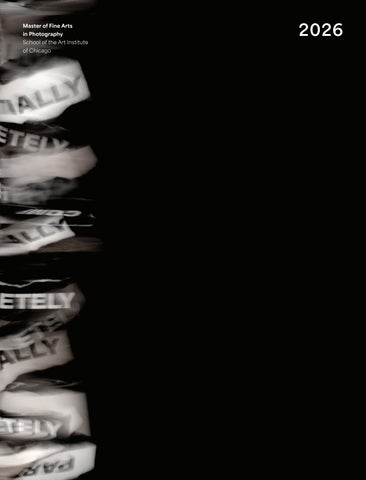
Master of Fine Arts in Photography
School of the Art Institute of Chicago
Master of Fine Arts in Photography
School of the Art Institute of Chicago
Sine-qua-non
Ariel Cobbert
Berkley Reddick
Deyi (Evelyn) Zeng
Haru Andersen
Hugo Amarales
Khidr Joseph
Lauren Bertelson
Leonardo Gabriel do Amaral
Pedro Albertini
Serena Beggs
Tanya Shah
Tierani Bryan
Xuemeng Li
Yudie (Ida) Zhang
Yunan Xiang
Zhongxuan Niu
Zixi Wang
Sine-qua-non
Recently, America’s role in the fate of other places has made it evident that the autonomy and cultures of “Others” are always up for reformulation. Excluded from the project of modernity, non-NATO allied countries formerly known as the “Third World” now compose an interdependent global majority, tipping scales to check historic imbalances between the haves and have-nots, the wants and want-nots, the citizen and subject. As an Indian woman/immigrant/ other, speaking with students from SAIC’s MFA in Photography, new forms of seeing as a form of critique have revealed a shifting currency of images.
I think of the idea of “truth” being as close to “not being a lie” (Le Guin), about borders drawn and redrawn in our names, of oceans renamed and sovereignty being a concept solely afforded to land. I think about autopilot drones determining civilian life. Of what the eye sees versus what it perceives as living or non-living … of the machine eye determining social value. I think about the propaganda of visuality, and how, historically, war and the camera have occupied the same zone (Kittler). The evolution of visuality and perception as intertwined down to the semantic “to shoot”. Bombarded with images of mass death and the logics of large language models that push on for a standardized efficacy, I’m thinking of the act of curating as an aggregative form of cultural critique. What happens if we were to push against the systematic cumulation of ideas? What if the curatorial functioned instead as a roving, diverse, rhizomatic whole.
This year’s graduate cohort produces a multilayered and dense narrative, thick and ripening like the undergrowth of a lakeplain.
A symphony of significances presents itself in non-bodily abstractions, non-linear fictions, and non-dualist thinking, as students wrangle meaning from multiple crises that forever reshape our place in this world. This catalog is designed as a walk across thresholds of perception and understanding, as students guide us through embodied alterities. Fostering spaces for rest, re ection, resilience, and resistance, the graduating cohort and 1st year MFAs recognize their responsibility in this world, while retaining their right to exist in-between gestures, temporalities, languages, and geographic positions.
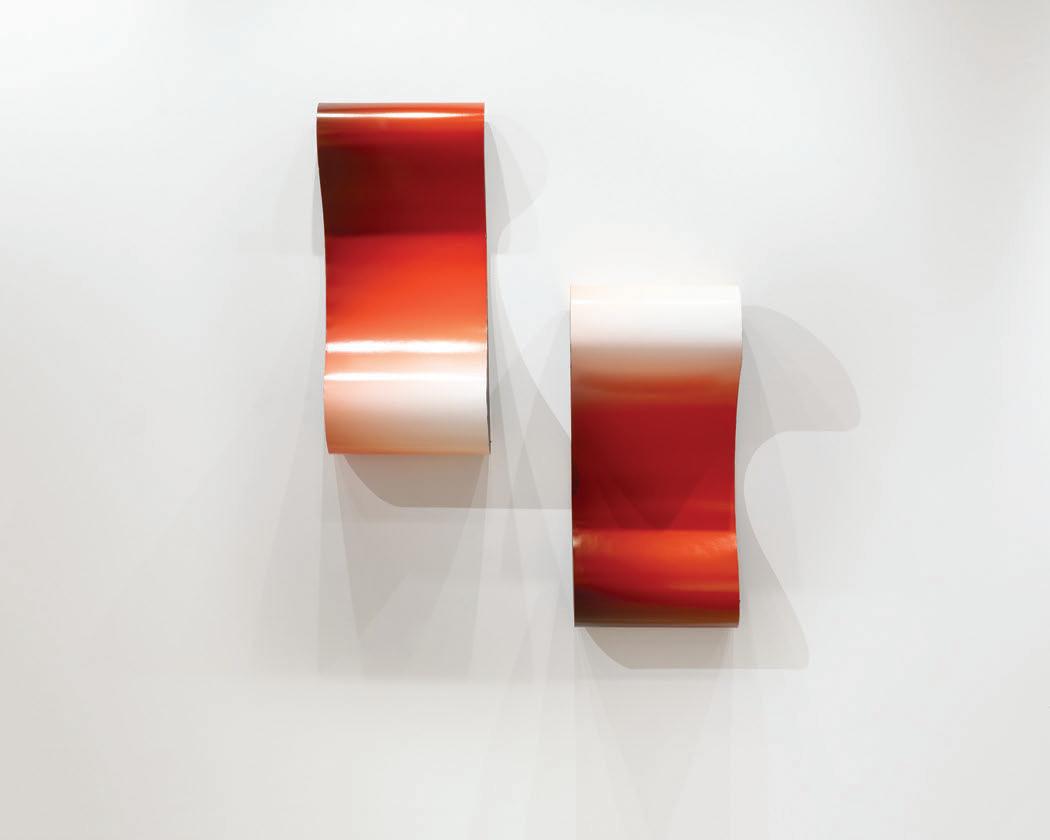
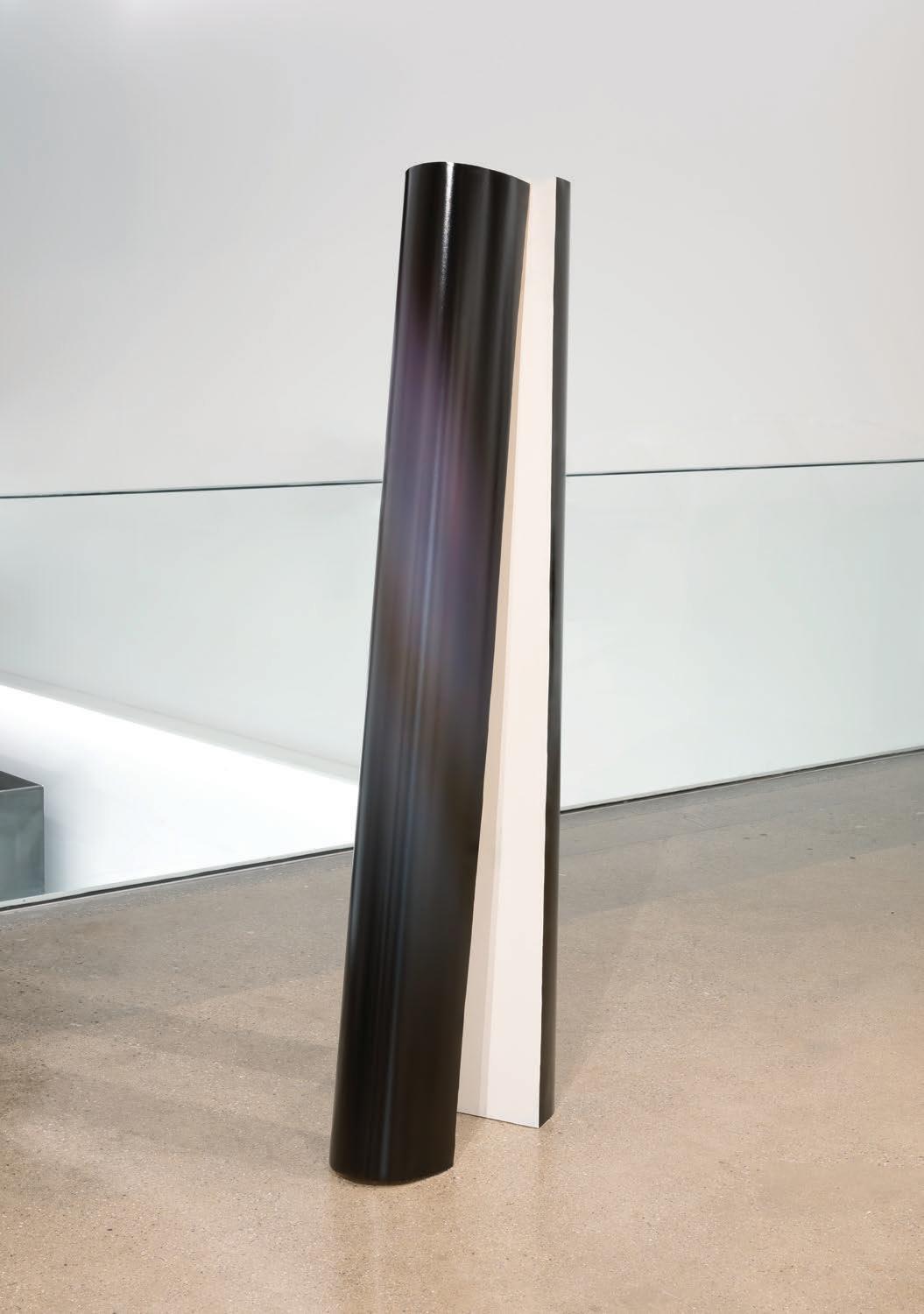
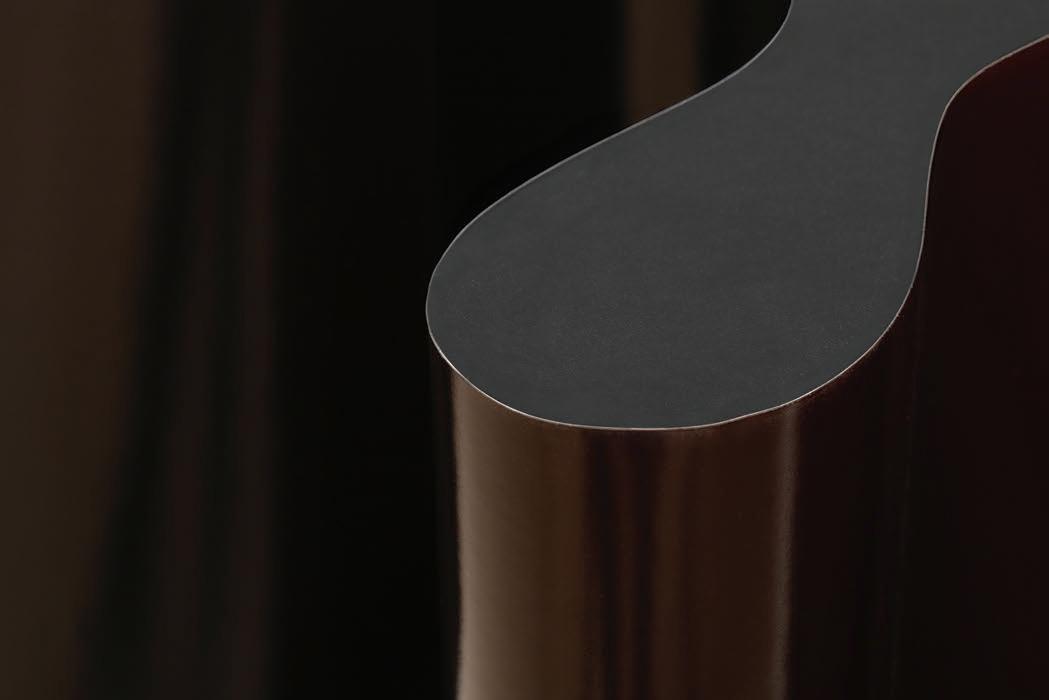
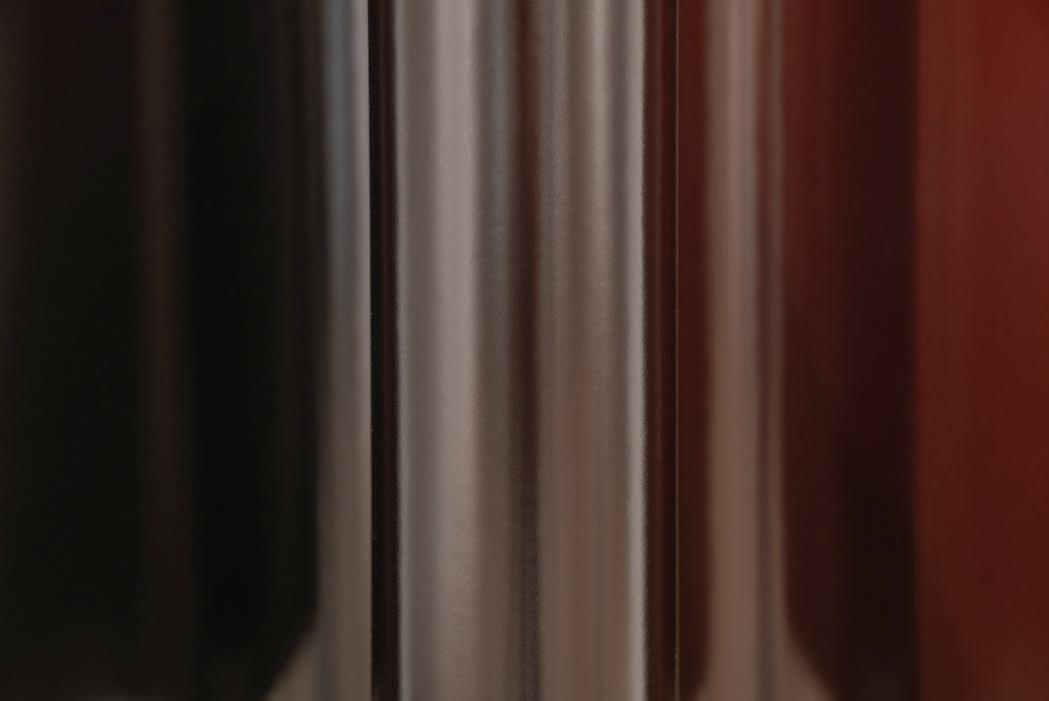
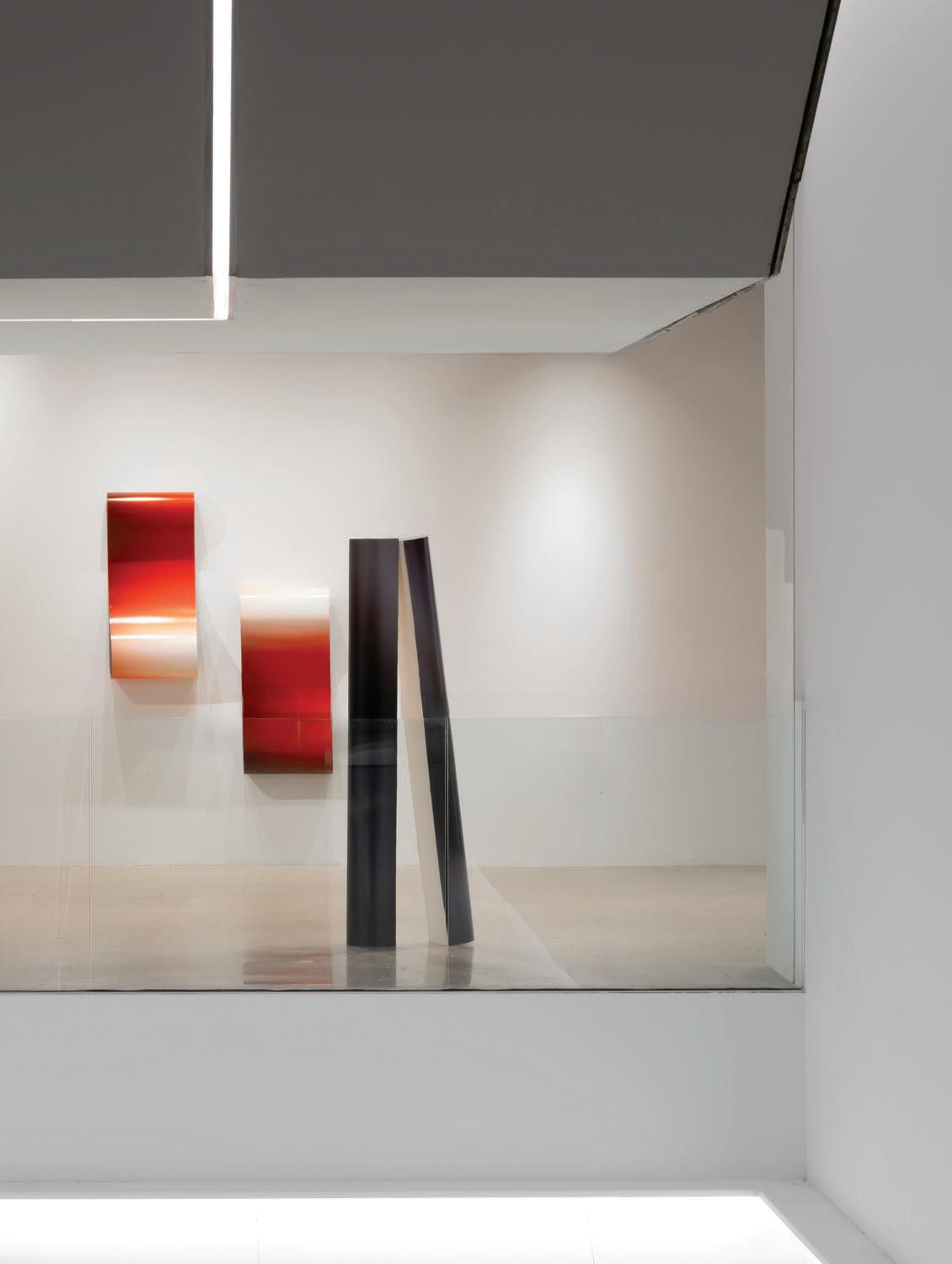
Lauren Bertelson ’s experiment with lensless, skin-contact photography argues for a nonrepresentational gaze of women. Addressing the linguistic impossibility of wholly capturing the feminine on film, Bertelson’s impetus was born generations before her. The optics of re ected dermal light produce color abstractions that redirect our attention from the materiality of lm to the agential materiality of the body. Her refusal to represent the body results in a sculptural language system that defers any biological difference between of man-woman, self-other, human-non-human. What remains are somatic wavelengths of light reconfigured in tubular, flexible forms, built to the measurement of the artist’s physique. Bertelson’s work demands an ontological re-view of the corporeality of photography.
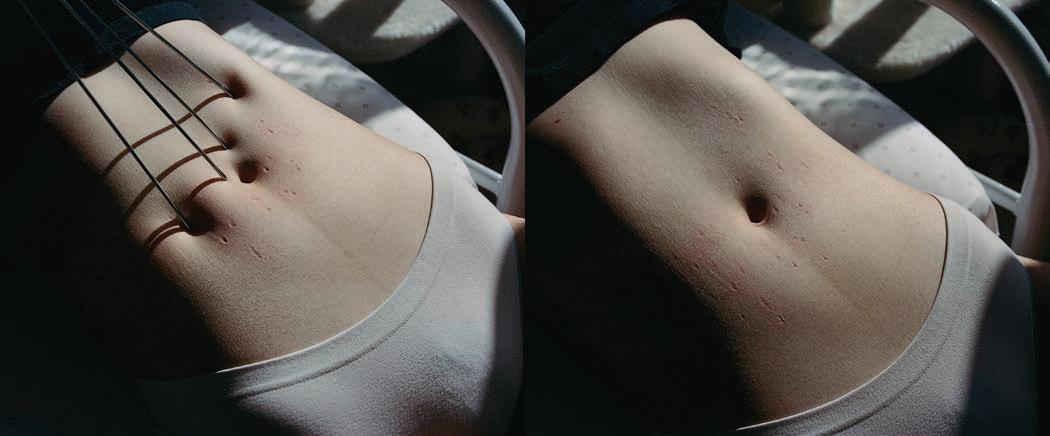
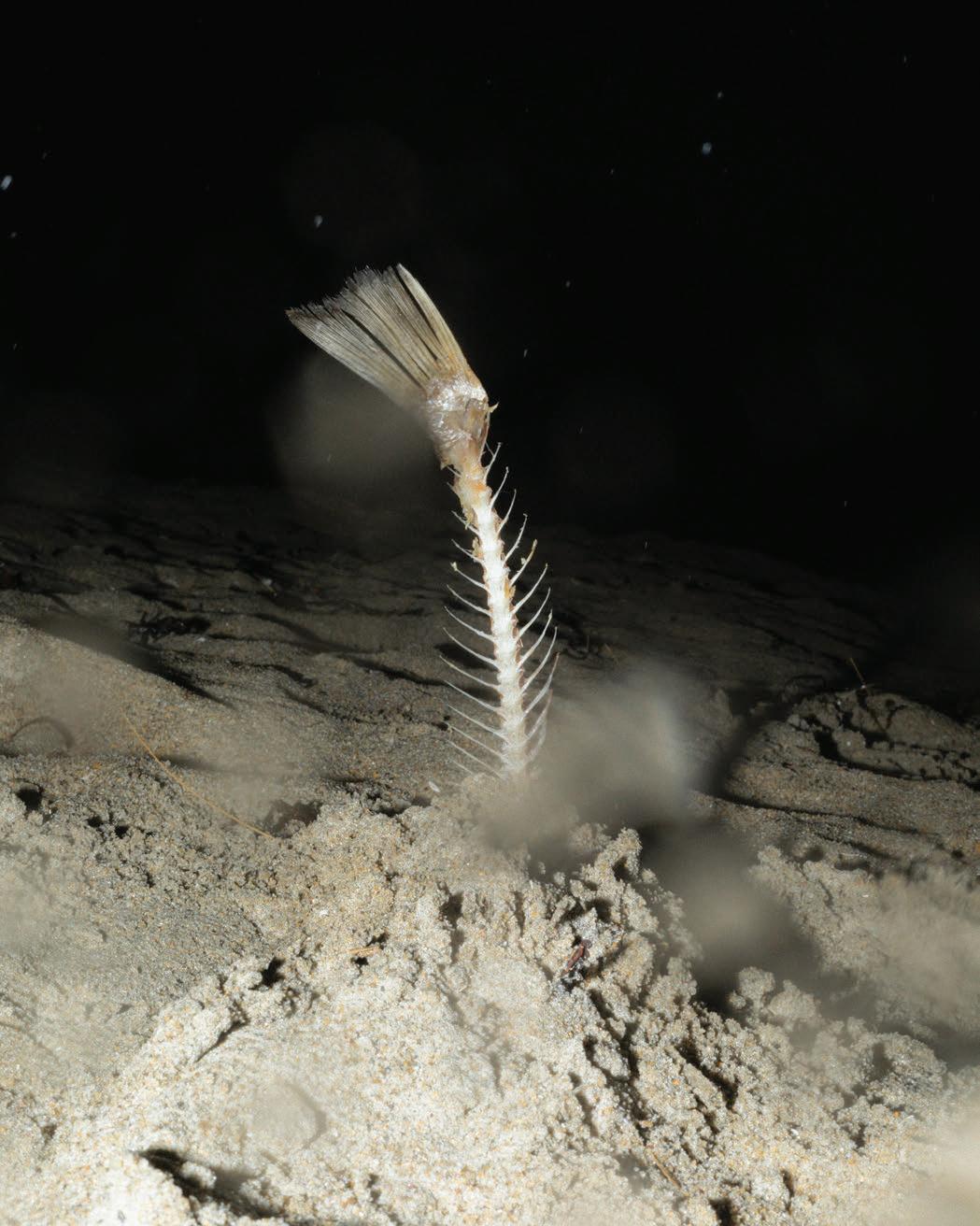
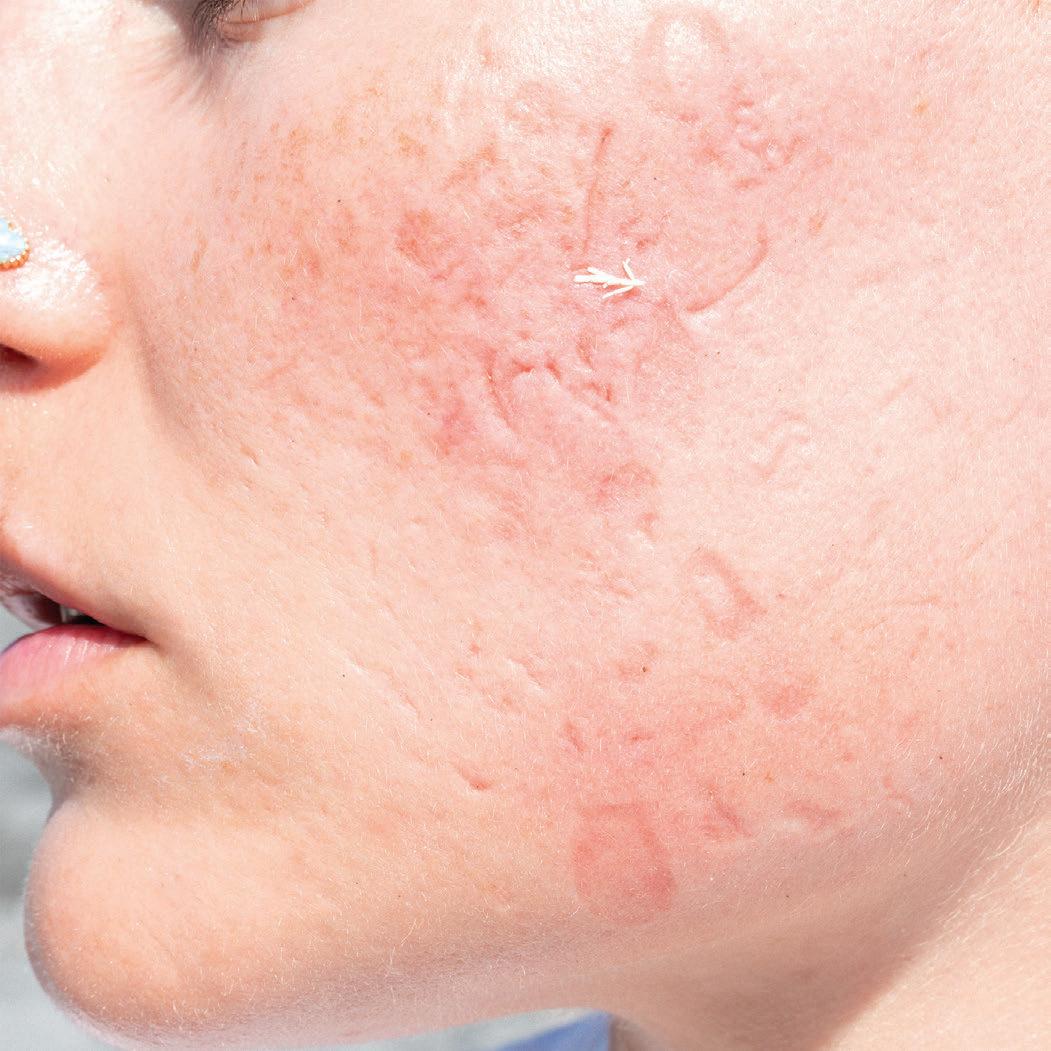
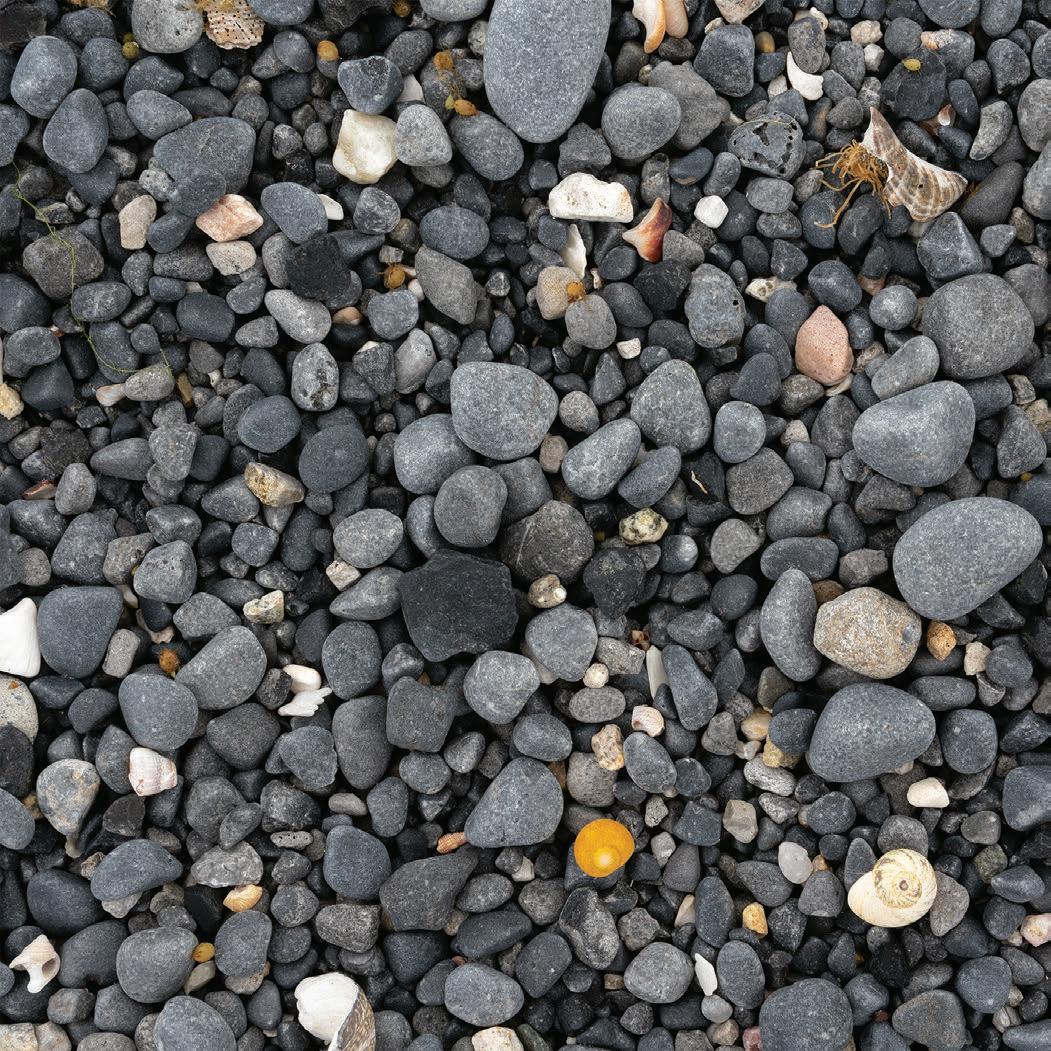
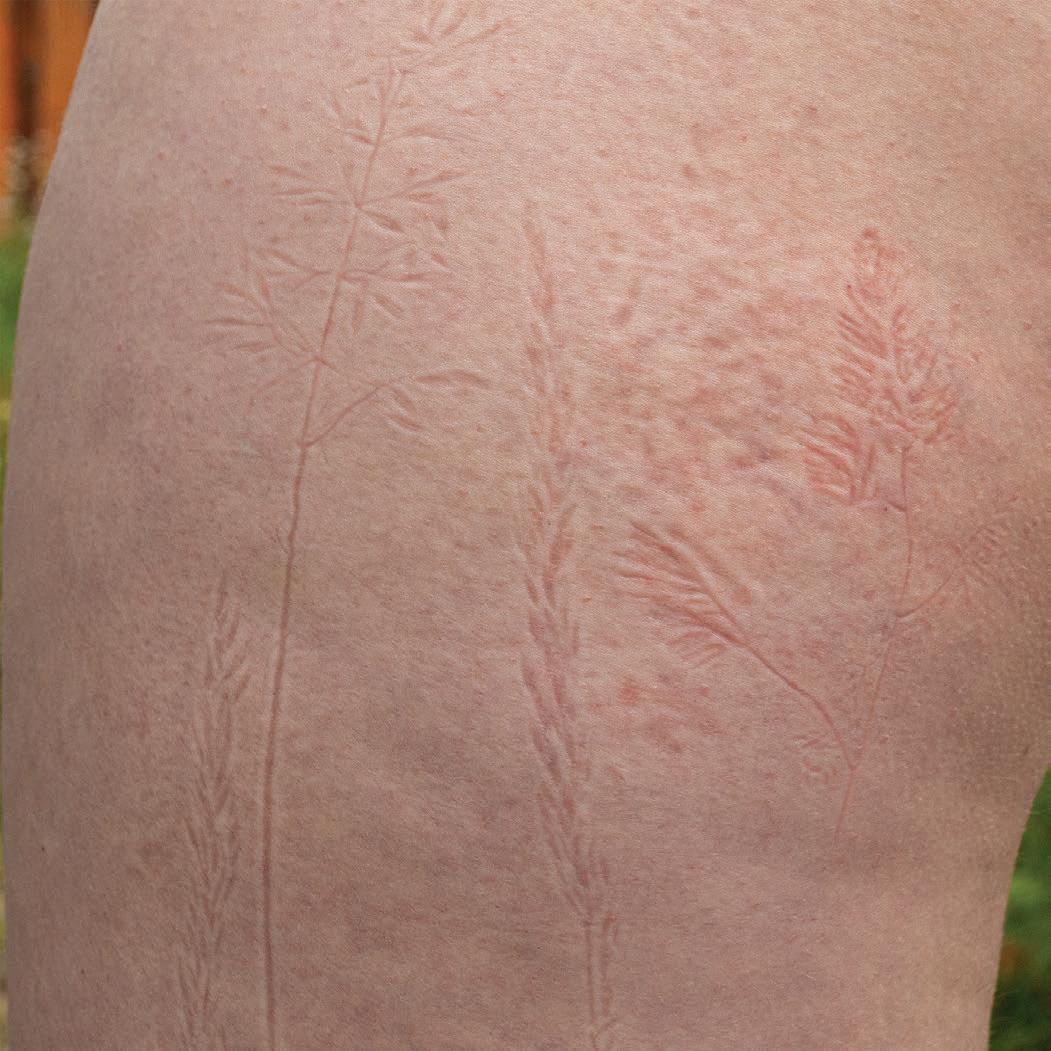
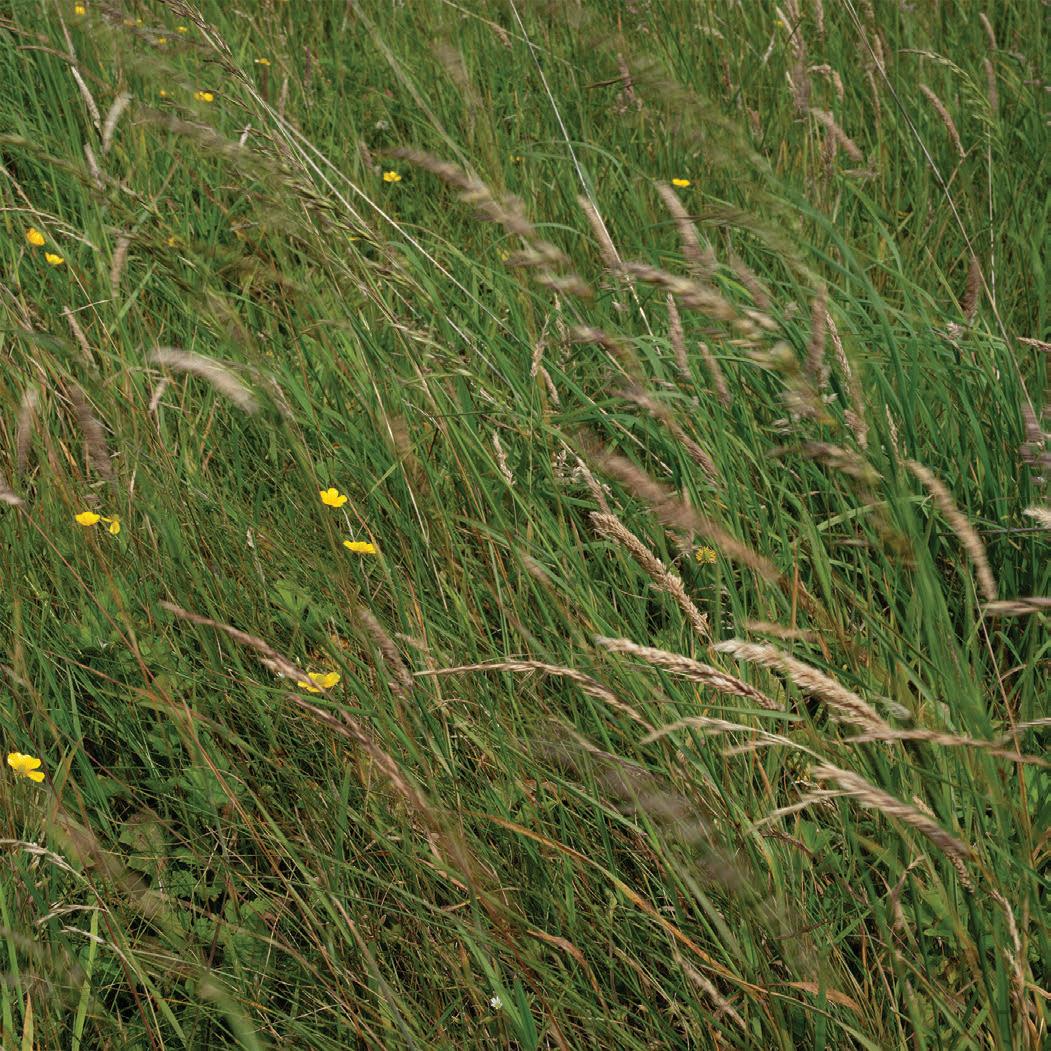
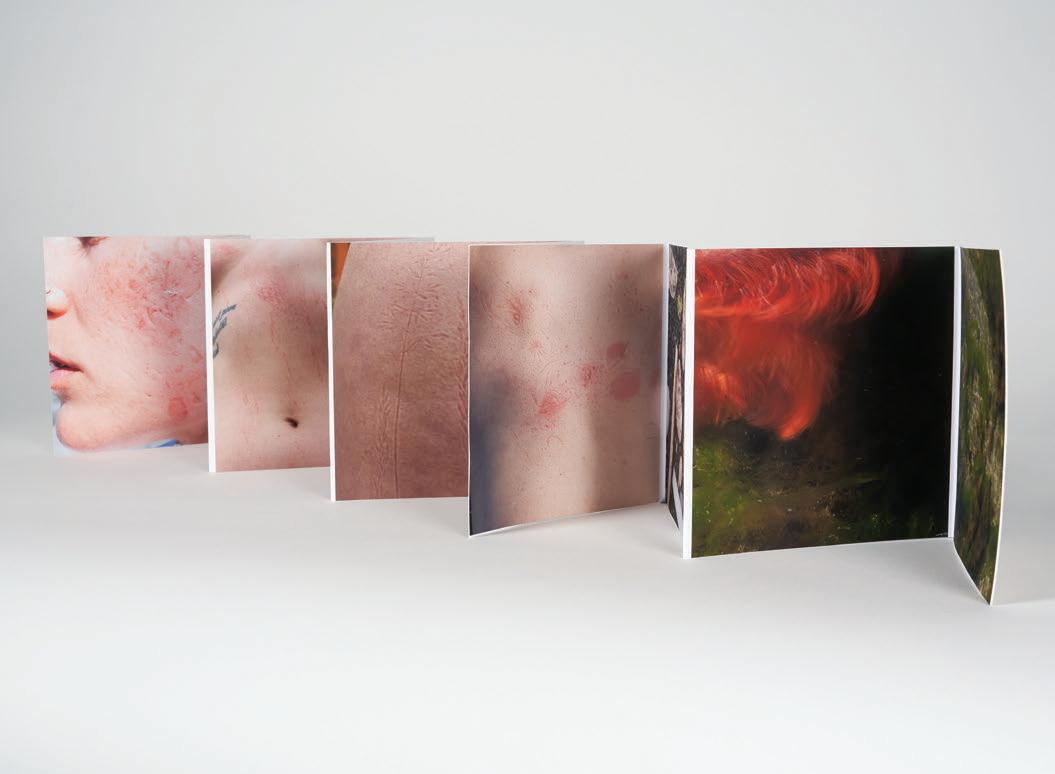
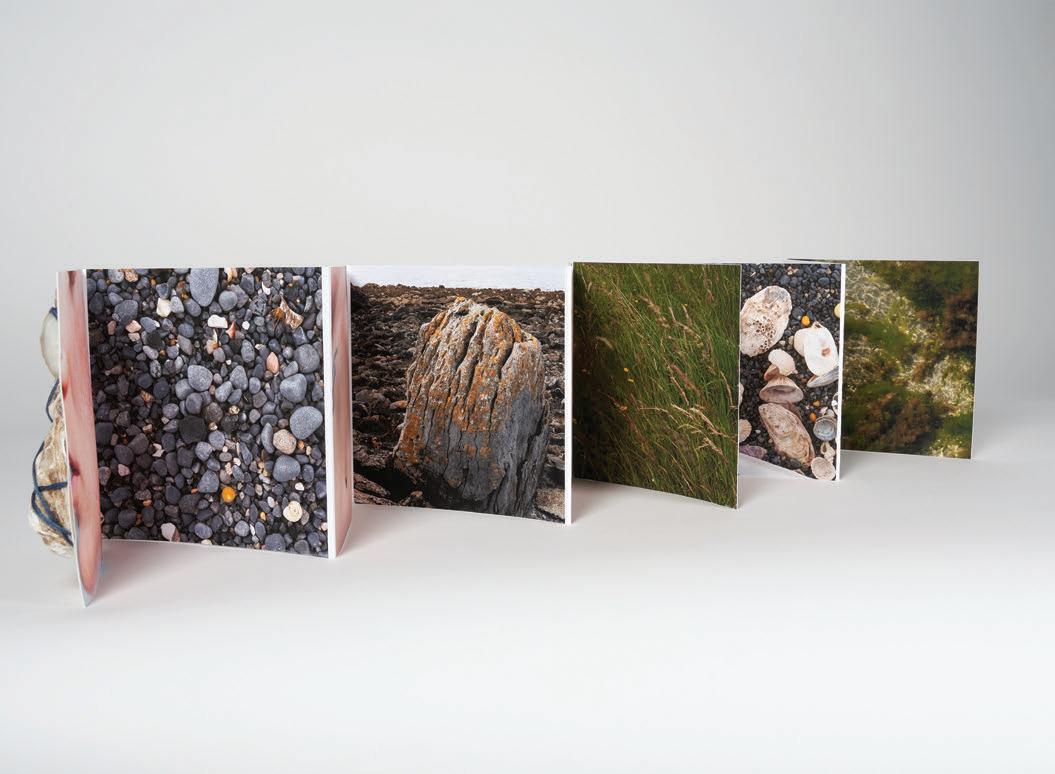
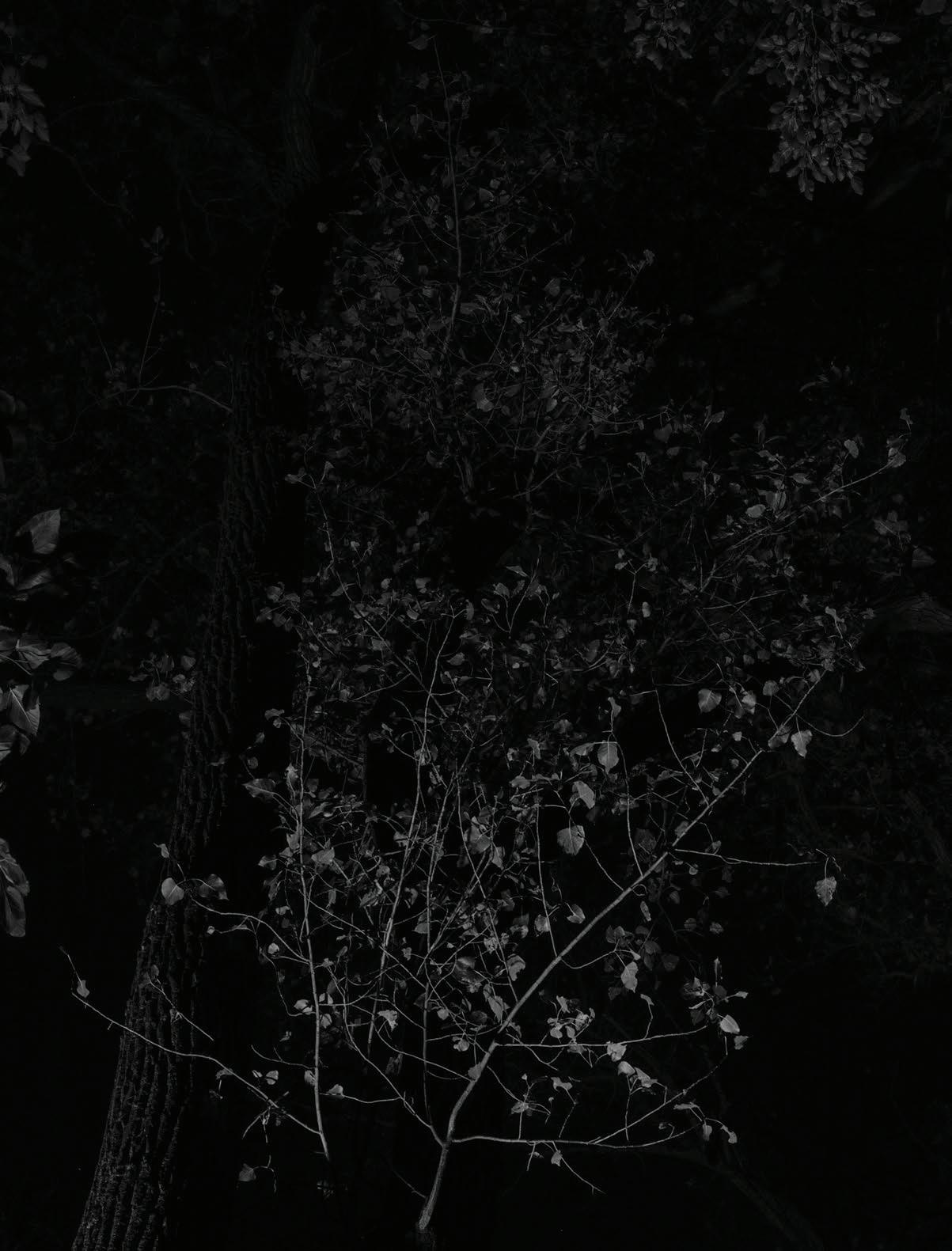
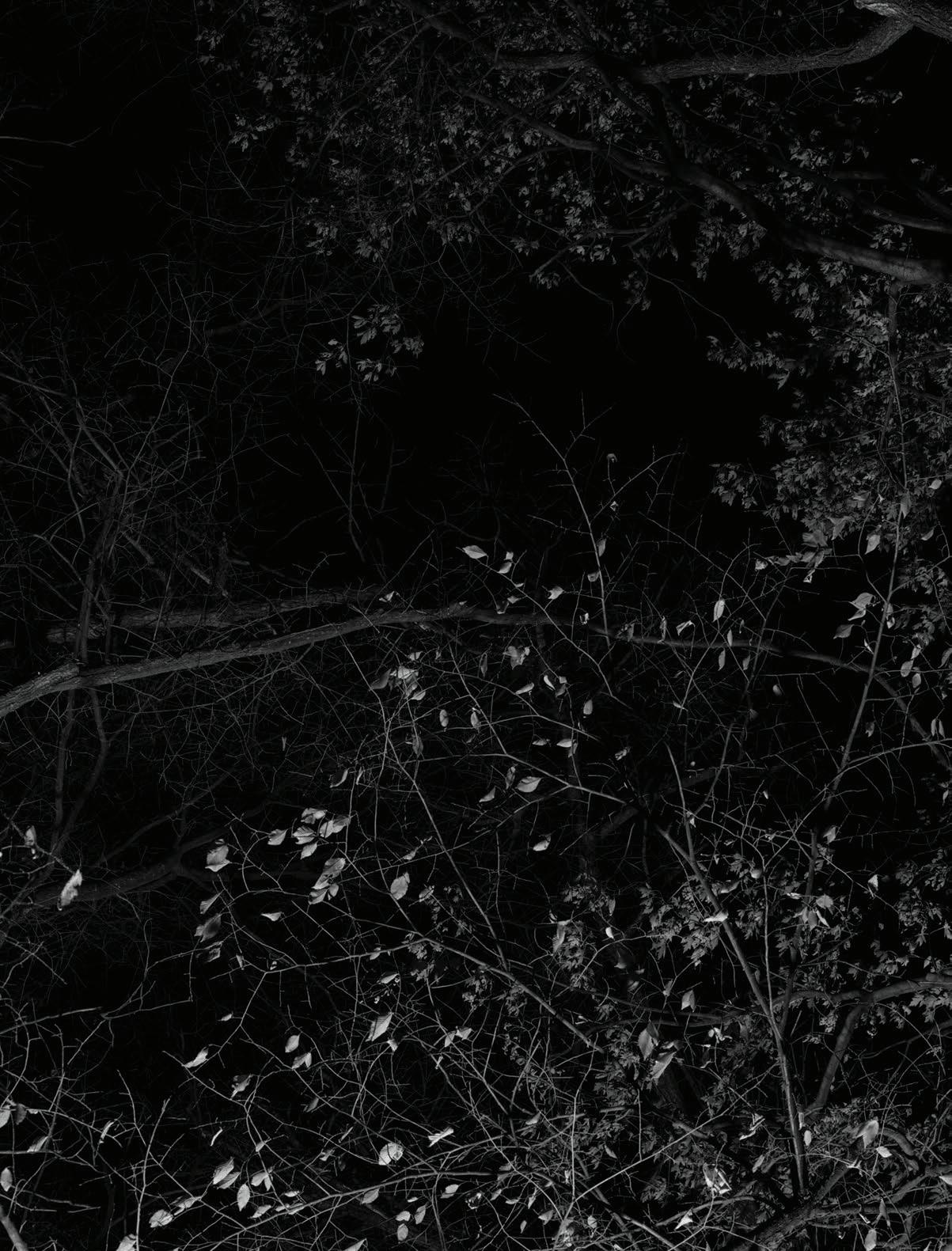
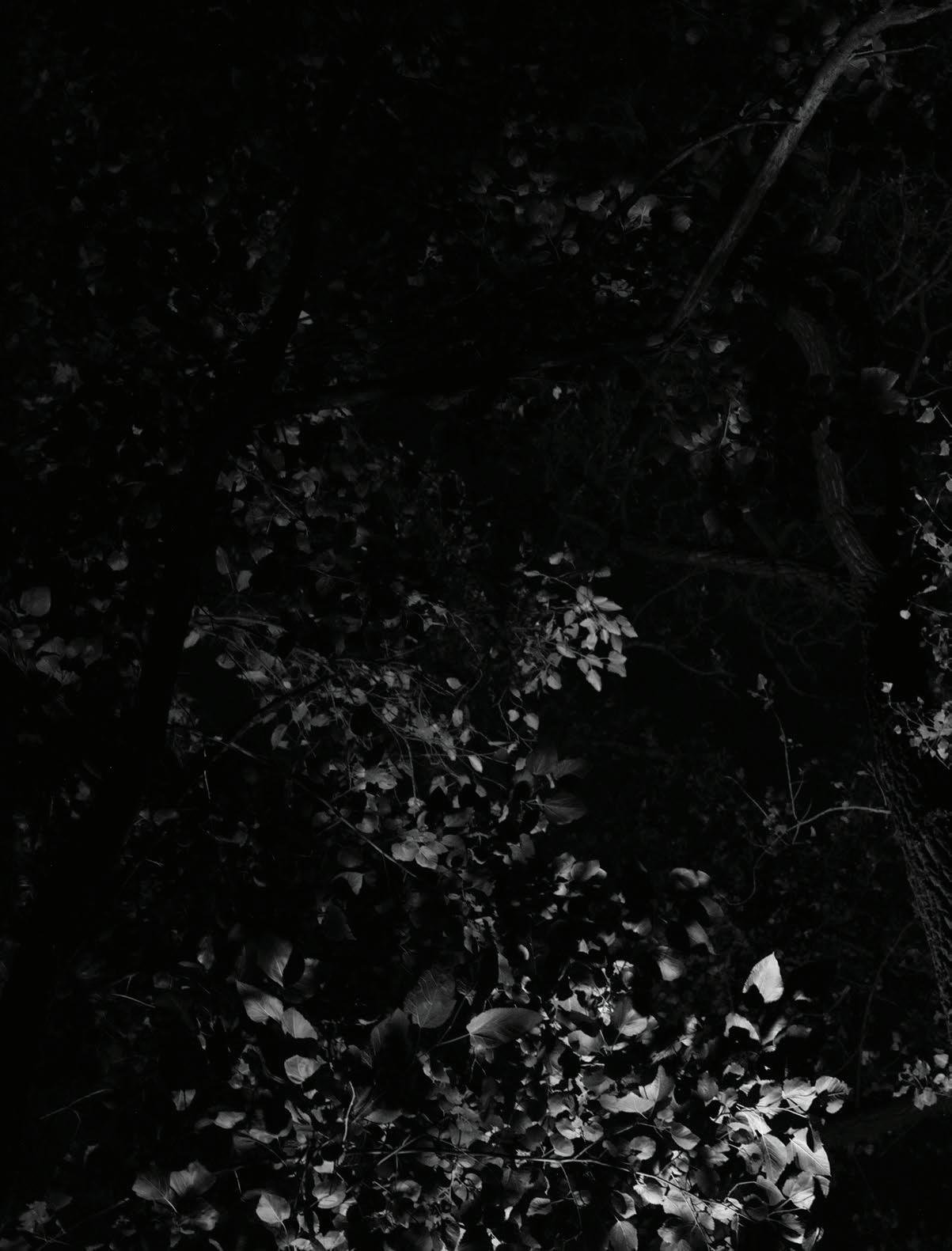
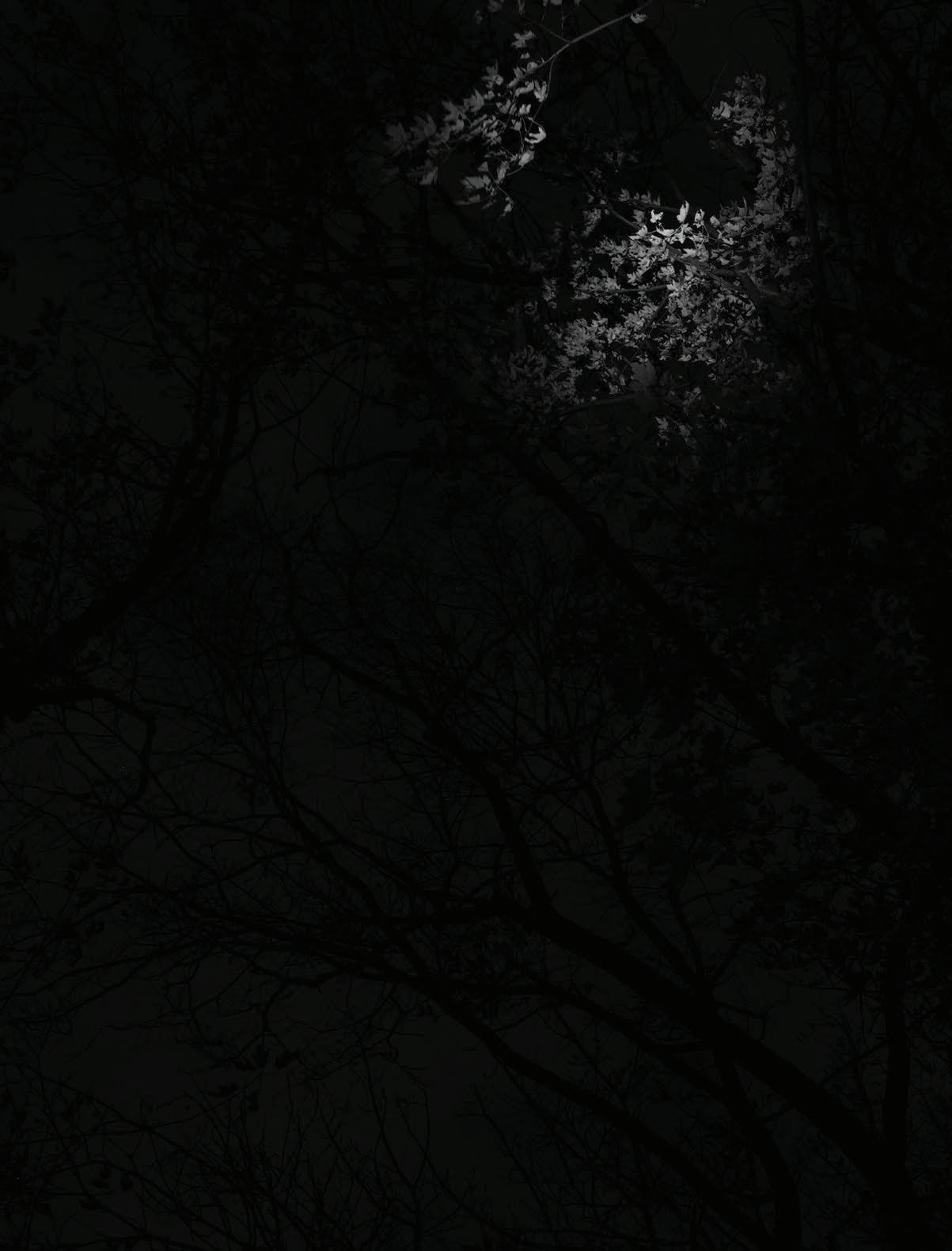
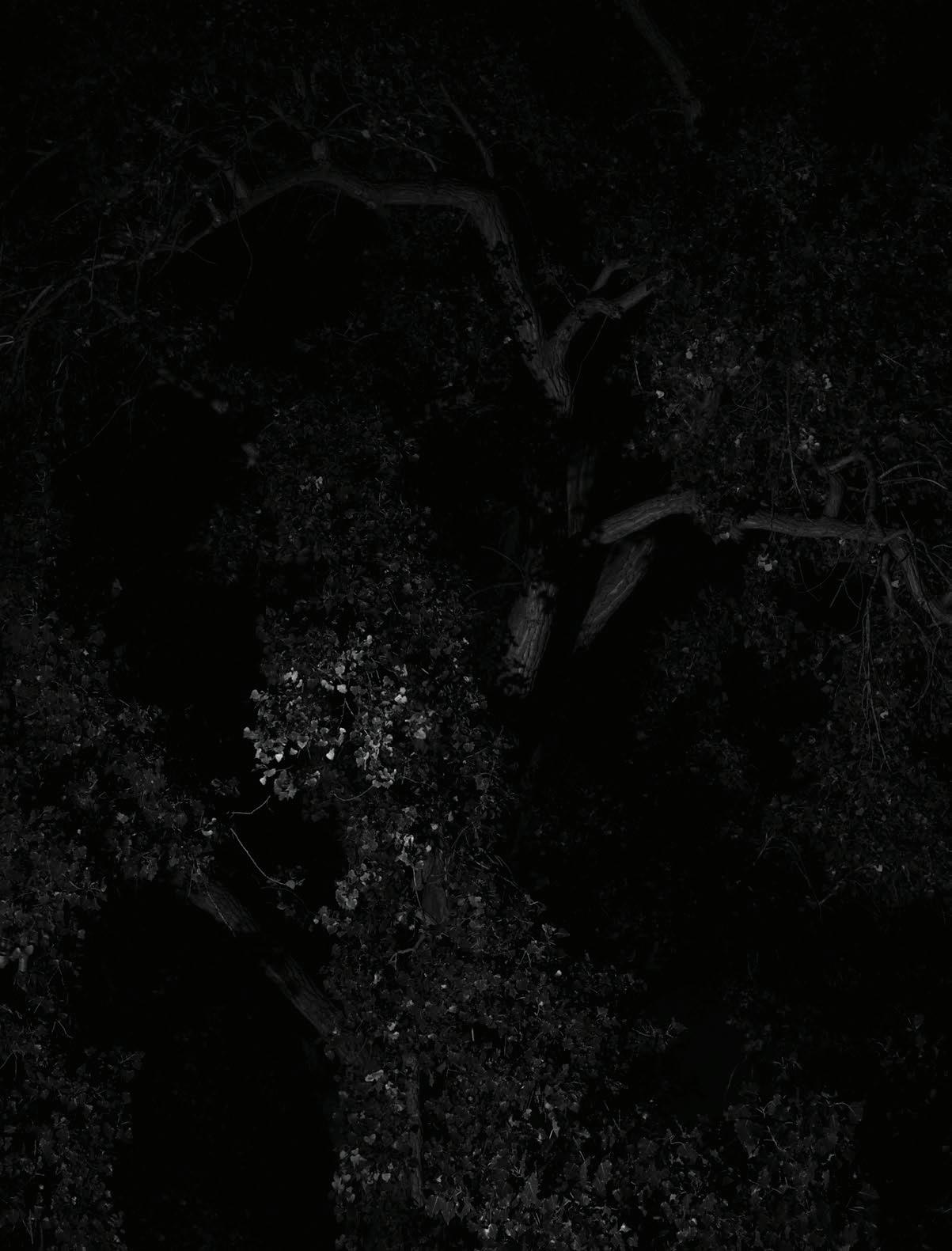
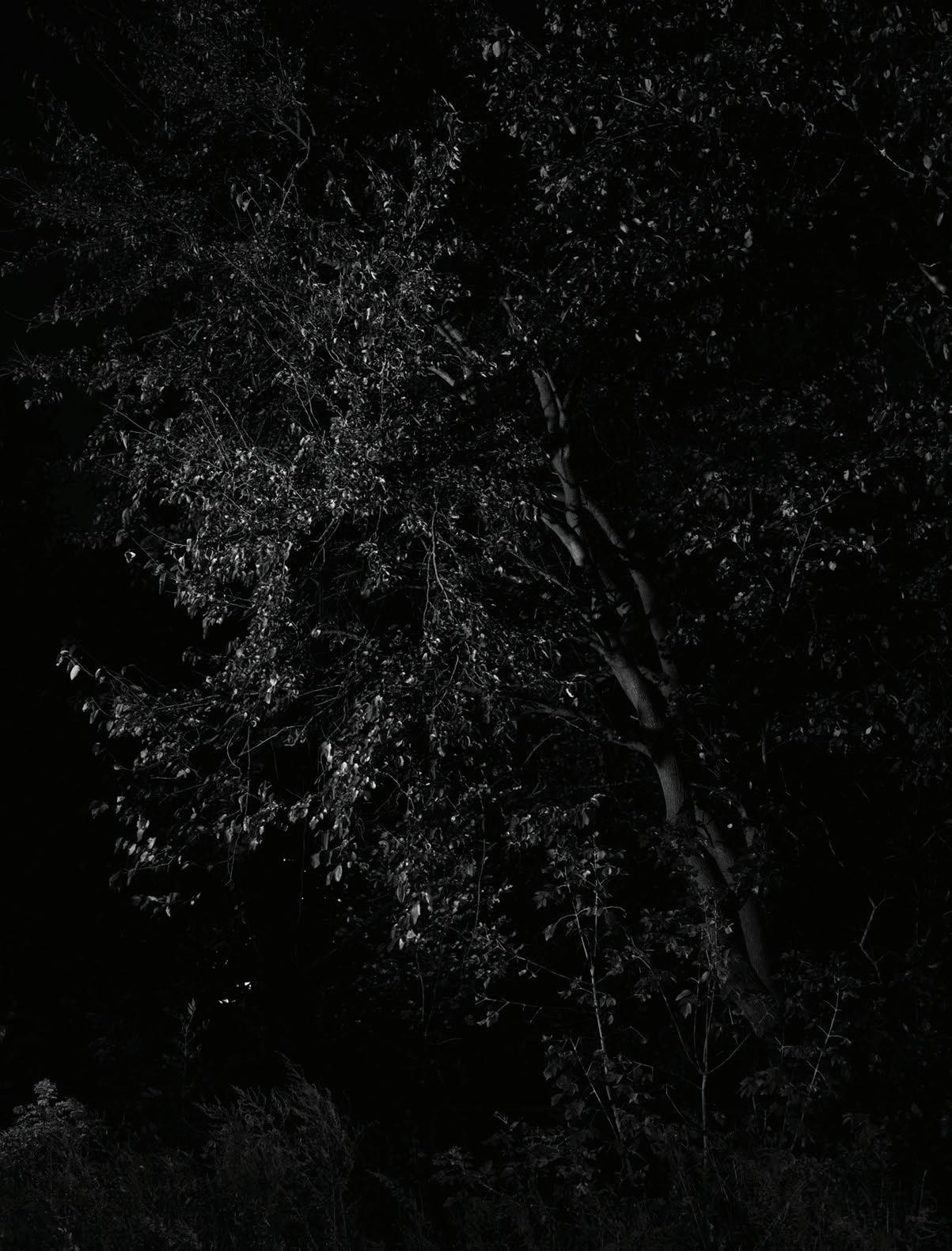
Serena Comin Beggs ’ Impressions , 2025, sits in dialogue with Ana Mendieta’s Siluetas , 1973–80. Beggs’ book-object contrasts hard and soft photographs of the artist asserting her sovereignty against forces of nature rock, shell, bone, and weed mark the body with a rash of memory. Exorcising embodied trauma along the Irish coast, Beggs’ act of imprinting speaks of glacial time, the primordial connection women have with earthly elements, and to the phallocentric tradition of Landscape. Contrastingly, Tanya Shah ’s Glimmer , 2025, entirely removes the artist’s body as a site of embodied trauma. Focusing her lens heavenward during nightly nature walks, Shah captures reflected light off nebulous branches and leaves, drawing constellations of physical and emotional nervousness. Large-scale, matte, black and white prints dominate the viewer’s lust for a female body as a historic site for suffering. Shah instead acknowledges a place outside of the body, where shared violences, multifaceted and complex, are enacted under a blanket of darkness.
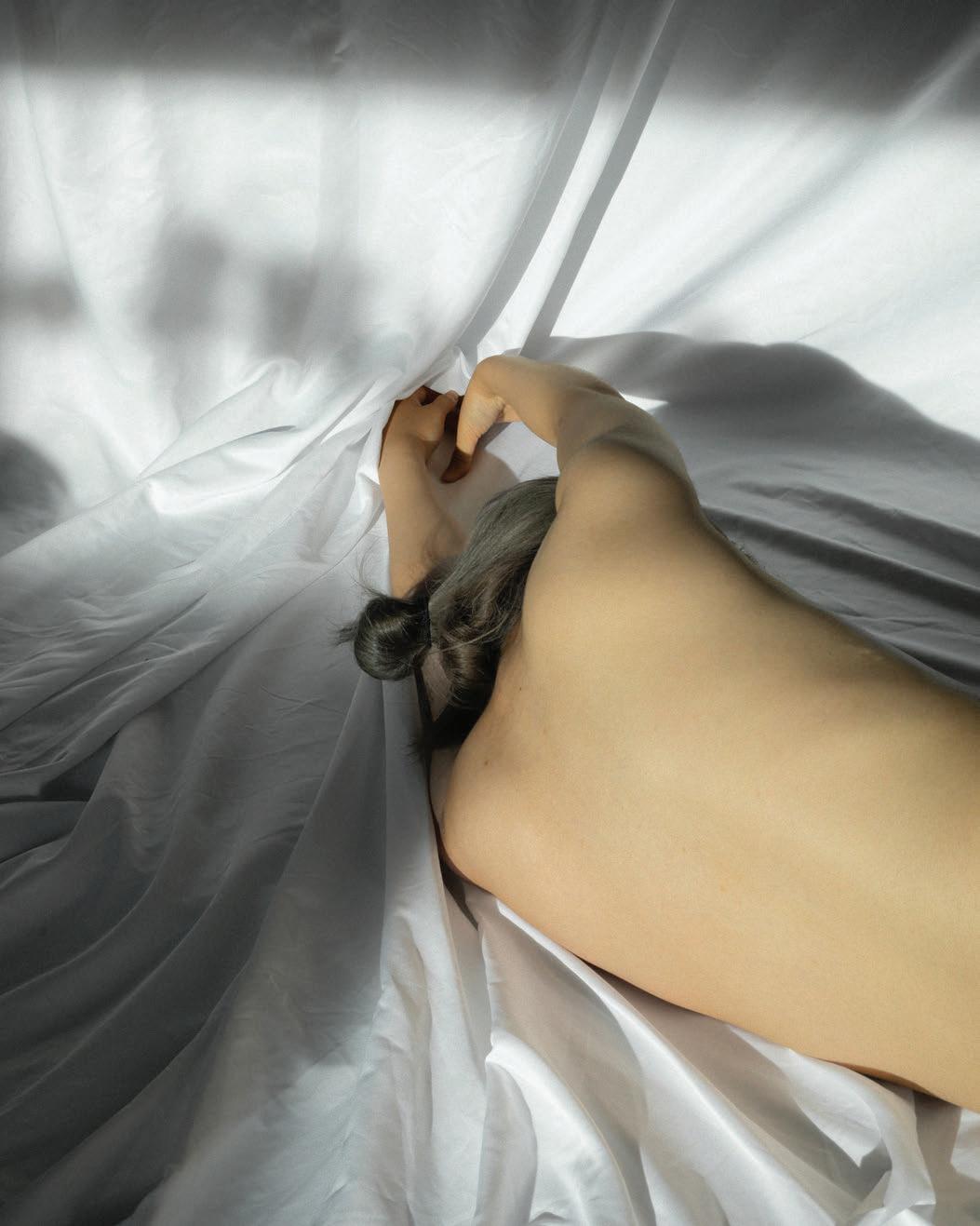
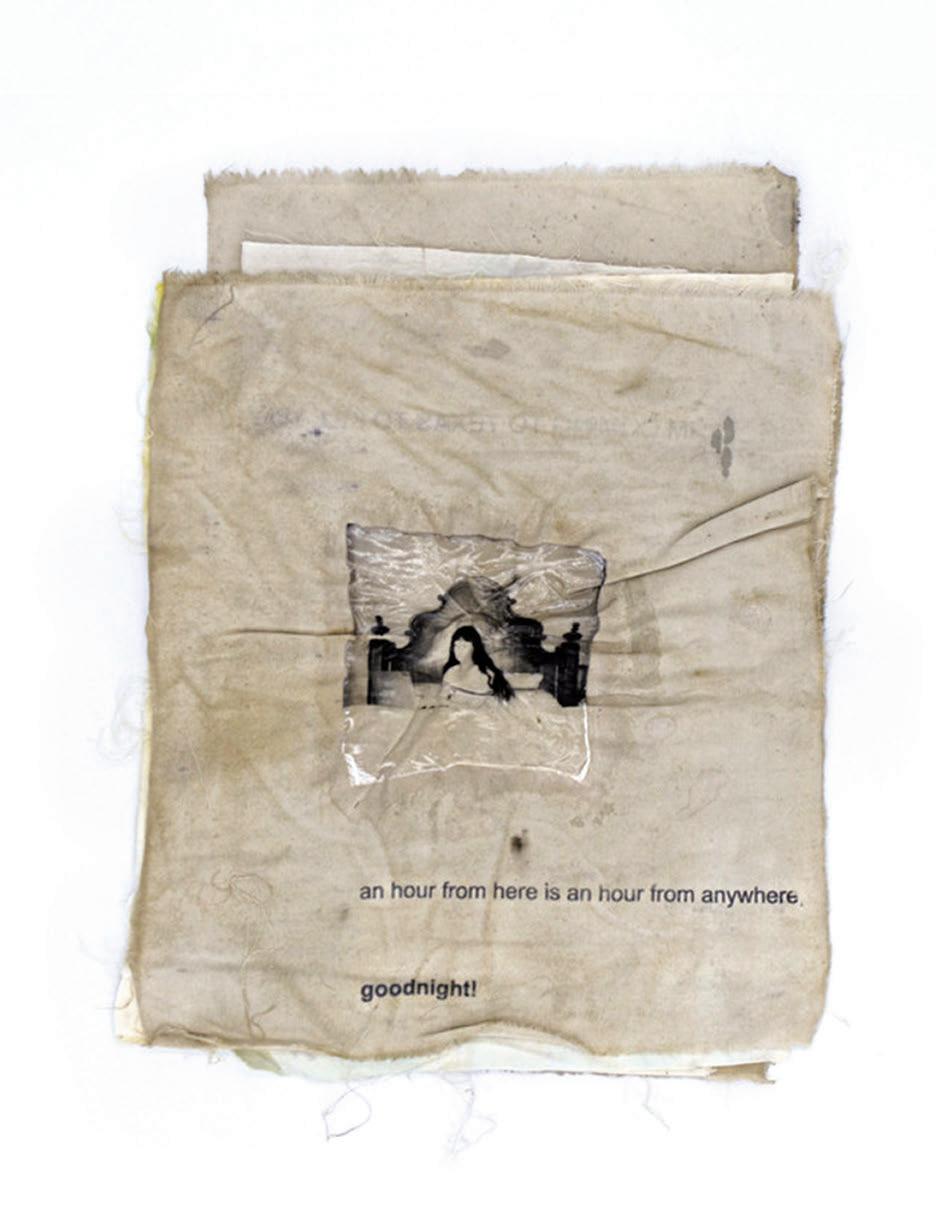
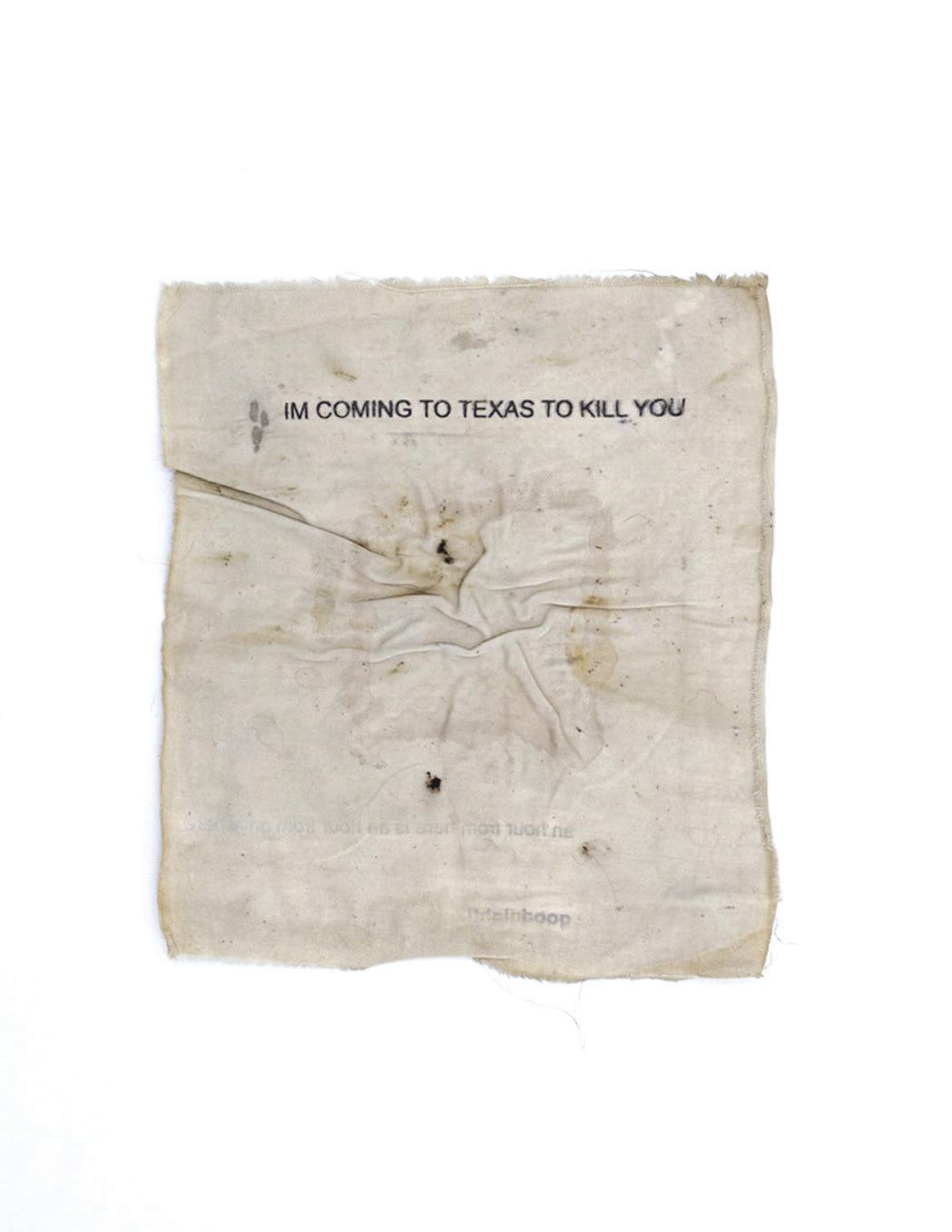
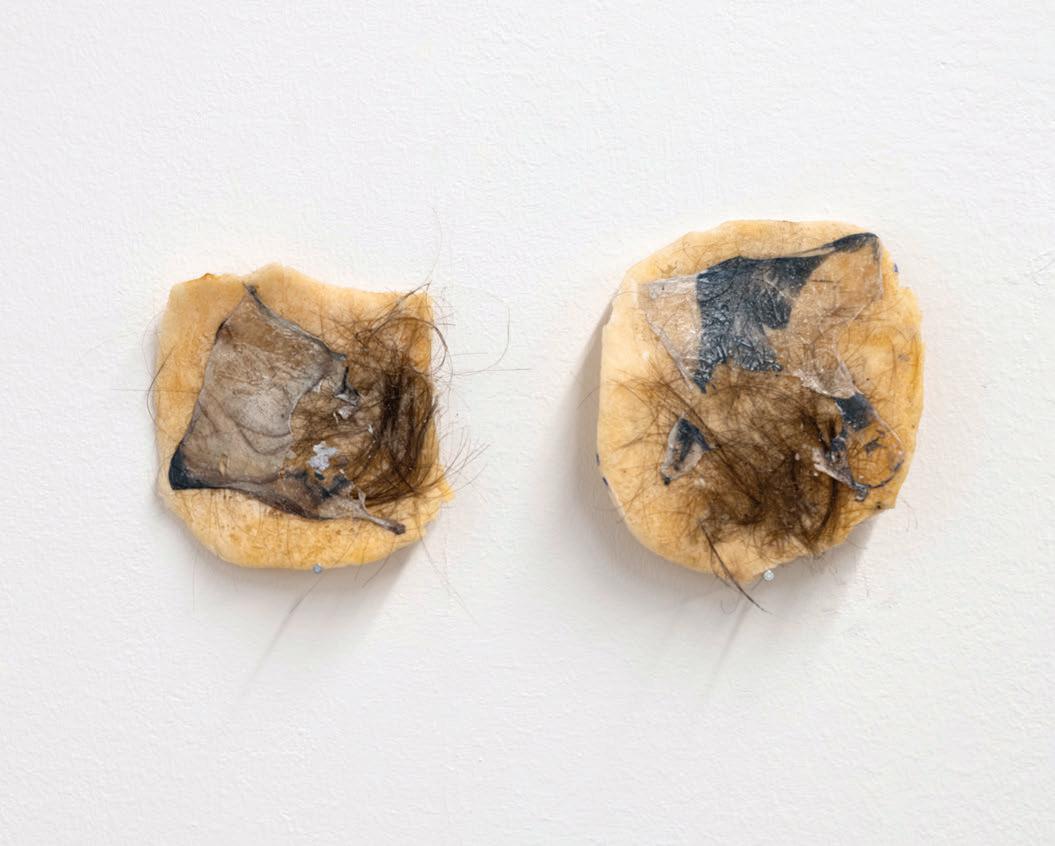
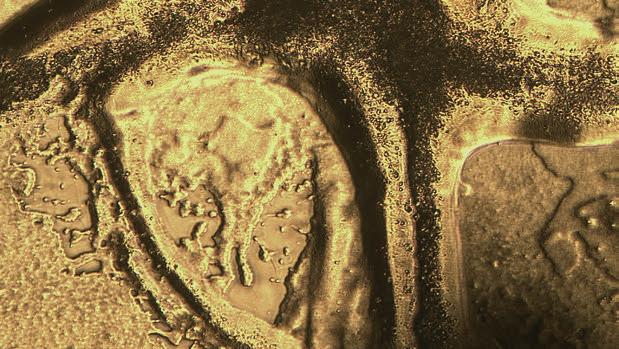
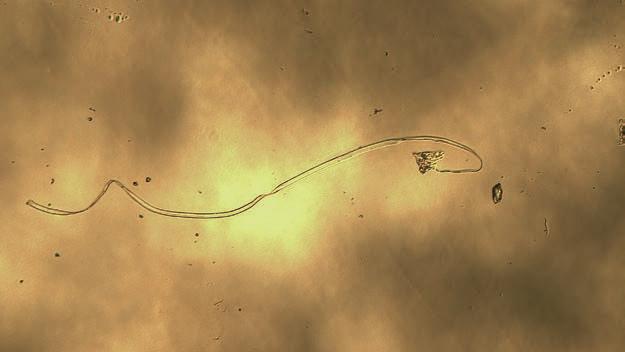
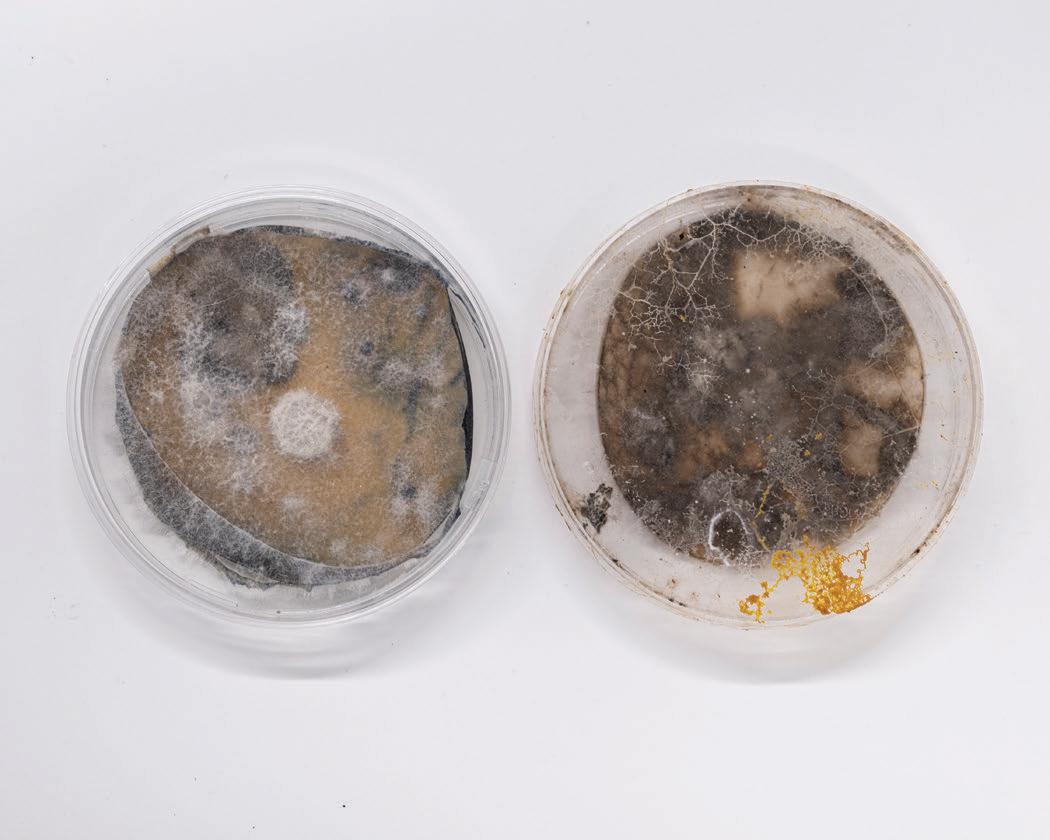
Tierani Bryan ’s bio-art assemblages delve into the materiality of intimacy. Working in ceramic and regenerative biological matter, Bryan foregrounds the instability of chosen mediums in relation to the queer body as landscape. Blurring distinctions between artifact and source, or systems of language and the living—mundane particulate matter, hair, and ejaculate speak to the DNA of the beginning of life, thus becoming an entry point into the consciousness of death.
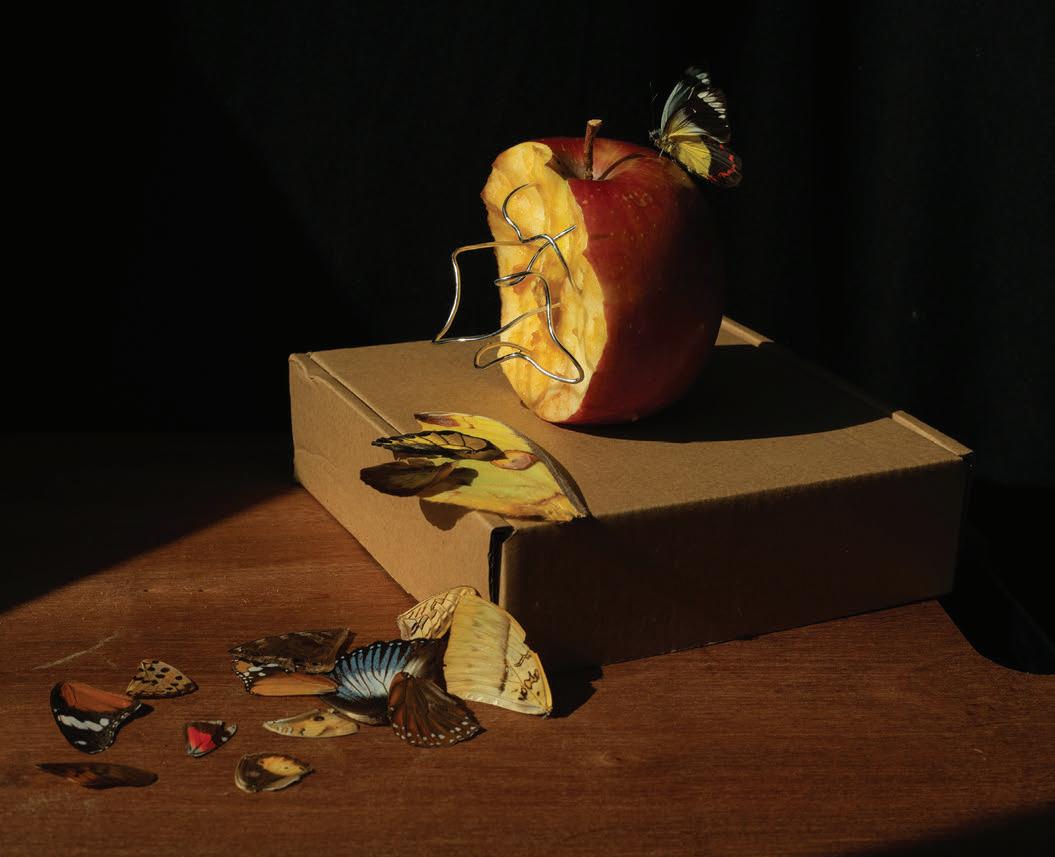
The immanence of the body experience as a language system begins to translate things differently. Deyi (Evelyn) Zeng ’s Illness as Metaphor , 2025, invites viewers into an intimate split-screen experience of a body restructured by medical intervention. Born with Tetralogy of Fallot, Zeng investigates the edge between external living supports and the internal insurrection of her body, as the artist steers through diagnostic imaging and surgical tools to draw up an autobiographical index. The metaphor of the still life as bodily experience follows the mutually constitutive logic of the splitscreen. As signs and signifiers from Big Pharma cannot be trusted as linear nor conclusive, they sit in contingency with the capriciousness of a heart, incoherent to its beholder, enclosed in a seemingly “healthy” body.
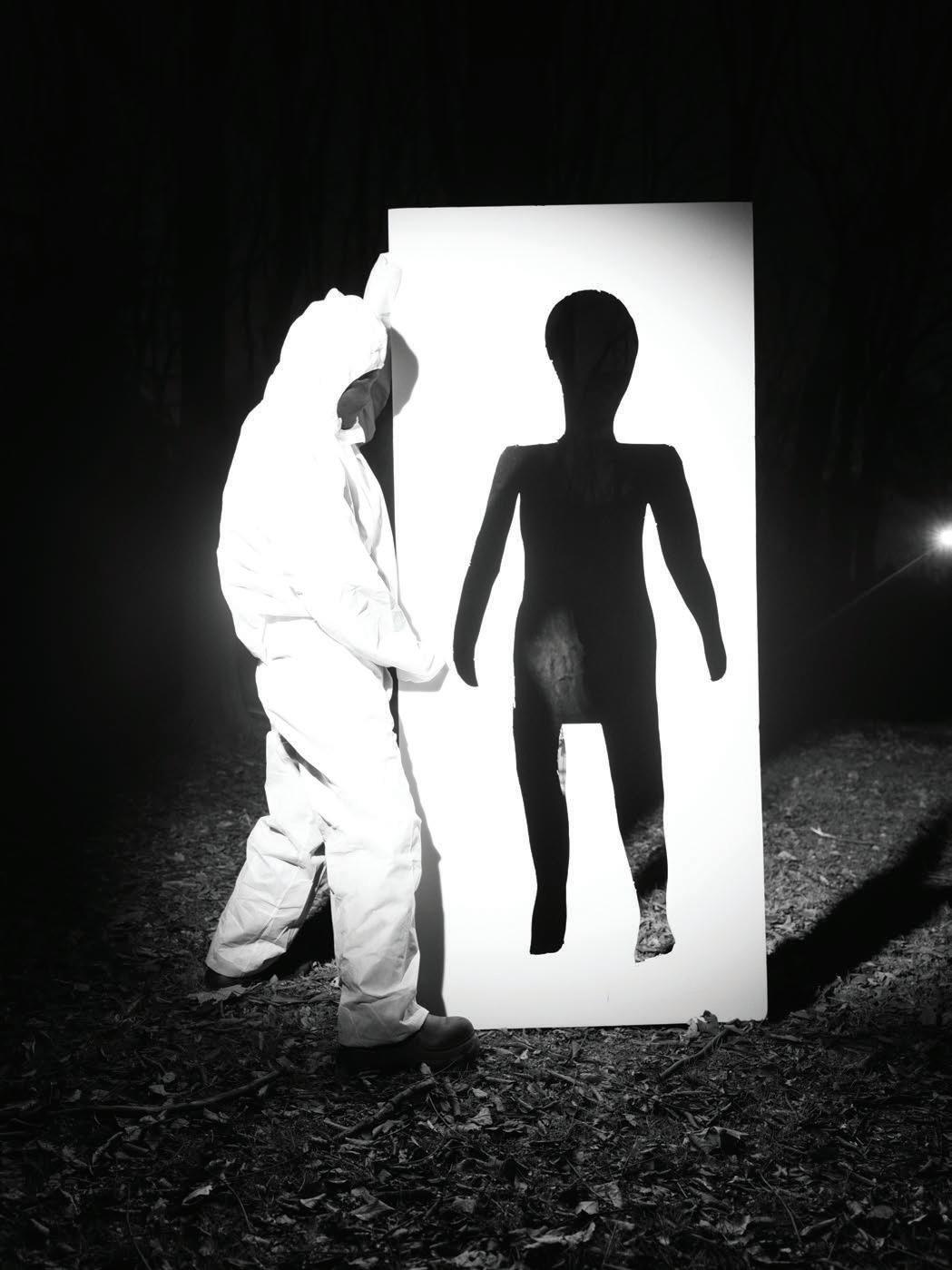
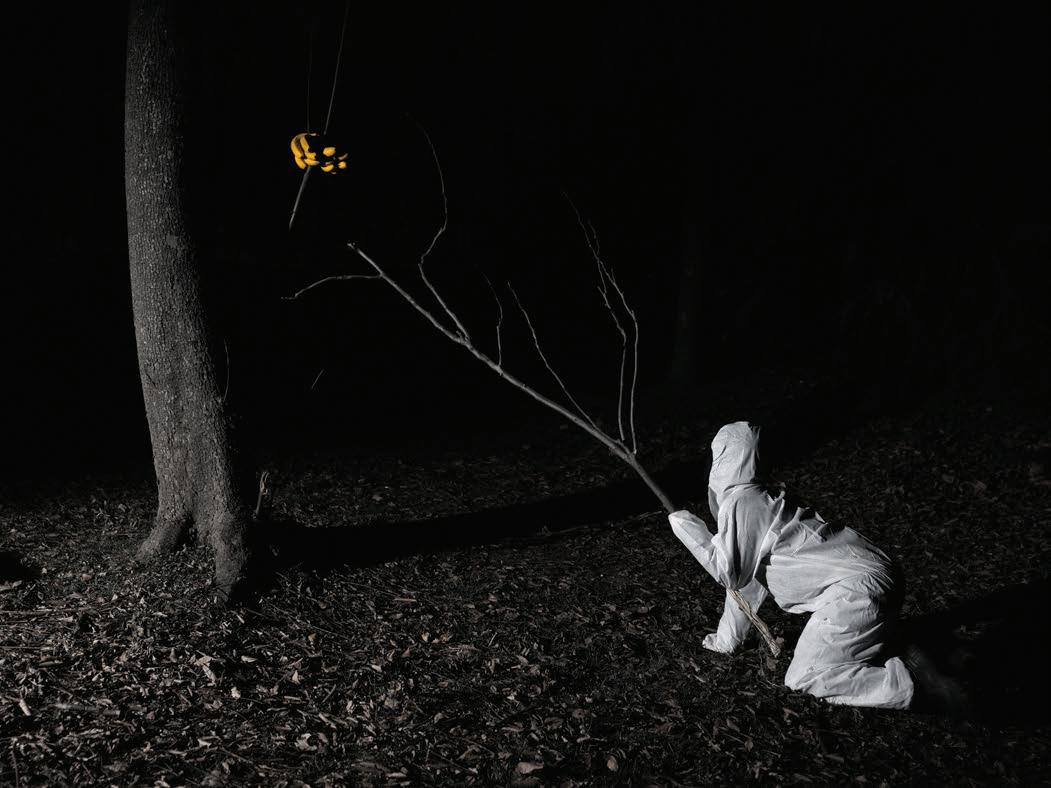
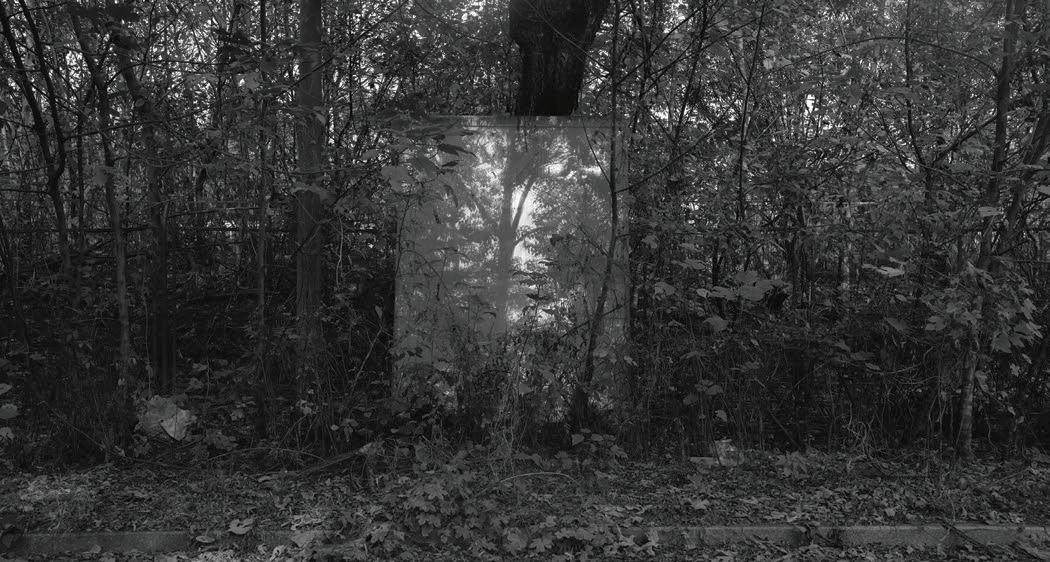
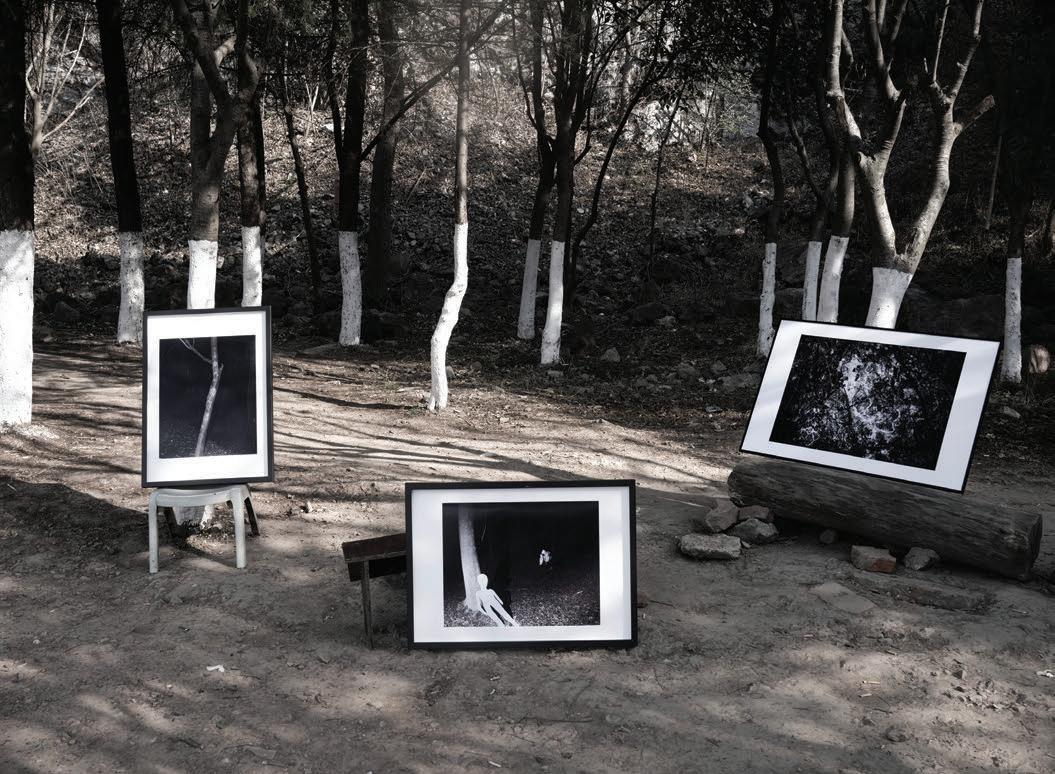
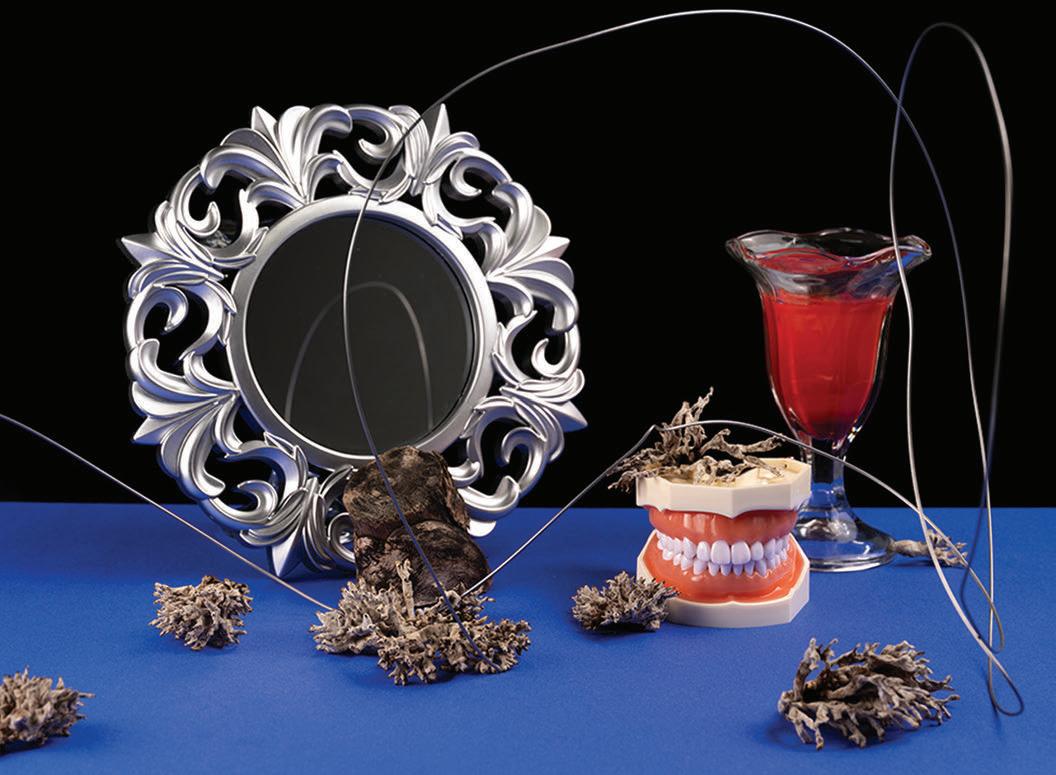
The filmic medium has also been shaped by the notion of embodied fear. Archiving the delicate space between reality and illusion, and how fear is propagated and maintained in society, Yunan Xiang mobilizes the psychopathological valence of the strobe effect. A subject in a hazmat suit presents specimens from the unknown in a nondescript natural area. Stark black and white staged scenes speak to Xiang’s experience of displacement and feelings of isolation in the big city. Prints are then placed in urban and rural public spaces to mirror how memory is dispersed through oral tradition, disrupting the rationale of the white cube. The dramatization of alienation and the strange echoes
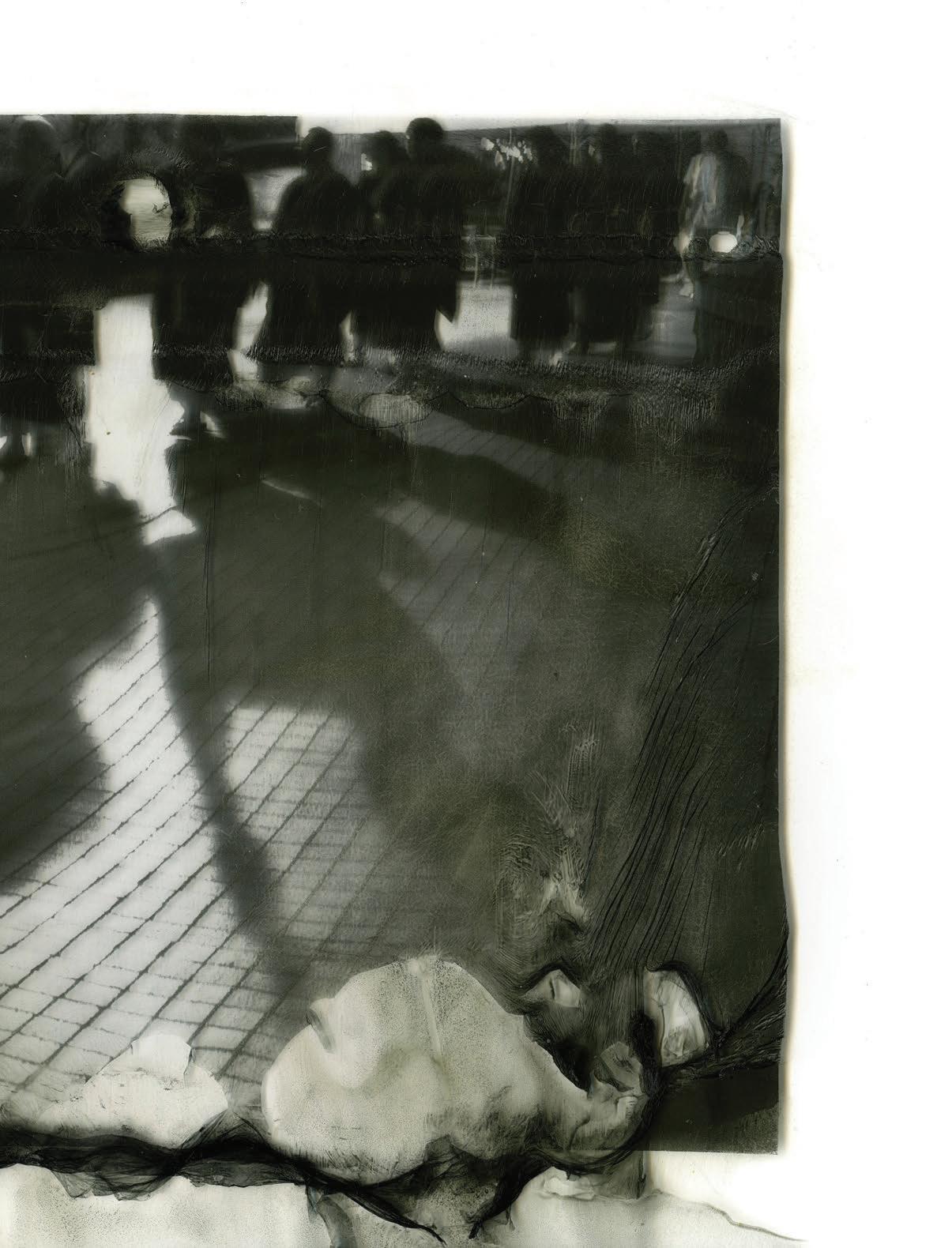
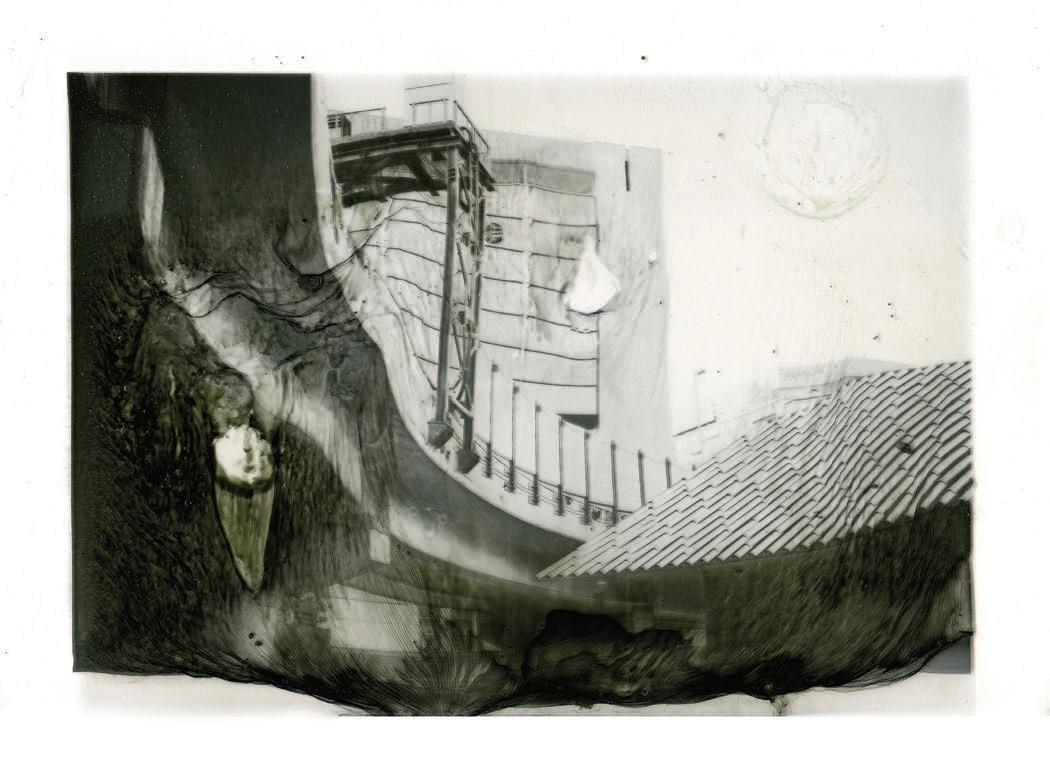
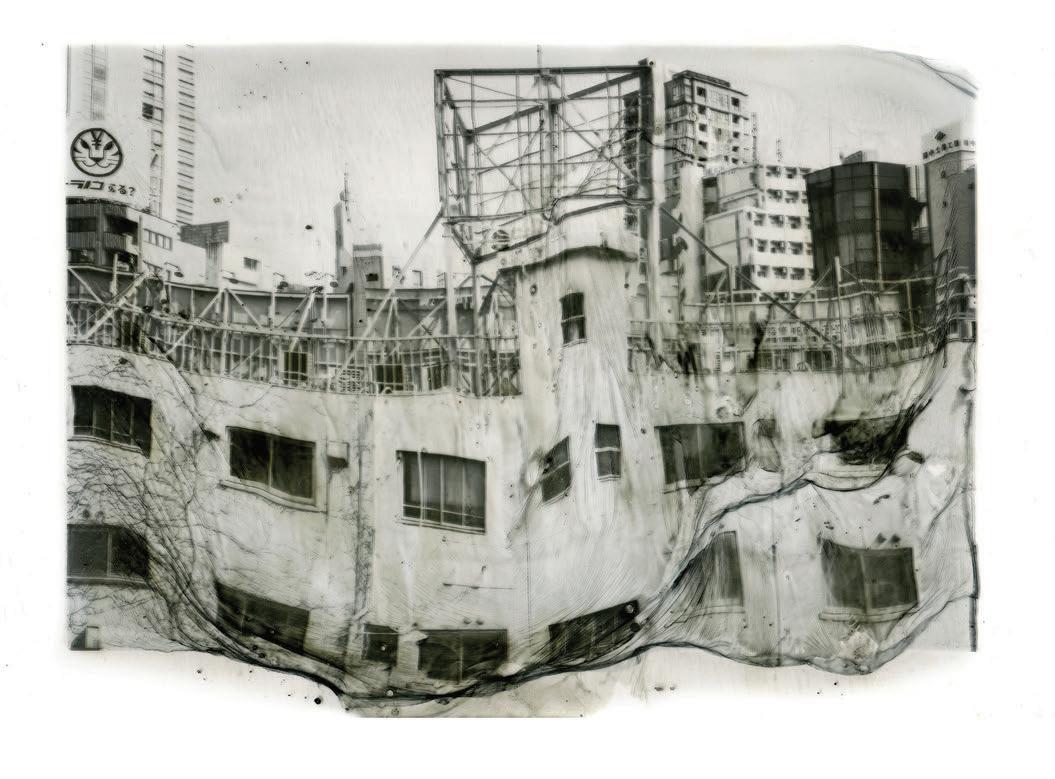
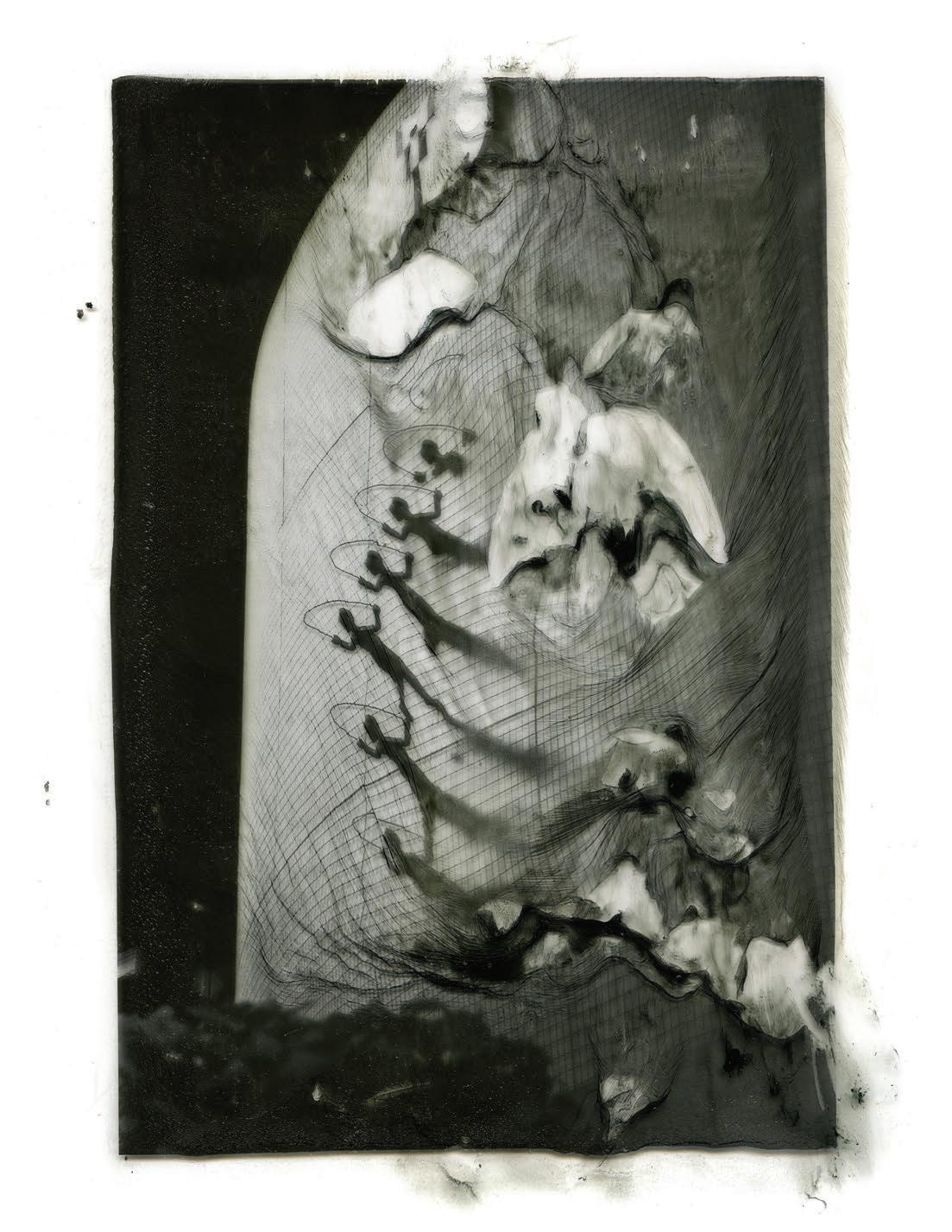
of a constant state of paranoia brought on by the Covid-19 pandemic remain. Weaponized fear suddenly begins to read as a symptom of political impuissance. Haru Anderson unearths U.S.-Japan nuclear posturing at a time when we must be reminded of the role of survivors, testimony, and witness in the formation of nationhood, in the context of Hiroshima. Growing up between two nations, Anderson is concerned with a continuous trajectory of meltdowns that shape Japanese society. From the aftermath of the atomic bomb to recurring earthquakes, tsunamis, and nuclear reactions, aspirations of self-defined nationhood liquefy under a constant stream of fear. Anderson attempts to reformulate liquefaction in response to the atavisms of a perfected social/national imaginary, to reconsider what can be built on fluid ground.
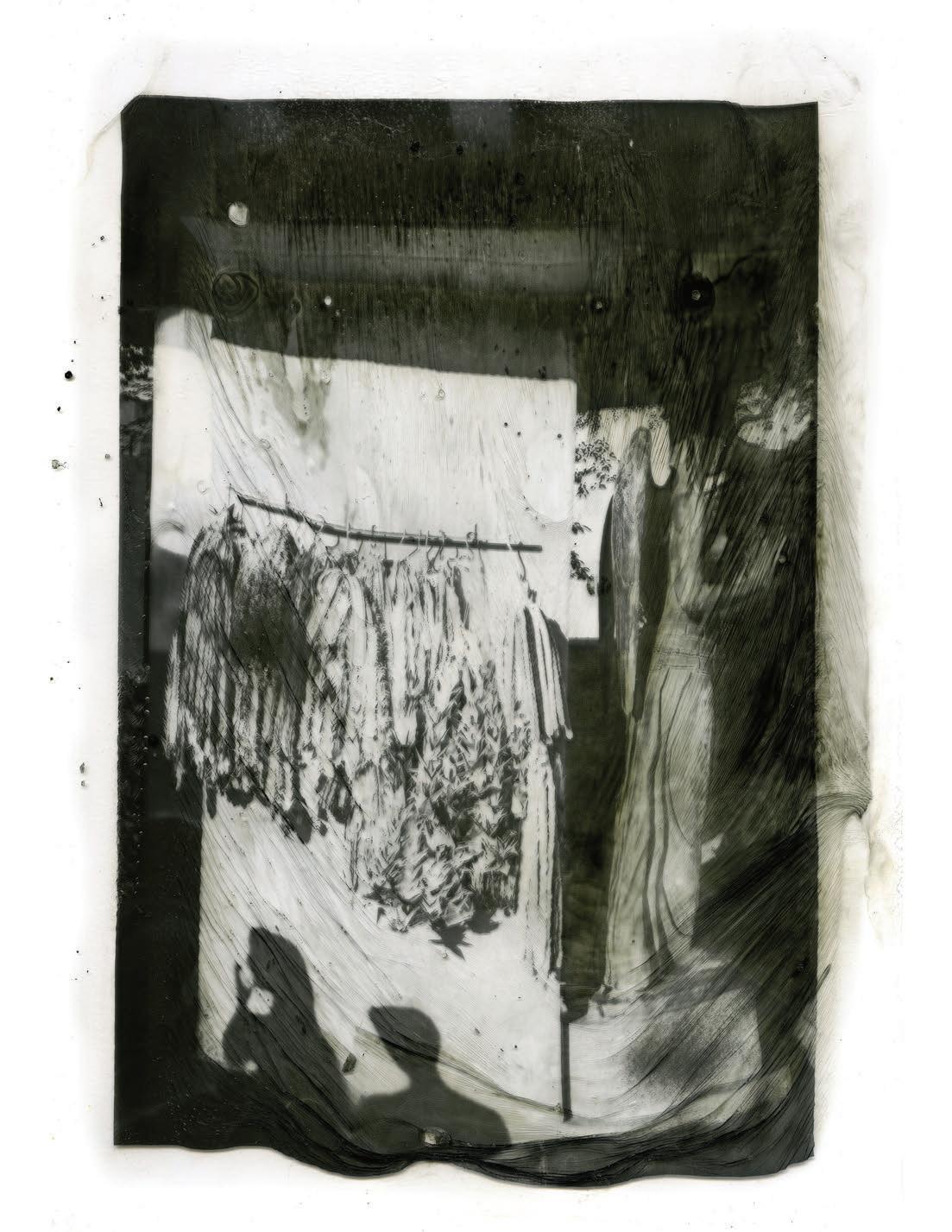
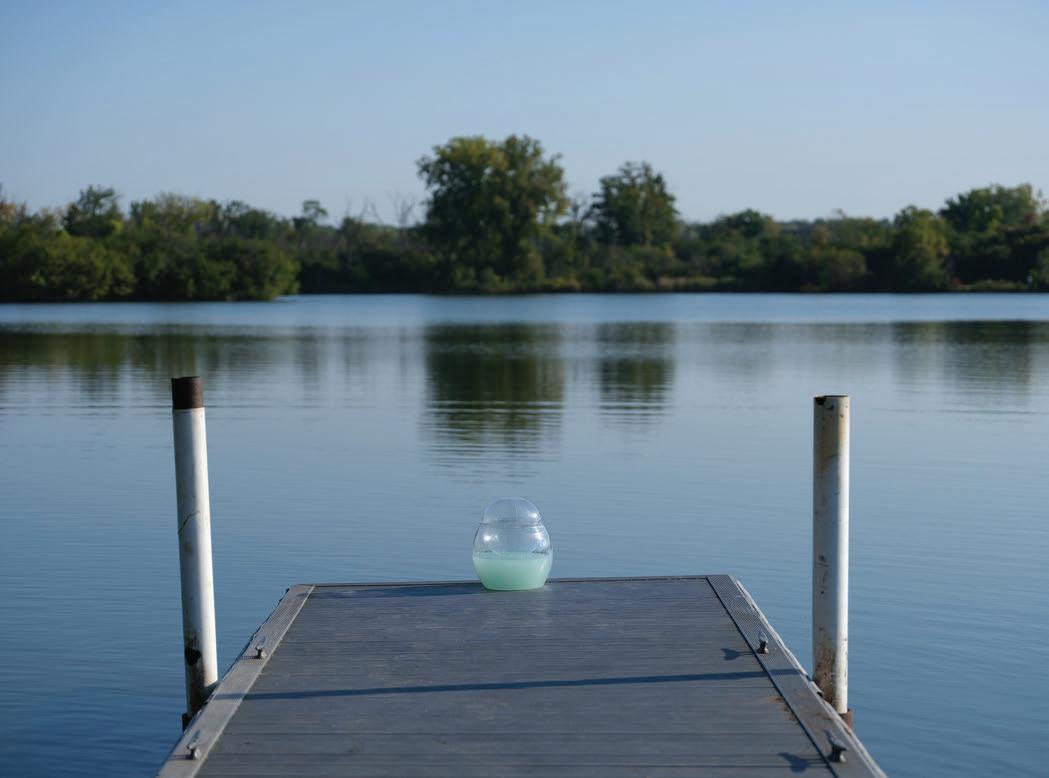
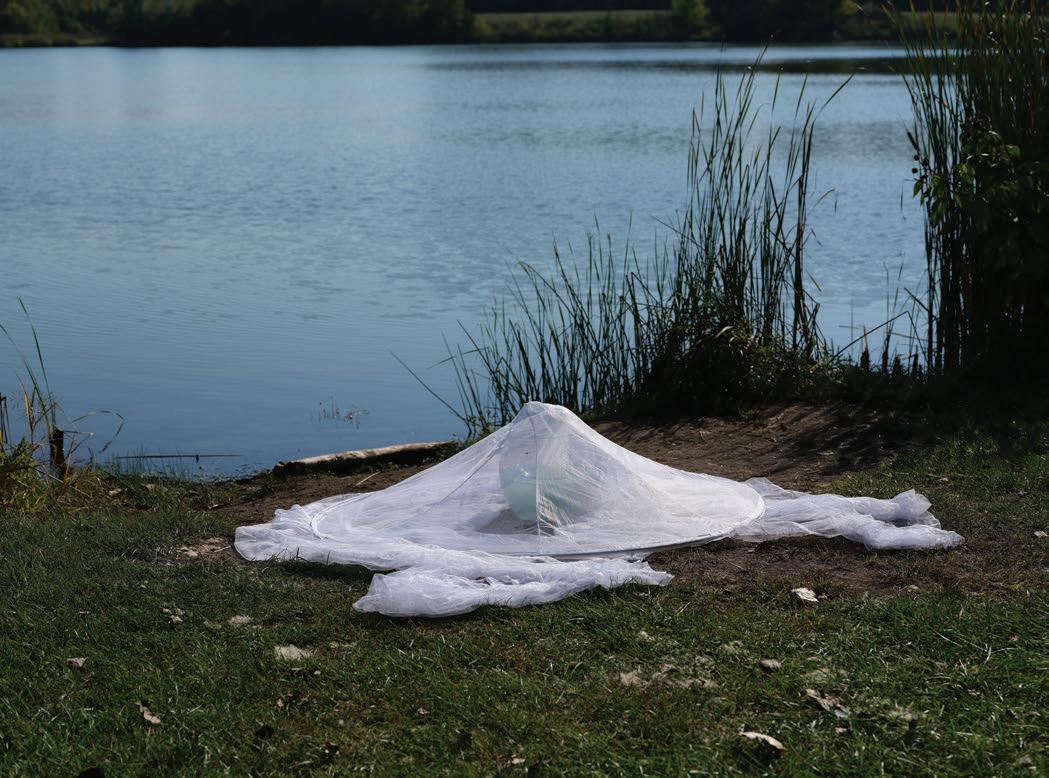
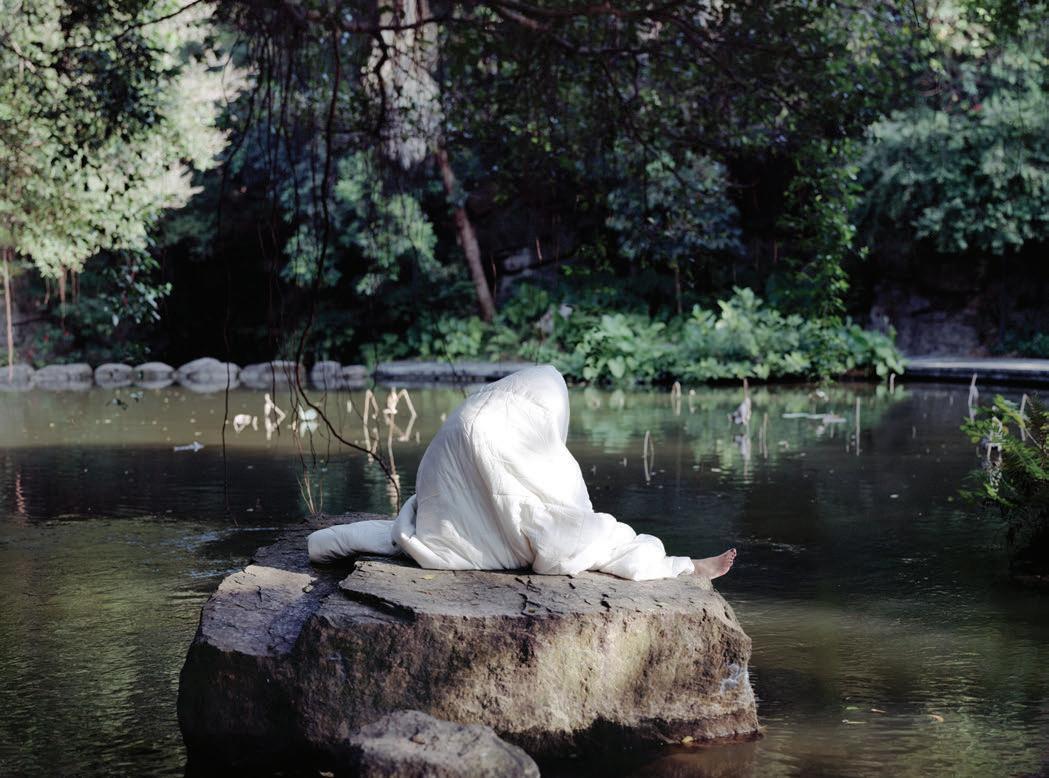
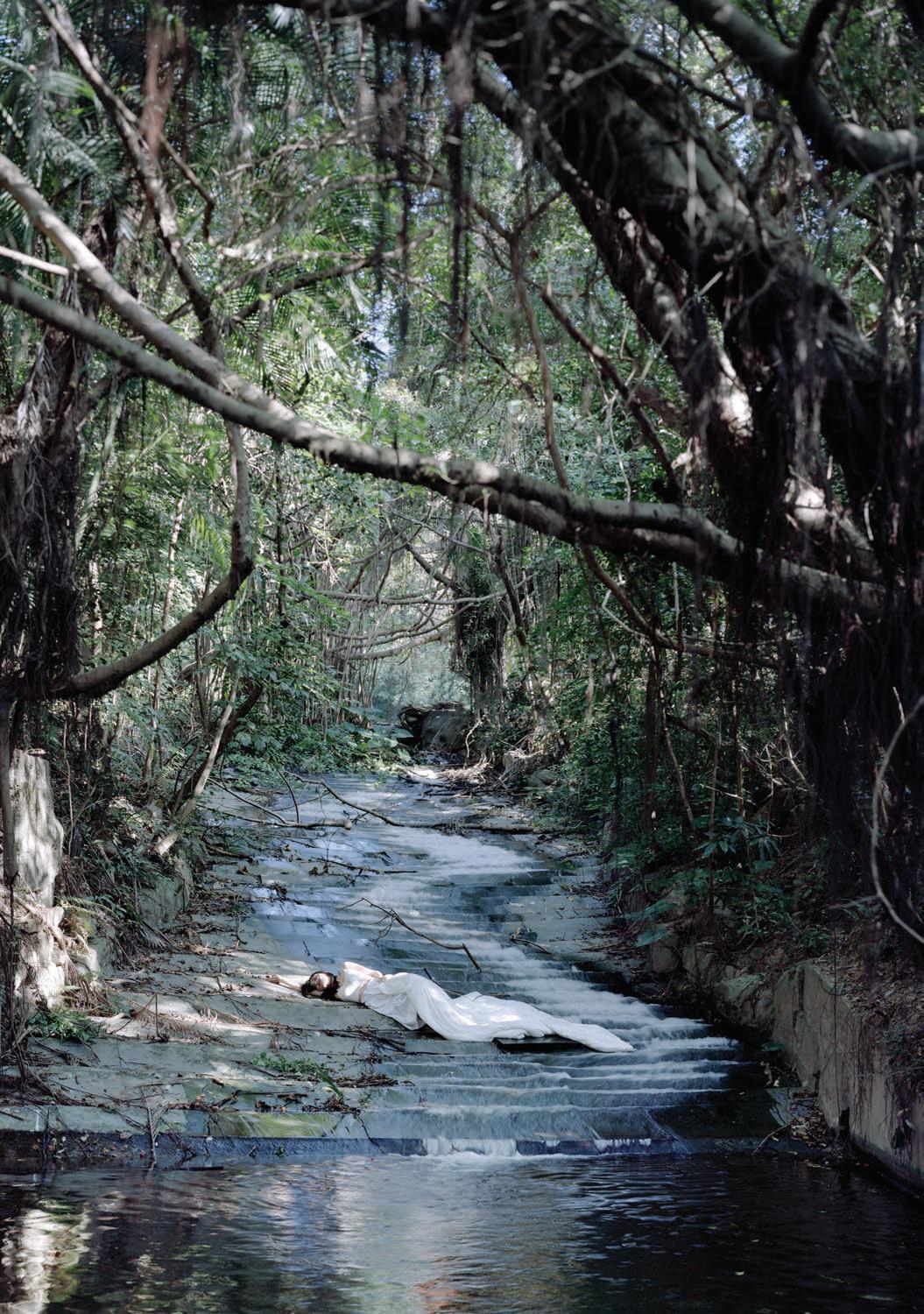
Studying the delicate boundary between memory, displacement, and the persistence of fragility, Zixi Wang ’s work blurs the artist’s personal history against momentary staged situations. Skirting the fluid horizon between an obscured self and the fragility of the natural world, Wang’s images lean into Barthes’ notion of the melancholic medium, mourning and celebrating the phenomenon of disappearing with time and age. Metamorphizing on film, Wang’s works remember the passage of time in opposition to the eternal present of photographic moment, pointing to the persistence of fragility. Xuemeng Li ’s Dongting Lake , 2024–ongoing, flows through film, sound, photo, and
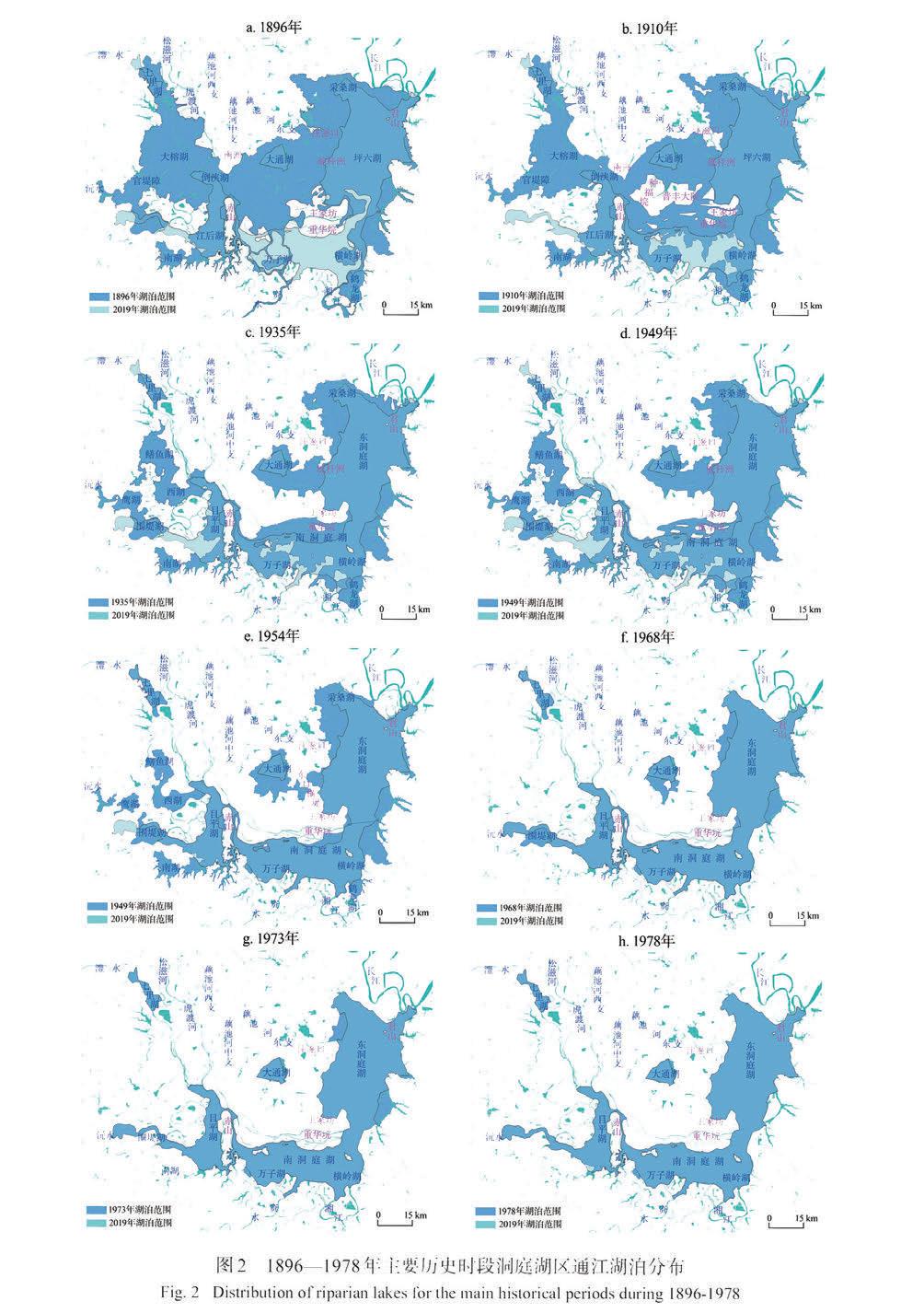
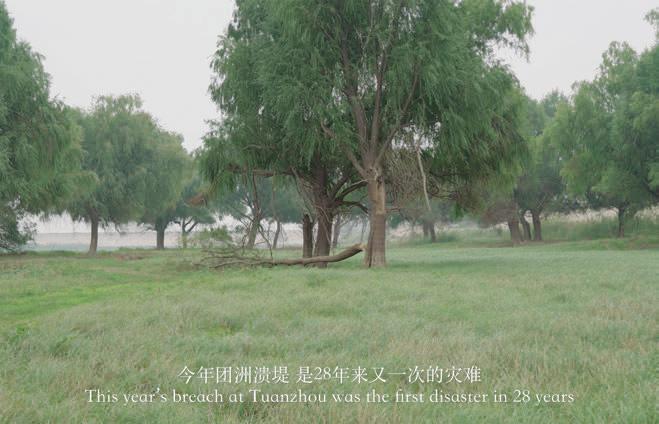
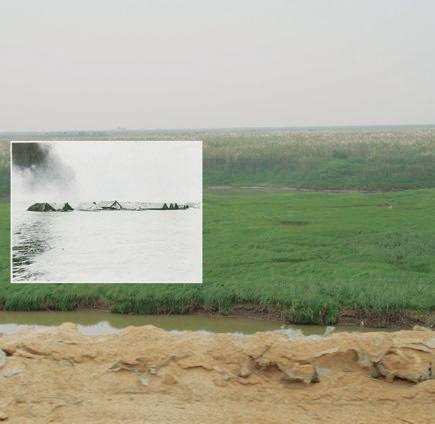
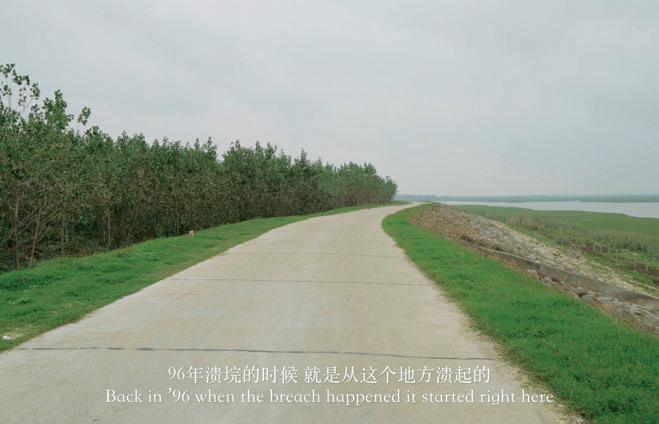
installation. Documenting the rapid decrease of water levels at Dongting Lake in his hometown of Yueyang, China. Li explores human and nonhuman relationships in a three-channel video installation. Situating the surrounding land and water from the lake as primary subjects, the voiceover of a young man and memories of village elders breathe life into Dongting Lake. The central projection holds slow meditative pans in nature, the eye never being able to perceive what is disappearing before it. Speaking of memory, loss, and post-flood ruin, stories course on, but it is the land that remembers all. This shared acknowledgment of nature’s living force reminds us of the multitudes of power that exist beyond the knowing human mind and body. If the body keeps score, so does the earth.
Contending with coding, ritual, displacement, survival, and revival, through varying degrees of non-linear thinking, several artists express their dissatisfaction with the limits of visuality, challenging the ways in which photo processes different levels of information.
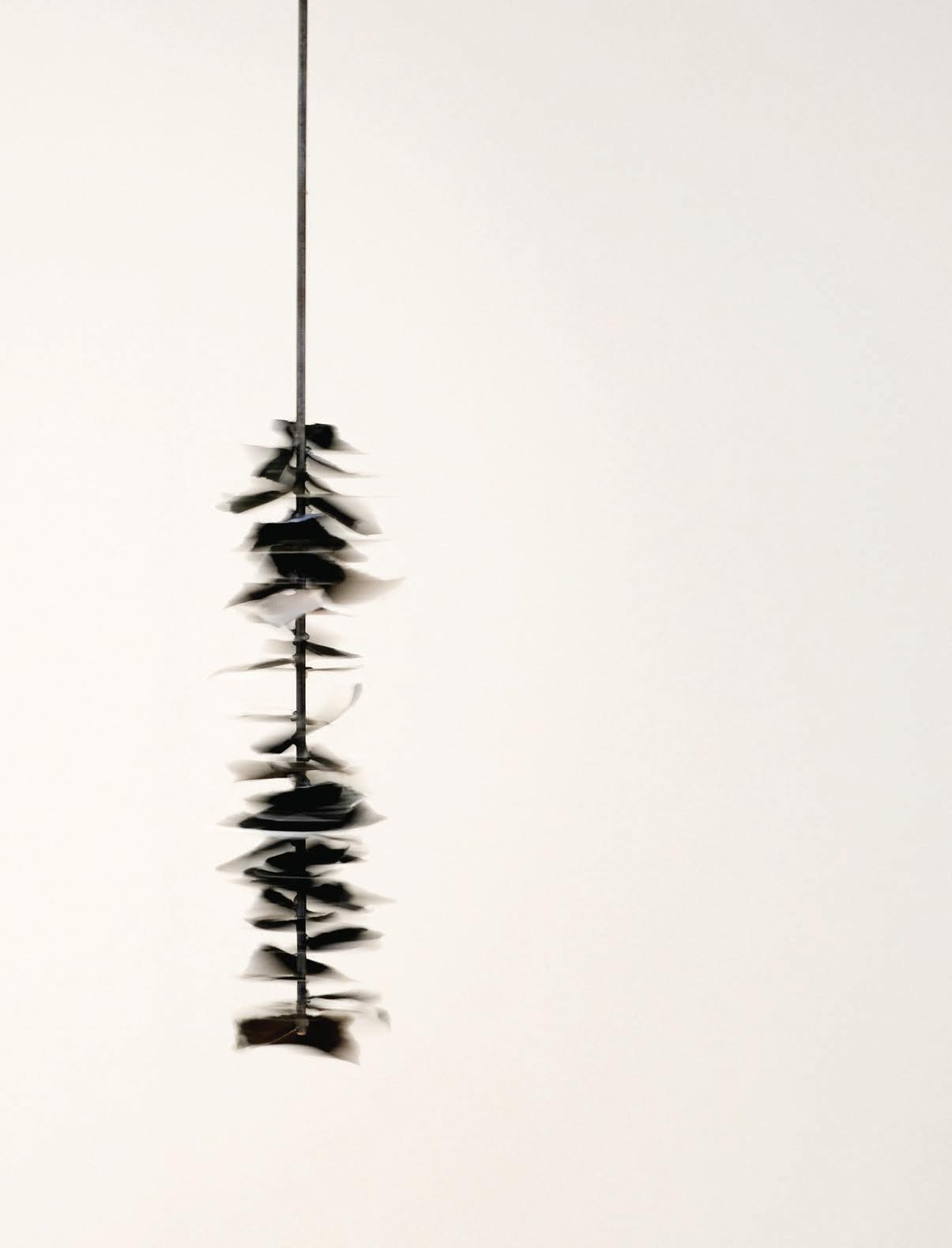
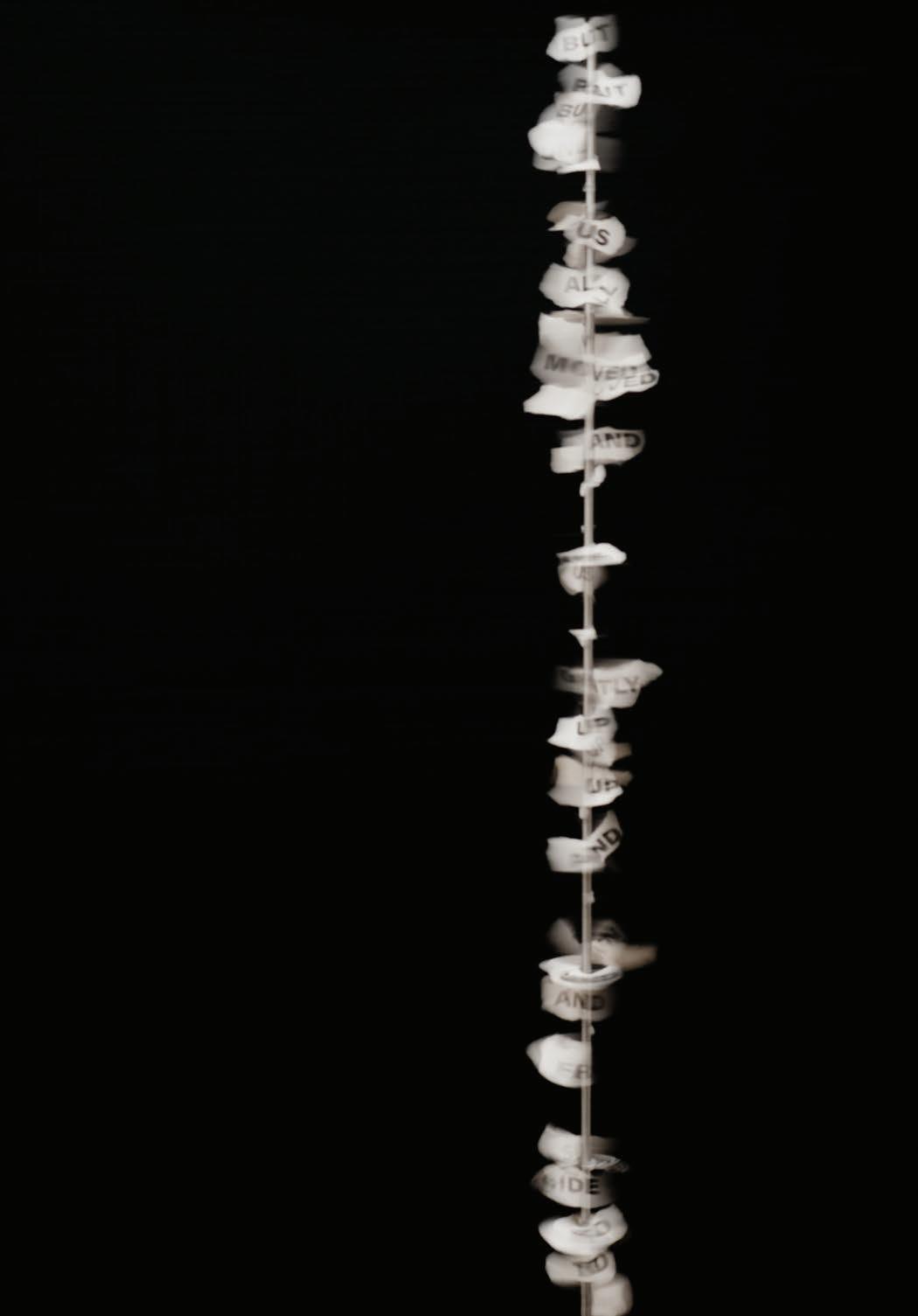
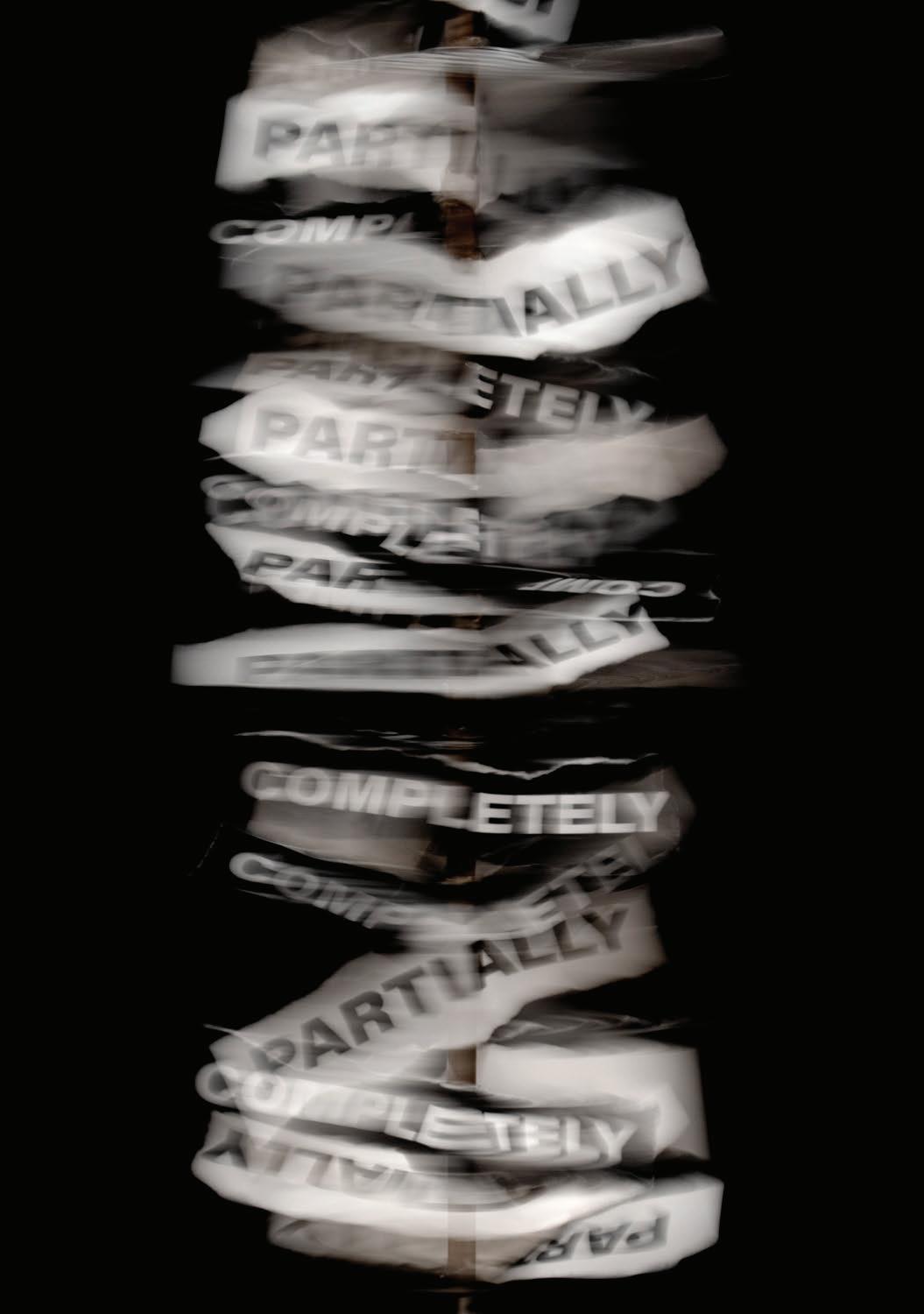
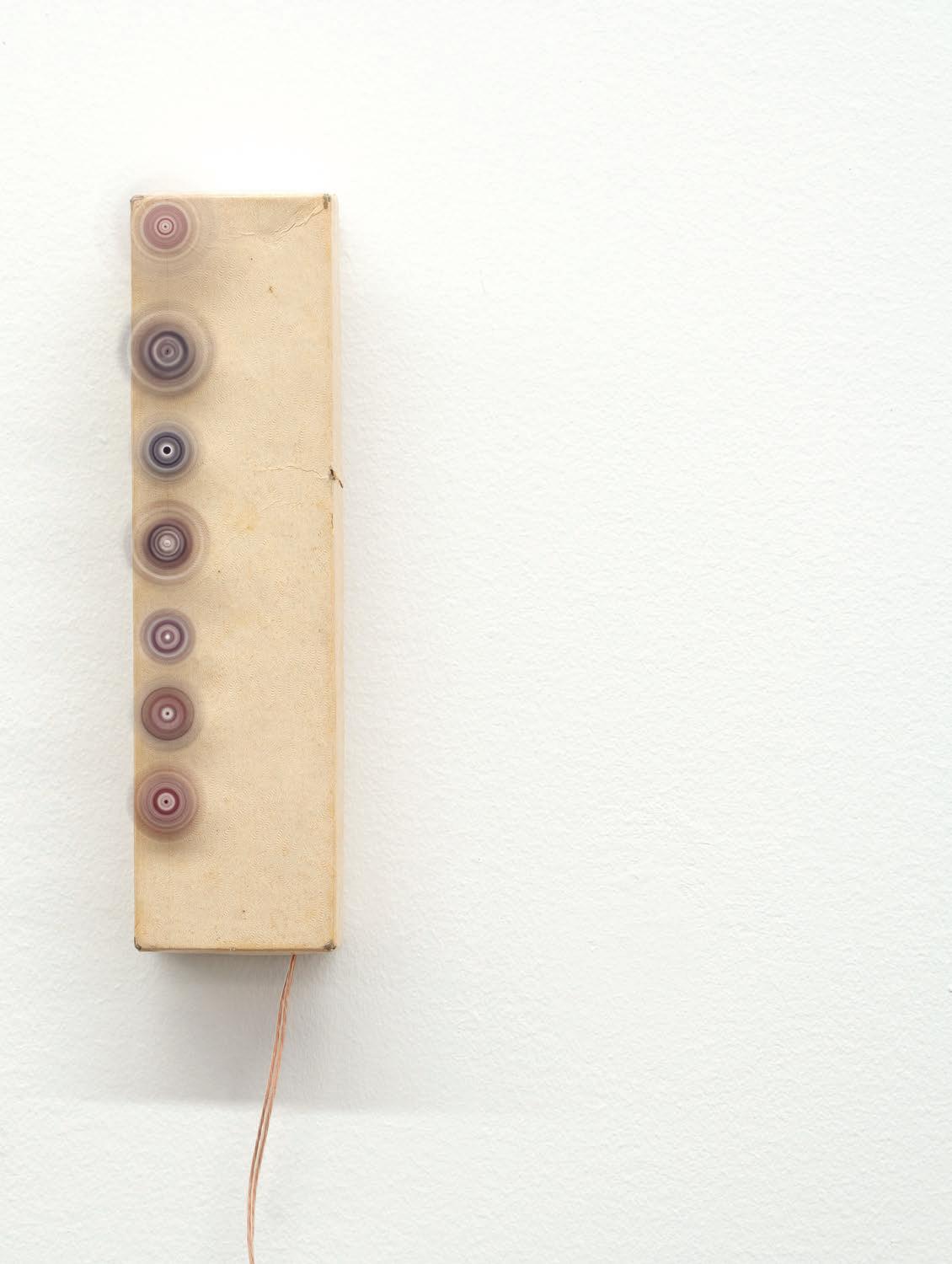
Growing up in a family of actors, Chilean artist Pedro Albertini’s sculptures are invested in the theatrics of the miniature. Small, oft illegible details of insect wings, larvae, dust, and words source primary material from marginalia. Mounting cutout printed texts on tiny motorized spindles, Albertini’s kinetic sculptures create abstracted whorls, seeking to articulate a grammar of spinning. Thinking in one language, existing in the next, the mother-tongue and
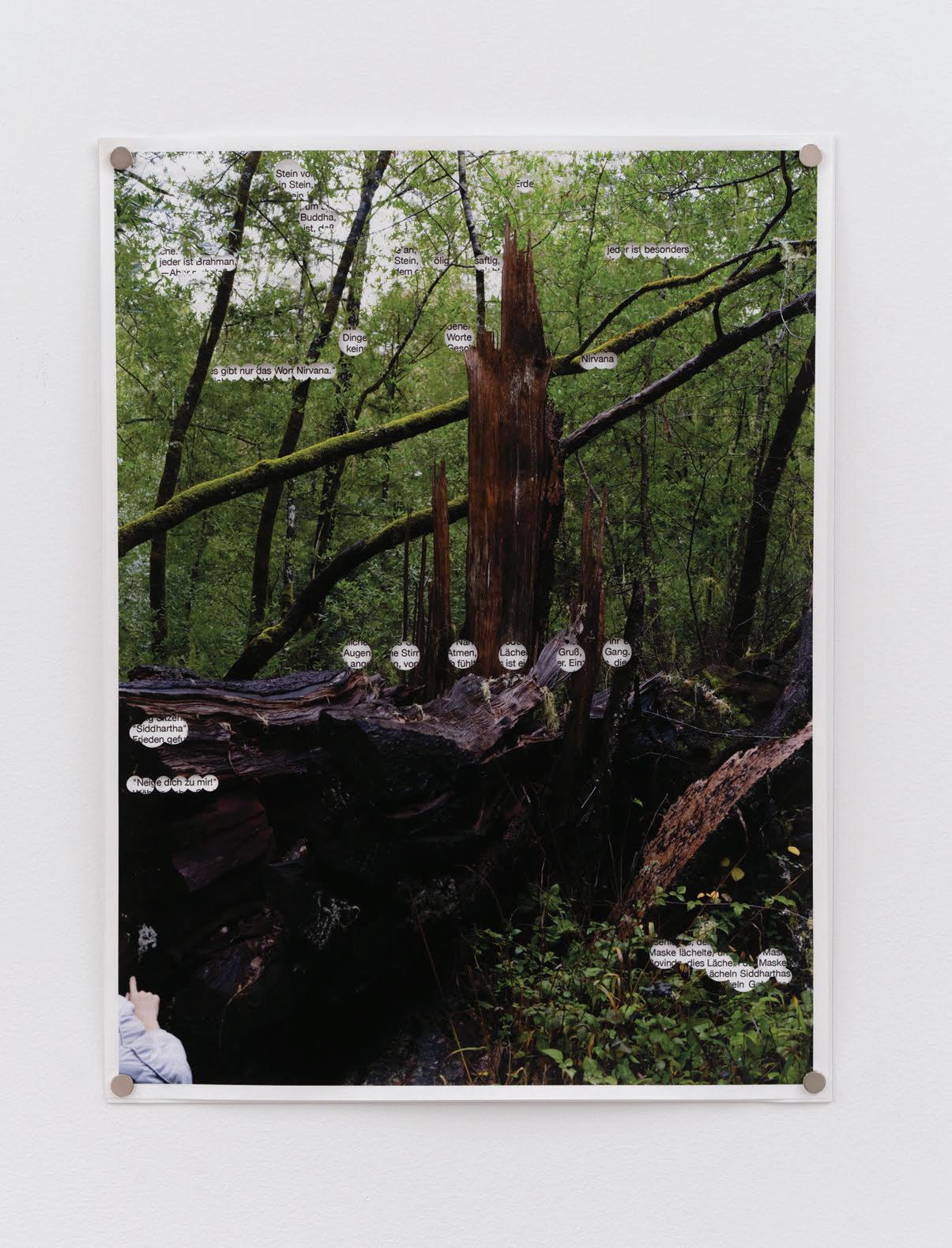
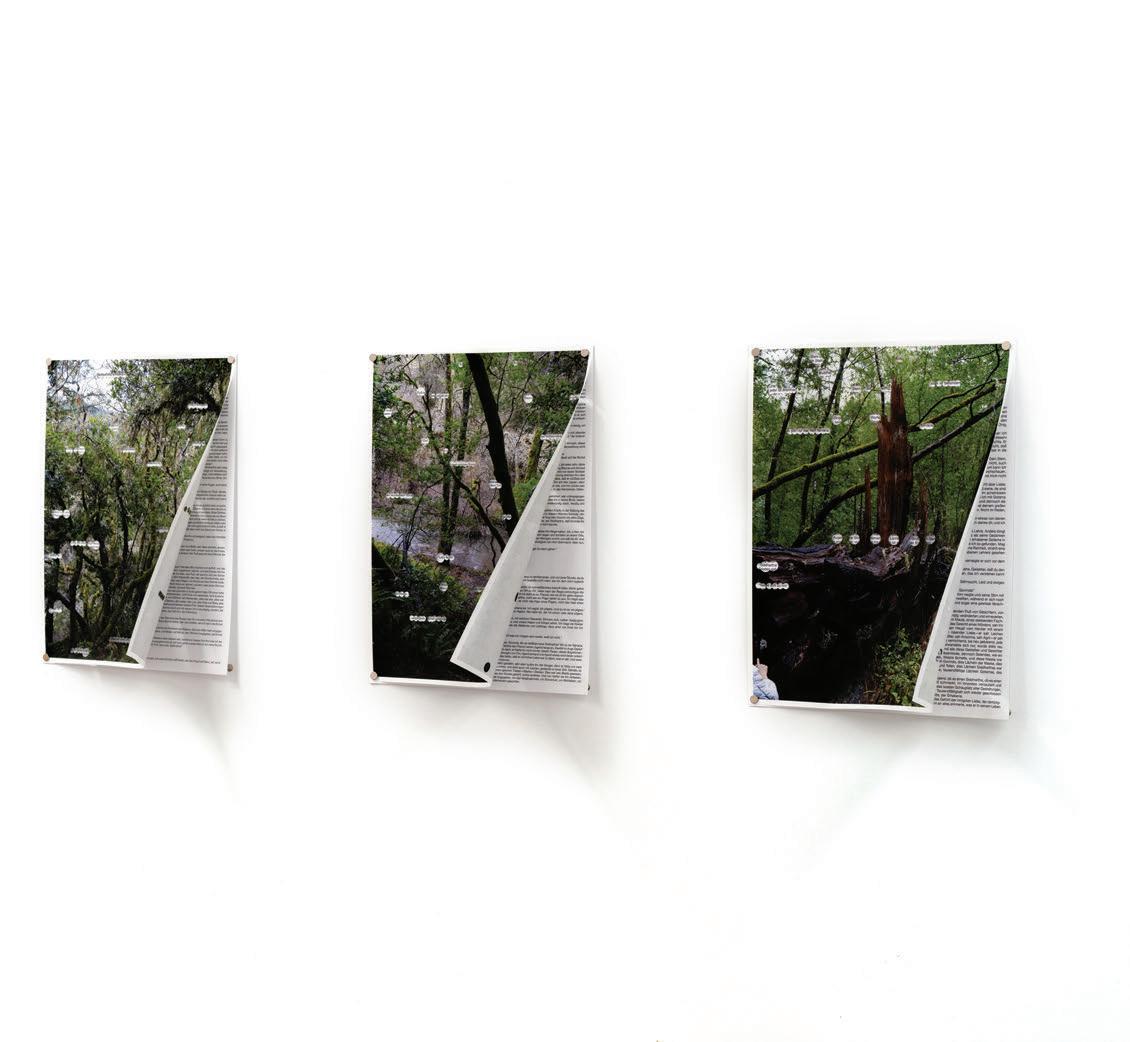
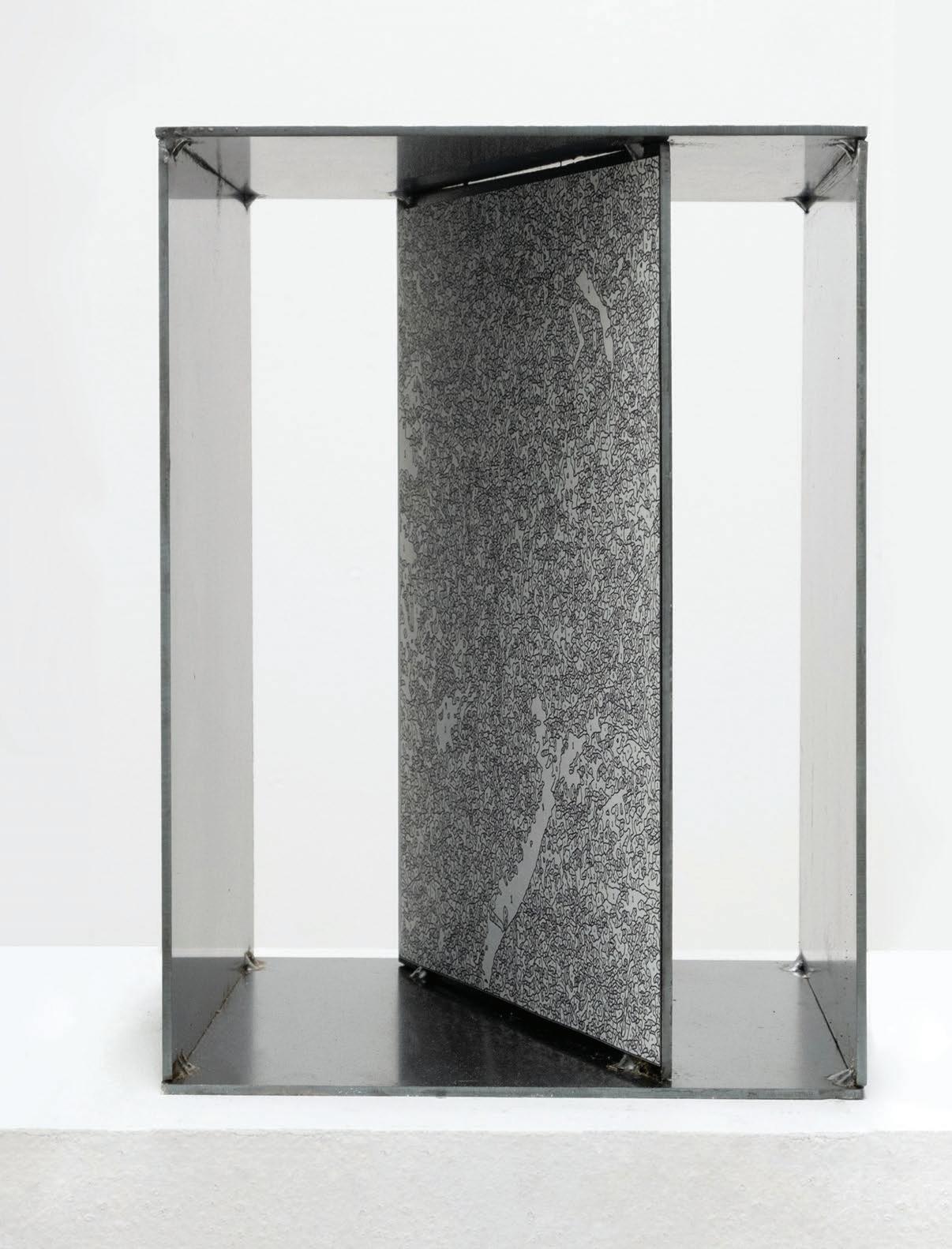
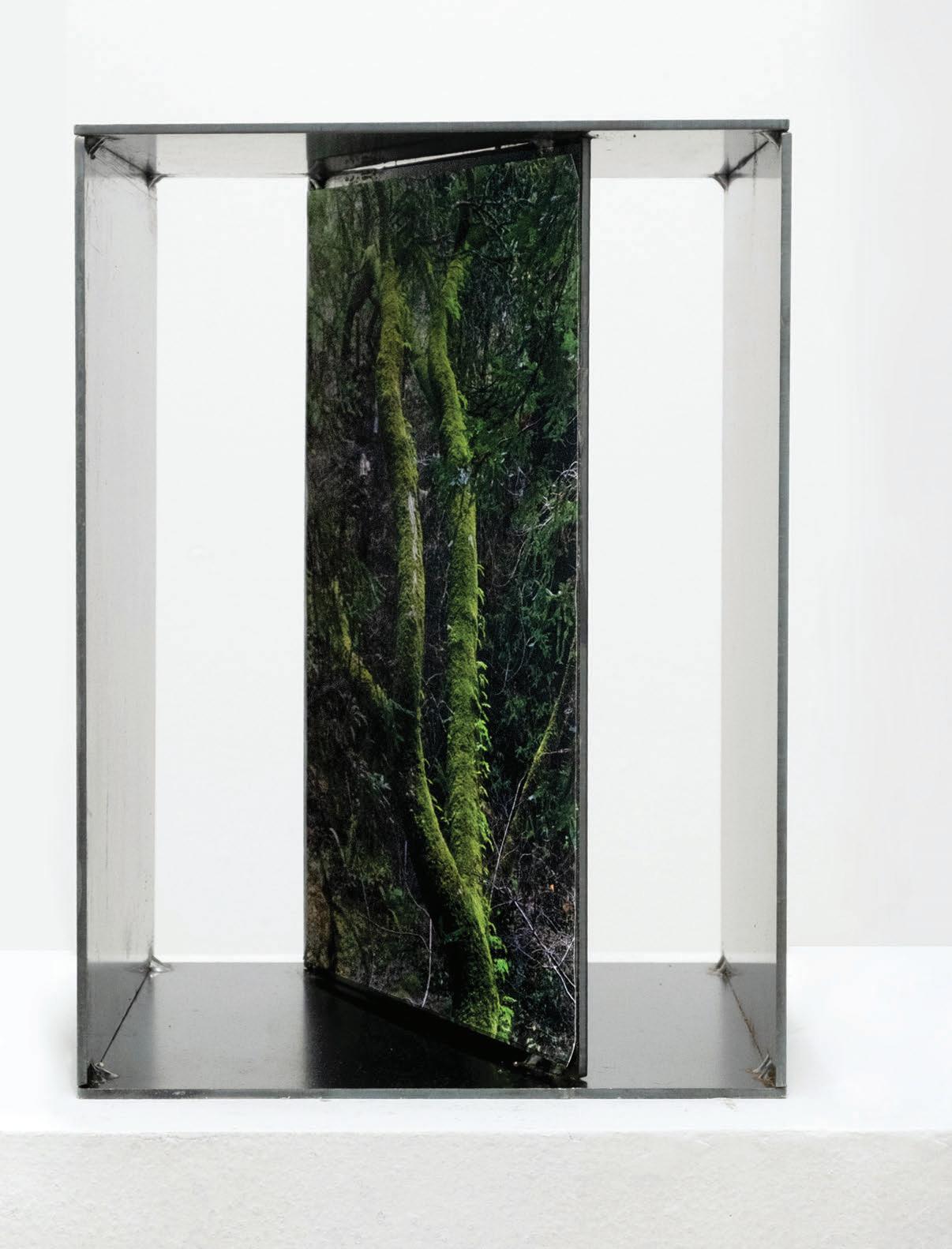
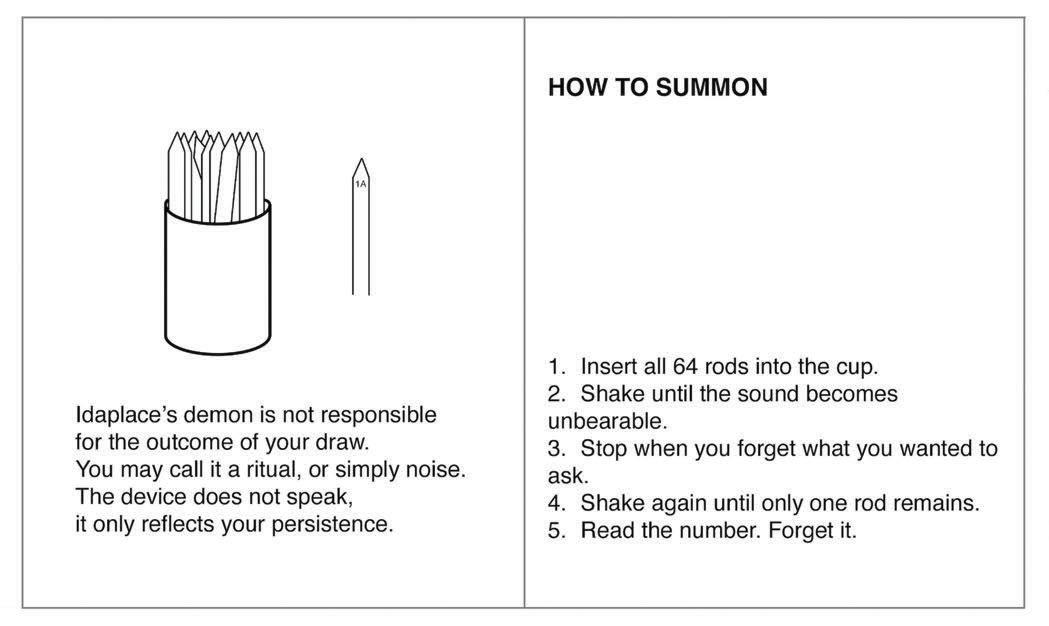
father-tongue blend into a seamless, interconnected atomic structure. Yudie (Ida) Zhang’s photographic installations, on the other hand, test the veracity of language and images against systems of instruction. Each work is a setup in a larger experiment with everyday visual cues and steps in a circuitry of meaning. Idaplace Demon, 2025, a divination tool that leads to no conclusive knowing, characterizes the instrumental notion of time in how belief systems are constructed. In Om!, and Paint Forest by Number, 2025, the artist deploys pseudo-instructional formats that lead to an absurdist read. Structures of classi cation, the authenticity of code, and rules of operational logic are overturned. Steps laid out by the artist must be performed, yet no real outcome or meaning is assured. I am reminded of the temporality of childhood and how rule-based responses determine the rest of our lives.
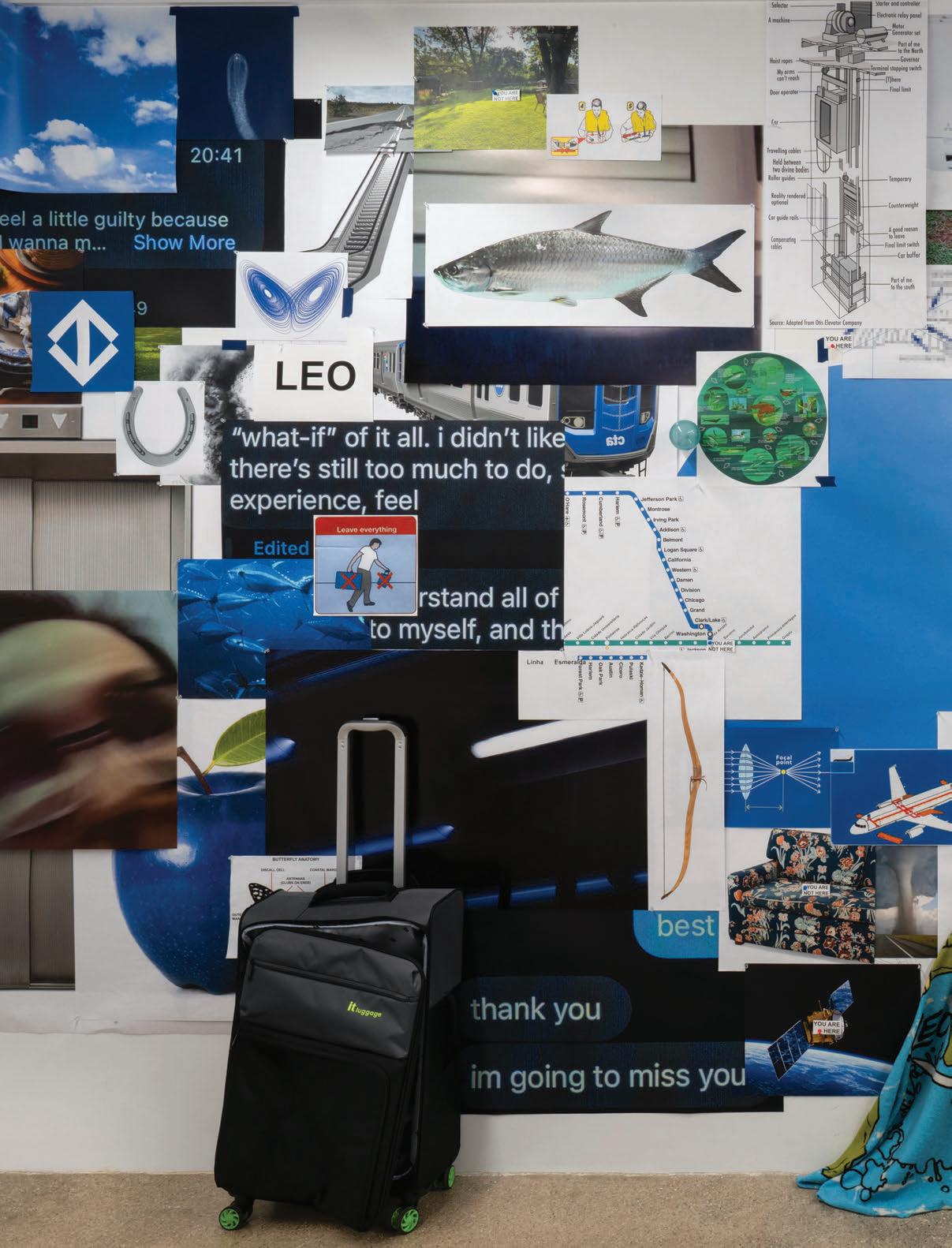
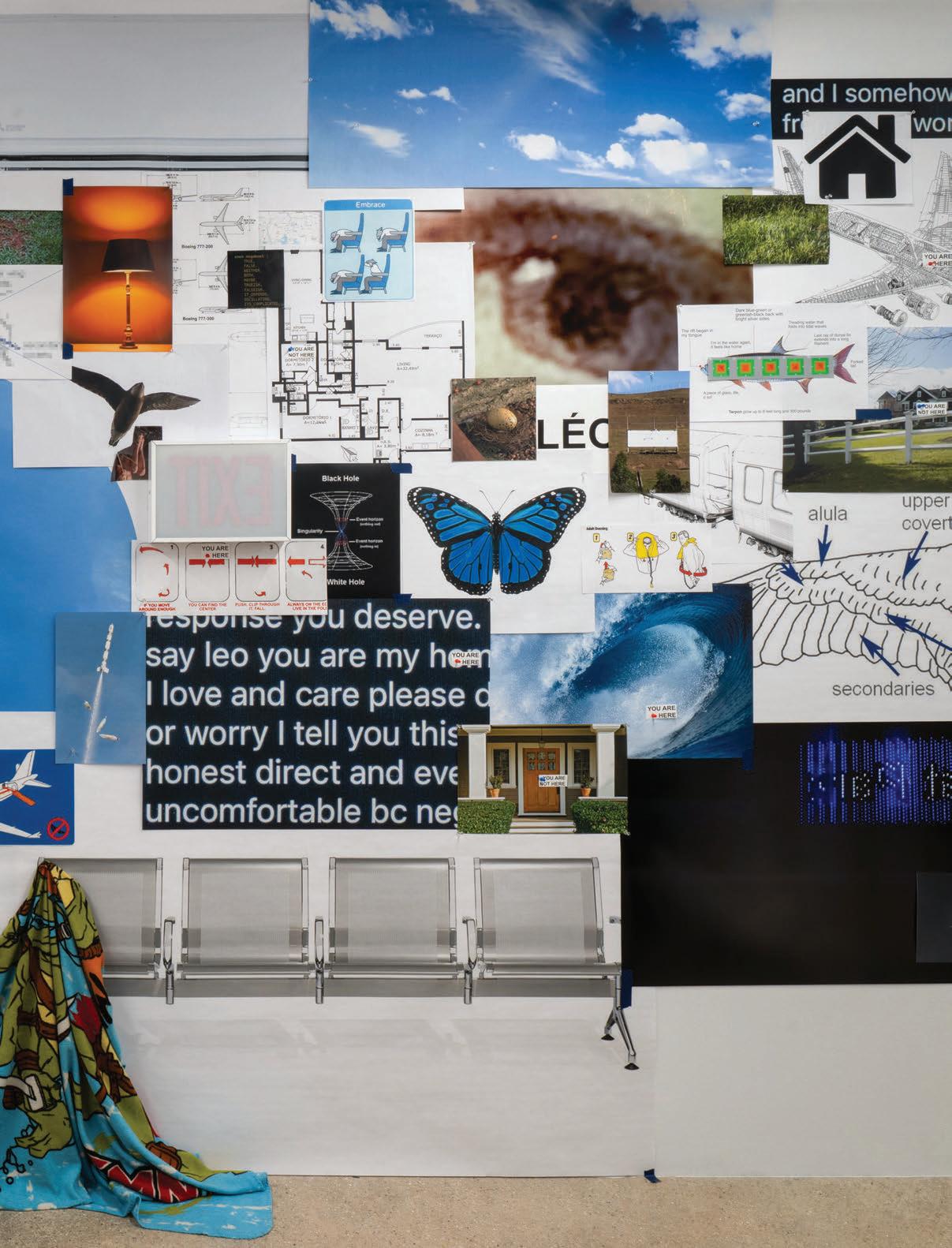
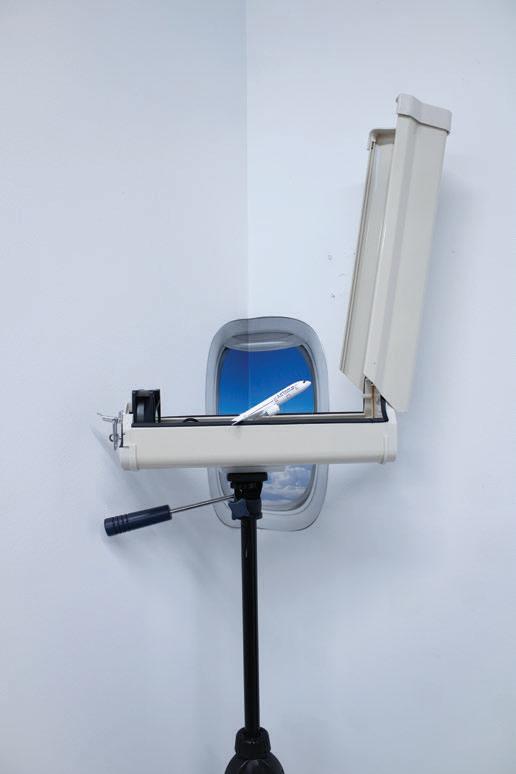
Born in Brazil and raised in Americanness, Leonardo Gabriel do Amaral probes the immigrant condition through writing, photography, installation, and video. Growing up under late-stage capitalism, words and images are fragmentary for Amaral, who feels trapped within the spectacle of bureaucracy. In his own words, “ Almost (T)here , 2025, drifts inward, folding poetry, appropriated imagery, and archives into maps. It metabolizes satire and politics, mingling fragments of the self and systems and devices I am mediated through. The work arises from attachments that precede choice; places, languages, people, image systems that claimed
me before I claimed them. ” Rendering the affective role of communication technology in shaping the lives of transnational immigrants, Almost (T)here , 2025, opens up unexpected cartographies of gestures and embodied practices perceived as non-reproducible due to the institutional archive’s inability to capture them.
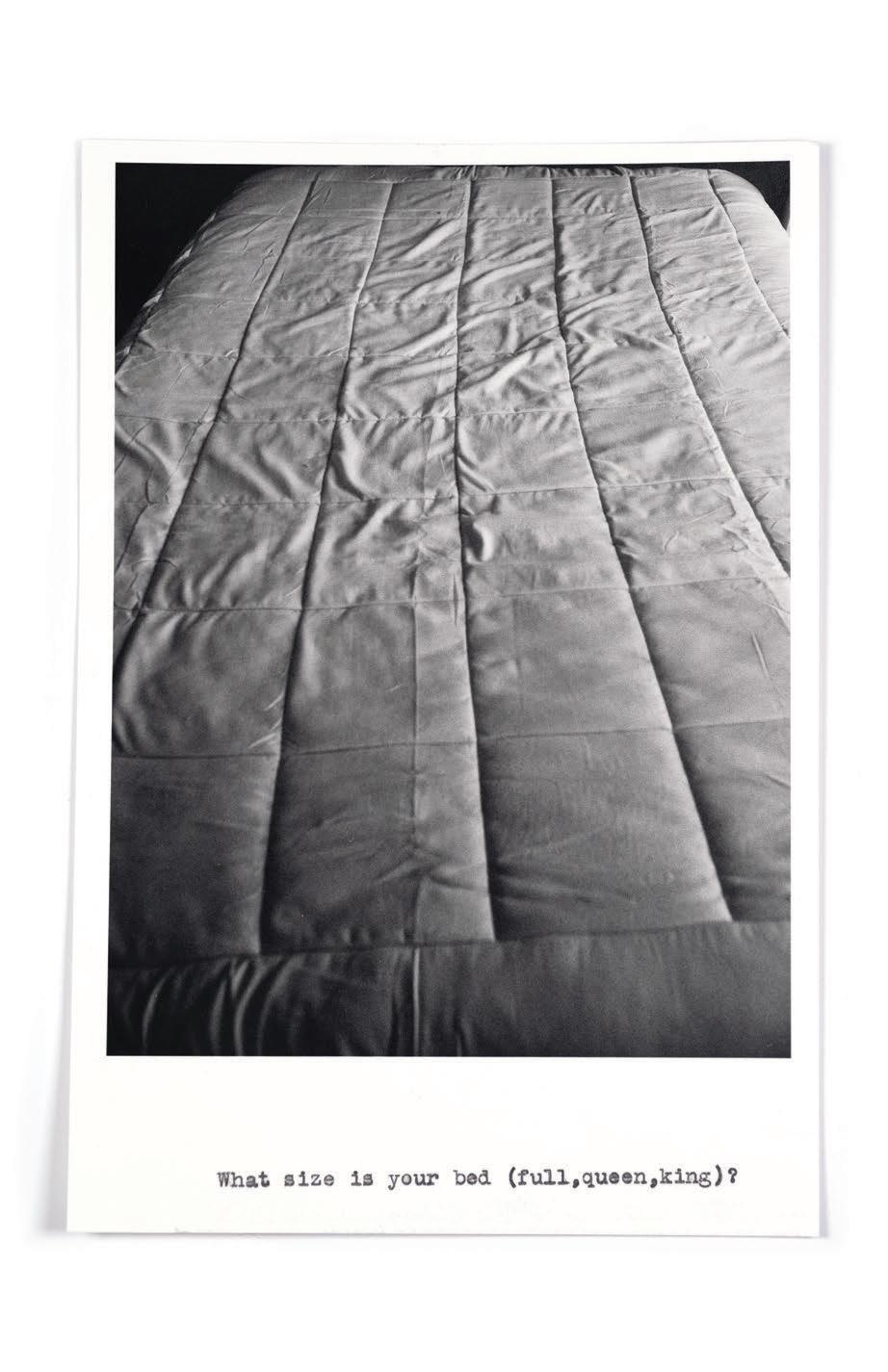
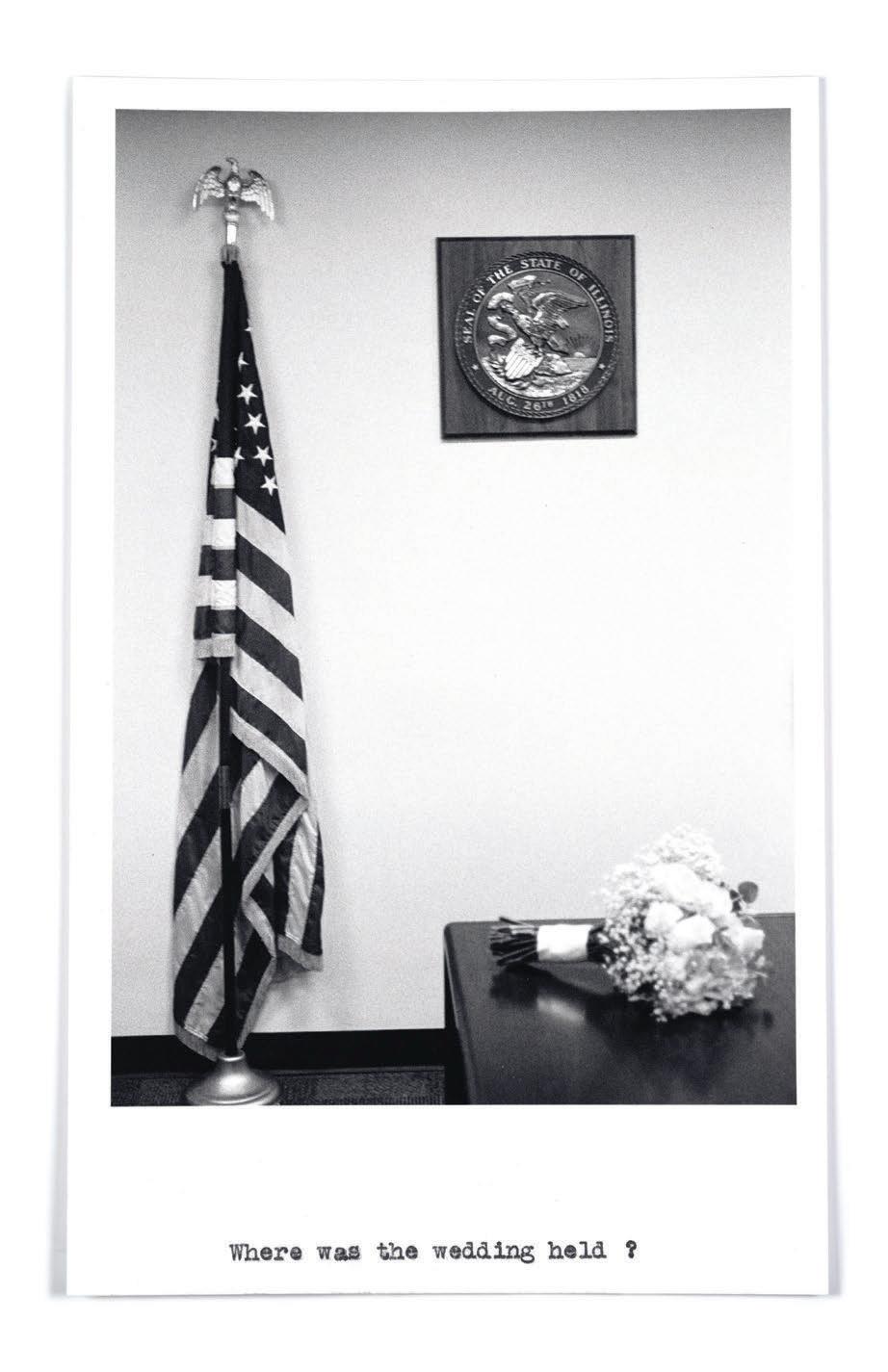
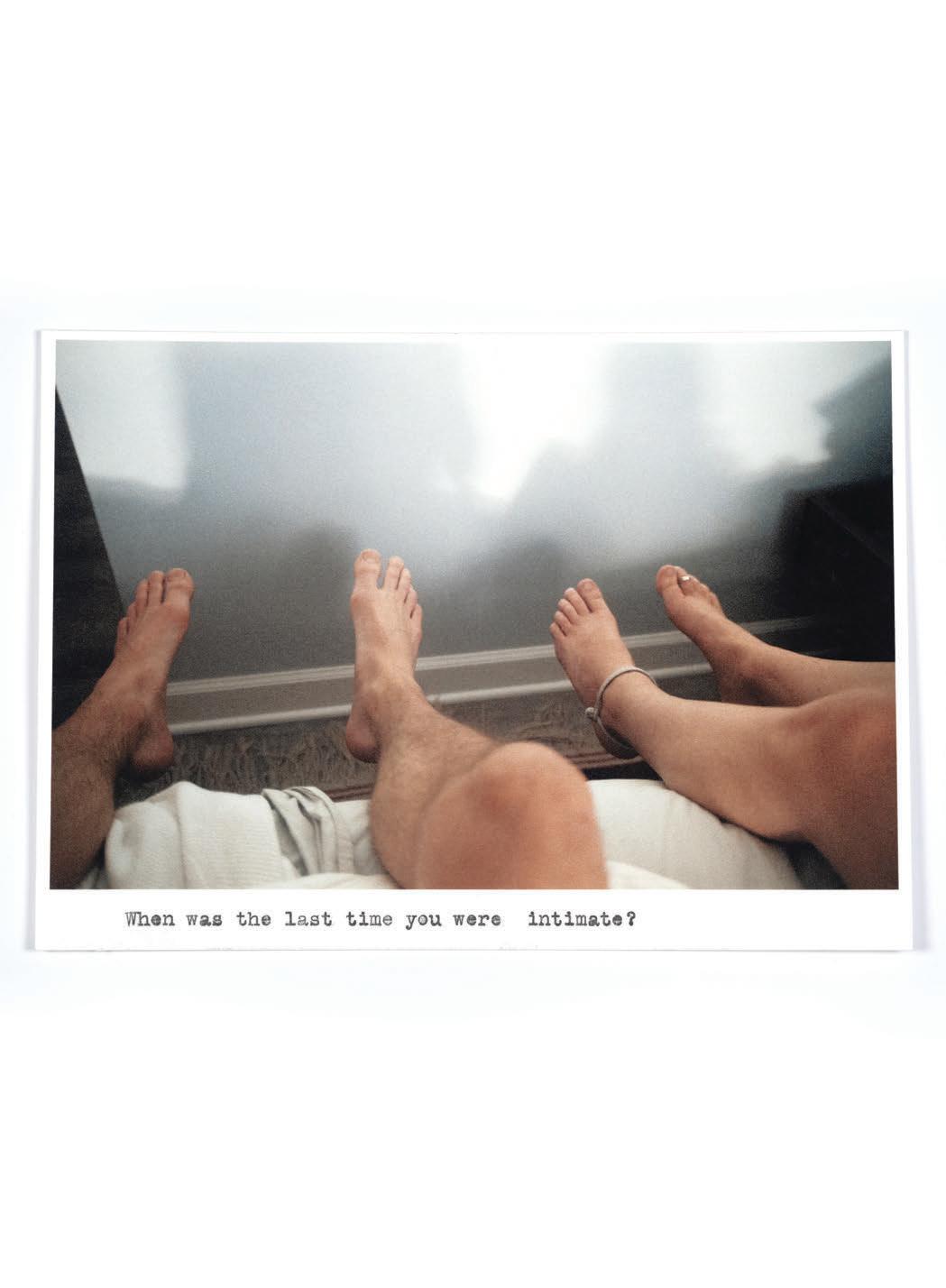
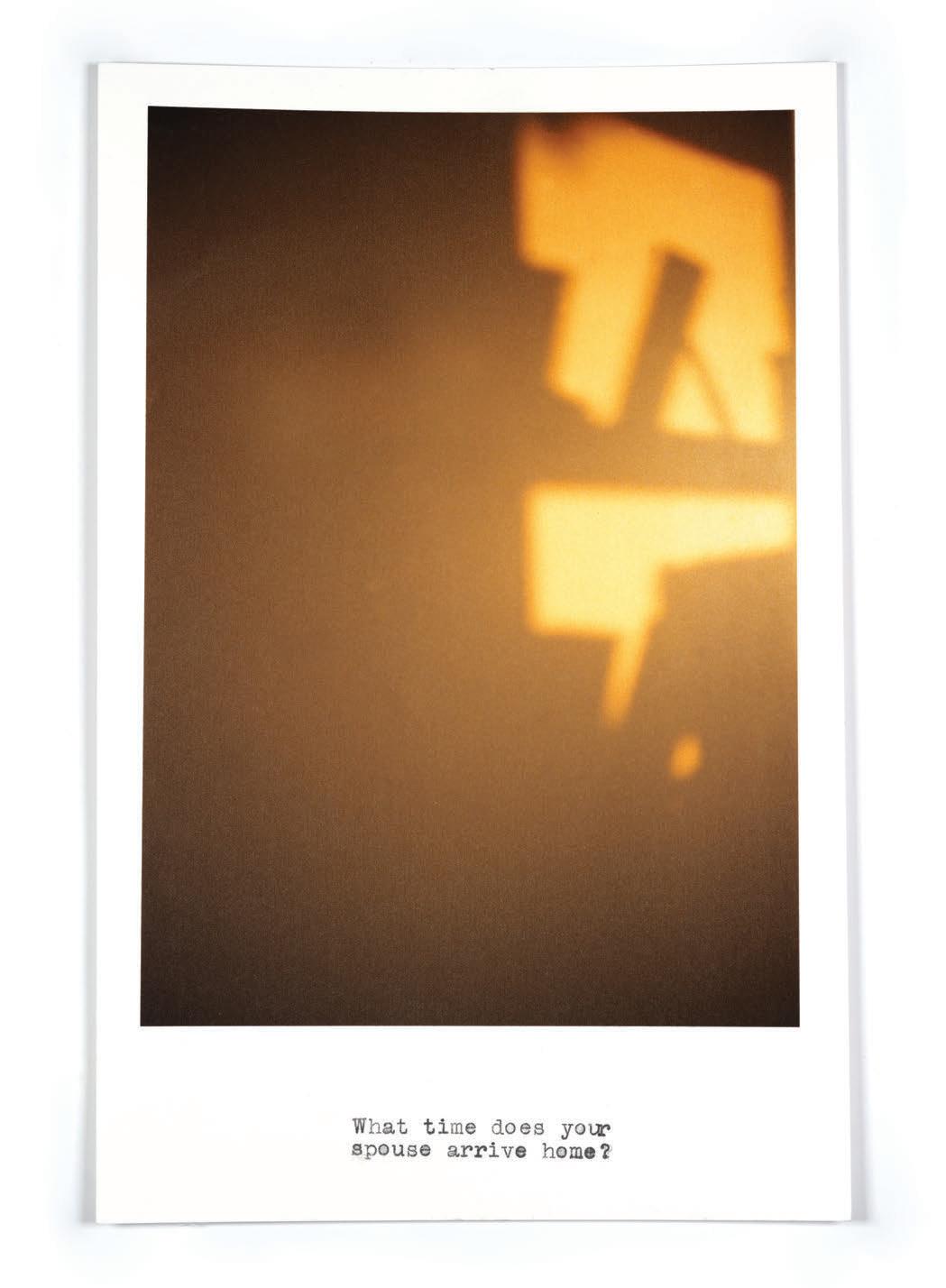
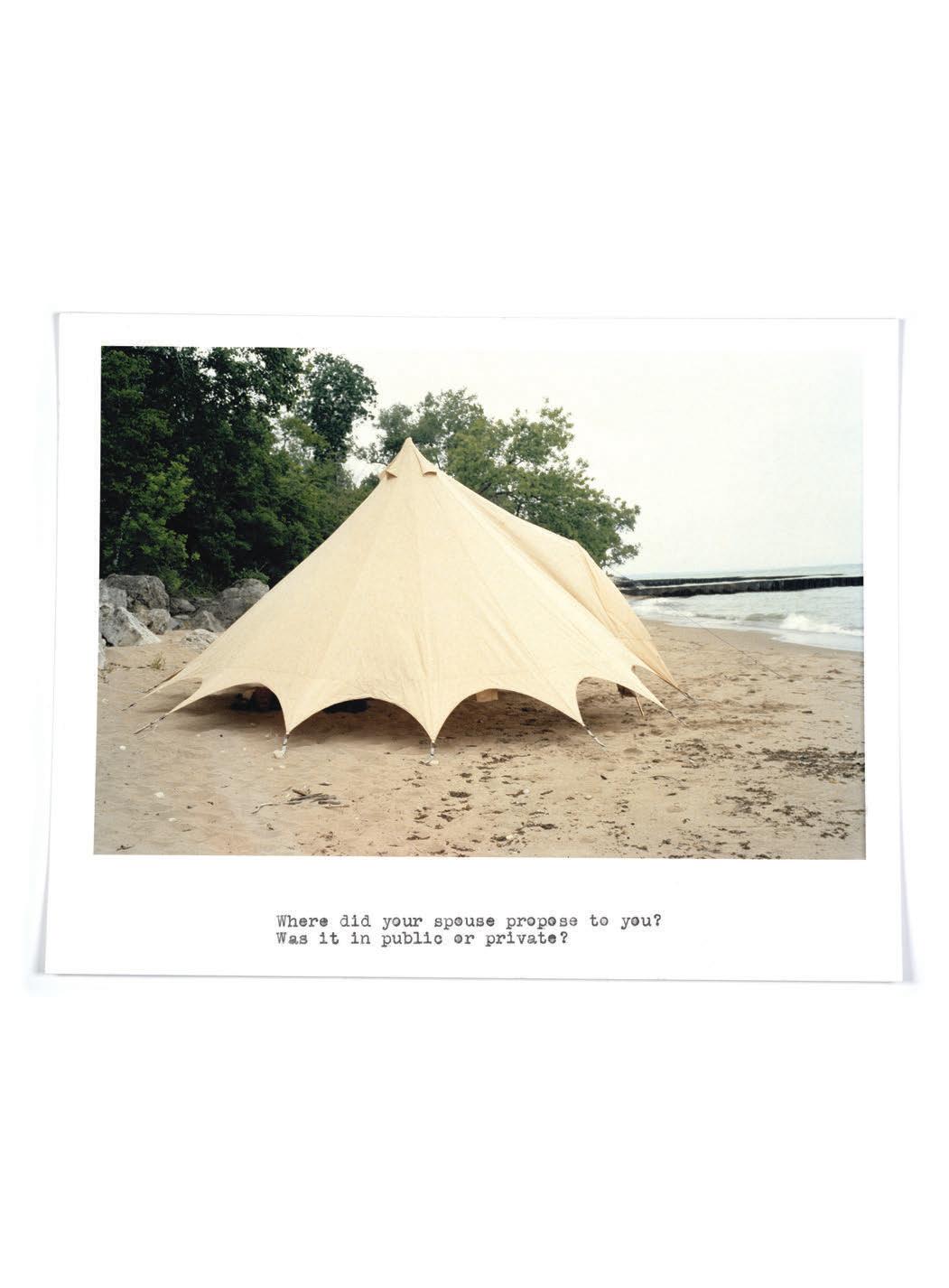
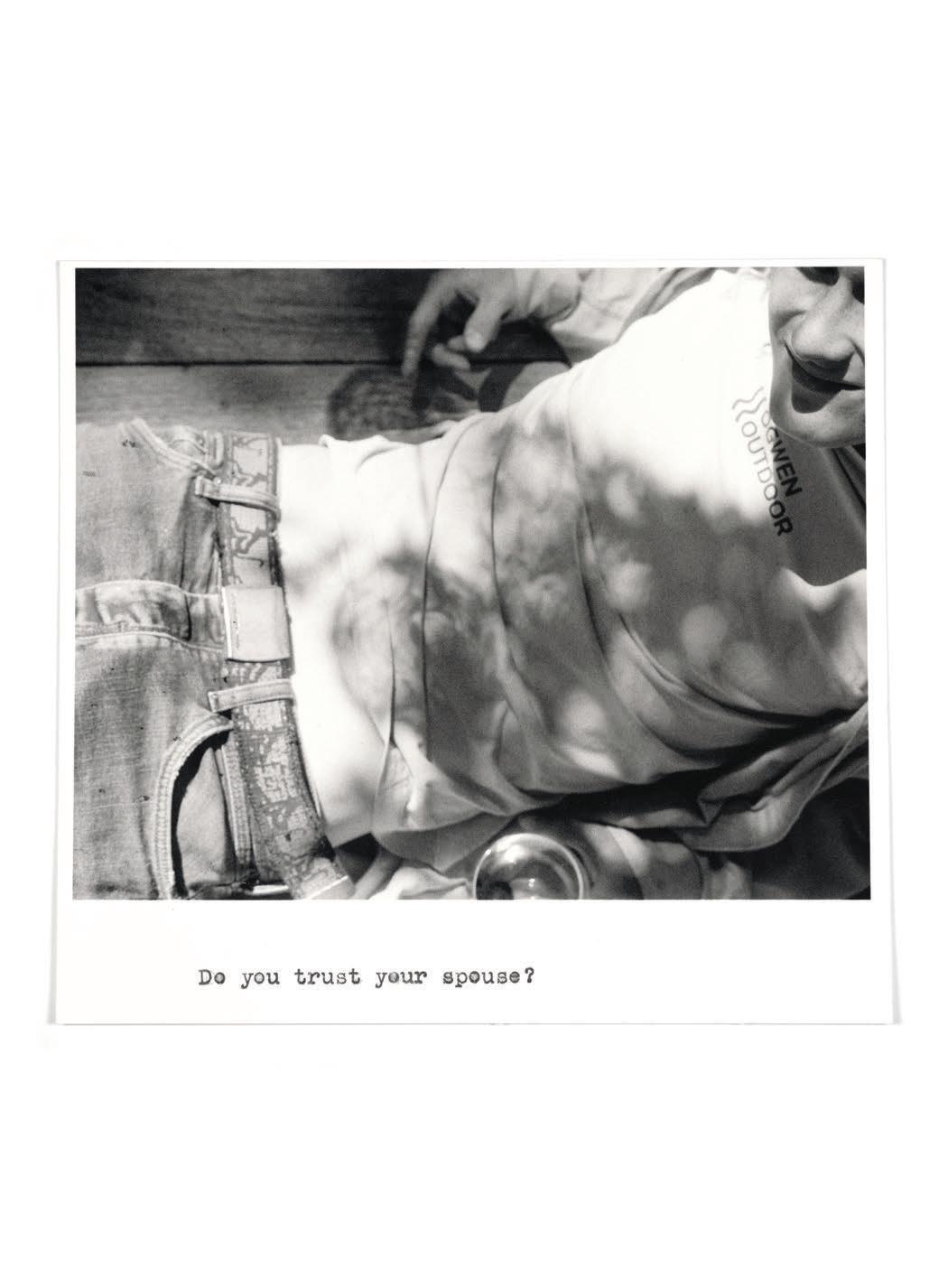
Berkley Reddick ’s Questions , 2025, is a series where moments of intimacy between a couple living across a border are captured as snapshots of the Green Card process. Exposed through bureaucratic questioning, their private lives are now subject to surveillance. Reddick mimics the intrusive nature of naturalization by capturing moments of intimacy using a pinhole camera. Answering 245 questions provided by their lawyer through photographs, the impossibility of selfinvestigation and requirement to validate the “realness” of love is enacted in this tender series, rendering the brutally lengthy process of interrogation susceptible and supine.
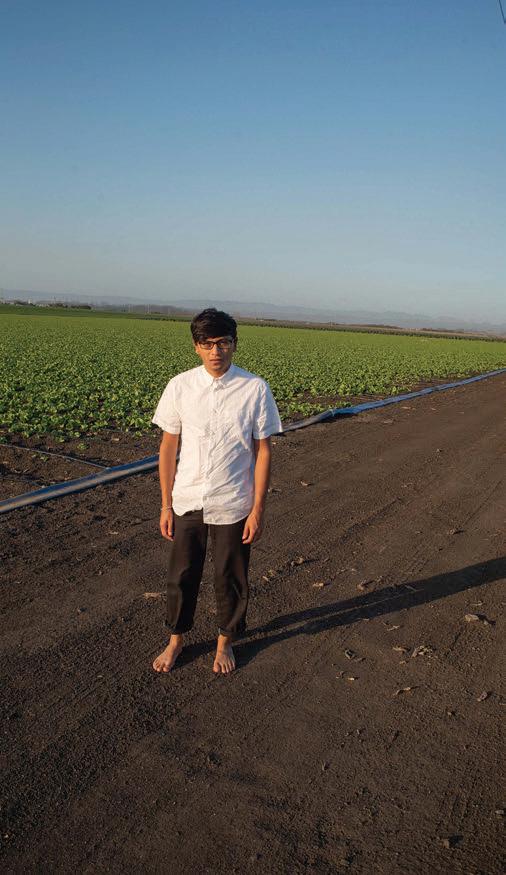
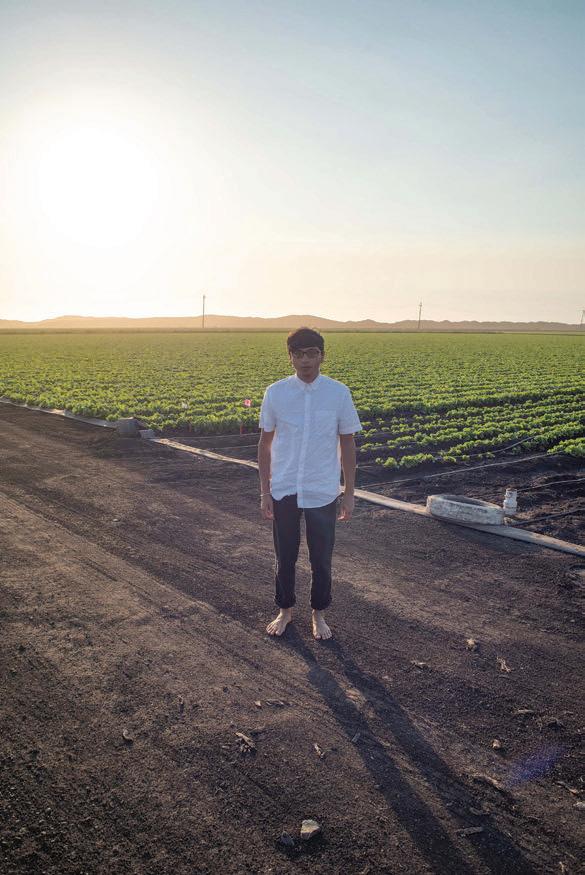
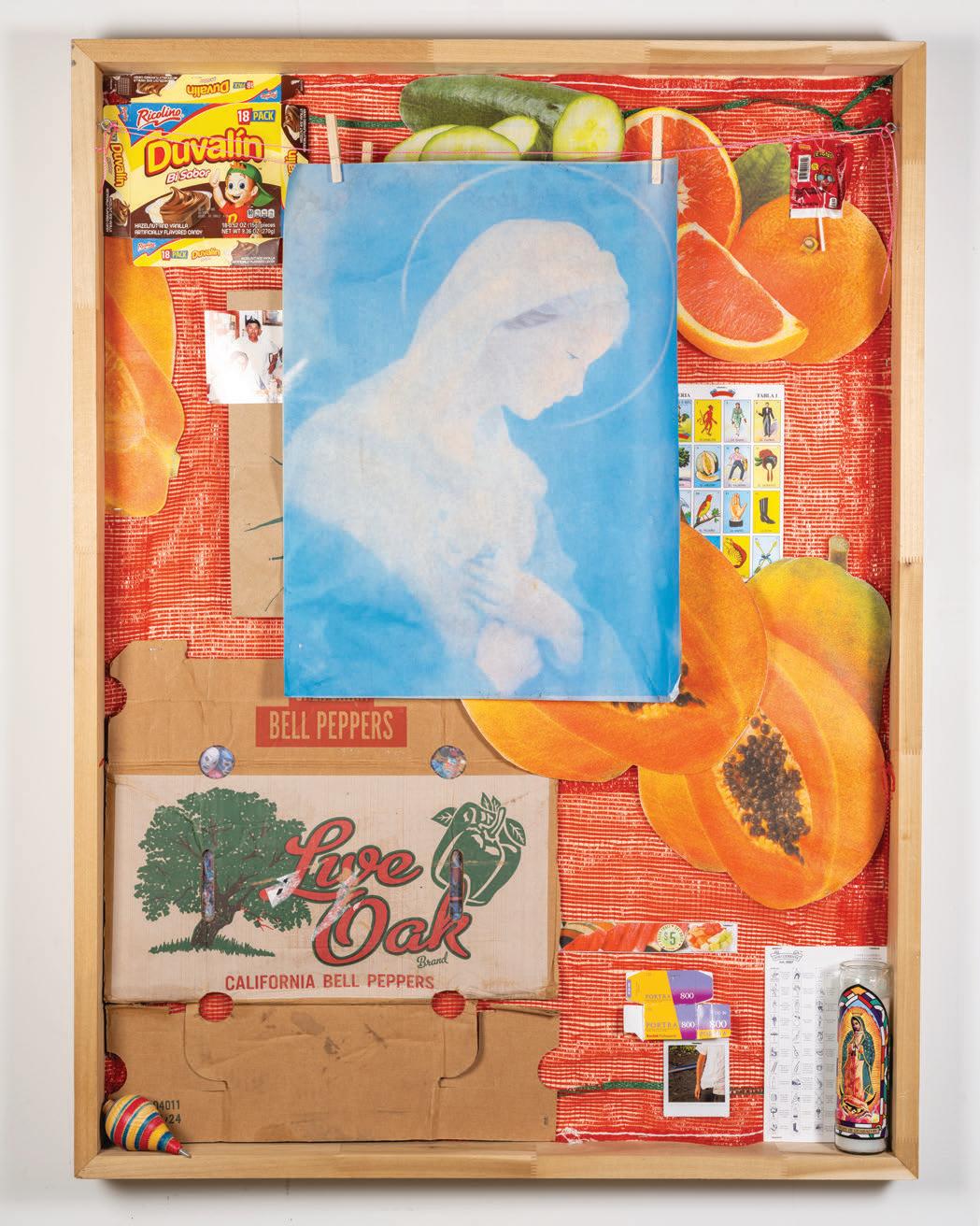
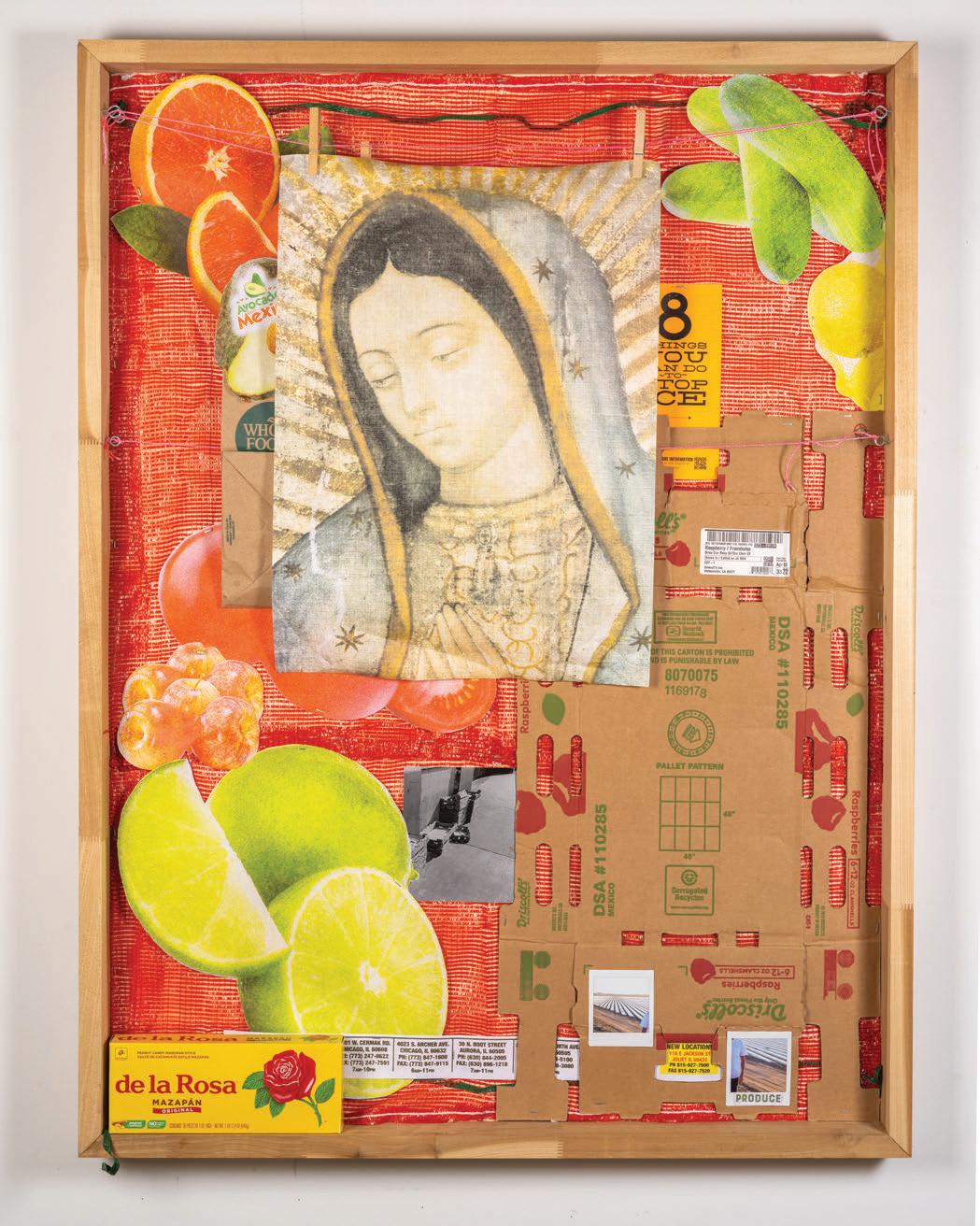
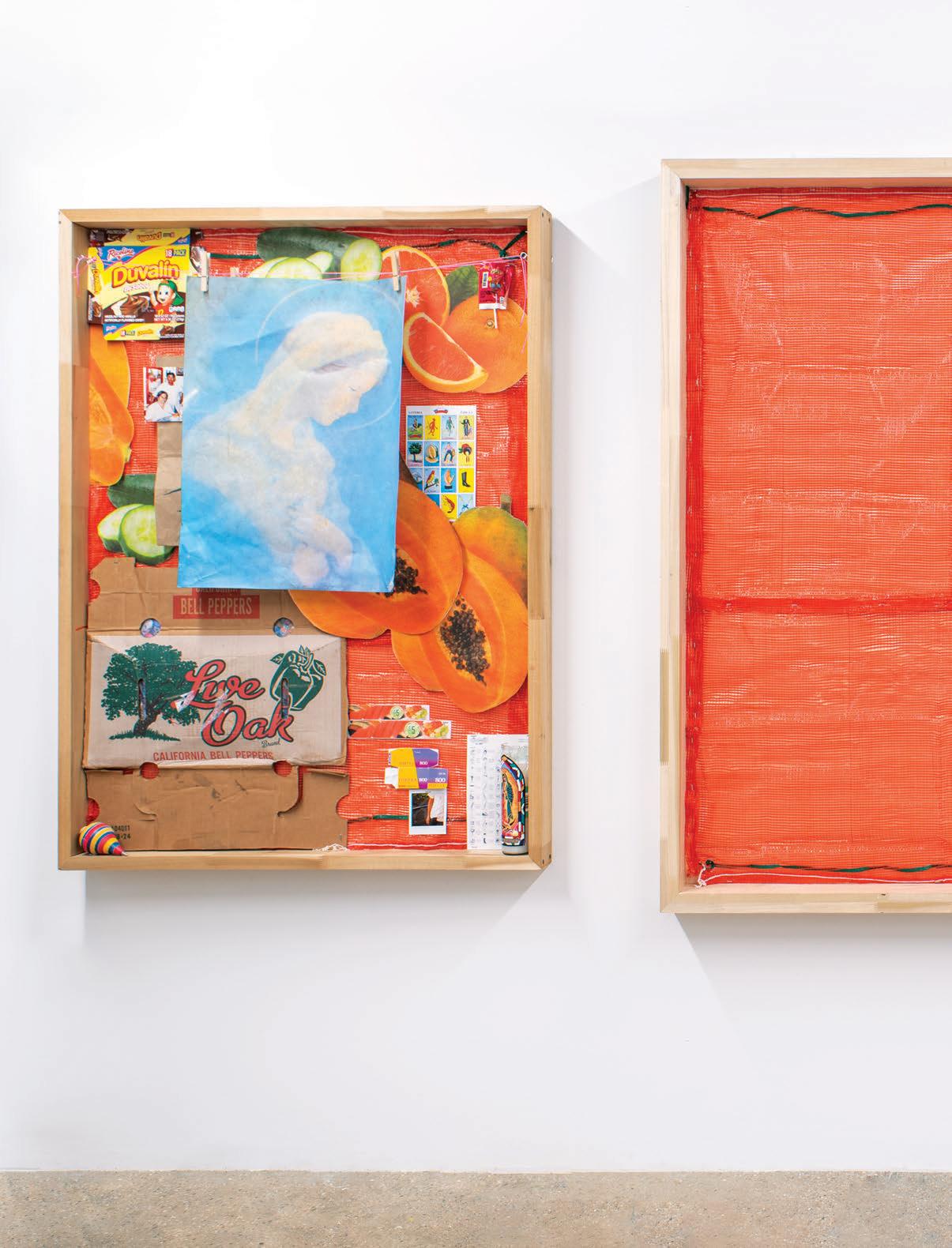
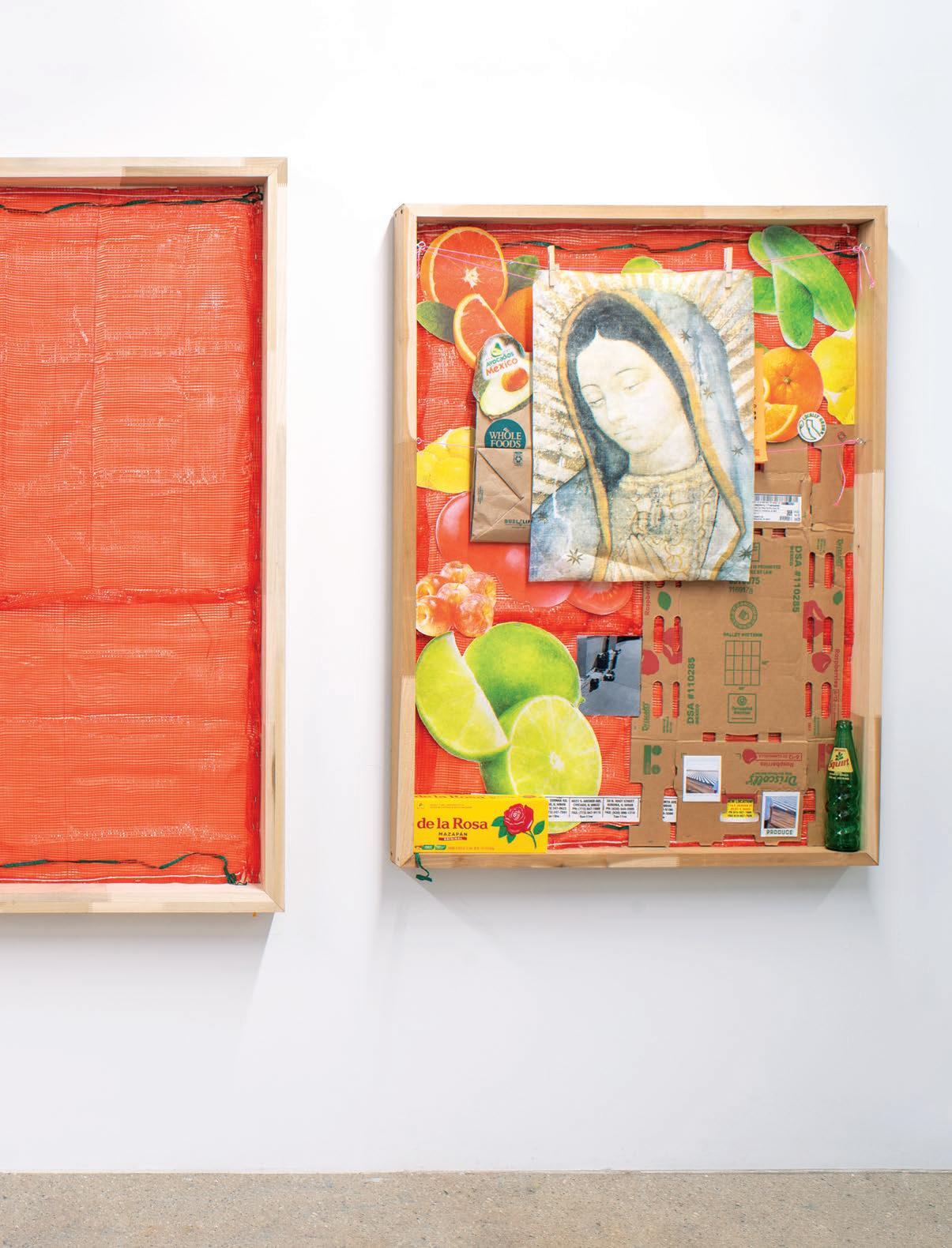
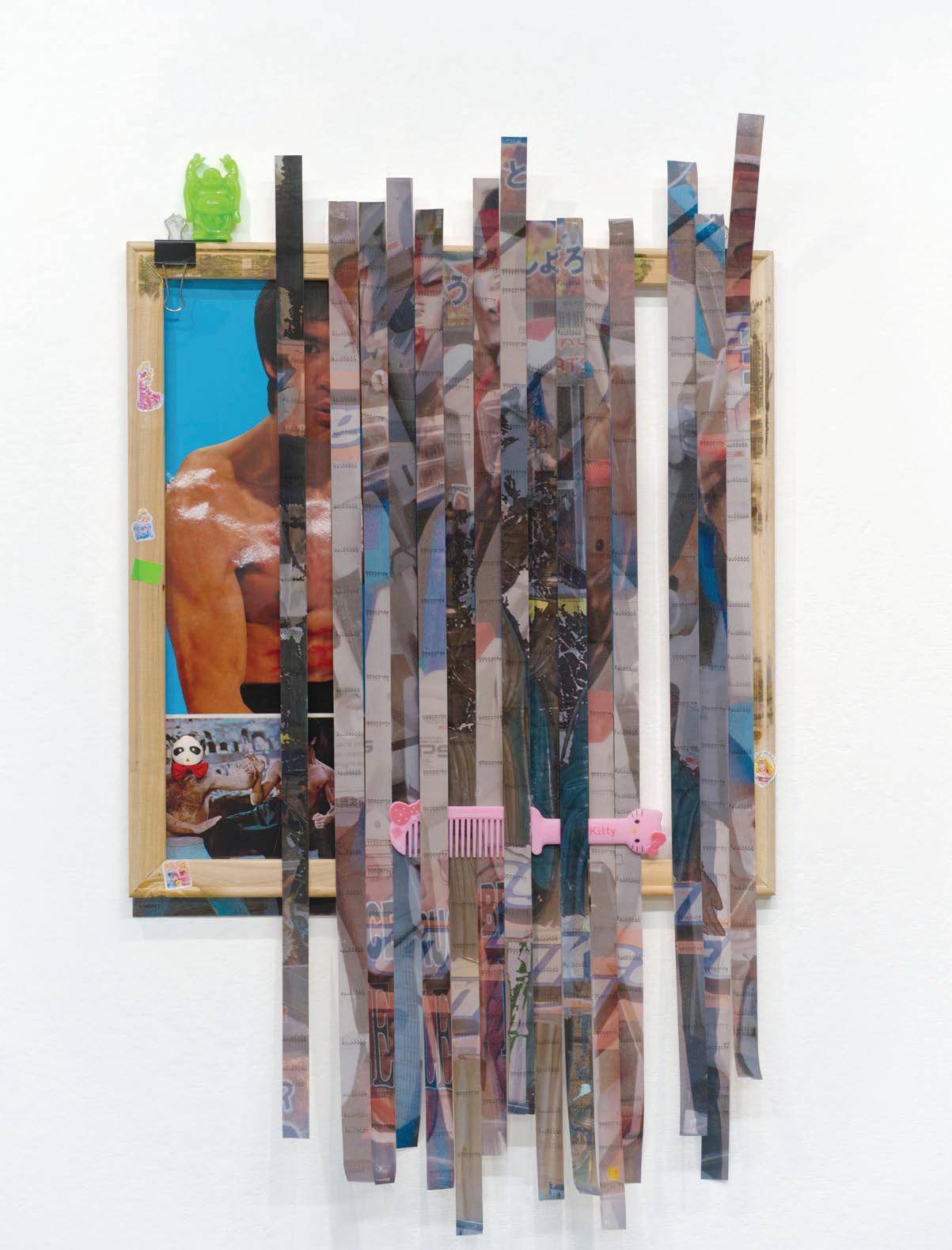
Hugo Amarales’ assemblages, “Untitled” Shadowbox, 2025–2026, inspired by Chicano culture, cumulatively builds from market ephemera, iers, and posters. Compositional arrangements emulate found shrines in Missions across California, coalescing histories of agriculture, industry, labor, and diasporic memory. Amarales creates a protective tabernacle for those who precede him, as an artist moving back and forth between histories of invisiblized labor, capitalism,
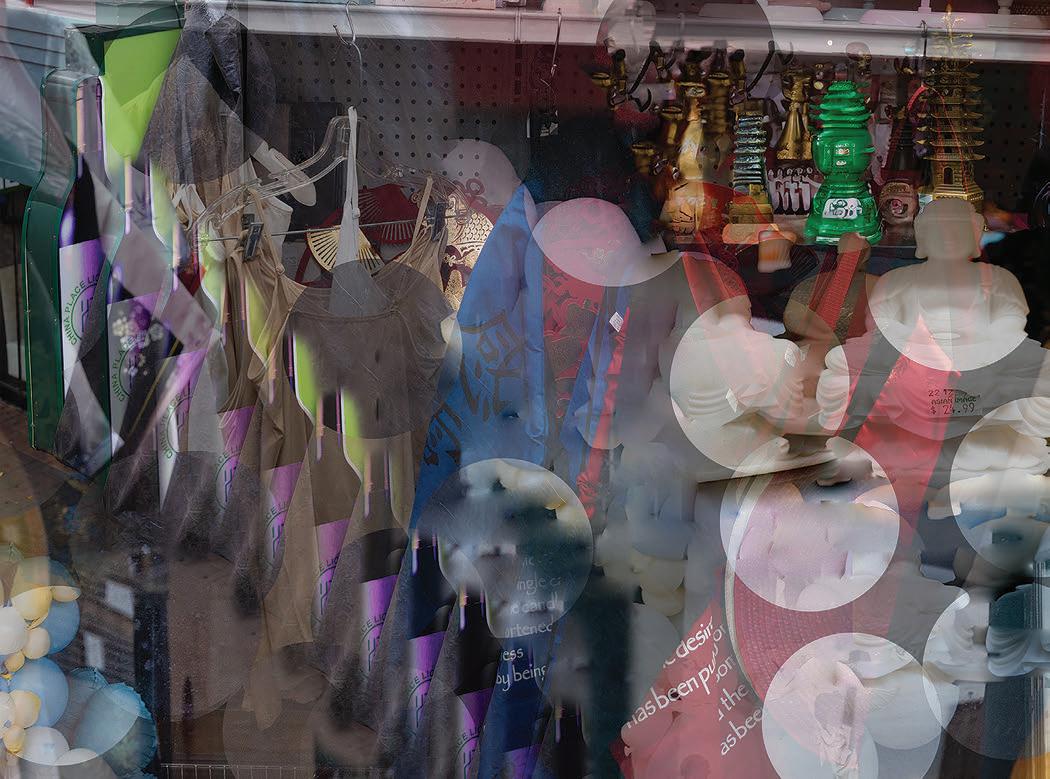
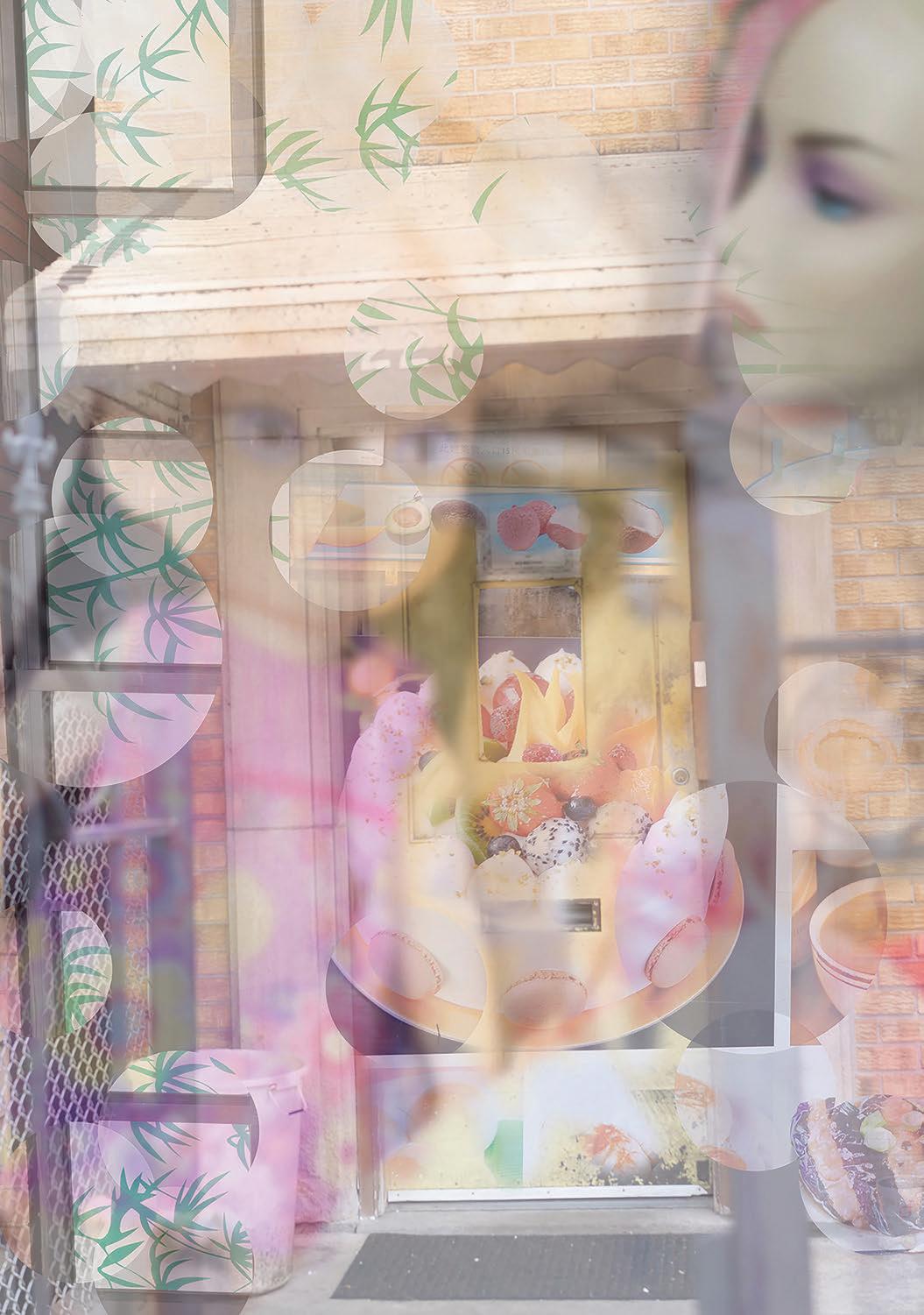
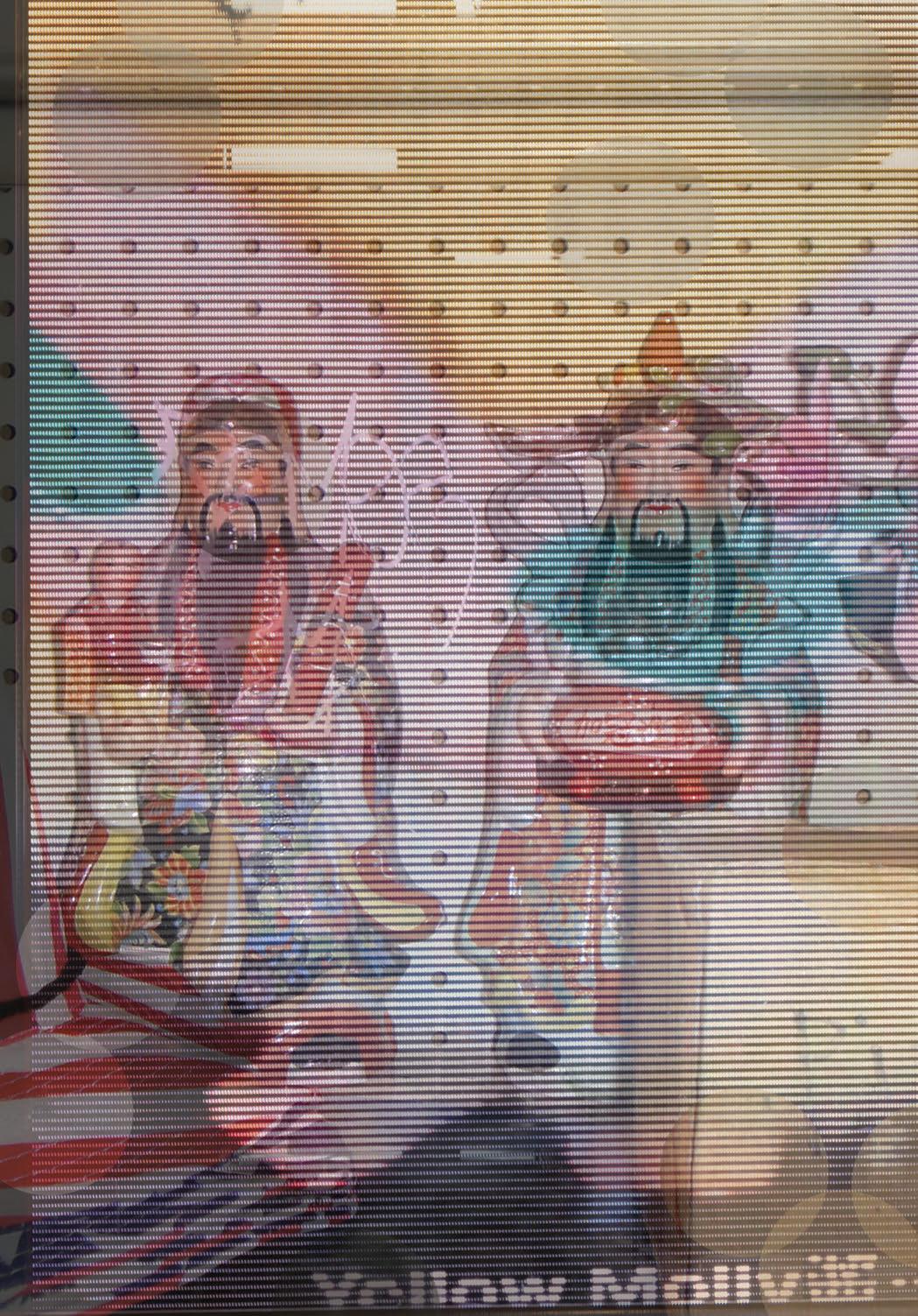
and control. Zhongxuan Niu shares Amarales’ longing for an emotional reservoir, as the artist traverses the streets of an American Chinatown to capture its prosthetic environs. Slippages between Chinese culture and its commodi cation for Western consumption results in sensual abstractions, bespeckled with textual details, for Niu to create vignettes of haptic images paired with personal relics.
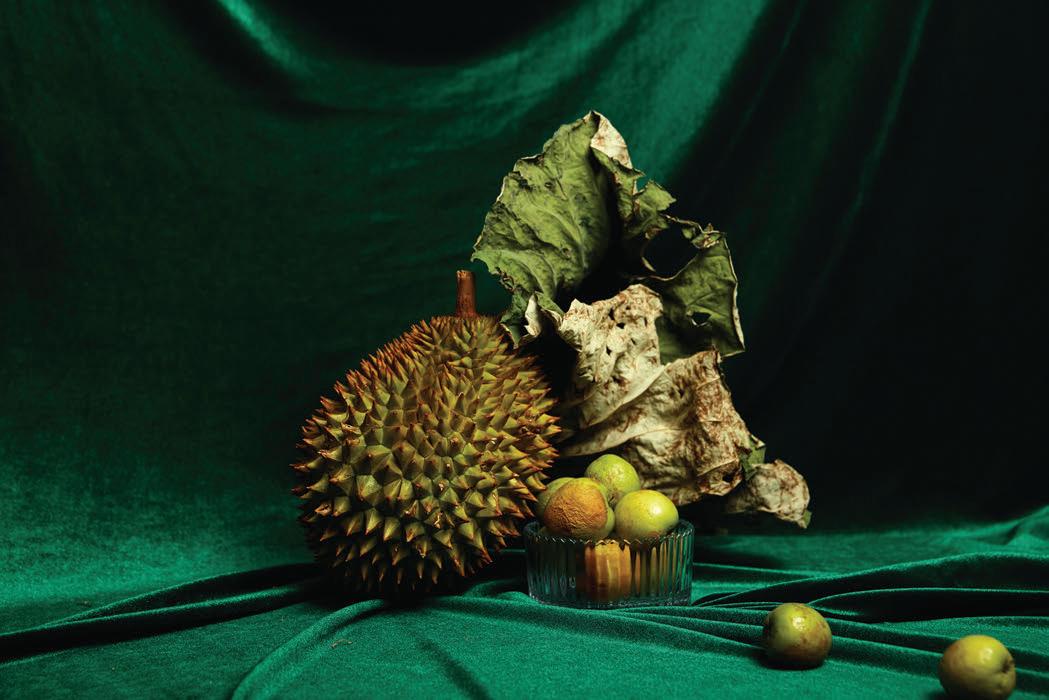
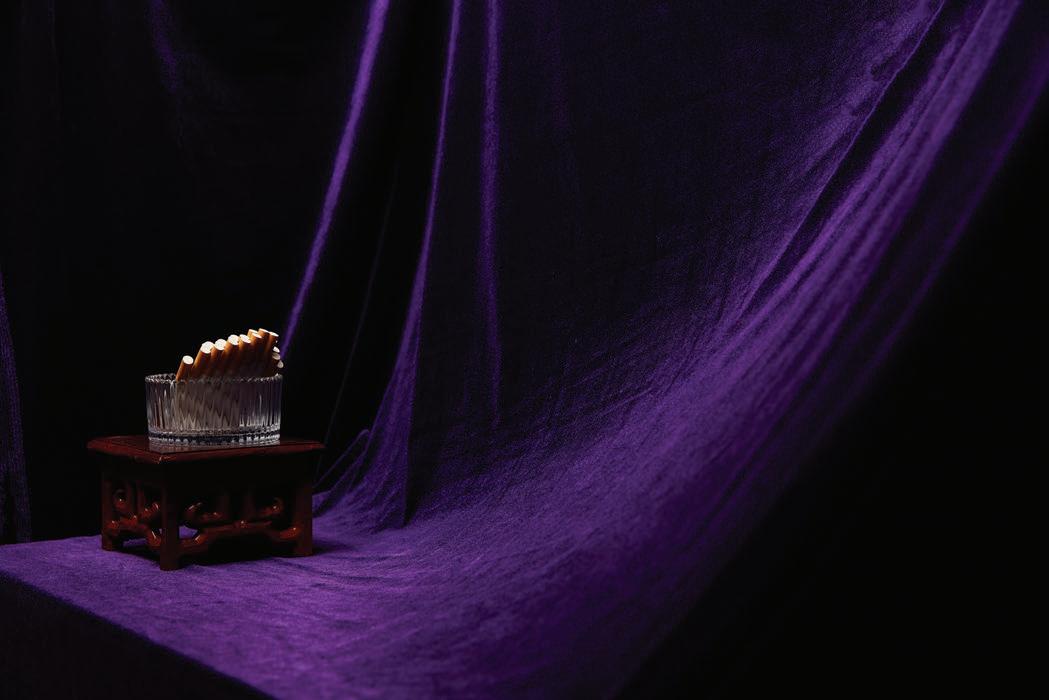
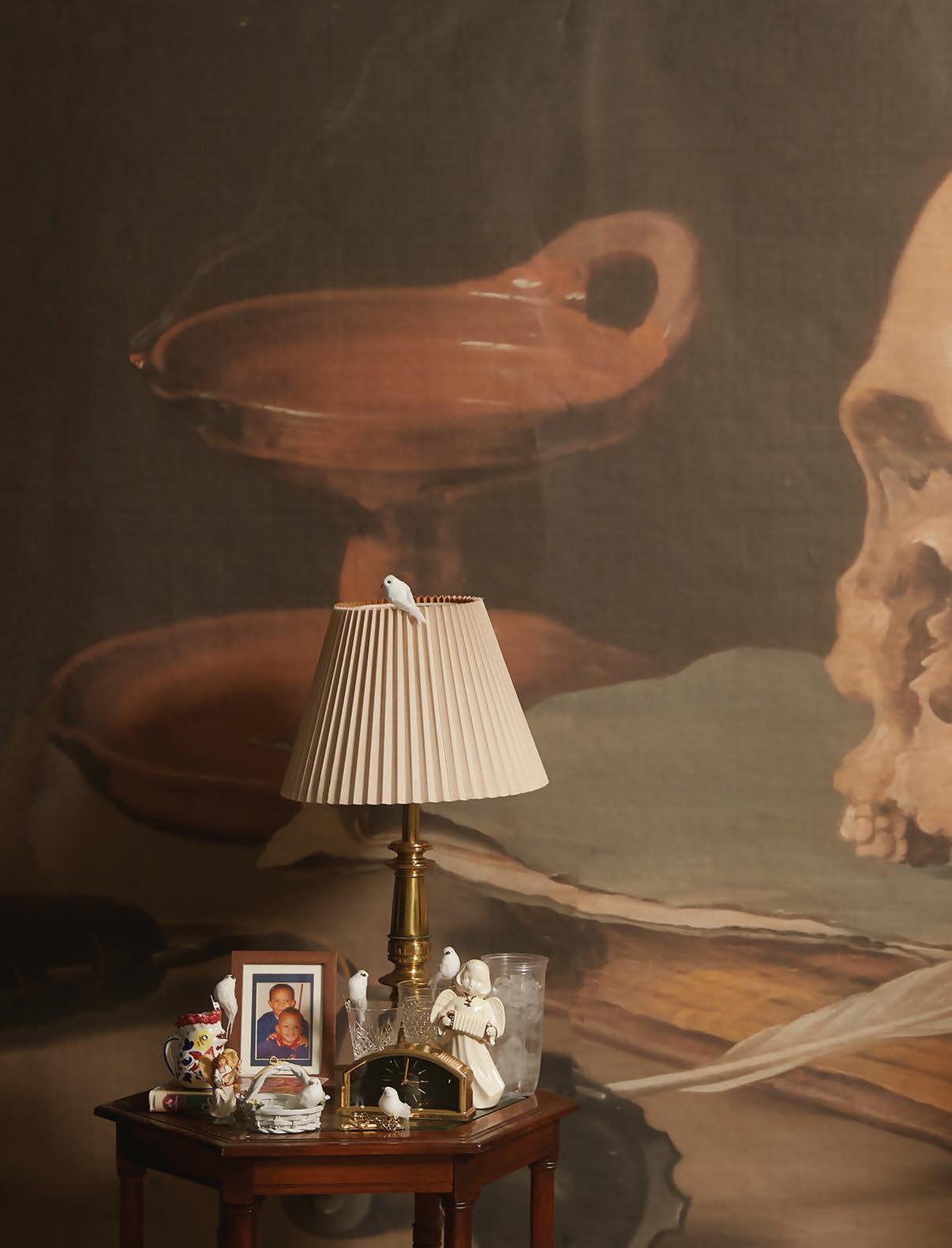
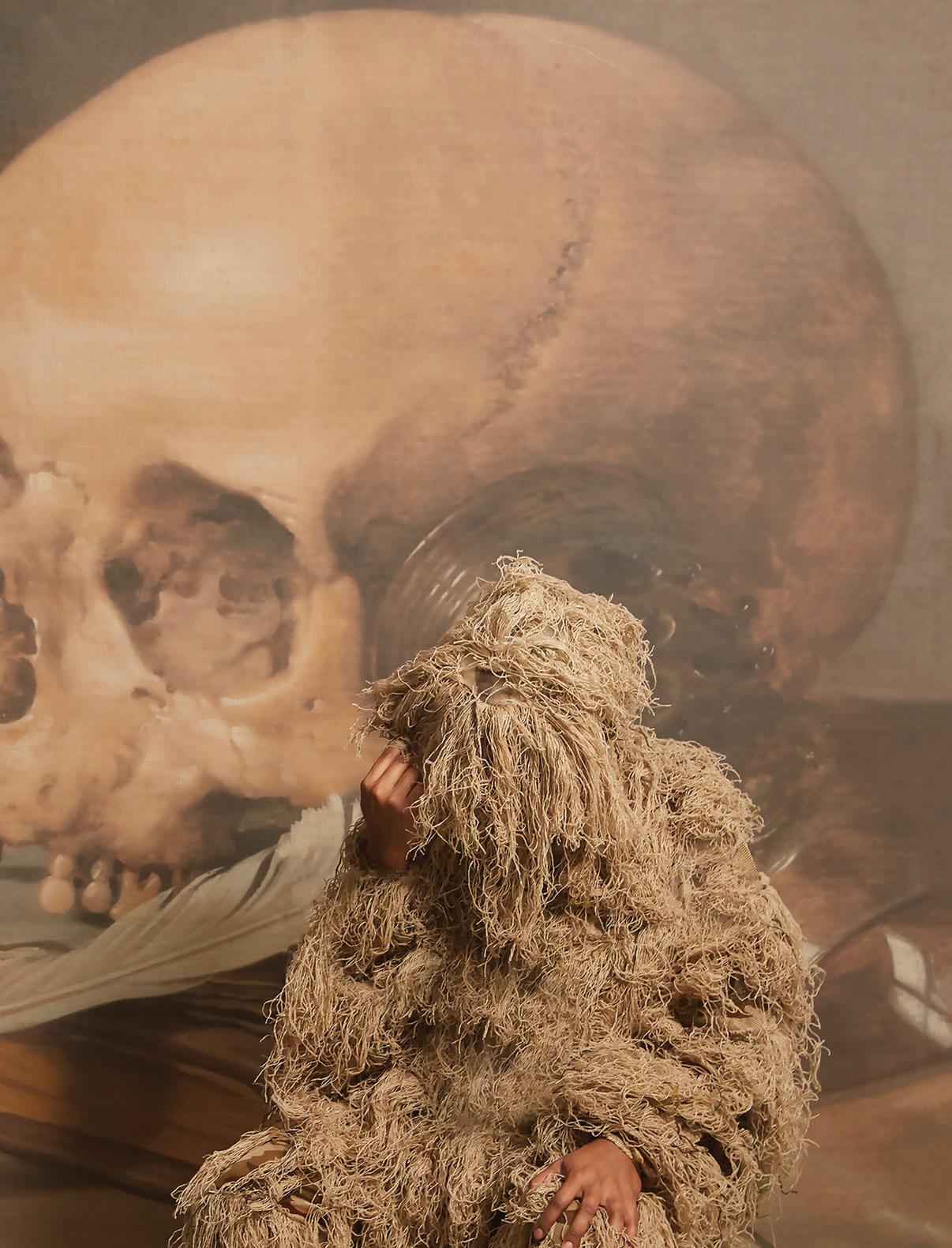
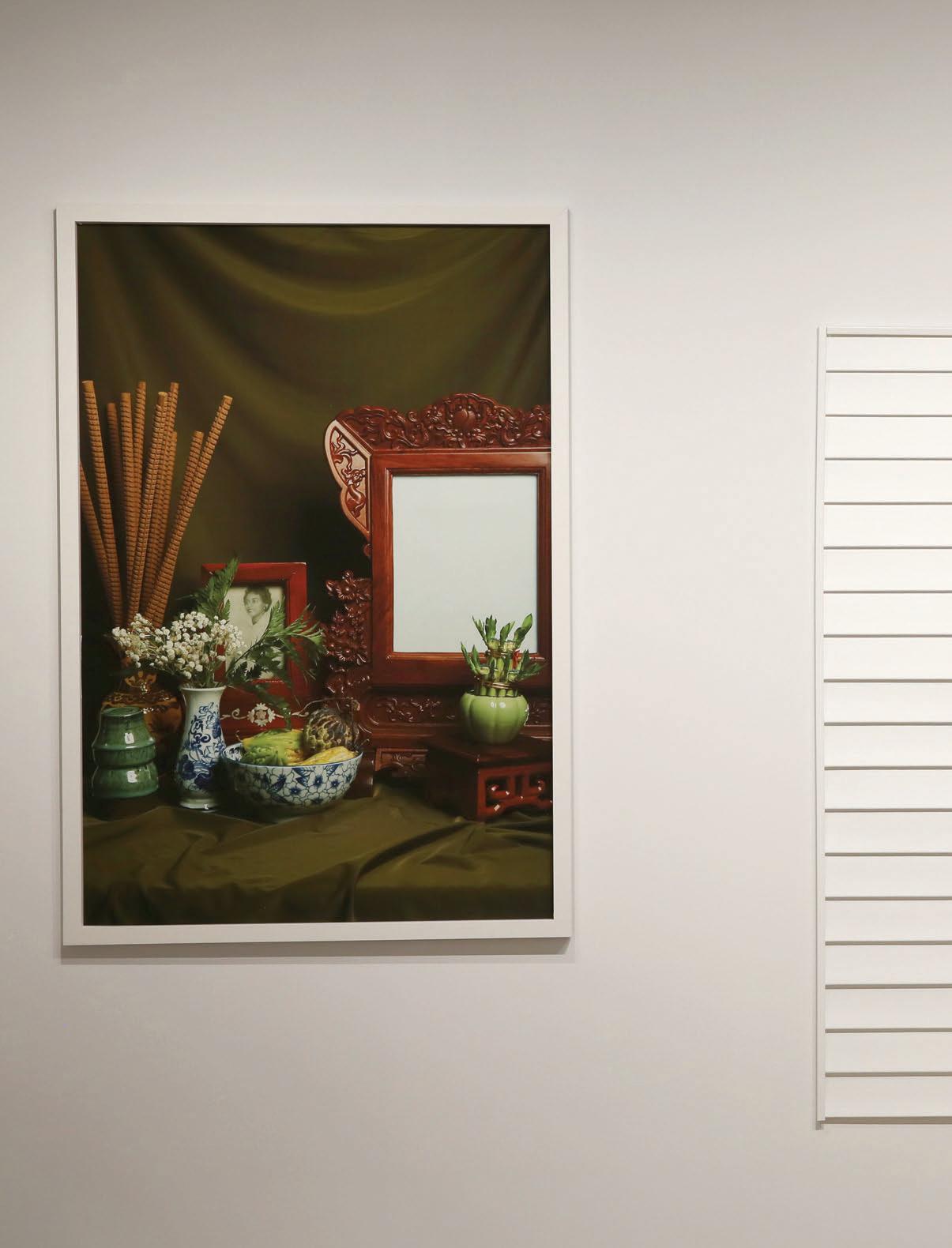
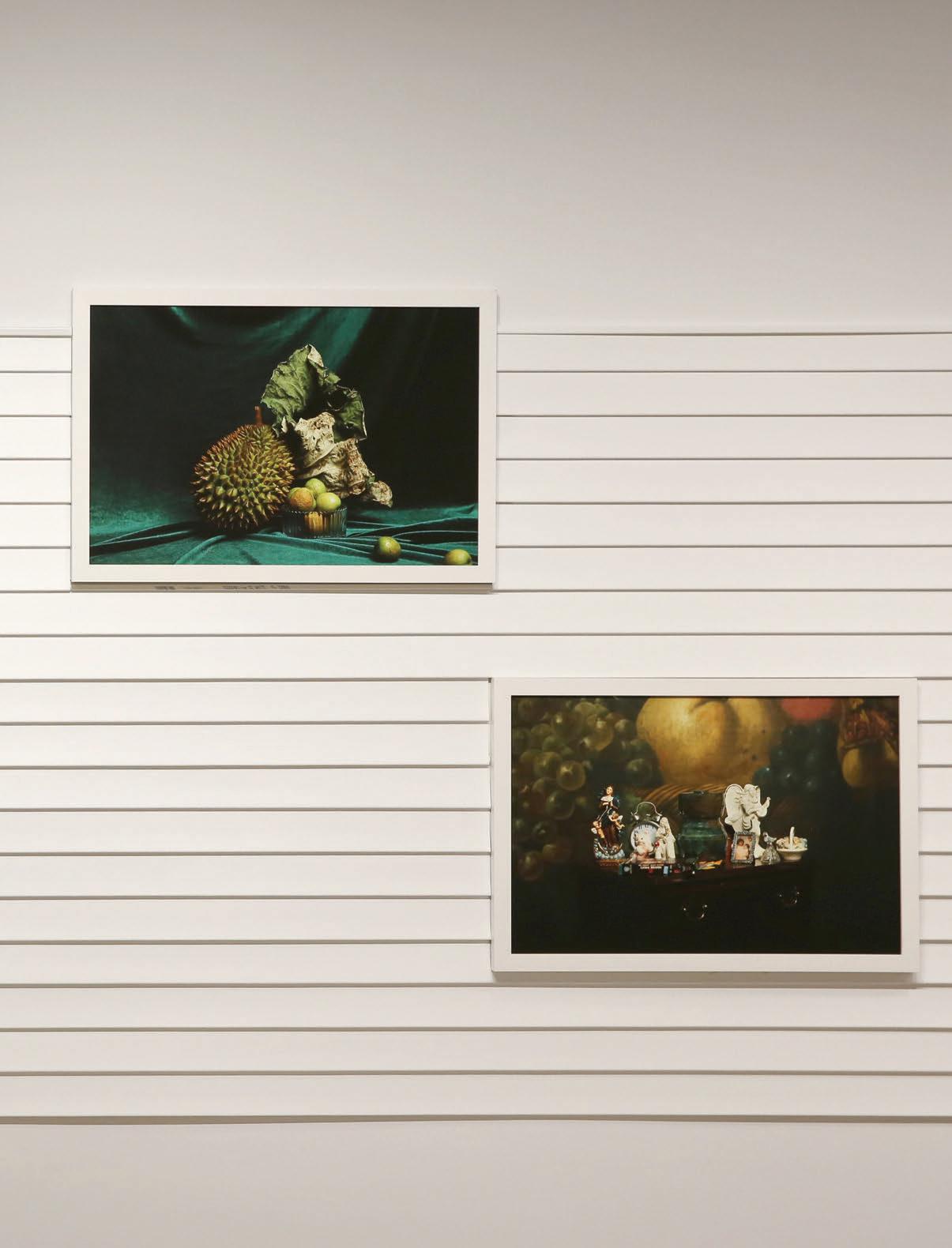
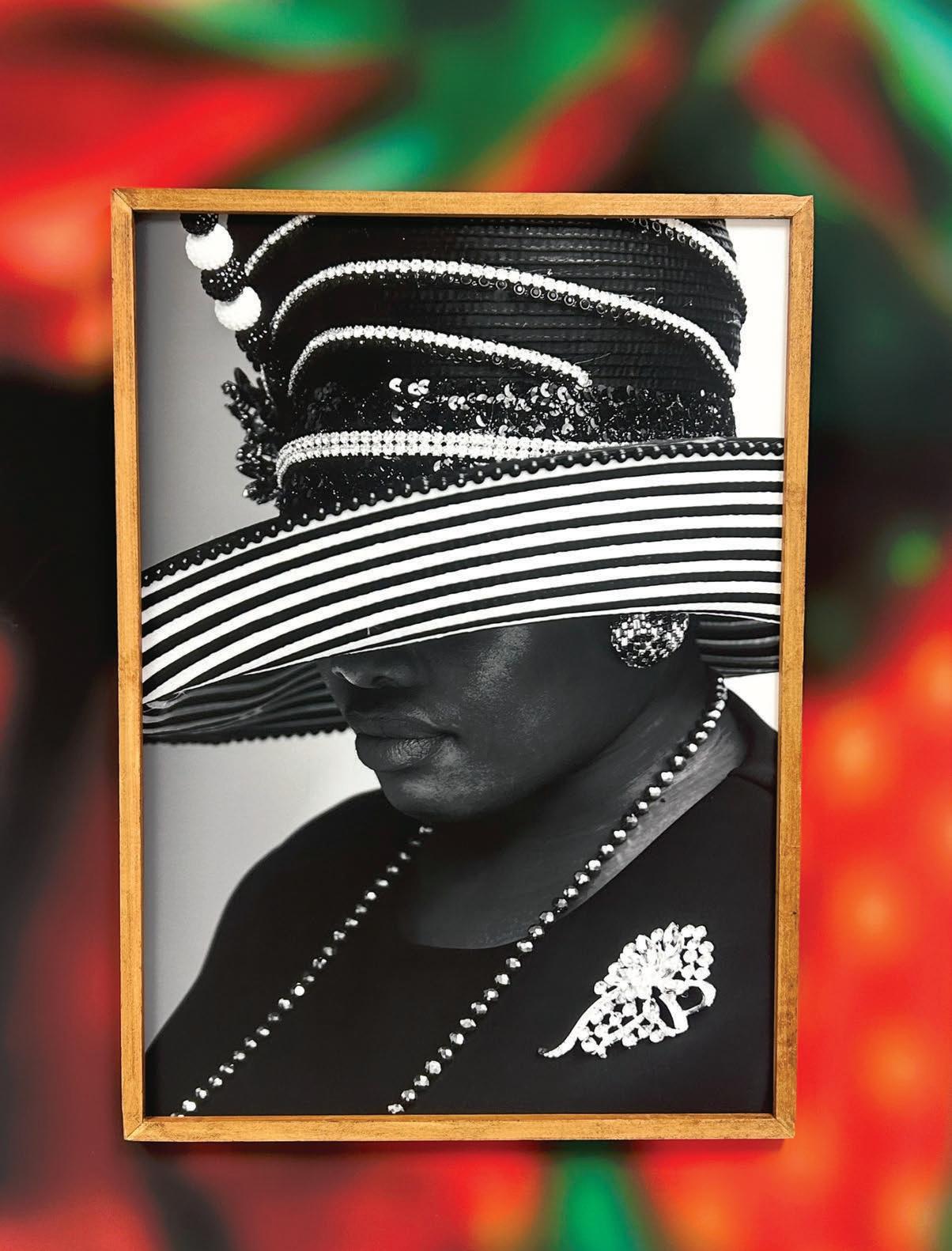
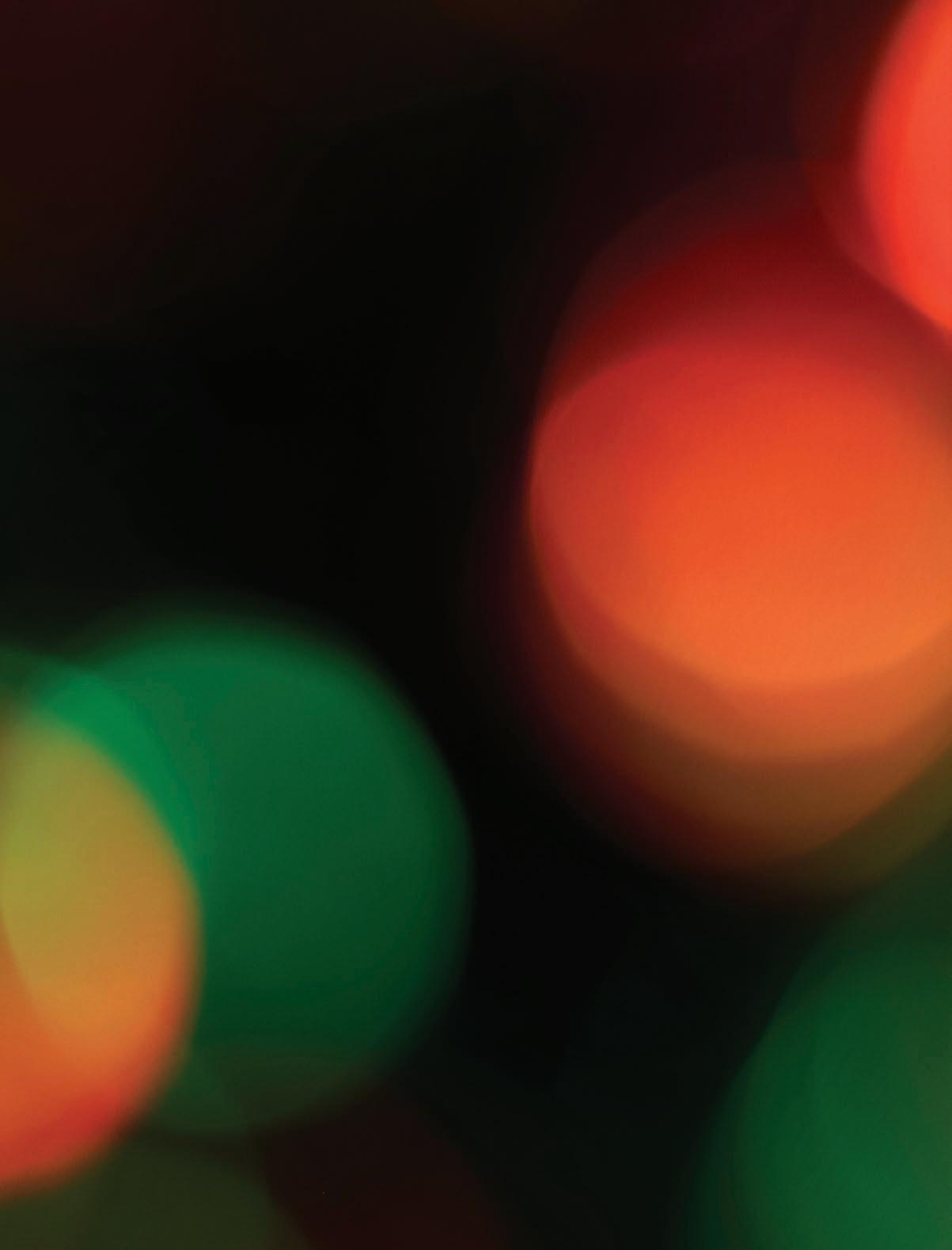
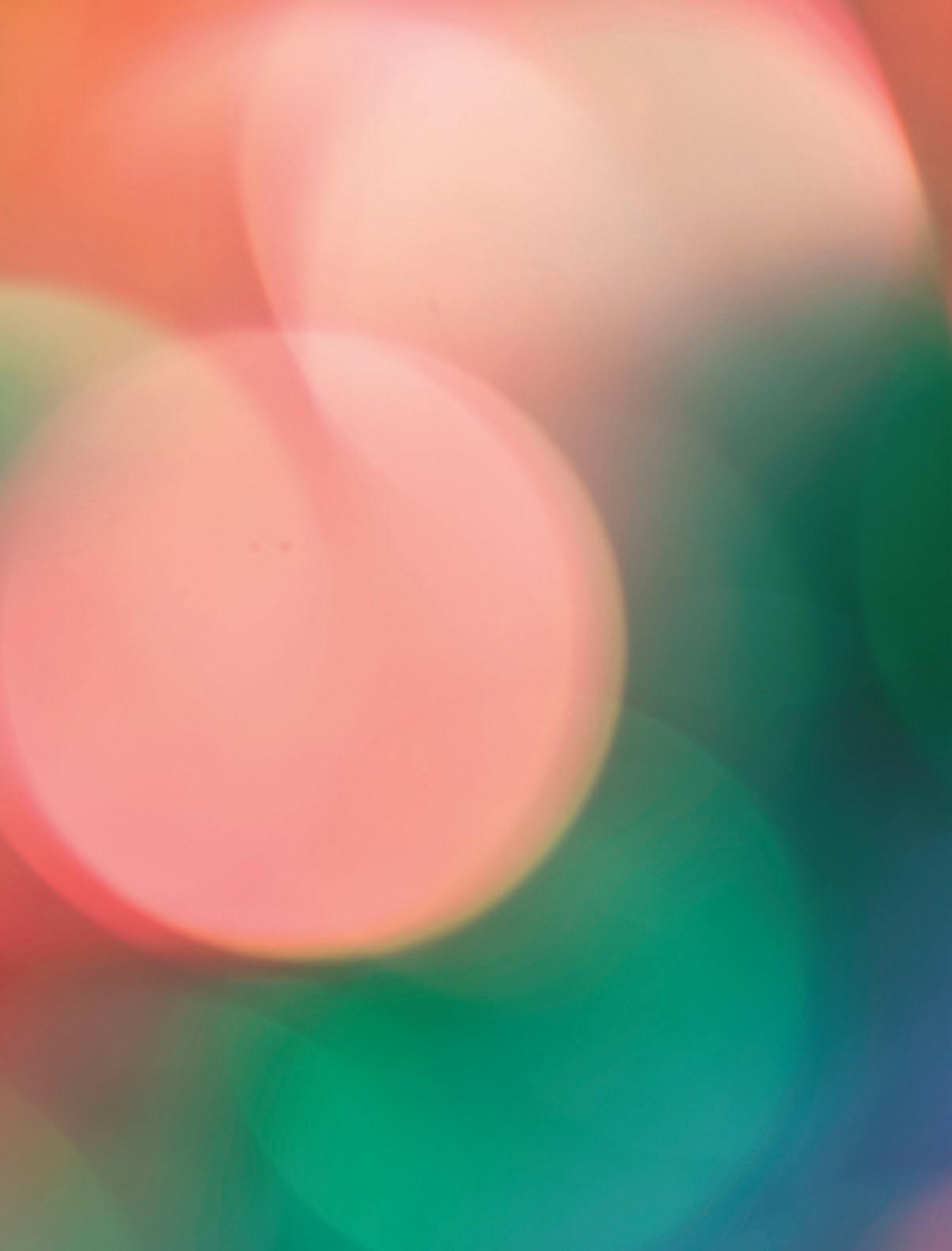
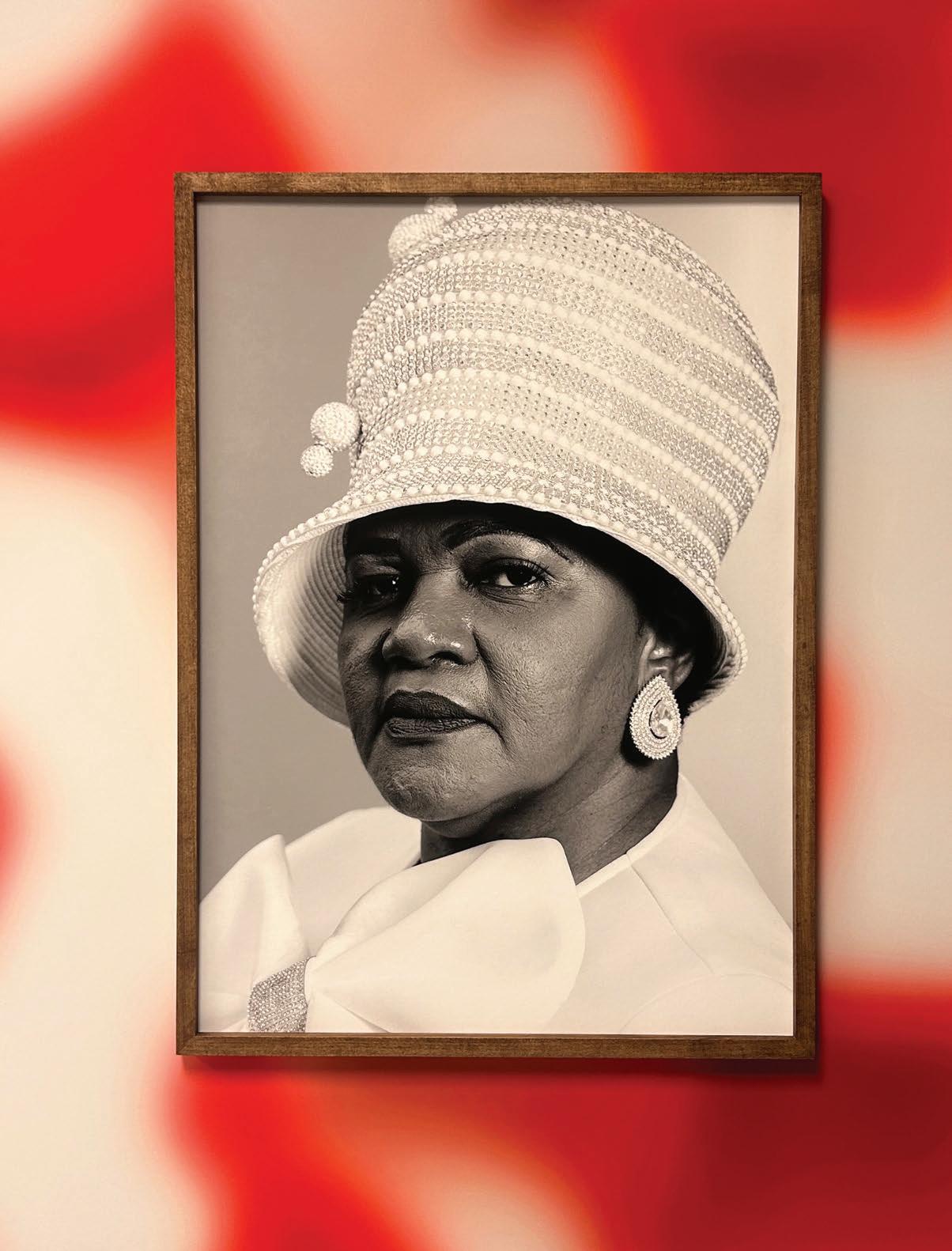
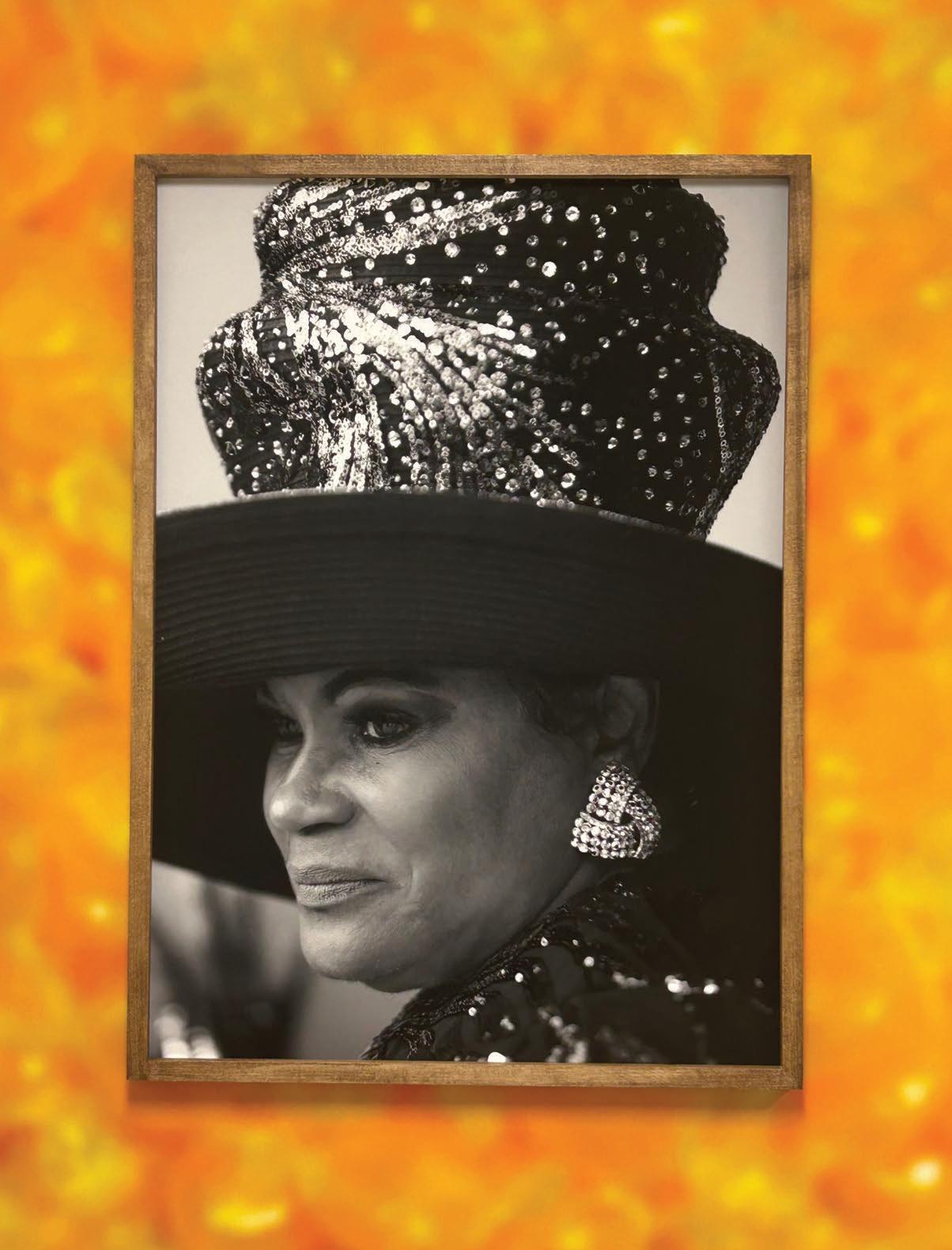
Khidr Joseph ’s photographic sculptures herald a possible conjoining with the afterlife, as the artist shifts temporal referents; tchotchkes and personal belongings from his grandma’s home, into still lives of domestic shrines to be received in the public sphere. Raised in a secular, multi-faith home, Joseph reconstructs an inheritance of loss, lling the void between rituals of death and the presence of the dying, in the living world. The magnetism of the moribund has long been central to the development of visual subjectivity. Khidr reinvigorates this connection, celebrating death as an inseparable part of life. By facing cycles of aging and death, a regenerative view of learning from the ancestors begins to play out. Ariel Cobbert ’s Church Lady Candy , 2025, series returns us to the Southern Black Church, namely the role of fashion and costume in the making of political resistance. Drawing parallels between Nefertiti’s headdress, head wraps created by Black women in defiance of Tignon laws, and the distinctive hats worn by Black women devotees, Cobbert pairs head-on portraits
with candy-hued abstractions to speak to the unseeable power of revival, spiritual liberation, and collective resilience of women in the Southern Black church. I’m reminded of James Palmer Wade’s poem:
“Her prayer book is lavendered within By withered ngers touching withered scent
Of proud descendant names whose punishment Is: in her, eternity makes end.”
Walking us across multiple sights, scenes, lifetimes, and places, and orienting us to receive bodies of work along a cross-section of differing genres, this year’s Graduate cohort moves away from the anachronistic retelling of history to re-view how we respond and relate to one another, or “Others”, who remain in the slippages of place and time. To write, or in this case, inscribe the photographic image with the mundane or every day, is to recon gure its status as “high” or “low” art. It remains a contact zone, a place of transition infused with our collective hopes and anxieties, a powerful means of experiencing shared aspects of humanity as we traverse uncertain times and terrain.
Pia Singh Chicago, IL




again, two trains arrive at the station at once one going south one going north as i stand in the middle of the platform the wind blows me two opposite ways.
somehow i feel both equally.
the wind blows part of me to the north, part of me to the south part of me to the left, part of me to the right ha, no wonder this feels so familiar. that’s life itself. é a vida. but in the half seconds before the trains wind down and come to a halt, waiting for mine and the rats’ decision at 4 in the morning, i feel for once i can do something. i need not pick a direction. i can fall.
i can fall out of reality. i can noclip. this time for sure. if i focus… no, maybe if i jump in place.
i’m sure, somehow.
i feel reality splitting but i don’t decide, or rather a decision’s already been made, by me.
weeks, months, and i suppose even years ago in the grand scheme of things.
i’m going north. to o’hare. to see my family. right. maybe next time.
Lauren Bertelson (b. 2000) is an interdisciplinary artist who examines vision, gender dynamics, the body, and the limitations of photographic representation through a combined photographic and sculptural practice. She is the recipient of the James Weinstein Memorial Fellowship (2026) and a SOURCE Grant (2022). Bertelson is pursuing an MFA in photography at the School of the Art Institute of Chicago and holds a BFA in Art Photography from Syracuse University. Her work has been exhibited at Light Work, Ukrainian Institute of Modern Art, Studio 1608, Target Gallery, and other locations across the US.
Deyi (Evelyn) Zeng (she/her) (b. 2003) is a Chinese visual artist from Beijing. She received a BA in Media Arts Production from Emerson College and is currently pursuing an MFA in Photography at the School of the Art Institute of Chicago. Working across photography, installation, and archival materials, she examines how identity is shaped through illness, medical intervention, migration, and memory.
Serena Beggs (she/her) (b. 1995) is a Los Angeles native currently living in Chicago. She has an associate degree in Media Arts from Marymount California University and a BFA in Photography from ArtCenter College of Design. After graduating from ArtCenter, she served as a commercial photographer for over 5 years. During this time, she decided to pursue her Masters, to refocus her energies on showcasing experiences of the body, transformation after trauma, and feminist issues.
22 Impressions 2025
Oysters from the west coast of Ireland, thread, paper, photography. 6” × 6” × 60”
23 Page from Impressions
24 Page from Impressions
25 Page from Impressions
26 Impressions
27 Impressions
Tierani Bryan (b. 1999) is an interdisciplinary artist whose work surrounds themes of knowledge, intimacy, and myth-work through modes of photography, bioart, and poetry. Tierani received their BFA in ceramics from the University of North Texas. They are currently working towards their MFA in photography at the School of the Art Institute of Chicago.
28 I’m Coming to Texas to Kill You 2024
Bed sheets, natural dye, citrisolv ink transfer, polaroid emulsion 8” × 10”
29 I’m Coming to Texas to Kill You
30 Sugar Portraits 2023
Sugar wax, artist’s hair, polaroid emulsion
2.5” × 3”
31 Mold #1 2026
microscopic photographs, slime mold, bath water
32 Mold #2 2026
microscopic photographs, slime mold, bath water
33 Bath Water Golem 2025–ongoing petri dish, agar, cyanotype, bath water, slime mold 9cm × 2cm
Tanya Shah (b. 1997) is a Hong Kong and Chicagobased visual artist. Shah received her Bachelor of Arts from Dartmouth College in Computer Science and Studio Art with High Honors. Her work has been exhibited nationally at venues such as the Jaffe-Friede Gallery, New Hampshire, and Praxis Gallery, Minnesota. Internationally, her work has been exhibited by The Holy Art Gallery, London. She has worked as a Teaching Assistant at the International Center of Photography, Manhattan, and as a Studio Assistant to Letha Wilson, as well as a Gallery Assistant in both Hong Kong and Los Angeles.
34 Glimmer 02 2025
Inkjet Print 24” × 19”
35 Glimmer 03 2025
Inkjet Print 12” × 15”
36 Glimmer 04 2025
Inkjet Print 12” × 12”
37 Glimmer 06 2025
Inkjet Print 12” × 15”
38 Glimmer 09 2025
Inkjet Print 12” × 15”
39 Glimmer 10 2025
Inkjet Print 12” × 15”
Yunan Xiang (b. 2003) is a Chinese artist currently based in Chicago. Working with photography and lens-based media, Xiang’s practice explores themes of memory, death, archival traces, and the visual construction of collective fear. Her work often engages with sites such as cemeteries, historical documents, and urban landscapes to reflect on how political violence, war, and public anxiety are recorded, forgotten, and reimagined. Moving between personal memory and historical narrative, Xiang examines how societies produce and sustain shared atmospheres of fear.
40 A guy I picked up 2025
Photograph; cardboard 32” × 24”
41 Grab a banana 2025
Photograph; branches, banana, and figure; darkness as a compositional element. 24” × 32”
42 A relatively complete mirror 2025
Photography; dried twigs and dead leaves, mirror, soil
24” × 32”
43 Installation view
44 Trace left behind 2025
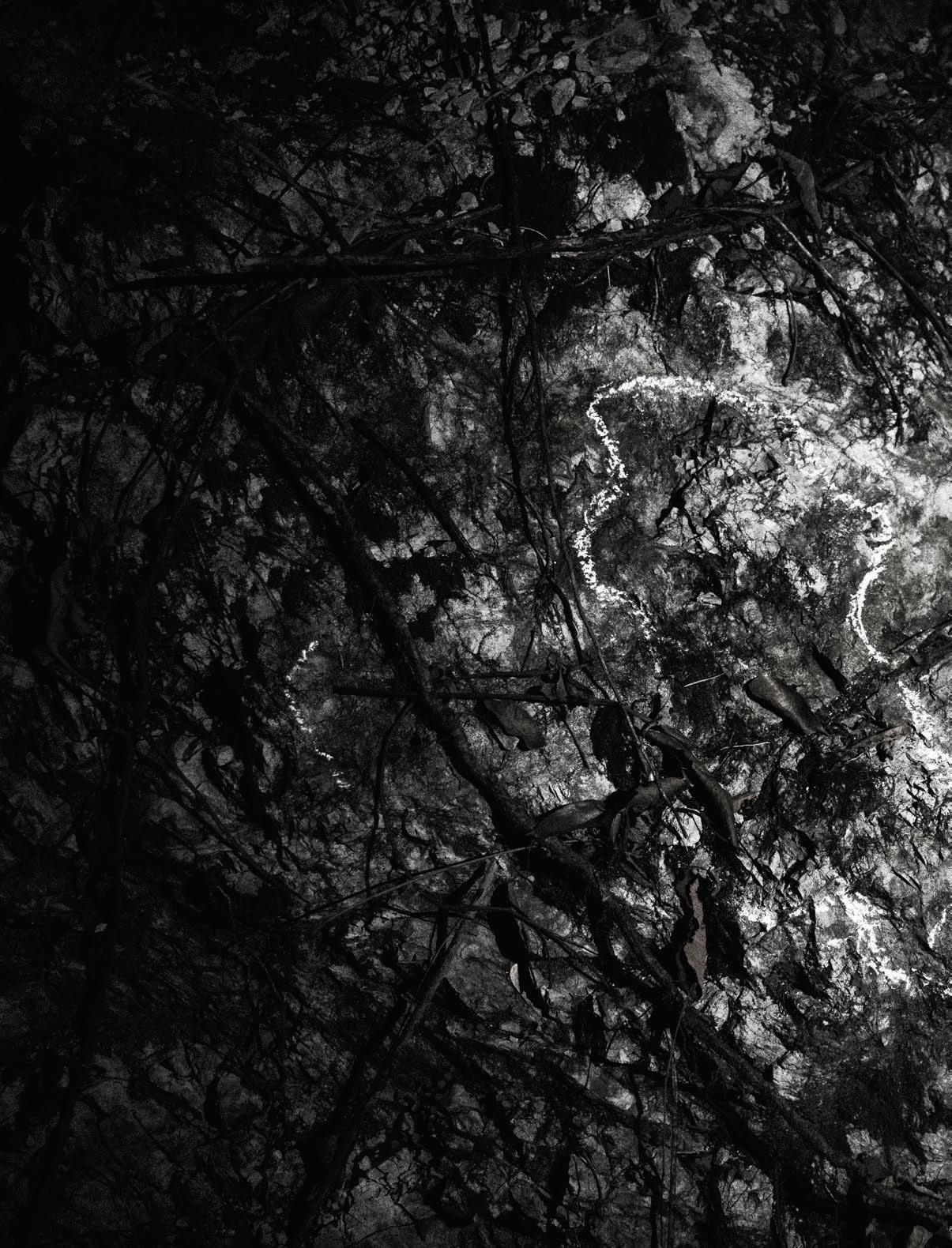
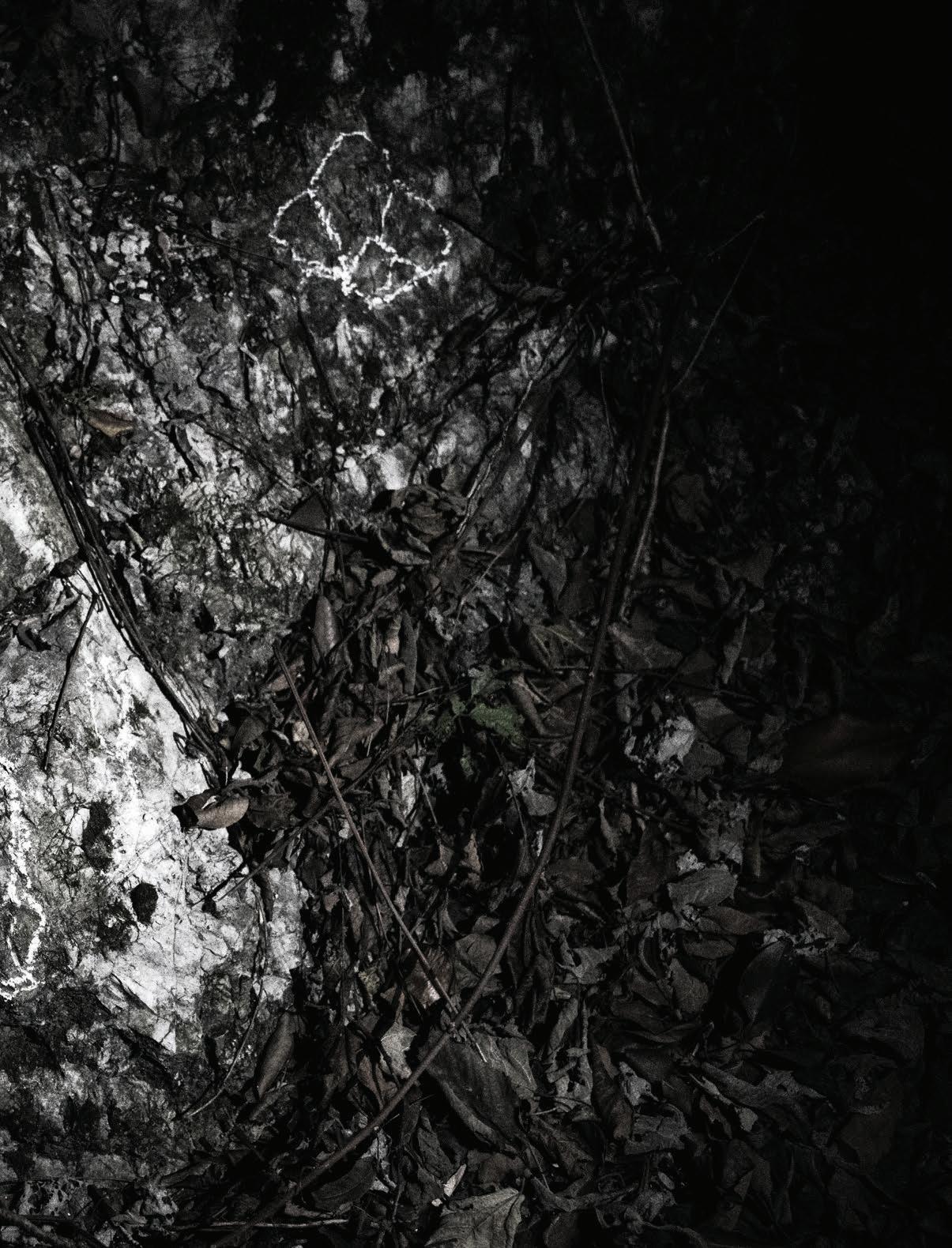
Photography; rock, dried twigs and dead leaves, chalk.
24” × 32”
Haru Yukawa Andersen (b. 1998) is a visual artist who primarily uses photography to explore different interpretations of history interwoven with myth, studying speci c sites of historic trauma. Spending half of her life in Japan and the other half in the U.S., Andersen strives to reinterpret the “post-war” frame, to create work that questions the relationship between the two countries she calls home. Majoring in Media, Culture, and Communication as an undergraduate at the International Christian University, Tokyo, Japan, Andersen’s interest in media studies landed her in the direction of photography. She is currently an MFA candidate at the School of the Art Institute of Chicago.
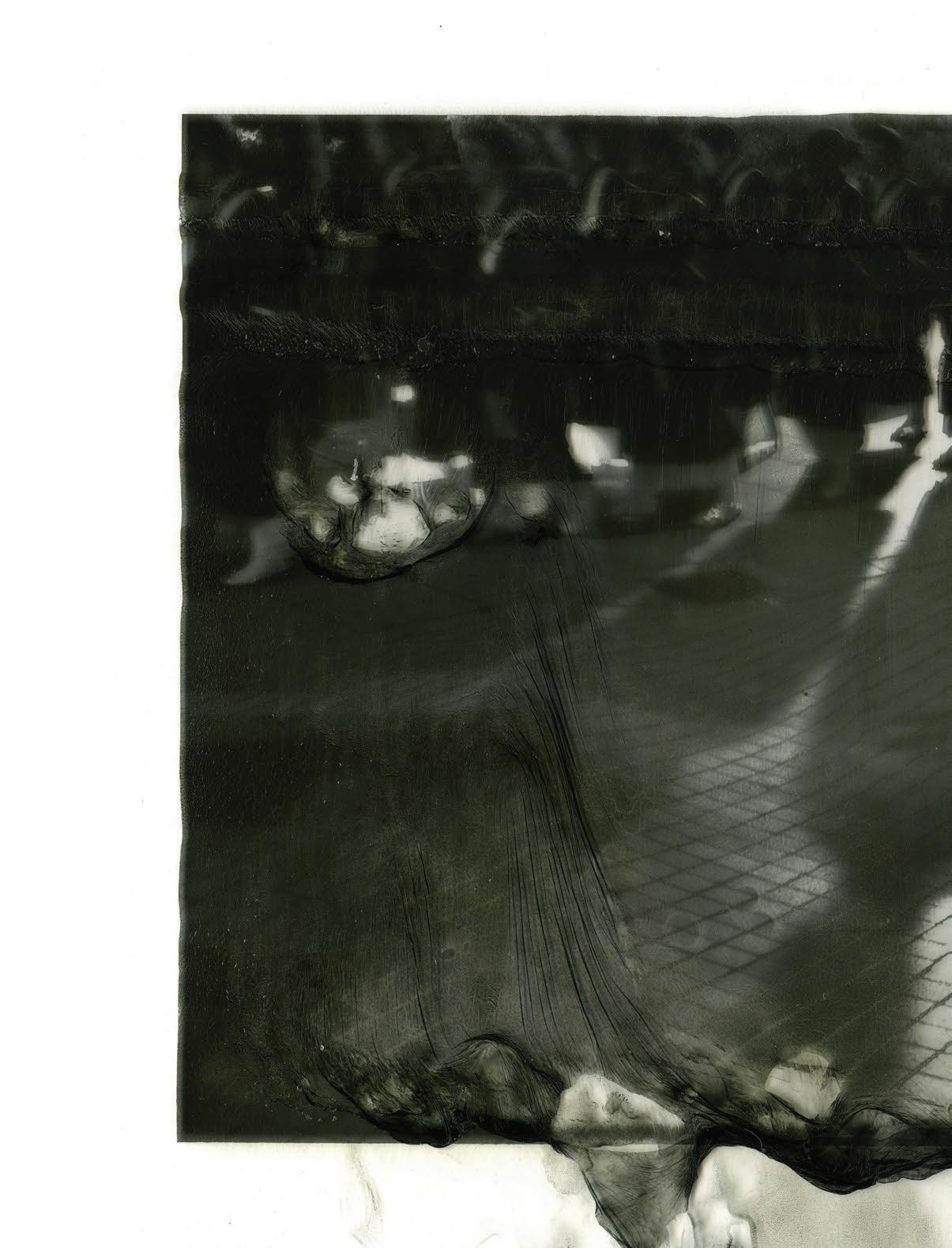
46 現象:Liquefaction / Symptom:社会 (1) 2025
Pigment print, scanned image of transfer on glass 36” × 47”each
47 現象:Liquefaction / Symptom:社会 (3)
48 現象:Liquefaction / Symptom:社会 (4)
49 現象:Liquefaction / Symptom:社会 (2)
50 現象:Liquefaction / Symptom:社会 (5)
Zixi Wang (b. 2000) is a Chinese artist working in photography, moving image, and installation. Currently based in Chicago, her practice traces the delicate boundaries between memory, disappearance, and the quiet persistence of nature and fragility. Through processes of repetition, re-photography, and material transformation, she allows her images to blur, soften, or decay— mirroring the ways personal histories dissolve and regenerate over time. Navigating the delicate balance between clarity and obscurity, Wang tests states where the familiar becomes uncertain, and the overlooked becomes tender. Photographing water, cultivating portraits on seeded paper, or constructing spaces that feel almost too calm, Zixi’s projects share a consistent impulse: to observe how fragility forms its own kind of resilience.
52 Lucid Zone (1) 2025
Singleweight light paper, inkjet print
46” × 34.5”
53 Lucid Zone (2)
2025
Singleweight light paper, inkjet print
46” × 34.5”
54 Wetsheet (1) 2024–2025
4 × 5 large format
16.3” × 12.8”
55 Wetsheet (2) 2024–2025
4 × 5 large format
11.2” × 14”
56 Wetsheet (3) 2024–2025
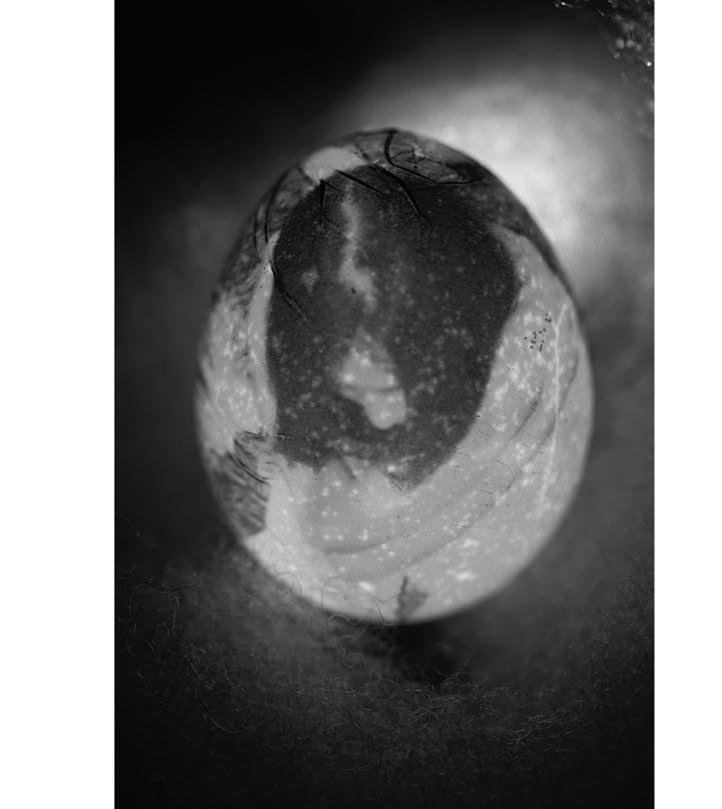
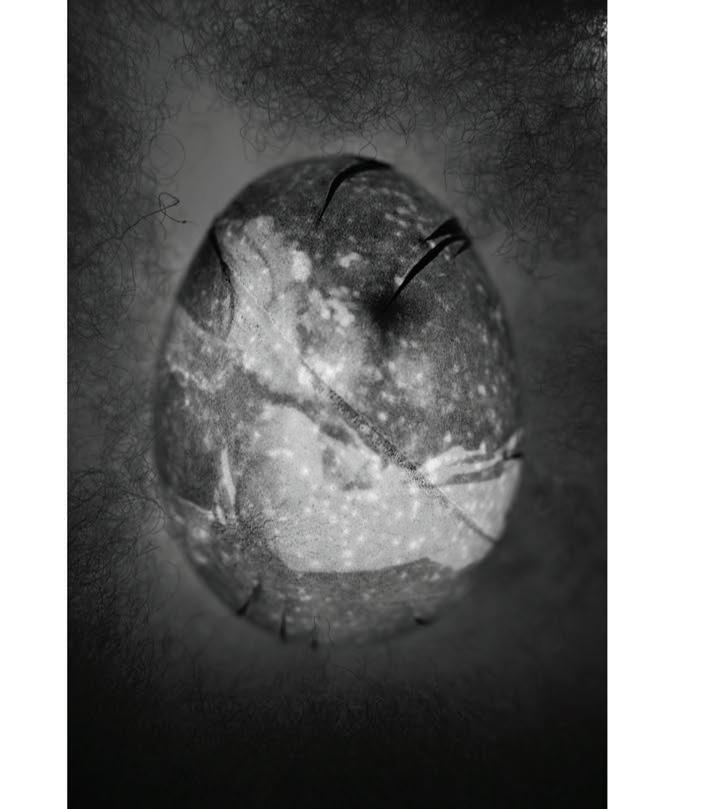
Polaroid, eggshell
6” × 4”
Xuemeng Li (b. 2000, China) works across photography, video installation, and documentary film. His practice takes shape through the act of looking, exploring relationships between humans and water, nature and the self. His work moves between inner experience and lived reality, engaging themes such as environmental change and the act of recollection. Through abstraction in image-making, Li translates blurred perception into tangible visual experiences.
58 Along the Dike (29.368, 112.838–29.345, 112.827)
2025
Archival Inkjet Print on Rice Paper
86” × 8”
58 Along the Dike (29.414, 112.835–29.395, 112.841) 2025
Archival Inkjet Print on Rice Paper
90” × 8”
58 Along the Dike
(29.431, 112.830–29.414, 112.835) 2025
Archival Inkjet Print on Rice Paper
181” × 10”
Pedro Albertini (b. 1998, Santiago) is a Chilean artist based in Chicago. Working across photography, sculpture, and installation, his practice centers on small-scale materials such as dust, found debris, insects, and everyday residues as a means to measure time, attention, and disappearance. He is the founder of CEDE, an artist-run exhibition space in Santiago. Recent projects include “Not a big fan” (2025) and “El horizonte de los pesimistas” (2024). Albertini is an MFA candidate in Photography at the School of the Art Institute of Chicago.
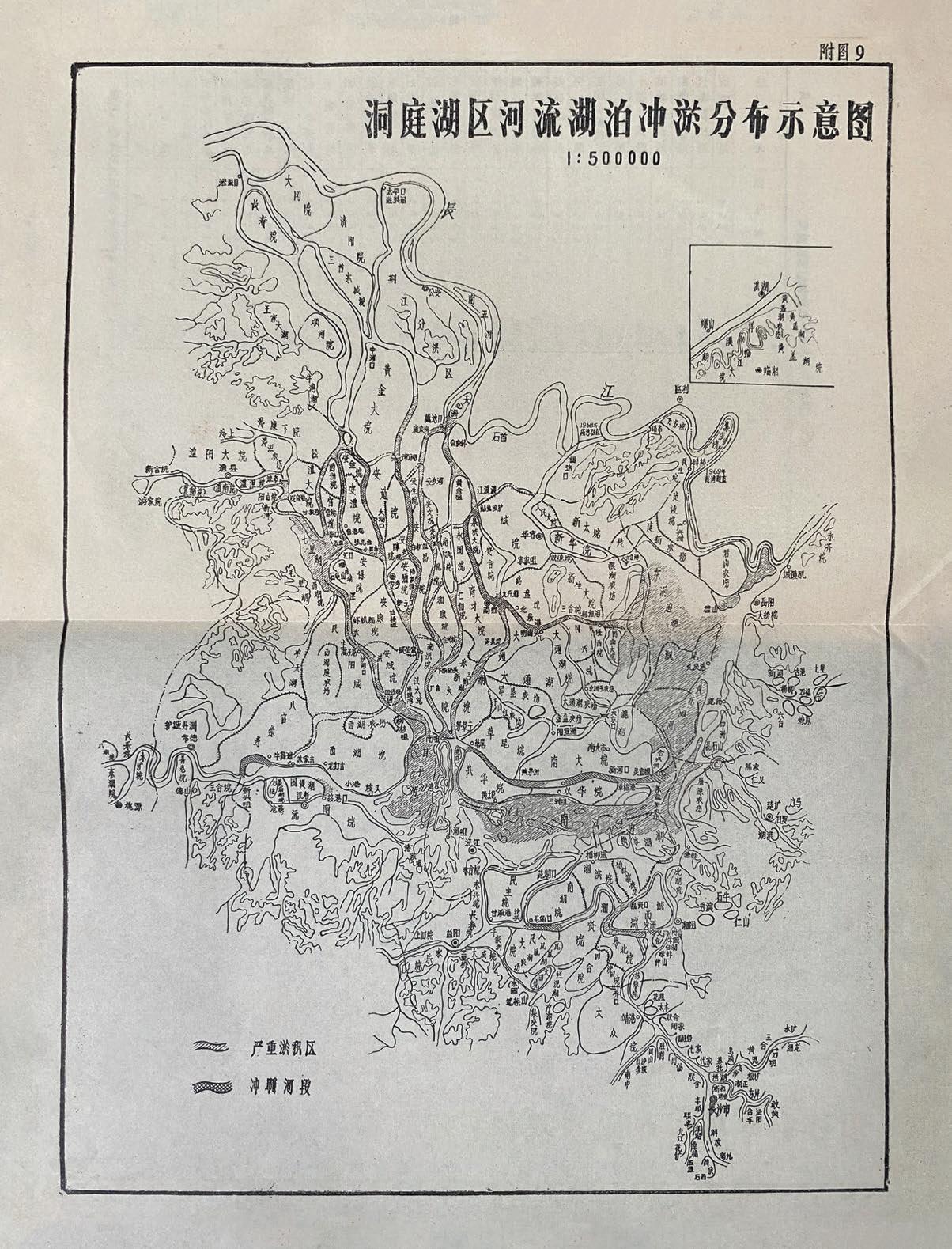
60 Dongting Lake Erosion/Deposition
Distribution Schematic Map(Appendix Fig. 9)
Source: Peng Shenyen (ed.), A Preliminary Study on the Changes of Dongting Lake and Its Impacts, Hunan Dongting Lake Environmental Protection Monitoring Station, 1980.
61 Distribution of riparian lakes for the main historical periods during 1896-1978
Source: Yu Yechen et al., Spatiotemporal Evolution of River-Connected Lakes in the Dongting Lake Area since the Late Qing Dynasty, Acta Geographica Sinica, 75(11), 2020.
62 As the Waters Recede, (Three-Channel Still) 2025
Three-Channel Video Installation, Three-Channel Sound 100” × 68” each, 12mins
64 Moths 2025
Steel rod, black torn paper, motor, electronics
Dimensions variable
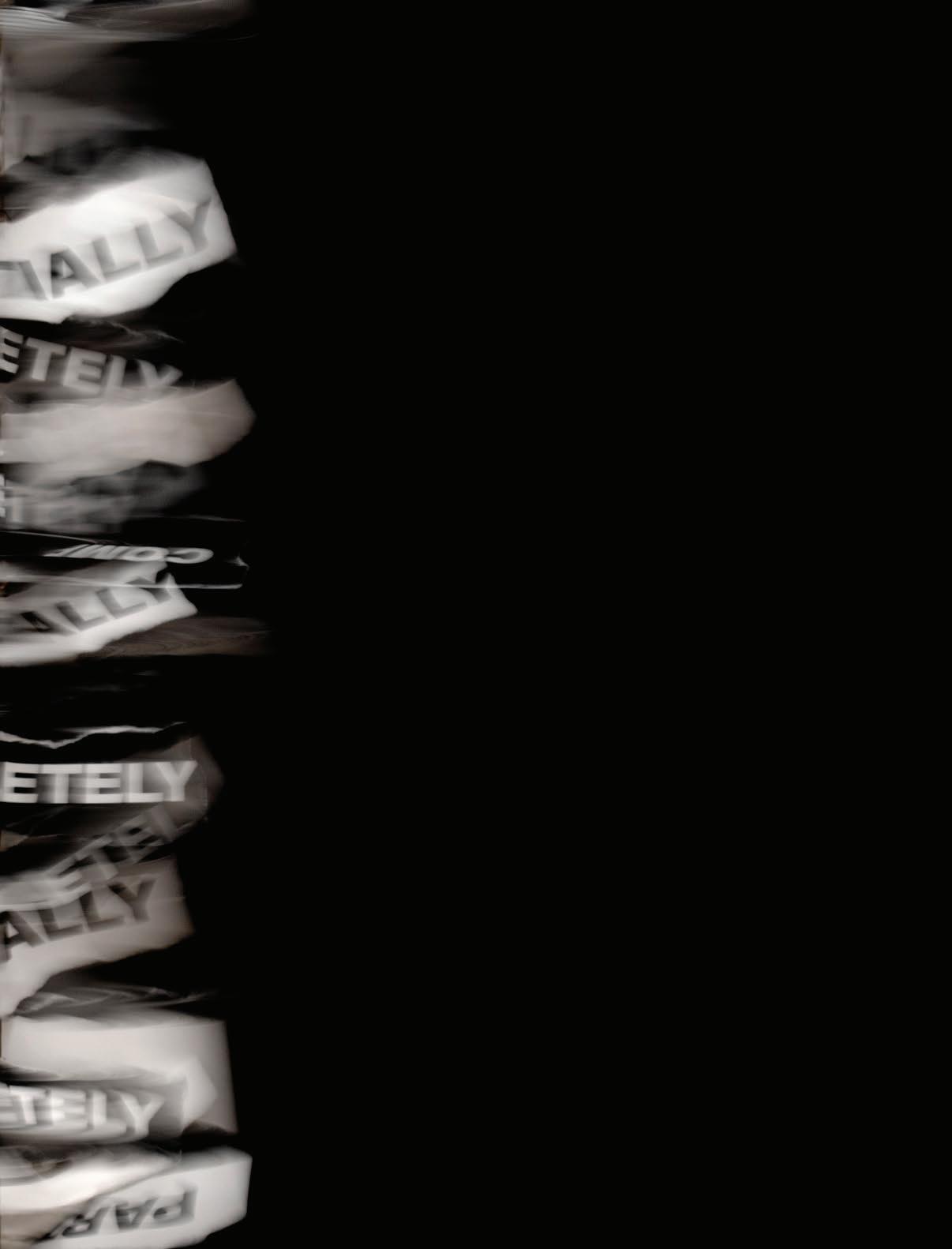
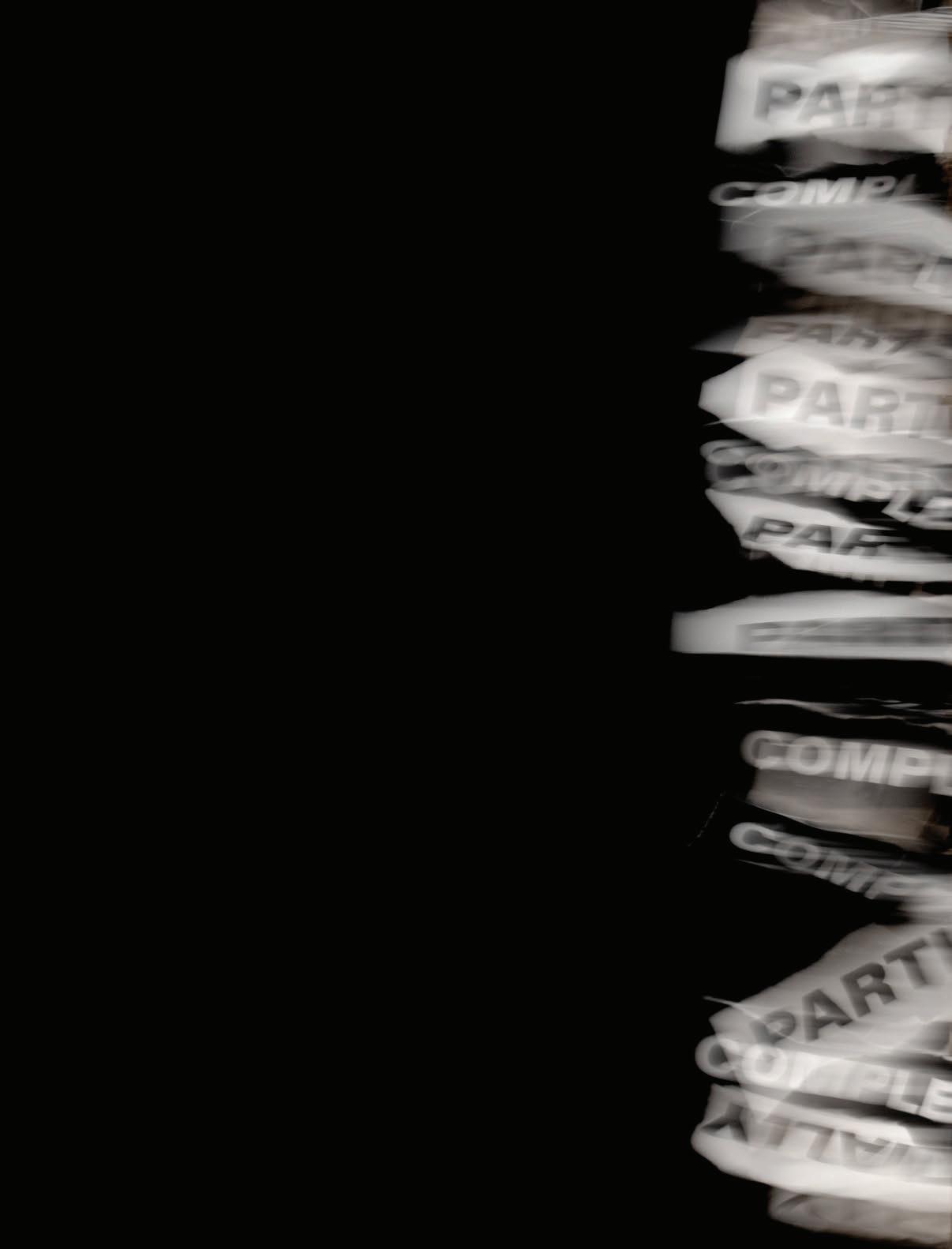
66 Partially/Completely 2025
Steel rod, paper, motor, electronics
Dimensions variable
67 Partially/Completely 2025
Steel rod, paper, motor, electronics
Dimensions variable
68 Imagine Living 2025
Cardboard jewelry box, newsprint cut-out words, micromotors, electronics 2” × 7” × 1”
Yudie (Ida) Zhang (b.2001) is an artist working in photography and installation. Her work constructs procedural systems that simulate belief without requiring belief itself, combining images, objects, and instructions to explore how trust, attention, and participation are produced. Drawing from scientific diagrams, folk tools, and pseudo-instructional formats, she deploys structures of classification, divination, repetition, and experiment, inviting viewers to encounter belief as something enacted, deferred, and never fully resolved.
70 OM! (right panel)
2025
Inkjet print; photograph; excerpted text from Siddhartha by Hermann Hesse
12” × 16 in”
71 OM! (Installation view)
2025
Inkjet print; photograph; excerpted text from Siddhartha by Hermann Hesse
12” × 16 ”
72 Paint Forest by Number I
2025
Inkjet prints of photographs; steel structure
8.8” × 8.8” × 8.8”
74 Idaplace’s Demon Instruction Manual (selected page)
2025
Printed paper 2 × 3 in.
75 The Experiment (selected photographs)
2025
Photographs
5” × 7” each
Leonardo Gabriel do Amaral (b. 2001) is an artist and writer from São Paulo, Brazil. Raised bilingually during the age of information, he developed a parasocial relationship with the U.S. through film, television, and the internet. As a cultural nomad, he inhabits the space between languages, geographies, and identities. Working across photography, installation, sculpture, video, and writing, his projects explore immigration,
76 Almost (T)here
2025
Luster Photographic Prints, OCE prints, thumbtacks, blue artist tape, grey/green suitcase, emergency exit sign, plastic ball, blanket, magnetic pins
216” × 108”
imperialism, love, and longing, weaving together research, parody, and archive. Leonardo holds a BFA in Film, Photography, and Visual Arts from Ithaca College and is an MFA candidate at the School of the Art Institute of Chicago. His work has been displayed in group and solo exhibitions in Chicago, Miami, and Ithaca.
78 Window Seat 2026
Blue Sky camera tripod, security camera shell, LATAM model airplane, airplane window wall vinyl
23” × 72” × 23”
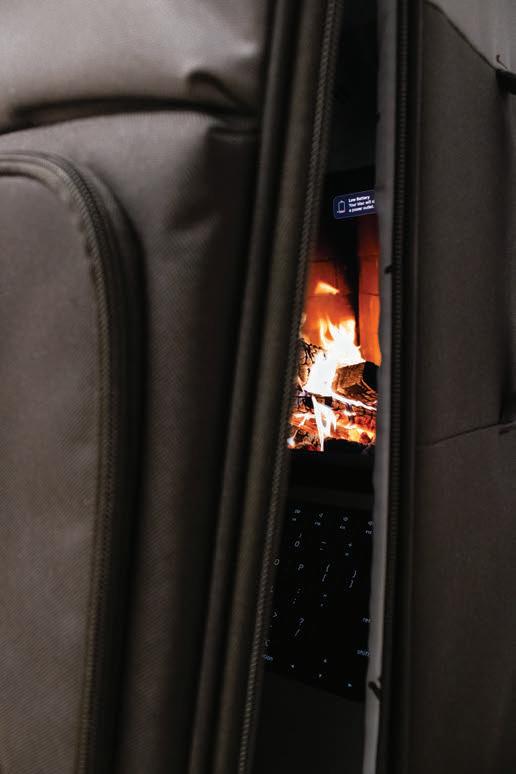
78 House re 2025
Grey/Green Suitcase, 13-inch Space Gray MacBook Pro Space Grey, Fireplace Evenings of Calm: Burning Logs, Crackling Sounds, and the Serenity of Pure Relaxation video
16” × 38” × 11”
79 two trains 2025
Prose Poem
Berkley Reddick (b.2000) is an analogue photographer and visual artist based in Chicago. Exploring how the personal is translated, reduced, and defined by differing societal frameworks, Reddick investigates how spatial, relational, and bureaucratic systems shape intimacy, partnership, and identity. Originally from Baltimore City, Maryland, she earned her BA in Studio Art and Psychology from Bucknell University in 2023. She is the recipient of the Bucknell Class of 1905 Art Prize and is currently pursuing an MFA at the School of the Art Institute of Chicago.
80 Question #2 2025
120mm, Typewritten Text on Photo Paper
5.5” × 8.5”
81 Question #3 2025
35mm, Typewritten Text on Photo Paper
5” × 8.5”
82 Question #13 2025
35mm, Typewritten Text on Photo Paper
7” × 5”
83 Question #14 2025
35mm, Typewritten Text on Photo Paper
5.5” × 8.5”
Hugo Amarales (b. 1989) from Ventura County/ Los Angeles County, is currently based in Chicago, IL. He received his BFA in Photography and Experimental Media from California State University, Fullerton. His practice in Photography and Sculpture is largely shaped by Mexican folk art, religious iconography, and his experience as a Mexican American.
84
Question #32
2025
35mm, Typewritten Text on Photo Paper
6.25” × 5.5”
85
Question #43
2025
35mm, Typewritten Text on Photo Paper
8.5” × 11”
86
Retracing Mi Abuelos Footsteps (1) (Left)
2024
Inkjet Print
11” × 17”
87 Retracing Mi Abuelos Footsteps (2) (Middle)
2024
Inkjet Print
11” × 17”
87 Retracing Mi Abuelos Footsteps (3) (Right)
2024
Inkjet Print
11” × 17”
88 Shadowbox (left)
2025–2026
Wood, cardboard, plastic produce bags, rope, found objects, and inkjet prints.
36” × 48” × 3”
89 Shadowbox (right)
2025–2026
Wood, cardboard, plastic produce bags, rope, found objects, and inkjet prints.
36” × 48” × 3”
90 Shadowbox (installation view)
Zhongxuan Niu (b. 2002) is a photographer whose work explores space, memory, and identity. Growing up between different cities made her attentive to the structures of everyday environments and to small, often overlooked details. Working at the intersection of personal memory and real spaces, using photography and reconstructed images to examine how cultural contexts shape emotional experience, she explores a sense of “manufactured familiarity,” where cultural symbols are rearranged to create spaces that are recognizable yet subtly artificial.
92 Misplaced (2) 2025
single-weight matte paper
52.5” × 39.7”
93 Misplaced (3) 2025
vinyl banner
79.5” × 106”
94 Misplaced (4) 2025
single-weight matte paper
13” × 21”
95 Misplaced (1) 2025
wood, stickers, single-weight matte paper, plastic
22” × 29”
Khidr Joseph (b.1995) is a multidisciplinary artist whose work explores themes of self-preservation, disguise, and memory through the lens of filial history. His practice uses the ghillie suit as a symbol of anonymity and concealment, reflecting hidden figures in ancestry. Through constructed scenes and atmospheric depictions employing archives, stories, and gaps within, Joseph brings the elusive into focus, honoring those who came before while considering how their presence resonates today.
96 Still Life 2025
Archival Print
24” × 36”
97 Offering 2025
Archival Print
24” × 36”
98 Abu’s Spirit 2025
Archival Print
24” × 36”
100 Installation View
Ariel Cobbert (she/her) (b.1995) is a visual artist from Hattiesburg, Mississippi. Through a photographic approach to materials and imagemaking, her work explores Black Southern identity, memory, and care through family archives, vernacular aesthetics, and everyday rituals. Rooted in both historical research and personal narrative, Cobbert’s practice interrogates the production of images and the ways Black life has been recorded, obscured, and reclaimed through photography.
102
Church Lady Candy I
Archival Print 2025
54” × 40”
103 The Bon Bon Altar
Archival Print 2025
33” × 24”
104 Before the Sermon
Archival Print 2025
33” × 24”
105 Church Lady Candy II
Archival Print 2025
54” × 40”
106 Church Lady Candy III
Archival Print 2025
54” × 40”
107 Coming Up
Archival Print 2025
33” × 24”
Pia Singh is an independent curator from Bombay, IN, living and working in Chicago, IL. Bolstering artistic practice through timely exhibitions, art criticism, and organizational design, Singh has curated exhibitions for artist-run spaces, institutional, and commercial galleries for over 15 years. While her academic research focuses on community-engaged practices at the intersection of contemporary art and design, Singh’s primary pursuit lies in recon guring the pedagogical hierarchies within and outside of which artists contribute towards systemic change. Singh has served as a Critic-in-Residence for The Luminary (St. Louis); Bemis Center (Omaha); and Curatorial Advisor for 3Arts/Bodies of Work Fellowship (Chicago). Singh is published by Sixty Inches from Center, Chicago Reader, Brooklyn Rail, Frieze Magazine, Hyperallergic, Cultured Magazine, Tussle, and ArtIndia. She is also currently ICI’s Mississippi River Basin Fellow for 2026.
Riesling Dong is a Chicago-based graphic designer who runs an independent publishing practice centered on experimental book forms. Through collaborations with artists, she reimagines the book as a storytelling medium where meaning unfolds through structure, sequence, and material. Her work challenges linear narratives, embracing risography and letterpress as integral, tactile processes. rieslingd.com
Guest Curator
Pia Singh
Designer
Riesling Dong
Coordinator
Jan Tichy
Printer
Graphic Arts Studio
Typeface
Louvette Text
Area Normal
First edition
130 copies
All art © 2026 the artists, all text © 2026 the authors. All rights reserved. No part of this book may be reproduced or retransmitted in any form or by any means, electronic or mechanical, including photocopying, recording, or any other information storage or retrieval system, without prior permissions in writing from the School of the Art Institute of Chicago.
Ariel Cobbert
Berkley Reddick
Deyi (Evelyn) Zeng
Haru Andersen
Hugo Amarales
Khidr Joseph
Lauren Bertelson
Leonardo Gabriel do Amaral
Pedro Albertini
Serena Beggs
Tanya Shah
Tierani Bryan
Xuemeng Li
Yudie (Ida) Zhang
Yunan Xiang
Zhongxuan Niu
Zixi Wang