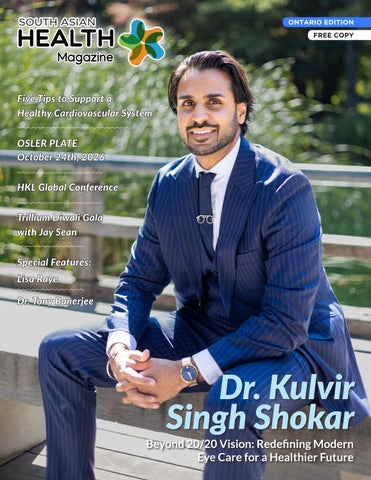
ONTARIO EDITION FREE COPY
Five Tips to Support a Healthy Cardiovascular System OSLER PLATE October 24th, 2026 HKL Global Conference Trillium Diwali Gala with Jay Sean Special Features: Lisa Raye Dr. Tony Banerjee
Dr. Kulvir Singh Shokar
Beyond 20/20 Vision: Redefining Modern Eye Care for a Healthier Future
GURPREET KAUR MANN Redefining Success Through Purpose, Leadership & Wellbeing Gurpreet Kaur Mann is an executive coach, career strategist, and founder of GKM Coaching. Drawing on her background in human resources, leadership development, and entrepreneurship, she helps professionals and business owners build careers that align with their strengths, values, and longterm goals. Through coaching, training, and mentorship, Gurpreet has guided professionals across North America to strengthen their leadership skills, elevate their personal brands, and pursue greater confidence and fulfillment. Her practical and empowering approach has made her a trusted voice in career advancement and personal development. A strong advocate for holistic wellbeing, Gurpreet believes that professional success, mental wellness, financial confidence, and personal purpose are deeply connected. Her mission is to help people achieve meaningful success without sacrificing balance, authenticity, or overall wellbeing— making her aa fitting fitting feature featurefor forthis an upedition of the Ontario South Asian coming edition of the Ontario South HealthHealth Magazine. Asian Magazine.
gkmcoaching.com
linkedin.com/in/manngurpreet
UPCOMING FEATURE COVER STORY ONTARIO SOUTH ASIAN HEALTH MAGAZINE
DR. NASIMUL SAM HUQ
Dr. Nasimul Sam Huq is the founder and lead plastic surgeon at Niagara Plastic Surgery Centre in Niagara Falls, Ontario, with more than 28 years of experience in aesthetic and reconstructive plastic surgery. His academic journey began at Dalhousie University, where he was an Entrance Scholarship recipient and Dean's Honour Roll student, followed by his medical degree from Western University and residency training in General and Plastic Surgery at McMaster University, where he earned his FRCSC. He subsequently completed fellowships at the Kleinert Institute in Louisville, Kentucky, and in Reconstructive Trauma in Toronto. Dr. Huq is a Fellow of the Royal College of Physicians and Surgeons of Canada (FRCSC), a Fellow of the American College of Surgeons (FACS), and has been a Diplomate of the American Board of Plastic Surgery for nearly 30 years. As an Assistant Clinical Professor of Surgery at McMaster University, he is passionate about educating and mentoring the next generation of physicians. Dr. Huq specializes in advanced facial rejuvenation, offering a range of techniques including traditional and endoscopic facelifts, deep plane facelifts, deep plane neck lifts, brow lifts, blepharoplasties (eyelid surgery) and more under local anesthesia. His philosophy is to seek harmony between the outer appearance and the inner self, while balancing the pursuit of aesthetic enhancements with psychological well-being, patient autonomy and the definition of natural human beauty. Fat grafting is often incorporated to restore volume and enhance facial harmony. Dr. Huq uses techniques designed to strategically conceal incisions and minimize visible scarring. Alongside his clinical practice, Dr. Huq remains active in research and medical education, with publications spanning a variety of plastic surgery topics. He is also the author of Local Anesthesia for Plastic Surgery, published as an issue of Clinics in Plastic Surgery in October 2013.
905-357-2360 905-357-4714
niagaraplasticsurgery@gmail.com www.niagaraplasticsurgery.com
5668 Main Street, Suite 1 Niagara Falls, ON L2G 5Z4
Toll free: 1-866-929-FACE(3223)
@dr.huq.niagaraplasticsurgery
Available in: Canada, US, UK, UAE, Australia & India
Message from the Publisher As the season starts to transition, families across Ontario are settling back into familiar routines. The back-to-school season brings a renewed sense of energy as children return to classrooms, schedules become busier, and parents find themselves balancing work, family, and everyday responsibilities. It’s also a wonderful time to reset our own routines and put health and wellness back at the forefront. As we move into a new season, we are reminded that small, consistent choices can make a meaningful difference in the health of ourselves and our families. In this edition, we are proud to feature Dr. Kulvir Singh Shokar on our cover in “Beyond 20/20 Vision: Redefining Modern Eye Care for a Healthier Future.” Dr. Shokar’s journey reflects a passion for healthcare, education, and meaningful patient relationships. His work in ocular disease management, with a particular focus on dry eye disease, highlights the importance of preventive eye care and early detection. He also brings an important perspective to our South Asian community, where conditions such as diabetes can increase the risk of vision-threatening diseases. From comprehensive eye examinations to the responsible use of technology and the 20-20-20 rule, Dr. Shokar reminds us that caring for our eyes is an important part of caring for our overall health. We are also pleased to share practical cardiovascular health advice from William Osler Health System. Dr. William Johnson, Division Head of Vascular Surgery and a vascular surgeon at William Osler Health System, offers five important ways to support healthy blood vessels: know your numbers, quit smoking or vaping, stay active, eat for a healthy heart and blood vessels, and speak with your doctor about whether abdominal aortic aneurysm screening is appropriate for you. These simple reminders reinforce an important message for all of us: prevention, regular check-ups, and healthy daily habits can play an important role in protecting our long-term health. We’d like to highlight the recent 7th International HKL – Humility, Kindness & Love Global Conference, held on August 8 at the Mississauga Sports and Entertainment Centre. Bringing together diverse voices and communities, the event offered a meaningful day of reflection, connection and personal transformation around the principles of humility, kindness and love. Looking ahead, we are excited for the upcoming Trillium Diwali Gala on October 23 at Pearson Convention Centre in Brampton. Celebrating its 25th year, the gala continues to bring the community together while raising vital funds for Trillium Health Partners and the future of healthcare in the Greater Toronto Area. As we welcome the fall season, we hope this edition of South Asian Health Magazine inspires you to prioritize your health, stay informed, and make wellness part of your everyday routine. Thank you for continuing to invite us into your homes and communities. We look forward to bringing you more stories, insights, and trusted health information in the months ahead.
RINA GILL
Publisher, South Asian Health Magazine
rina@thehypeadagency.com 647 465 7776
The publisher is not responsible for any manuscripts, images, photographs or any other material. By accepting and publishing advertising, editorial, advertorial, profiles or any other information in this publication; the publisher in no way recommends, guarantees or endorses quality of services or products and information within the context of the above-mentioned. Although every precaution is taken in the preparation of this publication, the Publisher shall have no liability to any person or entity with respect to any loss or damage caused by the contents of this publication. The Publisher is not liable for any errors or omissions and does not guarantee in any way the accuracy of information provided in the contents of this publication. Copyright 2026 by The Hype Advertising Agency. All rights reserved. No part of this publication may be reproduced by any means, electronic, or mechanical, including internet or photocopying without written permission of the Publisher.
Five Tips to support a healthy cardiovascular system Dr. William Johnson, MD, FRCSC, is Division Head of Vascular Surgery and a vascular surgeon at William Osler Health System. He provides specialized care for patients with diseases of the arteries and veins at Brampton Civic Hospital and Etobicoke General Hospital. Your vascular system, a network of arteries and veins, plays a vital role in delivering blood, oxygen and nutrients throughout your body. When blood vessels become narrowed, weakened or blocked, the risk of serious conditions can increase. Dr. William Johnson, shares five ways to help keep your blood vessels healthy: Know your numbers. High levels of blood pressure, cholesterol and high blood sugar often have no warning signs, but they can significantly increase your risk of vascular disease. Regular health check-ups can help identify problems early, when they are often easier to manage. Quit smoking or vaping. Better yet, don’t start. Smoking is one of the strongest risk factors for vascular disease. Smoking and vaping can damage blood vessels, speed up plaque buildup and increase the risk of aneurysms. Quitting smoking at any age can improve your vascular health and reduce your risk of serious complications. Live life actively! Or keep moving. Regular physical activity helps improve circulation, lower blood pressure and maintain a healthy weight. Aim for at least 150 minutes of moderate activity each week, such as brisk walking, cycling, swimming or other activities you enjoy. Eat for a healthy heart and blood vessels. A heart-healthy diet can help protect your blood vessels and reduce risk of vascular disease. Choose vegetables, fruits, whole grains, lean protein sources, and healthy fats. Limit salt, sugary foods and highly processed foods whenever possible. Ask your doctor about screening for abdominal aortic aneurysm (AAA). An AAA can develop without symptoms and may become life-threatening if it ruptures. Screening is quick, painless and non-invasive, using a simple ultrasound test. The Canadian Society for Vascular Surgery recommends a onetime AAA screening for men between the ages of 65 and 80 years. Women aged 65 years and older with risk factors such as smoking or cardiovascular disease may also benefit from screening. Speak with your primary care provider to learn whether screening is right for you.
www.williamolserhs.ca
DR. MANDEEP GREWAL
WHAT WE OFFER:
Dr. Mandeep (“Mandy”) Grewal is a proud Brampton native with thriving dental practices in both Mississauga and North York. A dedicated professional in the field since 2004, she began her dental journey at the Manipal Academy of Higher Education, where she earned her Bachelor of Dental Surgery. She later completed her Doctor of Dental Surgery degree at Dalhousie University. As a member of the Royal College of Dental Surgeons of Ontario and the Ontario Dental Association, Dr. Grewal is committed to upholding the highest standards of dental care. She is widely recognized for her warm, approachable demeanor and her patient-centered philosophy, which shine through in every aspect of her practice.
Direct Billing Personalized Care Plans Smile Makeovers
Outside the clinic, Dr. Grewal remains passionate about ongoing professional development and continuously seeks to expand her expertise in advanced dental techniques. When she’s not immersed in dentistry, she enjoys quality time with her family and embracing life’s everyday joys.
Interest - Free Financing
Our Comprehensive Services GENERAL DENTISTRY
COSMETIC DENTISTRY
RESTORATIVE DENTISTRY
ORAL SURGERY
Complete Dental Examination, Dental Hygiene Therapy, Resin Fillings and Emergency Care.
Orthodontics,Composite & Porcelain Veneers, Clear Aligners, ZOOM! Whitening (in-office & customized take-home kits)
Root Canal Treatment, Crowns, Bridges, Partial/ Complete Dentures
Dental Implants, Tooth Extractions, Bone Grafts
MEADOWVALE SMILES DENTAL 6855 MEADOWVALE TOWN CENTRE CIRCLE, #202, MISSISSAUGA
AMBROSE DENTAL CARE 1100 SHEPPARD AVE. E, #211, NORTH YORK
905 542 7606
416 222 5718
DRGREWALDENTAL@GMAIL.COM
ANGIE BILN
Angie Biln, RSW, MSW With over 18 years of experience in mental health, counselling, rehabilitation, and personal growth, Angie Biln is a Registered Social Worker, Certified EMDR Therapist, Certified Life Coach, Clinical Supervisor, and Mental Health Consultant. Fluent in English, Punjabi, and Hindi, Angie provides culturally responsive, trauma-informed care to individuals, couples, and families navigating trauma, anxiety, depression, grief and loss, relationship challenges, self-esteem concerns, emotional burnout, and recovery from unhealthy or abusive relationships. Certified in Brain Injury Rehabilitation, she also has extensive experience supporting individuals recovering from concussions, acquired brain injuries, chronic pain, and complex trauma. Angie is registered to practice in British Columbia, Alberta, and Ontario and has worked extensively with motor vehicle accident survivors, first responders, youth, families, and individuals navigating significant life transitions. Her approach integrates EMDR, Cognitive Behavioural Therapy (CBT), mindfulness, inner child healing, strengths-based interventions, and somatic approaches to support meaningful and lasting change. In addition to her clinical practice, Angie provides clinical supervision, mentorship, and consultation to social workers, interns, and allied health professionals. She is also a speaker, podcast host, media contributor, and educator who regularly appears on television and radio discussing mental health, trauma recovery, relationships, resilience, and personal growth. As the host of the Designed For More podcast and a facilitator of wellness retreats, workshops, and community initiatives, Angie is passionate about breaking cultural stigmas surrounding mental health, empowering women, strengthening families, and helping individuals move from surviving to thriving. Through her work, she continues to inspire healing, resilience, self-worth, and meaningful transformation within the communities she serves.
Services: n Individual Counselling & Psychotherapy n Couples & Family Counselling n EMDR Therapy n Life Coach
nCase Management nMed-Legal & Independent Medical Examination (IME) Services nBrain Injury & Rehabilitation Support
info@angiebiln.ca angiebiln
Angie Gill
n Clinical Supervision & Professional Consultation n Services offered in English, Punjabi and Hindi
www.angiebiln.ca Angie Biln
angiebiln
n Corporate Wellness & Employee Mental Health Programs n Keynote Speaker and Workshop Facilitator n Media Appearances & Expert Commentary
www.socialworkevolved.ca Designed For More: The Podcast
Trillium Diwali Gala 2026
Canada’s First and Longest-Running Diwali Gala Returns for the 25th Year; Funds Raised will Support Canada’s Largest Hospital
The Trillium Diwali Gala will return October 23rd at Brampton’s Pearson Convention Center; to date, it has raised over $16 million for Trillium Health Partners. Mississauga, ON – September 15, 2026 – This October 23rd, Canada’s first and longest-running Diwali Gala returns for its 25th year. All proceeds will support The Peter Gilgan Mississauga Hospital – which will replace the current Mississauga Hospital to be Canada’s largest
hospital, The Shah Family Hospital for Women and Children – which will be Canada’s first hospitalfocused entirely on the health of women and children, and the redevelopment of The Gilgan Family Queensway Health Centre. Hosted by Trillium Health Partners Foundation, the annual Trillium Diwali Gala will take place at Brampton’s award-winning Pearson Convention Center.
ONTARIO SOUTH ASIAN HEALTH MAGAZINE
“Our community has supported the Trillium Diwali Gala for a quarter of a century,” says Caroline Riseboro, President and CEO of Trillium Health Partners Foundation. “Together, we celebrate Diwali – the sacred festival of lights – and this event is also crucial in our efforts to fundraise for health care in Mississauga and the Greater Toronto Area. Particularly now, as we are raising funds in support of a milestone effort to build Canada’s largest hospital and Canada’s first hospital focused entirely on women’s and children’s health.” Since the event’s inception, the Trillium Diwali Gala has raised over $16 million through the unwavering generosity of the community and sponsors. Last year, the always sold-out celebration raised a recordbreaking amount of over $1.3 million in support of health care. In one notable example, a portion of last year’s funds went on to purchase three new OmniBeds for Trillium Health Partners’ Neonatal Intensive Care Unit, exceeding the original goal of two. These lifesaving, state-of-the-art units combine an incubator and warmer in one, creating a safe, stable environment for premature babies, while giving care teams easy access for urgent treatment. Tables and tickets are now available. Evening entertainment includes:
- Jay Sean: International music superstar who has captivated audiences worldwide with chart-topping hits including Down, Ride It, Do You Remember, and 2012 (It Ain’t The End). A cultural trailblazer, he became the first South Asian artist to achieve a Billboard Hot 100 No. 1 single. - Folk ‘N Guys: A dynamic bhangra and folk music group known for their high-energy performances, infectious rhythms and celebration of Punjabi culture. Trillium Health Partners, which comprises Mississauga Hospital, Credit Valley Hospital and Queensway Health Centre, serves a community that is expected to grow by a staggering 45% by 2041 – from 2.2 million to 3.2 million people – facing more growth in demand than any other hospital in Ontario. The future 22-storey Peter Gilgan Mississauga Hospital will be nearly triple the size of the current facility, spanning approximately 2.8 million square feet. The new, best-in-class facility will feature more than 950 beds, expanded surgical capacity and one of the largest emergency departments in Ontario to care for
ONTARIO SOUTH ASIAN HEALTH MAGAZINE
our growing community. In addition, 100% of patient rooms will be private. The new hospital will also include 23 state-of-the-art Operating Rooms, Ontario’s largest surgical platform, advanced diagnostic imaging facilities and a new pharmacy and clinical laboratory. The future Shah Family Hospital for Women and Children will be Ontario’s first hospital devoted entirely to women and children’s health. It will include dedicated mental health inpatient beds for children and youth – the first of its kind in Mississauga, a full suite of highly specialized reproductive, gynecological and children’s health services, 31 birthing suites and one of the largest neonatal intensive care units in Ontario. The redevelopment of The Gilgan Family Queensway Health Centre will significantly expand access to cutting-edge rehabilitation and complex continuing care as Ontario’s #1 orthopaedic centre. Key features will include bright therapy spaces on every floor, purpose-built areas for group rehabilitation, outdoor therapy areas, advanced digital technology to support patient-centred care and faster clinical decisionmaking, modern environments and 100% private rooms.
•
BLG (Lucky Draw Sponsor)
•
AMGOLD Corporation (Photo Booth Sponsor)
•
EllisDon/PCL JV (Dessert Sponsors)
•
Mercedez-Benz Mississauga, Zanchin Automotive Group (Valet Sponsors)
•
Chuck’s Roadhouse, Crabby Joe’s Bar & Grill, Coffee Culture, Obsidian Group Inc. (Coat Check Sponsors)
•
Sheridan College (Wifi Sponsor)
•
Spirit of Math, EllisDonQ-Site (Corporate Patron Sponsors)
•
Paras Events (Décor Sponsor)
•
The Host (Food Sponsor)
•
The Printing House (Print Sponsor)
For more information, please visit www.trilliumdiwali.ca
The Trillium Diwali Gala is made possible because of the support of its dedicated sponsors: •
TD (Emerald Sponsor)
•
Pearson Convention Center (Venue Sponsor)
ABOUT TRILLIUM HEALTH PARTNERS FOUNDATION Trillium Health Partners Foundation is dedicated to raising the critical funds needed to address the highest-priority needs of Trillium Health Partners, the largest community-based hospital network in Canada. For more information, please visit trilliumgiving.ca.
ABOUT TRILLIUM HEALTH PARTNERS Trillium Health Partners is the largest community-based hospital network in Canada. Comprised of Credit Valley Hospital, Mississauga Hospital and Queensway Health Centre, Trillium Health Partners serves the growing and diverse populations of Mississauga, West Toronto and surrounding communities. Trillium Health Partners is a teaching hospital affiliated with the University of Toronto and home of the Institute for Better Health. For more information, visit thp.ca. ONTARIO SOUTH ASIAN HEALTH MAGAZINE
YOUR WEALTH. YOUR WELLNESS. STRATEGICALLY BUILT. Pam Setia is the founder of What The Financial, a boutique advisory firm built from strategy, not scarcity. As a Holistic Wealth & Real Estate Consultant, Pam operates at the intersection of luxury real estate, wealth strategy, and intelligent leverage, helping clients use real estate as a deliberate tool for long-term financial optimization. A licensed Personal Financial Planner with over 18 years of experience in the banking industry, Pam holds professional licenses in financial planning, mortgages, and real estate. This rare, fully integrated perspective allows her to advise with clarity across capital deployment, debt architecture, and asset positioning, replacing fragmented advice with cohesive, real estate forward strategy. Pam’s work is guided by precision and discretion, shaped by a global mindset and refined through years of advisory experience. Her philosophy centers on structure over speculation. She advises clients on how to deploy capital with intent, optimize debt as a wealth-building tool, and position assets with foresight, ensuring every acquisition serves a broader financial narrative. The result is not transactional success, but financial freedom—your way.
INTRODUCING WEALTH RX Wealth RX was created with one clear objective: to help high-performing professionals turn income into intentional, longterm wealth that supports both financial goals and personal wellbeing. Developed by Pam Setia after more than two decades advising professionals including those in the healthcare industry Wealth RX reflects a deep understanding of the pressures physicians, dentists, pharmacists, and healthcare executives face such as high incomes, complex debt, limited time, and the physical and mental toll of financial complexity. Drawing on over 20 years of experience across banking, financial planning, mortgages, and real estate, Pam designed Wealth RX as a prescriptive, real estate-forward framework that replaces fragmented advice with clarity and structure. By evaluating cash flow, debt architecture, asset allocation, and risk exposure and through a coordinated advisory structure in which Pam partners with experienced professionals to strategically reclassify corporate retained earnings and optimize capital dividend account planning, the framework supports tax efficiency while preserving long-term financial integrity. Every decision is aligned to a defined financial outcome, not just short-term performance. Wealth RX empowers healthcare professionals to move beyond accumulation toward strategic positioning by using real estate and intelligent leverage as tools to build stability, resilience, and financial command. The result is a wealth strategy that protects energy, preserves focus, and supports a sustainable life and career, strategically built and on their terms.
www.whatthefinancial.ca
pam@whatthefinancial.ca
@whatthefinancial
Dr. Kulvir Singh Shokar Beyond 20/20 Vision: Redefining Modern Eye Care for a Healthier Future
You’ve had a passion for eye care from an early age—what initially inspired you to pursue optometry as a career? I've always been drawn to healthcare and knew from an early age that I wanted a career where I could make a meaningful difference in people's lives. At the same time, I've always enjoyed teaching. Optometry turned out to be the perfect combination of both, where I could educate patients one on one, and now through social media and speaking engagements. What really solidified my decision was shadowing an optometrist. Before that, I think I had the same perception many people do—that it's mostly about prescribing glasses. Seeing firsthand how much medical care is involved, from diagnosing and managing eye diseases to detecting signs of systemic health conditions, completely changed my perspective. I was inspired by the opportunity to improve patients' overall quality of life, in more ways than one, and empowering them to take better care of their vision and health.
Growing up in Mississauga, how did your community and cultural background influence your journey into healthcare? Growing up in Mississauga gave me the opportunity to be part of an incredibly diverse community, where I was exposed to people from many different cultures and backgrounds. That experience taught me the importance of empathy, communication, and providing care that respects each person's unique experiences and needs.
@the.tieclip.eyedoc
My cultural background also played an important role in shaping my path. I was raised with a strong emphasis on education, hard work, and giving back to the community. Those values naturally led me toward a career in healthcare, where I could build meaningful relationships with patients and make a positive impact on their lives. Today, I strive to create an environment where every patient feels heard, understood, and comfortable asking questions about their eye health.
Your training focused heavily on ocular disease management—what drew you to specialize in conditions like glaucoma, diabetic retinopathy and dry eye disease? I've always been drawn to the medical side of optometry because of the opportunity to make a lasting impact on a patient's quality of life. Conditions like glaucoma, diabetic retinopathy and my main focus, dry eye disease, are particularly meaningful to me because they can cause a significant decrease in quality of life, if they aren't detected and managed early. As optometrists, we have the unique opportunity to identify these diseases—often before patients notice any symptoms—and help preserve their vision and eye health through ongoing monitoring, treatment, and collaboration with other healthcare providers. During my training, I found it incredibly rewarding to care for patients with complex ocular conditions and to see how early diagnosis and patient education could truly change outcomes. That experience reinforced my passion for ocular disease management and continues to shape the way I practice today.
You have a special interest in dry eye disease. What makes this area of eye care so important and often overlooked? Dry eye disease is one of the most common conditions I see in practice, yet it's often
I’ve always been drawn to the medical side of optometry because of the opportunity to make a lasting impact on a patient’s quality of life.
underestimated and misunderstood because many people assume it's simply a minor irritation that is solved with eye drops. In reality, it can have a significant impact on a person's quality of life, affecting everything from reading and working on a computer to driving and enjoying everyday activities. What interests me most is that dry eye disease is a chronic condition with many different underlying causes, so there's no one-size-fitsall treatment. It requires taking the time to understand each patient's symptoms, lifestyle, and eye health to develop a personalized treatment plan. I find it incredibly rewarding to help patients who may have struggled with discomfort for years finally find relief and improve both their vision and their day-to-day comfort.
You work with advanced treatments like IPL, RF, Jett Plasma—how are these technologies transforming patient outcomes in eye care? Advances in technology have significantly changed the way we manage conditions like dry eye disease. Treatments such as IPL, radiofrequency (RF), and Jett Plasma allow us to go beyond simply managing symptoms and instead target some of the underlying causes of the disease. When used for the right patient, these therapies can help improve the function of the eyelid glands, reduce inflammation, and promote a healthier tear film.
What excites me most is the ability to offer more personalized care. Every patient experiences dry eye differently, so having a range of advanced treatment options allows us to tailor therapy to their specific needs. These technologies can provide meaningful, long-lasting improvement in both comfort and vision stability, ultimately enhancing their quality of life.
Your approach blends evidence-based care with personalization—how do you ensure each patient feels individually cared for? Every patient is unique, and that's why I believe great eye care starts with listening. While evidencebased medicine provides the foundation for every recommendation I make, it's equally important to understand each patient's lifestyle, concerns, goals, and expectations. The best treatment plan is one that not only reflects the latest research but also fits the individual sitting in front of you. I also believe that patient education is a key part of quality care. I take the time to explain diagnoses, discuss treatment options, and answer questions so patients feel informed and involved in their care. When patients understand what's happening and why we're recommending a particular approach, they're more confident in their treatment and more likely to achieve successful long-term outcomes.
@the.tieclip.eyedoc
Every 20 minutes, look at something at least 20 feet away for 20 seconds. This helps reduce eye fatigue and encourages your eyes to refocus
care. Being able to communicate with patients who share similar cultural experiences can help build trust and encourage open conversations about their health. I hope to help raise awareness that eye exams are about much more than updating a glasses prescription—they're an important part of maintaining both eye health and overall health.
Many people spend long hours on screens today—what are your top recommendations for protecting eye health in the digital age? As a South Asian healthcare professional, what unique challenges or opportunities do you see within the community when it comes to eye health awareness? One of the greatest opportunities is increasing awareness about the importance of preventive eye care. Within the South Asian community, there is a higher prevalence of conditions such as diabetes, which can significantly increase the risk of vision-threatening diseases like diabetic retinopathy. Many of these conditions can develop without noticeable symptoms in the early stages, making regular comprehensive eye exams essential for early detection and treatment. As a South Asian healthcare professional, I also appreciate the importance of culturally sensitive
Digital devices have become an essential part of our daily lives, but prolonged screen use can contribute to digital eye strain and worsen symptoms of dry eye. One of the simplest habits I recommend is following the 20-20-20 rule: every 20 minutes, look at something at least 20 feet away for 20 seconds. This helps reduce eye fatigue and encourages your eyes to refocus. It's also important to be mindful of blinking. We blink almost 70% less when looking at screens, which can lead to dryness and irritation and permanent eyelid gland structural changes. Taking regular breaks, staying well hydrated, adjusting screen brightness to match your surroundings, and positioning your screen at a comfortable distance can all make a significant difference. Most importantly, don't ignore persistent symptoms like blurred vision, headaches, or ongoing discomfort—these may be signs that it's time for a comprehensive eye examination to determine whether there are underlying vision or eye health issues that need attention.
For me, the balance comes down to never compromising on accuracy. The medical credibility has to come first—every piece of content I share is grounded in evidence-based information and my clinical experience as an optometrist.
You’ve built a strong social media presence as “The Tie Clip Eye Doc”—what inspired you to create this persona? "The Tie Clip Eye Doc" started as a way to make eye health education more approachable and engaging. I've always enjoyed teaching, and social media gave me the opportunity to reach people beyond the exam room. There are so many misconceptions about eye health, and I wanted to create content that helps people better understand their vision and empowers them to take a more proactive approach to their eye care. The name itself reflects a bit of my personality. I enjoy dressing professionally, and a tie clip became a small signature part of my style. It felt like a memorable way to combine my personal brand with my passion for optometry. At the end of the day, my goal is to share reliable, evidence-based information in a way that's easy to understand and hopefully inspires more people to prioritize their eye health.
How do you balance being both an educator and entertainer on platforms like Instagram and TikTok while maintaining medical credibility? For me, the balance comes down to never compromising on accuracy. The medical credibility has to come first—every piece of content I share is grounded in evidence-based information and my clinical experience as an optometrist. I always make sure that what I’m teaching is something I would feel comfortable discussing with a patient in the exam room. The “entertainer” aspect is really just about packaging that information in a way that’s engaging and easy to understand, and letting my personality shine through some of the content. Eye health can be complex or technical, so if humor, storytelling, or short-form video helps make it more accessible, then I think that’s a win for education. At the end of the day, my goal is to make eye care approachable without losing the trust that comes with being a healthcare professional. If people leave my content more informed and more likely to take their eye health seriously, then that is a big win in my books.
Outside the clinic, you lead an active lifestyle—how does fitness and personal wellness influence your professional life? Maintaining an active lifestyle is something I prioritize because it directly impacts how I show up for my patients. Fitness and personal wellness help me stay focused, energized, and resilient throughout the demands of a busy clinical day. When I take care of my own health, I’m better able to give patients my full attention and provide thoughtful, patient-centered care.
@the.tieclip.eyedoc
I also think it helps me connect with patients on a more relatable level. Many eye conditions, like dry eye disease or diabetic eye disease, are influenced by overall health and lifestyle. Being mindful of my own habits makes it easier to have meaningful conversations with patients about how small changes in their daily routines can positively impact their long-term eye health. Ultimately, wellness isn’t separate from my profession; it supports it. Taking care of myself allows me to take better care of others.
What advice would you give to young South Asians who aspire to pursue a career in optometry or healthcare? My biggest piece of advice would be to stay curious and seek out real exposure to the field early on. Shadowing, volunteering, or speaking with healthcare professionals can give you a much clearer understanding of what the profession is really like beyond textbooks. Those experiences often confirm your interest—or help you refine it—and both are valuable. I would also encourage young South Asians to be confident in their place within healthcare. Sometimes there can be pressure to follow certain traditional paths, but optometry and healthcare more broadly offer incredibly meaningful careers where you can serve your community in a very direct and impactful way. Representation matters, and there is real value in bringing your perspective and lived experience into patient care. Finally, don’t underestimate the importance of persistence. The journey takes time, and there will be challenges along the way, but if you’re genuinely passionate about helping people and committed to learning, it’s an incredibly rewarding path.
St. Martinus University Fully Accredited by
Your Pathway to a Medical Degree and U.S. Residency Why St. Martinus University Fully Accredited by a WFME-Recognized Agency (AAEPO): Ensures eligibility for ECFMG certification and U.S.
residency training pathways while meeting internationally recognized standards in medical education.
Direct Entry Pathway Without MCAT: High school graduates
and university students can fast-track into medicine without the requirement of a 4-year undergraduate degree or MCAT examination.
Modern Campus with Advanced Learning Tools: State-of-
the-art infrastructure featuring digital anatomy systems, upgraded laboratories, research facilities, and on-campus student housing designed to support an optimal learning environment.
Secure and Comfortable Student Living: Safe and reliable housing with meal plan options, located in Curaçao — a stable Caribbean island outside the Atlantic hurricane belt. Strong Residency Match Record: Consistently high U.S.
residency match rates, with graduates placed across major specialties throughout the United States.
Cost-Effective Medical Education: Significantly lower tuition
and living expenses compared to many U.S. and Canadian medical schools.
Eligible for Canadian federal and provincial student loan programs, making medical education more financially accessible
for Canadian students.
SMU RESIDENCY MATCH RESULTS 2026 ERAS Cycle
Dr. Nidhi
Jalota
Founder Of My Aesthetic Lab, Dr. Nidhi Jalota, is a highly skilled and accomplished family physician with a passion for aesthetic medicine. With extensive training, Dr. Jalota has become an expert in a wide range of non-surgical treatments. In addition to her medical expertise, Dr. Jalota, brings a unique artistic touch to each procedure, ensuring her patients receive a personalized, natural-looking results. As a family physician, she also understands the importance of a holistic approach to healthcare and strives to help her patients look and feel their best from inside out. Enter through the doors of My Aesthetic Lab, and relax in luxury from start to finish knowing you’ll be in good hands with complete discretion. My Aesthetic Lab is designed to ensure you feel calm and relaxed while waiting for or in treatment. Feel safe and comfortable knowing you’re in safe hands with our experts.
Services: Botox
Facials
Body Lymphatic Drainage
Dermal fillers
Hair restoration therapy
Biogel/ EZ Gel
Platelet Rich Plasma
Iv drips
Laser Hair removal
866 The Queensway Level, Suite 05, Etobicoke, ON M8Z 1N7, Canada
myaestheticlabtoronto@gmail.com
647-462-0112
UPCOMING FEATURE COVER STORY ONTARIO SOUTH ASIAN HEALTH MAGAZINE
DR. SATDIP BINNING
In the realm of integrative health and wellness, Dr. Satdip Binning stands not only as a practitioner but as a transformative force. With a journey marked by personal health crises and a relentless pursuit of answers, Dr. Binning has emerged as a beacon of vitality and resilience. As the founder of the Functional Health Institute, his mission is deeply rooted in his own transformative experience.
Driven by the desire to share his journey and the principles of Functional Medicine that catalyzed his own health restoration, Dr. Binning has become a sought-after authority in his field. His expertise has been recognized through invitations to contribute articles for magazines and participate in online summits and interviews, where he shares his unique application of the Functional Medicine principles. Certified as a Functional Medicine Practitioner, Chiropractor, and ART® Provider, Dr. Binning boasts an illustrious 17-year career dedicated to optimizing health and performance. His extensive experience has made him a trusted guide for everyday individuals and high-performance individuals such as entrepreneurs and professional athletes from esteemed organizations such as the NHL, NFL, US Olympic team, and CFL, among others. At the heart of Dr. Binning’s approach lies a commitment to uncovering the root causes of chronic illnesses through personalized investigation. Instead of just treating symptoms, his mission is centered on uncovering and resolving the root cause. Guided by the belief that individuals possess the innate ability to heal themselves. Dr. Binning has impacted thousands of lives by teaching people how to overcome the odds and create health where it matters most, in their homes. He guides his patients through lifestyle optimization, recognizing that true health is cultivated in everyday choices and habits. With a holistic approach that prioritizes empowerment and education, Dr. Binning is dedicated to enabling his patients to lead healthier, more vibrant, energetic, and more fulfilling lives.
The Functional Health Institute is one of the nation’s leading virtual clinics for achieving lasting health and wellness using science-based treatment methods of functional medicine. We believe in inspired living. That means living a life with meaning, purpose, and intention. A life free of disease because you realize that most disease is the consequence of lifestyle. A lifestyle that YOU have the POWER to CHANGE. It’s time for you to make yourself a priority and begin living a life with HEALTH and VITALITY. The Functional Health Institute is here to get you started. It’s time for you to begin living an inspired life.
WE SPECIALIZE IN: Autoimmune Health
Chronic Fatigue and Fibromyalgia
Fertility Health
Brain Health
Digestive Health
Hormone Health
Thyroid Health
Skin Health
5192217572
drbinning@functionalhealthinstitute.com
Comprehensive Natural Health Solutions for Brain, Body, and Beyond!
• Innovation-Driven
• Science-Backed
• Life-Enhancing
LOSS, LEGACY, AND WELLNESS: BUILDING A WELLNESS BRAND WITH PURPOSE.
SUNNY RODHEY Scientist and founder of Health IS Wealth Group Inc.
Promo code - SAHM15 for 15% OFF THE ENTIRE ORDER
info@healthiswealthnaturals.com www.healthiswealthnaturals.com
@healthiswealthnaturals
Lisa Ray Rewriting The Conversation On Women’s Health
Looking back, what experiences and influences most shaped the woman you are today? Growing up as a mix of Indian and Polish heritage gave me an innate sense of being a bridge between cultures and perspectives. But looking back, my journey has been shaped just as much by life's unscripted detours as by my career. Navigating the public eye early in life taught me resilience, but it was my cancer diagnosis in 2009—and the long, reflective journey of writing my memoir Close to the Bone— that truly anchored me. Confronting my own mortality stripped away the artificiality of fame and forced me to ground myself in spirituality, selfadvocacy, and truth. Every shift, from acting to writing to health advocacy, has taught me that true strength comes from vulnerability and embracing every phase of life without fear.
SOUTH ASIAN HEALTH MAGAZINE – SPECIAL INDIA LAUNCH ISSUE
presence, deep connection, peace, and honoring your body. Resilience, I realized, isn't about toughing it out or putting on a brave face for the world; it's about gentle endurance, surrendering to the present moment, and learning to rebuild yourself from the inside out. It redefined how I measure success—no longer by external validation or productivity, but by how grounded and authentic I feel every day.
A life-threatening diagnosis acts as an intense clarity filter. It vaporizes minor anxieties and forces you to confront what actually holds value
Your cancer treatment brought an unexpected health transition. What did you learn about understanding your body and advocating for your health?
What continues to draw you to storytelling, and what is it about acting that has remained meaningful through the different chapters of your life? Storytelling is an exercise in empathy. Early on, acting was a canvas for expression and exploration; it allowed me to step into different lives and worldviews. Over time, as my own lived experience expanded, acting became less about performance and more about truth-telling and human connection. Whether I am in front of a camera or writing a page, storytelling allows us to make sense of our chaos and let others know they aren't alone. That core impulse—to connect, illuminate, and give voice to what is often left unsaid—remains as meaningful to me today as it was when I first started.
How did your health journey with cancer change your perspective on life, resilience, and what truly matters? A life-threatening diagnosis acts as an intense clarity filter. It vaporizes minor anxieties and forces you to confront what actually holds value: @nuher.me
When cancer treatment pushed my body into premature menopause overnight at 37, I was completely unprepared. I knew how to fight for my life, but I was not prepared for the sudden shift, the physical exhaustion, brain fog, and total lack of clear medical guidance surrounding it. For years, I normalized those symptoms and carried a quiet, unspoken shame—something so ironic because I was being praised publicly for being so open about cancer. That experience was a profound wake-up call. It taught me that we cannot rely on a system that historically minimizes women's health; we have to become educated, tuned into our own bodies, and unapologetic about demanding proper, personalized care.
Was there a particular moment when you recognized these conversations were part of a much bigger gap in women's healthcare? It hit me during conversations with close friends who were entering their late 40s. A dear friend of mine was suffering through debilitating mood shifts and fatigue, yet she had never even heard the term perimenopause.
@lisaraniray
www.nuher.me
When we began speaking about it openly on social media, the floodgates opened. I realized I wasn't just carrying my own experience; I was witnessing a generational silence. Historically, women were excluded from medical research for decades, and standard medical training spends astonishingly little time on menopause. Women were consistently being told that their suffering was just "a normal part of aging" that they had to endure. That was the moment I realized this wasn't just a personal gap—it was a systemic healthcare blind spot.
What inspired you to co-found NuHer, and why create a dedicated platform focused on women's midlife and hormonal health now? With cancer, my mission was to start the conversation and break the stigma. But with menopause and midlife health, starting a conversation wasn't enough—women needed real, accessible, actionoriented support. Midlife is often the longest, most transformative phase of a woman's life, yet it arrives with the least amount of structure or clinical clarity. I co-founded NuHer alongside a brilliant team because we wanted to create a dedicated space where menopause is not treated as a medical dead end, but as a woman's Prime Time. Suffering should never be the price of aging.
SOUTH ASIAN HEALTH MAGAZINE – SPECIAL INDIA LAUNCH ISSUE
Why was it important to build NuHer around a multidisciplinary team of doctors and health professionals rather than simply sharing personal wellness experiences?
Working with our medical team— specialists like Dr. Reina Punj, Dr. Kajal Parikh, and our extended panel—has been deeply validating and educational.
Personal stories are powerful for breaking taboos, but lived experience alone cannot prescribe treatments or balance hormones. Hormonal shifts affect everything—bone density, cardiovascular risk, metabolic health, cognitive function, and emotional well-being. Because every woman's biological blueprint is different, care cannot be one-size-fits-all or based purely on wellness trends. Bringing together internal medicine specialists, endocrinologists, gynecologists, dietitians, and mental health professionals ensures that women receive evidencebased, medically rigorous, and personalized care grounded in hard science.
What have you learned from working alongside the specialists at NuHer, and how has their expertise influenced your vision? Working with our medical team— specialists like Dr. Reina Punj, Dr. Kajal Parikh, and our extended panel—has been deeply validating and educational.
Dr Reina Punj
Dr. Kajal Parikh @nuher.me
@lisaraniray
www.nuher.me
I've learned how intricate the endocrine system is and how symptoms like joint pain, insomnia, or anxiety are often directly linked to estrogen fluctuations. Their expertise reinforced my conviction that NuHer must be a 360-degree ecosystem. It's not just about managing acute hot flashes; it's about long-term preventive care—protecting heart, brain, and bone health so women can thrive for decades to come.
What are the biggest misconceptions about perimenopause and menopause you hope NuHer can change, particularly in South Asia? In South Asia, there's a heavy cultural layer of shame, silence, and ageism. The biggest misconception is that menopause marks the decline of a woman's utility or vitality—that once reproductive years end, a woman must quietly retreat into the background. Another huge misconception is that symptoms like severe anxiety, mood swings, or brain fog are "all in your head" or just "drama."
SOUTH ASIAN HEALTH MAGAZINE – SPECIAL INDIA LAUNCH ISSUE
Dr. Anuya Manerkar
Dr. Prakhar Jain
Mitun De Sarkar
At NuHer, we want South Asian women to know that hormonal changes are real biological events with scientific solutions— whether through medical interventions like HRT, tailored nutraceuticals, or lifestyle protocols. Menopause is not the end; it is an invitation to step into your power age.
How has being honest about both the highs and lows of your life changed your relationship with the women who follow your story? It has transformed that relationship from a distant public dynamic into an incredible community of mutual trust. When you drop the facade of perfection, it creates a safe space for others to drop theirs. Sharing my struggles—whether with cancer recovery, premature menopause, or aging—has connected me with women on a level of deep intimacy and shared humanity. It taught me that vulnerability isn't a weakness; it's the ultimate connector.
Dr Priyanka Mehta
What does success look like to you beyond acting, and what impact do you hope NuHer will have? Success now is about impact and legacy. It's about leaving behind tools and spaces that make women's lives measurably better, healthier, and freer. My hope for NuHer is that it completely redefines how midlife health is delivered and understood across India and beyond. I want a future where no woman feels isolated, dismissed, or confused when her body begins to change. If NuHer helps millions of women navigate midlife with clarity, confidence, and vital health, that will be one of the most fulfilling achievements of my life. @nuher.me
@lisaraniray
Parinaz Agha
www.nuher.me
THE HYPE AD AGENCY Full-Service Boutique Agency Specializing in Multicultural Marketing Previous Clientele: Major Banks, Telecoms, Corporates, Small Businesses, Non-Profits & Community Organizations Event Production & Magazine Publications Across Canada Track Record for Securing Corporate Sponsorships & Funding
RINA Gill FOUNDER
647 465 7776 | 778 688 4973 rina@thehypeadagency.com
www.thehypeadagency.com
@hype_empire
SUMAN KAUR Suman Kaur is a Certified Personal Trainer, Health and Wellness Coach, and Registered Yoga Teacher whose work is rooted in a clear philosophy: health beyond aesthetics. For her, health is not defined by how we look, but by how we feel, how our bodies function, and how we experience our lives each day. In a world often driven by appearance and extremes, she offers a more grounded and sustainable approach to well-being. Through a blend of strength training, mindful movement, nervous system support, and lifestyle coaching, Suman helps individuals build strength, develop clarity, and take meaningful steps toward themselves, often in ways that require stepping outside of their comfort zone and lead to lasting, meaningful growth. Her work is about creating a way of living that people can sustain, feel proud of, and feel good in. This philosophy extends beyond one-on-one coaching into corporate wellness and curated wellness travel. She designs wellness experiences for organizations that support employee well-being, while also creating travel experiences that offer space to reset, reflect, and reconnect with oneself in a more intentional way. As a former librarian, Suman brings a thoughtful, research-informed lens to her work. Her background across libraries, mental health, and communitybased support continues to shape her approach, blending evidencebased insight with a deeply human understanding of behaviour, lifestyle, and change.
@sumankaurwellness
info@sumankaur.com
Rewriting The Future Of Healthcare
DR. TONY BANERJEE on Preventative Healthcare, Innovation, and How He Built a Global Model of Human-First Medicine You began your career deep within the NHS, even leading large-scale healthcare commissioning. Looking back, was there a defining moment when you realised the traditional system wasn't enough—and that you needed to build something new? There wasn't a single moment, but rather a gradual accumulation of experiences that became impossible to ignore. As a clinician, I was seeing patients at the point of crisis. As a commissioner, I was managing a system that was constantly firefighting, stretched both financially and operationally. What struck me most was that we were incredibly good at treating disease, but not particularly effective at preventing it.
www.HarleyDoc.co.uk
DrBanerjee@HarleyDoc.co.uk
+447812016036
I saw patients who presented late, not because they didn’t care about their health, but because the system was difficult to navigate, culturally misaligned, or simply inaccessible.
We were waiting for people to become unwell before acting, and by that stage, the intervention was often more complex, more expensive, and less effective. That realisation stayed with me. I began to question whether the system itself was designed for the modern world, particularly for globally mobile patients who expect immediacy, continuity, and personalisation. HarleyDoc was born from that gap, not as a rejection of the NHS, but as an evolution of what healthcare could become.
Your early work in underserved communities clearly left a mark. How did those frontline experiences shape your long-term vision for equitable, accessible healthcare? Working in underserved communities teaches you very quickly that health is not just about medicine. It is about access, education, trust, and environment. I saw patients who presented late, not because they didn't care about their health, but because the system was difficult to navigate, culturally misaligned, or simply inaccessible. There was a disconnect between what healthcare offered and what patients actually needed. That shaped my thinking profoundly. HarleyDoc
is built on the idea that healthcare should meet people where they are, not the other way around. Whether that is through technology, language, cultural understanding, or simply being available when needed, accessibility is not a feature, it is a fundamental principle.
HarleyDoc is built around a proactive, preventative model of care. Why do you think healthcare systems globally have been so slow to move away from reactive medicine? Healthcare systems are, by nature, complex and risk-averse. They are designed around treating illness because that is where the immediate demand lies. Prevention, on the other hand, requires long-term thinking, behavioural change, and investment upfront for outcomes that may not be visible for years. That is a much harder model to implement, particularly in publicly funded systems under constant pressure. There is also a cultural element. Patients often seek care when something feels wrong, not when they feel well. Shifting that mindset requires both education and a different kind of relationship between doctor and patient. What we are seeing now, however, is a shift. Advances in technology, data, and diagnostics are making preventative care not only possible, but scalable. The question is no longer whether we can do it, but whether we are willing to redesign systems around it.
You've combined clinical practice with entrepreneurship, technology, and leadership. Do you see yourself more as a doctor, a disruptor, or a systems thinker—or is that distinction no longer relevant? At my core, I am still a doctor. That clinical grounding informs every decision I make.
However, I also see myself as someone who operates at the intersection of medicine, systems, and innovation. The traditional boundaries between these roles are becoming less relevant. To build meaningful change in healthcare today, you need to understand not just the science, but the infrastructure that delivers it. If I had to define it, I would say I am building systems of care rather than simply delivering care.
With patients spanning continents—from the UK to Asia and the Middle East—what has surprised you most about how different cultures engage with their health? What is most striking is that, despite cultural differences, the underlying concerns are remarkably similar. People want to feel safe, understood, and supported.
I also see myself as someone who operates at the intersection of medicine, systems, and innovation
Where cultures differ is in how they express those needs. Some are highly proactive, seeking regular testing and optimisation. Others are more reactive, engaging only when necessary. There are also differences in how openly people discuss health, particularly around mental health or chronic conditions.
www.HarleyDoc.co.uk
DrBanerjee@HarleyDoc.co.uk
+447812016036
The key is not to apply a one-size-fits-all model, but to adapt. True global healthcare requires cultural intelligence as much as clinical expertise.
South Asian communities in the UK face disproportionately higher risks of conditions like diabetes and cardiovascular disease. In your view, what are the underlying causes—and how can healthcare systems better respond in a culturally meaningful way? The causes are multifactorial. There is a genetic predisposition, particularly around insulin resistance and central adiposity, but that is only part of the story. Lifestyle factors play a significant role, including diet, physical inactivity, and stress. There is also a tendency towards later presentation, sometimes due to cultural perceptions of illness or barriers to accessing care. What is needed is a more tailored approach. That includes earlier screening, culturally relevant lifestyle interventions, and education that resonates with the community. It is not enough to provide information; it has to be delivered in a way that is meaningful and actionable.
As a British doctor of South Asian heritage, how important is representation and cultural understanding in building trust with patients—and do you think the system is doing enough to reflect the communities it serves? Representation matters because it builds trust. When patients feel understood, they are more likely to engage openly and follow advice. That said, representation is not just about ethnicity. It is about cultural competence. A
healthcare system should reflect the diversity of the population it serves, but it should also ensure that all clinicians are equipped to understand and respect different cultural contexts. We have made progress, but there is still more to do.
HarleyDoc integrates advanced diagnostics and AI-driven tools, yet your messaging remains deeply patient-centric. In an increasingly digital world, what does "human-first healthcare" really mean to you? Human-first healthcare means that technology enhances the relationship between doctor and patient, rather than replacing it. AI can analyse data, identify patterns, and support decision-making, but it cannot replace clinical judgement, empathy, or the nuance of a human conversation. For us, technology is an enabler. It allows us to be more present, more informed, and more responsive. But the centre of healthcare will always be the patient, and the relationship they have with their doctor.
Longevity and lifestyle medicine are central to your approach. Beyond the buzzwords, what are the most overlooked habits or interventions that truly move the needle on longterm health? The fundamentals are often overlooked because they are not particularly glamorous. Sleep, nutrition, physical activity, stress management, and metabolic health remain the cornerstones. If you optimise those consistently, you can have a profound impact on long-term outcomes. Advanced diagnostics and interventions have their place, particularly for high-performance individuals, but they should build on a solid foundation, not replace it.
You've chosen to grow HarleyDoc as a founder-funded venture. How has that independence influenced your decision-making—and the kind of company you're building? Independence allows for clarity of vision. We have been able to build HarleyDoc without compromising on what we believe healthcare should look like. It also means we can move quickly, adapt, and innovate without being constrained by external pressures that may not align with long-term value. That freedom has been instrumental in creating a platform that is both clinically robust and forward-thinking.
www.HarleyDoc.co.uk
Your platform has already demonstrated a reduction in unnecessary hospital visits. What do you think healthcare systems could learn from this in terms of efficiency and cost reduction? A significant proportion of healthcare demand can be managed earlier and more effectively outside of hospital settings. By providing patients with immediate access to a trusted clinician, supported by data and continuity of care, you can intervene before conditions escalate. This not only improves patient outcomes but also reduces the burden on hospitals, allowing them to focus on more complex cases.
DrBanerjee@HarleyDoc.co.uk
+447812016036
As HarleyDoc expands into global markets, how do you balance standardisation of care with the need for localised, culturally sensitive healthcare delivery? We standardise clinical excellence, not delivery. The core principles of care remain consistent, but how that care is delivered must adapt to local contexts. That includes language, cultural norms, and healthcare infrastructure. It is a balance between maintaining quality and ensuring relevance.
Outside of medicine, you're a stand-up comedian, DJ, and an active networker. How do these creative and social dimensions of your life feed back into your professional world? Those aspects of my life provide balance and perspective. Comedy, in particular, teaches you about human behaviour, communication, and timing. It forces you to connect with people in a very immediate way. In many ways, that translates directly into medicine. At its core, healthcare is about understanding people.
Finally, when you think about the future—not just of HarleyDoc, but of healthcare itself—what kind of impact do you hope your work will ultimately have on the way people experience care? Comedy, in particular, teaches you about human behaviour, communication, and timing. It forces you to connect with people in a very immediate way.
would like to see a shift from reactive to proactive care becoming the norm rather than the exception. If we can continue to create and execute a system where individuals are supported continuously, rather than episodically, we can fundamentally change health outcomes. Ultimately, it is about giving people a sense of control over their health, and ensuring that care is not something they access only when they are unwell, but something that is integrated into their daily lives.
HKL Global Conference A Day of Humility, Kindness, Love and Meaningful Connection in Toronto
On August 8, 2026, the Greater Toronto Area became a gathering place for reflection, connection and positive change as the 7th International Conference of the HKL – Humility, Kindness & Love Global Movement took place at the Mississauga Sports and Entertainment Centre. Bringing together people from diverse backgrounds and communities, the conference offered a full day dedicated to exploring how meaningful change in the world can begin with change within ourselves. This year’s conference theme, “A New You and Me,” delivered a powerful message: lasting transformation begins on the inside. Rather than focusing solely on changing the world around us,
HKL encouraged participants to look inward—to become more humble, more compassionate and more loving in their everyday lives. The philosophy behind the movement is that when individuals work on themselves, the positive impact naturally extends into families, communities and society. The day featured a combination of inspiring talks, guided meditation, reflective dialogue, personal insights and opportunities for meaningful connection. Participants were encouraged to pause from the demands of everyday life and reconnect with qualities that can sometimes become overlooked in a fast-paced world.
Systems and Ecological Economics at SUNY and founder of Heart Forward Science. The program also featured Kate Dunn-Flynn, a professor, author, sociologist and digital wellness expert; Carla LaBella, known for her work in mindfulness and wellbeing; and Maxine Meixner, a London-based spoken-word poet and writer whose work focuses on hope, resilience and human connection. Together, these diverse voices reinforced one of the conference’s central messages: whether through medicine, education, science, mental wellbeing, creativity or community building, positive change is ultimately rooted in how we treat ourselves and one another.
More Than a Conference The HKL gathering was designed to be an experience rather than simply a series of presentations. Guided meditation sessions gave attendees an opportunity to become still and reflect, while interactive and reflective conversations encouraged participants to consider how HKL principles could be incorporated into their own lives.
At the heart of the conference were the three principles that define the HKL movement. Humility was presented as an antidote to ego and the belief that we are separate from or better than others. Kindness was explored as an expression of compassion and our interconnectedness with all life. Love was described as a universal force capable of dissolving fear, separation and hatred while creating greater understanding and connection.
Inspiring Voices, Diverse Perspectives The conference brought together an impressive lineup of speakers representing fields ranging from global health and academia to resilience, wellbeing, science and the arts. Among the featured speakers was Dr. Madhukar Pai, Inaugural Chair of the Department of Global and Public Health at McGill University, whose work focuses strongly on health equity, access to care and global solidarity. Dr. A. Desiree LaBeaud, Associate Dean of Global Health and Professor of Pediatrics at Stanford University School of Medicine, also brought her perspective on global health and working with vulnerable communities. Other speakers included Dr. Lobna Cherif, Chair in Resilience and Professor in the Department of Military Psychology and Leadership at the Royal Military College of Canada; Dr. Lili Liu, Dean of the Faculty of Health and Professor at the University of Waterloo; and Dr. Valerie Luzadis, Professor of Social Ecological
The day also included free food, entertainment and a special candlelit music performance, creating an atmosphere where attendees could connect socially as well as personally. Admission to the conference was free, reinforcing HKL’s commitment to making its message accessible to a broad community. The Toronto-area conference was also an important milestone for a movement that has expanded well beyond its Canadian roots. HKL describes itself as a growing global movement, with a presence across dozens of countries and territories and thousands of people having participated in its conferences and gatherings worldwide.
A Message to Take Home Perhaps the most meaningful takeaway from the day was that creating a better world does not necessarily begin with a grand gesture. It can begin with a simple decision—to listen more deeply, judge less, show compassion, let go of ego and approach others with greater kindness. The 7th HKL Global Conference invited attendees to imagine what could happen if personal transformation became a collective movement. “A New You and Me” was therefore more than a conference theme; it was an invitation to recognize that the way we change our communities begins with the way we show up in our own lives. As the conference concluded, attendees left with an opportunity to carry the spirit of Humility, Kindness & Love beyond the venue—into their homes, workplaces, relationships and communities. Because sometimes, creating a better world starts with something as simple as becoming a better version of ourselves.
WWW.REDMANGOPHOTOGRAPHY.COM | INFO@REDMANGOPHOTOGRAPHY.COM | 647.606.7668
UPCOMING FEATURE COVER STORY BC SOUTH ASIAN HEALTH MAGAZINE
DR. DANIEL DHESA DC, B.KIN
Dr. Daniel (Danny) Dhesa is the Owner and Clinic Director of DesLauriers Chiropractic Group Inc. in White Rock, BC, where he is a passionate chiropractor dedicated to helping patients achieve their health and wellness goals. He earned his Doctorate in Chiropractic from Palmer College of Chiropractic in 2022, following a Bachelor of Kinesiology in 2018 from the University of the Fraser Valley. With a focus on sports and performance chiropractic, Dr. Danny treats a wide range of acute and chronic musculoskeletal conditions, including neck, back, and hip pain; headaches and migraines; TMJ/TMD; and sportsrelated injuries involving the shoulders, elbows, knees, ankles, and more. His goal is simple: to help patients return to the activities they enjoy through individualized, evidence-based care.
Treatment Approach Dr. Danny takes a hands-on, patient-centred approach that integrates clinical expertise with active rehabilitation. His treatments may include: n Chiropractic Adjustments: Spinal and extremity adjustments for improved mobility and pain relief. n Instrument-Assisted Adjustments: Including ArthroStim, drop table, & integrator for precise spinal care. n Advanced Therapeutic Modalities: Utilizing cold laser therapy, shockwave therapy, and Graston technique to promote healing and reduce pain. n Manual Soft Tissue Therapy: Techniques such as active release therapy and PNF stretching to alleviate tension and enhance flexibility.
(604) 535-2500 1219 Johnston Rd White Rock, BC V4B 3Y8
n Spinal Decompression (Traction): Specialized care for back pain and spinal conditions. n Strength and Mobility Exercises: Customized programs to enhance recovery and prevent re-injury. n Custom Orthotics Beyond his chiropractic training, Dr. Danny brings years of experience as a competitive athlete and certified personal trainer. Prior to becoming a chiropractor, he spent five years designing individualized training programs and leading group fitness sessions. He is passionate about patient education and believes empowering patients with knowledge is key to long-term outcomes.
Community & Professional Involvement Dr. Danny is actively involved in his community and has volunteered with Special Olympics BC, Paralympics Canada, and Big Brothers Big Sisters of the Fraser Valley. Professionally, he has served as Team Chiropractor for Vancouver FC during their inaugural Canadian Premier League season (2023), worked on the medical team at the BC Summer Games (2024), and supported athletes at the BBall Nationals Basketball Tournament (2025) in Langley.
Outside the Clinic Outside of practice, Dr. Danny enjoys weightlifting, hiking, golf, basketball, and tennis. He regularly attends continuing education courses to stay current with the latest research and clinical advancements. Dr. Danny is fluent in English and Punjabi.
www.whiterockhealth.ca @DesLauriersChiropractic @dr.dannydhesa.dc
Vaughan's Premier Health and Beauty Spa Mandara Spa located in Vaughan invites you to immerse yourself in a premium sanctuary of tranquility and discover a new standard of relaxation. Release stress and rejuvenate your mind and body with our world-class full-service spa from Massage Therapy to Facials to Hair, Nail and Makeup specials from our expert team in a serene environment. At Mandara Day Spa, our goal is to provide you with a euphoric retreat, improved health and wellbeing, and a welldeserved day to self-indulge. Located at Hwy 7 and Hwy 27, Mandara Spa is open until 7PM Tuesday to Saturday to accommodate to your busy schedule. Take a few hours to escape into our oasis of serenity.
BOOK YOUR TREATMENT
Spa Treatments Massage Therapy
Guinot Facials
Swiss Line Facials
Mud Wraps & Scrubs
Manicures & Pedicures
Hair & Make-up
Waxing & Threading
Gentlemen's Collection
Spa Packages
Amino Acid Peels
Cellulite Reduction
+1 (905) 266 1800
www.mandaraspa.ca
8000 Hwy 27 Woodbridge, ON L4H 0A8