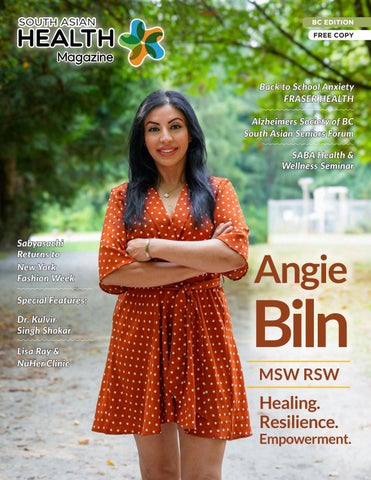
BC EDITION FREE COPY
Back to School Anxiety FRASER HEALTH Alzheimers Society of BC South Asian Seniors Forum SABA Health & Wellness Seminar
Sabyasachi Returns to New York Fashion Week Special Features: Dr. Kulvir Singh Shokar Lisa Ray & NuHer Clinic
Angie
Biln MSW RSW
Healing. Resilience.
Empowerment.
Upcoming Feature Cover Story BC South Asian Health Magazine
Dr. Gehana Shankar Naturopathic Physician
Dr. Gehana Shankar is a Naturopathic Doctor, entrepreneur, mother of two young children, and clinic owner at Killarney Health, a family-centered integrative wellness clinic in Vancouver. Her passion for women's health, fertility, and PCOS stems not only from her clinical experience, but from her own journey. At 17 years old, Gehana moved to Canada from India on her own while facing health challenges that left her searching for answers and support. As a young woman navigating an unfamiliar healthcare system, she experienced firsthand the frustration, uncertainty, and isolation that can come with not fully understanding what is happening in your own body. Today, those experiences fuel her passion for helping women gain clarity, confidence, and a deeper understanding of their health, so they never feel alone in their journey. Through her work, Dr. Gehana focuses on supporting women with PCOS, hormonal imbalances, fertility concerns, and postpartum health. She believes that when women understand how their bodies work, they are empowered to make informed decisions and become active participants in their own healing. Through education, evidenceinformed natural medicine, and compassionate care, she helps women uncover the root causes of their concerns and build a foundation for long-term health. As a clinic owner, her mission extends beyond patient care. She is building a space where women and families can find the support, answers, and sense of community she once searched for herself—creating a healthcare experience where every patient feels heard, supported, and empowered throughout their journey.
Killarney Health 208- 2609 E 49th Avenue, Vancouver, BC V5S 1J9 We are located in Killarney Center
(604)438-9327 drgehanashankar.com
info@killarneyhealth.com
killarneyhealth.com
drgehanashankar.nd
Upcoming Feature Cover Story BC South Asian Health Magazine
MD, CCFP Medical Director and founder of NÜR, located in downtown Vancouver. His journey began in Mackenzie, BC, and led him to pursue a Bachelor of Kinesiology at the University of British Columbia. He then took the long route to Ireland to earn his medical degree before returning home to complete his Family Medicine residency at UBC. After years of serving as a trusted family physician, Dr. Bassi pursued advanced postgraduate training through Bond University, earning a Professional Certificate, Advanced Certificate, and Professional Diploma in General Dermatology. His clinical focus now encompasses neuromodulators, dermal fillers, biostimulants, exosomes, and thread lifting. At NÜR, Dr. Bassi is committed to providing personalized treatment plans, advanced laser technology, and medical-grade skincare tailored to every skin type. His approach combines medical expertise with a focus on helping patients feel confident, comfortable, and cared for. Outside the clinic, Dr. Bassi has a lifelong passion for athletics and has proudly represented both Team Canada and Team India in ball hockey. He is also a husband and new father—roles that continue to teach him the importance of patience, humility, and showing up for others. That perspective carries into his work every day and fuels his passion for creating a patient experience where everyone feels confident, seen, and genuinely cared for.
236-514-7064
info@thenurclinic.com
www.thenurclinic.com
@thenurclinic
UPCOMING FEATURE COVER STORY BC SOUTH ASIAN HEALTH MAGAZINE
Dr. Daniel Dhesa
DC, B.Kin
Beyond the clinic, he is deeply committed to community service, having volunteered with Special Olympics BC, Paralympics Canada,
Owner & Clinic Director
and Big Brothers Big Sisters of the Fraser
Holding a Doctorate from Palmer College
as Team Chiropractor for Vancouver FC (2023)
of Chiropractic and a Bachelor of
and working on medical teams for the BC
Kinesiology from UFV, Dr. Daniel brings
Summer Games (2024) and BBall Nationals
nearly five years of clinical experience
(2025). Dr. Daniel provides personalized care
specializing in sports performance, active
in both English and Punjabi.
rehabilitation, and evidence-based care for acute and chronic pain, including spine, TMJ, and extremity injuries.
Valley. His athletic coverage includes serving
His treatment approach integrates targeted manual and gentle instrument-assisted adjustments with advanced therapies, such as
Building on his background as a certified
Shockwave, Laser, and Spinal Decompression,
personal trainer and a lifelong
to speed up recovery & restore joint motion.
commitment to an active lifestyle,
Combining hands-on active release
including weightlifting, golf, basketball,
techniques with custom strength and
running, and kickboxing, Dr. Daniel
mobility programming, his care relieves
bridges the gap between injury recovery,
tension, improves performance, and guards
movement optimization, and peak
against future re-injury.
physical performance.
604-535-2500
www.whiterockhealth.com
1219 Johnston Rd
@DesLauriersChiropractic
White Rock, BC, V4B3Y8
Message from the Publisher Dear Readers,
As the days of summer give way to the crisp, changing season of Fall, it is the perfect time to refocus on our health and wellbeing. Fall brings cooler temperatures, changing routines and, many families, theHealth return toMagazine busy schoolas schedules. With children back in This year marks a truly special milestone forforBC South Asian we proudly celebrate classrooms, extracurricular activities in full swing and households adjusting to a new rhythm, it is especially important to prioritize 15 years of serving our community. What began as a vision to create meaningful, culturally relevant healthy habits—from nutritious meals and adequate sleep to staying active, managing stress and supporting our immune health. Fall is also a conversations has grown into a trusted global brand. Over the years, we have remained committed to wonderful reminder that taking care of ourselves is not something we should put on the back burner. Small, consistent choices can make stories in that in empowerment, education, and representation for South a amplifying meaningful difference howmatter—stories we feel throughoutrooted the season.
Asians everywhere.
In this issue, we are especially proud to introduce our feature cover story with Angie Biln, MSW, RSW, whose work and personal journey Weaare honored to continue as theresilience only platform dedicated wellness, offer powerful perspective on mentalstanding health, trauma, and healing. With moreexclusively than 19 yearsto ofhealth, experience in social work, Angie brings professional expertise and lived experience to her work, with a focus on trauma-informed and culturally responsive care. Her beauty, fashion, and fitness for the South Asian community on a global scale. This focus has always been message is especially meaningful for our South Asian community, where conversations around mental health, boundaries, relationships, at the heart of who we are. By addressing topics through a culturally informed lens, we have been able grief and emotional wellbeing are increasingly important. Angie reminds us that healing can begin with awareness and that it is never too to spark dialogue, inspire healthier lifestyles, and celebrate the diversity and strength of our community late to begin again.
across generations.
We are also pleased to highlight two upcoming community events focused on health and wellbeing: the Alzheimer’s Society of BC Our Asian journey has of growth andand expansion. WithAsian a strong presence across South Forum on also Brain been Health,one presented in Punjabi English for South older adults, caregivers andmultiple families is provinces taking place Canada, we are 19th nowatexcited to Hall. be extending our WeSeminar, are currently in the oninSaturday, September Surrey City Then the next day,footprint SABA BC’s internationally. free Health & Wellness “Rethinking Pain Care: Understanding & Managing Pain,” taking place at Grand Empire (UK), Banquet HallDubai in Surrey. Both events offer valuable opportunities to learn, process of expanding to California (USA), London and (UAE)—with India and Australia next on ask questions and connect with local health resources. our radar. These new markets represent not just geographic growth, but deeper opportunities to connect
with worldwide. We alsoSouth turn ourAsians attention to the world of fashion with a look at Sabyasachi Mukherjee’s highly anticipated return to New York Fashion Week. After nearly 18 years away, the celebrated Indian designer returned to Manhattan with “Bengal Byzantine Broadway,” a 72-look As we look ahead, 2026 isblending shapingIndian up tocraftsmanship, be a year filled with major jewellery milestones Spring/Summer 2027 collection Byzantine-inspired and and chapters. Weand are energized by what lies aheadjewellery, and remain Newbold York new energy. From denim tailored silhouettes to extraordinary Sabyasachi focused further strong foundation the #1Itmagazine offered aon fresh take onsolidifying global luxuryour while celebrating his Indianasheritage. was a powerful moment for South Asian creativity on the international fashion stage. source catering to South Asians worldwide. Thank you to our readers,
partners, contributors forreaders, beingcontributors, an integralpartners part ofand thissupporters journey—we As always,and thank you to all of our for being look to growing, evolving, andcommunity. celebrating partforward of the BC South Asian Health Magazine Yourtogether. continued encouragement
allows us to bring forward stories, voices and resources that inform, inspire and support
Cheers to a Happy, Healthy our community. We are grateful New to haveYear! you with us and look forward to continuing this journey together.
RINA GILL
Publisher, South Asian Health Magazine
rina@thehypeadagency.com 778 688 4973 778 688 4973
The publisher is not responsible for any manuscripts, images, photographs or any other material. By accepting and publishing advertising, editorial, advertorial, profiles or any other information in this publication; the publisher in no way recommends, guarantees or endorses quality of services or products and information within the context The publisher is not responsible for any manuscripts, images, photographs or any material. Bythe accepting and publishing editorial, profiles or of the above-mentioned. Although every precaution is taken in the preparation ofother this publication, Publisher shall have noadvertising, liability to any personadvertorial, or entity with respect anyany other in this publication; the publisher in no wayThe recommends, or endorses of services products and information within the context to lossinformation or damage caused by the contents of this publication. Publisher isguarantees not liable for any errorsquality or omissions and or does not guarantee in any way the accuracy of of the above-mentioned. Although precaution is taken in the2026 preparation of this publication, the Publisher shall have no any person or may entitybewith respect information provided in the contentsevery of this publication. Copyright by The Hype Advertising Agency. All rights reserved. Noliability part ofto this publication reproduced to any loss or damage caused the contents of this Publisher is notorliable for any errors or omissions and does not guarantee in any way the accuracy of by anybymeans, electronic, orpublication. mechanical,The including internet photocopying without written permission of the Publisher. information provided in the contents of this publication. Copyright 2026 by The Hype Advertising Agency. All rights reserved. No part of this publication may be reproduced by any means, electronic, or mechanical, including internet or photocopying without written permission of the Publisher.
South Asian Forum:
BRAIN HEALTH Join us for an engaging and informative discussion on the impact of dementia on South Asian families, featuring insights from professionals in the field. This free event is offered in Punjabi and English. Explore how dementia shapes the lives of South Asian families and gain valuable insights from experts working in the field. Caregivers aged 19+ are also welcomed to the forum.
Morning session:
9:30am–12:00pm, presented in Punjabi Surrey City Hall, 13450 104 Ave, Surrey, BC
Afternoon session:
1:00–3:30pm, presented in English
Complimentary light refreshments, door prizes, and resource information booth.
For support to register, please call the Alzheimer Society of BC and Yukon’s South Asian Dementia
Helpline: 1-833-674-5003
Available Monday to Friday 9am to 4p m.
This forum is specifically designed for South Asian older adults, caregivers, and families. Research and community feedback have highlighted the need for more culturally relevant dementia education and support within South Asian communities. Offered in Punjabi and English, the forum provides an opportunity to learn about brain health, dementia, caregiving, and available resources in a culturally responsive setting. By tailoring information to the experiences and needs of South Asian families, we hope to increase awareness, reduce stigma, and improve access to supports and services. In partnership with Alzheimer Society BC & Yukon:
FRASER HEALTH:
BACK TO SCHOOL ANXIETY September 03, 2026 The start of a new school year can bring excitement, anticipation and, for some children and youth, anxiety. Fraser Health is encouraging parents and caregivers to recognize the signs of back-toschool anxiety and support children as they adjust to new routines, relationships and expectations. Worries about returning to school can affect students of all ages. Some may be concerned about making friends or fitting in, while others may be worried about schoolwork, starting at a new school or simply not knowing what to expect. “Some nervousness about going back to school is completely normal, especially when children and youth are facing something new or uncertain,” shares Nelam Sall, program lead, Integrated Child and Youth, Mental Health and Substance Use Services, Fraser Health. “Parents and caregivers can start by asking what they’re worried about and really listening to what they have to say. Sometimes just feeling heard and talking through those worries together can help a child feel more prepared and supported.”
Anxiety does not always look like worry. A child or youth who is struggling may have trouble sleeping, become more irritable, complain of headaches or stomach aches, experience changes in mood or behaviour, or start avoiding conversations or activities related to school. Parents and caregivers can make the transition easier by talking with children about what to expect and how they are feeling. Ways to support children and youth include: • Gradually returning to regular sleep, meal and morning routines before school starts. • Talking through what the first day or week will look like, particularly for students entering a new school or adjusting to a significant change.
• Asking open-ended questions about what they are looking forward to and what they are worried about.
As Nelam explains, “We can’t take away every uncomfortable feeling, but we can help children learn that they can cope with them.”
• Acknowledging and validating their feelings rather than immediately reassuring them or telling them not to worry.
For many students, that nervousness will ease once school starts and they settle into a routine. Parents and caregivers should pay attention, however, if anxiety continues, becomes more intense or starts affecting a child’s sleep, relationships, daily activities or ability to attend school.
• Reminding them of challenges they have successfully worked through before and talking about strategies they can use when they feel overwhelmed. • Helping them identify people they can turn to at home and at school. If a child says they are scared or does not want to go to school, parents and caregivers can start by acknowledging their feelings and trying to understand what is worrying them. Working through those worries one step at a time and reminding children of challenges they have handled before can help build their confidence.
“Families don’t need to wait until a child is in crisis to ask for help,” explains Nelam. “If their anxiety isn’t easing, is becoming more intense or is starting to interfere with school, relationships or everyday life, it’s a good time to reach out for some additional support.” For more information about child and youth mental health and available supports, visit: fraserhealth.ca/youthmentalhealth.
Nelam Sall, program lead, Integrated Child and Youth, Mental Health and Substance Use Services, Fraser Health.
Comprehensive Natural Health Solutions for Brain, Body, and Beyond!
• Innovation-Driven
• Science-Backed
• Life-Enhancing
LOSS, LEGACY, AND WELLNESS: BUILDING A WELLNESS BRAND WITH PURPOSE.
SUNNY RODHEY Scientist and founder of Health IS Wealth Group Inc.
Promo code - SAHM15 for 15% OFF THE ENTIRE ORDER
info@healthiswealthnaturals.com www.healthiswealthnaturals.com
@healthiswealthnaturals
St. Martinus University Fully Accredited by
Your Pathway to a Medical Degree and U.S. Residency Why St. Martinus University Fully Accredited by a WFME-Recognized Agency (AAEPO): Ensures eligibility for ECFMG certification and U.S.
residency training pathways while meeting internationally recognized standards in medical education.
Direct Entry Pathway Without MCAT: High school graduates
and university students can fast-track into medicine without the requirement of a 4-year undergraduate degree or MCAT examination.
Modern Campus with Advanced Learning Tools: State-of-
the-art infrastructure featuring digital anatomy systems, upgraded laboratories, research facilities, and on-campus student housing designed to support an optimal learning environment.
Secure and Comfortable Student Living: Safe and reliable housing with meal plan options, located in Curaçao — a stable Caribbean island outside the Atlantic hurricane belt. Strong Residency Match Record: Consistently high U.S.
residency match rates, with graduates placed across major specialties throughout the United States.
Cost-Effective Medical Education: Significantly lower tuition
and living expenses compared to many U.S. and Canadian medical schools.
Eligible for Canadian federal and provincial student loan programs, making medical education more financially accessible
for Canadian students.
SMU RESIDENCY MATCH RESULTS 2026 ERAS Cycle
Angie Biln MSW RSW
Healing. Resilience. Empowerment.
What inspired you to pursue a career in mental health and social work, and what has kept you passionate for more than 19 years? I have always been drawn to people— their stories, their resilience, and understanding what helps someone move forward after difficult experiences. Social work gave me a way to turn that interest into meaningful work, and more than 19 years later, I still feel incredibly connected to what I do.I also believe that what I bring into the therapy room is more than my education, credentials, and professional experience. I bring lived experience as well. I have gone through significant challenges in my own life, including a very difficult marriage, separation while raising two children, and then, a few years later, the unexpected loss of the father of my children.
info@angiebiln.ca angiebiln
Angie Biln
Social work gave me a way to turn that interest into meaningful work, and more than 19 years later, I still feel incredibly connected to what I do. www.angiebiln.ca
Angie Gill
angiebiln
www.socialworkevolved.ca Designed For More: The Podcast
Those experiences brought many layers of emotion: grief, sadness, guilt, anger, unresolved hurt, and the challenge of helping my children process a loss while also navigating my own healing. They also came with very real hardships around major life transitions, financial stress, rebuilding stability, and learning how to navigate life while essentially starting over. Those experiences have given me a deeper sense of empathy, resilience, and perspective, and they continue to shape the way I support others through their own periods of change, loss, and rebuilding.
we want to carry forward.
A huge part of my own motivation to heal and grow is my children. I believe that the more we are willing to reflect, take accountability, learn from our experiences, and do our own healing, the more we are able to pass something healthier on to the next generation.As a mother, one of my greatest goals is to give my children tools that many women in my generation—and generations before mine—were not always given. I want them to understand that their emotions matter, their voice matters, their boundaries matter, and their needs matter. I want them to know that love should not require them to lose themselves, silence themselves, or tolerate things that compromise their wellbeing. My hope is
A major turning point in my own healing journey came in 2019, when I began doing deeper inner child work. That process allowed me to that they grow Within South Asian start connecting the dots into adulthood with culture, many of us between my early years, were raised with strong a stronger sense of self, the beliefs I carried values around family, into adulthood, the healthier relationships, loyalty, sacrifice, and relationships I entered, and the confidence to make resilience. There is so and the patterns that choices based on their own much beauty in those continued to show up values rather than fear, values, but I also believe in my life. So much of we can evolve the way guilt, or cultural who we become—how we pass them on. We we see ourselves, what we pressure. can teach our children tolerate, the relationships that strength can include we are drawn to, and how we vulnerability, that respect can respond to boundaries—can be coexist with boundaries, and that connected to experiences and beliefs choosing yourself does not mean you formed much earlier in life. love your family any less. If I can become more Doing that work helped me understand myself self-aware, healthier, and more intentional in with greater compassion and accountability. It the way I live my life, then I can model that for allowed me to move away from the mindset of my children. My hope is that they grow into “Why did this happen to me?” and begin asking adulthood with a stronger sense of self, healthier different questions: “What is this experience relationships, and the confidence to make choices teaching me? What patterns do I want to change, based on their own values rather than fear, guilt, and how can I grow from here?” or cultural pressure. That shift changed the way I approached my own healing and ultimately deepened the way I work with others. It reinforced for me that healing is not only about understanding what happened to us; it is also about understanding how those experiences shaped us, taking ownership of what we can change, and consciously choosing what
What has kept me passionate all these years is seeing what can happen when people begin to understand their own story differently. I have witnessed clients move from feeling powerless and overwhelmed to developing boundaries, recognizing their worth, rebuilding relationships, finding their voice, and creating lives that feel
more aligned with who they truly are. For me, the work has always been about helping people understand that difficult experiences can become part of their story without becoming the definition of their story.
Your practice is rooted in traumainformed and culturally responsive care. Why is this approach especially important for South Asian communities? For me, culturally responsive care means understanding that mental health does not exist separately from culture, family, community, faith, gender roles, generational expectations, and our lived experiences.
The work has always been about helping people understand that difficult experiences can become part of their story without becoming the definition of their story.
Within South Asian communities, there can still be considerable stigma surrounding mental health. People may be taught to keep family problems private, to tolerate unhealthy situations, or to worry about “log kya kahenge?”—what will people say? Women in particular can carry enormous expectations around marriage, parenting, caregiving, family honour, and putting everyone else's needs before their own.
info@angiebiln.ca angiebiln
Angie Biln
www.angiebiln.ca Angie Gill
angiebiln
www.socialworkevolved.ca Designed For More: The Podcast
Trauma-informed care allows us to move away from asking, “What is wrong with you?” and instead explore, “What happened to you, how has it affected you, and what do you need now?” I want clients to enter therapy knowing they do not have to explain or defend their culture. We can honour the beautiful parts of our cultural identity while also creating space to question beliefs or expectations that may no longer serve us. Healing does not require someone to abandon their culture. It can mean learning how to live within it while also honouring their own voice, values, boundaries, and emotional wellbeing.
You are certified in EMDR therapy. How does EMDR help people heal from trauma compared to traditional talk therapy?
not worthy.” As those memories are processed, they can begin to feel less emotionally charged, and healthier, more adaptive beliefs can emerge. Traditional talk therapy can be incredibly valuable, and I use approaches such as CBT alongside other trauma-informed interventions. What I appreciate about EMDR is that it gives us another way of accessing experiences that may be deeply held within the nervous system, particularly when simply talking about the experience has not been enough. Ultimately, the goal is not to erase what happened. We cannot change the past. The goal is to help a person reach a place where they can remember what happened without continuing to emotionally relive it in the present. The memory remains part of their story, but it no longer has to carry the same power over their life.
EMDR—Eye Movement Desensitization and Reprocessing—is one of the approaches I use when working with trauma and unresolved emotional wounds. What makes it so powerful is that trauma is not always something we can simply “talk ourselves out of.”
You work with individuals, couples, and families facing anxiety, depression, grief, and relationship challenges. What are the most common issues you see today?
Someone can intellectually understand that an event happened years ago and that they are safe today, yet their body and nervous system may continue reacting as though the danger is still present. A sound, smell, place, relationship, or situation can suddenly trigger fear, anxiety, panic, shame, or a physical response.
One of the biggest themes I see is people feeling disconnected—from themselves, from their relationships, and sometimes from the life they thought they were supposed to have.
EMDR is a well-established, evidence-based trauma treatment and can be highly effective in helping people process traumatic experiences and unresolved emotional wounds that may continue to affect them long after the original event has passed. For many people, it allows them to work through experiences that they may have understood intellectually for years but have never fully processed emotionally. EMDR helps individuals process distressing memories and the negative beliefs that may have become attached to those experiences—for example, “I am not safe,” “I am broken,” or “I am
I work with many clients experiencing anxiety, depression, trauma, grief, relationship difficulties, burnout, chronic stress, low selfworth, and challenges with boundaries. I also see many individuals who appear very high functioning from the outside. They are working, parenting, caring for family members, managing responsibilities and appearing “fine,” while internally they may feel completely overwhelmed. Relationship concerns are also significant. People are beginning to question unhealthy relationship patterns, communication difficulties, codependency, trust issues, and beliefs they may have learned growing up about what they are supposed to tolerate in a relationship.
I think people are increasingly realizing that mental health is not simply about having a diagnosis. It is about how we feel in our everyday lives—how we sleep, connect, communicate, cope, parent, work, set boundaries and experience ourselves. Therapy creates a space to finally slow down and ask, “What do I actually need?”
You have extensive experience supporting people recovering from brain injuries and chronic pain. What are some misconceptions about the emotional impact of these conditions? One of the biggest misconceptions is that if an injury cannot be seen, it must not be serious. A person living with chronic pain
info@angiebiln.ca angiebiln
Angie Biln
or a brain injury may look completely fine, yet their entire life can change. They may experience headaches, fatigue, cognitive changes, difficulty concentrating, disrupted sleep, anxiety, depression, irritability, memory concerns, loss of confidence, or difficulty participating in activities they once enjoyed. There is also grief involved that people do not always recognize. Someone may be grieving their previous level of independence, their career, their physical abilities, their social life, or even their sense of identity. I often hear clients say, “I just want my old life back.” Recovery therefore cannot only focus on the physical injury. We have to look at the whole person. Physiotherapy and other rehabilitation services are important, but so are emotional support, family support, meaningful activity, identity, purpose, relationships and mental health.
www.angiebiln.ca Angie Gill
angiebiln
www.socialworkevolved.ca Designed For More: The Podcast
Healing often involves helping someone recognize that although life may look different now, they can still create meaning, connection and quality of life.
As someone fluent in English, Punjabi, and Hindi, how has being able to communicate in multiple languages strengthened your connection with clients? Language creates connection, but it also creates safety. Sometimes there simply is not an English phrase that carries the same emotional meaning as something said in Punjabi or Hindi. When a client can express themselves in the language that feels most natural to them, particularly when discussing family, grief, trauma, relationships or cultural expectations, there can be an immediate sense of relief. It also allows me to understand some of the nuances behind what a client is telling me— the family dynamics, cultural expectations, humour, expressions, and experiences that might otherwise require a great deal of explanation. For some clients, particularly older adults or individuals who immigrated to Canada later in life, receiving mental health services in their own language can make therapy feel far more accessible. Representation matters as well. Sometimes simply sitting across from a professional who understands aspects of your culture can make it easier to begin a conversation you may have been afraid to have for years.
You are also a clinical supervisor, mentor, and consultant. What advice would you give to the next generation of mental health professionals? Never stop being curious. Education gives us an important foundation,
but our clients will continue to be some of our greatest teachers. Listen to people. Be willing to learn. Continue your professional development and stay open to different modalities, perspectives and cultural experiences. I would also encourage new professionals not to underestimate the importance of the therapeutic relationship. We can have extensive training, certifications and knowledge, but people need to feel heard, respected and emotionally safe before meaningful therapeutic work can happen. It is also important to know your own limitations. Seek consultation. Use supervision. Maintain strong ethical boundaries. Take care of yourself. This profession requires tremendous compassion, but compassion does not mean carrying every client's story home with you.I also believe that we have a responsibility to do our own inner work. The more we are willing to reflect, take accountability, understand our own triggers and biases, and remain open to growth, the more grounded and present we can be for the people we serve. Finally, remember the privilege involved in this work. People often share things with us that they have never told another person. Being trusted with someone's story is something I never take lightly.
Through your podcast, media appearances, and public speaking, you actively work to reduce mental health stigma. What conversations do you hope become more common in our communities? I want mental health conversations to become as normal as conversations about physical health.I want us to be able to say, “I'm struggling,” “I need help,” “I'm going to therapy,” or “This relationship isn't healthy for me,” without shame. Within South Asian communities specifically, I would love to see more open conversations about trauma, domestic violence, unhealthy relationships, grief, anxiety, depression, parenting, men's mental health, generational
trauma, boundaries, and the pressure to maintain appearances. I also want us to stop equating silence with strength. Strength is not always enduring more. Sometimes strength is speaking up. Sometimes it is asking for help. Sometimes it is setting a boundary, leaving an unhealthy situation, going to therapy, or deciding that a pattern ends with you.
Through my media work, speaking, podcasting and community involvement, my goal is to make these conversations accessible. When people see someone openly talking about difficult subjects, it gives them permission to begin talking too. That is how stigma begins to change—not only in therapy rooms, but around dinner tables, within families and throughout our communities.
You often speak about helping people move from surviving to thriving. What does that transformation look like in real life, and where should someone begin? Survival mode is often about getting through the day. You are responding to what is happening around you, managing crises, putting other people's needs first and functioning without necessarily feeling connected to yourself.Thriving does not mean that life suddenly becomes perfect.It means you begin living intentionally rather than simply reacting. You start recognizing your patterns. You understand your triggers. You learn how to regulate your emotions. You develop boundaries. You become clearer about your values.
info@angiebiln.ca angiebiln
Angie Biln
www.angiebiln.ca Angie Gill
angiebiln
www.socialworkevolved.ca Designed For More: The Podcast
You begin noticing the way you speak to yourself. You stop abandoning yourself to keep everyone else comfortable.Eventually, life becomes less about proving your worth and more about knowing your worth. For someone who does not know where to start, I would say: begin with awareness. Ask yourself, How am I really doing? What am I tolerating? What am I avoiding? What do I need more of? What do I need less of? You do not have to transform your entire life overnight.Healing can begin with one conversation, one boundary, one therapy appointment, one new habit or one decision to choose yourself differently. Small changes, repeated consistently, can completely change the direction of a person's life.
Looking ahead, what are your goals for expanding your impact, and what message would you like to leave with readers of BC South Asian Health Magazine? I feel like I am entering a really meaningful and exciting chapter of my work. One of the projects I am especially proud of is that I have recently completed the first draft of my memoir. It has been a very personal process of reflection, healing, and putting experiences into words, and I am looking forward to continuing to develop it. My hope is that, when the time is right to share it, my story can help someone else feel less alone and remind people that difficult chapters do not have to determine how the rest of their story unfolds. I also plan to continue expanding my voice beyond the traditional therapy room. I want to continue appearing as a guest on podcasts, television, radio, and other media platforms, as well as keynote speaking and participating in conversations that help normalize mental health, trauma, relationships, grief, resilience, and healing. Hosting wellness events, retreats, community gatherings, workshops, and corporate wellness events is another area I want to continue growing. I
believe there is tremendous value in bringing mental health education into spaces where people already live, work, connect, and build community. Sometimes one conversation or one shared experience can be the beginning of someone realizing that they are ready to make a change. Clinically, I will continue providing trauma-informed therapy and supporting individuals, couples, and families through trauma, anxiety, depression, grief, relationship challenges, chronic pain, brain injury, and major life transitions. I am registered to practice as a social worker in British Columbia, Alberta, and Ontario, which allows me to continue expanding my work and collaborating with appropriate professionals and providers across those provinces. My work spans a number of areas, including psychotherapy and trauma therapy, rehabilitation case management, medico-legal work and independent assessments, clinical consultation and supervision, and supporting Indigenous individuals and families through culturally responsive and trauma-informed services. I also want to continue mentoring and supervising other professionals. For me, impact is not only about the number of clients I personally support. If I can help another clinician grow in their confidence, deepen their trauma-informed practice, and provide better care to the people they serve, that impact continues far beyond one therapy session. Ultimately, I see the next phase of my career as bringing all of these pieces together—clinical practice, lived experience, writing, education, media, mentorship, speaking, wellness, and community work. My message to readers is that it is never too late to begin again. You are allowed to outgrow old versions of yourself. You are allowed to heal from experiences you once thought would define you. You are allowed to establish boundaries, change direction, ask for support, and create something different for yourself and for the generations that come after you. I truly believe that when we heal ourselves, that healing has a ripple effect. It changes how we parent, how we love, how we communicate, how we lead, and what we model for the next generation.And for me personally, I feel like I am only getting started.
UPCOMING FEATURE COVER STORY ONTARIO SOUTH ASIAN HEALTH MAGAZINE
DR. NASIMUL SAM HUQ
Dr. Nasimul Sam Huq is the founder and lead plastic surgeon at Niagara Plastic Surgery Centre in Niagara Falls, Ontario, with more than 28 years of experience in aesthetic and reconstructive plastic surgery. His academic journey began at Dalhousie University, where he was an Entrance Scholarship recipient and Dean's Honour Roll student, followed by his medical degree from Western University and residency training in General and Plastic Surgery at McMaster University, where he earned his FRCSC. He subsequently completed fellowships at the Kleinert Institute in Louisville, Kentucky, and in Reconstructive Trauma in Toronto. Dr. Huq is a Fellow of the Royal College of Physicians and Surgeons of Canada (FRCSC), a Fellow of the American College of Surgeons (FACS), and has been a Diplomate of the American Board of Plastic Surgery for nearly 30 years. As an Assistant Clinical Professor of Surgery at McMaster University, he is passionate about educating and mentoring the next generation of physicians. Dr. Huq specializes in advanced facial rejuvenation, offering a range of techniques including traditional and endoscopic facelifts, deep plane facelifts, deep plane neck lifts, brow lifts, blepharoplasties (eyelid surgery) and more under local anesthesia. His philosophy is to seek harmony between the outer appearance and the inner self, while balancing the pursuit of aesthetic enhancements with psychological well-being, patient autonomy and the definition of natural human beauty. Fat grafting is often incorporated to restore volume and enhance facial harmony. Dr. Huq uses techniques designed to strategically conceal incisions and minimize visible scarring. Alongside his clinical practice, Dr. Huq remains active in research and medical education, with publications spanning a variety of plastic surgery topics. He is also the author of Local Anesthesia for Plastic Surgery, published as an issue of Clinics in Plastic Surgery in October 2013.
905-357-2360 905-357-4714
niagaraplasticsurgery@gmail.com www.niagaraplasticsurgery.com
5668 Main Street, Suite 1 Niagara Falls, ON L2G 5Z4
Toll free: 1-866-929-FACE(3223)
@dr.huq.niagaraplasticsurgery
UPCOMING FEATURE COVER STORY BC SOUTH ASIAN HEALTH MAGAZINE
Inner Diya Wellness
Navin Sahjpaul
BRAND KIT Primary Logo
Inner Diya
Inner Diya
WELLNESS
WELLNESS
released his debut album, Medicine Music, featuring 26 original compositions created to accompany practices such as yoga, breathwork, meditation, and psychedelic-assisted therapy. Using Logic Pro X and Ableton Live, he combines field recordings, MIDIbased synthesizers, and live instrumentation to create ambient, instrumental, drone, and electroacoustic compositions.
Navin is an interdisciplinary practitioner, Registered Clinical Counsellor (RCC), Music Therapist (BMT), Yoga Teacher (YTT-250), Psychedelic-Assisted Therapist, and Artist (Musician, Writer). A second-generation Indo-Canadian with ancestral roots in India, Navin was born in Canada and resides in Vancouver, BC. His life journey has led him toward a path of service, healing, creativity, culture, and community.
Icon
Stacked Logo
Navin recently co-founded Kirtan Haven, a community organization supporting the work of Priyesh Dhoolab and Friends and creating spaces for people to gather through kirtan, devotional music, and collective experience. He also leads OSTād under Raga Echoes, an Indo-Western instrumental music project that brings together South Asian classical and Western musical traditions. Inspired by the fusion of “OST” (Original Soundtrack) and “Ustad” (virtuoso), OSTād reimagines iconic film soundtracks and familiar Western melodies through instruments such as sitar, sarod, tabla, violin, and piano.
Navin’s work is informed by his academic training, professional experience within the healthcare system, community wellness work, artistic practice, and lived experience. He is deeply influenced by the wisdom of loved ones, ancestors, clients, elders, and mentors. He views the therapeutic relationship as a sacred space and an honour—an opportunity to accompany others through introspection, healing, growth, self-exploration, and personal transformation.
Inner Diya
As a Music Therapist (BMT), Navin’s practice has included working within the healthcare system in addictions, mental health, and hospice care, as well as in community-based settings through wellness events, workshops, and conferences. His work explores how music and sound can be integrated into therapeutic and healing environments to support well-being, quality of life, and mental health.
WELLNESS
Colour Pallette
Navin is also deeply engaged in the preservation, promotion, and celebration of Indian classical arts and culture. He serves as Director of Marketing for the Indian Classical Music Society of Vancouver (ICMSV), a not-for-profit organization dedicated to promoting Indian classical music and dance in the Lower Mainland through performances, education, and community engagement. Navin first became involved with ICMSV as a volunteer in 2023, served as Co-Chair of its Marketing Committee in 2024, and joined its Board as Director of Marketing in 2025. Through his#640900 work with ICMSV, Navin supports the organization’s #FABE00 #FFFAEB efforts to create greater awareness, accessibility, and appreciation for Indian classical music and dance. As an artist, Navin is a multi-instrumentalist working with piano, acoustic guitar, flute, singing bowls, handpan, and voice. He composes and performs music under his own name. In 2024, he
Heading Font
Across his therapeutic, artistic, and cultural work, Navin is interested in the ways music, sound, creativity, spirituality, and community can create spaces for connection and transformation. His work bridges contemporary therapeutic practices with traditional forms of wisdom and artistic expression, while remaining grounded in a deep respect for the individual and their unique journey. Navin’s personal journey has given him an intimate understanding of despair, disconnection, and the questions that can arise when searching for meaning, love, and wholeness. Through his exploration of contemporary and traditional therapeutic and wellness practices, he has experienced the possibility of healing and transformation through intentional attention to our wounds. He is deeply passionate about mental health, well-being, music,
art, community, culture, and healing. Navin believes that our #797979 #FFFFFF
deepest ruptures can become our greatest teachers, and that tending to our pain can expand our capacity for joy, gratitude, connection, and love.
Navin is honouredFont to walk this path and to offer his work in Paragraph service to others.
www.innerdiyawellness.com Open linktr.ee/navinsahjpaul Montserrat - Light Sans
Sabyasachi Returns to New York: Bengal Meets Broadway Indian luxury takes centre stage as Sabyasachi Mukherjee makes his long-awaited New York Fashion Week comeback After nearly 18 years away from the New York Fashion Week runway, Sabyasachi Mukherjee returned to Manhattan on September 15 with “Bengal Byzantine Broadway,” a 72-look Spring/Summer 2027 collection that brought together Indian craftsmanship, Byzantineinspired jewellery and the unmistakable energy of New York. His return marked one of the most anticipated moments of the Spring/Summer 2027 NYFW season, with the designer once again placing an unmistakably Indian point of view on one of fashion's biggest international stages. Rather than returning with an expected parade of elaborate bridal silhouettes and heavily embellished couture, Sabyasachi surprised audiences with a collection grounded in everyday American wardrobe staples. Denim, button-down shirts, tailored jackets, relaxed trousers, wrap skirts and Western-inspired pieces formed the foundation of the collection. Yet these familiar New York and Americana references were transformed through the designer's signature use of craftsmanship, statement accessories and rich jewellery. The opening look immediately established the collection's
direction. Supermodel Christy Turlington opened the show in layered denim, wearing the designer's dramatic Pantokrator pendant. The pairing of casual denim with an extraordinary fine-jewellery statement perfectly captured the central tension of the collection: the ordinary meeting the extraordinary. Turlington's return to the Sabyasachi runway was particularly significant; she had previously closed the designer's 25th-anniversary retrospective in Mumbai. BENGAL, BYZANTIUM AND BROADWAY The collection's title provides a roadmap to its inspirations. “Bengal” represents Sabyasachi's Indian roots and artisanal heritage; “Byzantine” speaks to the historical influences behind the jewellery; and “Broadway” reflects the theatricality and cosmopolitan spirit of New York. One of the show's most important developments was the debut of Sabyasachi's finejewellery collaboration with The Metropolitan Museum of Art. The first chapter of the multi-year collaboration draws inspiration from The Met's Byzantine collection, translating centuries-old visual references into contemporary jewellery. The pieces feature gold, gemstones and highly detailed forms that
however, he demonstrated that his design language can extend into considerably more relaxed territory.
were designed to function alongside the more relaxed clothing. Turlington's opening necklace was particularly spectacular: the Pantokrator pendant was crafted in 18- and 22-karat gold and incorporated a dramatic combination of coloured gemstones including sapphire, spinel, garnet, iolite, onyx, jade, jasper and turquoise. Against her relatively understated denim outfit, the necklace became a visual focal point. THE NEW SABYASACHI WOMAN Perhaps the biggest surprise of the collection was its sense of ease. Sabyasachi's aesthetic is traditionally associated with maximalism, intricate embroidery, bridal glamour and extraordinary Indian textiles. In New York,
Denim appeared throughout the collection, alongside Westerninspired accessories and silhouettes. Cowboy hats, casual shirting, tailored pieces and embroidered jackets gave the runway an Americana quality, while jewellery, craftsmanship and carefully considered styling maintained the unmistakable Sabyasachi identity. The result was a collection that felt less about dressing for a single grand occasion and more about building a luxury wardrobe— pieces that could move between New York, Mumbai, London, Dubai and other global fashion capitals. A POWERFUL INDIAN PRESENCE IN NEW YORK The front row also reinforced the cultural significance of the moment. Rani Mukerji attended the show in a sleek black silk sari, bringing an unmistakably Indian fashion statement to Manhattan. Other notable attendees included Anaita Shroff Adajania, Sendhil Ramamurthy, Prabal Gurung,
Sarita Choudhury and Poorna Jagannathan. For Sabyasachi, the New York return represents more than simply another fashion-week appearance. His brand has expanded well beyond couture into jewellery, handbags, eyewear, home and other luxury categories, while maintaining a strong connection to Indian craftsmanship. His partnership with The Met further places that craftsmanship within a global cultural conversation. “Bengal Byzantine Broadway” ultimately presented a modern vision of Indian luxury—one that doesn't require abandoning heritage in order to speak to a global audience. By pairing jeans and denim with extraordinary jewellery, Western references with Indian craftsmanship, and historical inspiration with contemporary New York energy, Sabyasachi's comeback demonstrated the breadth of his evolving fashion universe. Nearly two decades after his last NYFW appearance, the message was clear: Sabyasachi is no longer simply bringing Indian fashion to the world. He is positioning Indian luxury as part of the global luxury conversation.
Dr. Kulvir Singh Shokar Beyond 20/20 Vision: Redefining Modern Eye Care for a Healthier Future
You’ve had a passion for eye care from an early age—what initially inspired you to pursue optometry as a career? I've always been drawn to healthcare and knew from an early age that I wanted a career where I could make a meaningful difference in people's lives. At the same time, I've always enjoyed teaching. Optometry turned out to be the perfect combination of both, where I could educate patients one on one, and now through social media and speaking engagements. What really solidified my decision was shadowing an optometrist. Before that, I think I had the same perception many people do—that it's mostly about prescribing glasses. Seeing firsthand how much medical care is involved, from diagnosing and managing eye diseases to detecting signs of systemic health conditions, completely changed my perspective. I was inspired by the opportunity to improve patients' overall quality of life, in more ways than one, and empowering them to take better care of their vision and health.
Growing up in Mississauga, how did your community and cultural background influence your journey into healthcare? Growing up in Mississauga gave me the opportunity to be part of an incredibly diverse community, where I was exposed to people from many different cultures and backgrounds. That experience taught me the importance of empathy, communication, and providing care that respects each person's unique experiences and needs.
@the.tieclip.eyedoc
My cultural background also played an important role in shaping my path. I was raised with a strong emphasis on education, hard work, and giving back to the community. Those values naturally led me toward a career in healthcare, where I could build meaningful relationships with patients and make a positive impact on their lives. Today, I strive to create an environment where every patient feels heard, understood, and comfortable asking questions about their eye health.
Your training focused heavily on ocular disease management—what drew you to specialize in conditions like glaucoma, diabetic retinopathy and dry eye disease? I've always been drawn to the medical side of optometry because of the opportunity to make a lasting impact on a patient's quality of life. Conditions like glaucoma, diabetic retinopathy and my main focus, dry eye disease, are particularly meaningful to me because they can cause a significant decrease in quality of life, if they aren't detected and managed early. As optometrists, we have the unique opportunity to identify these diseases—often before patients notice any symptoms—and help preserve their vision and eye health through ongoing monitoring, treatment, and collaboration with other healthcare providers. During my training, I found it incredibly rewarding to care for patients with complex ocular conditions and to see how early diagnosis and patient education could truly change outcomes. That experience reinforced my passion for ocular disease management and continues to shape the way I practice today.
You have a special interest in dry eye disease. What makes this area of eye care so important and often overlooked? Dry eye disease is one of the most common conditions I see in practice, yet it's often
I’ve always been drawn to the medical side of optometry because of the opportunity to make a lasting impact on a patient’s quality of life.
underestimated and misunderstood because many people assume it's simply a minor irritation that is solved with eye drops. In reality, it can have a significant impact on a person's quality of life, affecting everything from reading and working on a computer to driving and enjoying everyday activities. What interests me most is that dry eye disease is a chronic condition with many different underlying causes, so there's no one-size-fitsall treatment. It requires taking the time to understand each patient's symptoms, lifestyle, and eye health to develop a personalized treatment plan. I find it incredibly rewarding to help patients who may have struggled with discomfort for years finally find relief and improve both their vision and their day-to-day comfort.
You work with advanced treatments like IPL, RF, Jett Plasma—how are these technologies transforming patient outcomes in eye care? Advances in technology have significantly changed the way we manage conditions like dry eye disease. Treatments such as IPL, radiofrequency (RF), and Jett Plasma allow us to go beyond simply managing symptoms and instead target some of the underlying causes of the disease. When used for the right patient, these therapies can help improve the function of the eyelid glands, reduce inflammation, and promote a healthier tear film.
What excites me most is the ability to offer more personalized care. Every patient experiences dry eye differently, so having a range of advanced treatment options allows us to tailor therapy to their specific needs. These technologies can provide meaningful, long-lasting improvement in both comfort and vision stability, ultimately enhancing their quality of life.
Your approach blends evidence-based care with personalization—how do you ensure each patient feels individually cared for? Every patient is unique, and that's why I believe great eye care starts with listening. While evidencebased medicine provides the foundation for every recommendation I make, it's equally important to understand each patient's lifestyle, concerns, goals, and expectations. The best treatment plan is one that not only reflects the latest research but also fits the individual sitting in front of you. I also believe that patient education is a key part of quality care. I take the time to explain diagnoses, discuss treatment options, and answer questions so patients feel informed and involved in their care. When patients understand what's happening and why we're recommending a particular approach, they're more confident in their treatment and more likely to achieve successful long-term outcomes.
@the.tieclip.eyedoc
Every 20 minutes, look at something at least 20 feet away for 20 seconds. This helps reduce eye fatigue and encourages your eyes to refocus
care. Being able to communicate with patients who share similar cultural experiences can help build trust and encourage open conversations about their health. I hope to help raise awareness that eye exams are about much more than updating a glasses prescription—they're an important part of maintaining both eye health and overall health.
Many people spend long hours on screens today—what are your top recommendations for protecting eye health in the digital age? As a South Asian healthcare professional, what unique challenges or opportunities do you see within the community when it comes to eye health awareness? One of the greatest opportunities is increasing awareness about the importance of preventive eye care. Within the South Asian community, there is a higher prevalence of conditions such as diabetes, which can significantly increase the risk of vision-threatening diseases like diabetic retinopathy. Many of these conditions can develop without noticeable symptoms in the early stages, making regular comprehensive eye exams essential for early detection and treatment. As a South Asian healthcare professional, I also appreciate the importance of culturally sensitive
Digital devices have become an essential part of our daily lives, but prolonged screen use can contribute to digital eye strain and worsen symptoms of dry eye. One of the simplest habits I recommend is following the 20-20-20 rule: every 20 minutes, look at something at least 20 feet away for 20 seconds. This helps reduce eye fatigue and encourages your eyes to refocus. It's also important to be mindful of blinking. We blink almost 70% less when looking at screens, which can lead to dryness and irritation and permanent eyelid gland structural changes. Taking regular breaks, staying well hydrated, adjusting screen brightness to match your surroundings, and positioning your screen at a comfortable distance can all make a significant difference. Most importantly, don't ignore persistent symptoms like blurred vision, headaches, or ongoing discomfort—these may be signs that it's time for a comprehensive eye examination to determine whether there are underlying vision or eye health issues that need attention.
For me, the balance comes down to never compromising on accuracy. The medical credibility has to come first—every piece of content I share is grounded in evidence-based information and my clinical experience as an optometrist.
You’ve built a strong social media presence as “The Tie Clip Eye Doc”—what inspired you to create this persona? "The Tie Clip Eye Doc" started as a way to make eye health education more approachable and engaging. I've always enjoyed teaching, and social media gave me the opportunity to reach people beyond the exam room. There are so many misconceptions about eye health, and I wanted to create content that helps people better understand their vision and empowers them to take a more proactive approach to their eye care. The name itself reflects a bit of my personality. I enjoy dressing professionally, and a tie clip became a small signature part of my style. It felt like a memorable way to combine my personal brand with my passion for optometry. At the end of the day, my goal is to share reliable, evidence-based information in a way that's easy to understand and hopefully inspires more people to prioritize their eye health.
How do you balance being both an educator and entertainer on platforms like Instagram and TikTok while maintaining medical credibility? For me, the balance comes down to never compromising on accuracy. The medical credibility has to come first—every piece of content I share is grounded in evidence-based information and my clinical experience as an optometrist. I always make sure that what I’m teaching is something I would feel comfortable discussing with a patient in the exam room. The “entertainer” aspect is really just about packaging that information in a way that’s engaging and easy to understand, and letting my personality shine through some of the content. Eye health can be complex or technical, so if humor, storytelling, or short-form video helps make it more accessible, then I think that’s a win for education. At the end of the day, my goal is to make eye care approachable without losing the trust that comes with being a healthcare professional. If people leave my content more informed and more likely to take their eye health seriously, then that is a big win in my books.
Outside the clinic, you lead an active lifestyle—how does fitness and personal wellness influence your professional life? Maintaining an active lifestyle is something I prioritize because it directly impacts how I show up for my patients. Fitness and personal wellness help me stay focused, energized, and resilient throughout the demands of a busy clinical day. When I take care of my own health, I’m better able to give patients my full attention and provide thoughtful, patient-centered care.
@the.tieclip.eyedoc
I also think it helps me connect with patients on a more relatable level. Many eye conditions, like dry eye disease or diabetic eye disease, are influenced by overall health and lifestyle. Being mindful of my own habits makes it easier to have meaningful conversations with patients about how small changes in their daily routines can positively impact their long-term eye health. Ultimately, wellness isn’t separate from my profession; it supports it. Taking care of myself allows me to take better care of others.
What advice would you give to young South Asians who aspire to pursue a career in optometry or healthcare? My biggest piece of advice would be to stay curious and seek out real exposure to the field early on. Shadowing, volunteering, or speaking with healthcare professionals can give you a much clearer understanding of what the profession is really like beyond textbooks. Those experiences often confirm your interest—or help you refine it—and both are valuable. I would also encourage young South Asians to be confident in their place within healthcare. Sometimes there can be pressure to follow certain traditional paths, but optometry and healthcare more broadly offer incredibly meaningful careers where you can serve your community in a very direct and impactful way. Representation matters, and there is real value in bringing your perspective and lived experience into patient care. Finally, don’t underestimate the importance of persistence. The journey takes time, and there will be challenges along the way, but if you’re genuinely passionate about helping people and committed to learning, it’s an incredibly rewarding path.
How Old You Are Shouldn’t Define How Young You Look And Feel
AGE IS JUST A METRIC, NOT A MANDATE. LIVE AGE FREE
Neety Mangat Shaklee Ambassador
Life shake Whether you’re looking to lose weight or gain muscle, it’s essential to get your daily recommended protein to support your health goals. Of course, it’s not always easy to get all of your protein from food sources. With Life Shake, you can have a biologically complete meal in minutes that will fill you up and provide you with essential nutrients to support a healthy lifestyle!
Stress Relief Complex Stress is a natural part of life. Contrary to popular belief, some stress is important to your overall health. However, ongoing chronic stress can be detrimental, dragging down both your mental and your physical health. At Shaklee, our supplements and vitamins can help boost your mood, relieve stress, and support your mental health.
CONTACT ME TODAY TO FIND OUT HOW YOU CAN TRY SHAKLEE
6044991930
Vivix Antioxidant Solution Vivix is formulated to help protect against oxidative cell damage and help in energy metabolism, immune function and cardiovascular health. n Vivix keeps your cells young. n Blunt the inflammatory response n Backed by 27 global patents
neety78@gmail.com ca.shaklee.com/en_CA/neetymangat/storefront
Manreet Aulakh RN, CPT, CPPC
OWNER | EMBODY FIT COLLECTIVE CERTIFIED PRE/POSTNATAL COACH
Manreet Aulakh is a Registered Nurse with nearly a decade of experience, with the last several years dedicated to perinatal care. After completing her Advanced Perinatal Nursing certification through BCIT, she fell deeply in love with supporting women through pregnancy, labour, and postpartum. Fascinated by the resilience of the female body, Manreet has cared for hundreds of women during some of the most transformative and vulnerable moments of their lives—an experience that shaped her belief in empowering women with education, confidence, and comprehensive support. While working in labour and delivery, Manreet grew increasingly curious about the rising rates of high-risk conditions, emergency interventions, and preventable complications. This led her to dive into research, where she discovered a powerful connection: proper nutrition and strength training can significantly reduce the risk of gestational hypertension and diabetes, and even decrease the likelihood of instrumental deliveries and emergency C-sections. Motivated by these findings, she pursued certifications as a Personal Trainer and Pre- & Postnatal Coach to bridge the gap between medical care and preventative, lifestyle-based support. Today, Manreet blends her clinical expertise with her lifelong passion for health and fitness to coach women through a holistic, evidence-based approach. Through Embody Fit Collective, she helps women prepare for pregnancy, stay strong and confident throughout motherhood, and build lifelong habits that support their wellbeing with individualized nutrition and exercise plans. Her mission is simple: to educate, uplift, and empower women to embody their strength at every stage of their journey.
embodyfitco@gmail.com
@embodyfit.co
Lisa Ray Rewriting The Conversation On Women’s Health
Looking back, what experiences and influences most shaped the woman you are today? Growing up as a mix of Indian and Polish heritage gave me an innate sense of being a bridge between cultures and perspectives. But looking back, my journey has been shaped just as much by life's unscripted detours as by my career. Navigating the public eye early in life taught me resilience, but it was my cancer diagnosis in 2009—and the long, reflective journey of writing my memoir Close to the Bone— that truly anchored me. Confronting my own mortality stripped away the artificiality of fame and forced me to ground myself in spirituality, selfadvocacy, and truth. Every shift, from acting to writing to health advocacy, has taught me that true strength comes from vulnerability and embracing every phase of life without fear.
SOUTH ASIAN HEALTH MAGAZINE – SPECIAL INDIA LAUNCH ISSUE
presence, deep connection, peace, and honoring your body. Resilience, I realized, isn't about toughing it out or putting on a brave face for the world; it's about gentle endurance, surrendering to the present moment, and learning to rebuild yourself from the inside out. It redefined how I measure success—no longer by external validation or productivity, but by how grounded and authentic I feel every day.
A life-threatening diagnosis acts as an intense clarity filter. It vaporizes minor anxieties and forces you to confront what actually holds value
Your cancer treatment brought an unexpected health transition. What did you learn about understanding your body and advocating for your health?
What continues to draw you to storytelling, and what is it about acting that has remained meaningful through the different chapters of your life? Storytelling is an exercise in empathy. Early on, acting was a canvas for expression and exploration; it allowed me to step into different lives and worldviews. Over time, as my own lived experience expanded, acting became less about performance and more about truth-telling and human connection. Whether I am in front of a camera or writing a page, storytelling allows us to make sense of our chaos and let others know they aren't alone. That core impulse—to connect, illuminate, and give voice to what is often left unsaid—remains as meaningful to me today as it was when I first started.
How did your health journey with cancer change your perspective on life, resilience, and what truly matters? A life-threatening diagnosis acts as an intense clarity filter. It vaporizes minor anxieties and forces you to confront what actually holds value: @nuher.me
When cancer treatment pushed my body into premature menopause overnight at 37, I was completely unprepared. I knew how to fight for my life, but I was not prepared for the sudden shift, the physical exhaustion, brain fog, and total lack of clear medical guidance surrounding it. For years, I normalized those symptoms and carried a quiet, unspoken shame—something so ironic because I was being praised publicly for being so open about cancer. That experience was a profound wake-up call. It taught me that we cannot rely on a system that historically minimizes women's health; we have to become educated, tuned into our own bodies, and unapologetic about demanding proper, personalized care.
Was there a particular moment when you recognized these conversations were part of a much bigger gap in women's healthcare? It hit me during conversations with close friends who were entering their late 40s. A dear friend of mine was suffering through debilitating mood shifts and fatigue, yet she had never even heard the term perimenopause.
@lisaraniray
www.nuher.me
When we began speaking about it openly on social media, the floodgates opened. I realized I wasn't just carrying my own experience; I was witnessing a generational silence. Historically, women were excluded from medical research for decades, and standard medical training spends astonishingly little time on menopause. Women were consistently being told that their suffering was just "a normal part of aging" that they had to endure. That was the moment I realized this wasn't just a personal gap—it was a systemic healthcare blind spot.
What inspired you to co-found NuHer, and why create a dedicated platform focused on women's midlife and hormonal health now? With cancer, my mission was to start the conversation and break the stigma. But with menopause and midlife health, starting a conversation wasn't enough—women needed real, accessible, actionoriented support. Midlife is often the longest, most transformative phase of a woman's life, yet it arrives with the least amount of structure or clinical clarity. I co-founded NuHer alongside a brilliant team because we wanted to create a dedicated space where menopause is not treated as a medical dead end, but as a woman's Prime Time. Suffering should never be the price of aging.
SOUTH ASIAN HEALTH MAGAZINE – SPECIAL INDIA LAUNCH ISSUE
Why was it important to build NuHer around a multidisciplinary team of doctors and health professionals rather than simply sharing personal wellness experiences?
Working with our medical team— specialists like Dr. Reina Punj, Dr. Kajal Parikh, and our extended panel—has been deeply validating and educational.
Personal stories are powerful for breaking taboos, but lived experience alone cannot prescribe treatments or balance hormones. Hormonal shifts affect everything—bone density, cardiovascular risk, metabolic health, cognitive function, and emotional well-being. Because every woman's biological blueprint is different, care cannot be one-size-fits-all or based purely on wellness trends. Bringing together internal medicine specialists, endocrinologists, gynecologists, dietitians, and mental health professionals ensures that women receive evidencebased, medically rigorous, and personalized care grounded in hard science.
What have you learned from working alongside the specialists at NuHer, and how has their expertise influenced your vision? Working with our medical team— specialists like Dr. Reina Punj, Dr. Kajal Parikh, and our extended panel—has been deeply validating and educational.
Dr Reina Punj
Dr. Kajal Parikh @nuher.me
@lisaraniray
www.nuher.me
I've learned how intricate the endocrine system is and how symptoms like joint pain, insomnia, or anxiety are often directly linked to estrogen fluctuations. Their expertise reinforced my conviction that NuHer must be a 360-degree ecosystem. It's not just about managing acute hot flashes; it's about long-term preventive care—protecting heart, brain, and bone health so women can thrive for decades to come.
What are the biggest misconceptions about perimenopause and menopause you hope NuHer can change, particularly in South Asia? In South Asia, there's a heavy cultural layer of shame, silence, and ageism. The biggest misconception is that menopause marks the decline of a woman's utility or vitality—that once reproductive years end, a woman must quietly retreat into the background. Another huge misconception is that symptoms like severe anxiety, mood swings, or brain fog are "all in your head" or just "drama."
SOUTH ASIAN HEALTH MAGAZINE – SPECIAL INDIA LAUNCH ISSUE
Dr. Anuya Manerkar
Dr. Prakhar Jain
Mitun De Sarkar
At NuHer, we want South Asian women to know that hormonal changes are real biological events with scientific solutions— whether through medical interventions like HRT, tailored nutraceuticals, or lifestyle protocols. Menopause is not the end; it is an invitation to step into your power age.
How has being honest about both the highs and lows of your life changed your relationship with the women who follow your story? It has transformed that relationship from a distant public dynamic into an incredible community of mutual trust. When you drop the facade of perfection, it creates a safe space for others to drop theirs. Sharing my struggles—whether with cancer recovery, premature menopause, or aging—has connected me with women on a level of deep intimacy and shared humanity. It taught me that vulnerability isn't a weakness; it's the ultimate connector.
Dr Priyanka Mehta
What does success look like to you beyond acting, and what impact do you hope NuHer will have? Success now is about impact and legacy. It's about leaving behind tools and spaces that make women's lives measurably better, healthier, and freer. My hope for NuHer is that it completely redefines how midlife health is delivered and understood across India and beyond. I want a future where no woman feels isolated, dismissed, or confused when her body begins to change. If NuHer helps millions of women navigate midlife with clarity, confidence, and vital health, that will be one of the most fulfilling achievements of my life. @nuher.me
@lisaraniray
Parinaz Agha
www.nuher.me
Available in: Canada, US, UK, UAE, Australia & India
RINA GILL FOUNDER
Full-Service Boutique Agency Specializing in Multicultural Marketing Previous Clientele: Major Banks, Telecoms, Corporates, Small Businesses, Non-Profits & Community Organizations Event Production & Magazine Publishing Worldwide Track Record for Securing Corporate Sponsorships & Funding
647 465 7776 | 778 688 4973 rina@thehypeadagency.com
www.thehypeadagency.com
@hype_empire