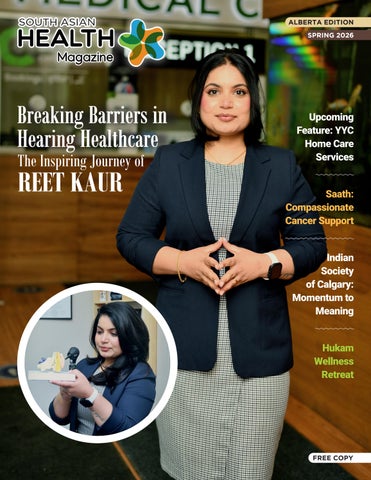
ALBERTA EDITION SPRING 2026
Breaking Barriers in Hearing Healthcare The Inspiring Journey of
REET KAUR
Upcoming Feature: YYC Home Care Services Saath: Compassionate Cancer Support Indian Society of Calgary: Momentum to Meaning Hukam Wellness Retreat
FREE COPY
St. Martinus University Fully Accredited by
Your Pathway to a Medical Degree and U.S. Residency Why St. Martinus University Fully Accredited by a WFME-Recognized Agency (AAEPO): Ensures eligibility for ECFMG certification and U.S.
residency training pathways while meeting internationally recognized standards in medical education.
Direct Entry Pathway Without MCAT: High school graduates
and university students can fast-track into medicine without the requirement of a 4-year undergraduate degree or MCAT examination.
Modern Campus with Advanced Learning Tools: State-of-
the-art infrastructure featuring digital anatomy systems, upgraded laboratories, research facilities, and on-campus student housing designed to support an optimal learning environment.
Secure and Comfortable Student Living: Safe and reliable housing with meal plan options, located in Curaçao — a stable Caribbean island outside the Atlantic hurricane belt. Strong Residency Match Record: Consistently high U.S.
residency match rates, with graduates placed across major specialties throughout the United States.
Cost-Effective Medical Education: Significantly lower tuition
and living expenses compared to many U.S. and Canadian medical schools.
Eligible for Canadian federal and provincial student loan programs, making medical education more financially accessible
for Canadian students.
SMU RESIDENCY MATCH RESULTS 2026 ERAS Cycle
Upcoming Feature Cover Story Alberta South Asian Health Magazine
YYC HOME CARE SERVICES: PARAMEDIC-LED COMPASSIONATE CARE, RIGHT AT HOME YYC Home Care Services is a Calgary-based, paramedic-led home care provider dedicated to supporting individuals and families with reliable, personalized in-home care. Founded by an experienced Calgary EMS Paramedic, Veerpal Kaur Dhatt, the organization brings a higher level of clinical insight, safety, and professionalism to everyday home care. YYC Home Care Services offers a wide range of support, including companionship, personal care, light housekeeping, meal preparation, assistance with daily routines, respite care & palliative care. Each care plan is thoughtfully personalized to meet the unique needs of every client, ensuring care that adapts as needs change. They're also approved providers of the Client Directed Home Care Invoicing (CDHCI) program through Alberta Health Services, helping make home care services more accessible and affordable for families. What truly sets YYC Home Care Services apart is its paramedic-led approach. With emergency care experience setting service standards, caregiver training, and care planning, clients benefit from enhanced oversight, proactive risk awareness, and peace of mind. Caregivers are carefully selected and supported to deliver dependable, compassionate care while building meaningful relationships with clients and families. YYC Home Care Services is committed to helping individuals maintain independence, dignity, and comfort. YYC Home Care Services takes pride in providing trusted care with a higher standard, one home at a time.
(825) 760-0983 CALGARY (780) 237-6983 EDMONTON
info@yychomecareservices.ca www.yychomecareservices.ca
Message from the Publisher Dear Readers,
Welcome to the Spring 2026 issue of Alberta South Asian Health Magazine. This edition celebrates the people, organizations, and This yearinitiatives marks athat truly special milestone for BC Health Magazine as we proudly celebrate community are improving health, wellness, andSouth qualityAsian of life across Alberta. From healthcare innovation and culturally 15 yearssupport of serving ourtocommunity. What beganengagement, as a visionthese to create culturally change relevant responsive programs volunteer-driven community storiesmeaningful, remind us that meaningful happens conversations has grown a trusted brand. years, individuals we have and remained committed to when expertise, compassion, andinto community comeglobal together. We areOver proudthe to highlight organizations that are helping build a healthier,stories more connected future for South Asians and Albertans. amplifying that matter—stories rooted inallempowerment, education, and representation for South
Asians everywhere. Our feature cover story shines a spotlight on Reet Kaur of Prime Hearing Clinic, one of Alberta’s first Punjabi-speaking female Hearing Instrument Specialists. Reet’s journey from a background in technology to a career dedicated to hearing healthcare is a powerful example We are honored to continue standing as the only platform dedicated exclusively to health, wellness, of purpose-driven leadership. Through her clinical expertise, cultural understanding, and commitment to patient-centered care, she is beauty, fashion, and fitness for the South Asian community on Her a global scale. This the focus has always been helping individuals reconnect with conversations, relationships, and confidence. work demonstrates importance of accessible at the heart of who we are. By addressing topics through a culturally informed lens, we have been able healthcare delivered with empathy, trust, and respect for the diverse communities she serves. to spark dialogue, inspire healthier lifestyles, and celebrate the diversity and strength of our community
This issue also highlights Saath, a culturally tailored cancer support program offered by Wellspring Alberta. Saath provides South Asian across generations. adults living with cancer, along with their families, a welcoming space to share experiences, access support, and navigate the emotional and practical challenges of abeen cancerone journey. By offering sessions that reflect cultural values,presence language needs, andmultiple family-centered care, Our journey has also of growth and expansion. With a strong across provinces Saath is helping ensure that no one faces cancer alone and that community remains a source of strength during difficult times.
in Canada, we are now excited to be extending our footprint internationally. We are currently in the
We are equally pleased to recognize the Indian SocietyLondon of Calgary(UK), and the remarkable momentum generated through its committees process of expanding to California (USA), and Dubai (UAE)—with India and Australia next on and volunteer initiatives. From women’s leadership programs and cultural engagement to sports, blood donation drives, mentorship our radar. These new markets represent not just geographic growth, but deeper opportunities to connect opportunities, and senior-focused activities, the organization continues to create meaningful opportunities for connection and service. with South Asians worldwide. Their collective efforts demonstrate how volunteerism and community participation can strengthen social bonds while promoting inclusion, wellbeing, and2026 civic engagement beyond. As we look ahead, is shapingthroughout up to be aCalgary year and filled with major milestones
and bold newthis chapters. energized by what lies ahead and remain As you explore issue, weWe hopeare these stories inspire reflection, collaboration, and action. focused on further solidifying our strong foundation as the #1 magazine The individuals and organizations featured in these pages exemplify resilience, service, and a sharedcatering commitment to improving lives. On behalf ofThank our editorial team, you for source to South Asians worldwide. you to ourthank readers, your continued readership and support. We look forward to bringing you more stories partners, and contributors for being an integral part of this journey—we that inform, empower, and celebrate the strength of our community throughout the year look forward to growing, evolving, and celebrating together. ahead.
Cheers to a Happy, Healthy New Year!
RINA GILL
Publisher, Publisher, South South Asian Asian Health Health Magazine Magazine
778 688 4973
The Thepublisher publisher isis not not responsible for any manuscripts, manuscripts,images, images,photographs photographsororany anyother othermaterial. material.ByByaccepting accepting and and publishing publishing advertising, advertising, editorial, editorial, advertorial, advertorial, profiles profiles or any other information in this publication; the publisher in noinway guarantees or endorses qualityquality of services or products and information within the context or any other information in this publication; the publisher no recommends, way recommends, guarantees or endorses of services or products and information within the of the above-mentioned. Although every precaution is taken in the preparation of this publication, the Publisher shall have no liability to any person or entity with respect context of the above-mentioned. Although every precaution is taken in the preparation of this publication, the Publisher shall have no liability to any person or entity to any loss or damage caused by the contents of this publication. The Publisher is not liable for any errors or omissions and does not guarantee in any way the accuracy of with respectprovided to any loss or damage by the contents of this2026 publication. The Publisher is not liableAll forrights any errors or omissions not guarantee in any way information in the contentscaused of this publication. Copyright by The Hype Advertising Agency. reserved. No part ofand thisdoes publication may be reproduced the accuracy of information provided the contents of this publication. Copyright by The Hypewithout Advertising Agency. All rights reserved. No part of this publication by any means,inelectronic, or mechanical, including internet 2026 or photocopying written permission of the Publisher. may be reproduced by any means, electronic, or mechanical, including internet or photocopying without written permission of the Publisher.
B r a n c h
M a n a g e r
For More Info.
28
GUT HEALTH NUTRITION EXPERT
GUT HEALTH NUTRITION EXPERT
SAMANTHA GILL SAMANTHA
GILL
FOUNDER OF GUTVANTAGE, AS AN UPCOMING FEATURE COVER STORY FOR THE
ALBERTA SOUTH ASIAN HEALTH MAGAZINE Samantha Gill, Founder of GutVantage and Certified in Holistic Nutrition, blends pharmaceutical expertise with holistic wellness in her practice. Originally from Campbell River, BC, Samantha began her journey as a pharmacy technician. However, her personal health challenges inspired her to explore holistic nutrition, leading her to earn a diploma from the Canadian School of Natural Nutrition. Today, Samantha integrates her diverse background to offer clients a holistic approach to health, emphasizing the profound link between nutrition and wellbeing. Her consultations extend beyond diet advice, providing comprehensive support for the mind, body, and spirit. Outside of work, Samantha treasures family time, instilling values of kindness and gratitude in her children, while indulging in her love for cooking and music. Her passion and personal touch make her both a sought-after nutrition consultant and speaker in the holistic nutrition industry.
ONLINE CONSULTATION AVAILABLE ACROSS CANADA
403.973.6760
info@gutvantage.ca
www.gutvantage.ca
https://www.facebook.com/ trustyourguternalinstinct
@gutvantage
Breaking Barriers in Hearing Healthcare The Inspiring Journey of
REET KAUR
In communities where language, culture, and trust play a powerful role in healthcare decisions, professionals who understand these dynamics can make a life‑changing difference. Ramandeep (Reet) Kaur, a Board‑Certified Hearing Instrument Specialist (BC‑HIS) and Registered Hearing Aid Practitioner (RHAP), is doing exactly that. Recognized as one of Alberta’s first Punjabi‑speaking female hearing instrument specialists, Reet Kaur is not only advancing hearing healthcare but also building stronger connections within South Asian and multicultural communities. Based at Prime Hearing Clinic in Calgary, Reet combines clinical expertise with empathy, cultural understanding, and a deep passion for helping people reconnect with the sounds of everyday life.
+1 403-723-3141
primehearingcalgary.ca
1410-6004 Country Hills Blvd NE , Building 1401, Calgary, AB T3N 1T8 (Apex Sky Medical Center)
Her story is one of persistence, curiosity, and a genuine desire to serve others.
A Unique Path into Hearing Healthcare Unlike many healthcare professionals who follow a traditional path, Reet’s journey began in a very different field—computer science. She earned a Bachelor’s degree in Computer Science Engineering, where she developed strong analytical thinking and problem‑solving skills. Her early career involved technical work and extensive customer service experience, where she spent more than 15 years interacting with people and understanding their needs. Over time, she realized that while technology was fascinating, what truly fulfilled her was direct interaction with people. She enjoyed helping individuals solve real‑life problems and improving their day‑to‑day experiences. This realization sparked a shift in her career direction.
Breaking Barriers Through Representation Becoming one of Alberta’s first Punjabi‑speaking female Hearing Instrument Specialists represents more than a professional milestone for Reet—it symbolizes representation and access. For many South Asian patients, language barriers can make healthcare experiences confusing or intimidating. Medical discussions often involve complex terminology, and when patients cannot express themselves comfortably, important information may be misunderstood or left unspoken.
The most rewarding part of my work is witnessing those transformations, especially in individuals who came in feeling defeated or limited by their pain
While working closely with seniors in customer service roles, Reet became increasingly aware of how hearing loss can affect communication, independence, and confidence. Many people struggled silently, often withdrawing from conversations or social gatherings because they could not hear clearly. Witnessing this had a profound impact on her. “I realized how deeply hearing challenges affect people's quality of life,” she explains. “That made me interested in healthcare, where I could directly help people overcome these challenges.” This turning point led her to pursue hearing healthcare—a profession that allowed her to combine technical expertise, problem‑solving, and compassionate care.
Reet’s ability to communicate fluently in Punjabi creates an immediate sense of comfort and trust. “Many patients feel more relaxed when they can speak in their own language,” she says. “They open up more about their challenges and concerns.”
This connection allows her to provide more personalized care. Patients not only understand their hearing health better, but they also feel respected and supported throughout the process.
For Reet, the milestone is deeply personal. “It represents hard work, dedication, and the opportunity to serve my community better,” she explains. “It gives me pride and a strong sense of purpose.” Connecting Through Culture and Understanding Reet’s cultural background plays an important role in how she approaches patient care.
In South Asian families, healthcare decisions often involve the entire family, and cultural values can influence how people perceive medical conditions. Many seniors, for example, view hearing loss as a natural part of aging and may not consider treatment necessary. Others may feel embarrassed or fear being judged for wearing hearing aids. Because Reet understands these cultural perspectives, she is able to address them with sensitivity and patience. “I understand the traditions, family structures, and concerns that many South Asian patients have,” she says. “That helps me communicate in a way that feels respectful and relatable.” By creating a comfortable environment where patients feel heard and understood, she builds long‑term relationships that extend beyond clinical care.
Challenges in Hearing Health Awareness Through her work with seniors and multicultural communities, Reet frequently encounters common barriers to hearing care. One of the most significant is lack of awareness. Many individuals assume hearing loss is simply an unavoidable part of aging and do not realize that effective treatment options exist. Others delay testing because they worry hearing aids will be large, uncomfortable, or highly visible. Cost concerns and language barriers can also discourage individuals from seeking help. “These challenges often delay proper diagnosis and treatment,” Reet explains. However, early intervention can significantly improve outcomes. Hearing loss not only affects communication but can also impact mental health, social engagement, and even cognitive function.
+1 403-723-3141
“I understand the traditions, family structures, and concerns that many South Asian patients have,” she says. “That helps me communicate in a way that feels respectful and relatable.”
primehearingcalgary.ca
1410-6004 Country Hills Blvd NE , Building 1401, Calgary, AB T3N 1T8 (Apex Sky Medical Center)
For this reason, Reet strongly encourages individuals to seek hearing tests at the earliest signs of difficulty. “Early testing is simple and painless,” she says. “Getting help sooner can improve quality of life dramatically.”
A Life‑Changing Patient Experience Among the many patients she has helped, one experience stands out as particularly meaningful. A patient came to her clinic feeling deeply isolated. Because they struggled to hear conversations clearly, they had gradually stopped attending family gatherings and social events. The frustration and embarrassment had slowly pushed them into withdrawal. After receiving properly fitted hearing aids and guidance on how to use them, the transformation was remarkable. “They began communicating confidently again,” Reet recalls. “They started participating in conversations with family and friends.” Watching that emotional shift—from isolation to reconnection—reinforced the importance of her work. “Moments like that remind me why I chose this profession,” she says.
Creating a Welcoming Clinic Environment At Prime Hearing Clinic, Reet works hard to ensure that every patient feels comfortable and respected from the moment they walk through the door. Providing services in Punjabi helps many individuals feel at ease immediately. Patients know they can ask questions freely and discuss their concerns without fear of misunderstanding. But language is only one part of the equation. Reet emphasizes patience, kindness, and
attentive listening as essential elements of care. “We want every patient to feel valued and understood,” she says. “When people feel comfortable, they are more confident about taking steps to improve their hearing health.”
Advancements in Hearing Technology The world of hearing care has changed dramatically in recent years. Modern hearing aids are smaller, more advanced, and far more user‑friendly than earlier generations. Reet is particularly excited about innovations that make devices more adaptable to everyday environments. Many modern hearing aids now connect directly to smartphones, allowing users to adjust settings easily and stream audio directly to their devices. Features such as artificial‑intelligence‑based sound adjustments and advanced background noise reduction help users hear conversations more clearly in crowded environments. Rechargeable batteries have also simplified daily use, eliminating the need to frequently change small batteries. “These advancements make hearing aids more convenient and comfortable,” Reet explains. “They truly improve everyday hearing experiences.”
The Importance of Family Support Family involvement is especially important when addressing hearing loss, particularly within South Asian households. Often, family members are the first to notice signs of hearing difficulty. Their encouragement can motivate loved ones to seek professional evaluation. Once treatment begins, family members also play a crucial role in helping patients adjust to hearing aids and supporting them emotionally.
“When families are involved, patients feel more confident,” Reet says. “That leads to better long‑term results.”
Challenging Misconceptions About Hearing Aids Despite major technological improvements, misconceptions about hearing aids still exist. Many people believe hearing aids are large, highly visible devices worn only by elderly individuals. Others assume that using one indicates weakness or disability.
“Modern hearing aids are small, discreet, and designed for people of all ages,” she explains. “Once people understand how advanced they are, they become much more comfortable exploring treatment.”
Balancing Professionalism and Compassion In healthcare, technical expertise is essential—but so is empathy. Reet believes the most effective care happens when professionalism and compassion work together.
Reet works to dispel these myths through education and open conversation.
“Modern hearing aids are small, discreet, and designed for people of all ages,” she explains. “Once people understand how advanced they are, they become much more comfortable exploring treatment.”
+1 403-723-3141
primehearingcalgary.ca
1410-6004 Country Hills Blvd NE , Building 1401, Calgary, AB T3N 1T8 (Apex Sky Medical Center)
She stays current with clinical best practices and technological advancements while ensuring that every patient interaction includes attentive listening and understanding. “Every patient has their own story,” she says. “Being patient and empathetic helps build trust.” This balanced approach allows her to provide both high‑quality clinical care and meaningful human connection.
Inspiring the Next Generation As a successful healthcare professional and community role model, Reet hopes to inspire young South Asian women who are considering careers in healthcare. Her message is simple but powerful: believe in yourself and stay open to opportunities. “Don’t be afraid to explore different paths,” she encourages. “Healthcare is a field where you can truly make a difference.” She emphasizes the importance of dedication, continuous learning, and resilience. “With hard work and consistency, you can break barriers and inspire others,” she says.
A Mission Rooted in Service Today, through her work at Prime Hearing Clinic, Reet Kaur continues to transform lives one patient at a time. By combining technical expertise, cultural understanding, and genuine compassion, she is helping individuals reconnect with conversations, relationships, and the world around them. Her mission remains clear: to make hearing care accessible, personal, and life‑changing for every patient she serves.
Healing Beyond the Smile A Conversation with
DR. JESSE SINGH
You have a Master’s in Molecular Nutrition and Metabolism as well as a Doctor of Dental Medicine from Boston University. How has your scientific training shaped the way you practice dentistry today? My background in molecular nutrition and metabolism fundamentally changed the way I view dentistry. It taught me very early on that the mouth is not a separate system, it’s a living reflection of the entire body. When I evaluate a patient, I’m not just looking at teeth; I’m looking at physiology, inflammation, nutrition, hormones, medications, and lifestyle behaviors that directly shape oral outcomes.
patient, a e t a u l a v e When I teeth; t a g n i k o o l t I’m not jus at physiology, I’m looking trition, hormones, , nu inflammation and lifestyle m e d i c a t i o n s ,a t d i r e c t l y s h a p e behaviors thes. oral outcom
604 227 8897
drsingh@thesmileformula.com www.thesmileformula.com
@dr.jessesingh @thesmileformula
Understanding biochemical pathways; things like how glucose dysregulation affects periodontal inflammation or how micronutrient deficiencies impair healing, allows me to create treatment plans that are clinically precise and deeply personalized. In practical terms, this means I integrate tools such as: n Salivary biomarkers (CRP, cytokines) to assess inflammatory burden n Nutritional profiling to understand healing potential n Behavioral patterns such as diet, stress, and sleep that affect oral disease This whole-body lens allows me to educate patients and empower them. Dentistry, at its best, is not just about restoring teeth, it’s about restoring health.
You’ve practiced in both Canada and the United States, with experience in Boston and North Hollywood. How have these diverse environments shaped your philosophy of care? Practicing across two countries and in culturally diverse cities has been one of my greatest teachers. Boston gave me a deep appreciation for academic rigor and clinical precision. North Hollywood taught me something equally powerful; every patient, regardless of background, wants to feel deeply seen and cared for. Working with patients from countless socioeconomic, cultural, and generational backgrounds strengthened my cultural competence. I learned that great dentistry is not just technical, it’s relational. It requires listening, understanding values, and adapting communication styles to meet people where they are. The diversity I’ve experienced has helped me develop a philosophy grounded in:
The most rewarding part of my work is witnessing those transformations, especially in individuals who came in feeling defeated or limited by their pain n Respect for individuality n Meticulous attention to detail n A commitment to excellence, no matter how simple or complex the case That combination allows me to provide care that I can genuinely stand behind.
You emphasize the link between oral health, inflammation, and overall well-being. Why is it essential that people understand this connection? Your mouth is often the body’s earliest messenger. Inflammation, hormonal changes, immune stress, and chronic conditions frequently show up in oral tissues before they appear elsewhere. Today we have powerful tools such as: n Salivary CRP testing, which can detect systemic inflammation n Oral microbiome analysis and DNA testing, which help us identify pathogens linked to cardiovascular disease, diabetes, and pregnancy complications n Protein markers that can signal early metabolic or immune dysfunction
Research increasingly shows that periodontal inflammation is linked to heart disease, pregnancy outcomes, Alzheimer’s risk, and autoimmune conditions. When patients understand this connection, preventive care becomes more meaningful- it’s no longer just about avoiding cavities; it’s about protecting long-term health.
As part of The Smile Formula team, what does patient-centered dentistry look like to you? Patient-centered dentistry begins with one simple principle: listen first. People instantly feel whether you genuinely care. I try to create a space where patients feel understood, respected, and safe; especially those who come in with anxiety or past negative experiences.
604 227 8897
drsingh@thesmileformula.com www.thesmileformula.com
@dr.jessesingh @thesmileformula
I always put myself in their shoes, ask questions, and acknowledge their concerns. Every patient in my chair receives: n My full attention n My full effort n My full empathy That consistent level of care builds trust, and trust is what makes dentistry a healing profession- not just a technical one.
You’ve lived in several cities but chose to settle in Vancouver. What drew you here, and what excites you about serving this community? Vancouver has always felt like a second home. Growing up, I visited family here every summer, and I was drawn to the warmth and diversity of the community. The cultural richness reminds me of what I value most; inclusivity, connection, and shared history. And of course, the mountains and ocean are the added bonus that make everyday life a little more beautiful. What excites me most is caring for a community that reflects so many
I visited family here every summer, and I was drawn to the warmth and diversity of the community. The cultural richness reminds me of what I value most; inclusivity, connection, and shared history.
backgrounds, languages, and stories. Vancouver feels like the perfect place to grow roots both professionally and personally.
Your research background gives you a unique perspective. How does evidence-based science continue to guide your daily decision-making? Every clinical decision I make is grounded in real science; not trends, not marketing, not pseudoscience. My training taught me how to evaluate research critically: n Systematic reviews n Meta-analyses n Randomized controlled trials n Longitudinal cohort studies n Funding transparency Understanding how research is designed, where biases exist, and how outcomes translate to real patient care ensures that everything I recommend is safe, effective, and backed by credible evidence. There’s a wide gap between online misinformation and scientifically validated data. Part of my role is helping patients navigate that gap so they can make empowered decisions based on facts, not fear.
You have many hobbies — volleyball, basketball, boxing, fencing, traveling, cooking. How do these passions influence your approach to balance and wellness? I’ve always loved learning new things, it keeps my mind flexible and my spirit
I often share that I myself experienced dental anxiety as a child. That empathy shapes the way I practice today: my goal is to make every visit as comfortable and transparent as possible energized. Whether it’s planning a volleyball game, joining a boxing class, or going for a walk, movement has always been my therapy. Physical activity increases serotonin, helps me unwind, and gives me something joyful to look forward to. These moments of rest and creativity outside the clinic allow me to show up as my best self, with more patience, more energy, and more compassion for my patients.
Many people experience anxiety about the dentist. How do you help patients feel safe and supported? First, I listen. Anxiety often comes from feeling misunderstood or rushed. I ask questions, encourage honesty, and explain everything clearly. I also make myself available if patients have questions later, trust doesn’t start and end in the appointment chair. I often share that I myself experienced dental anxiety as a child. That empathy shapes the way I practice today: my goal is to make every visit as comfortable and transparent as possible.
What innovations in dentistry are you most excited about, particularly in preventive and holistic care? There are a few developments that genuinely excite me: n Oral DNA + microbiome testing Helps identify bacterial pathogens linked to periodontal disease, cardiovascular risk, and inflammatory conditions. n Advanced dental laser technology Used for disinfection, periodontal therapy, reducing inflammation, promoting biostimulation, and even collagen regeneration with minimal discomfort. n Digital smile design with facial scanners + AI This allows us to map facial symmetry, lip dynamics, and proportions to design highly individualized, natural-looking smiles. These tools are transforming dentistry into a field that is more proactive, less invasive, and deeply personalized.
604 227 8897
drsingh@thesmileformula.com www.thesmileformula.com
@dr.jessesingh @thesmileformula
As someone with South Asian heritage, how has your cultural background shaped the way you build trust in healthcare? My Sikh upbringing profoundly shaped my values. The teachings of our Gurus emphasize honesty, humility, acceptance, and compassion, principles that guide me daily. “Seva,” which is selfless service, taught me to care for those around me without judgment or bias. Dentistry exposes you to people of all backgrounds, and understanding cultural nuances isn’t optional, it’s essential. My heritage helps me connect with patients who may feel unseen or misunderstood, especially in healthcare spaces where language, traditions, or beliefs can create barriers. Representation matters, and I’m grateful to bring that understanding into my practice.
Oral health is sometimes overlooked in South Asian families. What preventive habits would you encourage for long-term health? I encourage families to focus on three foundational habits: n Start early: Bring children in at a young age so both kids and parents learn proper oral care routines. n Prioritize nighttime habits: Brushing and flossing before bed is crucial for preventing decay and gum disease. n Find a culturally competent provider: Someone who understands language, dietary habits, and cultural expectations can better guide families in nutrition and hygiene practices that support longterm oral health.
For young people in the South Asian community considering careers in healthcare, what advice would you offer? First, shadow professionals. Spend time in clinics; observe, listen, and ask yourself whether you can imagine doing this every day. When I was young, I thought I wanted to be an ER physician, but shadowing taught me that environment wasn’t aligned with who I was emotionally. It wasn’t until I shadowed my family dentist that I felt that instinctive sense of “this is where I belong.” Healthcare is demanding mentally, physically, and emotionally. Those who truly love it- dentistry, medicine, physiotherapy, anything- will continue to grow, learn, and show up for their patients day after day. And finally, embrace a little delusion. Believe in yourself so fiercely that it feels almost unreasonable. Where you place your effort, that’s what grows. Small daily habits, not sudden dramatic leaps- build the foundation of success. Neuroplasticity is real; tell your brain the story you want it to believe, and follow it with consistent action.
604 227 8897
drsingh@thesmileformula.com www.thesmileformula.com
@dr.jessesingh @thesmileformula
How Old You Are Shouldn’t Define How Young You Look And Feel
AGE IS JUST A METRIC, NOT A MANDATE. LIVE AGE FREE
Neety Mangat Shaklee Ambassador
Life Shake Whether you’re looking to lose weight or gain muscle, it’s essential to get your daily recommended protein to support your health goals. Of course, it’s not always easy to get all of your protein from food sources. With Life Shake, you can have a biologically complete meal in minutes that will fill you up and provide you with essential nutrients to support a healthy lifestyle!
Stress Relief Complex Stress is a natural part of life. Contrary to popular belief, some stress is important to your overall health. However, ongoing chronic stress can be detrimental, dragging down both your mental and your physical health. At Shaklee, our supplements and vitamins can help boost your mood, relieve stress, and support your mental health.
CONTACT ME TODAY TO FIND OUT HOW YOU CAN TRY SHAKLEE
Vivix Antioxidant Solution Vivix is formulated to help protect against oxidative cell damage and help in energy metabolism, immune function and cardiovascular health. n Vivix keeps your cells young. n Blunt the inflammatory response n Backed by 27 global patents
neety78@gmail.com ca.shaklee.com/en_CA/neetymangat/storefront
South Asian Influencers Redefined
Coachella 2026 Fashion
Coachella 2026 became more than a music festival—it became a global runway for South Asian creativity, craftsmanship, and cultural pride. For years, festival fashion often borrowed from South Asian aesthetics without recognizing their roots. This year, however, South Asian influencers and creators arrived with intention, reclaiming traditional elements like bindis, mirror work, jhumkas, embroidery, and draped silhouettes as authentic expressions of identity rather than fleeting trends.
Seerat Saini: Fashion as Cultural Storytelling Punjabi American creator Seerat Saini used Coachella 2026 as a platform to celebrate South Asian artisanship and storytelling. A former Meta employee turned influencer, Saini committed to wearing only South Asian designers at the festival for the past several years. Her looks featured extraordinary craftsmanship, including custom-made pieces requiring hundreds of hours of beadwork and embroidery. One of her most discussed outfits incorporated sculptural metallic elements, Swarovski crystal details, and handcrafted Indian textiles that blurred the line between fashion and wearable art.
Sheel Yerneni: Reinventing the Saree for a Global Stage Fashion designer and creator Sheel Yerneni brought one of the most talked-about aesthetics to Coachella 2026. Known for her sustainable fashion label Svarini, Yerneni used the festival as an opportunity to modernize traditional South Asian silhouettes while honoring their origins. She wore a series of viral looks including a lotus-inspired mini sari and a dramatic purple-and-gold ensemble inspired by ancient Indian and Egyptian motifs. What made her style especially impactful was the intentional incorporation of cultural details such as dupattas, mehndi, jhumkas, and intricate embroidery. Instead of diluting these elements for mainstream acceptance, Yerneni amplified them. Her approach reflected a broader movement among South Asian creators who are reclaiming cultural aesthetics that were once misunderstood or appropriated in Western festival culture.
Aditya Madiraju: Bringing South Asian Menswear Into the Spotlight Beauty creator Aditya Madiraju emerged as one of the most stylish male influencers at Coachella 2026. Formerly a risk data professional before transitioning into beauty and fashion content creation, Madiraju used the festival to showcase the richness of South Asian menswear. Working alongside stylist Ambika Sajana, he wore carefully curated looks from celebrated Indian designers including Tarun Tahiliani, Rohit Gandhi and Rahul Khanna, Masaba, and Line Outline. One standout outfit featured a heavily beaded waistcoat paired with gold jewelry and tailored trousers, combining royal Indian aesthetics with modern festival styling
A Turning Point for South Asian Representation Coachella 2026 signaled a major cultural shift. South Asian influencers were no longer adapting to Western festival aesthetics—they were shaping them. Through fashion, these creators celebrated craftsmanship, identity, and cultural pride while educating audiences about the origins of the trends they showcased. The festival demonstrated that South Asian fashion belongs on global stages not as a passing trend, but as a powerful artistic movement. Whether through reimagined saris, couture menswear, or handcrafted accessories, creators like Sheel Yerneni, Aditya Madiraju, and Seerat Saini transformed Coachella into a celebration of South Asian excellence and creativity.
@hukamwellness
TRANSFORM Men’s Resilience Summit
An immersive oceanfront experience designed for men navigating pressure, burnout, betrayal, leadership demands, and personal rebuilding.
WHO THIS IS FOR
•
Professionals and entrepreneurs carrying high levels of pressure and responsibility
•
Men rebuilding after betrayal, separation, divorce, or major life transitions
•
Young men seeking structure, mentorship, resilience, and direction
•
Individuals reconnecting with purpose, discipline, health, and clarity
THE SUMMIT EXPERIENCE
•
Nervous system regulation and recovery practices
•
Strength, movement, mindfulness, and wellness programming
•
Leadership and accountability workshops
•
Brotherhood-based support and guided discussion circles
•
Reflection, rebuilding, and restorative oceanfront downtime
BEYOND THE WEEK
•
Private WhatsApp accountability and peer support community
•
Future weekend reset experiences and follow-up opportunities
•
Optional ongoing coaching and mentorship support
•
A growing brotherhood centered around resilience and forward momentum
“The Summit is not about escaping life. It is about rebuilding yourself so you can return stronger.” Limited to 15 Participants • Vancouver Island • Oceanfront Experience Coming This Fall 2026 Hukam Wellness
@hukamwellness
Roots & Reckonings
DR. AMY KAUR on Healing the Wounds Culture Taught Us to Hide Your work bridges psychotherapy, spirituality, and education. What inspired you to create an integrative model that connects mental health, personal development, and holistic healing? As a counselling psychologist and professor of education and psychology, I am trained in evidence, structure, and clinical rigour. But as a spiritual educator, I have seen what happens when individuals reconnect with consciousness, identity, and purpose. The transformation is not incremental—it is exponential, which is why having the wisdom to utilize both spirituality and psychology is so invaluable in practice.
437-473-1377 (Office)
@the.punjabi.psychologist
hello@dr-amy.ca www.dr-amy.ca
Having been born and raised in Toronto, I had early exposure to all the various cultures and faiths which added to my understanding of incorporating faith, belief systems and culture into my practice. While spirituality and religion are distinct concepts, their utility in psychological practice can become useful, particularly in cultures that prioritize faith over a pathological perspective. Hence, integration! Integrating the faith or belief system of each individual with clinical practices, ensures a more successful outcome in my opinion, which is why my clients tend to recover so well. An integrative model is not an innovation because it has been around and perhaps has just been underutilized - but I crafted it in my practice because anything less is incomplete. If you offer incomplete mental health services, it leaves individuals in limbo - it leaves individuals emotionally stranded because you only fix parts of the problem. That is not helpful! My method is structured to be effective in a shorter number of sessions with an intentional approach so individuals feel better, faster than with the “regular” or traditional psychotherapy models. But it does depend on the individual’s goals - who does not want to feel better?!
in scientifically and clinically validated modalities—primarily CBT/DBT, Solution Focused, and Narrative therapy—to ensure safety, ethical practice, and efficacy. This is then integrated with a client’s existing spiritual foundations, if they so choose.
You are both a clinician and an entrepreneur. How do you balance the scientific rigor of psychology with the visionary thinking required to build innovative ventures?
This flexible, personalized approach allows us to look beyond rigid, outdated systems. By holding a forward-thinking vision, we can optimize healing and promote evolution through an integrative and holistic lens.
There is no balance per se—there is integration, where it is appropriate. Faith and clinical practice can appropriately align. This extends to love and relationships, which also possess a significant psychological component hence the creation of Healed.Love. Leveraging my experience as an educator, psychoeducation is a core specialization of mine. My therapeutic approach is grounded
While most institutions focus on maintaining stability—a necessary component of successful therapy—my work is designed to evolve. I first examine the existing landscape of care, asking, “What is currently available?” I then focus on the gaps: “What is missing—and who is still suffering because of it?” This is where my work truly begins. I believe that if a multifaceted, integrative approach remains within ethical boundaries, it should be utilized.
As the founder of Dr Amy [VHC] Psychological Services Corporation, what gaps in mental health care were you hoping to address— especially within culturally diverse communities? Through Dr. Amy Psychological Services, I addressed what the system has overlooked for far too long. Access without cultural understanding is ineffective. Even within South Asian cultural organizations - there is something lacking. In diverse communities—particularly South Asian communities—mental health is deeply intertwined with identity, family systems, and unspoken expectations. You cannot treat the individual without understanding the environment that shaped them. I have built a model that does not ask clients to adapt to the system. It is a system that adapts to the client. As a professor, this is where I believe psychoeducation is the key to efficacy in treatment. Frankly, it seems the South Asian community is full of people who believe they have the solution to everyone else’s difficulties, often without first addressing their own, and usually lacking the necessary educational background or professional expertise to do so.
el that d o m a t il u b e I hav ents to li c k s a t o n s e do stem. It is y s e th to t p a d a adapts to a system that professor, a the client. As e I believe this is wher is the key on psychoeducati treatment. to efficacy in 437-473-1377 (Office)
@the.punjabi.psychologist
hello@dr-amy.ca www.dr-amy.ca
Your new concept Healed.Love blends healing with matchmaking. What inspired this idea, and how does emotional healing influence the way people form relationships? With all of the disruption to traditional male/ female relationships in the world today, most people are not failing at love—they are repeating cycles that they learned as children. Unrealistic mutual expectations result in relationship dysfunction as do many other factors. People are choosing their romantic partners from unresolved wounds, bonding through familiarity (even if it was traumatic) and mistaking intensity for compatibility. Healed.Love was created to interrupt that cycle and create a database of individuals who have “done the work” and addressed their emotional issues that interfere in their romantic relationships. The objective is to help individuals become more self-aware, emotionally regulated, and aligned. This is crucial for when identity shifts, attraction changes. And when attraction changes, relationships transform. “Compatibility” without healing is an illusion that will keep people stuck in the same repetitive cycles of relationship behaviour. Healed.Love brings those individuals together!
Mental health stigma still exists in many South Asian families. What strategies do you believe are most effective in changing the narrative around therapy and emotional wellbeing? We must cease the pretense that mental health challenges are non-existent—and refrain from mislabeling mental illnesses as mere “stress” or “overburden” from the demands of daily life.
While those individual experiences are valid, mental well-being is less about being “unwell” and more about being unaware. Given that physical illness is an issue that South Asians readily discuss with their family physicians, emotional challenges should be afforded the same level of accessibility and respect. Working with a competent clinician within the community represents the critical first step. When therapy is positioned as something only for those in crisis, people resist it. But when you create the awareness that allows it to be understood as a tool for leadership, emotional intelligence, and generational change, the narrative shifts. Psychoeducation, not just for the youth, but parents and elders, who are not well versed in these services can have access to that professional expertise in their own language - it is available now! When people see individuals who are grounded, successful, and self-aware speaking openly about therapy, stigma cannot survive. The silencing of those who need the help is the danger of continued and worsening dysfunction not only for individuals but entire family systems.
You’ve developed training programs around Naam & Neuroscience. Can you explain what this approach means and how it integrates spiritual practices with modern brain science? I am sure that through all the variants of South Asian cultures, people have stated or heard from someone in their family group that “all you need is prayer…all you need is God.” While true - there is little discourse about how and why spirituality and/or prayer can help with mental health. Naam Simran is not just a spiritual concept—it is a frequency. It is the refinement of awareness through sound, repetition, and presence which is what all major religions practice in some form or another - “Om” for example or in Sikhi, “Waheguru” [Naam simran].
What ancient traditions understood intuitively, neuroscience is now validating. Since I can only speak to Sikhism, the practice rooted in Naam & Neuroscience, known as Naam Simran, displays measurable changes in the brain—improved emotional regulation, reduced stress reactivity, increased clarity, and strengthened neural pathways associated with focus and resilience. This is not philosophy. This is neurobiological transformation. My work translates these principles into clinical and educational frameworks that can be applied in therapy, training, and daily life. It is all explained in the book: Naam & Neuroscience: The Divine Code of the Mind & Soul.
Women are foundational to life— as the saying goes, “Who runs the world?” The reality is, without women, there is no continuity of life!
437-473-1377 (Office)
@the.punjabi.psychologist
hello@dr-amy.ca www.dr-amy.ca
Much of your work focuses on empowering women and underserved communities. Why is this mission so central to your career? Women are foundational to life—as the saying goes, “Who runs the world?” The reality is, without women, there is no continuity of life! A woman’s path to healing is a powerful catalyst for profound change, fundamentally altering her self-expression, choices, parenting, and engagement with the world. However, across many generations— especially within immigrant and traditional communities—women have been conditioned to prioritize basic survival over cultivating their true selves. This focus rapidly transitions to dedicating themselves to children and caregiving, nurturing others, securing resources including employment outside the home, and managing domestic duties, often at the expense of self-care, healing, and personal growth. My practice is dedicated to the vital restoration of selfhood, specifically at the intersection of personal responsibilities and self-care; the restoration is comprehensive, encompassing psychological, emotional, financial, and spiritual well-being. My experience as a single mother highlighted this critical convergence: if a woman of my background and capabilities struggled, then the women who need my story, insight, and formula for success must be in urgent need of this help. Empowered women do more than rebuild their own lives—they ultimately rebuild entire systems. My decision to become a Financial Advisor stems from the conviction that it is essential to empower women through enhanced financial prosperity. The success of healthy, capable women will directly and positively impact the future for our sons and daughters.
My experience as a single mother highlighted this critical convergence: if a woman of my background and capabilities struggled, then the women who need my story, insight, and formula for success must be in urgent need of this help
As someone building educational institutions and global training programs, how do you see the future of mental health education evolving? The future is integrative, interdisciplinary, and globally accessible. I see institutions, move away from rigid academic structures toward models centered on competency and experiential learning. Future practitioners will need more than just theory; they must develop embodied skills, including emotional intelligence, cultural fluency, and deep self-awareness. While digital platforms will significantly broaden access, the core evolution is integration. This means teaching psychology, neuroscience, spirituality, and leadership development as a unified whole. Education must move beyond mere information delivery to become a catalyst for profound personal transformation, which is the approach used at my Career College - with training programs including Early Childhood Education, Counselling and Spiritual Practitioner Training, Business Administration and Financial Services Training Programs.
You often speak about aligning mind, body, and purpose. What practical steps can individuals take to start creating that alignment in their own lives? Alignment is a way of living, not just thinking. It is built on a foundation of calm, which is essential for clarity. Discipline follows, necessary for true change. Finally, integrity is the force that sustains it; without integrity, alignment cannot last. Every choice you make either solidifies who you are now or shapes the person you are striving to become. It can be difficult to decipher spiritual lingo and all of the signs that show you are on the “right path” because it looks different for everyone. It is a different journey for everyone, which is why you cannot compare your life to anyone else’s. If you need help getting started, just reach out!
For South Asian professionals who want to pursue careers in mental health or holistic wellness, what advice would you give them about building both impact and sustainability in their work? Do not dilute your voice to fit into existing systems. Build your competence first—your clinical foundation must be unquestionable. But beyond that, you must be willing to innovate and think outside your own personal skill set. And most importantly—understand that your identity is not a limitation. It is your greatest asset.
Your career spans therapy, authorship, education, and leadership platforms. What has been the most transformative moment in your journey so far? Personally, it has been Alignment. When I realized that I do not have to live my life in accordance with someone else’s decisions, was the moment I started doing what felt authentic and aligned to my life particularly in relationships. There is a shift that happens when you no longer look outward and instead trust your own vision, your own voice, and your own authority. This is critical for both men and women. From that point forward, everything changes—how you lead, how you create, and how you build.
Every choice you make either solidifies who you are now or shapes the person you are striving to become. It can be difficult to decipher spiritual lingo and all of the signs that show you are on the “right path” because it looks different for everyone
At that juncture, the significance of your contributions becomes undeniably useful to humanity and isn’t that the legacy we are all looking to build? Leave the world a better place, than when you entered it.
437-473-1377 (Office)
@the.punjabi.psychologist
hello@dr-amy.ca www.dr-amy.ca
Finally, as our South Asian Health Magazine cover feature, what message would you like to share with readers about creating a life that integrates healing, success, and meaningful relationships? Healing is not separate from success—it is the foundation of it. You cannot build a meaningful life on an unstable internal foundation. When you understand yourself—your patterns, your wounds, your power—you make different decisions. You form different relationships. You create different outcomes. Healing is not about becoming someone new or transforming into someone you think you need to be - it’s about becoming who you were always meant to be—without fear, without fragmentation, and without apology. I am available to offer assistance, should you require it.
Healing is not separate from success—it is the foundation of it. You cannot build a meaningful life on an unstable internal foundation
Building Strength Inside and Out
ROCK CENTER Helping South Asians Own Their Health Journey
I was inspired to get into the health industry when I realized that the nutrition habits in the South Asian Community are restricting people from achieving their fitness goals. My priority was to provide them with alternative approaches to their diets by offering them workout routines and meal plans. Therefore, I decided to change paths and open my own gym instead of becoming a nurse to give people the gift of health rather than treat their diseases.
Monika Arora, Owner
(403) 837-4558 Wo-men Rock Center
RockCenterCalgary
www.rockcenter.ca
RockCenterYYC