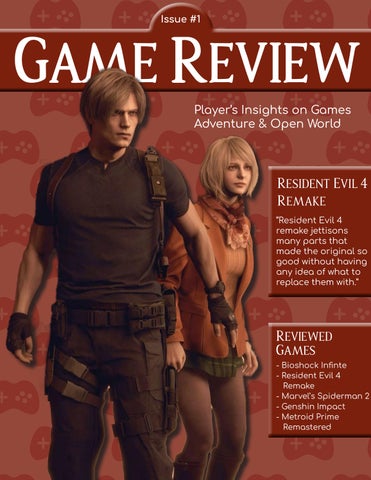
Game Review
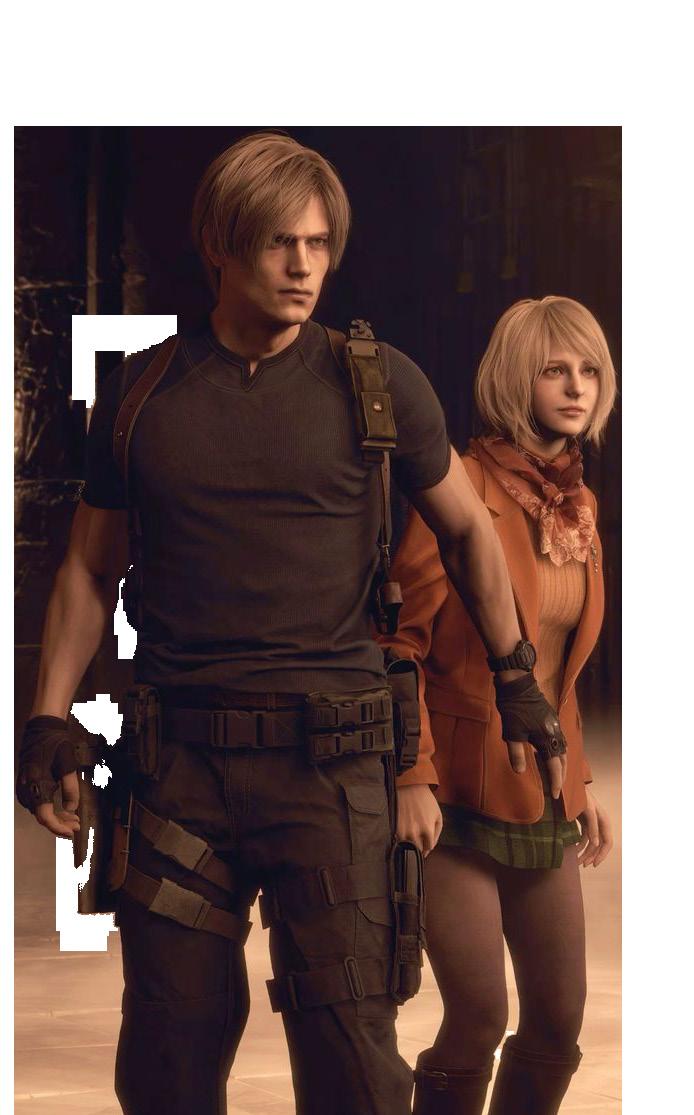
“Resident Evil 4 remake jettisons many parts that made the original so good without having any idea of what to replace them with.”
- Bioshock Infinte - Resident Evil 4 Remake
- Marvel’s Spiderman 2 - Genshin Impact - Metroid Prime Remastered
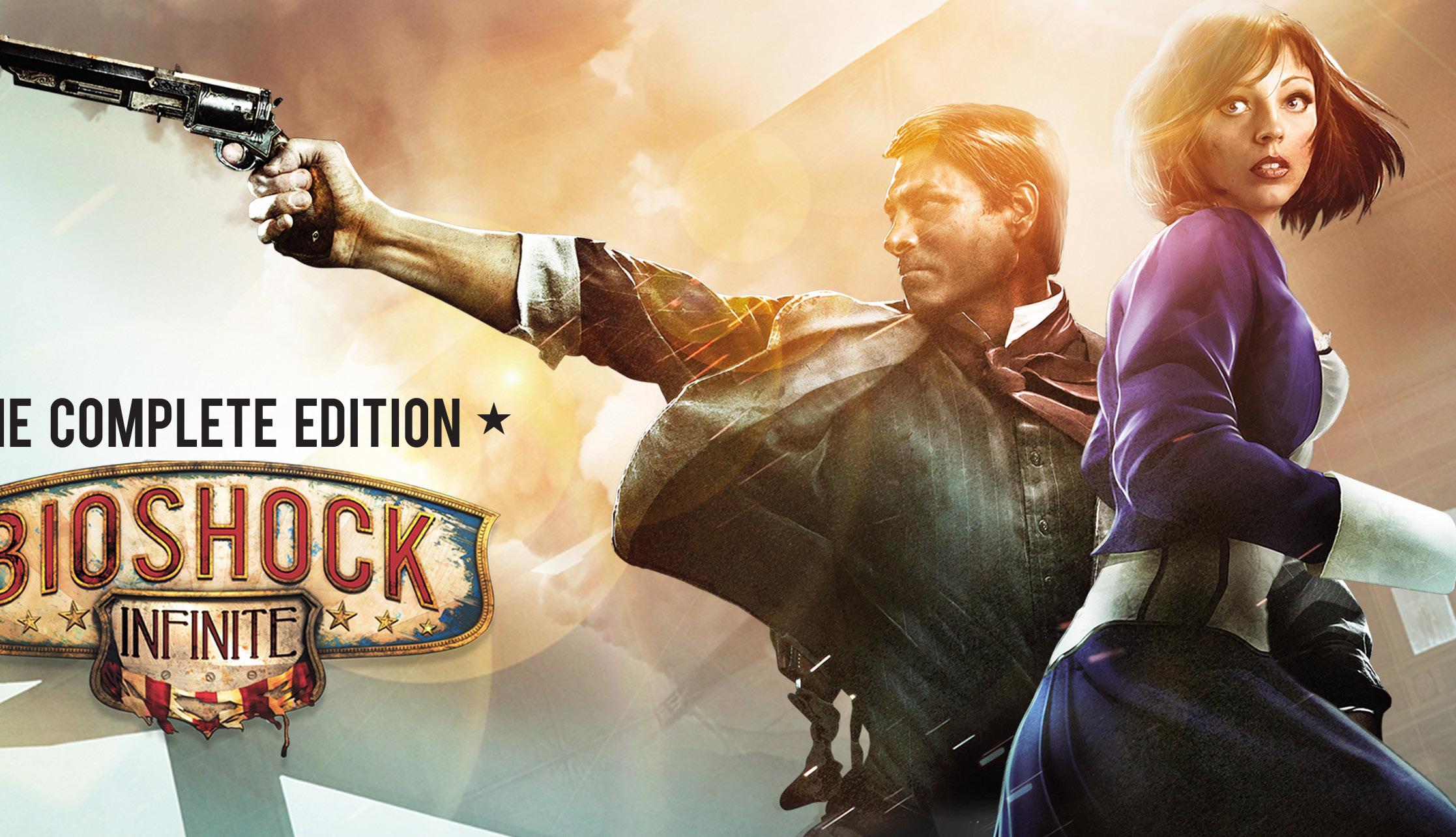
Bioshock Infinte Review
SBy: Matthew Murray
April 5, 2013
hattered dreams form the foundation of BioShock Infinite, the third installment in Irrational Games’ impressive saga exploring the devastating effects of isolation (and isolationism) on the human psyche. But even if you loved the original BioShock (2007) and its sequel, BioShock 2 (2010), this chapter won’t leave you with the impression your own dreams have been betrayed. Wedding familiar game-play elements from the preceding titles with exciting new mechanics, an engrossing story, and stunning visual design, BioShock Infinite is the culmination of the series’ aesthetic and promise to turn a mirror on humanity by probing as deeply into the self as possible.
Columbian Exposition
You must, however, begin this game by abandoning your preconceptions of what the BioShock universe is. For starters, it extends well beyond Rapture, the undersea paean to objectivism (in the first game) and collectivism (in the second) you’ve explored before. Infinite is set in Columbia, an airborne tribute to—and corruption of—American Exceptionalism as viewed from a perspective that recalls that of the now-legendary Chicago World’s Fair of 1893. In the game’s chronology, that was the year Columbia, self-sustaining and faith-focused American settlement, took flight and eventually broke away from the Union that spawned it. Now, in 1912, a series of civil wars has reduced it to a perversion of the values it once held dear, a place fueled by racism, blind nationalism, and religious extremism that’s led the inhabitants to worship the “prophet,” Zachary Hale Comstock, who envisioned the enterprise and took it to the skies.
It’s into this boiling-over melting pot that Booker DeWitt is literally launched. A hired gun on a mission to retrieve a missing girl named Elizabeth and wipe away the debts that are crippling him, DeWitt is taken to a desolate island where he finds that the only inhabitant within the only structure, a lighthouse, has been gruesomely murdered, and discovers a device that catapults him to Columbia. A bewildered stumble through a temple-like welcome center and one eerie baptism by immersion later, DeWitt emerges into the unsettlingly patriotic enclave, where Founding Fathers (specifically Benjamin Franklin, George Washington, and Thomas Jefferson) are worshipped as gods, and the morality of that transitional era is frozen in place.
It doesn’t take long for the (relatively) more modern DeWitt to fall afoul of the Columbians and their parochial ways. As soon as that happens rescuing Elizabeth becomes for him less a job than a crusade, one that leads the pair through Columbia’s various neighborhoods—the town square, the romantic boardwalk, a hoity-toity gated community, the workers’ slums, and Comstock’s imposing homestead among them—learning more about this stilted society and their troublesome places in it. (One of the first, tantalizing hints: Elizabeth was a “miracle” child, born after a single week of gestation—an event her mother, strangely, is no longer around to confirm or deny. Hmm.) What the two uncover is an epic conspiracy that doesn’t just involve the privileged upper class and the put-upon laborers on whom they depend, but also may reveal to DeWitt and Elizabeth that the only thing less certain than their futures are their pasts.
Guts, Glory, and Game Play
Though BioShock Infinite is aggressively linear in a way that may leave you longing for the somewhat more open-ended storytelling of the earlier games, it’s intricate and surprising, with enough twists and turns to keep you engaged through the 12 or so hours it takes to complete (at least on Normal, the second easiest of four difficulty levels). Critical to its success are the vocal performances of Troy Baker and Courtnee Draper as DeWitt and Elizabeth: His rough-edged world-weariness and her empty, and eventually pointedly betrayed, optimism beautifully accentuate the underlying theme of the difficulty of growing once you’ve gotten everything you think you want.
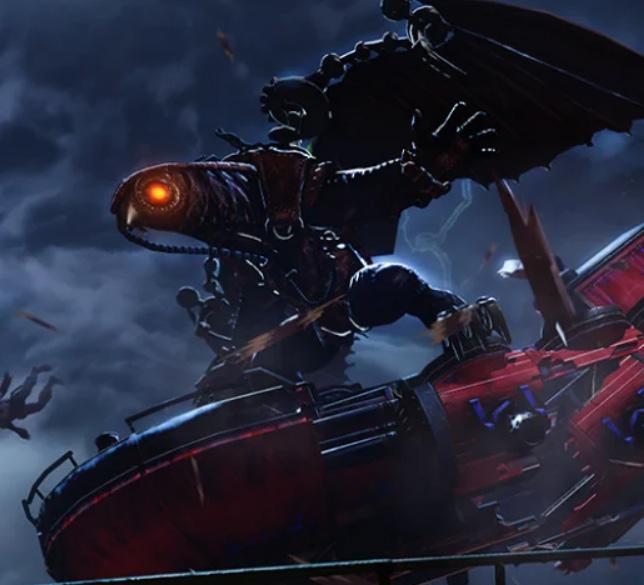
Luckily, the game succeeds as more than just a story. BioShock Infinite seamlessly appropriates certain components from the previous BioShock games at the same time it integrates new ones, so it feels both comfortable and daring. Longtime fans, for example, will recognize vigors (potions that give you superhuman fighting capabilities, such as setting your enemies on fire or blasting them long distances) as renamed plasmids, and “Salts” a different term for the EVE that powered them. The not-so-gentle giant Big Daddy protectors are rendered here as Handyman and Patriot androids (the latter deliciously bearing the faces of Washington and Lincoln). And you’ll encounter a few other visual “cameos” that show just how different from Rapture Columbia isn’t (one of my favorites were the teddy bears).
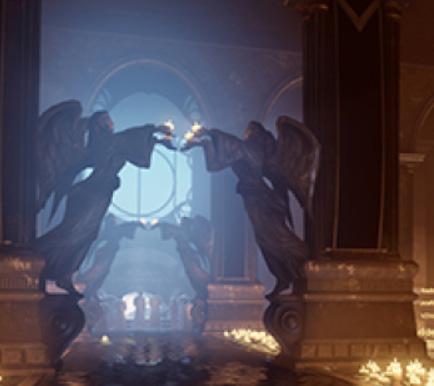
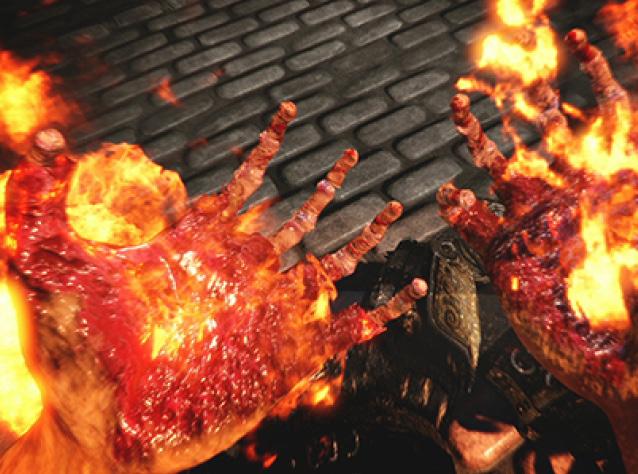
For the most part, combat hasn’t changed much. Whether your weapons of choice are the vigors or more traditional firearms (there’s a wide range, everything from pistols to flamethrowers), you can easily upgrade whenever you come across the vending machine, and swap between options. You always have access to all the vigors you’ve discovered (from a total of eight), though you’re limited to carrying two weapons at a time—though this doesn’t present much of a problem, because there are always plenty to grab in case you run out of ammo (which can happen frequently) or you just want an upgrade in your destructive capabilities.
There are some “feature enhancements” to fighting, however. More than being just a passive companion, Elizabeth can help you out quite a bit. She’s able to locate useful items (ammo, salts, health packs) that she’ll often throw you when you’re in desperate need of them. And she can also produce larger constructs (such as walls for cover, decoys, or even full gunnery installations) by pulling them through “Tears,” or holes between realities that eventually play an important role. Both capabilities are useful
but have their limits, and relying on them to survive is not a good idea (as I learned the hard way).
Most intriguing among all the bigger changes is
Columbia’s Sky-Line system. Using a device you acquire early on, you can leap onto the metal rails that connect various buildings and locales and use them as lightning-quick transportation, a cunning combat ally, or both. Being able to speed past a pack of threatening enemies, only to revive your health and salts, then ride the Sky-Line back to the bad guys and rain devastation down on them from above is one of the most satisfying parts of a game that’s packed full of them.
The Eyes Have It
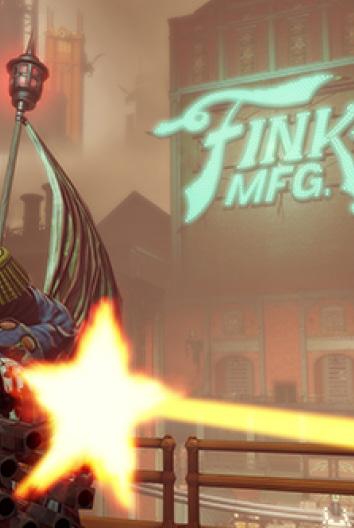
As enjoyable as BioShock Infinite is to play, it’s even better to look at. It might be skirting with hyperbole to declare this the best-looking game of the past decade, especially given stiff competition from the likes of the lush The Elder Scrolls V: Skyrim, but if nothing else it’s distinct and characterful in ways that most other shooters just can’t manage. There’s not a single scene that doesn’t look as if it’s been given
design consideration and art direction as rigorous you’ll find on any Academy Award–winning Hollywood blockbuster.
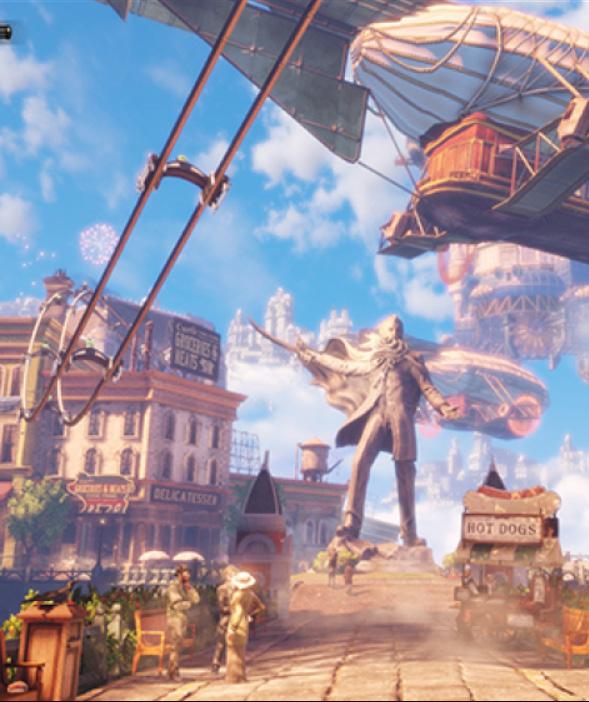
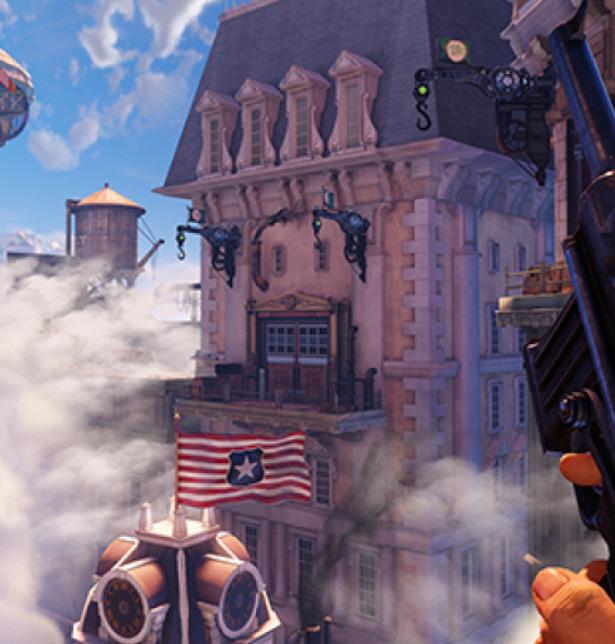
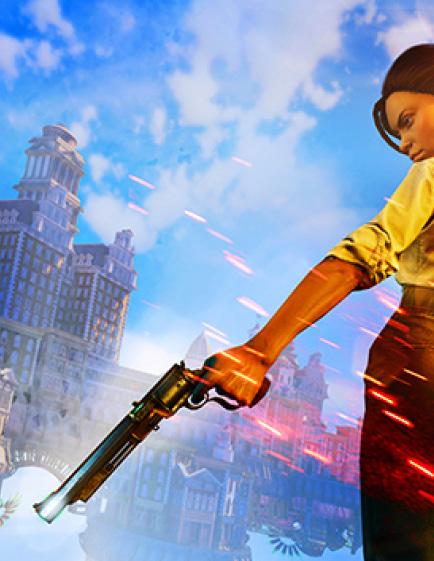
Whereas Rapture was awash in faded Art Deco, Columbia is the vivid embodiment of creamy, Technicolor Victorian excess. On a walk through a summery town plaza you will encounter men in crisp tan daywear and casual boaters, with the women in elaborate dresses that hint at their style-conscious strata. Or traipse down that boardwalk at dusk to witness the laidback attire Columbians don when pursuing an evening’s entertainment as they stroll before the cheery pastel buildings that scream urn-of-thecentury entertainment from behind every painted two-by-four.

The sweeping, alluring vistas of the opening scenes convey the fairy-tale elegance that defines upper-crust Columbia, but you’ll feel a shock as you delve later into the dirt-smeared heart of the city. That’s where the buildings are all slapped together in vulgar earth tones that mirror their inhabitants’ near-povertylevel destitution, and underscore the tensions that propel so much of the plot.
Concerns and Conclusion
BioShock Infinite, then, is a game that, unlike its slightly more theoretical predecessors, readily echoes, identifies, and incorporates real-world concerns. That social consciousness is both a benefit and a liability to the game, highlighting some questionable aspects of American history but in its execution leaving a fair amount to be desired.
The treatment of the members of the working-class “Vox Populi” is especially heavy-handed, and the conflict set up between them and the richer Columbians eventually becomes little more than a “don’t become those you hate” message that’s far less creative than the
game’s underlying concept. Religion and racism, which are both key parts of Columbia, are less than convincingly addressed. How exactly the cult of Comstock emerged from the sane Americans who appear to be his “followers” is never explained. The racial strife is also a bit curious. If, as its provenance suggests, Columbia was a northern city, wouldn’t it have been more tolerant and integrated than it’s ever depicted here? And if relations between blacks and whites are really this strained, why were the races ever mixed within the artificial borders in the first place?
By introducing such complexities, the Irrational folks acquire the responsibility for getting more of the details correct—so it’s a bit harder to grit your teeth and bear your way through sections about racial violence and, eventually, a worker’s rebellion, that seem to be jammed lazily into the narrative. And with all this weight, it’s surprising that BioShock Infinite does not contain, as BioShock and BioShock 2 did, a more ambiguous moral component that forces the lead character and, by extension, his player, to confront their own prejudices and boundaries. Not being able— or required—to make difficult choices is the one thing that, above all others, makes this game feel like something other than full-on BioShock.
There are a few smaller issues as well. Save points are frustratingly uncommon even on the easier difficulty levels (and, reportedly, even less frequent on the punishing “1999 mode” that unlocks once you’ve finished the game), which means you may have to retrace a lot of your steps if you die (or just want to quit) at an inopportune
moment. I also wouldn’t have minded a more thorough exploration of the reality-changing Tears; they add some appealing zest to the combat and the somewhat mushy Vox Populi scenes (though after a while their overuse tends can confuse), but their potential is never fully tapped. And though there’s a thrilling final battle and an elaborate finale that follows it, the game struggles to build up steam in approaching them.
Even so, BioShock Infinite is a thought-provoking visual marvel that meets and exceeds the exacting standards set by the series’ other games. If you progress through to the end to discover Booker and Elizabeth’s ultimate fate, you’ll likely find yourself as moved as I was at the chances they’re willing to take and the sacrifices they’re willing to make to further the courses they believe are the right ones. They are, in significant ways, embodiments of the true American ideal Columbia was originally created to celebrate. The duo become unwitting victims of insular worldviews that are often at odds with the reality in which they lived, so it’s easy to understand why they become as cynical as they do. But if you might find yourself able to relate to their struggle, the journey on which you’ll accompany them will not leave you as melancholy as it does them. You’ll only be exhilarated.
Resident Evil 4 Remake Review
By: Rich Stanton
March 17, 2023
Much like Leon S. Kennedy, Capcom was not in for an easy ride with this one. There are great games and then there are thve classics, games so forward-thinking and complete that they shape entire corners of our industry. In Resident Evil 4’s case, every third-person game since has worn its love for Capcom’s masterpiece on their over-the-shoulder sleeves: Everything from Gears of War to Dead Space to The Last of Us runs because Capcom showed them all how to walk. Remaking a game that remade its own genre is nothing less than trying to catch lightning in a bottle one more time.
Capcom almost managed it and, for the longest time, you’ll think it did. The opening of the Resident Evil 4 remake is outstanding, slightly streamlining the original route into the village in order to get you into the first big set-piece: A knock-down drag-out village brawl that, almost immediately, takes place with the constant sound of a chainsaw revving as its owner chases Leon everywhere.
I played on Hardcore difficulty, which is recommended for those who’ve completed the original game, and the name fits. I must have died in this encounter six times before re-adjusting and beginning to figure out the endless little tricks baked into Leon’s moveset and the enemy behaviour. One difference you’ll notice almost immediately on this difficulty is that running away is not quite the god-tier strategy it once was: These ganados don’t just run after you, but will catch you and inflict grievous damage. If there’s one thing you’ll realise quickly in this game it’s that, after the rather flavourless Resident Evil 3: Nemesis, Capcom has rediscovered the joy of killing players brutally.
And it will do it to you again, and again. The original’s death animations for Leon were another standout feature (Dead Space in particular strove to recreate this) and you can sense the animation team here wanted to out-do daddy, and has produced some of
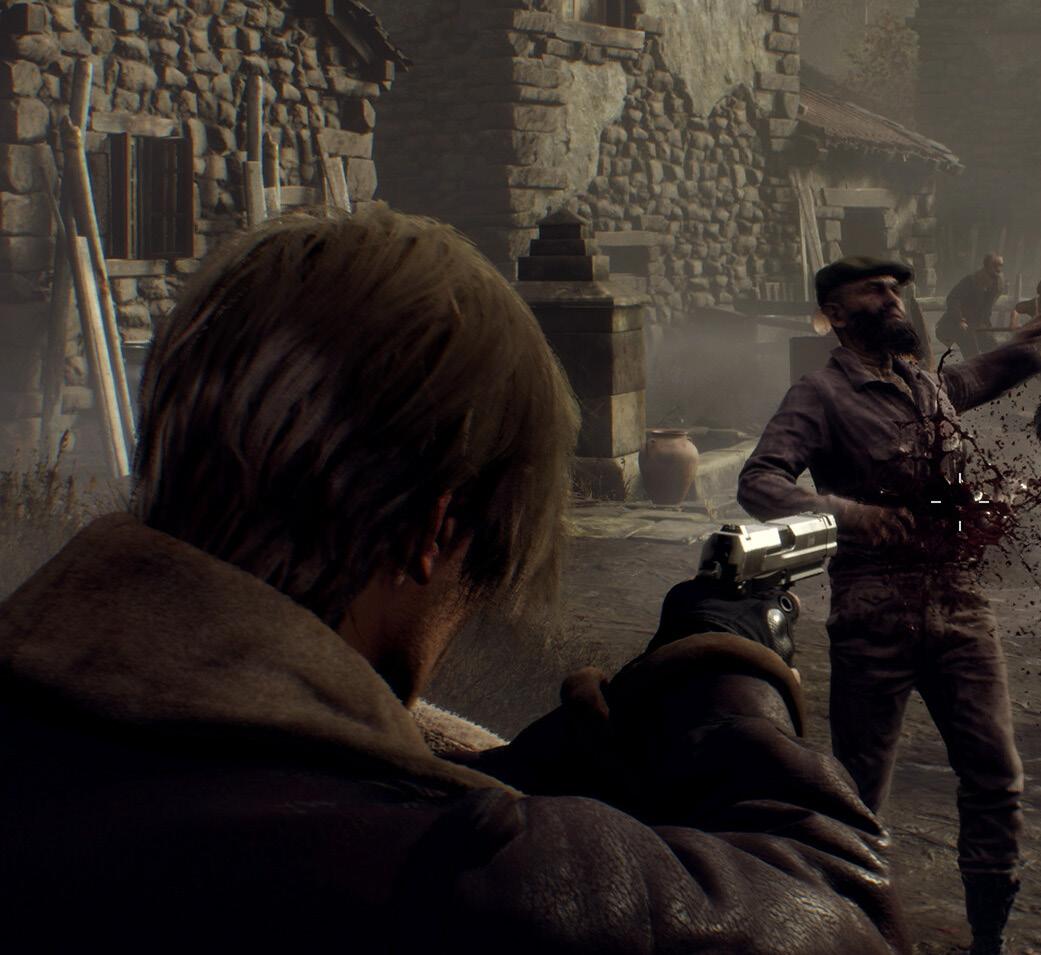
the grisliest, grimmest and sometimes amusing deaths you’ll ever watch. I’ve seen Leon lifted into the air on a chainsaw, I’ve seen a giant bite his head off, cultists poke his eyes out, dogs ripping his throat to shreds, claw like fingers poked through his brain, huge pulsa ting worms nom his face, razor-sharp tendrils slice through his tender bits… honestly I could write five paragraphs on the ways I’ve seen Leon die, and I’d probably still miss some.
Buddy drama
This is the Resident Evil 4 remake’s great strength. Where the original came up with a new threat, the more human-seeming ganados and their swarming tactics, the remake doubles down on the idea, making enemies tougher and more persistent while subtly altering Leon’s toolkit to deal with it. This has always been a game about crowd control: Keeping things off your back, whittling down a seemingly unbeatable mob to its last member, gritting your teeth and blasting through a sea of bodies and tentacles. The remake throws everything at you and then, while you’re gasping on the ground, the kitchen sink sails through the air right at your head.
This can be utterly exhilarating. Resident Evil 4’s greatest fights are all here, bigger than ever, and feel better than ever to wade through. The core of combat remains location damage, shooting enemies in the legs or head in order to stagger them then following up with melee attacks—a brilliant push-pull dynamic that sees you staying on the edge of mobs until you need to dash in and unleash a roundhouse or suplex. A superb new addition is the ability to parry with your knife (though of course not all attacks can be parried), leading to these extended sequences of utter chaos where, through some combination of instinct and extreme firepower, Leon somehow walks away from an army with nary a scratch.
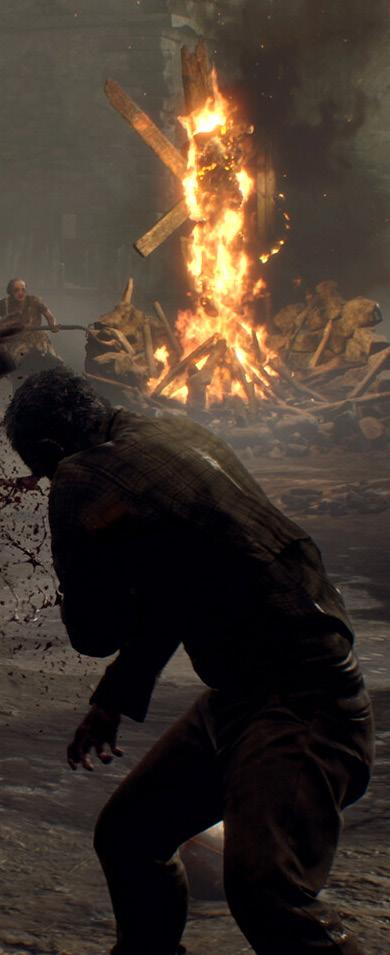
One particularly well-done element of this is, if you’ll do a mental drum roll, reticule wavering. I know, I know, doesn’t seem like much, but the original game incorporated the idea that Leon’s aim would always be slightly wobbly, and the remake takes this and runs with it. Hold out your pistol and, over a few seconds, the reticule will wobble vaguely
around the point you’re aiming at before settling and tightening up to a smaller area. Enemies won’t wait around to give you time to line up your shot, so you’ll need ice-cold nerves if you want to be an accurate gunslinger.
The momentto-moment combat is as good as Resident Evil has ever been, and that’s saying something: That shout of “Un forastero!” still sends chills down my spine every time. The remake also initially stays relatively true to the original game’s outstanding structure and pacing, but once you’re out of the village things change and not for the better.

The Resident Evil 4 remake makes some bold decisions about elements of the original and, in many cases, that decision is simply to remove them. Capcom has been upfront about the game removing the QTE elements (though these are still a part of combat in dodges and arguably even the parry) but it doesn’t have any ideas about what to replace them with and so moments of great drama and peril—little sequences that I find memorable— just aren’t here. The review embargo prevents me saying exactly what is here and what isn’t but, if you have any familiarity with the game, you’ll notice the absence of one, then another, then by the time you’re near the end sadly conclude this isn’t going to deliver much of what it should.
Cover version
That might seem entitled. But Resident Evil 4 was always a slightly crazy game. Where the first game’s mansion was coherent and semi-believable as a setting, Resident Evil 4 takes place in an unspecified European wonderland of bizarre contraptions, shooting galleries, medieval castles, and an
endless menagerie of grotesque and toothy experiments. And a lot of it just hasn’t made the cut. One iconic sequence in particular— I’ll not say which as we’ve been asked to avoid revealing certain specific changes—has here been replaced with an utterly anodyne and short section that simply isn’t fit to lace the original’s boots.
This element of the remake begins to encroach more and more as the game hits its second half stride, and I can only describe it as timidity. Where the original felt like it was constantly over-reaching, always surprising the player with new demands, new environments, and wild one-off challenges, this seems content to settle into more of a standard corridor shooter rhythm. The combat is so good that even when the game’s unambitious it is borne aloft on a cloud of shotgun shells, but the further you poke into that soft underbelly the more standard it begins to seem.
pioneering and ended up defining a genre, this remake is trammeled by that legacy and bound by what Resident Evil 4’s successors, almost all of which are inferior games, have done to the template.
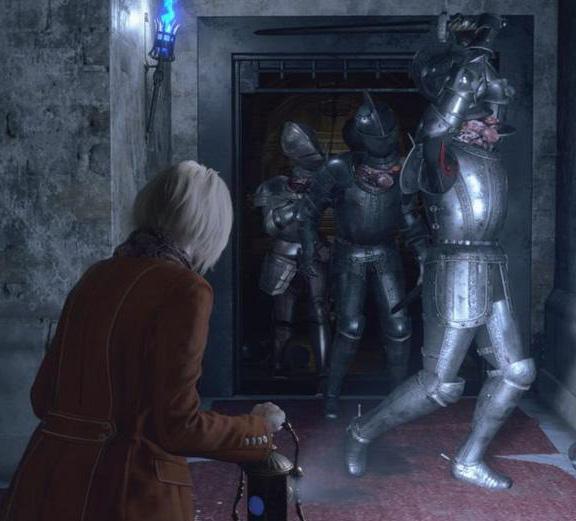
You’ll feel this especially in some of the boss fights and more extreme encounters, where it’s almost like Capcom dials back the threat level somewhat so everyone can get through it. There’s an infamous room in the castle, where Leon and Ashley gradually have to work their way to the back through hordes of enemies, before Leon guards Ashley as she operates a contraption, and the version of it here feels like such a normal fight that you wonder, in a game that elsewhere is happy to batter you, why they’d soft-soap such an infamously tough challenge. It feels like the balance is wrong in some encounters, and part of the mystique and terror is lost. The less said about the gimmicky versions of certain other classic boss fights the better.
Memories are obviously hazy things, but the castle always seemed to me a gigantic playground, filled with back-and-forth warrens and secrets to be uncovered. Here it feels like something designed by Naughty Dog, opulent and gorgeous and fun to walk through, but always with a very obvious big finger pointing out where to go next. I’m not saying the original game was some expansive freeform epic, because it wasn’t. It was every bit as linear as this. But it felt a lot bigger, and kept out-doing itself until the very end in a way that this just doesn’t.
I suspect that, for those who haven’t played Resident Evil 4, the experience of this remake will be to discover a very good third-person shooter, and wonder why everyone made such a fuss about it in the first place. And the sad fact is that, where the original game was
And yet… that core remains so strong, so vital, and the old rhythms beat beneath it. My delight at acquiring the Red9 pistol made me feel 20 years younger, and the upgrade path had that familiar pattern of gradually turning an unwieldy, bucking peashooter into the hand cannon of every secret agent’s dreams. The expansive armoury, which really blossoms after a few chapters, soon forces you to choose which weapons to carry around and upgrade and tinker with, and while there are no surprises the distinctions between them and their efficacy in different situations makes Leon, in those hectic gunswitching grenadetossing moments of chaos, feel like some high-tech Rambo.
Writhe in my cage of torment, my friend
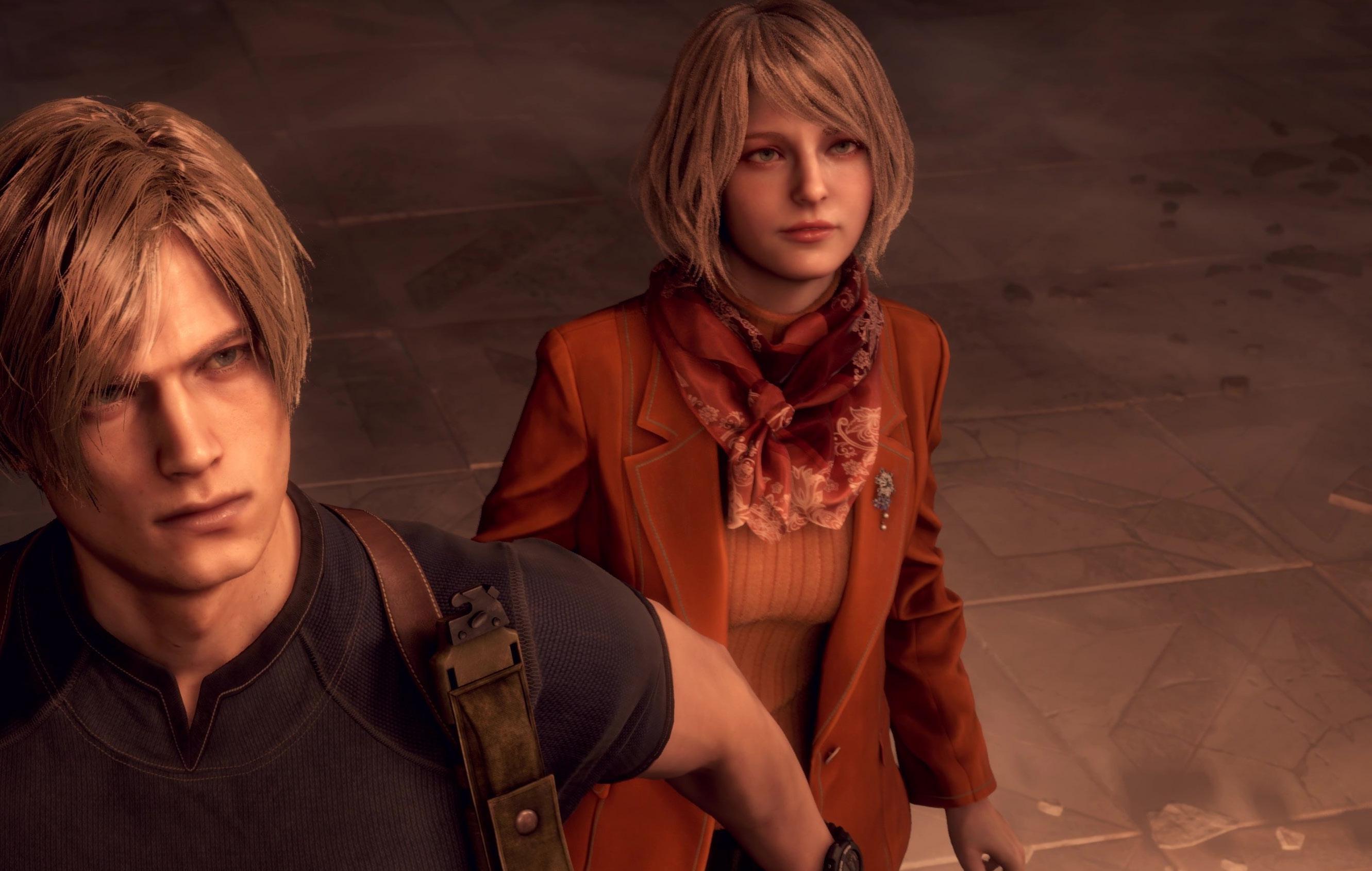
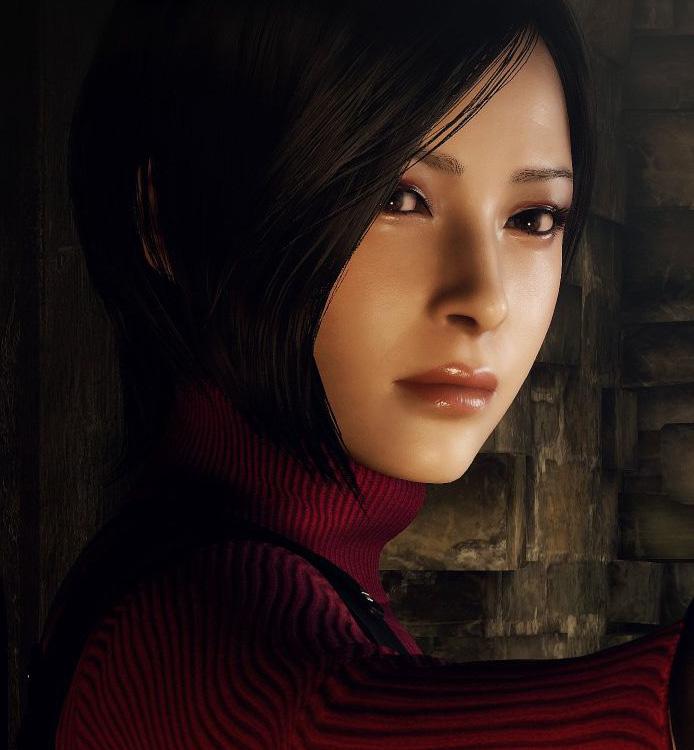
Resident Evil 4 remake undoubtedly improves on the original in some ways. Personally I’ll always miss the line “You’re [sic] right hand comes off?” but the B-movie script is muchimproved, and the way the storyline has been tweaked, in some cases significantly so, is well-handled and retains enough of the schlock factor that the personalities shine through. Ashley, doomed to forever be the damsel in distress, is now a much more forthright and capable companion, while Luis’ reinvention retains the rogueish charm and sands off his more leery side.
Perhaps something like that smoothing out is the real problem here, however. Resident Evil 4 may be one of the best games ever made, but it is also wildly uneven in places, and this remake feels like it has been planed to remove those spikes and jutting edges. It feels like a much more straightforward experience, start-to-finish, than the original. It doesn’t have these far-off detours and wild oneoffs then, with a few notable exceptions, re-does the surprises of the original in new ways without ever quite surprising you enough with how it does so.
another at the player, this feels (in the second half especially) like it settles into a groove and isn’t especially interested in breaking free of it.
Much of this is forgotten when, in the utter maelstrom of battle, you’re surviving by the skin of your teeth and blasting through a sea of limbs and teeth with knife-edge parries and outrageous firepower. But outside of this exquisite action core, Resident Evil 4 remake feels like a game that runs out of ideas and, most unforgiveably, jettisons many parts that made the original so good without having any idea of what to replace them with.
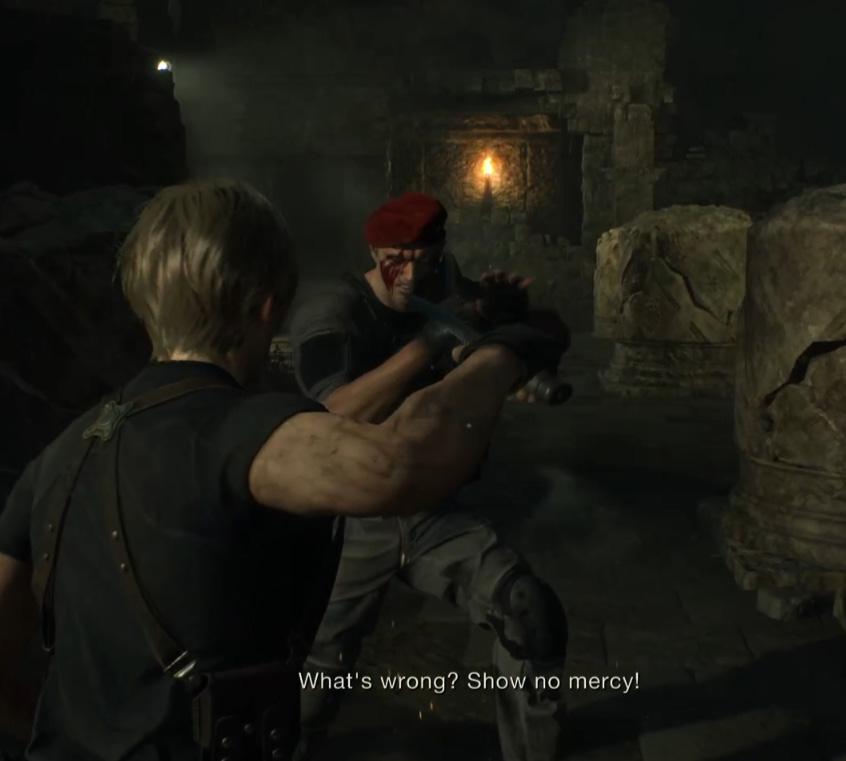
Resident Evil 4 re-invented thirdperson action, and ever since it came out I’ve been waiting for another game to blow the bloody doors off in the way it did. But this is not the heir to Resident Evil 4, so much as a tribute. Resident Evil 4 remake is merely a great thirdperson action game that, sadly, takes too much inspiration from what followed: Rather than what started it all in the first place.

If Resident Evil 4 remake was an original, standalone title, it would be a good game indeed, and anyone who plays this will have a fun time (maybe not on Hardcore though: it really is brutal). But this is not a standalone game, it’s a remake of one of the greatest games ever made and, when it comes to the crunch, it falls short. Where the original felt expansive, this feels cramped, and where the original went on breathless tangents and threw one idea after
“Resident Evil 4 remake jettisons many parts that made the original so good without having any idea of what to replace them with.”
Marvel Spider-Man 2 Review
By Chris De Hoog
October 16, 2023
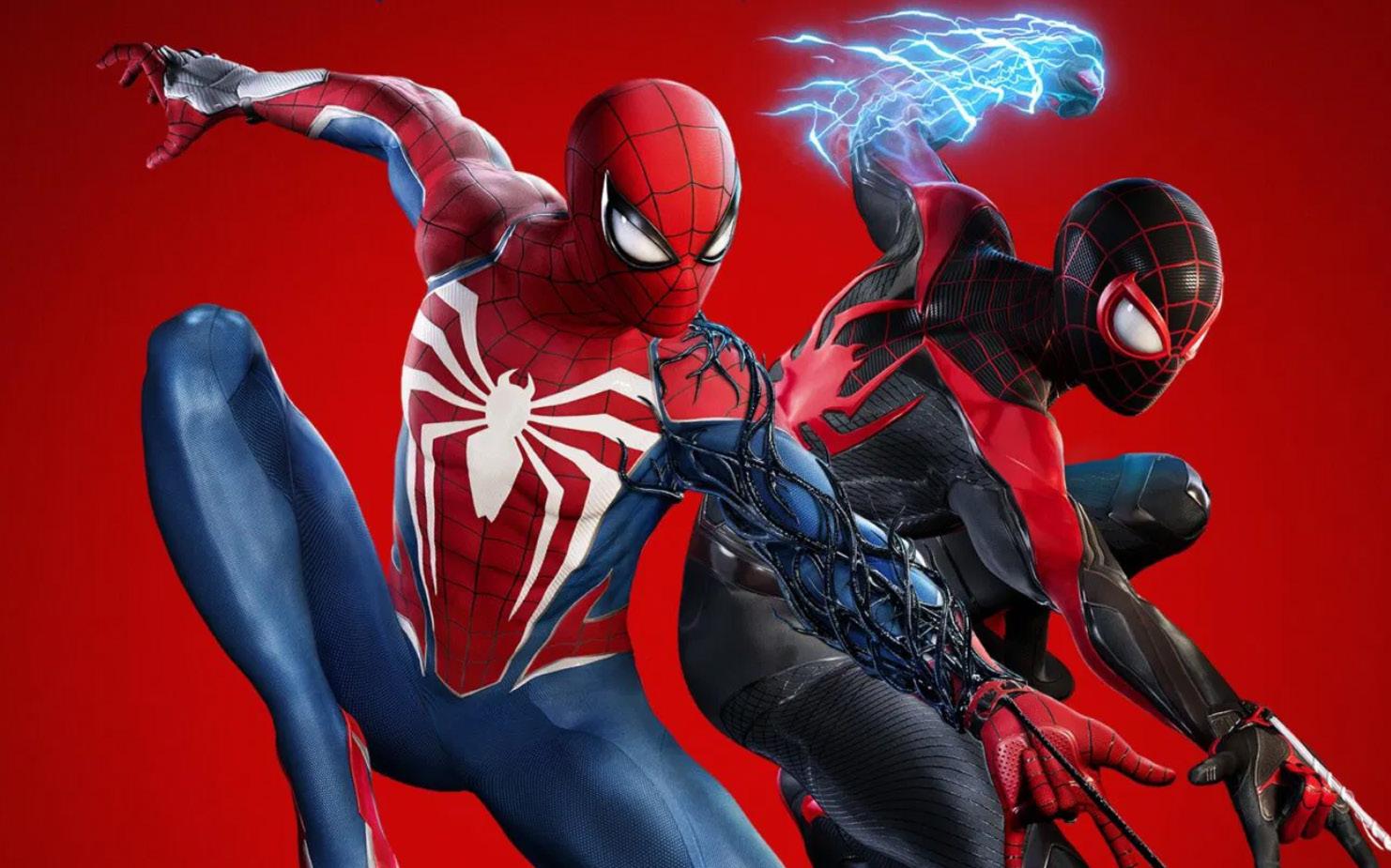
As I set down my controller and watched the credits roll on Marvel’s SpiderMan back in 2018, I knew I had just experienced one of the best adaptations possible for a character I had loved since childhood. I wasn’t sure if Insomniac Games or anyone else could surpass the bar it set for gameplay and narrative alike.
And yet, that’s exactly what Marvel’s Spider-Man 2 has done.
“Marvel’s SpiderMan 2 does a deft job of balancing its pair of protagonists.”
From the highs and lows of its ambitious story to the thrill of exploring a vastly enlarged New
York and its new challenges, Insomniac Games has managed to enrich an already powerful experience. Everything that I adored about the previous games is back, improved and refined, and once again, the team at Insomniac has raised the bar for superhero media.
With Great Narrative Responsibility...
Marvel’s Spider-Man 2 picks up months after Marvel’s SpiderMan: Miles Morales, with Peter and Miles chasing that ever-illusive balance between their everyday lives and the responsibilities they bear. Peter is struggling to pay the mortgage on Aunt May’s house in Queens, while Miles
“Marvel’s truly terrifying leans into is grappling with college applications.
Right from the thrilling introduction—a mission which swerves from Peter’s attempt to teach at Miles’ school to a showdown with an iconic villain—Marvel’s Spider-Man 2 does a deft job of balancing its pair of

protagonists.
Peter is still the central figure of the main story, but Miles is no mere sidekick. Both heroes have satisfying, well-developed arcs both as individuals and in their mentor-mentee relationship, plus their own unique side missions that lean into their personalities.
“Marvel’s Spider-Man 2 presents a terrifying take on Venom that into its darkest attributes.”

That balance extends into the supporting cast as well. Mary Jane, Rio, Ganke, and Hailey all return to keep the heroes anchored. Refreshingly, there are genuine, heartfelt interactions between almost all combinations of the cast, carried by excellent performances from its veteran cast, and it goes a long way to make it feel like both heroes are truly sharing the spotlight. To its credit, Marvel’s SpiderMan 2 introduces a lot of narrative elements but manages to juggle them all. The core story revolves around the return of Peter’s best friend, Harry Osborn, a mysterious new black suit
which enhances his powers, and Kraven the Hunter, terrorizing New York in search of worthy superhuman targets to hunt.
Somehow, Insomniac’s team continues to balance all of these spinning plates where others struggle or fail. While Spider-Man’s screen history is dotted with over-
ambitious attempts to cram too many villains into one tale, each main thread of Marvel’s Spider-Man 2 is given the time it needs to be woven into a consistent whole.
“While Spider-Man’s screen history is dotted with over-ambitious attempts to cram too many villains into one tale, each main thread of Marvel’s Spider-Man 2 is given the time it needs to be woven into a consistent whole.”
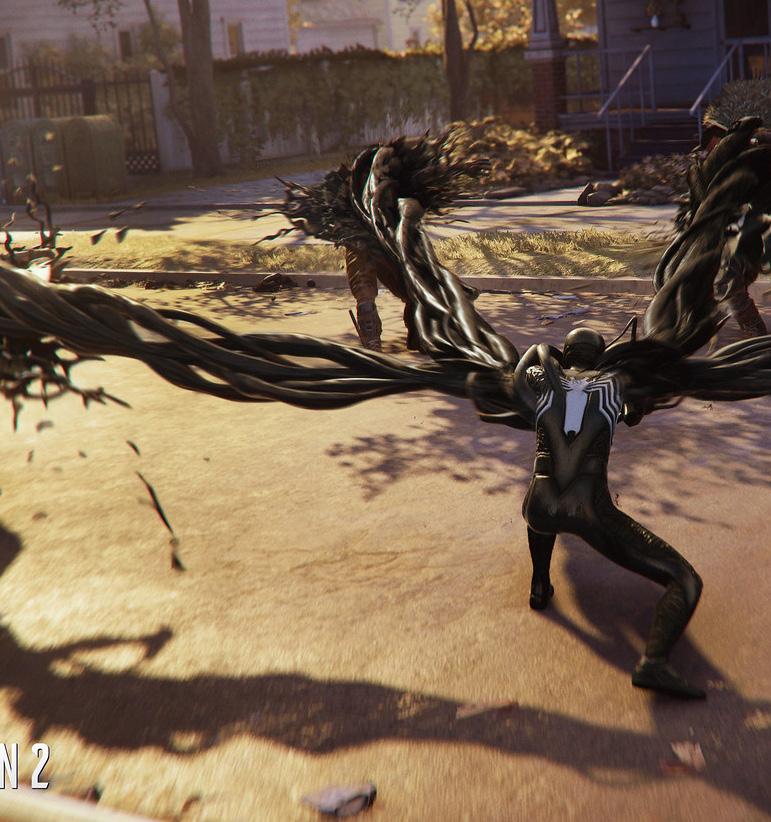
This masterful reinterpretation of the larger canon extends to its treatment of the main villains. Of course, with Peter’s black suit comes Venom, eventually. Longtime fans will see the red flags as the villain is gradually introduced, but may be shocked as it culminates in one of his best depictions ever. This isn’t “Bully” McGuire or Tom Hardy eating chocolate instead of brains— Marvel’s SpiderMan 2 presents a truly terrifying take on Venom that leans into its darkest attributes.
Likewise, Kraven is wielded like an expertly honed weapon. His presence is felt primarily through his goons, the Hunters, who harass the heroes (and even former villains) at every turn, terrorizing New York in their pursuit of a perfect hunt. Every time he does show up in person, it’s a memorable and haunting experience.

There are a handful of other unexpected moments that I wouldn’t dare spoil for fans, but suffice it to say, I outright gasped more times during this game than in most others I’ve ever played.
What I particularly appreciated was the subtle way the game explored the origins behind this iteration of Spider-Man. We’ve all seen Uncle Ben die enough times, and the first game (like the MCU) was smart to forego the bloody details off the hop. However, as Peter deals with cleaning up his childhood home and the return of his best friend, memories rise to the surface.
Seeing glimpses of Yuri Lowenthal’s inexperienced, fledgling Spider-Man was a poignant counterpoint to the present story’s dread. It’s not just a treat for lore lovers. It’s another example of Insomniac’s knack for holistic storytelling. I can only really name one downside to the story of Marvel’s Spider-Man 2—that it made me want to rush through. Once the narrative stakes started to rise and the symbiote shenanigans took root, I didn’t want to take my time as usual and knock off side quests between missions, even if all the incidental writing in between is top-notch and earnest with the right amount of humour.
When all is said and done, the story lands on the sort of fully satisfying note that so few stories can manage. All of the arcs culminate in a sound conclusion that nonetheless leaves room for DLC and a third installment. Best of all, it doesn’t feel hollow, like something was stripped out of the main game just for the sake
“Now, on the other side of the campaign, I still can’t quite believe what Insomniac has achieved with Marvel’s Spider-Man 2.”
of charging players for an unnecessary expansion, as many other games do. I don’t know what Insomniac has planned, but I eagerly hope to see where everything goes from here.
...Comes Great Gameplay Power
Peter and Miles share star duty in Marvel’s SpiderMan 2’s story, but also in its gameplay. This time around, both heroes are fully playable; outside of missions and certain moments where the story restricts you, players can swap between them through the Friendly Neighborhood SpiderMan “app” with a swipe of the touchpad.

Both heroes control the same and have access to shared web gadgets. The web shooters have been reconfigured so that hitting R1 shoots the standard burst of webs while holding it down and pressing a face button fires off one of the corresponding gadgets like concussive blasts. This is a subtle yet revolutionary change from previous games, removing the need to swap gadgets on a wheel.
For the left side of the
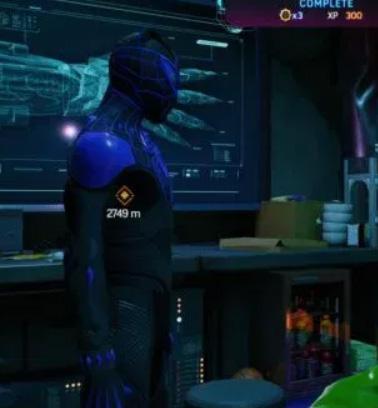
controller, Marvel’s Spider-Man 2 grants abilities that represent each hero’s individual skills. Peter has incorporated mechanical spider arms into his regular suit and later gains access to symbiote powers through the black suit. Meanwhile, Miles’ suite of electric “Venom” powers evolve in interesting ways through the story.
These gadgets and abilities, along with perks that empower them, are purchased in the menu with either skill points or various tech parts earned through quests. As in the previous games, players gain experience based on their performance and as quest rewards and level up to unlock new suits and powers. This system keeps the dopamine drip of gradually earning new treats flowing at just the right pace.
simultaneously distinct and similar. Their skill sets are close enough that it doesn’t feel jarring to swap between them, yet distinct enough to reflect their personalities and make for a different experience.
I found that some of my old reliable combat tricks, like swing-kicking enemies off rooftops, were still valid, while I almost forgot some of my old habits (like the ground stomp) in favour of the new tricks. It was especially easy to rely on the refined abilities once I unlocked a series of skills that made recharging them more effective.
crossing long distances, like the waterways that divide the playable area, without bogging down in the existing traversal mechanics.
Webslinging has always been the key to a great Spider-Man game, as Neversoft and Treyarch proved with their takes on the franchise. Insomniac absolutely nailed that sensation with their first outing, and now that engine has been honed to an


All of these under-thehood systems result in two playable characters that feel
The Spider-Men still feel like glass cannons at times, and the healing system—where players must build Focus meters to either restore health or unleash instant-KO finishers— remains a constant strategic consideration. It all feels more manageable, however, with the new skill paradigm.
One of the new tricks up their sleeves is the web-wings, which keep the thrill of exploring Marvel’s SpiderMan 2’s doubled playground. The usual web-slinging tricks are complemented by the ability to pop open the wings and glide (more like the Amazing Flying Squirrel-Man). This helps with
exhilarating edge, with swinging, diving, and tricks complemented
“One understated element that really bolstered the experience of Marvel’s Spider-Man 2 is its use of all the DualSense’s features.”
by new gliding and mid-air boost jump techniques. Once I found some of the best ways to combine them for certain situations, it made me want to

hoot and holler, just like the heroes’ film iterations.
Utilizing these traversal techniques is paramount with the new horizons available in Marvel’s Spider-Man 2. Even having replayed both previous games recently, the returning areas of New York City felt fresh and revitalized. Expanding the playing field by almost double with Queens and Brooklyn has ensured the game rarely ever feels stale.
Two new background features are key to exploring this bigger backyard: the regional progress system and the natural addition of quest markers into the landscape. Perched high up, you can look over the city and see markers for nearby activities worked holistically into the skyline. In one early instance, fireworks crackle to draw attention to a side-mission, while one of Miles’ sidequestlines is shown by a giant spotlight symbol in the sky, Batman-style. Kraven’s Hunters lurk in camouflaged rooftop
dens and his winged Talon drones circle over certain buildings to signal a chase mission. Even photo ops return, but this time as natural moments happening on the city’s streets.
The power of the PlayStation 5 is paramount to this immersive approach. The draw distance is massive, and the loading times are almost nonexistent, so it’s easier than ever to stand atop a skyscraper, pick a destination, and get there in style. It may be cliche, but New York City truly feels alive like never before.
With Miles promoted to full-time hero duty, Mary Jane gets sole duty in Marvel’s Spider-Man 2’s stealth missions—which have been upgraded to give much more player agency. Getting detected is no longer an instant reset, thanks to a stun gun she picked up in Symkaria between games.
These missions are used less often and for much bigger effect, especially once the taser gets some
additional tricks. Likewise, science puzzles return in smaller quantities, mostly relegated to side quests i nvolving experiments at the Emily-May Foundation. There’s an overall better balance of objectives throughout the whole game.
One understated element that really bolstered the experience of Marvel’s Spider-Man 2 is its use of all the DualSense’s features. Phone calls and podcast intros play through the speaker, and the black suit whispers during Peter’s symbiote-fueled rampages. There’s also a handful of moments that utilize the haptic feedback of the triggers in meaningful ways. They transcend “gimmick” status to inform the larger presentation and might just be the best use of the PS5’s controller since Astro’s Playroom.
The icing on Marvel’s Spider-Man 2’s cake is the
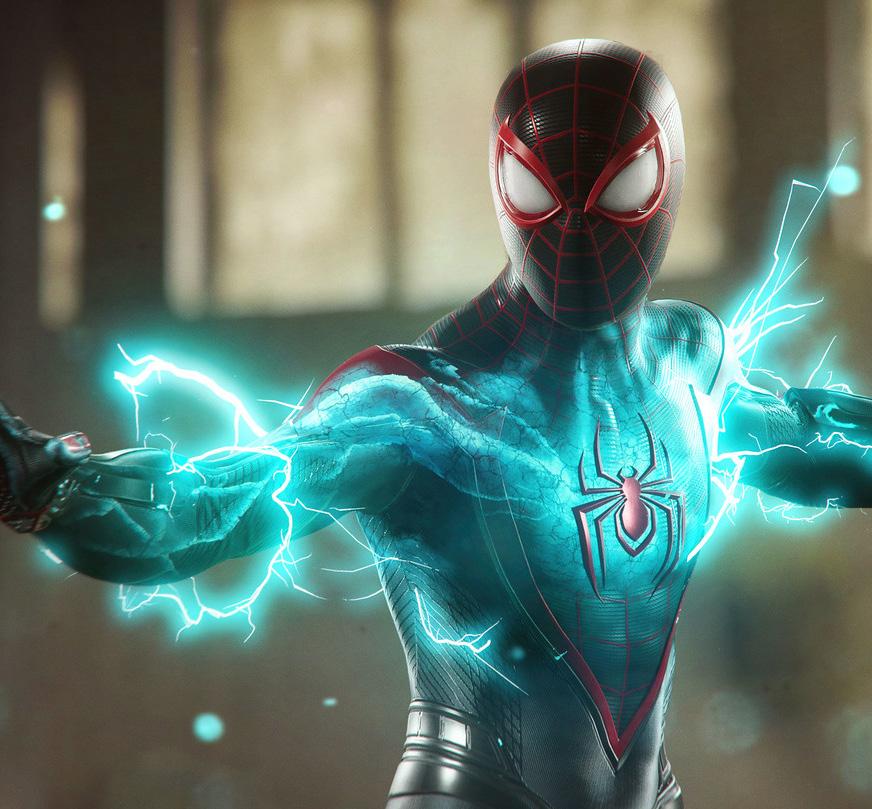
customization. The number of different cosmetic suits has ballooned, especially with the inclusion of “suit styles” for most outfits. Peter and Miles have huge closets that draw from the comics, movies, and original inspirations. It’s a feast for longtime fans who love Easter eggs yet also like to see something new.
Now, on the other side of the campaign, I still can’t quite believe what Insomniac has achieved with Marvel’s Spider-Man 2. Everything I loved from its predecessors is back and refined, while the things that held them back, like grindy enemy bases and puzzles, have been corrected. The story hit every note I hoped it would, plus several more beyond my wildest expectations. It’s both a roller coaster ride of a narrative, and the sort of sandbox I can see myself returning to regularly.
Marvel’s Spider-Man 2 has done what Peter Parker, Miles Morales, or any other hero across the spider-verse has long struggled to do: it has achieved a nearly perfect balance between all the parts of itself. Any fan of any version of these characters owes it to themselves to check it out.
Genshin Impact Review
By Stephen Messener
October 16, 2020

Ishouldn’t like Genshin Impact as much as I do. It has lootboxes with dreadfully low drop rates, an energy system that limits how quickly I progress at higher levels, and an extremely annoying sidekick that refers to itself exclusively in third person. These flaws would doom other games, but Genshin Impact is also a fantastic RPG set in a vibrant open world that is so much more fun to explore than most full-priced games I’ve played this year.
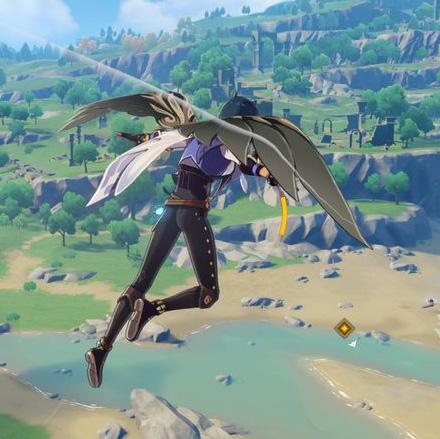
If Genshin Impact has a secret weapon, it’s that it isn’t afraid to swipe features from other games, most notably The Legend of Zelda: Breath of the Wild. Just like Nintendo’s seminal hit, there’s an enormous world to explore that’s teeming with secrets, puzzles, and cleverly hidden loot. There are mercifully few icons on the map, so a lot of the
exploration is self-guided. I have to climb mountains, glide across canyons, and pay attention to my surroundings if I hope to discover it all. It might offend hardcore Nintendo fans, but Genshin Impact doesn’t just thoughtlessly copy and paste these ideas. It expands on and tweaks them to fit really nicely into a loot-obsessed RPG that is—despite what its roots in mobile games might imply—incredibly fun to play.
Whole new world
It’s actually easier to understand Genshin Impact if you think of it less like a free-to-play mobile game (that’s also on PC and PS4) and more like a proper singleplayer JRPG like Ni No Kuni 2 or Tales of Vesperia. You play as one of two interloping twins whose dimension-spanning vacation gets ruined by a mysterious god. Whichever twin you choose to play as is dropped into the medieval kingdom of Teyvat and embarks on a quest to find their sibling. It’s a journey that leads you from being inducted into an order of knights to proving your innocence after being accused of murdering a local demigod. Sure, Genshin Impact might be a Chinese game, but it walks and talks like a JRPG.
“Genshin Impact strikes a nearperfect balance between the intrinsic fun of exploring with extrinsic rewards like loot..”
It’s cliche and not exactly riveting, but the story is still a lot of fun. My sidekick, Paimon, annoys the hell out of me but the rest of the cast are a likeable bunch thanks to expressive and energetic English voice acting. Though some quests are forgettable filler, I really enjoy the ones that focus solely on particular characters in my party. In Xianling’s quests, for example, I took on the role of her sous
chef in a cooking competition, making difficult choices over what ingredients to include in dishes or having to ensure they’re properly cooked. It’s the kind of cute, lighthearted fun I find myself clinging to in the waking nightmare that is 2020.
The story isn’t the reason Genshin Impact took over my life for a few weeks, though. It’s what happens when the game inevitably tells you to go level up for a bit before you can move onto the next chapter. In a game like Assassin’s Creed Odyssey, I resented how the story was gated by my level because it felt like my mom arbitrarily forcing me to go outside for an hour to get some exercise. In Genshin Impact, though, being told that you have to level up a bit before you can continue is a blessing because exploring is what Genshin Impact does best.
The two regions of Mondstadt and Liyue are not only enormous but absolutely packed with puzzles that
encourage you to pay careful attention to your surroundings at all times. Hidden chests full of loot are tucked into most nooks, but you might see a trio of torches and decide to use some fire magic to light them and get a reward. Or you’ll find a wayward spirit that guides you to some hidden treasure, or find special collectibles that can be offered to special statues to increase your overall stamina.
Some of these puzzles only take seconds to solve while others are more involved—cryptic riddles or hidden switches that require clever use of your magical abilities. It’s a world so densely layered with treasure that at times I’ll look out at a vista and feel a little overwhelmed by all the things I can see and want to investigate. It’s not uncommon for a short trip from one destination to the next to turn into a spiralling detour as I stop to investigate a ruined village, then collect some nearby ingredients, open a treasure chest tucked into a crevice, only to then see some suspiciously-placed, unlit torches.
If I spend an hour wandering around and I’ll quickly rack up a ton of equipment that can be broken down for crafting or used, money and resources for upgrading your different party members, and the currency needed to buy lootboxes. I’ll also
earn experience points toward my Adventure Rank, which is what unlocks more story quests along with features like special dungeons, daily quests, and even a co-op mode so I can explore with three friends— though it’s restricted to only a handful of activities that significantly limits its potential.
It’s a collection of systems I like a lot more than most open world games because it strikes a near-perfect balance between the intrinsic fun of exploring with extrinsic rewards like loot. In Breath of the Wild, for example, I might spend an hour wandering and only have a handful of useless gemstones to show for it.
I love how neatly combat folds into this fun loop of searching and looting. Though my party consists of four characters, only the one I’m actively controlling appears on screen at any given time. With the press of a number key, though, I can switch to one of the other three in a snap, immediately letting me start wailing on enemies or use their abilities to solve a tricky puzzle.
Each character belongs to one of six elements that empowers their abilities and can interact with the environment and enemies in surprising and delightful ways. If it’s raining, an ice character like Kaeya can freeze enemies solid with his special abilities, or I can use Lisa’s lightning attacks to make them superconductive so they constantly electrocute anyone nearby.
The environment reacts to all this magic, too, so I can freeze
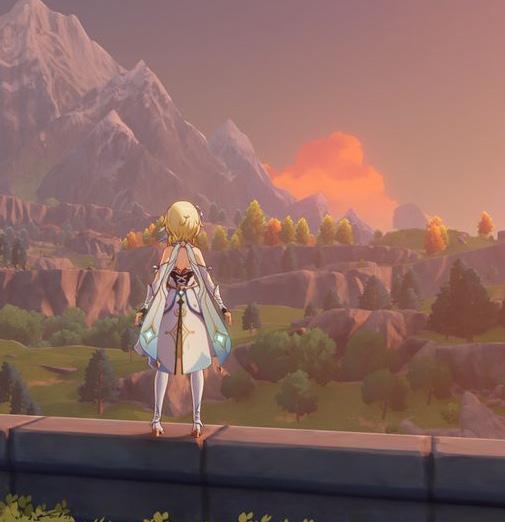
water to make an ice bridge or start a grass fire that’ll sweep into an enemy camp and detonate the powder kegs they have stored there. A lot
“After playing for 40 hours, it’s almost baffling how little these lootboxes matter.”
of puzzles also require a certain type of magic, like using Amber’s fire arrows to light distant torches to reveal a hidden chest or using my main character’s earth ability to drop a heavy stone on a switch so a door will stay open.
Figuring out all of these interactions is great, but what’s really fun is building parties that can exploit each other’s elemental magics to create explosive combos that absolutely melt the HP bar of even the toughest enemies. Because enemies are often themselves elemental, it becomes a bit like Pokémon where I’m trying to exploit an elemental weakness while defending against my own. If I’m fighting a towering, gnolllike Mitachurl and he has a shield, for example, I’ll switch to Xianling and toss her magic, firebreathing panda into the fight
so it can light the shield on fire. Then I’ll switch to the main main character and use her wind ability to turn those flames into a fiery vortex that obliterates the shield—and often its wielder—almost instantly. Of course, a lot of enemies will also try and use these tricks against you as well, so I always have to be aware of my own weaknesses too.
It’s a simple enough system that I mastered it in just a few hours, but it never gets boring. The unpredictability of the weather, environmental features like dry grass or explosive barrels, and my enemies’ own elemental abilities keep things feeling unpredictable and exciting.
Caveats galore
You can’t talk about how great Genshin Impact is without acknowledging its crappy monetization practices that go beyond what you’d normally see in free-to-play PC games. Some of it is pretty standard stuff, like a battle pass with an optional premium track that costs real money to unlock. But Genshin Impact also sells lootboxes called Fates that cost around $3 that go far beyond the usual cosmetic skins. Fates drop new characters for your party or powerful new weapons for them to use in battle. The rarest of these only have a 0.6 percent chance to drop—though there are some “pity” systems in place that guarantee a top-tier reward if you don’t get one after opening a whopping 90 of them.
If you’ve played any of the big mobile gacha games like Raid: Shadow Legends or Arknights, you’ll already
be familiar with these systems, but this is the first time I’ve played a PC game that uses them. As the kids would say, it’s a little sus.
The good news is that, after playing for 40 hours, it’s almost baffling how little these lootboxes matter. You earn the currency needed to purchase them at a generous pace from various activities, and the characters and weapons you’ll find just by playing the main campaign are more than enough to see and enjoy most everything there is to do. In addition to the six characters I got for free from the story or through special in-game events, I’ve earned an additional eight and the only thing I bought was a $5 subscription fee-like item that gives me an extra chunk of premium currency each day.
Even if you don’t get as lucky as me, none of this will stop you from exploring all you want. The characters you are given for free are an eclectic bunch with a variety of different abilities that’ll be useful both in combat and out in the world. If you care about optimizing your team or min-maxing individual characters, however, Genshin Impact will absolutely rob you blind.
It’s a weird issue that I didn’t
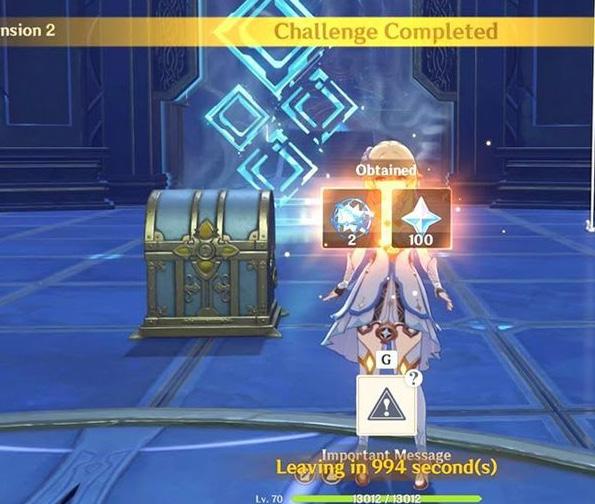
encounter until reaching level 40 and completing most of the story, but Genshin Impact’s endgame grind is pretty unbearable. Each character in my party and their weapons has an individual level that is increased by feeding it certain resources, but at certain thresholds, like level 20 and 40, you have to “ascend” by tracking down some rarer resources.
I actually love this idea and the first few times I ascended characters I enjoyed treasure hunting for the right materials, but the problem is that most of this stuff is awarded for killing certain bosses or doing special dungeons called Abyssal Domains. Both of these activities (and a few others) require you to spend a regenerating resource called Resin, but I only get so much each day and it’s shockingly easy to blitz through my stockpile.
This didn’t annoy me early on because I was still so wrapped up in exploring and completing the story, but now that I’ve completed most of that the only real goal left is to power up my characters and take on a few remaining ultra-difficult challenges. But the grind is so bad that I don’t even want to bother. It takes me all of 20 minutes to use up my Resin and then I have to wait a full 16 hours before I have more, and everything I need to grind requires it. I might spend all my daily Resin getting some upgrade materials for my sword only to not be able to ascend it because I don’t have enough money, but I can’t grind for that either because I just spent all my Resin.
It’s not just about each character’s overall level, either. Their individual abilities also need to be upgraded in a similar manner, and then there’s a skill tree called Constellations that I can only level up by getting lucky enough to get a duplicate of that character from a loot box. Considering the rarest characters only have a 0.6 percent chance of dropping, I’d probably need to spend tens of thousands of dollars or play for tens of thousands of hours just to fully upgrade my characters.
“Genshin Impact is so close to being a revolutionary free-toplay game that transcends this exploitive, manipulative bullshit.”
If you’ve played a gacha mobile game before, this won’t surprise you, but I find it especially frustrating because Genshin Impact is so close to being a revolutionary free-to-play game that transcends this exploitive, manipulative bullshit. It’s weird that it gives so much away for free—a sprawling, high-quality story and a beautiful open world that can take 40-plus hours to fully explore— only to then clamp down so hard on the endgame grind. I went from being able to play Genshin Impact for hours on end like a proper RPG to jumping in for 15 minutes each day before being arbitrarily forced to stop because I’ve run out of Resin. I could pay to restore it, but that feels like an enormous waste of money. I’d rather just play something else.
It’s such a jarring and abrupt change that really highlights how
carelessly these monetization systems have been implemented. I desperately wish its developers would find a better way because I’d happily pay up and support its ongoing development, but I’m not going to gamble my money on lootboxes with odds this bad.

This doesn’t change the fact that Genshin Impact is one of my favorite games this year, it just sucks that we’ve been driven apart prematurely, especially when other free-toplay games manage to strike a much healthier balance in how they monetize. The way it stitches Breath of the Wild and classic JRPGs together is awesome, and the fact that you can enjoy so much of the game for free absolutely still makes it worth playing. Just understand that, at some point, you’ll smash into that wall. Maybe if you know it’s coming, it won’t hurt so much.
metroid Prime Remake Review
By Ashley Bardhan February
16, 2023
Istarted growing up with games at a time when a lot of them weren’t advertised as “for girls,” and especially not for girls who couldn’t afford it. I started playing games in earnest with the Nintendo DS, which advertised plenty of “girly” games, but when I got my Xbox 360, I wasn’t used to more neutral or stereotypically boyish games like Skyrim and Assassin’s Creed, and I found them more difficult to get into. That discomfort made me miss the Metroid games, which aren’t necessarily marketed to women, but do, I was surprised to learn at some point, revolve around the nonchalantly female bounty hunter Samus Aran. I loaded Metroid Prime Remastered with these memories in mind, hoping it would let me try a bit of what I missed when I was too young to even really understand what makes someone “a girl” (I’d just turned 4 when it was released for the GameCube in 2002). It delivers.
The immersive atmosphere of Tallon IV
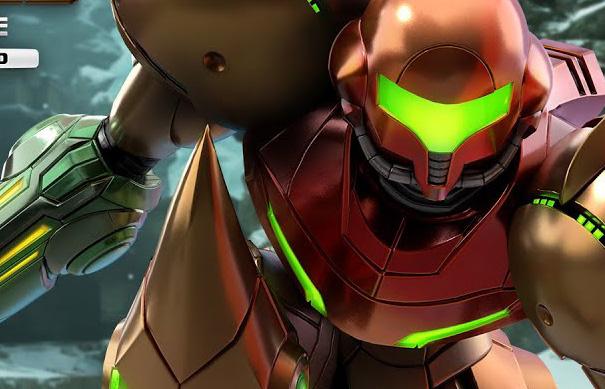
Remastered leaves the story of the original untouched. It’s a 13-ish-hour journey across the planet Tallon IV, the former habitat of the birdlike Chozo race, before it was taken out by a meteor weeping the toxic substance Phazon. Still, Tallon IV abounds in the Chozo’s dilapidated stone temples and resplendent rainforests, now overrun by Space Pirates hoping to use Phazon for their own wicked experiments. Samus —who you only see when she’s riding an elevator in third person, staring out her helmet glass in disbelief, or when you get a flash of her reflection in a bright beam blast through your first-person view—needs to take them down. Navigating her gliding, heavily armed and armored body, I recover artifacts, scan environments and the nasty creatures in them to record as field notes, and blast through bad guys.
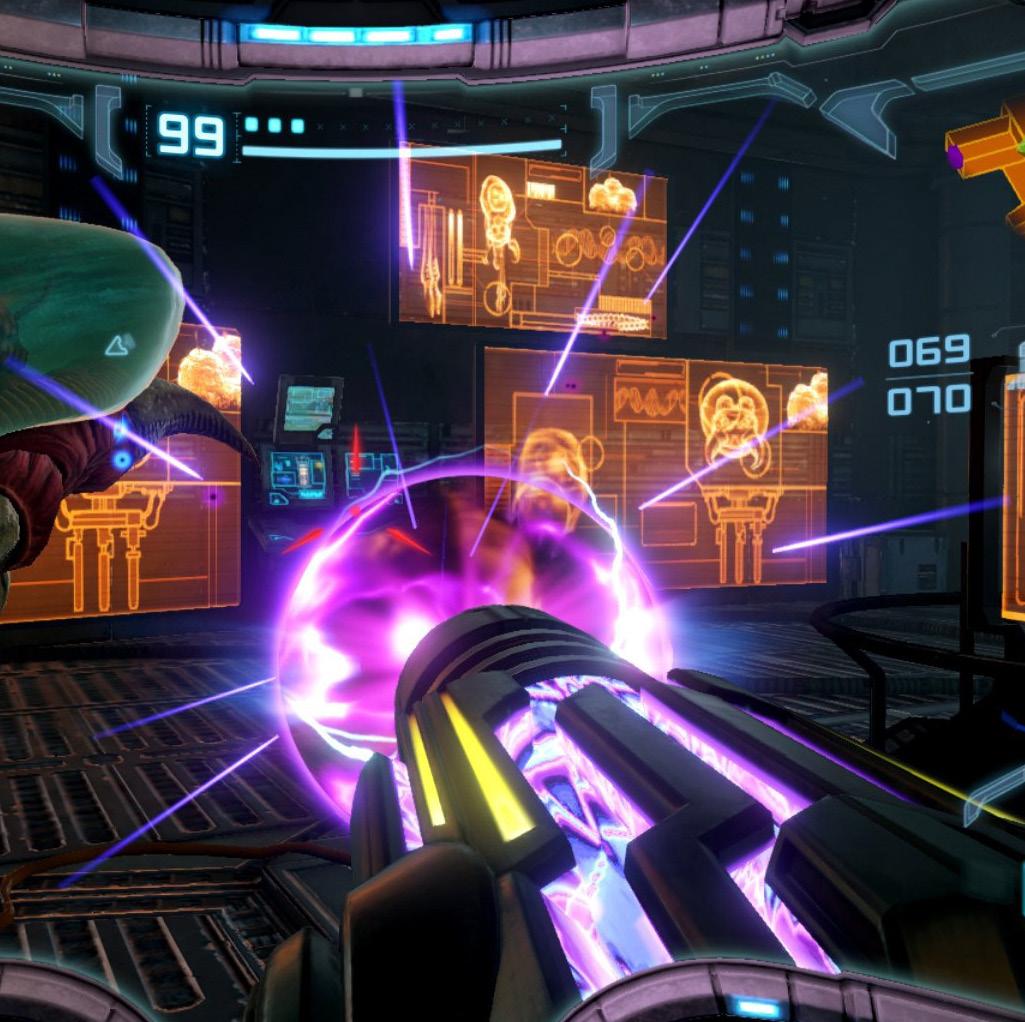
Most of these guys, of which there are a memorable menagerie—porcupine-like aliens with spindly legs, gassy globes that look like the novel coronavirus, or the muscled, reptilian Space Pirates who pop out from dark corners to take you down—didn’t take me more than a couple of seconds to destroy on the
game’s normal setting.
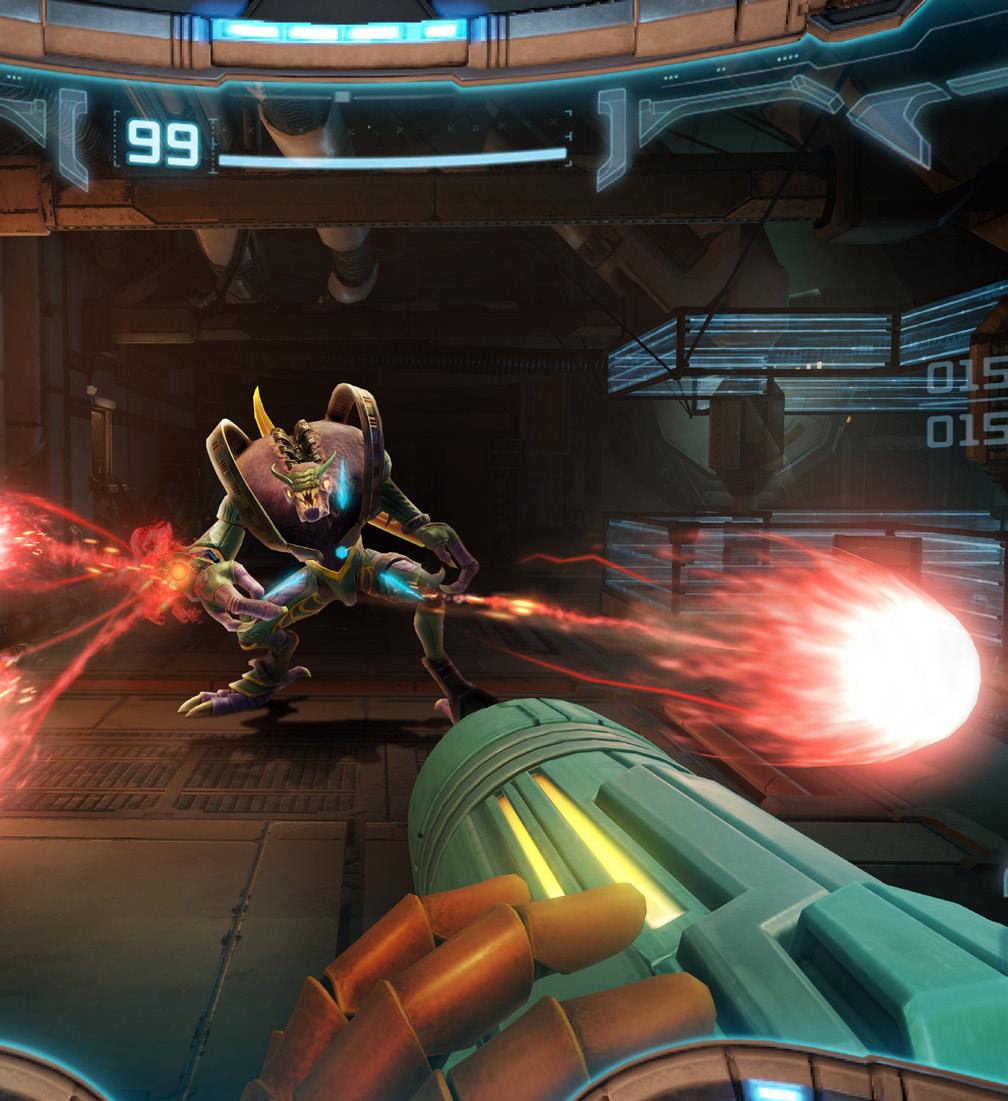
This shooter’s breeziness is noticeable immediately in the game’s introductory tutorial section. Shortly after I arrive on the Pirates’ Orpheon spacecraft, copper-colored Tallon IV looking like a shiny penny in the distance, I am encouraged to shoot at enemies with my Pulse Beam. Boom. The Pirates go down. I’m told to press B while using the game’s very generous lock-on setting, which pulls the game’s already basic shooting elements down to their baseboard, to move around potential hits. Boom. A swarm of creatures vomit green goo at me. Some splats and slides off my visor, but I kill the creatures quickly.
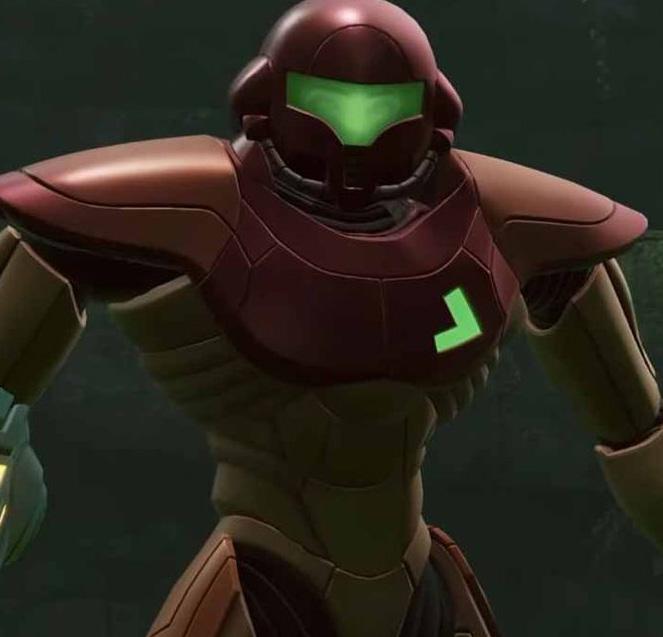
Metroid Prime establishes itself as more of a Lara Croft-type adventure than a shooter. Tense moments—the seconds after killing a boss, missing a jump and slipping into a pit of burning magma—are pinches to keep pushing forward, get the next bit of gear, go down another secret tunnel, add more Chozo history to my logbook.
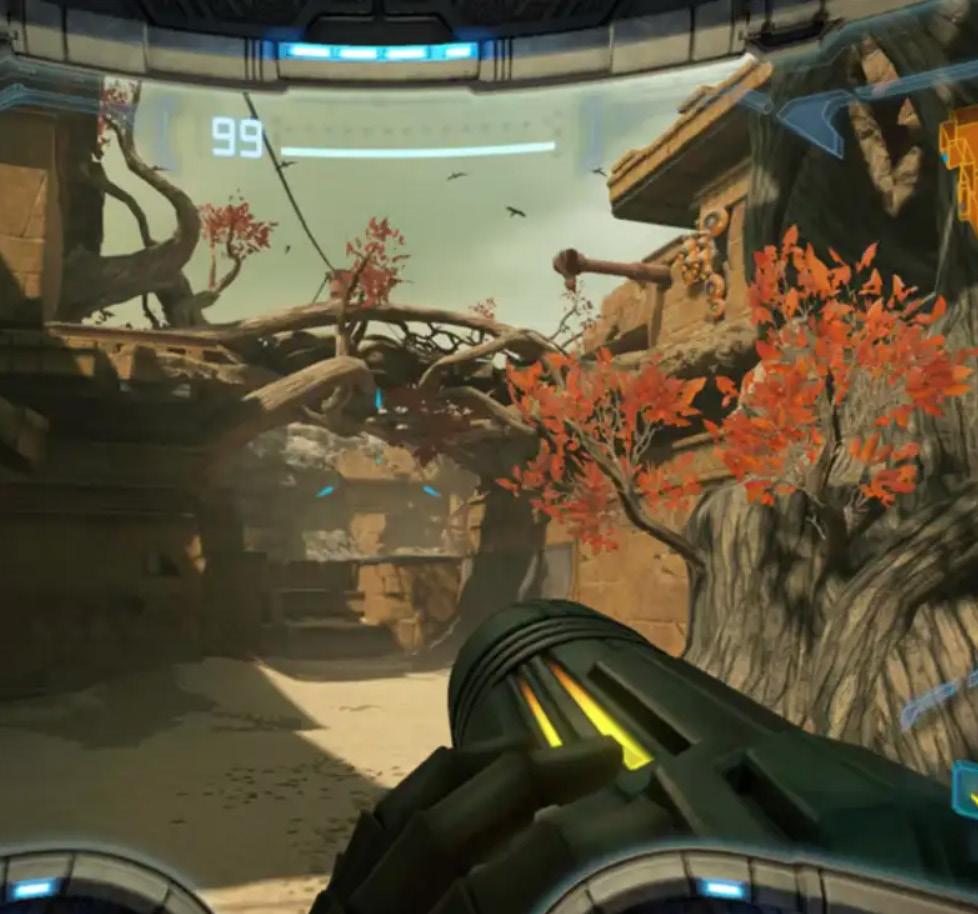
derwebs illuminated by the hot sun, taken by its cute, cartoon-y graphics as I progress.
Samus’ eyebrows, through the reflection of her helmet, are perfect bark-colored rainbows. The fallible enemies, some with cases of ice on their backs like turtle shells, some crackling with painful white lines of electricity, and those Space Pirates with their long legs and jet packs, are richly colored like gummy bears.
From this benign beginning,
The same game but better
It helps that this Remastered version looks so…remastered. I forget that this was first released for the GameCube in 2002, taken by the beads of orange light that peel off of Orpheon like spi-
But Remastered hasn’t forgotten where it came from. Aside from the default “dual-stick,” for modern, dual-stick control, the game offers robust controller settings, including “classic,” modeled after the GameCube controller, “pointer,” which operates “similar to Metroid Prime: Trilogy for Wii,” the game says, and “hybrid,” which combines dual-stick and classic. I play mostly with dual-stick, though I feel like hybrid is a fun limitation, with a sticky up-and-down control that I find beneficial to my motion sickness.
I appreciate that, too. For some reason, Metroid Prime doesn’t inflame my video game-induced motion sickness, which sets in especially while playing first-person games, but even if I’m playing a third-person game for too long. Being able to alternate between playing on my big screen TV and baby-sized Nintendo Switch OLED screen is helpful, and the graphics are crisp on both.
The music, always atmospheric,
sprinkles of stardust piano here, a bit of groovy drum machine there, also sounds great on both my stereo speakers and through my Switch, taking on a pleasantly tinny quality on the latter, like cookies rattling around in their box.
The only thing that I really felt was missing from my play experience, like with my playing the Dead Space remake, was nostalgia for this game. Without it, although rare, annoyances were more difficult to cover in candy.
As I progress through the game, I pick up expansions to my health bar and to my Power Suit, like a thermal visor, boots that help me do moon landing high jumps, and weapon expansions that help me shoot out missiles spun from purple light. The enemies that crowd the different environments
I navigate and return to, hunt in, plunder, and return to stay at pretty much the same low-level difficulty because of this. I don’t mind that so much—quickly downing enemies helps make the game feel like an elastic snap, and I like moving on.
But repetitiveness and simplicity become less fun when it comes to the bosses, which either have tricks to them (a light beam you need to change the position of, some rocks you need to methodically obliterate) or require boringly little skill (hold B to avoid an attack, shoot until they die). By my fifth boss battle, I’m more annoyed than exhilarated, wanting to get it over as fast as possible so that I don’t have to double back to my last save station.
I can respect that purists like the save station—the health-replenishing checkpoints are, for the most part, conveniently located in each new place you enter—but, like I said, this is a game that’s all about trav-
el. Adventure, right? But when I trip into magma again and need to retrace 10 minutes worth of my steps, taking down the weak enemies that light that path again, I don’t feel challenged, I feel annoyed. Exploration, the crux of the game, turns into a chore.
At slower, more frustrating points of my playtime, I find it difficult to connect with the obscurity of Samus’ mission. Unlike Alien, the seminal sci-fi horror film that inspired the Metroid games, Remastered doesn’t give me a clear reason to root for my female protagonist’s success.
I can’t say I’m that personally invested in the Chozo’s demise, and the game isn’t heavy enough on mystery to make me want to be. It’s all pretty cut and dry, evil mutant stuff.
To give myself more to chew on, halfway through, I turn on “full” narration settings, so that voiceover from the game’s original European and Japanese releases would play as I do. I’m disappointed when I realize that those old voices are confined to the opening and closing cutscenes, and to announcing locations, like the translated Ice Valley (Phendrana Drifts).
lives
I’m more interested in the careful details Metroid Prime uses to make up for its hashing and rehashing (it is a 2002 game, after all). The white-blue snowdrifts
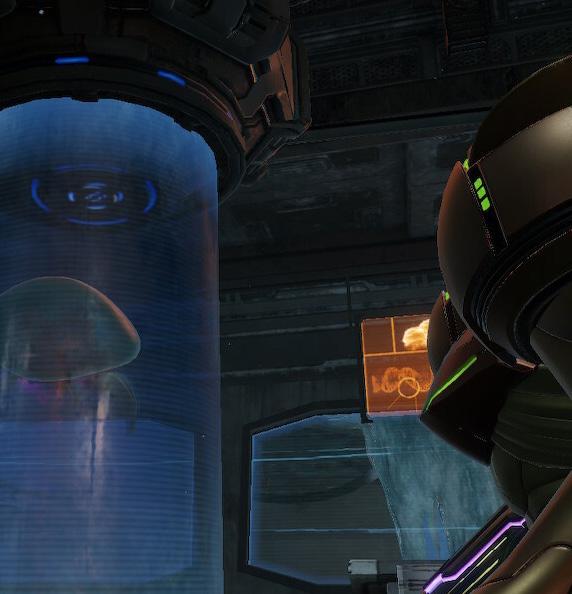
in the Phendrana region, the way water sloughs off Samus’ visor like she’s a stone in a river.
They endear me to Samus, as silent and stoic as she is. Similarly to Alien’s Ripley, Samus is presented as refreshingly gender-neutral, her suit fixed with massive armored biceps, a bit of flat orange metal around her waist, too protective to allow for curves.
Remastered’s graphics look great, and while the game continues to, for the most part, translate well as an expansive, engaging shooter, I’m most struck by how the game allows Samus to be a person. Not a woman with her baggage, sexualized and discarded like a Grand Theft Auto: Vice City sex worker from the same year, and not relegated to the background the way 2023’s Dead Space does to its female characters.
Metroid Prime doesn’t linger on Samus’ fear, either, instead allowing Samus to navigate Tallon IV with indifference, something real women walking alone in the real world are rarely encouraged to have. But Samus never needs to hurry because Metroid Prime keeps her safe. And the immediacy in which she gets to exist has nothing to do with her gender. Unless I see her reflected eyes, fluttering with black mascara, in her visor, I’m not thinking about Samus’ gender or what she looks like.
And I’m thankful for that. I’m old enough now to witness girls partake in the video game industry outside of “girl games,” and to experience its full breadth for myself. Metroid Prime Remastered isn’t as perfect of a game as it seemed to be over 20 years ago. Too much time has passed for that to have ever been the case. But it will always know how to let a woman live.