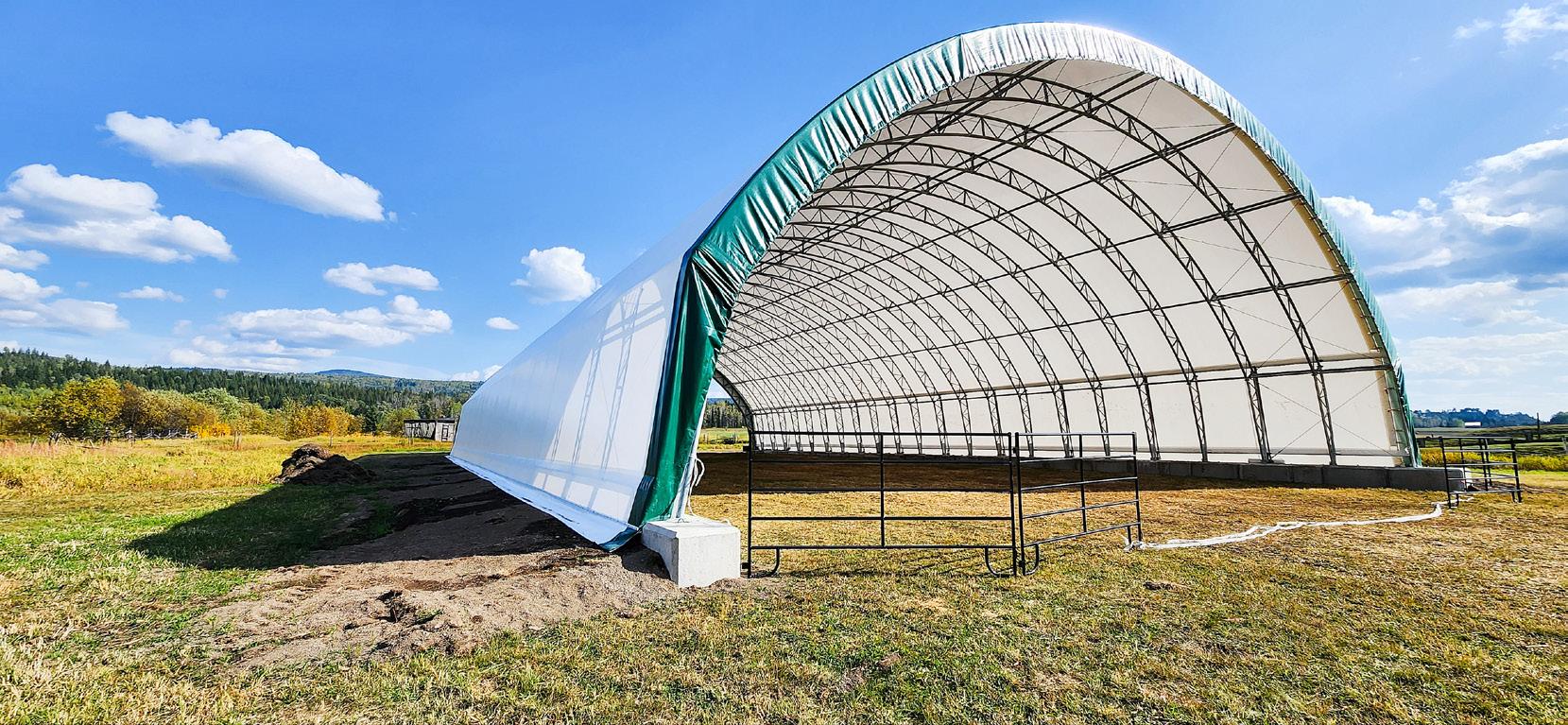
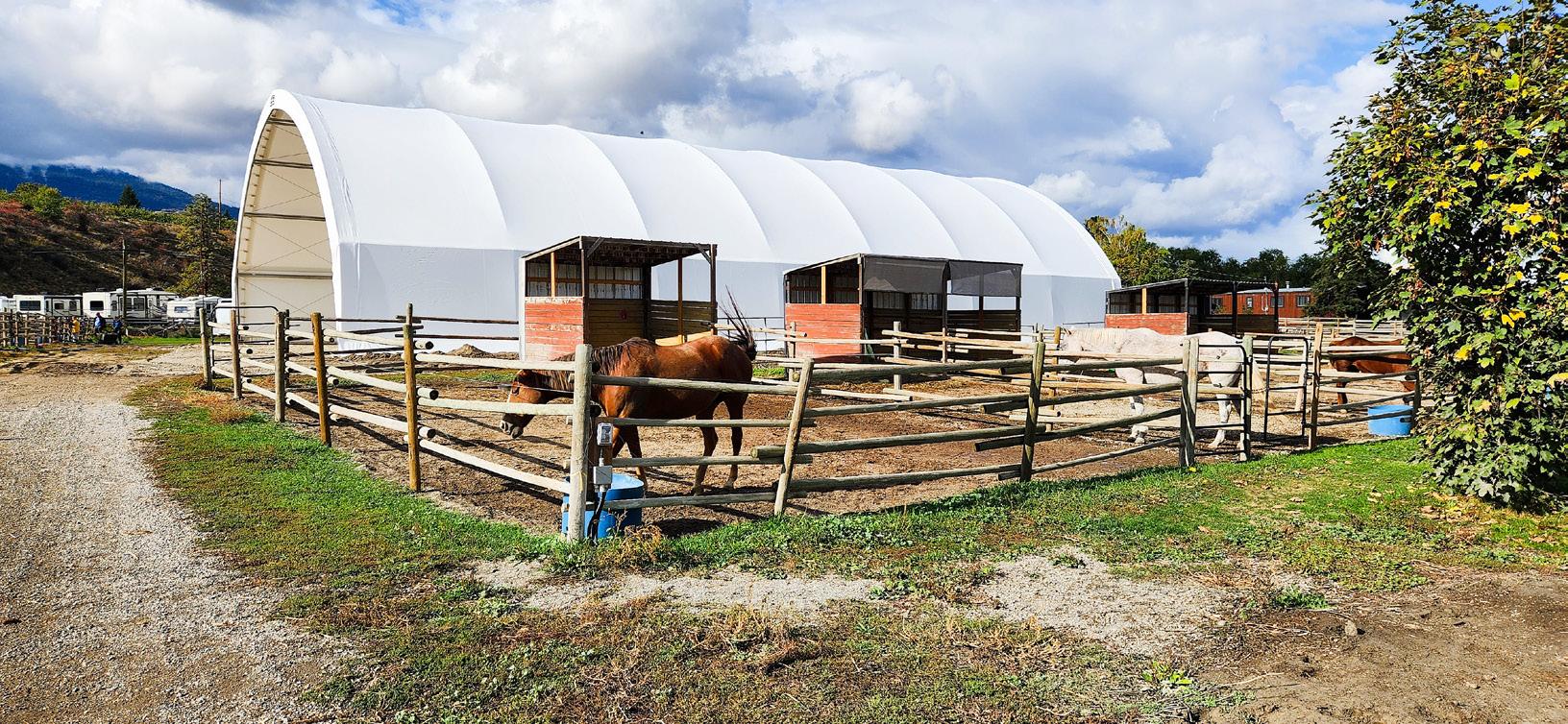
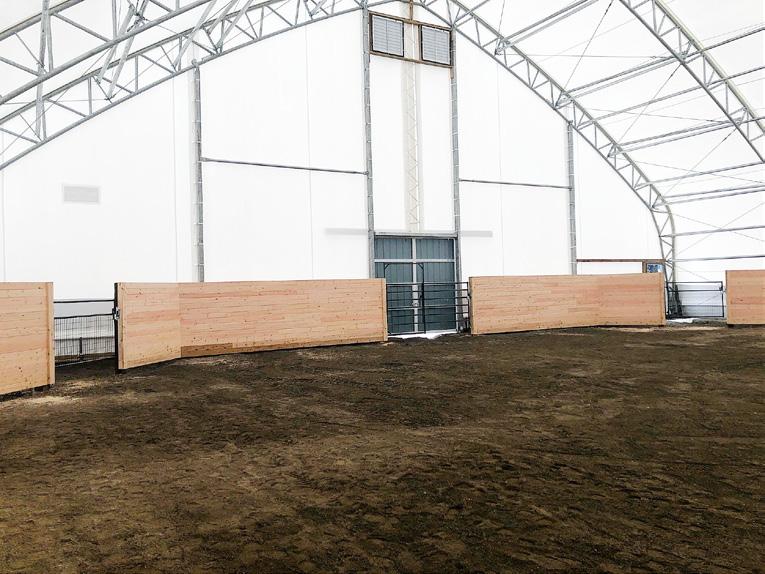
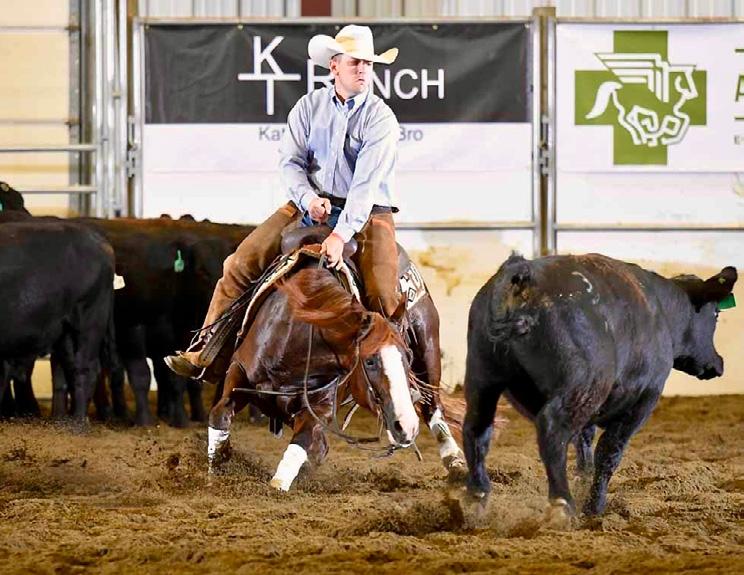
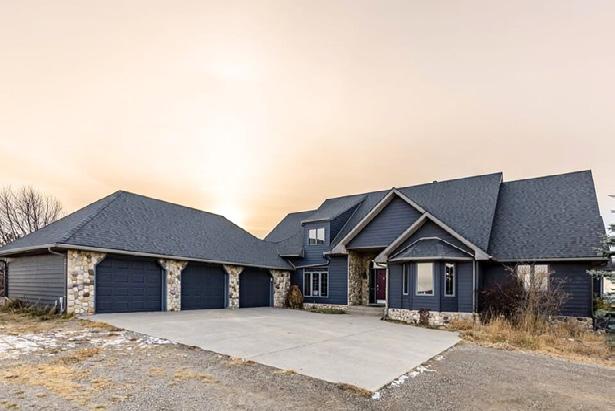
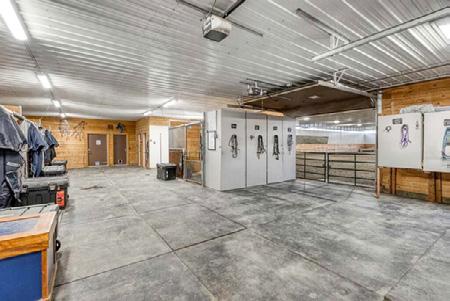
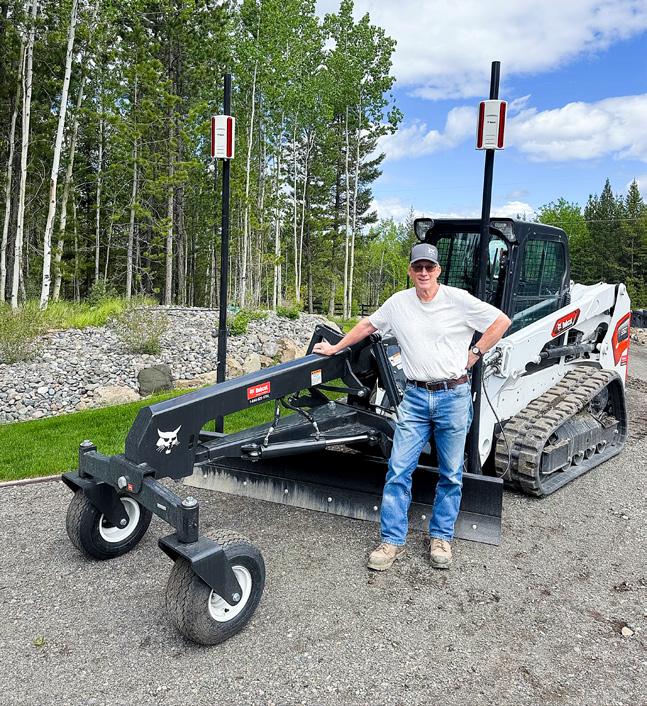
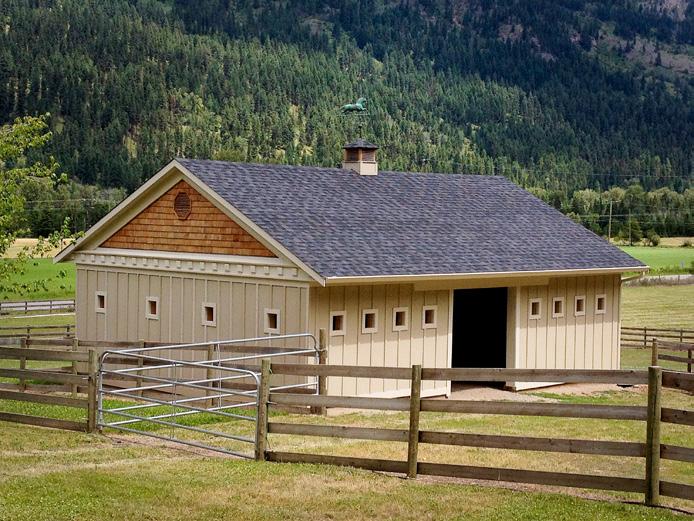
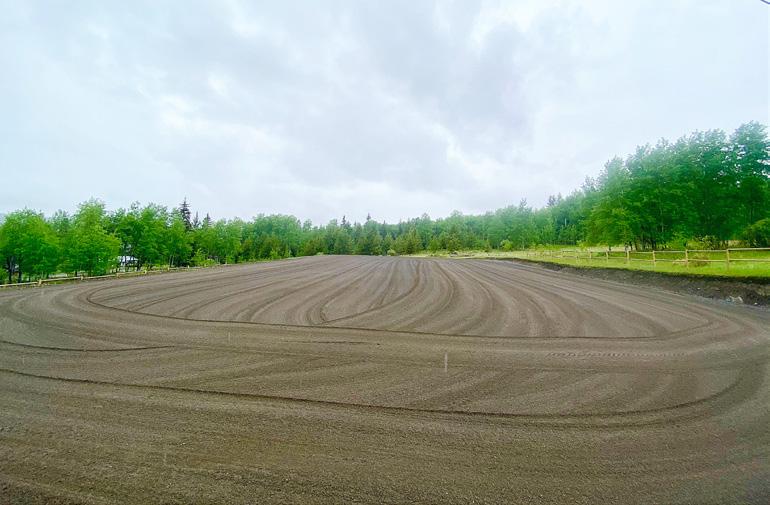
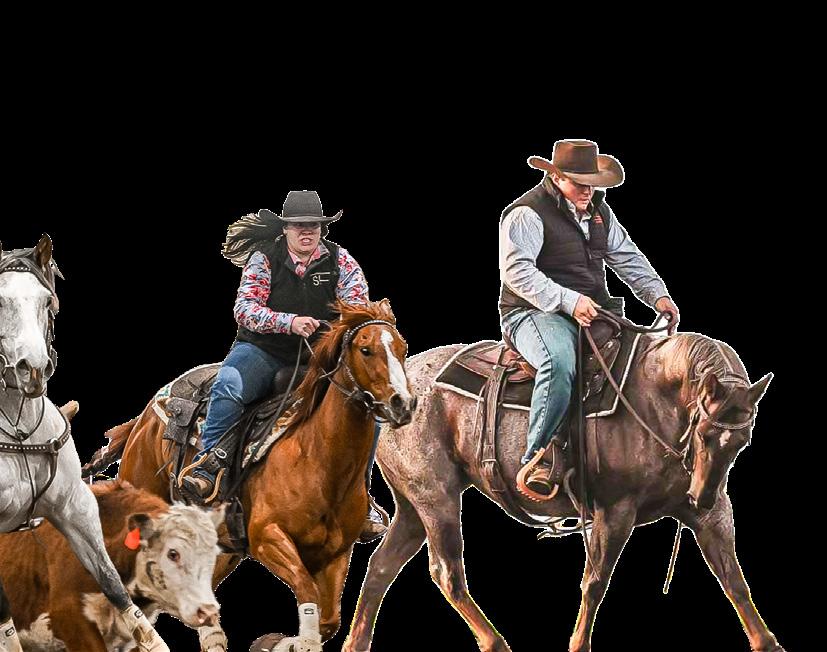
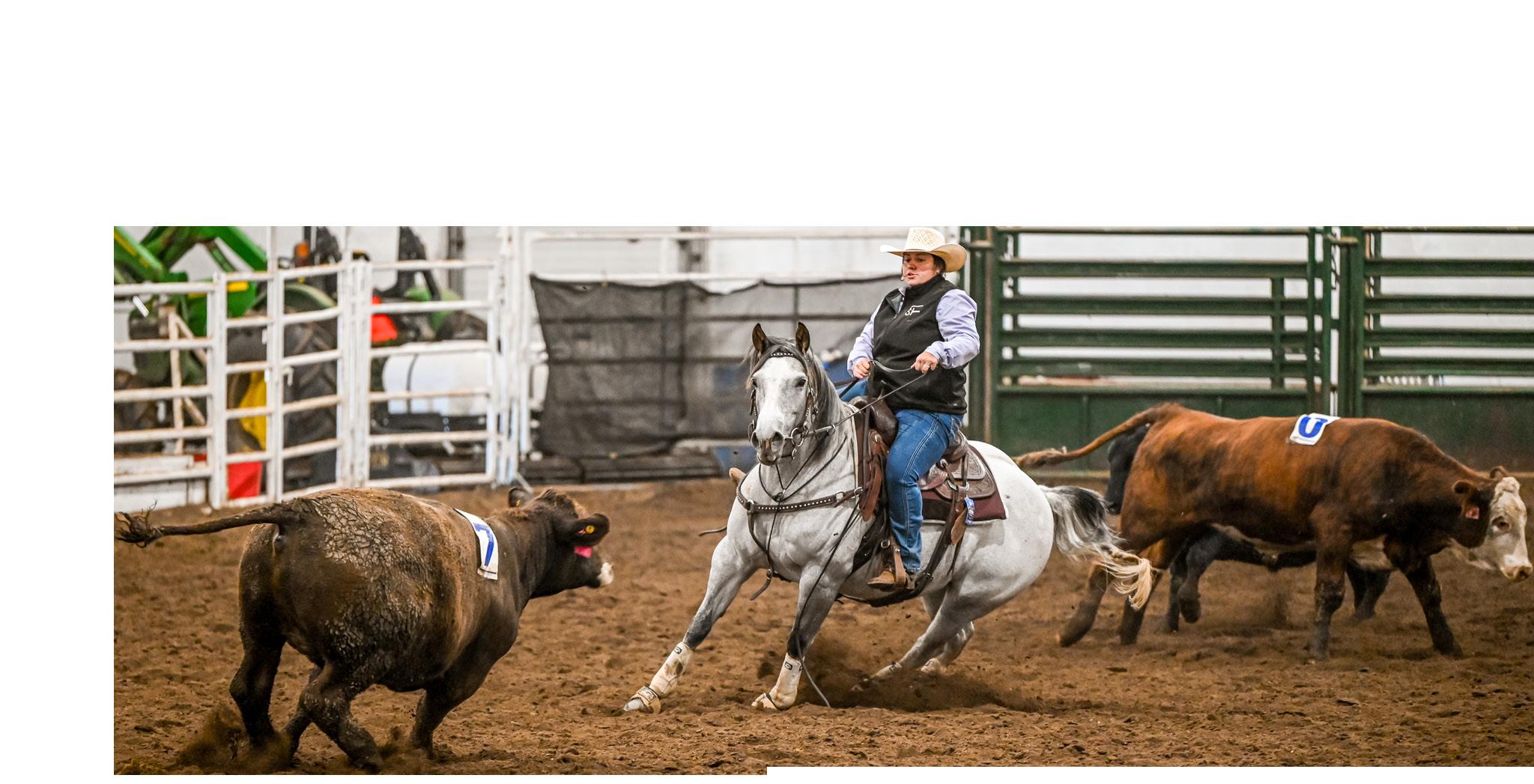
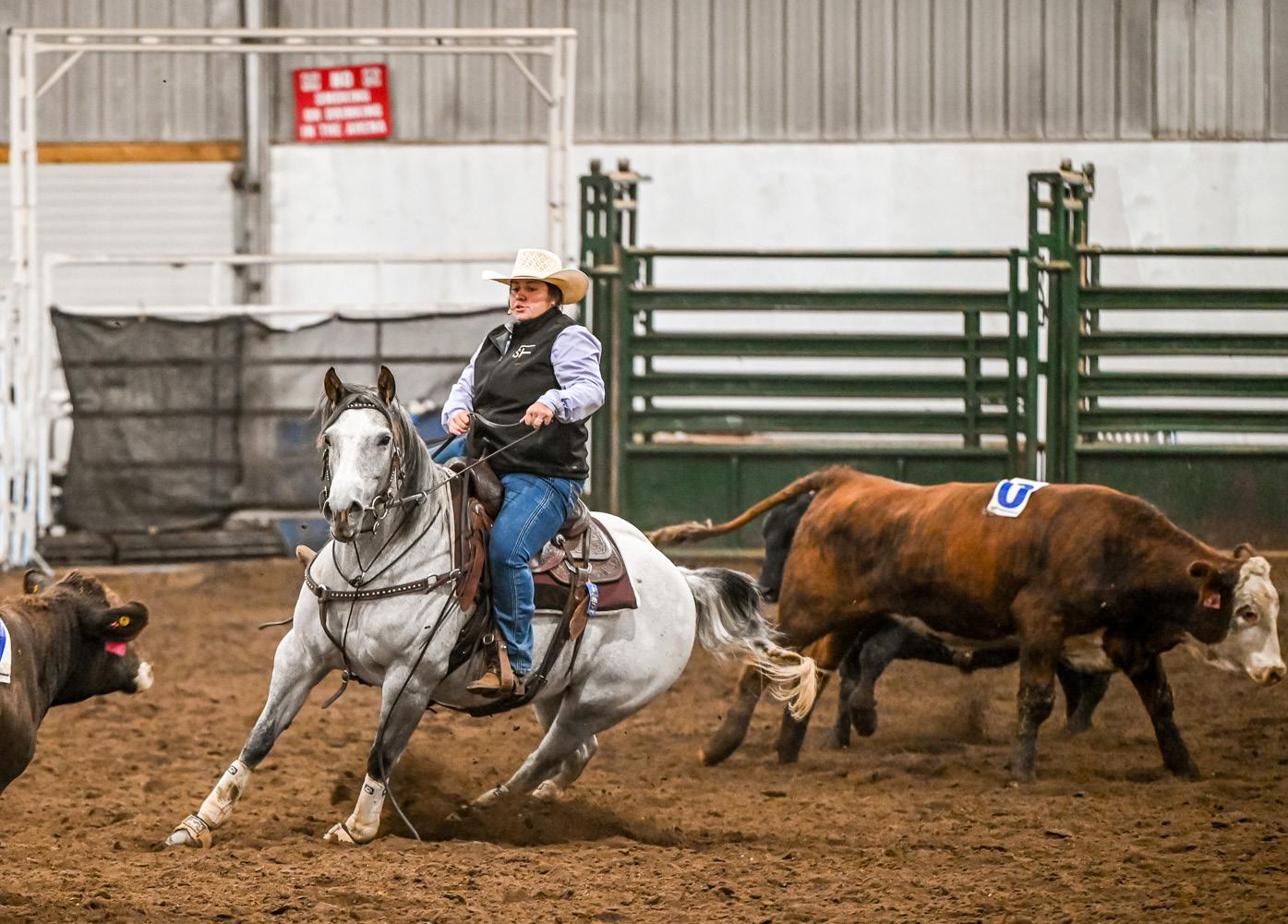
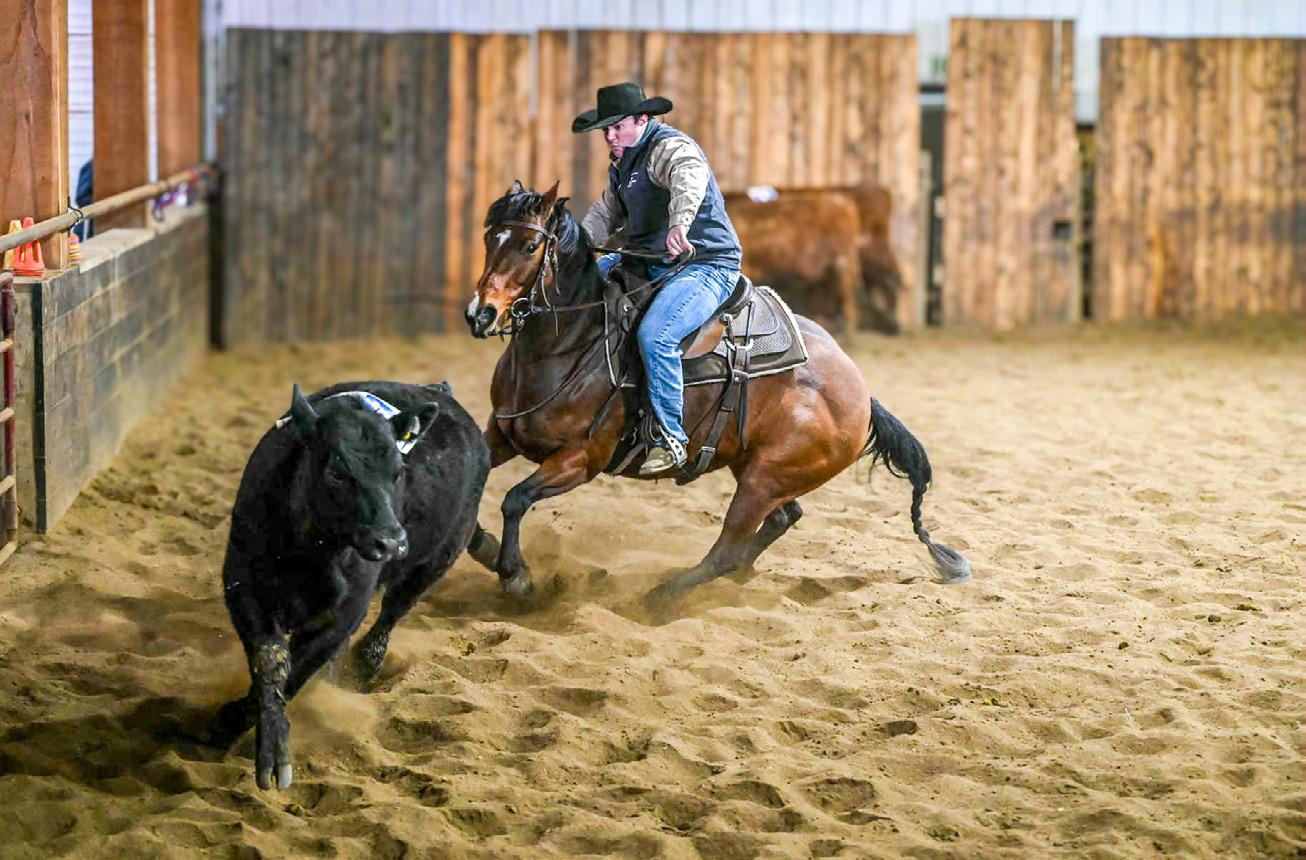
SPANMASTER has been supplying and installing steel and fabric structures since 1998, with over 2400 projects in our portfolio.
Custom-designed accessory, commodity, livestock, or equipment storage buildings, laid out to suit your needs and engineered to exceed site-specific snow loads while meeting BC Building Permit requirements, where applicable.
We will consult during the design process to bring your dreams to life, and then fully install with one of our in-house crews and equipment.
Our in-house crews and equipment work year-round to make your dreams come true – big or small.
$28.00 CDN plus tax per year or $42 US per year. (11 issues)
Reproduction of any materials without written permission from the editor is prohibited. Opinions and statements expressed in this publication are not necessarily those of the editor.
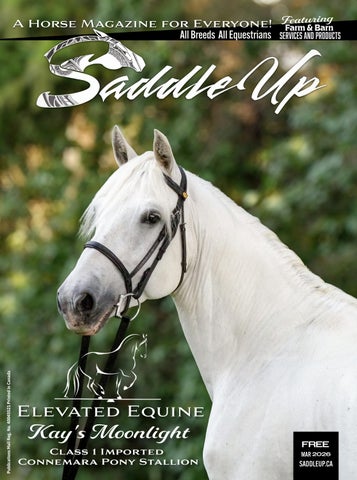
Kay’s Moonlight - Elevated Equine
Photo by Brenda Mason
Laureen James, Alexander Grayton, Sloane Hammond, Danika McGuiness, Addison Reimer, Mad Barn Canada, Patricia SkinnerPorter, HCBC, and BCHBC
THE EDITORS
Spring is in the air and fast approaching, bringing warmer days, renewed energy, and that familiar urge to refresh and upgrade your farm and barn. As the season shifts, it’s the perfect time to tackle projects that improve efficiency, safety, and overall functionality.
In this issue, we’re sharing practical barn hacks and improvement tips to help you make the most of the season — whether you’re organizing your tack room, upgrading footing, improving drainage, or checking off those long-overdue repairs. We’re also proud to feature some of our valued advertisers who offer products and services designed to support your farm, barn, and arena needs.
Be sure to check out our 2026 Shows & Events page — you may need a magnifying glass! We’ve packed it with a wide variety of events covering many disciplines. In our next event drop, we’ll focus on adding some local club shows so you can get out there to show, volunteer, and support our incredible horse communities. Here’s to a productive and successful spring!
Tass & Ruby
Dr. David Reed
A Life Devoted to Family and Horses
ave met his lifetime partner, Wendy Fox, during his “tween” school years. They graduated from Magee High School in 1955 and were married in 1961. Though he was raised a city boy, Dad’s heart would always belong to ranching and horses, having spent a memorable teenage summer on his Uncle Stanley Cope’s ranch in the foothills of Alberta. This passion led him to become a veterinarian, graduating from the Ontario Veterinary College in 1963. After a brief stopover in Brooks, Alberta, Dave and Wendy were called home to British Columbia. They purchased a veterinary practice in rural Duncan, on Vancouver Island, and moved there to begin life with baby daughter, Megan, and Tory, a black Labrador. The practice—and the family—grew quickly. Dave & Wendy welcomed daughter Laurie (Harris) in 1965.
The Reeds embraced life as a horsey family, enjoying a variety of pleasure horses and ponies before turning their focus to raising Arabians. Dave and Wendy shared a vision and took pride in producing athletic, sound-minded horses that would be great companions and excel as pleasure and show horses. Young Meg and Laurie became avid equestriennes, learning the joys and responsibilities that came with barn life.
In 1973, Dave travelled to Poland with a boyhood friend and fellow veterinarian, Dr. George Allen, to help import a special Arabian stallion, *Pietuszok, and a planeload of sport horses who would help establish a Trakehner horse registry in North America. As the veterinary practice grew, Dave was able to specialize in treating just horses and eventually sold Prevost Vet Clinic to practice on his own, exclusively with horses. As one of BC’s leading equine vets, he doctored many top show and racehorses. But his real love was helping Island clients with their “backyard” pleasure horses. He was a trusted vet and mentor to many, some of whom became very dear friends.
In his “spare time,” he worked to fulfill another childhood dream: becoming a private pilot. The Reed family enjoyed sightseeing, whale watching, and short jaunts from the seats of his Cessna aircraft. Meg and Laurie were treated to Dad’s Friday afternoon flights from school and work life in Vancouver to Duncan for family and barn time. “Dr. Dave” took to the air for mid-island farm calls—saving hours of highway driving and enjoying much-loved flying time.
The 1990s had a different path in store for Dave and Wendy. After a riding accident forced his retirement from equine veterinary medicine, Dave worked briefly for the Canada Food Inspection Agency, mostly in Greater Vancouver. Ultimately, being city kids again didn’t appeal, so Dave and Wendy migrated to Mabel Lake, near Enderby, BC, and built their retirement home where he could fly small planes from the grass runway at their back door.
Horses continued to play an important role. For many years, Dave kept his hand in the world of horse health, producing and marketing Dr. Reed’s Horse Supplement, an enterprise that kept him and Wendy busy for many years after leaving veterinary practice. Farm life called once again, and they left Mabel Lake for a small property in Armstrong, where the family geldings enjoyed trail rides, and Dad enjoyed puttering in the barn and on the tractor. During this time, Dave and Wendy enjoyed trips to sunny Los Ayala, Mexico, where a whole new group of friends and fun awaited them each winter.
When farm life became too much physical work, Dave and Wendy relocated to a small house overlooking O’Keefe Ranch north of Vernon. Trail riding, Dr. Reed’s Supplements, and vet consulting continued as the last of the family’s horses moved to Asmara Arabians in Armstrong, where much happy time was spent.
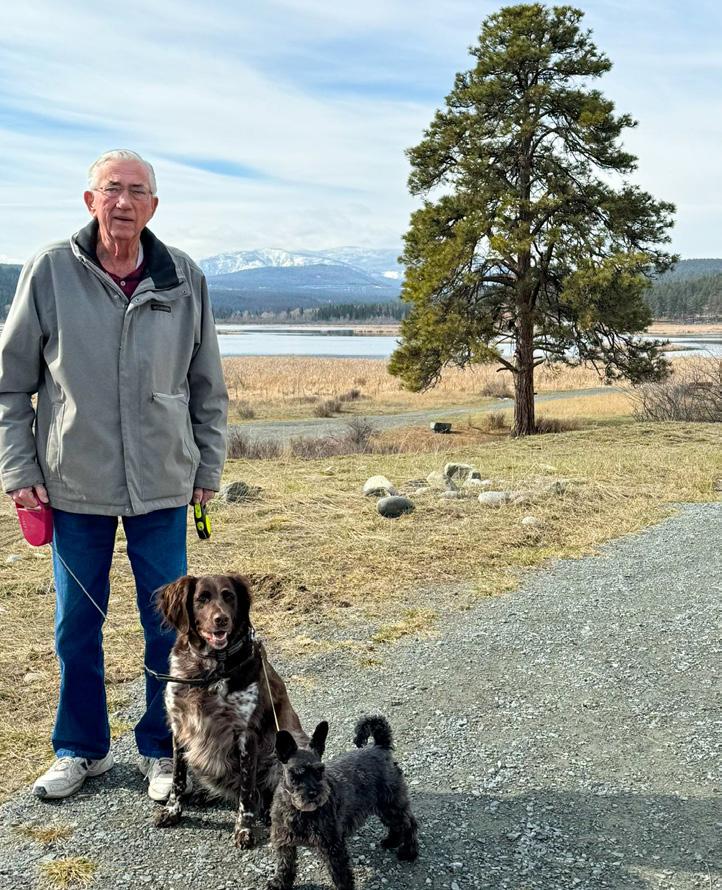
In his younger life, Dave participated in ice dancing, hockey, and downhill skiing. Throughout his life, he took much pleasure from fishing, boating, and duck hunting. In recent years, he enjoyed daily dog walks with Bobby and Bella and bird hunting with his friend, Gordon. Even with advancing age and declining health, Dad remained an outdoorsman. He was always out in the yard or ready for a trip to local dog parks. Animals were a mainstay and a source of much happiness, as were visits with niece Joy (Chris), whom he was delighted to have living nearby.
In Loving Memory
The family of Dr. David Gwilym Reed of Vernon is deeply saddened to announce his passing on February 2, 2026, at the age of 88.
Dave was born on October 30, 1937, to Wilfred and Margaret Reed of Vancouver. Youngest brother to Morfydd (Leschiutta) and Beryl (Underhill). Dave leaves behind his wife of 64 years, Wendy, and daughters Megan in Vernon and Laurie (Bob) in Cranbrook. An important circle of extended family (George & Carol, Mike, Dree, Melanie, and Trevor), several nieces, nephews, and close friends join us in grieving his loss.
Heartfelt thanks to the superb medical staff who supported Dave with their expertise and compassion: Nurse Practitioner Andi Bernauer in Salmon Arm and the doctors and nurses in the ER and on the 2nd Floor East at Vernon Jubilee Hospital, who kept Dad comfortable and well cared for in his final days. We are grateful for your skill and compassion. A Celebration of Life will be planned in Vernon at a later date. In lieu of flowers, a donation could be made in his memory to the Vernon Jubilee Hospital Foundation or Circle F Horse Rescue Society (Abbotsford, BC, www.circlef.org).
• Customizable jumps and courses every discipline in-stock products
SHELLY PROFIT REALTOR®
Stable Hacks Stable Hacks
Barn & Arena Planning and Construction Quick Tips
Tack Room
To make everything in your tack area easy to relocate and reduce damage to walls, attach rows of hooks or brackets to 1”-2” dimensional lumber or 3/4”-1” plywood strips. Then use 2-3 screws to attach to the wall depending on the weight of whatever you are hanging. If you relocate your tack room or move, you can just unscrew the rack and take it with you.
Hang spray bottles on towel bars or blanket bars. Slot spray bottles, gloves, or splint boots into a multi-pocket shoe organizer. Store the Velcro splint and bell boots on Velcro strips stapled to a plywood scrap.
Hang saddle pads from a blanket bar with skirt/slacks hangers or store them on a laundry drying rack. You can also hang saddle pads on several wooden dowels or PVC tubing connected by rope on either side. For heavier saddle pads, try screwing IKEA table legs to dimensional lumber to hang horizontally or vertically.
Use a pegboard or over-the-door hangers hung on a towel bar or blanket bar for hanging bits, halters, lead ropes, breast collars/ martingales, and cinches/girths.
Hang sheets and blankets on shelf brackets. Use wooden garden trugs, small plastic garbage bins, gardening storage carts, or rolling tool chests for individualized grooming kits.
Keep your empty small spray bottles to refill from large bulk-purchased bottles. Put socks on your metal stirrups to protect your English saddle. An old yoga mat on your saddle racks will prevent dents on the underside of your saddles.
Laundry Hacks
A reusable plasticized shopping bag will store and transport laundry easily. A dog grooming slicker brush cleans hair out of Velcro straps with ease and fluffs up sheepskin after washing.
Stall Hacks
Spray diluted Pine-Sol on stall walls and floors to disinfect, deodorize, and repel flies. Pelleted bedding can be spread easily if you lay several bags out in the stall, slice open with an X, and pour a bucket of water over each bag to expand.
Feeding and Watering Hacks
Baling twine will saw through other bailing twine if you don’t have a knife handy. Weigh hay with a fishing scale or a digital luggage
scale. First weigh the net or bin used for feeding, then deduct that amount from the filled net or bin.
To hold hay nets for filling, drop them into a skip bucket or large garbage bin and roll the top edge of the net over the top of the bucket or bin. To load a small bale into a bale net, stand the bale up on end, then put the bottom of the net on the top of the bale and roll the net inside out onto the bale. Clean water troughs with a grooming sponge or old dandy brush and vinegar. Remove insects and hay from water troughs with a kitchen strainer. If you forget to turn taps off, put a spring coil on the tap. When you turn the tap on, put the spring coil on your wrist and put it back on the tap when you turn the tap off.
Arena Hacks
A short length of 3-4” PVC pipe and perforated metal strips will store crops and whips at your arena. If you hang them horizontally on the outside of the top fence rail, you can reach them without getting off. Store jump rails off the ground on cavaletti. Adhesive vinyl letters on small orange cones will serve as dressage letters.
Barn & Arena Planning and Construction Quick Tips
Site Planning & Preparation
Preparation: The National Farm Animal Care Council is an excellent resource and outlines minimum standards for housing, shelter and turnout published in the Code of Practice for the Care and Handling of Equines. nfacc.ca Drainage: Avoid building at the base of a hill or anywhere there are natural water runoff areas to avoid mud and flooding.
Sun and Wind: Orient buildings to maximize natural light and use prevailing winds for ventilation to reduce heat and odour.
Soil & Foundation: Invest in a solid foundation (poured concrete or block); this will ensure longevity.
Construction
Ventilation & Safety: Install ample windows that open and close, and ensure ceiling fans are options for hot weather. Windows should open in at the top to prevent drafts over horse’s backs and be covered with metal grill to prevent the horse from breaking the glass. Layout: Plan for wider aisles 10-12 feet or 14 feet if you want a vehicle to drive in them. This allows for safe manoeuvring, cleaning, and potential emergency access.
Storage: Plan for easy access to hay and
shavings, potentially using a loft for hay storage to save ground space, with optional drop-down doors in the barn for easy feeding.
Stall Design: A mat system for flooring is ideal; make sure there is proper lighting at each stall. Consider using wall boards that can be removed to enlarge the stall and also allow horses to see each other.
Overhangs: Adding an overhang to your barn protects against the elements and provides extra covered workspace. Be careful of the height for larger horses. Consider heat trace on pitched roofs for winter snow loads.
Riding Arena Construction
Size Considerations: A standard dressage arena is 20m x 60m (roughly 66’ x 198’), while jumping arenas are often 100’ x 200’.
Base and Drainage: Use 5+ inches of compacted, angular, frost-resistant stone (like crushed blue stone) for the base layer to ensure proper drainage.
Footing Depth: Be careful with sand depth; over 6 inches is too deep and stressful for horse tendons. Start with 2-3 inches and add more only if necessary.
Indoor vs. Outdoor: If building an indoor, go as big as possible to account for wall thickness reducing the actual riding space. Consider covering your arena to significantly reduce maintenance and drainage issues caused by rain.
Farm Infrastructure
Utilities: Contact local utility companies for inperson audits to find energy-saving, efficient options for lighting and heating (e.g., in tack rooms). Also consider solar grants.
Water Access: Ensure water is easily accessible for wash stalls and, in cold climates, for heated water buckets in winter.
Manure Management: Plan a designated, well-drained area for manure storage that is compliant with local regulations.
Budgeting & Project Management
Hire Professionals: Use experienced contractors for specialized equestrian projects, especially for excavation and arena construction.
Ask for Advice: Talk to other horse owners who have recently built to learn about pitfalls, such as unexpected costs, and to find reputable contractors.
Avoid Changes: Once construction begins, avoid changes, as “work order” changes are the easiest way to go over budget.
Watching youngsters gain the confidence and experience through familial ties, western heritage, values, and sport are something I have enjoyed as a rider, competitor, and coach of horse sport.
Generational Sport of Cattle Penning
Article By Laureen James
uring years of cattle penning for fun, I had the privilege of watching families grow and change—babies born to riding parents become toddlers placed atop seasoned western horses, their little hands patting the necks as big smiles spread across their faces. Toddlers becoming youth riders—independent, strong-willed with the help of family and like-minded community. Ranchers, farmers, and city folks all sharing and experiencing supporting each other and fully celebrating each other’s accomplishments.
The sport of cattle penning embodies the community spirit of family and friends; friends that become extended family. I get it because I experienced the greatness of this inclusive sport from the sidelines and from the back of a horse.
I was introduced to cattle penning in the early 2000s at David’s Arena, which, at that time was located near Chestermere, Alberta. There were so many amazing riders, and it was the norm to gather on Saturday nights to practice learning the sport of cattle penning.
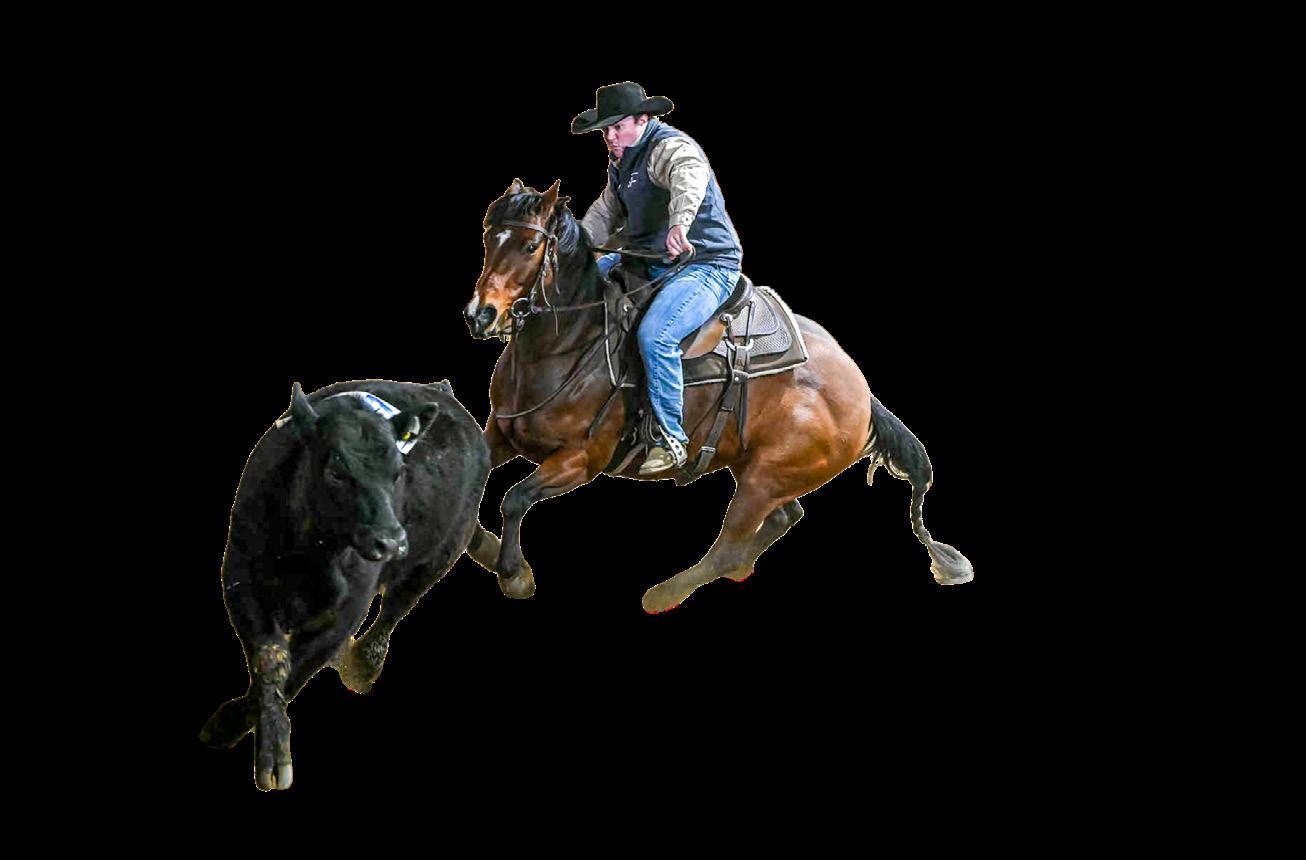
Sky Hansen, one of the youngsters, sat tall and proudly in her saddle. She was four years old and a force, like her father, to be sure. I watched Sky grow up on the back of a horse, as she watched every move her dad made. Her mom, dad, and older brother watching over her and encouraging her to have fun and improve. There was never any doubt in my mind that she would carry the torch for her family as an accomplished horse trainer and professional penner. Her late father, Lonnie Hansen, was one of the
most amazing penning horse trainers I ever met. He made horsemanship look easy and natural.
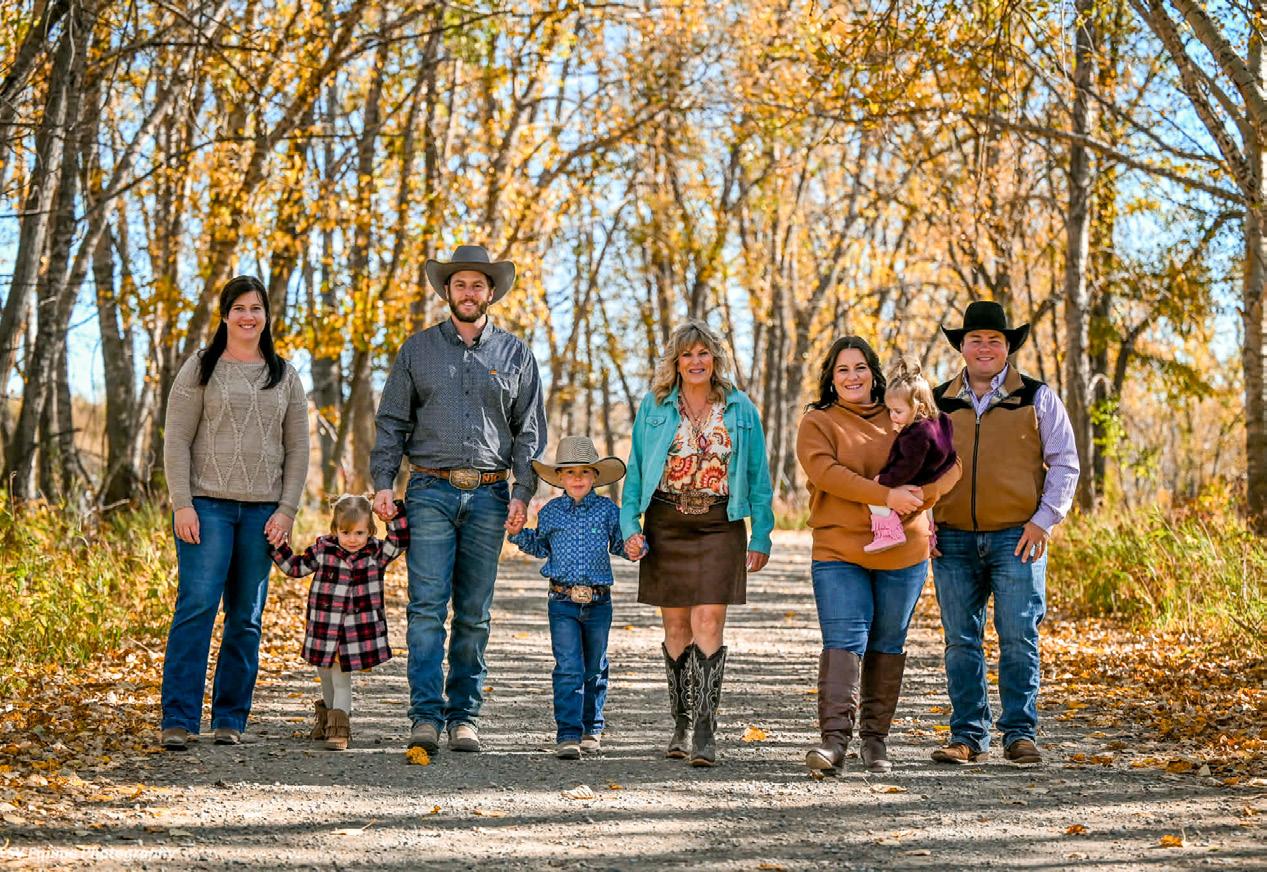
I had the opportunity to catch up with Sky and her husband, Tucker, who now have a young daughter of their own, to ask them how cattle penning and riding with family has influenced and inspired them to live an authentic equestrian life.
Dedicated, passionate, and inspirational! That is how the penning associations describe Sky. Sky teaches and offers clinics at Tyrell Stables, located near Strathmore, Alberta. Her students, younger and older, appreciate her enthusiasm for sharing her knowledge of riding and cattle handling.
Q. How old were you when you first sat on a horse?
My dad and mom would ride with me as a small baby in a snuggly.
Q. What is your earliest memory of riding?
The one that comes to mind is riding my old pony Smokey when I was really little. I was probably around four years old. I would pen her off at David’s Arena. I was so little that any time she would shake, I’d fall off, but I would always get back on.
Q. Your dad, Lonnie Hansen, was a great horseman and competitor; how did he influence you as a rider and competitor for the sport of cattle penning?
He truly was one of the best horsemen! He taught me more than I could ever put into words about horses, to be honest.
Cattle penning was a huge part of his life and livelihood. We had a large boarding facility near Calgary that had quite a few penners at it. I grew up in the sport, and because of watching my dad and family’s passion for the sport, I grew up loving it just as much. Some of the horses my dad sold in the penning world are still going.
Q. Were you influenced by your mom, dad, and older brother in life and in the saddle?
Yes, I was. Our entire family rode, and it brought us together.
Q. What has each of them taught you about yourself as a rider?
My dad taught me how to correct things. My mom taught me to take a breath. My brother taught me to have fun.
Q. When your daughter starts riding, what valuable information will you pass down to her that your dad gave to you?
That is a very long list, as he taught me so much. However, the main thing would be to never give up. Always keep trying.
Q. Why do you love cattle penning so much?
I love the sport because it combines so many different skill sets for both the rider and horse. Penning has really evolved over the years along with the quality of horses.
Q. Is cattle penning a family sport, and what is the age range?
Yes. It definitely is a family sport! There are more families that compete together than anything else. The age range is around four years to eighty-three years.
Sky Brown
Q. How important is it for competitors to have family involvement?
I love the family aspect of team cattle penning. I would say there are more families that pen together compared to single members. I grew up in penning, and now I get to watch all the next generations of penners grow up. The penning family is a big one, and it’s truly something special.
Tucker Brown – S Lazy T Performance Horses & Training
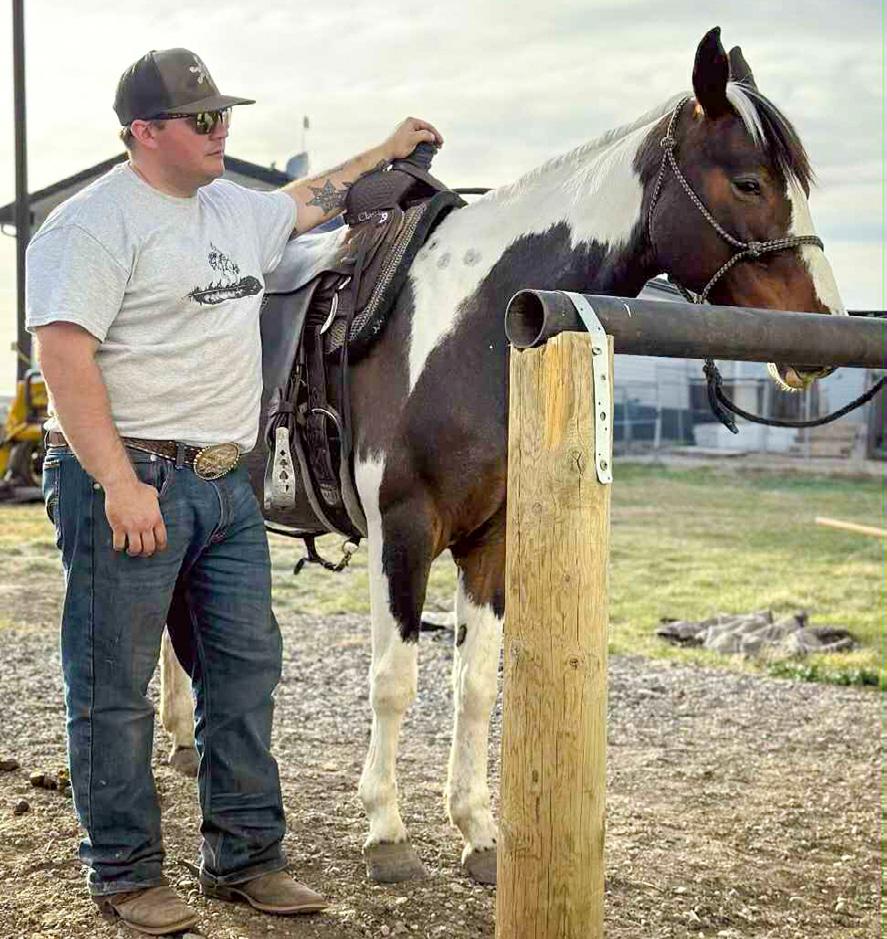
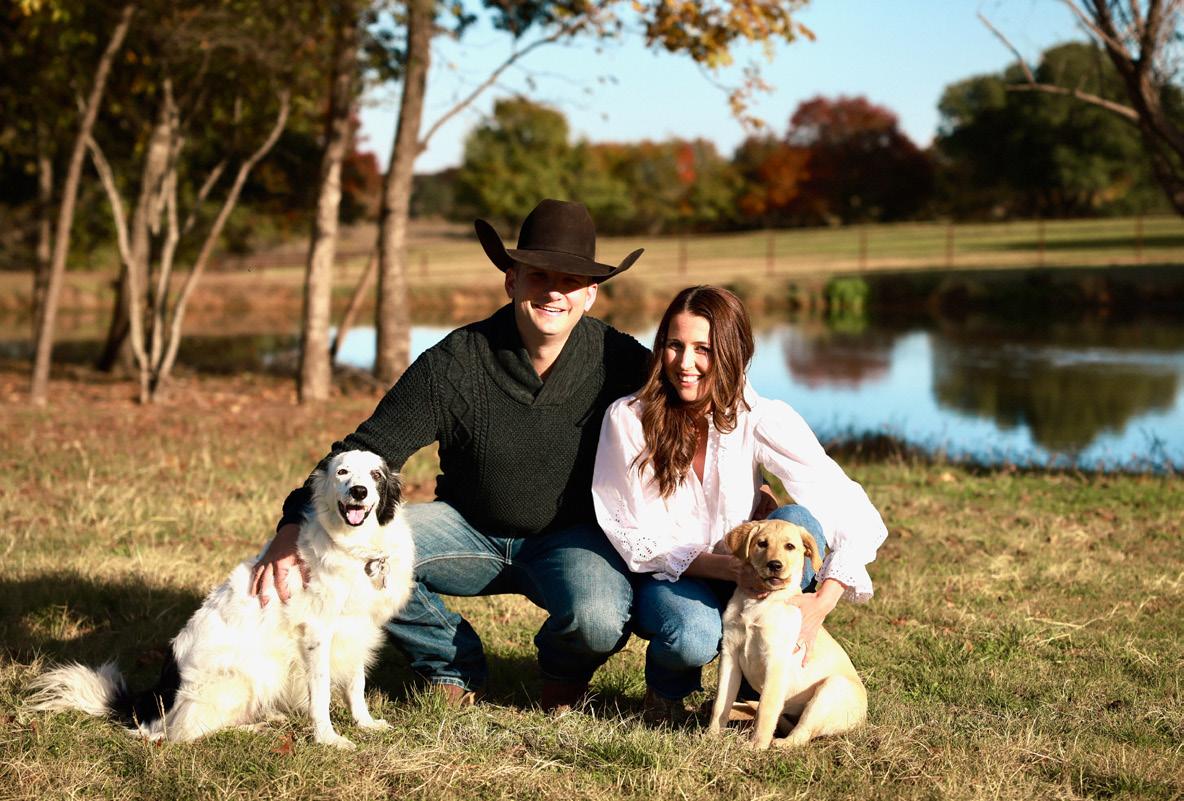
Happily married to Sky Brown and an accomplished horseman himself. He excels at roping, gives lessons, and has a passion for cattle penning. He makes his livelihood as a horse trainer helping riders and owners realize their equestrian dreams. Tucker specializes in colt starting, tune-ups, refreshers, legging up, and consignment horses.
Q. How long have you been riding?
I have been riding since I was a kid but didn’t take it seriously until my late teens. It was pretty sporadic when I was young; family rides when I went to visit my grandparents. I really started taking it seriously when I was about eighteen or nineteen. That’s when I truly fell in love with horses. It’s never too late to start a new passion!
Q. Were you introduced to horses by your family?
Yes. Both sets of grandparents rode. Some on the rodeo side and some on the cowboying side. My one grandfather rode bareback horses and calf roped. My uncles also rode bulls. My other grandfather was, and still is, a cowboy’s cowboy—feedlot, starting horses, driving
horses, and also helped to run the Sheep River Lease.
Q. How long have you been cattle penning, and has your wife, Sky, been a big influence on your love of the sport?
Well, I tried it once as a teen and enjoyed it. Then I went on a hiatus until I met Sky, which is probably what got my foot in the door. But full-on competitively, I’d say 9 years. Sky has been the reason I am where I am today, not just for the love of team cattle penning but in my horsemanship journey as well.
Q. What level of penner are you and Sky?
Team cattle penning goes off a rating system. Novice, then Levels 1-8. I’m smack dab in the middle at a level 4, and Sky is a level 7.
Q. What are your hopes for your daughter in the horse industry?
I hope she sees the good in it. There are some negatives, like in most industries, but I hope her passion for horses outweighs the hardships. If she’s into horses, that is. I just want her to know the good and bad of the industry. I feel it’s easier to navigate if you know what you’re getting yourself into.
Q. How do adults in the sport of cattle penning include, encourage, and mentor youngsters in practice and in competition?
There are some great mentors in the sport that love to ride with the youth. Whether that be in a competitive setting, clinic, or a practice. I guess the biggest thing, like in most sports is to just go make it fun for them. Win or lose, everyone loves to see a kid enjoy themselves. That’s the reason the kids stay hooked. It’s the fun and the
friendships you make along the way.
Q. What is your most special memory at a cattle penning event with your family?
This probably isn’t going to be the answer people are expecting, but I have two. The first was when I proposed to my wife at our National Finals in 2018, and the second would have to be a memory that sticks with me because it felt special. It was at the Calgary Stampede in 2024— the first Calgary Stampede my daughter Riata was at when she was only 2 months old. Coming back to the trailers and holding her and seeing her smile at me has stuck with me and forever will. But I’m sure we will make a lot more once she gets on horseback and starts telling me what I need to do better.
Q. How family-oriented is the sport of cattle penning?
Cattle penning is probably the most family-oriented western equine sport. Three riders per team—being able to ride with family on more than one team. The
combinations are endless. From a parent riding with two kids to kids riding with both their parents. Heck, even siblings riding in a team together. It truly doesn’t get more family-oriented than that. Like I said, the combinations are endless. Spending weekends “camping” with horses and riding with family. It truly can’t be beat.
Horsemanship Passed Down— Generation to Generation
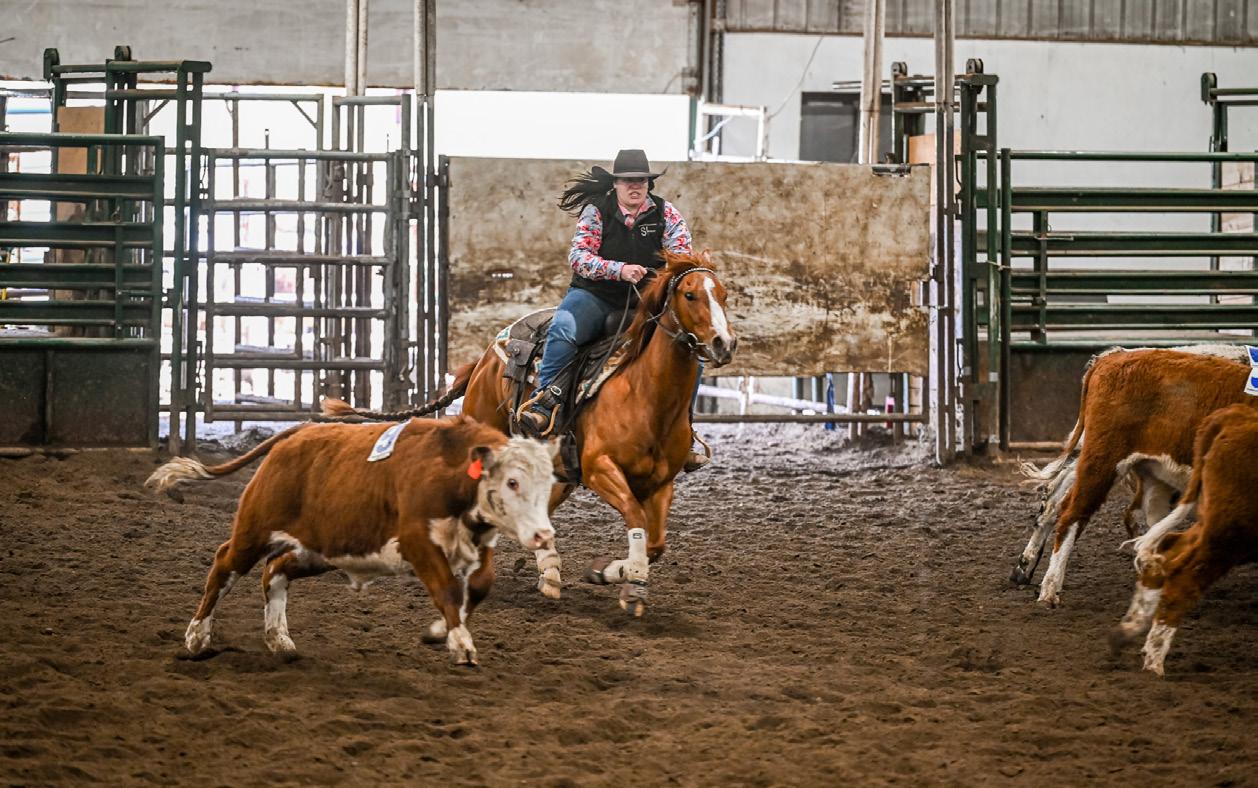
For this article I also had the pleasure of watching Sky Brown during a January cattle sorting event at Tyrell Stables located near Strathmore, Alberta. Sky was passing down knowledge passed down to her from her dad, Lonnie Hansen, with the same patience and graciousness he had given riders of all ages.
A few of the more seasoned penners had their work cut out for them watching the youth riders ride through the herd, cutting out their cows while coaching them about
where to be to keep control of their cow. The excitement was contagious, and it’s one of those equine sports that appeal to an audience. I have watched so many families enjoy each other’s journey in this sport. Many of the kids I watched grow up on the backs of horses still hold dear the lifelong friendships they made along the way. Family is very much extended through these tight bonds where even friends become like brothers and sisters. The sport of cattle penning is truly a family sport.
Special thanks to Sky Brown for sharing and remembering with me some great memories of friends and family at David’s Arena, where we cattle-penned every Saturday night. Sky’s dad, Lonnie Hansen, trained horses, and some of those horses are still in the sport today. He helped anyone who asked; without judgment, and asked for nothing in return. A true horseman whose legacy continues in the sport he helped to build.
Laureen James BCom, Journalist, EC/NCCP Coach Certification IOB. Laureen is an equine journalist who writes for many publications. She also writes for the pet industry and is a columnist for Unison 50+ News. She has covered rodeos and related events over the past few years as a journalist and photographer.
Photos taken by SV Equine, courtesy of Sky and Tucker Brown.
The Horse’s Mouth From
Stable Standards
Straight from the Source
“Well,
I have a few things on my list, and no, I am not a diva—I just like to look like one”
I must have food—lots of food. Did I mention food? Food and fresh water—the essentials to my existence! I prefer to graze on grass most of the day, but 3-4 feeds of hay, not coarse or too fine, that are clean, green, and sweet-smelling will do.
My water—please keep it clean. I know my mate Bobby Bojangles soiled it, but could we please flip it or scrub it? I’ll drink 10-100 gallons of water every day AND NO, I don’t want to have to break ice in winter. That’s just way too much work, and if I don’t drink enough water, I might get a bellyache and have to go to the doctor! By the way, I only consume salt or mineral licks if they are fine enough not to irritate my tongue, but I am equally happy with loose salt and minerals.
Can we talk about treats? Obviously, you want to reinforce my stellar behaviour. (Let’s not talk about the last half hour we played “catch me if you can.”) They gotta be healthy! I am thinking of some mints from that little tin in your pocket. Fruit like apples, pears, or plums but not the cores or pits. Yuck! I like root vegetables too, like carrots, parsnips, or turnips. And PUH-LEEZE, not that dried old hay cube that’s covered in lint or the stuffing from your “brand-new” barn coat you’ve only had for the last 15 years.
Okay, speaking of coats, let’s talk about ME again. I need four coats this season: a slinky over the shoulder crop top, a cool mesh one to prevent insects from touching my skin, a blue...no wait...purple waterproof coat (PUH-LEEZE, not the one with the duct tape patches or the one that hangs down to my fetlocks), and a warm, waterproof coat for the winter.
A shelter or stable will protect my perfect glossy hair from the rain, wind, and sun and prevent me from feeling miserable. I like to be able to come and go whenever I want and have loads of toys to play with when stuck inside or in a dry paddock with no grass. Any indestructible toy that I can chuck about, chew, stomp on, and then spook at when I’ve forgotten about it! Particularly if it was very, very costly! Diamonds are a gal’s best friend, right?!
I do rest my eyes standing up, but since I can only get my real beauty and REM sleep lying down, I need a bed deep enough to prevent my fragile skin from being abraded and my joints from being bruised. It’s not a big ask, and think of my bedding like yours, nice and soft, not hard like your grandpa’s mattress. Remember, if I get a bruise, you might have to call the doctor!
My ideal manor is a three-sided, southeast-facing shelter, or whichever direction blocks the wind from messing with my style! I absolutely cannot abide a home with poor ventilation and absolutely must have a great view of my friends. You might want to be able to see my radiant beauty from your home too, but my needs come first!
Let’s talk about MY needs... I love to gallop, so a paddock or pasture big enough to allow me to gallop circles without having to practice sliding stops would be perfect! Sudden stops can lead to a doctor visit! Oh yeah, going back to running around—a large turnout is always going
to be the best for me, with smooth, sturdy, safe fencing that protects me both from myself and others. And don’t forget good sturdy gates with a hidden latch, so I can’t, oh I don’t know...escape or tear my skin! Think doctor visit...again.
Now, let’s talk mental stimulation. Okay, yes, me and my buddies need mental stimulation, and not just the hay net kind or that REALLY expensive toy. Give me a puzzle! I could do with your nice new yoga ball to roll around in some poop and then bam—pop it.
Okay, so my biggest ask—most importantly—is friends that I can pick on...no...wait... I mean play with! Yeah, for sure, play with...that’s it! Oh, yeah—and that’s the four-legged kind, not your neighbour’s extra rooster. I will definitely need the two-legged friends that see me every day, who think I’m part of their family, and...well...most importantly, feed and water me!
So, back to the four-leggers. If they look as good as me, but not quite as good, I might...possibly...consider them. I prefer the ones that look like me, but even the baas, heehaws, or moos will do in a pinch. Whatever you do, don’t put those in my paddock or field and NEVER put them in the stall beside me if we haven’t been formally introduced outside first! My natural herd is a bunch of other mares or geldings, even if they aren’t quite as gorgeous as me. It’s so much more fun to play with friends. They help me stay fit and reduce my stress.
Lastly, let’s talk about spending time with me. When you groom me, you don’t just enhance my appearance but also ensure skin health through cleaning and increasing blood flow to the skin, but also ensure my hooves are in good condition, inspect my whole body for injuries, bond with me, and make me content. It’s that simple, and then I am good to you when we go out. Happy horse, happy life!
Talking About Responsiveness
Should all show jumping horses be responsive? How do you know how responsive they should be? Is there even a right answer? Do horses have the capacity to become more responsive, or are they simply the way they are? How much, if at all, does a rider’s preference factor into how responsive their horses are?
By Alexander Grayton
These questions are only slightly rhetorical. A rider should think about these things—if they don’t, who will? The horse?! Equally as much, a rider should have an opinion that is based on facts, experience, understanding, and compassion.
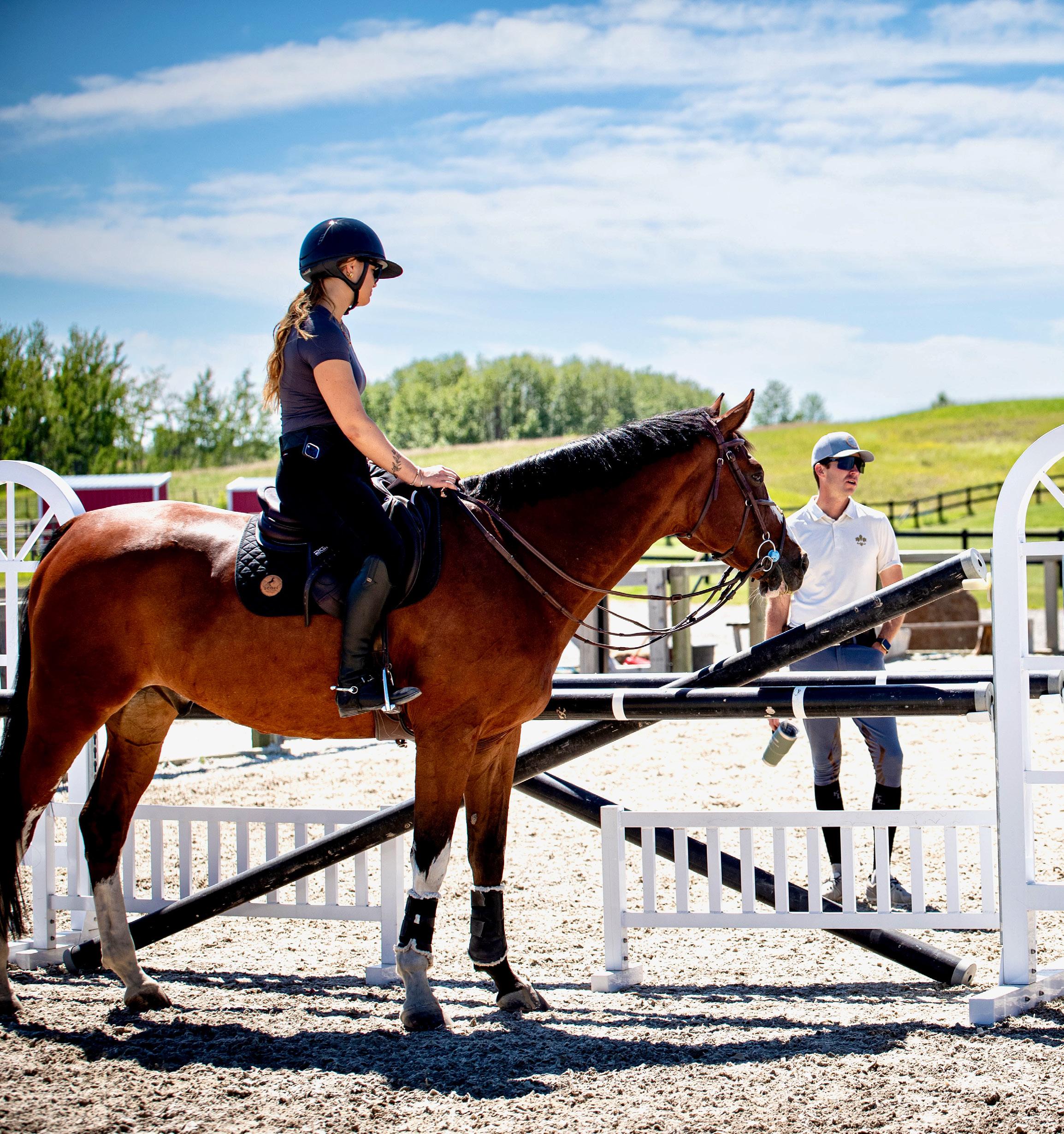
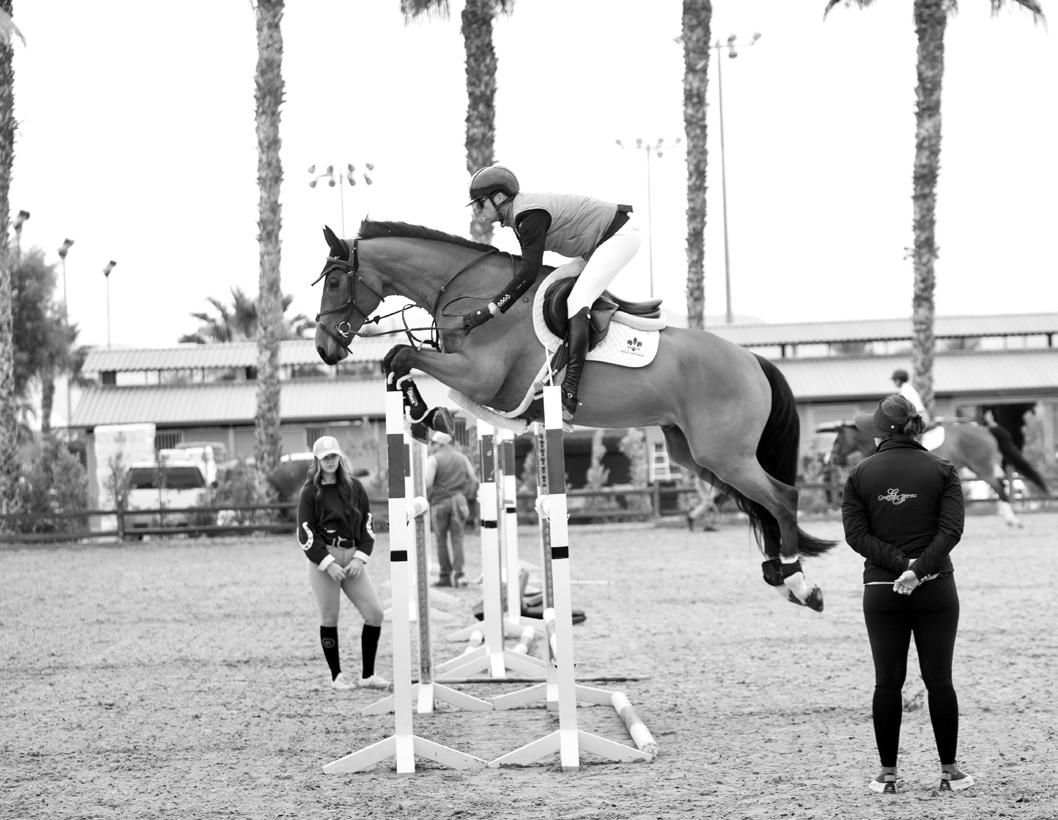
So let’s start with facts. For the sport of show jumping, responsiveness is related to ride-ability on course— meaning the ability for the horse and rider to execute the rider’s plan and
strategy. Before riding the course, riders walk the course to get an idea not only of which order they must navigate jumps but also of how the jumps connect together. Sometimes there are related distances that can be horse-dependent. To their advantage some horses may do one more or one less stride in between jumps than another horse.
Sometimes the jumps are set at an inconvenient distance for everyone,
requiring the horse to lengthen or shorten their stride to accommodate. For example, even if everyone in a competition jumps a particular line in 7 strides, how that happens will vary greatly across the spectrum of horses in the class. Some will be shortening their stride in 7, others lengthening in 7, and some lucky ones may be riding normally in 7.
Some jumps are connected but with a bending line, meaning variation of
track plays a larger role. So now we add in the ability to steer in a refined and specific way, while also managing the length of stride—the case for responsiveness grows more clear. There are infinite nuanced variables at play that require horse and rider to be in constant communication. Steering and stride control, unforeseen circumstances like nerves (horse or rider), a spooky fence or arena location, any reaction the horse has while on course such
as jumping a bit too high or not wide enough may all require the rider to initiate an adjustment or recalibration.
To be able to communicate to the horse what the plan is and when to do it, riders must strive to have a relationship with their horse whereby their reactions are predictable in timing and amount.
Much like driving a car on the road, if every time the driver applied the
brakes they didn’t know how the car would react, their driving habits would certainly change. But predictability isn’t the only part of responsiveness. The amount is just as important, lest we expect riders to use the strength of Hercules every time they want to communicate something (even if it was predictably Herculean).
The case for caring about responsiveness is clear. How does a rider affect change with respect to responsiveness in their horse? No two horses are the same. And yet some things about horses, generally speaking, can be normalized at least a little. Horses being flight animals, for example, is a characteristic broadly applicable to every horse, though how it manifests may change. Horses— at least the ones we are talking about here, the domesticated type—are willing partners. Not to say there aren’t less willing horses, but it is fair to say they became unwilling rather than explicitly being born this way.
That is a broad brush to paint with, but it is a crucial point to agree on before undertaking any kind of training with a horse. If a person doesn’t think that horses are willing and agreeable, generally speaking, it follows that the only way to train a horse will be with force, coercion, or some other unsavoury method. Granting that some horses may be more willing than others, for a variety of reasons from past experiences to genetic proclivity, the mission is simply to try and make sense to the horse. If they truly understand what the rider says and it is physically possible, they will do what they are asked.
Being thoughtful about training techniques is crucial and highlights a major weakness across the industry. It is a bad premise to think that applying x aid makes a horse do y. Applying x aid might make a horse do y, but because horses are sentient beings capable of complex thoughts on their own, they may do z when they feel x. Continuing with this example, based on past experiences from a rider’s point of view, it may be smart to start with x, but the key here is to gauge the response of the horse—did they do y, z, something else, or nothing at all? Each one of those possible reactions is what informs what a rider should do next. If the horse reacted with y, stop asking and move on, relieve pressure, or reward, as the case warrants.
If the horse reacted with z (or something unexpected), the decision tree makes the rider choose: did the horse misunderstand, anticipate incorrectly, or were they not focused and provided a more careless response? This is the trickiest scenario—the horse responded, but not with the right response! Sometimes asking again but louder might work if the horse was careless or not focusing. But if they earnestly answered incorrectly, the rider should continue asking and help modulate the reaction to the desired effect. What this means is that the rider shouldn’t stop asking, reset, and ask a new way. That would leave the door open for the horse to think they’ve actually responded correctly and have no need or indication to do otherwise.
A concrete example would be if a rider wanted a horse to move laterally from the left leg—say in a leg yield. The rider puts the left leg on, and the horse speeds up but doesn’t move sideways. The right thing to do here—in order to make sense to
the horse—is to keep the left leg on while resisting any increase in speed (through voice, body position, increased pressure on the mouth, etc.). The horse may take a second to process this. They will feel their left leg but not be allowed to speed up as they first thought, leaving lateral movement as the path of least resistance, and they’ll carry on with some sideways movement. Amounts of each of these aids need to be adjusted depending on the situation—changing ratios of aids can help avoid the use of strength.
If the horse doesn’t respond to the aid x or doesn’t respond as much or as sharply as the rider hoped for, the rider should turn the volume up on the aid immediately. Waiting any amount of time at all before turning the volume up acts as an affirmation that their initial reaction was suitable. Much like when a person is in their car listening to music, if the music is too low, the driver should turn the volume dial (or nowadays hit the volume up button on the steering wheel). Should they wait a couple minutes to see if the volume changes on its own? Should they turn the dial one notch at a time and then pause to see what happens? Of course not! It is a fluid process, turning the dial as quickly as the driver recognizes the change hasn’t happened enough yet, being careful not to crank it and blow their eardrums. The same logic applies to getting a horse to pay attention to aids.
Remember back from the start, this is not just a mental exercise to ponder. There are real-world effects. If a rider is mid-course jumping a Grand Prix, they should absolutely have necessary cues dialled in with the precision of a Formula 1 driver to win, but also just to keep horse and rider safe and avoid incidents. If a rider isn’t quite ready for the Grand Prix yet and they’re early in their riding journey, they still must care about responsiveness. It’s imperative to create good riding habits; even if the volume dial in their hypothetical car is less sensitive than a Grand Prix rider’s, any turn of the dial still must have a reaction, and it must be related to the volume and not the air conditioning, for example.
Every interaction riders have with their horses is an opportunity to tweak the responsiveness and sensitivity to make a more harmonious and successful relationship, whether that’s for competition or not. The most important part is to put oneself in their horse’s shoes—it doesn’t matter nearly as much what the rider thinks they’re saying; what does the horse think they’re saying? If they actually hear the message the rider intends, they will do it. In fact, that’s probably what the horse is doing when they’re “not responding”—the horse is simply doing what the rider has trained them to do, whether they meant it or not.
Alexander Grayton is an accomplished international show jumper, coach, trainer and clinician. He has amassed a significant resume of Grand Prix wins and championships while staying true to his values and ethics of training, integrity and advocacy for the horse. His approach to training is rooted in precision, patience, adaptability and a fundamental understanding of the horse, all with a focus on high-performance competition. Visit www.graytonfarms.ca or follow @grayton_farms on Instagram for more information!
All photos by Grayt Designs
Crafting Champions From the Ground Up
TR Performance Horses
By Danika McGuinness
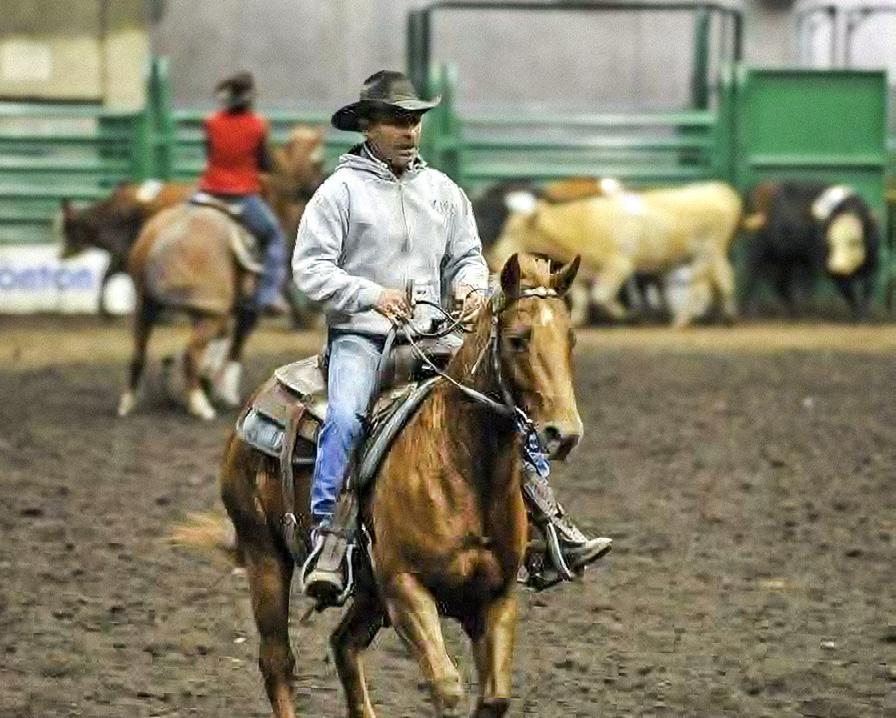
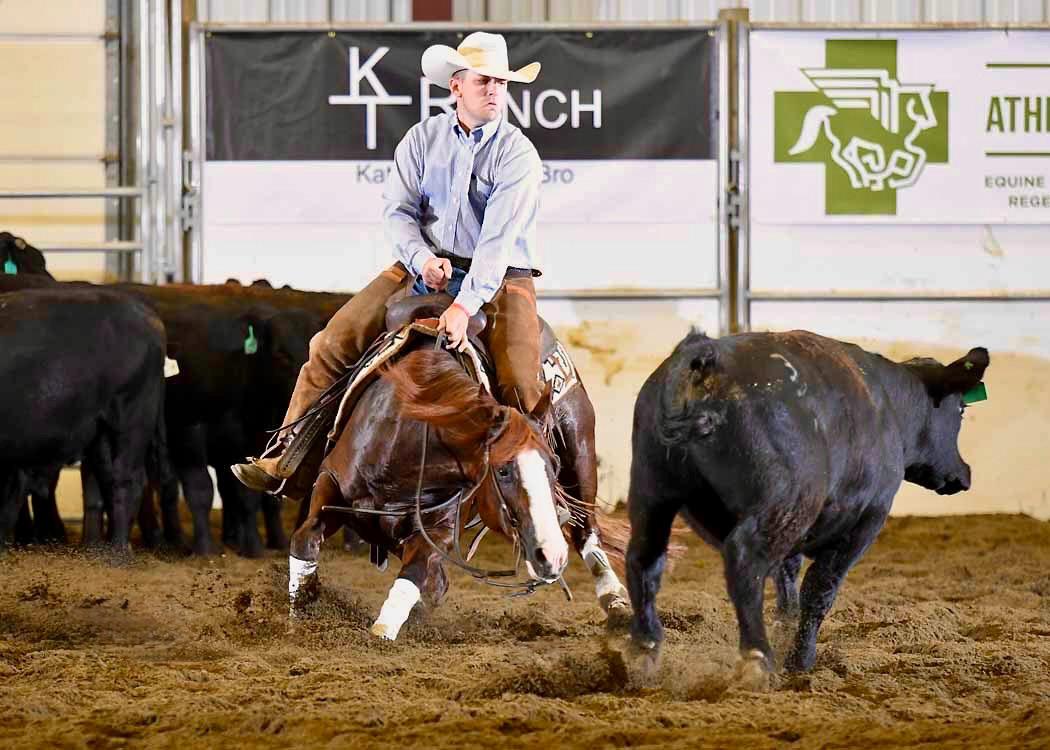
The coastal rain was just clearing when we arrived. Nestled in the Abbotsford countryside is TR Performance Horses, home and business to Travis and Tory Rempel. Their house sits at the front of the six-acre property and approximately fifty yards from the barnyard and indoor arena. An efficient setup for the hardworking couple. Chickens cluck as you walk into the barn navigating around them; you may see some colourful eggs as they flap their wings at you. We are greeted with knickers and soft whinnies, and already at 8:30 am you can tell this barn has been awake and hard at work for many hours. Horses are warming up on the hot walker, stalls are getting cleaned, and horses are saddled and ready to be worked for the day. It’s a bustling barn, with three employees, give or take, at any one time. Everyone is friendly to greet us but busy with their daily chores. The Rempel’s barn has around forty horses at all times, housing some of the greatest horses in the cutting horse industry today in North America.
Clients start to arrive for their lessons laughing and enjoying the company of one another and their horses. One woman brings in a tray of Starbucks. Travis asks for his extra black coffee, the ‘manliest’ of drinks. She looks at him quizzically for a second and then says, “I got you what you always get: a Grande Caramel Macchiato Espresso Shot with 1.5 vanilla.” He laughs and says, “Don’t tell anyone I get a fancy drink.” (Full disclosure: his clients insist I write this part in, divulging one of Travis’ biggest secrets).
Travis got started in horses with his dad, who was involved in amateur rodeo, competing in bareback riding from Manitoba. With a deep love for the western lifestyle, “He always had a horse and watched too many John Wayne movies.” Chuckles Travis. Travis’ first memory of a horse left him with the taste of gravel in his mouth, he recalls. On Shuswap Lake next to the water, the horse shook, and he fell off along the shoreline. After that he couldn’t be shook again.
Travis grew up in Langley in an active all-around show home. Doing everything from gymkhana, team penning and sorting as well as trail riding up at Lundbom Lake and helping gather cows at the Chutter Ranch out of Merritt. When he was twelve, he spent a summer at Douglas Lake Ranch Chapperon Div working under Trevor Thiebault.
Before graduating high school he got into cowhorse. His dad, fully dedicated, would drive Travis from the coast to Kamloops
on Saturdays to spend the day with accomplished horseman Les Timmons to give Travis the opportunity to ride some of his horses and learn from him. After graduating high school in 2004, he asked Les for a job and started working for him. Travis was dedicated to cowhorses at the time; after working for Les, he went to work for Cayley Wilson, and then he went to work down in the states for the late master horseman Bob Avila. After returning from working with Bob, he was training and competing in all three events (cutting, cowhorse, and reining). And then his cutting career took off with a high demand of clients on the rise.
His family was not born into the horse industry, but his grandfather, with very little horse knowledge, would quiz Travis on the business side of things and crunch numbers with him. One day he asked Travis if he could maintain the number of horses Travis had in training at the time. Travis replied with, “Yes, I think I can,” and that’s when his grandpa said, “Ok, now you’re making a living training horses.” This was a pivotal moment for Travis and his dreams started to come to fruition. He was able to prove to himself and his family that he was able to make a living riding horses.
Travis defines a true horse trainer as someone who makes a living training horses. Secondary is the discipline. He loves the cutting, and the biggest thing he loves about it is that it has provided him the opportunity to make a living with horses.
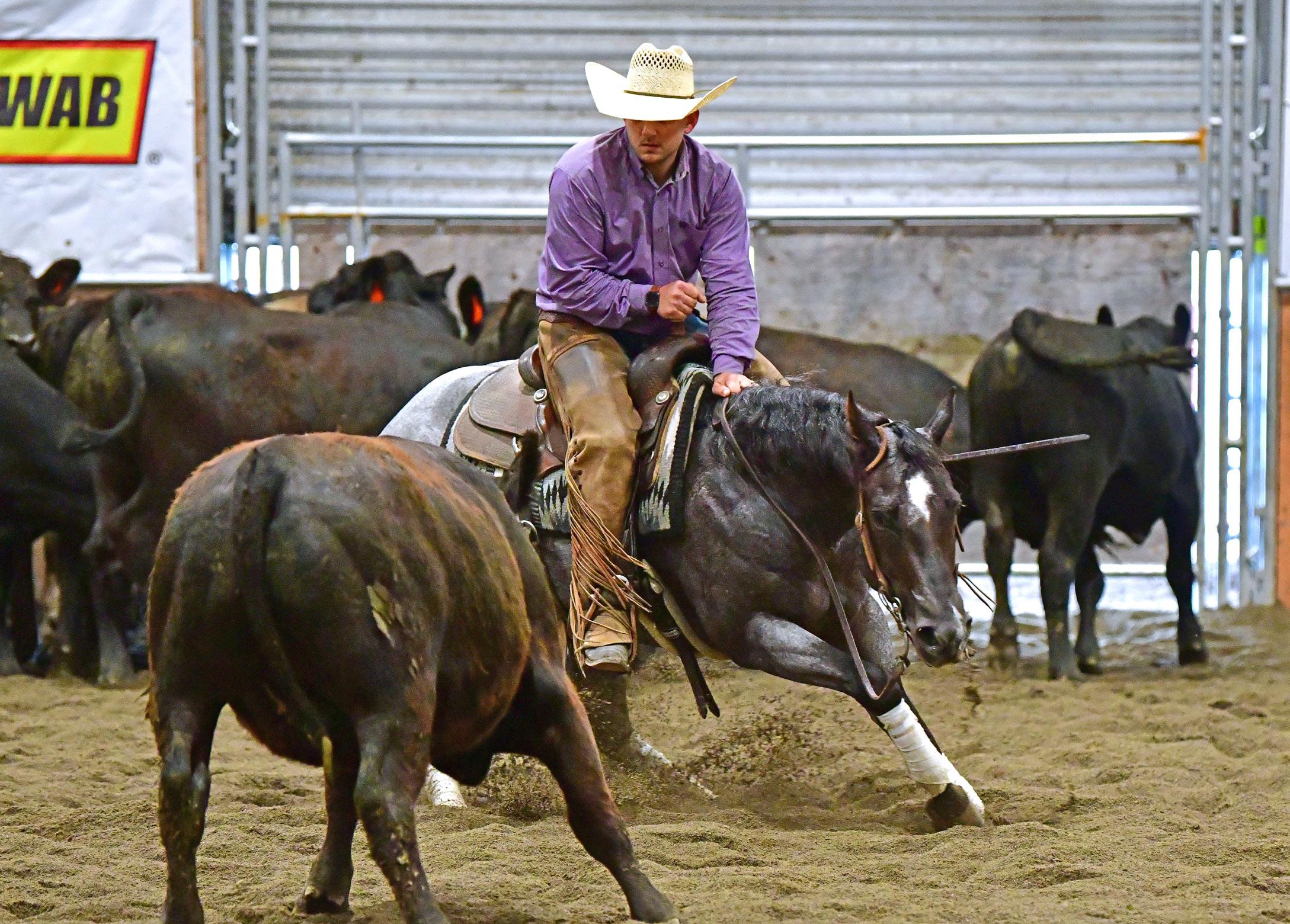
Travis & Sheer Drama Scootem & Shootem Photography
Career Highlights
Travis has won Calgary Stampede cutting futurities ten times. Winning the Futurity two times, the derby two times, and the 5/6-year-old five times, as well as the cutting at the rodeo one time, and he has come in as reserve champion four times. One year he won the futurity, co-championed the Derby, and won the 5/6-year-old all in the same year. This is the only time in history a rider has accomplished such a feat.
2016 was his breakout year; he was third in the Calgary Cutting Futurity on a horse he trained. He made the Futurity finals in Fort Worth in 2018 for Jesse Lennox as a catch ride and came in tenth overall. He’s made the World Finals down in Fort Worth twice.
EquiStat list: Cutting, reining, cowhorse earnings. It gets published every year, and in 2025 he was third overall in the world earnings over the last ten years in all three events.
Hall of Fame: In October 2022 he qualified for the NCHA as a Million Dollar Rider, and in 2023 he was inducted into the NCHA Hall of Fame. To date he has earned 1.6 million. All of his earnings have been won in the Open division. He also accomplished this in ten years. Which is the fastest anyone has done it in Canada.
The Muscle behind TR Performance Horses
There’s an old horse trainer proverb. “Behind every great horse trainer is an even greater woman working behind the scenes.”
That is nothing short of true of Tory Rempel. A hardworking partner, Tory is a crucial part of the success of the business. She brings the hustle daily from managing the training operations
to scheduling clients, showing schedules, bookkeeping, and maintaining an exceptional standard of horse care. They work alongside one another, complementing each other with their strengths.
Tory grew up in Armstrong BC, she rode English, was in the local pony club, and then after high school she worked for a three-day eventer. In 2019 they met, and in 2020 they moved in together: COVID hit, and with a hard time finding work, Tory started working for TR Performance Horses.
Travis says, “It was right after Tory came on board that things became more organized, and the facility they are at now became available to purchase, and it wouldn’t have been possible without Tory and all she does.”
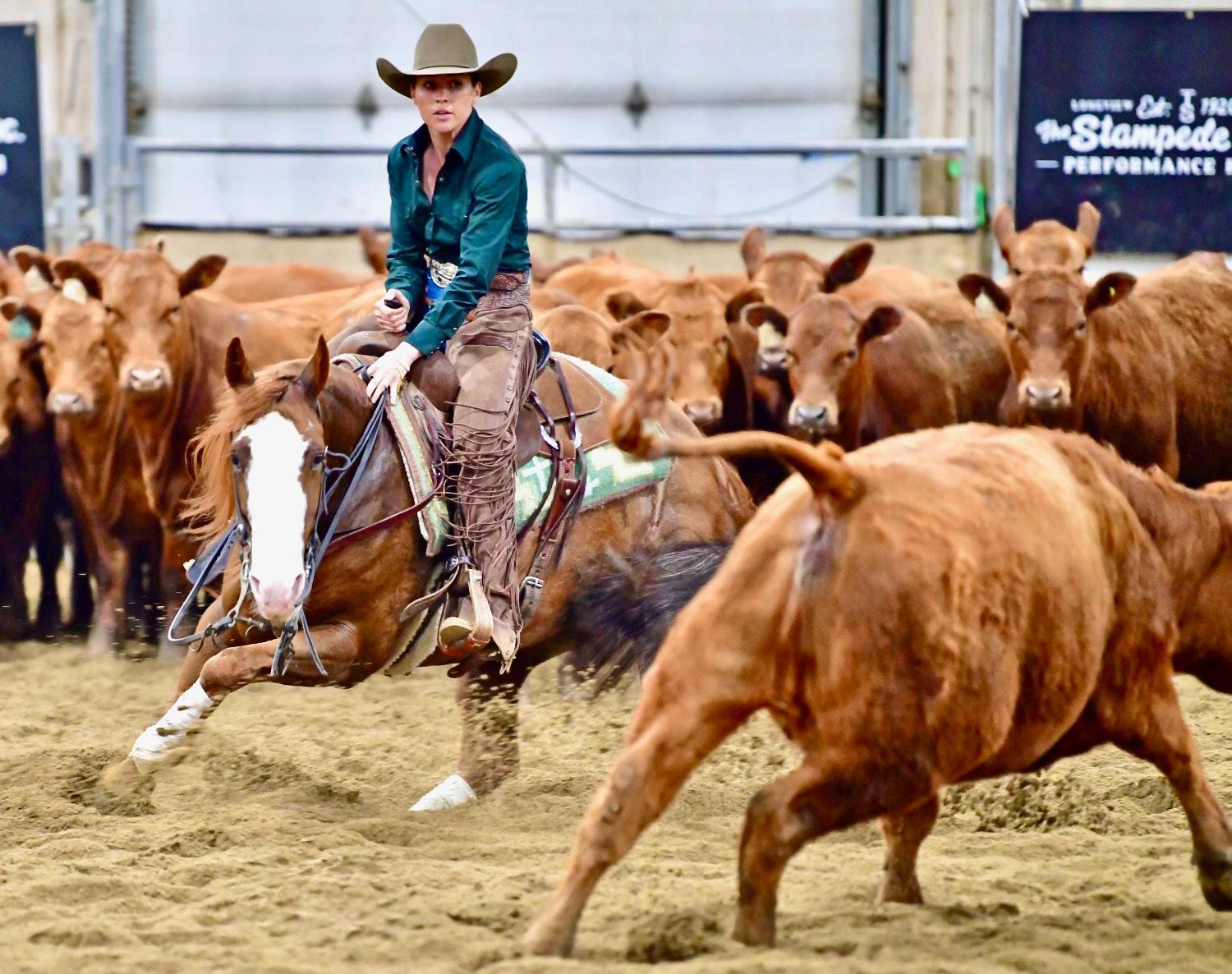
Tory isn’t just behind the scenes. She got a start showing a special mare owned by Jim Mann (a longtime client and friend). He allowed Tory to get her start showing in cutting on his mare Lois Laine. Tory could show her and score a 74 in Non-Pro, and then Travis could ride her in the next class and get a 74 in the Open. Tory says, “I was really spoiled in being able to swing a leg over a good horse and learn right from the start.” Since then she has made two world finals appearances, proving that she can compete right up there with her own successes and wins.
Fort Worth was a big year for them this year. They hauled down eight horses, all of which Travis had started and trained right from day one. Tory showed her first 3-year-old this year and marked a 216, which is really hard to do. Darren Simpkins did a catch ride for them on one of their horses, “Freak on a Leash,” by “The Animal.” He came in second in the added incentive, and then they sold him to Bella Hadid (world-famous supermodel). They have a strong team that they are grateful for and they credit their success to them!
Travis & Skoookum Robert Magrath Photography
They attend about two shows a month from February to November; some shows are ten days to two weeks long. Then the futurity down in Fort Worth starts, and it’s 27 days long. Sixty percent of the shows are in the USA, with the rest in Canada, Travis tries to make the Ponoka and Calgary, cutting futurity in fall and the stampede in summer.
Their customers come from all over. Travis has local clients that have been with him from day one, when he was their first trainer, and he taught them to ride, and now they are showing at the world level as well as in Alberta, Ontario, Washington, and Arizona. Travis and Tory surround themselves with a lot of good friends who are very talented and supportive.
Some great horses he has trained that have left an impact on him over the years have been Damascus Cat, Suzie Blue, U Hottish, Red Hot Catt, Sheer Drama, CR Tuff to Be Me, and Chex n to Cash. It was hard to list them all, but this group was really special to him, and all listed are horses he has started from day one to go on to be successful. Travis says he looks for a horse to have show presence. He wants them to be feely and have wither. He wants them to cow up and wants them to move pretty. And most importantly, they have to have a lot of tries.
What sets TR Performance horses apart is not talent alone. It’s the day-in-and-day-out hard work that comes with the job. Travis is proving time and again that he can win and
be successful on multiple horses that he has started and competed with right from the start of their careers. Hard work and dedication are at the core of TR performance horses; both Travis and Tory are fully involved. Their horses aren’t just a business; this is their lifestyle, and they are fully immersed and invested in what they do.
Danika McGuinness lives in the mountains of the Cariboo with her husband and two boys. Together they manage a small piece of land, Danika is also a leather artisan, to learn more info on Danika’s leather works
Tory & Lil Smooth Lu Robert Magrath Photography
Photo by Alex Callaghan
My C art
By Addison Reimer
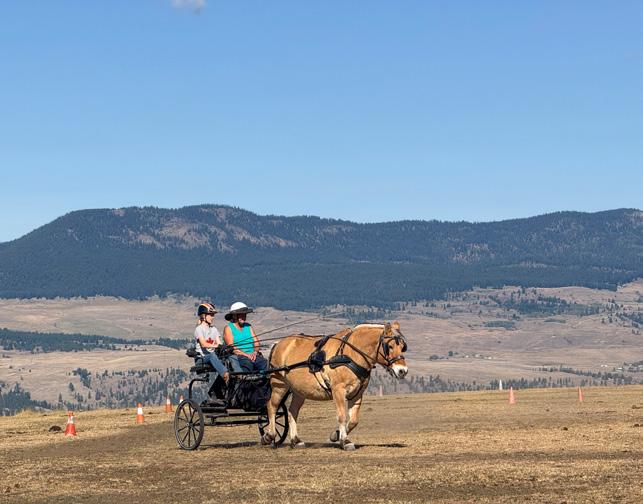
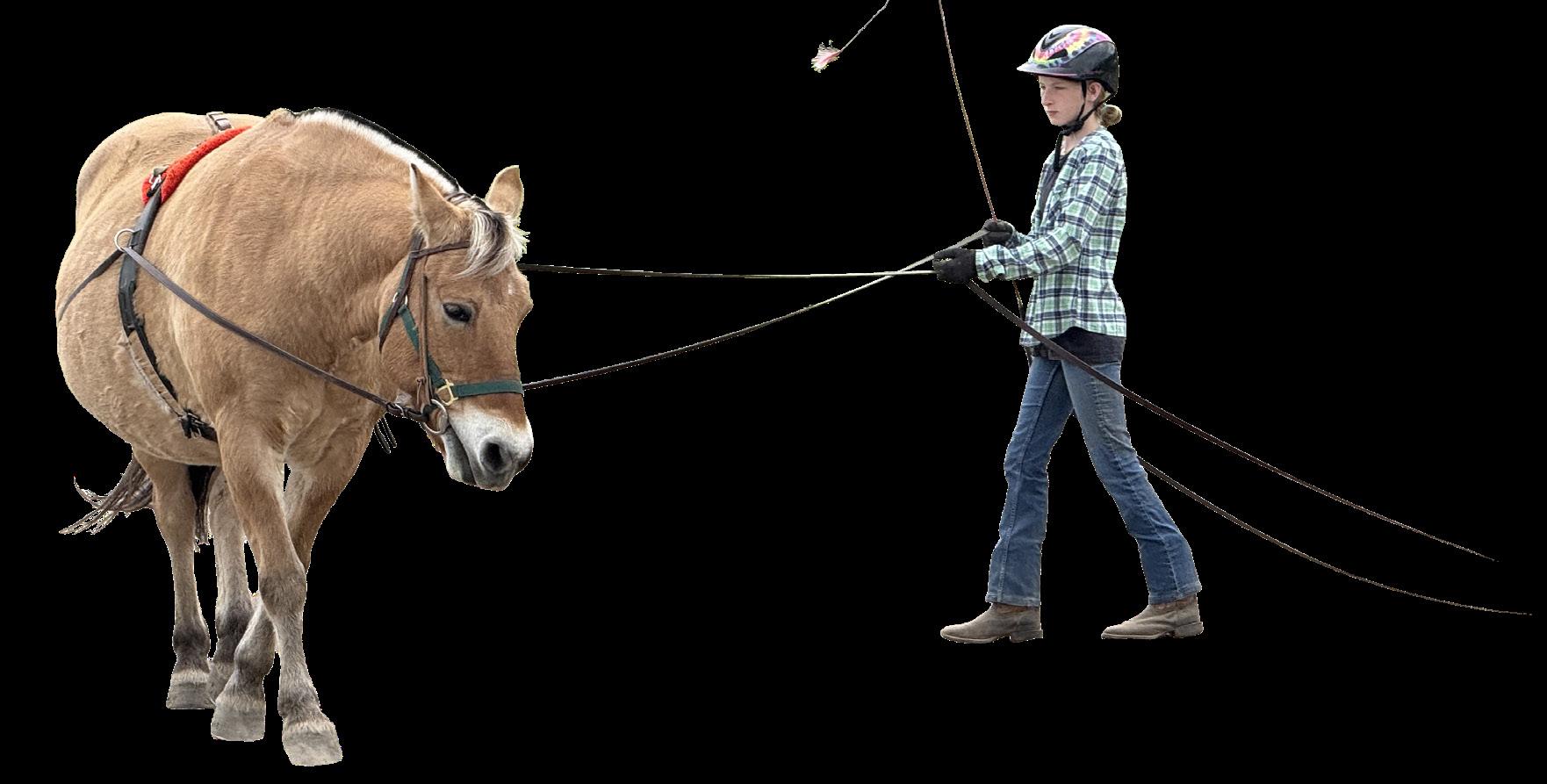
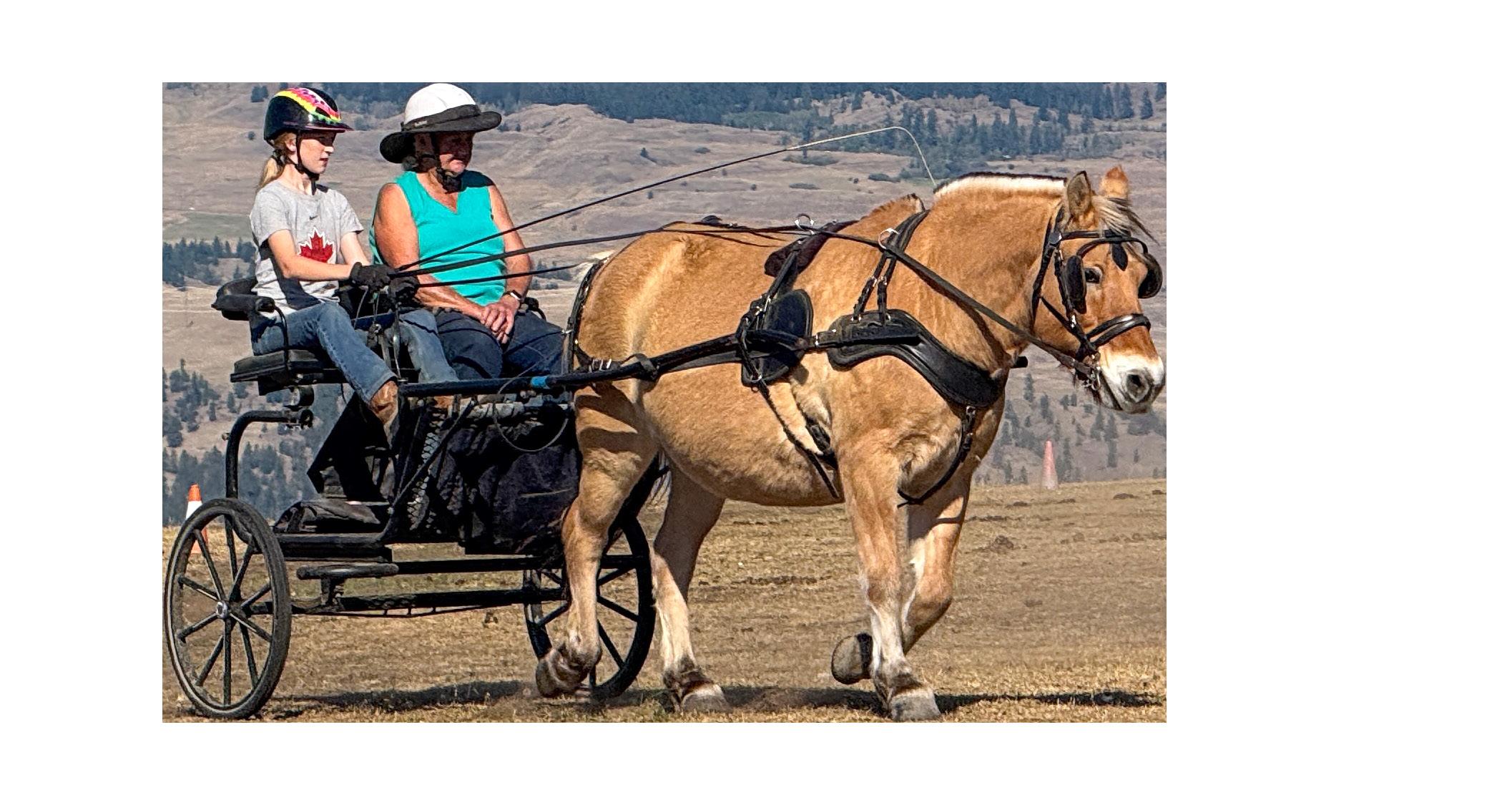
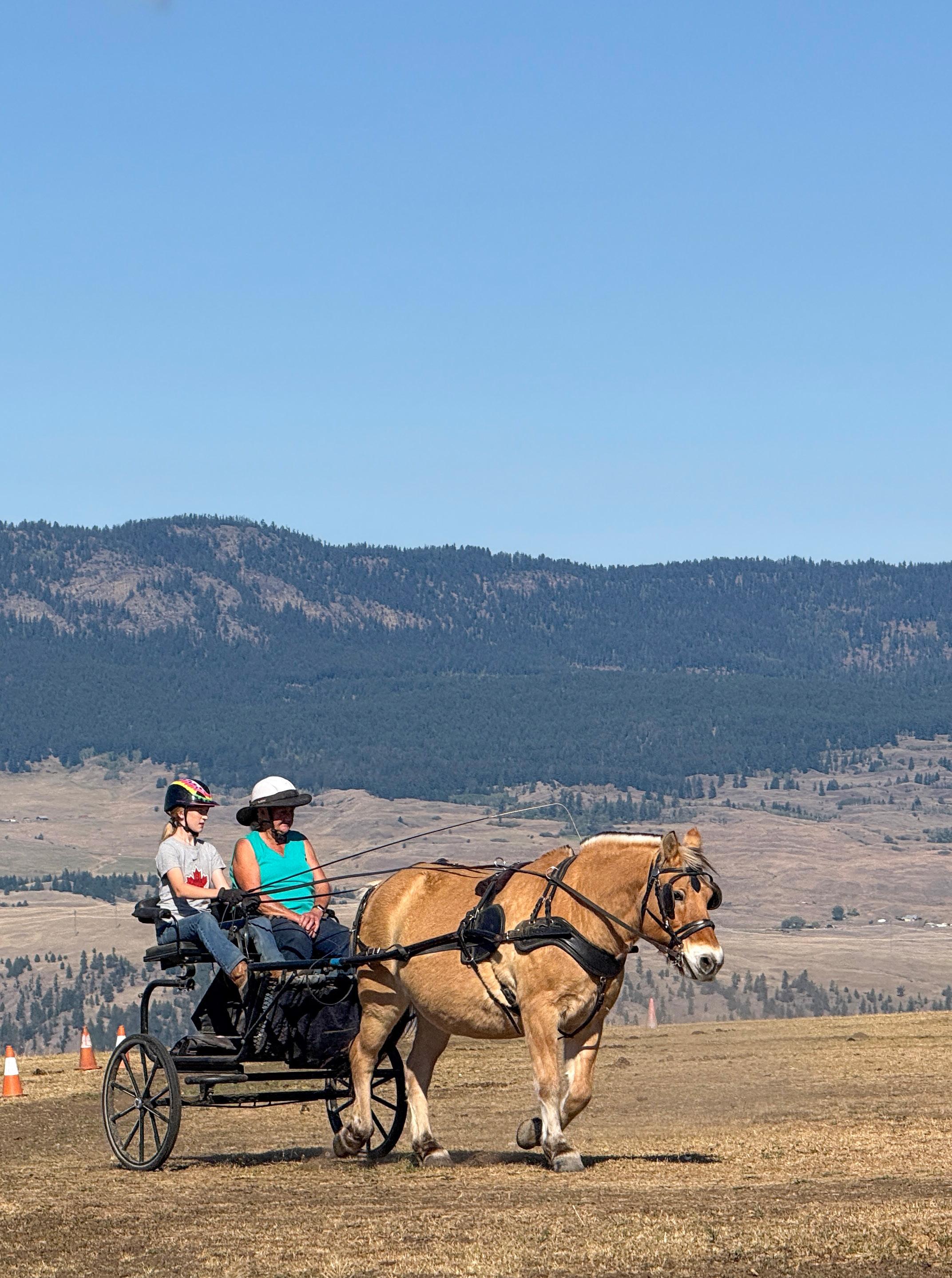
My name is Addison Reimer, and I was accepted for the Young Drivers’ Cart Driving Bursary In Honour Of Brian Jensen in 2025 from the BC Carriage Driving Society. I chose to take my lessons with a wonderful instructor named Ellen Hockley. Ellen paired me with a wonderful Fjord mare named Indy—a very sweet horse who taught me so much and helped me every step of the way as I learned to drive.
Rain or shine, I gained a tremendous amount of knowledge over the course of my ten lessons. I went from having no experience with cart driving to confidently trotting around the fields. I began by learning the
parts of a harness, how mouth pressure works, and how to properly handle the reins. From there, I started ground driving in a round pen to develop control from the ground, and I practiced driving through cones to test my control at a trot.
Thanks to Ellen’s guidance, I was ready to move to a cart by my fifth lesson, when I hitched up for the very first time! I practiced driving through cones and trotting around the arena until it was time to hit the trail. Navigating through rocks and trees, going up and down hills—it was so much fun! Ellen helped me build confidence and taught me how to safely and effectively
Journey
navigate with a horse hitched to a cart. I’m so grateful for this opportunity to learn and try something new. I now have my own harness for my donkey, Bambam, and I hope to hitch him up to a cart for the very first time soon. This experience was incredible, and I can’t wait to use my new set of skills in the future!
Cart driving is a fun and unique activity that helps kids build confidence, responsibility, and strong horsemanship skills. It teaches patience, communication, and teamwork between the driver and the horse while also allowing kids to learn something different from regular riding.
I think more kids should join cart driving because it is safe, rewarding, and a great way to connect with horses while learning new skills.
Basic Fence Repairs for Horse Farms
Rigid Panel Fences: Wood, PVC, Pipe
Inspect each panel, rail, or post of your fence for signs of damage. Use a level to check posts and rails, and wear gloves to protect your hands. Carefully remove damaged sections you identify. For wood, measure and cut a replacement board, then secure it with nails or screws. Using pressure-treated lumber can help prevent future rot. PVC panels are simple to slide into place, but be careful not to over tighten screws or brackets, and ensure posts remain aligned. Pipe fencing, while very strong, may need bent rails straightened, bolts tightened, or rusted welds inspected. If posts are loose or leaning, resetting them in gravel or concrete may be necessary.
Key Tools and Materials
Claw hammer or pry bar
Screwdriver or drill
Soft mallet
Measuring tape
Level
Saw
Nails
Screws or brackets
Replacement panels or boards
Post hole digger or auger
Gravel or concrete
Gloves
Safety glasses
By Camryn McNeill, BBRM
Being able to inspect, maintain, and handle basic fence repairs protects your horses and saves you time and money. Understanding fence types, common problems, and simple fixes is essential for keeping your property safe and functional.
Comparison of Fence Types & Repair Needs
Material - Wood
Type of Damage
Rot
Splintering
Loose nails
Decay at
ground contact
Material - Wire
Type of Damage
Sagging
Broken strands
Loose posts
Tension loss
Material - Electric
Type of Damage
Broken wires
Faulty insulators
Grounding issues
Material - PVC or Vinyl
Type of Damage
Cracked panels
Shifted posts
Loose brackets
Wire Fences: Woven or High-Tensile
Pay careful attention to tension and secure posts. Check for sagging wires, broken strands, leaning posts, or sharp edges. To tighten sagging wires, a fencing stretcher or come-along allows you to apply controlled tension safely. Broken strands should be removed and either spliced or replaced using crimp sleeves or wire connectors, then secured with staples or clips. High-tensile wire can be dangerous if mishandled, as it may snap back with significant force. Gloves and safety glasses are essential and working slowly and deliberately minimizes risk.
Key Tools and Materials
Fencing stretcher or come-along
Pliers
Locking pliers
Wire cutters
Crimp sleeves or wire connectors
Fencing staples or clips
Replacement wire
Post hole digger
Gravel or concrete
Gloves
Safety glasses
Tools Needed
Hammer
Nails/screws
Replacement boards
Sealant
Cost to Maintain Medium
Tools Needed
Tensioner
Wire cutters
Fence stretcher
Post driver
Tools Needed
Voltage tester
Wire cutters
Replacement insulators
Cost to Maintain Low
Cost to Maintain Low
Tools Needed
Replacement rails
Brackets
Drill/screwdriver
Electric Fences
Cost to Maintain Medium
Electric fences require careful handling to ensure safety. Always assume the fence is live and turn off the power before starting any repairs, then confirm with a voltage tester that the fence is de-energized before touching it. Gloves and safety glasses are essential, and insulated gloves, long sleeves, and rubber-soled boots provide additional protection when working near high-tensile or live wires. Inspect wires, tape, insulators, and grounding connections. Damaged or missing insulators must be replaced immediately, as they can create dangerous shorts.
Check the grounding system to ensure it is functioning correctly, since inadequate grounding can reduce the effectiveness of the fence and increase the risk of shock. When repairing the fence, replace broken wire or tape and secure it to posts with proper insulators. High-tensile wires require careful handling, as improper tensioning can cause the wire to snap back dangerously.
Key Tools and Materials
Voltage tester
Insulated gloves
Safety glasses
Pliers, wire cutters
Spare insulators
Replacement wire or tape
Post hole digger if posts need resetting
Vintage Riders Equestrian Club
ClUb Hub ClUb Hub Canadian Cowboy Challenge
Grand group of women - enthusiasm!
Quote: Sufficient unto the day... Proverb meaning each day has its own challenges. One should not obsess about the future but focus on handling the immediate and living in the moment. Anticipating problems only adds stress.
As horse people we have navigated January and February. The two months of the year that have no redeeming characteristics. As a club and a community, Vintage Riders has had its annual General Meeting. An executive for 2026 has stepped up to guide us through the coming season. Thank you to each and every one of you for putting aside time from your personal lives to be the glue that binds us.
Our January meeting was well attended. Great refreshments, thank you, Carol. We learned from Nicole St. J. a regime of equestrian-related strength and flexibility exercises. Lots of moans and groans. Each in their own way was able to participate. Cheers for trying; you got the blood moving and the brain firing. In the first week of February, many of us are excited to undertake an acrylic painting class with Vivian H. A well-renowned artist. Hosted at her studio. The subject matter is close to our own hearts. A headshot of our horse. At our February general meeting our guest speaker is Elisha E. Apropos to the time of year, the presentation will be on horse health. A good tune-up reminder before we shift into gear for the riding season. These are just a few things that our hardworking executives have set up for us. Pretty good stuff, eh?
Interesting, diversified, and challenging. Always learning. Don’t worry about where you should be or what you should be. Find a comfortable pace and let it be yours! Written by Kendra
As with all associations, the Canadian Cowboy Challenge held its annual AGM on January 24, 2026, via Zoom. There were about 25 people attending the meeting. Returning for the second year of their term are Al Bignell, Sabra Roth (treasurer), Will Gough, and Hans Kollewyn. Elected back for another 2-year term are Eric Frogley (president) and newly elected Rolanda Eadie (vice president/secretary).
Discussions at the meeting included contacting past challenge hosts, looking for new hosts, a review of rules and regulations, and sponsors for each challenge and for the finals. As well, the importance of the CCC Judges’ conference to be held on March 07, 2026, and the CCC Judges’ Certification process to be held the first part of May, 2026, were emphasized. Another winter has passed, and most riders will be getting back in the saddle if they have not already started.
The First CCC Challenges of 2026
Moon Lake Cowboy Challenge A & B on June 6th & 7th at Moon Lake Quarter Horses, Alberta. With a play day on Friday, June 5th, 2:00 PM (30 dollars / rider). A potluck supper will be held on the Saturday night.
Moon Lake Cowboy Challenge A & B on June 27th & 28th at Keith Quarter Horses, Alberta. With a Play Day on Friday June 26th, 2:00 PM (30 dollars / rider). A potluck supper will be held on Saturday night.
You can go online to the CCC website for further information and/or sign up for these challenges. Enjoy your ride and have fun this coming riding challenge season. News submitted by Hans Kollewyn
Check out the CCC website canadiancowboychallenge.com
West Coast Working Equitation
The Single Slalom Obstacle
We are starting the new year with the Single Slalom obstacle, covering everything from how to perform it to tips on how to introduce and train your horse to execute it well. The Single Slalom consists of an odd number of posts (a minimum of five and a maximum of seven) set in a straight line. For Levels 1–4, the distance between posts is 8 m; for Levels 5–7, the distance is reduced to 6 m.
The obstacle is entered at the prescribed gait, which is a trot for Levels 1–3. Level 4 is performed at the canter, with lead changes through the walk or as flying changes. Levels 5–7 require flying changes. The horse and rider weave through the posts in a flowing, serpentine line. Changes of bend and lead should occur midway between the posts, in the line of travel, with the horse’s bend and lead matching the direction of the turn.
Judges reward calm, precise execution with fluid, continuous movement and a consistent quality of gait that displays rhythm, suppleness, correct contact, impulsion, straightness, and collection appropriate to the level. The shape, symmetry, and accuracy of the line are important. Clean, correct lead changes and smooth changes of bend through the horse’s body will earn higher scores. Lower scores result from loss of rhythm, stiffness, resistance, or a delayed or incorrect lead change. Knocking down a post results in a negative mark, as does severe resistance or major errors in lead changes.
Tips
Back in January we held the club’s Annual General Meeting. Our 2026 Executive is: Pres. – Bev Routledge; VP – Corene Harvey; Secretary – Deb Miyashita; Treasurer – Laurie Lyons; all returning to their positions, with new Director – Kelly Luchtmeijer coming on board. Nancy Roman has offered to do club PR via e-mail and/or social media to keep everyone informed of our activities, and of course, through Saddle Up magazine.
Being an ambitious group of horse people, we discussed many events for 2026. The annual fall Golden Horseshoe Poker Ride has been booked for October 3, again at Timber Ridge Trails in Lumby (Darlene does such a great job for all of us). We are planning some trail rides mid- to late summer at Larch Hills and Skimikin—dates to be announced. Good discussion on having an open horse show (for riders and drivers) without all the pressures. So mark your calendars for Sunday, May 10th (yes, Mother’s Day) at the Armstrong Fairgrounds... a show without a judge! Come and have some fun—no pressure. Watch for more info on our club Facebook page. Submitted by Nancy Roman
Max’s third ride of the 2025 season (he’s getting to be a pro at this) was held at a private ranch in Chase, where we camped alongside a creek. This ride hosted an abundance of hills to climb, which provided some breathtaking views (and challenges for the ponies). Max climbs several mountains, gets caught out in a lightning storm, and learns to tow a pony along.
Whoo-wee, the Turtle Valley Trails 2.0 ride was a tough one. High humidity and lots of elevation made for a low completion rate for the LDs. The 50s fared better, but then again, they are generally fitter horses! The ponies were already sweaty before hitting the starting line. After a very exciting start where Kari performed an “assisted dismount” together with Norine, we got moving down the trail steadily. The first 15-mile loop had quite the elevation (my Garmin tells me it was 2,917 ft of total ascent), and with the muggy morning, the pace slowed down considerably to make sure the ponies were not going to have issues.
There was a bit of a traffic jam at the hold due to the vets being very careful and wanting to
Focus on keeping the horse straight (as in straight on a curve). The horse should not fall in or out of your planned line. The hind feet should stay in the same tracks as the front feet, with no bulging of the shoulders or swinging in or out of the haunches.
Focus on turning your horse with your leg and seat aids. Use the inside rein only as an indicator. Turning the horse with the inside rein creates excessive neck bend rather than correct bend through the horse’s entire body. Written by Vanessa Whittell
Interested in learning more? Contact West Coast Working Equitation at info@ westcoastwe.com for information on upcoming clinics and shows in the lower mainland.
check and recheck CRIs before allowing ponies back out on the trail. Because of this, we ended up leaving camp later than expected and had to race the clock (again!) if we wanted to finish in time. Another steady hill climb onto the 10-mile loop, during which we got caught out in a thunderstorm (3 seconds between the lightning strike and the BOOM!). Both Max and Elton handled the thunder and calmly continued down the trail. We hustled as much as we could while trying to make sure the ponies were still doing well. About a mile left to camp, a fully tacked-up horse comes out of the bush towards us; we caught him and ponied him with us towards camp while looking for a downed rider. Everyone was fine; the horse got away from the rider while being led in hand and decided to take off for home.
We finished overtime but were given concessions on our time due to the traffic at the hold and rescuing the loose horse, but we still had to pass the final vet check, which was looking iffy. Max squeaked by with
a rechecked CRI of 60/68. We did it! The final (mis)adventure of the trip was having truck troubles on the highway home. Thank you, Lori (and vets and volunteers), for putting on this ride. Thank you to Kari and Norine for riding with me. And as always, thank you, Brittany and Joshua, for hauling, housing, and feeding us (and putting up with my sniffly self). Special thanks to Linda and Bernie for the quick truck rescue! So very proud of Maximus Thyme for taking excellent care of himself while getting the job done and putting up with our crazy adventures!
BC Interior Morgan Horse Club
DogTIP OF THE MONTH
Leap
into spring with animal precautions in mind!
t Harmony Farm Kennel & Lamb in Monte Lake, I have the pleasure of running a ‘custom care’ dog boarding kennel (non-dog park style). I have some retired hair sheep, horses, livestock guardian dogs, and cats, as well as all the amazing client dogs that I care for and exercise individually (either on or off leash) every day. I have many folks drop off and pick up their dogs on a regular basis and have planned my huge courtyard large enough for semis of hay to be turned around in, so lots of space. I am extremely careful to always look out for animals, no matter what the reason, and like most proactive animal lovers, farmers, and horse people alike, I always ‘think about’ what happens before what happens happens.’
So...here we are in the midst of spring, driving with mud, slush, and dirty roads to navigate. Good luck keeping your vehicle clean, and wow, we can go through some fluids! Well, recently, I had a truck arrive to drop off their happy-go-lucky doggos at the kennel. The wife and I got their dogs all settled in, and returning to the entrance, I see the driver leaning over the open hood of their truck, with a bottle of windshield washer in hand. All ready to refill, I leapt towards him and said, “Whoa, wait, please have a rag handy along with a funnel before you do that here!” He was a bit taken aback at my sudden alert until I reminded him that both antifreeze and windshield washer fluid (no matter the strength) are deadly toxic to cats and dogs, including the ones they just dropped off! “Yikes,” he said, “I can’t keep my windshield clean and just wanted to top up. I usually do this at the gas station and never even think about spillage! Thank you for the reminder!” I promptly handed him a funnel with a few spare rags in case of any drips, regained my normal breathing, and inspected the ground thoroughly afterwards!
Most animal people understand that the most common poisonous component of antifreeze is ethylene glycol; however, that, as well as the ingredient methanol, is also found in most brands of windshield wiper fluids (preventing freezing). Both additives are extremely toxic for all pets and will cause sudden and, yes, fatal poisoning in both cats and dogs. Having high levels of sugar makes both antifreeze and windshield wiper fluid sweet and extremely attractive to your pets. Ironically, glycol is given to ruminants (sheep, goats, and cows) as a common, very effective aid for metabolic issues like ketosis (as in pregnancy toxemia), which stems from negative energy balance during physically demanding times such as late pregnancy and early lactation.
Both glycol and methanol are deadly toxic to non-ruminant animals and pets. It is fatal after licking directly or indirectly, by cleaning themselves, or by absorption through the skin... as little as one-half teaspoon for cats and small dogs (only a couple licks or 1-2 teaspoons for a large dog has the same fatal effect). Dogs typically love to chew and play with things like plastic jugs, making even discarded bottles an attractive killer for dogs!
Within 30 minutes of ingesting either of these chemicals, it causes almost instant and aggressive symptoms such as violent vomiting, frothing at the mouth, extreme salivating, panicked gasping for air, tremors, severe lethargy, and zero appetite. Neurologic symptoms are also indications, like altered gait, extreme head tossing, unstable balance, lack of coordination, falling, collapsing, seizures, or coma. You may be shocked to know that it only takes a matter of hours (up to 1-2 days) of enduring severe illness to cause rapid kidney failure. Once kidney failure has developed, sadly, the prognosis is extremely poor.
If you notice ANY of the aforementioned symptoms, don’t try to induce vomiting or force any food or fluids, etc....get your pet to the vet immediately!
Take home message...no matter how careful you are, please be sure to keep any bottles (with or without liquid) of windshield wiper fluid, antifreeze, or medicinally intended glycol safely stored, clearly labelled, and protected far and away out of bounds for any of your pets!
Wishing you and all your beloved pets a healthy, happy spring!
Patricia Skinner-Porter is the owner/operator of Harmony Farm Kennel & Lamb at Monte Lake BC. Offering custom care boarding providing personal care, attention and daily exercise for ALL dog types, breeds and doganalities! Here she shares her vast array of experience with a beneficial monthly tip for you and your pooch to enjoy!
EVERYTHING PETS
Princeton, BC 250-295-7381
Quality Foods & Supplies for all your pets! See us on FB
HARMONYFARMKENNELANDLAMB.COM
Monte Lake, BC 250-375-2528
“Custom Care” boarding welcomes ALL dogs!
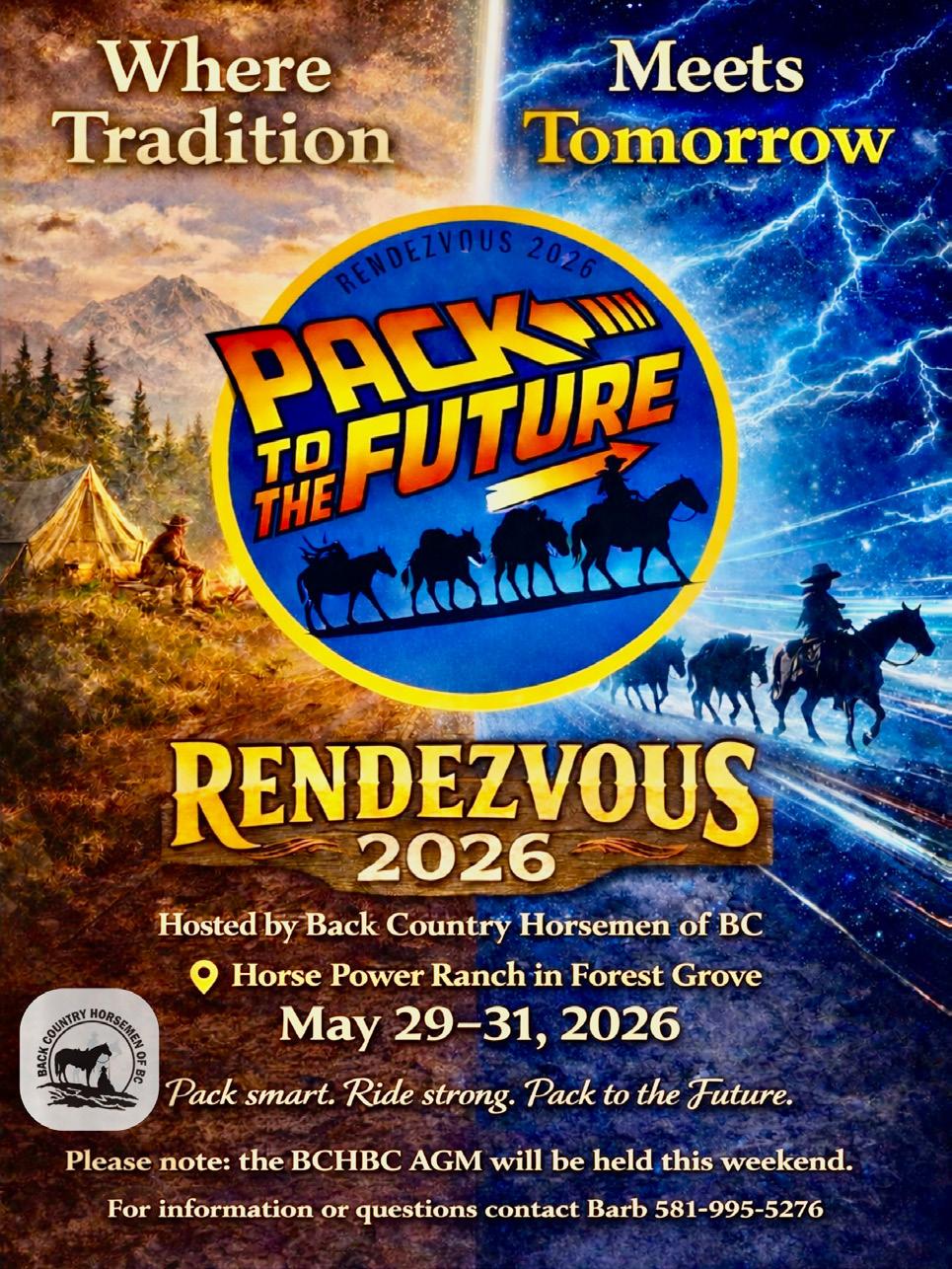
The Back Country Horsemen of BC Rendezvous 2026 in 100 Mile House, BC
Once again, BCHBC members are gearing up for our annual provincial gathering, “Rendezvous,” and you’re invited! This year’s event is taking place near 100 Mile House, at 100 Mile Horsepower Ranch, May 29-31, 2026. It is sure to be a fantastic time, with the usual trail riding opportunities (if you choose to bring your horse), as well as educational demonstrations, good food, great people, and new event ideas coming together to create a weekend you won’t want to miss! The AGM will also take place here on Saturday, May 30th, at 9 am The younger crowd of the society has taken the reins on running this year’s RV, fitting with the theme “Pack to the Future”! Traditions will be combined with forward thinking to showcase who we are and the trail forward!
Events In The Works
Pack horse clinic - Pack horse race - Knot-tying workshop - Equine first aid demo - Ernie Buckle Cowboy Poetry competition - Live band & dancing - Canvas tent social circle - Vendors and Silent AuctionFlagged trails for self-guided riding
There’s lots to do, with or without bringing your horse! As always, a weekend pass gets you major perks for a small cost, including 3 days of camping, catered dinner, live band and dance, trail riding (bring your own horse), and access to the events with all the incredible people! Day passes will also be available.
Check the website: bchorsemen.org for more details. Early bird, member-only tickets will be for sale for $120 February 15th, 2026 Regular tickets for $140 March 15th, 2026 We look forward to seeing friends, old & new, down the trail and around the campfire in May!
Check out our beautiful website at bchorsemen.org Questions? Contact info@bchorsemen.org
Horse Council BC Grants are open and accepting applications; read below for a summary of those available at this time. For more information and to apply visit: https://hcbc.ca/membership/hcbcmembers-funding/
Infrastructure and Equipment Grants
The HCBC (Horse Council BC) Infrastructure and Equipment Grants support clubs, branches, and affiliates in purchasing equipment or completing projects that improve facilities and promote growth in the equestrian community. The grant aims to help clubs initiate projects, but they should seek additional funding to complete them. Eligible projects include equipment purchases (e.g., jump equipment) and facility upgrades (e.g., arena improvements). The grant covers up to 75% of the project cost, with a maximum of $5,000, and clubs must contribute at least 25% of the cost.
Eligible applicants are HCBC members in good standing for at least two years, with priority given to those who haven’t received funding in the previous year. Each organization can apply once per year, and ineligible projects include trail development and educational events. Application Deadline: April 30th.
Education Grant
The Education Grant supports Affiliates, Clubs, and Branches in offering equine educational opportunities to their local communities. The grant can be used for classroom, demonstration, or mounted education, and is open to everyone in the community, not just HCBC members. The grant covers up to 50% of the expenses, with a maximum of $500. To apply, the organization must be a current HCBC Affiliate, Club, or Branch member for at least one year. Only one application per year per organization is allowed for this funding.
BC Equestrian Trails Fund
The BC Equestrian Trails Fund (BCETF) supports HCBC member clubs and affiliates in constructing or maintaining equestrian trails, trailheads, or horse camping sites in British Columbia for public use. In 2024, the fund totaled over $25,000 and is annually increased by donations. The fund serves as “seed funding” to help secure additional grants. Applications must be submitted by April 30th, with a possible second intake by June 30th if funds remain. Eligible applicants are HCBC member clubs or affiliates in good standing for at least two years, or HCBC committees with qualifying projects. Eligible projects include new trail construction, upgrades, bridge construction, signage, trail rehabilitation, and horse camp facilities. The grant covers up to 75% of project costs, with a maximum of $5,000, and all funds must be used by December 31st, 2026.
Development Grants for Coach Candidates with a Disability
Horse Council BC (HCBC), in partnership with viaSport, is offering $500 grants to coach candidates with disabilities to help them overcome challenges in the certification process. This funding can be used for training, resources, mentoring, evaluations (in-person or video), or cohort participation fees related to EC/NCCP coach or instructor certifications. Grants are available until the funding runs out. For more information, candidates can contact coaching@hcbc.ca
SHOWS + Events 2026
Shows i Rodeos i Fairs i Expos
Equestrian Events, English/Western Shows for BC & AB
Every Saturday 10:00 am $25 Drill team practice, Armstrong BC, Elevatedequine.ca
Mar 28 Wool Hunt, Armstrong BC, Elevatedequine.ca
April 10-12 May 29-31 Sept 25-27 AERC, Armstrong BC, armstrongenderbyridingclub.ca
April 24-26 Interior Desert Circuit Spring Show, VDRC, Vernon BC, vernonridingclub.com
Apr 25-26 VIWE Victoria WE Classic Show, Central Saanich, BC workingeq.ca
April 30-May 4 Spring Classic H/J Show, KRC, Kelowna, BC, vernonridingclub.com
May 10 BC Interior Morgan Horse Club Show, Armstrong Fairgrounds, Info on club FB page
May 16-17 Casual Working Equitation Show, Armstrong BC, Elevatedequine.ca
May 21-24 TOWE Welcome Back Classic VI & WAWE Qualifier Armstrong, BC, workingeq.ca
May 29-31 WECan Licensed show and WAWE Qualifier, Port Perry, ON workingeq.ca
June 4-7 Mars Bromont CCI, Bromont Olympic Equestrian Park, Bromont, Quebec, bromonthorsetrials.com
June 5-7 Alberta Paint Horse Spring Classic APHA/AQHA, Red Deer, AB, qhaa.ca/showing
June 5-7 ADMC Longears Days, Alberta Donkey and Mule Club, Sherwood Park,albertadonkeyandmule.ca
June 19-21 Ranch Horse Revolution Club Show, Armstrong Fairgrounds, BC, rhrc.ca
June 26-28 Three Breed Classic Horse Show APHA/AQHA/APHC/All-Breed Prince George, BC
June 26-28 Prince George & Three Breed Classic Prince George show, pghorsesociety.com
June 25-July 1 Ponoka Stampede Grounds, Ponoka, AB, ponokastampede.com
June 4-7 The 4th Annual Mountain Trail Fundraiser, Canoa Farms in Merritt, BC, canoafarms.com
July 4-5 The Ogopogo Show Open-All-Breed BCQHA/SCQHA KRC, Kelowna, BC, kelownaridingclub.ca
July 3-12 Calgary Stampede, AB + calgarystampede.com
July 11-12 Alberta Paint Horse Sunny South Show, APHA/AHAA, Claresholm, AB, albertapainthorseclub.ca
July 15-18 Region 17 Championship Show, Region 17 Arabian Horse. Thunderbird Langley, BC, region17aha.com
July 24-26 Wild Rose Welsh & Open Pony Show, Olds, AB, facebook.com/WildRoseShow/
July 31-Aug 2 APHA Zone 10 Zone-O-Rama Show, Ponoka, AB, albertapainthorseclub.ca
Aug 22-23 Wine Country Open-All-Breed BCQHA/SCQHA KRC, Kelowna, BC, kelownaridingclub.ca
Aug 26-30 Canadian National Quarter Horse Show, Red Deer, AB, qhaa.ca/canadian-nationals