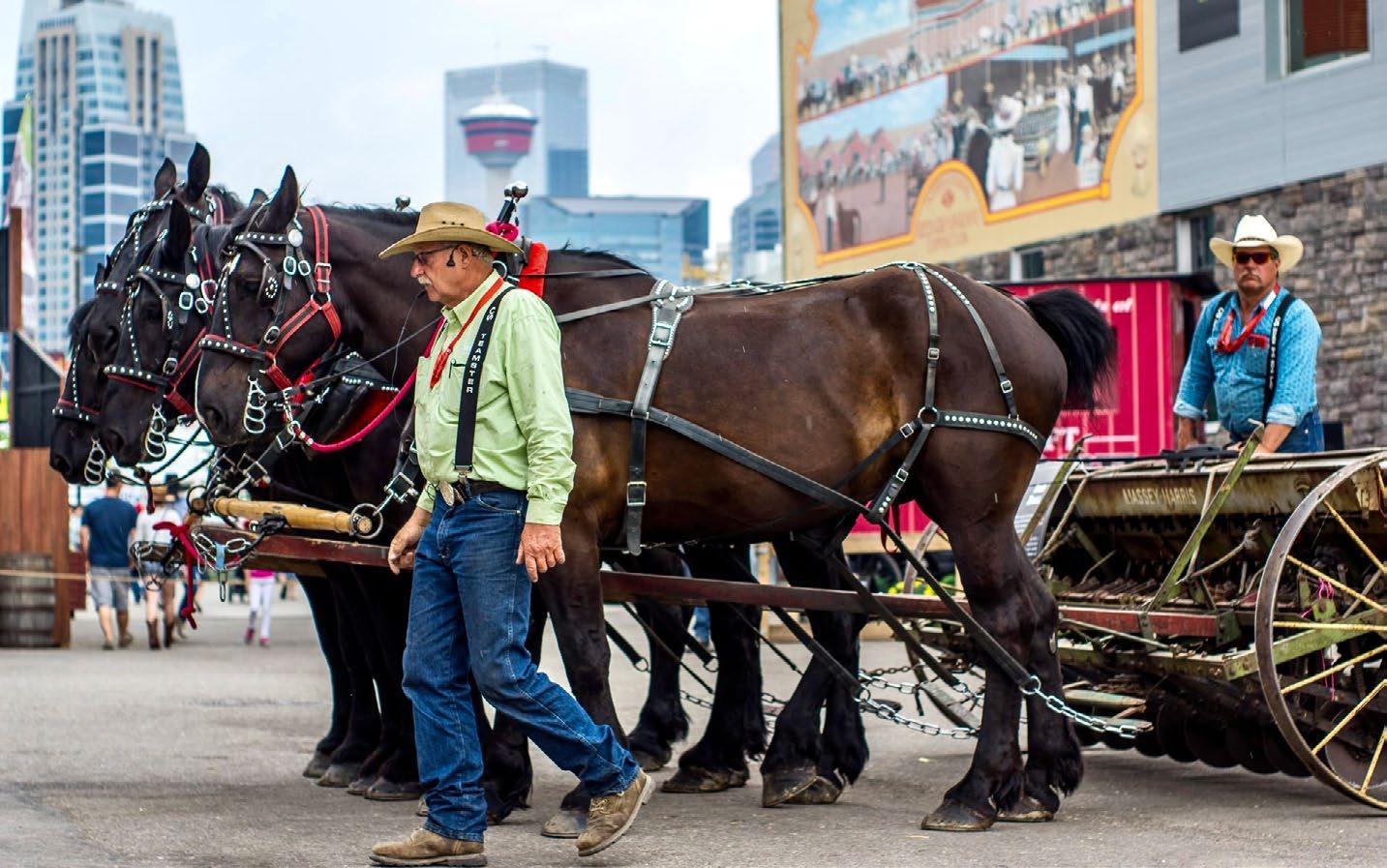
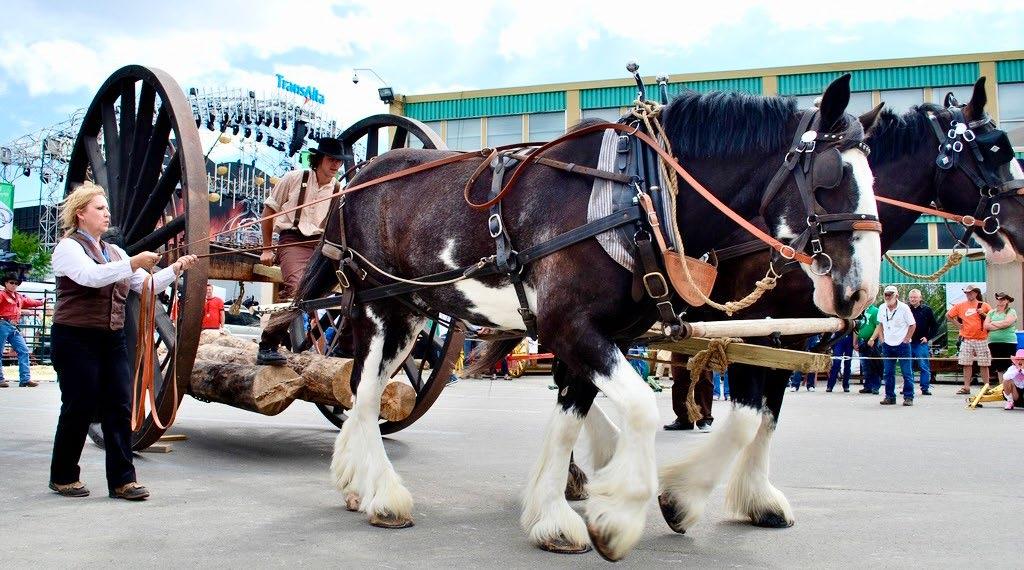
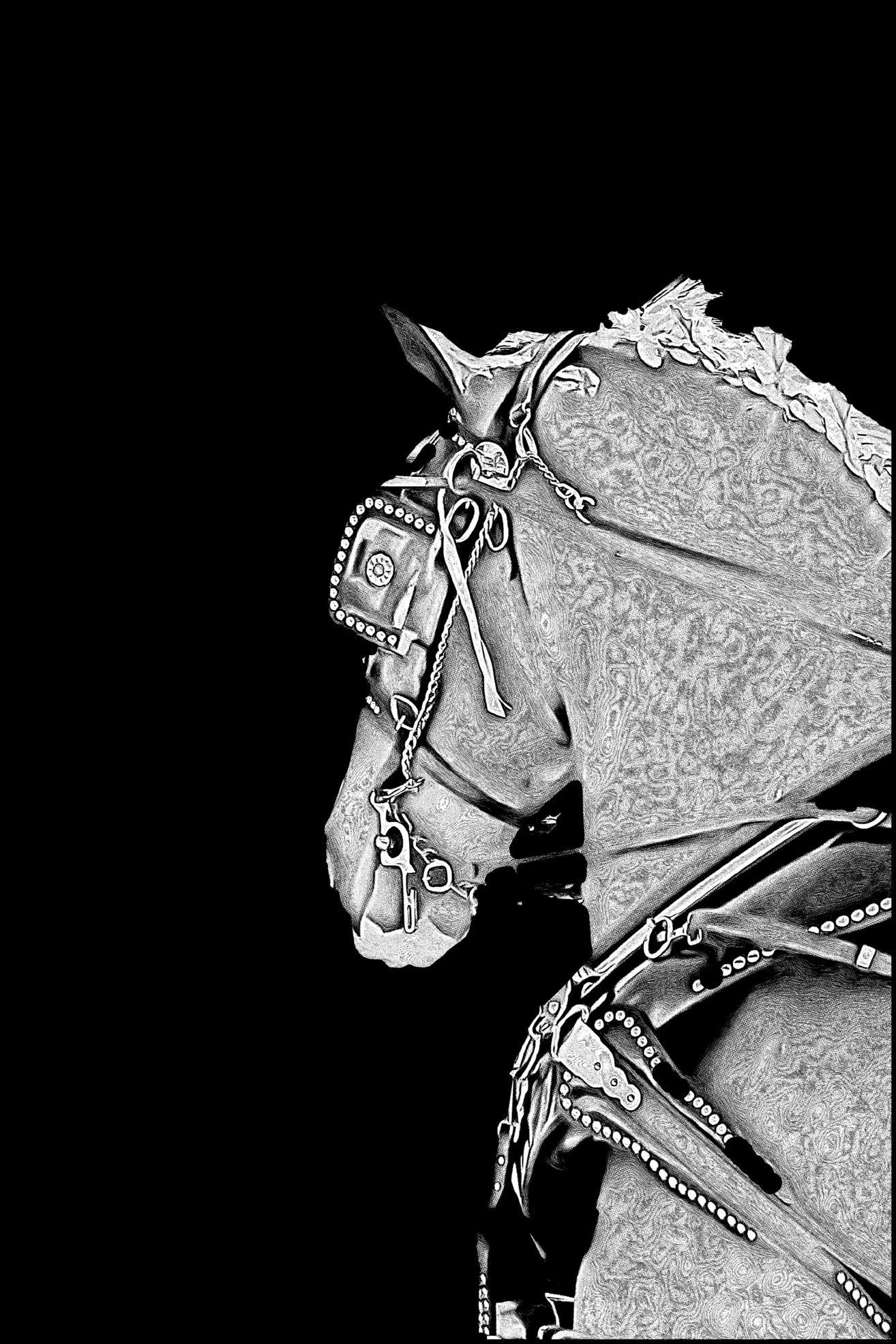
For many visitors to the Calgary Stampede’s Draft Horse Town, it is their first true encounter with heavy working horses and often their first look into the history of agriculture too.
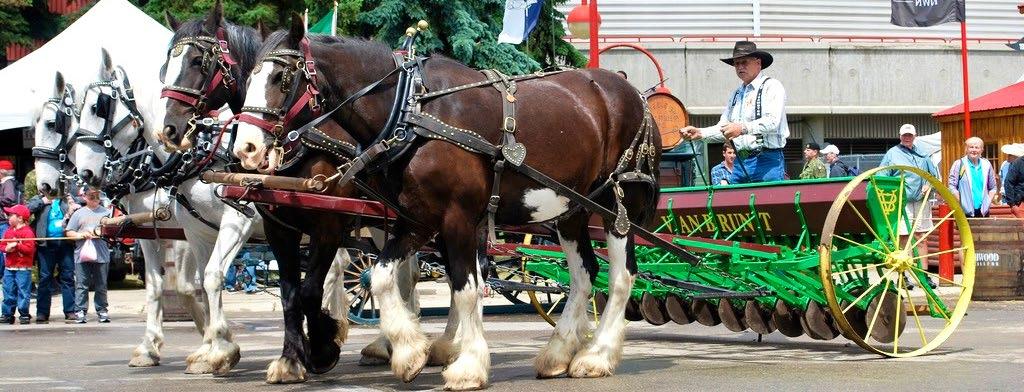
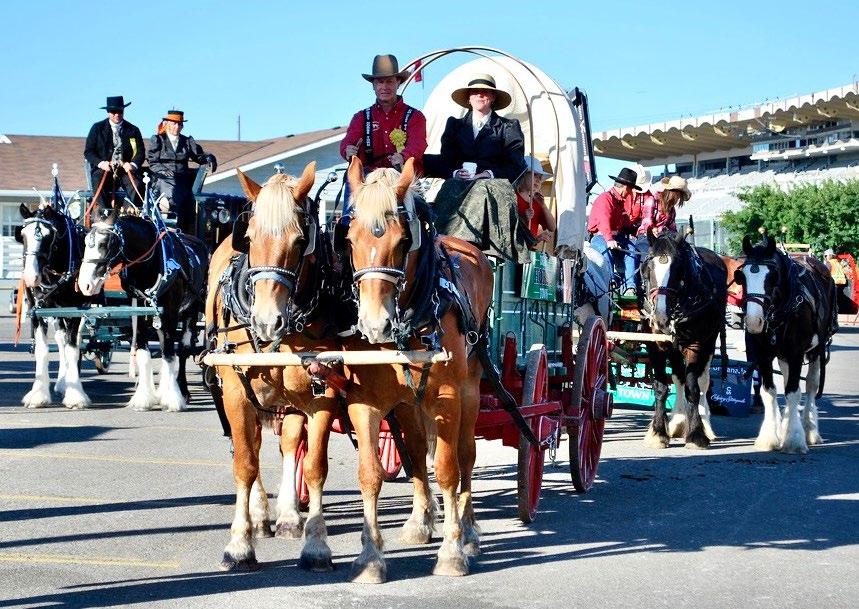
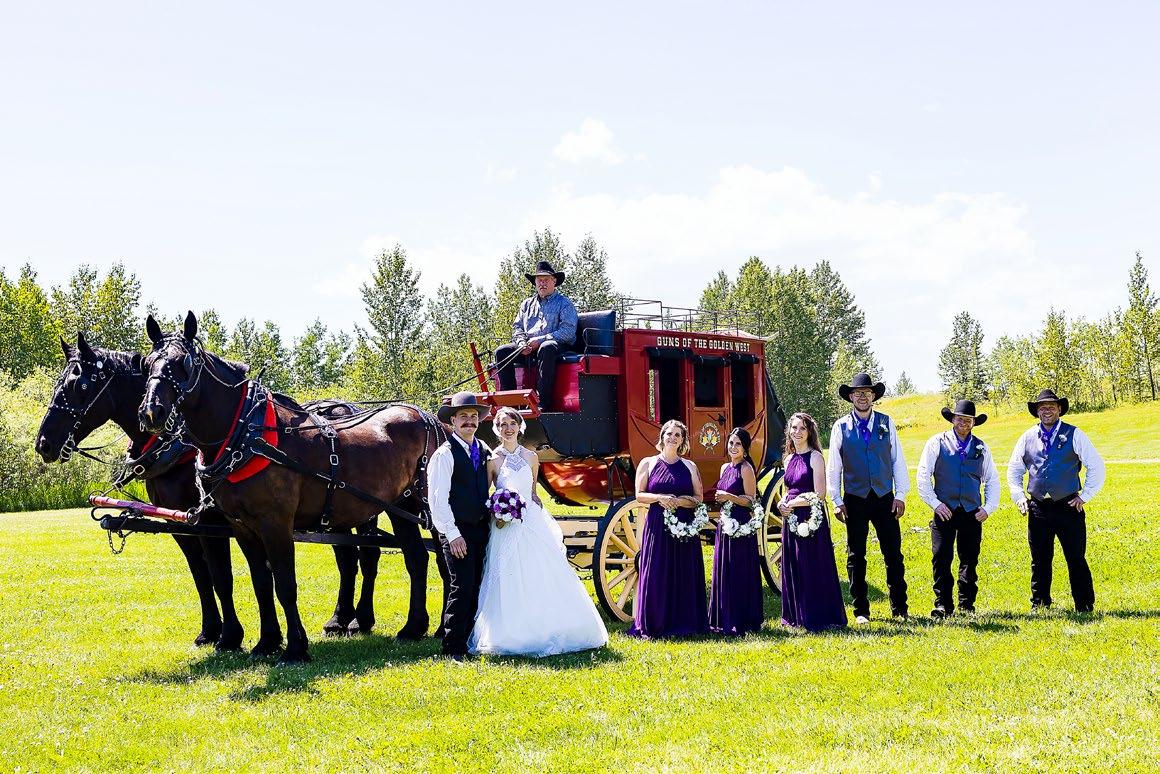
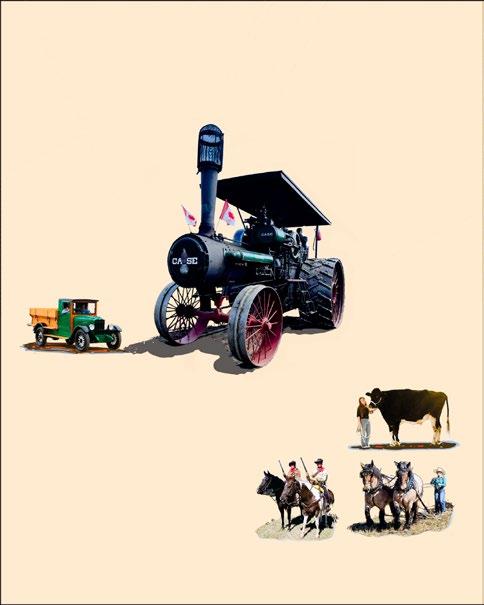
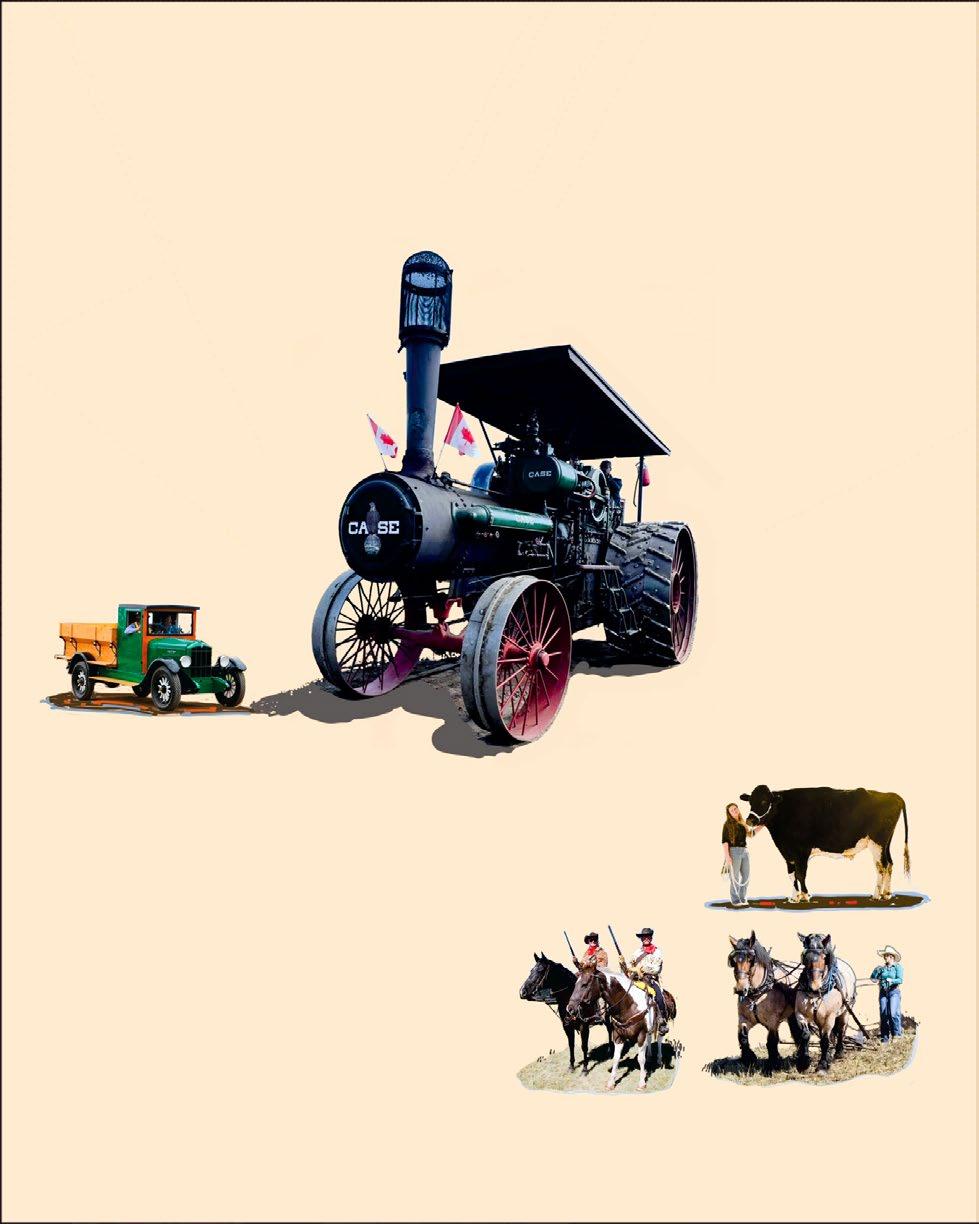
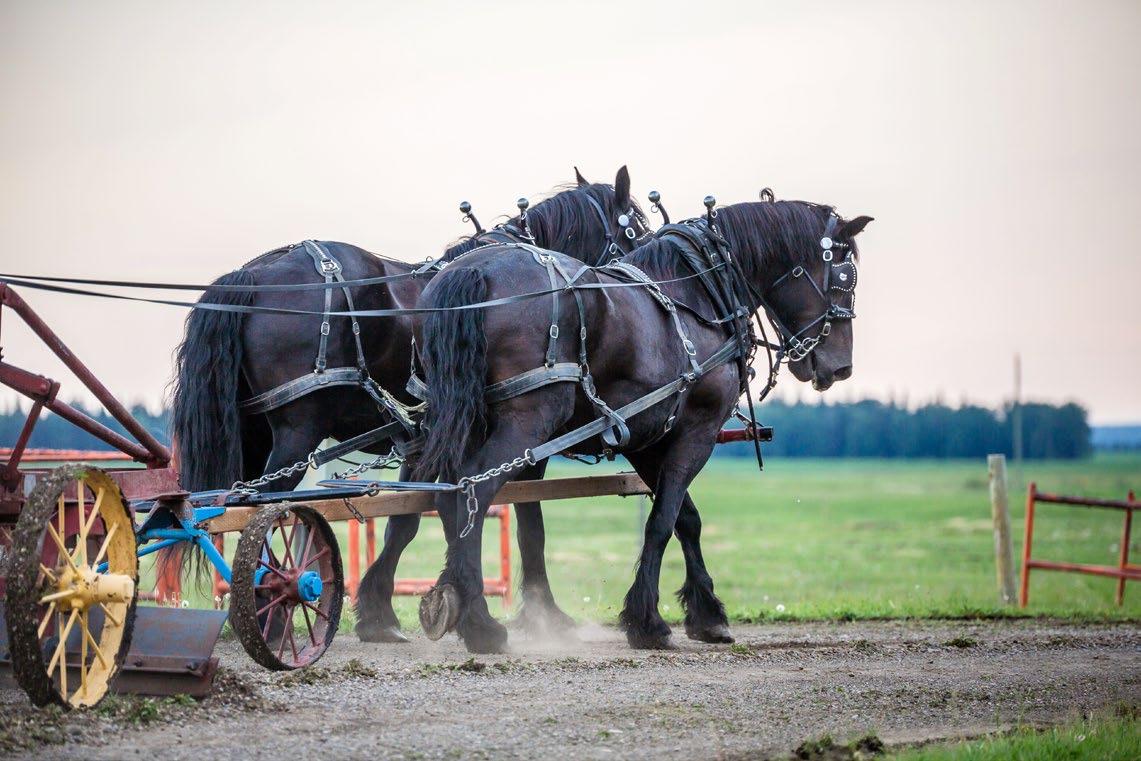
Long before diesel engines and tractors shaped the prairies and machinery built cities, horses moved the West forward. Today in Draft Horse Town, Belgians, Clydesdales, Percherons, and Shires are still put to work by skilled teamsters, giving visitors a chance to see these animals in action as they once were across the prairies.
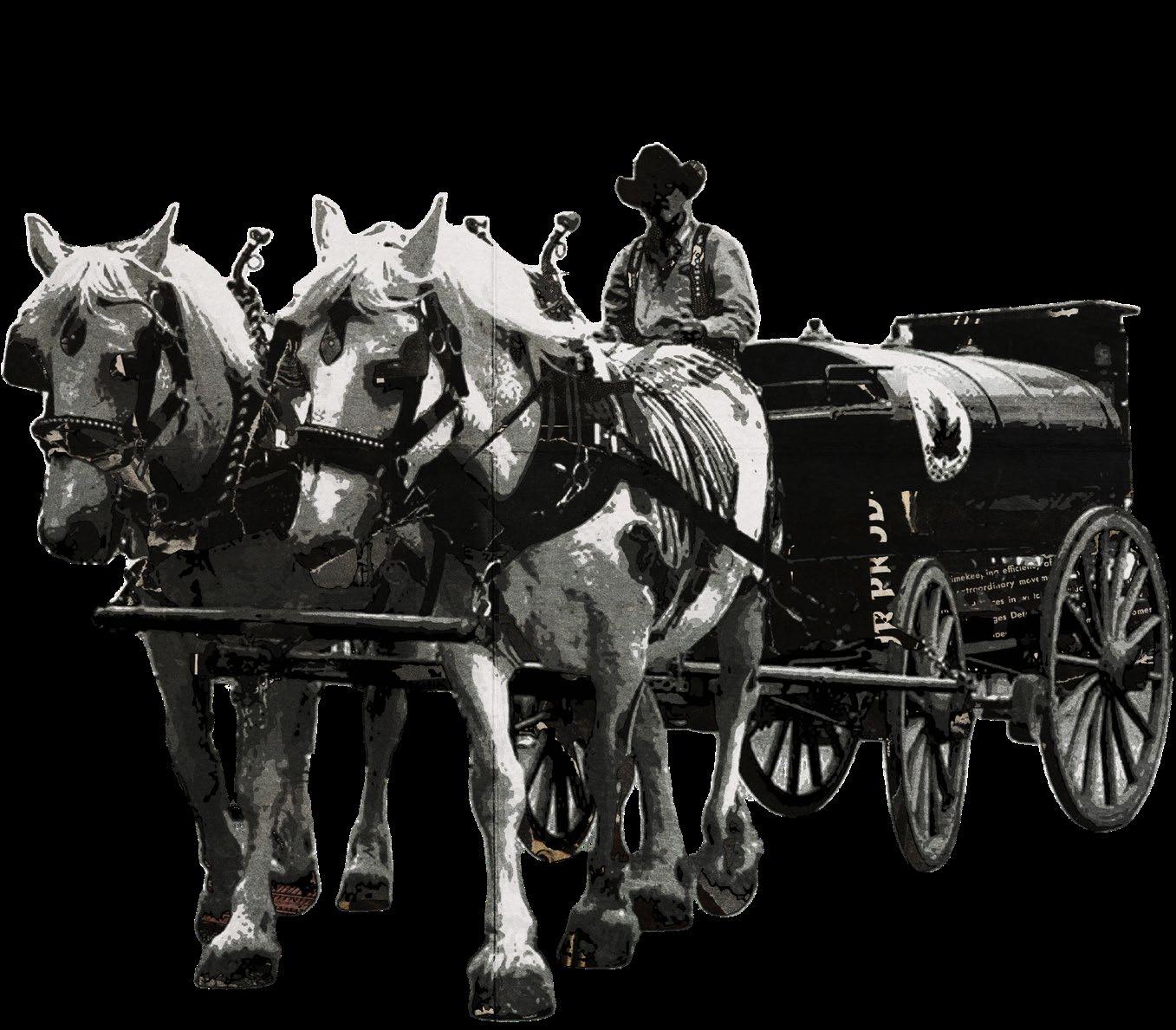
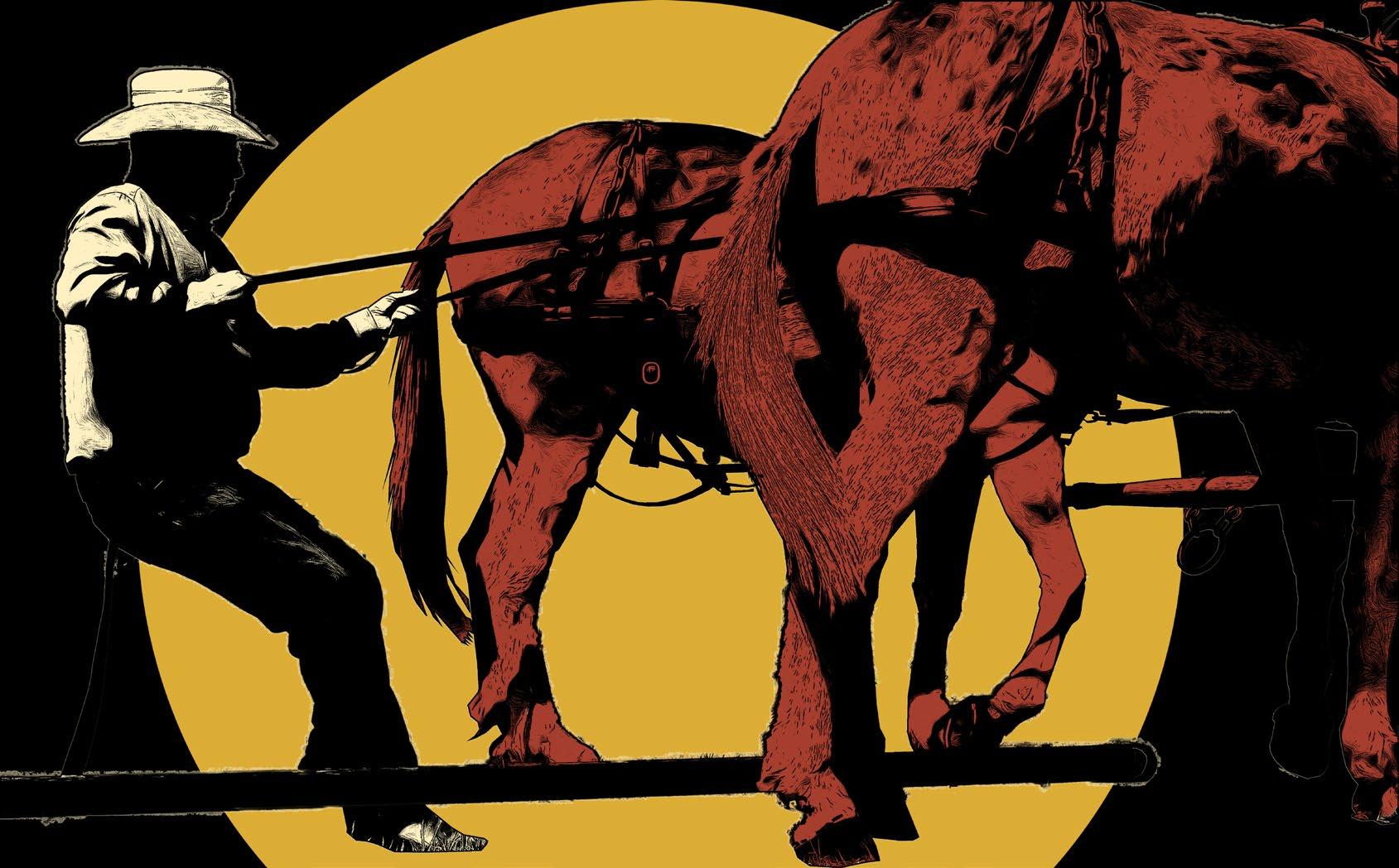
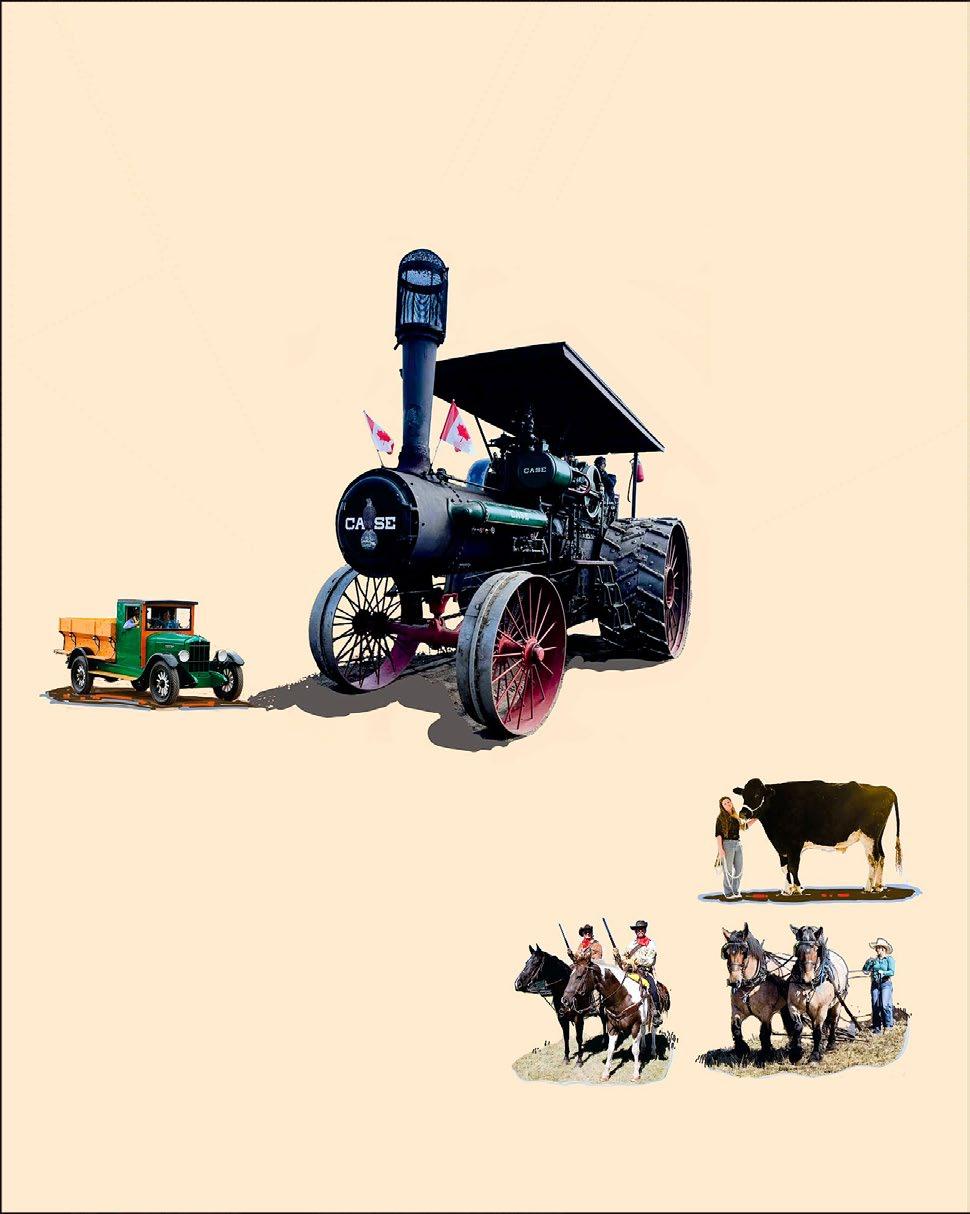
From logging, farming, firefighting, freight hauling, and road building, much of the work now performed by tractors, trucks, and industrial machinery was once carried out by the steady strength of draft horse teams. In many ways, they were the world’s first diesel engines, powering the growth of agriculture, transportation, and industry across the West.
It was this history that the creators of Draft Horse Town wanted to showcase and preserve for future generations. Founded in 2009 as an immersive educational experience within the Calgary Stampede, it was built on a simple but meaningful idea; people cannot understand or value what they never truly experience. Today, it remains a gathering place where visitors can immerse themselves in the history of the West.
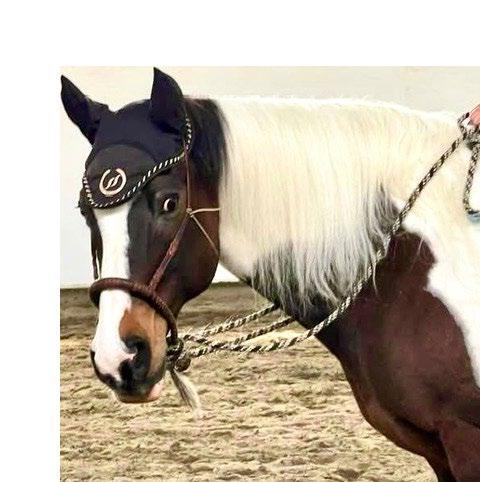
Upon arrival at Draft Horse Town, visitors are immediately greeted by gentle giants, typically including Able, Baker, Pete, and Pat. However, this year a new team has come knocking for their chance to join the rotating group of greeters and become one of the first friendly faces seen on entry: Charlie and Delta. What makes this team especially unique is that they are among the few left of their breed, known as the Suffolk Punch. These two are a pair of spunky young chestnut/sorrel geldings who are now making their official debut at this longstanding event.
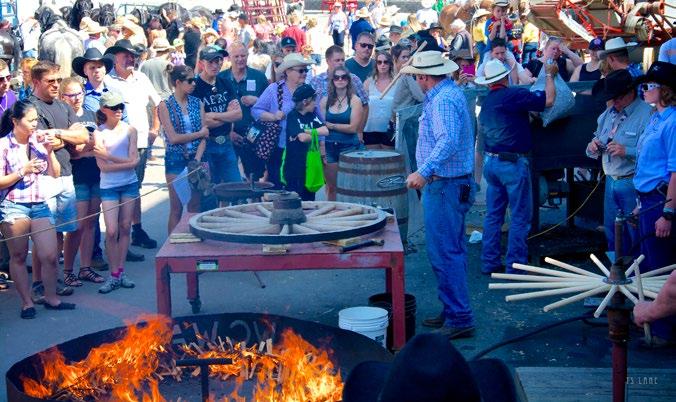
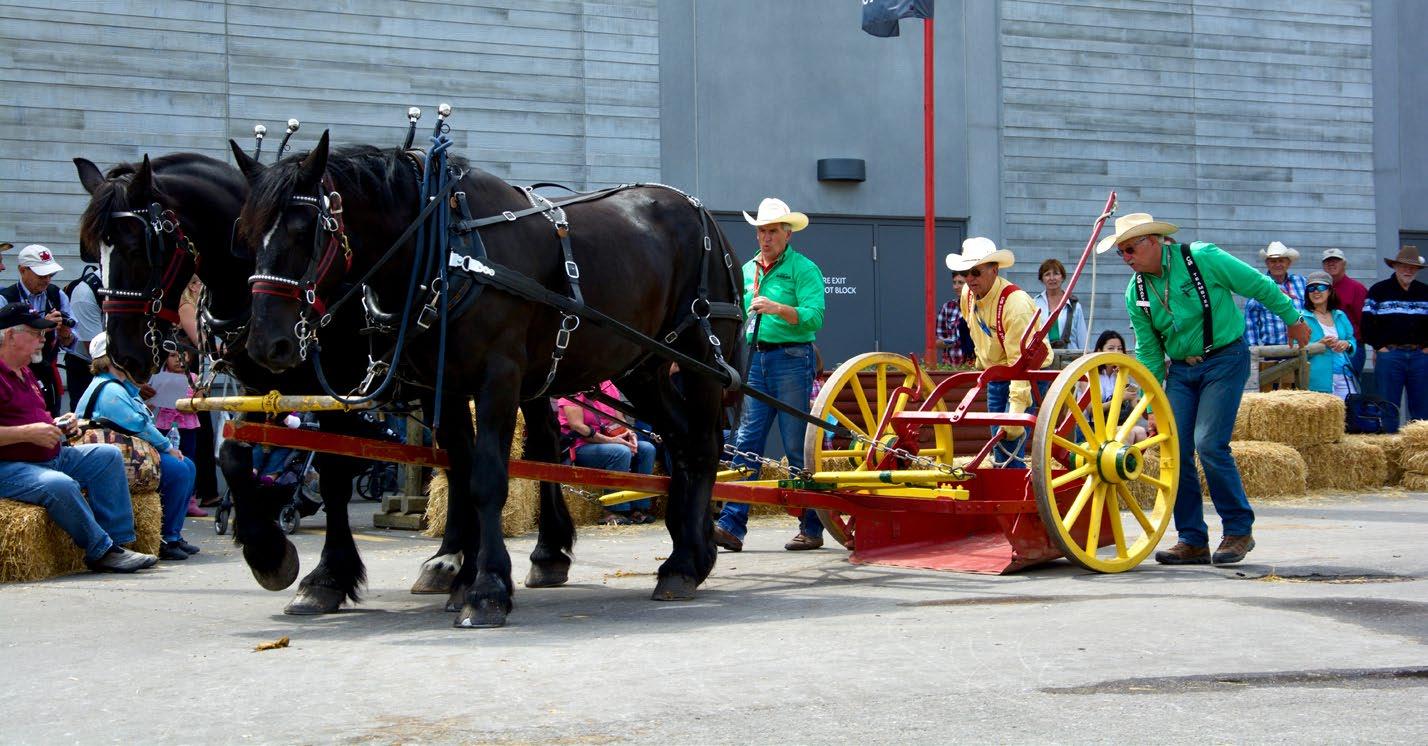
Wandering further in, you’ll find the square where historic machinery and metal forges come to life, allowing visitors to fully immerse themselves in Canada’s agricultural past. While displays are grouped along the outer edges of the square, the centre serves as an area where entertainment, education, and wonder collide. For safety, the area is roped off when horses come through, but live demonstrations provide insight into the draft horses and their roles in Canadian history. These demonstrations are a defining part of Draft Horse Town, with teamsters and handlers showcasing their horses and offering a more in-depth, personal experience for visitors, where they can ask questions and interact with them. For many visitors, the event may be their only opportunity to interact with draft horses in person, making the moment all the more memorable.
While the committee has many strong contributors today, the founding group was made up of only four individuals: Dale Befus, David Farran, Laurie Jacob-Toews, and Tim Lane. All four were originally part of the Heavy Horse Pull Committee and, over the years, noticed a gap in the ability to showcase the contributions of draft horses, as well as provide information to the general public. Many audience questions were not given much opportunity to be answered. Seeing this, they sought to address this gap and work on providing a more interactive and engaging experience for the public.
Dale Befus recalled often being asked how much the horses weigh and what they eat, which sparked the realization that an area that could display this information in a less rushed manner would be
helpful, not only to educate audiences but also to provide context on the draft breeds themselves. Their vision was never simply to display horses but instead to create a living, interactive space where visitors could step into history, ask questions, witness demonstrations, and see firsthand the power and importance of the breeds that helped build a nation. Being able to have the horses pull a wagon, hitch to different equipment, and work in teams of varying sizes gave audiences the ability to truly see and appreciate the draft horse and its historical relevance as the engine driving Canada forward.
Much like the draft horses themselves, Draft Horse Town was built through teamwork. While the committee started as a simple idea among these individuals, it very quickly turned into a working concept through shared determination, collaboration, and a collective willingness to simply push forward and make it happen. While you might think this type of creation and joint planning would take a while to iron out, everyone I talked to expressed that it came together rather quickly.
Founding members contributed horses, expertise, time, and countless hours behind the scenes to bring the concept to life. Everyone pulled together toward a common purpose: to educate, inspire, and create meaningful connections between people, horses, and agriculture. In many ways, the story of Draft Horse Town mirrors the very horses it celebrates. Just as a team relies on
trust, communication, and shared effort to carry the load, the vision for Draft Horse Town moved forward through camaraderie, resilience, and the momentum of people working side by side.
Among those who helped shape the experience from the very beginning was Terry Bailey, who generously lent not only his expertise but also his horses to the project. When reflecting on his favourite memories of Draft Horse Town, Terry speaks of connection. For him, one of the greatest rewards has always been the opportunity to share his passion for
draft horses with park visitors while also spending uninterrupted time alongside the animals he loves. He reflected that it was especially meaningful to be able to bring his own horses to the iconic venue and event that is Stampede.
“There is nothing better than that,” he shared.
Terry also fondly remembers the camaraderie amongst committee members and teamsters, recalling one particularly memorable moment when former chair Brad Lorn tracked down historical
firefighting equipment in order to create demonstrations showcasing the role draft horses once played in fire suppression efforts.
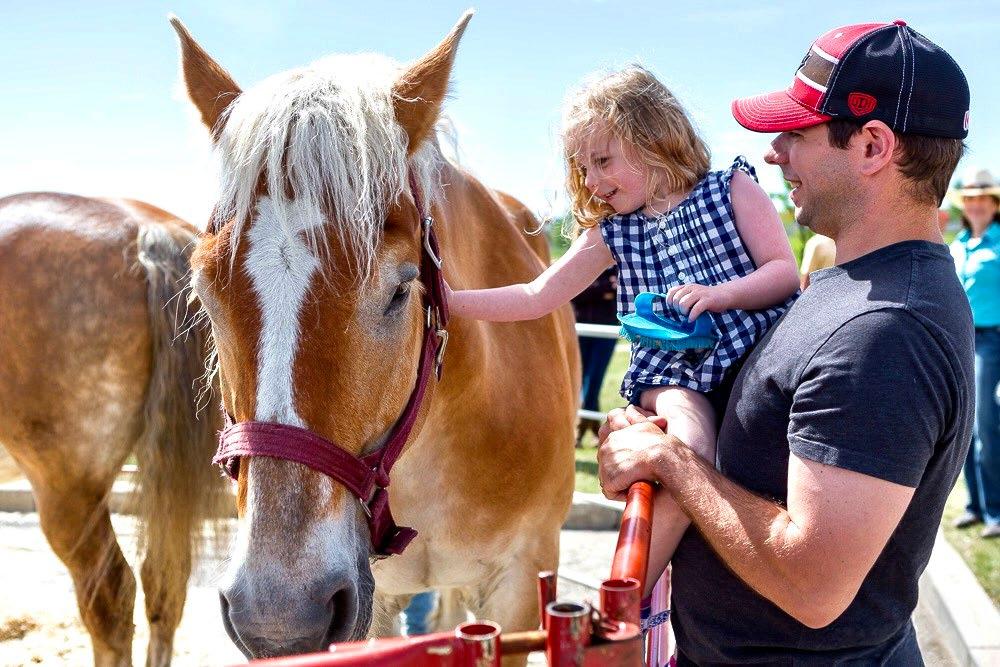
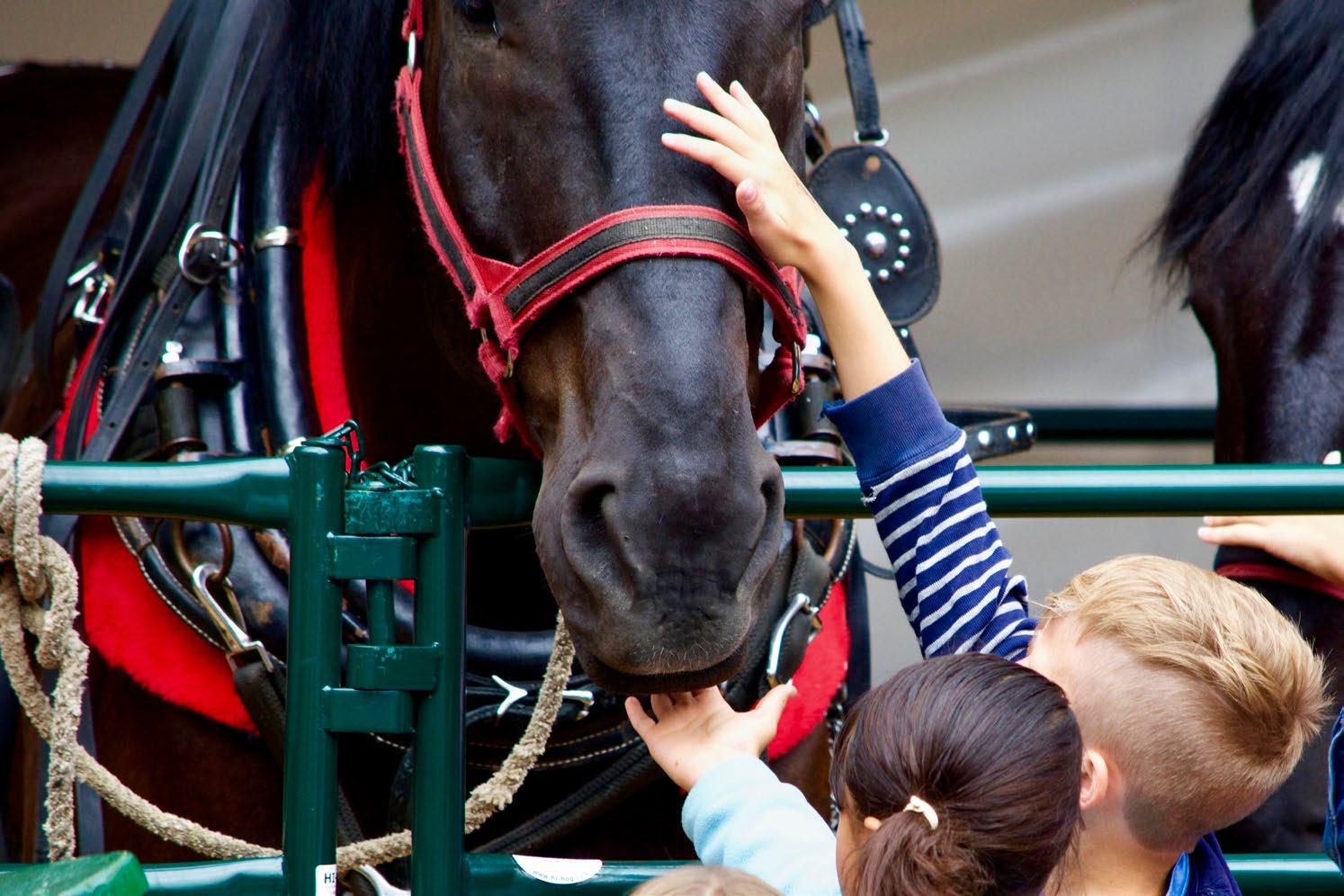
For Dale Befus, one of the founding four, his favourite memories came through a moment of wonder. He recalls a young boy, completely unfamiliar with draft horses, approaching one for the first time. This encounter consisted of the boy very slowly and carefully stretching out a single finger toward the horse’s muzzle. The moment reminded Dale of E.T., hesitation and curiosity colliding. To Dale, it represented exactly why spaces like this matter.
Current committee member Tom Christensen has witnessed another shift over the years: the audience itself. In the earlier days, crowds often included farmers, horsemen, and women who already understood the work draft horses once performed. Visitors arrived with some knowledge of equipment, agriculture, and the role these horses played in shaping daily life. Today, that familiarity is becoming increasingly rare. Instead, it welcomes many newcomers to Canada, urban families, and individuals who may never have previously interacted with livestock or agriculture at all. For ten days each year, it becomes a hub of action where horses and history can be shared freely with thousands of visitors.
In a world growing further removed from its agricultural roots, it provides genuine, hands-on connection and experience. It offers audiences the opportunity to stand beside living history, hear the stories of the past, and understand the immense contribution these horses made to building the modern world alongside the tremendous ranchers and teamsters. Because for one young child, reaching a careful finger toward the muzzle of a towering draft horse for the very first time may be enough to plant a seed—a lasting understanding of where we came from.
Though diesel engines may now rule and perform the work once carried by these draft teams, machinery can never replace their story.
Britain Mills-Dawes, owner of Stable Instincts— an equine wellness business specializing in bodywork and nutrition. She’s a practitioner, clinician, and speaker who’s presented at some of the largest Canadian equine events, such as the Calgary Stampede and
equine podcast Uncinched. Connect with her at stableinstincts.ca
Draft Horse Town
AND EVENTS miniature horse
Draft Horse Town: July 3 - 12 daily, ongoing demonstrations and heritage programming in the agriculture zone.
Miniature Horse Show: July 9 - 12 structured competitive classes held in multiple daily sessions at Stampede Park.
Event Highlights to Rein In
July 3, 11:15 am - 12:15 pm
July 5, 9:00 am - 12:15 pm
July 5, 7:00 - 9:00 pm
July 10, 11:00 am - 1:00 pm
July 10, 6:45 pm
July 11, 11:15 am - 1:45 pm
Heavy Horse Show Halter Class, Northern Lights Arena
Chore Horse Competition, Northern Lights Arena
Heavy Horse Show World Six Championship, Nutrien Centre
Canadian National Miniature Horse Show, Nutrien Centre
12 Horse Hitch, Nutrien Centre
Canadian National Miniature Horse Show, Northern Lights Arena & 7:00 - 9:00 pm
July 11, 3:15 pm
July 12, 11:15 am - 1:45 pm
12 Horse Hitch, Nutrien Centre
Canadian National Miniature Horse Show, Northern Lights Arena & 3:45 - 5:15 pm
July 12, 3:15 pm
12-Horse Hitch, Nutrien Centre
Horse Expo. Britain also co-hosts her
Photos provided by Terry Bailey and Draft Horse Town.
Guide to Miniature Horse Care & Nutrition
By Caroline Cochran, BSc
Reviewed by Dr. Brittany Kerley, PhD, and Dr. Eleanor Kellon, DVM
Miniature horses are the smallest horse breed in the world. Modern breeding programs aim to produce minis with physical characteristics that resemble full-sized horses in a smaller package. The selective breeding responsible for their small size also increases the risk of several health problems in miniature horses, which gives them unique management needs compared to their full-sized cousins.
Breed Registry
The American Miniature Horse Association maintains the largest registry of miniature horses globally, with over 240,000 minis registered by members in 38 countries. In 1987, the association closed the studbook and began limiting registration to offspring from AMHA-registered parents to preserve the breed’s integrity.
Conformation
Miniature Horses cannot exceed 34 inches in height at the base of the last hair of the mane. The ideal Mini is a small version of a well-balanced horse, with conformational proportions closer to fullsize light breeds than popular pony breeds. Their conformation and movement should give a general impression of symmetry, agility, strength, and alertness regardless of size.
Colours
Miniature horses can be any coat colour. All white markings and coat patterns are acceptable in the breed.
Temperament
Temperaments can vary depending on the mini’s personality, but most miniatures have willing temperaments and gentle dispositions. These horses are often intelligent, curious, and playful. Although these horses are significantly smaller than other breeds, proper handling and training are still essential for horse and human safety.
Disciplines
Miniatures are excellent companion animals for humans and other horses. These horses are too small to ride, but they can learn to pull an adult in a small buggy for driving disciplines. In addition, many miniature horses show in-hand in halter, jumping, and obstacle divisions.
Miniature Horse Health
While miniature horses have similar basic care needs to full-size horses, the breed is also susceptible to unique health challenges. In addition, the selective breeding responsible for their size predisposes minis to traits that significantly impact welfare.
Dwarfism
Dwarfism is one of the biggest health concerns in miniature horses. Although improved breeding practices have reduced the incidence of this condition, it’s still a significant concern for miniature horse breeders.
Dental Issues
Dental issues are more common in miniature horses than full-sized horses. Minis often have large teeth relative to their small head size and struggle with malerupted teeth, sinusitis, and jaw deformities.
Dystocia (Difficulty Giving Birth)
Discrepancies between the pelvic size in mini mares and fetal head size can increase the risk of dystocia. This condition involves slow, difficult, or obstructed delivery due to abnormal fetal size or position. A Caesarean section may be required for miniature broodmares at foaling time.
Hyperlipemia
Miniatures store fat easily. If they go off their feed, they may rapidly mobilize fat, resulting in excess fat circulating in the bloodstream. This can lead to hyperlipemia, which can cause liver and other organ failure. The mortality rate for hyperlipemia is 60-100%, so quick intervention is critical.
Vision Issues
Some miniatures with a “bugged-out” eye appearance have cornea abnormalities caused by anterior segment dysgenesis. This condition increases the risk of vision loss in Minis.
Care and Management
Miniature horses need the same quality basic care as all horses. Work with your veterinarian to develop an annual wellness program with regularly scheduled deworming and vaccinations. Miniatures may require less space than bigger horses but still need safe housing and regular turnout. Closely inspect fencing on your farm to ensure your miniature cannot escape through mini-sized gaps.
While miniatures can safely live with bigger horses, owners should be aware of their mini’s increased risk of injury and make introductions slowly. If possible, keep Minis and full-sized horses separate. Also miniature horses rarely wear shoes, so regular trimming and farrier care are essential for maintaining hoof balance and managing angular limb deformities. Look for a qualified farrier with experience with the breed.
Nutrition Program
The ideal feeding plan for any miniature horse depends on their weight, activity level, physiological status, and existing health concerns. However, the breed’s small size and predisposition to metabolic syndrome can make formulating an appropriate diet challenging. A qualified equine nutritionist can help create an individualized diet plan for your mini, no matter their age, lifestyle, or pre-existing health condition. Contact Mad Barn for a free diet consultation for your mini and any other horses in your herd.
COMPETITION-READY GUT SUPPORT
“We put a lot of pressure on them to be athletes all the time. If we don’t support their gut health with Visceral+ we’re doing them a disservice.”
Jim Greendyk
Professional Maintains Gastric Health Supports Stomach Lining
Aids Immune Function
Small Small Big Big Big Horses Horses Hearts Hearts
By Laureen James
Mini Horses Making a Difference Mini Horses Making a Difference
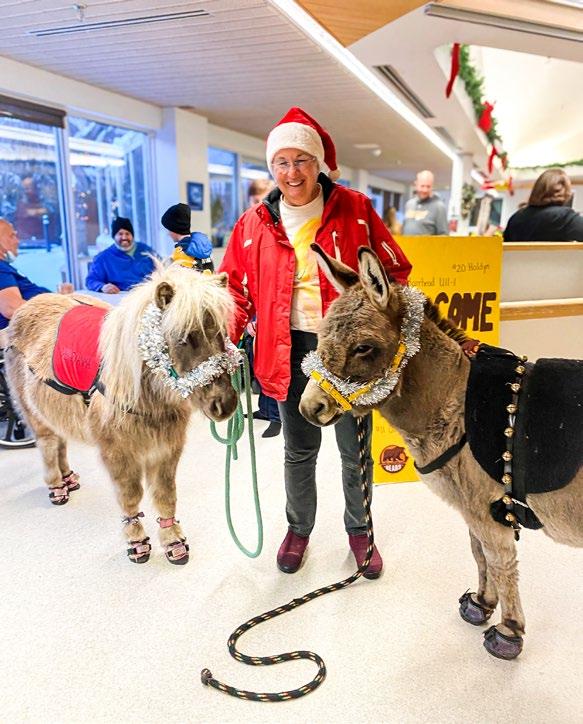
Visits from miniature horses to long-term care facilities provide residents with an opportunity to reconnect with cherished childhood memories— of farming, ranching, rodeoing, or pet ownership.
Triggered by sight, touch, smell, and sound, these memories often come flooding back. The presence of a miniature horse can act as a bridge to the past, sparking recollections of friends, family, and animals while stimulating conversation among care facility residents.
Amanda Enmark owns and operates Standards Equine, a multi-faceted equine business that includes small-scale production of quality warmblood sport horses. She believes in education and is focused on supporting and building community. Amanda is proud to be an AEF judge and feels that equestrian sport is something every person should be able to access and enjoy. Amanda also has miniature horses/ donkeys and has learned about their value within the equestrian community and mainstream society. She has worked in healthcare for more than fifteen years. She is an advocate of miniature horses and their ability to be great emotional-support animals.
“I’ve been witness to the gifts miniature horses can give to people—especially those who are more vulnerable or in declining health.”
Q. Do you have a heartwarming story to share about your volunteerism with Jasmine, your miniature horse?
I am fortunate to have many heart-warming stories to share. Through my work volunteering for Alberta
Health Services, we’ve met hundreds of beautiful souls in care, their families, and care staff. On one of our first visits to a long-term care facility, we met a farmer who was 100 years old. He didn’t get out of his chair much, but when he saw my miniature horse, Jasmine, coming down the hall towards him, he stood up, walked over, took her halter, and gave her a kiss. The staff quickly brought him a chair. We stayed and waited until he was done visiting with her. He petted her and talked to her for several minutes. It was more activity than staff had seen out of him in months!
At a different site, we met a gentleman who had spent his career on the rodeo circuit as a saddle bronc rider. Now in long-term care, he was sure he would never lay eyes on a horse again. When we brought our little equine to where he was seated in his wheelchair, he leaned forward and wrapped his arms around her neck and buried his face in her mane. They stayed like that for a good while. A special understanding between them that I was privileged to witness. We were able to give him a priceless gift—an interaction that had been part of his everyday life previously, a moment of feeling like himself again.
“Residents were delighted to see the mini horses visit. For many, it was a meaningful connection to another living creature. The novelty and shock of seeing an animal safely enter an indoor environment made many residents smile. For others, it was a vehicle to remember the past. Animal visits are visual, auditory, olfactory, and tactile… These sense activations trigger memories.” - Meagonn Forstey, RN, Senior’s Health Manager, Westlock (Assisted Living Alberta)
Q. How do you feel about what you and Jasmine have given back to the community?
I was first approached by the manager of a long-term care facility I worked with at Christmastime, inquiring if I had an animal that would be safe to bring inside to see the residents. That opportunity was wonderful. Jasmine wasn’t at all concerned by the wheelchairs, walkers, or trolly carts. She handled elevators very well with some support.
It was a big morale boost throughout the site. Something so small for us, just a couple of hours one afternoon, had such a great ripple effect. Since then, we’ve had the opportunity to volunteer at many sites throughout the Edmonton, Westlock, and Barrhead areas.
Mini Horses and Underprivileged Youth
Miniature horses are highly effective when working with underprivileged or at-risk youth. Their small size makes them less intimidating than full-sized horses, helping young people feel more comfortable around them. Through these interactions, youth can learn about horse care, handling, and training while developing confidence and responsibility.
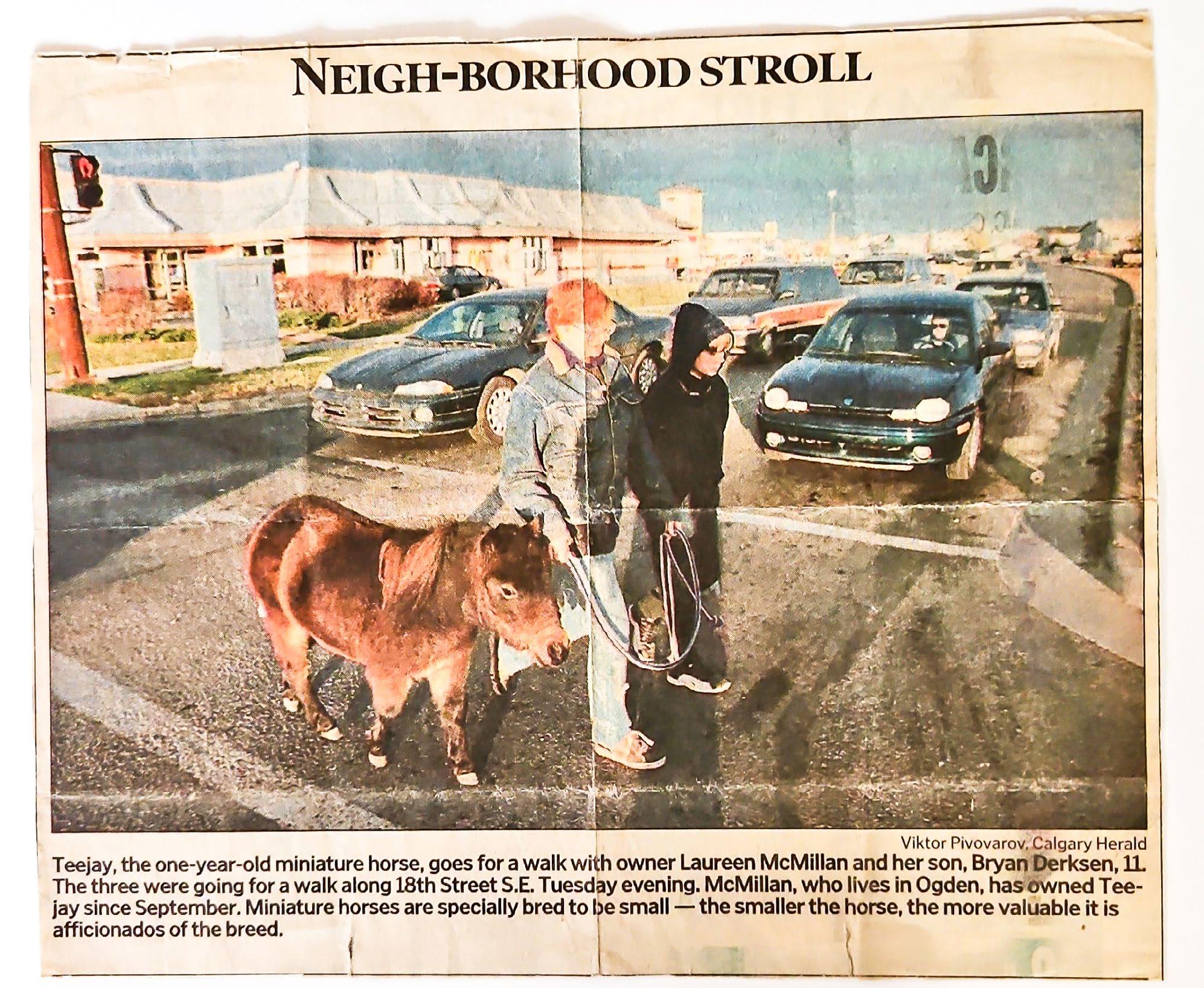
In my Calgary neighbourhood—Ogden—I learned of a neighbour who had a miniature horse that she kept in her backyard. I was in university and was missing having a horse to spend time with. When I found out that I could have a tiny horse at home I was thrilled. I built an 8 ½ ft by 22 ft barn down the side yard of my lot. Then I purchased enough lightweight panels to build a thirty-foot round pen and filled it with a few inches of sand. Next I built a solid-walled paddock big enough for two mini horses on the front lawn and a shelter.
Mini Meadows Miniatures was created, and my friend Don registered the name as a ranch as a fun birthday present to me. It was so funny when people would send me resumes hoping for a horse-related experience on my, “ranch”. When I’d get a phone call my kids had fun telling the caller that I was out in the back forty (feet).
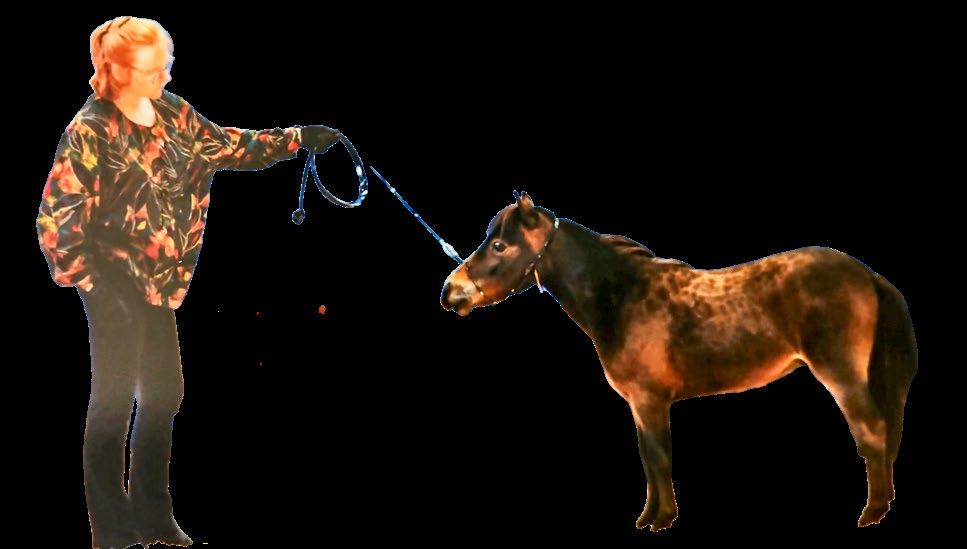
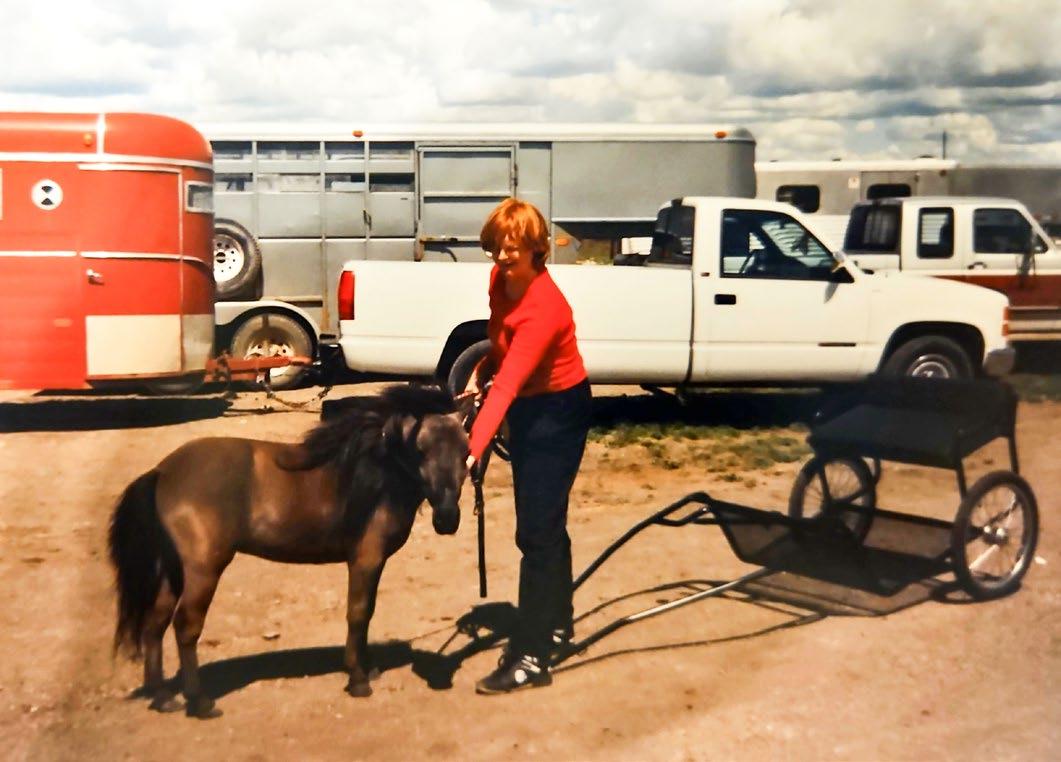
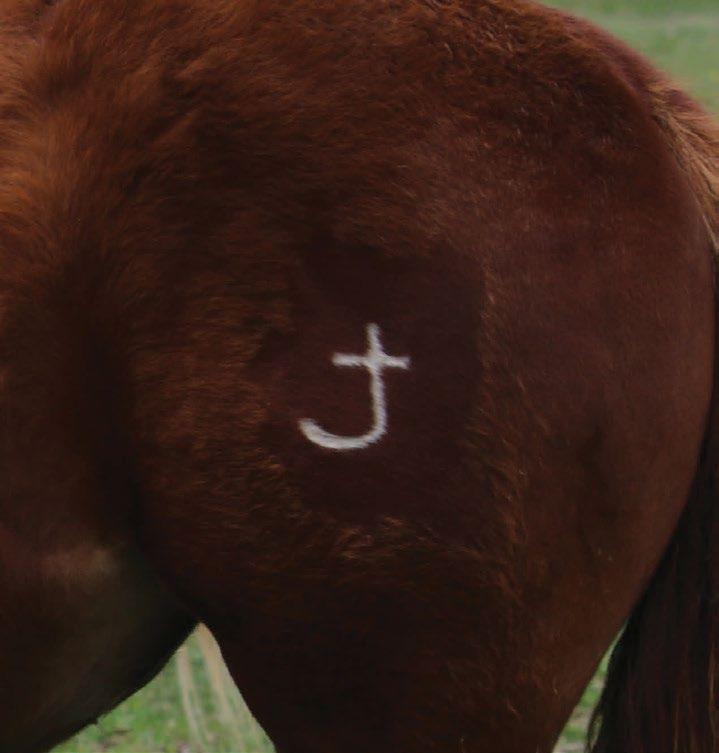
TJ a bay miniature gelding, and Gus, a miniature stallion, became a part of our “ranch” family, and I learned about horse harness and driving horses—training in the parks near our house. Kids would stop by the house to pet Gus and TJ, and I’d ask them if they’d be interested in learning about horses, training, and eventually showing.
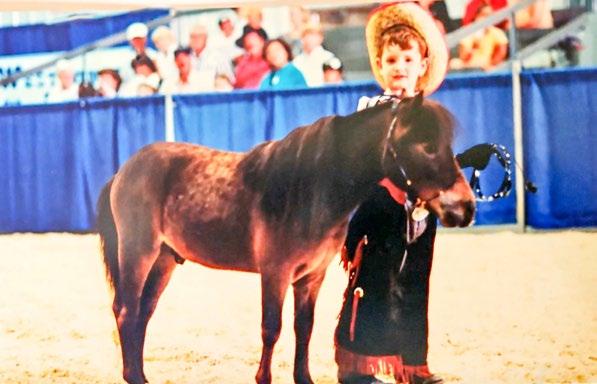
The community kids were very excited at the opportunity to learn to drive the horses in the buggies along with in-hand jumping, inhand trail, and showmanship. By the time the next spring came, they were ready for their first show. I took each kid to Value Village and outfitted them to show the horses in the classes they’d been practicing for. The show I took them to was the National Miniature Horse Show at the Calgary Stampede. The kids were thrilled and did a very good job of showing. Yeah, there were laughs and a few tears, but we all worked together.
I still see some of the families that enjoyed our little horses, and we reminisce about Gus and TJ and what they meant to the community. We laugh about the odd things that happened, like the time a Brewster Tour bus pulled up in front of my house, and fifty tourists asked to see Mini Meadows Miniatures—the “ranch.” I guess somehow my “facility” had been added to a travel guide for Calgary.
I don’t have miniature horses anymore, since I sold the property, but I have fond memories of the community I helped build with the help of two small equines. Before I moved out of that property, someone from the community left me a gift of thanks on the fender of my horse trailer. It was a stick-horse replica of Gus, my stallion, along with a handwritten letter of thanks for all that we accomplished with the youth of Ogden.
I hope that one day soon miniature horses get the recognition and support they need from the government to be fully accepted as support animals. They are wonderful for service work due to their small size, good nature, and ability to support people. They can be trained to perform specific tasks and have had success with helping people with mobility and even diabetics with hypo and hyperglycaemia.
Miniature horses are incredibly versatile and can help people with disabilities, as well as youth who need a sense of purpose and inclusion. They are also fantastic at bringing back cherished memories for seniors in long-term care facilities. As Amanda put it, her mini Jasmine was “sunshine on four legs!”
Laureen James BCom, Journalist, EC/NCCP Coach Certification IOB. Laureen is an equine journalist who writes for many publications. She also writes for the pet industry and is a columnist for Unison 50+ News. She has covered rodeos and related events over the past few years as a journalist and photographer.
Photos provided by Laureen James and the photo of Jasmine provided by Amanda Enmark
“BIGGIE small” “BIGGIE small”
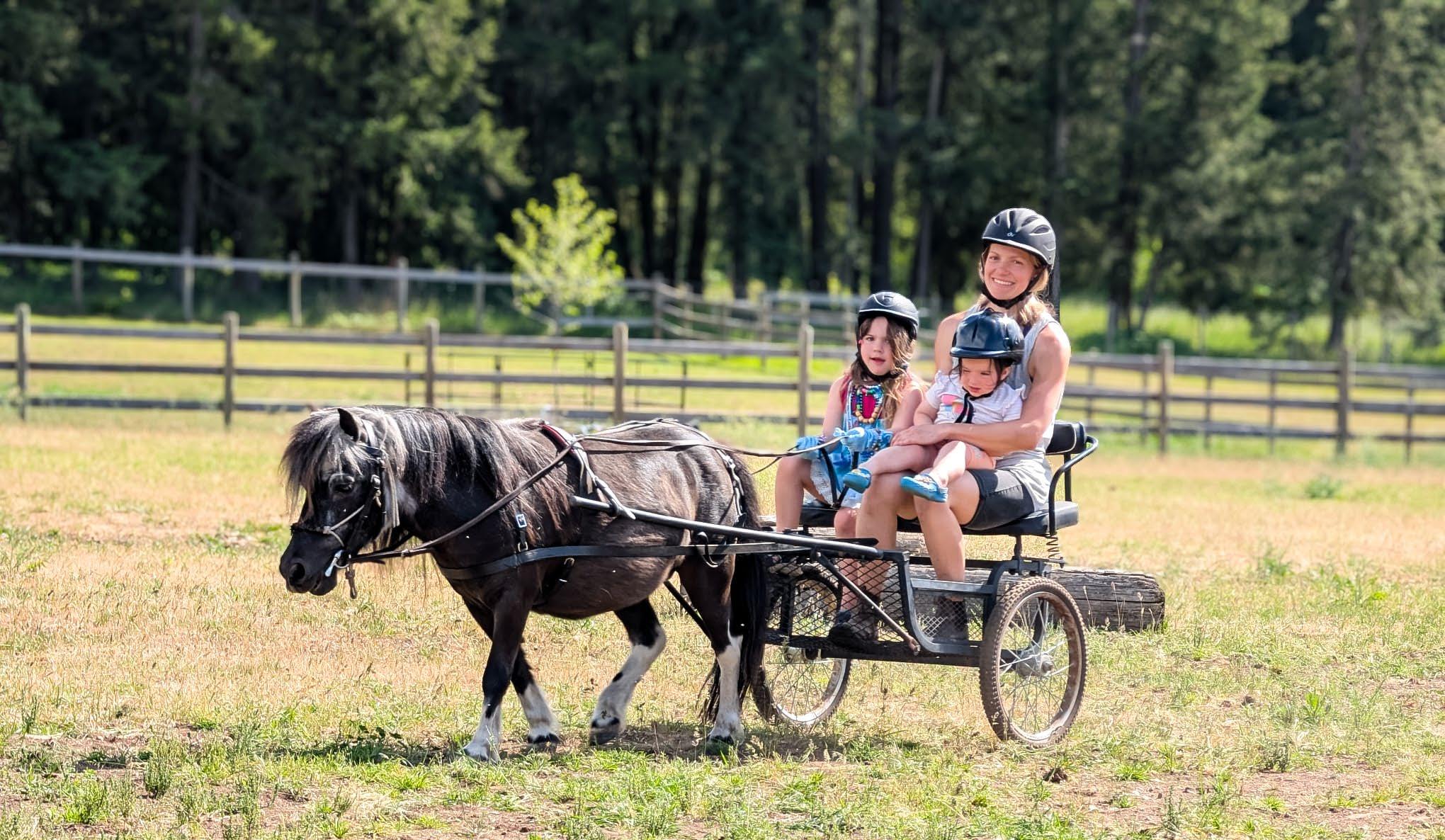
Florence 4 Years Old & Willow 2 Years Old with their horse Missy & Mom
The BIGGIE - Draft Horses
Draft horses are bred for strength, stamina, and steady temperaments rather than speed. Common breeds include the Shire, Clydesdale, and Belgian (including Brabant types). A defining feature of several draft breeds is “feathering,” the long hair on the lower legs around the fetlocks and hooves, with thickness varying by genetics and grooming. Known as gentle giants, they typically range from 1,500 to 2,400+ lbs (680–1,100+ kg), depending on breed and individual, and are valued for their calm, steady nature. Once essential for farming, logging, and hauling before mechanization, they remain widely appreciated today in driving, showing, forestry work, and recreation. The Budweiser hitch features Clydesdales, well known for their feathering and presence.
The tallest draft horse recorded was Sampson (later called Mammoth)
Breed: Shire horse (a classic heavy draft breed)
Born: 1846 in England
Height: about 21.25 hands (around 2.19 m / 7 ft 2.5 in)
Weight: estimated around 1,500 kg+ (3,300+ lbs).
The tallest recent record-holder: Big Jake, a Belgian draft horse, but he was slightly shorter than Sampson.
Rare Draft Breeds
American Cream Draft Horse
Today, preservation efforts are focused on protecting its limited genetics through structured breeding programs, breed societies, and conservation initiatives, alongside public demonstrations and working displays that help keep interest in the breed alive.
Weird & Wonderful Draft Horse Facts
Some draft horses have extra large hooves, “dinner-plate sized,” requiring a heavy-duty shoes
They can drink over 25–30 gallons (95–115 litres) of water per day in heavy work or heat
A draft horse’s heart alone can weigh around 10–12 kg (22–26 lbs)
Draft horses can have hoof walls up to 10–12 mm thick, far denser than lighter riding breeds
Some draft horses can carry harness setups that weigh well over 45–70 kg (100–150 lbs) before even pulling a load
Henry
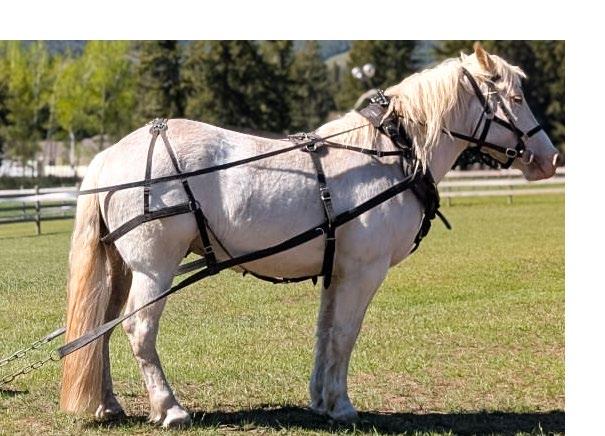
American Cream Draft
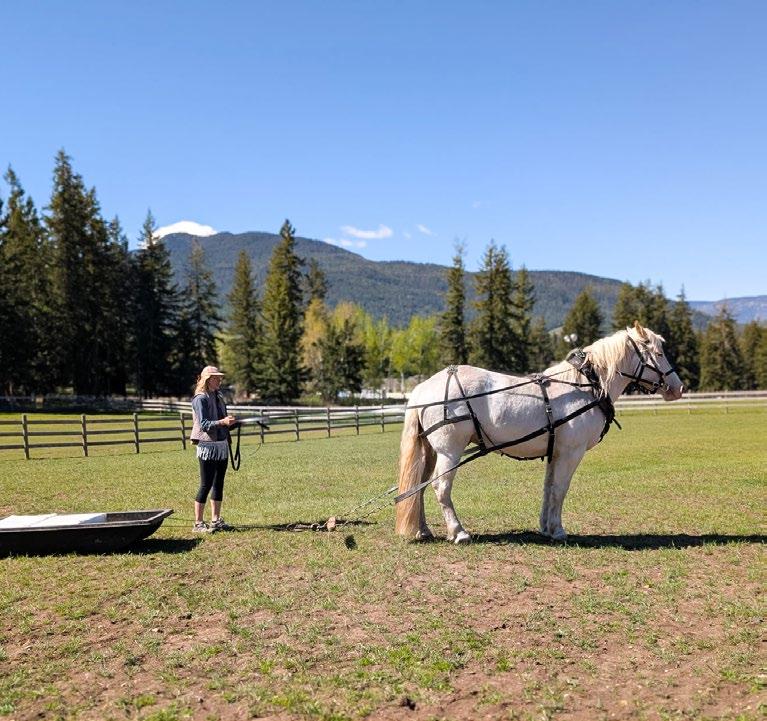
The only draft breed developed in the United States. Known for a cream-to-champagne coat, pink skin, and amber eyes. The population remains small, generally in the low hundreds. Ongoing conservation efforts focus on carefully managed breeding programs through dedicated breed associations, with an emphasis on maintaining genetic diversity and encouraging new breeders through shows and heritage events.
Suffolk
Punch
One of the oldest native English draft breeds. Known for its solid chestnut colouring and compact, powerful build. Originally developed for farm and agricultural work.
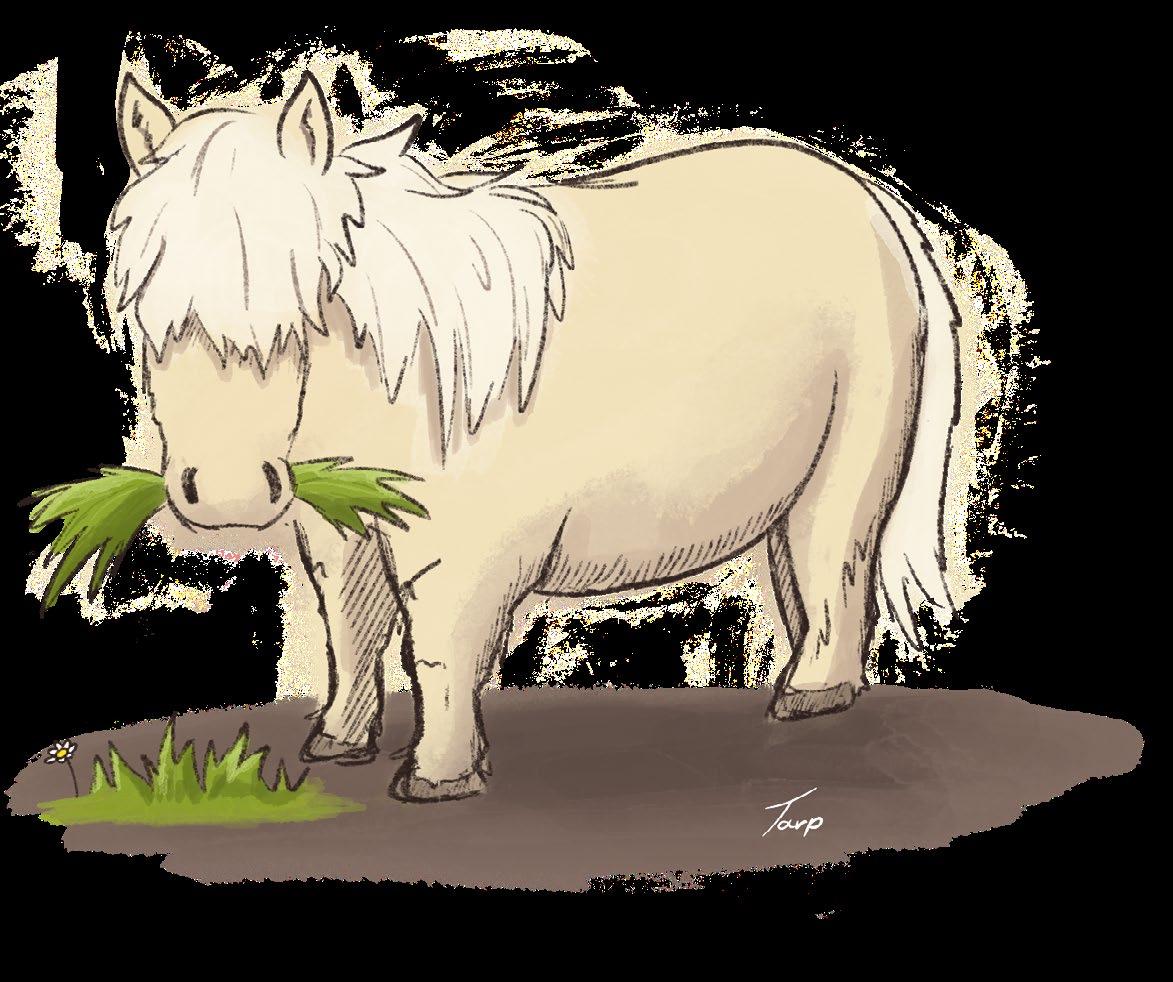
The small Miniature Horses
Missy & Bella
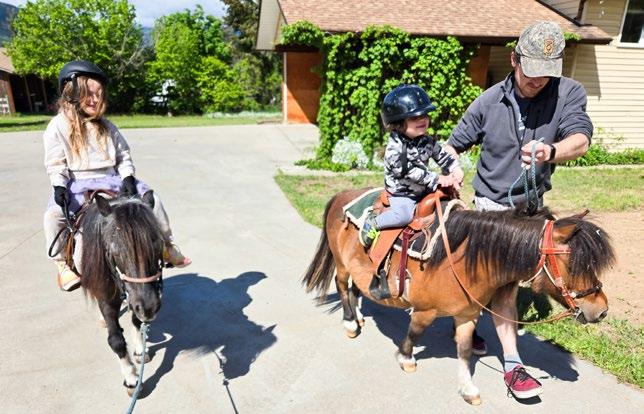
Often seen in driving, obstacle work, and in-hand classes, miniature horses are popular as therapy and assistance animals due to their steady and gentle nature. They are highly social and do best in herd environments, and are known for their curious, bold, and expressive personalities. With good care, they can live 30+ years. Despite their size, they are still classified as horses rather than ponies, with height being the key distinction but they have the same basic structure as other horses.
The smallest miniature horse ever recorded: Thumbelina
Breed: Dwarf miniature horse
Born: 2001 Missouri, USA
Height: 17 inches tall (43 cm) at the withers
Record: 2006 officially recognized as the world’s smallest horse
Current record holder: Pumuckel, standing at 52.6 cm (21.1 in) at the withers. Located in Germany and was recognized by Guinness World Records in 2025 as the shortest living male horse.
Wagon & Carriage Services
Weird & Wonderful Miniature Horse Facts
Miniature horses can be as small as under 30 inches tall (height of a large suitcase standing upright)
At birth, some minis are so small they can weigh less than 10 kg (22 lbs)
Despite their size, they still have the same skeletal structure as a full horse—about 205 bones packed into a much smaller frame
The BIGGIE small Timeline: Drafts vs Minis Through History
Draft Horses
Ancient times (pre-1000 AD): Large horse types used for war, hauling, and early farm work
Medieval period (1000–1500s): Heavy war horses (“destriers”) bred for strength and armour
1500s–1800s: Regional draft types developed for farming, forestry, and heavy hauling
1800s: Modern breeds established (Shire, Clydesdale, Suffolk Punch, Belgian/Brabant)
1900s (peak era): Powered agriculture, transport, logging, and industry worldwide
WWI (1914–1918): Used extensively in military logistics across Europe
Today: Preserved through heritage work, forestry, driving sports, and shows
Miniature Horses
1600s–1700s: Small horses appear in European royal courts as curiosities
1800s: Small ponies (not true minis) used in coal mines in Britain Late 1800s–early 1900s: Selective breeding begins for compact, correctly proportioned horses
Mid-1900s: Miniature horse development expands in North America 1970s onward: Registries (like AMHA) standardize height and conformation
Today: Bred for proportion, health, therapy work, driving, and in-hand classes
The Canadian West
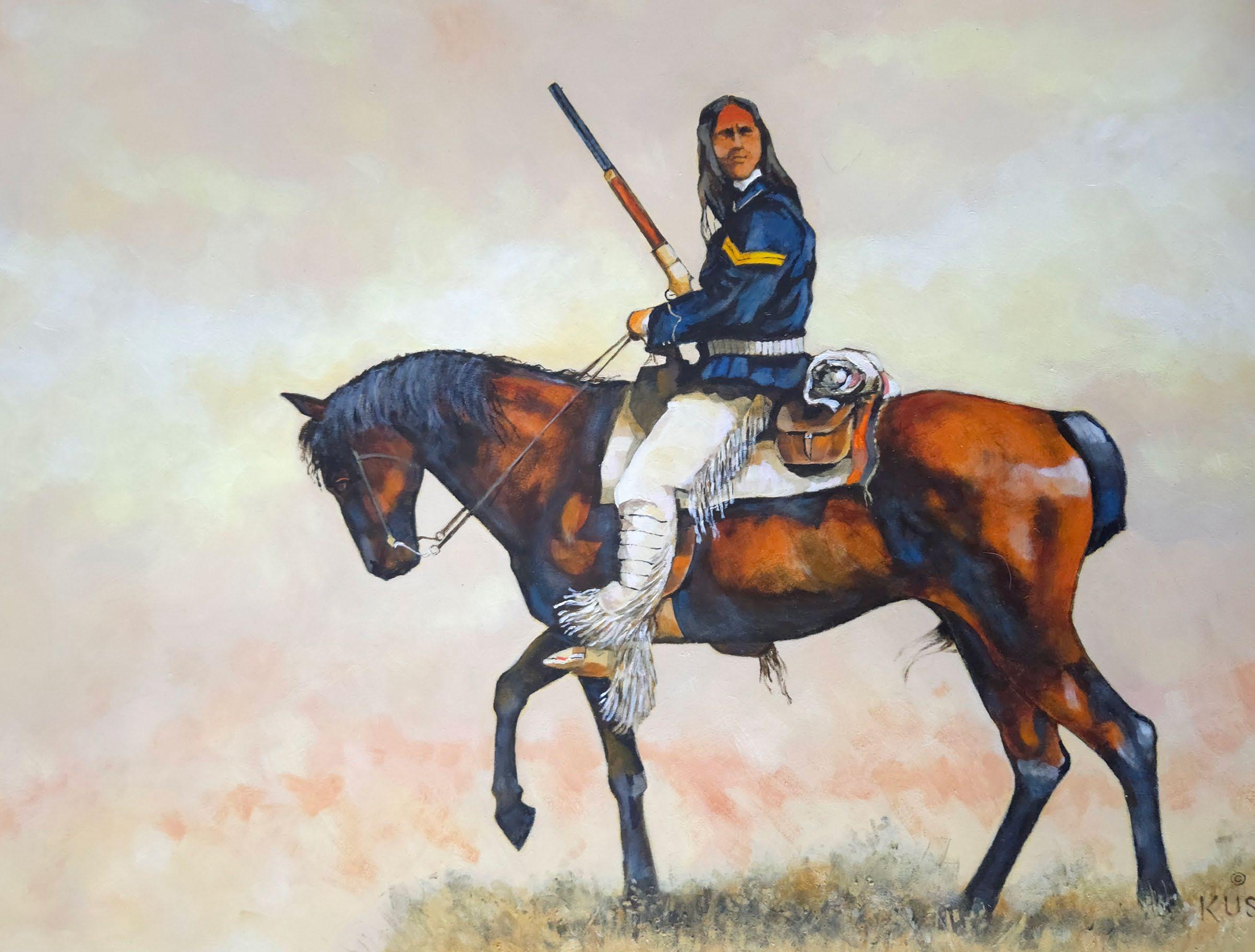
Through the Eyes of George Kush
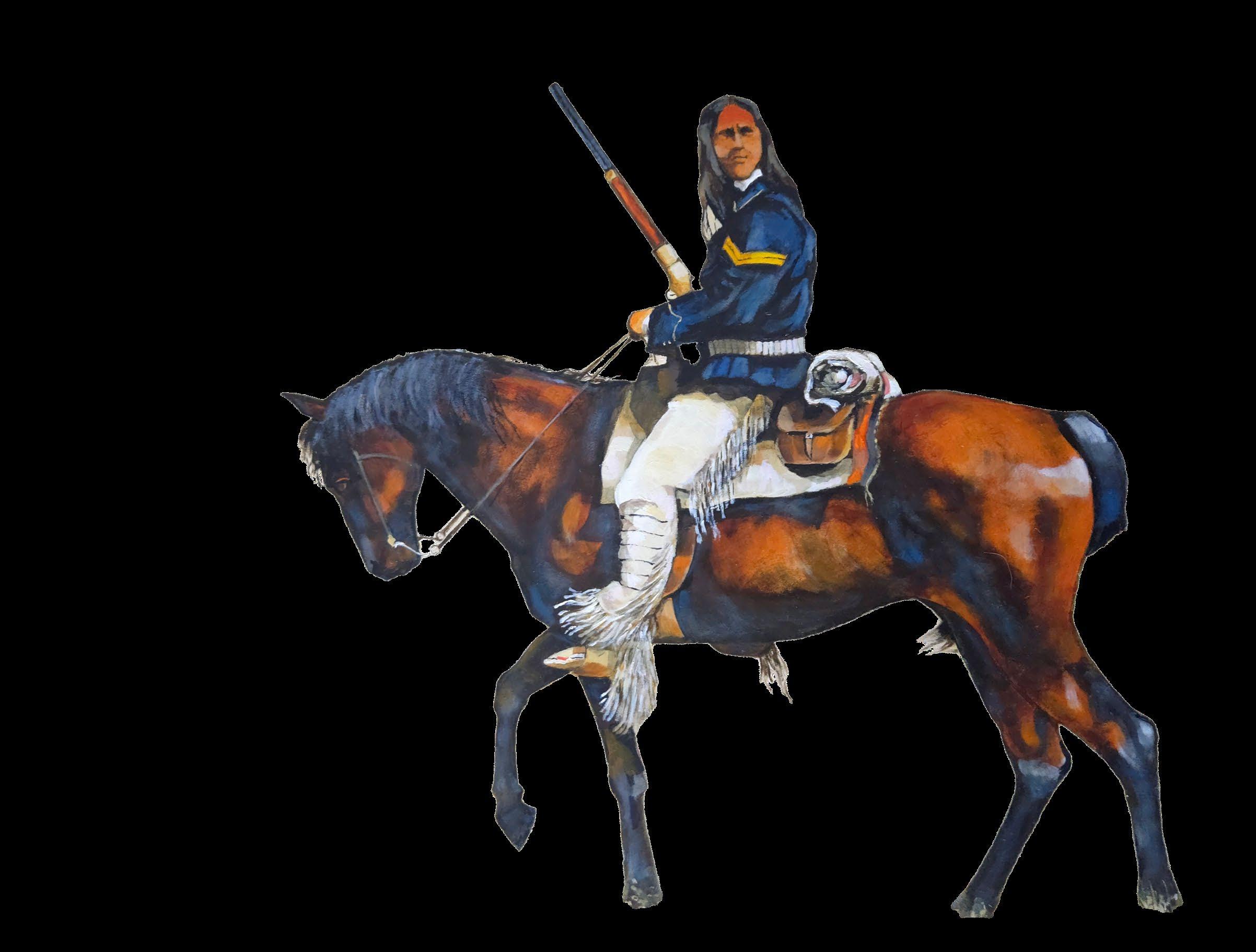
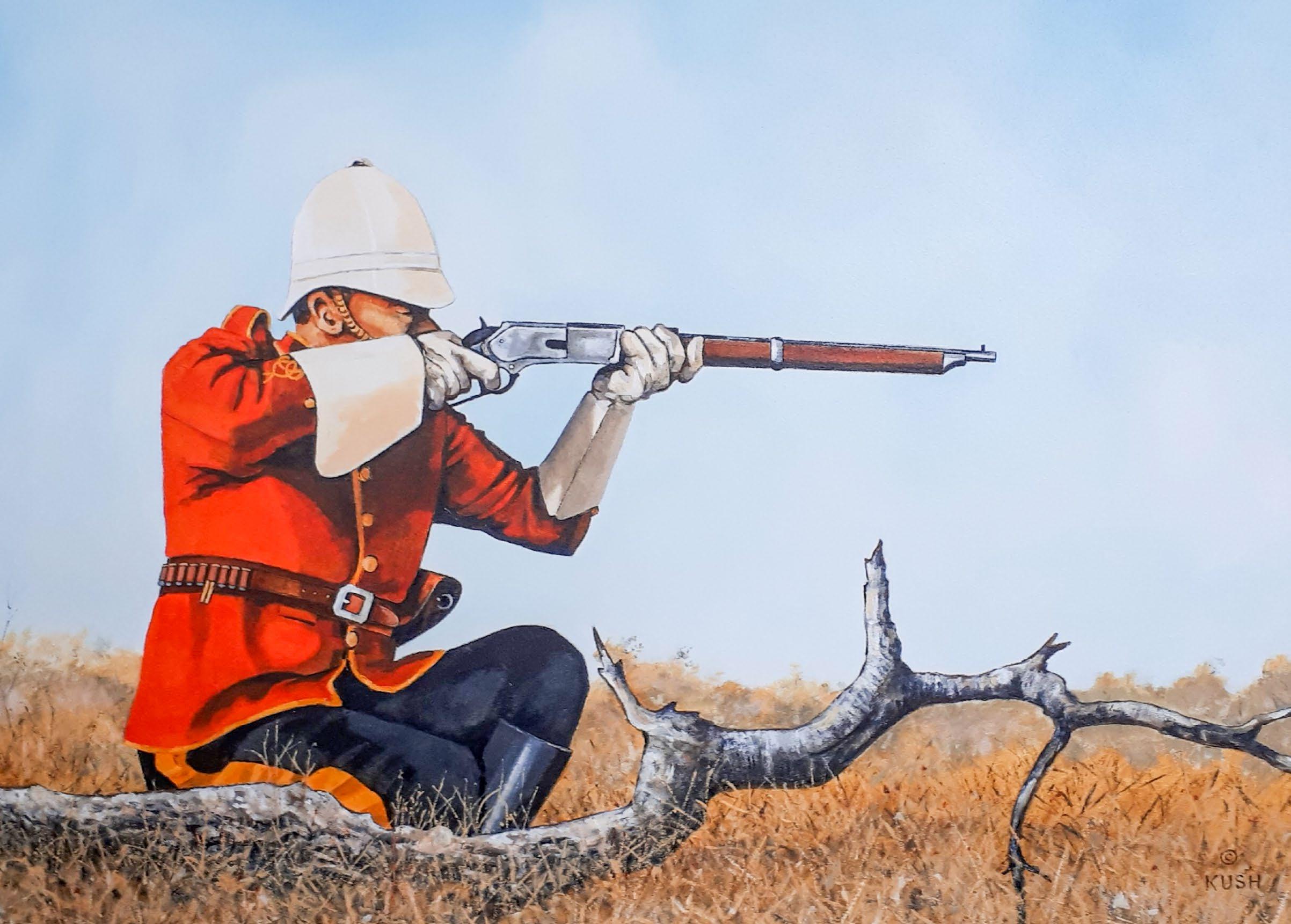
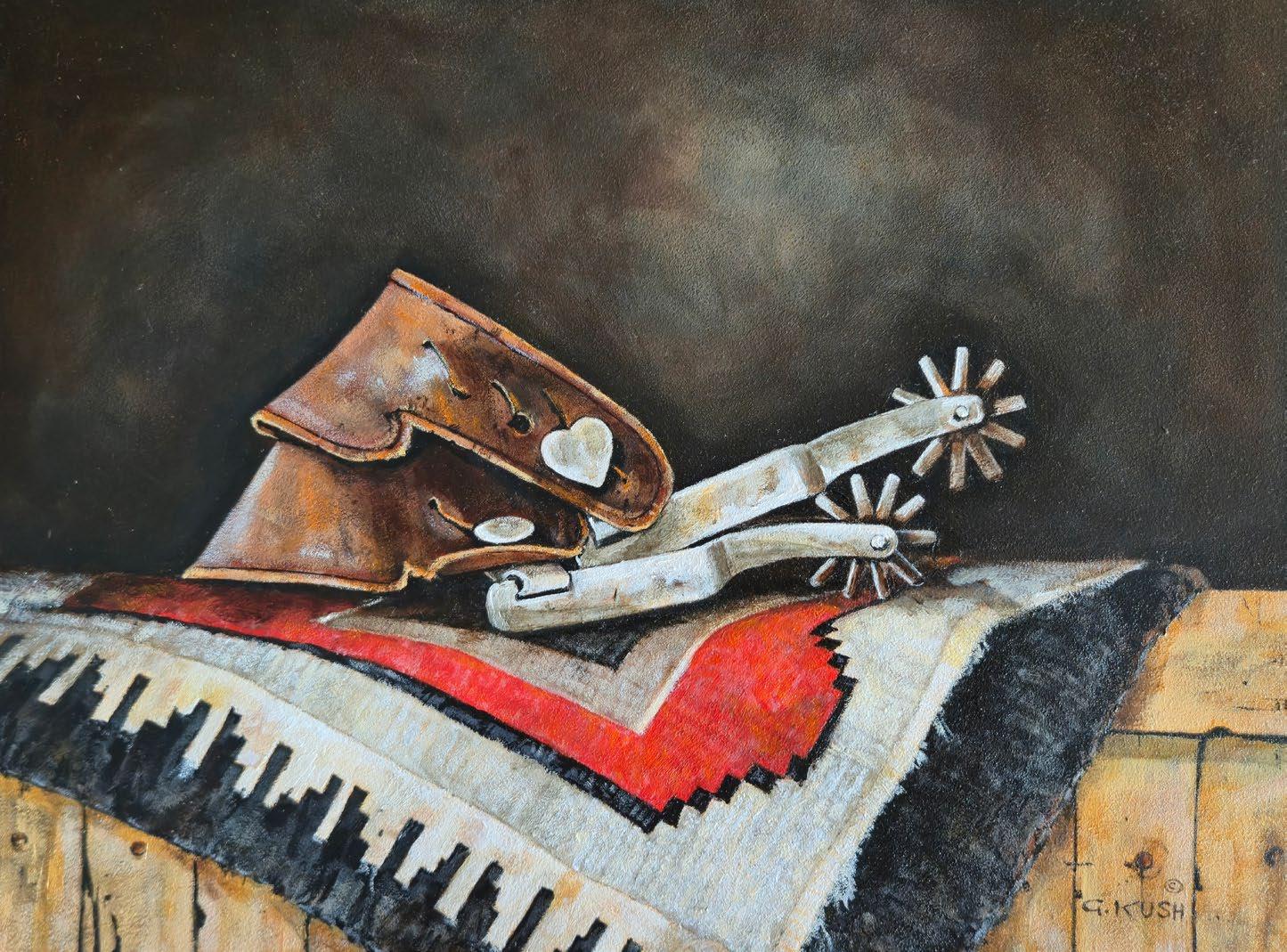
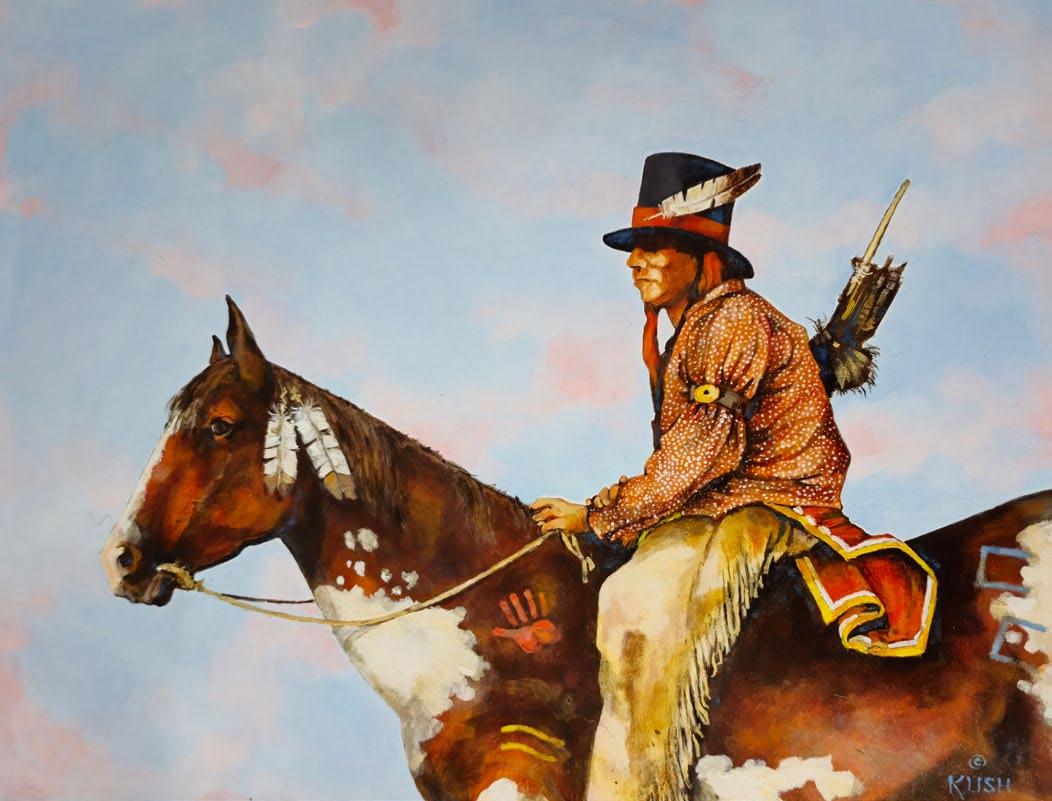
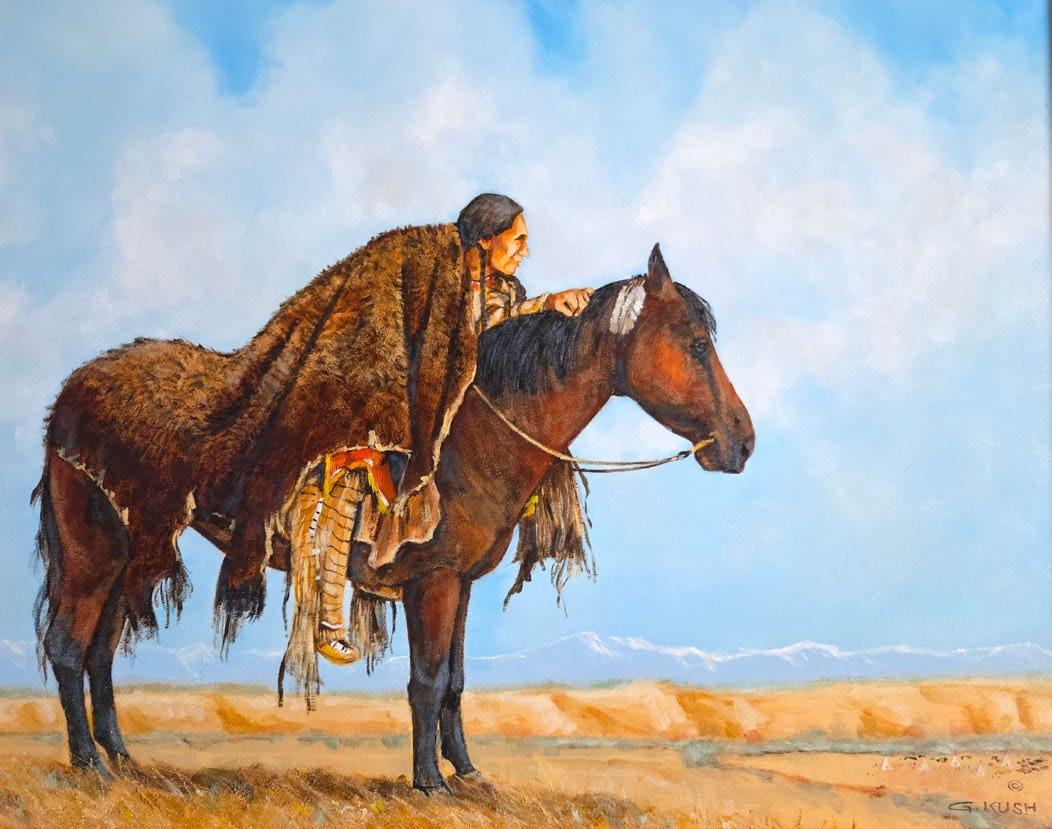
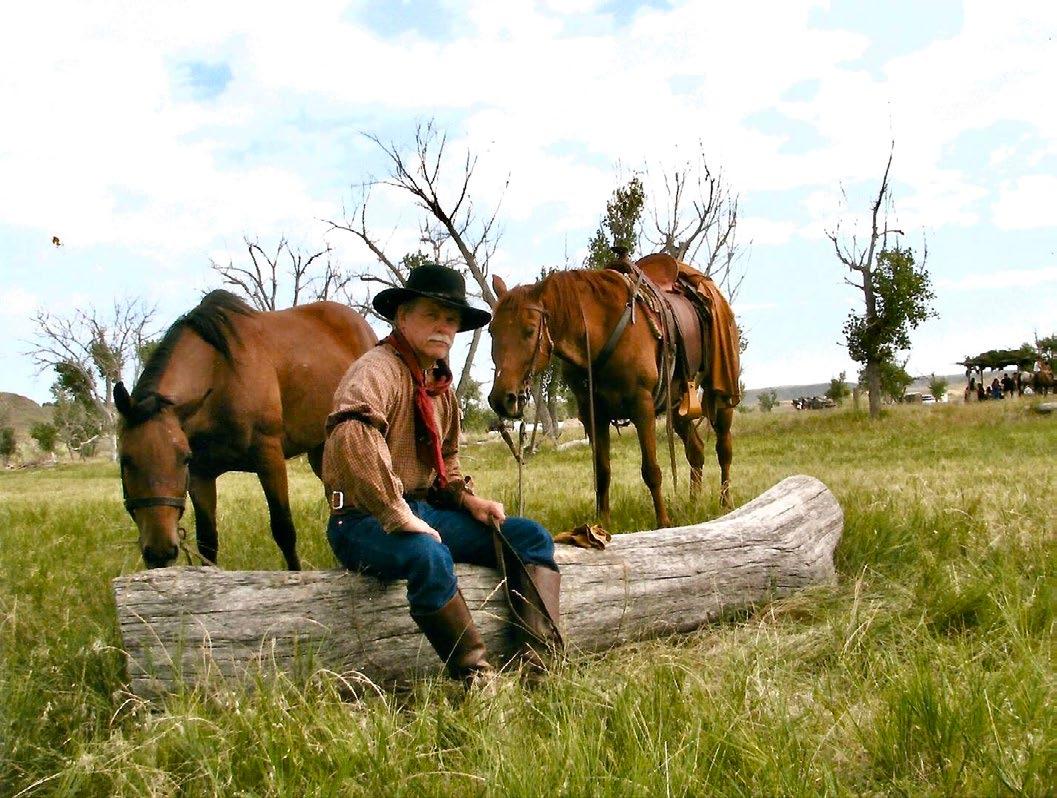
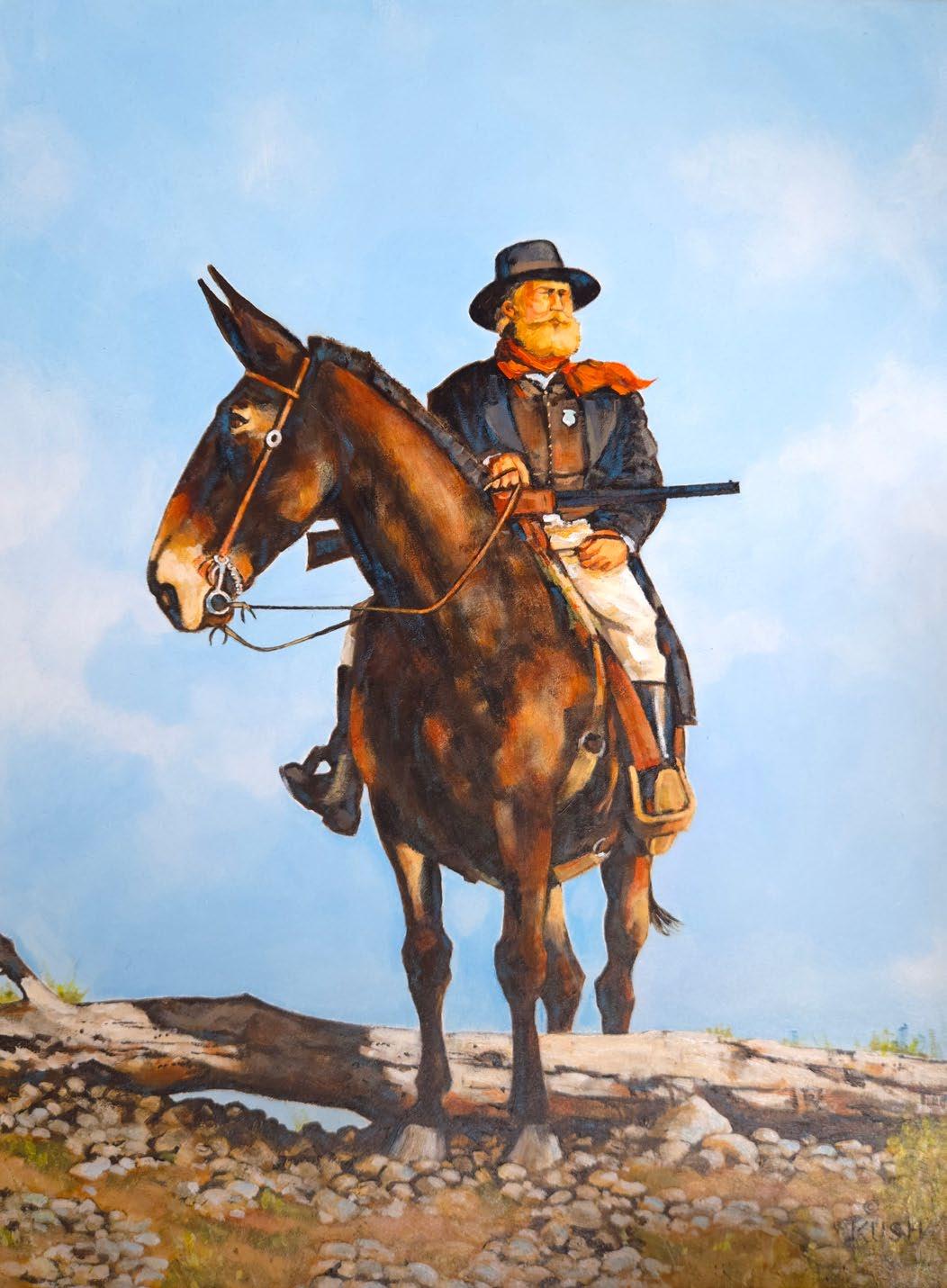
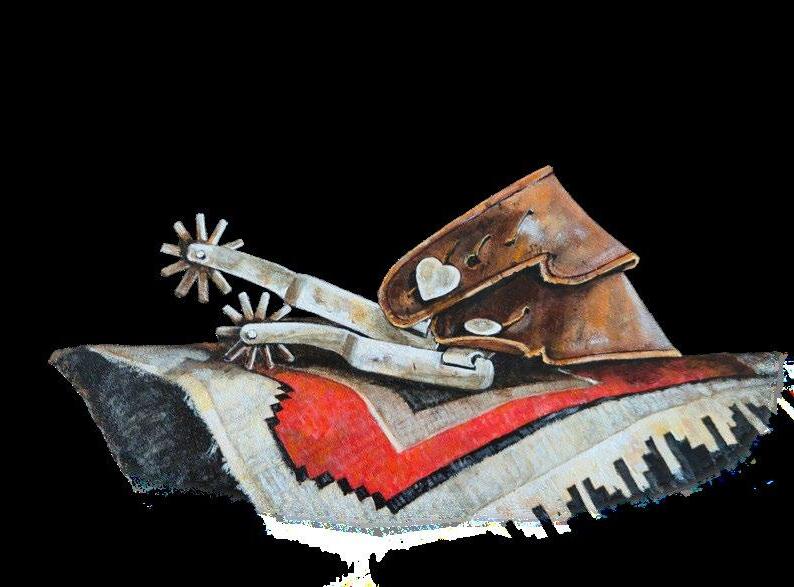
George has spent decades exploring the people, places, and stories that shaped the Canadian West. Through drawings, watercolours, and oil paintings, he depicts scarlet-coated Mounties, Indigenous peoples, cowboys, plainsmen, and soldiers set against landscapes from Canada’s past, all with a strong sense of historical detail. He makes every effort to use real people and horses in his work, and every painting has its own story to tell.
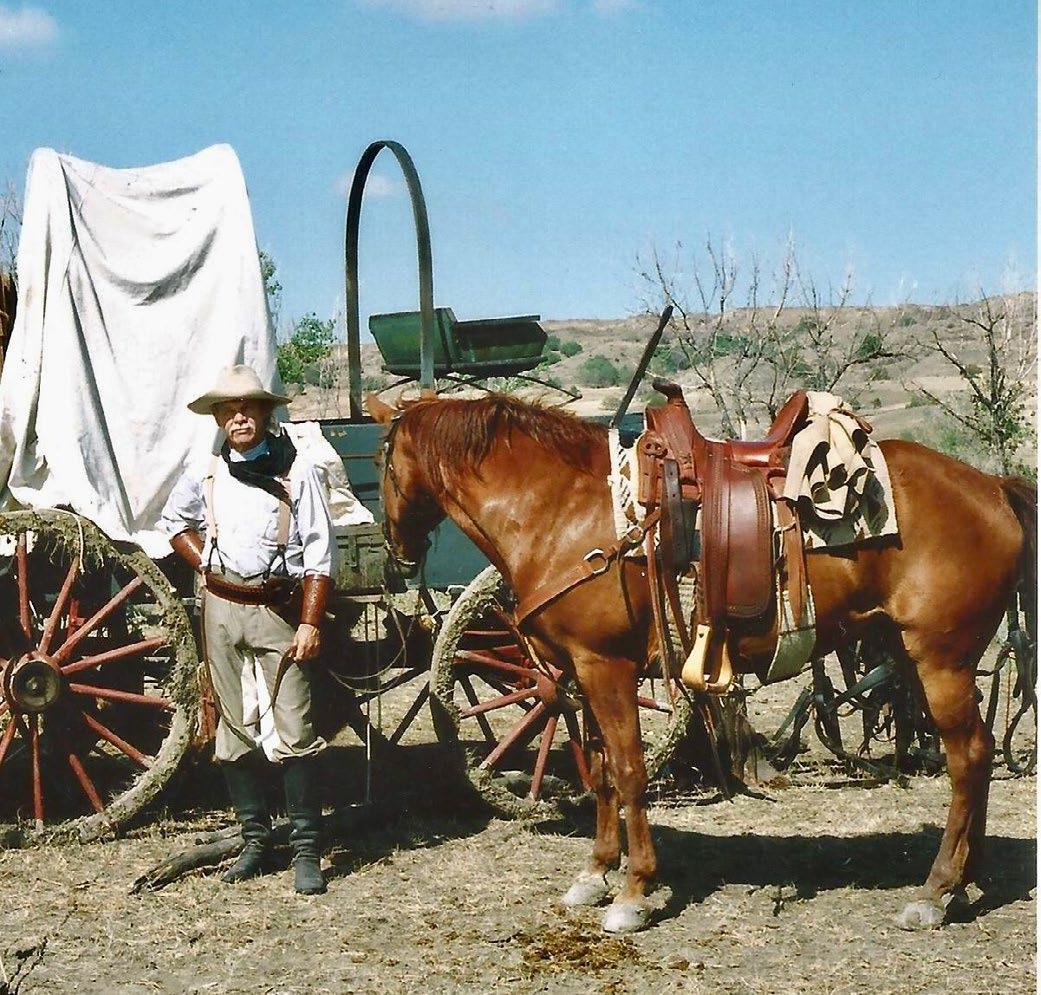
A historian, author, actor, and public speaker, Kush draws on both extensive research and firsthand experience. In 1998, he was selected by the Royal Canadian Mounted Police to participate in the Force’s 125th anniversary re-enactment of the March West, and since 2001 has been a regular participant in the cowboy “Artist’s Ride” held annually in South Dakota. His work reflects a deep commitment to historical accuracy and storytelling.
What follows is George Kush, in his own words, responding to a series of questions about his artistic journey, his approach to historical integrity, the role horses have played throughout his life, and why understanding Canada’s past remains important today.
I suppose I’ve never actually thought of myself as being on an artistic journey, but if I am, it started long ago, almost more than memory will allow. It’s just something I’ve always done, almost like breathing. Whether it was capturing images of daily life on our family farm when a boy or as a teen designing new product labels at the kitchen table for my father’s company. And thankfully, my parents supported my passion or at least approved of it, from creating murals in our school cafeteria to riding the rails in search of new experiences to draw from. No pun intended.
Art for me, is also the art of story-telling. It may not be considered politically correct today but I never paint an old time cowboy that I don’t then add a sack of Bull Durham smoking tobacco in his vest pocket. As the famous cowboy artist Charlie Russell was heard to say, “A good cow puncher will sell his soul for a bull-smoke.”
I don’t know how future generations will view my work, if they ever do. I know the biggest criticism I receive today from the organized art community, aside from failing to master “art speak”, is that I’ve yet to produce a distinctive “body of work” for them to judge, in the acceptable sense. I simply create what I want, when I want and how I want. All without specific rhyme or reason. But speaking frankly, I would go absolutely nuts creating the same old stuff over and over again, so I suppose I don’t fit into any one particular category as an artist worth judgement. I look upon every piece of work that I attempt as a separate challenge. I’ll create landscapes, still lifes, wildlife, portraits or historical tableaus – whatever happens to turn
who remain can cowboy a bit, spread our bedrolls under the stars, gather at dusk around an open fire and then commence to swap lies. That’s when true friendships are born, along with that sense of camaraderie one experiences after any task well done. I was once a soldier, and I can’t explain it in any better way.
Why do I think history is important? I strongly believe that knowledge of a shared past gives a people that same sense of being and belonging I’ve just described. Especially in times like these when many, mostly through ignorance of our nation’s past trials, tribulations and successes, have little or no understanding of what it means to be a Canadian, a select member of a unique, diverse and amazing society. My roots in this land date back almost thirteen generations, and when I think of the gifts those who have gone before have bestowed on us who have followed, I find myself overwhelmed with a feeling of pride.
Is there someone, past or present, that I’d like to meet or collaborate with? Offhand I can’t actually say there is, except perhaps to be present when the first of our kind spread a bit of red ochre and charcoal on some ancient cave wall or shaped a sliver of mammoth ivory into something unique for themselves and others. Maybe then I’d understand what art is all about.
“Spirt Rider” is my old friend Lakota Chief Dave Bald Eagle, a D-Day veteran and member of the 101st Airborne Division. Dave was a respected tribal elder and keeper of spirits.
“The Watchman” is Mo Brings Plenty who currently appears in a variety of western-themed television series, including Yellowstone. He’s posing as a buffalo while intently watching for intruders.
“Hard Law” represents U.S. Marshal Charles Hard of Sun River, Montana. Hot on the heels of a party of American whisky traders crossing the Blackfeet Reservation en route to Canadian territory, he was forced to stop when he reached the “Medicine Line,” the International Border. The jubilant traders later boasted that they had “stood off hard law” and named their first illicit post in Canada Fort Standoff, today Standoff, Alberta.
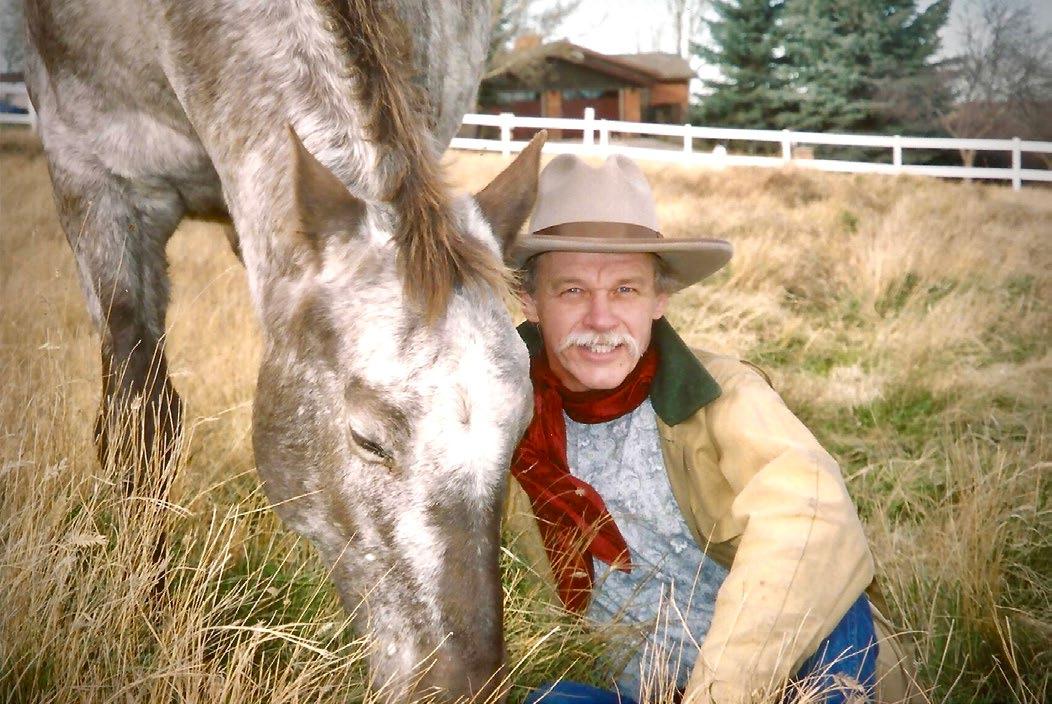
A quiet moment with my very best gal
“Absaroka” - People of the Crow.
By Ashton Shura & Kirsten Wiklund
THE
Fundamentals Fundamentals
A Conversation with Hope Hobday Glynn
A Conversation with Hope Hobday Glynn
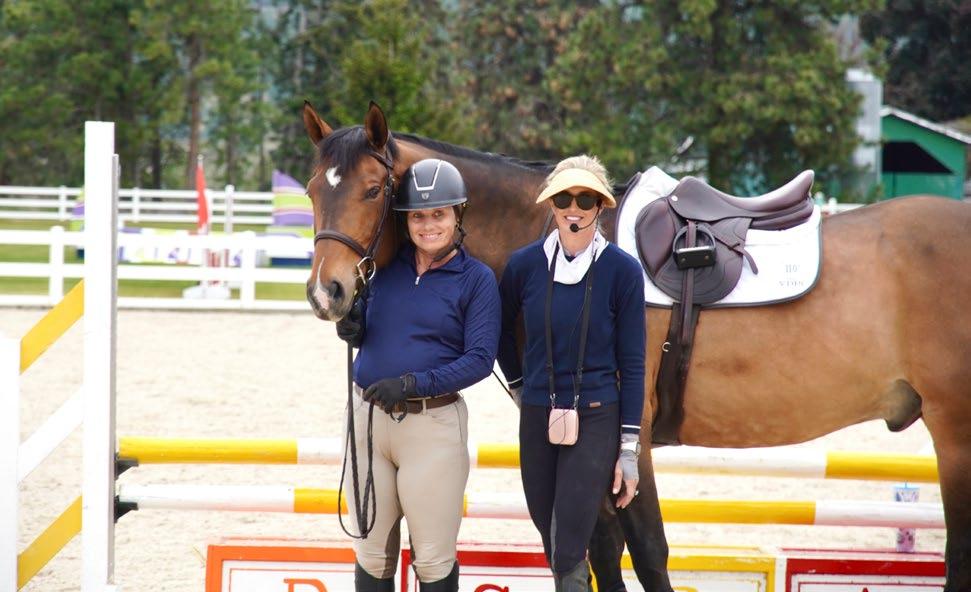
Sitting ringside, it’s easy to see why Hope Hobday Glynn has earned respect at the highest levels of the sport. A renowned rider, trainer, clinician, and judge specializing in the hunters, derbies, and equitation, she has spent decades competing, teaching, and developing successful horse-and-rider partnerships. Based in Northern California, she runs Hope LLC, focusing on sales and imports, while conducting 15 clinics each year throughout the United States and Canada. With more than 25 years as a licensed ‘R’ judge and an upcoming appointment to judge the 2026 ASPCA Maclay Finals, she brings a unique perspective shaped by experience both in and out of the ring.
Hope has been named Pacific Coast Horseman’s Association Rider of the Year and CPHA Horseman of the Year. As a leading derby rider on the West Coast for 15 years, she won the WCHR West Coast Hunter Spectacular three times and finished second in both the USHJA International Derby Finals and the $500,000 HITS Hunter Finals. She has earned championship titles as both a rider and trainer at major indoor shows and the Hampton Classic, while also guiding clients to medal finals victories throughout the West Coast and top-10 finishes in East Coast Medal Finals, including WIHS, the North American Equitation Championships, Maclay Finals, and Dover.
Beyond her accomplishments in the show ring, she is known for her emphasis on rider fitness, horsemanship, and developing thoughtful horse-and-rider partnerships that progress steadily through the ranks. In an industry where success can sometimes appear to be bought, she believes that riders who master the fundamentals and prioritize both their horses’ well-being and their own will ultimately find the greatest success. During a recent sold-out clinic at Juniper Hill in Lake Country, British Columbia, Hope shared her thoughts on everything from moving up safely and buying the right horse to rider fitness and the meaning of true horsemanship.
You recently posted about riders competing with horses despite lacking the skills to ride effectively and safely. What skills or experiences should riders have before stepping into the show ring?
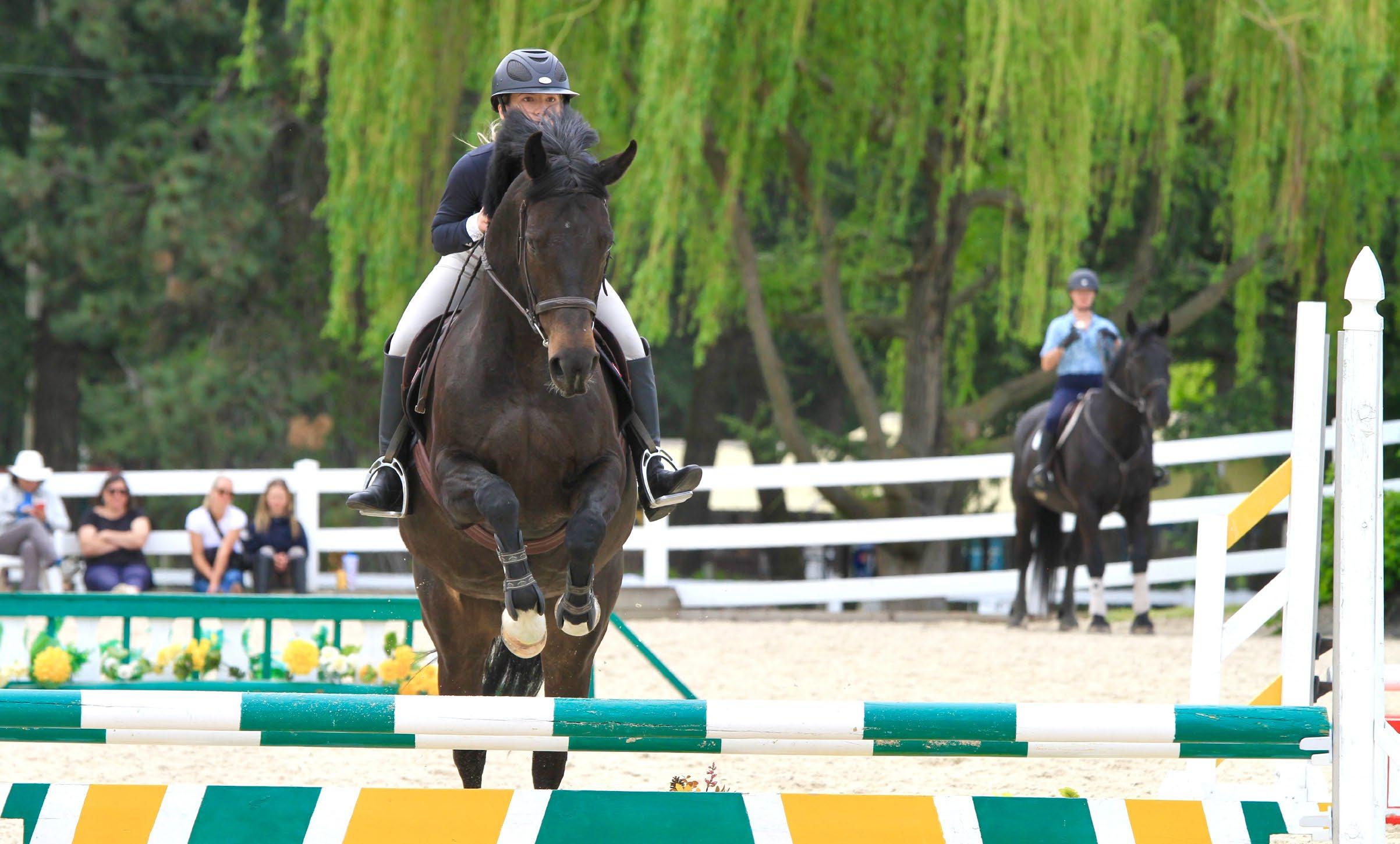
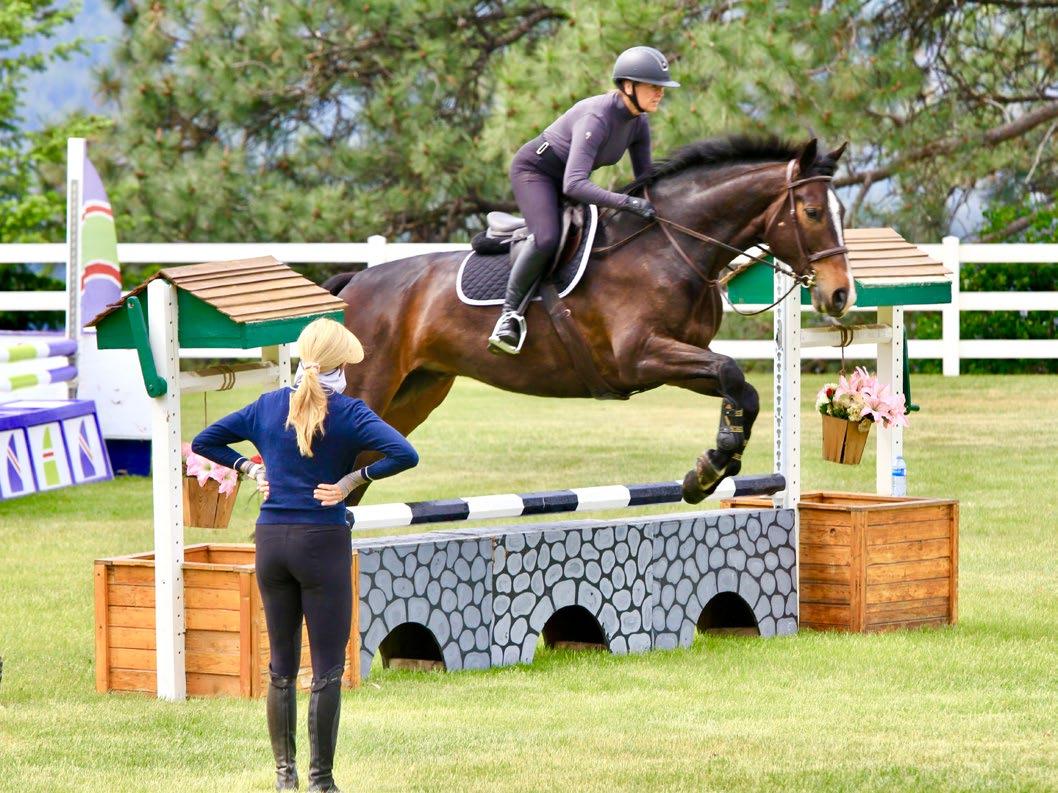
I believe a good trainer will make sure that a rider has the basic problemsolving skills necessary to help themselves and their horse stay out of trouble as they move up. When you learn to jump and are doing cross-rails and the short stirrup classes, those skills may be holding the two-point, going straight, and practicing counting strides. When
you advance and you are doing the 1.20 and the 3’6” medals, then you need to be proficient in lengthening and shortening strides, as well as have an excellent understanding of how to use track and pace to help problem solve and prevent distance mistakes.
How can riders hold themselves accountable to sequential and progressive training, rather than focusing on external success factors?
I think it’s important for trainers to sit down often with students and their parents to have meetings about goals for horses and riders. During this meeting, it is important to set goals that involve riding well, not winning classes. For example, I would like to qualify and ride consistently at junior hunter finals. That goal is attainable and the result of good training and preparation. If the goal becomes “I will win Junior Hunter Finals,” then that involves knowing what the competition is like and how the judges will score your horse. That is impossible to plan for, so it is an unrealistic goal to prepare for. Riders in this goal meeting can discuss what an ideal training program looks like to meet this goal. That might mean they lesson three days a week and hack on the fourth day. My ideal training schedule at home only involves jumping a course once a week. One day is spent on flat and poles, while another is flat and doing both grids and cavaletti exercises.
What attributes or experience should an amateur or junior rider look for when purchasing a new horse to move up with?
I think you should have a meeting before you even try a horse, so it is clear what you need. What are your goals that you would like to be able to accomplish with the new horse? How young/old are you comfortable with? What is your budget? I think if you are riding 2’9” and under, safety and a horse with experience need to be the number one factor. If you have a larger budget, you can have these qualities as well as fancy ones. If you are more advanced, then you can find horses that make up for your weaknesses. If your student is one that doesn’t like to use their leg and pulls a lot, then you have to shop for a horse that does not require a ton of leg and isn’t offended by your hands while you learn to improve. The biggest issue I have is that students are the ones picking the horses and not the professionals. The professional should be good enough to lead a client into an appropriate horse. My personal pet peeve that usually results in a poor match is when the client tells the trainer what they want, or they will only buy a gray horse, or it has to have white socks.
Are there any key exercises you use before a show or big class to prepare your horses?
Depending on the division and the horse, I do different things. Jumpers need to be fitter, so I tend to do more grids and bounces at home to keep them fit. Hunters and EQ horses also do grids, but we do a ton more with exercises getting them to go straight and be soft on the landing, and landing leads to bending lines.
From a judge’s perspective, what are a couple of strategies to stand out in the hunter ring?
The best first impression is to come in clean and appropriately dressed for both horse and rider, then pick up a quality canter. You want to start with a score of 100!
You mentioned the value and function of core strength in the saddle. Do you have any favourite exercises or practices you recommend to riders wanting to improve their core?
My easy go-to exercise that can be done anywhere and anytime is a plank on your elbows. Start with what you can do; maybe it’s 3 sets of 30 seconds each. I try for 5 sets of 1 minute to 1:30 with 30-second breaks. If I’m in a gym and can add other things, great, but that can be done anywhere!
How can riders show up in their best form for their horse?
As with any job, a good night’s sleep, ample protein in the diet and hydration help a rider perform their best.
What’s your go-to meal prep plan for long training or competition days?
I have a Yeti cooler I take with me everywhere so I can bring food. I rarely skip a meal. I normally do a shake or put protein in my coffee in the morning, so usually I get 40 grams in my morning drink. I try to have protein shakes in my cooler or the barn for a snack or
apple and peanut butter. If there is a good protein bar you like, keep some in your trunk. If I have access to a microwave, I normally make ground beef or turkey, sweet potato, cottage cheese, and avocado and add hot sauce. That is my go-to for a protein lunch from home.
How do you define horsemanship?
Horsemanship is the knowledge, skill, judgment, and attitude involved in working with and caring for horses effectively and humanely. It goes beyond just riding well — true horsemanship includes understanding the horse physically and mentally, communicating clearly, and putting the horse’s welfare first.
Good horsemanship typically includes the following:
Riding Skill - Balance, timing, feel, and effective aids.
Horse Care - Feeding, turnout, soundness, grooming, tack fit, conditioning, and overall management.
Understanding Behaviour - Recognizing how horses think, react, learn, and communicate.
Sportsmanship and Responsibility - Patience, consistency, fairness, and accountability.
Decision-Making - Knowing when to push, when to back off, and what is best for the individual horse.
A good horseman or horsewoman is not necessarily the person jumping the biggest jumps or winning the most ribbons. Often it’s the person whose horses stay sound, happy, confident, and willing over time. A simple way many people define it is “Horsemanship is the art of making the right thing easy for the horse and the wrong thing difficult—while always respecting the horse.”
What are the pillars of your feeding program?
I was lucky enough to get to visit the Equine Nutrition Research Facility run by Purina in St. Louis, and it completely changed what I thought about nutrition in horses and how to feed for performance. Their staff of vets and researchers spent a ton of time teaching me about the products, grain, and supplements to feed horses based on the athletic goals desired. I have found a top feeding program can directly affect a horse’s performance and results.
What are your biggest suggestions to young professionals in this business?
Make sure you take the time before becoming a professional to go and find a mentor or a program that you admire and learn from these people. Also learn from vets, farriers, nutritionists, and bodyworkers how to best care for your horses. Watch good people teach and go to clinics to learn different styles of problem-solving. Most importantly, learn how to communicate with clients and run your business with hard work and integrity. You are the advocate for the horse, and as hard as it is to not get pressured by clients on certain days, if your gut knows you shouldn’t let a horse or rider do something, then don’t do it. You put both the human and the horse at a great risk.
From rider fitness and realistic goal-setting to horse welfare and horsemanship, Hope’s message remained consistent throughout our conversation: success is built on strong fundamentals, thoughtful preparation, and putting the horse first. It’s a philosophy that has guided her decades-long career as a rider, trainer, judge, and clinician—and one she continues to share with the next generation of equestrians. To learn more about Hope’s training program, clinics, and educational content, follow her on Facebook and Instagram, @ hopellcofficial
Ashton and Kirsten are sisters and co-founders of the Nordic AutoFeed. They’ve been involved in the horse industry for a number of years and hope to bring innovation and education to horse care. Photography by Scott Biffard
DOG TIP
OfTheMonth! OfTheMonth!
By Patricia Skinner-Porter
Having personally cared for thousands of dogs at my “custom care” kennel, Harmony Farm Kennel at Monte Lake, BC, I have known all types of dog breeds, dog traits, problems, behavior patterns, talents, and dog-nalities. On my registration/ information forms that all new customers fill out for me, I see a plethora of answers to the question, “Does your dog have any areas of their body they don’t like to be touched?” I call these untouchable areas “yeah, but” spots, as in “Yeah, you can touch me anywhere but not there!” Oh my dog, what a variety of answers I read to this question!!!
Can you love on your dog all over? Head, ears, mouth, eyes, tail, paws, anywhere? If not, why not? Well, your answer may be a history of a previous incident or accident or knowing your dog has been roughed up by another person or dog. Sometimes a dog’s dislike of being touched is from an experience, while other times it is from a lack of experience, like not being handled as a puppy. Some dogs react from PTSD of an event, associated pain, or anticipation of the same.
For example, a dog that has had its tail caught in a door or pulled on aggressively could become defensive of its hind quarters being touched. A dog that has had its nails clipped too close or ears cleaned roughly could be protective of anyone near those areas. A dog that’s been mishandled on leash could be extra sensitive when approaching its head or neck, or a dog that has been attacked or disciplined aggressively could become very timid, aggressive, and even a “fear biter” when approached. All of these scenarios and many more add worry, stress, and anxiety to the dog, the owner, and anyone else coming into contact with such a dog holding “yeah, but” problem areas.
Dogs can, of course, take on all kinds of defensive reactions to those “yeah but” spots being approached, including warning growls, hair standing up, tail tucks, head down, excessive licking, hiding, or even running away. If their warning signals are not heeded, often a worried dog’s protective behavior will advance to completely withdrawing, biting, and, in some cases, all-out attacking, making some dogs’ best defense a better offense.
There are endless experiences that your dog may refer to; however, the progressive way to go forward is not to enable the problem or avoid the confrontation of touching specific areas but to learn ways to reprogram your dog’s underlying worry with understanding, reassurance, and trust.
One lovely way I find effective with handling such dogs I call “Approach and Retreat.” This is when you calmly be with your dog (without time restrictions) using your “heart in your hand.” I like being on their bed with them or in a comfy spot where you can spend some quality time together. Without eye contact or voice, just gently be with your dog in a quiet environment, lovingly and confidently stroking your dog in areas you know your dog accepts easily. Keeping in mind your dog’s “problem area,” simply rub your hand slowly and confidently with rhythm in areas away from that spot. Slowly approach that area, and BEFORE your dog reacts, retreat to the surrounding area that is “safe” from your dog’s perspective. Do not take your hand off of your dog; simply retreat to the area that is not affected. Keep the rhythmic motion and approach again just a tiny bit closer each time, retreating BEFORE your dog reacts. Repeat ever so gradually, and soon, to both your and your dog’s pleasure, you will be stroking those “yeah, but” spots with calm acceptance and reassurance.
This is a repeat process, and please take the time it takes to build your dog’s confidence and trust in the love in your hand. According to how skeptical your dog is and how severe your dog’s previous responses have been, this process may take 2-3 sessions or many more to override or reprogram past associations, but as long as you retreat before your dog jumps off their emotional cliff, you will be successfully replacing fear with acceptance, confidence, and actual pleasure.
It is so much more wonderful when your dog accepts and even looks forward to being touched everywhere and anywhere without fear, misunderstanding, or worry! Furthermore, having a dog without any “yeah but” spots is so much safer and more enjoyable for your dog, you, the owner, and anyone that interacts with your dog (not to mention the liability factor). Believe you can overcome... you and your dog will be so glad you did! Enjoy the process!
Looking Ahead to the 55+ BC Games
We’re excited to be part of the 2026 55+ BC Games this season and to highlight the equine presence within this provincial event. While registration has now closed, the anticipation is building as participants prepare to showcase their skill, sportsmanship, and long-standing dedication to their sports. The equestrian events reflect the deep connection between horse and rider and the passion that continues throughout the years. We encourage everyone in our community to come out, support friends and fellow riders, and experience the energy and excitement firsthand. It’s a fantastic opportunity to celebrate horsemanship, community spirit, and the active lifestyles that define the BC equestrian community.
We’ve moved!
We’re pleased to share that our office has officially relocated to a new space at 102–8047 199th Street, Langley, BC V2Y 1S2. This move marks an exciting step forward for our organization and positions us well to continue supporting our members and advancing our work within the equine community.
Kamloops 55+ BC Games September 9-12, 2026
Back Country Horsemen of BC
LEATHER CARE TIPS
With our Shuswap Members
By Marie Reimer and Rose Schroeder
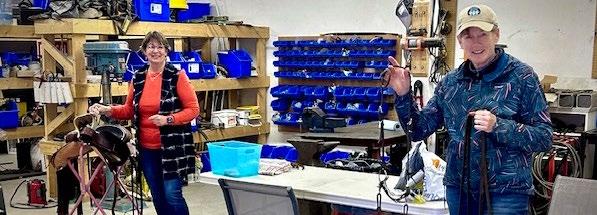
BCHBC Shuswap Chapter has a ‘members helping members’ attitude. Most of what someone has learned, they learned from someone else! So why not pay it forward? Here is a condensed version of what we learned at our half-day clinic on how to clean and care for leather tack.
Properly maintained tack can last a lifetime. Cleaning it is a good way to check for worn, unsafe leather or stitching. Leather has a smooth side and a nap (rough or flesh side). The nap side will absorb more conditioner than the smooth side.
Like the trails we ride, one of the most destructive elements is water (in the form of rain, sweat, and humidity). Also, direct heat in the form of hot sun or proximity to heaters. Leather is like a living thing. Good care means keeping it clean, fed, and stored properly.
Steps in Cleaning Your Leather
1. Take it apart into pieces; it’s easier to clean. Have a toothbrush and toothpicks handy for those small spaces.
2. With warm water, mild soap, and a damp microfibre cloth, wipe all dirt and sweat off. Use lots of elbow grease! You might have to scrape off buildup in the form of ‘dirt jockeys.’
3. When you think your leather is clean, get another bucket of clean, warm water and give it a final wipe. This will open the pores to accept the conditioner.
4. Let it dry a bit, but while still warm, rub in the conditioner. Be generous and rub, rub, rub. Then rub some more! Try to find a conditioner with no chemical additives.
5. Let it dry for 10-12 hours, then buff it with a dry cloth. This will activate the conditioner and create a barrier to keep moisture out.
Thank you for joining our AGM!
Thank you to everyone who joined us for our Annual General Meeting on June 22. Your participation, insights, and ongoing support play an invaluable role in shaping the direction of our organization. It was a pleasure to connect, reflect on the past year, and share plans for the future. We look forward to building on that momentum together in the months ahead.
CONNECT WITH US!
Office Hours
Monday - Friday 8:30 - 4:30 pm
Executive Director administration@hcbc.ca
Agriculture & Industry industry@hcbc.ca
Membership membership@hcbc.ca
Coaching and Education coaching@hcbc.ca
Marketing and Communications communication@hcbc.ca
HCBC.CA 1-800-345-8055
Recreation and Trails recreation@hcbc.ca
Competition competition@hcbc.ca
Community Development development@hcbc.ca
HCBC Bookstore bookstore@hcbc.ca
Finance and Grant Funding finance@hcbc.ca
How often to clean?
This depends on how often you ride and how dirty your tack gets. If it gets really dirty, at least wipe off the mud and sweat with a damp cloth before putting it away. Give it a deeper cleaning weekly, if you ride every day. This will be up to your discretion depending on your conditions and climate. Tack that is stored for long periods is prone to mold, so keep it covered in a cool, dry place.
FAQs
- Can I clean and condition at the same time? Yes, but you will be clogging the pores with dirt so only some of the conditioner will get into the leather. Best to clean first, then condition.
- How often should I clean my bits? Maybe once a month, use vinegar to disinfect, then a small amount of fluoride-free toothpaste and a toothbrush. Rinse. Pony Club taught us to at least rinse after every use.
- How do I clean rough leather? Use a small brass or stainlesssteel brush in small circular motions. If really dirty, you can first wash with mild soap and water, dry, and then brush. Condition the underside or nap side but not the rough out.
- Should I use glycerine saddle soap? If you do, you must remove ALL of the soap, or it will attract dirt (dirt jockeys) and will pull conditioning moisture out of the leather.
- What about Linseed Oil? Not recommended. It causes structural breakdown and hardening of leather. It is sticky, attracts dust, and is prone to going rancid.
- Olive Oil or Canola Oil? Nope, goes rancid and will rot leather over time. It is a very migratory oil and will cause splotches in your leather, and if too much is used, it can make leather “mushy.”
With these tips in mind, ride easy and enjoy your precious tack for many years to come!
Photo provided by the Back Country Horsemen of BC
ClUb Hub ClUb Hub
Alberta Donkey & Mule Club
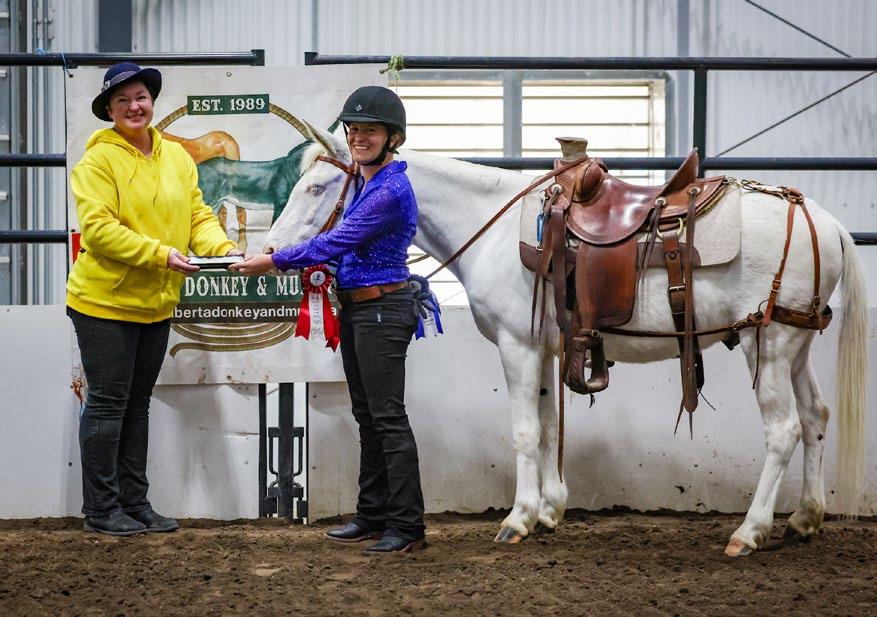
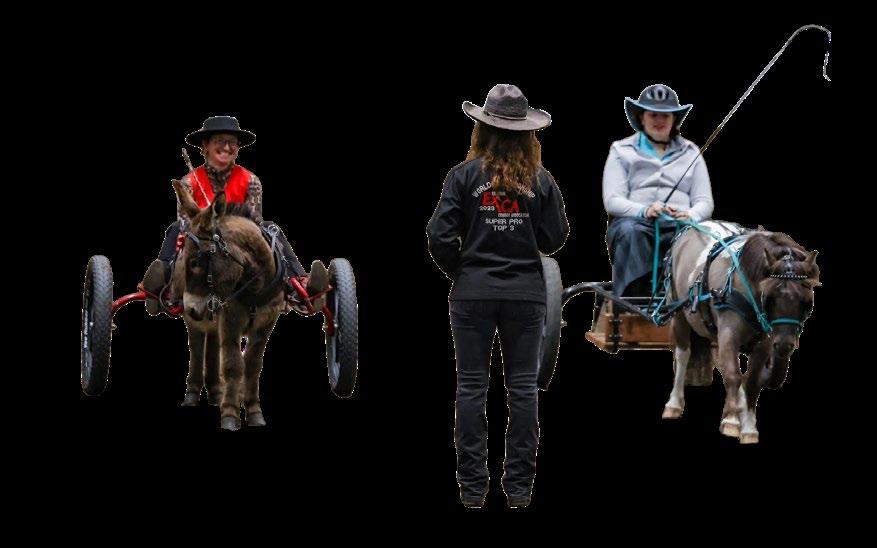
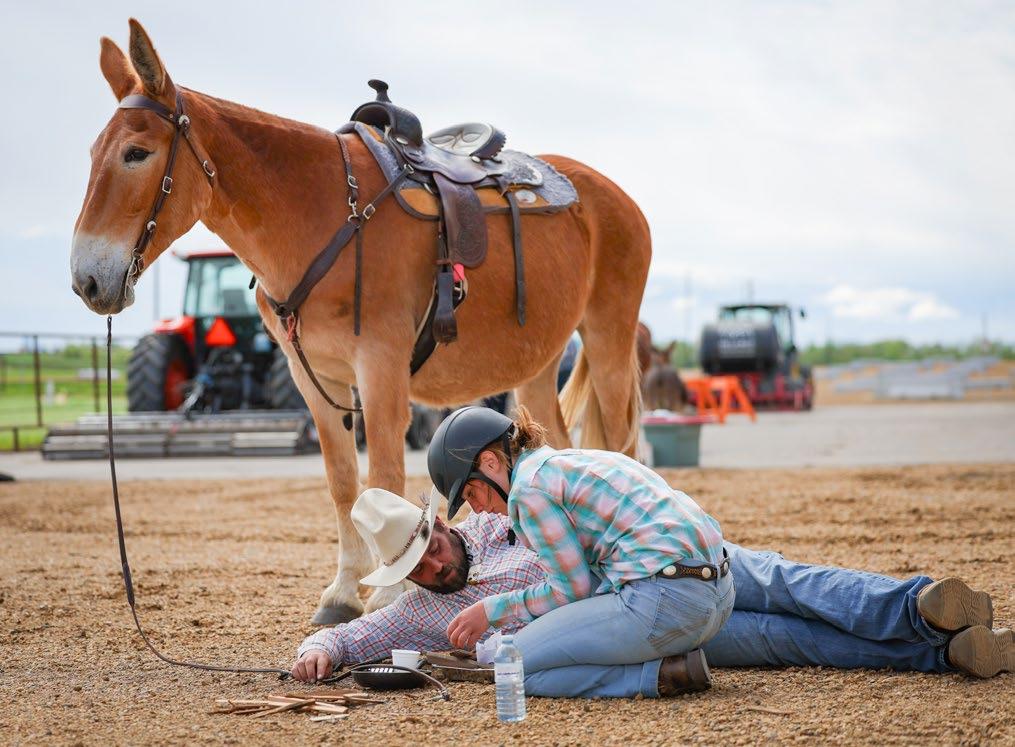
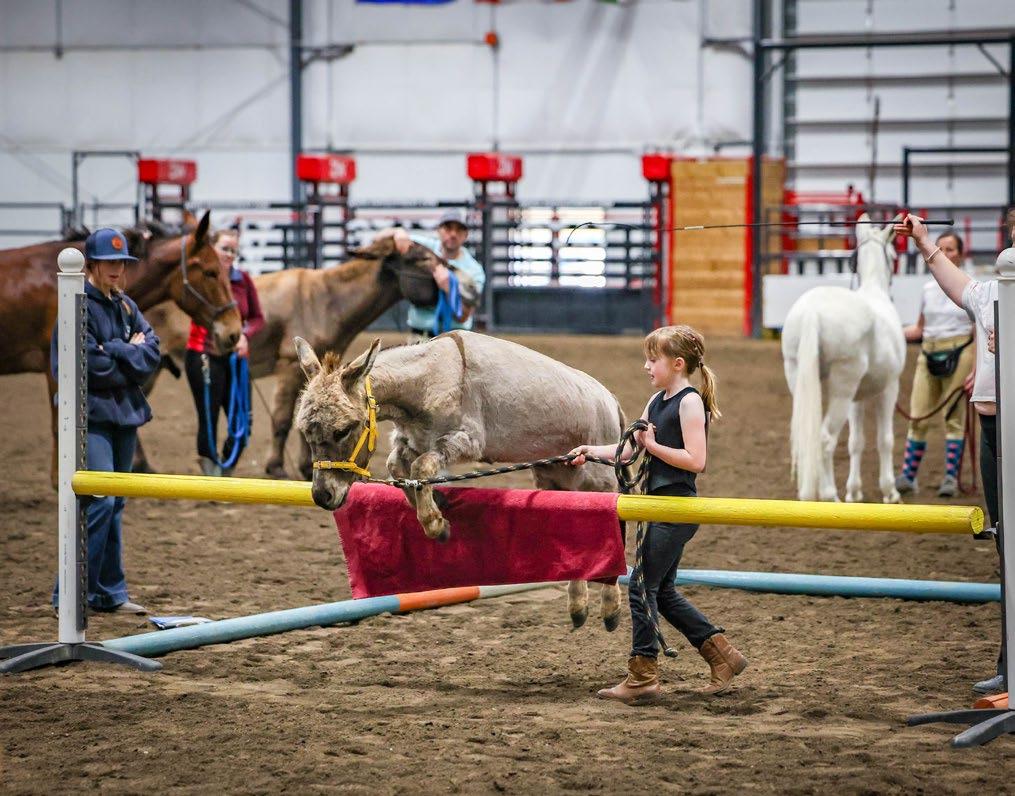
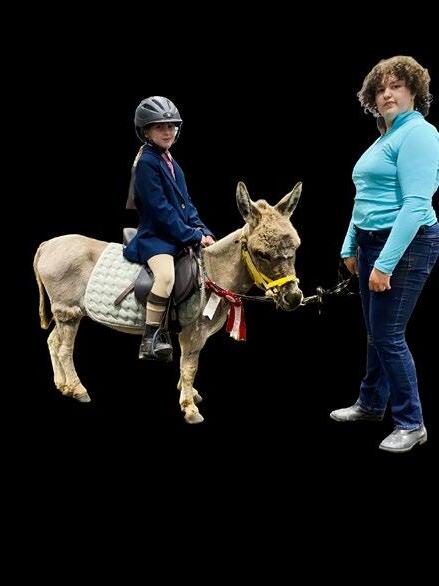
Our club held its annual Open Fun Show from June 5–8 at the beautiful new venue, The Pointe! We grew from a one-day outdoor show to a three-day indoor event, with more than 15 long ears entered, as well as a good number of horses and ponies. Our classes included obstacle race, driving, in-hand, English, jumping, Western, and games—including our famous Pancake Event!
Our thanks to the Sherwood Park Royal Canadian Army Cadet Corps for volunteering and providing much-needed extra hands to help the show run smoothly.
Congratulations to all our champions!
Driving Champion (Long Ears and Overall): Rowan Yurkowski & Taffy Reserve Driving Champion: Brooklyn Bell and Pete English Champion: Shaylin Exshaw and Maude Reserve English Champion: Robyn Ramey & Dennis the Menace Western Champion: Robyn Ramey & Dennis the Menace Reserve Western Champion: Shaylin Exshaw & Maude
Overall High Point Champion: Robyn Ramey & Dennis the Menace Reserve Overall Champion: Shaylin Exshaw & Maude
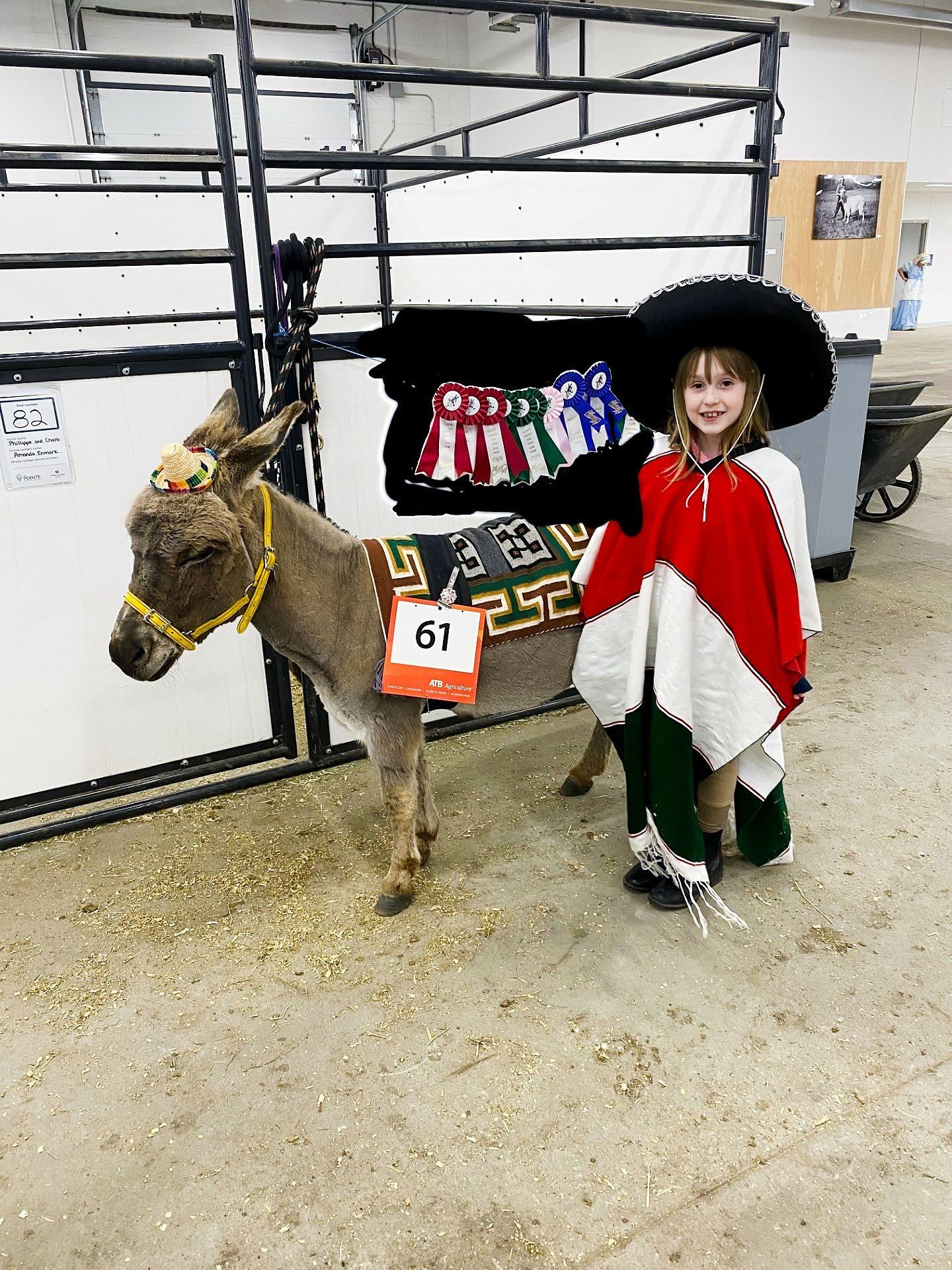
Overall Junior High Point Champion: Rowan Yurkowski & Taffy Reserve Junior High Point: Myra Husoy & Phillippe Sombrero
As always, all equines (horses and ponies) are welcome to join our long-ears activities. We welcome everyone! Check out our NEW website and upcoming events at albertadonkeyandmule.ca
Photo credit to H. Anne Photography.
The Canadian Cowboy Challenge
The Canadian Cowboy Challenge
Welcome to the CCC. I hope your spring and summer riding experience so far has been successful and enjoyable. This time of year should allow for spending the majority of your riding time outdoors. Most of the challenges are held in outdoor arenas during this season.
The August challenges will be held at the Rimbey County Fair in Rimbey on August 15 and 16 and at the Eadie Ranch in Alberta on August 29 and 30. You can find the remaining July Challenge dates at the Canadian Cowboy Challenge website. We hope to see you there! By Hans Kollewyn
For more information on locations, event details, and registration, please visit the Canadian Cowboy Challenge website at canadiancowboychallenge.com.
Shelly riding Popcorn, photo with permission
Saddle Up with the 100 Mile & District Outriders Club!
Looking for a reason to load up the horses and head to the beautiful South Cariboo this summer? The 100 Mile & District Outriders Club has a fantastic lineup of events planned, and we’d love to welcome you to our grounds.
We’re excited to once again host clinician Lee Poncelet for three weekends of horsemanship, ranch riding, obstacle work, cow skills, and confidence-building exercises. Whether you’re just getting started or looking to sharpen your skills, Lee’s supportive and practical approach makes these clinics a favourite among riders of all levels. Whether you ride English or Western, there’s something for everyone.
Clinic dates: July 11–12 / August 8–9 / September 19–20
Also, mark your calendars for August 15–16 and join us for our annual Ranch Show! This fun, welcoming event continues to grow each year and offers divisions for everyone—from seasoned competitors to those stepping into ranch classes for the very first time. Youth classes are free, and buckles will be awarded to both the high point and reserve champions.
Traveling from out of town? We’ve got you covered with dry camping and on-site pens, plus a friendly atmosphere that keeps competitors coming back year after year. Make a weekend of it and enjoy everything the South Cariboo has to offer—from beautiful lakes and endless trails to great local hospitality.
We’ve also been busy improving our grounds. Thanks to funding support from the Northern Development Initiative Trust, along with countless volunteer hours from club members and support from local businesses, new spectator bleachers and partial arena fencing have been added to help make future events even more enjoyable for competitors and spectators alike. We hope to see you and your horses in 100 Mile House this summer!
For more information or to register for a clinic, contact: Danita McLaren, President Phone: 250-644-5686
Email: 100mileoutriders@gmail.com
Website: 100mileoutriders.com
Vintage Riders Equestrian Club
Pause and take a moment to be grateful for all those stories and adventures. They would not be ours without the Vintage Riders Equestrian Club. Even when everyday life is not perfect, when we are together with the members, we share a common bond—time with our horses and like-minded people. In those moments, we feel complete and at peace. Rainy day ramblings, my friends...
This month’s photos have been contributed by many ladies of the club. Thank you as well to those who plan and put together these activities for us. Like any community, much would not be possible without the support of volunteers. I applaud you all!
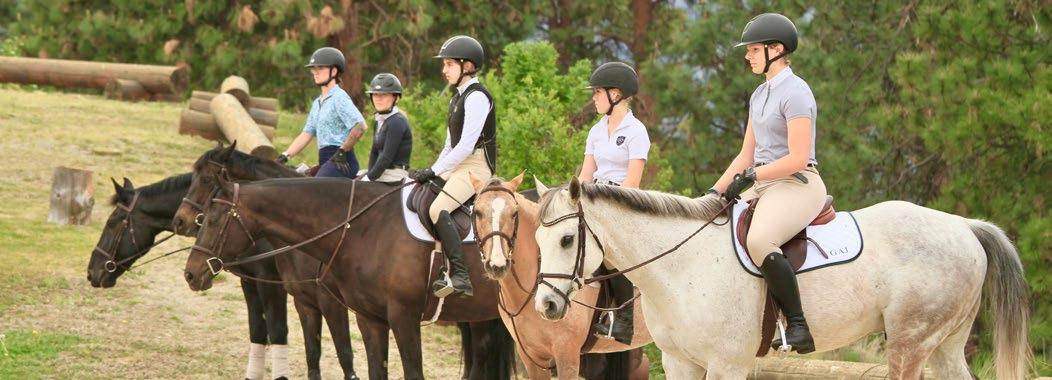
Well done to everyone who loaded their ponies into trailers and pushed aside thoughts of horse behaviour and “What did I forget?” to arrive on time for their designated time slots at the Liberty Clinic with Faith H. This clinic allowed many to confirm the results of hours spent building equine bonds and bridges of communication. The strongest and most powerful restraint is that gentle hand on the lead rope and the soft smile on the face. The love shone through.
Sarah B worked with us over a two-day working equitation clinic. She is a deep well of knowledge and shared generously with us throughout. I’m still reflecting on much of what she had to say. With instinctual precision, she adjusted her teaching to suit both the less experienced riders and the more developed horse and rider partnerships. A professional with empathy, to be admired and supported.
Photos submitted by VREC with permission.
Our last meeting focused on the care and feeding of our tack and gear. Knowing the who, what, when, where, why, and how of leather goods production goes a long way toward keeping us safe when using our cherished and sometimes pricey equipment. Many products on the market are suitable for some items but not for others. It demystified a great deal.
We do not have delusions of grandeur; we do have courage and survival instincts. Proud of you all. By Kendra Kowalski
Want to come play with us! It’s only a whole $42 / yr!!!! Need more info reach out anytime! vintageriders@gmail.com
Promoting equine activities and knowledge in the south Cariboo with Shows, Clinics, Gymkhanas and more.
We are dedicated to providing therapeutic horseback riding lessons to riders of all abilities in Princeton, BC.
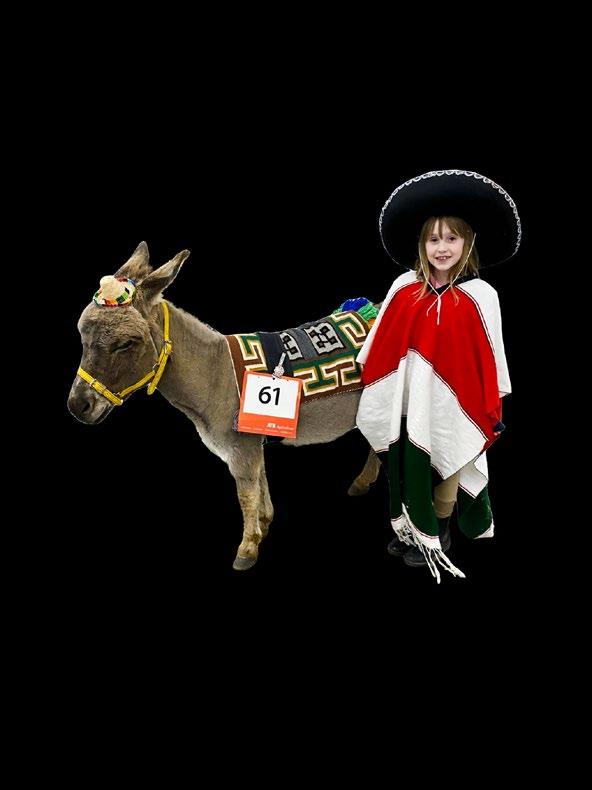
Wow, it's been busy since the weather turned nice! Mom's had me out all over the place. We went to the Klondike Spring Fling after the Horse Expo, and then Mom took me and my niece Charo to the Alberta Donkey and Mule Club's Fun Show, where I worked hard with my new human, Myra! She's 8, and it was her first big show. We worked really hard, and I did new things (she put a saddle on and rode me!) and then we went in the costume class. We even came home with Reserve Champion Junior
Rural Roots South Cariboo
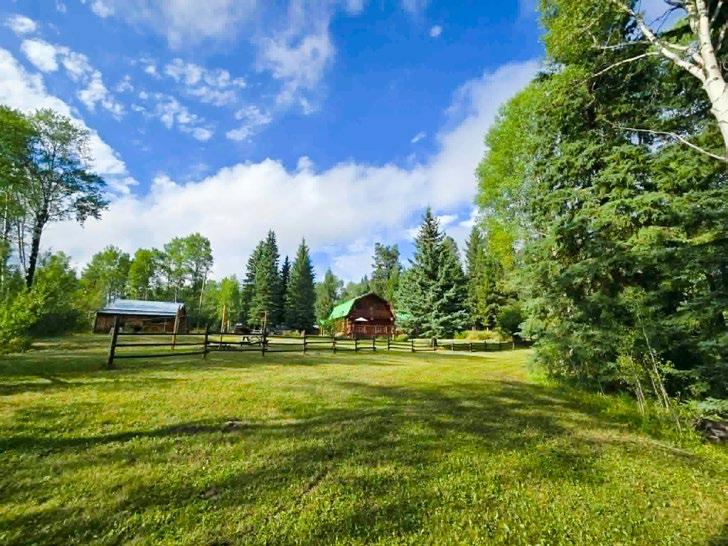
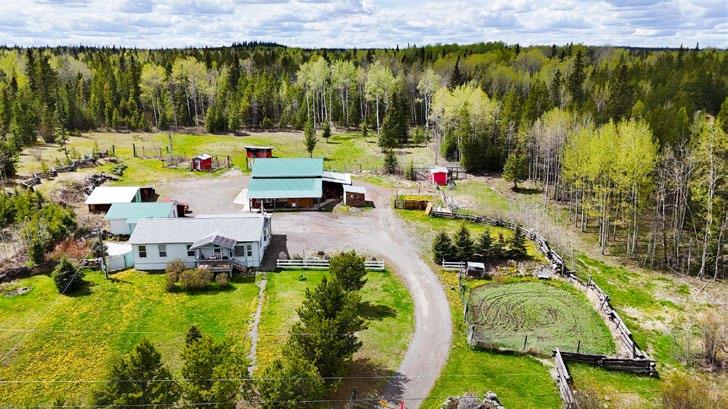
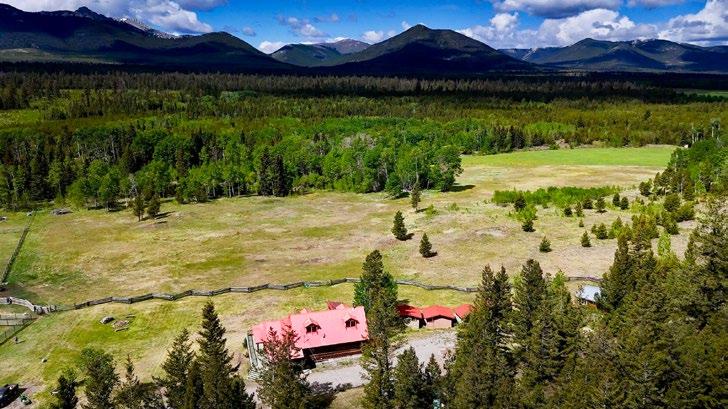
Nearly 158 acres of productive Cariboo farmland in pasture and hay production. Sunny, usable, and just minutes from town, Horse Lake, and Crown land. Must be purchased with neighbouring parcels, creating nearly 320 acres with extensive ranch infrastructure and grazing lease potential.
$675,000 | MLS® R3085103
Approximately 161 acres of fertile hay and pastureland supported by extensive ranch infrastructure, including a character filled family home, rental cabin, hay shed/shop, barns, livestock pens, and more. Must be purchased with the neighbouring parcel, creating a nearly 320-acre ranch holding.
Waterfront Acreage with Log Home
7671
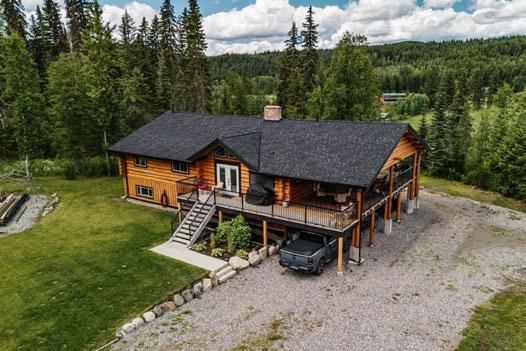
Set on over 10 private acres with Burn Lake waterfront, this character-filled log home offers rustic charm and peaceful seclusion. Features include a heated workshop, 3-stall barn, pole shed, fenced pastures, south-facing outdoor living spaces, and easy access to countless nearby lakes.
$710,000 | MLS® R3092069
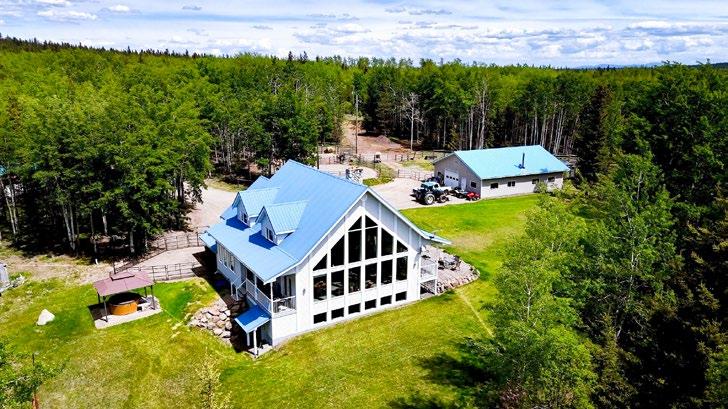
Rare 5-acre property, zoned Light Industrial combining a spacious home with an impressive heated 34' x 36' shop built for serious equipment and vehicles. Complete with gardens, pasture, chicken coop, root cellar, garage, and outbuildings, just minutes from Lone Butte amenities.
Renovated -Move-In Ready Self-Sufficient Country Living
2199 Eagle Creek
Thoughtfully updated throughout, this beautiful log home offers four bedrooms, stunning new bathrooms, a brand-new kitchen, and major mechanical upgrades. Outside, enjoy a massive deck, 1,200 sq. ft. covered parking shop, and easy access to Canim Lake recreation.
$1,390,000 | MLS® 10390981
880 Isadore Rd, Clinton Legacy Ranch Opportunity
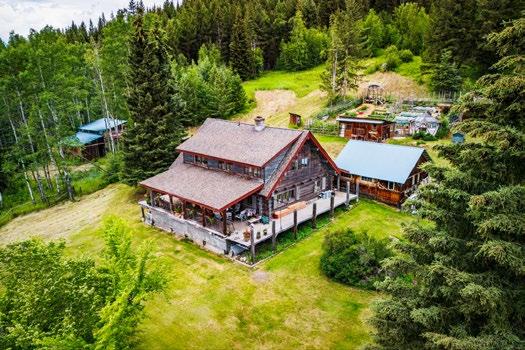
Set on 183+ acres beneath the Marble Mountains, this stunning ranch features a charming log home, barn, pastures, paddocks, five guest cabins, and a recreation building. Exceptional potential for a destination ranch, retreat, hospitality venture, or unforgettable Cariboo getaway.
$979,000 | MLS® R3116389
Scenic Horse Property Near Town
Nearly 15 acres with creek and meadow views, fully equipped for horses with paddocks, auto waterers, riding arena, and shop/barn with stalls. A warm, inviting home, double garage, and RV hookups complete this rare country property close to town.
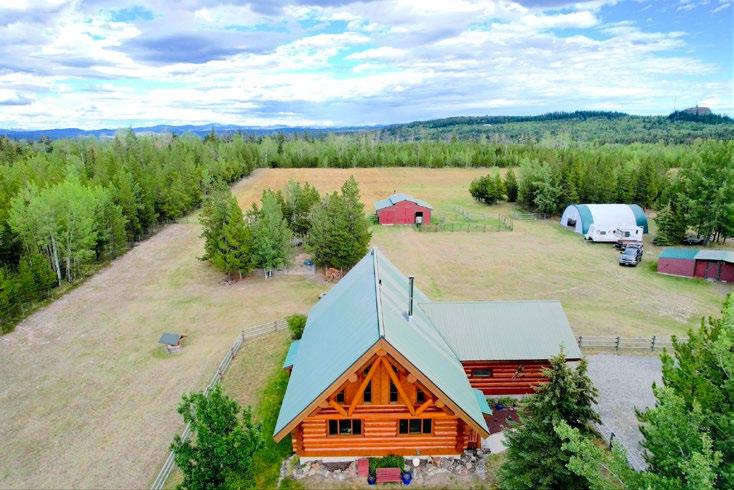
40-acre homestead with a handcrafted 3-bedroom log home, hayfield, fenced areas, greenhouse, gardens, sawmill, woodworking shop, and outdoor oven. Surrounded by nature with Crown Land next door, nearby lakes, & endless opportunities for recreation & self-sufficient living.
A true Cariboo classic on 10+ acres featuring a well-maintained log home, large barn with tack room and hay storage, round pen, fenced pastures, rotational grazing setup, and multiple outbuildings. Horse-ready and hobby-farm friendly, with Crown Land recreation nearby.
A Project Worth Pursuing
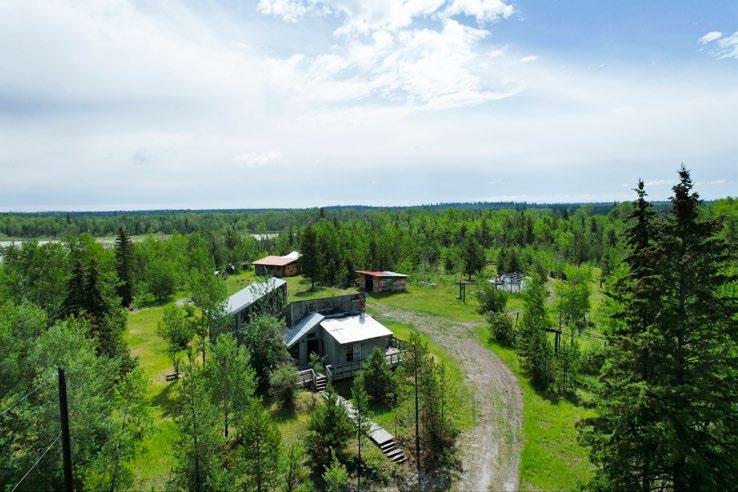
Bring your vision to this 21.5-acre property bordering a small lake, ideally located near Green Lake and 70 Mile House amenities. Featuring a detached shop, large pole shed, greenhouse frame, and additional outbuildings, this property offers potential for a homestead. Sold as is. 1436 S Cariboo Hwy 97, 70 Mile House
Rd Canim Lake
Biss Rd Forest Grove
Rutherford Rd, Bridge Lake
6981 N Netherland Rd, Lone Butte A True Cariboo Classic - Horse Ready
N Netherland Rd, Lone Butte Business Opportunity & Country Living
5548 Little Fort Hwy 24, Lone Butte
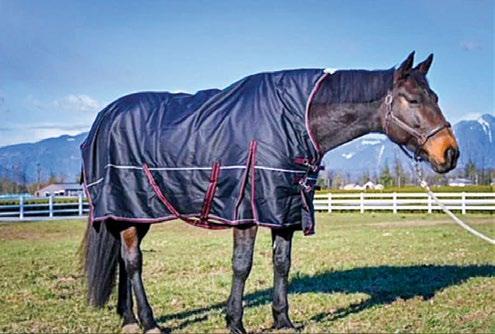
BEDDING, HOG, FUEL, SHAVINGS
REIMERSFARMSERVICE.COM (BC Interior) 1-855-737-0110 or 250-838-0111. Bulk Shavings, Sawdust, Bark Mulch and Hog Fuel. 4x4x4 Shavings Totes
FEED DEALERS
ASHCROFT HOME BUILDING CENTRE (Ashcroft) 250-453-2281 Otter Co-op Dealer & Pet Foods. You can find us on Facebook
HORSE BLANKET & REPAIR
HORSE BLANKET & SADDLE PAD
WASHING & REPAIRS Clean used Blankets for sale Town Centre Dry Cleaners 250-546-0104 Armstrong
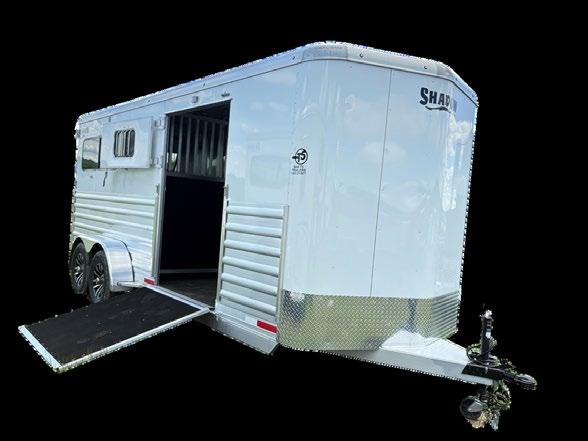
TRAILER REPAIRS
PETERSEN TRAILERS LTD. (Langley) 604-533-4209 Service and Repairs. All makes. petersentrailers.ca
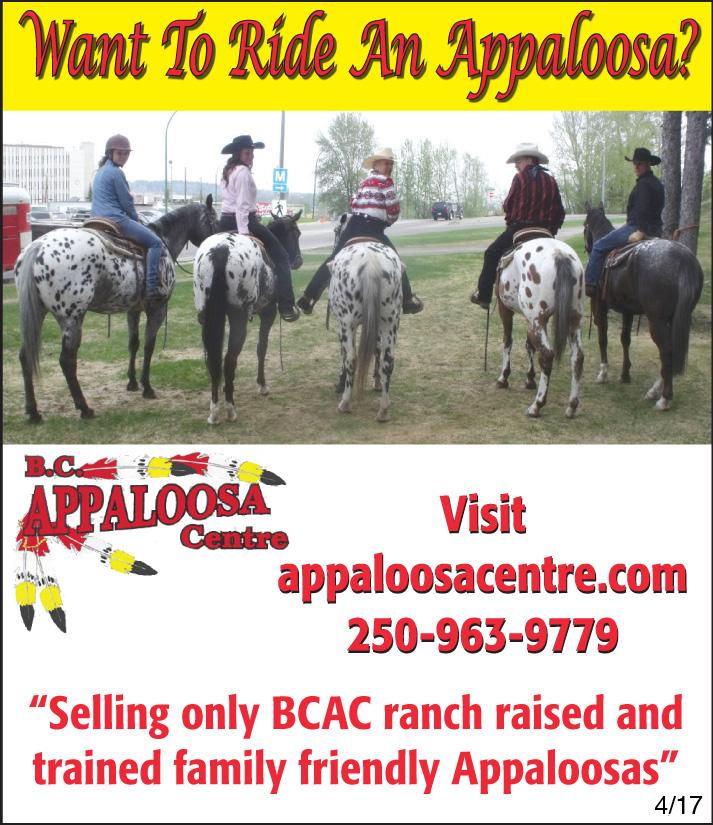
250-963-9779 Real Appaloosas for Today and the Future! VETERINARIANS
CONNECT VETERINARY SERVICES (Okanagan)
250-863-5996 Mobile Equine Dr. Savannah Beavers Dr. Troy Looper connectvetservices.com
INTERIOR VETERINARY HEALTH SERVICES (Okanagan)
250-769-4217, Mobile Equine, Brytann Youngberg DVM, VSMT, College of Animal Chiropractors
PET SUPPLIES & BOARDING
EVERYTHING PETS
Princeton, BC 250-295-7381
Quality Foods & Supplies for all your pets! See us on FB
HARMONY FARM KENNEL AND LAMB
Monte Lake, BC 250-375-2528
“Custom Care” boarding welcomes ALL dogs!
Harmonyfarmkennelandlamb.com
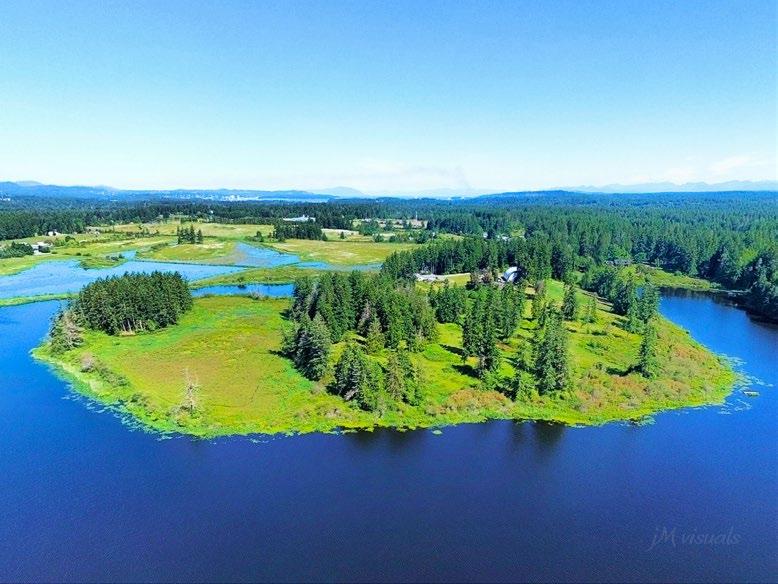
Rural Roots Real Estate
Extraordinary 48-acre peninsula on Quennell Lake, in Nanaimo. With over 5,000+ feet of shoreline. Includes a spacious 3 bed main home, and 2-bedroom cottage. Equestrians will love the 5-stall barn, pastures, paddocks & a covered arena. Just a short drive in or fly in by float plane. It feels like a sanctuary! Enjoy unlimited water recreation and live a life you don't need to take a vacation from. Property also has development potential.