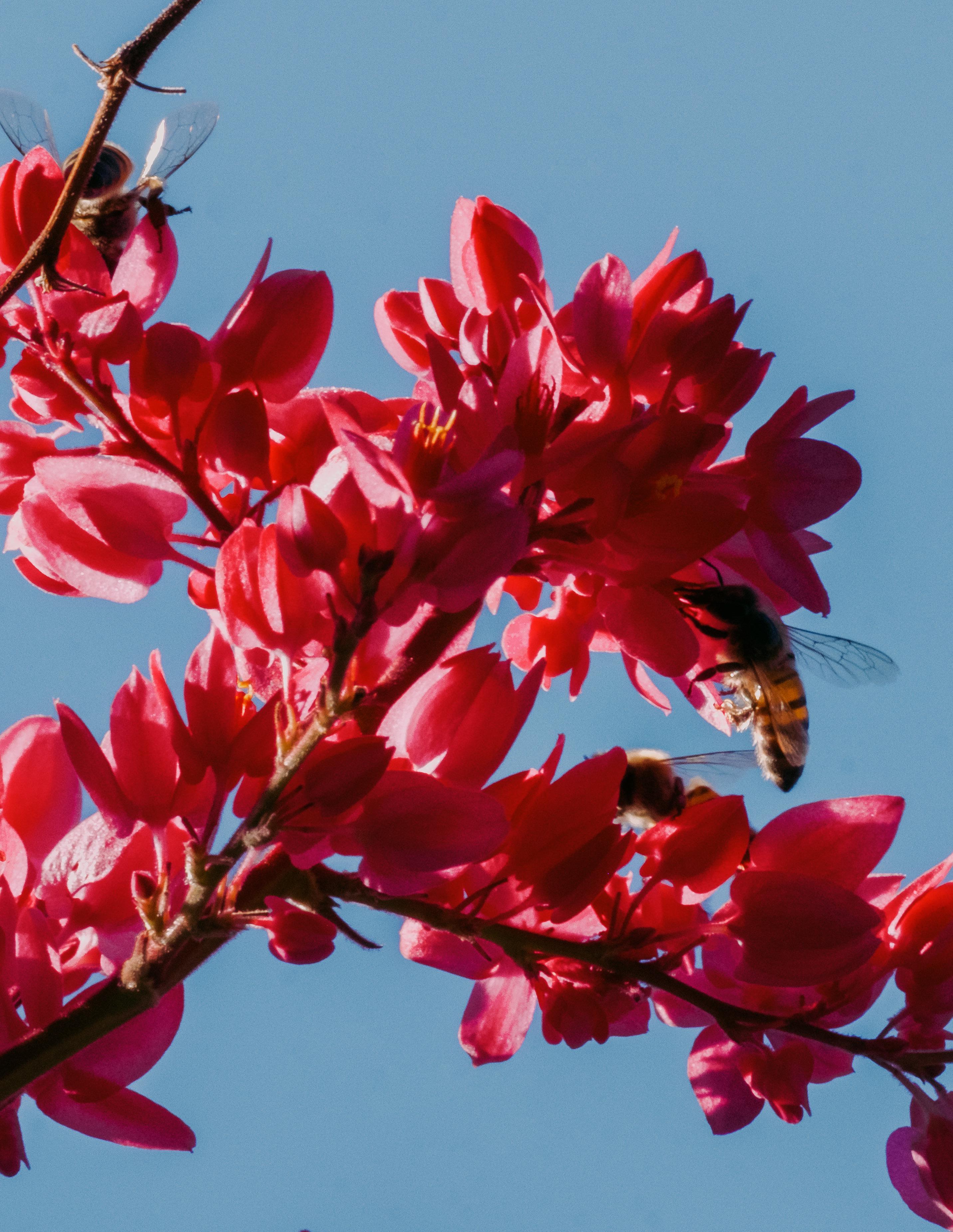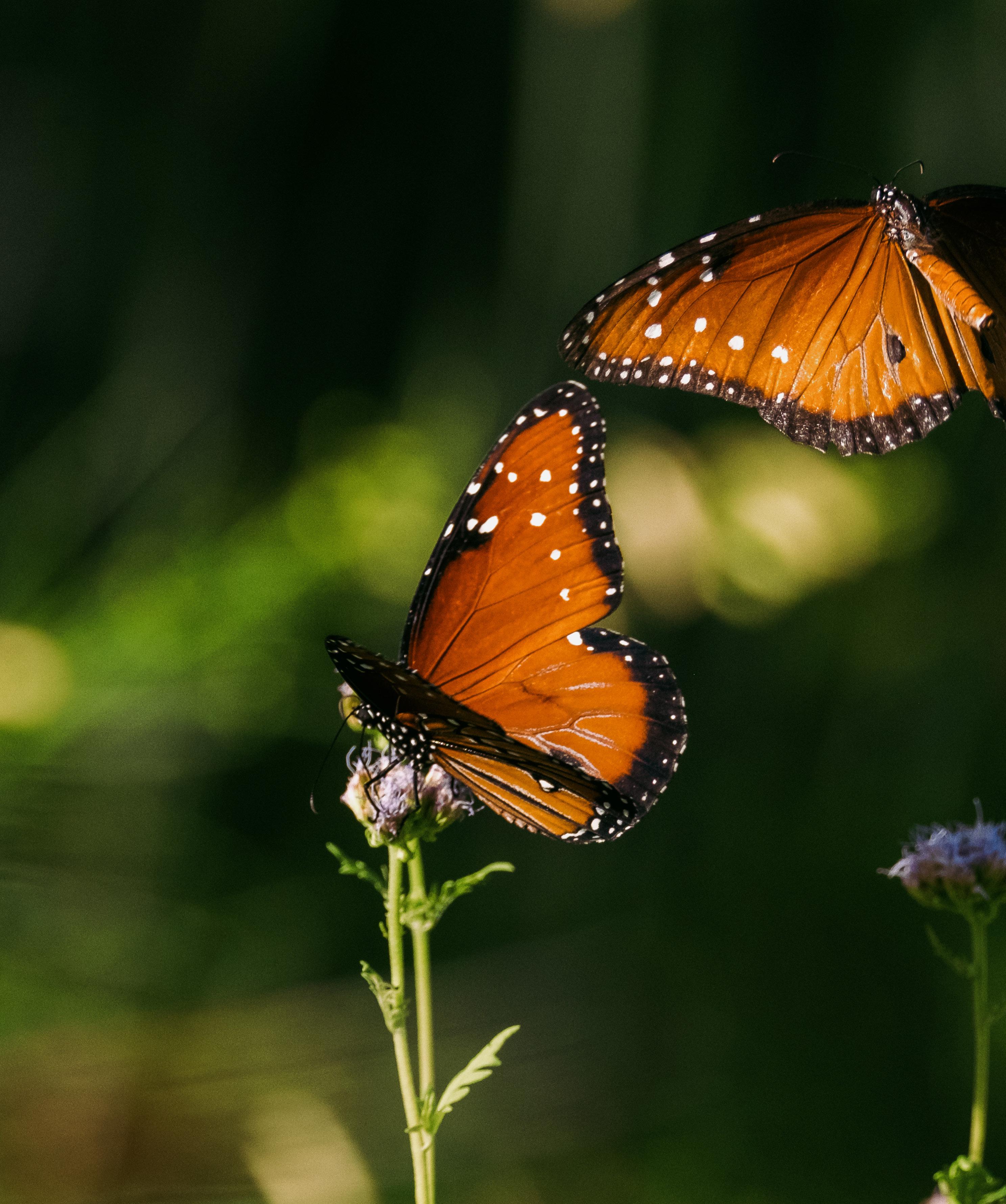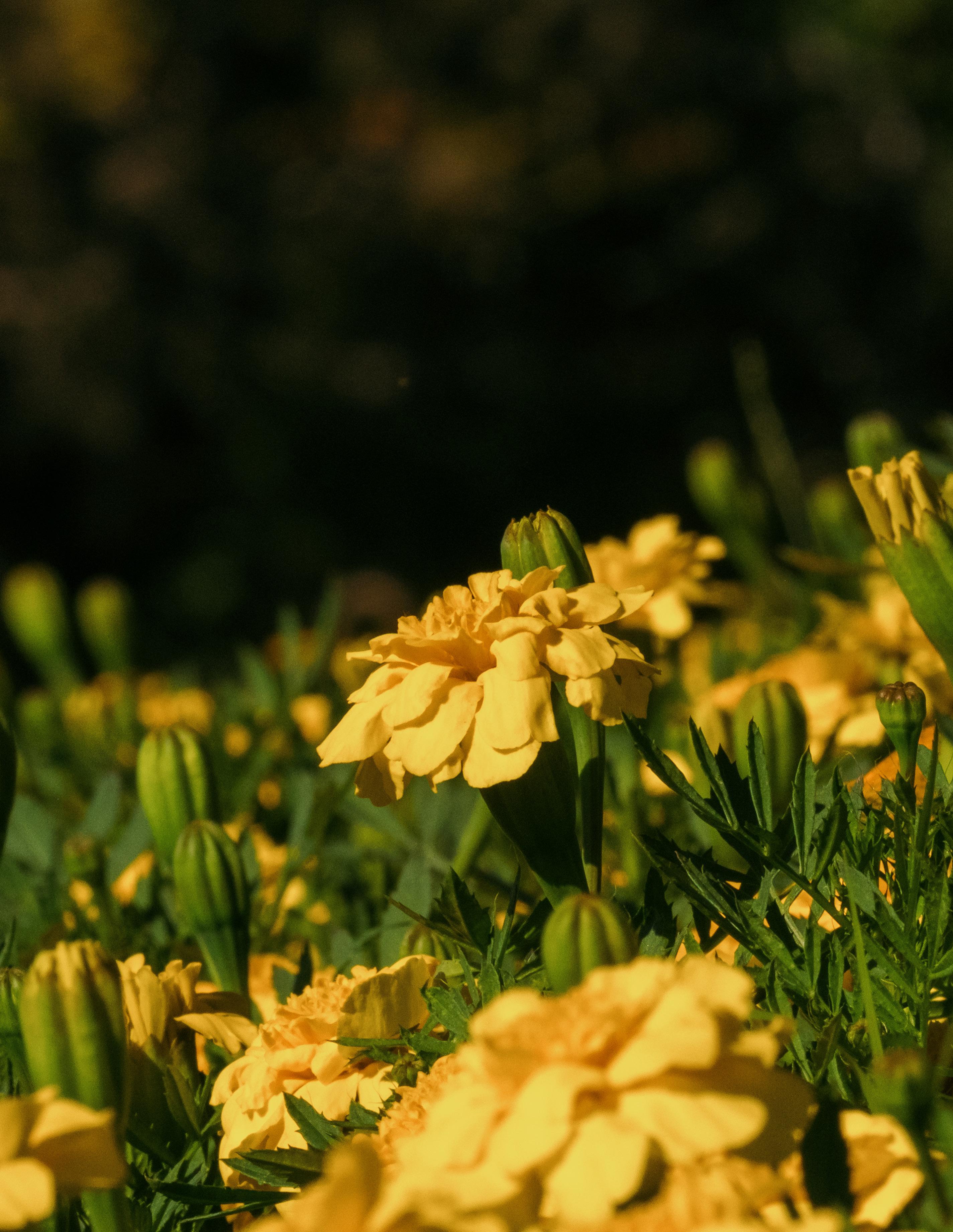
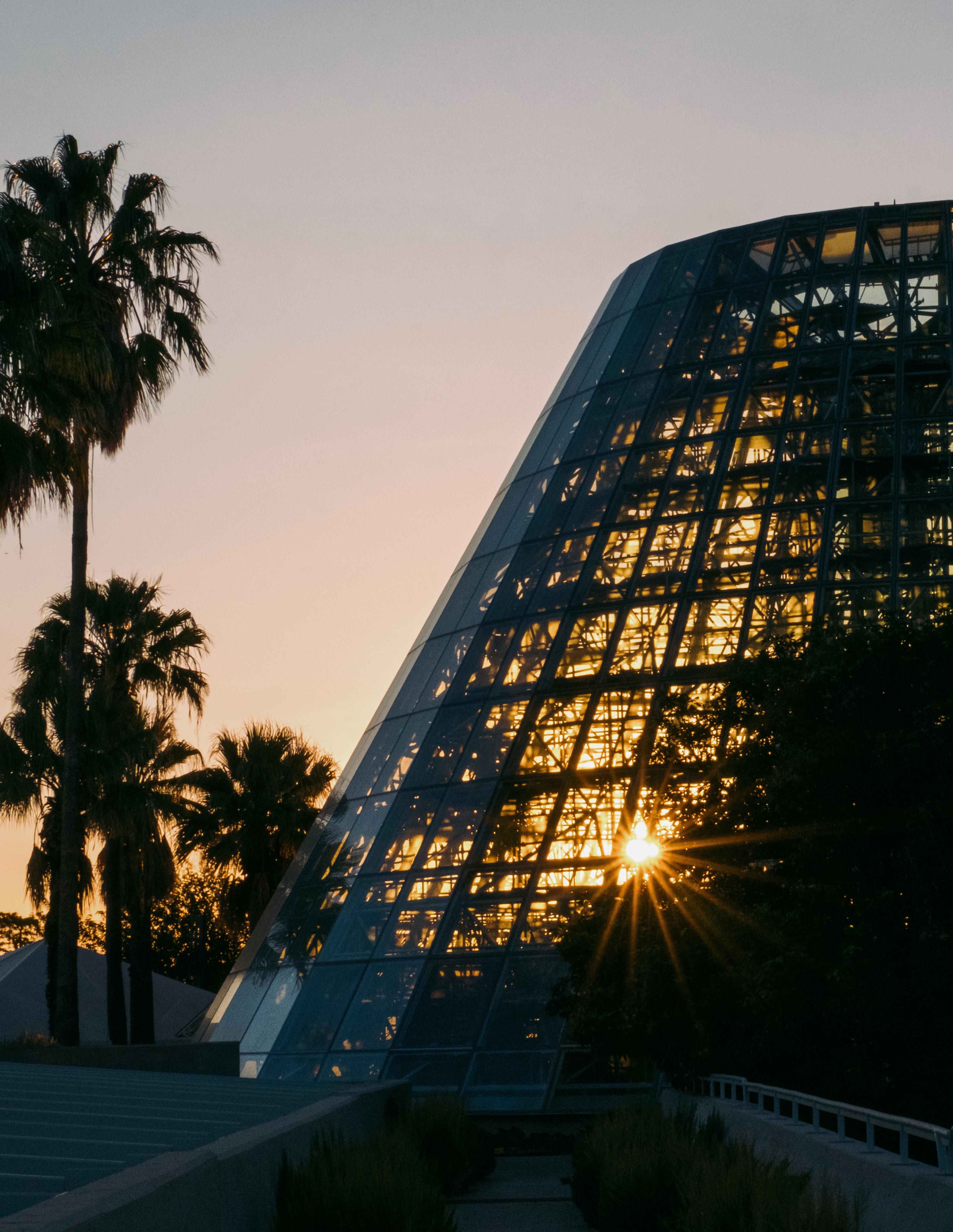
In this issue of Vibrante, you’ll see evidence of something transformative: the San Antonio Botanical Garden’s mission of enriching lives through plants and nature is expanding past our 39 acres, taking root in the community, across Texas, and beyond.
The TREES initiative (Texas Recovery for Ecological and Environmental Stability) exemplifies this vision. In the aftermath of the devastating July 4, 2025, Hill Country flood, we asked: how can our Garden extend our mission to support our neighbors in Kerr County? The answer has been extraordinary. Powered by 373 volunteers who’ve contributed over 1,100 hours, generous donors, our dedicated Garden team, and partnerships with conservation organizations, Kerr Together, the City of Kerrville, regional businesses, and more, we’re planting more than 50,000 native trees along the Guadalupe River by 2028. I invite you to consider how you might be part of TREES, our largest outreach project to date. Thanks to a $1 million matching opportunity from the Community Foundation of the Texas Hill Country’s Kerr County Flood Relief Fund, the impact of every donation given to TREES until April 15, 2027, is doubled.
Alongside Conservation, Access is a core pillar. The Garden for All initiative is our commitment to creating pathways that invite everyone through our gates and foster a sense of belonging. Our Nature Navigator Shuttle Access program removes transportation barriers and brings outdoor connection to underserved communities. DementiaFriendly Gardening sessions help friends find joy together through no-cost
horticultural therapy. School field trips and summer camps introduce young people to the wonder of plants.
As part of our many fall festivities, join us September 15 through November 2 to experience our newest tradition: Regina Moya’s artistry in Jardín de las Catrinas—a celebration of culture and memory, featuring tens of thousands of marigolds, living Catrinas sculptures, and refranes that bring wisdom to life during Día de Los Muertos
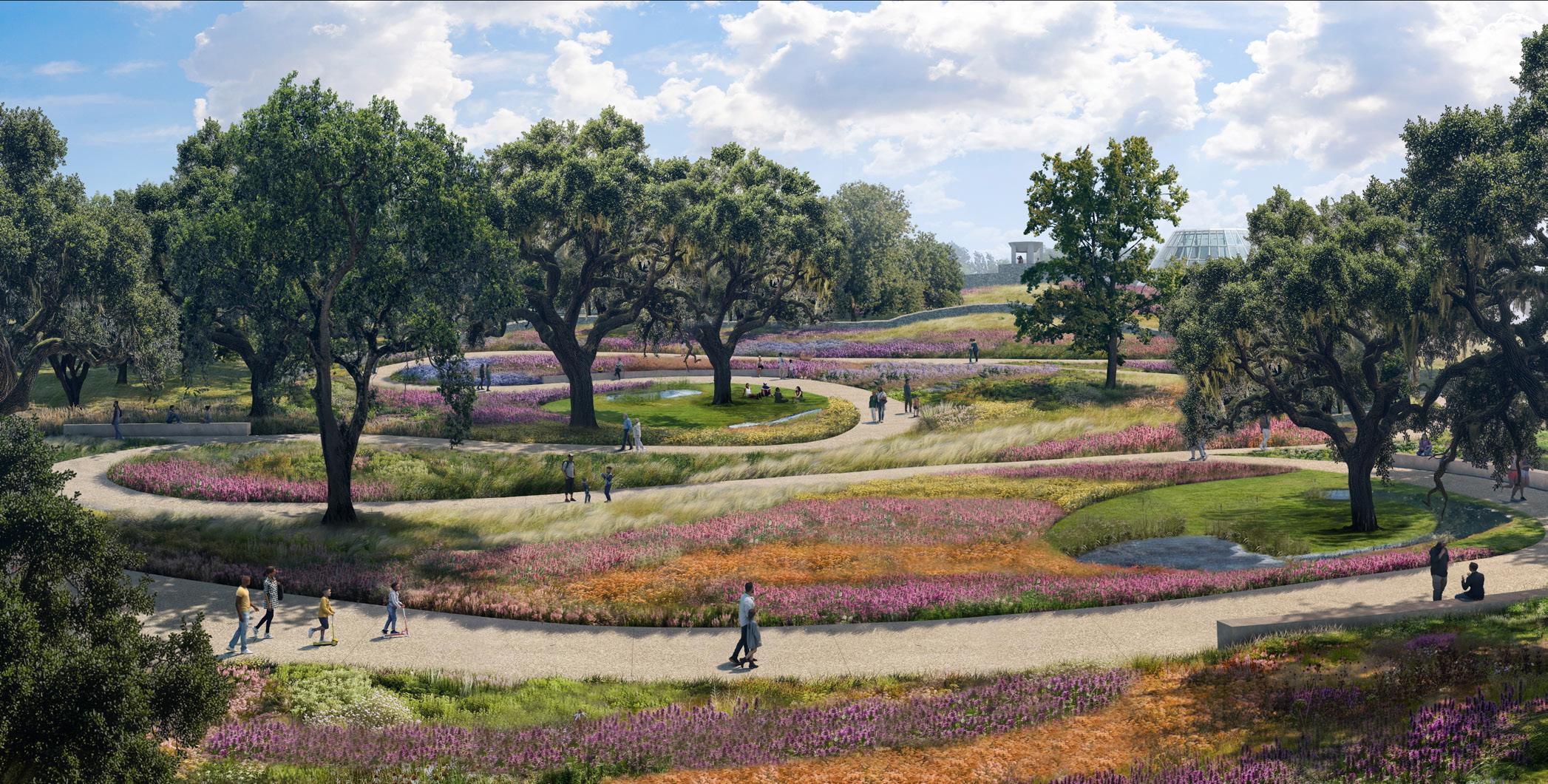
We are in a season of extraordinary growth. Our 10-year Master Plan is underway, with significant enhancements, including the opening of the Napier Orchid Pavilion and the Gretchen Northrup Tropical Conservatory in Spring 2027. In these pages, you’ll get a sneak peek at The Charline McCombs Pollinator Meadow Garden, opening in late 2028. This 2.5-acre garden in the heart of our 39 acres will be a stunning celebration of butterflies, bats, bees, and birds, showcasing our Texas Oaks and milkweed collections in a cultivated landscape with year-round interest and color. This one-of-a-kind, living classroom will represent the generations of people who keep SABG brimming with life.
The Garden was recently honored with the 2026 Grace and Harmon Dobson Legacy Award. We are so grateful to the Dobson Family Foundation for this meaningful recognition, which reflects our shared commitment to strengthening community through stewardship, education, and access to nature. Inspired by the Dobson family’s

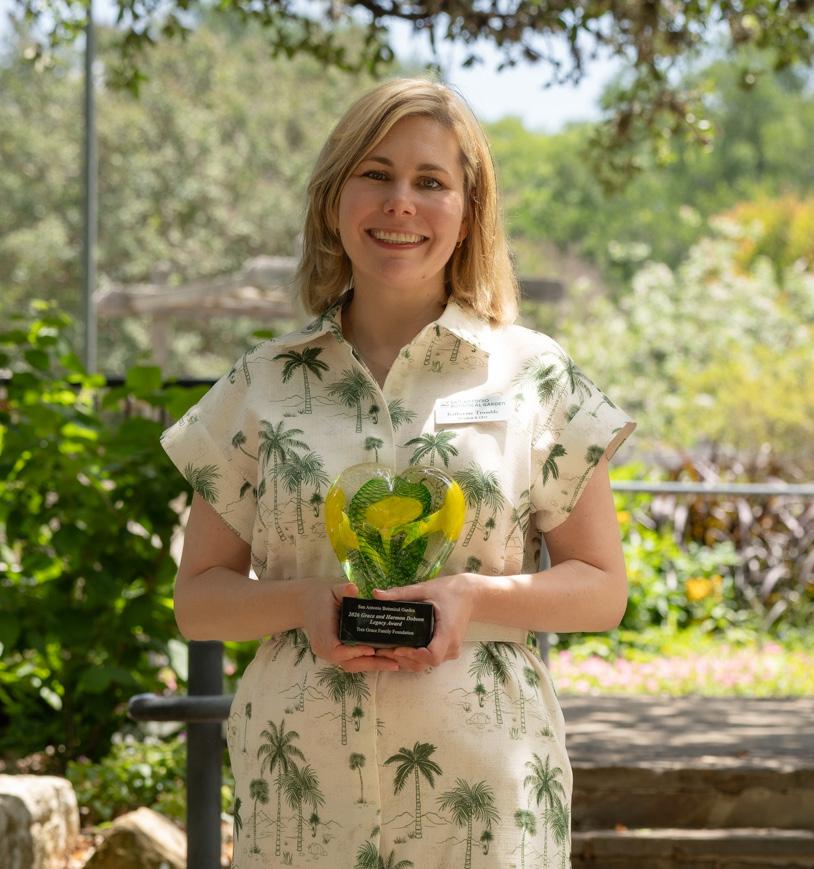
legacy of generosity and service, we accept this award with sincere appreciation and dedication to helping San Antonio and Texas flourish.
The Garden you’ve loved and supported for years is entering a new chapter with greater inclusion and impact. This is possible because of you. Thank you for your contributions, memberships, volunteer hours, and belief in the mission.
See you in the Garden,

Katherine Tumble President & CEO
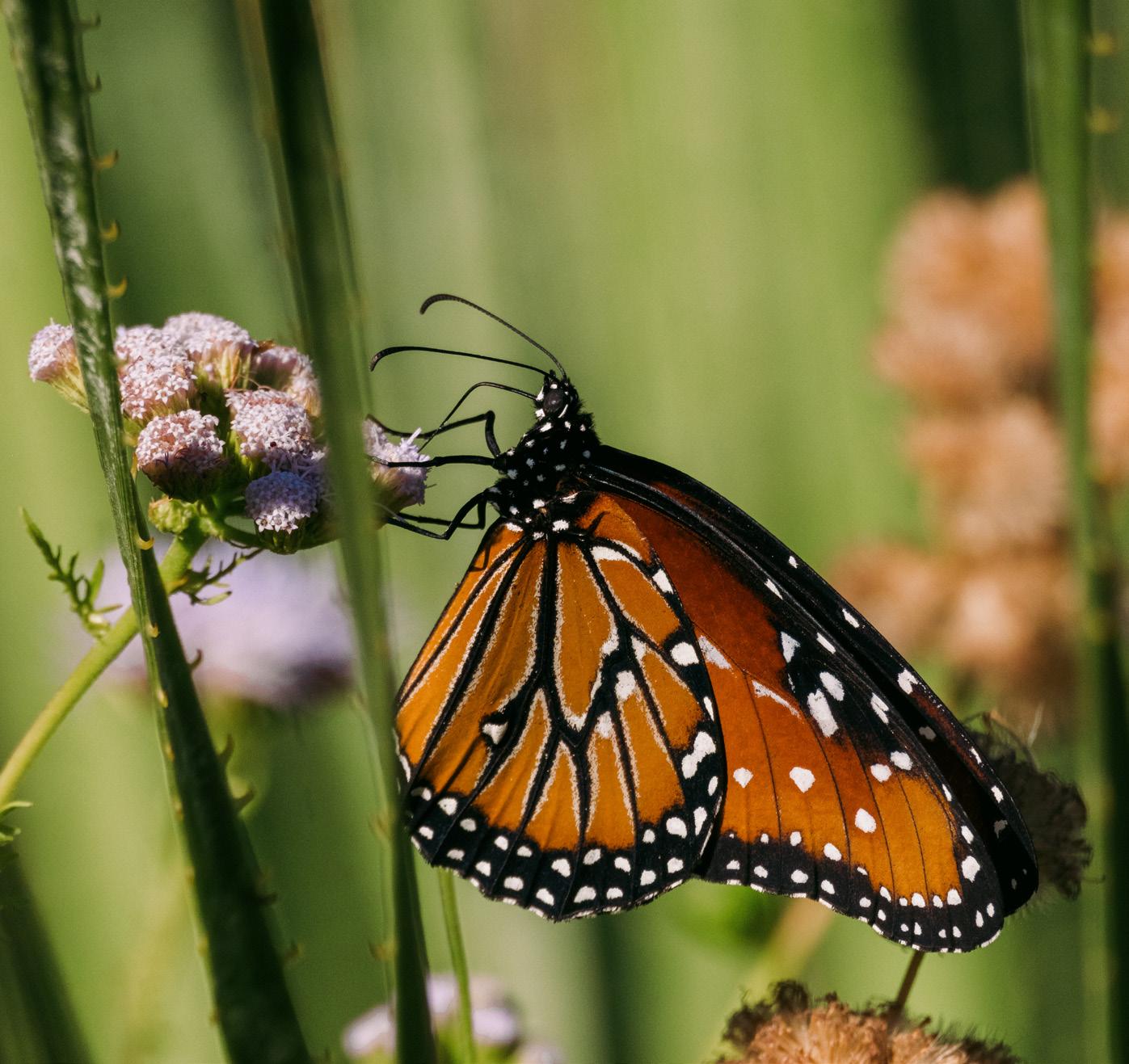
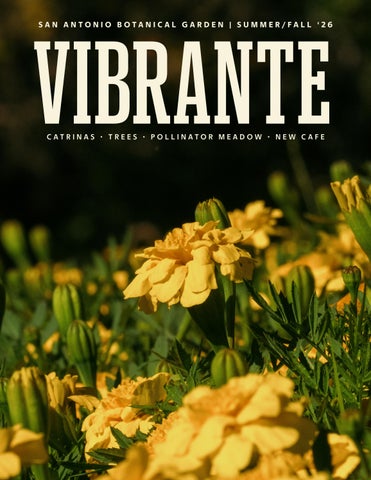
Our Mission Enriching lives through plants and nature On the cover Fall blooms from 2025’s Cempasúchil in Flight: A Living Monarch Mural Editor Cielo Strategy Group Designer
Contributors
Andrew
Jami
Membership
* Free with Admission or Membership
$ Additional Fee with Program or Event
Second Saturdays, June – August 2026
1 – 3 p.m.
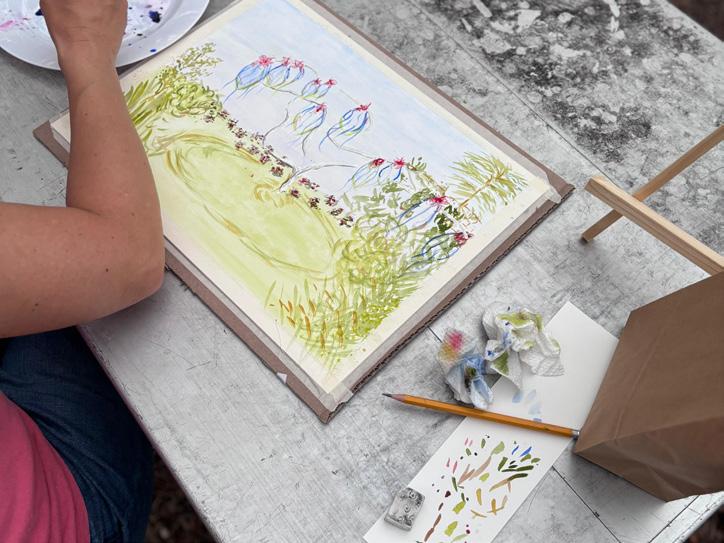
Join artist Jackie McKissack, “Lulu”, in a beginner’s course in the art of watercolor. Participants will receive a kit with a test sheet, a watercolor brush, paint samples, and presketched watercolor paper to work through in the class. Ages 13+. $
Saturday, August 1, 2026 | 10 - 11:30 a.m.
Knot your average 70’s macrame project! Learn the basic knots with instructor Andrea Cisneros to create your own personal plant hanger and add a small potted plant to finish it off. $
First and Third Thursdays
June – September, 2026 | 1 – 3 p.m.
Explore the Garden through drawing, with an emphasis on observing and drawing plant details such as flowers, leaves, and tree bark, while experimenting with techniques to depict light, shadow, and texture. Supplies provided, but participants are welcome to bring their favorite drawing tools. *
Saturday, August 22, 2026 | 10 a.m. - 12 p.m.
Learn how to make handmade paper from recycled paper scraps. Different techniques and tools, such as stencils, will be used to manipulate the paper and make unique works of art. Ages 6+. $
Saturday, September 9, 2026 | 6 - 7 p.m.
Join florist and horticulturist, Layni Langham, to plan a productive cut flower garden. Learn how to prepare your garden for success, and select flower varieties that thrive in San Antonio’s climate. This class will cover flowers and foliage you can grow in your own backyard and use to create beautiful, seasonal floral arrangements. $
Explore our selection of badge-focused programs designed to help Girl Scouts, Cub Scouts, & Boy Scouts of all ages meet requirements while learning through handson activities in the Garden. Programs take place outdoors and last approximately 60–90 minutes. Available on weekday afternoons before Garden closing time and Saturday mornings, depending on availability, and must be scheduled at least two weeks in advance.
Fee: $12 per Scout and adult participant; minimum of 10 Scouts.
Tuesday, August 18 & 25, 2026 | 5 - 7 p.m.
Kick off the new Girl Scout year with an evening in the Garden. Troops will enjoy hands-on activities, explore the Garden together, and learn about badge programs available throughout the year. $
March – October
8 a.m. - 6 p.m. | Monday - Friday
8 a.m. - 7 p.m. | Saturday - Sunday
7 a.m - 8 a.m. | Members Only Hour Hours change seasonally.
Junior Cooking Camp: Fall Flavors
Monday – Wednesday
November 23-25, 2026 | 9 a.m. – 3 p.m.
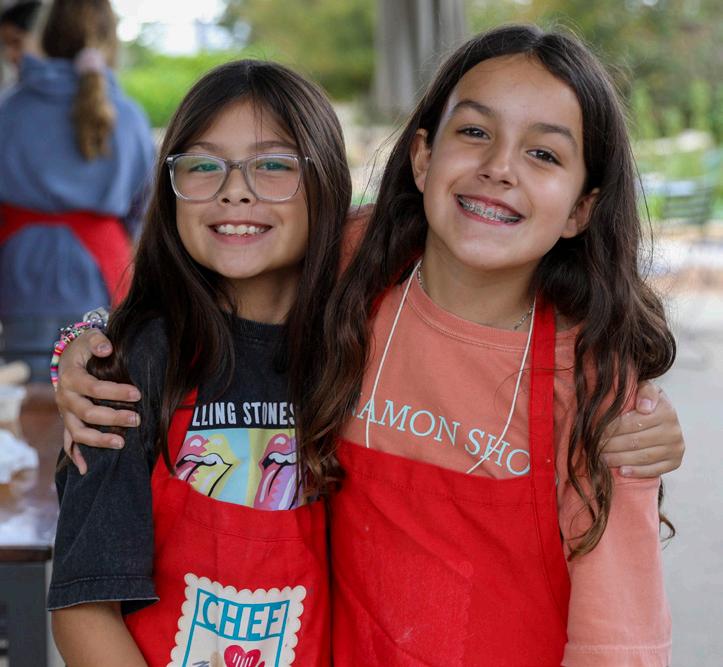
Unleash your child’s inner chef and outdoor enthusiast at our Junior Cooking Camp at the Garden! This hands-on culinary experience is designed for fwood lovers between the ages of 8-12. Participants will make fall seasonal dishes inspired by what’s growing in our Garden. Campers will have designated time for nature and art-making in the afternoon. $
Wednesday, July 1, 2026 | 6 - 8 p.m.
To end the Otherwild-inspired series, come see what the culinary team is slicing and smashing in a vegetarian, avocado-centered class at the Sullivan Carriage House. $
Saturday, July 11, 2026 | 11 a.m. - 12:30 p.m.
This hands-on cooking class at the Sullivan Carriage House features Pisco Sours and Latin American-inspired flavors. $
Ratatouille
Thursday, August 6, 2026 | 6 - 8 p.m.
Come make your own version of the classic French dish with ingredients from the Garden and enjoy it with roasted chicken, French bread, and a glass of wine. $
Uncorked at the Garden: Summer Somm Series
Wednesday, July 15 & August 26, 2026
6 - 8 p.m.
Sommelier Fabien Jacob presents “Sparkling Wines of the World” in July, and Hailey Pruitt, Sommelier and Wine Director at Michelinstarred restaurant Mixtli, will present favorite white wines in “It’s Too Dang Hot for Reds.” $
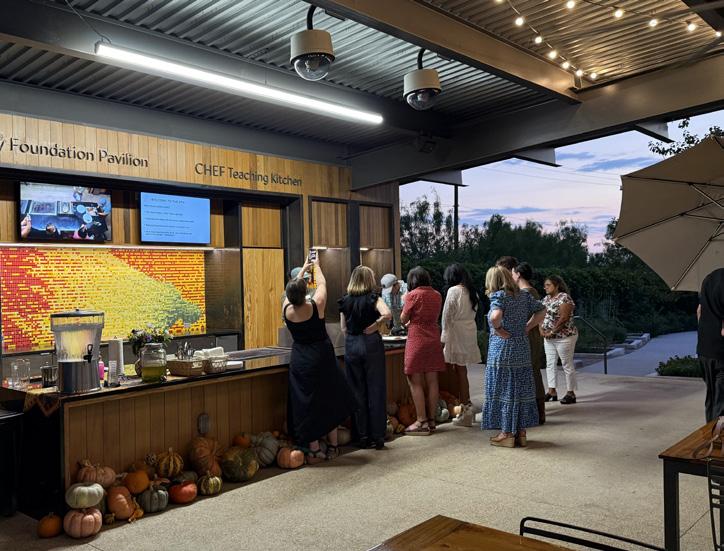
Fresh Cuts - Herbs in the Kitchen
Wednesday, July 22, 2026 | 6 - 8 p.m.
Wondering what to do with all those herbs in your garden? Be inspired as the culinary team whips up infusions, marinades, and sauces using summer-time produce from the Garden. $

November 20 - January 10, 2026
Not Just a Pretty Flower: Cocktail Scavenger Hunt
Saturday, September 19, 2026
11:30 a.m. - 1 p.m.
In conjunction with ¡Celebrando!, we are celebrating marigolds with a festive, delightful afternoon featuring the smoky depth of Mezcal. $
Oktoberfest in the OTK
Saturday, October 17, 2026
11:30 a.m. - 2 p.m.
Feast on bratwurst, schnitzel, sauerkraut, and soft pretzels while sipping refreshing brews at the Outdoor Teaching Kitchen. Chefs Mark and Erik will lead live demos, sharing tips and techniques. $
Group Cooking Classes
Contact mweaver@sabgtx.org or eperales@sabgtx.org
Enjoy our one-acre Culinary Garden for a seasonal, hands-on culinary experience guided by our chef team. Perfect for team building, celebrations, or staff/client appreciation. Off-site programs are also available.
Celebrate Infinity Day
Saturday, August 8, 2026 | 9 a.m. - 1 p.m.
Celebrate the endless cycles and processes that sustain life. From the nutrient and water cycles to pollination and propagation, guests can explore how plants depend on infinite renewal. *
Saturday, September 19, 2026
9 a.m. – 1 p.m.
Explore Catrinas throughout the Garden during the new exhibition, Jardin de las Catrinas: De Catrinas a Refranes, and enjoy the connection between culture and nature, monarch migration, and autumn traditions. *
Celebrate Día de los Muertos
Saturday, October 31, 2026 | 9 a.m. – 1 p.m.
Enjoy fun activities inspired by this cultural holiday. Activities will include nature-based art, live music, and themed drop-in tours. * Play together.
BOOtanica
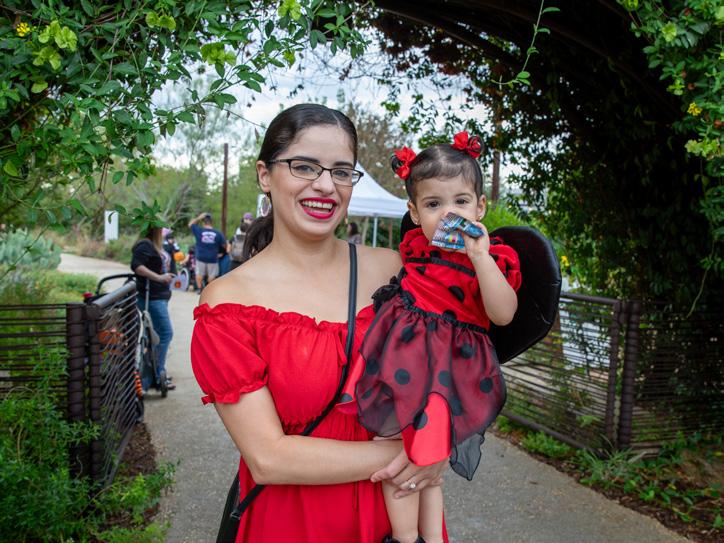
Saturday, October 17, 2026 | 9 a.m. – 1 p.m. Bring the family in costume and walk the trick-or-treat trail, explore nature-themed education stations, and enjoy concessions available for purchase. BOOtanica is one of the Garden’s family-friendly events, offering guests a chance to explore a botanical theme through hands-on stations led by educators. *
Saturday, November 21, 2026 | 9 a.m. - 1 p.m. Garden will showcase Fibonacci, the world’s favorite sequence: 1, 1, 2, 3, 5, 8… From the spiral of a sunflower to the arrangement of leaves on a stem, Fibonacci numbers describe how plants grow efficiently and beautifully. *
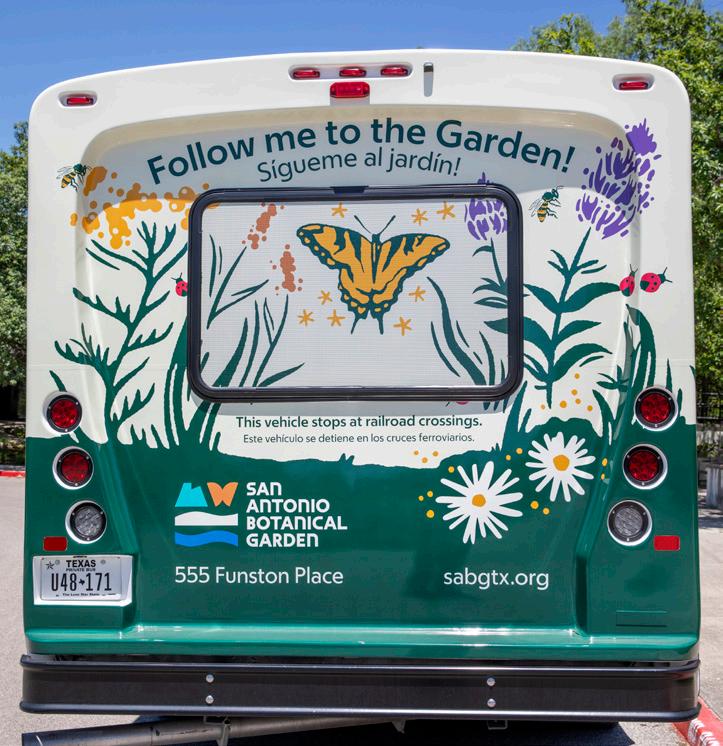
Navigator: Growing Community
The Garden’s Nature Navigator program helps remove barriers to entry by providing free shuttle transportation, admission, and programming for community groups across Bexar County and the surrounding areas.
Groups can choose one of our educational programs, including a self-guided garden visit, guided garden tour, planting, art, or cooking activity, or a class from our public program schedule.
Groups may either drive themselves or request a ride on our Nature Navigator shuttle, which includes a wheelchair lift and space for up to 24 passengers, including two wheelchair users. Pick-up and drop-off for groups are from one central location.
For more information contact Olivia Predmore, Community Access Coordinator, at opredmore@sabot.org
Select Wednesdays, August 19 –December 9, 2026
11 a.m. – 12:30 p.m.
A gardening class designed for people living with dementia and their caregivers. Come ready to get your hands dirty and learn from caring educators and volunteers. Please bring a water bottle and dress for the weather. *
Offered seasonally throughout the week. Tours range from water-saving gardening to exhibition tours. *
March–November | 10 – 10:30 a.m.
Young explorers can discover the wonders of nature through weekly early childhood programs at the Garden. Designed for children ages 5 and under, these engaging experiences inspire curiosity, creativity, and a love of the outdoors. *
• Little Sprouts Hike (Tuesdays) – Nature walks with simple lessons that introduce young children to plants, wildlife, and the natural world.
• Nature Exploration in the Family
Adventure Garden (Wednesdays & Saturdays) – Hands-on nature play and sensory activities that encourage outdoor discovery.
• Storytime in the Garden (Thursdays) –Nature-themed stories shared outdoors to spark imagination and appreciation for nature.
Indoor houseplant workshops and patio gardening lectures will be offered throughout summer. Classes include houseplant propagation, creating in-home arrangements, and more. $
Saturday, September 5, 2026 10 - 11:30 a.m.
Learn the “thrill, fill, spill” technique to create beautiful, eye-catching container gardens. Design a 10-gallon pot to take home with plants and materials provided. Recommended for adults. $
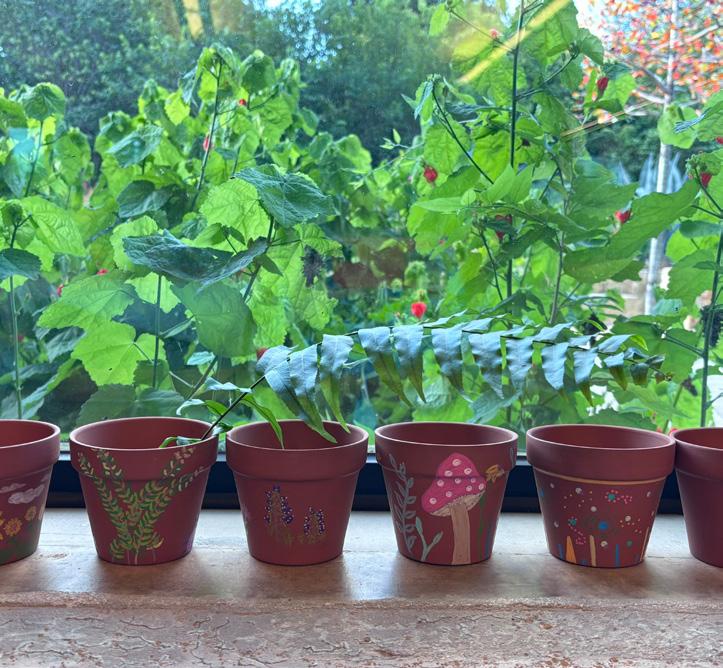
Saturday, August 15, 2026 | 10 a.m. – 12 p.m. Learn how to make different versions of seed bombs using clay and paper. Ages 6+. $
Friday, August 14, 2026
7:30 p.m. – 9:30 p.m.
Friday, September 18 and October 16, 2026
7 p.m. – 9 p.m.
Explore the sights and sounds of nature after dark. Led by Garden educators, this adventure will introduce you to the nocturnal plants and animals that come alive at night. Listen for bats, search for spiders, and enjoy the garden’s peaceful atmosphere lit by moonlight. Don’t forget your flashlight, comfortable shoes, and a reusable water bottle. Ages 4+. $
Children’s Vegetable Garden
Saturdays, August 22 – December 12, 2026
8:30 – 10:30 a.m.
With the support of educators and volunteers, families tend to their own 3.5′ x 28′ plot and take home the harvest. Planting activities and nature-based lessons connect young growers to the power of plants, the joy of gardening, and the food on their plate. $
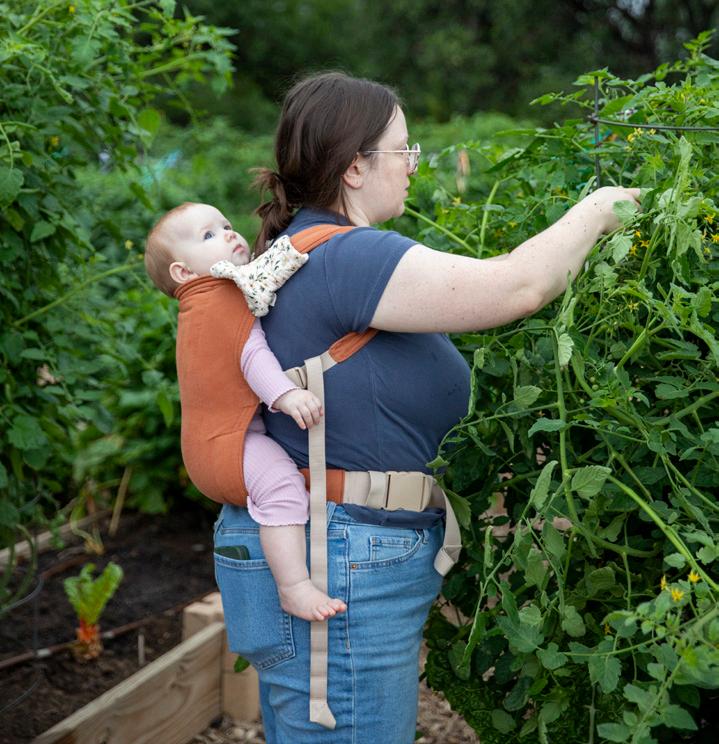
Trees and Certified Arborist Prep Course
Fridays, October 2, 9, 16, 23, 2026
9 a.m. - 4 p.m.
This 32-hour course is designed to prepare professional arborists for the ISA Certification exam with a certificate for continuing education hours. Topics include tree biology and care, diseases, and worker safety. In partnership with the San Antonio Arborist Association and Alamo Forest Partnership. $
Family Workshop: Haunted House Terror-iums
Saturday, October 24, 2026
11a.m. – 12:30 p.m.
Dive into the art of making beautiful, miniature plant worlds. Families will learn to build their own terrariums using plants and seasonal spooky elements. Participants will take home the terrarium creations they make during class. Themed containers, miniature Halloween decor items, and plants will be provided to each participant. Children must be accompanied by an adult. $
Offsite Presentations options cover general garden information or WaterSaver Gardening. Presentations last about one hour and are ideal for small or large audiences. *
Private Guided Tours are designed for groups looking to explore with a guide from a range of tours, from general garden to seasonal exhibitions. Tours last about one hour and are designed for groups with at least eight people. *
Private Succulent or Floral Arranging Workshops are perfect for groups of 10-20 guests on or offsite. Create a unique arrangement to take home with tips to keep it fresh after you leave. *
Planting: Layered
Featuring Fergus Garrett, CEO of The Great Dixter Charitable Trust
Tuesday, October 27, 2026
6 p.m. wine reception, 6:30 p.m. lecture
Discover how to create gardens that bloom brilliantly from spring through autumn. Fergus Garrett shares the principles of extendedseason gardening through strategic layering: underplanting with bulbs, deploying selfsowers and temporary fillers, and using shape and foliage for year-round interest. The heart of the talk focuses on how bulbs and woodland plants transform perennial borders—from delicate snowdrops to stately alliums—creating seamless transitions in color across the seasons.
Even in climates like San Antonio, longseason gardening is easier to achieve than you might think. With hardy shrubs and strategic plantings, you can maintain visual interest and botanical intrigue from early spring through winter. *
About the speaker:
Fergus Garrett has been Head Gardener at the internationally acclaimed Great Dixter Garden in East Sussex, UK, since 1993, where he learned his craft from the legendary Christopher Lloyd. Now CEO of the Great Dixter Charitable Trust, Fergus is a highly decorated horticulturist whose honors include the 2019 Victoria Medal of Honour from the Royal Horticultural Society. He is dedicated to sharing his expertise in ornamental gardening and ecological practices through teaching, lectures, and projects that promote biodiversity worldwide.
The Ellie Selig Distinguished Garden Design Lecture Series aims to provide inspirational and informative ideas for garden-making from renowned garden designers, landscape architects, or garden makers.
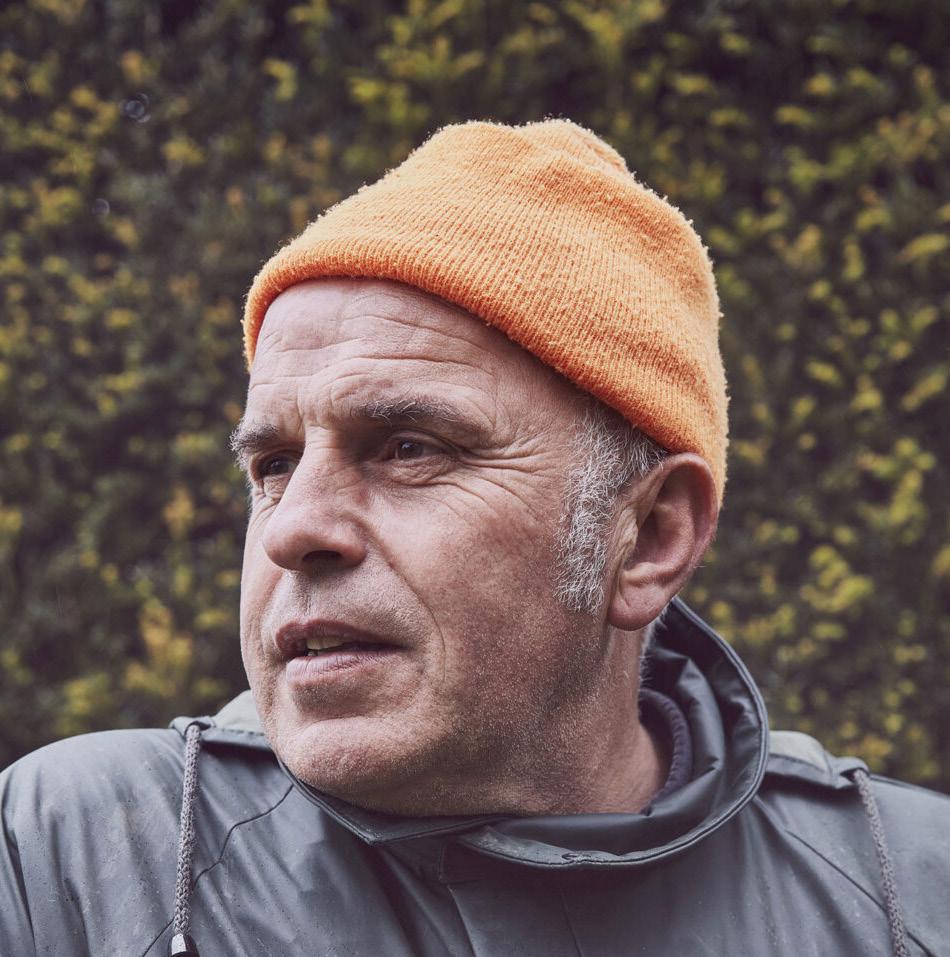
Find your calm.
Wellness classes at the Garden invite participants to slow down, move mindfully, and reconnect with nature. Programs such as yoga, meditation, sound baths, and run club offer peaceful experiences designed to support relaxation and well-being in a beautiful outdoor setting. *
By Katie Erickson, VP of Learning & Interpretation
Andrew
Labay, Chief Mission Officer
Alexander Ramos, VP of Experience
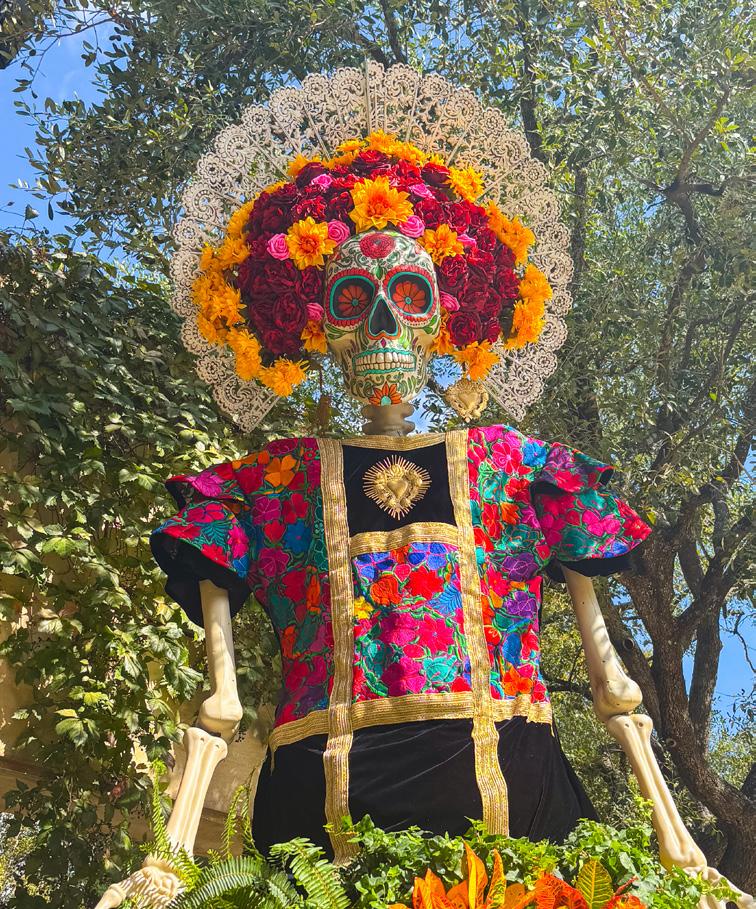
La Catrina is an iconic figure in Mexican culture—an elegant skeleton woman dressed in elaborate clothing and ornate hats, often adorned with flowers. Created by artist José Guadalupe Posada in the early 1900s and later popularized by muralist Diego Rivera, La Catrina has become a beloved symbol of Día de los Muertos (Day of the Dead).
Far from representing fear or darkness, Catrinas celebrate the joy of life and the continuity of memory. They remind us that death is not an ending but a transformation— and that those we’ve loved remain present through stories, traditions, and the natural cycles that surround us.
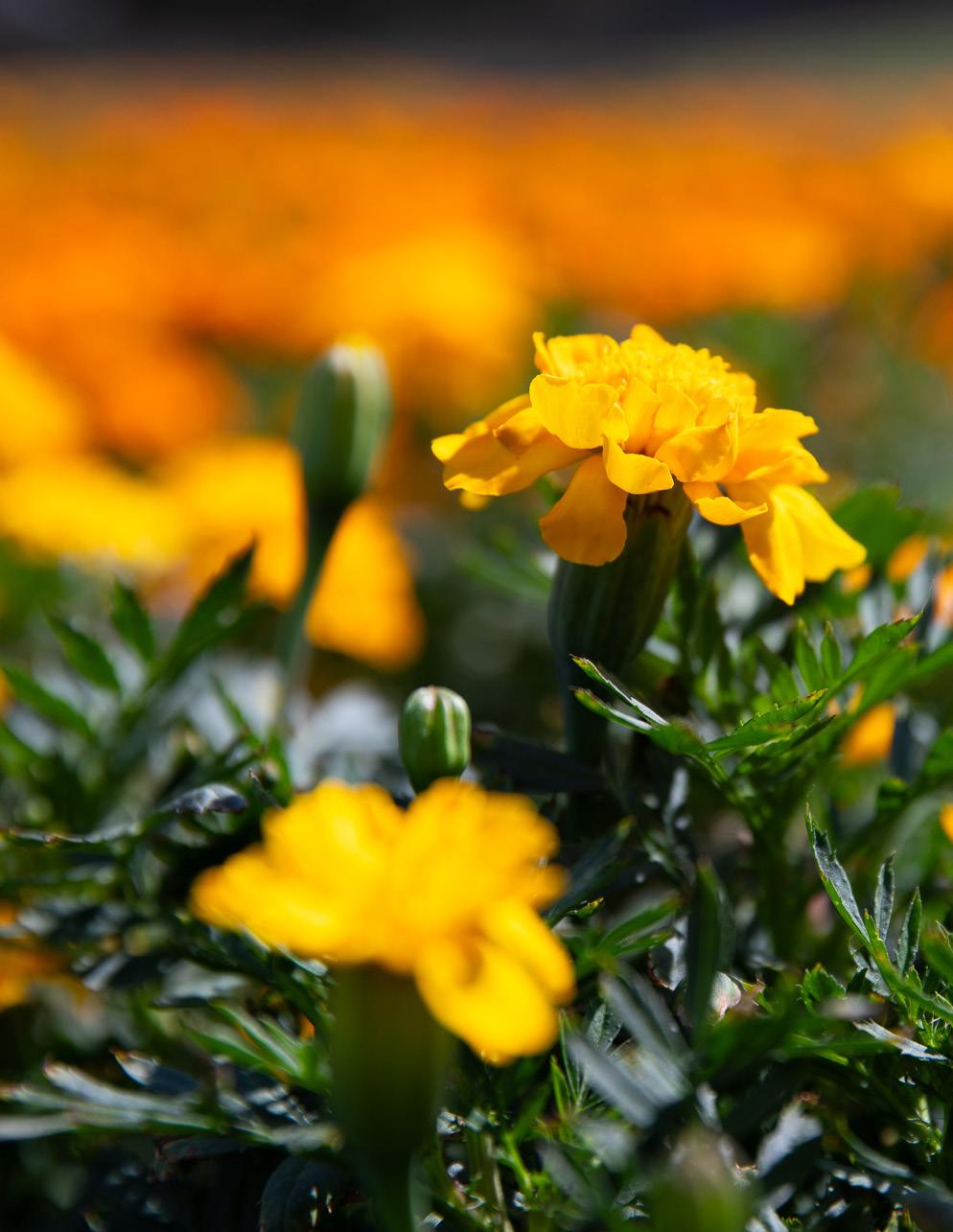
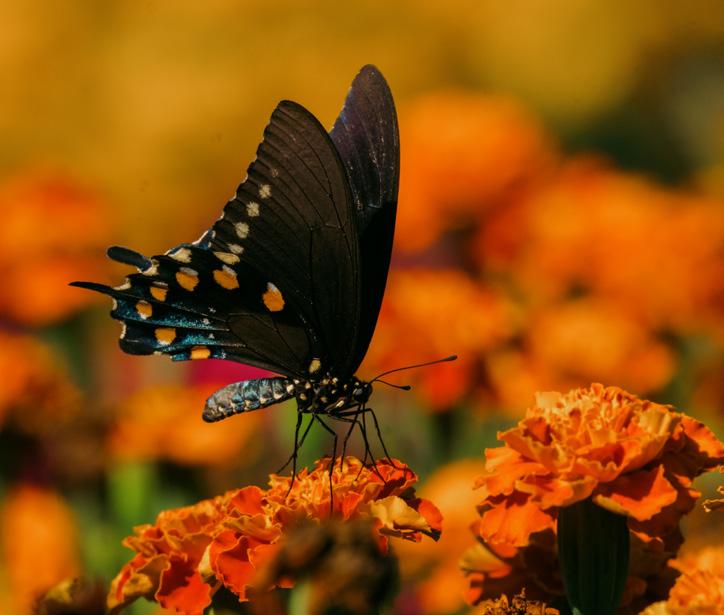
In Mexican tradition, Catrinas are often depicted with marigolds (cempasúchil), whose vibrant colors and distinctive scent are believed to guide spirits home during Día de los Muertos celebrations.
At the Garden, these monumental living sculptures—some standing 16 feet tall and created from hundreds of plants—blend art, horticulture, and cultural tradition into something entirely new: a living celebration of memory, beauty, and the wisdom that plants and people carry forward together.
What began modestly has grown into something extraordinary—a tradition that now draws visitors from across Texas and beyond. The Garden’s marigold celebration began in 2023 with 10,000 flowers—a vibrant tribute to Día de los Muertos and to the cultural significance of cempasúchil (marigolds) in Mexican tradition.
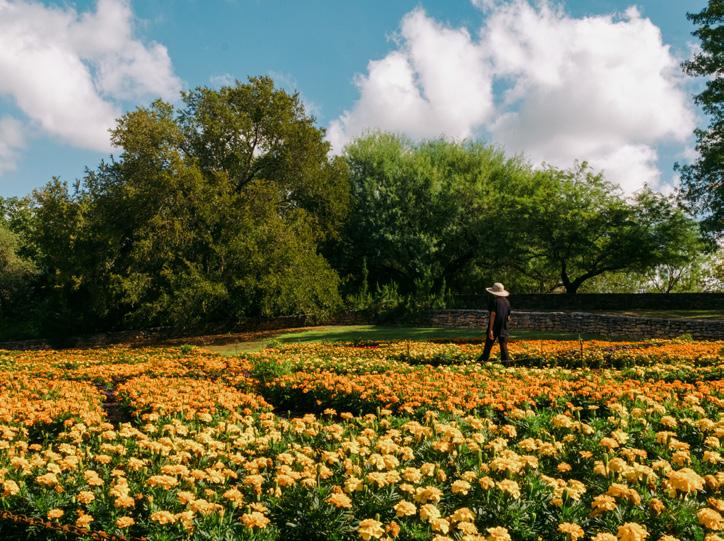
By 2024, the number of marigolds planted had grown to 15,000. By 2025, 25,000 flowers transformed the Garden into a living tribute—sweeping waves of orange, yellow, and deep red that seemed to glow in the autumn light.
Among 2025’s highlights was a massive living mural on the Concert Lawn, where thousands of marigolds and celosia formed the image of monarch butterflies drifting across the landscape—a visual merger of two powerful symbols of migration, transformation, and return.
That same year, Garden staff collaborated with San Antonio artist Regina Moya to create something never before attempted: a 16-foot living Catrina. Titled Nana Echeri
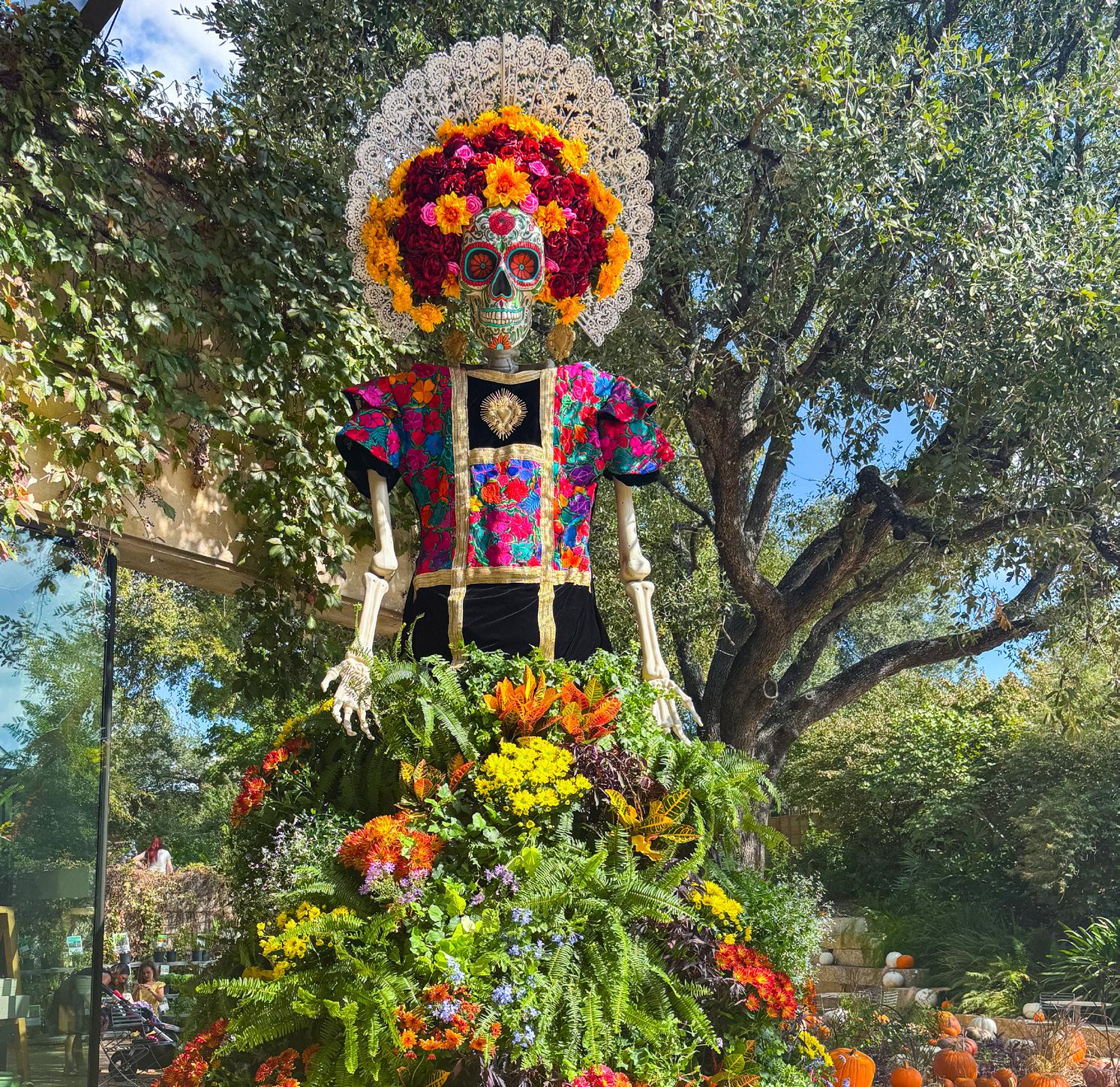
(Mother Earth in Purépecha), she featured traditional Oaxacan embroidery patterns and a skirt made from over 100 living plants— succulents, grasses, and flowering vines that changed with the season. Positioned at the Garden entrance, she became an instant icon—photographed thousands of times, beloved by visitors, and the inspiration for what has now grown into a full exhibition.
This year, the celebration becomes Jardín de las Catrinas—not just an installation, but an immersive journey through art, culture, memory, and the natural world.
The exhibition unfolds across the Garden as a series of moments — each one distinct yet connected by the thread of culture and nature that runs through the season.
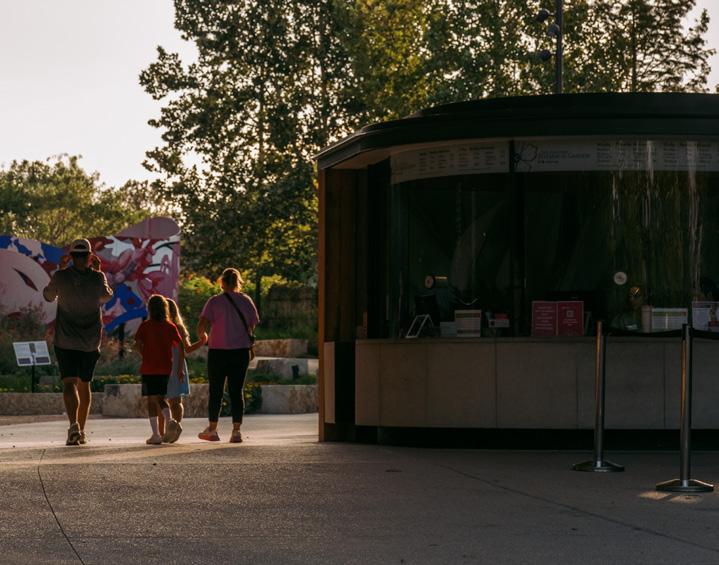
Your journey begins as you walk past the Mays Display Garden featuring skulls and marigolds. Pass through the Arco de las Hermanas Catrinas, which welcomes you into a world where art, nature, and tradition intertwine.
Arco de las Hermanas Catrinas
The Arch of Sister Catrinas
Here, elegant Catrina figures frame the gateway—each one unique, each one hinting at the stories waiting within. They’re not just decorative; they’re an invitation. A promise that what lies ahead will be beautiful, meaningful, and unlike anything you’ve experienced before.
Pass beneath the arch. The exhibition awaits.
Santuario en el Jardí Sanctuary in the Garden
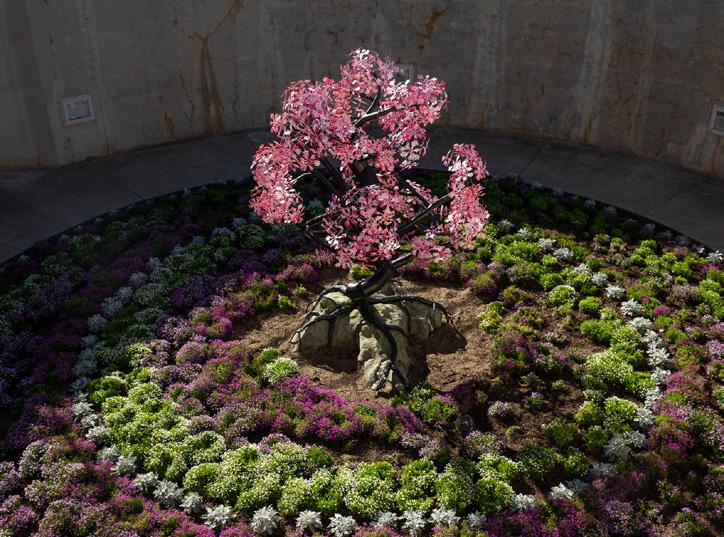
Lucile Halsell Conservatory Decompression: In the circular space at the Conservatory’s entrance, a towering Catrina stands, surrounded by hundreds of paper monarch butterflies, preparing to roost—a moment frozen between movement and rest.
She embodies the oyamel fir (Abies religiosa)—the sacred tree at the heart of one of nature’s most extraordinary phenomena. Every year, millions of monarch butterflies migrate up to 3,000 miles to overwinter in the high-altitude oyamel forests of Michoacán, Mexico.
Their arrival—from November through March—coincides precisely with Día de los Muertos celebrations. Because of this, monarchs have long been seen as las almas de los difuntos—the souls of deceased ancestors returning to Earth. It’s a belief rooted in observation: just as families gather to remember loved ones, millions of butterflies appear as if summoned by memory itself.
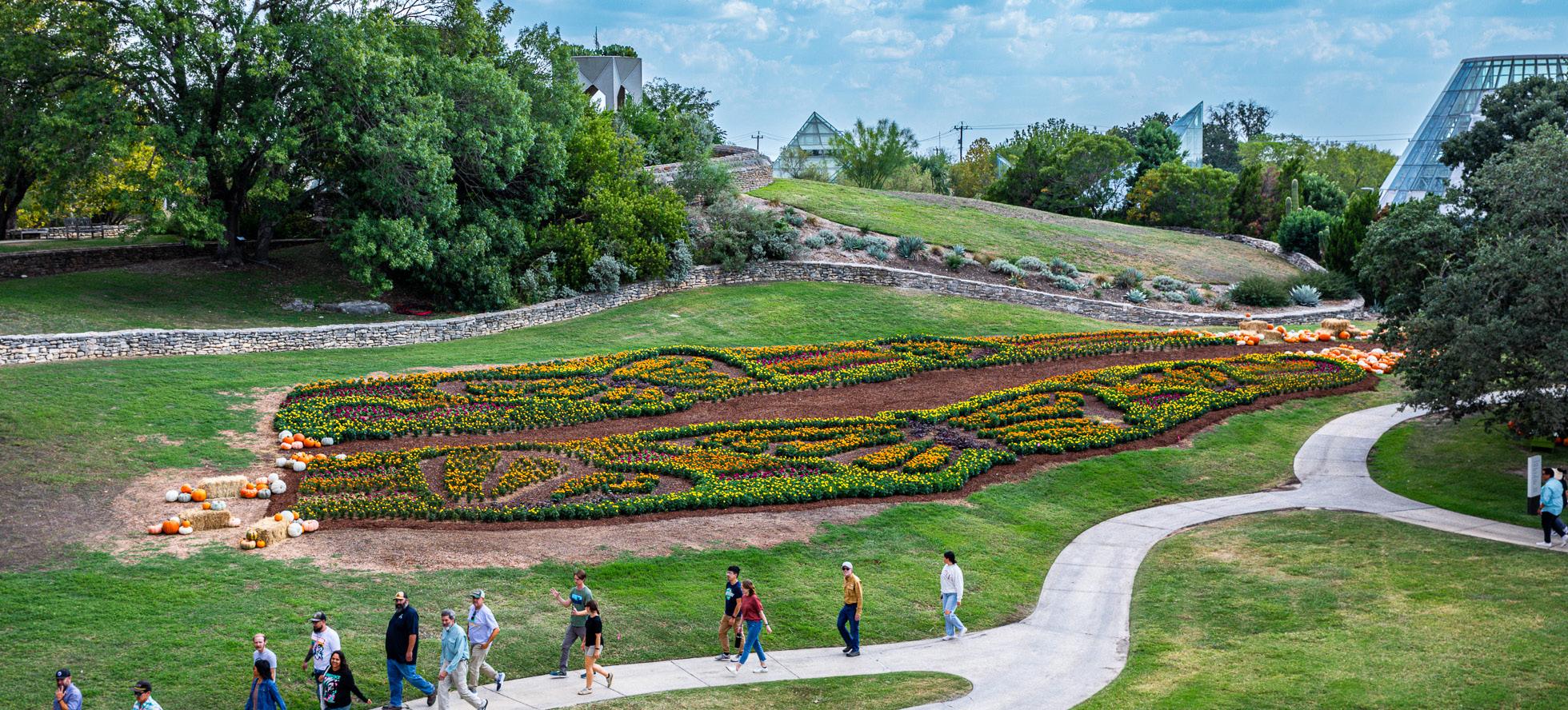
Concert Lawn: This year’s living mural expands on the success of 2025’s Cempasúchil in Flight: A Living Monarch Mural, which depicted butterflies in mid-migration. This year’s design celebrates the spiral patterns and bold geometric forms found in traditional Día de los Muertos art.
But this is more than visual spectacle. Each marigold here serves a purpose beyond beauty. In Día de los Muertos tradition, the vibrant color and distinctive scent of cempasúchil (marigolds) guide spirits home—creating paths of light and fragrance for loved ones to follow back to the world of the living.
Here, ancient symbolism meets contemporary art: thousands of individual flowers become a single, unified image, celebrating color, remembrance, and the belief that beauty and memory are inseparable.
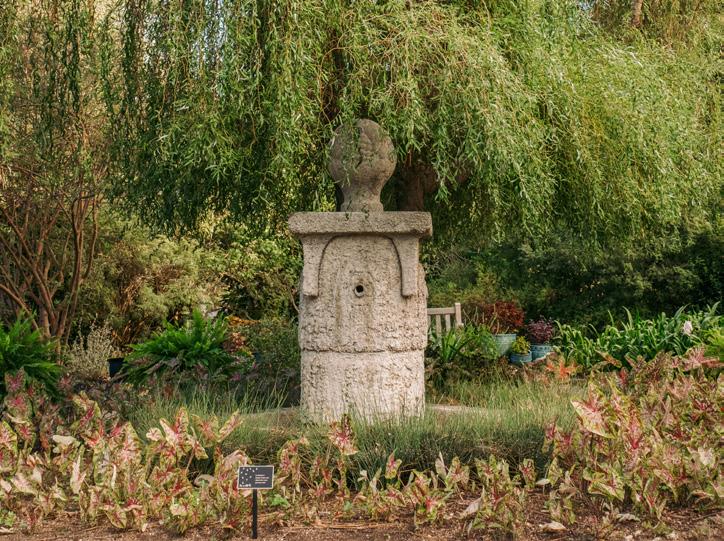
Oasis Garden: The exhibition culminates in the Oasis Garden, where multiple Catrinas gather beneath the shade of mature trees—a grove of living sculptures, each one embodying a different refrán. Here, traditional wisdom takes physical form.
Each Catrina will be positioned in different movement patterns. Hundreds of living plants surround and make up the display, carefully selected to reflect the wisdom of its refrán. As the season progresses, the plants grow and change—a reminder that both wisdom and nature are living, evolving things.
Walk slowly through the grove. Read the sayings. Consider their meanings. Notice how the plants chosen for each Catrina embody the wisdom she represents. Some refranes will feel immediately familiar; others might puzzle you at first, then reveal their meaning gradually—the way the best wisdom often does.
Regina Moya is a Mexican writer, illustrator, and public artist based in San Antonio whose work celebrates the vibrant intersection of culture, memory, and everyday magic.
The author and illustrator of several books–including the award-winning children’s book–The Last Butterfly (La Última Mariposa), co-authored with Carmen Tafolla and awarded by International Latino Awards–Moya’s artistic practice blends storytelling with bold visual art deeply rooted in her Mexican heritage.
“I can still hear the echo of my grandmother’s whispers — those wise Mexican refranes woven into my childhood. Now, as those words bloom through flowers and living plants, I watch their wisdom take root once more, blossoming softly in the souls of our children.”
Her paintings, murals, and sculptures explore themes of migration, transformation, cultural identity, and the beauty hidden in ordinary moments. Throughout San Antonio, her public artworks have become beloved landmarks: massive Catrina sculptures, Día de los Muertos installations, and murals that bring color and meaning to public spaces.
For Jardín de las Catrinas, Moya brings her distinctive vision to the Garden’s largest cultural exhibition to date. Her monumental living sculptures—some standing 16 feet tall and incorporating hundreds of plants—represent a new frontier in her work: art that grows, changes with the seasons, and lives in dialogue with the natural world.
“These Catrinas aren’t just celebrating Día de los Muertos,” Moya explains. “They’re celebrating the wisdom our ancestors gave us.”
From Catrinas to Proverbs
Artist Regina Moya

Included with Garden admission and membership. Walk slowly through waves of marigolds. Read the refranes and consider their meanings.
A sweeping new exhibition celebrating Hispanic heritage, Día de los Muertos traditions, and the wisdom passed through generations—told through large-scale Catrinas, more than 25,000 marigolds, and the living language of plants.
September 15November 2, 2026
Special Programming: Hispanic Heritage Month and Día de los Muertos events, workshops, and celebrations will be announced at sabgtx.org.
Monday – Friday: 8 a.m. - 6 p.m.
Saturday - Sunday: 8 a.m. - 7 p.m.
Members Only Hour: 7 – 8 a.m.
By Michael Eason, VP of Conservation and Collections
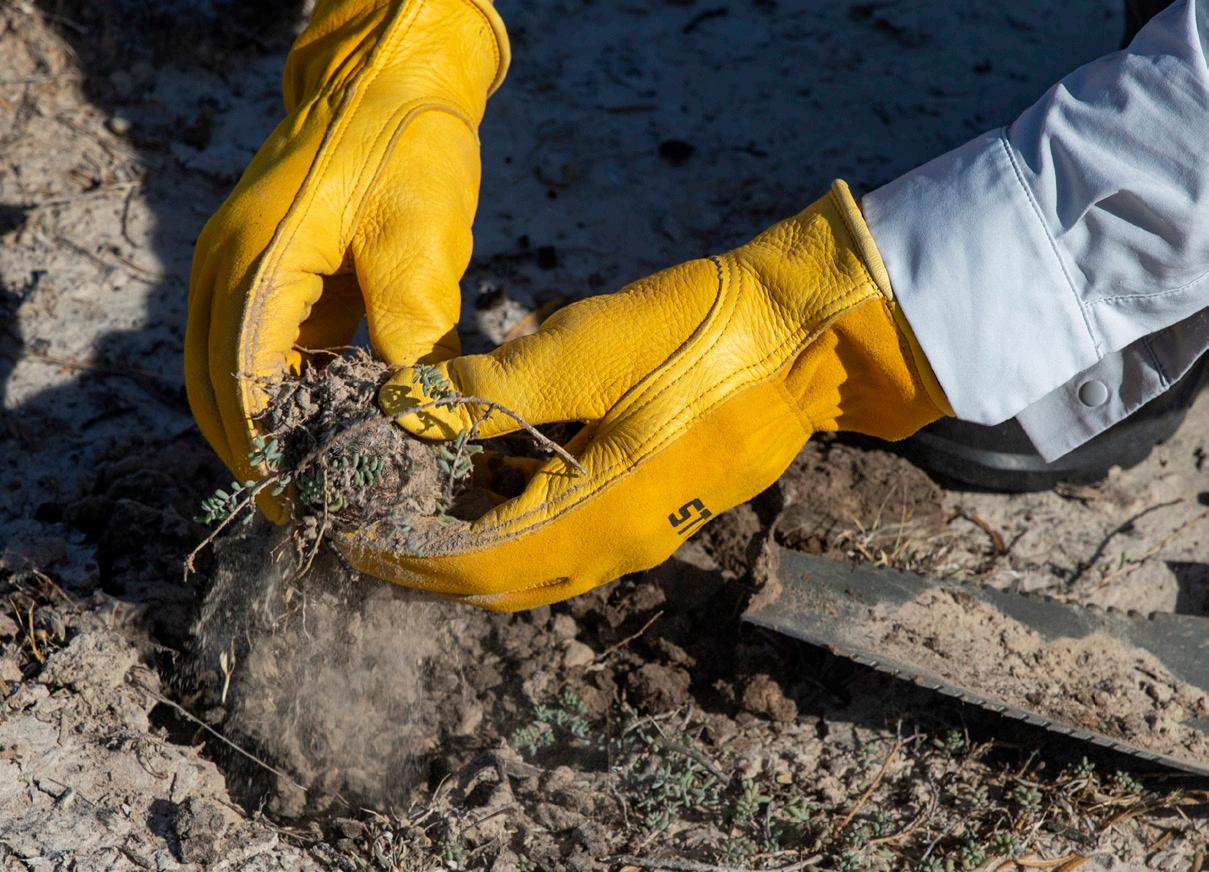
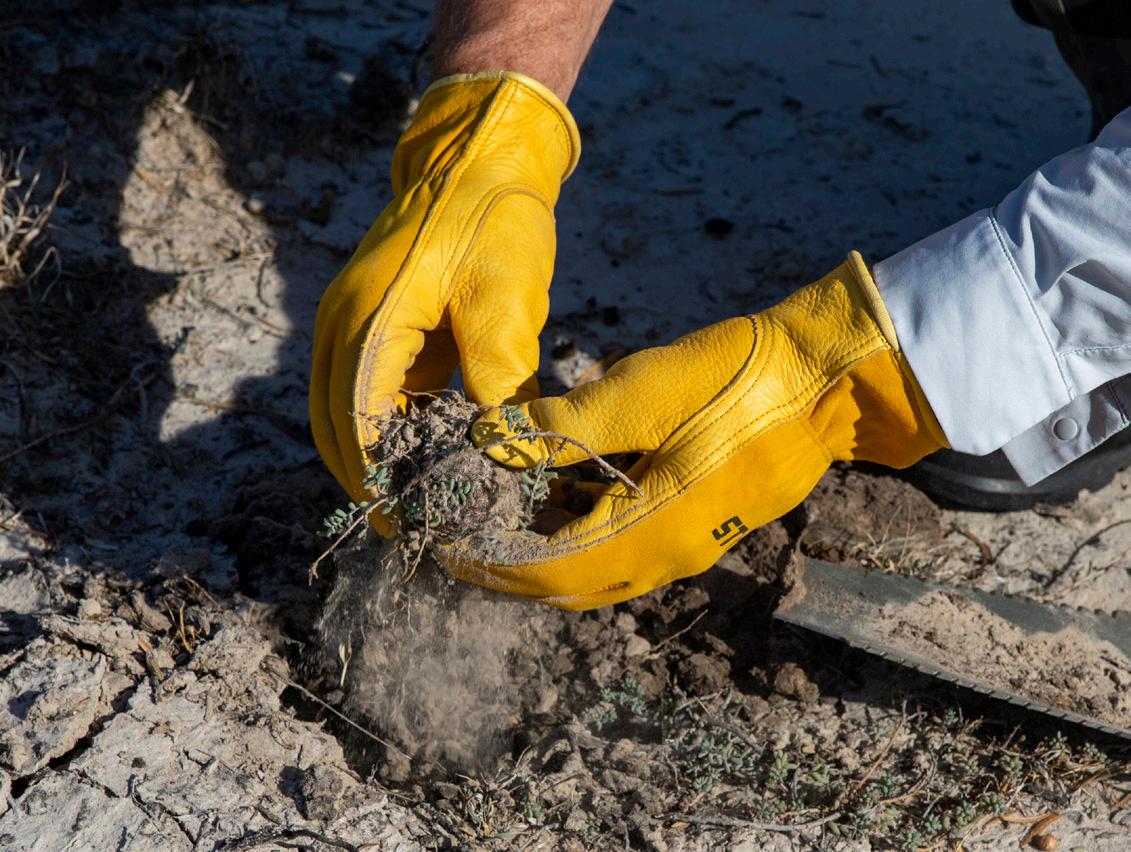
In the summer of 2025, Jeremiah McKinney, an environmental consultant with Blackland Environmental, made an urgent call to the Garden: more than 1,000 endangered Black Lace Cacti (Echinocereus reichenbachii ssp. albertii) were in the path of a lignite mine south of San Antonio. Could the Garden rescue them, hold them for one to two years, collect seed, propagate more plants, and ultimately help return them to a restored habitat? The answer was immediate— yes. What we didn’t know then was that 1,000 would become 3,485—and that this rescue would become one of the largest conservation efforts for this species in Texas.
After coordinating with the U.S. Fish and Wildlife Service, the scope expanded quickly. What began as a 1,000-plant effort grew to more than 2,500, and space became an immediate concern. With ground cleared for a new tree yard at the Garden, there was capacity to house the cactus collection. By the end of the second rescue, the team had brought in 3,485 plants—with room for more if needed.
Meet the Black Lace Cactus: A Texas Treasure
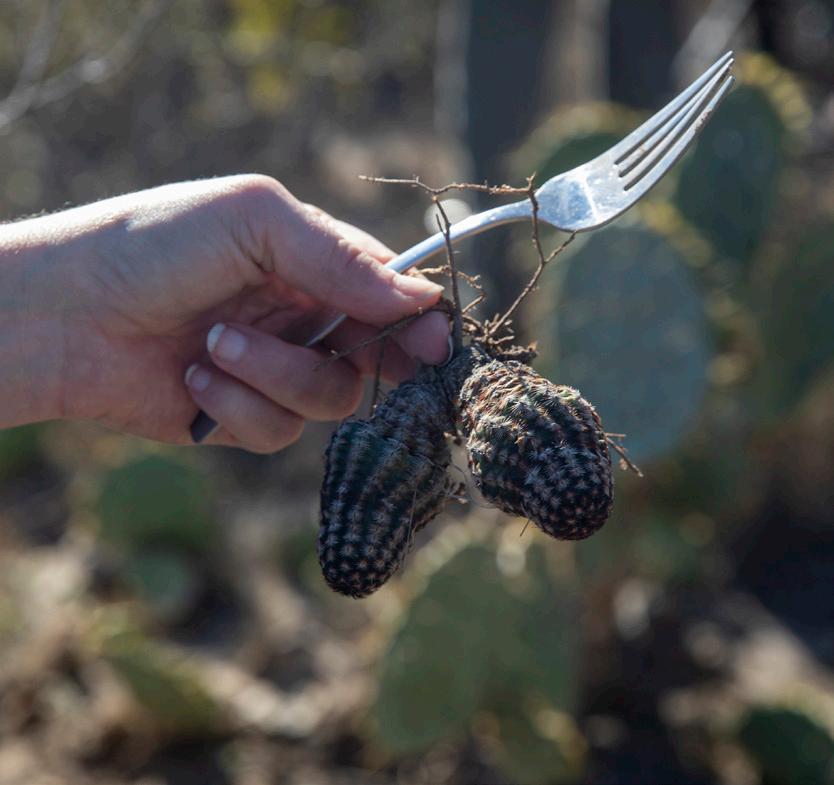
The Black Lace Cactus is a subspecies of the widespread Lace Cactus, Echinocereus reichenbachii, which ranges from eastern Colorado south through Texas and into Mexico, occupying a variety of habitats. In contrast, the Black Lace Cactus has a much more limited distribution, occurring along the Coastal Bend of Texas and extending north toward San Antonio. It is federally listed as endangered and is most often found
in open areas of South Texas brushlands, typically on saline soils that limit competition from other plant species.
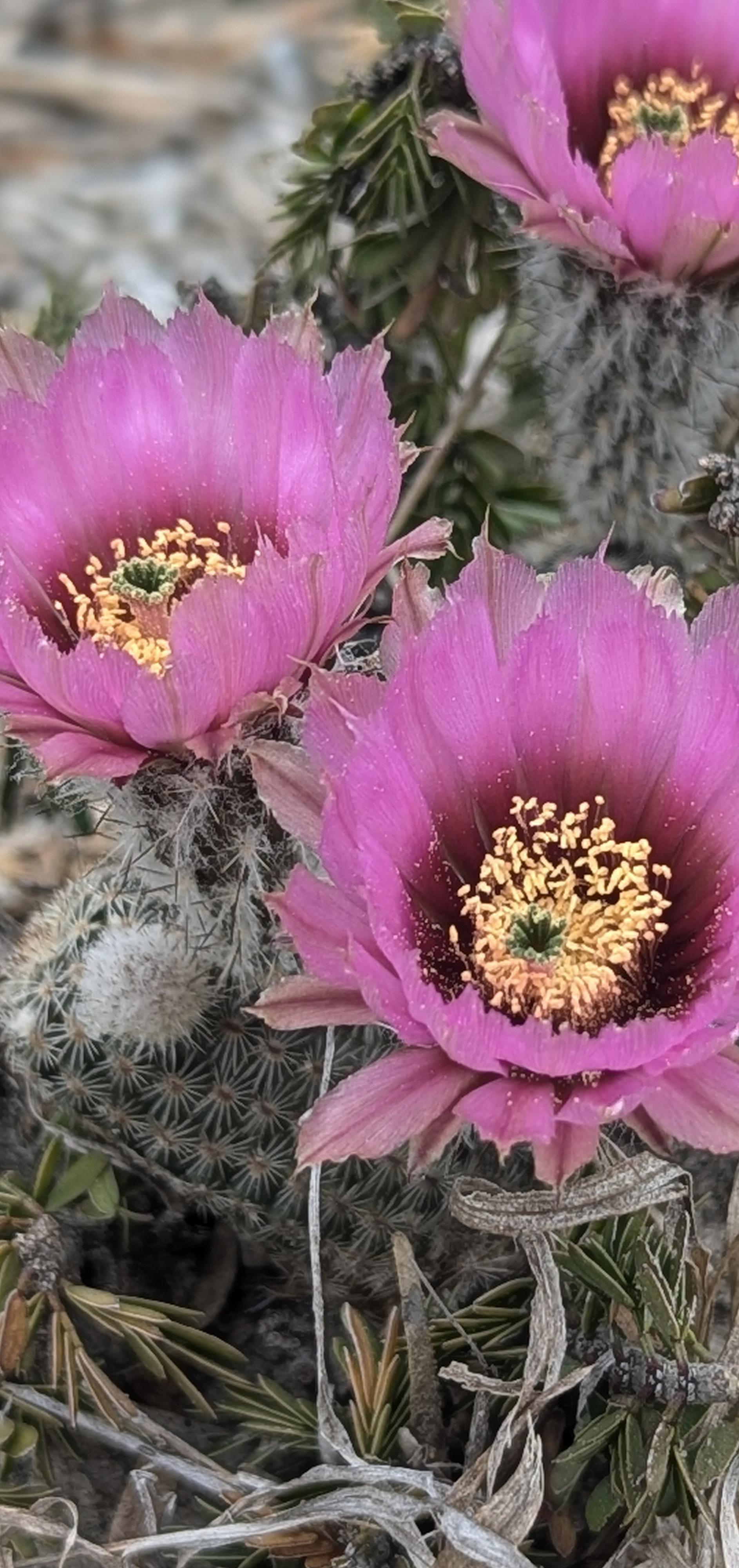
Like other forms of Lace Cactus, it produces large pink blooms and has fine, delicate spines. It is distinguished, however, by its deep purple-tipped spines, which give the plant its name. Individuals are often smaller than other subspecies, and some exhibit dark green stems that further accentuate their coloration.
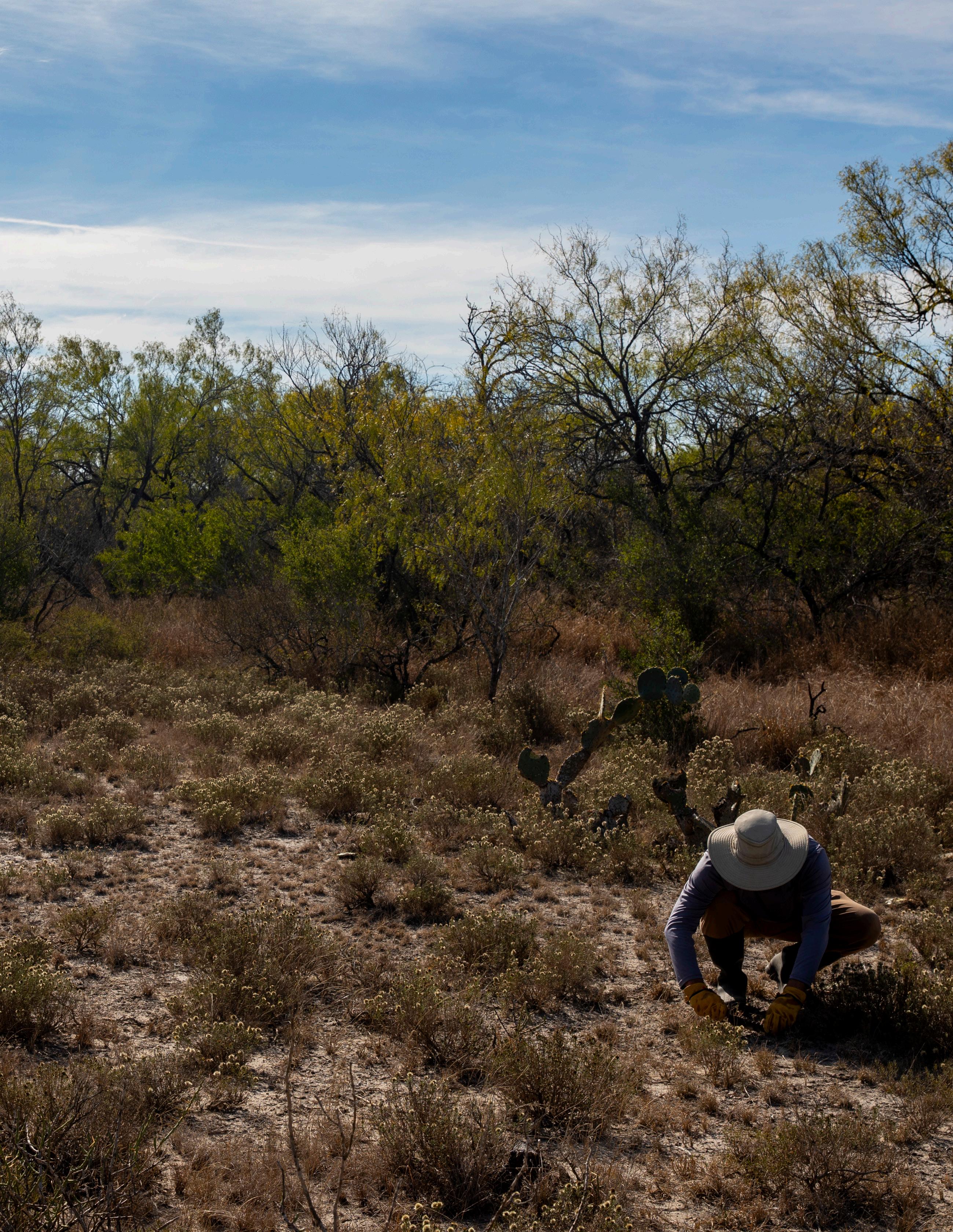
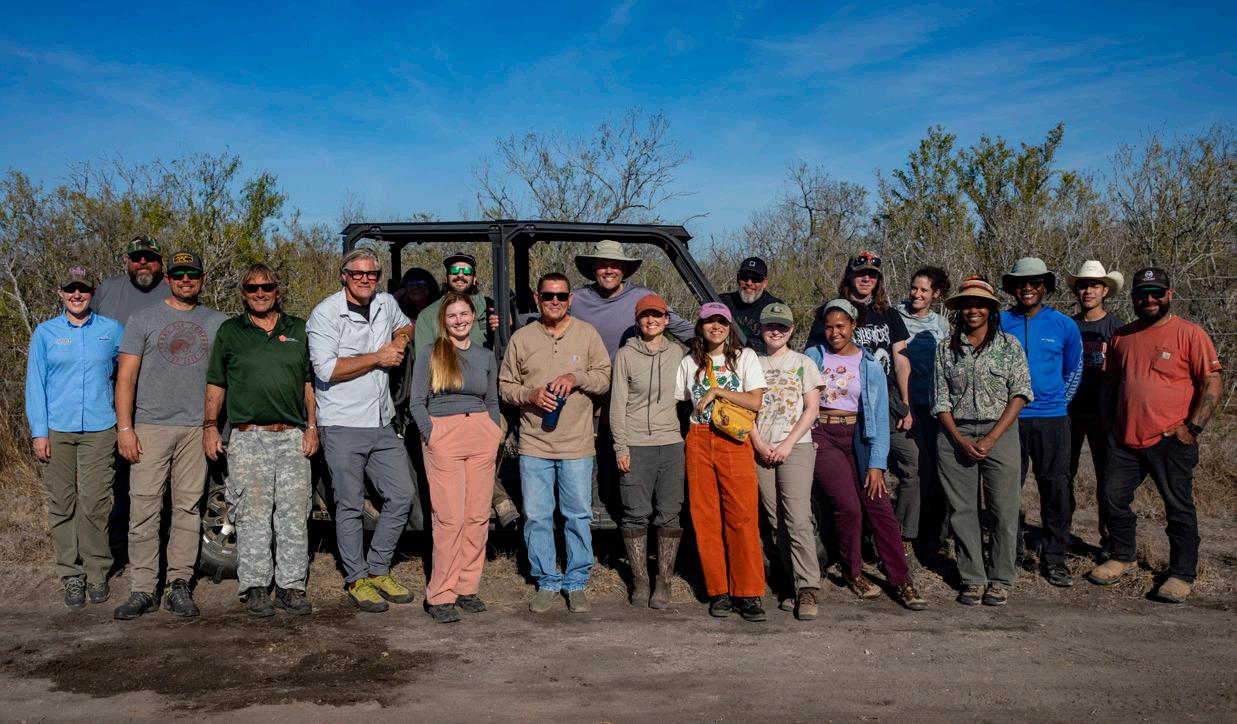
The first rescue occurred in early December 2025, with more than twenty volunteers and staff participating. Volunteers from the Native Plant Rescue Project, led by Ashley Landry, carefully flagged and removed each plant from the site—working methodically to ensure every cactus was accounted for. Back at the Garden, the team counted, labeled, and prepared each plant for potting.
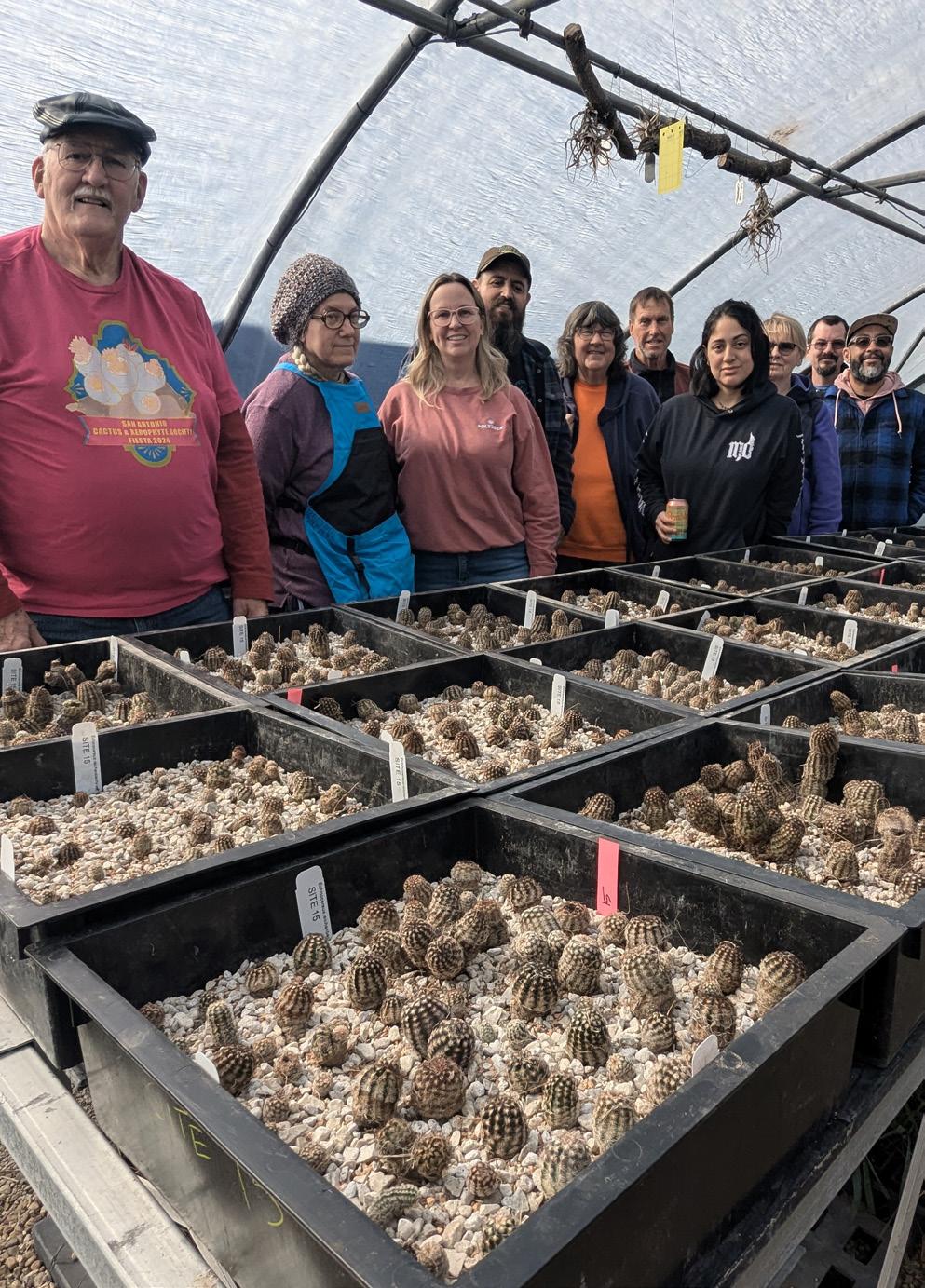
In January 2026, members of the San Antonio Cactus and Xerophyte Society arrived at the Garden on a cold morning to help with potting. A team of 13 volunteers potted 2,500 plants in just over two hours—a remarkable feat!
A second round of rescue and potting occurred in late February and early March. By then, clearing operations had begun at the mine site—volunteers could hear heavy equipment in the distance as they worked, a reminder of what was at stake. By the end, approximately 3,400 plants had been rescued and brought to safety.
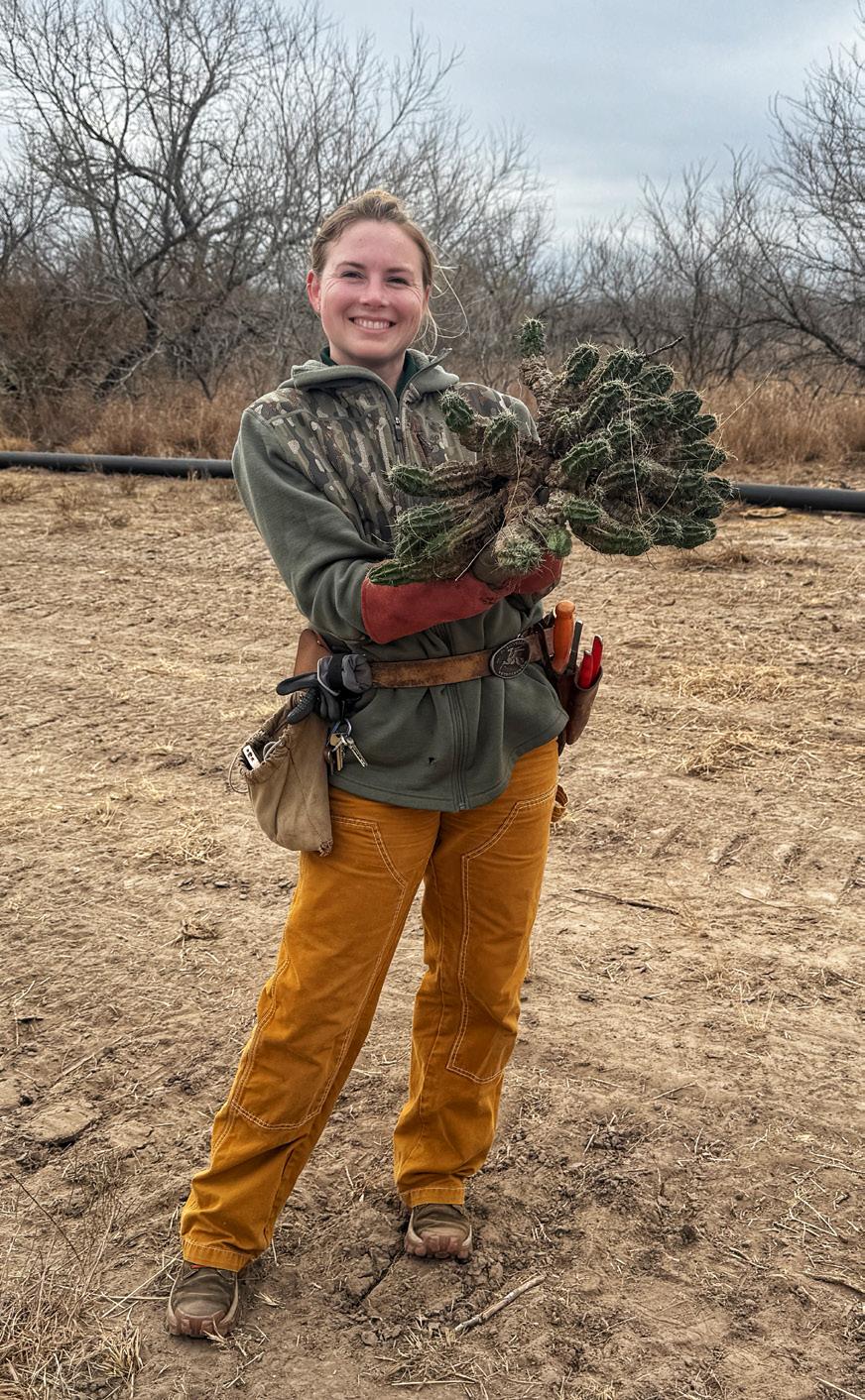
3,485 plants rescued from mine site
This effort would not have been possible without the support of San Miguel Electric Cooperative, which operates the mine. Although not required to undertake this level of conservation work, the company has demonstrated a forwardthinking commitment to stewardship by supporting both the rescue and the species’ long-term recovery.
10,000+
projected plants for eventual restoration
December 2025 February 2026
300 sq ft.
Garden enclosure now housing the collection
1-2 years
cacti will remain at the Garden before restoration
Jeremiah McKinney played a pivotal role in identifying the cactus population and in bringing partners together. Through required environmental assessments and a broader vision for land reclamation, he he recognized an opportunity not only to mitigate impacts but also to meaningfully contribute to conservation.
As mining progresses and ultimately concludes, the site will undergo a carefully planned reclamation process to restore soils, vegetation, and ecological function. The Black Lace Cactus will be integral to this recovery.
While the rescue phase is critical, it is only the beginning. At the Garden, the rescued plants are now part of a broader conservation strategy addressing both short-term survival and long-term population recovery.
A key component of this effort is seed collection. In spring 2026, Garden staff returned to the site to collect seed from the remaining wild population and harvest seed from plants now in cultivation. These collections will serve two purposes: a portion will be stored in the Garden’s seed bank as a long-term safeguard, and the remainder will be used to propagate new plants.
Through this process, the Garden expects to produce thousands of additional individuals, significantly increasing the number of plants available for restoration. Current projections indicate that more than 10,000 Black Lace Cactus plants could ultimately be reintroduced once mining is complete and habitat restoration is underway.
Each day, Garden teams check on the plants—now securely housed in a 300-square-foot enclosure, with more than 3,400 individuals growing in communal trays. This is a daily reminder that without cooperation—and the willingness to undertake complex, largescale efforts—these plants might have been lost. This work is more than the rescue of a single species; it reflects the strength of partnerships and a shared commitment to conservation. It shows what’s possible when industry, nonprofits, consultants, volunteers, and botanical gardens work together with a shared vision. And it demonstrates the Garden’s role not just as a place to visit, but as an active conservation force protecting Texas’s rarest plants.
What makes it
“Black Lace”?
Unlike its more widespread cousin, the Lace Cactus, the Black Lace variety has:
• Deep purple-tipped spines (hence “black lace”)
• Smaller size
• Dark green stems
• Large pink blooms in spring
• Tolerance for saline soils
• Very limited range: Coastal Bend north to San Antonio
Status: Federally endangered

By Hannah Packard, Chief Development Officer
This year, the San Antonio Botanical Garden launched Math in Bloom, a collaboration among six botanical gardens across the United States to create experiences that reveal the patterns, proportions, spirals, sequences, and cycles woven throughout the natural world. Math in Bloom is supported by the Simons Foundation and is part of “Infinite Sums,” a national initiative that will, among other things, connect people to the mathematics inherent in nature.
Led by the San Antonio Botanical Garden, Math in Bloom includes Cheekwood Estate & Gardens, Denver Botanic Gardens, Desert Botanical Garden, Franklin Park Conservatory and Botanical Gardens, Queens Botanical Garden, and the San Antonio Botanical Garden. Working with mathematicians in their communities, each garden is creating experiences inspired by the Infinite Sums themes and adapted to its own landscape, collections, and audiences.
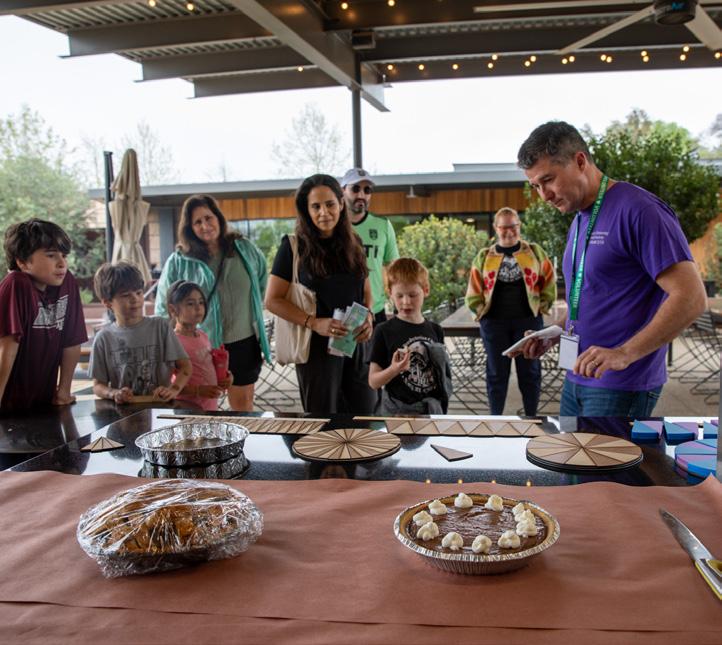
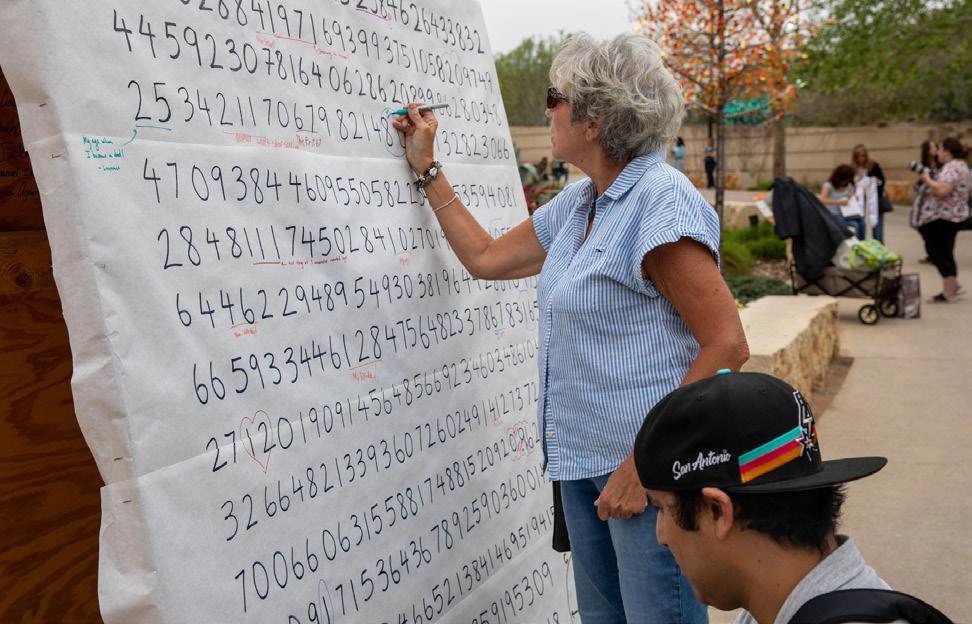
The series launched this spring at SABG and across the Math in Bloom network with a joyful celebration of Pi Day (3.14), exploring the significance of circles in nature. Guests discovered mathematical patterns hidden throughout the Garden with experiences that connected plants, measurement, creativity, and play, including a Garden-wide Pi scavenger hunt, tree-ring explorations, Pi-Ku poetry, and hands-on activities that connected mathematics to the natural world. Guests explored the relationship between sound waves and mathematical principles in the Lucile Halsell Conservatory and enjoyed “Slice of Pi(e)” in the Outdoor Teaching Kitchen. Mathematicians from Southwestern University, St. Mary’s University, and Trinity University led informal conversations and activities that revealed the mathematics hidden in plants, landscapes, and everyday experiences.
Up next is Infinity Day (8.8), when SABG will explore the endless cycles that sustain life on Earth. Throughout the Garden, specially designed landscapes inspired by infinity, fractals, repetition, and renewal will illustrate the patterns that sustain living systems. From nutrient
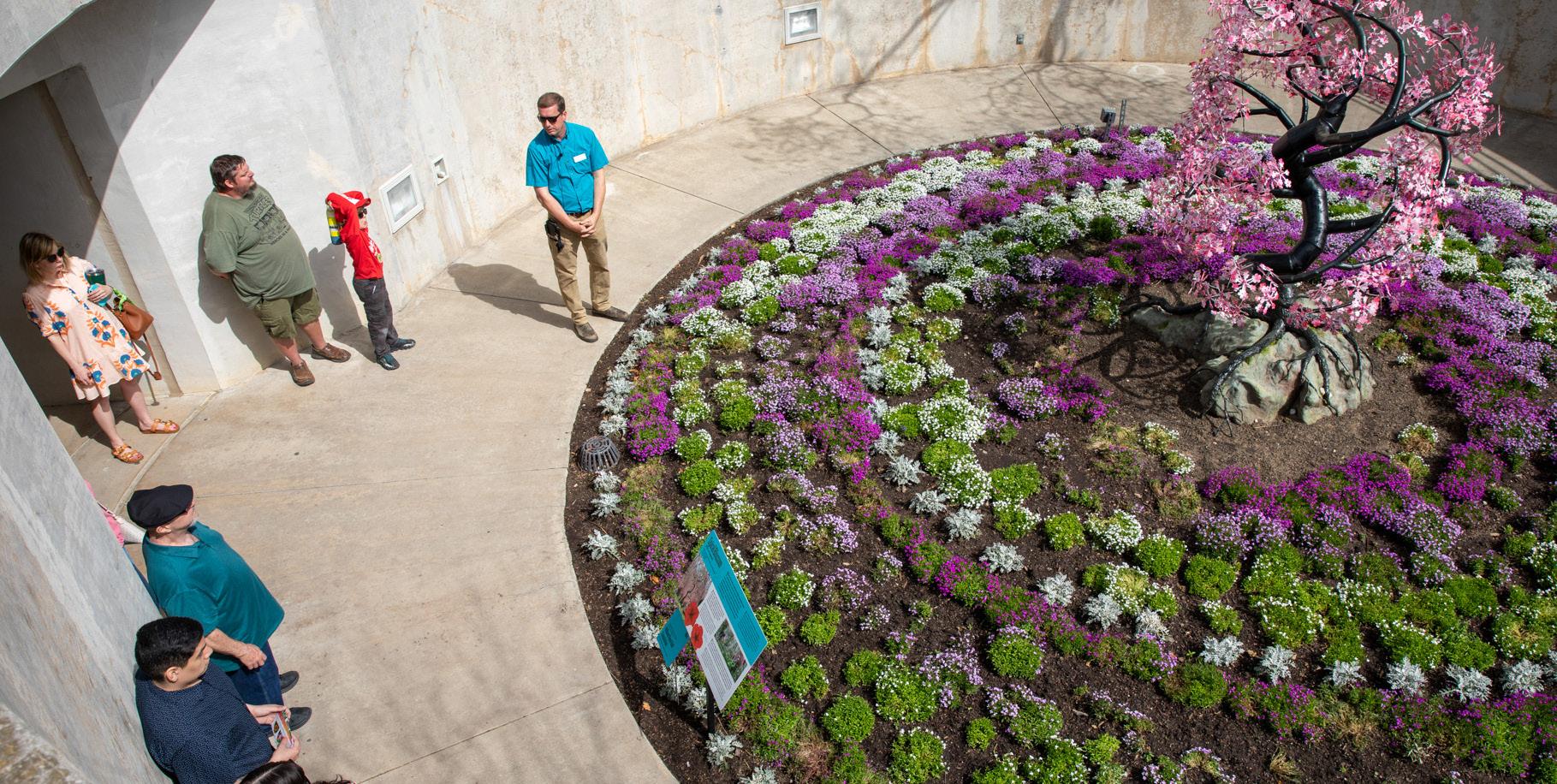
and water cycles to pollination and propagation, guests will discover how plants depend on continual renewal. Ancient cycads and ferns will highlight nature’s enduring patterns, while handson activities such as terrarium building, composting, and plant propagation will allow visitors to experience these cycles firsthand.
A special highlight of Infinity Day will be The Garden of Infinite Music, an immersive installation and live performance by renowned sound artist Aric Attas. By connecting sensors to living plants, Attas transforms subtle plant signals into
evolving musical compositions, creating a soundscape shaped by the Garden itself and revealing the hidden rhythms and patterns of living systems through sound.
Then, for Fibonacci Day (11.23), SABG will celebrate one of mathematics’ most beloved sequences: 1, 1, 2, 3, 5, 8... The Fibonacci sequence appears throughout nature, from the spirals of sunflowers to the arrangement of leaves along a stem. Visitors will encounter landscape installations inspired by Fibonacci patterns and proportions, discover spirals hidden throughout the Garden,
enjoy Fibonacci-inspired cocktails, and even write a “Fib,” a short poetic form that follows the famous sequence. Together, these experiences will reveal how mathematics shapes both the beauty and efficiency of the natural world.
Math in Bloom encourages visitors to see the Garden—and the natural world—with fresh eyes. Through Infinite Sums and the support of the Simons Foundation, these experiences reveal that mathematics is not separate from nature, but one of the fundamental ways we can understand and appreciate its beauty.
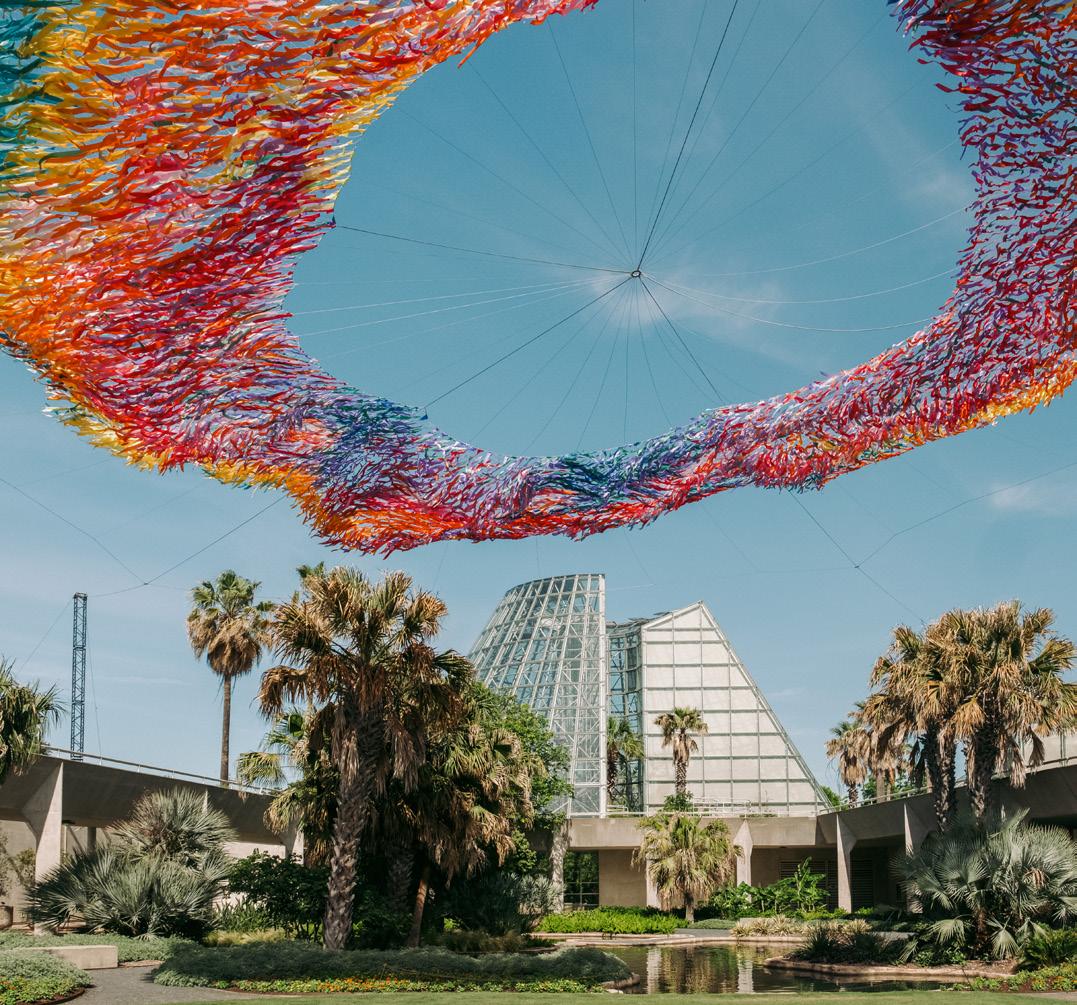
This large-scale immersive exhibit features the visionary work of artist Patrick Shearn and his studio, Poetic Kinetics, known for turning public spaces into areas of magic, movement, and awe.
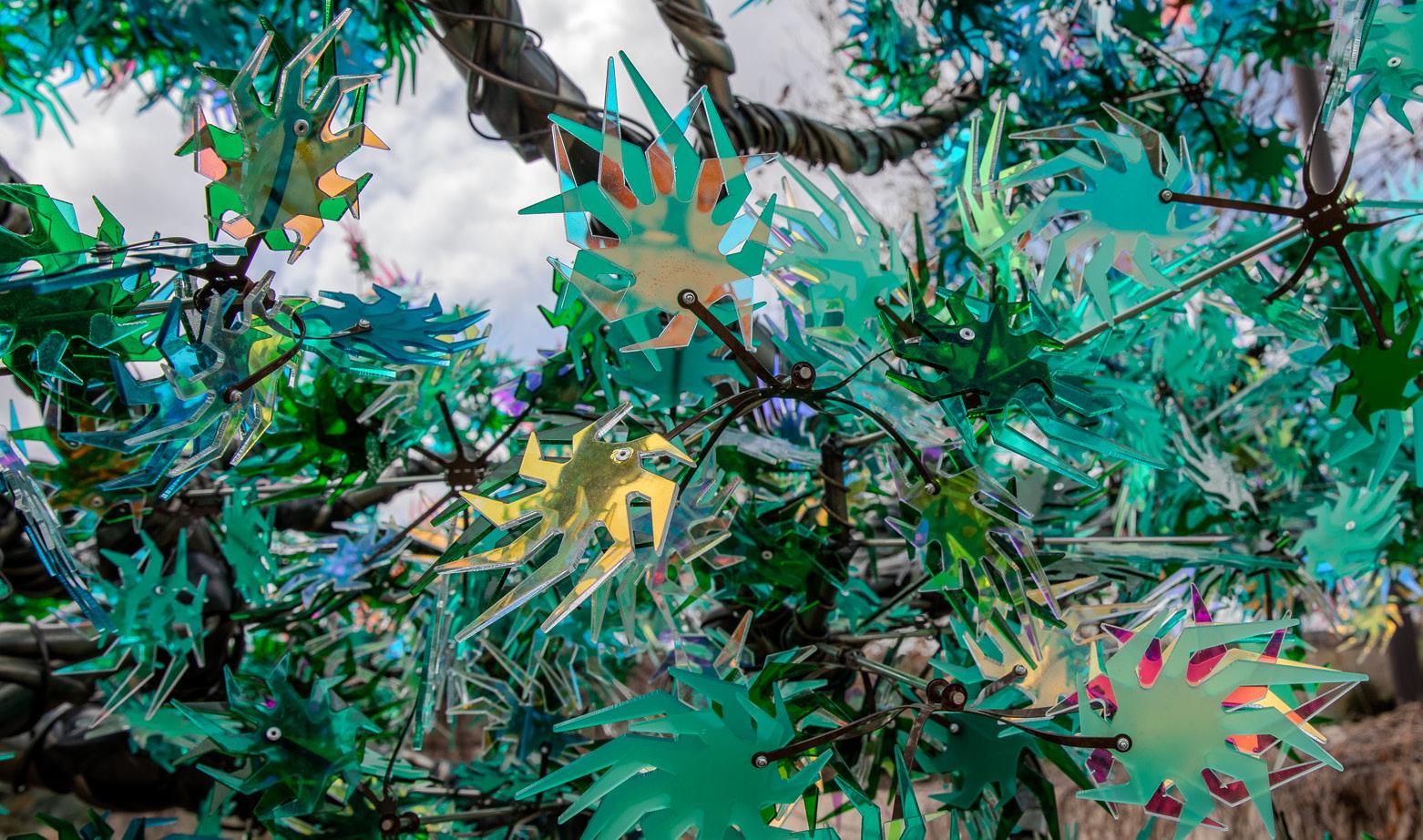
By Andrew Labay, Chief Mission Officer
The annual journey of monarch butterflies is one of nature’s most remarkable events—and one of its most threatened. Each spring, monarchs travel northward from Mexico, covering up to 3,000 miles and passing through Texas on their way to the northern United States and southern Canada.
Along the way, they follow the best environmental conditions and food sources. Because monarchs rely on milkweeds at every stage, from egg to caterpillar to butterfly, they seek out places where these plants are plentiful. This northward journey unfolds across multiple generations, with each butterfly living just 2-6 weeks and traveling only part of the route. It can take as many as three generations to complete the full migration north.
Then something extraordinary happens. In late summer, a special “super generation” emerges—butterflies that will live not weeks, but up to eight months. These remarkable monarchs
make the entire 3,000-mile journey south to overwinter in the same mountains of Central Mexico that previous generations left months earlier. Scientists still don’t fully understand how they navigate to places they’ve never been.
During the fall migration, which peaks in San Antonio from late September through October, monarchs need abundant nectar sources to fuel this epic journey. A single monarch can consume nectar from hundreds of flowers daily, converting it to reserves for the long flight ahead.
San Antonio sits along the Central Flyway—one of the primary monarch migration corridors through Texas and perfectly positioned to support both the spring breeding migration (when monarchs need milkweed for egglaying) and the fall southward journey (when they need nectar for fuel).
A home garden may seem small, but to a migrating monarch, it’s a crucial
rest stop on a 3,000-mile journey. A pollinator garden can become a lively refuge for butterflies, bees, birds, and other essential pollinators. The key is to focus on native plants and include a diverse mix of species to help ensure that something is blooming throughout the seasons.
Whether it’s a tiny patio or multiple acres, everyone is included in this conservation effort. The beauty of a pollinator garden is that it offers both purpose and delight—conservation that you can see, touch, and enjoy every day. It’s motion, color, and seasonal change, but it also comes with deep purpose. Plant milkweed for caterpillars, flowers for nectar, and keep something blooming for as long as possible. Add shelter, a bit of moisture, and the right plants, and gardens across our region can become a place where migration, metamorphosis, and everyday wonder unfold.
This fall, as countless monarchs pass through San Antonio on their way to Mexico, be ready to welcome them.
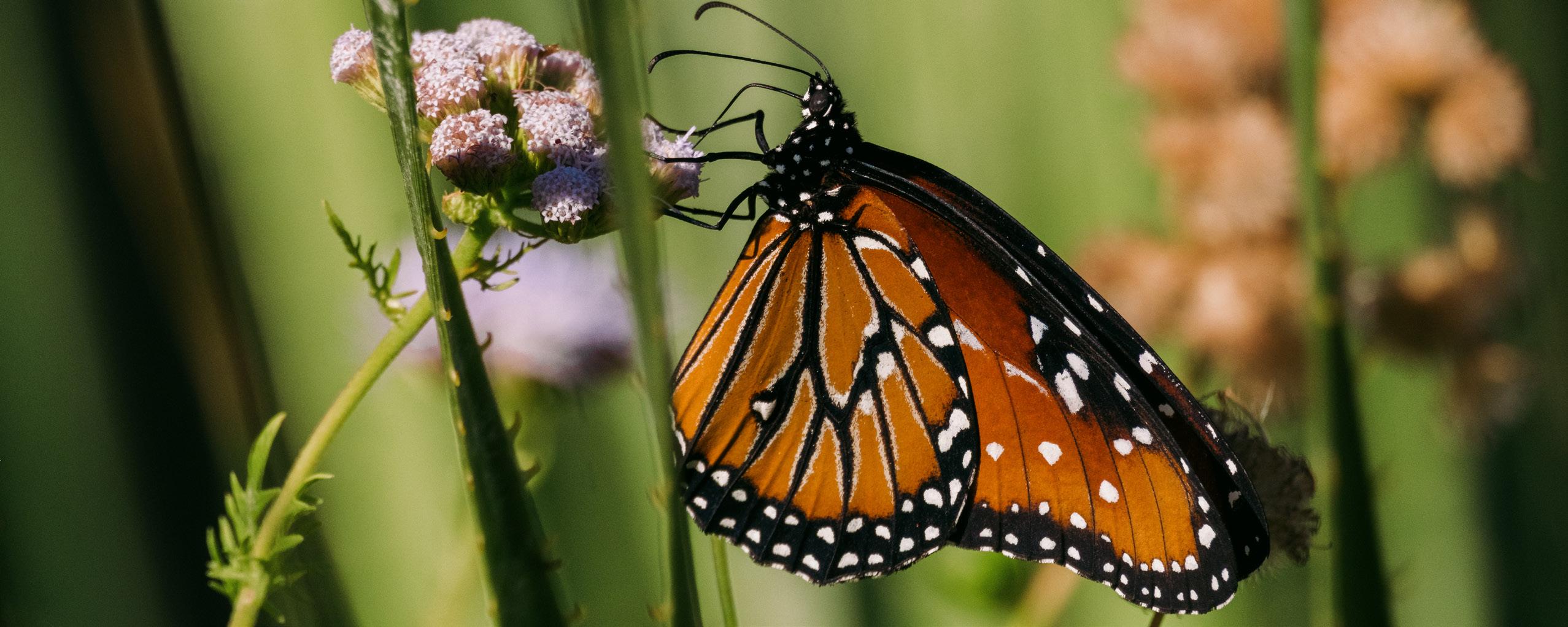
Fuel for the Journey South
These plants bloom when monarchs need them most—September through November:
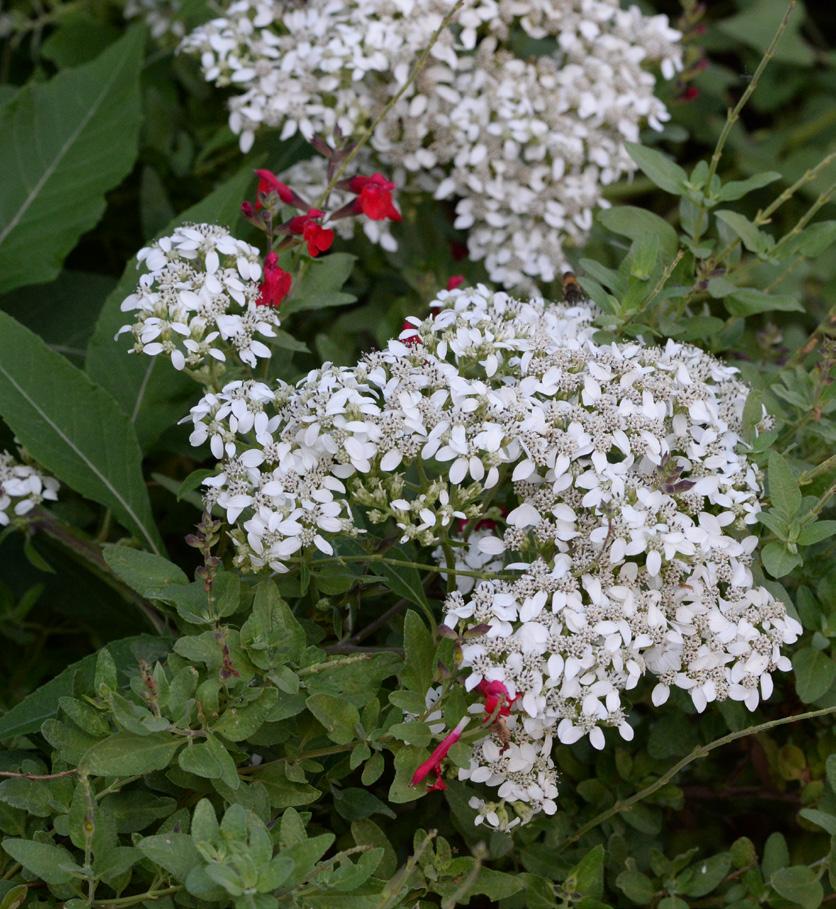
Autumn sage (Salvia greggii)
Frostweed (Verbesina virginica)
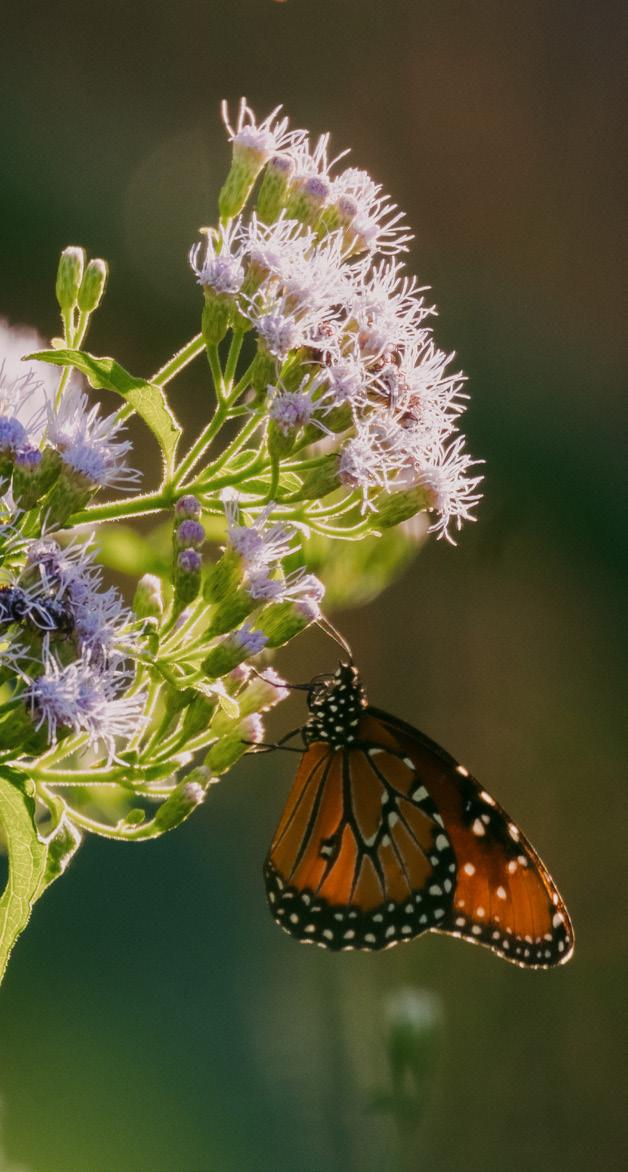
Mistflower (Conoclinium dissectum)
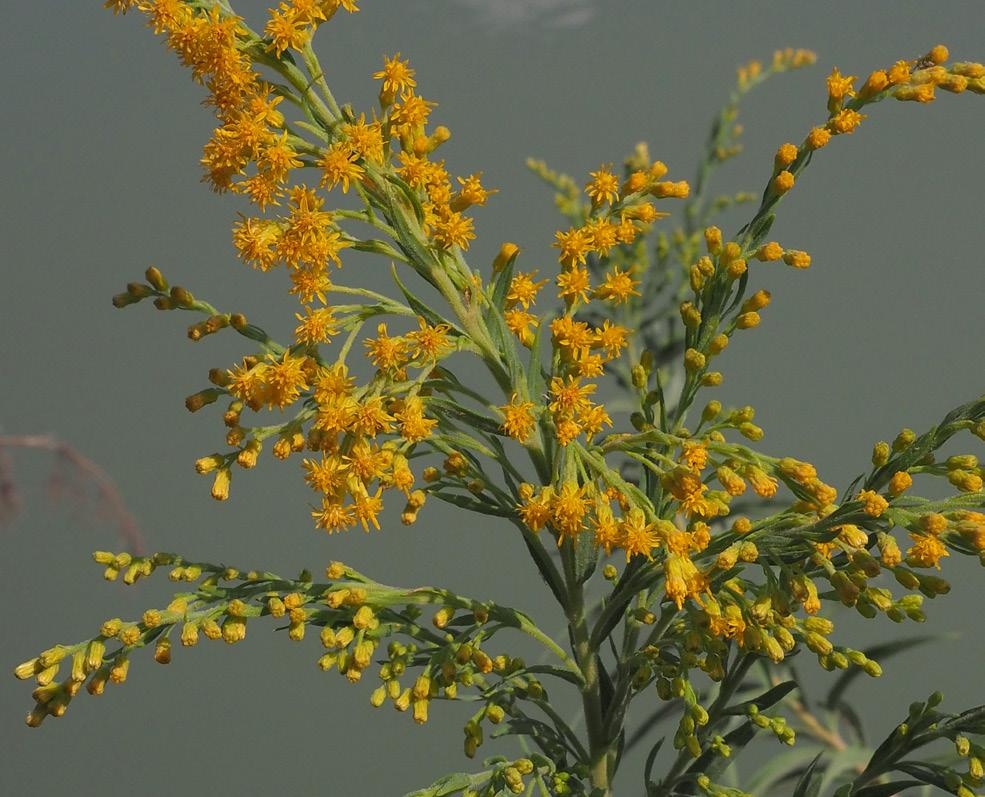
Goldenrods (Solidago spp.)
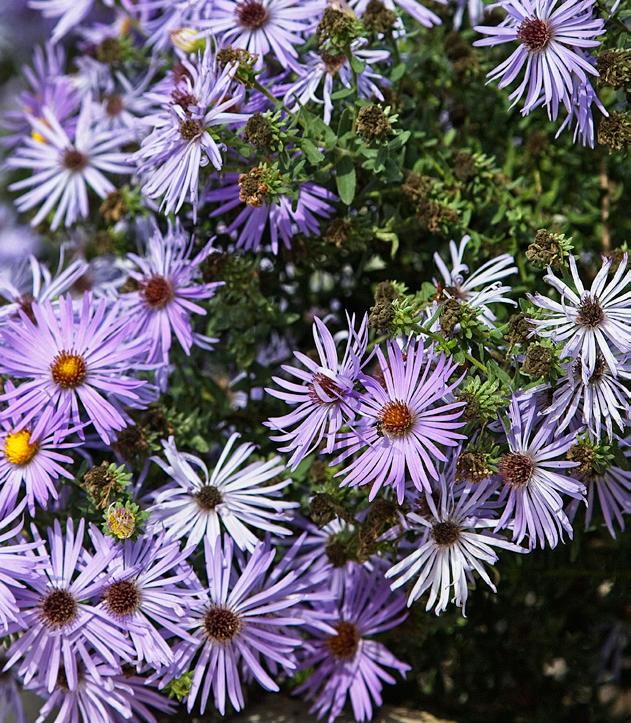
Fall aster (Symphyotrichum oblongifolium)
Plant mistflower, goldenrod, and asters together for a fall monarch magnet.
For Shade Gardens:
Turk’s cap (Malvaviscus arboreus var. drummondii)
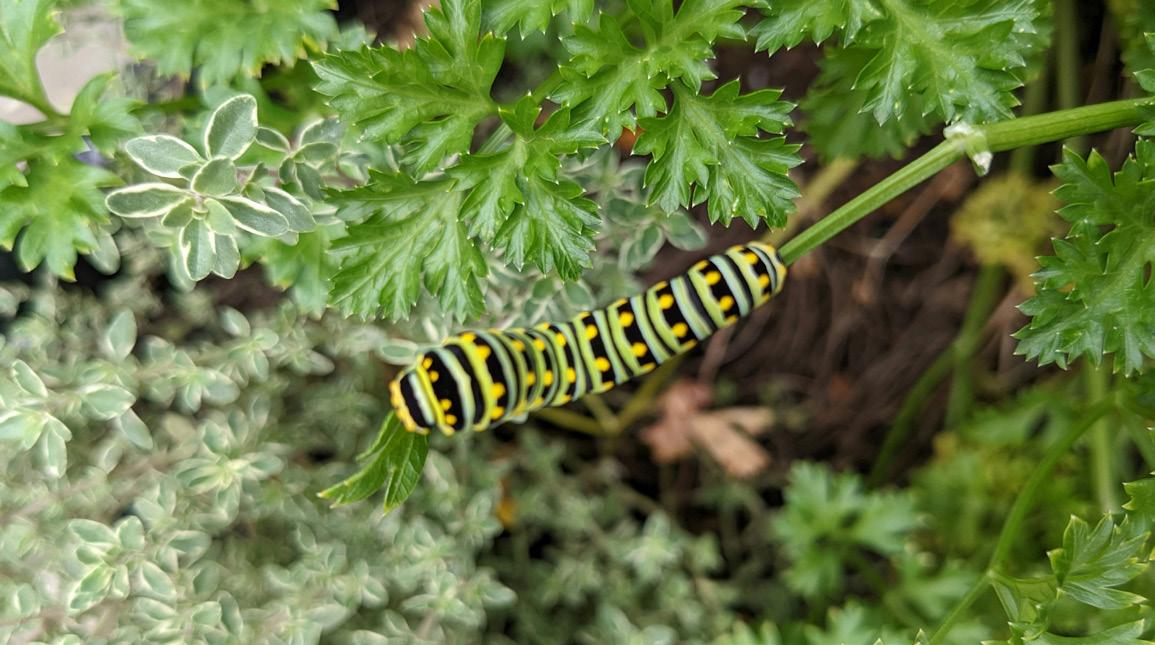
For Swallowtail Butterflies:
Parsley (Petroselinum crispum), Dill (Anethum graveolens), Fennel (Foeniculum vulgare)
For Wet Areas:
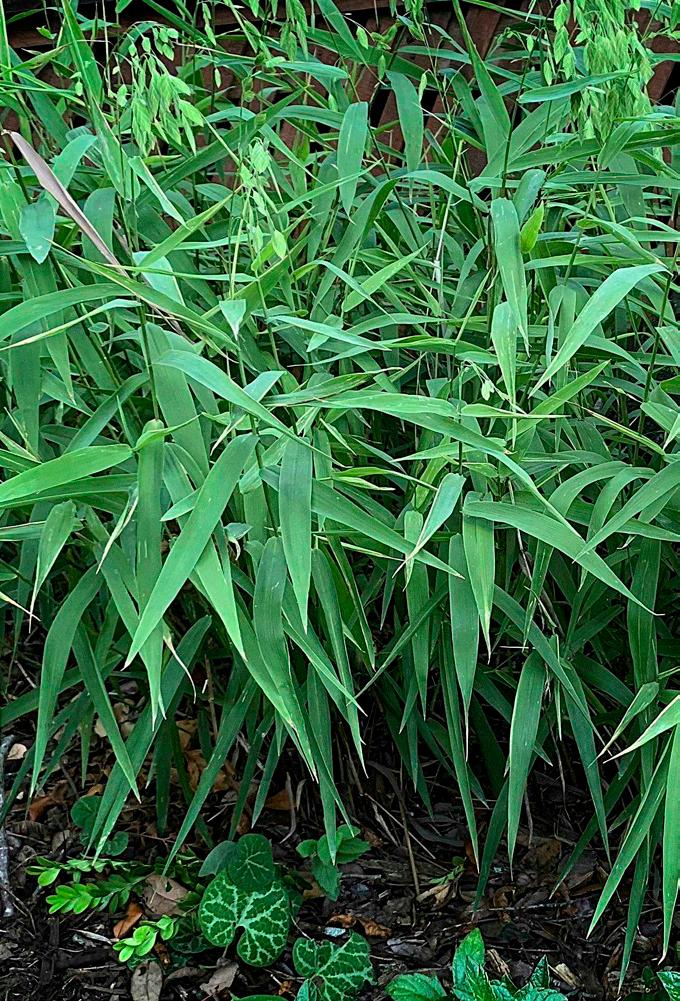
Native grasses and sedges
Hummingbird Favorites (that also attract butterflies):
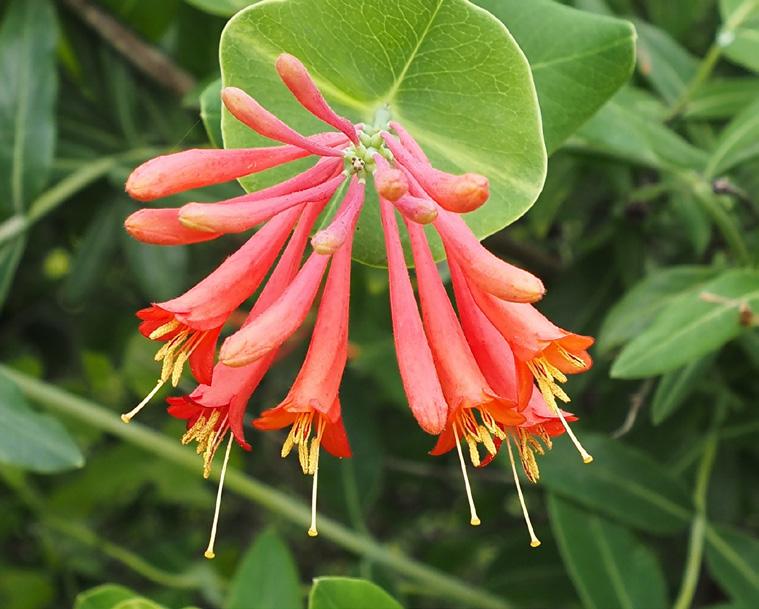
Coral honeysuckle (Lonicera sempervirens)
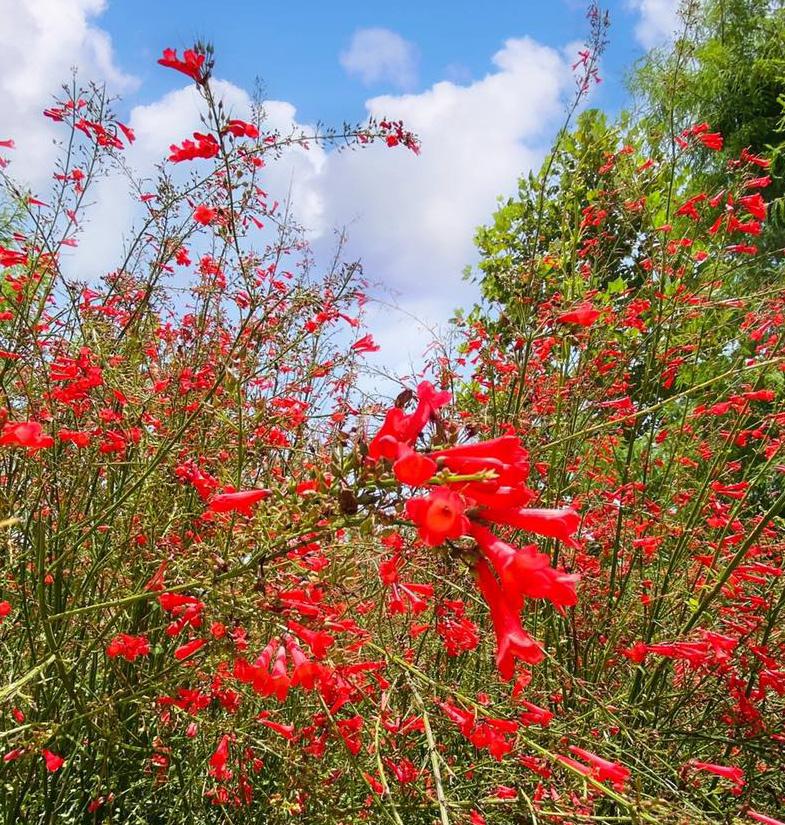
Flame acanthus (Anisacanthus quadrifidus var. wrightii)
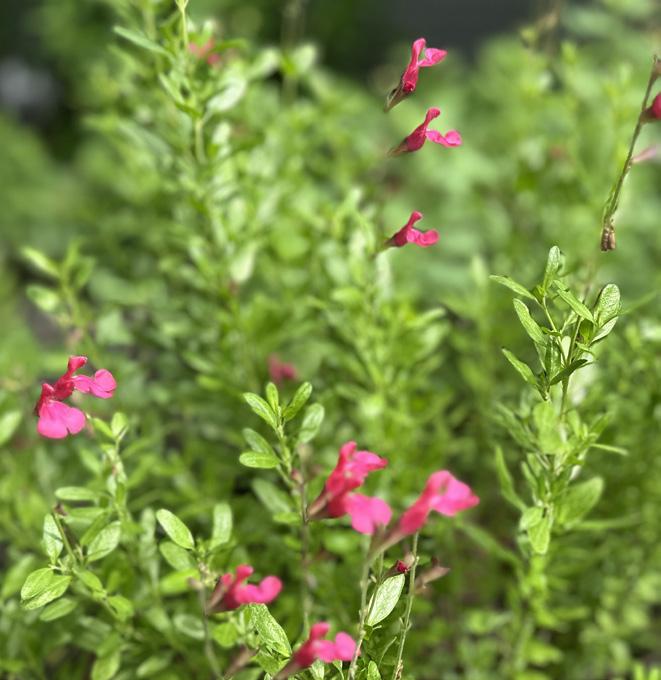
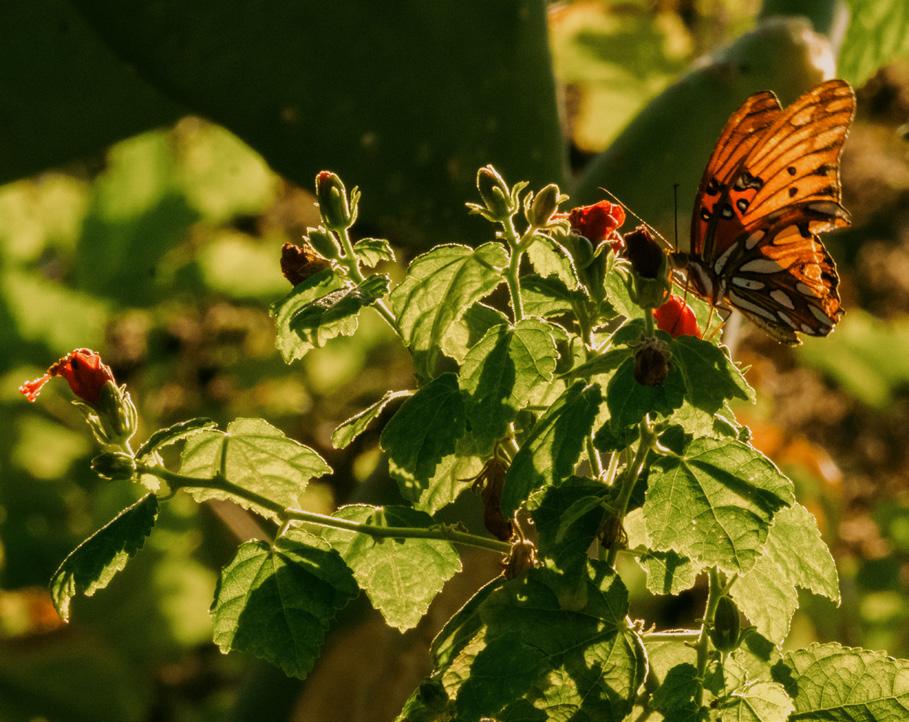
Fuel for the Journey North Milkweeds (Essential for Breeding):
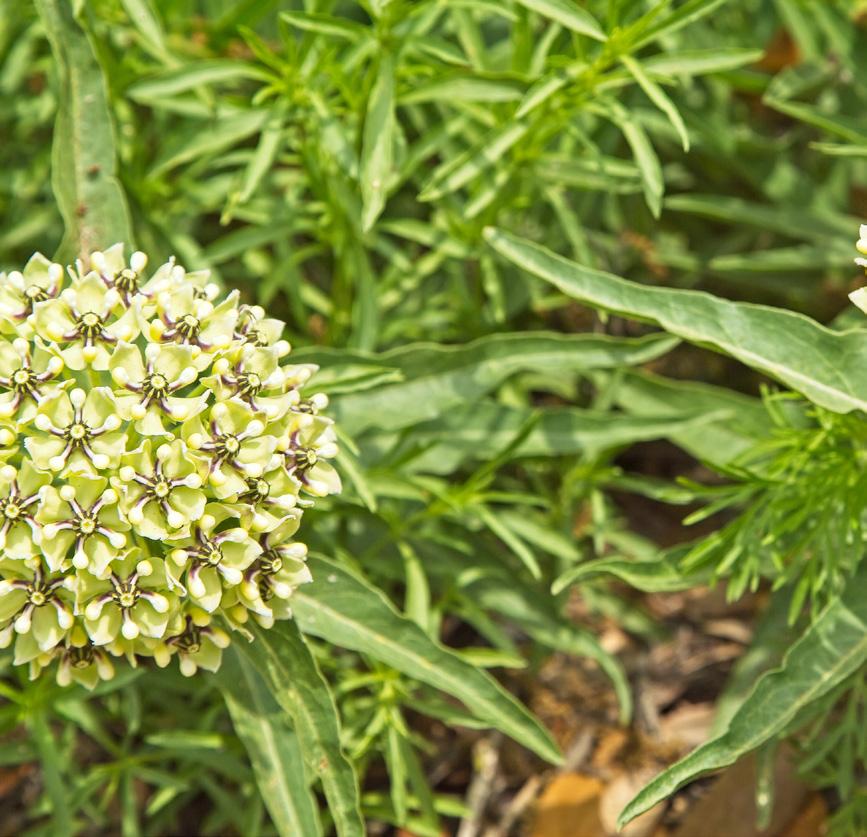
Antelope-horns milkweed (Asclepias asperula)
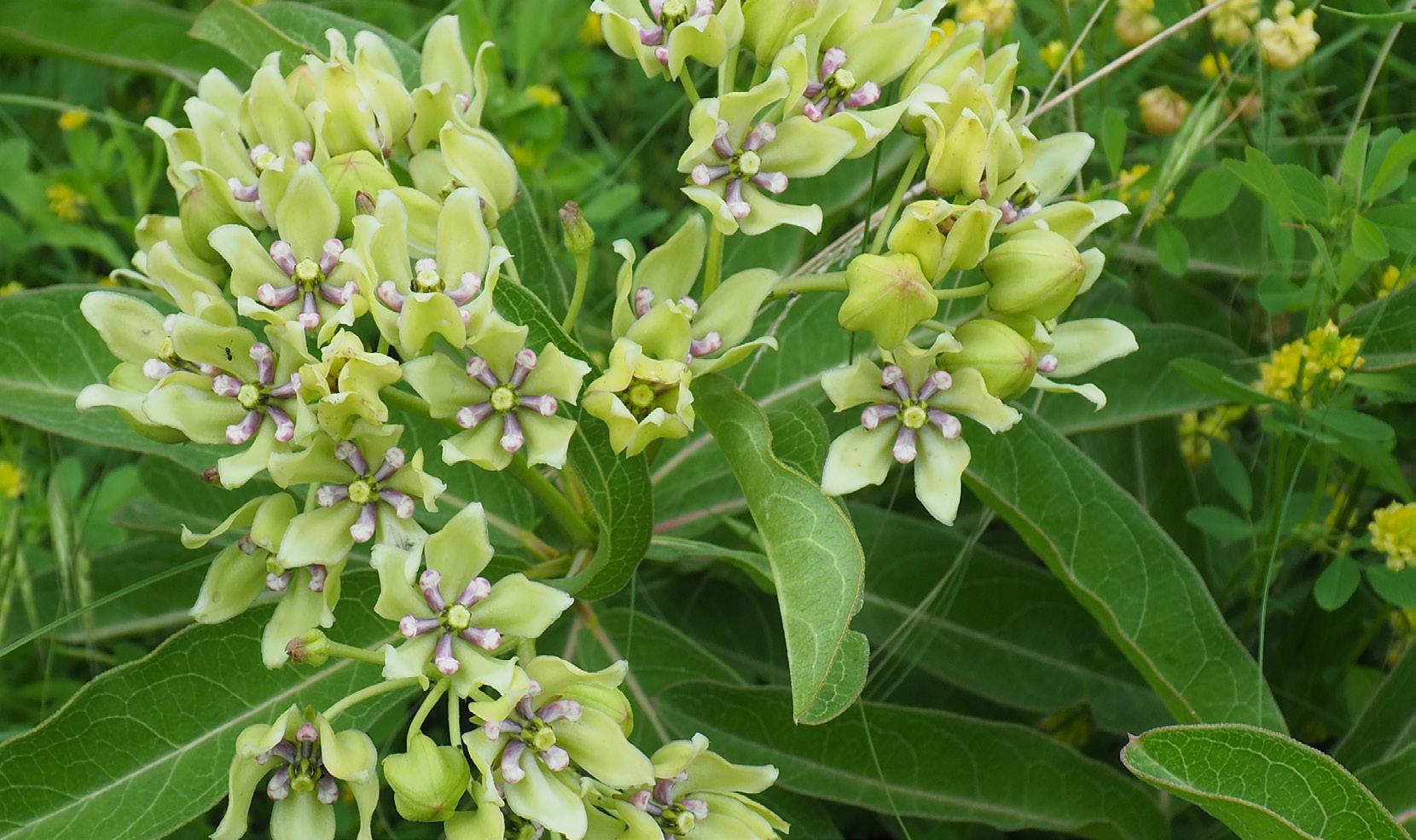
Green milkweed (Asclepias viridis)
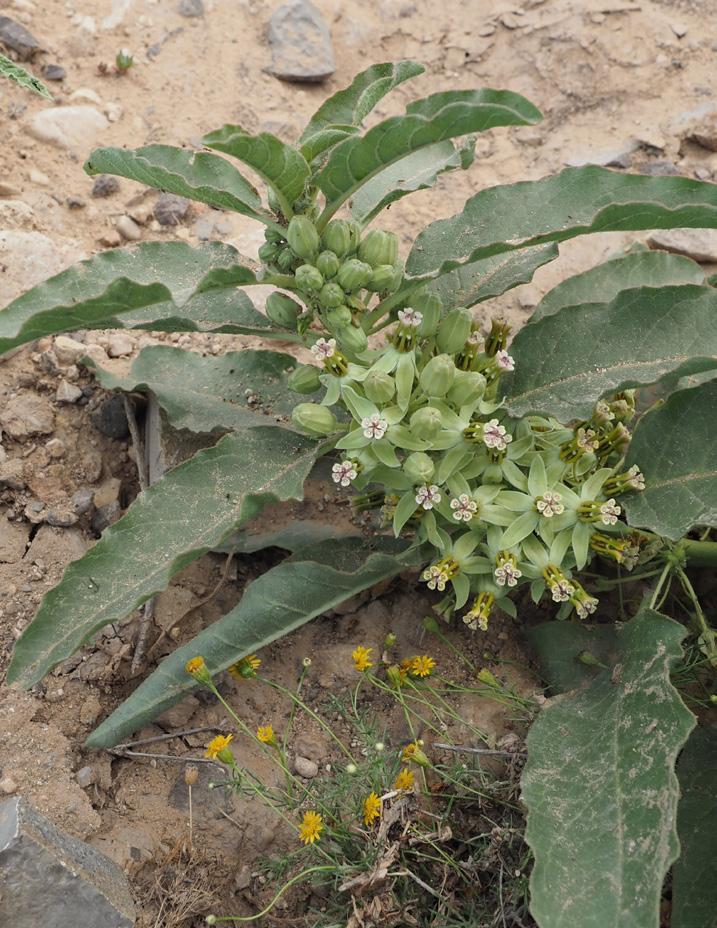
Zizotes milkweed (Asclepias oenotheroides)
Nectar Plants:
Blackfoot daisy (Melampodium leucanthum)
Mealy blue sage (Salvia farinacea)
Frogfruit (Phyla nodiflora)
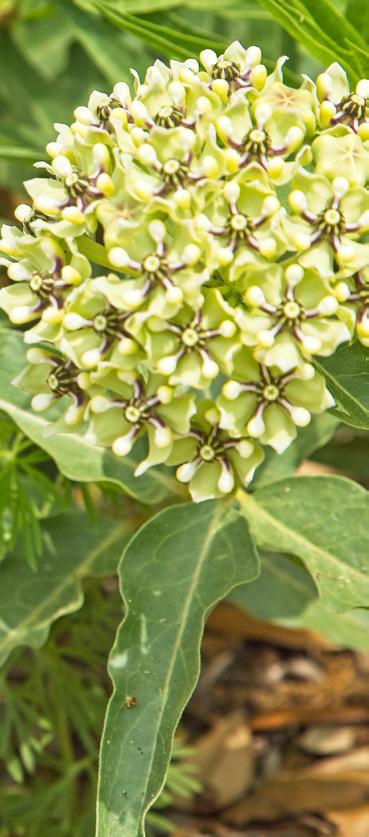
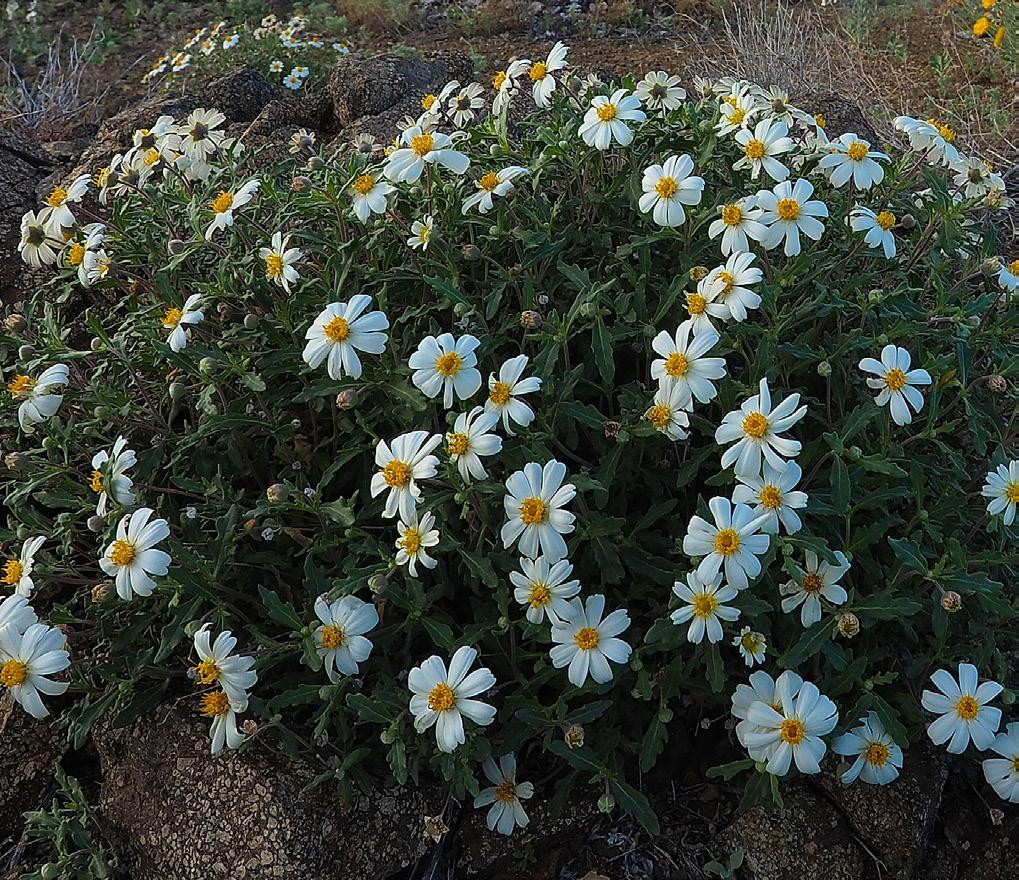
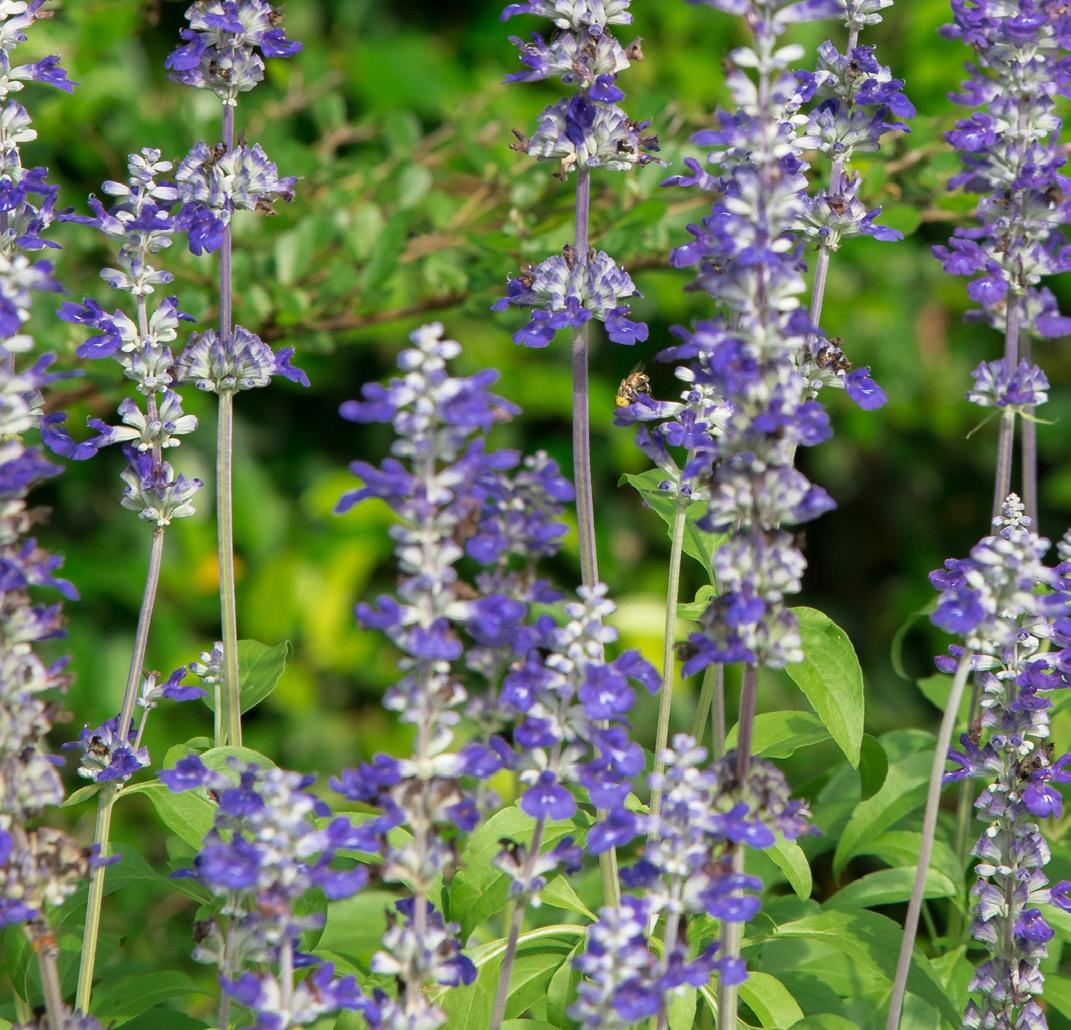
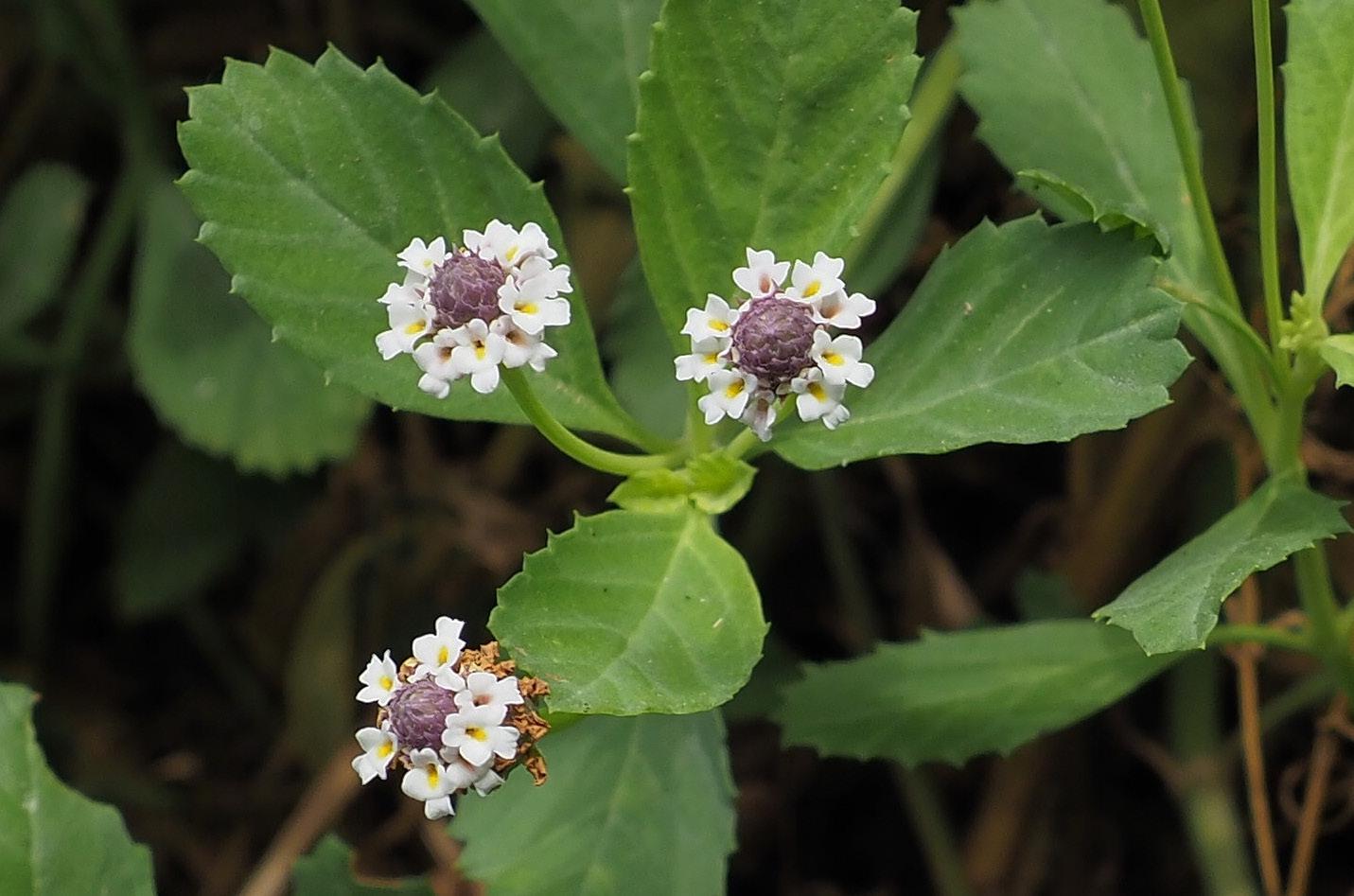
Think in Layers: Create a diverse habitat by including groundcovers, perennials, shrubs, and small trees. This provides shelter, nesting sites, and food sources at different heights.
Plant in Drifts: Group 3-5 of the same plant together rather than scattering single plants. Pollinators find clusters more easily and spend less energy foraging.
Overlap Bloom Times: Aim for continuous bloom from March through November. When one plant finishes flowering, another should be starting. This ensures food throughout the season.
Include Host Plants + Nectar Plants: Remember, caterpillars need different plants than adult butterflies. Milkweeds for monarchs, parsley for swallowtails, native grasses for skippers.
Create Microclimates: Hot, sunny spots?
Plant autumn sage (Salvia greggii) and blackfoot daisy (Melampodium leucanthum). Morning sun, afternoon shade? Try Turk’s cap (Malvaviscus arboreus var. drummondii) or Gregg’s Mistflower (Conoclinium greggii). Match plants to conditions for best success.
Add Water Features: A shallow birdbath with pebbles or stones, a small fountain, or even a damp sandy area provides essential drinking and “puddling” sites. Butterflies gather at damp spots to extract minerals.
Leave the Mess: Resist fall cleanup urges. Hollow stems house native bee larvae, leaf litter shelters chrysalises, and seedheads feed birds. “Messy” gardens support more life.
By Michael Eason, VP of Conservation and Collections
This fall, the San Antonio Botanical Garden’s TREES Initiative (Texas Recovery for Ecological and Environmental Stability) reaches a defining milestone: the first large-scale planting along the Guadalupe River. After months of seed collection, propagation, and partnership-building, thousands of native trees will be planted—the first of tens of thousands to restore one of the Hill Country’s most iconic and ecologically vital landscapes.
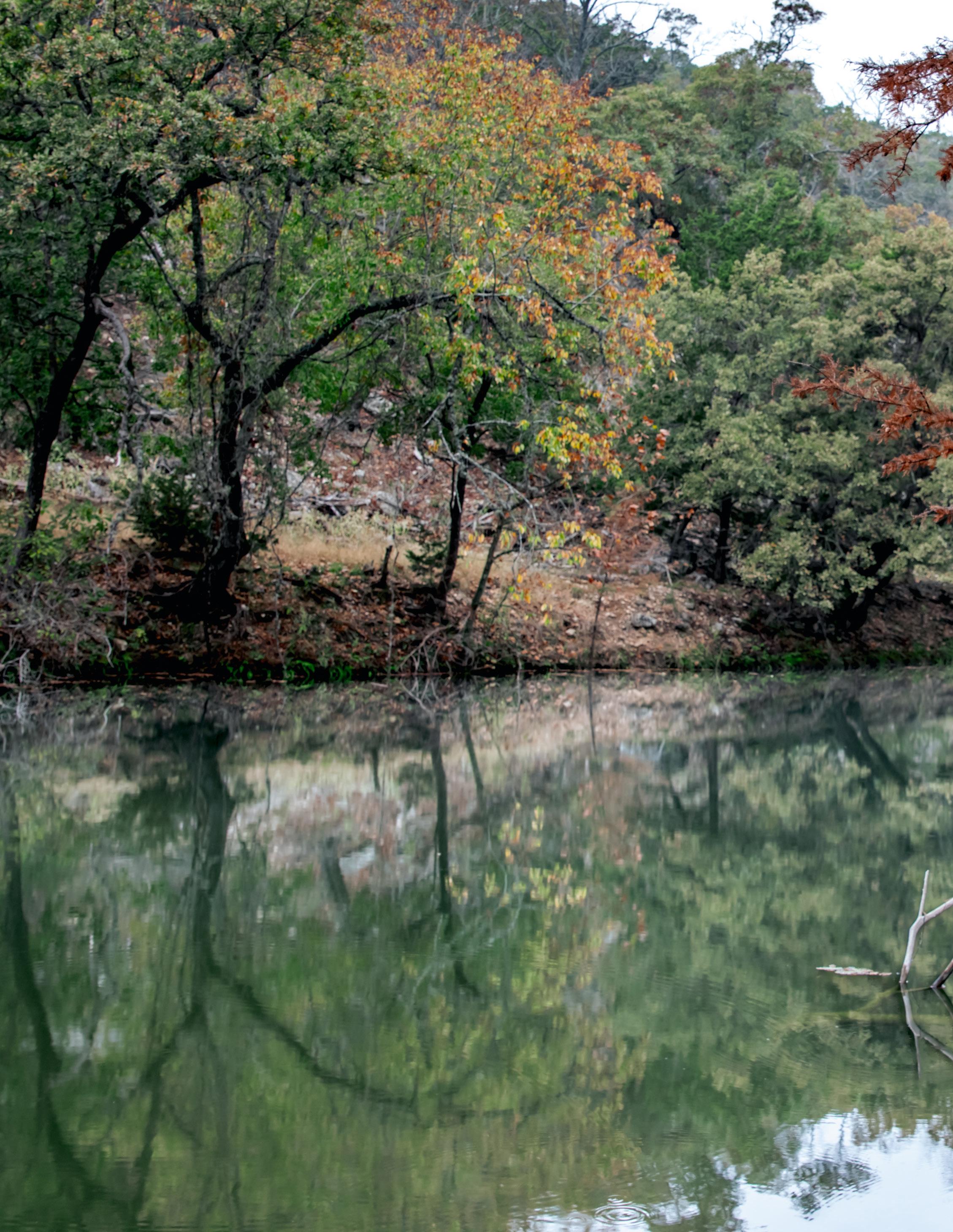
The initiative was born in August 2025, out of urgency, after the July 4 flood, which caused widespread loss of native riparian canopy along the Guadalupe River. In many areas, nearly 90% of the tree canopy was lost, leaving riverbanks exposed, habitats fragmented, and critical ecological processes disrupted.
In response, the Garden launched a coordinated, community-driven effort to rebuild these systems, using native trees grown from seed collected across the watershed and sourced locally.
At its core is a simple principle: restoration should begin with the landscape itself.
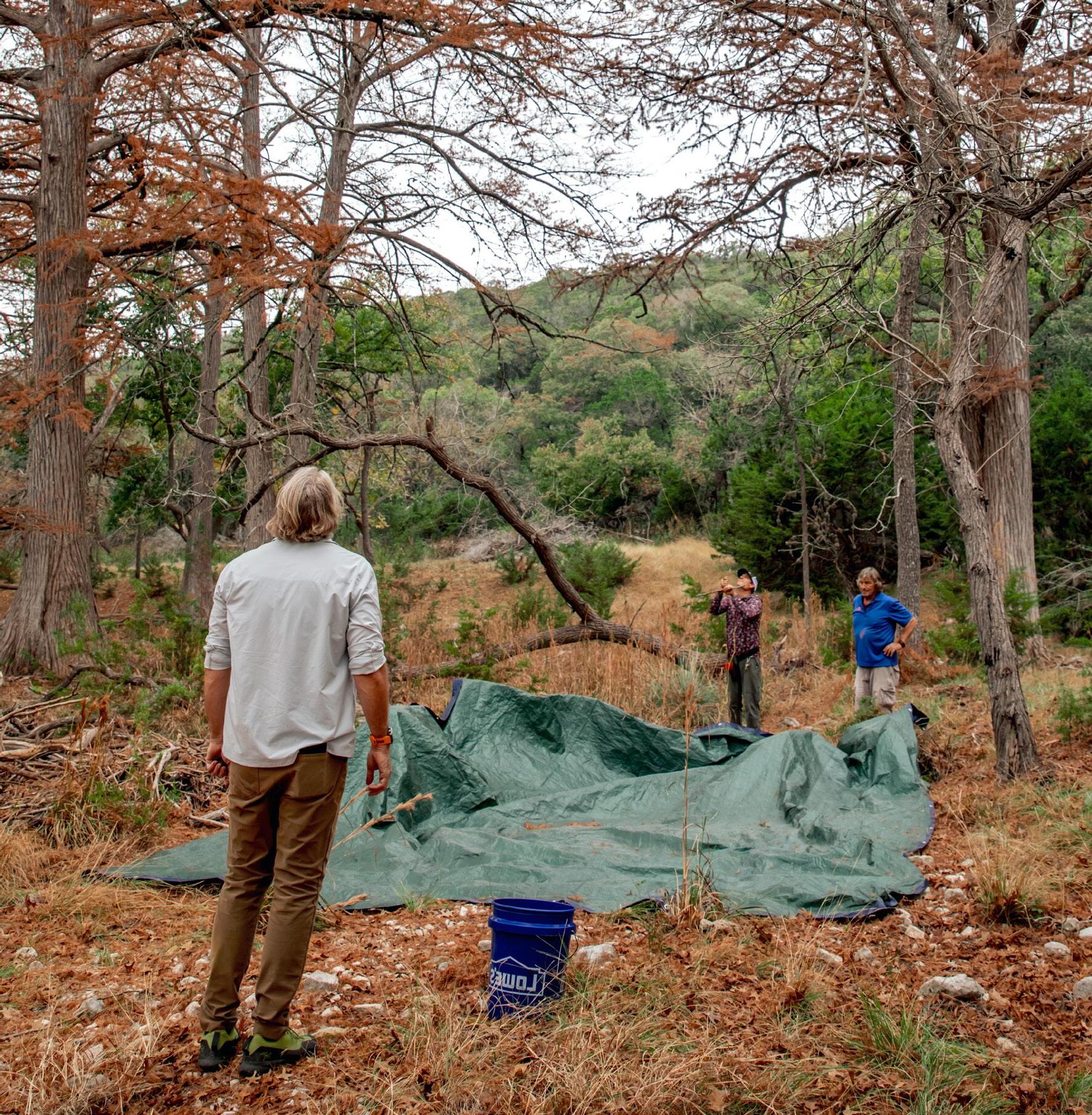
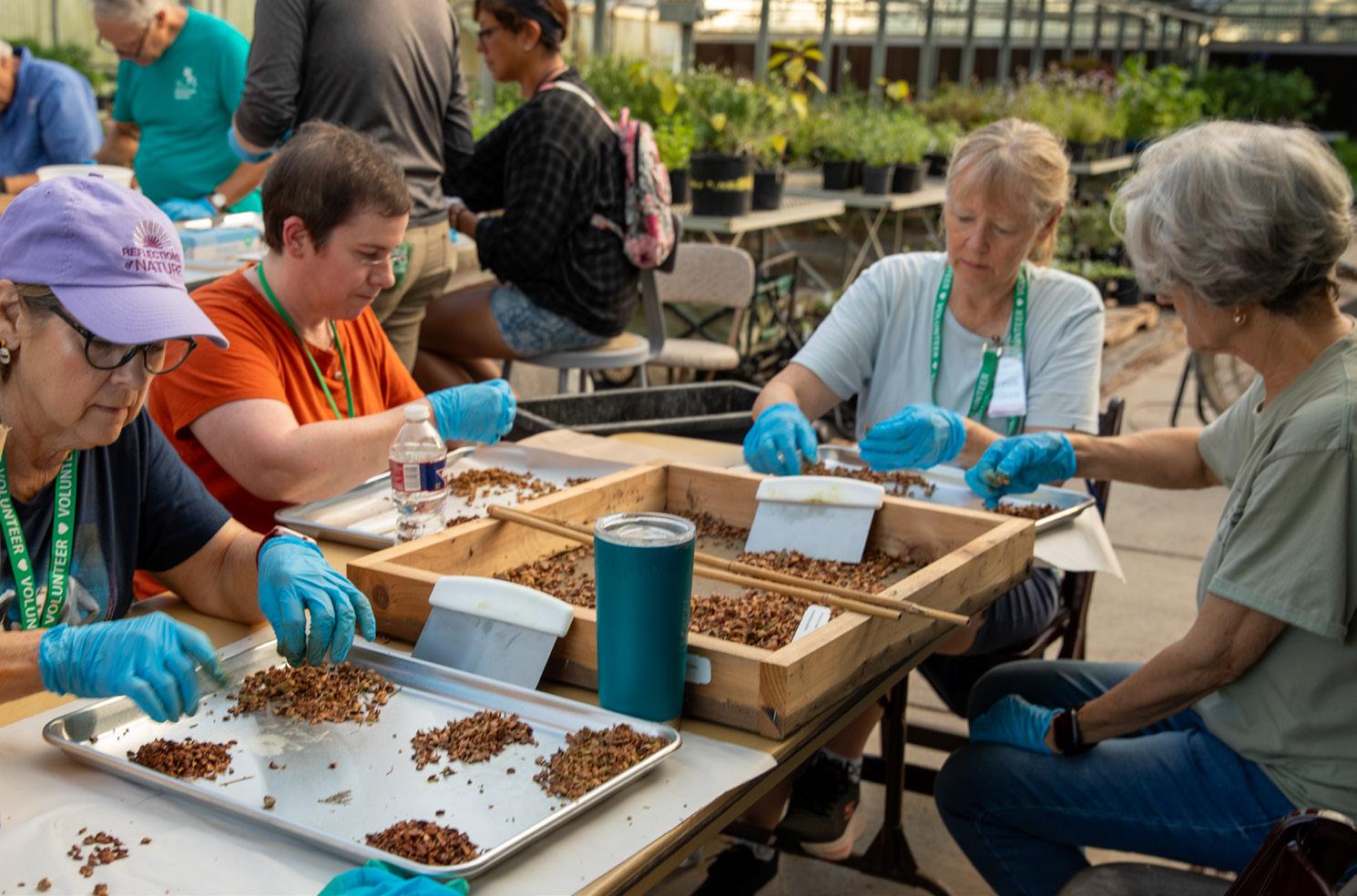
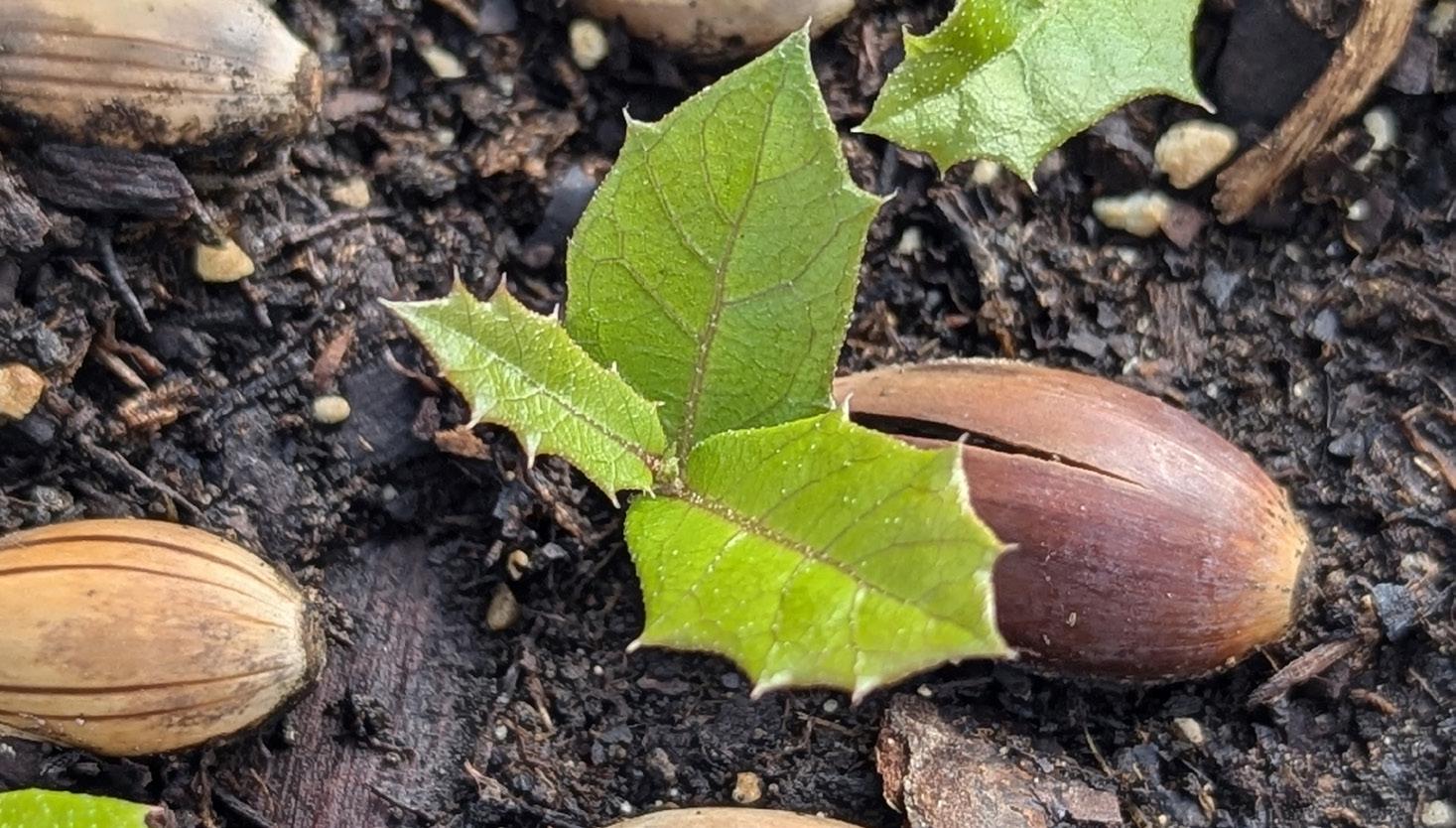
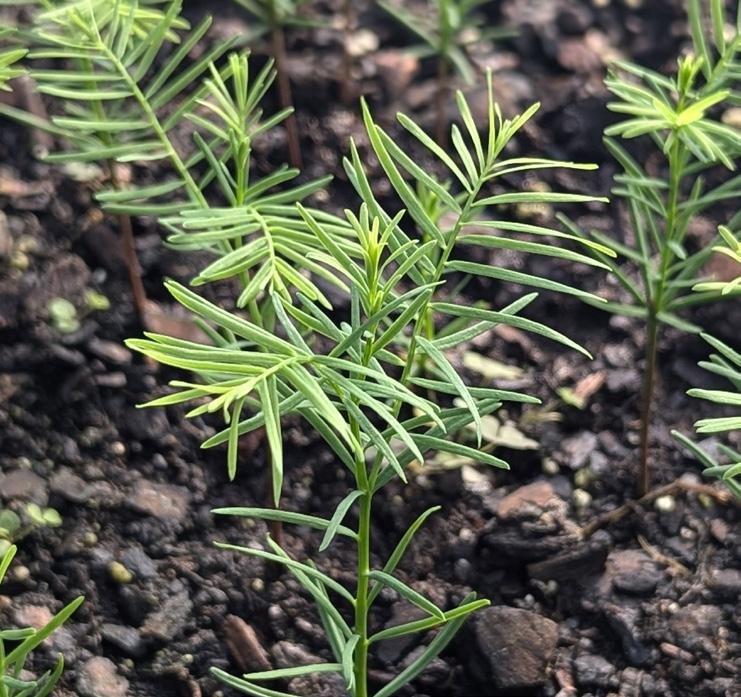
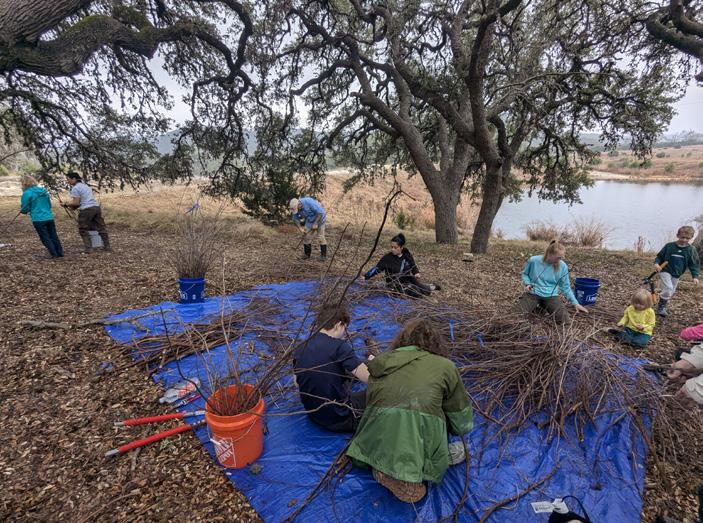
Garden staff and community volunteers collect seeds by hand from populations throughout the watershed—bald cypress, sycamore, pecan, and a variety of native oaks—thereby preserving the region’s unique genetic diversity and ensuring that planted trees are adapted to local conditions. These seeds are then grown at the Garden and in partnership with local nurseries, creating a direct pathway from wild populations to restoration sites.
Volunteers, staff, and partners will gather this fall along the Guadalupe River to plant the first group of trees grown specifically for this effort. The work begins well before planting day, with restoration sites carefully evaluated for hydrology, soil conditions, species suitability, and long-term survival.
Planting days will be both purposeful work and a community celebration. Volunteers and Garden staff will plant each tree with intention—positioned to maximize survival and support the riparian forest’s long-term structure.
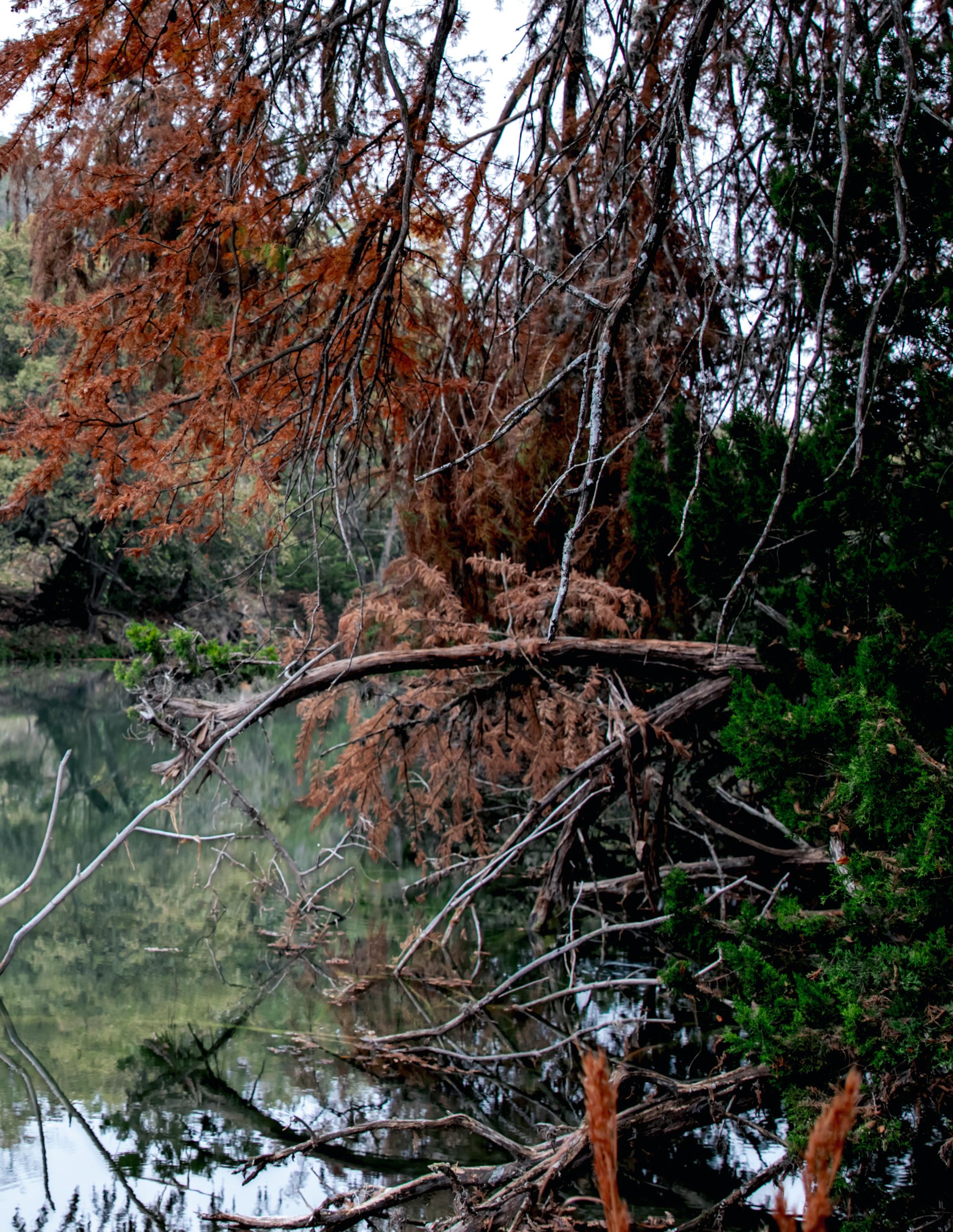
Each tree is more than a planting; it’s infrastructure for the future. Mature bald cypress will provide cooling shade that moderates water temperatures, which is critical for fish and aquatic life in warming summers. Root systems will stabilize eroding banks and filter runoff before it reaches the water. Canopy cover will create corridors for migratory birds and provide habitat for species ranging from insects to mammals.
Equally important is what follows. Long-term monitoring, aftercare, and adaptive management will ensure these young trees establish successfully. Restoration is not a single event—it’s an ongoing relationship with the landscape, measured in decades, not seasons.
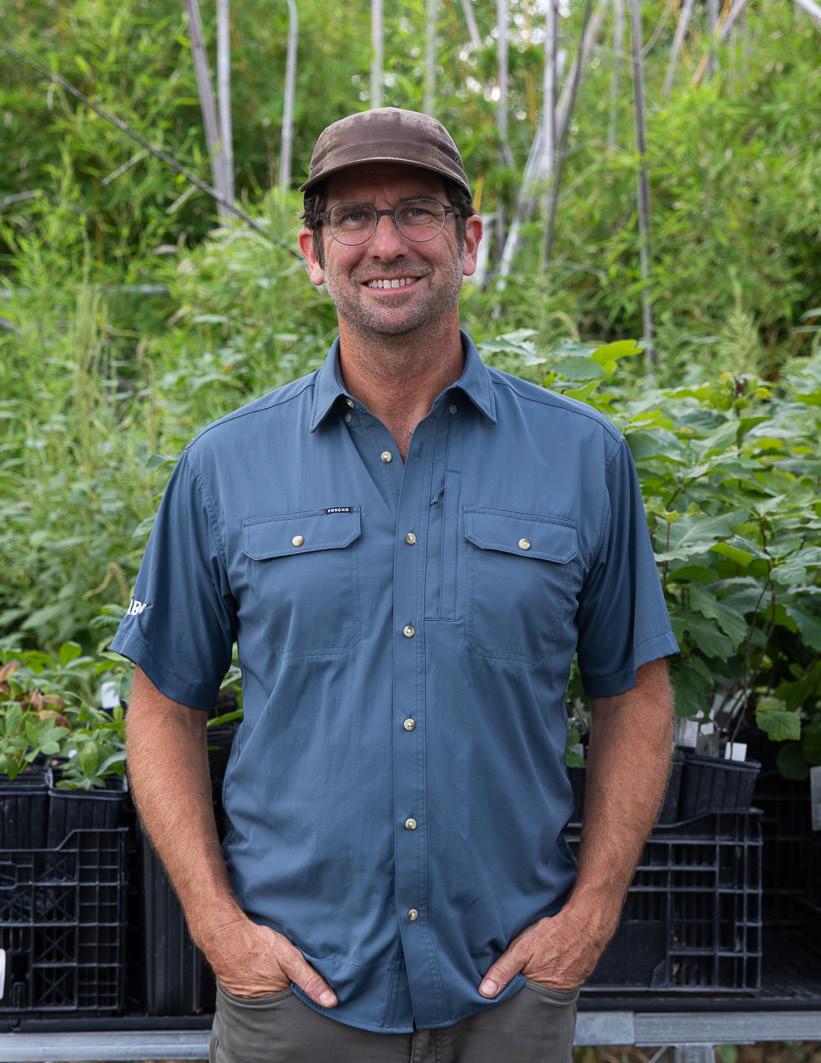
Recognizing the need for dedicated leadership, the Garden welcomed Matt Welch in late March as Director of Conservation and Collections.
Matt brings extensive experience in restoration ecology, horticulture, and native plant propagation—an essential combination for a project that bridges fieldwork and long-term ecological planning. His background in managing complex restoration efforts across diverse landscapes positions him well to guide the TREES Initiative into its next phase.
In his role, Matt will expand seed
collection efforts, coordinate with landowners and partners, and refine propagation and planting strategies to support long-term success. He will also help develop best practices that can serve as a model for riparian restoration throughout Texas.
His leadership reflects a broader vision for the Garden: integrating conservation, restoration, and horticulture into a unified, scalable approach to address current challenges and build capacity for the future.
The generosity of donors and partners supports every stage of the work—from seed collection and propagation to planting and monitoring. Thank you for ensuring that trees grown for restoration remain accessible to the communities they are intended to serve, including landowners and municipalities working to restore their own stretches of river.
The Garden works closely with partners to ensure strategic, science-based restoration across the region.
The initiative also depends on the dedication of volunteers, whose contributions form the backbone of the program. From collecting and processing seed at the Garden to planting trees in the field, their efforts demonstrate the power of collective action. Thank you to the volunteers who have contributed countless hours to this mission.
The first outplanting is only the beginning. Over the coming years, the TREES Initiative aims to plant tens of thousands of native trees along the Guadalupe River and beyond—each grown from locally sourced seed and rooted in the region’s ecological identity.
This work is an investment in the future—one that will pay dividends for generations. The shade of a mature cypress, the stability of a restored riverbank, and wildlife’s return to a thriving corridor will unfold over decades. But it begins right here, this fall, with careful planning, strong partnerships, and the simple act of planting a tree.
James Avery Forging Hope • William and Louree Greehey • Kate Marmion Charitable Foundation • The Carroll and Marguerite Wheeler Foundation • Lou Celia and Don Frost • John R. and Greli N. Less Charitable Trust • The Ewing Halsell Foundation • The Greehey Family Foundation • 130 Agency • John & Amy Bell Family Foundation • Trudy and Ed Moore • Security State Bank & Trust • Whataburger • Guadalupe River Trout Unlimited • Karen and Jim Greenwood • Barbara and Michael Gentry • Pamela Harte • Bartlett Tree Experts • Gary P. Nunn • Crider’s Rodeo & Dancehall • Hunt Preservation Society, Inc. • Capital Group-San Antonio • Bill Orr and Jana Orsinger • AVTS Event Production • Courtney Walker • Bluebonnet Custom Charters • John and Clarie Alexander • Jonathan Letz • Julie and Warren Wilkinson
The TREES initiative is supported in part by the Community Foundation of the Texas Hill Country through the Kerr County Flood Relief Fund.
Blanton’s Nursery • Bluejay Tree Farm • Casey Williams • City of Austin • City of Kerrville • Habitat Select Nursery • Hill Country Alliance • Hill Country Conservatory • Kerrville River Foundation • Kerr Country Water Alliance • Kerr Together • Manchaca Bees and Trees • Mosty Brothers Nursery • Native Plant Society of Texas • Patrick Kirwin • Rennerwood Tree Farm • Riverside Nature Center • Schreiner University • Texas A&M Forest Service • Texas Parks and Wildlife • TreeFolks • Upper Guadalupe River Authority
Learn more at sabgtx.org/trees

by the Numbers:
90%
Tree canopy lost in hardest-hit areas along the Guadalupe.
30,000
Native tree seeds being propagated.
25,000
Trees to be planted in 2026.
50,000
Trees to be planted by 2028.
373
Volunteers contributing to restoration.
1,121
Volunteer hours donated to date.
40+
River miles targeted for restoration.
20+
Partners with the Garden bringing this mission to life.
Opportunities are available during the year, from seed collection and cleaning to tree nursery assistance, planting, and river monitoring.
Support seed collection, propagation, and long-term monitoring.
Share with your friends, neighbors, and colleagues this story of why riparian restoration matters.
Landowners who allow our trained teams to locate native seeds and evaluate future planting sites are key to restoration success.
By Andrew Labay, Chief Mission Officer
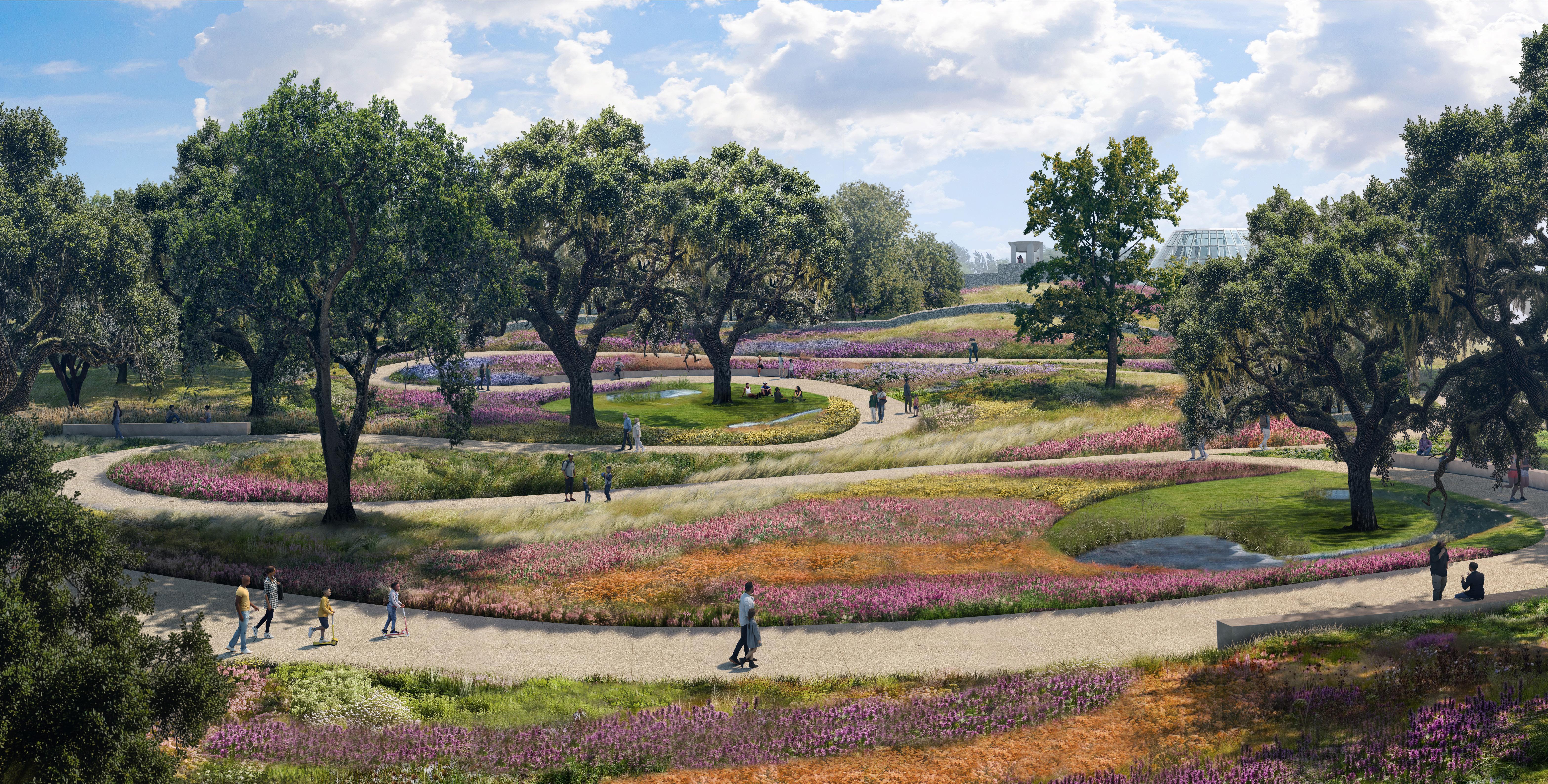
Imagine walking into a sweeping 2.5acre meadow alive with the movement of monarchs and swallowtails, the hum of native bees, and the gentle sway of goldenrods and coneflowers catching the morning light. Imagine pathways that meander through native salvias and mistflowers, past shallow pools where dragonflies hover, into quiet alcoves made for stillness and wonder. This is what we are building — and we are so excited to invite you in.
Before we look forward, we want to
pause and acknowledge what this new meadow garden will replace. The gardens that have served this community for generations will not simply be erased — their spirit will carry forward.
The Old-Fashioned Garden, in particular, has long functioned as a pollinator garden and certified Monarch Waystation — quietly pioneering the very ideas that will now define an entire 2.5 acres. We are committed to preserving the plants and stories that have made these gardens meaningful, whether roses, hibiscus, or the legacy of Mr. Moy, and will find new places and ways to honor them.
We also recognize that this core, historic area of the Garden needs to connect aesthetically with the newer areas. The landscape design guests encounter should flow seamlessly from one area to the next.
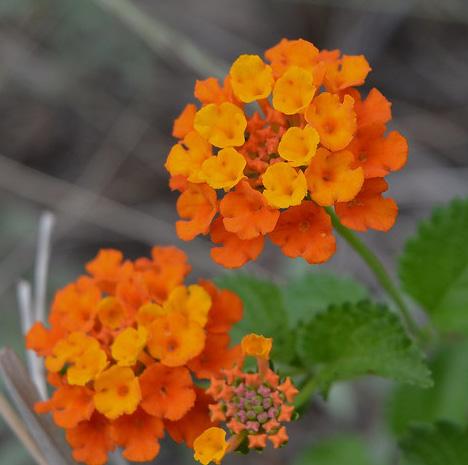
At the core of The Charline McCombs Pollinator Meadow Garden is a bold horticultural direction: a shift toward native plants, ecological function, and planting that works with South Texas nature rather than against it. This is a garden that will be designed to inspire as much as it delights.
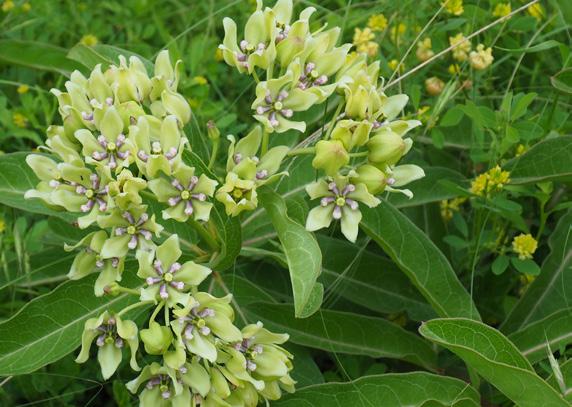
The meadow garden’s plantings are chosen not only for beauty, but for their ecological relationships with the pollinators that depend on them. The design includes both nectar and pollen plants, supporting the full arc of pollinator life.
One of our most important horticultural commitments is to favor native, wildcollected plants over modern cultivars wherever possible. Many cultivars — however beautiful — have been bred in ways that reduce their value to pollinators, altering flower structure, color, or nectar production. By prioritizing wild-collected natives, we are choosing ecological integrity.
Rather than defaulting to chemical intervention, IPM relies on ecological knowledge — understanding pest and beneficial insect cycles, using targeted treatments only when necessary, and allowing natural predator-prey relationships to do their work. In a pollinator garden, this approach isn’t just preferable; it’s essential.
The meadow garden will also embrace a more naturalistic approach to seasonal maintenance — and a celebration of the beauty found in every season. Spent flowers, seed heads, and leaf litter may linger as insect habitat; ornamental grasses and evergreen plants will provide structure through the winter landscape.
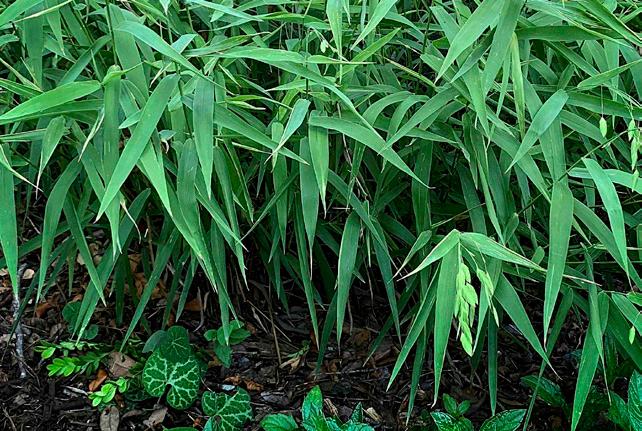
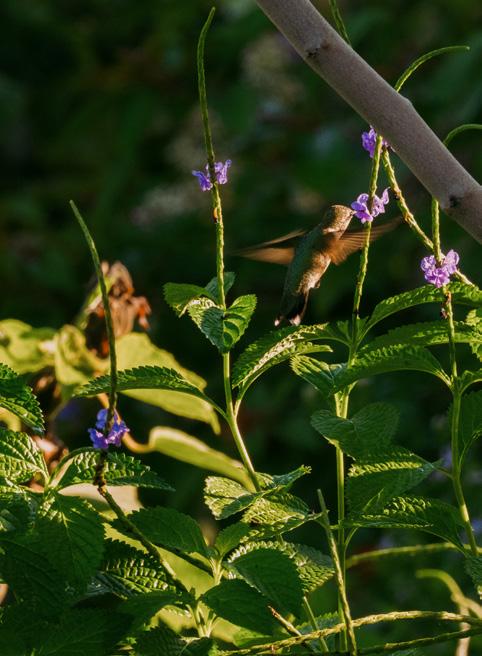
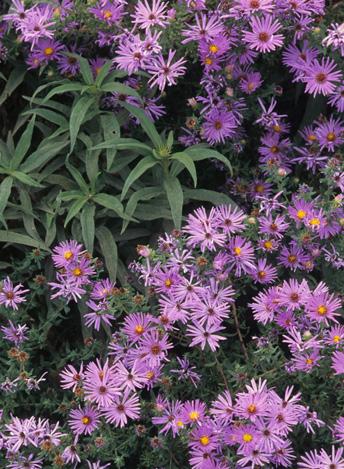
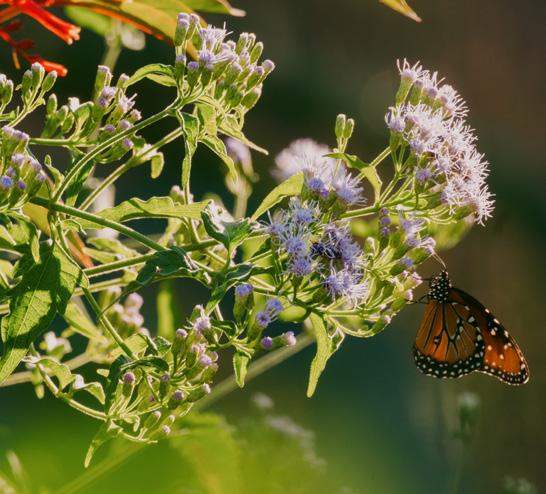
This is horticulture with humility — recognizing that the tidiest garden is not always the healthiest, and that beauty can be found both in the vivid color of a summer flower and in the flowing texture of an ornamental grass in winter.
“The tidiest garden is not always the healthiest — and beauty can be found in every season.”
Andrew Labay, Chief Mission Officer
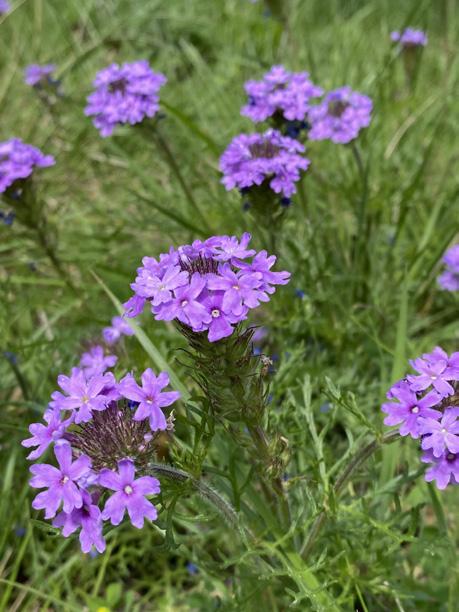
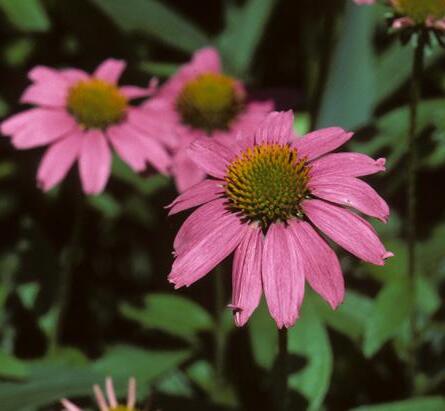
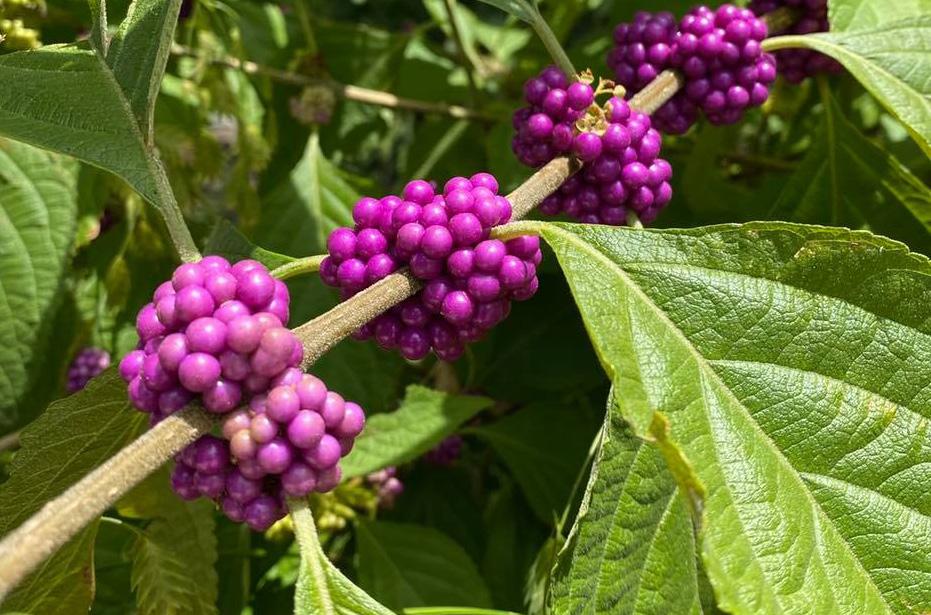
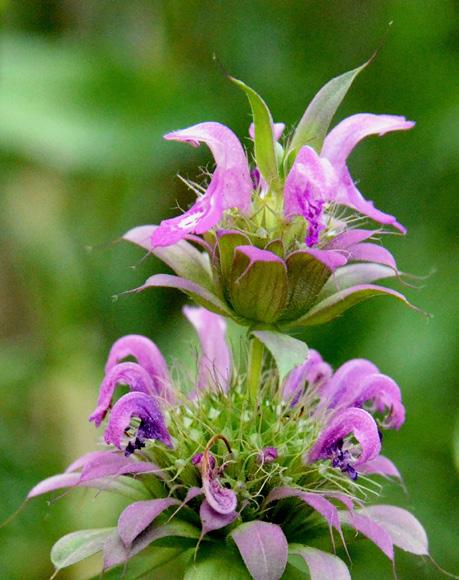
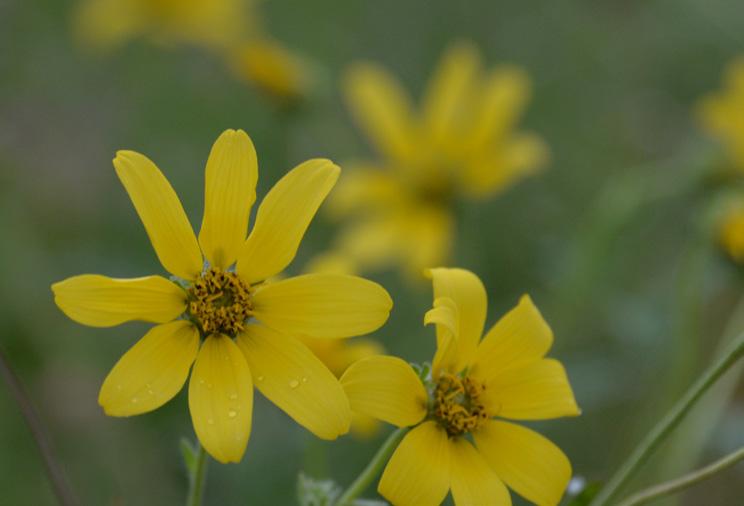
The Charline McCombs Pollinator Meadow Garden is designed to be a demonstration garden in the truest sense — a place where every decision is understandable and replicable. Visitors should be able to walk through, identify plants, understand why they were chosen, and leave with ideas they can carry home to their own gardens. In a region where water conservation and biodiversity are urgent priorities, that kind of practical inspiration matters enormously.
Lawn areas will be limited, replaced by drought-adapted native plantings. Shallow water features will provide drinking and bathing sources for pollinators and wildlife without requiring significant water. The message to visitors will be clear: a breathtaking garden and a responsible one are one and the same.
Design work is currently underway and is a true collaboration between Reed Hilderbrand as experts in gardens and native plant design, and the Garden staff with deep knowledge of this land’s conditions, history, and community. This partnership ensures the space is visionary and grounded. The process will run through summer 2027, followed by construction leading to a planned opening in late 2028.
The Charline McCombs Pollinator Meadow Garden represents a defining moment in our continued growth. Made possible through the transformational leadership of the McCombs Foundation and the collective generosity of many dedicated supporters, this project reflects what can be achieved when a community invests boldly in its future.
For decades, SABG has connected people to nature, education, and
conservation. Today, donor support is helping elevate that mission to new heights – expanding what the Garden can offer visitors, strengthening our role as a regional leader in environmental stewardship, and creating inspiring new experiences for generations to come.
Charline McCombs’ legacy of generosity continues to shape San Antonio, and the Pollinator Meadow Garden will stand as both a tribute and a catalyst. It embodies a shared belief that beautiful outdoor spaces can enrich lives, spark curiosity, and create lasting connections between people and the natural world.
As Connie McCombs McNab reflected, “We are creating a place of beauty and wonder—where people, plants, and pollinators flourish, and future generations are inspired to grow.” That vision extends beyond the meadow garden itself. It represents an investment in the future of the Garden, conservation, and San Antonio.
Together, the McCombs Foundation and fellow donors are creating more than a new garden space. They are helping shape a lasting legacy—one that will inspire discovery, foster stewardship, and ensure our mission continues to flourish as one of the city’s most treasured cultural and environmental resources and destinations.
Design work is underway with Reed Hilderbrand and Garden staff.
Design process concludes; construction phase begins.
The Charline McCombs Pollinator Meadow Garden is planned to open.
Hosted by San Antonio Botanical Garden’s President & CEO Katherine Trum ble, with Event Co-Chairs Melody McMahon and Clair McMahon Jones
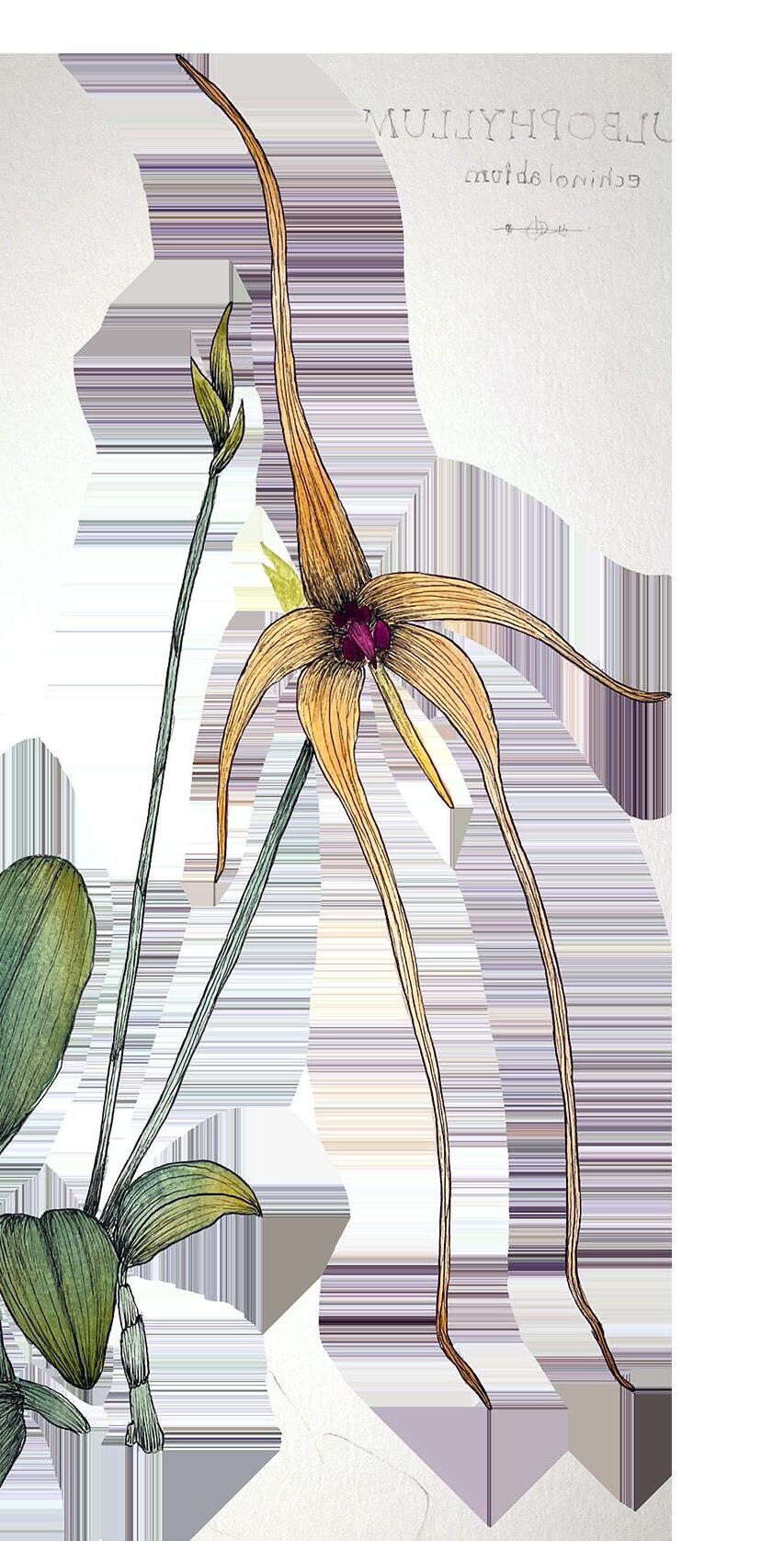
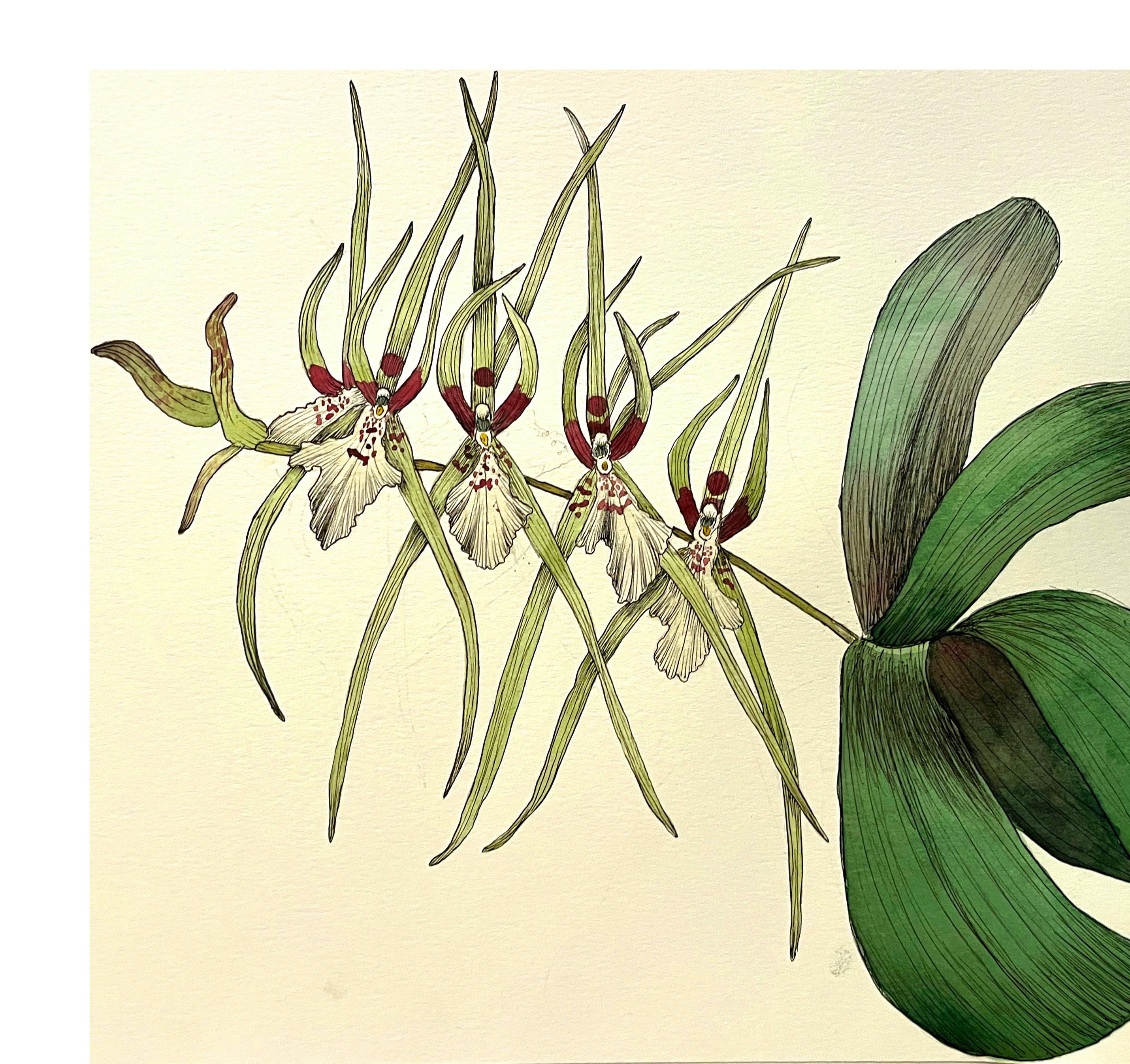
In the spirit of 1920s botanical exploration, step into an immersive evening inspired by field journals, orchid discoveries, and early expeditions that enlightened human understanding of plant science. In fascination of what came before, this special night celebrates the upcoming Napier Orchid Pavillion and strengthens the San Antonio Botanical Garden’s mission of enriching lives through plants and nature.
Visit sabgtx.org/splendor for table sponsorships or underwriting opportunities.
If you’ve been to the Garden in the past few years, chances are you’ve met Lisa Torres—even if you didn’t know her
Maybe it was at Dog Days, where she learned your pup’s name and always had a “pup cup” ready. Maybe it was at an exhibition opening, where her mobile coffee setup became the gathering spot. Or maybe it was just a regular Tuesday morning when she appeared with her pop-up cart, making an ordinary visit special with a perfectly pulled espresso
For years, Dos Perros Coffee has been a beloved presence at Garden events—so beloved that in March 2026, something remarkable happened: the Garden’s first permanent coffee shop opened, exclusively featuring Dos Perros.
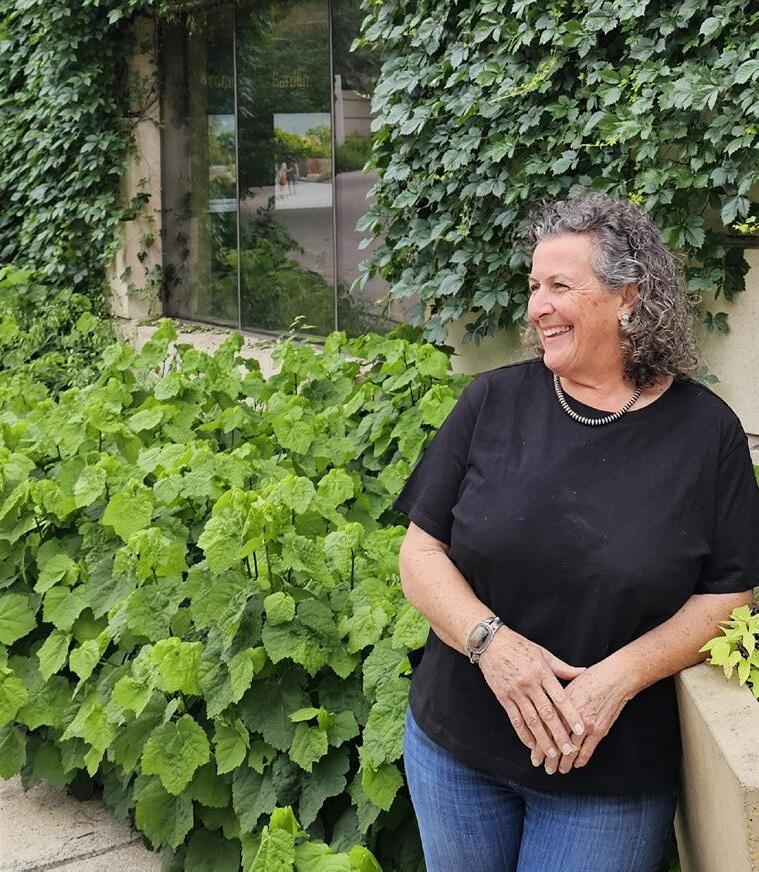
What started as a husband experimenting with a soup pot on a gas stove has become a brick-and-mortar café where coffee, nature, and community converge daily. We sat down with owner and operator Lisa Torres—longtime Garden member and now permanent Garden partner—to learn how Dos Perros went from home roaster to Garden staple.
Jami: Take us back to the beginning. How
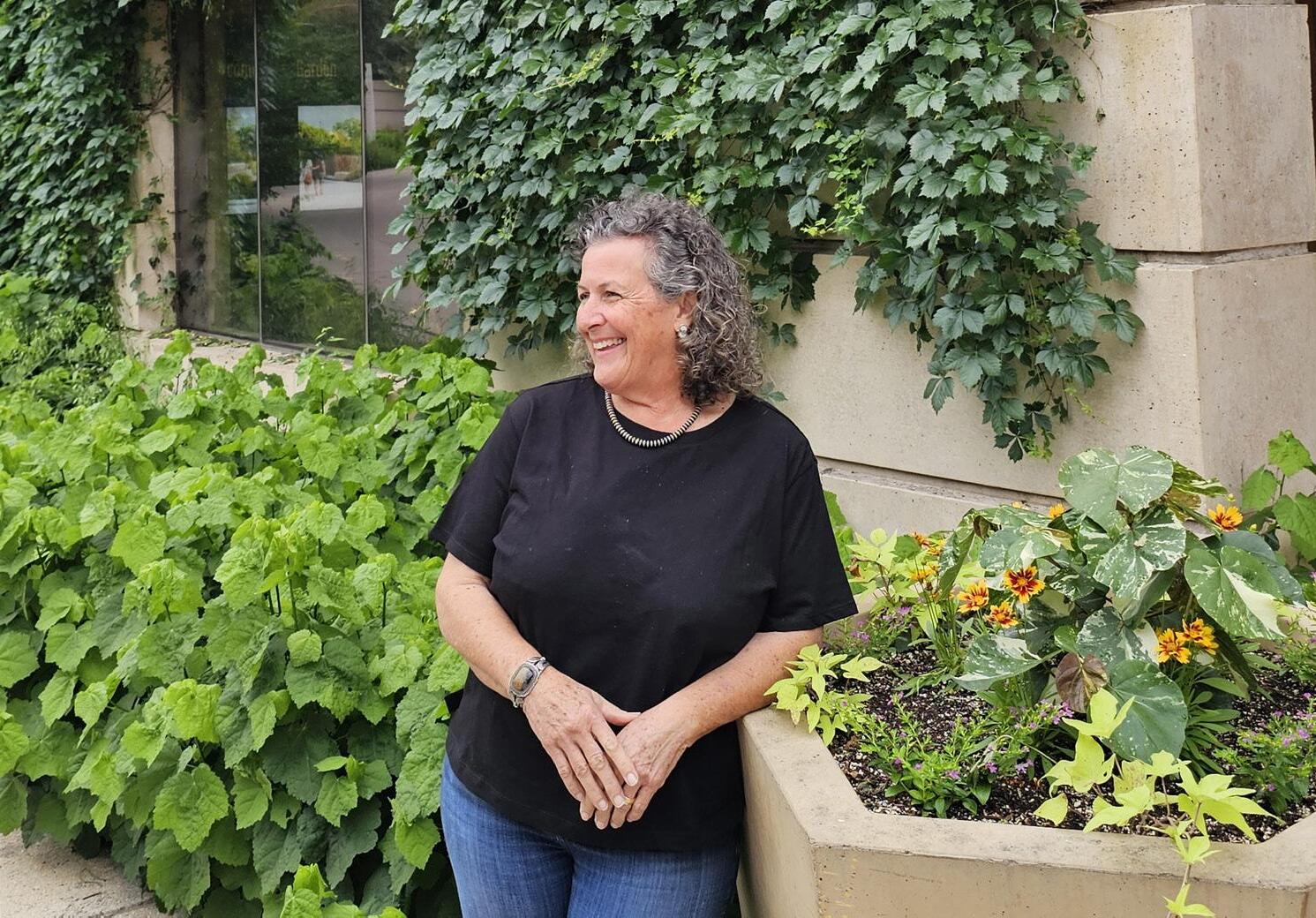
Lisa: My sweet husband, Norman, wanted me to have the best, freshest coffee possible—so he decided to roast it himself. He literally started on our gas stove with an old soup pot. Eventually, we graduated to a small home roaster, then a larger one. By that point, we thought, “Why not teach our kids about entrepreneurship?” We wanted them to see how you build something from scratch—the work it takes, the relationships. Dos Perros Coffee, as a business, began in 2018.
The name came from our two rescue dogs—Jasmin the Bluenose Pitty and May the Pug, aka “The Sweet Potato Pug”. They were part of the journey from the start, always in the kitchen while we were roasting. When we started vending at dog-related events, having “Dos Perros” as our name just made sense.
Jami: How did you end up at the Garden?
Lisa: The Garden was hosting a dog days event several years ago and needed vendors. We’d been donating to local dog shelters and rescues for years—
it’s part of our mission to give back to the community that supports rescue dogs—so when we saw they needed a coffee vendor for a dog event, it felt like perfect alignment. At that first event, we immediately fell in love with the space and the people. The staff was incredible. Every time my phone rang, and it was the Garden inviting us back for other celebration events, I felt honored.
Jami: Dog Days became something special for you, didn’t it?
Lisa: Oh my gosh, yes. We were there almost every day with our pop-up. After the first few days, we began learning names—not just people’s names, but their dogs’ names too. We’d see regulars coming across the lawn, and we’d already be making their usual order. Their dogs would get excited when they spotted our pop-up because they knew “pup cups” were coming. That’s when it hit me: we weren’t just selling coffee. We were creating moments. We were part of the guests’ Garden experience.
Jami: You’re also a longtime Garden member. What does that dual role mean to you?
Lisa: Being a member of the Garden has always meant belonging to something larger than myself—a community dedicated to conservation, beauty, and connection to nature. I’ve brought my kids here to learn, celebrated special occasions, and found peace.
Now, as both a member and a partner with our café, I get to contribute to that mission in a new way. Every morning, I’m not just serving coffee—I’m helping create the experience that made me fall in love with this place. I’m welcoming other members, making visitors feel at home, and supporting the Garden’s mission through our partnership.
Jami: What’s a typical morning like for you at the Coffee Shop?
“Being a member of the Garden has always meant belonging to something larger than myself—a community dedicated to conservation, beauty, and connection to nature.”
Lisa Torres, owner of Dos Perros Coffee, now open at the Garden
Lisa: We arrive around 5:30 or 5:45 a.m. when it’s still dark. The Garden is quiet, sacred in the early hours. A raccoon crosses the porch at 5:45 like clockwork. The birds start singing. We get the coffee brewing, set up the pastries, and then the first members arrive for a morning walk—many of them now stop by for their usual order before hitting the trails.
Jami: What does it mean to you personally to have a permanent space here?
Lisa: Every morning, I arrive to birdsong and nature framed in our café windows. I serve coffee to people who are about to experience something beautiful. I watch kids get excited about the Garden. I meet people from around the world. When a guest walks through our door and says, “We’re so happy you’re here,” my heart
Start your next Garden visit off the right way. Hours
Monday - Friday
7:00 a.m. - 3:00 p.m. Weekends
7:00 a.m. - 4:00 p.m.
Enjoy indoor and porch seating with views of the Mays Family Display Garden and the Zachry Foundation Culinary Garden
fills up. Our little coffee company—that started with a soup pot in our kitchen and two rescue dogs we loved—now has a home in one of San Antonio’s most treasured spaces.
Jami: What’s your vision for the future?
Lisa: We want to continue creating a space that’s genuinely welcoming to everyone. We want to grow alongside the Garden as the master plan unfolds and this place becomes all it’s meant to be. But fundamentally, we want to stay true to what brought us here: connection. Connection to good coffee, to nature, to community, to each other. We’re trying to be the coffee shop that feels like home—where you’re greeted by name, where your usual order is remembered, where a simple cup of coffee becomes part of a larger experience of beauty and belonging. If we can make people feel welcomed, seen, and connected— then we’ve succeeded.
$500,000+
Beverly Bryars†
City of San Antonio
Community Foundation of the Texas Hill Country through the Kerr County Flood Relief Fund H-E-B
Dobson Family Foundation
Dacia and Lanham Napier
Susan Naylor
The Ewing Halsell Foundation
The McCombs Foundation
$100,000-$499,999
Elizabeth Huth Coates Charitable Foundation of 1992
Elma Dill Russell Spencer Foundation
Louree and William Greehey
James Avery Simons Foundation
The Carroll and Marguerite Wheeler Foundation
The Greehey Family Foundation
$50,000-$99,999
Betty Stieren Kelso Foundation
Daniel J. Sullivan Family Charitable Foundation
Lou Celia and Don Frost
International Motors
John R. and Greli N. Less Charitable Trust
Elizabeth and Robert Lende
Mays Family Foundation
Melody P. McMahon
William Scanlan, Jr.
The Amini Family Foundation
Bonnie and Stephan Tompsett
Valero Whataburger
$25,000-$49,999
Candace Andrews and Uwe Pontius
Carla and John Brozovich
Capital Group-San Antonio
Dickson-Allen Foundation
Gretchen Swanson Family Foundation
John & Amy Bell Family Foundation
Louis H. and Mary Patricia Stumberg Foundation
Trudy and Ed Moore
Nancy Moorman
Joannah and Christopher Pickett
Angela and Earl Rabke
Security State Bank and Trust
The Brown Foundation, Inc.
The Louis Herbert Stumberg Jr Fund
$10,000-$24,999
Anonymous Anonymous
80|20 Foundation
Alamo Colleges District
Claire and John Alexander Bank of America
Tisha and B. Kyle Beck
Bexar County Master Gardeners
Elise and Craig Boyan
Cavender Auto Family
Cheever and Dennis Quinn Circle Bar Foundation
Courtney Collins and Barrett Tuttle
Anita and John Comander
E. Rhodes and Leona B. Carpenter Foundation
Gayle and Walter Embrey
Frost Bank
Barbara and Michael Gentry
Karen and Jim Greenwood
Guadalupe River Trout Unlimited
Hall† and Pat Hammond
Pamela Ann Harte
H-E-B Tournament of Champions Charitable Trust
Lisa Huey
James A. “Buddy” Davidson Charitable Foundation
Joan and Herb Kelleher Charitable Foundation
Estee and Luke Kellogg
Klesse Foundation
Barbara C. Kyse
Susan and Steve Lewis
Carolina and AJ Lewis
Marcia and Otto Koehler Foundation
Martha Mares Lebo Children’s Education Fund of the San Antonio Area Foundation
Madelline Mathis
Judy N. Morton
Rebecca and Scott Nathan
Lisa and Mitch Nichols
Barbara and Thomas O’Connor
Marguerite and Michael Ogata
Corinna and JB Richter
Anne and Jeff Rochelle
Heather Sargent
Laurie and William Scanlan III
Sallie and Jonathon Schneider
Judith and Alan Schwettman
Scott Petty Family Foundation
Sewell Automotive Companies
Shield-Ayres Foundation
Kay and Dennis Stein
Megan and Sam Steves
Paula and Herb Stumberg
Sandra and Scott Teeter
The Harvey E. Najim Charitable Foundation
The John and Florence Newman Foundation
The Lisa and Mike Kelleher Fund
The Luta Sempre Charitable Fund
The Pat and Tom Frost Charitable Foundation
The Suzanne Allford Wade Foundation
Toyota Motor Manufacturing, Texas, Inc.
V.H. McNutt Memorial Foundation, Inc.
Claire and George Vaughan
Suzanne and Dick Wade
Stephanie and Christopher Wilde
Julie and Warren Wilkinson
William Knox Holt Foundation
John F. Wombwell
Jenny and Will Wood
$5,000-$9,999
Caroline Alexander
Amazon SAT
Molly and Michael Amini
Ann and Forrest Word Family Foundation
Leslie and Adam Ausburn
Margie and Morton Baird Bartlett Tree Experts
John and Shelley Bass
Blackcomb and Traverse Pipeline
LLC
Carla and John Brozovich
Kenneth Busch
Caroline and William Carrington
Cielo Strategy Group
City of San Antonio Department of Parks and Recreation
Dixie Starnes Wenger Foundation
Environmental Fund of Texas
Faye L. and William L. Cowden Charitable Foundation
Kelly and Carl Fellbaum
Lisa Furrh
Jana and Jeff Galt
Carrie Gray and Christopher Lefelhocz
Gunn Family Foundation
Hixon Properties Incorporated
Andrea and Frank Holmes
Hunt Preservation Society, Inc.
Jefferson Bank
Joeris General Contractors
Brian T. Kelleher
Kelly Wade Jewelers
KGF Law
Jamie and Wes Kimball
Brenda and Eric King
King Family Foundation
Jessica and Claude Koontz
Cally and Will Kothmann
KSL Family Foundation
Mary Kunz
Yvonne La Vaude
Denise Landon
Elizabeth and Hunter LyonsHouston
Jill McGowin and Jack Everhart
Carol and John McGuire
Vicki L. McLaughlin
Donations made January 2025 – April 2026

Claire and Easton McNab
Military-Civilian Charitable Foundation
Cynthia and Forrest Miller
Mission Restaurant Supply
Janet Montagne
Moontower Entertainment
Meredith K. Morrill
Susanna Morrow and Ross Olsaver
Barbara and Jeffrey Moss
Linde and Dean Murphy
Nelson Puett Foundation
Noisy Trumpet Communications
Jana Orsinger and William T. Orr III
Londi Paige
Patricia and Henrik Palme
Catherine and Ben Payer
Petty Hefte Family Foundation
Dennis Quinn and Joan Cheever
Angela and Earl Rabke
Julianne and David Reeves
Marianne Rhea Hileman
Rialto Studio, Inc.
San Antonio Water System
Jenny and Rick Schimpff
Serrano Wine LLC
Sunbelt Waterproofing and Restoration LLC
SWBC PEO
Sandra and Scott Teeter
The Meredith and Mike Howard Family Fund
The National Society Ladies of the Thistle
The Smothers Foundation
The Steves Foundation
The Tim and Karen Hixon Foundation
Shelley and Tom Thill
Rajia Tobia
Susan and Larry Todd
Dina and Jeff Tom
Bonnie and Stephan Tompsett
Kimberly and Matthew Traxinger
Trudy and Ed Moore Charitable Fund
Lisa Uhl
Ulrich Investment Consultants
Elky and Mark Van Es
Catharine and Jeff Vexler
Bette and Jack Vexler
Lorien and Marc Whyte
Mary Wieser
Joan and W. Reed Williams
Juliet and Peter Zacher
$1,000-$4,999
1900 Wealth Management
Lisa Abbt
Lynn and Omar Akhil
Alamo Area Beekeepers Association (ABBA)
Alamo Heights-Terrell Hills Garden Club
Helen Alexander
Deborah and Rex Amini
Amy Shelton McNutt Charitable Trust
Kennedy Hatfield Asel and Aaron Asel
Mary

San Antonio Area Foundation
Lori and Garrett Karam
Sarah Elaine Kearney and Ryan Yaden
Sally and William Keedy
Susan and John Kerr
Richard Ketola and Martha Castrejana
Jamie and Wes Kimball
Leigh Ann and Greg King
Margaret and Bill Klesse
Bonnie and John Korbell
Karen and Kerry Krause
Camilla Labatt and Marlon Araya
Susan and William Lane
Catherine and Richard Lange
Anne-Marie Langevin
Thomas Leopold
Jonathan Letz
Annie and Spencer Lewis
Kimberly Lewis
Luther King Capital Management
Lyfe Marketplace LLC
Tina and Bill Lyons
Kathy and Mike MacNaughton
Nancy and Bill Maloy
Susan Martin
Susan and Roy Martino
Amelita and David Mauze
Marie and Ryan Mays
Patricia and Mark Mays
Laura and Don McDonald
Celeste and William McEntire
Melinda McFarland-Hartson and Reid Hartson
Jane and Joe McFarlane
Lauren and Peter McLaughlin
Connie and Sandy McNab
Meighan McNulty and Charles Coggins
Shelly McTee
Michelle Menchaca
C. Fred Meyer
Holly and Philip Miller
Rachel and Daniel Miller
Susan Moczygemba-McKinsey
Ana Leah and Sergio Montemayor
Ana Montoya
Trudy and Ed Moore
Laura and Lewis Moorman
Raymond Morrow
Bonnie and Mark Muecke
Sydney and Gregg Muenster
Native Plant Society of Texas- New Braunfels Chapter
Tiffany and Billy Nelson
James Noonan
Elaine Olivier
Harriet and David Oppenheimer
Elena and Luis Oseguera
Nancy Ruth Roberta Palmer
Suzanne and Rusty Palmer
Margaret and Ryan Pape Rose Parham
Camilla Parker
Heather Parkhurst
Laura and Atlee Parr Anne and Charles Parrish Kirti and Mahendra Patel
Carolyn and Allan Paterson
Kris and Bruce Petersen
Emilie and Christopher Petty Eleanor and Scott Petty Alice and Pete Pfeiffer Phyllis Browning Company Mary Quandt
Rabinowitz†
Bellur Ramanath
Jane and Brooke Rames
Randolph-Brooks Federal Credit Union
Rikli Family Foundation
Candy and Brian Roach
Rochelle and Manuel Rodriguez
Deborah and David Rogers
Harriet and Ricardo Romo
Lisa and Jeff Rosenbloom
Heather and Rollins Rubsamen
Elva Ruiz
Lewis Russell Jr. and Jan
Jarboe Russell
S M Hixon Family Foundation
San Antonio Audubon Society, Inc.
Sapele and Hide
Schultz & Co Landscapes, LLC
Kathy Scruggs
Lyn and Peter Selig
Alyse and Webb Sellers
Sendero Wealth Management
Meagan and Adam Shadfan
Tylden Shaeffer and Stephanie Bowen
Allen Sikes and Coral Diaz
Cindy Simpkins
Whitney Solcher and Joe Miller
Deb Sovereign
Valerie Sponsel
Johnise and Scott Stamper
Starbucks Foundation, Neighborhood Grants Fund Steves & Sons
Kathy and Mac Stringfellow
Paula and Herb Stumberg
Cynthia and Larry Swann
Lauren Tarbox
Donald Test
The Arch and Stella Rowan Foundation, Inc.
The Easton and Claire McNab Foundation
The Ruth and Edward Austin Foundation
The Vaughan Foundation
Ryan Theuninck and Weston Miller
Thomas Charitable Fund
CeCe and Will Thompson
Carolyn and Mark Thornton
Patricia and Patrick Tobin
Alisa Travis
Kimberly and Matthew Traxinger
Alice and John Troy
Katherine and Kristopher Trumble
Melissa Turner
Lorrie and Arthur Uhl UT San Antonio
Amanda and Ryan Utter
Jordan Vexler
Catharine and Jeff Vexler
Cameron Vieyra Suzanne and Dick Wade
Dawn and Bruce Walker
Franze and Chuck Wall
Robin and Jason Warman
Kelsey and Bryan Waters
Ann B. Watson
Roberta Churchin and Bob Webster
Ellen and Don Weinacht
Amanda Whalen
Heidi and Mac White
Whole Foods Market
Susan Wilkins-Geery
Barbara and George Williams
Patrick Williamson
Bartholomew Wilson
Melinda Winn
Lisa and Thomas Woolley
Jessica and Robert Clinton Worth
Leigh Young
Mollie Zachry
Members January