


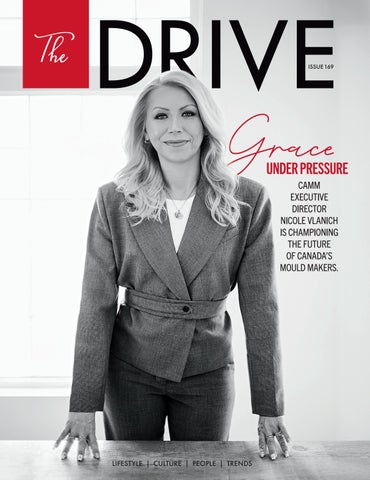






NICOLE VLANICH IS CHAMPIONING THE FUTURE OF CANADA’S MOULD MAKERS.




















Buying your first car should feel exciting, not overwhelming. At Rose City Ford, clear guidance, honest answers, and a team that listens turn your first set of keys into confidence, and a big smile.






PAUL ST-PIERRE Publisher
BREANNE MCGINTY Managing Editor, Director of Sales
GREG EDWARDS Graphic Designer
SABINE MAIN ............................................. Creative Director
MARNIE ROBILLARD .............................................. Art Director
MEL MONCZAK .................................Senior Account Manager
JAYCI WIGLE Sales Account Manager
MACKENZIE COJOCAR Publication Assistant
JESSE ZITER Writer
DEVAN MIGHTON Writer
LAYAN BARAKAT ......................................................... Writer
GARY MAY ................................................................... Writer
MELISSA BUZZEO ........................................................ Writer
TERI GYEMI Writer
MONA ELKADRI Stylist/writer
HEIKE DELMORE ............................................... Photographer
TREVOR BOOTH ................................................ Photographer
MAXIMUS REID Photographer
SYX LANGEMANN Photographer
ANTHONY SHEARDOWN Photographer
ADRIANA LIPARI ............................................... Photographer
ANNA STANLEY ...................................................Copy Editor







the Cover: Nicole Vlanich from Canadian Association of Mouldmakers Cover Photo by: Heike Delmore Cover Story Written by: Jesse Ziter
and like us: X @thedrivemag Instagram @thedrivemag Facebook @thedrivemag
The Drive magazine is delivered to 40,000 select homes and businesses throughout Windsor-Essex exclusively through Canada Post. Mail subscriptions available on line at thedrivemagazine.com/signup or by emailing info@thedrivemagazine.com CANADA POST Delivery agreement no. 43497602. Printed in Canada. Owned and operated by the Landscape Effects Group of Companies. 1125 County Road #42 RR#1, Belle River ON, N0R1A0
18
PORTRAIT
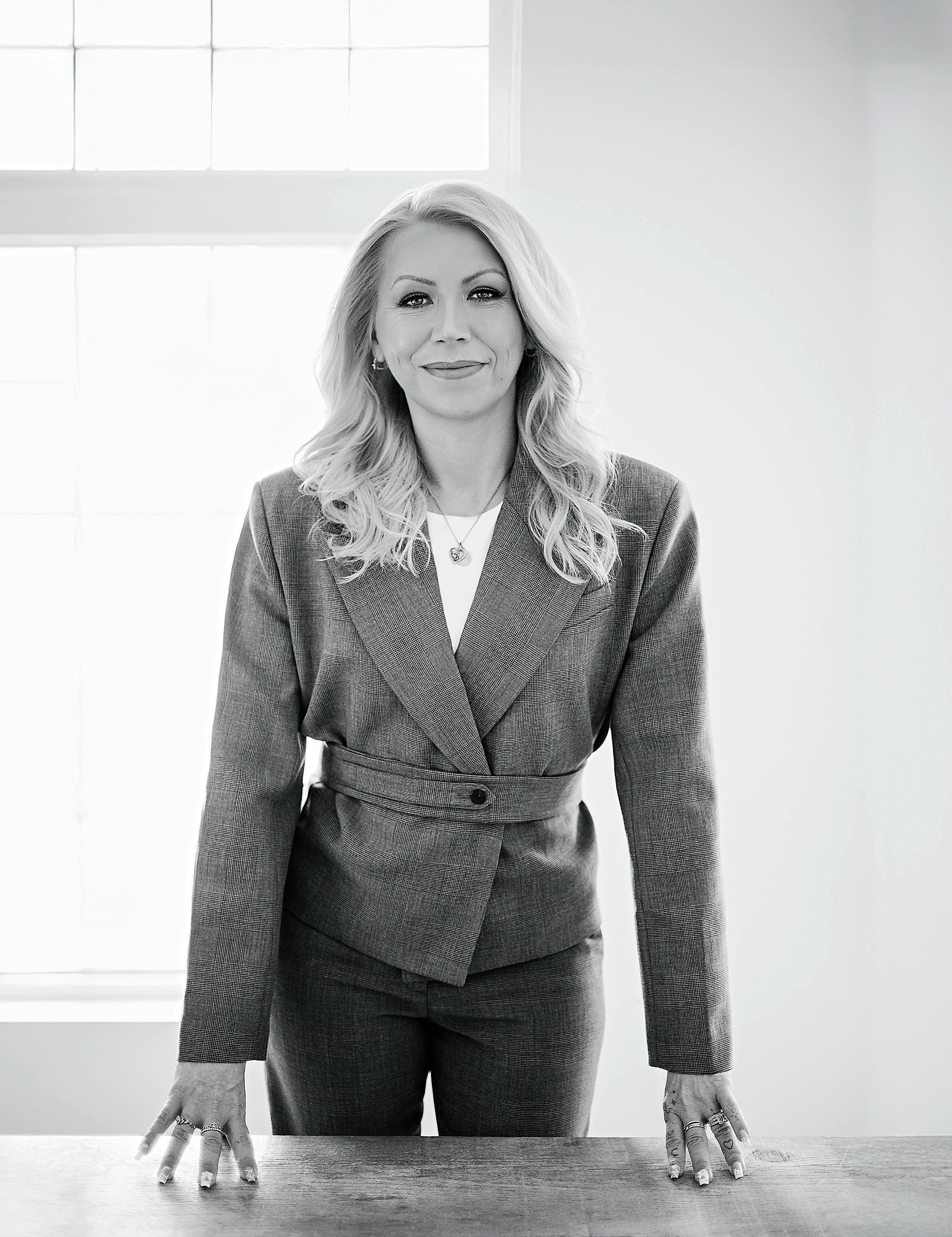
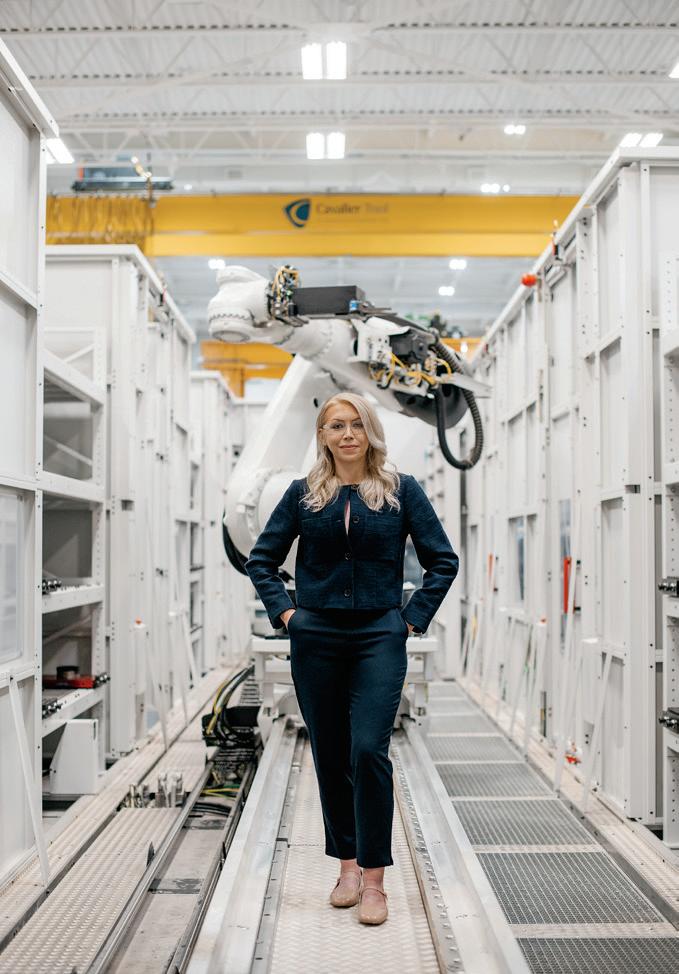
Nicole Vlanich, executive director of the Canadian Association of Mouldmakers, is championing the future of mould making through innovation, and workforce development
14
DRIVE SPORTS
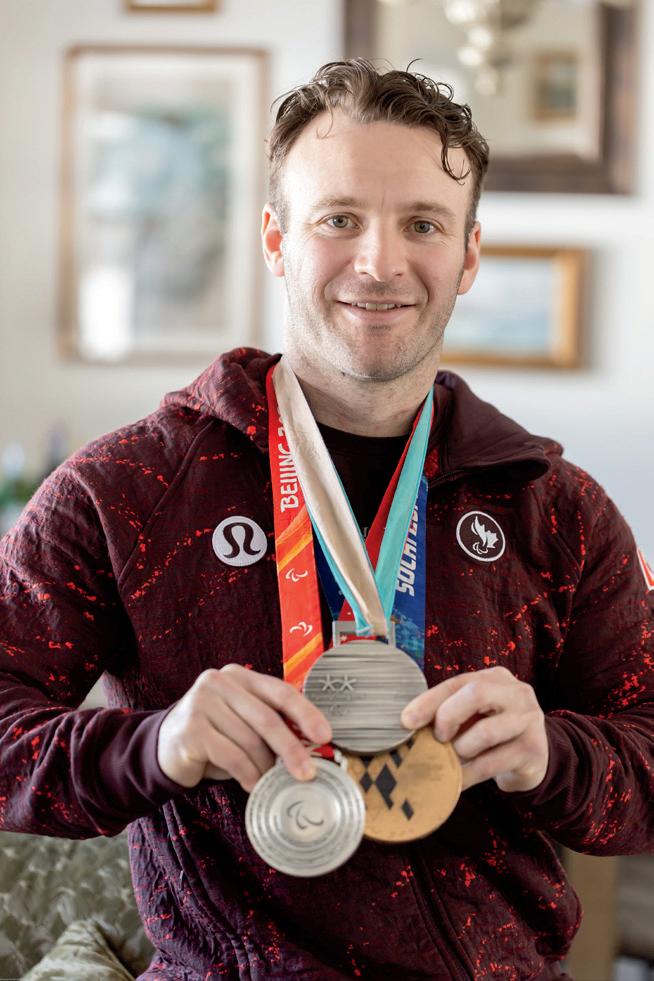
Four-time Paralympian Tyler McGregor turns adversity into inspiration on and off the ice
DRIVE RECIPE
10 Oh So Mona serves up smash chicken tacos that are quick to make and easy to customize your way
DRIVE ARTS
28 WECAP: A local arts program that helps youth find confidence and connection through theatre
DRIVE TECH
32 A practical guide to prompting, that helps you get better results from today’s AI tools
DRIVE COMMUNITY
36 Seana Holek takes the reins and shatters the horse girl stereotype, showing how much dedication and skill it takes
DRIVE HISTORY
42 Progress on Windsor’s Lancaster bomber restoration brings aviation history to life
DRIVE MIND
50 Explore how impact and intention shape nervous system safety with Teri Gyemi


As the days grow longer and the sun begins to linger over Windsor-Essex, there’s renewed energy in the air. A new season of momentum, when the ideas we've been working on all winter start to bloom. In this issue, we explore that momentum through our conversation with the Canadian Association of Mouldmakers and its executive director, Nicole Vlanich. Rooted in Windsor-Essex, this vital sector continues to influence global supply chains from automotive to medical manufacturing. It’s also a story of leadership and innovation, as initiatives like TechBridge are reimagining how the next generation enters skilled trades.
You’ll also meet Captain Canada himself, Paralympic hockey player Tyler McGregor whose dedication and perseverance continue to inspire far beyond the rink.
And don’t forget: our Windsor’s Next Top Photographer competition is underway. Check out TheDriveMag on social media for more information and follow along and vote for your favourites.
Thank you,
Paul St. Pierre Publisher


Make this recipe your own with these Chicken Caesar Tacos. They are the ultimate flexible meal. Whether you’re swapping arugula for kale or romaine, adding a kick with jalapeños, or tossing in charred corn, this dish is your canvas. It’s perfect for a quick dinner, or you can prep the components in advance for easy assembly later.
• 12-pack mini flour tortillas
• 454g ground chicken
• 2 tsp salt
• ¼ tsp pepper
• ¾ tsp paprika
• 1 tsp garlic powder
• 1 tbsp onion flakes
• 1 tsp chilli powder
• 1 cup panko breadcrumbs
• 2 cups arugula
• 1⁄3 cup celery, small diced
• 2-3 tbsp Caesar dressing
• Parmesan cheese for garnish
• 1 thinly sliced radish for garnish
• Avocado or neutral oil for cooking
1. In a bowl, combine ground chicken, salt, pepper, paprika, garlic powder, onion flakes, chilli powder, and panko crumbs. Mix until well combined.
2. Once mixed, spread and press about 2-3 tbsp onto each tortilla, ensuring the spread reaches the edges of the tortilla
3. Using a non-stick flat top or skillet on medium heat, cook the tortillas with the chicken side facing down for 3-4 minutes, then flip and cook until the tortilla is a nice golden brown. Set aside.
4. In another bowl, combine arugula, celery, and Caesar dressing.
5. Top each taco with the arugula mixture, adding Parmesan and sliced radishes for garnish.
*Feel free to make things easier in many of the steps of this recipe by throwing on a pair of disposable gloves and using your hands to mix, shape, and press the chicken mixture.
*Try swapping out or adding ingredients. I used arugula; you could also use crisp iceberg lettuce or add microgreens for extra flavour.
*Think of textures. I love the addition of celery in the salad mixture to add a crisp, crunchy, and refreshing component. Jalapenos, dates, and crispy tortillas are also great additions to add spicy, sweet, or textural elements.
Yield 12 small tacos






By Devan Mighton












by Trevor Booth








The sheen of the freshly flooded ice glints like a diamond in the sun. Under the warm glow of the spotlights at the Forest Arena, Dean and Trudy McGregor gently placed their three-year-old son, Tyler, upon the sheet. Wide-eyed and bushy-tailed, little Tyler shuff les his feet, scratching into the ice the opening lines of the epic poem that his hockey career will become. Most parents have big dreams for their little ones at the rink—NHL stardom, Stanley Cups—but little did Dean and Trudy know, their son was a fledgling World Champion, Paralympian, and Canadian sports icon.
For Tyler McGregor, a resident of Windsor-Essex, his love of the game of hockey was instant and strong. “My love started out of the sensory parts of it,” he explains. “The sound of your skates on the ice; handling a puck on your stick.” Early on, it was the pure fun of the game, but as he grew, he fell in love with what the game gives: the team mentality, the lifelong friendships, working towards a common goal, and learning to push himself in a high-performance environment. As he developed, he moved on from minor hockey in Forest, to playing AAA with the Sarnia Jr. Sting and, later, the Huron Perth Lakers. One fateful evening in 2009, he broke his leg in a game. This soon led to a diagnosis of spindle cell sarcoma, a rare form of bone cancer, in his left leg. Despite intervention, doctors were unable to save the limb, having to amputate it in January 2010.

“For months I felt confused, sad, lonely, pretty isolated from what I knew was my life beforehand,” he recalls. “Despite all that was going on, there was still this deep-seated belief that in some capacity, I’d find my way back to hockey. I didn’t know how, but I never lost that belief."
“For me, it was just about getting back on ice. I tried to skate—the day that I finished chemotherapy, I put my skates back on. I knew that I wasn’t going to be the NHL player that I thought I’d always wanted to be, but maybe there was a different path.”
For most athletes, this would be the end of the road. Not for Tyler. Encouraged by his former coaches, Tyler refused to give up on his hockey dreams and started training to play para hockey. Within two years, Tyler, at 18 years old, was selected to play for the Canadian national para hockey team. He made his debut later that year at the 2012 World Sledge Hockey Challenge, recording his first goal and helping his team to a silver
Despite everything that was going on, I never lost the belief that somehow I’d find my way back to hockey.
medal. A year later, he became a World Champion, winning gold in Goyang, South Korea in a nail-biting 1-0 win against their arch-rival, Team USA, in the final. He was the youngest player on the team.
“I was a young player,” he admits. “I think our coach saw value in that I was a young up-and-coming player with a high-level hockey background and had potential. I appreciate that our coach at that time, and the team for that matter, welcomed me—probably before I was ready to play on the national team.”
Tyler put in the work. He earned the respect of his teammates, and of the country. In 2017, he led the World Championships in
scoring, was named to the leadership core in 2018 and, in 2019, he was named captain of Team Canada.
“As a leader, your primary job is to lead yourself well,” he states. “I believed that as a leader, I had to do anything and everything and probably tried to control far more than I should.” However, he has matured and learned as a captain—how to inspire and to delegate. “My primary responsibility is to develop the leaders around me and ensure that I shine light on them. It truly is a shared responsibility.”
In 15 years with Team Canada, he has won three World Championships, and this year, in Italy, he became a four-time Paralympian. In the three preceding Paralympic Games, he has brought home two silvers and a bronze.
“In high-performance sports, you're required to give absolutely everything of yourself with no guarantee that the outcome you want is going to be on the other side of that,” explains Tyler. “The outcome is never

really the point,” adding that it’s about the process. “It's a byproduct of the investment that you make in your everyday habits.”
As Tyler found his place in the hockey world, he started to find where he belonged in everyday life. Tyler’s fiancé, Meg Roberts, co-host of AM800’s “Mornings with Meg & Mike” is from Essex County. After a few years of navigating the world together; living, working and training in Toronto; and a stint for Meg on the East Coast while working for CBC; the couple bought a house in Windsor-Essex last January.
“Both of us grew up in quieter environments, places filled with warmth and really close to our families,” Tyler reflects. “That’s something we knew we wanted for ourselves and for our future family. It’s been so refreshing. We love the community. It’s a place we want to raise our family and take the next step in our lives.”
In the lead up to his departure for Italy, Tyler trained with his teammates in Oakville, but his local training has been predominately at Atlas Tube Arena in Belle River and at Sports Medicine Physio -
therapy on Walker Rd. for off-ice conditioning. However, he’s getting the domestic routine down as well—Thursday wing nights with Meg’s family, Sunday dinner with her parents, quiet Friday nights in, and socialization with friends on Saturdays. He has found his groove in his new home.
Throughout the Olympic and Paralympic Games, Tyler's face has been everywhere. Partnered with Air Canada, General Mills, Coca-Cola, Egg Farmers of Ontario, OLG, and Petro Canada, his image has been on the side of jets, on cereal boxes, and on your television—something he finds very humbling.
“These are organizations that changed my life and, in some ways, saved it,” he admits. “I feel a responsibility to help impact the next generation. We really wanted to build partnerships that are more transformational than transactional. The pillars of who I am are resilience and community—creating a sense of unity. Those are the values I look for in partners.”
Relishing the role of role-model, Tyler has made big strides to give back to his commu-
nity, acting as a national board member for the Make-A-Wish Foundation, a member of the Canadian Paralympic Committee Athletes’ Council, work with Own The Podium, a chair of the Hockey Canada National Team Athletes’ Committee, and participating in a cross-country skate fundraiser for the Terry Fox Foundation. “Whether it’s kids facing critical illness or the future generation of athletes—I do feel a responsibility.”
As a four-time Paralympian, Tyler encourages young athletes to dream big. “Life, adversity, and challenges are going to come your way no matter what,” he states. “Maybe it’s best that we focus on all of the things that are great in our lives and have gratitude for that.”
Also, he shares—with firsthand knowledge—that what defines you isn’t falling, but your ability to get back up. “You have to build a tolerance for risk and be okay with failing fast—and learning from that,” Tyler explains. However, “balancing gratitude with the willingness to challenge yourself is probably one of the most important pieces of advice I could give.”

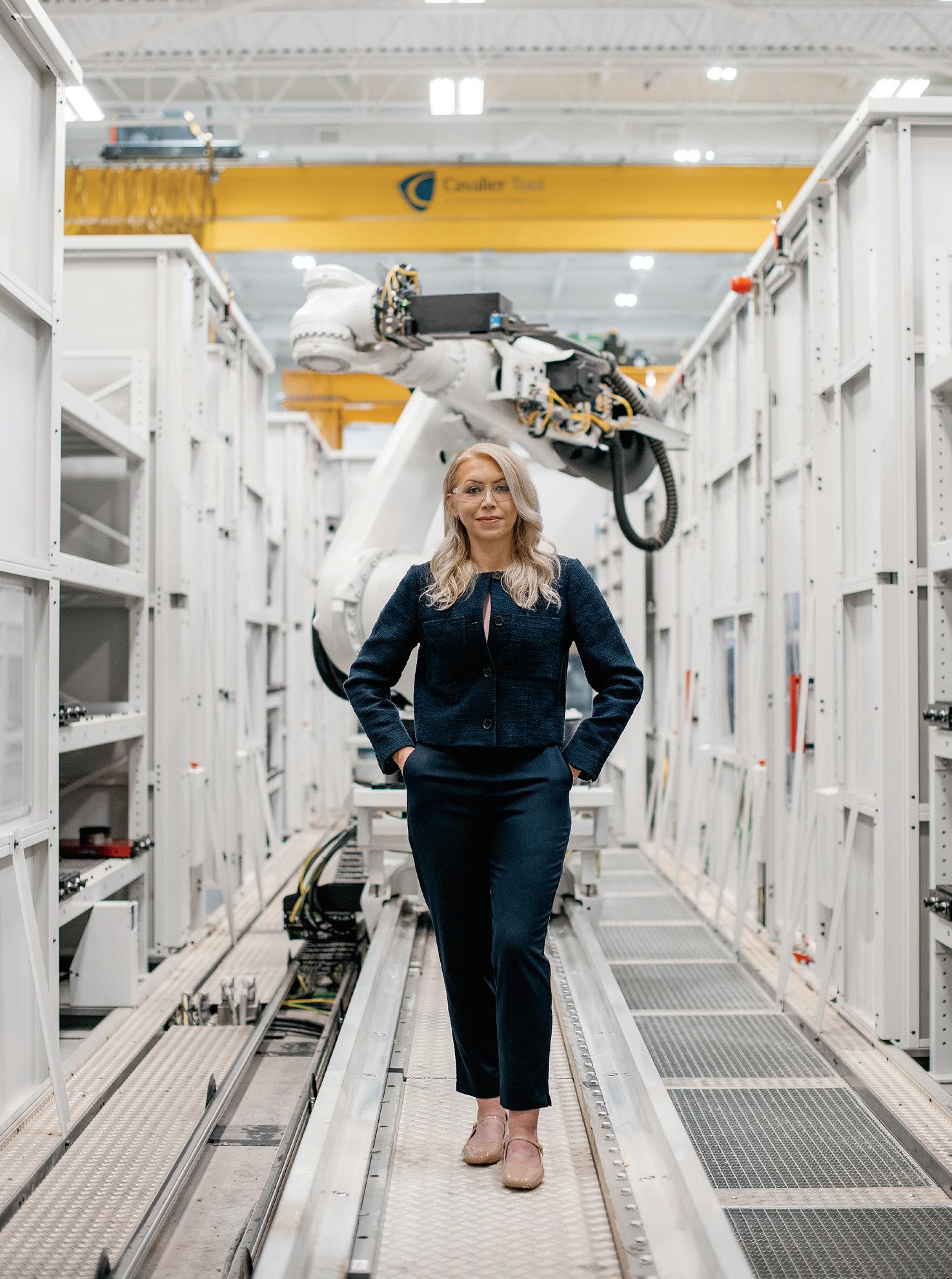

Led by one Windsor woman and a committed group of volunteer board members representing an industry, the Canadian Association of Mouldmakers is the body behind the people who make things that make things. The Drive spoke with the Association’s executive director about the future of manufacturing, advocacy, and how her son’s passion for videogames may help create a stronger, more capable manufacturing workforce in Ontario.
By Jesse Ziter
by Heike Delmore
Some site visits, if the workshop fans are angled just right, Nicole Vlanich’s work feels a lot like family.
“When I walk into one of our member shops,” relates Vlanich, whose father enjoyed a long career as a millwright in the tool and die industry, “certain smells remind me of my childhood, of the way my dad smelled after coming home from work.”
Today, Vlanich is executive director of the Canadian Association of Mouldmakers (CAMM), a not-for-profit alliance representing mould makers and associated suppliers to the global plastics industries. Vlanich, CAMM’s only full-time staffer, works closely with a board of directors comprising industry leaders in Windsor-Essex and beyond, to help guide the Association’s strategic priorities, advocacy efforts, and long-term vision for mould making. Together, staff and board leadership work to secure the future of a resilient sector that continues to provide meaningful, sustaining employment for thousands of Canadian families.
Mould makers are highly specialized skilled tradespeople who design, build, maintain, and fit precision production tools essential to advanced manufacturing - particularly plastics processing. While mould making, especially in Windsor-Essex, often supplies the automotive industry, it is also a critical supply chain component in sectors like medical equipment, packaging, and consumer goods.
Mould making aligns naturally with the tool and die trade, a similar vocation with which it shares overlapping core functions and equipment. Broadly: Mould making supplies forms for the plastic industry, while tool and die serves manufacturers working with metals and alloys.
According to Vlanich, hundreds of thousands of Ontario’s manufacturing jobs live downstream from mould making, meaning they indirectly rely on the skill and labour of CAMM’s members. “Mould making represents a small but highly leveraged segment within the broader manufacturing workforce,” says Vlanich. “Without sufficient skilled mould makers and related trades, production cannot scale, quality cannot be assured, and investment decisions are affected.”
The implications are colossally consequential for the province: While our economy is evolving, manufacturing still employs more than 800,000 Ontarians. Plastics and rubber product manufacturing, specifically, accounts for

upwards of 40,000 of them across more than 800 companies. (Nationally, Canada boasts approximately 2,600 companies in that sector.)
Vlanich assumed her post in 2021, joining an Association still finding its feet in a manufacturing sector besieged and, it would turn out, permanently altered by COVID-19. “Everything was in turmoil,” she recalls. “I sat quietly at roundtables with members, and as a result, the CAMM we were before, we’re not that anymore. We’re now adding value to membership by listening to our members when they tell us what they need.”
Under Vlanich, CAMM offers its members a unified public- and government-facing voice on topics concerning mould making in Canada, lobbying multiple levels of government and communicating with the public to promote, preserve, and
protect the industry’s interests. CAMM drives innovation and supports growth by hosting workshops, webinars, networking events, and peer support services; aggregating industry news, publishing toolkits, and maintaining an online “resource-centred innovation hub”; and making professional introductions that foster mutually beneficial industry relationships. That work is reinforced by CAMM’s board of directors, the members of which bring frontline manufacturing expertise to help ensure the Association’s priorities remain aligned with the needs of employers, workers, and the broader sector.
CEO and President of Maidstone’s LAVAL Tool & Mould, Jonathon Azzopardi is the interim director at large of CAMM’s nine-person board. According to him, CAMM is best understood as the voice and face of mould makers in the country. “Our Association plays a critical role in
uniting mould makers across Canada,” Azzopardi shares. “Our industry requires an organization that can undertake initiatives individual owner-operators often cannot pursue independently; for example, government advocacy is a complex and often lengthy process, and international trade shows present logistical challenges and significant time commitments.”
Lately, CAMM’s major advocacy push focuses on getting mould making recognized by Red Seal, the highest interprovincial certification framework for tradespeople in Canada. The exam-based credential effectively functions as a skilled trades passport: Red Seal-recognized trades share common standards across provinces, so certified tradespeople enjoy increased mobility, and new cross-provincial supply chains become viable.
“Currently, if a mould maker in Quebec - the only other province that really has mould making - wants to move to Ontario, they can’t work,” Vlanich explains. “And vice versa. That impacts wages, certification, and the overall appeal to the trade.”
Mould making represents a small but highly leveraged segment within the broader manufacturing workforce.
The Red Seal designation is also a broadly understood public-facing stamp of approval. Its current absence means career guidance lacks clarity and consistency, compromising recruitment; prospective trainees and their parents may not consider mould making as a legitimate career option.
Vlanich, a double University of Windsor Social Sciences graduate, is a mom of five. Last year, a conversation with one of her sons ventured into an exciting initiative Vlanich calls “the biggest thing CAMM’s ever done.”
TechBridge is a workforce development initiative aiming to bolster the manufacturing sector by engaging and training new mould makers in innovative ways. Launched in April 2025 with support from the Ontario Skills Development Fund and federal government grants, TechBridge combines self-directed e-learning modules with immersive virtual reality (VR) experiences to build expertise in areas like shop safety, measurement, computer-aided design (CAD), and computer numerical control (CNC) operations. The initiative also reflects a broader strategic priority of CAMM’s board: strengthening the future talent pipeline and modernizing how the industry attracts, trains, and retains workers.
“One of my sons is a videogame connoisseur,” says Vlanich. “We were discussing VR and augmented reality (AR) and how advanced it’s become, particularly in Japan and China. That’s where the idea of virtual training came from. I didn’t want to redo something that other organizations in the trades were already doing.”
Vlanich worked closely with Work Based Learning Consortium, a federally incorporated not-for-profit, to build TechBridge’s online training component. Virtualware, a multinational enterprise software company with a Hamilton office, delivered the initiative’s VR component.
TechBridge offers VR-based training courses in mould shop safety essentials, CNC mill training, and CNC lathe training. Candidates are invited to strap on VR headsets at a CAMM-sponsored installation within the Job Shoppe in Tecumseh.
“A Day in the Life of a Mould Maker” is an additional VR simulation geared toward youth and young adults that takes participants from lacing up a pair of work boots all the way to admiring a finished plastic product. Vlanich spent much of October (“Manufacturing Month”) teaming up with local manufacturers to tour schools with CAMM’s VR simulator. (CAMM already liaises with secondary and post-secondary education to help facilitate co-op placements, clarify career pathway information, and address myths and misconceptions about the industry.)

Our Association plays a critical role in uniting mould makers across Canada.

The TechBridge program also offers “wraparound supports” including wage subsidies for employers committed to training new hires and upskilling current employees; stipends to trainees who would otherwise go unpaid when training; and direct trainee benefits like childcare, transportation, relocation support, and tool and gear assistance.
According to Vlanich, TechBridge certificate-holders have sufficient entry level knowledge to walk right into the workforce or embark on a more structured and substantive post-secondary career path. “It’s really there for anybody,” she explains.
Early feedback from TechBridge’s first 200 trainees has been overwhelmingly positive: 92 percent rated the experience “very good” or “excellent,” and even more indicated they felt confident in the skills and knowledge they’d acquired.
Windsor’s Cavalier Tool & Manufacturing has been instrumental in the development and rollout of the program. “They’ve been huge supporters,” Vlanich stresses. “I wore them out in October with all the school visits.”
(Cavalier was also instrumental in this feature! The Drive thanks you for letting us photograph in your facility!)
According to President Brian Bendig, Cavalier boasts over 200 employees, over half of whom earn six-figure salaries. Despite the evident opportunity, how to best recruit young people into mould making remains unresolved. “Everyone knows what a dentist, police officer, or doctor is, because they can see it and understand it,” he explains. “In our trade, how do we get people to look at who we are, what we do, and why we do it? It’s very hard. TechBridge is a good way people can gain insight into what the trade’s all about. They get to access a little window into our work, poke around, and see what we do and how we do it. Hopefully it will generate interest to get them to move in our direction.”
Speaking to Bendig, you get the sense our means not just Cavalier, but the entire industry. “While competition exists, our members have very good relationships,” confirms Vlanich. “It’s an interesting dynamic. Windsor-Essex is smaller than people
realize; if a company is going through something new to them, there’s a very good chance the guy down the street has already gone through it. Through our membership network, they build up that rapport and those relationships. It’s a very friendly, happy industry. Our members are resilient, and they enjoy what they do.”
Natalia Stephen, president of Mississauga’s Compound Metal Coatings Inc., currently chairs the CAMM board. Vlanich credits her for assuming the role last spring, as TechBridge was rolling out and CAMM was enduring a transitional period. “She’s been instrumental in allowing me to do my job well and lead the organization through this project and upwards,” says Vlanich.
As board chair, Stephen also fulfi lls a broader governance role: working with her fellow directors to support CAMM’s growth, strengthen its industry voice, and help steward the Association through a period of expansion and change.
Over time, Stephen aims to continue to expand CAMM beyond Windsor-Essex and broaden its membership. “I think the plastic tooling industry should have one voice,” she states. “Mould makers, moulders, and plastic engineers have the same goal: to make good parts. It makes sense for us to be together.”
“This vision reflects the board’s larger goal of building a stronger, more connected national network for the sector,” adds Vlanich.
For now, Natalia is proud of CAMM’s progress in grassroots training and outreach. “TechBridge was a lot of hard work, but Nicole did an amazing job with the program,” she enthuses. “CAMM’s main success this year is how many people we managed to train, and how many school kids we reached and convinced manufacturing is not a dirty word.”
That sort of recruitment, it turns out, is important. Like many skilled trades, mould making faces meaningful demographic pressures as its existing workers age out. “A significant majority of the workforce is over 50,” clarifies Vlanich. “Only approximately 12 percent of retirees are being replaced.”
As Vlanich explains, that trend can’t continue indefinitely; many mould making shops already struggle to fill their ranks when
business is booming. While an unexpected flurry of suppressive economic and geopolitical factors has temporarily alleviated that concern, the problem remains. “Our industry locally is getting contracts and creating work, but our members don’t have the bodies,” says Vlanich. “Mould making is such a vital industry to Windsor-Essex, our province, and Canada as a whole. Without workers, we don’t have it.”
While many area residents are understandably apprehensive about the future of our manufacturing careers amidst, well, everything going on lately, both Vlanich and Bendig are optimistic.
These jobs will not be stolen by AI or robots.
Through partnerships with organizations like Build a Dream, CAMM has made meaningful inroads with girls and women— an important emerging demographic for mould making. “Many women love these careers and thrive in them,” stresses Vlanich. “They’re often surprised by how welcoming it is.”
Some trainees are also surprised by the degree of advanced technologies, including robotics and automation, now embedded in
the industry. “Many people still misconceive these are backbreaking labour positions in dirty and dingy facilities,” she shares. Over time, Vlanich foresees mould making work becoming less physically taxing and more intellectually stimulating as mould makers increasingly spend their work hours overseeing and coordinating sophisticated robotics-integrated production environments.
“But we will always need people,” she insists. “These jobs will not be stolen by AI or robots.”
“Plastics are never going away,” concurs Bendig, whose own employees enjoy well-lit, climate-controlled workplaces. “Mould making has legs, because everyone uses and loves plastics. We’re always getting new equipment, updating, and growing to work on new products.
“This is a real career here—opportunity worth considering,” Bendig concludes, cataloguing his company’s relationships with major multinational corporations. Ford and Chrysler, yes, but also Rolls Royce, Tesla, and SpaceX.
“Isn’t it crazy?” he asks aloud. “We’re at that level. We do all that stuff here.”
“With a committed board, strong member leadership, and a growing mandate that now spans advocacy, workforce development, and industry promotion,” concludes Vlanich, “CAMM is positioning mould making not as simply a legacy trade, but as an essential part of Canada’s advanced manufacturing future.”
Peter Dobrich, managing partner of proud CAMM sponsor Private Financial Group (PFG), congratulates Nicole Vlanich and the board of directors on another successful year:
"PFG considers CAMM a valued partner. My hardworking team and I appreciate that our mutually beneficial relationship is about much more than branding: Our businesses are rooted in a shared reality. CAMM’s network represents an industry that helps keep Canadian manufacturing competitive, and many of its founders are nearing the age of retirement. We believe manufacturers are some of the most disciplined people you’ll ever meet. We make sure that same discipline shows up in their personal planning, because you shouldn’t be gambling with what you’ve already worked so diligently to build."


























WECAP is giving youth and adults a place to belong, create, and discover their voice on and off the stage
Written by Melissa Buzzeo
submitted by WECAP
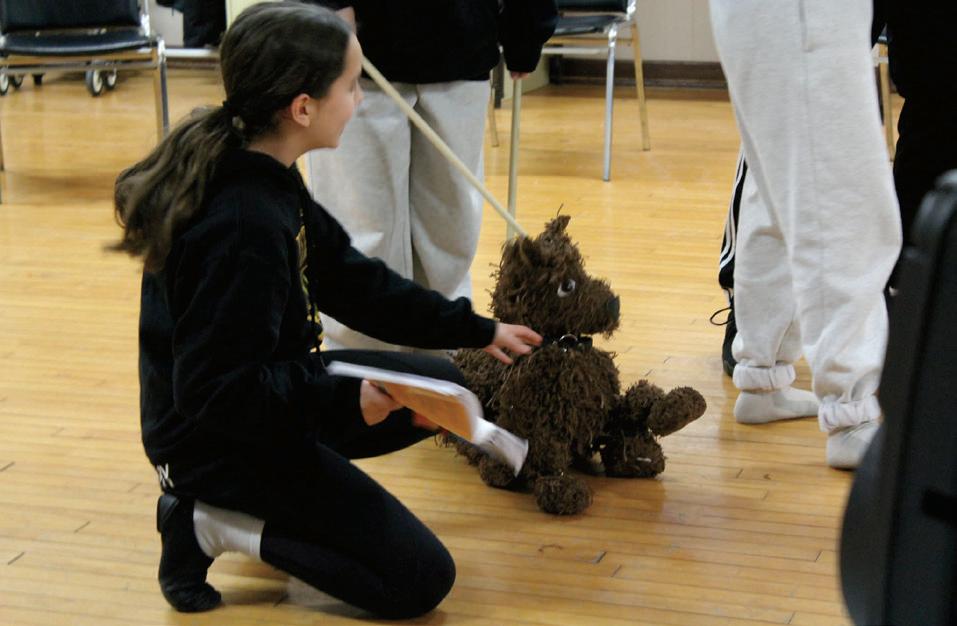
Bonnie Porteous recognized a need in the Windsor-Essex community and set out to address it. She realized there were few programs available to youth that supported talents beyond sports. Not one to ignore this gap, Bonnie knew she had to act. “Not everyone is sporty or competitive, and with a decline of community and recreational level activities for people of all ages, there is a real gap in accessible programming,” Bonnie says. For this reason, she started both a kids and youth arts program called WECAP (We Community Arts Project) and has never second-guessed this decision.

























Creating a program where all people feel they belong has always been Bonnie's priority. This commitment to full inclusion has enabled her to expand over the years, off ering programs for all ages, including adults. In addition to welcoming everyone, Bonnie explains how unique WECAP is in what it off ers its members. “In our programs, kids learn to be part of a team. They learn that everyone’s efforts matter, and the presence you bring to the stage all depends on the effort you put into it,” she says. Since this is a community group, the program is approached from a diff erent lens than most theatrical groups. There is a strong focus on team building. Respect, cooperation and fun are of utmost importance, therefore, a great deal of time is set aside for games and team-building activities that help form bonds and friendships amongst cast members. By forming these close friendships, members can celebrate one another’s diff erences and quirks. As Bonnie says, “The kids learn to appreciate what each other has to offer.”





WECAP is unique because performers not only participate in productions but can also be involved in everything behind the scenes. Most of the props for the shows are built and decorated by the cast. They are also able to take part in costume design. This is an important part of the overall production process because it enables cast members to learn what it takes to produce a show - not just the performance aspect, Bonnie explains. It also allows them to appreciate the work of those who are not performers but are essential for a successful production.



Parents tell me they see the confidence and friendships their children develop at WECAP, that’s incredibly gratifying.
Nicole Atkinson has been a board member for WECAP for almost four years. She first heard about the program through her love for attending local theatre. After speaking with Bonnie about the young people involved in the group, Nicole was convinced this was an organization she wanted to be a part of. She was offered a position on the board and never looked back. Nicole has only positive things to say about her time with WECAP. “I loved how most of the young people performing were shy, quiet and introverts at the start, but would open up and blossom and shine on stage,” she says. She credits WECAP for giving opportunities to many talented individuals who may not have been able to showcase their abilities elsewhere due to intense competition. In addition, Nicole says, “these young people are learning transferable skills that they will be able to use in their life as they grow.”
Both Bonnie and Nicole are pleased to share that the inclusivity of WECAP has created a true family atmosphere. These


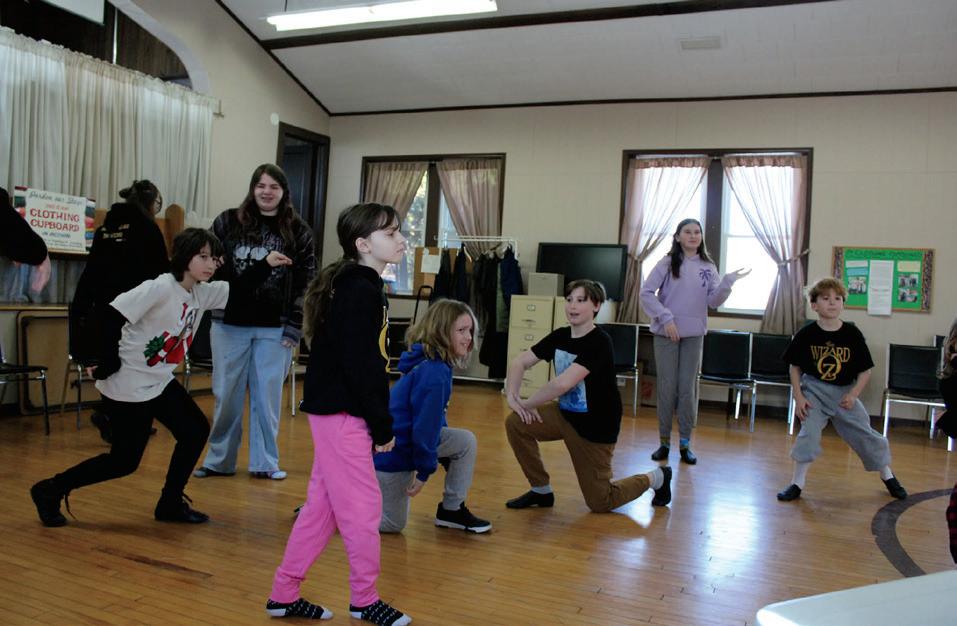
young people have developed a close-knit family support system. In doing so, Bonnie says, “They rarely want to leave rehearsal, and many have become friends outside of the program.” Two students from WECAP, Jocelyn Robitaille and Seth Ouellette, have shared rave reviews when discussing their time with the program. Having been a member of WECAP for four years, Jocelyn says, “I’ve been able to discover things about my life I would never have explored otherwise. I have made lifelong bonds and acquired many skills that have bled into every area in my life.” Similarly, Seth credits WECAP with helping him grow, discover new strengths and challenge himself. “Being part of WECAP has been an amazing experience for me. WECAP has strengthened my love for theatre and helped me move closer to achieving my dream of becoming a voice actor,” he says. Feedback from parents has been positive as well. “Parents tell me about the differences they see in their children at home because of the confidence and friendships they’ve developed at WECAP. It’s incredibly gratifying to witness the bonds and sense of belonging that we help to facilitate,” Bonnie says.
Looking ahead, Bonnie and Nicole plan to expand their sponsorship program. Productions are costly, and they hope to offset some expenses through sponsors who can assist with purchasing supplies for set building, and with printing posters, flyers, and programs. WECAP offers perks to sponsors, while families benefit from reduced additional expenses.
WECAP is currently preparing for two upcoming Spring shows: The Wizard of Oz and Shrek Jr. The Wizard of Oz features cast members ranging from 10-55 years old. “We approach all our projects as art in themselves and enjoy staging productions that are a little different from the average,” says Bonnie. She adds that guests can expect exceptional costumes and sets, as each scene is treated like a canvas.
Both shows will be staged at the Masonic Temple Ballroom in Windsor and will run for one week, opening March 26th and closing March 29th, 2026. Tickets are on sale now at Wecommunityartsproject.com








By Jesse Ziter

Just as humans become more helpful when they’re given clear instructions by a skilled manager, modern AI tools produce more useful results when the person at the keyboard knows how to deliver directions deliberately.
For the latest installment of our new Driving Innovation series, we reconnected with Jordan Goure, recurrent entrepreneur and co-founder of the dynamic hiring platform Picsume. According to Goure, consumer-facing AI-powered chat apps like ChatGPT, Gemini, Claude, or Perplexity become dramatically more useful when their users learn a single critical skill: prompting.
The go-to verb tech industry experts use when describing AI interactions, prompt doesn’t always mean “right away.” To prompt, in plain language, is to cause or encourage an action. Imagine a little poke or prod or nudge in the right direction. While it feels natural to write your favourite AI chatbot a question, even a polite request implies the possibility of a negative answer. Remember: You’re in charge, here. You’re not asking the tool what to do; you’re telling it.
Jordan Goure’s Simple Prompt Framework
You don’t need to reinvent the wheel each time you want to give the AI machine a little spin. The following basic fill-in-the-blanks template (or “structure,” in Goure’s words) makes a good starting point for most prompts:
Act as a ___. Help me with ___. The goal is ___. Here’s the context: ___. Please format it as ___.
Suddenly, harnessing the power of AI feels practical and repeatable.
While generative AI tools can stumble into effective results when given broad commands or queries, they do their best work when instructed to roleplay within a clear, well-established framework. I like to think of something like ChatGPT as a limitless staff of well-meaning and industrious but occasionally dopey personal assistants. It’s easy to imagine use cases for an army of aides like that, but a thoughtful leader wouldn’t leave them up to their own devices.
According to Goure, AI tools respond well to direction, perspective, structure, and clarity. When you tell an AI how to act or “think,” you take steps toward shaping the tone, structure, and depth of its response. “Instead of asking vague questions like, what should I say?” he explains, “guide the AI by assigning it a role or establishing a clear framework.”
For example, before your request a response from your AI tool, consider adding an additional command:
• Think like a conflict resolution specialist.
• Respond using principles from nonviolent communication.
• Approach this using cognitive behavioural therapy techniques.
• Act as an executive coach helping me prepare for this conversation.
“By assigning a role, a psychological framework, and a specific lens,” adds Goure, “you can influence and optimize tone, structure, depth, and practicality.”
1. Provide clear and coherent context.
Who is involved? What is at stake? Should the AI “know” any relevant history before it generates a response?
2. Order extra helpings.
Instruct your AI tool to produce multiple options, each with a slightly different quality. Trust yourself to choose the best one. You’ll feel like a CEO assigning three direct reports to the same project. For example:
Give me three approaches: direct, empathetic, and firm.
3. If at first you don’t succeed, request revisions
Engineers understand the difference between a prototype and a market-ready product; writers appreciate the chasm between a first draft and a publishable, polished piece. Even if you’re broadly happy with your initial prompt’s results, some straightforward revision instructions will likely lead to an even better, bespoke-seeming outcome. Consider: Make this calmer.
Shorten this to four sentences. Make this sound more confident.
4. Iterate intentionally.
Remember: Rome wasn’t built in a day. While AI can significantly speed up scores of common tasks, it doesn’t promise its best possible results on the first try. If you expect the end destination to require a few detours, you won’t feel like you’re wasting time on the journey.
According to Goure, we’ll all do a bit better if we move away from thinking about AI-generated product in binary (i.e., correct and incorrect) terms. “Prompting isn’t about getting the ‘right’ answer immediately,” he cautions. “It’s about collaborating with AI as a structured thinking partner. When you provide clarity, constraints, and perspective, the quality of output increases dramatically.”



















For Seana Holek, horses were never a phase—they became her life’s work
By Layan Barakat
The scholastic bookfair order had arrived, growing my sisters’ Babysitters Club collection with the newest book in the series, #54, Mallory and the Dream Horse. The lilac cover featured a photo of a white horse stamped on the front, like the breed found in our doll collection that transported Barbie to her office job. The year was 1996 and we were “horse girls” vowing to dedicate our lives to the equestrian circuit as we decorated our rooms with Lisa Frank stickers. Then came the internet and meme culture turned the idea of a horse girl into a punchline, shorthand for obsession, social eccentricity, arrested development. The joke was easy and dismissive. It flattened an entire discipline into caricature, erasing the labour, business acumen, physical endurance, and the care required to sustain an equestrian lifestyle.

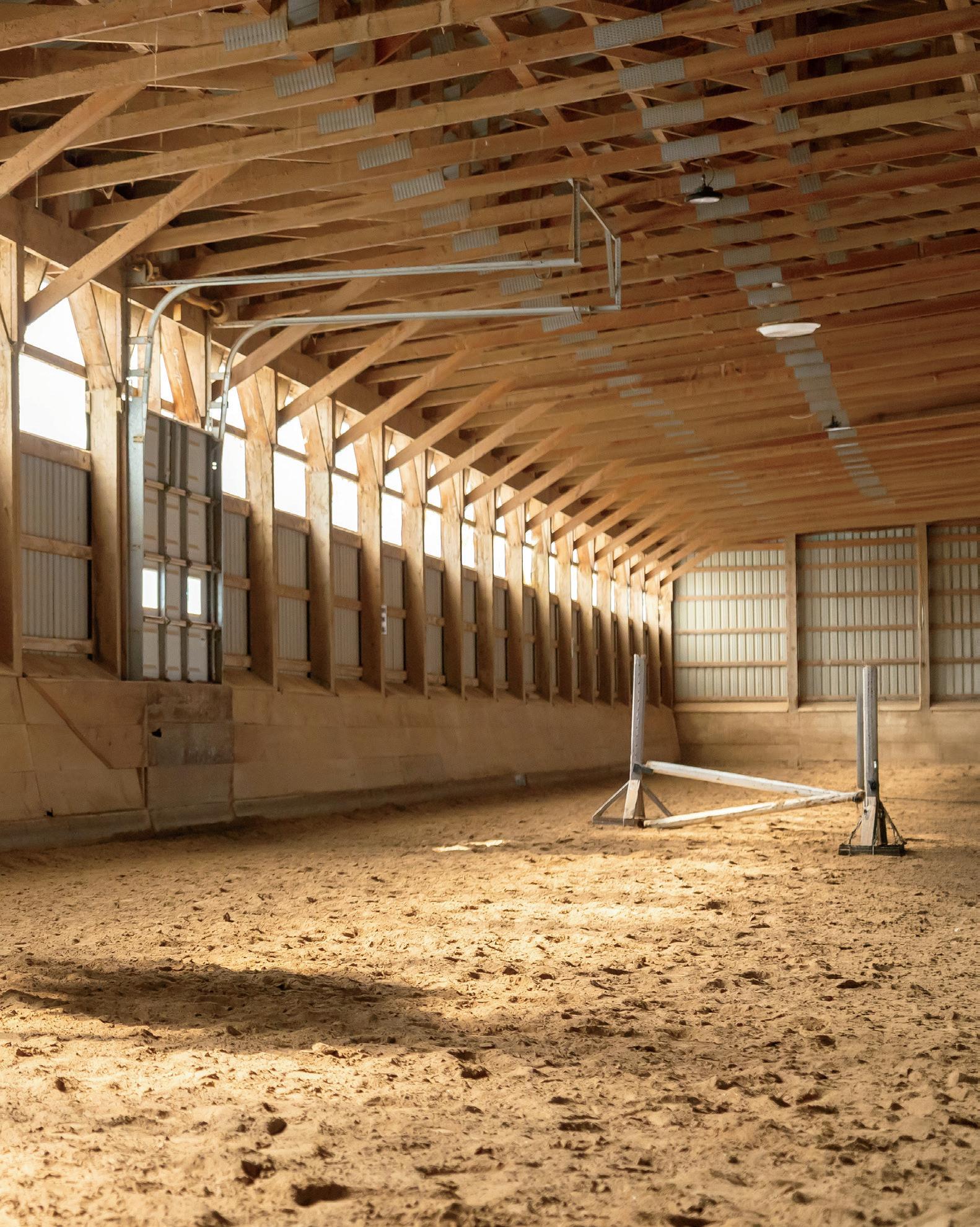
No one understands that erasure better than Seana Holek of Ironstone Stables.
Seana started riding at 10 years old and remembers being hooked almost immediately, so much so that she quit every other sport and rearranged her life around horses. As years passed, her interest only grew stronger. While finishing a psychology degree, she was spending every spare hour at a newly built barn preparing for horses to move in. “I was extremely lucky to have such supportive parents who allowed me to pursue my dreams of letting this become my whole life,” says Seana.
Having horses at any level is definitely not for the weak or the half-hearted. You have to be all in if you truly want to do this.
The shift from passion to profession was gradual and happened in the margins of her days; between classes, on weekends and any spare moment she had. Though this lifestyle requires extreme discipline, Seana finds that people still don’t take it seriously. “They think you’re just playing with animals all day and being the ‘horse girl,’” she says. And yes, she loves the horses, that part is true, but the work is relentless. Feeding schedules, hay deliveries, vet coordination, lessons, training rides.
Unlike traditional jobs, a typical day for Seana changes seasonally. In the summer, when the heat can become dangerous, she’s out the door by five to feed and turn horses out before the temperature climbs. On other days, she gets her kids off to school first then heads straight to the barn, where the second shift begins. “Having horses at any level is definitely not for the weak or the half hearted,” says Seana. “You have to be ALL in if you truly want to do this. Mentally it’s very hard, there are so many things you cannot control and the things you can control are hard to do.”
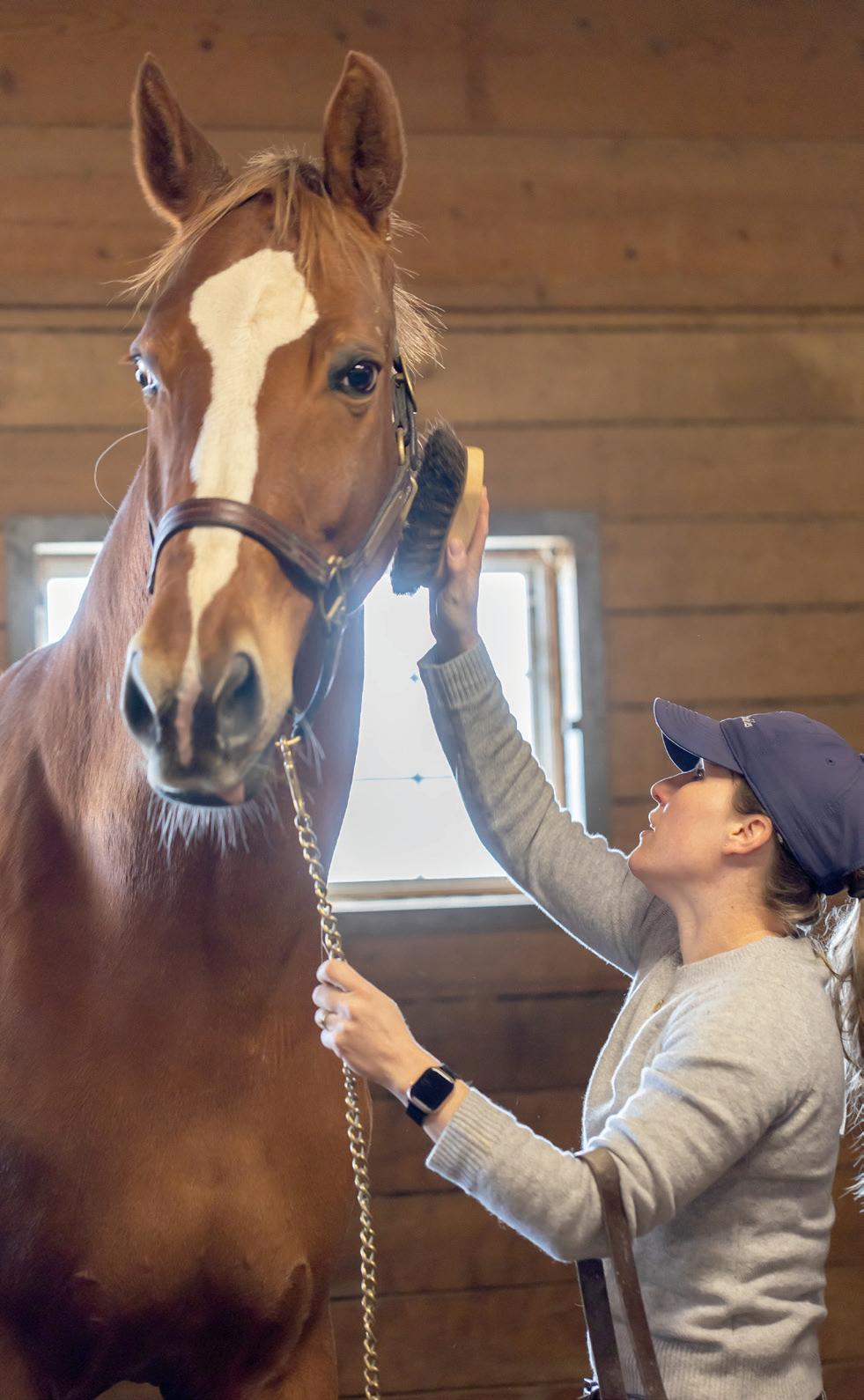
Beyond the mental strain comes the physical commitment to her craft “The efforts you make while riding, controlling your own body so that you can help the horse control theirs to the best of their ability; but also the demands on your body to do chores, walking all the horses in and out of the barn, feeding them all, cleaning stalls, moving hay around when the bales weigh between 20-30lbs
each.” The culture Seana is building in her barn is simple in theory, not in practice: put the horse first. It’s something her longtime trainer taught her. If a horse isn’t one hundred percent, you reassess. Even if the show is paid for, even if the jump school was planned or the rider is disappointed. “Just because you planned on horse showing this week or planned on jumping your horse
today, if he or she isn’t 100% today then you need to re-evaluate your plans,” she says.
In many ways, the “horse girl” stereotype flattens this world into something cartoonish: braids and boots and childhood obsession. What it misses is that barns are ecosystems. They are small businesses, athletic facilities, therapy spaces, and living, breathing operations run largely by women who make hundreds of decisions a day.
Seana speaks often about the team around her, the people who help keep the machinery of the place moving. One of those essential roles belongs to the farrier, the specialist who trims and shoes the horses’ feet every few weeks. It’s a job that requires precision, strength and is foundational to everything else. Alex, the barn’s farrier, is part of that ecosystem.
“Shoeing isn’t just about trimming and nailing on a shoe. It’s about balance, movement, and giving a horse comfort and longevity,” says Alex, Ironstone’s farrier. “When you see a horse move freely after you’ve corrected a hoof imbalance, knowing your hands made that difference, that’s powerful. That’s when you realize it’s not just a job, It’s a calling.”
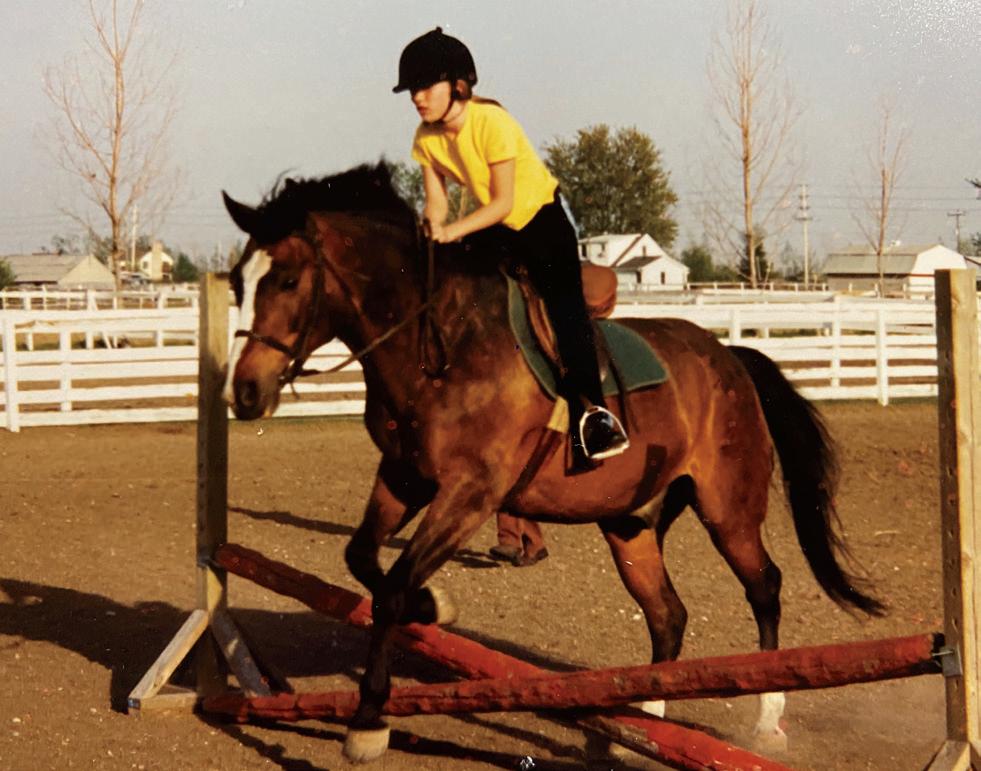
When you first make
a really close connection with a horse…
it can truly change your life.
In 1996, a lilac paperback made it easy to romanticize the idea of the dream horse. What it didn’t show were the early mornings, long nights and the mental and physical strain it takes. “I’ve had many moments over the years with horses that have changed my perspective on things,” says Seana. “When you first make a really close connection with a horse and start building on those recurring moments with that horse it can truly change your life.”






Our services allow employers to scale quickly, fill newly created roles, and develop top talent in a rapidly evolving labour market.
Immediate Hiring Needs

Long-Term Workforce Planning
Fractional HR Support
Permanent Placements

Temporary & Ondemand Staffing
Industry-Aligned Training
Scale your business: thejobshoppe.com/hiretalent








Proud Partner of the CAMM TechBridge Program




WIN (Workforce Initiative Network) is an interactive online community designed to empower students, job seekers, and professionals by providing access to valuable career resources, mentorship, and networking opportunities Built on the principles of education and collaboration, WIN serves as a hub for individuals looking to explore career pathways, develop new skills, and connect with industry experts.
Career Exploration–Access information on various career paths, including skilled trades, STEAM, and leadership roles
Mentorship
Job & Training Opportunities –Stay updated on job postings, apprenticeships, and skill development programs




Lancaster bomber could launch a new era

By Gary May
Don Christopher is working his way out of a job and he couldn’t be happier.
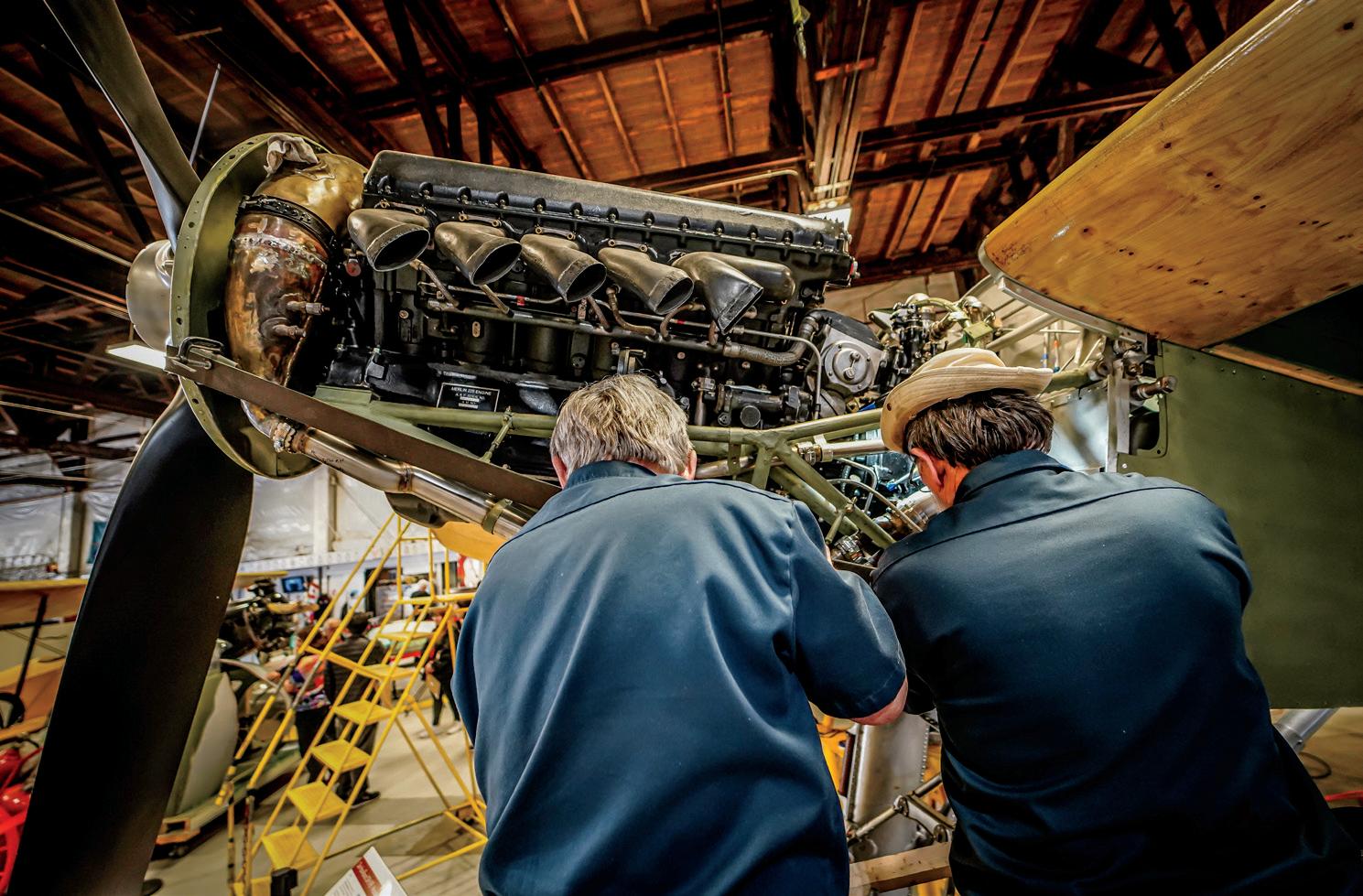
Christopher is one of about 10 volunteers restoring Windsor’s 80-year-old Lancaster bomber and as the end of their labour looms, excitement grows at the prospects of displaying the magnificent flying machine as the pride of the city’s Canadian Aviation Museum.

“We had to disassemble this plane and clean it up. Every part you take off, you say, ‘wow, how did they design this?’” marvels Christopher. When the plane was built during the Second World War, “everything was done on drafting boards with slide rules and pencils.”
The restoration of the “Lanc,” which sat for years atop a plinth in Jackson Park, marks an important moment in what looks like a landmark year for the museum. Museum president John Robinson plans to launch a fundraising campaign that will finance a whole new look.
Tucked away into a corner of Windsor Airport, the museum might fly under the radar of many, but it displays vintage planes and recounts fascinating tales from the city’s story of flight. Every year, 5,000 to 6,000 people, including 2,000 school children, visit the museum and learn about Windsor’s, and Canada’s part in the Second World War air campaign.
Visitors have been watching Christopher’s team meticulously restore the Lancaster bomber, backbone of the British
and Canadian air forces during the war. Windsor Mayor Drew Dilkens points out this Lanc is one of just 17 remaining and as such it “is an important historical artifact.”
Ironically in the city of the Windsor Spitfires Junior A hockey team, there are no Spitfire fighters in the museum’s arsenal. Instead, the Lanc reigns supreme.
We had to disassemble this plane and clean it up. Every part you take off, you say, ‘wow, how did they design this?
Avro Lancaster FM212, as it was christened coming off the Victory Aircraft assembly line at Malton in 1945, arrived too late to the war effort to play a part. It proved its value mapping the Canadian Arctic during the Cold War, and later on Maritime
patrol, search and rescue. Windsor’s Lanc was one of 7,377 produced for the war effort, including 430 in Canada.
The city purchased the derelict aircraft in 1964 and it sat in Jackson Park for 40 years until a study showed it was falling apart. The plane was hauled to a hangar on the site of the Second World War flight school that operated at the airport from 1940 to 1944. Restoration plans began.
Christopher, a former IT worker with no experience in aviation, joined the restoration project after he encountered Sam Dunsieth, who was a tail-gunner in another Lanc. Dunsieth’s harrowing tale of escaping his plane after it was struck by enemy fire inspired Christopher to help put Windsor’s Lancaster back together.
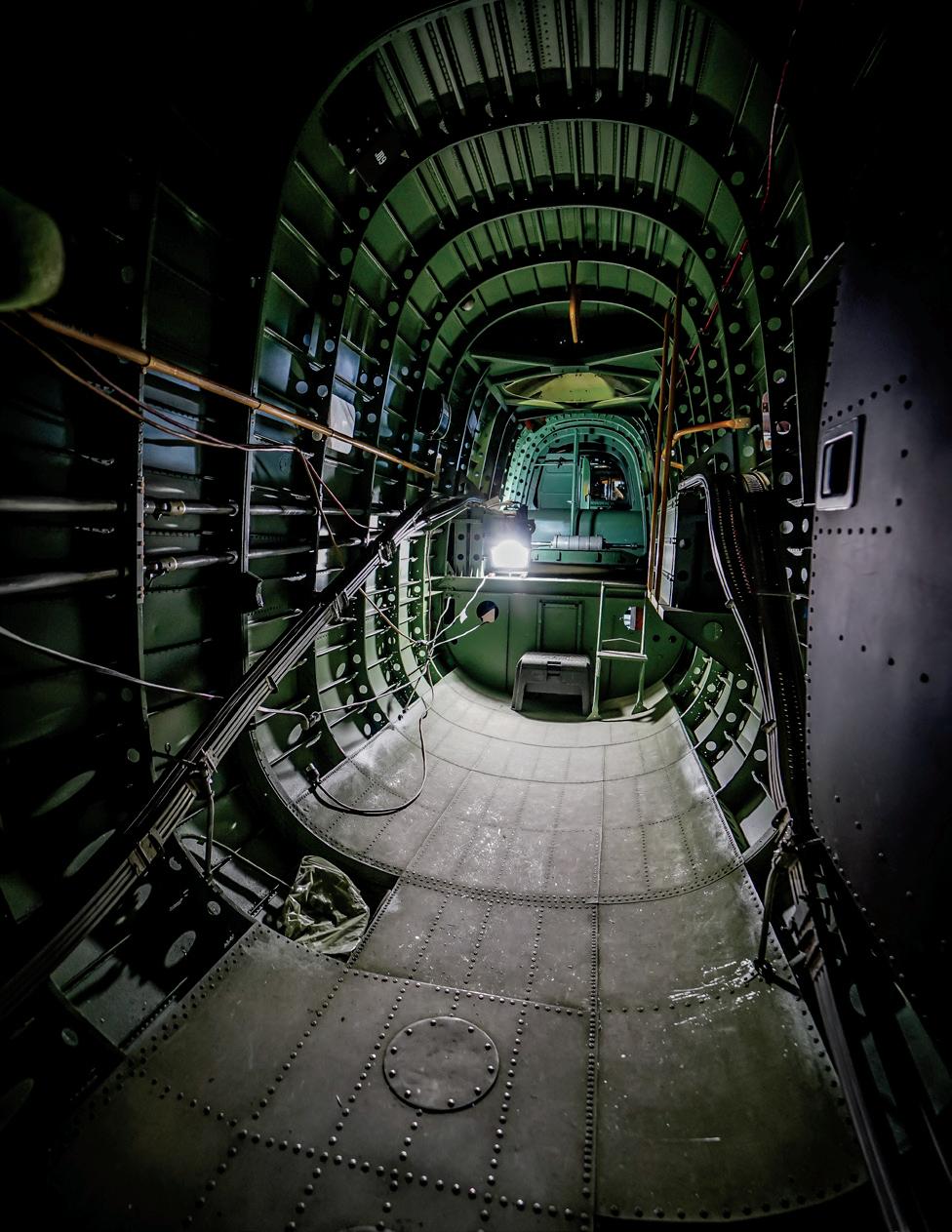
The restoration has been no assemble-bythe-numbers effort, and the hunt for parts has taken restorers around the world. About 90 per cent of the plane is being rebuilt with original parts but when they can’t find a part, they use blueprints to build it.
There have been exciting moments along the way. Volunteers were sometimes
approached by someone who’d say, “I flew in one of those,” or “I worked on one,” and then treated to their stories.
Only two surviving Lancs are air-worthy, and this particular plane will never fly because to get Transport Canada flight approval, the team would have needed paperwork for every rivet and bolt, says Christopher. That was too expensive. It will, however, be taxied onto the runway once the wings are installed, and on-the-ground rides will be sold.
Once the restoration is complete, FM212 will become the poster child for what museum president John Robinson says will be an expanded Canadian Aviation Museum.
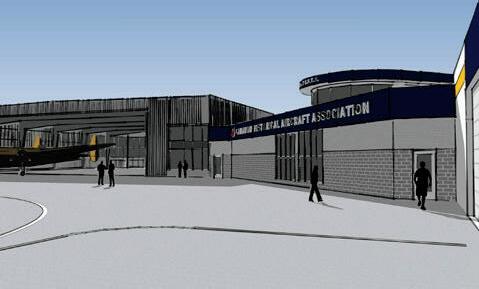
Robinson says the museum board is negotiating with the City of Windsor, which currently owns the aircraft, to take control so that the museum can apply for grants. Once they own the plane, they will kick off a capital campaign to finance expansion. The Lancaster FM212 is to get its own display hangar.
Dilkens says talks over the plane’s ownership are ongoing and he anticipates an agreement. “I applaud the work that has been done by the folks at the (museum)…to move forward with (the plane’s) restoration and display,” he says.
Besides the Lanc’s new hangar, plans include a classroom for the 364 Lancaster Squadron of Royal Canadian Air Cadets, a stunning new entranceway, restaurant and meeting space.



























































Your nervous system reacts to impact, not intention. As Life Coach @soulsovereignsusie explains, someone may intend well, believing they communicate effectively, but if their words, tone, or energy feel sharp or unsafe, your nervous system responds to that negative impact. We often prioritize intention (“They’re doing their best,” “It’s not their fault”), excusing and minimizing the actual negative impact on our nervous system.
Old Pattern vs. New Pattern
Old Pattern
• We prioritized intention.
• We downplayed impact.
• We stayed connected through tolerance.
• We overrode the body’s signals.
• We paid an enormous nervous system cost. The cost? Chronic tension. Fatigue. Subtle anxiety. Emotional depletion.
New Pattern (What to Practice)
• Honour impact.
• Stay grounded in your body.
• Respond instead of absorb.
• Let nervous system safety guide your boundaries.
• Remain connected to ourselves without self-abandonment.
This shift changes everything.
If you’ve been in high-impact relationships, you may unconsciously spend enormous energy constantly scanning and preparing for when the next impact will come, how it will sound, and how you’ll cope while maintaining peace. This constant alert drains you, often without realizing the cause, your nervous system is on edge, preparing for impact even if you deny it.
Awareness is the first step. You don’t have to live in preemptive guarding. You can learn to trust your capacity to respond when impact occurs and choose not to be energetically available for the constant bracing. While the nervous system prefers predictability, recognizing this pattern allows you to dismantle the inner scaffolding and change your baseline.
Cost of Bracing:
Many of us are unaware of the enormous energy spent constantly bracing for potential relational impact. If you’ve experienced repeated conflict in relationships, you may unconsciously adopt a pattern of constant scanning:
• When will the next incident occur?
• What will the tone be?
• How will I cope with it?
• How can I maintain connection and peace?
This perpetual state of scanning, bracing, and preparation is an immense drain on your energy. It becomes so habitual that it goes unrecognized, leaving you feeling chronically exhausted without understanding the cause.
The reality is, your nervous system is on high alert. Even if you cognitively believe everything is fine, your body is actively preparing for potential impact.
The path to change begins with awareness. I’ve personally discovered that I no longer need to live in a state of preemptive guarding. I can stop bracing and instead trust my innate capacity to respond effectively when something actually happens. Once this awareness takes hold, you’ll intuitively know how to respond when impact hits, allowing you to choose not to be energetically available for it.
This shift won’t happen overnight, as our nervous systems are deeply wired for predictability. However, by actively dismantling the internal framework that keeps us stuck in this pattern, we can fundamentally change our energetic baseline. Change happens when awareness becomes embodiment.
In a marriage or significant partnership, this awareness is powerful. Most conflict isn’t about intention, it’s about impact. One partner may think, “I didn’t mean it that way,” while the other feels hurt, dismissed or unseen.
When you understand nervous system impact, the conversation can shift from blame to regulation. Instead of arguing over who is ‘right,’ you can say: “When that was said, my body tightened.” “It landed hard for me.”
You stop trying to prove intention and start tending to impact. Your partner doesn’t have to be the villain, and you don’t have to be the overly sensitive one. You are simply acknowledging how something landed on your nervous system.
When both partners take responsibility for their own regulation, the marriage becomes less reactive and more grounded. You’re not bracing for the next conflict. You’re responding from stability. And when repair happens from




a regulated place, it builds safety instead of eroding it.
This awareness reduces defensiveness, increases empathy, and creates space for healthier boundaries, without disconnecting from love.
The shift begins by noticing your inner “soothing” narrative, the stories that feel wise but often ignore impact by focusing on intention. Examples include:
“What is this here to teach me?” or “Maybe I’m being too sensitive?”
When impact hits, felt as a physical sensation (chest tightening, jaw clenching), pause instead of defaulting to the old story. Notice the feeling and choose to recognize:
“That’s not mine to hold,” or “I don’t need to stay in this situation/conversation/dysfunction.”
You are allowed to be energetically unavailable for misalignment. This is a massive shift, recognizing your inner authority and trusting your ability to handle yourself against impact.
When you stop anticipating impact, something powerful happens.
• You relax.
• Your baseline becomes calmer.
• Your nervous system regulates more easily.
• You stop scanning the environment. And, if impact does come, you know what to do.
• You can respond.
• You can set a boundary.
• You can disengage.
• You can close the loop inside your own body. Sometimes, when you stop bracing and tugging energetically, the relational field shifts. The other person may soften. They may have been bracing too, subconsciously responding to your tension. When one nervous system settles, it can calm the space. But this is not about controlling them. It’s about reclaiming yourself.
If the impact persists, your strengthened discernment will tell you if staying is healthy.
This isn’t about blame, but capacity. Inner strength must be built before you can assert your sovereignty: “I’m not against you, I’m just for me more.”
This sovereignty takes time. Resilience and inner trust grow slowly, built by consistently honouring, not dismissing, the impact.
Action Steps to Stop Outsourcing Your Energy:
1. Track Body Sensations: Notice when your body tightens in conversation.
2. Separate Intention from Impact: Acknowledge both can be true: “The intention may be neutral. The impact is not.”
3. Pause Before Explaining It Away: Soothe your nervous system (breathe, feel your feet) instead of excusing the other person’s behaviour.
4. Practice Energetic Non-Availability: Use statements like, “I’m not available for that tone,” or use silence.
Close the Loop: Complete the stress cycle (walk, shake out, breathe, journal).
Build Inner Authority: Ask daily, “Did I honour impact today?”
This is about closing an energy leak.
Bracing, scanning, anticipating quietly drains your life force. When you stop outsourcing your energy to managing other people’s intention, you reclaim it.
• You have agency.
• You have inner authority.
• You have the capacity to respond.
You do not need to live in a state of preemptive guarding. Your nervous system deserves safety. And safety begins with honouring impact. Not to push others away but to finally stay with yourself to end self-abandonment.
And, if you’re about to share something difficult with someone and your goal is to bring you closer, not pull you apart, just remember the old saying:
Pause, think before you speak. It’s not just what you say, but how you say it.


MARCH 20 The Goat, or Who Is Sylvia? By Edward Albee | The ShadowBox Theatre 8pm
MARCH 20 Sequins and Sparkles | Sho Arts Studio | 7-10pm
MARCH 21 Easter Market | Kingsville Lakeside Park Pavilion | 10am – 3pm
MARCH 21 Home & Outdoor Living Expo 2026 The WFCU | 11am – 6pm
MARCH 22 Spring Craft Show | Legion Branch 594 | 10am – 3pm
MARCH 22 Fashion Week Windsor 2026 Erie Street Gastro Pub | 11am– 2pm
MARCH 24 Phogheads Comedy Showcase Phog Lounge | 8pm
MARCH 25 Self -Defence for Women & Girls | Windsor East | 6pm – 8pm
MARCH 26 Fashion Mixer | Art WindsorEssex | 6pm
MARCH 27 150th Birthday Party for Chamber of Commerce | Water’s Edge Estate 5:30-11pm
MARCH 28 Dinner Show-Tina Turner Tribute | St. Clair College Centre for the Arts 6pm
MARCH 28 A Country Hoedown Fundraiser The Canadian Transportation Museum and Heritage Village | 6pm – 10pm
MARCH 28 The Hospice Gala | Giovanni Caboto Club | 6pm
MARCH 29 Windsor Express BasketballMulticultural Night | WFCU | 3pm
MARCH 29 11th Annual Spring Craft & Gift Show | LaSalle Event Centre 10am – 4pm
MARCH 29 Breakfast with the Easter Bunny St. Clair College Centre for the Arts 10am – 12pm
MARCH 30 Creator vs Creation: God, Faith, and Ethics in the Age of AI | Alumni Auditorium, CAW Student Centre, University of Windsor | 5:30pm
MARCH 31 Phogheads Comedy Showcase Phog Lounge | 8pm
APRIL 1 Caboto Club Charity Pasta Night Giovanni Caboto Club | 4pm – 7pm
APRIL 2 Trivia Night | The Manchester 7pm
APRIL 4 Creative Crew Easter Activity Event | Canadian Transportation Museum & Heritage Village | 12pm – 4pm
APRIL 4 Downtown Windsor Farmers’ Market | 9am – 2pm
APRIL 5 Easter Brunch | St. Clair College Centre for the Arts | 11am
APRIL 10-12 Rose City Romance Caesers Windsor (multiple times)
APRIL 11-12 Windsor Light Music Theatre Presents Newsies Jr. | 2pm
APRIL 11 Passions, People & Possibilities Fair Fogolar Furlan | 10am – 2:30pm
APRIL 16 Hatsquerade for Healthcare St. Clair College Centre for the Arts | 5:30pm
APRIL 17-19 Windsor Home & Garden Show Central Park Athletics (multiple times)
APRIL 18 The Great Castby Gala Caboto Club | 6pm
APRIL 20 Card Board Game Night The Shadowbox Theater | 5pm – 10pm
APRIL 23-24 On the Town at The Chrysler Theatre | St. Clair College Center for the Arts 7:30pm
APRIL 24 Tatiana Frank LIVE Comedy The Tipsy Toucan | 8pm
APRIL 25 Na’im and Dru Montana LIVE Comedy | The Tipsy Toucan | 8pm
*Event details are subject to change. We recommend verifying dates, times and availability with the event organizers before attending. The Drive Magazine is not responsible for any changes, cancellations or inaccuracies.

MARCH 21 Bilal Nasser Live at Time Out of Mind Recording Co. 14th Coffee Co. | 6pm
MARCH 21 The Beaches International Jazz Festival Presents: Led Zeppelin Meets Pearl Jam Chrysler Theatre | 8pm
MARCH 21 Live Music with D. Von Dobsky The Thirsty Butler | 3pm-6pm
MARCH 21 March Madness Concert Joywave Windsor | 9pm
MARCH 27 Live Music w/ Adam Mailloux Walkerville Brewery
MARCH 28 From The Hip a Celebration of Music of the Tragically Hip wsg This Thing We Started | Serbian Centre Windsor | 7pm
MARCH 28 Destroyer Canada - Tribute to Kiss The Cherry Rock Lounge | 10pm
MARCH 28 Live Music w/ The Amigos | The Thirsty Butler | 3pm-6pm
APRIL 5 Live Music Sundays | Daisy & Co. Wine Bar | 7pm-10pm
APRIL 7 Open Mic at The Grovedale 7pm – 9pm
APRIL 11 Pop Punk’s Not Dead w/ Expendable Youth + Drink-182 | The Cherry Rock Lounge | 10pm
APRIL 23 Onstage: From Mozart to Copland Capitol Theater Windsor | 7:30pm