
Issue 18, 2025

Page 1


The Reykjavík Grapevine

Stay in touch! Subscribe to our weekly newsletter for more articles and updates:

On The Cover

The Human Staff

Looking For A Whale

Last week, the head of SÝN’s news department, Erla Björg Gunnarsdóttir announced that the media outlet was was discontinuing their weekend TV news after 39 years due to financial difficulties. In relation to that announcement she said: “If we want to live in a society with independent, privately run media, then this is our last chance.”

We second that. Currently the government is revising how they support free media in Iceland. We’re not holding our breath. Since 2008, the number of people who work for independent media in Iceland has fallen by 69 percent. The government’s support for independent media in the past few years has failed to stop this trend. It’s hard to admit, but our magazine is also struggling. We’ve joked that we should tell our readers that if things progress as they are, we might have to take up whaling to make ends meet.

In Icelandic, the phrase for good luck is hvalreki, or beached whale. So essentially, we are looking for a beached whale. We are looking for either one-off donations, or regular benefactors, who, by supporting us monthly, will get their name listed in the masthead of this magazine. Support us by going to support. grapevine.is or by scanning the below QR code. Become our whale. Or else we’ll start whaling.

Go to support.grapevine.is or scan the QR code below:

For this issue’s cover, we contacted the SAR team Kyndill in Mosfellsbær, a suburb of Reykjavík, the same SAR team that Sigurður Kristófer McQuillan Óskarsson led until his tragic death November last year. They were happy to help. While taking the picture, the six members of the team told us both how small their team is, and how close they are to each other, describing the relationship as familial. We are grateful for their participation.

In the photo are the following members of SAR Kyndill: Áki, Birgir, Inga Lára, Viktor, Arnar, Stephanie and her dog Spori.

Cover: Hörður Sveinsson

AÐALSTEINN JÖRUNDSSON

Aðalsteinn was born in the 70s. The 70s in Iceland were bleak, and so is Aðalsteinn. Aside from having a noise music career as AMFJ, running a label, being a father and walking the dog, Aðalsteinn makes sure that this publication stays afloat financially.

BALDUR BJÖRNSSON

Baldur, formerly of Snatan Ultra (no, we won’t explain that), is a visual artist, connoisseur of Japanese noise music, musician and music label manager whose towering presence has been a feature of Reykjavík’s cultural landscape for the better part of three decades.

BART CAMERON

Bart returned to Iceland so that his children would learn the Icelandic language and culture. He edits the Grapevine in an effort to murder the English language. He is often successful.

IRYNA ZUBENKO

Like most other people working in this office, Iryna is a disappointment to her parents because of her career choices. Feeling obliged to turn every minute of her life into content for this publication, she uses her few spare moments to make fun of her boss.

ISH SVEINSSON HOULE

In an effort to stem the braindrain places on the periphery, such as Iceland, usually have, Ish moved here. Being responsible for this publication’s knowledge of what is culturally relevant, they often find themselves enlightening older staffers about how dated their cultural references are.

JÓHANNES BJARKI

BJARKASON

Jóhannes Bjarki is a Reykjavík local, straight out of Grafarvogur. Having been active as the frontman of the post-punk band Skoffín and in the post-dreifing art collective, Jóhannes is fascinated by the Icelandic music scene. He yearns to increase shareholder value.

JÓN TRAUSTI SIGURÐARSON

Jón grew up in every other small town in Iceland, moved pianos in Michigan in the late 90s and founded this publication in 2003. Has since acquired a few degrees, lived abroad, been a stay-at-home-parent, worked as a lawyer and run numerous ultras.

ÖRN ELVAR ARNARSON Örn was born in the 90s but is somehow older than all of us. He has done every blue collar shit job you can think of, like painting people’s roofs and driving forklifts. He’s a published poet and has the friendliest disposition known to man.

Available online & in stores: Harpan Concert Hall

Flagship store at Laugavegur 31

Skólavöruðustígur 12 on Rainbow Street

Keflavík International Airport

The Glory Of Christmas Without Amazon

Life in a country unscathed by Jeff Bezos feels more and more miraculous

international order, you can track that package, but you’ll eventually lose interest. I have tried to explain same-day shipping, lightning deals (deals that last a matter of hours with a clock countdown on products that are placed in front of you based on an algorithm) and Prime Day. It sounds like science fiction. Dystopian science fiction.

My favourite goggles went on sale this Cyber Monday. I announced to the office that it pained me not to buy them. They were half off. Nobody understood my impulse. After thinking it through, I acknowledged that as the editor of this paper, I am not in the income bracket to own two pairs of swimming goggles.

Since I returned to Iceland, I have not used Amazon, the tech giant that began as a bookstore and now provides web services to the CIA, gives lavish balls for President Trump, sells counterfeit and deeply age-inappropriate goods to anyone with Amazon locker access, and essentially lives inside most American consumers’ subconscious.

Amazon, and their ilk, do not function in Iceland. If you place an

Most orders from abroad will result in the following message: “Your Fedex/TNT shipment is stuck in customs and needs an invoice to clear it. Please send data to tollmidlun@icetransport.is.” This isn’t a scam. A massive, arbitrary tax bill is coming for you, and you will likely decide the product isn’t worth it. Or you might pick up your order, paying the assigned VAT, and, if it’s Amazon, you discover the product isn’t as advertised. In a Trump 2.0 America, try returning a product. Tariffs and products with a high return rate don’t play nice.

The result of Amazon not taking hold here is that in Iceland we have, among other things, functional shopping malls. We have bookstores; five, for example, within two miles of this office. There are stores in Iceland for an amusing number of functions — in the Haul for this issue, you can locate a custom chess set-designing craftsman. While shopping here is stressful, it is a finite stress. You go outside, you interact with people, you make

the best choice you can, you take a product home, and then the experience is done.

I was delighted to read a quote from the band symfaux in this issue, the instrumental group who refuse to put their music on social media or streaming. “[Our music] is accessible to anyone and everyone in the spaces where it does exist, and that just gives it more focus there.”

That is how life is here. We exist where we exist. Sometimes, it’s not particularly cheap, but experiences, and even products, mean more.

While I am not a deeply religious man, I have a relic I think of in times of religious fervor. The perfect image for our time is the smile of MacKenzie Scott in 2019, when she divorced Jeff Bezos. Her smile at that moment should be on stained glass.

In the 1980 American film Caddyshack, a group of swimmers is subjected to a suspected turd, or “dootie!” floating in a pool. If you watch this scene, you will discover that the turd, which was actually a candy bar, has an uncanny resemblance to Jeff Bezos. More and more, in most of the Western world, one is stuck swimming in the pool with this turd.

This is why, while I cannot afford a second pair of goggles, I’m trying to find my inner MacKenzie Scott, and find grace in a less tainted life.

WORDS Bart Cameron IMAGE Laila Sif Cohagen

NATURALLY DELICIOUS

The taste of Icelandic lamb is unrivaled. Our pure bred lambs graze free in the pristine wilderness of Iceland, eating luscious green grass, berries and wild herbs such as red clover, Arctic thyme, sedge, willow, thrift and angelica. The end result is a tender fine-textured meat that is both naturally rich in Omega-3 and iron and infused with the flavor of nature. Icelandic lamb is a taste experience beyond compare. www.icelandiclamb.is

ICELANDIC LAMB – BEYOND COMPARE

Big-FireChristmas

IMAGE

For this issue, because it is the season of Christmas, Yule, Santas and various Icelandic children-eating mythical yule creatures, we will attempt to explain a word whose exact meaning and etymology has no consensus. That word is stóru brandajól, or, directly translated, definitely poorly, and probably wrongly, as big-fire Christmas.

First of all, there exist both stóru and litlu brandajól, that is, both big and small fire Christmas. What they stand for has to do with which day of the week Christmas Day takes place each year. Although there isn’t really a consensus on this or anything else to do with the word, big-fire Christmas is when Christmas Day takes place on a Monday; small-fire Christmas is when it turns up on a Friday. As Christmas Day turns up on neither of these two days this year, we can — we suppose — celebrate a no-fire Christmas.

In essence, the word brandajól is — or was — used when, because

of where Christmas Day falls, the calendar that year would have either three or four holy days in a row. By that we do not mean modern holidays, but holy days according to the church calendar of yore. These days, the phrase is often used more liberally in alignment with modern holidays, so this year, with Christmas falling on Thursday, meaning that you will have four days off in a row, leads some Icelanders to declare this year to actually be a big-fire Christmas.

Lastly, we get into the debate of what the word itself means. Or actually a non-debate. The original written source for the word is Árni Magnússon. Yeah, that guy. The guy who saved all the saga manuscripts from poverty-ridden Iceland in the early 18th century, only to have much of them burn to cinders in the Great Copenhagen fire of 1728. He says that the prefix brandur, refers to fire (it still does in modern Icelandic), and according to old men of his day, the reason for calling these four-holy-days-in-a-row Christmases “fire Christmas” was because people believed that during those years house fires became much more common.

So this Christmas, be merry and celebrate the fact that this year is not a house burning Christmas. Or maybe it is. Depends on who you ask. Either way, be mindful of your lit candles.

Hospital Mandates Icelandic While Unhealthiness Increases

A selection of stories making the headlines this month

issues remained unsolved regarding a helipad for said hospital. In a recent interview, Minister of Health Alma Möller told RÚV that the plan is either to build a helipad on top of one of the buildings of the new hospital, or to acquire a plot of land near the hospital, probably near the BSÍ Bus Terminal, for that purpose.

ICELANDIC MADE A MUST FOR HOSPITAL STAFF

All staff at Landspítali are expected to be able to speak Icelandic according to the hospital’s newly approved language policy. These requirements will first be applied to nurses, nursing assistants, and medical residents. This new programme has been under preparation for some time, with the aim of hospital employees being able to communicate with patients in basic Icelandic. When fully implemented, it will apply to every single member of staff. Better Icelandic proficiency will result in higher pay. Landspítalinn has negotiated with Bifröst University and hired an Icelandic tutor to facilitate the new policy.

NEW HOSPITAL BEING BUILT, BUT WILL THERE BE A HELIPAD?

According to the official schedule, the most expensive building in Iceland’s history, a new hospital in Reykjavík, will be opened in 2030. The project has been underway since 2010, with the first phase of construction finished in 2019. However,

ICELANDERS THE HEAVIEST NORDICS

Iceland has the highest proportion of overweight and obese residents in the Nordic region, according to findings from Nordic Monitoring of Diet, Physical Activity and Overweight — NORMO 2025 — reported RÚV.

The study monitors diet, physical activity, body composition, and alcohol and tobacco use across the region, drawing on data from Denmark, Finland, Iceland, Sweden and Norway. It includes statistics on overweight, obesity, and lifestyle habits such as exercise and screen use.

The report found that 56 percent of adults in the Nordic region, and one in five children, are overweight or obese. Iceland fares the worst, with 70 percent of adults falling into those categories. This marks a 10 percent increase since the previous NORMO study in 2014.

Additionally, 27.5 percent of Icelanders now have a BMI over 30, a 6.5 percent rise since 2014. Among

children, Iceland again ranks highest, with 26 percent affected. The average BMI in the region is 26.5, within the overweight range. The report also notes declining dietary quality across the Nordic countries. Consumption of fruits, vegetables and whole grains has dropped, while intake of sugary foods has increased. In Iceland, people eat more fish and less meat than most other Nordic nations — only Norwegians eat more fish — but consume fewer fruits, vegetables and whole grains. Icelanders also top the list for sugary foods, averaging eight servings per week.

Energy drink consumption has more than doubled across the region in the past decade, especially among young people. Icelandic children and adolescents are among the highest consumers, despite links to sleep, mental health and concentration problems.

On the bright side, Iceland performs best in alcohol consumption, while the Danes perform the worst (surprised?). Overall alcohol consumption in Iceland has decreased since 2014.

The Reykjavík Grapevine also does a weekly news podcast called Iceland Roundup. Check it out here:

The Grapevine’s guide to sounding Icelandic, one word at a time
WORDS The Reykjavík Grapevine
IMAGE The Reykjavík Grapevine Archives
Iceland Roundup

Know Your Yule Lad Basics

We keep getting older, Yule Lads stay the same age

WORDS Andie Sophia Fontaine & Bart Cameron

IMAGE Inga María Brynjarsdóttir

In 2005, we were a struggling publication, and we decided to take a leap and detail the unique Icelandic Christmas tradition of Grýla, Leppalúði, and their children, the Yule Lads. Little did we know that our explanation of the characters from Jóhannes úr Kötlum’s poetry would have such an impact. Below, then, is one of our most grifted articles, a guide to the Yule Lads.

Grýla and Leppalúði are the parents of the Yuletide Lads, and their pet is the Christmas Cat. Children feared all these characters in times past. This maybe undersells Grýla, actually. She eats children. In the urtext, Jólin Koma, we learn that bad children are grabbed and carried back to the mountains to be consumed. There is a half-hearted conclusion stating that she starved to death when the children stopped being bad, but it rings a little false.

On December 12, the Yuletide Lads begin to come to town. The first is Stekkjastaur (Sheepfold Stick), who tries to drink the milk from the farmers’ ewes. Also he has peg legs. We should have opened with that.

On December 13, Giljagaur (Gully Oaf) arrives. Before the days of milking machines, he would hide in gullies, or ravines, then sneak into the cowshed and skim the froth off

the pails of milk.

The Lad who arrives on December 14 is Stúfur (Shorty), who, as his name implies, is on the small side. He is also known as Pönnuskefill (pan-scraper), as he scrapes scraps of food off the pans. This will be

come a recurring theme.

On December 15, Þvörusleikir (Spoon-licker) comes down from the mountains. He steals the wooden spoon that has been used for stirring. When he visits the National Museum, he goes looking for wooden spoons.

On December 16, Pottasleikir (Pot-licker) visits. He tries to snatch pots that have not been washed, and lick the scraps from them.

Askasleikir (Bowl-licker) arrives on December 17. He hides under beds, and if someone put his wooden food-bowl on the floor, he grabs it and licks it clean. This is definitely a

theme.

Hurðaskellir (Door-slammer) comes on December 18. He is an awfully noisy fellow, who is always slamming doors and keeping people awake.

The Lad who is expected on December 19 is called Skyrgámur (Curd Glutton), because he loves skyr (milk curd) so much that he sneaks into the pantry and gobbles up all the skyr from the tub there.

Bjúgnakrækir (Sausage Pilferer) comes on December 20. He loves sausages of all kinds and steals them whenever he can.

On December 21, Gluggagægir (Peeper) arrives. He is not as greedy as some of his brothers, but awfully nosy, peeping through windows and even stealing toys he likes the look of. This is the Yule Lad who genuinely raises eyebrows

On December 22, Gáttaþefur (Door

Sniffer) comes calling. He has a big nose, and he loves the smell of cakes being baked for Christmas. He often tries to snatch a cake or two for himself. December 22 was sometimes called hlakkandi (looking forward) because the children had started looking forward to Christmas.

On December 23, St. Þorlákur’s Day, Ketkrókur (Meat Hook) arrives. He adores all meat. In olden days he would lower a hook down the kitchen chimney and pull up a leg of lamb hanging from a rafter, or a bit of smoked lamb from a pan, as smoked lamb was traditionally cooked on St. Þorlákur’s Day.

Kertasníkir (Candle Beggar) comes on Christmas Eve, December 24. In olden times, candle light was the brightest light available. Candles were so rare and precious that it was a treat for children to be given a candle at Christmas. And poor Candle Beggar wanted one too.

Jólasveinar

Dark Days And Darker Imaginations

Iceland Noir brings the big screen to a small island

WORDS Grayson Del Faro IMAGE Jón Trausti Sigurðarson

In 2012, crime novelists Yrsa Sigurðardóttir, Ragnar Jónasson, and Quentin Bates teamed up to create the event that would become Iceland Noir in 2013. Initially organised as a day-long festival promoting crime fiction, the festival has expanded since then, both in length and in genre. In addition to local authors, previous years have included a mix of big best-sellers like Dan Brown and prestigious award-winners like Bernardine Evaristo. Described as a “literary festival celebrating darkness,” the 2025 iteration was held November 12-15, a four-day festival packed with panels, readings, and — of course — a party.

INTO THE DARK

This year, Iceland Noir took over Fríkirkjan as its home base for the afternoon and evening events with readings and social events at

usually exclusive spaces like Kjarval and Tölt. The early panels took place at Iðnó, where they took “noir” to the next level by blacking out the windows against the already-dark mornings. Even the 9am panels on publishing industry topics attracted modest audiences of dedicated writers, but the evening events pulled in full-on crowds.

The lines outside Fríkirkjan buzzed with excited chatter as they stretched all the way up to Laufásvegur in anticipation of the two events featuring this year’s guest of honour, George R. R. Martin. The author of the series of A Song of Ice and Fire and the producer of its HBO adaptation, Game of Thrones, George is a natural-born storyteller, wandering between anecdotes and tangents like an endearing grandfather figure.

His first event focused on his experience as a screenwriter and producer, both before and after Game of Thrones. At his second event, he was left to ramble to his heart’s content on his many fonts of inspiration, especially the Hundred Years’ War.

CRIME TIME

Whether it’s causation or just coincidence that the Western countries with the lowest crime rates are the best known for their twisted creative minds, crime narratives from the Nordic countries have kidnapped the world’s attention in recent years and generated a lot of interest in the

festival. Infiltrating both page and screen, the sensation has become known as “Nordic Noir:” less of a subgenre and more of a style, the media phenomenon is known for its sparse language, bleak settings, and (thankfully fictional) acts of startling violence.

Although Norwegian author Jo Nesbø and the Swedish Stieg Larsson may be the biggest names in the game, Nordic Noir is one arena in

cluding a panel with real-life paramedics on whether or not writers are “getting it right” on their crime scenes, it’s not all crime all the time. This year’s lineup included writers of fantasy, horror, romance, young adult, children’s books, and the former First Minister of Scotland Nicola Sturgeon even spoke about her recent memoir. It also featured a special focus on film and television with several screenwriters, directors, and actors in the mix.

George [R.R. Martin] is a natural-born storyteller, wandering between anecdotes and tangents like an endearing grandfather figure.

which Iceland is able to hold its own against its Scandinavian neighbours. Yrsa and Ragnar are not only the masterminds behind Iceland’s most heinous imaginary crimes and the festival that celebrates them but also possibly Iceland’s most successful literary export. Along with the works of Arnaldur Indriðason, international sales of Icelandic crime fiction titles far outpace those of Iceland’s beloved sagas and Nobel Laureate Halldór Laxness.

Although crime and mystery still centre heavily in the festival, in-

FROM THE BOOKSHELF TO THE BIG SCREEN

A common theme throughout the festival was adaptation, with many panels involving various participants in the process of going from page to screen. This included writers such as Irvine Welsh, whose debut novel Trainspotting was famously adapted to film and as well as a panel with Ragnar Jónasson on the adaptation of his novel The Darkness with its star Lena Olin and its director Lasse Hallström, known for directing

credits ranging from ABBA’s music videos to The Cider House Rules and Chocolat. Richard Armitage, best known for his acting roles in The Hobbit and several Netflix adaptations of Harlan Coben’s crime novels, also spoke about publishing his own crime novel The Cut, which is currently being adapted.

Another big draw was Hwang DongHyuk, the creator of Netflix’s unexpected smash-hit Squid Game. In a festival dominated by creatives from Europe and the US, Hwang DongHyuk brought a refreshing perspective to the mix. Primarily a director of feature films, he explained how he dug up a 10-year-old film script he wrote when he was young and, most importantly, too broke to do anything but read manga about survival and gambling. He pitched this to Netflix, expanded it into a series, and stumbled into international fame with Squid Game

The director of the one of the most watched series in the history of television even admitted that Breaking Bad is the only series he’s ever seen in its entirety, including Game of Thrones, because he’s just “too lazy.” Hwang Dong-Hyuk might have agreed with the Hollywood producer who convinced George R. R. Martin to write for television by telling him that it was “easier” than writing books. Here, George turned to the audience with a conspiratorial wink to add, “And it was.”

Come by our time-honoured artisan bakery for intensely delicious baked goods, a savory brunch or one of our homemade sodas or craft beers

Find us on Laugavegur 36, every morning from 7:30 AM.

www.sandholt.is

Crime Time
Feature

ORemembering Sigurður Kristófer

The quiet selflessness of Search and Rescue

afternoon, on two different locations people had difficulties on their mountain hikes… The one in Skessuhorn took well into the evening. We put drones into the air with a searchlight. They flooded the mountain with light so the rescue team could choose their path and see it almost as in the light of a day. Finally, in the afternoon, there was another car accident in the southern part of the Westfjords. It didn’t make the news.”

n December 31, countries throughout the world will literally light money on fire to pretend to have a sense of community. You can line up all your devices on your lonely couch and watch Boston, Shanghai, Dubai, Rio de Janeiro, London, all light up fireworks purely for public spectacle.

If you’re in Iceland, however, you’ll see a staggering number of fireworks on New Year’s Eve. And they’ll mean something entirely different.

ALMOST AVERAGE SUNDAY

“Sunday started with two accidents in the Northwest near the town of Blönduós, with so many people involved that they put in motion the plan for mass rescue… Twelve people were injured in total. There was another call-out incident south of the town. And this was the beginning of the day,” Jón Þór Víglundsson, public contact for Icelandic Search and Rescue, is attempting to answer my simple question of “how was yesterday.” It is Monday morning, and I have been trying to contact him for more than a week, always missing each other.

“Actually, our day started earlier because in the morning there was a ship outside of Skagaströnd that had an engine failure and needed to be towed to shore. One of our rescue ships went out at 10:00 and didn’t return until 18:00, an eight-hour mission. And then in the

There is only so much news that can be printed on Search and Rescue, and these are five extraordinary, at least for any other location on Earth, rescue missions performed by a volunteer organisation. In Iceland, this is literally an average Sunday. “There were no eruptions or major events, but there it had rained and then gotten very cold,” Jón Þór states. He then corrects me when I say it sounds like an average Sunday, “It was a little bit more than average.”

and Rescue, is sitting with me at the understated Reykjavík office in the shadow of BSÍ. He has informed me, with a grimace, that Iceland is deeply unsafe, in the most unassuming way possible.

I attempt to change focus to the heroics of this volunteer organisation. “We don’t do hero talk. We’re quite adamant about that,” Guðbrandur tells me. “We frown upon any discussion in regards to heroism because that really kills people. Dedication, that’s okay, but hero talk… we don’t like heroes.”

We don’t do hero talk. We’re quite adamant about that.

DEEPLY INHOSPITABLE

There is a zone of danger for hypothermia, it is a sweet spot. Exactly between five degrees Celsius and minus five. “Iceland is inhospitable. The renowned climate of Iceland is shitty and crappy… Plus five minus five, it is impossible to keep dry. We have a lot of expedition type people that come. They’ve done Greenland, they’ve done Norway, they’ve done, you know, the South Pole. And what do these climates have in common? They’re quite stable. We have anything but stability in the weather here. This is the range where the moisture stays in the air, and you will get wet, you will be unable to maintain your core temperature. We have rescued adventurers who have hiked Antarctica, and it is here they get in trouble.” Guðbrandur Örn Arnarson, project manager at Search

Professor of Philosophy Sigríður Þorgeirsdóttir of the University of Iceland will later explain to me that a sheer lack of egoism is the basis for the fundamental character of Search and Rescue, the quality that makes this organisation a national treasure. However, during my meeting with Guðbrandur and my later meeting with Jón Þór, the scale of Search and Rescue’s mission leaves me baffled. There are 4,000 active volunteers on a call-out roster, meaning volunteers able to work any time of day right now. Jón Þór details to me the number of call outs, or times volunteers were deployed. In 2025, 34,000 hours on call outs throughout the year. Total hours of service, when you include training and vehicle maintenance, 300,000 man hours. If you had full-time employees working instead of volunteers, you’d be looking at 1,200 full-time employees. For scale, there are under 800 police officers in the entire country.

All of this volunteerism is paid for by four days of selling fireworks. Only four days. There is a small amount of income provided by a lottery, not the

lottery with the big payout that funds the University of Iceland, the smaller lottery, and then there is something called a neyðarkall, or emergency call

THE NEYÐARKALL

In our house, we had ordered a neyðarkall without thinking. We don’t use fireworks, we don’t gamble, but every keyring has a neyðarkall. Having been out of the country, we had no idea the significance of this year’s plastic totem.

A concerning news story then caught our attention. This year’s neyðarkall was celebrating the life of Sigurður Kristófer McQuillan Óskarsson, a Mosfellsbær local who died in a training accident on November 5, 2024. The news story dated November 7, 2025 in Vísir noted that members of Search and Rescue were shocked by comments about Sigurður Kristófer’s skin tone during the sale of the commemorative neyðarkall.

By November 9, 2025, the tone had changed completely. Vísir reported the news that this year’s neyðarkall sold out in four days. Jón Þór was quoted saying, “It is our feeling that the people of Iceland have joined forces, and many even bought more than one, to silence these negative voices. For that we are very grateful.”

What followed was one of the more remarkable pieces of journalism I’ve come across. Þóra Tómasdóttir, first on the radio show Þetta helst on Rás 1, and then in print on RÚV’s website, put together a detailed history of Sigurður Kristófer’s life with his adoptive parents, conveying his charisma, energy, and the loss felt in the community with this accident. The love and loss is clear, as Sigurður’s mother told Þóra of the adoption experience, “I was so happy. I waited eight years for a child. He was just mine at first sight.” The loss described is staggering.

I spoke with RÚV reporter Þóra Tómasdóttir regarding her reporting. She described the experience of reporting this as “very emotional.” The response to the story, she says, was “enormous.” “Our social media took off. I haven’t read a single negative comment. How could you possibly say a negative word?”

“Siggi was one of my rookies,” Guðbrandur tells me, using the nickname for Sigurður. “I did part of his training as an instructor. I trained him in at least three disciplines. He was very enthusiastic, and he became the captain of the team,” he goes on, taking a break to compose himself. “Of course, you know, it was a big blow, both to the team and personally for me. It really, yeah, quite a shock. But the good thing that happened was that Siggi was quite a character, and he was very positive, and he had a very good effect on the people around him.”

This is the takeaway I get throughout my research. Deeply charismatic and beloved, the 36-year-old Sigurður Kristófer’s memory is cherished, and understood, somehow, as the unfortunate consequence of a rescue-based service.

The specifics of Sigurður Kristófer’s accident don’t change the impact. Guðbrandur, obligingly, explains what happened. During a training exercise for rapid-water rescues on Tungufljót, Sigurður Kristófer’s leg got caught in rocks as he was mid-river. The consequences were immediate. “The water level was rising, but it did not affect or cause the outcome. The outcome was just pure, well, he was just unbelievably unlucky.”

MOVING AWAY FROM FATALISM

“In 1918, the first Icelandic rescue team was founded, and it was mainly driven by the fact that the female population in Iceland saw a lot of young men or sailors perishing at

WORDS Bart Cameron
IMAGES Hörður Sveinsson

Kristófer McQuillan Óskarsson

LIGHT THEM UP

sea. So they thought that we would need two things. We would need rescue teams, we would need accident prevention. Yeah, this is societal development that starts where [you move away from] the individualism, you get more pressure for teaching people how to swim. We’re going away from the fatalistic culture, or lack of culture, where people, you know, it was just assumed that, you know, the ocean giveth and the ocean taketh away,” Guðbrandur tells me.

Why have the life jackets on? Because you are just prolonging the suffering of somebody who falls into the icy cold water.’”

He was very enthusiastic, and he became the captain of the team.

The change that took place in 1918 was from a fatalistic culture, to a community that supports personal agency. Guðbrandur further defines the fatalistic culture in which some of us were raised: “The outlook was ‘Why teach people how to swim?

The change to a more progressive society often comes with a basic nudge on the shoulder, Jón Þór tells me. “If you move to a small village, you soon enough get a knock on the shoulder from a local. Welcome to the village. We need someone in the choir and we need someone to join the rescue team. That’s how those small societies work. We are few, we don’t have the money to buy everything, so we have to work together.”

Of course, beyond just agreeing to volunteer, a staggering amount of effort is required. As noted above,

the man hours alone are incredible. Beyond the number of volunteers, each requiring 300 hours of training a year, there is, separately, the mental toll of each and every rescuer is a wholly different kind of math. There have been relatively few fatalities among Search and Rescue members; however, when you read about a tourist dying in a mountain or drowning off of a black-sand beach, it is a volunteer who locates the body, or attempts resuscitation.

In my interviews, I am reminded again and again of how much precaution should be taken. We have the obvious reminder of “Better to call 112 early than too late.” Separately, we have the relatively banal fact that Search and Rescue has invested enormous resources, paid for by fireworks and charity, to give tourists and locals basic travel information.

“For our visitors, when there [are] bad conditions, and yellow or red alerts, it goes right over their heads. It is understandable that they can’t

It was just assumed that, you know, the ocean giveth and the ocean taketh away.

follow the radio, given the language. [Safe travel] is the most important and efficient way to get information to our guests. We would like for them to start the morning at breakfast to check what conditions are like today. You will be able to see conditions on the road, and web cameras,” Jón Þór tells me. “If you’re planning on hiking the highlands, you can register your trip with us. That you’re going to start on this particular day. If you haven’t checked in or out, we’ll start making preparations. The first is to make a call to make sure you’re okay.”

The Safe Travel Iceland App, and safetravel.is, is indeed everything it’s cracked up to be. In my time covering this story, I am alerted to road closures, wind warnings, icy conditions.

Every year, the fireworks start about December 27, just before they are legally permitted. The noise goes from tedious, to joyous, to tedious again as New Year’s comes and goes. But in this country of inhospitable climate and natural disasters, understanding that each krónur you light on fire supports people who do genuine good makes the sulphuric odour of the pyrotechnics pollution almost sweet.

This year, please enjoy the fireworks. Use safetravel.is. Buy a neyðarkall. Volunteer if you can. And if you have kids, and if you can imagine the experience that Sigurður Kristófer’s parents went through, give them a hug.

Night, Unholy Night

WORDS Grayson Del Faro

IMAGE Ásgrímur Jónsson, Listasafn Íslands

If you didn’t already know, Icelandic Christmas folklore is about as dark as Iceland at Christmastime. Surely you already know the season’s cast of characters. These range from the fairly light-hearted Yule Lads, (see page 8), who bring both presents and mischief to their darker counterparts. These are their baby-eating mother Grýla, her baby-eating consort Léppaluði, and her baby-eating Christmas Cat. Okay, okay, we get it already! They eat babies! It’s not like we need a

panorama next to the giant Christmas Cat in Lækjartorg with baby-eating mannequins cooking up a pile of baby mannequins… Okay, too late. Been there, done that.

In fact, been done to death. It’s so mainstream these days, it’s like the Billboard Hot 100 of Eating Babies. So this year, let’s dig a little deeper. We want the deep cuts of eating babies or - dare I say? - something entirely baby-free. So here are four freaky folktales for the horrible holiday season. That’s one for each candle you light for Jesus or whatever.

THE DEACON OF MYRKÁ

I’m usually loath to translate Icelandic place names, but this one is so spooky it works perfectly for this story: The Deacon of Dark River. Don’t tell me that’s not spooky. First, I have to admit that this isn’t really a deep cut as it’s actually extremely well known in Iceland, but it could use a little more love.

So it starts with this deacon. I don’t really know or care what that is exactly, but I guess it’s something

church-y. And despite this lifestyle, he still manages to have a girlfriend named Guðrún who lives on the other side of a river. They meet at her place to make plans for Christmas and on his way back home, he falls off his horse, hits his head and dies in the river. His body is found and buried, but no one thinks to tell his girlfriend because, let’s be honest here, Icelanders are not known for their communication skills.

even finished getting dressed, she gets on the horse to ride back to his place with one sleeve hanging off. Apparently, he’s had his face hidden by his hat, which is totally not weird at all. It slips off as they cross the river and she sees his fucked-up head. He waxes poetic about the moon, asking her if she sees the white spot on his gaping wound and she’s like, “Uh, yep.” He also calls her “Garún” because the “Guð” in

she sees his open grave and finally susses out the situation. I mean, maybe it was hard to see the red flags hidden in his bloody, mangled corpse? He tries to drag her into the grave with him, but she holds onto the church bell rope and rings it. He grabs her loose sleeve and tears off part of her dress as he falls into the grave, and the ground closes up over him. Always a gentleman until the “no means no” moment! Even after this, poor Guðrún is haunted by the deacon every night until she asks a sorcerer for a 17th-century restraining order. So he pins the ghoul down and smashes him with a big rock.

But guess what? He still shows up on Christmas Eve to pick her up like the gentleman that he is (or was).

Get you a man who is willing to commit, amirite? Even though she hasn’t

Guðrún means god and apparently dead folks aren’t allowed to say that anymore. Political correctness has truly gone too far!

When they arrive at the church,

ELVES ON CHRISTMAS Elves are not generally considered as scary as ghosts, but if there’s anything to learned from Icelandic folktales, it’s definitely not to fuck with them. Often known around here by a much more eerie name, the Hidden People, they pull all kinds of shenanigans ranging from kooky to spooky. In the old days, Icelanders would go to church every single night during the winter holidays and

weird stuff would happen to anyone who wouldn’t go, usually ending up with them insane, maimed, or dead. Sounds like a threat, but okay.

her candle into pieces to give one to each of them. They run off happily, probably screaming.

When the elf-woman comes, she takes the other woman by the hand and asks, “Is this the hand you used to beat my children and jack off my husband?” Plot twist: it was.

There are so many variations of this story that it doesn’t really have a name because it isn’t tied to just one person. But basically, a woman decides to tempt fate and stay home from church on Christmas. The nerve! She’s just minding her own damn business reading a book when three kids appear and start climbing all over her bed. Any normal person would’ve smacked those little shits back into their mother’s womb, but this lady is nice. She even breaks

Then a guy appears and climbs into her bed. He tries to get it on with her but she’s like, “Nah, man. Hard pass. I don’t even know you!” So he leaves. Later a mysterious lady appears in the house because apparently a non-church-going woman cannot just get some damn peace and quiet around here. The elf-woman thanks the other lady for being nice to her children and not fucking her husband by giving her some beautiful clothes but warns her to keep them secret until next Christmas. Doesn’t

it defeat the purpose of having nice clothes if no one else can see them?

One day, the woman hangs them out to dry and a neighbour lady sees them. She suspects their origins, so the next year, she decides to stay home. But apparently she’s mean and slutty because she beats the elf-children and fucks their elf-father. When the elf-woman comes, she takes the other woman by the hand and asks, “Is this the hand you used to beat my children and jack off my husband?” Plot twist: it was. So she curses the woman’s hand. It withers away and the woman soon dies. Meanwhile, the other girl finally gets to show off her elf-clothes and lives glamorously ever after.

KASTHVAMMUR AND EINAR OF HÁHÓL

Those first two folktales set a very unrealistic standard for all rest. Size isn’t everything, but it does make space to add a little flair that is missing from other folktales. Most of those recorded in Iceland are basically like, “My great-grandmother said she drank elf-milk once and

it gave her diarrhea!” or something along those lines, so I’m gonna throw in a couple quick little ditties to spice things up.

There’s one about a farm called Hvammur. It starts with — you guessed it — a guy who stays home on Christmas. He starts to hear all kinds of ghostly noises in the empty house: clattering and voices and

their dresses which they later put on the altar in the church. Hvammur is known as Kasthvammur after that, “kast” being loosely translated in today’s terms as “gtfo.”

Spooky? Yes. But I’ll admit that this one could possibly use just a tiny dash of baby-eating.

things moving around. He slips behind a partition and watches through a crack as the Hidden People set up a glorious Christmas feast. He jumps out right in the middle and scares them shitless. Do you think the hidden people think the regular folk are the ghosts? They all run screaming into the hills and disappear, but not before he manages to rip a piece of cloth from one of

The last one has to do with a guy called Einar. On New Year’s Eve, he goes to the cemetery to see the ghosts of still-living people laying down, and he’s able to predict who will die in the coming year. He does this every year, until, one year, he sees a man he doesn’t recognise. Then he dies. That’s it. That’s the tale. Spooky? Yes. But I’ll admit that this one could possibly use just a tiny dash of baby-eating. I mean, isn’t that kind of the one thing everyone can agree on in the otherwise miserable holiday season: to eat, drink, and be merry?

LAURIE ANDERSON REPUBLIC OF LOVE

HARPA • 7. JANÚAR

Diving In The Deep

did an exhibition in Spark Design plan was always to make a book because I knew there was a storyline there that I wanted to do, but it just took a long time. And I got a bit shy, I guess? Because what new can you say about swim culture?” She laughs, “I guess the tricky thing was to find something to say, or what I wanted to say with the drawings.”

Then her eureka moment happened: “I thought it was fun to make it a guide book, ‘How To Go To The Pool content that I would want if I came to Iceland,” she explains. Rán set out writing the book in English. “I always tell people who come here to bring their swimsuit. And then you might be like, ‘Wait, okay, so let me explain: the pools in Iceland are not cold like in your country.’ Then you have to go through a whole thing, and hope that they take the bait and believe that

Rán explains bathing culture in Iceland to the uninitiated, emphasising its significance to residents, recommending pools, and teaching the rules. At one point, I ask Rán a bit more about what she hopes readers understand from the book, and she laughs. “I mean, we are dancing around the big thing: getting naked.”

Sketching Bathing in Iceland is clear but not demeaning, explaining that there are “two main rules that go for all pools in Iceland.” In the book, she notes, “The first one is this: you have to undress completely and wash yourself without any swim-

Later comes the second rule: “the .” Rán emphasises that the public pool is one of the few places left where there are no phones. But she does draw a con-

trast between this and the “swanky spas.” Even a caption for a drawing of a swanky spa (where everyone lounges, sipping on drinks and taking selfies) reads: “In swanky spas, pool rule number 2 does not apply.” In Rán’s eyes, “it makes for such a different [experience] — having drinks and phones.”

KEY TO CULTURE

“What I also wanted was to get to know the country better, all the groups and different places,” Rán explains. Through visiting so many pools, she had the opportunity to explore what exactly she loved about Icelandic bathing culture. “I found it interesting because it brings together nature and natural elements, and then people in all their entirety,” she notes. “I just really think it makes us better people, and it’s the key to Icelandic culture.”

Pools are fundamental in Rán’s lifestyle, and have been since she was a kid. “Now, I live 40 seconds away from the pool, and I don’t use the shower at home at all. It’s a community. Sometimes I even go two times — if it’s a hectic day, I will go twice,” she emphasises.

But through collecting these stories,

she also hopes to articulate just how important pools are to Icelandic culture. “I heard in a meeting with an anonymous official that it’s not an obligation of municipalities to run public pools. It’s not something that is necessarily given in our future,” she says. “It made me think that this is something that I hope is a decision that we want to keep and invest in, and that’s why I think it’s important that we talk about it as something that is not only a recreational thing, it’s a community thing, it’s a public health thing.”

Sketching Bathing in Iceland is available in most bookstores, through publishing house Angústúra’s website, or on shop.grapevine.is.

Pleasing Everyone

The national New Year’s lampoon straddles tradition and novelty

In late November, directors Allan Sigurðsson and Hannes Þór Arason are on the busy set of Áramótaskaupið. Filming in the offices of Ölgerðin brewery, the otherwise neat lobby is filled with film crew and apologetic passersby.

The scene being filmed takes place in an enclosed, claustrophobic room, where I spot actor Hannes Óli Ágústsson possibly reprising his recurrent role as Miðflokkur chair Sigmundur Davíð Gunnlaugsson.

With filming taking place just two months before its first (and last) screening, the two directors acknowledge the challenge of the task.

“We should finish shoots in early December, unless something remarkable happens in the meantime,” Hannes Þór says, who, alongside his colleague Allan Sigurðsson, was tasked with directing the 2025 iteration. “You don’t really want a scandal now,” he smiles.

Since 1966, Áramótaskaupið (The National New Year’s Eve Lampoon, Skaupið) has been a fixture on the TV screens of Icelandic households. Approximately an hour long, it ends just before the clock strikes midnight in the new year, when Icelanders go fully ballistic with their ICESAR-sponsored fireworks.

It’s one of those few national unifying institutions left, where lower classes, higher classes, and warring factions of “pulsa” and “pylsa” pronouncers join together to laugh

in the new year, satirising past news events and mocking public figures.

KING SKAUPIÐ

For foreign watchers, the experience is unsurprisingly daunting, as the jokes will bear limited meaning to the uninitiated — especially since it wasn’t until 2018 when Skaupið was subtitled in English for the first time. Still, those who are up to speed with international pop culture might understand some of the references.

A few key moments from Skaupið’s rich history include the 2001 final song, where Örn Árnason playing then-prime minister Davíð Oddsson spoofs Diddy’s “Bad Boys For Life”, 2022’s scene featuring Saga Garðarsdóttir forgetting a tote bag at Bónus, or the backdrop to 2024’s finale referencing the iconic Squid Game waiting room.

Cultural accessibility aside, Skaupið is the king of Icelandic TV. In 2023, it broke RÚV’s viewership record with a vast majority — 81 percent — of Icelanders watching it.

ICEGUYS SKAUPIÐ

For the creators attempting to tackle this cultural Leviathan, the enterprise bears enormous pressure.

“[The pressure] increases with every passing day. When the end of the year draws nearer, you start feeling it more,” Hannes explains.

Heading into the project having been responsible for unleashing the acclaimed IceGuys TV show unto schoolchildren and their despairing parents, the duo’s onboarding is likely to stir up favour among the general population.

“[Popularity] is difficult to gauge during the process,” Allan continues.

“When you have a sketch on paper and you’re doing the read-through, one person might say it’s genius, and the other one says it’s not. It’s difficult to make everyone happy,” he emphasises. “We are of the opinion that we need to believe in our conviction, while trying to reach as many as we can.”

SKAUPIÐ FOR THE TIKTOK GENERATION

With a backlog of almost 50 episodes through five decades, both Hannes and Allan try to navigate the

need for tradition while adding their own, modern impression on it.

“I think people nowadays have less patience for longer bits,” Allan shares. “With TikTok and everything. People have a shorter span of attention. We aim to work with that and keep a good tempo,” he says.

Luckily, no one has worked out the perfect formula to optimise Skaupið (yet) so as to game its likability. A successful Skaup, one that entertains, subverts, and relates to the mass of people hinges on various factors. And while directors dictate the outcome, the screenwriters supply the jokes.

“I think what’s different now compared to previous years is that we have people who haven’t written Skaupið before,” Allan explains, referring to comedian Björn Bragi and IceGuy premier Jón Jónsson who join Skaupið veterans Anna Svava Knútsdóttir, Karen Björg Eyfjörð and Ólafur Ásgeirsson.

Unlike other Icelandic TV programmes or films, Skaupið’s ubiquity results in a flood of scrutiny, fuelling op-eds for weeks to come. For Allan and Haraldur, this is a positive thing.

“That feeling sometimes pours over you — you realise everyone will be watching. But that’s fun, because you know you’ll get feedback,” Allan says. “We’ve done a lot of TV shows throughout our careers. Ten years ago you had people commenting on every single thing you put out. Nowadays, there’s just way more stuff available, I sometimes feel like you get less discussion,” he compares. “The good thing about [Skaupið] is that it spurs a conversation.”

Due to its transient nature, Allan compares directing Skaupið to putting on a play. “You’re seeing [in real time] whether you’ll strike a laugh or not. You actually get that during this programme as opposed to other shows. There’s so much feedback. And everyone has an opinion on it,” he concludes.

But will Allan and Haraldur manage to please everyone? “People have warned us that not everyone will be happy,” Haraldur admits. “We have to put ourselves into that mindset,” Allan concurs.

Count down the new year with Áramótaskaupið, screening on RÚV on New Year’s Eve.

DOWNLOAD THE FREE APP HandPickedIceland.is

BY PICKY LOCALS

Find and suport local, authentic & sustainable destinations.

Pick up our free printed guide at HandPicked RVK locations. For places beyond the city center – download the app or go to the website.

IMAGE

An Exhibition Of Substance (With Pulp)

WORDS Ish Sveinsson Houle

IMAGE Sunna Ben

Outside SIND, a wall of windows reveals a buzzing exhibition opening. Tonight, Safakúr — or I’m Juicing — opens at the still nascent feminist gallery on Hringbraut. Ten artists showcase their works in Safakúr, where “queer relationships form the core of the show.”

This is the gallery’s first group show; just two solo shows preceded Safakúr since SIND’s opening in August. When curating the exhibition, gallerist Snærós Sindradóttir wanted to go against the grain. “Romance and lust have been in the backseat of Icelandic art for such a long time. We strive for coldness and often irony,” she emphasises. This show, for a change, would be “honest and raw, mature and even a little 18+.”

The artists’ works are scattered throughout the gallery, and the space feels fuller and livelier. All walls are adorned with prints (Rósmarý Hjartardóttir), sculptures (Carissa Baktay), tufting (Alfa Rós Pétursdóttir), paintings (Rakel Andrésdóttir), drawings (Rakel Tómasdóttir), photographs (Sigríður Hermannsdóttir), while even more works sprout from the ground on plinths (Tristan Elísabet Birta, Diljá Þorvaldsdóttir). By the window, a

colossal web of photographs clings to a pole rising from a leather couch (Sadie Cook). Tucked into a back corner, an installation resembling a puppet show stage reveals a print work when its curtains are pulled back (Panamaprent).

“I think that one of the huge strengths of this exhibition was that it pulled from people who are working in very different circles and very different dialogues,” notes Sadie Cook. The group of exhibitors differs in age, experience, medium, and more, many not even having met the others before the exhibition. Nevertheless, many of the artists’ driving themes and thoughts on the exhibition mirror each other’s.

CREATIVE PARTNERS

This show is playful, bright, and personal. Pieces tackle heartbreak, exhibit joy, and play with perception.

Two artists, Sadie Cook and Diljá Þorvaldsdóttir, present pieces that starkly diverge in medium and, to an unaware eye, appear to have nothing in common. But the two have been together for over five years, and both of their works are grounded in their relationship.

kind of real to me in any way:” one they imagined while waiting for the results of a pregnancy test following an assault, the other the baby Diljá and Sadie “imagine having when we talk about whose genes would win, or what name our kid would have, or who would inherit what traits,” Sadie

That is what drew me to this exhibition initially, having a safe space to exhibit my work among other queer artists.

Sadie’s work is an “explosion” of around 100-200 photographs. The photos, displayed in vintage frames (foraged from Góði Hirðirinn), are an accumulation of Sadie’s thoughts “about babies.” They depict “the only two babies that have ever felt

explains. They note that the root of the piece is “how complicated my thoughts about having kids are, and this ongoing conversation Diljá and I have around children and not wanting them, and this weird mourning of something that I never had and don’t want and doesn’t exist.”

Juice Regimen

Facing open towards Sadie’s installation from the centre of the room is Diljá’s piece, “My Universe.” The piece is delicate and incredibly intricate; across its three panels Diljá combines beads, thread, wood, velvet, oil, acrylic, wax, and steel. “It ironically took as long as making a baby — nine, nine and a half months, at least 1,000 hours of work,” she explains. Diljá ruminated on her religious upbringing, and the nature of family heirlooms. She wanted to make “a really beautiful object that could be inherited,” and observed that family heirlooms often have religious significance. “I was thinking about how I would make something that was connected to what I believe in,” she says, explaining that she is “a person that thinks about the universe and manifesting… and then I was like, ‘Sadie is my universe.’”

As the two reflect on the exhibition as a whole, Diljá shares, “I find it quite fascinating, because people can come into this show and not realise that all of the artists are queer.”

However, Sadie refines this, stating, “But it is, you know, an extremely legibly queer exhibition to most queer people who go into the space.”

ELECTRIC LOVE

Other artists centre their works more specifically on sapphism, and “sapphic love in all its electric forms.” As gallerist Snærós Sindradóttir explains, Safakúr goes against the grain.

For one, textile artist Alfa Rós Pétursdóttir “created three new works that explore emotional space that grows from the closeness between women — their connection and the conversations,” she explains of her tufting works, collectively titled ‘Afterglow.’ “What drew me to

the exhibition was its focus on intimacy and connection. Sapphic love, to me, is about tenderness, trust, and the unique closeness that can exist between women.”

In the opposing corner of the exhibition space, Sigríður Hermannsdóttir presents a sextet of images titled “miss messy.” For her, this is based on her current relationship; in Sigríður’s eyes, “I work mostly from my own experiences and since I am

glassblown ornaments shaped like butt plugs. “This is just very cheeky,” Carissa laughs.

As Carissa reflects on both her works and the exhibition as a whole, she states, “When we’re talking about sapphic love and feminine knowledge, it really is rooted in craft. If we’re talking from a material standpoint, I think there’s not much more feminine than crafting. It historically has been done by females.”

I think when we’re talking about sapphic love and feminine knowledge, it really is rooted in craft.

queer and in a queer relationship, [taking part in the exhibition] made sense for me.” She explains her works, which are both dramatic and intimate, saying, “Relationships take on different forms, and within a heteronormative society, the question is always ‘Who is the man in the relationship?’ In this work, masculinity is taken out of context, and femininity is given full weight.”

In Carissa Baktay’s works, similar themes guide her. She explains, “a lot of my work has to do with sexuality and coming of age, adolescence, growing into womanhood, loving bodies — ourselves and other women.” She’s contributed three pieces to Safakúr, and two employ synthetic hair and horse hair to explore themes of grooming. The synthetic hair, she explains, evokes braiding dolls’ hair, whereas with the horse hair (which she gathers from SS), Carissa religiously combs it to prepare it for exhibition. Both of these also have an aspect of blown glass — along with her third piece, which is a pink Christmas tree with blue

Further, this exhibition presented an opportunity for Carissa to reflect on her gender’s relationship to her craft practice. Carissa operates the only female-run glassblowing studio in Iceland, within Korpulfsstaðir. “In my signature lines in my emails, for so many years, it wouldn’t have my full name. It would just have my first initial,” she shares. “This was a really lovely opportunity for me to come out and know I’m on the right track, making work about sapphic love, about adolescent joy and exploration, about feminine memories, about craft and womanhood and female knowledge across generations.”

SO JUICY

The title of the exhibition also drew attention.“‘Safakúr,’ to me, has many meanings; it’s both juicy and gentle, hot and romantic, and it’s interesting to see how each artist relates differently to the concept and name of the exhibition,” Rósmarý Hjartardóttir notes. The word is most com-

monly used for a “juice cleanse,” but in the artists’ eyes it is more complicated than that.

Sigríður notes, “The word ‘safakúr’ definitely got a new meaning, and now I can’t unsee it. I like how the word’s literal meaning is something that is connected to diet culture, and that to me is connected to feminism in so many ways. The new meaning is ‘juicy-cuddling,’ which to me is way more interesting than a diet. I am, with my work, both using the literal meaning of the word, talking about beauty standards, and the new meaning.”

Diljá and Sadie acknowledge the importance, and rarity, of the space that SIND is creating for exhibitions like Safakúr. “I think both of us were glad it wasn’t a ‘We’re here, we’re queer’ show,” explains Diljá. Sadie elaborates that a “We’re here, we’re queer” type of exhibition is

one “where it just feels like images of queer people doing normal things to prove to a straight audience that they’re just like them.” The two agree that Safakúr is not that, as Sadie states that this exhibition “doesn’t feel like it’s trying to explain queerness to a straight audience, but rather one that’s pulling from a lot of individual people’s definitions and ideas.”

Rósmarý echoes this sentiment, sharing, “That is what drew me to this exhibition initially, having a safe space to exhibit my work among other queer artists and, with that, building community.”

Safakúr/I’m Juicing will run at SIND Gallery through December 20. Works and prints of works are for sale at the gallery and online.

Centre Map

We’re here to fill you in on our personal favourite places around town.

Dining

1 NAPOLI

Tryggvagata 24

We love places that do one thing and do them damn well. This takeaway place is a case in point. Napoli offers sourdough Neapolitan-style pizzas with a menu to match – think margherita, quattro formaggi, parma, calzone – plus vegan options and magnificent sandwiches. Look out for their lunch offer, every day from 11:30 to 15:00. JT

2 GAETA GELATO

Aðalstræti 6 & Laugavegur 23 & Hlemmur Mathöll

Gaeta Gelato is at the centre of a heated ongoing debate at the Grapevine office about who makes the best ice cream in the country. For those keen on the deep tastiness of Italian gelato, this place is IT. They are also located right smack downtown, so you can take that icecream for a stroll – we suggest a stroll to their other location for another scoop. JT

3 PLANTAN

Njálsgata 64 & The Nordic House

This cute little neighborhood cafe is 100% vegan and does a few things right: their soup of the day menu updates every week and uses seasonal produce, they mastered the plantbased cheese bun recipe to perfection, and this might be the most hearty vegan brunches in town. Look out for the daily bun and coffee deal,

A good bowl of steaming pierogi is like a warm blanket or a comforting hug. With Polish immigrants comprising the largest diaspora in Iceland, this culinary delight was long overdue. But it was worth the wait — Kemuri offers a few options of handmade dumplings daily (all vegetarian), with a vegan option available too. You can pick and choose your favourites or get a mixed bowl

The absolute GOAT – as they say – in Thai cuisine in Reykjavík. Ban Thai’s menu is dotted with little symbols of chili, denoting the spice level of each course. You’re welcome to order a level-5 chili course, but do so at your own risk. JB

6 GRÁI KÖTTURINN

Hverfisgata 16a

This no-nonsense downtown staple has been serving Reykjavík dwellers quality breakfast food since 1997. Tucked away in a cute cellar, the diner boasts retro Icelandic design charm, while its menu is far from outdated. Pancakes, bagels and frying oil all have their special place at Grái Kötturinn. As Grái Kötturinn closes at 14:30 every day, it’s not a place for nighthawks, but early-birds. JB

7 CHICKPEA

Hallveigarstígur 1

This Mediterranean-inspired restaurant is a great place for a quick bite. Servings are generous and the food nutritious, meaning you’ll go full well into the day. They do wraps, falafels, and all kinds of salads exceptionally well. Prices aren’t extremely steep, but nothing to write home about either. JB

8 KRÓNAN

Hallveigarstígur 1 & more locations

If you’re ever in a pinch while looking for something cheap to eat if you’re downtown just go to Krónan and pick out some flatkökur. Flatkökur goes great with everything. Be it the Mediterranean/Icelandic fusion of lathering some with hummus, or turn it into a poor-man’s pizza with pizza sauce and cheese. Honestly, the flatkaka is an empty canvas for you to paint your wildest dreams on. JB

9 JÓMFRÚIN

Lækjargata 4

Icelanders may have a love-hate relationship with the Danes, but let’s be honest, who can resist craving a delicious smørrebrød every now and then? If you get what we are talking about, there’s no better place in town for an authentic Danish smørrebrød than Jómfrúin. IZ

10 RAMEN MOMO

Tryggvagata 16 & Bankastræti 8

The first ramen house in Iceland and the first to offer fresh organic noodles, Ramen Momo has been a fixture of the food scene as long as it has been open. In August of 2024, they outgrew their eight-seat ramen station on Tryggvagata and expanded to a location on Bankastræti. We recommend their creamy, flavourful Tantanmen pork ramen (or the vegan version with tofu!), but truly, you cannot go wrong here. ISH

11 VITABAR

Bergþórugata 21

If you’re staying in Reykjavík more than a few days, you ought to find your own dive bar – this is ours. It seems like the time froze at Vitabar, but we love it that way. People come for their famous blue cheese burger, but stay for a few pints and delicious fries. Sometimes I wish Vitabar discovered craft beer, but I go back nevertheless – for a late night bite and Thule on draft. IZ

Drinking

12 12 TÓNAR

Skólavörðustígur 15

Legendary label and legendary shop, there’s always something interesting happening there. Whether you grab a beer or a coffee, whether you sit nose-to-turntable watching the DJ pull from their collection or nestle into the basement couch for a game of chess, there’s something for everyone. 12 Tónar is both a great place for a chill weekday afternoon or a rowdy weekend with well-curated tunes. ISH

13 RÖNTGEN

Hverfisgata 12, 101 Reykjavík

Röntgen is renowned for its multifaceted vibe. Not one to back down from a raucous party, Röntgen’s tight quarters might have you thinking it’s not fit for a party. You couldn’t be more wrong. For the adamant partygoer, it’s probably best to never leave. Show up early for the best spot in the building and watch a regular Röntgen night morph from polite conversation in the afternoon to sweaty stomping until early morning. JB

14 BINGO DRINKERY

Skólavörðustígur 8

Admit it, sometimes you just feel like travelling back in time to your grandma’s house, full of weird memorabilia one should have gotten rid of at least three decades ago. Luckily, Reykjavík now has a place like this — Bingo Drinkery. Tucked away from the crowds of tourists just off Skólavörðustígur, it offers a selection of beers and cocktails, all on happy hour 16:00-18:00. IZ

15 KAFFIBARINN

Bergstaðastræti 1

There are no correct words to explain just how iconic Kaffibarinn is in the local bar scene. It’s the perennial hangout for the who’s who of Reykjavík, welcoming everyone from members of Blur to curious passers by and everyone in between. Kaffibarinn is an establishment in and of itself. JB

Shopping & Activities

16 THE VOLCANO EXPRESS

Austurbakki 2

With an eruption every other month, the locals have gotten quite acclimatised to “yet another eruption” happening on the very same peninsula Reykjavík sits on. But what does all of this mean? This show will, in a fast and furious way, get those eruptions and the volcanic systems in and around Reykjavík into spatial context for anyone brave enough to buckle up for the virtual flyover experience that is The Volcano Express. Not bad. Not bad at all. JT

17 BÍÓ PARADÍS Hverfisgata 54

Sometimes the smell of popcorn fills the air of Hverfisgata, as if beckoning you to come inside. You succumb and find yourself in the cutest art house cinema with colourful posters on the walls and vintage-looking bar straight outta Wes Anderson movie. There’s always a film screening and you rarely need to book tickets in advance, so enjoy the old school walk-in experience and one of the best Happy Hours in town. IZ

18 LAVA SHOW

Fiskislóð 74

I didn’t know I had a primal urge to see a person clad in a Homer Simpson nuclear suit replicate the natural flow of molten lava until I paid the Lava Show a visit. Nothing will prepare you for sitting in an enclosed space while literal magma flows out of a chute through the wall. And then you just stare at the colours as the host explains the geological properties of lava. JB

19 SKÁLDA BÓKABÚÐ Vesturgata 10a

Skálda is a brand-new independent bookstore housed in a 120-year-old building on Vesturgata. The one-man project of former teacher Einar Björn Magnússon, Skálda offers an excellent selection of new books, featuring a wide range of contemporary authors in both Icelandic and English, as well as a curated collection of used books — available for as low as 990 ISK. IZ

Have you ever found yourself wandering Skólavörðustígur and thought, “This rainbow-coloured road is severely lacking a Portuguese gourmet shop!” Well, don’t you worry. Your thoughts have been heard, and your prayers have been answered. Meet: NATA Reykjavík. The newest store on Skóló is hitting the ground running, immediately offering special-order Christmas treats, alongside Portuguese delicacies and at least 13 different types of sausages. Desfrutar! ISH

HÁTEIGSVEGUR

FLÓKAGATA

ÚTHLÍÐ BARMAHLÍÐ STIGAHLÍÐ MÁVAHLÍÐ

BÓLSTAÐARHLÍÐ SKAFTA

Hlemmur

Art Exhibitions 05.12.25–08.01.26

Gallery openings, happenings, showings and pop-up exhibitions all around the capital region

Opening

CITY LIBRARY (GERÐUBERG)

Sóley Þorvaldsdóttir & Tinna Þorvalds Önnudóttir — Viltu vera memm?

The two sisters, an illustrator and a photographer, explore their childhood in Breiðholt

Opens December 6 at 13:00

Runs until February 7

CITY LIBRARY (SPÖNGIN)

Hildur Erna Villiblóm — Refracted Seed

Photography and painting, drawing, and writing combine in this poem-inspired exhibition

Opens December 5 at 16:30

Runs until January 3

I8 GALLERY (MARSHALL HOUSE)

Ragnar Kjartansson — Sunday Without Love

A new work by the artist celebrates the last weeks of his ongoing exhibition at i8

Opens December 6 at 17:00

Runs until December 18

KLING OG BANG

Group exhibition — A Venus Spilling

An existential undertone defines this exhibition of nine artists

Opens December 6 at 17:00

Runs until February 8

GALLERY KONTOR

Steinn Logi Björnsson — Raunveruleikinn eins og hann er, raunverulega

The artist plays with Icelandic nature and human experience in his paintings

Opens December 6 at 16:00

Runs until December 21

LITLA GALLERY

Laufey Elíasdóttir — Tvíleikur dýra

A continuation of the artist’s October exhibition by the same name

Opens December 11 at 18:00 Runs until December 23

LISTVAL GALLERY

Group exhibition — Christmas at Listval

The contemporary art gallery presents their Christmas exhibition

Opens December 6 at 14:00 Runs until December 23

GALLERY PORT

Group exhibition — Jólagestir In their 10th Christmas exhibition, they welcome

Opens December 6 at 15:00 Runs until December 23

SMEKKLEYSA Theo Ike — OPEN WORD SHOWROOM

The designer presents a collection of one-of-a-kind works Opens December 5 at 18:00 Runs until December 13

ÞULA (HAFNARTORG)

Group exhibition — Reif í pakkann

Þula’s holiday exhibition & market features 22 artists

Opens December 6 at 17:00 Runs until December 23

Ongoing

ÁSMUNDARSAFN

Ásmundar Sveinsson — Wonderland Retrospective Runs until March 22

ÁSMUNDARSAFN

Sara Riel Works in progress Runs until January 4

ÁSMUNDARSALUR

Group exhibition — Brjálað að gera! Multimedia Runs until December 23

Art Picks

Group exhibition — Stjakar

H,A,K,K Gallery (Already open) Runs until December 23

In the ongoing exhibition at H,A,K,K Gallery, 15 designers and artists reflect on the form and purpose of a candlestick. With materials ranging from recycled wood to textiles, glass and ceramics, the artists Búi Bjarmar Aðalsteinsson, David Taylor, Dorka Csora, Hage Studio, Hanna Dís Whitehead, Johanna Seelemann, Nína Óskarsdóttir, Studio Brynjar & Veronika, Stúdíó Flétta, Studio Tol-

— Christmas

Brjálað að

Ásmundarsalur Runs until December 23

Let’s admit it. Nobody wants socks for Christmas — or other crap one can easily get for oneself. Everybody wants art (at least, 1/8 of the Grapevine’s office sure does). Ásmundarsalur’s annual Christmas exhibition showcases works from over 100 local artists, completely covering the space’s walls and ensuring every art lover or aspiring collector will find something for themselves. Yes, art

ÁSMUNDARSALUR (GRYFJAN)

Almar og Hákon — Workshop Toy sculptures Runs until December 23

BERG CONTEMPORARY

Woody Vasulka — The Brotherhood Installation Runs until December 20

Group exhibition — Christmas Exhibition Multimedia Runs until January 11

BÓKUMBÓK

Group show — bókverk II Books

CITY LIBRARY (ÁRBÆR)

Emilía Sigrún Karlsdóttir — Endurtekning Photography Runs until January 18

MUSEUM OF DESIGN AND APPLIED ARTS

Tinna Gunnarsdóttir — Artist In Residence Jewellery Runs until December 31

Einar Þorsteinn Ásgeirsson — Behind the Scenes Works from the collection Runs until December 31

GERÐARSAFN (KÓPAVOGUR ART MUSEUM)

Group exhibition — Sculpture Sculpture Performance Multimedia Runs until January 25

GLERHÚSIÐ

Ásmundur Ásmundsson Multimedia Runs until December 21

Group exhibition — Jólagestir Gallery Port Opens December 6 at 15:00

Gallery Port’s Christmas exhibitions have become a staple in Reykjavík’s art calendar. This year marks the annual exhibition’s 10th edition, bringing together both well-known, established artists and grassroots voices. New works will be added to the exhibition continuously as Christmas approaches, and Gallery Port at Hallgerðargata 19-23 will run extended opening hours, ensuring you can drop by to look at art, and, maybe even buy some, after you’re done grinding at work. IZ

GALLERY GÖNG

Gunnhildar Þórðardóttur — Kerfi Paintings Runs until January 30

HAFNARBORG

Eggert Pétursson — Redden Paintings and prints Runs until March 1

Una Björg Magnusdottir — Filling Installation Runs until March 1

HAFNARHÚS (REYKJAVÍK ART MUSEUM)

Steina — Playback Multimedia Runs until January 11

HAFNAR.SQUARE

haus artists — 20 Wishes For You, Dear Stranger Christmas cards Runs until December 31

H,A,K,K GALLERY

Group exhibition — Stjakar Variations on candlesticks Runs until December 23

HERMA

Group exhibition — Að missa list á aðfangadagskvöld

Multimedia Runs until December 14

I8 GALLERY

Ragna Róbertsdóttir

Installation Runs until December 31

I8 GRANDI

Ragnar Kjartansson — The Brown Period

Video, works in progress Runs until December 18

IPA GALLERY

Brumm Brumm (Atli Bender & Mai Shirato) — Works in Progress Print Runs until December 7

KJARVALSSTAÐIR (REYKJAVÍK ART MUSEUM)

Kjarval and the 20th Century: When Modernity Anchored Painting, drawing Runs until May 31

Kristín Gunnlaugsdóttir — Ósagt Multimedia, works from the collection Runs until February 8

Hulda Vilhjálmsdóttir

Painting Runs until January 10

LÁ ART MUSEUM

Finnbogi Pétursson — Quake Multimedia installation Runs until December 23

Freyja Eilíf — Rifts in the Veil Painting Runs until December 23

Guðrún Kristjánsdóttir — Transcriptions; Intuition-View Multimedia Runs until December 21

Piotr Zbierski — Solid Maze

Photography Runs until December 23

Ilana Halperin — An Anatomy of Mars

Multimedia Runs until December 23

MOKKA KAFFI

Helga Sif Guðmundsdóttir — OSCILLATE

Textiles Runs until January 14

NATIONAL GALLERY OF ICELAND

Steina — Playback

Multimedia Runs until January 11

NATIONAL MUSEUM OF ICELAND

Einar Falur Ingólfsson — Conversing with Sigfús

Photography Runs until December 31

THE NORDIC HOUSE Pippi, Democracy, and the Voices of Children!

Drawings

Runs until February 1

PHENOMENON

Group exhibition — Hope Multimedia Runs until December 23

QERNDU GALLERY (Laugavegur 3, by appointment)

Ragnar Axelsson — Human Photography Runs until February 27

REYKJAVÍK MUSEUM OF PHOTOGRAPHY

Gunnar V. Andrésson — Companion Photography Runs until December 7

SIGURJÓN ÓLAFSSON MUSEUM

Sigurjón Ólafsson — Face to Face Sculpture Runs until May 17

SIND GALLERY

Group exhibition — I’m Juicing Multimedia Runs until December 21

SÍM GALLERY (HAFNARSTRÆTI)

Kristín Elva Rögnvaldsdóttir, Guðbjörg Guðmundsdóttir — White Noise and a Few Containers Multimedia, poetry Runs until December 19

WHALES OF ICELAND

Gabriel Gold — TIDES Multimedia Runs until January 2

VÍNSTÚKAN TÍU SOPAR

Árni Már Þ. Viðarsson — Málverk & prómill Paintings Runs until January 17

ÞULA

Helga Páley Friðþjófsdóttir — Within It All Paintings, drawings Runs until December 21

7th & 14th of December from 1pm - 5pm

Group exhibition
Exhibition:
gera!

If

Friday December 5

Free Supermarket

17:30 Andrými

Party Screening: Love Actually

21:00 Bíó Paradís

Yelena Arakelow: Studio Hours in Oslo Dance Performance

21:00 Freyjugata 1

KK, Mugison, Jón Jónsson

21:30 Fríkirkjan

Thorgerður & Trixie

23:00 Kaffibarinn

GG Blús

21:00 LEMMY

Ólöf Arnalds Spíra Album Release Party

20:00 Mengi

DJ Inspector

22:00 Röntgen

Open World Showroom

18:00 Smekkleysa

Saturday December 6

Tómas Guðni Eggertsson & Davíð

Þór Jónsson

12:00 Hallgrímskirkja

Salka Sól & Reykjavík Big Band Release Concert

14:00 Harpa (Norðurljós)

Straumur: Teitur Magnússon

Christmas Concert

21:00 Kaffibarinn

Áskell b2b Young Nazareth

23:00 Kaffibarinn

Grunge, Space Völvö, Ekkert

20:00 LEMMY

Bára Gísladóttir & John McCowen

20:00 Mengi

No Borders IV: K.Óla, Amor Vincit

Omnia, Kyrsa

19:00 Prikið

DJ Sóley Bjarna

22:00 Röntgen

LAFF Closing Cumbia Party

19:00 Bíó Paradís

Sunday December 7

Fundraising Christmas Market For Palestine

12:00 Bíó Paradís

Black Sunday: Wild At Heart

21:00 Bíó Paradís

Sunday Jazz: Marsibil

20:00 Iðnó

Orang Volante

21:00 Kaffibarinn

Kids Music Workshop 13:00 LEMMY

Ari Árelíus 17:00 Rammagerðin (Kirkjuhúsið)

Monday December 8

Pub Quiz

20:00 Bodega

Mánudjass

19:30 Le KocK

Tuesday December 9

Fu Kaisha 21:00 Kaffibarinn

Christmas In Every Song 20:00 Salurinn

Wednesday December 10

Introbeatz 21:00 Kaffibarinn

RVK Poetics

20:00 Mengi

Vinyl Wednesday: Harry Knuckles 21:00 Röntgen

Concert: Heil-lög Jól, Hrafnhildur & Emil 20:00 Röntgen (Second Floor)

Thursday December 11

Jazz With Rebekka Blöndal, Andrés

Þór Guitar & Nico Moreaux

18:00 Hotel Holt

2 Hands

21:00 Kaffibarinn

MÓAR

21:00 LEMMY

Andervel

20:00 Mengi

Allenheimer

21:00 Röntgen

Christmas Concert: Karítas

20:00 Röntgen (Second Floor)

RAUÐUR

18:00 Space Odyssey

Friday December 12

Free Supermarket 17:30 Andrými

Christmas Break With SYKUR & Inspector Spacetime

21:00 Austurbæjarbíó

Regnboginn Opening Party

20:00 Bíó Paradís

Party Screening: Die Hard

21:00 Bíó Paradís

Silva & Steini: Christmas in Iðnó

21:00 Iðnó

Arabian Night

21:00 Kabarett

Event Picks

Regnboginn opening & Christmas programme December 12, 20:00

Buy a drink and a movie ticket!

If you don’t already have a visit to Bíó Paradís on your December wishlist, sit down and add it to your notes app, your notebook — or, for fuck’s sake, just make a mental note of it. Not only is it one of the cosiest places in town, with a consistently superb selection of films, but they’re also screening practically every Christmas classic throughout the month — from Love Actually and Home Alone to Die Hard and E.T. What’s more, Bíó Paradís is opening a brand-new cocktail bar, Regnboginn, on December 12. Does this mean you’ll be able to take a cocktail into the screening room? We certainly think so. IZ

Ása Kolla b2b Mellí

23:00 Kaffibarinn

JFDR 20:00 Mengi

Melkorka

20:00 Port9

Fusion Groove

22:00 Röntgen

Christmas Concert With Margrét Eir

21:00 Salurinn

MÚKK 17:00 Skálda

Saturday December 13

Jólaball Babies

22:00 Austurbæjarbíó

Baggalútur

17:00 Háskólabíó

Straumur: Kaktus Einarsson

21:00 Kaffibarinn

Ironik Folktronic XII

23:00 Kaffibarinn

Spacestation Jólacoustic tónleikar + Iðunn Einars

20:00 Mengi

Atli Kanill

22:00 Röntgen

STÚD-Ós: Concert And Animation

Movie

20:00 Stúdentakjallarinn

Sunday December 14

Letters Of Care Workshop

14:00 City Library (Grófin)

Choir of Hallgrímskirkja: Christmas

Concert

17:00 Hallgrímskirkja

Sunday Jazz: Djass sendiboðarnir 20:00 Iðnó

King Lucky 21:00 Kaffibarinn

Alex Parsi

21:00 Port9

DJ Kommi Jay 18:00 Rammagerðin (Kirkjuhúsið)

Þorgerður

21:00 Röntgen

Mom’s Christmas Songs 17:00 Salurinn 20:00 Salurinn

Monday December 15

Pub Quiz

20:00 Bodega

Þorsteinn Eyfjörð 23:00 Kaffibarinn

Mánudjass

19:30 Le KocK

DJ No Service

ISK

Fresh off their European tour, the town’s hottest indie-post-punkshoegaze boy band, Spacestation, is playing a gig on home turf at one of our favourite venues, Mengi. This will be their final official concert of the year — and an unusual one at that. Instead of taking off their shirts, stomping their feet, and banging their heads, the band will perform an acoustic set by candlelight. Opening for the boys is Iðunn Einars, whom you can also catch solo at Mengi in January. IZ

Our beloved record shop and music venue Smekkleysa celebrates 40 years in 2026 — that’s half the age of the Grapevine, and one hell of an achievement. They’re kicking off the anniversary year with a banger: celebrated avant-garde artist Laurie Anderson is performing at Harpa. Having sprung from Laurie’s talk on the relationship between government and love, the show evolved into a collection of songs and stories titled The Republic of Love. Reykjavík will see an intimate version of the performance, featuring violist Martha Mooke. Expect a blend of music, storytelling, and Laurie’s unmistakable voice. IZ

If you’re putting something on for the general public, send us a line to: events@grapevine.is

21:00 Röntgen

Tuesday December 16

Snabel A

21:00 Kaffibarinn

DJ Arnar Eggert

21:00 Röntgen

Wednesday December 17

Jólavaka: A Celebration of Icelandic

Yuletide Folklore

12:00 Iðnó

Keisara

21:00 Kaffibarinn

One Dance After Another: Ásrún

Magnúsdóttir

20:00 Mengi

Vinyl Wednesday: Alexjean.DJ

21:00 Röntgen

Concert: LiteFun

20:00 Röntgen (Second Floor)

Jazzkonur & Christmas With Gói

20:00 Salurinn

Thursday December 18

Funky Christmas Party: Samúel Jón

Samúelsson Big Band & Guests

20:00 Austurbæjarbíó

Jazz With Kari Egilsson, Marina Ósk & Nico Moreaux

18:00 Hotel Holt

Kjörk

Friday December 19

Free Supermarket 17:30 Andrými

Party Screening: National Lampoon’s Christmas Vacation

21:00 Bíó Paradís

Óli Dóri

23:00 Kaffibarinn

Ívar Pétur & Örvar’s Yule-Tide Party

22:00 Röntgen

Saturday December 20

The Joey Christ Show

20:00 Austurbæjarbíó

Kári Egilsson Band 20:00 Hannesarholt

Jólaskringi með Hist Og 20:00 Iðnó

Straumur: Bear The Ant 21:00 Kaffibarinn

Guðný Jóns & Simon fknhndsm 23:00 Kaffibarinn

House Of 22: XXXMAS EDITION 20:00 Kiki Queer Bar

Kristín Anna, Skúli Sverrisson, & Ólöf

Arnalds 20:00 Mengi

DJ MBK 18:00 Rammagerðin (Kirkjuhúsið)

DJ Vinur Minn 20:00 Rammagerðin (Kirkjuhúsið)

DJ Óli Dóri 22:00 Röntgen

21:00 Kaffibarinn

Lilja María Ásmúndsdóttir: WEAVING

20:00 Mengi

MAIAA

17:00 Rammagerðin (Kirkjuhúsið)

Silja Glømmi

21:00 Röntgen

Monday December 22

Pub Quiz

20:00 Bodega

JÓLASAMPL

20:00 Iðnó

DJ Pabbi

21:00 Kaffibarinn

Mánudjass

19:30 Le KocK

Mr. Silla DJ Set

21:00 Röntgen

Tuesday December 23

Þorláksmessa með Halla Valla

21:00 Kaffibarinn

Mengi Xmas Party

20:00 Mengi

Torfi DJ Set: Torfláksmessa 22:00 Röntgen

Wednesday December 24

DJ Santa & Bart Ender 21:00 Kaffibarinn

Thursday December 25

Rudolf The Reggea Raindeer 21:00 Kaffibarinn

23:00 Kaffibarinn

KGB 23:00 Röntgen

Saturday December 27

Valdimar 21:00 Austurbæjarbíó

Straumur: Iðunn Einars 21:00 Kaffibarinn

Benni B-Ruff b2b DJ Valdi 23:00 Kaffibarinn

RVK Tap Water: DJ ÓK, DJ Melerito

De Jere, Alaska1867 DJ Set/Live MC, The Girly Bastard 22:00 Röntgen

Sunday December 28

Black Sunday: Easy Rider 21:00 Bíó Paradís

New Years Hat Workshop 13:00 Hönnunarsafn

DJ Vinur Minn 21:00 Kaffibarinn

Lóa b2b Lipstikkboy 21:00 Röntgen

Monday December 29

Pub Quiz 20:00 Bodega

Kraftgalli DJ Set 21:00 Kaffibarinn

Mánudjass 19:30 Le KocK

DJökull 21:00 Röntgen

Tuesday December 30

Last Chance: Retro Stefson 20:30 N1 Höllin

DNFD: miXED spICE 21:00 Röntgen

Wednesday December 31

Festive Brass & Organ 16:00 Hallgrímskirkja

Young G&T 21:00 Kaffibarinn

Thursday January 1

Hristo 21:00 Röntgen

Friday January 2

Free Supermarket 17:30 Andrými Party Screening: Mission: Impossible 21:00 Bíó Paradís Róberta Andersen 20:00 Mengi

Saturday January 3 Karaoke 22:00 Ellý

Monday January 5

Pub Quiz 20:00 Bodega

Happiest Hours In Town

GAUKURINN

Every day from 17:00 to 21:00

Beer 1.000 ISK, Wine 1.200 ISK

HAFNARHÚS

LADY BREWERY POPUP BAR

Every thursday 17:00 to 22:00 Beer 1.100 ISK, Wine 1.300 ISK

THE IRISHMAN

Every day from 12:00 to 19:00

Beer 950 ISK, Wine 950 ISK

JUNGLE COCKTAIL BAR

Every day from 16:00 to 18:00

Beer 1.000 ISK, Wine 1.200 ISK, Cocktails 1.900 ISK

BÍÓ

KAFFIBARINN

Every day from 15:00 to 19:00

Beer 1.050 ISK, Wine 1.800 ISK

KAFFIBRENNSLAN

Every day from 16:00 to 20:00

Beer 900 ISK, Wine 950 ISK

KALDI BAR

FORRÉTTABARINN

Every day from 16:00 to 18:00 Beer 950 ISK, Wine 950 ISK

offer

Every day from 16:00 to 19:00

Beer 950 ISK, Wine 950 ISK

LOFT

Every day from 15:00 to 19:00

Beer 1.190 ISK, Wine 1.300 ISK

FRÖKEN REYKJAVÍK

Every day from 16:00 to 18:00 Beer 900 ISK, Wine 1.100 ISK

Featured Happy Hour

BANKASTRÆTI 5, 101 REYKJAVÍK

Kabarett

Getting rid of the bad vibes at Bankastræti 5 (B5) is Kabarett, a newly opened bar (which also sells food and is a performance venue, like many other spots in Reykjavík). They offer local craft beers and mead — there’s no Víking or Gull — alongside only Icelandic spirits, while Tacovagninn from Hveragerði handles the food, which is on offer until 21:00. Events like drag standup, The Mask: Grindr Poetry with Sindri “Sparkle” Freyr, karaoke, and an arts & crafts market are already populating the bar’s sched ule, boding well for an exciting new venue.

HAPPY HOURS: 15:00-19:00

Kabarett is doing an “Advent Cal endar!” Each day of Advent corre sponds to one of their taps, so each day a different drink is 20 percent off.

ÖLSTOFAN

Every day from 15:00 to 20:00

Beer 1.100 ISK, Wine 1.100 ISK

PRIKIÐ

Every day from 16:00 to 20:00 Beer 900 ISK, Wine 1.500 ISK

RÖNTGEN

Every day from open to 19:00 Beer 1.000 ISK, Wine 1.200 ISK

SKÚLI CRAFT BAR

Every day from 12:00 to 19:00 Beer 1.100 ISK

STÚDENTAKJALLARINN

Every day from 16:00 to 19:00, until 21:00 on weekends Beer 850 ISK, Wine 1.090 ISK

TIPSÝ

Every day from 16:00 to 19:00 50% off select cocktails

VEÐUR

Every day from 14:00 to 19:35

Beer 900 ISK, Wine 900 ISK

VÍNSTÚKAN TÍU SOPAR

Every day from 17:00 to 19:00

Buy one wine bottle, get two courses (any price)

* We do our best to keep these prices current, but still they change.

Cowboys & Heartbreak

Bríet’s Life Is A Movie

That’s why her latest album is named Act I

WORDS Bríet

IMAGE Supplied by Bríet

After completely owning the Icelandic music scene since the release of her 2020 Esjan, Bríet — to the great surprise of her fans — turned towards writing music in English. Back and forth between Nashville, Tennessee, and Iceland, Bríet’s EP Act I is a logical waypoint in Bríet’s journey towards a more country sound.

hour. Then I got home to Iceland and met with my producers and guitarist and the song just wrote itself.

UNTIL THEN

On the same trip where I wrote “Cowboy Killer” in Nashville, I met up with my friend Kyle Ryan. We’d been writing a bunch of pop songs together, but nothing was really clicking, and we only had two days left. That morning, we sat down thinking we were finally going to finish those other ideas. Kyle was strumming the guitar, and I was just humming over it. Outside it was burning hot and the crickets were screaming their lungs out. It was one of those rare crossover years where the four-year crickets and the eight-year crickets hatch at the same time, so the sound was absolutely insane. But while he kept playing, I told him I didn’t want to force another pop song. I wanted to write how I’d actually been feeling that strange, painful stage of waiting for someone, knowing it’s not the right time to go back. That feeling of, ‘I know it’ll happen someday… but not today, or the next’. And that’s how Until Then was born.

COWBOY KILLER

“Cowboy Killer” was my first idea on this album. I had this thought for a very long time to write the other side of the story from another song I wrote in Icelandic called “Rólegur kúreki”. That song paints a picture of a girl mesmerised by this man who doesn’t really see her. He’s on his high horse and doesn’t see the stars above the cap of his cowboy hat. Iceland got so in love with that song and the question I got about that song was, “Why did I give him so much credit if he was such an ass? She looked like a little wimp just following that crazy cowboy.”

Well, here we are ladies and gentlemen. I wrote her side of the story cuz she’s a fkn cowboy killer. She is the one that mesmerised and has so many love letters on her doorstep that she can’t be bothered. I had this idea and then I went to Nashville and met two amazing ladies and told them this story and we wrote it in an

SWEET ESCAPE

It was February 2025. I went to Mývatn in North Iceland with my adorable friend Lárus! We woke up every morning, made coffee, and sat by the piano and wrote songs. We were snowed in so we couldn’t really go anywhere so we made soooo many songs. One of them was “Sweet Escape” and it was supposed to be a pure love song that someone could be your sweet escape. Then Lalli had the idea to twist it up and give it a more gut wrench with the concept of it being about falling in love a little over and over again and just realising the person is some kind of escape from emotions you’re not dealing with. Which was exactly what I’d been feeling and telling him about over meals and baking cakes locked in a tiny 100-year-old house. We had been listening to old country music all week and we took

the guitar and wrote the first half of the song at that moment and then the other half of the song in West Iceland. So this song travelled a lot before it was born.

BANG BANG

I struggled with this one, only because it was so last minute. I was about to leave for Nashville to shoot a music video, and I wouldn’t be back for a month. The album was supposed to be delivered while I was gone. Two days before my trip, I was in the studio when Lárus told me he loved the little demo we’d made the other day and that it should be on the album. In my head I was like, “Nooo, it’s not country enough… and it’s about another person… it doesn’t fit the storyline…”. All the excuses.

But instead of saying no, I just told myself, ‘Fine. Finish it, and decide after.”

And then I wrote the hook, ‘Bang bang, you shot me down again.” The second that line landed, there was no turning back. It was stuck in my head for my entire trip. I totally fell in love with the song and now, honestly, I think it’s the banger of the whole album.

VOICE MEMO 05.07.23

Recorded on my phone in the middle of a heartbreak. A song I used to sing with him and in the end of the recording you can hear him walk away. I have no more words, just listen to it.

WALK OUT THE DOOR

My absolute favourite song on the album. I wrote it on my piano at six in the morning after a night out, makeup still on, eyes barely open, the keys echoing through the walls and probably waking my neighbours as they made their morning coffee. This song is my side of the story.

Act I came out November 7. Listen to the album on available streaming platforms.

No Words: An Interview With Instrumental Rockers symfaux

symfaux explain their enigmatic nomenclature, recording habits, and creative drive

WORDS Ish Sveinsson Houle

IMAGE Erik DeLuca

“Ithink the lack of vocals just gives everything else more space, and gives more of a focus to everything that’s going on in the other parts. And there’s a lot,” says Ægir Sindri Bjarnason, sipping a coffee beside bandmates Sturla Sigurðarson and Vigfús Þór Eiríksson. Together, the three are symfaux: an eccentric rock trio coming off their sophomore album release mowerpic

symfaux is purely instrumental, with Sturla and Vigfús on guitar alongside Ægir on drums. This strikes some as incomplete, Ægir explains. “We’ve turned down quite a few offers of bass players and vocalists,” he says (Vigfús reacts to this with a “Really?”). “I also had this with my other band; people were always offering to play bass. They see this thing and they’re like, ‘there’s something missing,’ because that’s what they’re used to seeing. But that’s just how it’s supposed to be.”

The three have long been friends and members of the same scene, but came together amidst a Norðanpaunk where Ægir and Vigfús unexpectedly supported Sturla in his pro-

ject Bucking Fastards. They quickly realised they could make something of their own, and banded together; so far, symfaux has released two albums: carmonk in 2024 and, last month, mowerpic

Both releases are delirious and noisy, with tracks ebbing between droning and raucousness. Their sophomore mowerpic is lengthy compared to the tight 14-minute carmonk; four of mowerpic’s nine tracks clear the seven-minute mark.

The album’s cover is a photo of Ægir, taken by Sturla, as he peers into an art piece by a friend of the band, Stirnir Kjartansson. Below the photo are three lines of mirrored text, which I learn is taken from a short story written by Vigfús (which I will leave to you to mirror and read for yourself).

ly more space than we’re used to having.” Sturla adds to this, sharing, “We had room to breathe — or like [David] Lynch would say, ‘room to dream.’”

Despite the size of Sundlaugin, the group preferred to record without any walls between them, setting up to record as if they were rehearsing. They prefer to be close to each other, and to not use headphones. “I think people are often overly concerned with bleed,” Ægir notes, drawing from his experience as a producer, “and we are not. And I think just letting things bleed can just make everything work together.” symfaux also rejects overdubs, which creates the group’s distinctly raw sound. As Ægir puts it: “We’re just trying to capture what a few people playing together sounds and feels like. We’re just three guys

It’s just music for us, for music’s sake. We’re not playing a game, and we’re not trying to get anywhere.

“I heard from people that they hate it because it’s hard on the eyes,” admits Vigfús. “I guess the album is a bit hard on the ears as well,” jokes Sturla, and Ægir adds, “I think we just maybe like everything slightly abstracted.”

A DAY AT THE POOL

mowerpic was recorded in Sundlaugin — Sigur Rós’s studio haunt — over the course of one day. Ægir notes Sundlaugin was “significant-

playing together, and that’s what this is and what it should be.”

THE SYMPHONY

“What’s in a name?” Sturla wonders aloud when I ask about the band’s — whose own band name is a phonetic permutation of “Sinfó,” the shorthand for “Sinfóníuhljómsveit Íslands” (Iceland Symphony Orchestra) — befuddling names for tracks and albums. Their two album titles are the confusingly named carmonk and mowerpic; Ægir

teases they “are all just anagrams” before getting cut off by Sturla, who says, “Oh wait wait, we’re revealing this?!” Ægir clarifies, “I’m not saying what they’re made from.”

Equivalently, the group’s songs add further curiosity: “good times for slim pickings,” “-” and “i guess i feel like elvis.” “The songs and the

where it’s about unity, it’s like — we’re not different from the crowd,” Sturla says.

symfaux is defined by only doing this how they want to — choosing how they want to sound, name things, record, and perform — as opposed to following any status quo. This comes from their intentions with the

[Our music] is accessible to anyone and everyone in the spaces where it does exist, and that just gives it more focus there.

titles just come separately,” explains Vigfús. They tell a story of finding the Wikipedia page for a vertical ship — an open ocean research platform that can turn on its side — and from there, Sturla says, “we think about that, and then we’re like ‘hey, we have this new song, why don’t we just call it vertical ship?’” He concludes, “It’s fun to title something that doesn’t have any lyrics.”

CLOSE AND HONEST

The group’s live performances mirror their recording tendencies. “I feel like when we played at Hátíðni [this summer], immediately when I came there, I noticed how large the stage was. And I was like, ‘No, that’s not gonna work.’ So we just invited the audience up on the stage,” explains Sturla. “I’ve stopped facing the audience,” chimes in Vigfús. “It’s nice to have a tight concert, everything is cramped. It’s kind of similar to some punk concerts or hardcore,

project, as Ægir explains: “It’s just music for us, for music’s sake. We’re not playing a game, and we’re not trying to get anywhere. This is just what we’re doing. And the record is just the documentation of that.”

Aligning with this, the group doesn’t have social media and doesn’t want to put their music on any of the streaming giants. “I don’t think spreading things everywhere makes them more accessible,” notes Ægir. “[Our music] is accessible to anyone and everyone in the spaces where it does exist, and that just gives it more focus there.”

With their releases, symfaux has a simple thesis statement: “We’re just trying to capture some kind of honesty about what a rock band is.”

You can find symfaux’s mowerpic and carmonk on Bandcamp, and you can find mowerpic on 180g vinyl at Reykjavík Record Shop soon.

Rokkers

WORLD IN WORDS

Manuscript exhibition

A unique opportunity to view the Icelandic manuscripts, invaluable sources for Old Norse mythology and the Sagas.

Edda Arngrímsgata 5 107 Reykjavík

Sprouting Again

Second-hand Synesthesia

Ólöf Arnalds returns to familiar scenes on Spíra

WORDS Jóhannes Bjarkason IMAGE Anna Maggý

Since the early 2000s, Ólöf Arnalds has been a fixture in the Icelandic music scene. Earning her stripes as a touring member of indietronica band múm from 20032008, Ólöf eventually went solo in 2007. On December 5, Ólöf is set to release her first album in more than a decade, Spíra

After releasing her debut album Við og við, Ólöf Arnalds ventured into greater and more complex arrangements on Innundir Skinni and Sudden Elevation, turning her attention to English lyrics while amassing a big following during her frequent tours abroad.

She was in full stride, performing sold-out shows worldwide alongside acts like Sigur Rós, Blonde Redhead and Grinderman. Then, Ólöf focused

inwards, swapping out the chaos of concert tours for the consistency of a regular paycheck as her responsibilities at home grew.

“I found myself forced to do this,” Ólöf starts, sitting in the kitchenette of Mengi — the experimental music hub on Óðinsgata — explaining how the decision to make Spíra came about. “I changed my lifestyle, taking a break from touring, and I started to work on other things. I’m always writing in my head, so I couldn’t really control that the album came to be.”

Heading into the studio, Ólöf found herself tracing the exact same steps which led to her debut, using the same recording techniques, simul-

Praising her colleagues, Ólöf notes that despite being recorded during different sessions, the final outcome sounds like a coherent whole. “I think it doesn’t sound that we’re doing anything else than performing together in the moment. I’m happy that it’s live and all done with whole takes — ways in which I like to work,” she says.

I’m celebrating rediscovering my creative force.

taneously singing and playing in Studio Sundlaugin’s control room.

As Spíra mirrors Við og við, Ólöf describes her latest album as a, “homecoming. It’s more natural. Like I’m returning to what I find easy to do and do well.”

THE HIDDEN ENTOURAGE

Based on Ólöf’s traditional singer-songwriter style, Spíra’s tracklist is aided by Ólöf’s longtime collaborators Davíð Þór and Skúli Sverrisson — her husband. Despite their presence on the album, Spíra sounds remarkably lonesome, as the backing arrangements sneak in and out of focus, blending seamlessly with the main body.

“I’ve always been impressed with getting a whole recording in one take and not messing with fixing tiny vocal parts,” she shares about her recording process. “It’s tempting and I’d like to — no take is perfect. It’s not a principle of mine [to embrace organic techniques], but I like identifying the body of the recording.” Much like Ólöf’s previous material, Spíra’s subject matter is close to her heart. “It’s funny when you start talking about an album retrospectively, it’s difficult to define it,” Ólöf continues. “It’s emotionally loaded. I’m writing poetry about intimacy and my closest people. I’m celebrating rediscovering my creative force.”

“There’s one track that happens in the dead of winter,” Ólöf starts, referring to “Úfinn sjór”. “Maybe not the dead of winter, but the point in time where it starts to get dark again. It’s a relief for me. I find summer to be daunting,” she confesses. “I function well in the dark. I end up feeling the brightness blues in summer,” she adds with a smile.

Synesthesia

SYNESTHETIC SONGWRITING

A strong component of Spíra’s allure is the vivid imagery projected. Through the combination of Ólöf’s tender guitar plucking, impeccably executed falsettos and lyricism, Spíra produces an almost synes-

up with an innately particular view of the Icelandic language. “I learnt this type of golden-age Icelandic almost,” she remarks.

“I care deeply about the Icelan dic language, without denying the transformations it’s undergoing,” Ólöf continues, emphasising the

I find summer to be daunting

thesia-like emotion, being able to mentally envision images to music and words. It’s a trait possessed by Ólöf, who describes seeing her lyrics and music cinematically.

Similarly to Við og Við, Spíra sees Ólöf return to singing exclusively in Icelandic. Her native language allows her to experience the effects of her synesthesia more distinctly.

“Singing in Icelandic removes all filters. It’s clearer to me. To an extent [it’s more difficult] — it can be harder to deal with the closeness that follows. But I’ve never thought that to be a negative.”

“I started writing in English because I was playing so much [abroad].

There was a moment where I started feeling strange that people never understood what I sang about. So I did it to communicate on stage, in a way,” Ólöf explains.

“I feel more like myself when I sing in Icelandic. On the last two records I went all over the place experimenting. Now, I’m stripping it down and finding the core of how I write and make music,” she says.

Raised in large parts by her book publisher grandparents, Ólöf grew

literary quality of natural for it to change, but I feel like I’m starting to miss it because the changes don’t exclusively include slang and new words, but syntax and structure.”

THE NEW WORLD

With a whole decade between re leases, Ólöf has needed to come to terms with the changing structures of the music business, such as familiarising herself with the social media hegemony.

Now, I’m stripping it down and finding the core of how I write and make music.

“I’m such a dinosaur,” Ólöf laughs, poking fun at herself. “I first start ed touring with múm when we sold CDs, which is incredibly remarkable today,” she reminisces.

“Let’s say I’m facing a steep learning curve. I am on that Gen X-Millennial brim, leaning more Gen X because I didn’t grow up with a lot of technolo gy. So I’m not what you’d call ‘digital

Since 2005, we have been attempting to help tourists and new Icelanders understand Christmas on this barren island. We have made very little progress. This is still a time of abject confusion and social faux pas. Below, then, is a list of some key terms. Remember that it is likely mistakes will be made this holiday season. This is part of the season, and possibly why we celebrate the birth of a child conceived under murky conditions.

AÐFANGADAGUR

December 24th, Aðfangadagur, is the day Icelanders celebrate Christmas. The first half of the day usually goes towards last-minute preparations, making food, wrapping presents, bathing and putting on nice clothes. Six o’clock marks the official start of Christmas in Iceland,

and this is when most households sit down to enjoy a pleasant holiday meal. After dinner, most people commence opening their presents. They then hang out and indulge in sweets, usually not alcohol, until bedtime.

AÐVENTA

Aðventan (or the Advent) is the month leading up to Christmas. Icelanders celebrate each Sunday of the Advent (starting on the fourth Sunday prior to Christmas) by lighting candles on an Advent Wreath (Aðventukrans). The first Sunday of Advent marks the time most Icelanders start decorating for the holidays and preparing in general.

AÐVENTULJÓS

Aðventuljós (or Advent light) is a decorative object somewhat unique to Iceland which began in the early 1960s when an importer named Gunnar Ásgeirsson, who usually sold Volvos and Husqvarnas from Sweden, thought people would buy a seven-lamp candlestick for their aunts. The candlestick has no other meaning and has no relation to the menorah. It was just good business.

(See page 35.)

ANNAR Í JÓLUM

December 26th, the second day of Christmas, is the designated party day of the holiday season. Revellers go out at about midnight, decked in

their fancy holiday attire and re-connecting with friends and acquaintances that they haven’t seen for all of three days.

ÁRAMÓTASKAUPIÐ

Gathering around the TV on New Year’s Eve to watch the Áramótaskaup comedy special on RÚV is an old and honoured Icelandic tradition. A unique quirk: traditionally, a new production team and director take over each year. Subtitles are available in English, though the references may be elusive. (See page 17.)

CHRISTMAS STOCKINGS

The Christmas stockings tradition is celebrated in Iceland, although it differs greatly from what you might be used to. In Iceland, small gifts, like pencils, start arriving in stockings 13 days before Christmas. Ill-behaved children usually receive a rotten potato.

FLUGELDAR

Flugeldar (fireworks) are an essential part of the Icelandic New Year’s Eve experience, in fact, the sale and deployment of fireworks is only legal in Iceland between December 28 and January 6. (See our cover story.)

GAMLÁRSDAGUR / GAMLÁRSKVÖLD

Although there is no rule, most folks like to gather for a nice dinner

WORDS The Reykjavík Grapevine
IMAGES The Reykjavík Grapevine Archives

Grapevine Living Holiday Glossary

feast with family and/or friends at the start of the evening (or late in the afternoon). They hang out, drink drinks, play board games and watch the TV recap of the preceding year. Many head out to their local New Year’s bonfire. After watching the Áramótaskaup and lighting some fireworks, most will head to a rowdier, less family-oriented gathering.

HANGIKJÖT

Hangikjöt — literally meaning hung meat — is smoked Icelandic lamb which takes its name from the old tradition of smoking food in order to preserve it by hanging it from the rafters of a smoking shed. The highest quality hangikjöt is cooked using sheep shit as fuel.

HAMBORGARHRYGGUR

A traditional Christmas food eaten on the 24th at six o’clock. It is pork, usually with a honey glaze and pineapple, cooked in an oven for a few hours.

JÓLABALL

The jólaball, or Christmas dance, is a longstanding tradition where children are herded by their parents or schools to hang out, eat cake and candy and dance around a decorated tree while singing classic Christmas tunes. More often than not, one or more of the Yule lads will make an appearance and disburse small gifts of candies.

JÓLADAGUR

Jóladagur (Christmas Day) is the big day for family gatherings and Christmas parties. Many like to sleep in and relax before putting on formal attire and heading out to a friend’s house to indulge in some hangikjöt or hot chocolate. Everything is closed.

JÓLAGLÖGG

A hot beverage consisting of red wine, vodka, and spices. Often served with raisins, because who doesn’t love raisins in their beverage.

JÓLAHLAÐBORÐ

A fairly new tradition in Iceland, connected to the number of restaurants increasing in later years. A jólahlaðborð is a Christmas buffet that people attend in groups, usually co-workers go together for a night of eating, but mostly drinking.

JÓLAKÖTTURINN

To avoid, as the saying goes, “going to the Christmas cat,” children are required to receive at least one piece of new clothing in time for Christmas each year. Otherwise, the cat will eat them.

JÓLAÖL

The ultimate Christmas drink, jólaöl (Christmas ale) is created by mixing an elusive ratio of Malt and Appelsín orange soda. Note that it contains

no alcohol. Which is nice for a change.

JÓLASMÁKÖKUR

Jólasmákökur (Christmas cookies) are an essential part of the Icelandic holiday experience. Most households bake their own cookies in the weeks leading up to Christmas, making an average of three to five different types. Yes, it’s expected you’ll bake a minimum of three types of cookie.

JÓLASVEINAR

The Icelandic jólasveinar (Yule Lads) have little to do with the international Santa Claus. They are descended from trolls, and were originally bogeymen used to scare children. The number 13 is first seen in a poem about Grýla (the Lads’ mother) in the 18th century, and their names were published by Jón Árnason in his folklore collection in 1862. About 60 different names of Yuletide Lads are known. (See page 8.)

JÓLATRÉ

Icelanders’ Christmas trees are usually installed on December 23rd, with the actual decorating taking place on the 24th (although this does differ between households). Various organisations, such as the local rescue squads, sell live trees to fund their operations, although private companies also partake.

LAUFABRAUÐ

The making of laufabrauð (leafbread) is usually a family affair taking place early in December. People gather together to cut intricate patterns into this deep-fried, thin flatbread, which is then enjoyed as a tasty snack to accompany any Christmas event or meal. It functions as a butter delivery system, as do most of the flavourless holiday treats.

LUTHERAN BELLS

The ringing of the church bells of Reykjavík’s Lutheran Cathedral is broadcast on all major television and radio stations throughout the country promptly at 18:00 on Christmas Eve, at which point everyone wishes each other a Merry Christmas and sits down to eat.

NÝÁRSDAGUR

Inconceivably, given the racket they put on New Year’s Eve, there is a custom of New Year’s Day banquets or parties. Somehow, you are expected to wake up and be social. Perhaps consider this while consuming past, say, 3am New Year’s Eve.

RJÚPUR

Wild fowl rjúpur (ptarmigan) are a popular main course for many families’ Christmas meals. By “many”, we mean rich families with access to guns or property in the north. Expect

an observation on genetics to come up at the dinner table as your teeth hit a shotgun pellet while dining on this delicacy.

ÞORLÁKSMESSA

In celebration of one of only two Icelandic saints, St. Þorlákur, Icelanders eat fermented skata (skate), which preferably is swallowed with copious amounts of Icelandic Brennivín schnapps. Then, they will traditionally gather on the shopping street Laugavegur to do some last-minute shopping (although some do the bulk of their shopping on that day), drink Christmas beer or hot chocolate and have a merry ol’ time. Also, this is traditionally the day that children are allowed to decorate the Christmas tree. Please note: skata is consumed outside or in a garage, ideally. And clothes worn while consuming skata should be immediately burned.

ÞRETTÁNDINN

January 6 is Þrettándinn (the thirteenth), the thirteenth and final day of Christmas according to Icelandic tradition. The event is celebrated with torch processions, bonfires, fireworks, and the king and queen of the hidden people traditionally join the festivities. Back in olden times, it was a scary time to be out and about, as the hidden people can be surprisingly sinister. (See page 14.)

Horn iO opened in 1979 was the first restaurant of its kind in Iceland, a restaurant with a true Italian atmosphere. HorniO is known for good food made out of fresh raw materials, good pizzas baked in front of the guests, good coffee and comfortable service.

LAURIE ANDERSON REPUBLIC OF LOVE

Country Wisdom Saved

When treetops closed the city airport’s runways, help came from Eskifjörður

It serves domestic and Greenland flights as well as air ambulances, bringing the sick from the country-

Over the years the airport has been a bitterly fought over bone. Broadly speaking, people from Reykjavík want to move it somewhere else, for example. These latté-sipping effetes, having studied in densely populated European capitals, want the airport replaced with blocks of affordable flats, cycle lanes, schools, kindergartens, galleries and chic

Angry at the mere suggestion, and used to speaking loudly so they may be heard across fields and from the decks of passing ships, countryside people won’t hear of closing the airport. Landing in Reykjavík is not only convenient; it is necessary for life in the countryside. The airport is close to Landspítali, the largest and best-equipped hospital in Iceland. Lengthening the journey would inevitably spell death in cases where

The two sides have been at it forits a collective groan. The endless Since 2021, some of the wind has

been taken out of the sails of the latté-sippers, as the leading site for a replacement airport, Hvassahraun, appears to be at risk from the same volcanic activity that’s been menacing Grindavík.

TREETOPS? MORE LIKE TREE STOPS

So the airport stays for now. Planes regularly descend over central Reykjavík, over Austurvöllur, coming in for a landing on its north-south runway. The approaches to its eastwest runway, however, used to go over the Öskjuhlíð forest, planted with much care in the latter part of the 20th century. By early 2025 these trees were causing trouble. They had grown too tall. It appears that the city of Reykjavík, which was responsible for ensuring that they didn’t block the flight approach to the airport, weren’t willing to face up to what this task would mean in practice: the felling of a huge number of trees and the destruction of a beautiful section of forest. They delayed and negotiated with Isavia, the state-owned company that runs all Icelandic airports, and with the Icelandic Transport Authority.

Einar Þorsteinsson, mayor of Reykjavík, questioned the necessity of cutting such a large number, saying in an interview in January that they were willing to cut specific tall trees,

Saved The Reykjavík Airport

saying about the new measurements – which had been done on a new basis – that “It came to light that we need to cut down a few more trees. This we’re ready to do right away. But they insist on felling 1,400 trees, which would create an ugly gash in that beautiful green space. We want to ensure these sorts of decisions are made on the correct basis.”

Bad news indeed, as both runways were usually in frequent use; unfavourable crosswinds could make landings on the north-south runway treacherous. Forced to act, Reykjavík City solicited quotes for the tree felling and in they came: 142 million ISK from one gardening company, 468 million ISK from another and then, inexplicably, a quote for 19.7 million ISK from Tandrabret-

Landing in Reykjavík is not only convenient; it is necessary for life in the countryside. The airport is close to Landspítali, the largest and best-equipped hospital in Iceland.

Finally on February 8, the Icelandic Transport Authority closed the east-west runway. The trees needed to go, and that was that. It was no longer safe for air passengers. In its directive they stated that: “Isavia’s measurements from last October confirm that vegetation has grown into Reykjavík Airport’s obstacle limitation surface” and that “neither Isavia nor the Icelandic Transport Authority have been able to get the obstacles cleared [by Reykjavík City].”

ti, a business in Eskifjörður, East Iceland.

EASTFJORDS TO THE RESCUE

Could they deliver at that price? The city had estimated the cost at 360 million ISK. Googling Tandrabretti you’d find that they produced shipping pallets. Before the invitation to tender, Einar Birgir Kristjansson, CEO of Tandrabretti, had posted on Facebook, “Tandrabretti is the only company in Iceland that cuts down

forests with so-called machine logging and these numbers don’t come from us, as we haven’t even been asked.” They began work on March 13 with these purpose-built machines. On March 27, the runway was once again open. What had seemed complex and costly to the office workers in Reykjavík had proved simple on the ground.

The wood was loaded onto a truck and dumped, 15-minutes’ drive away, in Hafnarfjörður harbour. It was a handsome pile of logs. The mayor of Hafnarfjörður even came down to have his picture taken next to them, talking up the economic possibilities of wood shipment. Eventually a ship ferried the wood back to Eskifjörður and the logs were stacked in the harbourfront like a prize of war, ready to be sorted and turned into pallets and wood pellets for burning.

This was a considerable accomplishment. With the city slickers incapable of keeping the runway open, the countryside had to come all the way to Reykjavík and do it for them. In the process they’d earned a fair wage, saved the Reykjavík taxpayers a lot of money and come home with a large batch of wood, to do with as they pleased.

Freyr Thorvaldsson also writes personal essays, book reviews and poetry at freyr.substack.com.

every day! in downtown Reykjavík

MAGNIFICENT GIANTS OF THE SEA

Midnight Movies

A Cult Classic Spews Forth On Hornstrandir

Whales around Iceland is a useful handbook for anyone who wants to get to know whales in their natural habitat, presented in unique illustrations and informative text.

Forlagið bookstore | Fiskislóð 39 www.forlagid.is

Víkin by Bragi Þór Hinriksson is a squirm-inducing delight

“Honey, you need to see this,” I said this week, while staring at my MacBook Air. I actually probably shouted each word separately.

I was so clearly alarmed and amused that I didn’t have to explain my reasoning. If I had to, as I have done all week to anyone who will listen, I would’ve said that the movie Víkin, which was marketed as a thriller, is instead a balls-to-the-wall Icelandic male terror-dream mixed with the most cringy, locally-focused humour I have ever seen.

How much is this an Icelandic male terror dream? It takes place at a summer cottage. On the inacces-

sible strip of land of Hornstrandir. Fine, you say, summer cottage stories are somehow commonplace now. My answer is to explain the scene in which Iceland’s most accessible, gentle character actor, Örn Árnason, famous for playing Grandpa Örn on children’s television, seems to go into heart-pulsing homoerotic rage and slice into his own hand while watching a weathered, muscle-shirted, middle-aged man eat flatbread and smoked lamb. This is after his wife has been sieving broken glass from schnaps and declaring it fit to drink because this movie is so much based on the stacking of bad ideas that we experience here.

Does this make sense to you if you just arrived in Iceland? I don’t know.

The score by Helgi Svavar Helgason, the editing, and the deeply alarming male antagonist playing Jack, the embodiment of overconfident underprepared on-edge American tourist (in a cross between scenery-chomping and Ritalin-chomping performance by Leifur Sigurðarson), I believe anyone can feel the stress. But for those of us who have had all-night drinking sessions with men here as they approach middle age,

Tune into Iceland Scan & Stream

I’ve got to say this is what I’ve been told of their subconscious.

Are there quotes you can put on a t-shirt? There are a dozen. In English. However, each is key to an insane plot twist.

In a just world, Víkin will have midnight screenings. It is to 2025 Iceland what The ‘Burbs was to 1989 America. What this movie shares with the Joe Dante classic is a cast of absolute character actor power hitters. The arrival of this style of movie is a shock to the system. It suggests that the help of streaming access, and the arrival of local film schools, has brought with it truly enigmatic, expressive movies outside of traditionally valued films. We are now making cult classics.

Sieve the glass from whatever broken bottle of booze you have on hand in your plastic Bónus bags, and enjoy.

Víkin is still in local theatres in Reykjavík at the time of this writing. Our screener had an English-language title of Cold Echoes, which may be the title used for international distribution.

Free Business Idea: Harness Christmas Fads

WORDS Freyr Thorvaldsson

Occasionally, as we’re waiting for the driver to bring the car round, we run into our reading public. While these meetings are on the whole deeply unpleasant, they’ve given us a lot to think about. Poverty is a terrible social ill. In an effort to improve your lot, we’ve commissioned Freyr Thorvaldsson, our business contributor, to supply you with another Free Business Idea. If only one of you makes it big, it will have been worth it.

to join their ranks with a few case studies.

FOOT MASSAGE MANIA

In 1982, the formula for Christmas crazes was cracked: Radíóbúðin (“the radio store”) began importing foot massage devices. In the leadup to Christmas, they advertised them on television virtually nonstop. When the dust had settled 14,000 of the things had been sold to a population of 233,000.

Which brings us to Iittala, a Finnish design brand. Icelanders can’t get enough of their glassware, seeing in it something godly. You can tell when an Icelander owns Iittala because they leave the brand’s red sticker on the glass. The Iittala craze reached its crescendo when, over a few Christmases in the late 2010s, as if possessed by Finnish lake gods, we all gave it to each other. No one wanted to be caught without it. A humanitarian cry went out across the land: Iittala candle holders for every

If A Christmas Carol taught us anything then it’s this: the Spirit of Christmas is all about getting rid of money. This is the time of large purchases, frittered Christmas bonuses, maxed out credit cards. We walk around in a heightened, manic state: children sprawled in shopping carts paw at passing wares; parents shake with holiday stress and ugly cry in office bathrooms; toy stores fill with grandparents squinting at incomprehensible new products: lalawhat?

Ah, Christmas. Never are we as fat and pampered; stressed and harried; empty yet contented. Most importantly: never are we as economically active. And where does all this money go? To Christmas’s natural predator: plucky businessmen and women. Our best people. This should perk you right up, scruffy reader, for I’m about to equip you

Across this island, people ripped open their Christmas presents. They were faced with the foot massage device they’d all seen on TV. “Just what I wanted,” they’d say, smiling a knowing smile. A few moments later their partner would open their Christmas present: a foot massage device. Together, these happy couples could dip their tired feet in the machine, while they watched Dallas on the television. This was surely the height of material comfort and luxury. Sore feet were pampered. Fungal diseases celebrated. All was well.

Soon, however, dragging the thing out of storage and pouring the water in began to seem like a chore, not a luxury. It would not be long until the foot massage machine occupied the cupboard, the closet, or the garage, more or less permanently, never to be graced by tired feet again. By that point the money was safely in the bank.

OF IITTALA AND AIR FRYERS

Would-be moguls should take careful note. The foot massage machine craze is a perfect illustration of the faddishness of Icelanders, it showed how easily we could be parted from our hard-earned cash, so long as everyone else is doing it.

man, woman and child! The plea was answered. Iitalla importers bought a second Spanish villa.

Then air fryers came down like the wolves on the fold. At Reykjavík harbour they had worked desperately to crane the containers, bursting with fresh air fryers from the Orient, ashore in time for Christmas 2021. While this was a worldwide trend, the demand was exemplary in Ice land. There used to be a time in this country where we boiled everything. Cooking fat, such as butter, was scarce. The air fryers slotted into this deep and ancient Icelandic need for fatless cooking.

HARNESSING A TREND

The truth is that making a trend is hard but profitable work. Maybe we are past the Age of Innocence when foot massagers could be sold in their thousands on TV and news paper ads alone. We are now a leaf in the winds of global enthusiasm. What all this means is that your job is to anticipate global trends, push and aggravate them. Do it well and you will reap just rewards: Money, Power, Glory.

IMAGE Stock Photo

The Haul

Eight Seasonal Gifts

Sigmundur Páll Freysteinsson’s picks for home and life

IMAGES Supplied & The Internet

Welcome to The Haul, where we give you a peek into our shopping bag (or the shopping bag of someone far more interesting than us) and an idea of what’s worth browsing and buying in Reykjavík these days. This week’s haul comes from artist Sigmundur Páll Freysteinsson. Sigmundur spent time in Kyoto studying traditional dyeing techniques, and the experience continues to shape his art, his life, and the way he works. He’s also the founder of testund.is, a shop that brings Japanese tea, ceramics, and other products directly from Japan to Iceland.

1. Vecct Block Jacket — I start most of my days on a morning run, and it’s essential to maintain that during the holidays. The Vecct Block Jacket is perfect for those early morning runs in the dark, for visibility and protection — 44.990 ISK, available at vecct.store and Vecct showroom at Borgartún 25.

4. Fyrir handan liti og form by Kristján Steingrímur — I always read artist books over the holidays. It’s important to get inspiration for the new year and new projects I am working on — 9.599 ISK, available at Eymundsson (multiple locations) and penninn.is

7. Aesop incense — One of my alltime favourite incenses, important to light one when drinking a cup of tea and reading — 7.790 ISK, available at Mikado Hafnartorg and mikado. store.

2. Fischersund Jól Holiday Candle — I love to have a good candle. It’s important to get a seasonal holiday candle to add to the Christmas spirit, and nothing beats the Fischersund candle — 13.200 ISK, available at fischersund.com and Fischersund showroom at Fischersund 3.

5. Birch hanging lights by Unndór Egill Jónsson — The sculptural birch furniture by Unndór is fascinating and the new birch hanging light would add a great atmosphere to any home — 120.000 ISK, available at Museum Of Design And Applied Art, Garðatorg 1, 210 Garðabær.

8. Hashira Hanging Lamp by Audo Copenhagen — It’s important to have soft and comfortable lighting at home and this would be the perfect addition to the living room — 38.400 ISK, available at epal.is.

3. A Thousand Feasts by Nigel Slater — I love to read and my wishlist is usually full of books. It’s important to support the local bookshops, and Skálda is one of the best in town. A Thousand Feast by Nigel Slater should be a good read in between the holiday dinner parties — 3.990 ISK, available at Skálda bookstore, Vesturgata 10a and via skalda.is.

6. Custom chess set by Jón Helgi Hólmgeirson — Jón Helgi makes beautiful made-to-order chess sets. This would be perfect to play chess with my daughter during Christmas break — Price available on request, contact the designer for availability.

You can learn more about Sigmundur’s work at sigmundurpf.com and by following him on Instagram at @atelier.sigmundurpf

WORDS Sigmundur Páll Freysteinsson

The Land’s (New) Hospital

The older picture is of the oldest building of Landspítalinn, The National University Hospital of Iceland, located by Hringbraut in 101 Reykjavík. The featured picture dates back to 1954, some 25 years after the building was completed. It was the first building of the complex that today accommodates the hospital — in fact, it stood alone until the 1960s.

gathered funds — for the hospital to be built.

The old hospital has been ridden with mould issues in the last few years and is, along with the labyrinth-style buildings it is by now surrounded by, outdated for its purposes. In 2018 work began on a new hospital building on the premises just in front of the old building.

The task at hand is the biggest infrastructure project in the history of Iceland, and potentially the most expensive one, with the cost currently estimated at 200 billion ISK.

Just like other such national infrastructure projects lately, the cost has exceeded all plans, and other

of a massive population increase in the last decade, it is likely that when the hospital opens up in 2030, it will already be too small to properly service the country.

Be that as it may, it will still be better than what we have already, unless  — of course — the helipad problem won’t be solved, in which case the new hospital will actually be worse in servicing emergencies from outside of Reykjavík than the current setup. This is ironic since it is located next to the city airport, which is still there, in order to make sure that medical emergencies from outside of Reykjavík can be flown in as close to the island’s main hospital as possible.

Spa & restaurant by the harbor

Enjoy a delicious dinner at Grandi restaurant & bar, located at Grandi by Center Hotel at the harbor.

For those seeking relaxation, the beautiful Grandi Spa is the perfect place to unwind.

Scan here:

Well, You Asked

Help? Call Charlie!

Solicited advice for committed readers

WORDS Charlie Winters

IMAGE The Reykjavík Grapevine

Come to me all ye who are weary and burdened and seek comfort within my ample bosom.

Seeking advice about the future? Problems with lovers?

Just have something you need to get off your chest? Call Charlie!

Martin asks: When do I fall asleep?

When the night is strange and black stars rise, when the darkened moons circle through the sunwarped skies, if you yearn for that dreamlike sleep, Martin, all you need do is swallow a melatonin. Strange still is lost Carcosa, stranger still are those that sleep, strangest still is you.

Big kiss, Martin, sweet dreams.

Randy asks: How can people in Iceland not like Björk?!

Imagine Randy, you go anywhere in the world, to the most remote location your mind can conjure, away from all that you have ever known, and on your journey, you come across another traveller who learns you are from Iceland. Without fail, they will turn to you and ask: “Oh! Iceland huh? So, have you met Björk?” The insult! Everywhere I go, I hear her name and only hers. I mean, of course I’ve met her, but that’s beside the point!

Jens asks: Hvem er Islands fjender? (Who are Iceland’s enemies? Jens proceeded to ask four more wordy questions.)

Jens, at first, I considered your questions honest ones. I don’t speak much Icelandic, and so I asked my local friends to translate your extensive and detailed questions. I was shocked and appalled to learn that your language of choice was Danish. Now, though I personally have no qualms with the Danes, it appears the call is coming from inside the house. Jens, if you ask an Icelander who their greatest enemy is, it’s Denmark. It doesn’t matter how settled those differences are. As long as the kids have to learn Danish at school, that hatred will run deep. You colonial pieces of shit get out of here. Who are Iceland’s enemies, my ass.

Eli asks: Why don’t they teach about left and right turning indicators at driving schools?

If you’re like me and have been in

Icelandic traffic for around 30 to 40 seconds, you know that left/right turning indicators are the least of your worries. Eli, people were never meant to travel at speeds faster than horseback, and here we are hurtling around in death machines, and nobody knows how they work. Transmission? Drivetrain? Tail light? Words conjured up by madmen.

Chuck says: So will Charlie be back answering questions next time? I can only assume he was put in time out because he seemed a bit cranky in his last two question columns. But seriously, I hope he is doing well and just was off basking on a warm sunny beach somewhere when you printed your most recent issue. You know, rather than being thrown headfirst into a snowbank by the editor.

Chuck, it’s lovely to hear from you, and it warms my cold, cold heart to know that at least someone has noticed my absence. I’ll be frank with you, Chuck. Your ol’ boy Charlie has been going through it. In the past month alone, I’ve lost a duel, passed a kidney stone, got arrested by the coast guard, and was implicated in two government scandals. But don’t you worry, Chuck, they can’t keep Charlie down. They won’t be able to find enough evidence to make the charges stick.

Like a phoenix, I shall rise from the ashes. If you too wish to join me, check out our Grapevine Facebook and Instagram pages and watch the skies for our Q&A post!

Bless Bless Love Charlie

CROSS Ish Sveinsson Houle

WORDS Agnar Freyr Stefánsson

Ish and Agnar here — and it’s our crossword-versary! To celebrate a year of crosswords, we have a bigger prize than our usual hot dog + soda.

One lucky solver will receive the seven-course “Heimsreisa” meal for two from our friends at Fiskfélagið! Wow! So grab your partner, best friend, enemy, or crush and get to crosswording — this one is extra hard, for the extra special prize.

As always, enter to the raffle by sending a photo of your (correctly) completed grid to ish@grapevine.is. You have until January 7. Good luck, we hope it goes swimmingly! ACROSS

symptom due to

(that could make it

Last Thoughts This December, Will You Be Eaten By The Yule Cat?

WORDS Elín Elísabet, Lóa Björk Björnsdóttir, Pawel Bartozek, Sigtryggur Baldursson & Valur Gunnarsson

IMAGE Hugleikur Dagsson

“Yes, I will be eaten by the Yule Cat. I bought myself a car this summer to drive my dog around different areas where she can be off leash, so now I can no longer afford clothes. The clothes I do have, most of them now have holes in them, made by my dog. I will do my best to find something nice to wear for Christmas, to satisfy the Yule Cat, but I’m afraid it will not be enough.”

Lóa Björk Björnsdóttir, broadcaster

“Impossible. I always get hats for Christmas. After all, I systematically lose them. I will irregularly misplace them between Christmas and New Year’s.”

Pawel Bartoszek, Member of Parliament

“I’ll valiantly accept my fate if no one gives me thermal underwear for Christmas, as requested. Let this serve as encouragement to my friends and family. You can’t go wrong with thermal underwear.”

Elín Elísabet, artist

“I will indeed be gobbled up by the Yule Cat because as lore will have it, the cat will eat people that aren’t sporting a brand new piece of clothing for the holidays. As I refuse to partake in the consumer madhouse that is the Christmas marketing machine and not to mention the new black friday and black this and that, I’m afraid I will be prime cat food this year. The only thing that can save me, and that is still a slim chance, is that my sister-in-law will knit me a pair of socks.”

Sigtryggur Baldursson, musician

“The Christmas cat traditionally ate those who did not get a new suit for Christmas. This raises several questions. Why a diet of ill-suited people? And how, exactly, does a cat manage to down a badly dressed person? Is it armed? One thinks of that cat with the gun from the Master and Margarita. Or perhaps scenes from Looney Tunes. If I am not fashionable this Christmas, I will take care to carry a weapon, so I don’t think it will get me this year. Unless it manages to put an anvil on top of my door before I open.”

Valur Gunnarsson, author

Turn static files into dynamic content formats.
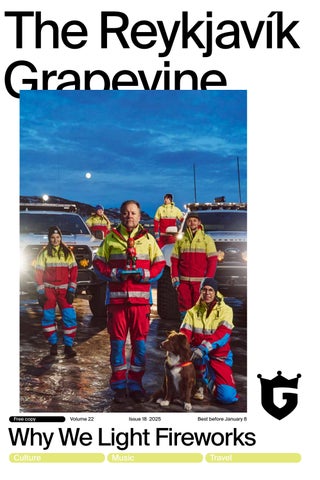
Create a flipbook