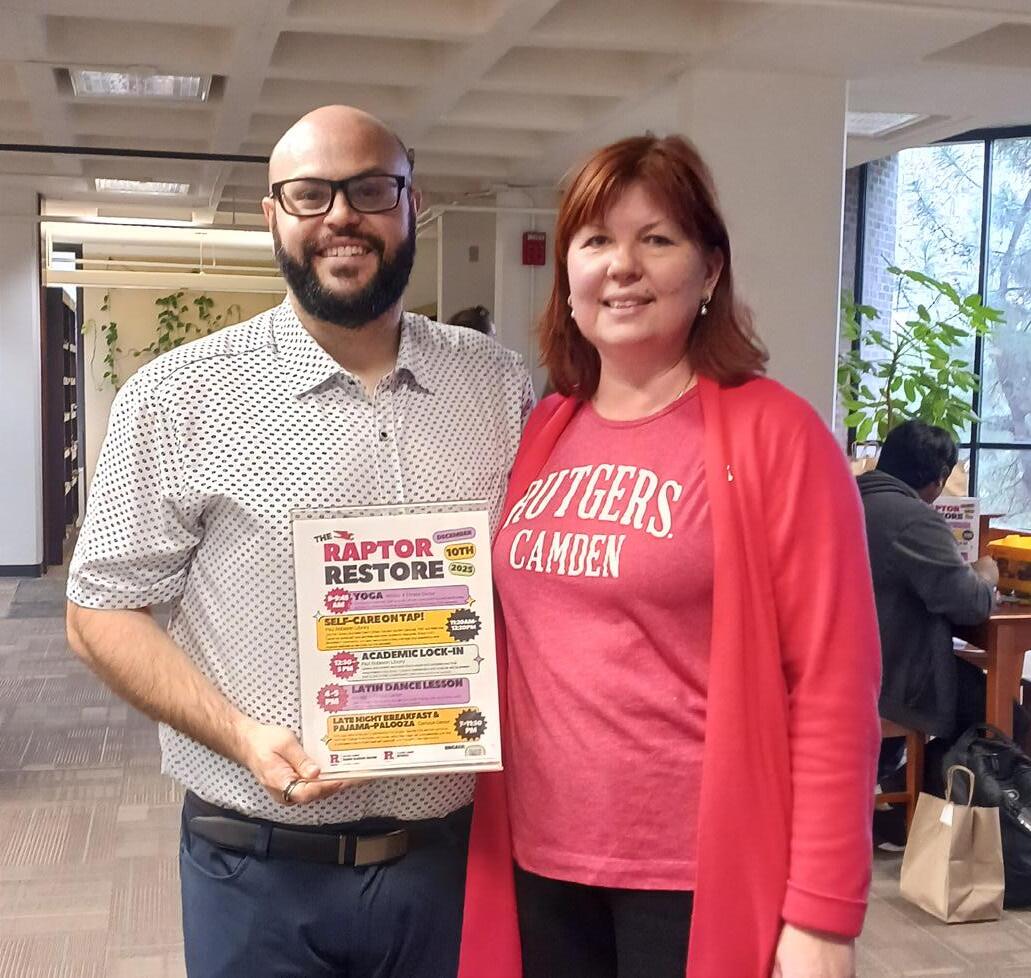
› Rutgers University–Camden SAS Staff Learn and Grow Together
› Data Deep Dive
› Highlights of Student Success Campus-Wide
RUTGERS UNIVERSITY– CAMDEN SAS STAFF LEARN AND GROW TOGETHER
SPONSOR Dr. Marsha L. Lowery
EDITOR-IN-CHIEF Dr. Jason L. James Jr.
ASSOCIATE EDITOR Jordan Meyers Staub
CONTRIBUTORS Lindsay Peck, Alexys Anderson, Dr. Randi Mayers, Angela DeRocini, Dr. Matthew West, LaToya Gibbons, Brandon Quiles, Laura Collins, Madeline Levy, Erica Reeves-Mukherjee, Angel Perez, Jonice Schley, Christian Grimando, Heather Dalton, and Ashanti Munns
SAS DIVISION MISSION, VISION, PILLARS, AND VALUES
SAS
employees are committed to
student
academic success, and the work of the members of the SAS Division aligns with our mission, vision, values, and pillars. Those are:
SAS MISSION
The Division of Student Academic Success leads persistence efforts that result in improved educational equity, retention, and timely graduation from Rutgers University–Camden. Our team empowers students to develop identity consciousness, sense of belonging, self-efficacy, and academic responsibility to become the best versions of themselves in and out of the classroom. Through personalized and holistic supports, we provide students with resources, tools, and opportunities to define success for themselves.
SAS VISION
Student Academic Success will be a national leader in utilizing student-centered approaches to improve success outcomes. Our team fosters student academic success by using data to identify and nimbly address student needs to eliminate any gaps in graduation rates. Through our work, our students will build on their existing strengths and demonstrate their development in pursuit of their goals in college and beyond.
SAS VALUES
Identity Consciousness:
Contributing to a person’s understanding of their values, goals, attitudes, and beliefs
SAS PILLARS
PILLAR 1
Data-Driven Decision Making:
Sense of Belonging:
Fostering a level of respect, value, acceptance, care, inclusion, and mattering
Self-Efficacy:
Developing a person’s belief in their capacity to execute behaviors necessary to produce specific performance attainments
Academic Responsibility:
Instilling a person’s sense of duty to their academic progress; to become accountable for their own journey
Data-informed practice is at the core of all SAS efforts. To effectively advance the achievement of our students and the campus overall, we must regularly seek out empirical evidence and use it responsibly to meet our students’ needs. We accomplish this by contextualizing our decisions using data and theory.
PILLAR 4
PILLAR 2
Proactive Approaches to Cohort Engagement and Transition Programs:
SAS is committed to developing a sense of belonging amongst those we serve, with holistic services to onboard first year and transfer students to the University. We foster affinity-based communities to help students realize their intersectional identities.
Cross-campus collaboration and mastery of essential skills are key to fulfilling our mission. To nurture continued excellence and maximize campus community engagement, we must invest time into building trusting and reliable relationships with partners and resources into developing new talent. Efforts to do so include normalizing transparency and data sharing, collectively addressing student challenges, serving as subject matter experts and thought partners, and exposing staff and students to skill-building opportunities.
PILLAR 3
Centering Students in Operational Procedures:
SAS is dedicated to enhancing student experiences through process improvement, efficiency, and consistency. We aim to do so by identifying and addressing problematic procedures and holding ourselves accountable for eliminating known barriers.
5
Intentional and Differentiated Supports for Diverse Populations:
As our campus becomes increasingly diverse, it is our responsibility to ensure that we meet the unique needs of all our students and that we honor their intersecting identities. Thus, expanding support offerings, exploring additional funding opportunities, and celebrating student success remain priorities for our future.
THESE, TOGETHER, SUPPORT THE EFFORTS TOWARDS FULFILLING OUR STRATEGIC PLAN.
The Rutgers University–Camden strategic plan can be found by visiting: issuu.com/successcamdenrutgers/docs/ruc-sas-strategic-plan-horizontal-2024-online-vers
PILLAR
COVER STORY
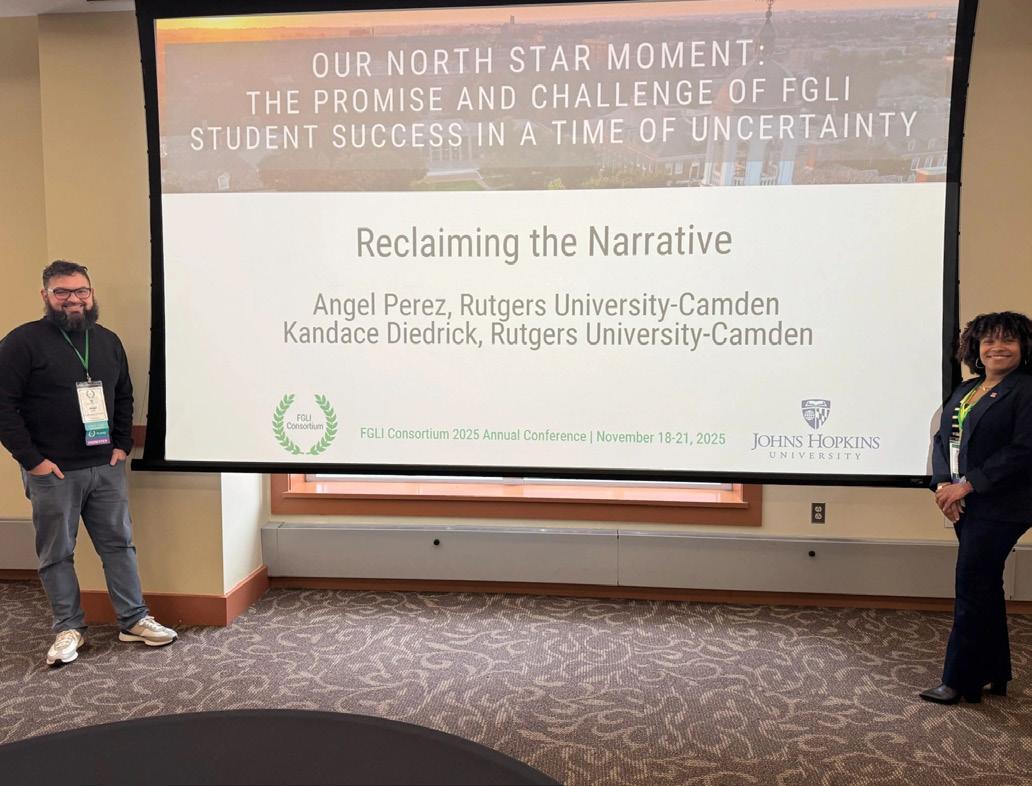
SAS Staff Deliver at the FGLI
Consortium Annual Conference 2025
The FGLI (First-Generation, Lower-Income) Consortium is a national organization that provides leadership, expertise, and resources around the experiences of firstgeneration and/or lower-income college students. The annual conference serves as an opportunity to come together as educational professionals, non-profits and other stakeholders who support the FGLI population through knowledge sharing and relationship building. You can learn more about the FGLI Consortium by visiting fgliconsortiumconference.org
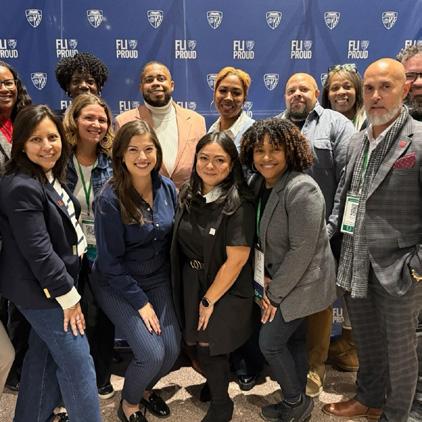
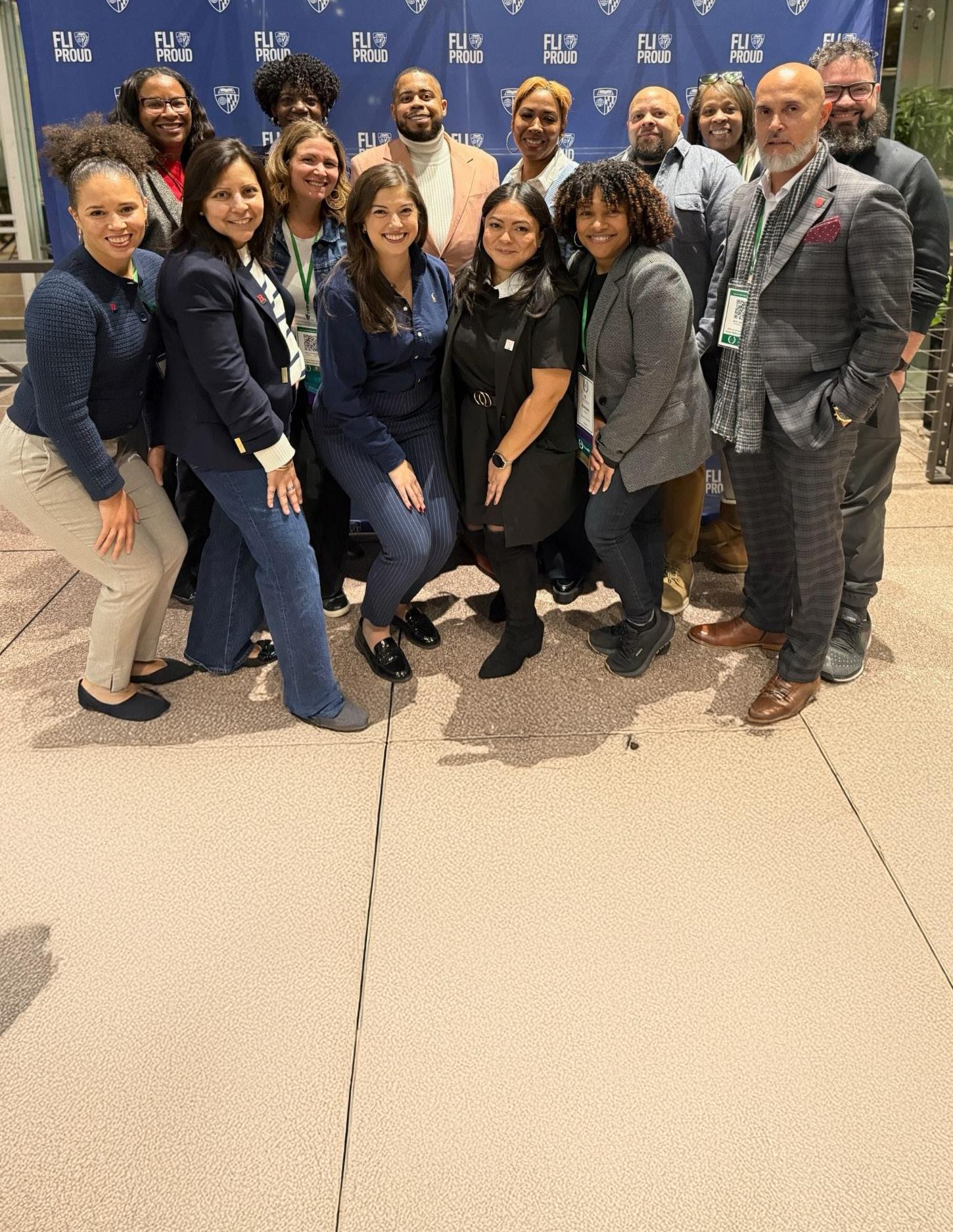
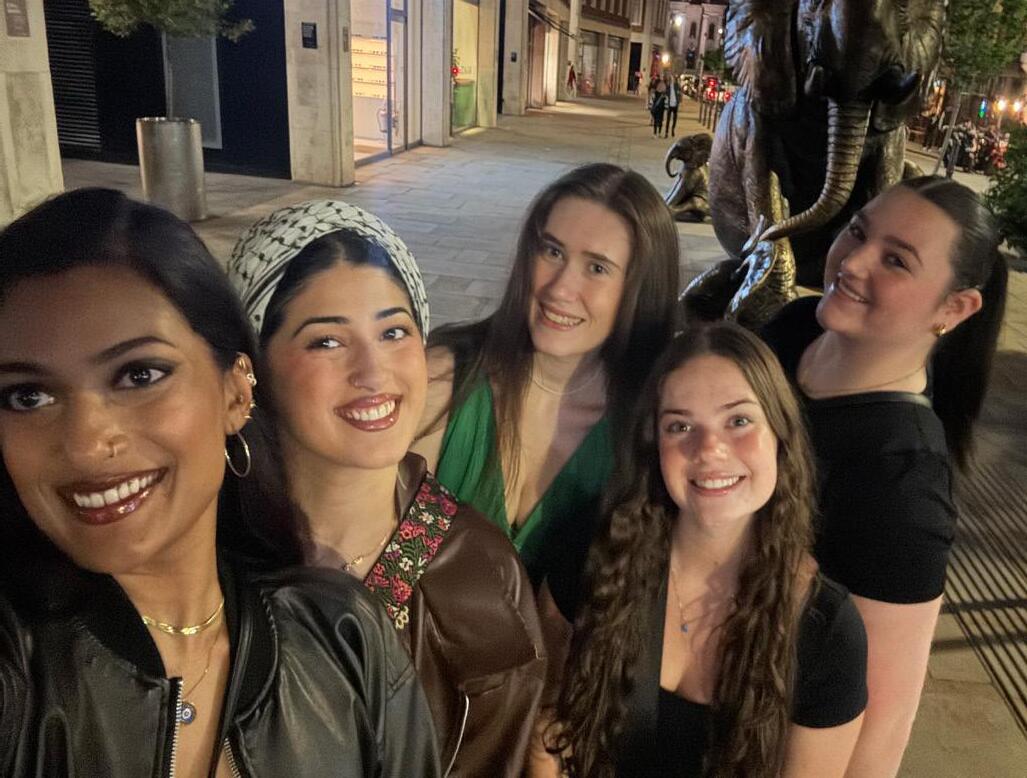
Rutgers University is seen as a natural leader in first-generation student success. And with that, several Rutgers University–Camden staff and students from the Student Academic Success Division attended and presented at the 2025 FGLI Consortium Annual (6th) Conference in Baltimore, Maryland. We are also pleased to announce that Rutgers University has been selected to host the 2026 FGLI Conference at the New Brunswick campus.
PRESENTER EXPERIENCE
Check out a few details shared by the Division of Student Academic Success conference presenters.
LAURA COLLINS
WHY WERE YOU INTERESTED IN ATTENDING THE CONFERENCE?
As a first-generation college student with 16 years professional experience supporting FGLI students, I was motivated and inspired to participate in this conference because I wanted to represent the experiences of Rutgers–Camden from these lenses. Moreover, I hoped to shed light on our work, specifically, in helping increase awareness and access of national award opportunities to students of all backgrounds.
HOW MANY TIMES HAVE YOU ATTENDED, AND WHAT DID YOU PRESENT THIS YEAR?
This was my first time attending this conference, and I was also selected to deliver a presentation titled “’Yes, We are Talking to You!’: Helping First-Generation Low-Income Students Apply for Nationally Competitive Awards.” I co-presented with Brandon Quiles.
ABSTRACT: In a time where there are limitations in funding at the institutional, state, and federal levels, building partnerships between campus units is
critical to help first-generation and lower-income (FGLI) college students gain awareness to scholarly opportunities and awards that can provide funding to pursue high impact practices such as study abroad or independent research, and graduate school. The relationships between fellowships advising units and access and equity support programs can play a key role in unlocking access, providing encouragement, fostering development, and instilling a sense of belonging. Our session highlights how formal and informal collaborations between the Office of Scholar Development and Fellowship Advising (OSDFA) and TRiO Student Support Services Program have yielded student success outcomes at Rutgers University–Camden. In this workshop, participants will engage with examples of workshops designed to support FGLI students in exploring national award opportunities and graduate school, with particular focus on reframing who these opportunities are meant for (hint, it’s everyone!).
HOW DO YOU THINK THE ATTENDEES RECEIVED YOUR PRESENTATION?
We had more than 20 participants in our session, likely representing about 20% of total conference attendees. Following the session, a line of guests stayed back to connect with me to discuss how they can connect with offices like this one on their own campuses or ways they can increase awareness for FGLI students.
WHAT PRESENTATION DID YOU ATTEND THAT WAS MOST IMPACTFUL TO YOU?
NAME: From Campus to Capitol - The intersections of policy, politics, and our everyday practice
DESCRIPTION: This opening panel kicked off the conference and really underscored the actionable ways in which we (and our students) can advocate on behalf of higher education, overall, and particularly for populations that have been left out of consideration and conversation.
KEY TAKEAWAYS: This conversation, and those that followed, recentered our commitment to serving students in pursuit of higher education.
HOW WOULD YOU DESCRIBE YOUR OVERALL CONFERENCE EXPERIENCE?
While this was my 1st FGLI Consortium Conference, it won’t be my last. I am excited to support Rutgers as we host the 2026 annual conference and to continue engagement with the FGLI Consortium moving forward.
BRANDON QUILES
WHY WERE YOU INTERESTED IN ATTENDING THE CONFERENCE?
As one of our campus' first-generation college and low-income experts, I was motivated and inspired to participate in this conference because I wanted to share how the collaborative work between TRiO and OSDFA has positively impacted FGLI students. The presentation allowed me to highlight not only our campus as a whole, but individual students who mean a lot to me.
HOW MANY TIMES HAVE YOU ATTENDED, AND WHAT DID YOU PRESENT THIS YEAR?
This was my first time attending this conference, and I was also selected to deliver a presentation titled “’Yes, We are Talking to You!’: Helping First-Generation Low-Income Students Apply for Nationally Competitive Awards.” I co-presented with Laura Collins.
ABSTRACT: In a time where there are limitations in funding at the institutional, state, and federal levels,
building partnerships between campus units is critical to help first-generation and lower-income (FGLI) college students gain awareness to scholarly opportunities and awards that can provide funding to pursue high impact practices such as study abroad or independent research, and graduate school. The relationships between fellowships advising units and access and equity support programs can play a key role in unlocking access, providing encouragement, fostering development, and instilling a sense of belonging. Our session highlights how formal and informal collaborations between the office of scholar development and fellowship advising (OSDFA) and TRiO student support services program have yielded student success outcomes at Rutgers University–Camden. In this workshop, participants will engage with examples of workshops designed to support FGLI students in exploring national award opportunities and graduate school, with particular focus on reframing who these opportunities are meant for (hint, it’s everyone!).
HOW DO YOU THINK THE ATTENDEES RECEIVED YOUR PRESENTATION?
About half of the attendees in the space did not have their own designated person whose primary role is to assist students in applying for these nationally competitive awards, so it was great for them to hear from our perspective and institutional data that the FGLI population we serve are highly interested in engaging in the opportunities that these awards allow. Hopefully, our success can help inspire them to bring this back to their institutional leaders so they can allocate resources to further support efforts around competitive applications.
WHAT PRESENTATION DID YOU ATTEND THAT WAS MOST IMPACTFUL TO YOU?
NAME: The Pivot Panel: Navigating Institutional Change while Maintaining Core Values
DESCRIPTION: In the past, universities and colleges have faced external and internal headwinds that have led to institutional practices and policies that deeply impact the ways we approach our work. The current environment has led to increased budget
cuts, hiring freezes, reorganization, and other changes that have called us to pivot from planned paths and programs to alternative approaches. This closing session included panelists who hold leadership positions at diverse institutions, and they shared how they have strategized, made challenging decisions, and crafted ways to maintain the mission of supporting FGLI student access and success while facing real barriers and boundaries.
KEY TAKEAWAYS: The panel session was affirming and inspiring as it allowed me to also think through the challenges and changes that are happening to our industry. It was great to end our conference with seriousness about what is on the horizon, but also hope and resilience for the work and the students we are trying to support.
HOW WOULD YOU DESCRIBE YOUR OVERALL CONFERENCE EXPERIENCE?
I had a wonderful time learning from colleagues across the country about their successes in championing FGLI persistence and retention. Next year the conference will be at our big sister institution, Rutgers New Brunswick so my hope is that I will be able to bring additional colleagues from Student Academic Success to learn in community.
JONICE SCHLEY
WHY WERE YOU INTERESTED IN ATTENDING THE CONFERENCE?
By presenting this work and engaging with the professional community build by the FGLI Consortium, I deepened my commitment to advancing equity, strengthening student confidence, and elevating the practices that support FGLI student success (although transferable to any student). My motivation is rooted in a desire to contribute to a field-wide shift toward solutions that are both research-informed and practically implementable. Ultimately, my goal is to strengthen institutional cultures of support where early engagement, relationship building, and preventative coaching are the norm, not the exception.
HOW MANY TIMES HAVE YOU ATTENDED, AND WHAT DID YOU PRESENT THIS YEAR?
This was my first time attending this conference, and I was also selected to deliver a presentation titled “From Probation to Prevention: Empowering FGLI Students Using Academic Recovery Strategies.”
ABSTRACT: What if the same tools used to help students rebound from academic probation could also prevent first-generation, low-income (FGLI) students from ever reaching that point? Nationally, higher percentages of FGLI students face academic probation compared to their peers, a challenge that not only threatens persistence but also leads students and their families to question whether the opportunity and cost of higher education are worth it. This session explores how reframing academic recovery practices as proactive, preventive supports can affirm the value of college by helping students build confidence, resilience, and a sense of belonging that makes persistence possible.
Drawing on evidence-based approaches to coaching, goal-setting, and skill development, we will highlight ways institutions can move from reactive interventions to student-centered models that reduce attrition and increase graduation. Participants will engage with adaptable practices that not only help students regain academic standing but also equip them to persist before challenges escalate. Special attention will be given to connecting students with campus and community supports, strengthening financial literacy, and integrating culturally responsive approaches that affirm FGLI students’ identities and strengths. Attendees will leave with concrete, transferable strategies to integrate into advising, coaching, and student support programs resulting in sustained enrollment, graduation completion, and student belief in the value of higher education.
HOW DO YOU THINK THE ATTENDEES RECEIVED YOUR PRESENTATION?
Attendees left with a concrete academic success roadmap they can begin using immediately in their work with FGLI students. Together, these tools equipped attendees with ready to use resources they can adapt (as needed) and apply right away to shift from a reactive approach to a preventive, empowerment-focused model of student support. This included:
› A coaching conversation prompt designed to support meaningful, strengths-based discussions and help staff to guide students through
reflective and productive dialogue
› A first-semester weekly goal and milestone worksheet that attendees can use with students to build structure, monitor progress, and reinforce consistent academic habits
› A prevention-focused action plan that helps attendees create personalized, proactive strategies to support student success before academic challenges escalate.
WHAT PRESENTATION DID YOU ATTEND THAT WAS MOST IMPACTFUL TO YOU?
NAME: Maximizing Student Engagement While Minimizing Costs, presented by Princeton University’s SIFP team
DESCRIPTION: This presentation highlighted how SIFP delivers a range of services to support their FGLI students, including mentorship and academic enrichment. Their near-peer mentorship model allows them to offer robust, personalized support while keeping program costs manageable, which is an approach that is highly relevant to CLASS. As a small team with only 3 staff serving a specific cohort while also supporting all undergraduate students, the session demonstrated how we could scale our impact through near-peer academic coaching.
KEY TAKEAWAYS: With two assigned PACs, the model showed a feasible path for expanding support without significantly increasing staffing needs. It was also interesting to hear that 70% of
their budget is dedicated to student workers, reinforcing the central role of peer leaders in delivering effective, cost-efficient programming.
NAME: Opening Doors: Faculty Partnerships that Build First-Gen Belonging, presented by Northeastern University
DESCRIPTION: This presentation emphasized the importance of faculty engagement in student support services through their CAMD F1rst Program. Because classroom experiences play such a significant role in student retention, involving faculty in students’ lives beyond the classroom is essential. The CAMD F1rst model is designed as a low-commitment, high-impact opportunity for faculty: those who participate meet with groups of students twice per semester. These interactions help cultivate a sense of belonging, support student growth, strengthen academic success, and enhance overall well-being.
KEY TAKEAWAYS: A notable component of the program is that participating faculty are required to attend a mentorship orientation to learn about CAMD F1rst, understand the students they will be supporting, and clarify expectations. This structured approach ensures that faculty are well-prepared and aligned with the program’s goals. This model is highly relevant to CLASS, as we are continually working to strengthen faculty partnerships to better support our students. A model such as this one could create meaningful opportunities for students to learn from faculty in a more personal context while helping faculty build deeper, more intentional connections with students. When asked about compensation, Rachel shared that faculty only receive a shared meal for participating. This indicates that participating faculty are driven by authentic dedication and commitment to supporting student success.
HOW WOULD YOU DESCRIBE YOUR OVERALL CONFERENCE EXPERIENCE?
My overall experience was good. I left with several practical insights, strategies, and program models that I can bring back to CLASS and immediately begin incorporating into our work. The sessions
not only deepened my understanding of effective approaches for supporting FGLI (or any student) but also provided concrete ideas that can strengthen and expand the initiatives within CLASS. Overall, the conference equipped me with new tools, renewed perspective, and actionable takeaways that will enhance the support we provide to our students.
ANGEL PEREZ
WHY WERE YOU INTERESTED IN ATTENDING THE CONFERENCE?
I was motivated to attend the FGLI Consortium Conference at Johns Hopkins because, as a firstgeneration student myself, I’m always looking for new insights and strategies that can strengthen the support I provide to my students. I also wanted to present because I believe deeply in the program I’ve built, and I’m committed to helping it grow so it can empower and uplift as many students as possible.
HOW MANY TIMES HAVE YOU ATTENDED, AND WHAT DID YOU PRESENT THIS YEAR?
This was my first time attending this conference, and I was also selected to deliver a presentation titled “Camden Unveiled: Ethical Storytelling as a Tool for FGLI Student Advocacy.”
ABSTRACT: Want to engage FGLI students in ways that build confidence, challenge stereotypes, and strengthen institutional partnerships? This session will share how Camden Unveiled—a 5-week
digital storytelling program for incoming Rutgers–Camden freshmen—transformed student voices into powerful tools for advocacy, recruitment, and fundraising. Participants will experience student-created mini-documentaries, podcasts, and photo essays on issues like public safety, education equity, environmental justice, and identity. Alongside these stories, facilitators will unpack the program’s pedagogical structure and provide adaptable tools for replicating studentcentered media production on your campus. By centering authentic storytelling, guided reflection, and community collaboration, this session demonstrates how digital media can: (1) Empower FGLI students to reclaim narratives and develop lifelong advocacy skills, (2) Strengthen cross-campus collaborations with admissions, advancement, and communications, and (3) Position institutions to move beyond deficit-based narratives and honor the creativity and complexity of their students’ communities. Join us to explore how storytelling can be both a student intervention and an institutional strategy for equity and engagement.
HOW DO YOU THINK THE ATTENDEES RECEIVED YOUR PRESENTATION?
Because of attending, higher education professionals can begin teaching their students how to use their stories for advocacy with an ethical story telling framework..
WHAT PRESENTATION DID YOU ATTEND THAT WAS MOST IMPACTFUL TO YOU?
NAME: Walking in Their Shoes: How Missed Emails, Deadlines, and Opportunities Reveal Barriers to First-Gen Success
DESCRIPTION: An interactive simulation where participants acted as incoming first-generation college students. They navigated complex, time-sensitive matriculation tasks (financial aid, housing, logistics) while balancing significant home and work demands. The session focused on interpreting confusing institutional communications, making strategic resource decisions, and identifying systemic inefficiencies to advocate for better prematriculation support.
KEY TAKEAWAYS:
1. Prioritize Against Cognitive Overload
› The combination of complex institutional requirements and external life pressures forces students into a constant state of crisis management. This significantly increases the probability of small, life-altering errors.
› Key Action: Counseling must shift to providing highly simplified, prioritized checklists and task timelines to reduce the student's cognitive burden and decision fatigue.
2. Teach the Invisible Curriculum
› Institutional communication relies on an unspoken language filled with jargon (EFC, Bursar, Matriculation). Interpreting these documents is often a bigger barrier than completing the required action
› Key Action: Develop and incorporate explicit "Decoding Sessions" into pre-entry programming, teaching students how to dissect and understand actual financial aid letters and official emails.
3. Advocate for Systemic Simplification
› The experience provided concrete evidence demonstrating that the university's confusing processes are the main obstacle. Advocacy must focus on fixing the system, not just teaching students to endure it.
› Key Action: Use the documented confusion from the simulation to lobby leadership for a "FirstGen Audit" of all new student communications to enforce clarity, consolidation, and the elimination of unnecessary jargon.
DATA DEEP DIVE
RU READY TO RETURN: RETENTIONS RECRUIT BACK CAMPAIGN
This Fall, the Retention team began work building a strategy to re-engage students who began their degree at Rutgers–Camden but did not complete.
STATE SNAPSHOT: SOME COLLEGE NO DEGREE
New Jersey’s statewide effort to target this population of students is known as the “Some College No Degree” initiative. In New Jersey alone, 840,000 New Jersey residents fall into this cohort. Digging deeper into some demographic data from the National Student Clearinghouse:
› Stop out rates are higher amongst students of color (and higher for students of color in NJ, compared to the national average).
› Students aged 20-24 have the highest stop rate at 36.9%, compared to their peers (the second highest stop out rate is 22.1% for 18-19 year olds).
› The stop out rate gender split is close between women (43.9%) and men (46.2%)
PRE-ENROLLMENT AT RUTGERS–CAMDEN
Some may think that the re-enrollment experience begins and ends with completing the re-enrollment form. In reality, students have to do more than fill out a form-they must navigate and understand re-enrollment criteria, where things like GPA can vary by school. In addition, the process can look different on a case-by-case basis; a student who is academically dismissed, a student interested in changing schools, and a student with a financial hold will all have additional considerations and steps they must take to re-enroll to Rutgers–Camden. For students who complete this process, they must then learn how to re-adjust to academic life once back, a setting that some students have not been in for years.
We reached out to some current re-admits who navigated the institutional re-enrollment process in order to return. From our conversations, student motivations to return vary. Common roadblocks that came up included difficulty finding the right people to get in touch with to answer questions, as well as difficulty understanding the general process online. The positives include that once students did get the information they needed to know, the actual approval process moved quickly. In addition, support from campus staff was a beneficial factor to students during the re-enrollment process (including Dean of Students, advisors, SAS staff, and the One Stop).
Retention’s strategy this semester included work to become a centralized source for all things reenrollment, including:
› Getting clear on the re-enrollment requirements by school. This included compiling information from school websites, as well as conversations with a few academic advisors.
› Creating an interest form to get relevant info from prospective re-admits. Creating an interest form to get relevant info from prospective re-admits.
› Gathering a list of student stop outs from the 2021-2024 cohorts and analyzing their circumstances at time of departure.
› Beginning outreach to these students, via phone call and email.
LOOKING TO THE SPRING
As we head to the spring semester, next steps include continuing to dive into the data around
re-admits. This includes getting a better pulse on the current re-admit population and understanding their experiences and needs both during and after the re-enrollment process. Although initial outreach has started, the Spring will focus on building upon targeted student outreach strategies for 2026 returns. Data from continued exit survey collection will continue to provide context and student clues that lead to departure. Finally, evolution of the retention scope and sequence communication plan to provide tailored touchpoints throughout the student journey will serve as an additional measure to prevent attrition.
AN OPEN LETTER TO STUDENTS: HOW LONG UNTIL YOU GRADUATE?
Fun Fact: In 2024, the Department of Education reported that nearly one in three college students in America took longer than 4 years to complete their degree – assuming they completed at all! The consequences of this observation at Rutgers— Camden is steep: for each semester of additional coursework comes with more tuition payments and a longer wait to jobs and paychecks that are estimated to be over DOUBLE, by age 25, from those without a degree. For a college that was ranked #9 in Social Mobility by the US News & World Report in 2025, we are committed to lifting students up in so many ways – so let’s talk about graduating on time.
The Camden campus is full of students whose lives are filled with more than just school. One in five works full-time. One in six cares for family members 30+ hours a week. 85% commute back and forth. Yet for all the time we spend NOT on school, the average GPA consistently sits above a 3.2. Resources like CLASS Peer Tutoring, Learning Specialists, and Study Buddies are being used at higher rates than ever before. If you are taking 12 credits and not sure whether you can handle another class on your schedule, you should talk to someone about it! Your academic advisor, current faculty members, and Student Academic Success staff are all available to help you consider your options and plan around them. Your schedule) can be found at: rucamden.navigate.eab.com
Many pathways exist to a 4-year degree. Some make sure they enroll in 15 or more credits each semester. Some decide to take Summer/Winter classes. A few have a handful of credits that came in from high school or transfer colleges. Further still, some students intentionally choose to go slower, double major, or totally change their major halfway through their studies… maybe twice… – and all those options are ok too! Whatever your path, my hope is that you just make sure it’s on purpose.
SYSTEMS FEATURE: ENGAGE
Last issue, you learned about the renewed commitment that Rutgers—Camden made in tracking events and attendance through the Engage platform. Even as early as Welcome Week, the Office of Student Involvement was able to articulate highlights; per Mustafa Abdus-Sabuur, 39% of undergraduate students created an Engage account (higher than ever before) and almost 700 had logged in to Engage just in September. Across campus, Alumni Engagement was able to pull organization officer lists to develop natural affinities to keep graduates connected, and Marketing & Communications was able to highlight events through its new Raptor Rundown newsletter. Now that it has been a full semester, here are some outputs to demonstrate how the system helps us show impact.
1. Over 500 Active Programs
› Over 150 from Student Groups alone
2. Over 4,000 event attendees (and those were just the ones easily trackable!)
3. Top Categories (labeled for 50 or more events):
› Community & Culture / Diversity & Inclusion
› Health & Wellness
› Career and Internships / Experiential Learning
› Arts and Entertainment
If you are a student and have not yet downloaded your Event Pass, you can follow the instructions below to set yourself up for easy check-in at events across campus!
engage.camden.rutgers.edu
DIVISION HIGHLIGHTS
FIRST-GENERATION COLLEGE STUDENTS (FGCSs)
CELEBRATING FIRSTS: STORIES, SUCCESS, AND COMMUNITY
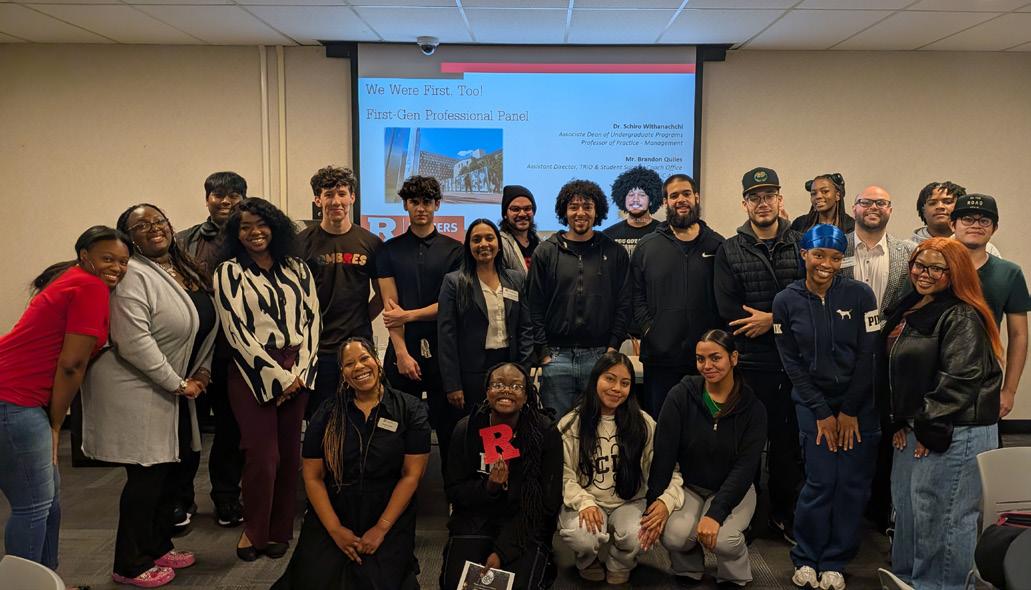
National First-Generation College Student Celebration Day is observed annually on November 8th, as designated by the National Association of Student Personnel Administrators’ (NASPA) Center for First-Generation Student Success – a community dedicated to research, awareness, and celebrating the first-generation student population. First-generation students are students whose parents and/or guardians have not completed a 4-year bachelor's degree. Rutgers–Camden (RUC) is proud to be a First-Gen Forward member, boasting an overall population of over 51% firstgeneration college students as of Fall 2025.
As with previous years, the Division of Student Academic Success (SAS) hosted a week’s worth of activities designed to welcome and engage our first-generation college students, while also raising awareness of the continued support and communities available to our large body of first-
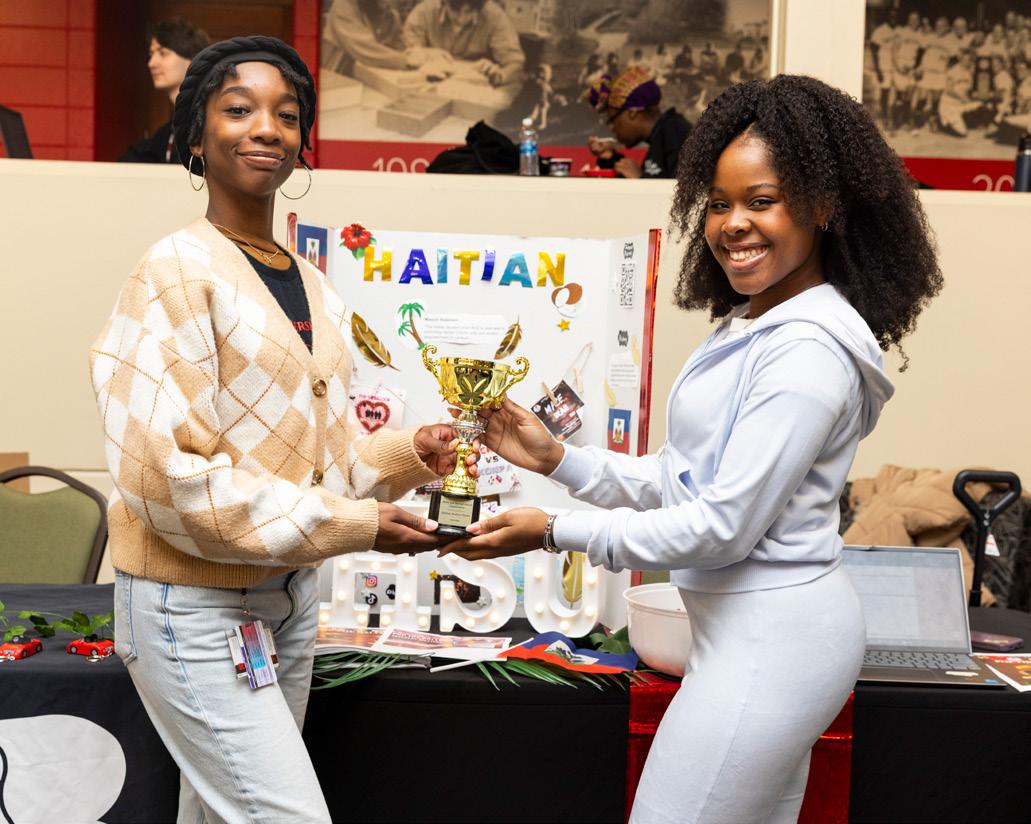
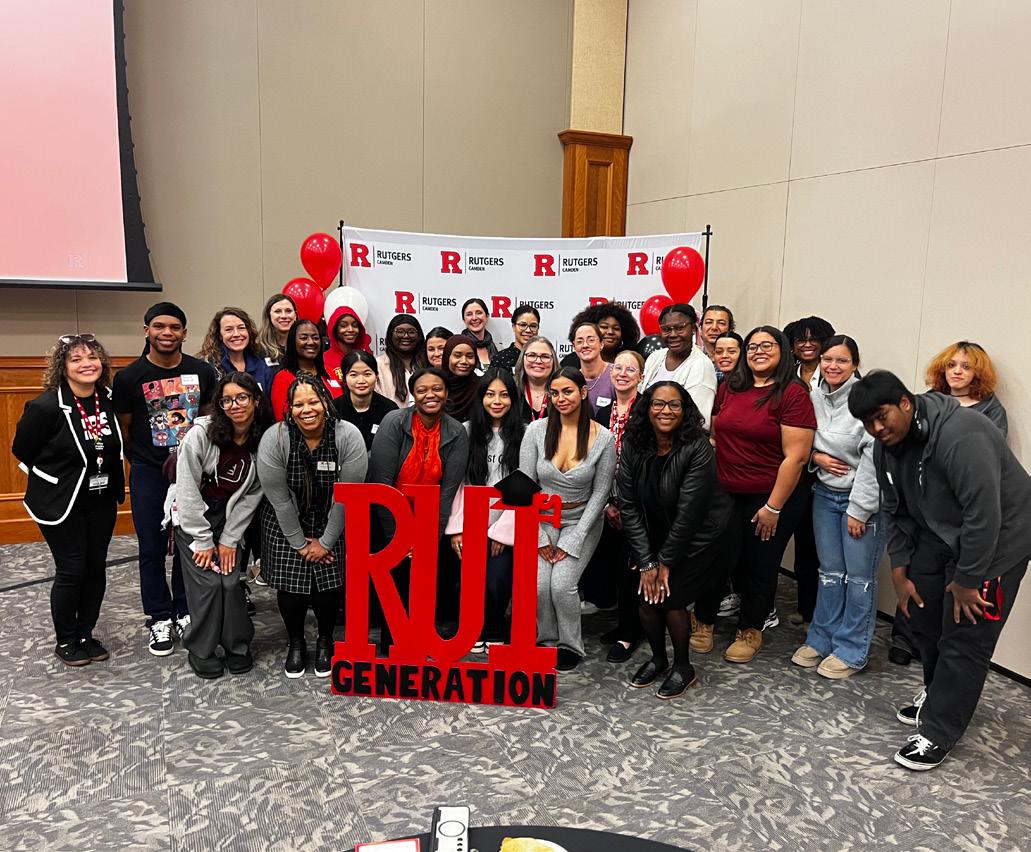
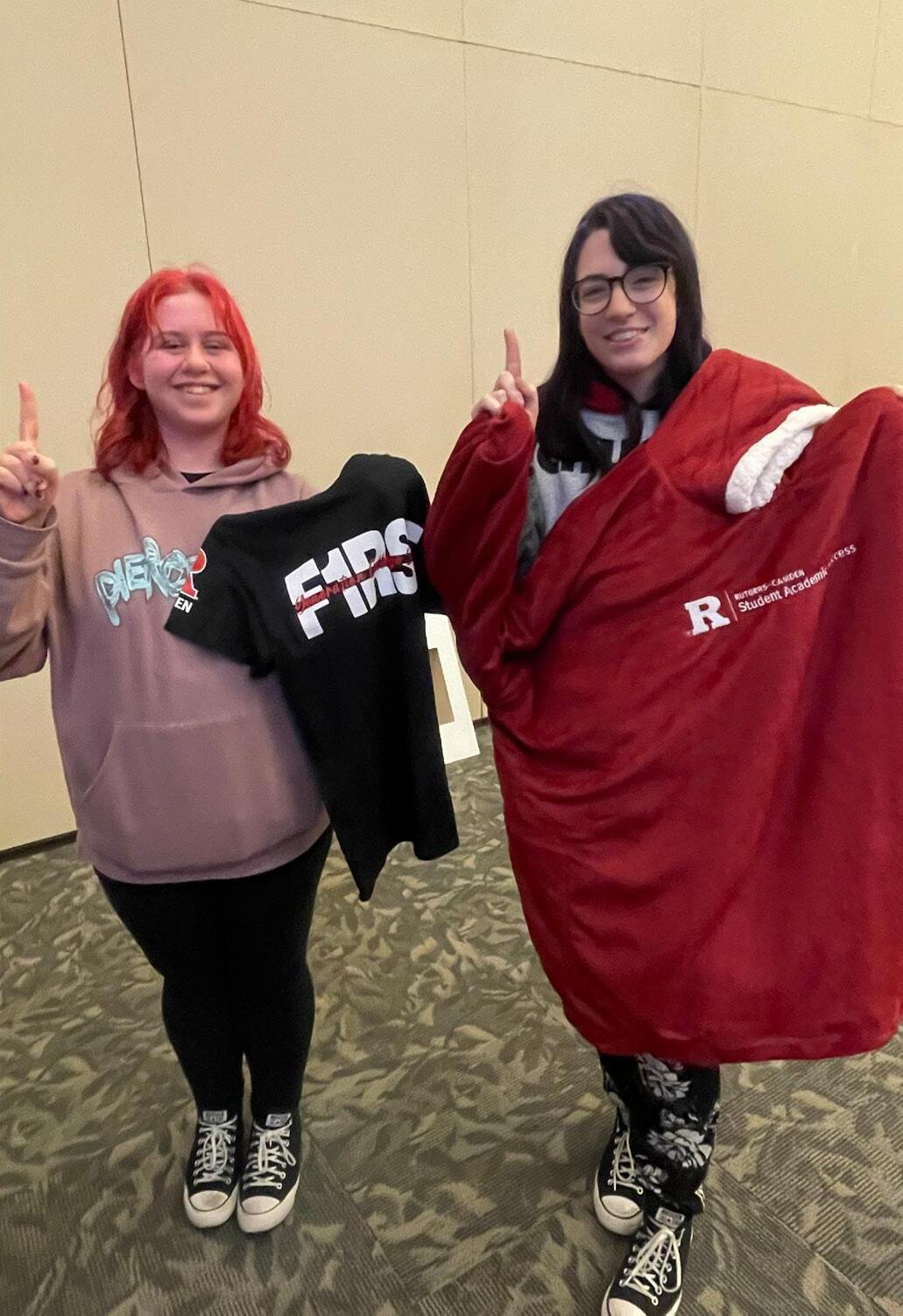
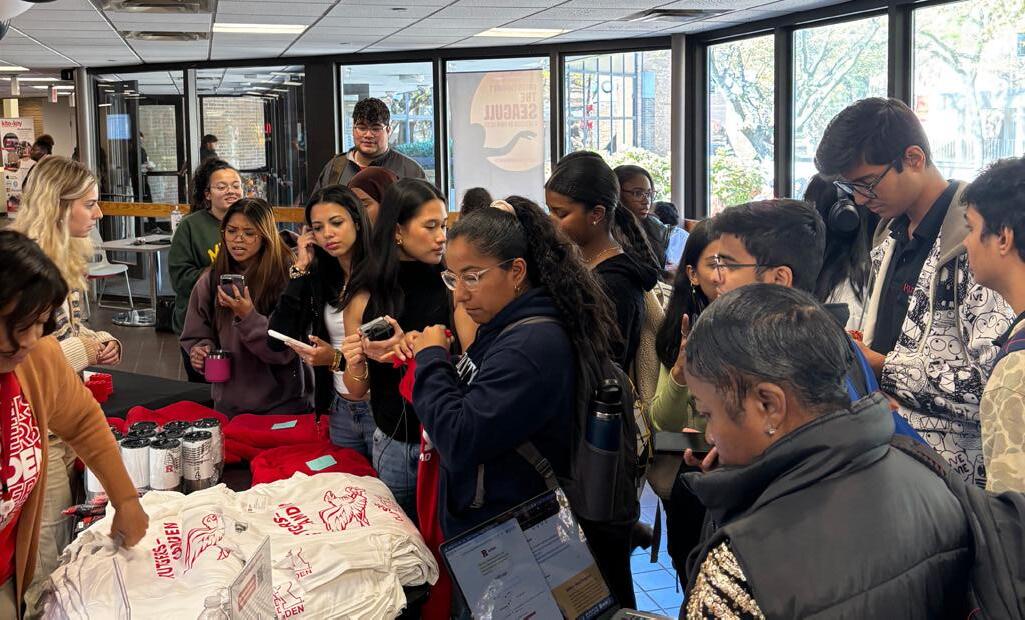
generation students. The week kicked off with two simultaneous events – Get to Know Me 1st Tabling Event hosted by SAS and supported by our two student first-generation student communities – Bridging 1st Generation Students (B1GS), the student organization on-campus for first-generation students, and Alpha Alpha Alpha (Tri-Alpha), the first-generation honor society – with free swag, snacks, and trivia with prizes; and First-Gen Mixer – open to all students, faculty, and staff to engage with one another in conversations around firstgeneration student needs and identities.
Tuesday and Wednesday continued the celebration with the following events: a First-Gen Resources for Traveling Abroad table, a Tri-Alpha Information Session in collaboration with the Office of Scholar Development and Fellowship Advising (OSDFA), and a First-Gen Faculty & Staff Panel. The first highlighted resources on campus to help students study abroad include the Passport to the World Initiative, which offers current Rutgers–Camden students who have never owned a passport the opportunity to apply for up to $180 in financial support to obtain one. Tri-Alpha’s leadership team hosted an informational session, connecting eligible members with the honor society and connecting them with OSDFA to explore how to translate their leadership skills and college experience into opportunities (often fully funded) beyond Rutgers–Camden. The First-Gen Faculty and Staff Panel was open to all and featured first-generation leaders within the RU-C community, who spoke to current students about their paths.
Thursday events included the First-Gen Fête hosted by the Transfer Office and TRiO featuring food, fun, and karaoke; a student organizationled Sneakerball; and the PinkedIn Networking event hosted by RU-C’s Alpha Kappa Alpha Sorority (AKA), RU-C’s National Association for the Advancement of Colored People (NAACP), RU-C’s National Association of Black Accountants (NABA), and SAS. The Sneakerball featured a performance
by RU-C’s own Garden of Eden band and included food, fun, and prizes. The PinkedIn event brought together accomplished professionals to connect with current students, providing valuable insights and opportunities for networking.
After a full week of activities, the week closed with a bingo evening event hosted by Tri-Alpha on Friday and Saturday’s RU-C Open House. While not formally part of first-gen week, RU-C’s Tri-Alpha chapter, Beta Mu, will host their first Fall induction ceremony on Friday, January 16th, from 11 am to 12 pm, inducting members from The Graduate School on the eve of its 5-year anniversary. TriAlpha inducts undergraduate students with at least 30 college credits (at least one semester must have been completed at RU-C) and a 3.2 GPA, and graduate students from The Graduate School with at least 9 credits and a 3.75
FIRST-YEAR EXPERIENCE
RUTGERS READY: THE SUMMER BRIDGE EXPERIENCE
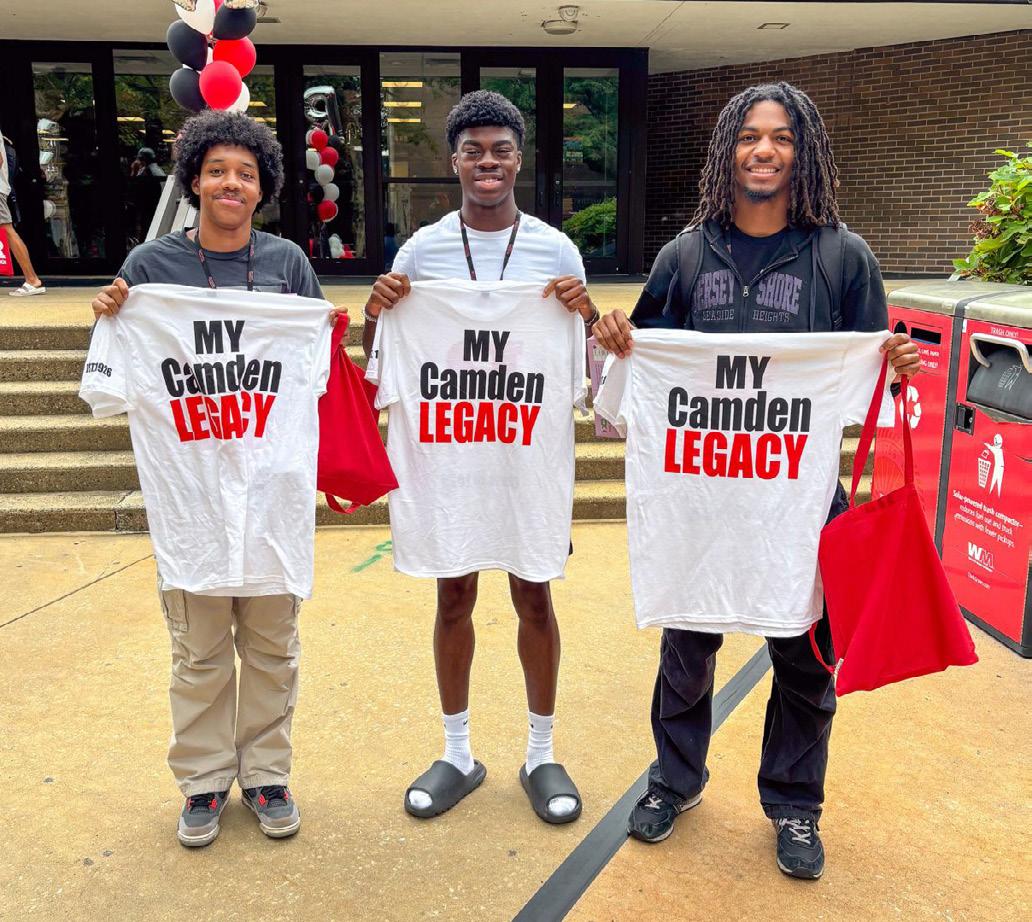
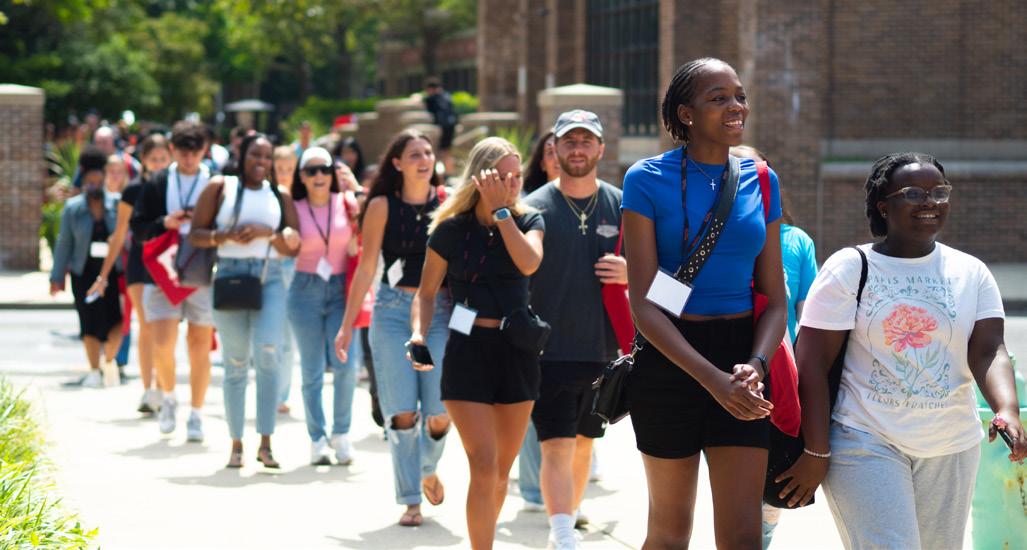
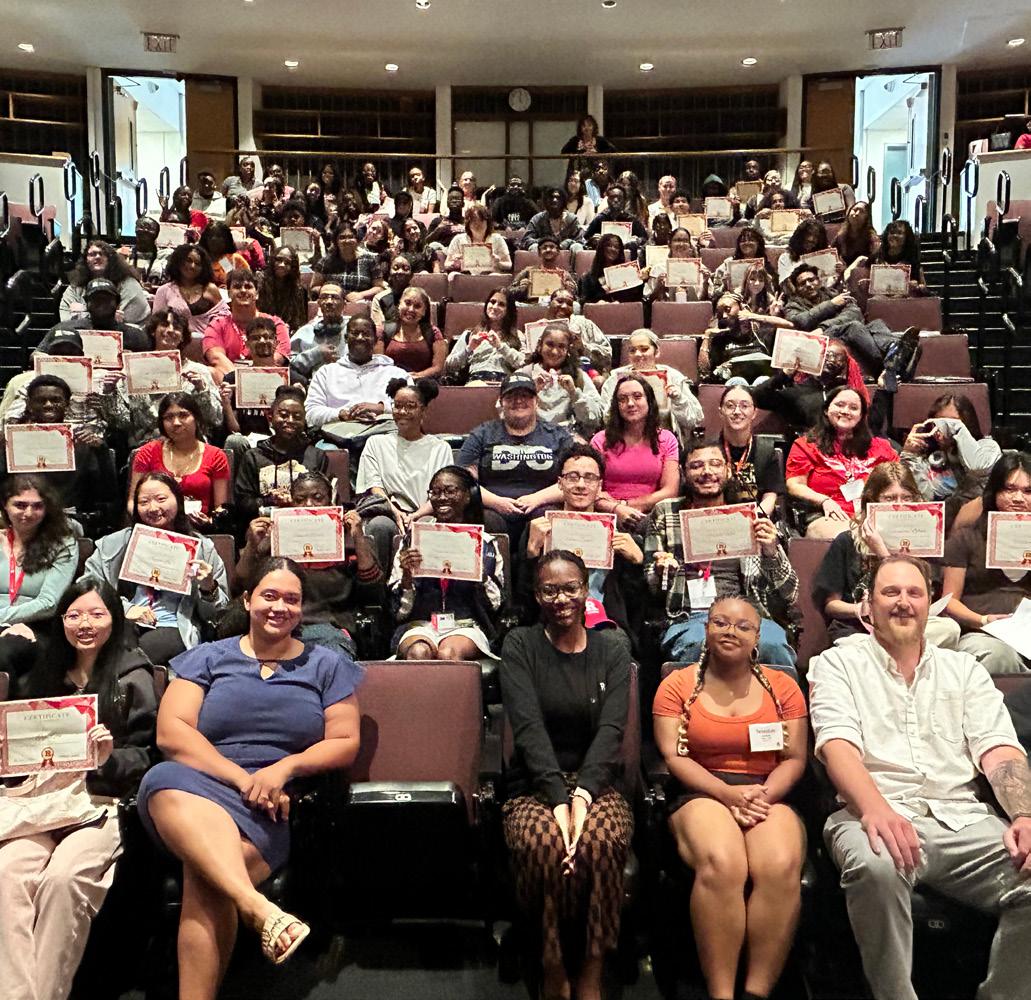
Each year, the SAS division welcomes first-year students to campus a few days prior to the start of the fall semester to help them become accustomed to college life. Rutgers–Camden’s 2025 Summer Bridge program ran from Wednesday, August 20th to Wednesday, August 27th hosted by the Student Success Coach Office (SSCO) as part of Student Academic Success’s First Year Experience Initiatives. The week-long program covered topics with the Student Success Coach Office, including time management, reading your syllabus, living with roommates, conflict management, and Clifton Strengths, as well as fun activities such as a day trip to Philadelphia and a game show night.
Additionally, the Summer Bridge Experience introduced students to new faces of support throughout campus with workshops focused on topics such as: budgeting time and resources, a mock lecture and debrief, study skills and notetaking with the, student involvement and Greek life opportunities, exploration of social identity, recognizing their potential as scholars, elevator pitches, and creating a first-year career toolkit with friends!
BUILDING A STRONG FOUNDATION: FIRST-YEAR SEMINARS FOR SUCCESS
In Fall 2025, Student Academic Success (SAS) proudly partnered with the College of Arts and Sciences (CCAS) and the School of Nursing to launch two first-year seminars: Foundations for Student Success (50:090:101) and Impact and Success in Nursing (57:705:120). The implementation of these courses is important, as first-year seminars are widely recognized as a best practice for supporting student transition, engagement, and success (Kuh et al., 2010; Pascarella & Terenzini, 2005).
Foundations for Student Success was piloted with 87 CCAS students and facilitated by success coaches and SAS staff. The course focused on academic skill-building, identity, and community. Students learned effective study strategies, reflected on personal values, explored campus resources, and engaged in leadership development. Highlights included guest presentations from departments such as the Wellness Center, Career Advancement Center, and DICE, completing the CliftonStrengths Assessment to better understand unique talents, meeting with success coaches to set goals, and attending campus events to foster connection.
Impact and Success in Nursing, taken by 167 incoming Nursing students, was designed to address the rigor and professionalism of the program. SAS, led by Success Coach Ashanti Munns, collaborated with Nursing faculty to develop content that emphasized academic strategies, resilience, and self-care. Students explored resources within the Nursing school, reflected on their motivations, and practiced test-taking and study skills for science courses. This partnership provided a critical opportunity for students to connect with their success coach and learn about important resources available to support the academic and personal success of Nursing students.
The implementation of these seminars marks an important step toward creating a comprehensive first-year experience that builds academic skills, connects students to pivotal campus resources, and fosters community. We look forward to continuing this work with CCAS, Nursing, and other campus partners to support first year student success and retention.
TRANSFER STUDENT SERVICES
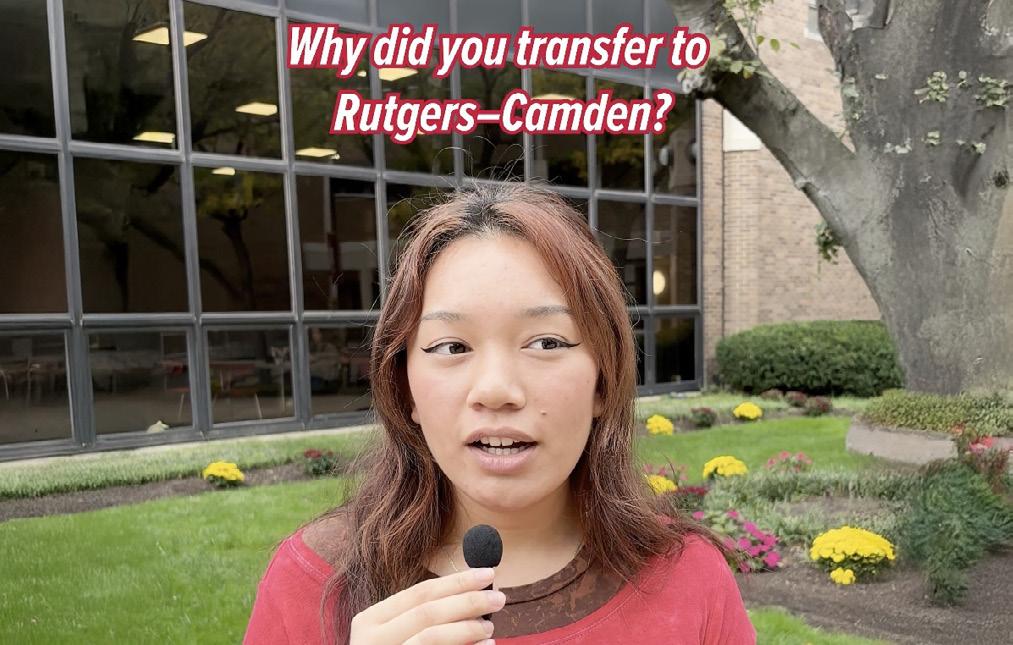
“TRANSITIONING
TO HOME” CELEBRATING OUR TRANSFER STUDENTS AT RUTGERS–CAMDEN”
From October 20–24, the Division of Student Academic Success, led by Senior Program Coordinator Kimberley Bowser, hosted a series of events in celebration of National Transfer Student Week (NTSW). The goal was to honor and raise awareness of the unique experiences of our transfer students.
As noted by the National Institute for the Study of Transfer Students, NTSW is an annual nationwide movement that celebrates transfer students and those who champion their success. Throughout the week, students had opportunities to:
› Connect with fellow transfer students and staff in a supportive community.
› Share stories and words of advice.
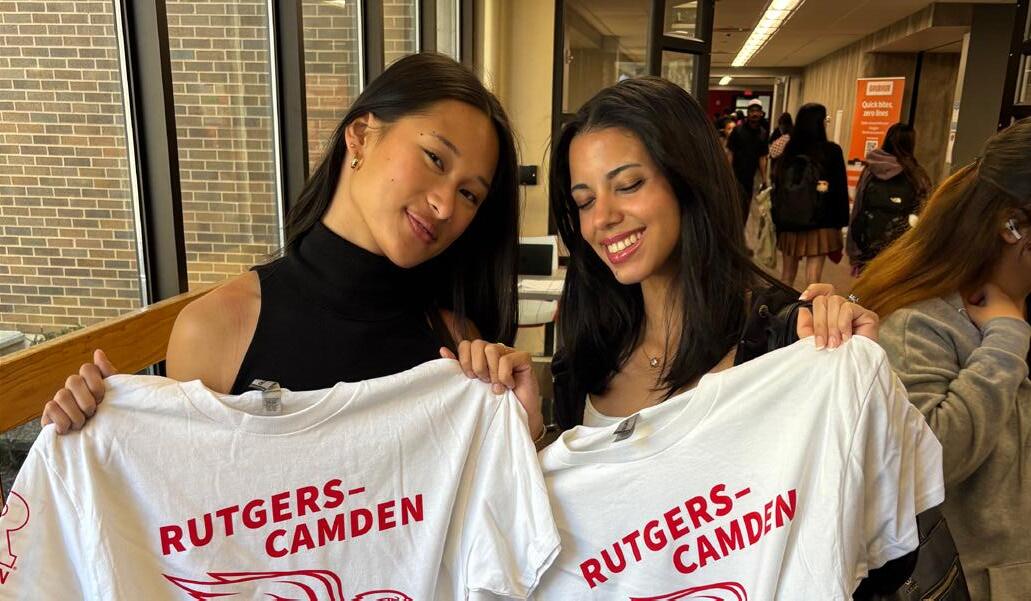
› Engage with key campus resources and receive RU-C gear!
› Learn how to secure internships and other valuable opportunities to support their career goals.
At Rutgers–Camden, over 40% of our student population identifies as transfer students, making events like National Transfer Student Week critically important. There is often a misconception that transferring to a university like Rutgers–Camden is easier than starting as a first-year student because transfer students already have college experience. While that may be true, they have not experienced Rutgers–Camden before—where technology, resources, academic expectations, and rigor can differ significantly from their previous institution. Additionally, many students do not transfer immediately; some take time away to manage life responsibilities, making the return to school and a new institution even more challenging.
To help our students transition to and succeed at Rutgers–Camden, our Transfer Services Office provides:
› Monthly programming focused on building community and learning campus resources.
› Opportunities for engagement and connection with campus services.
› Personalized support: All incoming transfer students are assigned to Senior Program Coordinator Kimberley Bowser, who works oneon-one with students during their first semester to help them set and achieve personal, academic, and career goals.
Our mission is to ensure transfer students feel supported and connected as they make Rutgers–Camden their home. We are honored to support our transfer community and look forward to hosting National Transfer Student Week again in 2026!
The Division of Student Academic Success leaves you with this poem, written by our own Brandon Quiles, Assistant Director of Student Support Services, and disseminated to students along with a duck and their certificate upon completion of the Summer Bridge Experience:
"A Duck on His Journey" – Summer Bridge Poem
He steps onto the pond.
Feathers trembling…
Water wide, an unfamiliar pond awaits him.
Unlike the one he’s previously known.
Around him surrounded by ripples of voices and currents of questions
All floating around…
A flock he has not yet joined…future friendships
He wonders if his wings are strong enough,
If his webbed feet will keep him afloat.
Could he soar the highest of heights
Pondering -
Could a duck ever fly like a raptor?
The journey across the new pond is vast. Lectures drift like sudden winds…
Assignments will swirl like hidden reeds,
Some days the water will feel cold.
Others, the water will feel too deep for comfort.
Imposter syndrome hovering on horizons…
But the duck learns.
He learns the resources of the pond.
The frogs and fish are his coaches, ready to guide him through currents, Mentors.
As his feathers shed and molt, the duck evolves.
Each stroke grows steadier...
Each dive braver...
He remembers the dreams that called him to this very pond,
The scarlet sky he hopes to reach.
The raptor he yearns to fly alongside.
By year’s end, the duck no longer fears the distance.
He knows the pond is not a trap, but a training ground…
A place where paddling becomes soaring,
A duck on his journey
Not alone, but in community,
And all of that uncertainty turns into flight.
TRIO SSS AND STUDENT SUCCESS COACH OFFICE (SSCO)
COLLABORATION: OUR ESSENTIAL APPROACH TO STUDENT
SUCCESS
Student success within higher education remains a fundamentally relational process. Driven by meaningful engagement and cultivated through collaboration, student success supporters help push deeply impactful psychological assets. Reviewing research on student retention and academic outcomes, one consistently sees the validation high-quality interactions (mentorship, student-faculty partnership, and community engagement) bring in influencing student’s development across our four pillars: Identity Consciousness, Sense of Belonging, Self-Efficacy, and Academic Responsibility.
Specific evidence demonstrates that a positive teacher-student relationship significantly increases a student’s sense of belonging in a university community (Wang et al., 2024; Pinto et al., 2024); an increased sense of belonging is a wellknown antidote to attrition. Take away our faculty, where does staff mentorship play a role? Highquality mentorship, especially for students from underrepresented backgrounds (first-generation, low-income, justice-impacted), is positively related to the science of building Identity and Self-Efficacy (Estrada et al., 2018). By providing experiential opportunities and the environment to build interpersonal skills necessary for success in academia, SAS acts as a mechanism in developing a student’s confidence, connections, and capacity for success.
Our ultimate success aim is that each student walking through our doors and alongside our staff and faculty are not simply succeeding in their courses but remaining engaged and persisting year to year. Below are highlighted Fall 2025 programs that focused intentionally on opportunities for students to engage with several and varied RU-C stakeholders in efforts to promote student academic success.
FACULTY PARTNERSHIPS
This section highlights three of our major faculty partnerships from the Fall 2025 semester where meaningful faculty and student partnerships were fostered.
PRE-LAW INFORMATIONAL
This semester, the Student Success Coach Office partnered with Dr. Anthony Grasso from the Political Science Department to host the inaugural Pre-Law Informational. During Coach Heather’s Success Coaching sessions, many students expressed interest in law school but felt unsure about where to begin. To address this need, Coach Heather collaborated with Dr. Grasso, the campus Pre-Law advisor, to design a targeted program to educate, equip, and empower first-year students to pursue law school.
Reflecting on the experience, Dr. Grasso shared, "I was fortunate to have the chance to collaborate with the Student Success Coach Office this semester. The Pre-Law Informational session we held provided an opportunity to give students the clear and comprehensive guidance they need to navigate the law school application process, and I look forward to continuing this important partnership in future semesters."
Students also expressed how valuable the session was. Adrian Machado, a freshman Political Science major, shared, “In the Pre-Law Informational, I learned about the realities of law school, the importance of the LSAT, and how different law school tiers can impact career options. I also learned about the 3+3 program at Rutgers–Camden, which I’m now interested in. Meeting Dr. Grasso was especially important as he is a key resource and mentor who can help guide me through the process.”
LUNCH & LEARN WITH A RESEARCHER
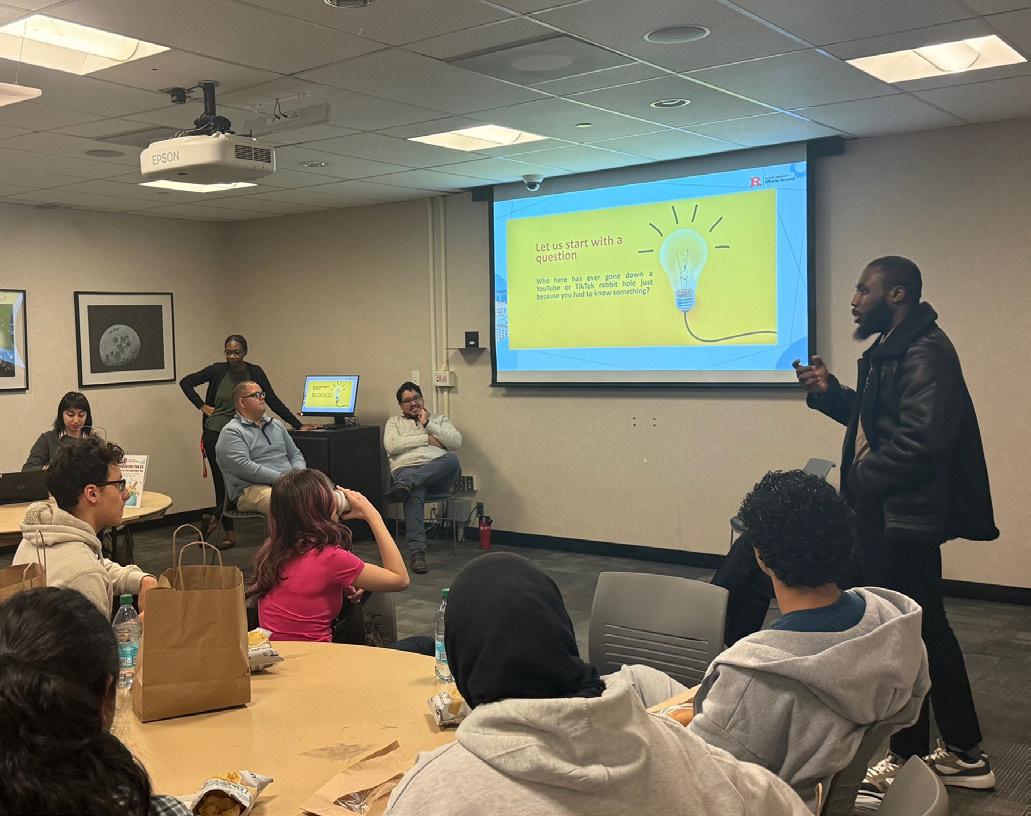
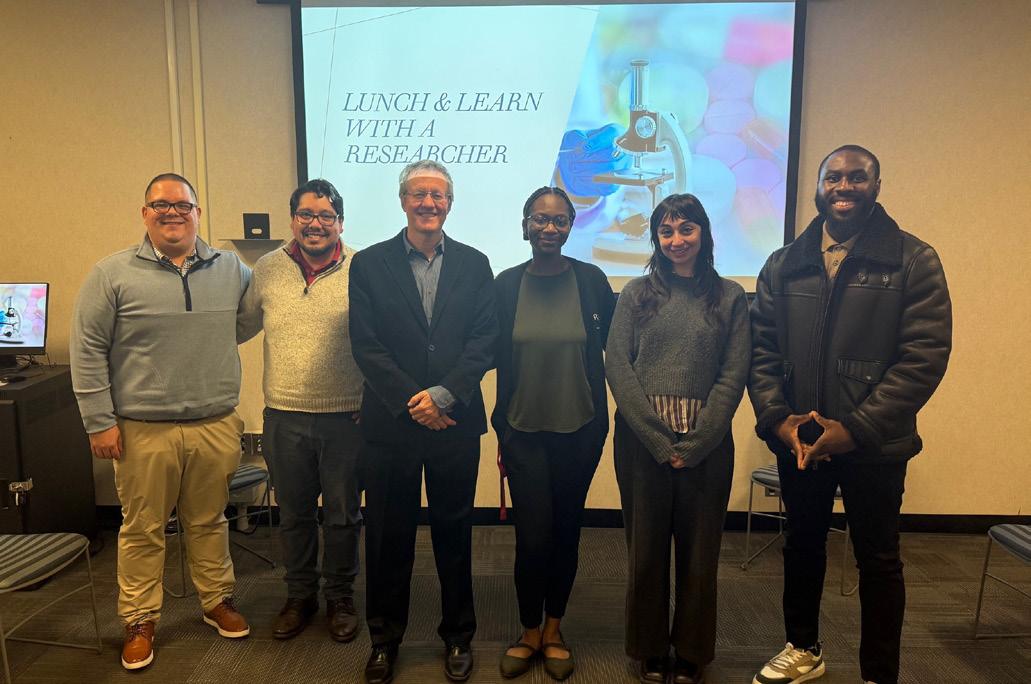
In November, Success Coach Ashanti partnered with Dr. Andrew Abeyta from the Psychology department, Dr. Julio Ángel Alicea from the Sociology, Anthropology, and Criminal Justice department, Dr. Benedetto Piccoli from the Math and Computational And Integrative Biology department, Ojobo Agbo Eje from the Rutgers–Camden Office For Research, and Jordan Staub from the Office Of Scholar Development and Fellowship Advising, who served as panelists for the Lunch & Learn With A Researcher event. Undergraduate students who are interested in research had the opportunity to engage with faculty researchers from varying disciplines and student support offices on campus to gain firsthand knowledge about how to participate in research as well as the funding options available to assist them in reaching this goal, both on campus and externally. Panelists presented their experience with research, how students can get involved with research earlier in their undergraduate years, and how this can benefit their future career goals.
The faculty panelist saw great value in coming together to engage with students around this topic. Dr. Julio Ángel Alicea from the Sociology department shared that "joining my wonderful colleagues from across campus to discuss student research opportunities was a great moment of community building among faculty.” Dr. Alicea further shared that, “our interdisciplinary grouping also worked well to provide students with a holistic view of what research is, how research is funded, and why research matters."
Dr. Benedetto Piccoli from the Math and Computational and Integrative Biology department added that the event was “a great opportunity to connect with students interested in research activities, as well as learning about colleagues and their research.” He highlighted that “the students responded well to the opportunity, and events of this type will facilitate an increase in participation and strengthen the student experience on our campus.”
Post event, Ricky Tang, a currently undecided sophomore and TRiO scholar, expressed how he didn’t need to be an expert to get involved in research and that getting research experience early can “help him explore his interests and prepare for future studies or careers” as he determines what to major in at the institution. “Honestly, I used to think you had to know a lot or be an expert before doing research. I thought it was only for upperclassmen or people who already ‘knew everything’.” But really, research is about asking questions and figuring things out as you go. Even as a first-year student, you can learn a ton and contribute in meaningful ways.
ESCALERAS SUMMIT
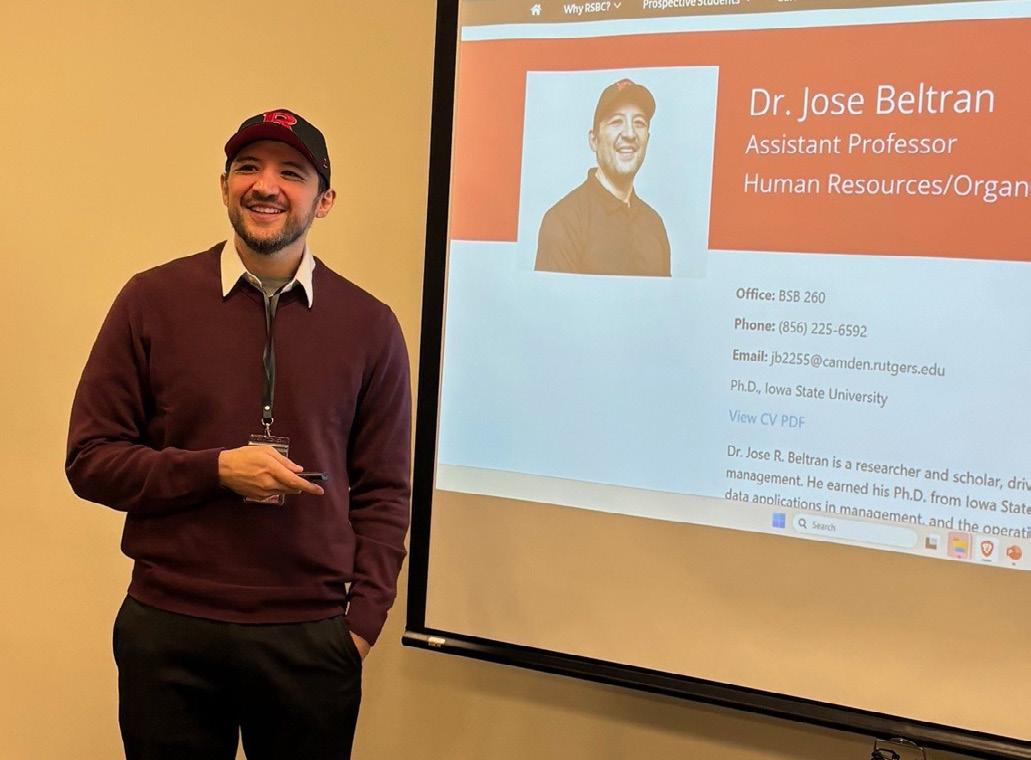
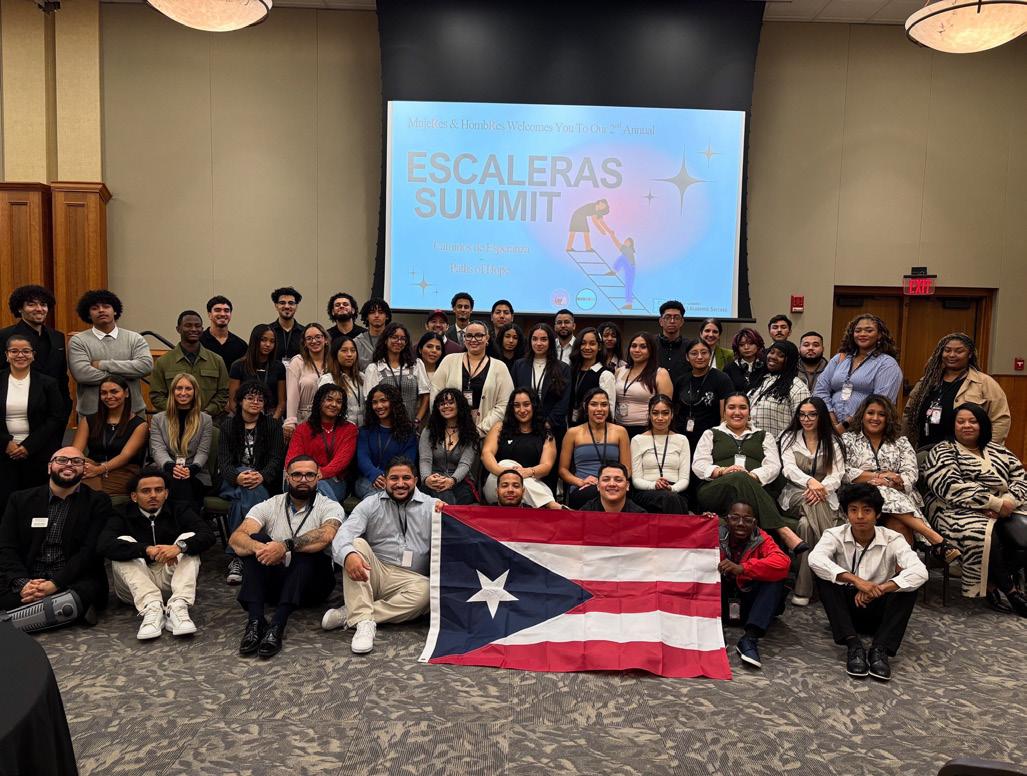
TRiO Student Support Services in partnership with the student organizations HombRes and MujeRes hosted our 2nd annual Escaleras Summit as a part of the institution's broader Hispanic Heritage Month efforts. The summit is an all-day event where undergraduate and local high school students engage with keynotes, panels, and workshops tailored around professional development and networking. Included in the day were workshops held by faculty members Dr. Silvia Perez Cortez, Associate Professor of Spanish and Dr. Jose Beltran, Assistant Professor in Human Resources and Organizational Behavior.
Dr. Beltran discussed the importance of this partnership for student success: “Programs like the Escaleras Summit are transformative because they give many first-generation and underrepresented students opportunities and experiences they would otherwise never encounter. As faculty, we can teach technical skills and critical thinking inside the classroom, but the mentorship, confidence-building, and sense of belonging that emerge from sustained partnerships with initiatives like Escaleras are what truly propel our students toward long-term success. These collaborations are not supplemental; they are essential. When students see role models who look like them, speak their language, and have navigated similar challenges, they stop seeing doctorates, faculty positions, or leadership roles as distant dreams and start treating them as realistic destinations.”
STAFF PARTNERSHIPS
This section highlights three of our major staff partnerships from the Fall 2025 semester where meaningful staff and student partnerships were fostered.
MENTORING AND MOCKTAILS
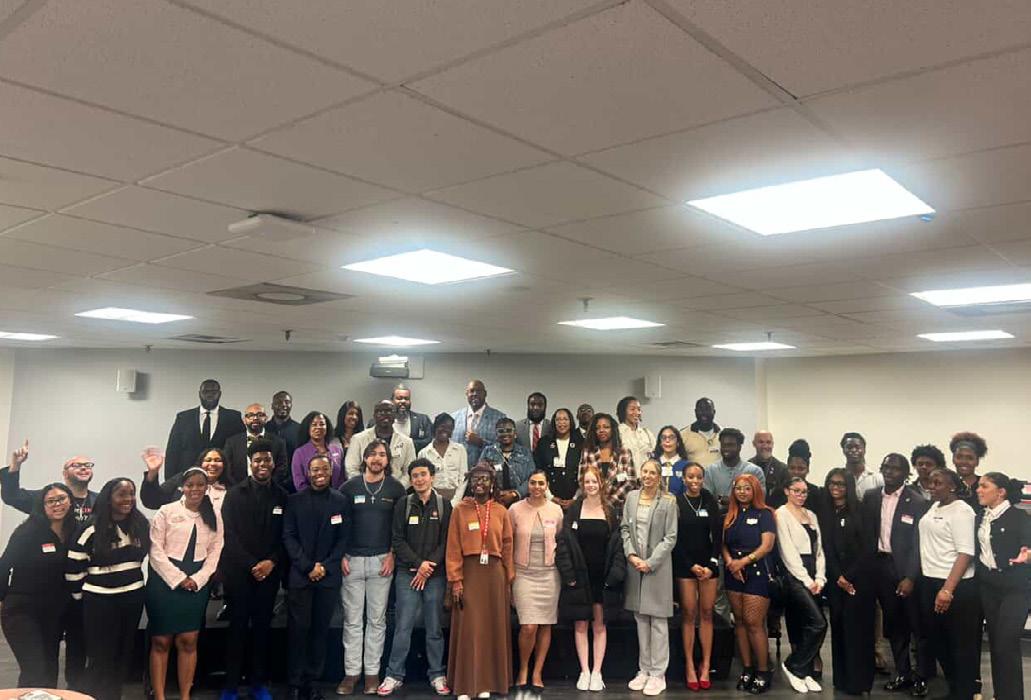
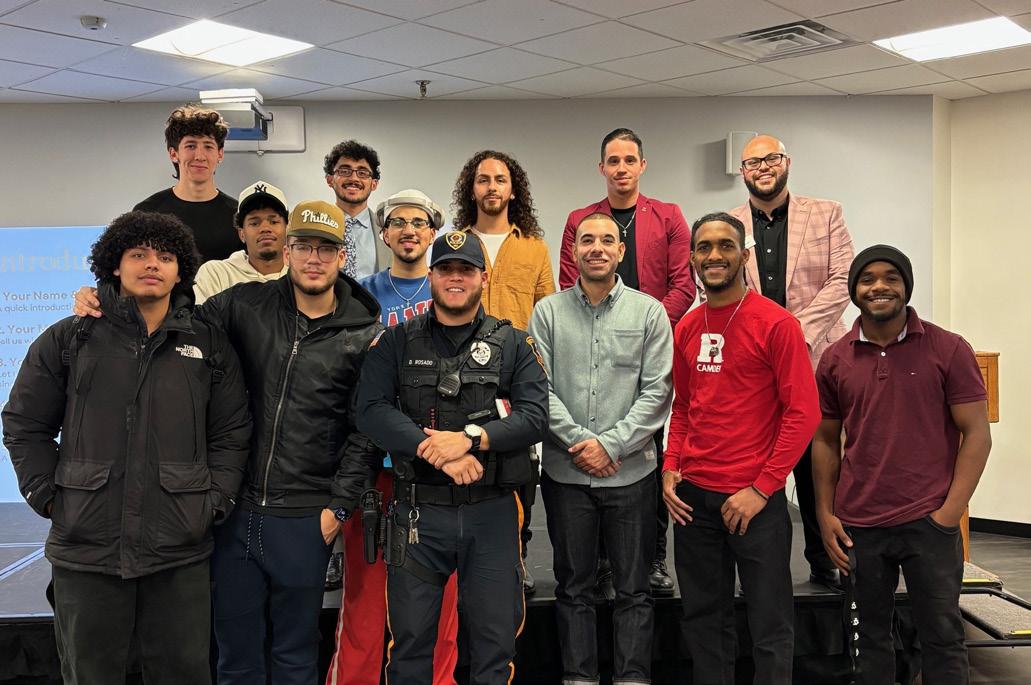
The Division of Student Academic Success is working hard to provide opportunities to engage our male population to help combat the persistence and retention barriers they face at the institution. Mentoring and Mocktails is a program where alumni and staff share their first-generation stories and advice to our current undergraduate students in both a formal panel setting and informal conversation over a meal and mocktails. This partnership provides students with the opportunity for engagement with role models. The staff and alumni present are positive representation for possibility for these young men as our panelists represented individuals who bare many of the identities and lived experiences as our scholars.
TRiO collaborated with the Rutgers University Police Department on this program, and Officer Dalvyn Rosado served as one of the panelists for the event. Officer Rosado shared the importance of having positive representation and being a staff member who encourages students’ ability to prosper: “I came from nothing, so I understand the power of someone believing in you. When staff build relationships with students, we’re not just guiding them, we’re giving them the hope we once needed so that they can see their worth."
Officer Rosado’s remarks directly tied to feedback
received by one of our scholar attendees.
Sophomore Biology major Kevin Pellot shared that Mentoring and Mocktail was an important program for him “because it inspired me and helped restart my ambition.” After a semester of some personal and academic hardships, Kevin has been questioning his place at Rutgers–Camden and if now is the best time to be a student: “The speakers showed me that the right time will never come if you aren’t actively searching for it, asking for help, and believing in yourself.” Kevin expressed gratitude for the time shared with panelists who looked like him and who similarly were born and raised in the City of Camden.
KNOW BEFORE YOU GO
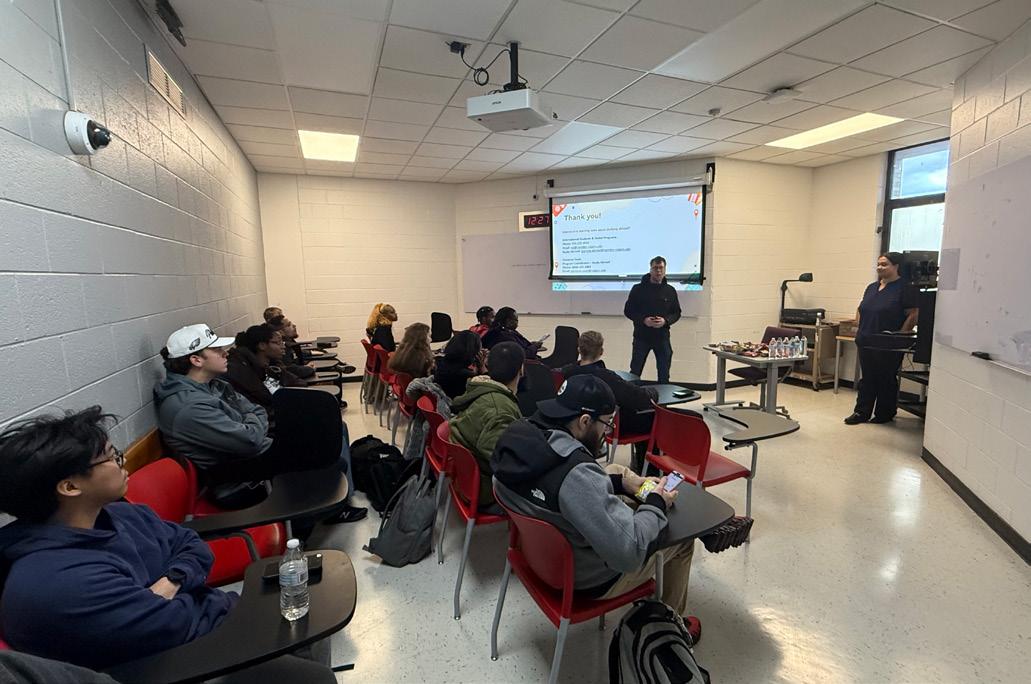
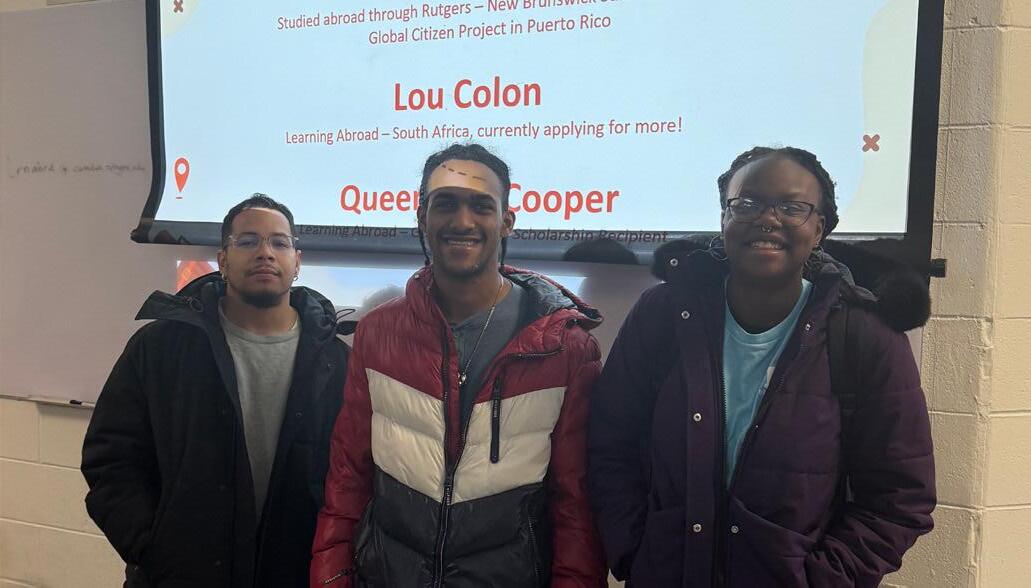
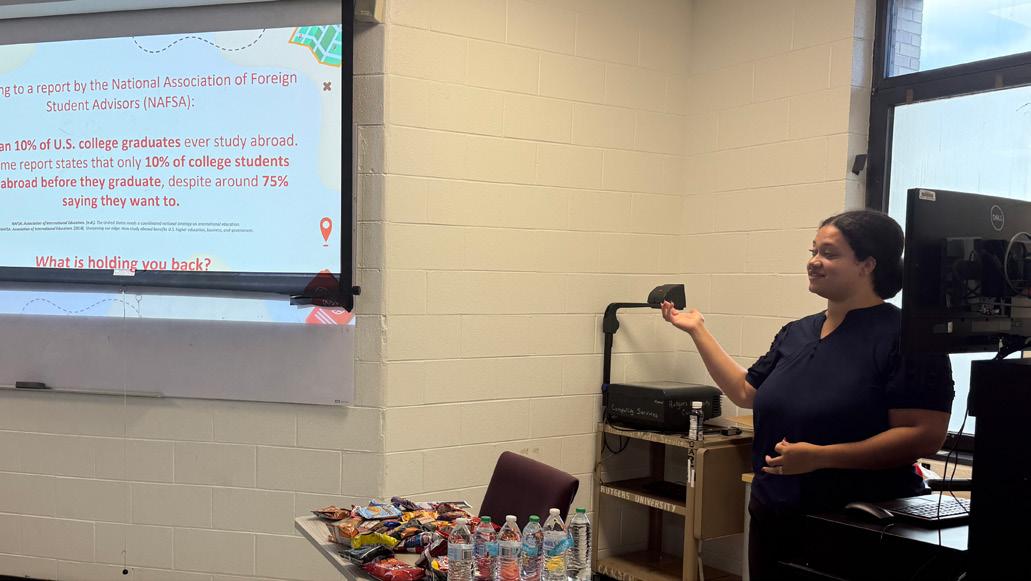
The Know Before You Go program, a collaboration between the Student Success Coach Office and the Office of International Students & Global Programs at Rutgers–Camden, gave students an overview of study abroad opportunities and resources during International Education Week. The event aimed to inspire students to explore global learning and plan meaningful international experiences.
Cameron Cook from the Office of International Students & Global Programs joined the event to speak with students and emphasized the value of the partnership:
“Collaborations between Student Academic Success and the Office of International Students & Global Programs are vital because they introduce students to the plethora of study abroad opportunities available at Rutgers–Camden.
Working in tandem with Student Academic Success helps students realize that the world is at their fingertips.”
Students heard from a panel of peers who had studied abroad in Spain, Puerto Rico, South Africa, and Ghana. Panelists shared practical tips, personal experiences, and encouraged attendees to pursue international opportunities.
The session also highlighted key resources including Rutgers Passport to the World Initiative, the Chancellor’s Experiential Learning Fund (CELF), Learning Abroad Scholarships, and Faculty-led Study Abroad Opportunities.
Overall, Know Before You Go equipped students with the knowledge, resources, and confidence to start their journey toward studying abroad.
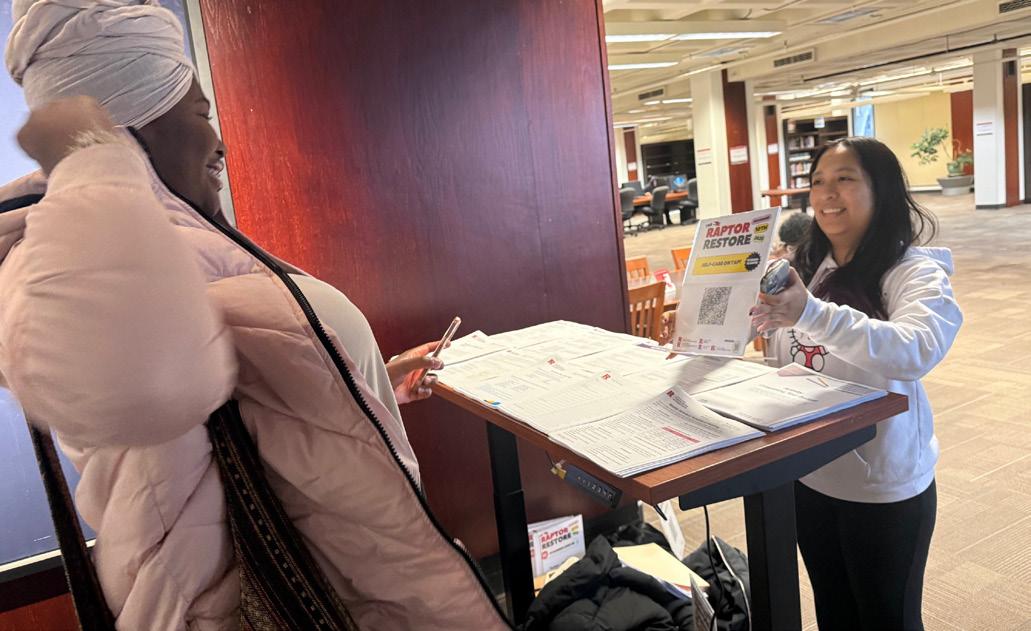
SELF-CARE ON TAP
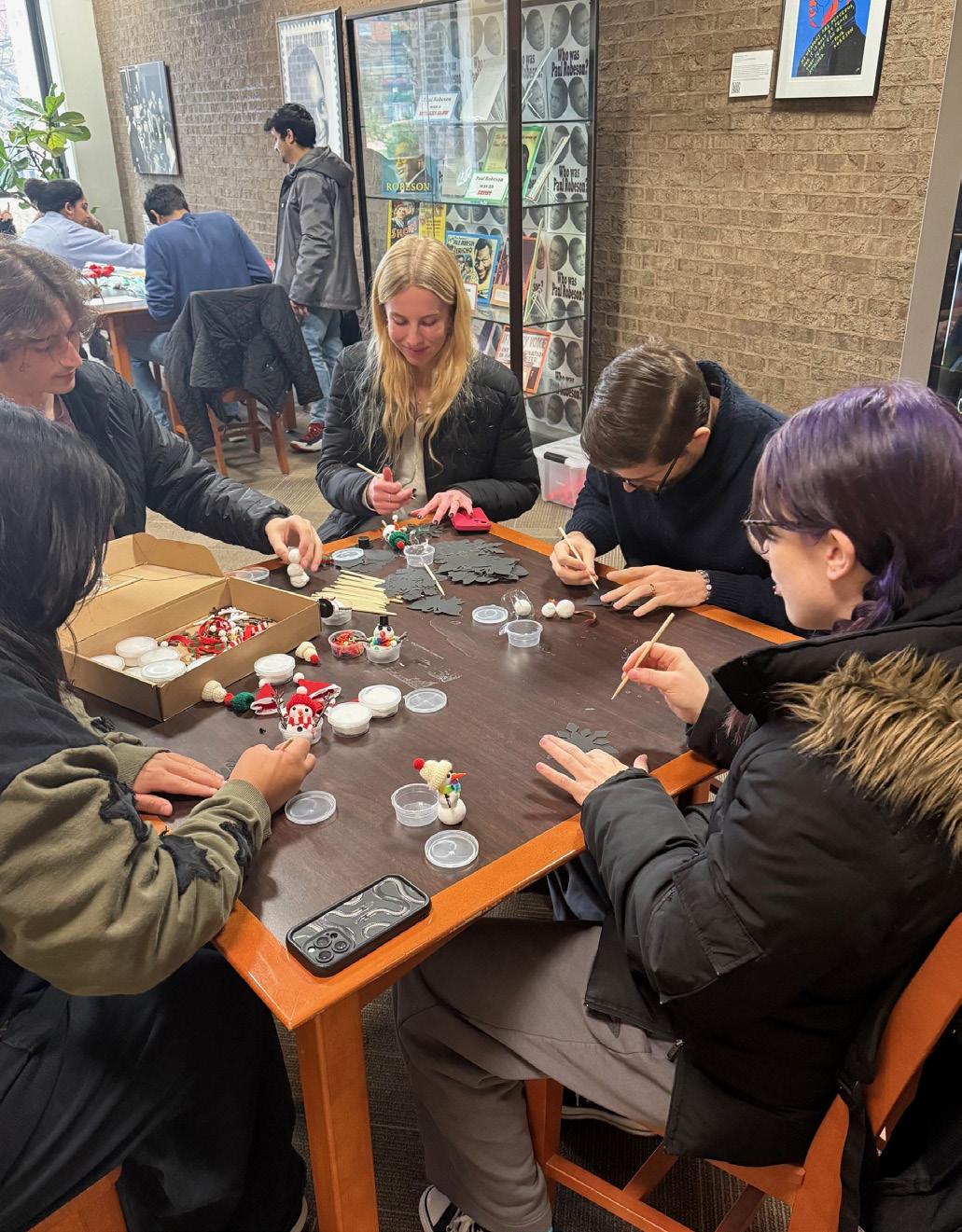
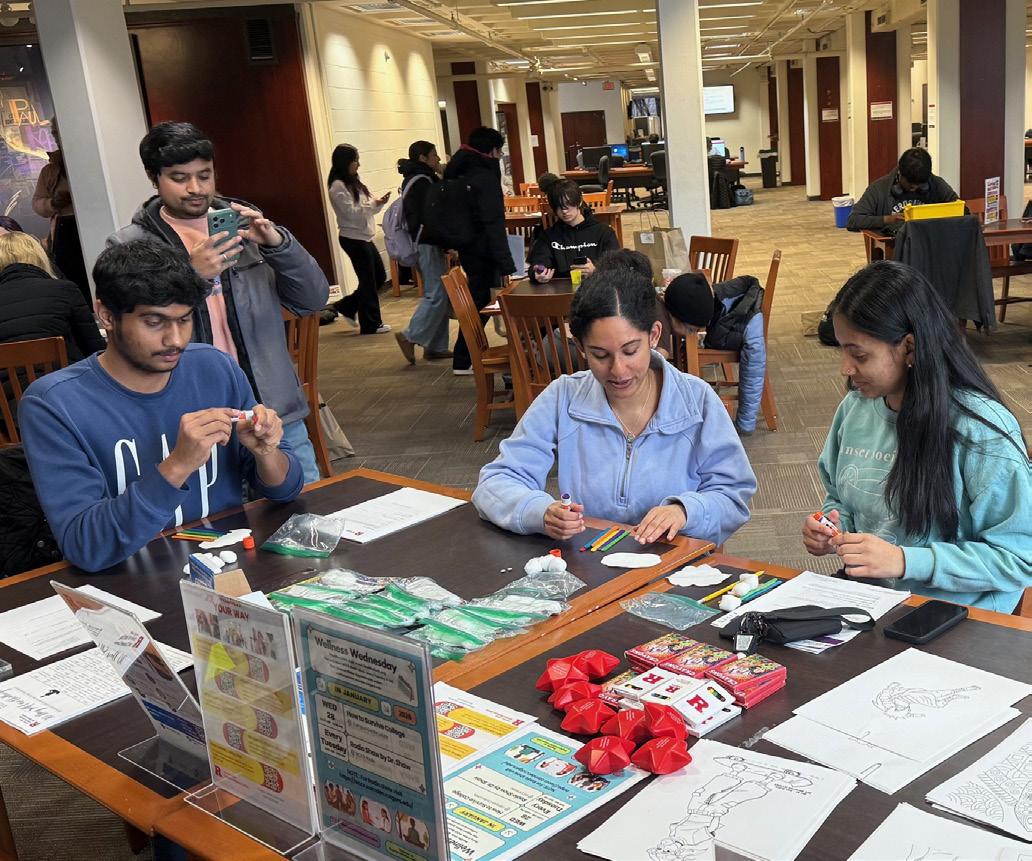
Self-care is important for college student academic success because it directly supports the mental, emotional, and physical capacities students need to learn, persist, and perform. Research and practice in higher education consistently show several key connections between wellness and academic achievement. TRiO Student Support Services and the Success Coach Office partnered with the Wellness Center and Library Services to offer Self-Care on Tap, an event hosted on the final day of classes to provide students with the space and resources for them to prioritize their holistic wellness. The event includes “grab-andgo" resources for students to gain tips on how to manage their time, budget, improve their reading comprehension, minimize test-taking anxiety, research tips, and data informed study techniques. Scholars were also able to engage with academic peer tutors to assist with courses and creative activities to help de-stress before final exams
Ollie McDermott a first-year dual Psychology and Philosophy major expressed appreciation for the “much needed break to recharge before final assignments.” Ollie engaged in several of the crafts activities and grabbed resources from both the Wellness Center and Student Success Coach Office to assist with managing her academic responsibilities and mental well-being.
Student Academic Success and the Paul Robeson Library share a core value in collaboration. Associate University Librarian Regina Koury explains how she views collaboration “as essential to the university’s missions of instruction, research, and service.” Regina further shares that “Partnering with the Student Success Office enables the library
to provide holistic student support by offering academic resources, research assistance, and information literacy skills, while also fostering a sense of belonging.”
Interested in collaborating with the Student Success Coach Office or TRiO on a future program? Email Assistant Director Brandon Quiles at bquiles@camden.rutgers.edu.
EDUCATIONAL OPPORTUNITY FUND (EOF)
HONORING LEGACY: EOF SCHOLARS AT THE 2025 OCTAVIUS V. CATTO LEGACY CONFERENCE 2025, PHILADELPHIA
On November 7, eleven Educational Opportunity Fund (EOF) scholars from Rutgers University–Camden attended the 2025 Octavius Catto Legacy Conference at the Community College of Philadelphia. The annual convening honors the work of Octavius V. Catto, a pioneering educator and civil rights leader whose contributions continue to inform current conversations about justice, access, and equity.
The day opened with a keynote address delivered by The Honorable Reverend Nicolas V. O’Rourke, Philadelphia City Council’s Minority Whip and Pastor (Covenant) of Living Water United Church of Christ. Reverend O’Rourke reflected on his journey at the intersection of faith, community organizing, and public service, urging attendees to embrace their responsibility to advance social justice and build what he described as a more “beloved community.” His message resonated deeply with EOF scholars, grounding the remainder of the conference in purpose, agency, and collective accountability.
Throughout the day, students participated in a series of workshops that expanded their thinking about leadership, purpose, and communitybuilding. One notable session, “5 Reasons Your Students Lack” facilitated by former EOF Counselor Terrence Jones, now Director of Academic Enrichment at Peirce Operations at Lackawanna College, offered administrators practical tools for guiding students who lack clarity in their personal and professional vision. Jones emphasized the importance of intentional communication, strengthsbased advising, and innovative program design. He challenged participants to consider how psychological factors, institutional environments, and relational dynamics shape a student’s ability to discover purpose. His insights affirmed the critical role educators play in nurturing holistic student success.
Another standout workshop, “Creating Sacred Hoods: Cultivating Community for Black, Brown & Minority Students,” was facilitated by CCP student Najiallah Muhammad. This interactive session invited participants to reimagine campus spaces as sanctuaries where culturally marginalized students can experience belonging, healing, and joy. Muhammad highlighted the importance of micro-communities: accountability circles, creative collectives, and culturally grounded support networks in helping students navigate environments not originally built with them in mind. Students and administrators alike left with actionable strategies for cultivating spaces that affirm identity and strengthen emotional and academic well-being.
EOF scholars shared that the conference not only deepened their understanding of Catto’s historical legacy but also elevated their commitment to advocacy, leadership, and community care. As one attendee reflected, “Being in spaces like this reminds us that we are part of a larger story… one where our voices matter, and our leadership is needed.”
EOF’s participation in the Octavius Catto Legacy Conference underscores the program’s commitment to preparing scholars who are not only academically strong but also socially conscious and civically engaged.
OFFICE OF SCHOLAR DEVELOPMENT AND FELLOWSHIP ADVISING (OSDFA)
GILMAN SCHOLARSHIP 2025 RECAP
As the Office of Scholar Development and Fellowship Advising (OSDFA) has established itself over the last several years within Student Academic Success (SAS), the Benjamin A. Gilman Scholarship has been one of our most popular and successful awards. The Gilman Scholarship is attractive to our students for several reasons, most importantly is that it provides up to $5,000 in scholarship support for any undergraduate Pell-recipient to travel on any credited international experience. For Rutgers–Camden students, many use this award to fund a Learning Abroad course or join one of Rutgers -Global’s many opportunities. For a large portion of our applicants, these opportunities represent their first international experiences. The Gilman Scholarship hosts two award cycles each year, one in March and one in October.
In March 2025, we saw record-high numbers for both our number of applicants and those selected for the award. During this cycle, 32 students opened a Gilman application and 17 of those students “hit submit” on their award. These numbers represent tremendous increases from the same time last year, with a 966% increase and a 466% increase in these areas, respectively. These numbers are important to assessing
OSDFA’s impact in meeting our mission to increase awareness of and access to national award opportunities for all Rutgers–Camden students. In late spring, we happily learned that our largest group of awardees in a single-cycle had been selected with 7 new Rutgers–Camden students earning the title of Gilman Scholar. Most of these scholars completed their travels in May and during the summer with one student scheduled to complete her independent research in the UK this winter.
Just as we finished riding the excitement of this first cycle, the time quickly came to support our next group of applicants for October’s deadline. We continue to see strong turn-out from our students, with 29 students beginning their applications and 14 who “hit submit” to officially apply. As we are winding down the Fall semester, we learned that 3 of our applicants have been named Gilman Scholars. These individuals represent the Rutgers–
Camden community well: all are First Gen students and each of the 3 undergraduate colleges are represented by these scholars. Additionally, these students highlight communities like EOF, TRiO, Veteran and Transfer populations. There is also diversity across the international experiences they will engage in, including a RU-C Learning Abroad, a RU Global program, and an external award through CIEE (a reputable leader in international education).
This year, OSDFA staff members served as Gilman Selection Panelists to continue to educate themselves on best practices. Stay tuned for next edition of the Student Success Insider (May 2026) to read about the 1-day workshop, funded by a grant awarded to OSDFA from IIE, that will welcome a national audience of Gilman Advisors to Rutgers–Camden in April 2026.
FULBRIGHT US STUDENT PROGRAM 2026-2027
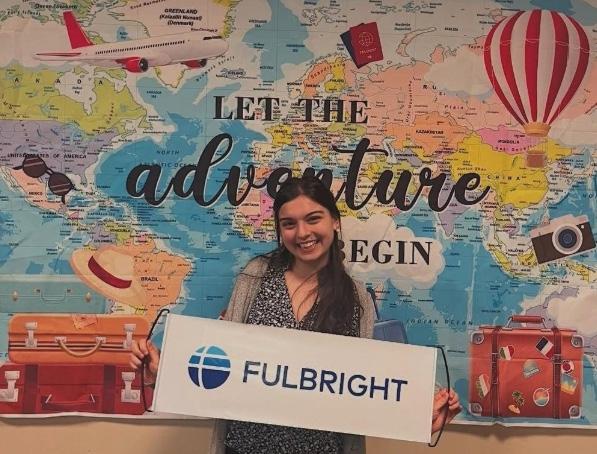
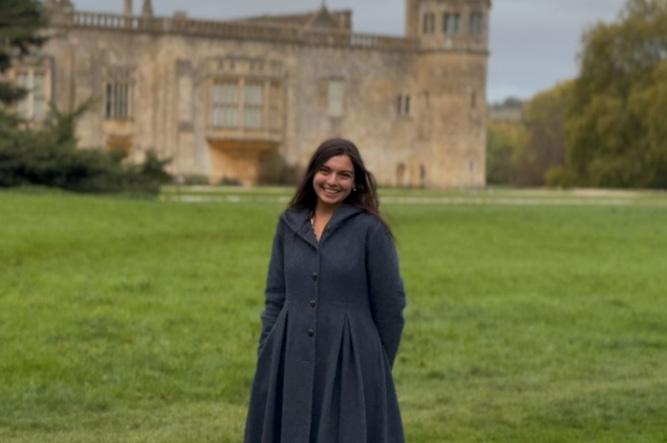
As it does each year, the Fulbright application opened in March 2025 and excitement was high for Rutgers–Camden students and alumni. We celebrated the opening with a Fulbright 101 kick-off event featuring recent applicants, including Sophia Westfall who would soon learn of her selection as a 2025-2026 scholar.
Throughout the spring and summer, OSDFA supported students/alumni as they explored the opportunities available through Fulbright, including graduate school, conducting research and teaching English abroad, identified their countries, and developed their essays.
This year, we met with 35 different students to discuss Fulbright and saw 23 individuals begin
their applications. We also had our largest final applicant group to date with 15 students and alumni who “hit submit” on their applications. This figure represents a 66.67% increase from last year. The group included 4 Seniors, 7 Graduate Students, and 4 Alumni who applied to countries across 4 continents, including Taiwan, South Africa, Egypt, Uruguay, Bahrain and more.
Here are a few happy applicants as they hit submit:
Since its founding in 2017, OSDFA has supported students and alumni in applying for the Fulbright US Student program with consistent growth and successes. In 2020, Patience Williams was named the first Fulbright Scholar in OSDFA’s tenure and the first for Rutgers–Camden in more than 35 years. Since then, we have had scholars consistently selected in 2023, 2024, and 2025. Our most recent scholar, Sophia Westfall (pictured above) is currently earning her Master’s in Creative Writing at the University of Cardiff in Wales. Sophia earned the only Fulbright award available to Cardiff from a competitive pool of highly qualified applicants
Since 2022, OSDFA staff and applicants have been supported by a committee of faculty and staff who provide expert guidance as applicants prepare their final materials for submission. As our applicant pool has grown, so too has our committee and this year we were fortunate to be supported by 10 outstanding faculty and staff members representing broad areas of our campus. We thank these members for their service and support. If you are interested in supporting OSDFA with this award or others, please complete our faculty/staff survey at: rutgers.ca1.qualtrics.com/jfe/form/SV_ b2Q7VR6jvpkQpgO
CENTER FOR LEARNING AND STUDENT SUCCESS (CLASS)
NEW YEAR, NEW GOALS:
INSPIRING ACADEMIC AND PERSONAL GROWTH STORIES
As we look ahead to the new year, four CLASS Peer Tutors share their journeys of growth, perseverance, and ambition. Each reflects on their goals, challenges, and sources of motivation in their own words, offering inspiration and practical advice for their peers.
Setting new goals, whether academic, personal, or a blend of both, is the first step toward success. For these students, the goal-setting process goes far beyond simple resolutions. They have mapped out bold aspirations for the coming year and beyond: from mastering difficult coursework and balancing work-study commitments, to focusing on self-care and developing leadership skills. Their stories reveal not only what they hope to achieve, but also the determination needed to pursue these ambitions in the face of everyday obstacles.
In candid interviews, the tutors discuss real challenges they have encountered, moments of self-doubt, time management struggles, and unexpected setbacks, and share the strategies, resources, and support systems that helped them persevere. Their experiences highlight the importance of community, resilience, and adaptability, while offering practical advice for anyone facing similar hurdles. As we begin this new year, their insights remind us that growth is a journey, and that every student has the potential to succeed with the right support and mindset.
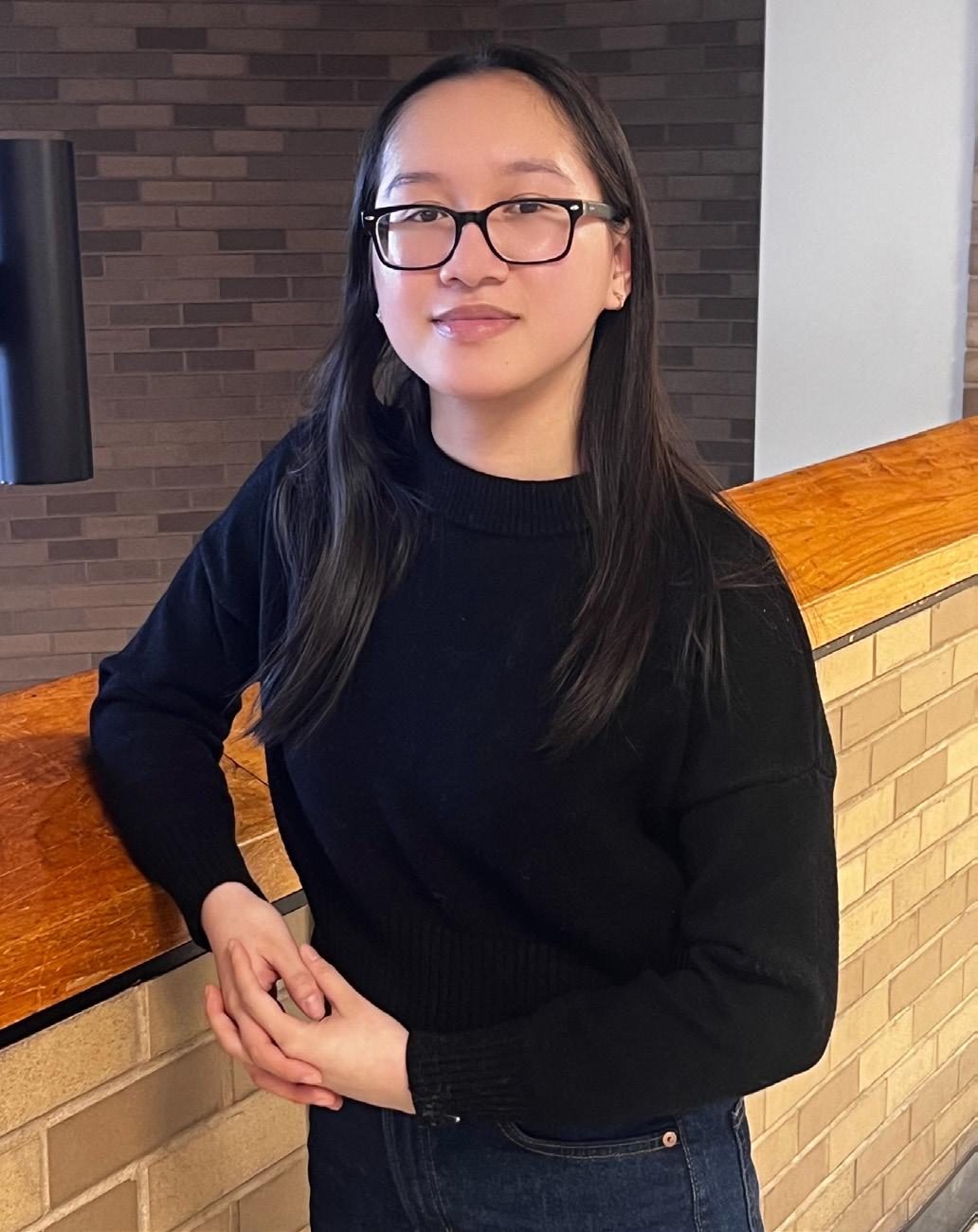
RICARDO BENITOAGUILAR
JUNIOR | BIOLOGY/PRE-MED | CHEMISTRY MINOR | FIRST-GENERATION
WHAT ACADEMIC OR PERSONAL GOALS HAVE YOU SET FOR YOURSELF FOR THE UPCOMING YEAR AND BEYOND?
The academic goals that I’ve set for myself this upcoming year are to pass all my classes, study for the MCAT, and hold more tutoring sessions.
My personal goals are to get active by reading more books or working out, and to spend more time with friends and family. Another personal goal of mine is to improve my time management skills because lately I have not been managing my time well, so I am taking steps to improve it.
DESCRIBE A CHALLENGE YOU’VE FACED ON YOUR JOURNEY TOWARD THESE GOALS, AND HOW YOU WORKED TO OVERCOME IT.
A challenge that I have faced on my journey toward these goals is feeling unmotivated to do my work. Lately, I have felt too lazy to complete assignments for my classes or have not felt pushed to study for
the MCAT. To overcome this struggle, I give myself time for a break to collect my thoughts and ask myself why I feel unmotivated. I remind myself of the journey I went through in my sophomore year— dealing with multiple science classes and being able to keep up and stay on top of my work. This made me realize that I have to lock in if I want to pass my classes, because you get the grade based on the work you put into the class. Even though I go through this challenge, I always work to overcome it by pushing myself and reminding myself of the journey I have gone through in college.
WHAT ADVICE DO YOU HAVE FOR OTHER STUDENTS WHO MAY FACE SIMILAR CHALLENGES?
My advice for students who face similar challenges is to take some time for yourself. Having time for yourself helps you get your thoughts together and avoid burning out. It can affect you mentally, so you want to be prepared for these situations so that you are able to overcome them.
HOW DO YOU STAY MOTIVATED AND FOCUSED WHEN YOU ENCOUNTER SETBACKS OR OBSTACLES?
I have different motivations that I think of when dealing with obstacles. I stay motivated and focused by thinking of the path I chose. My goal is to go to medical school to become a physician. It is not an easy path, but I chose it because I want to help patients in need of assistance. I also think of my parents, who have always encouraged my siblings and me to pursue an education so we can have a better future.
WHAT IS ONE RESOURCE, PERSON, OR STRATEGY THAT HAS HELPED YOU SUCCEED SO FAR?
One resource that has helped me succeed is finding YouTube videos on concepts. Having someone explain the concepts in a different way can clarify the course material. I also use an AI tool that generates practice questions about the topic. Practice assessments help to make sure I understand the material. Another strategy that helps me is going up to the professor and asking questions about the course material. Professors can help clarify the material being taught and reassure your understanding.
WHAT ADDITIONAL SUPPORT OR RESOURCES
COULD THE COLLEGE COMMUNITY PROVIDE TO HELP YOU ACHIEVE YOUR GOALS?
I would like to see additional support provided for premeds. Based on my experience, there are resources available to students, but students must really search for those resources. Making it easier to find details on certain internships or programs available in the summer, as well as volunteering and research opportunities would be helpful. Helping students become aware of this information can encourage more students to apply for different opportunities.
LEYNA NYUGEN
SENIOR | BIOLOGY/PRE-MED | CHEMISTRY MINOR
WHAT ACADEMIC OR PERSONAL GOALS HAVE YOU SET FOR YOURSELF FOR THE UPCOMING YEAR AND BEYOND?
In the upcoming year, I plan to apply to medical school. I also plan to continue expanding my leadership roles, especially through RUC STEM Olympiads and Women in STEM, to foster a more inclusive and engaging STEM community.
DESCRIBE A CHALLENGE YOU’VE FACED ON YOUR JOURNEY TOWARD THESE GOALS, AND HOW YOU WORKED TO OVERCOME IT.
One of the most significant challenges I’ve faced is managing multiple high-level commitments simultaneously. Early on in my journey, I struggled with overcommitment and burnout. What helped me overcome this was creating sustainable systems. I’ve learned to structure my schedules with realistic timelines, set boundaries, and ask for help when necessary.
WHAT ADVICE DO YOU HAVE FOR OTHER STUDENTS WHO MAY FACE SIMILAR CHALLENGES?
My advice to students who have a lot going on is to remember to take time for yourself and be patient with yourself. Growth is not linear, and moments of struggle often teach you the skills that make you stronger in the long term.
HOW DO YOU STAY MOTIVATED AND FOCUSED WHEN YOU ENCOUNTER SETBACKS OR OBSTACLES?
I stay motivated by remembering my commitment to becoming a physician. Whenever I encounter setbacks, I remind myself that challenges are part of the process and not a sign of failure. I ask what the obstacle is teaching me and how I can adjust, rather than letting it derail me.
WHAT IS ONE RESOURCE, PERSON, OR STRATEGY THAT HAS HELPED YOU SUCCEED SO FAR?
One of the most impactful resources for me has been the mentorship I’ve received from peers and faculty on campus. Their support and guidance have given me clarity and confidence at pivotal moments.
WHAT ADDITIONAL SUPPORT OR RESOURCES COULD THE COLLEGE COMMUNITY PROVIDE TO HELP YOU ACHIEVE YOUR GOALS?
I would like to see expanded undergraduate research positions, dedicated workshops on medical school preparation, and increased financial support through scholarships or travel grants. Those resources would be very helpful.
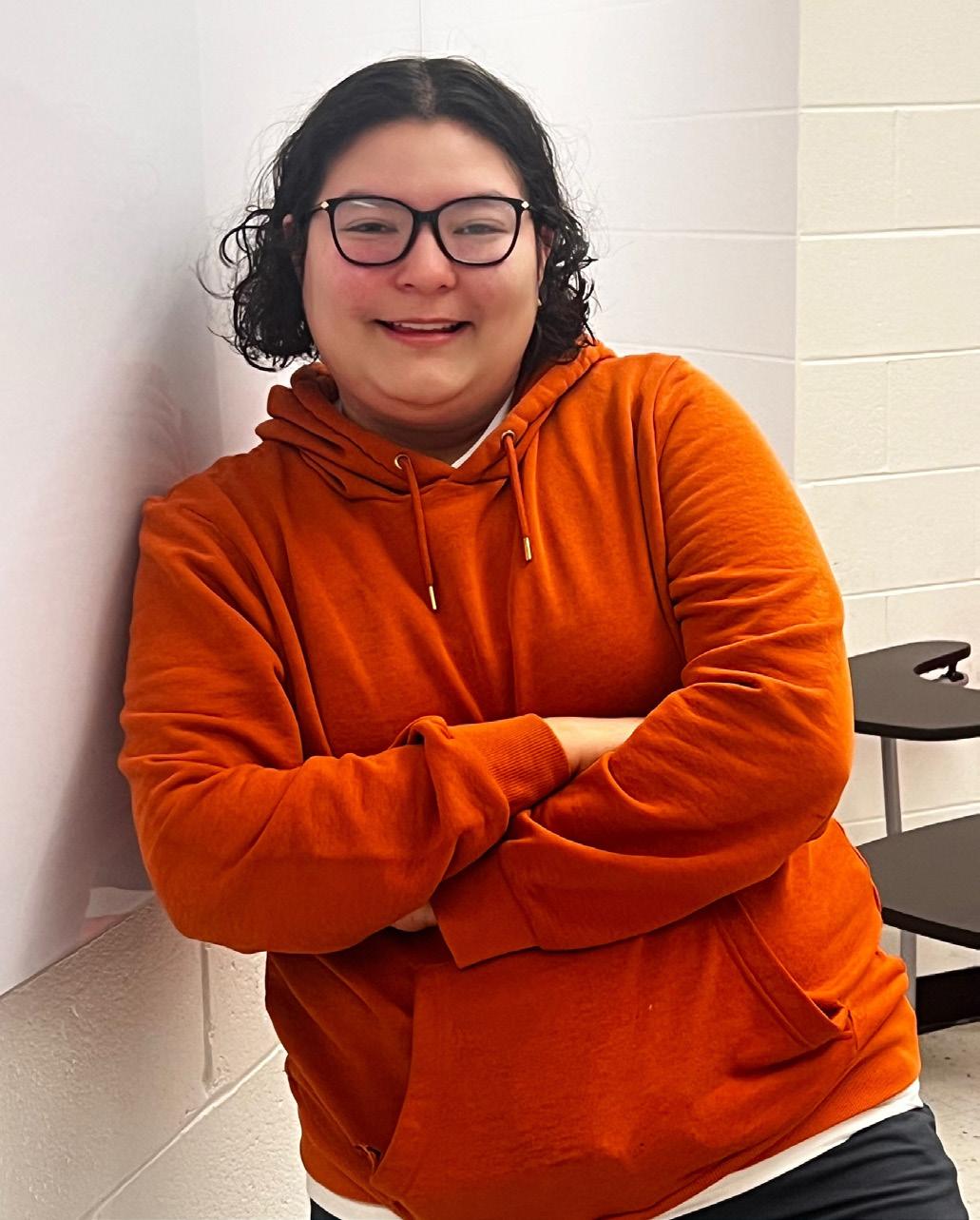
GABBY MILLA
SOPHOMORE | BIOLOGY MAJOR | FILM MINOR WHAT ACADEMIC OR PERSONAL GOALS HAVE YOU SET FOR YOURSELF FOR THE UPCOMING YEAR AND BEYOND?
For the upcoming year and beyond, one of my academic goals is to do my best to succeed in all my upcoming classes. The fall semester was challenging, as I took 19 credits, and most of the classes were very math heavy. I am focused on earning good grades in Chemistry, as it’s always been a class I’ve struggled with in the past.
DESCRIBE A CHALLENGE YOU’VE FACED ON YOUR JOURNEY TOWARD THESE GOALS, AND HOW YOU WORKED TO OVERCOME IT.
The biggest challenge I’ve faced was taking more than 15 credits in one semester. The first two months were the most difficult for me, time management-wise, as I was also adjusting to having a job as a peer tutor. I needed to balance my prep time as a tutor, my academic work, and my personal life. It was very difficult with seven classes, not just in content but also in workload. After October, though, I managed to find a good balance. I
dedicated prep time over the weekends, usually on Saturday and Sunday, for my Monday tutoring sessions, and sometimes on Thursday for my Friday appointments. For my academic and personal life, I study after classes until 9 PM at the latest, then give myself time relax and not think about classes. This balance has worked so I stay prepared but also mentally healthy and productive throughout the semester.
WHAT ADVICE DO YOU HAVE FOR OTHER STUDENTS WHO MAY FACE SIMILAR CHALLENGES?
For other students facing similar challenges, I’d say do what I did and make a concrete time schedule of when to focus on different things. It doesn’t have to be exactly like mine, but it needs to work for you. For example, you might focus on academics from 3-6 PM every day but have Saturdays off. The timing can be different for everyone, but my best advice is to make sure you have some time for yourself to relax every single day.
HOW DO YOU STAY MOTIVATED AND FOCUSED WHEN YOU ENCOUNTER SETBACKS OR OBSTACLES?
My motivation when I encounter setbacks or obstacles is to simply take a break from what I’m doing. If you’re working for several hours, sometimes your brain just gets too fried. What always helps me is to watch an episode of a show or something where I can turn my brain off. After my brain’s relaxed, I usually come back to what I was focusing on, and my brain works a lot better than before. I find this technique really helpful!
WHAT IS ONE RESOURCE, PERSON, OR STRATEGY THAT HAS HELPED YOU SUCCEED SO FAR?
Something that has helped me succeed is taking breaks during my study sessions. After studying a section for a Chemistry exam or finishing Calculus homework, I take a break for 10-15 minutes. It’s similar to what I mentioned before, but it’s genuinely a strategy that’s helped me succeed in my academics.
WHAT ADDITIONAL SUPPORT OR RESOURCES COULD THE COLLEGE COMMUNITY PROVIDE TO HELP YOU ACHIEVE YOUR GOALS?
One way for the college community to help students achieve their goals would be for instructors to post lecture notes and slideshows
on the course Canvas sites. For all my classes last semester, professors shared the slideshows, lecture notes, and additional materials on Canvas, which greatly helped me to study efficiently. An example of this, in my Chemical Principles class, Dr. Kumi provided videos to watch before lectures. This allowed us to come into class already knowing what we’d be learning and then be retaught again to help it stick. If more professors did this, I think it would be extremely helpful!
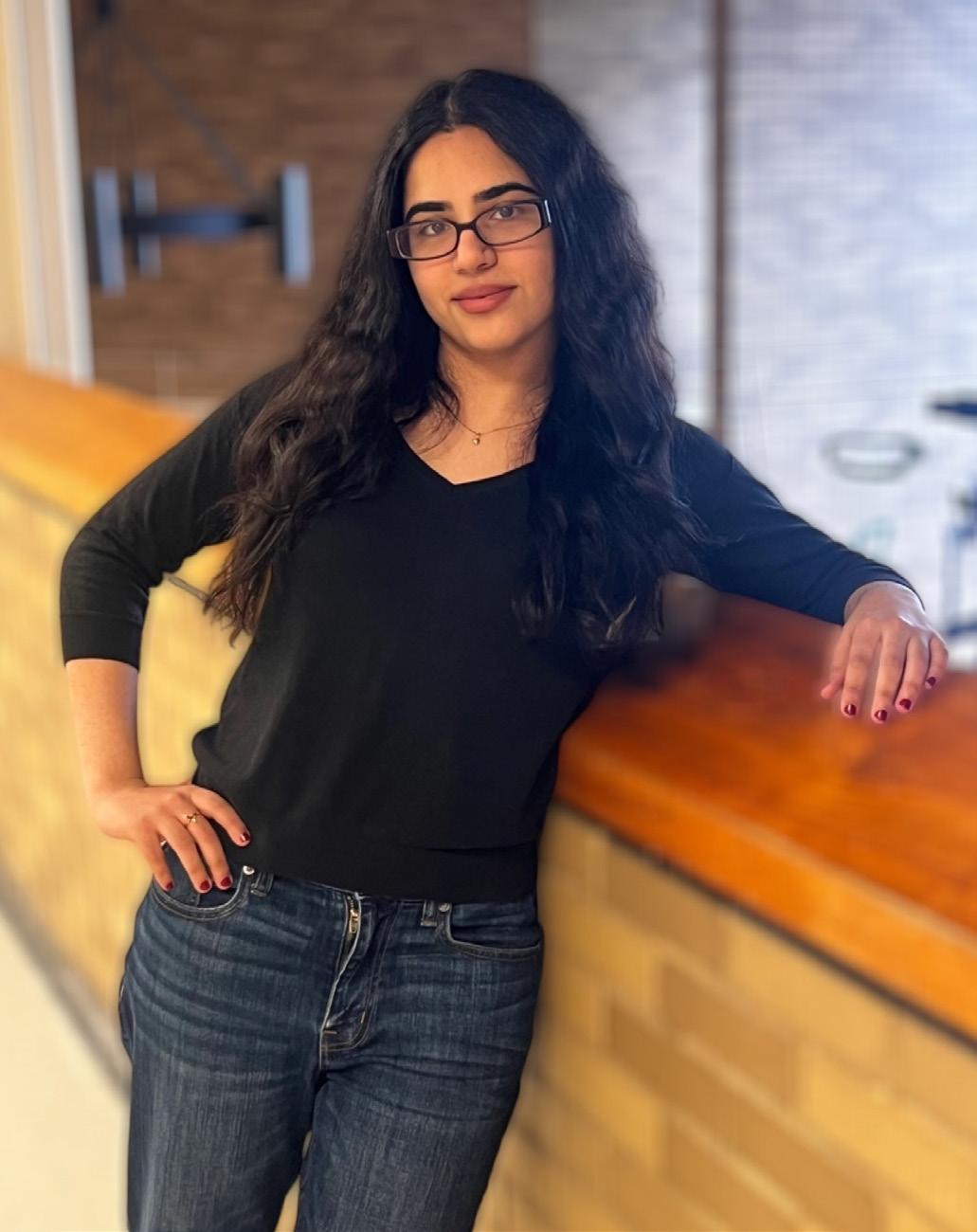
MAHA DURRANI
SENIOR | PSYCHOLOGY MAJOR
WHAT ACADEMIC OR PERSONAL GOALS HAVE YOU SET FOR YOURSELF FOR THE UPCOMING YEAR AND BEYOND?
For the upcoming year, my academic goal is to have discipline in studying and to engage in learning conceptually, in a way that is applicable to real life, so that everything I learn truly has a purpose for me. My personal goal is to listen more and talk less; I want to cultivate the art of listening, because I believe there is so much more I can perceive about the world and learn from other people solely by listening more.
DESCRIBE A CHALLENGE YOU’VE FACED ON YOUR JOURNEY TOWARD THESE GOALS, AND HOW YOU WORKED TO OVERCOME IT.
Studying is not a linear process; there are a lot of distractions, and one can lose themselves. Telling myself to apply everything I learn to the world around me, and questioning how things are the way they are, has helped me overcome the boredom and loss of attraction I feel toward learning. As for wanting to listen more, I am doing my best to focus on the opinions and thoughts of others.
WHAT ADVICE DO YOU HAVE FOR OTHER STUDENTS WHO MAY FACE SIMILAR CHALLENGES?
My biggest advice is to talk to yourself more about your wants, needs, and flaws. It helps a lot because you don’t realize much about yourself until you let yourself go in an isolated space. The honesty of talking to yourself can help you discover many things that your brain couldn’t fathom from just being thoughts. With studying, talk to yourself about why it’s important; encouraging yourself and knowing the purpose drives you to believe you can achieve it.
HOW DO YOU STAY MOTIVATED AND FOCUSED WHEN YOU ENCOUNTER SETBACKS OR OBSTACLES?
The truth is, no one can truly stay at a constant pace of motivation, and I believe that understanding and appreciating setbacks is actually the way to have focus as you bounce back—because you’re aware you’re lacking motivation, and knowing you have setbacks helps you find your way back into momentum. Talking to yourself is a motivating factor; it lets you check in with yourself. Knowing that there’s always the next day to get back on track is important, too, and giving yourself that hope can help you bounce back.
WHAT
IS ONE RESOURCE, PERSON, OR STRATEGY THAT HAS HELPED YOU SUCCEED SO FAR?
Books are great references for me because I have an imaginative mind and enjoy painting the picture of words, which facilitates my learning. A good strategy is to talk to yourself about what you’ve learned, because it gives you the power to demonstrate if you’re sufficient in the knowledge you have.
WHAT ADDITIONAL SUPPORT OR RESOURCES
COULD THE COLLEGE COMMUNITY PROVIDE TO HELP YOU ACHIEVE YOUR GOALS?
I would like to see more research opportunities earlier in undergraduate studies. It allows students to see how things work practically and conceptually, which ties back to my earlier points about improving studying. Memorizing isn’t beneficial, so participating in activities that build on knowledge is a great start, especially through research. Having a mentor can also guide your questions, increase your motivation, and help to provide a clearer path to what you want to do in the future.
LOOKING FORWARD
These stories remind us that success is a journey shaped by both challenges and triumphs. Perseverance, adaptability, and a willingness to seek help are key factors in overcoming obstacles. By sharing their strategies and advocating for enhanced resources, such as better access to research opportunities, more transparent information about internships, and increased faculty support, they offer inspiration and practical guidance. As the new year begins, their stories encourage all students to pursue growth with hope, determination, and the knowledge that support is always within reach.
CAREER ADVANCEMENT CENTER
INTRODUCING THE CAREER ADVANCEMENT CENTER: NEW NAME, NEW LOOK, NEW SUPPORT FOR YOUR SUCCESS
This Fall we were thrilled to share the exciting news with our campus community — the Career Center officially transformed into the Career Advancement Center! This reimagined space and refreshed identity reflect our commitment to aligning with the National Association of Colleges and Employers (NACE) Career Readiness Competencies and strengthening our support for students at every stage of their professional journey. We invited students, staff, faculty and employer partners to our Grand Re-Opening to tour our newly renovated center, connect with our team, and learn more about the expanded programs, tools, and services
designed to partner with our students to explore careers, secure internships, and prepare for life after graduation.
Meet Our New Team and Updated Student Support Model
In early October, we welcomed new team members who bring specialized support to students across all class years and academic pathways. DIVISION HIGHLIGHTS: CONTINUED
To provide more personalized career guidance, the Career Advancement Center has adopted a new caseload model:
› Maggie Land, MA - Career Management Specialist for Sophomores & Seniors
› Iris Mendez, MSW - Career Management Specialist for Sophomores & Seniors
› Cara Fantini, MS - Career Management Specialist for Pre-Professional & Graduate Students
This structure ensures that every student receives career guidance tailored to their stage of development and professional goals. Additionally, in December we had Michael Clark, MA join the team as the new Assistant Director, overseeing daily operations of the Career Advancement Center. Our goal is that the Center becomes your partner as you EXPLORE. PREPARE. SUCCEED.
HOW TO CONNECT WITH US
FOR STUDENTS
You can now schedule career advising appointments directly through Navigate. Whether you need help choosing a major, preparing your resume, exploring internships, or planning for graduate school, our team is here to support you.
FOR FACULTY & STAFF
Interested in a classroom presentation, workshop, or collaboration? You can easily submit a request using our presentation form: forms.gle/tmF3uZotKY1bu9w3A
We welcome you to the new Career Advancement Center and look forward to partnering with you in this exciting new chapter of career support and success at Rutgers University–Camden!
RAPTOR RECOGNITION
FACULTY RECOGNITION
We are pleased to congratulate two outstanding RU-C faculty members with Raptor Recognition! Those recognized have demonstrated effort that contributes to student success!
Check out their thoughts and ideas about student success on the following pages:
NAME:
DR. MARK BRENNAN
Title: Assistant Professor, Management –Operations Management
Academic School: Rutgers–Camden School of Business
1. WHAT DOES A SUCCESSFUL STUDENT LOOK LIKE TO YOU? WHAT ARE THE QUALITIES AND BEHAVIORS STUDENTS CAN DEMONSTRATE THAT PROMOTE THEIR COLLEGE SUCCESS?
A successful student is able to take the opportunity of being at Rutgers–Camden and use it in ways that they find useful for their careers, or fun, or personally reflective. This usually means seeking out mentorship and good opportunities, being okay with getting constructive feedback and occasional setbacks, and planning a bit ahead in school and work and life.
2. IN WHAT WAYS HAVE YOU BEEN EFFECTIVE IN UTILIZING STUDENTS’ UNIQUE AND PERSONAL EXPERIENCES TO HELP SUPPORT THEIR SUCCESS?
I do a bunch of different things on campus, from teaching a core course for the School of Business about business operations to helping advise students on fellowship and scholarship applications. In the class, for instance, I have completely localized the curriculum, anchoring course material in students’ commuting, caregiving, and community contexts. We talk about operations in South Jersey and in the news! Nobody knows about factory pollution better than a person from South Camden; nobody knows about train scheduling better than a person who lives off the River Line, and so on!
3. HOW CAN FACULTY FOSTER A GREAT SENSE OF BELONGING FOR STUDENTS WHO MAY FEEL ISOLATED, DETACHED, OR EXCLUDED FROM ACADEMIC SPACES?
Belonging begins with approachability. Different faculty can emphasize different things to help increase approachability — for example, I happen to be born and raised in central New Jersey; my primary and elementary schools in particular were not the strongest; I couldn’t really read until second grade; my family is still in central New Jersey, so I tend to lead with these facts when I’m sensing a student who is isolated or detached from academic spaces.
4. WHAT OPPORTUNITIES FOR COLLABORATION, EDUCATION, AND TRAINING MAY BE USEFUL FOR FACULTY WHO ARE LOOKING FOR BETTER WAYS TO SUPPORT MARGINALIZED AND UNDERREPRESENTED STUDENTS?
I’d be curious to learn more about what the best practices are for teaching our undergraduate student population, >90% commuter, >30% first generation, >50% minority, and also our graduate student population.
5. WHAT ELSE WOULD YOU LIKE US TO KNOW ABOUT HOW YOU PROMOTE STUDENT SUCCESS?
While not a unique phenomenon to Rutgers–Camden, when a student shows up in my classroom or office hours or scholarship advising meeting or business site visit, my starting assumption is that they have had some great educational experiences to date and also some less helpful ones. I then have a minute or two to signal to them that this encounter will be useful for them — that I’m on their side, that I want to help!
NAME: DR. CARLA GIAUDRONE
Title: Associate Professor of Spanish and Latin American and Latinx Studies Program Director
Academic School: Rutgers–Camden College of Arts and Sciences, World Languages and Cultures
1. WHAT DOES A SUCCESSFUL STUDENT LOOK LIKE TO YOU? WHAT ARE THE QUALITIES AND BEHAVIORS STUDENTS CAN DEMONSTRATE THAT PROMOTE THEIR COLLEGE SUCCESS?
A successful student, to me, is one who is intellectually curious, open to perspectives different from their own, and willing to engage critically and empathetically with complex cultural, historical, and social questions. These students take ownership of their learning by preparing for class, participating thoughtfully in discussions, and connecting course materials to broader contexts and lived experiences. They demonstrate growth rather than perfection—showing persistence, reflection, and a willingness to revise their ideas as they encounter new evidence or viewpoints. Successful students also collaborate respectfully with peers, take advantage of experiential and interdisciplinary opportunities, and approach learning with responsibility, integrity, and a genuine interest in understanding the world beyond themselves. Ultimately, college success comes from a combination of effort, intellectual curiosity, openness to guidance, and the willingness to improve.
2. IN WHAT WAYS HAVE YOU BEEN EFFECTIVE IN UTILIZING STUDENTS’ UNIQUE AND PERSONAL EXPERIENCES TO HELP SUPPORT THEIR SUCCESS?
I have been effective by intentionally designing my courses to help students connect academic content to their own lived experiences, cultural backgrounds, and places they know. In Spanish American Culture and Civilization, for example, I ask students to relate themes such as migration, urbanization, and cultural identity to their own family histories, bilingual experiences, or neighborhoods, which often leads to richer discussions about nation, belonging, and power. In Environmental Stories, students draw connections between literary texts and environmental issues in their own communities—such as access to green spaces, pollution, or extreme heat—through projects like zines, reflective narratives, and communitybased research. I also incorporate open-ended assignments (StoryMaps, creative essays, visual storytelling) that allow students to choose topics that matter to them personally. These projects often culminate in poster presentations and presentations at regional conferences, giving students the opportunity to share their work beyond the classroom. By validating students’ experiences as legitimate sources of knowledge and using them as entry points for analysis, students gain confidence, take intellectual risks, and develop a stronger sense of ownership over their learning.
3. HOW CAN FACULTY FOSTER A GREAT SENSE OF BELONGING FOR STUDENTS WHO MAY FEEL ISOLATED, DETACHED, OR EXCLUDED FROM ACADEMIC SPACES?
Faculty can foster a strong sense of belonging by creating classrooms where students feel recognized, respected, and safe to be themselves. This starts with acknowledging diverse identities and experiences, as well as setting clear expectations for respectful dialogue. Inclusive teaching practices help reduce anxiety and barriers to engagement. It is also important to validate students’ perspectives by connecting course material to multiple cultural, social, and lived experiences, rather than presenting knowledge as neutral or detached. Regular check-ins, timely and encouraging feedback, and openness to questions outside of class can make a big difference for
students who feel isolated. Finally, modeling empathy, curiosity, and intellectual humility shows students that they belong in academic spaces not because they already have all the answers, but because learning is a shared and evolving process.
4. WHAT OPPORTUNITIES FOR COLLABORATION, EDUCATION, AND TRAINING MAY BE USEFUL FOR FACULTY WHO ARE LOOKING FOR BETTER WAYS TO SUPPORT MARGINALIZED AND UNDERREPRESENTED STUDENTS?
Faculty can benefit from ongoing collaboration and training that center inclusive and equity-minded teaching. Based on my experience working closely with community partners through initiatives like Voces de la Comunidad, I have seen how sustained partnerships with trusted community organizations can meaningfully support marginalized and underrepresented students. Collaborating with community health organizations, cultural centers, and advocacy groups allows faculty to design projects that respond to real community needs while offering students experiential learning grounded in lived realities. Training in culturally and linguistically responsive pedagogy is also essential, especially in the context of a growing international student population on our campus. Workshops on bilingual education, community translation, and inclusive communication help faculty recognize linguistic barriers and treat multilingualism as an asset rather than a deficit. Interdisciplinary training that brings together the humanities, social sciences, and sciences further enables instructors to address complex issues such as environmental justice, public health, and migration in ways that resonate with students’ intersecting identities.
5. WHAT ELSE WOULD YOU LIKE US TO KNOW ABOUT HOW YOU PROMOTE STUDENT SUCCESS?
To summarize, I promote student success by designing courses that are structured but flexible, with clear expectations, multiple pathways for participation, and opportunities for revision and feedback. I value process over perfection, especially for students who are still developing confidence, language skills, or academic voice. I intentionally connect course content to students’ lived experiences, cultural backgrounds, and community knowledge, which helps validate
what they already bring into the classroom. I also emphasize mentorship, checking in with students individually, guiding them toward campus resources, and encouraging them to see themselves as capable contributors to academic and public conversations. Finally, I also encourage students to expand their global perspectives by supporting them in pursuing opportunities such as study and learning abroad, helping them see their learning as part of a broader, global experience. Above all, I try to create a classroom culture where curiosity, respect, and intellectual risk-taking are encouraged, and where students understand that growth is the core measure of success.
SAS STUDENT WORKERS
The SAS student workers come to us from all kinds of backgrounds and experiences, and they have several varied experiences with us during their time RU-C.
Check out the profiles of some of the SAS student workers on the following pages:
NAME: MANIYAH BOYKINS
ACADEMIC YEAR & SCHOOL: Freshman, Camden College of Arts and Sciences
ACADEMIC MAJOR: Biology
WHAT ARE YOUR HOBBIES AND INTERESTS? : I like to listen to music and dance.
WHAT’S BEST ABOUT YOUR STUDENT WORKER JOB? : I enjoy getting to know other students.
IN WHAT CAMPUS ACTIVITIES/CLUBS ARE YOU INVOLVED? : I am involved in TRiO.
WHAT KIND OF STUDENT WORKER ARE YOU? : I am a Peer Navigator.
WHERE WERE YOU BORN?: I was born in Memphis, Tennessee.
WHAT SKILLS HAVE YOU DEVELOPED BECAUSE OF YOUR STUDENT WORKER JOB? : I just started this week, but I look forward to getting to know first generation students in my role as a Peer Navigator.
HOW HAVE YOU CHANGED BECAUSE OF BEING A STUDENT WORKER? : I look forward to becoming more outgoing.
WHAT IMPACT HAS BEING A STUDENT WORKER HAD ON YOUR COLLEGE EXPERIENCE? : As a new student worker, I look forward to strengthening my time management skills and bringing more structure into my life.
NAME: KAMARA DORSEY
ACADEMIC YEAR & SCHOOL: Freshman, Rutgers–Camden School of Business
ACADEMIC MAJOR: Marketing
WHAT ARE YOUR HOBBIES AND INTERESTS?: My hobbies are cooking, singing, and traveling.
WHAT’S BEST ABOUT YOUR STUDENT WORKER JOB?: I would say the community impact and social interaction of the position interests me. By being able to interact with peers, I will be able to leave a lasting impression of myself and Rutgers.
WHAT KIND OF STUDENT WORKER ARE YOU?: I am a Peer Navigator.
WHERE WERE YOU BORN?: I was born in Baltimore, Maryland.
WHAT SKILLS HAVE YOU DEVELOPED BECAUSE OF YOUR STUDENT WORKER JOB?: One skill I'm hoping to gain is adaptability. I want to make sure that I'm well rounded in my personal and professional life.
HOW HAVE YOU CHANGED BECAUSE OF BEING A STUDENT WORKER? : As a student worker, I hope to engage with the Rutgers community more. I want to network with my peers and engage in multiple events a semester. This opportunity will allow me to directly impact my community.
WHAT IMPACT HAS BEING A STUDENT WORKER HAD ON YOUR COLLEGE EXPERIENCE?: I think being a student worker will impact my time management skills. I would like to say that I have a regimen but having this job while managing school will ensure that my time management skills are consistent.
WHAT IS SOMETHING YOU HAVE BECOME GOOD AT DOING AFTER BECOMING A STUDENT WORKER?: I'm looking forward to improving my collaboration skills. Usually, I tend to work alone but this job requires a lot of teamwork and critical thinking. So, I want to improve in that area because being able to work with others will help me professionally.
NAME: ADRIAN MACHADO
ACADEMIC YEAR & SCHOOL: Freshman, Camden College of Arts and Sciences
ACADEMIC MAJOR: Political Science
WHAT ARE YOUR HOBBIES AND INTERESTS?: My hobbies include sports and music.
WHAT’S BEST ABOUT YOUR STUDENT WORKER JOB?: I enjoy my relationship with my employer.
IN WHAT CAMPUS ACTIVITIES/CLUBS ARE YOU INVOLVED?: I am involved in HombRes.
WHAT KIND OF STUDENT WORKER ARE YOU?: I am a Success Ambassador.
WHERE WERE YOU BORN?: I was born in East Brunswick, New Jersey.
WHAT SKILLS HAVE YOU DEVELOPED BECAUSE OF YOUR STUDENT WORKER JOB? : I have developed my conversational skills.
WHAT IS SOMETHING YOU HAVE BECOME GOOD AT DOING AFTER BECOMING A STUDENT WORKER? : I've become better at speaking to people.
NAME: DIAMANI WAUGH
Academic Year & School: Junior, Camden College of Arts and Sciences
Academic Major: Health Sciences and Psychology
What are your hobbies and interests?: My hobbies are music, cheer, and art.
WHAT’S BEST ABOUT YOUR STUDENT WORKER JOB? I enjoy meeting new people and holding meaningful conversations in this job.
IN WHAT CAMPUS ACTIVITIES/CLUBS ARE YOU INVOLVED? I am a cheerleader for Rutgers.
WHAT KIND OF STUDENT WORKER ARE YOU? I am a Front Desk Associate (Center for Learning and Student Success - CLASS).
WHERE WERE YOU BORN? I was born in Lindenwold, New Jersey.
WHAT SKILLS HAVE YOU DEVELOPED BECAUSE OF YOUR STUDENT WORKER JOB? One skill I've developed is problem-solving.
WHAT IS A CHALLENGE YOU FACE AS A STUDENT WORKER? One challenge I face is being productive in my free time.
HOW HAVE YOU CHANGED BECAUSE OF BEING A STUDENT WORKER? I’ve found more peace at work, which makes me calmer and more focused.
WHAT IMPACT HAS BEING A STUDENT WORKER HAD ON YOUR COLLEGE EXPERIENCE? My role has kept me social.
WHAT IS SOMETHING YOU HAVE BECOME GOOD AT DOING AFTER BECOMING A STUDENT WORKER? I'm better at staying on task as a result of this job
SAS ALUMNI SPOTLIGHT
We love to recognize our outstanding alumni who are doing amazing things in their careers, making accomplishments in society, and still making positive contributions to the campus community. In this SSI, we are excited to spotlight Nathan Antwi!
FULL NAME: NATHAN ANTWI
Year of Graduation: 2023
Major: Computer Science
WHY RUTGERS–CAMDEN? Aesop is accredited with saying “good things come in small packages.” Rutgers–Camden provided me an opportunity to finish what I started. During the COVID-19 shutdown, I wanted a university that would accept as many credits as possible. Rutgers–Camden allowed me to complete my degree and provided a clear pathway to employment. From interning in the Office of Information Technology to eating at the Late Night Asian Food Market, I immersed myself in vibrant experiences to maximize my tenure and fully engage with the campus community.
SAS CONNECTION: TRiO
CURRENT JOB: Infrastructure Engineer II at Lockheed Martin
MAJOR LIFE ACCOMPLISHMENTS: SME for the Infrastructure Team in My Department
Took my first work travel trip
5 Years of Volunteering at Chosen300 serving host meals for our guests.
ANYTHING SPECIAL / UNIQUE TO SHARE: I take hiphop and street dance classes, which allow me to tap into the creative side of my brain and maintain balance outside of highly technical work. This creative outlet helps me approach problem-solving with a more flexible and innovative mindset.
EVENT YOU SUPPORTED: PinkedIn Networking Event
WHY SUPPORT RU–CAMDEN STUDENTS IN THIS MANNER: Giving back is vital to me. I’ve always believed that access, mentorship, and visibility can significantly shape a student’s trajectory. As a first-generation professional navigating both technical and institutional spaces, I understand how impactful it is to see someone who looks like you succeed in environments that can feel intimidating or opaque. By supporting RU–Camden students through events like the PinkedIn Networking Event, I am able to give back in a tangible way. The game is meant to be shared. Through demystifying career pathways in technology and engineering, I aim to provide actionable advice to students who may still be unsure of what they want to do with their careers.
STAY TUNED
There is always something interesting happening on campus. Keep up to date with us!
Come spend some time in the newly updated Rutgers–Camden Career Advancement Center in the Lower Level of the Campus Center and in the newly updated Center for Learning and Student Success (CLASS) at Armitage Hall, Suite 231.
The Student Success Coach Office (SSCO) Discovery Major / Minor Fair will be held Monday, March 31st in the MPR from 12:45 to 1:45 pm.
The Bridge: The Bridge is Rutgers–Camden’s Multicultural Student Center—an inclusive space that fosters student success through identity-affirming programs, holistic support, and community engagement. Students can connect with resources, attend events, and reserve the space for cultural, academic, or leadership-based initiatives aligned with our mission. The Grand Opening will be Wednesday, March 4, 11:20 am to 12:20 pm, Campus Center - Lower Level Pit. There will be music, giveaways, food, and refreshments. instagram.com/ruc.thebridge
The Spring 2026 Career Fair will be held Tuesday, March 24th in the MPR from 12:00 to 3:00 pm.
Frequently check out the Academic Calendar for important dates: scheduling.rutgers.edu/academic-calendar