
AUTHOR ⟶ JONATHAN YOUD EDITOR ⟶ ADAM JOHNSON
AUTHOR ⟶ JONATHAN YOUD EDITOR ⟶ ADAM JOHNSON
Introduction Definition













ADAM JOHNSON
We here at THE HARBINGER ™ see this issue as something of a "FIRST THINGS FIRST" kind of moment. Given our explicit commitment to nurturing critical discourse about the world, it felt wise to kick things off with cosmological matters—because, really, how much time do you tend to give yourself to think about cosmology? How often do you reflect on your most basic assumptions about the world? How certain are you in understanding where those assumtions actually come from? What the f*ck even is cosmology?
In the shadow of the Capitalocene—an epoch defined by ecological collapse and extractive worldviews—this essay burns like a manifesto. Its language brims with the incantatory, its ideas laced with mysticism and reverence. It is a challenge, a provocation, and a love letter to the cosmos all at once. Beneath the seemingly academic tone, there is a cult-like energy, a seductive rhythm of words that pulls the reader into a worldview where science dances with myth and design becomes an act of devotion.
The essay is unapologetically radical in its demand for a new cosmology. It insists that the mechanistic frameworks of the Enlightenment, which rendered the world inert and commodifiable, are no longer tenable. These frameworks—the bedrock of capitalist exploitation—have failed us, leading humanity to the brink of ecological annihilation. Instead, the author calls for a synthesis of scientific rigor and poetic imagination, of awe and analysis, to reimagine humanity’s place in the web of life.
Central to the essay is the invocation of Gaia— not just as a scientific hypothesis but as a mythic figure, a being of agency and will. Through the lens of James Lovelock’s Gaia Hypothesis, the Earth emerges as a selfregulating organism, its biotic and abiotic components interwoven in a delicate, dynamic balance. The author leans into the mystical language of Gaia, portraying her not as an inert system but as a subject with whom humanity must negotiate the terms of existence.
This portrayal of Gaia is reminiscent of ancient cosmologies that imbued the natural world with agency and spirit. By reviving these narratives, the essay challenges the disenchantment wrought by modernity. It calls for a cosmology that acknowledges the Earth’s aliveness, its capacity for “bad humor, emotions, reactions, and even revenge,” as Bruno Latour describes. In doing so, it invites designers to see their work as a form of negotiation with Gaia, a way of participating in the grand symphony of life.
The essay’s call for reverence and reciprocity is particularly relevant to design practice. It frames design not as a tool for domination but as a ritualistic act, a way of honoring the interconnectedness of life. This perspective subverts the traditional role of the designer as a creator who imposes order on chaos. Instead, it positions the designer as a collaborator, a weaver of threads in the cosmic tapestry.
In this context, materials become sacred. Plastic is no longer just a product of petrochemical processes; it is a symbol of the Capitalocene, a material steeped in the stories of extraction and exploitation. Wood carries the memory of forests, while stone whispers of mountains shaped over millennia. The essay urges designers to listen to these materials, to let them sing their truths, and to incorporate their narratives into the design process.
The essay’s most radical proposition is its insistence on the power of myth. It argues that storytelling is not just a human activity but a cosmological necessity. Myths, the essay contends, are the narratives that ground us, the stories that help us make sense of our place in the cosmos. In the Capitalocene, where the dominant myths are those of extraction and exploitation, we need new stories to guide us.
Here, the essay draws on the work of thinkers like Donna Haraway and Glenn A. Albrecht, who have proposed alternative narratives for the future. Haraway’s Chthulucene and Albrecht’s Symbiocene are presented as speculative epochs that embody relationality, mutual flourishing, and interdependence. These narratives are not just academic exercises; they are calls to action, invitations to imagine and create worlds where life’s interconnectedness is celebrated.
Design, in this framework, becomes a medium for myth-making. A chair, a building, a piece of graphic art—each can tell a story, evoke awe, and inspire care. The essay challenges designers to move beyond aesthetics and functionality, to create works that resonate on a deeper, mythic level. It is a call to infuse the everyday with enchantment, to use design as a way of reawakening the sense of wonder that modernity has dulled.
Throughout the essay, there is a recurring theme of the more-thanhuman. The author draws heavily on discoveries in symbiotic biology and plant intelligence, which challenge the anthropocentric hierarchies that have long defined Western thought. These findings reveal life as fundamentally relational, a network of interdependencies where no being exists in isolation.
The essay’s language here takes on a cult-like quality, as if initiating the reader into a secret order of the more-than-human. It speaks of plants as sophisticated organisms capable of communication, decision-making, and learning. It portrays microbes as the architects of life, their symbiotic relationships shaping the very fabric of existence. This perspective is both humbling and exhilarating, reminding us that we are not the masters of the Earth but participants in a vast, interconnected web.
For designers, this perspective offers a profound shift in how we approach our work. It challenges us to design not for humans alone but for the entire web of life. It urges us to consider the ecological impact of our choices, to create works that foster interdependence rather than exploitation. It is an invitation to see design as a form of ecological care, a way of giving back to the systems that sustain us.
Perhaps the most subversive aspect of this essay is its call for re-enchantment. In an age where the world is increasingly defined by metrics, algorithms, and mechanistic frameworks, enchantment is, and should be, a radical act. The essay argues that awe, reverence, and wonder are not just emotional responses but political tools, ways of resisting the disenchantment that underpins the Capitalocene. This call for re-enchantment is not a retreat into fantasy but a demand for a deeper engagement with reality. It is about seeing the world not as a collection of resources but as a living, breathing entity. It is about cultivating a sense of sacredness in everyday life, finding magic in the mundane, and using design to inspire care and connection.
Ultimately, this essay is an edict for cosmic design. It is a call to arms for designers to rethink their role in the world, to see themselves not as creators but as collaborators, storytellers, and caretakers. It challenges us to design with awe, to honor the web of life, and to infuse our work with the power of myth.
In the face of ecological collapse, this essay offers a vision of hope. It reminds us that we have the power to reimagine our relationship with the Earth, to create works that inspire reverence and reciprocity, and to weave new myths that guide us toward a more harmonious future. It is a spell cast in the language of design, a ritual for the re-enchantment of the world.




The ecological crises of the Capitalocene reveal the profound shortcomings of mechanistic and exploitative worldviews in fostering sustainable relationships with the more-than-human world. As humanity faces mass extinction, climate change, and resource depletion, the need for a new cosmology becomes undeniable—a framework that integrates reverence, reciprocity, and awe into our understanding of existence. Post-naturalism, which rejects rigid boundaries between the natural and the artificial, further underscores the need to view humanity as enmeshed within these systems.
Recent discoveries in symbiotic biology, plant intelligence, and systems theory challenge the anthropocentric paradigms that have long underpinned Western thought, offering a foundation for reimagining humanity's place within the web of life. Yet, these scientific insights alone are insufficient; they must be intertwined with the poetic and mythical to inspire a deeper connection to the natural world. Framed by the Gaia Hypothesis and Bruno Latour’s reinterpretation of it, this essay argues for a cosmology that embraces magic, mysticism, and mythology—not as remnants of a less rational past but as vital tools for fostering mutuality, ecological care, and a renewed sense of wonder.
“The
—Robin Wall Kimmerer
Central to the arguments of this essay is a specific definition of terms that enables the discussion and subsequent critique of cosmologies. First and foremost, the term "cosmology" is used to describe a framework of understanding—spiritual, cultural, scientific, or otherwise—that helps situate humanity within the cosmos, or material universe. Etymologically, cosmology is derived from two Greek roots: ‘kosmos,’ meaning “world” or “order”, and ‘-logia,’ meaning “discourse” (Oxford Languages 2024).
As such, cosmologies can be understood as processes of negotiation through which we forge an understanding of our existence through observations of the material universe (Latour, 2014). The term thus offers sufficient breadth to interpret the perspectives derived from scientific epochs, such as the Enlightenment, in cosmological contexts (Haraway, 2016).
"Epochs," on the other hand, are terms rooted in geology but have in recent times provided a linguistic basis for describing cultural, political, and social periods defined by common characteristics. The suffix ‘-cene’ also has Greek roots, meaning "new" (Oxford Languages, 2024), and the term that precedes it is often creatively applied in contexts external to geological discourse. For instance, the Anthropocene is commonly proposed as an alternative to the broadly accepted Holocene to describe the present geological epoch.
Suggesting that human activity is the driving force of planetary change introduces a new paradigm for defining epochs, as it invites cultural forces into consideration as agents of planetary change. The introduction of the term "Anthropocene" in 2012 (Luisetti, 2017) has subsequently prompted more creative interpretations of planetary periods defined by “non-natural” or non-geological phenomena, with critical alternatives such as Jason W. Moore’s "Capitalocene" (2017) and speculative works like Glenn A. Albrecht’s "Symbiocene" (2020) and Donna Haraway’s "Chthulucene" (2016).
Though the terms are applied in distinct ways, it is important to recognize the interplay between a cosmology and an epoch, as one commonly characterizes or contextualizes the other. For example, the Capitalocene is supported by cosmologies born from the Enlightenment (Moore, 2017), whereas the Chthulucene is a speculative epoch—not yet proposed to define our current era—emerging from the cosmologies of the Gaia Hypothesis (Lovelock, 2021; Haraway, 2016; Latour, 2014). In other words, it is essential to understand these terms as relational.
The final key terms relevant to this essay are "myths" and "mythology," with the former relating to stories that add meaning or explanation to specific phenomena and the latter to a body or collection of myths or the study thereof (Oxford Languages, 2024). Historically, mythology could be seen as serving the same purpose as cosmology: forming a system of belief that helps define humanity's place within the cosmos. Myths are stories that help relate humans to the “other” [1] and, with the emergence of theories like survival of the fittest and the advent of industrialization, new narratives were spun which not only responded to cosmological paradigm shifts but also added depth, meaning, or form to the projects of modernism and were crucial in establishing anthropocentric worldviews (Latour, 2014; Haraway, 2016). In this essay, myths are understood as narrative tools that apply a sense of awe to influence or reinforce specific perspectives. Myths are the stories we tell to support cosmologies, and the specific myths we tell flavor our epochs.






"WITH ALL THE UNFAITHFUL OFFSPRING OF THE SKY GODS, WITH MY LITTERMATES WHO FIND A RICH WALLOW IN MULTISPECIES MUDDLES , I WANT TO MAKE A CRITICAL AND JOYFUL FUSS ABOUT THESE MATTERS. I WANT TO STAY WITH THE TROUBLE, AND THE ONLY WAY I KNOW TO DO THAT IS IN GENERATIVE JOY, TERROR, AND COLLECTIVE THINKING."
―DONNA HARAWAY
In a time when the volume of human-made material has surpassed the cumulative biomass of the non-human (Elhacham et. al. 2020), when materials like plastic have become so ubiquitous that we reportedly encounter them in prenatal development (Zhu et. al. 2024), it is only fitting to define the present epoch—THE CAPITALOCENE—relative to an economic-political philosophy that accelerates these very circumstances.
The Capitalocene—a term coined to highlight the entwined histories of capitalism and ecological degradation—has been marked by a worldview that positions humans as masters of a passive, inert, and commodifiable nature (Moore, 2017).
This narrative has roots in Enlightenment rationality, which elevated mechanistic frameworks while dismissing premodern cosmologies that imbued the natural world with agency, spirit, and sacredness (Luisetti, 2016). As Jason W. Moore (2017) argues, capitalism's exploitation of “cheap natures” depends on this separation of humans from the web of life.
It is against the ‘objectivity of a world without humans’, or, against an objective other in the form of nature, that we have defined our subjective experience; our personhood and individuality. We have thus enabled scientific and legal frameworks that place the human in distinction to the natural (Mancuso 2021; Latour, 2014).
This division seemingly provides grounds for the interpretation of the non-human as mere resource over that which carries self-hood or a meaningful existence (Kopina et. al., 2018). The resulting ecological crises—climate change, mass extinction, and deforestation, for instance—are therefore not merely technical problems; they are crises of cosmology, revealing the failure of mechanistic and reductionist narratives to guide sustainable relationships with the more-than-human world (Harraway, 2016, Latour, 2014).
This cosmological rupture has been exacerbated by Darwinian interpretations of life as inherently competitive and hierarchical. Though Darwin himself acknowledged cooperation in evolutionary processes, the popular narrative emphasized survival of the fittest, reinforcing anthropocentric and exploitative worldviews (Mancuso, 2021).
Contemporary discoveries in symbiotic biology and plant intelligence challenge this perspective however, revealing life as fundamentally relational, interdependent, and collaborative (Margulis and Sagan, 2023; Gilbert, Sap, & Tauber, 2012). These findings
unsettle the Cartesian dualism between humans and nature, providing fertile ground for reimagining our place within the biosphere.
Moreover, as the uncertainty of climate forecasts and resource instability continues to interfere with the paradigm of historic precedent in speculating the future (Latour, 2014), new genres of narratives must be identified with which we can communicate the lived-experience of shifting climate paradigms, express unfamiliar earth emotions (Albrecht 2020), and better scaffold green virtues (Jamiesson 2014).
Alternative geostories must be woven to redefine our encounters with the more-than-human, honor the interdependence of life, and safeguard against divisive cosmologies (Latour, 2014, Harraway 2016).
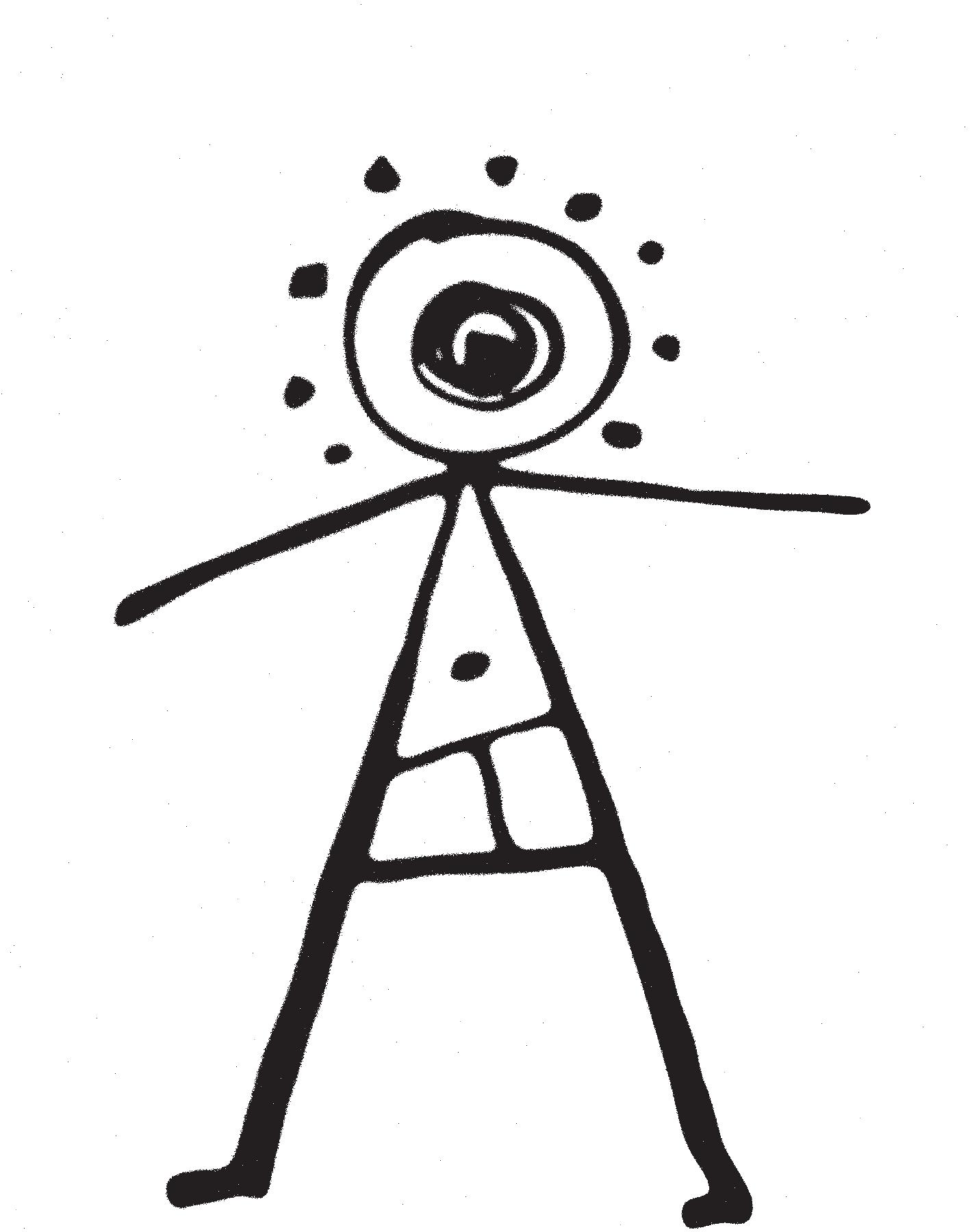














SCIENCE MEETS MYTH
James Lovelock’s GAIA HYPOTHESIS provides a compelling framework for this reimagining. Gaia posits that Earth’s biotic and abiotic components interact as a self-regulating system, maintaining conditions conducive to life (Margulis and Sagan 2023; Lovelock 2021). Though initially controversial, the hypothesis has gained credibility through advances in Earth systems science, which underscore the interconnectedness and mutual influence of ecological processes.
Importantly, Gaia’s language evokes mythic imagery, portraying Earth not as a machine but as a living organism—a concept that resonates with ancient and indigenous cosmologies (Luisetti 2017), such as the Andean cosmology surrounding Pachamama, or, Mother Earth (Stone 2009).
Systems thinking and Symbiotic biology indeed seem to be shifting further into the limelight of scientific understanding, and are systematically challenging many of the foundational assumptions which helped forge the modern worldview (Margulis and Sagan 2023; Kimmerer 2021; Lovelock 2021; Mancuso 2021; Gilbert, Sapp, & Tauber 2012). As such, new foundations are being laid for the reinterpretation of knowledge to seed new stories—or myths—about the cosmos.
Dale Jamieson, for instance, offers a unique interpretation of biogeochemistry, which analyses the world in the context of elemental cycles (i.e. carbon cycles, hydrological cycles, etc) by suggesting that human bodily functions are extensions of those cycles. Our breath is the atmosphere, our blood is the hydrological cycle, our digestion and metabolism is the soil cycle, and so on (Jamieson 2014).
This form of quasi-mythical narrative of cosmic
entanglement is a common feature of other such interpretations, the most disruptive of which, however, originates from the realms of symbiotic biology.
In a paper which defines the role microbial life has played in the development of the biological human, Scott Gilbert exhaustively challenges the notion of the biological individual in its myriad forms. Indeed, our anatomical, developmental, physiological, genetic, and evolutionary ‘selves’ are a direct result of, or have
been directly supported by symbiosis with microbial life. Moreover, given that the symbiotic metagenome in a human is about 150 times larger than that of the human eukaryotic genome, Gilbert justifiably claims that ‘we have never been individuals’ (Gilbert, Sapp, & Tauber 2012). With humanity commonly placed at the top of Darwin’s hierarchical taxonomy of life (Mancuso, 2021; Gilbert, Sapp, & Tauber, 2012), the subversion of the ‘individual’, and the purported cooperation between the ‘apex’ lifeform and ‘less-complex’ organisms raises profound questions for scientific and cultural views relating to nature hitherto established.Symbiosis is not a trait unique to humans, however. Stefano Mancuso’s work reveals plants as sophisticated
organisms capable of communication, decisionmaking, and even learning. Through chemical signaling, root network adaptations, and symbiotic relationships with fungi, plants demonstrate forms of agency that further complicate traditional hierarchies of life (Lehnert 2024; Mancuso 2021).
Notions of plants as possessing agency is not a novel idea, rather it is one that has been a longstanding feature in premodern and indigenous cosmologies; one that invites reverence, gratitude, and empathy into human-plant relationships (Kimmerer 2021). A revival of such in contemporary contexts was perhaps most
starkly exemplified in New Zealand, whereby the ancestral forests of Te Urewera were granted legal personhood in 2014 (Te Urewera Act 2014). Such narratives carry a unique tension between radicality and justifiability— on the one hand, they challenge long-held, wellestablished scientific views with quasi-mystical alternatives, and on the other hand are firmly grounded in current scientific observation. This interplay between the mythological and the academic establishes a vital narrative force in which the former adds depth and communicability to the latter. Bruno Latour’s interpretation of Gaia, for instance, further emphasizes its political and philosophical implications.
His conception of The Gaia Hypothesis moves beyond its mere scientific ramifications by overtly portraying Gaia as an entity that possesses agency and will, with whom humanity actively negotiates the terms and conditions of existence (Latour 2014).
In doing so, Latour’s conception of Gaia draws strong parallels with the political myth of Hobbes' Leviathan (Luisetti 2017), thereby establishing a clear precedent for how the shifting scientific landscape can be translated, through mythological storytelling, into forces of change in the present cosmological order. Latour further argues that Gaia destabilizes the modernist dichotomy between nature and society, and calls for new ways of thinking that acknowledge the entanglement of human and non-human agencies
by highlighting the collapse of basic assumptions and understandings about the natural world in the face of Gaia:
No, this time we encounter, just as in the old prescientific and nonmodern myths, an agent which gains its name of “subject” because he or she might be subjected to the vagaries, bad humor, emotions, reactions, and even revenge of another agent, who also gains its quality of “subject” because it is also subjected to his or her action. It is in this radical sense that humans are no longer submitted to the diktas of objective nature, since what comes to them is also an intensively subjective form of action. (Latour 2014)
This perspective invites a cosmology that integrates scientific insights with the poetic and the mythical, providing a counter-narrative to the disenchantment of nature wrought by modernity, and challenges anthropocentric paradigms. Coupled with the broader interplay between empirical insights and poetic narratives, however, they have the ability to inspire a transformative ethos—one that seeks to harmonise human activity with the living systems that sustain us. This synthesis of mythical cosmologies, modern science, and speculative futures, has the potential to guide a much needed re-enchantment of the world.
























To address the ecological crises of the Capitalocene, we must move beyond the mechanistic and exploitative paradigms that have shaped modernity. A new cosmology is required—one that cements alternative virtues such as REVERENCE, RECIPROCITY, AND AWE in our interactions with the more-than-human world (Jamieson, 2014).
Although traditions of storytelling and mythology in support of naturalistic cosmologies were dismissed as irrational or unacademic during the Enlightenmenta, they undeniably offer a compelling framework for synthesizing academic observation with poetic understanding (Abram 1996).
Myths, in particular, evoke awe—a profound emotional response that arises from encountering something vast and beyond ordinary comprehension. This emotional resonance, forged through creative storytelling practices, provides a strong foundation for negotiating a new cosmology. Neuroscientific research supports this idea, suggesting that awe can shift perspectives, reduce self-centeredness, and increase prosocial behaviors such as environmental stewardship (Yang, Hu, Jing, and Nguyen 2018).
Unsurprisingly, increasing attention has been given to the narrative dimensions of contemporary scientific understanding, as exemplified by proponents of the Gaia Hypothesis (Margulis and Sagan 2023; Lovelock 2021; Latour 2014). Scholars have even issued a call-to-arms for storytelling, advocating the co-creation of alternative narratives for Gaia (Haraway 2016; Latour 2014). Robin Wall Kimmerer expands on this notion, asserting that storytelling is a ‘gift’ humanity possesses and that the poetic qualities inherent in contemporary scientific discoveries compel us to relate them in narrative
form (Kimmerer 2021). Bruno Latour echoes this sentiment, stating:
Storytelling is not just a property of the human language, but one of the many consequences of being thrown in a world that is, by itself, fully articulated and active. (Latour 2014)
Myth and cosmology are inextricably linked. The stories we tell about the world—how they situate humanity within the broader cosmos and convey nonhuman agencies—serve as vital tools for establishing new socio-cultural orientations. Some have already begun theorizing what epochs shaped by alternative mythologies might entail. Glenn A. Albrecht’s Symbiocene, for example, envisions a future centered on relationality, mutual flourishing, and interdependence (Albrecht 2020).
Albrecht emphasizes the need for new emotional vocabularies—what he calls ‘earth emotions’—to address the identity crises wrought by environmental degradation (Albrecht 2019).
Similarly, Donna Haraway’s Chthulucene proposes an epoch defined by life’s codependence, invoking mythological symbolism derived from Pacific Northwest spiritual cosmologies. Haraway also calls for the revival of the Gorgon Medusa as the symbolic herald of this era, demonstrating an acute awareness of mythology’s capacity to inspire awe (Haraway 2016). Both Albrecht’s Symbiocene and Haraway’s Chthulucene draw heavily on the Gaia Hypothesis, framing it as a mythological entity capable of agency and representative of life’s totality (Lovelock 2021; Albrecht 2020; Haraway 2016)
Beyond storytelling, what Kimmerer dubs ‘practical acts of reverence’ urges consideration of
how alternative naturalistic philosophies can be embodied in action (Kimmerer 2021). Central to this is her notion of the Honorable Harvest, as described in Braiding Sweetgrass and The Democracy of Species, which provides an ethical framework for engaging with the natural world. The Honorable Harvest outlines principles such as taking only what is needed, giving back to the land, and expressing gratitude—guidelines that resonate deeply with practices of reciprocity and reverence (Kimmerer 2021; Kimmerer 2013).
Neopaganism, as a syncretic system that adapts to external stimuli, further provides an illustrative example. Common mystical practices— such as meditation, ritual, and the invocation of sacred symbols—offer experiential pathways for cultivating reverence for the natural world. Documented cases of Neopagan groups engaging in land stewardship highlight how naturo-spiritual philosophies can translate into tangible ecological care (White 2014).
While mystical practices like ritual may
seem fantastical— particularly in the context of Neopaganism—they can also be embedded in everyday actions, such as leaving offerings for local animal life. What defines these actions as ritualistic is their cosmological framing: an internalized understanding of the web of life, coupled with a desire to support one’s surroundings through reverence (Abram 1996).
Such perspectives can also manifest in language, presenting highly accessible avenues for engaging in everyday reverence. Kimmerer, for instance, reflects on the grammatical distinctions between her native tongue Potawatomi and English, noting that the former favors verbs over nouns. The consequence of this distinction is that flora, fauna, and land-features are referred to as an act of being—they are being a bay, for instance—rather than as nouns devoid of animacy (Kimmerer 2021). In this way, practical acts of reverence, whether through language, ritual, or stewardship, serve as a bridge between cosmological framing and tangible care for the earth.




"MAGIC, IN ITS PERHAPS MOST PRIMORDIAL SENSE, IS THE EXPERIENCE OF EXISTING IN A WORLD MADE UP OF MULTIPLE INTELLIGENCES, THE INTUITION THAT EVERY FORM ONE PERCEIVES —FROM THE SWALLOW SWOOPING OVERHEAD TO THE FLY ON A BLADE OF GRASS, AND INDEED THE BLADE OF GRASS ITSELF—IS AN EXPERIENCING FORM, AN ENTITY WITH ITS OWN PREDILICTIONS AND OWN SENSATIONS."
—DAVID ABRAM
To address the ecological crises of the Capitalocene, we must adopt a cosmology that synthesizes science, myth, and reverence. Such a framework recognizes the interconnectedness of life and acknowledges humanity’s embeddedness within the web of existence.
Through storytelling, practical acts of reverence, and the cultivation of awe, we can transcend the mechanistic worldviews that have led to ecological degradation. By re-enchanting our relationship with the natural world, we open pathways to a more reciprocal, sustainable, and meaningful existence, paving the way for a harmonious future grounded in mutual respect for all forms of life.







My father is an engineer—a man with an unwaivering dedication to rationality and a ferocious sense of logic. While he undoubtedly played a crucial role in establishing my fascination with the natural world (I so fondly remember the times we watched Attenborough documentaries together), it was always grounded on an essentialist understanding of nature. In this worldview, there is little room for fanciful thought, let alone an affinity for the fantastical, mythological, or the spiritual dimensions of interpreting natural phenomena. But that’s a relic from an era in which the ‘human’ was equated to the highest form of divinity. These sterile views, in my eyes, left little room for unfettered fascination—they bred a tension between what was, to me, an apparent wonder and awe in the natural world, and mechanistic understandings of nature. In other words, I was too often left dismissive of what I just dubbed "an over-active sense of imagination" when confronted with nature. My writing this essay, in this sense, represents a casting off of these self-imposed limitations. I’ve always thought that they only compounded the vitality of evidence-based understandings, and now I intend to prove it.
On Cosmology is a post-naturalist edict for a revitalization of mythology—to establish a mythology that actively responds to the shifting landscape of the sciences. It calls for the application of mythological narrative as crucial tools for the interpretation and dissemination of knowledge about the material universe. In doing so, it hopes to sow the seeds for a human existence that’s more balanced with our planetary benefactors and the needs of its many stakeholders. Though I’ve always maintained that the world (and the manner in which the sciences illuminates its processes) contains an almost-eldritch sense of wonder, this essay represents my first attempts at establishing such in academic terms. This essay therefore signifies my taking the first step in a journey of selfactualization whereby I concede to the mutliplicity of the natural world and its myriad of (mythological) wonders.
But how does this all translate to action? One might accept the need to establish a new cosmology, as purported in the paper, but how does one actually support and embody cosmology in practical terms? Hopefully—with THE HARBINGER’S favorite modality of writing—we’re able to shed some light on that. After all, a little manifesto never hurt anybody (← sarcasm).
⑴ DESIGN WITH AND FOR AWE . Every line you draw, every object you shape, carries the potential to evoke wonder. Like the magnetic path of a salamander or the whispers of mycelium, let your work remind others of the profound connections between all things. Awe is not just an aesthetic choice—it is a tool for transforming perspectives. ⑵ HONOR THE WEB OF LIFE . Design is never isolated; it is entangled. The materials you choose, the systems you engage with, and the stories you tell all ripple through the web of existence. Act with reciprocity, taking only what you need and giving back in gratitude. ⑶ RECLAIM MYTH. Myths are the stories that ground us. In a world of data and mechanistic narratives, embed your designs with the power of myth. Let your work tell geostories that reenchant and reconnect—design not just for function but for meaning. ⑷ DISSOLVE HIERARCHIES. The old hierarchies that place humans above nature are obsolete. Let your practice reflect this shift. Design as if plants have agency, objects have stories, and systems have spirits. Build worlds where collaboration, not control, defines the creative process. ⑸ DESIGN AS RITUAL . Treat the act of creation as sacred. From the first sketch to the final form, let every gesture be a ritual of reverence. Make
the process as intentional and meaningful as the product itself, honoring the unseen forces—natural, cultural, and historical—that shape your work. ⑹ MATERIAL AS MESSAGE . Every material carries a narrative. Plastic whispers of the Capitalocene, wood hums with the memories of forests, and recycled fibers sing of renewal. Use materials as storytellers. Embed sustainability, respect, and interconnectedness into every choice.
⑺ DESIGNER AS COSMOLOGIST. Your role is not just to create objects but to shape worldviews. Draw inspiration from the Gaia Hypothesis, plant intelligence, and systems thinking to envision futures of symbiosis and care. Unsettle old paradigms and seed new ways of living with the Earth.
⑻ CULTIVATE REVERENCE . Design must cultivate reverence. This is a design ethos that inspires care for the more-than-human world, deepens empathy, and reawakens the sense of sacredness in everyday life.
⑼ STORYTELLING AS SURVIVAL . The crises of the Capitalocene demand new narratives. Designers are storytellers of the future. Use your work to weave tales of interdependence, reciprocity, and regeneration. Make the invisible visible and the mundane magic. ⑽ ENCHANTMENT AS RESISTANCE . In an era of ecological despair, enchantment is a radical act. Let your work resist the disenchanted, extractive systems of the present. Design enchantment. Foster hope, care, and a vision for a thriving planet.


















Abram, David. 1997. The Spell of the Sensuous: Perception and Language in a More-ThanHuman World. Vintage.
Albrecht, Glenn. 2019. Earth Emotions: New Words for a New World. Cornell University Press. Albrecht, Glenn. 2020. “Negating Solastalgia: An Emotional Revolution From the Anthropocene to the Symbiocene.” American Imago 77 (1): 9–30. https:// doi.org/10.1353/aim.2020.0001.
Elhacham, Emily, Liad Ben-Uri, Jonathan Grozovski, Yinon M. Bar-On, and Ron Milo. 2020. “Global Human-made Mass Exceeds All Living Biomass.” Nature 588 (7838): 442–44. https://doi.org/10.1038/s41586020-3010-5.
Gilbert, Scott F., Jan Sapp, and Alfred I. Tauber. 2012. “A Symbiotic View of Life: We Have Never Been Individuals.” The Quarterly Review of Biology 87 (4): 325–41. https://doi.org/10.1086/668166.
Haraway, Donna Jeanne. 2016. “Tentacular Thinking: Anthropocene, Capitalocene, Chthulucene.” E-Flux Journal, no. 75 (September). https://editor.eflux-systems.com/files/67125_e-flux-journaltentacular-thinking-anthropocene-capitalocenechthulucene.pdf.
Jamieson, Dale. 2014. Reason in a Dark Time: Why the Struggle Against Climate Change Failed — and What It Means for Our Future. Oxford University Press.
Kimmerer, Robin Wall. 2014. Braiding Sweetgrass. Print. 1st ed. Milkweed Editions. Kimmerer, Robin Wall. 2021. The Democracy of Species. 1st ed. Penguin Classics. Kopnina, Helen, Haydn Washington, Bron Taylor, and John J Piccolo. 2018. “Anthropocentrism: More Than Just a Misunderstood Problem.” Journal of Agricultural and Environmental Ethics 31 (1): 109–27. https://doi. org/10.1007/s10806-018-9711-1.
Latour, Bruno. 2014. “Agency at the Time of the Anthropocene.” New Literary History 45 (1): 1–18. https://doi.org/10.1353/nlh.2014.0003.
Lovelock, James. 2021. We Belong to Gaia National Geographic Books.
Luisetti, Frederico. 2016. “Demons of the Anthropocene: Facing Bruno Latour’s Gaia.” Philosophy Kitchen 3 (5): 175–86.
Mancuso, Stefano. 2021. The Nation of Plants Other Press, LLC.
Margulis, Lynn, and Dorion Sagan. 2023. Gaia and Philosophy. Moore, Jason W. 2017. “The Capitalocene, Part I: On the Nature and Origins of Our Ecological Crisis.” The Journal of Peasant Studies 44 (3): 594–630. https://doi. org/10.1080/03066150.2016.1235036.
Stone, Mary. 2009. “The Andean Mother: Weaving a Culture of Reciprocity.” MA Thesis, California Institute of Integral Studies. https://www.proquest. com/dissertations-theses/andean-mother-weavingculture-reciprocity/docview/305067363/se-2.
Thurn, Petra. 2024. “Wie Lebt Es Sich Als Pflanze?” Directed by Sarah Lehnert. Arte. White, Ethan Doyle. 2014. “Devil’s Stones and Midnight Rites: Megaliths, Folklore, and Contemporary Pagan Witchcraft.” Folklore 125 (1): 60–79. https://doi. org/10.1080/0015587x.2013.860766.
Yang, Yan, Jing Hu, Fengjie Jing, and Bang Nguyen. 2018. “From Awe to Ecological Behavior: The Mediating Role of Connectedness to Nature.” Sustainability 10 (7): 2477. https://doi.org/10.3390/ su10072477.
Zhu, Minting, Xiaotian Li, Wei Lin, Dan Zeng, Pan Yang, Weigui Ni, Zhijian Chen, et al. 2024. “Microplastic Particles Detected in Fetal Cord Blood, Placenta, and Meconium: A Pilot Study of Nine Mother–Infant Pairs in South China.” Toxics 12 (12): 850. https://doi. org/10.3390/toxics12120850.
Image references given in order of appearance. All images are licensed under the creative commons 4.0 open license. Please contact THE HARBINGER for more information.
Gregor, Michal. 2022. Swinside Stone Circle. Wikipedia. Zinnmann. 2004. Mên-an-tol, Megalithic Formation in Cornwall. Wikipedia. Chmee2. 2009. Fairy Rings in Rainbow Mouintans Region Near the Laugavegur Trekking Route, Iceland. Wikipedia. Marcy72. 2022. Petroglyph Tucson Arizona. Pixabay. Sporulator. 2011. Image Number: 180122 - Infundibulicybe Geotropa. Mushroom Observer. Head with Three Faces. 1st-3rd C. Stone. https://jstor.org/stable/community.13570667. Lawrence, and Ray Woods. 1883. Solar Eclipse From Caroline Island. Metmuseum. Foucault, Léon. 1844. Photomicrograph. Wellcome Collection. Leonardo, da Vinci. Medusa. c.1600. Visual Arts Legacy Collection. Artstor. Vessel (Cinerary Urn). 6th c. B.C. Artstor.
↗ The Anthropocene Curriculum
↗ The Institute of Post-Natural Studies
↗ The Parliament of Things
↗ Critical Zones