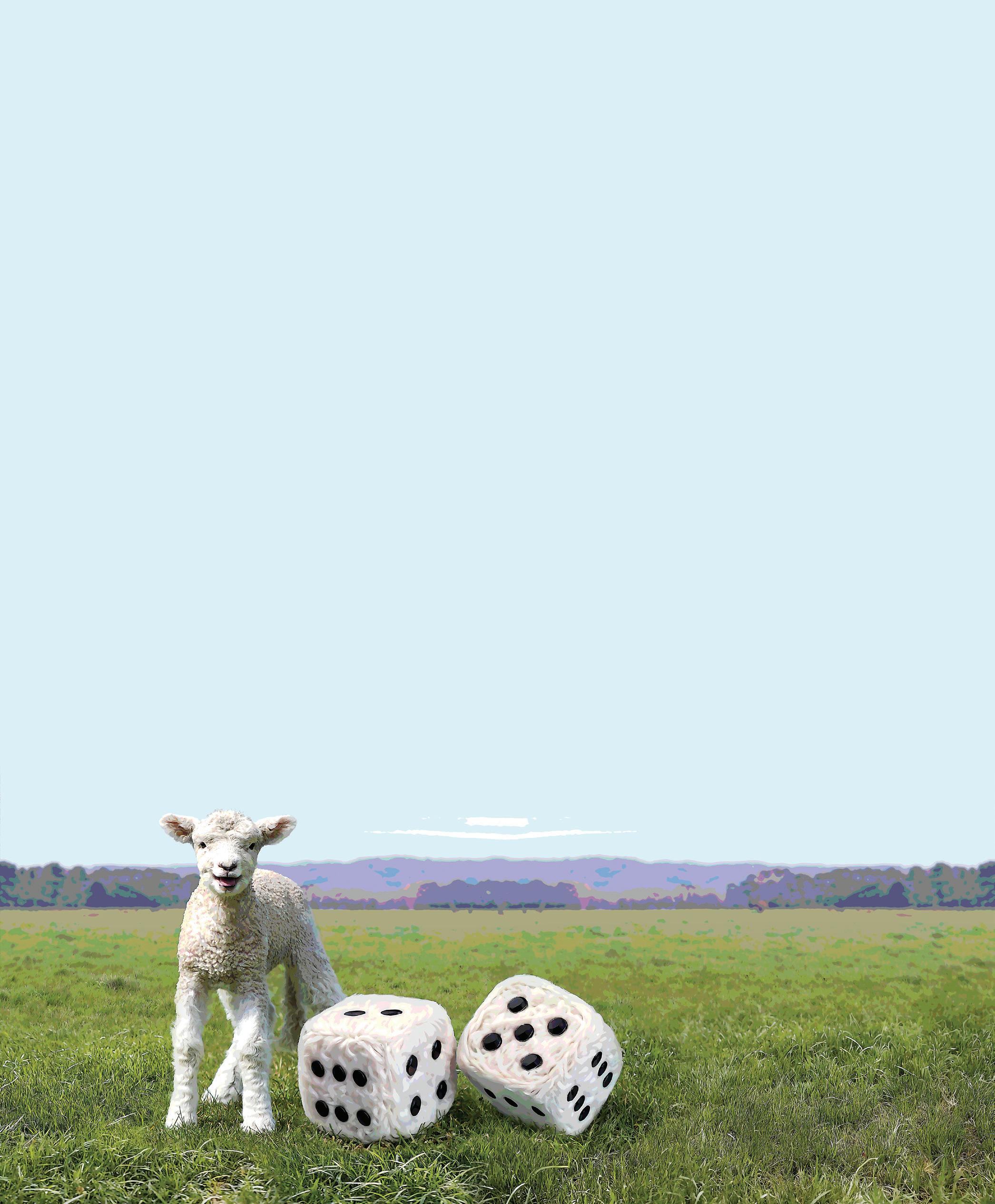
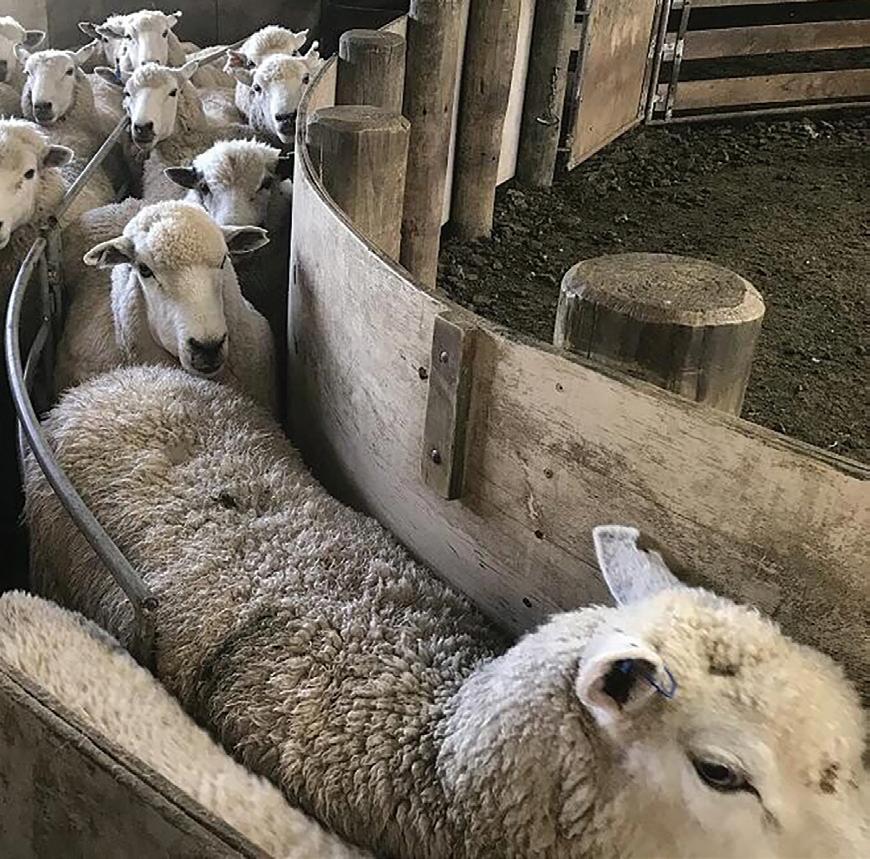
NEW ZEALAND red meat exports are booming but a pending decision in the White House, Washington DC could dent sheepmeat earnings.
The red meat sector is bracing for a decision from the US administration on whether investigations should be launched into so-called unfair trade practices, to reintroduce tariffs deemed illegal by the US Supreme Court.
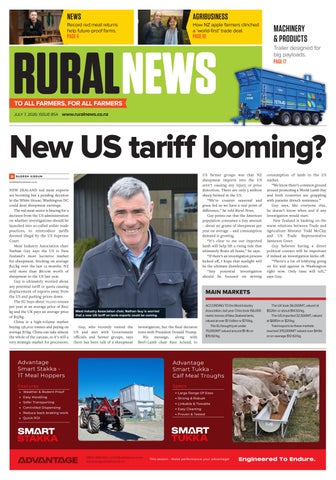
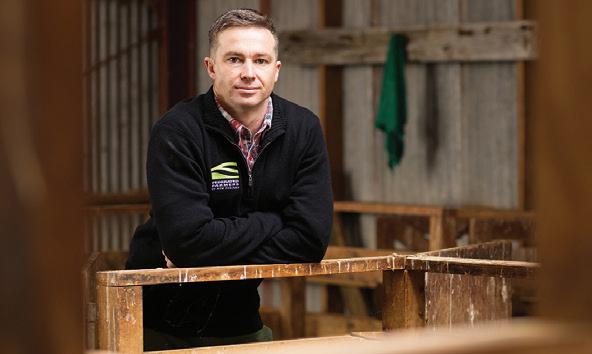
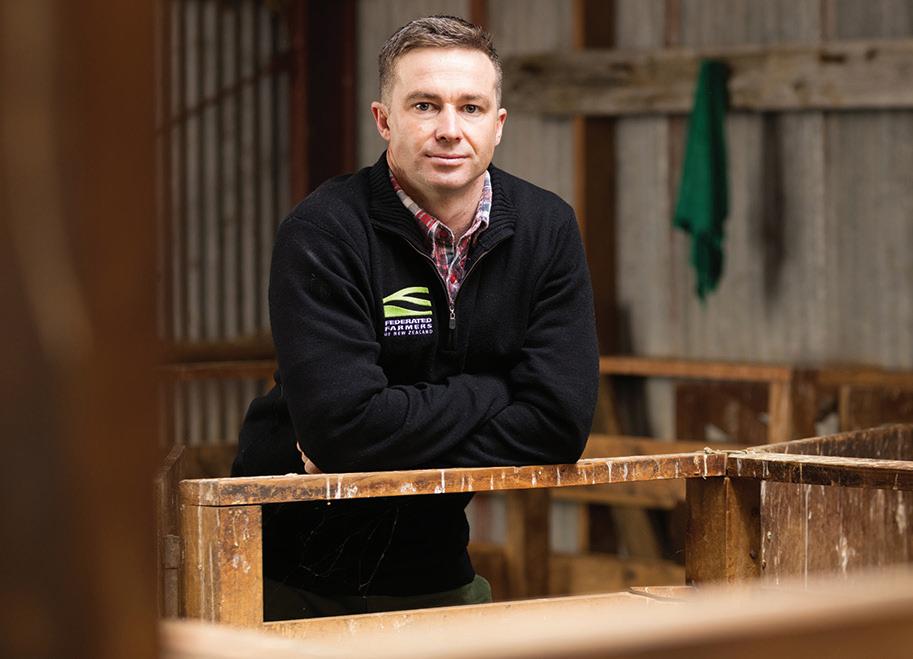
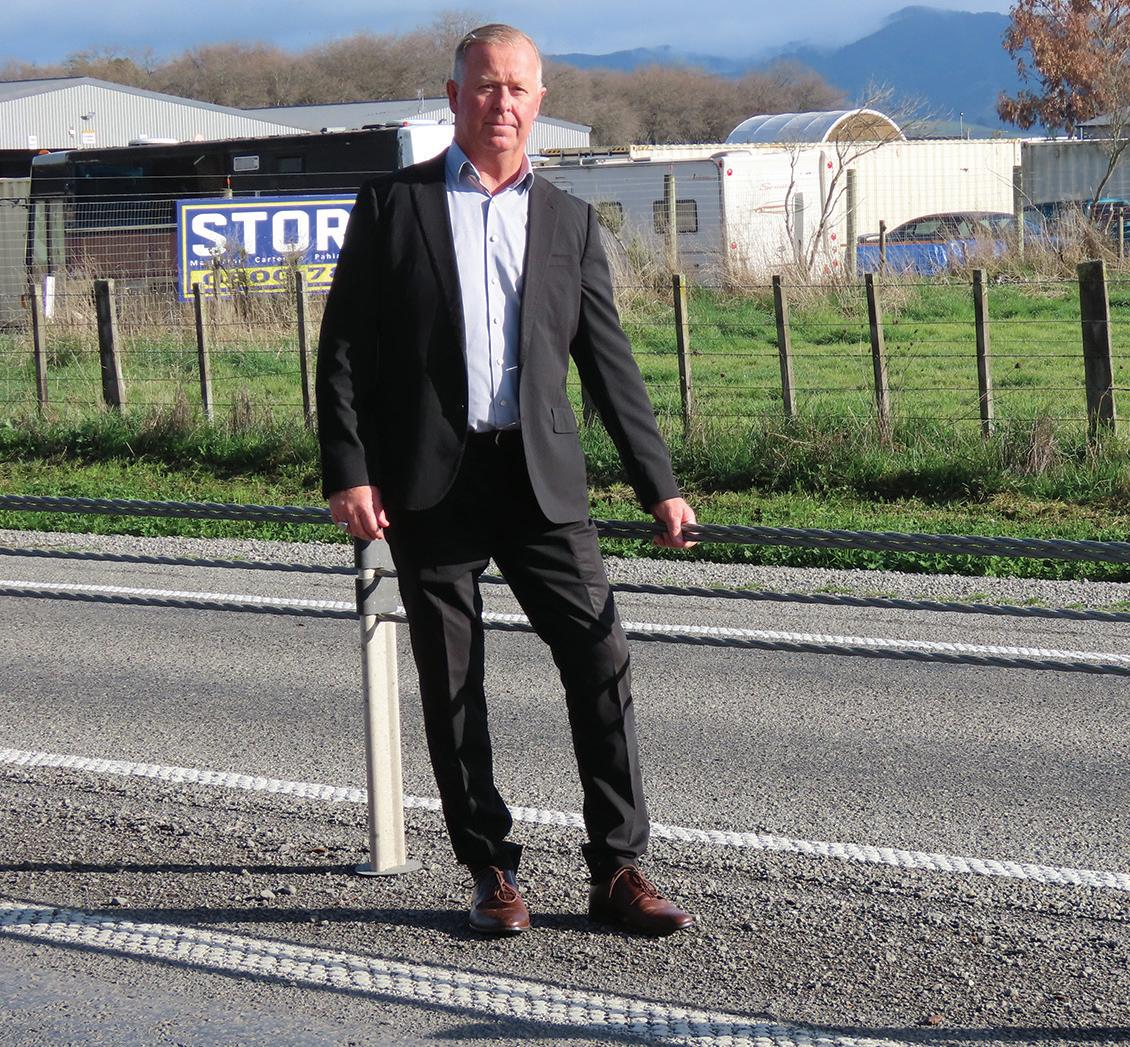
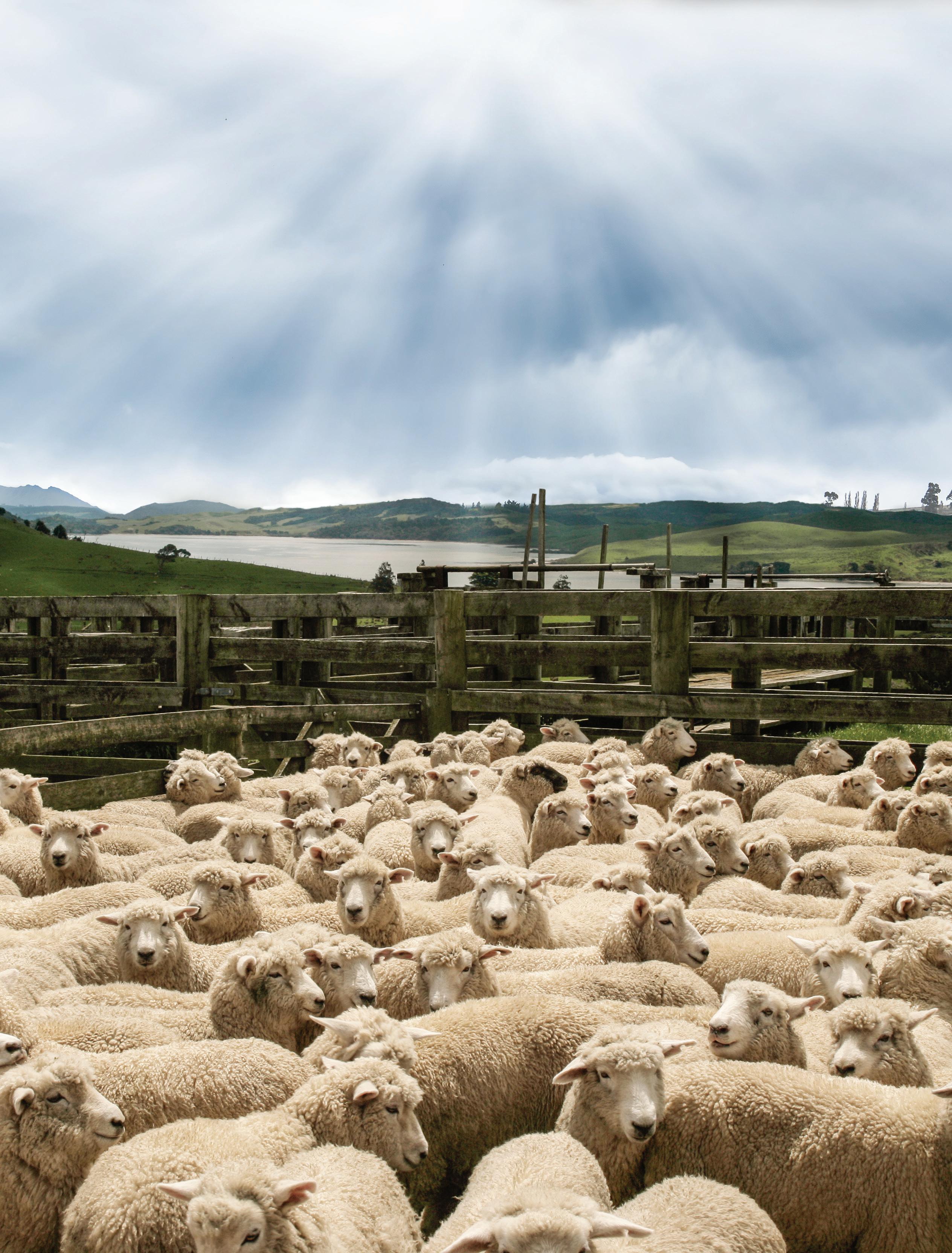
Meat Industry Association chair Nathan Guy says the US is New Zealand’s most lucrative market for sheepmeat, fetching on average $21/kg over the last 12 months. NZ sold more than $600m worth of sheepmeat to the US last year.
Guy is ultimately worried about any potential tariff or quota causing displacement of exports away from the US and pushing prices down.
The EU buys about 70,000 tonnes per year at an average price of $20/ kg and the UK pays an average price of $15/kg.
China is a high-volume market buying 156,000 tonnes and paying on average $7/kg. China can take almost the whole of the carcass, so it’s still a very strategic market for processors.
& PRODUCTS
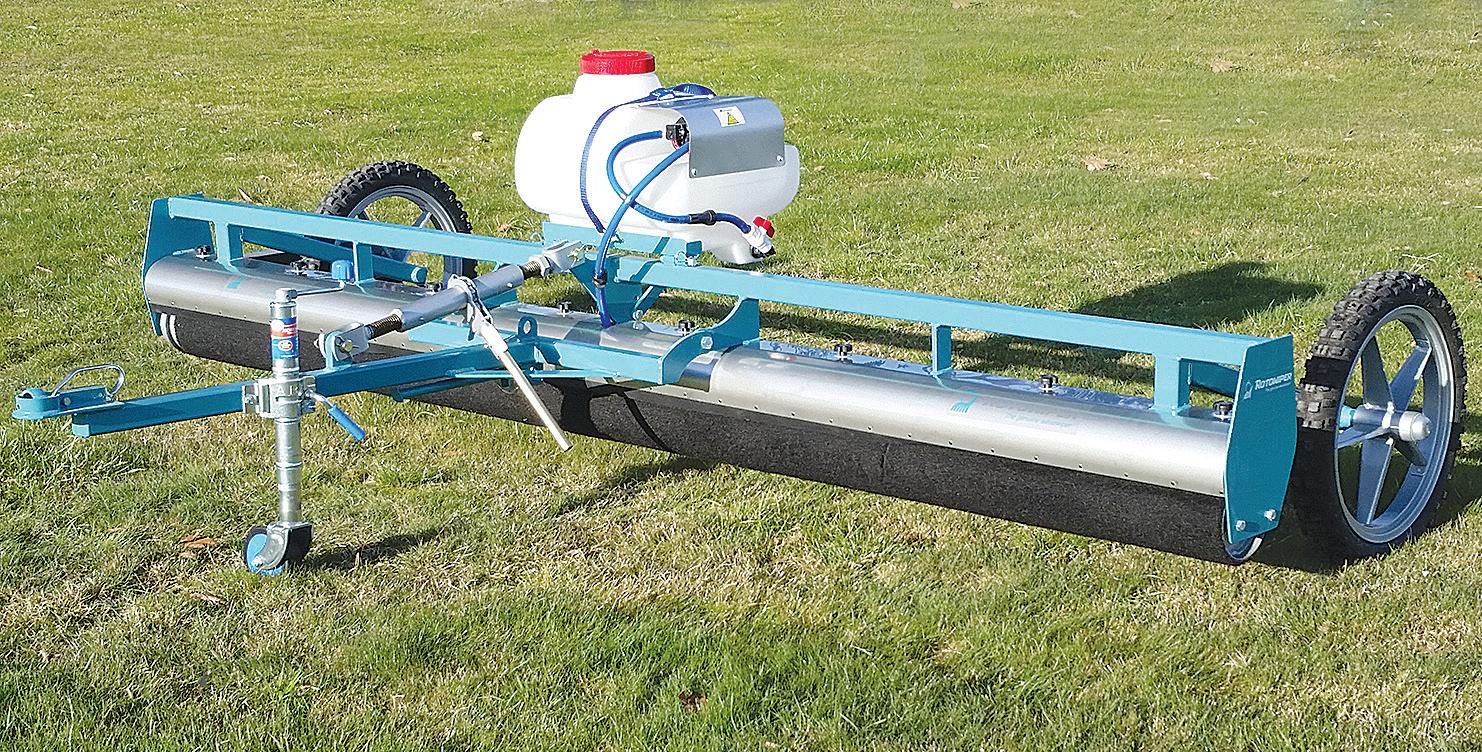
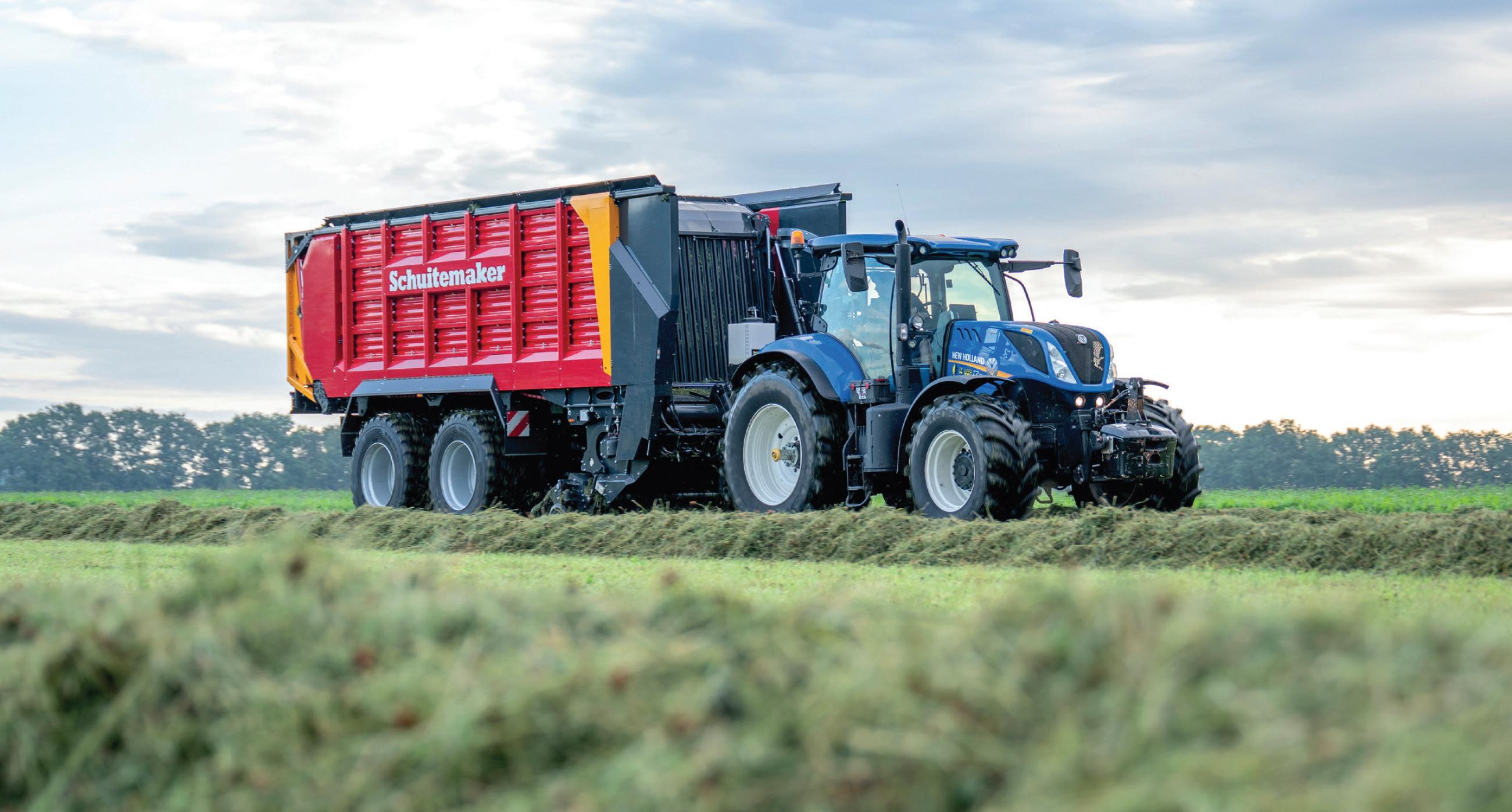
Trailer designed for big payloads.
PAGE 17
US farmer groups was that NZ sheepmeat imports into the US aren’t causing any injury or price distortion. There are only 5 million sheep farmed in the US.
“We’re counter seasonal and grass fed so we have a real point of difference,” he told Rural News
Guy points out that the American population consumes a tiny amount – about 90 grams of sheepmeat per year on average – and consumption demand is growing.
“It’s clear to me our imported lamb will help lift a rising tide that ultimately floats all boats,” he says.
“If there’s an investigation process kicked off, I hope that sunlight will be the ultimate disinfectant.
“Any potential investigation should be focused on driving
consumption of lamb in the US market.
“We know there’s common ground around promoting a World Lamb Day and both countries are grappling with parasite drench resistance.”
Guy says, like everyone else, he doesn’t know when and if any investigation would start.
New Zealand is banking on the warm relations between Trade and Agriculture Minister Todd McClay and US Trade Representative Jamieson Greer.
Guy believes having a direct political contact will be important if indeed an investigation kicks off.
“There’s a lot of lobbying going on for and against in Washington right now. Only time will tell,” says Guy.
Guy, who recently visited the US and met with Government officials and farmer groups, says there has been talk of a sheepmeat
investigation, but the final decision rests with President Donald Trump. His message, along with Beef+Lamb chair Kate Acland, to
Tried, trusted &
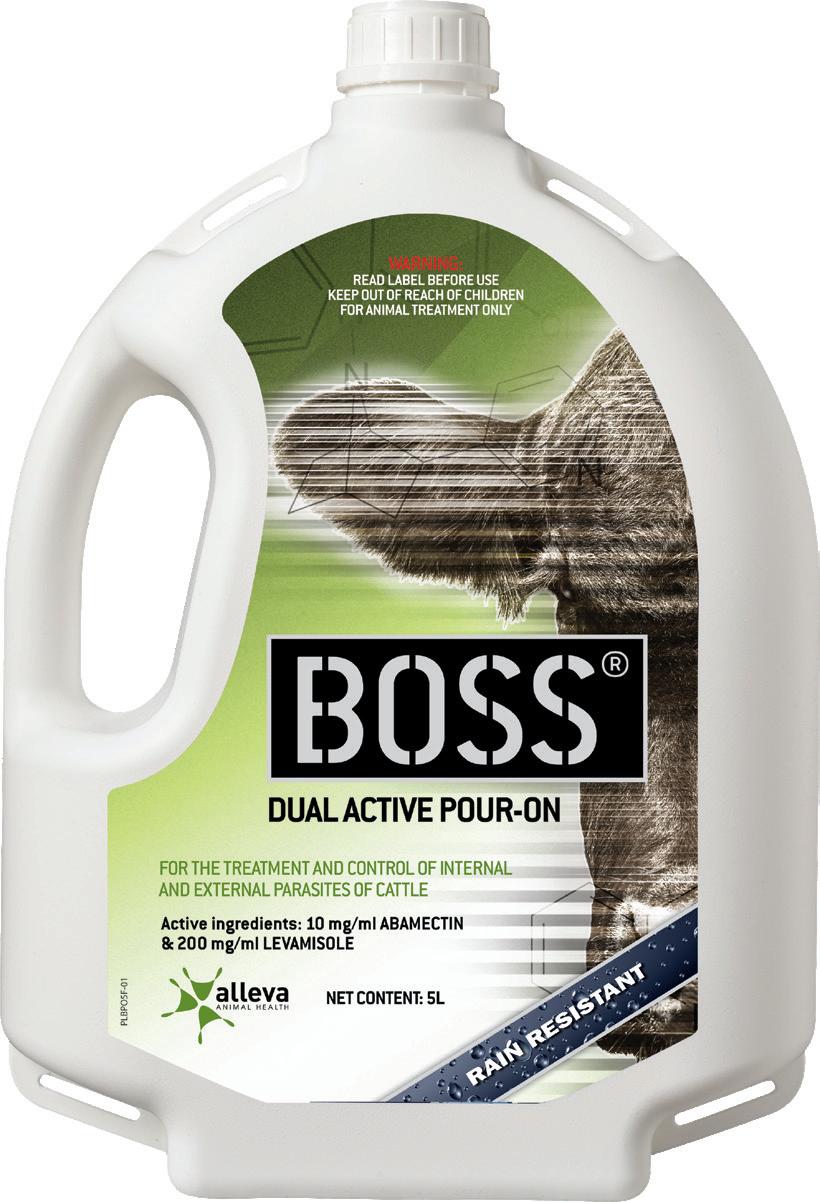
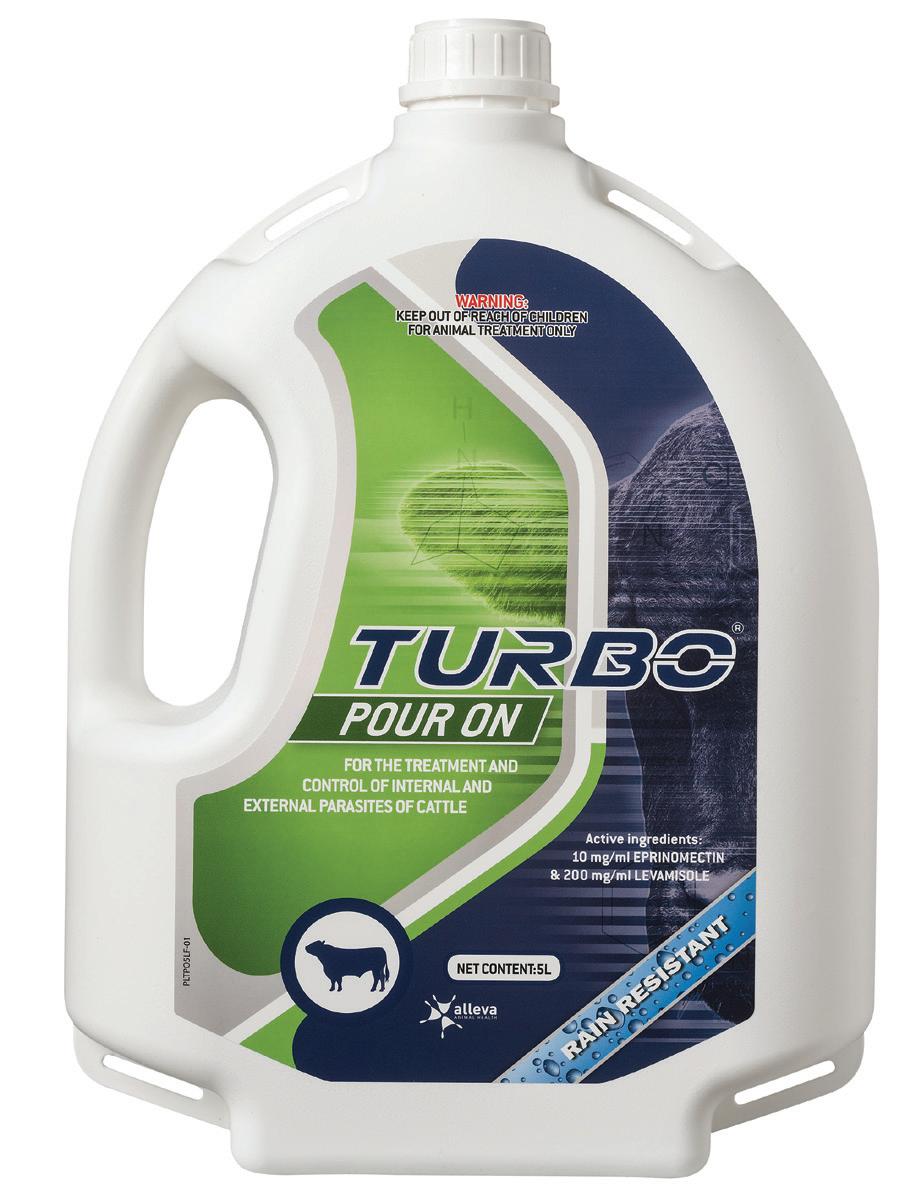
Season after season, BOSS® and TURBO® dual action pour-ons keep delivering effective pa rasite control, no matter what the weather. And now when you purchase a 5L pack of either product you‘ll receive a waterproof, breathable and ultra-quiet
Huntech Wet Weather Jacket* .
Rain resistant for peace of mind when treating in variable conditions.
Formulated using Alleva’s DMI-Sorb® formulation system to prevent run-off as well as enhance active-ingredient delivery and absorption.
Harris
Tamaki, Auckland. DMI-Sorb®, TURBO®
BOSS®
(A011722)
Strong demand for wool needed to keep prices up
SUDESH KISSUN
sudeshk@ruralnews.co.nz
HOUND, EDNA 8 CONTACTS 8
HEAD OFFICE
Lower Ground Floor, 29
Advertising material: beckyw@ruralnews.co.nz
Rural News online: www.ruralnews.co.nz
8-9
10-11
12-13
14-15
16-18
19
Subscriptions: subsrndn@ruralnews.co.nz NEWS 1-7
RISING STRONG wool prices are finally returning the sector to profitability.
However, it’s important these prices are underpinned by strong demand so they can be sustained, says Ross McIsaac, a sector executive at Wool Impact working on boosting the demand and value for New Zealand strong wool.
The strong wool price has been on the rise, doubling in the last 12 months, giving growers a long-overdue lift in prices.
The Fusca strong wool indicator reached $7.14/kg two weeks ago, up from $3.49/kg one year ago.
McIsaac says they are hearing from farmers that these price lifts are covering shearing costs and returning wool to profitability, but the rapid rise in prices means that some farmers
KEEP IT GOING
STRONG WOOL price increases have been driven by a mix of supply reduction and increased demand.
However, Ross McIsaac sats they are focused on doing their bit to keep building demand.
“There has been good work happening on the demand side across the supply and value chains for our wool.
“Globally, brands are seeing opportunities for natural product collections, and the health and performance benefits of wool are being recognised.”
There is growth in core products like carpets, bedding and furniture through companies like Godfrey
High Flow
won’t have sold wool at these price levels yet.
“The strong wool price, and farmer sentiment toward wool, is in a better position than it has been for at least a decade,” he told Rural News
“It’s important these prices are underpinned by strong demand so they can be sustained. That’s the work that’s happening across the industry now.”
Wool Impact is part of the Wool Alliance, a partnership with Campaign for Wool NZ, Wool Research organisation NZ and Beef + Lamb NZ, to build the case for one focused wool organisation to do the work needed to improve the profitability of wool long term.
Achieving this will require a collective effort across the industry and great progress has been made, says McIsaac.
“The important thing now is to keep building collaboration, transparency and investment across the sector,” he says.
Hirst, Bremworth, Wools of NZ and Wisewool.
Wool acoustic products produced by companies Floc and Autex are driving growth for wool in the commercial interiors category.
There are novel products being commercialised and scaled by Keraplast, Lanaco, Wool Source and Woolchemy for personal care, filtration, biobased ingredients and hygiene products.
“What was on display with wool at Fieldays showcased why we’re confident the right things are happening now that will lead to returns for wool growers continuing to improve – we need to keep it going,” McIsaac says.
McIsaac was at Fieldays as part of the Wool Alliance. Wool Impact also partnered with MPI and ASB to showcase wool’s possibilities. He says sentiment among farmers was positive, helped by strong prices across the agri sector, including wool.
“The conversations we were having about wool were broader than price alone; farmers are keen to know the range of innovative uses for their wool, changes that are happening in the industry to improve value-chain efficiencies and brand-
GREAT RELIEF
ANZ AGRICULTURAL economist Matt Dilly says wool prices have nearly doubled the past year, to the great relief for the wool industry, gaining 90 cents in the past two months alone to reach $6.30/kg clean. It’s close to the highs previously seen in 2011 and 2016.
Tight wool supply is a main contributor, but demand has been strong too. Smaller flocks in New Zealand and Australia have tightened supply.
grower connectivity, and how things like certifications support brands in market.”
In the wider context, wool will cover its shearing costs in 2025/26 this year for the first time since 2018/19 for the typical North Island hill country farm, Dilly notes.
“Prices aren’t yet at the point where wool revenue will influence stocking rate decisions, especially with lamb and beef prices so strong,” he says.
Wool accounts for about 3% of sheep and beef revenue and hasn’t been above 10% since 2015-16.
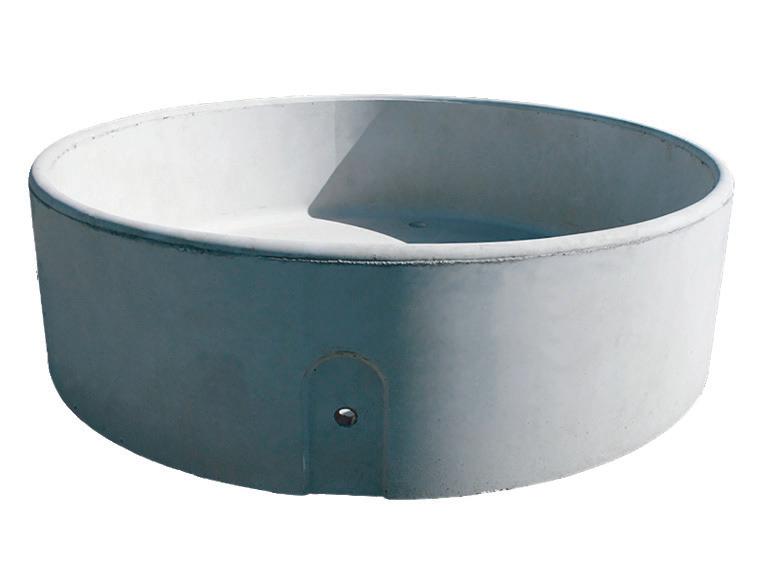
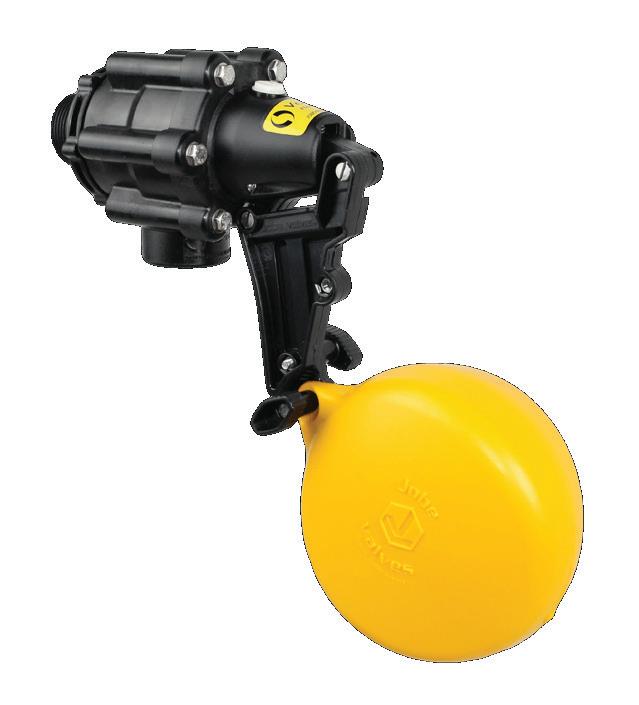
Troughs
Side/Bottom Mount
Detach to Clean
Compact/Robust
The strong wool price has doubled in the last 12 months, says Ross McIsaac (inset)
Record returns help future-proof farms
SUDESH KISSUN
sudeshk@ruralnews.co.nz
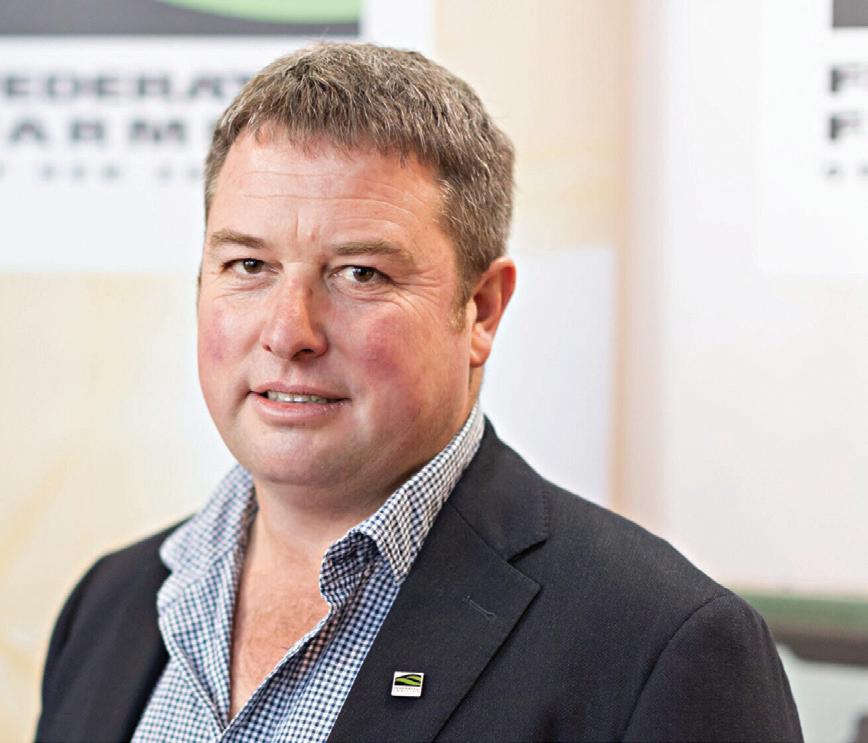
RED MEAT farmers are using higher farmgate returns to make their farms more resilient, says Federated Farmers meat and wool industry group chair Richard Dawkins.
Although rising fuel and fertiliser prices are taking some shine off the record returns, farmer sentiment remains high, he adds.
Dawkins was commenting on a Beef+Lamb NZ report showing total on-farm inflation was flat for the second year in a row.
The on-farm inflation rate was -0.9% in the year to March 2026. This follows a 0.6% fall in 2024-25.
The overall result was driven by a fall in interest rates which
account for 18% of total farm expenditure and is the largest single expenditure category for sheep and beef farms.
Dawkins says that while the reported drop in on-farm inflation is most welcome, it doesn’t cover the post-Iran conflict period.
“The subsequent price rises in fertiliser and fuel are taking some shine off the record returns,” he told Rural News
“However, the sentiment in the sheep and beef sector remains very high with farmers making hay while the sun shines.
“Investment in deferred maintenance, short term debt and new technologies means farmers will be more resilient should these costs continue to rise or schedule prices drop.”
The B+LNZ Sheep
and Beef On-farm
Inflation report provides a detailed analysis of the changes in farm input prices and their impact on farm expenditure, offering valuable insights for farmers developing their budgets.
The findings come at a time when sheep and beef farmers are experiencing record returns and continuing strong international demand for New Zealand red meat.
B+LNZ chair Kate Acland says there’s no doubt the red meat sector is in a stronger position than we’ve seen for some time.
“But while revenue has improved, we know that input prices are moving just as quickly. The focus now is on building resilience for whatever comes next,” she says.
The annual report does not cover the impacts of the conflict in the Middle East. The Strait of Hormuz closed on 28 February, leading to sharp increases in fertiliser and fuel prices.
In the year to March 2026, the report shows that when interest is excluded, underlying on-farm inflation rose 3.9%. This exceeded the Consumers Price Index (CPI) increase of 3.1% for the same period, meaning that most farm input prices are rising faster than general consumer prices.
The price of fertiliser, lime and seeds increased by 8.1%, the report shows. These products are the second largest farm expenditure category, accounting for around 15% of total expenditure.
There were also
increases in rates (up 9.2% in the year to March), electricity (up 7.1%) and fuel (up 3.1%).
With interest rates forecast to rise later this year, Acland says that on-farm inflation is expected to increase in 2026-27.
“Farm input prices
are significantly above pre-2021 levels. Over the past five years, cumulative on-farm inflation has increased by 30%, compared with 25% for CPI.
“However, the continuing strong international demand for the high-quality
meat and wool that New Zealand sheep and beef farmers produce means our farmers are well-placed to meet increasing input prices.
“They will need to remain vigilant to ensure they are maximising the value of all farm inputs.”
Federated Farmers meat and wool group chair Richard Dawkins.
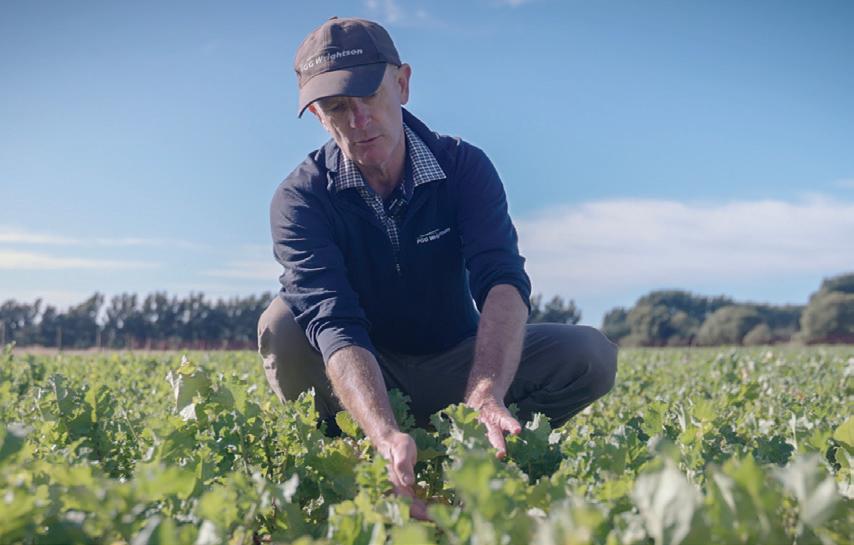
THE ARABLE industry needs profitability, so it doesn’t disappear, says newly elected Federated Farmers Arable Industry Group chair, Chris Dillon.
“You can currently see in Canterbury there’s arable farms leaving the industry to go to livestock or dairy. And if we can’t change what goes on in our industry, we risk losing its critical mass,” Dillon told Rural News
A Southland arable and grazing farmer, Dillon is currently the Southland provincial president, a position he held from 2021 to 2024 and took up again in May when Jason Herrick resigned to stand
for New Zealand First at the general election.
Dillon says he will again stand down as provincial president to concentrate on his new role as national Arable Chair.
“It’s very important to advocate for the arable farmers of New Zealand. I’ve been involved in this industry for a long time and it’s good to be giving back.”
Dillon says his priority is to return the sector to something that’s sustainable long-term.
He runs what he describes as a “fairly large scale” arable and grazing operation near Gore, with 600ha of arable crops and about 260ha in grazing.
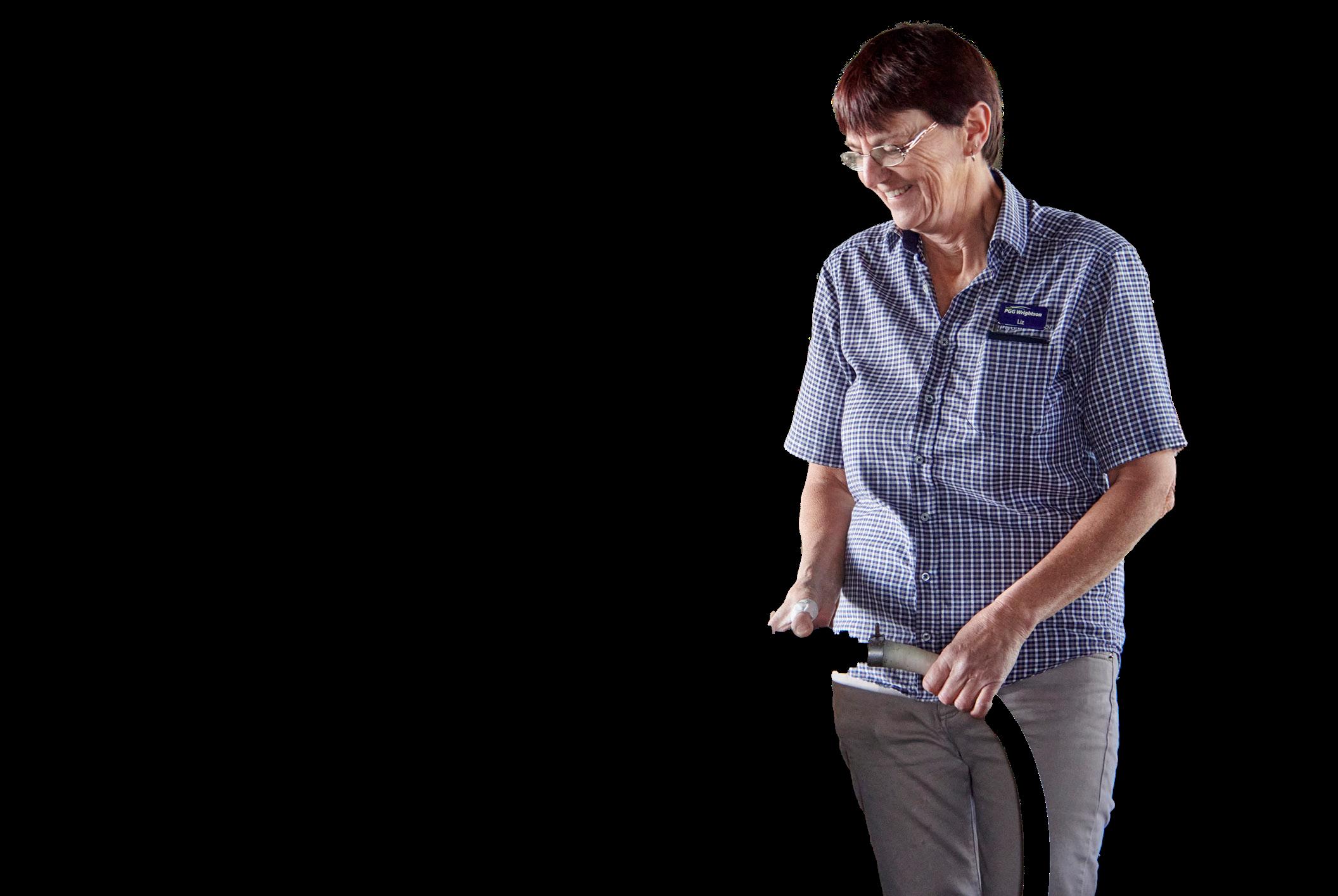
INNOVATION IS at the heart of rural New Zealand. Our isolation means solutions are found at home. It is amazing what we can solve with a little number 8 wire and a good idea. New Zealanders are the ones who invented the electric fence, refrigerated shipping, and tranquilliser guns. We are still at the forefront of technology with innovations in
genetics, digital soil mapping, drones, and more. Innovation often works to boost the productivity of our farmers and growers, while shrinking their environmental impact. Innovations of today are not generally cobbled together with number 8 wire, but they do grow from good ideas. Just as PGG Wrightson helps to empower farmers and growers, PGG Wrightson also helps to
Dillon says the big challenge for arable farming in Southland, as in the rest of the country, is profitability. He says there are cost increases in everything arable farmers do, and what they are receiving for the seeds and the grain they grow is not reflecting that.
“And the biggest challenge now is no one saw the fertiliser prices doubling. We knew they were going to go up a bit, but we didn’t know they were going to double.
“And in an industry like arable, you cannot simply stop using the stuff. Diesel and fertilisers
EL NINO-TYPE SEASON
THE OUTGOING Feds
Arable Chair, Leeston farmer David Birkett, says Canterbury farmers were always thinking about drought, but even with irrigation, no system will keep up during an El Niño-type season.
“There’ll be choices to
nurture these ideas. You can, too. Helping farming innovation is as easy as purchasing products you need for your farm. PGG Wrightson’s Growing the Country® programme is supporting future innovation research through the purchase of qualifying animal health and nutrition products from participating suppliers: Seales Winslow, Sgt Dan
be made between which crops are going to essentially be sacrifice crops and which ones will receive irrigation.”
Although many crops were already in the ground, he said farmers should now be considering more waterefficient crops for spring
are just part of what we do.”
Tackling profitably could mean moving into different markets and improving efficiency, said Dillon.
With the livestock sectors currently doing well, that may mean arable farmers moving
planting, because once you’re into the season, it becomes around where is the best place to put water and also how you set the crop up.
Setting up for a high yield when you know a dry summer is coming is asking for problems, said Birkett.
into more livestock, or switching to more profitable crops – which may come at the expense of some of the feeds that go into other sectors.
Dillon points out that the arable sector exports a lot of vegetable seeds, but the grains grown are almost entirely sold locally to the livestock sectors.
“So, we don’t contribute heaps to what is exported from the country, but we produce a heap towards what is exported from the other sectors.”
Driving Farming Innovation
Stockfoods, Agritrade, Ecolab, Elanco, MSD, Zoetis, and PGG Wrightson Grain. From now until the end of August, PGG Wrightson is donating $1 for every tonne of qualifying stock food purchased or $500 spent on qualifying animal health products to the Growing the Country Innovation fund (capped to $25,000). This fund will go towards an innovation project
to deliver positive impact for our primary industry. Together, we are making a positive difference and growing the country.
• To find out more about the Growing the Country® Innovation programme, our participating suppliers and products, and how you can help fund future innovation research, visit store.pggwrightson.co.nz/ growing-the-countryinnovation. Full terms and conditions about the innovation programme are available at https:// store.pggwrightson.co.nz/
PGG Wrightson’s specialist technical team is involved with numerous research projects, such as the research into reducing worm burden and drench use on farm using summer forage crops.
NIGEL MALTHUS
Federated Farmers arable industry group chair, Chris Dillon.
Prepare for an unpredictable weather spell
PETER BURKE
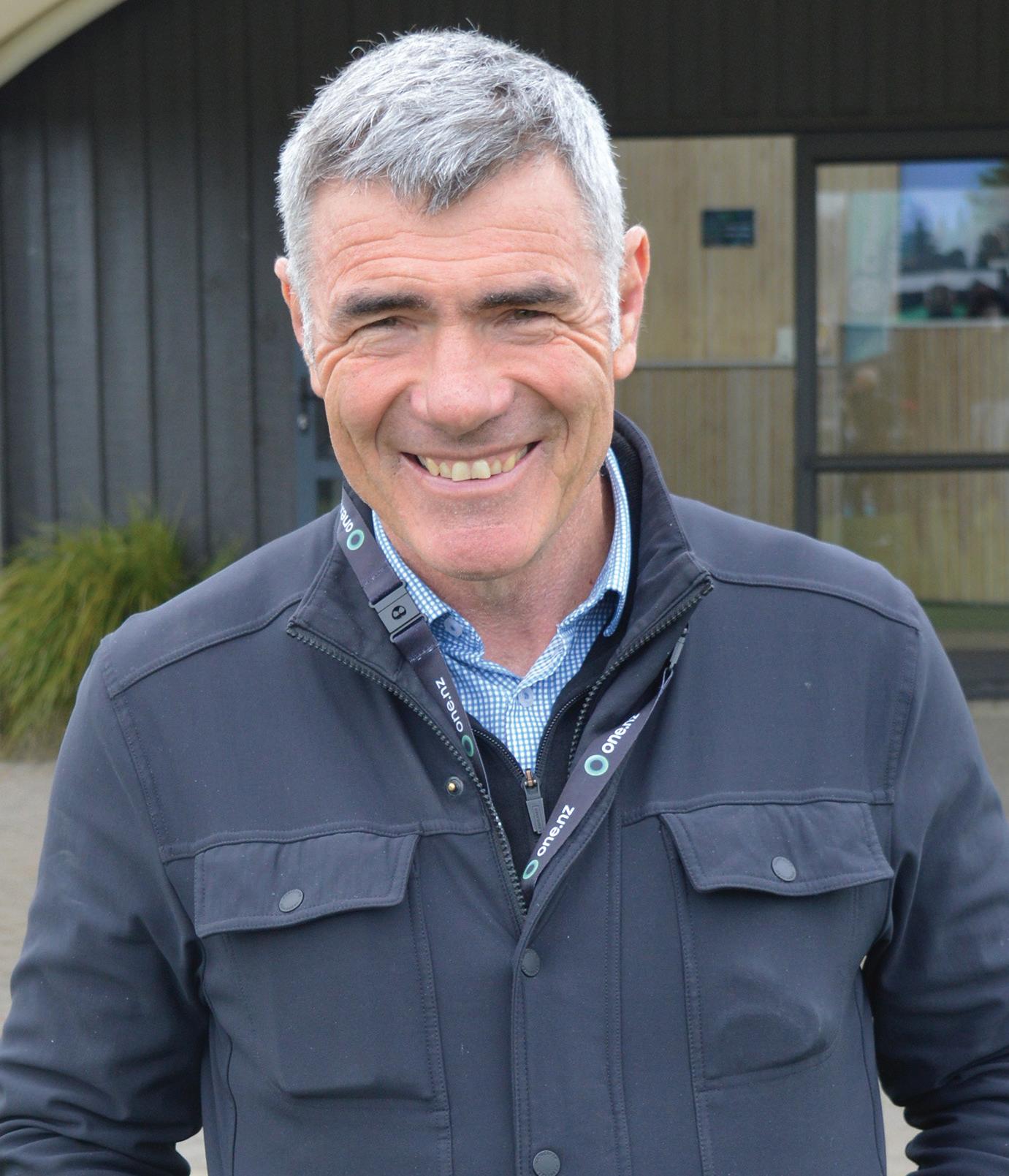
Chris Brandolino, Earth Sciences NZ.
Green kiwifruit faces challenges
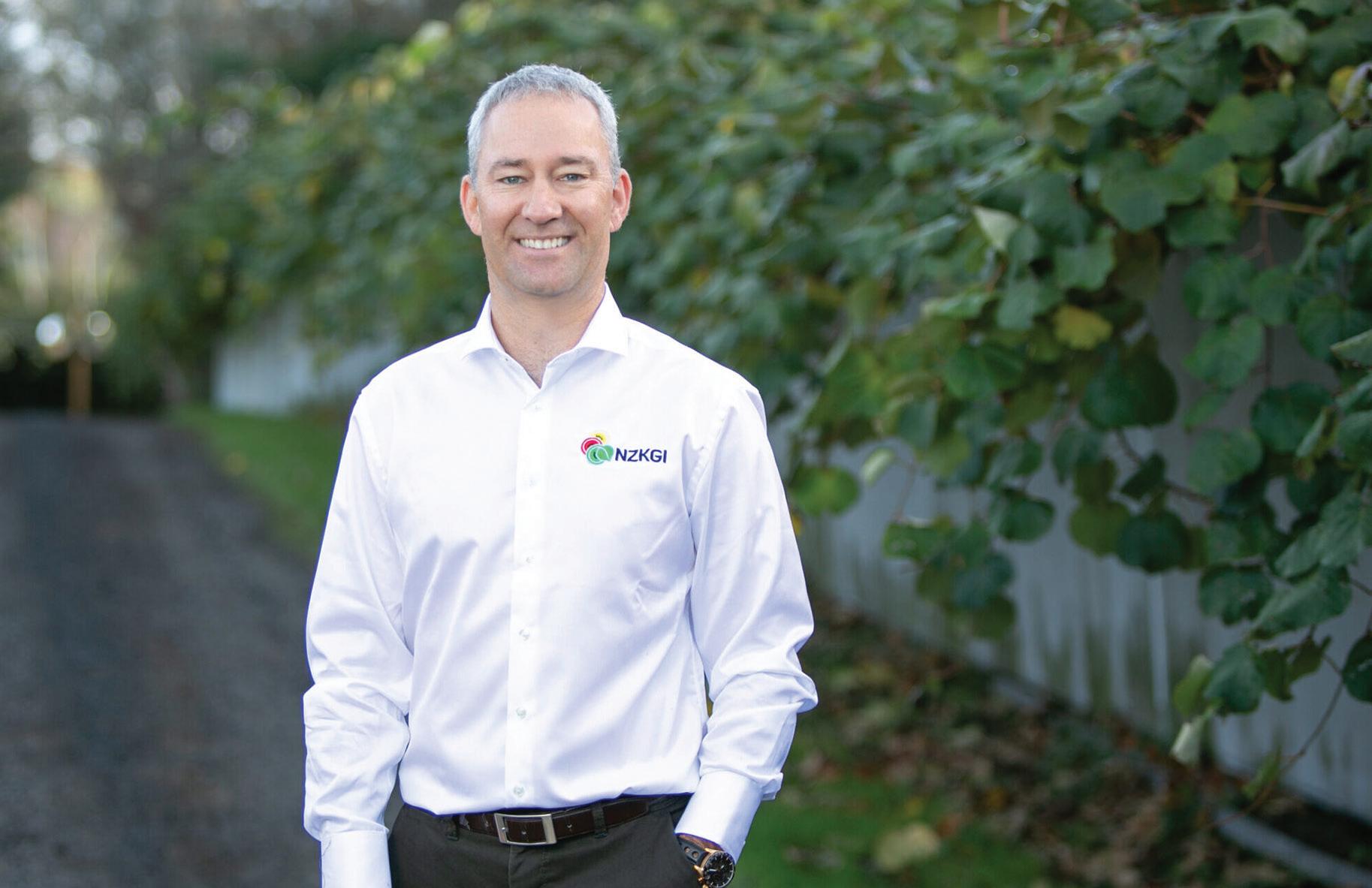
SIGNS FOR the 2026-27 kiwifruit crop look good, but there are still some challenges for growers – especially those who produce green kiwifruit.
New Zealand Kiwifruit Growers Incorporated (NZKGI), which represents NZ growers, says a record 225 million trays have been picked – nine million more than last season.
“So, whilst we are selling for good prices in the market and there is good market demand, costs are always rising, including the increasing cost of finance for growers to buy new orchards as well as rising kiwifruit licences and actual land prices,” he told Rural News
“Given this, we expect profitability to remain at current levels and not increase,” he says.
One of issues in this
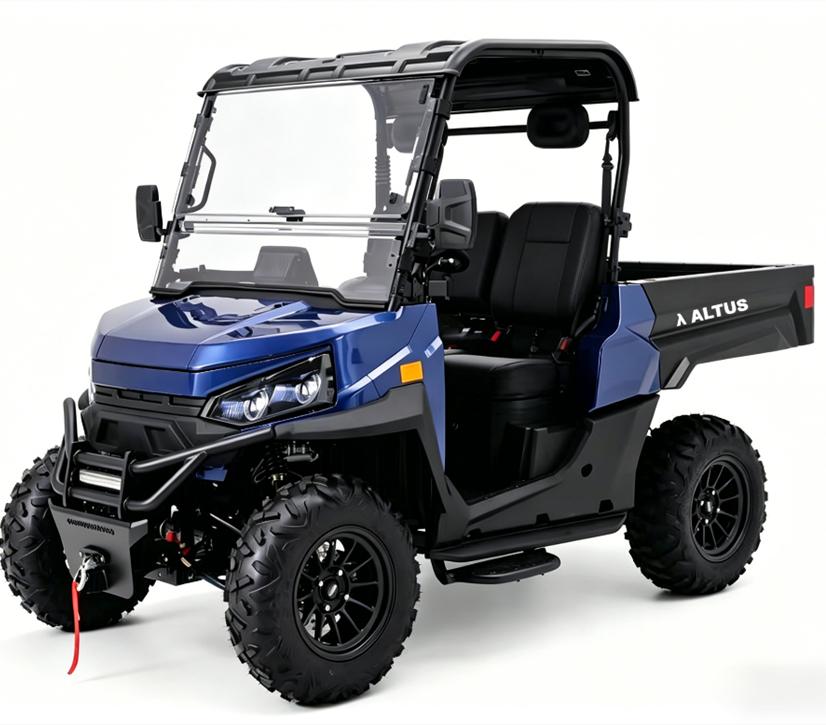
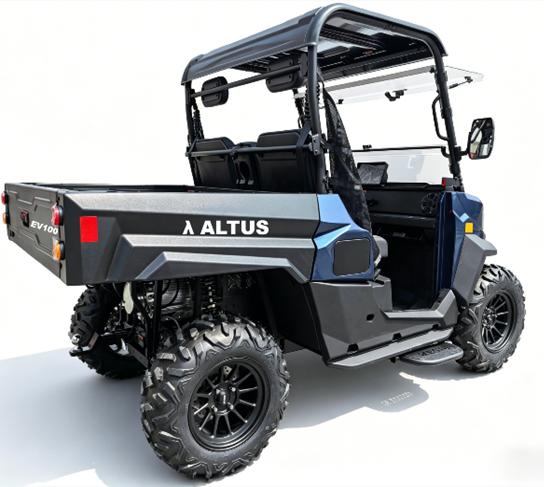
NEW ELECTRIC UTV
NZKGI chief executive Colin Bond says the trajectory for the sector is positive, but while volumes are up significantly, this does not necessarily equate to a big rise in grower returns.
Demand for kiwifruit is good in key markets such as Europe and North America but the returns per tray to growers is expected to remain about the same as it was last season.
The latest report by Ministry for Primary Industries (MPI) shows that total export returns for kiwifruit will rise by about 13% over the next four years, but signals that the days of dramatic increases in export returns are no longer there.
NZKGI is cautioning about the difference between selling for good prices and profitability for growers.
current year is the lower yields and smaller fruit size of green kiwifruit.
Bond says the harvesting of 58 million trays of green kiwifruit took longer than expected and the yield was 14% down on last season. He says with smaller fruit, the number of trays available for sale is reduced and some fruit may not meet the required export standard.
Bond says small fruit can be caused by several factors, the most common being when growers push their vines to produce higher yields in previous years and sometimes the vines struggle to do this all the time.
“This is a blip and not a catastrophe and it happens from time to time. For green growers a lot depends on what Zespri will be able to sell
CONFIDENCE IN the wool sector is rebounding as prices hit levels not seen in more than 15 years.
The Fusca strong wool indicator reached $7.14/kg last week, up from $3.49/kg one year ago, breaking the $7 mark for the first time in almost a generation.
Wool prices have struggled for years due to weakening demand, dipping below $2 kg and making it hard for farmers to cover the costs of shearing and transport, especially as both continue to rise.
The good news is that there are signs that demand remains strong in the market.
Market analysis points to more wool being sold by private treaty, indicating buyers’ confidence to buy forward.
There is more wool being used domestically in increasingly diverse end uses, and there are reports that stock levels remain low in key export markets indicating strong demand.
However, to sustain prices at these levels, demand must remain strong. To achieve this will require a concerted effort by stakeholders.
For its part, the Government is helping the cause through investment in commercial projects and procurement policy preferencing wool products, and significant investments have been made in innovative wool projects that have the potential to increase demand.
There has been investment into various initiatives for wool by others in the sector too, including the major meat companies, WoolWorks and ASB investing in Wool Impact and supply chain companies like the wool brokers.
Wool Impact says the important thing now is to keep building collaboration, transparency and investment across the sector.
The Wool Alliance – a partnership between Wool Impact, Campaign for Wool NZ, Wool Research Organisation of NZ and Beef+Lamb NZ – is building the case for one focused wool organisation to do the work needed to improve the profitability of wool long term.
Achieving this will require a collective effort across the industry.
While great progress is being made, the journey to long-term profitability is just starting for the wool sector.
HEAD OFFICE POSTAL ADDRESS: PO Box 331100, Takapuna, Auckland 0740
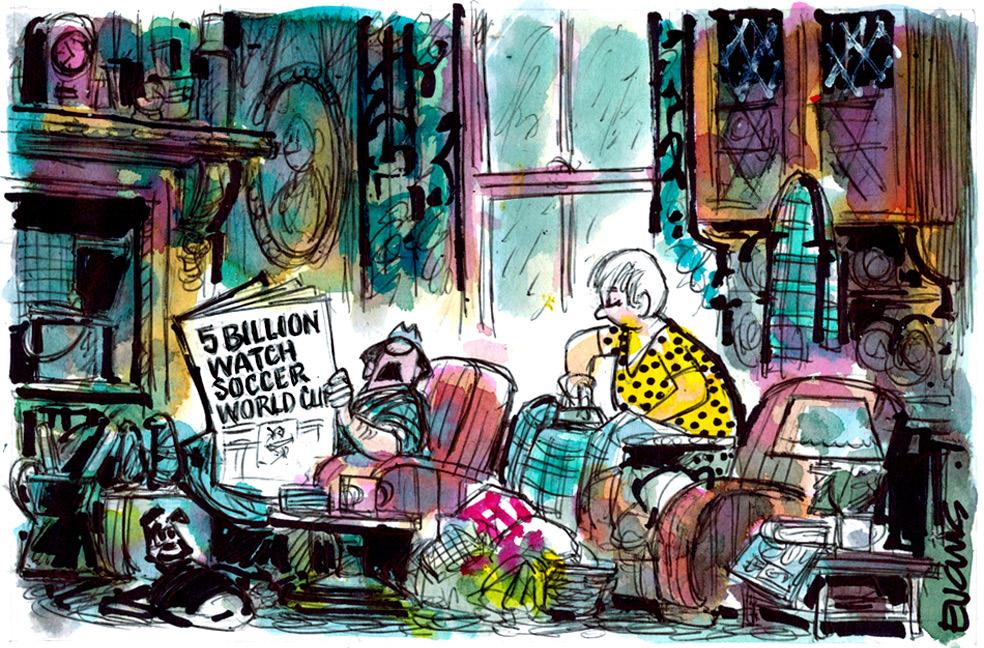
“No concussions, no broken noses or cauliflower ears – where’s the sport in that?”
THE HOUND
Feeding frenzy
FEDERATED FARMERS seem clueless when it comes to organising special dinners, according to a mate of yours truly.
At their conference this year, the main options for the gala dinner were venison and Beef Wellington “and a blob of something green”. Beef Wellington? This old mutt thought the name Wellington was an anathema for Feds people.
Interestingly, those attendees from the horticulture sector were left bemused at the menu; after all, at the Hort conference dinner, guests don’t just get a plate of vegetables and a wee sliver of meat. The Canine Crusader’s deep-cover cuisine critic reckons it’s time the Feds hired someone with some conference organisation experience - and maybe a new cook.
Not so united?
TALKING ABOUT Federated Farmers, although by some accounts they were not very federated or united at their recent conference, with Wayne Langford trying to squeeze in a fourth year as president, with some help from a friend in the organisation. Your old mate understands his somewhat Trumpian move to stay on an extra year caused much disharmony and angst, with some hot words being traded, before common sense prevailed and vicepresident Colin Hurst eventually got the big job. In the end, it was Langford’s last rodeo – one minute on the stage in the limelight interviewing the Prime Minister, the next day, sent packing back to the farm.
EDITOR-AT-LARGE: Peter Burke Ph 021 224 2184 peterb@ruralnews.co.nz
REPORTERS: Nigel Malthus Ph 021-164 4258 Leo Argent
MACHINERY EDITOR: Mark Daniel Ph 021 906 723 markd@ruralnews.co.nz
PRODUCTION MANAGER: Becky Williams Ph 021 100 4381 beckyw@ruralnews.co.nz
Turf war!
YOUR OLD mate hears a good old fashioned turf war continues to brew between the old farmer advocacy groups and ‘upstart’ Groundswell. The ‘new’ kids on the block, Groundswell, took exception to comments from outgoing Feds president Wayne Langford in a publication they consider as a bit woke, blasting said tome in the process: “Farmers Weekly has never been a fan of Groundswell’s methods and goals, but… they made a few incorrect claims about us.” Groundswell says they never “besieged” the Feds or aimed to replace the establishment advocacy groups, “we just wanted them to do their jobs”. In the bad old days of HWEN and the Farming Tax, the establishment advocacy groups “were failing to stand up for their members and levy-payers”. Groundswell says it brought the grassroots view to politicians and gave ag advocacy and much needed shake up.
AUCKLAND SALES CONTACT: Stephen Pollard Ph 021 963 166 stephenp@ruralnews.co.nz
WAIKATO & WELLINGTON SALES
CONTACT: Lisa Wise Ph 027 369 9218 lisaw@ruralnews.co.nz
Want to share your opinion or gossip with the Hound? Send your emails to: hound@ruralnews.co.nz
Labour pain
LABOUR LEADER Chris Hipkins was clearly not among friends at the recent Primary Industries Summit in Auckland. Shades of Fieldays where the Hound hears Chippy and his cohorts were not warmly welcomed – farmers’ memories being a bit better than some, judging by the polls! By all accounts, Chippy gave a bland and uninspiring speech at the recent talkfest in the big smoke. It started badly for him when he was wrongly introduced by MC as the leader of the National Party! After his speech, which came just before lunch, your old mate hears industry leaders largely ignored him, all preferring to make a beeline for the buffet tables. It can’t be helping Chippy’s popularity that the leader of his potential coalition partner, Chloe Swarbrick, stands accused of sabotaging the export sector by narking to EU nations about emissions!
SOUTH ISLAND SALES CONTACT: Kaye Sutherland Ph 021 221 1994 kayes@ruralnews.co.nz
DIGITAL STRATEGIST: Jessica Marshall Ph 021 0232 6446
the papers we use
for
to come.
New-Gen – it’s what we do
THE YEAR was 2020, the month was January, and an article in this esteemed publication suggested “a new thought for the New Year – New Zealand ‘Generative Agriculture’… or New-Gen, for short”.
The explanation was that “New-Gen picks up on the interest in regenerative agriculture but repositions New Zealand as the leader in achievement…” In the article I made the point that you can’t RE-generate something unless it is DE-generated. New Zealand does not have the deserts, desertification or dust bowls that stimulated the regenerative agriculture (RA) thinking overseas.
When regenerative was born, it focused on soil health, building up organic matter (soil carbon sequestration), reducing
ADVERTORIAL
use of synthesised agrichemicals and being on a journey of constant improvement. New Zealand’s agricultural history, based on science, informed by research, and honed by farmers, started in the late 1800s – and meets most of what is required to meet the RA goals. The efficiency gains, the productivity increases, the market orientation, are a matter of record.
The export economy, and therefore every New Zealander, benefits.
Many New Zealand agricultural scientists did not embrace the concept of ‘regenerative agriculture’ because soils here already have high organic matter by world standards; what was being promoted would not have the same positive soil carbon
COMMENT
Jacqueline Rowarth
sequestration benefits as in degraded soils. Further, New Zealand farmers are already focused on constant improvement –it’s part of their DNA. If improvement is ‘business as usual’, achieving and proving improvement above BAU can be difficult.
At the end of 2020, some of the American proponents of the regenerative approach published a paper in Frontiers in Sustainable Food Systems. The
authors reported that by using animals and multispecies (animals as well as plants) pasture rotation on what had been ‘degraded cropping land’, reducing reliance on external inputs (herbicides, pesticides and fertiliser, for instance), as well as restoring and enhancing ecosystem services such as soil carbon (C) sequestration, they could meet the desired goals: they increased soil organic matter, thereby offsetting greenhouse gases, while producing animal protein for human consumption. However, when comparing required land between the two systems for food production, the authors reported that multispecies pasture rotation required 2.5 times more land than conventional production to produce the same
amount of food.
That is a very big ‘However’.
United Nations projects the global population of 8.3 billion will increase to 10.3 billion by the mid-2080s before declining – and food insecurity is already increasing.
The paper’s authors asked whether society should ‘prioritize an inputintensive, conventional (for America) system that produces more food from a smaller yet degrading land base? Or, alternatively, should systems such as multispecies pasture rotation that produce less food on a larger, but more ecologically functional landscape be more highly prioritized?”
Answer, New Zealand already does what is needed. On 5-species
CONVISO SMART brings higher germination and greater flexibility.
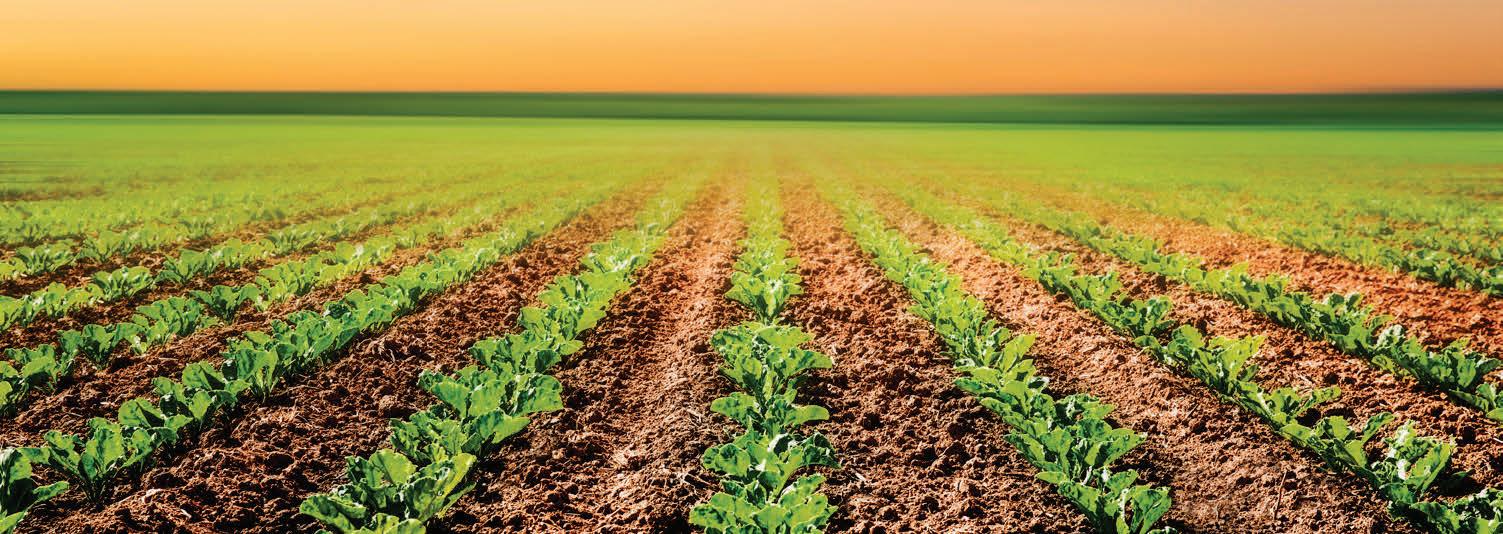
Down in Woodlands is Horizon Flowers’ famous tulip farm managed by Roy Smak. The Smak family came over from Holland more than 30 years ago to help Horizon grow tulips in Southland’s ideal tulipgrowing climate and soil. When they’re not in tulips, some of the paddocks are leased and planted in sugar and fodder beet by local agricultural contractor and farmer, Erik Smak.
Erik’s contracting business covers a wide area from South Otago right down to the bottom of Southland. He not only grows the beet but runs his own big, self-propelled beet harvester to lift sugar beet for sale to farmers for winter feed.
We caught up with Erik on the Horizon Flowers farm to talk about his operation and the KWS CONVISO® SMART system.
Cleaner crops. No more gaps. The benefits of the CONVISO SMART system to Erik are more than sugarbeet bred to be herbicide
tolerant. It’s the high germination rates that have impressed him, as Erik explains.
“With KWS, we’ve grown both sugarbeet and grazing fodderbeet and both have very high germination rates. It comes up nice and even - I don’t like seeing gaps - plus it’s very palatable to cows.”
As a contractor, you want to get the most out of the land you’re leasing: it’s all about yields and efficiency. Higher germination means every seed planted is going to grow. Flexibility on spray dates and crop stage spraying is also key in Southland as weather can get in the way.
“The spray system that KWS gave me, completely knocked out every weed and the crop is very, very clean and healthy because of that. Definitely give it a go. It’s an easy, simple system with good proven results. So, if you’re considering it, just go and do it,” vouches Erik.
(plus any random plant) pastures, grazed rotationally by various animal classes, our soils have higher organic matter and lower greenhouse gases per unit of production than most countries can achieve. We have good stock management and farmers interested in doing better – in testing fodder beet or wintering barns or ‘wearables’ and whatever might add benefits to their system. Subsuming what we already do into what is called something that does not meet global needs, doesn’t seem a good move.
Use of agrichemicals, including fertiliser, has decreased with advances in precision agriculture and new formulations of chemicals targeting specific weeds and pests.
New-Gen is for farmers wanting to continue doing the right thing for the environment while supporting food supply.
New Zealand researchers can show the way, using New Zealand farmers as the example.
New-Gen – it’s what we do.
• Dr Jacqueline Rowarth, Adjunct Professor Lincoln University, is a soil scientist with a PhD in nutrient cycling. She is a farmerelected director on the boards of Ravensdown and DairyNZ and a member of the Scientific Council of the World Farmers’ Organisation.
New Zealand has scientists focussing on all the important aspects. And New Zealand has farmers who deserve to be acknowledged for their contribution to environment and economy.
Erik Smak, Grazier/Contractor - Woodlands, Southland
SCAN TO LEARN MORE ABOUT ERIK SMAK
10 AGRIBUSINESS
How NZ apples plucked a ‘world-first’ trade deal
SUDESH KISSUN sudeshk@ruralnews.co.nz
EIGHTEEN MONTHS ago, when negotiations for a free trade deal with India were announced, New Zealand apple growers expressed their desire to be part of the deal.
But the Ministry for Foreign Affairs and Trade (MFAT) said “it was probably a no”, according to New Zealand Apples and Pears chief executive Danielle Adsett.
She was told that apples won’t be part of the deal because India has never done apples in any free trade deals before.
“Equally when we spoke to the Ministry of Agriculture and Farmers Welfare in Delhi, it was
Prepare their biology to win.
just a hard no,” Adsett told a gathering at the National Fieldays in Hamilton.
“I don’t take ‘no’ well and I thought there’ll be a way around this.
“So, what we did is we decided to build on the
That’s
decades of cooperation that we’d already had in that market.”
New Zealand has been exporting apples to India since early 1990s and has been part of several World Bank projects with NZ experts helping Indian apple growers lift productivity.
And what the NZ experts left in their wake was a great reputation for helping Indian apple growers to prosper.
India, the fifth largest apple producing country in the world, has over 1 million apple growers, mainly in the northern states of Himachal Pradesh and Jammu and Kashmir.
Indian growers produce an average of six metric tonnes of apples per hectare, compared to NZ growers doing 120MT/ ha. The Indian climate is extremely high. The cool chain is difficult, and the rootstocks and the varieties are very old.
Adsett says over the 18 months they went to MFAT with a co-operation plan – if NZ apples are included in the FTA, then they would send experts to India for five years post-FTA at own cost to help Indian growers.
“So, we put that plan on the table and that also for us, it’s about having complementary supply.
“India grows apples in the alternate season to
‘SIGNIFICANT
New Zealand. So, we can provide apples into their market to complement their own domestic supply.
“And if we can help them prosper in their local communities, I think that will just go to show that this is more about the longer-term relationship between our apple growing nations than just what has happened as a result of the FTA.”
When the Indian FTA was finalised late last year, New Zealand apples won a 50% reduction on tariff, down to 25%, for exports between from 1 April to 31 August.
The quota starts at 32,500MT in year one, growing to 45,000MT year six and onwards. Outside of these conditions, New Zealand growers can export at the current 50% tariff.
Adsett says getting apples on the table, that was cool.
“Those, late night and early morning calls, as we got through the nuts and bolts was great to be involved with and great to get there,” she says.
“I think more importantly we’re going to build the relationships that will see us prosper in this market into the future.
“And I think for us we see this as the start of the relationship, not the end.”
SUPPORT’
THE INDIAN FTA has come under fire from some NZ politicians, including New Zealand First leader Winston Peters.
But Agriculture and Trade Minister Todd McClay urges people not to “believe everything you hear blowing in the wind”.
McClay says there’s significant support throughout New Zealand for this free trade agreement because it is very high quality.
“And I know that Kiwis know that actually the relationship that we’ve formed with India, governmentto-government, people-to-people, culture-to-culture, sport-to-sport, is actually good for us on both sides.”
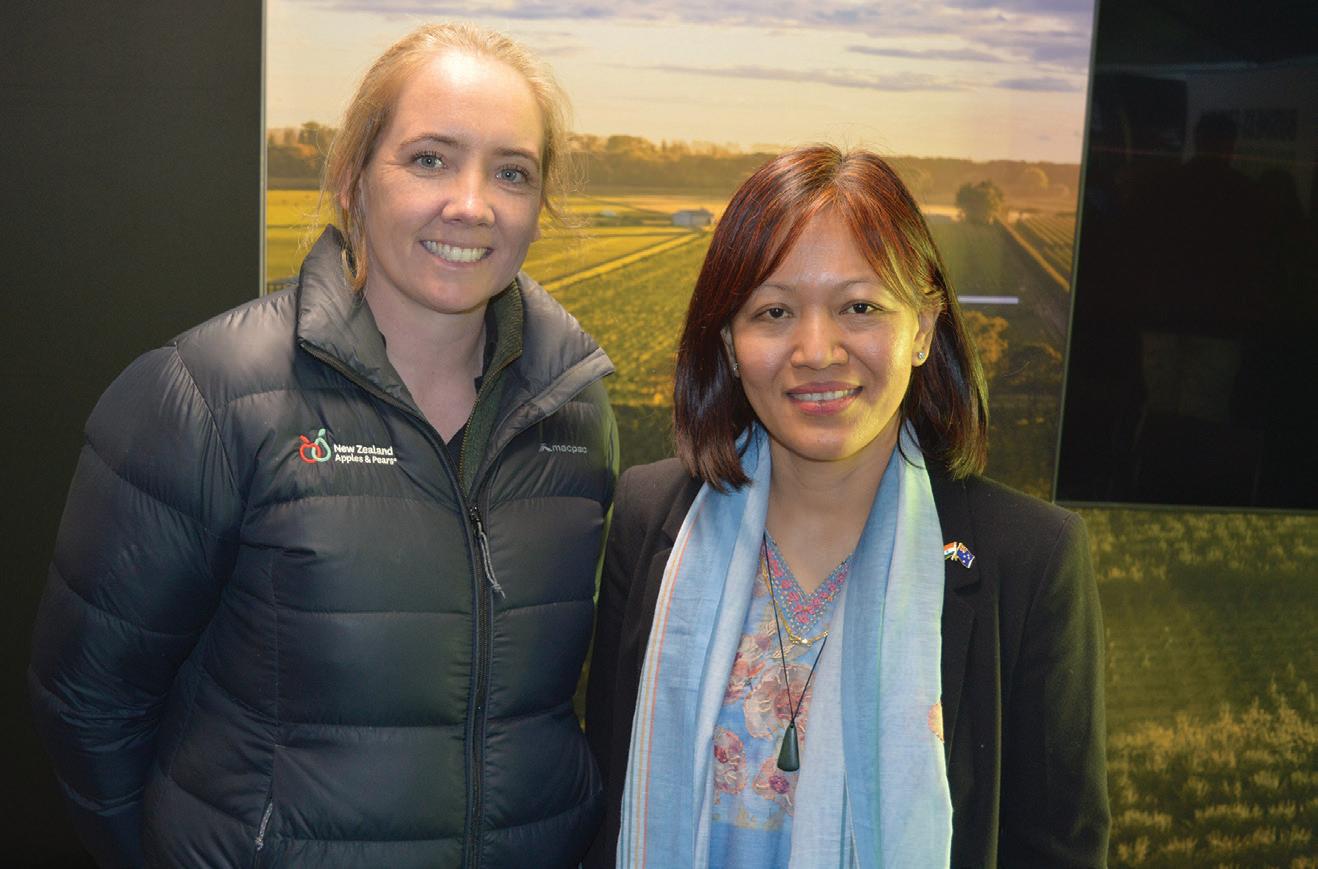
New Zealand Apples and Pears chief executive
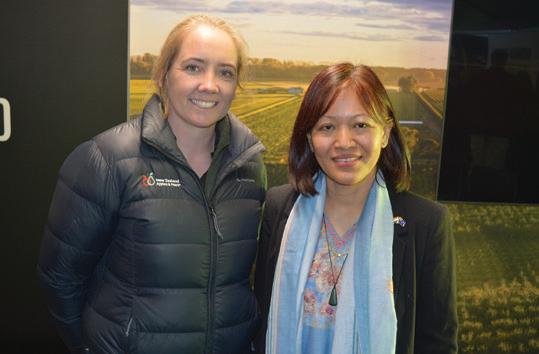
Danielle Adsett with Indian High Commissioner Muanpuii Saiawi at the Fieldays.
Govt travelling in creep box on vehicle permitting
WHILE THE Government has moved quickly to make commercial hauliers’ lot easier during the current fuel crisis, they appear to be stuck in creep box when it comes to the agricultural industry.
During their recent national conference, Rural Contractors
New Zealand (RCNZ) discussed progress on reform of Vehicle Dimension and Mass (VDAM) legislation that regulates dimensions, weight limits and indeed, times when tractors and machinery can be moved.
The concerns of rural contractors and out of date VDAM regulations have been on the table
since 2016, but despite raising this issue with current Ministers almost two years ago, there has been no reform of any substance.
RCNZ’s concerns centre around the fact that tractors and machinery currently in use are a far cry from the machines of just a decade ago, having got larger and heavier, but developments in tyre technology and braking systems means they are safer, can stop quicker and have a lighter footprint, so don’t create any greater damage to roads and bridges.
They make a comparison with regulations in the Australian, US and key European markets, where the very same machines
are allowed to operate lawfully.
The current regulations mean that around 750 machines are currently struggling to obtain, or indeed cannot obtain a permit, meaning cultivation and harvesting is interrupted, with the likelihood that if travel is
undertaken without the correct permit, fines can exceed $10,000.
It seems regulatory authorities don’t realise that modern tractors and harvesters are called upon to carry out a wide range of tasks as the growing and harvesting seasons change. Indeed,
BULKY PERMITS
RURAL CONTRACTORS NZ is also calling for modernisation of the permitting process to recognise the widespread use of smart devices throughout the agricultural sector.
Chief executive Andrew Olsen says currently permits can often be up to 20 pages, making them difficult to understand and interpret.
“Surely an electronically-issued permit, clearly laying out operating parameters and any restrictions, would make a great deal more sense for all parties involved and should be on the Government’s radar to boost productivity and innovation across the rural sector?”
a tractor equipped with a rear-mounted implement at the start of a job may be reconfigured for a further task, to use front and rear implements in combination.
Likewise, a selfpropelled forage harvester might be fitted with a 3-metre wide grass header in the spring, but switch to a 12-row maize header later in the season. In both scenarios, dynamic and axle loadings change dramatically in a way that is not recognised by the VDAM regulations.
Rural Contractors
NZ chief executive Andrew Olsen says some members have faced fines for moving agricultural vehicles deemed too heavy for roads, under rules more than a decade old.
“Our members’ tractors and other machines have got heavier but the transport regulations are such that they can be overweight before they leave the showroom, let alone with implements on board,” says Olsen.
“Having the flexibility to permit these machines should be within the capability of the transport minister and NZTA. Rural contracting businesses want to comply and be lawful and I’m sure any farmers with big
machinery feel the same,” he says.
RCNZ says it is realistic about VDAM rule changes, knowing it won’t happen overnight, but urgent attention is certainly required to the permitting process. The organisation is calling for government officials to meet with a delegation from the sector to field test machines that can’t currently be permitted, and in the short term a permitting system that can work around the outof-date VDAM rules.
Rural Contractors NZ chief executive Andrew Olsen.
Study identifies resilient pastures for Northland
SUDESH KISSUN
A FIVE-YEAR study
has found that the cost of reducing emissions without technology may be significant and unsustainable for Northland dairy farmers.
The study has also presented the region’s farmers options of trying pasture species other than perennial ryegrass as they grapple with changing climatic conditions.
The study was conducted by the Northland Dairy Development Trust (NDDT) on the Northland Agricultural
Research Farm (NARF), Dargaville. A field day was held last month to reveal the results.
Trust coordinator Kim Robinson told Rural News that the study set out to learn two things.
One was the cost of reducing emissions without technology.
“We have shown this cost is significant and unsustainable and as a result I think most farmers are waiting for either new cheap tech or significant pricing signals before they make large system changes,” says Robinson.
The study also looked at which pasture species other than perennial
ryegrass perform better in the Northland climate.
Robinson says many farmers are now interested in the tall fescue cultivars as a result of the trial.
“They also now understand the management and establishment must be different to ryegrass, which is critical to their success.
“The seed companies are also more open to selling these pastures.
“Farmers can have the confidence to try some of these options knowing how to get the best out of them,” she says.
The study which started in 2021-22 season
included three farm types:
Baseline Farm –existing Italian ryegrass/ kikuyu pastures. Stocking rate three cows/ha and up to 190kg applied N/ha.
Alternative Pastures Farm – 75% of pastures in tall fescue and/or cocksfoot-based pastures, with legumes & herbs.
Stocking rate three cows/ ha and up to 190 kg applied N/ha.
Low Emissions Farm –
existing Italian ryegrass/ kikuyu pastures, targeting a 25-30% reduction in methane emissions and 50% reduction in nitrous oxide emissions (compared to the Baseline Farm). Stocking rate was 2.1 – 2.3 cows/ha, with no nitrogen fertiliser applied.
All farms used limited imported feed to fill feed deficits (up to 800kg/cow of mainly palm kernel expeller
PKE). Trial measures captured pasture and milk production and composition, profit, labour input and management difficulty and environmental impact.
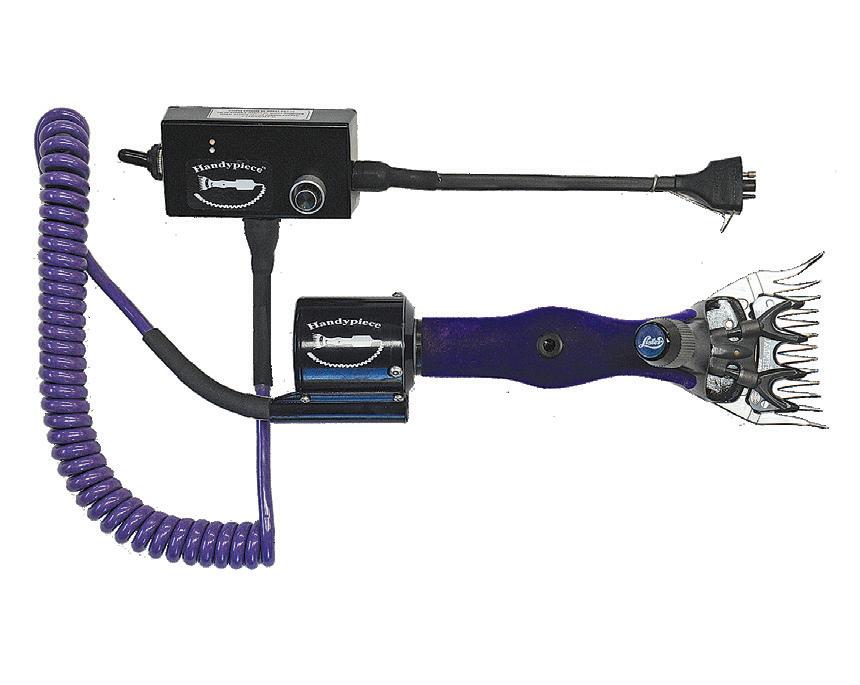
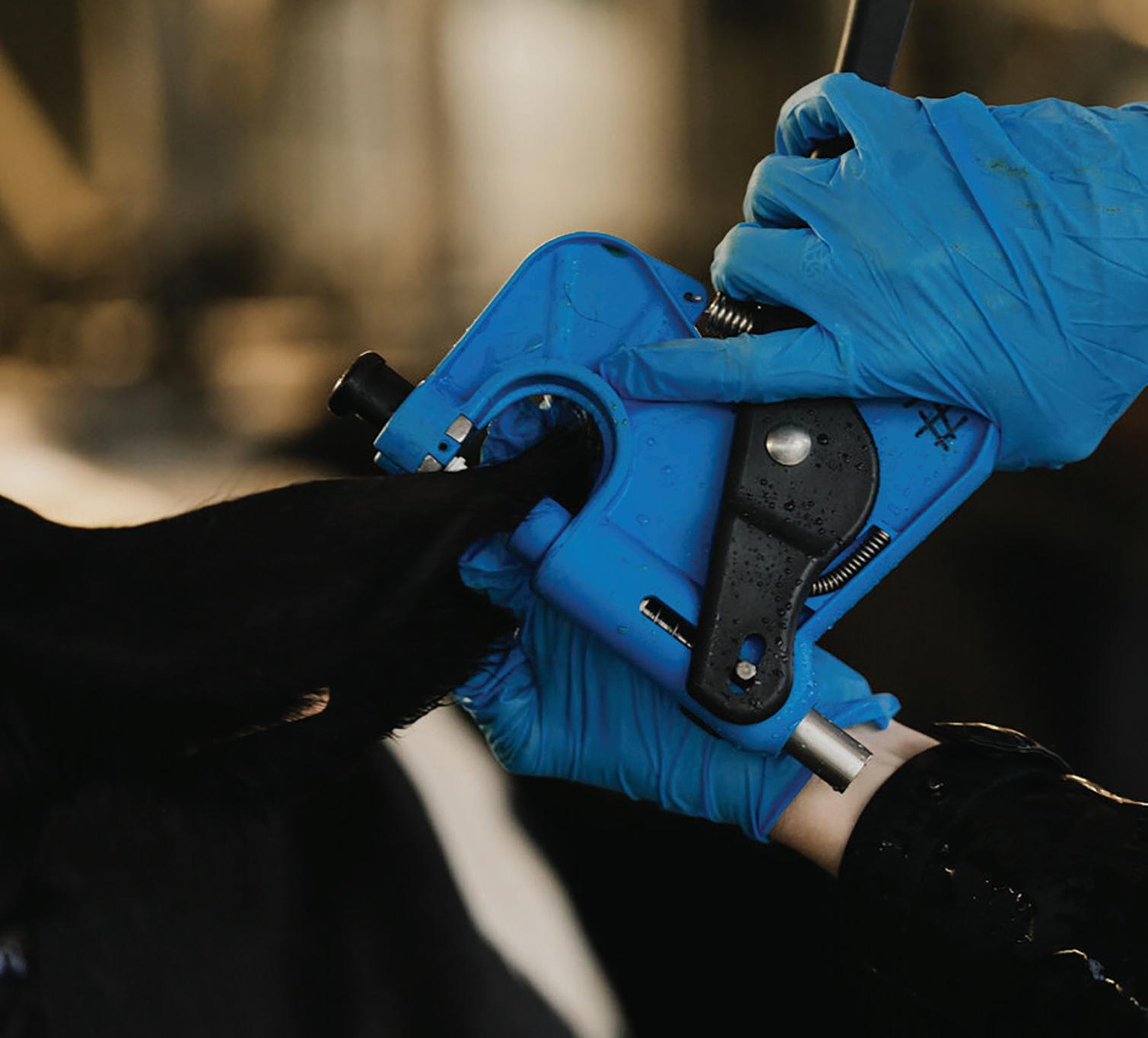
■ Ideal for shearing sheep, alpacas, goats and cow tails.
■ Variable speed from 2600-3500 rpm.
■ Latest brushless motor technology means minimal heat build up
■ 1400gms means 100-200gms lighter than standard handpiece.
■ At 2800 rpm the 12-volt lithium battery will crutch 300-400 sheep or trim up to 400-500 cow’s tails.
Results have varied over the five years. However, milk production was highest on the Baseline Farm in three of those seasons while the Alternative Pastures Farm had the highest milk production in the other two seasons. Drier summers favoured the Baseline Farm which has a higher kikuyu presence in the pastures.
Milk production on the Low Emissions Farm where no nitrogen fertiliser was applied has been between 20% and 39% lower than the Baseline Farm.
The variation in milk production on the Low Emissions Farm appears to be related to variance in clover presence. Over the five seasons, clover content of the pasture on the Baseline Farm has averaged 9% while the Low Emissions Farm has averaged 24%.
Financial analysis of each farm (using actual milk prices) across the five years of the study shows that on average the Baseline and Alternative Pastures Farms have had relativity similar farm operating profit. The Low Emissions Farm operating profit has averaged $698/ha lower than the Baseline Farm, although it was not the least profitable farm in two of the five years.
EMISSIONS PROFILE
GREENHOUSE GAS emissions on the three farmlets were calculated using the Overseer model. Emissions have been relatively similar between the Baseline and Alternative Pastures Farms, due to similar stocking rate, milk production, PKE and N inputs.
The Low Emissions Farm averaged 26% less methane and 46% less nitrous oxide for the five years of the trial.
The higher milk production on the Low Emissions Farm during the 2025/26 season led to lower reductions in methane and N2O compared to the previous four years.
The
■ We customise cables for lifestyle shearing. HELP US TO HELP YOU FOR THE NEW SEASON View in action go to www.handypiece.co.nz Freephone 0800 474 327 email: dave@handypiece.co.nz
Northland Dairy Development Trust’s future dairy farm systems project has ended.
MANAGEMENT 13
Primary sector needs a pipeline of directors
SOPHIE HENDERSON
GOOD GOVERNANCE is critical to the primary sector. Whether it is a rural business, a levypayer organisation or a research body, we need a pipeline of capable directors with a passion for, and knowledge of, the sector.
Many people start with local leadership roles, such as a school board or community trust, but opportunities must be available for them to gain experience at the next level of governance.
In 2024, I was given that opportunity when I was successful in my application for the twoyear position of associate director with Ovis Management Ltd (OML), which promotes the control of sheep measles.
I am due to complete my term in August, so applications are now open for the next associate director through to 2028.
My advice to those looking to make that step into industry governance is to apply, and if you are successful, seize the opportunity with both hands.
For me, the experience has been more than I could have ever imagined in terms of board observation and networking opportunities.
I have had the opportunity to observe best practice with OML. The board’s cohesion enables a lot to be discussed in a short space of time, from farm to market and everything in between.
There’s a great level of respect and due diligence that goes into delivering a programme such as Ovis and as associate director I’ve felt supported, observed a range of scenarios and been encouraged to contribute at every opportunity.
I think many people underestimate the importance of OML.
As a farming partner in the Rangitikei, we were already following its advice, but I was not aware of the quiet success it has in education and preventing C. ovis from
entering our markets.
Seeing the OML role advertised was exciting. Alongside farming, I run my own brand development business.
I had completed rural leadership programmes, including Kellogg and To The Core, and was actively looking for an associate role that would provide real-world boardroom experience.
The advice I had been given was to focus on areas of interest and consider what skills you would bring to the table. My initial interest was the on-farm connection with biosecurity along with my background in marketing and brand development.
As a farming partner with a young family, I had leaned into the administration and audit side of the business.
We had spent the previous couple of years working through various farm plans with a biosecurity component. In terms of Ovis, we already had dog policies in place, including a monthly worming programme with our vet, records for Farm Assurance Programme purposes, and steps around visiting and neighbouring dogs.
We knew the guidelines around freezing meat and cooking offal, and monitored downgrades on kill sheets, but no more than any other farmer would. I had also spent time working for a meat processor, so I had a broad understanding of the supply chain.
The fact that OML was a subsidiary of the Meat Industry Association was also appealing because of the opportunity to build connections in the industry.
So, like all good decisions, I trusted my gut and applied for
the role. It has been a fascinating learning journey, not only in terms of gaining governance skills and experience, but also in building knowledge of, and a real passion for, this important work.
OML occupies a niche space, working through AsureQuality inspectors to monitor every carcase and ensure everything heading to our markets is of the highest quality.
The data is fed back to OML’s project manager, who works with farmers with high prevalence rates and educates them on best practice.
It is one of the only programmes in the world that links individual carcase downgrades
to a specific infection. That information can be proactively discussed with the individual farmer and managed in a positive way, with the outcome being consistently low prevalence rates and higher education rates.
It is a fascinating programme and an example of the many important processes behind the curtain that are often overlooked when we champion food producers or successful in-market campaigns. Without them, we would not reach the high level of quality that opens so many opportunities globally.
• Sophie Henderson is an associate director of Ovis Management Ltd.
Woolover Animal HAVE YOU COVERED
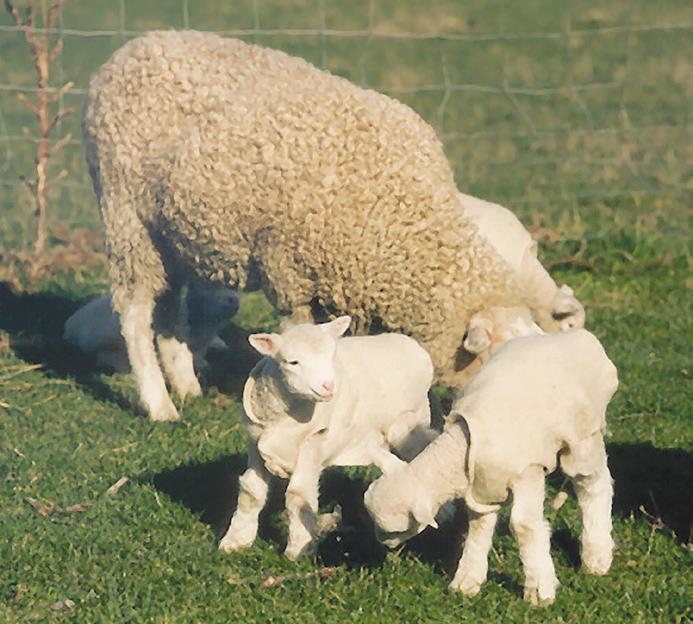
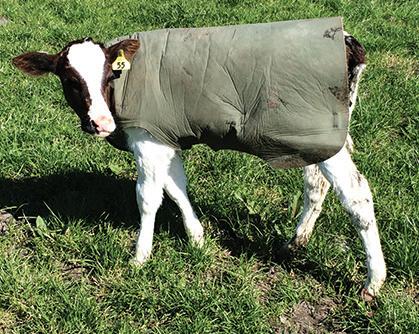
If you can get to them, you can save them. A NZ$6.00 investment in a Woolover Cover can return you NZ$180! The covered lamb will enjoy the warmth and also have increased growth rates over the first three weeks. Enjoy the satisfaction of saving at risk lambs and be well rewarded in doing so.
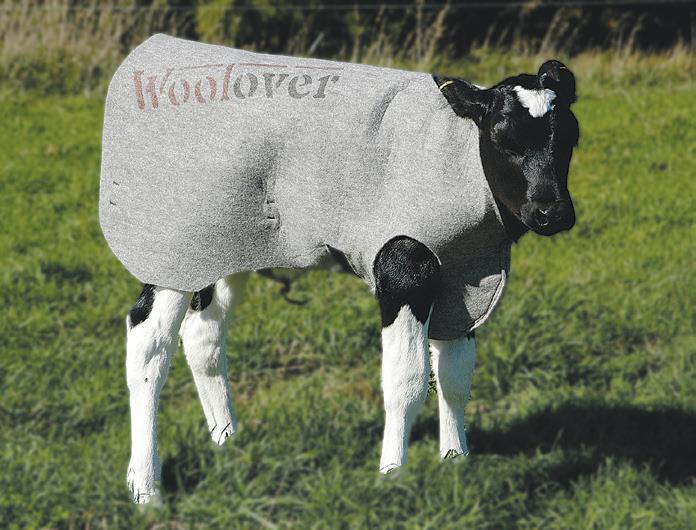
Regular Calf Covers
Raising calves is not for the faint hearted. Ensuring the calf is warm and dry in a draft free environment, is the ideal situation.
QUESTION; What was the air temperature at 4:30am this morning in your calf rearing facility? If the air temperature was below +10C, the calf is now cold. Drop that air temperature to +4C then calf is shivering and cold. The 'shot of milk' at 7:30am on a cold calf is now being absorbed to regain body heat rather than being used to actually grow the calf.
THE ANSWER IS; By fitting a Woolover Calf Cover to those new born calves, the wool is now ensuring the calf is warm and able to absorb that milk into growth rather than trying to maintain body temperature. All calf rearers should be ensuring their calves reach target weights earlier, be it your replacement heifers or your dairy / beef contract calves. Simple really! Just use the Woolover Calf Covers to ensure this next crop of new borns reach their true genetic potential.
Woolover Ultra Calf Cover
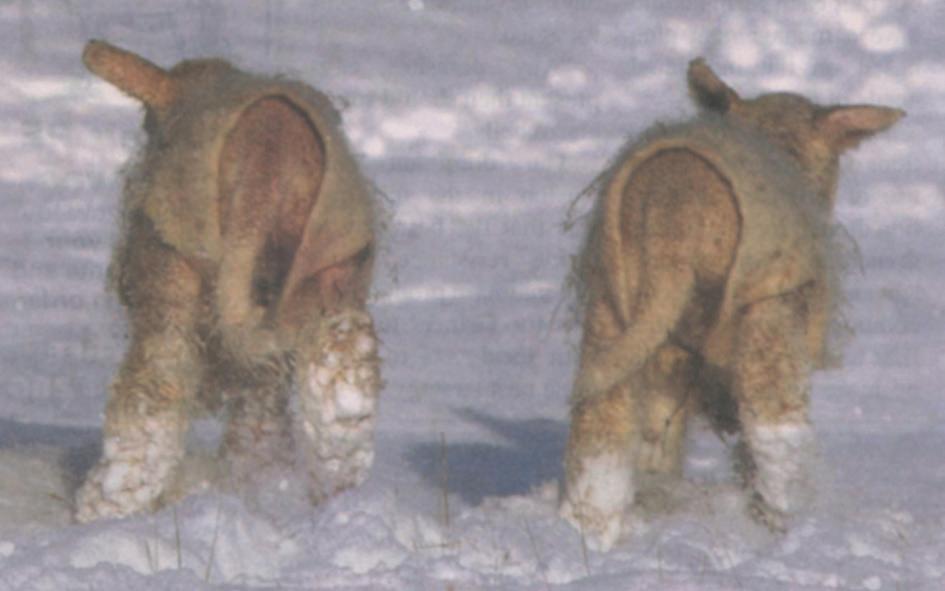
As above with the Regular Calf Cover, wool providing the warmth plus total water shedding ability, to ensure those calves in the harshest climatic conditions, survive and grow to reach their true potential.
Especially designed for those kid goats, or finn lambs or triplet lambs, these covers will ensure and assist those smaller animals survive and reward the effort to cover them.
Wool Working 24/7
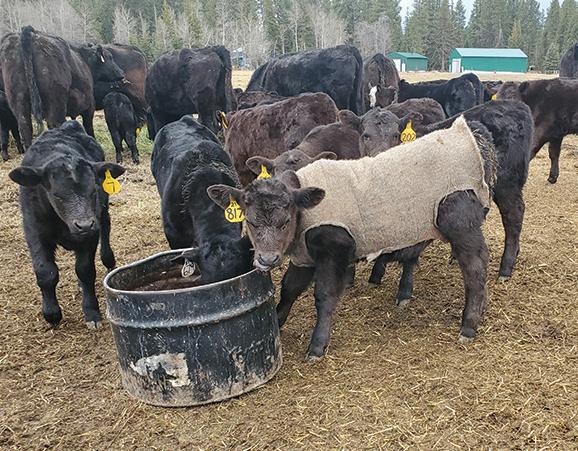
Designed especially for those USA / Montana blizzards, the cover is designed to simply 'fall off the beef calf after 4 weeks' and simply biodegrade on the ground where ever it falls. No rodeo nor catching the calf to remove the cover. Perhaps you have a mob of dairy cows calving early on a paddock of swedes, less that ideal weather, simply fit the Woolover Fit n Forget Beef Calf Cover, knowing full well the calf should survive that hostile environment, and capture some additional growth rate.
Woolover Finn Lamb / Kid Goat / Triplet Cover
Fit n Forget Beef Calf Cover
Sophie Henderson
Drenching light ewes at scanning
Scanning is a great time to start identifying and managing groups of ewes based on feeding priorities. Wormwise's Mary Bowron discusses some of the possible reasons ewes lose condition in early winter - and it's not necessarily internal parasites.
A KINDER
autumn
across much of the country has left ewes, on average, in better condition, which is showing in improved scanning results in earlier-lambing areas.
However, there will still be ewes that have become light in early winter. These girls are at particular risk of poor lambing performance and poor survival. And it’s very difficult to get weight back on ewes in the last part of pregnancy, so management decisions about these light girls are an early winter job. Will a drench at scanning help? It might. But drenching alone is unlikely to be enough.
In a study on five
North Island hill country farms, light ewes that were drenched in early winter lost less weight than their skinny counterparts who were left undrenched. However, both groups of light ewes continued to lose weight – highlighting the need to identify these girls and do something more for them, aside from just drenching.
Are parasites the main cause of skinny ewes?
When ewes are under pressure for feed, have another underlying disease or are not coping with being part of a large mob, they can come under pressure from parasites. The parasites might not be the primary problem.
Getting some postmortems done on light
ewes in your flock can be very helpful.
The extended facial eczema season has still wreaked havoc in parts of the country. These light ewes will continue to show up through winter – compromised liver function limits their ability to compete under winter feed conditions. Drench cannot repair burnt liver!
Johne’s disease cases can spike if ewes have been under feed pressure earlier in the season.
Ewes with Johne’s disease can look just like they have worms and it’s really important not to lamb these girls – their progeny are likely to be born with Johne’s, and the ewes will be a big source of infection to other lambs.
The whole-farm worm cost of light ewes
Light ewes frequently have higher faecal egg counts than their better conditioned mates and won’t be helping your pasture contamination situation. Especially if you kept extra lambs on in the autumn to take advantage of high prices! What to do?
Once you’ve scanned, you know who’s who in your flock, and what their feed priorities are. With those priorities in mind, revisit the feed budget, particularly with the risk of El Niño ahead. Make sure younger multiplebearing ewes have plenty of feed, while fat single-bearing ewes can be used for clean-up duty. Skinny multiples, especially triplets, are
at greatest risk of poor lambing performance. Not lambing the worst of these is a valid option. Making a decision earlier rather than later puts you at a better position at set stocking.
For light ewes that you think are worth persevering with, reducing mob pressure and feeding them better to meet their increasing energy demands in the last month or pregnancy are key. Choosing safer lambing paddocks will also help. If you drench these ewes, make sure they are identified so you can observe which ones respond. Often these light ewes are repeat offenders, so identify these girls and consider culling them at weaning time if they make it that far.
Getting some postmortems done on light ewes in your flock can be very helpful.
How much of a resistance risk is winter ewe drenching?
Probably fairly minimal; environmental conditions are not favourable to high development rates from worms in ewes at this time. The risk is low if
TAKE CONTROL
only a proportion of the flock are drenched with a short acting product, and especially if drenched ewes are also fed better, allowing their immune systems to deal with any parasites left behind and limit shedding of resistant eggs.
Save time and save money with Bionic® Plus - the 100 Day* controlled release combination anthelmintic with minerals capsule for sheep. Worm control with Bionic® Plus can reduce drench inputs1, aid in control of dags and associated flystrike2, and slow the development of resistance.
Farmers and veterinarians can be confident when they choose Bionic® Plus.
Why bull team movement is not a bad thing
IN THE past, a bull could sit comfortably in a breeding team for several years with little change, but today, that’s no longer the case.
Bulls move in and out of teams more frequently than they used to, and that movement can sometimes raise questions about the strength of the overall team. In reality, movement reflects the faster pace of genetic progress and more precise selection tools shaping today’s herds.
The speed of genetic gain
The rate of genetic progress in the New Zealand dairy sector has accelerated significantly over the past decade. Tools such as genomic testing, improved data collection, and more sophisticated evaluation systems mean we can identify an animal’s genetic merit earlier and with greater accuracy than ever before.
Through LIC’s GeneMark Genomics service, more than two million animals have been genotyped. This enables farmers to make more informed breeding decisions by identifying superior genetics in their
herd at a younger age. While some breeding values go up and some go down, the outcome is a more accurate prediction of an animal’s genetic potential.
More data means more clarity New Zealand has one of the most comprehensive dairy genomic databases in the world. Milk production, fertility, health and conformation traits, longevity, calving difficulty, and efficiency data flow in from herds nationwide every season, and when combined with genomic information, this creates an incredibly powerful picture of an animal’s true breeding worth.
With multiple genetic evaluations released each year, new data continually feeds into the New Zealand Animal Evaluation (NZAEL) model. This ongoing stream of information provides sharper insight into how bulls rank relative to their peers, and in a rapidly advancing genetic landscape, even a very good bull can quickly be surpassed by an even better one.
As more phenotypic and genomic data flow into NZAEL, rankings continue to
shift, emphasising the importance of using a team of genomic bulls rather than relying on the traits of a single animal.
Equally important is the size and quality of the candidate pool. Genomic testing has greatly expanded the number of young bulls that can be accurately assessed each year, increasing competition among top sires for a place in the team. Twenty years ago, selection decisions were made with less information and a smaller pool of candidates. Now, the intensity of selection has increased, which means bull teams are more refined to reflect the very best genetics available.
Protecting farmer progress
More frequent movement within bull teams reflects the industry’s focus on maximising herd improvement, shortening generation intervals, and accelerating efficiency gains.
If we left bulls in teams because they were ‘good enough’, genetic progress would slow, so by actively reviewing and updating teams as new data emerges, we ensure farmers are always accessing the strongest possible lineup.
Faster bull team turnover also reflects a high-performing, data driven breeding programme. It signals
that genetic gain is accelerating, selection pressure is strong, the benchmark for excellence keeps rising, and farmers are receiving the best available genetics each season.
The New Zealand dairy sector operates in a competitive global
market where efficiency, sustainability, and productivity matters more than ever. Rapid genetic advancement is one of the most powerful tools farmers have to meet those challenges. When bulls move out of a team today, it’s rarely because they
weren’t good or the team is underperforming. More often, it’s because something even better has emerged, backed by stronger data, higher reliability, and greater confidence for Kiwi dairy farmers.
• Izzy Willison is Head of Genetics, LIC
Tools such as genomic testing, improved data collection.
Izzy Willison, LIC.
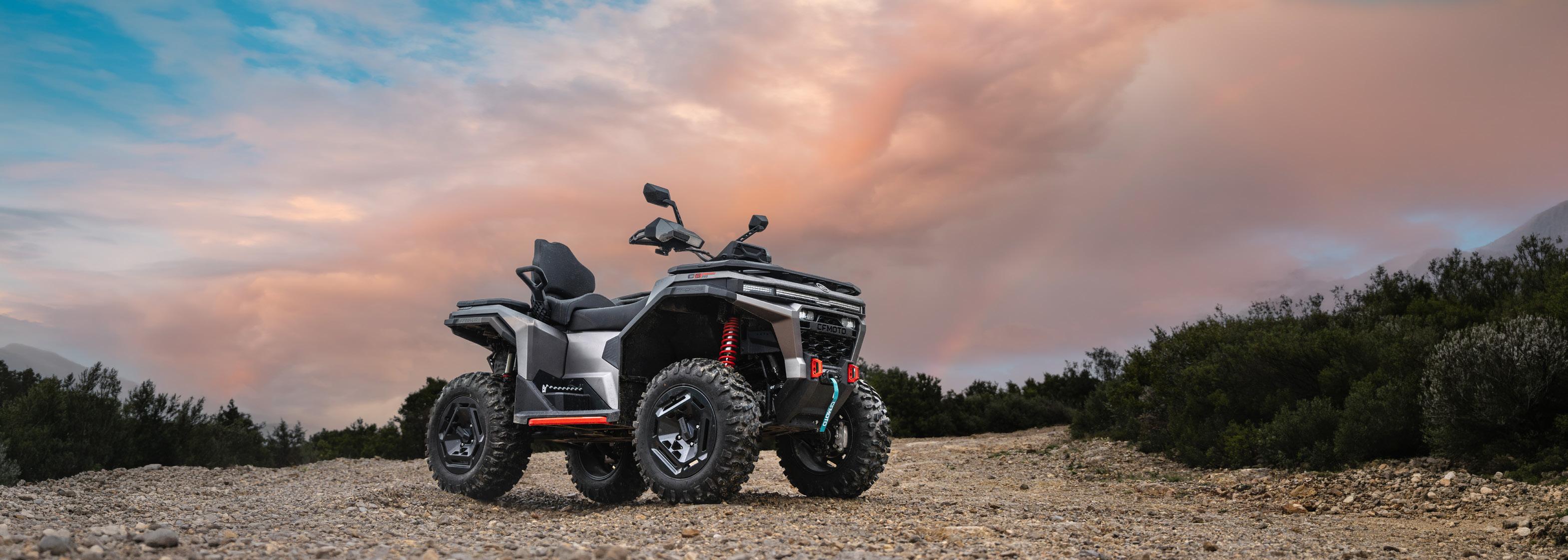
All-electric Outlander makes Fieldays debut
LAST MONTH’S
National Fieldays was an important event for
Canadian manufacturer Can-Am, as it unveiled its first electric ATV, the Outlander, adding extra option to the new Defender HD11 and
Defender MAX HD11 line-up.
Offered to customers for the first time in Asia-Pacific, the all-new electric Outlander ATV
has arrived with excellent timing, following the Government’s 2026 Budget commitment of $437 million over four years to accelerate the
development, adoption and availability of new technologies and tools that help reduce on-farm emissions.
Powered by BRP’s
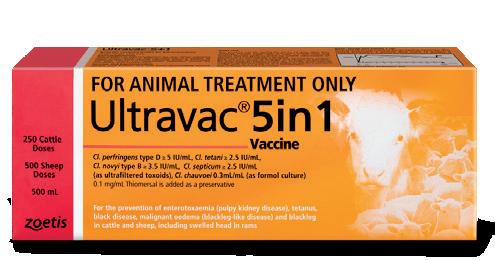
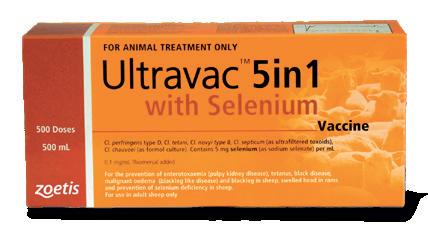
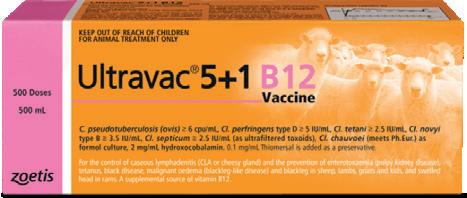
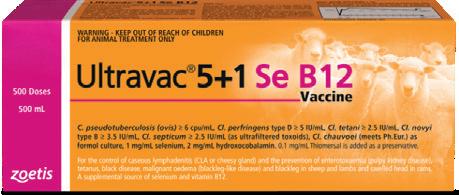
More lambs survive with Ultravac.
The clostridial vaccine proven on-farm in New Zealand to reduce lamb losses.
Protect ewes and lambs against key clostridial diseases with a vaccine proven over decades in New Zealand farming systems. Ultravac® 5in1 has been trusted for over 45 years and is backed by local on-farm trial research. These trials showed vaccinating with Ultravac® 5in1 reduced lamb deaths by 23.6% from tailing to pre-lamb compared to unvaccinated lambs,¹ helping more lambs survive when it counts. Choose Ultravac®, the proven performer in the paddock.
Talk to your vet about Ultravac® or visit sheepsolutions.co.nz to learn more.
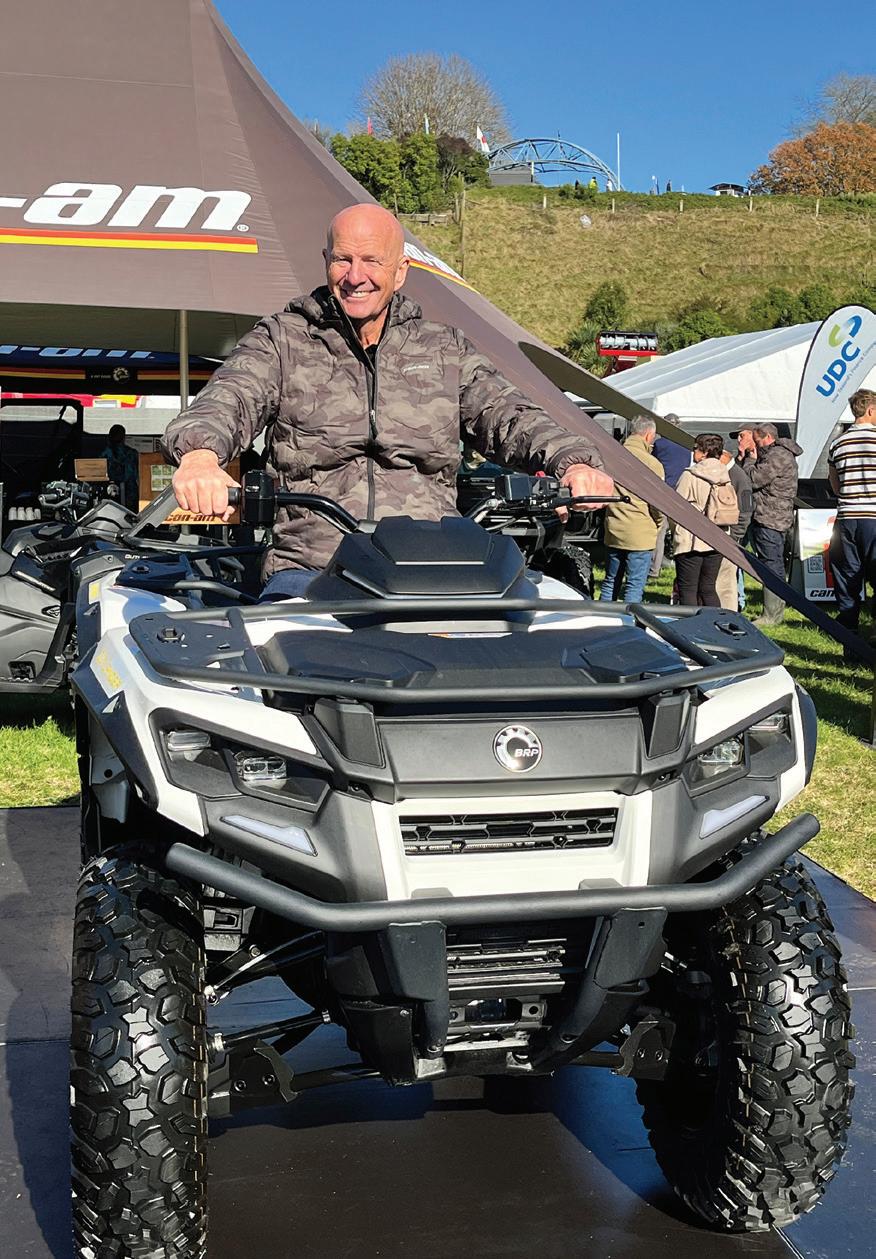
in-house Rotax E-Power system, the Outlander Electric makes 47hp and 72Nm of torque, while offering up to 80km of range in optimal conditions (50km in ‘work’ mode), while also featuring regenerative braking technology, and recharges from 20% to 80% in just 50 minutes with a Level 2 charger.
Overnight charging from 0 to 100% takes around six hours to complete.
Outlander Electric offers a maximum speed of 60kph, delivered via Work, Normal and Sport modes to easily manage all types of tasks, while retaining the same, well proven chassis of the HD5 and HD7 models, offering identical cargo capacities (55kg front, 109kg rear) and the industry leading 830kg towing capacity.
Reduced noise and vibration deliver improved comfort and environmental impact, while whisper-quiet operation offers a major asset for breeders, allowing work near livestock without causing stress or disturbance.
Ease of operation is achieved with power steering, alongside a push-button reverse gear, removing the need to use the transmission selector, while a handlebarmounted speed limiter, delivers a minimum speed
of 6kph in low range. More than 120 accessories include auxiliary lights, chainsaw holder, multiple cargo configurations and for colder areas, heated grips and seat.
Already released in some Northern Hemisphere markets, customers are reporting the ability to complete a full day’s work on a single charge, while also enthusing about the quiet operation, reliability, and capability.
Prominent New Zealand sheep farmer and Can-Am Ambassador Sir David Fagan said, “The 2026 Can-Am Outlander Electric is a gamechanger for agriculture, meaning from the crack of dawn the vehicle is fully charged to take on the day ahead, even on property like mine. Trust me, I’ve trialled the machine first-hand and it delivers on all aspects with all the premium features the brand is recognised for”. A comprehensive warranty includes 5 years / 20,000km on the battery, a 3-year unlimited km powertrain & Rotax engine warranty and a 1-year warranty & unlimited km on the remainder of the vehicle.
Champion sheep shearer and Can-Am Ambassador Sir David Fagan with the 2026 Can-Am Outlander Electric.
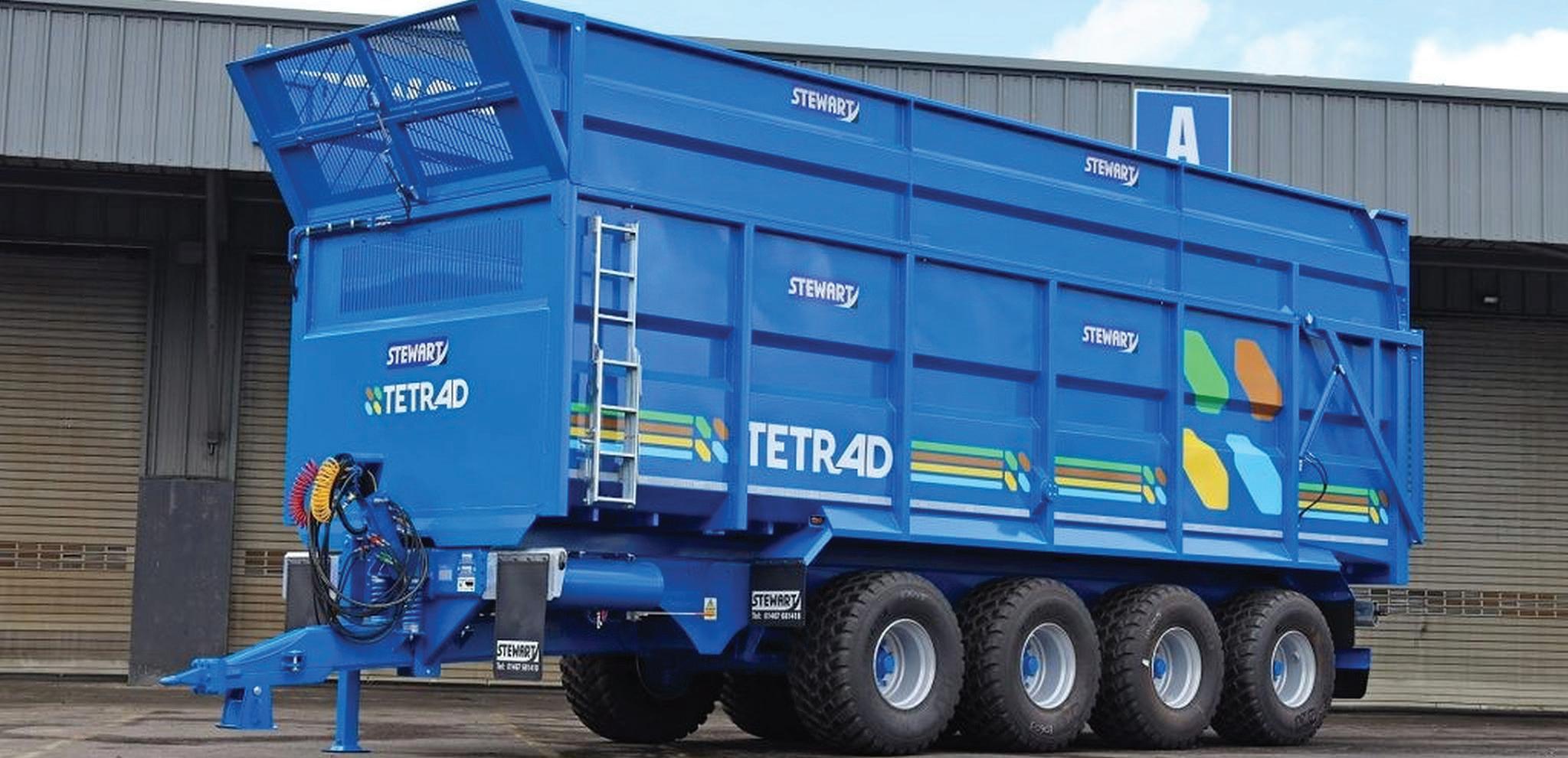
New trailer designed for big payloads
FOUNDED IN 1988, Stewart Trailers is owned and managed by James and Mandy Stewart from their site in North-East Scotland.
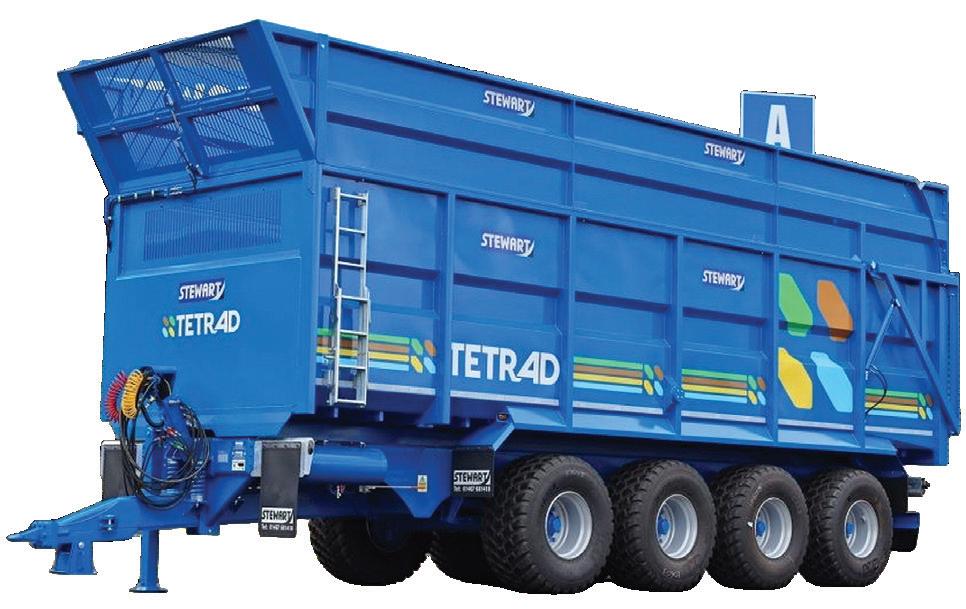
At the country’s recent Highland Show, held over four days in Edinburgh, they showcased a new four-axle trailer, designed to carry a payload of thirty-five tonnes.
Called the Tetrad, the first model has a minimum tractor power requirement of 300hp and an empty weight of around 12 tonnes and was developed primarily for the Australian market.
The first of the new range is headed for a large dairy operation to of the country, which already operates 50m³ versions of the company’s trailers. The buyers hope that the move to 70m³ with silage sides will improve efficiency. It is equipped with front and rear steering axles and the customer specified mechanical suspension, although Stewarts confirm that Tetrad can also be delivered with air suspension.
The Scottish manufacturer has exported trailers to Australia since 2009, with units currently imported and distributed by the New South Wales-based Armour Group. Stewart expects a good uptake for the trailer in the eastern states of Australia where there are large areas of grass grown for silage.
The company also
distributes to New Zealand via its North Island agent TRC Tractors in Feilding and IKON Machinery based near Geraldine in the South Island. Exports to the Southern Hemisphere are said to account for a considerable proportion of the Scottish company’s turnover, with the range including several models designed specifically for Australia and New Zealand
“The concept and design of a new trailer need a considerable amount of time and effort,” says Stewart’s designer Lukasz Sobaszkiewicz.
“The weight carried by the Tetrad requires a robust construction, meaning many of the heavy-duty parts needed are not readily available off the shelf, so we spent a lot of time researching sources of components.”
Legislation for road going trailers in Australia allows for larger models, so the company can build trailers up to 3m wide to give increased capacity and stability, says Mandy Stewart.
“We fit hydraulic jack legs, as not many of their tractors have pick-up hitches, alongside safety chain attachment points on the drawbar which are a legal requirement. The majority of trailers we supply to Australia are also factory fitted with on-board weigh cell systems and automatic lubrication.” Visit www.trctractors. co.nz or www. ikonmac.nz
LET’S GO THIRDS.
SAM Machinery rolls out the future of spreading FINALISTS FOR JOHN DEERE’S TECH AWARDS
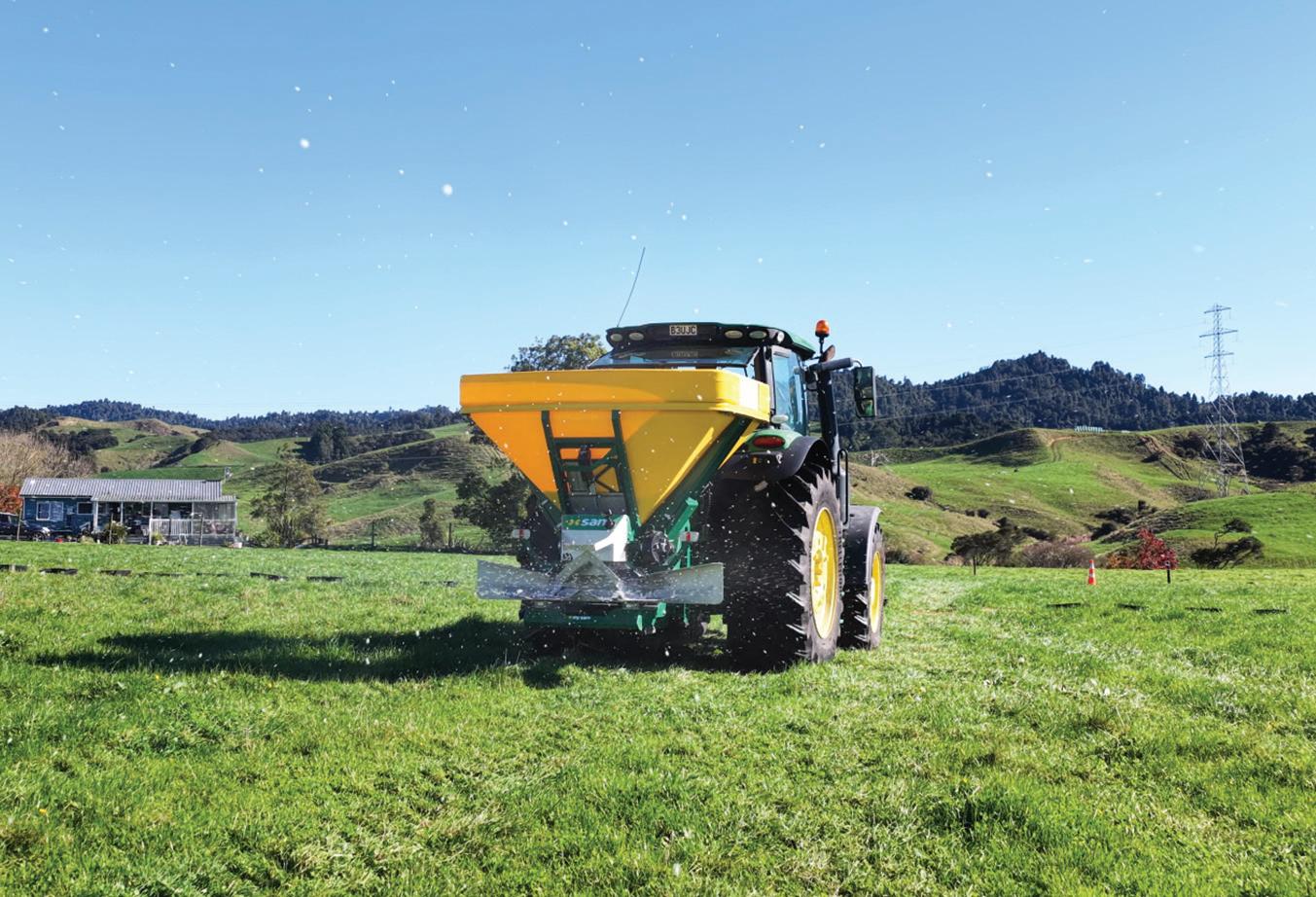
KIWI BUILT to suit Kiwi conditions, the Fieldays reveal of its new 3-point linkage mounted e-Spreader will add another string to Hamilton-based SAM Machinery’s already extensive portfolio of fertiliser spreading tools.
Designed to be easy to use, future-proof and incorporating smart, intuitive technology, overall control is via SAM’s, ISOBUScompliant display in the tractor cabin.
At the heart of the machine, a hydraulicallydriven floor at the base of the hopper will allow users to apply all types of fertiliser from uniform prills right through to bulk materials such as lime. Offering 2-click
calibration of the twin integral load cells, integral technology ensures consistent application rates, irrespective of travel speed changes created by slopes, inclines or changing ground conditions.
The SAM control gateway unlocks speeds from the tractornetwork, while also offering basic section, headland and variable rate application control. The system also integrates seamlessly with third party guidance systems such as Greenstar, Topcon RTX and Trimble.
Looking at the machine in more detail, the e-Spreader’s 2300 litre (expandable) capacity means the ability to load up to 2000kg of superphosphate, 3300kg lime or 1750kg of urea
in real terms. Being linkage-mounted with hydraulic drive removes the struggle for larger operators to fit a PTO shaft. The belt feed system at the base of the hopper positively deals with a wide range of materials, while also incorporating a divider to stop materials
slumping sideways when operating on sloping ground.
An electricallyactuated rear shutter adjusts flow to the stainless steel distribution, while also offering easy access for machine cleaning after application is completed. The machine
is Spreadmark-certified to achieve 24-metre spreading widths for urea and 12-metres for lime products. Attention to detail in the design and manufacturing processes starts with a multi-stage preparation and painting process for durability and a long service life, while hydraulic fittings are moved away from product contact, lines run in sealed conduits and the main hydraulic valve block is located in a sealed protective cabinet.
Under-mounted spinner/distributor motors are complemented by lifetime sealed bearing assemblies, front docking mounts offer easy attachment and integral feet allow simple out of season storage. Expect to see first deliveries in 2027.
www.sammachinery. co.nz
JOHN DEERE has announced the finalists for its 2026 Technician of the Year Awards, with 30 regional finalists being named in five award categories.
These include Agriculture & Turf Service Technician of the Year, Construction & Forestry Service Technician of the Year, Parts Technician of the Year, Service Apprentice of the Year and Parts Apprentice of the Year.
Judges say the competition across all categories this year is among the strongest seen since the inception of the program in 2021, with finalists representing a mix of emerging talent and experienced professionals from dealerships across Australia and New Zealand.
John Deere director of aftermarket and customer support, Steph Gersekowski, said the stories behind this year’s submissions were incredibly powerful, demonstrating the real-world impact technicians have on customers and the communities they serve.
“We saw examples of technicians going above and beyond to support customers, often in critical situations, where keeping equipment operating had a direct impact on a customer’s business,” Gersekowski said. “Those outcomes don’t happen by chance. They are the result of dealerships creating environments where people can develop their skills, embrace new technologies and build long-term careers.”
The regional finalists will now progress to the next stage of the competition, with winners to be announced at the John Deere Technician of the Years Awards gala event in Brisbane in September.
The New Zealand finalists for the Agriculture & Turf Service Technician of the Year Award include James Doherty of Drummond & Etheridge, Rolleston and Thomas Fyfe, of Brandt, Rotorua.
James is a farm kid who grew up with John Deere tractors, started out completing work experience with his local dealership. Today, the 26-year-old is a field technician, known for his exceptional product knowledge and outstanding attitude, which sees customers frequently requesting James specifically to work on their machines.
Thomas Fyfe of Brandt, Rotorua, is originally from Pukekohe, who after more than 15 years as a parts manager, expanded his skills by taking on an adult apprenticeship. Today, as a qualified service technician, Tom is committed to making each customer’s experience as positive as possible by holding himself and his work to a high standard and takes pride in cultivating a positive environment.
MARK DANIEL markd@ruralnews.co.nz
MARK DANIEL markd@ruralnews.co.nz
SAM Machinery’s new three-point linkage mounted e-Spreader.