
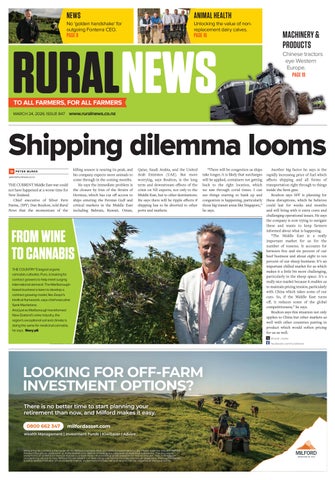
Middle East war
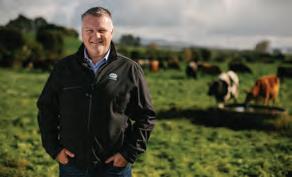
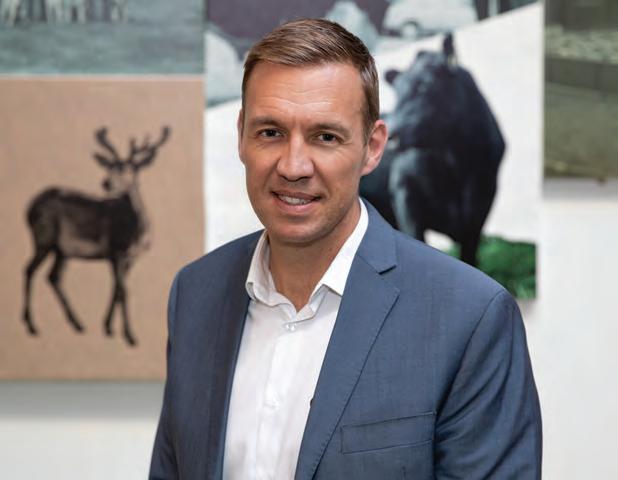
Chief executive of Silver Fern Farms, (SFF) Dan Boulton, told Rural News that the momentum of the killing season is nearing its peak, and his company expects more animals to come through in the coming months.
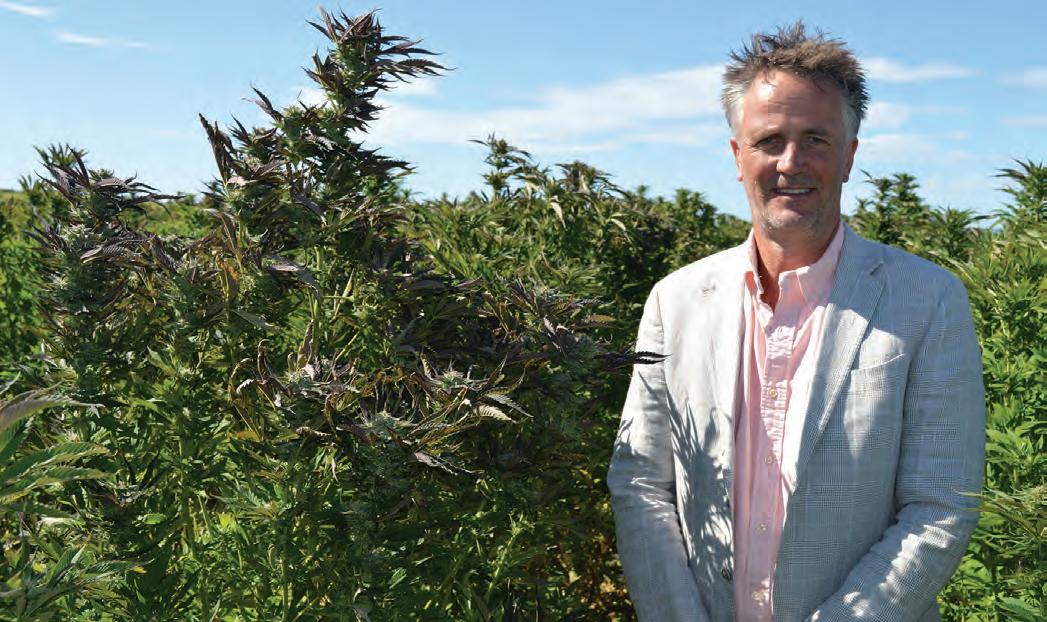
THE COUNTRY’S largest organic cannabis cultivator, Puro, is looking for contract growers to help meet surging international demand. The Marlboroughbased business is keen to develop a contract growing model, like Zespri’s kiwifruit framework, says chief executive Sank Macfarlane.
And just as Marlborough transformed New Zealand’s wine industry, the region’s exceptional soil and climate is doing the same for medicinal cannabis, he says. Story p6
He says the immediate problem is the closure by Iran of the Straits of Hormuz, which has cut off access to ships entering the Persian Gulf and critical markets in the Middle East including Bahrain, Kuwait, Oman,
Qatar, Saudi Arabia, and the United Arab Emirates (UAE). But more worrying, says Boulton, is the long term and downstream effects of the crisis on NZ exports, not only to the Middle East, but to other destinations. He says there will be ripple effects if shipping has to be diverted to other ports and markets.
“There will be congestion as ships take longer, it is likely that surcharges will be applied, containers not getting back to the right location, which we saw through covid times. I can see things starting to bank up and congestion is happening, particularly those big transit areas like Singapore,” he says.
Another big factor he says is the rapidly increasing price of fuel which affects shipping and all forms of transportation right through to things inside the farm gate.
Boulton says SFF is planning for these disruptions, which he believes could last for weeks and months and will bring with it extra costs and challenging operational issues. He says the company is now trying to navigate these and wants to keep farmers informed about what is happening.
“The Middle East is a really important market for us for the number of reasons. It accounts for between five and six percent of our beef business and about eight to ten percent of our sheep business. It’s an important chilled market for us which makes it a little bit more challenging, particularly in the sheep space. It’s a really nice market because it enables us to maintain pricing tension, particularly with China which takes some of our cuts. So, if the Middle East turns off, it reduces some of the global competitiveness,” he says.
Boulton says this situation not only applies to China but other markets as well with other countries putting in product which would soften pricing for us as well.
@rural_news
facebook.com/ruralnews



1-9
10
10-11
SILVER FERN Farms chief executive
Dan Boulton says the meat processor wants to find ways of getting product destined for Middle East markets into those markets as opposed to try and place them elsewhere.
He says there is a possibility of utilising a port in Jordan on the Red Sea. But if product was landed there, then it would have to be transported by land to places such as Dubai.
The other and less attractive option is diverting product destined for the Middle East elsewhere, but this poses a completely new set of complex problems. The meat may be returned to NZ to be repackaged and relabelled or to get a dispensation around certification – all of which is expensive.
Phone:
Rural News online: www.ruralnews.co.nz
Subscriptions: subsrndn@ruralnews.co.nz
Boulton says they are looking closely at the cost implications of this.
“We are just working with our shipping lines and NZ officials that, if we had to divert product into those other ports, what would we have to
change in terms documentation, health certificates, all those sorts of things, and also the implications of getting the product overland to reach the big cities where our markets are,” he says.
Boulton believes that farmers need to understand the risk and uncertainty of the present situation and also the fact that the effects of it may last for some time, even if things settle down. He says, whatever happens, there will be additional costs and in an ideal world these would be passed onto the consumer.
But he’s quick to point out that in some markets the consumer cannot bear the brunt of such costs and some may have be absorbed by SFF and potentially the farmers back here in NZ.
“Farmers need to understand this. We talk very favourably about the market conditions, but we also talk about the risks and they need to understand that these could impact at the farm gate, not only in the schedule but also the operating costs as well,” he says.
Boulton says it’s a dynamic situation and one SFF have navigated well in the past. He says they are committed to keeping farmers up-to-date and sharing with them where things are going and the cost implications in the supply chain. He says it’s really important that farmers are informed, especially if they are making decisions around pricing.
“I have confidence that NZ processors have the right partners in the supply chain to get the best outcome and navigate this volatility, be it in the Middle East or somewhere else in the future,” he says.
THE HORTICULTURE sector is under threat because of vulnerabilities of the country’s transport infrastructure, according to a report commissioned by a collective representing a range of groups in the sector.
The report says the largest growing regions for horticulture production are the Bay of Plenty and Hawke’s Bay and says both are heavily export focused and that infrastructure failures in these regions could cost NZ billions of dollars. The report also notes that
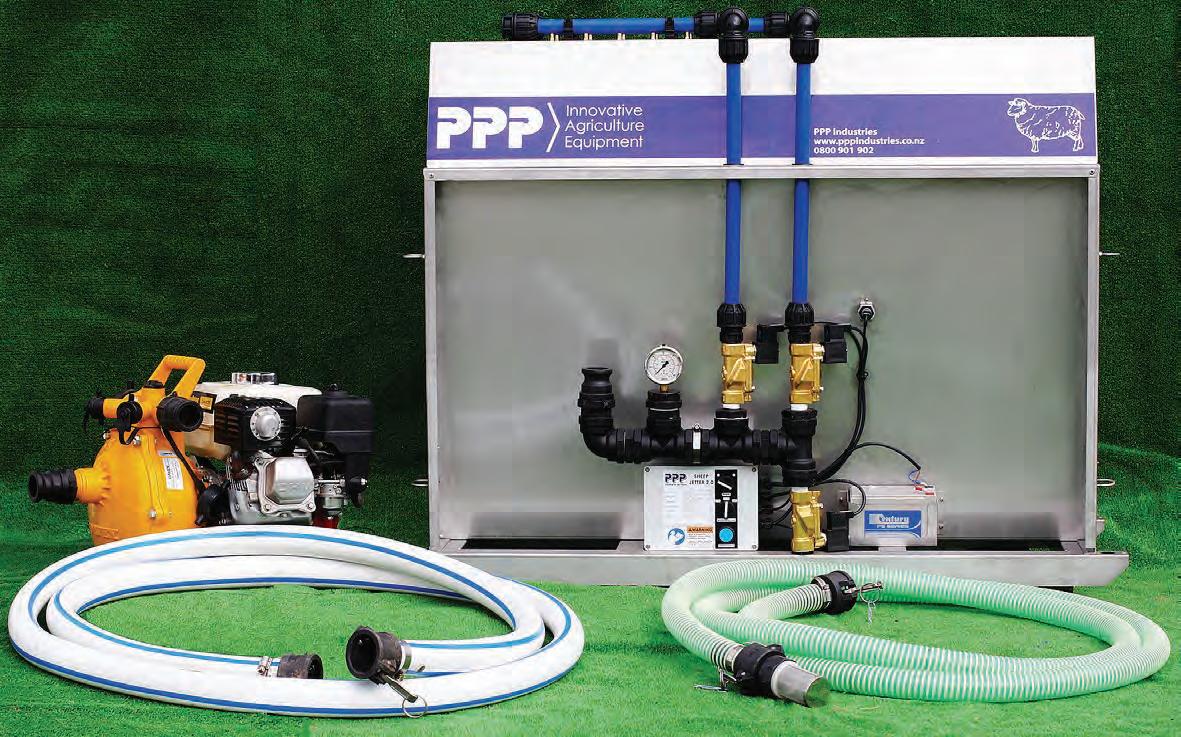
With a precision engineered PPP Sheep Dipper that’s built to last
www.pppindustries.co.nz sales@pppindustries.co.nz 0800 901 902

Gisborne and Northland are major producers as well and most of what they produce goes out of their regions to other parts of the country or overseas.
HortNZ chief executive Kate Scott says in Gisborne, only 18% and Northland, a mere 4% of produce packed in the regions is also distributed in the regions. That means she says that inter-regional transport links are particularly critical, but both have primary transport routes that are vulnerable to disruption
“The most recent example of this was the closure in February, due to slips, of Waiokea Gorge, SH2 between Gisborne and Bay of Plenty, which supports up to $112m of produce movement out of the Gisborne region. Closures like this have significant impacts on growers,” she says.
Scott says fresh produce can move four or more times between paddock and consumer, including packhouse, wholesaler, distribution centre, and retailer, and transport disruption at any point can compromise quality.
Other vulnerabilities highlighted in the study include that Auckland is the main distribution point for fruit and vegetables for the domestic market but there are limited alternative routes to move produce through the city during disruptions, such as extreme weather events.
“Safeguarding critical transport routes and reducing the risk of cascading delays are central to protecting shelf life, meeting market requirements, and ensuring the best possible returns for growers and the New Zealand economy,” says Scott.
PETER BURKE
peterb@ruralnews.co.nz
are getting guidance on how to deal with recent rising fuel prices.
Executive director of Rural Contractors of New Zealand, Andrew Olsen, says he’s had talks with Federated Farmers and explained the situation his members are in. The organisation this past week put out a note to its members on how they might work their way through the present crisis.
He says where a contractor has a fixed price contract with a farmer there will need to be discussions between the two parties on how to deal with the situation and see if the contract can be amended to recognise the present situation.
“But as you may know, some contracts are approached in the traditional way of a shake of hand and that can leave a contractor a bit exposed,” Olsen told Rural News.
“But overall, we
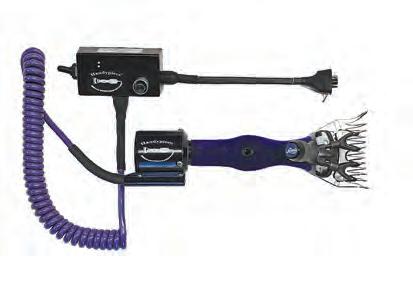
■ Ideal for shearing sheep, alpacas, goats and cow tail.
■ Variable speed from 2600-3500rpm.
■ Latest brushless motor technology means minimal heat build up
■ 1400gms means 100-200gms lighter than standard handpiece
■ At 2800rpm the 12v lithium battery will trim up to 400-500 cows tails or crutch 300-400 sheep
■ We customise cables for lifestyle shearers.

GET YOUR REPAIRS & SERVICE DONE ASAP! View in action go to www.handypiece.co.nz Freephone 0800 474 327 email: dave@handypiece.co.nz

are taking the not unreasonable view that our members deserve to be able to work for a living and not just at a reduced return to
themselves,” he says.
Olsen points out that his organisation does not get involved in the pricing of contracts and its sole focus is on price.
THE HEAD of Transporting NZ, Dom Kalasih, says there’s a lot of hysteria being whipped up over rising fuel prices.
Kalasih told Rural News that some sections of the mainstream media are only looking for potential disaster stories rather than providing a true perspective of what is happening. And he adds that industry didn’t do itself any favours by talking about petrol rationing and carless days.
He says the reality is that fuel prices have moved up and down over the years and points to a benchmark for pricing –the Western Texas Intermediate, or WTI.
He says this is currently sitting around US$94 a barrel last week, up from $65 to $70, but points out that in 2022 it was US$120.
“While the present price is high, it’s not like it’s never been high,” he told Rural News
He says the covid crisis taught everyone how to deal with cost rises over a prolonged period and some of the lessons of that can be applied to
Kalasih says fuel is the second biggest cost in the rural sector, just behind wages, and accounts for about 20% of inputs. He points out that even if fuel prices were to rise by 50%, which has never happened before, that would only equate to a 10% increase in transport cost.
He says because it’s a very busy time for rural transport operators, meat processing plants have reached out to transport operators and are looking at instead of adjusting transport prices on a monthly basis, doing this weekly and potentially a daily basis to take account of rising fuel prices.
“Transport is still a relatively low margin game and to be fair there are too many transport operators making a margin of 10%. If the price of fuel goes up by more than 10%, they are going to be losing money,” he says.
the situation today. He says world events have impacted on fuel prices for decades.
“We have models based on that, so hopefully memories aren’t short. This has to be a survivable situation for anyone who is growing or farming and those that service them because everyone must be around tomorrow and
in reasonable shape,” he says.
Olsen also points out that farmers who do their own cultivation are facing the same issues as contractors. He says contractors need to look to the future and see what the price of fuel may be and then decide what their tolerance is for absorbing this and what needs to be passed on.
THE COST of running a New Zealand farm is now 27% higher than it was before Covid, putting sustained pressure on profitability across the sector, according to new ANZ research.
The finding comes from ANZ’s latest Agri Insights report, which analysed the financial performance of more than 4000 dairy, red meat, kiwifruit, arable and pipfruit customers, comparing the 2020–24 period with the previous five years.
It found that while general inflation has stabilised in recent
times, cost increases within the farming system have become structural, meaning farms now need to lift productivity just to stand still.
Lorraine Mapu, ANZ NZ’s managing director of business and agri, said events playing out in the Middle East are a reminder that global uncertainty – from geopolitical tensions to fuel supply and input volatility – add another layer of complexity for farmers.
“While we’re not currently receiving customer requests
seeking specific support for issues linked to the conflict, we’re staying close to our customers and remain focused on supporting them through any emerging challenges,” Mapu says.
“What this research shows, though, is that the businesses best placed to navigate that uncertainty are the ones with strong fundamentals, good visibility over their costs, and the ability to keep investing in productivity through the cycle.
“Farming is now a higher‑cost business than it was five years

ago, and that’s not something that unwinds when inflation cools.
“The standout performers aren’t necessarily expanding or taking bigger risks – they’re the ones who know their system well, time their spending carefully, and keep finding small productivity gains year after year.”
The report shows the gap between average farms and the top performers continues to widen, pointing to significant untapped productivity potential across the sector.
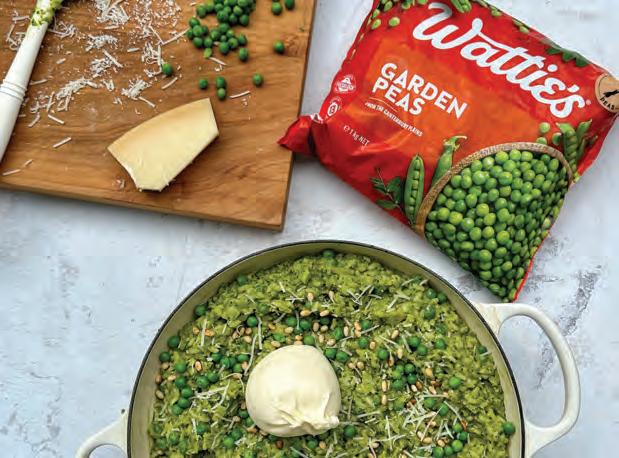
THE PROPOSED retrenchment of Heinz Wattie’s manufacturing presence in New Zealand will be a blow to the wallets of more than 200 Canterbury vegetable growers.
And in an industry that values speed of processing from paddock to the freezer, it is unlikely that any other company could move into the Wattie’s’ catchment area and pick up the slack, says David Hadfield, the chair of the HortNZ-affiliated Process Vegetables New Zealand (PVNZ).
Heinz Wattie’s is proposing to close three manufacturing facilities, in Christchurch, Auckland and Dunedin, and associated frozen packing lines in Hastings, with the loss of about 350 jobs.
Hadfield said the Christchurch closure would be a blow for about 220 Canterbury farmers producing about 36,000 tonnes of peas every year.
“It’s probably not going to be a ‘gotta sell up the farm’ type situation, it’s more a cash flow issue for them,” Hadfield, who farms near Lincoln, told Rural News
The announcement has come at a time when the pea harvest would be over, although Hadfield said many growers won’t yet have been paid for the current season’s peas as Heinz Wattie’s paid out on the 20th of the month following harvest.
The bean harvest was now underway, and the carrot harvest was still to come. But after that the money would dry up.
Normally the company would sign contracts with growers for the next season around May and June, said Hadfield.
“At this stage there’s no contracts for the next season at all. My understanding at the moment is there won’t be.”
In an industry that values proximity to the factory in the interests of speed
of processing and freshness, most companies limit suppliers to relatively small catchments.
“About two and a half hours from harvest through to processing is the sort of limit of it in Canterbury,” said Hadfield, who farms near Lincoln.
He said the Wattie’s Christchurch factory catchment was basically between the Rakaia and the Waimakariri and inland into the Sheffield area. He doubted that any other company could pick up the slack. There were “a couple of outfits looking” but he questioned whether they would have the money and marketing ability needed.
Hadfield said that owning the factory and producing peas was one thing “but you’ve got to sell them.”
Local production costs were high and it was cheaper to import products, with many vegetables now coming in from China, Europe and the “Stans” of central Asia. Hadfield supported free trade “but it’s got to be fair” and he
questioned whether those growers were being subsidised by their governments.
In its March 11 announcement, Heinz Wattie’s said the proposed changes were “part of the company’s shift to focus on its long-term strategy.”
phasing them out over a year.

SUDESH KISSUN
sudeshk@ruralnews.co.nz
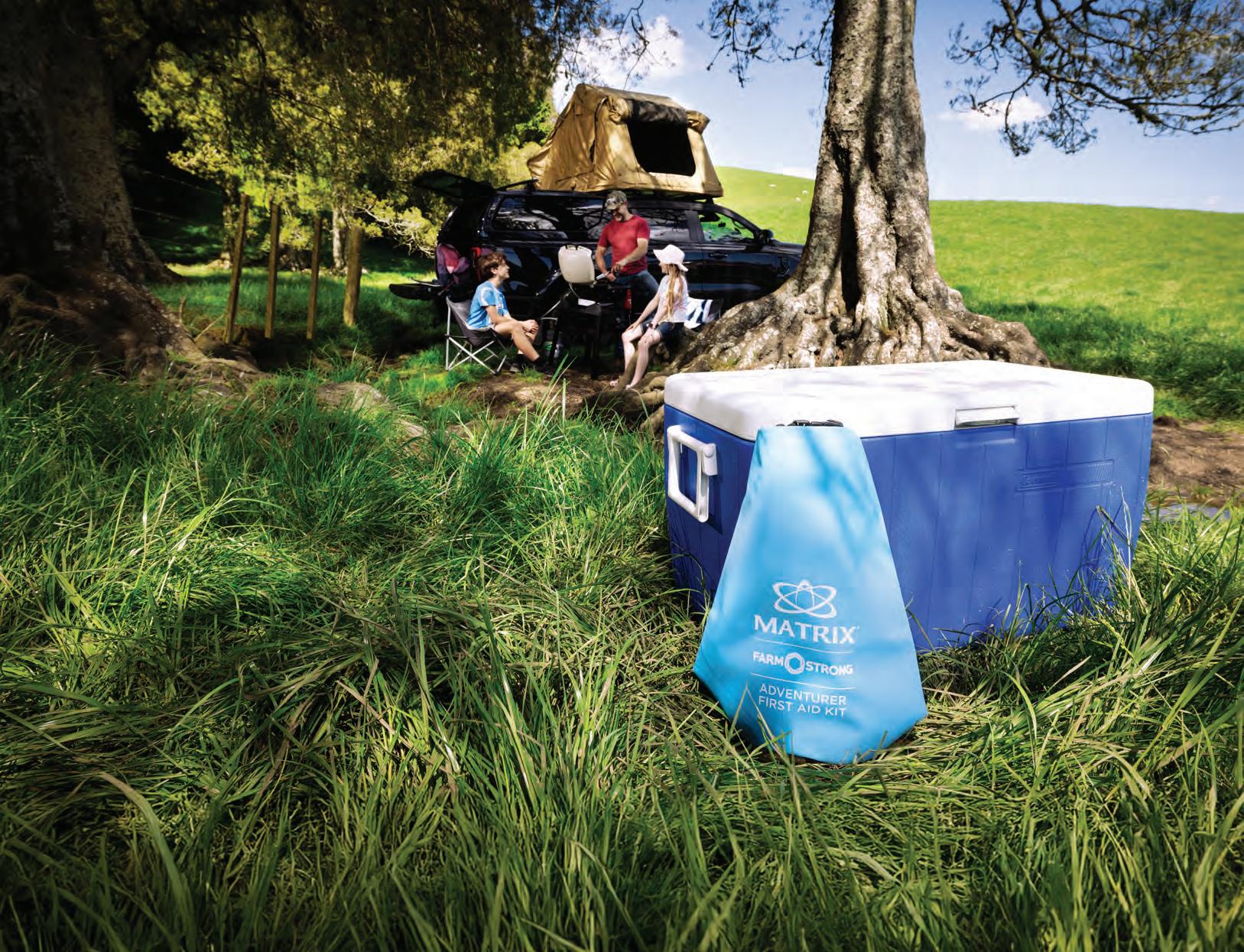
NEW ZEALAND’S largest medicinal cannabis operation is looking for contract growers to help meet surging international demand.
Puro chief executive Sank Macfarlane says it is keen to develop a contract growing business, like Zespri’s kiwifruit framework.
And grower interest is strong right across the country, he told Rural News
“We get emails every day, with people saying, ‘I’ve got 5 hectares, 10 hectares, can we do this, can we do that’?
“It’s about partnering with the right people as well.”
Puro is also working with Ngai Tahu through its Kaikoura representative, Rawiri Manawatu.
Te Runanga o Kaikoura and the medical cannabis producer state the partnership will see both “develop a shared vision for responsible resource management that honours tikanga Māori, creates employment opportunities and enhances community wellbeing”.
Macfarlane says it’s an approach that will enable more regional landowners and iwi to participate in the industry, creating
additional skilled jobs and economic opportunities across Marlborough and the South Island.
“The cultural fit is important: it’s like doing business with anyone. You’ve got to have trust and build a relationship and understand motives and all that sort of stuff.
“With Rawiri and his team, over the years, I was brought up here, so I’ve known them for years and years, but there is a huge level of trust and understanding and a real desire to work together.”
Puro is New Zealand’s largest medical cannabis grower, and one of the biggest organically certified growers in the world. They have
a research facility just outside of Blenheim and their farm is on the Kaikoura Coast at Kekerengu.
It was co-founded by Macfarlane and Tim Aldridge; both hail from Marlborough.
“Growing up, we’ve watched Marlborough become synonymous with premium Sauvignon Blanc which has been an incredible success story,” says Macfarlane.
“In 1990, New Zealand exported $18 million of wine. Today that number sits over $2.5 billion, with 80% produced right here in Marlborough. We want Marlborough medical cannabis to become as trusted and respected as
Marlborough wine, and these awards recognise we’re on the right track” he says.
Like the wine pioneers before them, Macfarlane and Aldridge identified Marlborough’s unique climate and soils as ideal for producing a premium agricultural product. Working with globally recognised cannabis agronomist Tom Forrest, whose international research confirmed the region’s potential, they’ve built New Zealand’s largest medicinal cannabis operation across sites in Waihopai and Kekerengu.
Innovation has been central to Puro’s success. With research support from the Ministry of Primary Industries the company has pioneered “live drying” technology, flash-freezing cannabis flowers at harvest before freeze-drying them.
This preserves the
plant’s full therapeutic profile while solving harvest bottlenecksand has made Puro the only supplier of livedried organic medicinal cannabis products globally.






PETER BURKE peterb@ruralnews.co.nz
THE MAN who organised a 57,000 signature petition to ban the export of live animals by sea from NZ says he’s delighted that the Government has abandoned plans to reinstate the trade.
Dr John Hellstrom, once the Government’s chief veterinarian officer and later chair of the country’s National Animal Welfare Advisory Committee (NAWAC) for seven years, has long been an animal welfare advocate. He, along with various animal groups including the SPCA, organised the petition after the coalition Government promised to lift the ban on live exports put in place by the previous Labour government.
The main advocate for lifting the ban was ACT’s Andrew Hoggard, who promised that new gold standards would be
put in place to ensure the welfare of animals on ships. But in the end he had to reveal that there was no appetite in Cabinet for changing what is already in place.
“The trade is now over and will not be reactivated. No one will have the appetite to start this all over again.”
Hellstrom says this latest decision by the National-led coalition is effectively the end of the road for the future of live exports of animals from NZ.
“The trade is now over and will not be reactivated. No one will have the appetite to start this all over again. How could National come back and say ‘maybe
there a gold standard after all’.”
Hellstrom believes there were many reasons for Cabinet not supporting the plan. He believes that there was not great enthusiasm within the National Party for the proposal in the first place and adds that animal welfare groups put pressure on MPs –especially in the Auckland region – and they in turn could see that reinstating the live trade could have ‘consequences’ for them in the November election.
The first sign that the proposal to reinstate the live trade was going nowhere, says Hellstrom, was the time it was taking to process the petition. He says other petitions were being processed; his one was referred to the Primary Production Select Committee but hearings were never held.
“I was pretty optimistic that the ongoing delays pointed
CYBER ATTACKS on New Zealand businesses are down.
That’s according to a new report released earlier this month by Kordia, the state-owned enterprise charged with delivering cyber security.
The New Zealand Business Cyber Security Report 2026 saw 247 surveyed business leaders from large New Zealand organisations late last year.
The report revealed that 44% of the businesses surveyed said they had suffered a successful cyber-attack in the 12 months prior to the survey period. This is a drop compared to the 59% reported in the 2025 report.
Patrick Sharp, general manager of Kordia-owned Aura Information Security, says organisations need
to work out a response strategy long before they suffer an incident, and they also need to practice that strategy.
He says this means establishing who will manage the incident, who the decision makers are in relation to how severe the incident is, and everything involved in communicating with staff, customers, and regulators.
“As challenging as it can be, it’s critical that business directors and officers recognise their accountability before they’ve been breached. There are many passionate and capable cyber security professionals in New Zealand who can guide effective business advice on cyber resilience,” Sharp says.
“Security is not an insurmountable thing,” he says.
Meanwhile, of the
to the fact that there was unease in government circles about the idea,” he says.
Hellstrom says if the select committee held hearings, it was almost certain that animal welfare experts would have a field day rebutting the gold standards. He also claims that the NZ live animal export trade has declined from the halcyon days of the past and says there are just some small pickings in South East Asia, Vietnam and Indonesia.
“What is also rubbish is the claim that NZ was shipping its ‘waste animals’. In fact, we were breeding special animals for the trade and animals that would not easily fit into the NZ farming system.”



44% of businesses that reported being impacted by a cyber attack, 17% said personally identifiable information was either accessed or stolen and 21% were concerned this stolen data leading to blackmail or extortion.
One in three businesses said they would be willing to pay a ransom.
“Nobody wants to be faced with a ransom demand, but they can appear to make the immediate problem go away,” says Sharp.
“However, once a ransom is paid, there’s no guarantee a cybercriminal will honour the deal,” he adds.
“The best strategy is to work with the experts to build your cyber resilience, so you can continue operating and recover from an incident without having to give into criminal demands.”





SUDESH KISSUN
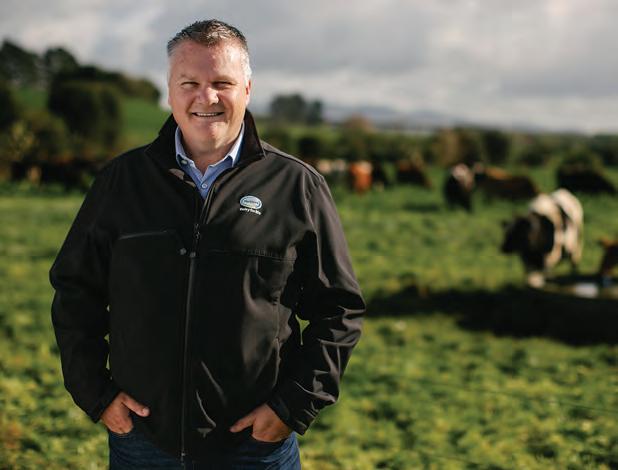
FONTERRA IS rejecting New Zealand First’s claim that outgoing chief executive Miles Hurrell is in line for a ‘golden handshake’.
The co-operative says Hurrell, who announced his resignation last week and will serve out his sixmonth notice, won’t receive any exit payments in addition to his annual remuneration package.
Hurrell served as Fonterra chief executive for eight years. He is entitled to his base salary, shortterm incentive calculated based on the group scorecard, and long-term alignment rights.
Fonterra says there isn’t any bonus payment for management team members tied to the completion of the $4.2 billion sale of the consumer
and related businesses to Lactalis.
The sale is unconditional and will be completed by the end of this month.
Under the deal, Lactalis will take over iconic NZ brands like Anchor, Mainland and Kapiti.
NZ First leader Winston Peters, who opposed the sale, claimed in a message on X (formerly Twitter) that he had predicted the resignation of Hurrell once the divestment was complete.
“We said this exact thing would happen in our open letter to farmers last year – he of course denied it.”
Peters accused Hurrell of selling off “almost every consumer brand since he started, leaving Fonterra as a commodity price taker, not a market maker”. “Their decision leaves serious questions for New Zealand about what we must do to protect dairy manufacturing in our country
as a result of Fonterra’s dereliction of duty.”
Peters says when Hurrell’s predecessor, the late Theo Spierings, resigned he was paid out “a ridiculous $4.67 million after being paid a total of $43 million in just seven years in the role”.
“How much will Hurrell be paid out?”
Peters also claimed that recently Fonterra announced deep job cuts. The co-operative says this isn’t true and noted that, as per their usual practice, a breakdown of the CEO’s full remuneration will be included in the next annual report.
“Insiders are saying they are ripping cost out of the business to make up for a lesser sale price,” says Peters.
He took a swipe at media, urging them to start asking the
right questions instead of printing Fonterra’s press releases for them.
“And when will they understand
that Fonterra has gone from a propped-up nationalist company to a sell-out globalist company.”
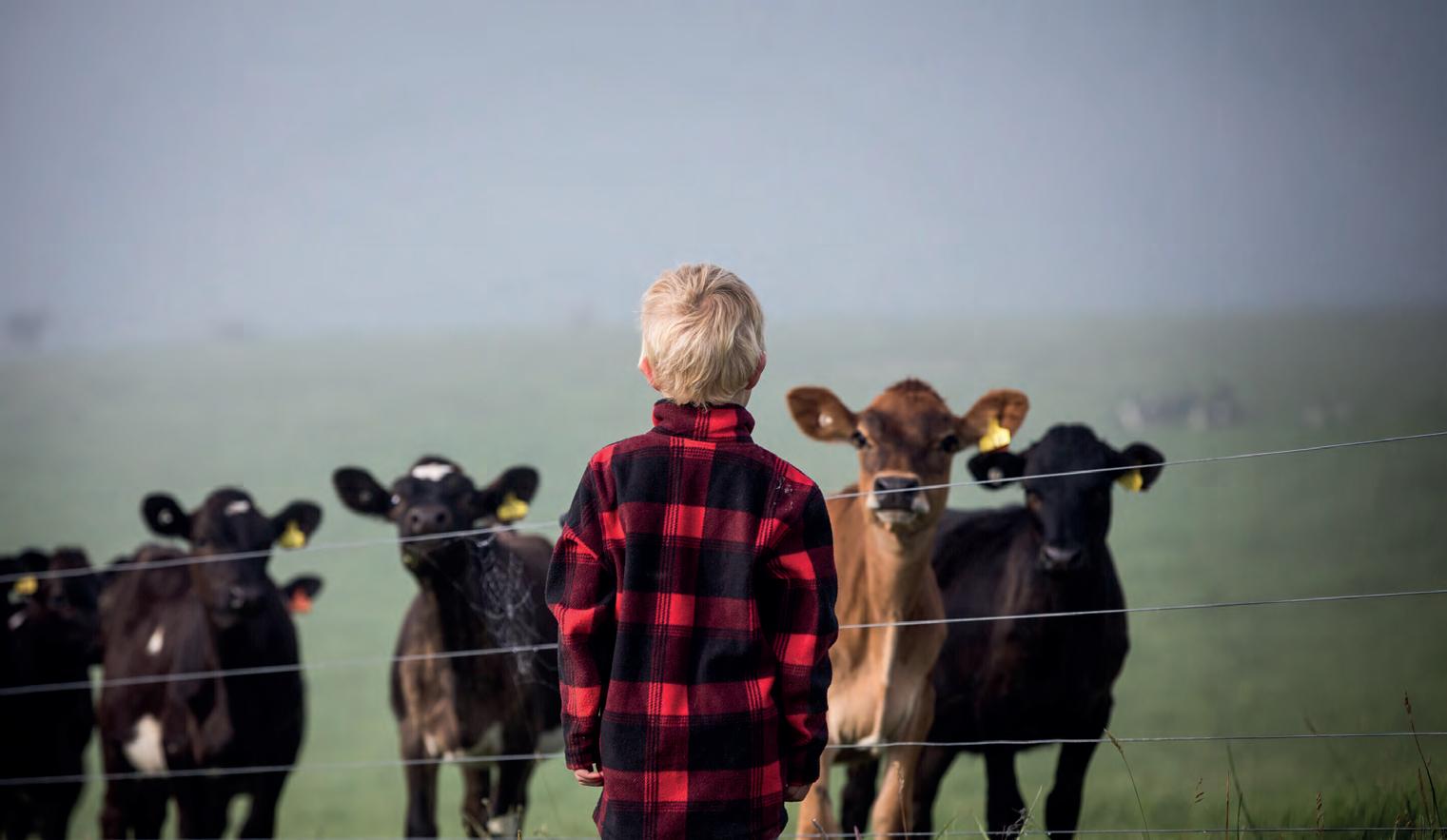


It was also a time to catch up with old friends.
NEW ZEALANDERS are spontaneously joining in the 60th birthday celebrations of the nation’s iconic rural programme, Country Calendar.
There was big party in Wellington a couple of weeks ago for all those who are, and who have been, associated with the programme since it first went to air in 1966. In Lotto shops there are Country Calendar kiwi scratchies, which is prompting people to recount how frequently they watch the show and how much they enjoy it.
One couple tells the story about their dog, who as soon as it hears the Country Calendar theme, rushes to their TV set and starts barking. Apparently he once saw sheep on the programme and the music reminds him of that. Country Calendar has become an institution and is compulsory weekly viewing for thousands of people.
The official Country Calendar birthday event hosted by Pāmu (Landcorp) and TVNZ saw the National Library foyer in Wellington packed with people all excitedly recounting their own stories about the programme and sharing in the unabashed emotional celebration of this television milestone.
TVNZ chief executive Jodie O’Donnell praised Country Calendar, saying the magic about the programme is that it’s all about New Zealanders telling real stories. She noted that it was the second most watched show on its linier channels and always in the top ten on TVNZ plus.
“It’s the longest running programme in our country and I heard that it might be within the top 30 longest running shows worldwide. What makes it special is that it connects with New Zealanders and everybody wants to
see how we farm and fish and conserve our land, which is a very important part of our economy,” she says.
Broadcasting Minister Paul Goldsmith was at the party and says it was the positivity of the show that appealed to him.
“It’s a remarkable show that is part of the fabric of NZ society and I’m pleased that Country Calendar continues to succeed,” he says.
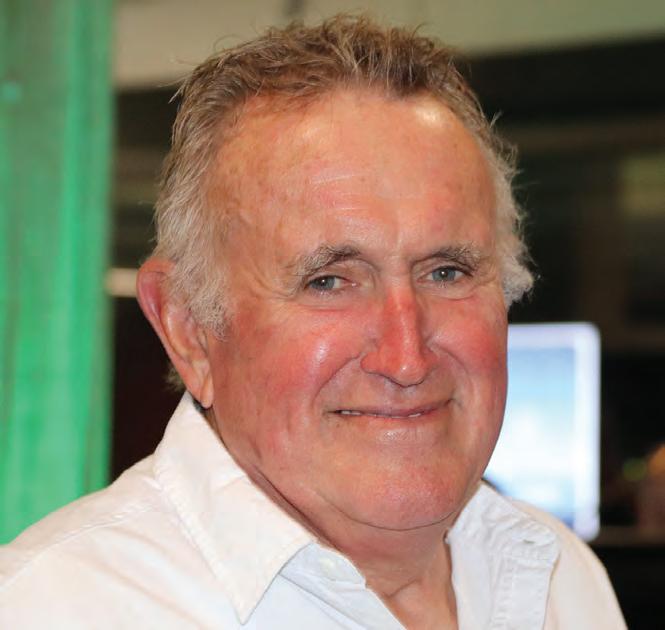
Richard Williams has been working as a camera operator on Country Calendar for more than 30 years and says it’s absolutely the best programme one can work on. He says one of the secrets to the success of the
IN 1966, TELEVISION was still in its infancy in NZ.
The first programmes were broadcast to the Auckland region only in June 1960 and it was over a two-year period before Wellington, Christchurch and Dunedin came on stream – in black and white, of course, and for limited hours.
Rural broadcasts were already running on radio and it was the vision of two people – the Director General of NZBC at the time Gilbert Stringer and veteran rural broadcaster and later head of Current Affairs, Bruce Broadhead – who along with the legendary Fred Barnes got Country Calendar up and running. Barnes said at the time it was initially designed to be a television version of a popular rural radio programme called ‘Country Session’ (Initially television was regarded as radio with pictures). The early programmes
programme is the relationships and trust that the field crew establish with the people they are filming.
He says as a camera operator it’s a case of letting a farmer do their work as per normal and being prepared to give them space to do this.
“Anybody can take pretty pictures, but it’s that trusting relationship between people such as myself and the people we are filming that makes the difference,” he says.
One organisation whose farms have featured many times on Country Calendar is Pāmu. CEO of the company Mark Leslie says the programme is fantastic because of the
were directed primarily at farmers and included a three minute news segment, followed by a story shot ‘in the field’ and then a studio interview.
Television production in the 1960s was somewhat ‘number 8 wireish’ and although the technical equipment at the time was the best on offer, staff were frequently learning on the job. Key people who fronted the first Country Calendars were Fred Barnes, Tony Trotter, Frank Torley and Colin Follas. It was these people and those behind the scenes who set the highest of standards of broadcasting which have remained a constant over the past 60 years. Their legacy has been carried forward to this very day by cohorts of talented and committed filmmakers and it would be a very brave person who would cut the funding for this icon of our television screens.
way it connects people in urban areas with the land. He says nowadays fewer people have direct contact with those who work the land.
He says over the years Country Calendar has moved with the times covering innovation and new farming systems and highlighting the technology that supports the primary sector.
Richard Williams has been working as a camera operator on Country Calendar for more than 30 years. @rural_news
Leslie says every
generation of farmers face challenges and at the moment succession planning around the family farm is a significant issue. He says for commercial farmers like Pāmu it’s about doing the right thing around profitability, the environment, water and people.
“Technology will play a big part in supporting that and then you

have the unrest in the world today, which is something farmers over the generations have had to battle with. For me Country Calendar is a great way to see history though time,” he says.
• Editor’s note – Peter Burke worked as film editor in the early days of Country Calendar.
For Water Storage Tanks • Adjustable levels from 50mm-2.5m


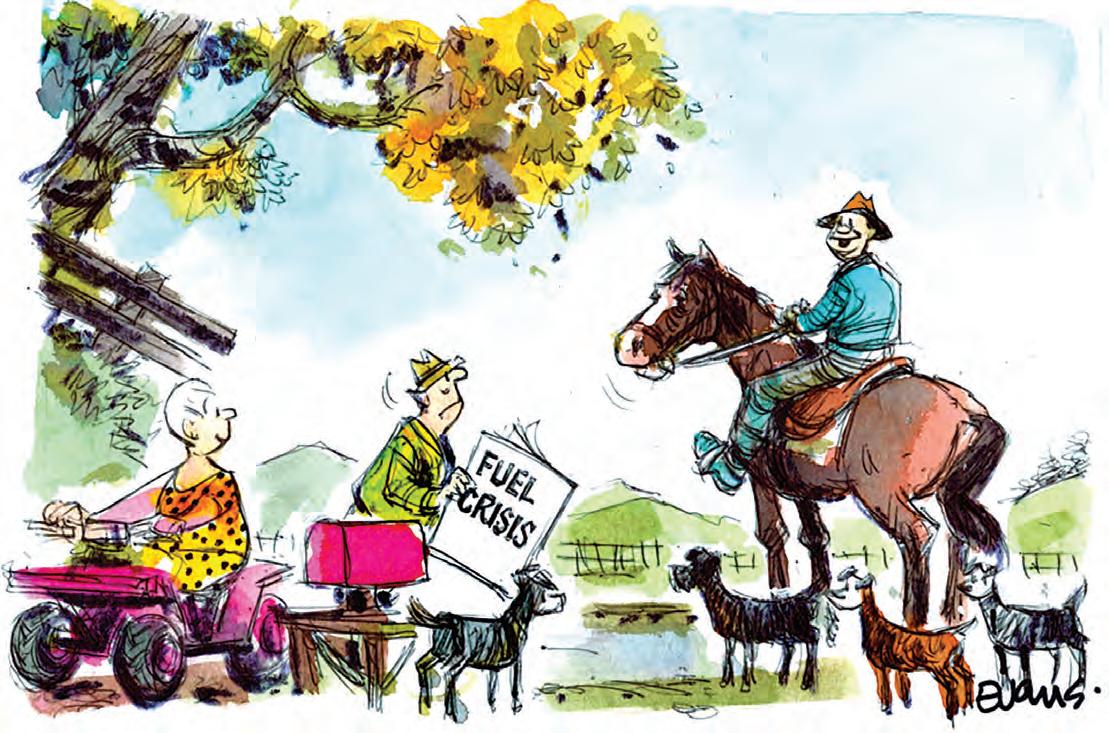
FOR SOME of us the threat of a fuel crisis is something we have dealt with before and are still here to tell the tale.
That is not to in any way minimise the situation that world is facing caused by a bunch of individuals whose egos have little regard for the lives and lively hoods of millions of others.
But at the same time the past is being brought up – carless days and the like – and that is causing panic and stress in NZ.
While our politicians are doing their level best to calm things down and keep things in perspective, some sections of the mainstream media are hyping the situation up.
News bulletins and newspapers are becoming more and more depressing, and many individuals are suffering from media fatigue – meaning they have had enough and are looking for something positive.
One could speculate that the overly negative coverage in the media is making things worse.
Dom Kalasih, Transport New Zealand, rightly points out that media coming to him for comment only want a ‘crisis’ story, and are seemingly not interested in a real perspective of the situation.
Sure, the situation is dynamic and evolving one and yes, we might get to carless days and the like.
At the same time, we see our primary exporters – meat processors and the like working hard to get around the crisis and find ways of getting our exports to market. They are doing a stirling job behind the scenes for the benefit of all NZers’s. No stories about them in the mainstream media!
One group impacted by the fuel price hikes is rural contractors and they are reaching out to farmers to explain the situation they are in.
Where a contractor has a fixed price contract with a farmer there will need to be discussions between the two parties on how to deal with the situation and see if the contract can be amended to recognise the present situation.
But then some contracts are approached in the traditional way of a shake of hand and that can leave a contractor a bit exposed.
There is no doubt that overall, there is a severe economic crisis in NZ, and the fuel crisis is adding to the problem and people are suffering for a whole lot of reasons unrelated to the middle east crisis. There is a need to warn the nation about what might happen, but at the same time a bit more perspective would be welcome.
HEAD OFFICE POSTAL ADDRESS: PO Box 331100, Takapuna, Auckland 0740
Phone 09-307 0399
PUBLISHER: Brian Hight .......................................... Ph 09 307 0399
GENERAL MANAGER: Adam Fricker ....................................... Ph 021-842 226
EDITOR: Sudesh Kissun ......................................Ph 021-963 177 sudeshk@ruralnews.co.nz
“Droving, mustering, grocery shopping – mates rates!”
IT’S NO surprise to this old mutt that some politicians are done playing nice with the low rent media pack that hounds them looking for a ‘gotcha’ moment. One media pundit noted recently that politicians tended to follow Paul Goldsmith’s advice that “a politician complaining about the media is like a farmer complaining about the weather; You may be right, but it makes no difference…” Members of the Government have had enough of the biased reporting and are using social media to critique coverage they don’t like. Like the viewing public, the pollies know bias when they see it. Having watched One News’ recent hatchet jobs on the crime stats – ignoring a massive reduction in crime – and the PM’s polling, yours truly reckons fair play to them!

PRESIDENT TRUMP’S tariff wars have torpedoed the US grain belt’s biggest market, China, sending many US family farms to the wall. To make back the lost ground, the US has gone and pinched market share off the Aussies, much to their chagrin. Indonesia has signed an agreement to import around 2 million tonnes of wheat from the United States, equal to roughly 17% of its annual wheat demand. Indonesia imports around 10–11.5 million tonnes of wheat per year, and Australia regularly supplies 4–5 million tonnes in strong production seasons. Aussie ag website Episode 3 opines, “Our concern is the precedent it sets. If other countries begin buying US agricultural products to avoid tariffs, more of the global grain market could become politically allocated rather than price-driven. Trump is making American farmers great again, but at the expense of our producers
EDITOR-AT-LARGE: Peter Burke ...........................Ph 021 224 2184 peterb@ruralnews.co.nz
REPORTERS: Nigel Malthus ........................Ph 021-164 4258 Leo Argent
MACHINERY EDITOR: Mark Daniel ..............................Ph 021 906 723 markd@ruralnews.co.nz
PRODUCTION MANAGER: Becky Williams ......................Ph 021 100 4381 beckyw@ruralnews.co.nz
A MATE of yours truly says we’re long overdue for a reckoning on what value farmers really get for the $100 million plus they collectively pay in levies to DairyNZ, Beef+Lamb NZ and Deer Industry NZ (DINZ). Old mate reckons the return on levies over the last half century have been below expectations, particularly DINZ, in his opinion, and he’d rather see the coin stay in farmers’ pockets. He notes that despite the millions spent on initiatives like Cervena and P2P, in the last 25 or so years, deer farmer numbers have shrunk from 4500 to about 1500 and the annual kill has dropped from some 800,000 to a bit over 300,000. Opinion swings both ways on this one, but as always, farmers get the final say when they vote on keeping, or dropping, the levy.
AUCKLAND SALES CONTACT: Stephen Pollard .........................Ph 021 963 166 stephenp@ruralnews.co.nz
WAIKATO & WELLINGTON SALES
CONTACT: Lisa Wise .................................. Ph 027 369 9218 lisaw@ruralnews.co.nz
Want to share your opinion or gossip with the Hound? Send your emails to: hound@ruralnews.co.nz
IF YOU ask this old mutt, the choice at the next election isn’t shaping up as a contest of good ideas, more like a choice of who’s the least bad option. The incumbents haven’t delivered on a lot of stuff they promised: reversing the ban on the $500 million live export trade; cutting the civil service overspend; reducing Crown debt on any measure; and stamping out the kind of nonsense besetting farmers in the deep south who are wondering how the hell to assess, for council, if their earthworks affect the ‘life force’ of their soil. Sure, the coalition was left a steaming pile to clean up, but that excuse wore out a while ago. Luckily for them, the Covid Inquiry has cast a cloud over Chris Hipkins and his mates, proving they mishandled the pandemic response even worse than we suspected at the time!
SOUTH ISLAND SALES CONTACT: Kaye Sutherland .......................Ph 021 221 1994 kayes@ruralnews.co.nz
DIGITAL STRATEGIST: Jessica Marshall ..............Ph 021 0232 6446
THERE IS a lot of truth to this statement I first heard many years ago: ‘The enemy within is always more damaging than the enemy without’.
Examples from history of exactly that are so numerous, it would be a lottery to even choose which one to use!
Look no further than the political world, for starters. Wannabe leaders plot and back-stab existing leaders in their own party. They lie and scheme for weeks and months to see their own colleagues’ demise.
Who needs an opposition to think about and deal with when the real enemy is hiding behind your own closed doors?
Closer to home, I easily recall the internal coup against our late Prime Minister Jim Bolger toward the end of 1997. Bolger was a typical good rural bloke and family man, like many of our readers. But he was toppled from within his own party.
The widely known law of synergy certainly adds support to this statement above. Two in harmony and unity can accomplish so much more than one.
One draft horse on its own can pull somewhere between 1000-2000 pounds deadweight. When you team two together, their pulling power does not simply just double to 20004000 pounds. Not at all. If they are trained together, they can more than triple what the one on its own managed.
boys I first read some time back. Adam wanted to be just like his good friend Bobby. After all, Bobby was just so cool. It was something about the way he walked and how he talked. Bobby, however, really longed to be just like Charlie. Something about
goes, it turns out Danny had a hero too. His hero, you wonder? Surprise, surprise, it was none other than the first boy, Adam.
Even if this story is pretend, it still carries much truth. Not many people actually seem to be content with who they are.
Now, to one of my favourite quotes: “All men are born originals. Most die a copy.”
Corporations and businesses, boards and clubs, indeed any organisation where people gather, are not immune. Yep, ladder climbers can be ruthless!
And families are not exempt here either. Sadly, many get torn apart from within.
Now, the world of politics certainly is not alone when it comes to this internal assassination and bloodletting stuff!
Imagine if they start plotting and working against each other, the chaos that would ensue! But they are too smart to do that. They leave that kind of stuff to us little humans.
The law of synergy is why the military when marching must break stride when crossing a bridge. Marching in unity has collapsed bridges, back in history.
Now, what I find sad is that this enemy within thing can apply to individuals also. To illustrate, I tell a rather cute story about four small
Accept who you are. There are more than enough dramas, pressures, and other stress-causing stuff happening around us in our world we have to face.
Charlie’s manner and accent really impressed Bobby. As it turns out Charlie wasn’t happy with himself either. He looked up to another young fella named Danny. Danny was so super cool and always seemed to have such cool stuff. Well as the story

All that originality that lays inside them when they arrived on the planet, gets pushed aside, so they can be a copy. Sad indeed!
Accept who you are. There are more than enough dramas, pressures, and other stress-causing stuff happening around us in our world we have to face.
When you settle the stress-causing stuff on the inside, then you will cope much better with the flak from the outside. And yes, I happen to know the one who can help like no other. God bless.
• To contact Colin Miller, email: thefarmerschaplain@gmail.com

























NIGEL MALTHUS
THE NEW Zealand
Future Food and Fibre Summit, E Tipu 2026, is the place for farmers who want to stay ahead in a rapidly changing sector, says FoodHQ chief executive Dr Victoria Hatton.
She says the summit, to be held this year in Christchurch from May 20-22, will bring together leading thinkers, innovators, and doers to share practical insights on technology adoption, market trends, sustainability, and resilience.
With the theme of “trending into the future,” the conference will be particularly relevant to where we are today, said Hatton.

“It’s a valuable opportunity to gain fresh ideas you can apply directly to your farm business, connect with people driving change across the industry, and understand how global shifts are shaping the
future of New Zealand agriculture.
“E Tipu is designed to help farmers make better decisions, plan with confidence, and identify opportunities for longterm success.”


Run annually by several different organisations since 2019, E Tipu was licensed to FoodHQ about 18 months ago and ran for the first time under the FoodHQ banner last year.
Hatton said FoodHQ changed it to be “more of a futures conversation”, looking 10 to 15 years ahead into consumer demand and science trends.
“And therefore, from a farmer perspective, what might we be growing on farm? What diversified crop systems might be needed from a ‘nature positive’ perspective for sustainability credentials, et cetera.”
Hatton said that of a number of farmers who attended last year’s event in Palmerston
North, some were uncomfortable that they had never before been part of the “future thinking” conversations that they were introduced to.
But others went away “absolutely inspired to implement some of the tools that we’ve given them into their business,” she said.
Part of E Tipu’s strength was that the whole value chain was represented - everybody from farm to plate.
WITH WELL over 30 speakers and more yet to be confirmed, E Tipu will hear from the likes of Fenton Innovation CEO Craig Fenton, an entrepreneur who has developed an AI tool tailored for decisionmaking in the food and fibre sectors; Californian futurist Jack Bobo who has raised concerns that not enough investment in going into the world’s projected food needs by 2050; and Tim Deane, CEO of Norsewear on why he has invested in New Zealand.
Farming industry leaders slated to speak include Beef+Lamb NZ chair Kate Acland, Fonterra director Alison Watters, Horticulture NZ CEO Kate Scott, and a number of working farm business owners.
The event will be divided into four
broad sessions – the evolving preferences of the modern consumer; what businesses need in the “engine room” to accelerate growth; how “visionary design” can get ahead of the trends; and a final session on how to face disruption rather than shy away from it.
“We really want to get people through E Tipu into this concept of thinking that the future is coming. We don’t know what it will bring, but if we’re not ready for it, it will be a surprise,” says FoodHQ chief executive Dr Victoria Hatton.
“So if we can provide tools and techniques for people who adopt and employ, once they get back to their own business or their own situation, we feel that we’ve done a good job.”
Take control of your wealth, create off-farm income, and protect your family’s future. Sharesies has the investing technology to help you reach your wealth goals.
Fund managers you know and trust
Access funds from prominent managers like Milford, Fisher Funds, Pie Funds, Harbour, Smart, Mercer and more, for the same management fee.
Access the markets on your terms
Over 8000 investment options across the NZX, ASX, and US exchanges. Features to keep it simple or get sophisticated.
Build resilience on and off-farm. Unite your wealth to work as one.
Build your business and personal portfolio
Proud partner of Fonterra and LIC, helping farms manage their business assets and personal investments from a mobile.
WARWICK CATTO
EVERY FARMER knows the feeling of watching fertiliser go out the back of the spreader, along with the hopes for a productive season that will come off the back of it.
Across New Zealand, we apply more than two million tonnes of nutrients each year, vital to enable our food and fibre exports. It’s simply not a cost line farmers and growers can afford to get wrong.
One question we don’t always ask is, is it landing in the best way to maximise return? When it
comes to nutrients, that could be the difference between investing well and potentially leaving money sitting in the paddock. If the bout width is too wide for the product and spreader
combination, you create stripes, where some areas are underfed and others overfed. The paddock might look green overall, but the performance underneath tells a different story.

Variation can lead to poor yield
Research shows that as spreading variability increases, yield losses climb rapidly. One of the most comprehensive multi-year studies published about this topic was in 1999 by the Grassland Association and it showed at a coefficient of variation (CV) of 30-40%, nitrogen applied to ryegrass seed crops resulted in significant production losses.
In pasture systems, these effects compound over time. With phosphate and sulphur, uneven spreading repeated year after year led to mounting economic losses by year three, particularly in dairy and sheep and beef systems. In other words, stripes might not hurt much in year one, but they’ll soon add up.
Let’s put that into farm terms
At a CV of 10-15%, losses are small. Push that out to 30-40% and the lost dry matter and the revenue attached to it grows sharply.
For the Waikato dairy pastures featured in the study, uneven P and S applications at a 40% CV resulted in more than $110/ha in annual loss by year five, which would be a lot higher today if we account for inflation and milk prices.
That shows bout width, product quality and calibration need to all interact together to work, and if one of those elements are off, accuracy and profitability suffer.
Why bout width is the lever you control
A fertiliser granule placed into a spreader behaves like a projectile. If you’re using larger particle size or a higher bulk density, it throws further. If you’re using finer less
dense particles, they won’t throw as far. Well granulated compounds typically achieve wider effective bout widths compared with dusty or blended products.
Think of it like using a golf club to hit a golf ball versus a ping pong ball. The club can have the same swing, but vastly different outcomes of where the ball lands because of the density of the ball.
A blend won’t behave the same as a compound, or a lime compared with a granulated fertiliser. Even changes in dustiness or granule hardness affect spread pattern.
Yet too often bout widths stay fixed out of habit.
Pasture responses to nitrogen are relatively linear, meaning some unevenness can selfcompensate in total dry matter. You might see stripes, but total yield loss may appear modest in the short term.
However, phosphorus and sulphur are different. When soil fertility is marginal, underfed strips underperform year after year. Overfed strips can’t compensate fully because plants can only use so much at once. And the result? Cumulative losses.
Calibration an investment, not a cost Spreader calibration costs are modest, often measured in cents per hectare, and correct calibration can even increase effective bout width, reduce paddock time and improve spreading efficiency. We should also acknowledge the skill of spreaders who work with different products, landscapes and conditions every day, developing a practical understanding of how fertiliser behaves.
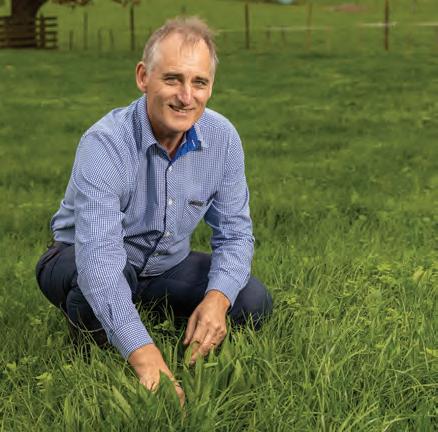
• Warwick Catto, is science strategy manager Ballance Agri-Nutrients
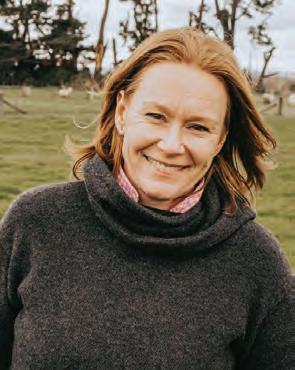
Ginny Dodunski, Wormwise's programme manager, Beef+Lamb New Zealand, outlines what to do when faecal egg counts indicate that worms are surviving your drench.
ONE OF the key risk factors for accelerating drench resistance on a farm is the continued use of ineffective products.
Here at Wormwise, we’ve been hammering the messages ‘you can’t tell by looking’ (whether your drench is effective) and to ‘check your drench performance’. But then what?
What’s next if the drench testing news is a story you didn’t want to hear?
If faecal egg counts (FECs) after your routine drench show that there are still eggs in the poo samples, worms are surviving your drench.
Nowadays, the most common reason for that result is resistant worms. However, it’s still important to rule out hiccups with dosage or administration. Occasionally problems with dose calculation, gear malfunctions or administration technique can lead to animals being under-dosed, or missed.
Things to double-check are:
• Was the weight of the animals known and were they dosed to the heaviest
in the group, or their individual liveweights? Or was liveweight guessed?
• Was the drench gun delivering the volume it was supposed to? Calibrating guns is an important job and should be done before every drenching episode.
A medical/veterinary syringe or laboratory grade cylinder should be used to check the volume, not a jug from the hardware store.
• Were the people doing the drenching taking time and care to do the job properly? Speed does not win the race in the war against worms. Bob Marley is better background music than Iron Maiden!
The pattern of FEC results can be a clue as to whether the eggs left behind are from resistant worms or from animals that have missed being drenched.
In the ‘resistance’ situation, few to many low-to-moderate FECs (depending on how bad the resistance is) are common.
In the ‘missed dose’ situation, mostly zero FECs with one or two moderate-to-high FECs can be more
common. If you are using composite FECs, it is not always possible to know which of these scenarios might be at play.
Another check that can help indicate whether eggs in the poo postdrenching are from resistant worms or a dosing mishap is worm species identification.
This is done at the laboratory (via larval culture or the new GIN PCR test). In sheep at least, the presence of a large range of worm types in the samples is more likely to indicate a drenching slip-up (e.g. animals being missed).
The presence of only one or two species is more likely to indicate resistance. Calves tend to have less of a species mix on board to begin with, but it’s still worth doing this check on them too.
Finally, repeating your drench performance check to a higher level of detail is a good idea. This involves dosing another group of animals and recording FECs and worm species identification both on the day of
drenching (what was there at the start?) and then again 7–14 days later (what is being left behind?). Your vet can help you set this up correctly.
OK, so you’ve checked all these technical aspects, and it looks like you have resistant worms. Now what?
There are two main questions: Is the situation bad enough that I need to get these animals back in now and dose them with something more effective?
What management strategies do I need now?
The answer to the immediate treatment question is ‘it depends’. It depends on how many eggs are left behind, and maybe what species the worms are. Lambs or calves on good feed, growing well and otherwise bright and healthy-looking, with just a smattering of eggs post-drench, may be left untreated until their next drench is due, for which a conversation is needed with your animal health advisor about a more appropriate choice. Remember,
the longer you go on using an ineffective product, the more quickly you are building a future problem.
On the other hand, lambs or calves with moderate to high post-drench FECs, or on poor feed (why??) are likely to be better off treated immediately with a more effective product. This is both for their own health, and to cut in on the pasture contamination that they are creating with those resistant worm eggs.
Organic Selenium Chip also available
Apply Selenium Chip to pasture and forage crops and help protect your stock against selenium deficiency.
- Increase selenium levels for up to 12 months
- Fast uptake by plants
- Easy to apply
- No animal handling required
Selenium Chip is a fertiliser granule that should be applied annually at 1 kg/ha to selenium deficient soils.
Selenium Chip is available from your local PGG Wrightson Rural Supplies Store and selected fertiliser outlets.
For more information contact PGG Wrightson Seeds on 0800 566 698 or visit seedtreatment.co.nz

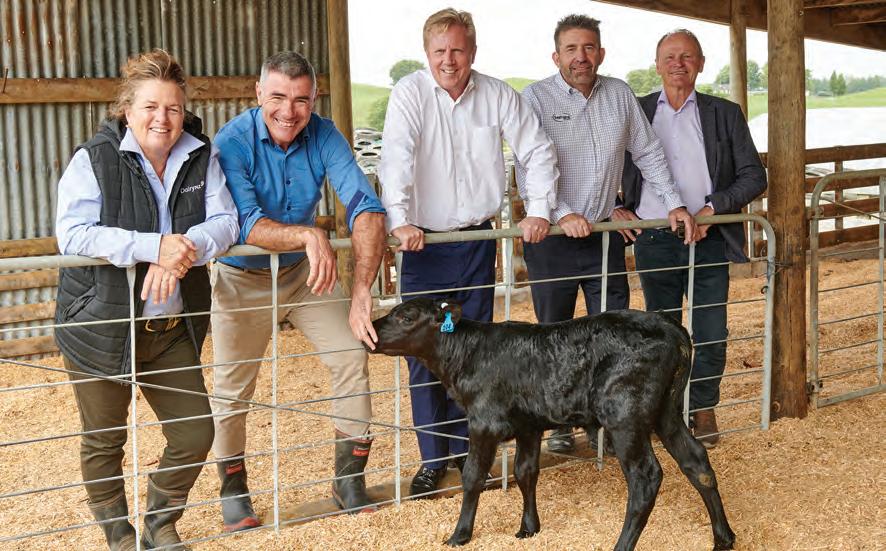
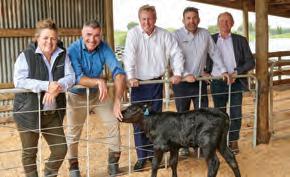
A $20 MILLION dairy beef programme will help farmers capture greater value from their animals.
Beef + Lamb New Zealand chair Kate Acland says the Dairy Beef Opportunities programme will give farmers more confidence and more options.
“We’re proud to stand alongside our sector partners in driving this next step for dairy beef.
“This is about creating real opportunities for farmers and ensuring the beef and dairy sectors continue to grow in a way that supports long-term sector success.
“The programme also reflects the strong level of collaboration across the sector, bringing together organisations from across the value chain to help dairy and beef farmers lift productivity and profitability.”
The programme is a joint initiative between DairyNZ, Beef + Lamb New Zealand, the Meat Industry Association, and members of the Dairy Companies Association of New Zealand, with support from the Ministry for Primary Industries via the Primary Sector Growth Fund
(PSGF). The Government is putting in $10m.
It is designed to unlock the value of non-replacement dairy calvesthose not needed to replenish dairy herds or already entering dairy-beef systems - by developing innovative, New Zealand-focused approaches that suit the country’s seasonal, pasture-based farming system.
The DBO programme focuses on three key areas:
Improving efficiency through genetics and systems - enhancing calf breeding, rearing, and finishing to increase productivity, profitability, and farmer confidence.
Smarter breeding and lactation strategies - increasing the proportion of calves entering the beef system while meeting dairy and beef production needs.
Developing new pathways and value chains - creating innovative products and supply chain solutions for young dairy beef, helping processors manage livestock more efficiently and providing farmers with new revenue opportunities.
DairyNZ chair Tracy Brown says
her organisation is committed to unlocking new opportunities for dairy beef across the country.
“And we’re proud to help lead this new programme alongside the Government and our sector partners.
“This is a real opportunity to drive meaningful change for farmers and for our sector’s future.”
Simon Limmer, chair of the DBO Governance Group, said the programme reflects the commitment of the dairy and beef sectors to working together to deliver practical, on-farm change that benefits farmers, processors and rural communities.
“The DBO programme will strengthen integration between dairy and beef systems, enhance supply chain efficiency, and open new revenue streams for farmers, helping the pastoral sector continue to drive New Zealand’s economic and primary sector success.
“It will support New Zealand’s reputation for producing premium, sustainable, and ethically raised food, while creating tangible economic benefits for those working in the pastoral sector.”
MARK DANIEL markd@ruralnews.co.nz
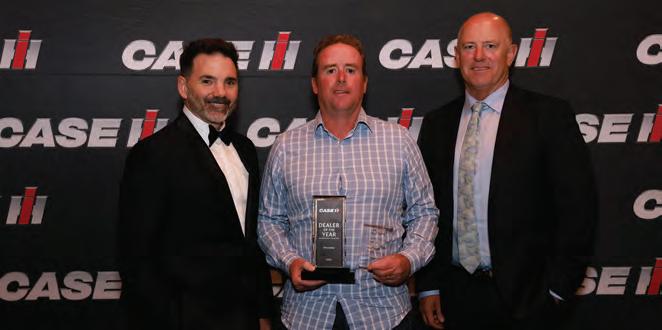
THE MOST outstanding CNH dealers from across Australia and New Zealand for the past year have been revealed, with two New Zealand dealerships amongst the major winners.
Whyteline from Paeroa, on the North Island was named Case IH ANZ Dealer of the Year 2025 for dealers with one to two outlets. Having owned and operated the business since 1976, the thrill of claiming the title was is still sinking in, with Vaughn Carson, agricultural sales consultant, noting it was great recognition for his hardworking team.
“On behalf of Whyteline, we are a family-focused business and we really appreciate this award. This year marks 50 years of being CNH dealers, which
is something we’re incredibly proud of,” Vaughn said. “We’ve got a great team, who have been dedicated to the cause and our customers are very loyal, which we really appreciate, so this award is for them as well.”
Operating from seven locations in the South Island, Cochranes was named the CNH Capital Dealer of the Year for New Zealand.
For dealer principal Chris West, the excitement of the achievement was unmistakable. “It’s been a bit of a whirlwind ride with CNH over the last three to four years, and it really all started with Capital,” Chris said.
The Dealer of the Year results are based on several different criteria, including finance and business management, performance in sales and marketing, parts and service, precision
MARK
markd@ruralnews.co.nz
FRANZ GRIMME recently celebrated his 80th birthday earlier March and continues to be an entrepreneur with passion and pioneering spirit, still present at the company every day, as chairman of the supervisory board of GRIMME Holdings.
In 1980, he took over the management of the “GRIMME Landmaschinenfabrik” (GRIMME agricultural machinery factory) from his father, which at that time employed 300 people and manufactured 10 products. In 1985, he married his wife Christine, who has been responsible for public relations at the company since 2003.
Franz founded the first foreign subsidiary in the USA in 1985, established Internorm, a specialist in plastics technology in 1987, followed by Ricon, a company for the production of webs and conveying equipment in 1995. 2003 saw the acquisition of US potato technology manufacturer SPUDNIK and the Danish vegetable technology specialist ASA-LIFT in 2013.
Still a family company, Franz and his wife Christine support their sons Christoph and Philipp, who are the fifth generation to run the group of companies. Franz Grimme, comments “My wife and I are very proud that our sons Christoph and Philipp have taken on full responsibility for the companies and that we can both support them with advice and assistance. It is a very comforting feeling to know that everything is in good hands. I am also inspired by the large GRIMME team; we have achieved a considerable degree of progress together and still have a lot to accomplish.”
www.classharvestcentre.com
technology focus and total market share.
CNH New Zealand business manager, John
they’d achieved and the outstanding service they’d delivered to their customers.






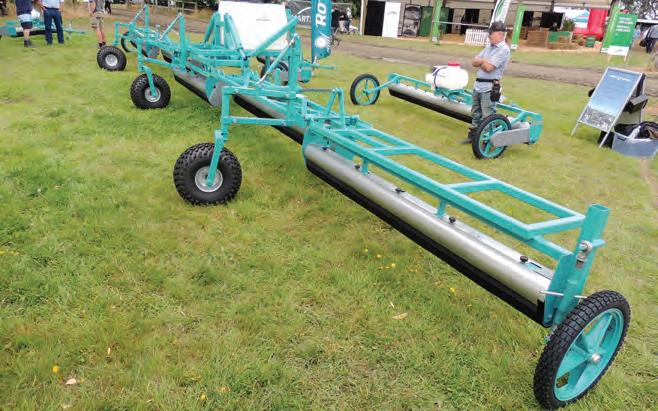
SHOWCASED AT the recent Waimumu Field Days, Rotowiper’s latest addition to its tractor mounted wiper range, the big 12m span machine dominated the site, complementing the current 6m (working width) FU600 and the 9m FU900 Fold-ups.
Like the other Fold-up models, the 12m
is designed for threepoint linkage mounting, featuring five sections that easily fold to a 3m transport width.
Rotowiper owner, Dougal Lamont says, “the 12m model on display is aimed at large scale farmers, here and in Australia, and is designed to be flexible across uneven ground,
making it suitable for all types of terrains, including rolling country”.
The 12m unit tips the scales at two tonnes. It has three ‘balloontyred’ oscillating wheels, rearwards of the three centre sections, that take care of working height, complemented by individual wheels at the
extremities of the outer wings.
Utilising the same herbicide application technology used throughout the wellknown Rotowiper range, the big unit features twin 200 litre chemical tanks, five distribution pumps, and a control box offering auto-function, timer and manual
KUHN GROUP recorded net sales of NZ$2.27 billion in 2025, finishing around 9% lower than in 2024.
control options.
Each application roller uses a hydraulic motor, allowing the operator to apply chemical to each roller
separately. The start-up procedure is designed to avoid overloading the 12v system with pumps starting in sequence, then the reverse during
shutdown. Lamont suggests the 12m unit will retail at about $55,000.
http://www.rotowiper. com/
The significant drop was the result of a lower order book at the start of the year, although farmers’ willingness to invest improved throughout the year, albeit with significant differences between regions.
ADVERTORIAL
Normalised dealer inventories and positive weather conditions in Europe led to more confidence and increased demand for agricultural machinery in the second half of the year, with the
dairy and livestock sectors buoyed by high milk and meat prices.
In North America, the implementation of additional import tariffs manifested itself with rising purchase prices, leading to a difficult sales environment. Currently, with an aim
to address the situation, Kuhn continues to work on optimising costs, alongside making production capacity adjustments.
During the year, order intake rose by 16% from NZ$2.09m in 2024, climbing to NZ$$2.42 in 2025. Encour-
aged by the increased order book, Kuhn Group expects an increase in sales for 2026, forecasting a higher operating profit margin than the NZ$162.3m in 2025, itself, 19% lower than the NZ$192.7m achieved in 2024. www.kuhn.com
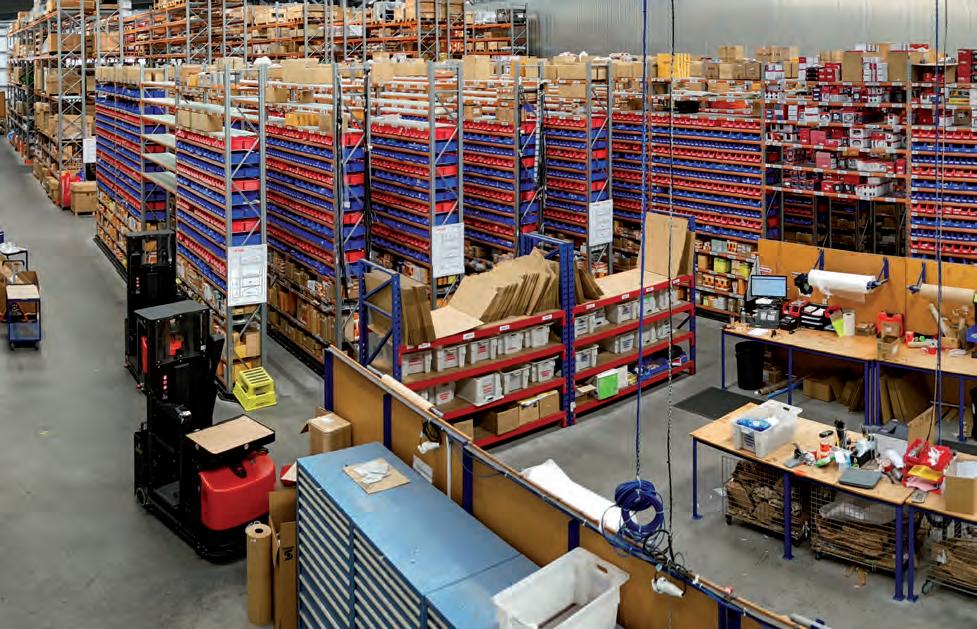
Reliable parts and service support is essential when investing in tractors and machinery. Power Farming has built a nationwide network designed to keep New Zealand operators moving with confidence.
Across the country, 21 branches carry tailored parts stock to support local machines and seasonal needs. These are backed by major distribution centres in Morrinsville and Christchurch, ensuring fast access to slower‑moving or bulk parts, with additional overnight supply available from Australia when required.
A recent multi‑million‑dollar investment has strengthened this network further, with a new 1,650 m² purpose‑built parts facility in Morrinsville now supporting over 110,000 line items across NZ and Australia. Combined inventory exceeds $70 million, giving customers strong assurance of availability. During peak periods, same‑day dispatch and extended courier cut‑offs help minimise downtime, supported by 24/7 seasonal assistance through the dealer network. Experienced parts teams nationwide provide deep product knowledge to support both current and older machines.

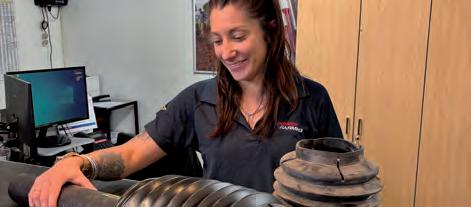
Power Farming’s partnership with Kramp broadens access to competitively priced parts for a wide range of machinery, ensuring operators can get back to work efficiently, regardless of machine or tractor brand.
Power Farming – We keep you growing.
HAVING CAUSED quite a stir at last year’s Agritechnica, Chinese manufacturer Zoomlion is reported to be conducting large-scale field trials of its flagship DX7004 hybrid wheeled tractor, paired with a 13-furrow reversible plough to demonstrate and confirm its suitability for ultra-high-power tillage operations.
The DX7004 uses a hybrid diesel-electric powertrain rated at 700hp, complemented by electric motors that raise maximum output to around 1200 hp and up to 4500 Nm of torque. The drivetrain integrates an electrified continuously variable transmission, designed to cope with extremely high traction loads with improved energy efficiency.
Said to be capable of covering around 480 hectares in 12 hours, beyond raw power the tractor incorporates a distributed electric drive system, digital chassis and intelligent control platform, allowing
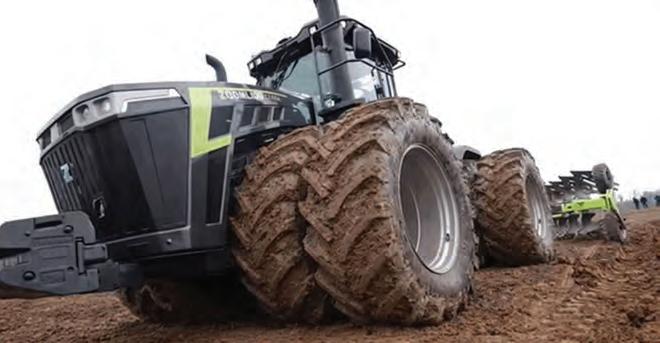
precise torque distribution and advanced automation capabilities. The machine is also equipped with Zoomlion’s EPilot smart-driving system and AOS operational platform, enabling centimetre-level autonomous guidance and coordinated implement control during high-speed field operations.
In other new tractor news, fellow Chinese manufacturer Lovol, is preparing to launch its M3004, a new 300hp tractor said to be positioned aggressively on price in the highpower segment. Following a series of demonstrations in Poland, it was reported that the company’s aspirations were to expand rapidly in the European

market, driven by the possibility that offer the cheapest 300hp tractor in the sector.
Powered by a 9.5-litre six-cylinder diesel engine, its displacement appears to be larger than the norm for the power class, complemented by a tare weight of around 11 tonnes, with a 3185mm wheelbase. The format suggests that it would be ideal as a heavyduty platform intended for demanding tillage operations or large implement applications.
trials of its flagship DX7004 hybrid wheeled tractor.