THE BATTLE for the rural vote is on, and parties are securing high profile names to try and bolster their chances at the general election.
New Zealand First has picked former Federated Farmers Southland president Jason Herrick as its Southland candidate.
Herrick has spearheaded Southland farmers’ push for regulation reforms and is well known in the Southland farming community.
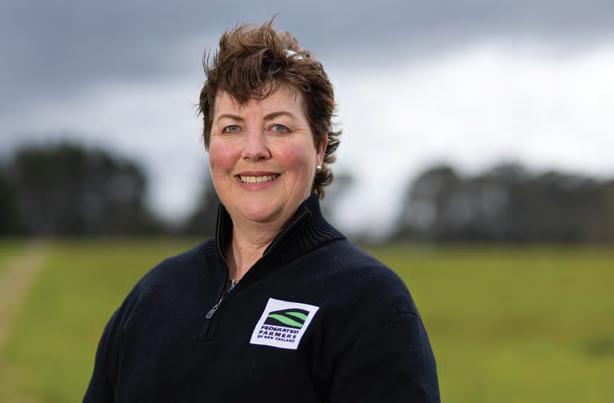
National has roped in former Federated Farmers national president Katie Milne for the West Coast-Tasman seat.
A fifth-generation family farmer from the West Coast, Milne was the vice president of the World Farmers Organisation, a director for Predator Free 2050 and served as Federated Farmers first female president between 2017 and 2020.
National has also secured a highprofile dairy farmer for the Dunedin seat. Kristine Asuncion, a Filipino migrant, brings over a decade of experience in dairy farming, as well as leadership in people and culture, workforce development, and migrant advocacy across New Zealand’s primary industries.
Herrick’s candidacy signals an
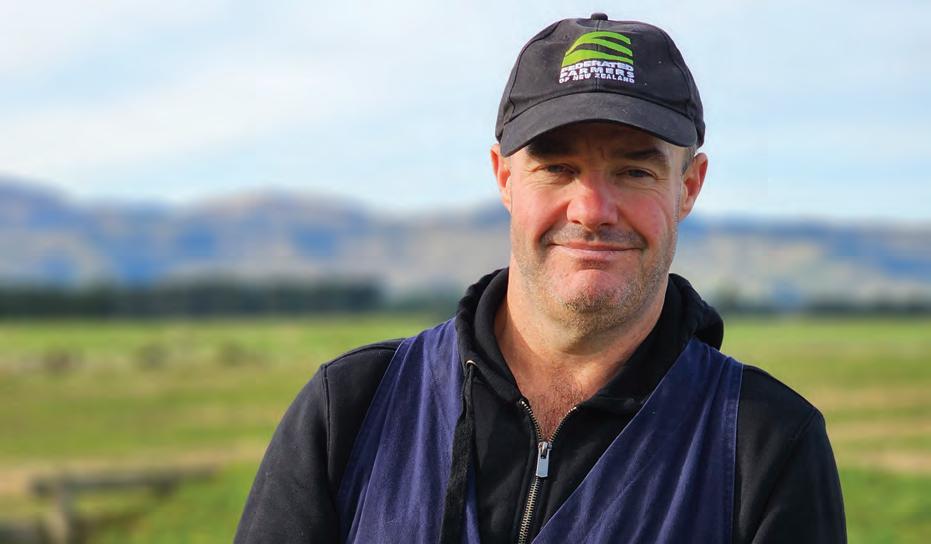
interesting battle for the seat currently held by National’s Joseph Mooney.
While National did well in most rural seats last election, the 2026 election could be different. Coalition partners ACT and NZ First will try to poach votes.
Bryce McKenzie a founder of Groundswell, a farmer advocacy group, believes National will struggle to hold ground against both ACT and, more so, NZ First.
“Definitely from what we are

hearing, people are disillusioned with National,” McKenzie told Rural News.
He doesn’t expect Labour to put up a fight in rural seats.
“Rural people are very wary of Labour after what they did in the last two terms they were in government. Also, their coalition partners are a major concern,” he adds.
Herrick says he decided to stand for NZ First because it aligns “with my strong beliefs for democracy and equal citizenship”.
“NZ First values around common sense have resonated with me for some years now,” he told Rural News
“I strongly believe that for NZ to move forward, we need to stop holding current citizens of NZ responsible for the wrongs of the past and move forward as one country. NZ First has demonstrated the same beliefs.”
Herrick believes National has been a huge part of a coalition government but not enough has been done for the rural community.
“I believe the coalition has started moving in the right direction, but there is so much more to do.
“The economy is still in strife and the only way to get NZ out of this mess is by regional development and growth.
“I believe NZ First is the right party to do this, supported by the right coalition partners to get us moving forward.”
Herrick claims farmers are still frustrated at the amount of red tape and regulation holding back productivity.
“Although dairy and the red meat sectors are showing good income levels, the costs are still extremely high,” he says.
Milne says that as a lifelong advocate for farmers, she can see firsthand how National backs the primary sector.
“The National-led Government has reduced red tape to get farmers back to farming, signed new trade deals which has helped increase trade by $17 billion, and introduced [an] investment boost to encourage businesses to invest, expand, and hire more Kiwis.
“As a fifth- generation coaster, I know that our region can be more productive, with more jobs and higher wages.
“That is why I will be campaigning hard to re-elect a National government and to earn the right to be West CoastTasman’s next National MP.”
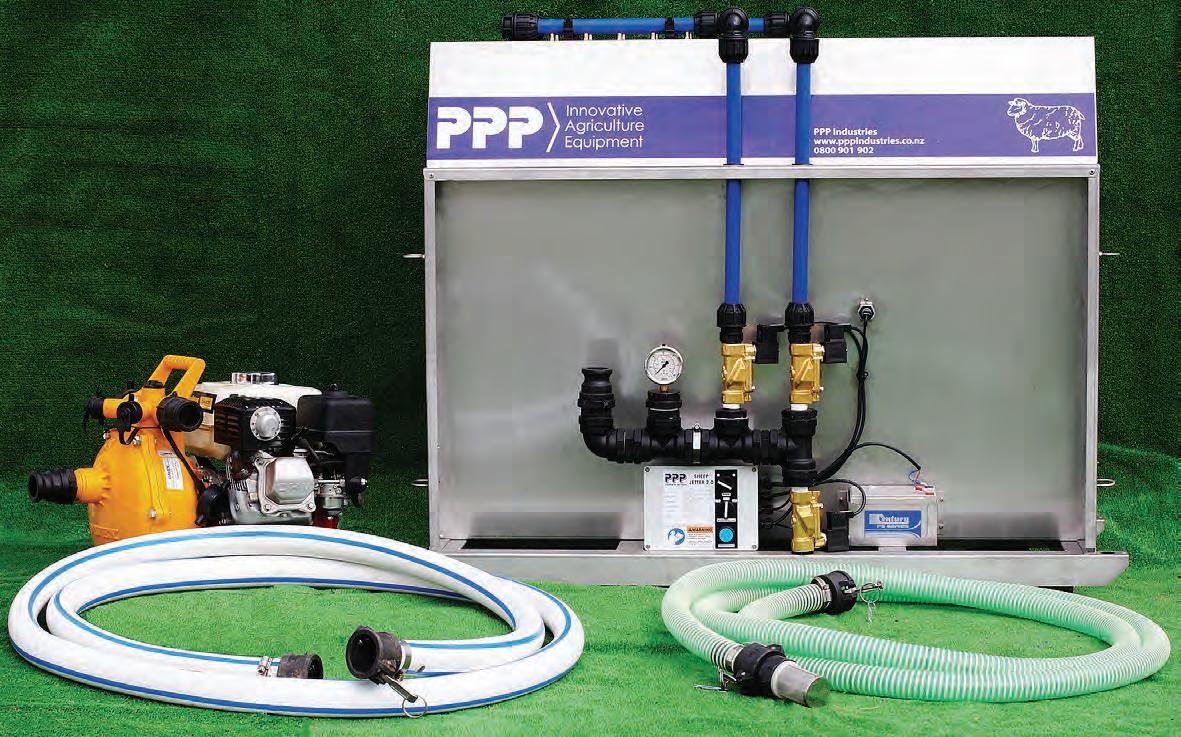


Terms and conditions apply: *Finance disclaimer: Fixed rate of 0% p.a. on a loan term of 24 months on Yamaha Motor Finance New Zealand Ltd (YMFNZ) Consumer contract standard terms and conditions to approved applicants. The offer is available for private and commercial buyers on the 2023/2024 Wolverine X4 XT-R; 2023 Wolverine RMAX4 1000 XT-R Compact; 2024 Wolverine RMAX2 1000 Sport; and the 2024 Wolverine RMAX2 XT-R between 01/05/2026 and 31/08/2026 and settled on or before 30/09/2026. Credit criteria, fees, charges, terms and conditions apply including an application fee of $325, $8.05 PPSR fee, and a Dealer Administration Fee may apply. Finance is provided by YMFNZ NZBN 9429036270798, FSP 9622. ^All savings stated are GST exclusive on the manufacturer’s Recommended Retail Price (RRP) and are available to private and commercial buyers. Savings are not redeemable for cash or other products. Offer available between 01/05/2026 and 31/08/2026 while stocks last through participating authorised Yamaha Motorcycle dealers. $8,250 off the RRP of $34,249 for 2023 and 2024 Wolverine X4 XT-R equates to $25,999; $7,900 off the RRP of $39,899 for 2023 Wolverine RMAX4 1000 XT-R Compact equates to $31,999; $2,650 off the RRP of $29,149 for 2024 Wolverine RMAX2 1000 Sport equates to $26,499; and $5,250 off the RRP of $33,749 for 2024 Wolverine RMAX2 XT-R equates to $28,499. Yamaha Motor New Zealand Ltd. NZBN: On select MY23/24 ROV models. P.A. Fixed Interest rate Finance* over a 24 month term.




HEAD
PETER BURKE
peterb@ruralnews.co.nz
FARMERS AROUND the country are going public big time, demanding their local district, city and regional councils come with amalgamation plans that meet the needs of rural communities and don’t allow urban councils to dominate.
This follows central government putting local authorities on notice to come up with substantial, realistic, cost-effective plans for amalgamation within the next three months or else government will intervene.
Feds spokesperson on local government, Sandra Faulkner, says elected councillors need to put aside parochialism and engage in open discussions on reform that will work. She says Feds support the concept of reform.
“But we will only support reforms that lock in strong representation for provincial communities,” she says.
Bay of Plenty Feds president Brent
Mountfort echoes this sentiment saying rural communities and towns don’t want to be paying for city projects that deliver little benefit to them and notes that Tauranga has the second highest rates per household of the country’s 10 metropolitan councils in NZ.
“There should be separate unitary councils for cities and provincial areas,” he says.
Federated Farmers Rotorua-Taupo president Braydon Schroder says rural communities rely on local leadership that understands rural realities, from land use to infrastructure and environmental management.
“If decisions are made without proper rural input, we risk creating policies that don’t fit or support the needs of Rotorua’s farming families and rural businesses,” he says.
Also concerned about urban domination in the reforms is Southland Feds president Chris Dillon who says in a broad sense farmers want a system
that delivers better representation and value for money. He says the best solution for Southland is to have two unitary authorities – one for Invercargill and another for the rest of Southland.
In Canterbury the fear of rural communities being swallowed up by a super region focused on
beckyw@ruralnews.co.nz
Rural News online: www.ruralnews.co.nz
Subscriptions: subsrndn@ruralnews.co.nz
THE SUCCESS or failure of the reforms, according to Waikato Regional Council and former local feds president ultimately depends on the quality of the governance of the new structures.
Keith Holmes says there are vast differences between running regional authorities and urban councils and says they require different skill sets.
He says what a lot of people don’t understand is that over time central government has been unloading work and responsibility on to local councils and not giving them the extra money to deal with these things. Holmes says
in the case of the Waikato Regional Council, there are about 140 Acts of Parliament or central government rules they have to comply with.
“So government has to sort out its own ship as well, and it’s grossly unfair to blame hard working staff and elected representatives at local councils for what in many cases is beyond their control,” he says.
The election of local councils has long been something of a lottery. Whereas in national politics, parties have some sort of vetting process before an individual can been selected
to stand for parliament.
“In the case of local councils, it’s something of a ‘beauty contest’ where there is no proper or prior scrutiny of candidates. God knows how I got elected because I have never seen myself as beautiful,” he says.
What Holmes is saying is that many people get elected to local councils because of their enthusiasm, profile, carefully crafted CV, or single issue concerns, but often they have little proven governance or business acumen. He says local authorities are huge businesses and those elected
Bex Green.
“That would be the worst-case scenario. We are firmly opposed to a single unitary council for Canterbury,” she says.
Bex Green says its essential rural representation is protected.
need to have experience in governance or running a business.
He says he favour the Dutch model; whereby elected councillors appoint a board to run the council. To some degree this system already exists in NZ with council-controlled entities, but how successful such a system would be in the new reforms is open to debate.
The next three months will be interesting to see how local authorities respond to the Government’s deadline and whether the issue of equity between rural and urban can be achieved.


Compact/Robust

SUDESH KISSUN sudeshk@ruralnews.co.nz
DAIRY INDUSTRY leader Jim van der Poel didn’t make much of the invitation he received to the recent New Zealand Dairy Industry Awards in Rotorua.
The Ohaupo farmer told Rural News that he loved coming to the annual event, which celebrates the industry’s cream of the crop.
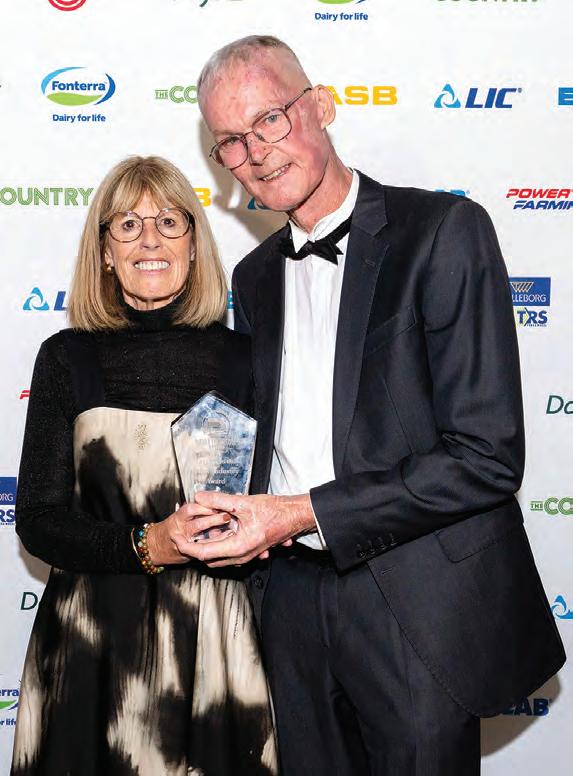
But Van der Poel and his wife Sue were surprised to be called on stage and presented with the prestigious Services to the Dairy Industry Award.
The award is given out on rare occasions to people who have contributed significantly to the dairy industry and recognises van der Poel’s 40-year service to the industry.
Van der Poel says receiving the award was “a very big surprise for a start”.
“I got invited along tonight to be part of these great celebrations and we always love coming to these events and so to get this award presented with us and the kind words that were said was a big surprise actually,” he says.
The van der Poels are no stranger
to dairy awards. They won the Waikato Sharemilker of the Year in 1987 –which was just before the regional programme became national in 1989.
Apart from farming van der Poel has played a leading role in industry governance, serving as Fonterra director and chair of DairyNZ.
As a farmer and equity partner, van der Poel has used his experience to support innovation, succession, and leadership development across the sector.
He describes his stint as a dairy farmer and governance leader as an amazing journey.
The industry has evolved and grown but van der Poel points out that all the same principles still apply.
“We’re farmers, we help one another, share information and there’s still great opportunities for people to enter the industry and grow in it.”
He believes the dairy industry is in very good stead.
He remains a great fan of the New Zealand Dairy Industry Awards because they celebrate success within the industry.
“They also recognise and identify good people coming through and offer
learning opportunities for them.
“These award nights show new people that are doing great things out there, have real good leadership capability and they come to these awards, and you think, wow, this industry is in good shape.”
New Zealand Dairy Industry Awards Trust chair Paulette Johns presented Jim and Sue with the award.
She says van der Poel is recognised as a distinguished leader across the dairy sector, having made a sustained and influential contribution over more than four decades of farming, governance and national industry leadership.
“He has done this in tandem with Sue, who is in her own right a successful farmer and business partner. We recognise her unwavering support, which no doubt enabled Jim to commit his time to the industry bodies.
“Widely respected for his integrity, cool, calm and pragmatic approach, and commitment to mentorship, Jim’s achievements, impact, and influence represent an enduring legacy of service to New Zealand agriculture,” says Johns.

PETER BURKE
THE PRIMARY sector is leading NZ’s economic recovery, according to economist and researcher Cameron Bagrie.
“We’d like to get people to take a deep breath and sit back and think about the long game: what are the priorities we need to be addressing over the next ten to twenty years such as sustainability, climate change.”
But what he calls ‘jandal economics’ is not helping the recovery.
He told Rural News that, overall, the primary sector is doing pretty well now due to a combination of good commodity prices and the weakness of the NZ dollar. He says while the sector is having to face up to the same challenges as the rest of society, it is doing well. These challenges include what ability the
primary sector has to pass increased costs on to consumers and what resistance there might be to this. He says some sectors may have the ability to so while others won’t.
“But the strength of the primary sector lies in its strong productivity story. Productivity in agriculture in NZ is typically 1.5% to 2% whereas the NZ average for the past decade has been 0.3%. That tells you that there are an awful lot of sectors across NZ that have negative productivity and that’s a major economic problem,” he says.
Bagrie believes that because of low
productivity, NZ is facing an income crisis rather than what is often termed a cost of living crisis. He says when there is low productivity, there are low wages, and when this happens it is much harder to deal with because there is no flexibility.
He believes the biggest economic concern for NZ now is inflation, which hurts people, takes money out of their pockets and makes it harder for them to put food on the table.
“Inflation is not just issue number one by a small margin, it is issue number one by a big margin,” he says.
Bagrie says NZ politicians are facing the
WHAT NZ needs right now is certainty, says Cameron Bagrie, but he adds that is unlikely to happen anytime soon due to a wars and global political upheavals.
He says this is having an impact on politics here – especially as a general election looms towards the end of the year.
Bagrie notes that in the current polls the two main political parties, National and Labour collectively have about 65% support with the remaining 35% spread amongst the minor parties.
With such a strong showing on the part of the peripheral parties, it leads to a situation where the tail is

wagging the dog.
conundrum of having to deal which this shortterm imperative instead of focusing on long-term strategic issues. He says there is a real tension between the two, but adds that politics tends to focus on the short term.
“We’d like to get people to take a deep breath and sit back and think about the long game: what are the priorities we need to be addressing over the next ten to twenty years such as sustainability, climate change, productivity and infrastructure? But the stark reality is the cost of living is dominating the thinking,” he says.
“We have got what I call ‘jandal economics’. There are more economic flip flops here than the flip flops that walk the beach at Bondi in Sydney. This is a big problem because it doesn’t always lead to the best policy option being adopted,” he says.
The corollary of this says Bagrie is that it could lead to a series of one-term governments. He points out that in the past, once elected, a party might reasonably expect to get at least two terms, but says now this may not be the case; A fact born out in recent elections overseas such as Australia and the UK where

there is a rise in support for minor parties.
Like others, he notes the Irish situation where the two major centrist parties, Fianna Fail and Fine Gael, formed an unlikely coalition to keep the periphery parties such as Sinn Fein and the Labour Party from having a say in the government.
“For this to happen here, both sides would have to swallow a few dead rats,” says Cameron Bagrie.
He says people are hurting in NZ and politics is being dominated by the polls and popularism. One way of solving this is for politicians to stay away from social media, he says.
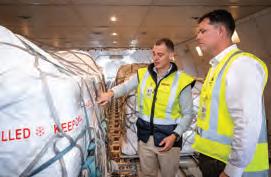
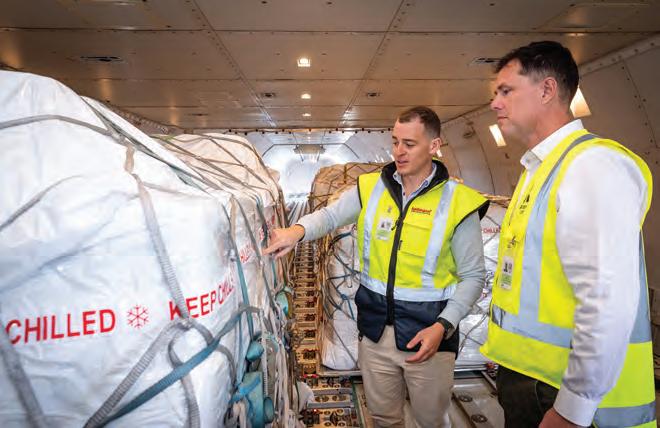
SILVER FERN Farms has tackled the ongoing war-induced shipping challenges to mideast markets by airlifting 90 tonnes of chilled New Zealand lamb and beef to the United Arab Emirates.
The shipment used a customer-chartered aircraft operating from Auckland to Abu Dhabi to supply leading Middle East distributor Al Tayeb - a division of the LuLu Group, which operates supermarkets across the region.
Silver Fern Farms general manager logistics, Scott Hurdley, said the delivery
highlighted SFF’s commitment to finding solutions for customers during a period of disruption to sea freight.
“We have longstanding customer partnerships of over 35 years in the Middle East, and many exporters are currently experiencing difficulty servicing this important region,” he said.
The Middle East is a strategic market for Silver Fern Farms, particularly for chilled lamb and beef.
SFF had done smallerscale airfreight before but completely filling a plane was unique.
Hurdley said it needed close
coordination between SFF’s New Zealand and Middle East offices, Al Tayeb, Hellmann Worldwide Logistics, and Auckland Airport’s airside processes, to ensure strict cold-chain compliance throughout.
He said the success of the shipment underlines New Zealand’s ability to deliver premium food products to international markets, even under challenging conditions.
“Silver Fern Farms is proud to be a partner of one of the leading retailers (LuLu Group) in the Middle East, with a robust network spanning multiple markets and a strong global sourcing
ecosystem. This collaboration reflects our shared commitment to delivering world-class quality to our customers while ensuring a resilient and reliable food supply chain,” he says.
Meanwhile, the Alliance Group agrees that ongoing conflict in the Middle East continues to affect the red meat supply chain.
“However, our logistics team has worked incredibly hard to keep product moving under very tough circumstances,” said James McWilliam, Alliance Group commercial director.
“We have a lot of experience managing volatility in global markets, and we have had some success getting product through to key markets in the Middle East despite the disruption.”

McWilliam said Alliance’s procurement team has been working closely with its Dawn Meats colleagues, given that they share a number of suppliers.
“Our strong customer relationships in the Middle East have also been critical in helping mitigate the impact of the conflict on the business.”
Save time and save money with Bionic® Plus - the 100 Day* controlled release combination anthelmintic with minerals capsule for sheep. Worm control with Bionic® Plus can reduce drench inputs1, aid in control of dags and associated flystrike2, and slow the development of resistance.
Farmers and veterinarians can be confident when they choose Bionic® Plus.

deployment of emissions reduction tools for farmers.
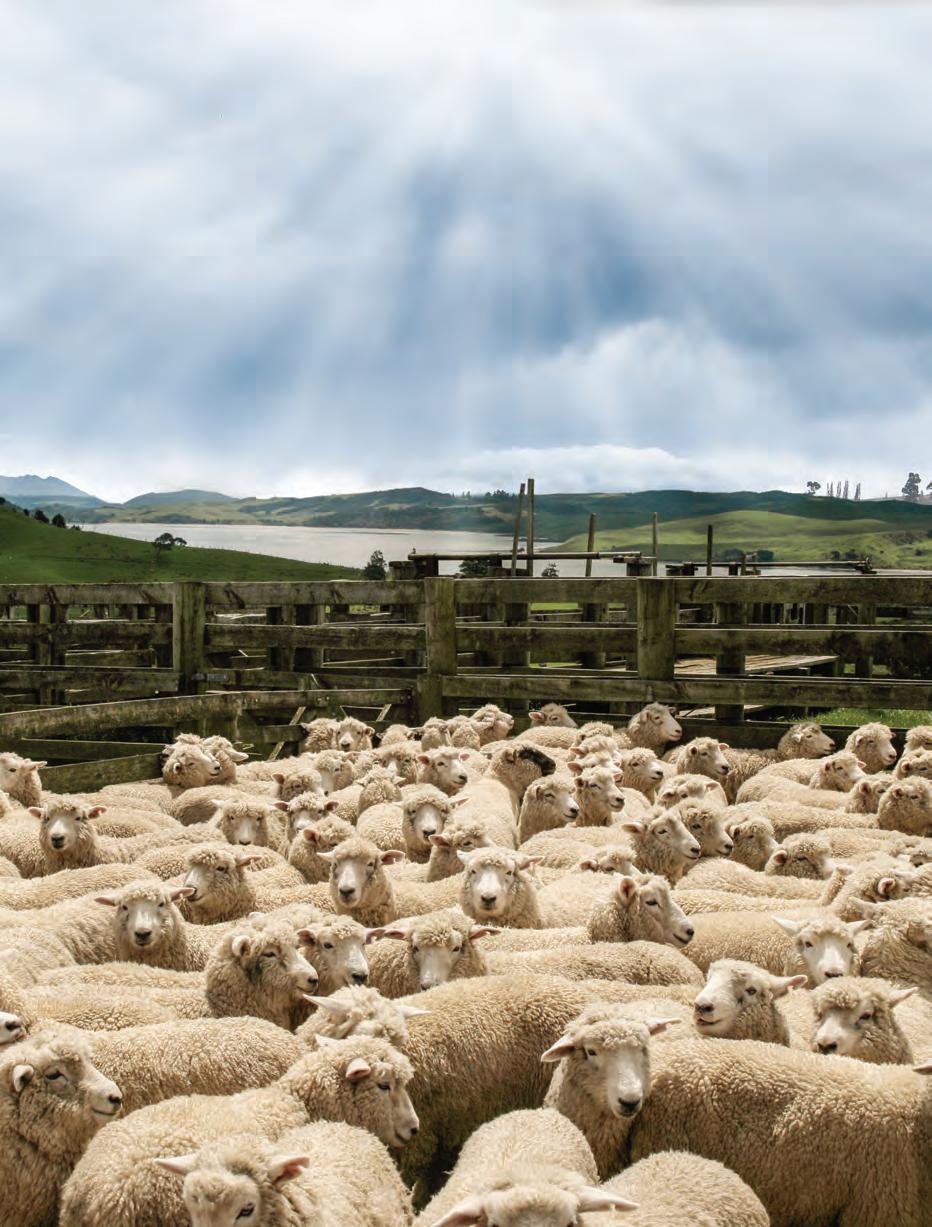
A MOVE to boost farmer uptake of low methane emitting sheep is underway.
The $1.2 million project is being undertaken by AgriZero – a company half-owned by major agribusiness companies with the other half owned by the Crown through the Ministry for Primary Industries. It was set up to deliver a stepchange in investment aimed at accelerating the development and
This latest initiative is an extension of the ‘Cool Sheep’ programme and will focus on seeing whether low methane emitting sheep convert feed more efficiently – a factor they hope will entice farmers to breed from them. This latest project is funded by AgriZero, B+LNZ, and the Ag Emissions Centre, working alongside scientists from the Bioeconomy Science Institute.
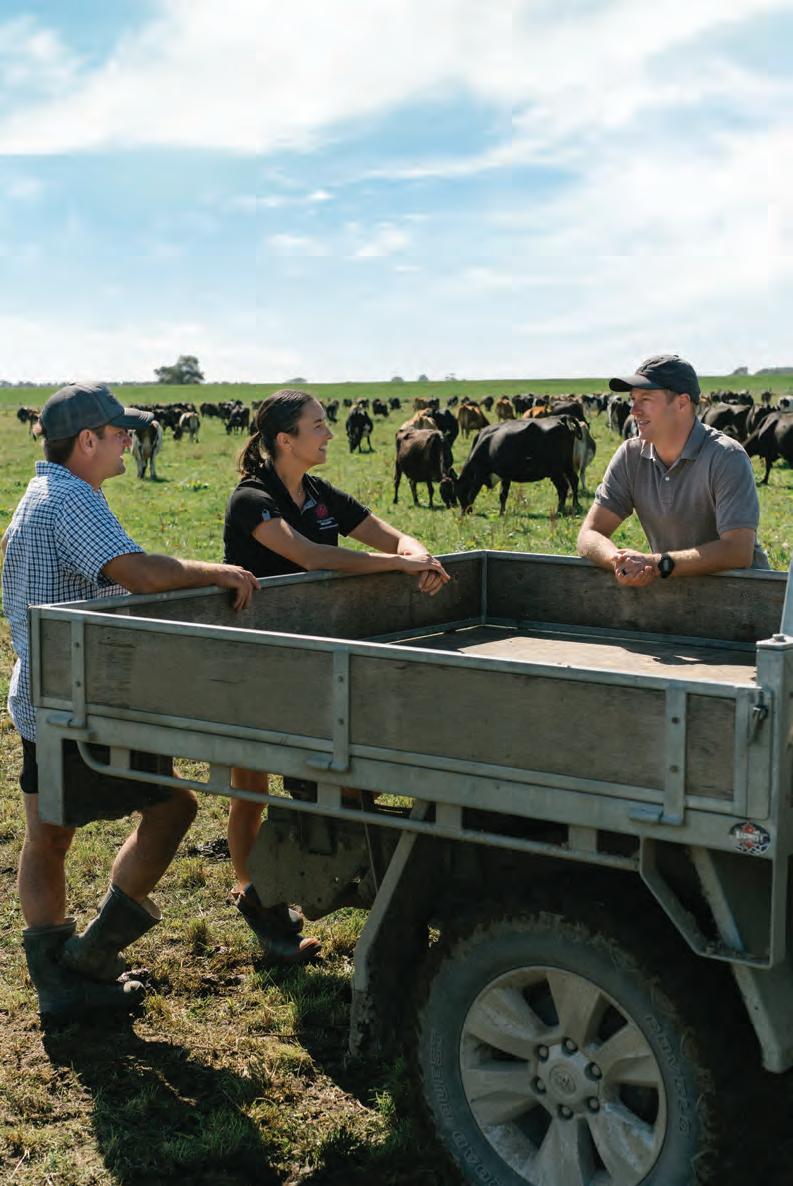
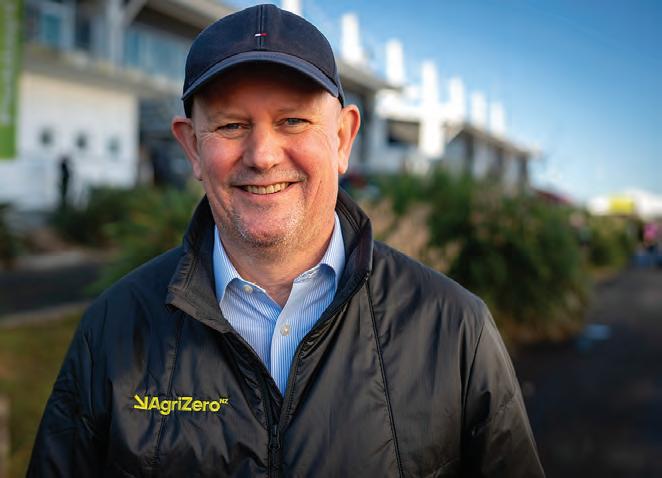
AgriZero chief executive Wayne McNee says there’s been ongoing work to identify low methane emitting traits in sheep, but he says the issue is how to scale this up and persuade more farmers to introduce these sheep into their flocks.
He says farmers have a lot of options now when it comes to selecting traits in their sheep. A good example is the trait that reduces the incidence of facial eczema. But they probably can’t take up every option and it comes
down to what are the best and most profitable traits for them.
“Breeding for low methane is a benefit to farmers and some have already taken this up. But unless there is a greater incentive than just lower methane emitting animals, it may not be attractive in its own right. Hence if we can produce a sheep that is a more efficient converter of feed as well as producing lower methane emissions this would be an incentive,” says McNee.
He says farmers are
business focused and they want a reason for having certain traits in their sheep flocks.
“That is why we are investing in the project to see if we can add another dimension to the methane trait,” he says.
Dr Suzanne Rowe, senior scientist at the Bioeconomy Science Institute and leader of the low-methane breeding research programme, says breeding for low methane
has proven to be a highly effective mitigation tool.
She says since establishing flocks of high and low-methaneemitting sheep, they’ve measured an average difference of around 18% in methane emissions between the two groups.
“This trial will give us clear evidence of how high and low-methane sheep differ in the way they use feed, which will help us understand
whether selecting for low methane also boosts efficiency,” she says.
McNee says this latest research programme is one of a portfolio of tools that will be available to farmers. He says there is a need to give farmers a range of options to choose from and give them an incentive to do so.
He says the results of this latest project will be out later this year.
“I’m here to be a sounding board, someone to talk through a problem and help find the right direction.”
Scott Armer – CEO, Armer Group and First Farm mentor Sam and Michael McGiven – First Farm owners and mentees
BNZ’s First Farm Package connects eligible first dairy herd or farm buyers with a local mentor who’s keen to pass on their knowledge. Scott Armer, CEO of Armer Group in the Bay of Plenty, knows the importance of having someone you can pick up the phone to talk though problems and help make sense of challenges. Something he’s now looking to offer as a First Farm mentor. With reduced deposit requirements, flexible funding options, and dedicated support from an Agribusiness Partner, BNZ’s First Farm Package can help you succeed in the long term.
BNZ First Farm Package


FARMERS AROUND the country are welcoming the proposed reform of local government.
However, they are rightly demanding their local district, city and regional councils come with amalgamation plans that meet the needs of rural communities and don’t allow urban councils to dominate.
This follows central government putting local authorities on notice to come up with substantial, realistic, cost-effective plans for amalgamation within the next three months or else government will intervene.
Farmers generally support reforms provided they lock in strong representation for provincial communities.
After all, rural communities and towns don’t want to be paying for city projects that deliver little benefit to them.
If decisions are made without proper rural input, they risk creating policies that don’t fit or support the needs of farming families and rural businesses.
There’s no doubt NZ’s local government system is too complex, too costly, and too hard to navigate.
Currently, there are 78 city and district, regional, and unitary councils across the country – a high number for a country of our size.
Federated Farmers proposes that metropolitan unitary councils centred on cities of around 50,000-plus, and provincial unitary councils that merge the district councils
This modelling could see the current 78 councils reduce to less half that number.
It also achieves the streamlining, economies of scale and capability to shoulder the regional spatial planning the Government wants.
Councils shape the places we live and the services we rely on. But for farmers, too often the system is tangled in duplication, disagreements, and decisions that defy common sense.
Getting a simple resource consent renewal is a costly, time consuming and a drawn-out affair for some farmers.
Farmers need a simpler, cost-effective system that just lets them get on with farming.
The next three months will be interesting to see how local authorities respond to the Government’s deadline and whether the issue of equity between rural and urban can be achieved.
HEAD OFFICE POSTAL ADDRESS: PO Box 331100, Takapuna, Auckland 0740
Phone 09-307 0399
PUBLISHER: Brian Hight Ph 09 307 0399
GENERAL MANAGER: Adam Fricker Ph 021-842 226
EDITOR: Sudesh Kissun Ph 021-963 177 sudeshk@ruralnews.co.nz
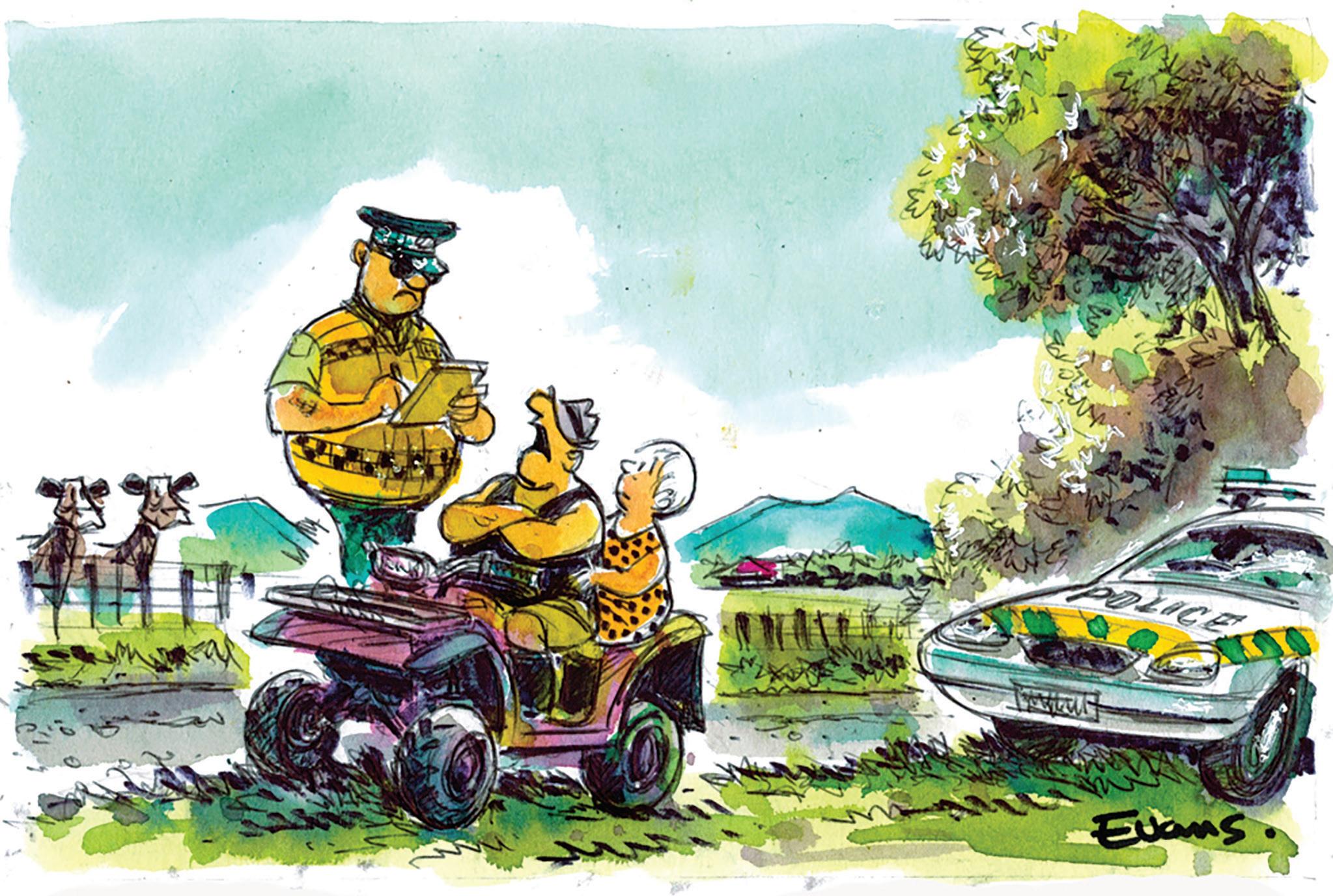
“Why weren’t you tempted to earn twice as much to ruin some Aussie’s day?”
TOWN AND country find themselves on the same page when it comes to anger over price hikes from NZ Post. Fed Farmers and others have made a hue and cry about the July 1 hikes of 19% for unaddressed bulk mail and an extra 70c to post a letter. Constant price hikes by NZ Post have seen their rate rises far outstrip inflation, or any other service or commodity, as our mates at the Magazine Publishers Association point out: “These aren’t normal price increases. They are multiples of inflation, compounding year after year, imposed by a monopoly provider with no regulatory oversight of its pricing,” says MPA chair Stuart Dick. As he says, no other essential infrastructure service in NZ operates without independent price scrutiny. Gas, electricity, broadband all have some level of oversight or controls. Postal services should too.

IT’S BEEN an eye-opener watching the big media companies behaving exactly like the powers-that-be who the crusading hacks from the likes of One News and Stuff claim to be “keeping honest”. Keeping a story quiet to protect one of their own (former One News political editor Maiki Sherman), using heavyweight lawyers to silence any media thinking about stepping out of line and breaking the story, then, once an outsider finally broke the story, ‘bravely’ copying that blogger’s story and running all its gory details – ironically leading to the ‘cancellation’ of a reporter who had led the charge on many a pileon in the past. Your old mate hears though that the real reason media kept the Sherman story quiet for a year is that they didn’t want to lose access to free booze-ups in ministerial offices!
EDITOR-AT-LARGE: Peter Burke Ph 021 224 2184 peterb@ruralnews.co.nz
REPORTERS: Nigel Malthus Ph 021-164 4258
Leo Argent
MACHINERY EDITOR: Mark Daniel Ph 021 906 723 markd@ruralnews.co.nz
PRODUCTION MANAGER: Becky Williams Ph 021 100 4381 beckyw@ruralnews.co.nz
THIS OLD mutt went to school to eat his lunch, but still knows the future of the country, and the primary sector, depends on a conveyer belt of well-educated youth coming through the system. The current government has made some big changes to try and improve education outcomes, but it seems the only news coverage you’ll see on this is the predictable but disappointing whinging from groups like the NZEI and the principals’ association. What we should be hearing are the numbers: school attendance is up from from 65.9% to 68.6%year-onyear, a huge jump from 46.5% in 2022, and targeted interventions in maths saw students make double the progress of their peers in just 12 weeks – to list just a couple. Which goes to show, to make an informed decision this election year, you’ll need to go beyond the daily news and look up the actual data yourself!
AUCKLAND SALES CONTACT: Stephen Pollard Ph 021 963 166 stephenp@ruralnews.co.nz
WAIKATO & WELLINGTON SALES
CONTACT: Lisa Wise Ph 027 369 9218 lisaw@ruralnews.co.nz
Want to share your opinion or gossip with the Hound? Send your emails to: hound@ruralnews.co.nz
THE OLD saying ‘a new broom sweeps clean’ doesn’t always hold up, if you ask the Hound. New management at an organisation doesn’t always change a rotten, broken culture, which seems especially true of the Wellington bureaucracy, the Gliding On types who remain indifferent to changes on the 9th floor of the Beehive. However, your old mate hears that changes in HQ at Mystery Creek may bode well for a long-overdue attitude adjustment with Fieldays. For years, exhibitors at the event have complained about the high-handed indifference they’ve copped from the crew running NZ’s biggest ag event. Many have stopped attending altogether, fed up with spiralling costs, obstructive clipboard carriers and a dubious ROI. Time will tell if this has changed, but early rumblings are positive!
SOUTH ISLAND SALES CONTACT: Kaye Sutherland Ph 021 221 1994 kayes@ruralnews.co.nz
DIGITAL STRATEGIST: Jessica Marshall Ph 021 0232 6446
MIKE PETERSEN
NEW ECONOMIC
modelling confirms what many of us in Hawke’s Bay have long understood – getting water security right for this region is one of the most important decisions we face as a community. Not just for farmers, but for everyone who lives, works and builds a future here.
The Hawke’s Bay Regional Water Assessment concluded that by 2040, even with significant efficiency gains, the region could face a freshwater shortfall of nearly 25 million cubic metres.
Climate projections point to reduced river flows and worsening droughts. With an El Niño weather pattern forecast this coming winter, we may well see exactly the kind of drought conditions that expose how vulnerable Hawke’s Bay remains, environmentally, economically and in terms of community resilience, without the water storage infrastructure that much of New Zealand already relies on.
Water security has been on the agenda here for over a decade and in that time, the rest of New Zealand has
not been standing still. Canterbury, Otago and Tasman Marlborough have embedded water storage projects that have delivered real economic resilience – the South Island economy is strong, underpinned in no small part by water security driving the food and fibre sector. Northland has already built and integrated water storage. Gisborne Tairāwhiti may move ahead of us very shortly. Wairarapa is initiating its own work. Water storage is not new to New Zealand, but it is new to Hawke’s Bay. Without it, we risk a flight of businesses and capital to
better-resourced parts of the country. Water storage is not a point of difference we can afford to give away.
The Tukituki Water Security Project (TWSP) commissioned the New Zealand Institute of Economic Research to model what the project could mean for the region, and the findings are significant. Once fully operational, the project would increase annual regional GDP by up to $693 million per year – 5.7% of regional GDP – and add up to $452 million per year in additional household spending across the region. It would




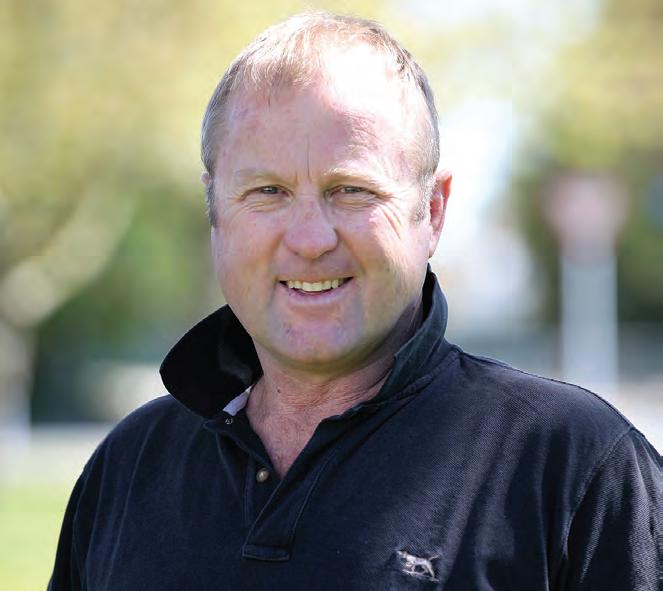
support more than 1800 new permanent jobs, equivalent to lifting total regional employment by more than two percent, while generating up to $195 million per year in additional Government revenue. Over the project’s lifetime, total economic benefit ranges from $1 billion to $5 billion, with 200 to 300 jobs supported during construction alone.
The same modelling indicates the project’s benefit-cost ratio ranges from 1.5 to 9.1 depending on the scenario. To put that in perspective: the Government’s Roads of National Significance, widely accepted as essential infrastructure, typically come in between 1.0 and 1.1.
The Puhoi to Wellsford motorway had a ratio of 0.8, meaning it cost more than it returned, and yet I am not aware of anyone calling that a fantasy. The economic
case for water security in Hawke’s Bay is, by any comparable measure, exceptionally strong.
The recent closures of McCain and the Heinz Wattie’s frozen lines are devastating for the growers and workers affected in our region. They also demonstrate what water security advocates have been saying for years –the low-margin, highvolume processing model is under structural pressure, and growers need to rethink what they produce. In Hawke’s Bay, with our climate and soils, the real opportunities lie in higher-value horticulture, livestock and seed production. NZIER modelling projects that TWSP would irrigate over 5000 hectares of horticultural crops.
The land is suitable.
The market and local opportunity for premium New Zealand produce
is there. What many growers lack is secure and reliable water. Water is the foundation of everything we grow, everything we drink, and the health of the rivers we love. The question is not whether Hawke’s Bay needs water security – the numbers make that clear. The question is whether we have the will to act while the window remains open.
In Part Two of this series, I will address the how – how the project is funded, what it means for the environment, and why the concerns being raised publicly deserve straight answers.
• Mike Petersen is chair, Tukituki Water Security Project.
For more information, visit https://www. tukitukiwater.co.nz
A 12-MONTH pathway programme has helped kickstart a career in dairy for an 18-year-old student-turned-farmer.
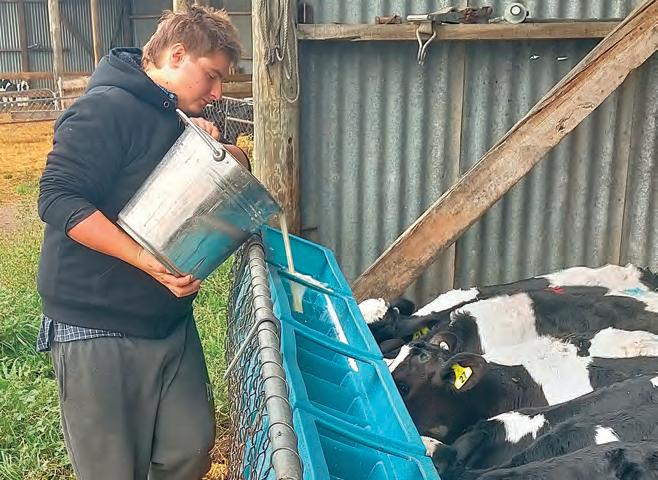
Levi McNae was a year 12 student at Hurunui College in Hawarden, North Canterbury, when he decided to enroll in the NextGen Dairy Farmers – a NZQAaccredited programme launched in 2024 by Dairy Training Limited (DTL), a subsidiary of DairyNZ. The programme provides 16 to 20-year-olds with a pathway to a career in the dairy industry, while also looking to address the
shortage of home-grown talent in the sector.
“I had no background in dairy, or farming for that matter,” McNae says.
“I just wanted to do something meaningful and so I signed up.”
Following a three-week pre-employment training, McNae started his training at Kohakaumu – a 900-cow Ngāi Tahu dairy farm where he is now working full time as a farm assistant.
McNae says he wants to become a 2IC (Secondin-Charge) in a year’s time and is working towards eventual farm
ownership – a dream he says isn’t too distant.
Head of Dairy Training Limited Hamish Hodgson says the student’s testimony shows that the programme is working as intended.
“This programme is free for students, they have full-time employment while they train. They are earning NZQA micro credential qualifications on the job, and they get accommodation on farm.
Some are even able to put half their income into their KiwiSaver accounts with the goal of buying a
house at 22,” he says.
Hodgson says the dairy industry offers great opportunities to those who are prepared to take them.
“The added benefit of this programme is that students are fast tracked through strong support systems, pastoral care, learning advisors, and great host farmers.”
An evaluation report of the pilot programme published in July 2025, comparing NextGen students to a typical new employee after six months, rated the students higher on all key
competency areas, namely technical competency, work attitude and reliability, communication and teamwork, and wellbeing practice.
“We had 100% placement for the four students in our pilot and some of our host farmers have already expressed interest in participating again next year,” Hamish says.
McNae’s host farmer Jacob Damsteegt says
hiring him at the end of the training was a no-brainer. “Levi’s full of energy and he’s got the same awesome attitude we do.
“This programme is about Kiwis helping Kiwis. We hear a lot about how our people don’t like doing the hard yards, but a lot of young people just need a chance,” he says.
Damsteegt also says the support from DTL’s
learning advisors was key to the programme’s success. “If they weren’t guiding the students and it was all left just to the farm owner, it just wouldn’t work,” he says. Applications for the next intake of the NextGen Dairy Farmers programme are now open, closing on May 31. The programme is seeking 16 to 20-year-olds interested in pursuing a career in dairy farming.





ADOPTING
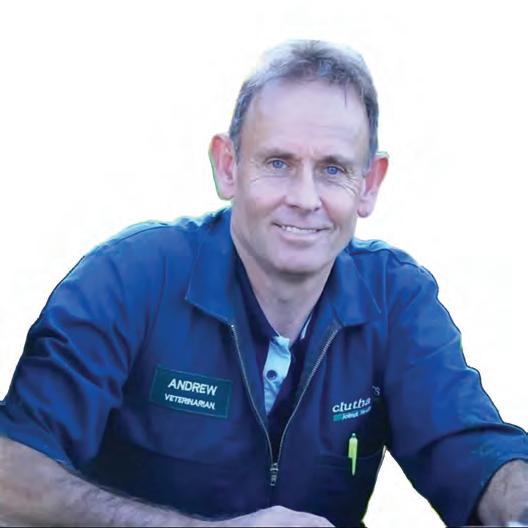
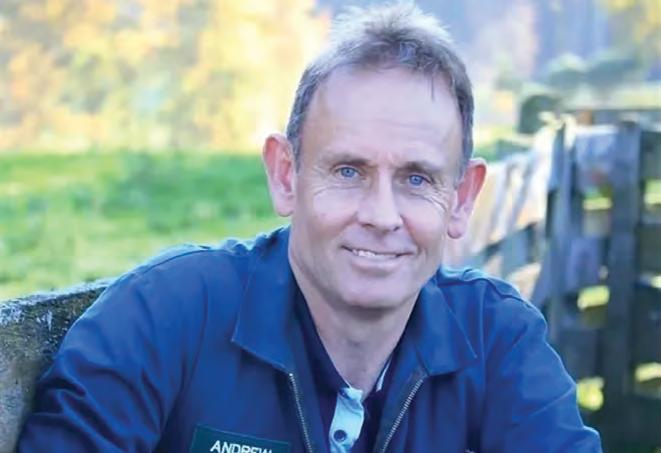
STRATEGIES to reduce worm burden on farm goes hand-inhand with best practice farm management practices to optimise stock production and performance, veterinarian Andrew Roe says.
A production animal veterinarian with Clutha Vets, Roe’s practice services the South Otago region, and he observes a rise in drench resistance in the area.
“Looking at the positives, good worm management tools and strategies often align with good farming management practices. By reducing stock exposure to worms you are maximising their potential to be healthy and productive,” he says.
Roe says Beef + Lamb New Zealand and Wormwise workshops have helped disseminate information to farmers, but it’s still a minority of clients who have gone as far as a full faecal egg reduction test.
“There is a thought that at the bottom of the South Island, drench resistance is not as bad as further north.
Combination drenches, particularly triples, have largely been working on most farms up until about four years ago. Since then, about a quarter of the farms we have done reduction tests on now have triple drench resistance.”
“By reducing stock exposure to worms you are maximising their potential to be healthy and productive.”
Research has shown that drench resistance doesn’t stand out, clinically at least, in terms of visible production loss until drenches have dropped to around 60% efficacy. Farms could be sitting at 80 to 85% effectiveness and this will not necessarily be showing up in lamb performance, he explains.
“We would encourage farmers to consider, just because you are getting good performance and
lambs are growing well, it doesn’t mean you do not have a drench resistance issue or early stages of drench resistance.”
A good first step is to understand your status and what is working on your farm. Get a faecal egg reduction test or, at the least, carry out a post-drench check on the drench you are using for the year, especially if it is a triple.
Aside from monitoring, best practice includes trying to reduce drench inputs, where possible.
“We tend not to push that too much in the early part of the season, four-weekly drenching in December to January when lambs are shedding a lot of eggs is still important. It’s a generalisation but I would recommend four-weekly drenching for the first two to three drenches to supress egg production that will flow on to autumn. After that, monitoring egg counts will show if you can reduce the drench frequency.”
With adult sheep, Andrew recommends avoiding blanket
drenching but says there are cases where ewes will benefit from a drench, like skinnier and tail end ewes or triplet bearing ewes who could use a boost.
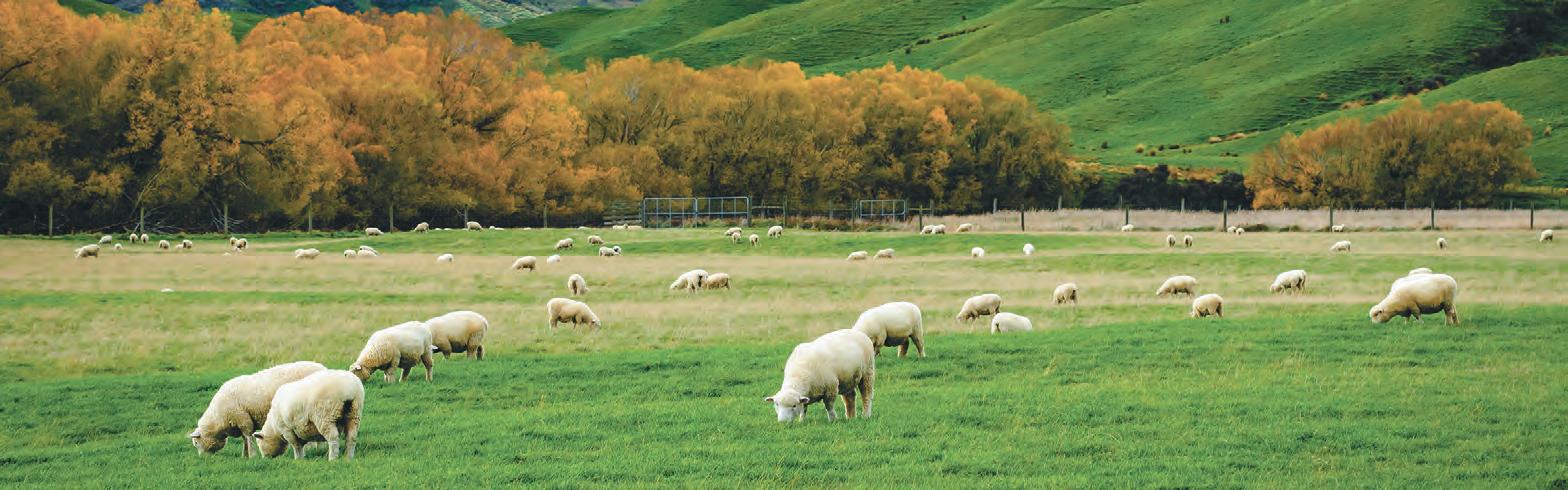
Along with drench as a tool, there are other well documented strategies that can help reduce the worm burden such as using other classes of stock to mop up the worms, like cattle.
The Wormwise FARMED acronym of feeding well, avoiding exposure to pasture with a high worm burden, refugia, monitoring and effective drench should all be considered as part of developing an individual farm parasite management plan.
“We find that for people who have encountered drench resistance issues and changed things in their system to reduce their reliance on drench, stock performance increases anyway. This is because they have reduced exposure to worms in the first place, which will result in better growth rates.”
Andrew observes that most drench resistance in the region seems
to be involving Trichs (Trichostrongylus) in autumn. If farmers have strategies in place to grow lambs quickly and get them away faster, then the majority of lambs are gone before the main worm culprit turns up in autumn.
Vets have an important role to play in supporting farmers to understand their drench status but equally in helping them to develop a parasite management plan that is tailored to their individual farm.
Planning means taking the information available from the likes of Wormwise and putting it into tangible
action on your farm. Vets and advisors bring an element of discipline to the process, identifying the information that is applicable to you and ensuring follow up.
A plan will depend on many factors, such as stock classes on the farm – do you have cattle to use for integrated grazing? Climatic conditions play into it, and whether you are a dryland or irrigated property.
When developing a sustainable worm management plan for a farm Andrew considers four main objectives:
• Reducing worm larvae exposure to your
lambs/hoggets
• Diluting resistant worms with ones that are susceptible (not exposed) to drenches
• Maximising your lambs’ ability to fight off what worms they do pick up
• Using effective drenches when you do need to drench, and using them strategically For each farmer, he then suggests some strategies or recommendations relevant to their farm, under each of the four headings.
• Article supplied by
@rural_news
facebook.com/ruralnews
MARK DANIEL markd@ruralnews.co.nz
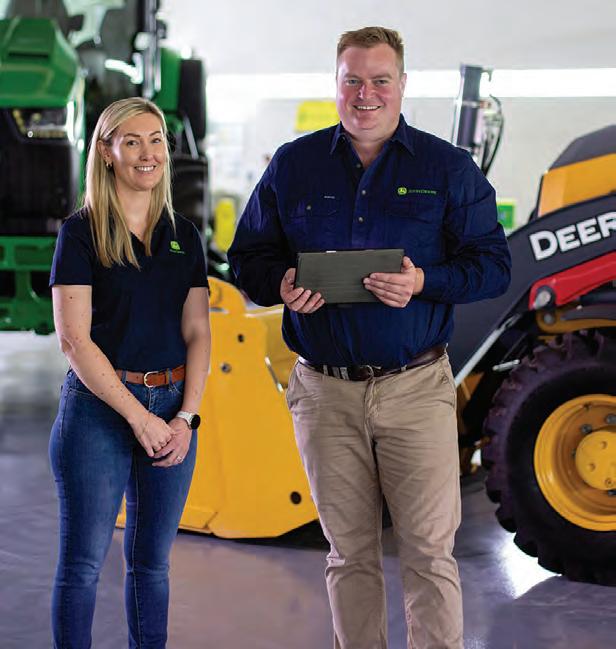
THE ALL-NEW John Deere Operations Center PRO Service option will give agricultural, construction, forestry and turf customers across New Zealand even more choice as to how they diagnose, repair and optimise the performance of their equipment.
It will offer an extended range of digital and support capabilities which build on the existing suite of tools such as John Deere Operations Center and Equipment Mobile, giving customers access to basic maintenance and operator manuals, and warranty information. The Operations Center PRO Service offers technician-capable tools to allow customers to choose who repairs their equipment – whether that be their John Deere dealership, a local mechanic, or themselves.
JD Australia and New Zealand director aftermarket and customer support, Steph Gersekowski, said it gives customers access to relevant and current content in PIN/ machine-specific manuals, as well as the ability to perform advanced actions,
such as reprogramming controllers, running real-time diagnostics and carrying out interactive tests and calibrations.
“We know that when a customer decides to purchase John Deere equipment, they are choosing to invest in the latest technology and innovation, so we want to make sure they have all the tools they need, to not only support their equipment, but to get the most out of it in terms of uptime and productivity.”
Operations Center PRO Service is a licence-based solution that can be purchased through any John Deere dealership and accessed through a free John Deere Operations Center account. Once logged in, the user simply inputs each piece of equipment using the serial or PIN number to access the capabilities of Operations Center Pro Service.
Customers can select from three different types of licences, depending on their individual requirements. The annual licences start with a Machine licence for a single machine, while customers who have a large fleet can benefit from economies of scale with
the Organisation licence.
External third-party service providers can also use Operations Center PRO Service to support their customers who run John Deere equipment through a Service Business licence, which gives users access to up to 10 local installations, with pricing varying depending on industry.
PRO Service delivers digital repair content, filtered by year and model number, and offers users additional information to help troubleshoot, diagnose, and repair their machines. Specific features now brought together include, machine health insights and diagnostic trouble codes, PINspecific machine content, including manuals, software reprogramming, diagnostic readings, diagnostic recordings, interactive diagnostic tests, calibrations, JDLink information and warranty information.
JD ANZ manager, production systems specialists, Max Cusack, says the primary advantages of Operation Center PRO Service are choice and speed.
“If you have the Operation Center PRO Service annual licence you
can log in, understand what that diagnostic trouble code is and see if it’s something you might want to fix
yourself or, alternatively, engage your local John Deere.”
Visit www.johndeere.co.nz
Efficient feed management is a critical lever for improving productivity and profitability in livestock farming.
TOPCON’s TAP Feed platform offers a major step forward in how farmers plan, mix, distribute, and analyse feed, delivering greater accuracy, consistency, and control across daily feeding operations.
Sitting within the TOPCON Agriculture Platform (TAP), Feed is designed to digitally manage total mixed ration (TMR) feeding from ration formulation through to delivery at the trough or feed barrier. By connecting mixer wagons, weigh systems, and farm office software, the system allows farmers and managers to move beyond manual processes and paper notes, replacing them with real-time data and traceable workflows. Ration formulations can be created centrally, adjusted as conditions change, before being sent seamlessly to the mixer wagon, reducing the risk of costly errors.
Fully retrofittable to virtually any brand of mixer wagon that utilises load or weigh cells, the TAP Feed System allows farms with mixed or older fleets to adopt precision feed technology without the need for full machine fleet replacement.
On the yard, operators are guided step-by-step through loading sequences, ensuring ingredients

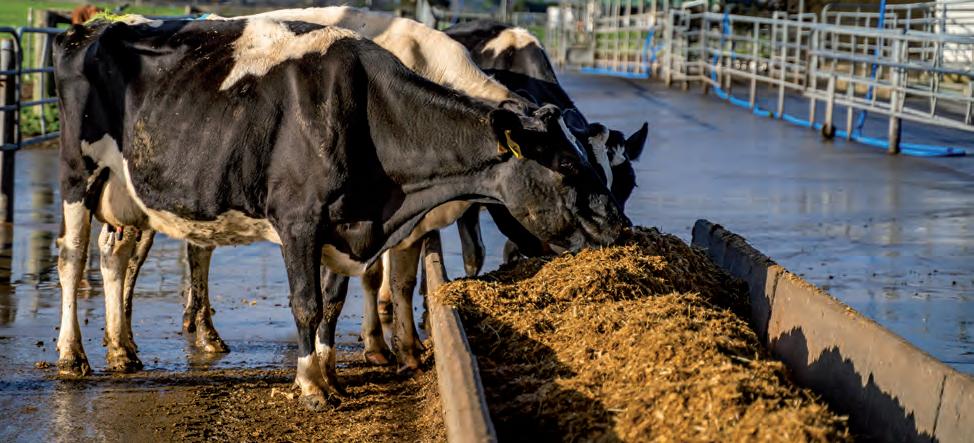

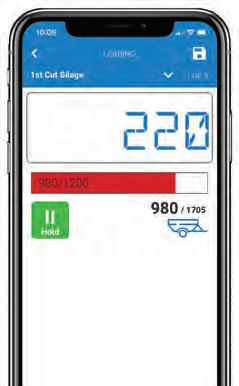
are added in the right order and to prescribed weights, with any deviations being recorded, so providing full visibility and accountability.
As the official distributor of TOPCON feed management systems throughout New Zealand, Power Farming is leading the local rollout of TAP Feed, complemented by the recent introduction of the new Jaylor 6000 Series mixer wagon range. When paired with TAP Feed, these high-capacity mixer wagons become the natural conduit to intelligent feeding tools, providing seamless integration between machine and management software.
Beyond daily feeding accuracy, TAP Feed also

provides valuable insights over time, including feed usage, ration consistency, loading time, and operator performance. Scrutinising available data helps farmers identify inefficiencies and optimise costs, driven by the fact that feed typically represents the largest single on-farm expense, meaning small improvements in accuracy and wastage reduction can deliver significant financial improvement.
Supported locally by Power Farming and aligned with modern mixer wagon technology like the Jaylor 6000 Series, TAP Feed is setting a new standard for efficient, accountable, and futureready feed management in New Zealand.
MARK DANIEL markd@ruralnews.co.nz
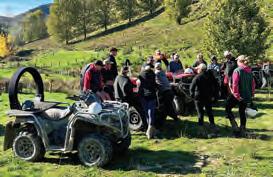
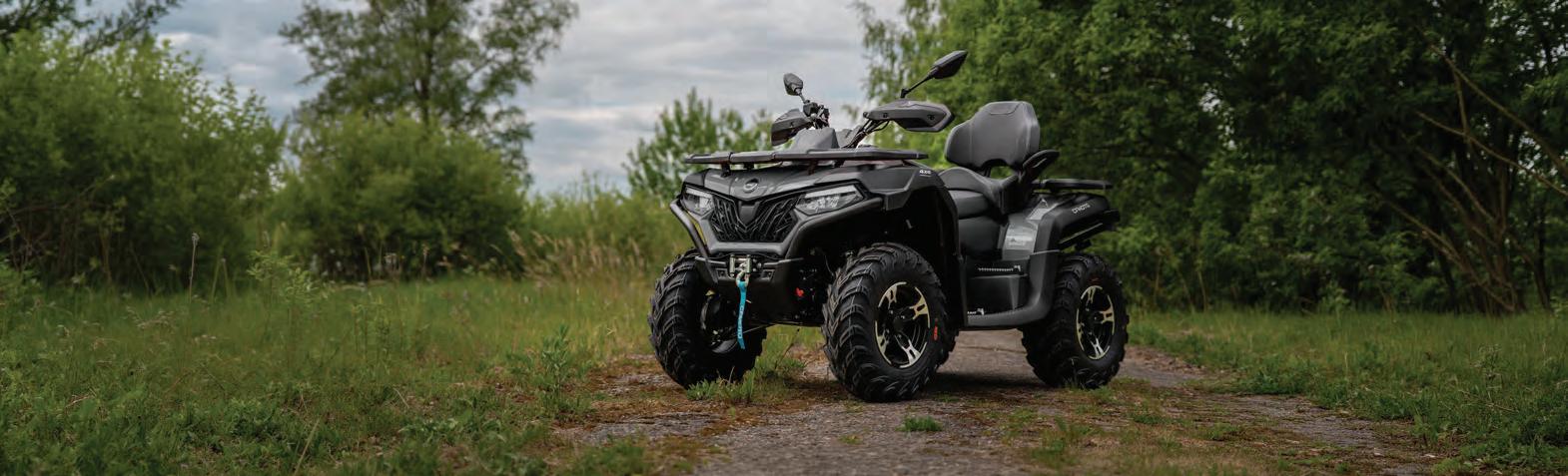
A RECENT Beef + Lamb
New Zealand quad safety field day, held along the rugged Whanganui river valley at Kakatahi, focused on identifying risks and taking appropriate actions to minimise unplanned accidents.
While fatalities using such vehicles continue to make up alarming statistics that have life changing consequences for many rural families, lesser accidents can still result in significant personal and financial impacts.
Rural insurance
specialist FMG was supporting the event, with rural manager Alex Donald explaining that in the 2025 calendar year, the company processed around 500 claims for quads or ATVs with 50% including rollovers, paying out around $3m in replacement costs.
Donald also discussed data showing that the average time off from work amounted to 82 days, noting, “we’re happy to support these events, because while we can replace machines, we can’t replace people”.
Agriculture makes up around 25% of serious accidents, while only employing 6% of
the total work force.
In another reporting anomaly, accidents with light utility vehicles (LUVs), some of which have resulted in fatalities, are still being reported as ATVs.
Led by Andrew (Simmo) Simpson, training manager of CarNZ Training Limited, a large group of youngsters of the Growing Future Farmers Initiative were brought up to speed on the need for “active riding” when operating ATVs to establish stability and to impart changes of direction. He also reinforced the need to always wear
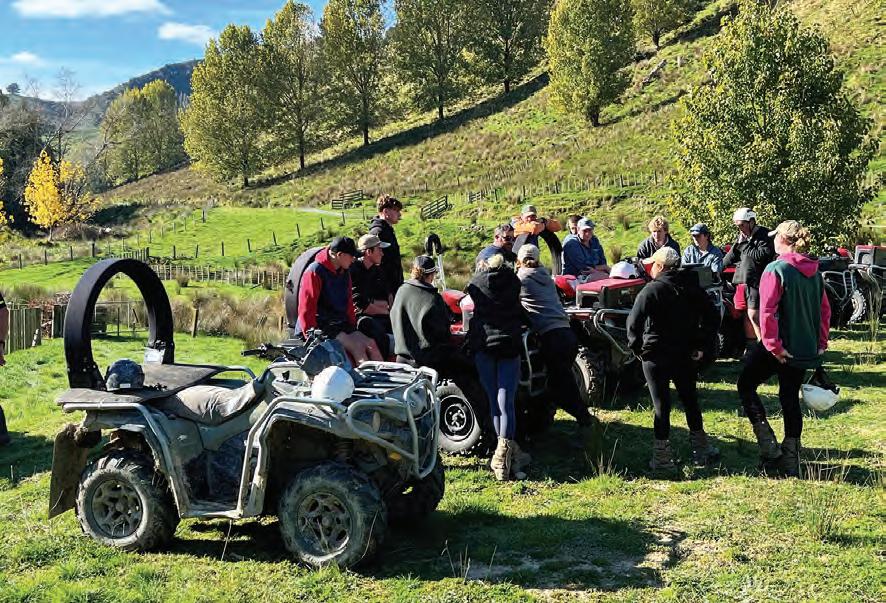
protective helmets and adhere to the machine manufacturer’s recommendations.
While LUVs or sideby-sides have replaced many quad bikesoffering the benefits of a substantial roll cage and greater carrying capacities - quads are still used extensively on properties with limited access.
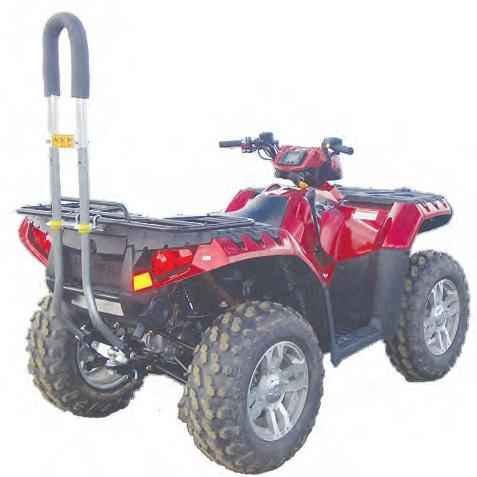
At the event, Simpson raised the question of Operation Protection Device or Crush Protection Devices (OPD/CPD) being fitted to the rear of ATVs. While safety helmets are mandatory, OPDs are not, so their fitment is a personal or operational choice. Their use is not usually recommended by the vehicle manufacturers as they have the potential to change the design limits of the machines and change the centre of gravity. In some cases, rear-mounted devices like spray packs are being fitted to front racks and changing machine dynamics.
Simpson also spoke of feedback from OPD users, who often came out with the comment, “now I’ve got an OPD fitted-I can go anywhere on the property”. Indeed, since being made mandatory in
the Australian market (leading to all bar one quad manufacturer pulling out of that market) a recent report shows that after three years of use, engineering solutions such as OPD fitment has not resulted in a change in the number of fatalities.
Focusing on dayto-day use, field day attendees looked at maintenance on a daily and weekly basis, checking oil and water levels, tyre pressures and doing a general wear inspection, including looking for cracks or fractures of frames.
They were also taught proper use of key control functions, including hi/ lo transmission selection, 2WD/4WD, diff-locks and the characteristics of CVT transmissions.
Simpson insisted that any off-road operations should always be undertaken with low range selected to deliver maximum torque, so removing the need to change mid-flight from high to low range, which can result in loss of momentum and a loss of drive.
Much of the discussion centred around hazard identification and safety margin assessment, using a Search-EvaluateExecute mantra: looking
at an area that was to be driven over; assessing ground conditions for mud, ruts, streams or holes; then planning on where to travel, or indeed, looking for another route.
In summing up, Simpson reminded the trainees that irrespective of their abilities, the rules of physics and gravity always applied and could be influenced by anomalies such as momentum and traction.
He encouraged them to always ask, “Is this the right machine for the job? Can I negotiate the hazard with my experience? And is it worth the risk?”.
Simpson suggested it was safer to explain to a manager that you were not happy to do a task on an ATV rather than your family having to decide on beech or oak timber for your coffin.
After the classroom session, trainees tried out the information and riding advice they had received on a specially laid out course, configured to demonstrate active riding over climbs and descents, variable surfaced such as gravel, grass and mud, alongside site assessment to determine if a task was safe to perform.
WELL-KNOWN
SWEDISH front-end
loader manufacturer
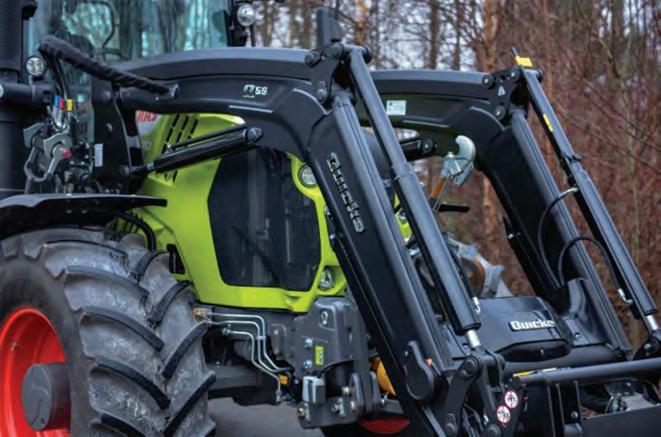
Quicke is launching the Q-series Facelift and Q-Companion 2.0 system.
It is said to build on the range’s reputation for reliability and operator comfort, combining refined design, enhanced functionality, and advanced smart features to deliver greater efficiency, visibility, durability, via mechanical innovation and digital intelligence.
A key innovation with the Q-series facelift is the new Selectofix hydraulic connection system,
engineered to simplify the link between loader and implement, allowing safe and rapid connection or disconnection, even under pressure. With a flow capacity of up to 60 l/min and minimal pressure drop, the system ensures reliable performance in demanding applications.
For broader compatibility, a quick adaptor with ISO/A couplings allows implements without the Selectofix format to be shared seamlessly across Q-series loaders, N-series loaders, telehandlers, and wheel loaders.
Design changes see improved front visibility allows for greater
precision, while new hose routing enhances side visibility and simplifies attachment and detachment procedures. Visibility is further enhanced by the introduction of new loader lights, each delivering 1,100 lumens over a wide arc, boosting visibility in poor lighting conditions, leading to work safety and efficiency.
All models now feature a new, more robust, heavy-duty loader beam, with the key structural upgrade said to increase durability and extending the overall lifetime of the loader.
The new Q-Companion 2.0
boosts efficiency in material handling with a range of advanced features, including selfimplement calibration, covering attachment, tare and weighing. Live
weight readings are offered in any boom position, alongside realtime monitoring via the Quicke Mobile App, connected via Bluetooth.
Additional functions
include recipe creation, automatic implement recognition, and the PDF export of machine activity logs to streamline daily operations. Visit www.jostnz.co.nz










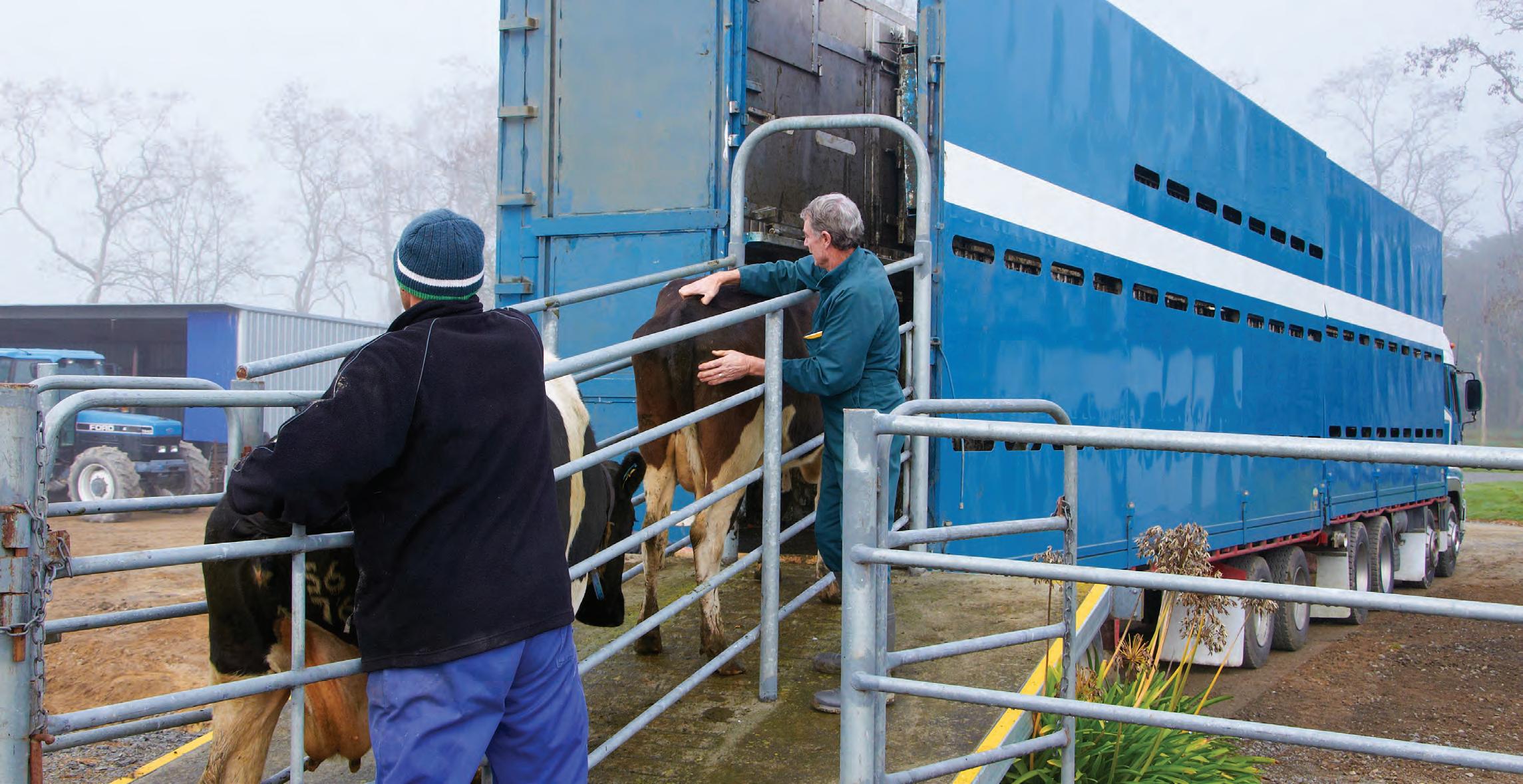
Moving Day is around the corner. With so much to do, let’s get on to NAIT early.
Remember the basics:
• if you’re transporting animals, register their movements in NAIT
• update your NAIT location if you’re moving farms
• make sure your contact details are up to date in NAIT.
Visit ospri.co.nz for more, including checklists, guides, and how-to-videos. Everything’s there to make your move easier.