

The only concern for dairy farmers right now is labour on farm.
“We’re keeping a close eye on immigration and labour settings,” he told Rural News
LABOUR SUPPLY, and not geopolitical events, remains New Zealand dairy farmers’ biggest worry, says Federated Farmers dairy chair Karl Dean. He says strong grass growth, a high milk price, favourable regulatory environment and stable costs are keeping morale high among farmers.
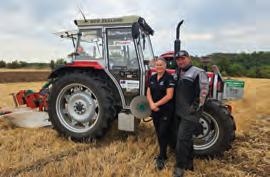
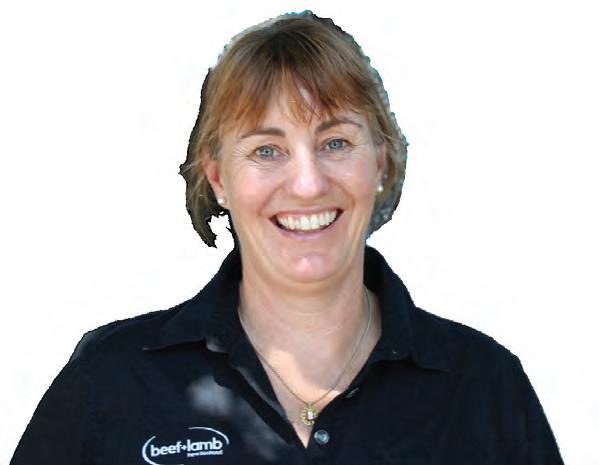
BEEF + LAMB New Zealand and Pacific Toyota have pulled the covers off the season’s most unique performance vehicle –the Lamb Cruiser. The legendary Toyota Land Cruiser Prado has been reimagined as the ultimate support vehicle for the New Zealand roadie. Driven by Beef + Lamb ambassador and rugby star Stacey Waaka, the Lamb Cruiser is heading on a tour of beaches, rugby clubs, and barbecues to put both the Prado’s torque and New Zealand lamb’s credentials to the taste test. Story p5
Dean says that like everyone else, farmers are watching the development in the Middle East and hope that they don’t lead to a shar spike in inflation.
“But the moral among farmers is very high right now,” he says.
“We have a great milk price, and costs are not as high as they were a few years ago.
“Also, we’ve got a government that’s on our side and we don’t have to deal with regulatory issues.”
Dean’s sentiment is reflected in the latest Federated Farmers Confidence Survey.
Released last week, it shows that

strong returns and lower debt-servicing costs mean more farmers than ever are making a profit.
Of the nearly 650 farmers who responded to the survey in late January and early February, 70% said their farm was currently profitable.
“That’s the highest level since we started our twice-yearly Farm Confidence Survey back in 2009,” Federated Farmers president Wayne Langford says.
A particularly worrying result is the finding that more farmers are having difficulty recruiting skilled and motivated staff.
Langford says it’s incredibly frustrating for farmers because, even as nationwide unemployment rises, they struggle to find good staff.
“It’s a message we keep sending to successive governments,” he says.
“The primary industries are the engine room of the economy, but it’s hard to attract willing workers to more remote provincial areas.”
The recovery from 2023/24 is now firmly established across most sectors, with the number of profitable dairy farms stable at 81%, and meat and wool farms improving substantially.
Arable farm profitability continues to lag at 41%, but that’s a small improvement from the July 2025 survey.


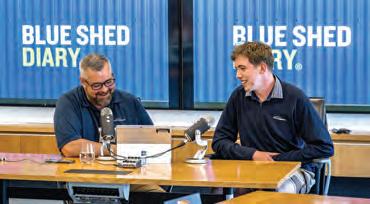
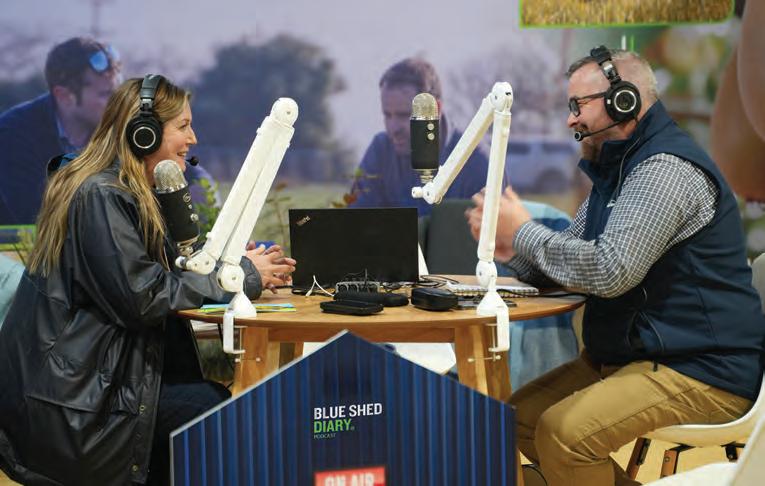
Named for its iconic blue sheds dotting New Zealand’s rural landscape, the Blue Shed Diary podcast is about and for New Zealand’s farming and horticultural communities. Launched by PGG Wrightson in 2025 to be the go-to resource for farmers and growers, it is entering its second season with a mission to be bigger and bolder than before.
“I think of this as less of a podcast, and more of a conversation about the people and the land. We wanted to take the conversations we have in our stores or at the farm gate out to New Zealand,” says Milton Munro, PGG Wrightson Technical Team Manager and podcast host.
“Our industry is mighty but spread out across the motu. So, we want a place to explore innovations and showcase best farming and horticultural practices. We want to talk to the people contributing to our rural communities, to the decision-makers, delve into how the policies made in the big cities impact rural life; and offer advice on everything from animal health to sustainability.
“Nothing is off the table. If it is important to our farmers and growers, it is important to talk about.”
Now, nearly a hundred conversations later, Blue Shed Diary is upping the ante by shifting from a monthly format to publishing new content each week. This includes new segments that take a deeper dive into the respective primary sectors, as well as technical on-farm and on-orchard advice.
“Over the last year, we have been having a lot of big-picture though fantastic,
greater exploration of the sector with a chance to turn a micro-lens on a particular topic.
“We talk to the farmers and growers on the front lines, working the land; to people and charitable organisations serving the provinces; to scientists breaking new ground and CEOs leading from the boardroom. Each have incredible insight into what makes our sector tick,” Milton says.
The new segments – On the Vine, From the Field, and Tech Talk –explore agriculture and horticulture from a first-hand perspective.
“I like to think of our podcast as giving a big picture look or macro view of the industry. These new segments will be more of a micro look,” Milton says.
Guerin, PGG Wrightson CEO, agrees with this new approach.
“We will take any opportunity to add value to someone’s operation. Knowledge sharing, technical advice, and innovation are central to our point of difference,” explains Milton.
The Tech Talk episodes feature industry specialists and members of PGG Wrightson’s Technical Team who will delve into everything from animal nutrition to irrigation, and agronomy.
Our Fruitfed Supplies Technical and R&D teams will make sure our listeners involved in the fruit, vegetable, and winery sectors know the latest developments at the crop and product level,” he says.
It is the conversations with the farmers and growers that Milton loves most.
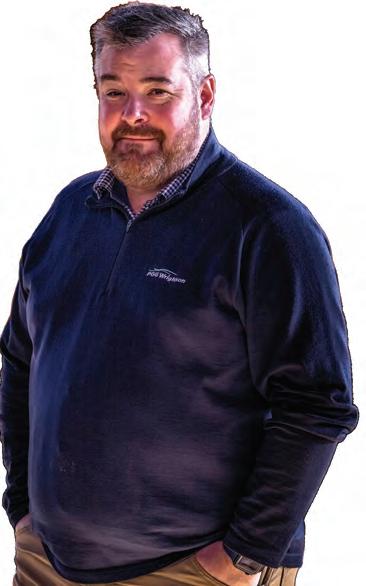
“Everything we do at PGG Wrightson is about people and connection. Our stores have long been a connection point for rural communities. The podcast is just the next iteration.
chance
“Our goal, as an organisation, is to always meet the needs of our customers, and help them grow and succeed. This an extension of that mission. Not everyone has the time to sit down to read an article, Blue Shed Diary gives people the flexibility to listen anytime, anywhere. Plus, with so much variety, from technical tips to industry level matters, there is something for everyone.”
Throughout the first season, the podcast featured technical advice which proved popular with listeners.
“We will have seasonal advice and the latest information on the issues affecting our primary industry.”
As the head of the company’s Technical Team, this segment is right up Milton’s alley.
“Getting into the science of it all is my thing. I love it, but I also know it is the kind of information that adds value.”
With many rural podcasts to choose from, Milton says it is important to know your purpose, and what sets you apart.
“PGG Wrightson via Blue Shed Diary is in a unique and privileged position to be able to have these incredible conversations with industry leaders, innovators, decision-makers, and technical advisors, whether in the agricultural or horticultural industry.
“We are only here because of their incredible hard work. No one understands this life better than fellow farmers and growers, so hearing from them, having conversations about their journey – their lessons, their wins –is the most rewarding.”
Blue Shed Diary is on Spotify, Apple, Amazon and iHeart; with new episodes available each week. Be sure to listen, like, and subscribe. For those interested in joining the conversation, email the team with your feedback or content suggestions at podcast@pggwrightson.co.nz
NEWS 1-11
HOUND, EDNA 12
CONTACTS 12
OPINION 12-15
MANAGEMENT 16-17
ANIMAL HEALTH 18-19 MACHINERY AND PRODUCTS 20-22 RURAL TRADER 22-23
SUDESH KISSUN
sudeshk@ruralnews.co.nz
BUYERS TRYING to secure supply are keeping dairy prices at elevated levels.
Despite the upheaval in the Middle East, dairy prices recorded big jumps last week. Whole milk powder price rose 4.5% while skim milk powder rose a whopping 9.1%.
The Global Dairy Trade price index has risen around 24% in the first five auctions of this year.
ASB senior economist Chris Tennent-Brown told Rural News that they are surprised by the strength of the recovery in prices this year, given the strong production growth here and abroad.
SMP price gains have been particularly impressive,” he says.
“In response to the lift in prices we had already lifted ASB’s Fonterra milk price forecast from $9.20/kgMS to $9.50.
“We’re even more confident in that number now.”
Tennent-Brown says buyers wanting to secure supply remains key.
secure supply.
NZX head of dairy insights Cristina Alvarado says the strength of the last GDT auction result reflected not just positive sentiment, but clear and immediate product need.
She says the price action occurred despite expanding milk production across major exporting regions, underscoring that headline supply growth is not translating into comfortable powder availability. Chinese stocks remain at relatively lower levels, and bidding demand showed strong competition.
“Buyers were clearly prepared to extend beyond futures signals to secure near-term fat coverage.”
Tennent-Brown expects prices to ease slightly in the coming months.
“We have factored some easing in prices over the latter part of the season into our $9.50/kgMS pick, but so far this hasn’t materialised.
“There are plenty of moving parts between now and the end of the season, but from a milk price perspective, things look a lot better than at the end of 2025.”

production curve is now firmly in seasonal decline, and forward offer volumes through March to May indicate further easing.
CONTACTS
Editorial: editor@ruralnews.co.nz
“The last GDT event therefore demonstrated that even in a globally expanding production environment, prompt availability – particularly in powders and fats – remains sufficiently tight to drive assertive price responses when buyers step forward.” HEAD
Advertising material: beckyw@ruralnews.co.nz
Rural News online: www.ruralnews.co.nz
Subscriptions: subsrndn@ruralnews.co.nz
He says the US-Israel war with Iran can add to buyers’ desire to
FARMGATE BEEF prices remain at record levels and show no sign of easing.
By February, the North Island bull indicator had reached $9.65/kg CWT, an all-time high, and premiums on top, meaning some producers may be getting closer to $10/kg.
Rabobank animal proteins analyst Jen Corkran noted that farmgate
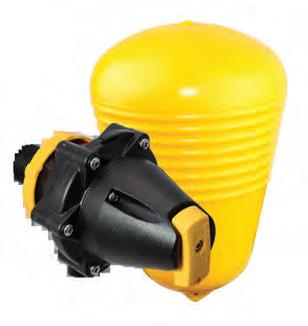
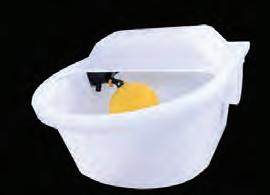
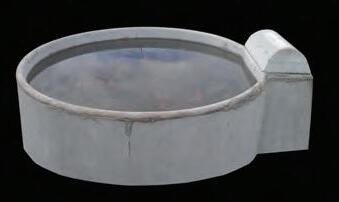
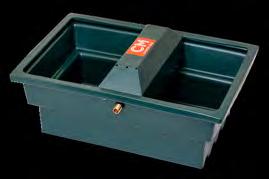
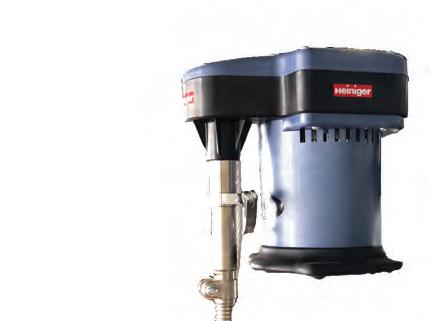
•Ideal for Cattle Troughs •High Flow
Mount •Detach to Clean
There are also signs that supply situation may be changing.
Alvarado says New Zealand’s milk
“At the same time, growing domestic protein demand in the United States and new cheese capacity not yet operating at full utilisation are absorbing milk locally.
beef pricing has held at record levels across the first two months of 2026, supported by strong offshore demand.
She says December 2025 saw the average export value for New Zealand beef reach $12.42/kg, another record, reflecting both a supportive currency at the time, and broad global demand.”
ANZ agri economist Matt Dilly says beef prices continue to rise both at the

farmgate and in-market.
With strong demand overseas and great pasture conditions, prices should easily hold through the end of 2025/26 and likely longer, says Dilly.
Corkran agrees that the NZ summer has so far delivered very favourable grass-growing conditions across the country.
“This has enabled farmers to hold stock longer and add additional weight. While positive for productivity, this does contribute to localised procurement challenges at times, even as export demand holds firm,” she says.
Corkran says New Zealand beef export volumes are expected to increase by 3-4% in 2026, in line with higher production.

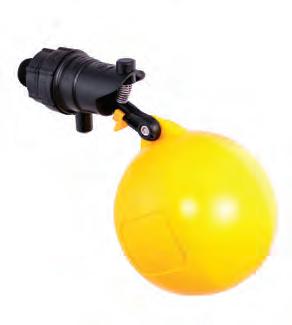
•Ideal for Small/Low Demand Troughs •Low Flow •Above/Below Water Mount •Built


OSPRI IS reducing TB testing frequencies and movement control measures as the disease risk subsidises in parts of the country.
This is good news for farmers as restrictions requiring frequent on farm testing and pre-movement tests come to an end.
For decades, much of the West Coast has operated under Movement Control Area (MCA) rules due to the historic spread of TB from wildlifeespecially possums - to cattle and deer.
From 1 March 2026, most of the coast has transitioned to annual on farm testing only, with no pre movement testing required.
Specific MCSs in the Greater Wellington region, Karamea region and the Taramakau/Upper Ahaura region have also gone.
This has been possible thanks to
sustained possum control, strong farmer participation, and a steady decline in TB risk across the region, says Ospri.
Ospri chief executive Sam McIvor says anytime they can reduce TB testing “is a good day”.
He says TB testing costs are borne by farmers and the taxpayers.
“There’s also the imposition on farmers - when TB is identified in a herd, it causes emotional distress and financial, logistical, and management challenges for farmers,” McIvor told Rural News.
If a herd is infected, strict movement restrictions are imposed, preventing the sale of animals except directly to slaughter, which disrupts farming systems and cash flow.
TB testing has been underway for over 40 years while systematically clearing the wildlife of possums, the main vector for the disease which affects cattle and deer.
Ospri’s TBfree programme aims to achieve TB freedom in livestock by 2028 and in possums by 2040.
McIvor says the programme is now reaching its “pointy end”.
He expects about 10-15 cases of TB infected farms “to be bubbling along in the coming years”.
He said there were two remaining “epicentres” of TB among wildlife in New Zealand, namely east Taupo in the North Island and central Otago in the South Island.
“We look to get the possum population low enough in any given area so that they cannot sustain the disease, then we have follow-up surveillance and monitoring,” McIvor says.
However, both remaining TB hotspot regions in New Zealand are remote and difficult to access, due to either having dense vegetation or rocky terrain.
Ospri is using drones to locate

concentration of possum populations in these two areas and aerial 1080, is the main method used to cull possums.
funds 40% of the TB eradication programme, with the other 60% coming from levies which are paid by farmers on milk collected and cattle slaughtered.



PETER BURKE peterb@ruralnews.co.nz
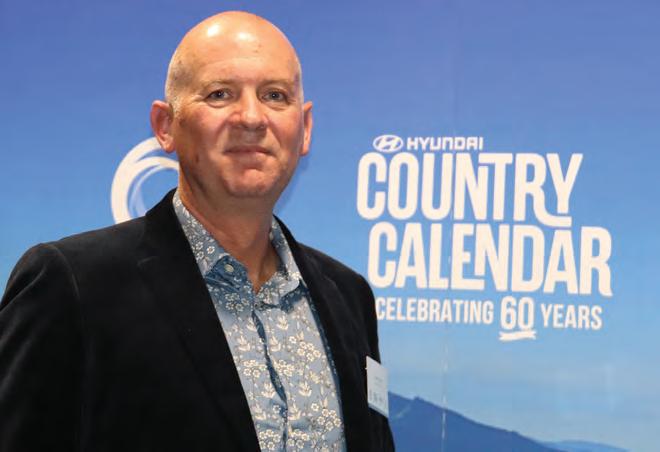
NEW ZEALAND’S longest running television programme, the iconic Country Calendar, celebrated its 60th birthday in style in Wellington last week.
The programme was started by legendary rural broadcasters Tony Trotter, Fred Barnes and Frank Torley and has been on NZ television screens continuously for 60 years. It brings the heartland of NZ into the lounges of homes every Sunday night at 7pm, showing them the stunning beauty of the countryside and
reminding them that nearly three quarters of our export dollars are earned by carefully managing our land, waterways and the oceans that surround us.
A major function was hosted by state farmer Pāmu (Landcorp), together with TVNZ, which attracted an eclectic group of more than 200 politicians, primary sector leaders and staff, and past and present filmmakers who have worked on or been associated with Country Calendar since its inception 60 years ago.
The present producer of Country Calendar, Dan Henry, says the
key to its success over such a long period is its authenticity and making sure that the stories are about people, and that they are represented as honestly and authentically as possible.
“So, we are not setting this up too much and not asking them to say or do things they ordinarily wouldn’t.
It’s about good, honest storytelling about people from the land, doing things that they are proud of,” he told Rural News.
Henry says Country Calendar makes no apologies for leaning into making positive stories.
He says on a Sunday
night, viewers are craving something to feel good about and to take them into the working week feeling a bit optimistic and having pride in their fellow New Zealanders.
He says there are other outlets better placed to get into the rigorous debates, regulation or whatever it may be, but he adds people respond well to stories that make them feel good.
As for Henry – how does he feel?
“I love it. This is best job in the business –working on a programme that is universally loved, still rates fantastically, draws large numbers of
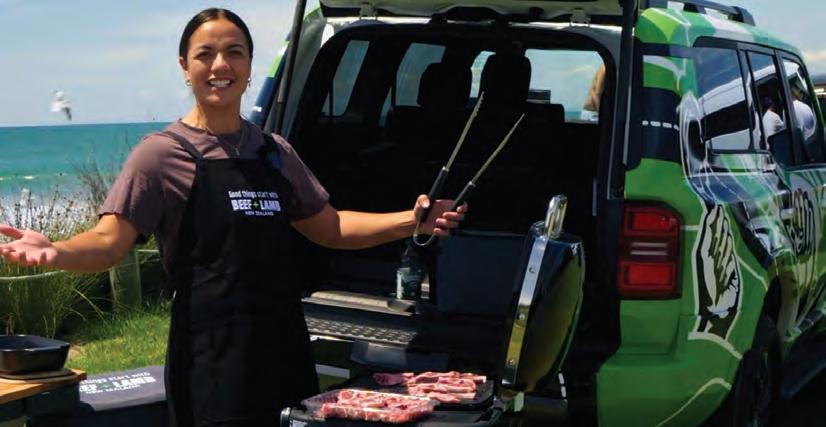
BEEF + LAMB New Zealand Inc and Pacific Toyota have pulled the covers off the season’s most unique performance vehicle - The Lamb Cruiser.
The legendary Toyota Land Cruiser Prado has been reimagined as the ultimate support vehicle for the New Zealand roadie. Driven by Beef + Lamb Ambassador and rugby super star Stacey Waaka, the Lamb Cruiser is heading on a tour of Bay of Plenty beaches, rugby clubs, and barbecues to put both the Prado’s torque and New Zealand lamb’s recovery credentials to the taste test.
“We wanted to create something that celebrates performance in a way Kiwis
understand,” says Chris Bussenschutt, CEO at Pacific Toyota.
“The Prado is built to go the distance. Beef and lamb help people do the same. It’s a natural pairing.
“I love the Lamb Cruiser,” says Waaka.
“I’m looking forward to taking it to the beach with my whanau, enjoying the sun with good times, and some good kai.”
Beef + Lamb NZ Inc is the domestic marketing body responsible for brand reputation and promotion of beef and lamb within NZ. It shares the same name with the levy-paying body that represents NZ sheep and beef farmers.
viewers and gets people talking. That is why I got into storytelling –that’s why anyone makes television programmes,”
he says.
•

PETER BURKE
TREAT
AGRICULTURAL
emissions differently.
That’s the message from the chair of the prestigious Riddet Institute, Sir Lockwood Smith.
He says countries like NZ that produce more food than they consume and who provide food security for other countries are under pressure to reduce agricultural emissions more than is realistic.
Smith, who has a PhD in animal science, has lectured at Massey University and had a long political and
diplomatic career, told the recent Agrifood Summit in Wellington that he has concerns that the targets set by the Intergovernmental Panel on Climate Change (IPCC) are unrealistic for countries such as NZ.
He says the IPCC Paris Agreement explicitly recognises the need to protect food security and end hunger while adapting to the impacts of climate change on food systems.
If the IPCC is serious about the need to protect food security, then according to Sir Lockwood, food production should be treated differently in the
emissions accounting system. He says that doesn’t mean it should be let off from the need to produce more nutrition with less emissions, but what is being measured, and how it’s being measured, really matters because it affects outcomes.
“The current measurement and accounting system will constrain the more carbon-efficient producers from increasing supply, while the deficit is filled with food from less carbon efficient countries. This is so typical of the perverse outcomes resulting from poor political
deficiency.
- Increase selenium levels for up to 12 months
- Fast uptake by plants
- Easy to apply
- No animal handling required
Chip is a fertiliser granule that should be applied annually at 1 kg/ha to selenium deficient soils. Selenium Chip is available from your local PGG Wrightson Rural Supplies Store and
decision making that I’ve observed too often during my reasonably lengthy political career,” he says.
Smith says what’s needed is an accurate estimate of emissions linked to a unit of product nutritional value, such as a digestible indispensable amino acid base –possibly picking up the Riddet’s protein quality work.

SIR LOCKWOOD Smith says the world faces the challenge of feeding a growing global population, possibly reaching 10 billion by 2050, while at the same time improving health outcomes, protecting ecosystems and staying within planetary boundaries.
He says more protein will be demanded and its quality will matter, especially for those over 65, a population expected to double by 2050.
“It’s estimated half of all children and two thirds of young women are deficient in one or more micronutrients, such as calcium, iron and potassium; and vitamins E, A and B12. At the same time, last year, for the first time in human history, more children in the world were obese than underweight. Agrifood systems face the dilemma of dealing with all that, while at the same time trying to comply with
the Paris Agreement’s emissions requirements,” he says.
In his address, Smith noted the tremendous contribution of NZ’s early political and farming leaders, in particular those who arranged the first frozen lamb exports to the UK in 1882. He praised the contribution of past NZ scientists and politicians whose far-sighted decisions paved the way for the scientists of today to take the next and important steps.
Among those Smith singled out was the highly acclaimed and politically astute Dr Cambell of Ruakura fame, whom he says inspired him to pursue a career in agriculture, and former Prime Minister and Northland farmer Gordon Coates who set up the DSIR and inspired Smith to embark on a political career and win the seat of Kaipara that Coates once held.
“The need for that ongoing leadership today is now greater than ever,” he says.
The food sector is undergoing a significant transformation and the Riddet Institute is playing an important role in developing the next generation of food products which not only address nutrition and health but also the pressing environmental and ethical issues that now prevail. These include developing future proteins, turning plant proteins into food products that mimic animal products, precision fermentation and hybrids of animal, plant and other proteins.
“But to me, a major challenge remains, and in many ways it’s what has brought me back to my agricultural science roots. The global food supply system represents just over 30% of greenhouse gas emissions. In two decades time we need to meet the nutritional needs of 25% more people with preferably less emissions,” he says.




FARM WORKERS living in accommodation provided by their employers are now set to be able to access their KiwiSaver funds to buy their first home thanks to a pending change in the rules governing KiwiSaver.
The present KiwiSaver rules say a person can only get money out for a deposit on their first home if they live in it. But farm workers along with others in ‘service tenancies’ such as defence personnel, clergy, some teachers
and police officers in rural communities have effectively been locked out of first home ownership because their jobs require them to live in employer-provided housing.
The initiative to get the law changed has come from the National MP for Rangitikei and farmer Suze Redmayne who says some years ago her stock manager came to her and pointed out the anomaly.
“My husband and I talked to our bank manager who confirmed that he was right, and we all agreed that this wasn’t fair,” she told Rural News.
“In the 2023 election
campaign I raised the issue and then in 2024 put a members bill in the ballot, which was drawn out, and since then it’s become a government bill,” she says.
Redmayne says there has been widespread support for the change and at the last election, Federated Farmers rated it the third most important issue out of the 12 they raised with government. She says it’s all about levelling the playing field.
The other important change being made will allow the withdrawal of KiwiSaver funds to buy a farm through an entity in
which they are a majority shareholder. The current law states a farm must be purchased in their own name, but a farm is usually owned by an entity because it is both a business and a home.
“This change reflects the commercial reality of modern farm ownership. It will help young farmers put down roots, invest in their futures, and continue contributing to an industry that fuels our entire economy,” says Redmayne.
She says at present there is no real incentive for farm workers to invest in KiwiSaver, but this move will be a game
changer for farm workers who are the heart and soul of the primary sector.
“We know that financially and socially you are so much better
off when you own your own home in your retirement, but up until now there is a risk that people who live in service tenancies will never achieve these goals,”
she says. The bill has now been approved by cabinet and will likely be introduced into parliament mid-year and then be referred to a select committee.










CONTRACTORS
will be
able to play a role in the revamped agricultural plastic recycling scheme with new regulations due for Cabinet sign-
off before this year’s election.
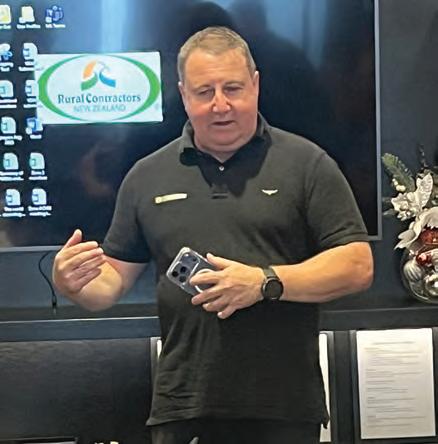
Agrecovery chief executive Tony Wilson told February’s Rural Contractors NZ board meeting that there would
be opportunities for its members to collect plastic waste from farmers, either through charging or as an add-on to their service.

“The plan is that the market will build competition.”
Currently farmers can buy a collection bin from commercial company Plasback and then pay $50 per liner bag for its removal of what is principally sileage wrap; farmers can also dispose of the bags themselves at approved sites for $30.

Last December, the Government announced the industry-led scheme
which will bring the Agrecovery and Plasback programmes together into a single national system for all users of agrichemicals and farm plastics. Agrecovery, which is a not for profit, will manage the scheme.
This will cover key farm plastics including agrichemical containers and drums, bale wrap and silage film, small bags used for agricultural products and bulk woven polypropylene bags.
Wilson says the new regulations now being drafted propose to provide free plastic disposal for farmers at
up to 120 sites around the country. Some would be permanent but others will be ‘event’ locations where farmers could take their plastics for a
few weeks to a site run by an organisation such as a local Lions club.
The new scheme will be funded by a fee paid by producers on four
PART OF Agrecovery’s new responsibilities will be ensuring that there are no rogue players selling wrap without paying the fee.
Currently about 12,000 tonne of sileage wrap alone enters the NZ market. The fee will be about 50c for a bale of film or wrap.
Agrecovery chief executive Tony Wilson says currently Agrecovery and Plasback costs total around $8m a year which sees about half of annual agricultural plastic use recycled. The new scheme is estimated to bring in $12m with an aim over time of recycling 100% of plastic. The European Union is currently recycling 85% of its sileage wrap.
Most of the extra costs would involve the leasing of five or six trucks to move plastic from the 120 collection sites to two processing centres in Matamata and Christchurch.
These sites will wash, shred and bale
and silage sheets,
and agrichemical containers.
plastic for offshore recycling. Only properly accredited and audited recyclers will be used to ensure no child labour exploitation and that environmental standards are maintained.
Wilson says Agrecovery and Plasback have worked on recycling plastic for 20 years and the new regulations would provide the framework to develop a fully integrated rural recycling scheme.
He says the focus remains on making life easier on farm. He agreed with questions from the RCNZ board that some farmers didn’t want to currently pay for plastic collection, and burning it was still allowed by some regional councils.
RCNZ CEO Andrew Olsen said councils had a role to play, as did the Government, in ending such practices, and his organisation wanted to help ensure plastic, including that provided to farmers by its members, could be recycled.
NEW ZEALAND Rural Land Company has lifted its annual profit on the back of being a “disciplined, yield-focused land vehicle”, the company says.
For the year ending December 31, 2025, the corporate farmer reports consolidated net profit after tax (NPAT) of $7.9 million, $90,000 higher than the previous year.
NZL now owns 17,077 hectares of high-quality rural land, fully occupied across nine tenants, with a weighted average lease term of 11.6 years.
Managing director of New Zealand Rural Land Management Richard Milsom said the result reflects steady execution of NZL’s strategy.
“AFFO [adjusted funds from operations] per share increased 9.9% to 5.43 cents per share and we have increased the full year dividend to 4.91 cents per share.
“That progression reflects the strength of our CPI-linked lease model, the quality of our tenant base and our continued focus on per-share
outcomes.
“During the year we delivered portfolio value growth, reduced gearing to 29.4% and maintained 100% occupancy across long-term leases. Those fundamentals underpin sustainable earnings and dividend growth for shareholders,” he says.
At the five-year mark, the board commissioned an independent capital review to ensure their strategy remains aligned with investor expectations.
Milsom says the review confirmed that NZL is primarily valued for the sustainability and reliability of its cash yield, and we have refined our framework accordingly.
“The rural sector has played a leading role in New Zealand’s recovery and continues to perform strongly, providing a strong foundation for ongoing investor confidence.
“We remain constructive on its medium-term prospects and continue to evaluate opportunities to invest in productive rural assets,” says Milsom.
FARMERS ARE unhappy with the Government’s replacement legislation for the Resource Management Act (RMA).
They claim that the wording in the new legislation doesn’t match what the politicians promised.
The parliamentary Environment Select Committee began hearing from submitters on the two replacement bills last month.
Beef+Lamb NZ chair Kate Acland says while in principle they support the reforms, the way the legislation is currently written is missing the mark and farmers could be worse off. She says the language is more stringent around setting and managing limits and
would likely see the need for more consents, not less.
Acland says there are more onerous requirements on permitted activities.
“There are significant issues with the role of, and amount of detail required for, Freshwater Farm Plans, and farmers would also need a consent or permit as well as a
Freshwater Farm Plan in many cases,” she says.
Acland says B+LNZ doesn’t support the introduction of marketbased allocation or levies for resource use and are concerned that the same farming activity will now fall between two acts and make the process for farmers more complicated and costly.
“We’re also calling for other things to be
FEDERATED FARMERS say they also have serious concerns about the wording of the legislation.
Vice president Colin Hurst says they don’t think the currently drafted legislation will deliver what farmers were expecting or what they were told by the politicians. He says farm plans must replace regulation and not add to it and must be proportionate, practical and scaled to risk.
fixed as part of the RMA reform, such as the current issues with the approach to stock drinking water,” she says.
NZ chief
Hort
executive Kate Scott says the current legislation doesn’t match the Government’s promise to create a system that is simpler, faster and easier. She says unless there are changes to the new legislation, it could
“Farm plans should be a positive, practical and enabling tool that help farmers improve environmental outcomes in a way that makes sense on their own farms.
“We don’t want to see farm plans adding unnecessary complexity, duplication, or another layer of expensive regulation for farmers to grapple with,” he says. Hurst says farm plans must replace regulation, not add to it.
be harder, not easier for growers to produce fruit and vegetables.
“Horticulture is a sector NZ depends on every day - for food on tables, for employment and for economic growth. The new system has to enable that, not make it harder,” she says.
Scott says HortNZ has significant concerns about proposals in the Natural Environment Bill that could introduce what amounts to a tax or auction system for natural resources such as water. She says the bill includes options for market-based allocation or levies, which in practice could mean auctions or tenders where water or the ability to discharge nutrients goes to the highest bidder.
“A levy would effec-
tively be a tax on water or on farming activity. That is not the right approach for food production,” she says.
Regarding the Planning Bill, Scott says HortNZ wants stronger protection against reverse sensitivity, which occurs when new housing or urban development
moves into rural areas and complaints are made about long-established farming activities. These include frost protection, spraying, or harvest activity.
“In all of this there’s a risk of increasing costs and compliance for activities that are already permitted,” she says.







GETTING A foot on the property ladder is becoming easier for young farmers.
Thanks to pressure from farmers, the Government has finally come good on a 2023 election pledge to allow young farmers to use their KiwiSaver funds to buy their first home or farm.
A technical change proposed to the KiwiSaver Act by the Government means farm staff in service tenancies (living on farm) will soon be able to use KiwiSaver to purchase a house without immediately moving in.
Not all KiwiSaver providers are happy with the Government announcement. Some say the change is problematic. It could weaken KiwiSaver’s core purpose as a retirement savings scheme and offers only marginal benefits to a small group of people, while impacting millions of members.
But young Kiwi farmers have been incredibly frustrated that they haven’t been able to access their KiwiSaver to help get a foot on the property ladder.
Until now, they could only use your KiwiSaver to purchase a house you’ll live in.
Federated Farmers, which led the push for changes, claims that’s unfair because farm staff, along with the likes of rural teachers and rural police, haven’t been able to get on the property ladder, all because they live remotely and in employer-provided accommodation.
They’ve been denied the same opportunity as their urban counterparts.
The changes will also allow first-time farm buyers to use their KiwiSaver balances when buying through a commercial entity they majority own, provided it will be their principal place of residence.
Many young farmers face financial challenges in buying a farm, having to work hard to save a decent deposit but just can’t get the bank’s backing to invest in their first farm.
Letting those farmers use their KiwiSaver will be an enormous help in pulling together a larger deposit.
It’s taken the Government a long time to deliver on this election promise.
Farmers made sure to keep reminding them about it.
The changes open new doors for many young farmers: they can finally access savings to secure financial security and begin building equity.
HEAD OFFICE POSTAL ADDRESS:
PO Box 331100, Takapuna, Auckland 0740
Phone 09-307 0399
PUBLISHER: Brian Hight .......................................... Ph 09 307 0399
GENERAL MANAGER: Adam Fricker ....................................... Ph 021-842 226
EDITOR: Sudesh Kissun ......................................Ph 021-963 177 sudeshk@ruralnews.co.nz
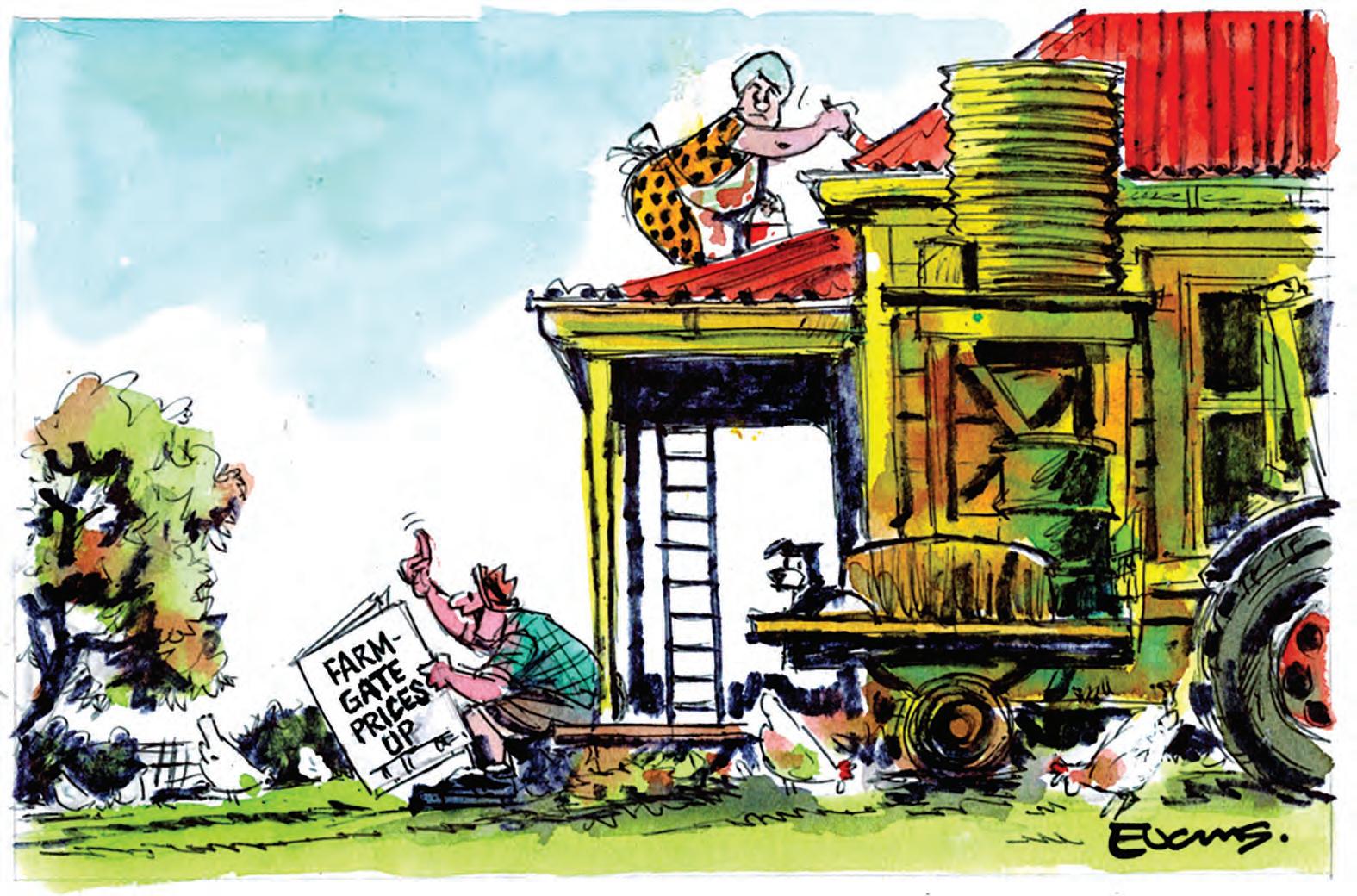
“Hang on Edna – we might be able to get you some help!”
THE MEDIA is already playing the ‘who will Winston choose?’ game every time the polls show Labour and National neck and neck. Some commentators reckon the rising economic tide will raise National’s ship, the SS Disappointment, and save Luxo’ from an embarrassing loss to the uncomfortable coalition of Labour-Greens-Māori Party. Meanwhile, Winnie had a crack at Hipkins and the media over this:
“How can Hipkins say he is still ‘keeping his options open’ when asked about working with NZ First? We already permanently ruled him out months ago - just like we did in the last election. He doesn’t have any options to keep open! Does he need it written in fat crayons so he can understand? And why is the media asking him these pointless questions when they know, and he knows, he’s a lame duck?”

YOUR OLD mate hears an international incident is threatening to blow up the long-standing Anzac alliance as Kiwis and Aussies argue over who wants new Australian resident and former NZ Prime Minister Jacinda Ardern. A few unkind souls on the other side of the ditch opined that if ever there was a case to invoke the 501-deportation law, this was it. Back home, a few lefties have decided it’s symptomatic of the brain drain that they blame the current government for. However, one old timer had the final say, telling yours truly that long-time Orewa resident and former Member for Tamaki, the late Sir Rob Muldoon, got it right when he said Kiwis emigrating to the Lucky Country “raises the IQ of both countries – heh, heh, heh!”
EDITOR-AT-LARGE: Peter Burke ...........................Ph 021 224 2184 peterb@ruralnews.co.nz
REPORTERS: Nigel Malthus ........................Ph 021-164 4258 Leo Argent
MACHINERY EDITOR: Mark Daniel ..............................Ph 021 906 723 markd@ruralnews.co.nz
PRODUCTION MANAGER: Becky Williams ......................Ph 021 100 4381 beckyw@ruralnews.co.nz
IF FARMERS poured just a few litres of some pollutant into a stream, the Green Party and the wider wooden bicycle enthusiast community would be on their soapboxes screaming about dirty farmers and demanding a harsh penalty, which regional authorities would be gagging to administer. However, the Greens’ silence over the catastrophic breakdown of Wellington’s Moa Point sewerage system is no surprise to this old mutt. The regional council is unlikely to prosecute the city council, so don’t hold your breath for any accountability. Successive councils have failed to upgrade infrastructure, and wasted money on expensive, largely empty, cycleways. Wellingtonians can’t swim in the sea now but could at least go for a nice bike ride. They can thank the Green Party and their woke mates for that!
AUCKLAND SALES CONTACT: Stephen Pollard .........................Ph 021 963 166 stephenp@ruralnews.co.nz
WAIKATO & WELLINGTON SALES CONTACT: Lisa Wise .................................. Ph 027 369 9218 lisaw@ruralnews.co.nz
Want to share your opinion or gossip with the Hound? Send your emails to: hound@ruralnews.co.nz
ELECTION YEARS are usually regarded as the silly season, but a mate of the Hound reckons 2026 is shaping up as the ‘stupid season’. The latest ‘vote winning’ plan to move the homeless and the mentally ill out of the CBDs of our cities has some merit because they appear threatening and affect people going to shops or work in these areas. But where do they go? No viable answer so far. And if they don’t move on, will the threat of a $2000 fine make any difference? These people are begging for a few dollars, so your old mate reckons the chances of them paying a big fine are slim at best. Let’s hope that the absurd doesn’t become the norm for the next nine months and that more practical policies are outlined. Wishful thinking? Probably!
SOUTH ISLAND SALES CONTACT: Kaye Sutherland .......................Ph 021 221 1994 kayes@ruralnews.co.nz
DIGITAL STRATEGIST: Jessica Marshall ..............Ph 021 0232 6446
MARCH 10, 2026: ISSUE 846 www.ruralnews.co.nz
MARCH 19-21, 2026

PETER BURKE
peterb@ruralnews.co.nz
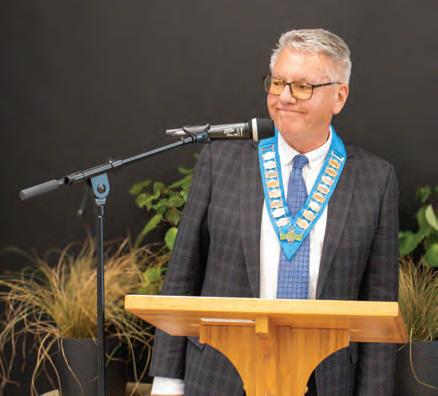
THE LOWER North Island township of Feilding is gearing up for its biggest event of the year – the annual Central Districts Field Days.
According to the mayor of the Manawatu District Council (MDC) Michael Ford, the event brings a major boost to the economy of the whole of the Manawatu region, including the nearby city
of Palmerston North.
The field days have been running since 1993 and Ford says he’s been there every year, either in his capacity as an exhibitor and in other roles helping to promote the event, and in recent years as deputy mayor and now mayor of MDC.
This year the event takes place at time when the mood of the primary sector has moved into positive mode with prices
for sheep and beef now better than they have been for many years – and the outlook is also promising.
The dairy farming and horticultural sector are also in good shape and exhibitors are hoping that this will translate into sales.
“The field days brings huge crowds to the district from all over the lower North Island – Taranaki, Hawke’s Bay, the Wairarapa and
Horowhenua/Kapiti as well the local Manawatu/ Whanganui/Rangitikei districts, and this is a big boost to the local economy,” says Ford.
Over 27,000 people are expected over the three days and Ford says there is a certain pattern as to who attends when. He says Thursday is mainly farmers and often those from regions such as Taranaki, Hawke’s Bay and Wairarapa. He believes
Friday is what brings local farmers along because this coincides with the Feilding sale, so farmers can take one trip and go to both that and the field day.
“Saturday is like the National Fielddays and is when townspeople come along to see what country folk are up to, admire the huge machines and maybe to buy something that suits their needs in the urban environment,” he says.



PETER BURKE peterb@ruralnews.co.nz
PALMERSTON NORTH
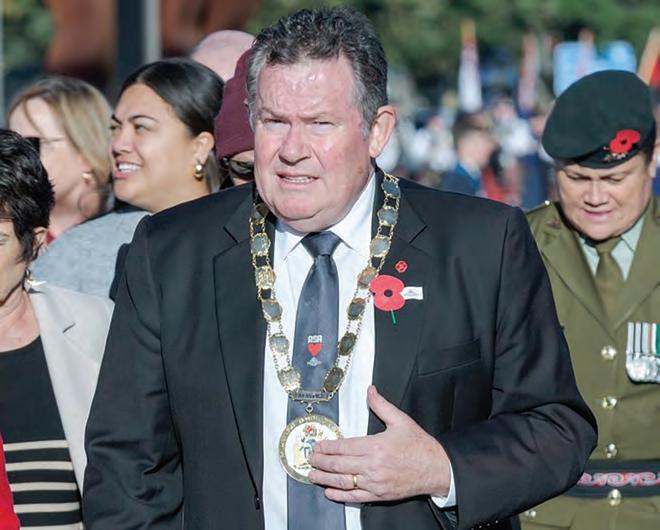
mayor Grant Smith is a long-time supporter of the CD field days and says the benefits from it flow into his city.
Like his Manawatu District Council counterpart, Michael Ford, he sees Palmerston North also as an agricultural hub, but of a different kind, particularly based around the world class Massey University campus.
“We want to push that we are one of the leading food and agri innovation hubs of the world,” he told Rural News
“Massey itself does some amazing research in this space with its various agricultural course as well as the Vet School.
“In addition, there many other research organisations based on the campus such as the Riddet and Hopkirk institutes, the NZ Food Safety and Science Research Centre, the Synlait dairy company and Fonterra which has its international R&D centre just across the highway from Massey and has very close connections with
the university,” he says.
Smith says all these organisations are internationally recognised and provide an important science element to the strong farming and agri business in the Manawatu region.
He says Palmerston North is funding the event to the tune of $30,000 to get the message across about the contribution that his city makes to the agri economy.
Grant Smith says on the Friday of the field
days they are running a panel discussion on the future of agriculture and hope to have the Prime Minister, Trade Minister Todd McClay and Finance Minister Nicola Willis taking part in this.
Smith agrees that things are looking up for the primary sector in many different ways.
One of these signs he says is that for the first time since 2018, all the halls of residence at Massey University are full. He says with the new vice chancellor Pierre Venter taking over, one can expect to see the power of agriculture being realised and developing to a new level.

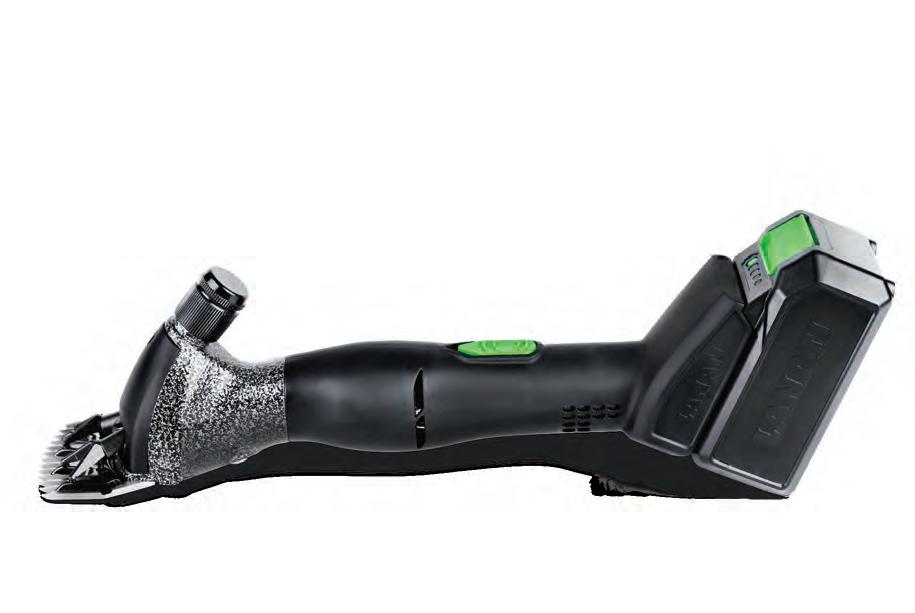
■ Ideal for shearing sheep, alpacas, goats and cow tails.
■ Variable speed from 2600-3500 rpm.
■ Latest brushless motor technology means minimal heat build up
■ 1400gms means 100-200gms lighter than standard handpiece.
■ At 2800 rpm the 12-volt lithium battery will crutch 300-400 sheep or trim 400-500 cow tails.
■ We customise cables for lifestyle shearers.
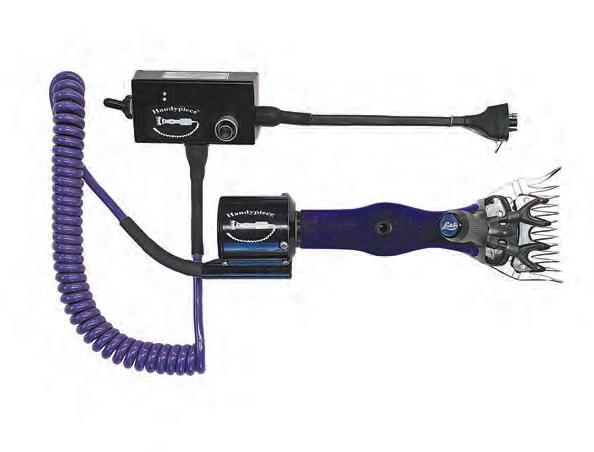

in action go to www.handypiece.co.nz Freephone 0800 474 327 email: dave@handypiece.co.nz
THE HEAD of Massey School of Agriculture and the Environment, Professor Paul Kenyon, says the outlook for the primary sector is positive with record numbers of students enrolling for Massey’s range of undergraduate courses in the primary sector.
“We are 21% ahead of our target and we have the highest percentage increase in students across the university,” he says.
Kenyon says at the same time there’s been an increase in PhD and master’s students. He says in 2025 there were 130 students doing PhDs and a further 160 doing master’s degrees; in the last month a further 16 PhD students have enrolled.
“Things are really flying and we are having to employ more staff,” he says Kenyon says they have been advertising for lecturers in environmental science, animal production and
horticulture. In addition the university is running special training programmes for secondary school teachers who teach agriculture, horticulture and agribusiness. This is being done in partnership with the Horticultural Agricultural Teachers Association. This he says is in response to a huge uptake by students in secondary schools wanting to take agricultural-related subjects and there is a need to train more teachers to teach these subjects. Kenyon says there are now 200 secondary schools teaching agriculture and horticulture and a further 115 teaching agribusiness.
“Interestingl,y within a two-hour radius of Palmerston North there are more students doing agriculture, horticulture and agribusiness than those doing science and physics,” he says Kenyon says the result is there will be a large cohort of future leaders, in the agri sector or other professions, with good knowledge about the engine room of the NZ economy – the agri sector.
sales@pppindustries.co.nz

BEEF + LAMB New Zealand (B+LNZ) is looking forward to connecting with farmers, rural professionals and community members at this year’s Central Districts Field Days. The event, running from 19-21 March, is one of the largest agri-sector gatherings in the country.
You’ll find the team at Site G31/G32, where B+LNZ will be located alongside DairyNZ and Federated Farmers. The shared site reflects a growing emphasis on partnership across the primary sector, ensuring farmers can access a wide range of trusted expertise and practical resources all in one place.
Across 19-20 March, the B+LNZ team will be on hand to discuss tools,
technology and opportunities that support profitable, resilient farming. Alongside members from the extension team, visitors will also be able to chat with B+LNZ Farmer Councillors and local Director Andrew Stewart.
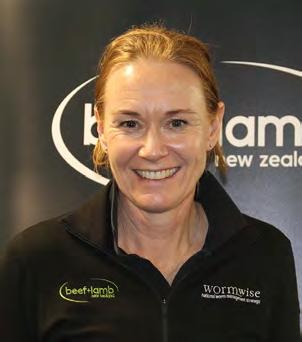
B+LNZ’s Wormwise programme manager Ginny Dodunski will also be onsite with liver specimens showcasing the impacts of facial eczema – an opportunity for farmers to see firsthand the importance of proactive parasite management.
A key highlight on Thursday 19 March is a Dairy Beef presentation at 11am, followed by the return of the crowd-favourite Tug of War at 3pm –
PETER BURKE peterb@ruralnews.co.nz
MANAWATU MAYOR Michael Ford says the district sees itself as the agribusiness capital of the lower North Island.
“We have many agribusiness companies in Feilding, as well as companies selling farm machinery and other rural services, and our sale yard attracts buyers and sell-
always a popular moment of fun and camaraderie among exhibitors and visitors.
On Friday 20 March, B+LNZ will take part in a panel discussion with industry leaders at 11am, exploring the big opportunities and challenges shaping the sector.
Mikaela Franks, B+LNZ extension manager – Western North Island, says she’s looking forward connecting with farmers and getting a good understanding of what is top of mind for farmers so that we can get ideas and provide quality events to levy payers.
“Field Days are always a great opportunity to connect with farmers,
hear what’s on their minds and answer their questions. It’s incredibly valuable for us to understand what’s top of mind so we can shape relevant, quality events for levy payers.”
“Having B+LNZ, DairyNZ and Federated Farmers together is a great opportunity to show farmers we’re collaborating for greater impact. It means people can access the support and information they need quickly and in one place,” says Franks.
B+LNZ warmly welcomes all attendees to drop by, grab some resources and have a chat. Whether you’re seeking advice, wanting to connect with sector experts, or simply





NEW ZEALAND farming is riding a high, with strong prices, full feed covers and improving confidence lining up at the same time.
Writing in ANZ’s latest Agri Focus report, ANZ agri economist Matt Dilly says the rural sector has absorbed a turbulent summer and emerged in a position of strength.
“This summer has been eventful so far for New Zealand’s rural sector,” Dilly says, pointing to repeated storm events that caused damage in some regions but boosted pasture growth across much of the country.
Despite the wet conditions, Dilly says pasture covers are excellent nationwide and there is currently no region at risk of drought.
That feed availability has been critical in supporting production decisions and lifting profitability across dairy, sheep and beef systems.
Dairy markets have rebounded sharply since Christmas, with global prices lifting more than 19% so far this year.

Dilly says the turnaround has been faster and stronger than expected, prompting ANZ to lift its forecast milk price for the current season to $9.50/kgMS.
“It’s been a pleasant surprise to see market sentiment turn so abruptly,” he says.
The report describes the recent rally as a correction rather than a structural shift, saying prices had overshot to the downside late last year.
“The most correct answer may well be the simplest: prices fell too far in late 2025, and now they are back on the right track,” Dilly says.
Strong pasture growth and ample supplementary feed have helped lift production, with New Zealand milksolids up more than 3% season-todate.
Dilly says total production is now forecast to reach 2 billion kgMS this

season, a level that “would have seemed implausible just two years ago”.
Looking ahead, he cautions that global milk supply is rising faster than demand, meaning prices are likely to ease through 2026.
However, Dilly says any softening will come from a much higher starting point, and processors have been able to lock in sales at favourable levels, reducing downside risk.
Sheep and beef farmers are also benefitting from a highly supportive environment, driven by tight global supply, strong overseas demand and abundant grass at home.
Dilly says the sector is operating in a “grass market” where farmers are incentivised to hold stock longer, adding upward pressure to prices.
“All beef grades are at record farmgate prices – it can’t get any better than that,” he says.
Lamb prices remain close to all-time highs, mutton prices are approaching record levels, and venison prices remain elevated despite limited recent movement.
While processors are under pressure from low livestock numbers and high procurement costs, Dilly says farmers are in a strong position.
“These are good problems to
have,” he says, noting that improving balance sheets and lower interest rates are allowing farmers to catch up on fertiliser, repairs and deferred maintenance.
Trade policy uncertainty remains a complicating factor, particularly for red meat exporters navigating shifting tariff settings in the US and China.
Dilly says New Zealand has come through recent changes relatively well, with several key products remaining exempt from US tariffs and China’s beef quota set comfortably above recent export volumes.
He also points to the New Zealand–India Free Trade Agreement as a positive development for the sector.
“Based on the size of the market and the scale of tariff reductions available, apples and forestry products are the two largest winners,” Dilly says.
Not all sectors are sharing in the upswing, with grain growers facing a difficult harvest due to wet weather, quality downgrades and tight margins.
“After an encouraging growing season, crops looked good in the field until January,” Dilly says, but rain and hail have since taken their toll in parts of the South Island.

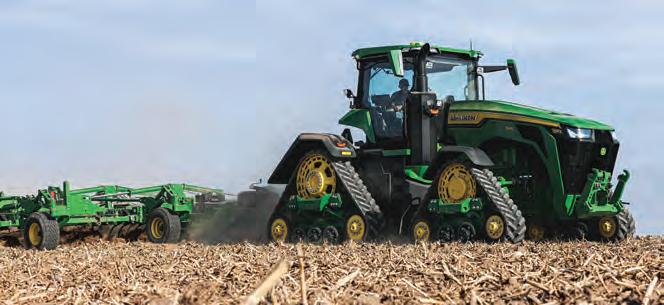
JOHN DEERE has announced the launch of three new models in both 8R and 8RX formats, featuring additional higher horsepower (HHP) options and improved performance, manoeuvrability, and versatility.
Available for more than 30 years, the manufacturer has used customer input to continually improve the popular and versatile lineup, now expanded with new options of 440, 490 and 540 horsepower, to meet growing customer demand for higher horsepower.
“Similar to the impact of the HHP 9RX, the HHP 8R and 8RX are expected to increase productivity and efficiency in customer operations while providing the versatility of a rigid chassis tractor. Horsepower, ballasting, lift capacity, size and functionality all increase with these models,” said John Deere marketing manager, production and precision agriculture, Royce Bell.
The new models are powered by the JD14 engine, which provide maximum power when engaging the Intelligent Power Management system (IPM), delivering from an additional 40hp at 1900rpm to max horsepower at 1700rpm, enabling up to 634hp for the most demanding applications of hydraulic, PTO, transport or electrical offboarding. An engine brake option is said to provide additional stopping power, particularly in transport scenarios.
Additional updates include an independent link suspension on the front axle that supports a fully loaded front hitch and incorporates roll control for improved road performance, capable of transport speeds of up to 60kph. A front hitch and front PTO option is available, increasing the productivity of the tractor across all operations. The rear hitch has a 10,880kg capacity to lift heavier and wider implements, and hitch active downforce maintains a constant depth with hitch-mounted implements.
As part of the new updates, options for transmission controls in the cab, include CommandX, CommandX Plus and CommandX Pro. Push button start gives operators the ability to control who can start the tractor by requiring a personalised PIN number.
The 8 Series tractors offer the electric variable transmission (EVT) now with a 60kph option, allowing farmers to set a speed and manage engine performance, delivering productivity and efficiency in the field. This transmission also allows electric power offboarding, meaning operators don’t need to worry about PTO or hydraulic power generators for electric drive planters, using a simple one-plug connection enables power to their planter from the tractor.
Precision handling is a key benefit of the new 8 Series tractors, with a tight turn radius and Reactive Command Steering improving manoeuvrability.
Reactive Command Steering means the wheel automatically returns to centre. It includes three
settings for customised steering preferences and, along with the narrow and nimble frame design, improves the turning radius and ease of operation in these high horsepower tractors.
Additional features that enhance the operator experience include new engine throttle controls, a convenience display for easy access to adjust radio, air conditioning, seat, and phone control, an integrated wireless charging phone holder and a two-way independent electric armrest.
The new 8 Series tractors are autonomy-ready and come fitted with the G5PLUS display for access to precision ag technologies such as AutoTrac Turn Automation, AutoTrac Implement Guidance and AutoPath. They are also Machine Sync ready and feature optional JDLink Boost satellite connectivity to help ensure reliable capture of field and machine data. These features, in conjunction with John Deere Operations Center and Equipment Mobile, enable customers to manage their machine and field operations in the palm of their hand.
Like the High Horsepower 9RX, engine oil, coolant and hydraulic oil sight gauges are placed at eye level so fluids can be quickly checked, leading to a quicker start each day. The hydraulic oil interval increases from 1500 hours to 2000 hours, allowing longer periods of operation between service intervals.
The battery disconnect and jump start point are on the door side for improved accessibility.
www.deere.co.nz





MARK DANIEL
markd@ruralnews.co.nz
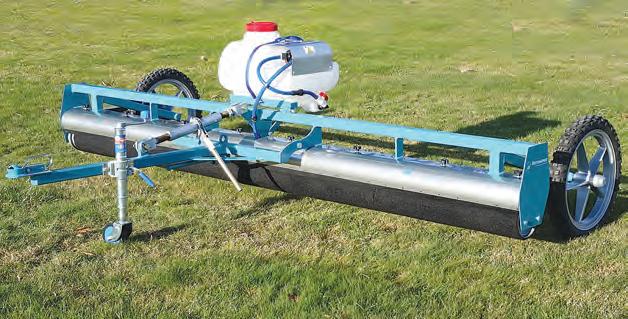
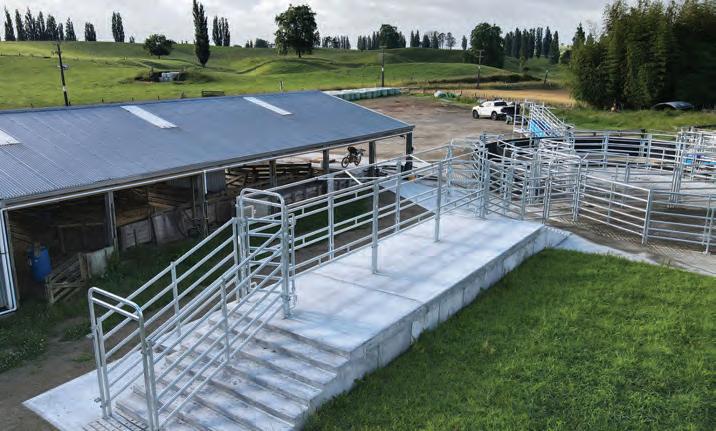
WITH THE artificial breeding season creating increased activity and the need to handle cattle safely and efficiently, a dedicated AB race is becoming increasingly popular on New Zealand dairy farms.
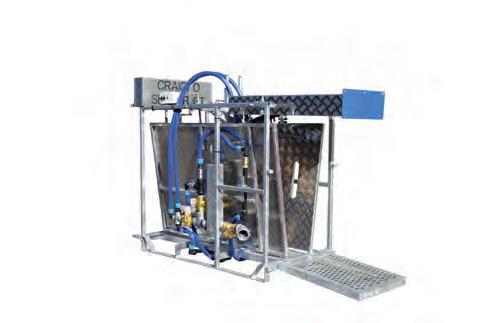
Oamaru-headquartered Te Pari has introduced a new modular AB race for integration into both new or existing dairy facilities, providing safety and efficient access for technicians and farm staff.
With AB technicians no longer
permitted to work in herringbone pits due to health and safety requirements, alongside LIC’s updated AB facility standards, many dairy farmers are now considering upgrading their yards to include compliant AB races.
Benefits of a dedicated AB facility include reduced risk of injury to cows, staff, and technicians, faster, more streamlined insemination, a calmer working environment for animals and the potential for improved in-calf rates. The set-up also lends itself for other tasks such as vaccinations, blood
testing and scanning.
As part of the design, an optimal race width of 1050mm allows cows to stand on an angle to provide good access for AB technicians, reducing delays and the risk of injury.
As part of a dedicated installation, the AB Race can be complemented by an optional pit, making jobs like teat sealing much easier. The pit is covered by strong FRP (fibre reinforced plastic) grating that is easily removed for access. The grating doubles as a great anti-slip standing for AB technicians. visit www.tepari.com
MARK DANIEL
markd@ruralnews.co.nz
MAHINDRA & MAHINDRA, the world’s largest tractor producer by volume and India’s leading automobile manufacturer, has announced plans to establish its largest integrated automobile and tractor manufacturing facility in Nagpur, Maharashtra, marking a major expansion of its manufacturing footprint.
The project will see the construction of a new 1500-acre plant in the Vidarbha region, complemented by a 150-acre supplier park in Chhatrapati Sambhajinagar, designed to streamline logistics and strengthen local supply chains.
Mahindra has committed around $1.65 billion over the next decade for the facility, with production scheduled to begin in 2028. When fully
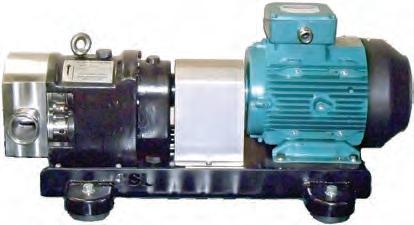
Combined
the
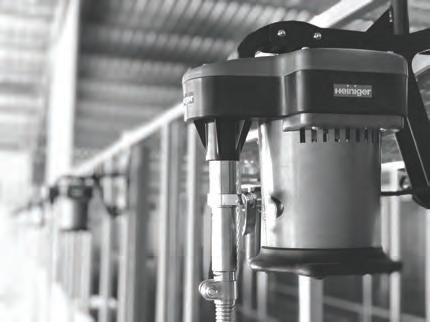
volumes required in today’s dairy sheds without compromising milk quality.


operational, the Nagpur complex is expected to deliver an annual output of more than 500,000 vehicles and 100,000 tractors, making it the company’s largest single integrated manufacturing hub in India.
Located near major road and rail arteries, the site’s strategy is to boost production of Mahindra’s nextgeneration vehicles, including development of new powertrain technologies for ICE and electric powerplants. Government officials and company leaders have highlighted the plant’s potential to generate significant employment and reinforce Nagpur and Vidarbha’s status as an industrial hub.
•




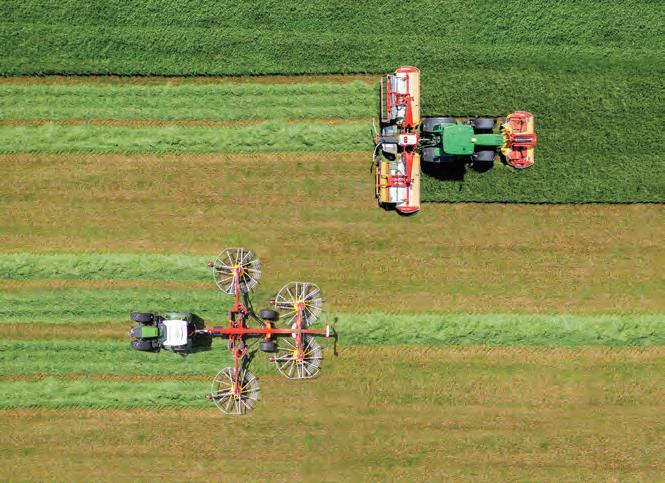
AUSTRIAN MANUFACTURER Pöttinger gave a sneak peek of a new automatic swath placement system for the Novacat V 10000 ED/RC Collector mowers at Agritechnica 2025, and recently confirmed that the upgrade will be available for the upcoming European mowing season. Automatic swath placement ensures that the mower combinations, equipped with a cross-conveyor belt, always deposit the forage correctly. Merging swaths to one side of the machine - described as intelligent mowing - is more efficient and accomplished much easier than previously.
Said to result in around 40% less raking work, lower fuel consumption, better utilisation of harvesters because of greater forage volumes in each swath, all leading to more cost-effective harvesting.
Additionally, skipping lanes enables larger turning circles at the headland, which helps reduce damage to the sward. Previously, swath merging systems could be a challenge for the drivers because they required constant switching of the cross-conveyor belt manually.
The new automatic swath placement system automatically switches the crossconveyor unit depending on which lane is being mowed, resulting in forage always being placed correctly, reducing the risk of operator errors. In addition, drivers can focus fully on the machine and the surroundings, resulting in reduced fatigue.
If the machine is equipped with Pöttinger Connect, the mowing pattern is intuitively displayed on the map in the HARVEST ASSIST app. This means that the drivers always have a complete overview to efficiently plan their working day.


AFTER
factory downsizing, John Deere is reversing course, announcing it will bring 140
increases for its 8R and 9R tractors.
The backtracking comes despite Deere forecasting that the North American ag
equipment market will decline another 15% to 20% in 2026, with large equipment sales remaining under pressure from lower commodity







prices and tighter margins.
Sources within the company suggest there has been a strengthening of the longstanding build-for-retail manufacturing model, adjusting output month to month, leading to protection of farmers’ equipment equity during a downturn.
At the same time, Deere also appears to be addressing operating costs where it can, by reducing prices on 187,000 parts over the past two years and preparing to roll out a new lower-priced tier of replacement parts later the year.
Likewise, the company is also testing a tractor powered by E-98 ethanol, that could eventually eliminate the need for Diesel Exhaust Fluid (DEF), while driving even more demand for the crops grown in the Americas.
Recent figures from the US Association of Equipment Manufacturers for 2025 show sales of 4WD tractors fell nearly 42% and combine sales are down 36%, aligning with what Deere is
experiencing.
For Deere, that pressure translates directly into lower equipment demand and tough decisions inside its factories. Since 2024, reports suggest that John Deere has laid off over 2000 employees in the US, with those jobs primarily located in Iowa and Illinois.
Back in January, Deere also announced it was returning 99 workers to the job in Iowa, impacting both its Davenport Works and Dubuque facilities.
Addressing the kitchen table discussion about the rising cost of machinery over the last five years, Deere says it continues to increase the productivity of its products, but is also targeting affordability, particularly on its technology suites, by lowering up front purchase costs.
Those technologies include the likes of ExactShot fertiliser, See & Spray sprayer and combine automation systems that offer savings on inputs, getting all the grain out of the field and increasing yields. www.deere.co.nz
MANY SHEEP and beef farmers will be worse off under the new environment legislation than they were under the Resource Management Act (RMA), claims Beef+Lamb New Zealand (B+LNZ) in an email to levy payers.
This will come as a surprise to farmers, who are under the impression the coalition Government is backing farmers, and committed to reducing government interference and red tape. So, what is going on?
B+LNZ’s email explains that sheep and beef farmers will be forced into a mandatory freshwater farm plan regime facing significantly higher administrative and regulatory burden than what they currently face. Our reading of the new legislation concurs with B+LNZ’s findings.
Under the existing Resource Management Act most sheep and beef farmers (and less intensive farms and those without irrigation) operate as a permitted activity, not requiring a consent. The presumption is that if the effects of your activity are no more than minor and you comply with any rules, then you can carry on free of government oversight. Another way of describing this is that regulators must provide justification for regulatory requirements on people. They can’t just regulate for the sake of regulation.
These restraints on regulators are one of the few good elements in the RMA and it is a major concern they have disappeared in the new legislation.
Under the new legislation, every livestock, horticulture and viticulture farmer over 50ha (arable is over 5ha) must have a Freshwater Farm Plan regardless of the region or catchment they are
in, whether there are any freshwater issues or whether they operate as a permitted or consented activity. No regulatory or environmental justification is provided for this blanket requirement. The only reason the government have provided is that it is a compromise to quell the freshwater quality concerns of environmentalists and the public.
The
government’s
proposal is completely unnecessary and shows they do not trust the rural sector to continue to take the lead in this space.
Reading through the fine print of the new legislation, intensive farming operations such as irrigators and dairy farmers may face less compliance, bureaucratic oversight and cost as the consent system is necessarily overhauled and an alternative, simpler freshwater farm plan pathway is provided. However, the government believes that in order for this to be acceptable to the public, all other farmers must now come under government oversight and essentially a consent to farm.
There are several alarming aspects to the proposed freshwater farm plan legislation.
1. It places many farmers under a system of government oversight that would not have been allowed previously under the RMA.
2. This legislation is contrary to the election promises and principles of all three coalition parties by introducing state control on people without any environmental
justification, a policy more in keeping with the extreme left than centre right.
3. It is also contrary to the Regulatory Standards Act, legislation introduced by this government designed to ensure responsible regulation.
4. The government has said other issues like indigenous biodiversity will be added at a later date, which again would disproportionately negatively impact sheep & beef farmers.
5. It will exacerbate ill feelings between sectors and we urge farmers to recognise that the cause is poorly designed government policy, not a sector verses sector issue.
6. A major concern is that all farmers would now be captured under government oversight, placing them at the mercy of less farmer friendly governments in the future.
It is not that farmers oppose farm plans as a useful management tool. Farmers have shown through industry initiatives and previous systems, e.g. catchment boards, they will embrace farm plans if used in the right context. But with a B+LNZ survey showing 83% of farmers opposed to mandatory government prescribed Freshwater Farm Plans, the legislation is doomed to fail.
With widespread adoption of industry led farm plans, the government’s proposal is completely unnecessary and shows they do not trust the rural sector to continue to take the lead in this space.
The Freshwater Farm Plan policy will be a key issue for farmers in the upcoming election and in the meantime, we are hoping that commonsense will prevail through the submission process.
• Jamie McFadden is Groundswell NZ environmental spokesperson.
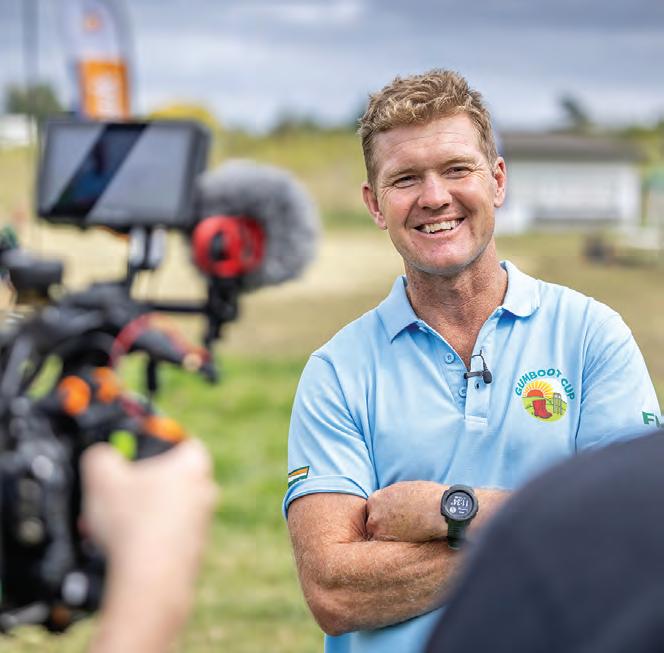
Hawke's Bay deer farmer Harry Gaddum organised the inaugural Gumboot Cup. It was a cricket tournament for 12 rural Hawke's Bay teams, their families, and the community. Gaddum says it was a chance for locals to get off farm, have some fun and connect, all for a good cause.
FARMING HAS a funny way of convincing you that you’ve just got to keep going.
One more job. One more fence. One more thing to fix before you stop. And before you know it, stopping isn’t something you do anymore.
That’s part of the reason I helped organise The Gumboot Cup cricket match here in the Hawke’s Bay. On the surface it was just a game of cricket – a few laughs, a bit of banter, getting the families together and some questionable batting technique. But underneath it was about something far more important: getting farmers off farm,
together, and giving ourselves permission to breathe.
The pressure on farmers right now is real. Weather, finances, labour shortages, regulations –they all stack up. Stress becomes part of the daily background noise, and
too often we treat it as “just the way it is”.
I’m a big believer in Farmstrong, which is all about living well to farm well. One of the things that really stuck with me from an ACC funded study for Farmstrong is that 58%
TAKING TIME off farm isn’t weakness. It’s maintenance – just like greasing a bearing or fixing a race before it blows out completely. When we ignore stress, it doesn’t just stay in our heads. It shows up in injuries, mistakes, and burnout.
ACC’s support of Farmstrong matters because prevention matters. If getting together for a game of cricket helps even one farmer reset, refocus, or realise they’re not on their own, then it was worth every minute.
The Gumboot Cup reminded us that the farm will still be there when we get back – and we are in a better state to look after it when we have some time out with mates.

of injured farmers linked their injuries to stress associated with farm work, and a quarter said stress was a major factor. That’s a sobering statistic. When your head’s not in the right place, your body often pays the price.
Last year alone, 20,000 farmers and growers said their wellbeing improved because of Farmstrong. That tells me two things: first, that a lot of us are under pressure; and second, that doing something about it really does make a difference.
I’ve seen that first hand.
Ten days after Cyclone Gabrielle hit, I remember feeling so tired I was ready to keel over. I’d


been running on pure adrenaline, racing around trying to get things sorted.
It was hard, physical graft – carrying deer netting, posts, warratahs, whatever needed moving. I was absolutely stuffed. The days blurred together, and everything we worked on seemed to disappear just as fast as we fixed it.
Then one Sunday morning, help arrived –and it changed everything.
A stock agent, a family friend, turned up with a trailer load of fencing gear. He lit the fire again and we got stuck in.
There was a bit of fence on our main laneway that had really been getting to


me. It felt like a symbol of everything that was wrong. He just said, “Let’s attack that bit”.
It didn’t take much.
Just him being there, a bit of motivation, and someone from outside the farm to talk to. He stayed a couple of days, and it was massive for my headspace.
Not long after that, another crew from Manawatū turned up and helped tackle some slips. Then one day, completely out of the blue, a 20 ton digger appeared at the end of our driveway.
It had been organised through a mate. Sitting in the cab was a box of grease and a note that
Farming injuries by the numbers
said, “Best of luck with it all Harry”. Those moments reminded me how powerful connection is. Farming can be isolating at the best of times. After a disaster, that isolation can feel overwhelming. That’s what the Gumboot Cup was all about. It was not about winning or losing. It was about showing up. It was about having a yarn with someone who gets it, because they’re living it too. It was about laughing at a dropped catch or a wild swing and remembering that you are more than the problems waiting back at the gate.
• In 2025 ACC accepted 16,325 work-related agricultural claims at a cost of $109 million to help people recover.
• Over the past five years ACC has supported farmers with 1.5 million days of weekly compensation (days off work) at a cost of $209 million.
• The leading regions in 2025 for work-related agricultural claims were Waikato (2660), Canterbury (2376), Hawke’s Bay (1443), Southland (1414), and Bay of Plenty (1404)
• ACC announced its continued support of the Farmstrong programme late last year.
• The renewed investment will see $2.7 million invested into the programme over the next two years, as the first phase of a five-year agreement ($6.8 million total).
For more information: www.farmstrong.co.nz
INFORMATION IS everywhere. So are misinformation and disinformation.
The second two are distinguished by intent – misinformation might be genuine misunderstanding or mishearing.
Disinformation is deliberate; cherry-picking ‘bits’ to support a case is rife.
Sorting fact from fiction is an art, and understanding the scientific process can help.
In fact, science should be the starting point. Making the wrong decision will not result in the desired outcome. On farm, this can be costly, which, given the uncertainty that is innate in ‘life on the land’, can be devastating.
The scientific process tests hypotheses in a credible and repeatable manner. It produces conclusions that are checked through a peerreviewing process.
Marketing departments and enthusiastic entrepreneurs take the conclusions and use them to persuade customers that the product is important for their future (to generate sales). Media people in institutions are inclined to do the same thing, to show how good the scientists are, and what a difference they are making (and therefore why they should be funded in the future).
During this process, distortions can occur.
A search for prostate cancer and pomegranates reveals both “Pomegranate Juice Keeps PSA Levels Stable in Men Treated for Prostate Cancer” and “… experts now report that there isn’t enough evidence to support the use of pomegranate for the treatment or prevention of prostate cancer”.
Similarly, headlines designed to attract interest (such as “Farmer whose SC community was ‘poisoned’ by fertilizer warns others
of danger”) turn into less definitive content (“When we find out if this stuff is poison….”).
In both cases, delving into the primary sources of information allows reality to surface.
When faced with an adoption or purchase decision, step one is to decide whether the new idea, system or product solves a problem that you actually have.
If the ‘thing’ being presented is touted to solve many ‘things’, antennae should rise.
‘Better’ and ‘Holistic’ are common words, but better than what?
And ‘Holistic’ needs examination for actual information such as ingredients, cause and effect.
Next is to gauge whether you are being presented with Facts, Evidence and Data or Feelings, Emotion and Diatribe. The first group is OK to a scientist, the second is not.
Then consider whether the ‘seller’ (of the ideas, systems or products) is credible. Is the seller backed by relevant, credible qualifications and a track record of professional experience? Is the track record appropriate for New Zealand? Farming systems here are very different from those in the rest of the world because of soil and the environment. Under pasture, New Zealand soils have relatively high organic matter. Increasing organic matter from a high starting point is not easy. Nor is introducing new micro-organisms to the soil ecosystem which is already rich in organisms adapted to the conditions. Does the
seller understand the issues?
Are the claims being made about the new idea, system or product supported with scientifically gathered data?
Anecdotes and client testimonials are experience. Both are subject to the placebo effect - if an improvement follows an action people think that the two are linked. In addition is the care effect - people spending money on a new ‘thing’ take more notice of what they are doing. A story told by a long-time editor of an agricultural journal as a warning to enthusiasts…makes the point. It involved a crystal placed at the centre of the farm, where it can radiate energy across the paddocks. The crystal system requires that the farmer approaches the crystal from a different direction every day, turns the crystal by 90 degrees, and leaves in a different direction.
On the way, and not connected to the crystal directly, the farmer might notice that a gate needs swinging, the lambs need moving and the weeds need management. The ultimate effect is a better run farm, but it has nothing to do with the energy of the crystal.
Evidence encompasses facts and data based on research. The research should include appropriate comparisons with other products or systems, indicate the time frame and methods of analysis, give actual data (not just percentages) and be in a setting appropriate for New Zealand. It should have involved scientists from an independent science organisation, which is transparent about involvement. And it should explain ‘why’ the effect is being seen. Are the mechanisms and processes of operation in the new product or approach outlined credibly? If the mechanisms and processes aren’t known, the drivers and potential
interactions with other factors will not be known. Finally, Fear Of Missing Out (FOMO) is a common lever in sales pitches. If you are offered a one-off deal or told that the opportunity is for limited time, take a step back. A bit of research on the web, and some simple questions, will help make robust decisions – based on reliable information, not the other sort.
• Dr Jacqueline Rowarth, Adjunct Professor Lincoln University, is a farmerelected director on the boards of DairyNZ and Ravensdown, and a member of the Scientific Council of the World Farmers’ Organisation.







PETER BURKE peterb@ruralnews.co.nz
WE ARE not a bunch of sky cowboys. That was one of the key messages from the chairperson of the NZ Agricultural Aviation Association (NZAAA) Kent Weir, speaking at an education day at Feilding aerodrome for 25 policymakers and regulators from central and local government and other rural professionals.
The day consisted of a series of demonstrations involving a fixed wing top dressing aircraft spreading fertiliser, a drone doing a spraying demonstration and a ground spreader. Their respective loads were dropped over specially laid out monitoring equipment to demonstrate just how accurately fertiliser and sprays are delivered on farm.
This was one of the important facets of the day, being further proof of the accuracy of aerial application on a property. Those attending the workshop spent considerable time looking at the results of the pattern testing.
Travis Hill, who runs a company that carries out pattern testing and calibration, says it’s all about the operator showing the client that they are doing a good job.
After lunch the group
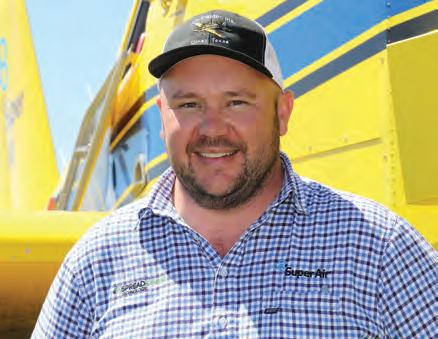
heard from several experts associated with the aviation industry about the importance of having rules that are practical but that don’t compromise environmental standards.
Weir, an ag pilot who did the topdressing demonstration, says the aim of the day was to get the people who write the rules and regulations to see just what happens in the field and the massive amount of technology that is now used to spray and top-dress more efficiently and effectively.
According to Weir, technology has moved with the times. He says there have been massive changes in the way that the industry operates.
Gone are the days when a pilot just opened the hopper and let the fertiliser go as they crossed over the farmers’ boundary fence.
“It’s no longer a hit and miss affair.
A sophisticated GPS system in the cockpit of the aircraft controls when and to what extent the hopper doors are to
be opened, and precisely determines exactly where the load is to be dropped.
“This means that sensitive areas such as waterways, wetlands and houses are meticulously avoided and the right amount of fertiliser goes on that part of a paddock that the farmers want it to go,” he says.
The precision that occurs in the field is driven by the combined actions of the fert rep, the farmer and ag operator and a map of the property. The farmer feeds into a computer the nature of their business, what they want the fertiliser to achieve and then, with input from the fert rep’, decide what product and how much of it they want, and then set a final budget. This file is then sent to the ag operator who checks it out and then feeds this into the very sophisticated GPS system in the cockpit of the aircraft.
“While the pilot still must fly the aircraft, the GPS system takes
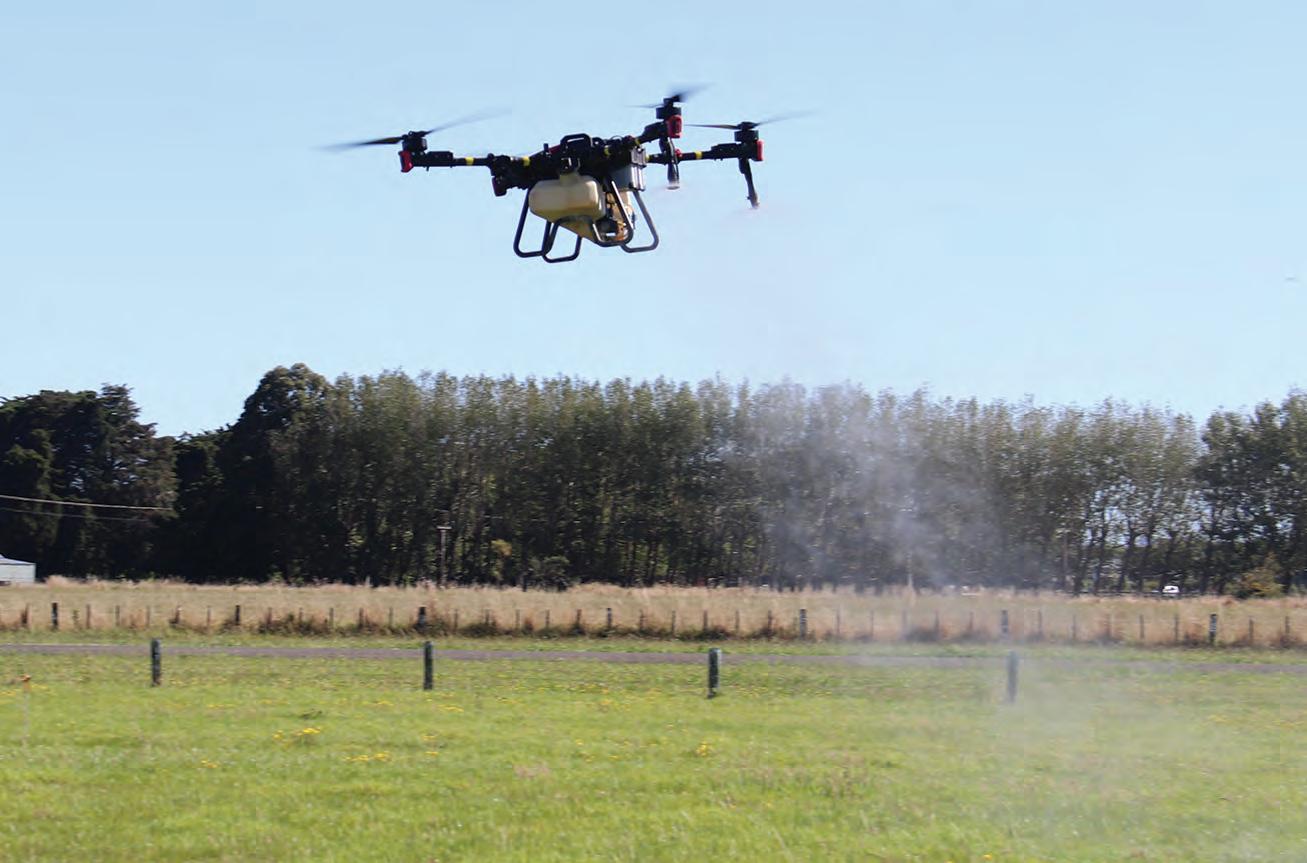
control of spreading the load evenly. It’s so sophisticated that it makes allowances for an even spread when the aircraft is topdressing up a hillside at 80 knots and downhill at 140 knots, so the farmer gets an even spread right over the
farm and no fertiliser is wasted,” he says.
Weir says he doubts many of those who make the rules and regulations are fully aware of the advanced technology the ag aviation industry is using and few will have actually seen a
WHEN THE first top dressing operations began in the late 1940s the aircraft of choice was the Tiger Moth – a very basic pre-WWII training aircraft that was affordable. Fast forward to 2026 and a new Air Tractor – the type that Kent Weir flew at Feilding – and you are looking at about $4 million, if you could buy it. It’s the cost of this aircraft and its ongoing maintenance that has to be recouped from the farmer.
“Everything comes back to an hourly rate that we as operators have to achieve to run our business,” he says.
But while costs may appear high, the high-tech systems in the modern aircraft ensure that fertiliser is not wasted and if there are good airstrips and other facilities on a farm, the cost of spreading a tonne of fert will go down.
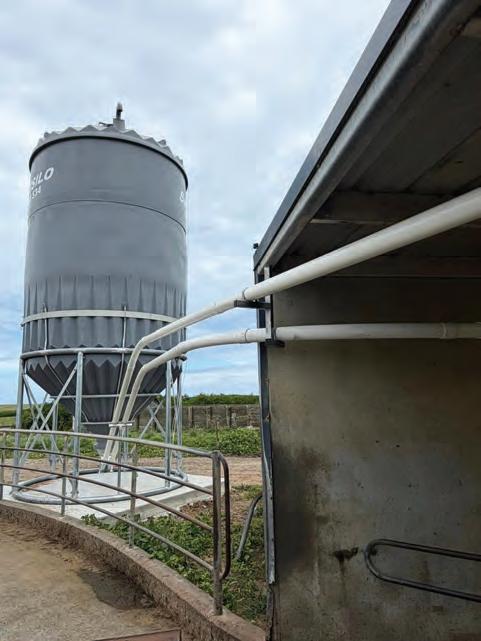
topdressing operation out in the field. He says he doesn’t blame the regulators for this and believes the industry itself has not done a good enough job explaining to them and the media just what they are doing.
“We are determined to change this and work positively with the policy makers and regulators,” he says
THE EXECUTIVE officer of the Ag Aviation Group, Tony Michelle, says the day presented a unique opportunity to build relationships with key people whose decisions impact on the sector. He says it’s important that out of this day there will emerge some vital ongoing relationships and says more events like this one will be held.
“The reason for this is that in most agencies that we deal with, people change and we need to brief new people who come into roles that affect us,” he says. Michelle says it’s important for the aviation sector that people who are writing the rules fully understand the implications and subtleties of such regulations and the serious consequences of these if they are wrong. He says many of the people they deal with are not aware of the technology that they use every day and having them see this in action was invaluable.



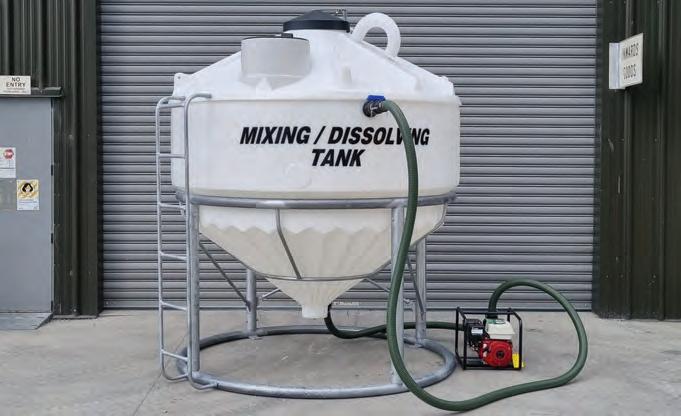
FARMERS WANTING to establish subterranean clovers in their pastures this autumn are encouraged by Beef + Lamb NZ to graze pastures down to 700-1000 kg DM/ha prior to sowing.
A hard grazing in March will open up the pasture, particularly after such a growthy season, and aid the germination of oversown subterranean (sub) clover seed.
If necessary, herbicide can also be used to reduce drymatter before broadcasting or drilling seed, it says.
Ideally, the seed should be oversown, direct-drilled or broadcast at 10 kg/ha and fertiliser applied if required.
Legumes need a soil pH greater than 5.5, an Olsen P of over 15 and sulphate-S of over 8.
Germination is triggered by rainfall of over 20mm. Once germination has occurred, the area should be spelled to allow establishment and the seedlings to reach the trifoliate
leaf stage.
Over winter, the area can be lightly grazed, preferably by cattle, to keep the pasture at around 2000 kg DM/ ha. This ensures the clover is not shaded. The area can then be used for lambing ewes before being shut up to allow reseeding in late spring.
Establishment methods
Because clover seed has adapted to germinate from seed burrs buried in the top 10mm of soil, drilling is the ideal method of establishment.
Success from broadcasting seed is more weather dependent and the best results are seen when seed is spread just before a prolonged wet spell in March or April, this can be difficult to predict. Immediately after broadcasting, stock can be used to trample the seed into the ground.
Rates and mixes
The recommended sowing rate of 10 kg/ha will generate about 100 established sub clover plants per
metre square.
The best way to quickly build a large sub clover seed bank is to sow the clover alone or reduce grass seed rates down to under half of what would normally be used (e.g. 8-10 kg/ ha of perennial ryegrass or 2 kg/ha of cocksfoot and plantain).
Alternatively, sub clover could be sown with rape (at 1 kg/ha or less if the soil is fertile) as the brassica will act as a nurse crop for the clover and provide a couple of grazings over winter.
Grass can be over-drilled the following autumn, after the sub clover has set-seed.
Cultivars
Sub clover cultivars vary considerably in flowering dates, leaf size, pest and disease tolerance and hardseedness, so a mix of at least two complementary cultivars will compensate for site and climate variability. Luisetti Seeds has a range



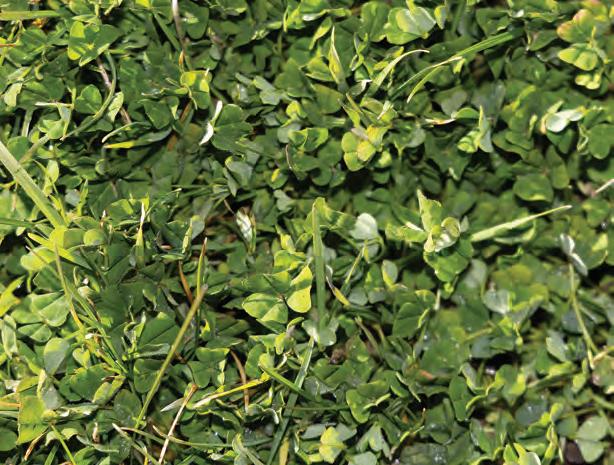
of sub clovers available, including Puawhaa, a variety bred specifically for New Zealand hill country environments.
As a rule of thumb, earlier
flowering cultivars are better suited to low rainfall areas (under 500mm) whereas later flowering cultivars are adapted to higher rainfall areas (over 700mm).





























Wormwise vet Mary Bowron gives timely advice about worm management prior to mating, particularly being on the look-out for the blood-sucking Barber's Pole worm.
WITH MATING season just around the corner, it’s the perfect time to make sure your ewes and rams are in peak condition.
A good mating means good lambing - and that’s the aim of the game. For many farmers, it’s been a wet summer, and parasites love moisture. Checking worm burdens in your ewe flock prior to putting the rams out helps ensure mating goes without a hitch.
Parasites aren’t usually the main reason ewes drop condition. But light ewes can find it more difficult to deal with a parasite challenge, and the worm burdens that they accumulate may be preventing some of them from re-gaining weight. In another words ‘they are skinny with worms, not skinny because of worms’.
Don’t presume your ewes are in good nick by watching them go through a gateway. Next time they are near some yards, put your hand on the backs of a sample mob. Make sure what your eye is telling you
parasite is the silent party crasher that can derail your mating outcomes.
If you can feel bones easily, she’s too light. Doing this quick body condition score exercise now can alert you to the need to re-draft ewes now and prioritise those that need more help; while there’s still time to change the outcome.
If you’re farming in a Barber’s Pole worm hotspot, keeping an eye on ewe worm burdens can prevent nasty surprises from this parasite.
Barber’s Pole can appear out of nowhere and hit hard – just when you’re gearing up for tupping. With no scouring or dags to give it away, this blood-sucking
You might only notice some sluggish, listless animals, lagging behind the mob. Both the adult worms and immature larval stages of Barber’s Pole cause damage by sucking blood resulting in anaemia.
If you look inside the lower eyelid of a few animals in your flock, you could see pale mucous membranes. Sometimes ‘bottle’ jaw can be seen, especially in your skinnier ewes. But, more often than not, the first sign is dead sheep in the paddock.
So don’t leave it that late, get in early and collect some poo samples. Use faecal
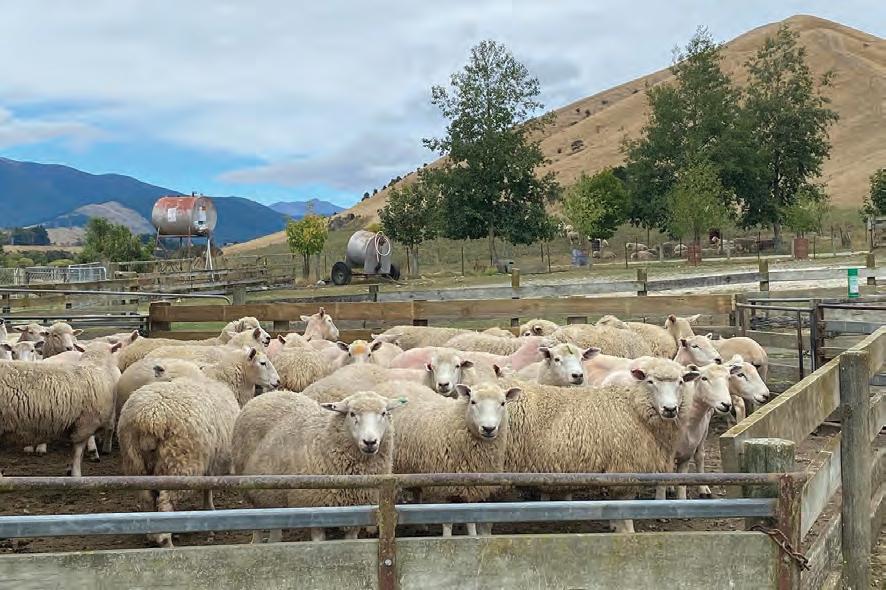
egg counts (FECs) and parasite identification to warn you of an outbreak. This worm lays a lot of eggs, so FECs can change quickly and be several thousand eggs/ gram in bad cases. Your two-tooths and lighter ewes are most at risk, so start by running FEC tests on these groups in the lead up to tupping.
Other worm species, like Trichostrongylus can also push egg counts up,
so how can we be sure Barber’s Pole is part of the problem?
There is a new tool in the Wormwise kit – the GIN PCR test. Not to be mixed with tonic, this GIN stands for ‘gastrointestinal polymerase chain reaction’. This lab test uses DNA from worm eggs to identify which worm species are in the poo. This test, currently
provided by Awanui Veterinary Laboratories, is available through your veterinarian, and provides a worm species breakdown within a few days, enabling quick decisions to be made around the need for drenching.
What happens if the FECs and parasite identification show that Barber’s Pole is affecting your flock?
Panic slowly, there
are options available. Make treatment decisions based on FECs and parasite speciation and avoid blanket drenching all ewes. Target your lighter and younger ewes.
In the long-term, consider worm-resistant genetics; WormFEC breeders from Barber’s Pole regions have selected for sheep that can handle the worm pressure.
Don’t wait, ring your vet about this threat now.
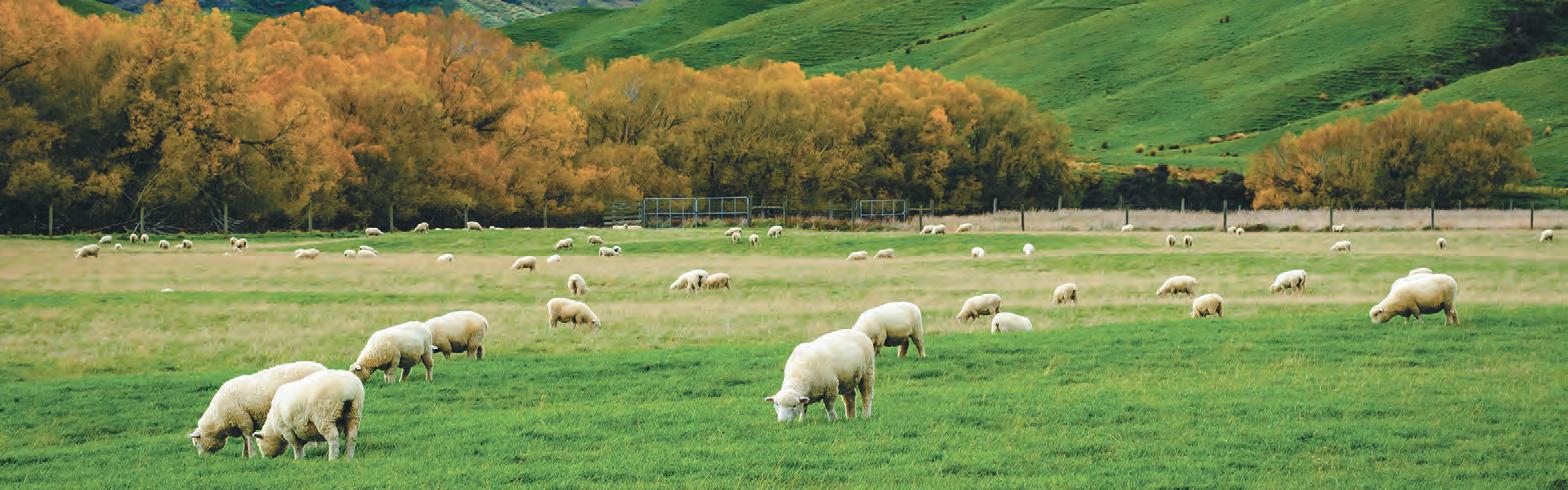
BODY CONDITION
scoring ewes at least six weeks out from mating can make a significant difference to conception rates and scanning percentages.
Research has shown that lambing percentages increase by 6–10% for every extra unit of body condition score at mating. The flushing effect may provide an additional 5–10%.
Body condition scoring ewes has been found to be a driver of profitability in top performing sheep flocks.
Ideally, ewes should be going to the ram at a body condition score (BCS) of between 3 and 4 and it is the percentage of the ewe flock with a BCS of below 3 at mating and lambing that is the single most important factor influencing the profitability of an ewe flock.
The biggest percentage jump in scanning percentage will come from reducing the number of poor condition ewes at
mating, it is these poor condition ewes that will bring down the overall performance of the flock.
Pre-mating management
By preferentially feeding ewes that have a BCS below three (they may require supplementary feed) in the lead up to mating, their body condition and lambing percentage can be improved.
It is also recommended that a faecal egg count is carried out on these low condition score ewes as they may require a drench.
Ewes need 1.0-1.3 kg DM/head/day of average to good quality feed just to hold body condition during mating and early pregnancy.
Ideally, the ewe mob should be rotated rapidly on to pasture that is 5–6 cm height. Grazing below 3cm or 1500 kg DM/ha will result in loss of body condition and lower lambing rates.
Body condition scoring ewes has been found to be a driver of profitability in top performing sheep flocks. The three best times to BCS are pre-mating, scanning and weaning.
• Article - Beef + Lamb NZ
• It is very hard to accurately judge the condition of woolly sheep visually
• Condition scoring manually is a very useful way to judge the fatness of sheep
• Ewes should not be losing body condition over the premating and mating period
• A condition score of 3 to 4 at this time of the year is recommended
• Ewes should be given priority at this time to get good lambing percentages
• They should be rapidly rotated into 5–6 cm pasture and not graze to lower than 3cm.
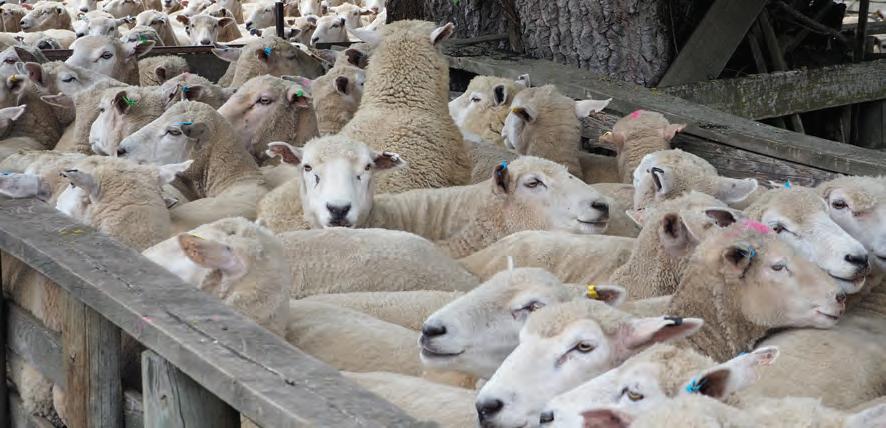
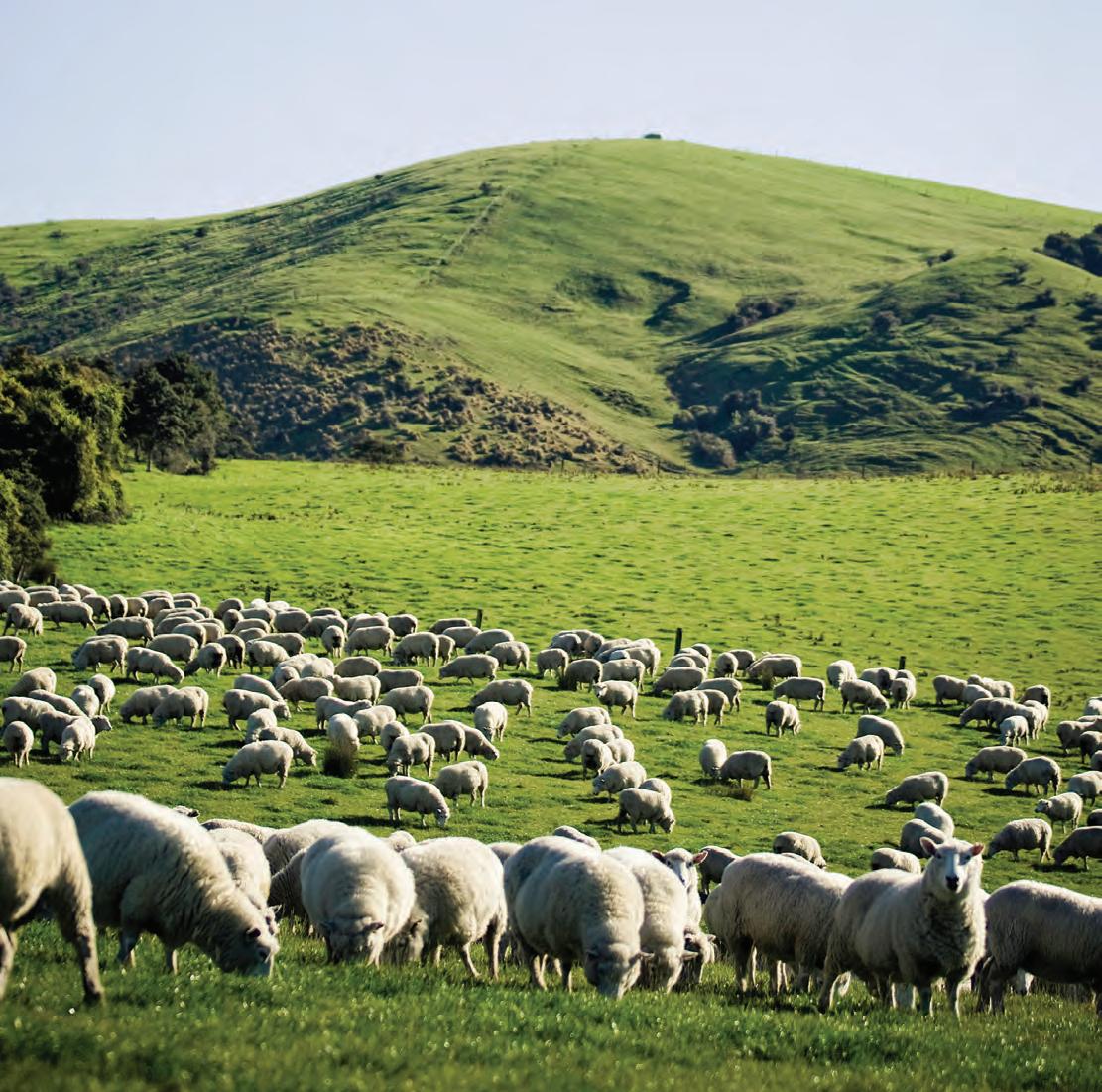
WITH AN extensive cultivation portfolio, Amazone entered a new era in tillage 25 years ago when it launched the newly developed Catros in 2001, an innovative design with a high performance, compact, shallow stubble cultivator, initially sold as a three-point linkage mounted implement.
Numerous milestones in the range’s development have stood out, including the introduction of the Smart Frame System that allows the working depth to be adjusted hydraulically from the cab without having to readjust the frame angle.
Over the past two decades, continuous evolution has met the needs of farmers and changing practices, seeing a wider choice of working widths. Hydraulic depth control adjustment was added in 2003, followed in 2004 by the switch to oil-immersed, maintenance-free disc bearings, reducing set-up time and maintenance costs, and increasing performance.
In 2005 Catros introduced trailer
models with integrated running gear and increased working widths that were more practical for use with smaller tractors. During 2011, Catros+ was introduced, with 510mm diameter discs that allowed better incorporation of organic matter. At the same time, the innovative TS bogey chassis and the use of bolt-on bearing shafts on the disc arms ensured even greater flexibility and durability.
In 2013, the pro-Pack was added as an optional extra for certain models, a special solution for long-term use in slurry applications. Then 2016 marked the arrival of the Catros+ 12003-2TS –the range’s new flagship, aimed at large farms and contractors. Its 12m working width adapts to uneven ground, thanks to the innovative ContourFrame, with hydraulically pre-pressurised frame sections and individually suspended discs.
In 2020, the Catros XL saw the arrival of 610mm diameter discs to allow deep and intensive mixing of large amounts of organic matter, particularly in very heavy and wet soil conditions.
At the recent Agritechnica 2025,

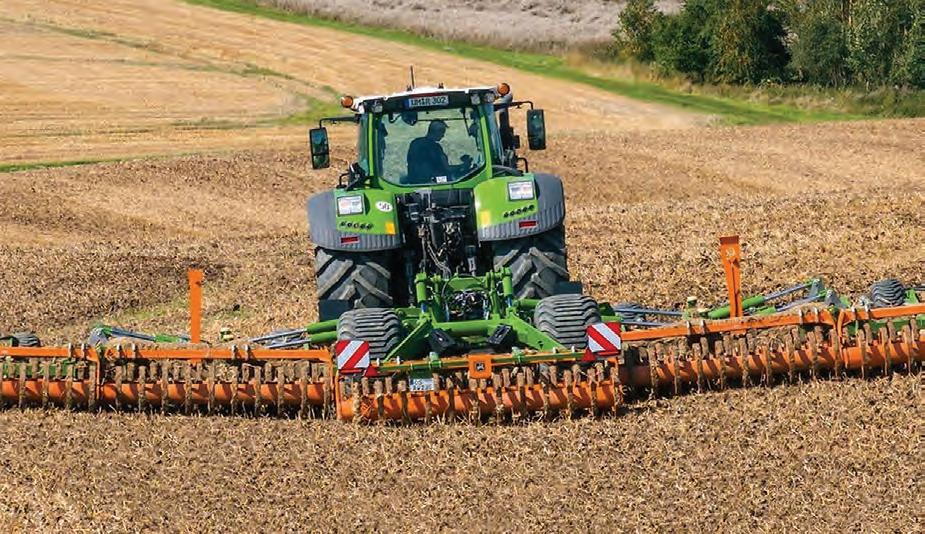
extended disc element for controlled traffic farming systems. At the same event, Amazone also presented AutoLane, an innovative true-track
disc with a wavy profile, developed in response to the increasing demand for shallower soil tillage, alongside tools such as the knife roller, which

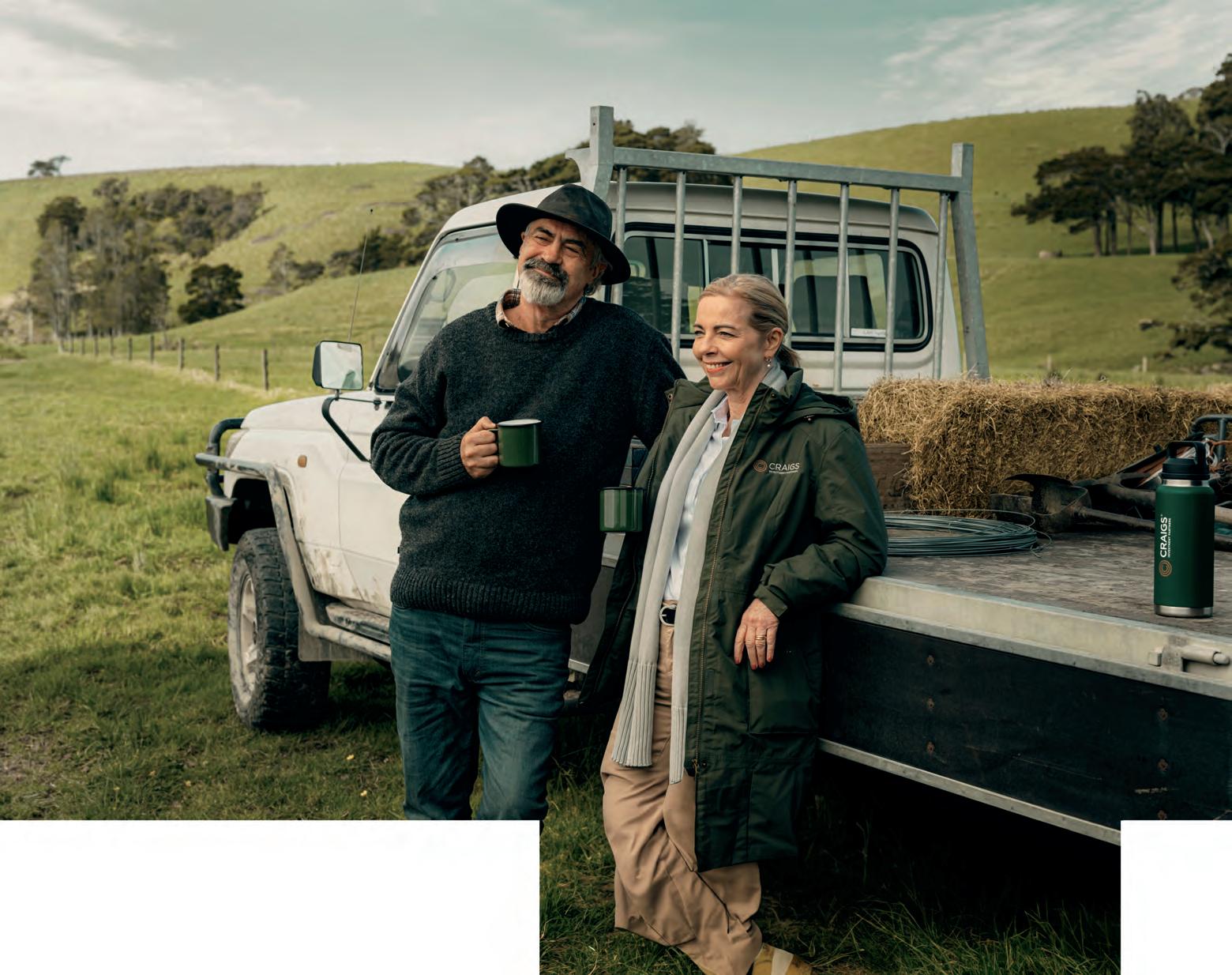

contractor and current NZ Ploughing champion Mark Dillon has got his tractor back after it enjoyed some extensive OE.
The 1993 Massey Fergusson 362 with accompanying Kverneland plough returned home to his Riversdale property in January after being used at both last year’s World Ploughing Championships in the Czech Republic and the 2024 champs in Estonia. The cost of returning the tractor and plough meant they stayed in Europe between competitions.
Mark said MPI had cleared the tractor and plough for pick-up after a bio-security check-over. Ensuring the machinery is
thoroughly cleaned before boarding a ship is part of the expense. On arrival home it was tidied up before going to the Dillon Harvesting stand at the Southern Field Days held near Gore from February 11-13.
Next month, Mark is heading up to Methven with his trusty tractor and plough for the 2026 NZ Ploughing Championships. Because of the time it takes to transport equipment, his repeat Silver Plough win last year means he will also represent NZ this year at the World Champs being held in Croatia in September.
After field days it will be time for the tractor to go to the engineers
for some modifications before it goes off to Croatia.
Mark Dillon has got his tractor back after it enjoyed some extensive OE.
Mark was placed 19th last year in Prague in the conventional class. He started driving a tractor at age six. His father Richard used to do ploughing as a farmer and Mark was competing in the Southland competitions by the time he was 12. He continues to do quite a bit of ploughing
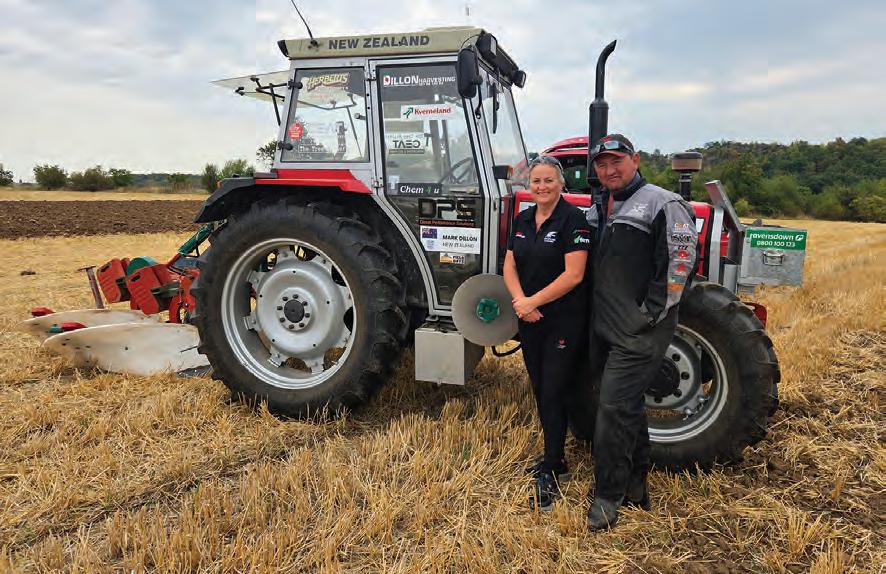
in 2024.
THE PARENT company of Fendt, Massey Ferguson and Valtra – AGCO – reports lower net sales of around US10.1 billion in 2025, but forecasts a lift in 2026.
The 2025 result is 13.5% lower than the US$11.6 billion in 2024, a drop the company says was mainly due to the reluctance of farms and contractors to invest in new tractors and machines in the recent climate of uncertainty and low commodity prices.
In North America, overall retail tractor sales were 10% lower than 2024, especially in higher horsepower categories, and combine unit sales were 27% lower. This saw a 27.5% fall in AGCO’s North American net sales to US$1.66 billion, compared to US$2.29 billion
Western Europe industry retail tractor sales were 7% lower, with double digit percentage drops across most markets, except Spain and Italy. Overall though, the Europe and Middle East region was stable with net sales of US$6.73 billion, around 0.4% higher than in 2024.
Despite the drop in net sales, tighter cost controls, better production planning and less stock at the dealers allowed the company to maintain profitability, with a margin for the 2025 year at 7.7%, rising to 10.1% in the final three months of the year.
“Global agricultural markets remained under significant pressure in 2025,” said Eric Hansotia, AGCO’s chairman, president and CEO, adding that the demand for new equipment moderated further across all
major markets.
“In 2026, we will remain dedicated to advancing our Farmer-First strategy,” Hansotia said. “Our innovation pipeline remains robust with a full slate of new product introductions designed to help make farmers more productive and profitable. These actions will help balance the effects of low levels of farm profitability and persistent trade-related uncertainty, while positioning the company to deliver improved performance in 2026.”
The market remains uncertain, with AGCO expecting pressure on industry demand throughout 2026, especially for larger equipment. However, it also sees signals of recovery towards the second half of this year, forecasting a slight increase in net sales to US$10.4 billion to US$10.7 billion.


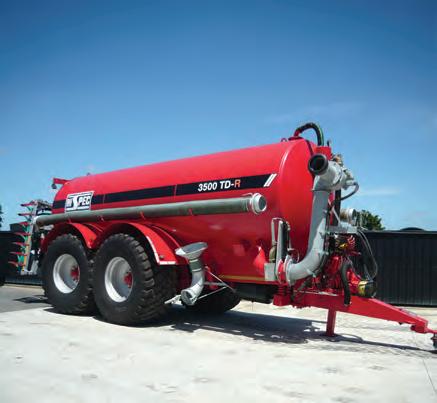
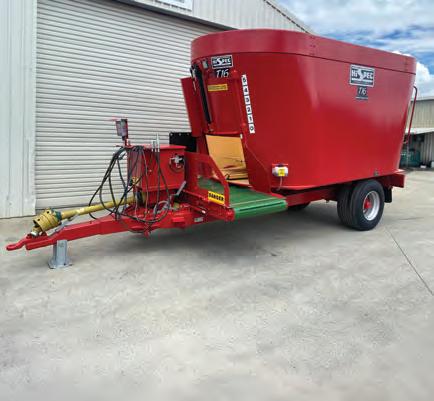


to support New Zealand’s working farm dogs.
WHILE MARINERS may recognise a “dog watch” as a two-hour shift on a ship, the Good Dog Work Watch is quite a different concept and the clever creation of Southland siblings Grace (9) and Archer Brown (7), both pupils at Riverton Primary School.
The pair recently took out the Primary School Section of the Innovation Awards at the Southern Field Days with their inventive idea designed
The inspiration came after a chat with their grandfather, Bazza, a Silver Fern stock agent, whose job recently required him to write a report about a valued farm dog that had sadly been killed in an accident.
Familiar with smart watches worn by family and friends to record steps and heart rates, Grace and Archer wondered if similar technology could be used to track a working dog’s
activities. Their concept — the Good Dog Work Watch — involves fitting a device to the dog’s collar or a purpose-built harness, equipped with sensors and potentially an on-board camera.
The device would allow handlers to monitor a dog’s performance in real time, providing information such as heart rate, temperature, distance covered, and GPS location. A live camera feed could even let owners see what their dog sees while working
in the paddock.
Beyond the dayto-day use, the data could indicate when a dog might need rest or veterinary attention, while also building a detailed health and performance profile.
This could help farmers and breeders assess the stamina, fitness, and true value of their animals effectively offering a “warrant of fitness” for working dogs.
Proud mum Jenna says her budding inventors were “pretty stoked” to win the
award and thrilled by the interest their idea attracted at the field days.
“We were already heading there with our Southbuild ITM business, so the kids decided to enter the Primary School Innovation Competition. It’s great to see young minds thinking creatively about rural life,” she said.
Not done yet, Grace and Archer are already planning their next project for Southern Field Days in two years’ time.
RAVENSDOWN’S NEXT evolution in smart farming technology, HawkEye Pro, was awarded the Technology Section Award at the Southern Field Days Farm Innovation Awards in February 2026.
Ravensdown chief science officer Mike White said, “We are absolutely delighted with this award, recognising technology that has been built from the ground up by a dedicated group of innovators.”
For dairy farmers, HawkEye Pro introduces new functionality that recommends withhold and capital phosphate requirements using whole-farm soil tests and pasture information. New features for dairy farms include the ability to factor in effluent application and apply fertiliser by paddock or
block as well as within paddock. In addition, fertiliser maintenance recommendations are also available to sheep and beef farmers,
Fully integrated with the existing HawkEye platform, the patentpending software uses soil data to generate variable rate fertiliser maps with 10x10 metre precision, equivalent to 100 soil tests per hectare.
Superphosphate-based products, based on their physical characteristics are naturally well suited for carrying out variable rate plans, working with HawkEye Pro to ensure fertiliser goes where it creates the most value.
“We have been developing this technology alongside farmers over the last two years, which included their involvement in the pilot in early 2025,” says White. “They can see the real value in HawkEye Pro for their

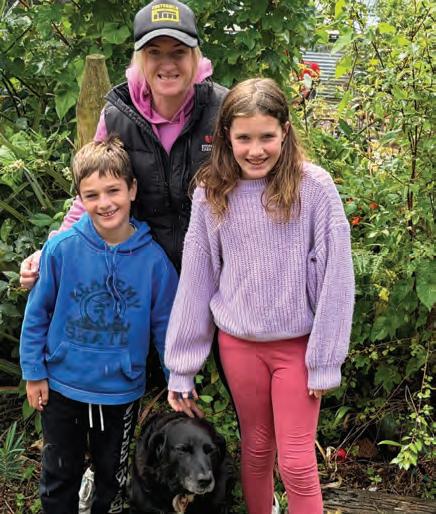
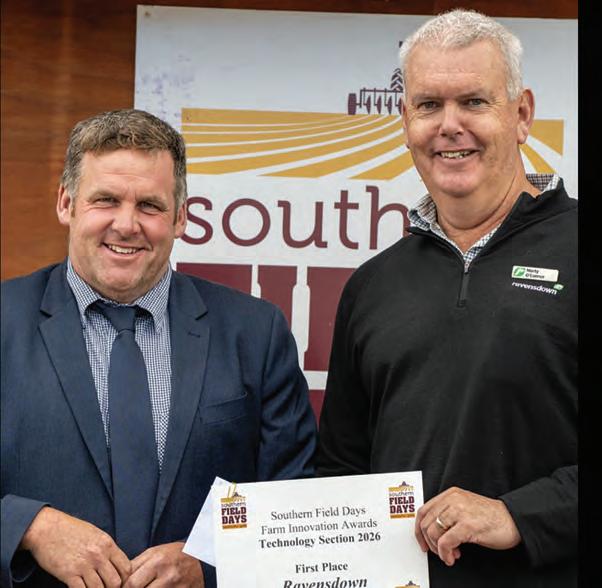
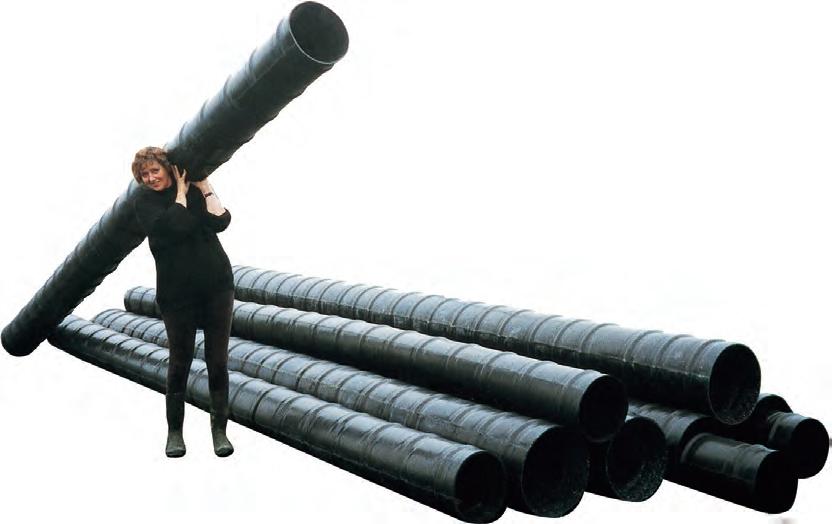
operations. We are also engaging with aerial and ground spreaders across the country to ensure the benefits are not just theoretical.”
HawkEye Pro helps optimise pasture production, balance feed supply and demand, and improve profitability. New Zealand research shows precision fertiliser plans can deliver benefits of $50–$150 per hectare through efficient placement and rate selection, reducing waste and boosting productivity.
Ravensdown says its investment in HawkEye Pro reflects its commitment to nutrient use efficiency and shareholder benefit.
“Regardless of fertiliser costs, we’re leveraging digital capability and spreader technology to maximise returns,” says Mike White.
“This is about smarter farmingdelivering accuracy, efficiency, and sustainability.”


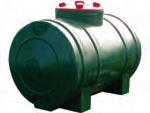
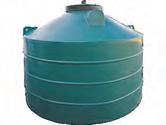
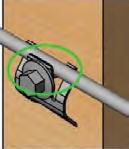
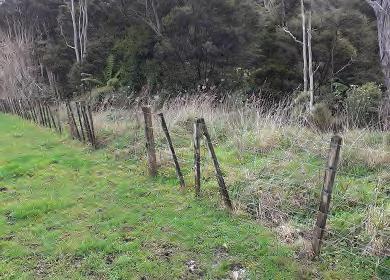

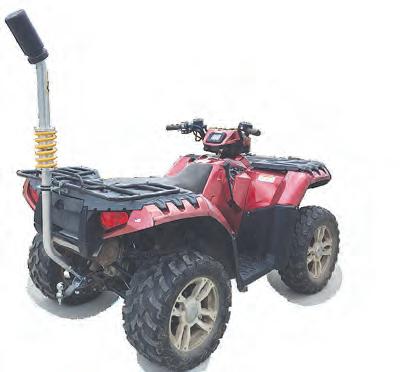


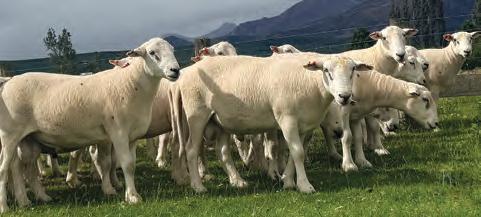




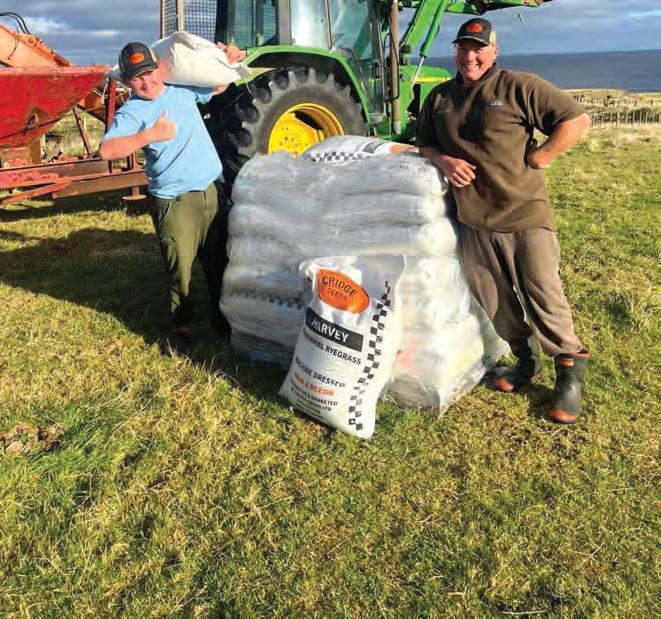





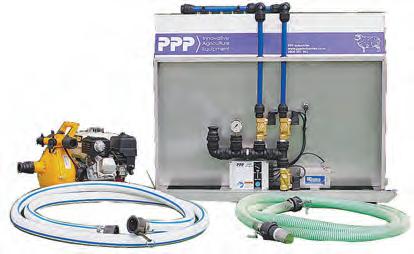









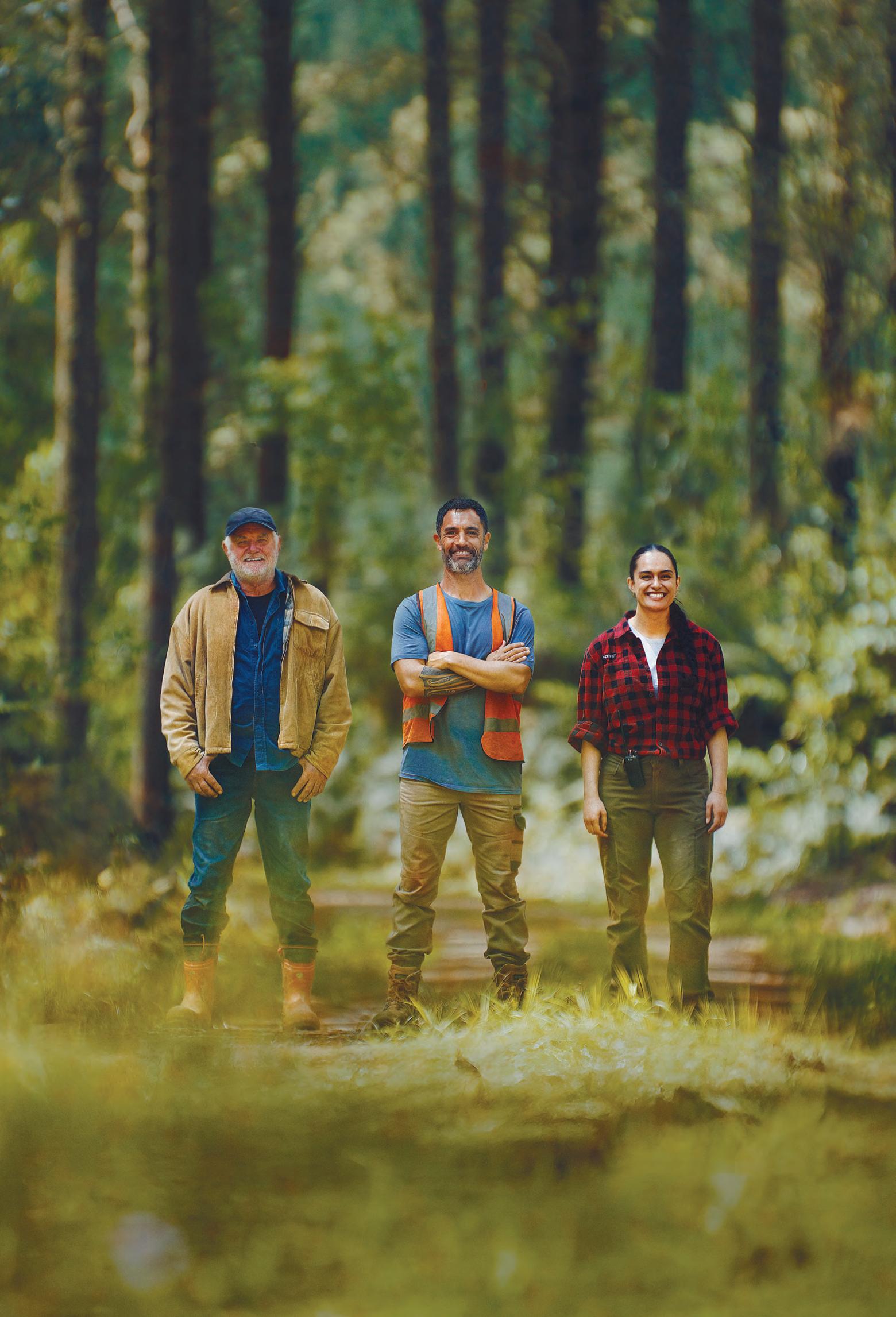
We’ve always grown more than just trees. For over a century, generations of Kiwis have shaped the forests that help grow communities and the products that build New Zealand. forestgrowers.nz
We’ve done a lot of growing