

SUDESH KISSUN
RED MEAT farmers are in “a slightly better place” than they were a year ago, according to Beef+Lamb NZ chief economist Andrew Burtt.
Livestock prices are higher than a year ago and some input costs have decreased. However, Burtt says the reality is that the cumulative effect of previous low prices and high inflation still lingers.
Farm gate prices for cattle and sheep have increased in recent weeks but this is primarily a result of a shortage of supply domestically rather than an improvement in global prices for sheepmeat and beef.
“We usually see an increase in prices at this time of the year as there is shorter supply over winter, but this year supply has been even shorter than usual because farmers got their animals
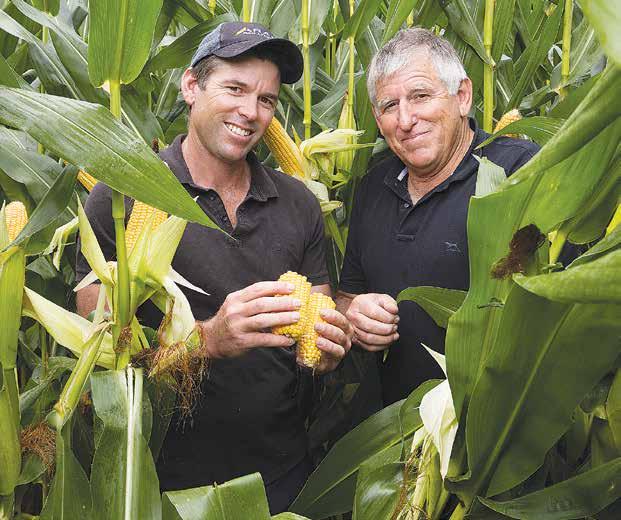
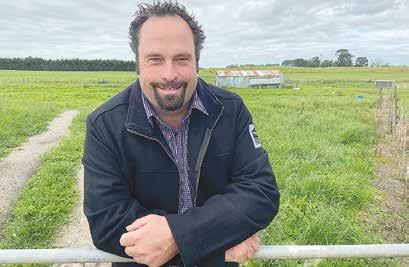
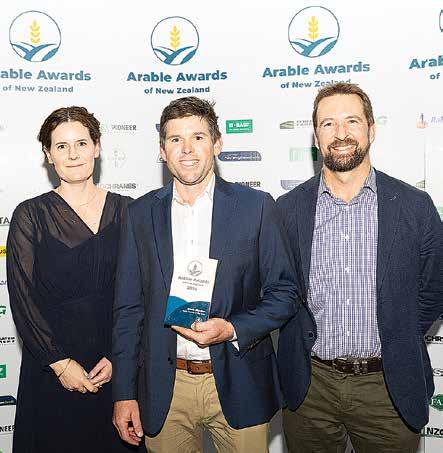
Marton’s Simon Nitschke (left) with his father Malcolm on their familyowned farm, Arable Solutions. Simon, who has been growing maize grain for around a decade, won both Maize Farmer of the Year and Arable Farmer of the Year at the recent 2024 Arable Awards in Christchurch. The accolades acknowledge Simon’s management skills and dedication to producing top-quality maize grain yields. Full story page 7
away earlier because of the drought,” Burtt told Rural News
He expects to see continued strong cattle prices, but the outlook for sheep is less certain.
“Demand from China is expected to remain subdued, but we are seeing strong demand from the UK, EU and US.
“We have seen some recent indications that Australia’s supply may have peaked, and New Zealand’s supply is expected to be lower. A decrease in supply could help lift prices globally, which could flow back to our farmers this coming season.”
ASB senior economist Chris Tennent-Brown noted that finished lambs
earlier this month averaged $6.80$7.10/kg in the North Island. For beef, both North Island export prime and local trade were operating at $6.80$7/kg excluding breed premiums.
“Being at sixes and sevens normally means confusion or disarray, but when it comes to sheep and beef prices, the high sixes and early sevens per kg
prices continue the recent pattern of tight markets and strong prices,” Tennent-Brown says.
According to ANZ economist Susan Kilsby, returns for lamb from international markets have improved a little, but the change has been incremental, and the recent increases have not been enough to make exporters more confident about the outlook.
The US market is delivering some of the best returns, Kilsby notes. European markets are in reasonable shape, particularly the UK, where prices have been trending higher.
Kilsby predicts that farm profitability will continue to be hampered by high costs, including borrowing costs, in the year ahead, although inflationary pressures are fading, and interest rates are starting to ease.
Burtt agrees that conditions are improving but cautions that recovery will be gradual.
“Farmers are in a slightly better place than they were a year ago.
“A year ago, farmers faced different challenges, including the impact of drought, expectations of El Niño, and cashflow concerns. The recent change in government has also influenced both short-term and long-term sentiment in the sector.
“Although inflation has eased to 2.8% in 2023-24, it’s important to remember that this is on top of a 32% cumulative increase over the past three years.
“This same level of increase previously took 15 years to materialise. So, while conditions may be improving, the recovery is gradual.”


Lower Ground Floor, 29 Northcroft Street, Takapuna, Auckland 0622
Phone: 09-307 0399
Fax: 09-307 0122
POSTAL ADDRESS PO Box 331100, Takapuna, Auckland 0740 Published
CONTACTS
Editorial: editor@ruralnews.co.nz
Advertising material: davef@ruralnews.co.nz Rural News online: www.ruralnews.co.nz
Subscriptions: subsrndn@ruralnews.co.nz
WHAT A difference a year can make.
That’s the reaction from Federated Farmers dairy chair Richard McIntyre to last week’s strong lift in global dairy prices.
McIntyre says the latest Global Dairy Trade (GDT) auction result will bring relief to farmers in the middle of calving.
He says many farmers still remember what happened to prices a year ago.
“What a difference a year can make. It’s a very good result and farmers in the middle of calving will be happy and find relief,” he told Rural News.
“Anytime the price goes up, farmers are happy, but they only hope the prices will remain at these levels.”
In the first GDT auction in August last year, the price index dropped 4.3% and the crucial whole milk powder (WMP) price slumped 8%. The second auction last year wasn’t any better: the price index dropped 7.4% and WMP dropped a whopping 10.9%.
However, last week’s GDT results was a cracker: The price index rose 5.5% and WMP rose 7.2% to US$3,482/ metric tonne.
Westpac’s chief economist Kelly Eckhold describes the latest GDT auction as a stunner. He says prices rose strongly, more or less across the board, driven by the continued return of Chinese buyers in the whole milk and skim milk products.
“Futures markets had indicated a strong auction was in the offing and [they] were right. This was the strongest auction we have seen since 2022,” he says.
“If prices can sustain these levels, then the upside risks to our 2024/25 milk price forecast of $8.40 are firmly
back in play. We will be looking for Fonterra to provide an update on their current $8 (mid-point) guidance, with an expectation this will lift at least a bit.”
NZX dairy analyst Rosalind Crickett notes that the GDT index rise was its single biggest percentage jump since March 2021. Crickett says the results were in-line with expectations. She says the bullish market sentiment translated into tangible returns for all products on offer this time, aside from cheddar, which remained flat with a slight (0.2%) decrease in
pricing. On this occasion 88% of the 39,666 tonnes of product on offer was sold.
Whole milk powder (WMP) led the way up, bolting 7.2% to settle at its highest average price since October 2022 at US$3,482/t. Skim milk powder (SMP) prices were similarly bullish, up 4% on this occasion to land at US$2,636/t – making a recovery after prices fell in July.
Milk fats also saw steady gains, with anhydrous milk fat (AMF) up 4.8% to US$7,244/t – its fourth highest average price point seen on the GDT platform. Butter also rose 3.7% to US$6,706/t.
Crickett says North Asia maintained a notable presence again at this auction, taking the lion’s share of milk powders, butter and lactose, the catalyst behind the price increases –absorbing approximately half of all products on offer.
“The total purchase volume by the main bidding regions North Asia and Southeast Asia/Oceania was also up, when looking at the equivalent event last year.”
Crickett says all eyes will now be on Fonterra when it next provides an update on its farmgate milk price forecast for the 2024-25 season.
SYNLAIT IS hoping that its proposed recapitalisation plan will help retain its spooked farmer supplier base.
The troubled Canterbury milk processor Synlait has unveiled a recapitalisation plan, offering new shares worth nearly $218 million to its two largest shareholders.
Under the deal, Bright Dairy of China, which currently owns 39% of Synlait, will end up owning almost two-thirds of the listed company. The a2 Milk Company (a2MC) will retain its 19.83% stake. Capital raised will be used to reduce debt.

The recapitalisation will require approval at a special shareholders meeting scheduled for September 18 at Synlait’s Dunsandel factory.
Synlait chair George Adams told Rural News that he has held several meetings with farmers, most of whom have handed in cessation notices as the company struggles with financial problems.
Adams says farmers told him that they like doing business with Synlait but are unhappy because the company failed to meet market advance rates and they’re concerned over its
financial woes.
Adams says should the package plan be approved next month, the company’s balance sheet would be restored. He says Synlait is already meeting market advance rates this season.
“So, we are doing those two things and hope that farmers will reconsider their position,” he says.
Synlait has around 300 farmer suppliers, supplying its factories in Dunsandel and Pokeno.
Adams says the equity raise is critical for Synlait’s future.
“We followed a rigorous process, which included taking independent expert advice, to consider a range of options under the circumstances Synlait is facing,” he says.
“If the resolutions are not passed, it’s likely Synlait would need to cease trading and initiate a formal insolvency process. We are particularly grateful for the continued support of our two major shareholders, Bright Dairy and The a2 Milk Company. Their investment demonstrates their deep commitment to Synlait’s future,” says Adams.

FARMER AND former politician Sir Lockwood Smith is questioning the way that methane emissions from livestock are measured in NZ.
Smith, respected as an agricultural scientist, farmer and politician, says the present system of measuring methane emissions by way of an accounting target approach is wrong. He says no one questions the need for emissions to be reduced, but he says the present system will one day end in tears.
“What needs to happen is a complete change in strategy internationally for measuring methane emissions from animals, with the focus being on the ‘carbon efficiency’ of the food that we produce,” he told Rural News
SIR LOCKWOOD Smith is full of praise for the efficiency of the sheep industry, saying they have done a great job over the years.
He highlights the way they have brought in genes from all sorts of breeds and incorporated these into our base Romney flock. This has included improving the fertility of the national flock and using terminal sires to improve the growth rate of our lambs, so they are more productive and carbon efficiency.
“Our lamb production is outstandingly good, but our beef industry is miles behind. We still have farmers in NZ who don’t mate yearling heifers. How can you have carbon efficiency if you don’t mate a heifer until she is two years old? Some farmers might say it’s difficult, but we have got to do it and we have got to produce animals that can do it,” he says.
The big shift that’s needed globally says Smith is to look at carbon emissions in relation to the nutrient value of a product. He says when you measure cow’s milk and oat milk this way, the cow’s milk clearly comes out on top. He says if NZ and other countries could tie their emissions to this criterion there would be significant progress globally on climate change.
Smith says NZ has got to start lobbying the United Nations Intergov-
ernmental Panel on Climate Change (IPCC) to start looking at food pro-

duction differently. He says shifting the focus to the carbon efficiency of food being produced and ensuring it’s produced in
the most carbon efficient way will benefit climate change. “Even if NZ alone decided to change the focus to carbon efficiency
“Even if NZ alone decided to change the focus to carbon efficiency in food, this would make little difference.”
in food, this would make little difference. What NZ must do is get out there and influence global thinking on the subject and get buy-in from other countries,” he says.
According to Smith, some of the solutions being proposed for reducing methane in our livestock – such as vaccines and boluses – are not as good as they sound. He points to the problem that worms in animals are developing resistance to drenches and believes
the same could happen with things like vaccines.
He says NZ has ways of farming that are so much more efficient and notes that the big challenge in carbon efficiency is to make sure that more of what a ruminant animal consumes goes into production compared to the maintenance of the animals’ body.
“That’s what delivers efficiency,” he says.
One way of improving carbon efficiency on NZ farms says Smith is to slaughter beef animals much sooner than we do. He says now too many ‘old’ animals are being slaughtered and keeping a cattle beast for three years is not workable if you want to increase carbon efficiency.
“Why not slaughter a beast at 18 months? That would make a huge improvement on carbon efficiency,” he says.
BIOSECURITY NEW Zealand has placed import restrictions on tomato seed imports from Australia after the detection of tomato brown rugose fruit virus at two South Australian growing properties.
“We’ve stepped up our biosecurity requirements in response to the recent finds in South Australia,” says Biosecurity New Zealand deputy
director general Stuart Anderson.
“Imported seeds for sowing from Australia will now require testing for the virus prior to arrival in New Zealand, which is a requirement that is already in place for other countries where the virus is present. We have also temporarily suspended tomato imports from all Australian states except Queensland, where there is
no evidence of the disease or links to the affected properties in South Australia.” Anderson noted that all our imported tomatoes from Australia currently come from Queensland and not South Australia.
“We’re in close contact with our counterparts in Australia about what they’ve found and the measures they are taking, and we’ll continue to mon-
itor the situation closely.
“We’re committed to ensuring New Zealand growers are protected and that’s why we’ve taken these steps already.”
The virus, which was first noted in the Middle East, has never been found in New Zealand, and affects tomatoes, capsicums and chillies, causing yellowing and deformity in


the host plants, but has no impact on human health.
“There is nothing to suggest the virus is here at present, but as always we ask growers to check their biosecurity practices and be vigilant and contact us on our pests and diseases hotline (0800 80 99 66) if they notice problems with their tomatoes,” Anderson says.

MOVES ARE underway for farmers and Māori in Southland to try and resolve and get clarity over what appears to be controversial a section of the proposed Gore District Plan.
Earlier this month, local Federated Farmers have been outspoken about a provision in the plan relating to what appeared to be a blanket move by the Gore District Council (GDC) to declare the whole district as a Site and Area of Significance to Māori (SAMS). It was believed that this was a move enshrined under the RMA.
WHILE BERNADETTE Hunt is adamant the present problems with the GDC proposed plan is not a case of farmers verses Māori, she says it highlights yet again the pressure farmers are feeling.
She says farmers are feeling encroached from all different directions. She says authorities and organisations keep coming at farmers and encroaching on their flexibility over land use, taking fees from them for stuff they don’t even want to do. “In the past we have tried to fob this off, but in the end, it just seems to get worse over time”.
“A classic example: a couple of years ago a requirement came out with the nitrogen cap which most of us felt we could live with. But you then had to report on your nitrogen limits to make sure that you were staying within the N cap.
“When we reported that, we were charged a fee by a regional council for receiving the data and if we didn’t file a report, we got charged a fee for not putting the data in,” she says.
Hunt says this is why farmers are gun-shy of the GDC proposed plan because they fear what may lie ahead.
Feds said such a move would have meant any basic and major on-farm work could not take place without a cultural report being obtained for a resource consent to be granted. But it seems this
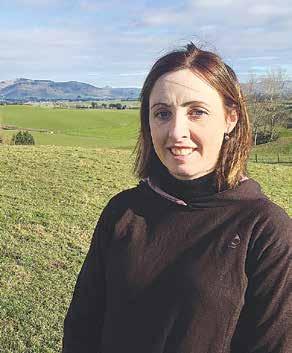
Hunt told Rural News that it turns out the GDC hasn’t declared the entire area a formal site of significance, which is a specific RMA designation.
is not exactly the case.
Federated Farmers member, Bernadette
SHEEP AND cattle numbers continue to decline, and this year’s drought hasn’t helped, according to Beef+Lamb New Zealand (B+LNZ).
The annual Stock Number Survey, released last week, shows a notable decline in both sheep and cattle numbers as of 30 June 2024.
The reduction follows significant decreases in the past couple of years. While the primary driver in previous years has been landuse change because of the conversion of sheep and beef farms into forestry, this year’s primary driver was drought in key sheep and beef regions.
tough for sheep and beef farmers,” says Kate Acland, chair of B+LNZ.
“The combination of drought across many parts of the country, high costs, and low sheep prices and has put immense pressure on farmers.
Drought has seen farmers needing to destock and impacted the outlook for lamb production for the coming season.
Sheep numbers are estimated to have decreased by 4.3%, down to 23.31 million, with breeding ewe numbers falling by 2.9% and trading sheep stock numbers down 7.9%. Farmers sought to maintain their breeding ewes and decreased their trading stock more.
The decline in ewes and a lower expected lambing percentage, also caused by drought, means the lamb crop is anticipated to decrease by 4.9% (970,000 head) on last year.
Beef cattle numbers are down 2.8% overall, most significantly in the South Island, where drought led to a 7.1% decrease, while the North Island is relatively steady, down 0.8%.
“This year has been particularly
“Farmers are facing tough decisions on their farms, with many having to sell off capital livestock not only due to drought but for cashflow reasons. This will not only affect their income this year but will also have long-term implications for future profitability.”
The report indicates that while there may be a partial rebuild of stock numbers in some regions in the coming season, the full recovery of sheep numbers to pre-drought levels is unlikely, due to ongoing land use change into carbon forestry. The number of beef cattle may recover more quickly as prices have remained strong for beef, and farmers have been switching from sheep to cattle.
The early destocking, lower stock numbers overall and current desire to rebuild livestock (in regions impacted by adverse weather events) is contributing to a shortage of animals available for processing.
This is exacerbated by lower bull numbers due to less calves reared two years ago, when profit margins were low.
Acland says the challenges of the last few years are likely to have wideranging and lasting repercussions.
“What they are saying is that the whole environment in the district
is significant to Māori which is quite different. But what we don’t understand is, what the ramifications are of that for farmers when it comes to resource consents or any non-permitted activity. Essentially, it’s fear of the
unknown,” she says.
Hunt says for farmers, the problem is lack of clarity and knowing exactly what the intentions are of Hokonui Rununga, which represents about 14,000 members. She says intentions are one thing, but the final precise legal wording in the plan itself will determine what farmers can and cannot do down the track.
She admits that Feds have been called out by the Rununga for some of the statements and words used in highlighting the issues, but notes there are misconceptions on both sides.
She says there is not bad intent on either side but adds that a lot needs to be clarified and misunderstandings cleared up.
“So, at some stage soon we are going to sit down together and try
and work this through. We have seen a process like this work well before – a good example was winter grazing.
“When you put the parties around the table and say, ‘okay, this is the problem we are trying to solve, let’s get our heads together and work out what is the best way to solve that for everyone’s benefit’. Often, we can get very successful outcomes, so hopefully we can do the same with this one,” she says.
In an ideal world, Hunt says it would be great if the two parties could find a solution and present this to the GDC and, in the end, help them. She says Feds have a lot of experience in mediation of this nature but she’s not going to predict the outcome of the talks between Feds and Hokonui Rununga.

PGG WRIGHTSON
chief executive Stephen Guerin says the agriculture sector remains in a tough spot.
Guerin spoke to Rural News earlier this month following the release of the rural retailer’s halfyear results.
Those results saw operating earnings before interest, taxes, depreciation, and amortisation (EBITDA) drop by $17 million to $44.2 million.
The retailer also reported a net profit after tax (NPAT) of $3.1 million, down from $14.5 million in the previous financial year.
“It’s a reflection of the market,” Guerin says. “It’s not a result that we would like because the environment’s tough and we’re not declaring a div-
idend for our investor shareholders, so that’s always important to any commercial business.”
He told Rural News that PGG Wrightson staff have been operating in a difficult environment.
“Our customers have faced some challenging times for the returns of their businesses, so that’s been a tough environment,” he adds.
“Having said that, we have made a profit. Some others in the sector haven’t done that and are challenged in that regard… and we’re pleased that we’ve held up our market shares as well.”
Guerin says PGG Wrightson has been working to adapt to the current environment by managing its operating costs, securing good prices for goods produced on farm like velvet
and wool, and by advising farmers and growers.
However, he says supply chain pressures are starting to ease.
“As a rule of thumb, if we were sitting here a couple of years ago, you could be talking five to
six months for supply chain product to arrive.”
Guerin says this was not the case for every product.
“You’re now down to a two-to-three-month window, so that’s good at that level,” he adds.
Guerin says there have been some pricing eases as well, particularly for fertiliser.
“Equally on the output side… we’ve seen some container prices ease.”
He says that so far 2024 has been a good
year for PGG Wrightson’s velvet business but import restrictions going into the China market could prove to be a headache. Late last year, Chinese officials notified the Ministry for Primary Industries (MPI) of changes to China’s rules for imported frozen velvet used in traditional Chinese medicine.
So from 1 May 2024 towards the end of the half-year captured in the PGG Wrightson results, only dried velvet could be imported into China, from any source, for use as a traditional Chinese medicine.
“It’s not a supply chain issue as you would traditionally think about it, but it is a supply chain issue if you can’t sell it,” Guerin says.
“New Zealand effectively ends up with one market because we
sell premium velvet, that’s the South Korean market… if you don’t have a competitive market future, customers can be a bit challenged in that space,” he explains.
He says that if the issues regarding those imports are not solved, New Zealand would, effectively, sell velvet to one single market.
“There are other markets, but from a volume perspective, the South Korea and China markets dominate, and it would create some price tension on the downward side.”
Guerin says he’s hopeful, however, that dialogue with Deer Industry New Zealand (DINZ) and MPI will help matters.
“We’re hearing good things and we’re hopeful that this issue is going to be resolved, but it’s not resolved yet,” he concludes.
MARTON’S SIMON
Nitschke has scooped the pool winning both Maize Farmer of the Year and Arable Farmer of the Year at the recent 2024 Arable Awards in Christchurch.
The accolades acknowledge Nitschke’s management skills and dedication to producing top-quality maize grain yields.
Nitschke, who runs family-owned Arable Solutions, has been growing maize grain for around a decade and says the win was a proud moment for him and his team.
“Winning the overall title was a big surprise: it confirms we are on the right track and helps to validate many years of hard work,” he says.
Each year Nitschke plants about 200ha of Pioneer brand maize with longer maturity hybrids being planted on fertile river silt and shorter maturity hybrids on heavier clay soils. This strategic approach allows him to maximise yield potential across different soil types.
Typically, crops planted on the river silt yield 15-17 tonnes per hectare while those
on clay soils yield 13-15 tonnes per hectare. In 2023, Nitschke’s trial plot of P0937 yielded an outstanding 20.2 tonnes per hectare winning him the National title in the Pioneer Maize for Grain Yield Competition. In addition to maize, he grows malt barley and wheat as part of his crop rotation.
Nitschke believes that maintaining optimum soil pH, matching planting population to the growing environment and using high quality seed are some of the keys to maximising crop yield.
“We also focus on seed bed preparation and planting to ensure we get fast and even seedling emergence which also
helps to drive crop yields.”
Nitschke says his achievement is a testament to the quality and potential of Rangitīkei’s agricultural sector and his success highlights some of the innovative practices driving the maize industry in New Zealand.
The awards judging
FEDERATED FARMERS arable chair David Birkett said he was hugely impressed by the calibre and commitment of this year’s winners of awards in seven categories.
“Arable is a sector that tends to fly under the radar a bit in New Zealand, but it punches above its weight.
“Our growers are pivotal to domestic food staples, seed export markets and supplying the grass seed and animal grain that the bigger dairy, meat and wool sectors rely on.”
Another highlight of the evening saw Mid-Canterbury farmer Syd Worsfold inducted into the newly formed NZ Arable Hall of Fame.
A 40-year veteran of the industry, Worsfold holds the record as the longestserving United Wheat Growers director and was an inaugural member of the FAR board. Worsfold was hailed as a willing supporter and mentor for any grower who needed help or advice.
Waikato farmer Daniel Finlayson took out the Positive Environmental Impact Award.
panel said Nitschke’s yields are “extremely high by industry standards” thanks to careful cultivar selection, effective management of soil fertility and optimised use of resources.
His business has invested in state-of-theart grain-drying facilities and also offers a package of contracting services.
Innovation Award winner Dr Soonie Chng, of the NZ Institute for Plant and Food Research, is dedicated to understanding arable crop diseases and finding solutions for growers, such as sustainable management of ramularia leaf spots in barley crops.
The Canterbury-based Liquid Injection Arable Growth Group, a group of 10 farmers who have accelerated their production progress through farm trials and sharing knowledge, took home the Working Together Award.
Agronomist of the Year David Weith is a 30-year industry veteran from Timaru. He shared knowledge to help achieve two world wheat yield records.
Judges were very impressed by the way Cereal Grower of the Year Peter Hewson manages his water loss on low dryland cropping in Timaru, thanks to good tilling practices, drilling dates and careful planning.
The Seed Grower of the Year is Scott Rome, who farms near Gore with his parents Steven and Helen.
Nitschke’s industry and community credentials include involvement in the Foundation for Arable Research (FAR) Arable Research Group and the Growers Leading Change programme.
“He can be described as an ‘all-rounder’ and a very worthy winner of the Arable Farmer of the Year
in our markets.
WHILE NEW Zealand dominates some areas of international agricultural trade, we’re still only a small player, warns New Zealand’s special agricultural trade envoy Hamish Marr.
Speaking at the recent Arable Industry Awards in Christchurch, Marr noted that what New Zealand does not have is a population that can absorb fluctuations in global markets. We consume only 5% of what we produce as a country and must sell the remaining 95%.
“This exposure means that it’s critical that we are listening to what our markets are saying and we produce the highest quality that we can,” said Marr.
“If our large trading markets such as the EU or the US decide to impose import regulations, they will not worry about New Zealand. So, it is critical that we are working closely
“With 82% of our export earnings last year coming from the primary sector it is critical that we get this right.”
Marr is himself an arable farmer, named as the New Zealand Seed Grower of the Year in 2022. He was appointed as the envoy in July last year, a role that sees him work alongside government in advocating internationally for our farmers and growers.
“The more I travel, the more I see a world of opportunity for us, but at the same time, I see our exposures to a world that may not notice if we weren’t there,” he said.
“In the past 12 months, I’ve been to Australia, to the UK, to Europe, to India, Canada, and the US. And in all these places we are seen as a great country. A country of high-quality product, of integrity, of what is written on the bag is what is in the bag.
And that we’re a very easy country to deal with.
“But they also see an agricultural powerhouse with the ability to produce large amounts of product. In these places, the fear is that New Zealand can somehow upset their own internal markets.”
Given the state of world trade and increased protectionism our angle must be on cooperation and where we can work together on shared problems to find mutual solutions, he said.
As he recently told an audience of United States agriculture officials in Washington DC, we too often get carried away with facts figures and problems, when trade is based on trust, relationships, and people.
Marr said that without exception our markets are now concerned with everything environmental. “We do need to take this seriously even though we’re world-leading and we have first mover advantage. The ques-
tions on what we are doing and what we will do are always there.”
Marr said the New Zealand Arable sector has a very proud history, punching well above its weight by regularly setting world records in wheat production, producing around half the world’s carrot seed and white clover, about 40% of the world’s radish seed and so on.
“We do these things inside cropping rotations that, in many instances, contain more than 10 different crops that need 10 different lots of management and knowledge.
“We actively and automatically integrate sheep, cattle, dairy and other things into our systems, without thinking about it at all.
“I see the rest of the world doing trials on these things to see if it’s even possible. The New Zealand arable farmer wonders what all the fuss is about.”
However, the industry was no dif-
Award,” judges said.
The other maize grower finalists – Mark Shera of Parkfields Farm in Ashburton and Alan Henderson of Cranleigh Agri-business Trust in Te Awamutu – were also applauded for their contributions to the industry.
@rural_news
facebook.com/ruralnews
ferent to others in New Zealand and around the world now, with high costs and low product prices.
“The world trades on confidence and it is a very, very nervous place right now.
“My advice to farmers is to remember that we are an exporting country and that the world looks very favourably towards us. The challenge in all of that is leveraging that favourability.
“Let’s give them the best products that we can and make sure that they want more next year. Work as close as you can with your market and engage with the people that are marketing your product on your behalf.”
In a message to the politicians attending the awards, Marr noted that ferry and rail services “can do with a bit of an upgrade.
“We could supply all the milling wheat for our country rather than importing from Australia if this was sorted out”.
Ravensdown is trimming down to a more efficient operating model, says chief executive Garry Diack.
The business has started consulting workers at its Dunedin manufacturing plant, which it intends to shut down as farmer shareholders cut back fertiliser spend. The company is also looking at divesting either some or all its six lime extraction sites.
The co-op achieved sales volumes of 891,000 metric tonnes last financial year, down 0.4% compared to the previous year and significantly
lower than 1.2 million tonnes achieved in the 2021-22 financial year. With lower demand, it has more manufacturing capacity than required across its three manufacturing sites – Dunedin, Napier and Christchurch.
Ravensdown plans to shut down its manufacturing plant at Dunedin and continue operations as a port store and distribution centre only.
Diack says no decisions will be made until employee consultation is completed and any outcome is intended to be communicated by the end of September.
He told Rural News that the Dunedin site has 60 workers and about half would be impacted
by the closure of the manufacturing plant.
Across it three manufacturing sites, Ravensdown has manufacturing capacity to produce 700,000 tonnes of fertiliser – Napier 350,000t and Christchurch and Dunedin 180,000t each.
On the decision to close the Dunedin site, Diack says the co-op clearly needs manufacturing sites on both islands.
“It also came down to the fact how much further capital is required to maintain the site”’ he says.

“It must be noted that we will still be left with quite a large storage and distribution business in Dunedin.”
On the lime extraction sites, Diack says the co-op is looking at a few options.
“Whether there’s value in keeping in our hands or other peoples’ hand.


May 31, 2024. After full year impairments the co-operative delivered a profit before tax of $4.8 million.
Diack says the cooperative worked hard to deliver competitive pricing throughout the year, with farmers spending 20% less than last year, and marginally less fertiliser sold. This was reflected in a revenue drop of $186 million, to $739 million.
We might keep some and sell some.”
Earlier this month, Ravensdown announced its annual results, with an operating surplus of $27.4 million before impairments for year ending
“We have been deliberate in our intent to provide the best possible price for our customers in a year when their discretionary farm expenditure remains under pressure.
“Equally we have maintained a strong focus
on the core strength of the business in terms of cashflow, value, and profitability to ensure a sound and sustainable service, and ongoing investment for our shareholders.”
Positives were inventories at year-end reduced by $57 million to $150 million, debt reduced by 41% to $76 million, and relatively flat operating costs in a strong inflationary year. For the second consecutive year, the co-op is not paying any rebate to farmer shareholders. But Diack points out that farmers regard rebates as distribution of excess funds in the business.
LOWER SALES also affected fertiliser co-operative Ballance’s revenue and gross profit for the last financial year.
The co-op’s revenue slipped from $1.2 billion last year to $929m for year ended May 31, 2024. Profit before tax also slumped, from $46.5m last year to $17.2m. The drop in sales reflected lower commodity prices and decreased sales volumes to 1.16m tonnes from continuing operations, Ballance says.
However, Ballance finished the financial year with a closing inventory of 281 kiloton (281 million kg), 37% lower than the previous year.
The lower working capital and sale of SealesWinslow to Farmlands enabled $69m reduction in debt. The co-op also spent $69m in capital expenditure on co-op assets.
The Ballance board decided not to pay any rebate for the second consecutive year.
Ballance chair Duncan Coull says that facing another year of headwinds
for the co-operative and its shareholders, Ballance prioritised debt reduction and passing on price and cost savings to customers through the year.
“We moved a number of times to provide affordable nutrients to our shareholders, absorbing commodity price effects internally in order to do so,” explains Coull.
In his first year as Ballance chief executive, Kelvin Wickham says key priorities were improving operational efficiency while maintaining a strong focus on health and safety.
“We continued to invest in our assets with $69 million of capital expenditure this year towards plant maintenance and upgrades to improve efficiency. Alongside continued investment in health and safety, this meant there wasn’t a lot left over,” says Wickham.
“We also had a focus on working capital and reduced inventory by 165kt, down 37% from the prior year.”
THE SEARCH is on
to find the top Māori sheep and beef farm with entries now open for the 2025 Ahuwhenua Trophy competition.
The competition is open to individual Māori farmers along with trusts and other entities around New Zealand. The competition alternates between dairy, sheep and beef and horticulture, with the
encourage Māori sheep and beef farmers to enter, saying they also stand to gain in having an innovative and successful Māori agribusiness sector.
Hadfield and her husband Bart are previous winners of the Ahuwhenua competition for sheep and beef. She says just entering, let alone winning, was hugely beneficial to them.
“As part of the judging process, each farm is carefully evaluated by an
“As part of the judging process, each farm is carefully evaluated by an experienced team of rural professionals and as part of the process they offer insightful comments that will benefit the owners.”
2025 competition being for sheep and beef.
The competition is one of the most prestigious agricultural competitions in Aotearoa. It was inaugurated in 1933 by the then Governor General Lord Bledisloe and Māori leader Sir Apirana Ngata. The objective then and now is to foster the growth and development of Māori in livestock farming and horticulture.
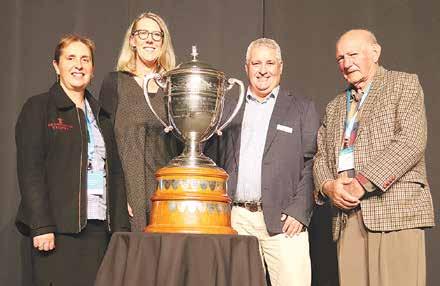
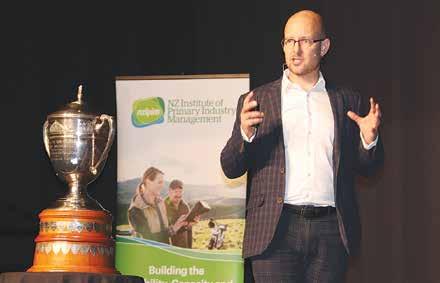
The announcement heralding the start of the competition was made at the annual conference of the New Zealand Institute of Primary Industry Management (NZIPIM) in Hamilton. Speaking to the large gathering of rural professionals, Nukuhia Hadfield, chair of the Ahuwhenua Trophy Management Committee, said it was very appropriate that the 2025 competition was launched at the NZIPIM conference.
She says rural professionals have and continue to play a significant role in the development of Māori farming, adding it’s great to see NZIPIM taking the initiative to boost the capability of qualified Māori agri professionals.
She urges rural professionals to promote the competition and to
experienced team of rural professionals and as part of the process they offer insightful comments that will benefit the owners. We certainly found this to be the case and others who have entered the competition have said the same thing,” she says.
Hadfield says the competition is an opportunity for Māori to showcase the excellence of their sheep and beef farming operations. She says that Māori farming makes a significant contribution to our economy, with Māori contributing more than 15% of the total earnings of the sheep and beef sector.
Jo Finer, NZIPM chief executive, says her organisation was delighted to host the launch of the competition for 2025. She says the goals of the competition align well with the aspirations of the NZIPIM. She says members wish to work and grow with people who will engage effectively with Māori landowners and Māori entities involved the primary sector in Aotearoa.
Initial judging of entrants will take place early in the new year, with the eventual finalists announced at Parliament in late February. The finalists then stage
field days at their respective farms during late March and early April.
The winner of the competition will be announced at an awards dinner on
Friday, 6 June 2025 in Palmerston North. Details on how to enter are on the Ahuwhenua Trophy website: www.ahuwhenuatrophy.maori.nz











A LANDMARK Māori
agribusiness programme has been launched by Waikato University in partnership with the NZ Institute of Primary Industry Managers (NZIPIM).
The reason for initiating this programme comes from NZIPIM, which says it has received feedback from members who deal with Māori. They say consultancies are struggling to recruit people who could effectively advise and engage with Māori landowners, whenua Māori entities and primary sector businesses – which is a significant and growing part of the sector.
NZIPIM says there is a need to grow the total talent pool in this area,
noting the capability and capacity building is a key purpose of their organisation.
Based on the obvious need for more Māori rural professionals, NZIPIM worked with the University of Waikato to further develop the idea for a cohort model that will attract in a group of school leavers and students to study a Bachelor of Business.
The students will major in agribusiness and then can do a second major or a couple of minors in areas like Maori & Indigenous studies, or finance/accounting, earth science and law.
Waikato University says the Māori food and fibre sector is integral to the economic, cultural and environmental prosperity to New Zealand with the wider Māori agri
economy, including seafood contributing more than $2.4 billion to the GDP.
It says that Māori agribusinesses must be supported to make the most of their primary sector assets to meet future needs and aspirations.
Waikato University says for Māori, the capability required from their pri-
mary industry advisors is high and specialist and the current availability of such support is low.
“The Māori Agribusiness Programme aims to solve this problem by growing the capacity and capability of advisors to support whenua Māori”, says the university. As part of the new programme students will
industry exposure though field trips to businesses and summer internship placements to ensure that they get real world experiences.
There will also be up to 15 scholarships for students entering the programme. At present additional sponsors are being sought to help fund the programme.
THE LATE afternoon session on the first day of the NZIPIM conference was taken up with the session on Māori agribusiness. It included keynote addresses by people who work alongside Māori in the agri space.
One of these was Lee Matheson from Perrin Ag who described Māori agri as a vibrant diverse and innovative sector and noted that Māori’s relationship with the land is different.
He says often people accuse Māori of taking a long time to make decisions, but says they fail to realise that Māori need time to get consensus from their people. He also offered a couple of good tips to consultants dealing with Māori.
“Stay out of Māori politics and make sure that people leave the room with their mana intact,” he says.
Local Māori leader Leigh Bason says he’s right behind the initiative by Waikato University and NZIPIM. He says there is a lot of Māori land that needs to be managed and to do this, young Māori need a good education – something he says he didn’t really have.
He says he sent all his children to boarding school, which kept him poor, but he doesn’t regret it.
But he points out that those young Māori taking up the course need to realise that they are doing this for mokopuna – not themselves.
“It’s about the next generation,” he says.

BEEF+LAMB NZ is outlining a more streamlined and focused strategy for the next three years, saying it has probably tried to do too much in the past.
A series of roadshows throughout the country is aimed at presenting the new strategy while seeking farmer feedback on it.
Speaking to a small gathering at Oxford in North Canterbury recently, B+LNZ chair Kate Acland said a lot had changed for farmers in the last three or four years but B+LNZ’s strategy was not necessarily giving farmers what they needed.
“Particularly, we were trying to do too much. We were trying to do everything for everyone.”
The new strategy for 2024 to 2027 was around
three main priorities: championing farm excellence, which was about extension and science; advocacy, both domestic and on trade policy; and energising the sector, which Acland said was about building trust and social license.
Under championing farm excellence, Acland said there would be a much stronger focus on behind the farm gate extension.
B+LNZ would set up Hub Farms, which Acland said were a bit like the old Model Farm but less prescriptive.
“It’s going to be really up to the community and up to the farmers themselves, to decide what sort of project and what sort of support they want to wrap around that hub farm.”
They were also supporting focus groups,
where a group of farms in a region could get together around a common challenge.
A good example was the Southland farmers who got together to tackle a common problem of hogget lambing performance, set their target and supported each other to achieve it.
B+LNZ was increasing investment into research
and innovation, an example being the big facial eczema project – which Acland said was probably not so topical for her Oxford audience but was a big issue around the country that costs New Zealand tens of millions every year.
“Internal parasite is another one where we’ve got a new piece of work kicking off.”
However, B+LNZ would be doing less on greenhouse gas mitigation, because there are other people doing that work.
“A good part of having a look at the strategy is, what is Beef+Lamb best placed to do?
“In terms of that methane mitigation research, there is a lot of work going on in that space by other people, so we don’t need to be doing that.”
The organisation would also look at revising and repackaging some of the research and tools that may have been established in the past but possibly forgotten.
“Particularly the pastoral research, it’s here, it’s been done, but sometimes some of these tools just will get quietly forgotten about.
“So, what it will mean,
particularly in the genetic space, there’ll be more tools, better tools, better databases.”
Advocacy is another area where B+LNZ would be picking its fights.
Acland said B+LNZ would remain a strong voice for sheep and beef farmers, but organisations like Federated Farmers do a really great job on certain issues.
“We’re quite clear that what we get involved in, are the things that affect our sheep and beef bottom line, essentially our farm productivity and our profitability.”
B+LNZ would also be changing how it engages with farmers to gauge their concerns.
“You’ll see more opportunities for workshops, there’ll be more surveys going up.
“There’ll be a lot more opportunities for you to
feed in. But I guess we want to know, what’s the best way to do that.”
On energising the sector, Acland said a key change was around the Taste Pure Nature country-of-origin brand which B+LNZ established five years ago. Although successful, B+LNZ believed it was more appropriate for the Meat Industry Association, as the people in the market, to take it over.
“There was obviously quite a bit of back and forward in that space, but we landed in a real good space where we’re partnering with the Meat Industry Association. They’re putting in fifty percent of funding and their marketing teams are leading the development and the rollout of the programme going forward.”
@rural_news
facebook.com/ruralnews
FINALLY WE have a government that is brave enough to tackle the big banks on how they treat their rural clientele.
For too long the farming sector has had concerns about the levels of competition, profitability and transparency in rural lending. Concerns about banking have consistently topped the list of issues in Federated Farmers’ regular farm confidence survey.
The recently announced inquiry is well placed to shine a bright light on parts of the rural banking system that, until now, have been allowed to operate in the shadows.
Federated Farmers notes that any concerns they had about just how ‘rural’ this inquiry would be have been well and truly put to bed with these terms of reference.
Everything they hoped to see included is in there, including questions about rural banking competition, transparency mechanisms, credit risk models, and open banking. There are also some very specific questions about the return on capital banks are getting from rural lending and the level of interest rates charged to the sector.
There’s also rural accessibility to digital banking services. Rural banking customers are being short-changed with regular bank branch and ATM closures making even basic banking tasks difficult – simple things such as cash withdrawals and deposits, access to personal banking services over loans and mortgages and small businesses having to travel long distances to bank their takings and maintain a cash float.
Figures from the Reserve Bank show that over the past 20 years there has been an up to 45% contraction of bank branch and ATM numbers across New Zealand, leaving 95 towns unbanked or underbanked.
While the trend is to push customers to do more of their banking online or on the phone, for many rural communities, poor digital connectivity remains a big impediment. Farmers have been crying out for a banking inquiry. Over the next four weeks, ensure your submission reaches Parliament. It’s time to find some genuine, practical and rapid solutions on rural banking.
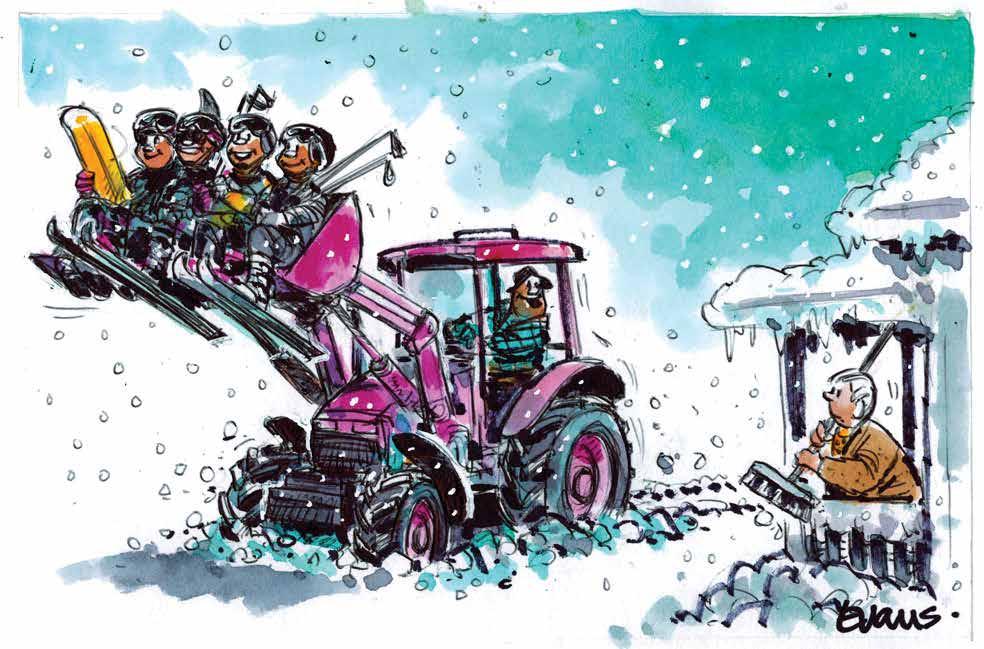
“I sold them day passes to the hill paddocks.”
IN THE latest example of how broken the RMA consents process is, Meridian Energy has paid out DoC, Fish & Game and iwi rather than risk them blocking the renewal of consents that it needs to keep running its Waitaki hydro scheme. It’s an open secret that it’s easier to grease palms than it is to risk getting tied up for years by ‘greenmail’ demands from rent seekers. In this case, Meridian agreed to pay, over 35 years, $73.5m to DoC, $2.8m to Central South Island Fish & Game, and an estimated, ‘confidential’ $104m to Ngai Tahu. This old mutt reckons this is the tip of iceberg – the consent process is buggered and is killing development. The coming overhaul can’t come soon enough.

THE HOUND hears John Murphy, chair of Veg NZ, reckons greenhouse vege producers face severe challenges due to changes in the ETS. Murphy warns, “You’ll see a $10 cucumber in no time”. Greenhouse growers will be affected by changes to industrial allocation, where government gives free emission units to businesses, keeping them competitive against countries who aren’t facing crippling ETS costs. There will be fewer free permits than before; some growers will pay an extra $200k this year, which VNZ warns could force them out of business. Those locked into gas contracts who cannot switch to alternatives will be hit with higher ETS fees for using that gas. As Murphy rightly says, “it’s a triumph of bureaucracy”.
PRODUCTION: David Ferguson Ph 027 272 5372 davef@ruralnews.co.nz
Becky Williams Ph 021 100 4381 beckyw@ruralnews.co.nz
HEAD OFFICE POSTAL ADDRESS:
PO Box 331100, Takapuna, Auckland 0740
Phone 09-307 0399
PUBLISHER: Brian Hight Ph 09 307 0399
GENERAL MANAGER: Adam Fricker Ph 021-842 226
EDITOR: Sudesh Kissun Ph 021-963 177 sudeshk@ruralnews.co.nz
REPORTERS: Peter Burke Ph 021 224 2184 peterb@ruralnews.co.nz
Nigel Malthus Ph 021-164 4258
MACHINERY EDITOR: Mark Daniel Ph 021 906 723 markd@ruralnews.co.nz
funded by NZ On Air
WITH THINGS in NZ as tight as they are, your old mate is astounded the coalition Government hasn’t yet dumped the eternal underperformer Landcorp and put the $2 billion investment to better use. Minister for SOEs, Paul Goldsmith, has at least publicly stated that Landcorp isn’t running its 110 farms as efficiently or profitably as the private sector would, but he’s yet to act, despite National previously questioning Landcorp’s poor returns. ACT’s Mark Cameron and his party leader were unequivocal that the farms should be sold off into private hands so owners with skin in the game can realise the farms’ potential. Now that these guys have the power, will they follow through and put Landcorp out to pasture?
AUCKLAND SALES CONTACT: Stephen Pollard Ph 021 963 166 stephenp@ruralnews.co.nz
WAIKATO & WELLINGTON SALES
CONTACT: Lisa Wise Ph 027 369 9218 lisaw@ruralnews.co.nz
Want to share your opinion or gossip with the Hound? Send your emails to: hound@ruralnews.co.nz
WHEN GROUNDSWELL showed up in the ‘advocacy hub’ at Fieldays alongside the same groups that brought you He Waka Eka Noa, the Hound feared the ginger group had been brought into the woke fold and given the old rubber ring. Fear not though, they seem to have their mojo intact, raising the alarm about the Gore District Plan, now out for consultation, which proposes to classify the entire Gore District under part of Section 6 of the RMA. In this case, iwi could claim the entire district as ‘sites of significance’ – a massive overreach. Groundswell notes this might sound like an issue in just one part of the country, “but this sort of thing is being pushed across the country and the stakes are enormous. Your council could, and quite possibly will, be next”.
SOUTH ISLAND SALES CONTACT: Kaye Sutherland Ph 021 221 1994 kayes@ruralnews.co.nz
DIGITAL STRATEGIST: Jessica Marshall Ph 021 0232 6446


I WAS down in the Wairarapa just recently meeting up with some good friends of many years. A businessman colleague of one of the guys joined us at a local restaurant for lunch. During the normal chatter you get over lunch, the businessman told us of a rather incredulous experience he had on a recent road trip up north.
With the Brynderwyns on highway one still closed, he had to take the bypass route out along the east coast. To his utter amazement, and amusement, he said every
ing, I have never actually experienced or witnessed any traffic incident with these bridges. After all, they are very well sign posted, with clear road markings.
Way back before I
“Today I am very thankful my folks pushed the common sense thing in my growing years.”
single one-way bridge on that bypass had two, sometimes three traffic management staff present. Zillions of cones were no longer enough!
I was interested in his take on it, so I let him tell his story.
What he didn’t know was we too had done that same trip many times over the years, our latest trip being early June, and had noted those same traffic management staff now present to “hold our hands” as we bravely crossed those bridges.
Having lived rural for much of my life, I had never considered one-way bridges to be a hazard, nor had I ever felt traumatised crossing them!
In all my years of driv-
was married, I did experience an incident, but it certainly wasn’t traffic related! I was on my motorbike quite late one evening, only to pick up a rather large black bull in my lights at the other end of the bridge. He was much more interested in settling down for the night than he was in letting me through. And he had that “Don’t mess with me tonight” look in his eye!
Growing up I was taught I had a good brain, so I needed to use it! Now, there’s a random thought worth considering. I was also instructed to use what previous generations used to call common sense. Yep, I heard those words “use


your common sense” more times than I will ever remember.
In conversations like this over the years, I have been told that common sense is no longer common. It may even be close to extinction, a few suggested.
I was in a large store recently and looked at
some irons. Reading the booklet from the box, I noted these words printed in bold text: ‘WARNING! Do not iron clothes on the body’. Hmm, I thought to myself, it looks like those folks might be right after all. Maybe common sense is extinct. Perhaps it is time to wrap us all up
snug in cotton wool!
A quick lesson from nature: baby eagles would never learn to fly if their over-protective mums kept them wrapped in cotton wool. For sure, there is a time for that. But there is also a time for them to fulfil their destiny, and fly. And being the great mums
they are, they make sure that this happens. Today I am very thankful my folks pushed the common sense thing in my growing years. It has been a blessing many times over. And perhaps even more so for these days we find ourselves living in, with all the scams and similar deceit
out there.
And yes, I am also grateful I learned at a young age that I am never alone. There really is Someone out there watching out for me. Take care and God bless.
To contact
Colin: farmerschaplain@ ruralnews.co.nz



GROWERS CAN now
access information from the Foundation for Arable Research (FAR) within seconds, thanks to generative AI technology.
From this month, a new tool, ‘Ask FAR AI’, will help farmers access thousands of research reports and extension documents relevant to growing and harvesting many different crops within the touch of a button.
The tool is a New Zealand first and is being held up by Amazon Web Services (AWS) and New Zealand designers Custom-D, as a cutting-edge application of generative AI technology.
According to FAR, if you ask the AI tool, ‘When should I put N on ryegrass seed crops?’, it provides a summarised answer where key points are directly referenced to one of 18 documents on the website.
“Using the standard
search function, you would just get the list of 18 documents and then have to go through them to find specific information,” it says. Ask FAR AI solves that problem by doing all the searching, summarising the information available and providing referenced links to the full documents, on the FAR website. Ask FAR AI will only consider information from the FAR website so growers can be certain that answers are based on independent New Zealand research.
Dr Haren Samarasekera, head of enterprise, industry & greenfield at AWS New Zealand, says generative AI is transforming how we live, work and connect, with exciting opportunities for innovation and growth.
Tens of thousands organisations are testing, learning, and building on generative AI tools, and it’s exciting to see FAR

starting on their own journey of innovation and productivity with Amazon Bedrock, a generative AI-managed service, he told Rural News.
“Like many organisations, FAR has a vast amount of information
that can help their users – from research reports on how to establish crops, to how soil quality can impact crop growth.”
Working with their technology partner, Custom D, they created Caitlyn, which harnesses
Amazon Bedrock and advanced Large Language Models (LLMs) to help FAR uncover insights from 30 years’ worth of research, using natural conversational search and targeted responses – while keeping sensitive data secure and private.
This means growers can access insights from FAR’s database within seconds, without having to go through thousands of research reports and extension documents. A grower can simply ask Caitlyn a question, and receive a simple, accurate and reliable response with citations to FAR
documents, that will help them in their work.
“We see great opportunity in providing generative AI tools like Amazon Bedrock to help organisations like FAR quickly summarise and produce information quickly and efficiently, enabling their users to unlock information and insights quickly, accurately, and securely from decades of data,” says Dr Samarasekera.
“It’s also been great working with technology providers like Custom D who bring AI skills and experience to the market.”


Samarasekera says with the website now live, they look forward to seeing FAR’s new tool becoming a “go-to arable resource” for growers in New Zealand and seeing FAR “continue its AI transformation journey”.
“Innovation is at the heart of what we do at AWS, and we are committed to supporting every organisation by giving them access to cuttingedge technology tools that are easy, cost-effective, and secure to use – so they can continue providing services that have a positive citizen impact.”

CUSTOM-D DIRECTOR Josh Smith says last year they invited FAR for a session on generative AI, demonstrating how the technology could be leveraged to help growers access
“FAR immediately recognised the potential, and we set out to develop a fine-tuned version of Caitlyn integrated into the FAR website,” he told Rural News. “Now live on the website and branded as ‘Ask FAR AI’, NZ farmers have access to FAR’s wealth of research at their fingertips. With the ability to interact using natural language and provide context to the conversation, growers can ask specific questions such as ‘I’m located in Canterbury, what can I do to increase my grass seed yield?’, and receive fast, tailored, and region-specific answers in seconds, not hours or days.
“As Caitlyn includes citations that link to source information, answers can be verified, which builds trust in the tool. When clicked, growers are taken to highlighted sections of the underlying research documents, allowing them to dive deeper if necessary. Growers can grade responses and provide feedback, which is used to fine-tune and improve the quality of answers over
Smith says another feature is the Insights Dashboard, powered by AWS QuickSight. “This powerful tool provides FAR with valuable data, including anonymised transcripts of Ask FAR AI conversations, analysis of user satisfaction with the service, and sentiment analysis of user interactions. This comprehensive overview allows FAR to continually refine and enhance its AI-driven customer service, ensuring it meets and exceeds user expectations.
“Feedback from beta testers has been extremely positive and we believe FAR will be regarded as a true pioneer in this space and the ‘go-to’ place to find information on growing arable crops.
“As Caitlyn is refined, we’re excited about the potential she can bring to other research organisations to benefit New Zealanders and create real-world impact in vital industries such as agriculture.”
WITH REPORTS that fertiliser sales are down significantly, no doubt driven by higher cost and lower returns, it follows that accurate spreading of any product being used is a must.
That accuracy needs to ensure the product is spread evenly and at the right rate across the whole spreader width. While we are in the depths of winter, hopefully spring isn’t too far away, so it might be a good time to start thinking about application.
To achieve optimum benefit, suppliers recommend that a broadspectrum soil analysis is used in conjunction with a nutrient management plan to help decide which fertiliser is the most appropriate for a crop’s needs.
Check that all the fertiliser to be applied comes from the same batch, particularly if delivered on several dates or if you have a carryover of old stock. Sometimes product can come from different factories, meaning two batches of the same product might have different spread settings and may need to be tested separately.
The fertiliser needs to have consistent char-
acteristics to achieve an even spread, so because product can degrade with age, old versus new stock may need different settings.
Blends can also segregate during spreading, so how it is stored can have a bearing on quality, with manufacturers typically advising that bagged materials should not be stacked more than three bags high to avoid compaction.
The timing of applications should centre around the needs of
the crop, with trial data showing that crops benefit from a spring application of N, P, K and S as this is when their demand for these major nutrients is at its highest.
An eye on the weather is a must, especially if spreading lighter materials, with the best rule of thumb being, “if it’s too windy to spray, don’t spread either!”
On humid days, fertiliser can absorb moisture that will affect flow rates, particularly in the case of sulphur products,
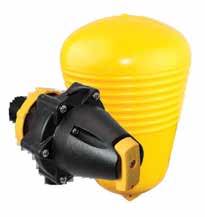
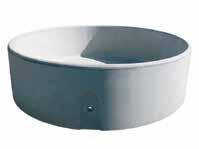
•Ideal for Cattle Troughs
•High Flow
•Side/Bottom Mount
•Detach to Clean
•Compact/Robust
with building up on the spreader vanes quicker than in dry conditions.
Before and during spreading operations, regularly check the spreader for wear and tear as it will impact spread patterns. Be sure to replace parts where appropriate and follow the manufacturer’s maintenance advice.
On a practical level, ask your tractor dealer to check the PTO speed read-out on the tractor screen, relative to the actual speed at the PTO
shaft. In many cases, often because of calibration issues at the factory, the readout is not the same.
Pay attention to the spreader vanes and clean each time, before refilling your hopper. Over time, sulphur containing fertilisers are known to leave deposits on the spreader vanes which can create a build-up or cause blockages, leading to uneven spreading. Using a WD40-type product and rag is ideal to clean the area vanes.


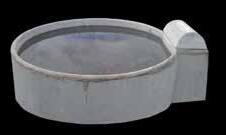
•Ideal for Small/Low Demand Troughs
•Low Flow
ve/Below Water Mount
•Built in Check-Valve

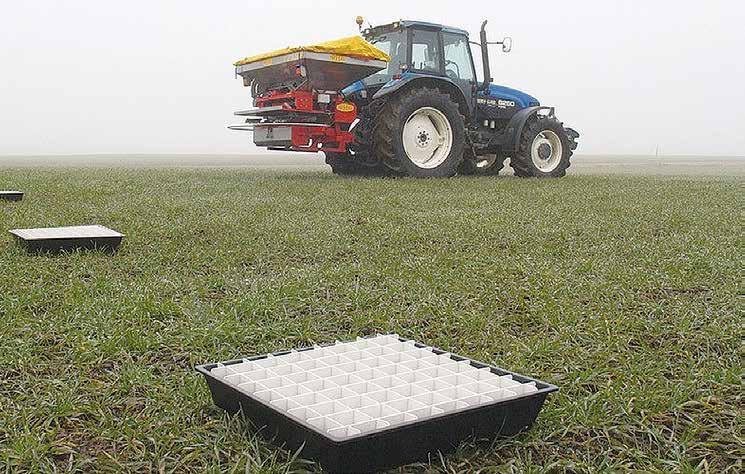
The correct setting of a spreader is determined by the physical properties of the fertiliser, with regards to particle size distribution, bulk density and flow rate which all influence the setting and the eventual accuracy of application. Manufacturer’s tables are a guide only, based on tests under ideal conditions in test stations, and give information on how to set the spreader for optimum, even spreading at the desired application rate (kg/ha) and at a spe-

cific working width.
To achieve optimum spreading, you should perform a tray test using your particular combination of spreader and fertiliser, with a separate test conducted for different fertiliser.
As a starting point, machine height needs to be set to ensure the disc or spout on a mounted spreader is at the correct height above crop, as recommended by the manufacturer’s guide. Other points to look out for include forward speed, which plays an important role in achieving a constant application rate, so always travel at the recommended forward speed to avoid uneven spread and alterations in rate.
The manufacturer’s handbook will give this information for the type of fertiliser to be used and its recommended spreading widths. At headlands, leave enough space for two bouts around the field, using the headland disc or border device supplied with the machine. Alternatively, many machines are now using the latest technology to switch application on or off as the headland mark is passed, avoiding double dosing or indeed misses.
@rural_news
facebook.com/ruralnews

•Ideal for Compartment Troughs/Tanks
•High Flow
•Top Mount
•Detach to Clean
•Compact/Robust

AT LEAST one in three Kiwi sheep farms has triple drench resistance, according to the latest drench efficacy testing undertaken by Techion.
The company which helps farmers manage parasites in animals, says the sheep industry’s reliance on drenches to deal with parasites is the reason a growing group of farmers are facing the failure of their drenches.
It wants farmers to integrate alternative parasite management approaches and move beyond relying solely on drenches to deal with the parasite problem.
Based on Techion’s 2024 FECRT results,
the number of farmers impacted by drench resistance is trending up exponentially.
A further analysis of data estimates the production cost to the sheep industry at $110 million annually – equating to around $70,000/property for farmers unknowingly using ineffective drench.
Every year Techion does more than 50,000 FEC (faecal egg count) tests at its Mosgiel laboratory and its network of FECPAK users, including FECRT (faecal egg count reduction test) tests through its DrenchSmart service.
Results for the first

60
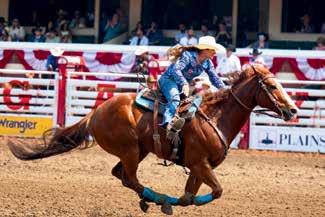
Calgary Stampede & The Rocky Mountains
Jul 5th, 2025, 16 Days
Embark on a 16-day adventure through the heart of Canada's stunning landscapes and vibrant culture.
Experience the thrill of the Calgary Stampede - world-class rodeo action and the Chuckwagon event.
Indulge in luxury aboard the Rocky Mountaineer Train from Banff to Vancouver, passing through the majestic Continental Divide. Discover the natural
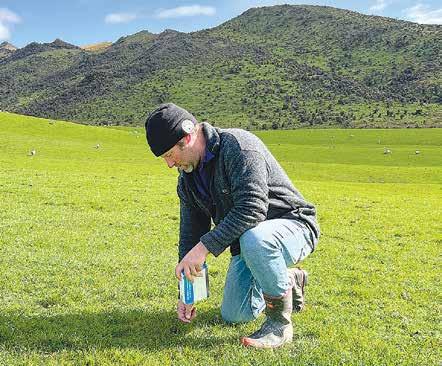
seven months of 2024 showed that triple drenches (BZ/Lev/Aba) were failing on 34% of New Zealand sheep farms. Other common drench options fared no better: BZ/Lev combinations failed on 47% of properties, while Lev/Aba combinations failed on 39% of properties tested.
Techion founder and managing director Greg Mirams says that another significantly wor-
rying trend in this year’s results is that some drenches are show ing signs of diminished efficacy on a growing number of properties.
Techion claims that, until now, the newer novel active drenches, such as those containing Monepantel and Derqu antel, have been consid ered the gold standard for quarantine drenching or as effective options in cases where farmers have
are expensive and, at times, challenging to source. Without access to effective drenches, farmers have limited options to preserve animal health and flock performance if drenching is the primary tool in their farm’s parasite management toolbox, it says.
“As access to effective drenches reduces, integrated parasite management strategies are essential to safeguard the future of animal
triple resistance, it is essential farmers’ quarantine procedures are effective. By undertaking FEC testing following a quarantine drench, farmers can gain comfort that imported animals are not passing resistant parasites onto their property.
“Beyond the quarantine procedure, farmers need to take control of their parasites by educating themselves on alternative parasite management options related to their operation. The key is the ability to monitor FEC levels and the implementation of integrated parasite management strategies.
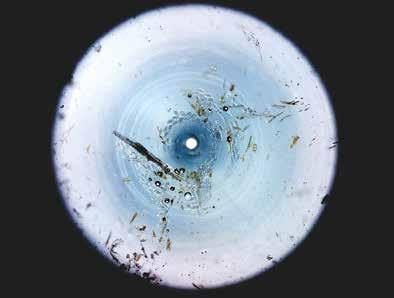
widespread drench resistance.
Compounding this issue, these novel actives
mance,” Mirams says.
“With a one in three chance of new stock coming from a farm with
“At a time when the farming sector is facing low returns, being able to manage farm costs is vital. Paying for and using drenches without checking they are working could be wasting time and money. The most critical step is to know what you are dealing with, which begins by investing in a FECRT test to ensure that the drenches being purchased are effective,” he says.
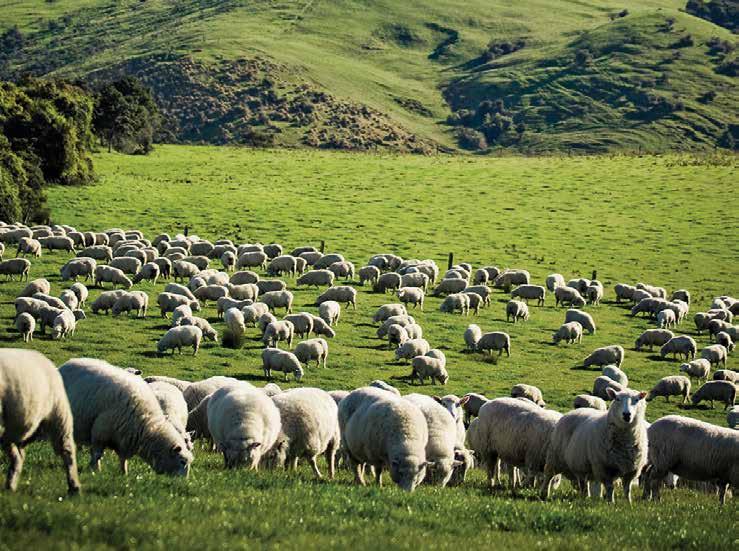


POWER and Claas Har-
vest Centre unveiled the Claas Xerion 12 series high-horsepower tractor, ending the wait for the much-vaunted model in Australia and New Zealand.
Chief executive Richard Wilson says they are delighted to finally bring the new Xerion to the ANZ market.
“We know we are bringing in a superior product that is particularly suited to the farming conditions of our Australian customers, as we have already been running five evaluation units during this seeding season, that have completed over 2000 hours of work.”
With significant interest in the American and European markets, the Xerion has taken some time to get to this side
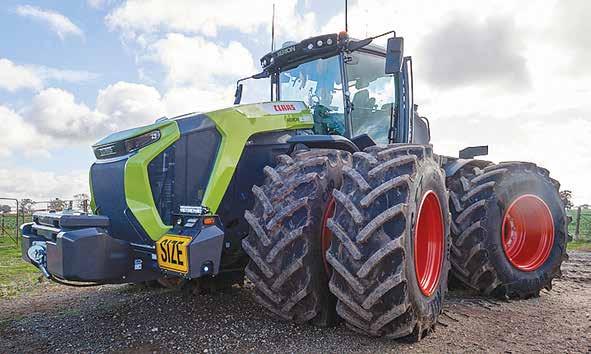
of the world, but the impressive prime mover should generate a great dealer of interest in the Australian market, while New Zealand-based fans of the German heavy metal will also want a closer look.
Making good on its 2023 promise, at the German Agritech-
nica event, to take the high-horsepower tractor market head-on with the release of its all-new 12 series, the Harsewinkelbased company currently offers the most powerful all-wheel drive tractor with continuously variable transmission technology on the market.
Following six
years of research and development, 10,000 hours of field testing across five countries, and multiple awards, since its launch, two units have been pre-sold into Western Australia and Eastern Australia.
Engineered specifically for broadacre markets, the flagship model
delivers 653 engine horsepower, is fitted with 914 mm tracks and offers industry-leading hydraulics and a new luxe cabin with four-point suspension.
The 12.650, 12.590 and 12.540 models in the Xerion 12 range addresses four key features, including increased profitability
via low fuel consumption, low maintenance and wear, greater pulling efficiency thanks to high torque, large contact areas and optimal 50:50 weight distribution under all operating conditions.
Also, greater operator comfort comes via the large, four-point suspended cab with excellent all-round visibility and the rubber-damped Terra Trac track units.
Increased operator assistance is delivered by CEBIS, CMOTION, CEMOS and GPS PILOT CEMIS 1200 digital automation.
The Xerion 12 series is powered by the same 15.6-litre, six-cylinder Mercedes-Benz OM473 engine already found in Claas combine and forage harvesters.
The flagship’s 653hp and 3100Nm of torque is achieved at just 1300rpm, mated to a CVT transmission.
Said to offer an ideal
50:50 weight distribution, the tractor is particularly suited to heavy-duty pulling work in all speed ranges, making it a great match for cultivators, disc harrows, ploughs, air-seeders and trailers.
The Xerion 12 series Terra Trac model is equipped with newly developed triangular Terra Trac crawler units of 914mm or 762mm widths, while the wheeled variants can be fitted with 800/70 R42 dual or 900/60 R42 single tyres. Despite its immense power and size, it is extremely nimble thanks to its precise twin-axle steering.
State-of-the-art onboard and offboard features for digital agriculture allow automated steering, section control, variable rate, and automatic documentation, as well as the optimisation of machine and process performance with CEMOS.
ITALIAN TRACTOR manufacturer Argo Tractors, builders of the McCormick, Landini and Valpadana marques, has opened a new factory to develop and manufacture transmissions for those brands.
Located in Campagnola, North of Bologna in the province of Reggio Emilia, not too far from the famous Ferrari headquarters, the new site covers an area of 30,000m² (3ha) and employs over 150 people, who work
on four assembly lines supported by pre-assembly areas.
One line is dedicated to the production of transmissions for specialist, light and medium utility tractors, while a second equips tractors destined for low regulated emission markets.
The third and fourth assembly lines are for transmissions for medium to high power tractors. On the same site, there are also exten-
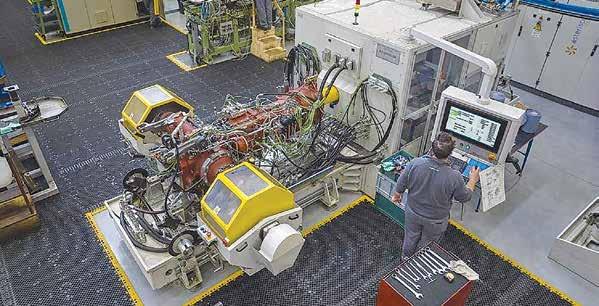
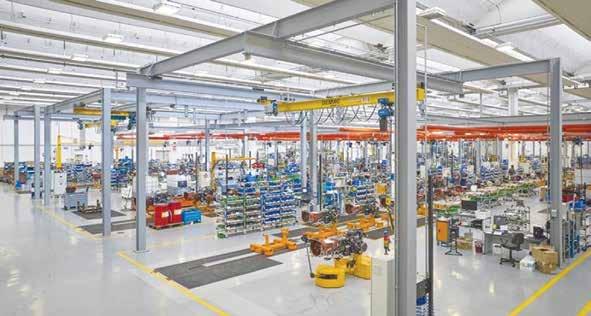
sive testing facilities for mechanical and hydraulic componentry as well as complete transmissions.
Like the tractor production sites at Fabbrico, San Martino in Rio and Luzzara it feeds, the Campagnola plant uses the Kaizen industrial production philosophy of continuous improvement, through the application of concepts that have led over the years to the development of lines supplied by
specific and targeted components for each type of product.
Special attention is paid to the supply of components to the assembly lines, which is managed through a “supermarket” style warehouse that is constantly fed by the central warehouse and from which the specific components of the individual transmissions are routed to the assembly lines. – Mark Daniel
WHILE THE new Coalition Government sorts out the previous administrations’ emissions policy, emerging UK technology companies are indicating where things might be heading.
Lincoln-based (that’s the one in the UK) Crop Intellect, claims its technology lets crops turn pollution into fertiliser, using a new technology that captures air pollution and uses sunlight to convert it into nitrate on the leaf surface of a crop.
Called R-Leaf, a process known as photocatalysis breaks down nitrous oxide, turning it into an essential crop nutrient, potentially reducing farm emissions and ultimately the industry’s reliance on synthetic nitrogen.
Against a background of rollercoaster fertiliser markets and environmental concerns, with the promise of more volatility still to come in the case of the former, the technology is being promoted as a development that will allow farmers to make better use of nitrogen fertiliser, while reducing the greenhouse gas emissions associated with its use
Classed as a fertiliser, R-Leaf is based on titanium dioxide and comes in a liquid formulation that also contains man-
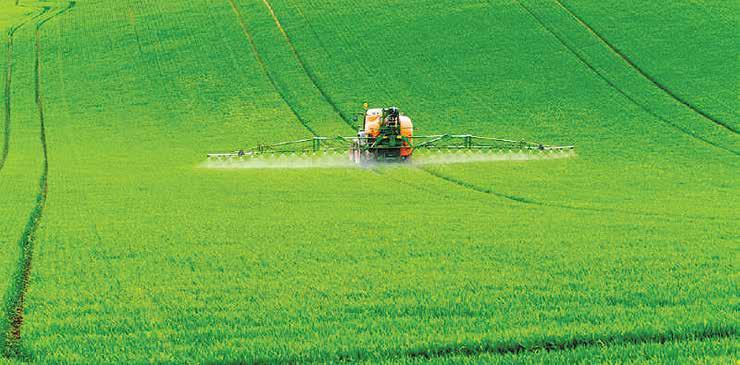
ganese, molybdenum and zinc. It can be applied through a standard farm sprayer to crop foliage, either on its own or as part of a tank mix. Once applied, it uses sunlight to convert atmospheric nitrous oxide into nitrate, which the company says helps to provide the plant with a constant supply of the nutrient.
The patented photocatalyst technology contained in R-Leaf has been designed to work under normal daylight conditions, rather than needing high intensity light usually associated with such chemical reactions, this allows it to react with nitrous oxide in field conditions, breaking the pollutant down into nitrate, carbon dioxide and water – all of which are
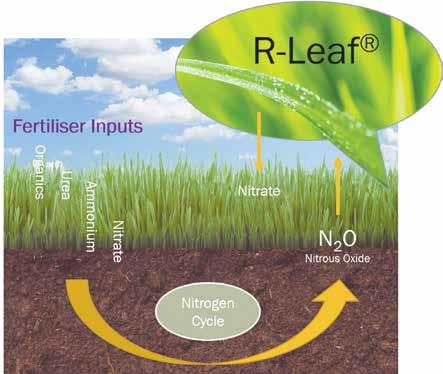
required by the plant.
Jeremy Hitcham, commercial manager at
Crop Intellect, says that for growers wishing to reduce the carbon foot-
print of their business or with carbon trading in mind, R-Leaf’s poten-
tial to contribute towards reducing climate change has been validated at 5.4t/ha of carbon dioxide equivalent when used at a rate of 2 litres/ha –verified by the Climate Impact Forecast tool.
Hitcham suggests two ways in which R-Leaf can be used on-farm: The first is to reduce bagged nitrogen usage by 25% and let R-Leaf providing the rest, so that yields are maintained; the second, maintain normal farm practice and apply the same amount of nitrogen, with R-Leaf being used to provide additional yields.
Currently being applied to many thousands of hectares, R-Leaf currently costs £25/litre, with split applications of 2 litres/ha recommended for cereals crops, with
applications at growth stage T1 and T2, meaning a total cost of £50/ ha. The second application is needed because R-Leaf doesn’t move once it has been applied, so a growing plant producing new leaves benefits from the follow-up as older, treated leaves become shaded.
Suffolk sugar beet grower Frank Stennett trialled R-Leaf on some of his crop last year and recorded a 6% increase in yield. Helped by the use of irrigation in a hot, dry growing season, untreated sugar beet gave an impressive yield of 106.15 t/ha, while the portion of the crop that had received 2 litres/ha of R-Leaf had an average yield of 112.28 t/ha. The cost of using the innovative product at 2 litres/ha was about £40/ha, recalls Stennett, which was easily covered by the additional 6t of beet at a 2022 price of £27/t.
Stennett, opted to remain with to his standard application of 120 kg/ha of bagged nitrogen, then applying 2 litres/ ha of R-Leaf, rather than using it to reduce nitrogen use.
He also applied R-Leaf to winter wheat, but despite the farm’s light soils and the season’s high temperatures, recorded his best-ever wheat yields in 2022 at levels more than 10 t/ha.






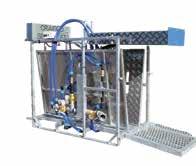
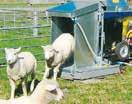






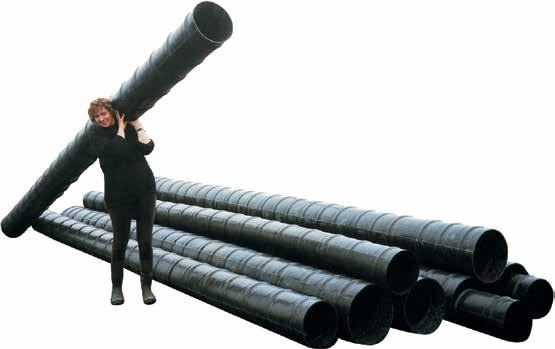




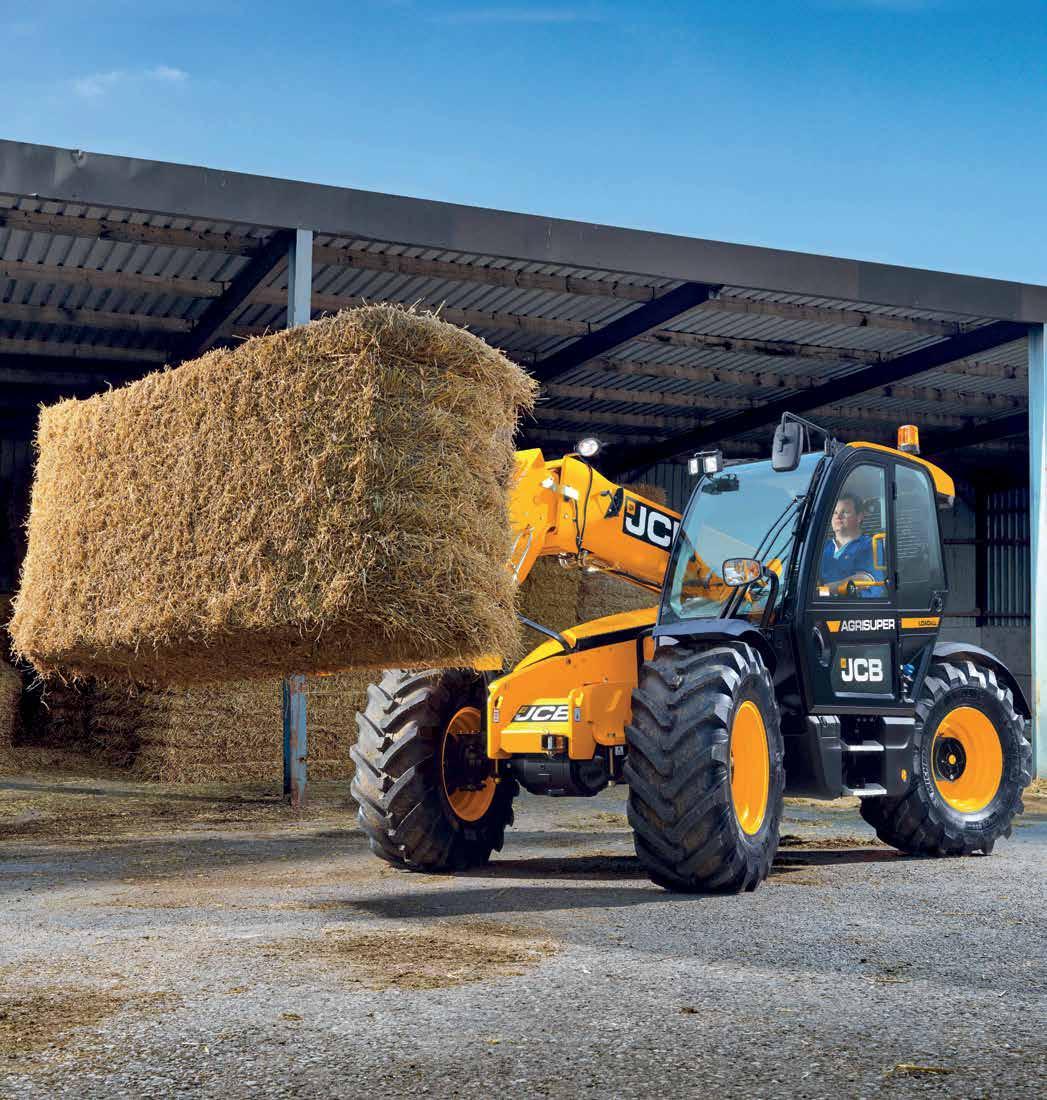
The JCB Series lll has taken telehandling to a new level. Redesigned and re-engineered from the ground up, the JCB Series lll has raised the bar — literally.
You’ll wonder how you farmed without it! jcbagriculture.co.nz