
Bobby calf avalanche!
increased volumes of bobby calves, due to labour constraints and the highly condensed bobby calf season.
kets will absorb an increase in supply,” she says.
a big part of this is ensuring that all dairy calves have a useful life.
LABOUR-STRAPPED MEAT processors are bracing for a big jump in calves arriving from dairy farms as Fonterra’s new rules around bobby calves kicks in.
From mid-June this year, Fonterra wants all non-replacement calves to enter a value stream – such as dairy beef finishing, veal production or the pet food industry.
Rabobank agricultural analyst Genevieve Steven says the meat industry is concerned about its ability to process

Slow going!
Arable farmers around the country have made a start to this year’s harvest, but many are still waiting to really get going. Inclement and variable weather in most regions of NZ are making it difficult to get crops in. South Canterbury mixed cropping farmer Miles Anderson is pictured heading winter barley earlier this month. However, regular showers and dull days meant he was still struggling to finish getting barley in before being able to start on his wheat and rye corn crops, which are due to be ready for harvest in early February.

“The sector will also have to find ways to manage the increased need for bobby calf processing,” says Steven.
Meat Industry Association chief executive Sirma Karapeeva told Rural News it has been engaging with Fonterra to get an estimate of the potential increase in supply.
“We are also talking with processors about the potential increase in calf numbers and the potential need for increased processing capacity.
“The industry is confident the mar-
“However, we can expect that there is potential for delays in getting calves processed during the peak processing period and processors are encouraging farmers to have a plan in place to ensure they are prepared,” Karapeeva says.
Fonterra’s new rules around bobby calves stem from criticisms around handling of bobby calves on farms. The co-op, last year, told its farmer suppliers that as part of its strategic choice to ‘lead in sustainability’, it places a strong emphasis on calf wellbeing and

In a new report, Rabobank says further investment into collaboration between the dairy and beef industries could help the beef sector reduce bobby calf processing requirements. The report also moots the idea of developing a rose veal industry for New Zealand.

“Rose veal – the term given to beef cattle slaughtered at age eight to 12 months – is a niche industry in New Zealand, with veal not commonly consumed domestically,” Steven says.

“There is an opportunity to develop
a ‘raised in nature’ rose veal product which differs to European veal by being grass fed, natural and having low emissions.
She says opportunities may exist in Europe for a ‘raised in nature’ product, while other markets of interest include the US and Asia. Steven says the first step in developing a rose veal industry would be to find customers who are prepared to pay a premium for New Zealand veal over European competitors.
“Clear market signals are required to give processors confidence to invest in developing a programme,” she says.
JANUARY 31, 2023: ISSUE 768 www.ruralnews.co.nz
ANIMAL HEALTH Warning over sheep bolus shortage. PAGE 19 MACHINERY & PRODUCTS Fendt takes out tractor of the year. PAGE 20 NEWS The future of ag consultancy under review
SUDESH KISSUN sudeshk@ruralnews.co.nz
SCAN THE QR CODE TO EXPLORE OUR NEW WEBSITE
The
Action Sports Direct, Wanaka (07) 928 8045


Ag & Auto Direct, Balclutha (03) 418 0555
Colin Clyne Motorcycles, Oamaru (03) 437
(06) 329 3900
DP Williams, Gisborne (06) 863 2612
Dr Moto, Tauranga (07) 578 9902
Gatmans Mowers, Silverdale (09) 426 5612


Hamilton Motorcycle Centre, Hamilton (07) 849 1919
JC Motorcycles, Waitara (06) 754 6420

Johnston’s, Inglewood (06) 927 3566

www.cfmoto.co.nz
UFORCE 1000 EPS XL goes to the next level. Focused on solely giving you more. With more value, more efficiency, more strength, more utility and even more good times. Upsize your next adventure with the UFORCE 1000 EPS XL. 800cc V-twin, 62hp Power steer 500kg tow capacity 200kg rear tray capacity 3500lb winch Available in Titanium Grey Limited Edition Camo 800cc V-twin, 62hp Power steer Front bar & bonnet rack Headlight guards 3500lb winch Available in Camo 800cc V-twin, 62hp Farm Spec Edition Full windscreen Wiper kit Heavy-duty rear PVC windscreen Steel-mounted rear mudflap kit 500kg tow capacity 3500lb winch 200kg rear tray capacity Available in Titanium Grey 963cc V-twin, 71hp Two drive modes Power steer LSD – Rear limited slip differential 800kg tow capacity 350kg rear tray capacity Available in Twilight Blue UFORCE RANGE CFORCE RANGE $19,490 EX GST $13,990 EX GST $14,990 SAVE $1000 $14,490 EX GST $15,490 NOW SAVE $1000 $15,490 EX GST NOW
ISLAND
Andys Moto Services, Waiuku (027) 944 5442 Brown Brothers Bikes, Whanganui (027) 572 7696 Country Engineering, Tauranga (07) 552 0071 Country Machinery, Sanson
NORTH
SOUTH ISLAND
0559 Dan’s Motor Centre, Geraldine (03) 693 8536 Diesel Tech Machinery, Frenside (03) 313 6465 Diesel Tech Machinery, Methven (03) 302 8946 Franks Motorcycles. Mataura (03) 203 7309 Ian Day Farm and Lifestyle, Alexandra (03) 448 9007 Marlborough Motorcycles, Blenheim (03) 579 2500 Nelson Motorcycles, Nelson (03) 548 3786 Remarkable Motorcycles, Queenstown (03) 441 4653 Maungaturoto Motorcycles, Maungaturoto (09) 431 8555 Motorcycle HQ, Pahiatua (06) 376 7163 Northland Powersports, Whangarei (09) 437 5451 NZ Motorcycle Importers, Upper Hutt 02108 289 789 Outdoor Power, Hastings (06) 878 2369 Peninsula Motorcycles, Thames (07) 868 6104 RevTech Powersports, Stratford (06) 765 7712 Rob Titter Farm Services, Kaikohe (09) 401 1774 Rouse Motorcycles, Hikurangi (09) 4338 471 Tahuna Motorcycles & Atvs, Tahuna 02102 489 407 *Save $1000 applies to UFORCE 800 EPS and UFORCE 800 EPS CAMO LE. Offer expires 28th February 2023 and/orwhile stock lasts. Ride away prices quoted exclude GST. See www.cfmoto.co.nz for more information. 400cc engine, 30hp Selectable 4WD Steel wheels Steel carrier racks Available in Sky Blue 400cc engine, 30hp Selectable 4WD Power steer Alloy wheels 2500lb winch Available in Lava Orange 495cc engine, 34hp Power steer LED headlights Alloy wheels 2500lb winch 5-inch display Available in Force Red 580cc engine, 40hp Power steer Front and rear diff lock All 4 wheel disc brakes Alloy wheels 2500lb winch Available in Titanium Grey NEW NEW NEW $7,990 EX GST $8,990 $9,990 EX GST EX GST $11,990 EX GST SUPERSIZED SIX SEATER $24,490 EX GST NEW
ISSUE 768
Meat sector sets election agenda
Statement delayed until the policy settings are right.
WITHIN HOURS of Chris Hipkins
being sworn in as the new Prime Minister, the red meat sector issued a series of demands it wants the country’s politicians to address in forthcoming election campaign.
A copy of the sector’s election manifesto has been sent to every politician and relevant officials. It is produced jointly by Beef +Lamb NZ and Meat Industry Association (MIA) and sets out a comprehensive package of proposed policy changes, aimed at growing export revenues and increasing jobs. It spans five key areas – climate and environment policy, workforce and industrial relations, trade, biosecurity, and innovation, research and development.
In terms of climate change, the sector’s demands include backing the He Waka Eke Noa emissions pricing policy, rewarding farmers for their on-

farm sequestration and continuing to support the industry through investment in climate change mitigation. The manifesto also calls for policy changes to curb the sale of sheep and beef farms into forestry to offset carbon emissions and wants the introduction of the Biodiversity National Policy
Other key points include deferring the introduction of the winter grazing rules until the Government has operationalised freshwater farm plans and amending the slope rule for winter grazing from 10 degrees to 15 degrees.
The industry wants immigration settings to help address genuine industry labour shortages where they can’t be filled domestically. It also calls for efficient processing of work visas without undue delay to ensure workers can be in NZ at the right time in the season
On trade, the red meat sector wants government to focus on resolving nontariff barriers and revisiting NZ trade policy strategy ensuring it remains fit for purpose and considers creative pathways for deeper trade relationships.
B+LNZ chairman Andrew Morrison says the summary manifesto should be compulsory early reading for Hipkins: to inform what policies should be
shelved or changed. He says farmers are absolutely willing to play their part in improving the environment, but the Government has tried to do too much too quickly.
“Because of the scale and pace of change, we’ve ended up with a lot of poorly crafted and conflicting rules,” he says. “These have significant negative financial implications for sheep and beef farmers, rural communities and the wider economy, when there are better ways of achieving good environmental outcomes.”
MIA chair Nathan Guy says workforce and immigration are significant priorities for the red meat sector, with an estimated $600 million of value left on the floor as a result of current labour shortages in the industry.
“Our industry wants to play our part to make NZ a better country for every Kiwi, but there is clearly frustration in the sector about the scale, pace and ad hoc nature of regulatory reform in recent years,” he says.
Beef’s golden run set to continue
THE BEEF sector’s golden run looks set to continue, according to Rabobank’s latest report.
The report – Capitalising on tailwinds through to 2025 – says tight global beef supplies and steady demand for New Zealand beef are expected to support healthy farm gate prices through to 2025.
However, there are a number of key challenges that the industry must address – including the need to decrease greenhouse gas emissions and to reduce bobby calf processing requirements.
Rabobank agricultural analyst Gen-
evieve Steven believes new ideas and strategic investment will be required by the industry to find solutions to these challenges and to extract more value from the beef supply chain.

The report notes that the NZ beef industry has grown exports by 94,000 tonnes or 21% over the last five years and enjoyed “a golden run of pricing during this period”.
Growing demand from China has been the key factor that has fuelled an increase in New Zealand beef exports, Steven says.
“In 2017, China accounted for just 20% of New Zealand beef exports, but
since then, we’ve seen export volumes increase markedly and China is now New Zealand’s largest export market for beef accounting for close to 40% of total exports in 2021,” she says.
The outlook for New Zealand beef exports over coming seasons remains strong, despite the prospect of increased competition from Australia and Brazil.
“Although beef production in Australia and Brazil is forecast to increase, we expect global beef production will remain tight through to 2025 due to the re-build of the US
beef cow herd,” Steven notes.
“We also expect consumption of ground beef in the US will grow as consumers trade down to lower-value beef cuts, in response to economic tightening.
“And this will play into New Zealand’s favour as we’re a key supplier of lean trimmings into the US for ground beef production.”
Steven anticipates that tight global beef supplies and increasing global consumption of ground beef will keep demand for New Zealand beef strong and ensure farmgate beef pricing.
– Sudesh KissunRURAL NEWS // JANUARY 31, 2023 NEWS 3
HEAD OFFICE Lower Ground Floor, 29 Northcroft Street, Takapuna, Auckland 0622 Phone: 09-307 0399 Fax: 09-307 0122 POSTAL ADDRESS PO Box 331100, Takapuna, Auckland 0740 Published by: Rural News Group Printed by: Inkwise NZ Ltd CONTACTS Editorial: editor@ruralnews.co.nz Advertising material: davef@ruralnews.co.nz Rural News online: www.ruralnews.co.nz Subscriptions: subsrndn@ruralnews.co.nz NEWS 1-12 HOUND, EDNA 14 CONTACTS 14 OPINION 14-15 AGRIBUSINESS 16-17 MANAGEMENT 18 ANIMAL HEALTH 19 MACHINERY AND PRODUCTS 20-22 RURAL TRADER 22-23
www.ruralnews.co.nz
PETER BURKE peterb@ruralnews.co.nz
B+LNZ chairman Andrew Morrison says the manifesto should be compulsory early reading for new PM Chris Hipkins.
Fed Farmers calls for urgent rethink on forestry policy settings
lifted their game.
FEDERATED FARM-

ERS is calling for a government inquiry into the factors that contributed to recent flooding and smashed infrastructure in the Gisborne region during Cyclone Hale.
In the wake of Cyclone Bola in 1988, tens of thousands of hectares of trees were planted on highly erodible land in the province with the idea of stabilising slopes. But now those trees are being harvested for forestry, reexposing those slopes to erosion.

Feds national board
member and former Gisborne-Wairoa president Toby Williams says that under current government settings, mass planting of exotics is being encouraged, especially in the Tairawhiti region.
“If this is all going to be harvested, there needs to be an urgent rethink on how and where we
harvest to ensure when the next cycle of logging looms; we do not want a repeat these issues. Local ratepayers can’t afford the huge bill to repair roads and bridges year after year.”
Federated Farmers says in a letter to the Emergency Management, Forestry and Associate Environment Ministers
that residual woody material/slash left in situ after exotic forestry harvesting was a significant contributing factor to increased damage and needs to be part of the brief provided to the inquiry team.
In 2020, the Ministry for Primary Industries concluded a review of national standards for forestry identifying possible changes to the standards in conjunction with public consultations.
Although public consultations had officially
ended, in a statement to Rural News Forestry Minister Stuart Nash said that he was “open to an independent inquiry into land management practices in the Tairawhiti district.”
Larger, more frequent storms are exposing current harvesting practices and the detrimental effects they are having on downstream catchments and communities.


The region has seen at least 300mm of rain this month alone – a quar-
ter of the area’s annual rainfall.
Several big players in the forestry industry have recently expressed support for an independent inquiry, with Eastland Wood Council chief executive Philip Hope noting that managing an area twice as big as Auckland with highly erodible soils but only 3% of the population was a “big challenge”.
Williams says that forestry operators are aware of the problems and have
Designed

“It’s not always someone’s fault when slopes fail. But if it is skid failure [temporary trails in logging areas] and things like that, then we have to ask questions about those practices that were supposed to have changed after the devastation of the 2018 storm,” he says.
“We need to get some inspectors up in the air and observe where all the debris has come from, and then what our pathway is going to be going forward.”
Nash says that forestry industries had been putting measures in place since the 2018 floods to reduce the impacts of future flooding.
“This includes retiring forestry blocks on land that cannot sustain any productive use allowing them to naturally revert, active replanting with natives [especially in] creek margins and greater management of slash and off cuts including chipping material sent to the Kawerau pulp mill.”
The letter to Ministers recommends holding meetings with Tairāwhiti landowners and residents and with Gisborne District Council.
“Gaining the community’s view on where they see themselves in the future will be key to improving the long-term economic, social and environmental sustainability of the region.”
RURAL NEWS // JANUARY 31, 2023 4 NEWS
LEO ARGENT
Claims are
are having
detrimental effect on downstream catchments and communities. CREDIT: EASTLAND WOOD COUNCIL SOUTH ISLAND www.cochranes.co.nz Call Alastair Robertson | 027 435 2642 AMBERLEY | LEESTON | ASHBURTON | TIMARU | OAMARU | WEST COAST NORTH ISLAND www.gaz.co.nz Call Liam Hines 027 203 5022 CAMBRIDGE | OTOROHANGA ROTORUA | TAUPO SA-S
Forestry Minister Stuart Nash said that he was “open to an independent inquiry into land management practices in the Tairawhiti district.
being made that current forestry harvesting practices
a
2000
to meet the needs of the smaller farmer The SA-S range is fitted with an agricultural axle as standard as this range is particularly suited to farmers with little roadwork and for carrying smaller capacities. From $48,950+gst GIVE YOUR EFFLUENT SYSTEM A SHAKE UP ➧ Centre pivot injection compatible ➧ Processes large volumes of raw effluent and easily spread on pasture within a short time Cnr Robinson & McNally Streets, Ashburton, Mid Canterbury Phone 03-307 9049 • Email admin@rainer.co.nz www.rainer.co.nz
Will Hipkins change things?
“WE’LL TAKE what wins we can get.”
That’s how Federated Farmers National President Andrew Hoggard feels about what difference, if any, Chris Hipkins will make to Labour’s policy agenda.
Farmers have long been critical of some of the Labour government’s proposed changes on environmental matters and the impact these will have on farmers and rural communities.
Hoggard says Feds and other rural leaders have had little to do with the new Prime Minister and his new deputy, Carmel Sepuloni. He says neither have been part of the government team meeting with food and fibre leaders because their previous ministerial portfolios have little to do with agriculture.
“So, we as a sector have very little background with them and them with us and that’s going to make it interesting,” he told Rural News
“Even though we disagreed with the former Prime Minister Jacinda Ardern, we were familiar with her so there wasn’t that getting to know you kind of thing.”
Hoggard says in terms of what Feds are looking
for, a main one will be the new RMA reforms and says the Government needs to go back to the drawing board.
He says the new Built Environment law offers little or no benefit to rural communities and in some respects farmers will be worse off.
Hoggard cites as an example water take consents: under the new law they will be for just 10 years as opposed to the present 30 years, meaning farmers will suffer a degree of uncertainty.
Other changes could potentially see bird scarers banned – a major concern to horticulturalists.
FARMER CONCERNS
BEEF+LAMB NZ chair Andrew Morrison says Hipkins should understand the huge amount of financial pressure that dry stock farmers are facing when he and his cabinet review what projects should be scrapped or revisited.
He told Rural News the problems stem from a combination of sheepmeat and beef prices coming down while input prices have gone up significantly.
“The other issue is that farmers can’t get their stock processed at the works because of staff shortages, which is impacting quite significantly
Hoggard says, while there may be changes, he doubts whether Hipkins will make major ones in the RMA space. He says
on the sector. I have been speaking to some of the banks recently and they say a lot of their clients are on edge because of the state of their seasonal finances.”
Morrison says this is a message the new PM needs to get.
He says the mutterings from Chris Hipkins that change has happened too fast is positive but it will be a case of waiting and seeing just what these words translate to in terms of actions.
Morrison believes the He Wake Eke Noa arrangement was heading in the right direction, but he has major concerns over policy in relation to
there could be changes to the controversial Three
Applications for Silver Fern Farms Co-operative’s next two Farmer Elected Directors are now open.

Are you a supplying shareholder to Silver Fern Farms and interested in governance of your co-operative?
Nominations close 12 noon Friday 17th February 2023. For more information visit www.silverfernfarms.coop/elections
essential fresh water, indigenous biodiversity and carbon farming.
Morrison reckons farmers are particularly concerned about the prescriptive nature of the biodiversity legislation. He says farmers are not looking to escape responsibility in regard to the environmental legislation.
“But these laws are enduring and will affect generations of farmers,” he told Rural News. “All we want is for government to pause and look at the implications of the legislation and take whatever time is needed to get it right the first time.”
Waters legislation but addressing things in a piecemeal way will not be of much use.
“We think it needs a complete re-look on a whole range of issues,” he says.
Hoggard believes that Hipkins will be up against it to make changes to the pet projects of some members of the Labour caucus.
“The biggest sign we will get as to the scope of any change will be when Chris Hipkins announces his new cabinet. Because if there are a few people who are no longer there… there might be scope for more changes. But if the same people are still there, then change is not likely.”

RURAL NEWS // JANUARY 31, 2023 NEWS 5
PETER BURKE peterb@ruralnews.co.nz
“Even though we disagreed with the former Prime Minister Jacinda Ardern, we were familiar with her so there wasn’t that getting to know you kind of thing.”Rural leaders have had little to do with the new Prime Minister Chris Hipkins.
PROSPERITY PEOPLE PLANET
China fails to spark dairy recovery
SUDESH KISSUN sudeshk@ruralnews.co.nz
NEW ZEALAND’S
second largest milk processor has lowered its milk price forecast following a prolonged decline in global dairy prices.
Open Country Dairy suppliers can now expect their next milk cheque, in March, to be between $7.80 and $8.10/kgMS. In December, the company had a forecast range of $8.30 to $8.60/kgMS for milk supplied over the past two months.
For its May period –milk supplied between February and May – Open Country is forecasting a milk price range of $8 to $8.30/kgMS, a drop of 30c compared to its previous forecast.
OCD chief executive
Steve Koekemoer says demand has remained low, which has resulted in market prices continuing their decline over recent weeks.
“Although somewhat expected, it has dragged on longer than anticipated,” he explains.

“It seems we may have reached the low point now. Because of the extended recent decline and slow recovery, we have had to align our milk price forecast with our updated market view.”
Koekemoer expects some price recovery later in the season. But rather than being overly optimistic, OCD has taken a modest late season recovery into consideration at this stage, he says.
“Clearly, if the price recovery is stronger than
forecasted, we will see some further upside.”
Dairy exporters are banking on a recovery in the Chinese market where Covid-related lockdowns have impacted
demand. But the signs aren’t good.
ASB, which was forecasting $9.40/kgMS milk price for this season, has now revised it down to $8.65/kgMS. The bank’s
economist Nat Keall notes that dairy prices have failed to gain ground over the summer, despite the reopening of the Chinese economy.
The Chinese economy
NEW SOLUTIONS FOR FAMILIAR CHALLENGES
CREATING AND delivering diverse solutions for farmers.
That’s the theme of this year’s Massey University Farmed Landscapes Research Centres’ (FLRC) annual workshop, which takes place next week (8-10 February) at the Palmerston North campus. The workshop has been running for 35 years and is one of the highlights of the agricultural science calendar.
The director of the FLRC, Professor Chris Anderson says the workshop will focus on the science around land, air and water and will seek to highlight
diverse solutions in these areas and also look at how best to deliver this knowledge to farmers.
The workshop runs for three days –Wednesday to Friday and will feature close to 70 speakers who will present papers on a range of topics including carbon, greenhouse gas emissions, a range of issues around water and soil health. Anderson says there will be a special session on how best to deliver some of these solutions.
“We are being pragmatic by recognising that NZ has a massive opportunity to grow food but that we need
to make sure that we have the environment to support that. We go for producing high-value, nutritious food and therefore we need a diversity of integrated solutions to make sure our environment meets that challenge,” he told Rural News.
While the workshop has run for 35 years, most of this has been the standard face-to face conference format. But Covid changed this and last year the conference was held virtually. Anderson says Massey recognises that things have now changed and that some people are not willing
will recover some ground this year, but weaker demand elsewhere should weigh on commodity prices, he says.
“Dairy prices have had a pretty unspectacular summer,” he says.
Chinese buyers have been missing in action for most of the season.
Keall believes the combination of strong milk production earlier in the year and wide scale disruption in consumption patterns has meant Chinese milk inventories have spent the bulk of the season in good health.

“The proportion of whole milk powder (WMP) purchased at auction has fallen from 50-80% in 2021 to only around 20-50% over the past 12 months.
“Chinese purchase volumes have typically
to travel for a variety of reasons but are keen to attend remotely.
Last year, Massey based the conference at a studio in Wellington, but this year it is setting up a studio at Massey (Palmerston North) in order to provide a professional, online option for those not attending the workshop in person.
“We are quite excited by having the workshop streamed online for the three days. People can register for the whole event or they can choose to select one or two days as well if they want to.”
fallen more markedly than overall offer volumes,” he explains.
“As of now, seasonal purchase volumes are running at four-year lows. Not much has changed on that front, with Chinese demand still noticeably absent over the December and January auctions.”
China abandoned its zero-Covid policy back in the beginning of December, easing some restrictions on the food-service sector and the movement of people.
Westpac is sticking to its forecast milk price of $8.75/kgMS for this season. Fonterra narrowed its forecast milk price range last year to $8.50 - $9.50/kgMS, with a midpoint of $9/kgMS.
@rural_news facebook.com/ruralnews
But Anderson says because of the cost of running such a professional service means that there will be a registration fee for online.
“FLRC is about showcasing incredible innovative science and we see this workshop as being the melting pot of those professionals in the farming sector, including farmers to see what we and others are doing.”
Registrations are still open and details are on the FLRC web page Farmed Landscapes Research Centre Workshops. (massey.ac.nz) – Peter Burke

RURAL NEWS // JANUARY 31, 2023 6 NEWS
OCD chief executive Steve Koekemoer says demand has remained low for dairy – especially in China.
1 5.99% P.A. INTEREST IN STOCK NOW. FROM $13,999. WARRANTY T&Cs: This no deposit and 5.99% p.a. interest rate offer is fixed for the term of the loan and applies to new Suzuki KingQuad models financed from 20/01/2023 to 30/04/2023. A PPSR fee of $10.35, a monthly maintenance fee of $2, a UDC loan fee of [$105] and a dealer origination fee will apply (your dealer can tell you their applicable fee). This loan is provided by UDC Finance Limited. UDC’s lending criteria and standard terms and conditions apply. The three year warranty cover is subject to requirements laid out in the Suzuki owners’ maintenance and warranty policy manual. TALK TO YOUR PARTICIPATING SUZUKI DEALER TODAY OR VISIT SUZUKI.CO.NZ KINGQUAD
TRACTA65503_KINGQUAD_RN
THIS SEASON’S OUTSTANDING HAT-TRICK.
Pest confirmed on West Coast
A TROPICAL insect pest with a big appetite for corn has been identified on the West Coast, the first time it has been found in the South Island.
With previous confirmed finds only in the North Island, Fall Armyworm was confirmed in a paddock of maize, near Hokitika, with two other finds in the region in early January. This brings the total number of finds in New Zealand since September 2022 to 56.
Fall Armyworm is the name commonly attributed to the larval stage of the moth Spodoptera frugiperda, native to the Americas. However, with its strong flight abilities (up to 500km in a lifetime) an accidental introduction to China has seen a rapid spread in range.
Its life cycle has an egg stage of 2-4 days, usually in clusters of 100-200, up to six larval stages lasting for a total of 24-30 days, a pupal stage and an adult moth stage. The larval stages can feed on dozens of economic crops such as lettuce, onions and especially corn, causing widespread damage.
Ivan Lawrie, business operations manager for the Foundation for Arable Research (FAR), says the evidence suggests several maize crops are affected.

At the Hokitika site, maize was at its final leaf stages and the larvae present were large, suggesting that some had already dropped to begin
pupation. More than 25% of plants were affected at the whorl stage.
“We are very grateful to the grower and local rep for the swift reporting which raised this important alert,” Lawrie says.
“All Kiwi maize growers should be inspecting crops regularly. Control is easier and more effective if damage is identified at the early stages before the larvae moves into the plant whorl.”
The industry is working with the government on how to respond, with members of the FAR/Seed and Grain Readiness and Response (SGRR) team along with Dr Scott Hardwick from AgResearch visiting Hokitika to assess crop damage and the efficacy of control. The insecticide Sparta (spinetoram 120g/L) is now on label for ground applications to combat fall armyworm in corn crops.
Corn earworm (Helicoverpa armigera) was also present in the crop. As the pests can look similar, if growers have any doubts they should photograph different specimens and send multiple pictures in to the Ministry for Primary Industries (MPI).
More than 200 FAW traps deployed by the response group continue to be assessed throughout New Zealand. All findings must be reported to MPI.
Lawrie says there are no negative consequences
to growers reporting, as crops where the pest is confirmed will not be destroyed or put under controls.
He says farmers are
urged to continue to check traps and report online.


“People should be actively scouting for caterpillars on the crop
– and not just relying on the moth catches from traps.”
• Response contacts: email: FAW@mpi.govt.nz or ph 0800 80 99 66
Successful forage brassica and pasture production is highly dependent on the first six weeks of a plant’s life. Ultrastrike® and Superstrike® seed treatments include insecticides, fungicides and nutrients to maximise seedling establishment, helping to deliver higher yields and improved animal production.
PROTECT YOUR SEED, PROTECT YOUR FUTURE.
For more information, talk to your local seed retailer or visit seedtreatment.co.nz
RURAL NEWS // JANUARY 31, 2023 NEWS 7
LEO ARGENT
RURALNEWS soleniet quiatibu. HEADER Ferist et quati aut pedici te vollab imod quamet atur soleniet quiatibu. TO ALL FARMERS, FOR ALL FARMERS Read us until the cows come home! www.ruralnews.co.nz READING THE PAPER ONLINE HAS NEVER BEEN EASIER ❱❱ Breaking news ❱❱ Management ❱❱ Animal health ❱❱ Agribusiness ❱❱ Machinery & Products reviews ❱❱ Competitions... and much more
FAR’s Ivan Lawrie says all maize growers should be inspecting their crops regularly for any signs of Fall Armyworm.
IF HIGHER PRODUCTION IS YOUR END GOAL… THEN LOOK TO THE START TO ENSURE YOU ACHIEVE IT.
Shake up for ag machinery
NEWS THAT CNHI, the manufacturer and distributor of the Case IH and New Holland brands, has announced the establishment of a new retail footprint for New Zealand, has left many farmers, contractors and dealers around the country in a state of flux.


This follows the conclusion of a distribution agreement between CNHI and CB Norwood Distributors in July last year around the wholesaling of Case IH and New Holland machinery to CNHI’s New Zealand dealerships. The two companies have now announced their plans to go in different directions in 2023. Up until then, the Palmerston Northbased dealer/distributer
had the NZ rights to both the Case IH and New Holland brands through its own and independent dealerships up until last year.
“We feel this decision for Norwood to leave the CNHI dealer network will allow both businesses to forge new paths and capitalise on additional opportunities in this dynamic market,” says Bruce Healy, general manager New Holland Agriculture Australia/New Zealand.

“We have appreciated the support and commitment of Norwood and its

staff over many years and wish them all the very best into the future.”
The change comes into effect immediately, with CNH Industrial’s Case IH dealerships serving as caretaker dealers for New Holland machinery until the new dealer structure is finalised. A small number of Case IH branches, which were operated by Norwood, are also impacted.
Healy says the needs of its customers are front of mind and their ongoing needs and requirements are being prioritised.

“Sadly, we no longer represent the New Holland brand we have imported, distributed, retailed, serviced, and stood behind for 17 years in New Zealand,” says Tim Myers, Norwood chief executive.
“We are disappointed to farewell a brand we have been selling for such a long time. We are also incredibly disappointed for our own staff and customers who have a longstanding and loyal association with the New
Holland brand,” Myers added.

“We respect CNHI’s decision and wish them well. However, Norwood will continue to provide industry leading service to New Zealand farmers and growers.”
He says that Norwood offers a broad portfolio of leading global machinery brands and it will now explore new opportunities for growth and innovation.
“We are excited to actively pursue new technology to benefit Kiwi farmers and growers,” Myers says. “We remain committed to the highest standard of service and support to all our customers, including existing New Holland customers.”

At this stage, Rural News understands that it remains unclear what the situation is regarding New Holland tractors, combines and machinery that are on order or awaiting delivery. However, any customers requiring immediate support should contact their local authorised Case IH dealer.


RURAL NEWS // JANUARY 31, 2023 8 NEWS
MARK DANIEL markd@ruralnews.co.nz
“We have appreciated the support and commitment of Norwood and its staff over many years and wish them all the very best into the future.”
SHL20230201 Signature Homes Minor Dwelling Benmore plan Signature Homes is one of the most respected builders throughout the country. Build your dream lifestyle property, or maximise your land with a minor dwelling. Signature Homes Murdock plan 0800 744 628 | signature.co.nz Custom designs • Fixed price builds • Since 1983 life yle Build your new
Norwoods chief executive Tim Myers.
Robot ups biosecurity testing
A NEWLY arrived antibody testing robot now in action at Biosecurity New Zealand’s Animal Health Laboratory (AHL) at Wallaceville means testing for animal disease will be faster and more efficient.

That’s the claim of

the Ministry for Primary Industries (MPI), who recently purchased a German manufactured Explorer G3 workstation diagnosis robot. The machine is designed to test up to 7,000 samples per day for antibodies in FMD and other exotic diseases, which MPI says increases testing accuracy and consistency during future biosecurity responses.
AHL Manager Joseph O’Keefe says that the Mycoplasma bovis outbreak gave insights into how the laboratory could increase its capacity during a biosecurity threat response and what changes could be made; in particular, highlighting the need for automation.
“If an exotic disease such as foot-and-mouth disease (FMD) arrived here, our people could need to test some 3,000 to 7,000 samples a day. Automating this process will speed up our delivery of results, making the process faster for farmers, and better for the animals involved too.”
The first of its kind in New Zealand, the robot was selected through a competitive tender process.


The 750kg machine took a week to set up, with each part being brought through a special airlock into the biosecure containment area. The airlock and fumigation systems in the lab help
ensure that infectious materials that enter the lab cannot easily escape.
Once the robot was assembled, the team ran it through stringent testing and calibration using samples of insect-borne diseases to ensure the tests were as accurate as the current manual pro-
ing groups of animals for import or export purposes.
cess. It has now begun day-to-day diagnostic testing.
The machine achieves its efficiency by using a robotic arm to move test plates around various testing stations – adding samples, incubation, washing, reading results.
Each plate contains approximately 90 samples and the robot manages up to 40 plates at once – far faster than a human could manage.
O’Keefe says, once programmed with relevant test protocols, the robot doesn’t need frequent attention or intervention.
This frees up AHL staff for other testing and provides stability throughout intense response periods. The robot can even run tests overnight without staff present.
“Testing delays can affect our economy as antibody testing is essential for maintaining the access and security of product exports to New Zealand’s international markets,” O’Keefe adds.
“If there is an exotic disease outbreak in New Zealand, being able to automatically test large numbers of samples means it will be faster to identify infected properties.”
Outside of responses, the robot is also used to perform antibody tests for animal surveillance programmes and test-
RURAL NEWS // JANUARY 31, 2023 NEWS 9
LEO ARGENT
T&Cs: Offer is available on new Suzuki DF40-DF140 mechanical OBM range between 10.1.23 – 31.3.23. Price includes side mount control, engine gauge, propeller, control cables, and boat fitting. Price excludes removal of previous outboard motor and controls, repairs to electrical systems, fuel system/dash repairs, or steering systems, and transom repairs. Finance disclaimer: The 5.99% p.a. interest is fixed for the term of the loan. A PPSR fee of $10.35, a monthly maintenance fee of $2, a UDC loan fee of $105 and a dealer origination fee will apply (your dealer can tell you their applicable fee). This no deposit and 5.99% p.a. interest rate offer is available on DF40-DF140 mechanical OBM range financed between 10.1.23 – 31.3.23. The loan is provided by UDC Finance Limited. UDC’s lending criteria and standard terms and conditions apply. Excludes demo units and all other promotions. Available through participating Suzuki dealers, while stocks last. $22,499 DF140BTX IT’S WHAT SUMMER STARTS WITH. Scan the QR code or visit suzukimarine.co.nz to find out more. TRACTA_SUZ65438_REPOWER_RN
“Once programmed with relevant test protocols, the robot doesn’t need frequent attention or intervention.”The machine is designed to test up to 7,000 samples per day, far more than current capacity.
Floods leave farmers washed out
With cyclone Hale causing millions of dollars of damage in the Gisborne region, responses have swarmed in from local and national bodies to assist the cleanup operation. Leo Argent spoke to acting provincial president of Federated Farmers Gisborne Charlie Reynolds for an on-theground look at the situation.
CHARLIE REYNOLDS says flooding in his neck of the woods, west of Gisborne, had been “reasonably minimal”.

However, he told Rural News things were far less manageable up north, with over 1,000 hectares underwater in Tolaga Bay and woody debris coming down the Hikuwai and Mata rivers knocking out fencing.
Reynolds has been gathering information to help with organising the distribution of machinery for the clean-up, using his forestry connections as a liaison.

“At the moment there’s very limited access to some farms,” he says.
“But the Rural Connectivity Group has been here twice before and we know what we want to get done. We’re busy working with MSD, MPI and forest services to make sure the money is going to be spent in the most effective way possible.”
Along with the activation of Task Force Green providing govern-


ment-sponsored help for the clean-up, the classification as a medium scale weather event has unlocked government funding for farmers and growers.
However, Reynolds told Rural News that the Rural Support Trust funding of $100,000 for Task Force Green employing people to clear up the mess can’t be utilised until machinery to remove all the slash and silt has arrived.

“Transport’s horribly expensive; roads are being cleared but we’re still waiting for a few reports from engineers concerning bridges to make sure we can actually safely carry machines. What we need is infrastructure.”
One of the major images from the flooding in Gisborne is the sight of piles of forestry debris sweeping down city streets and rivers.
Reynolds says that in the past, small harvest consent windows for forestry led to a hard and fast approach that meant foresters didn’t have time to
BANKS STEP UP
do things properly.
“It’s hard to deny there’s been a lot of slash come down,” he adds. “We don’t know yet if it’s from the 2018 event, possibly still just stuck upstream, and then this level of water was enough to pick it up and bring it back down. We’re in a wait-and-see moment.”

But Reynolds believes
now with longer (up to 25 years) consenting processes, forestry engages in more sustainable “mosaic harvesting”, harvesting small blocks, replanting then moving around the country before returning years later, allowing for stronger soil and more trees to catch washout in terms of a flood.
This is the third time in five years the Gisborne region has been hit by severe flooding. Each time there have been significant clean-up efforts, but the inability to clear everything has meant each successive flood brings just a little bit more debris with it.
“We’re stressed because it’s going to
happen again; everyone gets upset and wants to point fingers and find who’s to blame,” Reynolds adds. “The tiring part is we don’t know who’s to blame or where it’s (the debris) from.”
He points out that in the Gisborne region a standard fence is $25 a metre, meaning $25,000 to a repair of one kilometre of fencing, which can easily be washed away again by a flood the following year.
“Having mental health support is going to be crucial over the next few months,” he adds.

“People are physically exhausted and mentally shattered.”
Reynolds points to

squash farmers who have a once-a-year pay cheque, which they won’t get this year with their crops underwater.
When this interview was conducted on January 18, Reynolds said there was the possibility of a storm in the region overnight.
“If we dodge that we should be able to start moving into a recovery phase by Monday (Jan 23), but if it does come through, we may be backpedalling for another week or two.”
However, with the last predicted storm failing to meet expectations, the recovery for Gisborne looks set to continue –albeit slowly.
RURAL NEWS // JANUARY 31, 2023 10 NEWS
PART OF the effort to provide support for people of the Gisborne region includes financial aid.
ANZ, BNZ, Westpac and Rabobank have all released assistance packages for customers, which may include such provisions as deferrals of loan repayments, and overdraft facilities (depending on provider and individual needs).
From a government perspective, Inland Revenue has activated an Adverse Income Equalisation Scheme, allowing farming and forestry businesses to avoid income fluctuations by spreading out gross income from year to year.
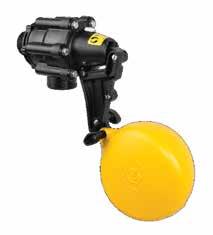
0800 JOBE VALVES jobevalves.com • Up to 50mm Inlet • Flows up to 600L/min • For Storage Tanks • Easy Access to Valve • Inlets Upto 50mm • Avoids Starting & Stopping of Pump When Tank is Filling • Ideal for Cattle Troughs • High Flow • Side/Bottom Mount • Detach to Clean • Compact/Robust
The Gisborne region suffered another major flood in January: PHOTO: RIPEKA COLLINS
The future of ag consultancy

ONE OF the country’s top agricultural consultants, James Allen, is planning to do a major study on what the role of the agricultural consultant may look like in the future.

Allen has been awarded a prestigious Nuffield Scholarship, which means for the next 12 months he’ll be able to research his chosen topic as well as undertaking a series of overseas visits aimed at widening his knowledge of agriculture. Allen is one of four New Zealanders selected as Nuffield Scholars this year.
utive of AgFirst and also chair of National Fieldays. He says the reason for choosing as his topic the future role of ag consultants is that there’s a huge amount of information available to farmers on the internet and from the data they collect on their own farms.
“But the role of the farm consultant has never been greater and nor has the need because there is some sort of disconnect going on there about information verses the application of that information,” Allen told Rural News
when the New Zealanders attend the global scholars conference in Vancouver in March. He says this will provide an opportunity to learn and share ideas.
He will then go on a four week study tour to four countries and see a range of agriculture issues. At this stage, the
final arrangements still have to be worked out but the likely countries they will visit are Kenya, England, Spain and Italy.
Allen says he feels very privileged to obtain a Nuffield scholarship and hopes to have his personal research paper completed in about a year.
“I want to look at exemplars – companies who are the best in the world at undertaking agricultural consultancy around the world. As part of that I will be spending time in Europe, the USA and UK.”
RURAL
Nuffield Farming Scholarships Trust is a charity organisation whose aim is to bring positive change to agriculture through the development of its future leaders. Scholars head overseas to learn from others and helping them share their brilliant ideas when they return home.
Allen is the chief exec-
Allen says as well as studying the topic of his choice he’ll also be participating in a number of tours for all the Nuffield Scholars who come from all around the world. The first of these is in March
TO ALL FARMERS, FOR ALL FARMERS
Happy New Year from the team at Groundswell. We are continuing our work on behalf of farmers to push back on the avalanche of unworkable regulations facing the sector.
With industry body elections soon, and central government elections later, its going to be a big year.
2023
The year of the Food Producer
Sign up to our email database so we can stay in touch


RURAL NEWS // JANUARY 31, 2023 NEWS 11
PETER BURKE peterb@ruralnews.co.nz
Ag First chief executive and National Fieldays chair James Allen’s Nuffield Scholarship will examine the role of the ag consultant for the next generation.
NEWS
RURAL NEWS TO ALL FARMERS, FOR ALL FARMERS www.ruralnews.co.nz Delivering to your mailbox for over 30 years
www.groundswellnz.co.nz
More woolly thinking or a good idea?
MPI’s director of investment programmes.

NEW ZEALAND strong wool could bring a bounce back into soft upholstery – and woolgrowers’ bank accounts – through a new project seeking an alternative to synthetic fillers.

The Ministry for Primary Industries’ (MPI) Sustained Food and Fibre (SFF) Futures fund is committing $790,000 over three years to a project led by Wisewool aimed at increasing the market potential of woollen knops – the small, light fluffy balls used as a filler ingredient.
“This project has the potential to improve returns to our strong wool producers and provide an environmentally friendly alternative to existing synthetic products,” says Steve Penno,
“Woollen knops can be used in baby bedding and insulated clothing as well as mattresses, so it’s a versatile product with plenty of scope.”
Wisewool chief executive Henry Hansen says the project will predominantly focus on working out the right components and blends to create a range of woollen knops for different products.
Wisewool will also be conducting research and development of needle punched wool blanketing used for residential and commercial furniture upholstery, insulation for the apparel industry, bedding and futons.
“We’ve discovered that when used in large quantities as a filler ingredient, woollen knops increase the bounceback and compression
resilience of the fibre,” Hansen explains.

“We’ll continue researching and comparing the compression resilience of both wool and synthetic fibres and will adjust our carding machines to produce various wool knop blends, along with conducting environmental and in-
market testing.”

Penno said one of the main drivers for funding this project was its potential to provide an alternative, high-value use for New Zealand strong wool.
“We’ve asked Wisewool to research consumer price preferences to see if the knops can be

sold at a price that gives a good return to farmers.”
The SFF project –which includes finding high value uses for New Zealand strong wool and new industries to elevate Kiwi food and fibre producers – also aligns with the goals of the Fit for a Better World roadmap, which aims to boost sus-

tainability, productivity, and jobs over 10 years.
SFF Futures has invested more than $14.69 million in 15 strong wool projects to date. A couple of these include strong wool acoustic wall panels and strong wool-based medical treatments. Penno also points to the establish-
ment of industry organisation Wool Impact, charged with driving innovation and demand for strong wool.
“By working together with industry leaders and innovators, and thinking outside the box, we have the opportunity to turn our homegrown strong wool industry around.”
RURAL NEWS // JANUARY 31, 2023 12 NEWS
LEO ARGENT
“Woollen knops can be used in baby bedding and insulated clothing as well as mattresses, so it’s a versatile product with plenty of scope.”Wisewool is aimed at increasing the market potential of woollen knops – the small, light fluffy balls used as a filler ingredient.
*One golden capsule to be found in each size range. See https://www.nzagritrade.co.nz/The-Time-Capsule for full Terms and Conditions. The Time Capsule® is registered pursuant to the ACVM Act 1997, Nos A6275, A7600, A7763, A7931, A9006, and A10875. Developed, trialed & proven for over 25 years, choose the NZ made Time Capsule for effective Facial Eczema prevention. Available from your local rural supplies store or vet clinc. For every golden capsule found, we’ll also donate $1,000 to the legends at Rural Support Trust*!
*One golden capsule to be found in each size range.
PREVENT. PROTECT. PERFORM.


A range of sheep vaccines made for New Zealand conditions.
For nearly 80 years, MSD have been developing sheep vaccines for New Zealand farmers. We have an extensive range of vaccines to help you improve flock performance. Vaccines that help protect against losses from Toxoplasma, Campylobacter, Salmonella, and that are proven to increase lamb numbers1,2,3. And we’ve developed them right here in New Zealand, specifically for our sheep and our conditions.


VAXIPACK® RECYCLING LEARN MORE
2.
Proc 31st Annual Seminar,
and Beef Cattle Veterinarians., NZVA p31-40 3.
R.J., & Wilkins, J.F. (1984) Immunization against polyandroalbumin leads to increases in lambing and tailing percentages. New Zealand Veterinary Journal, 32:1-2, 2-5 AVAILABLE ONLY UNDER VETERINARY AUTHORISATION ACVM No’s: A4769, A9535, A7886, A9927. Schering-Plough Animal Health Ltd. Phone: 0800 800 543. www.msd-animal-health.co.nz NZ-CVX-220900003 © 2022 Merck & Co., Inc., Rahway, NJ, USA and its affiliates.All Rights Reserved.
1. Wilkins M, O’Connell E. (1992) Vaccination of sheep against Toxoplasma abortion, Surveillance, 19:4,20-23
Anderson, P (2001) The implications of Campylobacter Infections in Ewe Flocks.
Society of Sheep
Geldard, H, Scaramuzzi,
CONTROL THE RISK OF TOXOPLASMA CONTROL THE RISK OF CAMPYLOBACTER CONTROL THE RISK OF SALMONELLA INCREASE LAMB NUMBERS
ASK YOUR VET FOR MSD SHEEP PERFORMANCE VACCINES
Cosmetic change!
THE SUDDEN resignation of Jacinda Ardern and installation of Chris Hipkins as Prime Minister will see many in the farming sector looking to the old maxim about ‘putting lipstick on a pig’ – which means making superficial or cosmetic changes to a product in a futile effort to disguise its fundamental failings.
It is fair to say farmers have not been overly enamoured with what the Government has imposed or proposed on the rural sector over the past five years.
What if any difference will Hipkins make to Labour’s policy agenda?
Farmers have long been critical of many of the Government’s proposed changes and the impact that these will have on the agricultural sector and rural communities.
According to Federated Farmers president Andrew Hoggard, rural leaders have had nothing to do with the new Prime Minister or his new deputy, Carmel Sepuloni – with neither of them being part of the government team meetings with food and fibre leaders. This could be a good thing and allow for a proper reset of the agriculture sector’s fraught relationship with the current government. Or will it just be more of the same?
As Hoggard says, “It (the Government) needs a complete re-look on a whole range of issues.” Beef+Lamb NZ chair Andrew Morrison rightly points out that Hipkins needs to understand the huge amount of financial pressure that farmers are facing when he and his cabinet review what projects should be scrapped or revisited.
The new PM has already made mutterings that change has happened too fast, but it will be a case of waiting and seeing if these words translate into anything in terms of actions.
It should not be forgotten that Hipkins has been deeply involved with the policy direction of the Government from the beginning, as both a senior minister and member of the kitchen cabinet under Ardern.
The rural sector should not hold its breath, rather it can probably expect little more than cosmetic changes in the direction of government policy.
Hence the old saying: ‘You can put lipstick on a pig, but it’s still a pig!’
HEAD OFFICE POSTAL ADDRESS: PO Box 331100, Takapuna, Auckland 0740 Phone 09-307 0399
PUBLISHER: Brian Hight ......................................... Ph 09 307 0399
GENERAL MANAGER: Adam Fricker ....................................... Ph 021-842 226
CONSULTING EDITOR: David Anderson ..................................Ph 09 307 0399 davida@ruralnews.co.nz
“I’m not a misogynist – I’m sure she’ll make a great wife, mother and housekeeper for Clarke!”
THE HOUND
Wood for the trees?
Your old mate sees that state farmer Landcorp is planning a mass planting of trees on a couple of its Otago farms. According to media reports, Landcorp – or to the more politically correct, Pamū – aims to plant 3,000ha of pine forests on two of its Otago properties, Waipori Station and Thonicroft Station. Apparently, this is all part of Landcorp’s master plan – outlined in its annual report last year – of planting 1,000ha of mainly pine forest a year up until 2030 as part of its ‘commitment of sustainable farming’. But, as a mate of the Hound’s points out, has Landcorp not seen the devastation and damage done by forestry slash in the Gisborne region over the past couple of years? And how does planning swathes of pine trees in an area of the country where wilding pines are a major issue meet its much vaunted claim of sustainable farming? Good questions!
Woeful wool
This old mutt still struggles to understand the absolute disaster that strong wool has become over the past 30 years or so. He’s been around a while now, back when the old Wool Board existed, and seen the many machinations that entity evolved into until it was finally disbanded. Nothing better illustrates the ongoing, slow death of this once magnificent industry than current prices. A mate of the Hound’s recently received a gross valuation for 38 bales of his crossbred fleece – at an average weight of 181kg each – of just over $6,200, which still had handling fees and other costs to be charged of around 18 cents/kg or around $1,200. This means he will net around $5,000. However, the problem is it cost him $16,000 to shear the sheep! No wonder farmers are turning to self-shedding sheep as we are witnessing the death of crossbred wool sheep farming in this country!
PRODUCTION: Dave Ferguson ......................Ph 027 272 5372 davef@ruralnews.co.nz
Becky Williams .......................Ph 021 100 4381 beckyw@ruralnews.co.nz
REPORTERS: Sudesh Kissun ........................Ph 021 963 177 sudeshk@ruralnews.co.nz

Peter Burke ...........................Ph 021 224 2184 peterb@ruralnews.co.nz

MACHINERY EDITOR: Mark Daniel .............................Ph 021 906 723 markd@ruralnews.co.nz
Eggageddon
As they say, you can’t make an omelette without breaking a few eggs. And it seems like you can’t introduce a ban on caged egg production without having a major impact on the availability of eggs.
As many supermarket shoppers found out during the Christmas break, many outlets have no eggs on their shelves due to new rules which have now come into force, banning caged eggs. While many shoppers were quick to blame chicken farmers and egg producers for the shortage, the Hound reckons the actual fault is that of the animal welfare dogooders who insisted that regulators ban caged egg production in NZ, which has now led to a shortage of product and prices out of reach for many people. He also believes the egg head politicians who introduced the ban should take a long, hard look at themselves.

AUCKLAND SALES REPRESENTATIVE: Stephen Pollard ..........................Ph 021 963 166 stephenp@ruralnews.co.nz
WAIKATO SALES REPRESENTATIVE: Lisa Wise .................................. Ph 027 369 9218 lisaw@ruralnews.co.nz
PRINTED BY INKWISE DISTRIBUTED BY REACHMEDIA
Back again
The Hound notes that in all the media hoo-ha over outgoing Prime Minister Jacinda Ardern and her replacement by a Richie Cunningham from Happy Days look-alike, news that another quitter was back went under the radar. At the same time, when Ardern was tearfully throwing in the towel, National leader Chris Luxon announced that Todd Muller would be the party’s new agriculture spokesman. Muller was previously the Nat’s ag spokesman before he knifed former leader Simon Bridges in 2020 and then quit 51 days later – earning him the rather cutting nickname ‘Puddle’ because he completely melted when the pressure came on. Farmers will be keen to see what Muller 2.0 does in regards in issues like methane taxation. Let’s hope he is up to the job this time and has enough backbone and steel to steer the ship in the right direction!
WELLINGTON SALES REPRESENTATIVE: Ron Mackay ................................. Ph 021 453 914 ronm@ruralnews.co.nz
SOUTH ISLAND SALES REPRESENTATIVE: Kaye Sutherland .......................Ph 021 221 1994 kayes@ruralnews.co.nz
DIGITAL STRATEGIST: Jessica Marshall ................Ph 021 0232 6446

RURAL NEWS // JANUARY 31, 2023 14 OPINION EDITORIAL
Want to share your opinion or gossip with the Hound? Send your emails to: hound@ruralnews.co.nz EDNA
Rural News is published by Rural News Group Ltd. All editorial copy and photographs are subject to copyright and may not be reproduced without prior written permission of the publisher. Opinions or comments expressed within this publication are not necessarily those of staff, management or directors of Rural News Group Ltd.
RURALNEWS TO ALL FARMERS, FOR ALL FARMERS
Saddle up for a bumpy ride!
I MUST admit I find it interesting to note what those given to making forecasts or predictions have been saying about 2023.
What do they see up ahead for us this year?
For me, those with personal experience in the field they are referencing, plus a good reliable track record with forecasts and predictions, will get my attention a whole lot quicker. There is always plenty of empty chatter out there!
Personally, in cowboyspeak, I think we are in for quite a rough ride. So, I think I’ll check to see my saddle is cinched up tight.
The finance gurus seem to have some rather bleak predictions, just for starters. Interest rates have already caused serious heartache. Seems like there is more to come for ’23. It looks like businesses, homeowners, and indeed farmers have some stiff headwinds ahead.
I know the weather guys do their best with something that can be rather fickle at times –I get that. It is a little bemusing though when they struggle to get next week right yet expect us to believe they know exactly where we will be in 20 years’ time! Or they know what was happening with pin-point accuracy some 10,000 years ago!
Politics is probably the easiest of all fields to make predictions about.
That’s right! After all, politicians have, in survey after survey, consistently come in at the bottom of the list when it comes to those people we most trust. I don’t see any signs on the horizon of that changing any time soon.
Yep, 2023 will bring us more of the same!
Leaders who are perceived to have passed their ‘use by date’ will be discreetly toppled from within – or take the better public image option and resign.

While I’m here on this subject, I’ll add in a couple of my favourite quotes for you: “The nine most terrifying words in the English language are: ‘I’m from the government and I’m here to help!’”
– 40th US president, Ronald Reagan. Great wit to be sure, but also much truth in those nine words.
This second quote is from yesteryear, when there were politicians who were people of integrity and even statesmen; “When the government fears the people there is liberty. When the people fear the government there
is tyranny.”
Yep, when any government serves up fear to ‘we the people’ it is never a good thing. Liberties will be lost.
And before I move on… why would anyone trust the very ones that created the mess to now be the ones to fix it?
Hmmmm! Keep that in mind come election time!
Now, when it comes to white-knuckle, whitewater times up ahead, it makes a huge difference who you have on your team. Facing stuff with a good team around you is always better than wading through it alone.
When the flak starts flying, having the right people with you in your ‘foxhole’ makes all the difference in the world. I have witnessed the proof of that so many times through the years.
I still recall being instructed as a child: “A burden shared is a burden
halved.” Certainly, that’s true – as long as you choose wisely the person you share it with!
For this year I’d like to suggest you look after the team you have around you, your family and good friends especially. Keep those relationships in good repair. They will be
key as we navigate the year ahead.
And yes, there is always a ‘Friend like no other’ standing by to help if requested. My sincere best wishes to you for ’23.
To contact Colin Miller: farmerschaplain@ ruralnews.co.nz


RURAL NEWS // JANUARY 31, 2023 OPINION 15
Are you hitting your target market? For advice, contact your local sales consultant Auckland Stephen Pollard Ph 021-963 166 Waikato Lisa Wise Ph 027-369 9218 Wellington Ron Mackay Ph 021-453 914 Christchurch Kaye Sutherland Ph 021-221 1994 ■ BREAKING NEWS ■ MACHINERY REVIEWS ■ MANAGEMENT STORIES ■ AND MUCH MORE... RURALNEWS HEADER Ferist et quati aut pedici te vollab imod quamet atur soleniet quiatibu. PAGE 15 HEADER Ferist et quati aut pedici te vollab imod quamet atur soleniet quiatibu. PAGE 23 HEADER Ferist et quati aut pedici te vollab imod quamet atur soleniet quiatibu. PAGE 24 TO ALL FARMERS, FOR ALL FARMERS 6.95% P.A. FIXED RATE* 24 & 36 MONTH LOAN TERM FINANCE AVAILABLE YAMAHA SERVICE INTERVALS UP TO 150 HOUR^ SERVICE INTERVALS YAMAHA RELIABILITY ON SELECTED ATV + ROV Grizzly 350, Kodiak 450/EPS, Kodiak 700 EPS, Grizzly 700 EPS/SE, Viking 3/SE, Viking 6, Wolverine X2 Utility /XT-R, Wolverine X4, Wolverine RMAX 2/4 XTR 1000 Grizzly 350, Kodiak 450/EPS, Kodiak 700 EPS, Grizzly 700 EPS/SE, Viking 3/se Viking 6, Wolverine X2/XTR/Utility/Rspec, Wolverine X4, Wolverine RMAX 2/4 XTR 1000 KODIAK 450 EPS RIDE AWAY KODIAK 450 RIDE AWAY WOLVERINE X2 UTILITY RIDE AWAY $15,086 EXC GST $13,912 EXC GST $28,608 EXC GST 3 YEAR GENUINE^ FACTORY WARRANTY www.yamaha-motor.co.nz FIND YOUR LOCAL DEALER AT: OFFER AVAILABLE FROM 1 DEC 2022 TO 31 MAR 2023 24 & 36 MONTH LOAN TERMS AVAILABLE $325 ESTABLISHMENT FEE APPLIES *FINANCE DISCLAIMER: Zero deposit; annual repayments only with first repayment due after 12 months and 6.95% p.a. fixed interest rate on a 24 or 36 month loan term. Asset backed commercial applicants only with NZBN registered for minimum of 1 year. Maximum amount financed is $35,000 and applies to AG125, AG200, TTR230/A, YFM350FA, YFM450FB, YFM450FB/P, YFM700FA, YFM700FB/P, YXC700P, YXE850P, YXF850, YXM700, YXE1000PSEM, YXF1000PSEM. Offer available from December 1, 2022 to March 31, 2023 with final settlement date of April 30, 2023. Credit criteria, fees, charges and conditions apply including an establishment fee of $325, $10 PPSR fee and a dealer administration fee. Finance to approved applicants by Yamaha Motor Finance New Zealand Ltd. (YMF) NZBN 9429036270798 FSP 9622 ^ Warranty cover is subject to a range of requirements including following the service schedule & applicable vehicle load/towing limits. Service Intervals are dependent on usage and environmental factors.
FARMER’S CHAPLAIN Colin Miller
Building on close ties
DREAM ROLE
IRELAND’S NEW
ambassador to New Zealand, Jane Connolly, says the connections between her country and NZ are significant.
She told Rural News these centre are around culture and heritage, as well the strong political and bilateral arrangements that have existed for a long time between the two nations.
Connolly says, in a world that is becoming increasing unstable and challenging, it’s important that like-minded countries draw closer together and support each other.
“Ireland and NZ are

FOR JANE Connolly one of her first official events since taking over her new role was attending Fieldays late last year.

This is her first ambassadorial post since joining the Irish Department of Foreign Affairs (DFA) 21 years ago.
Prior to coming to NZ, she served in posts in Poland, the UK and Australia – where she served as the Consul General.
Before being appointed to NZ, Connolly headed up the DFA’s finance department. She has a Kiwi connection – her husband Dion hails from Mt Maunganui.
very much like-minded. I would see one aspect of my role as deepening that relationship and strengthening those political and bilateral arrangements as well,” she says.
Connolly adds that while NZ and Ireland
are small countries they have never been afraid to voice their opinions on the world stage. She says both have been longstanding partners on disarmament and speaking out on human rights and the rule of law – espe-
READ US ONLINE


cially in relation to trading issues embodied in the WTO.
“The rule of law is very important for us because how we interact in the world is through everyone following the international rules,” Connolly explains.
“I think there is a lot we co-operate on and there is lot more we can co-operate on. We must continue to support each other on those multilateral organisations to keep reminding people of the importance of these and the work they do. Organisations such as the UN and the WTO are the real cornerstones of our foreign policy.”
Connolly says on the
agricultural side both nations face many sim ilar challenges. These include agricultural emis sions and climate change and there is a lot of joint research going on in these areas. She says there are loads more things that Ireland and NZ can do together and deliver results that are of benefit for the wider world – not just for our two countries. She believes the recent signing of the EU/ NZ FTA is a significant development in the relationship between the two jurisdictions. Connolly says it’s important that this is ratified as soon as possible.
“Our experience with
FTAs in the European Union is that these have been extremely positive because they have enabled us to diversify our trade,” she told Rural News
“I believe the signing of the FTA will bring NZ
and the EU much closer together and also open up other areas of collaboration such as science. It’s a framework for trade but more importantly an overarching thing that will bring us closer together.”
RURAL NEWS // JANUARY 31, 2023 16 AGRIBUSINESS
PETER BURKE peterb@ruralnews.co.nz
Your life may depend on this
Ireland’s new ambassador to NZ, Jane Connolly.
READING THE PAPER ONLINE HAS NEVER BEEN EASIER. ■ BREAKING NEWS ■ MACHINERY REVIEWS ■ MARKETS & TRENDS ■ MANAGEMENT STORIES ■ COMPETITIONS ■ AND MUCH MORE... www.ruralnews.co.nz RURALNEWS HEADER Ferist et quati aut pedici te vollab imod quamet atur soleniet quiatibu. PAGE 15 HEADER Ferist et quati aut pedici te vollab imod quamet atur soleniet quiatibu. PAGE 23 HEADER Ferist et quati aut pedici te vollab imod quamet atur soleniet quiatibu. PAGE 24 TO ALL FARMERS, FOR ALL FARMERS
Gallagher’s Aussie expansion
GALLAGHER GROUP has acquired an Australian sheep and cattle handling equipment maker as part of its global expansion.
Norton Livestock Handling Solutions, founded in 1989 by brothers Tom and Peter Russ, offers Australian-made highquality sheep & cattle handling equipment, farm gates, and sheep & cattle yards.
Gallagher says it has worked closely with Norton for more than two decades and is using the acquisition to accelerate its commercial expansion across Australian and international markets.

New Zealand-based global general manager for Gallagher Animal Management, Lisbeth

Jacobs, says while times are tough right now for businesses and farmer customers, Gallagher is doubling down on its investments into quality products and solutions and premium customer service.
“Through the pandemic and current global events, we have proven that we can continue to supply our farmer customers.”
Jacobs says consumers are increasingly looking for responsibly sourced, high-quality protein products and farmers are tackling growing compliance and traceability regulations.
Weighing, monitoring individual animal performance and recording data enables farmers to respond to these growing demands, maximise productivity and run more efficient and sustainable
farming operations.
“Norton’s Australasian operation and capability is just what we’ve been looking for to continue to support our customers as
demand for animal handling solutions continues to grow,” she adds.
“We are thrilled to welcome the Norton team into the Gallagher
family and are excited about what we can achieve together through our combined passion for quality and customer experience.”
Jacobs adds that as another long-standing family business serving the agricultural community, the acquisition of Norton’s manufacturing experience is the perfect complement to Gallagher, and a boost to the growth plans for both brands.
Norton currently holds a strong market position in the South Eastern Australia region. Tom and Peter Russ say that there were just too many synergies between the two companies for this not to be a perfect fit.
“We have a 20-year working relationship with Gallagher, so we knew from the get-go that things were going to work out well when we began discussions.
“Being family-run just as we have always been, Gallagher will be able to enhance the business
values that have been really important to us.
“The exposure for Norton under the Gallagher management is a great opportunity. The Gallagher brand is already well known in Australia and its existing position in the market and established sales channels will help the growth of Norton sales advance quickly.”
Malcolm Linn, general manager for Gallagher Animal Management in Australia says his team is delighted to add Norton’s range of products to its line-up of solutions.
The acquisition was finalised at the end of 2022 at which time the Norton team of around 45 people were welcomed as part of the Global Gallagher family, under Jacob’s overall leadership.
Tuesday 7 March is our chance to represent ourselves, our families, whānau, communities and cultures. Census gives us the power to create change that benefits all of us; in our lives, towns, schools, hospitals and streets. www.census.govt.nz
All of us count Tatau tātou
RURAL NEWS // JANUARY 31, 2023 AGRIBUSINESS 17
SUDESH KISSUN sudeshk@ruralnews.co.nz
@rural_news facebook.com/ruralnews
New Zealand-based global general manager for Gallagher Animal Management Lisbeth Jacobs.
When we all take part in the 2023 Census, we all count.
STA0120E
Secrets to successful seed establishment under no till system
“CUT, PLACE, press and cover” is the mantra of South Australian farmer Tom Robinson when it comes to successful seed establishment under a no till regime.

Robinson farms at Hoyleton, north of Adelaide, with his partner Cassi and his parents Ashley and Kaylene. They farm 1,540ha of wheat, barley, canola, peas and lentils.
The Robinson family initially adopted no till as a way of managing and retaining as much crop residues on the soil surface as possible for moisture conservation in their hot, dry climate.

They have been minimum till and then no-till for 25 years. The Robinsons have implemented a number of changes to help improve their soils. These include use
Don’t put good fertiliser on compacted soil which can’t absorb
If your soil can’t support 15cm root growth and good worm population check for compaction. You could need aeration. In dollar terms, what would 20% production increase mean to your yearly turnover?
of a Shelbourne stripper header front to help retain stubble, controlled traffic system to help manage soil compaction, summer cover crops, decreasing fertiliser inputs, and more recently, companion cropping and intercropping.
The farm has a 325 to 425mm annual rainfall, which predominantly falls in winter. In summer it bakes, with tempera-
tures above 40 degC and annual evapotranspiration of 3,000mm. The soil type is red brown earth and some loam over clay, with organic matter between 1 to 2%.
A lack of moisture is their biggest limiting factor. Therefore, the benefits of moisture conservation mean that district average wheat yields are 4 tonne/ha under no till and full input –double those under full tillage and full input.
Robinson says no till is the biggest change on the farm for 160 years.
A disc seeder was purchased to handle the crop residue. Robinson explained that there are four principles for disc seeding, “cut, place, press and cover”.


The Robinsons’ John Deere 1890 disc seeder
is able to sow directly into heavy stubble and is modified with a narrow gauge wheel. As downward pressure is important, 1.5 tonnes of weight has been added.

“We aim for two inches (5cm) of spring compression which provides downward pressure on to the discs. Too many people don’t run enough downward pressure to get correct seed placement and correct cut.”
To gain more even crop residue across their paddocks the Robinsons purchased a Shelbourne stripper header, a type of combine harvester which removes the grain from the plant, leaving the stem standing in the field. This has led to a 30 to 50% increase in harvester capacity in cereals and a similar amount in fuel
savings, depending on the conditions.
“Not putting the amount of straw through of a conventional draper header is saving a lot of horsepower and diesel,” Robinson adds.

The Robinsons have also adopted controlled traffic farming, taking six years to change their machinery over to the 30m system. Advantages were improved yields of 10 to 40% and fuel savings, as well as improved soil with faster water infiltration.

However, Robinson says he probably won’t continue with this, as no till, the stripper header, crop rotation and livestock rank higher – particularly as the farm’s soil structure improves.
Summer cover crops are grown, with each
having its own purpose, either for soil health or to feed livestock. The farm had no livestock for 28 years until 2018, when cattle were introduced and these work well with cover crops, which are sown through the standing harvested crop.
“We like sunflowers here,” Robinson adds. “They don’t have much ground coverage, but they have a big taproot and are hardy in our hot summers. Tillage radish is grown for livestock.”
They have no issues with a disc seeder running through a cover crop.
Robinson recommends that farmers adopting no till terminate a cover crop three to four weeks before seeding, leaving an unsprayed test strip to see whether this would work in their own situation. “We find that material breaks down fairly quickly. That’s where trial work is needed on your own farm.”
He is a fan of companion crops, successfully growing peas and canola together, as well as lentils and linseed.
In response to a question about the limited ability to use a brassica as a cover crop, particularly in Canterbury, because of its export brassica seed market, Robinson says that companion planting is about adding things that weren’t normally in the rotation.
RURAL NEWS // JANUARY 31, 2023 18 MANAGEMENT
POLARIS SPECIAL OFFERS *Offer ends 31/3/23 or while stocks last. Offer only available at participating Polaris Dealers. Not valid with any other offer. Excludes fleet clients. ^^Accessories offer only valid with the purchase of a new Ranger 570 HD EPS ADC and Ranger XP 1000 HD EPS ADC. +Finance offer is only available on selected models. GST registered customers only. 24-month term contract. 20% Deposit required. Deposit may include Trade (Trade conditions apply). Fees and conditions apply (normal lending criteria applies) Finance is provided by Polaris Finance, a program operated by De Lage Landen Limited Company No 135515. 0800 440 290 | www.polarisnewzealand.com | /PolarisNZ | /polarisorv_nz 570 HD EPS ADC $750 FREE ACCESSORIES^^ 4.99% FINANCE P.A+ 44 HP ON DEMAND TRUE ALL-WHEEL DRIVE (AWD) VERSATRAC TURF MODE DUMP BOX CAPACITY227KG 680 KG TOWING CAPACITY SEATS 2 IRS WITH 25.4 CM OF TRAVEL HEAVY DUTY FEATURES KG 680 XP 1000 HD EPS ADC $1,500 FREE ACCESSORIES^^ 4.99% FINANCE P.A+ 82 HP 1,134 KG TOWING CAPACITY VERSATRAC TURF MODE DUMP BOX CAPACITY454KG HEAVY DUTY FEATURES SEATS 3 SEAT BELT INTERLOCK ENGINE BRAKING SYSTEM & ACTIVE DESCENT CONTROL (ADC) KG 1134
Australian farmer Tom Robinson’s family has adopted a successful no till system on their farm for 25 years.
DRAINAGE AND SOIL AERATION PAY BIG DIVIDENDS
YOUR GREATEST ASSET IS THE SOIL YOU FARM. DON’T DESTROY IT! MAITLAND RD5, GORE. PH/FAX 03-207 1837 OR 027-628 5695 www.james-engineering.co.nz • SOIL AERATION SPECIALISTS • HEAVY DUTY AUTO RESET MOLEPLOUGH AERATORS PRE RIPPERS NOW AVAILABLE, 5, 6 OR 7 LEG MODELS
it.
Warning over sheep bolus shortage
FARMERS WHO traditionally rely on Bionic Plus capsules to manage internal parasites in ewes over lambing need to start planning to farm without this product in 2023.
Boehringer Ingelheim, the distributor of the Bionic Plus controlled release anthelmintic capsule, has announced the adult sheep product will probably not be available for lambing in 2023.
“Farmers need to begin planning now,” says Dr Ginny Dodunski, experienced sheep veterinarian and manager of the Beef + Lamb New Zealand-funded Wormwise programme.
“There are plenty of farmers around New Zealand who get great ewe performance and excellent lamb weaning

weights without the use of any pre-lamb worm treatment for ewes – but the key to this are ewe body condition and feed planning.
“Getting this right for lambing starts the day you wean.”
Last year, issues with the Bionic Plus Hogget capsule saw this product recalled, and an extended meat withholding period applied to sheep already treated with the capsule.


While investigations are continuing, it appears the capsules were not releasing product at the correct rate.
Boehringer has advised vets that out of an abundance of caution, it is ‘highly unlikely’ that either capsule will be available in 2023.
“While there are other long-acting products available, the unavailabil-

ity of Bionic Plus could be an opportunity for farmers to look at a ‘reset’ of their breeding flock management,” says Dodunski.
“We know from pre-
M.BOVIS CASES FALL
THE MYCOPLASMA bovis Programme claims to be making good progress towards the eradication of the disease from New Zealand.
The programme was set up in May 2018 in reaction to an outbreak of M. bovis and is jointly funded by the Government, DairyNZ and Beef+Lamb NZ.
All properties in the high-risk area in Wakanui, Mid Canterbury, which is under a Controlled Area Notice (CAN), have now been cleared of cattle. Testing will be underway shortly on the properties in the surrounding area with the CAN on track to be lifted in mid-March.
The Ministry for Primary
Industries (MPI) says the number of active confirmed properties has decreased. M. bovis programme director Simon Andrew says the current number of confirmed properties is five, compared to 40 at the height of the outbreak. He adds that the programme expects all of the confirmed properties to be cleared within the first half of 2023.
“While this progress is great news for farmers, there is still work to be done before New Zealand can transition to the next stage of the eradication effort, which will primarily focus on bulk tank milk, and beef and drystock cattle surveillance,” he says.
vious trial work that the factor that comes closest to explaining why some farms see big responses to capsules is feed on offer at lambing.”
She says this is some-
“Over time, this will provide us with the necessary information for us to be confident the country is absent of the disease. It is expected that more infected properties may be identified before this shift.”
Andrew says the programme continues to find instances of poor NAIT practices, which he says is disappointing.
“Good NAIT records mean we can trace animal movements a lot faster, which in turn reduces the residual risk of infection and protects what we’ve all achieved to date.”
@rural_news facebook.com/ruralnews
thing that farmers have some control over.
“It’s a mix of lamb-
ing date, stocking rate, autumn and winter sales policies, grazing management and fertility,” Dodunski explains.
“However, you can’t wake up on July 10 and decide to increase the amount of grass on offer at lambing – this process starts now and relies on hitting appropriate pre-winter feed targets and then managing that feed through to have good covers to set stock multiple ewes onto.”
She adds that many farmers do a really good job of this do a lot of juggling in the second half of the winter to aggressively aim for those targets while still feeding their multiples well in late pregnancy.
“Also, the cost-benefit of treating skinny ewes with long-acting products is typically bigger than that of treating wellconditioned ewes. So, if we can minimise the number of light ewes in the flock at lambing, we’ll have better outcomes and can get away from relying on whole-flock longacting drench products to prop things up at lambing time.”
Dodunski advises farmers to identify ewes that are under body condition score (BCS) 3 to 3.5 at weaning.
“Giving them extra feed over summer is the beginning of this process.”
@rural_news
facebook.com/ruralnews
RURAL NEWS // JANUARY 31, 2023 ANIMAL HEALTH 19
The Bionic Plus controlled release anthelmintic capsule will probably not be available this year.
CALL IN & SEE US | 73 PRESTON STREET INVERCARGILL PHONE: 03 215 8558 Email: info@hecton.co.nz Visit our website www.hecton.co.nz for a full list of products Hecton Contractors – Tandem covered crutching trailer SHEEP HANDLER AND LEAD UP RACE • Fastest handler on the market • Ideal for dagging, crutching & foot trimming CRUTCHING TRAILER
Fendt takes out tractor of the year
JUST PRIOR to the end of 2022, the Tractor of the Year 2023 results were announced by the judging panel at EIMA – the Italian machinery show, held in Bologna.
This is said to be an important recognition of the most innovative tractors on the European market and is sponsored by tyre manufacturer BKT. A jury of 25 journalists, who specialise in agricultural mechanisation throughout Europe, reviewed the tractors entered for the award.
During the judging period, 16 different models from 13 different manufacturers were assessed. The Fendt 728 picked up the title of the 2023 Tractor of the Year, building on the Machine of the Year at the SIMA
The first in a planned wider range, the new engine is compatible with Hydrotreated Vegetable Oil (HVO) fuels, enabling up to 90% reduction in greenhouse gas emissions.
event held in Paris a few weeks earlier.
The judges praised the 728’s manoeuvrability and all-round ability, alongside the newly developed Fendt VarioDrive driveline, integrated VarioGrip tyre pressure control system, FendtONE and up to 223kW (300hp) of power available.

Designed
In addition, other attributes that impressed the judges included a new 6-cylinder 7.5-litre AGCOPower engine that offers extra boost power up to 15kW (20hp) in all conditions, a new hydraulic

and cooling system and a safe cabin with filtration level at cat 4.
Among a range of new features on the tractor is the driveline, which uses separate hydro motors to drive the front and


an uncompromising strength standard.
McIntosh Forage Wagons have the strength, quality and performance farmers expect from their farm machinery. With rugged and unpredictable conditions in mind we continue to ensure our range are engineered to the highest quality. Every detail has been carefully thought out and designed to provide trouble free operation for years to come.
rear axles, alongside a constant 4-wheel drive system that is automatically regulated for best traction.
The engine used in the Generation seven 728 is AGCO’s new Core75
unit. Initially available as a 7.5-litre, 300hp block, designed to be compatible with future fuels such as hydrogen, ethanol, methanol or biogas, it could also potentially operate as an electric


hybrid with further development. The first in a planned wider range, the new engine is compatible with Hydrotreated Vegetable Oil (HVO) fuels, enabling up to 90% reduction in greenhouse gas emissions.
Delivering 1,450Nm of torque, the unit is designed to offer maximum torque at 1,300rpm instead of the more typical 1,500rpm. This lowspeed concept is said to provide the best fuel economy in the market today in its power class at 188g/kWh.
With fewer parts, the engine’s simplified design is said to make it more reliable and easier to service. Meanwhile, the advanced Emission Aftertreatment (EAT) system meets even the most stringent emissions standards without the need for an EGR.
RURAL NEWS // JANUARY 31, 2023 20 MACHINERY & PRODUCTS
MARK DANIEL markd@ruralnews.co.nz
ROTOWIPER.... IT JUST GOT BETTER! 48 Bremners Road PO Box 333 Ashburton • W: www.rotowiper.com P: 03-308 4497 • M: 027-311 9471 • E: rotowipersales1@gmail.com Trailing model towed by a 4 wheel bike FANTASTIC NEW FEATURES! • Single height adjustment • Roller drive disengagement • Fold-up drawbar • Tank leveller adjustment • New strong design frame • New stub axle hub arrangement • All covers now stainless steel TR Rotowiper New electric height adjustment STRENGTH / QUALITY / PERFORMANCE FORAGE WAGONS www.mcintosh.net.nz FREEPHONE: 0800 622 276
The Fendt 728 has picked up the title of the 2023 Tractor of the Year.
to
Latest Euro ag machinery report shows interesting trends
($9.56b) and Germany, not too far behind at €5 billion ($8.39b).
CEMA, THE umbrella group representing European agricultural machinery manufacturers, recently issued a report on the state of the European farm machinery market for the year ending 2021.

Due to anti-competition rules in Europe, such reports – including reports of tractor sales – are always one year in arrears.

Offering a wide range of data, the German agri machinery industry remained the largest exporter of agricultural machinery globally. It sent €13.2 billion (NZ$22.14 billion) of product overseas, easily beating China into second place at only €9 billion ($15.1b) and the United States in third place at €8 billion ($13.42b). It will be interesting to see if Germany managed to maintain these levels in 2022, given the Ukraine-Russia conflict, which dominated and continues to affect the region.
Looking at the broader picture, it is interesting to note that China swapped places with the US during the period. This is likely a reflection of Chinese strength in component manufacturing, a sector that is also included in the final tallies. It is also likely that the Chinese result will be significantly lower in 2022 following the extended “lockdowns” brought about by its tough stance in addressing Covid-19.
The US did lead the way in one area, spending €11.5 billion ($19.3b) on machinery imports from offshore. It was followed by France at €5.7 billion
CEMA also noted that Australia and New Zealand were increasingly important markets for European manufacturers, their opposite growing seasons allowing manufacturers to keep production lines running all year round. The organisation noted that Australia imported around €2.4 billion ($3.35b) of ag machinery in 2021.

CEMA also observed that while China is typically lauded as having untapped potential for companies looking to sell farm machinery, it doesn’t make the top 20 for importing foreign manufactured machinery. It comes in below Turkey, which takes only €0.7 billion ($1.17b) worth of imported machinery.
Overall, the largest European buyer of agricultural machinery in 2021 was France with a trade worth €7 billion ($11.75b). Germany followed at €6.9 billion ($11.58b). This is obviously reflected in the fact that the former has around 286,000 square kilometres devoted to crops.

A breakdown of European sales by product family shows tractors made up 22% of the total market, closely followed by parts at 18%, tillage and fertiliser spreaders at 12%, harvesting equipment 11% and grass machinery at 7%.
The report also shows robot sales in agriculture are growing: with the march of digitisation, 19,000 robots were sold in 2022, up 4,000 on the previous year and forecast to reach 22,000 units sold in 2023.

RURAL NEWS // JANUARY 31, 2023 MACHINERY & PRODUCTS 21
Get up-to-date news at www.ruralnewsgroup.co.nz LATEST STORIES EVERY DAY
MARK DANIEL markd@ruralnews.co.nz
LAN2689 For your local dealer go to: claasharvestcentre.com “ CLAAS gear is reliable and the service team is always there when we need them.
DARCY FINCH Finch Contracting f Top chop quality with MAX CUT cutterbar f Active float - perfect ground contouring f Perfect cut - clean forage and perfect crop flow f SAFETY LINK - advanced safety system f MAX SPREAD crop flow f Permalink drive concept f From 5.2 - 13 m working widths f Single and twin rotor options f Grass Care concept fully floating rotors f 3-dimensional rotor travel f Hermetically sealed low maintenance CAM track CLAAS DISCO MOWER CLAAS VOLTO TEDDER CLAAS LINER RAKE *Standard CLAAS Financial Services lending criteria, terms, conditions and fees apply. 0.99% p.a requires minimum 33% deposit followed by two six monthly repayments over 12 months. Offer valid until 31/03/2023 or while stocks last. Offer applies to in stock and on-order new Category 2 Greenline equipment. Excludes Triple Mowers, quad-rotor rakes and CLAAS Balers. If finance base rates move by more than 0.25%, CLAAS Financial Service reserve the right to re-quote. ABN holders only. Images illustrative only. THE PROFESSIONAL’S CHOICE FLEXIBLE TERMS AVAILABLE OWN THE GEAR THE PRO'S USE LOCK IN 2023 this offer now for spring delivery * FROM
German manufacturer Deutz Fahr’s headquarters is based in the Bavarian city of Lauingen.
”
Take a closer look!
WHILE ELECTRIC cars are never very far from the news, the Tesla brand and its CEO Elon Musk are the ones who fill the headlines.
But dig a little deeper and you’ll find that the lesser known brand of BYD (Build Your Dreams) is seeing a meteoric rise in the production of EVs. Despite the fact the company only formed in 2003 it is now rapidly nearing 3 million vehicles produced.
While you could argue that the New Zealand market is dominated by utes and SUV’s, the practicality of living in rural NZ usually means a second car is a must, for doing the school run or popping into town.

So, given the current cost of fuel – which will only climb higher as our city-focused government re-applies taxes – would it be out of place to consider the electric
$ 780
alternative?
BYD’s ATTO 3, which arrived in NZ during 2022 out of nowhere and sold hundreds of units before any dealerships were even announced, certainly makes a compelling case.
BYD has already produced far more vehicles than the aforementioned Tesla, and the ATTO 3 certainly makes an attractive proposition. With a list price of $52,990
for the 50kWh version, $57,990 for the 60kWh version, each attracts a government clean car subsidy of $8,625. The only difference between them is battery capacity, said to offer ranges of 345 and 420km respectively.

Outwardly the 4.4m long ATTO3 won’t win any beauty pageant. It is best described as conventional, as is the norm for most boxy SUVs. By con-

trast, the interior is certainly not conventional, with sweeping curves, Dan Dare sci-fi controls and guitar-stringed door pockets. It’s very much a Vegemite reaction: you’ll either love it or hate it. Interestingly, the materials and build quality will put a lot of the so-called Euro premium marques to shame. However, as the TV advert says, “but wait, there’s more”.
Standard equipment includes a panoramic sunroof, electric tailgate, a 12.8-inch central touchscreen and a 5-inch digital instrument display. There is also a 360
degree surround camera, faux leather trim, smart key and for those looking to connect with the world beyond the farm, and 2Gb of free data per month for two years.

Featuring a single 150kW motor driving the front axle, the company notes that its ‘Blade’ battery technology – using lithium-iron-phosphate – is much safer than other battery formats. It is good for 5,000 charging cycles before capacity drops to 80%, compared to the 1,300 cycles typical of other batteries. BYD’s confidence in the set-up means the com-

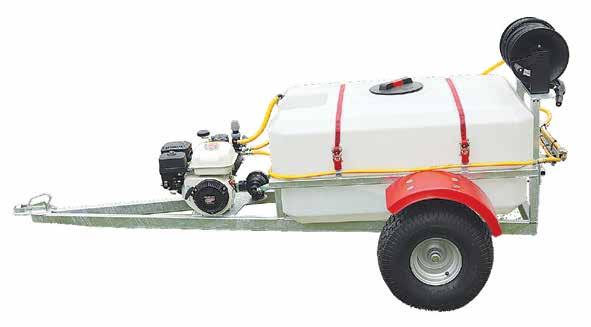
pany offers a 6-year, 180,000km warranty.
Driving the vehicle, you’re ensconced in a bright airy cabin, planted on electrically adjusted and heated seats that are very comfortable. There is also plenty of room in the rear seats, which are split folding, with a 440l boot at the back.
The large central touchscreen can be positioned in a portrait of landscape aspect and combines with switches and dials. A central position between the seats brings together the key start, drive lever and park brake controls, but elsewhere the controls seem a little haphazard.
You have a choice of Normal, ECO or Sport modes, each being adequate. Acceleration off the mark sees 100km/h coming up in around 7.5 seconds. Ride quality is good, with the suspen-

sion remaining composed in all road conditions and comfortable at high speeds. On the negative front, the steering feel is best described as a little woolly with very little feedback from the tyres. Likewise, the forward collision warning system seems to be a little too sensitive for NZ conditions, getting a little ‘spooked’ by parked cars. Finally, that old chestnut of range anxiety can be largely forgotten. Using the ATTO as a run-around, consumption appears to be 15kW/100km, so easily 3 or 4 days. In this tester’s experience, when the battery dropped from 82% to 40%, plugging into a single-phase socket in the garage brought things back to 85% in around 11 hours.
Our recommendation is a firm “take a closer look”.
Rubber Safety Matting

Recommended
In the event of a rearwards flip there is negligible movement from the flexible joint
• The top section of the Flexibar can also be easily removed for transportation inside a vehicle.


RURAL NEWS // JANUARY 31, 2023 22 MACHINERY & PRODUCTS/ RURAL TRADER
UNITS Honda GP200 Motor • 40 Bar/580 PSI • Flow Rate 41L per min • Comet APS41 Diaphragm Pump • 5D Suction Filter • Pressure Regulator & Return System 650kg Break Strength Strapping 30m Hose Reel c/w Spot 300 Spray Gun Hot dipped Galvanised Trailer Comes in 200L, 400L & 600L models Petrol & 12V Trailers available • • • • • PETROL DECK SPRAYER SIDE BY SIDE/ATV SPRAYERS TRAILED 12V SPRAYER NORTH ISLAND: 23 Mahinui St, Feilding. Ph 06-323 4181 www.mckeeplastics.co.nz SOUTH ISLAND: 35 Wilkin St, Waimate. Ph 0800 625 826 For a Quadbar, call me, Stuart Davidson, owner of Quadbar NZ. Phone: 021-182 8115 Email: sales@quadbar.co.nz orformoreinfogotowww.quadbar.co.nz Quadbar introduces the new FLEXIBAR Flexibar includes all the safety and convenience features of the Quadbar with the added advantages of: • A flexible joint that allows the bar to flex rearwards in the event of contact with an overhead obstacle • The joint facilitates some sideways flexibility before locking and becoming more of a traditional crush protection device •
SPRAY
+GST & Freight
by Worksafe. ACC subsidy
available
MARK DANIEL markd@ruralnews.co.nz
BYD’s ATTO 3, which arrived in NZ during 2022 out of nowhere and sold hundreds of units before any dealerships were even announced, certainly makes a compelling case.
• ATV Carrier Mats • Exit/Entry Areas • Calf Trailers • Horse Floats & Trucks • Weigh Platforms • Bale Mats • Comfort Mats for Wet & Dry Areas • Utility Deck Matting Phone: 0800 80 8570 www.burgessmatting.co.nz
BYD has seen a meteoric rise in the production of its EVs, which is now rapidly nearing 3 million vehicles produced since 2003.
CRAIGCO SENSOR JET • Robust construction • Auto shut gate • Total 20 jets • Lambs only 5 jets • Side jets for lice • Adjustable V panels • Davey Twin Impellor Pump • 6.5 or 9.0hp motors PH 06-835 6863 • MOB 021-061 1800 JETTER VIDEO: www.craigcojetters.com SHEEP JETTERS SINCE 1992 GUARANTEED PERFORMANCE QUICK TO SETUP – EASY TO USE – JOB DONE



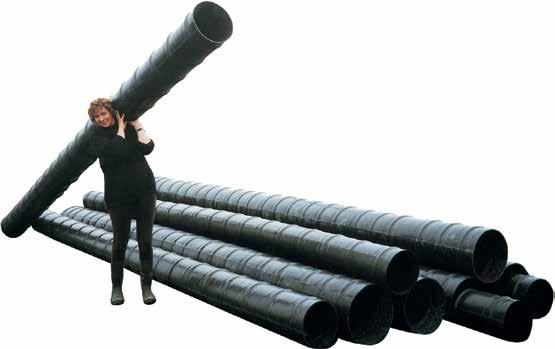


RURAL NEWS // JANUARY 31, 2023 RURAL TRADER 23 www.mckeeplastics.co.nz 300mm x 6 metre $410 400mm x 6 metre $515 500mm x 6 metre $735 600mm x 6 metre $989 800mm x 6 metre $1496 1000mm x 6 metre $2325 1200mm x 6 metre $3699 ALL PRICES INCLUDE G.S.T. CULVERT PIPES NORTH ISLAND 23 Mahinui St, Feilding Ph 06-323 4181 SOUTH ISLAND 35 Wilkin St, Waimate Ph 0800 625 826 Lightweight, easy to install • Water Troughs Water Transport Water Storage Single Dog Box – no steel work $625.00 Single Dog Box - with steel work $699.00 Wellside Dog Box $985.00 Flatdeck Dog Box $985.00 ALL PRICES INCLUDE GST BUT MAY INCUR FREIGHT NORTH ISLAND 23 Mahinui St, Feilding Ph 06-323 4181 SOUTH ISLAND 35 Wilkin St, Waimate Ph 0800 625 826 Invest in your safety The world’s first flexible roll bar 0800 782 376 traxequipment.co.nz Rebate Available $1440 + GST & Freight Free Range & Barn Eggs SUPPLIERS OF: • Nest boxes - manual or automated • Feed & Drinking • Plastic egg trays QUALITY PRODUCTS MADE IN EUROPE OR BY PPP ❖ A trusted name in Poultry Industry for over 50 years ❖ $7680 +GST INCLUDES: • Jetter unit • Pump & Hose kit • Delivery to nearest main centre CONTROL FLYSTRIKE & LICE SUPPLYING FARMERS SINCE 1962 STOP BIRDS NOW! ZON BIRDSCARER From $685.00 FLY OR LICE PROBLEMS? The magic eye sheepjetter since 1989 Quality construction and options • Get the contractors choice 07 573 8512 | dipping@electrodip.co.nz – www.electrodip.com Featuring... • Incredible chemical economy • Amazing ease 1500+ per hour • Unique self adjusting sides • Environmentally and user friendly • Automatically activated • Proven effective on lice as well as fly • Compatible with all dip chemicals • Accurate, effective application ATTENTION TARANAKI FARMERS I am looking for an abandoned house with sheds, or sheds with power and utilities in the Taranaki region to buy or rent. Native bush and river boundary a bonus. Phone 027-222 8481 for more info www.ruralnews.co.nz Get up-to-date news NEW! BUFFALO BOOTS RAINWEAR free SHIPPING JACKET BIB OVERALLS LEGGINGS 100% Waterproof Flexible Fleece Collar Hood Visor Acid Resistant Durable Seams Stitched On Soles Plain Toe or Steel Toe 175% more crack resistant than normal leather Buffalo Leather earthwalk.co.nz 0800 16 00 24 9am-5pm PHONE BUY sizes: BOOTS 5 - 13 (NZ) RAINWEAR XS - 4XL $180 $170 New Zealand owned & operated NEW - WIDER TOE BOX NEW - WIDER STEEL CAP ** NEW - KEVLAR PENETRATION RESISTANT SOLE ** NEW - 250 DEGREE HEAT RESISTANT OUTSOLE NEW - BALL BEARING SPEED LACING NEW - FLEXIBLE RAND NEW - STRONGER OUTSOLE STITCHING NEW - STRONGER MIDSOLE NEW - STRONGER FORESTRY GRADE SHANK (**safety models) $120 $100 $90 valued at $320 valued at $280 valued at $230 valued at $180 valued at $160 SHIRE® RAMS FOR SALE HARDY, LOW INPUT EASY CARE MEAT SHEEP Ph 027-225 5283 www.organic-rams.co.nz • tim@organicstud.nz Young Shire rams that were in the latest Bidr sale MANGAPIRI DOWNS ORGANIC STUD® Hair Rams ewes & lambs available • No dagging, no shearing • No drenching, vaccinating or dipping since March 1989 • No cast sheep or hassles because of wool • Easy care, high fertility sheep • Strong constitution with great longevity • Hardy, fast-growing lambs • No shearing/dagging equipment and shed needed • Reduced costs = reduced work! tunnel houses www.morrifield.com t/f 03 214 4262 e info@morrifield.com Grow vegetables all year round T Very affordable and easy to install T New Zealand designed and made T 40 years producing tunnel houses T Range of models sized from 2m - 10m T
East Coast Farming Expo


22-23 February 2023

Wairoa A&P Showgrounds

Connecting East Coast Farmers
Two days of exhibits, demonstrations & seminars for East Coast & Hawke’s Bay sheep & beef farmers


Tickets available online or at the gate
eastcoastexpo.co.nz