
group shares farmer problems.
‘What the hell?’
PETER BURKE peterb@ruralnews.co.nzCONFUSION AND outright anger reign across rural New Zealand as farmers and communities try to get to the bottom of the Labour Govern ment’s proposal to effectively make a large number of sheep and beef farm ers unprofitable in its quest to get them to pay for their agricultural emis sions.


There have been claims the Gov ernment is prioritising trees over food and questions have been asked as to whether the move is brave or stupid.
While farmers have consistently stated their willingness to pay for these emissions, PM Jacinda Ard ern’s announcement from a hay bale stage at a dairy farm in the Wairarapa a couple of weeks ago was not what farmers were expecting.
As Rural News went to print farmers around the country were preparing to take to the streets and motorways to express their opposition to the emis sions pricing proposal.
Under the proposal, the Govern ment states its intent to reduce emis sions by 10% by 2030 and that farmers will start paying for their emissions by 2025. But according to Federated Farmers president, Andrew Hoggard, this plan put up by government will cause massive economic and social consequences in rural communities. He says the plan would see sheep and beef production drop by up to 20% and dairy by 5% and at a cost to NZ of $3 billion.
The 94 page ‘consultation’ docu ment is a response to the much lauded He Waka Eke Noa (HWEN) submis sion put to government in May, which offered an alternative to the earlier Green-led scenario to put agriculture into the ETS.
HWEN is a consortium of all the rural sector groups and they, after much consultation with farmers and growers, came up with a consensus proposal and this was put to govern ment.
At the time, the proposal was hailed
by DairyNZ, B+LNZ and others as a win-win solution that offered the best solution. Four months on, the same leaders are not happy chappies and it seems that government did not rubber stamp their proposal.

Andrew Morrison, chair of B+LNZ,
one of the key members of HWEN, says he’s “perplexed” at what’s appeared in the document.
He told Rural News that HWEN spent two and half years working up its proposal in conjunction with MPI and MFE and what they came up with in the end was a very finely balanced solution. He says government were told this and warned that if they got the price wrong, or didn’t have the tools to do the job, there would be problems.
“In our mind we just need to know what the story is here. Under the gov ernment proposal, sheep and beef farmers have the potential to be the most affected. Nobody wants that and HWEN would never support a pro posal that makes the farming sector unviable – let’s be clear about that,” he says.
Morrison says they will now look carefully at the document and come back with a collective response and ask that the settings for charging farmers are correct.
He says they are still trying to work out why government walked away from what was a fair and equitable proposal by HWEN.
He says if they don’t get a satisfac tory response “it’s game on”.
“We can’t have rural NZ decimated and we would never support that. We have worked in good faith in partner ship and so now we have to quickly sort out why government has failed to deliver on some of our recommenda tions,” he says.


OCTOBER 25, 2022: ISSUE 762 www.ruralnews.co.nz TO ALL FARMERS, FOR ALL FARMERS MANAGEMENT Focus
PAGE 24 MACHINERY & PRODUCTS ANIMAL HEALTH Lepto study reveals challenges. PAGE 30
Protect your herd and your bottom line Use Bovilis® BVD for 12 months of proven fetal protection.* The longest coverage available. Exposure to BVD could mean your unborn calves become Persistently Infected (PI’s) - spreading BVD amongst your herd. It’s estimated that up to 65% of New Zealand’s beef herds are infected with the BVD virus at any given time. The convenience of the longest coverage available along with flexible dosing intervals# means you can protect this season’s calves no matter when they are conceived. Avoid an outbreak. Ask your vet about vaccinating with Bovilis BVD or visit bovilis.co.nz *Following a third dose (annual vaccine) Bovilis BVD provides 12 months fetal protection. #Interval between dose 1 (sensitiser) and dose 2 is from 4 weeks to 6 months. 3rd dose given as annual single dose. AVAILABLE ONLY UNDER VETERINARY AUTHORISATION. ACVM No’s: A011866. Schering-Plough Animal Health Ltd. Ph: 0800 800 543. www.msd-animal-health.co.nz Copyright © 2022 Merck & Co., Inc., Rahway, NJ, USA and its affiliates. All rights reserved. NZ-BOV-220700002 TO PAGE 4 Groundswell New Zealand co-founder Bryce McKenzie all ready to spearhead last week’s nationwide protest against the Government’s emissions pricing plan.



Scan to be in to WIN A NEW ISUZU Follow the steps at Fieldays for your chance to win: +EXPLORER BAND Scan your tickets and Smart Band at the gate* Tap your Smart Band at the Isuzu Utes Return your Smart Band as you exit Link your tickets to the Fieldays App EXPLORER BAND 30NOV -3 DECfieldays.co.nz BUY TICKETS
Frost bites kiwifruit yield
PETER BURKE peterb@ruralnews.co.nz
A MAJOR frost event which hit kiwi fruit orchards in the Bay of Plenty and Waikato regions earlier this month is estimated to cause production losses of up to 25% this season.
Zespri acting chairman Paul Jones says preliminary assessments based on discussions with growers suggest that the frost is likely to have contributed to a 10-15% reduction in planned Green and SunGold variety kiwifruit crops for the 2023 season, and a 15-25% reduc tion in RubyRed kiwifruit. Jones says the figures have been calculated based on a weighted average by region and will be revised as Zespri gathers more information before the first official crop estimate for the 2023 season is released in early December.
Rural News understands that some of the frost occurred in places which are normally regarded as frost free –hence the greater impact of the event.
A number of orchards in the Bay of Plenty have already come out publicly stating the damage to their crops and their numbers line up with

Zespri’s figures.
“This frost comes after what has been a challenging year for the indus try and we extend our sympathy to all affected growers,” says Jones.
“Zespri is continuing to work closely with New Zealand Kiwifruit Growers Incorporated (NZKGI) to ensure pastoral care is available for all affected growers.”
A series of ‘frost field days’ are cur rently underway and details on these events are available on Canopy, an online portal for industry stakeholders: growers can find resources on how to best manage frost-damaged vines and remain vigilant to the threat of Psa.
Meanwhile Zespri has announced that it will release licences to grow more kiwifruit in the coming year. The Zespri board says it has approved the release of 350ha of SunGold kiwifruit and 150ha of RubyRed kiwifruit licence in 2023.
It says the decision to release 350ha of SunGold kiwifruit is at the bottom end of the previ ously advised range of licence release which was 350700ha. This newly licensed
CHINA’S ECONOMIC WOES HIT MILK PRICE
SUDESH KISSUN sudeshk@ruralnews.co.nz
CHINA’S WEAK economic activity is weighing in on global dairy prices.
Last week’s Global Dairy Trade (GDT) saw sizeable drops in prices across all products available on the auction platform.
Overall prices slid 4.6%, while key whole milk powder (WMP) prices posted a similar 4.4% fall.
Westpac senior economist Nathan Penny notes that the price slide was the second successive auction price fall and means that prices over Octo ber have essentially given back all
their gains over the two Septem ber auctions.


“The negative result comes against a backdrop of economic weakness in New Zealand’s key market, China,” he says.
“China continues to persevere with its Covid Zero policy, meaning restrictions on movement which are in turn weighing on economic activ ity.
“This policy was reaffirmed at the recent Communist Party Congress. Dairy markets may have been hoping for some relief on this front, and in the absence of any, have priced fur ther weakness in global dairy prices.”

On the other hand, global dairy supply remains very weak.
For example, in August New Zea land dairy production was down 4.9% versus August 2021. And anecdotally, production has continued on this weak note over September and into October.
Fonterra this month announced a revised forecast for its 2022-23 New Zealand milk collections to 1,480 mil lion kgMS, a drop of 15 million kgMS.
Fonterra chief executive Miles Hurrell says this was due to weather conditions in parts of New Zealand causing a slow start to the season.

The variable weather conditions
which caused a slow start on farm have continued, contributing to lower collections through September, Hur rell says.
Penny says while tight dairy supply should support dairy prices over the coming months, the weak GDT results over October combined with the weak Chinese dairy demand out look mean that there are now down side risks to their 2022/23 milk price forecast of $9.25/kgMS.
Fonterra is forecasting a milk price range of $8.50 to $10/kgMS with a mid-point of $9.25/kgMS.
@rural_news facebook.com/ruralnewsRURAL NEWS // OCTOBER 25, 2022 NEWS 3 ISSUE 762 www.ruralnews.co.nz HEAD OFFICE Lower Ground Floor, 29 Northcroft Street, Takapuna, Auckland 0622 Phone: 09-307 0399 Fax: 09-307 0122 POSTAL ADDRESS PO Box 331100, Takapuna, Auckland 0740 Published by: Rural News Group Printed by: Inkwise NZ Ltd CONTACTS Editorial: editor@ruralnews.co.nz Advertising material: davef@ruralnews.co.nz Rural News online: www.ruralnews.co.nz Subscriptions: subsrndn@ruralnews.co.nz NEWS 1-14 MARKETS 16-17 AGRIBUSINESS 18-19 HOUND, EDNA 20 CONTACTS 20 OPINION 20-23 MANAGEMENT 24-25 CANTERBURY SHOW 26-28 ANIMAL HEALTH 29-30 MACHINERY AND PRODUCTS 31-33 RURAL TRADER 34-35
Zespri acting chair Paul Jones says the frost comes after what has been a challenging year for the industry.
DON’T MISS THE SLEIGH ORDER YOUR PRESSIES EARLY HELMET AWARE TECHNOLOGY SEAT BELTS PASSCODE PROTECT TWO APPROVED HELMETS INCLUDED RIDE COMMAND WITH GEOFENCING AND SPEED LIMITING CONTROL Geo fencing so you can control where the kids can drive Speed limit control so you can manage a safe speed for different age children RZR 200 LEADS THE WAY WITH SAFETY & TECHNOLOGY 200 0800 440 290 | www.polarisnewzealand.com | /PolarisNZ | /polarisorv_nz
Emissions plan will sound death knell for farmers – Mayor
carbon farmers who he says just “plant and run”.

WAIROA MAYOR Craig Little says the Govern ment proposal to charge the ag sector for emis sions will be the death knell for East Coast farm ers.

He says farmers like himself were already being treated like second class citizens and this proposal reinforces that.
“It takes away all hope,” he told Rural News
Little says farmers are now talking about selling up and going to Australia where he says agriculture is booming.
He says it’ll be the case of selling land to
He says in the last few years, up to 20,000 hectares of productive land has been lost to for estry and that farming offers a lot more jobs that forestry.
“Our community relies on farming, big time; tourism is great but farming is the one that supports business in the town,” he says.
“There is a risk that, if this proposal goes ahead, the local freezing works could go and that is a big employer of Māori people. This proposal has the potential to kill every thing and rural NZ will be gone,” he says.
Little says he and
‘WHAT THE HELL?’
1
FROM
Morrison does concede that gov ernment has accepted many of the consortium’s proposals, including keeping agriculture out of the ETS and accepting the split gas approach. And to the critics of HWEN he says, come up with solutions – not just criticism
In an email to farmers, B+LNZ says it’s not happy with the proposal and says there is a lot of confusion about it.
They are urging farmers to par ticipate in a series of webinars gov ernment is running during the consultation period to explain the
other rural mayors have discussed the latest gov ernment proposal and will make a submission
during the consultation period.
For his part, Agricul ture Minister Damien
O’Connor claims the vast majority of the HWEN recommendations have been accepted, but there are some issues he says will need to be worked through to make sure the scheme is cost effective for farmers.
He says there will be an ability during the consultation to sort out problems and says gov ernment is open to sug gestions, while admitting the proposal is “not exact”.
“But clearly if people were hoping this was never going to come to fruition and that it wasn’t going to be implemented, they have not been deal ing with the world we live in, and that is one of
facing the ever-increas ing impacts of climate,” he says.
Claims are being made that the proposal will see more pine trees planted. But O’Connor says, while there will be some new plantings and that NZ might end up with mixed farm systems, there will be more small plantings within farm systems.
“So yes, there will be more trees, but trees in the right place is really what we are seeking rather than whole farm conversions,” he says.
A question remains as to whether there will be strict rules around this.
In terms of the dairy sector, O’Connor says there may be some land
changes, which he says has been part and parcel of agriculture for years, and that new opportuni ties will emerge.
“It’s hard to know how this will play out on dairy farms because every one is different and runs different farm systems.
“But dairy farmers have been adapting over many years and some will know their carbon and environmental footprints and are already making great progress – that will continue. For its part, government will step in with more knowledge options and work along side farmers, especially in the dry stock sector where there are issues,” he says.
proposal and farmers will be able to make a submission. The consulta tion period runs until November 18. B+LNZ will be working with other industry groups to provide advice to farmers on how to make a submission.
DairyNZ chair Jim van der Poel says his organisation strongly dis agrees with some of the changes made to limit the recognition and reward farmers will get for their onfarm planting, by removing classes of sequestration like shelterbelts, wood lots and scattered trees.
“Emissions pricing needs to be practical, pragmatic and fair for farm
ers, and there is still a lot that needs to be improved to make what the Gov ernment have announced workable. Remember that if farmers are asked to do something they need to see the logic of what they have been asked to do and benefits of it.
So we are trying to make sure that whatever is put in place is right and that farmers can say, that makes sense, and will get on with it,” he says Van der Poel says farmers want to be able to quantify the benefits of such regulations.
Federated Farmers president Andrew Hoggard is one of those lead
ing the charge against the government proposal. “We didn’t sign up for this,” he says.
“It’s gut wrenching to think we have a proposal by government that rips the heart out of the work we have done and to the families who farm the land. Feds is deeply unimpressed with government,” he adds.
Hoggard asks the question about what happened to the historic part nership between industry and gov ernment – He Waka Eke Noa. He says Feds plan was to keep farmers farm ing.
“Now they’ll be selling up so fast
you won’t even hear the dogs barking on the back of the ute as they drive off. The Government’s plan means the small towns, like Wairoa, Pahia tua, Taumaranui – pretty much the whole of the East Coast and central North Island and a good chunk of the top of the South – will be surrounded by pine trees quicker than you can say ‘ETS application’,” he says.
Hoggard believes that it will be goodbye to all the small town cafes, car yards, schools, pubs, rugby clubs, hairdressers and supermarkets that are supported by the agriculture around them.
RURAL NEWS // OCTOBER 25, 2022 4 NEWS
PAGE
PETER BURKE
peterb@ruralnews.co.nz
Wairoa Mayor Craig Little claims farmers are now talking about selling up and going to Australia.
Lewis elected to DairyNZ board

 SUDESH KISSUN sudeshk@ruralnews.co.nz
NEWLY-ELECTED DAIRYNZ director Chris Lewis says he is hum bled and honoured by the confidence farmers have placed in him.
Lewis says he is look ing forward to serving in the new role.
“I thank everyone who voted for me. I am both humbled and honoured with the support and con fidence that farmers have placed in me,” he told Rural News
“I’m passionate about serving in this new role, and will bring my own unique way of doing things.”
Lewis thanked the other two candidates –sitting directors Tracy Brown, who was reelected and Elaine Cook – for participating in the election process.
“Our farmers are better off for it.”
DairyNZ chair Jim van der Poel says he is look ing forward to having Brown and Lewis on the board.
“Tracy and Chris will play a key part in setting the future direction of DairyNZ and the sector.
“They both bring key knowledge and expertise which will support our farmers as we continue to navigate the changing farming environment.”
They join the three other farmer-elected directors and three boardappointed directors on DairyNZ’s board.
Van der Poel also acknowledged and thanked departing board member Cook for her contributions to the board.
“Elaine’s expertise has been invaluable over the past seven years.
“Elaine has contributed greatly in the face of a range of farmer

THE DAIRYNZ AGM also discussed the contentious issue of emissions pricing proposed by the Govern ment.
Van der Poel says DairyNZ stands behind what was proposed to Government earlier this year as part of the He Waka Eke Noa part nership.
“But we do not support the Government’s response that they announced last week.
“The partnership presented a
credible option that would have supported emissions reductions, while enabling farmers to have prof itable businesses and thriving rural communities.
“I want to be clear that what the Government came back with is not what the sector proposed, and we have some serious concerns with that. There is still a lot that needs to be improved to make what the Government has announced work able for farmers.”
THE
challenges, including changing regulations, particularly winter grazing regulations in Southland, and supporting the transition towards the new DairyNZ strategy for farmers. We will miss her.”
The director election took place at DairyNZ’s annual general meeting in Invercargill last week.
Van der Poel says this year’s AGM acknowledged the significant year it has been for farmers, includ ing inflation driving up costs on-farm, staff short ages, regulatory changes and Covid-19, while also highlighting some of the sector’s achievements.
“As farmers we should all be proud of our con tribution, providing jobs and income for New Zea land. With strong milk prices, dairy’s economic contribution was $50 bil lion over the past season,” he says.
“Despite the challenges we face, dairy contin ues to be a driving force behind New Zealand’s economy.
“DairyNZ will also continue to advocate strongly on behalf of farmers – and we have done so on winter graz ing, dairy cattle welfare consultation, and resi dency and border issues this year.”
RURAL NEWS // OCTOBER 25, 2022 NEWS 5
‘SERIOUS CONCERNS’ WITH GOVT PROPOSAL
DairyNZ chair Jim van der Poel.
Chris Lewis says he’s looking forward to serving in his new role.
@rural_news facebook.com/ruralnews
DARCY FINCH OF FINCH CONTRACTING TALKS ABOUT CLAAS GRASS HARVESTING EQUIPMENT Running a big contracting business in the heartland of Waikato, with a peak staff of 45 comes with a fair amount of pressure. But for Darcy that pressure is mitigated by having gear that handles not only the huge volume, but the wide range of environments and contours. Grass harvesting makes up a significant part of the Finch business, so having CLAAS machinery that is fit for purpose and has high market share is key. DARCY FINCH Finch Contracting “ CLAAS GEAR IS RELIABLE AND THE SERVICE TEAM IS ALWAYS THERE WHEN WE NEED THEM. ”
PROFESSIONAL’S CHOICE LAN2397 For your local dealer go to: claasharvestcentre.com
Infected herd to be culled
 PETER BURKE peterb@ruralnews.co.nz
THE MINISTRY for Pri mary Industries (MPI) has confirmed that the herd of Canterbury cows found with a new strain of Mycoplasma bovis will be culled.

MPI’s M. bovis pro gramme director Simon Andrew says his organ isation is working with the farmer to determine a convenient time for the herd to go. He says the farmer and his family are being very cooperative at this difficult time.
“There is a pro gramme whereby we pro vide pastoral support for the farmers and their family and community,” Andrew told Rural News.
“That’s why we have good relationships with our partners such as DairyNZ and B+LNZ and
we have got an indepen dent group that supports farmers when in put ting compensation claims through as well. Then we have got the Rural Sup port Trust in there as well providing support,” he says.
Andrew says MPI is continuing its investiga tion into how the new strain of M. bovis, known as strain 29, got into the herd. He says they are looking at a number of pathways it might have taken into NZ and onto the property, including farm machinery, frozen semen and embryos.
MPI wants to get a clear understanding of what has happened and will continue their extensive testing programme.
He says in addition to the testing on the affected farm they have a rigorous ongoing testing
programme that they do nationally and have got confidence that, with this and the traceability work, they will be able to iden tify any new risks.




Andrew says every
commercial dairy farm in the country is tested fort nightly through the bulk tank milk surveillance programme and other targeted testing.
“There is no evidence
of this strain being found anywhere else, but it is important that we con tinue to do the testing.


We are in a very different place to where we were when M. bovis first came
into the country. We have a significant testing pro gramme, technical and operational capability and experience in dealing with it,” he says.
Andrew says a number
of actions have been taken in recent times to mitigate the risk of the disease going unchecked. He says new import health standards have been introduced to deal with frozen semen and that will reduce risk.
“We will just continue to do the investigation and we have to be openminded that it might be difficult to identify a cat egorical link to the new strain. But it’s impor tant to note that all the respective pathways are incredibly low risk,” he says.
He says they will con tinue to seek advice from technical experts in NZ and overseas, but points out than many overseas countries are very inter ested in the work that MPI is doing here.
@rural_news facebook.com/ruralnewsRURAL NEWS // OCTOBER 25, 2022 6 NEWS
MPI is continuing its investigation into how the new strain of M. bovis, known as strain 29, got into a herd in Canterbury.
COMMITTED TO NEW ZEALAND. COMMITTED TO YOU. We’re here for NZ farmers for the long haul. We’re Boehringer Ingelheim, the name behind the brands trusted by farmers. Season after season, brands like ECLIPSE®, E PRINEX®, MATRIX® and BIONIC ® have been trusted on farm to deliver exceptional health and production outcomes for farmers. Boehringer Ingelheim is the name behind these brands that continues to invest in NZ agriculture by developing and manufacturing these products right here in NZ, ensuring kiwi farmers maximise production - not just this season, but for many, many more to come. BOE1319 futureproducers.co.nz PROUDLY AVAILABLE FROM YOUR LOCAL PARTICIPATING VETERINARY CLINIC. Boehringer Ingelheim Animal Health New Zealand Limited. Level 3, 2 Osterley Way, Manukau, Auckland, New Zealand. MARKS-MIN®, EPRINEX® ECLIPSE , MATRIX , and BIONIC are registered trade marks of Boehringer Ingelheim Vetmedica GmbH, used under license. Registered pursuant to the ACVM Act 1997, No. A011687, A007191, A009270, A011151, A009390, A011825. See product label for full claim details and directions for use. © Copyright 2022 Boehringer Ingelheim Animal Health New Zealand Limited. All rights reserved. NZ-BOV-0009-2022.
Better bovines bred briskly
SUDESH KISSUN sudeshk@ruralnews.co.nzFARMER-OWNED LIC says the goal of being both sustainable and prof itable is well within reach for New Zealand dairy farmers.

Releasing its second annual Sustainability Report, the co-opera tive noted that farmers with a sharpened focus
efficient at turning feed into milk – they produce more and are more emis sions efficient.”
LIC says to help the dairy sector meet its envi ronmental goals, NZ farmers must breed more of those highly efficient cows that sit at the top, and fewer of those who sit at the bottom.
It notes that at an individual farm level
“This is our second year reporting on our sustainability journey and it’s fantastic to see the progress we have made towards our goal of becoming carbon neutral by 2050.”
on herd improvement were already making great strides.
LIC chair Murray King says while the co-op’s focus on sustainability is not new, sustainability reporting is an evolving area for LIC, as it is for many other businesses.
“This is our second year reporting on our sus tainability journey and it’s fantastic to see the progress we have made towards our goal of becoming carbon neutral by 2050,” says King.
One of the highlights of the report is that farm ers are breeding better cows faster.
It points out that longterm users of LIC genet ics have almost doubled the speed of improve ment in their herds over the last decade, allow ing them to breed better cows – which produce more and are more emis sions-efficient – at a much faster rate.
“We’re helping farm ers breed better cows and get the best from them,” it says.
“As part of our com mitment to faster genetic gain, this year our team of scientists investigated the full spectrum of MINDA herds in search of the ‘best cows’ and whether a clear correlation existed between breeding worth (BW) and milk produc tion efficiency.
“The research reaf firms that the best cows (with high BW) are more
there can be many vari able factors, but it is con ceivable that by 2030 a farmer’s whole herd could be performing at the level of their top 25% cows today.
“Breeding the best cows, faster, is key to helping farmers solve the challenge of being profita ble and sustainable.”
After assessing genetic data, LIC estimates that over the past 32 years (from 1990 to 2022) the genetic improvement its Premier Sires artificial breeding bull teams deliv ered on-farm has resulted in a 12% reduction in enteric methane and 14.5% less urinary nitro gen emitted per kgMS.
The report states that during the 2021-22 season, LIC has delivered more methane efficient genetics to farmers than any other year.
“The increased rate of genetic improvement in production and fer tility traits without any increase in animal size, and the shorter genera tion interval that genomic selection enables has cre ated a consistent trend of NZ farmers breeding more emissions efficient cows, and year-on-year they’re doing it faster.”
The report also notes that LIC recorded an overall reduction in its total carbon dioxide emissions of 16.3% when comparing 2021/22 with its base year (2018/19), excluding biogenic
methane.
LIC’s 2021-22 biogenic methane has decreased by 11.93% from base year.
Successful forage brassica and pasture production is highly dependent on the first six weeks of a plant’s life. Ultrastrike® and Superstrike® seed treatments include insecticides, fungicides and nutrients to maximise seedling establishment, helping to deliver higher yields and improved animal production.
PROTECT YOUR SEED, PROTECT YOUR FUTURE.
For more information, talk to your local seed retailer or visit seedtreatment.co.nz
RURAL NEWS // OCTOBER 25, 2022 NEWS 7
LIC says long-term users of its genetics have almost doubled the speed of improvement in their herds over the last decade.
IF HIGHER PRODUCTION IS YOUR END GOAL…
THEN LOOK TO THE START TO ENSURE YOU ACHIEVE IT.
Rural women flag concerns about community wellbeing
JESSICA MARSHALL jessica@ruralnews.co.nzRURAL WOMEN New Zealand (RWNZ) says they have major con cerns for the wellbeing of rural com munities after the release of the Government’s emissions pricing plan.
The proposed plan, announced ear lier this month, will see farm emissions priced at the farm-level, but deviates from the industry recommendations in key aspects. It is currently up for consultation.
While Prime Minister Jacinda Ardern describes the pricing plan as a ‘pragmatic’ approach, RWNZ national president Gill Naylor says her organ isation is concerned by the adverse impacts it may have on primary pro ducers, particularly if they aren’t sup ported while they adapt their practices.
“We are also concerned about the flow-on effects on small towns and regional centres that depend on our
primary producers to remain viable and vibrant communities and… the health and wellbeing of our farmers and their families is a concern where they are worrying about the viability of their businesses, and where the place that they call home might be on the line,” Naylor told Rural News
There is “no doubt”, Naylor says, that both the proposals made in the Government’s consultation document and the He Waka Eke Noa Primary Sector Climate Change Partnership will have an impact on rural communi ties, including the towns and regional centres that service them.
She says RWNZ will be canvassing its membership for in-depth reactions, “however, initially [we] would like to see support put in place for the opportunities to adapt to be thoroughly explored and communicated widely”.
Naylor says the Government needs to do more work to strengthen and
support rural communities.
They can do this, she says, “by lis tening and understanding the concerns of… primary producers and rural com munities and working with them to co-

design solutions”.
Those solutions include funding for the provision of farm advisors, educa tion and awareness programs, appro priate research, and increased access to
health and wellbeing services in rural communities, Naylor says.
“Our members care for our land, our people and rural communities and we acknowledge the need to adapt, however, we would like to see more work on empowering rural communi ties through the provision of resources to effect positive change,” she says.
Naylor says RWNZ will provide feedback on the consultation docu ment, with a particular focus on how the Government can mitigate adverse impacts on the health and wellbeing of the wider rural community.
“RWNZ will also be calling for more resources so that all rural communi ties can find and make the most of the opportunities afforded them through fit-for-purpose solutions to reduce emissions,” she says.
Consultation on the emissions plan closes on 18 November, with final proposals set to go to Ministers for approval in early 2023.
portfolio of powerful, proven products has helped farmers from one end of the country to the other create and maintain thriving businesses, and has earned us a reputation as New Zealand’s brassica protection specialists.

With every product suitable for ground or aerial application, our suite of herbicides and insecticides provides local farmers with everything they need to win the war on pests and weeds.
to view
range of
RURAL NEWS // OCTOBER 25, 2022 8 NEWS
RWNZ president Gill Naylor is concerned by the adverse impacts the Government’s emissions plan may have on primary producers.
Visit us at corteva.co.nz ®, ™ Trademarks of Corteva Agriscience and their affiliated companies. COR_FWPSTBR_CTA0019 Watching over your brassica crop so you don’t have to. Our
Visit corteva.co.nz
our
online brassica resources. HERBICIDE Arylex™ active HERBICIDE POWERFLO™ Versatill™ INSECTICIDE Jemvelva ™ active Sparta™ INSECTICIDE Qalcova active Naturalyte™ Entrust™ SC INSECTICIDE Isoclast™ active Delivering a complete suite of crop protection solutions for today’s forage brassica growers.
Rural GPs welcome funding
 HAUORA TAIWHENUA
Rural Health Network is welcoming the Government’s response to a shortage of GP’s across the country – but especially in rural areas – through new funding initiatives.
Developed by the Royal New Zealand College of General Practitioners and set to be launched in 2023, the three initiatives will include: increased salaries for first year GP registrars; more funded teaching time for specialist GPs to dedicate to first year registrars; and GPs hosting post
graduate doctors doing community attachments will receive a weekly hosting fee.

The New Zealand Rural General Practice Network (NZRGPN) says these initiatives will add a much-needed boost to attracting medical graduates to train as specialist GPs by encouraging rural practices to host junior doctors in their communities.
“The future of a career in general practice is beginning to look more attractive.”

With a salary increase of roughly 20% for RNZCGP registrars expected to affect up
FARMER FINED, BANNED FROM OWNING COWS

OTAGO FARMER Carolyn Ire land has been banned from owning cattle and must pay fines of over $23,000 for a range of welfare prob lems contributing to the deaths of over a dozen cattle.
When Ministry for Primary Industries (MPI) inspectors attended Ireland’s Omimi prop erty in September 2021, following on from a series of local complaints, there were around 60 sheep and 150 cattle on farm. The inspectors found serious problems, including a lack of pasture and supplemen tary feed and six dead cattle lying in various areas of her land. Vet erinarians concluded these cattle were underweight and would have suffered prolonged pain and suffer ing before death.
Six pregnant heifers also had
to be euthanised as they were too small to calve without suffer ing pain, distress, and eventual death. Furthermore, when all ani mals were mustered a month later, four other emaciated cows were humanely euthanised.
MPI Regional Manager of Animal Welfare and NAIT Com pliance, Murray Pridham, says that since 2013, MPI has intervened sev eral times at this farm because of animal welfare issues. He says that previous attempts were made to better educate Ireland on how to look after the animals, but when no improvements were found, this was followed up by destocking of cattle.
However, Ireland continued to bring in more cattle, leading to worsening conditions and finally to September’s call out.
“It’s particularly disappointing to find such a poor situation when we’ve invested many hours and resources into trying to get Caro lyn Ireland to do the right thing for her animals,” says Pridham.
Ireland was sentenced in the Dunedin District Court after plead ing guilty to four charges under the Animal Welfare Act, including reck less ill treatment and ill treatment of animals following a successful prosecution by MPI.
She was fined $3,000 on each of the four charges along with being disqualified from owning or over seeing cattle for five years. She was also ordered to pay costs of $11,179 for vets, cattleyard hire, musterers and trailer hire. – Leo Argent
to 140 new registrars in 2023, there is now also funding of $300 per week for each practice hosting

a community-based clinical attachment for new interns.
Hauora Taiwhenua chief executive Dr Grant Davidson says, while it’s a good first step to achieving parity with registrars in other health professions, wider system-based changes are needed if we are to see a greater number of GPs choosing to work in rural communities.

Research conducted by the RNZCGP, and first published in a 2021 workforce report, has shown that New Zealand currently has 74 GPs for every 100,000 people. This already low number is estimated to fall further to 70 per 100,000 by 2031.
“Adding more GPs will have a measurable impact on the health
of New Zealanders; 10 more GPs per 100,000 people means about 30 people wouldn’t die from cancer, respiratory and cardiovascular diseases,” the report says.
It also adds that more GPs would save the economy $139.6 million each year.
“There needs to be more positions available in medical schools, with a good proportion of these targeted at students interested in rural general practice,” Davidson says. “At the same time, there should be an immediate review of rural primary care funding so that workers can enjoy pay, work conditions, and lifestyles that will make rural health a highly regarded and soughtafter career, which it once was.”
RURAL NEWS // OCTOBER 25, 2022 NEWS 9
LEO ARGENT
Hauora Taiwhenua chief executive Dr Grant Davidson says more GPs will have a measurable impact on the health of New Zealanders.
@rural_news facebook.com/ruralnews Fertiliser SilosGrain & Meal Silos Portable Hoppers INTRODUCTION TO BIODIVERSITY FOR FARM SYSTEMS ~ With Dr David Norton ~ Join the discussion and take home ideas on how to incorporate and manage biodiversity on your farm. Top-up your knowledge of local biodiversity. LOCATIONS ACROSS OTAGO, OCTOBER & NOVEMBER ■ Weston 31 October ■ Seacliff 1 November ■ Clinton 2 November ■ Tapanui 3 November ■ Kyeburn 14 November Lunch and refreshments provided. Numbers are limited. Register your place today at https:/nzlt.infoodle.com/form For further information call Anna 022-6522 779✆
Ag sector not impressed
NZ’S FARMING sector has been left disap pointed and stunned over the Government’s pro posal to price agricultural emissions.

Federated Farmers argues the plans would “rip the guts out of small town New Zealand, put ting trees where farms used to be”. It accuses the Government of throwing out the years of work the sector put into finding a solution and said it was “deeply unimpressed” with the Government’s take on what He Waka Eke Noa (HWEN) put forward.
Modelling done by Ministry for Primary Industries shows that without sequestration – and assuming farm ers paid the levies at the farm gate – using the
price proposed by HWEN of 11c a kilo of meth ane, by 2030 production of milksolids would be down by up to 5.9%, lamb down 21.4%, beef down 36.7% and wool down 21.1%.
The same model ling showed that 2.7% of dairy land would go out of dairy production while 17.7% of sheep and cattle country would cease run ning livestock, presum ably to be converted to forestry.
Government model ling also shows that for every tonne of carbon dioxide equivalent reduced under the pricing scheme, about 650 kilo grams of greenhouse gas will go up elsewhere in the world. That’s because some reduced production in New Zealand will be replaced by higher-emis sions production over
seas. DairyNZ – a major signatory to HWEN –also has concerns. It says the announcement is “another step” toward a new system. However, the dairy farmer levy body adds that work is

needed to “get it right” and make it fair and prac tical for farmers.
It especially disagrees with changes made to limit the recognition and reward farmers will get for their planting,


by removing classes of sequestration like shelter belts, woodlots and scat tered trees.
It is also unhappy with the ability for farmers to form collectives to work together to report, reduce
or offset their emissions – a mechanism it argues will drive the change that is needed.
Beef+Lamb New Zea land – the other major HWEN partner – is simi larly concerned about the

Government’s decision to reduce the categories of sequestration recog nised. It says sheep and beef farmers will be most heavily affected by a price on agricultural emissions – likely to be exacer bated by these proposed sequestration changes.

The Meat Industry Association (MIA) says while this proposal is better than putting the ag sector into the ETS, it still needs work. MIA points out that lower sheep and beef numbers have reduced emissions by 30% since 1990. It adds that NZ’s red meat sector is highly emissions efficient, with its carbon footprint around half of the global average.
Consultation runs for six weeks, until Nov 18, with final proposals to go to Ministers for approval in 2023.
RURAL NEWS // OCTOBER 25, 2022 10 NEWS
DAVID ANDERSON
Ministry for Primary Industries modelling shows that 17.7% of sheep and cattle country would cease running livestock, presumably to be converted to forestry.
TURBO® CATTLE DRENCH PROGRAMME STAGE 1 TURBO® Initial Oral Drench STAGE 2 TURBO® Advance Oral Drench alleva.co.nz TURBO® is a registered trademark of Alleva Animal Health Ltd. TURBO Pour-on (A011722), TURBO Injection (A011742), TURBO Initial (A011703) and TURBO Advance (A011714) are registered pursuant to the ACVM Act 1997. See www.foodsafety.govt.nz for registration conditions. INITIAL Stage one of the TURBO 3-stage Cattle Drench Programme. Exclusive to veterinary practices nationwide. THE PROVEN WAY TO WEAN. COMBAT Parasites + Coccidiosis in a single dose STAGE 3 TURBO® Pour On or Injection 15L NOW AVAILBLE
Co-op on track to meet sustainability targets
SUDESH KISSUN sudeshk@ruralnews.co.nzment with globally agreed sustainable finance prin ciples.
mate Action on Agricul tural Emissions.
Under the MOU, industry partners have already made an indica tive commitment up to

around $35 million and potentially $172 million invested over the next four years to develop and commercialise practical tools and technologies for
farmers.
“Over the next four years we’re looking to scale up an investment in methane reduction of around $50 million
through this joint ven ture,” says Whineray.
“We know we can, with the Government, achieve more by partnering with others
and are looking forward to working together to find solutions that will benefit our farmer owners along with the rest of New Zealand.”
achieving the Co-oper ative Difference benefits has almost doubled, with more than 70% achieving it at some level.

From the 2021-22 season, farms became eli gible for the Co-operative Difference payment of up to 10 cents/kgMS, based on meeting specific crite ria, covering milk quality and an on-farm demon stration of care for the environment, animals, people and community.
Last week Fonterra released its Sustain able Finance Framework which aligns the co-op’s funding strategy with its sustainability ambitions and reflects the evolv ing preferences of lend ers and debt investors in this area.

Fonterra’s Framework outlines how the co-oper ative intends to issue and manage any sustainable debt, which could include green bonds and sus tainability-linked bonds and loans. The Frame work has been developed with joint sustainability co-ordinators HSBC and Westpac NZ and has been independently verified by ISS Corporate Solu tions, confirming align
operative’s broader sus tainability ambitions,” says Simon Till, Fonterra director capital markets.

“Over the next decade we intend to significantly increase our investment in sustainability-related activities and assets throughout our supply chain to both mitigate environmental risks and continue to differentiate our New Zealand milk.
“By FY30 we intend to invest around NZ$1 bil lion in reducing carbon emissions and improv ing water efficiency and treatment at our manu facturing sites.
“In doing so, we will be taking significant steps towards our aspiration to be Net Zero by 2050 and we plan to align our fund ing with this approach.”
The co-operative is also working with part ners and other stake holders on a wide range of potential solutions to help reduce biological emissions.
Fonterra, along with other agribusiness lead ers, recently entered into a joint venture with the Government, as part of the new Centre for Cli
CFMOTO NORTH ISLAND


CFMOTO SOUTH ISLAND

RURAL NEWS // OCTOBER 25, 2022 NEWS 11
Fonterra chief operating officer Fraser Whineray.
Andys Moto Services, Waiuku (027) 944 5442 Brown Brothers Bikes, Whanganui (027) 572 7696 Country Engineering, Tauranga (07) 552 0071 Country Machinery, Sanson (06) 825 6400 Dr Moto, Tauranga (07) 578 9902 DP Williams, Gisborne (06) 863 2612 Gatmans Mowers, Silverdale (09) 426 5612 Hamilton Motorcycle Centre, Hamilton (07) 849 1919 JC Motorcycles, Waitara (06) 754 6420 Maungaturoto Motorcycles, Maungaturoto (09) 431 8555 Action Sports Direct, Wanaka (07) 928 8045 Ag & Auto Direct, Balclutha (03) 418 0555 Colin Clyne Motorcycles, Oamaru (03) 437 0559 Dan’s Motor Centre, Geraldine (03) 693 8536 Diesel Tech Machinery, Methven (03) 302 8946 Franks Motorcycles. Mataura (03) 203 7309 Ian Day Lifestyles, Alexandra (03) 448 9007 Marlborough Motorcycles, Blenheim (03) 579 2500 Nelson Motorcycles, Nelson (03) 548 3786 Remarkable Motorcycles, Queenstown (03) 441 4653 Vallance Machinery, Fernside (03) 313 6465 *Ride away prices quoted exclude GST. See www.cfmoto.co.nz for more information. Motorcycle HQ, Pahiatua (06) 376 7163 Northland Powersports, Whangarei (09) 437 5451 Outdoor Power, Hastings (06) 878 2369 Peninsula Motorcycles, Thames (07) 868 6104 Powerhead Motorcycles, Manurewa (09) 297 7145 RevTech Powersports, Stratford (06) 765 7712 Rob Titter Farm Services, Kaikohe (09) 401 1774 Rouse Motorcycles, Hikurangi (09) 4338 471 Tahuna Motorcycles & Atvs, Tahuna (07) 887 5790 www.cfmoto.co.nz With refinements across the board, introducing the newgeneration CFORCE 400, 400 EPS and 520 EPS. LIGHTER, STRONGER, SMARTER! Stronger than ever with a 612kg towing capacity 25% tighter turning radius 50% more front and rear rack capacity 30% stronger 10% lighter 26% more suspension travel 21% more fuel capacity 25% less heat emission Reduced vibration Key refinements $7,490 EX GST RIDE AWAY $8,490 $9,490 30 hp, 400cc EFI engine CVTech transmission Engine braking 2WD/4WD with locking front diff Hydraulic disc brakes Dual A-arm suspension Steel wheels 24 inch 6ply tyres 612kg tow capacity 30kg / 60kg rack capacity 30 hp, 400cc EFI engine Power steer CVTech transmission Engine braking 2WD/4WD with locking front diff Hydraulic disc brakes Dual A-arm suspension 2500lb winch Alloy wheels 24 inch 6ply tyres 612kg tow capacity 30kg / 60kg rack capacity 34 hp, 495cc EFI engine Power steer CVTech transmission Engine braking 2WD/4WD with locking front diff Hydraulic disc brakes Dual A-arm suspension Alloy wheels 25 inch 6ply tyres 5-inch LCD display LED headlights 2500lb winch Handguards 612kg tow capacity 30kg / 60kg rack capacity EX GST RIDE AWAY EX GST RIDE AWAY
Closer to the heart
LEO ARGENTPEOPLE MAY forget what you said, or what you did, but people will never forget how you made them feel.
Such is the power of emotional intelli gence, more commonly known as EQ (emo tional quotient), which
inspired leadership coach Sha Perera to establish Emerge and Transform in 2017, to create tailormade programmes for the dairy and horticulture sector about how to front a team with confidence.
With over 20 years experience in business, education and communi cations, Perera believes


it isn’t just technical know-how that deter mines whether a business leader soars or flops, but their ability to communi cate with, influence and inspire others.
“We have seen many leaders that are in senior positions because of their technical know-how but are unable to get the


buy-in from their team because they lack human understanding. It’s widely recognised these days that the soft skills are the most vital skills when it comes to leading a team.”
The Emerging Leaders Programme was started in 2020 as a DairyNZ workplace design initia tive and is now widely
used in the dairy and hor ticulture industries. It has also attracted attention from overseas, reinforcing the integral role interper sonal skills play in suc cessful leadership.

The course appeals to a wide range of lead ers from the dairy sector, with participants being farm managers, second in
Having previously taken many farming related courses, she was sur prised that the course was about people rather than farms, but she still found the lessons learnt exceptional.
“I really enjoyed it. Most of the time we worked in a group and a few times just personally


commands (2ICs), herd managers and others stepping up into leader ship roles.
Focusing on building awareness and self-man agement skills on a per sonal and social level, plus the confidence to make decisions, par ticipants consistently reported improved confi dence, mindset, resilience and focus after complet ing the course. A feedback survey from 36 success ful participants shows an average approval rating of 8.7 stars out of 10.
“We use bite-sized, app-based learning mod ules and peer-to-peer workshops to deliver the programme,” Perera says. “Participants tell us it has helped them gain more confidence and taught them the tools needed to tackle situations such as resolving conflict and increasing communica tion effectiveness.”
Claudia Rodriguez, currently 2IC at Rakaia Island dairy farm in Southbridge, graduated from the course in March.
with Sha, who I could tell everything I was think ing of. Sometimes our mind can be in different places when we have any problem or any situation. Before, I couldn’t manage that, but I learnt that from the course.”
Since graduating from the course in May, Rodri guez has kept in touch with several of the others she met during the course, expanding their knowledge together. She also remains in contact with Perera.
Perera says that the programme bridges the gap in many businesses between recognising talent at a grassroots level and upskilling them into leaders.
It recognises the equal importance of per sonal development as well as skill development – a “win-win for retain ing staff and grow people within the industry”.
Applications are now open for the next intake for the Emerging Leaders Programme in Novem ber 2022.
RURAL NEWS // OCTOBER 25, 2022 12 NEWS
Leadership coach Sha Perera set up Emerge and Transform in 2017.
“We have seen many leaders that are in senior positions because of their technical knowhow but are unable to get the buy-in from their team because they lack human understanding.”
Get up-to-date news at www.ruralnewsgroup.co.nz LATEST STORIES EVERY DAY www.yamaha-motor.co.nz FIND YOUR LOCAL DEALER AT: *Disclaimer: Finance offer provided to approved personal applicants only. 6 months interest free offer for a credit limit up to $7500 on Yamaha Blue Card line of credit account to purchase any eligible Ya maha fun bikes. Applicable models: PW50, TTR50, TTR110, TTR125LW, YFZ50R, YFM90R, YFM90RYX. The 6 month interest free period will commence on the date the eligible transaction is debited from the account between the offer period commencing 21 June 2022 to 31 December 2022. After the 6 month interest free period, a variable interest rate of 19% p.a. will apply to the outstanding balance. Minimum monthly repayments of the higher of $60 or 4% of the outstanding balance is required. A $0 establishment fee, $0 monthly account fee and $55 annual fee applies. Other fees and charges may apply such as dishonour fee or late payment fee. Offer is available from 21 June 2022 to 31 December 2022 at participating Yamaha dealers while stocks last and subject to the finance application being approved and settled on or before 31 December 2022. Credit criteria, fees, charges, terms and conditions apply. Finance is provided by Yamaha Motor Finance New Zealand Ltd. NZBN 9429036270798 FSP 9622. $55 Annual Fee Applies 6 MONTHS INTEREST FREE*O N SELECTED YAMAHA FUN BIKES


Order your Toxovax® early. Toxovax is made-to-order. Order yours before it’s too late. ONLY AVAILABLE BETWEEN 17TH OCTOBER 2022 AND 26TH APRIL 2023 Toxoplasma is present on 100% of NZ farms1 and can cause ongoing losses or abortion storms. One shot of Toxovax gives lifetime protection to your ewes and provides an average 3% higher lambing percentage2 You can use Toxovax anytime up until 4 weeks prior to mating. It’s made-to-order, and we need your order at least 4 weeks in advance. So make sure you order it from your vet at least 8 weeks before you plan to introduce the ram. ORDER YOUR TOXOVAX EARLY. CONTACT YOUR VET TODAY. AVAILABLE ONLY UNDER VETERINARY AUTHORISATION. ACVM No: A4769. Schering-Plough Animal Health Ltd. Phone: 0800 800 543. www.msd-animal-health.co.nz NZ-BOV-220900003 © 2022 Merck & Co., Inc., Rahway, NJ, USA and its affiliates. All Rights Reserved. 1. Dempster et al (2011), NZ Veterinary Journal , 59: 4 155-159. 2. Wilkins et al (1992) Surveillance, 19:4,20-23 VAXIPACK® RECYCLING LEARN MORE
Lamb looks positive – report
cally move in a straight line through time.”
DOMESTIC LAMB prices finished off the season, at September 30, in positive fashion and nudging a record high, according to the BNZ’s latest ‘Rural Wrap’ report.
Senior economist Doug Steele says data shows prices across the season averaged just under $8.90/kg, the high est on record and nearly 20% higher than the pre vious season.
However, he concedes this probably looks better than it really is with rising costs taking some of the gloss off.
However, inflationadjusted prices still rival the previous best season (2010/11).
Steele also warns that one strong season is no guarantee of another.
“Farmers will know more than anyone that lamb prices do not typi
BNZ has a cautious but mainly positive out look for the coming season.
“This caution reflects a deteriorating global economic outlook with growth forecasts being progressively reduced,” Steele explains. “This includes materially weaker growth forecasts in key lamb markets like China.”
The bank points out that NZ’s rolling annual sheepmeat exports to China have been hold ing at around $1.7b over recent months, still down from around $2b a year ago.
“China’s share of NZ’s sheepmeat exports in the 12 months to August 2022 was about 37%, down from over 50% a year ago.”
The report says NZ sheepmeat exports to the
UK and EU have been stronger over the past year, bringing some lift in those markets’ share of NZ exports.
“However, there are questions around how long this can last as the UK and EU suffer from the drag of nearby war and associated energy crisis biting,” Steele points out.
The report also adds that lower income growth
in key lamb consuming markets is expected to be a drag on prices ahead.
“Cost of living pres sures in the likes of the UK and EU are hurt ing consumers’ purchas ing power and is likely to see some people ‘trading down’ the quality curve when it comes to pur chasing decisions at the checkout.”
Meanwhile, the BNZ says the anticipated
increase in Australian product, following an “impressive flock rebuild ing phase”, seems to be underway. “Extension of this, which is expected, will be another factor to put downward pressure to prices.”
Steel adds that there are already seen signs of price softening in some offshore markets.
“The price of a leg of lamb in the UK has fallen
INDUSTRY-WIDE PLAN TO REDUCE EMISSIONS


AGRICULTURAL SECTOR organ isations and the Government have signed a memorandum of under standing as part of a plan to reduce agricultural emissions.


The Ministry for Primary Indus tries signed the agreement along side representatives from ANZCO Foods, Fonterra, Ngāi Tahu Holdings, Ravensdown, Silver Fern Farms and Synlait.
The joint venture is a key compo nent of the Centre for Climate Action on Agricultural Emissions.
Agriculture Minister Damien O’Connor says the Government is committed to reducing agricultural
emissions and needs to get new tools and technology into the hands of farmers as soon as possible.
He says the joint venture will be a combined effort by government and industry to achieve this.
The joint venture will undertake targeted investments and actions to accelerate the development, commer cialisation, and delivery of effective and affordable solutions for farmers to significantly reduce agricultural emissions.
“It will be a long-term partnership with industry funding being matched by the Government. Initial indica tive commitments would see around
$172 million invested over the next four years by industry and govern ment to develop and commercialise practical tools and technologies for farmers. That includes $7.75 million by industry this financial year alone,” he says.
O’Connor says NZ can and should be, a leader in developing innovative new tools and technologies to reduce emissions on-farm and be the one other countries can look to.
The setting up of Centre for Cli mate Action on Agricultural Emis sions was announced as part of the $338.7 million in funding allocated by the Government in this year’s Budget
nearly 17% over the past six months, while flap prices are back around 13% over the same period,” he says.
“Risks seem tilted to further weakness ahead at least in the near term.”
However, the report adds that it is not “all one-way traffic south”.
“For example, French rack prices have been holding high in the US. Lamb into the US has other bright spots too with the US becom ing NZ’s largest market for chilled lamb for the first time ever,” Steele explains. “In part due to shipping risks elsewhere but also as a function of solid demand for NZ’s premium product aided by active promotion.”
The report highlights how the weakness in the NZ dollar, especially against the US dollar, is providing a significant cushion to lamb prices.
“The NZ dollar has recently dipped by a bit more than we antici pated, including against the GBP and EUR. If this were to persist, or extend, it would help offset the anticipated weakening in offshore prices such that domestic lamb prices may not fall as much as we currently expect.”
The report concludes that lower NZ lamb supply will play its part as well.

“Beef+Lamb NZ’s early estimates suggest this season’s lamb crop may be around 0.8% lower than last season,” it says.
“This reflects a decrease in breeding ewe numbers and unhelpful weather conditions. Final lamb tallies won’t be in for a month or two yet. But to the extent that NZ lamb supply is restricted, it will offer at least some support to price.”
over the next four years to strengthen the role of research and development for new tools and technologies to reduce on-farm emissions.
The Government has commit ted to a net-zero target for 2050 and reducing biogenic methane emis sions by 10% by 2030, relative to 2017 levels, and 24 to 47 % lower by 2050. The agriculture sector contrib utes around 50 % of New Zealand’s gross greenhouse gas emissions, and around 91% of our biogenic methane emissions.
National’s former agriculture spokesperson Barbara Kuriger says the move is a step in the right
direction. “The $172 million over four years committed to tools and technology, including $7.75 million in this financial year, is a constructive spend of committed Budget funds,” she says.
Kuriger says National supports the current emissions targets and budgets and the Government needs to work constructively with farmers to enable them to continue to lead the world in lowering agricultural emissions.
“Science and technology will play a big part in that, so government fund ing should be directed towards pro gressing innovative developments in this space.”
RURAL NEWS // OCTOBER 25, 2022 14 NEWS
DAVID ANDERSON
Data shows domestic lamb prices across the season averaged just under
$8.90/kg,
the highest on record.
www.gaz.co.nz Product Manager | 027 203 5022 CAMBRIDGE | OTOROHANGA | ROTORUA www.malonefm.co.nz Country Machinery (Palmerston North) Dean Booth 027 550 7986 | 0508 762 574 AND MORE... TEDDERS MOWERS, PERFECT CLEAN CUT EVERY TIME UNIQUE HOOKED TINE STANDARD MOWERS COME BLADES WITH QUICK CHANGE FROM $19,050 +GST
farm, your solution.


With a range of supplementation options to choose from, using




ensures you get everything you need – and nothing you don’t.


Whether standard, boosted with Vitamin B12 and/or Selenised, the MULTINE ® range can cover your flocks’ essential vitamin, mineral and clostridial protection needs. You can get exactly what your sheep require, right when you need it. That’s why MULTINE ® is New Zealand’s leading 5-in-1 clostridial vaccine range1. Learn more at www.sheepvax.co.nz

Available from leading veterinary clinics and rural retailers.

ACVM No: A934, A935, A11311 & A11766. Schering-Plough Animal Health Ltd. Phone: 0800 800 543. www.msd-animal-health.co.nz ©2022 Merck & Co., Inc., Rahway, NJ, USA and its affiliates. All Rights Reserved. NZ-MUL-2201700001. 1 Baron Audit Data, June 2022
MULTINE®
5-in-1 + 2mg Vitamin B12 + 2mg Selenium 5-in-1 5-in-1 + 2mg Vit. B12 5-in-1 + 5mg Sel. Your
The
MULTINE® range lets you manage how you protect and
supplement your sheep. VAXIPACK® RECYCLING LEARN MORE
Some spring weather surprises
Dairy
PLENTY OF attention has been on New Zea land’s milk supply as the seasonal peak hits its stride.
Weather risk was always lurking in the background, and some of the risk has started to materialise.
New Zealand milk pro
duction for August 2022 was down 4.9% year on year – the lowest volume for the month of August in five years. This means New Zealand milk pro duction season-to-date is down 4.4% (4.2% on a milksolids basis). Milk production for the full season is now likely to end between 2% lower
and 0% compared to last season – with the next month’s production a key watch.
An underwhelming flush looks likely for the second season in a row. In contrast, US milk pro duction posted its stron gest gain in 15 months in August, and EU milk supply is showing some positive signs. A largely absent Chinese buyer is still evident in global markets.

The August data showed a sixth consec utive year-on-year total volume decline. It is not surprising to see China’s import volumes trend ing lower. Rabobank has been forecasting lower imports in 2022, which will likely carry into early 2023. Buoyant local supply, ample inventories, and softness in consumer demand are feeding
through into reduced import purchasing. A close eye will remain on the China dairy market for future price direction.
Beef BEEF DEMAND and returns are continuing to chug along steadily, but the impact of inflation on consumer spending behaviour is something to
watch over the next six months.
New Zealand beef exports in August remained strong, with export volumes lifting 13% year on year (YOY) and export earnings increasing 37% YOY for the month.
Demand from China, Japan and Korea is pro viding broad-based sup
port for the farmgate schedule, as those mar kets soak up beef that would otherwise be des tined for the US.
Exports to China for the month of August were strong, with 58% of New Zealand’s beef exports sent to China.

Typically, around 40% of New Zealand total beef exports are exported to

China in a year.
The low NZD is sup porting beef returns, in addition to strong demand from China.
New Zealand beef exports to the US in August were back a sig nificant 41% YOY.
Processing backlogs have been improving, but beef slaughter numbers remain lower compared to 2021.

Lamb
THE NEW season has kicked off, but not with the spring boost every one had all hoped. Onfarm conditions across the country are challeng ing, with most regions very wet, impacting lamb growth rates. In addition to slowed lamb growth, the indus try is seeing slowing demand in New Zealand’s key markets. The national
RURAL NEWS // OCTOBER 25, 2022 16 MARKETS & TRENDS
Content supplied by Rabobank - Growing a Better New Zealand Together
farmers
to
connect with worldwide
100,000
Rabobank supports clients from farm to fork in 40 COUNTRIES 12630 global agribusiness research analysts sharing market outlooks
RACE IN BEFORE THEY RUN OUT 1.49%* FINANCE OFFER FOR ENTIRE PUMA RANGE Case IH Puma Series help you get the most from your land. Bringing together rugged durability, premium quality and big iron power. Choose between semi powershift, full powershift or CVT transmissions and the latest FPT engine technology. Contact your local Case IH dealer today. SPRING FINANCE EVENT *Terms and conditions apply. Finance provided by CNH Industrial Capital Australia Pty Ltd trading as CNH Industrial Capital New Zealand to approved business applicants and is subject to credit approval. Finance from 1.49% p.a subject to maximum term of 36 months and minimum 50% deposit, GST payment in month 4, and monthly or annual repayments, no balloon. Deposit is a % of RRP. Finance offer available on new Case IH Maxxum, Puma and Optum ranges purchased by 31 December 2022 for delivery by 31 March 2023. For further information, please contact your local Case IH dealer or go to www.caseih.co.nz. 19c_CNHNZ_6873-03_Spring_Print_HalfPage_Puma_265x200mm_FA.indd 1 18/10/22 5:31 pm
lamb kill tallies are catch ing up, but still have a way to go. The process ing industry made sig nificant inroads on the lagging national lamb kill through the winter months, with slaughter numbers catching up to be only 3.1% behind for the same period in 2021 (538,000 lambs) at the start of September.

The 2021 lamb crop was estimated to be 0.6% higher than the previ ous year by Beef+Lamb New Zealand, therefore a number of lambs are yet to come forward for pro cessing. Lack of sunshine

could boost the farmgate schedule.
Wet conditions across the country are ham pering efforts to finish lambs, therefore we could see increased procure ment pressure through October as processors try to keep chains full ahead of the new season lamb crop. Processors will also be extremely mindful of keeping shifts operat ing at capacity, to incen tivise and retain valuable staff as the season kicks off. Exporters are report ing that they are starting to experience price resis tance, evidenced by rap
idly declining cut prices.

Fertiliser
OVERSEAS PRICES in US dollars, for urea, increased 3% monthon-month (MOM) in September, while phos phate and potash both eased 12% MOM, respec tively. In New Zealand dollar terms, urea prices declined 9% MOM, DAP declined 1% MOM, while potash super increased 5% MOM.
Rabobank contin ues to see substantial upside price risk for urea moving into Q4 2022 and Q1 2023. On 27 Sep
tember, three simulta neous leaks spread in the Nord Stream I and II pipelines connecting Russia and Europe, and hope is largely lost for an increase in gas flows in the near future as a result.
Leaks of this scale are extremely rare, and the timing, distance and damage corresponds to sabotage, according to several EU energy and intelligence agencies.
In mid-September, Europe’s fertiliser indus try association reported that 70% of fertiliser production was either slowed or shut down due to high natural gas prices. Given the latest reduc tion of natural gas sup plies, we don’t expect a reversal in produc tion volumes any time soon, and consequently any sustained reprieve in nitrogen pricing. The combination of potash
exports still heading out of Russia and rumours of sizeable stocks in the Americas adds to our view of a downward trend in global potash prices continuing.
While stocks of phos phate are also reported high in the Americas, the dependency on natural gas for ammonia produc tion means there is less price downside than for potash.
Agrichemical prices
are expected to continue their downward trend moving into the end of 2022. While the drought continues in some regions of China, govern ment-enforced electricity rationing for manufactur ers has reportedly largely been resolved and pro duction is expected to ramp up again with prices to ease at export termi nals.
 @rural_news facebook.com/ruralnews
Glenview Romneys
Bred for high performance and ‘cast iron’ constitution
FERTILITY
GROWTH RATE & SURVIVAL
Need to lift your selenium levels?
Selenium
is
tolerance introduced more recently.
• Scored for dags and feet shape. Sires DNA rated for footrot and cold tolerance.
• We are ‘hands on’ breeders with a focus on detail and quality.
• We take an uncompromising approach - sheep must constantly measure up.


Glenview Romneys & South Suffolks
& BARB CROKER
RURAL NEWS // OCTOBER 25, 2022 MARKETS & TRENDS 17 Rabobank supports clients from farm to fork in 40 COUNTRIES agribusiness analysts market outlooks
Content supplied by Rabobank - Growing a Better New Zealand Together
South
Island lamb price still elevated
We deliberately challenge our Romneys by farming them on unfertilised native hill country in order to provide the maximum selection pressure and expose ‘soft’ sheep. We aim to breed superior Romneys that produce the most from the least input.
GEOFF
Longbush, RD 4, Masterton email: bob_barb@slingshot.co.nz www.glenviewromneys.co.nz Phone 06-372 7820 Over the last 20 years ewes (including 2ths) have scanned between 190% and 215% despite droughts. Over the same period weaning weights (adj. 100 days) have exceeded 36kg from a lambing % consistently above 150%.
• All sheep DNA and SIL recorded. • Ram hoggets have been eye muscle scanned since 1996. • Ewe hoggets have been mated (to Romney sires) for over 20 years. • Breeding programme puts an emphasis on worm resilience - lambs drenched only once prior to autumn. FE
PWS2103 For more information contact PGG Wrightson Seeds on 0800 566 698 or visit seedtreatment.co.nz
Apply Selenium Chip to pasture and forage crops and help protect your stock against selenium deficiency. - Increase selenium levels for up to 12 months - Fast uptake by plants - Easy to apply - No animal handling required Selenium Chip is a fertiliser granule that should be applied annually at 1 kg/ha to selenium deficient soils.
Chip
available from your local PGG Wrightson Rural Supplies Store and selected fertiliser outlets.
Organic Selenium Chip also available
Sub clover available to farmers after 40-year delay
A SUBTERRANEAN clover adapted for East Coast hill country farm ing systems is being made available to farmers after decades of sitting on the shelf.
Canterbury-based seed company Luisetti Seeds is launching Puawhaa sub terranean (sub) clover onto the market this spring – ready for sowing next autumn.

Puawhaa is an ecotype of the subterranean (sub) clovers (Mt Barker and Tallarook) oversown on North Island hill country in the 1940s and 50s.
Luisetti Seeds’ Andrew Johnston says in the late 1980s, scientists working at Whatawhata Research Centre, near Hamil
ton, selected a line of sub clover suitable for low fertility, intensively grazed, dry hill country.
“It was more pros trate, dense and later flowering than the Aus tralian sub clovers,” he explains.
“More importantly, it was adapted to New Zealand farming conditions.”
In the late 1990s, the clover (given the title WS1801) went through all the testing regimes and registrations required to commercialise it. How ever, the clover never made it to market – until now.
Johnston says Luisetti Seeds was searching for a clover with a pros

trate crown, runners and a later season flowering date as these characteris tics all promote re-seed ing.
He says WS1801 ticked all the boxes in term of drymatter production as well as being an excep tional re-seeder. It has the ability to produce more than 200 plants per square metre and yield over 1,000 kg/DM/ha in spring.
“It is particularly exciting that this is the only sub clover selected in NZ specifically for
NZ hill country environ ments.”
In looking for a name for the clover, Johnston consulted with Ngaati Maahanga whose land includes the former Wha tawhata Research Sta tion, now Te Rauputiputi. In recognition of the work and research carried out on WS1801, the iwi gifted the name Puawhaa, meaning flower of the plant with four leaves.
Johnson says, as a medium to later matur ing cultivar, Puawhaa will complement early flower
ing varieties of sub clover and sown in combination. He claims that Puawhaa will ensure a longer supply of feed during the spring production period.
“With the correct management, sub clover, which thrives in welldrained, sunny, low rain fall areas, has proved transformative on many east country hill country farms throughout New Zealand, giving farm ers the ability to drive high pre-weaning growth rates,” Johnson explains.
“This allows farm ers to maximise their weaning draft and parti tion feed back into ewes to build body condition going into the following autumn’s mating.”
RURAL NEWS // OCTOBER 25, 2022 18 AGRIBUSINESS
“It is particularly exciting that this is the only sub clover selected in NZ specifically for NZ hill country environments.”Andrew Johnston from Luisetti Seeds says Puawhaa is the only sub clover selected in NZ specifically for NZ hill country environments.
Moving ahead means making changes. And that usually comes with a few risks along the way. But with us as your partner, you can progress with more confidence. That’s because FMG offers the kind of specialised advice and knowledge that only comes from working alongside rural New Zealand for generations. To find out more, ask around about us. Better still, give us a call on 0800 366 466 or go to fmg.co.nz. FMG, your partners in progress. We’re here for the good of the country. THE RISKS ARE LESS RISKY WHEN WE’RE PART OF THE PICTURE.
Kiwi tech changing global agriculture
A GROUP of talented software engineers is put ting the Manawatū on the map by taking their tech nology to the world and transforming the global agricultural industry one sensor at a time.
It all began in 2007 with an idea and two Massey University grad uates in a farmhouse in Colyton. Fifteen years later, seven Kiwi software engineers are now work ing for global irrigation and infrastructure com pany Lindsay Corporation from its new offices in Palmerston North.

The New Zealandbased team is a key con tributor of innovation for Lindsay’s larger global operation, which spans five continents world wide. Lindsay produces the Zimmatic brand of centre pivot irrigators and the FieldNET remote irrigation management platform. The goal is to reshape the efficiency and sustainability of irrigation worldwide.
They are led by Palm erston North-born soft ware engineering team lead Mike Debney. He says Lindsay’s invest ment into software devel opment in New Zealand recognises the calibre of talent we grow here.
“I’m a firm believer that tech is a growth industry for New Zea land. And when leading international companies like Lindsay invest in our people and our ideas, it demonstrates the confi dence they have in our skills and expertise.
“We’re helping make one of our most valuable industries more profit able, productive, and sus tainable. We should all be super proud of that.”
The design and open plan layout of Lindsay’s new Palmerston North office is in line with that used by the company globally. Mike says the working environment supports the company’s core values, behaviours and expectations around a culture of collaboration, openness and the ‘One Lindsay’ spirit.
“These things matter because we want our employees to feel like
they are part of a team and one big family. It’s also about providing them with the best tech tools and encouraging innovative thinking so they can continue to do great things for our global agricultural sector.”
The New Zealand engi neering team brought to life the proof-of-con cept for Lindsay’s Smart Pivot. The irrigation solu tion looks to reduce risk and decrease down time through innovative machine health capabili ties such as continuously monitoring performance, detecting potential equip ment issues and auto matically contacting a technician for mainte nance and repair.
“Centre-pivot irriga tors can be 700 metres or even longer and it can be hard for farmers to find where the issue is. With Smart Pivot we provide that information through sensors placed on each tower,” says Mike.
“They will tell you which tower requires attention or if there is an issue with tyre pressure or the motor.”
The Smart Pivot is controlled through the FieldNET remote irriga tion management plat form, the industry-leading technology benefits from the innovative ideas and experience of Lindsay’s global software team. The New Zealand team is heavily involved in the product maintenance and enhancement.
FieldNET uses stateof-the-art technology to allow farmers to moni tor and control irriga tion operations as well as view and implement daily, automated irriga tion scheduling recom mendations from virtually anywhere.
The team has also been working on a nextgeneration user interface for FieldNET, which will improve overall perfor mance and usability – as well as providing a solid base for future develop ments.
The team has also helped develop Road Connect for the road ing industry. The system uses sensors inside road
side crash barriers to alert maintenance teams when the barriers are impacted. The “Impact Alert” tech nology is now being rolled out by Lindsay in the United States.
The engineering team
enjoy the challenge of creating technical solu tions to make the users life simpler
“The goal is to provide the best irrigation man agement experience in the world,” says Mike.
Opportunities beyond the farm
Extreme weather…uncertain commodity prices… exchange rate fluctuations... cup of tea?
Farming in New Zealand is rewarding, but your assets and income can be open to change at any time from extreme weather conditions, commodity prices and all the other challenges of being in business.

To protect against these events, you may wish to consider diversifying your assets and investing off-farm. A diversified investment portfolio can help to minimise your risk and can provide you with a regular income from your investments if needed.
Federated Farmers and Forsyth Barr invite you to join Martin Hawes who will provide an interesting and informative presentation on diversification, succession planning, and why investing off-farm could provide you with superior returns against the backdrop of international events.
About Martin Hawes: Martin Hawes is a well-known New Zealand author, conference speaker, and TV & radio commentator. Martin is the author of 23 books on personal finance. The best known of these are: “20 Good Summers – work less, live more and make the most of your money” (New Zealand best-seller), “Family Trusts – A New Zealand Guide”, and “Cracking Open the Nest Egg”. Attendees at the seminar will go in the draw to win one of 2 copies of Martin’s latest bestseller, “Cracking Open the Nest Egg”, helping people get ready for their retirement. Martin Hawes is not a Financial Adviser or a Financial Advice Provider. For information relating to Martin Hawes, visit martinhawes.com
For more details and to register, visit forsythbarr.co.nz/ffseminars or email seminars@forsythbarr.co.nz
FAIRLIE 3.30pm — 5.00pm, Monday, 31 October Fairlie Golf Club
OAMARU 11.00am — 12.30pm, Tuesday, 1 November Moeraki Room, Brydone Hotel
NEW PLYMOUTH 11.00am — 1.00pm, Monday, 7 November Waitangi Room, Novotel Hotel
TAUMARUNUI 11.00am — 1.00pm, Tuesday, 8 November Taumarunui Golf Club, 165 Golf Road
ASHBURTON 11.00am — 12.30pm, Tuesday, 22 November Mid Canterbury Vintage Machinery Club, A&P Showgrounds Light refreshments provided.
RURAL NEWS // OCTOBER 25, 2022 AGRIBUSINESS 19
Lindsay software engineering team lead Mike Debney with team member Kevin Xu.
0800 367 227 | seminars@forsythbarr.co.nz
INVITATION - COMPLIMENTARY SEMINAR
FOR6776-02 (RURAL NEWS) October 2022
EDITORIAL
What were they thinking?
THE GOVERNMENT’S so-called plan to price agricultural emissions must surely rank as one of the most bewildering decisions in the history of New Zealand farming.

This is about a proposal that could see many sheep and beef farmers’ incomes cut by up to 20%. Making the sheep and beef sector unviable has huge implications. Farmers could well walk off their land and leave it to the ‘plant and walk carbon farmers’.
If this wasn’t bad enough, the group most likely to be affected is Māori. Ardern and her Green mates love to publically display their sup port for Māori and all the things they are doing for them, which no one can seriously argue about. Traditionally Labour has been strongly supported by Māori – but is this about to end?
Māori produce about 15% of the country’s sheep and beef exports and Māori make up close to 30% of the workforce in meat process ing plants. Their asset base in the sheep and beef sector is over $8 billion.
Federated Farmers president Andrew Hog gard and other commentators are on the money when they say the present Government’s pro posal will wipe out a large part of heartland NZ and will cause massive economic and social con sequences in rural communities, especially the East Coast and the centre of the North Island where there are large numbers of Māori farms.
Freezing works could well close and alreadypoor communities could become destitute. All for the sake, some say, of giving the PM the chance to prance around on the world stage in Red Bands and say, “We are first to tax our farm ers”. While the rest of world will continue pol luting on!

The government line is that most of the rec ommendations by a consortium of the rural sector have been accepted, and that’s proba bly correct, but it’s the crazy changes it is pro posing to these recommendations that beggars belief. How long will it be before we are import ing lamb, not exporting it to China, or buying beef, not selling beef to the USA. It might sound dramatic, but the risk is, it could be true – not to mention massive unemployment in rural NZ.
One has to feel a bit sorry for Agriculture Minister Damien O’Connor who (to rework his own phrase) seems caught between a ‘gaggle of greens and chardonnay-swigging socialists’.
Nice act Ardern, on the international stage, but spare a thought for heartland NZ which is seemingly being flushed down the dunny.
EDNA
THE HOUND
Fart tax?
Remember when the Labour Government – not this current lot, but the mob led by Helen Clark – tried introducing a fart tax several years ago? It led to former King Country National MP Shane Ardern’s one and only memorable effort during his long political career – driving Myrtle the tractor up the stairs of Parliament! Now we have the current Labour Government, with strong support from Greens and meek acceptance by ag ‘leaders’, aiming to tax livestock emissions again. However, a mate of the Hound points out that the increasing numbers of vegans and vegetarians in the country should pay a greater tax contribution under the ETS. “By eschewing high-quality meat proteins for a bean-based diet, they will be adding considerably more to global emissions,” your old mate’s correspondent explains. Fair point, one would have thought!
Creaming it!
This old mutt suggests that Fonterra farmers may well have been a little too distracted by a high payout this year to see – or even notice – the exploding salary bill at the co-op. According to excellent analysis recently done by BusinessDesk’s Jenny Ruth, the number of Fonterra executives earning over $500k a year fell by 12 in the last year to 96. However, this followed a 35.7% increase in the same salary bracket a year earlier. Meanwhile, during the past year 1,052 more Fonterra employees are now ‘earning’ $100k or more a year – taking the total to 8,440 people. Ruth is scathing about this jump in the salary bill saying: “The Fonterra gravy train keeps chugging along as its farmers, who are supposed to own the joint, appear oblivious to how much of the cream they produce is being hijacked by the executives”. Ouch!
Gone?
This old mutt notes that at the recent release of the Government’s response to agricultural emissions, there was only the PM, Ag Minister, Climate Change Minister and local Labour MP – a non-descript, little man with a beard – fronting up to media. Absent were members of the infamous He Waka Eke Noa (HWEN) partnership – including its two biggest proponents, Beef+Lamb chair Andrew Morrison and DairyNZ chair Jim van der Poel. Usually, whenever there’s been any government agricultural announcement of note over the past 5 years, Morrison and van der Poel have been loyally nodding behind the PM, helping to hold her handbag – along with Damien O’Connor. Does this mean the two big ag industry chairs are no longer in the loop? Or, have they both finally seen the light and realised that the Government is about to screw the ag sector and want no part of it? It’s probably a little too late for this stance now!
Want to share your opinion or gossip with the Hound? Send your emails to: hound@ruralnews.co.nz
Conflicted?
Your canine crusader understands there is a bit of rumbling around the traps over the perceived conflict of interest at Fed Farmers’ meat wool section. Chair William Beetham took over the role as Fed’s meat and wool prime advocate back in August 2020. However, during this time, he’s also picked up a directorship at meat co-op Silver Fern Farms in May this year. So, with his Feds hat on, Beetham is part of the farmer lobby’s stern criticism of the Government’s recent proposal for pricing farmers for emissions. However, with his SFF hat on, Beetham is part of a meat company that fully endorses the Government’s move to tax farmers for on-farm GHGS, where SFF directors and executives cuddle up to the PM on overseas trips and back her government’s farm emissions plans. The question is, where do Beetham’s loyalties lie –with Feds or SFF?
331100,
09-307 0399
0740
09 307
021-842
307
PRODUCTION: Dave
Becky
REPORTERS: Sudesh
Peter
MACHINERY EDITOR: Mark
AUCKLAND SALES REPRESENTATIVE: Stephen Pollard Ph 021 963 166 stephenp@ruralnews.co.nz
WAIKATO SALES REPRESENTATIVE: Lisa Wise Ph 027 369 9218 lisaw@ruralnews.co.nz
WELLINGTON SALES REPRESENTATIVE: Ron Mackay Ph 021 453 914 ronm@ruralnews.co.nz
SOUTH ISLAND SALES REPRESENTATIVE:

STRATEGIST:

RURAL NEWS // OCTOBER 25, 2022 20 OPINION
HEAD OFFICE POSTAL ADDRESS: PO Box
Takapuna, Auckland
Phone
PUBLISHER: Brian Hight Ph
0399 GENERAL MANAGER: Adam Fricker Ph
226 CONSULTING EDITOR: David Anderson Ph 09
0399 davida@ruralnews.co.nz
Kaye Sutherland Ph 021 221 1994 kayes@ruralnews.co.nz DIGITAL
Jessica Marshall Ph 021 0232 6446 Rural News is published by Rural News Group Ltd. All editorial copy and photographs are subject to copyright and may not be reproduced without prior written permission of the publisher. Opinions or comments expressed within this publication are not necessarily those of staff, management or directors of Rural News Group Ltd.
Ferguson Ph 027 272 5372 davef@ruralnews.co.nz
Williams Ph 021 100 4381 beckyw@ruralnews.co.nz
Kissun Ph 021 963 177 sudeshk@ruralnews.co.nz
Burke Ph 021 224 2184 peterb@ruralnews.co.nz
Daniel Ph 021 906 723 markd@ruralnews.co.nz RURALNEWS TO ALL FARMERS, FOR ALL FARMERS PRINTED BY INKWISE DISTRIBUTED BY REACHMEDIA
“We
may even have to consider hiring Aucklanders!”
The importance of genetic variation
ABOUT FIVE or six years ago, I attended the National Confer ence of the Farm Forestry Association, held in the Manawatū.
At this field day, two scientists stressed the importance of genetic variation (GV) in their work of breeding trees that had better qual ity timber but also had resistance to fungal dis eases. Until that time, I had never given much thought to the subject of genetic variation or its importance. However, as farmers we are uncon sciously using it to breed more productive, qual ity animals and plants.
GV is present in all living organism from large mammals, plants, insects, microbes, germs and viruses. In nature, GV is a vital component of life. It enables living beings to adapt to the temperature variations between sea sons. GV allows animals to grow and shed winter coats; trees in colder areas to shed some or all of their leaves; some animals by hibernating, others ovulating at a time to ensure maximum sur vival of their offspring.
Humans have exploited GV to increase the productivity of our production animals; improved the wild cereal crops and bred variants that can grow and thrive outside their normal hab itat. We have improved the quality and variet ies of fruits vegetables flowers ornamental trees and shrubs including our timber trees.
In 1950, I took over our Romney Stud, which my father established in 1922. He was a conven tional breeder who bred for breed type and struc tural soundness – includ ing heavy quality wool.
At that time the Per endale and Coopworth breeds didn’t exist, and Romney made up about 80% of the national flock.
This dominance led to a dominant Romney breeder hierarchy, which sought to dominate the whole sheep industry and
was largely successful. In most instances, domi nance leads to a degree of arrogance.
Leading breeders, by the power of their suc cess set the course for the breed to follow and we all followed. They used GV to breed for the traits they considered impor tant, namely breed type and structural sound ness – including soundly structured feet. Apart from wool, no other pro duction trait was on their radar. Their thinking was that foot diseases were caused by germ infection, and germs cannot be bred for or against.
At this time, farm ers regularly cured foot diseases by trimming feet and by putting their whole flocks through foot baths set in races. I agreed with this thinking and ordered the materials to construct a foot bath. At the same time, I was looking into foot diseases in the progeny of my two main sires.
With their many prog eny over several years, I assessed the number of sheep that had foot rot or scald. I found that one sire’s progeny had by far the most problems. I concluded that some sheep were more prone to this problem and there fore there had to be genes involved.
With this genetic vari ation, a sheep with more resistance could be bred. So, the theory of the lead ing Romney breeders at that time, in this matter was wrong.
The foot bath was never constructed. Instead, my new policy was to cull the worst affected sheep and only select the best. This pro gramme was intensified over time. After 25 years, foot problems became a minor issue rather than a major problem, all a result of the principle of genetic variation.
After having success in this area, it became a strong motivator to breed sheep to be resistance to worm challenges where GV plays a major factor.
Initially, I was greatly encouraged. I had 12

sires, and all their sons were faecal egg counted (FEC). When analyz ing the results, I found a 5-fold difference between the average FEC between the best and worst sires.
Then it became the
simple matter of mating the best son from the best sire with the daugh ters of other low FEC sires. This became the first step in a long jour ney taking 34 years to achieve the desired result
of meaningful worm resistance.
• Gordon Levet is a long time Northland ram breeder who has spent a lifetime working on breeding and developing more worm resistant sheep.

Hits weeds harder and faster
Use Hammer ® Force with glyphosate for better control and faster brownout of broadleaf weeds including some hard-to-kill-weeds such as mallows, nettles, willow weed, staggerweed, water pepper. Get your crop into the ground faster with Nil grazing withholding after application and Nil withholding after application for establishing a crop. Visit www.fmccrop.nz for more information.

RURAL NEWS // OCTOBER 25, 2022 OPINION 21
GORDON LEVET
Farmer Gordon Levet believes farmers are unconsciously using genetic variation to breed more productive, quality animals and plants. PICTURE: FACEBOOK
FMC New Zealand Limited Phone: 0800 658 080 www.fmccrop.nz ALWAYS READ AND FOLLOW LABEL DIRECTIONS. Copyright © 2019. All rights reserved. Hammer Force® is a registered trademark of FMC Corporation or its affiliates. FMC New Zealand Limited Phone: 0800 658 080 www.fmccrop.nz
More work ahead
KELLY FORSTERTHE CONCERNS across the sector about the impact of the Govern ment’s proposals for agri cultural emissions pricing are heard and shared by the He Waka Eke Noa Partnership.
We’re already having
conversations with the Government about how to improve the proposals recently released by the Prime Minister.
We’ve said to the Gov ernment all along that any price on emissions should be as low as pos sible to achieve emissions reductions while main
taining the viability of the sector and its ability to produce lower emissions food for the future. This remains Waka Eke Noa’s number one priority.
The Government’s proposals were a doubleedged sword – progress from where we started three years ago, but some
concerning changes from the approach that He Waka Eke Noa recom mended in June.
We started this jour ney when the Gov ernment passed a law requiring emissions reductions and legislat ing for agricultural emis sions pricing by 2025.
While nobody wants to see a new levy on farm ers, it’s a fact that emis sions pricing is coming and we have to work to make it as manageable as possible.
Those still arguing against efforts to reduce emissions are ignoring reality. Consumer expec
Watching over your pastures so you don’t have to.
Delivering a complete suite of pasture protection and brushweed control products for New Zealand farmers.

Our portfolio of powerful, proven products has helped farmers from one end of the country to the other create and maintain thriving businesses, and has earned us an excellent reputation as pasture protection and brushweed specialists.
Our extensive suite of herbicides provides farmers everything they need to win the war against weeds and brushweeds.
Visit corteva.co.nz to view our online pasture and brushweed resources.
tations, locally and inter nationally, have shifted. Many competitors for New Zealand’s food and fibre products are set ting net zero targets and working to lower emis sions from food produc tion. We can’t afford to stand still.
We’re getting closer to an emissions reduction system, including pric ing, that is fair and man ageable for farmers and growers, but we’re not there yet.
On the up side we’ve achieved alignment on a split-gas approach, rec ognising methane should be treated differently to carbon dioxide (CO2).
The Government’s lis tened to us and agreed that a farm-level system would be more effective in reducing emissions than including agriculture in the New Zealand Emis sions Trading Scheme (NZETS).

The Government’s also accepted that rev enue from farmer levies should be invested back in the sector, to assist with emissions reductions and recognise efficiencies and mitigations on farm through incentive pay ments.
We can, and must, build on these gains.
Because on the other side of the ledger, part ners are concerned about the impact of the propos als where the Govern ment has modified the system we recommended back in May. The main concerns are around pric ing and ability to include sequestration.
While we accept that the ultimate decision on setting emissions prices sits with Ministers, we put forward recommen dations to make sure the impacts on farmers and growers were given
appropriate weight in the decision-making process and checks and balances were in place to ensure the viability of the sector.
This is critical because the wrong decision here may put some farmers out of business. We recommended an advisory body, made up of agricultural sector exper tise, would look at a set of factors including prog ress towards emissions targets, what mitiga tion technology is avail able and what it would cost, and what the impact would be on farms and rural communities. This body would use those fac tors to make a recom mendation to Ministers on what the price would be.
But the Government’s proposal says factors such as socioeconomic impacts would be secondary to ensuring emissions reduc tion targets are achieved. This is not acceptable to the partners.
We’re taking the Gov ernment at its word that it’s “committed to build ing a system that works for farmers”. The Prime Minister’s signalled she’s ready to listen to us, acknowledging the pro posal wouldn’t be perfect and saying she wants to hear about “unintended consequences”.
The He Waka Eke Noa Partners will be working hard to get the changes necessary to make the system better.
I encourage farmers to get involved in put ting forward your views on what will help you transition to the loweremissions food produc tion that customers and the community are look ing for.
• Kelly Forster is He Waka Eke Noa programme directorRURAL NEWS // OCTOBER 25, 2022 22 OPINION
He WakaEke Noa programme director Kelly Forster.
Visit us at corteva.co.nz ®, ™ Trademarks of Corteva Agriscience and their affiliated companies. COR-DFPSTBR-CTA0019
GRANULAR
HERBICIDE
Tordon
2G GOLD HERBICIDE BRUSHKILLER XT Tordon™ HERBICIDE PASTUREBOSS™ Tordon™ HERBICIDE Grazon™ HERBICIDE POWERFLO™ Versatill™ HERBICIDE Vigilant™ II HERBICIDE Preside™
There is a better way to reduce emissions
 TODD MULLER
NATIONAL WAS shocked and disappointed to learn last week that the Government has moved away from key elements of the consen sus plan to reduce green house gas emissions from agriculture.
A National govern ment, like Labour, will be committed to reduc ing carbon emissions and acknowledges that the primary sector has an important role to play in doing that. Pricing emis sions gives farmers an incentive to lower them, and National supports agriculture having its own process for recording and pricing emissions.
For three years, rep resentatives of the pri mary sector and other stakeholders have worked
through the He Waka Eke Noa (All in this Together) Partnership, to build a consensus approach to devise a new system.

In May, the part

WHAT NATIONAL WILL DO
NATIONAL SUPPORTS methane targets but believes farmers, not Wellington bureaucrats, should decide how emis sions come down.

We would negotiate a solution with the agriculture sector in good faith, using the proposal by He Waka Eke Noa as a starting point.
New Zealand’s primary sector is among the most sophisticated in the world, and adopts technological advances to improve production. A National Government would help drive new technology that would continue to lower agricultural emissions.
nership sent its rec ommendations to the Government but when the Government last week reported back its proposals, to apply from


We would be more open to new options being trialled on farm as opposed to the highly restrictive approach from the current government. There are more gains to be had. We want to find them, and support farmers to succeed.
National also thinks that farmers should be allowed to earn revenue from more of their on-farm planting and carbon capture.
The Government is consulting on its plan for the next six weeks. New Zealanders should have their say and the Government should listen, then come back with a plan that has better support.
2025, some key points that the partnership had suggested, were miss ing. In addition, the Gov ernment revealed that it anticipated that under its system, up to 20 per cent of the capacity of sheep and beef farming could be lost by 2030 – while seeing emissions increase offshore as production and jobs move overseas. This is as unacceptable to National as it is to farm ers. Neither individual farmers, farming com munities or the New Zea land economy want or can afford to sustain a blow like that. National believes that cost is unac ceptable, especially when, with more care, there will be a better way to reduce emissions without so
much damage.
New Zealand is the first country in the world to propose carbon pric ing for farmers. New Zea land also already has the world’s most carbon-effi cient farmers. In other words, producing a kilo gram of milk solids here creates fewer emissions than producing a kg of milk solids in any other country.

National wants farm ers to build on that advantage, not have it squandered by a gov ernment that seems prepared to let global demand for food be met by overseas farm ers. That will simply lead to higher global emis sions from agriculture –flying directly in the face
of the whole purpose of the emissions scheme and costing Kiwi farm ers income for no global environmental benefit.

In addition to the cost to farmers, communi ties and the New Zealand economy, and the pros pect of farming shift ing offshore, under the Government’s propos als farmers will not get enough credit for their on-farm carbon capture

such as riparian planting or windbreaks.

It seems unfair to say on one hand that farm ers will pay a cost for the carbon they create, but on the other hand get no benefit from some of the measures they intro duce to sequester carbon on their farms or in their businesses.
• Todd Muller is National’s acting spokesperson on agriculture


RURAL NEWS // OCTOBER 25, 2022 OPINION 23
National’s acting spokesperson on agriculture Todd Muller.
0800 JOBE VALVES jobevalves.com • Up to 50mm Inlet • Flows up to 600L/min • For Storage Tanks • Easy Access to Valve • Inlets Upto 50mm • Avoids Starting & Stopping of Pump When Tank is Filling • Ideal for Cattle Troughs • High Flow • Side/Bottom Mount • Detach to Clean • Compact/Robust IT’S QUICK, IT’S CONVENIENT, IT’S EFFICIENT ROUND BALEAGE TIPPER • Thick layers of plastic on bale ends provide superior protection against ground moisture and weather while stored. • No flat sided bales (simplifies feeding out). • Less storage area required. • Suitable for medium HP tractors. • 3PL mounted (no front axle stress). • Bale tipped in one easy movement. • No need to reposition bale before tipping. • Simply trip and flip. Maitland - RD5 - Gore Phone/Fax 03-207 1837 or 027-628 5695 www.james-engineering.co.nz Transports and stands wrapped round bales on end for storage H NOW AVAILABLE AS A SINGLE OR DUAL UNIT H CONTACT US FOR YOUR LOCAL DEALER
Focus group shares farmer problems, finds answers
FRASER TOMBLESONreckons that being part of a focus group for the Hill Country Futures Part nership programme was a good opportunity to express shared problems and concerns.
Insights gained from farmers involved in these focus groups has helped shape the development of a farmer wellbeing assessment tool, known as FarmSalus.
Fraser and wife Jaime farm almost 1,000ha near Mātāwai, about an hour north of Gisborne. He says they are keenly aware of how some hill country communities are struggling.
“It was really good to be in a group of farm ers that are on the same page, with concerns about issues like carbon farming and communi ties disappearing,” Tom bleson explains. “It was a good way to get feedback from farmers to express our problems and con cerns and get our side of the story out there at a high level.”
The $8.1m HCF pro gramme is focused on future proofing the profit ability, sustainability and wellbeing of New Zea land’s hill country farm ers, their farm systems, the environment and rural communities. It dif fers from most pastoralbased research in that it considers the whole-farm

MUCH TO DO, PLENTY OF TIME
FRASER TOMBLESON says many young farmers have big debt and there are a lot more things they’d like to do in terms of the environ ment, but they also have to stick to a budget.
“For instance, we have land we would be happy to forgo for planting into natives if we could afford to,” he explains.
“My mother did a lot of planting, but mainly exotics as natives are pricier and harder to establish. I’m currently focusing on fencing off the rivers and the planted areas. We are keen to do wetlands too once we can afford it. That will be very impor
system and, critically, the wider communities these systems exist within.
The project incorpo rates traditional science research, farmer knowl
tant going forward.”
Virtually no spraying is carried out on the farm. Work to “go down the biological path” and reduce use of super phosphate has proved chal lenging in the face of cold winters and hard ground.
Tombleson believe that there are real opportunities for hill country farmers to play an even more vital part in the New Zealand economy – if they are given the support they need to make required changes.
“I see the opportunities as ensuring we are recognised for the most efficient farming in the world, combined with biodiversity and a
edge, social research and citizen science. It has a strong emphasis on for ages and providing deci sion-making tools to help farmers select the best
high quality product targeted to high end markets,” he explains.

“I’m optimistic that consumers will see the health benefits of high quality red meat over non meat alter natives. I’m also optimistic about the future of wool. It’s an amazing product as an alternative to micro plastics. A lot of work is being done around wool and I think it’s time will come again.”
Tombleson is also hoping the programme will help address the rural urban divide, by getting the real stories out there.
“So, people start to realise the really good work we are doing.”
forage option for differ ent land management units.
B+LNZ’s Ange McFe tridge says members of the focus group played
an important part in the development of the pro gramme.
“We wanted to inter view a group who were representative of people
living in hill country to help us to future proof our work,” she explains.
“We put out a request to the farming commu nity and got the group together. We had a faceto-face meeting with them and got a whole lot of insights about their frustrations and their aspirations for the future for their farms.”
McFetridge says what has been really good is that they have contin ued as a group and are free and frank with one another.
“They all know about working through succes sion. The environment and stewardship and business health are very important to them.”
Tombleson’s parents bought the farm in 1973. The terrain is challeng
ing – rising from 300 metres above sea level to 1,000 metres. Fraser knew from a young age that he wanted to follow his parents into hill coun try farming.
After gaining a Diploma of Agriculture and a Diploma of Farm ing from Lincoln Univer sity, he worked on several other farms, including the large Papanui Station at Taihape. The then began leasing most of his fam ily’s farm in 2015.

He and Jaime bought 726 hectares in 2019 and lease a further 250 from his parents –900ha is effective. They run a breeding and fin ishing operation with 3,700 ewes to ram, 1,000 hoggets, 150 in calf cows, 200 steers and 150 bulls.
Tombleson sees the major challenges to hill country farming is stay ing viable in the face of increasing costs and a wave of regulations. He hopes the programme will result in more solu tions for farmers.
“Land going into for estry is a big concern too, along with the change in consumer trends and rise of ‘synthetic alter natives’,” he explains. “Being young and just coming into all this change is difficult but for older farmers having to deal with all of it, it can be really bad for their mental health.”
RURAL NEWS // OCTOBER 25, 2022 24 MANAGEMENT
Fraser and Jaime Tombleson are happy to be part of a focus group that shares problems and feedback with other farmers.
Choosing a drought tolerance crop
WITH EVER-DRYER summers becoming a reality in many parts of New Zealand, there’s a growing need for frugal plants that require less water and fertiliser input, according to PGG Wrightson Seeds.


The company points to Pallaton Raphno, a kale-radish hybrid, which is the first new species of its kind in New Zealand since the 1980s.
The company says its drought tolerance is where this plant really stands out, perform ing well in some of the harshest conditions and helping maintain pro duction in systems that would otherwise struggle in the dryer months.
PGG Wrightson Seeds annual crops breeding
manager Andy Dumble ton says its water use effi ciency allows it “to grow a hell of a lot with not
much”.
Pallaton Raphno began life in the early 2000s when Dumbleton was
an agronomist, with the development being a bit of a side project.
“I was thinking, yeah,
I could probably keep going and make a plant that does x, y and z,” he says.
BALANCE PROTEIN, ENERGY TO BOOST BCS
AS DAIRY farmers head into mating with lower cow body condition scores than last season, feeding quality pas ture and supplements will be crucial for getting cows in calf and putting milk in the vat.
A ruminant nutritionist for Grain Corp, Christian Muller, says as cows start mating, the risks and rewards of feeding rise sharply, so it’s time for dairy farmers to be wary.
“Getting cows’ nutrition balance right will enable dairy farmers to hit high production numbers and have good cow responses to mating. Get it wrong and the problems will mount.

“Cows are experiencing big energy
shifts right now. This season has put a lot of stress on animals and we’re seeing cows approach mating with lower body condition than last year.
“Good quality pasture and supple mentary feed are going to be impor tant to help cows get into calf and put milk in the vat.”
Muller says choosing the right feed is more than just filling a cow’s stom ach.
“Most farmers know how the rumen of their cows functions, but what they’re less aware of is that they are not only feeding the cow but also billions of bacteria living inside the rumen,” says Muller.
“I’ve had the privilege of studying the science of how the rumen func tions for most of my working life, first in South Africa, then at Kansas State University for my Masters. The rumen is a fascinating nutrient fac tory.
“Inside the rumen there is a mutu ally beneficial relationship between bacteria and the cow, which means both organisms help each other. Bac teria break down feed consumed by the cow (pasture and other feed ingredients) and provide nutrients to the cow (such as protein, energy, minerals, & vitamins). The cow gives bacteria a healthy environment to live
It took 16 years to bring it from a side proj ect to a commercially available crop, which has proven itself over the last 4 years with its excellent performance in drought conditions, particularly in Waikato and the east coast of the North Island.
Part of its advantage is in the first 40 days after sowing (DAS), where the plant puts most of its energy into sending the taproot deep into the ground.
Dumbleton says
this focus underground can mean that often it doesn’t look like it’s doing much growing, but really it’s pulling all its energy down, then all of a sudden, at about 35 to 40 DAS it switches over from growing a root to growing canopy.
PGG Wrightson Seeds sales agronomist, Paul Greenbank, says its drought tolerance allows feed to be carried through into the dryer months, continuing to grow well.
and grow in. One species can’t sur vive without the other.
“Cows need energy and protein in the right balance, not only to pro duce milk but also to allow the cow to become pregnant in a timely manner. For cows to get these elements from the grass, they need bacteria to break the feed down into nutrient forms the animals can use.”
To explain why rumen bacteria are important, Muller likens the activity of bacteria to kids playing with Lego.
“Healthy microbes are a source of energy and protein to the cow. Crude protein in feed is the building blocks for the bacteria to produce more bac
teria, which means more protein and energy is available to the cow.
“To put these building blocks together, bacteria need fermentable energy. If there are lots of building blocks but the bacteria kids are too tired to put them together, they can’t build as many new structures. Or, if the kids are active but there aren’t enough building blocks, the number of newly built structures will also be limited.”
The key to optimum cow produc tivity is getting the energy-protein balance right, he adds.
@rural_news facebook.com/ruralnewsRURAL NEWS // OCTOBER 25, 2022 MANAGEMENT 25
Part of its advantage is in the first 40 days after sowing (DAS), where the plant puts most of its energy into sending the taproot deep into the ground.Lambs grazing on Pallaton Raphno at Kaitoke, Whanganui region.
2023 Edna Calendar T: 09-307 0399 then press 1 to be put through to reception E: julieb@ruralnews.co.nz ORDER NOW! ❱❱ $25 including post & packaging ❱❱ 12 of Edna’s best cartoons ❱❱ 330mm x 240mm, spiral bound EDNA!! EDNA CALENDAR 2023 “You do realise Edna, if we start to float, you’ll be breaking the law banning live animal shipments!” “Break my New Year resolution? - no way – it must be the Aussie bushfires you can smell!” RURAL NEWSFARMERS, FARMERS HORTNEWS SUNDAY MONDAY TUESDAY WEDNESDAY THURSDAY FRIDAY SATURDAY 1 2 3 4 5 6 87 9 10 11 12 13 1514 16 17 18 19 20 2221 23 24 25 26 27 2928 30 31 1 2 3 4 JANUARY FEBRUARY NEW OBSERVED WELLINGTON AUCKLANDANNIVERSARYANNIVERSARY
Organisers ready for showcase
NIGEL MALTHUSTHIS YEAR’S New Zea land Agricultural Show in Canterbury will go ahead, vows show president
Chris Harris.
“Come hell or high water we’re having it,” he says.
The show, scheduled for November 9, 10 and


11, will be the first full Canterbury show in three years following two can cellations forced by the Covid pandemic.
The association tradi
TPW Xpress Woolpress

tionally appoints a new president for each annual show but for Harris, orig inally named as president for 2020, it will be third time lucky.
Harris believes A&P shows are important social events for farmers.
“They can look at new innovations and things like that, but they’re also going to catch up with farmers they don’t see for the rest of the year.
“Everyone’s dying to get back.”
try’s largest show, hosted as it is by the country’s largest and oldest A&P association.

After the two-year hiatus, Harris expects this show to be as big as any.
Entries are “stacking up as they always have done,” he says.
“Everything’s back, that should be back. Now we just need the crowd and some good weather.
peting at the show, because I’ll be too busy with the presidential duties and everything else.”
A major innovation this year is free entry for children under 18. Three free child entries will be available for each adult or senior ticket sold.
dent Richard Lemon says the whole Show Week, with the trotting and gal loping cups and the three days of the show itself, is important for Canterbury.
TPW Backease Hoist


Harris notes that some equestrian and a few other events did go ahead during Covid –albeit usually without spectators – but sheep, cattle and other stock exhibitors mostly missed out.


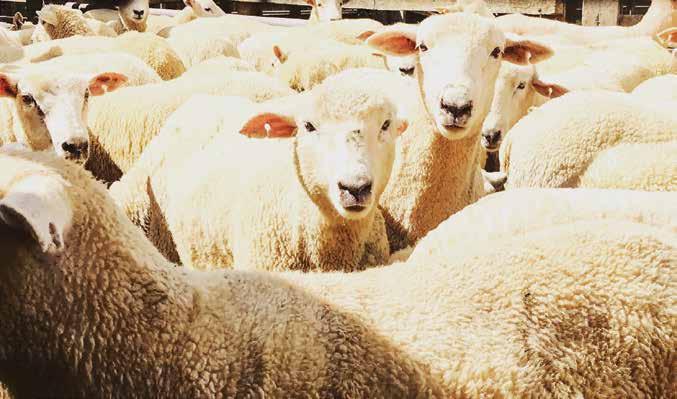
“I’ve had three years of nightmares with Covid and everything else. My biggest worry now is the weather.”
The scheme has been made possible by a grant from the Kiwi Gaming Foundation.
Evo Shearing Plant
For them, the show is an important commercial opportunity, he says.
“Sheep and cattle really use it to promote their breed.”


The Canterbury show
A successful show jumping competitor who has represented New Zealand internation ally, Harris has trained a string of show jump ers and gallopers from his 10-acre farmlet near West Melton.

Show jumping has been “my whole life’” he says.
“This will be the first time since I can’t remem
Also new is support from Vero Insurance, which has come on board as the naming rights sponsor.

A million-dollar loan from the Canterbury pro motional organisation Christchurch NZ was also vital.
Harris says they have gone from “treading water all the time like most A&Ps” to having a debt.
“But if we didn’t get that we wouldn’t have been able to exist.”
“We have missed the public. We have missed our trade people here because that’s really what brings the people to the show, and the compe titions and that type of thing. It’s the bringing together of the whole family and participants that makes the show what it is.
“It’s our week to shine, I believe.”
Lemon is from a fivegeneration family farm at Winchmore near Ash burton – formerly sheep, beef and cropping but now milking 1,100 cows. A long-time veteran of the A&P show circuit, he rode ponies as a child, used to show stud sheep, and is also involved with the Ashburton show.
@rural_newsRURAL NEWS // OCTOBER 25, 2022 26 CANTERBURY SHOW
New Zealand Agriculture Show president and successful show jumping competitor Chris Harris.
Come See Us At the NZ Agricultural Show Call Us On 0800 227 228 or Visit Our Website combiclamp.co.nz Site F23 FREE FREIGHT ON ALL PURCHASES OVER $7,000 TO YOUR NEAREST TOLL DEPOT Combi Clamp Stock Handling Equipment promotes user-friendly operations with incredible efficiency and reliability. Controlled, manual operation of our Sheep Handler, and automatic catching for Cattle, enables more time to be spent safely managing each job. Previous body aching, and risky tasks are now quickly accomplished - we believe that effective stock handling has never been so easy! Never compromise. Choose Heiniger capital equipment, trusted by New Zealand farmers, contractors and shearers to get the job done and ensure you never have to compromise on safety, performance or reliability.
The world’s leading shearers trust the #1 selling shearing plant in the world, winner of multiple WorkSafe awards. The Evo delivers industry leading safety features, impressive performance and superb reliability.
Industry professionals trust the versatile, compact and cost effective TPW Backease Hoist to safely lift loads of up to 600kg with extendable 1.2 - 1.8m boom. At only 78kg, it’s easy to install with no loss of load space and features hydraulic lift and pressure regulated downwards movement.
With industry leading safety features, the #1 selling and most trusted woolpress helps to keep you and your workers safe in the shed. The TPW Xpress now comes with the new FX1+ indicator with audible and visible alarms that let you know when you’re approaching the target weight. Heiniger New Zealand | (03) 349 8282 | heiniger.co.nz Watch our equipment in action! See us at Saddlery Row site L11
Buzz of new Southern Series to lift shearing sports
COMPETITIVE SHEAR ING is about to be boosted with the launch of a new competition, The Southern Series.
The series starts on Friday November 11th at the New Zealand Agri cultural Show in Christ church.
The Southern Series would “take the extreme sport of sheep-shear ing to a global audience,” increasing prize-money and helping to promote wool as a sustainable, natural fibre, event man ager Hugh de Lacy Senior says.
“Not only will com petitive shearers benefit financially from hugely increased recognition as supreme athletes, but
the global exposure will highlight the relevance of wool in the battle against climate change, by reduc ing or eliminating the immense damage done to the environment by oilderived fibres,” de Lacy says.
Over the next two years, The Southern Series would be expanded first into a tour of New Zealand competitions, and then into a global tour taking in shows in Europe, North America and Australasia, beamed out live on television to potentially millions of viewers world-wide.
“It takes a good ten years of year-round work for a shearer to rise from learner to the point
where they’re competitive at the highest level – and there are no short-cuts,” de Lacy says.
“The physical exertion in shearing has been mea sured at the equivalent of running at 7km an hour,
and shearers do it for eight or nine hours a day for as many days in a row as there are dry sheep to shear.”
All this effort is con densed into 20 thrill ing minutes of a shearing
competition final where the race was on to min imise the stress to the sheep by relieving it of its fleece in the shortest pos sible time with the least discomfort for the sheep.
No other sport demands such extreme training, and shearers are usually in their early-tomid thirties before they begin making it into the six-man finals.
Top shearers were rel ishing the opportunity to test their skills on The Southern Series platform, de Lacy says.
Angus Moore, winner of last year’s New Zea land Corriedale Cham pionships at the New Zealand Agricultural Show, says shearing and
woolhandling in general was becoming more pro fessional in all sorts of ways.
The best of them worked around New Zea land and around the world so an event like The Southern Series was another way of recognis ing a job well done.
The series would help to make it more finan cially viable to compete at the highest level.
Even a Senior-grade competitive shearer could be making between $700$1,000 a day in commer cial shearing “and they take a day off to go to shearing show and it can hit them in the pocket, especially as only one guy can come first and that’s
where the prize money is at”.
Still, Moore loves the thrill of performing.
“Getting that firstplaced ribbon is pretty cool,” he says.
Scotsman Gavin Mutch, winner of the recent Waimate Spring Shears, is equally passion ate. “Competitions, that’s my hobby, my sport and I just compete because I love it,” he says.

He’s looking forward to shearing Corriedales at the New Zealand Agricul tural Show.
“I’m from Scotland so it’s coarse wool that I grew up with, so for me to shear fine wool sheep is out of my comfort zone a little bit.”
Watermetrics provides the tools, the data, and the thinking to Irrigate with Excellence

A subsidiary of ADR,

RURAL NEWS // OCTOBER 25, 2022 CANTERBURY SHOW 27
Angus Moore, winner of last year’s New Zealand Corriedale Championships at the New Zealand Agricultural Show.
Watermetrics has expanded its field service capability and have invested heavily in the ever increasing need for Measuring, Monitoring and Managing water in the agribusiness sector. We offer world class equipment and telemetry with a comprehensive suite of end to end solutions. Ourfield operations and delivery team are nationally located nationally with recent additions in Dunedin and Timaru. This means prompt service for installation, servicing, verification and above all secure data delivery. We are backed by a strong administration team supported by an IOT solutions team that provide customer driven solutions. The agricultural world has growing demands for visibility in their use of water. Watermetrics has set out to deliver that visibility with a presentation of data that fits farm management and agronomy needs. Data is collected in 15 minute intervals and shown with sensible targets to minimise water use and still get best pasture and crop growth. We can advise on how best to set these targets up in the context of agronomy management. WE WELCOME YOU TO OUR SITE AT THE CHRISTCHURCH SHOW and look forward to catching up. Contact our team today on 0800 493 7262 Richard on 021-199 1260 www.watermetrics.co.nz ✔ ✔ ✔
See us at Site F 1B at the Canterbury Show
Biosecurity a top priority


 THE CANTERBURY A&P Association is man
aging the show itself, after several years of it
being in the hands of a management company.
Richard Lemon, who has been on the commit tee since 1990 and was president for the 150th anniversary show in 2012, has again stepped up this year following the sudden resignation of the opera tions manager who had to return to England because of a family ill ness.

He says cattle entries are up, especially dairy but also beef.
Biosecurity is being taken seriously, with the Mycoplasma bovis pre cautions introduced in 2018, such as disinfectant hoof baths, again in place.
Although Lemon is confident the disease is now well-contained in the quarantine area of MidCanterbury, he says show organisers have to be aware not just of M. bovis but also diseases such as brucellosis in sheep and even, potentially, foot and
mouth.

“We are not doing things responsibly if we don’t make ourselves aware of those situa tions.”
Lemon says sheep entries are “back a wee bit” but that was expected with the slow decline of the sheep industry in Canterbury over the last seven or eight years.
Sheep breeders are getting older and young guys aren’t taking on stud sheep breeding, he notes.
– Nigel Malthus
SUSTAINABILITY
SHOW
SHOW MANAGER Tracy Ahern is promising a “swag of innovations” including a 15-module competition for secondary school teams over a variety of practical farming tasks.
“One of the big things we have done this year is work really hard on our sustainability.
“We’ll be reducing our footprint by 65% (based on 2019 figures) with the view to being totally sustainable by 2025.
“Materials will be measured, tracked, and reused or donated to community organisations and schools at the conclusion of the event.”
Ahern says they are also determined to highlight the many careers available to young people in the rural economy, not just milking cows but trades, technology, services and even art.
In America there are rural areas using art to draw visi tors, she says.
Graffiti artists have gone through the show site painting the electrical boxes and the show will feature a “cows in the park” competition for children painting a number life-size cows dotted around the park.

Another initiative is a new interactive memorial garden honouring the “Show Saviours” whose support has kept the show alive over the years.

SEMI-MOUNTED REVERSIBLE PLOUGH


RURAL NEWS // OCTOBER 25, 2022 28 CANTERBURY SHOW
ON
Past President Richard Lemon
T/F 03 214 4262 E info@morrifield.com www.morrifield.com Quality Greenhouses • Easy assembly • Strong and durable • NZ made since 1980 • Grow all year round 40 YEARS IN BUSINESS 1980-2020 CELEBRATING morrifield PROUD TO BE NEW ZEALAND MADEWin!! MORRIFIELD GREENHOUSES Thank you to our Valued Customers for your continued support over the years www.morrifield.comGreenhouses Range of models sized 2 metres - 10 metres SEE US HOME & GARDEN HG-6 239 ALFORD FOREST RD, ALLENTON, ASHBURTON TALK TO US ABOUT DEMOS TODAY! MARK SMITHERAM 027 292 5014 ELIOT SCHOFIELD 027 611 1892 JAMES MCCLOY 027 782 7606 PROVEN BRANDS SETTING THE STANDARD DIAMANT • Simple to operate and exceptionally manoeuvrable. • Optiline system eliminates lateral pull and delivers fuel savings of up to 10%. • Improved onland version with increased distance to the furrow edge. • Optional hydraulic traction booster shifts weight towards the rear axle for greater traction. • DuraMaxx plough bodies deliver a longer service life, less clogging and lower traction requirements. • Slatted or full mouldboard body options available. • 4 different working widths or hydraulically infinitely adjustable working widths. Sizes from 5 to 9 furrows.
• Intensive and consistent mixing of organic matter and soil even under difficult conditions. • 645mm serrated concave discs, positioned to ensure directional stability without lateral pull. • Individually mounted and guided discs with non-stop spring-loaded safety device for high-speed work. • Superior clearance, hydraulic depth control adjustable from the tractor cab. • Working depth of approx. 14cm. • Available in mounted, rigid or folding; and semi-mounted, folding in 2.5 – 7m working widths. RUBIN 10 COMPACT
DISC HARROW
• Flexibility of primary tillage, seedbed preparation, deep mixing and ripping in one machine. • Integrated levelling discs leave a smooth, even finish. • Traction enhancement system reducing both slippage and fuel consumption. • Optional heavy rollers. • Individual tine protection. • Available in mounted, rigid or folding; and semi-mounted, folding in working widths of 3-7m. CALL TO DEMO TODAY! KARAT 9 - HUGE SAVINGS ON NEW PRICING! CULTIVATOR Freephone: 0800 EUROAG 6m Karat 9 Instock $132,000 +GST
Trial shows risks of judging rams on looks alone

A RECENT trial compar ing the performance of two lines of rams over commercial two-tooth ewes highlights the perils of judging rams on looks alone.
The trial, carried out over the last couple of years on Beef+Lamb New Zealand’s Future Farm Lanercost, compared two lines of rams (Line A and Line B) that were similar in most breeding value traits, including growth rates.
Phenotypically, the line A rams were a bet ter-looking bunch with a higher standard in terms of body condition and general presentation.
Line B however, had a higher maternal worth

index primarily made up by differences in repro duction (which was higher) and adult body
size (which was lower).


The rams were mated together to two-tooth ewes and the resulting
twin born lambs were EID-tagged and DNAsampled to determine sire parentage (Line A
or Line B). These daugh ters were run together as one mob and mated at 8 months old.
At pregnancy scan ning, there was a 30-per centage point difference between the two sire lines with the hoggets sired by line B rams scan ning 125% while the hoggets sired by line A rams scanned 95%.
If all the 950 ewe hoggets were bred by line B rams there would potentially be 284 more lambs born.
Dan Brier, B+LNZ’s general manager farming excellence, says this highlights the power of using the genetic analysis tools available to farmers, such as maternal worth indices, and making use of estimated breeding values when selecting rams.
“I would suggest that anyone who wasn’t aware of the genetic informa tion behind these rams and judged them on looks alone, would have pre dicted that the progeny of the line A rams would perform at a higher level.”
He says an extra 284 lambs would contrib ute significantly to the bottom line of a farming business and this is with out any changes in man agement.
“It is simply about making use of the genetic tools available to help maximise the productiv ity and profitability of your ewe flock.” @rural_news facebook.com/ruralnews

Up-to-date animal health information for New Zealand farms
Detailed
RURAL NEWS // OCTOBER 25, 2022 ANIMAL HEALTH 29
Beef + Lamb NZ says the trial
highlights
the
power
of using the
genetic analysis tools available to farmers.
New disease prevention resources for sheep born in the digital age. Visit sheepvax.co.nz ACVM No’s A934, A11311, A11766, A9028. Schering-Plough Animal Health Ltd. Ph: 0800 800 543. www.msd-animal-health.co.nz © 2022 Merck & Co., Inc., Rahway, NJ, USA and its affiliates. All rights reserved. NZ-MUL-220800001
Vaccination options and product comparisons:
ROI calculators
Lepto study reveals new challenges
PETER BURKE peterb@ruralnews.co.nzA LARGE new study into leptospirosis in NZ has revealed new facts about how this infectious dis ease may be caught by
various people working in the rural sector.
Massey Univer sity epidemiologist Dr Jackie Benschop, who’s an internationally recog nised expert in the dis ease, recently hosted an

online hui to disseminate the results of the study. It attracted up to 160 people from the wider rural, health and govern ment sectors. The study took two years to com plete and involved ques
tioning nearly 100 people who’d had lepto, plus a group of 300 rural people as controls.
Benschop says it’s well known that the disease disproportionally burdens rural people and Māori –
and Mouth Disease
in particular those who work around livestock as well as meat work ers. But in addition to the well-known group who contract lepto, she says the study revealed some other occupational groups on the periphery of these.
“People for example who do different things such as teat sealing, people who are TB tech nicians and stock truck drivers,” she told Rural News
“In effect, anyone who may be at risk of urine or faeces splash. I guess we have identified some industry risk profiles that we weren’t aware of before, but their inclusion in the wider group makes sense.”
Benschop says because of the comprehensive nature of the survey they were able to get a much wider appreciation of occupations who might be affected by lepto and also some of the possible pathways for contracting the disease.
“This will enable us to enhance the advice we give to help keep people safe. Many of our partic ipants reported contact with pests, not necessar ily associated with their work,” she explains. “For the first time in NZ, we have quantified the risk associated with rodents. Cases were twice as likely to have seen evidence of rodents as controls were.”
Benschop adds that the study also showed if a person cuts or scratches themselves and doesn’t cover it up, they were six times more likely to con tract the disease than those who did have a cut but covered it. She says a similar risk of contracting lepto was seen in those
who hosed urine or faeces off a surface, like in a dairy shed or a slaugh ter house – compared to those who didn’t do this hosing.
“Previous studies overseas have identified these risks for contracting lepto. What is interest ing with our study is that these risks remain after we adjust for occupa tion, as does contact with beef and dairy cattle,” she says.
The other standout finding in the study was the association between lepto and water from a creek or rain source, sug gesting water could act as a vector for lepto in NZ. Benschop says about 15% of people in the study had their work water supply from creeks or rain water and that this was largely untreated.
“This is an interest ing finding and one that we want to look more at,” she adds. “We do not yet have evidence to say this water was the transmis sion route for lepto, but we are saying it is asso ciated with the disease and we want to have fur ther discussions with all parties interested in this finding. I am confident there are real associa tions.”
Benschop is not saying these are causative, but reckons they make bio logical sense and there is evidence to this effect in overseas studies.
Benschop believes water plays a major role in cleaning on and off farm and it is a risk factor that needs more research. She says the same could apply to untreated house hold water supplies where people clean themselves after work.
RURAL NEWS // OCTOBER 25, 2022 30 ANIMAL HEALTH
“Many of our participants reported contact with pests, not necessarily associated with their work.”Massey University epidemiologist Dr Jackie Benschop.
280mm H x 187mm W NAIT is an OSPRI programme Failure to comply with NAIT obligations may result in fines or prosecution issued by the Ministry for Primary Industries. For more information about your obligations as a PICA, please visit our website ospri.co.nz. Play your part, update NAIT Foot
If you have followed all of the steps and still need help, our Support Centre is ready to assist you. Call 0800 482 463 For more information see OSPRI.co.nz In the unlikely event FMD was to enter New Zealand, it would devastate our primary sector and rural communities. OSPRI is working closely with the Ministry for Primary Industries (MPI) and the primary sector to ensure we are best-using the tools and data we have available to support a response team in the event of an outbreak. Please do the following: • Ensure your contact details in NAIT are correct • Tag AND register all of your NAIT animals • Record all movements within 48 hours • Sign up to MyOSPRI It’s critical your data in NAIT is accurate so our biosecurity response team can rapidly track and trace the disease, improving the likelihood of eliminating it sooner.
European tractor registrations down
MARK DANIEL markd@ruralnews.co.nz

A TOTAL of 108,800 tractors were registered across Europe in the first six months of 2022, with 31,900 trac tors of 37kW (50 hp) and under and 76,900 of 38kW and above.
Industry advocate CEMA suggests that 81,800 of these vehicles are agri cultural tractors, the rest made up of vehicles, sometimes classified as tractors, which includes quad bikes, side-by-sides and telehandlers.
Agricultural tractor registrations for the half year decreased by 8.1% compared with the same period in 2021, having started on par in JanFeb, but falling away as the geo-polit ical situation in Europe deteriorated because of the Ukraine-Russia con flict.
While the number of agricultural tractors registered in the first half of 2022 was still the second highest in at least eight years, since March disruptions have led to both bottle necks in the supply of raw materials and components to manufacturers and price increases for those same goods.
Additionally, concerns are also being reported over the possible impact of measures aimed at pre paring Europe for potential future energy supply disruptions and high prices, that combined will have a sig nificant impact on the industry.

Interestingly, the demand for tractors and agricultural machinery in Europe remains robust, helped no

doubt by strong agricultural prices, which according to the global food price index published by the United Nations Food & Agriculture Organ isation (UN FAO), reached unprece dented levels earlier in the year.
Nevertheless, at the same time, farmers were also challenged with a similar unprecedented rise in prices for some key inputs, such as fuel, fer tiliser and animal feed. With prices likely to remain volatile for some time, the future of farm incomes is highly uncertain.
Agricultural tractor registrations declined in each of the seven largest European markets, although France and Germany still accounted for almost 30% of all tractors registered, with falls of 7% and 5%, respectively.

Italy, Poland and Spain, all of which saw very high registrations in 2021, have recorded faster declines in 2022, with falls of 12%, 14% and
14% respectively.
Over the English Channel in the UK, registrations were down 6% on the same six-month period of 2021. However, orders for tractors and farm equipment remain very strong, with the main problem being deliv ery lead times of over six months, or even longer for the likes of for agers and combine harvesters. It is taking even longer to get other mobile machinery, such as harvest ers, to their end user.
This is likely to lead to strong reg istration data, even if orders start to slow down.
Price increases and bottlenecks on the supplier side continue to chal lenge the industry, and, although a slight easing has been observed, around, 31% of the companies are planning temporary production stops due to shortages in the next two months.
ELECTRIC TRACTOR UNVEILED IN EUROPE
AT A recently held sustainability day in Germany, John Deere unveiled the latest updates for its eAutoPowr, elec tric infinitely variable transmission, the first of its kind in the world and now available for the 8R tractor range.

The electric drive is designed to supply drive to the tractor, while also providing up to 100kW of electrical power to external implements, using two brushless, electric motors, that according to the manufacturer, are “vir tually wear-free” and will last the life time of the machine.
Working in partnership with Bel gium transport and effluent specialists Joskin, Deere has developed a system that allows up to 20% of the electric power to be redistributed to two axles on a Joskin slurry tanker. This is said to increase traction in poor ground condi tions or when climbing inclines, help ing to protect the land from sub-surface caused by wheel slip.
In other sustainability news, Deere is also aiming to have electric drive

alternatives in every John Deere prod uct family by 2026, with a further plan to launch a fully autonomous batterypowered electric tractor in the under100hp class with the same timing.


Deere has also been developing a MultiFuel concept to allow its engines to run on biofuels, traditional diesel or fuel blends. The ‘one-tank solution’, is suitable for any fuel in both pure and blended form, including farm-produced plant oils.

In operation, different fuels are recognised by sensors of the standard combustion engine and the exhaust gas after-treatment system. These deliver the data for a mathematical-physical model and for an artificial intelligence – based approach recognising the dif ferent fuel mixtures.
Based on this, the electronic engine control unit (ECU) selects the appro priate software setting for optimal engine operation, while also allowing the engine to comply with Tier 4 emis sion standards.

RURAL NEWS // OCTOBER 25, 2022 MACHINERY & PRODUCTS 31
–
Mark Daniel
European ag tractor registrations January to July 2022.
John Deere’s eAutoPowr.
For more information call us on 06 370 0390 www.tulloch.nz Dealers located nationwide Produce exceptional results with the Krone machinery range. Invest in longevity and quality. Invest in the best. NEW - VENDRO TEDDERS Working width from 4.6m to 11m • Rotor construction is of the highest strength and rigidity to allow optimised tine function. • New Optiturn 3D tines to spread the swath perfectly. SWADRO TC RAKES Working width from 6.4m to 9.3m • Low maintenance, nimble & designed for heavy silage conditions. • DuraMax Cam Track ensures superior shaped windrows. EASYCUT MOWERS • The toughest cutterbar on the market. • SafeCut & SmartCut systems. • Front, rear or trailed options - with or without conditioner. World’s most powerful variable speed clipper is here! handypiece Make dirty jobs EASY this season ■ Ideal for shearing sheep, alpacas, goats and cow tails. ■ Variable speed from 2600-3500rpm. ■ Latest brushless motor technology means minimal heat build up ■ 1400gms means 100-200gms lighter than standard handpiece. ■ At 2800rpm the 12v lithium battery will crutch 300-400 sheep or trim up to 400-500 cow tails. ■ Tough alloy switch box with auto rest fuse for overload or lockup – clips to belt. GET YOUR REPAIRS & SERVICE DONE ASAP! View in action go to www.handypiece.co.nz Freephone 0800 474 327 email: dave@handypiece.co.nz
Whitelock locked in!
MARK DANIEL markd@ruralnews.co.nz


MASSEY FERGUSON has announced the extension of their longterm brand partnership with rugby union icon Sam Whitelock as their brand ambassador for New Zealand, extending the role he has held since 2019 through to March 2025.

Said to share the same values and passion for agriculture as the iconic farm machinery brand, Whitelock embodies the ‘Born to Farm’ spirit.
“So we’re excited to
continue our partnership with Sam, who is a bona fide champion on the field with an impressive track record,” says Haydn Reeves, senior manager – marketing, Massey Ferguson Australia, New Zealand and Far East. “Not only an on-field champion, Sam Whitelock is highly regarded off the playing field as someone who has a strong passion for farming and the rural community in general.”
Regarded as one of the greats of New Zealand Super Rugby, having played in three
to his name, Whitelock’s impressive list of global

achievements include being the youngest New Zealander in history to reach 100 tests, a key member of the 2011 and 2015 Rugby World Cupwinning teams, the 2nd most capped player in history and the record as the fastest player ever to reach 100 international appearances.
As a third-generation dairy farmer from the Manawatu region, farming is in the blood, with a strong connection to the land and a leadby-example mentality, Whitelock aligns with the values of Massey Ferguson, embodying the brand’s hard work, reliability and
TORNADO RANGE
Robust UDOR

ceramic
pump
brass head.
models. Choice of direct drive or low rpm pump with gear box.


Honda with 3 yr warranty.
HOT CLEANERS
ceramic plunger pump. Heavy-duty 4 pole electric motor. 230 & 400-volt models. Diesel hot water heater.


SPRAYPACK
& 600 250 and 600 litre tanks, galvanised frame. HD quick release, PTO shaft, 53L/min spray pump, 25m hose & hand gun, optional 6 metre boom.


UDOR
High quality Italian diaphragm pumps. From 17L/min to 240L/min. 290 psi to 580 psi


commitment to the task ahead.
Whitelock is an upstanding leader who is honest and dedicated to giving his all.
His commitment to giving back to the farming community is evidenced by his involvement with Farm Strong, a notfor-profit organisation focused on providing farmers with the skills and resources needed to live well and keep well.
In his role as brand ambassador for Massey Ferguson, Whitelock will feature in media campaigns and promotional events throughout the duration of his ambassadorship, allowing the Kiwi farming community to have an opportunity to connect with one of the country’s national icons through a shared love of the land.
RURAL NEWS // OCTOBER 25, 2022 32 MACHINERY & PRODUCTS
Rugby World Cups and with over 138 Test caps
Massey Ferguson has extended their long-term brand partnership with rugby union icon Sam Whitelock.
Ph Stuart 0274-387 528 or 06-370 1329 Ph Phil 021-378 858 124 Lincoln Road, Masterton E: daytech@wise.net.nz W: www.daytech.co.nz LEADERS ON FARM MACHINERY DESIGN WOOD SPLITTERS QUALITY YOU CAN RELY ON DT 20 FLAT DECK CONVEYORS • Feeds any size bale • Self loading • Feeds bailage, haw, straw • Ask about different trailer options • Built strong with double skinned main beam. • 4” x 2.5” ram. Good cycle time. • 2-stage hydraulic pump coupled to a genuine Honda motor. • Heavy duty braked • Deck heights 600mm & 725mm • 18mm single piece tread deck • 2x3 metre deck plus fold down head board • 22 tie down points BALE FEEDERS See us at the Gisborne, Hawkes Bay & Carterton A&P Shows Contact AES direct or your local AES dealer FREEPHONE 0508 78 78 78 46 Sir William Ave, East Tamaki, Auckland www.aesblasters.co.nz
Italian
plunger
with
10
Genuine
ELECTROBLAST RANGE Two 230 volt and four 400 volt models with UDOR ceramic plunger pump & low rpm 4 pole (1440 rpm) motor for extended service life. ALBERTI
UDOR
HURRICANE PTO WATERBLASTER/ SPRAYER 250 or 600 litre tank, 540 rpm gearbox. New UDOR 3000 psi 35L/ min pump. MULTI PURPOSE UNIT • Blast • Spray • Drain clean! AES
250
SPRAY BOOMS 4.5 6 & 8m metre spray booms, horizontal fold, stainless steel lines and non-drip low drift nozzles. HOSE REELS 100 or 150m SPRAY HOSE 25, 50, or 100m coils SAVE $$$ VALUE!UNBEATABLE TODAY.CALLUS SPRINGCLEANUPSALE SAVE $$$ SAVE UP TO $400 PHONE FOR HOT PRICES BUY MADENZ &KEEP WORKING!KIWIS
Fastest, most powerful Ram
top speed – sure to make Shep mumble “bugger”.
exclusively
RAM DISTRIBUTORAteco has always made the point that they sell trucks that eat Utes for breakfast.
The relationship with RAM Trucks in the USA began back in 2013, leading to the point where RAM Trucks Australia became is the world’s only RAM-
Other stand-outs include a high-torquecapacity TorqueFlite 8HP95 eight-speed automatic transmission that delivers quick, crisp gear changes during normal and performance driving, a new, innovative dual-path air induction system to deliver maximum output and a new, unique suspension
The latest Halo model to hit NZ’s shores and dubbed the baddest full-sized pick-up truck is the

authorised manufacturer of right-hand drive RAM trucks. All RAM Trucks Australia vehicles are international-spec vehicles, uniquely coded for the Australasian market and the Australian build process, which from nothing seven years ago has now delivered more than 13,000 units to end users.
The New Zealand range starts with the RAM 1500 Express Crew and Warlock models in the original DS variant, followed by the 1500 Laramie and 1500 Limited in the recently launched DT model range, and the Heavy Duty 2500 Laramie® and Heavy Duty 3500 Laramie.
The latest Halo model to hit NZ’s shores and dubbed the baddest full-sized pick-up truck is the TRX, that bears no resemblance to the Honda farm quad that displays a similar designation. While one offers 518cc, the other takes that to the power 12, with a V8 motor of 6.2 litres and an eye-watering output of 532kW (715hp) with 882Nm torque.
The supercharged Hemi V8 of the TRX might also give the loyal farm dog a little to pant about too, with a claimed 0-100km/h time of 4.5 seconds and a 190km/h
system with active damping, incorporating forged aluminium front upper and lower control arms with special attention to caster and camber angles during suspension cycling
Five-link coil suspension is tuned to deliver the best combination of ride, handling and comfort in all conditions, incorporating new front and rear 2.6-inch Bilstein Black Hawk e2 adaptive performance shock absorbers.
A new Baja drive mode calibrates fourwheel-drive and steering systems, stability control, paddle shifters and suspension for ultimate desert performance, delivering maximum capability on undulating, loose surfaces.

Numerous active and passive safety and security features, including ParkView rear backup camera with dynamic grid lines, Electronic Stability Control (ESC) with electronic roll mitigation and six air bags, Blind Spot Monitoring, Adaptive Cruise Control, Ready Alert Braking and Full-Speed Forward Collision Warning-Plus, Goodyear Wrangler Territory 325/65/R18 AllTerrain 35-inch tires,
HIGH OUTPUT – LOW RUNNING COSTS


EFFICIENT & EASY OPERATE TRANSMISSIONS

RURAL NEWS // OCTOBER 25, 2022 MACHINERY & PRODUCTS 33
developed
for Ram TRX, are said to achieve unmatched levels of wear resistance, traction, and reduced road noise. Whilst maximum load and towing capacities are yet to be released, pricing is not for the fainthearted, with a MSRP from $249,990. Ram 1500 TRX
MARK DANIEL
markd@ruralnews.co.nz
TRX, that bears no resemblance to the Honda farm quad that displays a similar designation. NEW MF 5S | 105 – 145 HP NOW IS THE TIME TO SECURE YOUR NEW MF 5S. Speak to your local Massey Ferguson dealer for more information. WWW.MASSEYFERGUSON.CO.NZ FREECALL 0800 825 872
Peak engine power (AGCO Power, 4 cylinder) and torque (up to 550Nm). PROVEN
With automatic shifting and Brake-to-Neutral. COMFORTABLE & QUIET CAB AT ONLY 69DB New ergonomic armrest with easy to use controls and cab suspension and suspended front axle options. TWO SPECIFICATIONS Essential and Efficient to meet your requirements. *Finance under chattel mortgage with an interest rate of 1.99% pa, 30% cash deposit, the GST component repaid in the 4th month and monthly repayments in arrears over a 36 months term. Available for new retail orders placed before COB 31 December 2022 that are installed by 30 June 2023 to approved purchasers for business purposes only. Fees, terms & conditions apply. Finance provided by AGCO Finance Ltd GST Nr 88-831-861. Offer available at participating Massey Ferguson Dealers only, while stocks last. is a global brand of AGCO corporation 212732_MF_5S_Q4_1.99%Fin_DairyNewsNZ_187x280mm A NEW ERA FOR DEPENDABLE TRACTORS NEW MF 5S THE ULTIMATE ALL-ROUNDER FOR A LIMITED TIME ONLY SECURE A LOW 1.99% P.A. FINANCE *





RURAL NEWS // OCTOBER 25, 2022 34 RURAL TRADER SPRAY UNITS Honda GP200 Motor • 40 Bar/580 PSI • Flow Rate 41L per min • Comet APS41 Diaphragm Pump • 5D Suction Filter • Pressure Regulator & Return System 650kg Break Strength Strapping 30m Hose Reel c/w Spot 300 Spray Gun Hot dipped Galvanised TrailerComes in 200L, 400L & 600L models Petrol & 12V Trailers available • • • •• PETROL DECK SPRAYER ATV 12V SPRAYER TRAILED 12V SPRAYER NORTH ISLAND: 23 Mahinui St, Feilding. Ph 0800 625 826 www.mckeeplastics.co.nz SOUTH ISLAND: 35 Wilkin St, Waimate. Ph 027 665 3667 Tours designed for the young at heart traveller looking for their next adventure Discover the real Australia with Kiwi Travel Club • Exclusive 6–10-Day Tours • Local Guides Free Phone: 0800 895 194 Email: info@ktctours.com www.kiwitravelclub.co.nz Guided &escorted toursof New AustraliaZealand, & AmericaNorth • Comfortable Coaches • Premium Hotels • Flexible Payment Terms • Free Club Membership * Per Person Twin Share Australian Tours 2023 Australian Red Centre Alice Springs to Uluru (Ayers Rock) MAY $2,495* Tasmanian Foodies Tour Hobart to Launceston OCT $3,329* The Kimberley’s Darwin to Broome AUG $5,250* Tropical North Queensland Cairns SEP $1,950* Invest in your safety The world’s first flexible roll bar 0800 782 376 traxequipment.co.nz Rebate Available $1440 + GST & Freight Free Range & Barn Eggs SUPPLIERS OF: • Nest boxes - manual or automated • Feed & Drinking • Plastic egg trays QUALITY PRODUCTS MADE IN EUROPE OR BY PPP ❖ A trusted name in Poultry Industry for over 50 years ❖ STOP BIRDS NOW! ZON BIRDSCARER From $685.00 CRAIGCO SENSOR JET • Robust construction • Auto shut gate • Total 20 jets • Lambs only 5 jets • Side jets for lice • Adjustable V panels • Davey Twin Impellor Pump • 6.5 or 9.0hp motors PH 06-835 6863 • MOB 021-061 1800 JETTER VIDEO: www.craigcojetters.com SHEEP JETTERS SINCE 1992 GUARANTEED PERFORMANCE QUICK TO SETUP – EASY TO USE – JOB DONE LASER FF95 DIESEL HEATER 0800 379 247 www avonheating co nz ü Huge 9.5kW output. ü Made in Japan since 1991. ü Energy Efficient - 92% certified ü Safe, convenient and easy to useno mess, no fuss. ü DIY Install or we can arrange. ü No wood to cut, cart or store. ü NO indoor diese odours Docking Chute 0800 DOCKER (362 537) www.vetmarker.co.nz VETMARKER® For a special gift for a special person... HOW ABOUT A PERSONAL CARICATURE? Contact Malcolm Evans email: malcolm@evanscartoons.com www.ruralnews.co.nz Breaking news ManageMent stories Markets & trends Machinery reviews coMpetitions and Much More... Check out our new websites
DOLOMITE



ESCORTED TOURS 2022/23


"Hassle free travel for mature travellers’’

• FAR NORTH & BAY OF ISLANDS (4 spots available)


7 days, depart 17 September. A leisurely coach tour of the Far North including the new Hundertwasser Art Centre and day trip to Cape Reinga.
• EAST COAST & NAPIER (6 spots available)


8 days, depart 21 September A unique and exciting tour around the East Cape and return via the Northern Explorer train
• CHATHAM ISLANDS DISCOVERY


8 days, depart 20 October A special place for a safe and relaxing close to home all inclusive holiday.

• BEST OF THE SOUTH ISLAND

15 days, depart 22 November A spectacular trip around the many highlights of the South Island taking in the wonders of Tekapo, Twizel, Stewart Island day excursion, the Milford Sound and Queenstown. Overnight cruise on the Milford Sound
• NEW PLYMOUTH 'CHRISTMAS LIGHTS' 5 days, depart 23 December A Christmas get away featuring the magnificent light display at Pukekura Park along with some great sightseeing during the trip.
• WAIKIKI BEACH & HAWAII CRUISE
11 days, depart 25 May 2023 A 'Pride of America' cruise for 7 nights with a Waikiki highlights 3 day stop over including Pearl Harbor and Oahu round Island tour.
• TAHITI & SOCIETY ISLANDS CRUISE 10 days, depart 21 July 2023 Set sail on board Le Paul Gauguin for an unforgettable journey to discover idyllic sands and atolls. Tour includes flights to/from Papeete.
RURAL NEWS // OCTOBER 25, 2022 RURAL TRADER 35 www.mckeeplastics.co.nz 300mm x 6 metre $410 400mm x 6 metre $515 500mm x 6 metre $735 600mm x 6 metre $989 800mm x 6 metre $1496 1000mm x 6 metre $2325 1200mm x 6 metre $3699 ALL PRICES INCLUDE G.S.T. CULVERT PIPES NORTH ISLAND 23 Mahinui St, Feilding Ph 0800 625 826 SOUTH ISLAND 35 Wilkin St, Waimate Ph 027 665 3667 Lightweight, easy to install •
Water Troughs Water Transport Water Storage
For a Quadbar, call me, Stuart Davidson, owner of Quadbar NZ, on 021-182 8115. Email sales@quadbar.co.nz or for more info go to www.quadbar.co.nz QUADBAR Proven beyond doubt! “I have no doubt that if I did not have a Quadbar fitted, my accident would have been fatal!” – Rozel Farms “The Quadbar saved our employee from significant injuries.” – Colin van der Geest QUADBAR 5 YEAR SURVEY 600 500 400 300 200 100 0 NUMBER OF QUADBARS 479 ROLLOVERS 61 NUMBER OF DEATHS 0 $595 +GST delivered Recommended by Worksafe. ACC subsidy available BURGESS RUBBER UTE TRAY MAT WWW.BURGESSMATTING.CO.NZ CALL US ON 0800 80 85 70 $7680 +GST INCLUDES: • Jetter unit • Pump & Hose kit • Delivery to nearest main centre CONTROL FLYSTRIKE & LICE SUPPLYING FARMERS SINCE 1962 FLY OR LICE PROBLEMS? The magic eye sheepjetter since 1989 Quality construction and options • Get the contractors choice 07 573 8512 | dipping@electrodip.co.nz – www.electrodip.com Featuring... • Incredible chemical economy • Amazing ease 1500+ per hour • Unique self adjusting sides • Environmentally and user friendly • Automatically activated • Proven effective on lice as well as fly • Compatible with all dip chemicals • Accurate, effective application
NZ’s finest BioGro certified Mg fertiliser For a delivered price call... 0800 436 566 www.ruralnews.co.nz
For full details Phone 0800 11 60 60 www.travelwiseholidays.co.nz RAMS AND EWES FOR SALE HARDY, LOW INPUT EASY CARE MEAT SHEEP Ph 027-225 5283 www.organic-rams.co.nz • tim@organicstud.nz Hair Shire Rams® Also Tufty (polled Highland) bulls, cows and calves available • No dagging • No shearing • No dip, drench or chemicals since 1989 ® Hair Shire® Stud Ram Sire “Silver” progeny for sale SALE ends soon JACKET BIB OVERALLS LEGGINGS 100% Waterproof Flexible Fleece Collar Hood Visor Acid Resistant Durable SeamsStitched On Soles Plain Toe* or Steel Toe175% more crack resistant than normal leather Buffalo Leather earthwalk.co.nz free shipping0800 16 00 24 sizes: BOOTS 5 - 13 (NZ) RAINWEAR XS - 4XL9am-5pm PHONE NEW! BUFFALO BOOTS RAINWEAR BUY $160* $150*valued at $320 $280 valued at $230 New Zealand owned & operated NEW - WIDER TOE BOX NEW - WIDER STEEL CAP ** NEW - KEVLAR PENETRATION RESISTANT SOLE ** NEW - 250 DEGREE HEAT RESISTANT OUTSOLE NEW - BALL BEARING SPEED LACING NEW - FLEXIBLE RAND NEW - STRONGER OUTSOLE STITCHING NEW - STRONGER MIDSOLE NEW - STRONGER FORESTRY GRADE SHANK (**safety models) New boots arrive early November $109 $99$88
