Is the risk worth it?
A LEADING horticulturalist is ques tioning whether enough is being done to infrastructure in NZ to keep pace with the expansion of agriculture in all its forms.
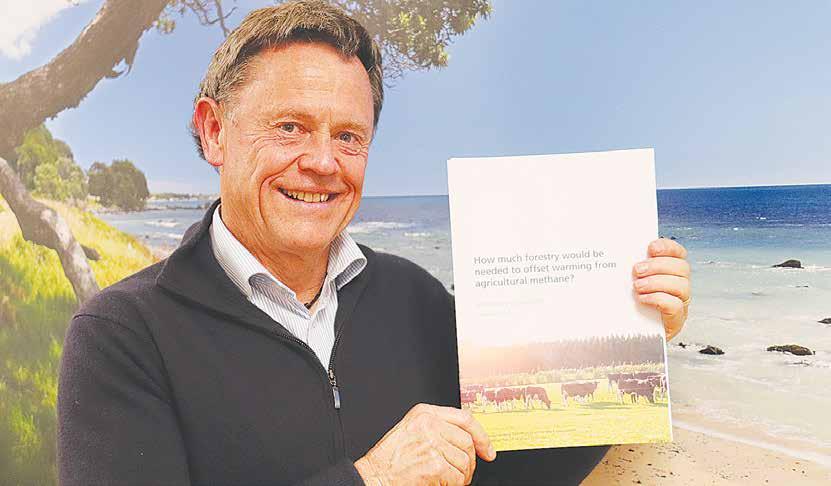
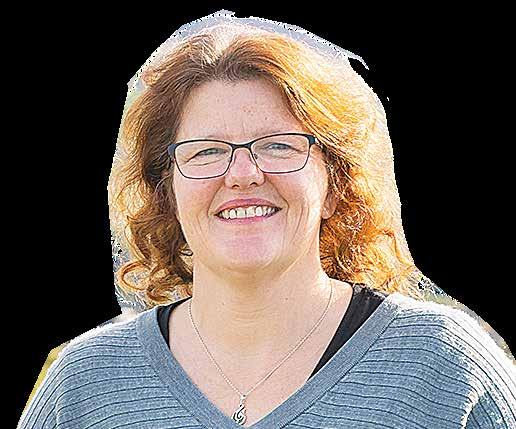
Richard Burke, chief executive of Leaderbrand – a large horticultural operation based in Gisborne and other
parts of NZ, says there’s no question that in the past 12 months, on the East Coast and at another of their major growing areas at Pukekohe, weather conditions have been extreme. He says this has had an impact on getting plants to grow. Burke adds that the weather has also impacted on roads and other infrastructure.
“My question is whether the pres ent infrastructure is up to scratch to
meet our needs,” he told Rural News
“When we built road roads, we built them for 30 tonne trucks – now we are now putting 50 to 60 tonne trucks down them. I know technology has come a long way but have we really adjusted our roads to deal with what we are trying to achieve with them?
We see it on country roads around Gisborne that were built for one or two stock trucks a month and are now
having to handle forestry harvesting at 30 trucks a day.”
Burke says another thing that con cerns him is the impact of driving up production. He says there are farming and horticultural operations based on land that was previously seen as mar ginal. He points out that if one doesn’t get caught out by weather initially, the chances are that it may be assumed that such operations are reliable in
the future.
“Then we forget quite quickly when things go wrong, but nature is nature.”
Burke says, in his experience, there have always been major weather events, but the impacts of these now are being highlighted by growing sys tems and less appropriate infrastruc ture. What he is seeing is that the risk of growing a crop now is much higher than it was, especially with the increased cost of fertiliser and fuel and lack of people to harvest it.
“All these factors are in the back of your mind when you are running your planting plans. I would suggest that a lot more people have become a bit more risk adverse because you can’t afford to leave crops behind now,” he explains.
“You can’t afford to bypass a crop, so when you are little bit risk adverse you don’t have so much supply around you and when an event does occur the loss can be greater.”
A forest for the trees?
Parliamentary Commissioner for the Environment Simon Upton has just released a report ‘How much forestry would be needed to offset warming from agricultural methane’. In the report, Upton expresses strong reservations about using forests to offset fossil carbon dioxide emissions. However, he believes that using forestry to help offset agricultural emissions might be more justifiable. The report also points out that while methane emissions from dairy cattle have increased, emissions from beef, sheep and deer have all decreased and that total livestock methane emissions have basically remained constant since 2000. – See full story page 4
THE RISKS ARE LESS RISKY WHEN WE’RE PART
THE
OCTOBER 11, 2022: ISSUE 761 www.ruralnews.co.nz TO ALL FARMERS, FOR ALL FARMERS MANAGEMENT Managing sheep drench resistance. PAGE 27 ANIMAL HEALTH Protect your beef herd from BVD. PAGE 29 NEWS Low emissions not
OF
PICTURE. Moving ahead means making changes. And that usually comes with a few risks along the way. But with us as your partner, you can progress with more confidence. That’s because FMG offers the kind of specialised advice and knowledge that only comes from working alongside rural New Zealand for generations. To find out more, ask around about us. Better still, give us a call on 0800 366 466 or go to fmg.co.nz. FMG, your partners in progress. We’re here for the good of the country.FMG1362HFPSRN
PETER
BURKE peterb@ruralnews.co.nz








The only mower with round discs. This gives better cutting and it leaves no pinch point for rocks to get caught. THE CUTTERBAR WITH ROUND DISCS The cutter-bar will swing backwards and up when hitting an obstacle and return to working position automatically (Instant reaction / non-stop). NON-STOP BREAK-BACK DEVICE The mower is lifted via the hydraulic cylinder – there is no need to activate the 3 point linkage of the tractor. EASY LIFT ON HEADLANDS GET YOUR SEASON SORTED WITH THE KVERNELAND MOWER RANGE READY FOR GRASS? 2.95% INTEREST † 1/3RD IN 12 MONTHS 1/3RD DEPOSIT NOW 1/3RD IN 24 MONTHS 2 YEAR WARRANTY deutz nz We’re ready to do whatever it takes to keep you growing this Spring. Deal’s not quite right? Ask our team about our flexi finance options. *Terms, conditions & normal lending criteria applies. 30% deposit, 2.95% interest rate, monthly payments over a 36 month term. GST paid month 3. While stocks last. Offer ends 31st October 2022. Images may show optional extras and may differ from product advertised. ** Not available on all models • FARMotion 4 cylinder Tier 4i engine • Trima self-levelling loader • Wet clutch power shuttle • 60 x 60 transmission • True four wheel breaking • Stop N Go function • SDD – high speed steering system** • Hydroblock cabin suspension** 5 Series PF99718 Power Farming NZ WHANGAREI 09 438 9163 PUKEKOHE 0800 570 571 TAURANGA 07 543 0021 MORRINSVILLE 07 889 5059 WHAKATANE 0800 77 88 99 TE AWAMUTU 07 870 2411 ROTORUA 07 349 6528 GISBORNE 06 868 8908 HAWERA 0800 480 309 HASTINGS 06 879 9998 FEILDING 06 323 8182 MASTERTON 06 370 8240 NELSON 03 544 5723 BLENHEIM 03 573 7089 GREYMOUTH 03 768 4370 CHRISTCHURCH 03 349 5975 ASHBURTON 03 307 7153 TIMARU 03 687 4127 DUNEDIN 03 489 3489 GORE 03 208 9395 INVERCARGILL 03 215 9039 † Terms, conditions & normal lending criteria applies. 3 equal payments over 24 months. GST paid month 3. Offer ends 31st October 2022. proudly locally o wnedand operated100%kiwi owneD
HEAD OFFICE
Milk prices turning sour?
SUDESH KISSUN
FEARS OF a global recession and questions over global demand for milk products are pushing dairy prices down.
While a strengthening US dollar and lower milk production normally means higher returns for New Zea land dairy exports, a weaker NZ dollar isn’t all good news for farmers, accord ing to Westpac senior agri economist Nathan Penny.
Penny puts last week’s drop in Global Dairy Trade (GDT) prices to the “rising dairy prices in local cur rency terms and a degree of cautious ness in dairy markets following the broader financial market nervousness of the last few weeks”.
Dairy prices have essentially given back their gains at the previous auc tion. Butter prices led the falls, plunging 7%. Whole milk powder and cheddar prices both posted falls
around 4%. Penny told Rural News the result was worse than what futures markets had forecast.
“Markets are increasingly con cerned that the global economy may slip into recession as global central banks aggressively hike interest rates in their battle against surging infla
tion,” he says.
One of the key market moves has seen investors buy safe haven assets like the US dollar in favour of curren cies perceived to be riskier like the NZ dollar.

This move led the NZD as low as US$0.56 last week.
Penny points out that on the sur face a weak NZD/USD boosts farmer incomes, including the milk price.
Focusing only on the currency and using Westpac’s current dairy com modity price forecasts, a one cent move in the NZD/USD would add up to 18c to the milk price estimate, he says.
“However, a weaker NZD/USD can impact dairy markets in other less favourable ways.
“First up, other currencies like the Chinese Yuan have also fallen against the USD.
“As a result, dairy commodity prices have become more expensive for buyers in our largest dairy market. And as we have seen overnight, with
dairy auction prices falling, this can lead to lower dairy demand. Secondly, the strong US dollar may also be a symptom of or a signal that the global economy is weakening.”
A weaker global economy can also lead to lower demand for goods, including for dairy products.
Westpac is sticking to its 2022-23 forecast milk price of $9.25/kgMS.
Penny says the risks to its forecast are now more balanced.
“On the upside we have the ongo ing weakness to global dairy supply, while on the downside we have the fragile global economy and its poten tial negative implications for global dairy demand.”
ASB is also sticking to its forecast milk price of a record $10/kgMS.
Nathaniel Keall, ASB economist, says its “bullish” forecast has long been based on the view that global dairy output is likely to remain extremely constrained over the course of the season, keeping prices well supported.
POSTAL ADDRESS
Gloriavale wins reprieve
WEST COAST milk processor West land Milk Products has been ordered by the High Court to continue pick ing milk from three dairy farms associated with the Gloriavale com munity.
The company’s argument that Gloriavale-owned Canaan Farms employed children to do farm work and processing their milk affected relationships with major customers was thrown out by Justice Jan-Marie Doogue.
Justice Doogue granted Canaan Farms an injunction that requires Westland to continue picking milk
from Bell Hill, Gloriavale and Glen Hopeful farms pending further order of the Court.
The injunction is subject to the condition that Canaan does not employ any minors or associate part ners under the age of 18 on its farms.

A Westland spokesperson told Rural News that the Chinese-owned processor acknowledged the decision of the High Court.



“While our relationships with our suppliers are extremely important and based on mutual respect, our decision to suspend collection from Gloriavale was based on concerning
employment and social issues iden tified by the courts,” the spokesper son says.

In May, this year an Employment Court ruling observed that children working for Gloriavale’s commercial entities were exploited and abused.
After reviewing the judgment Westland advised Canaan it had decided not to collect its milk supply.
Canaan argued that there was no legal or factual basis on which Westland could refuse to take delivery of Canaan’s milk under the three contracts signed between the two parties.
In her judgment Justice Doogue noted that Westland claimed it had already lost a customer and suffered loss due to the presence of Canaan’s milk in its products. Westland also anticipated losing further significant customers if it continued to purchase Canaan’s milk.
“There is no evidence of actual loss,” she says.
Justice Doogue says the milk supply deal between Westland and Canaan was a simple one: Westland agreed to take Canaan’s milk supply for 10 years subject to the control of supply provision.
RURAL NEWS // OCTOBER 11, 2022 NEWS 3 ISSUE 761 www.ruralnews.co.nz
Lower Ground Floor, 29 Northcroft Street, Takapuna, Auckland 0622 Phone: 09-307 0399 Fax: 09-307 0122
PO Box 331100, Takapuna, Auckland 0740 Published by: Rural News Group Printed by: Inkwise NZ Ltd CONTACTS Editorial: editor@ruralnews.co.nz Advertising material: davef@ruralnews.co.nz Rural News online: www.ruralnews.co.nz Subscriptions: subsrndn@ruralnews.co.nz NEWS 1-19 AGRIBUSINESS 20-21 HOUND, EDNA 22 CONTACTS 22 OPINION 22-25 MANAGEMENT 27-28 ANIMAL HEALTH 29-30 MACHINERY AND PRODUCTS 31-33 RURAL TRADER 34-35 suzuki.co.nz T&Cs: Promotion available between 26/9/22 to 31/12/22 on new Suzuki JR80, DR-Z125, DR-Z125L, LT-Z50 and LT-Z90. Free Tool Set is covered by the manufacturer’s warranty, and valued at $79.98. Available through participating authorised Suzuki dealers. An interest rate of 5.99% p.a. is available to approved applicants of UDC Finance. Offer is available between 26/09/22 to 31/12/22 on a loan term of 24 months, from no deposit on regular monthly payments. Normal UDC lending and credit criteria apply and includes a $305 documentation fee and $10.35 PPSR. Thiswonpresent ’t fit underthebed. But it will fit your Christmas budget! 61 PIECE TOOL SET PLUS FROM NO DEPOSIT 24 MONTHS TO PAY!FREE TRACTA_65244_KidsBIke_RN
sudeshk@ruralnews.co.nz
Westpac’s Nathan Penny says the latest GDT result was worse than what futures markets had forecast.
A limit to trees saving the planet and farms – report
NEW ZEALAND cannot plant its way out of our greenhouse gas problems.
That’s the key mes sage from the Parliamen tary Commissioner for the Environment Simon Upton in his just released report ‘How much for estry would be needed to offset warming from agri cultural methane’.
Upton says he’s always expressed strong reserva tions about using forests to offset fossil carbon dioxide emissions. How ever, he believes that using forestry to help offset agricultural emis sions might be more justifiable because the warming from methane and the compensating cooling effect of planting a forest are both largely temporary.
“Methane is a much stronger gas than carbon dioxide, so we needed to know how much forest you need to plant to say that you were making a useful contribution to heading off danger ous climate change,” he told Rural News. “To test the feasibility, I commis sioned Professor David Frame and Dr Nathanael Melia to calculate what area of forestry would be required to offset livestock emissions using a warming-based approach.”
Upton says there are no recommendations in the report as such, rather the objective is to foster a
better and more informed debate on what might be possible.
In a summary doc ument, which is effec tively a précis of the detailed and highly tech nical full report, Upton notes that there is genu ine confusion about how much warming is being caused by NZ’s livestock.
The document also notes that while methane emis sions from dairy cattle have increased, emissions from beef, sheep and deer have decreased and that total livestock methane emissions have basically remained constant since 2000.
One key fact high lighted in the report –and set out in graphic form – is the amount of new plantation forestry that would be needed
UNEVEN PLAYING FIELD
ONE ISSUE that Upton continues to express concern about is the fact that fuel emitters have access to forestry to offset their emissions, while the agricultural sector doesn’t.
He says this makes for a playing field that is tipped against agriculture.




“It has never made sense to me that you allow offsetting for fossil fuel emis sions but don’t allow them for agriculture,” Upton explains.
The complex report, which probably needs to be read and reread – offers another perspective on how NZ could
to offset methane emis sions of individual ani mals. In the case of a dairy cow, 0.6ha would be required, 0.4ha for
deal with agricultural emissions. For many, planting trees has been seen as an option, but this has drawn fire from those who see productive pasture being wasted by tree planting.
What is clear is that confusion and uncertainty still reign and this document is Upton’s offering to the debate.
“All I can say is we really need to move on this stuff – that is a real reduction in emissions,” he says. “Trees might be able to add something to it, but we can’t rely solely on trees because there isn’t enough land.”
a beef cattle, 0.2ha for a deer and 0.08ha for a sheep. The report says that planting 770,000ha of plantation pine forest
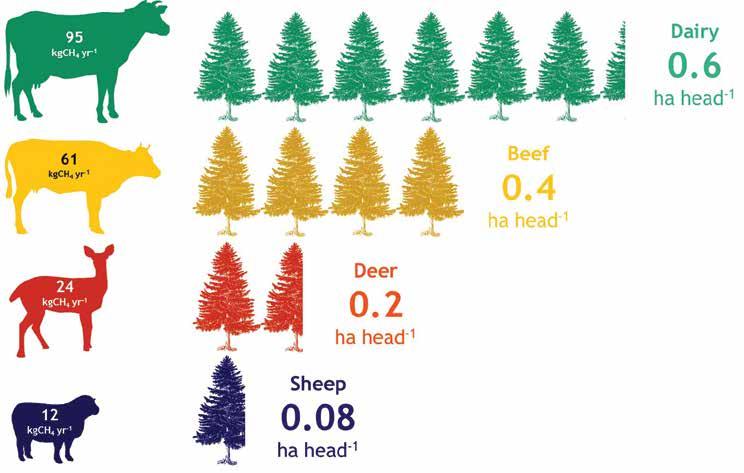
– between now and 2050 – would have the effect of reducing by 10% methane emissions from the live stock sector.
However, Upton points out that if the planting of trees was to go on unconstrained, the country would run out of land. He also highlights the adverse economic, social, cultural and envi ronmental impacts of this in the report – as well as the negative effect on infrastructure, such as roads.
“What I am saying is that some trees will have a cooling effect and what I have given is the exchange rate and the limit to what trees can do,” Upton explains. “But I don’t think you should completely discount them.”
The report looks at
options on farm and sug gests that other farm veg etation – such as riparian plantings and scattered bush fragments, wood lots and shelter belts – would likely have mini mal impact at a national level.
Upton adds that the goal is to reduce agricul tural emissions and a lot of options, such as breed ing animals that produce low emissions, vaccines and other tools, are being devised. He stresses how research into these areas is a high priority and says recent government ini tiatives will help in this regard.
RURAL NEWS // OCTOBER 11, 2022 4 NEWS
PETER BURKE
peterb@ruralnews.co.nz
“What I am saying is that some trees will have a cooling effect and what I have given is the exchange rate and the limit to what trees can do. But I don’t think you should completely discount them.”
@rural_news facebook.com/ruralnews PHONE 06 357 8562 WILSON www.wilsonplastics.co.nz AVAILABLE AT YOUR LOCAL FARM OR IRRIGATION STOCKIST PORTABLE TROUGHS... WT 75 WT 200 BREAK-FEEDING... 200 litres specially designed for break-feeding. They can be towed when full and also can reel in metres of alkathene. RDT 200 PHONE 06 357 8562 WTD 150 • Ideal between paddocks • Ballfloat fitted WT 75 • Easy to handle • Ballfloat fitted WT 200 • Tough and durable • Ballfloat fitted PORTABLE TROUGHS AVAILABLE AT YOUR LOCAL FARM OR IRRIGATION STOCKIST
BLNZ feeling the heat?
ON THE back of growing criticism about its advo cacy efficacy, Beef+Lamb NZ recently emailed farmer levypayers a list of its advocacy efforts.

B+LNZ has come under sustained attack from the likes of rural ginger group Ground swell and a collection of unhappy farmers behind the ‘Waka Adrift’ adver tisements over its advo cacy – especially around the controversial He Waka Eke Noa agree ment.
“We share your con cerns and frustrations with the Government’s deluge of poorly thoughtout environmental poli cies,” chairman Andrew Morrison and chief exec utive Sam McIvor told farmers in the email. “Pushing for sensible out
comes is our main pri ority.”
Both claim that B+LNZ’s advocacy work ‘is a constant grind’.
“The Government isn’t listening and is trying to rush things through before the next election,” the pair explain. “However, we won’t give up and we’ll keep working with other industry organisations to increase our influence.”
Morrison and McIvor also add that they are working on a plan in the lead-up to next year’s General Election.
“If there is a change of government then that new government will be up to speed on what needs to change and quickly,” they say.
The email to farmers lists a number of areas which B+LNZ claims to be working on their
behalf with the Govern ment, bureaucrats and regional councils.
“Along with Federated Farmers and DairyNZ, we have spoken with and again written to Envi ronment Minister David Parker to reiterate our concerns about the inten
sive winter grazing rules, which are becoming more confusing,” it outlines.
B+LNZ says the three organisations wrote to Parker in August asking for him to postpone the start date for the new rules (currently 1 Novem ber).
“We are yet to receive a response and wrote to Minister Parker again last week, calling for urgent action to delay the implementation of the regulations while an appropriate alternative solution is developed.”
It says the intensive winter grazing rules are just one example of the way the Government has rushed out rules that need extensive re-work.
“We’ve had lots of meetings with opposition MPs and environmental NGOs on the wholesale conversion of sheep and beef farmland to carbon farming and are looking at short and long-term policy options,” the email adds.
“We’re calling on the Government to urgently clarify its plans to address this. While there is a place for forestry for
New Zealand to meet its climate change commit ments, too many sheep and beef farms are going into forestry driven by the carbon price.”
B+LNZ says it has “released an explainer” for sheep and beef farm ers on the He Waka Eke Noa emissions pricing recommendations.
“This sets out our positions and addresses some common questions and misconceptions.”
B+LNZ concedes that some people have con cerns about He Waka Eke Noa’s recommendations.
“We’re continuing to meet with farmers to discuss these concerns.
Farmers are right to ask questions and we wel come debate.”
However, it says it B+LNZ supports the He Waka Eke Noa process and partnership.
“While we’d prefer farmers didn’t face a price for their emissions, we believe He Waka Eke Noa is the best available option and is better than the Emissions Trading Scheme (ETS).”
Meanwhile, the organ isation says it continues to push for a rethink on the definition of Signifi cant Natural Areas in the biodiversity rules.
“We have arranged to get officials on-farm this week (late September) to get a practical farm-level view,” it claims.
The email to levypay ers from Morrison and McIvor finishes up by saying that B+LNZ is open to hearing from farmers.
“We’re always happy to talk about what we’re doing so please get in touch if you have any questions.”

RURAL NEWS // OCTOBER 11, 2022 NEWS 5
DAVID ANDERSON
BLZN chair Andrew Morrison told levypayers he shares their concerns and frustrations with the deluge of poorly thought-out environmental policies.
Available from your local reseller. WIN a spa pool package worth $8000* *Purchase a minimum of 1 tonne of Calcimate between 1 July - 31 October 2022. Text CALCIMATE and your full name to 226 to enter the draw. Visit calcimate.co.nz for full T&Cs. GRA 1158 Protecting your best interests for 20 years. That’s what real mates do. You can always rely on good mates to see you right. That’s why for 20 years New Zealand farmers have leaned on Calcimate® for unwavering animal health support.
Niche dairy company leads the way – again
 INDEPENDENT
WAIKATO milk
INDEPENDENT
WAIKATO milk
processor Tatua is eyeing another reasonable year after setting a new milk price record last season.

The Tatuanui-based co-operative paid its shareholders $11.30/kgMS for the 2021-22 season’s milk despite a 6% drop in milk production.
Tatua chairman Stephen Allen told Rural News that he was “cautiously optimistic” for another reasonable season.
This is despite a



slow start to the 202223 season, with milk production 6% behind compared to this time last season.
Allen says while a very dry summer and late
autumn impacted milk production last season, for the first few months of this season farmers faced too much moisture.
“But with strong returns we are cautiously optimistic of another reasonable year,” he says. Allen says the company is keeping an eye on global the supply/ demand situation and geopolitical tensions around the globe and will
provide an update to its farmer shareholders later this month.
Tatua’s record payout eclipsed final payouts announced by Fonterra ($9.50/kgMS) and Synlait ($9.59/kgMS). Total income reached $444 million, with $186m earnings available for payout. This equates to $12.65/kgMS – the co-op retained $1.35/kgMS for reinvestment.
Last year, its earnings topped $10.43 and farmer suppliers received $9.25/ kgMS, another record payout.
Allen says Tatua farmers are very appreciative of the record payout in a season “which wasn’t fantastic”.
“Farmers have a lot on their minds, it’s been hard going and no one has stopped since the pandemic.
“The payout will support them on farm with things like feed
purchase and meeting increased on-farm costs.”

Allen says in deciding the payout the company was “very conscious of the sharp increases in on-farm costs being experienced by our shareholders, as well as the requirement for continued investment in the business and maintaining balance sheet resilience in what remains an uncertain economic and global trade environment”.
Tatua’s gearing (debt divided by debt plus equity) averaged 21% for the year, but was slightly higher at year end, reflecting increased inventory holdings at balance date.
Allen says the Tatua performance story is very much a team effort led by “our highly capable chief executive Brendhan Gre aney”.
RURAL NEWS // OCTOBER 11, 2022 6 NEWS
SUDESH KISSUN sudeshk@ruralnews.co.nz
“Farmers have a lot on their minds, it’s been hard going and no one has stopped since the pandemic.”
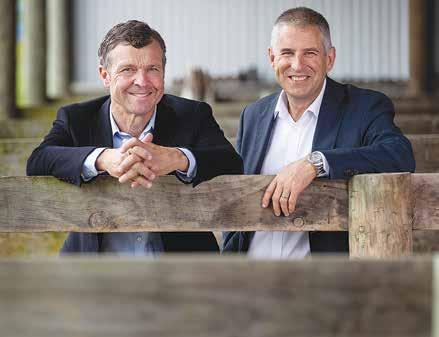
Tatua Co-operative Dairy Company chairman Stephen Allen (left) and chief executive Brendhan Greaney.
Safety Platforms SHEEP JETTER Sheep dipping... made easier! Manufactured from stainless steel Price includes • Jetter Unit • Hose Kit • Pump & Motor • Delivery to Nearest Main Centre Serving NZ Farmers since 1962 www.pppindustries.co.nz sales@pppindustries.co.nz 0800 901 902Innovative Agriculture Equipment Serving NZ Farmers since 1962 Innovative Agriculture Equipment $7,685 + GST See us at Fieldays Main Pavilion site PC25 @rural_news facebook.com/ruralnews
Shear grit at record attempt
WOODVILLE SHEARER
Sacha Bond is training hard for an attempt to break the women’s strong wool lamb shearing world record in Southland next year.
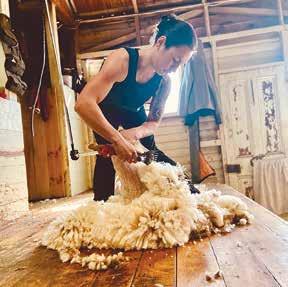
Coming from a shear ing family, Bond has been a dedicated shearer since her teenage years.
She taught herself how to shear when many others in the industry would not lend a hand to teach her.
However, as her shear ing skills became more and more apparent, people came around to her talents. She eventu ally made her way into the first all-women’s shearing course in New South Wales in 2015.
“I can say that even when she was learning she had the determina tion to be the best that she could be,” says Jim Murray, course instructor and one of the first work referrals Bond received.
Despite her prow ess on the course, many still did not want to take a chance on a female shearer.
“I recall ringing about
12 contractors around New South Wales asking for a stand,” she recalls. “But it was clearly obvi ous to me no one was interested in hiring a female shearer as many other learners secured a stand.”
Nevertheless, or per haps in spite of this, Bond has proven herself a phe nomenal shearer, often outpacing the men and maintaining a profes sional level of quality.
It won’t be the first time she has had experi ence with shearing world record attempts. Bond has been a support for four previous attempts, with her work on Bob White’s 2014 Australian record playing a signifi cant part in inspiring her to attempting a world record.
“I had the opportu nity to train with him (White) when he did his first world record. He got me into the whole scene of fitness training, and it helped massively toward my shearing career.”
With the aid of Matt Luxton, a personal trainer well renowned in the ath letics and shearing indus try for his involvement
in past world record attempts, Bond has been training seven-days-aweek – strength, con ditioning, cardio and mobility – on top of her eight hours of shearing every day.
Husband Coel L’Huillier, who will be supporting her in her record attempt, is also a three time world record
holder, being part of team efforts in 2013, 2017 and 2019.
“Seeing how much work Sacha puts in every single day, she always somehow manages to find or make time to help others, running fundrais ers, sharing health advice, teaching learner shearers tips on how to do it an easier way,” he says.
“She is determined and 100% committed. I know she’ll give her everything on the day and I can’t wait to see her do it.”
At Fairlight station on February 4 next year, Bond will have to shear at least 511 lambs in 8 hours – a daunting feat requir ing finesse, speed and stamina.
IF HIGHER PRODUCTION IS YOUR END GOAL… THEN LOOK TO THE START TO ENSURE YOU ACHIEVE IT.
Successful forage brassica and pasture production is highly dependent on the first six weeks of a plant’s life. Ultrastrike® and Superstrike® seed treatments include insecticides, fungicides and nutrients to maximise seedling establishment, helping to deliver higher yields and improved animal production.
FUNDING
ASSOCIATE MINISTER for Health Peeni Henare announced additional funding for PRIME (Pri mary Response In Medical Emergencies) services at the recent National Rural Health Conference in Christchurch.
It comes following discussions with Hauora Taiwhenua Rural Health Network, Te Whatu Ora (Health NZ).
PRIME practitioners have been concerned for some time that the services they provide, to respond to emergencies when no ambulance services are immediately available in rural and remote areas, are financially unsustainable.
An upcoming review of the PRIME model and funding by Te Whatu Ora will investigate areas of improvement to ensure services are better equipped to meet the needs of rural and remote communities.
Hauora Taiwhenua chief executive Dr Grant Davidson says that this extra funding will be a great relief to PRIME practitioners who have been asking for recognition when responding to medical emer gencies for many years.
“This will provide some financial ‘breathing space’ for those practitioners while the full review of the services is carried out. We thank the staff of Te Whatu Ora for listening and acting.”
The extra funding is not for injury related inci dents, as these are funded directly by ACC. The pay ments will be backdated to 1 July 2022 for services already delivered. - Leo Argent
PROTECT YOUR SEED, PROTECT YOUR FUTURE.
For more information, talk to your local seed retailer or visit seedtreatment.co.nz
RURAL NEWS // OCTOBER 11, 2022 NEWS 7
RURAL HEALTH EMERGENCY
LEO ARGENT
Sacha Bond is aiming to break the women’s strong wool lamb shearing world record next year.
Live export ban sinks hopes of sector despite opposition
LIVE CATTLE exports
will be officially banned from April next year, fol lowing the passing of new regulations pushed through by Agricul ture Minister Damien O’Connor.
The move ignored official advice from the Ministry for Primary Industries saying ban ning live exports would cause an economic loss
and make recovery from Covid-19 more difficult in the rural communities where livestock exports provided an additional source of income. Live exports are estimated to earn the country nearly $500 million in annual export revenue.
O’Connor claims the ban on live exports by sea will, “protect New Zealand’s reputation for world-leading animal wel fare standards”.
The legislation intro ducing the ban was vig orously opposed by both National and Act.

“Despite the over whelming evidence that the ban was a bad idea, Damien O’Connor has pushed ahead,” Act’s agri culture spokesman Mark Cameron says. “Farmers kept the economy going through Covid. All it gets in return from Labour are policies that punish them.”
O’Connor says the Government started a review of the livestock export trade in 2019 in response to concerns the trade could be a risk to New Zealand’s reputa tion. This followed the sinking of the Gulf Live stock 1 in which two New Zealanders died and thousands of cattle were lost.

“This Bill reinforces and builds on New Zea land’s reputation as a safe
TORNADO RANGE
Robust UDOR Italian ceramic plunger pump with brass head.
models. Choice of direct drive or low rpm pump with gear box.

Honda with
ALBERTI HOT CLEANERS
UDOR ceramic plunger pump.
ELECTROBLAST RANGE

BAD FAITH
THE ORGANISATION that represents live exporters believes a more highly regu lated industry would have been a better approach than a complete ban.
Government.
SPRAYPACK
UDOR
volt
400 volt
ceramic plunger pump
rpm
pole
rpm)
HURRICANE PTO WATERBLASTER/ SPRAYER

Live Animal Export New Zealand (LENZ) says banning live animal exports will damage the New Zealand economy and claims the move is out of step with the views of the New Zealand public, according to research it has carried out.

“According to an independent research report by science insights company Voconiq, over half of New Zealanders surveyed have confidence that regulation can hold the industry accountable,” LENZ spokesman Mark Willis says.

He adds that the industry’s call for a Gold Standard of care for live animal exports in NZ has been ignore by the
and ethical producer of high-quality food prod ucts,” O’Connor claims.
“It protects the rep utation of not just our farmers now, but the farmers of the future who want to commit to live stock farming, assured that we are the best man agers of animal welfare and producers of ethi cal animal protein for the world.”
National’s animal wel fare spokesperson Nicola Grigg says the ban has robbed NZ of an oppor tunity to shape welfare standards in the global trade of live animals.
“The live export trade will continue whether or not New Zealand is part of it,” she says.
“Now, unfortunately, other countries with less rigorous animal welfare standards will make up
“Two years ago, our industry banded together to propose that the Govern ment introduce much higher standards of care for the animals exported from New Zealand. We set out a clear and evidencebased 12-point regulatory plan to Minister O’Connor that would further improve and modernise the live animal export system,” Willis says. “We did not receive any response.”
LENZ accuses the Government of failing to consult in good faith with industry. “The end result will be legisla tion that is detrimental to the livelihood of farmers and New Zealand’s economy, and a missed opportunity to lift the standards of live animal exports globally.”
for the gap in the market as New Zealand with draws.”
Grigg says despite the Government downplay ing the economic impact of the ban it cannot be overlooked or underesti mated. She says an Info metrics economic impact report says it will reduce New Zealand’s GDP by $472 million per year and cost breeders between $49,000 and $116,000 per farm per year.
O’Connor dismisses the economic impact saying it will be “small in the context of NZ’s total primary sector exports”.
“However, I do acknowledge the small number who are directly affected by these changes.”
Both Act and National believe a better course of action, rather than a total
ban, would have been to ensure animal welfare standards were upheld and to continue the trade under an improved regu latory Gold Standard.
Developed in 2020, the Gold Standard is a 12-point regulation frame work to improve and modernise the live export system. At its heart is the assurance of the good physical and mental health in animals, includ ing freedom from stress and good nutrition.
Grigg says National has consistently pro posed amendments for the Government to con sider – everything from licensing mechanisms and exporter/importer certifi cation mechanisms.
She says if National can form a government next year, it will commit to reviewing the ban.
RURAL NEWS // OCTOBER 11, 2022 8 NEWS
DAVID
ANDERSON
Agriculture Minister Damien O’Connor claims the ban will reinforce New Zealand’s reputation as a safe and ethical producer of high-quality food products.
Contact AES direct or your local AES dealer FREEPHONE 0508 78 78 78 46 Sir William Ave, East Tamaki, Auckland www.aesblasters.co.nz
10
Genuine
3 yr warranty.
Two 230
and four
models with UDOR
& low
4
(1440
motor for extended service life.
Heavy-duty 4 pole electric motor. 230 & 400-volt models. Diesel hot water heater.
250 or 600 litre tank, 540 rpm gearbox. New UDOR 3000 psi 35L/ min pump. MULTI PURPOSE UNIT • Blast • Spray • Drain clean! AES
250 & 600 250 and 600 litre tanks, galvanised frame. HD quick release, PTO shaft, 53L/min spray pump, 25m hose & hand gun, optional 6 metre boom.
High quality Italian diaphragm pumps. From 17L/min to 240L/min. 290 psi to 580 psi SPRAY BOOMS 4.5 6 & 8m metre spray booms, horizontal fold, stainless steel lines and non-drip low drift nozzles. HOSE REELS 100 or 150m SPRAY HOSE 25, 50, or 100m coils SAVE $$$ VALUE!UNBEATABLE TODAY.CALLUS SPRINGCLEANUPSALE SAVE $$$ SAVE UP TO $400 PHONE FOR HOT PRICES BUY MADENZ &KEEP WORKING!KIWIS
Rural left behind... again!
RURAL INTERNET
users are being left behind in the move towards more technologi cally advanced systems.
Federated Farmers national board member and telecommunica tions spokesperson Rich ard McIntyre says good internet is becoming increasingly necessary for compliance tools like farm plans and NAIT.
“The level of auditing, etc., that’s required for the likes of meat proces sors, milk protein, that’s basically all done digitally these days and so we will need to run computer programs that download a track map where fertil iser has been placed onto that program so that we can then use it for report ing,” he told Rural News
The comments come after the release of the 2022 Federated Farm ers Rural Connectiv ity Survey showed more than half of the farmers surveyed reported inter net download speeds at or less than 20 megabytes per second (Mbps).
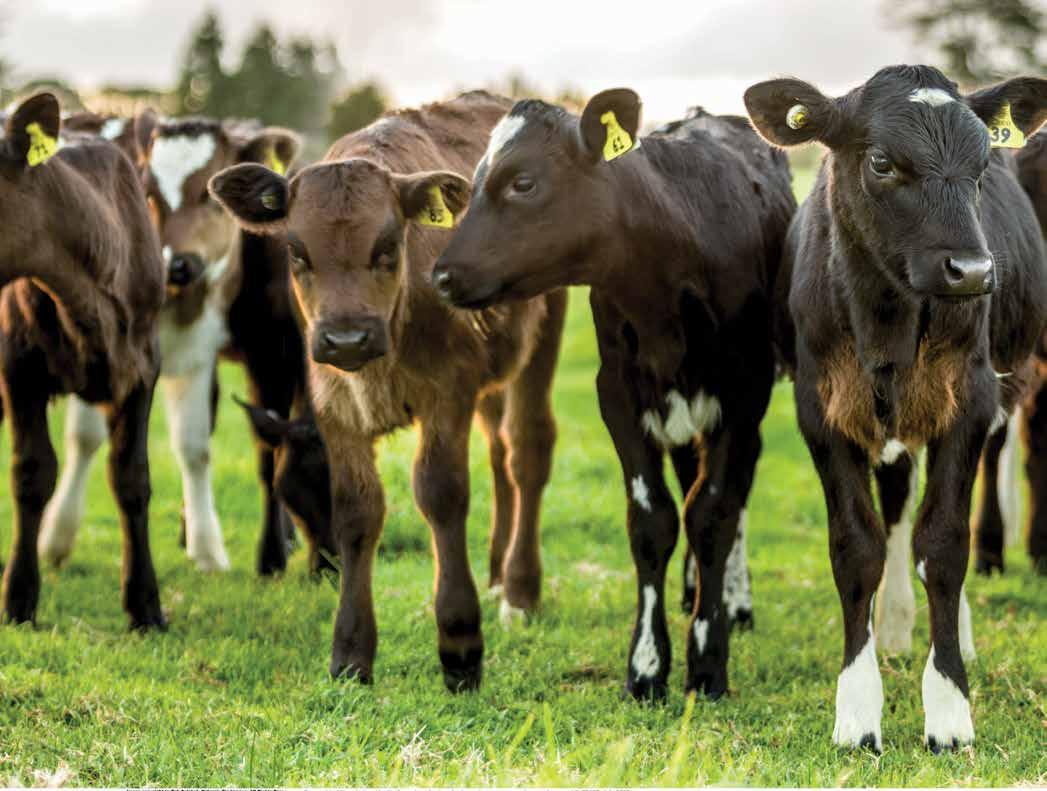

The survey also found that 32% of those sur veyed reported a decline in mobile phone service,

a 12% jump on last year’s survey.
McIntyre says that while government fund ing has been generous, things have moved on from when it was first announced, with the infrastructure itself not designed to cope with its
current use.




“Previously there was just some phone calls with a little bit of data for checking your emails… whereas now you have heaps of people stream ing Netflix, etc. but using the same towers so they need to be upgraded,” he
says.
“We’ve got to make sure that we get a good and reliable standard of quality, both in terms of internet and cellular ser vice.”
It’s a sentiment that National Party rural com munities spokesperson
Nicola Grigg agrees with wholeheartedly.
“There are over 8,000 rural homes and busi nesses around the coun try that have yet to receive any improvement to their broadband,” Grigg says.
She says the absence
of connectivity has forced those within rural com munities to switch to more expensive options or continue on with subpar and unusable ser vices.
“For anyone trying to run a business from their rural home, not only is the lack of connectiv ity frustrating, it also severely impacts a busi ness’s ability to reach and serve new customers.
“The woeful lack of investment from the Government also poses safety risks for those living rurally, with poor coverage often impact ing connections to emer gency services.”
Recently the Govern ment marked the build ing of its 350th tower as part of the Rural Broad band Initiative 2 (RBI2) and the Mobile Blackspot Fund (MBF).
RURAL NEWS // OCTOBER 11, 2022 NEWS 9
JESSICA MARSHALL jessica@ruralnews.co.nz “We’ve got to make sure that we get a good and reliable standard of quality, both in terms of internet and cellular service.” Fed Farmers says good internet is becoming increasingly necessary for compliance tools like farm plans and NAIT. TURBO® CATTLE DRENCH PROGRAMME STAGE 1 TURBO® Initial Oral Drench STAGE 2 TURBO® Advance Oral Drench alleva.co.nz TURBO® is a registered trademark of Alleva Animal Health Ltd. TURBO Pour-on (A011722), TURBO Injection (A011742), TURBO Initial (A011703) and TURBO Advance (A011714) are registered pursuant to the ACVM Act 1997. See www.foodsafety.govt.nz for registration conditions. INITIAL Stage one of the TURBO 3-stage Cattle Drench Programme. Exclusive to veterinary practices nationwide. THE PROVEN WAY TO WEAN. COMBAT Parasites + Coccidiosis in a single dose STAGE 3 TURBO® Pour On or Injection
Protect your herd and your bottom line
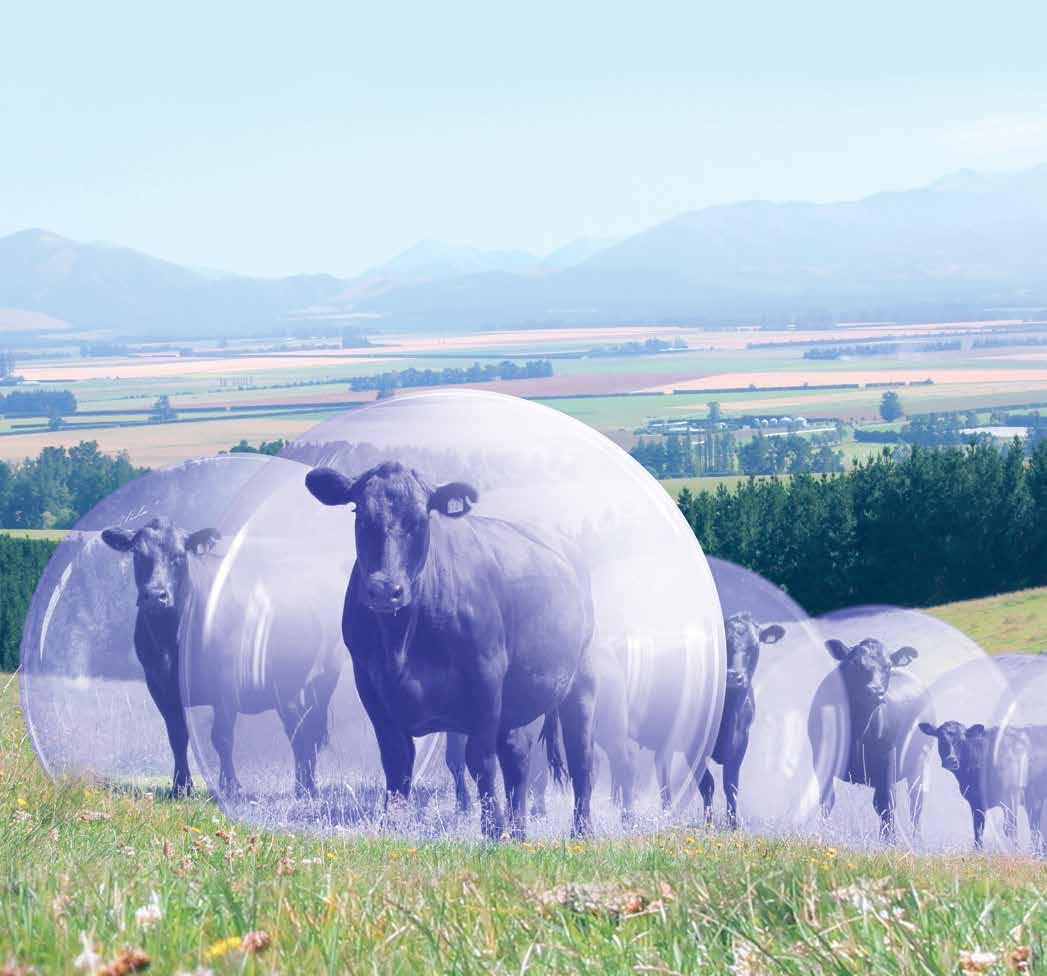
Use Bovilis BVD for 12 months of proven foetal protection1. The longest coverage available.
Exposure to BVD could mean your unborn calves become Persistently Infected (PI’s) - spreading BVD amongst your herd. It’s estimated that up to 65% of New Zealand’s beef herds are infected with the BVD virus at any given time. The convenience of the longest coverage available along with flexible dosing intervals2 means you can protect this season’s calves no matter when they are conceived.
Avoid an outbreak. Ask your vet about vaccinating with Bovilis BVD or visit bovilis.co.nz

1Following a third dose (annual vaccine) Bovilis BVD provides 12 months foetal protection. 2Interval between dose 1 (sensitiser) and dose 2 is from 4 weeks to 6 months. 3rd dose given as annual single dose. AVAILABLE ONLY UNDER VETERINARY AUTHORISATION. ACVM No’s: A011866. Schering-Plough Animal Health Ltd. Ph: 0800 800 543. www.msd-animal-health.co.nz Copyright © 2022 Merck & Co., Inc., Rahway, NJ, USA and its affiliates. All rights reserved.NZ-BOV-220700001
Bank gifts $150m farm to school
ASB HAS gifted a $150 million farm to one of Auckland’s largest schools.
Mount Albert Gram mar School (MAGS) will run the 8ha farm that includes facilities to milk cows, rear calves and lambing, a native plant nursery and a small orchard to grow kiwifruit and citrus.
The ASB MAGS Farm, located next to the school, was purchased by the bank in 1933. It was handed over last month as the school’s 100th birthday celebrations came to a close.
Under the gifting agreement, the farm retains its name and will provide ongoing farming education at the school in perpetuity.
ASB general manager Rural Banking Ben Speedy told Rural News that dis cussion to hand over the farm to the school started a year ago.
“With the school’s 100th year celebrations and ASB celebrating its 175th year, it felt like an opportune time to gift the farm,” he says.
Speedy says the farm has a long history of introducing students to different facets of food and fibre production, helping inspire the next generation of farmers.
ASB chief executive officer Vittoria Shortt says the bank is delighted to gift ownership of the farm.
Shortt says this will ensure that students will continue to benefit from this special learning envi ronment for generations to come.
“Food and fibre pro duction is the backbone of New Zealand’s econ omy, and the farm plays a really important role in attracting young urban talent into these indus tries.
“We know our young people care deeply about sustainability and this next generation will be critical players as the industry innovates and adapts to meet the chal
lenges and opportuni ties of climate change and evolving consumer pref erences.”


Mount Albert Gram mar is the second largest school in Auck land. Around 250 stu dents elect to take agri-business courses each year, earning NCEA level one, two and three credits.
The students spend time rearing lambs and calves, milking, drench ing, planting trees as well as completing other activities and basic horti culture practices on the farm, which offers them hands on experience and exposes them to a range of potential career path ways in the rural sector.
The farm also hosts regular visitors of all ages from wider community groups, with many enjoy ing the opportunity to learn about the workings of the farm and spending time outdoors.
MAGS Headmaster, Patrick Drumm says the farm has a 90-year her itage and the school is excited to continue its legacy.
“ASB’s gift of this land will allow us to continue futureproofing the facil ities and further diver sifying the farm and we have ambitious plans for the renovation of exist ing buildings and the construction of an experi ence centre to showcase opportunities in the agrifood and fibre sector.
“Our students bene fit greatly from this edu cation, and it will be enjoyed by generations to come.”
Many students who have graduated from Mount Albert Grammar’s agri-business course have gone on to study related subjects at university or enrol in further training.

Sofia Skinner a current Year 13 student is plan ning to study Agricultural Science at Lincoln Uni versity next year.
“I had always dreamed of becoming a farmer but living in the middle of Auckland city, I had never even set foot on a farm before I started at MAGS,” says Skinner.
CFMOTO



RURAL NEWS // OCTOBER 11, 2022 NEWS 11
SUDESH KISSUN sudeshk@ruralnews.co.nz
“The courses offered at MAGS provide an incredible learning expe rience and have opened up new possibilities for me. I’m really excited to pursue farming fur
ther and to explore career pathways in the indus try.”
The farm will now be operated by the MAGS Foundation on the school’s behalf.
While
ASB will play no part in its governance, discussions are continu ing on how the bank may
support the
farm
in the
future.
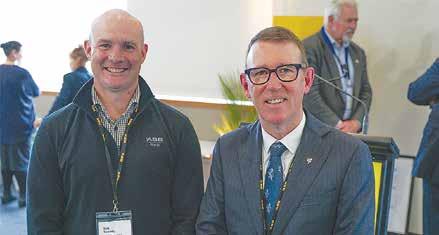
ASB general manager Rural Banking Ben Speedy and Mount Albert Grammer headmaster Patrick Drumm.
CFMOTO NORTH ISLAND
SOUTH ISLAND Andys Moto Services, Waiuku (027) 944 5442 Brown Brothers Bikes, Whanganui (027) 572 7696 Country Engineering, Tauranga (07) 552 0071 Country Machinery, Sanson (06) 825 6400 Dr Moto, Tauranga (07) 578 9902 DP Williams, Gisborne (06) 863 2612 Gatmans Mowers, Silverdale (09) 426 5612 Hamilton Motorcycle Centre, Hamilton (07) 849 1919 JC Motorcycles, Waitara (06) 754 6420 Maungaturoto Motorcycles, Maungaturoto (09) 431 8555 Action Sports Direct, Wanaka (07) 928 8045 Ag & Auto Direct, Balclutha (03) 418 0555 Colin Clyne Motorcycles, Oamaru (03) 437 0559 Dan’s Motor Centre, Geraldine (03) 693 8536 Diesel Tech Machinery, Methven (03) 302 8946 Franks Motorcycles. Mataura (03) 203 7309 Ian Day Lifestyles, Alexandra (03) 448 9007 Marlborough Motorcycles, Blenheim (03) 579 2500 Nelson Motorcycles, Nelson (03) 548 3786 Remarkable Motorcycles, Queenstown (03) 441 4653 Vallance Machinery, Fernside (03) 313 6465 *Ride away prices quoted exclude GST. See www.cfmoto.co.nz for more information. Motorcycle HQ, Pahiatua (06) 376 7163 Northland Powersports, Whangarei (09) 437 5451 Outdoor Power, Hastings (06) 878 2369 Peninsula Motorcycles, Thames (07) 868 6104 Powerhead Motorcycles, Manurewa (09) 297 7145 RevTech Powersports, Stratford (06) 765 7712 Rob Titter Farm Services, Kaikohe (09) 401 1774 Rouse Motorcycles, Hikurangi (09) 4338 471 Tahuna Motorcycles & Atvs, Tahuna (07) 887 5790 www.cfmoto.co.nz With refinements across the board, introducing the newgeneration CFORCE 400, 400 EPS and 520 EPS. LIGHTER, STRONGER, SMARTER! Stronger than ever with a 612kg towing capacity 25% tighter turning radius 50% more front and rear rack capacity 30% stronger 10% lighter 26% more suspension travel 21% more fuel capacity 25% less heat emission Reduced vibration Key refinements $7,490 EX GST RIDE AWAY $8,490 $9,490 30 hp, 400cc EFI engine CVTech transmission Engine braking 2WD/4WD with locking front diff Hydraulic disc brakes Dual A-arm suspension Steel wheels 24 inch 6ply tyres 612kg tow capacity 30kg / 60kg rack capacity 30 hp, 400cc EFI engine Power steer CVTech transmission Engine braking 2WD/4WD with locking front diff Hydraulic disc brakes Dual A-arm suspension 2500lb winch Alloy wheels 24 inch 6ply tyres 612kg tow capacity 30kg / 60kg rack capacity 34 hp, 495cc EFI engine Power steer CVTech transmission Engine braking 2WD/4WD with locking front diff Hydraulic disc brakes Dual A-arm suspension Alloy wheels 25 inch 6ply tyres 5-inch LCD display LED headlights 2500lb winch Handguards 612kg tow capacity 30kg / 60kg rack capacity EX GST RIDE AWAY EX GST RIDE AWAY
Bursting the methane bubble
Analysis of New Zealand’s climate-change policy by former climate change negotiator Adrian Macey and climate scientist Dave Frame for news website BusinessDesk has highlighted major issues about how methane emissions from livestock are currently measured and the refusal of NZ bureaucrats and politicians to adopt the more accurate measurement.
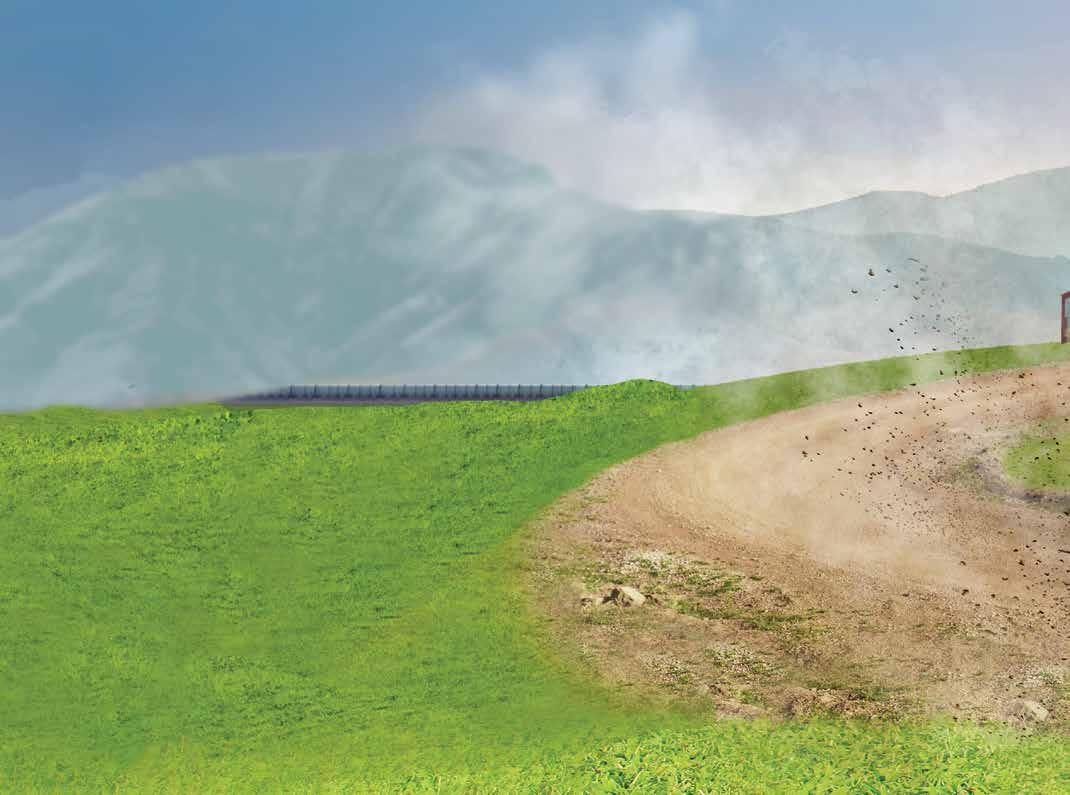
IN THEIR report for BusinessDesk, Macey and Frame point out that the 30-year-old metric chosen by the UN to measure the different greenhouse gases (known as GWP100) is inaccu rate for short-lived gases – such as methane.

“It greatly overstates the warming caused by NZ’s methane in relation to the Paris Agreement’s long-term temperature goal. Recent work by scientists has solved the problem by devising a different metric, GWP*,
which is an adaptation of GWP100 that very accurately replicates methane’s actual warming.”

Macey and Frame point out how even the latest IPCC (Intergovern mental Panel on Climate Change) report sums up the shortcomings of GWP100:
“Expressing meth ane emissions as CO2equivalent using GWP100 overstates the effect of constant methane emis sions on global temper ature by a factor of 3 to
4, while understating the effect of any new meth ane emission source by a factor of 4 to 5 over the 20 years following the introduction of the new source.”
However, the pair report that rather than adopt this ‘simple fix’, NZ government climatechange advisers have either ignored GWP* or dismissed it.
They add that while GWP* is attracting grow ing interest internation ally, a small number of mainly European aca




demics are ‘hell-bent’ on dissuading policymakers from having anything to do with it.
Macey and Frame explain these objec tions centre not on the metric itself, nor the sci ence behind it, but on
how policymakers would apply it.
“It’s feared it would be used to justify a ‘free ride’ for agriculture or for NZ,” they argue. “The ‘free ride for farmers’ charge is heard here, too. Supposi tions about a metric’s use

for policy don’t weaken the case for knowing methane’s true impact on global temperature.”
The pair also outline how and why NZ policy advice has been wrong on GWP*.

They criticise both the
Climate Change Com mission Ministry for the Environment for “a lack of understanding of the origin and purpose of carbon budgets” and for “a disconnect between measuring emissions and their warming”.
Meanwhile, Macey and Frame believe that, despite bureaucratic opposition to GWP*, there has been recent progress in understand ing the importance of accounting accurately for warming.
“Until GWP* is adopted here, separate reporting of methane can achieve a similar result, though less conveniently than by using GWP*,” they say.
“NZ’s split gas domes tic target is consistent with this approach, which would also be useful in carbon markets.”

RURAL NEWS // OCTOBER 11, 2022 12 NEWS
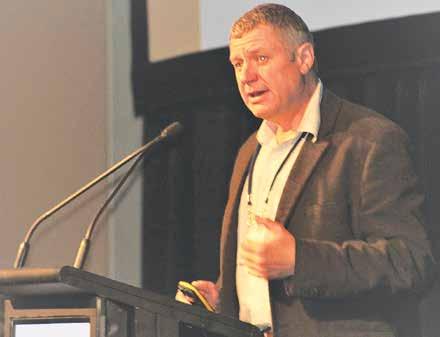
Climate scientist Dave Frame (pictured) and former climate change negotiator Adrian Macey argue why NZ bureaucrats and politicians need to adopt the more accurate measurement of livestock methane emission GWP*.
SHOP IN-STORE OR ONLINE AT SHOP.FARMLANDS.CO.NZ/FLYINGSTART *Terms and conditions apply. Prices valid 1st–31st October 2022. Entries limited to 10 per person and to Farmlands shareholders only. Must be spent in a single transaction. Promotion runs 1st August – 31st October 2022. For full terms and conditions go to shop.farmlands.co.nz/flyingstartFAR_10624 FLYING START With every $1,000 or more you spend on your Farmlands shareholder account. WIN A BRAND NEW HONDA PIONEER 700* NEW & EXCLUSIVE TO FARMLANDS Arxada Axcela 15kg $246.09 1032148 SAVE $17.86 SPECIAL INTRODUCTORY OFFER Waterwatch Tank Level Monitor Delfast 3.15mm Cordless Batten Stapler $1,159.95 1022373 SAVE $440.05 WIFI Connected $499.99 1056838 SAVE $75.01 4G Connected $749.99 1056836 SAVE $147.01 Ready-To-Go Full Depth Beehive Kit $109.00 1032864 SAVE $49.50 Iplex Spouting Square 4m White $69 1057523 SAVE $12.96 Iplex Spouting Polyflow 4m White $74.99 1057535 SAVE $13.51 8/80/30 x 110m 10% Extra $239.95 1011918 SAVE $46.00 8/90/30 x 110m 10% Extra $239.95 1011919 SAVE $33.55 *While stocks last. Limit 1 per customer. FREE HIVE TOOL WORTH $31.95* X Fence Netting 8 line









Order your Toxovax® early. Toxovax is made-to-order. Order yours before it’s too late. ONLY AVAILABLE BETWEEN 17TH OCTOBER 2022 AND 26TH APRIL 2023 Toxoplasma is present on 100% of NZ farms1 and can cause ongoing losses or abortion storms. One shot of Toxovax gives lifetime protection to your ewes and provides an average 3% higher lambing percentage2 You can use Toxovax anytime up until 4 weeks prior to mating. It’s made-to-order, and we need your order at least 4 weeks in advance. So make sure you order it from your vet at least 8 weeks before you plan to introduce the ram. ORDER YOUR TOXOVAX EARLY. CONTACT YOUR VET TODAY. AVAILABLE ONLY UNDER VETERINARY AUTHORISATION. ACVM No: A4769. Schering-Plough Animal Health Ltd. Phone: 0800 800 543. www.msd-animal-health.co.nz NZ-BOV-220900003 © 2022 Merck & Co., Inc., Rahway, NJ, USA and its affiliates. All Rights Reserved. 1. Dempster et al (2011), NZ Veterinary Journal 59: 4 155-159. 2. Wilkins et al (1992) . Surveillance, 19:4,20-23 VAXIPACK® RECYCLING LEARN MORE
Low
AGRESEARCH SCIEN
TISTS say they’ve man aged to breed sheep that produce less methane while still producing good quality meat.
NZ has been a world leader in the recent development of breeding sheep that belch out less methane – a relatively short-lived but potent greenhouse gas that contributes to climate change. The latest prog ress stems from more than a decade of research by AgResearch scientists, supported by the indus try through the Pastoral Greenhouse Gas Research Consortium (PGgRc) and Beef + Lamb New Zea land Genetics, as well as the Government via the New Zealand Agricultural Greenhouse Gas Research
Centre (NZAGRC).
The result is sheep that naturally emit less methane as a product of their digestion and it is believed this trait can be bred for and passed down through generations.
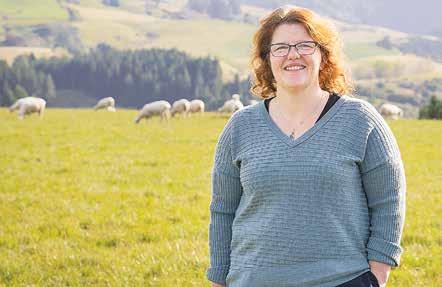
AgResearch senior sci entist Dr Suzanne Rowe says the latest published research provides a valu able insight into the implications of breeding for lower methane. She says once it was known they could breed sheep producing less methane, they set about determin ing what the impact on the animal might be from birth through to parent hood.
“The work was carried out in flocks across NZ –using thousands of mea sures over several years – to demonstrate that low methane emissions can be included into breed
ing goals without sacrific ing other key health and performance traits,” she explains.
“What we have found is that breeding for lower methane, and the physio logical changes we see in these lower emitting ani mals, does not negatively affect meat quality or the things meat produc
not production
Rowe says scientists believe the low-emit ting animals may in fact have greater economic value through decreased fat and increased meat yields. She says this is critical because farm ers need to know that if they are committing to breeding their animals for lower methane, that they are not going to go back wards in their productiv ity and earnings.
egg counts), the fertility of adult ewes and the sur vival of lamb litters.
She says when it comes to wool, low meth ane breeding was favour able to fleece weight, while it was also favour able to the weight achieved by the animal before slaughter and body condition.
ers are looking for in the animal carcase.”
Rowe says this has some complex biol ogy behind it as lowemitting animals have different eating behav iours, tending to be graz ers rather than gorgers – eating more feed than their high-emitting coun terparts, even though the
high emitters had bigger stomachs.
“This ‘little and often’ approach seems to favour laying down muscle instead of fat under the skin, whilst keeping the healthy fats that provide flavour, so meat quality is retained along with the reduced emissions,” she explains.
“This knowledge pro vides greater incentive to make changes on farms that contribute to New Zealand’s methane reduc tion goals, and to climate change globally.”
Rowe adds that research relating to the health of the sheep also suggests that breeding for low methane is unlikely to affect issues such as internal parasites (as demonstrated by faecal
Rowe says more research in this area is needed, but these justpublished findings are important for the ongo ing science effort, shar ing with the industries and for decision-making around climate change mitigations.
Similar research is also now underway in New Zealand to achieve some thing similar in cattle, building on what has been achieved in sheep.
RURAL NEWS // OCTOBER 11, 2022 14 NEWS
PETER BURKE peterb@ruralnews.co.nz @rural_news facebook.com/ruralnews
AgResearch senior scientist Dr Suzanne Rowe says they’ve managed to breed sheep that produce less
methane
while
still producing good quality
meat.
emissions
Visit us at corteva.co.nz ®, ™ Trademarks of Corteva Agriscience and their affiliated companies. COR_FWPSTBR_CTA0019 Watching over your brassica crop so you don’t have to. Our portfolio of powerful, proven products has helped farmers from one end of the country to the other create and maintain thriving businesses, and has earned us a reputation as New Zealand’s brassica protection specialists. With every product suitable for ground or aerial application, our suite of herbicides and insecticides provides local farmers with everything they need to win the war on pests and weeds. Visit corteva.co.nz to view our range of online brassica resources. HERBICIDE Arylex™ active HERBICIDE POWERFLO™ Versatill™ INSECTICIDE Jemvelva ™ active Sparta™ INSECTICIDE Qalcova ™ active Naturalyte™ Entrust™ SC INSECTICIDE Isoclast™ active Delivering a complete suite of crop protection solutions for today’s forage brassica growers.
Looking after kiwi farms for generations.

We’re excited to introduce a new

with
aiming to help
Let’s continue looking after
farms so



You can drop empty MSD Vaccine
clinics and rural


the plastic
To
out more talk to
Recycle
local
and
can do the same.
in
and
take
ACVM No’s A934, A11311, A3977, A1009, A1992, A9028. AVAILABLE ONLY UNDER VETERINARY AUTHORISATION. ACVM No’s: A4769, A9535, A7886, A9927, A1948, A6151 Schering-Plough Animal Health Ltd. Ph: 0800 800 543. www.msd-animal-health.co.nz © 2022 Merck & Co., Inc., Rahway, NJ, USA and its affiliates. All rights reserved. NZ-YER-220700001
sustainability initiative in collaboration
Agrecovery
reduce plastic waste on New Zealand farms.
our
our children
grandchildren
Vaxipacks®
collection bins at participating vet
retailers. We’ll
care of the rest, ensuring
is repurposed
doesn’t end up in landfill.
find
your
vet clinic or rural retailer or visit: www.sheepvax.co.nz/recycling
MSD Vaxipacks® from the following products: VAXIPACK® RECYCLING LEARN MORE
Merger helping NZ wool sector to get stronger
A YEAR down the track after joining forces with Primary Wool Co-opera tive, Wools of New Zea land (WNZ) describes the merger as a success.
“There is now a real pathway to farmgate prices rising,” the farmer co-operative’s chief exec utive John McWhirter told Rural News
He says the compa ny’s strategy is to capture more value for its 2,000 grower shareholders.
“The merger was never going to change the fundamental problem of the wool industry or the price of wool. How ever, for the first time, we now have an inte grated value chain from
the grower through to the consumer.”
He adds the merger was about bringing two wool companies together and adding more resource to invest in the consumer goods busi ness. McWhirter says that wool carpets account for a greater proportion of

CASHING IN ON NATURAL
WNZ’s partners’ retail sales than ever before.
“This rising demand
MOVES TO promote the natural and sustainable features of wool versus synthetic fibres and its fossil fuel connections appears to be growing momentum around the world.
NZ carpet manufacturer Bremworth has grabbed a lot of headlines during the past year with its move to stop selling synthetic carpets and only promote woollen floor coverings.


Meanwhile, a recent high-profile advertising campaign by levy-funded research and marketing group Australian Wool Innovation (AWI) is highlighting the sustainability of wool, compared to synthetic textiles.
AWI’s wool campaign emphasises the eco-credentials of the fibre compared to synthetic fabrics. The ad features people dripping in oil, repre senting the fossil fuels used to create synthetic clothing
The advertising campaign, which is running in America, the United Kingdom, France and Australia, depicts people swimming in a pool of black oil, struggling to get out. When they do finally emerge, they take off their dripping clothes to reveal clean wool products underneath.
is a clear indicator that more New Zealanders are considering sustainable
floor options for their homes.”
McWhirter says cur
rently there is around a 5-7% over supply of wool compared to the demand for wool, which is around 45,000 bales.
“If we can increase the demand for wool by 45,000 bales – then the price of wool will go up as supply and demand kicks into place.”
He says the faster they can grow the sales of wool carpet within NZ and internationally, the faster they will increase the price of wool at the farmgate.
McWhirter says demand for wool is now starting to increase.
“For the first time in 20 years, in the last 12 months, wool carpet stopped declining and actually grew.”
He says wool carpet sales grew in NZ last year by 25% - from 14% to 18%. However, this is a long way back from where it was in the mid-1990s, when wool carpets made up about 90% of floor coverings sold in NZ.
Wool’s of NZ is roll ing out a commercial and brand campaign, which McWhirter says show cases farmer-suppliers and highlights wool car pet’s natural and durable attributes as well as its affordability.
“We’re ramping up branded consumer prod
tional excellence into the new business and really connecting with our growers and customers.”
McWhirter says the aim of the advertising campaign is to leverage the increasing demand for wool carpets in New Zealand.
Meanwhile, he says WNZ is continuing to add more independent and retail chains to market wool carpets – following the launch of its partner ship with Flooring Xtra and other retailers last year.
“Retailers are clearly telling us that consumers want sustainable, renew able and biodegradable carpet made from wool grown right here in New Zealand.”
McWhirter says the co-operative now has 11 wool stores, a carpet manufacturing partner, a New Zealand carpet dis tribution warehouse and over 150 carpet retail store partners in NZ.
“We also have a UK office, many offshore cus tomers, a strong well rec ognised Wools of NZ brand and loyal grower suppliers.”
He says Wools of NZ is owned by farmers and its only objective is to positively benefit NZ sheep farmers.
RURAL NEWS // OCTOBER 11, 2022 16 NEWS
DAVID ANDERSON “For the first time in 20 years, in the last 12 months, wool carpet stopped declining and actually grew.”
@rural_news
Wools of NZ chief executive John McWhirter says the company’s strategy is to capture more value for its 2,000 grower shareholders.
Wools of NZ’s advertising campaign aims to leverage the increasing demand for wool carpets in New Zealand.
Terms: *The 2.5%p.a. interest rate offer applies to new Vaderstad Carrier Disc Cultivators purchased between 1 September 2022 and 31 December 2022. Loans must be drawn down within the promotional period. The 2.5%p.a. offer requires a 25% deposit (of the GST exclusive purchase price) at the time of purchase and is available for 25 month term loans. The GST component of the purchase price can be paid upfront or financed as part of the initial loan and repaid in month 3. Finance is provided by UDC Finance Limited. UDC’s lending criteria and standard terms and conditions apply to any loan. Fees and rates are available on request. ^ T’s & C’s apply Talk to your local Norwood dealer today about Vaderstad’s world leading tillage & seeding solutions. Phone 0800 66 79 663 or visit Norwood.co.nz Win a trip to Sweden. To celebrate 25 years of the partnership between Vaderstad and Norwood, we’re taking a lucky winner back to where it all began. Simply purchase any piece of Vaderstad equipment before 31 December 2022 to be in the draw to WIN^ Plus, for a limited time 2.5 p.a. finance* on our range of Vaderstad Carrier Disc Cultivators.
Isolation a cause for concern
We’re still not back to normal,” she says.
MENTAL HEALTH pro gramme Farmstrong is encouraging people to get off farm and take a break.
“Farming can be an isolating occupation, and not just in the geo graphical sense of people working remotely,” says Farmstrong programme lead Gerard Vaughan.
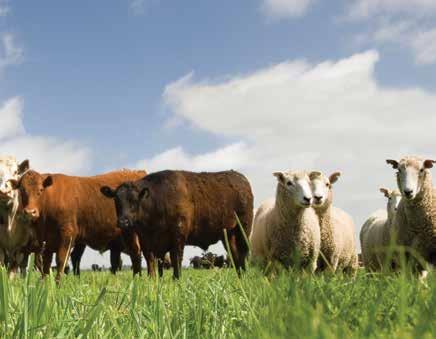
“When you’re feel ing ‘under the pump’, it’s important to be able to connect with people you trust and talk things through.”
Vaughan told Rural News that the indus try’s isolated nature is why Farmstrong encour ages farmers to get off farm regularly and check in with those who might have ‘fallen off the radar’.
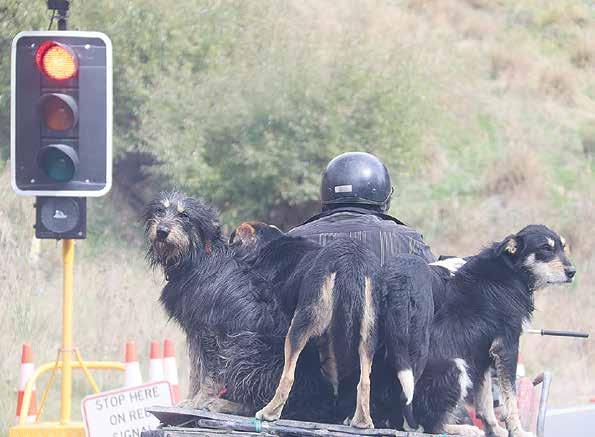
Mental health helpline Lifeline says isolation and loneliness have become
a nationwide issue since the beginning of the Covid-19 pandemic.
Lifeline operations
manager Helena de Fon tenay says there has been a 20% jump in calls to the helpline, averaging
10,000 calls a month.
“Loneliness and isola tion account for the big gest reason people make
calls to Lifeline. Everyone needs to feel connected, but reconnecting is still tricky due to Covid-19.
De Fontenay says one thing people can do to combat isolation is to get out and about.
“Connection doesn’t always have to be about other people. It could also be connecting with yourself by unplugging from things that aren’t important like social media, and reconnect ing with yourself to find a greater sense of balance.”
Another issue driving mental wellbeing strug gles on-farm, Vaughan says, is burnout.
“Farming shares the same pressures as other results-driven industries, but farming is unique in that people live where they work.”
However, Vaughan says, farm work is never really done and while taking breaks getting off farm can make a differ
ence, it’s something that can slip down the prior ity list.
“The past few years have been challenging for everyone, including farm ers and growers. Covidrelated labour shortages have meant longer hours and more stress and some parts of the coun try have also been badly hit by extreme weather events,” he says.
“On top of that, iconic events on the rural cal endar, such as Golden Shears… have been can celled, restricting peo ple’s opportunities to get off farm and catch up with friends and neigh bours.”
Farmstrong will be rolling out a series of comedy shows for Can terbury rural commu nities this month in an effort to give farmers and their families a fun night out.
RURAL NEWS // OCTOBER 11, 2022 NEWS 17
JESSICA MARSHALL jessica@ruralnews.co.nz The industry’s isolated nature is why Farmstrong encourages farmers to get off farm regularly. 2023 Edna Calendar T: 09-307 0399 then press 1 to be put through to reception E: julieb@ruralnews.co.nz ❱❱ $25 including post & packaging ❱❱ 12 of Edna’s best cartoons ❱❱ 330mm x 240mm, spiral bound ORDER NOW! EDNA!! EDNA CALENDAR 2023 “You do realise Edna, if we start to float, you’ll be breaking the law banning live animal shipments!” “Break my New Year resolution? - no way – it must be the Aussie bushfires you can smell!” RURAL NEWSALL FOR ALL HORTNEWS SUNDAY MONDAY TUESDAY WEDNESDAY THURSDAY FRIDAY SATURDAY 1 2 3 4 5 6 87 9 10 11 12 13 1514 16 17 18 19 20 2221 23 24 25 26 27 2928 30 31 1 2 3 4 JANUARY FEBRUARY OBSERVED YEARS ANNIVERSARYNELSONPWS2103 For more information contact PGG Wrightson Seeds on 0800 566 698 or visit seedtreatment.co.nz Need to lift your selenium levels? Apply Selenium Chip to pasture and forage crops and help protect your stock against selenium deficiency. - Increase selenium levels for up to 12 months - Fast uptake by plants - Easy to apply - No animal handling required Selenium Chip is a fertiliser granule that should be applied annually at 1 kg/ha to selenium deficient soils. Selenium Chip is available from your local PGG Wrightson Rural Supplies Store and selected fertiliser outlets. Organic Selenium Chip also available
Hard work keeping it on
IT’S A hard road making wine on State Highway
One, just south of Christ church.
That’s the view of the owners of the quirky Straight 8 Estate winery at Burnham Mary Jamie son and James Shand.
It is an area that once boasted about 80ha of vineyards. That included the original Giesens, just a kilometre or so down the road. As well as many smaller vineyards which, like theirs, were originally planted in the 1980s to supply grapes to Giesens.
However, Giesens have long since moved to Marlborough, while the original Giesens plot, which changed hands and operated as the Lone Goat Vineyard for the last 15 years, shut up shop and went into liquidation
in January this year.
That makes Straight 8 the only winery left in the area – apart from one very small vineyard that does not produce its own wine.
“I’m the only person actually doing wine, since Lone Goat ceased,” says Shand.
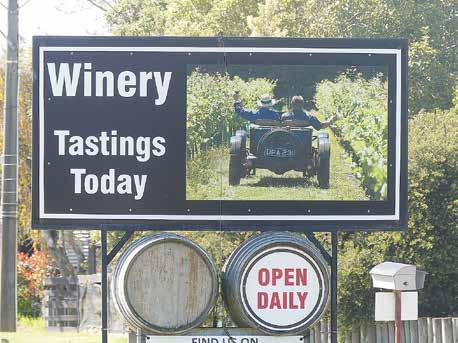
Jamieson and Shand bought the 7.4ha vineyard in 2004. With longstanding connections with motorsport, the couple renamed it after their prized 1935 Railton Light Sports Tourer, with its straight-8 engine, a popular talking point in their public tasting room.

They grow and make wine from Riesling, Chardonnay, Pinot and Cabernet Franc grapes. They sell product from their own shop and also to a small selection of supermarkets and
restaurants, mostly in the south.
However, they say the wine industry has changed and it is hard work competing against cheap imports and the
big corporates. It is tough getting market traction in an industry that fol lows fashion and depends on an unsophisticated buying public.
Post-Covid labour
woes and increasingly extreme weather are new hurdles.
Jamieson says the last couple of years have been “very frustrating”.
However, she told
Rural News she’s not interested in telling a sob story because “every farmer has suffered. It doesn’t matter whether you’ve got sheep, crops, or cattle”.
The vineyard recorded 297mm in the big rain of late July, which put them about a month behind in pruning and mainte nance.
But the land is freedraining alluvial shingle, which Shand believes will never actually flood.
He says a “good gang” of pruners for their 17,000 vines worked out to about 95 cents a plant prior to Covid, but that’s $2 a plant now.
It has also become hard to get experienced people outside the big growing areas like Waip ara and Marlborough.
“I’m very passion ate about what I do but everything has snow balled,” he says.
Jamieson adds that people look at winegrow ing “through rose-tinted spectacles and think it’s really lovely.
RURAL NEWS // OCTOBER 11, 2022 18 NEWS
NIGEL MALTHUS
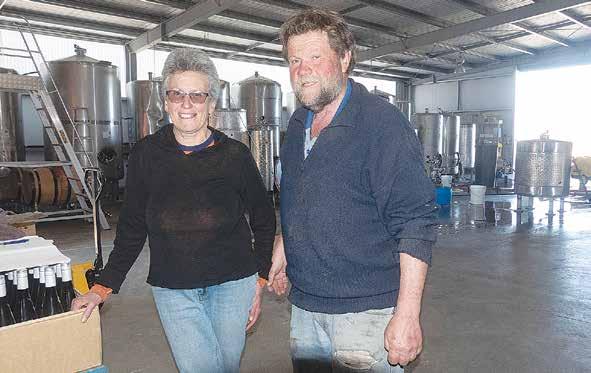
Mary Jamieson and James Shand’s Straight 8 is the only winery left in the Burnham area on the southern outskirts of Christchurch.
The grass just got a lot greener, with rosy finance rates now available on a selected range of New Holland’s best. Which one have you got your eye on? The tireless T5? The comfortable and capable T6? The ever-powerful T7 or its heavyduty sibling, the T7HD? Whichever takes your fancy, now is an excellent time to speak to your New Holland dealer to secure just 1.75% P.A. finance on your tractor of choice. This offer is limited and available only while stocks last, so you should make a move while the getting is good Speak to your local dealer and order today! *T&Cs apply. See website for details. Looking for a sunny deal on a new tractor? Newholland.co.nz HELLOGREENER PASTURES 1.75%* P.A. FINANCE ON selected TRACTORs.
the straight and narrow!
But they don’t under stand that it’s once a year and you work all year to get that crop”.
The couple do as much as possible them selves, including making their own compost.
Pest control is largely through organic sprays, and sheep graze between the rows, in lieu of a leafplucker. Sheep will eat the lower leaves but never touch the grapes, Shand says.
Frost control is by an inexpensive tractor-towed Lazo hot-air blower.
They recently bought a second-hand mechanical harvester.

However, bottling is done by a visiting con tractor with a mobile bot tling plant since they don’t have the volume to justify the expense of their own.

“Other than bot
tling, we are 100% reli ant on ourselves,” Shand explains.
This spring, he had one of his four part-time workers potting up 100 Chardonnay cuttings to take root and be used as vine replacements.
Legally, vineyards should only plant vines grafted onto certified dis ease-resistant rootstock, he admits.
“But you can’t buy anything from a nurs ery because they’re fully booked for three years.
“The block needs a hundred-odd plants in it. That’s 250kg of grapes missing. And I’ve got the infrastructure there to do it, so why not replace them?”
Shand says even grafted vines can get dis ease, die or fail to thrive, and they cost $6.50 to $7 a plant.
CHEAPER NOT BETTER!
JAMES SHAND says typical New Zealand wine buyers aren’t going to help him meet his costs, because they can buy cheap imports at the supermarket.
He doesn’t understand why New Zealanders drink cheap Sauvignon Blanc when it is not a globally popular variety.
“Why would I grow Sauv Blanc when it’s only 11th in the world in white wine?” he told Hort News. “I grow the number one white wine in the world, which is Chardonnay.”
Shand says they are competing against big outfits that might routinely rip up and replace tens of thousands of vines each season in search of better yields or to follow changing varietal demand.
When they bought the vineyard, they were advised to rip up the Cabernet Franc.
Instead, they have nurtured it, taken cuttings and taught themselves how to make and finish it, and it is now the most lucrative grape on the property.
Shand says that Cabernet Franc has now been planted in Central Otago, depriving his grapes of being the most southerly Cabernet
Franc in the world. However, he is proud to say his vines are the most southerly growing on their own rootstock.
“I’ve got old grapes here that I’ve restored. I’m probably not your traditional vineyard person. I’m a restorer.”
In search of cash flow, they are making some Pinot Gris this year from grapes bought from the
defunct Lone Goat block.
But they otherwise pride themselves on being a single-vineyard winemaker, meaning they don’t produce blends with grapes bought from elsewhere.
Shand believes good wine is made “in the vineyard” rather than in the winery and they have good soil with good flavours.
RURAL NEWS // OCTOBER 11, 2022 NEWS 19
Liberate your wheat Upgrade to more flexible disease protection. crop-solutions.basf.co.nz ALWAYS READ AND FOLLOW LABEL DIRECTIONS. ©Copyright BASF 2022. ®Registered trademark of BASF. Revylution ACVM registration number: P009923. 212663 1022 • Eradicate speckled leaf blotch & improve your leaf rust control • Control strains of SLB older azoles won’t • Tailor your tank mix to suit your needs NEW
Cutting back crop inputs
SOUTH CANTERBURY
arable farmer Andrew Darling is looking to be more sustainable in how he manages his farm, particularly in terms of nitrogen management.
Darling is one of the first to participate in a new Foundation for Arable Research (FAR) initiative.
As nitrogen fertiliser, his biggest spend, has at least doubled in price in the last two years, he wants the confidence to cut back and do more to utilise nutrients already in the soil.
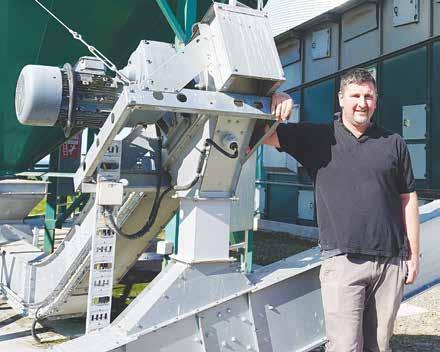
“We want to under stand more about what we are doing. We also want to know how far we can go in reducing nitro gen applications with out impacting on yield, as yield is always key,” says Darling, who farms just south of Timaru.
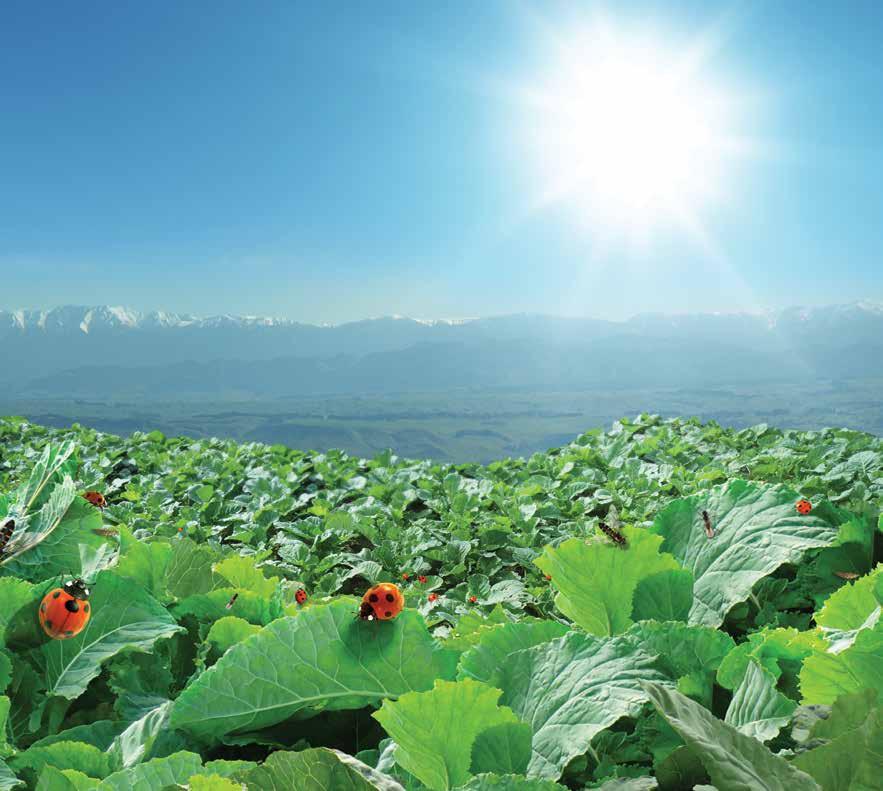
He also wants to learn more about the beneficial insects available on his farm to reduce reliance on foliar insecticides.
The FAR initiative, called Growers Leading Change (GLC), provides a farmer-led framework for arable farmers to develop, test and intro duce new ideas, technolo gies, and ways of working, in order to improve their farm, industry and com munity sustainability.
As part of this, Dar ling’s farm is the South Island’s first GLC Path finder, or demonstration farm, aimed at growers who are ready to embrace new ideas and technolo gies and identify sustain able pathways for the rest of the sector.
The Pathfinder con cept and ways the farm plans to transition, par ticularly in its nitrogen
management over the next 12 to 18 months.
Andrew and his wife Amy lease Poplar Grove Farm from his parents Warren and Joy Dar ling. Andrew is the fourth generation on the farm,
made up of a 250-hect are home block and a 250ha leased neighbour ing property.
The rolling downs farm is fairly typical for an arable farm south of Timaru in the type of
crops it grows.
The biggest area is grown in feed wheat and barley. Sunflowers and oil seed rape are supplied to Rolleston-based Pure Oil for processing into highvalue cooking oil. Turf
ryegrass for seed and fava beans are also grown.
The farm is all crop, with no livestock, as the heavy clay soils are not suitable for dairy grazing.
In 2015, the farm attracted headlines when Warren Darling set a world record yield for barley of 13.8 tonnes/ ha. The record was over taken last year by a Lin colnshire grower in the United Kingdom, Tim Lamyman, with a yield of 14.2t/ha.
The family has been unable to replicate the record yield since.
“The year we tried, it happened to be a per fect year for growing feed barley,” the younger Dar ling explains.
This has led him to question the farm’s highcost, high-input cropping programme in favour of an approach which is
less prescriptive, more responsive to the season and better utilises the soil nutrients and beneficial insects already available on the farm.
The Darlings have already moved to adopt this approach, using 1ha grid soil sampling for the last seven years and using this information to apply nutrients at variable rates across paddocks. Dual sensor cameras installed last season on the roof of their tractor auto matically varies nitrogen application rates depend ing on a crop’s density and greenness.
The cameras are cali brated to the type of crop and growth stage. This, along with soil nitrogen testing reduced nitro gen applications by 15% last year, compared to the blanket rate, with no impact on yields.
Rabobank Good Deeds
RURAL NEWS // OCTOBER 11, 2022 20 AGRIBUSINESS
Arable farmer Andrew Darling wants to see how far he can go in reducing nitrogen applications without impacting on yield.
Do you need a hand with a rural community Tell us a little about your project and how it benefits the local rural community. Your project could receive $5,000 cash and a day’s labour from Rabobank and The Country. rabobank.co.nz/good-deeds.
Competition
Could Waikato solar farm be a ray of sunlight?
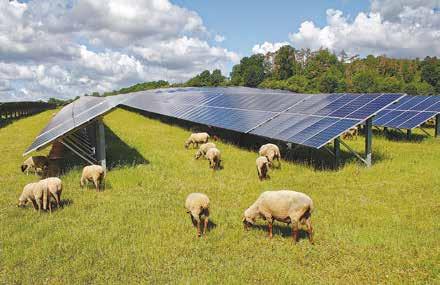
Grogan.
UK BASED Harmony Energy was recently granted Environmen tal Protection Author ity (EPA) approval to develop a new solar farm in Te Aroha West.
Approximately 330,000 solar panels are to be installed over 182 hectares and are expected to provide up to 147MW of power, which will flow directly into the national grid for use by 30,000 homes and businesses.
The land will remain in the ownership of Tauhei Farms Ltd, who will oper ate a sheep grazing opera tion – taking over from a previous dairy herd.
Co-founded by New Zealander Pete Grogan in 2010, Harmony Energy builds and operates renewable energy assets and systems throughout the UK and France. Its NZ arm was established in 2019.
Construction on the Te Aroha site is set to get underway in 2024, with an estimated operational date of 2025. Grogan says he is returning to New Zealand to help establish the local operation.
“One of the great advantages of solar power is that it accommodates dual use of land, allow ing for energy genera tion alongside continued farming production,” says
“This proposal also creates opportunities for local businesses and employment and creates significant biodiversity gains. Renewable energy is critical to supporting NZ’s net zero ambitions and mitigating climate change.”
The design of the solar farm will include eco logical restoration of a 6.9 hectare wetland area. It will also incorporate boardwalks for educa tional visits from school students and commu nity groups to learn about solar energy and biodiver sity, as well as roosting trees for native bats.
“We have been speak ing with iwi through out the entire process to make sure we under stand what is important to them and that our pro posed ecological resto ration is consistent with their aspirations. That includes visual integra tion into the landscape, as well as improving water quality, biodiversity and ecology.”
Grogan says he has high hopes for the future of solar energy in New Zealand claiming that while transitioning to netzero is important, solar farms can offer much more than just clean energy – pointing to the aforementioned graz ing and cultural outreach
aspects.
In addition to the Tauhei site, Harmony Energy claims to have a


pipeline of over 500MW of projects planned for New Zealand in the future.
Watching over your pastures so you don’t have to.
Delivering a complete suite of pasture protection and brushweed control products for New Zealand farmers.

Our portfolio of powerful, proven products has helped farmers from one end of the country to the other create and maintain thriving businesses, and has earned us an excellent reputation as pasture protection and brushweed specialists.
Our extensive suite of herbicides provides farmers everything they need to win the war against weeds and brushweeds.
Visit corteva.co.nz to view our online pasture and brushweed resources.
RURAL NEWS // OCTOBER 11, 2022 AGRIBUSINESS 21
LEO ARGENT
READING THE PAPER ONLINE HAS NEVER BEEN EASIER RURALNEWS HEADER vollab imod quamet atur soleniet quiatibu. HEADER Ferist et quati aut pedici te vollab imod quamet atur HEADER Ferist et quati aut pedici te vollab imod quamet atur soleniet quiatibu. TO ALL FARMERS, FOR ALL FARMERS Read us until the cows come home! ❱❱ Breaking news ❱❱ Management ❱❱ Animal health ❱❱ Agribusiness ❱❱ Machinery & Products reviews ❱❱ Competitions... and much more All the latest stories and more at www.ruralnews.co.nz
The land will
also operate a
sheep grazing operation
–
taking over from
a previous
dairy herd.
Visit us at corteva.co.nz ®, ™ Trademarks of Corteva Agriscience and their affiliated companies. COR-DFPSTBR-CTA0019
GRANULAR HERBICIDE Tordon 2G GOLD HERBICIDE BRUSHKILLER XT Tordon™ HERBICIDE PASTUREBOSS™ Tordon™ HERBICIDE Grazon™ HERBICIDE POWERFLO™ Versatill™ HERBICIDE Vigilant™ II HERBICIDE Preside™
Clear agenda!
THE MOVE to ban export of livestock by sea from April next year is yet another example of the current Government’s all-controlling ethos.
It seems that when it comes to setting policy for the country’s all-important agri culture sector, this administration’s answer comes down to one of three ideas:
● Tax it
● Regulate it
● Ban it
When announcing the live export ban, Agri culture Minister Damien O’Connor claimed it “future-proofs our economic security amid increasing consumer scrutiny across the board on production practices”.
It is hard to translate what this gobbledy gook actually means, other than a nebulous justification for another Government over reach. In reality, the Government ignored offi cial and industry advice and made a political decision to please the loud and ill-informed voices of the animal activist protest lobby.
This is made clear by O’Connor’s acknowl edgement of “the considerable support the Bill received from the public”.

Evidence shows it completely ignored efforts by the live export industry to intro duce a highly regulated ‘Gold Standard’ for the sector.
It is obvious the Government had an agenda from the start and failed to consult in good faith with industry. According to live export sector organisation LENZ, the indus try banded together to propose that the Gov ernment introduce much higher standards of care for the animals exported from New Zea land, when it started a review of the industry two years ago.
“We set out a clear and evidence-based 12-point regulatory plan to Minister O’Connor that would further improve and modernise the live animal export system,” LENZ’s Mark Willis says.
“We did not receive any response.”
National has accused the Government of failing to carry out a robust economic analy sis of the ban. The Government dismissed any economic impact of the ban as ‘minor’ in the context of the overall the $53 billion annual earnings of the agricultural sector.
However, according to an Infometrics Eco nomic Impact Report this ban will reduce New Zealand’s gross domestic product by $472 mil lion and cost export cattle breeders between $49,000 and $116,000 per farm. Hardly minor.

This live export ban is a prime example of ideology over reason and evidence.
THE HOUND
Hello sunshine!
A mate of the Hound’s reckons with NZ’s agricultural production already under pressure – with swathes of good farming land being converted into trees for carbon farming – the advent of solar farms could be another big threat. He suggests that for environmental protection reasons, the country shouldn’t allow solar farms in rural landscapes. “The Todd Corporation farm proposed near Taupo will lose us $30 million in dairy products per year, how will that enable us to feed a world population of 10 billion by 2050?” the concerned farmer asks. He points out that there are many industrial warehouse roofs in places like Auckland, Hamilton or Tauranga and that by placing solar farms in urban centres the power would be generated much closer to where it is to be used. “We need to think again; protect our food-producing land from power predators,” the worried farmer concludes.
Sound familiar?
The Hound notes that a new study, carried out by CQUniversity in Queensland, has found similar issues to NZ with a real lack of agricultural knowledge among young Aussies. The study identified a clear absence of agricultural understanding among Australian school students and highlighted a need for more agricultural education programmes. The research found many students regarded agriculture to be a ‘low-tech’ industry, with four in five primary students and three in five secondary students believing commercial milking of dairy cows occurs by hand, rather than machine. The study also showed student awareness of agricultural careers was also limited. A key finding of the study showed one of the biggest factors impacting students’ lack of agricultural knowledge was their low level of exposure to farms and farming life.
Steak thanks!
This old mutt notes that the extremists from the animal rights organisation People for the Ethical Treatment of Animals (PETA) are getting nuttier every day. The activist group recently declared that men who eat meat should be banned from having sex.
According to PETA’s latest weird proclamation, “A taste for sausages is symptomatic of toxic masculinity, a set of harmful attitudes and behaviours stereotypically associated with men that are seen to have a negative impact on society – including the steady demise of the planet”. This has seen female activists at PETA Germany to call for all meat-eating men to be subject to a “sex ban”. Your old mate suggests that the more ridiculous these extremists’ statements get, the less support from sensible people they are likely to get.
Want to share your opinion or gossip with the Hound? Send your emails to: hound@ruralnews.co.nz
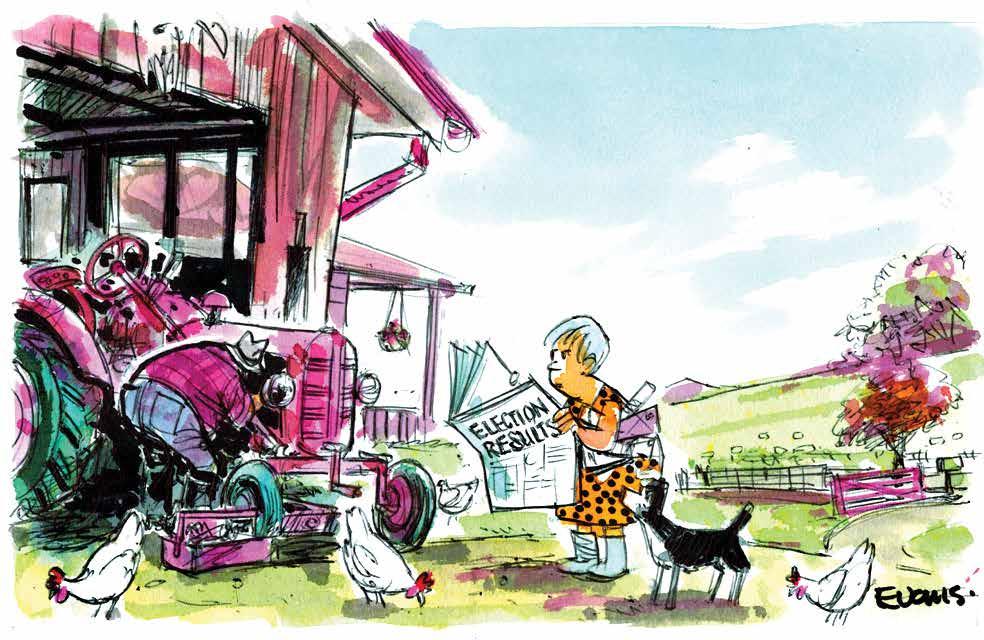
Early retirement?
Your canine crusader understands that the wheels – or is that the rudder – are really starting to come off the supposed pan agricultural sector agreement on reducing ag sector emissions. Levy groups are beginning to feel the wrath of farmer sentiment and general unhappiness about their perceived appeasement over ag emissions, with many in the leadership of these organisations viewed as quislings to the current administration. With political polls showing the real possibility of a change of government next year, it will be interesting how these same people – who have cuddled up a little too close to the current administration – are viewed by the powers-that-be if there is a change in government next year. The word is that utu may well be served up and instant retirement may be the best option for some of our farm body leaders.

PRODUCTION:
MACHINERY
RURAL NEWS // OCTOBER 11, 2022 22 OPINION EDITORIAL
EDNA
HEAD OFFICE POSTAL ADDRESS: PO Box 331100, Takapuna, Auckland 0740 Phone 09-307 0399 PUBLISHER: Brian Hight Ph 09 307 0399 GENERAL MANAGER: Adam Fricker Ph 021-842 226 CONSULTING EDITOR: David Anderson Ph 09 307 0399 davida@ruralnews.co.nz AUCKLAND SALES REPRESENTATIVE: Stephen Pollard Ph 021 963 166 stephenp@ruralnews.co.nz WAIKATO SALES REPRESENTATIVE: Lisa Wise Ph 027 369 9218 lisaw@ruralnews.co.nz WELLINGTON SALES REPRESENTATIVE: Ron Mackay Ph 021 453 914 ronm@ruralnews.co.nz SOUTH ISLAND SALES REPRESENTATIVE: Kaye Sutherland Ph 021 221 1994 kayes@ruralnews.co.nz DIGITAL STRATEGIST: Jessica Marshall Ph 021 0232 6446 Rural News is published by Rural News Group Ltd. All editorial copy and photographs are subject to copyright and may not be reproduced without prior written permission of the publisher. Opinions or comments expressed within this publication are not necessarily those of staff, management or directors of Rural News Group Ltd.
Dave Ferguson Ph 027 272 5372 davef@ruralnews.co.nz Becky Williams Ph 021 100 4381 beckyw@ruralnews.co.nz REPORTERS: Sudesh Kissun Ph 021 963 177 sudeshk@ruralnews.co.nz Peter Burke Ph 021 224 2184 peterb@ruralnews.co.nz
EDITOR: Mark Daniel Ph 021 906 723 markd@ruralnews.co.nz RURALNEWS TO ALL FARMERS, FOR ALL FARMERS PRINTED BY INKWISE DISTRIBUTED BY REACHMEDIA
“So who was voted least incompetent?”
Baby out with the bathwater?
THE RECENT open letter on He Waka Eke Noa has sparked a lot of discussion, and that’s a good thing.
We should always be open to debate whether we are doing the right thing. So much of the farm emission pricing discussions happened behind closed doors, meaning most farmers never got the chance to properly go on the jour ney to consensus between the 11 partners.
It’s also fair to say that things have changed since that farmer consultation, both inside and outside HWEN.
Inside HWEN, the final proposal to the Gov ernment was slightly dif ferent to that presented during consultation – for the better in my opin ion, addressing many con cerns we heard from our members.
Outside HWEN, a key thing that has changed is the counterfactual – i.e. ‘if it’s not HWEN then it’s the ETS’. In our own member survey, there was a higher number of respondents who favoured going with the farm level levy, as opposed to the processor levy, the ETS or just tell ing the Government to bugger off.
We heard loud and clear that a large reason for this view was due to concerns about the ETS ‘fallback’ option. Feds have constantly voiced opposition to the Gov ernment’s threat to bring agriculture into the ETS if HWEN does not work out.
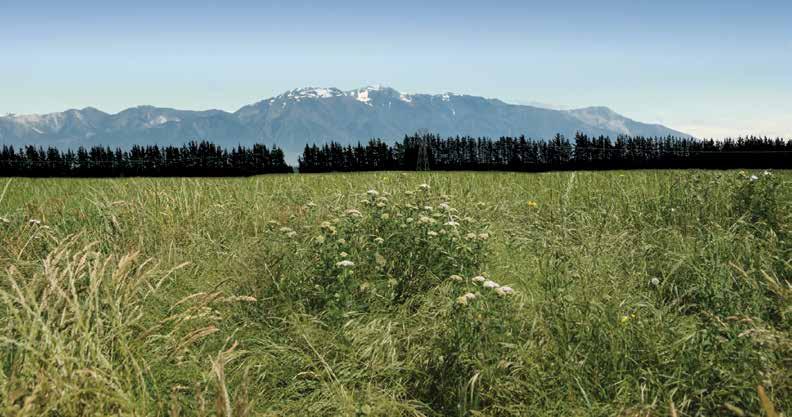
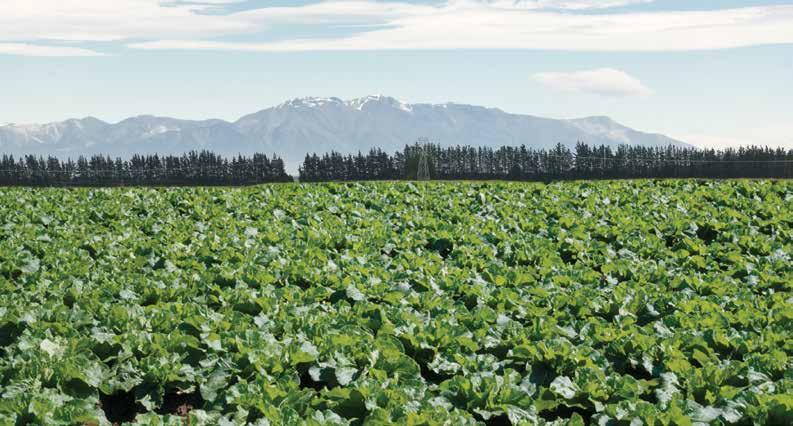
In 2019 we called the ‘fallback option’ a show of poor faith. It has frustrat ingly further complicated an already complicated issue. Certainly, in our National Council deliber ations, this weighed heav ily on us – if Feds didn’t support HWEN, would we be held responsible for farmers going into the ETS?
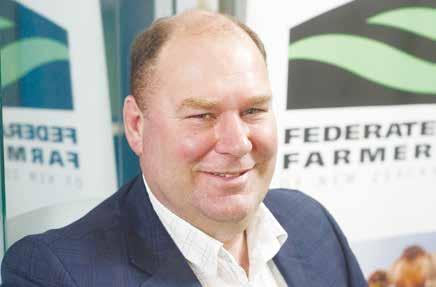
However, I now ques tion whether that ETS ‘fallback’ alternative is a

likely outcome. Feds have always criticised bring ing agriculture into the ETS, as designed at the processor-level in current legislation as unwork able, expensive, unscien tific and a blunt tax on food production. We are increasingly not alone in saying this.
While there are aspects of the open letter that I am personally in agreement with, there are probably two aspects I disagree with.
Firstly, the call to farmers to question their Feds subscription. We cover a massive range of issues that affect farm ers, and while you may not agree 100% with our stance on a singular issue at a certain point in time, I am sure I can point out nine others where you do.
Also, if you are upset about a certain issue, then the way to change that is to be more involved, not less.
The second aspect I would push back on is the conflation of the targets with HWEN.
The 2030 and 2050 methane reduction tar gets were set in the Cli mate Change Response Act, and quite frankly if we want changes to the targets it’s best done through that Act. Feder ated Farmers submitted that the targets should be based on what reduc tions are required for no additional warming to be caused by methane. This ‘no additional warm ing’ goal is the same as the goal set for long-lived gases.
Feds are advocating for methane to be treated the same on a warming basis as all other gases, a very reasonable policy. Using the best avail able science (including the science underpinning the GWP* metric) a 10% reduction in methane by 2050 adds no additional warming and is therefore ‘zero carbon’ equivalent.
There is a lot of talk about the need for farmer buy-in, but to achieve farmer buy-in farmers need to agree on both the ‘where’ (targets) and also
the ‘how’ (HWEN).
Feds will continue to advocate for a mecha nism of achieving targets in a way that is best for
The
open to their feedback, be they arable, beef, dairy or sheep.
Expect a great result...
to
RURAL NEWS // OCTOBER 11, 2022 OPINION 23
ANDREW HOGGARD
• Andrew Hoggard is national president of
Fed Farmers national president Andrew
broad-spectrum efficacy of Granstar ® herbicide is especially effective with hard
control broadleaf weeds, making it the perfect partner in pasture and fodder brassica renewal programmes. By adding Granstar ® to your glyphosate you can be sure your grasses and broadleaf weeds are controlled. But Granstar ® goes further by promoting moisture conservation and establishing a primed and fertile platform for brassica or pasture crops. That’s Granstar ® at work. Visit www.fmccrop.nz for more information.
when you put Granstar ® to work with your glyphosate. FMC New Zealand Limited Phone: 0800 658 080 www.fmccrop.nz ALWAYS READ AND FOLLOW LABEL DIRECTIONS. FMC and Granstar® are trade marks of FMC Corporation or an affiliate. © 2019 FMC Corporation. All rights reserved. 8/19
Only one ref that counts!

AS I sit down to put pen to paper for my column this month, we are pretty much half-way between Bledisloe 1 and Bledis loe 2.
The rugby fans, plus many others too, are well-aware of what hap pened in Melbourne the evening of September 15th!
The media has been alive with comments and opinions, from the sports pundits and other experts, about the actions of French referee Mat thieu Raynal in the 78th minute of the test. And it looks like the fallout will continue to rage for some time yet, particu larly across the ditch! Of course, Raynal is not the first ref to cop serious verbal spray from losing teams, and he certainly won’t be the last.

Here are a couple

of comments I noted: “Worst call in rugby his tory…” and “One of the worst refereeing deci sions in Wallabies his tory.” The words “abject stupidity” and “disgrace ful decision” were also used by some bashing the ref.
I even saw a comment that likened this to the infamous cricket under arm incident with the Chappell brothers, back when Rob Muldoon was our PM. The writer sug
gested this might become the Aussies very own ‘underarm’ moment in sports rivalry history between our two nations.

Interestingly, the under arm delivery also hap pened in Melbourne… at the MCG in February 1981.
Muldoon, not often lost for words, weighed in with the witty comment, “I thought it was most appropriate that the Aus tralian team was dressed in yellow”.
I have spent consid erable time on the side lines or in sports crowds over the years. With our young children, Sat urdays saw us juggling between three codes: soccer, rugby, and net ball. I did get to run the flag on the sideline a few times as well. I saw more than enough to decide that reffing a game just
wasn’t for me. I mean, why bother!
The all-too-common verbal abuse from parents and rellies, or other team supporters… I figured there have to be better ways to spend my Satur days. For sure, I take my hat off to those that vol

unteer for this cauldron each week.
Think about it for a moment; back in the ‘good old days’ rugby only had the one referee. Now we have four! And as I recall, the rule book was less intrusive then than it is today.
Surely things could be simplified, it is just a game after all. Maybe the players should have the option to yellow or red card the ref? Or perhaps take it a step further; surely the players could just decide amongst themselves what’s right and wrong!
After all, this is 2022 and we do have 30 ‘adults’ running round the paddock. They must be civilised enough, evolved enough, and have sufficient maturity by now to decide what’s right for them. Let them run their own game with out numerous officials needing to hold their hands.




I find it more than just interesting that for the games we play, we need complex and detailed rule books, with officials and supervisors to keep us
on course. Talking rugby again, for the 30 play ers on the field, we have three referees, plus the TMO, and the help of TV cameras to spy on their every move.
Talk about micromanagement and microsupervision! All to look after 30 adults who apparently can’t be trusted to decide right from wrong themselves. Truly amazing!
And yet for life and living, which of course is rather more serious than an 80-minute game, we’re big boys and girls now! Don’t need any super visor eh, certainly not a Divine One to advise; or blow any whistle! Yeah right!


Keep well and God bless.
• To contact Colin Miller email: farmerschaplain@ ruralnews.co.nz






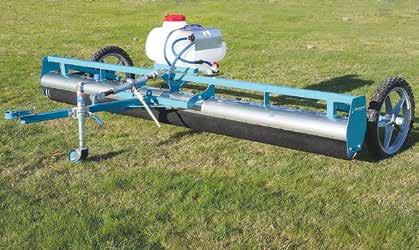
RURAL NEWS // OCTOBER 11, 2022 24 OPINION
FARMER’S
CHAPLAIN Colin Miller ROTOWIPER.... IT JUST GOT BETTER! 48 Bremners Road PO Box 333 Ashburton www.rotowiper.co.nz P: 03-308 4497 M: 027-311 9471 E: dougal@rotowiper.co.nz Trailing model towed by a 4 wheel bike FANTASTIC NEW FEATURES! • Single height adjustment • Roller drive disengagement • Fold-up drawbar • Tank leveller adjustment • New strong design frame • New stub axle hub arrangement • All covers now stainless steel TR Rotowiper New electric height adjustment With the all-toocommon criticism you wonder why people bother to put their hand up to referee.
Is it time to relook at HWEN hybrid model?
mediate between sheep and cattle.
HE WAKA Eke Noa pro posed two options for pricing agricultural emis sions. Feedback from farmers strongly sup ported farm-level pric ing in preference to the hybrid option.
Amongst the complex ity there are a few simple facts that inform how we could proceed from here.
The first is that the volume of methane emis sions is solely dependent on how much dry matter is consumed by livestock. What species, how old and heavy they are, how productive they are and whether milk, meat, wool or velvet is produced do not make a scrap of dif ference to the volume methane emissions.
That means the only way methane emissions can be reduced is by reducing the area of pas toral farming.
It also means that, given the area of pastoral farming is being eroded by carbon and produc tion forestry, horticulture and urban spread, meth ane emissions must be reducing.
The evidence points to stable emissions in the recent past, and the current carbon farming bonanza is yet to be cap tured in the statistics. On the other hand, there are very few opportunities to increase dry matter intake because our farming sys tems are dominated by pasture, being by far the cheapest fodder, thereby capping the amount of supplementary feed.
The other greenhouse gas associated with live stock is nitrous oxide.
Nitrogen from fodder is partially retained in prod uct from the animal and cycled back to the land as dung and urine. A frac tion of that is converted into nitrous oxide, mainly from urine patches. Again, the volume of emissions is dependent on how much dry matter is consumed but is also dependent a little on pro duction and a lot on the species. Emissions per stock unit are much less for sheep than cattle.
Deer emissions are inter
Given that nitrous oxide is a long-lived gas and could be priced as for carbon dioxide, over time the price is likely to tran sition to that of the Emis sions Trading Scheme. Even using the current NZU price for a ton of carbon dioxide-equivalent with no discount means that the price of nitrous oxide emissions is triv ial in comparison with market prices.
For example, it is less than 0.5% of the meat value of a cattle beast or lamb, and even less in relation to the milk value from a dairy cow.
Putting these methane and nitrous oxide obser vations together means that farm-level report ing serves no purpose yet requires farmers to file data that cannot realis tically be audited. That data is comprehensive, requiring tallies and live weights for each class of stock as they vary throughout the farming year, taking account of sales, purchases, births and deaths.
Let’s breathe life back into the HWEN hybrid option. It does not have this data requirement yet incentivises mitiga tions such as vaccines, feed additives and animal genetics as they are devel oped and approved. Auditing would be a breeze in comparison.
The HWEN farm-level option incentivises meth ane reduction by putting a price on all methane. Currently, there are no viable mitigations, so to be effective, the price has to be strong enough to force farm sales of the financially weak. What happens to the income from pricing methane? The first call would be to fund the bureaucracy required to operate the scheme.
The Climate Change Commission, in consider ing the farm-level option, has proposed a refund based on production of milk, meat and other products. This is Robin Hood in reverse, whereby those on more versatile soils and having inher
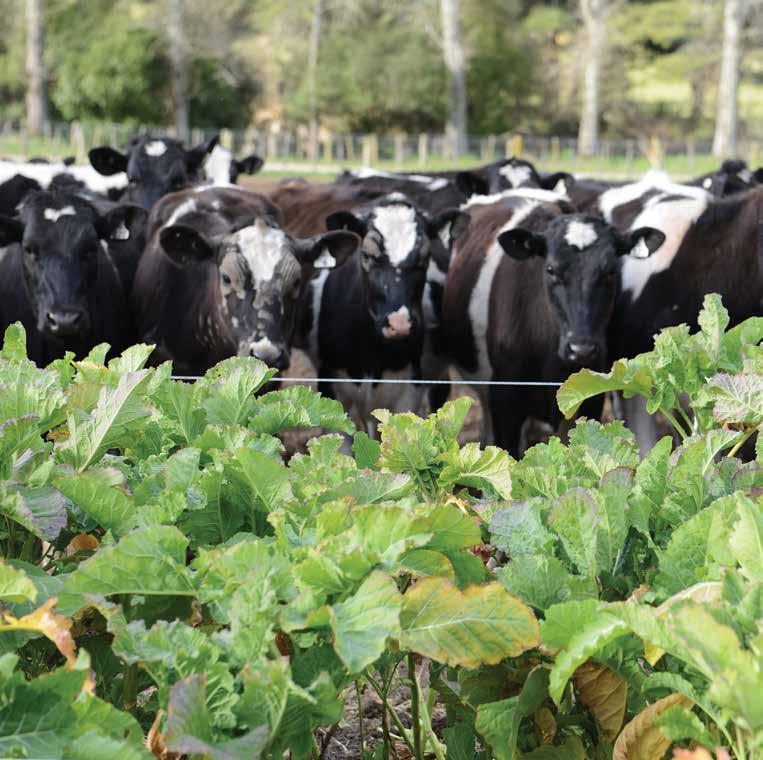
ently higher productiv ity prey on the financially weak with less favour able soils or climate. Even when mitigations become available and emission pricing is set to incentiv ise their use, financially
stressed farmers will still be forced to sell if the HWEN farm-level option is adopted.
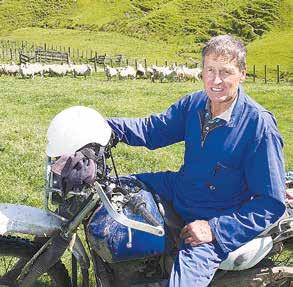
Rather that the HWEN farm-level option charg ing for all methane, best be more targeted and just

incentivise the desired changes using consistent prices and the HWEN hybrid model.
• Graham Pinnell is a retired Cambridge farmer and has served on two Crown regulatory boards.
Magis ter CS
Better weed control for high yields
Maximise
RURAL NEWS // OCTOBER 11, 2022 OPINION 25
GRAHAM PINNELL
Graham Pinnell believes the HWEN hybrid maybe a better model for the agricultural sector than the farm level pricing option.
H E R B I C I D E
® FMC New Zealand Limited Phone: 0800 658 080 www.fmccrop.nz
yield control in Fodder beat, Forage brassicas and other crops with the use of Magister ® CS herbicide as a pre-emergent option. Controls a wide range of weed species and compatible with other major herbicides. Visit www.fmccrop.nz for more information.
ALWAYS READ AND FOLLOW LABEL DIRECTIONS. Copyright © 2020. All rights reserved. The FMC logo and Magister® are Trademarks or Registered trademarks of FMC or its affiliates.

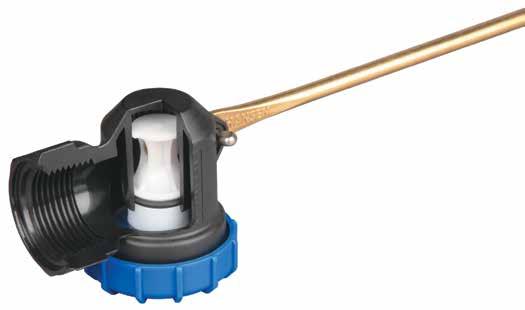







www.hansenproducts.co.nz The Hansen Superflo Valve has been design and built from the ground up to produce a High Performance Super Low Maintenance Valve. With it’s proven success it’s not difficult to see why so many farmers have embraced it. High Performance 188 L/min @ Slipper Fit Piston Helps Eliminate Stuck Valves Multiple Size Options Threaded Outlet for Portables, Washdown, Tanks, Irrigation HAND TESTED Reliable Trough Valve NEW Now includes 15, 20 & 25mm Adaptors in Superflo Standard Adaptor Pack Available at your local Rural Supply Store
Managing sheep drench resistance
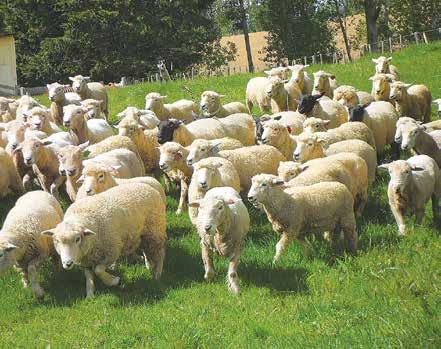
DRENCH RESISTANCE

has been around for more than 40 years, but its impact was not a prob lem, as effective newly developed chemicals became available.
Farmers were confi dent that drench compa nies would continue to find new compounds to protect their animals.
Recently I found an old article that had been saved, dated 5 Febru ary 2005. It featured an investigation into worm resistance by Massey sci entist Bill Pomroy, who was working with goats that were “riddled with worms”.
That was 15 years ago!
In the same publica tion on the same date, in an article entitled “Lin coln tackles drench resis tance”, Dr Jon Hickford stated that he believed that drench resistance was costing the sheep industry $300m a year.
Again, that was 15 years ago!
Now we have the same problem with sheep where some farms now have total resistance to all chemical drenches and combinations.
At present, lamb fin ishing farms are the most affected. This is under standable as they pur chase thousands of store lambs from many prop erties from November through to July. Some of these lambs will have total worm resis tance and it only takes a small number to con
taminate a property. In these instances, quaran tine drenching will only increase the problem by removing the less drenchresistant parasites.
At this stage, I believe many – if not most –sheep farmers will have a degree of worm resis tance on their proper ties. These farmers will be unaware of the loom ing problems that lie ahead. Fifteen years ago, Bill Pomroy predicted our present situation when he said: “A time bomb is ticking under the sheep industry as drench resis tant parasites become more common while drug companies and research funding lag in their response”.
The problem for farm ers is that a degree of resistant worms in their lambs is not visually apparent. Even the best stockmen will see no change. This is because
even if drenching only kills 30% of worms (or even 50%) the lambs will still look fine. By reduc ing the number of worms by drenching, it enables the immune system to control, or kill the smaller number of surviv ing worms.
About 30 years ago, during my first of four visits to the CSIRO AgResearch Centre at Armadale, northern New South Wales, my first question was: “Is it pos sible that worms will develop immunity to the immune system?” The scientist’s reply was, trials had found that worms will never develop resistance to the immune system.
As worm resistance increases quite suddenly, drench resistance will become more physically apparent with weight loss. This is especially the case where the Bar
bers Pole worm is domi nant; some deaths may even occur. Remember this worm does not cause dags and sheep will sud denly die due to blood loss, completely dag free.
It is vital for farmers to know the drench resis tant status of their flocks. This will ensure they are mentally prepared when – not if – worms achieve total resistance to all drenches.
Trevor Cook, our national veterinarian, vis ited me some weeks ago.
I have known Trevor since his first engage ment with our local Vet Club where I was chair man. Over the years we have stayed connected and latterly he performed embryo transfer oper ations on my Romney stud.
During our conver sation, he stressed the importance of farm ers knowing if they had
WHEN FECS GO WRONG!
ON SOME relatively rare occasions, faecal egg counts (FEC) will not indicate the true level of worms.
In fact, the FEC could well be totally wrong in its numbers. Such a situation arose about 25 years ago on a Beef + Lamb monitor farm in the Kaiwaka area in lower Northland.
Farmers had gathered for a field day about the peak of the worm chal lenge period. These farmers, with considerable experience, concluded that the lambs they were viewing were full of worms and needed drenching. However, a recent FEC registered low counts. However, the farmers were right and the FEC did not reveal the true situ ation.
How could this situation occur?
The FEC cannot indicate the number of immature worms an animal is supporting. Like children up to their early teens, immature worms grow quickly living on their host and in the
drench resistance and – if so – to what extent. He says that he was sur prised and disappointed that otherwise good farmers had not tested their flocks for drench resistance.
This test is simple and inexpensive. It is a matter of doing a faecal egg count around 10 days after drench ing to see what percent age of worms survived.
Work with your vet for this rest. They will study the results, assess if your flock has drench resis tance and what percent age of worms survived the chemicals.
I believe that when our flocks have a degree of drench resistance, total resistance will soon
case of Haemonchus, consuming blood.
The numbers of these developing worms can vary greatly depending on environmental conditions. These conditions usually occur after a drought when millions of worm eggs remain unhatched.
At the same time, the worms in animals will decrease as they grow old and die and are not replaced. With rain and warm temperatures, many of these worm eggs will hatch and continue to develop to stage three. At this stage, they are in the pasture and will be ingested by animals where they will continue to develop and feed off the host until they mature and mate.
At this stage, females will shed large numbers of eggs – in the case of a single Barbers Pole worm, up to 10,000 per day!

Farmers need to be aware of this unusual situation, especially after a dry spell.

follow as several gener ations of worms occur each year.
We need to prepare ourselves mentally to ensure that we are pre pared to take the options that are necessary to best handle worm challenges. This is possible.
There are now two options available to manage total drench resistance. Trevor Cook has already designed management practices that reduce worm num bers to a point where farming sheep can con tinue.
The second option is choosing the genetic path. Already in our country, we have sheep that have a strong immune system sufficient
to withstand any worm challenge. However, their numbers are not great.
There are about 30 ram breeders breeding for the resistant trait. They will have rams avail able that will pass on some resistance, which will help in areas of mod erate or low worm chal lenge. However, in areas of high challenge, partic ularly where the Barbers Pole worm is the domi nant species, it will take more time to achieve “meaningful worm resis tance”.
The use of AI – artifi cial insemination – from top rams will speed up the process.

• Gordon Levet is a long time Northland ram breeder.

RURAL NEWS // OCTOBER 11, 2022 MANAGEMENT 27
GORDON LEVET
Gordon Levet’s Kikitangeo Romney Stud was the first in NZ to breed for worm resistance.
DON’T MISS THE SLEIGH ORDER YOUR PRESSIES EARLY HELMET AWARE TECHNOLOGY SEAT BELTS PASSCODE PROTECT TWO APPROVED HELMETS INCLUDED RIDE COMMAND WITH GEOFENCING AND SPEED LIMITING CONTROL Geo fencing so you can control where the kids can drive Speed limit control so you can manage a safe speed for different age children RZR 200 LEADS THE WAY WITH SAFETY & TECHNOLOGY 200 0800 440 290 | www.polarisnewzealand.com | /PolarisNZ | /polarisorv_nz
Project looks into CSAs
A RESEARCH project aims to benchmark con taminant losses from sheep on winter crops and assess the impacts of retaining critical source areas (CSAs) in the grass in winter crop catch ments.

A recent Beef+Lamb field day was held at the Sheep Wintering proj ect – based at Waita huna, near Lawrence in Otago. This research aims to understand the sig nificance of contaminant losses and the effective ness of good manage ment practices for sheep wintering that will enable farmers to make evi dence-based land man agement decisions.
Funded by the Min istry for Primary Indus tries and managed by NZ Landcare Trust, the proj ect is sponsored by Beef
● 3-year paired catchment study
● Benchmark contaminant losses from sheep grazing on winter forage crops
● Assess the full impacts of leaving critical source areas (CSAs) in the grass in contrast to cropping critical source areas
● Major funder – MPI, Sustainable Food and Fibre Futures Fund
● AgResearch undertook research (project managed by NZ Landcare Trust) on the property of Ronald and Carol Alderton
● Final research results are expected in early 2023
and Lamb NZ, Ballance, Horizons Regional Coun cil, Greater Wellington Regional Council, Otago Regional Council and Environment Southland.
“Research on the impact of sheep on winter crop had not been quantified,” explains project manager Craig Simpson. “This research project is built on the
work undertaken by AgResearch at Telford examining the impacts of wintering cattle on crop.”
Water samples from runoff events were cap tured throughout each year, with most samples being captured post-graz ing. As a result, it has been found that the risk period for contaminant runoff extended beyond
Sheep graze around the critical source area on a sheep wintering research trial at Waitahuna.
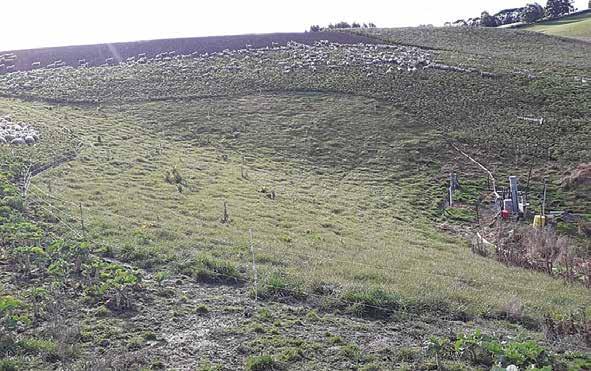
the winter season into spring.
To ensure the research fully captures this data, MPI has approved an extension to the project
to ensure that the final year of field data collec tion can be maximised and confidently predict the risk periods.
The project has, so
far, highlighted that protecting the critical source area (CSA) by retaining it in grass cover effectively reduces the runoff of sediment and
other contaminants.
The final results of the project are expected by early 2023.
RURAL NEWS // OCTOBER 11, 2022 28 MANAGEMENT
RESEARCH OBJECTIVES @rural_news facebook.com/ruralnews
For more information 0800 171 825 germinal.co.nz Not all grass is the same Choose Germinal for innovative pasture varieties that can make a real difference to your farm’s sustainability and profitability. G_NZ_220826_Spring Advert Campaign_Rural News_(200Hx265Wmm).indd 1 21/09/2022 09:36
Protect your beef herd from BVD
BOVINE VIRAL Diar rhoea (BVD) is a common but devastating viral infection of cattle in New Zealand.
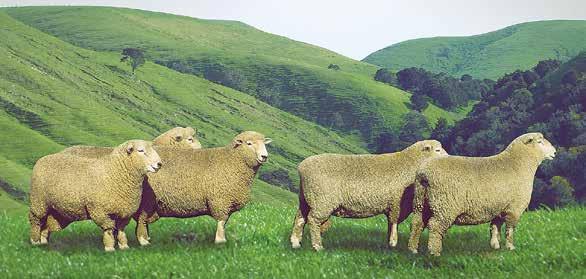
BVD’s most costly impacts are on pregnant cattle and their unborn calves. It is estimated in recent economic modelling that the cost of a BVD outbreak in a naive beef herd is set at $41 per mixed-age cow per year.
The largest cost of BVD to a beef farmer is via production and stock losses. When pregnant cows are infected with BVD prior to 35 days of gestation, the pregnancy is usually lost. When infected between 35 and 125 days of gestation, BVD infection most often causes the calf to become persistently infected with the virus (a “PI”). PIs go on to shed the BVD virus in their saliva, faeces, and reproductive secre tions for their entire lives and are the source of future BVD transmis sion to other naïve cows or herds.
PIs also suffer from persistent ill thrift and typically die before reach ing slaughter weight. Non-pregnant animals are also affected by BVD exposure and infection. Young stock that are infected can have reduced growth rates. Affected cattle are also more likely to be suspectable to other
diseases, therefore, a BVD incursion affects all ani mals on the farm.
When a pregnant cow is infected with BVD beyond 125 days of gesta tion, sometimes the calf is born normal. How ever, it could also suffer from birth defects, such as stunting, eye abnor malities, and immune suppression – which may limit its productivity and increase the risk of being culled.
So, protecting preg nancies is critical for BVD control; there is never a good time for a pregnant cow to get BVD.
You can protect preg nant cattle with vigilant biosecurity, or by vac cinating cows and heif ers prior to mating with a BVD vaccine that has a
label claim for foetal pro tection against BVD.

Recent work revealed that 63% of New Zealand beef herds had recent or ongoing exposure to BVD. Often, the source of the recent BVD expo sure isn’t obvious, and most beef farms have biosecurity risk factors that allow for intermit tent BVD exposure to the herd. Examples include an undetected PI in the herd, over-the-fence con tact with other cattle (i.e. neighbouring proper ties) and onto-farm cattle movements including having dairy grazers.
Biosecurity for preg nant animals means pre venting them from having contact with any cattle of an unknown BVD status (i.e., any potential PIs).
To ensure good BVD biosecurity, all animals which pregnant cattle have contact with should be BVD virus tested neg ative.
Also implement bar riers, such as boundary
fences with outriggers, and always separate preg nant cattle from untested animals. If you share yards or equipment with cattle of an unknown BVD status, cleaning and disinfecting between mobs, and spelling facili ties you can’t disinfect for 7 days will minimise the risk of BVD transmission.
Most farms In New Zealand are not bios ecure, in fact research into risk factors for BVD found only 2.1% of farms in the country were completely closed. This means there is risk for diseases, including BVD, to be introduced onto farms.
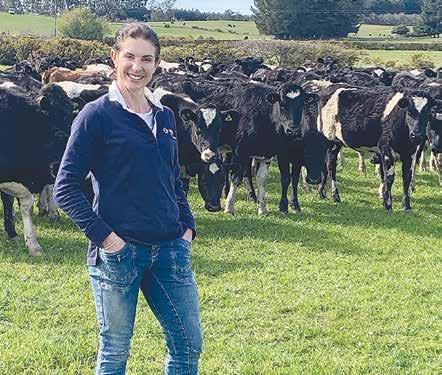
If strict biosecurity isn’t always possible, nor is testing and culling of all PI calves before the planned start of mating (which is the case in the majority of beef herds), then vaccinating cows
and heifers prior to mating each year with a BVD vaccine is the best option.
A vaccine that pro vides foetal protection will prevent transmission of BVD virus through the placenta to the calf, which means that even if the dam is exposed to BVD during pregnancy, the pregnancy should be protected.
Bovilis BVD vac cine has demonstrated 6 months of foetal pro tection following the ini tial sensitiser and booster and 12 months of foetal protection following a third dose (for example, an annual booster). This is the longest demon strated duration of foetal protection available in New Zealand.
Twelve months of foetal protection covers the herd’s entire risk period for PI formation
and continues to pro tect pregnancies from the late gestation effects of BVD. Furthermore, vac cinating so your herd has 12 months of foetal pro tection provides flexibil ity around the timing of the annual booster. If you need to give your annual herd booster pre-calving rather than pre-mating, the subsequent mating season’s unborn calves will still be protected from BVD.
There’s never a good time for a pregnant animal to get BVD. Pro tecting pregnant cattle throughout gestation with biosecurity and/or vaccination, and testing calves is the only way to break the cycle of BVD transmission in the longterm and to minimise the impact of BVD exposure.
Glenview Romneys
Bred for high performance and ‘cast iron’ constitution
Glenview Romneys
RURAL NEWS // OCTOBER 11, 2022 ANIMAL HEALTH 29
PENNY MEHRTENS
• Dr Penny Mehrtens is a veterinary advisor, for MSD Animal Health
Vet Penny Mehrtens says BVD’s most costly impacts are on pregnant cattle and their unborn calves.
We deliberately challenge our Romneys by farming them on unfertilised native hill country in order to provide the maximum selection pressure and expose ‘soft’ sheep. We aim to breed superior Romneys that produce the most from the least input.
& South Suffolks GEOFF & BARB CROKER Longbush, RD 4, Masterton email: bob_barb@slingshot.co.nz www.glenviewromneys.co.nz Phone 06-372 7820 Over the last 20 years ewes (including 2ths) have scanned between 190% and 215% despite droughts. Over the same period weaning weights (adj. 100 days) have exceeded 36kg from a lambing % consistently above 150%. FERTILITY GROWTH RATE & SURVIVAL • All sheep DNA and SIL recorded. • Ram hoggets have been eye muscle scanned since 1996. • Ewe hoggets have been mated (to Romney sires) for over 20 years. • Breeding programme puts an emphasis on worm resilience - lambs drenched only once prior to autumn. FE tolerance introduced more recently. • Scored for dags and feet shape. Sires DNA rated for footrot and cold tolerance. • We are ‘hands on’ breeders with a focus on detail and quality. • We take an uncompromising approach - sheep must constantly measure up. CALL IN & SEE US | 73 PRESTON STREET INVERCARGILL PHONE: 03 215 8558 Email: info@hecton.co.nz Visit our website www.hecton.co.nz for a full list of products Hecton Contractors – Tandem covered crutching trailer SHEEP HANDLER AND LEAD UP RACE • Fastest handler on the market • Ideal for dagging, crutching & foot trimming CRUTCHING TRAILER
Helping farmers fight TB
Peter McNab has been involved with TB Free for more than 30 years and was a key driver and supporter of the programme through the times when bovine TB was present in many herds in Otago. After 33 years on the Otago OSPRI Committee he has stepped down. Here is his story.
IT’S A gentle winter’s day deep in the Clutha hinter land, near the Catlins.
Even so, the wind bites on the top of Peter McNab’s 3,400ha farm as he surveys his land and gazes to the south towards Antarctica.
“I always say when a snowflake misses Mt Erebus, it hits you in the eye.”
Never compromise.
TPW Xpress Woolpress
McNab knows this well because he was born and raised in the area. He’s one of those long stayers, committed to his land, his family and his community. Recently, he retired from the OSPRI committee (formerly the Regional Animal Health Commit tee - RAHC) after serving for more than 30 years, through the toughest times, when bovine TB was rife in Otago.
When he talks about his legacy as a long serv ing committee member, McNab is very humble.
herd in 1989, back when most people didn’t even know that possums were linked to TB.
One of the reasons he joined the RAHC as it was then called was because his ‘house’ was on fire (so to speak) and his mind needed to be focussed.


TB was initially detected on his neigh bour’s farm (he had 219 cattle with TB one year) and then shortly after that, TB was detected on the McNab farm and other neighbouring farms.
bovine TB had reached every corner of Otago and herd infections peaked at around 300.
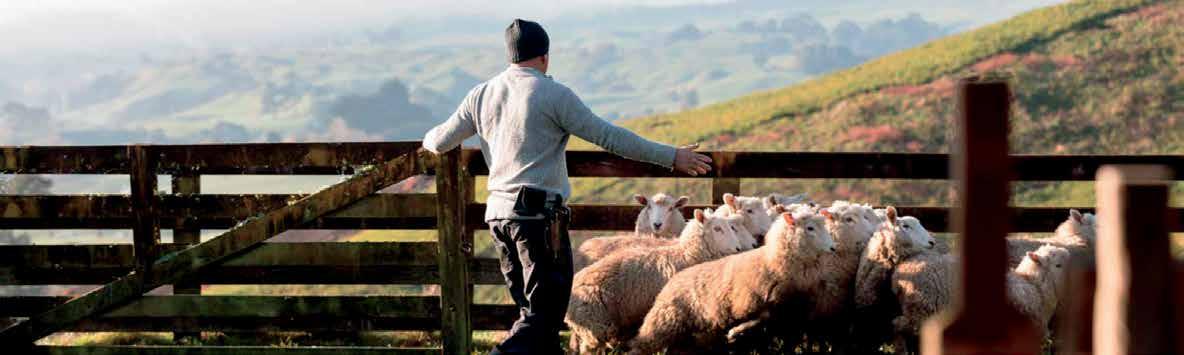
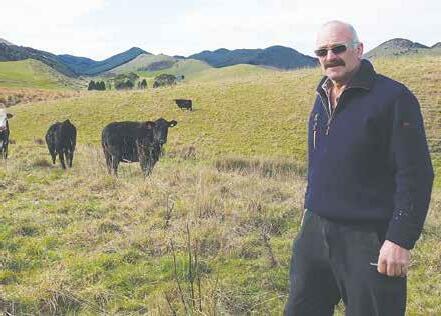
“We had great sup port from the Animal Health Board (now OSPRI). Their staff were passionate about the cause, and it was great to be involved. At the time, there was a lot of work to see the result we achieved now, from a TB perspective. It’s been a great journey.
they will just reinfect the cattle. We also worked out quickly that if a prop erty had TB through infected possums, you didn’t just need to con trol that property you had to go two proper ties on either side. You were chasing your tail if you just did individual properties, you had to do areas.”
TPW Backease Hoist


Evo Shearing Plant
“I ate an awful lot of pies and had a lot of lovely lunches. I was chairman of the com mittee for a few years and my forte was keep ing everyone working together, understanding it but trying not to distort what needed to get done.
“There has been a whole lot of people and I’ve been a cog in the wheel for booting TB out of Otago.”
McNab had TB in his
TB is a serious animal health problem, so can have a real impact on the farm, and left unchecked can be a threat to our farming industry’s reputa tion overseas.
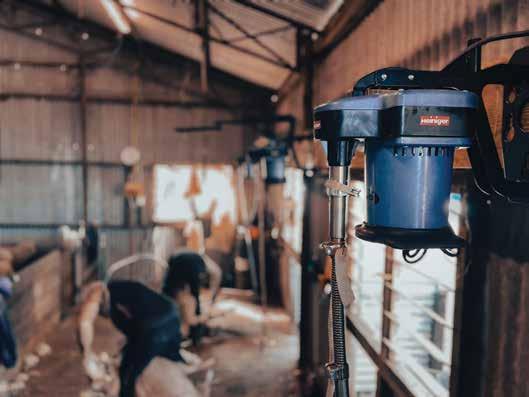
When McNab got a phone call about a meet ing where people were expressing concern about the possum problem, he put his hand up to volun teer. At the age of 32 in 1989 he was the youngest member.
By the mid-1990s,
“Farmers are more likely to follow and listen to farmers, and because there were a number of people who had had TB and really understood the importance of knocking it back, we were able to get the following we needed to get a levy in place by the mid-to late 1990s.”
The key to the success of the journey was a lot of possum control both ground and 1080 aerial control, reflects McNab.
“You can TB test all you like, but unless you get rid of the possums through possum control,


The other key to success was the tried-and-true threelegged stool approach: movement control, TB testing, vector control, movement control.


“If you did get a reactor (animal that tested positive for TB), you couldn’t move animals without having stringent controls about moving and then once they moved, you had to re-test again to make sure they hadn’t gone through the test and not been detected.
Now that McNab is ‘semi-retired’, his oldest son is running the beef, sheep and deer farm.
RURAL NEWS // OCTOBER 11, 2022 30 ANIMAL HEALTH
Peter McNab has been involved with TB Free in the Otago region for more than 30 years.
1 W aw OVIS MANAGEMENT LTD www sheepmeasles co nz 0800 222 011 Help reduce your regions sheep measles prevalence. DOGS ON OR NEAR FARM LAND? Maximum protection = Monthly dosing Sheep Measles are caused by a tapeworm Cysts cause undesirable blemishes in sheep meat These cysts can disrupt the lamb export market and cost our farmers and processors financially!
Choose Heiniger capital equipment, trusted by New Zealand farmers, contractors and shearers to get the job done and ensure you never have to compromise on safety, performance or reliability.
The world’s leading shearers trust the #1 selling shearing plant in the world, winner of multiple WorkSafe awards. The Evo delivers industry leading safety features, impressive performance and superb reliability.
Industry professionals trust the versatile, compact and cost effective TPW Backease Hoist to safely lift loads of up to 600kg with extendable 1.2 - 1.8m boom. At only 78kg, it’s easy to install with no loss of load space and features hydraulic lift and pressure regulated downwards movement.
With industry leading safety features, the #1 selling and most trusted woolpress helps to keep you and your workers safe in the shed. The TPW Xpress now comes with the new FX1+ indicator with audible and visible alarms that let you know when you’re approaching the target weight. Heiniger New Zealand | (03) 349 8282 | heiniger.co.nz Watch our equipment in action!
Cruise control with new Deutz RV-Shift options
AS PART of the recently announced Deutz Fahr 6C Series tractors, the RV Shift version takes up an interesting position between the conventional semi-powershift models and the top-of-the-range variable TTV offers.

The three models –the 6115C, 6125C and the 6135C – push out maximum boosted horsepower of 126, 136 and 143hp, respectively. The machines also feature the SDF-designed and in-house built T5441 RVS transmission.
Alongside 20 forward and 16 reverse speeds, the RV package also offers cruise control. It also features a stop and hold function, activated by a push on the brake pedal, without the need to use the clutch.
Described as a high efficiency full powershift, the RV allows all speeds to be selected without the need to use the clutch pedal. This means there is no interruption to
HOW DOES RV SHIFT OPERATE?
RV SHIFT designed and manufactured by SDF
Meanwhile,
torque delivery, making it the ideal tractor for draft or haulage operations.

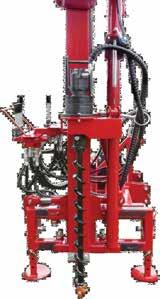
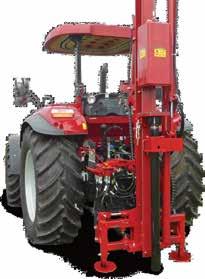
In the cabin, control is achieved via a three-way joystick located in the multi-function armrest to the right of the operator. Nudging the transmission lever forward, results in a single upwards gearshift, while holding the lever forwards means a progressive upshift through the box.
In addition, pushing the lever forwards and hitting the “confirm” button, allows the

transmission to perform skip shifts and miss out several gears – a function dependent on speed and engine load. Pulling the lever rearwards, results in downshift, either singly or progressively, while moving the control lever to the left activates cruise control and memorises the current speed.
Featuring Field and Transport operating modes, switched by a single button push, default modes are set for each at the factory but can be programmed
to meet individual circumstances by the operator. As an example, the operator might select speeds 5 to 8 as the best option for cultivation duties in the paddock and then use speeds 9 to 20 for transport operations.
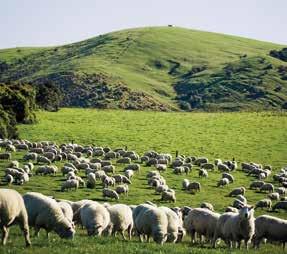
Pre-programmed start-
off speeds can also be selected to suit varying conditions. All speed selection parameters are accessed and selected through the dashboardmounted Info-Centre-Pro display.
In operation, gears can be selected
manually using the joystick, but when APS (auto powershift) is activated the engine and transmission will automatically adjust engine revs and gear selection to achieve the best work efficiency and fuel economy.
For those looking for very low operating speeds, maybe for vegetable planting or harvesting, an optional creep set offers speeds from 20 metres per hour to 5km/h.
RURAL NEWS // OCTOBER 11, 2022 MACHINERY & PRODUCTS 31
MARK DANIEL markd@ruralnews.co.nz
at its Italian Treviglio base, starts out with its origins in the well proven TTV transmission. From here, RV Shift uses virtual operating ratios to “mimic” the behaviour and characteristics of a power shift transmission. While there are a few physical differ ences, such as hydrostatic operating pressures, the RV shift will likely offer a lower price point than the full TTV transmission.
the mechanical drive elements will opti mise working efficiency, while the hydrostatic compo nents ensure a smooth progressive shift through the gears. @rural_news facebook.com/ruralnews The Deutz Fahr 6C Series of tractors with RV Shift version allows all speeds to be selected without the need to use the clutch pedal. Itdoesn’tmatterwhatisunder theground you arefencing on -the KINGHITTER Series 2 accessoriescanhandleitwithease. SERIES 2 430 SERIES 2 430TERMINATOR 4.3mHeavyDutyHingingMast,270KgHammer 950mmSideShift,300mmMastShift 2300NMTorqueDrillwith RockSpikeExtractorSystem www.kinghitter.com 0 09 482 0866 MADEINNEWZEALAND Hard panunder there? Grindthoughitwiththe 2300NMTorqueDrill. Rocksin theway? Blast through them withahigh tensileRockSpike. Guaranteed toput more postsinevery day. Give usa calltodaytoget thebest postdriver for your local conditions SERIES 2 430 WithRockSpikeKit, 90mmRockSpike &300mmMastshift Are you hitting your target market? Contact your local sales representative for more information www.ruralnews.co.nz ■ BREAKING NEWS ■ MACHINERY REVIEWS ■ MANAGEMENT STORIES ■ AND MUCH MORE... RURAL NEWS TO ALL FARMERS, FOR ALL FARMERS Auckland Stephen Pollard Ph 021-963 166 Waikato Lisa Wise Ph 027-369 9218 Wellington Ron Mackay Ph 021-453 914 Christchurch Kaye Sutherland Ph 021-221 1994
JD’s digital system now tailored for NZ market

THE LATEST John Deere Operations Center update has improved levels of precision and ease of use for machine monitoring, tracking input application and record keeping.
The updates also include the expansion of John Deere’s input product database, and Operation Centre’s ability to provide ‘estimated time remaining’ for tasks to be completed in real time, so will directly increase productivity for farmers through timesaving and management insights.
Until now, growers in New Zealand had to manually input their own product information into Operations Center, which led to errors in record keeping and ultimately unusable data. Now users can select products from more than 3,500 variet ies, 5,000 chemicals, and almost 1,000 fertiliser products specific to New Zealand, ensuring accu rate records— includ
ing product name, brand, and regis tration number.
The update will also ensure details of prod ucts to be used as part of digital work plan can be sent to machines wire lessly, ensuring that the right product is applied to the right field at the right rate.
As part of the upgrade, farmers will also receive updates on the efficiency of multiple machines in a paddock with the addi tion of the Estimated Time Remaining feature. This will allow managers to monitor progress and plan the next job with

JD users can now select products from more than 3,500 varieties, 5,000 chemicals, and almost 1,000 fertiliser products specific to New Zealand, ensuring accurate records.
high levels of timeliness. The feature will update every five minutes, based on factors such as turn times and machine con figuration.
In practice, it will allow a manager to see how long a job is going to take to complete, before forecasted rain might arrive or the time a supply tender needs to meet the sprayer. In addi tion, the system can also display idle time, with a counter until the machine starts moving again.
An improved map page in Operations Center will simplify a farmer’s experience of monitoring fieldwork and equipment from the office. The update will also allow selected part ner organisations to view equipment information.
The new equipment management tool enables farmers to view and manage their entire fleet in one place, including machines, implements and precision ag devices.
Forestry focus for Fieldays
VISITORS TO Fieldays 2022 –rescheduled for Nov 30 to Dec 3 – will be able to learn about the forestry sector from more than 40 sector organisations and compa nies under one roof.
The Fieldays Forestry Hub, under the theme of ‘Wood – our low-carbon future’, will be a newly organised space at the event. It will cover topics such as wood process ing and the sector’s role in mitigat ing climate change.
The Hub, a collaboration with an advisory group comprising of Te Uru Rākau – New Zealand Forest Service, Forest Growers Levy Trust, Scion, NZ Forest Owners Associa tion, Red Stag, NZ Farm Forestry Association and Future Foresters, recognises that the forestry sector is a major employer in New Zea land employing more than 35,000 people.
“People of all ages and abili ties can find great careers in this
sector – from planting and manag ing native forests and looking after the forest environment, to man aging people and resources and working with state-of-the-art tech nology,” says Hub spokesman Alex Wilson. “We’d also like to open people’s minds up to the possibil ities of trees in the future, includ ing the likes of bioplastic vine clips, leather shoes tanned with pine bark tannin and biofuel insights.”
Forest Owners Association president Grant Dodson adds that forestry is an excellent land use opportunity for farmers.
“The hub is all about shar ing information, so that forestry is better understood and those farmers that want to can be better informed before investing,” he says.
“We see integrated land use, with trees on farms, as a real opportu nity to increase overall long-term returns for farming, while improv ing environmental outcomes, espe
cially around climate change.”
New Zealand has approximately 1.7 million hectares of productive forests around the country and is currently the world’s largest exporter of softwood logs. Plans are also afoot, through Te Uru Rākau’s Industry Transformation Plan, to add more value to our for estry sector by processing wood materials in New Zealand, which in turn will create even more career and job opportunities.
National New Zealand Fiel days Society chief executive Peter Nation says this is the first time Fieldays has included something so specific to the forestry and woodprocessing sectors.
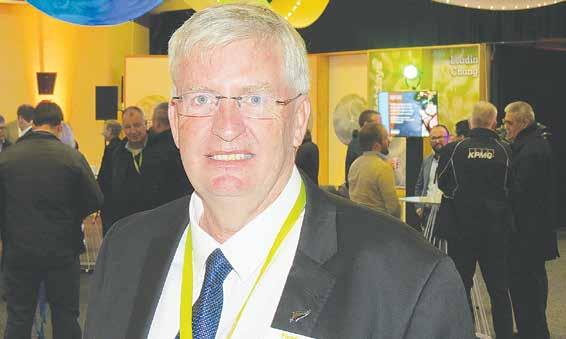
“There’s a huge need for work ers of all kinds in the sector, so we’re lucky to have these com panies and organisations coming together to showcase themselves and how an interest in forestry can quickly become a career.”
This rear discharge spreader provides precision manure spreading management.

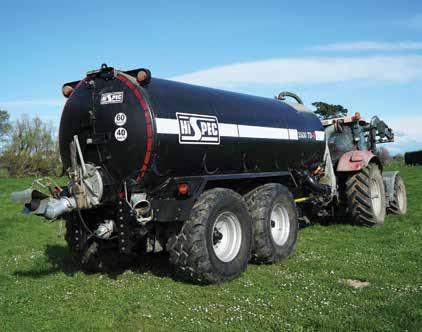
Unique technology of the shredding rotor and spinning discs provides a precise application of manure.
RURAL NEWS // OCTOBER 11, 2022 32 MACHINERY & PRODUCTS
Fieldays chief executive Peter Nation says this is the first time Fieldays has included something so specific to the forestry and wood-processing sectors.
MARK
DANIEL markd@ruralnews.co.nz
SOUTH ISLAND www.cochranes.co.nz Call Alastair Robertson | 027 435 2642 AMBERLEY | LEESTON | ASHBURTON | TIMARU | OAMARU | WEST COAST NORTH ISLAND www.gaz.co.nz Call our Imports Specialist 027 203 5022 CAMBRIDGE | OTOROHANGA | ROTORUA
XCEL 1250 MUCK SPREADER
The Ploughing pulls the crowds
WITH OUR own National Fieldays only few weeks away, Rural News took the opportu nity to take a trip over seas – as a guest of Enterprise Ireland, which invited 190 guests from 19 countries – to look at Ireland’s own national event, locally known as The Ploughing.
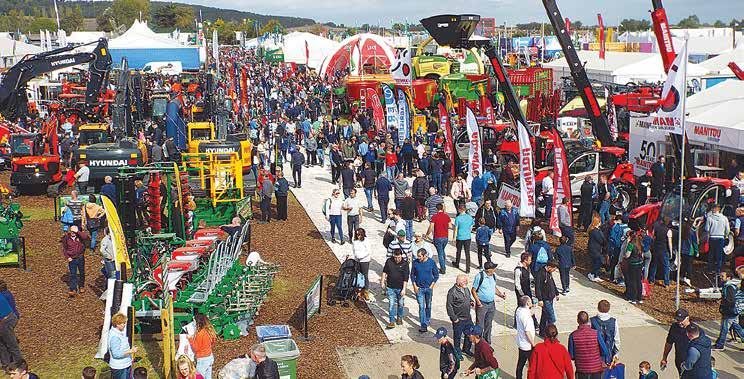
This year’s event was held at Ratheniska, County Laois, around 90km south west of Dublin on an area cov ering 900 acres, with around 1,700 trade stands. Held over three days, the event moves around the Irish coun tryside, unlike our own Fieldays that has a per manent home at Mystery Creek.
After a hiatus, follow ing two years of cancella tion because of Covid-19, around 277,000 visitors piled through the gates. This signalled a need to reconnect, but also the fact that the venue incor porated the 67TH World Ploughing Competition that had relocated at short notice, due to the Russia-Ukraine conflict impacting the original choice of venue.
The event is said to be the largest event of its kind in Europe. It is organised with military precision and adverse weather is taken care of by laying 37km of alumin ium roadways – a logis tical feat in itself – on what is really a temporary site. Meanwhile, road
ing access from all parts of the country is under taken by a team of up to 200 Garda (police) offi cers and the enforcement of a one-way system that kicks in about 5km from the site.

This all results in traf fic moving freely, which could be a lesson learned by our own Fieldays organisers. Alongside this strategy, placement of recovery vehicles means any breakdowns or acci dents are dealt with quickly. Meanwhile, local rural posties get a police motorcycle escort to make sure the mail still gets through.
The Ploughing is tar geted at a very wide audience. It has live stock displays, horse and tractor ploughing, the hunt pony games, vin tage machinery display and even a bread making competition.
A further highlight is
the Enterprise Ireland Innovation Arena, pro moting the latest in hightech rural technology, but also recognising the inge nuity of farmers, with a separate arena for farmbuilt ideas.
NZ Ambassador to Ireland, Brad Burgess, told Rural News that it was great to be back at Europe’s premier agri cultural showcase and to meet with our counter parts from around the world face-to-face once again. “Both Ireland and NZ share many values, so it makes real sense to take a collaborative approach in delivery solu tions,” he added.
“This will be expanded with the Joint Collabora tion for Agriculture meet ing scheduled for October 21. At the same time, it’s great to see Callaghan Innovation lead the first trade mission to Ireland
since the arrival of Covid19.”

The Ploughing’s claimed economic impact of around €45m ($90m) seems more realistic than the NZ Fieldays’ typical claim of around ten times this number.
Interestingly, this year’s Ploughing seemed to have been shunned by the major machinery sup pliers, with companies like John Deere, AGCO, CNH and Claas all miss ing. However, their local dealers were in atten dance.
One can only wonder if they decided to stay away because of their already bulging order books and a long lead time to delivery. Or was it the costs of static dis plays – particularly freight – when potential custom ers still want to see the product demonstrated on their own properties?
YARDMATE SOFT

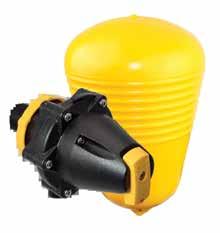

RURAL NEWS // OCTOBER 11, 2022 MACHINERY & PRODUCTS 33
MARK
DANIEL markd@ruralnews.co.nz The Ploughing is targeted at a very wide audience. It has livestock displays, horse and tractor ploughing, the hunt pony games, vintage machinery display and even a bread making competition. Some 277,000 visitors piled through the gates over the three days of the 67th World Ploughing Competition held in Ireland last month. 0800 JOBE VALVES jobevalves.com • High Flow • Compact/Robust • New Pilot Flow Filter • Side/Bottom Mount • Detach to Clean • Stainless steel bracket and Shaft • Fits plastic and concrete tanks • Rugged and long lasting • For Water Storage Tanks • Adjustable levels from 50mm-2.5m • Minimises pump operation •Available in 20/25/32/50mm GUSSET CASUAL BOOT For casual occasions in town and around home, the Gusset boot is a really comfortable and stylish option. A turned out, one piece full grain leather upper, with elastic side panels construction, ensures comfort and sleek appearance. Being fully leather lined with a leather in-sole adds to the comfort. The rough, flexible Navana fully repairable sole, ensures durability and the ability to handle the kids playing fields. Toe – Soft Toe Colour – Harley Tawny Sole – Navana Rubber/Replaceable sole 10 HALL ROAD, RD5, WHANGAREI Phone 09-436 2794 OR 027-436 2793 Visit www.lastrite.co.nz for more quality products FOOTWEAR LTD FARM BOOTS KIWI MADE FOR 3 GENERATIONS
TOE This is designed for heavy duty uses and is perfect for fencers, high country farmers and hunters walking through tough, rugged country. With an upper constructed from thick full grain leather, a leather insole and mid-sole, which is stitched and screwed to a cleated rubber repairable sole. A tough heel counter for better ankle support, this boot will handle the tough environment. Yardmate also available in Steel toe. Sizes 4-15 including half sizes.
Quality Greenhouses


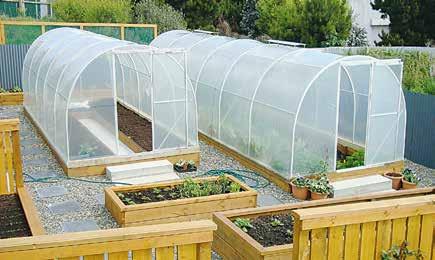
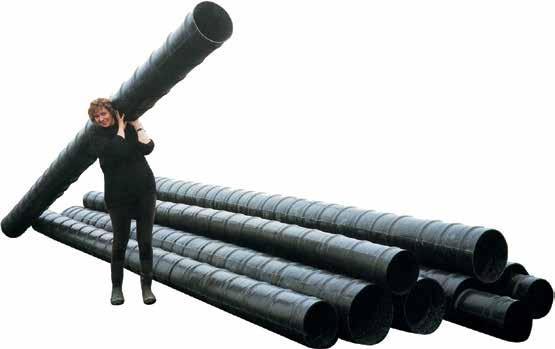


ESCORTED TOURS 2022/23




"Hassle free travel for mature travellers’’





• FAR NORTH & BAY OF ISLANDS (4 spots available)
7 days, depart 17 September. A leisurely coach tour of the Far North including the new Hundertwasser Art Centre and day trip to Cape Reinga.
• EAST COAST & NAPIER (6 spots available)



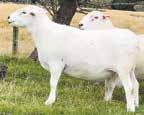

8 days, depart 21 September A unique and exciting tour around the East Cape and return via the Northern Explorer train
• CHATHAM ISLANDS DISCOVERY


8 days, depart 20 October A special place for a safe and relaxing close to home all inclusive holiday.
• BEST OF THE SOUTH ISLAND

15 days, depart 22 November A spectacular trip around the many highlights of the South Island taking in the wonders of Tekapo, Twizel, Stewart Island day excursion, the Milford Sound and Queenstown. Overnight cruise on the Milford Sound
• NEW PLYMOUTH 'CHRISTMAS LIGHTS' 5 days, depart 23 December A Christmas get away featuring the magnificent light display at Pukekura Park along with some great sightseeing during the trip.
• WAIKIKI BEACH & HAWAII CRUISE
11 days, depart 25 May 2023 A 'Pride of America' cruise for 7 nights with a Waikiki highlights 3 day stop over including Pearl Harbor and Oahu round Island tour.
• TAHITI & SOCIETY ISLANDS CRUISE


10 days, depart 21 July 2023 Set sail on board


Le Paul Gauguin for an unforgettable journey to discover idyllic sands and atolls. Tour includes flights to/from Papeete.

RURAL NEWS // OCTOBER 11, 2022 34 RURAL TRADER www.mckeeplastics.co.nz 300mm x 6 metre $410 400mm x 6 metre $515 500mm x 6 metre $735 600mm x 6 metre $989 800mm x 6 metre $1496 1000mm x 6 metre $2325 1200mm x 6 metre $3699 ALL PRICES INCLUDE G.S.T. CULVERT PIPES NORTH ISLAND 23 Mahinui St, Feilding Ph 0800 625 826 SOUTH ISLAND 35 Wilkin St, Waimate Ph 027 665 3667 Lightweight, easy to install • Water Troughs Water Transport Water Storage T/F 03 214 4262 E info@morrifield.com www.morrifield.com
• Easy assembly • Strong and durable • NZ made since 1980 • Grow all year round 40 YEARS IN BUSINESS 1980-2020 CELEBRATING morrifield PROUD TO BE NEW ZEALAND MADEWin!! MORRIFIELD GREENHOUSES Thank you to our Valued Customers for your continued support over the years www.morrifield.comGreenhouses Range of models sized 2 metres - 10 metres
For full details Phone 0800 11 60 60 www.travelwiseholidays.co.nz Invest in your safety Flexible crush protection device and made in NZ $700 + GST & Freight 0800 782 376 traxequipment.co.nz FLY OR LICE PROBLEMS? The magic eye sheepjetter since 1989 Quality construction and options • Get the contractors choice 07 573 8512 | dipping@electrodip.co.nz – www.electrodip.com Featuring... • Incredible chemical economy • Amazing ease 1500+ per hour • Unique self adjusting sides • Environmentally and user friendly • Automatically activated • Proven effective on lice as well as fly • Compatible with all dip chemicals • Accurate, effective application RAMS AND EWES FOR SALE HARDY, LOW INPUT EASY CARE MEAT SHEEP Ph 027-225 5283 www.organic-rams.co.nz • tim@organicstud.nz HAIR SHIRE RAMS® Also Tufty® (polled Highland) bulls, cows and calves available • No dagging • No shearing • No dip, drench or chemicals since 1989 Hair Shire® Stud Ram Sire “Gladiator” progeny for sale LASER FF95 DIESEL HEATER 0800 379 247 www avonheating co nz ü Huge 9.5kW output. ü Made in Japan since 1991. ü Energy Efficient - 92% certified ü Safe, convenient and easy to useno mess, no fuss. ü DIY Install or we can arrange. ü No wood to cut, cart or store. ü NO indoor diesel odours DOLOMITE NZ’s finest BioGro certified Mg fertiliser For a delivered price call... 0800 436 566 Get up-to-date news at www.ruralnewsgroup.co.nz LATEST STORIES EVERY DAY SALE ends soon JACKET BIB OVERALLS LEGGINGS 100% Waterproof Flexible Fleece Collar Hood Visor Acid Resistant Durable SeamsStitched On Soles Plain Toe* or Steel Toe175% more crack resistant than normal leather Buffalo Leather earthwalk.co.nz free shipping0800 16 00 24 sizes: BOOTS 5 - 13 (NZ) RAINWEAR XS - 4XL9am-5pm PHONE NEW! BUFFALO BOOTS RAINWEAR BUY $160* $150*valued at $320 $280 valued at $230 New Zealand owned & operated NEW - WIDER TOE BOX NEW - WIDER STEEL CAP ** NEW - KEVLAR PENETRATION RESISTANT SOLE ** NEW - 250 DEGREE HEAT RESISTANT OUTSOLE NEW - BALL BEARING SPEED LACING NEW - FLEXIBLE RAND NEW - STRONGER OUTSOLE STITCHING NEW - STRONGER MIDSOLE NEW - STRONGER FORESTRY GRADE SHANK (**safety models) New boots arrive early November $109 $99$88 Docking Chute 0800 DOCKER (362 537) www.vetmarker.co.nz VETMARKER®

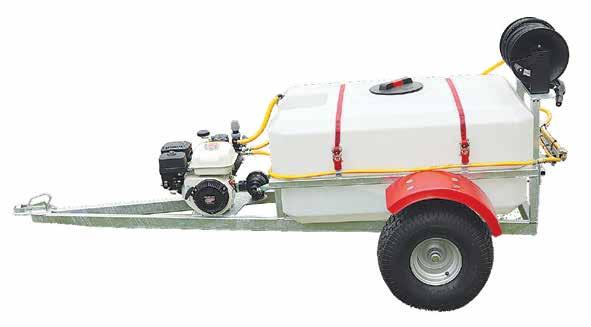










RURAL NEWS // OCTOBER 11, 2022 RURAL TRADER 35 SPRAY UNITS Honda GP200 Motor • 40 Bar/580 PSI • Flow Rate 41L per min • Comet APS41 Diaphragm Pump • 5D Suction Filter • Pressure Regulator & Return System 650kg Break Strength Strapping 30m Hose Reel c/w Spot 300 Spray Gun Hot dipped Galvanised TrailerComes in 200L, 400L & 600L models Petrol & 12V Trailers available • • • •• PETROL DECK SPRAYER ATV 12V SPRAYER TRAILED 12V SPRAYER NORTH ISLAND: 23 Mahinui St, Feilding. Ph 0800 625 826 www.mckeeplastics.co.nz SOUTH ISLAND: 35 Wilkin St, Waimate. Ph 027 665 3667 TOP DOG BOX Phone 0800 625 826 • www.mckeeplastics.co.nz SINGLE DOG BOX • Accommodates up to 4 dogs • 6 individual air vents • Removable centre board • 2 lockable galvanised gates • In-house drainage • Tie down lugs on each side • Fits all wellside & flatdeck utes (2 models) • Raised floor for insulation ALL PRICES INCLUDE GST Single without tow ball mount $625 Single with tow ball mount $699 Wellside $985 Flatdeck $985 Tours designed for the young at heart traveller looking for their next adventure Discover the real Australia with Kiwi Travel Club • Exclusive 6–10-Day Tours • Local Guides Free Phone: 0800 895 194 Email: info@ktctours.com www.kiwitravelclub.co.nz Guided &escorted toursof New AustraliaZealand, & AmericaNorth • Comfortable Coaches • Premium Hotels • Flexible Payment Terms • Free Club Membership * Per Person Twin Share Australian Tours 2023 Australian Red Centre Alice Springs to Uluru (Ayers Rock) MAY $2,495* Tasmanian Foodies Tour Hobart to Launceston OCT $3,329* The Kimberley’s Darwin to Broome AUG $5,250* Tropical North Queensland Cairns SEP $1,950* For a Quadbar, call me, Stuart Davidson, owner of Quadbar NZ, on 021-182 8115. Email sales@quadbar.co.nz or for more info go to www.quadbar.co.nz QUADBAR Proven beyond doubt! “I have no doubt that if I did not have a Quadbar fitted, my accident would have been fatal!” – Rozel Farms “The Quadbar saved our employee from significant injuries.” – Colin van der Geest QUADBAR 5 YEAR SURVEY 600 500 400 300 200 100 0 NUMBER OF QUADBARS 479 ROLLOVERS 61 NUMBER OF DEATHS 0 $595 +GST delivered Recommended by Worksafe. ACC subsidy available Free Range & Barn Eggs SUPPLIERS OF: • Nest boxes - manual or automated • Feed & Drinking • Plastic egg trays QUALITY PRODUCTS MADE IN EUROPE OR BY PPP ❖ A trusted name in Poultry Industry for over 50 years ❖ CRAIGCO SENSOR JET • Robust construction • Auto shut gate • Total 20 jets • Lambs only 5 jets • Side jets for lice • Adjustable V panels • Davey Twin Impellor Pump • 6.5 or 9.0hp motors PH 06-835 6863 • MOB 021-061 1800 JETTER VIDEO: www.craigcojetters.com SHEEP JETTERS SINCE 1992 GUARANTEED PERFORMANCE QUICK TO SETUP – EASY TO USE – JOB DONE WATER TANKS, PUMPS & FILTRATION DEVAN • PROMAX • CALPEDA • PURETEC • OASIS CLEARWATER P: 0508 326 8888 • www.thetankguy.co.nz A: 30 Turners Road – Feilding WATER TANKS, PUMPS & FILTRATION WATER TANKS, PUMPS & FILTRATION DEVAN • PROMAX • CALPEDA • PURETEC • OASIS CLEARWATER P: 0508 326 8888 • www.thetankguy.co.nz A: 30 Turners Road – Feilding DEVAN • RX • CALPEDA • AQUA • OASIS CLEARWATER BEST QUALITY | BEST Price | BEST ADVICE WATER TANKS, PUMPS & FILTRATION DEVAN • PROMAX • CALPEDA • PURETEC • OASIS CLEARWATER P: 0508 326 8888 • www.thetankguy.co.nz A: 30 Turners Road – Feilding Call for delivery options