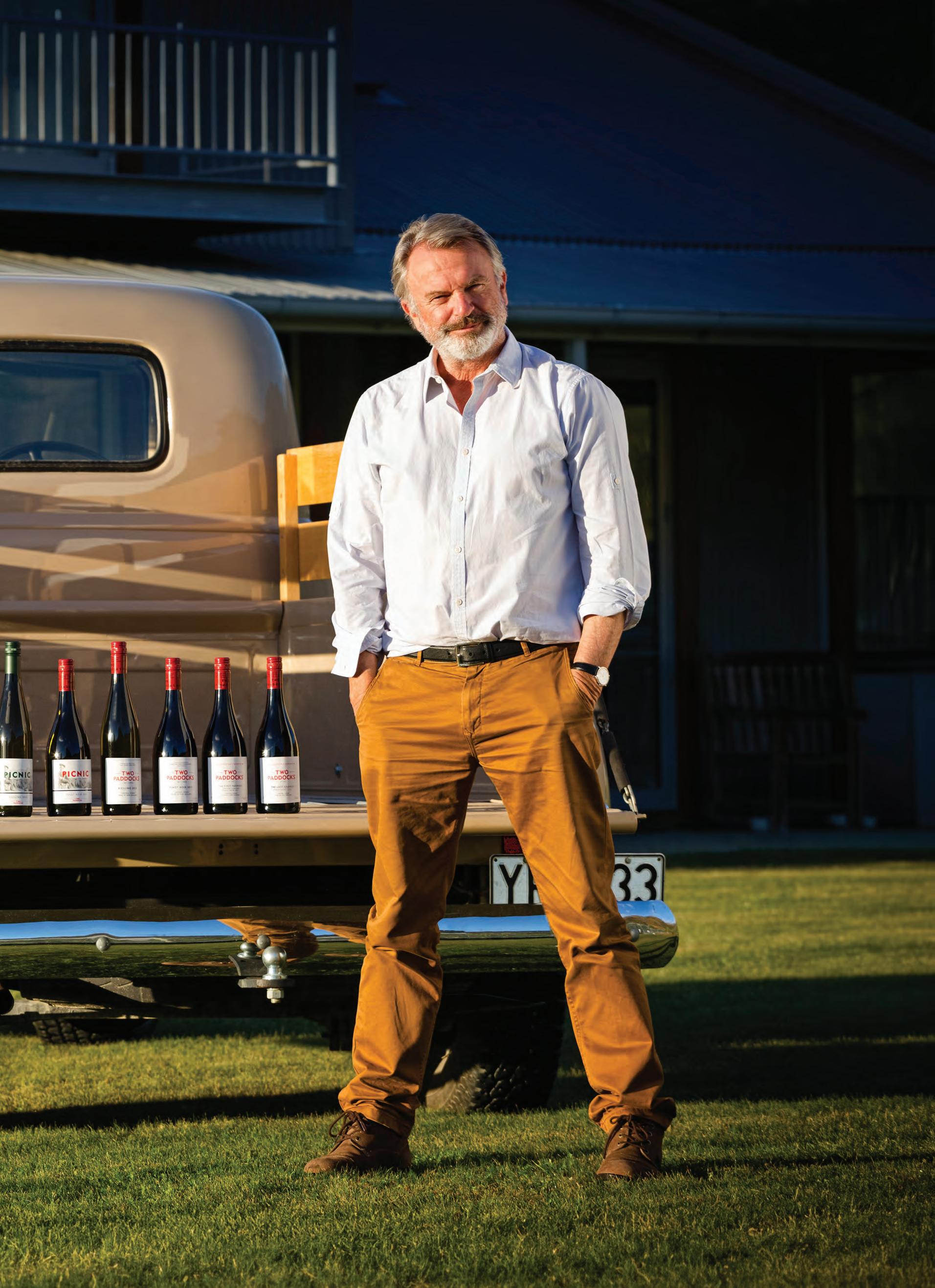
The late Sam Neill is one of five 2026 New Zealand Winegrower Fellows
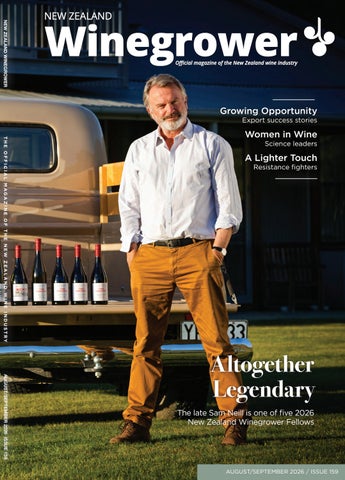
The late Sam Neill is one of five 2026 New Zealand Winegrower Fellows
TO JOIN AOTEAROA’S WINE COMMUNITY ON THE JOURNEY TO GREATNESS WITH OUR CHARDONNAY.
INTERNATIONAL SPEAKERS, PREMIUM QUALITY TASTINGS, VINEYARD AND WINERY TRIALS, CASE STUDIES, AND NUMEROUS SOCIAL EVENTS.
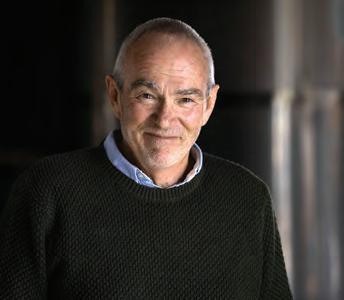
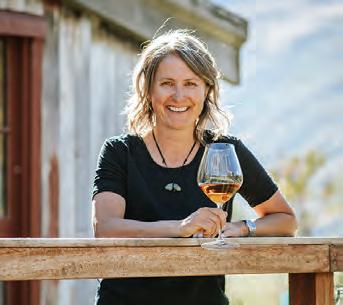


As the wine industry recognises this year’s New Zealand Winegrowers Fellows, it also mourns the loss of one of them. The legendary Sir Sam Neill, aka the Proprietor, has inspired Pinot lovers and palaeontologists all over the world, while shining his extraordinary light on New Zealand and its wine.
Photo by Christopher D Thompson. Go to page 16.
Editorial
Sophie Preece
From the Chair
Fabian Yukich
MW Musings
Emma Jenkins MW
Point of View
Jane Cooper
Wine Weather
James Morrison
Biosecurity
Tim Towers
A World of Opportunity Relationships, provenance and premium positioning are helping New Zealand wineries win new customers in challenging global markets. “Instead of chasing price, we’re doubling down on what makes our wine distinctive,” says James Macdonald.
Women in Wine Science
From genetic researchers and bioinformaticians to plant pathologists and data scientists, women are helping shape the future of New Zealand wine. “There’s far more science behind every bottle of wine than most people realise,” says Dr Fang Gou.
Te Wiki o te Reo Māori
Jeff Sinnott, part of the Tuku Māori Winemakers Collective, urges New Zealand’s wine industry to protect the names of our places. “Maybe, as a nod to Te Wiki o te Reo Māori, we work on learning, and more importantly communicating, our unique names to each other and our customers.”
EDITOR Sophie Preece sophie@sophiepreece.co.nz
CORRESPONDENTS
North Island
Joelle Thomson
Emma Jenkins MW
South Island
Claire Finlayson
Stephanie McIntyre
Joanna Grigg
ADVERTISING
Upper North Island: Stephen Pollard
stephenp@ruralnews.co.nz
Ph: 021 963 166
Central & Lower North Island: Lisa Wise lisaw@ruralnews.co.nz
Ph: 027 369 9218
South Island:
Kaye Sutherland kayes@ruralnews.co.nz
Ph: 021 221 1994
CIRCULATION & SUBSCRIPTIONS
Sarah Adams saraha@nzwine.com 09 306 5644
New Zealand Winegrowers
PO Box 90 276, Auckland Mail Centre, New Zealand
PUBLISHING & PRE-PRESS
Rural News Group
PO Box 331100, Takapuna, Auckland 0740
Ph: 09 307 0399
Location: Bottom Floor, 29 Northcroft Street, Takapuna, Auckland 0622
Publisher: Brian Hight
Managing Editor: Adam Fricker
Production: Rebecca Williams
Published by Rural News Group Ltd under authority of New Zealand Winegrowers Inc. Unless directly attributed, opinions expressed in the magazine are not necessarily those of Rural News Group and/or its directors or management, New Zealand Winegrowers Inc. or its constituent organisations. Published every second month. One free copy is mailed to every member of New Zealand Winegrowers Inc, New Zealand Society of Viticulture & Oenology and the New Zealand Vine Improvement Group, and to such other persons or organisations as directed by the owners, with provision for additional copies and other recipients to be on a subscription.
ISSN 1174-5223




New Zealand’s soils and climate make our wine industry extraordinary. But it is the people behind the vines and wines who make it Altogether Unique. This is an industry powered by passion, as epitomised by the 2026 New Zealand Winegrowers Fellows. The late, great Sir Sam Neill’s love of Central Otago, Pinot Noir and New Zealand wine saw him champion all three on the global stage. Kevin Judd’s parallel careers in the “art” of winemaking and photography have changed the way the world sees our wine, while Lynnette Hudson’s decades-long “obsession” with Pinot Noir has spilled into an enduring dedication to sharing knowledge.
Philip Gregan’s relentless work behind the scenes over more than four decades has helped enable the industry’s stellar growth and constant evolution, while Rex Sunde stepped away from a successful but uncomfortable career in agrichemicals to work on the other side of the equation, helping winegrowers refine their use of sprays. Their stories differ, but each of the Fellows have bought relentless energy and generosity to New Zealand wine.
Passion is also at the heart of the Focus Feature, looking at opportunities on the global stage. At a difficult time for global wine sales, Kat Pickford talks to companies finding grounds for cautious optimism. Opportunities remain for New Zealand wine, but seizing them takes persistence, strong relationships and time spent understanding individual markets. The upcoming NZW 2026 Wine Business Forum will delve into those opportunities, including insights into emerging markets like South Korea and India.
This edition comes out as Anishka Jelicich joins New Zealand Winegrowers as Chief Executive Officer, following Philip’s retirement. Anishka brings more than two decades of leadership experience across New Zealand, the United Kingdom and Europe, including extensive experience in the global wine industry. She also brings a deep connection to New Zealand, and to the people and places that make its world-renowned wines.
Sophie Preece EDITOR

While reporting on the challenges facing New Zealand wine, journalist Kat Pickford also found encouraging signs offshore, where brands are working hard to grow relationships, attract new customers, and gain ground in key markets.
Go to page 26

Emma Jenkins
New Zealand ranks among the leading OECD countries for women graduating in STEM subjects, at 43%.
One of those graduates, Emma Jenkins MW, explores the wealth of New Zealand wine science being driven by women.
Go to page 32

Dr Paul Epee
Dr Paul Epee works on applied research projects at Bragato Research Institute, including the Next Generation Viticulture Programme, which he discussed at Grape Days and reports on in this month’s BRI Research Supplement. Go to page 51
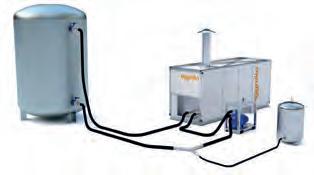
With over 20 years’ experience working with the wine industry throughout the New Zealand Pacific region, we understand what it takes to enhance productivity and decrease costs for your winery. We can help you make your vintage a success by:
• Controlling fermentation
• Providing temporary cooling for cellars or other critical functions
• Providing additional power when needed
We are on call 24 hours a day, seven days a week to serve you.


FABIAN YUKICH
The months ahead are important for New Zealand Winegrowers. A new chief executive has joined the organisation, and members will soon elect six directors to serve on the NZW and Bragato Research Institute boards. Both are opportunities to influence the direction of our organisation and the future of our industry in what are challenging and uncertain times.
When voting for the Board elections opens in September, I strongly encourage every member to take part.
I would like to warmly welcome our new chief executive Anishka Jelicich. As she settles into the role, many of you will have the chance to meet her as she visits wine regions and attends industry events. One of those opportunities will be at New Zealand Wine 2026, being held on 27 August in Pōneke Wellington. The Wine Business Forum will again be followed by the Celebration Dinner, and both promise to be an excellent opportunity to network, gain business insights, and celebrate our Young Winemaker and Young Viticulturist of the Year, along with this year’s Fellows. The following morning, the Women in Wine Connect morning tea will be a relaxed occasion to share updates and continue the celebration. For more information go to nzwine.com/events ‘New Zealand Wine 2026’. At the same time as we welcome Anishka, our governance is evolving.
From 14–25 September 2026, all NZW members will have the opportunity to vote in the dual class Directors election, selecting three Member Class Directors and three Levy Class Directors (for more information go to nzwine.com/members ‘Dual Class Directors Election 2026’). For the first time, all elected directors now sit on both the NZW Board and BRI Board, providing a more integrated approach to governance, research and industry leadership.
By the time you read this, nominations will still be open (see dates on page 48). This is an important opportunity to influence the future direction of our industry, and I encourage members to think carefully about who should help guide it. We need people who can look beyond individual businesses, think strategically, ask challenging questions and contribute to decisions that benefit the wider New Zealand wine community. Our industry is fortunate to have many capable and experienced people. If you have the skills, experience and commitment to contribute, I encourage you to consider standing. All eligible members can stand for election. However, given the complexity of the role, members with governance experience, or who are prepared to develop their governance skills, are encouraged to stand. Members who bring strong financial analysis skills and the ability to think long term and strategically are also encouraged to stand. If someone else comes to mind, encourage them to explore what the role involves and how they might contribute.
Participation does not stop with Board elections. The new Board will also be refreshing the membership of the Environment, Brand, and Advocacy
Committees. These committees play an important role in shaping our work and provide valuable opportunities for members to contribute their expertise and perspectives. Regional associations remain equally important in ensuring the voice of members continues to be heard.
When voting for the Board elections opens in September, I strongly encourage every member to take part. These are your representatives, your industry organisation and your levy funds. A strong turnout helps ensure the Board has the mandate and diversity of thinking needed to lead confidently through the opportunities and challenges ahead.
As an industry, we have never stood still. We have adapted to changing markets, embraced innovation, invested in sustainability and built an international reputation for premium wines. That success has come from the collective efforts of our members and a shared commitment to remaining relevant to consumers.
The months ahead present an opportunity to build on that foundation. A new chief executive brings fresh perspectives and renewed energy. Board elections provide an opportunity to shape the leadership of our organisation for the years ahead. Both deserve our attention, engagement and participation.
Most importantly, as we navigate change, we must keep our focus on what ultimately matters: producing distinctive New Zealand wines that consumers around the world continue to love, seek out, and value. If we remain focused on that goal, and continue to work together as an industry, the future remains firmly in our hands.

Fabian Yukich is NZW Board Chair
That’s not resistance…
Yeah, nah. It’s aggressive pest enthusiasm. Totally different.
Resistance doesn’t care what you call it. It just helps itself to your bottom line.
Have the resistance management conversation now. And keep what works, working. keepwhatworksworking.co.nz
Bragato Research Institute has announced funding for four new research projects, all aligned with BRI’s Research Strategy, designed to be completed within one to two years, and expected to deliver near-term benefits for growers and winemakers. The projects are:

• Powdery mildew spore trapping as a decision support tool for early season fungicide applications. Read more on page 36.
• Alternate strategies for GLRaV3 management. BRI’s Dr Ellie Bradley will lead research into RNA-based treatments that have shown promise internationally to dramatically reduce Grapevine Leafroll-associated Virus 3 levels in the field.
• Low carbon and environmental impact export packaging pathways for New Zealand wine. Kate Meyer and Alice Oswald from Planetary Accounting Network will use the Planetary Accounting framework to compare glass, lightweight glass, cans, bag-in-box, and bulk shipping across environmental impact, cost, logistics, quality risk, and market suitability.
• AI-driven protein design to address winemaking challenges. Professor Wayne Patrick from Victoria University of Wellington is applying AI-driven protein design to Botrytis cinerea, aiming to engineer small proteins that can bind to and neutralise these enzymes. The project will also identify naturally occurring enzymes that shape flavour and aroma in no- and low-alcohol wines, then redesign them to work under real fermentation conditions.
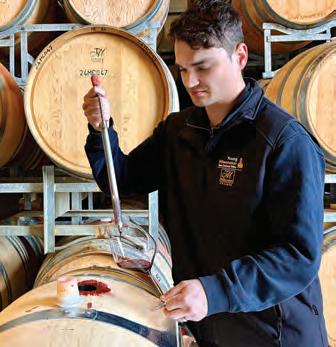
It has been 20 years since the inaugural Burgundy Exchange, in which a group of young Central Otago winemakers and viticulturists are selected to head to Burgundy each vintage, before French participants travel to New Zealand for a Central harvest.
The exchange promises to be “a huge learning opportunity”, says Carrick Vineyard Manager Damon Lovell, one of four participants this year. “Not only around winemaking and viticulture techniques, but also as an immersive experience within the Burgundian wine culture. I’ve always loved the French culture, and to be there living amongst the hecticness of vintage will be very special.”
Lisa Fromont, from Te Kano, won 2026 Central Otago Young Winemaker of the Year, but will be on the Burgundy Exchange when the national competition takes place in August. She’s “pretty gutted” to be missing the national final, but beyond excited about the chance to live and make wine in France. “The wine industry in New Zealand is super young, and the history of wine in Burgundy goes back for two millennia.” She plans to immerse herself in the history, “and what it’s like when wine is just a part of your life like that”.

New Zealand Winegrowers’ new Chief Executive Officer Anishka Jelicich says a career working abroad in the global wine and drinks sector has given her opportunity to see New Zealand wine through the eyes of the world. “Time and again I’ve seen the extraordinary respect our wines, our people and our industry command globally. That perspective has only deepened a connection that is both personal and professional, making it a real privilege to join an organisation that has helped shape one of New Zealand’s great success stories.” New Zealand wine is the country’s eighth largest export, generating approximately $2.1 billion annually, and enjoyed by consumers in more than 100 markets around the world, she says. “My first priority is therefore to listen, learn and spend time with people across the industry, understanding what matters most before we write the next chapter together.”
BRI has created resources to help growers make strategic decisions about mothballing or vine removal. An interactive Vineyard Decision & Economic Model is available on the members’ website (nzwine. com/members/mothballing), alongside a simple decision tree, which is also available on page 59.
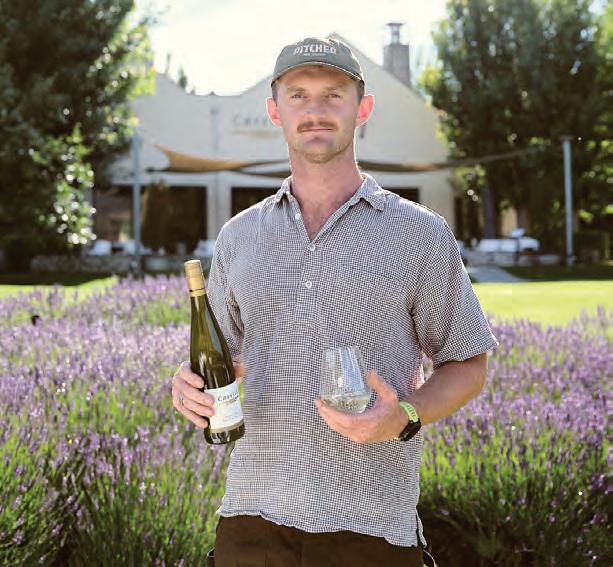
A Lincoln University student is set to become the first person to contest both the Young Viticulturist and the Young Winemaker national titles in one year.
Joshua Irving, who is doing a Bachelor of Viticulture & Oenology (Honours) with a dissertation on the impacts of elemental sulphur on wine quality, is the 2026 Ormond Nurseries North Canterbury Young Viticulturist of the Year and the 2026 Tonnellerie de Mercurey North Canterbury Young Winemaker of the Year.
Having competed in the Young Viticulturist competition last year, he worked on his weaknesses, ensuring he was better prepared for each segment this time around. Having taken that title there was nothing to lose when he set off for Central Otago for the Young Winemaker regional competition, he says, noting that his field of study, including lab work, gave him a strong foundation. “I knew that the theory and the science side of things would be a strength,
A sparkling avenue for growth
New Zealanders purchased more than six million litres of imported sparkling wine in 2025, according to NZW data. While Champagne imports have declined as prices rise, other sparkling wines of the world continue to perform strongly here, highlighting the ongoing popularity of the category among Kiwis.
For Vilaura founding director Jascha Oldham-Selak, the figures point to room for growth for New Zealand producers. “The trend could create opportunities
and playing into that definitely worked.”
There’s some intense work ahead, preparing for two finals on two consecutive days in August, he says. “But I see it as a great opportunity and am excited to seize it.”
The finalists in the 2026 Ormond Nurseries Young Viticulturist competition, to be held at Escarpment in Wairarapa on 26 August are:
• Heath Miller, Pask Vineyard Vineyard Manager, Hawke’s Bay
• Alex Coombs, Craggy Range Vineyard Operator, Wairarapa
• Kris Godsall, Cloudy Bay Assistant Vineyard Manager, Marlborough
• Joshua Irving, Lincoln University student, North Canterbury
• Braxton Benseman, Mt Difficulty Irrigation Tech, Central Otago
The 2026 Tonnellerie de Mercurey Young Winemaker of the Year will be held at Foley’s The Runholder in Martinborough on 25 August. Joshua will compete against
for regions grappling with oversupply,” he says. “Traditional method bottle fermented sparkling wines are predominantly made from Chardonnay and Pinot Noir, varieties currently facing pressure in many regions of the industry.”
The challenge for New Zealand producers begins with educating domestic consumers about the differences between in-line carbonated sparkling wines, tank-pressurised sparkling wines and Méthode Traditionnelle wines, Jascha says.
Nick Lamain, Isabel Estate Winemaker from Marlborough, and the North Island regional winner, with that event held after this magazine went to print.
The winner of each final will be announced at the New Zealand Wine 2026 Celebration Dinner at Tākina Wellington Convention and Exhibition Centre on 27 August.

“Méthode Traditionnelle is the most premium style and often spends three or more years ageing in bottle before disgorgement and release to market”.
The 26th Great Wine Capitals International Annual Conference will be held in Hawke’s Bay from 18–22 October, in a landmark moment for New Zealand’s wine and tourism industries. The event draws industry professionals, travel trade representatives and media from Great Wine Capitals around the world, including Bordeaux, Mendoza, Adelaide and Napa Valley. Kim Thorp, Great Wine Capitals Hawke’s Bay Ambassador, says it is a wonderful opportunity for New Zealand. “This conference will showcase New Zealand to an influential global audience in a way that no marketing campaign could replicate. The connections made here, the stories told, and the impressions left will resonate across international markets for years to come.” gwchawkesbay26.com
The 36th Southern Pinot Workshop will be held from 20–22 January 2027. “The workshop is an incredible, focused forum where you’re surrounded by your peers,” says organiser Lynnette Hudson (see page 20). “It gives you the chance to think about the harvest ahead, the style you want to achieve, the challenges you might face, and the experiments you want to trial to learn how to make better wine.” The workshop also provides valuable networking opportunities for winemakers and viticulturists, from emerging winemakers to experienced industry leaders. “Everyone is there to relax, enjoy themselves and learn,” Lynnette says. As in recent years, the Burgundy tasting will include a live virtual presentation from a French producer, with David Croix joining participants to discuss the wines and answer questions, she adds. “It really is a unique opportunity to learn.”
To have events added to our calendar contact sophie@sophiepreece.co.nz
Central Wine Retreat
9–11 August 2026
centralotagowine.co/initiatives/ centralwineretreat
Designed for the wine trade, this three-day programme gives a small group of guests the opportunity to explore Central Otago through its vineyards, wineries and the people behind them.
Tonnellerie de Mercurey Young Winemaker of the Year
25 August
nzwine.com/en/initiativesevents
Winners of the regional competitions will compete at the national final in Wairarapa on 25 August, with the 2026 Tonnellerie de Mercurey Young Winemaker of the Year announced on 27 August.
Ormond Nurseries Young Viticulturist of the Year
26 August
nzwine.com/en/initiativesevents
Finalists from five regional Young Viticulturist of the Year competitions will go through to the 2026 Ormond Nurseries Young Viticulturist of the Year National Final in Wairarapa on 26 August, with the winner announced on 27 August.
Wine Business Forum
27 August
nzwine.com/en/initiativesevents/ nzw26/wbf26/
The NZW 2026 Wine Business Forum, Winning in Changing Markets, will focus on where the next phase of growth will come from for New Zealand wine. The programme explores the wine industry’s continually changing operating environment, where (despite current challenges) significant growth opportunities remain in category pockets and in emerging markets, combined with the potential to leverage digital, data and artificial intelligence.
Sonal Holland MW – India’s only Master of Wine – will explore opportunities for New Zealand wine in India, and You-Jin Lee, the Head of Business Development for New Zealand Trade and Enterprise in South Korea, will discuss surging wine sales there, backed up by recent consumer research to help accelerate that momentum. Brodie Reid, Tourism New Zealand General Manager Marketing, will reflect on the impacts of the New Zealand Michelin
Guide on wine tourism, along with other key opportunities to drive industry growth through wine tourism.
Wine Business Monthly Managing Editor Erin Kirschenmann, and Treasury America’s former VP of Digital Experience Justin Noland, now driving AI Enablement at the iconic Duckhorn Vineyards, are also part of a stellar lineup. The forum, to be held at Te Papa in Wellington, is the leading gathering for industry decision makers and will deliver practical, commercial insights, along with valuable peer-to-peer connection.
NZW 2026 Celebration Dinner
27 August
nzwine.com/en/initiativesevents/ nzw26
This year’s NZW Fellows will be honoured at the NZW 2026 Celebration Dinner, to be held at the Tākina Wellington Convention and Exhibition Centre after the Wine Business Forum. The winners of the Ormond Nurseries Young Viticulturist of the Year and the Tonnellerie de Mercurey Young Winemaker of the Year Competitions will also be announced on the night.
Dinner
11 September
hawkesbaywineauction.co.nz
A Winemakers’ Dinner will be held at Cellar 495 the night before the 2026 Hawke’s Bay Wine Auction. Guests at this new event will have the opportunity to sample the seven full barrel lots up for auction, including three created through an extraordinary Chardonnay collaboration (see page 39), and to talk to the winemakers.
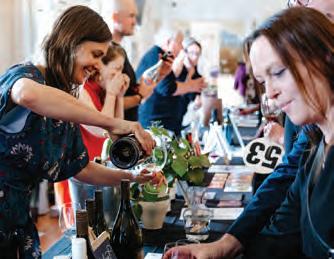
12 September
hawkesbaywineauction.co.nz
Hawke’s Bay’s wine industry has provided an exception lineup of wines for New
Zealand’s oldest wine auction. This year’s offering includes the Bilancia ‘Cinque Terre’, offering an opportunity to join winemakers Warren Gibson and Lorraine Leheny, along with Hawke’s Bay Wine Auction Ambassador Mike McRoberts, to blend a 2026 Bilancia Chardonnay, made from five unique Hawke’s Bay soils, before lunch and wine with the winemakers.
Te Wiki o te Reo Māori
14–21 September reomaori.co.nz
Te Wiki o te Reo Māori 2026 has a focus on Te Reo Towns, celebrating the communities that have kept te reo Māori alive, and inviting all of Aotearoa to help it flourish into the future. Read Jeff Sinnott’s column on page 43.
17–18 September hawkesbaywine.co.nz/chardonnaysymposium-2026/
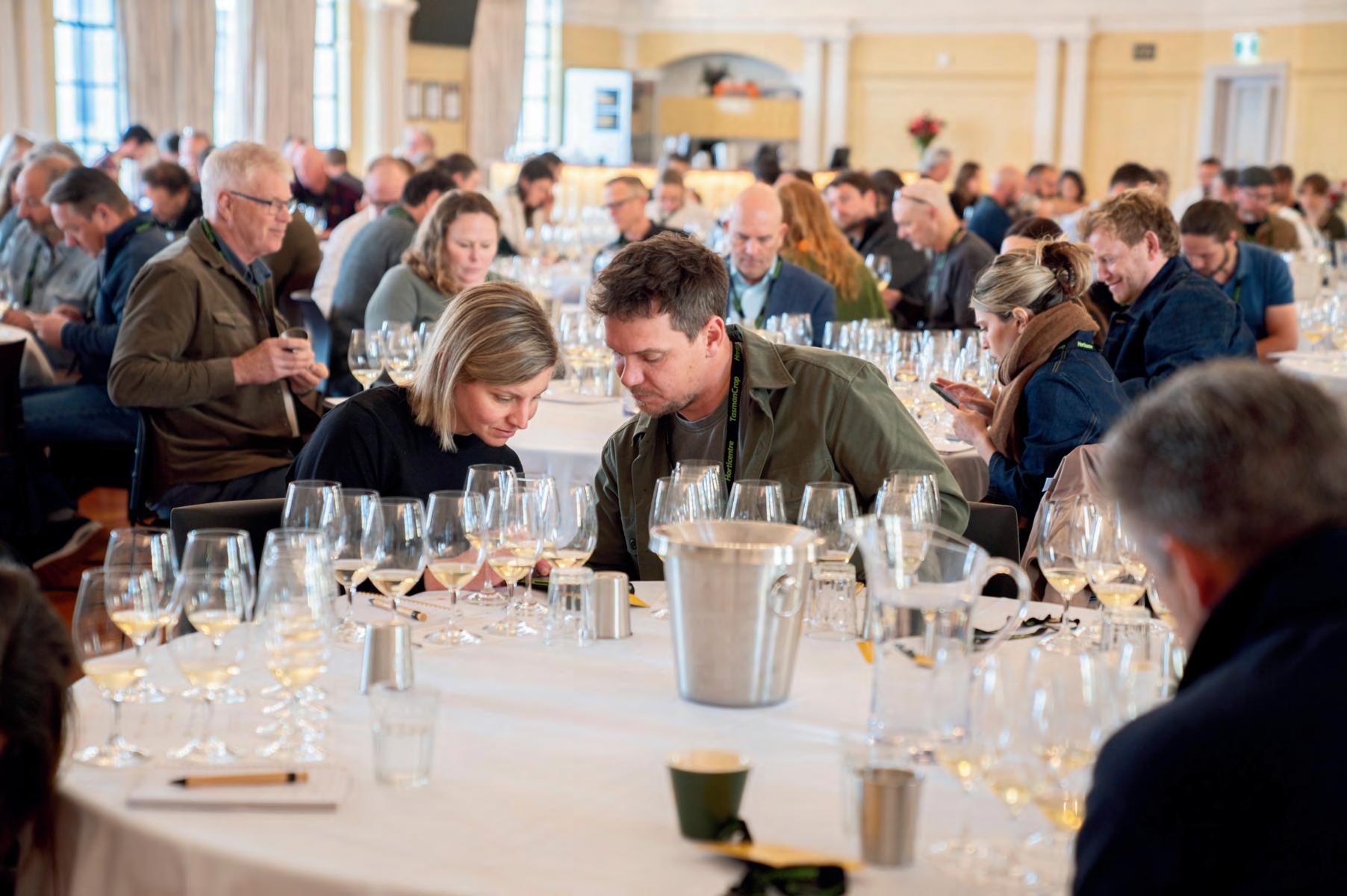
Quality is at the heart of the 2026 symposium, to be held in Te Matau-a-Māui Hawke’s Bay, with a focus on the unique features that define our whenua, climate and philosophy, and how these elements come together to enable the production of premium Chardonnay. Presenters and attendees will delve into what makes quintessentially great Aotearoa Chardonnay, with exceptional quality, texture and balance. Read more on page 14.
21–27 September 2026
organicwinenz.com/organicwineweek Featuring pop-up tastings, wine list takeovers, winemaker dinners, retail promotions and more, the week opens a window into the vibrant world of organic wine.
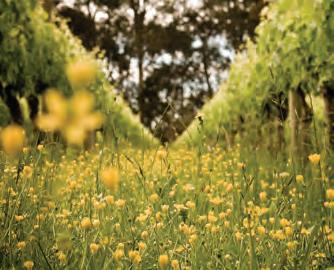
14 November
toastmartinborough.co.nz
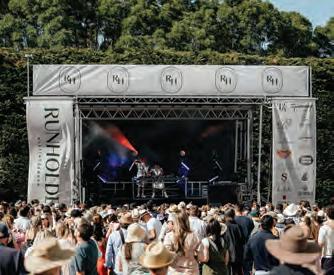
There is a refreshed format for 2026, with the event hosted exclusively at The Runholder. Eight neighbouring vineyards from the Martinborough wine village will join local craft gin and beer producers.
New Zealand 2027
2–4 February 2027
sauvignonnz.com
Jermaine Stone (@realwolfofwine) is among the first speakers announced for Sauvignon Blanc New Zealand 2027.

Calling New Zealand the “undisputed king” of Sauvignon Blanc, the New York wine communicator, known for blending wine and hip hop culture, says the variety’s freshness and tropical character make it a go-to choice when he is overwhelmed by a big wine list.
London-based Felicity Carter, founder of Drinks Insider and Editorial Director at
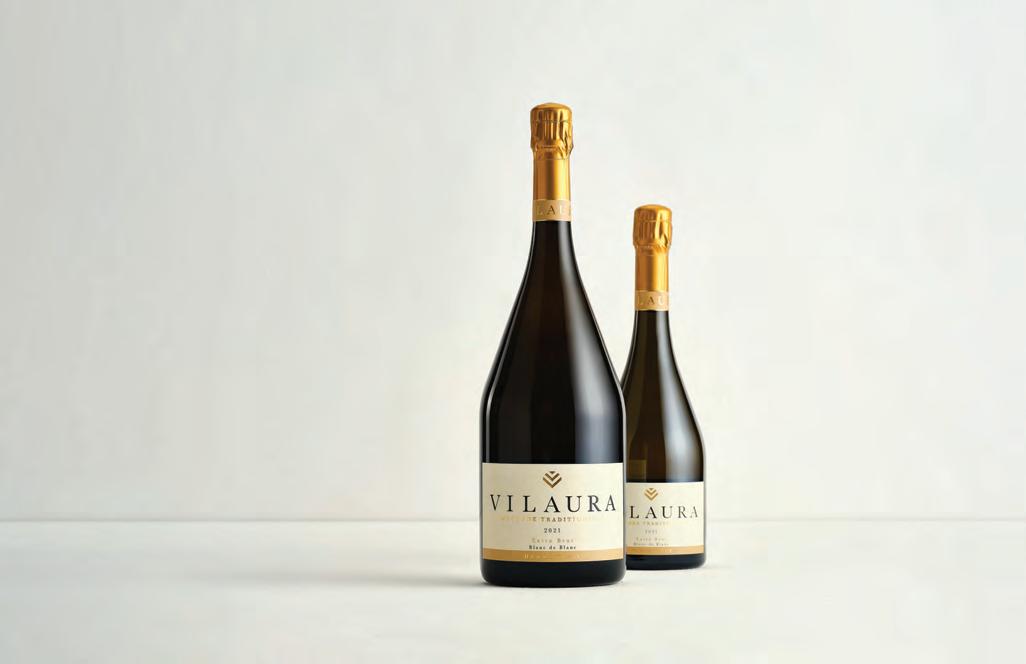
Exceptional wines deserve exceptional presentation. MCC brought this label to life using a premium opaque wine substrate, delicate gold foil, sculptured embossing, spot matt varnish and matt high-build finishes. The result is a luxurious tactile experience that reflects the care, craftsmanship and quality within every bottle.
Talk to MCC New Zealand where every product is labelled with care.
Producer: Vilaura
Designer: Sanne Witteveen
Areni Global, will bring a global perspective on where New Zealand Sauvignon Blanc stands today and what may lie ahead. “New Zealand Sauvignon Blanc has had the most impressive run of any wine style of the modern era, and now it’s doing it again,” she says. “With the turn towards fresher, lighter styles of white wine, New Zealand Sauvignon Blanc is the perfect wine to meet the times.” Meanwhile, Charlotte Dagueneau, daughter of the late Didier Dagueneau and based in the Loire Valley, will share her personal connection to the variety. The SBNZ27 programme, to be held in Wairau, Marlborough, is designed to celebrate New Zealand Sauvignon Blanc and broaden global perceptions of the category, exploring diverse regional expressions, ageworthy styles and emerging innovations.
Read more on page 15.
1–3 June 2027
organicwineconference.com
Central Otago will host the Organic & Biodynamic Winegrowing Conference from 1–3 June 2027, drawing passionate researchers, practitioners and experts from Aotearoa and beyond.
Charlotte Read NZW General Manager, Brand

As we begin the 2026/27 financial year, the New Zealand Winegrowers Brand team remains focused on investing where we can deliver the greatest value for members. One of our key priorities is Sauvignon Blanc New Zealand 2027, with significant work already underway to engage influential media, trade and content creators who can amplify New Zealand’s global Sauvignon Blanc leadership story. Deepening market insights is also a strong focus and in the year ahead we will offer more data from our North America markets, as well as emerging markets such as South Korea and China. In addition to our website resources and webinar, our fourth NZW Wine Business Forum, themed Winning in Changing Markets, is just around the corner, with an impressive list of both international and New Zealand-based speakers. The annual forum provides an excellent single-day boost in market understanding.
The recent arrival of the Michelin Guide in New Zealand shines a global spotlight on our food and beverage offering. Combined with Tourism New Zealand’s renewed focus on food and beverage experiences, there is a significant opportunity for New Zealand wine to strengthen its role in attracting and inspiring international visitors. Wine tourism, which is a key part of the NZW 2026 Wine Business Forum, delivers benefits far beyond the cellar door. It creates deeper connections with visitors, helping build lasting affinity for New Zealand.
Come and join us in Wellington - an excellent opportunity to connect with peers, share knowledge and take away something actionable for your business.
nzwine.com/en/initiativesevents/nzw26
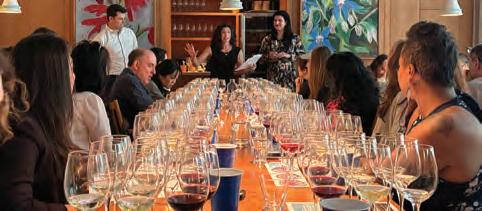
NZW recently hosted our ‘Somewhat Sommit’ events in Los Angeles, New York and Toronto, bringing together leading sommeliers, wine professionals and media to explore the depth, diversity and distinctive story of New Zealand wine. Modelled on our flagship Sommit programme, the events went beyond the familiar, showcasing regional expression, sustainability, Māori culture, emerging varieties and the evolving styles that are shaping perceptions of New Zealand wine in key North American markets. Across the United States and Canada, attendees engaged in thoughtful tastings and conversations covering all ten regions, our classic varieties and a few lesser-known surprises. The response highlighted strong curiosity and growing momentum for New Zealand wine, despite the wider category headwinds for the overall wine market in these countries. nzwine.com/members/brand/trade-activity/sommit
This year’s Pour Yourself a Glass of New Zealand campaign, alongside our White Wine Emoji initiative, has delivered our strongest results to date –reinforcing the power of a simple idea to drive global impact. Building on our annual May platform celebrating New Zealand’s world-class white wines, the 2026 campaign combined global PR, social storytelling and member participation to amplify our presence across key markets.



The 2026 campaign drove a 530% increase in PR value (from 762,000 in 2022 to $4.8 million) and an 822% increase in reach (from 19.2m to 177m), alongside 487,000 social media engagements. Member participation also reached new heights, with a 116% increase in toolkit downloads.
Central to this success is the White Wine Emoji campaign. By sparking conversation around the absence of a white wine emoji, the campaign has driven international media coverage and social discussion, while positioning New Zealand as a leader in white wine. The campaign has also generated strong public support, with more than 1,700 petition signups across 57 countries, further demonstrating its global resonance. These results reflect both the strength of the idea and the collective effort across the wider New Zealand wine community, and we thank our members for getting behind the campaign and helping bring it to life.
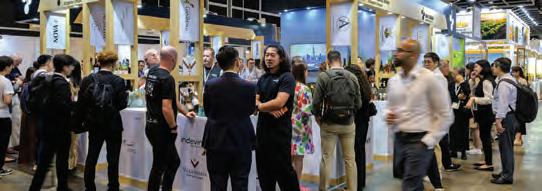
NZW made a powerful impression at Vinexpo Asia in Hong Kong, with a vibrant and expanded presence that underscored our country’s growing reputation as a source of distinctive, high quality wines. NZW was proud to host 20 wineries from across the country and this year’s pavilion was double the size of recent years, reflecting both rising international interest and the strength of New Zealand’s diverse wine regions.
Our eye catching stand design captured the essence of what makes New Zealand wine truly unique: the purity and vibrancy of our landscapes, the passion of our people and our deep rooted commitment to a sustainable future. The result was a space that felt both inviting and authentic – a fitting showcase for wines that are as distinctive as the places they come from.
We are especially grateful to New Zealand Trade and Enterprise (Hong Kong) and the New Zealand Consulate General, Hong Kong & Macao, for their invaluable support. Together, we hosted a highly successful networking event, bringing together trade professionals, industry peers, and long time friends of New Zealand wine.
Sonal C. Holland became India’s first Master of Wine in 2016 and is a leading figure in the country’s rapidly developing wine industry. As New Zealand producers consider the opportunities (and hurdles) of the New Zealand–India Free Trade Agreement, Sonal is uniquely placed to share insights. “Producers should view India as a long-term investment rather than expecting immediate volume growth,” she says.
You’ve been working in wine in India since 2007. How have Indian wine consumers changed over that time?
When I entered the industry nearly two decades ago, wine in India was still a niche category, largely confined to luxury hotels and affluent consumers who had travelled overseas. Knowledge was limited and qualified wine professionals were few. Today, wine has become aspirational and increasingly a part of urban lifestyles. A younger, globally connected generation is driving growth, while women have emerged as one of the fastest-growing consumer segments. Most importantly, Indian consumers are becoming more knowledgeable. They increasingly seek information about grape varieties, regions, producers and food pairings, rather than simply ordering a red or white wine.
What trends should international producers be watching over the next five years?
Premiumisation will continue, driven less by status and more by authenticity, provenance and memorable experiences. Wine education, curated tastings and private dining events are creating increasingly informed consumers. We’re also seeing greater willingness to explore new regions and styles, provided producers invest in education and market visibility. Digital creators and social media will continue to play an important role in influencing purchasing decisions.
In the wake of the FTA, where do you see the greatest opportunities for New Zealand wine?
The India–New Zealand FTA has the

potential to be a game changer. Lower tariffs should improve competitiveness and make premium New Zealand wines more accessible. Combined with the positive momentum created by Prime Minister Narendra Modi’s recent visit to New Zealand, the agreement strengthens confidence in long-term trade between our countries. Beyond Sauvignon Blanc, India presents growing opportunities for Chardonnay, Pinot Noir, Syrah and premium sparkling wines.
What expectations should producers hold in the short to medium term?
The FTA is an important milestone, but not a shortcut to success. India remains a complex market with state-specific regulations and distribution systems. Success requires patience, the right import partner, consistent education and regular market engagement. Producers should view India as a long-term investment rather than expecting immediate volume growth.
How do New Zealand’s wine styles align with current tastes in India? Our latest India Wine Insider research shows that fruit-forward red wines remain the most popular style, creating strong opportunities for New Zealand Syrah, Pinot Noir and red blends.
At the same time, New Zealand Sauvignon Blanc is already one of the bestestablished imported wine styles in India, with a loyal consumer following. While white wines remain underrepresented
compared with reds, this creates significant headroom for growth, particularly for Sauvignon Blanc and Chardonnay. New Zealand’s reputation for purity, freshness and consistency aligns well with evolving Indian preferences.
What are your three most important pieces of advice for producers looking to enter the market?
First, commit to India for the long term. Second, invest in consumer and trade education. Third, work with an experienced consultant who understands the Indian wine market and can connect you with the right importer, one with strong distribution and a real commitment to building your brand.
At the Wine Business Forum you’ll be discussing India as a timely opportunity. What’s the one message you hope attendees take away from your presentation?
India is entering a new chapter. A young consumer base, rising wine awareness and the India–New Zealand FTA have created an unprecedented opportunity.
My message is simple: don’t chase India, cultivate it. Producers who invest patiently, build relationships and educate consumers will help shape one of the world’s most exciting wine markets.
Sonal C Holland MW will present at the NZW 2026 Wine Business Forum on 27 August.
Aotearoa New Zealand
Chardonnay Symposium
EMMA JENKINS MW
One of Australia’s most decorated winemakers will speak at the Aotearoa New Zealand Chardonnay Symposium in Hawke’s Bay this September. Vasse Felix Chief Winemaker Virginia Willcock was named Winemaker of the Year at the 2026 Halliday Wine Companion Awards, where her 2023 Heytesbury Chardonnay took both Chardonnay of the Year and White Wine of the Year.
Virginia says wine found her before she found it. Growing up, her parents had a hobby vineyard in the Swan Valley, and it was there, watching the happiness wine brought to family gatherings, that the idea of becoming a winemaker first took root. Vintages in New Zealand, Albania and Italy followed, before returning to Western Australia where in 2006 she joined Vasse Felix, the pioneering winery that helped put
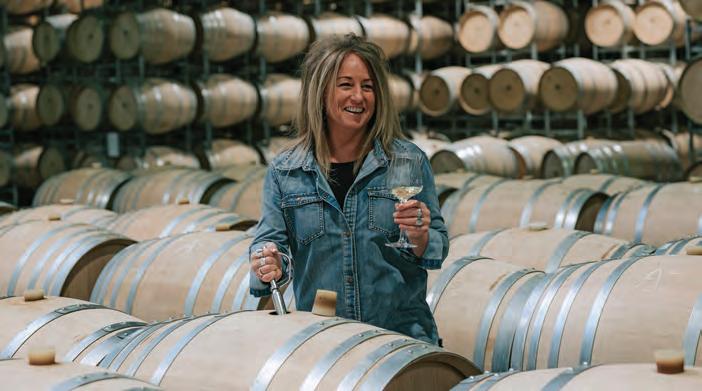
Vasse Felix has long been regarded as a benchmark for Australian Chardonnay and Cabernet Sauvignon, and Virginia has steadily lifted an already formidable portfolio towards a more complex, handsoff style. Her acceptance speech at the Halliday Awards captured her philosophy: “There’s no such thing as not working hard in this industry; you give your life to it because you believe in it. From the microbes and fungi that sustain the vineyard to the joy on someone’s face when they drink a glass of wine, it’s all connected. That’s why we do this.”
New Zealand connection. A vintage at Cloudy Bay in Marlborough in 1996, working alongside the late James Healy, proved seminal in its early exploration of wild fermentation (“way ahead of the times… such a beautiful and creative mind”), which she credits as the greatest single influence on her winemaking.
Virginia comes to Hawke’s Bay eager to “interact with so many brilliant wine heads” and to explore what she calls “our most complex, delicious and sophisticated white
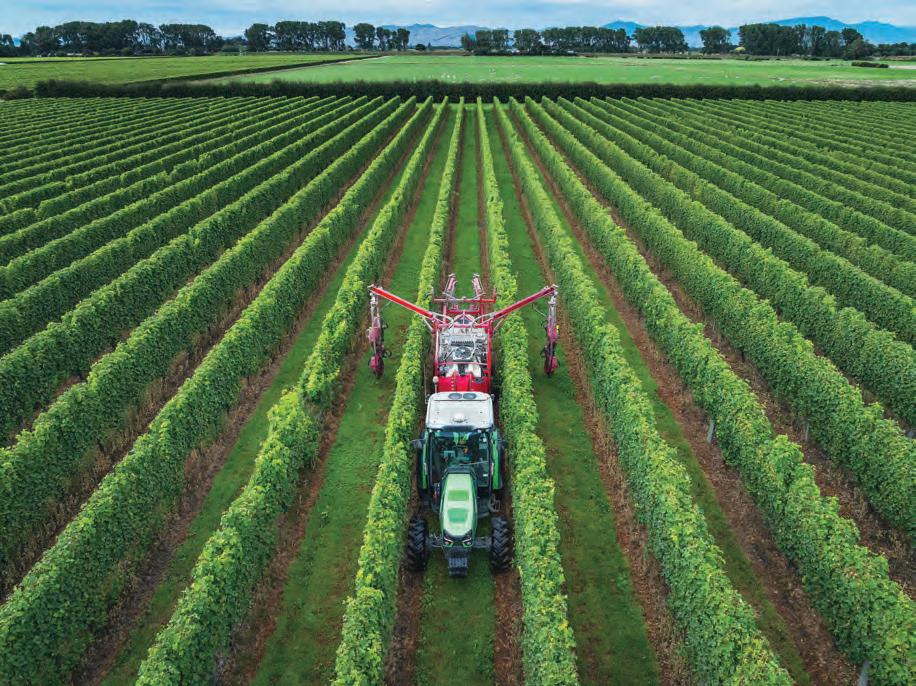

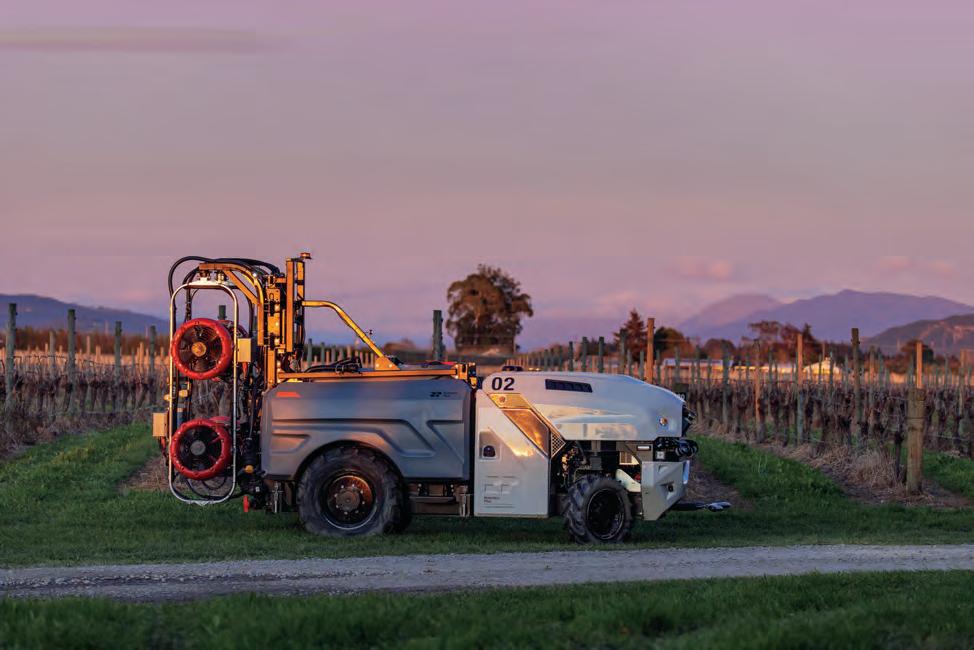


When it comes to disease control in your vineyard, spray coverage and performance efficiency are key. The high-volume, turbulent air delivered by our Quantum™ fans opens up the foliage, allowing spray to penetrate into very dense canopies. This ensures more accurate coverage onto both sides of the leaves and into the tightest of bunches. It is this technology that makes Croplands fans quite simply the best on the market.
CONTACT YOUR LOCAL CROPLANDS TERRITORY MANAGER
Rob Marshall - South Island 027 248 6822 rob.marshall@croplands.co.nz
Ashley Robinson - North Island 027 726 0330 ashley.robinson@croplands.co.nz

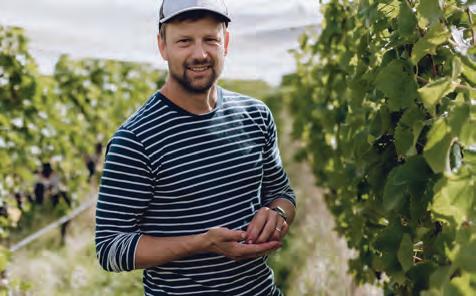
Sauvignon Blanc New Zealand 2027 committee member Richard Ellis hopes international visitors to the event, to be held at Wairau, Marlborough from 2-4 February 2027, will leave with a deeper appreciation of New Zealand wine. Meanwhile, the country’s Sauvignon producers will leave “energised by the possibilities that still lie ahead for the variety”.
Sauvignon Blanc is... New Zealand’s great wine success story. It captured the world’s attention, and what excites me now is that we’re still discovering its potential, with increasingly distinctive expressions emerging from different subregions, sites and winemaking techniques.
When I make Sauvignon... I am constantly thinking about how to create a wine that leaves no doubt in anyone’s mind that New Zealand Sauvignon Blanc is one of the world’s greats. I’ve been lucky enough to try some truly mind-bending examples from around the world, which frankly blew me away and opened my eyes to just how rich, complex and diverse the variety can be. If I can create wines that spark curiosity, conversation and a sense of ‘holy shit, I didn’t know they could do that in Marlborough’, I’d be chuffed!
SBNZ27 is important because... it marks more than 50 years since the first Sauvignon Blanc vines were planted in Marlborough. It’s an opportunity to celebrate the vision and hard work of the pioneers who established the region, while also exploring the now, the new and the future. For me, that means a deeper conversation around provenance, authenticity and diversity within our wines.
I expect the event to... inspire people. We’ll be showcasing wines that challenge expectations and broaden perspectives on what Sauvignon Blanc can be. If we do our job well, the conversation won’t just be about Sauvignon Blanc – it will be about Marlborough and New Zealand as world-class fine wine regions with real confidence in their place on the global stage.
A favourite Sauvignon-food match is... a dish I enjoyed recently at a beautiful little restaurant in Japan – octopus, tomato, citrus and fresh goat cheese paired with our own Sauvignon Blanc. It was a sublime combination!
I’m passing the Q&A baton to fellow committee member... Ben Tombs of Craggy Range. With a presence across New Zealand’s key wine regions, Craggy Range has a uniquely broad view of our industry, and I’m looking forward to Ben’s perspective.
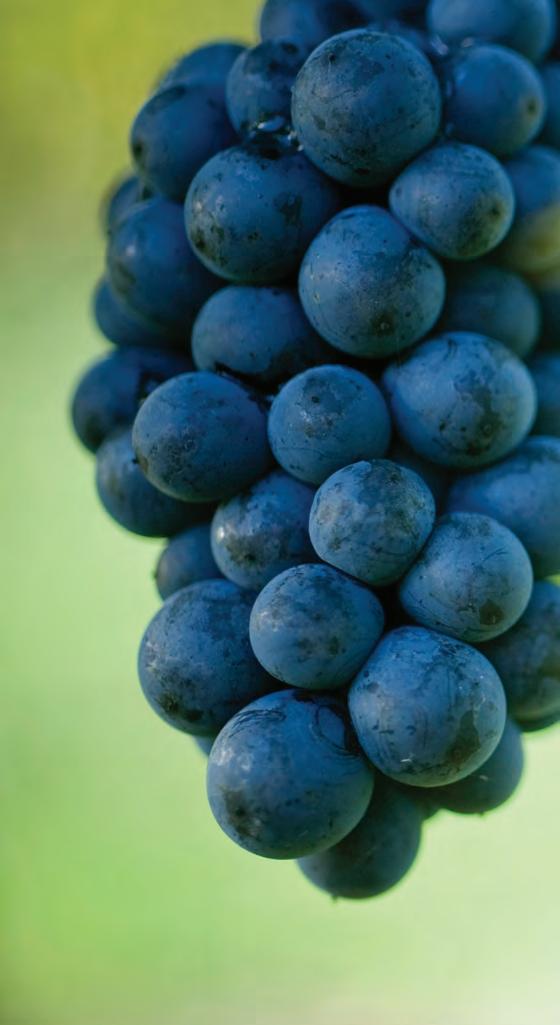




As the wine industry recognises the 2026 New Zealand Winegrowers Fellows, it mourns the loss of one of them. SOPHIE PREECE talks to legends of New Zealand wine and hears heartfelt memories of The Proprietor.
Sir Sam Neill made an extraordinary mark on the world, and on the world of New Zealand wine.
Sam, who was named a 2026 New Zealand Winegrowers Fellow just a week before he passed away in Sydney in July, has been remembered for his talent, generosity and humour, and for his love of Central Otago, Pinot Noir and New Zealand wine. “We will all miss him, both personally in losing a friend, but as a region in which he believed passionately,” says Felton Road owner Nigel Greening.
He eschewed celebrity, yet the wine industry undoubtedly benefited from Sam’s storied acting career and delightful social media presence. He spoke with passion about Two Paddocks, Central Otago and New Zealand wine on the global stage, and shared charming stories of farmyard pets (named for famous friends) online, while occasionally chastising an inflatable dinosaur in the vineyard, in a nod to his Jurassic Park roles.
Sam grew up exposed to good wine through his family’s Dunedin-based company, Neill & Co, a wine and spirits importer. His father Dermot was a friend of Rippon’s Rolfe Mills, with the two families connected for 150 years, back to two prominent Dunedin businesses founded in the 19th century. Sam also formed deep relationships at Rippon and later told Rolfe’s son Nick that the Pinot pioneer helped him navigate some challenging times in his life, and guided him in his viticultural endeavours. In a Wine Enthusiast story by Christina Pickard, Sam called Rolfe his “principal inspiration”.
The two men discussed winegrowing, Pinot Noir and the potential of Sam’s land, Nick says. “Dad was really introspective and would sit and be with the land and I always felt that was what Sam was like too. When you walked with Sam on his land it was the same sort of vibe. He just loved being part of it.”
Sam started Two Paddocks in 1993, with a small vineyard at Gibbston neighbouring that of director Roger Donaldson, who had cast him in Sleeping Dogs in 1977. In his memoir, Did I Ever Tell You This?, written while undergoing cancer treatment, Sam recalled the night a case of the first vintage

– Two Paddocks Pinot Noir 1997 – turned up in Queenstown. “My wife Noriko and I opened the bottle with some trepidation. I didn’t expect grand cru, just something I enjoyed… And then I took a sip. What was this? I took another sip and let it roll around my mouth for a while. Oh boy. Oh boy. This wine far exceeded any modest expectations I might have had. It wasn’t just drinkable. It wasn’t just good. It was very good indeed.”
Winemaker Mike Wolter died in an accident after that first 1997 harvest, and Rudi Bauer stepped in to complete the winemaking. He also made the 1998 Two Paddocks Pinot Noir, before Dean Shaw took over as winemaker for the 1999 harvest. Rudi had met Sam while working at Rippon from 1989 to 1992, and over the years they struck up a warm friendship. More recently, Sam’s work with Sustainable Tarras, and his vocal opposition to the Santana Minerals gold mine proposal in Bendigo, connected the two again. “He was very outspoken, and I think he created quite a lot of awareness,” Rudi says. “I lost not only a very good man, but also a man who shared similar values.” Despite his career success, Sam didn’t want to be in the limelight, he adds. “At the end of the day, he was very much one of us.”
Pinot pioneer Larry McKenna, who has been a Two Paddocks mentor for two decades, says Sam’s contribution to New Zealand wine has been “immense”. He recalls Sam being asked at the International Pinot Noir Celebration in Oregon what it was like to be a celebrity winemaker. “The insinuation was that he wasn’t really a winemaker and definitely
a celebrity. Sam answered the question in real Sam style, making the point celebrities appeared on the cover of Woman’s Weekly and he had never done that. His love of New Zealand, of Central Otago and Pinot Noir was totally evident.”
Sam had a “never wavering generous commitment to standing up and heralding New Zealand wine”, Larry says. “He’s represented our wine industry worldwide in a totally professional manner. Talking about our industry didn’t come naturally, especially technically, but he always put in huge effort and research to make any presentation accurate, enjoyable and entertaining. He was a natural communicator, a skill he was prepared to share for all our benefit.”
In a 2023 podcast interview, Larry was asked who he would most like to have the ultimate glass of wine with, and where. He replied that he had already lived that moment, during the 2016 Wine Spectator New York Wine Experience, when he had lunch at the Museum of Modern Art with his daughter Nina, Kevin and Kimberley Judd of Greywacke, and Sam and Two Paddocks General Manager Jacqui Murphy. “It was a very special afternoon, in a very special place with very special people all centring around the success of New Zealand wine.”
Sam was “the antithesis of the celebrity winery owner”, says Nigel Greening, calling him “patient, thoughtful and completely without ego, genuinely happiest when he could retreat back to his winery and animals, not to mention his team”. Sam was also born Nigel, and the pair sometimes held ‘Two Nigels’ dinners, “showing both
of our domaines and generally having a good yarn with people”, he says. “He always loved the fact that when he was home, he wasn’t Sam Neill. He was just Sam from Two Paddocks.”
New Zealand Winegrower magazine ran a profile of Sam by Emma Jenkins MW in June 2023, following the release of his memoir. The thought that Two Paddocks could be regarded as a celebrity wine “irks him no end”, she wrote. “I am not a celebrity. I have done everything I can in my life to ensure I am not a celebrity,” Sam told her. “Two Paddocks is so far from being that sort of wine. It’s been 30 years since we first planted our grapes so that’s a good long commitment, and a serious commitment. It’s always been about provenance and integrity.”
The success of the project was a pleasant surprise, “much like my acting career”, he said. “We planted a very modest two hectares in Gibbston Valley and that’s sort of all I thought I would do. But as I became more involved, the more I wanted to plant, the more I wanted to know, the more I wanted to produce, the more involved I wanted to be in everything.”
Jacqui, Dean and Vineyard Manager Mike Wing were the glue that made it all work, Sam said. “My pursuit with wine has always been authenticity in what we do… Those three people are so important to me, and to Two Paddocks. I feel really lucky that I found them.”
Dean has made every vintage of Two Paddocks since 1999, Mike has just celebrated 22 years with the team, and Jacqui has worked with Sam for 15 years. In a letter after his death, Jacqui wrote that they were “deeply saddened by the loss of our extraordinary founder and proprietor”. Sam had already instigated plans to ensure the continued success of Two Paddocks for decades to come, supported by his family and vineyard crew, she said.
That echoes comments Sam made to journalist Guyon Espiner at Two Paddocks in April this year, surrounded by native plantings that have brought tūī and korimako to the valley. Sam noted that there was no money in wine, “but having said that, Two Paddocks has become this very recognised, and I think successful, brand around the world. And at such time as I shuffle off, I’d like to think that’s my legacy as much as anything.” He had no fear of dying, he said as the interview concluded. “I just I just want to live longer because life’s good, and I’m I feel very blessed with the life I’ve had.”
NZW called Sam a beloved Kiwi film legend and “an iconic figure in the New Zealand wine industry”. Since buying his first block in 1991 and establishing Two Paddocks in 1993, he “helped introduce our wines, regions and people to audiences around the world”. Sam was the voice of the Altogether Unique New Zealand Wine video released in 2023, making an enormous difference to its impact, says NZW General Manager Brand Charlotte Read. He was meant to say one line, but went “above and beyond” to record the entire piece.
“It was yet another example of how delighted Sam was to always be seen as a member of our organisation and a member of our industry, being Sam Neill of Two Paddocks,” she says.
“Sam Neill is and will remain a hero for the New Zealand wine sector,” says Cameron Douglas MS, who first met Sam at a party in Wellington many years ago. “He was just like you and I, a regular Kiwi guy, but with a lot more friends.” When Cameron did a new release tasting at Two Paddocks a few years ago, Sam stopped in to chat, linking each wine to his wine journey, heritage and family. “Then we ventured outside and walked up to see some of his twoand four-legged friends, checked the garden and took in the view. He was happy at home, and that’s where I feel he is now.”
He loved wine “but never seemed to go on about it,” Cameron says. “He was a fabulous actor, of course, but never used that as a power. He was just Sam Neill, a great bloke, and I loved him.”

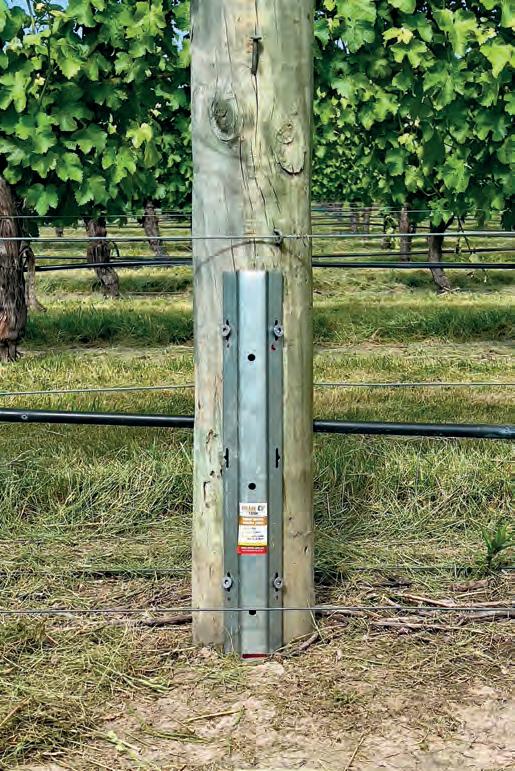

Ocloc V is an inexpensive fix for broken wooden posts
Keeps existing posts in the ground acting as a secure repair
Single pass repair, no wire removal required
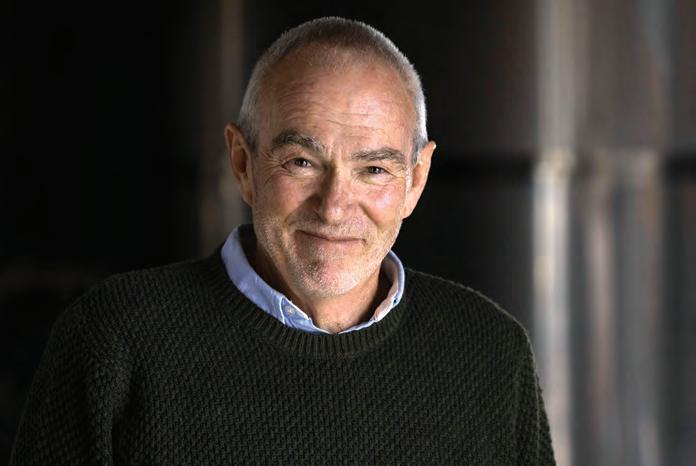
Winemaking and photography each require an understanding of science, says Kevin Judd. But the final product is judged by someone else’s senses, “so they’re both an art”.
Those arts have been intertwined for Kevin since 1977, when his father suggested photography was not a good career choice, and he went to Roseworthy College instead – a beer drinker amid legacy wine students. Five decades on, the winemaker behind iconic wine companies Cloudy Bay and Greywacke has been named a 2026 New Zealand Winegrowers Fellow, recognising the impact of his winemaking and photography on the story of New Zealand wine. Kevin is typically laconic when asked what drives him in both: “I am an overthinker.”
The decision to study wine was largely about curiosity. Kevin liked science-based subjects and his father, who worked in cardboard packaging, had contacts in the wine industry. “But during the first year I wondered whether I’d made the right decision, because most of the people in the course were from winemaking families,” says Kevin, who immigrated to Australia as “a ten pound pom” when he was 9. Wine was entirely new, and there was “a little bit missing”, in his studies.
Then in the third year of the course, working with winemaker Geoff Merrill at Château Reynella, south of Adelaide, Kevin filled in the missing parts, learning to smell and taste wines, and finding the art beyond the science. The same year he met his future wife and Greywacke cofounder Kimberley, who was studying at Adelaide University. Kevin took a job at Reynella after the course, and was soon made assistant winemaker. But after Hardys took over, he saw his career prospects plummet, including threats he’d be sent to the “boondocks” to run a field crushing plant. “I thought, right, okay, I get the picture.” One morning he found his company car was gone, and decided it was a lost cause.
He had no intention of leaving Australia, and “zero” experience of New Zealand wine, but when his Kombi “blew up” on his way to an interview in the Clare Valley, he looked across the Tasman. Kevin’s main interest was white wines, and he saw potential in New Zealand’s cool climate. So on Valentine’s
Day 1983, the Judds moved to Auckland for a job with Selaks, planning to return to Australia after three years. “I busted my gut and made some good wines”, including some of the gold medals the company was after, Kevin says. But they were tough economic times, and the couple were contemplating their return home when Kevin met David Hohnen in 1984, in the Sauvignon Blanc area of an Auckland wine show.
David recalled that first meeting in an interview last year, when Kevin received a Wine Marlborough Lifetime Achievement Award. David, who had won the Jimmy Watson Memorial Trophy for his Cape Mentelle Cabernet Sauvignon two years running, had recently tasted a New Zealand Sauvignon Blanc, and was set on establishing a winery here. Many of the winemakers at the show were standing around socialising, he said. “But there was one person with a notebook and a glass who was just studiously getting along and tasting and taking notes.” He is “a perfectionist in winemaking and photography”, David said. “Always looking for the extra 1% in quality.”
Kevin gave David a tour of Selaks, and suspected something was up when he fielded questions about his life. “Questions you don’t normally get asked by someone who hasn’t got something else in the back of their mind.” A few weeks later David called to offer him the job of founding winemaker at what would become Cloudy Bay.
Kevin resigned from Selaks, but stayed on for the 1985 vintage, phoning through instructions for the first Cloudy Bay Marlborough Sauvignon Blanc, made at Corbans in Gisborne, with David overseeing the Marlborough harvest. “We were after that beautiful Marlborough fruitiness, but dry and with some structure,” Kevin says.
“At that point we didn’t really understand what happens to Sauvignon Blanc flavours at the final end of ripening, or what canopy management could do. They were all things we had to learn.” And are “still learning”, he says, four decades on. “The frustrating thing about it of course is we can’t go back and taste them and see them, and refresh our memory,” he says. “It’s great that wine ages and changes and has a life, but it dies. Whereas photographs don’t.”
Kimberley and Kevin moved to Marlborough in August 1985, both aged 25, as the Cloudy Bay winery was going up on Jacksons Road, leading some to speculate it was a Mormon church. The area available to purchase was limited, because David and his brother were overseas investors, and four blocks were sold on: one to Kevin and Kimberley; one to Allan Scott, whose winery still neighbours Cloudy Bay; one to Maree and Dr David Leonard, whose son Ben is now Greywacke Global Sales Manager; and one to Ivan Sutherland, who would become Cloudy Bay’s viticulturist.
For the first three years, Cloudy Bay had an agreement with Corbans, which supplied them with grapes and in return made several wines at the new winery, with Kevin’s Roseworthy peer Glenn Thomas – a fellow Pom and photographer – the Corbans winemaker. The connection also led Kevin to winemaker James Healy, who oversaw Corbans quality control in Henderson, so was there when the first Cloudy Bay Sauvignon Blanc arrived for bottling. When Cloudy Bay needed another winemaker in 1991, “we headhunted him,” Kevin says. James, who died earlier this year, found his people and place at Cloudy Bay. Experimentation was embraced and the work was “vital and free”, he said in a 2024
profile. “It was just a perfect bunch of people together.” When Kevin won the Lifetime Achievement Award last year, James said the winemaker has “a unique clarity of thought; and that is why he’s been so successful in wine.”
Not long after he arrived, James began pushing for wild Chardonnay ferments, which Kevin considered a waste of good grapes, but agreed to, nonetheless. A year later, as a savoury and interesting Chardonnay evolved in barrel, Kevin and David became lifelong converts. Sauvignon Blanc followed suit, with the Judds offering fruit from their Greywacke vineyard. David advised them to register that name, which was carried in small print on the 1992 forerunner of Te Koko, a game-changing wine for Cloudy Bay.
They were heady days of chasing great wines, even in the worst vintages, says Kevin. In 1990, frost struck in the middle of harvest, and he returned from a birthday party in the Marlborough Sounds to find the vineyard temperature had dropped to -5C. “Within about two days the whole valley was brown.” The 1993 harvest was “off the scale” cold, while 1995 was historically wet, in a vintage wine pioneers still lament. That
year they sold half their production as bulk wine. “That was the philosophy,” Kevin says. “It had to be the good stuff.” David recalled having to “broker” blending conversations each vintage to ensure enough wine was made. “We’d eventually agree on a quantity, and we never, ever, ever felt that we’d compromised.”
Meanwhile, Cloudy Bay’s reputation abroad was casting a halo over New Zealand wine. “It was a bit surreal, really,” Kevin says. “It was very rewarding to have people see what we were doing and taking it seriously. But we just kept on going. I like to think that we never believed our own back labels.” They’d occasionally go abroad and see the excitement around Cloudy Bay. “They held us on such a pedestal when it was just a bunch of blokes and blokesses.”
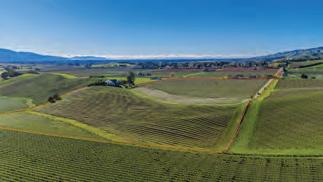
Along the way, Kevin became a renowned wine photographer, shooting vines, vineyards and landscapes at dawn and dusk, capturing the beauty behind the wines. In 1999, Craig Potton Publishing released Kevin’s first book, The Colour of Wine, following the seasonal cycle of Marlborough’s vineyards, while other photographs appeared in wine books, magazines and calendars around the world.
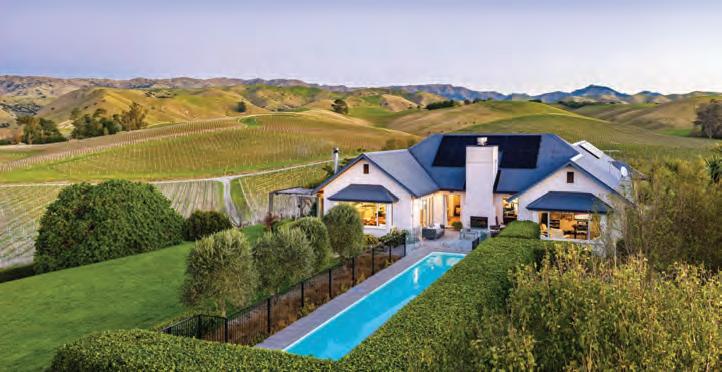
In his final five years at Cloudy Bay, Kevin spent two-thirds of his time making wine and the remainder taking photographs, and in 2009, The Landscape of New Zealand Wine was released, showcasing the country’s wine regions.
The same year, the Judds launched Greywacke, amid a wine oversupply and global financial crisis. After building an extraordinary legacy at Cloudy Bay over 25 years, Kevin set about creating another, using the oversupply to access his pick of Marlborough fruit, and his global reputation to make immediate headway in tough markets. He also had support from Ivan and James, who had left Cloudy Bay to establish Dog Point Vineyard in 2002. Sixteen years on, with dedicated growers, indigenous yeasts and low-intervention winemaking, Greywacke is sold in more than 50 countries.
These days Kevin is trying to semi-retire into more photography, including plans for a trip to Iceland this year, with just a few wine meetings in London along the way. The “morph” to photographer was meant to happen sooner, he says. “I just didn’t think there was going to be this thing called Greywacke in between.”

Lynnette Hudson’s 30-year obsession with Pinot Noir was sparked working vintage in Burgundy, seeing how subtle changes in terroir were expressed in the glass. It was, she says, “an enlightening moment in every way”.
That obsession was fuelled over two decades at Pegasus Bay in Waipara, and through 25 years helping organise the Southern Pinot Workshop, at which she and her obsessive ilk talk Pinot for three days straight.
It’s not an easy variety to adore, she admits. “Pinot Noir is such a fickle beast, a challenge, and it keeps you guessing, no matter what.” It can be “absolutely amazing” and “so disappointing” and there may be no rhyme or reason as to why. “When you make a great Pinot Noir, it’s like the lights suddenly come on, the stars appear, and for a moment everything falls into place.” Pinot Noir, Lynnette says, “pushes every boundary”.
Now, 43 vintages and 33 years into her winemaking career, Lynnette has been recognised for her services to that fickle beast, having been named a 2026 New Zealand Winegrowers Fellow. “It’s been a lot of work, and I have pushed myself to limits I didn’t even know I had,” Lynnette says, admitting to tears when she heard she’d been named a Fellow in recognition of a lifetime of dedication. “I did it because I love New Zealand wine, and I love New Zealand Pinot Noir. My goal is simply to ensure that this is an industry that is here forever.”
A long love of wine
Lynnette’s fascination with wine began at just 16, watching her older brother write tasting notes. Later, while completing a Bachelor of Science at the University of Auckland, a tight
student budget and limited local options kept wine out of reach. But the moment she enrolled in a six-month night class at Auckland Polytech, exploring the wines of the world, the die was cast.
In 1988, a move to Christchurch opened up a whole new world of education. She jumped at every opportunity to taste at Wilson Neill Fine Wines (owned by Sam Neill’s family). For just $2 a session, often twice a week, she would taste 10 different bottles served blind, eagerly working to decipher the variety, region, country and vintage. Her obsession further expanded when she moved to Sydney in 1991 to work for fine wine retailer Richard Baldwin, a veteran winemaker from Lindeman’s. He shared stories of vineyards, ferments, and vintages, and Lynnette was “completely hooked”.
She returned to New Zealand in 1992 to complete a postgraduate diploma in winemaking at Lincoln University, before her first vintage in 1993, working with Danny Schuster at Omihi Hills. She also helped with winemaking at Pegasus Bay and soon became part of the winemaking team. Never one to stand still, Lynnette left Pegasus Bay every year to chase harvests abroad. She headed to England in 1993, followed by the Hunter Valley in Australia, and then Hungary – an experience she
remembers as “enlightening, challenging, and daunting”. There was even a vintage in Romania that involved long, midnight drives across international borders to supervise production. Those overseas stints were “wild” and “unforgettable”, teaching her a sense of adaptability that she still considers one of the most valuable skills a winemaker can possess.
Then a 1995 trip to Burgundy changed everything. “It blew my mind,” she says. During the visit, she met Christophe Roumier of Domaine Georges Roumier in Chambolle-Musigny and boldly asked if she could return for a vintage. In 1997, she did just that, and as the harvest progressed her core winemaking philosophy was forged: great wines are “guided, not forced”, she says. “From that point forward Pinot Noir became my obsession.”
She did further vintages in Burgundy, but Lynnette always found herself returning to Pegasus Bay, where she built a 20-year career and developed a deep passion for Pinot Noir. Known for her meticulous approach, Lynnette tastes every vat daily to understand its evolution. But she also sees value in stepping back to gain perspective. “You suddenly go, ‘Wow, I hadn’t seen that before’, because you’ve been so immersed in the winemaking process, thinking about tannin extractions, when to press and what to do,
that sometimes to look at the wine once it’s pressed as a whole, is truly enlightening.”
After the 2010 Christchurch earthquake, Lynnette and five business partners set up Tongue in Groove, a wine label focused on small quantities and a “funky” label. The name referenced the needle of a record player sitting in the vinyl groove, reflecting the friends’ complementary expertise in winemaking, marketing and finance. In 2013, Lynnette left Pegasus Bay and focused on the bespoke label. Then Covid-19 hastened the end of the partnership, and she once again turned adversity to opportunity, taking over the Tongue in Groove business and continuing its focus on small quantities of Pinot Noir from organic vineyards in Waipara.
New Zealand’s Pinot Noir industry was built by passionate pioneers crafting small volumes of premium wine, Lynnette says. As global demand increased, the market sought a wider range of styles and more accessible price points, leading larger producers to expand production and introduce more affordable Pinot Noir offerings. But she cautions that Pinot Noir is “an inherently crop-sensitive variety, with higher yields often compromising quality”.
She is also the Sales Manager for Bouchard

Cooperages, representing some of France’s most respected cooperages, including Damy and Billon, as well as amphorae and other premium winemaking vessels. Lynnette says that role has further broadened her expertise, deepening her understanding of how different oak origins, coopering techniques and alternative vessels influence wine style and quality across a diverse range of varieties and wine regions. It’s “an exciting new chapter” in her wine journey, she says.
Passing on her experience and enthusiasm for wine has always been one of the most rewarding aspects of Lynnette’s career. She has mentored and inspired many young cellar hands, helping them develop their skills and progress into accomplished winemakers. She has also worked with aspiring sommeliers and wine enthusiasts through her teaching at the Celia Hay School of Food and Wine. She’s been a mentor for the Women in Wine Programme three times, and for the past 25 years has been integral to organising the Southern Pinot Workshop, serving as its chair for the past 12 years.
Lynnette attended her first workshop in Akaroa in 1994, just three years after Larry
McKenna launched the inaugural event at Lake Rotoiti – inspired by Oregon’s famed Steamboat Pinot Noir Conference. She recalls the awe she felt walking into a room packed with Pinot pioneers like Clive Paton and Phyll Pattie of Ata Rangi, Tim Finn of Neudorf, and Rudi Bauer of Quartz Reef.
The workshop is an “educational vehicle dedicated to elevating the quality of New Zealand Pinot Noir”, she says. Each year, winemakers openly critique and discuss blind-tasted barrel samples alongside scientific research presentations and a dedicated Burgundy tasting. The closed format – strictly limited to winemakers and viticulturists – is key to its success. “The sole aim is to bring the current vintage for peer review, sparking vital conversations around improving viticulture and winemaking practices for the future.”
Seeing the progression of attendees over the years is immensely rewarding, Lynnette says. While young winemakers often start out “completely overwhelmed and intimidated”, they eventually grow in confidence, “speaking about their wines with authority”. It’s an “incredible journey”, she says. “I love watching their knowledge, experience, and passion grow.”






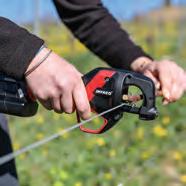
For the past 35 years, Philip Gregan has helped select New Zealand Winegrowers Fellows, working with the board to choose a cohort of extraordinary industry champions. This year the shoe is on the other foot, as the industry recognises his 43 years of behind-the-scenes work to help grow and protect New Zealand wine.
Philip, who retired as NZW Chief Executive at the end of June, says being named alongside the late Sir Sam Neill, as well as Kevin Judd, Lynnette Hudson and Rex Sunde, is “pretty humbling”, given “I don’t grow grapes, and I don’t make wine”. But he acknowledges that it takes far more than the growing and making of wine to ensure a thriving industry.
Philip became Research Officer at the Wine Institute of New Zealand in 1983, when New Zealand had 92 wineries, 6,000 hectares of vineyards and a severe oversupply headache. A quarter of

Specialising in all aspects of vineyard and winery valuation, including specialist plant and machinery. Experienced in all South Island wine growing regions.
1/20

Removes soil compaction and lets oxygen into the soil which helps release locked up fertiliser. Aeration also helps with drainage.



The Aerator is also used for root pruning which will produce new feeder roots and better production.

the country’s vineyards were pulled out in the vine pull three years later, creating industry pain but also a fresh start, including more plantings of the increasingly exciting Sauvignon Blanc.
“That purpose and enjoying doing it is the reason I was there for 43 years.”
Philip Gregan
In 1991, as the industry started to get a foothold in export markets, Philip became CEO of the Wine Institute of New Zealand. Then in 2002, when the Wine Institute and the New Zealand Grape Growers Council merged, he took the helm of NZW. Meanwhile, the industry grew rapidly, reaching 42,000ha of producing vineyards by 2025, with an export tally of $2.1 billion. It also embraced evolutions in sustainability and innovation, including the introduction of Sustainable Winegrowing New Zealand in the mid-1990s, and the adoption of screwcaps in the early 2000s. Behind
the scenes, Philip and his team worked constantly with government, industry and export markets to help drive change and success.
His contribution to New Zealand wine is “immense,” said NZW Board Chair Fabian Yukich when The Drinks Business gave Philip a Lifetime Achievement Award earlier this year. “His hard work, integrity and collaborative approach have helped shape an industry that is globally respected for its quality, sustainability and innovation.”
He’s faced countless challenges over the decades, from balancing the expectations of growers and wine companies (large and small, family-owned and multinational, in good times and bad) to managing crises like the Kaikōura earthquake, Covid-19 and Cyclone Gabrielle. But reflecting on a four-decade wine career, Philip says he stayed because he enjoyed it. “It provided me with a sense of purpose. What was I getting up each morning to do? I was working hard to support the industry. That purpose and enjoying doing it is the reason I was there for 43 years.”
He notes that there are plenty of
people in New Zealand’s wine industry, including the likes of Neal and Judy Ibbotson, John Buck, Tony Soljan, Jane Hunter, and Jim and Rose Delegat, who have been part of its fabric since the earliest days, and all of whom are Fellows with industry-shaping legacies. Meanwhile there are “incredible young people” coming through, including the Young Viticulturist and Young Winemaker of the Year, who will be recognised alongside the Fellows at the NZW 2026 Celebration Dinner in August.
With such good people, and an exceptional product from unique places, Philip remains confident about the future of the wine industry. He recently found the letter offering him a job at the Wine Institute in 1983. After the initial offer, the letter reads: “Despite what you may have heard in the media recently, we remain very confident about the future of the New Zealand wine industry”, Philip says. “I thought to myself, ‘well, not much has changed’.”

Philip Gregan was previously profiled in the June/July 2026 Winegrower Magazine: nzwine.com/en/media/nzwm
In a classic story of poacher turned gamekeeper, Rex Sunde ditched a career in agrichemicals to help New Zealand winegrowers minimise their spray use. “The more I got to understand and know that business, the more I felt I didn’t belong there,” he says of five years working with a German agrichemical company.
Fast forward 45 years, via kiwifruit sales, wine importing, an organic vineyard, viticulture consultancy and 17 years of invaluable work on the New Zealand Winegrowers Vineyard Spray Schedule, and Rex has been named a 2026 NZW Fellow for his services to viticulture and sustainability. “I think it’s very cliche, but you just do feel immediately humbled and grateful,” says the former NZW board member, NZW research committee member, and OWNZ executive committee member. “It’s totally unexpected, but joyful.”
“We took the spray schedule from a list of chemicals that you could use, to a document that enabled you to safely enter whatever market you wanted to.”
Rex Sunde
From rockhound to vines
Growing up in Oratia, West Auckland, Rex spent his time fossicking for semi-precious rocks, as a self-described rockhound. When he told his parents he wanted to be a jeweller, they told him there was no future in it, Rex says, noting that a young Michael Hill was making plans around the same time.
Geology was the next best thing, but he was deterred by the maths, so instead followed the lead of his grandfather, Dick Sunde, who was a “terrible winemaker” but extraordinarily kind, says Rex. Dick and his brothers emigrated from Dalmatia in 1906 and settled in Oratia, where they made wine “in the traditional Dalmatian way, which was more water than grapes”, Rex says. When Rex was a teenager, his father took over the business and pulled out the small

vineyard, but Dick’s influence had taken root, and Rex went on to study horticulture and viticulture at Massey University, where, perhaps unsurprisingly for a teenager oft looking groundward, he excelled in soil science.
His first job was with Arthur Yates & Co, which fuelled a “nerdy” fascination with plant breeding. Then, in the early 1980s, he began work for a German agrichemical company. Within four years he had progressed from technical officer to head of department in New Zealand, with frequent trips to Germany and elsewhere “to learn the trade”, he says. “But I just had an epiphany one day, and came home and said to my wife, ‘I’m nothing more than a rat poison salesman and I don’t like this. I don’t belong here’.”
In 1985 he joined the kiwifruit industry in its “golden days”, and within a year was living in Europe, setting up the first New Zealand kiwifruit sales office there. It was an influential time for Rex. “I’ve always maintained that the Europeans were, and still are, the absolute world leaders in thinking about how to manage the tensions between mass food production and healthy food production,” he says. It was a learning that would come into play when he started working on the NZW Spray Schedule, questioning how New Zealand could produce wine that is “unquestionably fit for market”.
After three years in kiwifruit, Rex had a “very brief spell” selling wine, buying a “rundown wine shop” and importing
Eastern European wines before the Iron Curtain fell. Then in 1992 he began working as a viticulturist for Nobilo, where he stayed for eight years. He credits Mark Nobilo for teaching him how to communicate with growers and write things in a way that was simple and practical. Rex describes himself as being “on the spectrum... very nerdy and very shy”. Mark gave him confidence and skills to share his knowledge, he says. “I am incredibly indebted to him.”
The learnings were invaluable when he set up his own viticulture consultancy in 2000. Giesen Wines was his first “anchor client”, and Theo Giesen was so impressed with his spray schedules that he showed Philip Manson, who was NZW Research and Sustainability Manager at the time. Rex subsequently became the face behind NZW’s Vineyard Spray Schedules from 2007, merging the “clarity, simplicity and good messaging” he’d learned at Nobilo with his deep understanding of agrichemicals. He and his colleague Gillian Howard, who provided vital “structure and logic” to the work, brought greater sophistication to the schedule, including ensuring companies had an option to produce wine with no residue, rather than simply complying with maximum residue limits. “We took the spray schedule from a list of chemicals that you could use, to a document that enabled you to safely enter whatever market you wanted to.”
Rex also saw the looming risk of spray resistance and, on the flipside, the potential of having spray efficacy outlive patents, given the distance of New Zealand vineyards to resistant pests and diseases.
If growers could use sprays optimally, the industry could stretch the life of agrichemicals beyond the life of patents, meaning they would get a lot cheaper. He worked with the Sustainable Winegrowing New Zealand team on a resistance management programme, including alternating products with different modes of action to reduce the opportunity for resistance. It can be “terribly complicated”, but the programme sets out a pathway that growers can follow, “saying you select what you like, but you can’t select this more than three times, or you can’t select that more than four times, and you can’t mix this with this.” SWNZ coupled that advice with the questionnaire and spray diary, so that when growers enter their spray applications during the season they’ll be alerted if their chemistry doesn’t fit the programme, Rex says. “I actually think it’s world leading.”
Organic practitioner
While Rex was at Nobilo, he and his wife Maria planted a vineyard on their Fantail Island property in Oratia. They established Artisan Wines in 1999 and by 2013 had full BioGro organic certification. “I think you
come to a realisation that you have a duty to leave your land in a better condition than you started with it,” Rex says. “I just wanted to be a good kaitiaki of my land.”
It was also an opportunity to use his understanding of soils and disease mitigation to answer questions about organics. “I had as much knowledge as anyone else in the country in terms of what chemistry to use and how to use it, so I overcame my fear of that and realised that the big challenge in organic viticulture is actually nutrition and weed management.” He was on the OWNZ board during that period, and endeavoured to help educate others about what they could do with organics. “I took a lot of pleasure out of being able to share my knowledge.”
But it also proved a smart business decision, as an appealing factor of their small winery and cellar door on the outskirts of Auckland. “It really did enable us to have a point of difference, to open doors that were previously not open to us, and to maintain a price difference.”
Rex values his role in the wine industry, and on the spray schedule in particular. But it was also a period of “tremendous self-doubt and depression”, he says. “I never
felt worthy, I never ever felt capable, and I ended up with tremendous depression.”
Being named a Fellow has made him reflect on the precarious nature of his wellbeing at that time, and question whether he can help others in the current tough times.
“I imagine there’s a lot of depression out there, and I wonder if there is something I can do to facilitate that recovery.” His own wellbeing, he says, required “the whole nine yards” of counselling, medication, “and tremendous family and friend support”.
In 2022 the Sundes pulled out their vineyard and these days Rex is “retired-ish”, only taking on work he enjoys, like working with the Cropsy Technologies agritech startup, with its AI-powered vineyard monitoring system. “I’m working with young people who are at the forefront of technology… and I love helping them in a little way.”
But it’s perhaps more likely Rex the rockhound will be found foraging far-flung places for semi-precious stones and fossils, or silversmithing them into jewellery. There is, it turns out, a future in it.
Times are tough right now. If you need extra support or advice, find informatoin at nzwine. com/en/initiativesevents/health-and-wellbeing
The Europress EV Hydraulic Basket Press, has the ability to press very small volumes without any compromise to yield. The EA and AE-S destemmer range offer flexibility and choice with options to suit your production requirements.

Le Cube’s innovative design combines a gentle destemmer, vibrating sorting table and roller sorter all in one single and compact machine. This allows it to be adapted to a large range of different configurations and caters for a wide range of handling processes.
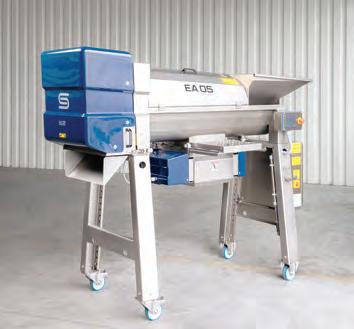
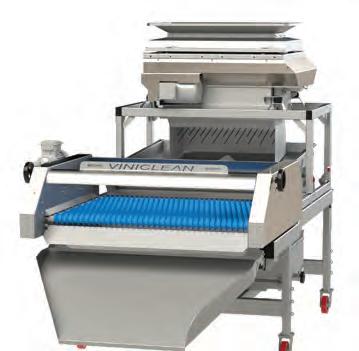
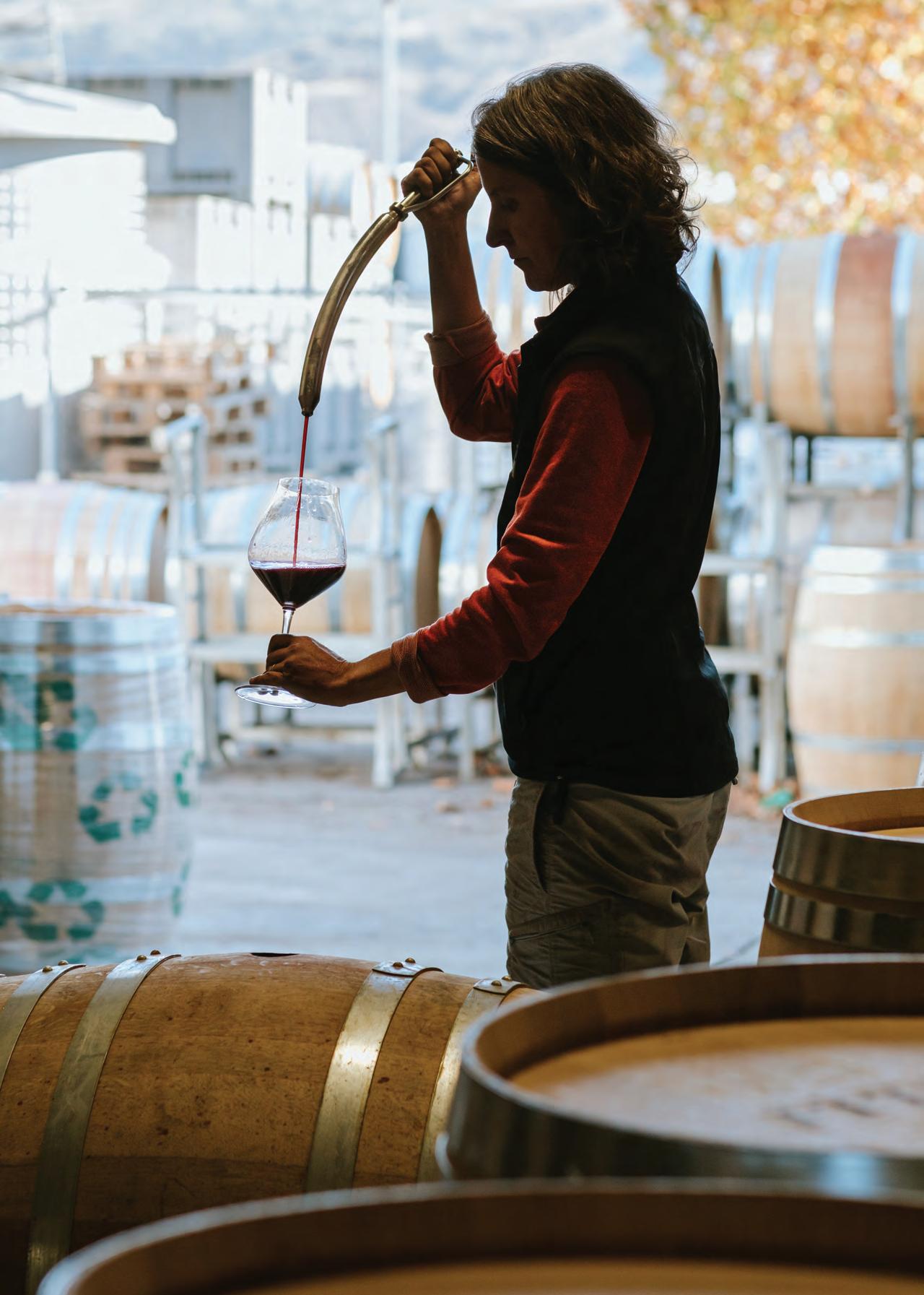
Relationships, provenance and premium positioning are helping New Zealand wineries win new customers in challenging global markets. KAT PICKFORD talks to wineries working hard to grow their global footprint.
Recent headlines about New Zealand wine have been dominated by oversupply, reduced caps and vineyard removals. While few are downplaying the challenges, wineries say there are also encouraging signs emerging offshore, where brands continue to attract new customers and gain ground in key markets.
For winemakers, sales teams and business owners returning from overseas, the issue is not a lack of demand for New Zealand wine. Rather, several large harvests in quick succession have left supply ahead of demand.
Market engagement delivers results
On a recent sales trip to Italy, part of a whirlwind tour of nine countries in eight weeks, Lawson’s Dry Hills Marketing Manager Belinda Jackson says she was continually blown away by people’s response upon tasting New Zealand wine for the first time. “Many of those who attended had never experienced Marlborough Sauvignon Blanc before – it was amazing watching people’s reaction,” Belinda says. “This was a good follow up to visiting last year, when we got an 80% strike rate of new restaurant listings.”
The trip took her through Europe, the United Kingdom and Asia, meeting importers, retailers and distributors along the way. Despite the economic pressures facing many regions, Belinda says buyers remain enthusiastic about New Zealand wine. “What stands out to me is that everywhere is facing challenges of one sort or another. However, those who take a positive attitude, stay close to their customers and have a compelling brand offering will do well.”
Spy Valley Wines Managing Director Amanda Johnson has found much the same thing during recent trips to Asia, the Nordics and North America. “We are constantly hustling, not trying to put all our eggs in one basket, and really trying to stay engaged with international markets – both looking for new prospects and backing up our relationships with the buyers and distributors we know and love.”
Those opportunities don’t happen by accident, Amanda says. “We made a conscious decision when doing the budgets a year ago to move funds to allow for extra time in market. One of the most valuable things about it is hearing directly what’s happening at shelf level and on wine lists, and spending face time with importers and
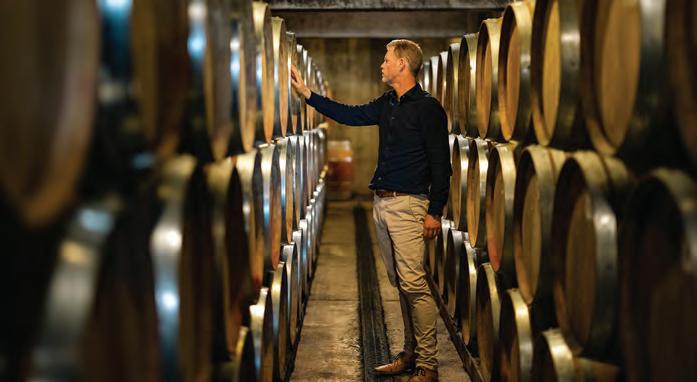
customers rather than relying on secondhand reporting.” Those efforts appear to be paying off. Despite what Amanda describes as a difficult year globally for wine, Spy Valley has recorded increased sales.
“It’s much easier to sell good wine than average wine in a competitive environment.”
James Macdonald
Being closer to customers has become a priority for many wineries, including Te Mata Estate in Hawke’s Bay. During the Covid travel restrictions, the winery appointed representatives to work alongside buyers and distributors in Europe, the United States and Australia. The investment has paid off, says Chief Executive Nick Buck. Sales in the US have grown 30% year on year over the past two-and-a-half years, while Europe has continued to deliver growth despite the challenges created by the war in Ukraine, the energy crisis, and local wine oversupply. “The response to the quality of our wine from consumers overall has resulted in strong growth over what has been a very challenging time socially, politically and economically… we’re very conscious that nothing comes easy at the moment.”
While Te Mata Estate operates at the luxury end of the market and is focused primarily on red wines, Nick says the fundamentals of exporting remain the same. “I’ve always believed the great strengths of Hawke’s Bay remain in its ability to produce a wide array of wines to an extraordinary standard… We have great diversity – the challenge is communicating that to buyers. Site-specific and subregional wines is a complex message to take to our customers; that’s why having good market representation is crucial.”
Communicating your story effectively has become increasingly important in a crowded international arena, says Hunter’s Senior Winemaker James Macdonald. Against the backdrop of several challenging years for the wine industry, the familyowned winery recently embarked on a significant rebrand, more than four decades after founder Ernie Hunter planted the company’s first vines in Marlborough.
After years of investing in vineyards, people and equipment, James says the focus shifted to better communicating what makes Hunter’s unique and reconnecting with customers who may have known the brand, but not its story. “It was an expensive long-term exercise, but it’s paying off,” he says. “It’s been an opportunity to go back to people with our renewed focus on quality winemaking. Tapping into what made Marlborough and Hunter’s successful in the first place –making great, compelling wine.”
Extensive travel to key export markets this year has reinforced that message. “After being on the ground, the mood is pretty good,” James says. “We’re getting really great feedback. We’ve sold out of our 2025 and started selling 2026 Sauvignon Blanc, which is getting some really positive responses. It’s much easier to sell good wine than average wine in a competitive environment.” The bigger challenge is making sure people know about it, he says. “Some of New Zealand’s biggest wine brands don’t even have a social media presence.”
For all New Zealand wine’s international success, there are still many wine drinkers around the world who have never tasted it – a gap that wineries are working hard to close. Valli Wines Winemaker Jen Parr has encountered a similar response during recent visits to Hong Kong, Japan,
California and Australia, where she says New Zealand wines continue to resonate strongly with those discovering them for the first time. “People love the wines from Central Otago (and New Zealand generally) but the reality is that we aren’t particularly well known, outside of Australia perhaps.”
“We are constantly hustling, not trying to put all our eggs in one basket, and really trying to stay engaged with international markets.”
Amanda Johnson
Despite strong recognition among those already engaged with wine, Jen says New Zealand still faces significant competition in major export destinations, particularly in premium Pinot Noir, where producers are competing against established regions such as Oregon, California and Europe. “Sitting here in Melbourne, the competition from Australian Pinot Noir and Chardonnay is really evident. People have started to prioritise drinking local wines and Australian Pinot is getting better and better.
There is a lot of competition in the Pinot Noir space, but strong brands and premium wines are still sought after.”
New Zealand’s long-term growth lies in continuing to build awareness and deepen understanding of what sets the country apart in international markets, she says. “I think the sustainable, regenerative message, along with the rugged beauty and natural wonders of our country, is important to help differentiate us from more industrialised countries that produce wine.”
Global wine companies back New Zealand brands
Premium positioning remains central to how New Zealand wine differentiates itself in global markets, but changing preferences and drinking occasions are also helping some producers reach new customers. Matua Winery Manager Gavin Williams says New Zealand is well placed to capture this demand in both established and emerging regions. “Globally, the wine category continues to evolve, with consumer preferences shifting toward lighter varietals and styles.”
Over the past two years, lighter wine styles have increased their share of the wine category in key global markets, and
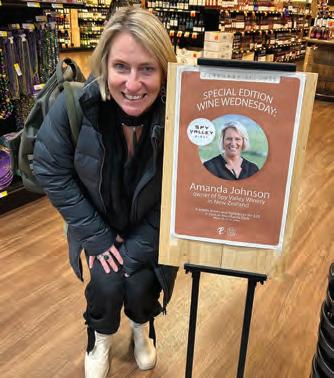
Matua is benefiting from the trend. The winery’s low-alcohol Sauvignon Blanc has recorded 40 consecutive weeks of growth in the US, while new formats such as cans and bagnums (magnum-sized wine in a bag) are helping attract new consumers, he says. While the numbers may appear incremental, in a sector grappling with falling consumption and changing drinking habits, holding ground – let alone growing – is a positive sign.
That sentiment is also reflected at a corporate level, with some of the world’s largest wine companies continuing to view leading New Zealand wine brands

as an important part of their future plans. At the centre of that confidence remains Marlborough Sauvignon Blanc, the varietal that first put New Zealand wine on the world stage and remains the backbone of the country’s wine exports.
Constellation Brands recently reaffirmed its commitment to Marlborough-based Kim Crawford and Drylands as part of a global portfolio focused on premium brands. Meanwhile, Treasury Wine Estates has identified Matua as one of just three global “Power Brands”, alongside Penfolds and DAOU. NZX-listed Delegat Group recently reported strong global sales, while Australian drinks giant Endeavour Group retained Marlborough’s Isabel Estate as one of only three wineries in its portfolio following a strategic review.
Protecting reputation, protecting value Behind that optimism is genuine demand for New Zealand wine. But wineries say the industry’s future will depend just as much on protecting the reputation that created those opportunities in the first place. While demand for lighter, fresher wine styles continues to support New Zealand wine in
South Korea is emerging as one of New Zealand wine’s most exciting growth opportunities, says Charlotte Read, New Zealand Winegrowers General Manager Brand. On a recent visit she was “blown away” by how fast the New Zealand wine category has expanded in the past decade. “What had been a handful of New Zealand wine brands on wine store shelves has transformed into a vibrant New Zealand category in retail stores.”
Korean wine drinkers increasingly favour lighter, fresher and more fruit-driven styles, and Sauvignon Blanc is now the most popular white wine variety there. “This aligns perfectly with New Zealand’s strengths, with Marlborough Sauvignon Blanc continuing to act as a powerful entry point for consumers,” Charlotte says.
NZW has supported New Zealand Trade and Enterprise in research to learn more about Korean wine consumers. While awareness of New Zealand wine remains relatively low compared with that of more established wine-producing countries, the research shows that Korean consumers respond exceptionally well once they discover New Zealand wines, Charlotte says. “We simply need to increase our visibility.”
NZTE South Korea Head of Business Development You Jin Lee will speak at the NZW 2026 Wine Business Forum on 27 August, sharing first-hand perspectives on consumer behaviour, market trends and the opportunities ahead. nzwine.com/en/initiativesevents/nzw26
key export destinations, concerns remain about how some of that wine is being presented and priced.
Buyers overseas are still reporting widespread availability of heavily discounted Marlborough Sauvignon Blanc, often from little-known brands, several wineries say. “The response to Marlborough has become somewhat muted given the
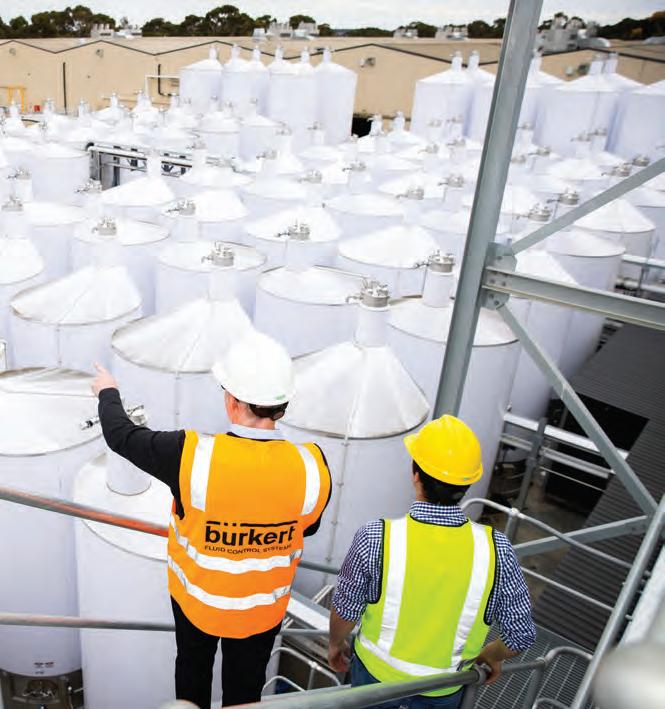
volumes being produced and the low prices it is being sold for,” says Belinda. “At times it was hard to see New Zealand commanding the premium it always used to and I was frequently being told of the cheap wine that companies were being offered. The warning was clear – continue to drive brand Marlborough as mass-produced, diluted and cheap, and our bubble will burst.”

Amanda agrees, saying the contrast between premium and commodity wine has become increasingly stark. “Demand for authentic, premium New Zealand wine brands remains strong, even in a very challenging global environment. At the same time, there’s enormous pressure in grocery from heavily discounted Sauvignon Blanc, particularly in the UK and US.”
Nick says that in this environment, how wine is positioned in market becomes just as important as volume. He notes that while bulk wine can offer short-term scale through supermarket channels, it is not always a stable foundation for long-term growth. “Te Mata has focused on building relationships with engaged distributors and on-premise channels, where buyers are typically more wine-informed and focused on provenance, quality and regional identity,” he says. “This approach is supported by strong recognition of New Zealand’s position as a cool-climate wine producer, backed by awards, critical reviews and brand history.”
Hunter’s Wines has taken a similar approach, with a continued focus on more engaged, wine-led channels rather than competing on price in highly
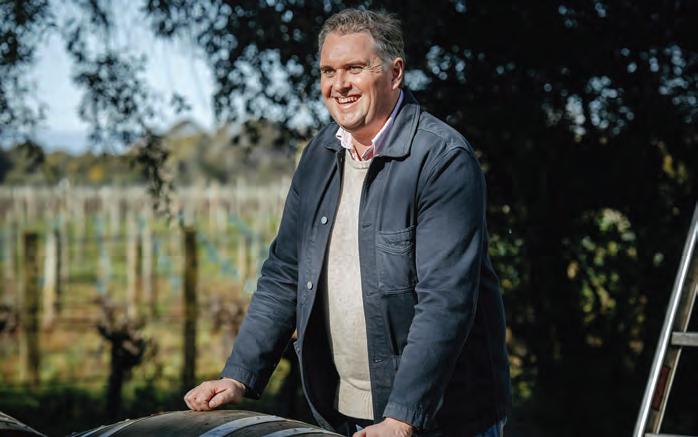
promotional retail environments. “Instead of chasing price, we’re doubling down on what makes our wine distinctive,” James says. “We’ve got to believe in what we’re doing. Our competitive advantage is our uniqueness and authenticity. That’s what makes us stand out against the more industrial winemaking methods that are so prevalent globally.”
The importance of storytelling, education and engagement becomes more
apparent the more time Jen spends in trade. Building recognition is not an overnight process and requires sustained effort with buyers, especially as competition intensifies, she says. “Selling the premium story is important.”
The new frontier
After several decades building export markets, wineries are now taking those learnings into a new wave of emerging

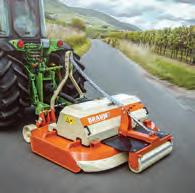

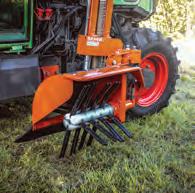
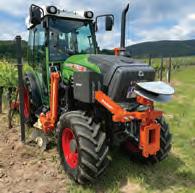
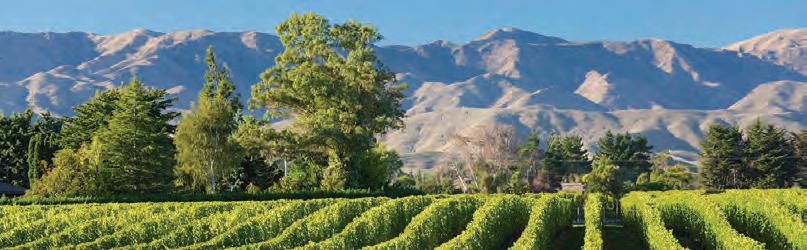


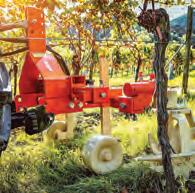
opportunities. Amanda says early activity in South America has been encouraging, with tasting events in Brazil this year generating early interest and follow-up leads.
“We had a great time in South America,” she says. “We had 12 leads, six of which converted into actual genuine follow up. We’ll keep building on those relationships.”
Looking further ahead, attention is also turning to emerging prospects such as India following the Free Trade Agreement – a vast and largely untapped destination for New Zealand wine. “India is a huge territory in itself, but it’s not one we’ve historically engaged with in any meaningful way,” Amanda says. “It will be interesting to see where it leads over time.”
The conversation around new export destinations reflects a broader point Nick makes about the future direction of New Zealand wine. One of the challenges for the industry is the tendency for people to do what everyone else is doing, he says. “It’s a big wide world out there – we don’t necessarily all need to be in the same place.”
There is real potential for producers to take a more direct, long-term approach to development and investment, particularly
given the relatively small scale of the New Zealand industry. “There’s plenty of ground still to explore on the fringes,” he says. “People buy wine from people. It’s all about relationships.”
While driving through New Zealand’s wine regions, with vineyards stretching across the landscape, it can be easy to assume there are too many – particularly in the context of current oversupply. But as James points out, New Zealand is small by global standards, with Marlborough alone comparable in scale to Champagne. The current pressure facing the industry is largely a production issue rather than a demand one, with supply running ahead of consumption in some industry segments.
Nick points to the US as a key example – the world’s largest wine market – where conditions have shifted after an extended period of growth. While the overall category has contracted, he says New Zealand wine and Italian Prosecco are the only two styles to hold steady or continue growing. “It might not seem like a measure of success to not go backwards, but growing your market share in the biggest wine drinking region in

the world is absolutely a win during what has been a very challenging period.”
Nick says nothing fundamental has changed about New Zealand wine, which continues to offer diversity, quality and a clear point of difference internationally. “We’ve got something completely unique. We just need to make sure that value is properly understood and recognised offshore.”
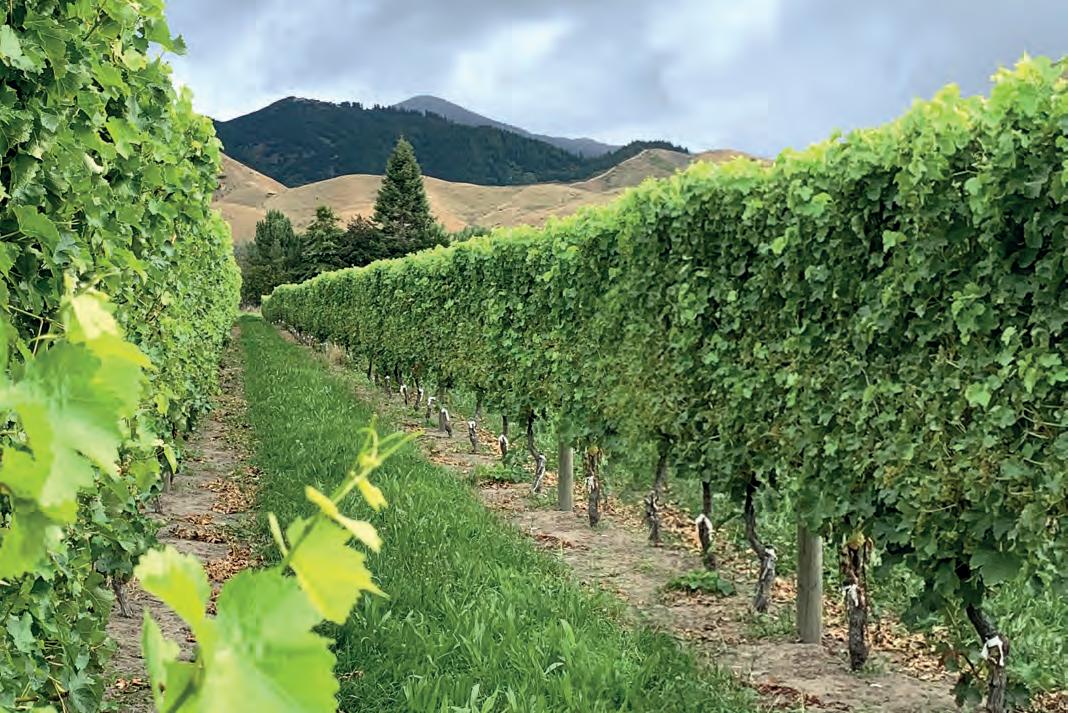
For strong vines, consistent yields and better tasting wines*apply:
Mycorrcin – to boost soil microbes that increase root growth and nutrient uptake

Digester – to stimulate decomposition microbes to recycle organic matter fast
*Asusedin2021AccoladeWinestrial for provenyieldincreaseandbettertastingwine.
Foliacin – to improve foliar health and resilience in times of environmental stress Available from leading horticultural suppliers
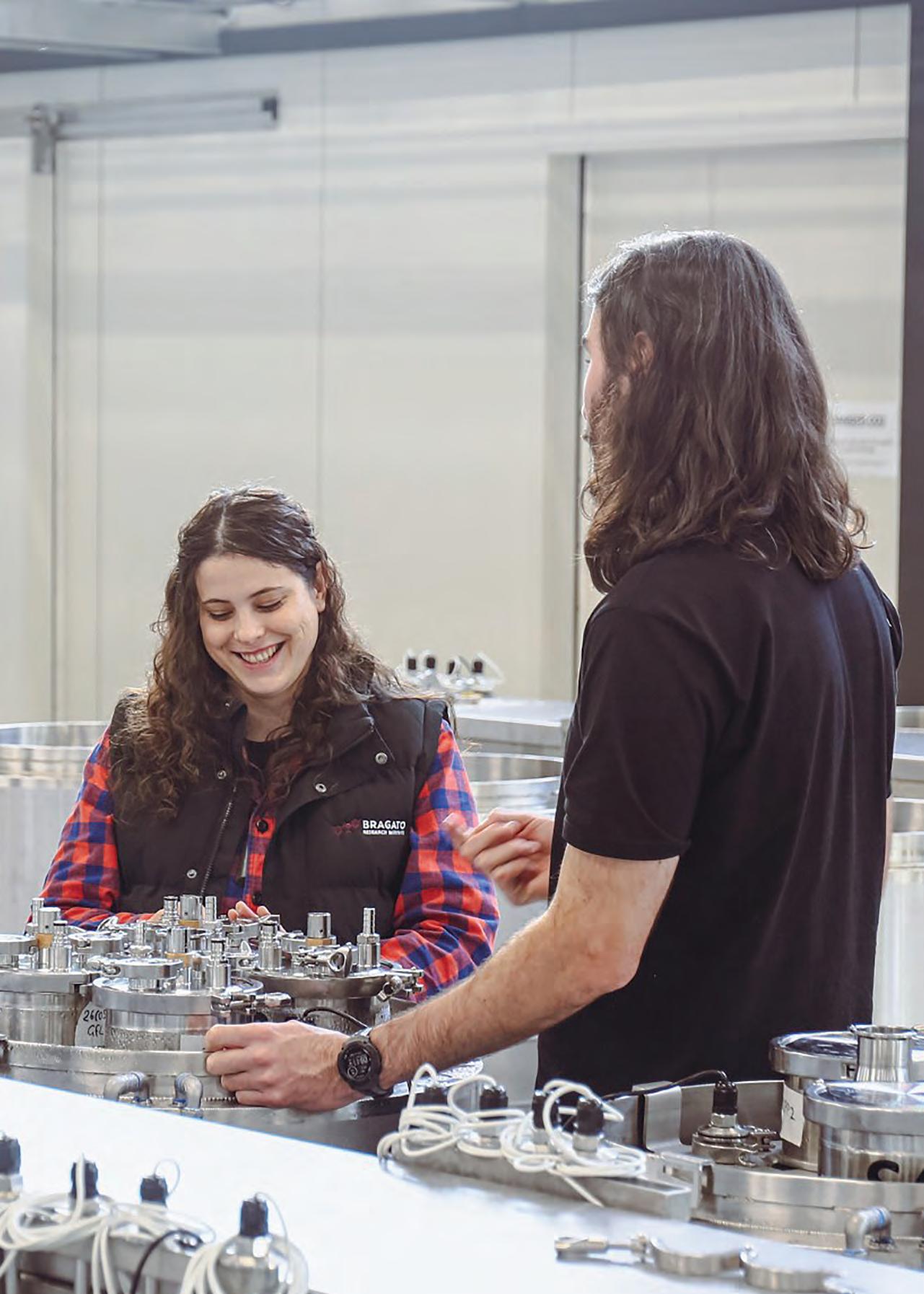
From genetic researchers and bioinformaticians to plant pathologists and data scientists, EMMA JENKINS talks to some of the women helping shape the future of New Zealand wine.
The New Zealand wine industry has always had trailblazing women. Winemakers, viticulturists, business leaders – their names are well known, their contributions long recognised. Less visible, perhaps, are the scientists working in research and academia, whose work shapes the industry long before anything reaches a bottle.
“There’s far more science behind every bottle of wine than most people realise.”
Dr Fang Gou
Women hold key scientific roles across the research pipeline at Bragato Research Institute, led by chief executive Dr Juliet Ansell. Meanwhile, researchers like Dr Sarah Knight and Dr Rebecca Deed at the University of Auckland, Dr Amber Parker at Lincoln University, and Dr Hayley Ridgway at the Bioeconomy Science Institute, among many others, provide expertise and innovation to help drive the industry forward.
Many of these women arrived via less expected routes. Francesca Cavasin, BRI’s new research winemaker, started in the vineyard, became a vineyard manager, went back to study, moved into commercial winemaking, and eventually made the shift to research. She suggests that a common wine science misconception is “that there’s a single ‘correct’ pathway in”, with study first, then industry work. “In reality there are many different entry points. While viticulture or winemaking are common pathways, people also come into the field through areas like chemistry, microbiology, engineering or food science, all of which play an important role.”
Dr Amy Hill began her working life as an accountant before returning to university to study biology, completing a PhD at the University of Cambridge studying gene regulation in bacteria, and postdoctoral work
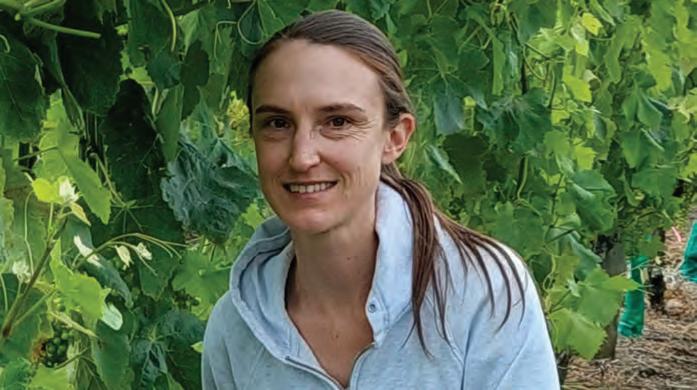
at the University of Canterbury, before joining BRI as Laboratory Manager. Dr Sarah Knight hadn’t planned on a PhD at all: “I saw the project advertised and had to find out more.” But the subsequent research into regional typicity of Saccharomyces cerevisiae seeded a passion for harnessing biological science to answer commercially relevant questions “and vice versa”.
Dr Ellie Bradley’s path wound through DNA markers in mice and lice, fungal genetics, and plant pathogens before she took up a postdoctoral role at BRI in 2022, progressing to Research Associate. “I never had a specific end-goal when I started studying,” she says. “I started with courses I was interested in and took opportunities as they arose.” Her work now includes investigating RNA as a tool to control grapevine leafroll-associated virus, developing grapevines with targeted genetic changes, and identifying disease-resistance markers within BRI’s variety collection. She loves the range in her work, and that its experimental nature means success isn’t guaranteed. “That makes solving a problem, troubleshooting an experiment, or achieving any sort of win hugely satisfying.”
Wine science draws from a remarkably wide range of disciplines, many of them not always obviously connected to wine. Dr Annabel Whibley works in bioinformatics, exploring genomic datasets to understand grapevine biology, with an honorary research fellowship at the University of Auckland alongside her BRI role. Dr Fang Gou, whose background spans agro-meteorology and crop system modelling, is building BRI’s research data infrastructure to support cross-project analysis across the institute. When she tells people that she works at a wine research centre, “their first assumption is that I know wine inside out and can give recommendations”, Fang says. But wine science is a multidisciplinary field that encompasses viticulture, plant
science, microbiology, chemistry, data science, sustainability and innovation. “There’s far more science behind every bottle of wine than most people realise.”
Dr Cen Liau studied human genetics at the University of Otago and now works in the grapevine improvement team, working across grapevine genetics, epigenetics, and pathogen genetics, including powdery mildew. “Wine science covers much more than winemaking. A lot of important work happens much earlier,” she says.
Cen values “knowing that our research can provide useful information with a direct impact for our stakeholders”. That’s echoed by all the researchers interviewed, undertaking science that practically connects to the industry rather than stopping at academic publication. “In commercial roles you’re focused on one brand or company,” Francesca says. “But in this role the work can benefit the wider New Zealand wine industry, which is really rewarding.”
Juliet arrived at BRI via Kings College London, a PhD from Oxford, and career stints in Tanzania, The Gambia, Australia, and Plant & Food Research. Having worked across academia, large corporates and agritech, the institute’s chief executive has found the wine industry to be a receptive environment for women scientists. “The attitude of men in leadership roles or with long-held experience has been welcoming without being tokenistic or patronising,” she says. “They treated me as if I deserved to be there for my capabilities and skills.”
She is specific about what sets the industry apart from others she has known. “Men in the industry stand alongside the women in their businesses and show genuine respect, give airtime, listen. Women are actively involved and there are some great women leaders to inspire younger, up-and-coming ones.”
Women don’t have to be like men to lead, Juliet says. “I think the wine industry is the first job I have had where I have been able to express my natural leadership style.”
After 16 years in the field, Sarah finds reward at the intersection of research and people. “Seeing those ‘click’ moments in students when they grasp a tough concept or manage to solve a tricky problem in the lab is probably the most satisfying,” she says. “The most interesting part is working alongside industry, local communities, and other researchers to share ideas and develop new projects.”
Hayley Ridgway, Science Group Leader at BSI, who is working to harness beneficial microorganisms to combat trunk disease, has mentored more than 60 students across her career at Lincoln University and BSI, formerly Plant & Food Research. That’s an especially fulfilling part of her job, she says. “Seeing students and young staff achieve their dreams and to know that I helped them. Many still keep in touch – invitations to weddings, pictures of babies – and it’s satisfying to know that they remember my help and value it.”
The advice many of these women give to those earlier in their careers is encouragingly consistent. “Don’t feel like you have to follow
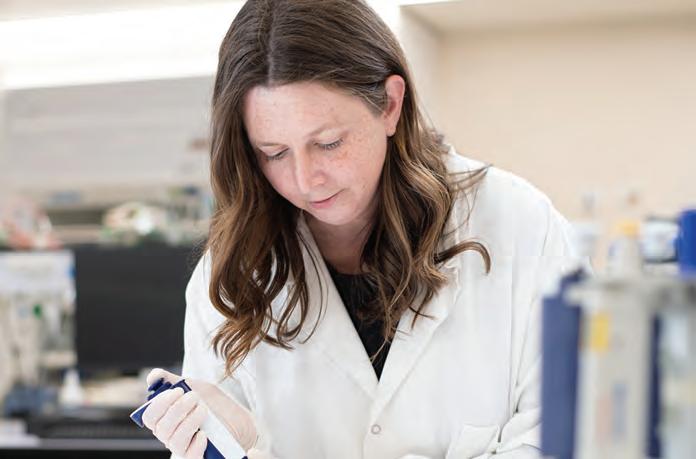
a single, straight path,” Francesca says. “Wine science isn’t just theoretical. Being comfortable in the winery, asking questions, understanding how things work, and getting involved is just as important as academic knowledge. The New Zealand wine industry is collaborative, and having the confidence to share your ideas is just as important as your technical skills.” Hayley distils her advice to two maxims: “Stay kind – the support you

Organic Contract Winemaking, Bottling & Warehousing Solutions
Are you looking for a premium organically certified contract winemaking partner with flexibility, scale and South Island logistics support?
Greystone Wines, based in Waipara, North Canterbury, is now offering:
• Organic contract winemaking
• Contract bottling / labelling services
• Bulk wine processing
• Short and long-term warehousing solutions
• Distribution storage options in Christchurch and Amberley
Our certified organic winery (with SWNZ equivalence) combines modern winemaking capability with 15 years of contract production experience and a team committed to our strong reputation for premium wine quality.
Whether you require full-service production from grape to bottle, overflow capacity, bottling support, or secure warehousing solutions, we can tailor a programme to suit your business requirements.
Facilities available for:
• Organic and conventional wine production
• Small to medium production runs
• Vintage overflow support
For confidential discussions and availability, please contact: Gavin Tait – Production Winemaker Email: gavin.tait@greystonewines.co.nz Phone: 027 446 4070
extend to others will have a deep and lasting effect. And follow your passion – science is hard, and sometimes that’s the only thing to hold you there.”
“Back yourself and your ideas,” Sarah adds. “No one else thinks the way you do, and your ideas are valid and awesome.” The industry does some “gutsy science,” she adds. “It’s not all about drinking or tasting delicious wine… although that is one of my favourite perks.”

Education campaign for resistance management
SOPHIE PREECE
Glyphosate resistance threatens to significantly increase operational costs and reduce profitability in New Zealand vineyards, according to a new report.
The A Lighter Touch (ALT) programme has launched an education campaign for the horticulture, arable and viticulture sectors, as it nears the end of its seven-year term. The campaign includes a case study, produced with programme partner Bragato Research Institute, on the prevalence and risks of glyphosate resistance in New Zealand vineyards, as growers move away from what was once the most cost-effective weed management tool.
“If nothing is done now it will be too expensive to manage or mitigate later.”
Dr Paul Epee
The case study draws on research published by the Plant Protection Society in 2022, which revealed that 39% of New Zealand vineyards contained glyphosateresistant ryegrass, including 58% in Marlborough. It included guidance for mitigating resistance, including rotating herbicide modes of action (MoA), reducing reliance on glyphosate, using mowing, cultivation and cover crops, and integrating non-chemical weed management.
BRI has since analysed more than a decade of Spray Diary data to understand the trend of glyphosate use in New Zealand vineyards. “This analysis showed that growers often applied glyphosate at higher frequencies, concentrations and rates,” says the case study. “These findings highlight the need to increase grower awareness of the risks associated with heavy reliance on glyphosate and the importance of adopting alternative weed management strategies in vineyards.”
It seems that resistance is “creeping up”, says Dr Paul Epee at BRI, noting
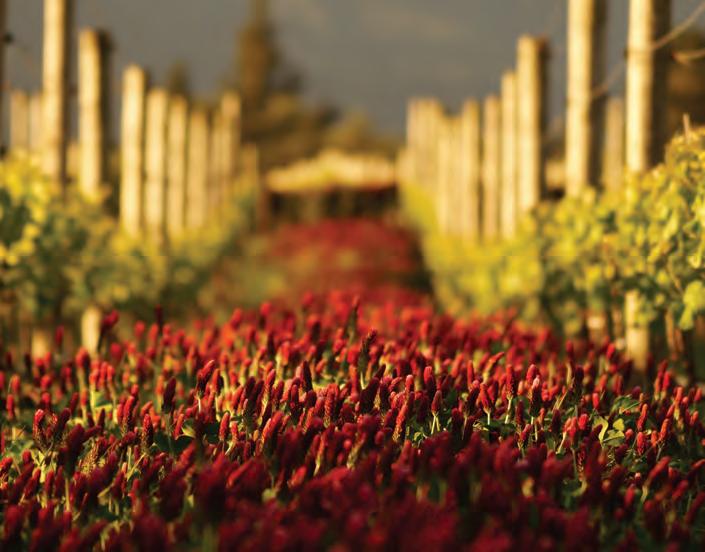
that growers are struggling to control weeds with low- to moderate-concentrate products efficiently. “For us that’s a real red flag that something is happening.” The management options that reduce the risk of weed resistance often come at a cost, and “glyphosate is one of the easiest options”, he says. “Like most of us, growers are tempted to opt for the path of least resistance.”
The ALT resistance management campaign is another good opportunity to get the message out and encourage grape growers to have the risks “front of mind”, Paul says. “Because if nothing is done now, it will be too expensive to manage or mitigate later.”
Paul also led the UV-C light project, co-funded by BRI, ALT and Whitehaven Wines. The project investigated the efficacy of UV-C light in controlling powdery mildew and reducing over-reliance on fungicides in New Zealand vineyards, and particularly for Marlborough Sauvignon Blanc.
Fruitfed Supplies technical specialist Jon Peet says the wine industry is on the front foot when it comes to resistance management, with Sustainable Winegrowing New Zealand promoting ‘good agricultural practice’ (GAP) and rotating MoA wherever possible.
However, it’s a message that needs to be reiterated time and again, to ensure growers use sprays strategically to mitigate resistance. The day we speak he is preparing
to talk to grape growers in Marlborough about a new herbicide product that has recently become available to them. The product requires written permission for use from SWNZ and is only to be used on glyphosate resistant ryegrass, thereby ensuring strict adherence to best practice, including alternating with other MoA to ensure long-term efficacy.
Jon notes that other weed species are also in danger of developing resistance, particularly to glyphosate. And while glyphosate may be the “worst culprit”, there is growing evidence that ryegrass, in particular, is developing resistance to other MoA. His message to growers is that their weed control has to be carefully managed throughout the year. “It is an integrated approach and will differ from season to season depending on climatic conditions and the mix of products used in previous seasons. Simply applying glyphosate or any other single product year in, year out, will eventually lead to expanding resistance and a loss of control of not just ryegrass but other weed species also.”
Jon notes that growers are in an “increasingly difficult financial position” and vineyard management requires “thinking outside the box” and changing well established norms. “Having good technical advice on how to manage pests and diseases to achieve the best outcome is critical to success in this rapidly changing environment.”
Promising results from initial trials
DR MARK KRASNOW & KAREN PETERSEN
Winegrowers are constantly being pushed to reduce farming costs, cut carbon emissions and improve vineyard sustainability. Recent work conducted by Thoughtful Viticulture, in collaboration with the United States Department of Agriculture (USDA) and the South Australian Research and Development Institute (SARDI), shows promise to achieve all three.
Currently, most winegrowers start spraying soon after budburst, and continue every 7–14 days until veraison. It’s thought that cover sprays need to be applied as soon as there is infectable tissue, even if temperatures in spring are often below the minimum for powdery mildew growth. In addition to chemical use, these early season passes tie up labour, put time on machinery, burn diesel and do some of the most damage to mid-row soils, which are often at field capacity and most prone to compaction from heavy equipment at this time.
For any plant disease to become established there needs to be what pathologists call the ‘disease triangle’: infectable tissue, permissive environmental conditions, and pathogen spore presence. Without all three, there is no disease.
There are temperature-based models (for example the Gubler model) for powdery mildew growth and infection, which are used by growers as decision support tools (Thomas et al., 1994). Work in Oregon Pinot Noir looked at using simple-to-make and inexpensive rotorod spore traps to measure airborne spores as a decision support tool for growers to spray only when needed. In this work, initiating sprays based on spore load in the vineyard gave full disease control with 3.3 fewer sprays than the ‘grower standard’ spray programme (Thiessen et al., 2016). The aim of the current research project is to develop a similar New Zealand-based decision support tool for growers to make the most efficient and effective use of their resources.
In the 2025–26 season, trial vineyards in Hawke’s Bay, Marlborough and Central
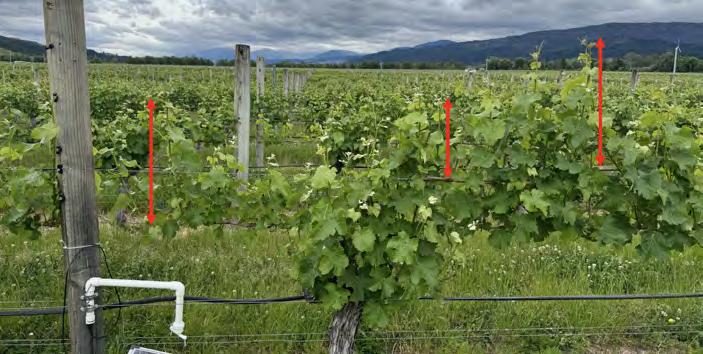
Otago took part in a pilot study. Since spore samples had to be sent to United States collaborators for analysis, this trial relied on Gubler risk to initiate sprays in a trial area, while the rest of the block was started at the manager’s discretion. For the trial in Hawke’s Bay this meant skipping the first three sprays before Gubler started to trigger. In Marlborough Sauvignon Blanc and Central Otago vineyards, two rounds were skipped. Subsequent visual disease scouting and canopy spore loads showed no differences between treatments, indicating that delaying spray initiation had no negative effects. Spore traps in the reduced spray areas did not show airborne spore presence until substantial Gubler risk had been achieved, suggesting further reductions in spray rounds can be achieved by initiating sprays based on spores rather than just modelled risk. A spore trap next to a mothballed block, which received no sprays, didn’t start to register high spore numbers until midNovember, when most Sauvignon Blanc vineyards would be applying their third or fourth spray rounds.
In the 2026–27 season, with financial support from Bragato Research Institute and the Marlborough Research Centre, we will initiate sprays in trial areas of three Marlborough Sauvignon Blanc vineyards based on spore load and weather forecasts, with the rest of the block started as normal, just like the Oregon work. Regular canopy spore load testing and visual scouting will be done in the control and trial areas to quantify any differences in inoculum or disease incidence/severity over time. A detailed financial assessment, taking into account any crop losses, will also be undertaken – allowing growers to make informed decisions for their unique situations. Given the promising results from the initial trials, we are optimistic this work will provide a practical and widely adoptable tool for growers moving forward – and build upon New Zealand’s legacy of sustainability.
Viticulturists Dr Mark Krasnow and Karen Peterson run Thoughtful Viticulture in Marlborough: thoughtfulviticulture.com
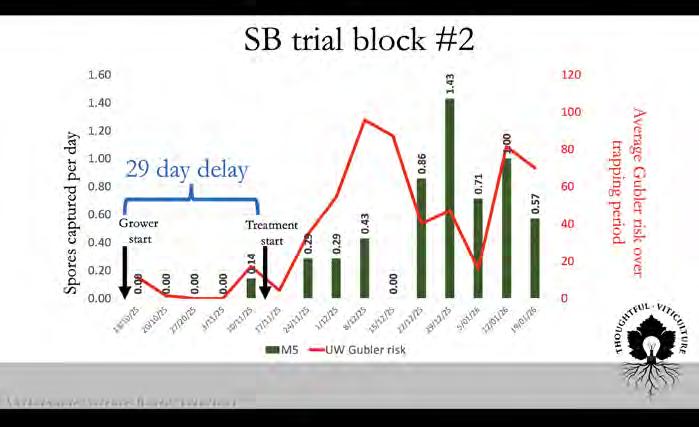
SOPHIE
Generative AI in the workplace, trials in the field, and industry-relevant research took centre stage at this year’s Grape Days events in Central Otago, Hawke’s Bay and Marlborough.
Audiences were given a Bragato Research Institute research update on the powdery mildew national survey, disease resistance varieties breeding programme, Carbon Calculator, and a project targeting inhibition of botrytis cinerea laccases, before moving to the potential uses of AI in wine.
Rachel Durie and Lee Matheson, from Perrin Ag, offered insights into the use of GenAI on dairy farms. Their report for DairyNZ, The Opportunities of Artificial Intelligence for New Zealand Dairy Farmers, indicated that farmers who are engaging with the technology use it to make better, more informed and faster decisions, reduce time spent on repetitive tasks and improve communication. Limitations are typically due to the user not giving enough background information, Rachel said. “It comes back to prompts and using it in the right way.”
In each region the presentation was followed by a wine industry panel on real world use and potential for the technology. Brenton O’Reilly from Te Mata started using GenAI a few years ago, to gain efficiencies in areas like HR and finance, “and it’s worked really well so far”. He said it was important that AI had access to the right source of information, such as their own company data. “The better the data source you provide to the model, the better the output you will get.”
He and David Bullivant, from Babich Wines, also warned of hallucinations, as well as the need to protect company information while using the tools. They all urged people in workplaces to use paid versions of the software in order to protect their data.
There’s a wealth of research available to New Zealand winegrowers, Dr Damian Martin told attendees during a session on Smarter Decisions in the Vineyard, which was followed by panel discussions on vineyard innovations and trials.
In Hawke’s Bay and Marlborough, BRI scientist Dr Paul Epee presented
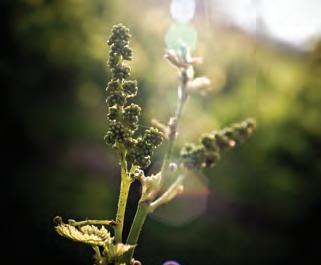
early results from the Next Generation Viticulture programme (see page 51), Stewart Field looked at the effect of root carbohydrate reserves on productivity, and Dr Cen Liau discussed powdery mildew fungicide resistance. Dr Leandro Dias Arauji from Lincoln University spoke in all three regions about a comprehensive survey of elemental sulphur residues on Pinot Noir across multiple vineyards, and the correlation between total sulphur application and residue levels at harvest. She was followed by Dr Bruno Fedrizzi, looking at how key winemaking factors influence aroma development in New Zealand Pinot Noir, with a focus on volatile sulphur compounds (see page 56).
Turn vineyard innovation into credible evidence with BRI’s independent viticulture trials. We help product providers test, compare and validate biostimulants, biologicals, natural products and other lower-impact inputs, generating scientific data to demonstrate their performance in the vineyard and support commercial decisions.
Plan your next trial at bri.co.nz/services
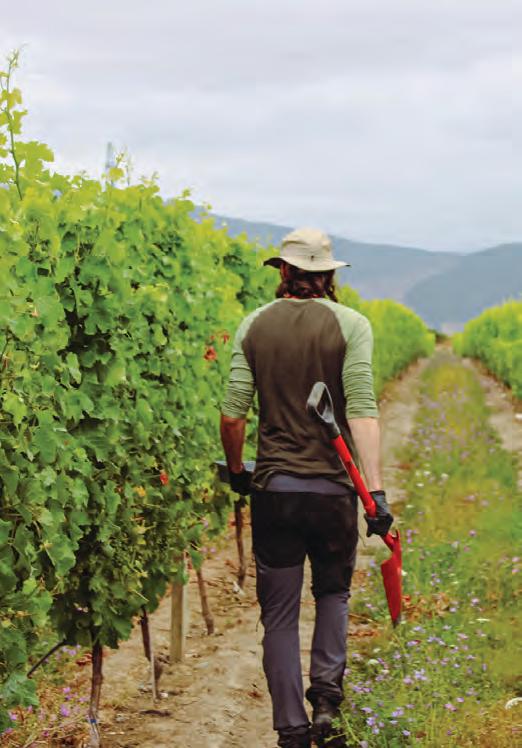
Having founded three wineries, sold two, and put the 21st vintage of Wild Irishman into barrel, Central Otago winemaking pioneer Alan Brady could choose to put his feet up. However, the lure of the perfect Pinot Noir remains strong. It is “the Holy Grail,” he says in the wake of his 90th birthday. “Probably always just out of reach.”
“Humility is the key to understanding the message from the terroir.”
Alan Brady
Alan planted the first grapes in Gibbston in 1981, “a mad blunder into the unknown”, to prove that grapes would grow at the bottom of the wine world. After Gibbston Valley came Mount Edward in 1998, “a more calculated decision” conceived as a place for him to make wine and learn on the job “without risking other people’s investments”. When Alan sold it in 2004, aged 67, he assumed he was done. He wrote a memoir, grew restless, and started Wild Irishman. “This is a tough industry to exit,” he says drily. When a friend and mentor, ChambolleMusigny winemaker François Millet, told him “people like us shouldn’t stop doing what we love”, Alan embraced the advice, growing Wild Irishman beyond “a nice
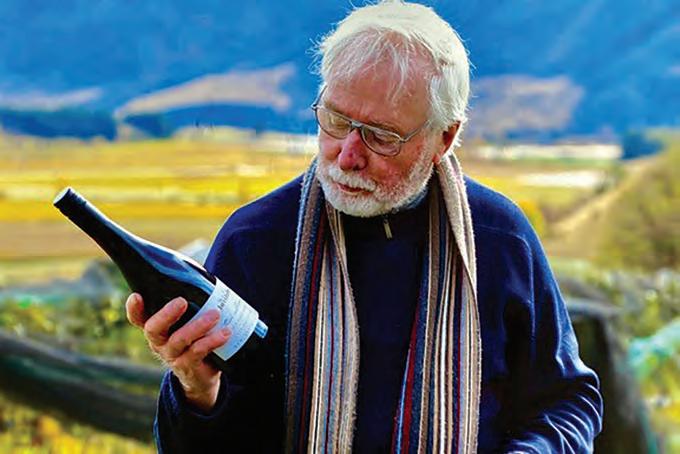
little hobby to ease me into retirement”, with (fellow Irishman) winemaker Brian Shaw now providing “the energy in our new little winery”. Together they produce six single vineyard wines from Gibbston, Bannockburn and Alexandra fruit, and Alan talks about their work in terms of listening rather than imposing. “We’ve learned so much about how the personalities of those sites is reflected in the wines when we ‘listen’ to what nature is saying to us. Humility is the key to understanding the message from the terroir.”
The pioneering generation contributed “tenacity” to Central Otago’s wine story, he says. “We weren’t afraid of the unknown and we learned how to collaborate and work together as we planted vines where they weren’t expected to grow.” But it was the winemakers who followed, often
“lured here by the romance of Pinot Noir”, who put the region on the map, he adds. Would he have done anything differently? “I’d have started sooner! I was 45 when I stumbled into this magical world, and there’s more to learn than you can squeeze into one lifetime.”
Alan still walks the vineyard outside his window in Alexandra daily. His palate, he notes, remains intact, “and that might be the biggest blessing”, though his dreams are a bit less ambitious: “maybe another season, another vintage.” But his view of what Central Otago’s wines can and should be remains uncompromising.
“Pinot likes it here,” he says. “We can squander that gift by manufacturing homogenised wines to meet a perceived demand, or we can remain humble, delivering wines which reflect our diverse region with clarity and truth.”
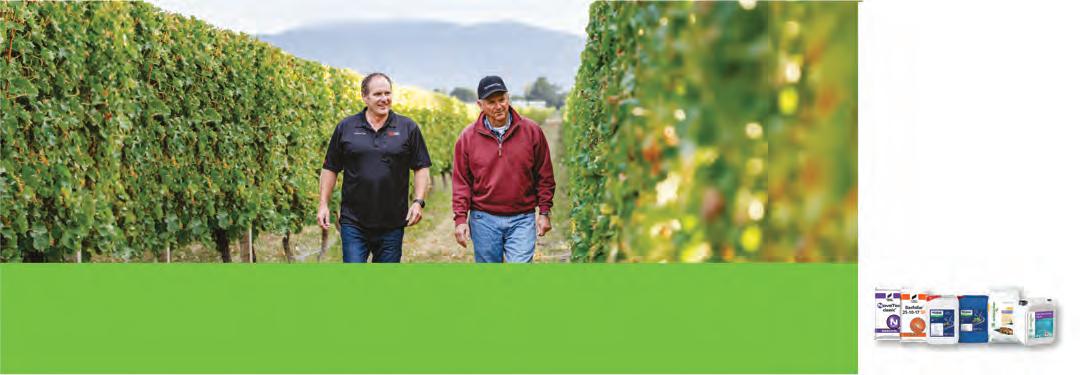
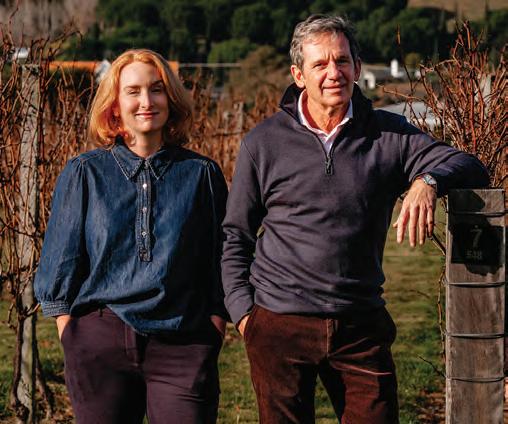
SOPHIE PREECE
When Kate Lattey and Koldo Santamaria planted their dream vineyard in 2020, they knew they wanted to work with winemakers who shared their passion for wine “and expressing what the land can say”.
Six years later Kate had another dream: to ask three of those winemakers each to make a barrel of Chardonnay from No.287 Vineyard, in order to raise money for the Hawke’s Bay Wine Auction and Cranford Hospice. “There was so much doom and gloom at the time, in the wine industry and in the world,” says Kate, who approached Chris Scott Wines, Radburnd Cellars and de la terre with her proposal: she and Koldo would donate more than three tonnes of premium Chardonnay fruit and ask each winemaker to create an auction-exclusive wine from the same harvest.
Penelope Radburnd was not surprised to see the generosity from Kate and Koldo, who are friends as well as suppliers. The project is about more than charity, she says. “Times are tough in the wine industry, so collaboration matters more than ever.” The event is a wonderful way to raise the profile of Hawke’s Bay wines, and showcase the calibre of its single vineyards at the same time, she says. “It’s a rare opportunity to have the exact same fruit interpreted three different ways.”
The support from the wider community was just as swift, says Kate. “There are so many people that are passionate about wine. As soon as we put this call out to come and help pick the grapes, we were overwhelmed.” School mums, past and present work colleagues, and Kate and Koldo’s bank manager showed up, along with vineyard teams from Greatvine Services.
After 180 volunteer hours spent harvesting the fruit, it was divided between three wineries, with Chris Scott Wines focused on creating a complex, finely textured Chardonnay, whole-bunch pressed directly to barrel and wild fermented, while Radburnd Cellars pursued concentration, structure and longevity, in a Chardonnay designed to reward long-term cellaring. De la terre took a different path, fermenting with indigenous yeast and avoiding oak entirely to create a pure expression of fruit and place.
The wines, which will remain in barrel until bottling in 2027, will be auctioned at the 2026 Hawke’s Bay Wine Auction on Saturday 12 September. For Kate, who has tasted the three Chardonnays in barrel, it is “beyond exciting” to see what No.287 Vineyard is capable of. “We really have to pinch ourselves that we stumbled across this land and made the dream happen.” hawkesbaywineauction.co.nz
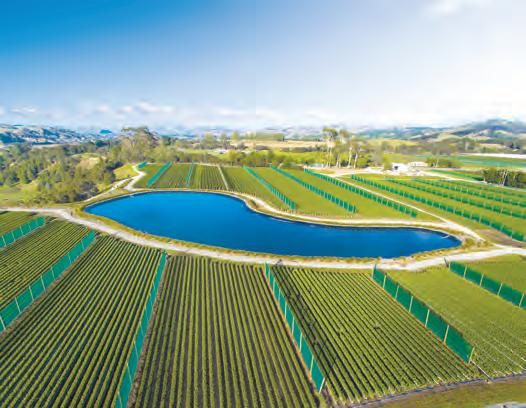



Viking Containment is New Zealand’s leading supplier and installer of geosynethic products for the primary, civil and building construction sectors.
Viking Containment is New Zealand’s leading supplier and installer of geosynthetic products for the primary, civil and building construction sectors.
Geomembrane Liners for
Geomembrane Liners for
➤ Water Storage Dams
➤ Dairy Effluent
Landfill & leachate
➤ Irrigation Canals
➤ Frost Protection
Potable Water Reservoirs
➤ Wasterwater Lagoons
Wastewater Lagoons
Irrigation & Dairy Effluent
➤ Floating Covers
➤ Baffle Curtains
Floating Covers
Baffle Curtains
Geosynthetic Products
➤ Bentomat®
Geosynthetic Products
➤ Geogrids
➤ Geosynthetic Clay Liners
Bentomat ® Geosynthetic Clay Liners
Geogrids
➤ Geocells
Geocells
➤ Geocomposits
➤ Geotextiles
Geotextiles
Associated Products
Associated Products
➤ Geoladder®
Geocomposites
➤ Depth Gauge
➤ Geolock®
Geoladder ®
➤ Viking Vent
Geolock ® Depth Gauge
Viking Vent
Melissa Tripe knows what a downturn feels like. In the mid-1980s, when she was 12 years old, her parents pulled out their Müller-Thurgau vines as oversupply and high interest rates plagued New Zealand’s wine industry. Forty years on, as winegrowers grapple with low grape prices, cancelled contracts, lost income and continued uncertainty, she’s reminded of the stress her parents went through before and after the government vine pull.
Melissa, a Marlborough grower, New Zealand Winegrowers board member, and viticulturist for her brother’s companies JTC Viticulture and Vintage Harvesters, knows people who have had no grape contract and no income for the past two years, while continuing to pay the costs of maintaining a vineyard. Growers expect weather challenges, market shifts and grape prices that fluctuate with demand, she says. But they cannot prepare for being told they will not sell a single stock unit for two years. “That is what’s so hard
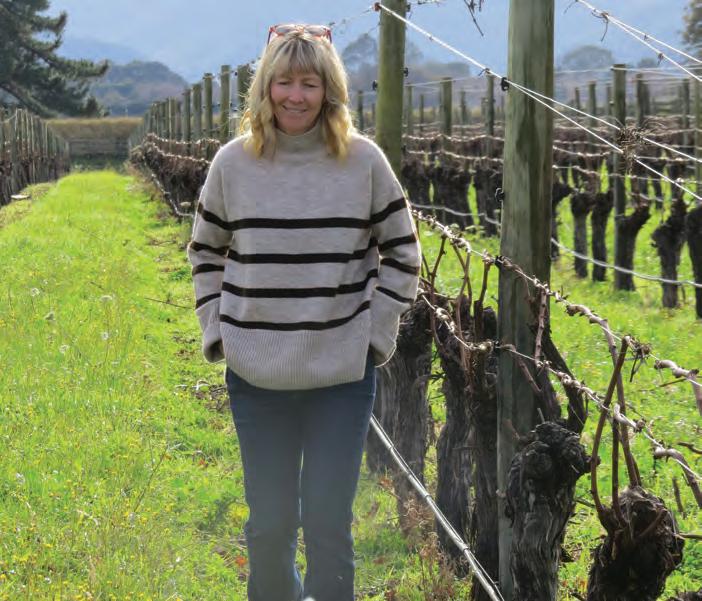
“What your neighbour is doing is going to be different to what you are doing,” says Melissa Tripe. “Because your site is your own, your debt level is your own, your vine age is what you’ve got.”
for people to understand and get their heads around. Me included.”
Speaking at a Wine Marlborough and Bragato Research Institute workshop on mothballing in June, Melissa urged growers to take stock of their situation
During financial hardship, farmers can become more isolated, so connecting with community and industry groups can support wellbeing, says Sarah White, coordinator for the Top of the South Rural Support Trust. Speaking at Wine Marlborough mothballing workshops in Blenheim and Seddon in June, she urged
growers to get to events, and to bring their neighbours along as well. The Rural Support Trust shares wellbeing resources, reacts to adverse events, and can connect people with a counsellor, but she urged people to visit their doctor if they need to talk about their mental health, and to stay in touch with their accountant and bank.
and be strategic in their planning. “That will be unique for every player in this room. What your neighbour is doing is going to be different to what you are doing, because your site is your own, your debt level is your own, your vine age is
New Zealand Winegrowers also provides health and wellbeing resources, including downloadable posters for staff noticeboards.
Find resources at:
• nzwine.com/en/initiativesevents/healthand-wellbeing
• rural-support.org.nz or call 0800 787 254

what you’ve got.”
It is a “very stressful and emotional time”, but there is also opportunity, she said. “If your vineyard is 20 to 25 years old, and we are being paid almost nothing for our grapes, is it a good time to pull it out?” That is not an easy decision, she notes, recalling a conversation with a couple who own and operate a small, 25-year-old vineyard without a supply contract. In their late 50s, they do not know what comes next. “This is all we have ever done,” they told her. “This is our job.”
She and Jason have a “very wide view” of what is happening in the industry because of the number of growers they work with. That includes growers with no contracts and those who do have contracts but are on notice. “We’ve got some who are looking to exit the industry and we’ve got others that are fine,” Melissa says. “And our own vineyards sit within that mix as well.”
They have pulled out several of Jason’s older blocks for fallowing, with some planted in alternative crops, including winter barley, clover seed and sunflowers, while waiting for demand to
recover before replanting grapes. Those trials, along with different mothballing techniques, are providing insights for the wider industry, she says. “Over the past 12 to 18 months, we’ve been looking at what we can do within our own operation to help people save money.”
“There are a lot of good things going on to try and alleviate it, but it won’t happen overnight and that’s the toughest thing for people – the unknown.”
Melissa Tripe
Ultimately, the decision will be individual to each business. For some growers, the best option may be to remove older vines and consider replanting, given they are receiving little or no income from their crop. “Your decision to replant might not be right now, but when demand comes back on stream.” For those with younger vines,
the conversation is more likely to focus on mothballing and what is appropriate for their individual circumstances. “And that’s very personal; it’s about the site and what people are looking to achieve.” She emphasises that a mortgage-free grower might be prepared to sustain a few years with no crop, while a neighbour could face a completely different situation.
People need to talk to other stakeholders, including banks and accountants, and perhaps a lawyer, before taking the next step. Conversations with labour suppliers will also be important, as contractors are likely to reduce their workforce, while harvesting companies will also feel the effects of the downturn. “It’s really hard on the greater community... There is a lot of anxiety out there and worry about what is going to happen.”
The hardest thing, Melissa says, is not knowing what comes next, given changes in the global wine market and Marlborough’s own oversupply. “There are a lot of good things going on to try and alleviate it, but it won’t happen overnight and that’s the toughest thing for people –the unknown.”
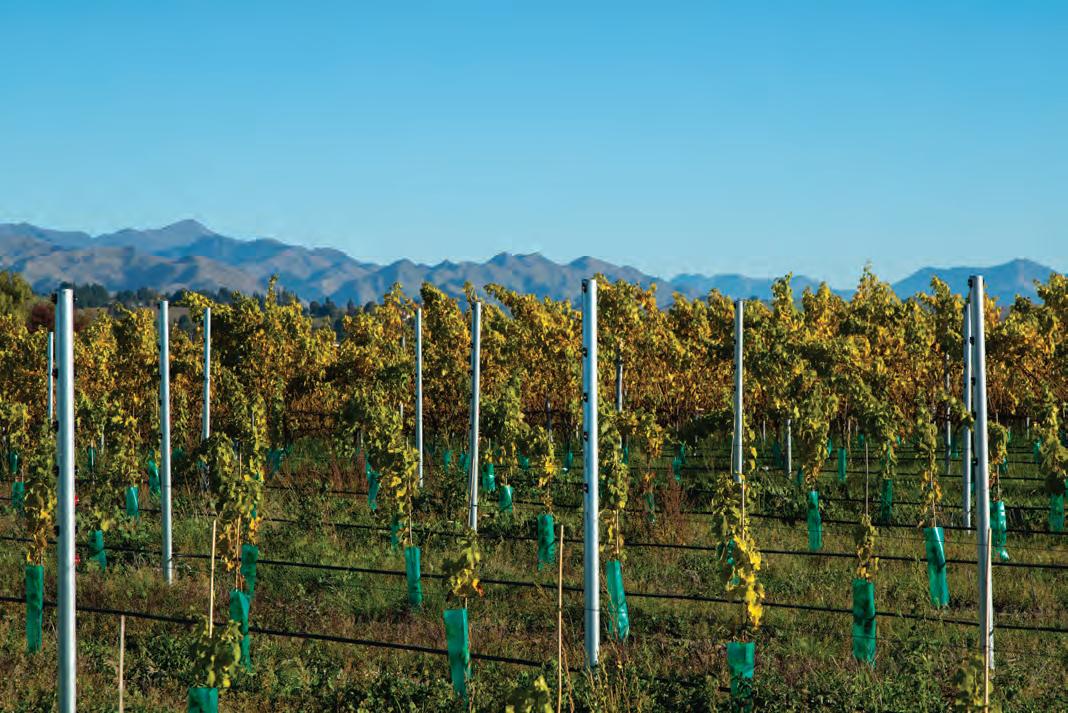
“The first conviction we need as wine drinkers,” Andrew Jefford once wrote, “is to spend less time thinking about grape varieties, and pay more attention to the places wines come from and the cultures in which they come into being. All the grape variety does is present a spectrum of opportunities.” He goes further: focus only on variety and you end up chasing a perfect model of that variety, against which everything different falls short. In fact, the difference is the point.
That difference has a name, though increasingly one used so liberally that it’s at risk of losing its meaning. “Sense of place” is trotted out so reflexively that it has almost begun to function as a platitude rather than an actual concept or argument. At its most rigorous, a sense of place is what the philosopher Sir Roger Scruton meant when he called a good wine “a somewhere, not an anywhere”, marked by a specific place and year, impossible to have come from elsewhere. Randall Grahm put it more bluntly, denoting wines that are made, and wines that are expressed.
What might a wine that is made rather than expressed look like? It could be a commodity blend engineered to a price point and designed to be identical year-onyear, or it might be an overly ambitious, heavily crafted wine. These are precisely the wines most likely to reach for the phrase – prestige wines are no less capable than commodity wines in deploying it cynically – as if writing it on a back label might conjure up what’s missing in reality. The problem is that once you attach it to everything, it joins ‘artisan’ and ‘authentic’ in the graveyard of words that once did real work only to become decorative or performative.
That corrosion matters because place is the one quality a wine possesses that cannot be manufactured or replicated elsewhere. Winemakers move on and vintages pass, while varieties can be planted anywhere with sufficient optimism. But place simply is. That inability to be replicated is what gives it its weight. Place has long been the basis for conferring legitimacy on Old World traditions, though

of course a Bannockburn Pinot Noir or Hawke’s Bay Syrah has just as much claim to a sense of place as a Gevrey-Chambertin or Hermitage. The concept belongs to geography rather than legacy.
As for whether consumers need to understand any of this, perhaps they don’t, or not consciously anyway. People respond to wines that move them without always knowing why. But the industry certainly does need to understand it – and more importantly, wines do need to express it. That’s why Jefford is right to ask us to look more carefully. If a “sense of place” comes to mean everything and therefore nothing, we let go of the most distinctive thing wine possesses.
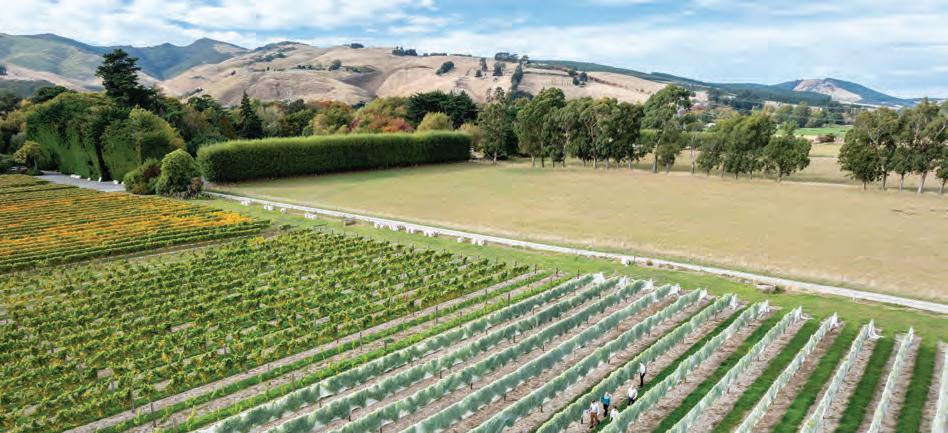
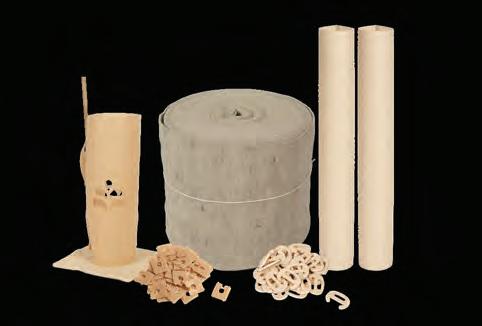
PolyNatural offers a comprehensive range of sustainable products to support the viticulture industry, such as woollen weed and mulch matting, vine halos, foliage clips, vine net clips and plant protectors.
In the lead-up to Te Wiki o te Reo Māori 2026, which runs from 14–21 September, viticulturist Jeff Sinnott, a founding member of the Tuku Māori Winemakers Collective, urges New Zealand’s wine industry to embrace and protect te reo Māori.
The wine industry in Aotearoa has readily adopted Māori place names as a way of expressing the uniqueness of our country and our culture. There is nowhere else on earth like Aotearoa – you only have to ask one of the 3.5 million-plus tourists who visit our shores each year to understand that we have something totally unique. One challenge we have is to teach them to pronounce our names correctly. You need look no further than the navigation app on your phone to discover how difficult this can be: Towellwronger is apparently a city in the western Bay of Plenty, Taugh poe is a large lake in the mid North Island, the Ka Warrah is a river near Queenstown, and don’t get me started on Ngaruawahia.
We have spent considerable time, effort and money protecting our place names, much the same as the famous appellations of Europe have done for decades. It stands to reason that we should celebrate these unique names with the dignity and respect they deserve
Appellations such as Kumeu, Waiheke or Te Mata carry perceptions of geographic location but also of wine style, quality and in many cases price. Some names are easier to pronounce than others, and it only takes a conversation with a wine export manager to understand how challenging names such as Ngaruroro, Ngatarawa or even Kaikōura can be in international markets.
“So maybe, as a nod to Te Wiki o te Reo Māori, we work on learning, and more importantly communicating, our unique names to each other and our customers.”
Jeff Sinnott
For some the roots lie in the way we say and hear vowel sounds. Having taught basic Level 1 Reo it seems those whose mother tongue is not English can often do quite well. An interesting observation is that languages that share similar vowel sounds such as the Scandinavian and Baltic languages have a natural advantage. I have friends from the Netherlands who have a label called Ruru – no one in their native country has a problem pronouncing that. But I sympathise with those having to promote names such as Ngakiriri to a buyer in Western Virginia, Toronto or Birmingham.
So maybe, as a nod to Te Wiki o te Reo Māori, we work on learning, and more importantly communicating, our unique names to each other and our customers. There are literally hundreds of basic courses you can take in person or online.

I started with a basic REAP programme – a free weekly night class that provided a gentle introduction to this beautiful, lyrical language. Then as you gain in confidence and develop a thirst for knowledge you can progress through the different levels of the NZQA system. If you’re anything like my own kids you can literally end up with a doctorate in this, “fun-filled, singy-songy language”, as my son says. As someone much wiser than me once said, we learn our language from our children. reomaori.co.nz

New Zealand Winegrower magazine goes to every levy-paying vineyard and winery in the country, with 2,500 magazines sent out every two months, sharing stories that reflect and inform New Zealand’s wine industry.
To get your business in front of the people who research, grow, make, market and sell New Zealand wine, email our advertising team at salesteam@ruralnews.co.nz
Read it online at nzwine/en/media/nzwm
The Japan Wine Challenge –A New Zealand judge’s perspective
JANE COOPER
Having judged at the Japan Wine Challenge in both 2024 and 2025, I’m looking forward to returning to the role in Tokyo this October. The Japan Wine Challenge is one of Asia’s longest-running international wine competitions, attracting entries from around the world. It is co-chaired by Katsuyuki Tanaka, one of Japan’s most respected wine judges, alongside Chris Martin MW, from the United Kingdom. Over the course of the show, hundreds of wines are assessed by an international panel of experts drawn from across the wine trade.
As an international judge, one of my responsibilities is serving as a panel chair – working with a different group of Japanese judges each day, guiding discussion and helping the panel calibrate its scoring. Among the international
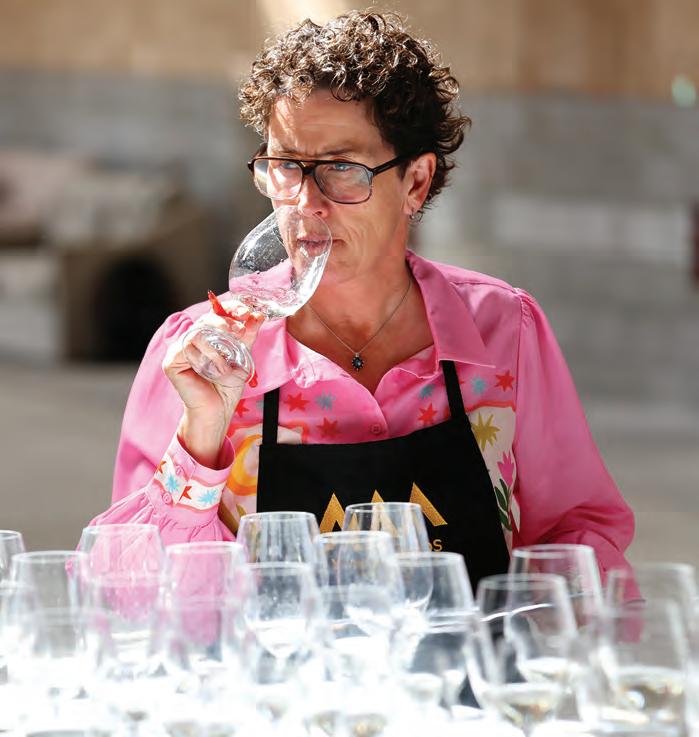





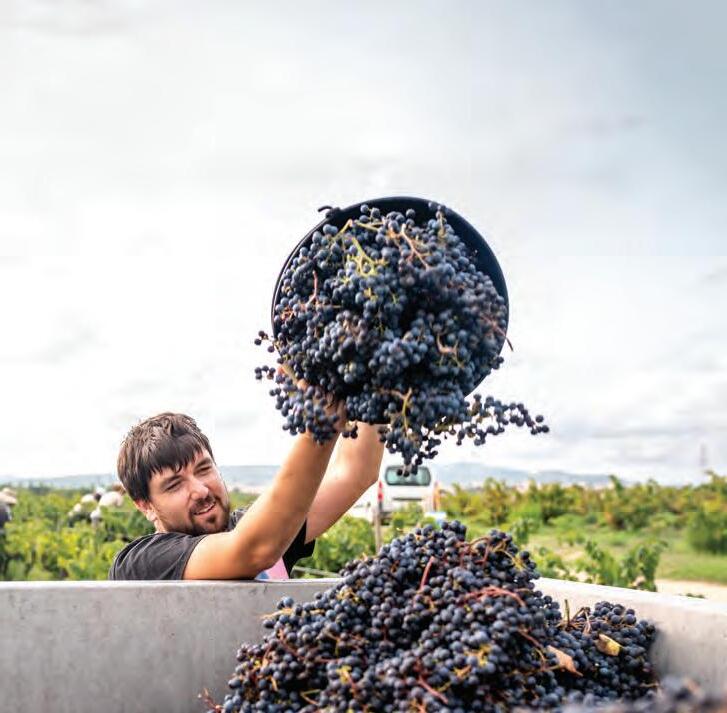

judges were fellow New Zealander Liz Wheldon of Normanby Cellars, along with Masters of Wine from Australia, the UK and Europe. One of the most striking differences between New Zealand wine shows and the Japan Wine Challenge is the professional makeup of the judging panels. In New Zealand, most judges come from a winemaking background. In Japan, only two of us were winemakers, with the majority of judges local sommeliers, wine importers and retailers, representing everything from major hospitality groups to small family-owned restaurants and specialist wine businesses.
Almost all had completed WSET qualifications and approached the task with focus and discipline. My role was often to encourage judges to trust their instincts, apply the judging scale confidently and identify those wines that truly stood out from the field. Their perspective was also refreshingly different from my own. Many of the Japanese judges viewed wines through the lens of their customers: how a wine would perform in the market, how it would pair with food and whether it suited Japanese dining culture.
“Many of the Japanese judges viewed wines through the lens of their customers: how a wine would perform in the market, how it would pair with food and whether it suited Japanese dining culture.”
Jane Cooper
For New Zealand producers with wines available in Japan, I would strongly recommend entering the competition. The Japan Wine Challenge enjoys considerable credibility within the local trade, and importers, retailers and sommeliers pay close attention to the results. This is incredibly important in a country where reputation is everything.
I was also invited to present a masterclass on New Zealand wine. One year I chose to highlight two smaller and less familiar stories by featuring Valli’s Waitaki Pinot Noir alongside my own experience producing méthode traditionnelle blanc de blancs in Wairarapa. It was an opportunity to showcase the diversity and regional character that New Zealand wine can offer beyond its more established categories.
After the final day of judging, I was asked to participate in the sake judging. I use the word ‘judge’ somewhat loosely, as I suspect my scores were politely set aside by the sake experts! The breadth of styles, textures and flavours found in sake is every bit as diverse as wine, and observing experienced sake judges at work was a fascinating experience.
For me, participating in a major international wine competition is about much more than awarding medals. It is an opportunity to broaden my perspective, deepen my judging experience and taste an extraordinary range of wines from around the world. On any given day, I might move from evaluating Grand Cru Champagne to Assyrtiko from Greece and then on to Nebbiolo from Mexico. Few experiences offer such a remarkable snapshot of the global wine landscape.
To enter go to japanwinechallenge.com/how-to-enter/entry-form.
Jane Cooper is the winemaker/owner of Alexia Urban Winery in Greytown, Wairarapa and Chair of Judges of The National Wine Awards of Aotearoa New Zealand.


Still the best value Cloud-based irrigation & fertigation management system available. Control up to 24 valves & 4 fertigation channels


The most advanced Cloud-based controller for horticulture & viticulture.
Fully scalable control architecture for large and complex requirements
To find your local dealer contact Water Supply Products: Auckland: 09-916 0094 Christchurch: 03-348 1293 wsp@watersupply.co.nz www.watersupply.co.nz
What’s been going on?
El Niño has arrived, with global temperatures spiking around the world. Summer-like conditions returned to much of New Zealand on 20 June, with temperatures exceeding 25C in several locations around Canterbury. Significantly warmer than average sea surface temperatures (SSTs) have helped drive several low pressure systems forming near New Zealand and one in early July brought significant rain and flooding to Wairarapa and North Canterbury, flying in the face of what a traditional El Niño might bring. The strongest phase of this El Niño is yet to arrive, and previous ‘Super’ El Niño events provide useful historical context when looking ahead.
Milder than average SSTs have continued to contribute to higher-than-average rainfall across much of the country. A global increase in temperature of 1.6C is
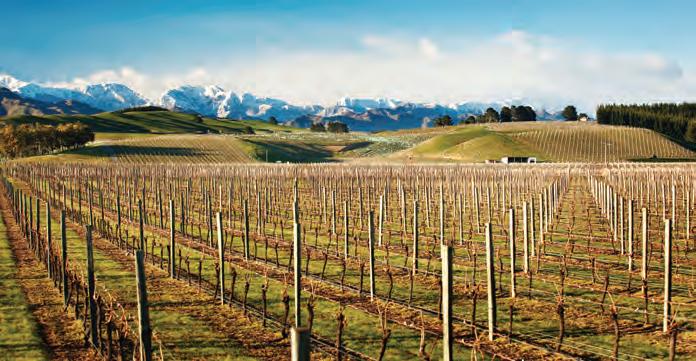
Niño may become the strongest recorded, other climate drivers such as the MaddenJulian Oscillation, Indian Ocean Dipole and Southern Annular Mode will all have some bearing on spring and summer.
SSTs are currently up to 2C above average around New Zealand and may move closer to average through spring and into early summer as an increased westerly flow drives a large fetch of cooler water from the Southern Ocean between Australia and Antarctica. This could repress the possibility of low pressure development in the Tasman Sea. The airmasses reaching New Zealand could also be cooler, making temperatures more changeable and closer to average. The Foehn effect created by the
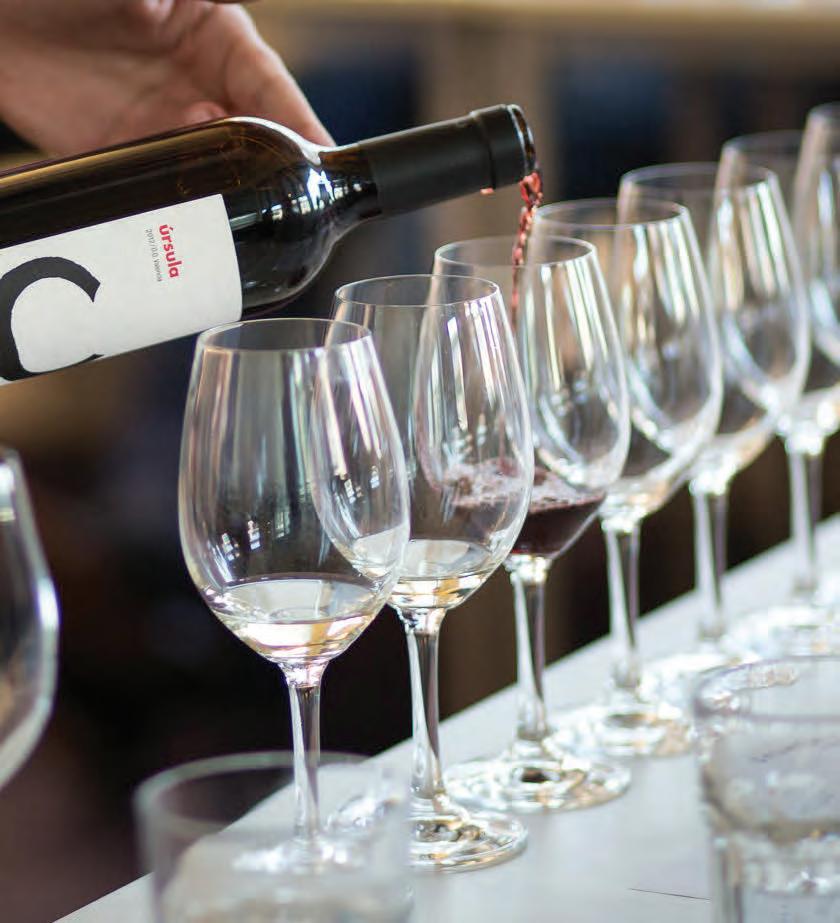
Southern Alps will still lead to mild days in the east, especially about North Canterbury and southern Marlborough where the effects will be most pronounced.
Will it be frostier this spring?
Traditionally there is greater potential for frost along the east coast of New Zealand under a persistent westerly flow. If the flow is particularly strong and the airmass quite cold, there is potential for larger-scale drifts, such as the Wairau Valley drift, to become weaker or develop later in the night. A strong synoptic flow can push milder air into the upper valleys and hillsides of areas with complex terrain and this can disrupt or delay the development of katabatic drifts.



Upper valleys can remain milder with a steady breeze, and lowlying areas may become colder.
One advantage to a stronger synoptic flow over a region is that inversions can be stronger on the plains, due in part to cold air being denser and sinking to the lowest points or being trapped by obstructions such as shelterbelts. The milder air remains several metres above the surface and would require the flow to become significant in order to push down far enough to reach the plains or valley floor. Stronger inversions will make frost fans and helicopters a more effective option for fighting frost.
Unfortunately, there are no certainties and there are also several complications to spring with a strong westerly flow. As stated earlier, there is a possibility that the air will become cooler and drier through spring, as sea temperatures may warm more slowly than normal. Very unstable air can weaken inversions through a combination of high humidity and strong mixing between the upper atmosphere and surface. Another factor is the timing of fronts and ridges of high pressure. When a westerly flow becomes entrenched over us, the ridging that follows fronts is often weak or the ridges collapse quickly. This can be beneficial when fighting frost. But if the westerly or north westerly quickly returns, it can make forecasting challenging.
Gisborne/Hawke’s Bay – Temperatures are likely to become milder during the day during August with northwesterlies becoming more frequent. Nights will still be cool with light frosts unless the flow becomes particularly strong. The mean temperature is likely to be close to average and rainfall is likely to fall below average as spring progresses.
Wairarapa – Temperatures should run close to average but there will be periods of cool nights and frost if the timing of incoming ridges aligns. As conditions become windier, it may become cloudier about northern Wairarapa and the diurnal range between maximum and minimum temperatures will reduce. Rainfall should run near or below average. Some spillover rain from the Tararuas will affect areas north of Masterton. Wind could become a real talking point as there is an increased risk of northwest gales from September onwards.
Nelson – The weather could go either way with Nelson. A stronger northwest flow that tends northerly as fronts approach is the best chance of rain for the region. A more west to southwest flow is likely to make the region drier and more prone to frosts about the valley floors and sheltered areas. Temperatures are likely to run close to average.
Marlborough/North Canterbury – Temperatures could run above average, due to the increased frequency of westerlies and northwesterlies, and 20C days should be more numerous. There will be quite sharp cool changes as fronts cross the South Island from the west. There will be an increased risk of frost when the timing of incoming ridges aligns. Rainfall is expected to run below average from August onwards.
Central Otago – Central Otago could be milder with a northwest flow. The big ‘but’ will be if the flow becomes strongly aligned to the west or southwest. This is likely to drive the coolest airmasses over the lower South Island through spring, making things very windy at times and with temperatures fluctuating between near or below average. There is a risk of, with weak inversions, frost right through spring if the west to southwest flow becomes unstable.
James Morrison runs Weatherstation Frost Forecasting: weatherstation.net.nz
don’t cut it!
New Katana® takes out weeds including resistant ryegrass for longer
Glyphosate resistant ryegrass has met its match. Katana, the new residual herbicide, provides weed control for up to 5 months. With Katana you’re sorted.


Taking NZ wine to the world: Bringing the world to NZ wine
Advocacy on matters of vital importance to the industry
Kate Bennett
2026 Dual Class Director’s Election
Nominations are now open for New Zealand Winegrowers’ 2026 Dual Class Director’s Election.
The Board is responsible for governing NZW and setting the strategic direction of your national industry body. There is still time to stand for election if you want to help shape how NZW represents industry interests and how levy funds are allocated.
Importantly, all successful candidates elected will also serve as directors of other entities associated with NZW. This includes, for the first time, the Bragato Research Institute, which plays a vital role in advancing innovation and research across our industry. Who is eligible to run?
All eligible Members can stand for election. You are an eligible Member if you:
• are a Member or a Member Representative; and
• are not disqualified from being an officer under the NZW Rules.
A Member Representative is a single individual appointed by a Member under the NZW Rules. This person must be a natural person (not a company, trust, or joint appointment) and must qualify as an Associated Person of that Member. They do not need to be an employee of the Member.
NZW maintains a register of Members and details of Member Representatives. If you are unsure who represents your organisation, contact hannah@nzwine.com.
On 25 June 2026, the New Zealand Winegrowers Board set the following levy rates for the year 1 July 2026 to 30 June 2027.
Wine levy
The levy rate to apply to sales of grape wine is 3.21 cents plus GST per litre.
Grape levy
The levy rate on winegrapes from vintage 2027 is to be set at the rate of 0.935% as follows:
(a) if sold by or on behalf of the grower, 0.935% of the farm-gate

Directors should be committed to the future of the industry and willing to contribute their skills, experience, and perspectives. They must work collaboratively for the benefit of the industry as a whole, rather than representing individual interests.
While not mandatory, governance experience (or a willingness to develop it) is encouraged. Candidates with strong financial and strategic thinking skills are also encouraged to apply. How do I nominate a candidate? Candidates must be nominated by another NZW Member (self-nominations are not permitted).
Nominations can be submitted via:
• t he online form, or
• a completed PDF form emailed back. To be valid, the nomination must:
• b e signed by both the nominator and the candidate; and
• clearly specify the election category (Member Class or Levy Class –
candidates cannot stand in both). If using the online form, the candidate will receive an email to forward to their nominator for completion.
The Returning Officer (electionz) will confirm receipt of nominations. All nominations must be correctly completed before the closing date. As extensions are not possible, early submission is recommended. Candidates are responsible for ensuring their nomination is complete and received on time. I have more questions, where should I go?
If you have any questions about the election, please contact the NZW Advocacy Team at advocacy@nzwine.com. The ‘Dual Class Directors Election 2026’ page will also be regularly updated – find this on the NZW members website under ‘Governance’ (a subsection of ‘About Us’).
Kate Bennett is Legal Counsel at New Zealand Winegrowers
Nominations open
Nominations close
Members advised of candidates
8 July, 10am
14 August, 12 noon
14 September, 10am
Voting closes (with results announced promptly after) Friday 25 September, 12 noon
price plus GST;
(b) if exported by or on behalf of the grower, 0.935% of the free on-board value plus GST;
(c) if made into grape juice or grape juice concentrate, 0.935% of the notional price of the grapes plus GST. In the case of (c), the notional price of winegrapes made into grape juice or grape juice concentrate for the year 2027 vintage will be: the 75% quartile price for the region and variety concerned as determined from the previous vintage listed in the last published version of the New Zealand Winegrowers grape price data for the
previous vintage (“Last Grape Price Data”).
In the event that there are no listings of the variety and region concerned in the Last Grape Price Data, the notional price will be the 75% quartile price for New Zealand for the variety concerned, as determined by the previous vintage listed in the Last Grape Price Data.
These rates are set by NZW pursuant to clause 9(1) of the Wine (Grape Wine Levy) Order 2022 and clause 11(1) of the Commodity Levies (Winegrapes) Order 2022. If you have any questions, please contact our Advocacy team at advocacy@nzwine.com.
the places that make our famous wines
Tim Towers
Strengthening Biosecurity Awareness
August marks Biosecurity Awareness Month, a nationwide initiative led by the Biosecurity Business Pledge and supported by NZW. This campaign provides a coordinated platform for businesses across New Zealand to highlight the importance of biosecurity and promote positive behaviours among staff, customers and the wider community.
“A key message for Biosecurity Awareness Month is that biosecurity should be integrated into everyday vineyard and winery operations.”
Tim Towers
The 2026 campaign theme, ‘Biosecurity – Everybody’s Business’, reflects the central principle of the Pledge: that protecting New Zealand’s environment and economy is a shared responsibility across all sectors. NZW’s approach is to focus on clear, actionable messaging that supports day-to-day decision-making in vineyards and wineries. This includes promoting best practice hygiene, encouraging early detection and reporting of unusual pests or diseases, and ensuring growers have access to up-to-date resources.
NZW continues to support members through practical tools such as biosecurity planning templates for vineyards, factsheets, and guidance material, which can be used to educate staff, contractors and visitors.
A key message for Biosecurity Awareness Month is that biosecurity can be integrated into everyday vineyard and winery operations. The Pledge provides a practical framework to help businesses understand and manage biosecurity risks, while fostering a culture of continuous improvement and shared responsibility. During August, members are encouraged to make use of the Pledge’s free resources at bbpledge.nz, including posters, training materials, quizzes, guidance for Boards
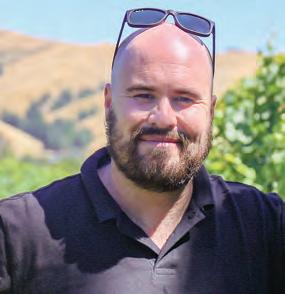
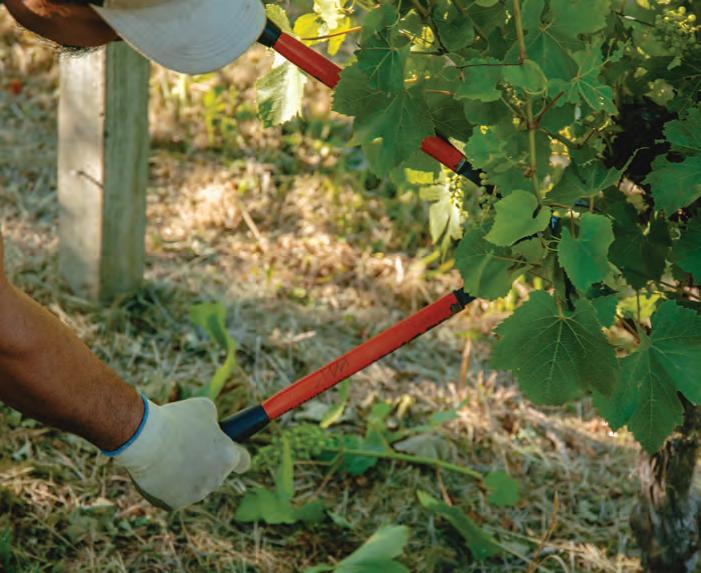
and CEOs, and social media content, to promote biosecurity messages within their organisations and networks.
Collaboration and shared responsibility
A key strength of both NZW’s work and the Biosecurity Business Pledge is the emphasis on collaboration. The Pledge brings together over 150 businesses from across the economy to share knowledge, tools and experiences, helping to strengthen New Zealand’s overall biosecurity system.
For the wine sector, this collaborative approach supports stronger connections with partner organisations, government agencies and other primary industries. It also ensures that biosecurity messaging remains consistent, coordinated and relevant, even across different contexts.
The relationships built under the Pledge utilise a modern and member-focused approach. This design ensures that biosecurity remains effective, approachable and easy to incorporate day-to-day.
By aligning industry-specific initiatives with national campaigns such as Biosecurity
Awareness Month, NZW is able to amplify key messages and ensure they reach a wider audience. This not only raises awareness but also encourages practical action at every level of the supply chain.
Turning awareness into action
Ultimately, the success of these campaigns depends on translating awareness into everyday practice. Whether it is checking vehicles and equipment for soil and plant material, reporting unusual symptoms in vines, or ensuring staff and contractors are informed about biosecurity requirements, small actions can collectively make a significant difference.
As the wine industry continues to face increasing biosecurity risks, maintaining a strong culture of awareness and vigilence is essential. Together, pledge members can reinforce a simple but powerful message: biosecurity is everybody’s business, and everyone has a role to play in protecting New Zealand’s vineyards and wider environment.
Tim Towers is the NZW Biosecurity Advisor
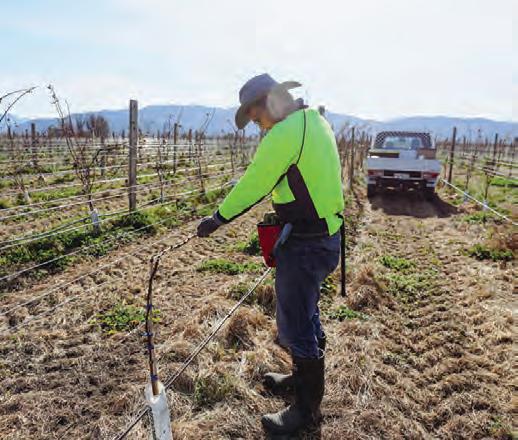
Bragato Research Institute leads quality research and innovation that enables the New Zealand wine industry to thrive. This regular feature informs and updates the wine industry on research projects being undertaken for its benefit. When completed, each project report will be shared in full detail in the Research Library on nzwine.com.
BRI conducts research in-house and collaborates with other research organisations. The main research provider for each project is listed below. Updates are provided on the highlighted projects in this supplement.
Vineyard innovation
Next Generation Viticulture Programme
Bragato Research Institute
Evaluation of the short-term impact of remedial surgery on grapevine trunk disease and vineyard sustainability
Linnaeus, SARDI, Sutton McCarthy
Rapid early detection of powdery mildew using VOCs to enable better control solutions
Scentian Bio
Elemental sulphur persistence on grapes and mitigation strategies
Lincoln University
Increasing financial sustainability of Chardonnay in Hawke’s Bay through long spur pruning
Eastern Institute of Technology
Long spur pruning as an alternative for Marlborough Sauvignon Blanc
Bragato Research Institute
Powdery mildew spore trapping as a decision support tool for early season fungicide applications
Thoughtful Viticulture
Grapevine improvement
Sauvignon Blanc Grapevine Improvement Programme
Bragato Research Institute, Bioeconomy Science Institute, Lincoln University
Graft-derived drought tolerance: identifying and functionally characterising grafttransmitted elements
Bragato Research Institute
RNAi Virus Relief
Bragato Research Institute
Incorporating genetics and epigenetics into the Central Otago Pinot Noir trial
Bragato Research Institute
Alternate strategies for GLRaV3 management
Bragato Research Institute
Winemaking innovation
Exploring reductive aromas in Pinot Noir
University of Auckland
Single Vine Wine
Bioeconomy Science Institute
Assessing the effectiveness of winemaking ingredients for the production of no and low alcohol wines
Bragato Research Institute
AI-driven protein design to address winemaking challenges
Victoria University of Wellington
Sustainable winegrowing
Carbon Calculator
Bragato Research Institute
Evaluating water use efficiency and drought tolerance of various rootstocks
Bragato Research Institute
Insect frass in viticulture – Assessing the potential of a circular solution
Bioeconomy Science Institute
Engineered containment solutions for safe temporary storage of grape marc
Bragato Research Institute
Waste to treasure: using novel chemistry to valorise residual plant material
University of Auckland
Low carbon and environmental impact export packaging pathways for New Zealand wine
Planetary Accounting Network

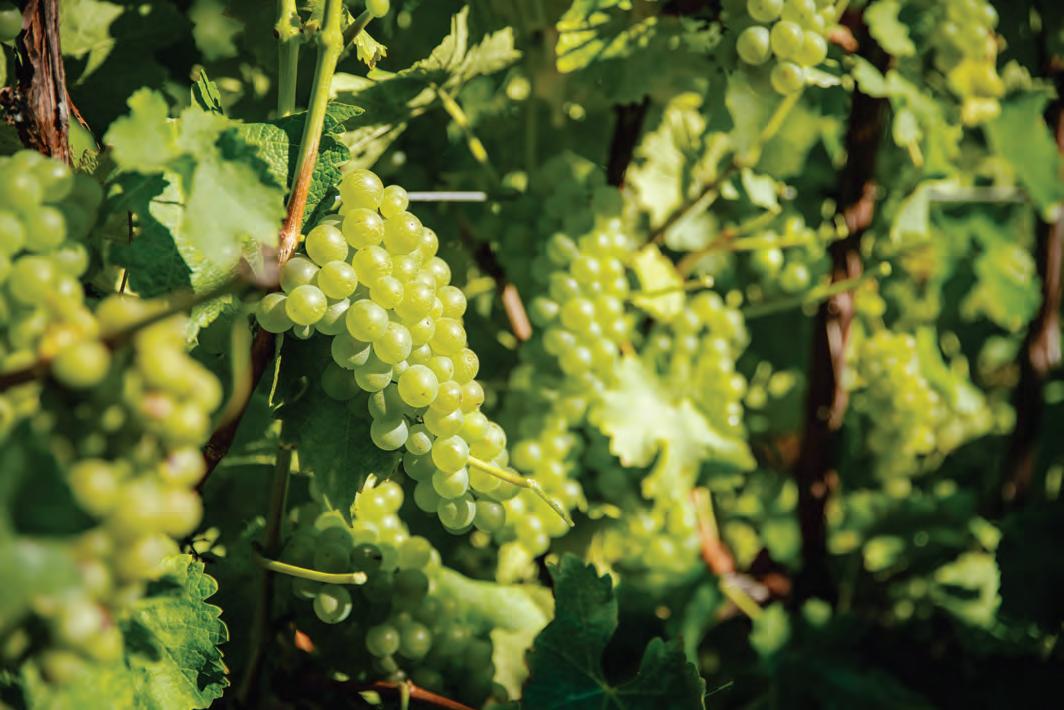
Paul Epee, Bragato Research Institute
January 2025 marked the beginning of the first Next Generation Viticulture Programme vintage. NGV prioritises safeguarding the premium wine quality for which New Zealand is renowned, while supporting vineyard profitability through innovative, efficient canopy systems that reduce vineyard operational costs. The programme investigates the performance of three novel canopy systems: six vertical cordons with 1.8 metre vine spacing (6V), nine vertical cordons with 2.7m vine spacing (9V), and 12 vertical cordons with 3.6m vine spacing (12V). These are compared with the control or commercial standard in the vineyard block (pruned vines of 2-, 3-, or 4-cane). A previous article (Issue 157) illustrated these canopy systems and presented
results of their vineyard performances during the 2024-25 growing season.
In short, the new canopy systems encouraged early-season canopy development and reduced shoot vigour, resulting in relatively less dense canopies. This means that with the new canopy systems, fewer passes for trimming and leaf plucking might
be needed. Sugar accumulation was not compromised in the 6V system, indicating that grapevines can ripen the same quantity of grapes with less leaf area than they currently do on cane-pruned vines.
This article presents key results from the 2025 vintage (with some insights
• The 6V canopy system retained wine quality while delivering viticultural benefits such as reduced vigour, a key contributor to lowering canopy management costs.
• Juice and wine chemical composition (sugar, acidity, malic acid, and pH) were similar for 6V and the control over both vintages.
• YAN was lower, and fermentation was slower on 6V than the control in the 2025 vintage, but in the 2026 vintage, they were similar.
• In the 2025 vintage, 6V and control wines had similar sensory perception, despite 6V wines showing lower methoxypyrazine and thiol levels.
• Sauvignon Blanc typicity was similar across both treatments.
into the current 2026 vintage), from winemaking to the sensory evaluation of wines from the NGV trial sites. To maintain consistency with the previous article and for simplicity, only data from two sites are shown: the Paul’s Road Whitehaven site, referred to as Rapaura, and the Indevin Toi Downs site, referred to as Awatere. Both sites were planted with Sauvignon Blanc. Since the 9V and 12V systems are not yet fully developed, their performance is not presented.
Sugar and YAN were lower in the new canopy system in the 2025 vintage, but these results improved in the following year
Juice from control grapes had the highest sugar concentration (Table 1) because control vines had a higher leaf area to fruit mass ratio. In most cases, the difference in sugar concentration between 6V and control was less than 1.5 Brix. For example, at the Rapaura site, the control and 6V were harvested the same day and were only 0.7 Brix apart. The same trend occurred at the Awatere site with 6V, where the ripening period was extended by 12 days to achieve the same sugar level as the control (Table 1). Earlier in the 2025 vintage, it was decided not to adjust the crop level to allow the new canopy systems to express their potential under a high-cropping scenario. Interestingly, in this 2026 vintage, yields were moderate, allowing new canopy systems to reach similar sugar concentrations at almost the same time (Table 1). This means that in high-cropping years, fruit thinning might be required to ensure adequate sugar accumulation with the new canopy systems.
At most sites, titratable acidity (TA) was highest in control juice when control grapes were harvested earlier than the other treatments, including at Awatere (Table 2). Where control and 6V were harvested on the same day, as at Rapaura, TA was similar. At some sites, TA was comparable across treatments regardless of harvest date. Malic acid showed the same pattern:
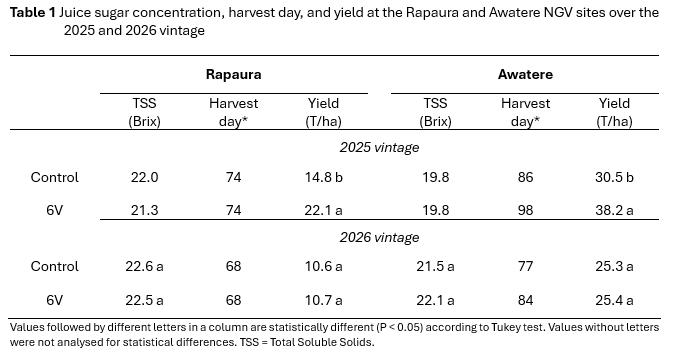
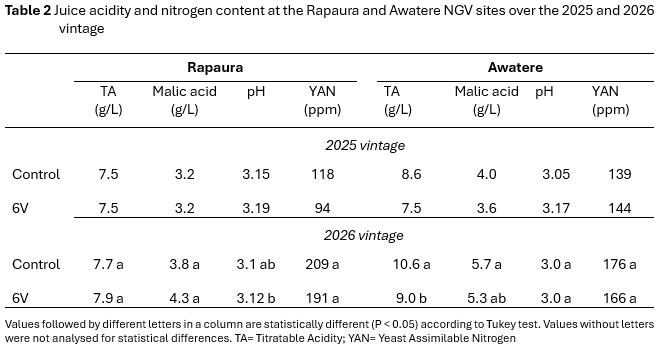
concentrations were generally higher in the control and lower in laterharvested treatments, but similar when treatments were harvested on the same day (Table 2).
YAN was higher in the control juice and lower in 6V, with the decrease most pronounced at the site with the highest yields and least pronounced at lower-yield sites, such as Rapaura (Table 2). At Awatere, however, YAN was slightly higher in 6V (Table 2). Apart from this exception, the new canopy systems generally had lower YAN. In the 2026 vintage, with a relatively lower crop, YAN levels improved markedly in NGV canopy systems compared to 2025, confirming an assumption that the high crop levels diluted grape nitrogen. However, it is also possible that the NGV vines are gradually adapting and adjusting to their new physiological state.
Generally, fermentation was faster for control wines, and no relationship was found between fermentation duration and initial juice sugar concentration. However, lower YAN concentrations may have led to longer fermentations.
Wine chemical composition was similar for control and 6V in most sites
Alcohol was generally higher in control wines, following the same trend as juice sugar. Glycerol levels were stable across treatments and trial sites, ranging from 5.0 to 7.0 g/L. Wine pH varied little between treatments. At some sites, such as Rapaura and Awatere, wine TA was highest in the control. Volatile acidity remained at very low concentrations, never exceeding 0.3 g/L.
Most thiolic compounds (3MH and 3MHA) were highest in control wines, except at one site, where all three
thiols were highest in 6V. However, 4MMP had statistically similar concentrations in both treatment wines at three sites (including Rapaura). For the Awatere site, 4MMP was highest in the control (Table 3).
Methoxypyrazines were detected in higher concentrations in control wines (Table 3). Of the three methoxypyrazines, IBMP was detected at all sites and in all treatment wines, whereas SBMP was detected only in the Awatere wine (Table 3 note). As with YAN, it is hypothesised that the high crop level might have diluted the concentration and development of these aromatic compounds. Interestingly, though, the differences in methoxypyrazine and thiol concentrations did not always stand out in the sensory perception.
Sauvignon Blanc wine quality was preserved in the 6V canopy system At the Rapaura site, all sensory attributes were statistically similar for both wine treatments, except for “stone fruit”, which was rated higher on the control (Figure 1-A). Although the control wine was rated slightly higher for typicity, it did not differ statistically from 6V (Figure 2-A).
The control wine from the Awatere site had more thiolic and greener characters than the 6V wine, whereas the 6V wine scored higher for floral aromas and balance (Figure 1-B). The typicity score of the 6V wine was similar to that of the control (Figure 2-B). In addition to the Rapaura and Awatere wines, 6V and the control wines were rated equally for typicity at two other sites.
Despite minor differences in their individual sensory attributes, both wines (control and 6V) had similar overall sensory profiles. These results show that the 6V canopy system – the only one of the three that had reached full canopy development – maintained Sauvignon Blanc quality.
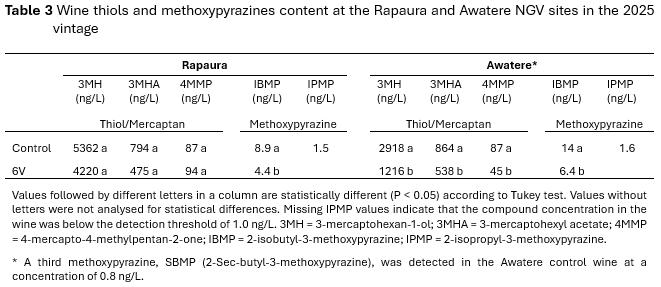
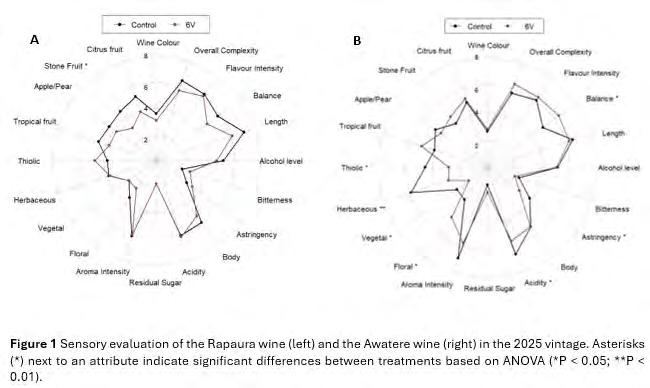
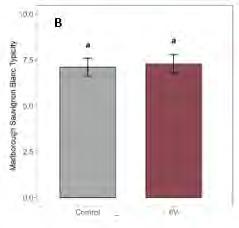
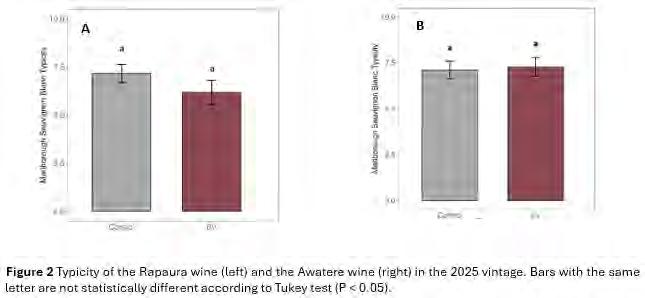
The 6V canopy system produced fruit with lower YAN levels and slower fermentation rates, likely due to heavy crop levels in the 2025 vintage; however, in the 2026 vintage, YAN levels were comparable to the control. Although 6V wines showed generally lower methoxypyrazine and thiol levels than the control, other metabolites remained comparable. Importantly, higher methoxypyrazine and thiol concentrations did not always translate into a more intense ‘green/
herbaceous’ and ‘tropical/fruity’ aroma perception. The 6V and control wines performed similarly in sensory and typicity evaluations, confirming that this new canopy architecture may offer viticultural benefits without detriment to wine quality.
This article was technically reviewed by Dr Stuart Tustin, NGV Science Advisor; Patrick Materman, Indevin Group; Steve Ross, Whitehaven Wine Company.
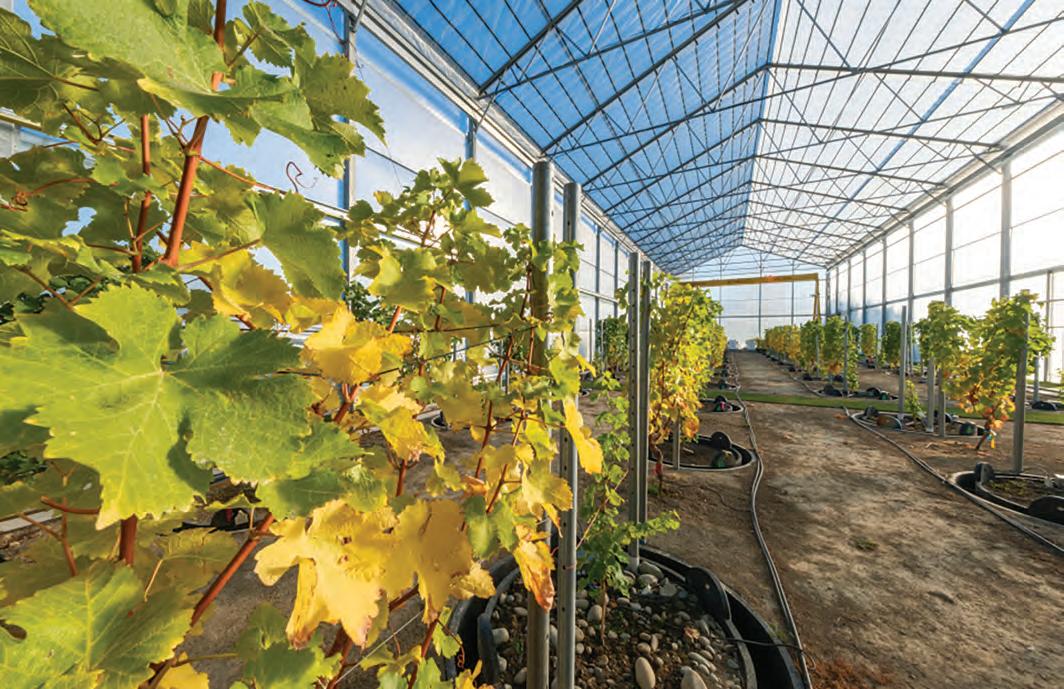
There is a growing focus across the wine industry on reducing waste and improving sustainability. In Marlborough alone, tens of thousands of tonnes of organic by-products, such as grape marc and wine lees, are generated each year. While much of this material is returned to land, a portion still ends up in landfill, carrying both environmental and economic costs.
One emerging solution lies in an unlikely place: insect frass. The byproduct of insect rearing, frass is a mixture of insect excreta, undigested feed and shed exoskeletons. In a circular system, organic waste streams are fed to insects such as mealworms or black soldier fly larvae. The insects convert this waste into protein-rich biomass, valuable for animal feed, and frass, which can potentially be returned to the soil as a fertiliser or soil amendment.
A recent experiment conducted by scientists at the Bioeconomy Science Institute Maiangi Taiao at Te Whenua Tupu the Living Lab, and funded by Bragato Research Institute and Marlborough Research Centre, set out to explore whether frass derived from wine industry waste could play a meaningful role in viticulture. The results provide early but interesting insights into how this material behaves in vineyard soils, and where it might fit in future nutrient management strategies.
Closing the loop in Marlborough Marlborough produces large volumes of grape marc; around 82,000 tonnes annually from the 2025 harvest alone, as well as wine lees and, from aquaculture, mussel shells. While much of this material is spread on land, a portion is still sent to landfill, carrying both environmental costs and lost nutrient value.
Insect bioconversion offers a circular pathway to retain these nutrients within the region. In the Living Lab study, mealworms were fed a diet composed of grape marc, wine lees and crushed mussel shells. The resulting frass therefore represents a concentrated form of nutrients that originated within the region’s wine and seafood industries.
From a sustainability perspective, there is a clear appeal. Rather than exporting waste or the nutrients it contains to landfill, frass allows those nutrients to be returned to vineyard soils. This reduces dependence on imported fertilisers, particularly phosphorus, which is a finite resource, while avoiding greenhouse gas emissions associated with landfill disposal. However, the question remains whether frass behaves in a useful and predictable way in vineyard soil.
Is frass useful in vineyard soil?
To address this, researchers established a controlled lysimeter experiment using a sandy soil (Classification: Selwyn), representative of drought-prone vineyard soils in Marlborough. The study examined two main variables: how much frass was applied, and how it was applied.
Frass was tested at two relatively high rates, equivalent to approximately 15 and 30 tonnes per hectare, and applied either to the soil surface or incorporated into the top 5 cm. Soil cores were then monitored over six months to track changes in nutrient availability and water-holding capacity
While these application rates exceed what would typically be used in mature vineyards, they provide useful boundary conditions to understand how frass behaves in soil systems.
A nutrient-rich amendment
Frass is a concentrated source of plant nutrients. Compared with many organic amendments, it contains relatively high levels of nitrogen, phosphorus, potassium, calcium and sulphur. Therefore, adding frass to soil significantly increased the concentrations of these nutrients.
Frass acted as a slow-release nitrogen source, maintaining elevated levels of plant-available nitrogen over the six months. Even after this time, around two-thirds of the potentially mineralisable nitrogen remained in the soil, indicating a sustained supply beyond the duration of the experiment.
This slow-release behaviour is particularly relevant for perennial systems such as vineyards, where a steady nutrient supply is often preferable to the peaks and troughs associated with soluble fertilisers. In principle, frass could reduce the need for multiple fertiliser applications across the growing season.
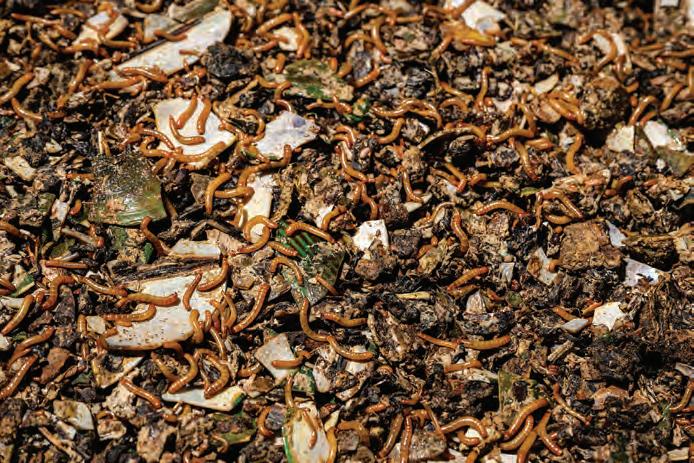
Phosphorus levels also increased significantly, and consistent with its behaviour in soil, remained relatively stable over time. Other nutrients, including potassium and calcium, increased initially but declined gradually, likely due to leaching under the experimental conditions.
For growers, the key point is not just that frass supplies nutrients, but that it supplies them in a form and timeframe that may align with plant demand.
Application method matters
In vineyard systems, surface application is often preferred to avoid root disturbance. However, the experiment showed that surfaceapplied frass resulted in lower levels of mineral nitrogen compared with incorporated treatments. This suggests that nitrogen losses, likely through ammonia volatilisation, were higher when frass was left on the soil surface.
In contrast, incorporating frass into the soil helped retain more nitrogen, leading to higher nutrient availability over time. Incorporation into the soil is beneficial for nutrient retention, requiring shallow cultivation or the use of star tillers/finger weeders when applied under vine. Surface application, while operationally simpler, may be less efficient in terms of nitrogen use.
Where incorporation is possible, such as during vineyard establishment or replanting, it may enhance the value of frass as a nutrient source. In established blocks, alternative strategies may be needed to optimise its use, such as timing applications to minimise losses or integrating it with other soil management practices.
Water holding potential is complex
Beyond nutrients, the study also explored whether frass could improve soil water-holding capacity; a relevant question for Marlborough’s freedraining soils.
Initially, adding frass increased the total amount of water the soil could hold when saturated, but did not significantly change water content at field capacity. In some cases, higher application rates even appeared to reduce plant-available water, because more water was held tightly and thus unavailable to plants.
However, after three to six months, soils treated with higher rates of frass held more water at field capacity, suggesting a potential improvement in water storage as the material decomposed and interacted with the soil.
It is important to note that these results come from a controlled system without plant roots or soil fauna,
both of which play critical roles in soil structure under field conditions. As such, the real-world effects on vineyard soils may differ, potentially in positive ways as the organic matter in frass contributes to aggregation and pore structure.
The amounts of frass used in the experiment delivered very high nutrient loadings. At the higher rate, frass supplied several hundred kilograms of potentially available nitrogen per hectare, far exceeding the requirements of mature grapevines, which typically need only modest nitrogen inputs.
This reinforces the principle that more is not necessarily better. In practice, frass would need to be applied at much lower rates in vineyards, calibrated to match vine demand and avoid excessive nutrient accumulation or leaching.
The study highlights the importance of developing application guidelines
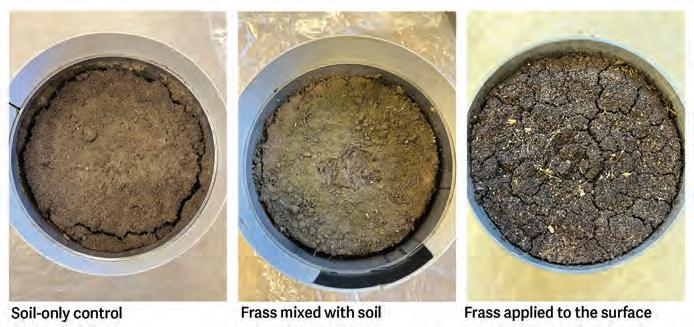
through field trials, where plant uptake, soil processes and environmental conditions can all be taken into account.
As with many emerging amendments, the promise of frass comes with a degree of uncertainty. Lysimeter studies provide valuable controlled insights, but field validation is essential.
Future work will need to answer several practical questions. What are the optimal application rates for different
A three-year PhD project at the University of Auckland, in collaboration with Bragato Research Institute, has unpicked the complex web of factors behind reductive off-aromas in New Zealand Pinot Noir. The findings have some practical implications for how winemakers think about vineyard inputs, cellar decisions, and even closure strategy.
Reductive off-flavours are a persistent and complex challenge for New Zealand Pinot Noir producers. Volatile sulphur compounds (VSCs), compounds responsible for aromas
such as rotten egg, onion and struck match, have a very low sensory threshold, which means even small changes in their concentration can create a wine that is considered faulty. The question of why some wines become reductive and others don’t has been difficult to answer, as the chemistry involved is complex and involves a shifting interplay of vineyard inputs, yeast metabolism, fermentation conditions, and what happens to the wine long after it’s bottled.
A recently completed University of Auckland PhD project by Sukhpreet
vineyard stages? How does frass interact with cover crops, irrigation and existing fertiliser programmes? What are the longer-term effects on soil biology and structure? And critically, how consistent is frass composition if the insects are fed different waste streams?
As the wine industry continues to focus on sustainability and resource efficiency, solutions that close nutrient loops and reduce waste are likely to gain traction.
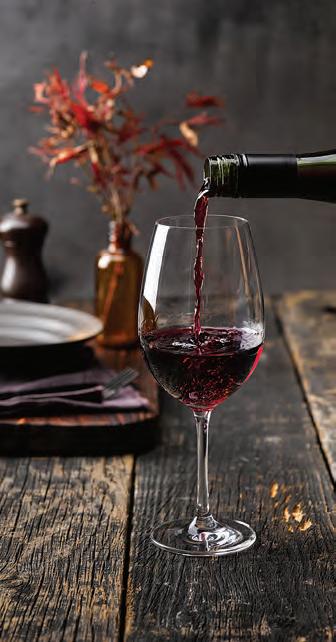
Kaur Gill and supervised by Dr Rebecca Jelley, Dr Jennifer Muhl, Dr Rebecca Deed, and Professor Bruno Fedrizzi, set out to investigate those interactions. Over three vintages (2022-24), wines were made at BRI’s Research Winery under controlled conditions and then subjected to accelerated ageing. The compounds tracked included a broad suite of VSCs, dimethyl sulphide (DMS), ethanethiol (EtSH), carbon disulphide (CS2), methanethiol (MeSH), diethyl disulphide (DEDS), and benzothiazole (BZ), as well as varietal thiols, methoxypyrazines, esters, amino acids, and polysulfides.
Monitor elemental sulphur early Elemental sulphur (S0) is used widely in New Zealand vineyards as a fungicide against powdery mildew, and it is well known that residues left on fruit at harvest can serve as a precursor to VSCs during fermentation.
Across three years of the study, elemental sulphur was the most consistent and consequential variable. High elemental sulphur additions drove significantly elevated concentrations of CS2 and DMS during ageing. In the lab, high sulphur additions led to significantly higher concentrations of glutathione polysulfide compounds. These molecules could be latent precursors of VSCs, capable of degrading to release sulphurcontaining off-aromas long after the wine has been bottled. Wines made with high elemental sulphur also showed markedly lower residual copper concentrations in the finished wine, most likely because copper was being tied up in complex formation with H2S produced during fermentation.
For New Zealand Pinot Noir producers, it is important to treat elemental sulphur as a wine-quality risk as well as a vineyard disease-control tool. The timing of sulphur sprays in the vineyard matters, as applications made close to harvest can leave more residual sulphur on the fruit,
which feeds directly into fermentation chemistry. Where powdery mildew pressure demands late-season applications, it’s worth considering the risk to the wine’s reductive trajectory and implementing appropriate mitigation strategies, particularly in wines intended for bottle ageing.
Nitrogen availability during fermentation is known to influence H2S production, as yeast under nitrogen stress tends to release H2S as a by-product of sulphur amino acid metabolism.
In the trial wines, neither nitrogen level nor the timing of SO2 addition (precrush versus post-crush) produced consistent and significant differences in VSC concentrations. However, the interaction between these variables and elemental sulphur level was significant for a range of compounds, including ethyl phenylacetate, phenylethyl alcohol, isoamyl acetate, benzyl alcohol, and BZ.
This suggests that managing nitrogen status in the juice or must isn’t just about ensuring fermentation health; it may also be about limiting the synergistic effect that high nitrogen can have in the presence of residual elemental sulphur. The implication for winemakers is that YAN monitoring and supplementation strategies should probably be considered alongside, rather than in isolation from, any assessment of vineyard sulphur inputs.
Optimise whole bunch inclusion
In 2023, whole bunch inclusion was added to the winemaking protocol, at 0%, 25%, and 75% of the fermentation weight. As expected, whole bunch inclusion significantly increased concentrations of stem-derived compounds. Both IBMP and IPMP, the methoxypyrazines associated with green, herbaceous, and earthy characters, increased with the proportion of whole bunches added, which is consistent with published
literature. It’s a trade-off that whole bunch advocates generally accept, stem inclusion adds complexity, but green notes come along for the ride.
What’s perhaps less anticipated is the potential connection between whole bunch inclusion, elemental sulphur, and nitrogen on VSC formation. Wines made with 75% whole bunches, under conditions of both high elemental sulphur and high nitrogen, showed significantly elevated concentrations of EtSH (ethanethiol) and DEDS (diethyl disulphide) — both of which carry onion and cooked cabbage characters at elevated concentrations. Methionol (cooked potato/cauliflower) was also affected by whole bunch inclusion, though in a somewhat more complex pattern depending on elemental sulphur level.
For Pinot Noir producers who favour whole bunch fermentation for structural and aromatic reasons, this research shows that the complexity comes with an elevated reductive risk when elemental sulphur levels are also high.
Time copper additions carefully
The 2024 vintage experiment tackled copper fining, which remains one of the most commonly used tools for dealing with reductive aromas postfermentation. Wines were made with either no copper, pre-fermentation copper additions (at two doses), or a standardised post-fermentation addition at bottling.
The research found that prefermentation copper additions, at high doses, significantly reduced concentrations of BZ, 3-methylthio1-propanol (3MPO), and MeSH in the finished wines. This is consistent with the idea that copper added early is taken up by yeast and fine solids. Critically, pre-fermentation additions did not result in elevated residual copper in the finished wines — the yeast lees and pomace could adsorb it effectively, and it is removed during racking.
Post-fermentation copper fining told a different story. Not only did it show no significant reduction in the most problematic VSCs for the majority of treatments, but residual copper concentrations in the finished wine were measurably higher than in the pre-fermentation addition wines, and notably, higher than the amount of copper added. The research team noted that this residual copper remained stable throughout accelerated ageing, meaning it stays in the wine and continues to participate in ongoing chemistry during bottle storage.
This matters for a couple of reasons. First, the copper-sulfhydryl complexes that form when copper is added post-fermentation are not as readily removed as the chemistry might suggest; only a fraction of added copper can be filtered out in practice. Second, and perhaps more concerning, those copper complexes can slowly release H2S and MeSH during bottle storage, potentially contributing to
the very reductive aromas the copper addition was intended to resolve.
The role of ageing
A consistent thread running through all three years of the research was the role of ageing itself. Regardless of fermentation treatment, accelerated ageing, carried out at 28–30°C for periods equivalent to roughly three months to over a year of real-time bottle ageing, drove significant changes in the concentration of almost every class of compound analysed.
DMS increased consistently during ageing across all experiments. This is well documented in literature and is attributed to the thermal degradation of its precursor S-methyl methionine, but it’s worth emphasising that this increase occurred regardless of elemental sulphur level, yeast strain, nitrogen status, or copper treatment. DMS is coming for every wine. At higher concentrations, DMS carries cooked
vegetable and asparagus notes; at lower concentrations, it can contribute positively to complexity.
Glutathione trisulfide (GSSSG) decreased during ageing, which is consistent with its potential role as VSC precursors. Their degradation suggests that wines high in polysulfides at bottling may be storing up reductive risk for later in their bottle life.
Fruity and floral esters — ethyl octanoate, ethyl hexanoate, ethyl decanoate, hexyl acetate — decreased during ageing, while certain branchedchain ethyl esters increased. The net effect on wine aroma is a gradual shift away from fresh, vibrant fruit character toward something more developed and savoury. This trajectory is well understood in the context of Pinot Noir maturation, but the research underscores how strongly the pace and direction of that evolution can be influenced by what happens in the vineyard and fermentation.
This research reinforces that reductive off-aromas in Pinot Noir are not the product of any single variable, but of multiple interacting factors across vineyard and winery.
Residual elemental sulphur from late-season sprays can increase VSC concentrations significantly during and after fermentation, and can generate polysulfide precursors that continue releasing sulphur compounds during bottle ageing. Where late applications are unavoidable, monitoring and mitigating should be a priority.
Nitrogen management should be considered in relation to elemental sulphur status, not in isolation. The interaction between these two variables was significant across multiple experiments and addressing nitrogen without considering sulphur load, or vice versa, may not achieve the intended result.
Whole bunch fermentation can increase reductive risk when elemental sulphur levels are also elevated. The combination of 75% whole bunches with high elemental sulphur and high nitrogen produced the most pronounced responses. For producers committed to whole bunch inclusion, vigilance around vineyard sulphur management in the lead-up to harvest is particularly important.
Copper timing matters. Pre-fermentation additions appear to act on VSC formation during fermentation itself, leave no meaningful residual copper, and reduce concentrations of off-aroma compounds in the finished wine. Post-fermentation additions, by contrast, can leave significant residual copper in bottled wine, may not achieve the desired reduction in VSCs, risk depleting desirable varietal thiols, and most significantly result in the slow release of VSC’s during ageing. If copper is added late, wines should be monitored closely through ageing.
Finally, ageing is not passive. The wine in bottle is an ongoing chemical system, and the compounds present at bottling set the trajectory for what will happen later. Decisions made in the vineyard and winery are effectively decisions about where that trajectory begins.