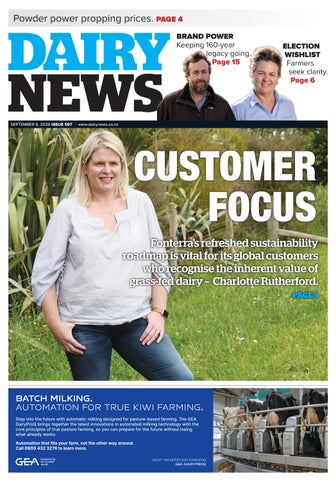
Powder power propping prices. PAGE 4 BRAND POWER Keeping 160-year legacy going. Page 15
ELECTION WISHLIST Farmers seek clarity. Page 6
SEPTEMBER 8, 2026 ISSUE 597 // www.dairynews.co.nz
CUSTOMER FOCUS Fonterra’s refreshed sustainability roadmap is vital for its global customers who recognise the inherent value of grass-fed dairy – Charlotte Rutherford . PAGE 3
Stick with the product that delivers. Made right here in New Zealand for more than 100 years, superphosphate has earned its place on Kiwi farms. Spring is the ideal time to spread quality super and set your pasture up for the seasons ahead.
Call 0800 100 123 or talk to your agri manager today.
DAIRY NEWS SEPTEMBER 8, 2026
NEWS // 3
Fonterra refreshes sustainability plan SUDESH KISSUN sudeshk@ruralnews.co.nz
Mineral health for pre-mating heats. PG.11
Calf shed hygiene. PG.13
Top fencers win gongs. PG.14
NEWS ������������������������������������������������������������� 3-7 OPINION �������������������������������������������������������8-9 MANAGEMENT ���������������������������������������������� 11 AGRIBUSINESS �������������������������������������������� 12 ANIMAL HEALTH ����������������������������������������� 13 MACHINERY & PRODUCTS �����������������������������������������������14-15
CLIMATE, NATURE and animal wellbeing make
up Fonterra’s refreshed sustainability roadmap released last week. It builds on the co-operative’s climate roadmap, with near-term emission reduction targets remaining a key part of the path towards their ambition to be net zero by 2050. The roadmap is also important for Fonterra’s global customers who recognise the inherent value of New Zealand’s grass-fed dairy and are increasingly interested in the improvements the co-op is making across its supply chain. Global customers are interested in the data and insights Fonterra can provide right down to an individual farm level, showing the hard work of its farmers. Charlott Rutherford, director of sustainability at Fonterra, told Dairy News that their commitment to sustainability remains strong. Rutherford says the roadmap recognises the hard work their farmers do every day to care for the land, animals and environment that are the foundations of New Zealand’s world-leading pasture-based farming. “A huge thank you to our farmers, whose dedication and daily efforts underpin the path set out in this roadmap.” According to the refreshed roadmap, Fonterra is working alongside farmers to maintain high standards of animal wellbeing. With high health and welfare standards, NZ cows live longer, productive lives. The co-op says highly productive cows are essential for producing high quality milk. “The way we farm in New Zealand means cows spend most of their time outdoors on pasture...
Fonterra acknowledges that progress on on-farm emissions intensity reduction target has been challenging.
This has positive animal health and wellbeing benefits for our cows.” On climate, Fonterra says reducing emissions remains a critical component of its climate action plan. “However, we acknowledge that impacts of climate change are already being felt across the globe. This is why we are also considering how we adapt to climate change for the future of our co-operative.” Fonterra’s 2026 emissions profile is made up of 4.5% scope one emissions – direct emissions from sources owned or controlled by the co-op. Scope two – indirect emissions from the generation of purchased energy – makes up 1.5%. Scope three is 94% and is made up of indirect emissions Fonterra incurs outside its ownership, primarily from farming activities. The co-op says its net zero 2050 ambition is supported by eliminating remaining coal as an
energy source in its operations by 2037. On farming emissions, Fonterra notes that the same pasture-based system that helps them create grass-fed dairy products also presents unique challenges when it comes to reducing on-farm emissions. The co-op acknowledges that progress with its on-farm emissions intensity reduction target has been challenging. It is investing in on-farm tools and services to strengthen on-farm decision making, while also preparing to adopt novel technologies as they become commercially available. On nature, Fonterra says the significance of ‘nature decline’ (environmental degradation) is becoming a global focus. “Key markets like Europe and Asia are advancing disclosure requirements relating to nature which will impact companies selling goods and services into these regions.”
Premium stockfeed STOCKFOODS
For New Zealand farmers
Civil construction | Aggregates | Stockfoods | Storage | Transport 0800 4 JSwap | 07 888 7025 | WWW.Jswap.co.nz
DAIRY NEWS SEPTEMBER 8, 2026
4 // NEWS
Powder power SUDESH KISSUN sudeshk@ruralnews.co.nz
MILK POWDER prices
are keeping farmgate prices up, helping processors offset the dip in milk fat prices. The longer high prices last, the better for the farmgate milk price. Fonterra’s mid-point forecast price is sitting at $9.25/kgMS. The co-op could lift the mid-point when it announces its annual results for the 2025-26 season later this month. Last week’s Global Dairy Trade (GDT) auction saw the skim milk powder (SMP) price jump 5.3% to US$3695/ metric tonne. Whole milk powder (WMP) dipped slightly to US$3585/MT.
NZX head of dairy insights Cristina Alvarado says the auction delivered a more resilient result than the increase in seasonal supply might have suggested. Milk powder demand remained firm, while milk fat declines were more contained than at the previous event, she says. “With deliveries moving further into the seasonal stockpiling window ahead of Christmas, Chinese New Year and the beginning of Ramadan, buying activity has held despite the normal increase in volumes offered during this period,” she says. For Alvarado, the clearest signal from the event was continued strength in protein demand.
She noted that SMP was sitting US$110/t above WMP. “The increase occurred despite SMP volumes rising 9.6% from the previous event, although volumes remained 5.8% below the same event last year. “WMP, meanwhile, eased just 0.1%, despite Fonterra offering 7.9% more than at the previous event and 13.0% more than a year earlier. “This suggests that additional supply was absorbed relatively comfortably rather than creating significant downward pressure.” Alvarado says the result reinforces the increasingly divergent dairy market: protein demand is providing price support despite higher
powder availability, while fats remain under pressure and cheese faces a much heavier supply burden. “The resilience of powders will remain important as Northern Hemisphere milk production responds to the effects of recent heatwaves and drought,” she says. ANZ agri economist Matt Dilly says processors are making a dent into 2026/27 sales at good prices, especially for milk powders. He also points out that milk powders are the main drivers of higher dairy prices in recent months, offsetting weakness in milk fats. The price spread between butter and SMP is a good way to look at
Milk powders are performing strongly on the global market.
this, he says. In 2025, butter was US$5000/MT more expensive than SMP. Today the price spread is a much more reasonable US$2000/MT.
While butter demand is just as strong as ever, a concerted effort to increase production has helped turn the market back from its peaks in late 2024 and early 2025.
Dilly says dairy farmers are increasingly focusing on the milkfat component of their milk production, leading to sustained gains in production.
OPPORTUNITY DEFENDS PROPOSED LAND TAX JESSICA MARSHALL jessica@ruralnews.co.nz
OPPORTUNITY SAYS its land value
tax (LVT) is unlikely to force farmers into a position where asset sales or increased debt are required. Speaking to Dairy News, deputy leader Daniel Eb says his party recognises that farming is a boomand-bust industry, so the policy includes a deferral scheme should it come into effect. “Prices are really good right now, but they weren’t two years ago, so that mechanism exists in the system,” Eb says. The general election is set for Saturday, November 7. Several
opinion polls suggest Opportunity may be in a front row seat to determine the next government. Some polls even suggest that neither the left nor right political blocs would be able to command a majority without them. Opportunity’s proposed LVT has drawn the ire of farming groups. But Eb says that it is important that New Zealand has some form of tax reform. “The fact is our tax system was designed primarily in the mid-80s, before the fall of the Berlin Wall and before the first text message was sent,” he says. “You cannot continue operating an economy on 40-yearold tax settings. You need to set tax settings as the world changes
around you.” Opportunity’s proposed LVT would see rural land taxed at 0.5% of its value annually. The policy aims to discourage land-banking and large property portfolios and redirect money into businesses instead. “I think it’s important to note that the land value tax sits alongside a citizen’s income,” Eb says. “And we are only proposing that these two are implemented together because you can’t have one without the other.” He says that, on Opportunity’s projections, a farmer or farming family sitting at or close to the national average sale price of $6-7 million would not see significant changes to the taxes they pay.
“So that’s after you factor in that lower rate for rural land, which is 0.5% as opposed to 1.75% on urban land. That’s after you factor in the citizen’s income, which is effectively a negative income tax rate and significantly reduces your overall tax burden. That’s after you include a carve-out for any privately held conservation land on the farm.” Eb says that some smaller farms or farms with a lower land value will likely see a tax cut under the policy. He adds that there is also a plan in place to mitigate the possibility that the cost of the tax would be passed on to tenant farmers through higher lease rates. “Primarily… we’ve proposed a 10-year transition for this tax,”
he says. Eb says this assumes the party is able to enact the policy within the next Parliamentary term, something he says seems unlikely. “We’re going to be a minor party with limited influence. So, realistically, once you sort of bake in two election cycles, and then a 10-year transition plan, we’re talking about 2040-something for this to actually come into effect in full. And within the transition plan, we’ve built in a number of checkpoints to see how the market is baking in something like a land value tax.” He says New Zealand’s land prices – both urban and rural – are overinflated and that is locking young farmers out of farm ownership.
With Active Descent Control, Polaris has you COVERED.
STEEP HILL? NO WORRIES. Automatic Engine Braking System (EBS) and Active Descent Control (ADC) delivers a smoother and more controlled deceleration downhill.
WWW.POLARISNEWZEALAND.COM
44 HP | 612 KG TOWING CAPACITY | 1,587 KG WINCH 22.6 CM OF TRAVEL & ARCHED DUAL A-ARM
MY26 SPORTSMAN 570 TRAIL FROM $18,995 INC GST
DAIRY NEWS SEPTEMBER 8, 2026
NEWS // 5
Great season but El Niño looming PETER BURKE peterb@ruralnews.co.nz
MOST DAIRY regions
around the country have had a pretty good season so far says Tracy Brown. She says in her region, the Waikato, the dry weather has made calving a bit easier, but some late frosts have slowed down pasture growth, which she adds is a bit concerning. Overall, she says calving is likely to be better than last year because it’s been drier and pastures haven’t been damaged like they were a year ago when it was wet. Hanging over all dairy farmers is the unknown impact of El Nino. Brown says some modelling suggests it could be more severe than past El Nino years, and if that’s the case, it will bring windy, dry conditions in eastern regions – impacting feed availability and causing heat stress for stock. “But in the west, you might get high rainfall
and there is a risk of flooding and damage to infrastructure. If the weather is bad, there is the risk of power being lost and farmers need to have a plan to deal with this eventuality,” she says. Brown says DairyNZ is busy communicating with dairy farmers, telling them to be prepared and to understand the risks in their area and closely monitoring the weather conditions. She says farmers are being encouraged to start planning now around feed supply going into the autumn. She says there are good resources on the DairyNZ website and this information will be updated throughout the season. The other message that has gone out to all farmers is making sure that nitrogen is applied strategically, noting that soil temperatures must be right when it is applied. Finally, Brown says
COASTERS HAVE A STORY TO TELL THE BALLANCE Farm Environment Awards are
coming to the West Coast of the South Island. Organisers says this gives farmers and growers across the region an opportunity to have their work recognised and celebrated alongside some of New Zealand’s leading farming and growing operations. The awards, run by the New Zealand Farm Environment Trust (NZFET), recognise farmers and growers who are making thoughtful decisions about their land, environment, people and businesses, while demonstrating the innovation and commitment that goes into running a successful primary production operation. West Coast Regional Council chair Colin Smith said the region’s farming stories deserved a place in the national spotlight. “The West Coast has a long proud history of farming well while caring for our natural landscapes, and it’s time our farmers and growers had their place in the national showcase alongside every other region. “The council is proud to partner with the New Zealand Farm Environment Trust to bring the Ballance Farm Environment Awards to the Coast, and we’re committed to supporting the awards in the years ahead so this becomes a lasting part of how we celebrate farming here.” NZFET general manager Sarah Harris says the awards would provide an opportunity to shine a light on the people and practices that make West Coast farming so distinctive. “The West Coast has a wealth of farming knowledge, experience and ingenuity, and we’re looking forward to hearing the stories behind the people who are working the land there.”
she’s cautiously optimistic and although the milk price is a bit down on last at the start of the season, it’s still a strong milk price. “But our costs have all gone up and so our
margins continue to be eroded, so from now on its about good budgeting and good planning,” she says. Like other farming leaders, Brown says no one really knows what’s going to happen next
globally, so there is still some uncertainty on farms. She says the best advice is to have a plan and seek the right advice and to be aware that there is a lot of information and support available.
A severe El Niño could threaten a good season for dairy farners.
CRYVEX
DAIRY NEWS SEPTEMBER 8, 2026
6 // NEWS
DairyNZ’s wish list for the next govt PETER BURKE peterb@ruralnews.co.nz
ELECTION YEARS are
always a concerning time
for farmers, according to DairyNZ chair, Tracy Brown. She says they don’t know what the outcome of the election will bring
or how a change of government might impact their lives and farming operations. Brown says DairyNZ has always worked
PROFIT STARTS HERE • Calving ease • Short gestation • Registered bulls, backed by certification • Powerful growth rates Registered Hereford bulls, backed by generations of recording and genomics - because profit starts with the right bull.
well with whichever government is elected. Her comments come at a time when the polls and even the most clued-up political junkies
struggle to pick which combination of political parties may take the treasury benches in the November election. So that no political
DairyNZ chair Tracy Brown.
party is in doubt about what DairyNZ and their members want, they have prepared a simple, easyto-read booklet outlining very clearly what they want from an incoming government. The six key priorities they would like enacted are: ■ Getting resource management and freshwater systems right ■ Building and funding a strong biosecurity system ■ Strengthening the dairy workforce ■ Boosting science funding and accelerating technology uptake ■ Promoting low emissions technology and investing in rural infrastructure ■ Backing strong animal welfare rules. The document provides a graphic snapshot of the contribution the dairy sector makes to the NZ economy, including the value of dairy exports, the number of people employed in the sector and the fact that the total wages bill for the sector is $4 billion. Brown says while dairy farmers understand that change is a constant,
they are also looking for certainty and need policy that rewards investment and encourages innovation. She says future success won’t come from just producing more – it will come from producing more value. “The next government has an opportunity to build on the progress farmers have already made. Getting policy settings right now will provide confidence to invest, to adopt new technology and continue creating value for NZ. Delaying action risks slowing that progress,” she says. Brown says dairy farmers have spent years investing in environmental improvements, animal welfare, better infrastructure, planting, effluent systems, genetics and more resilient farm systems. “Farmers need government to be a durable and practical partner providing policy that gives them confidence in invest, encourage development and recognises dairy’s critical contribution to NZ,” she says.
Even when times are tough, we’ll keep delivering the news to your letterbox for free.
Start here. Visit www.herefords.co.nz to purchase a registered Hereford bull.
We love Farmers... and letterboxes
DAIRY NEWS SEPTEMBER 8, 2026
NEWS // 7
Testing more resilient pastures on farm FARMS ACROSS the
upper North Island are trialling different pasture mixes as part of a research programme that aims to build greater resilience into farming systems. As farmers look for pasture species better suited to increasingly variable weather conditions, DairyNZ is leading one of the country’s biggest research programmes to address a gap identified by farmers: long-term pasture persistence and productivity. As part of the Resilient Pastures programme, farmers have made it clear they need better information on how alternative pasture species perform on farm, and what establishment and management practices make these alternative species successful, DairyNZ senior scientist Dr Elena Minnee says. During its first year, the programme has built a network of 15 farms across Waikato, Bay of Plenty and Northland, where farmers are testing a range of pasture species under commercial farm conditions. The 15 network farmers have all planted three to five different species mixes and are monitoring and recording pasture growth. “There has been an incredibly positive response to the Resilient Pastures programme,” Minnee says. Some of the network farmers have asked for more research on improved establishment and management guidelines for modern cultivars in current climates. “The strength of this programme is that
it’s designed to stay responsive to what farmers are telling us they need,” Minnee says. “But it’s also about connecting with farmers who’ve been testing different approaches and having success.” In response, DairyNZ has initiated a trial at Scott Farm which will examine how different grazing management affects the persistence, productivity and quality of tall fescue pastures. “It’s about examining the benefits and any tradeoffs in terms of long-term pasture production and persistence,” Minnee says. “This grazing trial is informed by the practices top farmers are already using so we can quantify the benefit but also understand the underlying biological mechanisms.” Another season of variable weather events has only emphasised the importance for more resilient pastures to cope with periods of drought or high-rainfall events. Network farmer Murray Jagger has been successfully growing tall fescue and cocksfootbased pastures on his farm at Whangārei Heads in Northland for many years and says management is critical to getting the best results. “Farmers have to unlearn what they’ve been taught around managing traditional ryegrass pastures and relearn how to manage these species,” he says. “If you treat them like a ryegrass pasture, you can run into trouble. Once you understand their growth pattern and manage them differently, they can perform really well.” The programme is
THE PROJECT THE RESILIENT Pastures programme is a seven-year initiative led by DairyNZ with Ministry for Primary Industries (MPI) and Beef + Lamb New Zealand, focused on improving pasture performance and persistence on dairy, sheep and beef farms in the upper North Island. The programme involves: ■ Climate ■ Optimised farm systems ■ Forage options ■ Adoption
key to gathering more data and knowledge around these alternative pastures, and eventually the industry can get more investment into breeding other pasture species, Murray says. “It’s a really critical
piece of work. It’s great there’s been value seen in doing this programme to demonstrate that these alternative, more resilient pastures are actually not just additions to seed mixes, but a very valuable replacement to what
we’ve been struggling with in ryegrass production.” The second year of the programme will focus on increasing farmer engagement through discussion groups and expanding data collection across the network farms.
DairyNZ is looking to address long-term pasture persistence and productivity.
Take control of your mating season.
CIDR® Cattle Insert. NZ’s #1 repro device*. Take control of your mating season and maximise your herd’s reproductive efficiency with the trusted, Kiwi-made CIDR® from Zoetis. It’s the cost-effective, vet preferred tool proven to tighten calving spread and produce more days in milk. Talk to your local vet about boosting your productivity and profitability.
Zoetis New Zealand Limited. Tel: 0800 963 847; www.zoetis.co.nz. *CEESA data March 2026. ACVM No.A4559 TRACTA23116_PROD_GG
DAIRY NEWS SEPTEMBER 8, 2026
8 // OPINION RUMINATING
EDITORIAL
Backing dairy
MILKING IT... ‘Regulatory middlemen’ GROUNDSWELL’S opinion of the incumbent farm industry representatives isn’t high. Last week’s press release from the ginger group, titled ‘Farming leaders’ spin on RMA Reform demands a grassroots response’, didn’t have a very conciliatory tone, if you ask Milking It! However, in this case, they may have a point. Groundswell’s Jamie McFadden says the Government’s recent announcements on RMA Reform and Freshwater Farm Plans (FFP) hide an “enormous bureaucratic expansion and farming representative organisations are complicit in providing only one side of the story to farmers and the public”. Groundswell would rather see backing for the industry-led efforts already underway with grassroots buy-in. “The industry groups who would prefer to act as regulatory middlemen are in danger of returning to the bad old days of representing Wellington to farmers, instead of taking farmers’ voices to the Government,” says McFadden.
Kiwisaver boost BEING A stock manager on a Government MP’s farm can come in handy. MP for Rangitīkei Suze Redmayne sprang into action after Tirrell Winderburn, the stock manager on her family farm, found himself unable to access his KiwiSaver to buy his first home. Redmayne introduced a member’s bill that has now become government legislation, fixing two rules that have kept rural Kiwis from accessing the same first home withdrawal options as other New Zealanders. The changes recognise the reality of farm ownership in New Zealand and put rural workers on a level playing field with other first home buyers The move will do no harm to National as it fights for the rural vote this election.
Peters targets Fonterra
Not out of the woods yet
GET OFFSIDE with New Zealand First leader Winston Peters at your own peril. That’s what Fonterra is finding out after NZF’s new dairy policy that would force Fonterra to supply tenfold the amount of raw milk to its competitors than it currently has to. The ‘use it or lose it’ policy would give qualifying manufacturers investing in new value-added dairy production access to up to 500 million litres of Fonterra milk per year for 10 years, by lifting existing regulatory settings tenfold from the current 50 million litres. Peters was a sharp critic of Fonterra’s $4.2b sale of its consumer business to Lactalis. His message is clear, “Fonterra has made its choice. Now New Zealand must make our choice”.
IT SEEMS Canterbury processor Synlait is still in the doldrums. In a message to the New Zealand Stock Exchange, the listed company warned that its annual numbers “will be a long way from where we want them to be”. The company is asking the market to brace for a net loss of $75m, almost double the $40m loss of last year. The company has offloaded North Island assets as part of a reset, however, getting back into the black seems more challenging than expected. Synlait’s woes led to speculation that both Fonterra and a2Milk could snap up the business from Chinese dairy giant Bright Dairy. There’s also the possibility of NZ’s second largest processor, Open Country Dairy, buying the struggling business like it did recently with Taupo-based processor Miraka.
Head Office: Lower Ground Floor, 29 Northcroft St, Takapuna, Auckland 0622 Phone 09-307 0399. Postal Address: PO Box 331100, Takapuna, Auckland 0740 Published by: Rural News Group Printed by: Inkwise NZ Ltd Contacts: Editorial: sudeshk@ruralnews.co.nz Advertising material: beckyw@ruralnews.co.nz Rural News on-line: www.ruralnews.co.nz Subscriptions: subsrndn@ruralnews.co.nz
Publisher: Brian Hight ...................... Ph 09-307 0399 General Manager: Adam Fricker ................... Ph 021-842 226 Editor: Sudesh Kissun ................ Ph 021-963 177 Machinery Editor: Mark Daniel...................... Ph 021-906 723 markd@ruralnews.co.nz Reporters: Peter Burke.....................Ph 021-224 2184 peterb@ruralnews.co.nz Subscriptions: Julie Beech ....................Ph 021-190 3144 Production Manager: Becky Williams ..............Ph 021-100 4831 Digital Strategist: Jessica Marshall ..........Ph 021 0232 6446
• Printed by Inkwise • Distributed by Reachmedia Dairy News is published by Rural News Group Limited. All editorial copy and photographs are subject to copyright and may not be reproduced without prior written permission of the publisher. Opinions or comments expressed within this publication are not necessarily those of the staff, management or directors of Rural News Group Limited.
THE STATS speak for themselves. New Zealand’s largest export earner, directly providing over 51,000 jobs and a major purchaser of output from many other sectors. This makes the dairy sector one of New Zealand’s most important economic sectors, according to updated analysis by Sense Partners. The report, commissioned by DairyNZ and the Dairy Companies Association of New Zealand (DCANZ), finds the sector’s impact is felt most strongly in regional New Zealand, where it underpins jobs, wages, businesses and local investment. In regions such as Waikato, Southland, Taranaki and the West Coast, dairy is a major contributor to economic activity and community wellbeing. For example, dairy delivers 12% of West Coast GDP, one in every four jobs in South Taranaki is a dairy job, the Waikato region has over 10,000 employees, and dairy accounts for nearly 50% of the wages paid in Waimate district. Dairy exports reached $28.8 billion in the year to December 2025, making it the largest goods export sector by a wide margin. As DairyNZ points out, when dairy succeeds, the benefits extend well beyond the farm gate. Therefore, the onus is on politicians to ensure that our dairy sector remains competitive. DairyNZ is asking the Government, on behalf of dairy farmers, to get resource management and freshwater systems right, maintain a strong biosecurity system, support a better dairy workforce, boost science funding, promote low emissions technology and invest in rural infrastructure. Dairy farmers understand that change is a constant. But they are also looking for certainty and need policy that rewards investment and encourages innovation.
AUCKLAND SALES CONTACT: Stephen Pollard............................................. Ph 021-963 166 stephenp@ruralnews.co.nz WAIKATO & WELLINGTON SALES CONTACT: Lisa Wise ........................................................Ph 027-369 9218 lisaw@ruralnews.co.nz SOUTH ISLAND SALES REPRESENTATIVE: Kaye Sutherland .........................................Ph 021-221 1994 kayes@ruralnews.co.nz
Paper used in this publication is from forests managed in line with the strictest environmental, social and economic requirements. 100% recyclable, the papers we use are from forests that will be around for generations to come.
DAIRY NEWS SEPTEMBER 8, 2026
OPINION // 9
Adaptability – farming’s most valuable asset WARWICK CATTO
ONE OF the privileges of judging the
Ballance Farm Environment Awards for more than a decade is the opportunity to spend time on farms and orchards across New Zealand and hear from people constantly looking for ways to improve their businesses. Every farm and orchard is different, whether it’s land types, climates, enterprises or family circumstances, which means there’s no single blueprint for success. The key thing that stands out from the hundreds of farms I’ve visited is that success rarely comes from standing still. Technology is one of the clearest places where that adaptability shows up. Farmers and growers have always been innovators, but today’s tools are evolving quickly and providing a depth of information that was simply not available previously. This year’s Ballance Farm Environment Awards
Gordon Stephenson Trophy winners, Southland farmers Tony and Michelle Roberts, have adopted SmartTags in their deer operation to monitor animal activity, rumination and reproductive performance. In a large herd, that information can help flag changes earlier and support timely decisions, while the Roberts’ knowledge of their animals and land remains central. It’s a great example of technology complementing, rather than replacing, good stockmanship and farmer judgement. It’s providing an extra set of eyes in the paddock around the clock, so farmers still make all the decisions, now with more information available to guide them. Another theme is the increased focus on proactive succession planning. This is particularly significant at a time when farm ownership is becoming more difficult to achieve. Land values and capital requirements mean the pathways into ownership
look very different from previous generations. Many farming families are responding by treating succession as a long-term process rather than a single event. Environmental management is another area where adaptability is becoming increasingly important. New Zealand farmers operate in a dynamic environment. Every component of a farm influences the others. When one part is under pressure, the impacts can be felt elsewhere. Freshwater farm plans can also help farmers identify risks, prioritise actions and understand how water moves through their property. Perhaps the most encouraging trend I see is the continued strength of community leadership within the farming and horticultural sector. Many award entrants are deeply involved in catchment groups, industry organisations, local schools and community projects. Whether they’re co-ordinating planting days, sharing
Unleash the Power of Weed Control SMART JOSINA has performed outstandingly well this season. Our yields have probably been 30%, at least above what we’ve grown in the past for fodder beet. Alby Anderson, Dairy Farmer Otorohanga, Waikato
Ask your local agronomist about our system or visit kws.com/nz CONVISO® SMART represents the innovative fusion of SMART KWS Seeds with Bayer’s advanced CONVISO® ONE Herbicide. CONVISO® is a registered trademark of Bayer.
water-quality monitoring or helping neighbours learn from an on-farm trial, their gates are open and they’re contributing to initiatives that benefit the wider district. This willingness to collaborate is critical as farming navigates increasingly complex challenges. Few issues are solved in isolation, and progress often comes faster when farmers share what they are seeing, compare what works and tackle common problems together. The people I’ve met from all around New Zealand through these awards continue to impress me with their innovation and resilience. They embrace new technologies where these add value, plan thoughtfully for future generations, invest in the health of their natural resources and contribute positively to their communities. Like any successful farming system, resilience is built through adaptation. The businesses best placed for the future are not waiting for change to happen around them, they are watching
Warwick Catto
closely, making practical adjustments and actively shaping what comes next. • Warwick Catto is science strategy manager, Ballance Agri-Nutrients
DAIRY NEWS SEPTEMBER 8, 2026
MANAGEMENT // 11
Mineral health for pre-mating heats CHRIS BALEMI
BY SEPTEMBER, pre-
mating heat recording is underway on many spring-calving dairy farms. While the immediate focus is on cows that have not been seen in heat, the pattern across the herd can also show how many cows have resumed cycling after calving. When fewer cows than expected are coming into heat, energy balance and body condition are usually the first things we look at. Cows that calve down in less-than-optimal condition will often take longer to cycle, especially when feed intake doesn’t keep up with milk production. Minerals can’t correct an energy deficit, as feed intake still drives energy balance. But they do play a role in the metabolic, immune and reproductive processes cows rely on during recovery from calving and through early lactation. Micro minerals such as zinc, copper, manganese, selenium, cobalt, iodine, boron and chromium are used in energy metabolism, immune function, tissue repair and antioxidant systems. The demand for these increases after calving, when we’re asking cows to increase their milk production as they recover from birth. This often forces them to draw on body reserves. Research has found differences in how cows
respond to trace mineral supplementation during this period. In one study of 273 dairy cows, older cows receiving chelated (organic) trace minerals had higher dry matter intake after calving than those receiving inorganic sources. A related study found fewer cows with higher non-esterified fatty acids, or NEFA, in the group supplemented with organic trace minerals. High NEFA levels indicate greater mobilisation of body fat to meet energy demand. The same study also recorded fewer cows in the treatment group suffering metabolic disorders after calving. While minerals don’t prevent negative energy balance, poor mineral status can make it harder for cows to manage the metabolic demands that come with it. Minerals and the return to cycling The weeks after calving heavily influence what happens at mating. A cow that has had a harder recovery may eat
less, lose more condition and take longer to resume cycling. Trace minerals contribute to several of the systems involved in that recovery. Zinc and copper are involved in immune function and tissue repair. Copper, zinc, manganese and selenium are also used in antioxidant systems that help protect cells from oxidative stress. Liver function is particularly critical at this time. Natural metabolic processes must break down stored body fat in order to meet rapid energy demand. If the liver is not well supported with all the minerals and proteins required, this process cannot work efficiently. Research has also linked trace mineral nutrition with the timing of reproductive activity. One study followed 573 dairy cows under different trace mineral supplementation programmes and found differences in the time from calving to first cycle,
Cows that calve down in less-than-optimal condition will often take longer to cycle.
along with some later reproductive measures. New Zealand research points in the same direction. A South Island study involving 555 intensively grazed Friesian cows compared cows receiving supplementary zinc, manganese, copper and cobalt with cows receiving no supplementary trace minerals. More cows in the unsupplemented group required hormonal
treatment in order to initiate estrous (or “cycling”). This clearly points to mineral nutrition being important in the premating discussion. Cows still need enough energy and dry matter intake, but mineral status can affect the systems that are key to metabolising energy that allows recovery from calving, and initiation of early cycling. • Chris Balemi is founder of Agvance
MINERAL SUPPLY SUPPLYING THE right amount of minerals does not guarantee the cow is absorbing enough of those minerals. For instance, copper availability can be reduced by high molybdenum and sulphur intakes, so while on paper the diet contains enough copper, the cow is still receiving less than expected. Not just the range and level are important, but the form of mineral being dosed is important in order to ensure maximum
absorption. Pasture composition and supplementary feeding also change through spring, so mineral intake and availability can change during the same period cows are moving from early lactation towards mating. If fewer cows are cycling than expected, look back over the weeks since calving. Feed intake, body condition, post-calving health and mineral
status can all influence how quickly cows return to normal reproductive activity. By the time weak or missing heats show up on the pre-mating records, the contributing factors may have been present for several weeks. Reviewing mineral nutrition alongside feed intake and post-calving health can help identify why some cows are taking longer to cycle.
ROUND BALEAGE TIPPER Transports and stands wrapped round bales on end for storage
IT’S QUICK, IT’S CONVENIENT, IT’S EFFICIENT ✸ NOW AVAILABLE AS A SINGLE OR DUAL UNIT ✸ • Thick layers of plastic on bale ends provide superior protection against ground moisture and weather while stored. • No flat sided bales (simplifies feeding out). • Less storage area required. • Suitable for medium HP tractors. • 3PL mounted (no front axle stress). • Bale tipped in one easy movement. • No need to reposition bale before tipping. • Simply trip and flip.
CONTACT US FOR YOUR LOCAL DEALER
Maitland - RD5 - Gore Phone/Fax 03-207 1837 or 027-628 5695 www.james-engineering.co.nz
DAIRY NEWS SEPTEMBER 8, 2026
12 // AGRIBUSINESS
Is your succession plan ready? RACHEL FRASER
SUCCESSION AND
long-term planning are perennial topics because it is perpetually sidelined on busy farms. Yet I believe it is crucial for continuity of production and the preservation of familyowned rural enterprises. Right now a purple patch for farms presents the perfect time for proper planning. When there is liquidity, it can help ease the transition from one generation to another. Of course, dairy has recently received a sizeable payout from Fonterra and, touch wood, most farm incomes are heading in the right direction. Yes, planning and preparing involves some costs, but when you’ve got positive income, it makes the
planning a lot more appealing than when the cupboard is bare. According to the Ministry for Primary Industries, New Zealand’s agricultural industry is performing strongly, with export revenue expected to rise 6%, driven by robust dairy and red meat prices, record or near-record production volumes, solid horticulture results and a favourable NZD/USD exchange rate. When the going is good, options are available. Repaying debt, potential capital improvements, adjusting shareholdings or paying out retiring partners are all possibilities. The important thing is to look at the whole picture and decide how that money is best spent. It has to start with a clear long-term goal though, along with knowing what’s
MIXER WAGONS
happening next. That’s vital in knowing where you’re going. I also know that even when conditions are favourable for an industry, they can change in an instant, particularly for an individual. Agribusiness includes a high element of risk as part of dayto-day activities, and the possibility of a debilitating accident or other incident causing unexpected retirement can never be ruled out. According to WorkSafe New Zealand, agriculture employs about 5% of the workforce but accounts for around 25% of all work-related fatalities and serious injuries, and roughly 25% of serious acute harm. This is part of why it is so crucial to have that plan in place. The earlier you start those conversations, the better. And the more often
and thoroughly it is discussed, the better your opportunity to get the whole family on board. I’m bringing succession up because Findex’s clients are doing so too. The Fonterra payout has sparked a lot of those conversations for dairy farmers, on top of the fact that dairying has had some pretty good years where debt is coming down. This has helped spur proactive conversations about what’s next: Have you got children coming? Are you looking to sell the farm? Are you looking at some off-farm investments? Along with planning for the next generation and sorting out inheritances, any tax liabilities and responsibilities must also be accounted for. These arrangements are by their nature multiparty. You’ve got the bank, the lawyers,
HiSpec offers a great range of highly robust and innovative, premium agricultural machinery
HiSpec Mixer Wagons use a twin mixing and chopping auger to produce a market leading quality mix in a machine that is simple to maintain.
NZ imported by Giltrap AgriZone since 2016
Mixer wagons starting from *
$131,000+GST
and multiple generations of the families, and as advisers, we help balance the sometimes-competing interests of those various parties, whether on or off farm. Through experience, I know these conversations are by necessity long term, but they should be a constant and dynamic engagement. The best time to start the conversation, to start planning, was yesterday. Even if it seems awkward or unpleasant, getting the plan in place now is far better than leaving it too late. You do not want to be in a position of rushing succession. Most rural businesses, and certainly farms, are worth millions of dollars, and coming up
Rachel Fraser
with that sort of money quickly adds unnecessary pressure in an already stressful time. If farm fortunes are rising, there is no better
time to ask the difficult questions and make a plan for what comes next. • Rachel Fraser is Findex Accounting & Business Advisory Partner
IN BRIEF Henderson re-elected unopposed DairyNZ deputy chair Cameron Henderson has been re-appointed unopposed for another term. The North Canterbury farmer was first elected to the DairyNZ board in October 2023. DairyNZ says he is well known for providing a positive, progressive, and pragmatic South Island voice in the sector. DairyNZ chair Tracy Brown says Henderson will continue contributing his leadership, insight and commitment to the organisation for another three years. “Cam is well respected within the sector, and his reappointment reflects the value farmers place on his experience, advocacy and passion for helping shape a successful future for dairy.” Directors’ remuneration committee member Johanna Burton has also been reappointed unopposed. Burton, Waikato, has been a member of the committee since 2021. She has extensive experience working with international dairy markets in roles within CRV, Fonterra, and LIC. Both reappointments will be formally acknowledged at the DairyNZ annual meeting, to be held in Northland on Wednesday 4 November 2026. There remains one unfilled vacancy on the directors’ remuneration committee, which independently considers and recommends remuneration for directors each year. This is an ideal role for a farmer who is looking to step into governance. Interested farmers are encouraged to email company.secretary@dairynz.co.nz for more information.
*Terms and Conditions apply. While stock lasts.
Contact Frank Berkers - 027 497 9085
• Ideal for Cattle Troughs • High Flow • Side/Bottom Mount • Detach to Clean • Compact/Robust
gaz.co.nz
• Ideal for Small/Low Demand Troughs • Low Flow • Above/Below Water Mount • Built in Check-Valve
0800 JOBE VALVES jobevalves.com
• Ideal for Compartment Troughs/Tanks • High Flow • Top Mount • Detach to Clean • Compact/Robust
DAIRY NEWS SEPTEMBER 8, 2026
ANIMAL HEALTH // 13
Brought to you by
Calf shed hygiene starts with chemistry GOOD CALF shed
hygiene has always been about providing clean, dry bedding. Dry bedding helps calves stay warm, improves comfort and reduces the conditions that allow pathogens to thrive. However, moisture control is only part of the equation. What happens after urine, manure and moisture combine in the bedding? As bacteria break down urea in urine, ammonia gas is released. The amount of ammonia produced depends heavily on the chemistry of the bedding environment, particularly its pH. As pH rises and conditions become more alkaline, ammonia is released more readily into the air. That matters because calves spend much of their time lying down, with their noses only centimetres above the bedding surface where ammonia concentrations are highest. Even relatively low levels of ammonia can irritate the respiratory tract, increasing susceptibility to respiratory disease and placing unnecessary pressure on the immune system. Your calves are no longer utilising energy to grow – instead, it is being diverted into defence and repair. ■ Most drying agents only doing half the job Many bedding conditioners available in New Zealand focus primarily on moisture absorption. Drying the bedding is certainly beneficial, as less moisture means slower bacterial growth and fewer favourable conditions for flies and pathogens. However, a product that only absorbs moisture does little to address the underlying chemistry driving ammonia production. If the bedding remains neutral or alkaline, ammonia can continue to volatilise, limiting the benefits of a drier surface. ■ The problem with hydrated lime Hydrated lime has long been used as a lowcost bedding treatment because it has some
moisture binding capacity. The problem is that hydrated lime is strongly alkaline. Rather than reducing ammonia release, it raises bedding pH, creating conditions where ammonia forms and escapes more readily. In effect, while lime dries the bedding, high ammonia levels can undermine its overall effectiveness by creating a harsher shed environment. There are other drawbacks, too. Hydrated lime is caustic and can irritate or burn sensitive tissues including eyes, nostrils and skin. For young calves, whose skin and respiratory systems are still developing, this is an unnecessary risk. And for the team working in the calf shed, these conditions are a health risk. ■ Why acidity makes the difference An acidic bedding conditioner works differently. Instead of simply removing moisture, it changes the chemistry of the environment. Lowering bedding pH slows ammonia release at its source while also creating less favourable conditions for many bacteria, fungi and fly larvae. Rather than addressing one part of the hygiene challenge (simply absorbing moisture), it helps manage several risks simultaneously, resulting in a cleaner, more stable calf environment. ■ A complete approach to calf shed hygiene There is one bedding conditioner available in New Zealand that combines these benefits. Stalosan F not only acidifies and stabilises the bedding environment, it also binds ammonia and absorbs up to 400% of its own weight in moisture in the presence of ammonia, making it even more effective under the conditions where it is needed most. Rather than simply drying the bedding, it helps create an environment that supports calf health by reducing ammonia exposure, suppressing
pathogen pressure and maintaining a more balanced pH. For dairy farmers and calf rearers, choosing a bedding conditioner should be about more than keeping pens dry. It should be about providing
calves, staff and the wider shed environment with the best possible protection from ammonia, pathogens and the challenges associated with highly alkaline conditions. • Article provided by Stock IQ
An acidic bedding conditioner, instead of simply removing moisture, changes the chemistry of the environment.
DAIRY NEWS SEPTEMBER 8, 2026
14 // MACHINERY & PRODUCTS
Top fencers recognised for dedication and skill MARK DANIEL markd@ruralnews.co.nz
NOW IN its fourth year, the 2026 Fencing
Industry Awards, formed part of the proceedings of the FCANZ Conference, held in Nelson during August. The awards recognise the dedication, skill and contribution of people throughout the fencing sector, with a new category for 2026 – the Project of the Year Award, which recognises the workmanship, planning, problem solving and project management that go into a highquality fencing project. To make judging as fair and consistent as possible, each entry was de-identified and independently scored against six weighted criteria, with project photographs, client feedback and client scores included in the assessment. Nick Terry’s Custom Fencing took out the inaugural 2026 FCANZ Large Project of the Year Award, for work valued at $50,000 or
more, for its Port Otago MacAndrew Road Boundary Project. The team received a prize package worth more than $9,000 and a trophy. Runners-up were GB Fencing and Heasley Fencing. Alongside the new project award, the 2026 FCANZ Fencing Industry Awards recognised trainees, emerging talent and people who have made a lasting contribution to the industry. The Level 3 Trainee of the Year Award went to Rhodri Pryce, after achieving 100% attendance, actively sharing his knowledge during block courses and consistently submitting merit-level assessments on or ahead of time. The Level 4 Excellence Award was taken out by Tom Rathgen after consistently producing high-quality assessments that showed excellent knowledge and practical skill, building on his success as the 2025 Level 3 Trainee of the Year. Three excellent young fencers were shortlisted for the Emerging Talent Award, eventually won by Precise Contracting’s Noah Jaunay, with the panel highlighting his
practical ability, initiative and problem-solving skills, alongside pride in his work and in his enjoyment of helping others develop. Industry stalwart Hugh Morrison received the 2026 Industry Contribution Award, recognising more than 30 years in the industry, where he shared best-practice fencing knowledge through workshops for more than two decades, alongside 20 years spent judging national fencing competitions, running a fencing contracting business and serving on the NZ Fencing Competitions committee Joelene Bouskill was named the 2026 Women of Influence Award winner. She co-runs her family’s fencing business and handles much of the administration, logistics and scheduling that keep it operating. During nine years at Smedley Station and Cadet Training Farm, she also provided pastoral care and support for agricultural cadets developing their rural skills. Prizes for the 2026 Fencing Industry Awards were proudly supplied by Delfast, Stockade, PGG Wrightson and Farmlands. Visit www.fcanz.org.nz.
The Emerging Talent Award went to Precise Contracting’s Noah Jaunay.
PERFECT PAIRING FOR ANY DAIRY FARM
“I purchased my first Dieci telehandler in 2018 and have been running them ever since. They are fantastic machines for general farm work, such as loading our mixer wagon, shifting bales, and feeding our cows over winter. You just cannot beat them.”
“I’ve recently purchased my second new BvL mixer wagon. After thirteen years and 6,500,000 kg DM through the first BvL, the only maintenance required over those thirteen years was replacement knives and a yearly service. That is why we stay with BvL for our mixer wagons.” – SOUTHLAND DAIRY FARMER
TIM CURRIE DIECI PRODUCT SPECIALIST 021 221 5016 www.webbline.co.nz
webblineltd
D IN NZ STE
LOCHLAN GORDON BvL PRODUCT SPECIALIST 021 873 436 @webblineagltd
WAIKATO • MANAWATU • CANTERBURY • SOUTHLAND
OVE FOR R
DIECI TRU
– CENTRAL SOUTHLAND DAIRY FARMER
DAIRY NEWS SEPTEMBER 8, 2026
MACHINERY & PRODUCTS // 15
Brand keeps dairy legacy going MARK DANIEL markd@ruralnews.co.nz
GARETH HALE is the
current custodian of a 160-year legacy that saw his great grandfather dairying in Taranaki since the mid-1850s and grandfather dairying in the Waikato from the early 1900s.
“The technology may be changing, but the goal remains the same-leaving behind a business that can be carried on-hopefully for another 160 years.” When asked what he hopes to leave behind, the simple answer is something for the kids to carry on. Today, Gareth is continuing that legacy in the South- and MidCanterbury regions, having spent the past 25 years building a largescale dairy operation that began with about 160 hectares and 500 Jersey cows, growing into a 125-ha operation, milking about 2600 cows across three farms. The operation also crops about 400ha each year, growing winter feed, barley silage, maize, grass silage, kale and
other feed crops. Targeting 500 to 550kg milksolids per cow, feed quality underpins the operation, crops need to be planted on time, fertiliser applied when conditions allow, and silage harvested while quality is at its peak. “With double cropping, the pressure is even tighter. When the day one crop comes out, you want the tractor on the paddock ready to do the next crop,” says Hale. Defying the premise that dairy farmers would rather buy cows than machinery, John Deere 6 Series tractors are the preferred brand across the business, from smaller units suited to dairy operations, to higher-horsepower machines used for heavier cultivation. “When we went to John Deere, maintenance was probably about a quarter of what it had been running previous brands,” he said. “With 20 staff, it’s costing money if your machines don’t work when you turn the key.” Alongside reliability, Hale says JD technology has delivered some of the biggest productivity gains, with guidance systems, including GreenStar and AutoTrac, used to improve accuracy, reduce overlap and make better use of time, fuel and inputs. “GPS has made a massive difference with
Gareth Hale says JD technology has delivered some of the biggest productivity gains.
our cropping,” he says. “Every time, you know you’re not overlapping and you’re not wasting diesel.” John Deere Operations Center also helps the business to bring machine, job and paddock information into one place, from fuel use, idle time and area worked, to service records and machine alerts. “Going forward, we should be able to get accurate numbers and know the fuel usage and real-time data,” says Hale. In a tightly timed operation where a missed window can cost yield, Hale says the local dealership team had become an important
part of the value behind the machinery. Drummond and Etheridge representative Neil Paver, a Large Ag Sales Specialist, said the John Deere Operations Center has added another layer to the support. “The system gives us a quicker diagnostic time, meaning when we go out to the job, we know what’s going on and not just flying in the dark,” Paver said. Looking ahead, for Hale, the future of dairy farming will be shaped by further advances in technology, including more efficiency with GPS, variable rate spreading fertiliser and spraying – all combining to save on costs.
WASTE NOT
Gareth Hale is continuing a 160-year dairy legacy started by his great grandfather.
“The technology may be changing, but the goal remains the same-
leaving behind a business that can be carried on-hopefully for another
160 years,” says Gareth Hale. www.deere.co.nz
HB & ROTARY FEED SYSTEMS
Beat the rush book your system in for 2026
With a small deposit confirm your system now
www.pppindustries.co.nz sales@pppindustries.co.nz
0800 901 902 Engineering precision since 1962
PPP Feed System that’s built to last
Certainty, by the bagful. There’s plenty on a New Zealand farm you can’t control. The weather. The markets. The summer that turns up late – or doesn’t arrive at all. Your pasture seed shouldn’t be one of them.
Stack the odds in your favour. Choose proven Barenbrug cultivars and grow with confidence. Learn more at barenbrug.co.nz
Maxsyn
Array
4front
Shogun
Forge
The next generation perennial legend, for superior persistence and summer growth.
The superstar perennial, delivering high intake, yield, N uptake and persistence. The diploid of the future!
The benchmark in tetraploid perennials. Grows longer, is good for the environment and animals love it.
The outstanding hybrid, rockstar with NEA12 – still setting the standard for 1-3 year pasture.
The phenomenal 3-5 year pasture. With environmental benefits, delivers performance your neighbours will envy.
Perennial
Perennial
Perennial
1-3 years
3-5 years
Scan the QR code to learn more.
Grow with Confidence
BBGN0133 Spring_Dairy News FP ad.indd 1
31/08/2026 3:46 PM