
NUMBERS DairyBase to the rescue Page 8 DIRA review causes unease among processors. PAGE 3
CRUNCHING

NUMBERS DairyBase to the rescue Page 8 DIRA review causes unease among processors. PAGE 3
Federated Farmers’ North Canterbury president Bex Green is honoured to win the Feds’ Advocate of the Year 2026 title. PAGE 4
This is how progress lasts .
Progress is more than production - it’s what you pass on. Every smarter decision, every better day builds a stronger farm for the next generation. With DeLaval, you’re shaping a future worth handing down. Let’s shape progress on your farm.


Canola meal is a premium protein source for dairy cows, supporting milk solids production through:
Improved metabolizable protein efficiency
Higher and more persistent milk yield
Increased dry matter intake and maintenance of cow condition
Canola meal is a valuable source of rumen undegradable (bypass) protein, supplying highly digestible essential amino acids to the small intestine. Its amino acid profile is well aligned with milk protein requirements, with comparatively high concentrations of methionine, a key limiting amino acid in high‑producing dairy cows. Diets containing canola meal have been consistently associated with improved efficiency of metabolizable protein supply, increased dry matter intake and enhanced milk yield.
Cargill’s canola meal is available through your local feed supplier, with non‑GMO options and sustainability credentials available where required.
For more information about canola meal visit www.cargill.co.nz.

SUDESH KISSUN
sudeshk@ruralnews co nz
THE COUNTRY’S second largest milk processor is warning against ‘complacency’ during a review of competition regulations in the dairy sector.


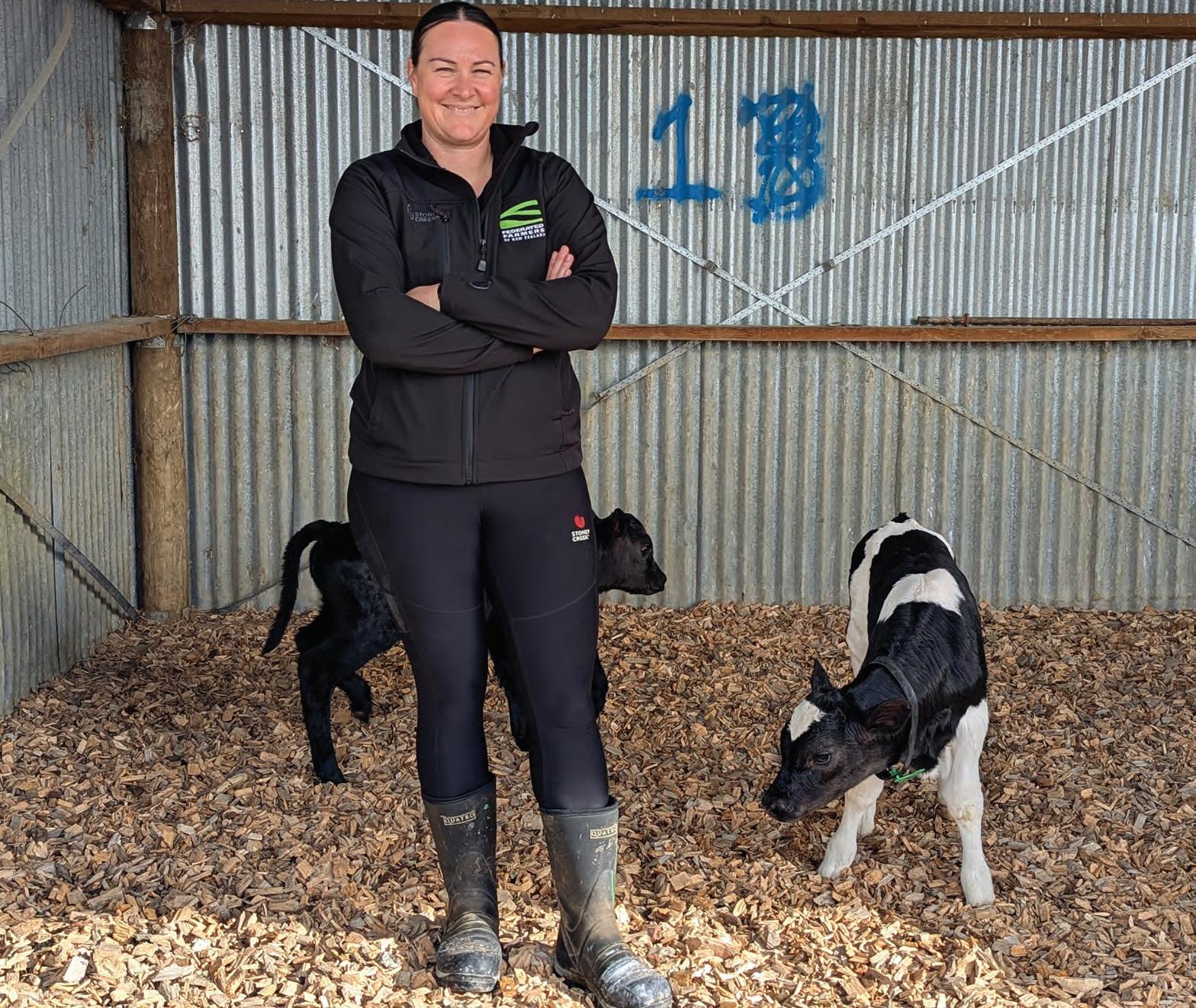
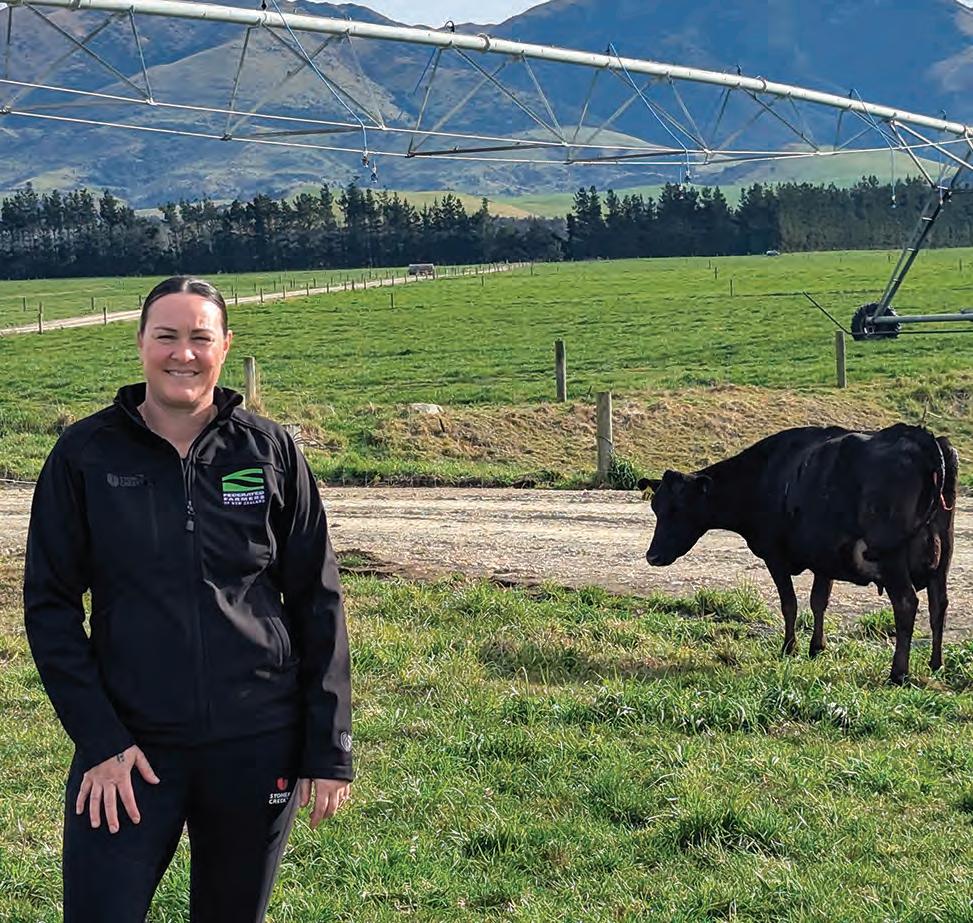
A STRONG sense of community involvement is what propelled the Federated Farmers’ North Canterbury president Bex Green to the honoured title of the Feds’ Advocate of the Year 2026.
Announced at a function in late June recognising those who “went the extra mile” for farming families and rural communities, the award went to Green for successfully fighting a move to centralise rural Canterbury policing which would have seen police personnel withdrawn from a number of smaller towns.
“Despite being in the middle of calving, Bex fronted our major advocacy campaign with real tenacity, often in the face of considerable pushback,” Federated Farmers board member Mark Hooper said at the awards ceremony.
Green and her husband Blair farm a few kilometres west of Culverden in North Canterbury –
a prominent dairying district with about 90 dairy farms. With three children aged between 13 and seven (the oldest now at boarding school in Christchurch) it is important to her that Culverden is a good town with a good school and a safe and supportive community.
“Luckily enough for me, I’m quite good friends with the local cops,” Green told Dairy News
“They are involved in the community like I am, my daughter is friends with one of their daughters.
“So naturally, when I heard that they were going to be taken from us, I was very upset.”
Green used her position to mount community meetings and rally submissions against the restructure, which was eventually withdrawn when police management realised it would not get the community buy-in it needed.
Green explained that having local police who were themselves part of the community is what gives a town security.
One of them is on the school board, one a member of a multisport club which the Greens have established. The police are visible on the road and in the community, often seen in uniform at various events.
“It’s feeling safe because you know they’ve got your back,” she said.
“I can just message them and say, ‘I’ve seen this happen. Is everything all right?’
“I don’t have to go through an 0800 number or something to talk to them.”
First generation dairy farmers, Bex
and her husband were brought up and lived in Northland until about 10 years ago, when they moved to the South Island in search of better dairy farming opportunities.
“It was really hard to grow in the industry up there, in terms of getting to farm ownership or even getting to management.
“They’re all small dairy farms up in Northland and they don’t need a whole lot of workers, and they don’t need management because they are on-thefarm owners and run them themselves.
“So we moved down
BEX GREEN has always stood up to be involved, having been a regional leader of the Dairy Women’s Network for three years.
“I was a finalist for the Regional Leader of the Year award twiceand didn’t win it,” she grins. But by then she had joined Federated Farmers and felt it was time to step away from the DWN.
In Federated Farmers, her path has closely followed that of Karl Dean, now national Dairy Chair,
here for the contract milking, and the share milking opportunities, and the scale, really.”
The couple did a year on a large farm at Oxford, then five years in Cheviot, when they launched their own business as contract milkers.
The Greens have now been on their current farm, on the western edge of the Culverden
but formerly North Canterbury provincial president and also a former Advocate of the Year.
She says issues now on the horizon include local government reform, and reform of the Resource Management Act.
Green said North Canterbury Federated Farmers has recently nutted out a position on local government reform – preferring a three-council solution with northern and southern rural
basin, for three years. They are contract milking for the farm’s owning syndicate, but also own part of the herd, and have shares in the farm as well.
“Complicated, but very grateful for the opportunity of the farm owners letting us build equity in different ways,” said Green.
The farm runs 1000 milking cows on 300 hectares purely dairy platform with all winter grazing off-farm.
councils rather than a single council for all of Canterbury, or one rural and one Christchurch metro council.
“Having one rural Canterbury that spreads all the way down is a quite a large area to cover. But we definitely think that being separate from Christchurch or Metro is preferred, for sure.
“I’m always going to advocate for what’s best for the communities that I live in and that I represent.”
The Greens are both keen multisport athletes, Bex having two Coast-to-Coast first placings to her credit –in 2024 when she cycled and Blair kayaked in the winning mixed team, and in 2025 when she cycled in the winning all-women’s team. Blair had previously competed as an individual in the oneday event and did so again this year. Next year they plan to compete as a team of two, doing two legs each.
Realising there were a number of multisport athletes in the district, among them other dairy farmers, they have formed a multisport club, with Bex the current president. She is also president of the local netball club.

SUDESH KISSUN sudeshk@ruralnews.co.nz
A TEAM effort that is paying dividends for the wider New Zealand economy.
That’s how Waikato Federated Farmers chair Matthew Zonderop describes a report that confirms New Zealand remains the world’s largest single-country dairy exporter.
According to Rabobank’s 2026 World Dairy Map, New Zealand accounted for 22.1% of world dairy exports in 2025.
“This is a genuinely positive story for New Zealand,” Zonderop told Dairy News
“Remaining the world’s largest singlecountry dairy exporter, accounting for 22.1% of global dairy exports in 2025, is a significant achievement.
“It reflects the sustained effort of New Zealand’s dairy farmers, sharemilkers, farm staff, rural businesses, processors, exporters, boards and senior
management teams, including those at Fonterra.”
The benefits extend well beyond the farm gate, says Zonderop.
When the dairy sector earns export income, that money flows through rural communities, service businesses, transport operators, manufacturers and the wider New Zealand economy.
“Dairy remains one of the country’s most important economic engines,” he says.
The new map and accompanying report – which examine key trends and trade flows in global dairy for the period 2017 to 2025 –show global dairy trade grew by 11% across this time frame, increasing from around 91.1 billion kg in liquid milk equivalents (LME) in 2017 to 101.2 billion kg in 2025.
Rabobank senior agricultural analyst Emma Higgins said the map and report highlight New Zealand’s consistent contribution
to world dairy exports across this period.
“If we look back across the last eight years, New Zealand’s contribution to global dairy exports has held remarkably steady, oscillating between a high of 23 billion kg (2019 & 2021) and a low of 21 billion kg (2017, 2018 & 2022). And since 2023, New Zealand’s contribution has held constant at 22 billion kg,” she said.
“With overall dairy trade having increased, New Zealand’s market share has dropped slightly, but it is still contributing well over a fifth of all global dairy exports.”
The report says the EU bloc continues to be the world’s largest dairy exporter overall –accounting for 27% of world dairy exports in 2025 – however their export share is also slowly eroding.
“Back in 2017, the EU was responsible for closer to 30% of all global dairy exports, but since then we’ve seen their overall share
driven lower by falling exports into China.” Higgins said.
A major contributor to this fall is China’s liquid milk market, where imports have declined significantly in recent years.
European exporters have borne much of that impact, while New Zealand has maintained stable export volumes and has become China’s largest supplier of imported liquid milk and cream since 2024.
The report says the US – the world’s next largest global dairy exporter behind the EU and New Zealand – has grown dairy exports across recent years.

leadership experience across the agribusiness and rural
a proven track record in operational excellence and organisational change.
“Greg has held senior leadership roles across some of New Zealand’s largest agribusinesses. His collaborative leadership style and strong
background in strategy, operations and business improvement make him an excellent fit to lead the
during this next phase.”
He thanked Andrea Dixon for her leadership over the past three years and for her recent consultancy to the Hub which has ensured that there is smooth transition for the team.
THE CULTURE of helping someone in need is alive and well in the ag sector.
Recently a suspected arson attack at Future Post – a South Auckland company making fence posts from 100% recycled plastic – caused more than $1 million in damage and put the company at serious risk.
But New Zealanders have stepped up in an incredible way.
A Givealittle Page set up to raise $500,000 to keep the company going has raised $300,000 so far.
The plea from the company is for donors to buy a $5 virtual fence post or donate what you can to help them reach the target.
NEW RESEARCH suggests the ag sector can unlock $2.9 billion increase in profitability, not by farmers and growing more, but by making their farming systems simpler.
The ANZ research says a 5% lift in farm revenue, combined with a 5% reduction in costs, could unlock an estimated $2.9 billion increase in profitability across the dairy, red meat, kiwifruit, arable and pipfruit sectors.
Gains on farm could come from better use of information, more efficient inputs, targeted automation, and practical applications of agritech and AI can help businesses reduce friction, improve decisionmaking and strengthen resilience.
It’s a big number, but it is built on small, achievable gains.
Better timing, less waste, clearer information, fewer repeated problems - those are the kinds of improvements that compound over time, says the bank.

Head Office: Lower Ground Floor, 29 Northcroft St, Takapuna, Auckland 0622
Phone 09-307 0399.
COULD BEEF cows play an increasingly important role in improving profitability and resilience on hill country farms?
Hill country farms – steep, harder-to-manage land – have traditionally relied heavily on sheep, but that balance is changing.
Beef cow numbers are starting to recover across the country. This reflects a mix of better prices for farmers, ongoing labour shortages and the practical benefits cattle bring to pasture management and parasite control in sheep farming.
For many of these farmers, cattle are an appealing option because they can simplify operations without reducing overall returns. Good news too for dairy farmers selling young stock to be raised for beef.
Postal Address: PO Box 331100, Takapuna, Auckland 0740
Published by: Rural News Group
Printed by: Inkwise NZ Ltd
Contacts: Editorial: sudeshk@ruralnews.co.nz
Advertising material: beckyw@ruralnews.co.nz
Rural News on-line: www.ruralnews.co.nz
Subscriptions: subsrndn@ruralnews.co.nz
Irish dilemma
THE IRISH dairy sector is facing a new dilemma – maintaining year-round fresh milk supplies.
Ireland’s registered liquid milk producers fell by 32 to 1196 in 2024, leaving just 7% of the country’s dairy farmers supplying the liquid milk market.
Media reports say registered liquid milk supplies declined 4% to 424 million litres, while annual fresh milk consumption fell by 8 million litres (1%) to 564 million litres.
Industry leaders attribute the ongoing contraction to economic pressures, labour shortages, changing lifestyles and the stronger appeal of seasonal milk production, making year-round supply increasingly difficult to sustain. It’s part of a broader trend that the UK’s ability to feed itself is waning.

WITH 10,500 DAIRY farms, New Zealand continues to punch above its weight around the world.
The latest Rabobank’s 2026 World Dairy Map confirms that New Zealand accounted for 22.1% of world dairy exports in 2025 – retaining the tag of the world’s largest single-country dairy exporter.
The EU bloc continues to be the world’s largest dairy exporter overall, accounting for 27% of world dairy exports in 2025, however their export share is also slowly eroding.
The US – the world’s next largest global dairy exporter behind the EU and New Zealand – is growing dairy exports across recent years.
However, New Zealand’s consistent contribution to world dairy exports must be applauded.
Over the last eight years, New Zealand’s contribution to global dairy exports has held remarkably steady, oscillating between a high of 23 billion kgMS and a low of 21 billion kgMS. And since 2023, New Zealand’s contribution has held constant at 22 billion kgMS.
This has a positive flow-on effect on rural communities and the wider economy.
Fonterra’s milk price directly injects over $13–$14 billion into New Zealand’s economy annually, including rural businesses connected to the dairy industry.
The report also challenges past claims that dairy is a “sunset industry”.
There will always be challenges, including market volatility, international competition and changing consumer preferences.
However, as the report confirms that New Zealand dairy remains globally relevant, internationally competitive and critically important to our country’s economic future.
Credit goes to the team of farmers, processors and employees, sharemilkers, farm workers, scientists and support staff behind NZ dairy’s phenomenal success.
Publisher: Brian Hight ......................Ph 09-307 0399
General Manager: Adam Fricker ...................Ph 021-842 226
Editor: Sudesh Kissun ................Ph 021-963 177
Machinery Editor: Mark Daniel......................Ph 021-906 723 markd@ruralnews.co.nz
Reporters: Peter Burke.....................Ph 021-224 2184 peterb@ruralnews.co.nz
Subscriptions: Julie Beech ....................Ph 021-190 3144
Production Manager: Becky Williams ..............Ph 021-100 4831
Digital Strategist: Jessica Marshall ..........Ph 021 0232 6446
AUCKLAND SALES CONTACT: Stephen Pollard .............................................Ph 021-963 166 stephenp@ruralnews.co.nz
WAIKATO & WELLINGTON SALES CONTACT: Lisa Wise ........................................................Ph 027-369 9218 lisaw@ruralnews.co.nz
SOUTH ISLAND SALES REPRESENTATIVE: Kaye Sutherland .........................................Ph 021-221 1994 kayes@ruralnews.co.nz
PETER BURKE peterb@ruralnews.co.nz
A
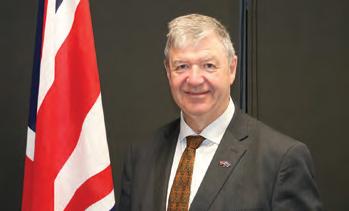
LEADING British farmer politician says he’s impressed with the positive attitude of New Zealand farmers that he met during his recent trip here.
Alistair Carmichael, who heads Britian’s influential Environment, Food and Rural Affairs Select committee in the British parliament, and some of his colleagues, were on a brief study tour of NZ to get a firsthand look at our farming system. Carmichael is a lawyer and owns a family cattle and sheep farm on the island of Islay in the Scottish Hebrides.
During his trip he met senior NZ politicians, farming leaders, visited farms in the Waikato and attended the National Fieldays.
“What I saw there was the positive spirit and mood in NZ farming, which is in sharp contrast to what the situation is like back home. There, people are feeling a bit under the cosh, milk prices are low, meat prices have been high and are now on the slide again, pigs can’t get off the farm for slaughter and poultry is being pushed from pillar to post trying to make a profit,” he says.
Carmichael says the most valuable conversations he had in NZ were with farmers, such as in the beer tent at Fieldays and on the farms he visited. He says these people have real skin in the game, in contrast to many of the policy makers and consultants where often the messages are ‘filtered’.
He says the big issue now for the UK is food security and one of his reasons for coming to NZ was to look at the structural changes it made during the 198’s with the removal of agricultural subsidies. He notes that England has almost no production subsidies and the only ones it has are for environmental improvement and nature restoration.
“Conversely, while Scotland, Wales and Northern Ireland are on the same journey, they still have subsidies that are more production focused,” he says.
Although Carmichael admires the move by NZ to remove all subsidies, he says there is no way that this model could be imposed on or work in the UK. He says the system worked for NZ in the 1980s, but 45 years on, the world is in a different space. He says while the move to bigger farms created efficiencies in NZ, in the UK and in
other part of Europe there is mandate to protect smaller communities and preserve the natural environment.
“Preserving the smaller farming units, mostly run by single families, is an important part of the social structure of rural communities.
Focusing on financial imperatives can often bring other unintended consequences on the way that people have to live. In the UK we can make political decisions about how we reform what is important to us. For example, how do we keep people farming in upland areas? It’s about tradeoffs about what things do [we] preserve as well as the things that we want to change,” he says.

ALISTAR CARMICHAEL says a major problem for farmers in Britain are policy makers who have little or no understanding about the agriculture policies they make. He says this particularly applies to policy around climate change.
“For example, it was suggested in Scottland last year that we should reduce our livestock numbers by 35%.
That would be the end of red meat production in Scotland and the end of communities in rural Scotland. They have also suggested that we could meet our food needs by imports –
this is lunacy.
“So, this could be done it seems by importing all our food from, say Brazil, where beef has been produced on land that was reclaimed rain forest and probably to lower animal welfare standards,” he says.
Carmichael says they seem to be missing the point that the climate crisis is a global issue and what they are suggesting is madness.
While most of Carmichael’s time is devoted to politics as the MP for Orkney and Shetland, he keeps a close eye on the family farm where
his elderly father still lives. He says it’s important that farming is done in harmony with nature and he points to an example on his own farm. He says at one stage the farm was home to a rare breed of birds called Choughs that nest on the farm or nearby cliffs.
He says these birds like to fossick around cow pats.
“My father got rid of the cattle and immediately the Choughs disappeared. So, I made a conscious decisions to bring back cattle, which I like anyway, and suddenly the Choughs returned. This is all about
respecting nature in the process of commercially farming a property,” he says.
For Carmichael, the take-home message from NZ is that what it has done is good for NZ, but it’s critical to have sensible workable policies that take into account the special needs of rural communities. This can only be achieved, he says, by getting direct input from farmers and having policy makers who have hands on experience of farming and who have not spent a lifetime confined to an office in the city.
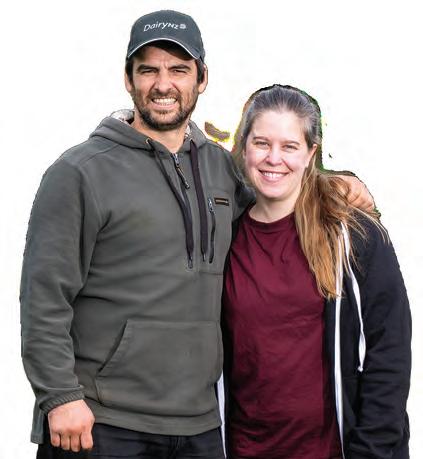
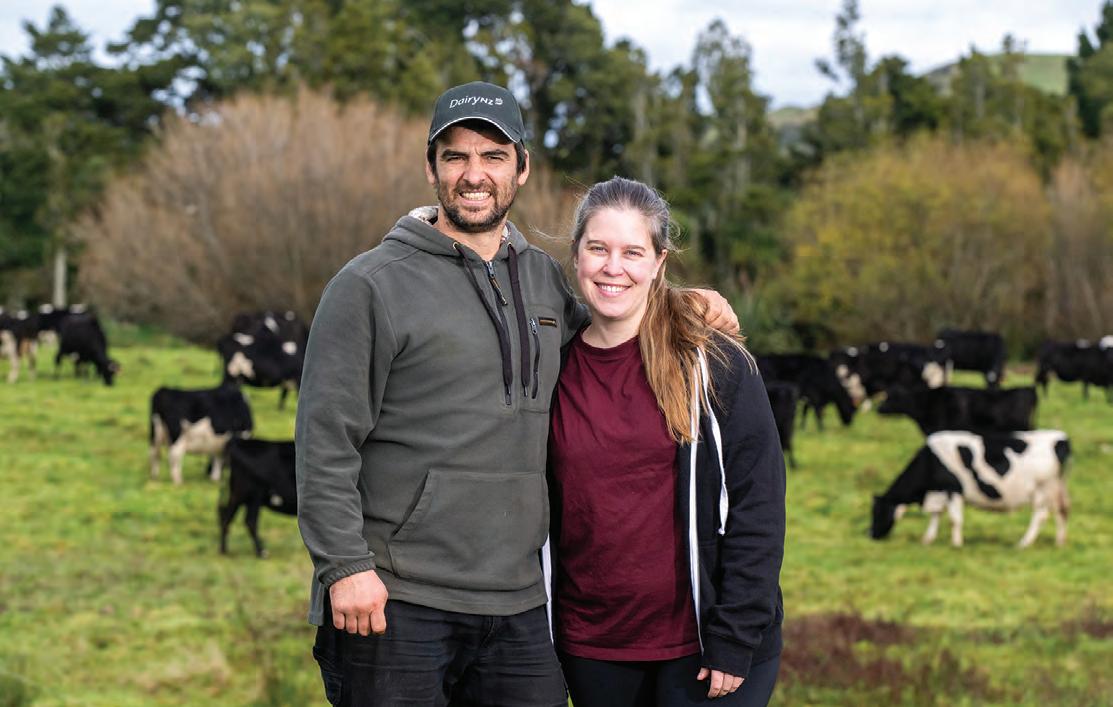
SIGNING UP to a benchmarking tool is not about competition, but about improving collectively, say Ximena Puig and Alvaro Luzardo who are 50-50 sharemilkers at a 164-hectare (effective) dairy farm in Eketāhuna in the Lower North Island.
When they moved to a North Wairarapa farm from Ashburton four years ago, the couple signed up to DairyBase, a free benchmarking tool developed by DairyNZ that helps dairy farmers understand farm systems and performance by comparing key performance indicators with other farms.
“We were very new here and wanted to learn where we were sitting compared to the rest of the region,” Ximena says.
In June this year, the couple took over another farm across the road as equity partners and lower order sharemilkers. Combined, the farms have five full-time staff plus themselves.
Ximena says DairyBase had a key role to play in staffing decisions.
“In the first year, we had one full-time and
reviewing the numbers, we moved to two fulltime staff, which made management easier,” she says.
Alvaro and Ximena were named Hawke’s Bay/Wairarapa Share Farmers of the Year in 2024. This year, they won the ASB Alumni of the Year award at the New Zealand Dairy Industry Awards, with the judges praising what the couple, originally from Uruguay, had managed to achieve in the dairy industry since they arrived in New Zealand in 2015.
The couple says they like staying on top of their numbers and DairyBase helps them do that.
DairyNZ’s DairyBase manager Jodie Goudswaard says DairyBase offers two types of benchmarking –the business’s financial performance and the farm’s physical aspects – and compares them to industry standards or targets.
“To get the most out of benchmarking, our farmers use the financial and the physical reports together,” says Goudswaard.
Data is collected annually either through

“The collected data not only contributes to industry statistics and benchmarking but
also helps DairyNZ to continue to respond to policy issues including water quality
policies, greenhouse gas legislation, and to advocate on behalf of dairy farmers,”
SHAREMILKERS XIMENA Puig and Alvaro Luzardo say they would love to see more people sign up.
“The benchmark in our area is limited in terms of sharemilkers,” Ximena says. “More data would
It’s hard to manage what you don’t measure, Alvaro says. “Informa-
tion is power. The more information you have, the more power you have to make better decision,” he says.
“We expect fuel costs to spike this season. But when we compare ourselves to others, we know whether overall rising costs are because of our management or because of the circumstances,” says Alvaro.
Goudswaard says. “It helps us build on industry good information and keep New Zealand dairy farmers at the forefront of the world dairy industry.”
“People say, at the end of the season, I make money. But could things have been better? Could you have done more? With DairyBase, you know,” he says.
Alvaro says the dairy sector is in a fortunate position to have a customised benchmarking tool.
“With DairyBase, we have a tool that not many other sectors have. As DairyBase users, we feed DairyNZ information that helps it develop tools and those tools in turn help us work better. We are paying our levy, and using this tool is a great way to get the most out of it. So, sign up and go for it,” Alvaro says.

Solid biosecurity practices, regular monitoring and timely vaccination are the three key pillars of effective Bovine Viral Diarrhoea (BVD) control on New Zealand farms. Zoetis veterinary technical advisor, Karley DeFrees, explains BVD is a costly but preventable disease that impacts a significant number of dairy farms in New Zealand. Implementation of a BVD control plan can help protect your herd from this avoidable disease.
BVD CAUSES
reproductive losses and compromises the immune system, which could translate to a drop in milk production.
It has been shown that BVD costs the country about $150 million annually in direct production losses, and a further $40 million in ongoing expenses annually to control the disease.
Research shows 15-25% of dairy herds in New Zealand have active BVD infection. BVD is a highly contagious virus that is spread through nose-tonose contact of animals, but is also carried through any bodily secretion, from milk to faeces and even semen from bulls.
There are two ways animals can contract BVD, the first is acute or transient infection, which is when an animal gets the virus and may become sick, or they may not show clinical signs, but eventually they clear the virus and come right.
The second, which is a major concern, is the presence of persistently infected (PI) animals in a herd. PI animals can only be born and are a result of cows becoming infected between 40 and 125 days of gestation.
“The virus loves to go to the reproductive system and cross through the placenta and into the unborn calf. Once PI calves are born, the virus continues to replicate, so the calves are like little virus factories running around your farm,” DeFrees explains.
The only way to deal with this is to identify PI animals, and get them off your farm as soon as possible. “They are often
animals that do not do well, show ill thrift and die early, they need to be identified and removed as soon as possible.”
There are three key pillars of a good BVD control plan: biosecurity, testing and removal of PI animals, and vaccination.
Biosecurity first
Good biosecurity practices on your farm are a must, to minimise the opportunity for BVD to show up in the first place.
This includes eliminating contact between cattle on neighbouring properties through double fencing on boundaries.
Consideration must be given to those animals that go off-farm to graze, as sometimes these blocks can have animals from multiple different properties. Cows may return in-calf and deliver a potential PI calf.
Bulls should be tested and fully vaccinated two months prior to mating, as BVD can affect fertility. Infected bulls can also infect cows through semen, as they can shed virus in their semen for 14-28 days after infection.
Testing and removal of PI animals
DeFrees emphasises that testing for BVD and removing PI animals from the herd is a crucial step in the process.
“Vaccination is important, but if you are dropping a PI animal in the middle of your herd, vaccination might not cover you 100%. Testing animals as young as possible would be my recommendation. And because a PI can only be born, you only need to test it once in its lifetime.”
Testing can be done through ear notching, blood tests or when other genetic testing is taking place. DeFrees likes to test dairy calves at disbudding time, that way she knows any calf without horns has been BVD tested.
Vaccination
Vaccination using a vaccine like Ultravac BVD from Zoetis, which has been tried and tested in New Zealand cattle, is the third step in combating BVD.
An initial course of two shots is required to protect animals, given two to four weeks before your breeding programme commences. The two doses can be given four weeks to six months apart. However, DeFrees emphasises that cattle are not protected until they have received both shots.
Calves can be vaccinated from as young as three months old and could get their two shots before heading to the run-off.
“With calves, often BVD may present as other diseases, such as rotavirus or worm burden, due to the immune system being supressed, but the underlying cause is BVD.”
Long-term, best practice is to vaccinate annually.
A targeted approach
All three pillars of management are important, targeted together, to give the best possible programme when controlling BVD on farm.
“Best practice is that you need to be thinking about all three pillars in your BVD control plan together, rather than in isolation. Finding and
eliminating PI animals is key, even if you are vaccinating, as there can still be a huge amount of virus on farm.
“Farmers also need to remember that as antibody levels drop and animals become naïve, then the risk increases if BVD does arrive. It’s a sneaky virus and it can creep into your herd without your knowledge.”
Signs you could have BVD include animals with ill thrift, reduced weight gain and fertility wastage. Farmers might observe reduced conception rates or higher empty rates.
DeFrees encourages farmers to seek advice from their vet and talk through their options if they suspect they have BVD.
www.zoetis.co.nz
@rural_news
facebook.com/ruralnews
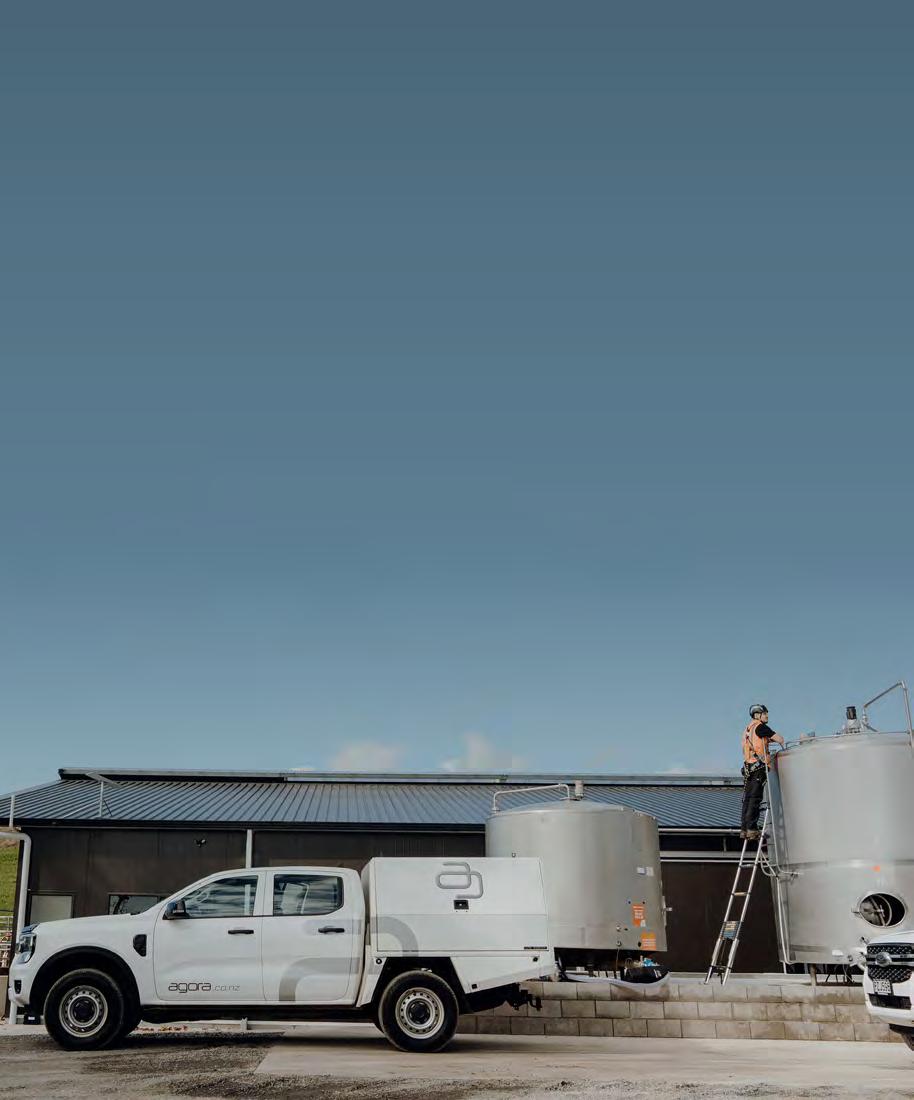

6,500,000 litres of milk protected. And we’re just getting started. Agora provides live vat telemetry for NZ dairy farmers.
CLEAN AND comfortable calf sheds help create a nurturing environment for calves, reduces the risk of disease and encourages high growth rates.
Having an appropriate set up and rearing system will help create a comfortable environment for calves that also helps maximise energy intakes and growth.
Young calves are particularly vulnerable to environmental stresses.
Their limited ability to regulate body temperature, developing immune systems, and high surface area to body weight ratio mean that housing decisions have a direct impact on their energy balance, health status, and welfare.
Effective calf housing goes beyond providing basic shelter – it creates an environment that supports natural behaviours, minimises disease risk, and optimises growth potential.
By focusing on calf comfort through appropriate bedding, adequate space, proper ventilation, and meaningful enrichment, you’re investing in the future productivity and welfare of your herd.
Housing is just one component of
successful calf rearing, but it’s a foundation that influences every other aspect of calf management.
Comfortable, healthy calves are easier to manage, more resilient to challenges, and more likely to develop into productive, long-lived dairy cows.
When planning or modifying calf housing systems, consider these key principles: Comfort over convenience While ease of management is important, calf comfort should be the primary consideration.
Comfortable calves grow faster, stay healthier, and require less intervention. Regularly assess your facilities from the calf’s viewpoint. What seems adequate from human height may be very different at calf level.
Design for natural behaviours
Ensure housing allows calves to express normal behaviours including lying, playing, grooming, and exploring. Restrictive environments compromise welfare and development.
Flexibility
Calf needs change as they grow, and seasonal conditions vary. Design systems that can be
adjusted for different calf sizes, group sizes, and weather conditions.
Reduce competition
Design feed, water, and resting areas to minimise competition between calves. Shy or smaller calves should still be able to access all resources comfortably.
Shed design
It is important to ensure that there is enough ventilation so that there is a regular circulation of clean air through the sheds. This circulation reduces the risk of respiratory diseases.
Although ventilation is key, it’s important that calves are not exposed to draughts. Get down on the calf level – try at different times of the day and under different weather conditions.
Ensure that calves remain warm and dry – if you can feel draughts at their level, this will reduce growth rates as more energy is used to keep warm and less is available for growth.
Within the pen, ensure that calves have enough space. General recommendations are for around 1.5 - 2.5m2 per calf – the more you can give the better. This space will allow the calves to move around freely, explore, and play, as well as providing enough
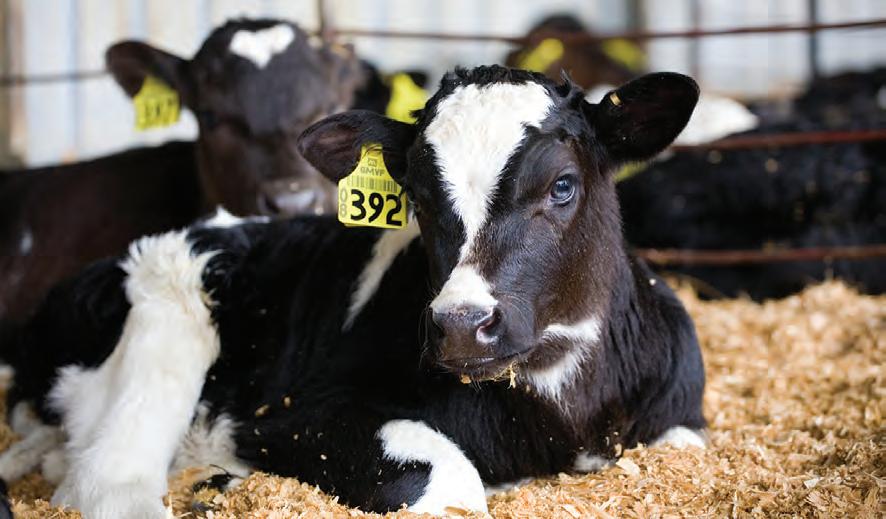
space for the whole group of calves to avoid any poor weather that may come in through the open side of the shed.
Pen design
New Zealand is one of the only countries that group houses calves. Our calves’ benefit from this as it gives them opportunities to play, bond, and learn from their peers.
Sufficient space allows calves to move freely, explore their environment, engage in play behaviours, and avoid aggressive pen mates during feeding or resting.
Adequate space reduces competition for resources like feed,
water, and comfortable lying areas. When calves feel crowded, stress levels increase, which can suppress immune function and reduce growth rates.
Sick pens
Complete pen emptying allows for thorough cleaning and disinfection, breaking the cycle of pathogen buildup that occurs when new calves are continuously introduced to contaminated
Comfortable and healthy calves are easier to manage.
environments.
Limit unnecessary movements between pens to reduce stress and prevent the spread of pathogens. Each time calves are moved, they experience stress and are exposed to new disease challenges.
Maintain a separate isolation area for calves requiring special attention. Early separation of sick calves reduces disease transmission risk, but
staff must clean and disinfect themselves and equipment after handling sick animals before returning to healthy calves. Ensure that staff clean and disinfect themselves and their equipment after handling sick calves, or if possible, provide a separate set of personal protective equipment (PPE) for the sick pen.
• Article - DairyNZ
@rural_news facebook.com/ruralnews
THE MOST important thing to consider is whether the bedding keeps the calves warm and dry, and if it drains freely.
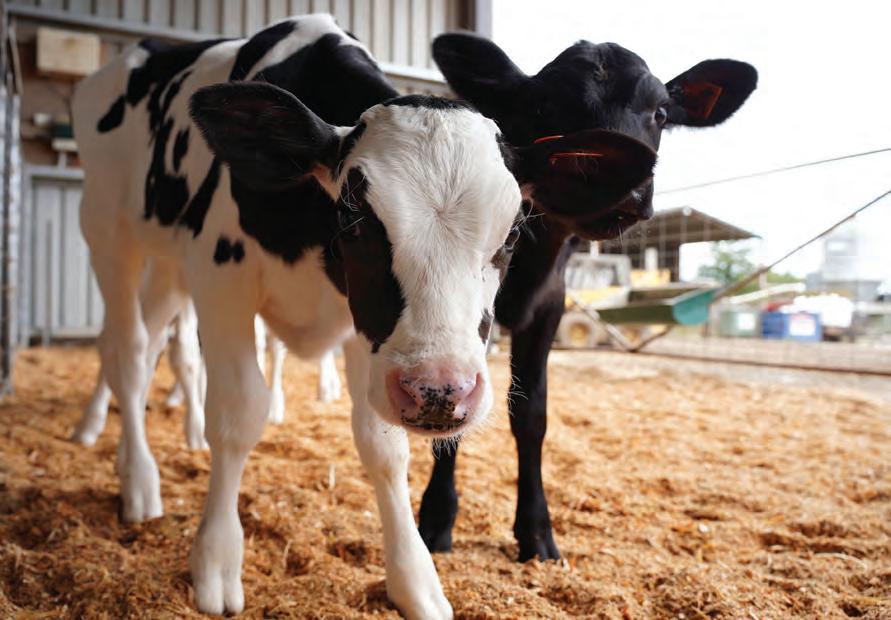
Calves should be reared on a soft bedding that is comfortable, dry, and clean.
Research shows calves housed on stones are colder, spend less time lying down, and engage in less play behaviour compared to those on softer bedding materials. These impacts on comfort and natural behaviour translate directly into reduced growth rates and compromised welfare.
Stone conducts heat away from calves’ bodies, forcing them to use more energy to maintain body temperature. This energy could otherwise be directed toward growth and immune function.
Uncomfortable surfaces discourage calves from lying down and resting adequately.
Rest is crucial for growth hormone release and overall development.
Play is an important indicator of calf welfare and contributes to normal behavioural and physical development.
Hard surfaces discourage the jumping, running, and social play that healthy calves naturally engage in.
While stone floors are not
recommended, if structural constraints mean you must use them, provide a layer of straw over the back half of the pen to create some comfortable lying space. This compromise allows calves access to a softer surface for resting while maintaining some drainage benefits in high-traffic areas. However, this should be viewed as a temporary solution while planning for better bedding systems that prioritise calf comfort throughout the entire pen area. Avoid using bedding if it is also offered as a feed source. For example, if you feed roughage of straw or hay, also using this as a bedding may mean that the calves are more inclined to nibble at the bedding, which increases risk of disease.
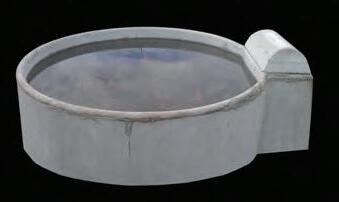
Clean water should be available to all calves. Even young calves will often have a drink. Without access to water, meal intake decreases and rumen development and weight gain slow down. Clean water troughs regularly.
After calves drink, they like to eat.
Multiple calves should be able to eat at once. Position your feed so that it is easily visible and accessible to all calves at the same time.


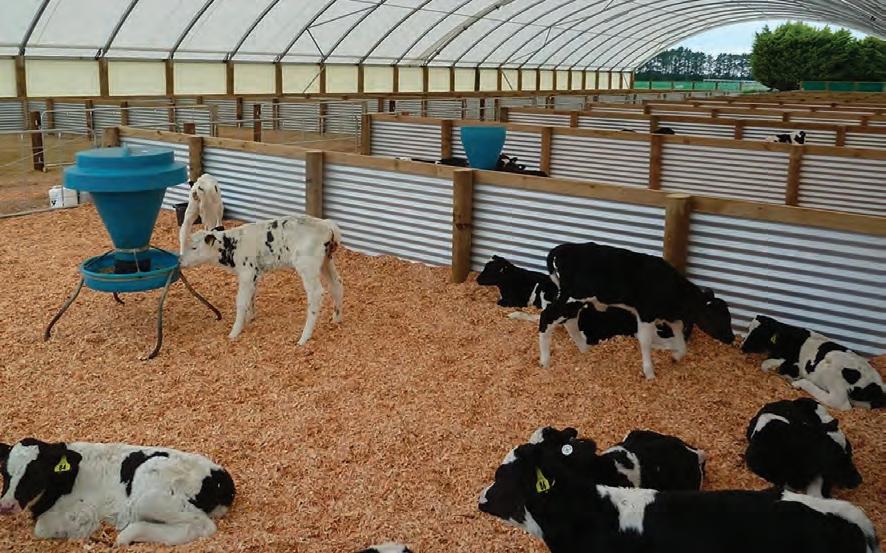
REARING FACILITIES should be set up and maintained well to ensure calves stay healthy. Young calves should be housed for at least four weeks to ensure they stay warm and are using their energy for growth.
Housing
■ Must be dry and draught-free for calves to regulate body temperature. Calves should be protected from wind and rain in a structure twice as long as wide.
■ Cover the floor surface with dry materials such as sawdust, shavings, straw, post peelings or wood chip to a depth of at least 200300mm. Avoid dusty materials and the use of river stones.
■ Ideally, the floor should be lower at the front to help drain effluent and water. Regularly muck out and top up the bedding so it is clean and dry.
■ Good ventilation is essential and is best situated where the walls meet the ceiling. It’s easier to ventilate across the shed, not down the length. Ventilation should be adaptable, so the use of boards, shutters or wind cloth is recommended.
■ Calves are less stressed and have higher intakes in smaller groups. The shelter should provide a minimum of 1.5m2 per calf and, where possible, minimise calf contact between pens. The best approach is 10-20 calves per pen.
■ Depending on how many calves you are rearing - having more than one shed separated into pens allows for easier separation of age groups and feeding levels. Having more pens also provides a safety barrier between calves in case of a disease outbreak and will allow a pen/shed to be rested for cleaning and sanitation between different batches of calves.
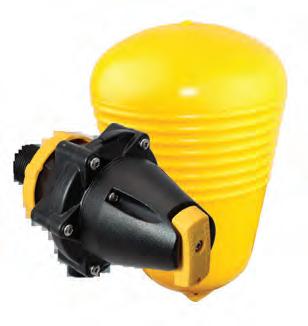
■ Each pen must have clean, quality water, which should be checked, cleaned and refreshed daily. In hot conditions, restricted feeding systems, high meal/fibre intakes or scours, an additional 2-6l of water per calf per day is required.
■ Meal troughs should have sufficient space for feeding at least half of the calves at the trough at any one time. Provide
FOLLOWING THE colostrum period, calves should be fed clean whole milk from the vat or a good quality calf milk replacer (CMR). Fortunately, research has shown that calves can thrive on a good-quality CMR.
■ Start initial feeding two hours after arrival with warm milk or electrolytes.
■ Consider a quality probiotic to help calves transition to their new environment.
a minimum of 300mm of trough space per calf.
■ Keep meal feeders free from moisture and clean weekly to avoid fungal growth.
■ Keep milk lines as short as possible and ensure there is no stale milk left in hoses between feeds.
■ Ensure all feeding equipment is regularly cleaned and treated with disinfectant. Bottles or cafeterias should be cleaned between feeds and automatic feeders (mixing bowls, lines and teats) should be cleaned and calibrated at least weekly.
■ Use a broom to remove any excess material in laneways. Do not use a high-pressure hose inside the shed, as this will aerosol bacteria and viruses to calves in other pens.
■ Spray the rearing area, feeding utensils and teats with approved virucidal at least once a week and daily during a disease outbreak.
■ Rodents and birds must be controlled.
■ Isolate sick calves to reduce risk of spreading disease.
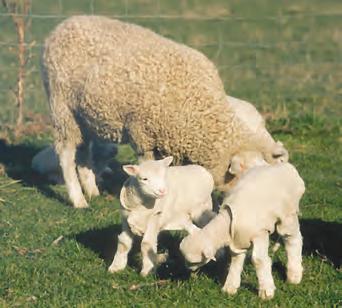
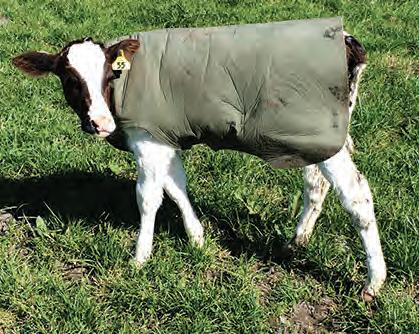
If you can get to them, you can save them. A NZ$6.00 investment in a Woolover Cover can return you NZ$180! The covered lamb will enjoy the warmth and also have increased growth rates over the first three weeks. Enjoy the satisfaction of saving at risk lambs and be well rewarded in doing so.
Raising calves is not for the faint hearted. Ensuring the calf is warm and dry in a draft free environment, is the ideal situation.
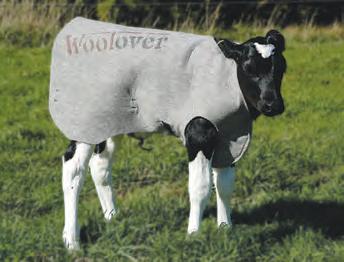
QUESTION; What was the air temperature at 4:30am this morning in your calf rearing facility? If the air temperature was below +10C, the calf is now cold. Drop that air temperature to +4C then calf is shivering and cold. The 'shot of milk' at 7:30am on a cold calf is now being absorbed to regain body heat rather than being used to actually grow the calf.
THE ANSWER IS; By fitting a Woolover Calf Cover to those new born calves, the wool is now ensuring the calf is warm and able to absorb that milk into growth rather than trying to maintain body temperature. All calf rearers should be ensuring their calves reach target weights earlier, be it your replacement heifers or your dairy / beef contract calves. Simple really! Just use the Woolover Calf Covers to ensure this next crop of new borns reach their true genetic potential.
Woolover Ultra Calf Cover
As above with the Regular Calf Cover, wool providing the warmth plus total water shedding ability, to ensure those calves in the harshest climatic conditions, survive and grow to reach their true potential.
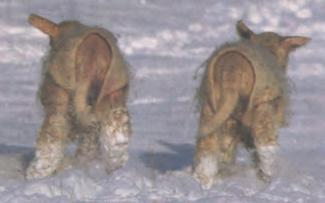
Especially designed for those kid goats, or finn lambs or triplet lambs, these covers will ensure and assist those smaller animals survive and reward the effort to cover them.
Wool Working 24/7
■ Clean the feed equipment and teats after each feeding.
■ Check for slow-drinking calves that struggle to compete within the group. If necessary, re-group calves on drinking speed and vigour.
■ Check milk temperature. Feeding warm (38-40°C) is recommended.
■ Check teat quality (replace if damaged) and quantity – there should be spare teats on each feeder e.g. eight calves to a 10-teat feeder.
■ Clean, fresh water must be available ad-lib from day one.
■ Calves should be fed at the same time each day.
■ Offer a good-quality forage source (e.g. chopped grass hay, pasture, chopped silage), plus a grain-based starter, from week 1. The solid feed offered should be tailored to suit the rearing system selected. Calves can be reared successfully on high levels of milk (e.g. 8L/day) plus good-quality forage.
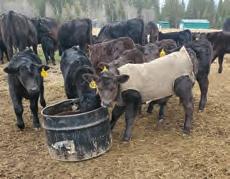
Designed especially for those USA / Montana blizzards, the cover is designed to simply 'fall off the beef calf after 4 weeks' and simply biodegrade on the ground where ever it falls. No rodeo nor catching the calf to remove the cover. Perhaps you have a mob of dairy cows calving early on a paddock of swedes, less that ideal weather, simply fit the Woolover Fit n Forget Beef Calf Cover, knowing full well the calf should survive that hostile environment, and capture some additional growth rate.
alongside cleaning and maintaining the machine.
THE NEW Lemken Saphir XMR mechanical seed drill has been introduced as the successor to the proven Saphir 10m with the manufacturer claiming new standards for precision, ease of use, and area coverage.
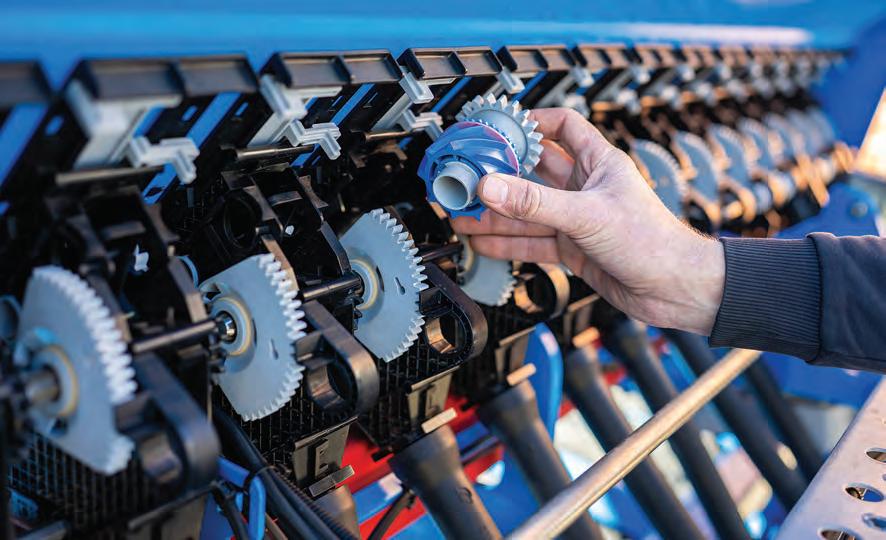
The XMR’s metering system, developed from the ground up, is built for ease of use, allowing the metering wheels to be removed individually without tools, making it easy to switch between different seed types,
Different seed wheels ensure that both fine and larger seeds are sown precisely and evenly, while as standard equipment, the system includes a double-sided electric drive with halfwidth section switch, meaning reducing overlap at headlands or while operating in irregularly shaped fields can help save seed and reduce costs.
In addition to its precise metering, the Saphir XMR is configured for ease of use, with depth control adjusted
via a central lever, while coulter pressure and sowing depth can be adjusted separately. A patented tramline control system is also designed for flexibility, allowing operators to select different tramline patterns and working widths. Meanwhile, the iQblue drill offers an ISOBUS-based operating concept with logical, clear access to all key machine functions.
To ensure reliable seed placement, the drill uses the tried-and-tested parallelogram-guided double disc coulter with pressure roller, to ensure








consistent seeding depth and good soil contact even under varying soil conditions and at higher speeds.
In addition, coulter pressure can be easily adjusted to up to 45kg using the grid adjustment mechanism, with the drill available with 12.5or 15-centimetre row spacings.
The Saphir XMR can be configured with 900, 1200, or 1500 litre tank capacities, and has a large opening, rigid, waterproof plastic lid, making filling with big bags or a front loader easy.
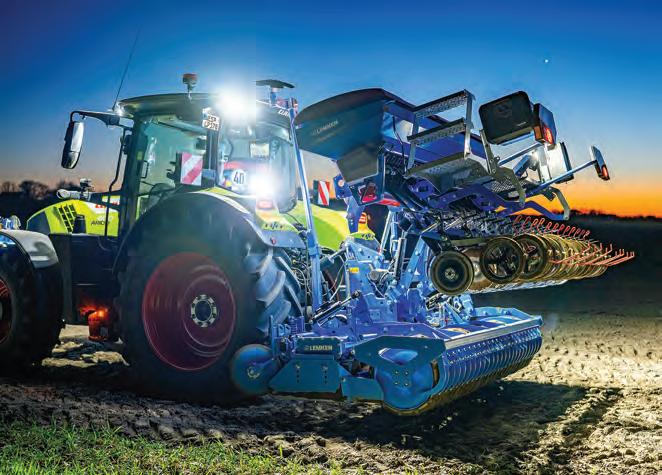
The new Lemken Saphir XMR mechanical seed drill.
The MultiHub can be installed as an optional 200-litre auxiliary tank for micro-granules or catch crops.
The Saphir XMR can be mounted as a combination unit on the Zirkon EMR and Zirkon XMR power harrows, equipped for the first time with the optional 600-series roller, offering significantly reduced rolling resistance and improved reconsolidation, particularly on light soils.
During operation, the semi-mounted design sees hydraulic cylinders lift and swivel the seed drill forwards simultaneously, reducing the rear axle load and ensuring stable weight distribution – particularly important during road transport.
In other news, challenging market conditions in the agricultural machinery sector are behind Lemken’s decision to
temporarily introduce short-time working between July and the end of the year at its Alpen site in Germany. The site, which is also Lemken’s headquarters, employs around 1200 staff and produces approx. 15,000 ploughs, cultivators, compact disc harrows, power harrows and seedbed combinations annually. www.lemken.com
@rural_news
facebook.com/ruralnews




MARK DANIEL markd@ruralnews.co.nz
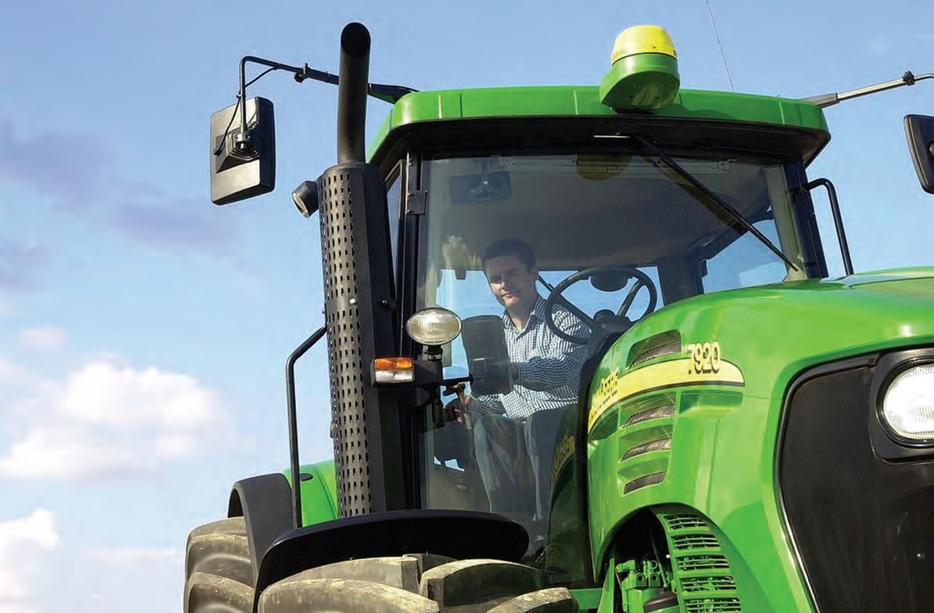
THIS YEAR marks the 25th anniversary of John Deere moving into automated guidance.
The journey started in 2001 with the launch of the first StarFire receiver and GreenStar display, which combined to offer visual guidance to help operators steer more precisely and consistently.
Back then, the in-cab display showed an operator they should steer left or right, supporting parallel tracking and improving pass-to-pass precision. This was followed with the launch of AutoTrac in 2022, enabling GPS-assisted automated steering that could keep machines on track, with 30cm accuracy.
By 2004, AutoTrac with RTK honed guidance accuracy to ±2.5cm, making it possible for tractors and combines to follow the same tracks repeatedly over multiple seasons. This offered key advantages for operations such as row-crop production, inter-row hoeing and controlled traffic strategies.
Continually evolving, automated guidance continued to advance beyond steering, with the introduction in 2020 of AutoPath Rows, designed to record the actual driven tracks of each row unit and enable precise repetition. Most recently, in 2024, AutoPath Boundaries has enabled the automatic calculation and creation of optimised paths for the entire field based on its boundaries.
Guidance progress has been matched by equally dramatic change in data recording and connectivity, with real-time data exchange. In the early days, digital field documentation could be as literal as ‘data in the pocket’, with the JD FieldDoc system storing field work on a keycard that had to be read manually in the office.
Today, data transfer is all about automation, with JDLink modems transmitting information in real time to a smartphone, tablet or computer, enabling a connected approach to decision-making and machine management.
In other areas, Data Sync, allows any recently added data regarding field or product details to be automatically synchronised across the entire fleet
and accessible to all operators. Production system marketing manager for Precision Technologies,
said: “Over the past 25 years, precision agriculture has moved from early visual guidance and manual data handling to integrated, automated workflows. From keycards to cloud connectivity, and from steering
support to highly accurate guidance and automated path creation, the aim has remained the same: to make fieldwork simpler, more precise and more efficient.”
www.deere.co.nz
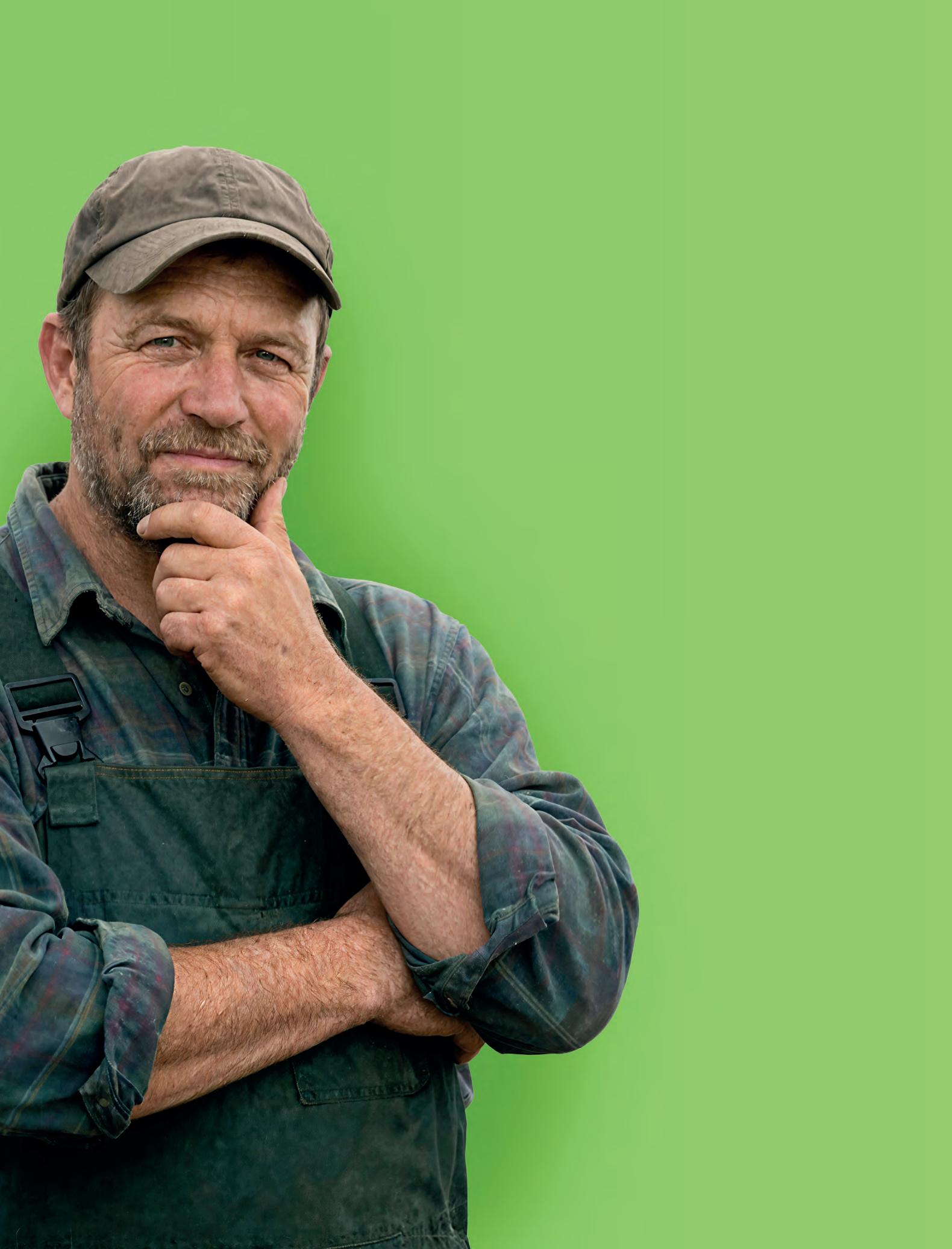
You know better than anyone that strong assets need to work hard all year round. PMG takes the same active management approach to our commercial properties, making your investment work harder over time.
With a $700m+ portfolio, the Pacific Property Fund is New Zealand’s largest diversified unlisted property fund and will soon open for investment - offering investors access to more than 29 highquality large-format retail, industrial and office properties across New Zealand. Properties are actively managed by PMG, with income generated from rental activity and long-term asset performance. The Fund also operates within a PIE structure, which may be tax-efficient depending on individual circumstances.
Join thousands of Kiwi investors who are seeking to grow their wealth by investing alongside a trusted manager with 34 years of experience in commercial property investment and management.
7.7% p.a. total return since inception, with cash returns paid monthly.