
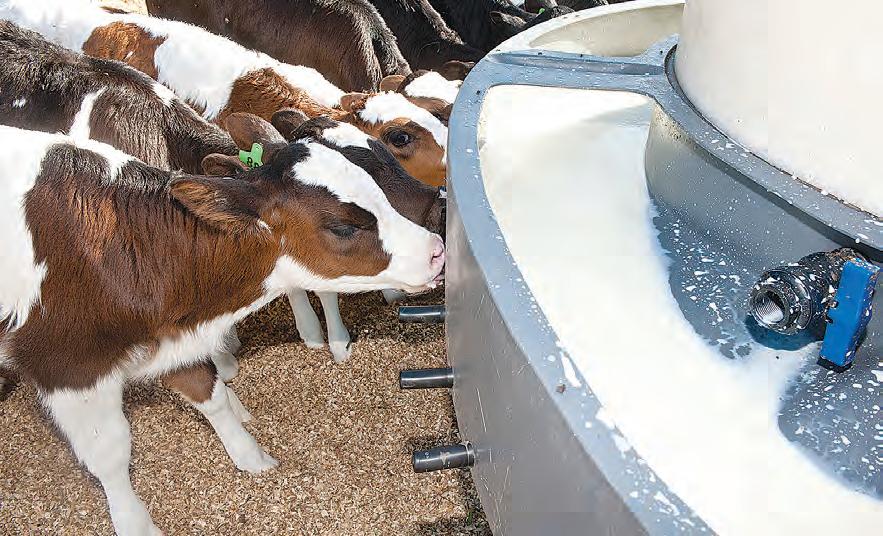
Canola meal is a premium protein source for dairy cows, supporting milk solids production through:
Improved metabolizable protein efficiency
Higher and more persistent milk yield
Increased dry matter intake and maintenance of cow condition
Canola meal is a valuable source of rumen undegradable (bypass) protein, supplying highly digestible essential amino acids to the small intestine. Its amino acid profile is well aligned with milk protein requirements, with comparatively high concentrations of methionine, a key limiting amino acid in high‑producing dairy cows. Diets containing canola meal have been consistently associated with improved efficiency of metabolizable protein supply, increased dry matter intake and enhanced milk yield.
Cargill’s canola meal is available through your local feed supplier, with non‑GMO options and sustainability credentials available where required.
For more information about canola meal visit www.cargill.co.nz.

POLTICIANS CALLING for New Zealand to withdraw from the Paris Agreement on climate risk damaging two of our gold-plated free trade deals.

NIGEL MALTHUS
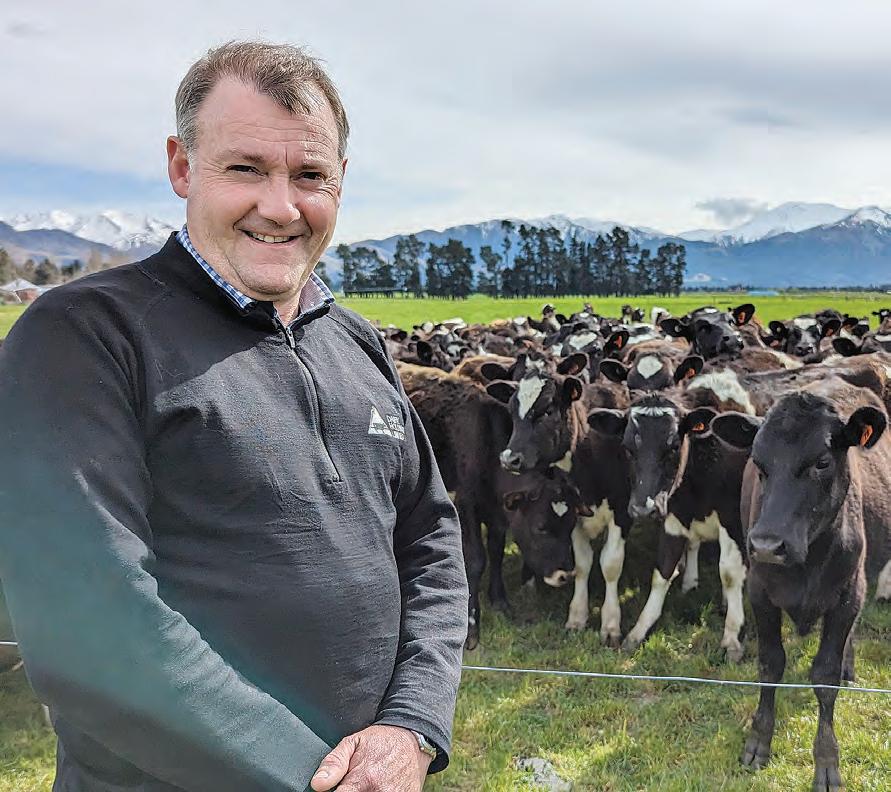
AFTER 25 YEARS it is the right time to step away, says Colin Glass, the retiring chief executive of New Zealand’s largest private corporate dairying company, Dairy Holdings.
Glass, who stood down at the end of May, said that moving on has given him the chance to reflect, and appreciate that what was created in Dairy Holdings was “quite special”.
“As always, it’s about the people that you deal with rather than necessarily what you achieve, but certainly the company’s gone from strength to strength, from what was reasonably humble beginnings way back in 2001, to what it’s become now,” he said.
“Very, very proud of the team and some of the underlying success stories that I’ve had the privilege of being involved with,” he told Dairy News
For the immediate future, Glass is now concentrating on the family dairy and bull beef farm at Methven he shares with wife Paula and daughters Hannah and Olivia and seeing how it can be further developed.
However, it’s clear that governance roles in the industry may not be too far down the track,
and Glass agrees that a governance role with Fonterra is something that “gets raised from time to time”.
“It’s not something that I’m considering just at the current point in time.
“But certainly, you know, Fonterra’s success is New Zealand’s dairy farming success. So, I’ve certainly got an eye on that, potentially in the future at some stage, but not at the moment.”
Dairy Holdings now holds around 90 farms, both dairy and support, producing around 23 million kgMS annually.
Under Glass’s leadership the company continued to grow right to the end of his tenure, with the acquisition of the Rangitata Partnership’s farms, under a deal which only went unconditional on his last day at work, and was settled on the Wednesday of the following week.
With Rangitata holding several dairy farms in South Canterbury and a large grazing block in Tarras, Glass said it was “quite a large transaction and good one to get under our belt at the end”.
Glass said the success of the company was testament to the vision and courage of the founders, Allan Hubbard, Colin and Dale Armer, and Alan Pye, to pick up the farms of the former
Tasman Agriculture and Dairy Brands groups when their then owners decided to sell up in 2001.
As Tasman Ag’s chief financial officer at the time, Glass came with the deal and he proceeded to lead the new company through an extraordinary growth period for dairying.
Glass said many of the challenges of the early years were the sometimes very involved legal processes around water take consents that had to be pursued through various regional council hearings and in some cases all the way to the Environment Court.
“Out of all of that, there were some amazing learnings and that really has set Dairy Holdings up for the future.
“Most of those 70-odd dairy farms in Canterbury now are all incredibly well irrigated with reliable, relatively low-cost, and affordable
water. That’s really added to the company’s low-cost farming model. So it’s meant that the
overall portfolio is now really, really resilient and able to understand most price shocks.
WHILE THE growth in the dairy industry of the last 20-odd years will never be repeated, there was currently some resurgence of dairy conversions going on. However, it was being done in a very sustainable way, says Colin Glass.
Dairy farming had massively changed over the years with state-ofthe-art irrigation, AI-driven algorithms and other technologies transforming efficiency.
“That’s been happening right across the dairy industry as people have developed their own farming systems and models and invested in their farms,” he says.
“There’s more riparian planting, there’s a beautification of farms like we’ve really not seen in the generation, and so you’ve got a real sense of pride in ownership within
“The piece for me that was quite nice, was how the team and everyone involved at that time was able to take some of those challenges and knockbacks and learn from them, and it was out of that that the company really grew.
the sector that that only comes with success.”
Dairy remained the absolute cornerstone for rural New Zealand and so many businesses livelihoods were dependent on it, he says.
“Thank goodness that we do have dairy because if we didn’t, you know there wouldn’t be too much really holding up the New Zealand economy at the moment.”
“When you look back now, any difficult times we experience is always what makes you stronger. Never have you finished your learning and if you just stay focused, you can always get there in the end.”

SUDESH KISSUN sudeshk@ruralnews.co.nz
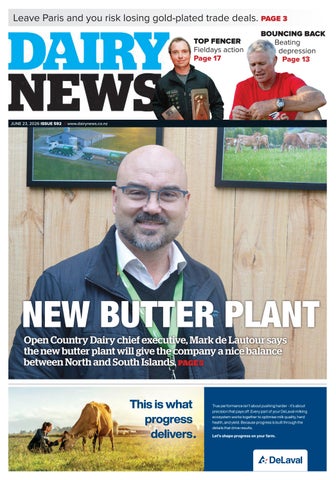
THE COUNTRY’S second largest milk processor, Open Country Dairy, is building a butter plant at its Awarua site in Invercargill.
The new plant will have the capacity to process 30,000 tonnes of butter per annum and will be commissioned at the end of 2027.
Open Country Dairy (OCD) is also boosting production at its first butter plant in Waharoa, Waikato. The plant, which opened in November last year, can process 20,000 tonnes of butter; another 5000 tonnes of capacity, mainly producing small packs for retail, is being added.
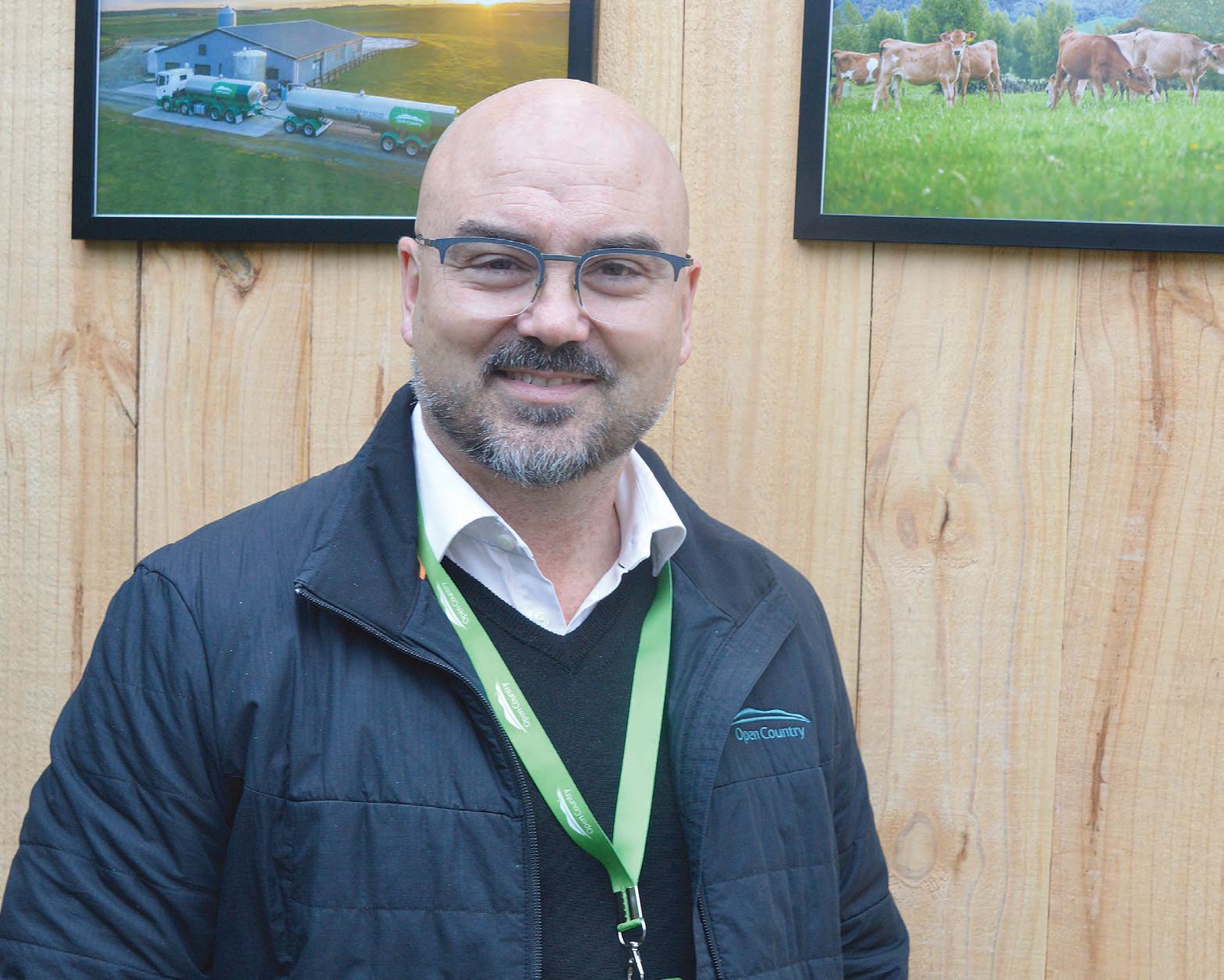
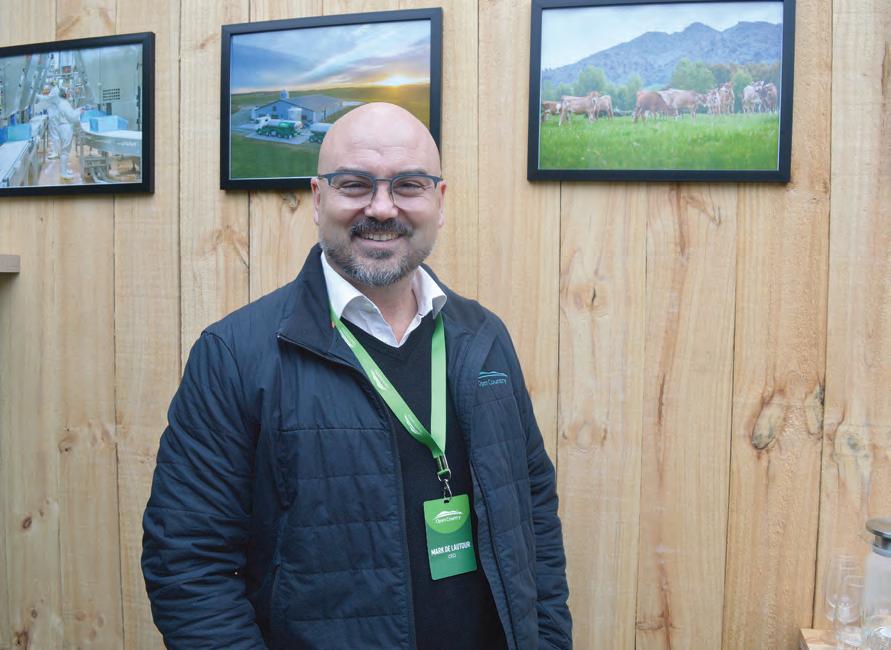
OCD chief executive Mark de Lautour says the expansion will give the company a nice balance between North and South Islands.
De Lautour told Dairy News that currently there’s a big focus on the fat component of milk.
BIG
“For years everyone said processing milk was about taking the water out of milk.
“It’s not that anymore, it’s taking out the protein and fat, which are of course the valuable parts.”
“That’s a very Open Country thing – pick a product, do it very efficiently at a high quality level and keep it simple. But make sure you’ve got options.”
On the Global Dairy Trade auction, milk fat prices rose to record levels last year before coming down in recent months.
Butter prices rose to a record US$8000/metric tonne one year ago. In the latest GDT auction, butter price dropped 2.4% to US$5516/MT.
IT’S BEEN a busy 12 months for Open Country Dairy.
Apart from opening its new butter plant at Waharoa, the company acquired two milk processing plants – Miraka in Mokai (near Taupo) and Mataura Valley Milk in Gore.
The ice cream business of Open Country’s parent company Talley’s has also come under its fold. Mark de Lautour says processing
Anhydrous milk fat price dipped 1% to sit at US$6601/MT at last week’s auction. It reached over US$7600/ MT earlier this year.
De Lautour says the investments also ensure the company has options on protein and fats.
“For proteins we’ve got skim and whole milk powders and cheese: cheese of course is casein and whey is an increasingly valuable protein that falls out of the cheese-making process. So, we’ve got plenty of options on the protein side.
“But on the fat side, we only had AMF or whole milk powder. Butter has therefore given us the optionality of WMP, AMF or butter to utilise the fat component of the milk.”
The company looked at other milk fat options like cream cheeses and UHT cream, which are performing better than butter right now.
However, they are currently limited for market options and pricing is largely “China-
capability at both plants has improved and they are now making money.
“Both those sites had significant inefficiency and high costs and we’ve tightened it up.
“It’s been a really big year: the company is significantly bigger than it was a year ago.
“So, this year is just getting our arms around that, making sure everything delivers.”
driven”, noted de Lautour.
“Especially the UHT cream, a lot of that going into China,” he says.
“And the big Chinese manufacturers are also building UHT whipping cream and cream options.
“So, we’d rather do products where you can sell it to 20 or 30 countries rather than just a handful.
“That’s a very Open Country thing – pick a product, do it very
ON THE milk supply side, it’s also been a good year for Open Country Dairy.
The company recruited over 60 new suppliers taking its supplier base to “well over 1200”, says Mark de Lautour.
He says the company will always welcome new suppliers.
“We’re always looking for people who want to come and give us a go.
“We give farmers a choice and there’s lots of interest from farmers to give us a go.”
efficiently at a high quality level and keep it simple. But make sure you’ve got options.”
While butter plants don’t necessarily require more milk, Open Country is still looking for new suppliers.
Open Country offers farmer suppliers choices when it comes to milk payments: both options provide monthly advance payments, but they can then either be settled in full four times per year or they can choose the ‘Milk Price Plus’ payment model. Under this system, they are still paid advance rates, but the final milk price is what the farmer would get paid under Fonterra’s farmgate milk price (FGMP) model, plus an
De Lautour says they are looking at additional cheese plants on both islands.
“We’re just working out what type of cheese, and which is the priority, North Island or South Island.”
additional 10c/MS.
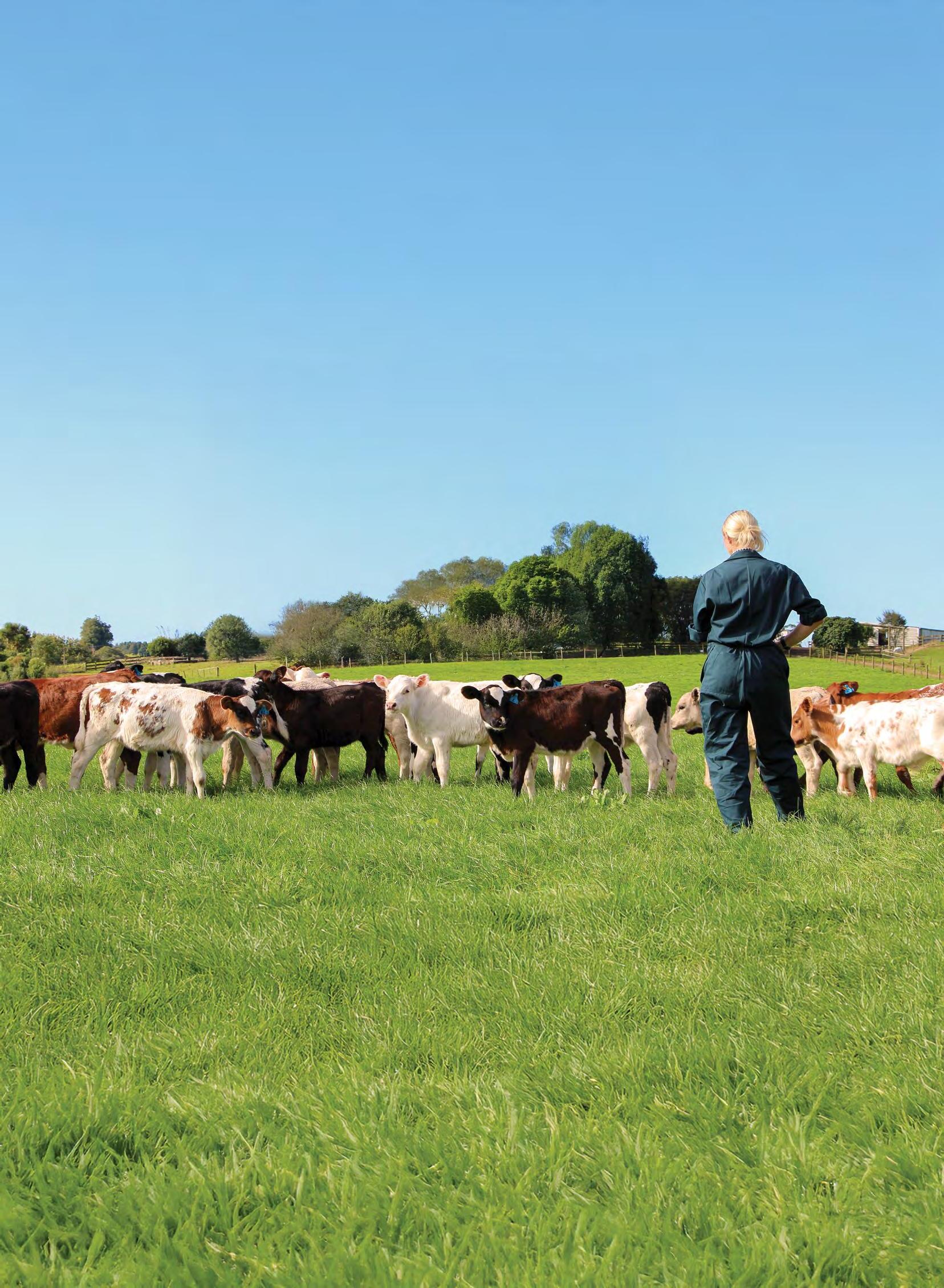

HOW TO save soil, living with kikuyu grass and retaining nutrients on farm.
These were just some of the conversations that Massey University initiated at its site at Fieldays recently.
Danny Donaghy, Professor of Dairy Production Systems and joint Deputy Head of the School of agricultural and the environment at Massey, says their Fieldays site and also the Science in Farming site where they had a presence was designed to bring to farmers’ attention to simple practical solutions to some significant issues they face.
Donaghy says Massey and Ministry for Primary Industries (MPI) made various models which they had on the sites which demonstrate how nitrogen can be captured on farm using a woodchip bioreactor –one of which is already in use at a farm in the Manawatu.
He says another model showed the value of a detainment bund at the bottom of a slope which can capture phosphorus and also soil.
“One cropping farmer from the South Island told me that he installed a detainment bund and when there was a heavy rainstorm, two hectares of his crop and soil was washed down the hill, but it was stopped from going into the stream by the bund,” he told
Dairy News
“As a result of this… when the soil dried out, he was able to recover about a dozen truckloads of it and restore the hillside. He says he never realised how much soil could be wasted by such an event,” he says.
Donaghy says this is just one of the many simple solutions that are now available and are becoming more necessary as the frequency of adverse weather events increases.
Another issue for farmers who are having to cope with climate change and unpredictable adverse weather events – be they floods or droughts – is getting pasture mixes that can help mitigate some of the impacts.
Donaghy has various
cocktails of pasture mixes that could make a difference. He says for summer dry, ryegrass with chicory and red clover and also tall fescue, red clover and lucerne. Then for areas that get waterlogged, species such as tall fescue with timothy and strawberry clover.
“Another issue that has created a lot of interest is how to deal with kikuyu grass which is dominant in Northland but has now spread south into the Waikato and down the coast to the Manawatu. For years people have been asking how to deal with it and it’s come to a stage when we just have to live with it and find ways of better dealing with it,” he says.
Donaghy says he’s been looking at a range
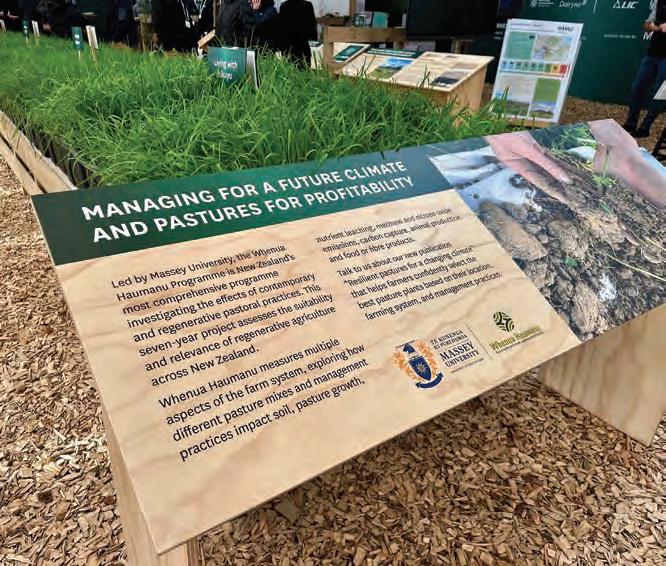
of options to mix with kikuyu and these include prairie and brome grass, lotus and white clover. He says
all these species were on show at the Fieldays and the aim has been to provide options and to get farmers and their
advisors to see which species of pasture best suit their environment and specific production requirements.
FONTERRA’S WHAREROA site
took home the prestigious Directors Award at the co-op’s ‘Oscars of Manufacturing’, while Clandeboye led the way with multiple wins at this year’s Best Site Cup.
Around 200 representatives from Fonterra’s 24 New Zealand manufacturing sites gathered recently to celebrate the incredible achievements across the network over the past season.
This year, 20 awards were presented, recognising excellence across a wide range of categories – from quality and health and safety through to sustainability and innovation – showcasing the depth of capability across the co-op’s manufacturing network.
Fonterra chief operating officer Anna Palairet says it’s wonderful to celebrate the incredible work the team does every day.
“What stands out is our people. The work they do from collecting milk from our farmer shareholders all the way through to getting amazing high-quality products to our customers. They’ve done some incredible mahi.”
The Best Site Cup, now in its 20th year, is a long-running highlight for the co-op. It shines a spotlight on the more than 7000 manufacturing employees across
the country, recognising the critical role they play in delivering value for farmer shareholders, customers and communities.
“It’s brilliant to be here to acknowledge all the people who are here to celebrate with us, and also all our people at sites working on a daily basis to make that happen,” says Palairet.
Fonterra’s director of New Zealand Manufacturing, Chris Kane,
says it’s a proud moment to reflect on what teams have achieved over a busy season.
“With strong milk collections across the country, it’s been a demanding season for everyone at our sites. These awards are about more than results – they reflect the daily commitment to safety, quality, teamwork and continuous improvement that keeps our co-op strong.”

THE DAIRY sector has been told that it cannot afford to rest on its laurels.
Agriculture remains the backbone of New Zealand’s economy and the dairy sector is the biggest earner in the sector.
In the year to 30 June 2025, New Zealand exported a record $27.15 billion of dairy products. Dairy now generates more than one in every four dollars of New Zealand’s foreign exchange receipts from goods and services exports and employs over 55,000 people.
DairyNZ says there’s a need for continued investment in the future resilience of the dairy sector, continuing to push productivity, efficiency and environmental outcomes. The worrying thing is that since around 2015, the dairy sector has reached a productivity plateau.
Ode to the silly season
IT’S ELECTION time. The general one in particular is attracting unbelievable promises that are too good to be true.
The spin doctors are on a roll, especially National’s team at Fieldays with daily offerings of good news. At the same time, Labour’s presence at Mystery Creek was a mystery with claims their site was not used, although Labour says there were no plans to have a site and felt it was better and more cost effective to just walk and talk.
Being inconspicuous might not have been a bad thing given the mystery as to why Labour has their former Minister for Agriculture and Trade ranked well down the party list and below new candidates with no parliamentary experience.
Putting diversity ahead of experience, perhaps, but not too many in the rural community will be buying that.
ANOTHER HOT topic at Mystery Creek was the intrigue over the upcoming election for the presidency of Federated Farmers.
Feds spin doctors were not happy that Dairy News broke the story about Wayne Langford wanting a fourth year and that he was challenging the present vice president Colin Hurst, who some had expected to take the role.
Dairy News was accused of writing negative stories about Feds.
Interestingly, no other farming publications are running the story, especially one which has a tie-up with Feds and regularly publishes four pages of fluffy pieces about the organisation.
STAYING ON Federated Farmers, this week’s annual general meeting in Auckland is shaping up to be an interesting one.
One would have thought that with a general election a few months away, the farmer lobby would be keen to present a united front.
There has been much talk about Wayne Langford’s push to stay on for another year and whispers of a conspiracy against vice-president Colin Hurst.
But then the Feds have always been full of surprises.
Milking it remembers an occasion many years ago when the media were invited to a luncheon to hear a keynote speaker. Great, we thought, but it turned out the media were relegated to a bench behind the guests and fed some very ordinary sandwiches while the rest dined – yes – on chicken. Three clucks for the Feds!
NO ONE messes around with Winston Peters, more so in a general election year.
The seasoned politician received a letter from “Rainbow Action Tamaki” allegedly threatening legal action against his social media post calling them names including “bunch of rent-a-crowd protesters”.
The church group recently protested about NZ First’s definition of a woman Bill.
The reply from Winnie was typical.
“They want me to delete my post, apologise, and donate money to their ‘charity’. My post is now passing 1.7 million views on Facebook. So, no. I won’t be deleting it with all the positive responses it is receiving from Kiwis with common sense who are backing our stance.
“We also won’t be donating any money to their cause, mainly due to not knowing which kind of flag it will be spent purchasing, seeing as they can’t make their mind up what protest they are at.”
Ouch!

Head Office: Lower Ground Floor, 29 Northcroft St, Takapuna, Auckland 0622
Phone 09-307 0399.
Postal Address: PO Box 331100, Takapuna, Auckland 0740
Published by: Rural News Group
Printed by: Inkwise NZ Ltd
Contacts: Editorial: sudeshk@ruralnews.co.nz
Advertising material: beckyw@ruralnews.co.nz
Rural News on-line: www.ruralnews.co.nz
Subscriptions: subsrndn@ruralnews.co.nz
Publisher: Brian Hight ......................Ph 09-307 0399
General Manager: Adam Fricker ...................Ph 021-842 226
Editor: Sudesh Kissun ................Ph 021-963 177
Machinery Editor: Mark Daniel......................Ph 021-906 723 markd@ruralnews.co.nz
Reporters: Peter Burke.....................Ph 021-224 2184 peterb@ruralnews.co.nz
Subscriptions: Julie Beech ....................Ph 021-190 3144
Production Manager: Becky Williams ..............Ph 021-100 4831
Digital Strategist: Jessica Marshall ..........Ph 021 0232 6446
That’s why Responsible Dairy, an initiative announced at Fieldays recently, is crucial. In total the programme funding is $45.85m over seven years. $18.34m will come directly from the Ministry for Primary Industries Primary Sector Growth Fund, up to $19.73m via the existing DairyNZ levy, and the remainder from in-kind or cash contributions. Responsible Dairy will “accelerate innovation, scale up adoption, and efficiently deliver environmental and productivity gains across the dairy sector”.
It is expected to speed up the rate at which the sector adopts transformative technologies, getting them into active use years earlier than what might otherwise be the case to keep New Zealand dairy globally competitive.
By 2050, the programme is expected to deliver about 20% growth in milksolids from existing farms and land use change and 20% reduction in nitrogen leaching per hectare. On top of that, sector profitability will lift 13%.
Dairy is the jewel in New Zealand agriculture’s crown. To remain so, we must future-proof our farming practices. Responsible Dairying will do just that.
AUCKLAND SALES CONTACT: Stephen Pollard .............................................Ph 021-963 166 stephenp@ruralnews.co.nz
WAIKATO & WELLINGTON SALES CONTACT: Lisa Wise ........................................................Ph 027-369 9218 lisaw@ruralnews.co.nz
SOUTH ISLAND SALES REPRESENTATIVE: Kaye Sutherland .........................................Ph 021-221 1994 kayes@ruralnews.co.nz
KELVIN WICKHAM
NEW ZEALAND agriculture has always been built on partnerships. In a country a long way from global markets, with challenging terrain and changeable weather, farmers have always recognised that collaboration is how we compete, innovate and survive.
A great example of this is Zespri. Faced with instability and fragmented market development during the 80s and 90s, Kiwi growers united as a co-operative behind a single export model to become one of the world’s most successful horticultural marketing businesses, and a major export earner for New Zealand. Imagine where our kiwifruit sector would be if Zespri had never been formed.
I believe that spirit of partnership and collaboration matters more now than ever.
Agriculture’s importance
Agriculture is indisputably the backbone of the New Zealand economy. Our food and fibre sector
generates more than 80% of the country’s export earnings, often acting as a shock absorber during periods of global uncertainty or weak domestic spending. Relatively strong commodity prices and export demand have repeatedly helped support our national income during hard times, something that many Kiwis outside the sector don’t always fully appreciate. Agriculture remains one of the few sectors where New Zealand can genuinely compete at scale.
Partnerships are key
Continuing to grow New Zealand’s economy largely depends on how well we collectively work together, whether you’re a farmer or grower, science provider, iwi, government agency, exporter, or co-operative. In my view, New Zealand’s future belongs to those who come together to invest for the long term.
Coming together for greater impact
Fonterra was created more than 25 years ago because farmers knew by pooling resources, expertise and market access, farmers could create a business
that could reach far beyond what an individual farmer could achieve. The co-operative enabled a ‘grass to glass’ value chain with scale milk collection and manufacturing in New Zealand aligning and building upon the global market position established by the New Zealand Dairy Board.
More recently, investment in renewable energy and lower-emissions technology such as the Kapuni green hydrogen project in Taranaki, is a great example of where industry, iwi, energy providers and government are helping develop new pathways for domestic manufacturing resilience and cleaner production systems.
These types of collaborations require work, along with big picture thinking and long-term investment, but they’re crucial if New Zealand wants to remain globally competitive.
Partnerships build resilience
One of the strengths of New Zealand agriculture is that we have historically found ways to pool resources and share risk. Ballance emerged as a co-operative because farmers understood they could do
more together, whether that was securing access to fertiliser, exporting products to international markets, or investing in infrastructure and innovation.
Collectively, New Zealand’s top 30 co-operatives generate revenues equivalent to roughly 12.5% of national GDP, directly employing nearly 50,000 people. Several rank among the world’s top 300 co-operatives. The co-operative model continues to have longevity, I believe, because it builds resilience into operations and helps drive farming forward.
Investing through cycles
Anyone involved in agriculture knows the sector moves in cycles. When industries collaborate and invest in partnership, even through a downward cycle, with farmers, growers, scientists and businesses sharing knowledge openly, the sector becomes stronger and more adaptable.
That partnership approach has helped New Zealand agriculture build a global reputation for quality, innovation and efficiency. It’s why co-operatives like Fonterra and Zespri compete

successfully in international markets despite our distance to customers. And why our rural sector continues to perform well around the world.
Partnerships, collaboration and co-operatives, whether they be for better productivity, new technology or pooled resources, will ultimately improve productivity and sustainability and drive us forward. And when agriculture succeeds, New Zealand does too.
• Kelvin Wickham is Ballance Agri-Nutrients chief executive.



METACAM® is highly effective in relieving the inflammation and pain associated with inflammatory conditions such as mastitis.
The long-acting effects of a single shot of METACAM 1 optimise mastitis treatment outcomes and support a faster, more comfortable journey to recovery. Studies show this can lead to production benefits including significant long-term reproductive and longevity outcomes 2,3 compared to antibiotic treatment alone.

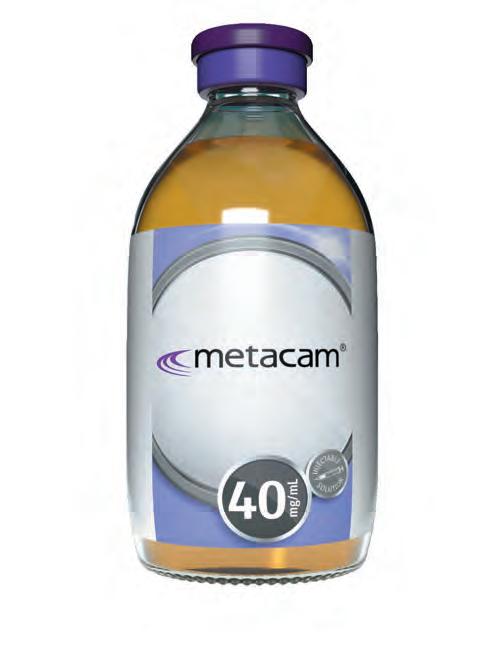

Try our NEW cost benefit calculator to see how much better off you could be by using METACAM. Scan the QR code or visit: futureproducers.co.nz
FOR JANE Smith,
becoming a Ravensdown director has been a way she can actively contribute to something quite personal to her – protecting and strengthening a co-operative she deeply believes in.
“Having seen overseas systems where farmers haven’t supported their fertiliser co-operative, I’ve seen how fragmented and costly things can become. I wanted to be part of ensuring that doesn’t happen here.”
Smith’s decision to stand for the Ravensdown board wasn’t part of a broader ambition to build a governance portfolio. In fact, it was quite the
opposite.
“It was specifically Ravensdown that I wanted to be involved with. I genuinely wanted to contribute to this co-operative because I believe so strongly in what it represents for farmers and growers.”
That commitment to service and sector leadership has been built over many years. Along the way, Smith gained governance experience through roles on the Veterinary Council of New Zealand and the Red Meat Profit Partnership, where she served as a Crown appointee while maintaining a strong connection to farming communities.
Those experiences reinforced a belief that continues to guide her today.
“If you want to make a difference and put something back into your sector, you need to get involved.”
Since joining the Ravensdown board, Smith says she has gained an even deeper appreciation of the complexity and responsibility involved in governing a farmerowned co-operative.
A key insight has been the scale of the challenge involved in securing fertiliser supply for New Zealand farmers, even during times of relative geopolitical certainty.
She has also enjoyed
working alongside Ravensdown’s mix of elected and appointed directors and says the combination of farmerelected voices and
directors with specialist expertise creates robust discussion and healthy debate.
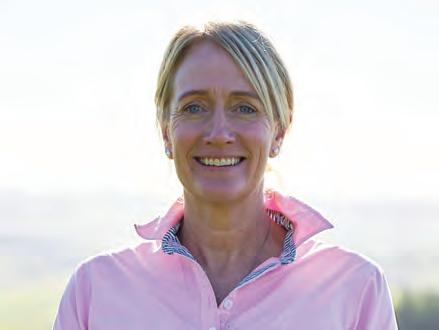
“We have really strong conversations around the board table. The mix of practical farming experience and specialist
expertise is one of the strengths of our board.”
FOR FARMERS and growers who may be considering governance roles in the future, Jane Smith’s advice is straightforward – start getting involved.
“Talk to people who are already in governance. Find mentors. Ask questions. Get experience wherever you can.”
In fact, she believes some of the most valuable governance experience comes from local community organisations and industry groups.
“Those roles can be incredibly
challenging because you’re often representing people you know personally and balancing different community expectations. They’re great places to learn.”
And for those wondering whether they could fit governance responsibilities into an already busy life, she believes passion makes a difference.
“When you’re passionate about something, you find a way to make it work. It’s incredibly rewarding to contribute to something that matters and to know you’re helping make a difference.”
Above all, she encourages people not to rule themselves out.
This year Ravensdown shareholders will have the opportunity to nominate and elect two directors to the co-op board.
The call for director nominations will be advertised at the end of June, with voting expected to open late August. More details on the elections and timetable will be available to shareholders in the coming weeks.



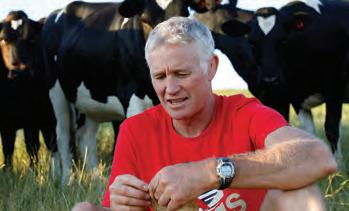
I CAN still remember sitting at the kitchen table on our farm in Cambridge, staring at a to-do list and being completely unable to move.
The jobs were all there in front of me. None of them had changed. But for 30 minutes I just sat there, frozen. At the time, I didn’t really understand what was happening.
I just knew I couldn’t think straight, couldn’t make simple decisions, and couldn’t seem to get myself going. Looking back now, I can see that stress, anxiety and depression had caught up with me.
When I went through depression around 11 years ago, it felt as though my brain had gone into fight-or-flight mode. It was telling my body something was seriously wrong. The result was that my ability to make even basic decisions disappeared. On a farm, that is dangerous. Farming is full of small judgement calls that have to be made every day — around stock, vehicles, machinery, timing and fatigue. If your head is not clear, the risks rise fast.
I know that from experience. One day I was herding cows when
one of them bolted. Instead of taking a second to think, I chased after her on my quad bike and flipped it on its side. It was bloody dangerous, and I was lucky. The truth is I made a poor decision because I was stressed and fatigued.
These days I would handle that moment very differently. I would let the cow go, stop, and take a breather.
That one incident taught me something I wish more farmers understood: when stress builds up, it doesn’t just affect your mood. It affects your reactions, your judgement and your safety.
Research backs that up. An ACC-funded study for Farmstrong found that 58% of injured farmers linked their injury to stress associated with farm work, and a quarter said it was a major factor. That should stop all of us in our tracks.
New Zealand farmers work in one of the country’s highest-risk industries, and too many of us are trying to push through exhaustion, poor sleep, isolation and pressure as if they are just part of the job. They may be common, but that does not mean they are harmless. In fact, they can be a direct pathway to injury. Farmstrong exists to help farmers and growers “live well to farm well”, and ACC has continued to invest in the programme because the link between wellbeing and injury is real.
For me, protecting my wellbeing now comes down to a few simple things that I try not to compromise on. The first is exercise. Getting out for a run or a cycle clears my head and gives me more energy, not less.
A lot of farmers will say they do not have time for that, and I used to think the same way. But I have learnt that making
time for wellbeing is not a luxury — it is part of being able to do the job properly.
The second is connection. When you are dealing with depression, the temptation is to withdraw and sit at
home by yourself. In my experience, that is the worst thing you can do. These days I make a point of connecting with people whenever I can, even in small ways. It might be chatting to someone in the supermarket, catching
up with mates, or getting off the farm for a break. Those moments matter more than I used to realise. If there is one thing I would say to other farmers, it is this: do not wait until you are overwhelmed before you take your wellbeing seriously. And do not be afraid to talk about what you are going through. I would never have shared my story 11 years ago. I would have been horrified by the idea. But speaking up lets people help, and it may also help someone else recognise what is happening in their own life. We
spend our days looking after animals, land and business pressures. We need to get better at looking after ourselves as well, because a clear head is not just good for your mental health — it can keep you safe.
If you’re struggling, Farmstrong shares practical tools and farmer stories about managing pressure and staying well, and the Rural Support Trust is available for rural people and farming families who need support.
www.farmstrong.co.nz







of science, technology and regulatory reform and introducing better farming methods.
DAIRY CONTINUES to be the mainstay of the country’s primary export earnings.
In the year to the end of June, Ministry for Primary Industry (MPI) is predicting that exports returns from our cows and dairy farmers will be $28.6 billion - up 5% on last year’s record earnings. Dairy exports now make up 47% of our total primary exports and nearly a third of our total exports.
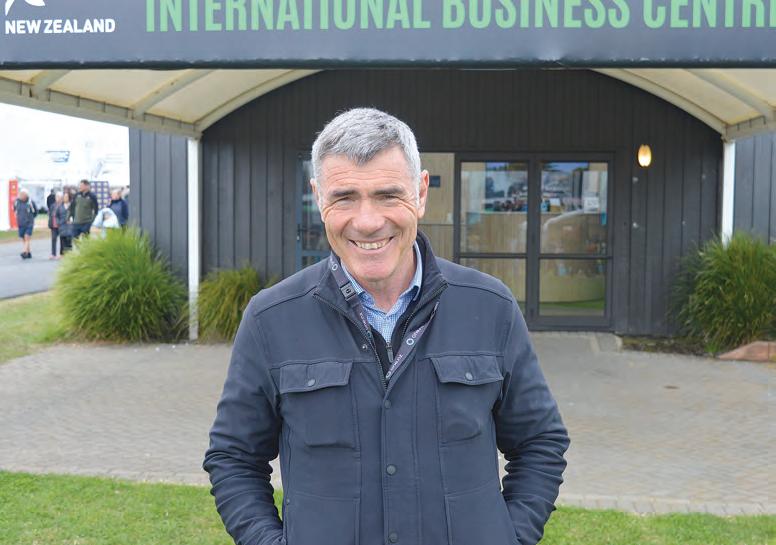
According to the MPI’s latest Situation and Outlook Report for Primary Industries (SOPI) report, dairy earnings will be over $31 billion by 2030. And according to the Director of MPI, Ray Smith, the sector has the potential to grow even more.
Smith says there is still a lot of land in NZ that hasn’t achieved its productive potential and says that the Government’s latest $2.6 million initiative to foster greater land-use flexibility – will spur this along. This programme aims to focus particularly on Māori landowners to increase the productivity of land by using a combination
Smith says there is still a lot of land that can produce higher returns by using better genetics, technology in the form of wearables and utilising pasture better.
The SOPI report says the global milk supply picture remains a central driver of dairy prices and the outlook for 26/27. It notes for example that milk production in the USA rose 3.3% in the past year and that the cow herd in the US has risen and is 9.62 million – the highest it’s been since the 1990s. At the same time EU milk production as also rebounded, says the report.
“I think we have a long way to go in regard to this,” he says.
The SOPI report says that while there have been a couple of good seasons, the next year will see a slight drop in returns, but this will pick up in the following three years. An example of this is milk solids.
In the past year they topped a record 2.02 billion, driven largely by favourable climate conditions and strong financial incentives. But tighter margins and a predicted El Nino dry season will likely see milk solids fall slightly.
MPI says with that, export prices will be mixed due to a range of reasons.
As for the future, MPI is predicting a farmgate milk payout of $9.85 /kgMS. @rural_news facebook.com/ruralnews
Perhaps one of the more fascinating facts to emerge in the report is that although our dairy export revenue was up by 5%, this was achieved by just a 1% increase in export volumes. During the year, the biggest growth in individual dairy categories came in butter, AMF and cream - and cheese was up there too. WMP also performed well with export revenue up by 11% to $9.1 billion.
As for the future, MPI is predicting a farmgate milk payout of $9.85 /kgMS. But again, this comes with the warning that the Middle East crisis will place upward pressure on key farm inputs such as fuel, fertiliser and freight costs.
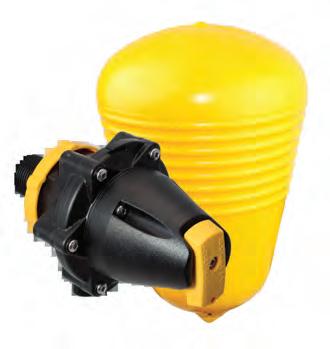
• High Flow
• Compact/Robust
• New Pilot Flow Filter
• Side/Bottom Mount
• Detach to Clean
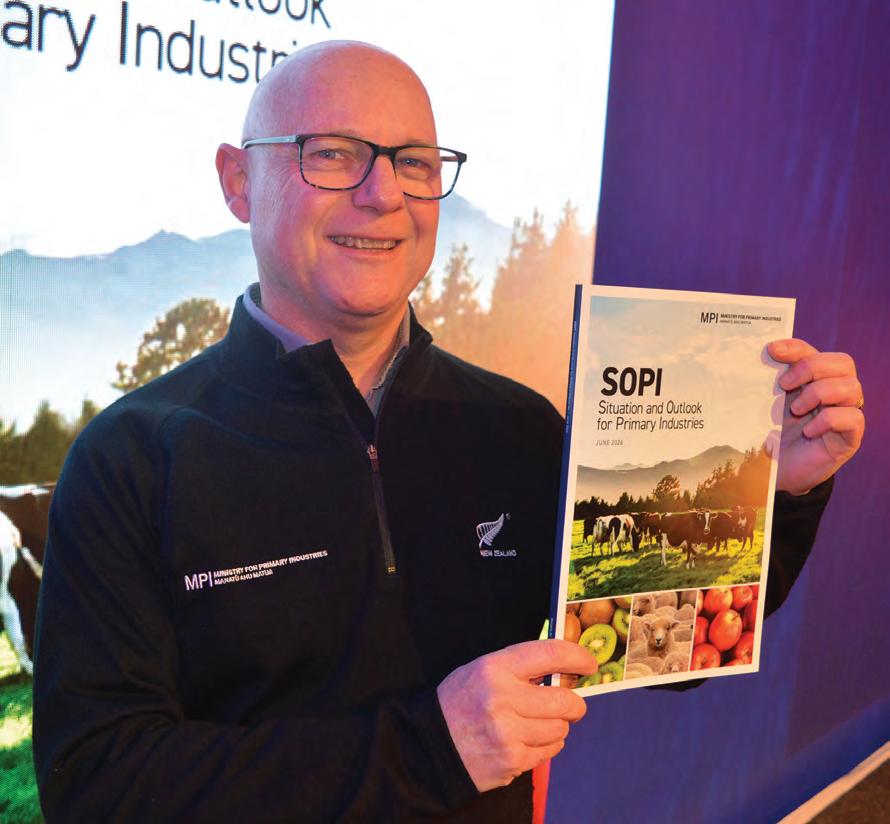
RAY SMITH says the situation is far from gloom and doom. He says consumers worldwide are searching for high protein foods and that’s why he believes that dairy production in NZ will continue to grow.
He says the other thing working in the favour of our dairy industry is that our cows are largely grass fed – unlike other countries that produce and
export dairy products. “Another positive for NZ is that we’ve invested heavily in reducing the emissions profile of our animals, meaning we have one of the lowest environmental footprints in the production of methane by animals.
That I think is going to give us a strategic advantage over the next few years and I am proud of what we have
done in that respect,” he says. But Smith says while New Zealanders take for granted the sustainable production systems we operate, he’s not sure that the rest of the world is fully aware of this. “I think that we still have to do more to make sure the world knows the good news about how we farm,” he says.
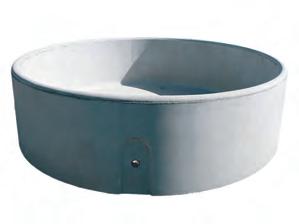
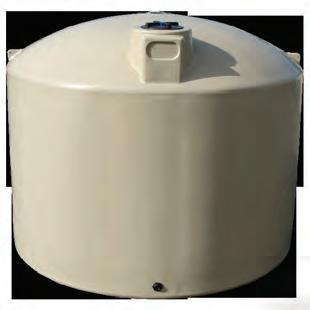
• For Water Storage Tanks
• Adjustable levels from 50mm-2.5m
• Minimises pump operation
•Available in 20/25/32/50mm
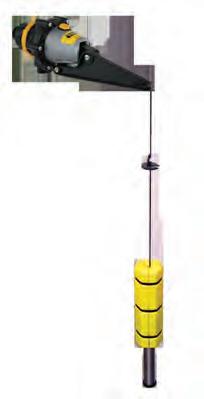
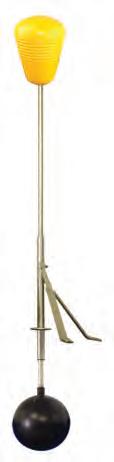
• Stainless steel bracket and Shaft
• Fits plastic and concrete tanks
• Rugged and long lasting

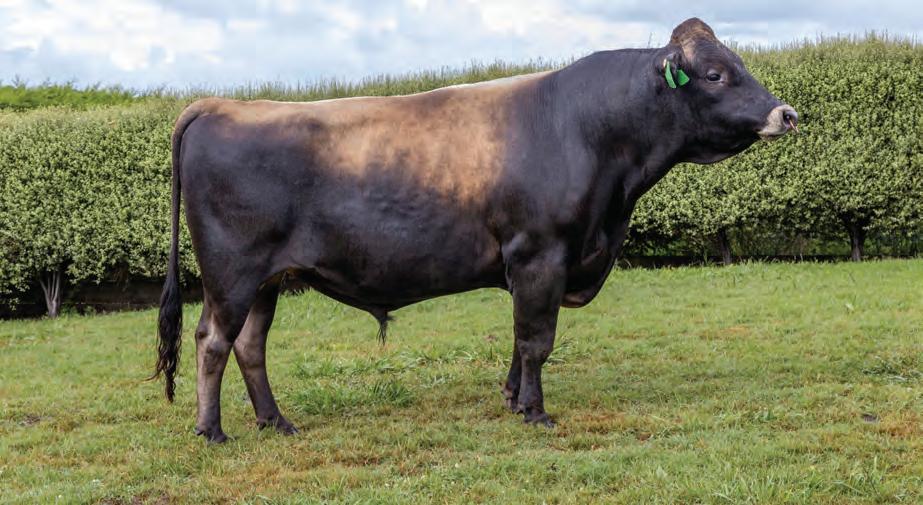
PAYNES TITUS Excelsior ET, an LIC bull bred by Brad Payne and Claire Brodie in the Waikato, has won the JT Thwaites Sire of the Season 2026 Award.
The annual award by Jersey NZ recognises outstanding New Zealandbred Jersey sires whose daughters demonstrate exceptional production and conformation performance.
LIC livestock selection manager Kelli Buckley says the recognition reflects years of dedication and careful breeding decisions by the Payne family
“This is such a special result, and one I’m incredibly proud of. Brad and Claire have put an enormous amount of dedication, care and hard work into breeding bulls of this calibre, and it’s a real privilege to work alongside breeders like them.
“Paynes Titus Excelsior ET is a great example of what’s possible when great breeding decisions are backed by
long-term commitment and attention to detail. To see that effort recognised nationally is hugely rewarding - not just for LIC, but for the Payne family and for Jersey farmers who will benefit from these genetics for years to come.”
Excelsior achieved the highest Breeding Worth (BW) of all qualifying new-proof Jersey bulls this season, while also meeting important criteria for management, fertility and conformation traits.
Steve Ireland, Genetics Convenor for Jersey NZ, said Excelsior is likely to appeal with farmers focused on breeding replacement heifers.
“Excelsior stands out for his ability to breed daughters with exceptional, long-lasting udders and top fertility. This should ensure his daughters remain very productive well into maturity.”
The Payne family has built a strong reputation for breeding Jersey genetics over many years, making the
recognition especially meaningful.
Brad Payne says the award was a proud moment for the family.
“We feel incredibly privileged to
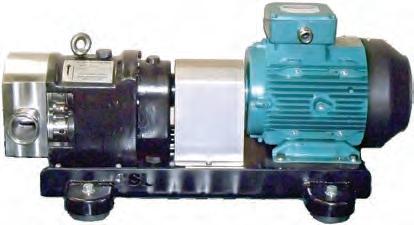
PUMP FROTH!
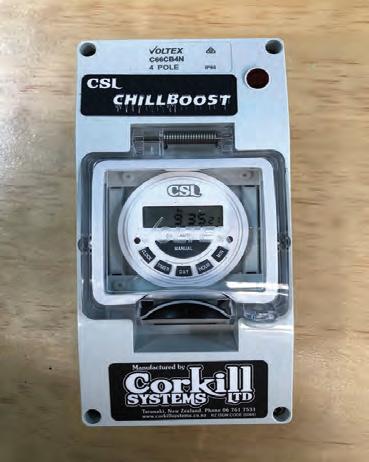
Combined with the CSL Milkflow Controller, the CSL Lobe Pump accommodates the large wash volumes required in today’s dairy sheds without compromising milk quality.

receive this award. Looking at the trophy and seeing the calibre of bulls recognised over the years, it’s very special to know one of ours is now

The CSL Milkflow Milk Pump Controller improves returns by reducing milk solids damage and optimising primary cooling.
• Separate dedicated milk and wash program to optimise process when milking including goats and sheep
• Proven to reduce SCC
• Easily installed between milkings
Up to 40% power

across whole shed

among them.”
Excelsior is currently the top ranked Jersey bull on the industry’s Ranking of Active Sires (RAS) list.

ALREADY WELL known for its extensive range of quads and side-by-sides, CF Moto used National Fieldays to showcase another piece in the farm transport puzzle – a two-wheeler specifically tailored for agriculture.
Bound to find favour with dairy operations, particularly for herding duties, the CFlite 230 Dual comes ready for work from the get-go.
It has a single-cylinder, carburetted 230cc fourstroke, housed in a highgrade steel frame. It makes power of 10.5kw and torque of 16.5Nm, mated to a 5-speed
transmission that will offer a wide range of ratios for any jobs, while the 12-litre fuel tank should handle a good day’s work.
A wide, comfortable seat with an 840mm height will cater for all sizes of operator, while a 21-inch wheel up front and 18-inch wheel on the rear offer excellent
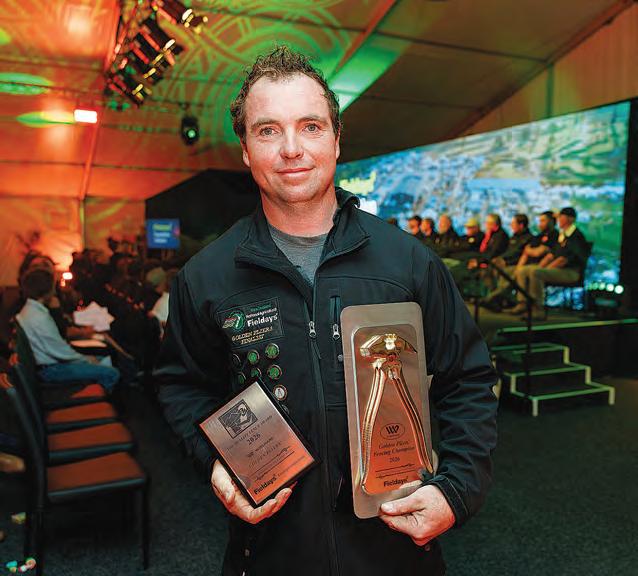
NEW ZEALAND’S top fencers were out in force at National Fieldays this month, demonstrating their skills with the everreliable number 8 wire.
The NZ Fencing Competitions (NZFC), organisers of the Fieldays Fencing Competitions, say this year’s event was highly competitive and showcased the growing strength of the fencing community, with nine new entrants competing in the heats and the first female competitor since the 1980s – Tiffany Garrick.
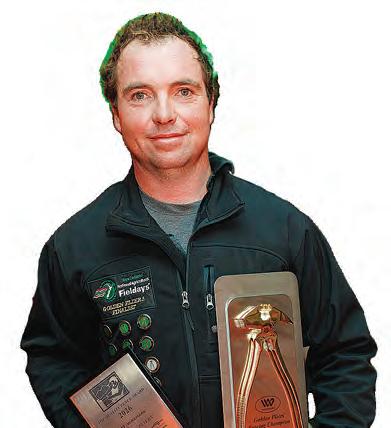
Tony Bouskill came out on top in the prestigious Golden
Pliers by Wiremark Championship final, with judges also awarding him best quality, for producing the highest standard of workmanship, precision, and finish under intense competition conditions.
The competition is judged on a combination of speed, quality, and the overall strength and durability of the finished fence, with the “first off the line” component highlighting how quickly a competitor can complete their work without compromising standards, all assessed by a team of 15 volunteer judges.
Bouskill also took out the Fieldays Silver Spades Doubles Championship with his
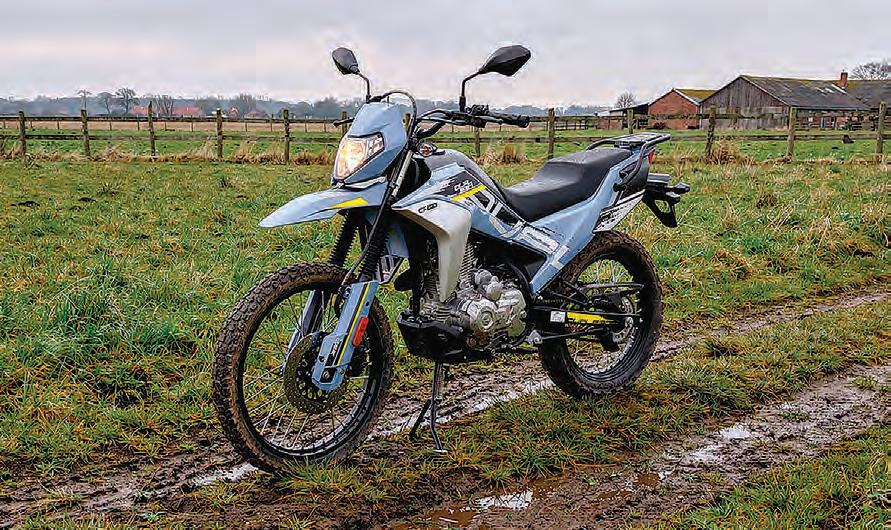
ground clearance, enhanced by twin, telescopic hydraulic front struts and a single rear shock absorber. Stopping duties fall to single front and rear disc brakes.
It looks good in Tundra Grey, and the wide handlebars with rear-view mirrors offer easy and accurate direction changes, while incorporating
a clear display for all key functions and LED lighting for the late shift or early mornings. Standard equipment includes NZ-manufactured front and rear carriers, alongside handlebar and engine protectors, with the package protected with a 12-month warranty.
www.cfmoto.co.nz
father, Shane Bouskill.
The pair, who also won the title last year, head to the Tornado Wire Fencing Competition at the NSA Sheep Event in the United Kingdom in July.
The Bill Schuler competition, established in memory of the late Bill Schuler to support newer and developing fencers, was won by Kupu Lloyd.
The Fieldays Silver Staples cadet competition went to Smedley Station’s Noah Glasgow and Mark Chambers.
NZFC was formed in 2013 as a committee committed to promoting and governing fencing competitions in New Zealand.
MARK DANIEL markd@ruralnews.co.nz
THE BRIGHT ideas of New Zealand’s primary sector have been celebrated with an announcement of the winners of the 2026 Innovation Awards.
Prototype, Early-Stage, and Growth & Scale category finalists were evaluated by expert judging teams, with each award category overseen by a head judge.
Steve Chappell, programme manager for National Fieldays Society, said the awards continue to highlight the depth and diversity of innovation emerging from New Zealand’s primary industries.
“Many of the challenges facing our primary industries are global, so it’s encouraging to see NZ innovators developing solutions that not only address local needs but also have relevance and impact on the world stage.”
The Young Innovator of the Year Award was awarded to Wellingtonbased Enivo for its biodegradable plant pots made from New Zealand forestry and primary industry waste.
Enivo stood out for its consistent
values across the business, a carefully considered supply and distribution chain, and strong engagement with customers and partners.
The judges also highlighted Enivo’s ability to pivot in response to commercial pressures and the scope for Enivo to achieve its environmental impact goals and diversify beyond the
initial product.
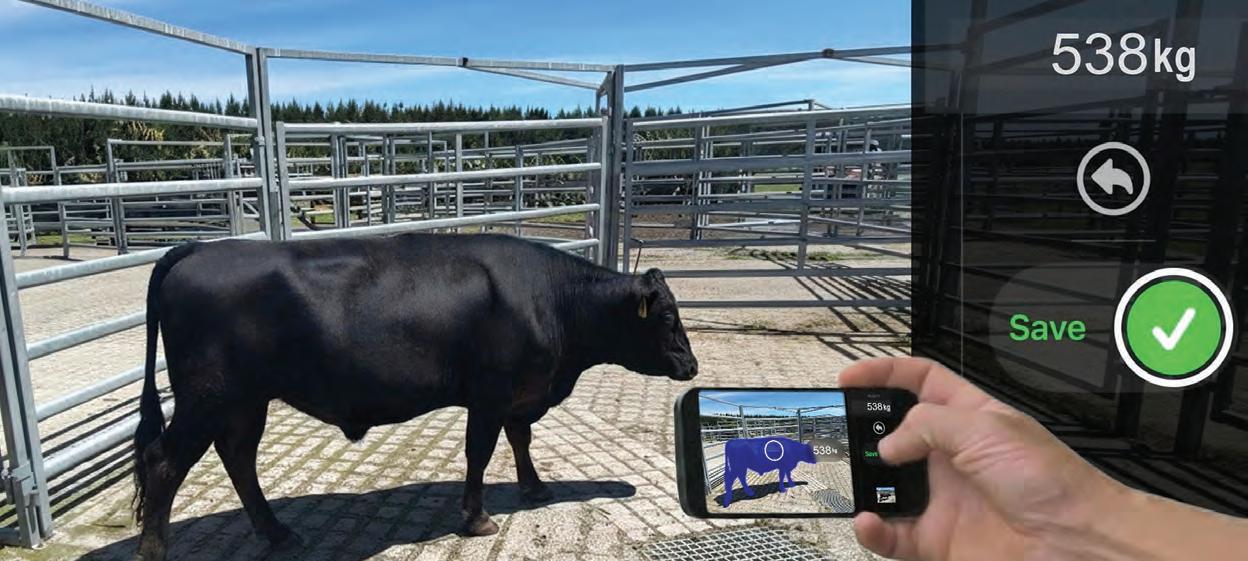
The Prototype Award was awarded to Scanabull for its Scanabull WeighApp. The solution uses 3D LiDAR and AI to deliver accurate, realtime cattle liveweights via a simple phone scan.
The category head judge said the product was a highly relevant and
scalable solution, noting the team’s improvements in accuracy and enhancements to the user interface.
The Early-Stage Award recognised emerging innovation and practical application. Elm Lab Skincare received a Highly Commended Award for its A2 Colostrum Baby Lotion, developed using colostrum sourced from a single,
traceable family dairy farm in Mosgiel.
The category winner was Hamiltonbased elert for its elert EQ device, a wearable technology designed to monitor equine health. Judges described it as a compelling, real-world solution.
DANIEL markd@ruralnews.co.nz
WHILE A late arrival to the booming New Zealand ute market, JAC is already making a name for itself with its high spec’ JAC T9 Ute. Taking things a step further, the manufacturer chose National Fieldays to release its JAC T9 PHEV electrified double cab.
Offered at a starting price of $59,990 plus ORC it will certainly catch the attention of potential buyers and make its competitors shudder. Retailing at only $10,000 more than its non-electric/ICE counterpart, and indeed at the same price as a leading premium side-byside, the T90 PHEV looks to be the cheapest plug-in hybrid currently available.
While price is always a key consideration, the T9 PHEV also looks to be the most powerful, producing a combined 360kW and 674Nm torque from its turbocharged, 2.0-litre, four-cylinder engine and twin electric motors.
In practice, the 2.0litre petrol produces 155kW and 370Nm that combines with the 130kW front and 150kW rear electric motors, delivering a 0-100kph dash of only 6.0 seconds.
A combined range of up to 1050km is said to offer up to 100km of electric-only driving
around town if required, but having spent much of the early part of 2026 testing in “real” NZ conditions, the company reports a recent Auckland to Whangarei trip returned 2.6l/100km.
A 31kWh battery pack supports DC fast charging, while also powering a 3.3kW Vehicle to Load (V2L) outlet in the rear tray. That rear tray offers a 915kg load capacity, along with the ute-industry ‘standard requirement’ of 3.5 tonnes towing ability.
Differing from traditional 4WD systems, the T9 PHEV uses an electrically-driven rear axle, without the need for a solid driveshaft between both axles. In EV Mode, the rear motor provides a direct drive to the rear differential, with additional traction provided, as required, by the front axle motor and the petrol engine.
Despite lacking a lowrange transfer case, the front, central and rear diff locks combine to keep the ute moving, while also being complemented by eight, selectable off-road and crawl modes. The company quotes a 550mm wading depth, alongside a sector-leading five-star ANCAP safety rating.
Offered in a single specification, largely based on the current T9 Black Edition, the PHEV also gains wireless Apple CarPlay and Android




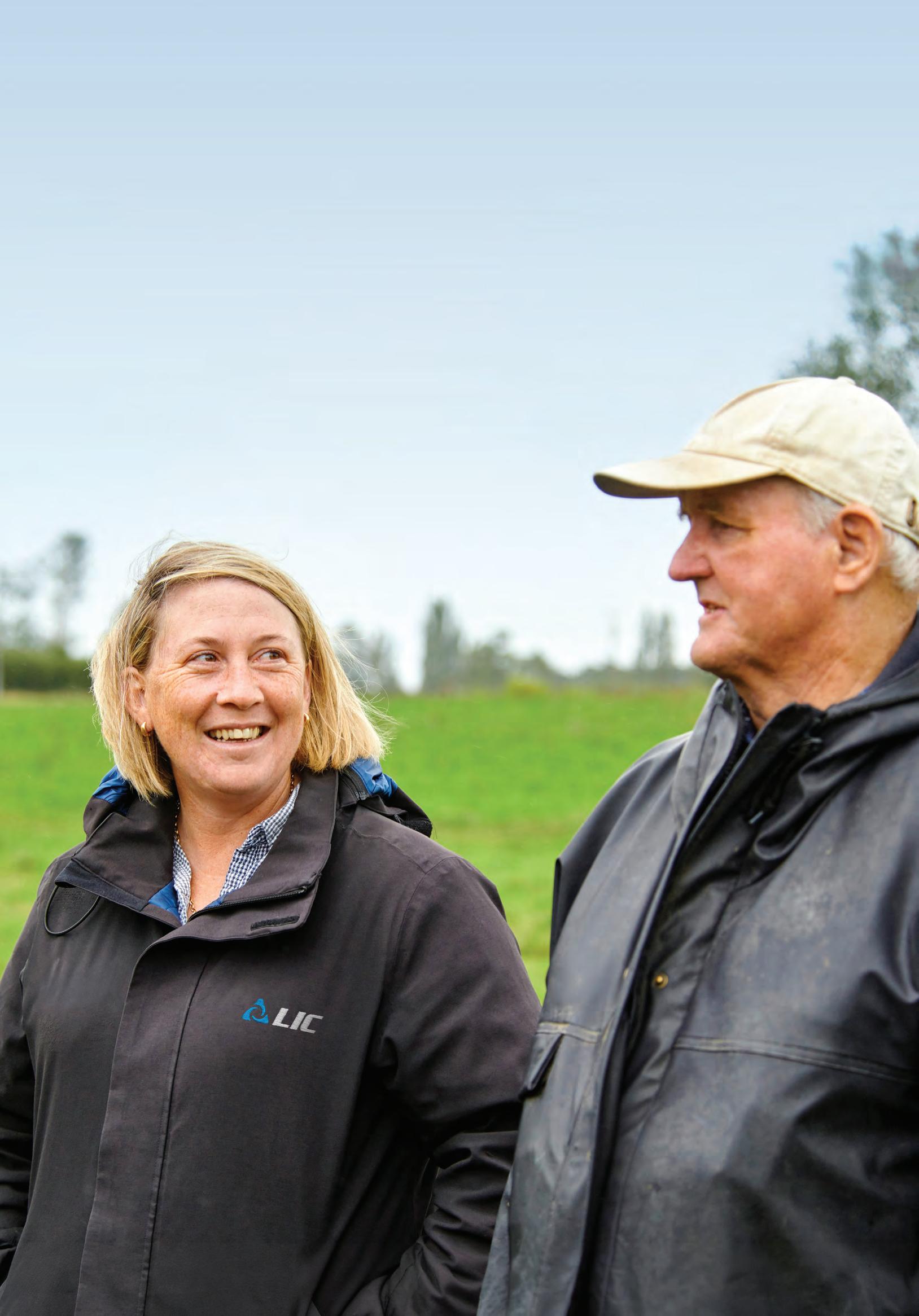
When farmers support farmers, we all move forward. Shared data, shared knowledge and generations of experience. That’s the value of a co-operative.