Page 7
Page 7
“The first year of ‘marriage’ between AI-selected bulls and cows has gone well,” – Matthew Zonderop. PAGE 4
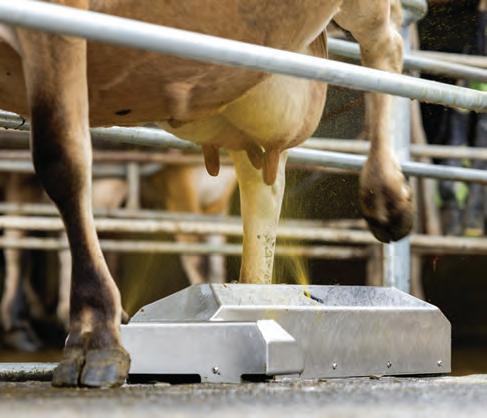
Progress doesn’t look like workit feels like freedom.
With DeLaval’s complete milking ecosystem working quietly in sync, you get time back for the things that matter most.
Because when everything connects, life on farm lets milking, coffee and cuddles happen at the same time.
Let’s shape progress on your farm.

SUDESH KISSUN
sudeshk@ruralnews co
FONTERRA SAYS it’s keeping an eye on the Middle East crisis and its implications for global

SUDESH KISSUN sudeshk@ruralnews.co.nz
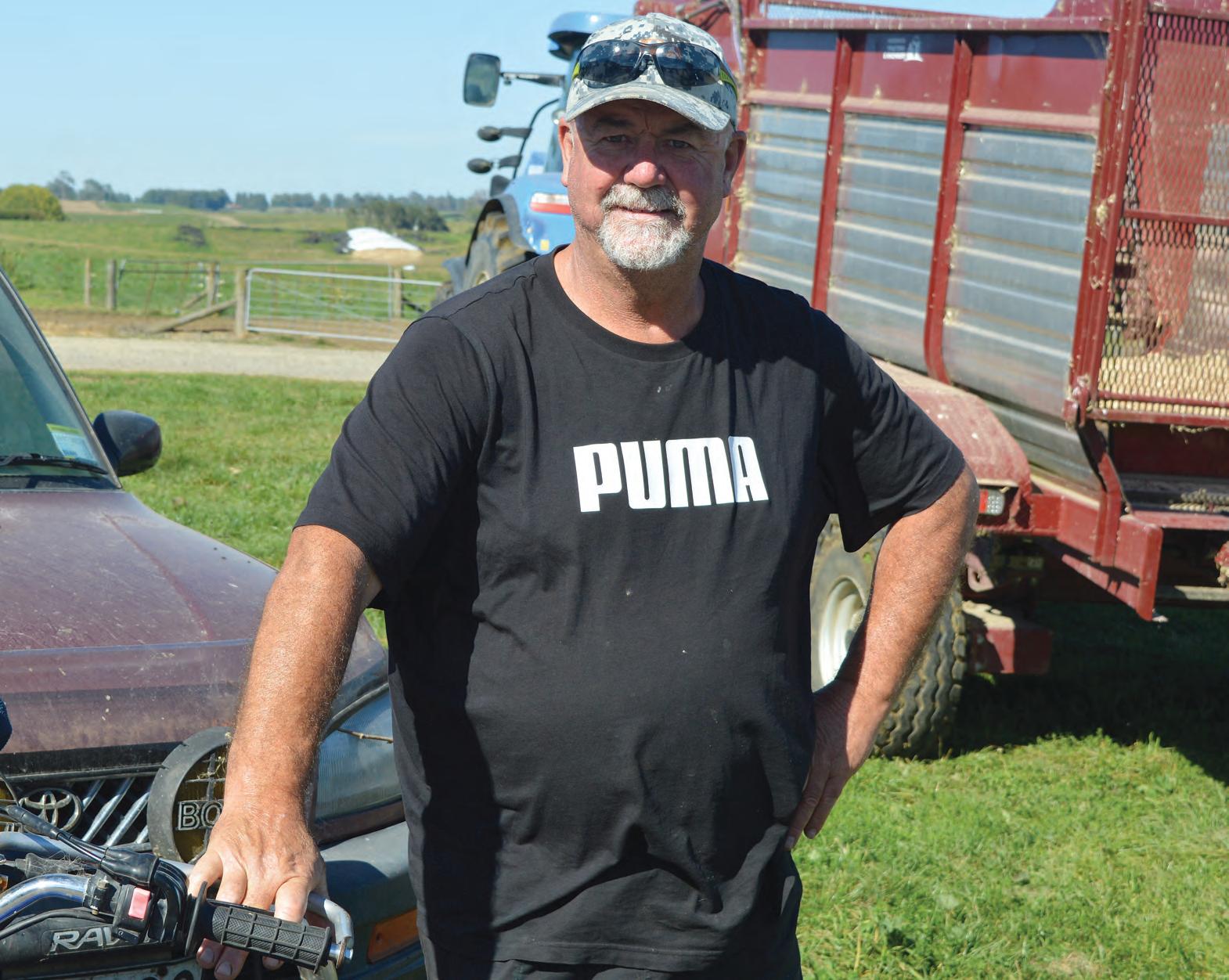
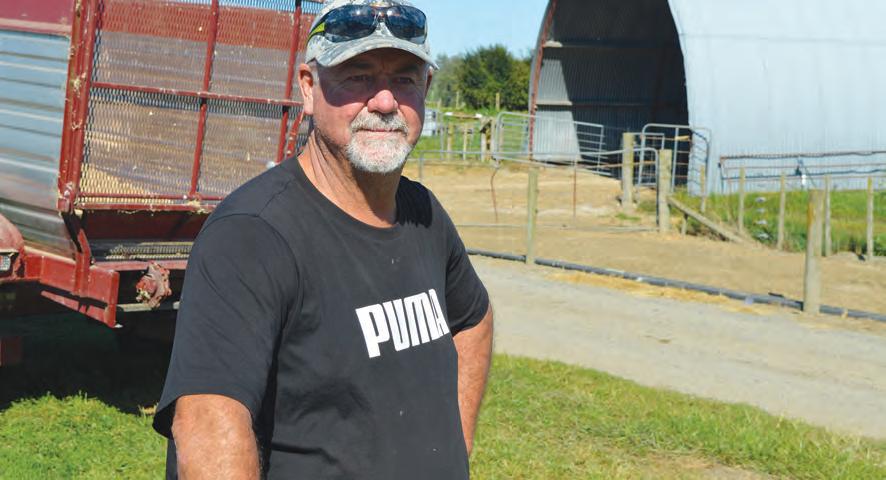
A WAIKATO farmer who set up a ‘tinder’ for cows – using artificial intelligence to find the perfect bull for each cow - says the first-year results are better than expected.
Matthew Zonderop launched at Fieldays
Perfect Cow Breeding Systems last year after toying with AI to find suitable bulls to mate with his 400 crossbreed cows.
At the start of the season last year, he did a full genomic trait analysis of the herd with a system developed using AI for a perfect cow.
He then picked out cows from his herd with poor performing traits and matched them to bulls with stronger and
enhancing corrective traits.
Zonderop ended up using 12 bulls across the herd. While this is normal, he says the bulls were targeted at specific animals.
A 50/50 sharemilker, Zonderop genomically tests his herd replacements every season. The initial results “were already looking positive”, he says.
“Then LIC came back with their full analysis, and it showed even better results than I had expected,” he told Dairy News
“Overall the picture is looking very good: we’ve increased milk solid components without significant lift in litres and gains in fertility.
“We’ve got a mediumsized animal which suits our grass-based system and we’ve gone for the basic things around body
condition score, fertility, milk solid components and calving ease – things essential in our system.”
Whether the tindermatched offsprings produce more milk remains to be seen.
He says the calves are the first ones out of the system and will come into milking the following season.
“Then we should see the productivity gains on those animals, be it calving ease, udder confirmation or even just more milk solids production and without the compromises that can happen when selecting your bull team”.
Zonderop says while farmers will see short term benefits, Perfect Cow is all about developing animals for the future.
“It’s a generational thing – each generation
you are building towards a more robust animal with higher milk solids for less feed, cow overall confirmation, isn’t that what we are all trying to achieve?”
Perfect Cow Breeding Solutions is generating interest among herd improvement companies
SUDESH KISSUN sudeshk@ruralnews.co.nz
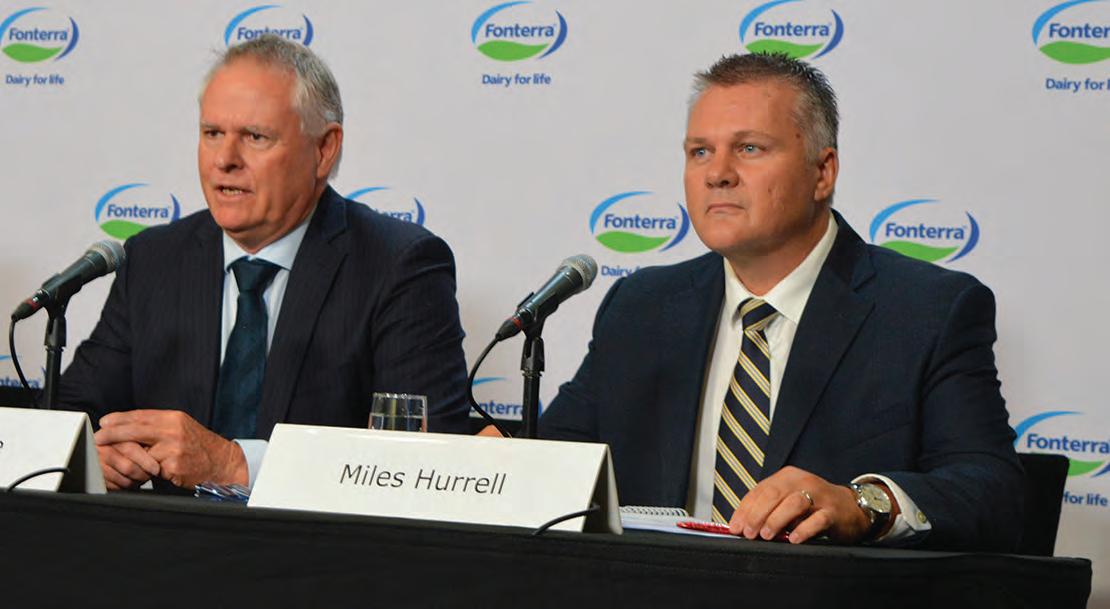
MORE OF the same please, says Federated Farmers dairy chair Karl Dean when asked about who should succeed Miles Hurrell as Fonterra chief executive.
Dean says Hurrell has done an excellent job in turning the co-op “from heading towards a partial sale to being a strong NZ focused co-op again”.
He says that, ultimately, it’s the board’s job to appoint a new chief executive.
“But having someone who
understands the co-op and can be honest and frank about what is going on will lead to the style that farmers have enjoyed from Miles,” Dean told Dairy News
Dean notes that Hurrell has always been a pleasure to deal with.
“Farmers have been able to frank and free conversations with him at events,” he says.
Fonterra announced that Hurrell will work out his six-month notice and leave the co-op in September.
Chair Peter McBride says that after a 25-year career with Fonterra, including eight years as CEO, Hurrell has decided that the time is right for him to leave the co-op.
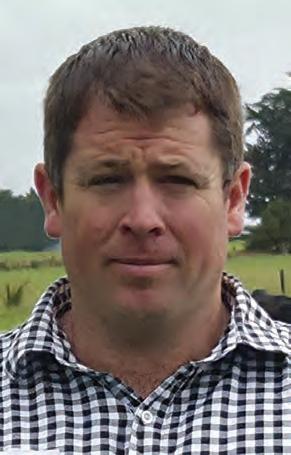
and rural professionals. However, uptake among farmers remains subdued, says Zonderop. It might be a trust issue, he thinks.
“Farmers would be saying, who is this guy, suddenly telling me how to breed my cows – which is completely
understandable and I accept that.
“I’m not a geneticist, just a farmer who knows that data works for my herd and which can translate to another herd.”
The launch of Perfect Cow Solutions generated media interest
Hurrell told journalists that when he took on the CEO’s job, the co-op was facing a tough time.
“And I felt almost an obligation to try and get this thing back on track.
“And, eight years on, I think the team has done a superb job.”
Hurrell says he’s been thinking about his future for a while.
“My wife and I have been chatting for a while about what’s next for me.
“And I think that there’s a sort of a natural juncture here with the sale of our consumer business, that it’s an opportunity for a new leader to come in, take the organisation forward to the next level.
“So, I think the timing’s right for
and Zonderop remains hopeful of getting more farmer enquiries. Zonderop says the first year of ‘marriage’ between AI-selected bulls and his cows has gone well.
“There are no marital issues as yet and we’re certainly not filing for divorce.”
a new leadership, but also right for my family.”
Hurrell says if he was to stay on, it would have been for another two or three years.
“But I think eight years is a decent stint and these roles are all encompassing.
“You know, they literally are 24-hour, seven-day-a-week roles. You’re on the whole time.
“And so, you know, it was either committing for those two or three years - it wasn’t a conversation of committing for another six or 12 months.
“It was going to go beyond that. And as I say, I think now’s the time.”

NIGEL MALTHUS
CANTERBURY MILK
processor Synlait is blaming what it calls “a perfect storm” of setbacks for a big loss in its half year result for the six months ended January 31 2026.
CEO Richard Wyeth said the numbers were “frustratingly disappointing”.
“They are the result of a period where Synlait faced multiple headwinds and had little choice as to how to deal with them. They reflect a severe lack of optionality, not effort, and they do not define the company’s future –although recovery will take time.”
The results show and EBITDA loss of $34.7 million, with underlying EBITDA of $4.1 million, a reported net loss after tax of $80.6 million and an underlying net loss after tax of $27.3 million.
Net debt rose 88% to $472.1 million – an increase of 88%. Forecast base milk price for the 2025/26 season is $9.50/ kgMS with additional premium payments taking the total forecast
average milk payment to $9.90/kgMS.
The company says manufacturing challenges at its Dunsandel plant resulted in a need to rebuild customer inventory. Changes to its manufacturing plan resulted in it having surplus milk, some of which could not be sold and therefore had to be processed into relatively low-value whole milk powder (WMP). Then, to “deliver the perfect storm”, the price of WMP decreased sharply at the end of the 2025 calendar year resulting in significant losses in Synlait’s Ingredients portfolio.
Wyeth told Dairy
News that the company had “got behind” in its advanced nutrition production.
“The reality is when you’re making advanced nutrition and you don’t execute that well, you make a lot of stock food.
“So that’s ultimately the challenge of this business model. The rewards are very high when you do it well, but they’re very poor when you don’t.
“The nature of any manufacturing is you never, hand on heart, go: ‘We’re going to have 100 percent foolproof manufacturing’. But we have improved our quality out of sight.”
Wyeth said the key to
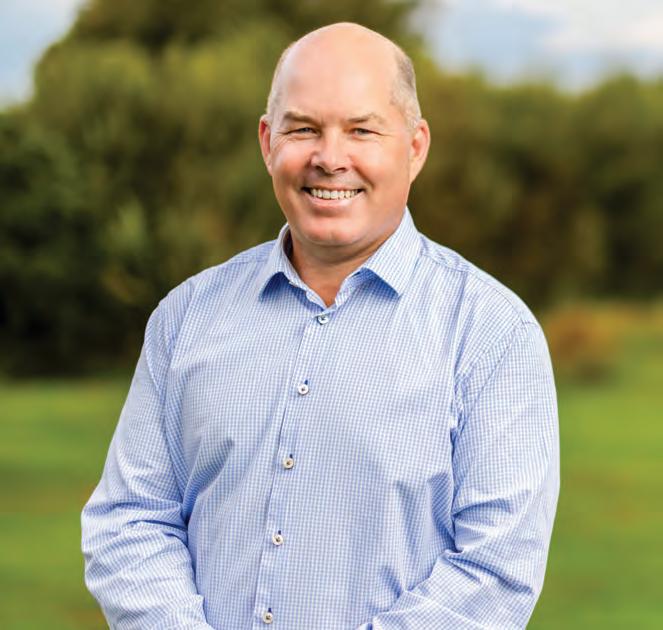
RICHARD WYETH said that the result does not reflect Synlait’s future. This week it will receive $307 million from the sale of its North Island assets – its Pokeno plant and associated facilities, which it is selling to the Abbott group – which would go a long way to removing debt.
The result is a far cry from the same period last year, when Synlait had come through a challenging
recovery is operational stability and quality.
“What I’ve done is tried to bring the focus back onto those core areas of the business and uh, as if we execute well, over the next four to five months, then that’ll give us the ability to get into 2027, in more of a steady state.
“What I’d say over the last 12 to 18 months, the business has been incredibly reactionary, and we’ve had very little commercial fixability or optionality, and at the end of the day, that’s led to these results being the way they are.”
period when many suppliers had issued notices to quit but were then rescinding them on the back of an improved performance, partly due to increased investment from partners A2 and Bright Dairy.
However, Wyeth said there were now no current cease notices. Supplying farmers understood why the results are the way they are, and the company would be paying a very
competitive milk solids price.
Prominent Canterbury dairy farmer Willy Leferink, who was one of the farmers who lodged a cease notice last year then withdrew it, is now happy to stay with Synlait.
He said there had been some serious manufacturing issues but they had been recognised and sorted out.
“It’s quite an art, to bring that quality product, the whole time.”
Meanwhile, the company has released a roadmap to recovery, dubbed as ‘Stabilise, Simplify and Scale’.
It would:
■ Deliver operational stability that meets customer expectations, strengthens financial resilience and builds greater optionality
■ Align priorities, sharpen capability, and grow highmargin products from existing
assets to lift profitability
■ Expand markets, channels and customer relationships and execute future growth opportunitiesChair George Adams said that behind the roadmap, sat a real determination to ensure the coming 12 to 24 months would be seen as a period where Synlait under promised and over delivered.
A PARTNERSHIP
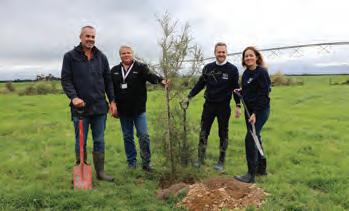
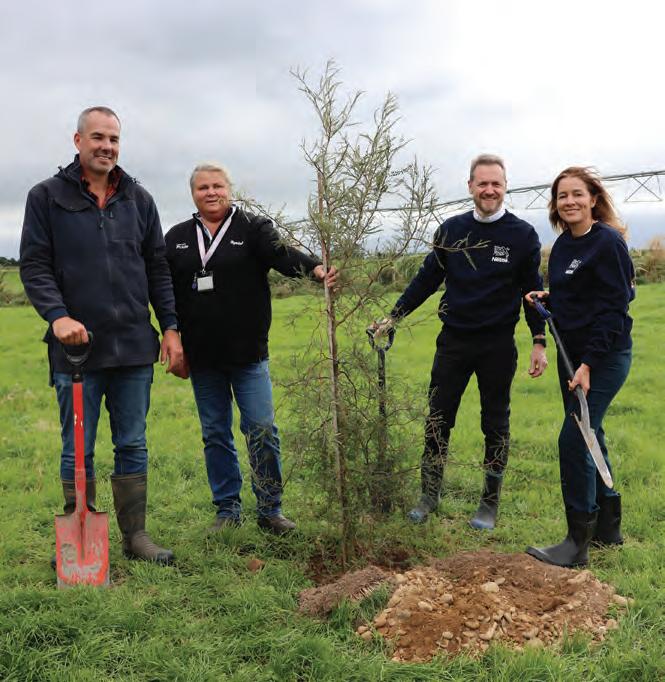
between Canterbury milk processor Synlait and the world’s largest food producer, Nestlé, has been celebrated with a visit to a North Canterbury farm by a group including senior staff from Synlait, the Ravensdown subsidiary EcoPond, and Nestlé’s Switzerland head office.
The visit to the Oxford farm of DairyNZ deputy chair, Cameron Henderson, included a ceremonial native tree planting, and a look at the EcoPond methane mitigation system in operation.
Aimed at reducing emissions and improving on-farm biodiversity,
the Nestlé-Synlait partnership rewards farmers with a premium on their milk solids payout in return for their participation in one or more environmental initiatives.
Options include:
■ EcoPond, an effluent pond treatment service that reduces methane emissions by over 90%, using core technology developed by Lincoln University in partnership with Ravensdown.
■ Farm efficiency projects, including the use of a tool that creates a digital twin of their farm, benchmarks its sustainability, profitability and production against
others, and models the impact of potential changes.
■ Native tree plantings, with up to 18,500 native trees to be planted each year for the next five years, as part of Synlait’s Whakapuāwai programme which has already distributed more than 327,000 native plants since 2019.
■ Joining an on-farm biodiversity pilot project to demonstrate what’s possible in a dairy farming environment.
■ Quickly onboarding new emissionsreducing technology as it becomes available.
Synlait says nearly 40 Canterbury dairy farmers
are participating in the scheme.
Chief revenue officer Hamish Yates couldn’t tell Dairy News the size of the premium but said “it makes it worth their while”.
Yates said the partnership’s growth is a great example of how businesses can work together to make a real difference to the planet.
“Synlait has a history of pioneering sustainability. This partnership means we, and our farmers, will maintain our leadership position.
“It has been eyeopening to see the passion Nestlé, as one of the world’s largest companies, has for helping New Zealand farmers reduce their
emissions. It’s a valuesled approach that benefits everyone involved and the environment.”
Yates said Nestlé was a significant customer and a large part of Synlait’s ingredients business. Nestlé aimed to achieve net zero greenhouse gas (GHG) emissions by 2050 and
THE SYNLAIT-NESTLÉ visit to Cameron Henderson’s farm featured a look at the latest iteration of the Ravensdown and Lincoln University-developed EcoPond system in operation. The system arose out of research by Professors Keith Cameron and form.
As development continued it was realised that there is no need for most farms to have their own infrastructure.
EcoPond now takes the form of a truck-mounted plant that visits client farms and pumps effluent through the farms to be treated in the country.
EcoPond Director Elliot Mercer said Synlait and Nestlé’s support has been crucial to enabling the development and early deployment of the technology.
“This backing helped move the
dairy sourced from New Zealand was a critical part of that.
Nestlé global head of sustainability nutrition, Katja Seidenschnur, said that partnerships of this kind were instrumental for all parties to reach their emission targets.
“Dairy sits at the heart of Nestlé’s business and at the heart
reducing tool by the government’s Greenhouse Gas Inventory, which would be a significant milestone.”
of our climate challenge.
“Addressing emissions at scale requires partnership – across the value chain and on farm. That’s why we’re working closely with our dairy suppliers and farmers to turn ambition into action, through practical approaches to climate, methane and regenerative agriculture.”
Mercer told Dairy News that the original EcoPond idea involved a significant and “economically challenging” capital investment on going,” he explained.
“That allows us to get suppression for over six weeks. Then basically we just come back on a periodic basis.
“So from a business model point of view, from a farmer point of view, that means they’re just paying for a
Industry Awards national title in Rotorua in May.
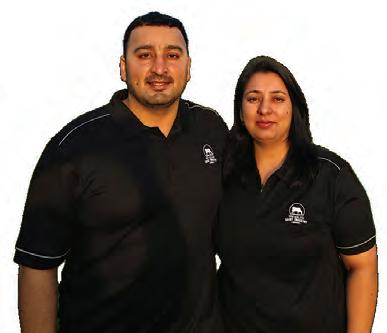
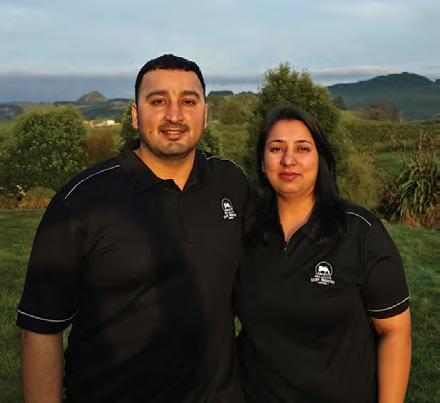
DAIRY FARMING in New Zealand offers career progression and this has motivated 2026 Central Plateau Share Farmers of the Year Navdeep Singh and Jobanpreet Kaur.
After placing runner-up in the competition two years ago, the couple, both 31 years old, wanted to give it another crack and continue to benchmark themselves against the best in the industry.
This month they won a $14,900 prize package along with pocketing five merit awards. They will now compete for the New Zealand Dairy
Navdeep grew up in an agricultural family in Kurukshetra City, in the Indian state of Haryana and says, “farming was always around me”.
“As a kid I loved going to the farm, driving tractors cultivation, drilling, and helping
on weekends, which naturally led me into a career in dairy farming,” he told Dairy News
“We also believe that dairy farming in New Zealand offers real career progression – if you work hard, you can grow from an entry-level role to running your own farm one day. That pathway
FARM OWNERSHIP remains the goal for
Navdeep Singh and Jobanpreet Kaur.
Jobanpreet says they are focused on building skills, growing equity, and running efficient farm systems “so that one day we can own our own farm and continue contributing to the dairy industry”.
She says winning such awards are a great opportunity for personal and profes-
really motivated me.”
Being runners-up in 2024 also motivated them to do better this year.
“We took a break another year and focused on improving our systems, our team culture, and our farm performance, so winning the regional title this
sional development.
“It challenges us to review every part of our farming business—from financial performance to environmental practices and people management.
“The experience and industry connections will help us progress toward our goal of running multiple contract milking operations in the future and farm ownership.”

year feels very special.”
Navdeep started his dairying career in New Zealand in 2013 as a dairy assistant.
“Through hard work and learning from great mentors, I worked my way up to herd owning sharemilking,” he adds.
The couple are 25% sharemilking and 75% contract milking for Mark and Donna Keaney, milking 1230 cows on 391ha at Atiamuri.
Navdeep says support from their farm owners and the wider dairy industry has been incredibly important for their progress.
“Our farm owners trust us and give us opportunities to grow and improve the farm system.
“At the same time, the dairy industry provides great support through Primary ITO and DairyNZ training workshops, mentorship, and knowledge sharing,” says Navdeep, who holds a diploma in agribusiness.
“That support network really helps young farmers like us build skills and move forward in our careers.”
Access the markets on your terms Over 8000 investment options across the NZX, ASX, and US exchanges. Features to keep it simple or get sophisticated. Build your business and personal portfolio Proud partner of Fonterra and LIC, helping farms manage their business assets and personal investments from a mobile. Take control of your wealth, create off-farm income, and protect your family’s future. Sharesies has the investing technology to help you reach your wealth goals.
Fund managers you know and trust Access funds from prominent managers like Milford, Fisher Funds, Pie Funds, Harbour, Smart, Mercer and more, for the same management fee.
Build resilience on and off-farm. Unite your wealth to work as one.
PETER BURKE peterb@ruralnews.co.nz
IRELAND’S MINISTER of state for Agriculture says it’s hard to explain to Irish farmers the size and scale of NZ farms.
Noel Grealish was in NZ recently to meet with Irish people as they celebrated St Patrick’s Day. Every St Patrick’s Day Ireland sends one of its politicians to countries all around the world to be with Irish people and those with Irish heritage. One in six New Zealanders have Irish heritage.
But aside of the St Patrick’s Day celebrations, Grealish who represents the West Galway region in Ireland, visited farms in both the North and South Islands, agricultural universities and research centres and also met industry and Ministry for Primary Industries (MPI) officials and Minister for Agriculture, Todd McClay. Travelling with Minister Grealish was Dr Karl Walsh the Head of Research, Bioeconomy and Codex in the Irelands Department of
Agriculture, Food and the Marine.
This was Grealish’s first official visit to the country and he says while NZ and Ireland have a lot in common in terms of agriculture, the size of farms here is vastly different.
“We have 133,000 farmers in Ireland and that is a lot more than what you have,” he says.
Just take dairy as an example – Ireland has 16,000 dairy herds, the average herd size is 98 cows, and Ireland produces about 8.3 billion of litres of milk annually.
Conversely NZ has 10,700 dairy herds, the average herd size is 449 and produce 21.1 billion litres of milk annually.
Grealish says he visited a huge farm near Christchurch which had a mix of dairy, sheep forestry and honey and he says the scale was something that you would never see in his country. The other thing that Grealish noted was the absence of subsidies for farmers in NZ.
“The reverse is the case in Ireland where farmers there get a lot of
grants. In fact, you nearly get a grant just to get out of bed,” he says.
Grealish says farm payments are the biggest budget item in the European Union but he says this is likely to change in the near future with money being diverted to beefing up security and defence in the EU.
But while in NZ, Grealish was also concerned about the middle east crisis and its effect on Irish agriculture. He says they sell a lot of products in the Middle East and this is flown in on one of eight special flights every day. But he notes these flights have now stopped and one of the first jobs he’ll have when he gets back to Ireland is to deal with this issue.
“A lot of stuff has been left in warehouses in Dublin because it couldn’t get out on the flights and a lot of that is fresh produce,” he says.
Ireland like NZ says Grealish, is so dependent on exporting and everyone is concerned about the additional costs of getting product to customers as a result of this conflict.
A BIG focus of Noel Grealish’s visit was to expand and enhance the collaboration on agricultural research between Ireland and New Zealand.
He says the two countries have similar issues around environmental management and it makes sense for greater collaboration in this area.
“We found that NZ scientists were doing the same work as ours and a joint research programme worth 20 million euros was established,” he says.
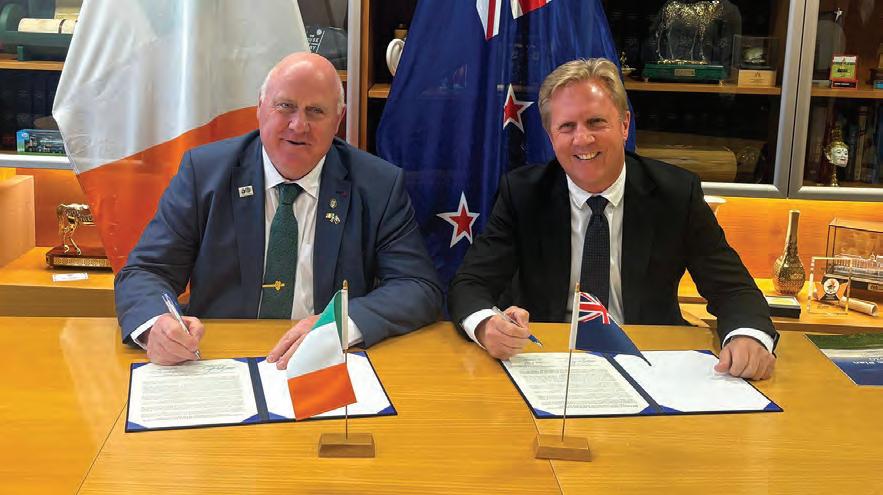
This collaboration took another step forward during a meeting between Minister Grealish and Agriculture Minister Todd McClay with the signing
of an agreement to continue this and other research.
McClay says New Zealand and Ireland will continue to advance vital research to support the development of tools to give farmers options to tackle agricultural greenhouse gas emissions without reducing production.
Grealish says the second phase of the agreement will drive meaningful reductions in agricultural greenhouse gas emissions.
“Agriculture is at the heart of the Irish and New Zealand economies, and we share the common goal of lowering emissions in pasture-based farming,
Fonterra is focused on delivering sustainable returns back to our shareholders, through investment into new capacity, growing food service and really turning the dial up on ingredients.
“We’re not just producing milk together, but we’re building a future for our people, our land and our communities.”
while supporting farmers to produce more,” he says.
MPI and Ireland’s Department of Agriculture, Food and the Marine will now identify further projects to progress.
Separately, Ministers also launched the new 2026-2030 Strategic Plan for the Global Research Alliance on Agricultural Greenhouse Gases (GRA) which has four priorities. These include advancing scientific research, strengthening capacity and knowledge sharing, building effective collaboration and partnerships, and leveraging financial and other resources.
SUDESH KISSUN sudeshk@ruralnews.co.nz
LOCAL CHEESE makers are being urged to embrace competition from imports but also ensure their products are never invisible in the country.
Speaking at the annual New Zealand Specialist Cheesemakers Association (NZSCA) awards night in Auckland, chair Simon Berry paid tribute to local cheesemakers.
Berry, managing director of Oamaru-based Whitestone Cheese, says local cheesemakers constantly punch above their weight.
“We’re a small country, and when it comes to cheese, we consistently prove that even in small places, we create huge flavours,”
says Berry.
He points out that cheesemakers operate in one of the most open food markets in the world.
And primary manufacturing across the entire nation is under real pressure, he adds.
“We see across multiple categories: walk into any supermarket today, and you’ll find cheese from every corner of the globe.
“And that’s not something we should complain about. Imports are now a big part of New Zealand food culture.
“They bring diversity, inspiration, and at times, a healthy motivation to lift our own game.
“But there’s one thing we must insist on, and that’s New Zealand cheese should never be invisible in New Zealand.”
Berry says cheeses produced in NZ stand comfortably along the rest of the world.
NZ milk is exceptional and landscapes are extraordinary, he says.
“Our cows graze freely on some of the finest pastures anywhere in the world.
“And our cheesemakers bring together craft, innovation, and a uniquely Kiwi determination to create something genuinely special.”
Berry also paid tribute to the people who, he says ultimately shape whether local cheeses are seen, tasted and remembered – retailers, restauranteurs and chefs.
They decide what people see in the cabinets and what appears on the menu.
“And you decide which cheeses are introduced to
a customer for the very first time and which ones they go back looking for.
“The great cheese doesn’t become great in isolation. It becomes great when it’s seen, recommended, plated, cared for, and proudly served.”
Berry says the cheese awards are not about moaning about imports.
“It’s not about the imports and about them coming on and fighting over shelf space.
“It’s about partnerships - partnership on visibility, partnership on storytelling and partnership on backing what is made right here at home.
“Because when New Zealand cheese is given a place on the shelf and a place on the menu, something powerful happens.
“Customers connect with it. They talk about it. They remember it. They discover that cheese made down the road, over the next valley, or on the other side of the South Island, is not just comparable, but it’s exceptional.”
SUDESH KISSUN sudeshk@ruralnews.co.nz
WINNING FOUR of the big categories at the 2026 New Zealand Cheese Awards feels special, says Meyer Cheese general manager Miel Meyer. He dedicated the awards to his parents Ben and Fieke Meyer, who founded the business 50 years ago and are now retired, and also to his current team.
“They’re the ones in there every day doing the work, making the calls, and really caring about the end result,” Miel Meyer told Dairy News Meyer Cheese picked up the top
prize for Mid-Sized Cheese and Dutch-Style Cheese for its Vintage Gouda, Farmhouse Cheese Trophy and Export Cheese Trophy for its Smoked Gouda.
Miel Meyer says there was also a bit of relief to get the awards.
“I still remember being a kid when mum and dad came home with the Supreme Champion back in 1994 – that set the standard incredibly high. In many ways, I feel like I’m just here to support and carry that forward.”
He says the awards also show that the company is on the right track.
“At the same time, it keeps you honest – because you know you’ve
got to turn up again the next day and do it all over again.”
He says there’s no real shortcut to success in cheesemaking.
“It comes down to consistency, discipline, and respecting the process. Cheesemaking is a craft –you can’t rush it.”
Meyer Cheese owns a dairy farm, next to its factory. Fresh milk is piped from the farm to the processing plant daily.
Miel Meyer says they are fortunate in New Zealand to have access to exceptional milk, as that’s where it all starts.
“We focus heavily on milk quality and getting the fundamentals right.

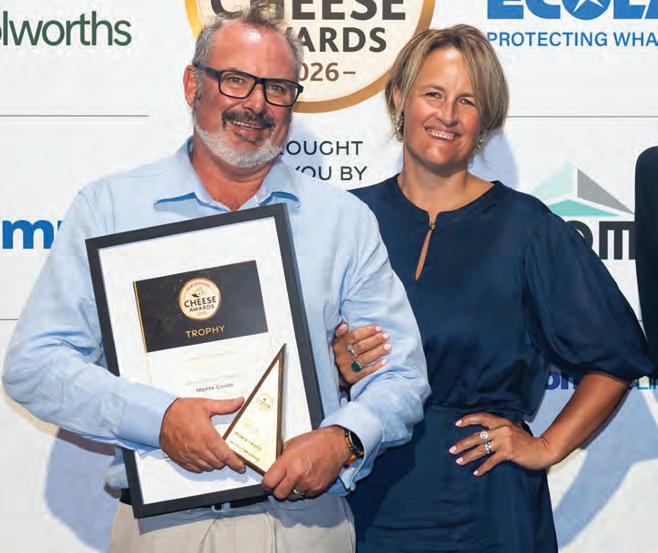
Berry’s company won the most prestigious honour, the Hall’s Group Limited - Champion Commercial cheese for its Monte Cristo.
For the second year
Just as importantly, we trust our team to take ownership of what they do.
“Over time, that creates a culture where high standards are simply the norm, not something you aim for occasionally.
“From there, it’s about patience –allowing the cheese the time it needs.
A lot of what we do is cellar-aged, and that’s where the real character and depth come through.”
Miel Meyer says his parents - Dutch immigrants - have been “absolutely foundational”.
“Everything we do today is built on their values – hard work, integrity, and a real passion for cheesemaking.
took the coveted top spot.
“They took a huge risk coming to New Zealand and starting from scratch, and that resilience still shapes the business. It’s not just a legacy – it’s something we actively try to honour and build on every day.
“Mum and Dad have been retired for quite some time now, but I’m very lucky – I still get to have lunch with them most days.
“We’re constantly bouncing around ideas and talking cheese (usually while eating it). It keeps me grounded and connected to where it all began.”
@rural_news facebook.com/ruralnews
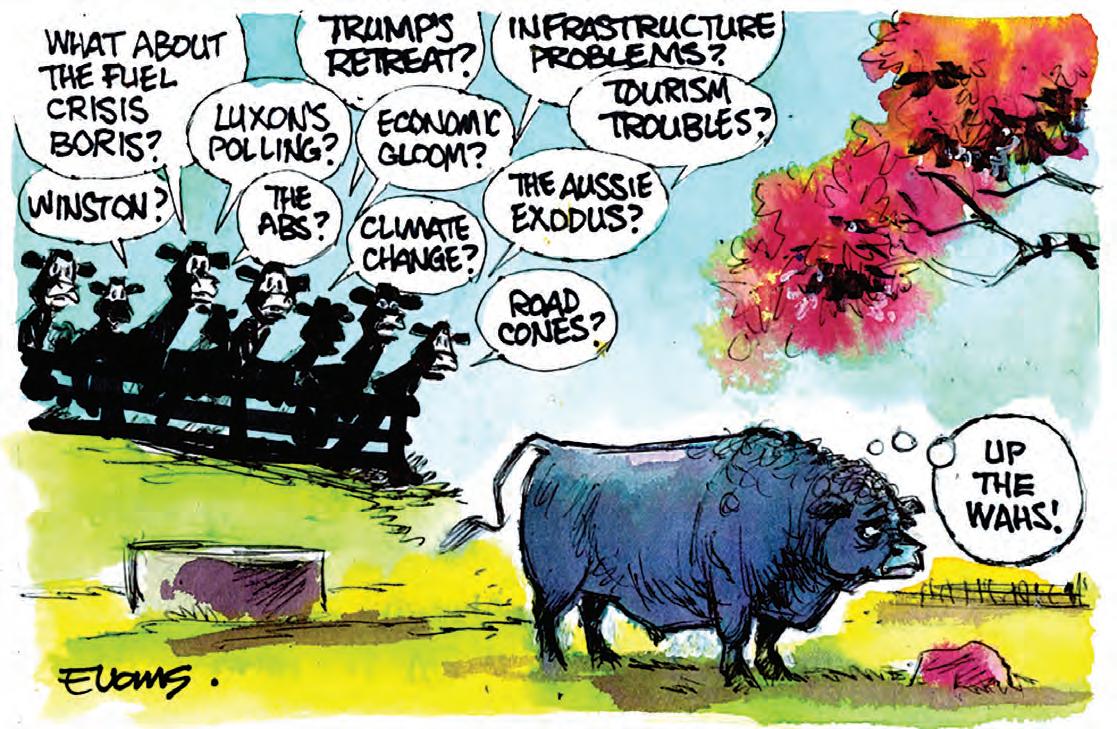
THE MAINSTREAM media’s obsession with (sleazy) ‘tabloid’ issues were to the fore at Fonterra’s recent media conference to discuss its interim results.
One weird question thrown at outgoing chief executive Miles Hurrell was if he can rule out standing as a NZ First candidate in this year’s general elections.
“I can rule that out,” replied Hurrell.
This prompted chair Peter McBride to afterwards tell the journalist in question that one could easily think he was writing for a tabloid rather than a business publication!
SYNLAIT’S WOES show no sign of ending anytime soon.
Milking It wonders how long its Chinese majority owner, Bright Dairy, will tolerate the losses.
The sale of Synlait’s North Island assets this month will bring some relief.
Also, Synlait has seasoned industry stalwart Richard Wyeth as its new chief executive.
Wyeth was blunt in his assessment. He’s bringing the focus back into the core areas of the business and adds that over the last 12 to 18 months, the business has been incredibly reactionary, with very little commercial fixability or optionality. Ouch!
GOVERNMENTS ALL over the world are dealing with the fuel crisis.
And most governments and their people have no direct involvement in the conflict.
Credit to our government for announcing a raft of measures to tackle what could turn into a full-blown crisis in the coming weeks.
But, typically, Greenpeace isn’t happy claiming the government is implementing short-term ‘band aids’.
The biggest disadvantage facing NZ as the crisis deepens is that Marsden Point refinery was forced to close under the watch of the previous government.
Wonder why Greenpeace isn’t talking about that.
Next CEO
WHO WILL replace Miles Hurrell as Fonterra’s next CEO?
That’s the big question, but if farmer shareholders have their way, it would be one of the executives groomed by Hurrell to keep the co-operative on its current path.
One of the names being floated around the traps is Richard Allen, president of Fonterra’s global ingredients business.
Like Hurrell, Allen has been with Fonterra for many years. He joined the co-op in 2008 and, also like Hurrell, he led Farm Source – the co-op’s team of farmer engagement, sustainability and milk specialists – and the Farm Source rural retail network in New Zealand.
Watch this space.

Well done, Miles!
IN 2018, when Fonterra’s board tapped Miles Hurrell to step in as interim chief executive, the co-operative was in the doldrums.
The co-operative had just announced the first-ever annual net loss ($196 million) in its 17-year history.
Farmer shareholders were on the edge and independent processors were biting at the co-op’s heels to poach suppliers.
Fast forward eight years and the co-operative is well and truly back into profitability.
Morale among farmer shareholders is at an all-time high. In the coming weeks, they will get a windfall of $3.2 billion from the sale to Lactalis of its consumer and related businesses in New Zealand, Australia and around the world. There’s also a 16c/share dividend from Mainland Group’s profits under its ownership.
The cherry on top is Fonterra lifting its forecast milk price for the season to $9.70/kgMS, almost matching last season’s record payout. It’s clear that the ‘Miles Hurrell Formula’ worked for the co-operative.
His objective was clear: leveraging New Zealand’s grass-fed milk, improving financial discipline, and focusing on high-value ingredients and foodservice rather than global asset ownership.
Credit must go to Hurrell and his team for turning Fonterra around from the disastrous result eight years ago.
With Hurrell’s resignation the focus now turns on who will be his successor.
Hurrell says he’s been thinking about his future with the co-op and the sale of the consumer business is “a natural juncture for a new leader to come in, take the organisation forward to the next level”.
Hurrell has a six month notice period, which enables an organised leadership transition.
Pressed by journalists on whether there’s a strong case for internal succession, Hurrell quickly said that it was a matter for the board.
There are a couple of internal candidates that Hurrell thinks McBride can take to the board.
For farmers, they want the board to pick someone who is also honest and frank about what is going on and will also will lead in the style that farmers have enjoyed from Hurrell.

Head Office: Lower Ground Floor, 29 Northcroft St, Takapuna, Auckland 0622
Phone 09-307 0399.
Postal Address: PO Box 331100, Takapuna, Auckland 0740
Published by: Rural News Group
Printed by: Inkwise NZ Ltd
Contacts: Editorial: sudeshk@ruralnews.co.nz
Advertising material: beckyw@ruralnews.co.nz
Rural News on-line: www.ruralnews.co.nz
Subscriptions: subsrndn@ruralnews.co.nz
Publisher: Brian Hight ......................Ph 09-307 0399
General Manager: Adam Fricker ...................Ph 021-842 226
Editor: Sudesh Kissun ................Ph 021-963 177
Machinery Editor: Mark Daniel......................Ph 021-906 723 markd@ruralnews.co.nz
Reporters: Peter Burke.....................Ph 021-224 2184 peterb@ruralnews.co.nz
Subscriptions: Julie Beech ....................Ph 021-190 3144
Production Manager: Becky Williams ..............Ph 021-100 4831
Digital Strategist: Jessica Marshall ..........Ph 021 0232 6446
AUCKLAND SALES CONTACT: Stephen Pollard .............................................Ph 021-963 166 stephenp@ruralnews.co.nz
WAIKATO & WELLINGTON SALES CONTACT: Lisa Wise ........................................................Ph 027-369 9218 lisaw@ruralnews.co.nz
SOUTH ISLAND SALES REPRESENTATIVE: Kaye Sutherland .........................................Ph 021-221 1994 kayes@ruralnews.co.nz
SYNLAIT’S LATEST halfyear result reveals a serious problem at the heart of the business: its core operations are no longer bringing in enough revenue to cover the cost of production.
The clearest warning sign is the collapse in gross profit. Synlait has swung from a positive $94.5 million gross profit in the prior period to a negative $1.4 million this half year – a deterioration of almost
$96 million. That is more than a weak result. It means the company’s sales are no longer even covering the direct cost of making and processing its products.
That should set off alarm bells because the weakness sits in Synlait’s core business – milk powder, liquid milk, and nutritionals. This is the foundation of the company, and right now that foundation is under serious strain.
High milk prices may have added to the pressure, but the bigger
problem is that Synlait appears to have struggled to pass those higher costs on to customers.
The result points to a broader mix of pressures, including rising production and operating costs, and inventory problems.
Furthermore, there is significant provision for onerous contracts customer contracts that are expected to lose money because the cost of supplying them is now higher than the revenue they bring in. In other words, some of Synlait’s
deals may now be destroying value rather than creating it.
Revenue held up, but cost of sales rose to the point where Synlait was losing money before administration, distribution, and finance costs were even counted. That is why the overall loss is so large. Once gross margin turns negative, every other cost line adds to the damage.
Until Synlait’s core business starts covering its production costs again, the turnaround
RURAL SCHOOL buses is a topic I have had a great deal of correspondence on over the last couple of months.
Like many other people from a rural background, I caught a bus to school every morning and got one back every afternoon. The same bus initially dropped me at my primary school before it then headed onwards to where I would go to intermediate, and then it would go onto what would be my college, and the reverse route in the afternoon. So, by the time I got home there was no “staying cool after school” for me, apologies to all those

essential, with my parents busy in the milking shed, they didn’t time to do much more than to zip home from the milking shed, pick us up, then a quick run to the end of the road to the bus stop. The crucial thing here is they couldn’t drop us off on their way to work, they were already at work.
For rural families, access to services such as school buses is particularly important if we are to attract and retain workers on farms.
New Zealand is a significant foodproducing nation, and the reliable supply of food — both domestically and globally — depends on having skilled, committed people working in our primary industries. But we
the most immediate of those barriers is the school run.
In the most rural areas of the Manawatu, all of the secondary school choices are in Palmerston North unless you live a little closer to Feilding. But for areas like Rongotea, Opiki, and Ashurst, your college will be in Palmerston North, and there is a choice for families of where to go. Previously a bus would go to those villages, pick up all the kids heading into Palmerston North, and go to one spot where all the kids might transfer to a different bus to get to the right school. It was a situation that everyone was okay with.
Recent changes mean that buses will only pick up children in those locations if they are going to their Ministry of Education proscribed
school.
The outcome is now that some parents are needing to arrange private transport to get kids to school, or they have had to pull them out of the existing college in which they were settled and drop them in a new one.
From talking to parents, it sounds like busses that were once full, now have lots of empty seats on them, so I’m not sure any savings or efficiency has been made. I have written to the Minister on this relaying the concerns of local communities on this and putting forward a couple of suggestions.
In the sort of situation we see in the Manawatu, surely rural kids should be entitled to get on the bus going to into town regardless of what school they happen to attend within that town or
city. But if the parents want to send their kids to a college which isn’t the closest then either it’s on them to pay for the additional transportation or arrange that themselves. Or within reason they get credited the value of that travel.
While I understand the policy is under review, the Minister in her reply did say that it was the primary role of parents to get their children to school.
Given the food and fibre sector contributes around 80% of our good exports, my view is that we need to do everything we can to support those that power New Zealand’s economy –those that live and work in the regions and rural areas.
• Andrew Hoggard
Agriculture.
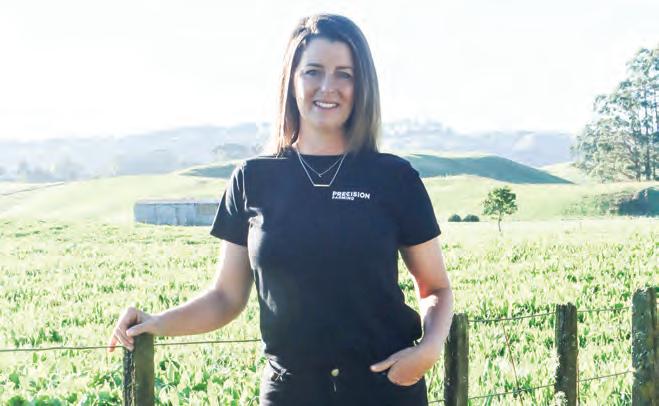
PRECISION FARMING
says that its expansion into Australia signals rapidly accelerated connectivity for farmers and growers on both sides of the Tasman when it comes to efficient vehicle management.
The New Zealand agritech company supports farmers and contractors with fertiliser and spray application management and job tracking. It has now acquired NuPoint, which already has a presence in both New Zealand and Australia.
Precision Farming chief executive officer, Chloe Walker, says that the biggest benefit is providing connectivity with simple and easy-touse tools for farmers, that
all talk to each other.
Walker says the platform helps reduce paperwork, improves compliance reporting, gives users visibility of vehicles and jobs, and enables cost savings through more efficient operations.
At a time when costs are rising and supply is limited, Precision Farming’s tools support farmers to maximise their fertiliser and spray value, while reducing fuel use, she says.
“We are all about giving farmers and growers options, and the ability to be efficient and connected, no matter what technology they want to use,” she says.
“You choose what hardware to use, what
contractor you want to use, what fertiliser or chemical supplier you want to use and which farm management system, and they all talk to each other. This acquisition allows us to really accelerate that trajectory.”
Their platform already connects with major players in the pastoral farming landscape, including brands like John Deere, Trimble and Topcon. Extending that through to the NuPoint platform creates new opportunities, especially in the horticulture and viticulture sectors.
Combined, the platforms integrate to strengthen Precision Farming’s position in vehicle operations
management and further enhance digital connectivity between machinery, contractors, farmers and farm systems.
Walker explains that the company has strong growth ambitions, and the acquisition of NuPoint is an expansion of their connected agricultural technology platform.
“This is a great Trans-Tasman story and demonstrates the growth trajectory that we are on,” she says.
“A core part of our vision is enabling a future where every vehicle on every farm can be connected through a flexible digital ecosystem, giving them full visibility of vehicle locations and
what went on when and where. It’s all about giving farmers and their partners choice, while ensuring the tools they rely on can work seamlessly together.”
Looking at the future of farming, Walker believes that supply chain
transparency will only become more rigorous for exporting nations like New Zealand and Australia. Connected tools, like Precision Farming’s platform, will allow us to stay ahead of the game when it comes to reporting and
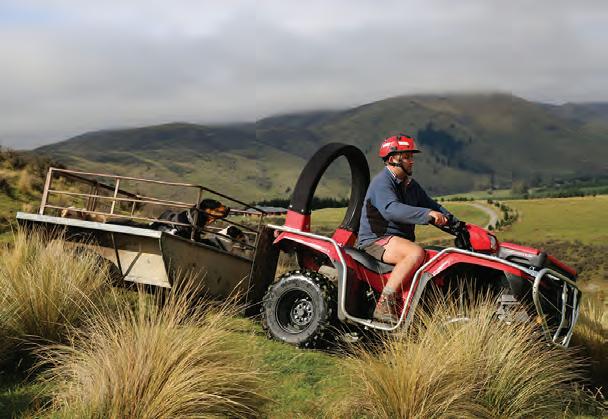
FARMERS ARE being offered help to protect themselves and their people while using quad bikes and side-byside vehicles on farm.
Building on the success of a pilot in 2024, Safer Farms is launching phase two of the Safer Rides programme, providing farmers with financial incentives to fit lifesaving technology such as Crush Protection Devices (CPDs) and GPS Rollover Safety Systems.
On average, a quad bike or sideby-side accident takes the rider out of productive work for 82 days, impacting themselves, their family and the farm business. Since 2019, 23 farmers or workers have lost their lives in preventable accidents - around 70% of which could have been avoided.
“There was overwhelming demand for phase one of the Safer Rides programme with over 130 farm businesses installing CPDs,” says Lindy Nelson, Farm Without Harm ambassador and director of Safer Farms, the industry-led organisation dedicated to fostering a safer farming culture across New Zealand.
“Farmers told us that near-misses, accidents, hilly terrain and concerns for younger riders drove them to act. Retailers also saw a surge in enquiries and sales.
“What we saw is that when farmers are made aware of viable options, and there are incentives, they act to make safety a priority.
That’s why we’re bringing Safer Rides back so more farmers can benefit.”
Safer Rides is accompanied by an awareness and education programme and a provocative advertising campaign that highlights the real gamble farmers take when safety is ignored.
“We think the message that a small ‘win’ of a few minutes saved is nothing compared with the potentially devastating ‘loss’ of serious injury or death will really resonate with farmers,” says Nelson.
The initiative is backed by ACC, and a network of sector partners including PGG Wrightson, Rabobank, FMG and Craigmore Sustainables, all committed to safer outcomes for New Zealand farmers.
Farmers taking part in Safer Rides can access a 20% discount code for CPDs from Trax Equipment or
compliance.
“That’s what we are here to do for farmers and growers, using smart technology and common sense. Our tools need to be simple and connected because we want to support farmers to come on this journey.”

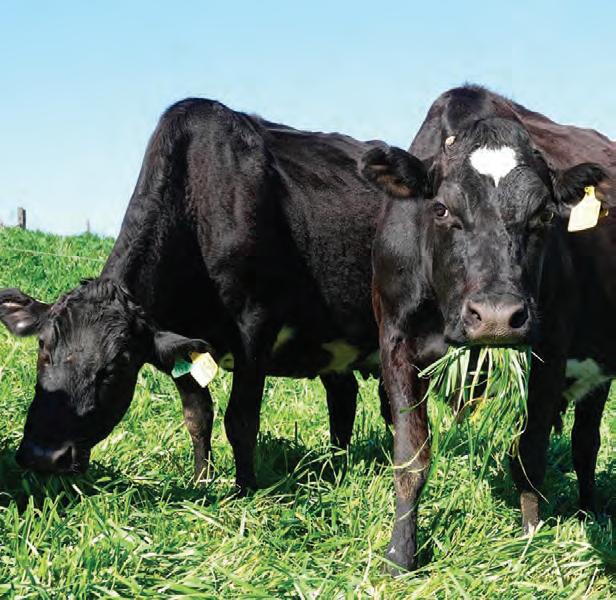
KEEPING COWS happy and well fed at home this winter just got easier with the launch of a prolific new annual ryegrass bred to jump out of the ground even faster than its popular predecessor.
Fast establishment means less downtime between sowing and grazing.
For farmers wanting to follow up with a bumper summer crop in a few months, there’s another advantage too – strong weed competition.
Pasture specialist Graham Kerr, Barenbrug, says using an annual ryegrass like Racer is a common first step in preparing weedy, poorproducing paddocks for break crops like maize silage and ultimately full pasture renewal.
“Racer’s aggressive enough to help suppress weeds at the start of this process. It’s ready to eat sooner, and because it’s a high energy tetraploid, your cows will appreciate it as well.”
Racer takes over from Hogan annual ryegrass, which has been a market favourite in recent years.
It brings increased winter yield to compensate for slower daily growth from existing pastures during dry-off and in the lead up to calving.
It is unbeaten for winter yield of annual ryegrasses in the latest National Forage Variety Trial industry results for all New Zealand.
Cool season pasture is increasingly the most valuable feed farmers can generate at home, benefiting both farm profitability and emissions intensity.
“Overall, Racer produces 4% more dry matter yield than Hogan, or an extra 190 kg dry matter/ha,” Kerr says.
As well as setting the stage for successful pasture renewal next autumn, Racer is ideal for planting between maize crops, especially where the aim is to maximise the tonnage of high quality feed grown per hectare over 12 months.
In either scenario, sowing Racer gives a great opportunity to start remedying any underlying issues with soil fertility, pH and grass weeds that need time to fix, and can significantly influence the performance of subsequent crops and pasture.
Racer is late heading (+15 days); suits both grazing and high-quality silage and is available for sowing now.
• Article supplied by Barenbrug
ANNE BOSWELL
A BULL on a freight plane sounds like the start of a joke, but for Ian Bryant, it is a fond memory of days gone by.
As owner of Otago’s Delaware Holstein Friesian stud, Ian is the caretaker of not only a farm business, but a name that has spanned two centuries - with three generations of the Bryant family to have bred Holstein Friesian cattle on the Taieri Plains.
Before Delaware was established by Ian’s father EJP (Eric) Bryant in 1948, Eric’s father William Bryant had a pedigree Holstein Friesian stud, Tamahine.
These animals were later to form the foundation of Delaware, which became well known for bulls, show animals and the careful selection of overseas genetics.
Ian recalls that Eric was known foremost as a bull breeder, holding annual sales for many years that were a major part of the early Delaware story. He sold surplus heifers as well.
Eric sourced genetics from some of the most notable studs in New Zealand, buying bulls from Rosevale, Lesdale, Pinevale, Pukeroro and Turepo - “big name studs”, Ian says.
The logistics of cattle transport back then are a vivid memory for Ian.
“I remember Dad buying bulls from the North Island, and they came down to the South Island in Bristol freighters in cages,” he says. “We picked them up from the airport.
Dad even sold one bull, Delaware Skokie Prince, to a stud in Australia, and he was taken by train to Christchurch and flew to Australia by plane.
“When AI became established the bull market did dry up a bit. Our last sale was in 1984.”
Showing cattle was another major pillar of Delaware’s identity.
“Showing was a big part of our lives growing up,” Ian says.
“We attended two local shows - the Taieri A&P Show and the South Otago A&P Show - and competed against Peter Robertson (Rannoch) and Don Bathgate
(Kinfalloch) and later, Denis Aitken of Broomfield.
“Then, at the end of January we would go to the Otago A&P Show,
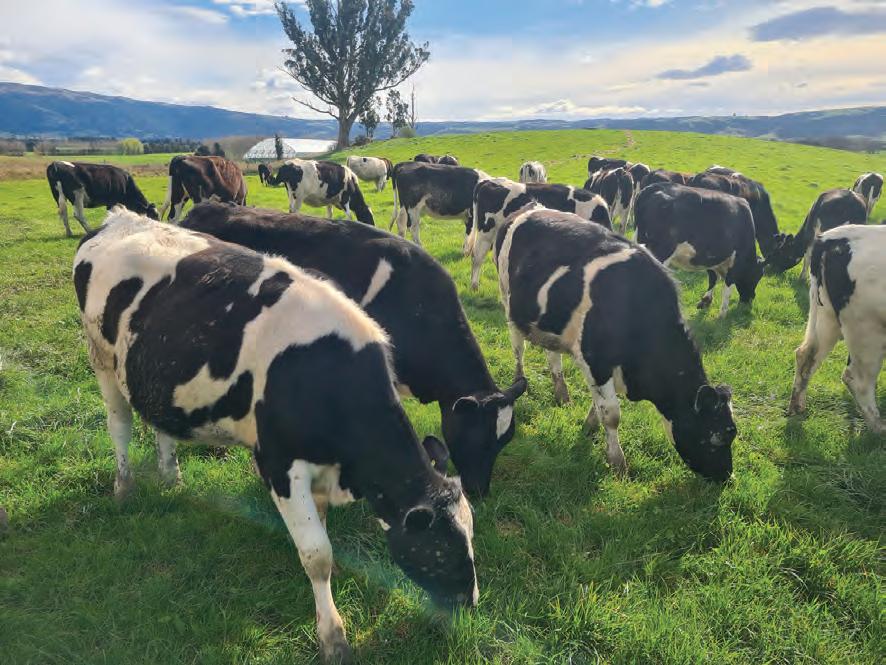
IAN BRYANT says they aim to breed easy-care cows that get in calf easily, aren’t too big, and have good udders and high components.
“Commercially, we would rather have these kinds of cows, with one or two show cows,” he says.
Genetic selection continues to evolve too.
“We are trying to breed more polled animals now,” Ian says. “We’re not going all out, but it’s one less job to do. And we’re wondering if it will become an animal welfare issue going forward, like it has in Europe.
“We also avoid using A1A1 bulls,
held over two days in Dunedin.
“It was a little more competitive than the local shows, and breeders came from
leaning toward the A2A2 gene where possible.”
Ian says a few things have changed since his father was at the helm.
“Dad was milking 120 cows, and we have three times that number,” he says. “Our infrastructure has also upgraded: Dad used to have a walkthrough cowshed, and I installed a herringbone and later, a rotary.”
This expansion reflects a shift from the smaller, show-focused herd of Eric’s era to a modern commercialscale dairy operation. However, the emphasis on good genetics remains
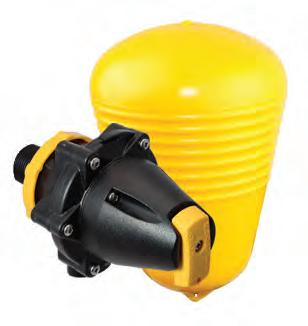
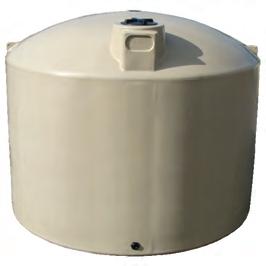
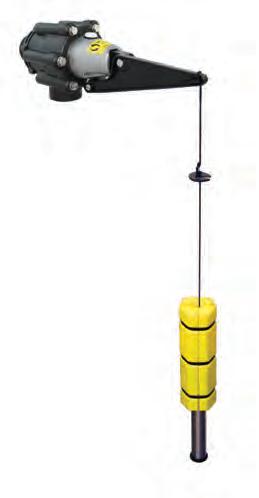
• Ideal for Cattle Troughs
• High Flow
• Side/Bottom Mount
• Detach to Clean
property next door, both with the Delaware prefix. After Isabel passed away, the home farm was continued by Ian and Denise’s daughter Keryn and husband Matt Luke, while Ian continued with the Delaware prefix.
Ian’s brother, Murray Bryant, re-started the Tamahine prefix, later selling the herd.
Ian says today, the business has modernised its structure. A contract milker is employed to milk the 360 mainly pedigree Holstein Friesian cows and after many years wintermilking, they are now seasonal.
Delaware Holstein Friesian stud has evolved from bull sales and show rings to a commercially-focused dairy operation.
further afield such as Glenstuart, Middlevale and Deloraine.”
Eric, who was also an NZHFA Councillor for some years, showed
in the Bryant family’s quest for excellence.
“Both Dad and I used a bit of overseas bloodlines to get the type we wanted,” Ian says.
While Delaware is no longer running big bull sales or heading to multiple shows every summer, the heart of the stud remains unchanged: a commitment to breeding robust, productive Holstein Friesian cattle with longevity and balance.
The Delaware story is one of adaptation without losing sight of its roots; a hallmark of true longevity in New Zealand dairying.
Delaware Linmack Cushla at the Royal Show in Invercargill in the late 1970s and she did well, winning several South Island Championship titles.
After Eric passed away, his wife Isabel continued farming.
She farmed the home farm while Ian farmed a second herd on a
Today, Ian and Denise’s breeding focus is on practicality and production.
“We use a lot of bulls from Maire, Meander and Busybrook, and they have produced good progeny for our commercial herd,” Ian says. “We haven’t been overly focused on creating cow families as such.”
❱❱ Owners: Ian & Denise Bryant ❱❱ Location: Outram, Otago
Farm size: 140ha effective
Cows: 360 cows (90% registered Holstein Friesians)
Production: 160,000kgMS
Stud name: Delaware


• Compact/Robust
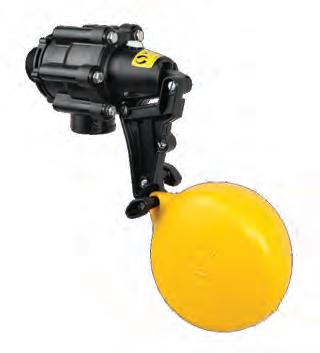
Up to 50mm Inlet
Flows up to 600L/min
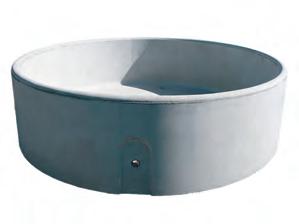
For Storage Tanks
Easy Access to Valve
Inlets Upto 50mm
Avoids Starting & Stopping of Pump When Tank is Filling


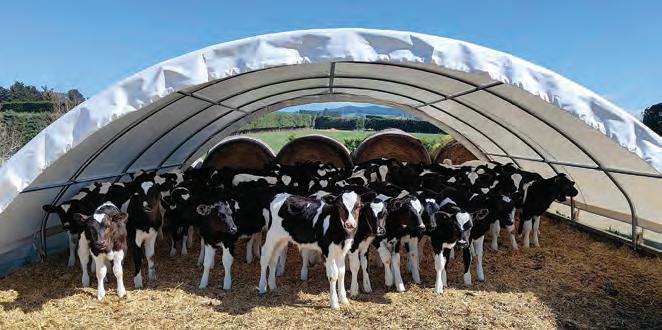
RESEARCH DATA and practical experience, from New Zealand and around the world, has shown that youngstock rearers can positively influence lifetime productivity of calves, kids and lambs, simply by feeding them well in the first eight weeks of their lives.
For many years, calf rearing systems have focused primarily on developing the rumen of the young calf, so that by the time the calf is weaned, it is able to effectively utilise pasture and other forages. In many cases, maximising rumen development has been interpreted as minimising the amount of milk consumed by the calf to ensure high intakes of starch-based feed needed to help drive the development of rumen papillae.
While important, this focus on rumen development, has unfortunately distracted us from developing other key organs, essential for improved animal health and welfare and optimised lifetime productivity.
To understand how early life nutrition may impact lifetime productivity in dairy heifers, researchers at Cornell University investigated the effect of increased milk feeding on the development of key organs, including the mammary gland, in the first eight weeks of a calf’s life.
These researchers fed calves that weighed 39kg at birth, an average of 600g per day (control) or 1300g per day (enhanced) of milk replacer and found that calves fed
the higher levels of milk replacer gained 820g per day compared to control calves which only gained 390g per day.
The researchers also reported a significant difference in the weight of the whole mammary gland and amount of mammary parenchyma (or milk-producing tissue) present at 54 days of age; Calves on the enhanced feeding programme had 6 times the parenchyma tissue of those calves fed the control treatment.
Similar results have also been reported in New Zealand, where calves were fed either 4L or 8L of whole milk from 10 to 73 days of age. Calves were weaned gradually by 84 days of age.
In addition to increased mammary
parenchyma, the researchers also reported other benefits, relevant to both heifer or hogget replacements and those animals reared for meat. These include enhanced preweaning growth, with no negative effect on post weaning growth on pasture earlier development of the immune system supporting a more effective immune response.
An extensive review of rearing and production data from more than 140,000 spring born heifers from over 1300 herds in New Zealand reinforces these findings, with researchers reporting a strong positive correlation between first lactation milk production and body weight between three and 21 months of age
regardless of breed. Importantly these researchers also showed a strong positive correlation between body weight during rearing and milk production through to third lactation. This increased productivity combined with improved cow survival all contribute to improved farm profitability.
Improved early life nutrition has also been to shown to have positive
benefits for beef animals.
In a separate study New Zealand researchers fed one group of dairy beef calves a low milk allowance of 4L per calf per day, with weaning at seven weeks of age. A second group were fed a high milk allowance of 8L per calf per day and were weaned at 12 weeks of age. At 12 weeks of age, the calves fed the high milk allowance were 6.9kg heavier than the
calves fed the low milk allowance and the impact of this increase in growth was sustained until 19 months of age.
In addition, those calves on the high milk allowances reached slaughter weight sooner and had higher marbling scores, with steaks showing less cook loss and better colour stability.
• Article provided by
AGRIZERONZ HAS invested $5.1 million in Australian company Rumin8 to accelerate development of its methane-reducing products for cattle and bring them to New Zealand.
Headquartered in Australia, Rumin8 is developing products using a compound which reduces methane emissions in livestock. It says trials with beef cattle showed an average 82% methane reduction after consuming Rumin8’s feed additive,
as well as indications of up to 5% productivity gains.
Rumin8 is aiming to develop a range of products including a feed additive, water additive, mineral supplement and slow-release capsule.
AgriZeroNZ chief executive Wayne McNee says investing in companies like Rumin8 as part of its portfolio of investments aims to give New Zealand farmers access to a range of emissions reduction tools.
“New Zealand’s a relatively small market on a global scale, so our investment is critical to push New Zealand pastoral farming systems up the priority list and support companies to bring their world-leading innovations here.
“Most of our major export customers have set ambitious emissions reduction targets which cover their entire value chain, including the New Zealand farms which produce the milk and meat they buy.
“Being able to show credible progress matters to maintain our market access and reputation as a world-leading producer.”
McNee says Rumin8’s goal of developing products for grass-fed animals and its progress to date, make the company a welcome addition to AgriZeroNZ’s diverse portfolio.
Rumin8 co-founder and CEO David Messina says AgriZeroNZ’s investment has brought its focus on
New Zealand forward several years.
“We’re now planning animal trials in New Zealand this year to support our application for regulatory approval. These trials will test the safety of the feed additive as well as its effectiveness in local conditions.” Messina says approval for Rumin8’s initial product will help facilitate registration of other related products which are more suited to grass-fed systems.

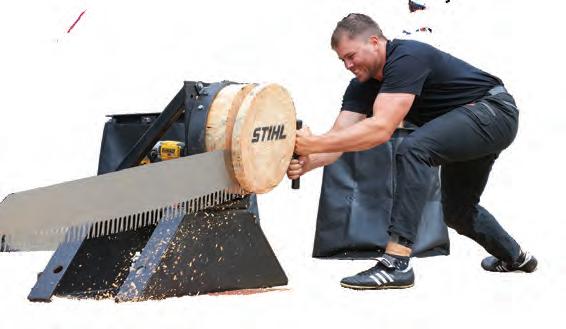
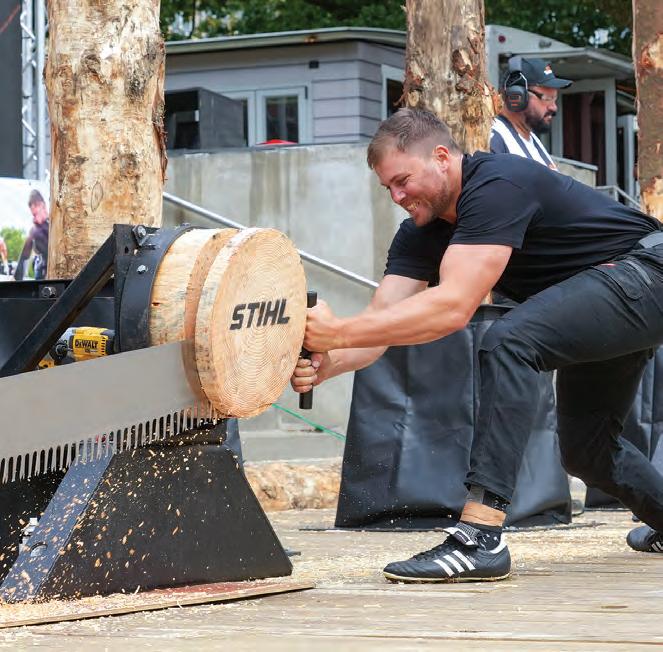
WHILE NOT all sibling rivalries come to blows, one headline event at the recent New Zealand Rural Games held in Palmerston North certainly did, when reigning World Champion Jack Jordan was denied the opportunity of defending his world title in Europe later this year, after being beaten by his big brother’s superior axle blows, at the Stihl Timbersports Nationals.
New Zealand’s sole representative at the end of year world champs is determined by whoever wins
the national title at the Rural Games in Palmerston North, this year won by 39-yearold Shane Jordan, who pipped his younger sibling of 10 years, at the final hurdle.
Shane is looking forward to being the Individual NZ competitor at the World Champs in Stuttgart, Germany in October.
In a repeat of last year’s competition, the result came down to the last of six Timbersports disciplines, with the two brothers even on points after five rounds, going into the hot saw (supercharged chainsaws) event.
“All I knew going into the hot saw was that I had to put up a really
good time and try and put the pressure back on Jack, and luckily enough for me, it all worked out pretty good,” said Shane. “Jack’s pretty hard to beat at the best of times, and so, yeah, it was definitely pretty good yesterday to get one over the top of him. I could see he was hurting at the end of it all, and I felt his pain, so I didn’t talk to him too much. It’ll take him a day or two to process it all, but he’ll certainly be on my side when our NZ Team heads over to try and get that world championship.”
Jack Jordan will still head to the World Championships in Germany, part of the international teams
event as part of the NZ team, alongside being confirmed to defend his Stihl Timbersport World Trophy in Hungary during June, a short form, high intensity format he’s won the last three years.
The younger Jordan didn’t leave the Rural Games and Palmerston North empty handed, having been crowned the Supreme Rural Sports Award winner for the second time at the Ford New Zealand Rural Sports Awards.
Selection events for the Rookie World Championship and the first ever Stihl Timbersports Women’s World Championship (both being held in Hungary in June) will
take place next month in Australia, with four NZ women and four rookies heading over the ditch, from where the top performing Kiwi woman and rookie will be chosen to represent NZ at the Timbersport Worlds in Hungary in June.
@rural_news facebook.com/ruralnews
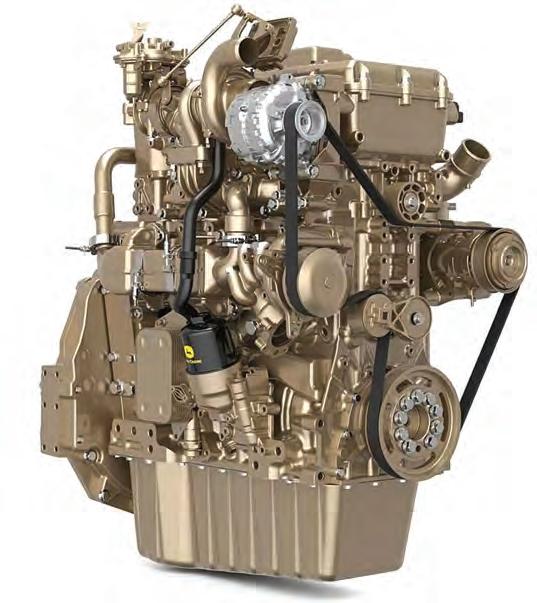
THE RECENT ConExpo construction show held in Las Vegas, said to be the largest exhibition of its type in the world, saw John Deere Power Systems (JDPS) preview two new mid-range industrial engines.
Set to join what the company calls the Next Generation Engine (NGE) lineup, the JD5 (5.0-litre) offers an anticipated power range from 125–268hp (93–200kW), while the 7.5-litre JD8 250–389hp (187–290kW). Both series will be compatible with renewable diesel fuel and biodiesel blends, with the anticipated launch for the JD8 intended for 2029, followed by the JD5.
The company also showed the latest

Kreisel batteries, with the KBE.59.750M, which is targeted for production later this year, as well as the KBE.24.450S, KBE.39.750S, and KBE.39.750C.
Also seen at last year’s Agritechnica, all batteries combine patented cell immersion cooling technology with advanced software systems to optimise battery life performance. This modular architecture allows for multipack configurations, enabling stacking to suit a wide range of off-highway vehicle types, while JDPS is also developing both stationary and mobile charging options.
“John Deere Power Systems is strategically investing in the future of
diesel technology to ensure it remains a viable, high-performance solution for the long term,” comments senior vice president Pierre Guyot. “The expansion of our Next Generation Engine lineup provides the highhorsepower foundation many customers rely on, while our simultaneous growth in battery and hybrid offerings creates a versatile, multiple-pathway approach to power.”
The Next Generation Engine line-up provides highhorsepower foundation customers rely on.

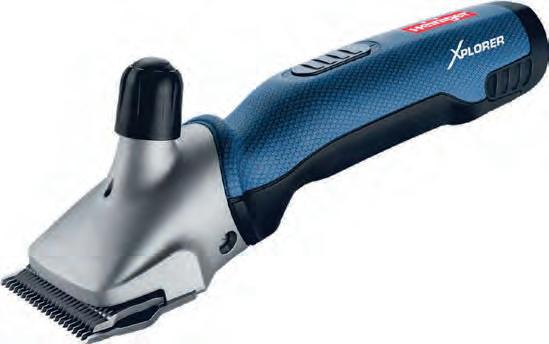
MARK DANIEL markd@ruralnews.co.nz
IRISH MINISTER of State of Agriculture, Noel Grealish was in New Zealand recently for an official visit.
While many meetings during the visit focused on research collaboration between the two countries in areas including sustainable farming, emissions reduction and probiotics, a trip out to a farm was also on the agenda.
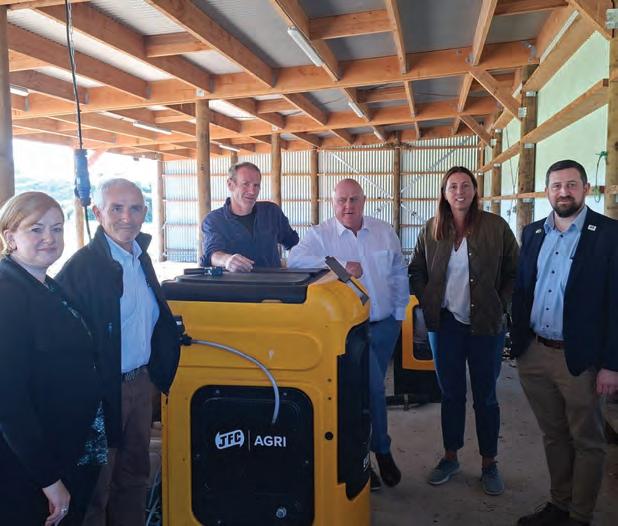
A visit to Mount Somers Station, a 10,000-acre property owned by David and Kate Acland in the Mid Canterbury foothills, saw an extensive operation that includes over 13,000 breeding sheep, 1800 beef cattle and 1300 dairy cows on the property, which also has 400 hives producing manuka and honeydew honey.
In order to support their 12 staff during spring calving season, the
Aclands have introduced automatic calf feeders to their system. These are manufactured in Grealish’s homeland in County Galway on the west coast of Ireland by JFC Agri.
The Aclands introduced the ‘Evolution’ system in their three calving sheds last season, to automate the feeding of their spring calves and reduce labour requirements, as well as bringing further benefits, including improved health and growth of individual calves by ensuring milk is more evenly distributed amongst the mob. There are plans to build a fourth calving shed this year with another Evolution unit.
“The JFC calf feeders have revolutionised our calf rearing operation, they are simple and straightforward machines to operate and produce an excellent, even line of calves. The support and service network they have put in place is great”, says Kate Acland.
“I’m delighted to see the success of JFC Group here in New Zealand and to be able to see first-hand how their products are supporting farmers with their calf rearing,” says Grealish.
“We are delighted to be working with the Acland family, they run an impressive farming operation with modern day technology. We are seeing labour shortages on farms across the world, so our Evolution technology is helping to fill those gaps by saving time in calf rearing,” says John Concannon, managing director at JFC Group.
JFC Group is supported by Enterprise Ireland, the Irish government’s trade and innovation agency, first introducing the product to the New Zealand market on the Ireland stand at National Fieldays in 2024.
“JFC’s Evolution automatic calf feeder is a great example of the types of technology being developed in both Ireland and New Zealand, which are
supporting farmers on two opposite corners of the world, due to our similar farming systems and practices.” said
for the agribusiness and sustainability.
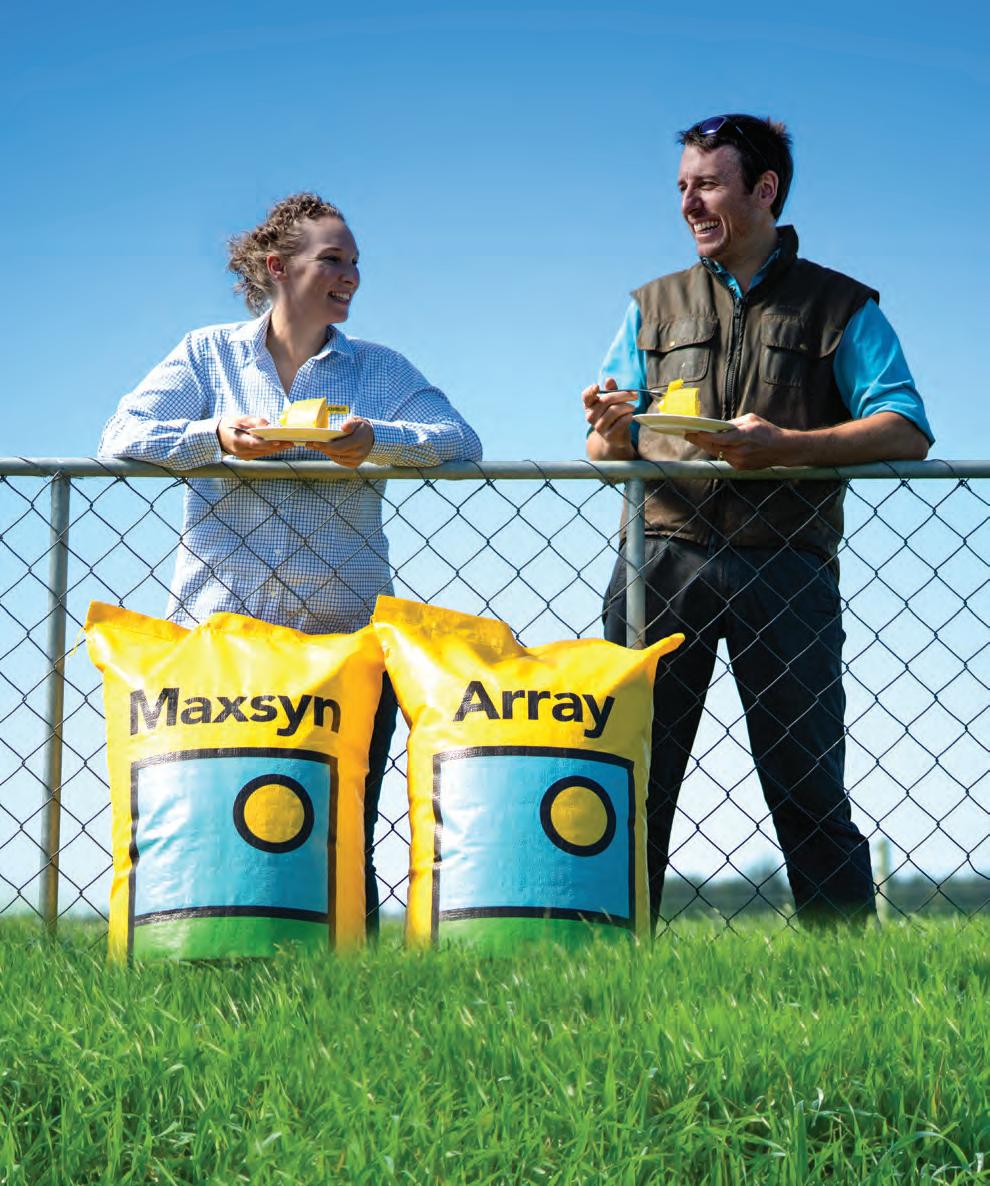
When you invest in pasture, you’re investing in your future. Nothing delivers returns like proven, persistent Maxsyn and Array.
Maxsyn, New Zealand’s top-selling perennial ryegrass, just got even better – now supercharged with NEA12 endophyte for increased resilience and productivity.
Don’t forget Array, the environmental all-rounder delivering high yield plus nitrogen efficiency. It’s the complete package! Ask your Reseller, or learn more at barenbrug.co.nz
MARK DANIEL markd@ruralnews.co.nz
WHILE THE recent Central District Field
Days brought with
it a welcome dose of sunshine, it also attracted a significant cohort of sitting members from the Beehive – as one might expect in an
election year.
Received with open arms was Todd McClay, Minister of Agriculture and Minister of Forestry, who chose the Feilding event to announce the
Government’s support of 18 rural, communitybased initiatives through its Rural Wellbeing Fund, with $4m over the next four years.
“We established
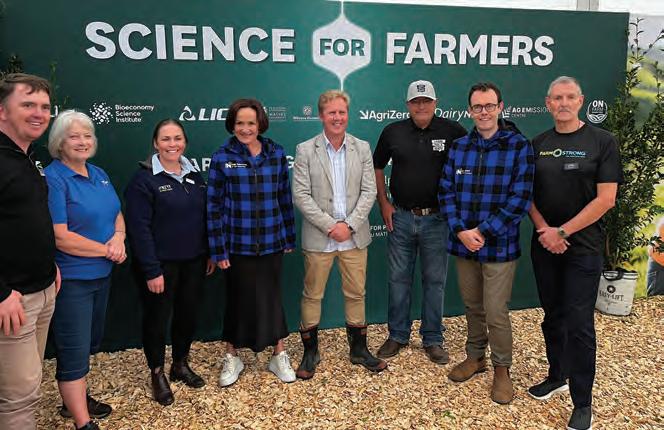
the fund mid-last year to boost wellbeing programmes that support the rural sector,” McClay says.
“These initiatives will ensure farmers and growers have the support they need to thrive.”
“Partnering with grassroots organisations enables the Government funding to go further and make a real difference.”



Mental Health Minister Matt Doocey says the Government is committed to delivering faster access to mental health support, including for the one in five people who live in rural communities.
“We’ve focused on supporting proposals that can have the greatest impact on the ground, as well as new initiatives targeting gaps.
“Partnering with grassroots organisations enables the Government funding to go further and make a real difference.”
Speaking to a large audience, McClay recognised a debt of gratitude to the primary sector, which generated around $80b in revenue and kept the country fed in difficult times and unplanned weather events. At the same time, he confirmed the Government’s ongoing commitments to simplifying rules and regulations, allowing farmers and growers to do what they do best, rather than being burdened by often repetitive surveys and paperwork.
Federated Farmers
President, Wayne Langford, thanked the Minister for recognising the pressures faced by the rural sector, often on an individual basis, as many people worked long days, often alone.
“The Wellbeing Fund is much appreciated, but I hope this is only the first tranche.”
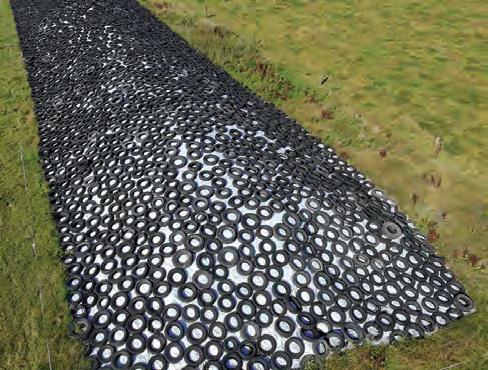
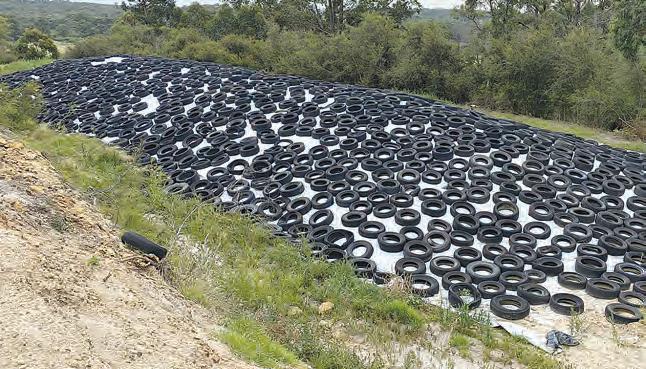
Kate Denholm, chair of New Zealand Young Farmers and manager of a 700-cow Holsten herd on a Manawatu farm, repeated the sentiment and went on to explain how the association’s 60 clubs throughout the country enabled better wellbeing through social connection, which encompassed sporting activities, training days and rural community actions like stacking tyres on silage clamps to supplement club funds.
Craig “Wiggy” Wiggins, chief mate of the Lean on the Gate charitable trust, explained how talking to a friend or trusted rural professional could help those at risk understand that they needed some help on their mental health and wellbeing journeys.
Wiggins said, sadly, there is still a very real issue with rural suicides.
“The likes of trusted rural advisors such as stock agents, who regularly work with farmers and are trusted to steer high value transactions, can make a huge difference.
“We have a plan to help train these individuals to recognise rural folk in distress, meaning that help can be offered inside or over the farm gate, rather than watching an ambulance at the bottom of the cliff. The grants will make a huge difference.”
MARK DANIEL markd@ruralnews.co.nz
UNLIKE DAIRY farming where real-time data is widely used to manage production, much of the beef industry still relies on estimation when assessing livestock weight.
Traditionally, cattle are mustered into yards and processed through weigh platforms, a process often timeconsuming, labour intensive and stressful for the animals. In addition, systems can be costly and require purpose-built yards and races, while some research suggests that the stress of yarding can even result in shortterm weight loss, making frequent weighing counterproductive.
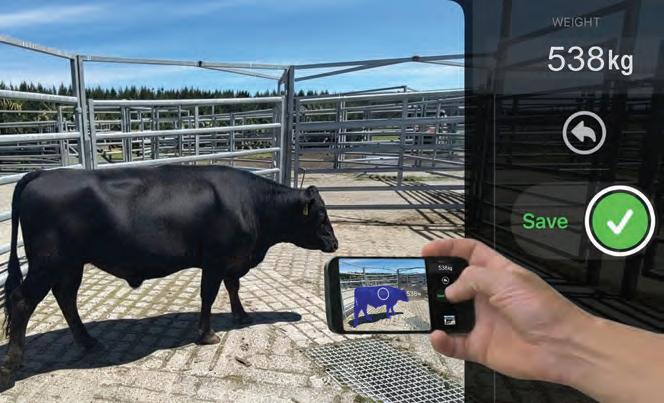
NZ Agritech start-up company Scanabull has built a computer-vision platform that allows meat processors and farmers to determine the live weight of cattle using the LiDAR sensor on an iPhone. The technology captures a 3D scan of the animal and processes it using proprietary neural networks run directly on the device. Promising to weigh cattle in one second without the crush or guesswork, the technology provides meat processors and farmers with accurate real-time data about on-farm production.
The company has
recently announced a NZ$1.1 million raise led by Sprout Agritech, with support from Enterprise Angels and Callaghan Innovation’s Deep Tech Incubator programme. The company is already working with industry partners including Silver Fern Farms, with trials and demonstrations underway across New Zealand, and will actively explore opportunities in Australia and other major beef-producing regions by year-end.
Scanabull uses a phone app for an iPhone Pro and a custom camera called the Scanabull Weigh Point that weighs animals automatically in the paddock. The phone app offers a quick measure of an animal’s weight, while the Weigh Point allows better measurement of growth trends.
On a practical front, farmers, stock agents and veterinarians can scan animals directly in yards, pens or near

farm gates using their smartphone, offering a quick and low-stress way to monitor livestock performance without needing expensive weight platforms and specialised infrastructure.
In addition, the system will also be able give meat processors access to valuable supply chain data to improve the efficiency of their operations.
Future versions will extend beyond live weight measurement to include additional metrics such as carcass weight prediction and body condition scoring.
Co-founder and CEO Dan Bull, who grew up on
a farm and spent several years actively managing livestock, says this lack of accurate data can create costly inefficiencies across the supply chain.
“Many animals are bought and sold based on visual estimates rather than objective measurements. When those estimates are wrong, it can result in significant financial differences for farmers, traders and processors,” explains Bull. “Our goal is to give the beef industry a fast, reliable way to understand what’s actually happening with their animals in real time.”
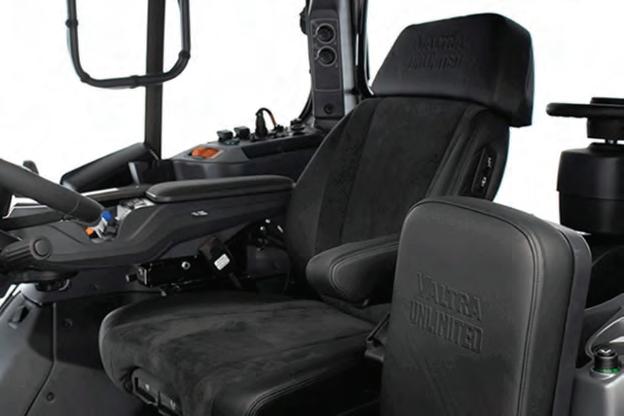
PART OF the AGCO stable, Valtra is reinforcing its customisation strategy in the utility tractor segment with the launch of Unlimited G5 CVT packages.
Unlimited is the factory-integrated customisation offering designed to simplify specification, with packages built around the recently introduced G Series CVT platform, that bundle selected options into predefined configurations, allowing customers to access premium features with a structured pricing advantage.
At the core of the range offering are the main launch configurations of Light and Premium, each focused on enhancing operator environment, connectivity, and usability. The Light package introduces upgraded interiors, integrated audio systems, ambient lighting, and mounting solutions, while the Premium version extends functionality with workspace elements, wireless charging, and durable external components.
Meanwhile, these packages are complemented by the broader Valtra Unlimited ecosystem, which continues to enable deeper personalisation across design, comfort, and application-specific features.
Strategically, sources suggest that Valtra is shifting customisation from a complex, option-by-option process to a modular, pre-engineered factory solution—reducing ordering friction for dealers and accelerating delivery cycles. This approach is particularly relevant for fleet customers and mixed-use applications, where standardisation and ease of specification increasingly outweigh bespoke configuration.
The move also aligns with the positioning of the G Series CVT itself, a tractor designed for versatility, intuitive operation, and multioperator environments, particularly in loader work, livestock farming, and municipal duties.