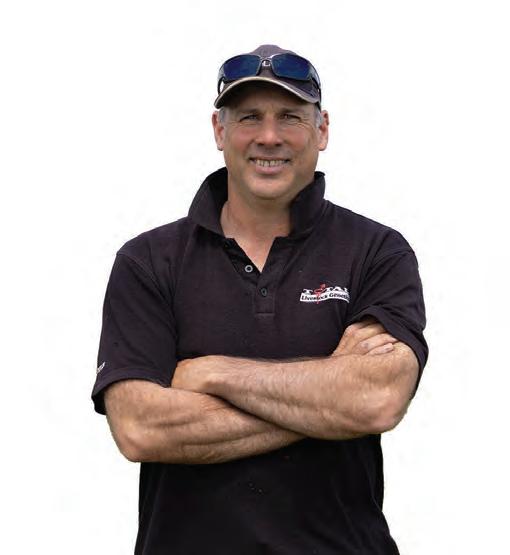
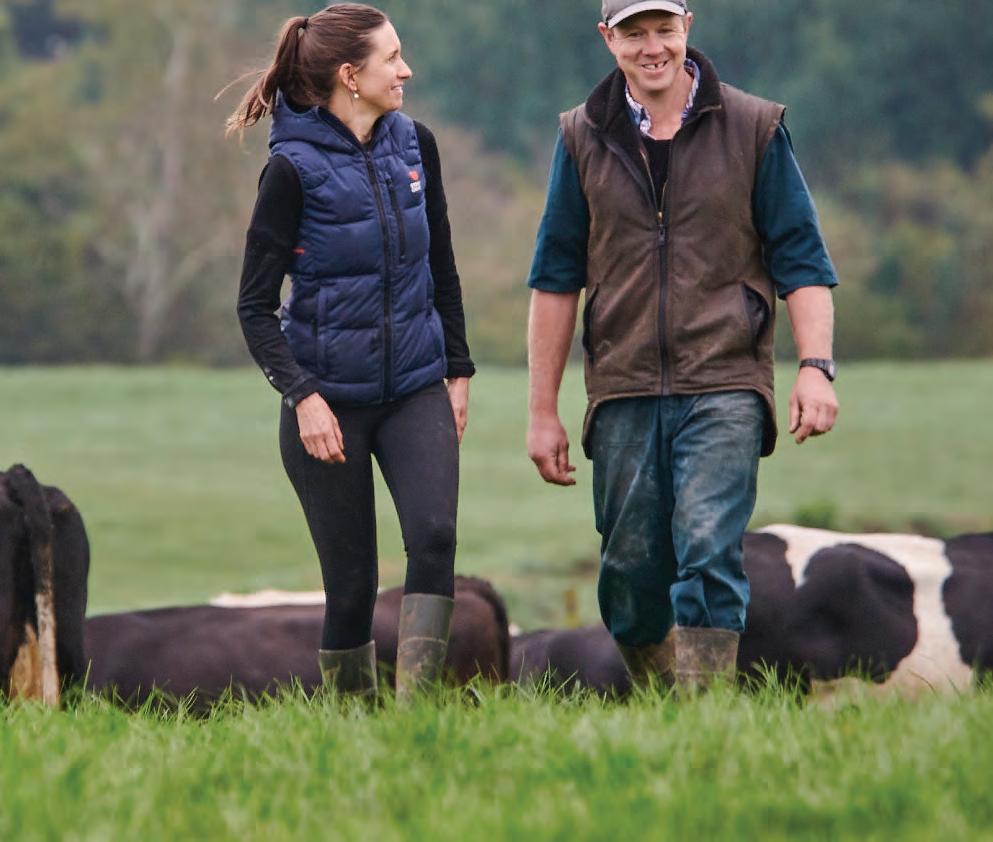
Charlotte Senior says efforts by Canterbury farmers are being recognised and felt. PAGE 4
With the inclusion of insecticides, fungicides and micronutrients, you’ll help ensure your forage crop or pasture gets off to the best start and reaches its full potential.
For generations, Kiwi farmers have backed Ultrastrike® and Superstrike® to protect their seed and make every seed count. PROTECT YOUR SEED, PROTECT YOUR FUTURE .
For
$9.50 milk price back in play
SUDESH KISSUN
sudeshk@ruralnews co nz
A SOLID recovery of global dairy prices this year makes a $9.50/kgMS milk price almost a shoo-in for this season.
And one farmer leader says with strong prices combined with great grass growth, New Zealand farmers are pushing the envelope and getting as much milk as they can in the vat.
Major banks have revised their forecast milk price for the season upwards. Fonterra’s latest forecast range is $8.50 to $9.50/kgMS, with a midpoint of $9/kgMS.
After a poor run over the second half of 2025, global dairy prices showed a solid recovery to start 2026. The Global Dairy Trade (GDT) price index lifted 6.3%, 1.5% and 6.7% at the first three auctions.
BNZ senior economist Doug Steel says that while prices are still 13.7% below their peak in May last year, it is encouraging to see a bounce from last year’s lows.
He believes that if prices were to remain around current levels for the remainder of the season, a 2025/26 milk price a touch above the top of Fonterra’s forecast range is possible.
Steel says BNZ’s forecast of $9.50 builds in some GDT price decline into season’s end.
ANZ economist Matt Dilly says price drops in late 2025 were overdone.
Dilly says the welcome bounce has materially improved the milk price forecast for the current season. ANZ has also revised its forecast milk price to $9.50.
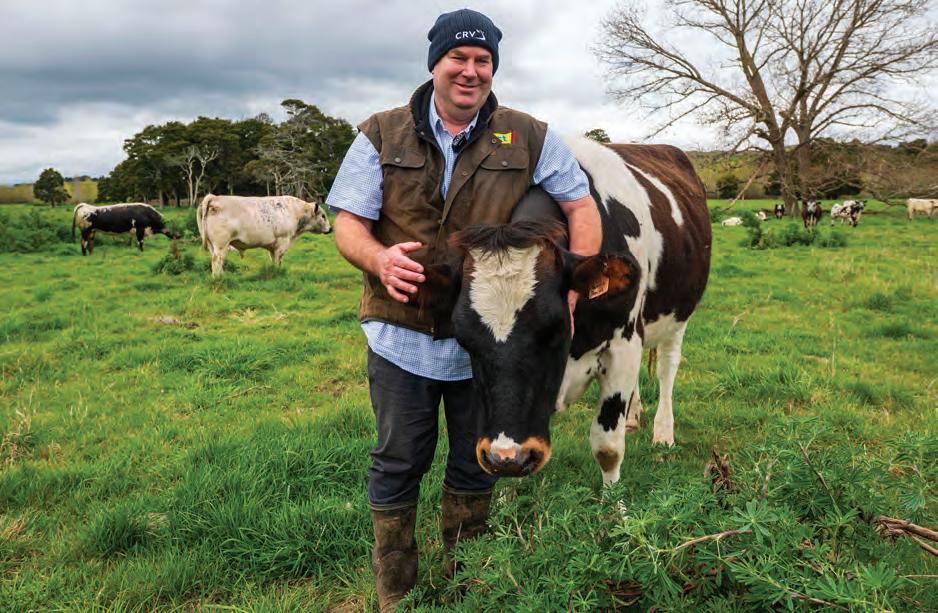
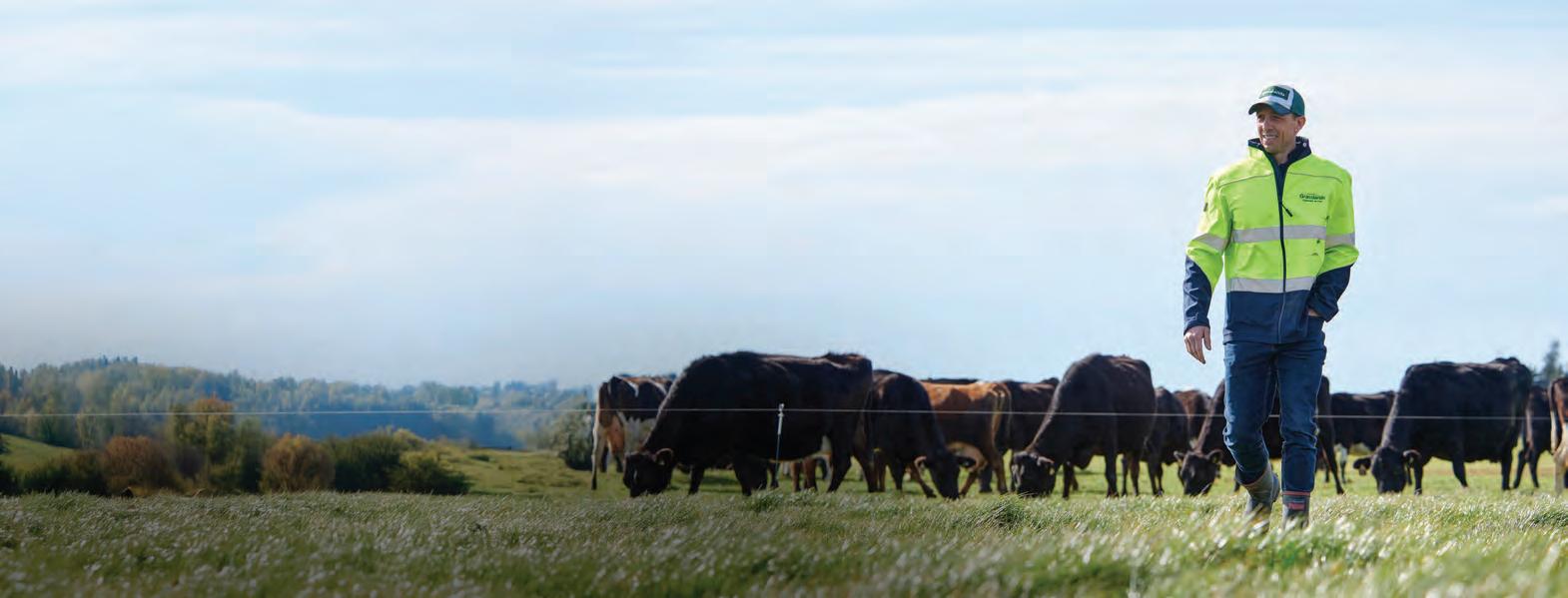
Federated Farmers Waikato dairy chair Matthew Zonderop says farmers are over the moon with how the season is progressing.
“The biggest thing is that we’ve got so much
grass at this stage that some of us in the Waikato are still making silage,” he told Dairy News
“We’ve had warm temperatures but it’s mild compared to other seasons. I think farmers will be pushing the envelope; we have the feed in front of us,” he says.
Zonderop agrees that a $9.50 milk price is possible.
SELLOFF OVERDONE?
SO WHAT is driving dairy prices up?
ANZ economist Matt Dilly says the global supply and demand fundamentals that drove prices down in the second half of 2025 are largely still in place, but in hindsight the selloff was overdone
Milk production is growing strongly in almost every key
“If we get another good auction, then there’s no excuse for the milk price to go up to $9.50. But a $9 milk price is still profitable.
“Things are shaping up well: we got plenty of feed and the cows are in great condition.”
Zonderop believes another dollop of rain in the Waikato will keep farmers going until the end of March.
market and Dilly says this has mainly been a response to high prices, along with low feed costs
“Now every key exporting country has their foot on the accelerator
“None of that has changed in the past two months, yet the GDT Index has risen 15 2% in the first three auction events of 2026 “A few reasons have been
offered for this reversal, and… individually none of them are particularly convincing Dilly believes that regardless of the cause, the bounce is great news for dairy farmers, even though prices remain a lot closer to the bottom than the top, because it virtually guarantees a milk price somewhere in the mid-$9 range
Federated Farmers Waikato dairy chair Matthew Zonderop says farmers are over the moon with how the season is progressing.
Data shows Canterbury farmers delivering results
NEWLY RELEASED
data from Environment Canterbury (ECan) Farm Environment Plan (FEP) audits are showing a dramatic lift in environmental performance across the region.
The number of farms receiving A grades in Canterbury has gone from 14% in 2017 to 77% in 2024-25, while the number of C and D grades dropped from 12% to 2% over the same period.
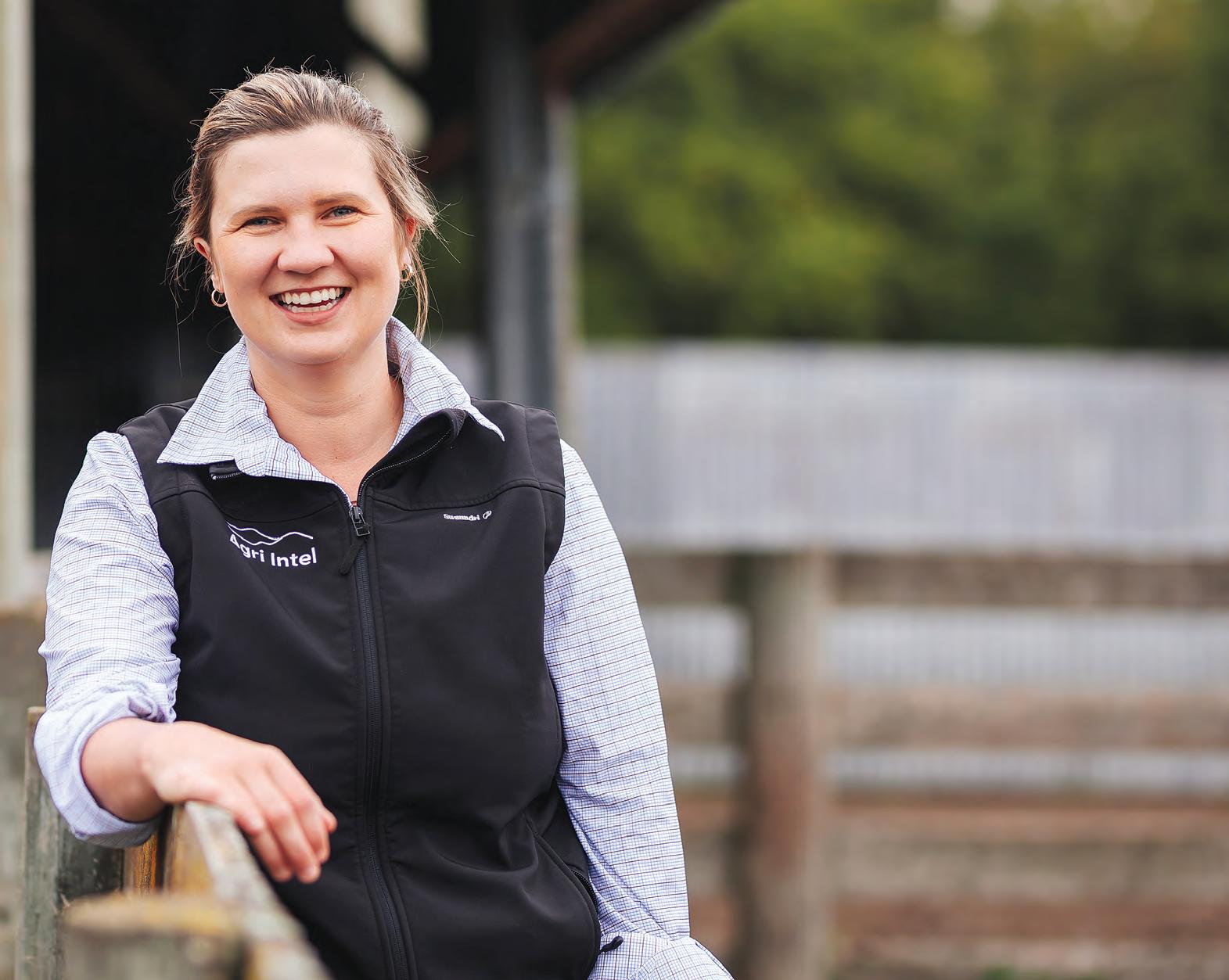
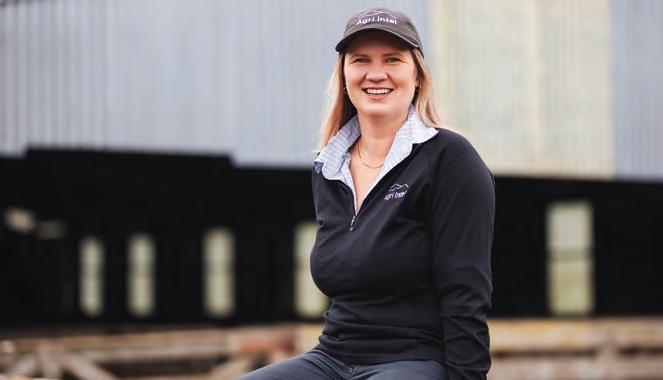
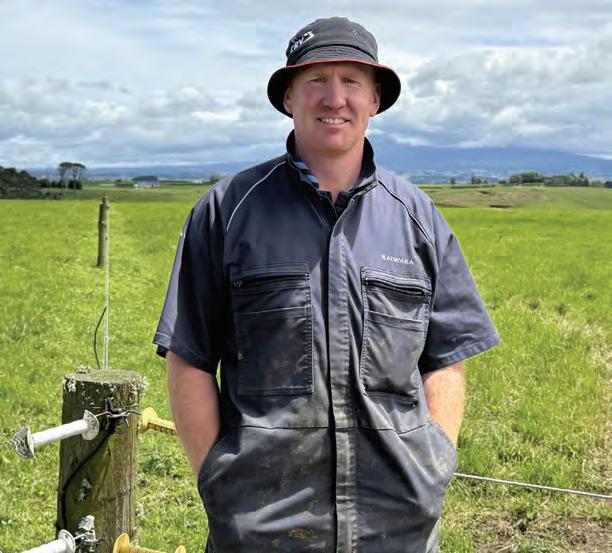
Charlotte Senior, a director of farm consultancy Agri Intel and one of about 20 accredited FEP auditors
in the ECan area, said releasing the data helped show that the efforts made by farmers are being recognised and felt.
“It can make you wonder if it’s all worth it when you are stuck doing paperwork or looking at the cost associated with auditing, but be assured it is,” she said.
“Direction is more important than speed, and the data from the FEP programme shows farmers are heading in the right direction.”
Senior acts as environmental advisor to the lower Selwyn catchment’s Eastern Plains Land User Group (EPLUG), a group of about 130 farmers in
an area across the top of Lake Ellesmere/Te Waihora, from State Highway One to the sea. She presented the numbers to a recent meeting of the group.
The figures showed that Selwyn outperforms wider Canterbury, reflecting its earlier adoption of audits in 2017 under the Canterbury Land and Water Regional Plan.
The rest of Canterbury was about two to three years later.
“Both Canterbury and Selwyn have lifted, but Selwyn led the way – A grades have become the norm and C and D grades are now almost gone,” said Senior.
Meanwhile, Central Plains Water Limited’s (CPWL) groundwater monitoring shows nitrate levels trending down in most of the wells the company monitors.
“The good news is that data across Selwyn backs up the progress we’re seeing on the ground,” said Senior.
Sixty per cent of wells monitored by CPWL had shown clear signs of improvement over the past five years.
Senior said a standout area of improvement has been irrigation management. While noting it was still the management area with the second-most issues (next to effluent), they’ve
seen real progress in irrigation efficiency and management, even as requirements to comply have become more stringent.
“It’s a real good news story,” said Senior. “People are now understanding and using their data rather than just buying gear and collecting numbers they don’t look at.”
should be really proud of that.
“They’ve met a lot of standards and in order to do so; they understand what good management practice is.”
Senior said about 3000 audits have now taken place. The FEP standards protect the good farmers.
“It’s not an easy feat to get an A grade and the farmers that get that
She said the community as a whole wanted confidence that farmers were meeting minimum standards but it was disappointing when talking to people outside rural New Zealand, that they had no idea about the FEPs and the audit process, and that farmers could actually lose their licence to farm if they don’t make the grade.
‘HUGE PROGRESS’
“Our
She pointed out that irrigation schemes could turn a farmer’s water off if they continually get poor grades. Good farmers wanted that accountability and they didn’t want poor performers dragging the industry down.
Farming professionals such as those supplying soil moisture probes or fertiliser advice also needed a healthy accountability, she said.
“We’re trying to achieve a really difficult outcome, to improve water quality. It’s a longterm issue.”
“Maybe
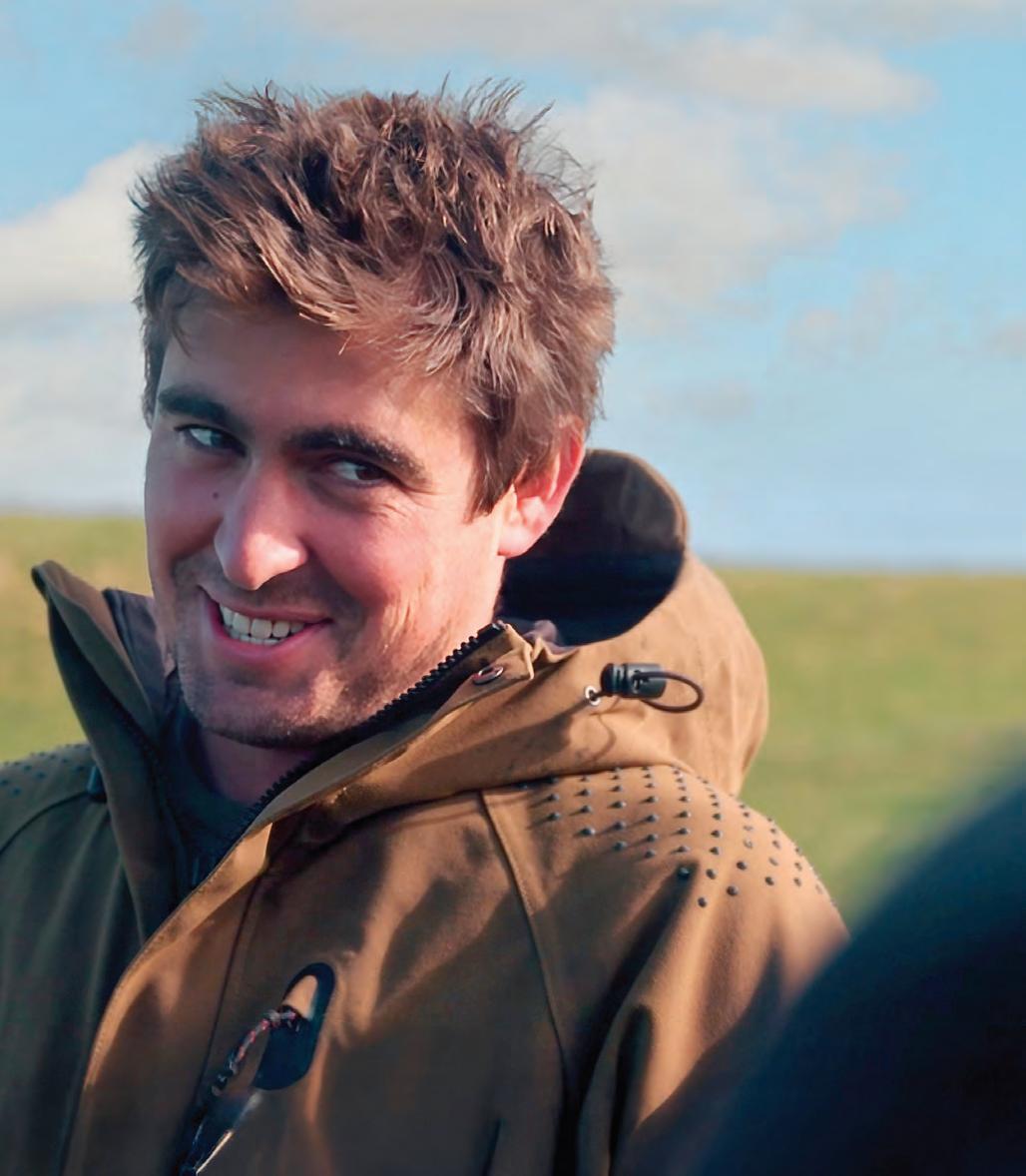
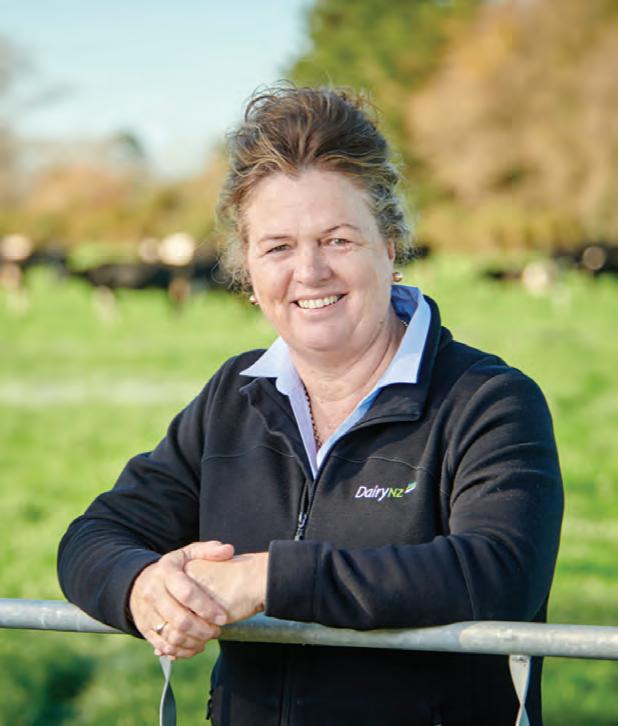
Charlotte Senior is a director of farm consultancy Agri Intel and one of about 20 accredited FEP auditors in the Environment Canterbury area.
ACT backs Indian FTA
PETER BURKE peterb@ruralnews.co.nz
ASSOCIATE AGRICULTURE Minister and Manawatu dairy farmer Andrew Hoggard says the free trade agreement (FTA) negotiated with India is not a bad deal and his party, Act, will support it when it goes before Parliament.
Hoggard says his party believes in free trade and says anything that reduces tariffs is good.
His comments come in the light of NZ First’s decision to oppose the FTA with its leader Winston Peters saying it doesn’t do enough for the dairy industry and that the agreement will increase the number of Indian immigrants coming into NZ.
Labour is still discussing whether they will support the deal, apparently taking time to sort out the fine print in the agreement. However, it seems highly likely that in the end they will support its ratification when it comes before Parliament. The initial groundwork for the FTA was laid by their then Trade Minister Damien
O’Connor before the last election.
Hoggard says getting the deal was in some ways against the odds. He says he recalls a speaker at the 2019
World Dairy Summit singled out NZ to a global audience and said there was no way that it would get an FTA with India. Hoggard says getting any
compromise has always been a mission and he accepts that the FTA doesn’t do as much for dairy as he would like.
“But as a dairy farmer, why would
I say that unless you get me some better access that I would say to all the horticulturalists and sheep and beef farmers you’ll just have to wait?
“The deal gives some good wins in other areas and is going to be meaningful to other parts of NZ farming and horticulture,” he says.
Hoggard says the FTA was probably the best deal NZ could have expected on dairy.
He says there is a clause in the FTA which says that if another country gets a better deal on dairy with India then we can negotiate for a similar arrangement.
As for the immigration issues raised by NZ First, Hoggard says there is not going to be a flood of new Indian immigrants into NZ. He says there is no increase in visa numbers, rather it is offering a three-year working visa to certain people with specific skills that NZ needs. He says the visas are strictly for three years, at which point people on these visas must return to India.
“Sure, I’d like a better deal but the deal we have got is still a good one,” he says.
“Want to know how to keep your missus happy?”
The secret is timing: get your tag order in early. She’ll be swooning over the $0.97c per tag you just banked.
That sweet deal covers the whole herd: the entire range of Allflex NAIT-approved cattle tags, including EID calf packs, birth EIDs, and replacements. If you run big numbers, that adds up to a seriously handy discount you get to keep.
Get the tags sorted, keep the cash. Order your NAIT cattle tags between 5 January 2026 and 30 April 2026, and Allflex New Zealand will discount the order to the value of the applicable NAIT levy ($0.97 plus GST per tag).*
Associate Agriculture Minister Andrew Hoggard says ACT will support legislation in Parliament to ratify the free trade deal with India.
which
Success of farmer-led catchment groups
THE MOST successful catchment groups in NZ are those that have ‘a source to sea’ approach. That’s the view of the Government’s chief science advisor Dr John Roche who
was a keynote speaker at Massey Universities Farmed Landscapes Research Centres (FLRC) conference.
The theme of the conference was catchments and saw a range of scientists and rural professionals present papers on a wide variety of topics relating
to the management of catchments. These included detainment bunds, woodchip bioreactors and the use of grass species to reduce nitrogen leaching.
But the topic of particular interest to farmers was hearing about the successes of farmer-led catchment
groups around the country.
Roche says these are critical because they are run by farmers and farmers learn best from farmers. He says the results from such groups, which are supported by Ministry for Primary Industries (MPI) and Ministry for Environment
(MfE), are fantastic.
“One of the key things we need to do with catchments is to collectivise our efforts so that the actions taken meet the needs of all the farmers in the catchment. The key is ensuring that these groups are farmer led and that they are a part of the solution and
we have brilliant examples of how farmers drive solutions,” he says.
Roche says all farmers in a catchment have a part to play, whether they are high up in the hills at the source of streams or down on the lower reaches. He says you have different types of farms and multiple land uses and the needs of all must be taken into account.
in the Rangitikei district where farmer-led groups are identifying priority water bodies and putting mitigations in place.
•Nationwide Firestone trained and accredited installation contractors.
•Future proof - dependable performance, 50 year life expectancy even when exposed, 20 year Firestone material warranty.
•Over 120 million square meters installed worldwide.
•30 years in the NZ lining business.
“If you look at the big catchment collectives around the country, be they in Southland or the Rangitikei, they are all focused on taking measurements right up the catchments from source to sea,” he says.
Roche says while sheep have a lower impact than beef cattle, and they less than dairy cows, there’s a need or all disciplines of farming to collaborate to get the best outcome for their catchment. He says the catchment groups are an integral part of the rural community and there are great examples
A key point raised at the FLRC conference was the importance of farmers and scientists working together. Since the disestablishment of MAF and the demise of farm advisors who had direct access to scientists, the gap between the two widened. Now MPI with its On Farm Support Team and Massey with its frequent field day is helping to close this gap. Roche says NZ farmers and scientists have a proud tradition of working together and farmers seeking out the right expert to deal with a problem or future opportunity.
“But I still see the need to encourage more of that and get our science graduates and scientists to actively engage with the end user of the science,” he says.
is focused
investment
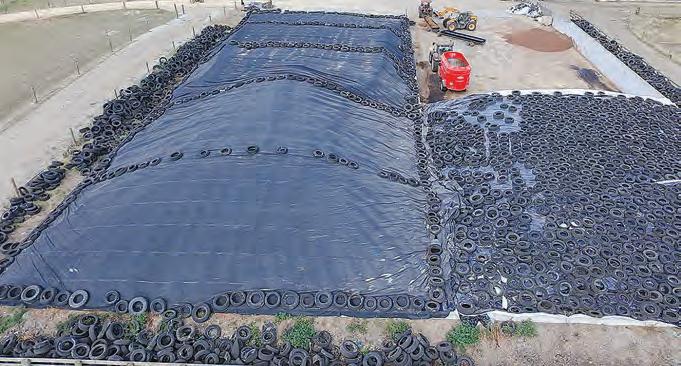
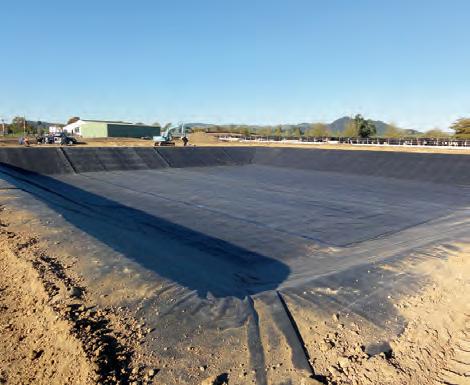
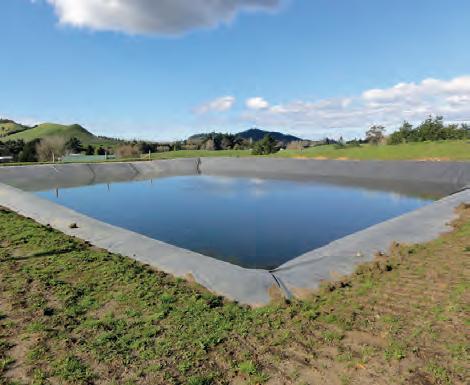
Plastic on right / Geosmart on the left (note unused tyres on left of Geosmart).
All farmers in a catchment have a part to play.
Have your say – DairyNZ
VOTING HAS started for the renewal of DairyNZ’s milksolids levy.
DairyNZ holds the vote once every six years and chair Tracy Brown says the levy enables the organisation to support farmers in driving on-farm profitability and sustainability through science and research, policy advocacy and extension behind the farm-gate.
“For generations, farmers have been part of each other’s success. Through the milksolids levy, you’ve shared knowledge, the cost of future-focused research, and its on-farm benefits, and established the clear, united voice of dairy that has generated more government support and practical policy,” she says.
“The upcoming milksolids levy vote is a chance to do what you’ve always done for the sector – to come together to continue building a stronger future for New Zealand dairy farming.
“This vote is about whether DairyNZ can keep backing farmers with the research, development and advocacy that move our industry forward. There are no plans to change the current milksolids levy of 4.5 cents
per kilogram of milksolids (MS).”
Collected under the terms of the Commodity Levies (Milksolids) Order 2020, the levy is capped at a maximum of 5c/kgMS. Under the proposed Commodity Levies (Milksolids) Order 2026, the maximum rate will stay capped at 5c/kgMS for the term of the new levy order.
Brown is encouraging farmers to vote.
“Our vision is to ensure the levy is the best investment of every New Zealand dairy farmer. A recent independent audit on our industrygood activities funded by the levy revealed a seven-fold return in value,” says Brown.
“I encourage those eligible to vote to reach out to any of your farmer elected directors to discuss.”
She adds that the milksolids levy helps New Zealand farmers be competitive on the world stage through productivity, strong farm systems, and sustainability.
“New Zealand leads the world in responsible dairy production. Together, we support a thriving dairy sector that
is intergenerational, where our care for land, people, animals, and community is world class,” she says.
“Our vision is to ensure the levy is the best investment of every New Zealand dairy farmer. A recent independent audit on our industry-good activities funded by the levy revealed a seven-fold return in value.”
“Your levy underpins this. It’s a collective investment that has supported you on farm and in your community, and what keeps us all moving forward. And there’s more to get done. So, let’s keep ahead. Let’s vote – together.”
Voting closes 5pm Friday 13 March.
RIGHT TOOL FOR THE JOB.
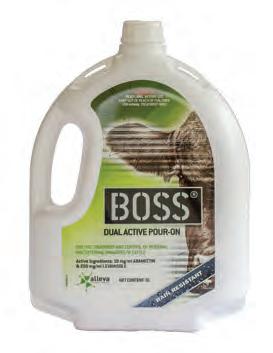
Alleva has the tools you need to get the job done with two innovative dual active pour-on combinations that deliver effective rain resistant parasite control.
DairyNZ chair Tracy Brown is asking farmers to participate in the Milksolids Levy vote.
It makes a lot of cents.
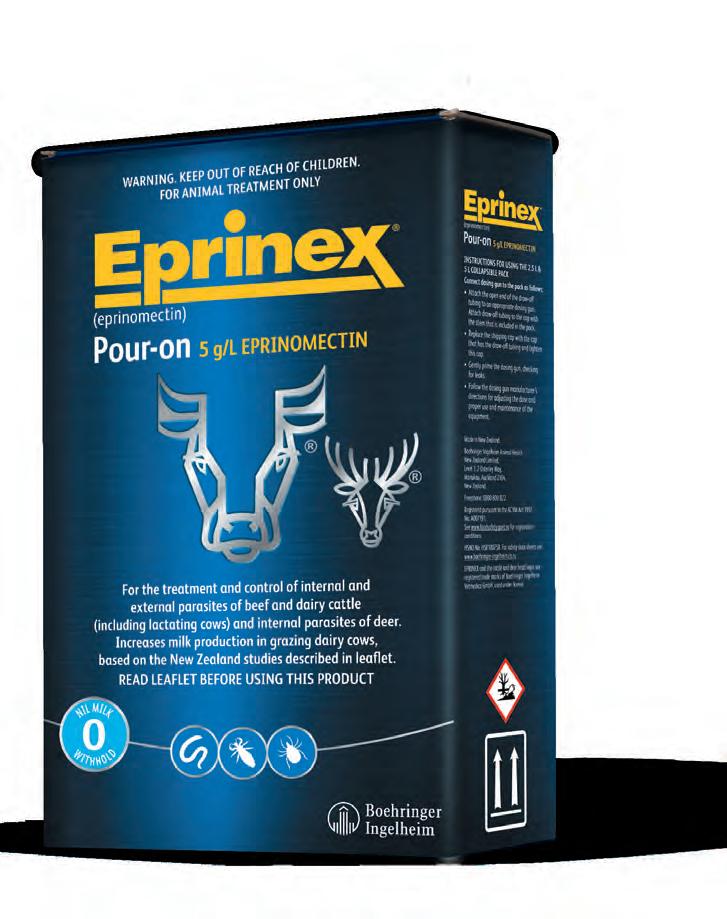
Trusted by farmers for effective worm control with NIL MILK withholding periods and improved R.O.I
Studies in NZ dairy cows have shown the potent effects of EPRINEX® on parasites resulted in more daily milk, more milk protein and more milk solids.1,2
Organic plan generates strong farmer interest
SUDESH KISSUN
sudeshk@ruralnews.co.nz
FONTERRA’S PLAN
to expand its organic programme to the South Island is being well received by farmers, the co-op says.
According to Andrew Henderson, Fonterra general manager organics, attendance at a recent series of farmer meetings about the organic expansion was strong.
“People were keen to hear more about the expansion and ask practical questions about what converting their farms could look like,” Henderson told Dairy News.
Fonterra is targeting first production in the South Island within the 2028-29 season. However, it’s not disclosing specific volume targets at this stage, citing commercial sensitivities.
Henderson says the
IN BRIEF
plan is to process organic cheese at its Stirling site.
“We currently produce organic milk powder and butter in Morrinsville, and organic UHT milk at Waitoa,” he says.
“We produce organic cheese, whey, milk protein and lactose in Hautapu, and deliver liquid milk to independent local processors for New Zealand fresh milk.”
Global demand is reportedly growing as some consumers are prepared to pay a premium for organic products. According to a 2025 Euromonitor report, the global organic dairy market is growing at 6% year-on-year and is projected to reach around US$65 billion by 2033.
Liquid milk (fresh and UHT) is the largest single segment of the organic dairy market.
However, Henderson says they are also seeing significant growth in
Dedoncker to head Elders FONTERRA EXECUTIVE René Dedoncker is leaving the co-operative later this year to lead Australian agribusiness Elders.
Dedoncker, managing director global markets consumer, joined Fonterra in 2005 and has held several global leadership positions during that time, including leading the Mainland Group business since March 2025. The Mainland Group business has been sold to Lactalis.
Fonterra chief executive Miles Hurrell thanked Dedoncker for his significant contribution to Fonterra, particularly through the process to divest Mainland Group, where he has continued to provide strong leadership and drive performance as Fonterra prepared the business for sale.
New CEO for Yili Oceania
FORMER FONTERRA executive Alex Turnbull has been appointed CEO to lead all five Yili Oceania Business Division companies in New Zealand.
Turnbull heads Westland Milk Products, Oceania Dairy, Canary, EasiYo and Pure Nutrition.
He will report to the director of the Yili Oceania Business Division of Yili in New Zealand, Zhiqiang Li. Li says Turnbull’s strong track record across New Zealand dairy and food sectors made him the ideal candidate to build further on the global gains made by Yili’s New Zealand companies in recent years.
“Yili’s investment in our high-value strategy is continuing to reap dividends with extra production capacity in the high-value protein and fats categories leading to increased global sales.”
organic ingredient demand, including butter, cheese, milk powders and proteins.
Organic milk suppliers receive a higher milk
ADVERTORIAL
price than conventional milk suppliers.
Fonterra’s current organic milk price for the 2025/26 season is $13.10/kgMS. The final
organic milk price for the 2024/25 season was $12.35/kgMS, which was a record high payout.
Andrew Henderson, Fonterra
AI Steps into the paddock
PASTURE MANAGEMENT
has traditionally relied on plate meters, lab testing, satellite imagery, various devices, and a fair degree of guesswork. With the exception of laboratory analysis, most tools only estimate pasture cover (kgDM/ha). While lab testing offers deeper insight, it is expensive, slow, and results can sometimes be inconsistent.
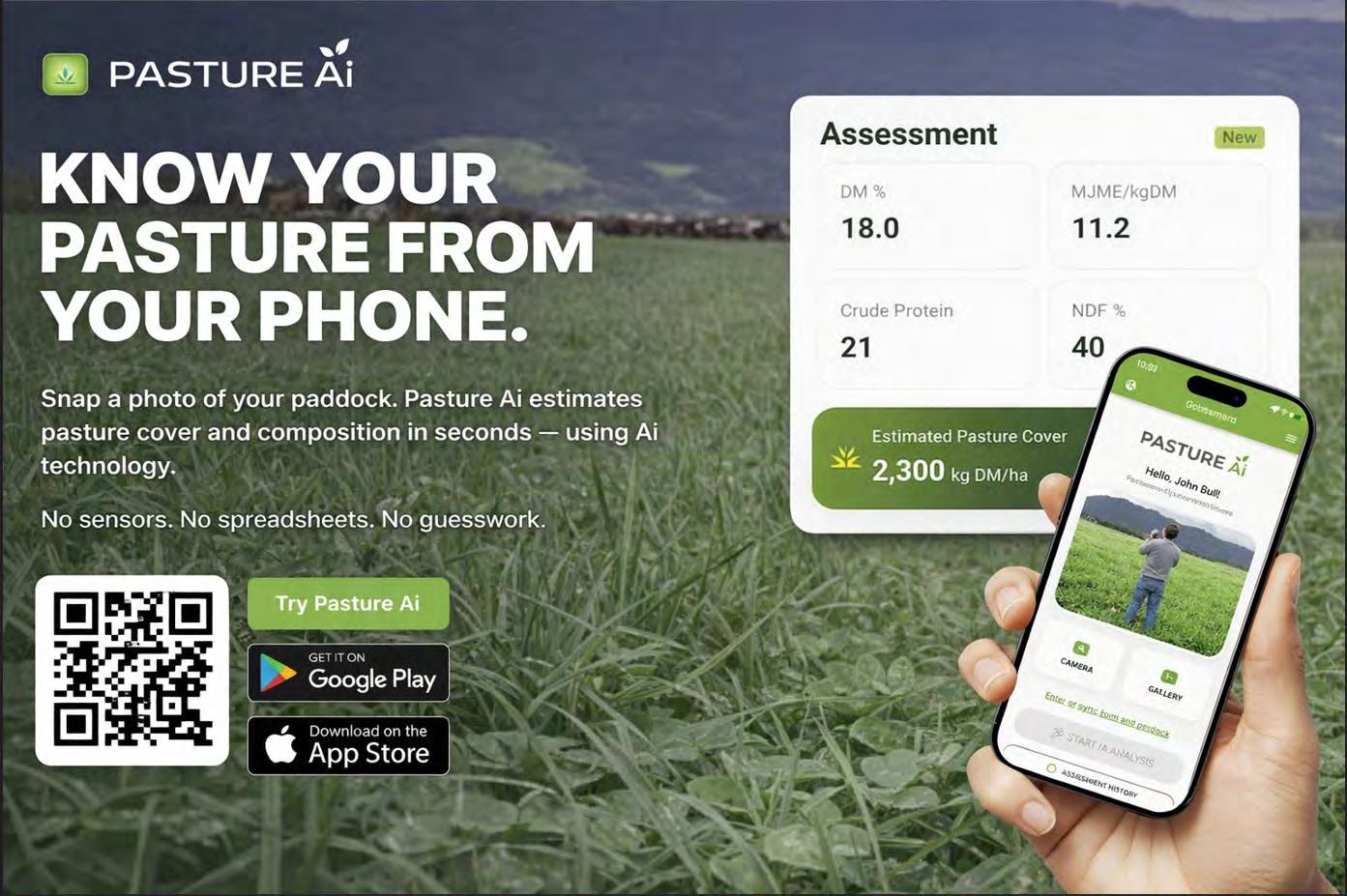
A new app, Pasture Ai, aims to change that. Using only a farmer’s smartphone camera and artificial intelligence, the app analyses pasture photos and instantly estimates pasture cover, dry matter
percentage, crude protein, metabolisable energy (MJME), and neutral detergent fibre (NDF).
There are no meters or sensors to purchase, no calibration requirements, and no spreadsheets to manage. The proposition is simple: measure pasture with the depth of a nutritionist, without needing one in the paddock.
Pasture Ai has been extensively tested across a wide range of pasture types and is now rolling out across New Zealand. While the initial focus is on dairy and intensive beef systems, the technology is
applicable to all pasturebased farming operations.
Key benefits include improved understanding of feed composition, more accurate feed allocation, reduced wastage, improved animal performance, and better optimisation of both pasture and supplementary feeding.
The app provides a feed calculator driven primarily by MJME results, and an Ai Assistant designed to support deeper analysis and on-farm decisionmaking.
According to the developers, the goal of Pasture Ai is to “bring
next-level nutritional understanding into everyday paddock decisions.” With rising feed costs and increasing climate variability, tools that improve feed utilisation and reduce waste are attracting growing interest from farmers and advisors.
Pasture Ai is available now on iOS and Android, with farmers able to trial the app and compare results against their current pasture measurement methods. More information is available at www. pastureai.ai, or by downloading Pasture Ai from the Google Play Store or Apple App Store.
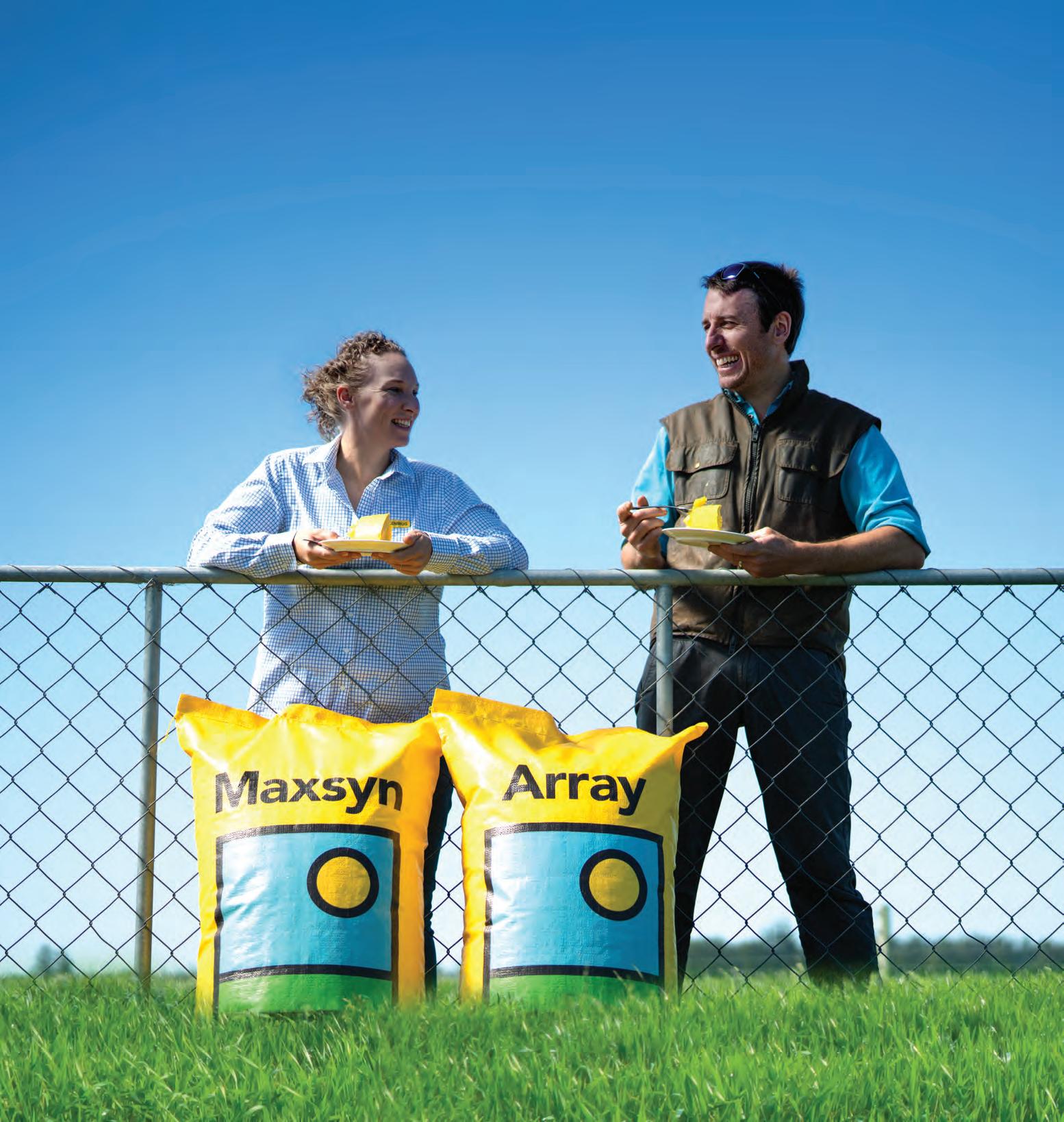
IT MAY still be under the radar for many, but one new pasture has been making waves for three different farmers lately.
From Taranaki to Waikato, System 3 to System 5, year-round milking to spring calving, they’ve all gained more home grown grass and stronger businesses as a result.
Now in his fourth year with Array perennial ryegrass, Hawera’s Hayden Lawrence says persistence is looking good, too, even after severe drought in 2024/25.
“We didn’t have to do any undersowing with Array last season like we had to do in other paddocks.”
Hayden and wife Alecia split calve 400 cows on 153ha (eff) for average annual production of 200,000 kg milksolids.
This is a System 3 farm; 15ha of home grown maize silage, annual ryegrass and 700 kg/cow imported feed supplement perennial pasture as needed throughout the year.
Hayden first tried Array as a hardier
alternative to tetraploid perennials, and combined with a ‘game changing’ shift in pasture establishment technique, is very happy with the outcome.
“It’s ticked those boxes in terms of production, heading date and longevity. We wanted something that would hold on - we were having issues with pasture pulling, partly because of how we were establishing our new grass.”
“It’s ticked those boxes in terms of production, heading date and longevity. We wanted something that would hold on - we were having issues with pasture pulling, partly because of how we were establishing our new grass.”
Strip tilling maize, then mulching the stubble instead of power harrowing, followed by direct drilling new pasture, has now improved both soil quality and rooting depth.
The other thing he’s noticed? “Array’s quite a dense, bunched pasture. When cows take a mouthful, they’re taking in a lot of feed!”
In Waikato, three years of measuring pasture at least fortnightly proved Array consistently outgrew other pasture by 100-200 kg dry matter per ha every grazing, Logan Dawson says.
He and wife Sian split calve 600 cows on a System 5 at Taupiri. Array did so well on their previous farm, when they got the chance to select new grass cultivars before starting here in June 2025, they picked it again.
Like Hayden, Logan notes Array’s persistence, plus feed quality.
“In our previous system, we found because of its erect nature, we were able to graze at the fourth leaf without losing the first leaf onto the ground. We could put the cows in at a pregraze cover of 4000 kg, pre-mown; the quality was really good and they milked very well on it.”
Further south, Pirongia sharemilkers Sean and Katrina Gibson went all in on Array for the first time last autumn, sowing 12ha.
By November, it was all on an 18
day round, vs 25-26 days for the rest of the System 3 farm, where they spring calve 340 cows.
“Array is a different beast! The way it grows – you have to graze it early,”
Sean says.
A plate meter is essential, too. “You cannot tell how much is in there by eye. It’s only when you get in there and measure it you see how dense it is.
Array has forced everybody to change how they identify when a paddock is ready for grazing.”
• Article: Barenbrug
Hawera farmer Hayden Lawrence says pasture persistence is looking good, too, even after severe drought in 2024/25.
Pollution hypocrisy
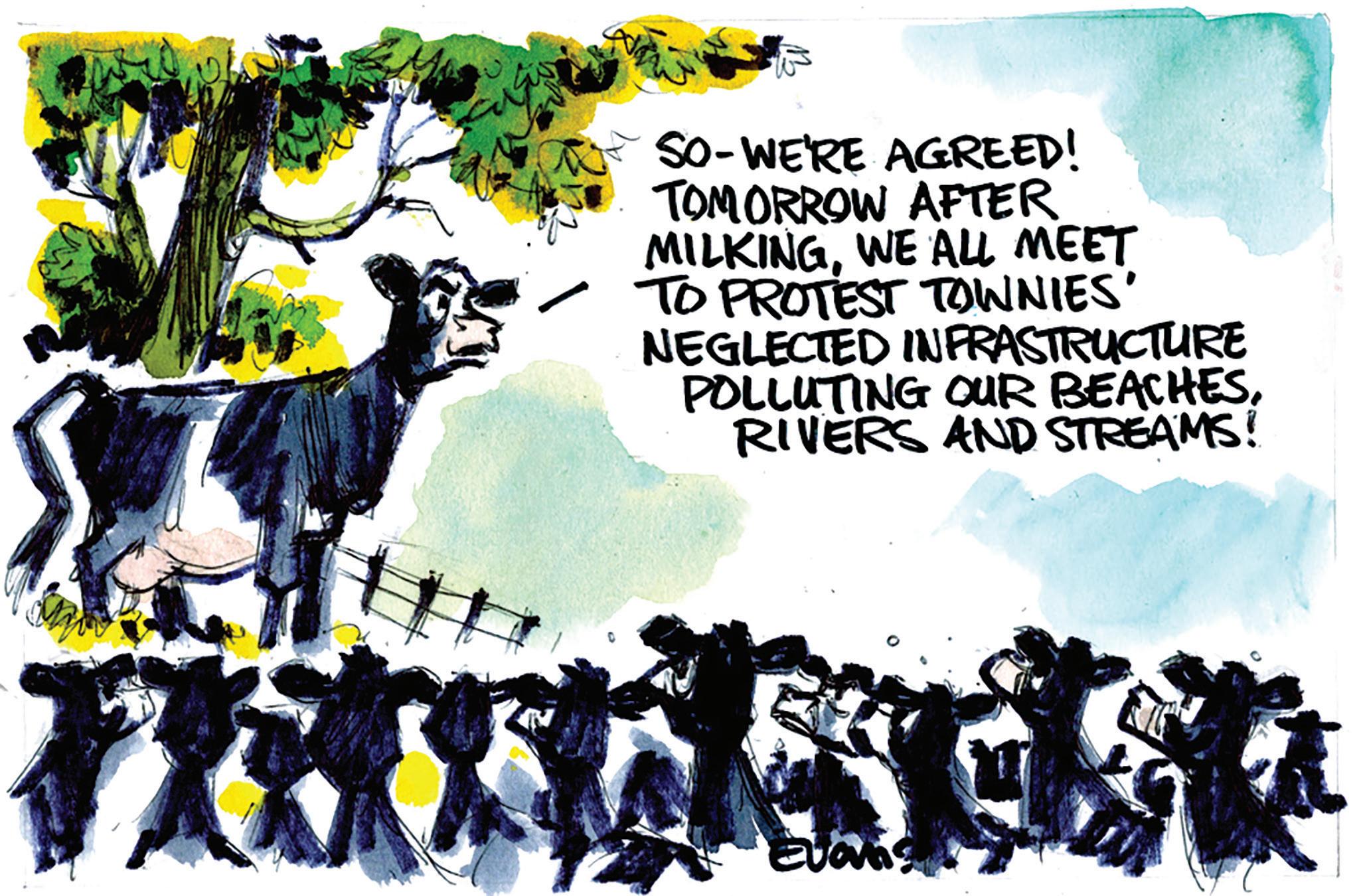
IN RECENT weeks beaches in Auckland, Wellington and Christchurch have been unsafe to swim in because of recent heavy rain triggering wastewater overflows throughout the region.
Yet there’s been no response from Greenpeace, which claims to carry the flag to promote clean waterways in NZ.
Compare this to Greenpeace’s response to effluent breaches in the dairy industry – protests, petitions and putting graffiti on private properties.
Shouldn’t Greenpeace be protesting outside the council offices and calling the mayors and councillors out for not effectively controlling wastewater discharges.
Or is it one rule for the farming sector and another for municipal councils?
Fantasy in the paddock
A DAIRY version of fantasy football has been launched. The game lets players draft real cows, score points from farm and milking shed data, and compete for a $20,000 top prize.
Created for Meadow Fresh, just like fantasy football, which relies on real athlete stats, Fantasy Herd draws on actual milking outputs and behavioural data collected from the herd at Nottingham Dairy Farm in North Otago, New Zealand. Players will be able to select their own line ups, drafting real cows, each wearing a solar-powered smart collar from New Zealand’s agtech company Halter.
Indian FTA
WINSTON PETERS’ tirade against the free trade deal stitched with India may not be all political posturing by the wily politician.
A key highlight of the FTA is student mobility and post-study work visas. For the first time, New Zealand has signed a dedicated Student Mobility and Post-Study Work Visa Annex with any country.
The agreement also creates structured visa pathways for skilled Indian professionals, including a quota of 5,000 visas for stays of up to three years in sectors.
Peters’ assertion that the deal does more for Indian migrants than the dairy sector is not too far off the mark
Disunity is death
STAYING WITH politics, with less than nine months to go before the general elections, there’s confusion in the Labour Party when it comes to working with the divided Maori Party.
Labour leader Chris Hipkins is dampening down claims of internal disagreement over working with the party, with his own MPs’ comments adding confusion.
Hipkins has repeatedly refused to rule either in or out whether Labour would consider forming a government with the Maori Party.
However, Labour’s Maori campaign chair Willie Jackson indicated the gulf between the parties was more to do with policy.
Labour is hoping to cash in on Maori Party in-fighting to win back several Maori seats.
Labour cannot topple the National-led Coalition with just the Greens. But Chippy’s key to the top job may depend on how the Maori Party saga unfolds in the coming months.
Machinery Editor: Mark Daniel Ph 021-906 723 markd@ruralnews.co.nz
Reporters: Peter Burke Ph 021-224 2184 peterb@ruralnews.co.nz
Subscriptions: Julie Beech Ph 021-190 3144
Production Manager: Becky Williams Ph 021-100 4831
Digital Strategist: Jessica Marshall Ph 021 0232 6446
EDITORIAL
Morale booster
THE FIRST three Global Dairy Trade (GDT) auctions have been a morale booster for farmers.
They had been faced with a declining farmgate milk price: Fonterra started the season with a $10/kgMS mid-point, only to shave a $1 off the mid-point by December last year.
With the GDT price index rising almost 15% in the first three auctions of the year, economists are now talking about a $9.50 milk price or even a touch higher.
As Federated Farmers Waikato dairy chair Matthew Zonderop says, farmers are over the moon with the state of play. Some farmers in the Waikato are still making silage thanks to a milder summer and bouts of heavy rain over the past six weeks.
Zonderop expects most farmers to continue milking way past their traditional drying off mark.
The scale of the price rises this year has exceeded market expectations and has somewhat puzzled economists.
There has been no shift in global milk production. Key exporting countries are still pumping out milk.
It is likely the surge in milk prices reflect a combination of seasonally tightening supply from New Zealand, concentrated regional demand, and constrained availability across several key commodities, rather than a sudden shift in global milk production trends.
One economist believes market participants and observers may have simply overreacted to the surge in milk production in late 2025.
This is great news for NZ dairy farmers.
With most of the season’s production processed and contracted for sale, any movement in GDT prices are unlikely to have a major impact.
After receiving $10.16/kgMS as the final milk price last season, another payout over $9.50 would be a major boost, not only to the dairy sector but also the thousands of rural service providers and contractors.
AUCKLAND SALES CONTACT: Stephen Pollard Ph 021-963 166 stephenp@ruralnews.co.nz
SOUTH ISLAND SALES REPRESENTATIVE: Kaye Sutherland Ph 021-221 1994 kayes@ruralnews.co.nz
Don’t forget the basic minerals: Mg, Ca and P
CHRIS BALEMI
LATE LACTATION is often viewed as a lowdemand phase, when cows are winding down, and we dial down our supplements accordingly.
However, this depends on the season, as many herds across the country are still producing strongly due to good weather and pasture growth. With this higher production, pregnancy advancement and changeable weather patterns, demand for the big three macro-minerals – magnesium, calcium and phosphorus – can catch farmers off-guard.
Mineral demand is often underestimated because it’s assumed to be covered “in pasture” and “in the blend”, but calculated intakes can still fall short, draining calcium and phosphorus reserves for next lactation and showing up as reduced production, poorer liveweight gain and feed conversion, weaker immunity, and more slips.
■ Mg needed daily
Magnesium is unforgiving because the cow cannot draw on storage when the diet is deficient. Blood magnesium depends on what is absorbed and excreted, so daily intake
is important. Research in lactating cows shows high dietary potassium, common in pasturebased diets, can reduce magnesium absorption. This means cows can still come up short even when levels should be adequate.
Late lactation often brings the exact conditions that result in the magnesium problem: changing pasture, shifting supplement levels and uneven delivery.
If you rely on water dosing, check levels are adequate, and that water intakes are consistent. If dusting, check the application rate is adequate. If you run an in-shed system or feedout on a feedpad, check for adequate levels, calibration and cow access, and take particular note of shy feeders.
Magnesium issues can start as unsettled cows in the yard and shed, jumpy in the paddock, and, in
some situations, a drop in appetite. If deficiency is suspected, it’s best to pull some bloods to check.
■ Ca during lactation
Calcium gets plenty of airtime at calving, yet lactation can also be a steady drain on reserves. Calcium leaves the cow through milk every day. Studies tracking blood calcium show how dietary levels affect balance and bone turnover during lactation.
Pasture calcium levels can vary a lot through lactation and between farms.
Environmental factors, such as soil temperature, can also affect grass levels.
Regular herbage tests throughout the season help ensure supplementation matches requirements.
Once calcium stores are depleted, it will have a big impact on balance in the cow, which has
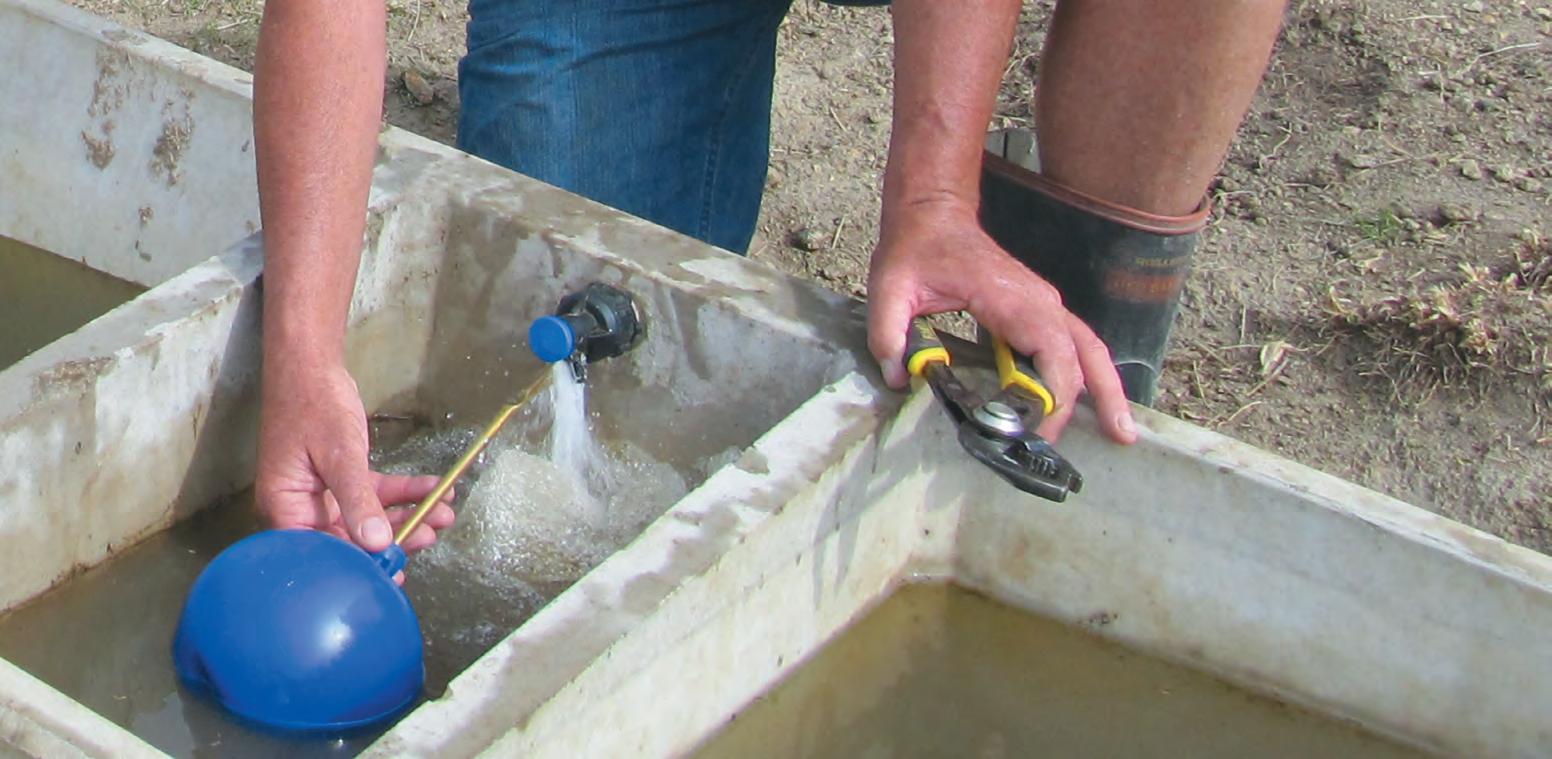
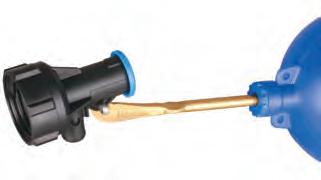
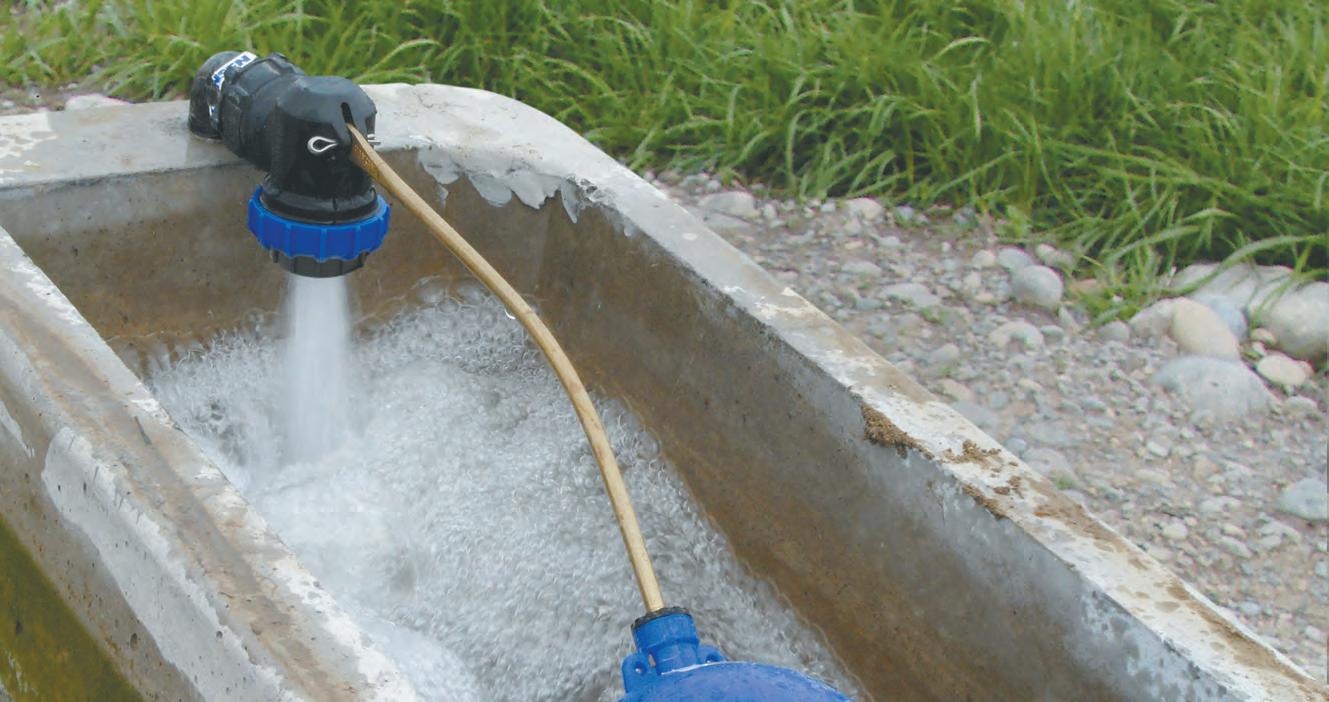
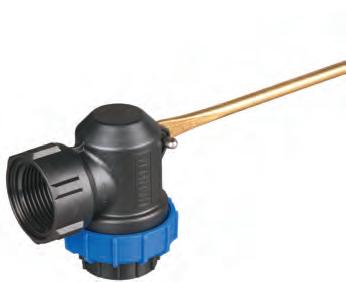
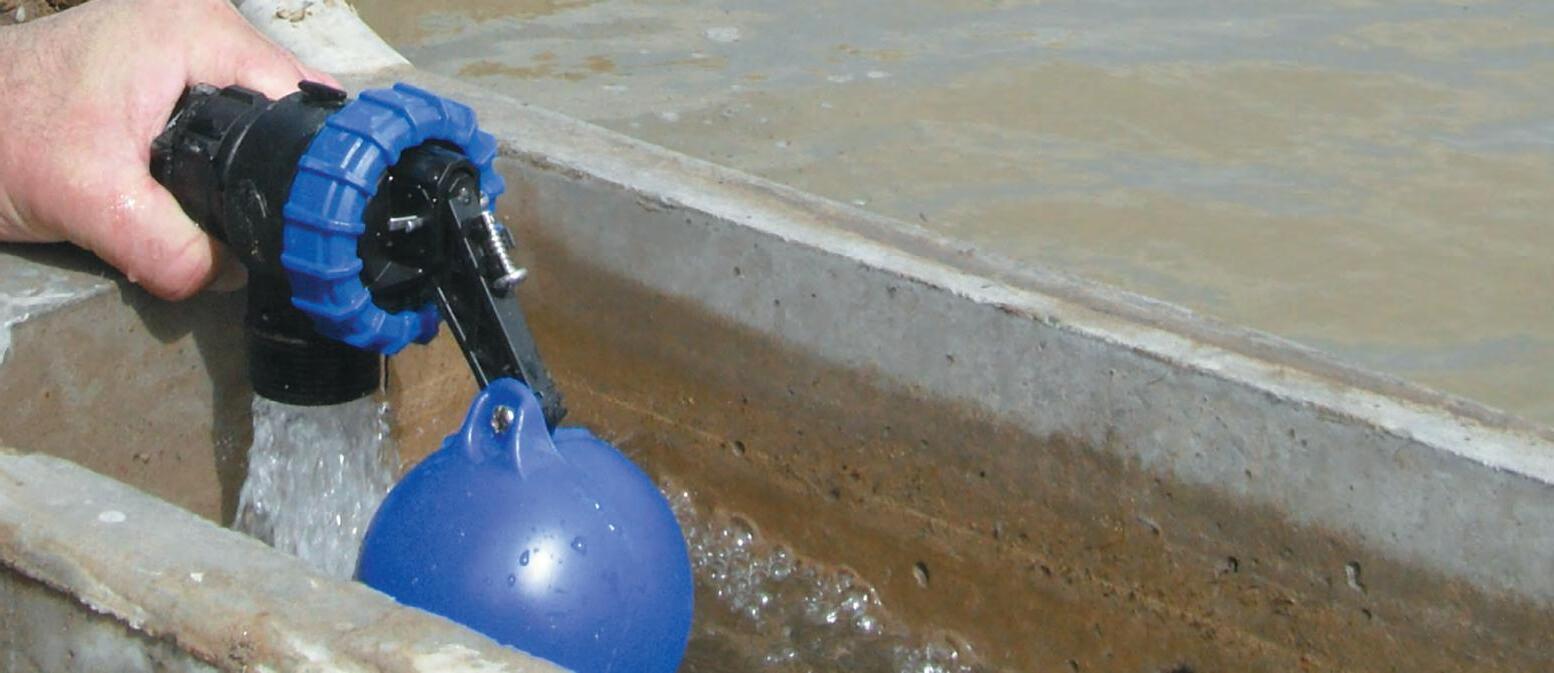
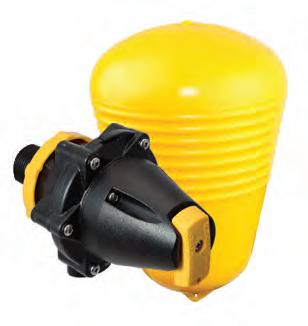
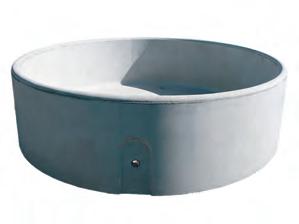
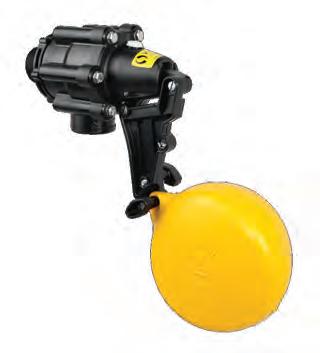
• Ideal for Cattle Troughs
• High Flow
• Side/Bottom Mount
• Detach to Clean
flow-on effects with both magnesium and phosphorus.
In mid to late lactation, published calcium requirements range from 0.55–0.7% of the total diet. Aiming for the higher end will allow wiggle room for storage as milk production drops.
Late lactation is one of the periods where cows can start rebuilding skeletal reserves while still milking and carrying a calf. If calcium supply is short, the cow keeps borrowing from bone, affecting many cow functions, but particularly smoothmuscle function. Smooth muscle is critical for rumination; this can impact rumen efficiency, also affecting teat-end closure, somatic cells, and clinical mastitis.
A simple back-of-theenvelope calculation to discover if you are meeting calcium requirements can prevent many potential health
issues. If calcium intake is deficient, it will have many negative flow-on effects throughout the herd.
■ P needs and ration changes
Phosphorus supports energy metabolism and works closely with calcium. Both leave the cow through milk, so demand rises with output. A twoyear study following lactating cows fed two phosphorus levels found
higher phosphorus did not automatically lift milk or reproduction.
The takeaway is “right amount, right situation”: phosphorus is essential, but overfeeding won’t increase milk or fertility, so accurate calculation is important.
Late lactation is where herds can move either way, so it’s important to get herbage tests done.
Published phosphorus requirements in late lactation range from 0.28-0.32% of the total
EYEING CROPS?
diet. At these levels, there should be enough left over to rebuild bone storage levels.
However, calcium levels must also be within range; if low, this will completely upset phosphorus utilisation and storage, giving you a false sense of security and increasing the risk of phosphorus issues at calving and peak lactation.
• Chris Balemi is Agvance Nutrition founder and managing director.
A CROP change is a good time to redo the mineral profile. The base feed changes, cow intake can be variable, and the ration can end up short on magnesium, calcium or phosphorus without anyone meaning to. Treat the first two weeks on crop like a reset: confirm supplement delivery, test the crop and supporting feeds, and check that mineral supply still matches output. Attention to basics pays off in late lactation. The gap between “should be in the diet” and “is getting into the cow” is often seen with magnesium, calcium and phosphorus. Close that gap early, spend less time guessing, and keep production steady for longer.
THREE CHECKS
THREE CHECKS to run when late lactation performance drops
■ Get herbage tests done so you know what is in the total diet and, combined with back-of-the-envelope calculations, will ensure supplementation is adequate.
■ Check delivery. Confirm dosing calibrations, dusting rates and whether every cow has practical access via feed bins, water-intakes and in the paddock.
■ Blood tests can be useful, but they should only be secondary to knowing the calculated feed levels. Blood levels can
often be misleading, as phosphorus is stored and released from the bone.
Phosphorous quality
Always look for a phosphorus supplement that delivers higher water-soluble levels of phosphorus.
A good supplement should deliver at least 75% of its P in water-soluble form, and preferably closer to 90%. Phosphorus is bound by calcium, so a lower calcium level in the supplement always increases watersoluble P.
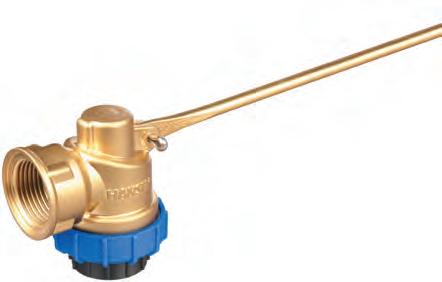
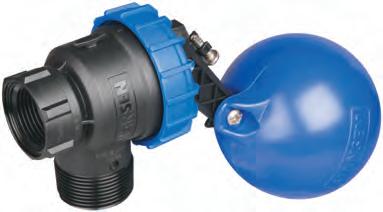
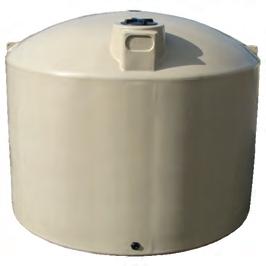
• Compact/Robust
• Up to 50mm Inlet
• Flows up to 600L/min
• For Storage Tanks
• Easy Access to Valve
• Inlets Upto 50mm
• Avoids Starting & Stopping of Pump When Tank is Filling
Don’t let the demand for the big 3 macro minerals catch you off-guard.
A stellar event for the Gilbert family
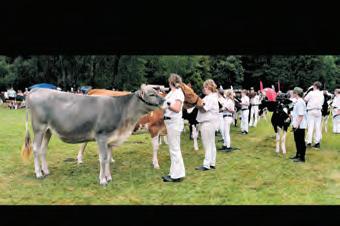
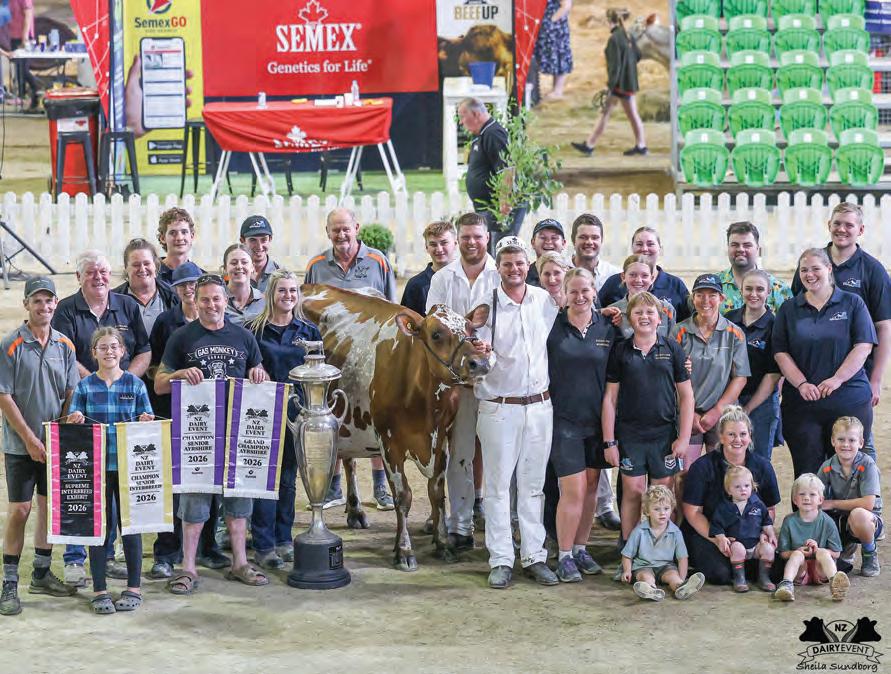
ONE TEAM with 43 head, including a contingent from Mid Canterbury, are reflecting on a stellar NZ DairyEvent.
In the mid-December, the Gilbert family probably wondered what they had signed up for in terms of workload. The family’s show campaign was shared between Luke Gilbert (Showcase Boarding, based out of Hamilton) and his brothers, Mike and Nick (Gilbert family), who milk 650 and 630 cows respectively at Ashburton. They prepared some of their team in the South Island while the balance was with Luke.
When they brought the team together, it involved transporting 18 head across the Cook Strait from the South to the North Island. It was the biggest collective team they had put together to date (21 in-milk and 22 heifers).
However, with the value of hindsight they delivered in spades for their clients, friends, and family when the results were washed out. Because within those numbers was the Supreme All
Breeds Exhibit of this year’s show, the Supreme All Breeds Intermediate Champion, the Grand Champion Holstein, Reserve Champion Holstein, Intermediate Champion Holstein, and the Junior Champion in the Combined Breeds.
The Supreme All Breeds Exhibit of the show (and Senior, Grand Champion of the Ayrshire Show), Kiteroa Cream Bubbette (owned by Zane and Marie Kite who milk 180 Ayrshires at Ohaupo) had been boarding with Luke for six weeks before the show on behalf of her owners.
The Supreme All Breeds Intermediate was also an Ayrshire –Glenalla Reynolds Dawn – giving the Ayrshires a majority presence in the heavy-hitter awards. Dawn is owned and bred by the Gilbert family. The Gilberts also exhibited (and bred and owned) the Grand Champion Holstein (Glenalla Unix Maple-ET), they owned the Intermediate Champion Holstein (Joyclas Bullseye MooET), and they prepared the Reserve Champion Holstein (Charbelle Tatoo Pix) with her owners, Charbelle Holsteins
FOR MICHAEL Gilbert – speaking on behalf of the Gilbert family – the campaign was a success on more than one level.
“The thing we were the happiest with is that of the 43 animals we prepared, we bought everything out as good as we possibly could,” Michael said. “Particularly the milkers. To get 21 milkers out in one day was something we’d never done before, and it’s pretty hard to get that right. Not to mention that we were obviously looking after other people’s animals, so there’s always that added pressure too. We tied in with Charbelle Holsteins for the week and we couldn’t have done it without their help.” They are now courting buying offers on both their Supreme All Breeds Intermediate Ayrshire and Grand Champion Holstein. They only milk 30 Ayrshires themselves (within their combined herd numbers of 1280 cows).
It’s worth noting they have now owned two Ayrshires that have achieved Supreme
(Morrinsville).
Zane Kite said without staff on their farm, getting Luke to prepare Bubbette professionally made sense. He has also been grateful to the Fullerton family for their help in earlier campaigns. This win follows Kiteroa’s successful annual sale of 42-head (mostly calves) which grossed $120,000 in November.
Bubbette was the 2021 NZ DairyEvent’s Intermediate Champion Ayrshire and while the eight-year-old was pushed hard by Glenalla’s Intermediate for Supreme All Breeds this year, the judges from Canada, Australia, the UK, and New Zealand came together to give her the ultimate award.
Zane described it as a “wicked Ayrshire” show, and while he was thrilled on the day it’s now business as usual for their Champion.
“Well, I was blown away at the time and of course it’s a massive buzz, but now it’s back to reality, I guess,” Zane said.
“I will say though that the achievement will live on for a fair while, and we’ll acknowledge it, accept it, and be really proud of it.”
Champion titles at the NZ DairyEvent, including Pukekaraka Elle Delilah, who was Supreme in 2021 and Grand Champion Ayrshire in 2025. Both of those cows go back to modest-priced buys Michael made from the Pukekaraka stud. He shared that he bought the dam of this year’s Supreme All Breeds Intermediate for $2400.
“Dawn’s dam [Pukekaraka Burdete Rose] was an older cow when we bought her, but she had been a successful show cow herself,” Michael said. “We’ve got a couple of daughters out of her now, and Dawn happened to be one of them. So, buying those Ayrshire cows at that particular sale is getting better and better for us, results wise.”
In the last decade Holsteins have found their way into their mostly Jersey herds and now number around 400 split between the two herds.
To breed and exhibit Grand Champion Holstein is another milestone they will savour for some time to come.
DIANNA MALCOLM
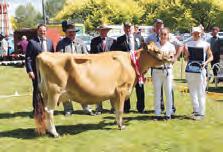
Supreme Champion Exhibit of the show Kiteroa Cream Bubbette with her banners and the team that made it happen. Photo: Sheila Sundborg (Canada).
Time to invest beyond the farm gate?
For farmers focused on day-to-day operations, receiving a capital return or achieving strong profits can be a valuable opportunity to strengthen financial security. While reinvesting in the farm or reducing debt may seem like the obvious path, it’s worth taking a moment to consider other options on the table. Off-farm investments can offer a valuable way to diversify income, reduce exposure to agricultural risks, and build long-term financial resilience.
The case for off-farm investing
Diversify assets and income
Investing a portion of funds off-farm can help to diversify both opportunity and risk. Investment options like listed equities, bonds, and alternative assets can provide exposure to other sectors and importantly, other geographies that are not affected by the New Zealand economy, interest rates, legislation and weather. A Craigs investment adviser can provide tailored investment advice and guidance regarding the types of investments that are best suited to your specific needs, objectives and risk appetite.
Protect against inflation
One of the most compelling reasons to invest is to maintain the spending power of your savings and protect against inflation. Investing off-farm can help your capital keep pace with rising costs, preserving your ability to spend and invest in the future.
Liquidity and flexibility
Off-farm investments generally offer greater liquidity than farm assets, which can be difficult and time-consuming to sell. Listed shares, managed funds, and exchange-traded funds (ETFs) can typically be sold quickly, providing access to cash when needed. This flexibility can be especially valuable in times of uncertainty or when farm income is seasonal or volatile.
Low entry cost
Unlike large-scale farm investments that require significant capital, many offfarm investments have low barriers to entry. You can start with modest amounts in diversified portfolios. This accessibility allows for gradual investment over time, making it easier to build wealth without disrupting farm operations or cash flow.
Low maintenance
Off-farm investments don’t require feeding, fertilising or frequent maintenance. Once a portfolio is set up it can grow quietly in the background, with your investment adviser handling the day-to-day administration, reporting, and compliance. This means you can focus on what matters most – your farm and your family.
Build a base for retirement income
Off-farm investments can create a reliable income stream to support your lifestyle after stepping back from day-to-day farm operations. This can provide greater financial independence in retirement, allowing the next generation to take over the farm with less financial pressure.
Help facilitate succession planning
Investments can support succession planning by creating financial flexibility. Off-farm assets can be used to provide for children or relatives who aren’t part of the farming business, helping to ensure fairness and avoid conflict during asset division.
The Craigs way
At Craigs Investment Partners, we’ve been helping Kiwis navigate the investment landscape for over 40 years. We have ‘boots on the ground,’ with a network of advisers in over 20 locations across the country, experienced in providing investment guidance and advice to rural clients.
Our advisers can play an important part of your off-farm support team, ready to help with investment decisions and tailored advice, or to connect you with the right people in our network of financial professionals.
Our team of advisers is backed by: Expert investment research, and In-depth analysis of macroeconomic trends, markets, sectors, and companies.
Craigs is 50% owned by current and former employees and directors, which makes our commitment to delivering superior service personal. Our clients are at the heart of everything we do - and that’s what makes us different.
Let’s talk
To discuss investment options and plan for your future beyond the farm, contact a Craigs Investment Partners adviser near you. We’re here to help
Speak with us today. 0800 272 442
Free stall barn – a gamechanger
ANNE BOSWELL
WHEN IAN Smith built a 520-bed free stall barn on his Drummond dairy farm in 2014, it changed the way he farmed.
Whether it’s sheltering his 500-strong herd from Southland’s winter weather, fully feeding without wastage or allowing cows to rest and ruminate between milkings, the barn is the engine room of Ian’s operation, providing yearround flexibility, feed efficiency and comfort. Ian has sharemilked and leased the 200ha Southland farm from his family trust for the past 25 years and, alongside partner Kath Taylor, has built a system that not only supports his highproducing Holstein Friesian cows – producing 500kgMS per cow – but
mitigates the challenges of flat land, heavy animals and unpredictable weather.
“The farm is flat and, supporting heavy Holstein Friesians, means the water either evaporates or runs off –it doesn’t go through,” Ian says.
The barn allows Ian’s herd to lie down to rest and avoid the stress on paddocks that occurs when cows hit the pasture hungry. It also buffers against common agricultural risks.
“There is also the risk of crop failures – they don’t always emerge,” Ian says. “Over winter, fully feeding without wastage is critical. We can also milk out of the barn during those months.”
How the barn is used changes with the seasons. Around May, when the weather turns wet and
unpredictable, the cows graze during the day and sleep in the barn at night.
In June and July, the herd is in the barn 24/7, with some still milking.
In August, when calving begins, the cows go back to spending the day in paddock and the night in the barn.
Supplementary feeding is tailored to the time of year, with Ian using a mix of quality silage, straw, dried distiller’s grain (DDG), pellets, molasses, and palm kernel (PK) in varying amounts. They are all delivered through a mixer wagon in the barn, ensuring consistent nutrition and minimal waste.
“Holstein Friesians really respond well to being fully fed,” Ian says.
Milking takes place year-round under a unique management structure where cows
are dried off in staggered phases: August cows at the end of May, September cows in June, and October cows by the end of August.
In June, cows shift to once-a-day (OAD) milking, scheduled for 10am to let frosts thaw - a practical adjustment to Southland’s chilly mornings.
Ian milks through any empty cows that are first-time offenders for not getting in calf, as they still out-produce the younger heifers. Each cow in the herd follows a 300-day lactation with a 60-day break, and calving officially kicks off on August 10. About 20% of the calves are kept as replacements.
A major benefit of milking through, Ian says, is the ability to quickly reintegrate cows into the herd after calving.
“Once the cow is cleared after birtharound four days - she can go back into the milking herd,” he says.
Mating begins November 1, starting with 4-5 weeks of artificial insemination (AI) using nominated semen, followed by a ‘saturation’ of the herd with the farm’s own Holstein Friesian bulls. In recent
Smart tech for a smarter herd.
Whether your farm suits neck or ear tags, Nedap SmartTags give you the freedom to choose - with no compromise on reliability, durability or performance. Trusted by tens of thousands of farmers managing more than 7 million cows worldwide, Nedap SmartTags deliver accurate, 27/4 insights into reproduction, health and behaviour. Smarter herd management helps you streamline operations, make more informed decisions and lift performance across your entire farm every day.
years, the whole herd has been DNA tested, including the calves, to confirm parentage - something Ian finds reassuring.
“It’s been quite good to ensure my recording is accurate,” he says.
When choosing semen Ian focuses primarily on milk components, followed by careful attention to traits like
udder conformation and cow stature. Overseas genetics have played a strong role in improving udder quality.
“Good udders generally come with using overseas genetics,” he says, adding that while he’s ‘aware’ of breeding worth (BW) and production worth (PW), he’s cautious not to breed cows that are too large.
The barn allows cows to rest and avoid the stress on paddocks that occurs when cows hit the pasture hungry.
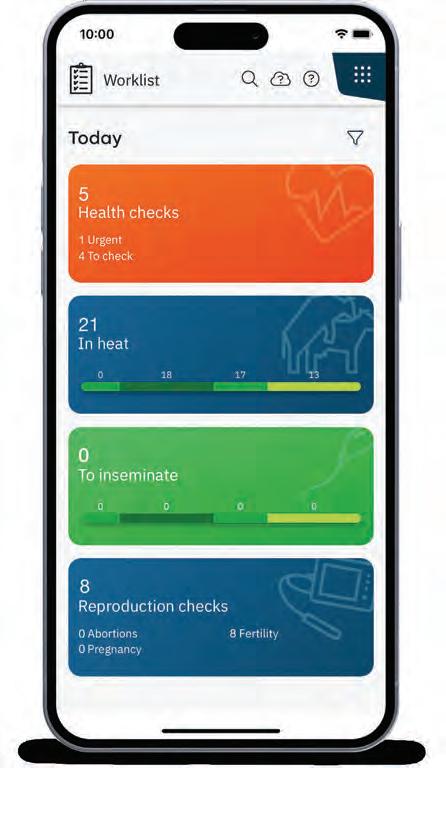
Reproduction Health
Herd Locomotion
Mastitis detection technology delivers a range of benefits
BOVONIC SAYS a return on investment study
has found its automated mastitis detection technology, QuadSense, is delivering financial, labour, and animal-health benefits on New Zealand dairy farms worth an estimated $29,547 per season.
The 2025 study analysed outcomes from 33 New Zealand dairy farms that had used QuadSense for at least six months.
Based on an average installation of 29 units at $500 each (total investment of $14,500), the company says the estimated annual benefit of $29,547 equates to a payback period of around six months.
According to Bovonic founder Liam Kampshof, the study was commissioned to move beyond anecdotal feedback and better understand the impact farmers were seeing on farm.
“We knew QuadSense was delivering value, but we wanted a more analytical understanding of its impact,” says Kampshof. “The results back up what farmers have been telling us and give everyone confidence that the technology is delivering consistent, repeatable value where it matters.”
Kampshof says studies like this are also important for farmers weighing up where
to invest.
“Farmers are spoilt for choice when it comes to technology, and that can make it difficult to know where to invest,” he says. “Access to credible information and feedback from other farmers helps them assess new technology more clearly and decide what’s right for their own system.”
What the study found
The biggest gains came through improved milk quality. Across the farms surveyed, bulk somatic cell count (SCC) dropped by an average of 37%, unlocking processor incentives of between $3,900 and $14,300 per season, depending on the farm. Based on a DairyNZ calculator, which gives a
percentage production increase for lowering SCC, earlier detection and treatment were also linked to an estimated $17,550 lift in production from improved yields.
Time savings were another consistent theme.
Farmers reported saving an average of 3.7 hours a week – roughly 155 hours a season or $5,905 a year – alongside smoother milking routines and less fatigue during busy periods.
Animal health improvements also stood out. Seventy four per cent of farmers reduced antibiotic use, delivering an estimated $2,192/year in savings, along with fewer culls and faster recovery times.
Real results
Since installing QuadSense, one contract milker in Morrinsville recorded a 40% reduction in SCC, securing $8,700 in seasonal milk processor incentives, the company says.
By removing around 30 minutes of manual stripping from every milking, the farmer saved close to five hours a week. Earlier detection also meant affected cows could be treated using a non-withholding product, keeping milksolids in the vat and helping the farm exceed its production contract by 3000 kgMS for the season.
A Waikato farmer also credited QuadSense with removing the need to add an extra labour unit in the shed when SCC levels spiked. He achieved a 30% reduction in SCC and reached 90%
Days of Excellence near the end of the season.
The system delivered immediate labour savings and, following veterinary advice, has since been used to support dry cow therapy decisions by adjusting detection thresholds.
Beyond numbers
Alongside the financial returns, farmers using QuadSense also pointed to a range of lifestyle and day-to-day benefits. Ninety-six per cent said the system reduced stress, and 95% said it helped them make better business decisions.
Many farmers described the reassurance of knowing every cow is checked automatically at every milking.
That consistency was especially valuable on farms with multiple staff or relief milkers, giving owners more confidence
to step away from the shed without worrying about missed cases.
Earlier detection also supported better antibiotic stewardship, with more cases addressed before becoming clinical. Farmers said this not only reduced antibiotic use, but also led to healthier cows, quicker recovery, fewer chronic issues, and better herd longevity.
“The numbers matter,” says Kampshof, “but what farmers kept telling us was how much easier mastitis management felt. Less stress, more consistency, healthier cows. And we know how much those things make a real difference on farm.”
The full return-oninvestment study is available at www.bovonic.com.
@rural_news
facebook.com/ruralnews
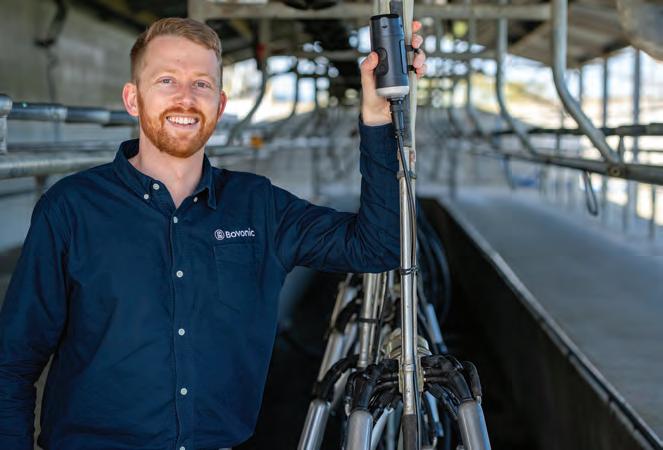
Bovonic founder Liam Kampshof.
400-series refrigerants face scrutiny
FARMERS ARE being encouraged to take a closer look at the refrigerants running inside their on-farm systems, as international and domestic pressure continues to build on high global warming potential (GWP) 400-series refrigerants.
On dairy farms, refrigerants play a critical role in everyday operations. They are essential in milk cooling systems that protect milk quality and are also increasingly being used in heat pump technologies that provide hot water for plant, silo and equipment wash-downs.
According to refrigeration engineer and Eco2Energy founder Nick Papa, most existing dairy refrigeration systems were installed when 400series refrigerants were the industry standard.
“Currently, around 70 per cent of dairy farm refrigeration systems are running on 400-series refrigerants, with a further 20 per cent using high GWP hydrofluorocarbons (HFCs), and the remaining 10 per cent made up of lower GWP refrigerants, particularly for milk cooling,” says Nick. “That’s what the industry has relied on for years, but the landscape is changing.”
New Zealand is committed to an international phase-down of high global warming potential (GWP) refrigerants under the Kigali Amendment to the Montreal Protocol. This international agreement requires participating countries, including New Zealand, to gradually reduce the production and use of hydrofluorocarbons (HFCs) - the category of gases that includes many commonly used 400-series refrigerants.
Nick says the key issue for farmers is not an overnight ban, but long-term certainty.
“The biggest risk for farmers is investing in equipment that becomes harder or more expensive to service over time as refrigerant availability tightens and costs increase.”
This is particularly relevant when farmers are upgrading or replacing infrastructure that is expected to last 15 to 20 years or more.
“Milk cooling and hot water systems aren’t short-term investments,” says Nick. “They’re core pieces of farm infrastructure, so refrigerant choice is becoming part of future-proofing an operation.”
As farmers think more strategically
about long-term certainty, some are beginning to explore alternatives to high-GWP refrigerants. One option gaining increasing attention is carbon dioxide (CO₂), also known in the refrigeration industry as R744.
“Global warming potential is basically a way of measuring how much damage a refrigerant does if it escapes,” says Nick. “CO₂ is the baseline, so it scores a one. Some of the gases commonly used in dairy refrigeration today score in the thousands, which is why they’re being phased down.”
Nick says CO₂ is a versatile refrigerant that can be used in different ways on farm, depending on how a system is designed. At Eco2Energy, CO₂ is used specifically in heat pump technology to produce hightemperature hot water for dairy shed cleaning and hygiene.
“Modern CO₂ heat pump systems are very efficient at recovering and upgrading heat,” he says. “That means farmers can produce consistent, high-temperature hot water using significantly less electricity. The flow-on benefits can include lower power bills, reduced emissions associated with water heating, and
Milk Solids Damage
Milk Cooling
WILL PUMP FROTH!
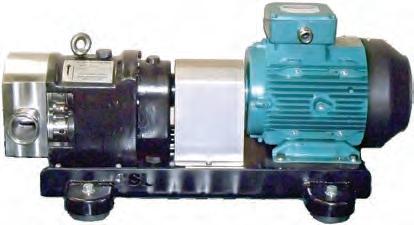
ROTARY LOBE PUMP
Combined with the CSL Milkflow Controller, the CSL Lobe Pump accommodates the large wash volumes required in today’s dairy sheds without compromising milk quality.
more reliable wash performance.”
Reliable hot water remains critical for milk quality and compliance, especially during busy periods such as calving.
“If wash temperatures aren’t consistently met, there’s a higher risk of residues or bacteria being left behind,” says Nick. “Having reliable
hot water takes one more variable out of the system.”
Nick encourages dairy farmers to plan proactively.
“Understanding how refrigerants are used on farm, and where things are heading, helps avoid surprises and supports confident, long-term decision-making.”
The CSL Milkflow Milk Pump Controller improves returns by reducing milk solids damage and optimising primary cooling.
Varivac Controller for vacuum systems
• Separate dedicated milk and wash program to optimise process when milking including goats and sheep
• Proven to reduce SCC
• Easily installed between milkings
• Up to 40% power savings across whole shed usage The only system designed specifically to retrofit to all vacuum pump types including
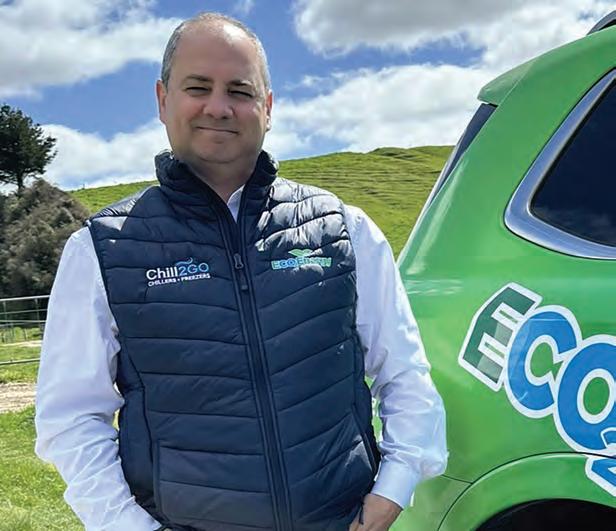
Nick Papa, Eco2Energy.
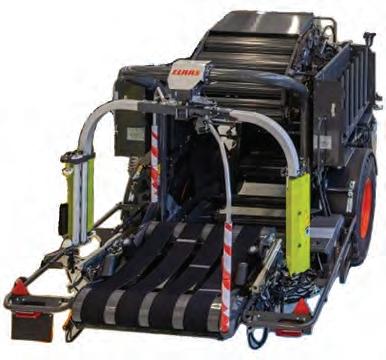
Claas adds two new baler assembly lines
FOLLOWING THE €1.6 million investment in a prototype workshop in early 2025, Claas has invested an additional €3.3 million at its Metz-Woippy baler production plant to increase production capacity.
The latest investment sees two new assembly lines to produce new baler series, including the new CEREX round baler and the nextgeneration CUBIX square baler, which won a Gold Innovation Award at
Agritechnica 2025. The company says the investment reflects a shared long-term ambition for the future development of the site, alongside underlining the connection with the region in the 65-year history of the site.
At the opening, Cathrina ClaasMuhlhauser, chair of the Shareholders’ Committee, commented, “As a family business, balers have been part of our DNA for more than 100 years. Metz is our home for baler production, and France is one of Claas’ core markets. This is
an investment for our future and reflects our commitment to the Metz region and to France as a
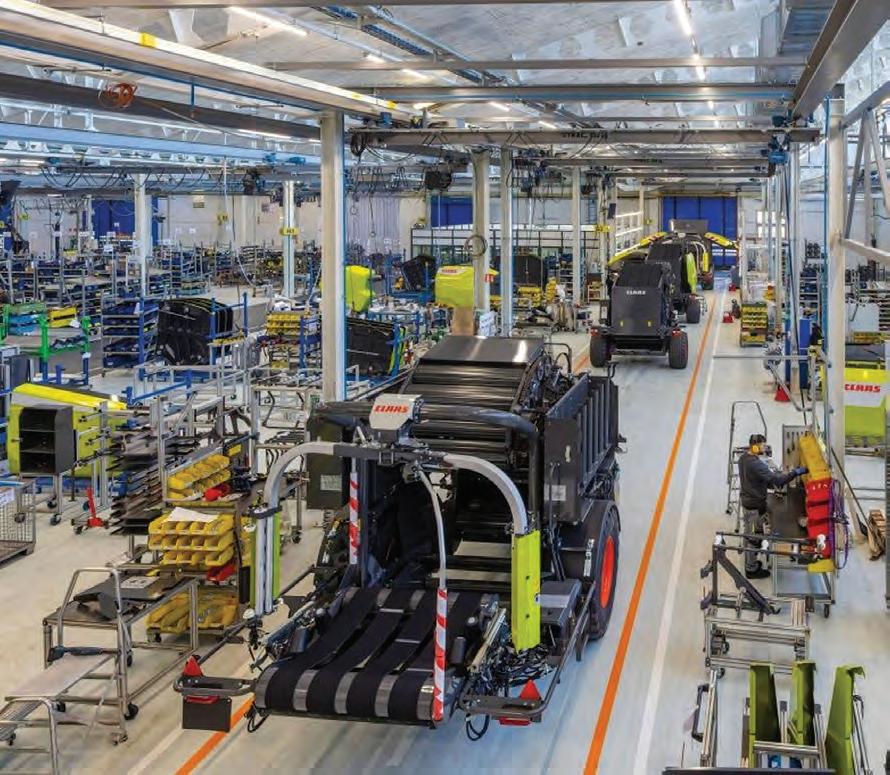
With balers at the core of Class business, new generations of variable round and square balers will be built in a state-of-the-art factory.
Thomas Spiering, COO for the company said, by combining innovative products with futureproof production facilities, “we are strengthening the industrial and technological foundations for the continued success of our baler business”.
The Metz site combines a range of expertise, including laser cutting, bending, robotic and manual welding, painting, and the assembly of round and square balers. The latest upgrades include freeing up 1800m² of space by outsourcing the storage of slow-moving parts and reorganising on-site storage, new U-shaped assembly lines, with preassembly areas arranged in a herringbone pattern to optimise production flows.
In addition, the construction of new test cabins is dedicated to test larger machines, with improved ergonomic and soundproofing, alongside general renovation of heating systems, lighting
improvements and overhead cranes and manipulators.
The introduction of the new CEREX 780 and CEREX 760 variable chamber round balers will see a total of four new
models, with and without a cutting unit, and with maximum bale diameters of 1.83m and 1.60m respectively, positioned above the VARIANT 500 series.
The new models are said to combine maximum throughput with improved bale density and lower power requirements, improving efficiency and versatility when baling silage, hay and straw.
•Rolls up to 15m wide, therefore fewer joins which means less risk, faster installation and shorter good weather window required.
• • Design assistance and volume calculations available. Material warranty from global company - Elevate, a brand of Holcim (formerly Firestone Building
•Nationwide trained and accredited installation contractors.
•Future proof - dependable performance, 50 year life expectancy even when exposed, 20 year material warranty.
•Over 120 million square meters installed worldwide.
•30 years in the NZ lining business.
Their two new assembly lines will make the new CEREX round baler and the nextgeneration CUBIX square baler.
MF 5M Series get traction
SINCE ITS official release to the New Zealand market in July 2025, the Massey Ferguson 5M Series has steadily solidified its position.
Designed to replace the outgoing 5700 and 6700 Global Series, the six-model MF 5M series range has struck a chord with farmers looking for a tractor that balances capability with mechanical simplicity in the competitive 95hp to 145hp utility segment.
A key driver has been the ability to tailor the machine to its environment, be that a market garden in Pukehohe, or a Southland dairy farm, either in open platform or cabin configurations.
ROPS versions are available on models from the 95hp through to the 125hp, offering excellent visibility and easy access for operators constantly on and off the seat. Those needing protection from the elements can choose the cab option for a comfortable workspace, with updated climate control and a flat floor design, in all models the 135hp and 145hp models, sold exclusively as cab units.
The philosophy of “your spec” extends to the transmission, from the simplicity the 12x12 Synchro Shuttle gearbox offering a robust mechanical solution, or for those undertaking loader work or road transport, the Dyna 4 transmission. Available on cab models from 105hp upwards and standard fitment on the flagship 145hp model, the Dyna 4 offers 16 forward and 16 reverse speeds with clutchless shifting.
A key feature of Dyna 4 is Brake to Neutral,
where the system automatically disengages the drive when the brake pedal is pressed and re-engages when released. This solution lends itself to repetitive loader cycles, significantly reducing operator fatigue and wear on clutch components.
Powered by a 4.4 litre, four-cylinder AGCO Power engine, with a Tier 3 emissions rating, the configuration avoids the need for AdBlue or complex exhaust aftertreatment systems, offering a straightforward diesel-only operation, complemented by a 198litre fuel tank for working long days without stopping to refuel.
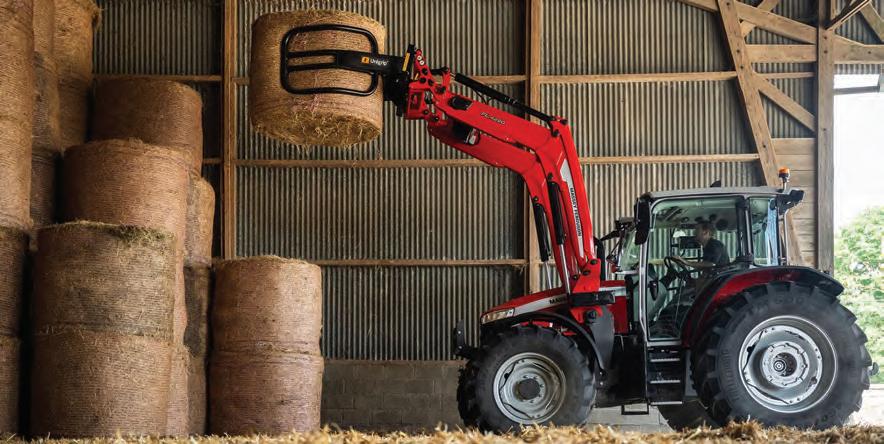
At the business end of the tractor, the standard hydraulic system is sufficient for general tasks, with the added choice of an optional 100 litre per minute combined flow system. By merging the flow from two pumps, this option means rapid loader response, even at low engine rpm. For operators stacking bales at height, the optional Visio Roof provides a glass panel in the roofline to maintain visibility of the load at full extension.
Keeping up with existing or emerging technologies, farmers can equip a 5M tractor with the Fieldstar 5 terminal, unlocking further features, alongside the ability to specify options such as full ISOBUS connectivity and MF Guide automated steering if guidance ready is also specified. This allows the utility tractor to perform precision tasks such as fertiliser spreading or spraying with the same accuracy as larger, arablefocused machines. Visit www.masseyferguson.com
1: Fastest Mixing Speed
- Asymmetrical mixing wedges
- Power mixing auger
- Rolled mixing chamber walls
- Consistent mix right through
3: Nationwide Backup and Support
- Four branches nationwide
- Factory trained technicians
- Significant parts stock holding
2: Longest Lasting Mixer Wagon
- Double overlapped welding
- High quality German steel
- Robust truck style chassis
- Double anti spill ring
4: Made for Me
- Over 2000 combinations
- 78 Versions
- 37 Models
“The
a
while
– WAIKATO DAIRY FARMER
MARK DANIEL markd@ruralnews.co.nz
The 5M series range has struck a chord with farmers.