PAGE 5

GUARD YOUR VAT
Prevent bulk tank contamination. Page 20
TACKLING BVD
Breaking the cycle. Page 19
PAGE 5
Prevent bulk tank contamination. Page 20
TACKLING BVD
Breaking the cycle. Page 19
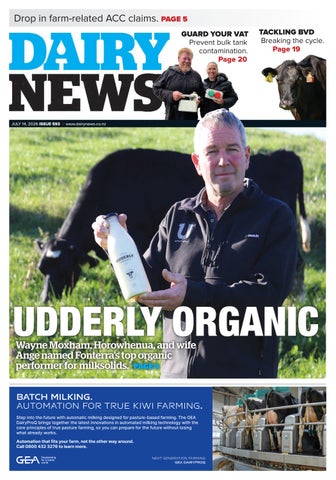
Wayne Moxham, Horowhenua, and wife
Ange named Fonterra’s top organic performer for milksolids. PAGE 4
We’ve worked closely with calf rearers to understand what matters for them, then refined our Thriver Calf Teats through testing in our local conditions - adjusting, validating, and proving every change along the way.
Available in Screw-In and Pull-Through, get yours from your local rural retailer today.

PETER BURKE peterb@ruralnews co nz
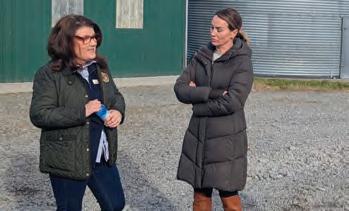
CERTAINTY AND a clear understanding of the needs of rural communities is a critical
“These are generational legislative changes and will determine how our children and grandchildren farm in the future. I cannot overstate how important it is to get these changes right now,” she told Dairy News To do this, Faulkner says it’s important
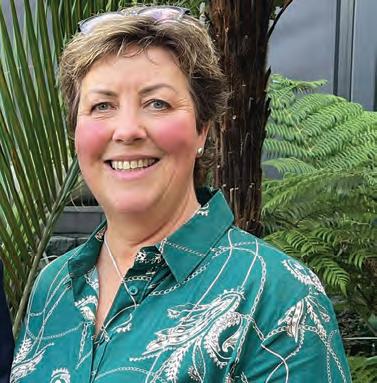
ONE OF Sandra Faulkner’s key areas of interest is around adverse events and emergency management, which is now front and centre with legislation currently before parliament
She says with this issue, together with infrastructure, need to be taken out of the present three-year political cycle and there needs to be cross-party support that stretches out over 30 years, and in the process get an idea of the spend and bring some certainty
“Hopefully with the emergency management legislation, politics will not interfere, and in terms of rural, those people who live at the end of the shingle
road, across a bridge or up in the ranges will feel connected to our society and supported like those of us who live close to towns,” she says While there is fierce competition for road funding and other forms of infrastructure, such as telecommunications, Sandra Faulkner says decision makers should think about where the export dollars come from – namely, rural communities
“In terms of connectivity, farmers run multimillion dollar businesses and are required to do much of the so called ‘paperwork’ electronically For example, animal declarations, traceability for our animals and most of our accounting systems are cloud based,”
she says
But Faulkner says most important of all is having reliable connectivity during ans adverse weather event such as recent floods in Wairarapa She says it’s most important that families can reach out at critical times to those individuals or organisations that can offer assistance
“That human connection is something that I cannot emphasise enough You will see from Fed Farmers a real focus on making sure that those channels of communication are operating well and they cope with whatever mother nature throws them,” she says

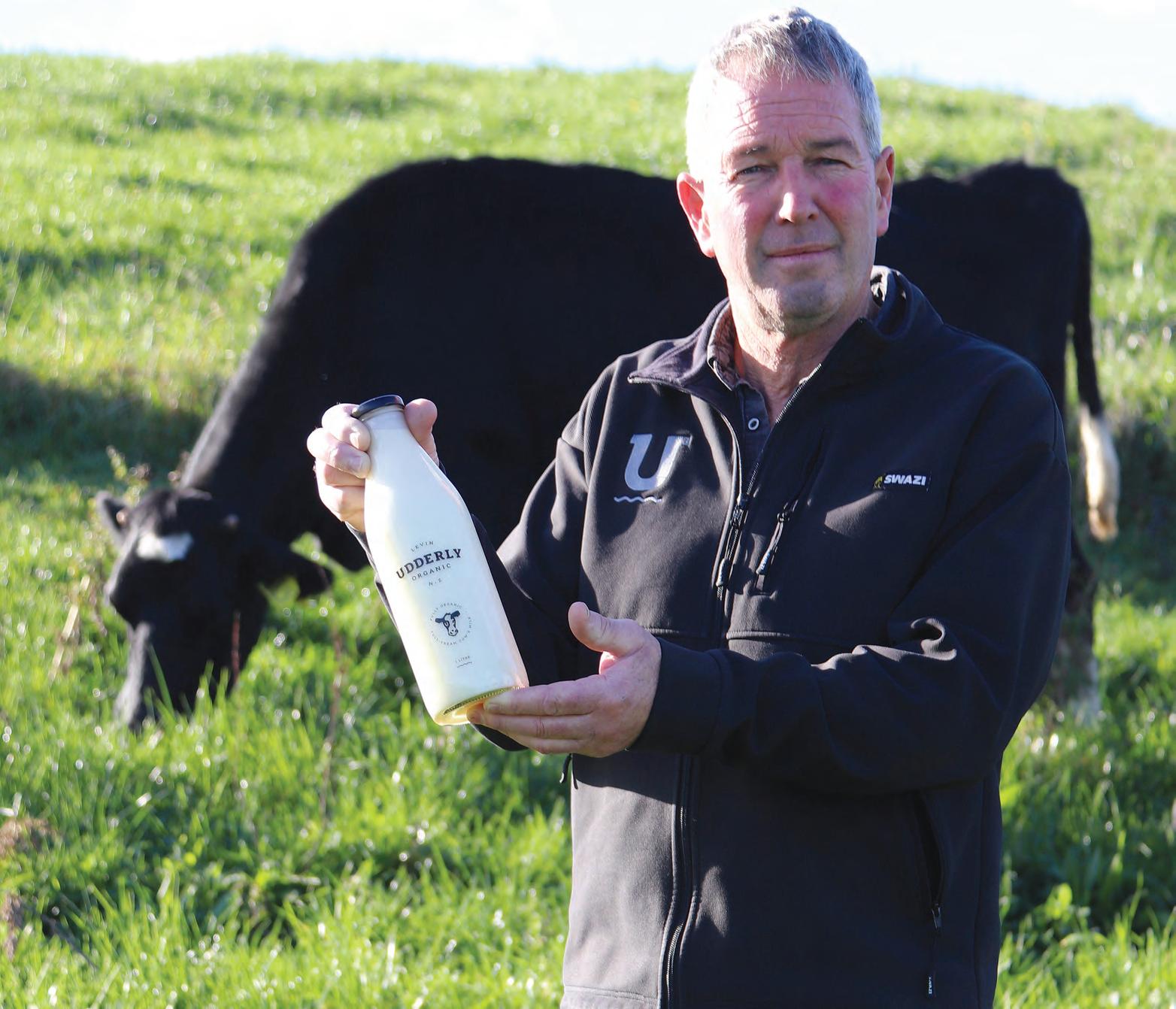
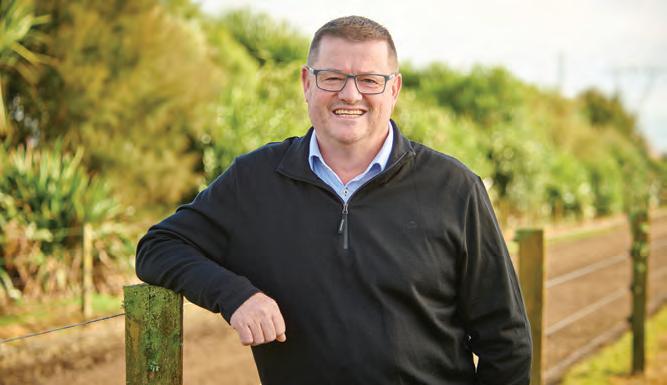
Wayne and Ange Moxham of Horowhenua have just been named as Fonterra’s top organic performer for milksolids. As well as providing organic milk to Fonterra, the couple also sell Udderly Organic milk to more than 100 outlets in the region and are embarking on another exciting venture producing organic gelato. Reporter PETER BURKE went along to see their farming operation.
THEIR FARM is located at Koputaroa, a small rural community about eight kilometres north of the township of Levin. It’s an established dairy farming area – the local primary school was built there in 1891.
It’s flat to rolling country and has some low-lying swampy areas and to the east are the formidable Tararua Ranges. The Moxham family have farmed here for the past 50 years.
Wayne and Ange have two farms – both certified organic. The larger of the two runs 500 cows on 240ha and the smaller one –70ha runs 120 Friesian cows that produce 45,000kgMS, and it’s this farm that won the award.
Wayne Moxham says his father had been farming all his life and did the usual thing of putting on lots of superphosphate and nitrogen, like others around him did. But he says his dad saw the farm start to decline under this regime, wondered if there was a better way and suddenly switched to just applying lime and things started to come right.
A few years on, Wayne says a friend suggested that they were close to becoming organic, and this triggered them to become officially a
certified organic dairy farming operation in 2010.
“Fonterra at the time were paying a premium for organic milk, so we thought we’d give it a crack, and the more we got into it, the more it made sense to me.
There weren’t a lot of organic farmers around when we started, so we kind of had to work it out for ourselves.
But since then, more farmers have converted to organics and that’s helped,” he says.
One thing that strikes you when you go for a farm walk on the property is the quality and lushness of pasture. Like most organic farmers, the Moxhams rely on quality pasture because it’s pretty much impossible to source organic supplements from off farm. They harvest baleage in the spring and they are a grass-based system.
Before they converted to organics, they just planted ryegrass and clover and when they sprayed out the weeds, the clover died. This is what conventional farmers do, says Wayne, but he believes this just poisons the ground.
Because he can’t spray out the paddocks now, Wayne just runs a rotospike device over the land and sows the seed.
“When we re-grass
we put in multiple species such as plantain, chicory, clover, different species of ryegrass and even sunflower seed. We don’t use coated seed either because that is unacceptable for organic farming. So now our girls (cows) don’t just have a constant menu of ryegrass, they have other species and as a result are happier and healthier,” he says.
There are other advantages with mixed species, says Wayne Moxham. He says the likes of plantain reduce nitrogen emissions and also the different species of grass grow better at different times meaning there is always quality feed available.
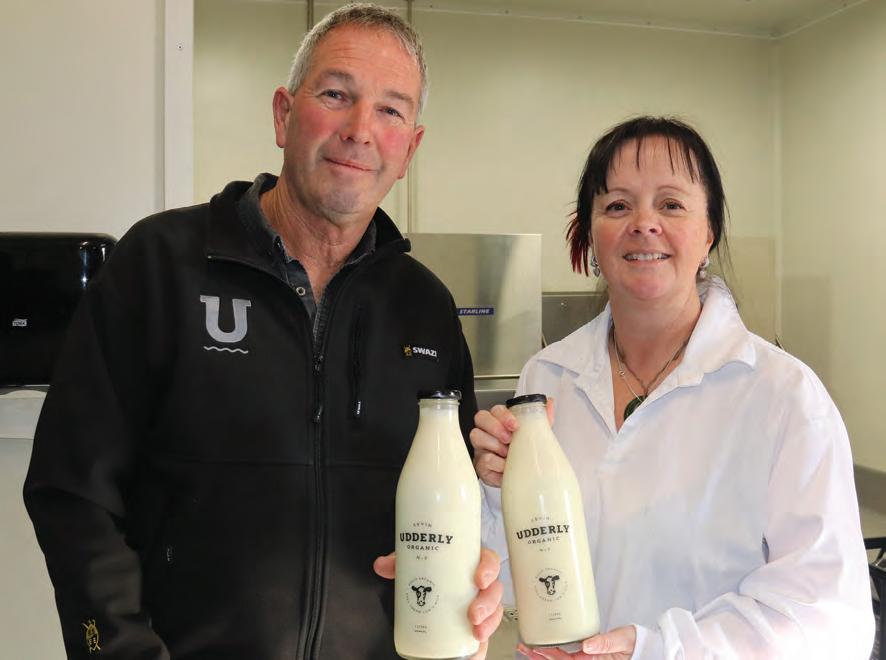
MANAGEMENT OF the farm has been the key to the production of the high quality of organic milk and since 2010 they have been supplying quality organic milk to Fonterra. But in 2019 the couple made a bold move that has set them apart from many dairy farmers – they decided to build a creamery and bottle and sell some of their organic milk to the public.
Up until then, Ange Moxham had been working as a deputy principal at a nearby school, but with building of the creamery underway, she decided to quit teaching after 25 years to work full time on the farm, with a particular focus on the creamery. Staff were employed to run
the farms on a day-to-day basis while the couple focused on the creamery, with Wayne keeping an oversight on the farms.
“Part of the deal about devoting our time to the creamery was to make sure we had a quality [farm] manager and assistant manager, because Wayne still couldn’t be in the cow shed milking if we were to launch our creamery properly,” says Ange.
In September 2023, after months of trials and tests, Ange and Wayne finally won approval to sell their milk and quickly sales have built up. Wayne says the word has got around about their milk and they have been besieged by customers wanting to stock
their product. They now deliver their milk daily to more than 100 outlets, ranging from Wellington in the south to Masterton in the east, and north to Whanganui and Palmerston North. They employ staff to do this, however, Ange says from time-to-time Wayne hops in the van and does a delivery.

“He likes getting out and meeting the customers,” she says.
But there is one more twist to this story. Ange and Wayne are now in the process of launching another product made from their milk –gelato.
“What we do to make it more attractive to the people who stock our milk is at the end of the week we take back any that is unsold and we don’t charge them for it. That equates to about 5% of the total milk sold. But that product is still perfectly good, so we freeze it and are now using it to make our gelato,” says Wayne.

practical fixes that work in the real world. That is why the drop in claims is encouraging.
A
HUGE reduction in ACC claims from on-farm accidents over the last five years is due to thousands of small, practical decisions being made in sheds, yards, paddocks and around kitchen tables across the country, says Safer Farms ambassador Lindy Nelson.
Claims are down from about 25,000 in 2020 to 16,666 last year.
Nelson says it shows that farmers, growers, contractors and rural teams are choosing safer ways of working because they know their land, their stock, their machinery and their people best.
“Farmers deserve real credit for this progress. They are the ones making the calls day by day, slowing down when the weather changes, setting jobs up properly, talking things through with staff and family and finding
“However, no one in rural New Zealand will see it as job done. Too many farming families still know someone who has been hurt or worse.”
The milestone was celebrated last week with a gathering on the Leeston farm of Federated Farmers health and safety spokesman David Birkett, attended by ACC associate minister Nicola Grigg and industry leaders including Dairy Holdings ex-CEO Colin Glass, PGG Wrightson CEO Stephen Guerin – both Safer Farms board members –and Federated Farmers President Colin Hurst.
A Wairarapa farmer, Nelson chaired Safer Farms from 2020 through to January 2026 and was instrumental in the formation of the Farm Without Harm strategy launched in 2023.
She believed Farm
Without Harm was a global first in terms of industry-wide collaboration.
Asked how much of the reduction in ACC farm claims was due to the campaign, she said it was about visibility.
“And it’s about communicating and giving [farmers] some tools and technologies. But it’s their choice to make good decisions and take that knowledge and apply it, which is what we’re celebrating today.”
Nelson said that ACC funding of $11 million over five years, announced in early 2025, allowed Safer Farms to gear up the Farm Without Harm team, pick up some initiatives and “do the deep dive” into four highharm areas identified as its targets.
These are: the psychosocial risks of mental health impacts and diminished wellbeing; vehicles and machinery accidents; livestock handling injuries; and
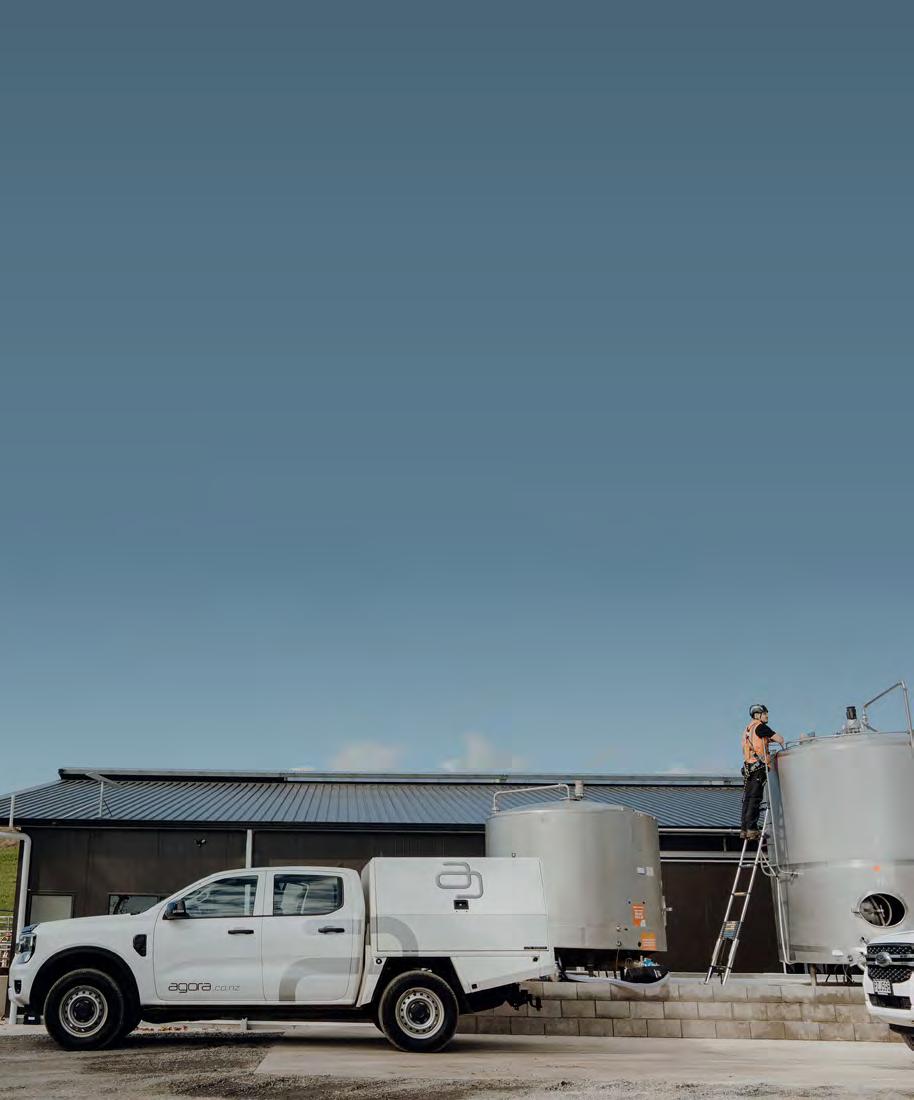

6,500,000 litres of milk protected. And we’re just getting started. Agora provides live vat telemetry for NZ dairy farmers.
out
farmers are choosing Agora.
RETIRING MP and dairy farmer Mark Cameron is blasting the Green Party for proposing to ban the use of synthetic fertiliser and cutting cow numbers.
Cameron describes the Greens’ policy as “completely out of touch with reality”.
“Synthetic fertiliser has lifted millions out of poverty around the world over the last 50 or 60 years of its use,” he told Dairy News.
“It has increased food production several-fold giving the farmers the necessary tools they need to be productive.
“The Greens’ policy is a utopia that simply does not exist. Many countries have natural resources. Our greatest one is our ability to convert green grass into animal protein.”
The Greens released their ‘Drink Swim Fish’ policy ahead of the upcoming election.
The party wants to tackle pollution before it reaches waterways.
It proposes to phase out synthetic nitrogen fertiliser and take action to reduce stocking rates on a catchment basis to improve the health of
rivers and drinking water quality.
But Cameron, who is retiring on health grounds after serving two terms as an ACT MP, says the Greens’ policy would be a disaster for New Zealand.
“It will destroy property rights productivity and production, ultimately making us a poor nation.”
Another ACT MP, Andrew Hoggard, who milk cows in Manawatu, says farmers don’t use fertiliser for “giggles”.
“It’s bloody expensive, but also very important
for growing crops and food.”
Hoggard says less fertiliser means less production.
“If you reduce the supply of food, then the price will go up so, I’m not sure that’s a brilliant idea for improving the cost of living.”
Hoggard says reducing ag exports out of the country will slash export receipts.
“Farmers up and down the country are doing great work on protecting waterways.
“The way forward isn’t one size fits all, neither
is more blunt rules from wellington.
“But each farmer understanding the key risks on their farm,
having mitigations in place, working with their neighbours on catchment plans.
“That’s how we move forward
nation’s potential,”
says.
JESSICA MARSHALL jessica@ruralnews.co.nz
THE MANAGING director of a company seeking to build a solar farm in Canterbury says receiving fast-track approval is a “really positive outcome”.
The decision, currently in its final draft form, will allow Lodestone to build its proposed Haldon Solar Farm in the Mackenzie District of Canterbury.
Gary Holden, managing director Lodestone, describes the decision
– which follows six months of assessment from the Fast Track Approvals panel – as an important step in the development of the solar farm at Haldon Station.
“It’s exciting to see the Panel supporting new renewable and gives us the opportunity to continue to progress the other activities to get the project to shovel ready,” Holden told Dairy News
“The robust process set an appropriately high standard for projects of this type and scale in the Mackenzie District,” he adds.
Once built, the solar farm will
generate approximately 370 GWh of renewable electricity each year, which is enough to power 45,000 households.
Holden says the wider community will benefit both directly and indirectly from the project.
“During the construction of the solar farm there will be local employment opportunities from contractors working on the build to housing and feeding workers on site,” he says, adding that in the long term there will be operations and maintenance staff required to help maintain and operate the farm.
“The construction of the solar
farm will also provide economic development opportunities in the region which don’t rely on water or result in any effluent being created.”
Holden describes it as a “clean, long-term sustainable option”.
Additionally, he says that having a more diverse mix of power generation options will help to moderate electricity prices in dry years.
“It can be said that utility scale solar farms provide ‘virtual rain’ which reduces New Zealand’s dry year risk,” Holden says.
“With solar generation highly correlated to hot summers, or long dry
periods, this then enables water to be retained in the hydro lakes, and we use solar generated electricity instead,” he adds. “Thus, supported by and therefore supporting hydro systems.” Paddy Boyd, Haldon Station managing director, says the project that from the outset, the owners of the station wanted to ensure that not only could renewable energy be produced on the land but that it could be done while protecting its unique landscape.
“We look forward to continuing to work alongside mana whenua, regulators and the community as the project progresses,” he says.
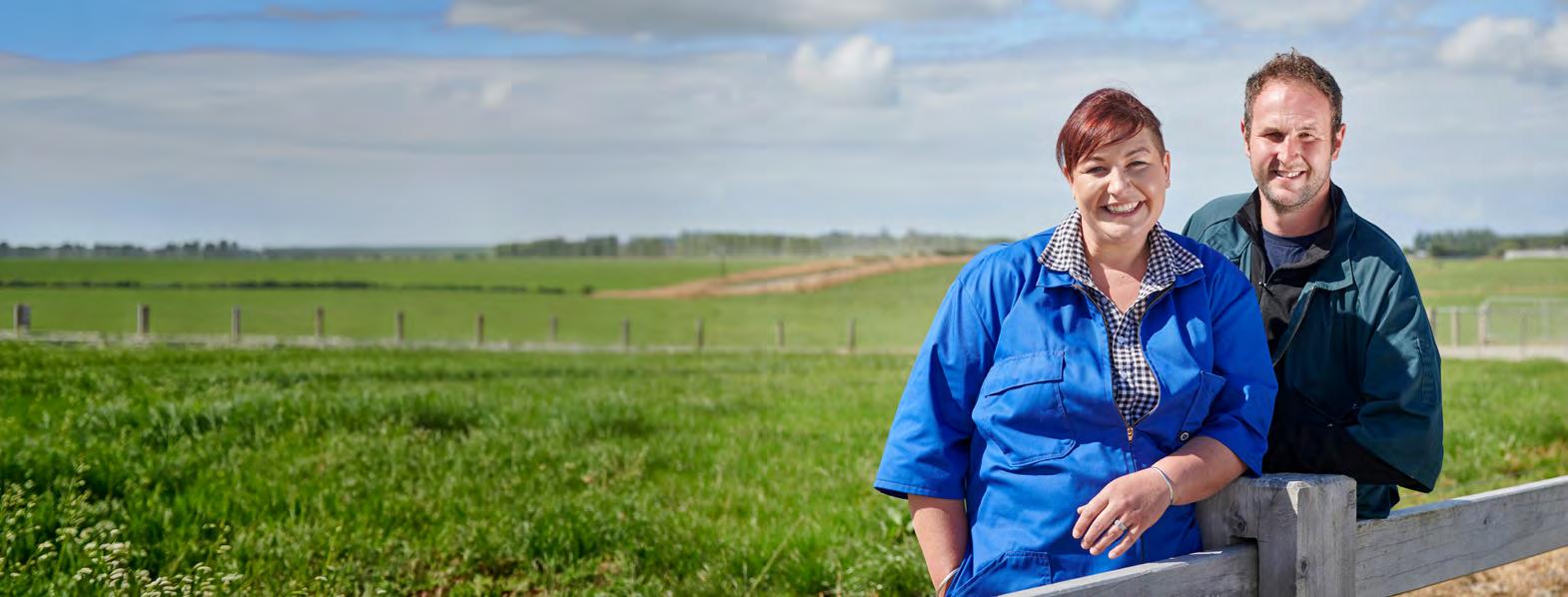
Fonterra farmers Zara & Brandon Lawson know that the time, energy and care they put into making their milk, is met with a Co-op wide commitment to making the most of every drop of their milk. Watch their story by scanning the QR code or visit fonterra.com/your-co-op
ON A farm in Tikorangi, North Taranaki, Brent Stevenson is sharemilking 1400 cows. His operation has recently expanded, taking on additional land, alongside new investment in renewable energy and composting barns. This infrastructure has been designed to improve animal welfare and improve on-farm efficiency.
Driving past, few would know that Stevenson got his start with a little help from two men who died long before he was born.
Growing up on a farm in coastal Taranaki, Stevenson always had a connection to the land and a natural instinct for agriculture. He received a Bashford-Nicholls
Scholarship three years running, in 2007, 2008 and 2009, while completing a Bachelor of Applied Science in Rural Valuation and Management at Massey University in Palmerston North. That financial support allowed him to focus on his studies and think seriously about the career he wanted to build.
After graduating, he went out and learned from the land itself, working across multiple regions of New Zealand, building relationships with farming families and rural businesses, understanding their operations from the inside. From 2010 to 2016, he brought that ground-level knowledge into a financial context at National Bank, helping
farming clients navigate the business side of agriculture.
Eventually, Taranaki called him home. Today he is building something lasting in Tikorangi with his wife Amy and their two children.
“You don’t fully appreciate it at the time. You’re just a student
trying to get through. But that scholarship made a real difference. Everything I’ve built since, the farming, the relationships, coming home to Taranaki, it started there, studying in Palmy and having that support behind me.”
Stevenson’s story is one of many playing out across the region every year. And it all traces back to a decision made
CLAUDE WILLIAM Nicholls and James Dawson Bashford were born in 1880, neighbours in rural South Taranaki, five kilometres apart. In an era when it was common practice to leave a farm to family, they each chose to do something different. They formed trusts so their land would keep giving long after they were gone, with the proceeds funding the next generation of
agricultural and veterinary leaders in their region.
Last year, the Bashford-Nicholls Trust transferred $14 million in assets to Taranaki Foundation, marking the largest single transfer of trust assets in New Zealand’s community foundation network.
The transfer more than doubled Taranaki Foundation’s funds under management, from $13 million to
$27 million, making it the thirdlargest community foundation in New Zealand. The funds are now invested locally through Craigs Investment Partners in Taranaki.
This year alone, the trust is supporting 66 undergraduate students, two master’s students and four PhD candidates pursuing careers in agriculture and veterinary
science. It also co-funds the PIVOT Award in partnership with Massey University.
“If you look at the original legacy, it was nearly 100 years ago,” says Josh Hickford, chief executive of Taranaki Foundation.
“Our children, and their children, will still be telling this story. That’s what we’re here to protect and grow.”
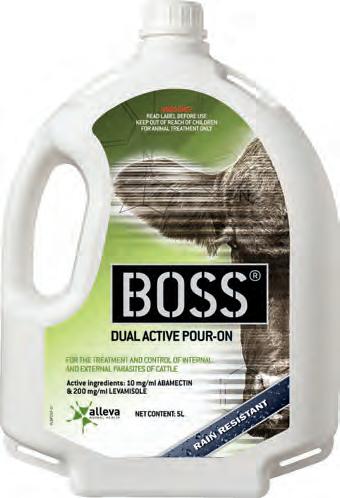
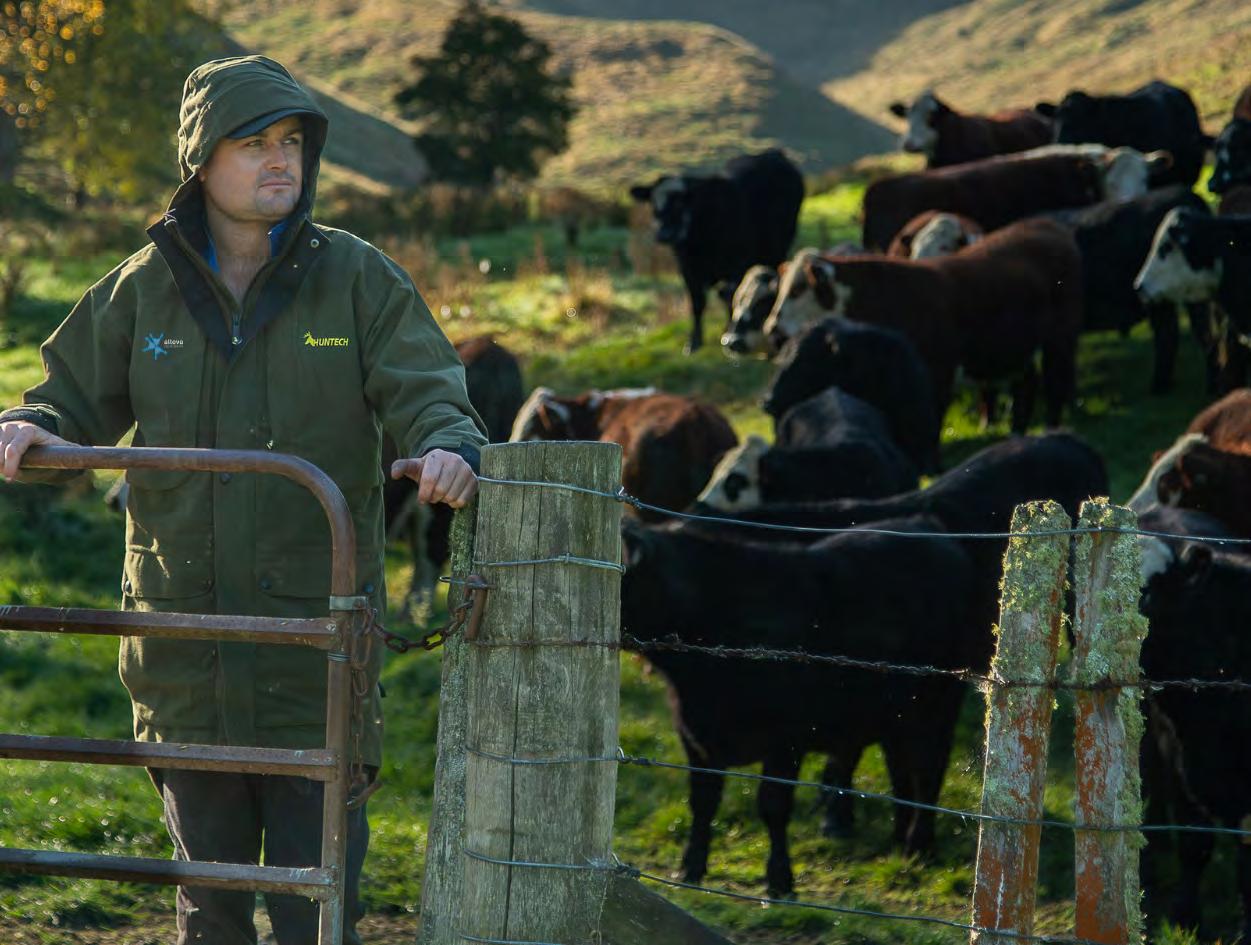
Season after season, BOSS® and TURBO® dual action pour-ons keep delivering effective parasite control, no matter what the weather. And now when you purchase a 5L pack of either product you‘ll receive a waterproof, breathable and ultra-quiet Huntech Wet Weather Jacket*.
Rain resistant for peace of mind when treating in variable conditions.
Formulated using Alleva’s DMI-Sorb® formulation system to prevent run-off as well as enhance active-ingredient delivery and absorption.

SOUTH WAIKATO
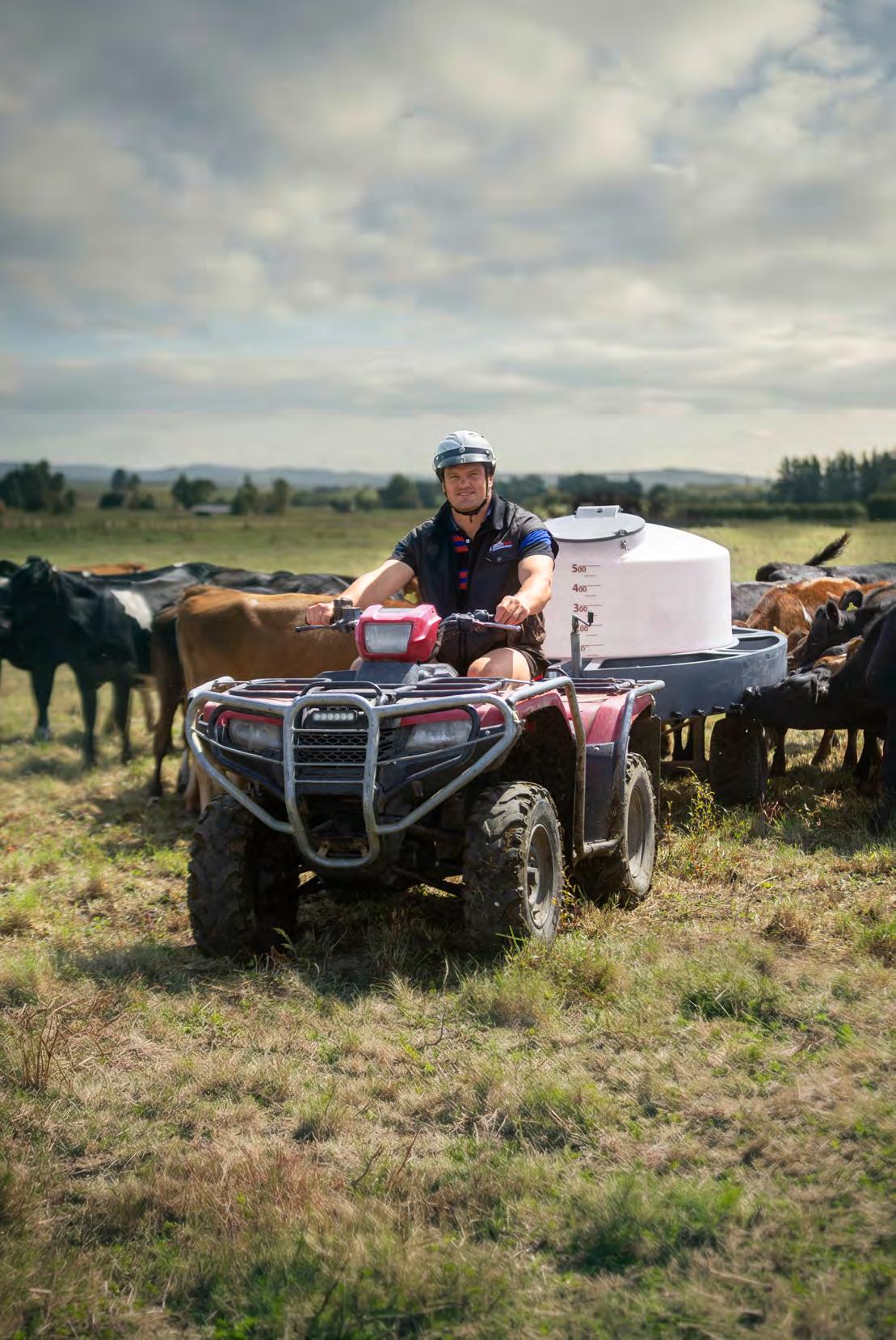
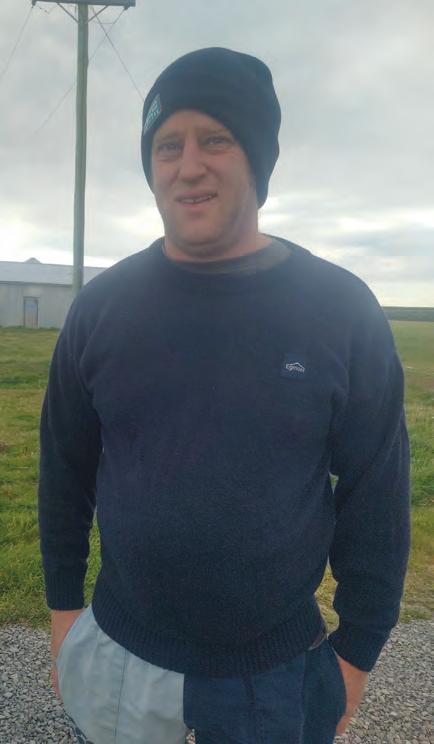
farmer Bas Nelis is always interested in fine-tuning his business to improve results.
Milking on 260ha farm near Tirau, Nelis says reducing waste is always on his mind.
One opportunity he sees is around nitrogen input; limiting the
amount of synthetic nitrogen he uses, reducing cost, especially as fertiliser prices soar.
His current project focuses on reducing nitrogen inputs by leveraging natural soil
biology of his farm.
The farm is unique as it uses two cow sheds, one of which only milks the A2 herd.
“We established the A2 herd a few years ago, which was a pretty straightforward process – we tested all the cows and had enough A1-free cows to use for one shed,” he told Dairy News
“At one stage I had done four years of organic dairy farming.
It was clear that under the right conditions you could take some nitrogen out of the system without affecting pasture performance.
It’s
That’s

“I felt it was worth doing a trial to rely on the soil and plant biology more and started exploring different options for a project like that.”
Nelis supplies Fonterra, which in turn has a long-term agreement to provide A1-free milk to the a2 Milk Company’s Pokeno plant for production of a2 branded products.
Nelis is one of 27 farmers to have received funding from the a2 Milk Company.
The processor has pumped $800,000 into 27 sustainability projects across Australia and New Zealand through the 2026 a2 Farm Sustainability Fund.
It takes the company’s total investment in on-farm sustainability initiatives to more than $3.7 million since the fund was established.
The project on Nelis’ farm uses a package of BioN, a fertiliser replacement based on living soil biology, and Comcat, which is a root stimulant.
BioN introduces bacteria into the soil. The bacteria capture nitrogen from the air and convert it into nutrition for pasture growth.
“We’re running the project over a 50ha lot, with three applications between September and
March,” explains Nelis.
“We should have an initial feel for the results in pasture growth by about Christmas, and the hope is that there are savings in both time and cost.
“The opportunity for a grant under the a2 Milk fund helped us to take on the project. There’s a risk in changing your system – financially and in performance – and funding like this gives you a chance to take it.
“It’s also good for the industry because there are a lot of products out there that in theory are good ideas and this sort of thing helps promote great initiatives.”
Managing director and chief executive of the a2 Milk Company, David Bortolussi, says the projects reflected the growing focus among farmers on practical innovations that deliver both environmental and commercial benefits.
“Our farmers are finding new ways to improve productivity while reducing environmental impacts, and that’s exactly the type of innovation this fund is designed to support.
“The projects funded this year demonstrate that sustainability and profitability can go hand in hand. They’re helping build more resilient farming businesses while delivering measurable outcomes for the environment, animal welfare and local communities,” says Bortolussi.
PETER BURKE
A
WARNING to dairy farmers not to expect the same good conditions that they experienced last season, has been issued by a leading farm consultant.
James Allen, chief executive of AgFirst told Dairy News that, broadly speaking, in the Waikato farmers grew and harvested an extra tonne of dry matter last year over the previous year. He says it was a very good season, but points out that you’d be a brave person to expect this season to be the same.
Allen says supplementary feed reserves in the province are pretty good now.
“What we are saying to farmers though is to think about your feed requirements for the whole season and base it more on an average season, rather than what we had last season, and then try to make sure that you have
the bulk of that supplement secured. It then comes down to thinking about marginal milk decisions later in the season,” he says.
Allen says now is the time to maximise pasture quality and also cow intake to get to peak cow production.
But again, he warns that leading into summer the math starts to change quite quickly. Now he says it’s about
assessing the price of supplement and looking at the forecast milk price and looking to the future.
“What I am also saying is around pre-Christmas it’s a case of reassessing about where you are at and looking at the soil moisture profile. That’s because soil moisture at the1st of December is a really good early warning indicator of whether or not there are problems on
the horizon,” he says Allen says it’s about making those early decisions about whether more supplements may be required or maybe to cull early. He says December 1 is a
trigger date when farmers need a plan for making and executing some decisions early. He says history tells us that the best way to deal with problems is to have a plan and make early decisions.
JAMES ALLEN says he’s not surprised to hear that Canterbury and other parts of the east coast of the South Island are in the early stages of drought.
Chris Brandolino, principal scientist - forecasting and media at Earth Sciences NZ, says already there are some worrying signs that are related to El Nino occurring in the South Island. He says some places in Canterbury are in what he describes as ‘metrological drought’ and that there is a significant soil moisture deficit in many places.
Allen says he’s heard that some farmers have been irrigating well into
Seaward Downs is a small Southland farming community on the banks of the Mataura River some 8kms Southwest of Edendale and half an hour from Invercargill. Hamish Blackmore and his brother have been managing their family farm for more than 15 years. They converted to dairy from sheep and beef and have been running a milking herd of 750 cows.
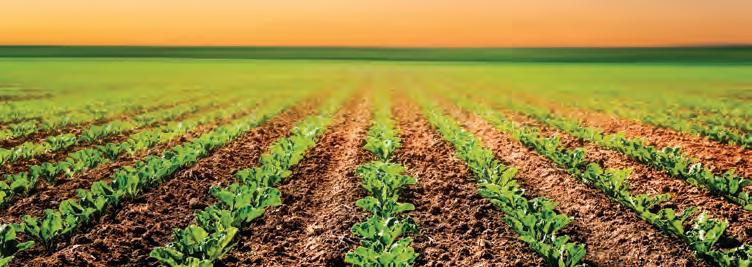
Like many farms in the district, Hamish grows beet for winter feed because it’s a high-yielding crop and good value. The farm, however, had been struggling with a severe wild turnip issue over the years, which was affecting the beet yield. In 2023, on advice from their local PGG technical field rep, they decided to trial the CONVISO® SMART System, to control the wild turnip and reduce the number of sprays.
Hamish explains:
“The benefits of using the CONVISO SMART System are that it can control the wild turnip, which we have historically had issues with on this property. And obviously being able to
control the wild turnip, it increases our yields, and another benefit is fewer sprays that need to go into that crop.”
While at the time of the interview, Hamish had yet to graze the CONVISO SMART Sugar beet crop, Hamish is already impressed by how the paddock looks.
“The CONVISO crop is looking good. It’s still got a dark green colour and it’s very uniform and clean…we’re looking forward to seeing how it goes.”
The numbers are stacking up too. It doesn’t take too much effort to realise the cost savings of using the new system, and Hamish is already a convert.
“I would definitely recommend the CONVISO SMART System to other farmers because of what I said: it controls the wild turnip, which can be very expensive and actually the growing of the crop is going to be considerably less compared to the conventional growing of traditional beet.”
May and June – something he says is unheard of – and he agrees that east coast regions of both islands are high risk areas when it comes to drought. He says he’s aware that many parts of Canterbury have tight water restrictions and if the dry weather continues and aquifers are not recharged, there is a problem.
In terms of El Nino, Allen says dairy farmers don’t need to change what they are doing right now. He says, after all, most have made a decision on how many cows they’re going to carry through the winter and peak milk.
AS DAIRY farmers lock in plans for the upcoming mating season, a partnership between Fonterra and Silver Fern Farms has been formed with the aim of making it simpler to create additional value from calves not entering the replacement herd.
The programme marks a milestone for New Zealand’s beef-on-dairy scene, bringing together two major players to create a premium offering based on highquality genetics.
Designed to deliver value across the supply chain, it’s underpinned by a key customer – FMG Global, strategic sourcing partner for McDonald’s – looking to support
industry-led efforts to capture the opportunity presented by nonreplacement dairy calves.
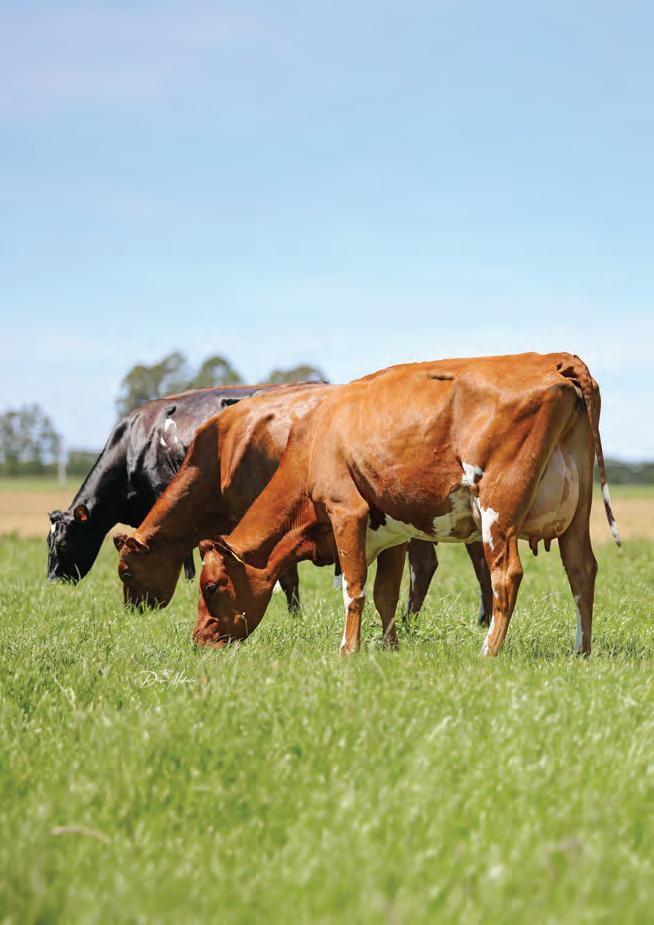
The programme offers a list of high-performance beef sires selected for easy calving, moderate gestation length and high-growth beef-ondairy calves – ideal for use in dairy cows.
Using these sires for targeted nonreplacement matings also allows farmers to breed herd replacements from their best cows, driving faster genetic gain, says Anne Douglas, group director of Fonterra Farm Source.
“This initiative gives farmers a practical, evidence-based sire list that helps remove
uncertainty and makes it much simpler to capture the beef-on-dairy opportunity,” she says.
“As farmers finalise their mating plans for the season ahead, we’d encourage them to explore the opportunities available through this programme and consider where premium beefon-dairy could fit within their breeding strategy.”
Integrated beefon-dairy value chains are becoming more established internationally, says Greg McSkimming, head of agribusiness at Silver Fern Farms.
“The biggest opportunity for New Zealand is creating stronger alignment
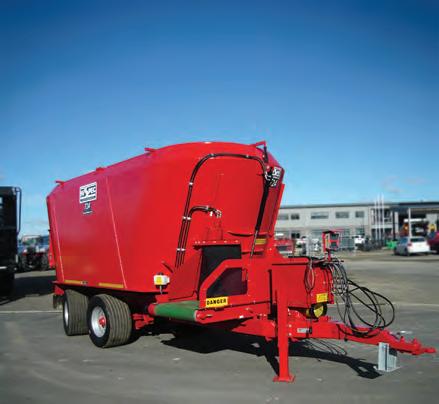
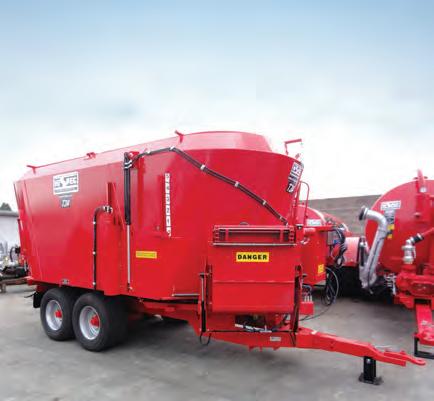
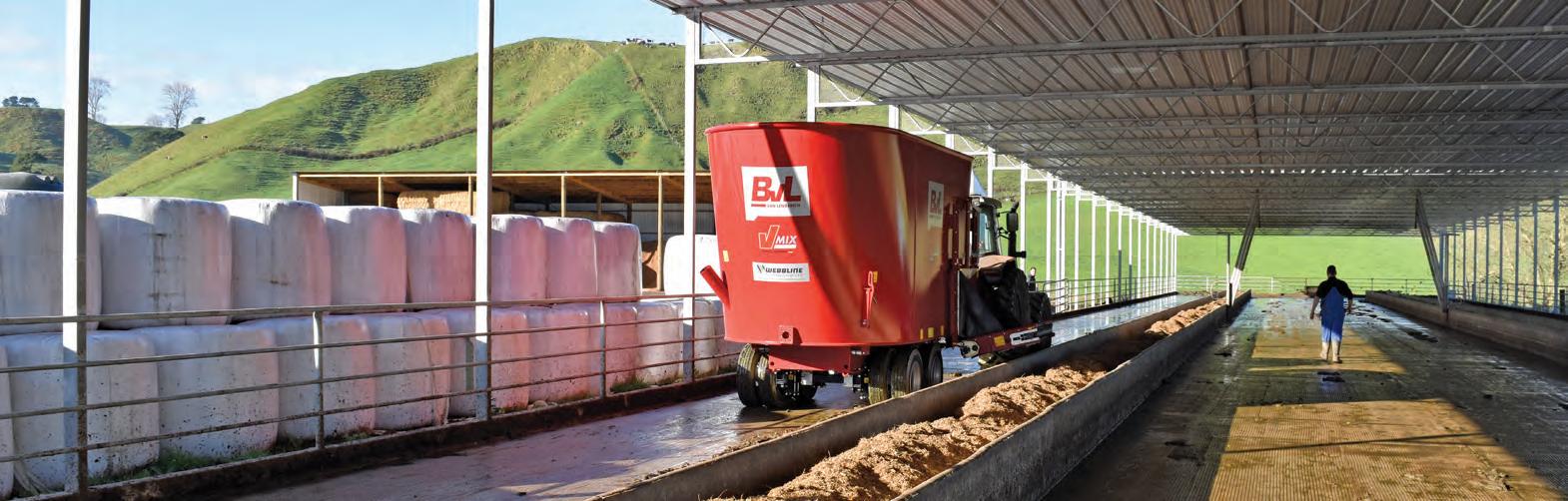
HiSpec
HiSpec Mixer Wagons use a twin mixing and chopping auger to produce a market leading quality mix in a machine that is simple to maintain.
across the supply chain, so decisions on farm connect more directly to customer demand and deliver consistency at scale,” he says.
“Beef-on-dairy is one of the most practical ways dairy farmers can create additional value from non-replacement calves. The key is producing animals the rest of the value chain is actively seeking. When genetics, rearing and finishing are better aligned, it improves predictability and gives farmers more confidence they’re breeding calves that will deliver what the market wants.”
The programme’s approach is about aligning genetics and
on-farm decisions with smarter supply chain practices, says Connor FitzGerald, chief commercial officer at FMG Global.
“Small adjustments in
decision-making around genetics, combined with improved supply chain processes can deliver outcomes that work for the dairy farmer, the calfrearer, the backgrounder and/or finisher, as well as the meat processor,” he says.
“It really is a scenario whereby, with the right collaboration, everyone wins.”
THE PROGAMME’S recommended sires are top-performing beef bulls selected to work within dairy systems and produce calves the beef supply chain is actively seeking.
The chosen bulls meet four practical requirements:
Easy-calving –to protect dairy cow performance and reduce risk at calving.
Moderate gestation length – to ensure cows calve on time.
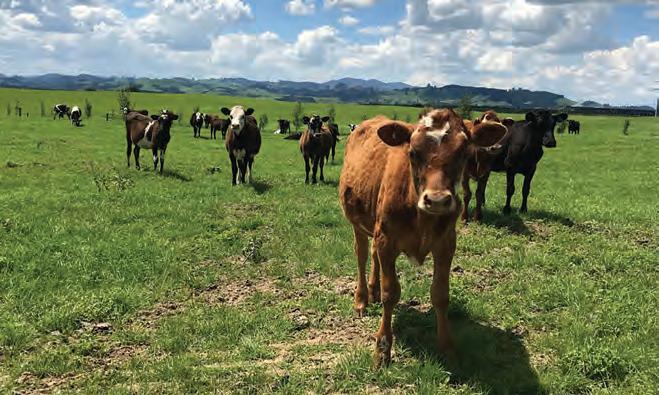
Colour-marking – to aid in visual identification
of calves.
Growth potential – to provide value to rearers and finishers, locking in ongoing demand for calves.
Selection has been guided by the latest Beef + Lamb New Zealand tools and information, to ensure calves hit the mark for all parts of the supply chain.
The sires are available through LIC, CRV and GENEZ and are intended to be used strategically for non-replacement matings, helping farmers protect the pathway for
high-performing dairy replacements.
Branded eartags will be available for Fonterra suppliers that use these sires to create a distinct line of calves within their herd; they won’t be available to farmers running the nominated bulls alongside other bulls of the same breed, ensuring tags go into the right calves. Beef finishers can use the tags as an indicator of growth potential and, if processed through Silver Fern Farms’ programme, earn a premium.
Canola meal is a premium protein source for dairy cows, supporting milk solids production through:
Improved metabolizable protein efficiency
Higher and more persistent milk yield
Increased dry matter intake and maintenance of cow condition
Canola meal is a valuable source of rumen undegradable (bypass) protein, supplying highly digestible essential amino acids to the small intestine. Its amino acid profile is well aligned with milk protein requirements, with comparatively high concentrations of methionine, a key limiting amino acid in high‑producing dairy cows. Diets containing canola meal have been consistently associated with improved efficiency of metabolizable protein supply, increased dry matter intake and enhanced milk yield.
Cargill’s canola meal is available through your local feed supplier, with non‑GMO options and sustainability credentials available where required.
For more information about canola meal visit www.cargill.co.nz.
ALL EYES are on the Government as Waikato farmers seek urgent help to fend off the controversial Plan Change 1 (PC1), designed to manage nutrient discharges into waterways in the region.
While Prime Minister Christopher Luxon and his ministers have signalled that they will intervene, farmers want action.
Waikato farmers say it makes little sense to continue with PC1 while the Government is reforming the resource management system.
The National/ACT/NZ First coalition has reversed many regulations, introduced by the previous Labour Government. But PC1 is a big one and farmers will be anxious to see how the politicians handle this one with a general election just months away.
STAYING ON Plan Change 1, NZ First deputy leader Shane Jones took to social media to gain some political points.
“New Zealand First will not stand by while regional bureaucrats and courtroom processes make it harder to grow vegetables, milk cows, produce food and keep rural communities alive.
“We are in a cost-of-living crisis. The last thing New Zealand needs is a planning regime that pushes up food prices.”
PC1 was first notified in 2016 and was appealed to the Environment Court with its decision released on June 8.
The court directed the Waikato Regional Council to make 20 changes to PC1, giving it until July 21 to do so. Once the court confirms the amendments meet its intent, the plan will be finalised.
THE GREENS Party’s rivers and oceans policy may have a new name but nothing else has changed.
The party says its ‘Drink Swim Fish’ policy will deliver “far reaching environmental change and protect human and ecological health from harm caused by corporate greed”.
In other words, reducing cow numbers and phasing out the use of synthetic fertiliser on NZ farms.
But using less fertiliser means you grow less food. Reduce supply, prices go up.
The New Zealand Institute of Economic Research found that squeezing farmers’ use of nitrogen through tougher regulation could send the price of broccoli as high as $9 a head.
Not sure if that’s the Greens’ plan for helping with the cost of living.
Jones’ comments shows NZ First is fighting hard for the farmer vote this election.
CITY AND regional councils have been put on noticestop using extreme climate forecasting scenarios that can drive unnecessary costs onto ratepayers.
Climate Minister, Simon Watts has written to mayors and councillors across New Zealand outlining his concerns. Councils shouldn’t default to worst-case assumptions that can unnecessarily increase rates and delay investment.
Watts has directed officials to take stock of how these scenarios are being used and provide advice on whether stronger national direction or legislative change is needed to restore consistency and common sense.
This will be welcomed by the rural community who are being slapped with increasing rates by their regional councils, some under the guise of climate change.

Head Office: Lower Ground Floor, 29 Northcroft St, Takapuna, Auckland 0622
Phone 09-307 0399.
Postal Address: PO Box 331100, Takapuna, Auckland 0740
Published by: Rural News Group
Printed by: Inkwise NZ Ltd
Contacts: Editorial: sudeshk@ruralnews.co.nz
Advertising material: beckyw@ruralnews.co.nz
Rural News on-line: www.ruralnews.co.nz
Subscriptions: subsrndn@ruralnews.co.nz
Publisher: Brian Hight ......................Ph 09-307 0399
General Manager: Adam Fricker ...................Ph 021-842 226
Editor: Sudesh Kissun ................Ph 021-963 177
Machinery
Editor: Mark Daniel......................Ph 021-906 723 markd@ruralnews.co.nz
Reporters: Peter Burke.....................Ph 021-224 2184 peterb@ruralnews.co.nz
Subscriptions: Julie Beech ....................Ph 021-190 3144
Production Manager: Becky Williams ..............Ph 021-100 4831
Digital Strategist: Jessica Marshall ..........Ph 021 0232 6446

FARMERS ARE being put on notice by the Green Party.
If they are voted back into power at the next general election, farmers can expect much tougher rules around nutrient management.
This includes the phasing out of synthetic fertiliser usage on farm and reduced stocking rates around catchments.
The strategy proposed by the Greens includes a drinking water regulator empowered to monitor, report on and enforce protections for water sources.
The strategy includes setting sciencebased national standards for freshwater, lowering the current nitrate limit for drinking water, and entirely phasing out synthetic nitrogen fertiliser.
Stocking rates would also be reduced on a catchment-by-catchment basis to improve water quality and river health.
But as ACT MP Andrew Hoggard points out, banning synthetic fertiliser would drive up the price of everyday food at the checkout and slash New Zealand’s export income
When the Greens talk about getting rid of synthetic fertiliser, they seem to think farmers use the stuff for fun.
It’s bloody expensive, but it’s also essential for growing the food New Zealand families rely on, Hoggard points out.
Improving freshwater outcomes requires practical solutions, not blanket bans from Wellington. Farmers up and down the country are already doing great work protecting waterways.
The best approach is for each farmer to understand the risks on their own farm, put practical mitigations in place, and work alongside their neighbours on catchment plans.
That’s how we improve water quality while keeping farms productive.
As Hoggard says, it’s a lot smarter than banning the tools that help feed the world.
AUCKLAND SALES CONTACT: Stephen Pollard .............................................Ph 021-963 166 stephenp@ruralnews.co.nz
WAIKATO & WELLINGTON SALES CONTACT: Lisa Wise ........................................................Ph 027-369 9218 lisaw@ruralnews.co.nz
SOUTH ISLAND SALES REPRESENTATIVE: Kaye
kayes@ruralnews.co.nz
taking steps.
IT’S NO surprise that “world-class biosecurity” continues to dominate as the top priority for agriculture leaders, holding the number one spot for the 16th consecutive year in KPMG’s latest agribusiness report.
It’s something that often comes up when I’m talking with colleagues across the sector and it’s something I take seriously as chair of the Foot and Mouth Disease (FMD) Council.
For dairy farmers and processors, biosecurity is not an abstract idea to be debated, it’s something they practice every day.
Whether that’s cleaning gear, controlling farm access, keeping accurate NAIT records, and isolating new or returning stock.
While farmers play their role, they are right to expect the right systems and support from government, and sector bodies like DairyNZ. They should be confident that if an outbreak occurs, the response is swift, coordinated, and practical on the ground.
At DairyNZ we’re listening and are already
Last year, we signed a Foot and Mouth Disease Operational Agreement which sets out how the dairy, sheep and beef, deer, and pork sectors, along with meat and dairy processors, and government, will prepare and respond in the unlikely event of a FMD outbreak.
Importantly, it means industry will have legally binding participation in decision-making, ensuring that farmers’ interests, knowledge, and input is heard.
The agreement was signed at Fieldays last year, and we have made significant progress in that time.
The FMD Council, representing partners in the Agreement, has helped direct investment to the readiness gaps that matter most, including operational planning, workforce readiness, governance, compensation, vaccine access, equipment stocks, and communications.
Readiness is not just about technical plans. It also depends on leadership, clear decisionmaking, and strong working relationships between industry and government before a crisis.
Exercises running
throughout this year are testing roles, escalation pathways, and governance so that decisions can be made quickly and with confidence.
Together, these activities are designed to strengthen confidence, expose gaps early, and make sure decisions can be made quickly to minimise the impact of the outbreak.
Workforce planning is critical in an FMD response. To reduce the impact on businesses, market access, and the wider economy, the system needs to move quickly. The Council’s workforce planning project is focused on building a practical plan for a medium-scale response, so industry and government are clear on the roles, skills, and people needed to move quickly. It includes processes, contracting arrangements, secondment settings, and training and refresher planning so people can be deployed quickly and sustained over time.
Compensation settings are also currently under review, informed by the lessons we learnt from the Mycoplasma bovis response. That experience highlighted the importance of welldesigned compensation to
build farmer confidence in early reporting and cooperation, and to support farmers’ cash flow while claims are processed. For an FMD response, the emphasis is on a simpler, faster, and more practical systems, with clear record-keeping requirements and timely financial support for farmers.
We are also making sure that we have enough equipment in the case of an outbreak. It’s critical we have a wellmaintained stock of laboratory diagnostic supplies for rapid testing. This means we can act fast with response teams having access to the right equipment and tools straight away.
Significant progress has been achieved in vaccine readiness this year. New Zealand already has access to an international FMD vaccine bank, and the FMD Council has identified a preferred supplier for the next five years, with industry involved in procurement negotiations.
This will help preserve preferential access to key antigens and reduces the time needed to make vaccine available, strengthening response options if an outbreak occurs.
It will also help
preserve preferential access to key antigens and reduces the time needed to make vaccine available, strengthening response options if an outbreak occurs.
Plans and systems matter, but they need
to go hand in hand with strong leadership. Success in a crisis will ultimately depend on the ability to lead together, make decisions quickly, maintain trust, and return to full international trade as soon as possible.
Because when it comes to biosecurity, the cost of complacency is far greater than the effort of vigilance.
• Campbell Parker is DairyNZ chief executive and Foot and Mouth Disease Council chair.











WITH A third of NZ dairy farmers still running outdated refrigerants, the country’s largest farm refrigeration company says the opportunity for quick, meaningful emissions gains has never been clearer.
Luke Walker has spent 18 years in refrigeration, working his way up from his trade through to general manager of DTS Refrigeration. He’s not prone to hyperbole. So, when he describes the current moment in dairy refrigeration as a genuine opportunity for farmers wanting to cut emissions, it’s worth listening.
Luke was invited to sit on a panel at ARBS 2026, Australia’s premier refrigeration and building services expo, titled “Innovation Meets Practicality: The Future of 1–60kW Refrigeration in Australia and NZ”. The discussion brought together contractors, consultants, and industry leaders to work through the practical reality of refrigerant phase downs: what the options are, what works in the field, and how to navigate a rapidly shifting regulatory landscape. His invitation was well-earned. DTS has been one of the earliest adopters of A2L refrigeration technologies in New Zealand, actively introducing these nextgeneration options to the local market. The company has also been running a proactive R404A replacement campaign, offering farmers a free kilogram-for-kilogram
swap to R449A, a significantly lower global warming potential alternative.
The panel covered the full spectrum of technology choices for the 1–60kW sector including CO₂, hydrocarbons, HFOs, and blends, combining global regulatory insights with real-world case studies.
Back home, Luke is focused on a message he wants NZ dairy farmers to hear clearly: the milk room may be the most overlooked emissions opportunity on the farm.
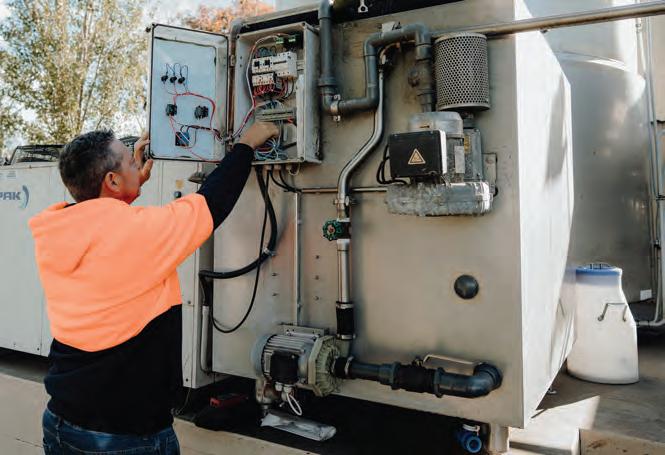
Older dairy refrigeration systems lose around 15% of their refrigerant charge annually through leakage. Commercial systems can leak up to 35% per year.
When that refrigerant is R404A, a gas with a global warming potential nearly 4000 times that of CO₂, those losses represent a significant and largely invisible emissions burden.
“By our estimate, roughly a third of NZ farmers are still running R404A in their milk cooling,” Luke says.
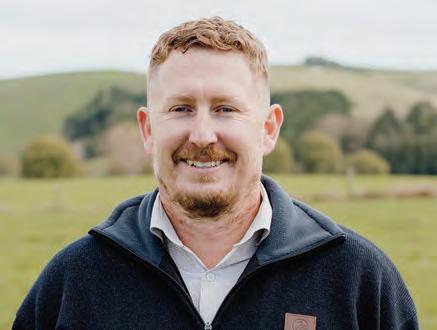
Luke Walker, general manager of DTS Refrigeration, has spent 18 years in the trade.
“When you put that alongside the leakage rates, you’re talking about a meaningful emissions problem sitting on farms right across the country and most farmers have no idea it’s there.”
Luke is under no illusions about how the emissions conversation lands in rural communities.
“We know dairy farmers are sick of hearing about emissions, especially when it comes from townies. We all know the cows aren’t the real problem,” he says. “But that’s exactly why the refrigeration industry needs to lead the way here. This is one area where we can make a real difference without anyone
FOR FARMERS still running R404A, DTS is making the first step as easy as possible. The company’s ongoing replacement campaign offers a free kilogram-forkilogram swap to R449A, a lower global warming potential refrigerant suited to existing milk cooling

systems. The old R404A doesn’t just get shelved — it’s collected and sent offshore to an authorised destruction facility.
“R404A has an enormous global warming potential and we want it gone from NZ farms,” Luke Walker says. “The swap programme removes the
having to point the finger at farmers. It’s on us to sort it out.”
The good news, he says, is that milk cooling is one of the more straightforward problems to fix.
“This isn’t like trying to reduce methane from livestock. The technology exists right now. The solutions are proven. For farmers who want to show real emissions progress, milk cooling is genuinely low-hanging fruit.”
One of Luke’s observations from ARBS 2026 was just how far ahead New Zealand is compared to Australia on the refrigerant transition. DTS has long advocated for moving customers away from R404A and that
cost barrier and makes sure the gas is destroyed properly, not just passed on to someone else.” DTS services customers across New Zealand’s major milk processors including Fonterra, Westland, and OFI, with a customer base of over 6000 nationwide.


work has paid off, but a significant portion of the sector still needs to make the shift.
“The phase-down is coming whether the industry is ready or not,” Luke says. “The question is whether you’re ahead of it or scrambling to catch up.”
Luke says the transition has never been more accessible. The reception of A2L refrigerant units in New Zealand has been strong, with Actrol’s range
gaining real momentum among contractors and processors looking to move away from highGWP refrigerants.
DTS is also actively exploring partnerships with new brands entering the New Zealand market. Luke says there are some compelling systems now available that use CO₂ as a natural refrigerant, incorporating ice bank technology alongside integrated hot water heat recovery, generating ice during off-peak hours and
of
THE
Walker’s ARBS appearance coincides with a
DTS Refrigeration is set to rebrand as Cryvex, following its recent acquisition by Terravest, a New Zealand owned family business, whose focus spans the entire milk cooling ecosystem. Terravest’s philosophy is built around protecting
and the acquisition signals a long-term commitment to ensuring NZ dairy farmers have access to world-class refrigeration expertise and monitoring technology.
For DTS customers, the rebrand means more resources, deeper capability, and the backing of a group that understands the dairy
capturing waste heat from the refrigeration process to heat water.
“The energy efficiency story is compelling,” Luke says. “You’re cutting operating costs while moving to a refrigerant that has essentially zero climate impact. It’s not just better for the environment, it makes commercial sense. We’re keen to work with the right partners to bring these solutions to New Zealand dairy farmers at scale.”
sector from the ground up.
“The refrigeration industry is changing fast, regulatory pressure, new technologies, smarter systems,” Luke says. “We want a brand that signals we’re leading that change, not following it.”
For dairy farmers wondering where to start on their emissions journey, Luke’s answer is simple: open the milk room door.

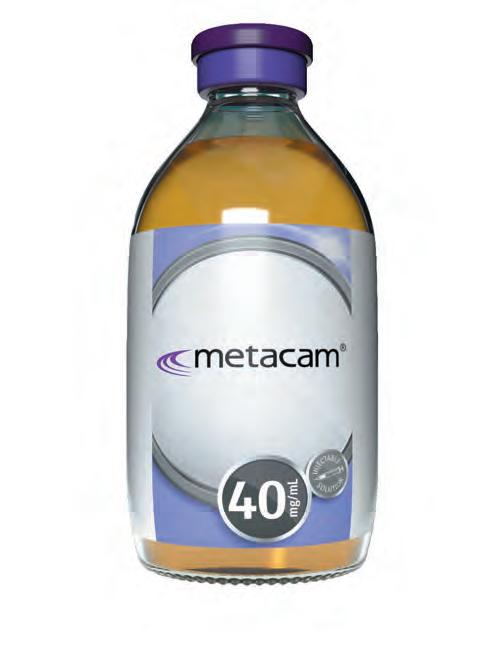
METACAM® is highly effective in relieving the inflammation and pain associated with inflammatory conditions such as mastitis.
The long-acting effects of a single shot of METACAM 1 optimise mastitis treatment outcomes and support a faster, more comfortable journey to recovery. Studies show this can lead to production benefits including significant long-term reproductive and longevity outcomes 2,3 compared to antibiotic treatment alone.


Try our NEW cost benefit calculator to see how much better off you could be by using METACAM. Scan the QR code or visit: futureproducers.co.nz
THE TRANSITION
period is the make-orbreak window for your entire season. If this period is poorly managed, you don’t just see a few downer cows, you see a downward spiral that affects the cow’s health, production and reproduction long into the season.
The results of a poorly managed transition
A poorly managed transition often begins with cows losing body condition before they calve, placing massive strain on the liver and triggering a landslide of post-calving weight loss. Cows that lose too much condition often suffer from clinical metabolic diseases such as milk fever and ketosis, but the hidden costs can be even greater.
Pre-calving condition loss commonly coincides with poor appetite. You
may notice cows standing off feed in the days before calving, reducing intake and leaving them low on energy at calving, increasing the risk of calving difficulties. Beyond immediate calving and appetite problems, a poor transition weakens the immune system, leading to higher rates of retained membranes, metritis, ‘dirty cows,’ and mastitis.
From a production point of view, these cows eat less, reach a lower peak milk yield, and take longer to cycle, all of which can negatively affect your six-week in-calf rate.
Tuning the ‘engine’ and the rumen
Think of the liver as the engine of the cow and the rumen as the fuel tank. During transition, the liver’s workload doubles as it prepares to produce the glucose
needed for milk. If the cow is over-conditioned, her liver can get ‘choked’ with mobilised fat, which kills her appetite just when she needs it most.
To get the rumen ‘match-fit’ for calving, we need to focus on fibre.
Feeding plenty of quality fibre (like pasture hay) stretches the rumen wall, which physically increases the cow’s appetite capacity after she calves. It also keeps her full, and because hunger is the biggest stressor for a cow, a full cow is a happy, more resilient cow.
The nutrition balance
Managing the transition diet is about getting the right balance:
Energy
Aim to feed about 90–110% of maintenance energy. It’s all about gene expression, meaning overfeeding energy can accidentally switch on
To ensure your cows hit the ground running and recover within two to three days of calving, follow these essential steps:
■ Monitor your cows closely to ensure they don’t lose condition pre-calving. They should not drop a single bit of fat or muscle until they are within hours of calving.
■ Target the right condition by aiming for a tight herd range between 4.8 and 5.2 at calving. Overconditioned cows (>5.5) are the hardest to manage and need extra liver support.
■ Ad-lib fibre is key. Always provide access to quality hay to keep the rumen stretched, working hard, and full.
■ A full 21-day transition is the “gold standard” in helping the rumen and liver to adapt fully, maximising cow potential for the coming lactation.
■ Keep total dietary phosphorus above
0.3% and below 0.4%. Going too low hurts appetite, milk production, and increases the risk of a crawler cow around calving or during early lactation, while going too high can interfere with calcium metabolism.
■ Use a rumen buffer through transition and early lactation to increase rumen performance and reduce stress
■ Reduce social stress by giving cows plenty of space (one metre of feed-face per cow) and avoid shifting them into new groups during the final three weeks to keep stress low.
■ Ensure consistent supplementation by feeding your most important minerals and silages in the morning when cows are hungriest to ensure every cow gets her fair share.
■ Balance the DCAD. This can be measured by
herbage testing your springer feed. Having the total DCAD of the diet (including your DCAD supplement) between 40 and 100 is ideal.
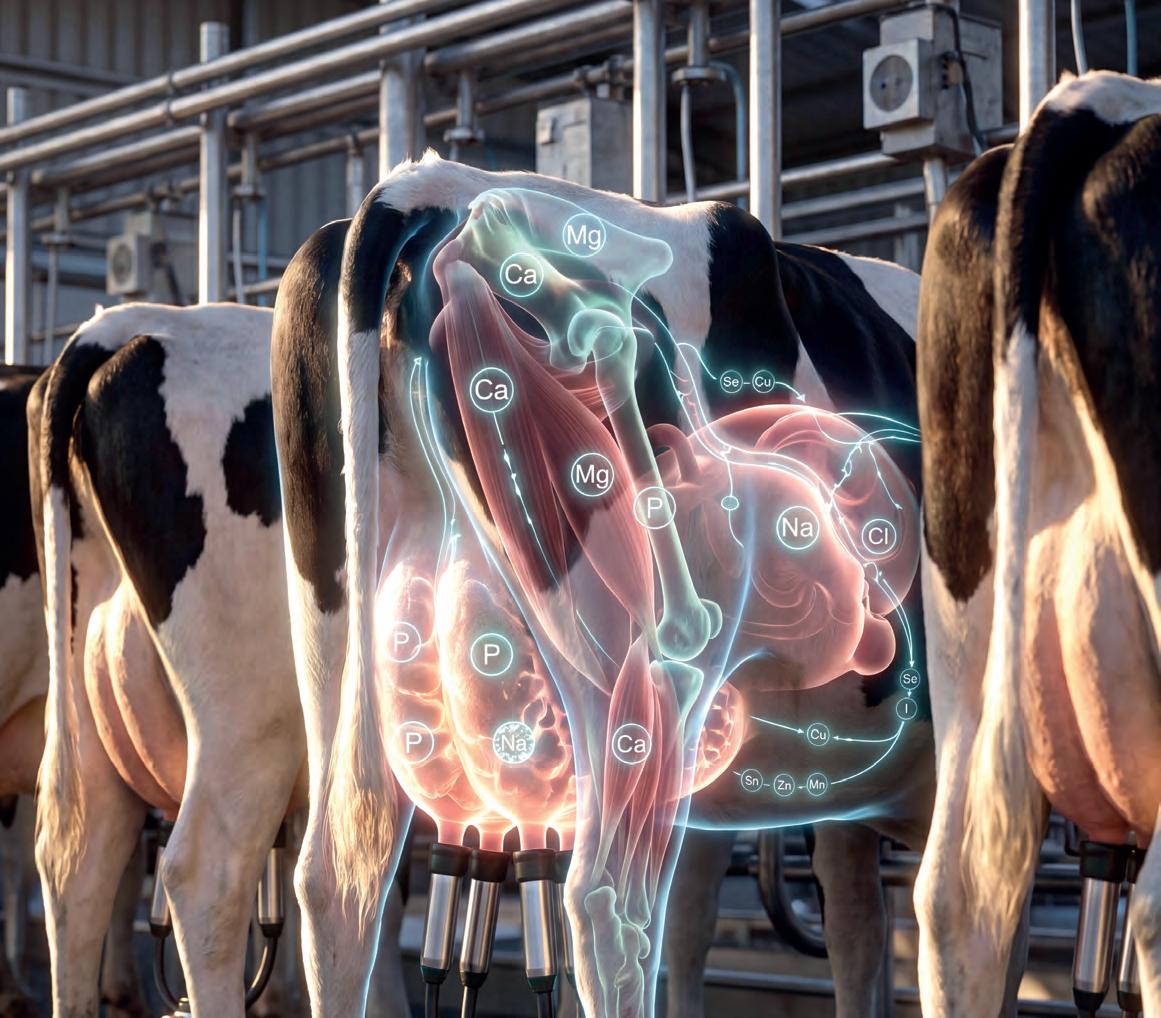
■ Ensure your magnesium, calcium, and phosphorus levels are in the right balance. Make sure copper, zinc, cobalt, selenium, iodine, boron, and chromium are all at optimum levels in the diet, as these are critical for liver function and cow health.
■ For over-conditioned herds that are often problematic around calving, liver support supplements like choline, betaine, B-group vitamins and methionine can be added options. Get the transition right, and you’ve set the season up to win. Get it wrong, and you’ll be fighting problems all year. By following this plan, you’ll cut disease, lift peak milk and protect your six-week in-calf rate.
genes that upset insulin, fat mobilisation and appetite. Underfeeding energy causes her to start mobilising fat too early, so she’s short on energy at calving.
Protein
Cows need at least 14% crude protein minimum, but overconditioned cows actually need more (16–18%) in order to help their livers process energy efficiently from increased fat mobilisation.
Minerals
We use DCAD management to shift the cow’s internal chemistry, making her more responsive to the
hormones that unlock calcium and phosphorus from her bones when she needs them for
milk. Alongside DCAD and rumen buffering, keep magnesium and phosphorus balanced, and don’t forget the trace minerals.
• Article – Agvance Nutrition
Hardjo is the #1 Lepto serovar infecting people in NZ. Get 12 months proven protection with Ultravac® 7in1. NZ’s only combination clostridial and Lepto vaccine for cattle and sheep.
FARMERS CAN now get a more reliable view of pasture covers across their farm, thanks to a combination of three data sources.
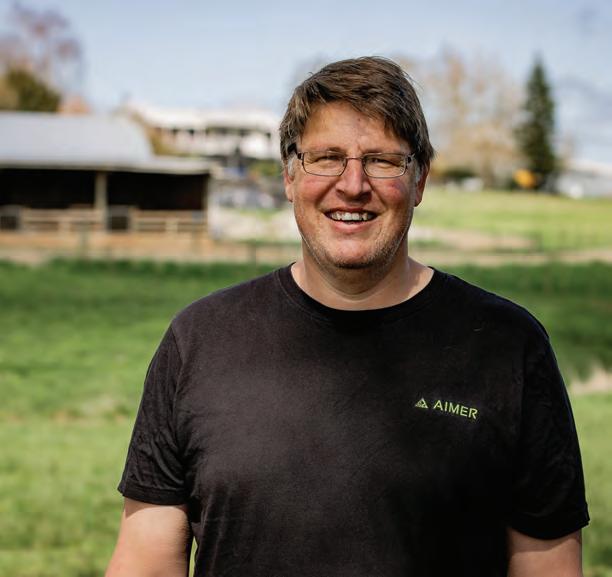
The new pasture monitoring capability, launched by Aimer Farming, taps into live modelling, satellite data and AI-powered smartphones.
Aimer Satellite automates pasture monitoring and continues delivering reliable pasture when satellite imagery is limited by cloud or when on-farm measurement isn’t practical, such as during busy periods.
The system uniquely combines three sources of data: satellite imagery, highly accurate smartphone pasture measurement, and Aimer’s live paddock modelling (digital twin of each farm).
Together, these inputs deliver more reliable pasture estimates than satellite-only approaches, while reducing the need for full farm walks or manual data entry, including recording grazing events.
Aimer Farming founder Jeremy Bryant says satellite technology has huge potential for pasture management, but the real value comes
when it is connected with accurate on-farm measurement.
“Satellite imagery is incredibly powerful because it gives farmers visibility across the whole farm,”
Jeremy says.
“But farmers make pasture decisions every day, not just when a satellite passes over. AIMER Satellite helps farmers keep a better handle on pasture across the farm, even when time, weather or workload make regular measurement difficult.
“That’s what makes this technology different from satellite-only pasture technology. Aimer Satellite combines satellite data with smartphone measurement and what AIMER learns about paddock growth over time.”
Using Aimer’s AI-powered smartphone technology, farmers scan part of their farm, and Aimer estimates the rest, saving hours of farm walks while generating forecast feed wedges and automated grazing plans.
The satellite extends this by incorporating satellite observations into Aimer’s live paddock models, improving how the system understands
individual paddock performance and increasing the reliability of pasture estimates over time.
Aimer’s smartphone measurement delivers more than 90% accuracy when pasture is measured directly. The Satellite is designed to maintain around 80% daily accuracy by combining satellite data, smartphone measurement and paddock learning.
Bryant says reducing admin for farmers and making the technology practical for them to use day-to-day has also been a major focus.
“We know many systems rely on manual data entry, particularly recording grazing movements, to maintain accuracy,” he says.
“AIMER Satellite is designed to deliver reliable pasture intelligence, without requiring farmers to record grazing events, making it far more practical during busy periods or difficult conditions.”
Bryant says the launch is another step towards making pasture management easier and less manual for farmers.
“Pasture remains one of the biggest drivers of farm performance, but it
is also one of the hardest things to consistently monitor well,” he says.
“Our goal is to give farmers a clearer, more reliable view of what is happening in their paddocks, so they can make good decisions earlier and
with less effort.
“We see satellite technology playing a major role in the future of pasture management, particularly when it is combined with other sources of on-farm intelligence.”
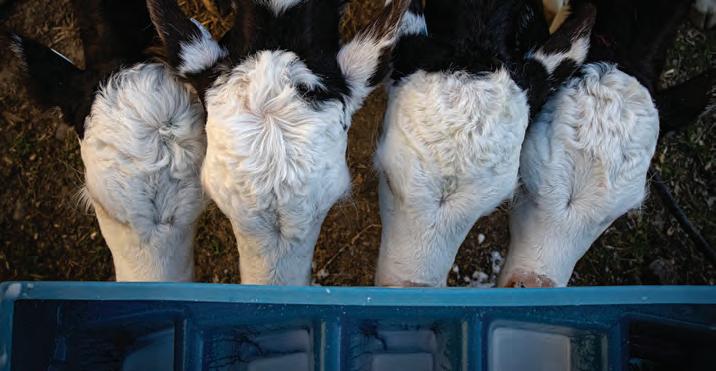

Bovine Viral Diarrhoea (BVD) is estimated to cost New Zealand’s dairy and beef industries more than $150 million every year, yet many of the tools needed to control it are already well understood. After more than 25 years in veterinary practice, Andrew Weir, animal health technical specialist at LIC, has seen firsthand the impact BVD can have on herd performance. We asked him about the role of persistently infected (PI) animals and the practical steps farmers can take to reduce their risk.
WHAT IS a PI animal and why are they such a problem in BVD spread?
BVD control really comes down to finding and removing PI animals.
A PI animal is one that was infected with BVD before it was born, so it carries and spreads the virus for its entire life. PI animals are extremely efficient at spreading BVD.
In my PhD study, for example, one herd of nearly 1000 cows across three mobs had a single PI milking cow. Within about four months, more than 95% of the susceptible animals had been infected!
The good news is that once PI animals are found and removed, infection typically dies out quickly. The challenge is that pregnant cows can still be carrying infected calves, which restart the cycle once they’re born. With spring calving underway, what practical steps should farmers take now to protect their replacement heifers from BVD?
If BVD isn’t active on your farm, it is likely your heifers haven’t been exposed to BVD before so are highly susceptible to infection. If heifers become infected during the first four months of pregnancy, they will either abort or give birth to a PI calf. In severe cases, a quarter of the heifers can end up empty, or give birth to deformed or PI calves. That’s a result no farmer wants, especially during an already busy and stressful time of year.
There are two main ways you can reduce your risk of something like that happening to your herd:
■ 1. Vaccination: Vaccinating heifers helps protect them against BVD infection and helps prevent PI calves from being produced.
■ 2. BVD-free grazing: Alternatively, you can arrange grazing on properties where all animals have been tested, including bulls and any beef cattle. It’s also important to ensure transport trucks are clean and boundary
fences are secure.
Vaccination is straightforward and gives you peace of mind, but as more people test their calves, BVD-free grazing offers an easy alternative to manage, with additional benefits like greater confidence in the health status of your returning animals.
What separates herds that successfully control BVD from those that continue to struggle with it?
Most dairy herds in New Zealand are already doing bulk milk testing, which is an excellent starting point. If that’s all you do - and then clear the infection when it comes in from time to time - you’re probably getting about half of the benefit compared to a more complete control programme. That alone is a big improvement. But the farms that tend to stay on top of BVD usually use one or both of the main control tools (herd vaccination, and/ or replacement calf screening).
It’s usually cheaper to screen calves as you only need to screen replacements, in comparison to vaccinations which need to be done for all adult cows each year. Both approaches work well, and many farmers choose the option that best fits their system.
Beyond local disease control, what wider business benefits come from having confidence in a herd’s BVD status?
Many farmers appreciate knowing they are doing the best by their cows and enjoy a sense of satisfaction from knowing they have a healthy herd. I think that’s something we should encourage and be proud of as an industry.
New Zealand has already reduced the number of infected dairy herds significantly from 15% down to just under 5% through bulk milk testing. While this is great news, it’s important to point out that these figures have plateaued in recent years, which
suggests we need to take further steps if we want to drive infection rates down even more.
The BVD Status Pack provides a simple and reliable way to confirm
the individual BVD status of every animal in the herd.
If more herds were testing their calves and insisted on buying only BVD-free animals, we
could make a real impact and further reduce the amount of BVD in New Zealand.
That’s something the whole industry stands to benefit from.


100 beef animals on a nearby run-off block.
THE GREATEST nightmare for any dairy farmers is the fear of contaminating the milk vat, either with milk from a treated animal or water from the wash cycle. Besides, the financial penalty and milk needing to be thrown away, repeated offences will result in downgrades from the milk company.
Nathan and Lois Smith are dairy farmers in the Turakino Valley, south of Whanganui, milking 400, spring calving cows on the 174ha home block, with a further 200 dairy followers and
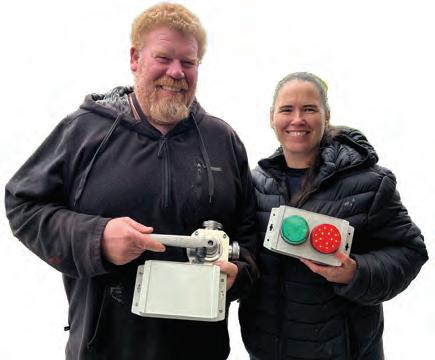
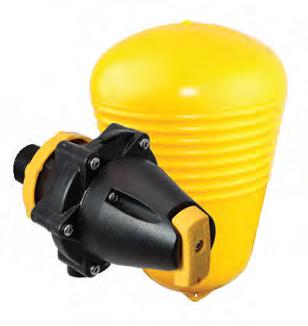
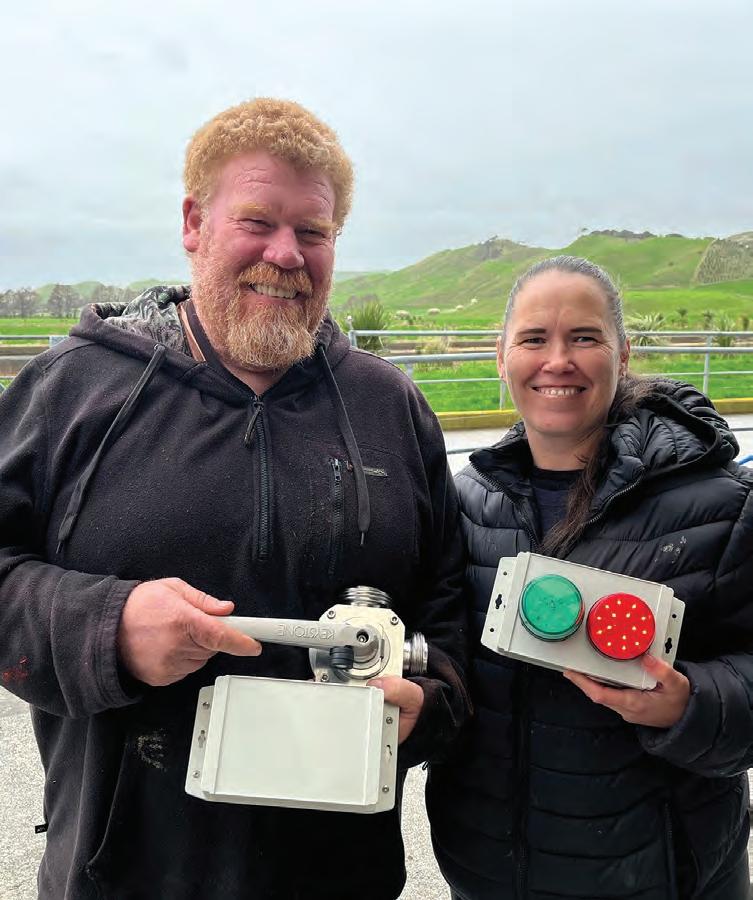
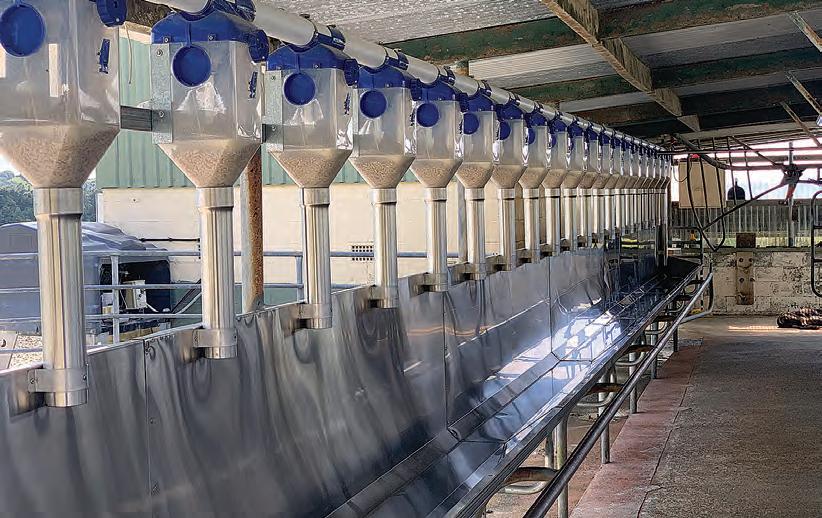
Always keen to adopt new technology, the clever couple have developed their own solution for bulk tank contamination, with the aptly named VatGuard.
At the heart of the system, a central Hub monitors the position of the main valve on the vat supply line. When the valve is set to the “to vat” position, this is confirmed by a bright green LED light in the milk room, repeated by corresponding green lights along the length of the milking shed. If the valve is in the closed or divert position a similar bright red, flashing light in the milk room and milking shed draws the operator’s attention.
Nathan says the system is “a clear visual prompt to staff that the valve is in the correct position, meaning it’s also particularly useful for relief milkers who are not completely familiar with the plant”.
Manufactured in New Zealand from high quality, durable components, the systems wireless connectivity between the hub and indicator lights, means there is no wiring, so installs are easy.
The Hub and indicator lights are powered by rechargeable batteries offering run times of around 90 days or 180 milkings.
An external LED display on the exterior of the Hub displays battery health.
Visit www.vatguard.co.nz



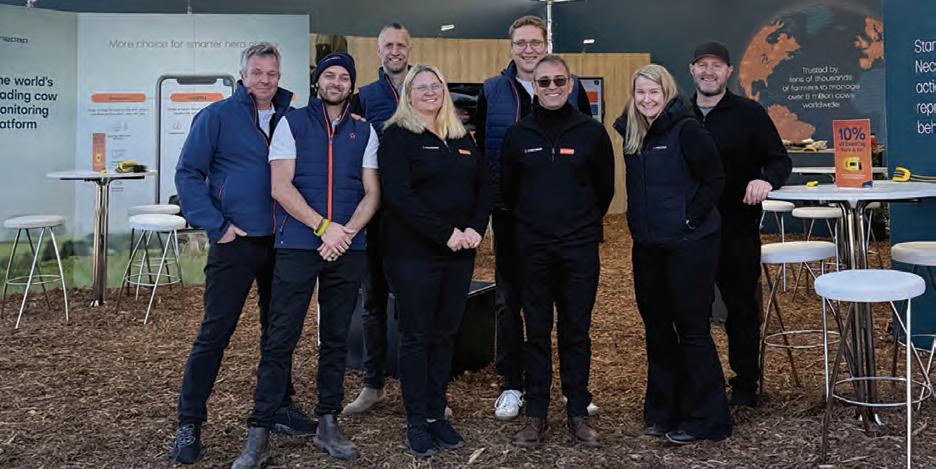
One of the first areas worth considering is the provider’s track record.
AS THE dust settles after Fieldays, we’re once again reminded of the sheer volume of technology now available to New Zealand dairy farmers.
From cow monitoring and animal health systems through to automation, data management and an array of farm machinery, there was no shortage of innovation on display. For many farmers, it also provided a valuable opportunity to step back from the day-to-day demands of the farm and thoroughly evaluate what technology could help support the future of their business.
But identifying the technology priorities that matter most to your farm is only part of the decisionmaking process.
Once you’ve established the outcomes you’re trying to achieve and developed a clear picture of the functionality and capabilities you need, the next challenge is determining which provider is best positioned to help deliver those outcomes.
Whether the goal is improving reproductive performance, gaining better visibility of animal health, reducing labour pressure or preparing for future automation, choosing the right technology partner is becoming just as important as choosing the technology itself.
As technology adoption continues to accelerate across the dairy industry, many solutions can appear similar on the surface. Product brochures often highlight comparable features, similar claims and increasingly sophisticated functionality.
But the real difference between providers is often not just what the technology can do. It is what sits behind it.
Technology is becoming increasingly embedded in the day-today operation of dairy farms and, in many cases, these systems will remain part of the business for years to come.
Understanding a company’s history, experience within the dairy sector and track record of innovation can provide valuable insight into how well positioned they are to support farmers over the long term.
Scientific validation should also form part of the evaluation process.
As farmers become more reliant on technology to support decision making, confidence in the information being provided becomes increasingly important. Many providers make similar claims around performance, but it is worth understanding what independent research, testing and realworld data sits behind those claims.
The value of technology is ultimately determined by the quality of the information it provides. Reliable data supports better decisions. Unreliable data can create unnecessary work, confusion and missed opportunities.
Integration is another factor that
deserves careful consideration.
In many cases, cow monitoring technology is no longer operating as a standalone tool. It is increasingly connected to herd management software, milk data, drafting systems and a growing range of other technologies used on farm.
As these ecosystems become more connected, the ability for systems to communicate effectively becomes increasingly important. Where
Finally,

farmers can do is ask questions.
Ask what evidence supports the claims being made. Ask how systems integrate with existing technology. Ask what support looks like after installation. Ask about future development plans and long-term commitment to the industry.
The answers to those questions will often reveal more than a feature list ever can. Technology will continue to play an increasingly important role on New Zealand dairy farms. As farmers become
integration is limited, the responsibility often falls back on the farmer or farm team to bridge those gaps through additional administration, duplicated processes or manual data handling.
The most successful technology investments are often those that fit seamlessly into existing farm systems while remaining flexible enough to accommodate future developments.
Support and service can be equally important.
more informed and strategic in their decision making, evaluating the provider behind the product is becoming just as important as evaluating the technology itself.
Ultimately, successful technology investments are built on more than functionality alone. They are built on trust, support, proven performance and confidence that the provider will continue delivering value long after the initial installation.
Dairy technology is rarely a simple install-and-walk-away investment. Every farm operates differently, and the greatest value is often achieved when farmers work alongside experienced support teams who understand both the technology and the farming systems it is being applied to.
Good support extends beyond troubleshooting. It includes training, ongoing optimisation and helping farmers extract the maximum value from the technology over time.
Durability and reliability should also be considered.
New Zealand dairy farms present challenging operating environments, and technology needs to perform consistently year after year. Hardware lifespan, wearable durability and longterm serviceability all contribute to the overall value proposition of a system.
Technology that performs well over the long term often delivers greater value than solutions that appear attractive initially but require frequent replacement or ongoing intervention. • Greg Hamill is general manager Oceania for Nedap.
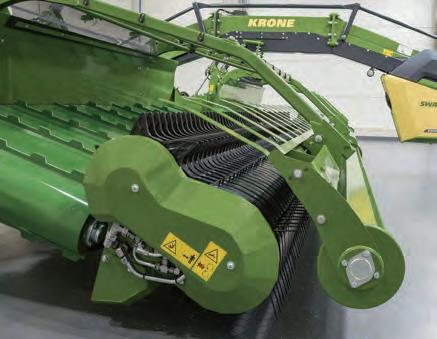
ALREADY KNOWN for its extensive range of mowers, tedders and swathers, German manufacture Krone looks to be joining the trend in the swather sector, following the release of its first belt merger, the Swativo T1040 Pro.
Offering a working width of up to 10.4m, the new Swativo will enter a competitive market already populated by manufacturers such as Reiter, Roc Oxbo, Pottinger and Samasz. The manufacturer notes that while rotary tined swathers are wellsuited to grass and straw crops, mergers offer clear advantages
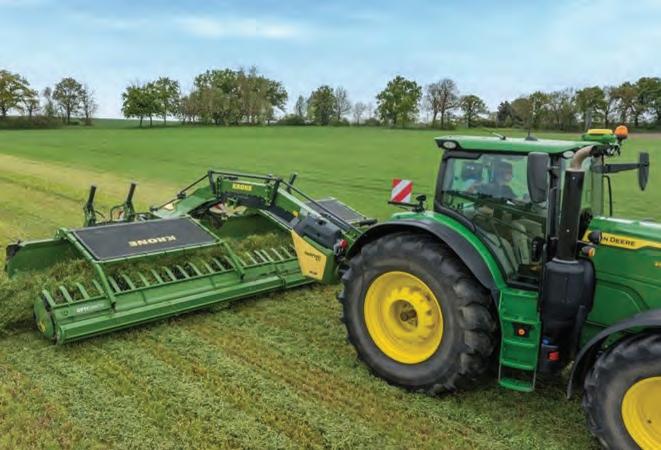
with leafy and fragile herbaceous crops such as alfalfa or clovers.
Offering a working width of 8.4m to 10.4m and swath forming widths of 1 to 2m, the existing Easy Flow pickups – configured with five rows of tines –lifts the crop gently and cleanly. Ground pressure of the pickup units is hydraulically adjustable, allowing operators to reduce pressure, particularly in damp soil conditions, helping to prevent damage to the sward.
In addition to the hydraulic suspension system, the pick-ups are also mechanically controlled, using rubberised support wheels, to react quickly to uneven ground.
Crop is transferred via the independently controlled, variably adjusted, star profile FlexFlow rotor and onto the 1200mm wide conveyor belts. Belt speed is also variably adjustable with the belt mounted at a steep angle to prevent tangling so that it conveys the crop directly towards the windrow. All crop transfer elements of the merger are hydraulically driven via the Swativo’s onboard system.
For crop delivery and maximum flexibility, belt delivery direction can be
shifted left to right, so the swath can be formed centrally, or to either side of the machine, for single or double swath placement. An automatic belt stop for clean swath ends is standard equipment, while a collection function allows a small volume of crop to be gathered in difficult field areas such as tight corners or short ground.
In-cab operation for all functions and parameters is controlled via ISOBUS, using the current Krone user interface, while also offering predefined harvesting profiles for various conditions, with optional section control automation offering lifting and lowering of the pickup on wedgeshaped fields.
Running on a single axle with air brakes, with 520/50 R17 10 PR tyre equipment, the unit also features a mechanical forced steering system, ensuring improved manoeuvrability in tight corners and accurate tracking. For road transport, the belt units are folded hydraulically to a vertical position and locked automatically, with LED lighting and warning signs, providing travel safety.
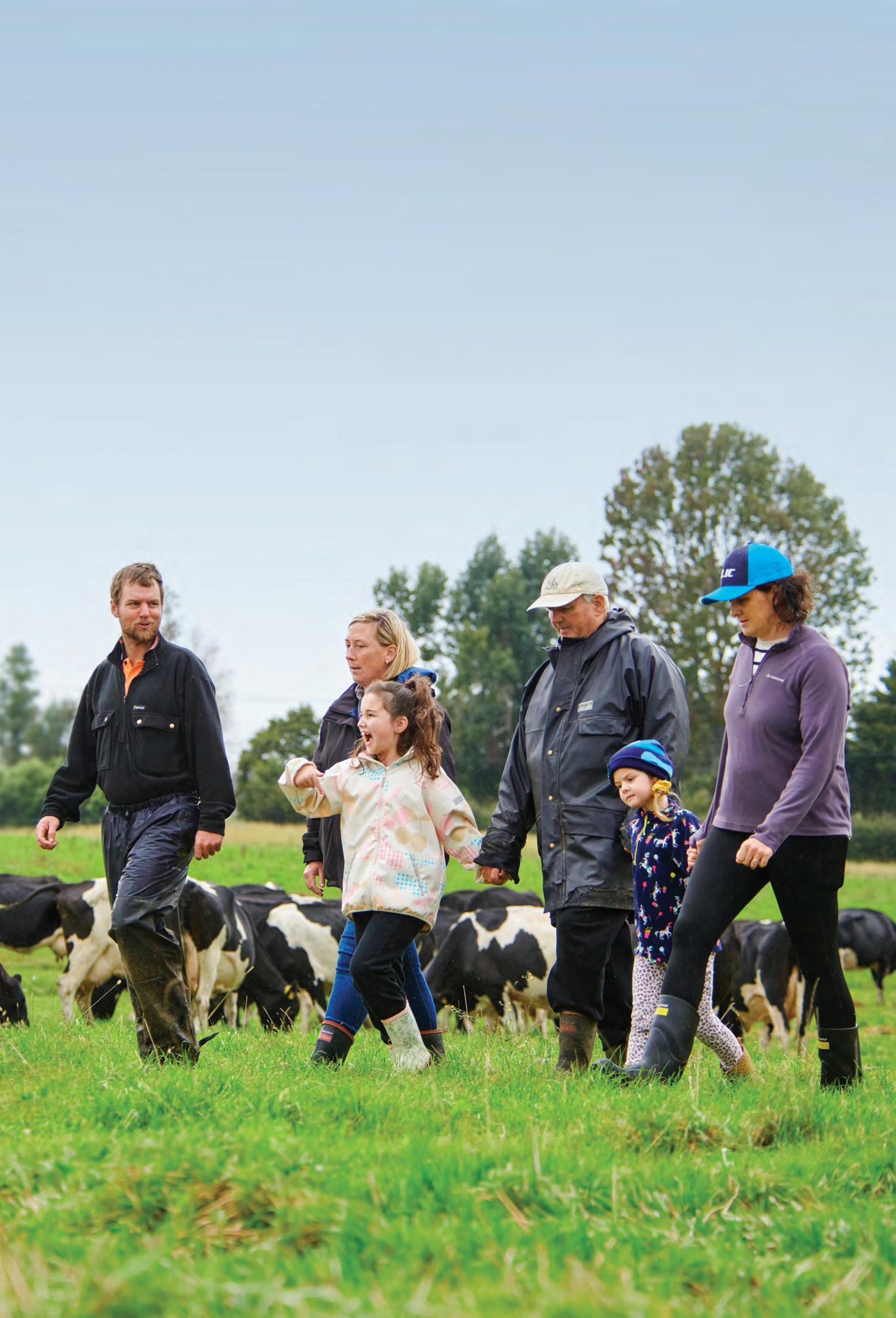
Shared data, shared knowledge and generations of breeding know-how. When we work together, progress and insights don’t stay on one farm.
That’s the strength of a co-operative.