CLARITY, NOT COMPLEXITY
Irricon revamp. Page 9
Turning data into decisions. Page 19
CLARITY, NOT COMPLEXITY
Irricon revamp. Page 9
Turning data into decisions. Page 19
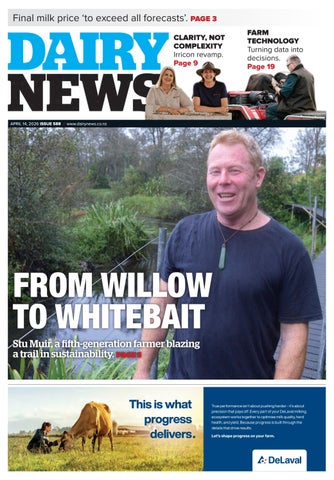
Stu Muir, a fifth-generation farmer blazing a trail in sustainability. PAGE 5

Take advantage of our kitchen consultation service
What’s included:

SUDESH
sudeshk@ruralnews
STRONG

PETER BURKE
peterb@ruralnews.co.nz
RESPECTED FARM
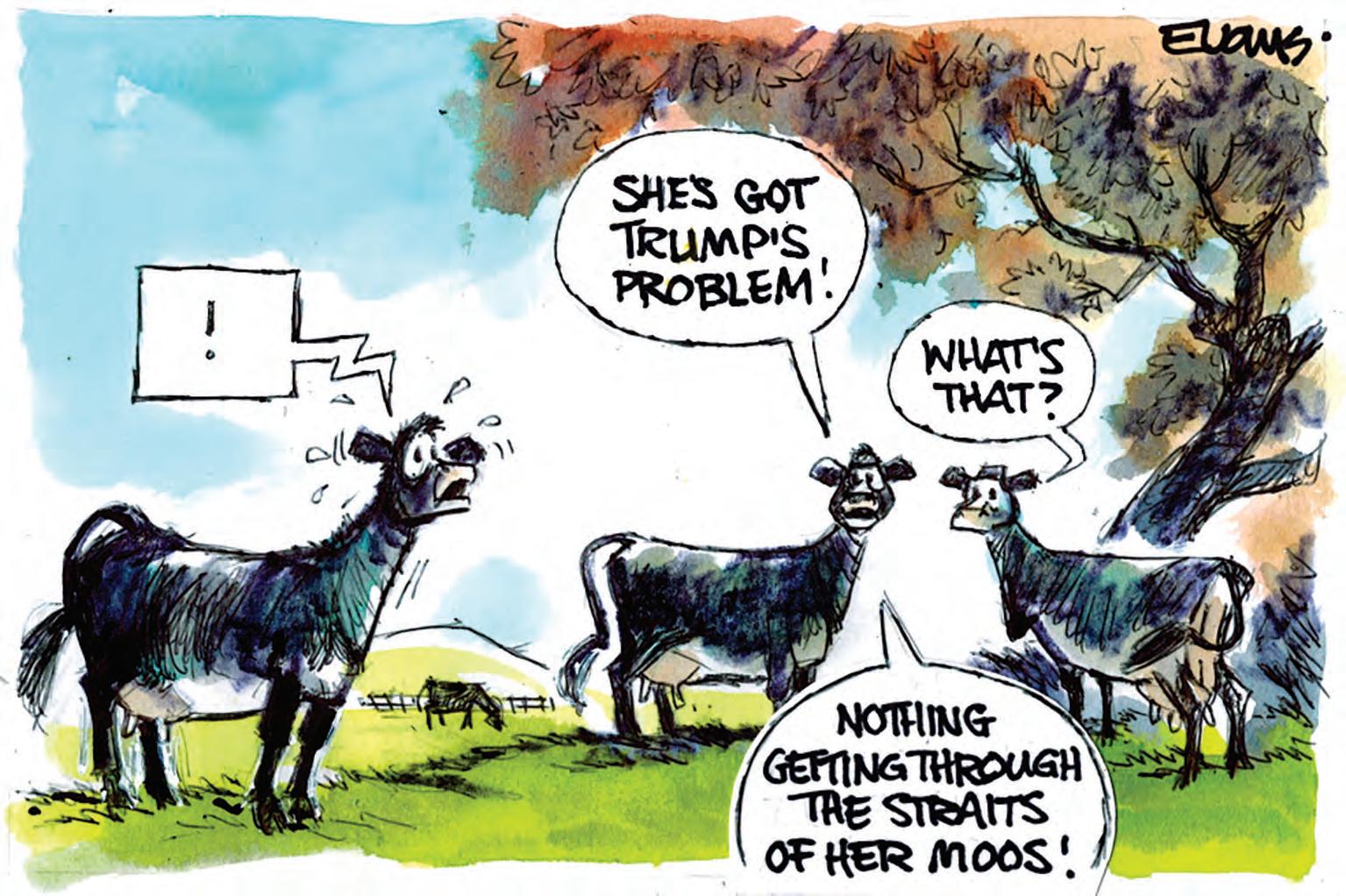
accountant Pita Alexander says with the present fuel crisis there are many ways farmers can reduce their consumption of petrol and diesel.
There are already reports of problems with transport companies having to ‘hunt down’ diesel as local service stations run out and the same applies to farmers themselves.
Alexander says in his lifetime he’s seen similar events and says there will be financial pain, inflation will probably go the wrong way and it will put pressure on
couples and families. He notes that government will talk about support, but in reality can offer little more than verbal support.
“Walk the farm where possible, use the motorbike or horse rather than the ute, reduce trips to town and maybe carpool with a neighbour.”
“It is not always obvious, but time is on your side and that in future you will do
things better. Above all, support your partner,” he says.
In a letter to clients and others, Alexander offers a range of tips that could help reduce the consumption of fuel and put a focus on what is necessary for running the business.
“Walk the farm where possible, use the motorbike or horse rather than the ute, reduce trips to town and maybe carpool with a neighbour; trips to the pub must involve a full passenger load and a designated driver and don’t mass store fuel because that is unfair to your neighbour,” he says.
Other suggestions to farmers include looking
after their contractor by offering some diesel and also paying them promptly. He says farm work can still be done by using less fuel and notes that the ute will not depreciate as much and that you will get fitter and probably lose weight by walking.
“It’s important to realise that some couples will be worse off than you, so help your neighbour. Also remember that your tax cost for the year will reduce and above all, don’t lose your cool, because this is not your fault,” he says.
Finally, a key message from Pita is –more phone time and less fuel time.
SUDESH KISSUN sudeshk@ruralnews.co.nz
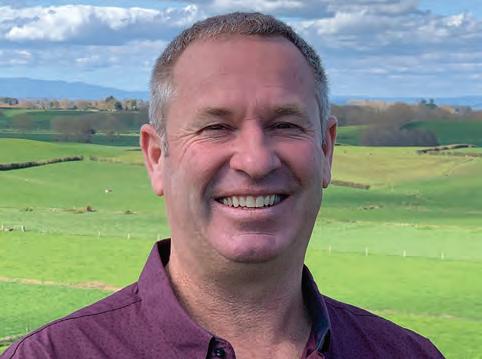
TAUPIRI FARMER Chris Woolerton is tipped to take over as Federated Farmers Waikato president from next week.
Woolerton, current Feds provincial vice-president and North Waikato branch chair, takes over from Phil
Sherwood, who is giving up the post after one year in the role.
Dairy News understands that Sherwood is relocating to Taranaki. He remains a Federated Farmers member.
Woolerton farms in Taupiri on 370ha including a runoff. The family-owned business runs two herds, one with 380 cows and the other with 480 cows.
He represented Waikato District Council’s rural Hukanui-Waerenga
Ward from 2019 until 2022, before the ward was disestablished due to council boundary changes.
The farms have a contract milker who has five staff and this gives Woolerton time for his Federated Farmers work.
Woolerton will be confirmed in the top role at Federated Farmers Waikato provincial annual meeting next Thursday.

SUDESH KISSUN sudeshk@ruralnews.co.nz
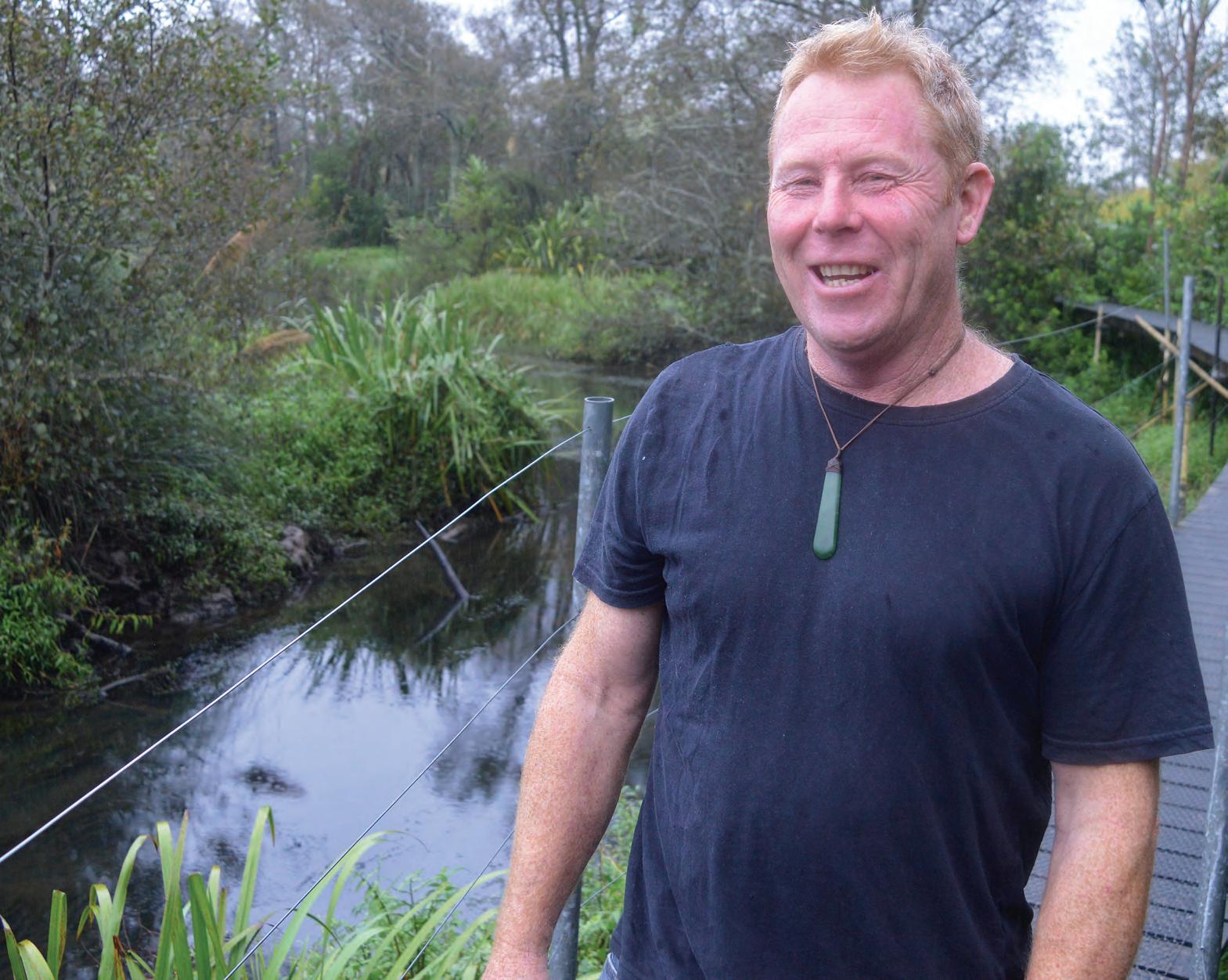
farmer Stu Muir believes dairy farming and conservation can go hand in glove.
To prove this Muir has transformed the 500cow fifth-generation family farm at Aka Aka, south of Auckland – from degraded waterways full of willows to a mecca for bird and marine life.
“We never had kererū or tui here for years, it was quite a big thing if one would turn up, now they’re common as.”
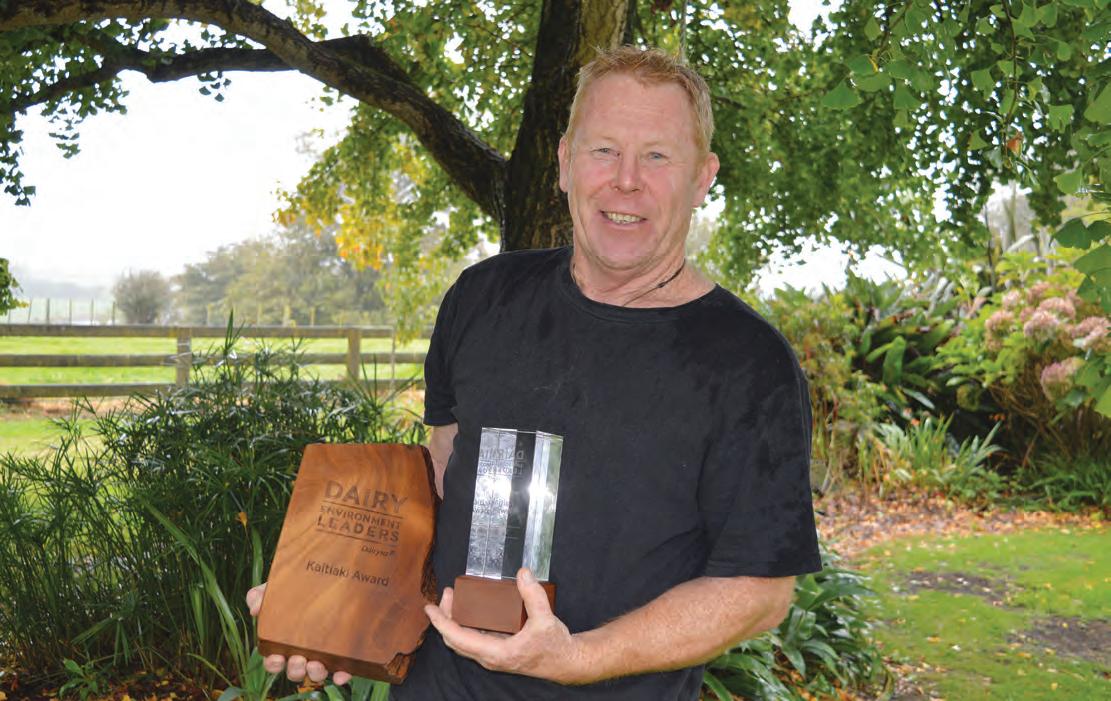
Last month Muir received the inaugural Kaitiaki Award during an event at Parliament as part of the Dairy Environment Leaders Forum.
The award recognises his leadership, commitment to kaitiakitanga, and immense contribution to the Dairy Environment Leader network and wider sector.
The journey to nurse the farm back to its current state has been challenging, but Muir says he’s done it with the support of neighbouring iwi, environment groups, family and friends.
Today, kereru,
tui, kaka and kotuku grace the home farm; bittern and fernbird are increasing at the swamp; the waters of Mangati Stream are home to whitebait, freshwater mussels, crayfish, eels and mullet.
He says that as a youngster he heard stories about the streams when he was whitebaiting and duck shooting with his grandparents.
“They were all keen white baiters and duck shooters and hunters and fishermen and being brought up alongside Māori neighbours and community, you get a strong sense of what it was.
“But you also got a sense that things were going downhill, especially with our whitebait and various species it had come to a state where there was no current left.”
The first stage of his plan was unblocking the streams – removing the willows blocking the stream.
The restoration also included retiring 40ha of swamp from farming use and restoring it to a native wetland, creating ponds with grasses, flaxes and native trees. With a grant from the Waikato River Authority – a joint iwi-Crown organisation that supports projects to clean up the river and tributaries – Muir has planted over 90,000 plants around the property.
Pest control is another
key feature. Over 2000 pest stations dot the Waikato River delta islands and surrounding farms.
Muir told Dairy News that as possum and rat numbers dropped, birds and marine life returned.
“That’s made a major impact in terms of the regeneration of the individual indigenous plants and native plants down there, hitherto they just never got a chance, the seeds would be eaten by rats and if something
did actually germinate the possum would come along to eat it, so you really notice now on those islands down the river been doing a massive difference.”
With the native trees and plants returning so to
STU MUIR’S advice to farmers is that sustainability isn’t an impossible thing to do.
He adds that farmers must “think intergenerationally”.
“It’s about the doing the little, marginal things giving your kids some place to go and catch eels and build huts.”
Doing nothing is not an option and don’t be overwhelmed by the magnitude
of what’s coming to farmers, he says.
Farms have different challenges and solutions. Talking to one another is important.
“Talk to your neighbours, go and have a cup of tea with your Māori neighbours, or the people at the rugby club.
“There’s a lot of knowledge here and if we work together, we can come up with some really good solutions.”
have the birds, he says.
“We never had kererū or tui here for years, it was quite a big thing if one would turn up, now they’re common as, you know, they’ve increased the numbers nine to tenfold.”
The farm is visited by schools and farmer groups. Over one kilometre of boardwalk, again built with funding support from the Waikato River Authority, makes it easier for people to experience the unique environment surrounding Mangati stream on the farm.
“I thought it was an important way of getting people down here, you know, when you can hear
the harakeke rustle in the wind, the sound of all the different manu here, and seeing the fish coming up through the current... that’s tangible, and when it’s tangible, it sticks with people and resonates with them,” says Muir.
The Muir family has a long association with nearby whanua and the local iwi.
Muir, who speaks Māori, believes his family’s close connections with Tainui and local iwi - Ngāti Tiipa and Ngāti Te Ata - have helped the journey.
“We’ve been very close throughout all of those generations, and really quite proud of that relationship,” he says.
BRADEN AND Brigitte
Barnes have taken the leap into farm ownership to purchase their first farm with support from the Fonterra & ASB First Farm Award.
Braden and Brigitte were one of three recipients of the inaugural Fonterra & ASB First Farm Award in 2025 at the New Zealand Dairy Industry Awards Gala Dinner, together with Cameron and Margaret Bierre and Reece and Natasha Cox.
After viewing numerous properties and missing out on multiple offers over the past year, the couple say the process was both financially and emotionally demanding, highlighting the challenges facing firsttime farm buyers in the current climate.
“We looked at a lot of farms – a lot – and they were just out of our reach. Dairy farms have been selling for over $65,000/ha in Canterbury. There is a lot of money around at the moment, and people with deep pockets,” says Braden.
“It’s been an
shock when this one was. It’s exciting to finally have our own piece of land. It’s been a long journey to get here.”
The financial backing provided through the award along with the advice and help from Fonterra and ASB has given the couple the boost to take this next step.
“The funding has definitely helped.
It’s given us a strong starting point and made things more achievable,” says Braden.
The personal support and genuine care from Fonterra and ASB employees has also been key in getting a farm sale across the line.
“It’s been really helpful having that support and another set of eyes over everything as we’ve worked through the process,”
Braden says.
“Aran Young from ASB has been awesome. He wanted to see us succeed and it’s really helpful to have someone like that in your corner. Having someone backing you, but also being realistic and working through the options with you, has been really valuable.”
Adam Winter from Fonterra has also been there every step of the
NZDIA GENERAL manager Robin Congdon says it’s fantastic news to see Braden and Brigitte progress to farm ownership and showcase how beneficial winning this award can be.
“We are delighted for Braden and Brigitte to be able to buy their first farm. We have watched their progression through the Dairy Industry Awards and this is such a significant moment for their dairy career.
“It really reflects the evolution of the NZDIA in supporting dairy farmers from the beginning of their careers right through to farm ownership.”
ASB’s general manager rural banking Aidan Gent says these awards are about backing hardworking farmers who are putting everything into building a future on the land.
“For many, farm ownership is a long held dream and through this award and its winners, we’re showing what’s possible with hard work, dedication and the right support behind you.
“We’re proud to stand alongside NZDIA and Fonterra to help make that

goal a little more achievable. It’s incredibly rewarding to see Braden and Brigitte, who were the 2025 winners of the Fonterra & ASB First Farm Award, come full circle on their journey to owning a farm.”
Anne Douglas, group director – Fonterra Farm Source agrees it’s encouraging to see last year’s winners buy their first farm.
“We’re delighted to see Braden and Brigitte turn their plans into reality and look forward to supporting their next chapter as Fonterra suppliers on their very own farm.
“Backing the next generation of farmers is one of the most important ways we can help secure the future of New Zealand dairy and strengthen our rural communities. That’s why we’re committed to giving young farmers the tools, advice and opportunities they need – so achievements like Braden and Brigitte’s become more common.”
The winners of the 2026 Fonterra & ASB First Farm Award will be announced at the National Dairy Industry Awards Gala Dinner in Rotorua on May 9.
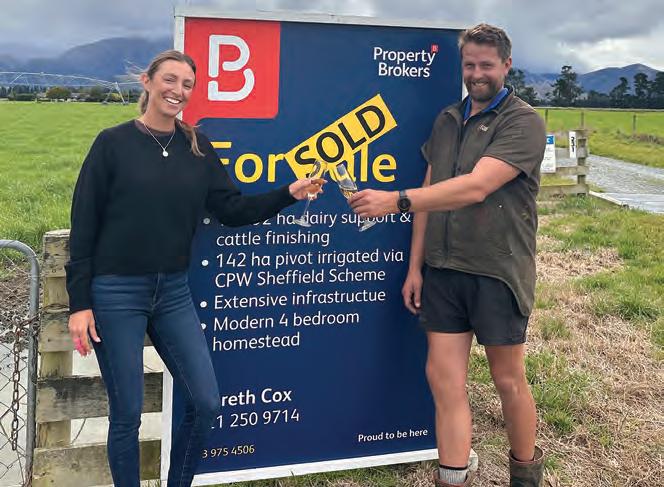
way, calling in to visit, sending through links to farms for sale and giving advice around milk supply, Brigitte says.
The couple have bought a 200ha grazing block in Sheffield, Canterbury, with an existing consent to convert to dairy. The couple plans to convert, milk 600-650 cows, and supply Fonterra in the next 18 months.
BRADEN AND Brigitte Barnes are currently 50/50 sharemilking 1150 cows. They have sold the herd and will move to the new farm in June.
Rather than continuing to compete at the top end of the dairy market, the couple chose to take a more strategic approach by purchasing this property with development potential and creating a system that would work for them.
“We had to think outside the box and realised we could do this ourselves and it’s still a really good scale,” says Brigitte.
The farm itself has great soils, with 141ha irrigated and backs onto the Kauri River.
It will be strange to not be going into a calving season this year while they run dairy grazing stock and carry out the conversion, admits Braden.
The Fonterra & ASB First Farm Award is open to people who have previously entered the New Zealand Dairy Industry Awards.
The award is a collaboration between ASB, Fonterra and the NZDIA Trust. The award aims to help the best in the industry successfully transition into farm ownership, ensuring good succession to ownership and the future of the dairy industry.
The three FFA winners each receives up to $1 million of ASB Business Term Lending fixed at 1% per annum for three years, along with a Fonterra launch package that includes $20,000 of Farm Source account credit to drive productivity and sustainability, mentoring, and additional support to help them successfully transition into ownership.
THE EXECUTIVE director of the Global Dairy Platform (GDP) Donald Moore says research being done at Massey University’s Riddet Institute will help avert world hunger.
He says dairy and meat are key to feeding the world’s rising population. The GDP is based in Chicago and Fonterra chief executive Miles Hurrell is its current chair.
Moore says NZ is well positioned to contribute to food solutions as it was uniquely export-driven and had achieved significant pasture-based production efficiency. He says NZ was also a leader in genetic research and in finding scientific answers to the problem of ruminant animal-derived methane emissions.
“Globally people are living longer, which is a remarkable achievement. But we need to focus on the health span not just life span, in the face of rising rates of diabetes, cardiovascular disease, obesity, sarcopenia and nutrient deficiencies,” he says.
Among the challenges facing humanity are malnutrition from food scarcity, and nutrient deficiencies –often accompanied by obesity or type 2 diabetes – from eating too much of the wrong foods.
“Globally people are living longer, which is a remarkable achievement. But we need to focus on the health span not just life span.”
Moore says other problems facing the food system were climate change and the need for science investment into research to find ways to futureproof food supply.
He says this is where the importance of animal-sourced food like meat and dairy in the diet became clear. He says maintaining a good diet influenced hospital rates and quality of life.
“If muscle mass declines, metabolic risk compounds. We need to preserve muscle function and maintain lean muscle mass to reduce frailty and preserve metabolic health. Older adults require proteins rich in essential amino acids and highly bioavailable micronutrients,” he says.
Moore also reiterated the need for practical solutions, saying a lot of the food debate happens in countries with abundance and plenty. But by 2050 there would be greater rates of under five-year-olds that were stunted or wasted from food scarcity.
“In low- and middle-income countries the challenge is about nutrient sufficiency not sustainability; in high-income countries the challenge is healthy aging. The common denominator is that nutrient density matters.”
Moore says ruminant animals were excellent at turning land that could not be used for arable crops into highly nutritious meat and dairy foods. He says adequacy is not just nutrient presence but nutrient utilisation and says small amounts of animal-sourced food can make a
huge difference in population health. He adds that it plays a measurable and meaningful role.
“Food production does have a cost to the environment, but nutrition
needed to come from somewhere.
Optimisation, not elimination is the key and practicality matters,” he says.


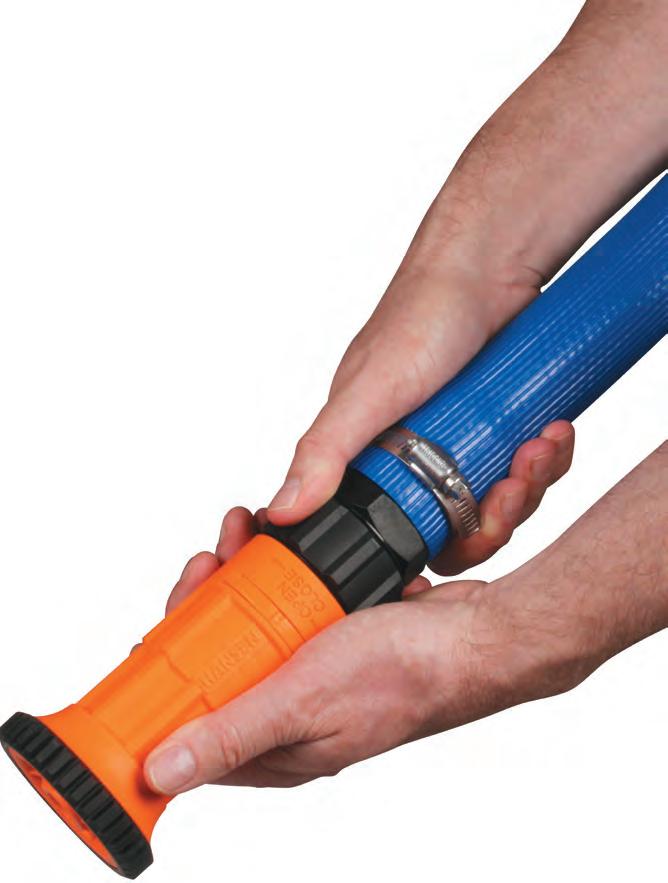
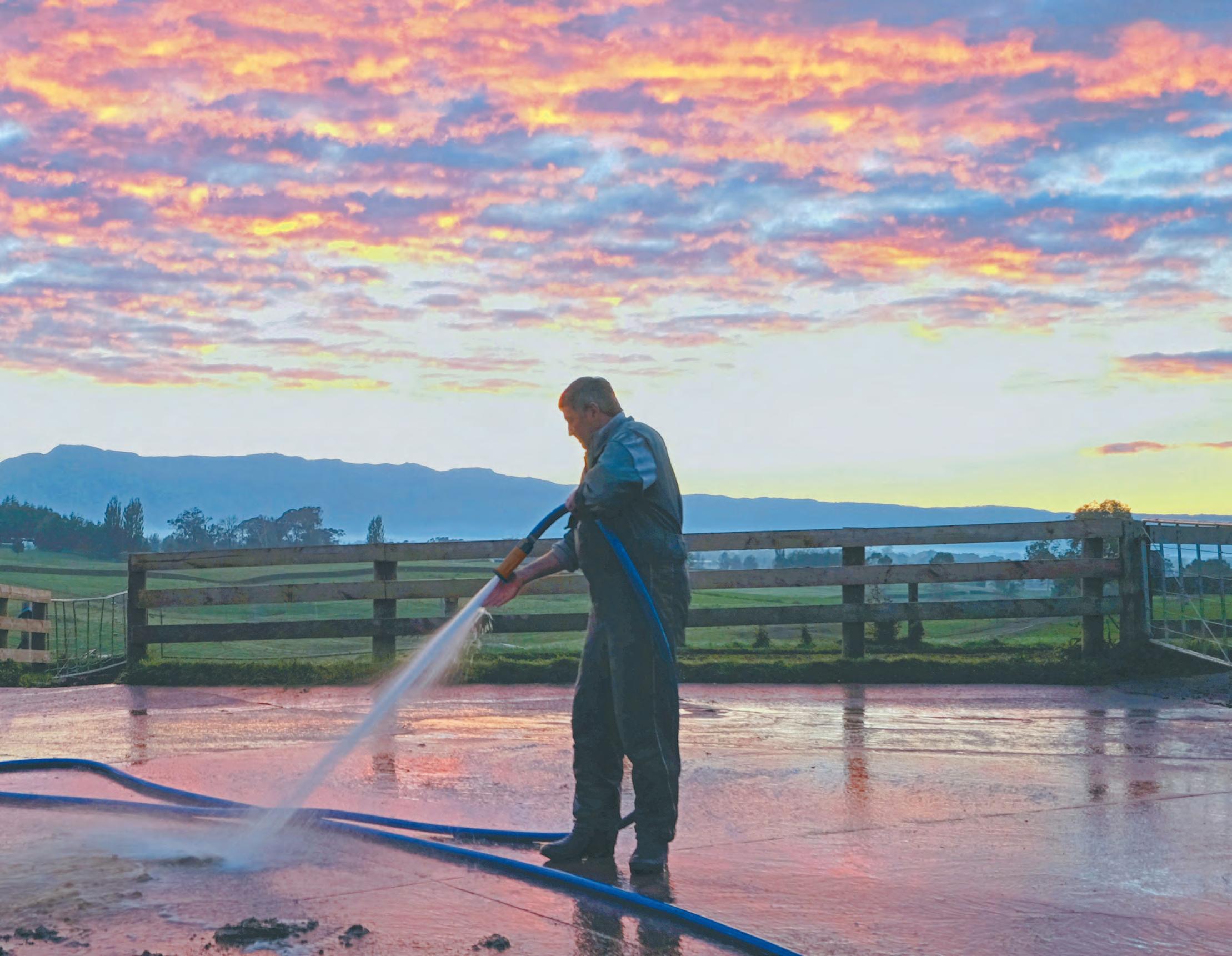



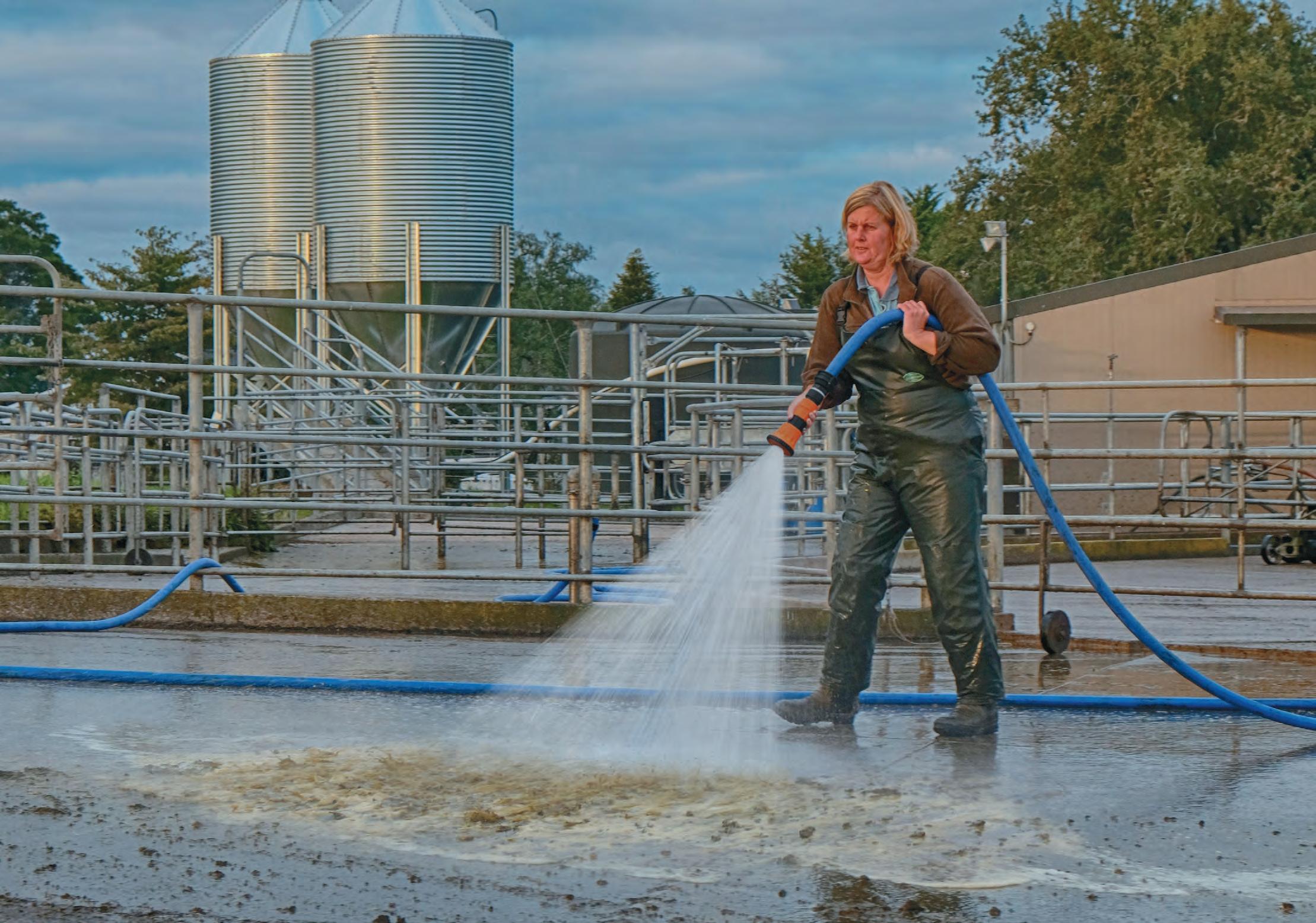
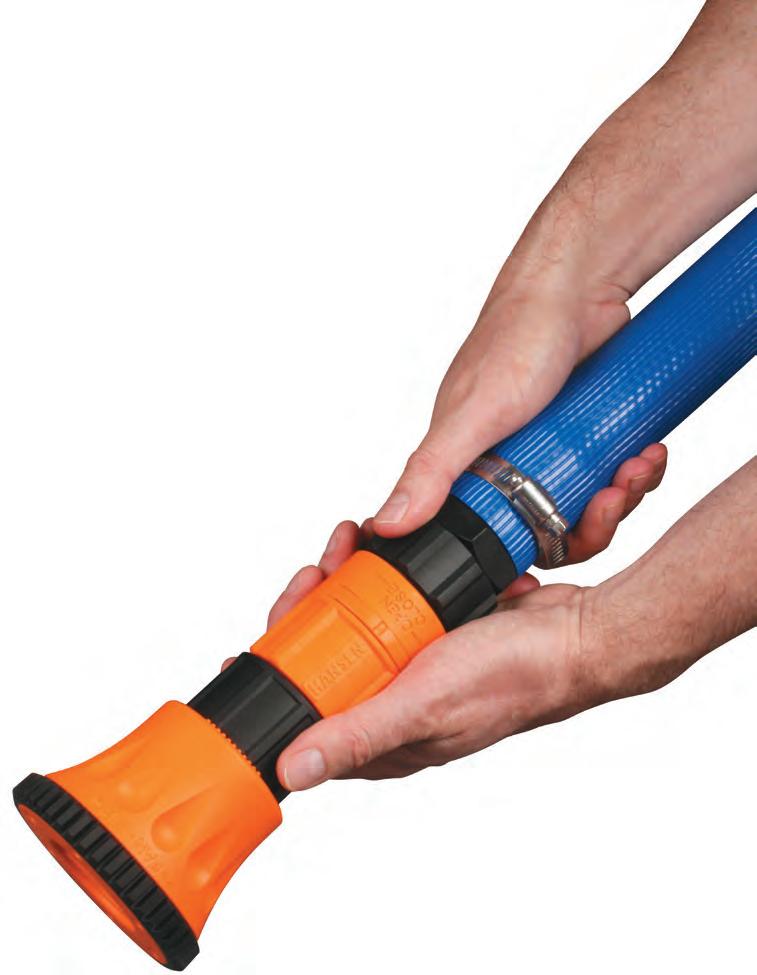
• A Better Way to Wash - Test results demonstrate you will save time with a higher and more concentrated flow, delivering 20% more cleaning power in comparison to comparable products* WASHDOWN NOZZLE

NEW
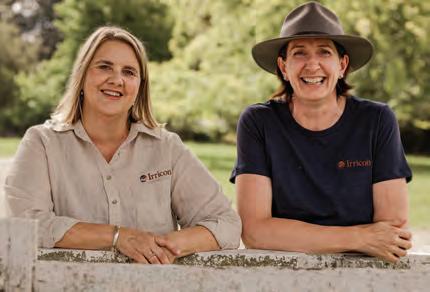
food and fibre sector is entering a period of significant transition and Irricon’s refreshed brand reflects how both the business and the sector it supports have evolved, says director Keri Johnston.
“Land and water decisions have always mattered, but the environment farmers are operating in today is fundamentally different,” says Johnston.
“Water, environmental performance, market expectations and farm succession are all converging at once.
Farmers and growers are managing compliance, but they’re also making long-term business decisions in a changing world.”
Johnston says while the pace of change can
feel challenging, it also creates opportunities for those willing to plan ahead.
“There’s a strong appetite across the sector for practical pathways forward. People want clarity, not more complexity. They want advice that helps them understand what’s coming and make confident decisions now, rather than reacting later.”
She says water management is increasingly central to that conversation.
“Water security underpins productive farming systems, resilient communities and future market access. If it’s done well, environmental planning isn’t a constraint. Rather, it can strengthen businesses and protect options for the next
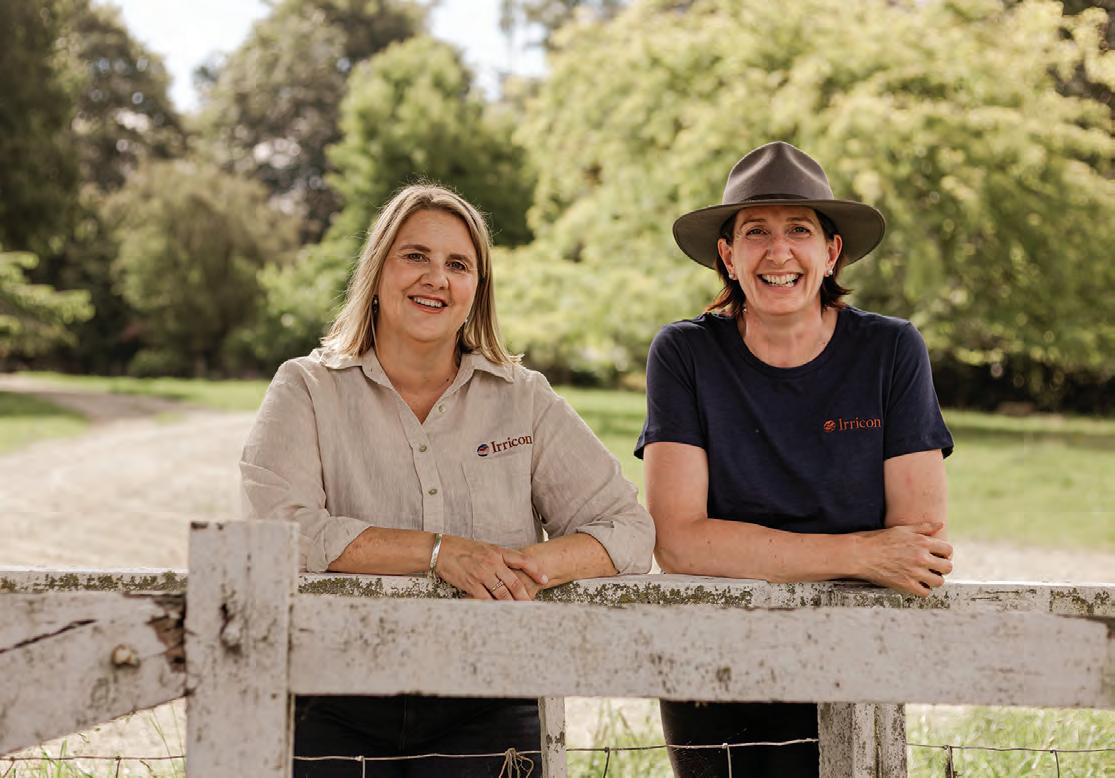
IRRICON MANAGING director Haidee McCabe says the refreshed brand recognises Irricon’s evolution from a specialist irrigation advisory business into a consultancy working across the wider land and water systems that support rural production.
“When Irricon started, much of the work centred on irrigation performance and consenting processes that were far less complex than they are now,” says McCabe.
“Today, our clients are making decisions that connect water, land use, environmental performance, infrastructure and long-term business strategy.”
With a 15-strong team living in rural communities and working across Canterbury, Otago and nationally, Irricon now operates across interconnected land, water and energy systems. The team supports farming enterprises alongside irrigation schemes, catchment initiatives, and the infrastructure and environmental planning that enable productive rural businesses.
“Land, water, regulation and market expectations no longer sit in separate boxes,” McCabe says.
“Our role is helping clients see how those pieces fit together and identify practical solutions that work both now and into the future.”
The refreshed visual identity draws inspiration from land, water and rural landscapes, reflecting both the company’s origins and its future direction.
generation.”
Irricon’s rebrand marks an important milestone for the Timaru-based environmental consultancy, which has
grown alongside the changing needs of rural New Zealand.
Founded in 2007 by Keri Johnston, Gary Rae and Paul Sullivan, Irricon was built on the
simple principle that environmental advice should be practical, grounded and genuinely useful on farm. Haidee McCabe joined soon after, helping shape the
collaborative and trusted team the business is known for today.
As freshwater reform, nutrient management, biodiversity and cultural values have become

more closely connected, Irricon’s work expanded beyond irrigation and consenting into broader land and water strategy.
“Our values haven’t changed,” Haidee says. “We’re still focused on practical advice, trusted relationships and solutions that work in the real world. What’s changed is the scale of the challenges our clients are navigating and the level of support they need.”
The refreshed brand has been rolled out across Irricon’s website, social media, vehicles, uniforms and client materials over the last few weeks.
A COSTLY out-of-court settlement has hit dual-listed processor a2 Milk Company. It has forked out A$62 million for an out-of-court settlement for a shareholder class action.
The issue centred on five statements made by the company between August 19, 2020, and May 10, 2021, in the midst of the Covid-19 pandemic, forecasting revenue and ebitda margin for the 2021 financial year.
The statements were made to the NZSX and ASX. In reaching this settlement, a2MC makes no admission of liability.
Last month Fonterra also settled out of court with Greenpeace over its 100% grassfed butter claim.
THE GLOBAL crusade against fossil fuel is gaining momentum in some regions. Amsterdam became the world’s first capital to legally ban advertisements for fossil fuels, meat, and highcarbon products (like flights and petrol cars) in public spaces, effective May 1, 2026. In NZ, there’s also a push to ban fossil fuel “advertising for our health, our climate, and our future”.
Led by UN SecretaryGeneral António Guterres, who described the industry as “godfathers of climate chaos,” the campaign aims to eliminate greenwashing.
But with the recent Middle East fuel crisis, backers of fossil fuel should be careful what they wish for.
A 40-day blockade of just 20% of the world’s oil and gas supply is creating mayhem. Fossil fuels have a vital role to play to keep the world fed and moving.
DATA FROM an app that tracks farm fuel levels shows a small rise in fuel being taken from monitored tanks during the night, amid the global fuel crisis.
Palmerston North-based company Levno has sensors on farm tanks of fuel, milk and water so farmers can track their levels on an app on their phones.
The company said there had been a 13.7% increase in what it called “suspicious withdrawal events” after 10pm in the three weeks to 1 April, compared to the same period the year before.
Chief executive Oscar Ellison said it was not proof of theft as such, as there could be legitimate explanations for withdrawals like contractors needing fuel for urgent farm work.
However, fuel thefts have reportedly risen around the country and prices edge closer to $4/litre.
RECKLESS ACTION by Greenpeace in 2024 forced Fonterra to shut down a drying plant for four hours, costing the co-op about $300,000.
In October 2024, Greenpeace protesters climbed a 15-storey building at Fonterra’s Horotiu plant and hung over its air vents.
Recently these activists have been sentenced on a charge of unlawful entry into an enclosed yard. All except one were discharged without conviction. Not a strong deterrent for ‘nut jobs’ hell bent on disrupting NZ’s biggest exporter.

AS THE fuel crisis hits the country and rural New Zealand in particular, perhaps it’s time to turn to one of the kaumatua of the rural sector, Pita Alexander – farm accountant, advisor and a source of knowledge and insightfulness.
Uncertainty and chaos reigns right across the country with queues of cars lining up at petrol stations making sure they have a full tank of gas.
For rural NZ to remain in business, a ready supply of diesel is essential. This is not about either going to town or to the movies, it’s about food security – the ability to work the land and produce food and to transport this to the towns and cities. This is about survival!
For people living in isolated rural areas there is little public transport and so the ute or car is essential to get to the doctor, get farm supplies or to a job in a nearby town. This is where the sage advice of Alexander and DairyNZ and others kicks in.
One of his key messages is more walking, swapping the farm bike for the ute and as he so aptly puts it – “more phone time, not fuel time”. His other fuel saving tips are worth serious consideration, such as carpooling with a neighbour.
Alexander concedes that there will be financial pain, that interest rates will likely rise, that inflation may go the wrong way for a time and government support is likely to be in words rather than actions.
No one knows how long this crisis will last and when it’s over what new order will be the norm. Alexander says low profits are still positive and that the tax bill will be lower. He says this is the time for neighbours to support each other and family members to do likewise. He says it’s also time for farmers and growers to look after contractors to make sure their businesses remain viable. In essence, it’s about calmness and common sense.

Head Office: Lower Ground Floor, 29 Northcroft St, Takapuna, Auckland 0622
Phone 09-307 0399.
Postal Address: PO Box 331100, Takapuna, Auckland 0740
Published by: Rural News Group
Printed by: Inkwise NZ Ltd
Contacts: Editorial: sudeshk@ruralnews.co.nz
Advertising material: beckyw@ruralnews.co.nz
Rural News on-line: www.ruralnews.co.nz
Subscriptions: subsrndn@ruralnews.co.nz
Publisher: Brian Hight ......................Ph 09-307 0399
General Manager: Adam Fricker ...................Ph 021-842 226
Editor: Sudesh Kissun ................Ph 021-963 177
Machinery
Editor: Mark Daniel......................Ph 021-906 723 markd@ruralnews.co.nz
Reporters: Peter Burke.....................Ph 021-224 2184 peterb@ruralnews.co.nz
Subscriptions: Julie Beech ....................Ph 021-190 3144
Production Manager: Becky Williams ..............Ph 021-100 4831
Digital Strategist: Jessica Marshall ..........Ph 021 0232 6446
AUCKLAND SALES CONTACT: Stephen Pollard .............................................Ph 021-963 166 stephenp@ruralnews.co.nz
WAIKATO & WELLINGTON SALES CONTACT: Lisa Wise ........................................................Ph 027-369 9218 lisaw@ruralnews.co.nz
SOUTH ISLAND SALES REPRESENTATIVE: Kaye Sutherland .........................................Ph 021-221 1994 kayes@ruralnews.co.nz
investment must be more deliberate, more focused, and more impactful.
NEW ZEALAND’S prosperity has always been built on farmers and scientists working together to shape our economy.
From pasturebased farming systems to biosecurity and environmental stewardship, public investment in research has underpinned our primary industries and shaped our international reputation. But the world has changed, and our science investment system has not kept pace. The reset now under way is not a retreat from the primary sector or the bioeconomy - it is a strategy to future-proof them.
At the heart of the new model is a simple proposition: public science
For too long, funding has been spread thinly across many activities, producing excellent science but insufficient national lift. International benchmarking makes the problem clear. New Zealand invests far more of its public R&D budget in agriculture and environmental research than comparable smalladvanced economies, while consistently underinvesting in advanced and enabling technologies. That imbalance now constrains productivity growth, diversification, and long-term resilience.
The move to an investment framework guided by strategic goals directly responds to this challenge. Structuring the
science system around four clear pillars, including the Primary Industries and Bioeconomy, and Technology for Prosperity, creates clarity and encourages collaboration across disciplines, institutions, and sectors.
Importantly, it reframes advanced technologies such as AI, robotics and synthetic biology, not as competitors to the primary sector, but as multipliers of its future value.
For farmers, foresters, fishers and bio-processors, this matters profoundly. Productivity gains in primary sectors over the next two decades will not come from incremental improvements alone. They will come from deep integration of new genetics and biological tools, precision systems and digital platforms,
and data-driven decisionmaking across the value chain. This includes genetics, on-farm automation, processing, traceability, and access to premium markets.
Rebalancing the system toward these cross-cutting capabilities is an investment in the next generation of food and fibre producers.
The proposed funding shifts are also measured and responsible. About $122 million is reallocated over several years –not removed from the system – primarily from mature areas where private capability is strong. Core stewardship science, biosecurity, and environmental protection remain firmly protected.
What changes is the signal: public investment must increasingly back work with clear national
relevance, scale potential, and system-wide outcomes. Research that will boost primary sector productivity growth and sustainable wealth creation, for farmers and growers, and all New Zealanders.
Just as important is how the change will be implemented. Rather than blunt cuts or rigid prescriptions, the system will use clear priority signals and flexible funding mechanisms. This allows organisations and researchers time to adapt, encourages innovation, and reduces the risk of unintended capability loss.
The announced ‘Ignition’ investment fund will further strengthen New Zealand’s ability to act on emerging opportunities at speed, including those critical to farmers and growers.

This is about building a science system fit for New Zealand’s future.
A stronger advanced technology base will lift productivity across the economy, attract international investment, and create high-value jobs. For the primary sector and bioeconomy, it means better tools, greater resilience, and the ability to compete – not just on volume, but on value.
NEW CONFLICT overseas comes with rising fuel costs, disrupted supply chains, and growing uncertainty across New Zealand, raising the question –why are we looking to expand our reliance on global energy markets, when we have the resources to build our own?
Currently grappling with vulnerability in its energy insecurity, gas shortages, dry hydro years and reliance
called the New Zealand Integrated Bioenergy Programme, a coordinated plan to turn forestry residues, wood waste and organic material into renewable energy. Instead of being left to rot or wash downstream in the next weather event, waste materials could be used to produce renewable electricity, heat and gas, or to free up electricity and natural gas for its highest value applications.
Forestry slash has become a lightning rod in public debate, that
aims to coordinate the collection of forestry residues and organic waste and build regional supply chains, so biomass becomes a dependable part of the national energy mix. Biomass boilers already operate across New Zealand, with more than 400 megawatts of biomass heat capacity, or around 8% of total energy demand, are already installed. Industry leaders say the challenge isn’t technical, it’s one of coordination.
While bioenergy may not capture
Done well, these changes will ensure that public science investment continues to serve its original purpose: delivering enduring benefit to all New Zealanders, while positioning our most important sectors to thrive in a rapidly changing world.
• Dr John Roche is the Prime Minister’s chief science adviser, and MPI’s chief departmental science adviser.
pipelines. Operationally, heat and power can be generated when needed, not just when the wind blows or the sun shines.
Bioenergy is complementary to these energy sources, with the IBP presenting itself as a practical step, linking land use, waste management, renewable heat and renewable gas in one coordinated plan. It won’t stop storms or solve every energy challenge overnight, but it could help turn what is currently seen as debris and waste
ANNE BOSWELL
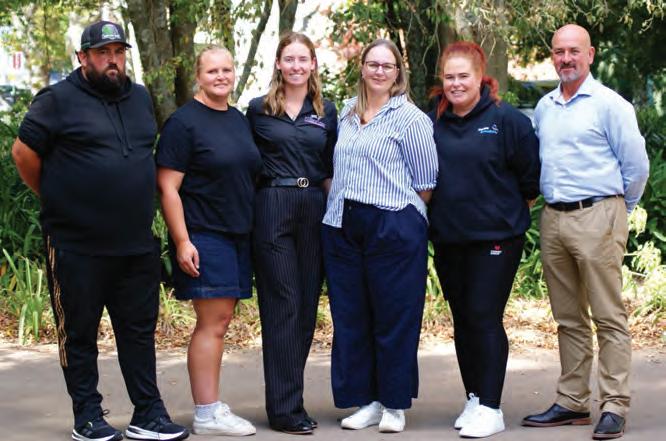
THE 2026 Holstein Friesian NZ Young Breeders Development Programme is off to a strong start, with this year’s intake coming together for their first event on March 18 and 19.
The 2026 cohort includes Renae Martin (Stirling), Stuart Rogers (Ohaupo), Stacey Stewart (Ashburton), Ryan Andrew (Palmerston North), Annie Gill (Otorohanga) and Ayesha McCall (Te Puke).
Representing a wide spread of regions and backgrounds, the group brings enthusiasm and a shared commitment to growing their knowledge
and involvement in the dairy industry.
Sponsored by the late Dave Marshall of Waihou Friesians, the programme is designed to support young people looking to build leadership, governance and industry skills within Holstein Friesian NZ and the wider dairy community.
Running from March through to December, the programme combines online and in-person workshops, offering participants exposure to a broad range of topics including governance, communication, strategy, risk assessment and breeding, while also gaining insight into the wider dairy industry.
At their introductory
meet-up, participants had the opportunity to meet the Holstein Friesian NZ board and staff, setting the tone for the months ahead. The two-day event also included two initial training sessions: a governance workshop led by Michelle de Beer of Jam HR, followed by an Understanding Traits Other Than Production (TOP) workshop.
Renae Martin said she was excited to join the programme, as learning about governance and how HFNZ works was something that had interested her for some time.
“I am hoping the opportunity to learn and grow from valuable industry leaders and
professionals through the programme will help progress not only my knowledge but my business, the farm and any future opportunities,” she says.
Stuart Rogers said the first two sessions were very enjoyable.
“Through the group learning and team bonding we seem to have genuinely clicked very well,” he says. “I particularly enjoyed the TOP morning because it was informative in its fine detail, which I know will help my wife and I with our own herd. I’m looking forward to session three.”
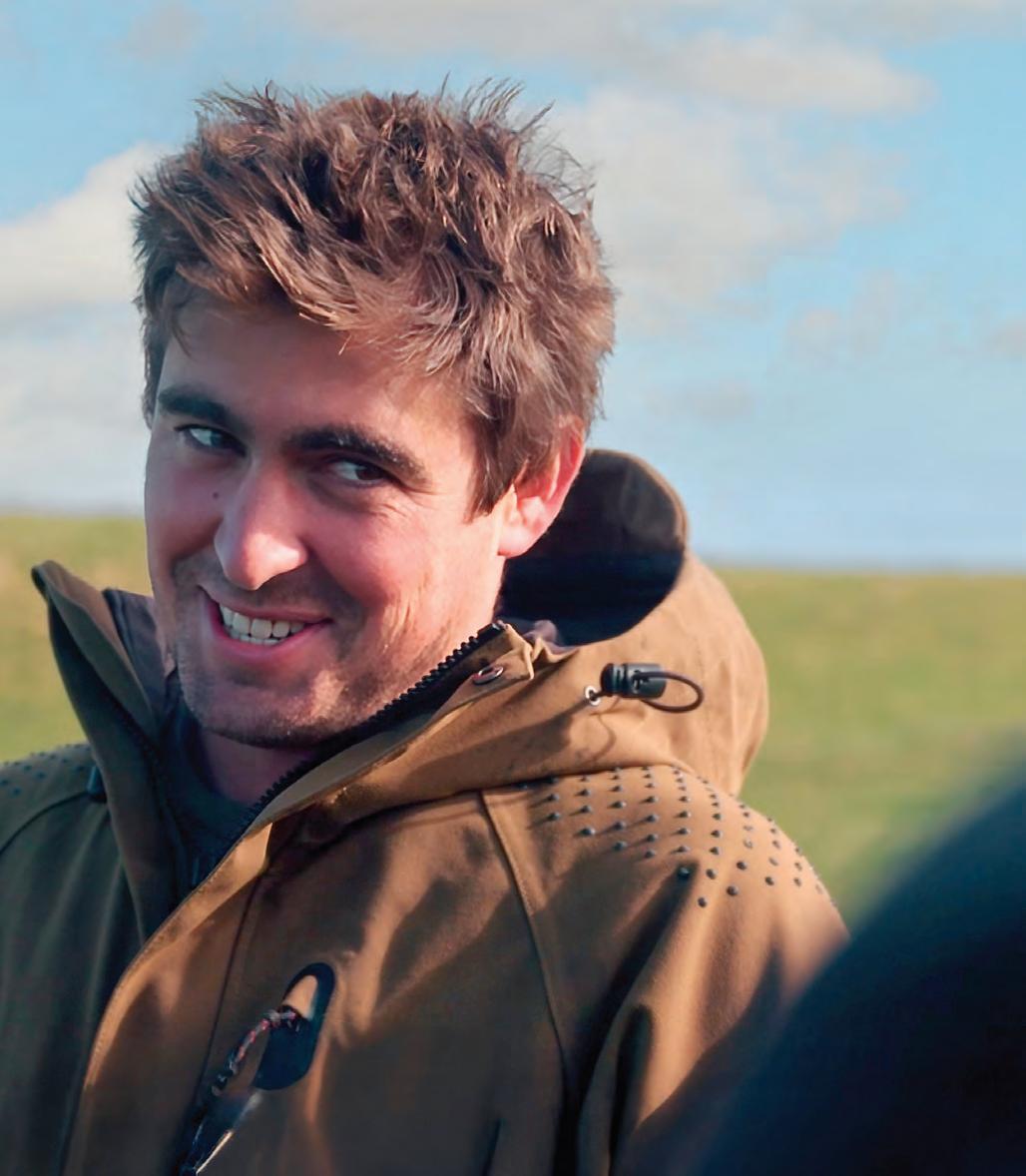
Stacey Stewart said she saw the programme as a way to challenge herself and gain a better understanding of the wider dairy industry.
“It’s easy to stay tucked away in your usual roles, so I saw this as a chance to bring some fresh knowledge back to the farm and the boards I’m involved with,” she says.
“Want
to know how to keep your missus happy?”
HFNZ chief executive officer Cherilyn Watson said the programme would not have been possible without the support of the late Dave Marshall.
“Dave was incredibly proud of this programme and what it was set up to achieve,” she says. “We are truly thankful that Dave again sponsored the programme for 2026.”

That sweet deal covers the whole herd: the entire range of Allflex NAIT-approved cattle tags, including EID calf packs, birth EIDs, and replacements. If you run big numbers, that adds up to a seriously handy discount you get to keep. The secret is timing: get your tag order in early. She’ll be swooning over the $0.97c per tag you just banked.
Get the tags sorted, keep the cash. Order your NAIT cattle tags between 5 January 2026 and 30 April 2026, and Allflex New Zealand will discount the order to the value of the applicable NAIT levy ($0.97 plus GST per tag).*
FONTERRA FARMERS are set for a multi-billion-dollar payout this week.
Fonterra is returning $2/share to shareholders and unit holders, after the divestment of Mainland Group to Lactalis, which was completed two weeks ago.
The capital return has been achieved by way of a pro rata share buyback from shareholders.
The co-operative is believed to have obtained a binding ruling from Inland Revenue that the amount paid to shareholders under a share buyback arrangement will be treated as a return of capital and not as a dividend for income tax purposes. This means the proceeds will not be taxable in shareholder’s hands.
Since the announcement of the sale
of the consumer brands businesses, there has been speculation about how the return to shareholders might be used. Suggestions have included retiring debt, addressing deferred farm maintenance, upgrading farm plant and equipment, expanding the farm or herd size, putting funds into investment products, or even enjoying a good old “knees up” at the local bar and grill – or all of the above.
However, Craig Macalister, a partner with Findex, has raised concerns that no discussion on this, that he is aware of, references the structure of the shareholder ownership and the implications using the funds for things other than reinvesting into the farm business. In this regard, Macalister notes that if the Fonterra
shareholding is held by a company, taking the funds out of the company without tax implications is not likely to be possible.
Macalister explains: “With a company structure, if shareholders want to take any capital gain amounts out tax-free, the company has to be wound up.” While New Zealand does not have a capital gains tax, as a general rule, capital gain amounts cannot flow through a company tax-free.
Instead, any distribution from the company, unless it is wound up, will be treated as a taxable dividend.
Shareholders can take drawings out of a company, but if this overdraws the current account, interest at FBT rates must be paid to avoid a deemed dividend. While this may be
manageable short term, it essentially amounts to paying taxable interest to oneself and is not a sustainable position over the long term.
Thus, if the shareholding is held by a company, spending funds on things that are not assets of the company,
NORTH CANTERBURY
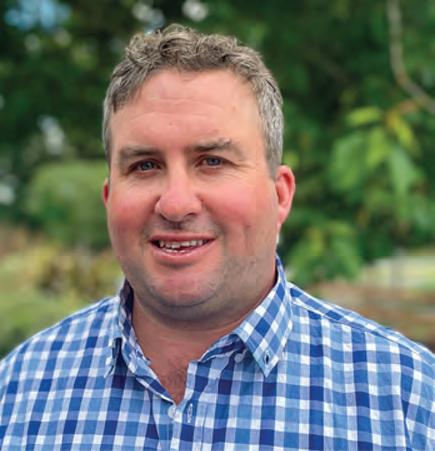
farmer Adam Williamson has been appointed DairyNZ’s associate director for 2026-27.
The one-year role supports levy-paying farmers who are actively involved in the sector by providing leadership development, hands-on experience, and mentorship from the eight current DairyNZ board members, helping build pathways into future governance roles. Williamson, who will begin the role on 1 June 2026, farms in the Culverden area and is known for his roles
with Synlait (farmer leadership team) and Amuri Irrigation Company.
DairyNZ’s associate director selection panel chair and board member Richard McIntyre says Williamson has everything the selection panel was looking for.
“He is a farmer who has been investing time into the community and investing his own funds into professional development. He feels at the right stage of family and business development to test the waters with a national role; the panel
agrees.”
Williamson says he is delighted to have been chosen for the role.
“I applied because I am committed to the dairy industry and want to be able to contribute to its future direction. I’m looking forward to joining the board in the exciting times of levy renewal.”
Incumbent associate director, Northland farmer Greg Collins, has been heavily involved in all discussions about the recent Milksolids Levy vote and says the experience working with the DairyNZ board has
been insightful.
“I encourage everybody interested in the dairy industry and governance to keep their eyes open for the opportunity to be considered for the role in 2027,” he says.
McIntyre says Collins has taken every opportunity given to him during his time in the role.
“He came to the board with experience through the Fonterra Cooperative Council and Northland Dairy Development Trust and has proven his worth. We are sad to
see him go but suspect that his future is bright in governance; he is an asset to the dairy industry,” he says.
The changeover will occur next month, when both the current and future associate directors attend DairyNZ’s May board meeting.
“This is an important part of education. The ‘how far I’ve come’ moment embeds the positives for the current associate and inspires the new person,” says McIntyre.
such as holidays or a new car, cannot be done without triggering tax consequences.
Macalister urges shareholders to consult with their accountant before finalising decisions on how the capital return is to be spent.
McIntyre previously held the associate director role in 2020 and knows how much the experience can assist.
“The role is what you

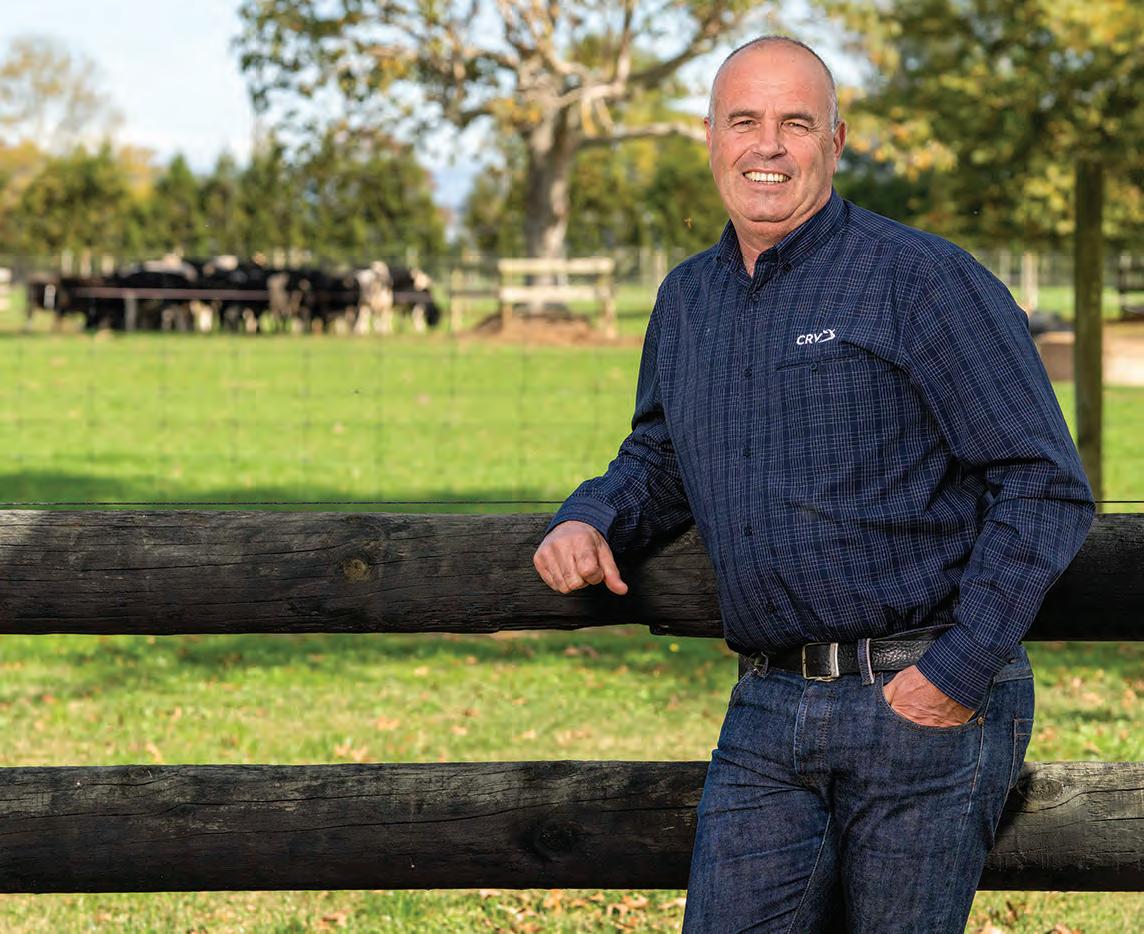
NEW ZEALAND dairy farmers are making more informed, strategic breeding decisions, and it’s paying off, according to CRV managing director James Smallwood.
He says the industry is finally seeing the lift in herd genetic gain it has been pushing for, driven by greater use of genomic young sires and a shift toward breeding replacements only from the best cows.
“What we’re seeing isn’t a sudden change, it’s farmers over time making better use of the technologies already available to them,” says Smallwood. “The industry was challenged to lift its rate of genetic gain, and farmers have responded.”
New data from NZAEL shows a dramatic rise in the use of young genomic sires. In 2016, fewer than half of herds used young sires. By 2025, that figure has climbed to 88%. Over the same period, the average age of dairy sires has dropped from 5.9 years in 2017 to 4.3 years in 2025, reflecting farmers’ growing confidence in genomics.
“We use genomics to select bulls in our breeding programme because it gets us ahead faster,” says Smallwood.
“Farmers are now
using the same tools and that’s something worth celebrating.”
He says many of the high-ranking genomic bulls are now going on to appear on the RAS (Ranking of Active Sires) list as proven sires, reinforcing trust in the technology.
“Farmers are accessing elite new genetics without having to wait for a daughter proof. They’re getting a head start.”
This shift is reflected in NZAEL’s long-term genetic trend data, which shows BW rising sharply from –0.5 in 2019 to +141 in 2025 –one of the strongest lifts in recent decades.
Smallwood says the biggest behavioural change is farmers being more selective about
which cows they breed replacements from.
“Fewer farmers are mating the bottom 10 or 20 percent. When you stop breeding replacements from your worst cows, the genetic potential of the next generation jumps quickly.”
He says this is being supported by better use of sexed semen and improved heat detection, including the rapid uptake of cow wearables.
“Farmers are already paying for this data. The next step is using it to identify their elite cows and make more strategic breeding decisions. That’s where the real gains are.”
@rural_news facebook.com/ruralnews
JAMES SMALLWOOD acknowledges that early experiences with sexed semen left some farmers wary but says the story has changed dramatically.
“The technology hasn’t changed much. What’s improved is how farmers are selecting cows and managing heat detection. If you go in blanket, it won’t work. But when you’re strategic about which cows you use it on, the payback is there.”
He says many dairy farmers now use sexed semen and dairy-beef together to maintain calf numbers, while lifting the quality of replacements. And with beef prices improving, Smallwood says farmers are also capturing more value from surplus
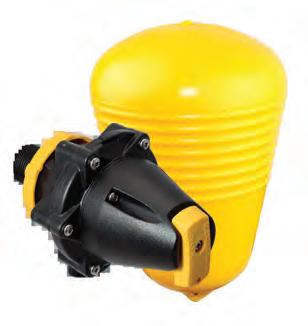
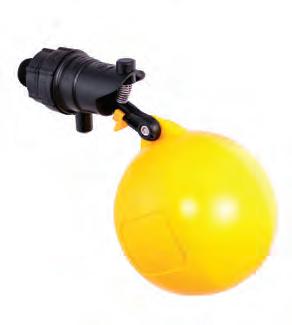
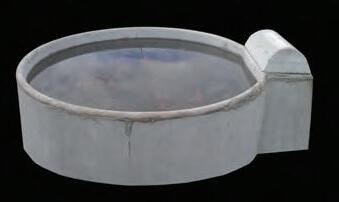
•Ideal for Cattle Troughs
•High Flow •Side/Bottom Mount
•Detach to Clean •Compact/Robust
calves through better dairy-beef genetics.
Genomics reinforces the need for a single source of truth
He says the industry’s increasing reliance on genomics makes the Future Focused Animal Evaluation (FFAE) programme more important than ever. FFAE is an initiative led by DairyNZ, LIC and CRV to develop a single, unified breeding index for both cows and bulls, which will allow genomically tested animals to be compared on the same scale.
“As more genomically tested animals enter the system, we need one consistent way to compare them. A single source of truth is essential for farmers and breeding companies.”
JAMES SMALLWOOD says the economic outlook for the agricultural sector is more positive than initially forecast by Rabobank, with stronger farmgate returns and firm beef prices giving farmers more room to reinvest in long-term improvements like herd genetics.
He says farmers now have an opportunity to use today’s stronger returns to invest in their herd’s genetic potential as a longterm asset for the future.
“Genetics is one of the few capital items you can write off in the year you spend it. You’re getting cows in calf anyway - it’s a sunk cost. So why not spend a bit more and make the right decision?
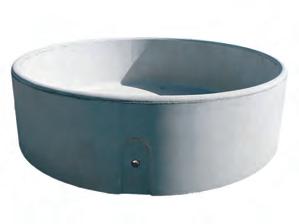
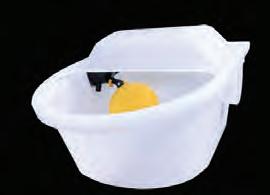
•Ideal for Small/Low Demand Troughs •Low Flow
•Above/Below Water Mount
•Built in Check-Valve
“If someone gave you $8 to go to the casino and said you’d walk away with $100, you’d take it. That’s the kind of return we’re talking about when you choose a premium bull.” Strong genomic line-up for 2026
CRV’s new sire catalogue landed in mailboxes last month. It features one of its strongest genomic teams yet, alongside proven sires that have held their early genomic rankings.
James says the catalogue reflects where the industry is heading.
“Farmers want access to elite genetics earlier, and genomics gives them that head start. Our job is to help them use these tools in a way that fits their system and accelerates their herd’s genetic gain.”


•Ideal for Compartment Troughs/Tanks
•High Flow
•Top Mount
•Detach to Clean
•Compact/Robust

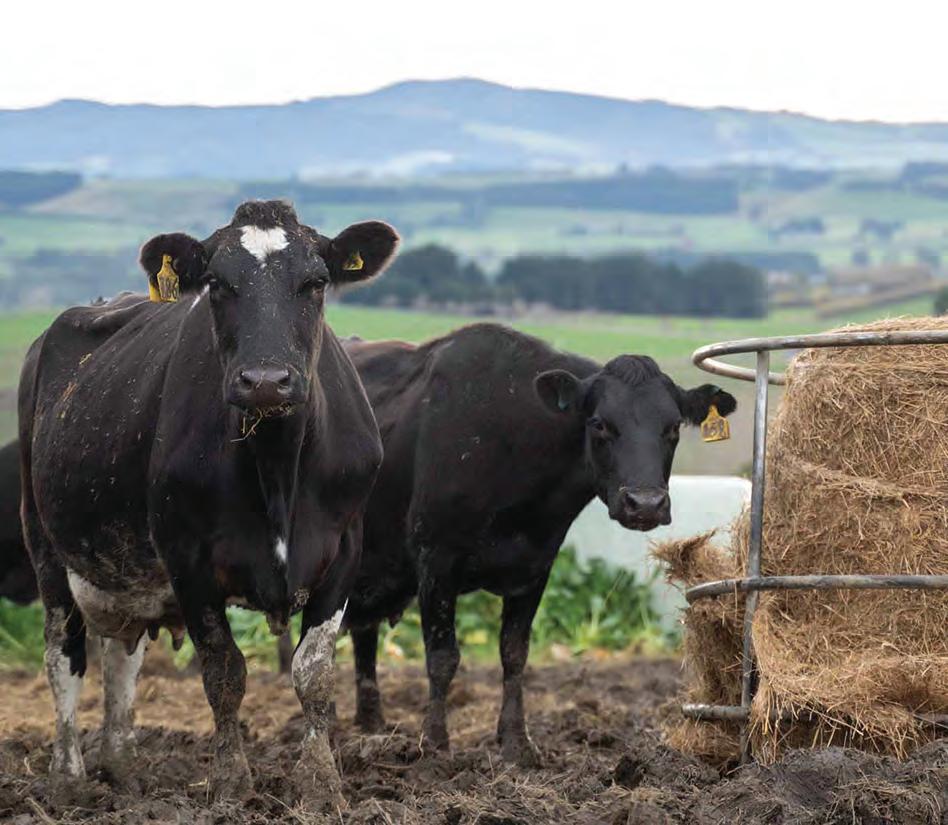
THE DRY period isn’t just a farm holiday but a chance to get your herd match-fit for calving and early lactation. If you treat it as a focused phase of preparation, recovery and capacity building, you’ll see the benefits when the cows return to milk.
Using the dry period to your advantage What happens in the dry period affects cow condition, calvingrecovery, milk peak and fertility. Good management reduces early-lactation disease, speeds appetite recovery and cuts treatment time and days open. Using the dry period well allows cows to rebuild energy and protein stores, top up minerals (especially calcium and phosphorus), renew milk-secretory cells and restore liver capacity.
Key factors that affect calving readiness
■ Fibre is key Research shows that fibre helps to increase rumen smooth muscle strength – these are the muscles that cause the rumen to contract during rumination. Good fibre levels help to improve transition and early lactation appetite, which helps to reduce condition loss post-calving. This lowers the pressure that mobilised fat puts on the liver, helping to increase liver capacity, maintain strong immune system function and reduce days to first cycle. Aim for high effective fibre in the dry cow ration – many systems target NDF around 45% on a dry-matter basis, and where possible offer roughage ad lib.
■ Intake consistency and feed space Keep the ration consistent and make
feed access predictable. Sudden changes, variable mixing or limited space at the feed-face cause cows to eat less or irregularly. Check each cow has enough room to eat without being pushed off their feed – >0.8m per cow at the feedface generally reduces inconsistent intakes and results in a tighter BCS range across the herd at calving.
■ Make adjustments when needed It’s important to make adjustments to diet and feed allocation based on cow performance and weather conditions. Allowing for wastage to ensure intakes are as consistent as possible day-to-day makes a big difference in performance and cow health at calving.
■ Shelter in bad weather
Poor shelter and
exposed paddocks in bad weather increase energy use and can stop cows from rebuilding condition. Try to provide windbreaks or shelter where needed.
■ Mob pressure and social stress
Group size, frequent mixing and dominant animals can suppress intake for less dominant, younger or thinner cows. Where possible, separate vulnerable animals such as older/younger cows, late-dry-offs or those with low BCS, so they have good access to feed and less bullying/ competition.
Body condition monitoring Score cows at late lactation, before dryoff and before calving. Aim for 4.8–5.2 on a 1–10 scale at calving. This is the standard NZ benchmark, so it should be the goal for every NZ farmer. Use
■
■
cows that are standing off the fresh feed are good signs. Signs to act on include a significant reduction in rumination, variable milk fat after calving, or cows that lose a lot of condition in early lactation. Small changes early are easier and cheaper than fixes after calving. Adjust rations in small steps, keep mobs stable, and flag cows that need extra attention well before the expected calving window.





TECHNOLOGY AND
the use of artificial intelligence are increasingly part of life, both on the farm and off it.
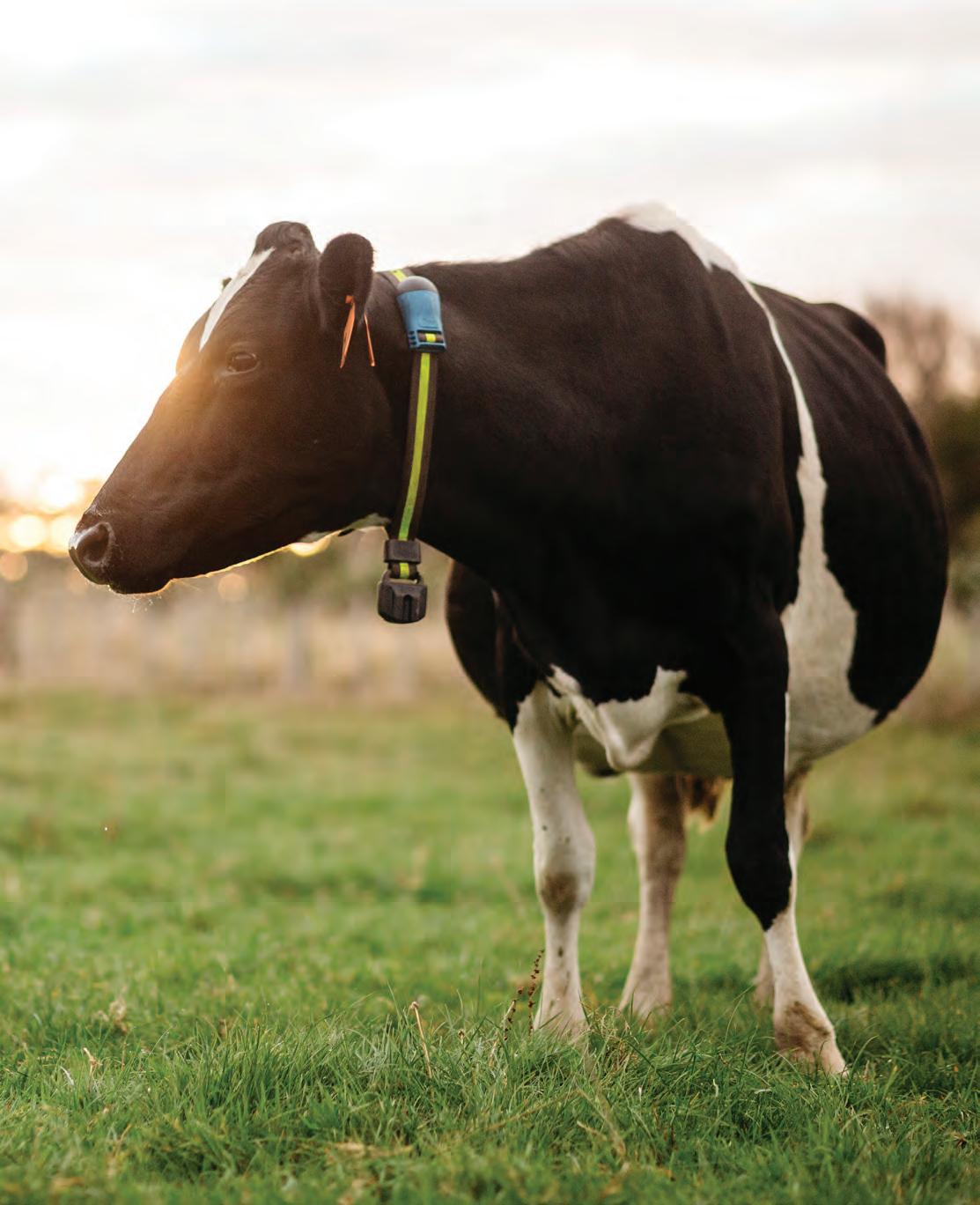
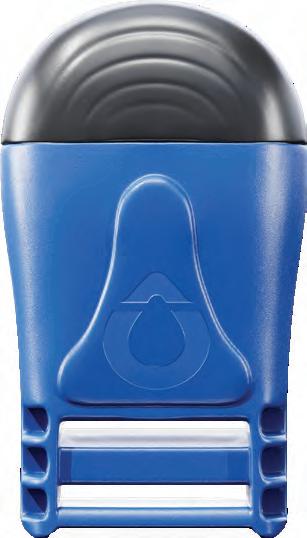
Farmers around the country are embracing technology in the form of automated animal monitoring (i.e. wearables including collars, ear tags and boluses), virtual fences, digital assistants to help with pasture planning, apps for compliance and more.
DairyNZ senior scientist Dr Callum Eastwood says that technology is a hot topic among farmers, and there are many questions about how to get the most out of their investment. The industrygood organisation has
several research projects underway on the subject.
One of the projects, focused on wearable technology, will assess how data can drive better decisions, and improve farm performance.
As with many DairyNZ projects, this piece of research has been shaped by farmers and rural professionals who took part in a series of workshops to identify research priorities. From these, five priorities emerged:
■ 1. Data access for benchmarking – How can we share data safely, so farmers benefit from industrywide insight
■ 2. Understanding behaviours – What does ‘normal’ look
like for cows across different farms and regions?
■ 3. Maximising the value of data – What are wearable data-
based KPIs at different times of the season?
■ 4. Better decisions
– How can wearable data at key times of the season guide
WITH TECHNOLOGY comes more data, and DairyNZ is also exploring how farmers are using Generative AI to decipher and apply information on farm.
A DairyNZ-funded study conducted by Rachel Durie at Perrin Ag Consultants last year found Gen AI use is still largely limited to “early adopters”.
“It’s still early days but we did find that those using Gen AI fall into three main groups: using it to provide insights or recommendations for task enhancement; using it to improve the efficiency of repetitive tasks; and for communication with staff and team coordination,” says DairyNZ senior scientist Dr Callum Eastwood.
feeding, transition and reproductive decisions that lift productivity and profitability?
■ 5. Selecting resilient animals – Can
“Most were using Gen AI for decisionsupport – instead of Google and other search options. I think one of the key benefits that most farmers are valuing is the speed at which it can generate insights and provide information. One farmer had even created a digital version of their farm so they could try out different practices and see what worked. Others were simply using it to draft emails and template documents for their team.”
As the research progresses, DairyNZ will maintain ongoing collaboration with farmers and stakeholders, and share insights on how wearable technology and AI can help turn data into better on-farm decisions.
behaviour data help us identify cows with high performance and longevity?
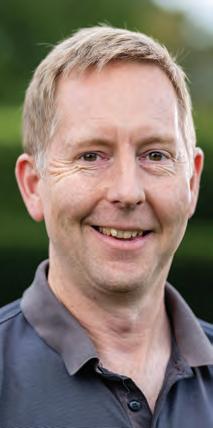
DairyNZ senior scientist Dr Susanne Meier says benchmarking was a key area of interest.
“Farmers wanted to be able to compare animal health and reproduction metrics derived from wearable sensors for their farm system and also in their region, to see what high performance really looks like and find opportunities for improvement, and we will start on this area first, working with farmers to populate data sets,” she says.
“Farmers also wanted to understand new key performance indicators (KPIs) from wearable data and how they link to the established KPIs that already drive farm performance. For example, exploring how rumination and activity levels might relate to in-calf rates and profitability.”

TRU-TEST COLLARS are
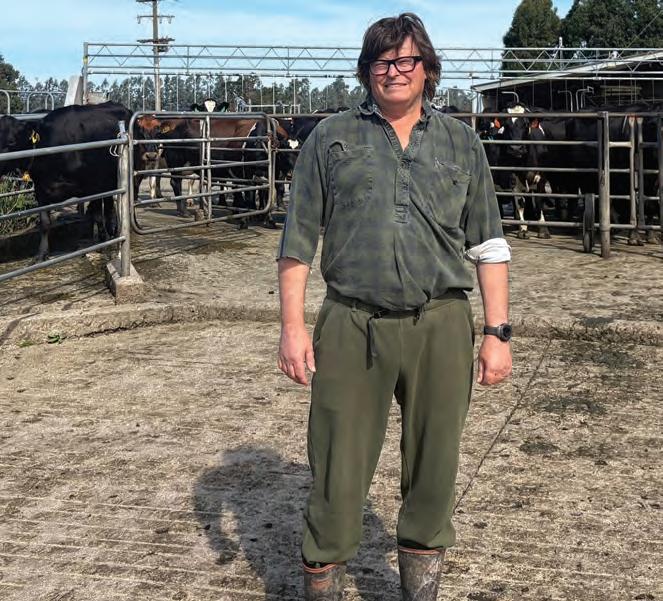
“the best investment I’ve ever made in farming,” says South Otago sharemilker Kevin Louw. “I absolutely love them.” Coming up to his fourth season with them, Louw says the system has gotten better as it has come to know the cows.
It monitors all their physical activity, whether ruminating, eating, walking, sleeping or standing. It collates it into a graphical form, so the farmer can view activity trends over hours or days. It can compare an individual cow’s activity against its own history and against its peers in the herd, and even allows the farmer to benchmark his herd against the anonymised herd data of other Tru-Test customers.
Louw says the value of constant monitoring is that the system identifies changes early and with a precision unavailable through traditional management.
A 50:50 sharemilker, Louw farms at Paretai near the Clutha river mouth in South Otago, milking 650 cows on 215ha effective.
It’s a grass-based system supplemented in the shoulder seasons
mainly with silage brought in from the farm owner’s support block, and wintering is always off-farm.
“No-one really winters on farms down here. We’re underwater. So they go to a grazier on fodder beet.”
Louw says that like most people adopting wearables, his first concern was mating management, and TruTest reliably identifies in-heat animals and completely replaces labour-intensive and uncertain methods like tail paint.
“You just arrive at the shed at the end of milking and those cows that are on heat have been drafted out automatically and they are standing in the side yard waiting for you.”
Tru-Test detects and records heats, sending out regular reports, long before mating begins, allowing early intervention for any problems.
Louw says that while he has long used CIDRs on cows which appear not to be cycling, TruTest has allowed him to reduce CIDR use by 50% because of its very high accuracy. He has moved to a system where his vet comes every Friday to look at the small number of cows with problems of various sorts.
“He’s able to take the CIDRs out that were put in the week before and put in the CIDRs of the few that should have cycled that week.
“That fine-tuned mating is almost impossible to do when you’re doing it manually.
“This mating this year was probably the most enjoyable time on a dairy farm that I’ve had, because I’ve had so much control over it and been so proactive to every little thing, it really made the job so enjoyable and so fantastically easy.”
Louw credits the Tru-Test system with improved farm performance, even
despite the serious setback of a major flood in 2024. With the entire farm underwater right at mating time, Louw called it “an absolute disaster”.
“All our production and our mating was severely affected. And I think we had something like a 16 or 17% empty rate.”
But he was “extremely happy” to have brought the empty rate back down to 11.5% and is confident of further improvement.
Similarly with calving, Tru-Test identifies those cows that are ready to calve and those that may be having a problem.
It also helps decide when to return
THE SYSTEM also helps with pasture management because a herd that continues to eat when they should have been satisfied is an indication that the grass they are on has no “guts” to it.
“I don’t need to wait until the cows are moaning at me that they’re hungry because the food’s gone straight through them,” says South Otago sharemilker Kevin Louw.
The data will also show if grass is getting “stemmy” and in need of a mow, five to ten days sooner than it would otherwise be seen.
Louw says the system has paid for itself, and not just financially. He says dairying can be lucrative but it is hard work and the danger is physical burnout. But the collars have made it enjoyable
again.
“All of a sudden you can just keep going and for me, that’s exciting. It just extends your life in dairy and pays for itself over and over.”
That improvement in working satisfaction also applied to his workers. With three permanent staff, Louw explains that Tru-Test could help the farm run with fewer but, at a time when it is getting harder to retain staff, his “point of difference” is generous working conditions as a way to keep staff engaged, supported and happy.
“I have guys who have been with me for 10 years now. It obviously works. If your staff are moving on every season, you need to look at yourself rather than them, you know?”
cows to the milking mob. Instead of just returning them after a set number of days or on the quality of their milk, the collars identify a cow which is not yet ruminating properly and may need another day of rest or metabolic support. Louw says it “makes a world of difference” if they can avoid sending a cow into the milkers while she is still under stress.
Herd health is TruTest’s other major advantage, and Louw says that by detecting changes in activity it reliably identifies a cow with a problem two
would otherwise become noticeable.
“It is absolutely phenomenal.
“Anything that goes out of sync with what she normally is, or out of sync to the rest of the group that she is with, it’ll alert you.”
Early intervention with anti-inflammatories, antibiotics or a metabolic “jump start” with minerals and molasses, as appropriate, usually nips the problem in the bud. Louw says that nine times out of ten, the cow’s health alert graph starts to turn back up into the green within a couple of hours.


EVERY FARMER has had that cow that looked fine for the morning milk but was off by the arvo. By the time something was visibly wrong, the problem had been building for days. That gap between
what’s happening inside the animal and what you can see from the race is where wearable monitoring tech earns its keep.
■ Two signals, not one CowManager
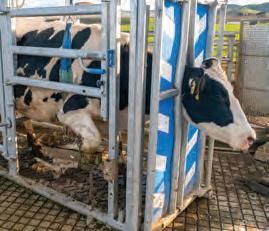
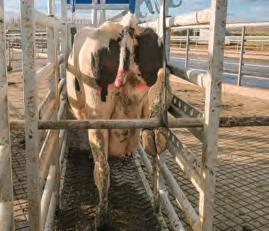

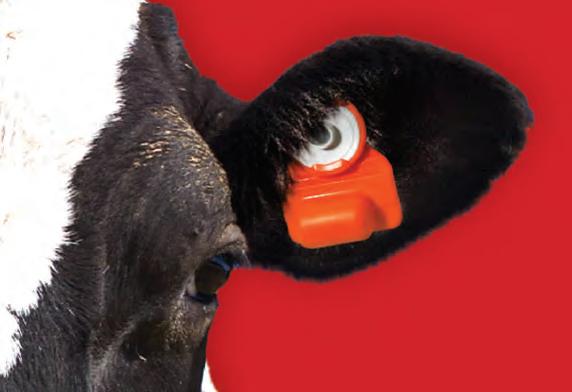
combines continuous behaviour monitoring with real-time ear temperature tracking from a small earmounted sensor. Because it sits in the ear, it captures small, precise micro-movements in how the cow is moving both her ear and how she’s holding her head – a more accurate indicator of rumination, eating, activity and health than neck or leg accelerometers which are measured by gross body movement.
That precision is the foundation of every alert the CowManager system generates.
“Most farmers are familiar with wearable sensors. What separates systems is what they actually measure and how precisely they measure it.”
The second signal matters as much as the first. Ear temperature reflects blood flow through the ear and correlates with changes in core body temperature, making it a genuine physiological indicator of immune activation, and metabolic stress. Those changes often precede visible behavioural shifts, which means CowManager can flag a cow earlier than behaviour alone would allow.
Earlier signals mean earlier decisions, it’s not a diagnosis, that remains the role of your vet, but a red flag before the problem compounds.
■ Where your biggest wins are made or lost this season
The transition window is where it counts most. If there is one period where this visibility matters most, it is the transition period - the six weeks spanning dry-off through to the early weeks after calving.
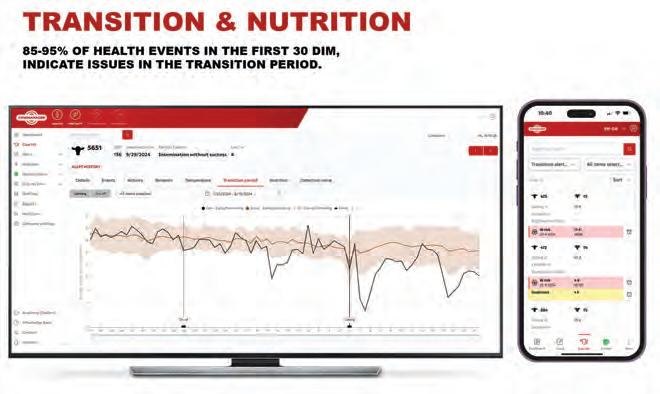
Research consistently shows that 85-95% of health events in the first 30 days in milk originate in the transition period - often before a single visible sign appears. Dry matter intake drops.
Metabolic demands spike. Subclinical
conditions like ketosis and milk fever (hypocalcaemia) develop without obvious outward signs.
CowManager ear sensors run continuously, day and night, across the whole herd. Alerts come through the easy to understand app.
Local data from CowManager NZ shows that cows generating more transition alerts tend to produce less milk not just through early lactation, but across the full 300 days in milk - a gap that doesn’t close. They are also more likely to cycle later, a pattern that flows directly into their 6 week in-calf rate, and one that farms using the system have observed consistently.
Those consequences follow a cow through lactation and into mating. That’s a whole season of problems seeded here during dryoff, before calving even begins.
“The calving window is closer than it feels, and the cows that need attention before it arrives are already in your herd.”
■ Practical monitoring when it counts CowManager ear sensors run continuously, day and night, across the whole herd. Alerts come through the easy to understand app so your team can prioritise who needs attention, without walking every paddock hoping to spot it. Your vet still makes the call. But they have more to work with, sooner.
Talk to your local CowManager rep about transition monitoring ahead of this calving season.
FOR ASHBURTON farmer Craig Hickman, technology hasn’t replaced the way he farms, it’s strengthened how he operates day to day.
Running 1000 cows across 285 hectares, Craig has spent the past five years using Nedap collars across his herd. In that time, the system has proven highly reliable, with just one collar failure, replaced within two days. What has evolved more noticeably is how Craig is now using that system. As he puts it, the upgrade to Nedap Now has been “an absolute gamechanger”, particularly in how easily he and his team can interact with the data they’re collecting.
Like many farmers, Craig acknowledges that moving from no collars to collars brings a shift. It introduces a level of insight that hasn’t traditionally been available, and with that comes a learning curve. What has improved is how accessible and practical that insight has become.
Where he once had to organise groups in MINDA and copy them across, he explains that “the new filtering tools allow me to do that directly in the program, bypassing
MINDA altogether”.
The same applies to reporting.
Rather than data sitting in the background, Craig says “with filtering, I can customise reports to see what I like”, giving him direct access to the information that matters most.
Even when MINDA is still part of the process, the workflow is more efficient. Being able to export a CSV and import it straight into Nedap as a list is, in his words, “a huge time saver”.
That shift from simply having data, to actively using it, is where Craig sees the biggest difference. Being able to pull reports with the information he
wants has allowed him to become “a data-driven farmer, rather than relying on guesswork”.
The impact of that is most obvious in animal health. Instead of relying solely on observation, Craig and his team are getting earlier signals when something is not quite right. He notes that it improves animal welfare, with early detection picking up animals “a good day before we might pick them up by eye”.
That extra time gives the team a clear advantage, allowing them to act sooner and reduce the impact on both the animal and the wider herd.
Reproduction is another area
IMPORTANTLY, CRAIG Hickman sees the role of the technology as supporting his team, not replacing it.
As he explains, “the collars and the software complement what my staff are doing”, giving them better information and removing repetitive tasks so they
can focus on higher-value decisions.
For Craig personally, that has meant being able to step back from the routine. He says the collars have allowed him to concentrate on the important things by “taking the mundane things away”.
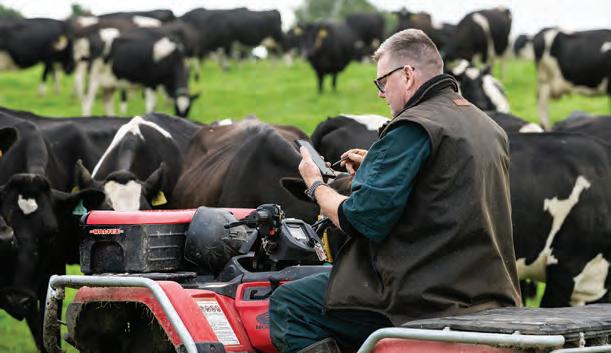
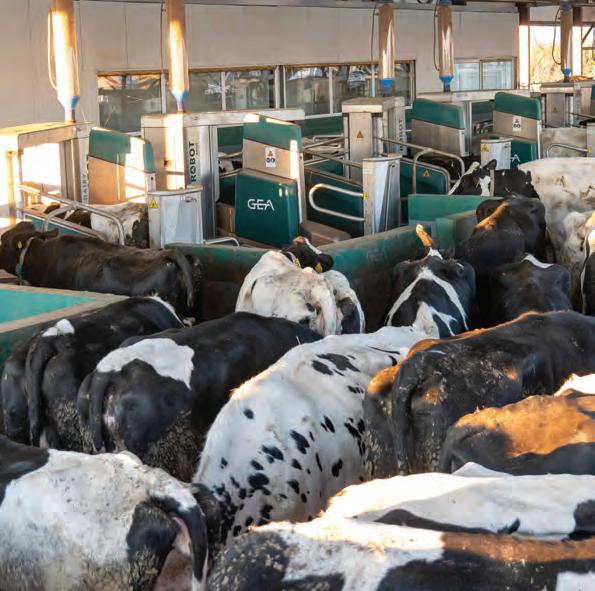
where time is being clawed back. Cows on heat are automatically drafted through a GEA gate powered by Nedap, removing the need for manual drafting. For Craig, “having the cows that are on heat automatically drafted is a huge time saver”, and on a farm of this scale, that efficiency quickly adds up.
This level of visibility reinforces what the system is delivering. It is not just about saving time, it is about having the right information, at the right time, to make better decisions with confidence. And increasingly, that is what modern farming demands.
At the same time, the system has become more adaptable to how the farm runs. The ability to adjust health alert sensitivity allows Craig to finetune how the system responds, while simple tools like flags have streamlined day-to-day management. www.nedap.com
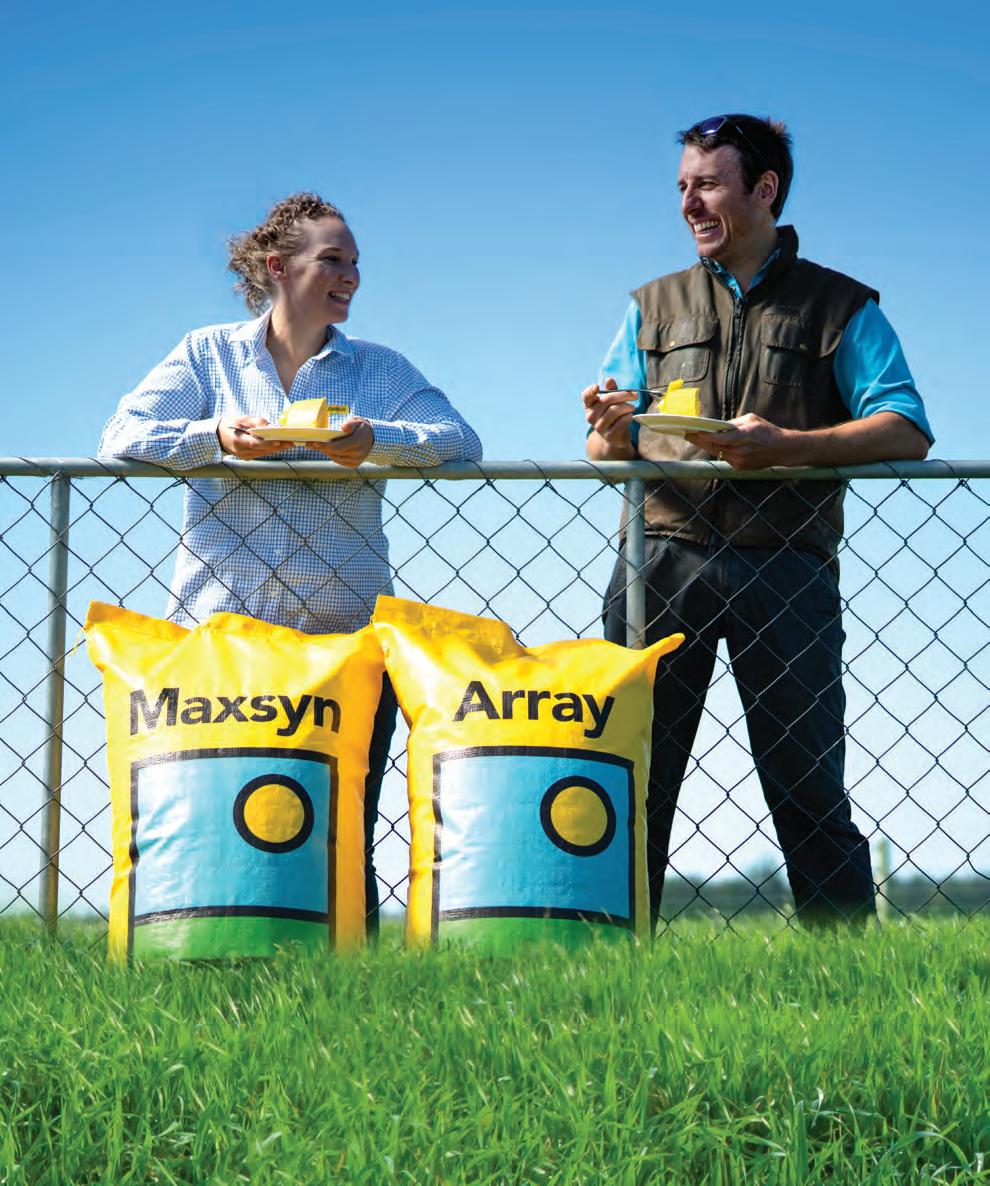
When you invest in pasture, you’re investing in your future. Nothing delivers returns like proven, persistent Maxsyn and Array.
Maxsyn, New Zealand’s top-selling perennial ryegrass, just got even better – now supercharged with NEA12 endophyte for increased resilience and productivity. Don’t forget Array, the environmental all-rounder delivering high yield plus nitrogen efficiency. It’s the complete package!
Ask your Reseller, or learn more at barenbrug.co.nz
MINDA® connects with wearable devices, NAIT and on-farm technology.
That means key animal information flows where it’s needed, helping you make decisions with confidence. Visit lic.co.nz/integrations to learn more.


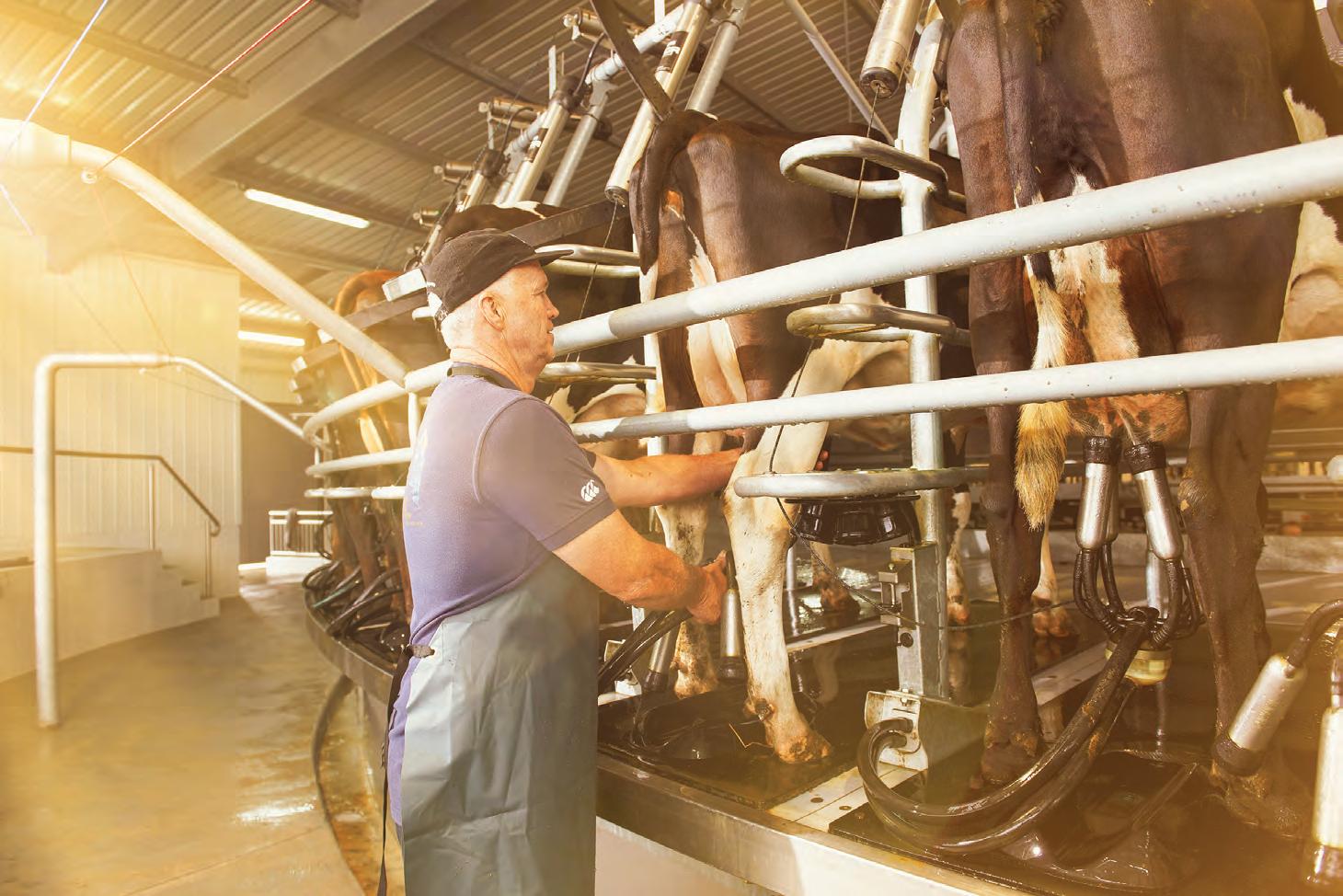
THE DAIRYPROQ
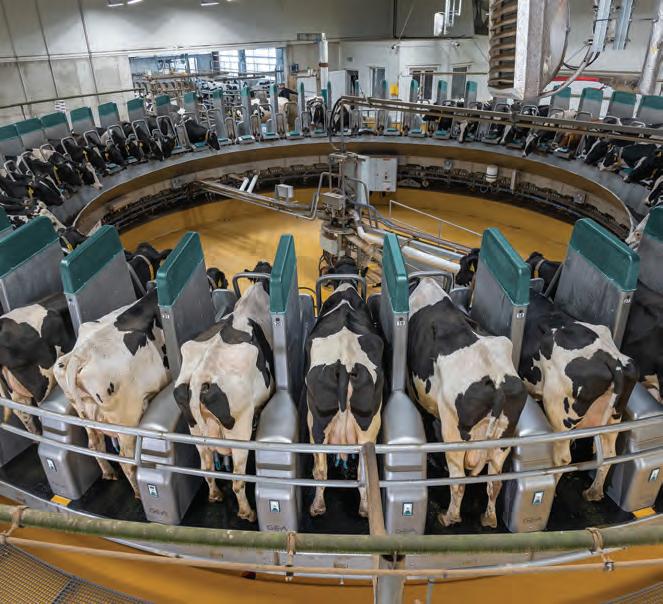
robotic rotary, the first of its kind in the Southern Hemisphere, has proven to be an impressive addition for Victorian farmers Paul and Marsha Smith.
Milking 800 cows at Mepunga East property with two staff, Paul and Marsha Smith are pleased by how their herd is milking through GEA’s fully robotic rotary, the DairyProQ.
The couple wanted to invest in a milking solution that could improve efficiency
while maintaining their commitment to a full pasture-based system.
Their old conventional 50-bail rotary, built in 1998, had a limited life span and they were ready for a new era of automation.
The robotic rotary has shown clear benefits not only in milking efficiency but also in workforce savings. Paul has reduced staffing by two fulltime equivalents, as the automation lowers the need for manual labour, contributing to long-term savings for the farm.
In terms of cow adaptation, the system has made the transition smooth, with the technology allowing five attempts to attach each teat cup and then the system sends an alert to the monitor. The monitor also shows them exactly what’s happening on the platform, including milk production, cell count and health information.
Deciding to invest in the DairyProQ system wasn’t made lightly.
Paul and Marsha spent years researching the


technology, talking to GEA experts, and consulting with farmers using similar systems worldwide.
Located 300 meters from the old rotary shed, the DairyProQ offers complete automation of each milking step—from cleaning and milking to monitoring—right within each cup. Equipped with industrial touchscreens and advanced sensors, it provides real-time insights and data, ensuring consistency and quality every time.
A standout feature
of the new system is its automation, which has had a noticeable effect on the herd’s behaviour.
“When you’re cupping up on a rotary, you’re standing right where they’re walking in. Because there’s no one there now, they’re just piling on better than I’ve
ever seen them walk on a rotary.”
Now three years in, Paul says he’s pleased with the investment. The $6 million investment including feed pad, shed, feed system, roller mills and complete dairy is on track to deliver a return in five years instead of
the 15 initially projected.
“We haven’t had any major teething issues, and I’m happy we made the investment,” he says.
As he watches his cows confidently enter the rotary, he’s optimistic that this technology will serve his farm well for years to come.













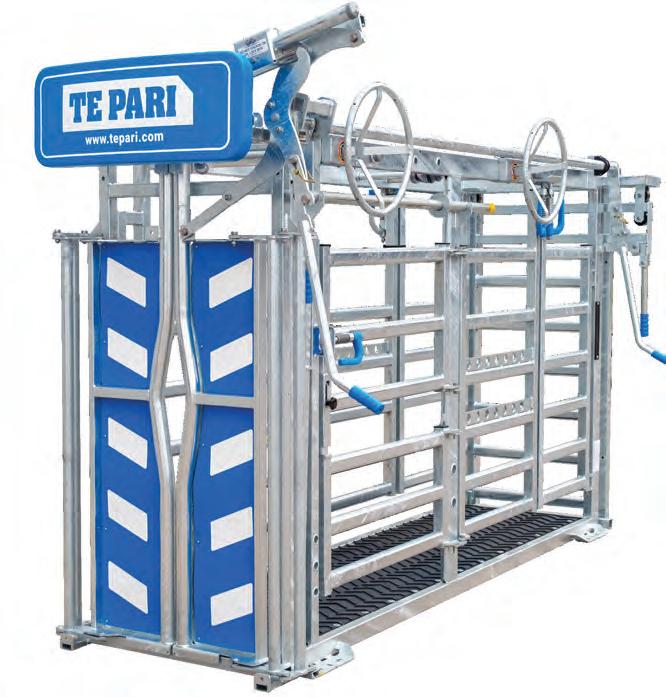
LIC’s updated AB facility standards, many dairy farmers are now considering upgrading their yards to include compliant AB races.
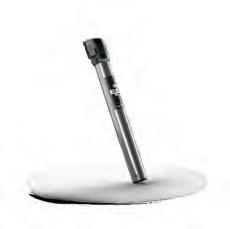

Benefits of a dedicated AB facility include reduced risk of injury to cows, staff, and technicians, faster, more streamlined insemination, a calmer working environment for animals and the potential for improved in-calf rates. In addition, the set-up also lends itself for other tasks such as vaccinations, blood testing, and scanning.
As part of the design, an optimal race width of 1050mm allows cows to stand on an angle to
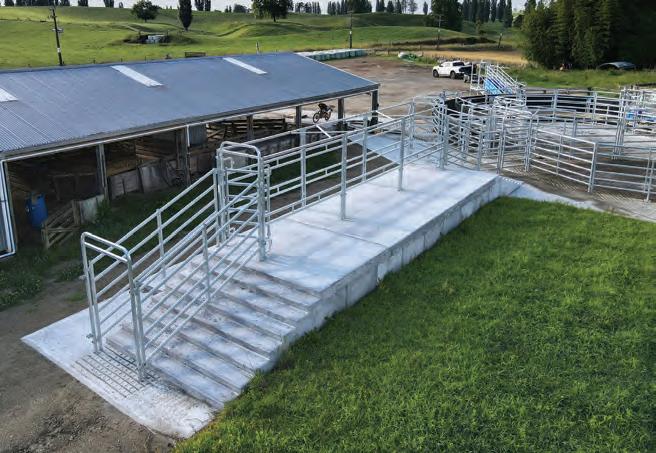
provide good access for AB technicians, reducing delays and the risk of injury.
As part of a dedicated installation, the AB Race
can be complemented by an optional pit, making jobs like teat sealing much easier. The pit is covered by strong FRP (fibre reinforced plastic)
grating that is easily removed for access. The grating doubles as a great anti-slip standing for AB technicians. visit www.tepari.com
FARM INNOVATION Network (FIN) is bringing global agritech innovation to New Zealand farms through a new international programme it says is designed to fast-track technology validation in real farming systems.
The UK Agri-Tech Centre’s Global Growth Accelerator will introduce a select group of UK dairy and livestock innovators to New Zealand, where their technologies will be piloted directly on local farms through FIN’s nationwide network of progressive farmers.
Delivered by the UK Agri-Tech Centre, and in collaboration with Agnition Ventures and AgriTech New Zealand, the programme creates a
new international pathway for promising agritech solutions to be validated in one of the world’s most advanced pasture-based farming environments. For New Zealand farmers, the programme provides early access to emerging technologies not yet available locally, with supported pilot trials allowing farmers to test innovations with minimal risk while helping shape products through realworld feedback. These technologies have already proven themselves on UK farms, delivering both technical performance and real on-farm value. Now UK companies are bringing them to NZ to pilot in local conditions,
work directly with farmers, and refine them for our farming systems before broader rollout.
It also leverages the counter-seasonality between the UK and New Zealand, enabling innovators to continue testing technologies year-round and accelerating development cycles that would otherwise stall during the northern hemisphere off-season. Jasper van Halder, chief executive of Agnition Ventures and chief innovation officer at Ravensdown, said the programme highlights the important role New Zealand farmers play in shaping the next generation of agricultural technology.
TWO
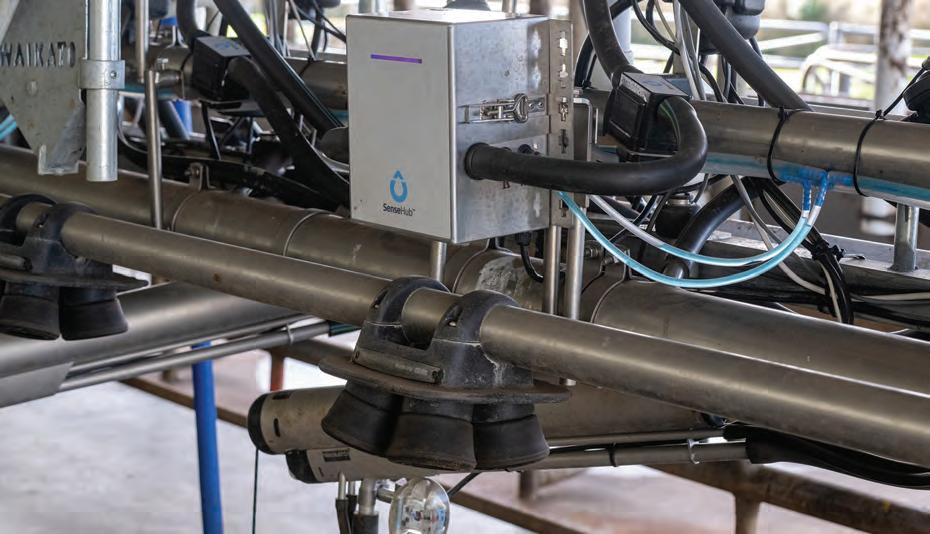
INLINE milk sensors are now available on monthly subscription from SenseHub Dairy, adding milk yield and quality insights to the SenseHub Dairy platform powered by MSD Animal Health.
MSD Animal Health business unit lead - technology, Austin Heffernan, says the sensors capture data from each cow at every milking and automatically transfer it to SenseHub software, where it is displayed in userfriendly dashboards and reports.
With individual animal insights, farmers can track trends over time and use the information to support decisions on breeding, feeding, culling and drying off.
Both sensors can be retrofitted to herringbone or rotary sheds milking herds fitted with SenseHub Dairy collars.
SenseHub Dairy MilkPlus Sensors collect yield plus fat, protein and lactose percentages, and also calculate conductivity and check for the presence of blood to help monitor for early signs of udder health issues.
SenseHub Dairy Somatic Cell Count Sensors automatically perform a Rapid Mastitis Test (RMT) within two
minutes of cupping for each cow, then send results directly to the SenseHub Dairy platform.
Optical warning lights can be installed at the milking point which turn green, orange or red, depending on the result while each cow is still in the bail, indicating that there may be a potential issue and allowing milking staff to act quickly if necessary.
“The addition of these sensors gives farmers more timely data to make informed decisions around breeding, feeding, culling and drying off their cows,” Heffernan says.
“The data builds a clearer picture of cow performance for a range of indicators, so farmers can act on patterns over time rather than just the snapshot they get from a herd test on one day in a season.”
Early adopters report improved feed management and more confidence in mating and culling decisions.
With more frequent insights, farmers can see how feed changes affect production and intervene quickly when performance shifts.
At mating, the extra data can help identify top performers for high
value straws or sexed semen, while supporting decisions to mate lower performers to beef sires.
Users see a dashboard that highlights at-risk cows, and view and download customisable reports which provide deeper insights into the performance of every cow in the herd for a range of
milk yield and quality criteria.
“Our tech team is continuing to refine how insights are displayed, with further enhancements planned over the coming year,” Heffernan says.
Standard outputs include daily and weekly yield reports and a combined milk solids report that builds over the season.
The Herd Shift Summary report compares each milking result by group against the weekly average, helping managers spot meaningful changes in production by cow, group and shift.
For more information and pricing, visit www.sensehub.co.nz

Whether your farm suits neck or ear tags, Nedap SmartTags give you the freedom to choose - with no compromise on reliability, durability or performance. Trusted by tens of thousands of farmers managing more than 7 million cows worldwide, Nedap SmartTags deliver accurate, 27/4 insights into reproduction, health and behaviour. Smarter herd management helps you streamline operations, make more informed decisions and lift performance across your entire farm every day.

Your herd, your choice. Talk to your local Nedap representative to find the SmartTag solution that fits your farm. Find out more at nedap-livestockmanagement.co.nz
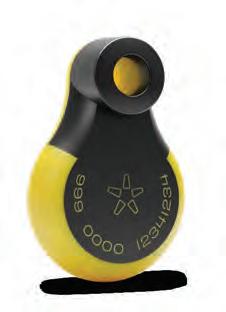
WEARABLE COLLARS, ear tags and boluses are becoming increasingly common on Kiwi dairy farms.
From activity monitoring to health alerts, technology is giving farmers earlier signals about what’s happening in their herd.
Wearables provide valuable insights for farmers, and even more value can be unlocked when that information links back to the rest of a farm’s animal records.
That’s where herd management systems like MINDA come in.
Used by around 90% of New Zealand dairy farmers, MINDA acts as a central hub for herd information. Each year, more than 40 million animal events are recorded in MINDA, from calvings and matings through to herd testing and treatments.
LIC’s head of farm software, Blair Smith, says the goal is making sure the growing volume of farm data works together in a way that’s useful for farmers.
“Wearables are generating more data than ever before. The important thing is making sure that information links back to the farmer’s herd records so they can use it to make decisions.”
Turning wearable data into action
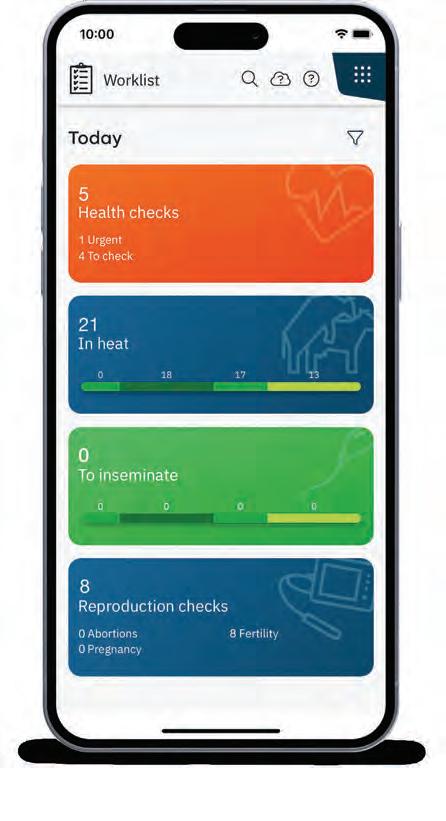
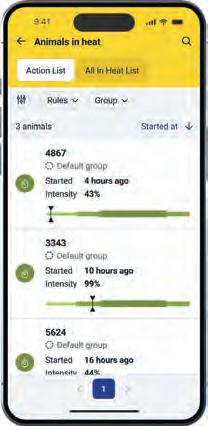
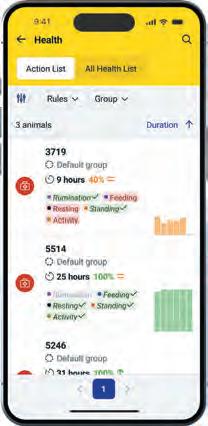
Smith says integrations allow wearable alerts to flow directly into MINDA and appear in tools such as MINDA Groups to help farmers manage and sort animals.
“Heat alerts help identify animals that may be ready for mating, while health alerts can flag animals that may need attention. From there, farmers can act on that information by drafting animals to be mated or seen by a vet and recording those events directly in MINDA.”
Integrations also make it easier to set up new on-farm technology. Animal identification information already stored in MINDA can be shared with other systems, helping wearable providers identify animals and link alerts back to the right cow.
As well as wearables, ear tags and boluses, MINDA also integrates with in shed tech providers, farm management systems and milk processors, giving farmers more insight than ever before.
Connecting tools on farm
MINDA currently integrates with 16 agritech companies, with more currently underway. More than half of the herds using MINDA are already using at least one of those integrations.
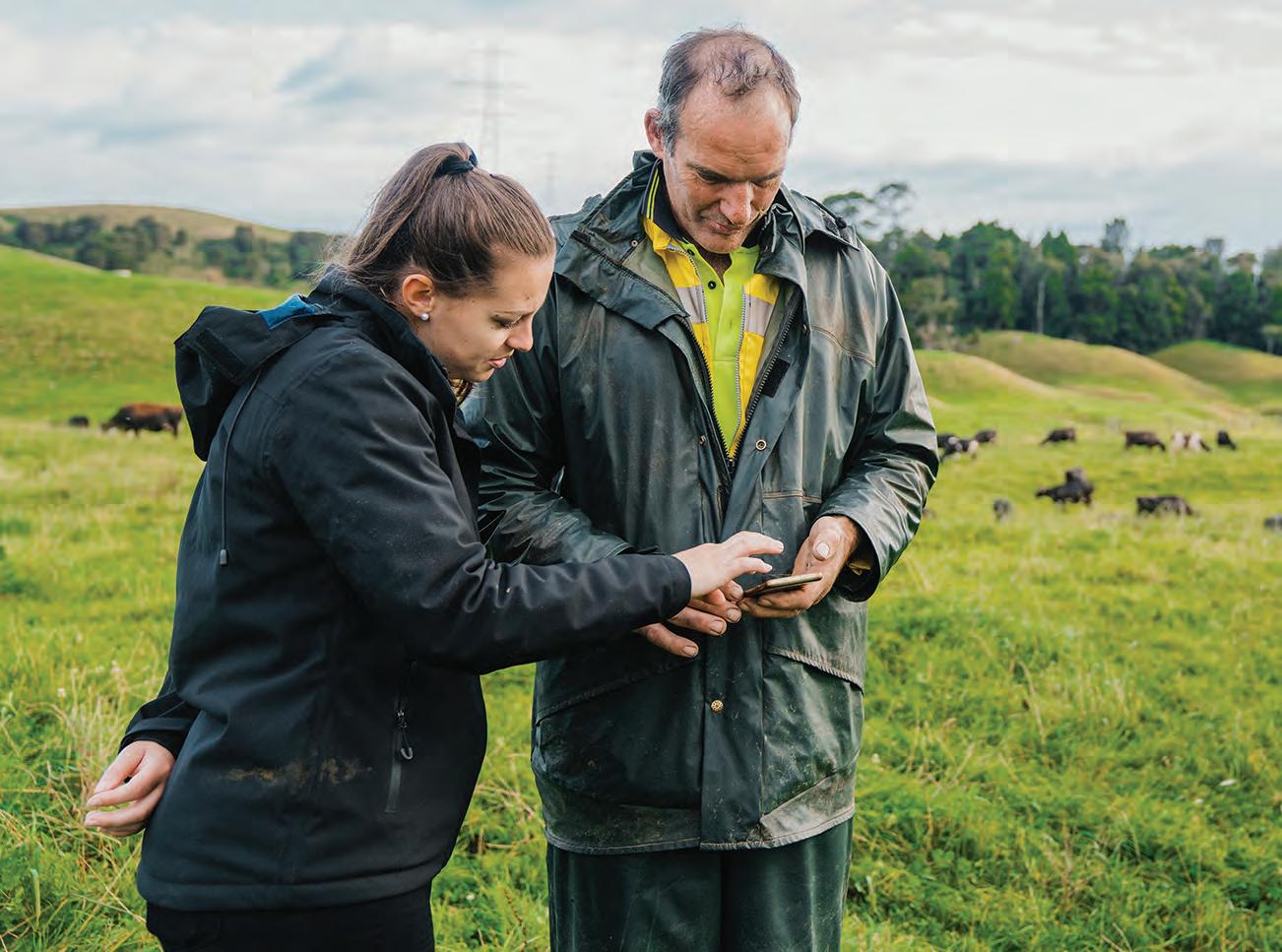
Smith says it’s important to realise that control of what information is
shared always sits with the farmer.
“Nothing gets shared unless the farmer says yes. They decide which companies their data goes to.”
MINDA currently integrates with 16 agritech companies, with more currently underway.
“MINDA has always been about helping farmers improve their herd. Today that means supporting farmers to confidently adopt and apply
new technology and helping them turn the resulting data into better on-farm decisions and ultimately better cows.”
MARK DANIEL
New Zealand agricultural businesses are coming together to strengthen innovation, local manufacturing capability, and access to essential farm inputs for farmers across the country.
Farmlands have announced it is acquiring Donaghys Agriculture, a specialist NZ agribusiness headquartered in Christchurch with expertise in animal health, agricultural chemicals and dairy shed solutions.
The move combines Donaghys’ technical capability, manufacturing and product development with Farmlands’ national rural supply network, expanding farmers’ access to locally developed products, specialist technical advice and practical on-farm solutions tailored to New Zealand conditions.
The acquisition will see Donaghys Agriculture join Farmlands while continuing to independently operate its established manufacturing, product
development and distribution capabilities.
Farmlands chief executive Tanya Houghton said the partnership represents a positive step for New Zealand farmers at a time when reliable supply chains, technical expertise and innovation are increasingly important.
“Farmers are facing more complex challenges – from animal health and parasite resistance through to productivity and environmental performance,” Houghton said.
“By bringing Donaghys
and Farmlands closer together we can invest even more strongly in the research, innovation and technical capability that farmers rely on to meet those challenges. Importantly, it keeps Donaghys’ expertise, product development and manufacturing capability in New Zealand hands, supporting solutions that are designed for our farming systems and our conditions.”
Donaghys chief executive Jarred (Jed) Marfell said the partnership builds on a trusted long-standing
relationship between the two organisations and creates new opportunities to extend the reach of its manufacturing, distribution and export business while staying true to the strengths that have defined the business for more than 150 years.
“Donaghys has evolved alongside New Zealand farmers, working in partnership with them and developing practical solutions that are fit for our unique conditions,” Marfell said.
“Farmlands has been an important customer and partner for many
HAVING GONE through a troublesome “divorce” from its association and part ownership of AGCO, Indian manufacturer TAFE is said to be determined to be seen as a modern business rather than just another tractor maker from the developing world.
Tractors and Farm Equipment LTD, (TAFE) has announced a record performance for the financial year up to 2026, with tractor sales the highest ever in the company’s history. The company concluded the fiscal year delivering 37.4% growth in March 2026, against the domestic industry growth of 29% for the month.
According to TAFE, this exceptional growth reflects its strong product
line-up, deep farmer connection, and consistent demand across key agricultural regions. Achieving its highest-ever domestic sales results, from both its Massey Ferguson and Eicher Tractors brands, TAFE’s export momentum remained strong, with 12,584 tractors shipped to international markets.
To meet sustained demand across domestic and export markets, TAFE’s manufacturing plants operated at full capacity during the year, with the company said to be actively evaluating capacity expansion initiatives to support future growth and reinforce its position in the global tractor industry.
Vice-chair of TAFE, Dr. Lakshmi Venu said: “This has been a very positive year for both the tractor market and for farmers across the country. In addition to favourable
years. Bringing our businesses together will really enable us to really take things up a notch with our research and development and
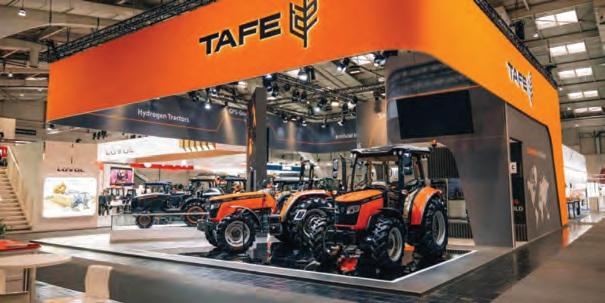
monsoons, the government’s move to reduce GST [Goods and Services Tax] has provided significant relief to the farming sector. We are now seeing a very encouraging trend in the penetration of mechanisation in rural areas.”
While global uncertainties and inflationary pressures arising from ongoing geopolitical tensions and war-
related supply disruptions continue to impact input costs, TAFE said that the underlying fundamentals of Indian agriculture remain resilient. Looking ahead, TAFE appears optimistic about the medium-term outlook, supported by continued mechanisation uptake, replacement demand, expanding applications of tractors and implements, and a gradual recovery
deliver practical products that work on-farm that helps farmers lift performance today and stay competitive into the future.”
in key export markets.
While other markets, including New Zealand, appear to be in the doldrums or at best, treading water, the UK also appeared to buck the trend in March, with 2,134 tractors registered-a 45.6% increase over March 2025.
Having been below the seasonal average throughout last year and in the opening two months of this year, March is typically the peak month for registrations, driven by the start of the fieldwork season, the end of the tax year and the introduction of a new registration mark. The March 2026 total was the highest for three years, and slightly above the average for the time of year over the previous five years. The number of tractors registered in the first three months of the year was also the highest for the last three years, and a 34.3% increase on the same period in 2025.
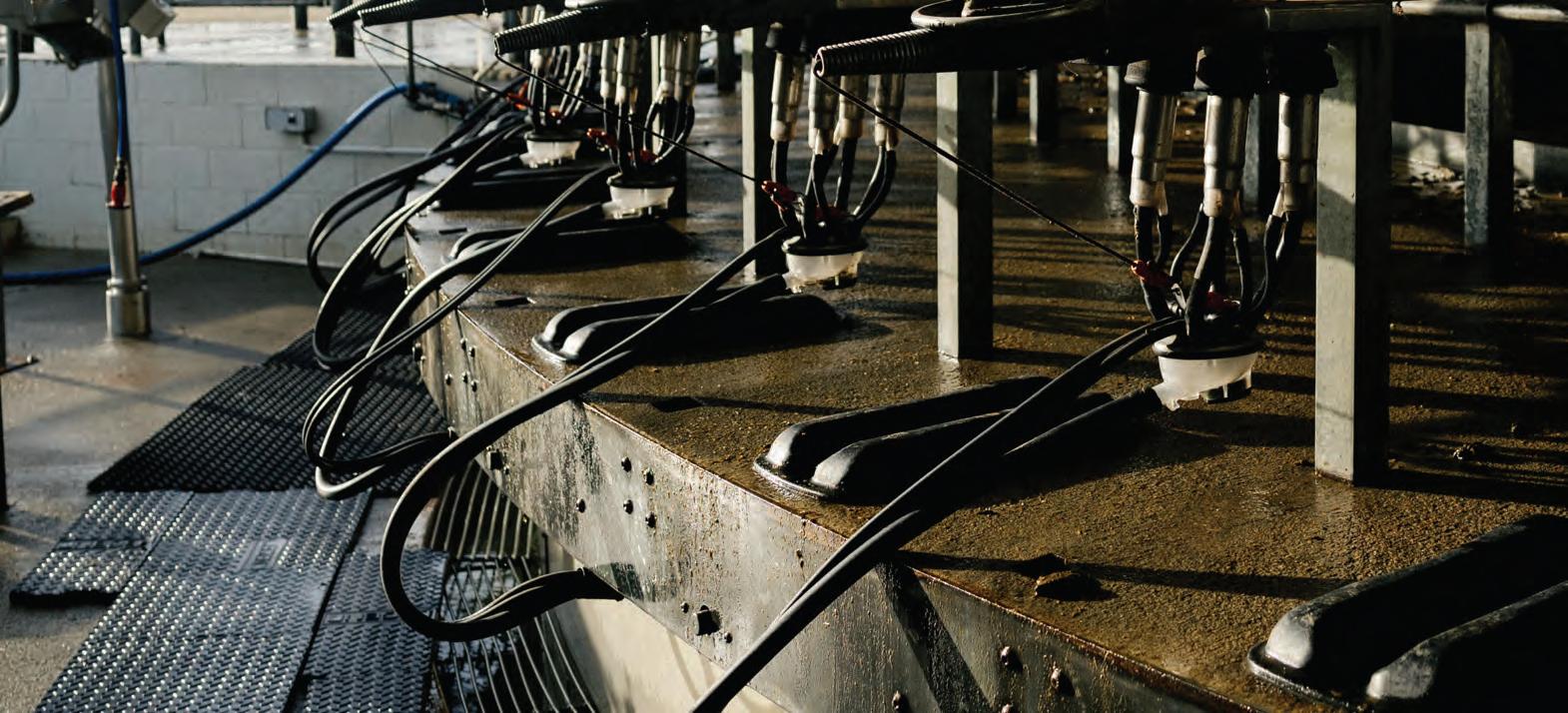
MARK DANIEL markd@ruralnews.co.nz
MASSEY FERGUSON has announced the release of the SB.1436DB small square baler to New Zealand, featuring a unique layout producing two rows of bales during each pass, doubling output over a single baler producing 14-by-18-inch bales.
“The SB.1436DB is built to meet the needs of modern hay producers who face increasing pressure from labour shortages, tight harvest windows and demanding quality standards,” said Josh Vroombout, senior marketing manager for Massey Ferguson Australia and New Zealand. “With its heavy-duty design and groundbreaking technology, this baler helps operators achieve better efficiency and superior results, reducing costs while increasing profitability.”
The 2.1 metre, tine to tine pickup width, conveys the crop into a single 14-by-36-inch chamber, before being separated by a splitting knife to create individual 14-by-18-inch bales. From there, the bales pass through a common density system that ensures consistent compression.
Independent knotter trips on either side of the baling chamber allow for precise bale lengths and consistency
regardless of windrow variability by independently tying each bale to a preset length between 24 and 52 inches, even in variable windrow conditions. Completed bales are dropped through the bale chute into independent rows, simplifying handling and transport.
Operating at 90 strokes per minute with a 556mm stroke length, the MF SB.1436DB requires a 1000rpm PTO, a minimum of 120 PTO horsepower and a minimum tractor weight of 5000kg.
The baler features the SimplEbale system, an advanced electronic monitoring and control system that automates critical baling processes.
The system ensures consistent bale density, weight and dimensions, allowing operators to focus on overall productivity. From the cab, operators can monitor flake thickness, flake count, bale length and bale weight in real time, ensuring maximum throughput, while also eliminating common operator errors that reduce productivity.
“With a target of 18.1kg and 12 flakes per two-tie bale, an operator can lose 71 bales per hour and 1300kg per hour of productivity by just averaging two extra flakes per bale,” said Vroombout.
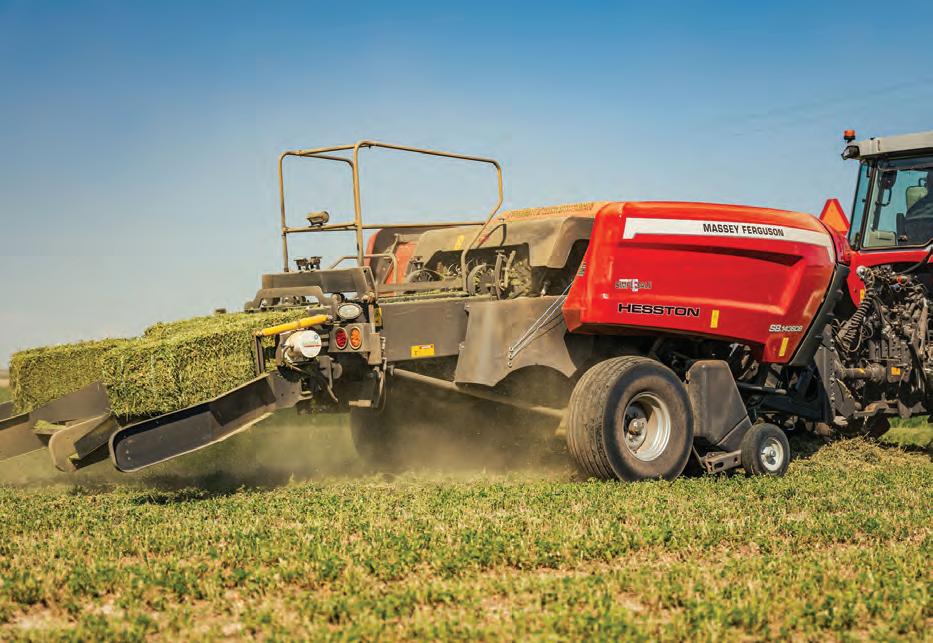
“This can cost over eight hours of additional baling time. SimplEbale eliminates this issue by automating bale production, helping operators achieve better results.”
The SB.1436DB is engineered to keep operators in the field longer, featuring an increased twine capacity holds up to 20 balls, allowing up to 8000 bales before refilling, typically doubling the capacity of comparable balers.
The system includes automated knotter lubrication, reducing manual maintenance and ensuring consistent performance. Service-friendly access to critical components makes repairs and adjustments quick and easy, minimising downtime.
“The SB.1436DB is not just another baler; rather a testament to MF’s commitment to innovation and to the producers who depend on our equipment to succeed,” said Vroombout. “With this baler, we’re delivering the tools needed to achieve better productivity, better quality and better profitability.”
Visit www.masseyferguson.com
AGROINTELLI, THE Danish manufacturer of the Robotti autonomous implement carrier, filed for bankruptcy in early March, although employees are still working and building machines to fulfil orders, while the receiver searches for a new owner so that the company can continue. Agrointelli claims to have delivered more than 65 robots to date, that cumulatively have clocked up more than 10,000 hours of operation in twenty countries. Interestingly, Kubota was also interested in the Robotti carrier, displaying a machine in corporate colours on its Agritechnica stand.
AMAZONE HAS introduced an integrated slurry-incorporation option for its Catros Pro compact disc harrow, combining soil tillage and effluent application in one operation.
The Pro-Pack configuration is supplied ex-factory with a Vogelsang SynCult DosiMat DMX slurry distributor, able to deliver application rates of up to 10,000 litres per minute. Slurry is delivered directly behind the first row of discs, depositing the fertiliser into the slit before the second row of discs closes the soil again. This method is said to minimise ammonia losses and improve nutrient uptake efficiency while helping farms meet tightening environmental regulations.
MAKING A strategic move to align with a broader industry trend toward fuel-based decarbonization pathways, Kioti has confirmed that its full lineup of tractors and UTVs is now compatible with HVO (Hydrotreated Vegetable Oil) renewable diesel, allowing users to switch to a lower-emission fuel without requiring any hardware changes.
The approval applies across current Kioti models, positioning HVO as a “drop-in” alternative to conventional diesel within the brand’s existing product
From a technical standpoint, HVO fuel complies with the EN 15940 standard for paraffinic diesel and is chemically similar to fossil diesel, enabling seamless use in modern common-rail engines without recalibration or system modifications.
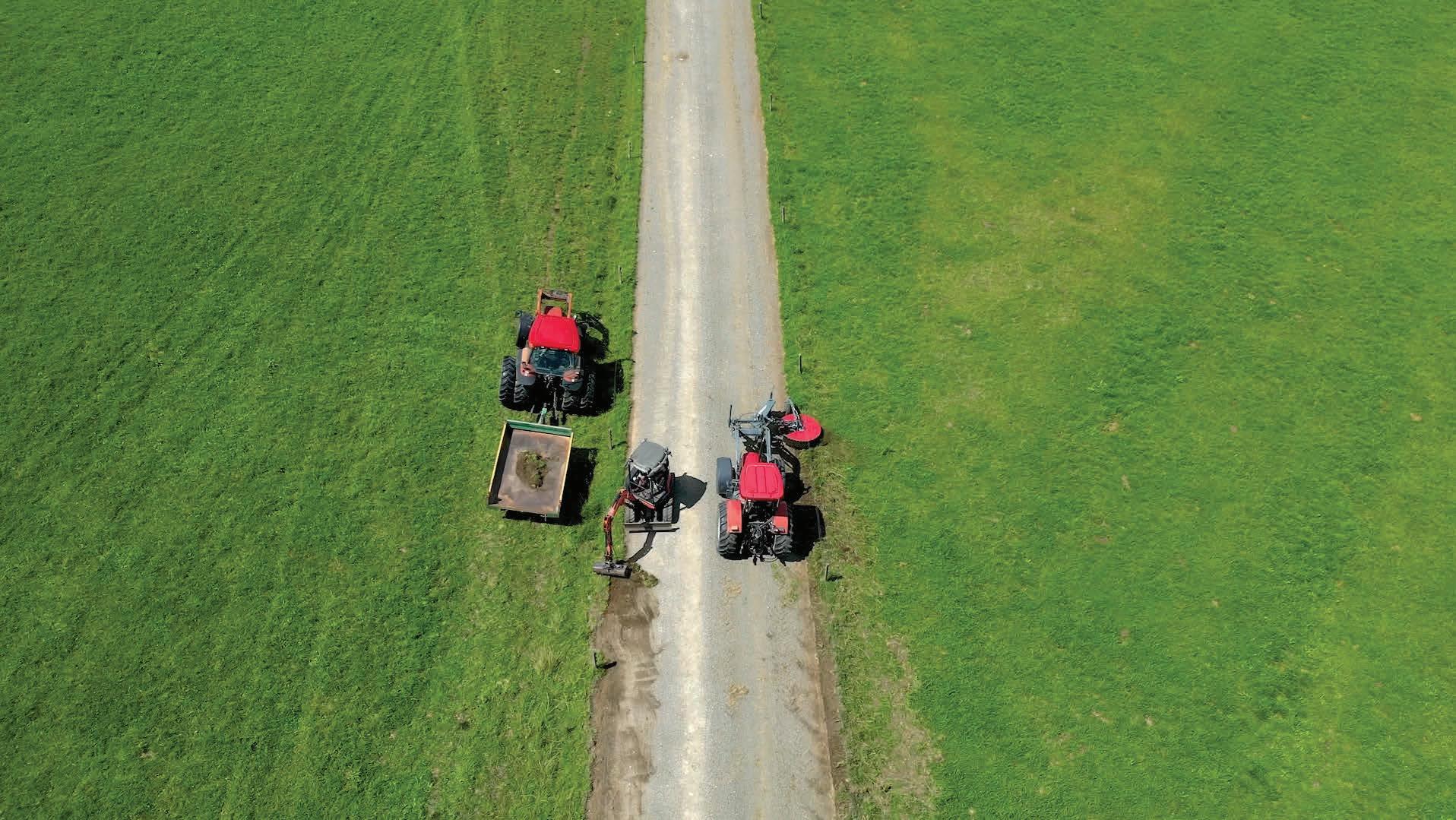




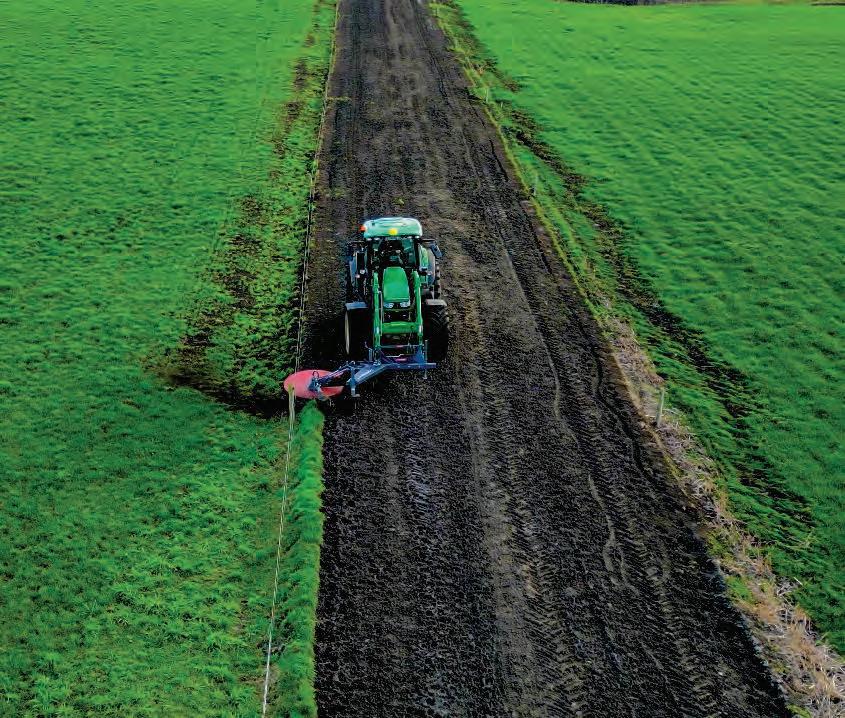

DANIEL markd@ruralnews.co.nz
NISSAN HAS announced
that the Nissan MORE Ownership Program, available to New Zealand customers, is an initiative to deliver peace of mind, cost certainty, and longterm value across the Nissan range.
When servicing is carried out by Nissan authorised outlets, the program brings together the triple benefits of up to 10 years / 300,000km warranty (whichever comes first), Service Activated Roadside Assistance for the same term and fixed price servicing for the first five scheduled services from the warranty start date. Available exclusively through authorised Nissan NZ dealers, the MORE program is claimed to reward customer loyalty and deliver industry-leading ownership support.
All parts and components covered under a new vehicle warranty remain protected, excluding normal wear and tear, providing customers with confidence well beyond the traditional warranty period. Key requirements are that each vehicle must have all logbook services completed at authorised dealers, within scheduled intervals, or within 60 days/3000km of a scheduled interval.
For Nissan electric vehicles, the program complements existing coverage, including an
eight-year/ 160,000km (whichever comes first) lithium-ion battery capacity State of Health Warranty, protecting against capacity loss below nine bars.
In a move that recognises long-term Nissan ownership, the program also offers a backdated warranty extension for eligible vehicles purchased new from 1 January 2023, with loyal customers who have completed all scheduled services with Nissan dealers automatically qualify for extended warranty coverage, with no additional steps required.
For owners who have serviced their vehicle outside the Nissan network, a re-entry opportunity is available by returning for a scheduled service, and a $99 vehicle assessment at an additional cost of $99 via any authorised Nissan dealer.
From 1 April 2026, Nissan customers can also unlock up to 10 years/ 300,000 km of Service Activated Roadside Assistance, renewed annually with each eligible dealer service. Coverage includes 24/7 nationwide support such as emergency assistance, battery jumpstarts, flat tyre changes, fuel delivery, lost key assistance, and towing to the nearest authorised Nissan dealer.
The MORE Ownership Program also introduces Flat Price Servicing, offering transparent, fixed pricing for the first five scheduled services on


eligible vehicles. Flat price servicing covers labour, genuine parts, lubricants and standard scheduled maintenance under normal driving conditions. Visit

Set your season up for success with Teatseal® - New Zealand’s #1 mastitis protection.
Teatseal is New Zealand’s most proven, trusted and recommended internal teat sealant, designed to protect cows throughout the entire dry period. The result is fewer mastitis issues around calving and early lactation, lower treatment costs, and more milk in the vat.
Safeguard your herd with Teatseal. Talk to your vet about using Teatseal this season.