




































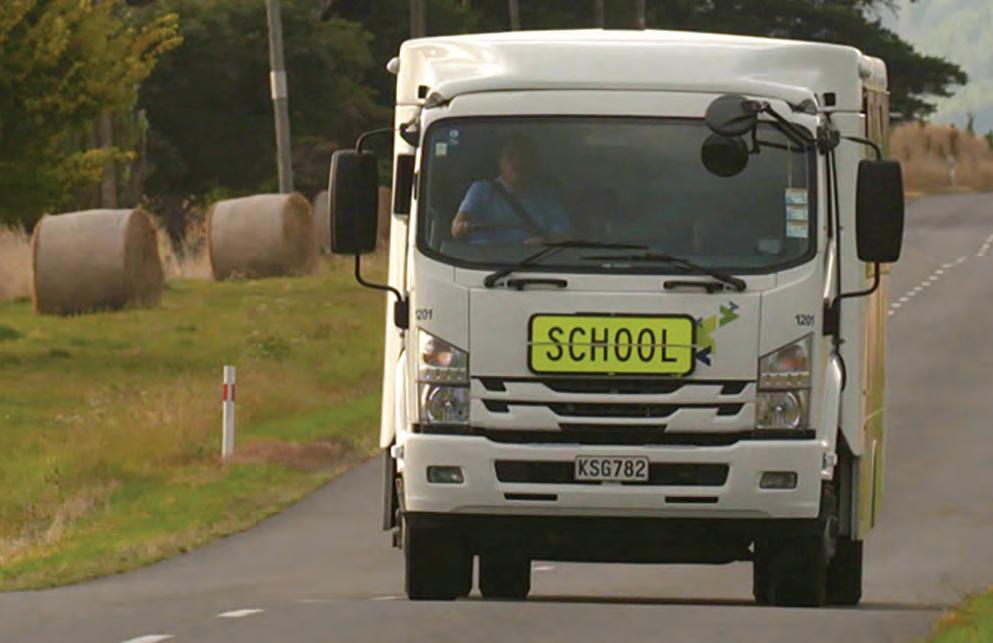
Let the kid on the bus, says ACT. PAGE 3
Celebrating Sign Language Page 10 A SPECIAL WEEK
Cost of drying-off Page 24


Let the kid on the bus, says ACT. PAGE 3
Celebrating Sign Language Page 10 A SPECIAL WEEK
Cost of drying-off Page 24
2026 Fonterra Dairy Woman of the Year, Hinehou Timutimu says the award represents an opportunity to inspire others.
PAGE 6
As calving approaches, dairy sheds across New Zealand are gearing up for one of the most demanding periods of the year. Milking frequency lifts, system pressure increases, and once the season is underway, there’s very little tolerance for disruption.
Now is the opportunity to step back, assess your setup properly, and ensure your rubberware is ready to perform under pressure.
Issues in rubberware don’t tend to appear overnightthey build gradually, then show up when systems are working hardest. Faster cow flow, longer milkings, and tight schedules leave little room to diagnose problems. Taking the time pre-calving to inspect, replace and reset components can prevent those disruptions later.
System performance starts with your rubberware
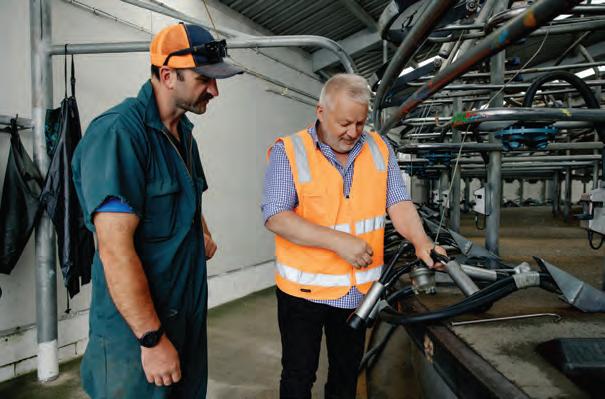
Rubberware sits right at the frontline of your milking system. Liners, milk tubing, clusters and claws all directly influence milking efficiency, teat condition, and milk quality.
When one part begins to fall short, it rarely stays contained. You’ll often see the effects elsewhere in the systemincreased cup slip, incomplete milk-out, or a lift in somatic cell counts.
Liners are a critical starting point. Dairy NZ recommends replacement at around 2,500 milkings. Over time, liners lose elasticity, absorb chemicals and milk fats, and develop fine wear. Even without visible damage, small changes in flexibility or shape can impact seal integrity, alter teat compression, and reduce milking efficiency.
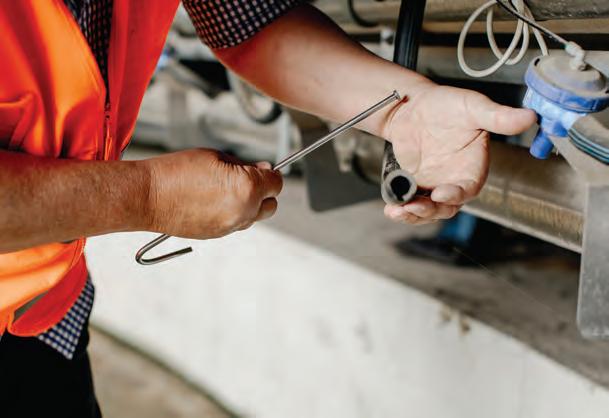
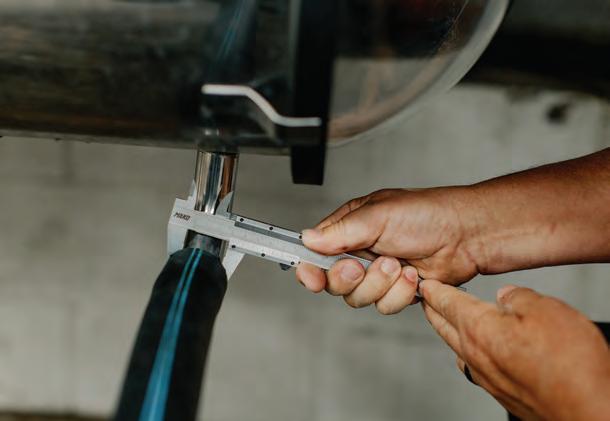
Beyond wear, correct fit and installation play a major role in how rubberware performs.
Minor mismatches - whether in liner fit, claw size, or tubing layout - can create uneven stress across the system, accelerating wear and affecting consistency.
Milk tubing is another area where issues can go unnoticed. Because it operates continuously, deterioration is often gradual. Internal residue build-up or external cracking can restrict flow and introduce hygiene risks. Replacing tubing as part of a pre-season reset avoids it becoming a bottleneck during peak demand.
Rubberware doesn’t operate in isolation. Vacuum stability, pulsation efficiency, and overall cluster performance all depend on components working together as a system.
During quieter periods, minor inefficiencies can go unnoticed. Under peak conditions - larger herds, faster throughput, longer milkings - those same inefficiencies become much more evident.
If you’re making changes this season, whether that’s new liners, updated clusters, or a shift in herd size, it’s worth reviewing compatibility across the full setup.
This time of year also sees many operators stepping into new sheds. Every system has its own configuration, and assumptions don’t always hold.
Taking the time early to understand how rubberware is set up - how components fit together and performcan help avoid unnecessary issues and ensure everything is operating as expected from day one.

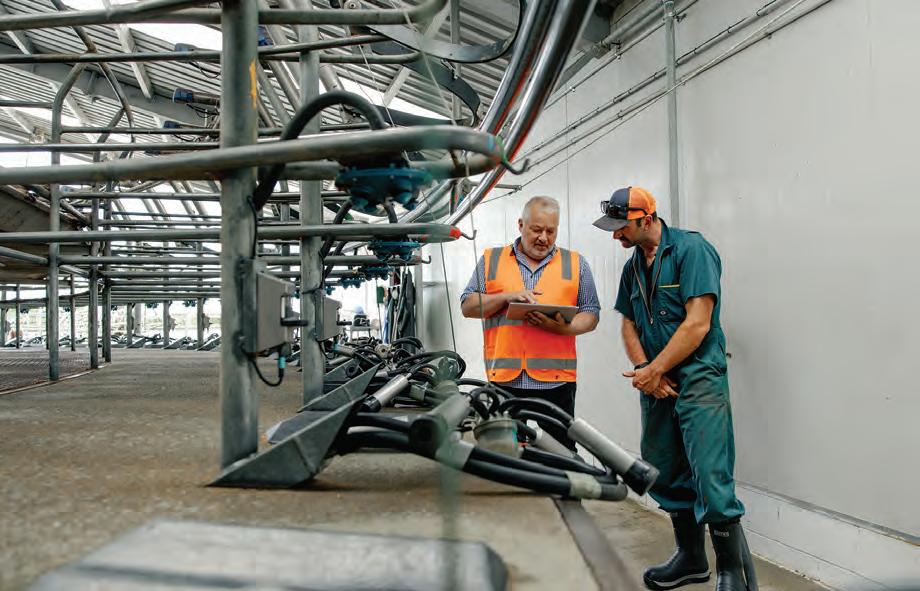
A structured review before calving can provide added confidence. Having an experienced Technical Expert assess your setup helps identify early signs of wear, alignment issues, or compatibility gaps that might otherwise be missed.
Skellerup’s free Rubberware Review service supports this process, with certified NZMPTA specialists providing on-farm assessments and practical recommendations tailored to each system.
While regular checks throughout the season remain best practice, a targeted pre-calving review can go a long way in reducing risk. Addressing small issues now is far simpler than dealing with them when the shed is at full capacity.
Contact your local rural supplies store or scan the QR code to book a free onfarm Dairy Shed Rubberware Review with Skellerup.



BURKE peterb@ruralnews.co.nz
A HYPOTHESIS in a major dairy research programme that bulls genetically proven to be low methane producers could pass this trait onto their lactating daughters has proved to be incorrect.
This was revealed by Dr Richard Spelman, the chief scientist at LIC, speaking at the recent Agricultural Climate Change conference in Wellington – an event which attracted some of the world’s leading scientists and policymakers in the field of climate change.
The programme began five years ago when LIC along with CRV and the Ag Emissions Centre set about identifying low methane emitting bulls. The theory was that this trait could be passed on to their daughters, which could prove to be a major breakthrough.
The aim of the trial, says Spelman, was to produce a cow with low amount of gross methane emissions relative to the kilograms of dry matter it ate. Two groups of sires were selected – those with low methane emission and that those with high emissions – and they were mated to generate
about 400 heifers.
“Of their progeny about 200 females were found to be low methane emitting and the other half high emitters. The final test was to see if these low emission traits remained when the cows were lactating,” he says.
Spelman says when they initially measured these animals at 10-12 months of age, the traits of low emissions clearly showed up and that was very encouraging. But the final test was to see if these traits still existed when the cows started to lactate.
He says the test was very expensive –about $4,000-5,000 per animal – and complex to measure. All the cows were housed in a barn because that is the only way to accurately measure feed intake relative to the emissions produced, he says.
The cows were fed silage and some grain. At the same time, the cows’
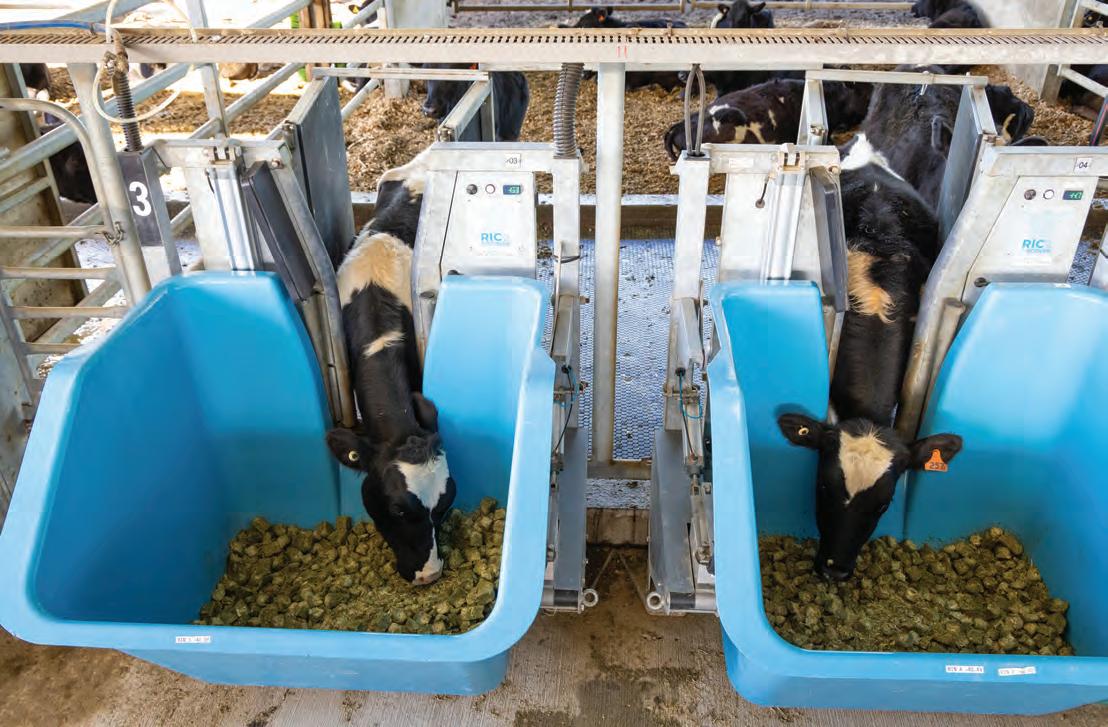
methane emissions were measured in a machine where the animals were attracted to visit up to six times per day
WHILE ALL those involved in this research programme are disappointed, they are committed to doing further research to find out why the low emission trait in a sire is not expressed in a lactating cow.
Dr Richard Spelman says it’s widely accepted that about 20% of the emissions in a lactating cow are
through feed being placed within it.
“To measure feed intake, you need to have animals inside and for
influenced by genetics. He hopes the work can continue but points out that the present trial was relatively small, although statistically valid. He says in future the goal will be to measure thousands more animals in a bid to develop DNA-based tools to identify the low emitting cows and sires.
us that is a key thing, because if they were on pasture, you could find animals that produced less methane but that
He says they need to build up a large data set so that at some point they can confidently go to farmers and sell the sires that will produce low emitting daughters.
“What all this proves is that genetics is a long game and now maybe a longer game than we thought,” says Spelman.
may be because they didn’t eat much,” he says.
For the science team this was the crunch test because if the hypothesis was proved, it would speed up the process of producing low methane emitting cows which would have a significant benefit to farmers and the county as a whole. Sadly, says Spelman, this wasn’t to be.
trait we measured in young bulls is the same trait when you measure it in a lactating cow.
“From our work it doesn’t appear that the
“The traits in the cows is obviously quite physiologically different to those in the bulls,” he says.

SUDESH KISSUN sudeshk@ruralnews.co.nz
ACT’S NEW immigration policy has come under from farmers and the Government.
Immigration Minister Erica Stanford says it’s an attack on the dairy sector which relies heavily on migrant workers.
2025 data shows between 1400 and 2000 migrant workers are approved for dairyspecific jobs in New Zealand each year to fill employment gaps.
Stanford told Dairy News that for a dairy farmer employing a new migrant worker on a fiveyear visa, an extra $11,000 will need to be paid upfront.
NZ dairy farmers compete for the migrant workforce with Australia and Canada and Stanford says at the end of the day farmers will need to fork out the money to secure workers.
“If you are a dairy farm worker, a herd manager for example [on a] five-year visa, that’s an $11,000 upfront cost that a migrant will have
to pay on top of their visa fee, on top of their health check screening, and all those other costs,” Stanford says.
Stanford said migrants would probably not be able to pay this upfront cost, which would then fall to the employer.
“I see this new policy as an attack on the rural sector.”
Federated Farmers dairy chair Karl Dean agrees.
“We think it’s poor policy, with negligible benefits and a whole lot of downsides,” Dean told Dairy News
“It’s an idea floated by one coalition partner that we hope is not adopted – at the very least, not applied to the agricultural sector.”
Dean points out that the Federated Farmers Mid-Season Farm Confidence Survey in January this year showed that farmers’ ability to recruit skilled and motivated staff worsened compared to six months earlier (with 23% finding it harder and only 3% easier, compared to findings in our June 2025 survey).
Dairy farmers

experienced the sharpest deterioration on this issue.
Dean adds that the dairy sector continues to rely on a flow of migrant workers to maintain staffing and production and this policy just throws up more cost and hurdles.
ACT plans to introduce a $6 per day infrastructure surcharge on temporary work visas, on top of existing charges.
ACT leader David Seymour says this ensures migrants contribute to New Zealand’s infrastructure

from day one, before they start paying tax.
“The fee is expected to raise around $80 million a year, while remaining more affordable than comparable visas in Australia and the United Kingdom,” he says.
Dean says Federated Farmers hasn’t reached
out to ACT on the policy yet.
“We’ll shortly be releasing our ‘asks’ of political parties as they work on their policies for the November election, and we’ll no doubt be engaging with ACT and every other political group.”
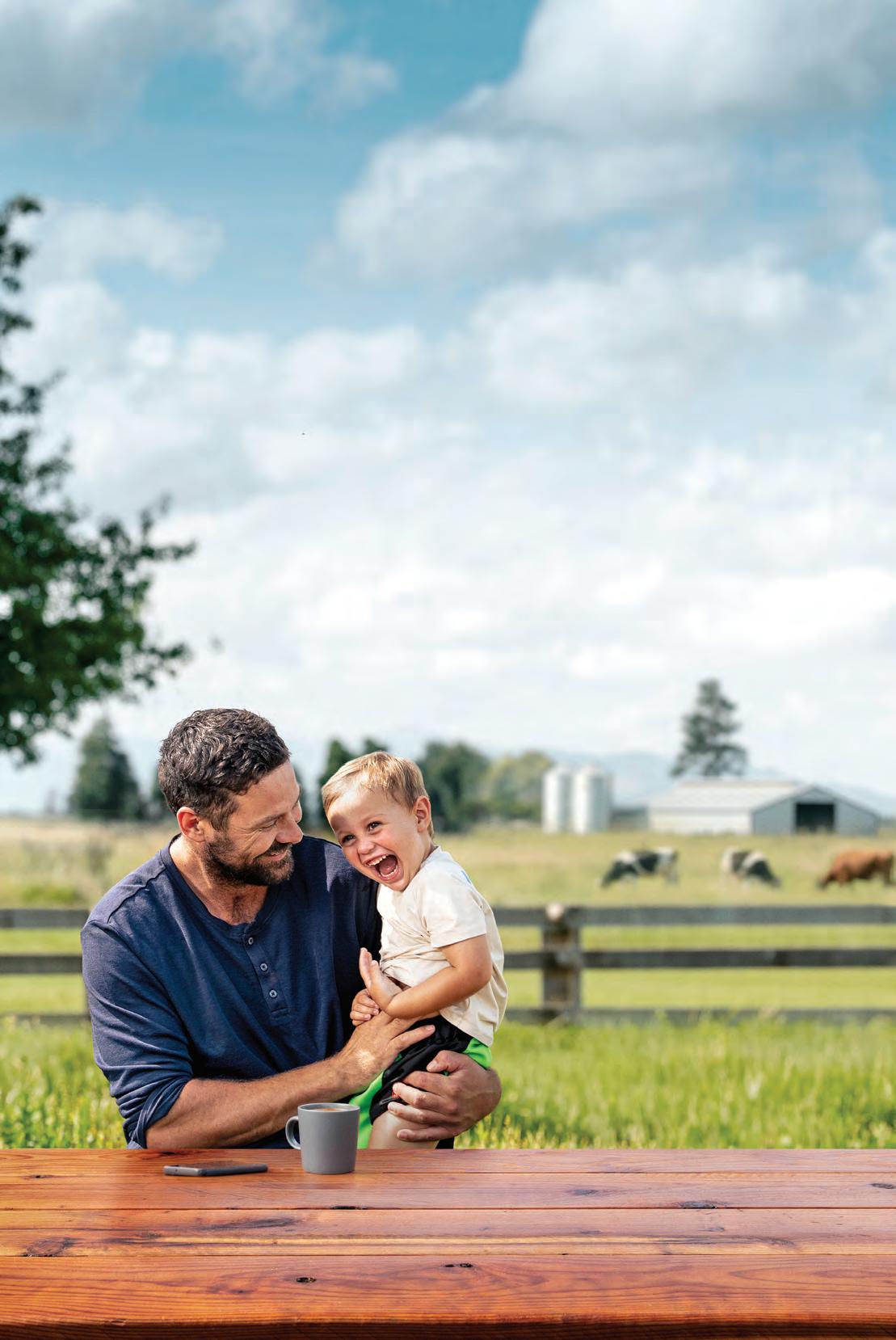
Progress doesn’t look like workit feels like freedom.
With DeLaval’s complete milking ecosystem working quietly in sync, you get time back for the things that matter most.
Because when everything connects, life on farm lets milking, coffee and cuddles happen at the same time.
Let’s shape progress on your farm.
JESSICA MARSHALL jessica@ruralnews.co.nz
HINEHOU TIMUTIMU, the 2026 Fonterra Dairy Woman of the Year, says she feels privileged to have won the award.
“It’s just starting to land,” she told Dairy News the morning after her win at the Dairy Women’s Network 2026 Conference in Christchurch last week.
The fourteenth winner of the award, Timutimu was recognised for her leadership, deep connection to people and whenua, and her impact across the dairy sector and Māori agribusiness.
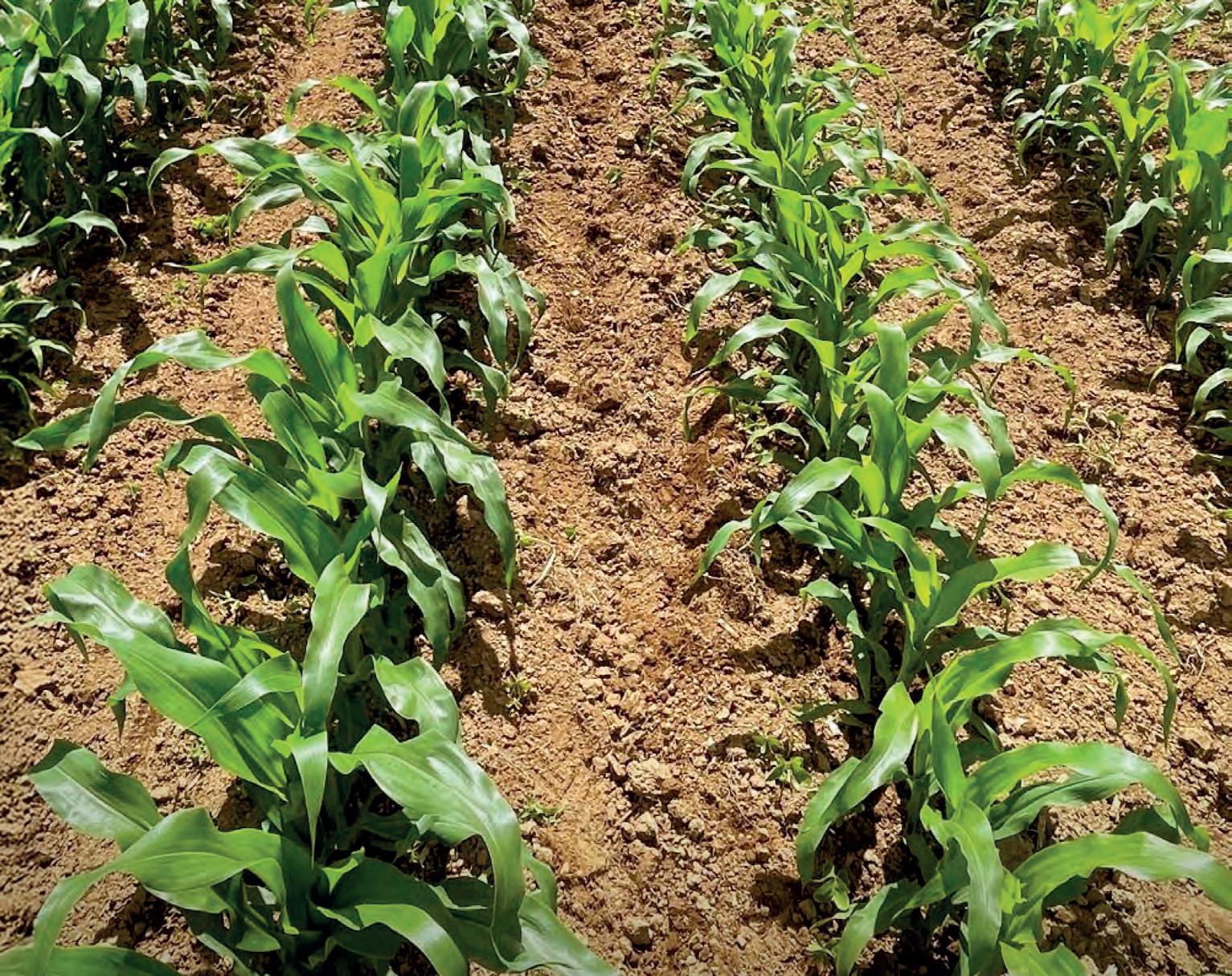
She currently leads a dual-enterprise model combining dairy farming
and maize at Te Tawa Kaiti Lands Trust.
In 2025, she represented New Zealand as an expert speaker at the APEC Technical Cooperation Workshop in Bangkok, contributing to international discussions on women’s economic empowerment and sustainable agriculture.
She holds governance credentials from the Institute of Directors’ course, the Fonterra Governance Development Programme, LIC leadership programmes, and the MPI Governance Essentials programme.
She is also vice chair of the Ballance Farm Environment Awards.
The general manager of Te Tawa Kaiti Lands Trust says the
award represents an “opportunity to inspire others and to give them courage and confidence”.
Timutimu describes her leadership style as “values-led, and cohesive”.
“It’s about taking people along the journey,” she says.
In her career within the dairy industry, Timutimu says she’s learned a lot about the sector.
“I’ve learned about how to be resilient… I’ve learned how farmers have been challenged and how committed they are.
“I’ve learned how people can be so challenged and yet so giving,” she says.
Her advice for women seeking a career in dairying is simple.
“Come with a passion for the land and working with animals,” Timutimu says. “Two days are never the same.”
Anne Douglas, group director of Fonterra Farm Source and a member of the judging panel, says she is thrilled to see Timutimu win the award.
“Her ability to bring together mātauranga Māori and modern farming practices is a powerful example of the leadership our sector needs,” Douglas says.
“I’ve also been impressed by her global perspective and how she applies insights from around the world to strengthen our rural communities. Her commitment to people, to land, and to the next generation of farmers
is truly inspiring,” she adds.
Dairy Women’s Network trustee and lead judge Jenna Smith says Timutimu brings a deeply grounded perspective, with a strong connection between people, whenua and long-term outcomes.
“Her leadership is authentic and anchored in purpose,” Smith says.
“Hine leads by example, makes decisions clearly, and consistently demonstrates her ability to bring people along with her – whether she’s rolling up her sleeves planting out a stream bank or setting and implementing strategy,” she adds.
As winner of the Fonterra Dairy Woman of the Year, Timutimu

will receive a scholarship which covers the programme fee, travel and accommodation,
mentoring and access to
FEDERATED FARMERS says reforms of local government announced last week will be music to farmers’ ears.
The Government has given councils a three-month window to put forward proposals to simplify and strengthen local government in their regions.
Sandra Faulkner, Federated Farmers local government spokesperson, says New Zealand’s local government structure simply isn’t working for farmers.
“It’s contributing to rising costs, infrastructure pressure, and declining civic engagement.
“Ratepayers up and down the country have completely lost confidence in a system that doesn’t recognise how our communities have evolved across the last 30 years,” Faulkner says.
“We’ve long advocated for reform, so we’re very pleased the Government has now asked councils to get on with it.”
The announcement offers councils a chance to fast-track their own reform proposals and bypass the Combined Territory Board model.
Federated Farmers encourages elected councillors to put aside parochialism and engage in open discussions on reform that will work.
“The clear message to councils from government is to seize the initiative and find more efficient structures that work better for ratepayers and communities,” says
Faulkner.
“If councils don’t front-foot this, government will make the decisions for them.”
Faulkner says Federated Farmers will only support reforms that lock in strong representation for provincial communities.
“Our consistent view has been that metropolitan and provincial areas have very different needs and priorities.
“We took the initiative early this
year by publishing a proposal for reform, promoting the case for unitary councils, which would combine the responsibilities of current regional and district councils.
“We’d like to see metropolitan unitary councils centred on cities of around 50,000-plus, and provincial unitary councils that merge the district councils.”
That model could see the current 78 councils reduce to less half that number.

LaserPlus Printing Allflex identification tags etched with LaserPlus printing are the most visible tags available in New Zealand.
Thanks to our advanced three-part system consisting of proven laser printing, coating of pitch black ink and enhanced with a shiny, non-stick surface. Allflex tags are designed to withstand New Zealand’s harsh UV conditions to ensure sustainability and avoid fading.


LaserPlus printing is available on Small, Medium, Large and Maxi tags.
PETER BURKE peterb@ruralnews.co.nz
AS FUEL and fertiliser prices rise and with uncertainty in the future, farmers are being urged to go over their budgets with a fine-tooth comb.
That’s the advice from respected Waikato-based farm consultant, James Allen, AgFirst.
He says not only should they be doing some serious budgeting but also looking at ways they can be more efficient with fuel and fertiliser.
“With good prices there is a risk that people get a bit complacent, but I would be encouraging people to think about ways they can utilise their existing nutrient levels in their soils and to be really focused and smart on using what they have got,” he told Rural News.
Allen says one way of doing this is to increase the amount of soil testing on their farms and focus on individual paddocks rather than across big blocks. He says understanding the precise fertility of the farm may take a bit more time, but it is probably
money well spent.
“Keeping things simple and harvesting as much pasture as you can is important,” he says.
In some areas of the central North Island it is noticeable that large areas of land have been planted in winter forage crops and Allen believes this is because some farms are recent dairy conversion and still need some development work. He says cropping seems to work well in that region where there tends to be colder winters and getting a good yield from maize can be challenging at times.
“What this highlights is that there is a need for people to evaluate their farm systems going into the season ahead. What I mean by that is cropping can have an effective place in the farm system, but it does depend quite a bit on the yield. And if you’re not getting a good maize yield, maybe you are better to buy it in. And equally if you are not getting a good yield from the forage crop, don’t grow it,” he says.
Allen says the other issue in the mix is the cost of palm kernel. He says now it’s about $400 a tonne
but believes it is more likely to go up in price rather than drop. He also suspects that the cost of producing maize will rise as that crop relies on fuel and fertiliser.
He says a dairy farmer can grow quite a good maize crop quite effectively with a lower level of fertiliser than people generally apply on an efficient paddock.
“So, the key message is good budgeting and thinking more about how to get very efficient with fertiliser use and nutrient management,” he says.
Running a dairy farm means navigating risk every day - from the milking shed to machinery, livestock to logistics. That’s why FMG are here to help you stay ahead of potential loss with practical advice and resources tailored to the realities of dairy farming.
We’re not just about insurance - we’re about helping you safeguard what matters most before things go wrong. Because when you’re better prepared, you’re better protected.
To find out more, ask around about us. Better still, give us a call on 0800 366 466 or visit fmg.co.nz
We’re here for the good of the country.

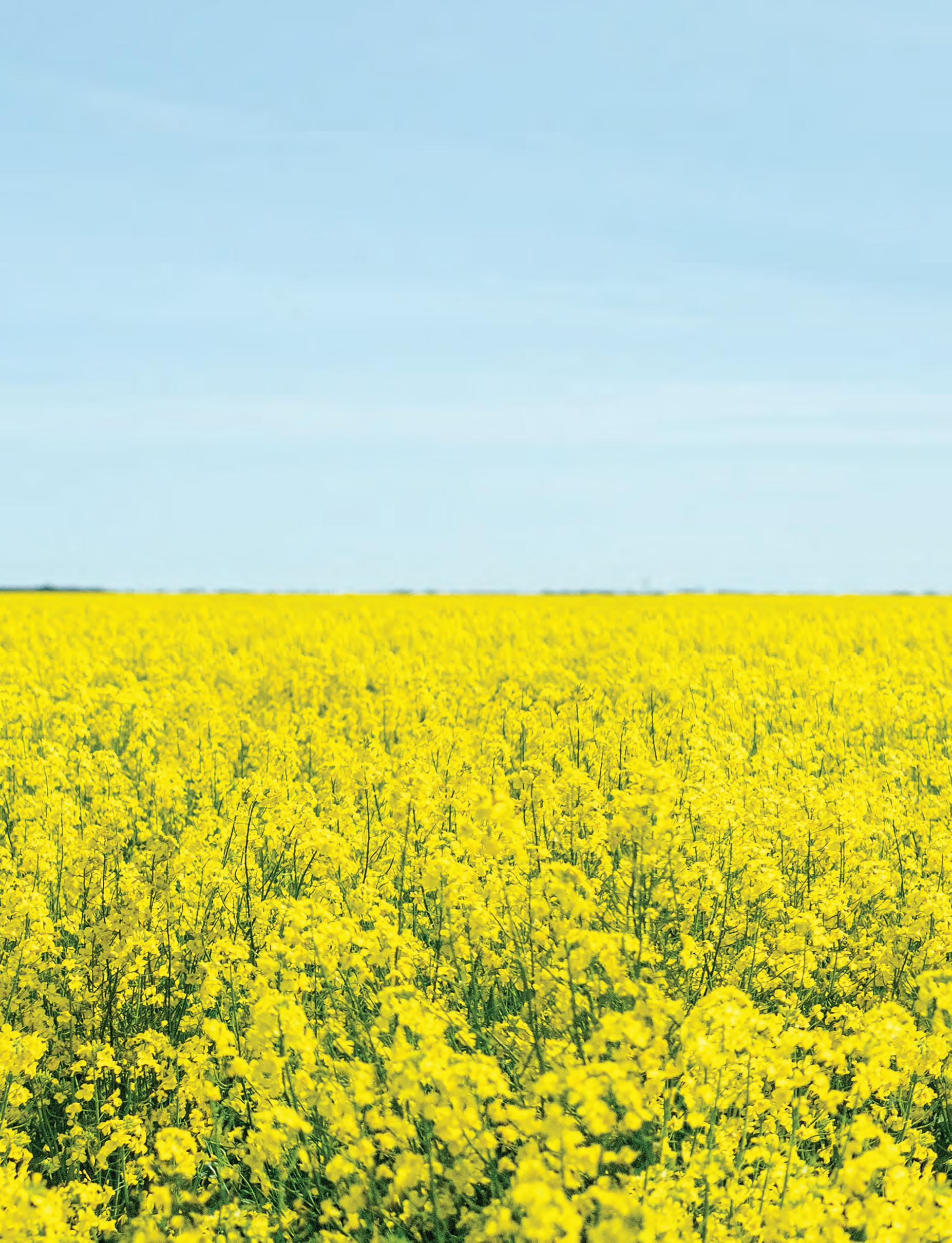
Canola meal is a premium protein source for dairy cows, supporting milk solids production through:
Improved metabolizable protein efficiency
Higher and more persistent milk yield
Increased dry matter intake and maintenance of cow condition
Canola meal is a valuable source of rumen undegradable (bypass) protein, supplying highly digestible essential amino acids to the small intestine. Its amino acid profile is well aligned with milk protein requirements, with comparatively high concentrations of methionine, a key limiting amino acid in high‑producing dairy cows. Diets containing canola meal have been consistently associated with improved efficiency of metabolizable protein supply, increased dry matter intake and enhanced milk yield.
Cargill’s canola meal is available through your local feed supplier, with non‑GMO options and sustainability credentials available where required.
For more information about canola meal visit www.cargill.co.nz.
LAST WEEK marked the New Zealand Sign Language Week and a South Canterbury tanker operator is sharing what it’s like to be deaf in a busy Fonterra depot.
At Fonterra’s Clandeboye depot near Timaru, Tanker Operator
Joe Emmanuel is part of a fleet of 70 tankers collecting around 2.6 billion litres of milk each year. His day starts much like anyone else’s.
“I arrive at work and wait for the manager to give me the instructions of what I need to do that day. I’ll read it through and then just get stuck in,” he says.
But behind the routine is a team that’s made simple, practical changes to support Emmanuel.
Driver Trainer Assessor,
Brett Maddren, says he was unsure at first how training a deaf tanker operator would work.
“Because of the way we communicate, I thought it would be difficult. Then I went home and thought, ‘how could I actually do this and make it work?’” says Maddren.
When Emmanuel came in for his initial interview and driving assessment, Maddren says it was clear to see his strengths as a driver.
“We teach a lot of drivers about scanning and looking, but Emmanuel already does that because he’s very good visually, so that was a great attribute to have.”
The next step was induction, which includes a lot of group chats,
something Maddren didn’t want Emmanuel to miss out on. Emmanuel says one simple change made a huge difference.
“Brett wore a microphone that was connected to my phone so I could get a live transcript and didn’t miss out on anything. That was fantastic. It was an immediate adjustment that meant I could be included,” says Emmanuel.
Throughout his recruitment journey, Emmanuel had the support of New Zealand Relay a free, governmentfunded service enabling people with hearing and speech communication difficulties to use the phone.
Since joining the depot last August, Emmanuel
says the team has built a supportive, deaf-aware environment.
“Everyone knows they shouldn’t talk to me across the room. They need to face me, and they’ve gotten on board with that,” he says.
“In the mornings, the team manager will face me and speak slowly so I can lip read.”
Emmanuel mainly communicates through text and has also developed visual ways of working on site.
“When I’m unloading a tanker, I will turn on a light to signal green to let people know the valve is open. That’s a visual system that lets them know what’s going on.”
When new people come into the depot environment, Emmanuel
says it can be nervewracking to meet them.
“I wonder how I’m going to communicate and if it’ll go smoothly. But really, I feel like I’m treated as an equal here. I’m the same as every other member of the team.”
Maddren believes that inclusion benefits the whole team.
“If people feel left out, that’s not good for morale. Inclusivity is important, regardless of what language you speak. We don’t discriminate and everyone is treated the same.”
That connection also shows up day-to-day.
“We get on well and like to have a laugh”, says Maddren. “Especially across the room, because Emmanuel is very good at

reading your face.”
New Zealand Sign Language Week recognises New Zealand Sign Language as one of the country’s three official languages, alongside English and Māori. For Emmanuel, it’s a chance to
build awareness and connection.
“I’m so happy that I’m meeting people that know about New Zealand Sign Language, that want to learn it,” says Emmanuel.
“It’s a really special week for us in the deaf community.”
JESSICA MARSHALL jessica@ruralnews.co.nz
COULD NEW Zealand use its unproductive land to help solve possible fuel insecurity in New Zealand? Scientists say yes.
Paul Bennett, the Bioeconomy Science Institute Maiangi Taio’s integrated bioenergy portfolio lead, says New Zealand has up to three million hectares of unproductive land, including a million hectares of growing scrub.

He says that land could be converted to short-rotation forestry, providing a larger long-term supply and support demand for coal, gas and marine fuel replacements.
“Early bioenergy deployment would generate a market for further biomass production,” Bennett told Dairy News
“Woody biomass growth can therefore be achieved without displacing food or timber or pulp production,” he adds. “This can be part of the solution for NZ’s energy security.”
“Anything we can do with fossil fuels, we can replace with biosecurity.”
According to Bennett, New Zealand could access approximately seven million green tonnes of lowgrade wood for bioenergy production, including the sustainable and accessible biomass from forest harvesting operations, and low-grade industrial logs currently exported.
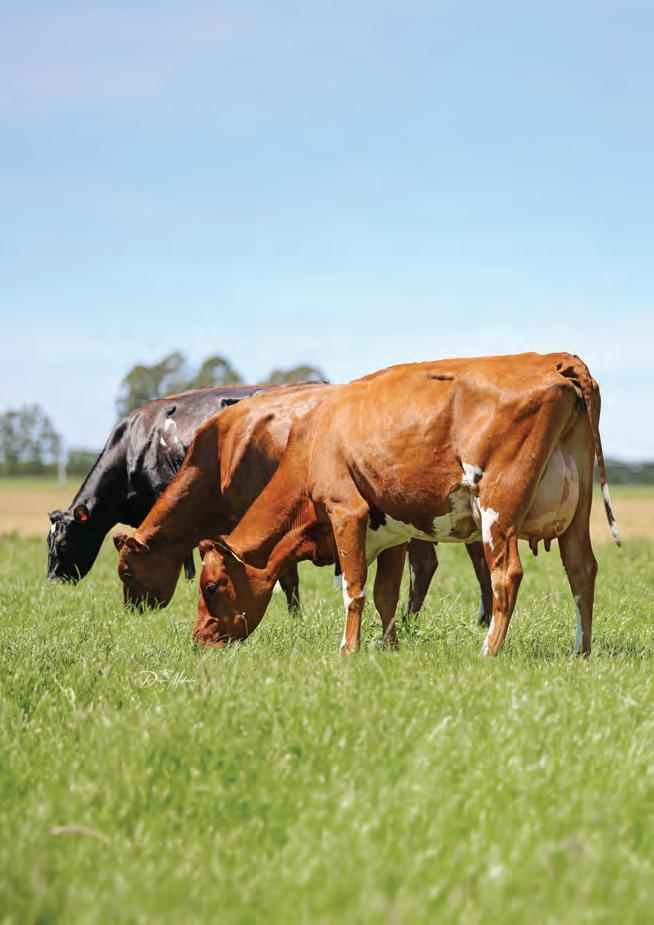
“This is plenty of biomass to replace the coal burnt in New Zealand and to start on the journey of aviation and marine fuels from wood,” he says.
Bioenergy improves energy security by producing fuel locally, meaning New Zealand would be less reliant on global suppliers, Bennett says.
He says there are four main reasons why the Bioeconomy Institute has been investigating bioenergy options within New Zealan – climate change; energy security and resilience; market access; and local economic development.
Currently, Bennett says the Bioeconomy Science Institute is looking at practical steps the country can take to reduce its energy
insecurity.
“We are scaling up locally produced bioenergy and biofuels using existing woody biomass resources and have been working with a range of stakeholders across a range of energy sectors such as aviation, marine, processing and power generation.
“The current global fuel crisis has highlighted why New Zealand needs these locally produced sustainable fuel options as part of the solution to its energy insecurity.”
ANALYSIS OF decades of research has revealed the good farming practice plays a critical role in reducing nutrient losses to improve freshwater outcomes.
Researchers from DairyNZ, the Bioeconomy Science Institute (formerly AgResearch), and Lincoln University explored two decades worth of data and used multiple data sources to assess the impact of good farming practice implementation on nutrient loss reductions.
The results show a clear link between the widespread use of good farming practices and lower contaminant losses from land to water on New Zealand dairy farms.
DairyNZ senior scientist Dr Katrina Macintosh says farmers should be confident that the actions they are taking on their farm are having an impact, without affecting productivity.
“Over the past 20 years, dairy farmers have implemented a range of good farming practices, including better fertiliser use, effluent management, reduced soil cultivation and improved irrigation scheduling. Until recently, few studies assessed its impact, and when improvements in water quality might be detected,” she says.
“In recent years, we’ve been working with milk processors using the data they are collecting from their suppliers via their farm environmental plans to better understand environmental improvements.
“Working with
Fonterra and Open Country Dairy, plus capturing information from DairyBase, we were able to analyse multiple anonymous datasets to determine the level of good farming practice implementation around the country and what that means for reducing nutrient losses and improving water quality.”
One of the studies looked at five dairydominated catchments ranging from 598 hectares to 2480 hectares between 2001 and 2020, a period where extension programmes began to be rolled out, and water quality and farm practices were being regularly monitored. The research found good farming practices reduced phosphorus, E. coli and sediment concentrations.
Another study looked at uptake of good management practices across a 10-year period between 2013-2022 and the influence they had on nitrogen (N) and phosphorus (P) losses to water from dairy-farmed land. The study found that N management, and improved irrigation and cultivation practice contributed to lower N loss trends, while P fertiliser and effluent storage methods were the most influential parameters for reducing P loss.
Notably, the analysis found that while the adoption of good farming practices decreased N and P losses on farm, it did not impact negatively on milk solid production.
“Good farming practices are generally accessible and cost-
effective for farmers to implement on farm to deliver improved water quality outcomes. Fresh water management is a long-term game and it’s great to be able to show farmers the impact of their efforts on farm over the past 20 years or so,”
says Macintosh.
The research is building a strong evidence base showing how farming practices on New Zealand dairy farms have changed over time in pastoral catchments to deliver environmental outcomes.

MARK DANIEL markd@ruralnews.co.nz
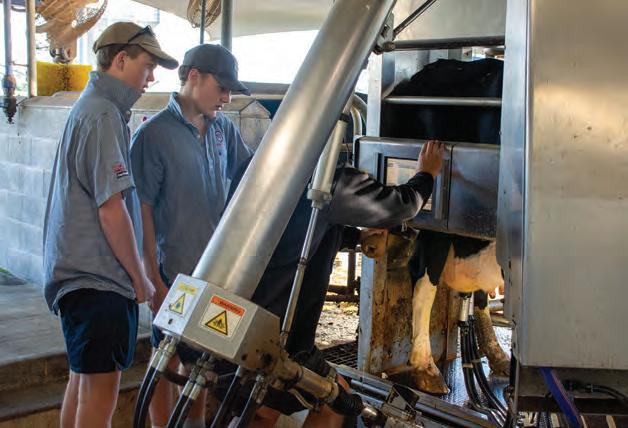
FEILDING AGRICULTURAL High School isn’t alone in offering agricultural or horticultural subjects as part of its curriculum, but the location of one of its farms on the northern edge of the urban fringe, makes for some interesting considerations.
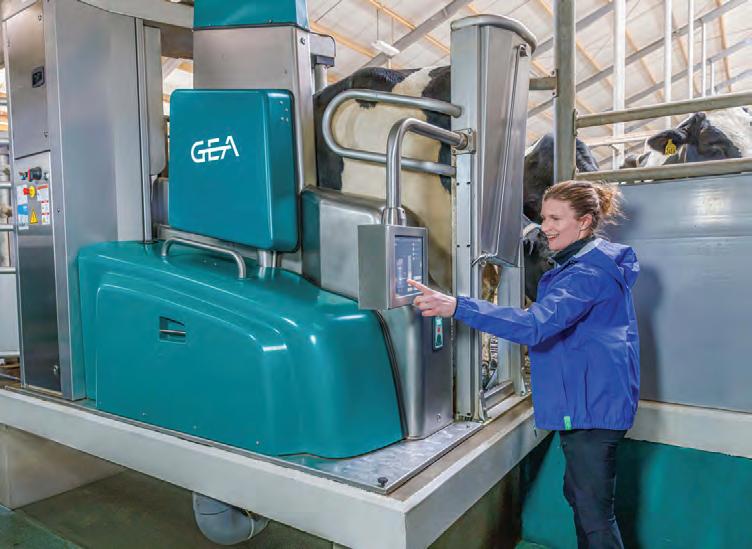
Owning two farms, Ngakanui, adjacent to the main school campus, runs to 16ha and carries 60-65 Friesian cows, milked through a De Laval VMS (voluntary milking system).
Farm Manager, Finn MacDonald, explains that the location-which is currently seeing a large -scale housing development on its northern boundary of up to 1000 new homes, means the farm must be seen to be doing things correctly.
“We ensure we operate under an industry best-practice regime at all times, meaning we keep thing very neat and tidy and animals are in tiptop condition.”
An output of 28,000kgMS/ annum, sees an average production of 450kgMS/cow and 1855kgMS/ha. Winter feed takes the form of 50 tonnes of bought-in maize silage, complemented by 100 bales of grass baleage.
The school’s second farm, Manawanui, is located on the hillside to the west of the town, running to 81ha and operated as a beef and sheep unit, with the primary outputs being finished trade lambs and cattle, complemented by some small-scale forestry.
Summer cropping of 15ha chicory and 6ha of rape is used in Jan/Feb to supplement grass, with a return to grass after grazing.
Finn explains, “we typically finish up to 2000 trade lambs, alongside Hereford-cross cattle that head off to the works at around 550kg liveweight.”
Interestingly, with a total recall of 1600 students, 600 choose to be involved in the agricultural and horticultural pathway during Year 9 and 10, then carrying on with a combined course through Years 11 to 13.
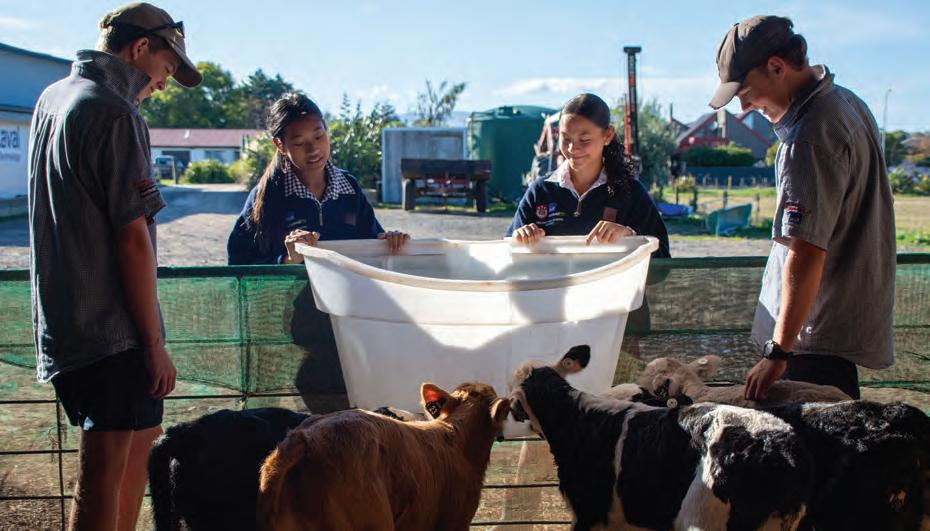
These courses focus on the place of NZ agriculture, livestock production, soil and plant science, plant propagation, primary production and sustainability. Alternatively, students can apply to take part in the Primary Industries Programme in Year 11, then attend a
one-day farm placement per week in Years 12 and 13. This course focuses on livestock handling, drenching and vaccination, fencing, safe operation of farm vehicles, dagging, crutching and shearing. An extra-curricular programme
allows students to sign up to, agrisports. rural games, beekeeping, wool handling courses, crutching, dagging and shearing courses, interhouse shearing and wool handling and Lamb and Calf Day.
www.feildinghigh.school.nz
the seeds to agriculture as a subject to follow in higher education.
background, moving through the years in a 50:50 male/female mix.
“By the time they reach Year 12 and 13, this switches to an 80:20 in favour of the girls.”
He goes on to explain that the aim of the courses is to give students a broad overview of an industry that is a key driver of the NZ economy and sow
“We would love to offer an even greater overview, showing that an agricultural qualification is not just about working on farms, but the pathway to a multitude of support industries within the sector. But like many other establishments, unfortunately we don’t have a finite budget.”
on an almost daily basis, farm manager MacDonald explains, “I typically have three students acting as my shadow on most days, so its important to expose them to day to day tech such as the VMS robot, our weighing and identification systems using EID tags, while also ensuring they take on basic skills like sheep shearing- which is also very popular, but not forgetting hygiene issues like crutching and dagging, which usually aren’t undertaken with so much enthusiasm.” RURAL/URBAN MIX
With Agriculture evolving rapidly with new smart technologies arriving

Farming isn’t always straightforward, but payday can be. PaySauce is designed to give you peace of mind and make payroll the least of your problems.
Simply visit paysauce.com to get started.
THE GLOVES are off.
With a general election around the corner, coalition partners National, ACT and NZ First have been scrapping for rural votes.
ACT has targeted rural school bus operations - something that will resonate well with rural communities.
ACT has also unveiled an immigration policy, which, among other things, will slap a $6/day infrastructure fee on migrants on temporary visas.
This hasn’t gone down well with some dairy farmers who have been forced to hire migrant workers after struggling to find local workers who can go the distance.
The normally conservative farmer vote will probably stay on the ‘right’, but which party ends up taking the lion’s share of the rural votes this time remains to be seen.
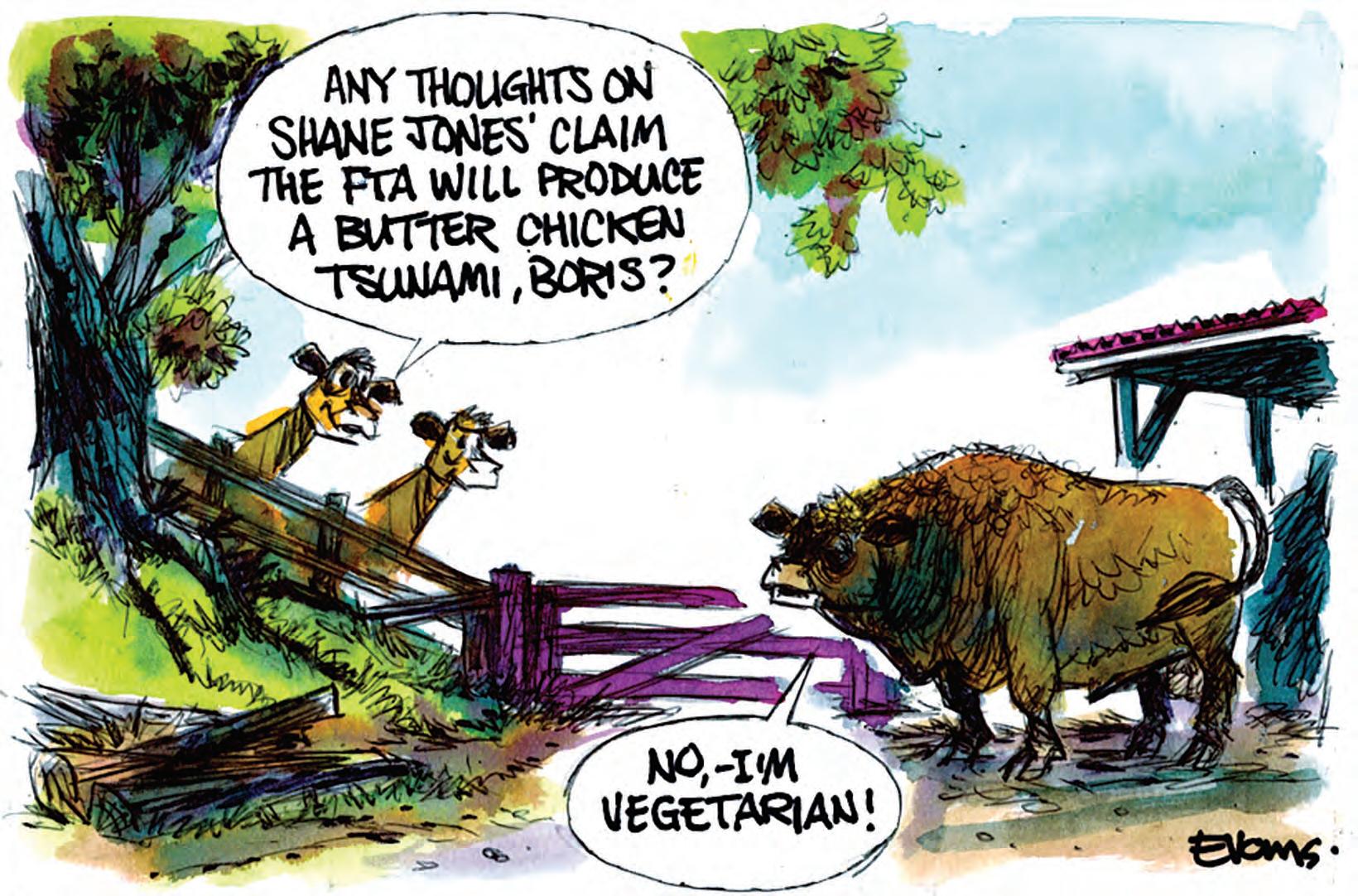
THE ARRIVAL in NZ of American butter on the shelves of a certain grocery chain has sparked something of a storm in a butter churn.
The usual cries are that it looks yellow, just like NZ butter, and that because it is less expensive than what Daisy in the Waikato produces, it can’t be as good.
Milking It remembers a similar incident back in the 1980s when a certain dairy company bought in some US butter and blended it with NZ butter and labeled it Twin Flags. It drew an uproar from rural women’s groups who claimed the Twin Flags product was responsible for their sponges going flat, scones not tasting right and so on. Many of these complaints came from a certain province, however, the truth was that the offending Twin Flags butter was not being sold in the area. So, the complaints sort of, well, fell flat!
MILKING IT hears from an Italian source that the Italian Trade Association has pulled the plug on National Fieldays, citing increased costs, particularly around travel expenses, which has resulted in a planned trade delegation made up of manufacturers to say “thanks but no thanks”.
We wonder if soaring fuel costs, which show no signs of abating, will mean that exhibitor displays, particularly those usually displaying oversized pieces of plant and machinery that need to be moved by specialised hauliers, won’t make the trip to Mystery Creek? Likewise, the costs for visitors, including fuel, and a $36 entry fee, plus overpriced food and drink, might just be too much.
As they say in Italy, “solo il tempo lo dira”.
From bad to worse THINGS ARE certainly not getting any better for troubled Canterbury dairy processor Synlait.
Infant milk formula exporter a2 Milk, a key customer and shareholder of Synlait, has recalled three batches of Synlaitmanufactured a2 Platinum infant milk formula in the United States due to the presence of cereulide.
Cereulide is a heat-stable toxin produced by some strains of the bacterium Bacillus cereus that can cause nausea and vomiting – symptoms typically developed within 30 minutes to six hours of ingestion.
The recall is confined to about 63,078 tins in the USover 16,000 of which had been sold to consumers.
No confirmed incidents of infant illness or harm had been reported to the company.
Synlait is trying hard to get back into the black after years of financial woes. This latest recall won’t help

Head Office: Lower Ground Floor, 29 Northcroft St, Takapuna, Auckland 0622
Phone 09-307 0399.
Postal Address: PO Box 331100, Takapuna, Auckland 0740
Published by: Rural News Group
Printed by: Inkwise NZ Ltd
Contacts: Editorial: sudeshk@ruralnews.co.nz
Advertising material: beckyw@ruralnews.co.nz
Rural News on-line: www.ruralnews.co.nz
Subscriptions: subsrndn@ruralnews.co.nz
Publisher: Brian Hight ......................Ph 09-307 0399
General Manager: Adam Fricker ...................Ph 021-842 226
Editor: Sudesh Kissun ................Ph 021-963 177
Machinery
Editor: Mark Daniel......................Ph 021-906 723 markd@ruralnews.co.nz
Reporters: Peter Burke.....................Ph 021-224 2184 peterb@ruralnews.co.nz
Subscriptions: Julie Beech ....................Ph 021-190 3144
Production Manager: Becky Williams ..............Ph 021-100 4831
Digital Strategist: Jessica Marshall ..........Ph 021 0232 6446

AT A time when farmers are advocating for less government spending and no new taxes, the dairy sector is rightly concerned about ACT’s new immigration policy.
The policy, unveiled by ACT leader David Seymour this month, has one disturbing feature – a $6/day infrastructure surcharge on temporary work visas on top of existing charges.
According to ACT, this ensures migrants contribute to NZ’s infrastructure “from day one before they start paying taxes”.
ACT hopes this will raise an additional $80 million.
While this money will be welcomed in urban centres like Auckland and Queenstown, where hospitals, roading and schools are facing the pinch of a growing population, it’d hard to understand how this will help the rural sector.
Of course, immigrants do pay for infrastructure just like everyone else. If they fill up their car, the pay fuel exercise. If they live in a house, they pay rates or water charges. Rural migrants are not adding to pressure on housing because the houses are available on farms or in rural towns.
Rural schools are closing as student numbers dwindle and additions to rolls would help.
NZ dairy farmers face stiff competition from Australia and Canada, where the dairy sector is also facing labour woes.
Dairy farmers want prime candidates to come here, but a $6 daily charge and an annual allocation/re-application process is a significant deterrent as workers weigh up whether to come here or somewhere else.
Dairy farm employers want certainty and permanent staff, with a firm residency pathway for workers with the skill and attitude to add value to the sector and New Zealand.
ACT’s policy doesn’t seem to be well thought out.
For a migrant on a three-year work visa, this will mean an extra $6500 up front. And it’s likely that farmers, as employers, will need to cough up the extra money to hire or retain the migrant worker.
AUCKLAND SALES CONTACT: Stephen Pollard .............................................Ph 021-963 166 stephenp@ruralnews.co.nz
WAIKATO & WELLINGTON SALES CONTACT: Lisa Wise ........................................................Ph 027-369 9218 lisaw@ruralnews.co.nz
SOUTH ISLAND SALES REPRESENTATIVE:
kayes@ruralnews.co.nz
FOR
MANY Kiwi farmers, the nutrients our farms need simply arrive when they are needed, get applied when conditions suit, and are largely viewed as one part of the rhythm of the farming year. But behind every application, sits one of the most complex and longest supply chains in New Zealand agriculture.
It stretches across global mines, manufacturing plants, rail and trucking networks, ports, and shipping lanes. Once product arrives in New Zealand, raw ingredients are sent to local manufacturing sites, while finished product is housed in storage depots, then sent on to trucks, aircraft and spreading teams for application on farm.
When that chain runs smoothly, it’s easy to forget just how much co-ordination is involved. When unforeseen events interrupt it, the importance of planning ahead becomes very
■ Factors that influence supply New Zealand’s distance from most of the world’s major nutrient sources means our fertiliser market is closely linked to international supply and shipping. Products such as phosphate rock, potash, sulphur and nitrogen are heavily influenced by events offshore.
Exchange rates, freight availability, energy prices and geopolitics all impact landed cost and timing. That means what happens in the Middle East, Africa, China, India, USA, Europe or even Australia can and do flow through to us here. That global connection has been front of mind in recent months, creating uncertainty for shipping routes and energy markets, particularly around strategic trade corridors such as the Strait of Hormuz and Red Sea routes. Around 35% of the world’s urea supply is shipped through the at-risk Persian Gulf fertiliser ports, alongside 47% of the worlds sulphur, and 26% of the world’s
■ What happens when one chain in the link is impacted
While most product for autumn was already secured or in country, the wider risk centres around price volatility and potential delays if tensions continue. The reality is fertiliser does not move like a courier parcel. It’s bought in shiploads, often months in advance, then discharged through ports, stored, blended, manufactured or distributed before it reaches the farm. If one link slows down, it impacts the whole system. A delayed vessel, congestion at a port, a weather interruption, or a sudden surge in demand can all tighten schedules quickly during peak seasons.
■ The big global players that influence supply Aside from disrupted shipping routes, other factors that influence nutrient supply are big players like India and China. India’s role is particularly important
of the world’s largest urea importers. When India tenders for large volumes, global demand shifts quickly.
China also remains a major swing factor, with export controls on nutrients such as DAP, and MAP. When these big players change behaviour, it can be felt by the whole market.
■ Why relationships matter
The value of established and cultivated supplier relationships, in some cases over many decades, cannot be overestimated. When global supply is tight, being able to call upon those relationships is invaluable and can be the difference in being able to secure fitfor-purpose product in the window required.
■ The importance of planning ahead
That’s why planning ahead matters so much. Given we run on seasonal windows, if we miss the right opportunity to replenish phosphate, sulphur or potassium,
Delaying nitrogen applications to wait for a market dip that never comes, and pasture growth potential may be lost. Nutrient decisions are most effective when they align with farm goals, soil test results and seasonal conditions. For farmers, the practical advice here is to start with your nutrient plan. Know what products you’re likely to need, when you need them, and what application windows matter most
early with your nutrient supplier and specialist.
Securing supply early, and understanding likely requirements help reduce pressure on both the farm business and the wider supply chain.
No one can remove global volatility entirely.
Weather events, trade tensions and geopolitical shocks are increasingly part of the modern agriculture landscape. But good planning, using scale, having local infrastructure among
the impact of global shocks on price and availability.
I’m a firm believer that Kiwi farmers are among the best in the world at managing this uncertainty, and the fertiliser supply chain works best when we apply that same mindset to nutrients: plan early, stay informed, so we’re able to make each application count where and when it’s needed.
• Shane Crean is head of procurement, Ballance
FARMERS HAVE been clear: it is getting harder, not easier, to find and keep good people.
Federated Farmers employment

spokesperson and national dairy chair
Karl Dean has warned that extra visa charges and tougher settings risk pushing workers towards Australia and Canada instead of New Zealand. When every cost and hoop matters, it is understandable
that employers feel immigration settings are working against them.
New Zealand has also signed a free trade agreement with India, with ambitions around skills, education and people‑to‑people links. For those goals to matter on farm, there
needs to be a practical way for Indian students and young professionals to connect with New Zealand’s primary sector not just on paper, but on paddocks.
One useful part of that picture is international agriculture internships.
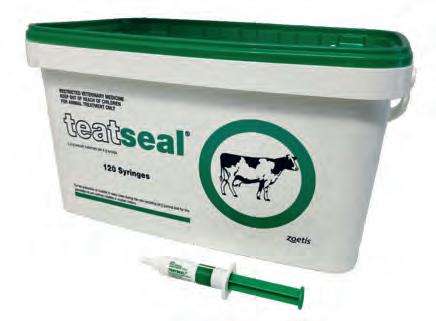
Set your season up for success with Teatseal® - New Zealand’s #1 mastitis protection.
Teatseal is New Zealand’s most proven, trusted and recommended internal teat sealant, designed to protect cows throughout the entire dry period. The result is fewer mastitis issues around calving and early lactation, lower treatment costs, and more milk in the vat.
Safeguard your herd with Teatseal. Talk to your vet about using Teatseal this season.
For 25 years, our team at Working In has helped employers bring in skilled people from overseas and manage visas and settlement through constant policy change. Many “quick fix” labour models prove either too complex for smaller operators or too transactional to add real value.
International agriculture interns are different.
These are tertiary agriculture, dairy, livestock and horticulture students who must complete practical industry experience as part of their qualification. They are not backpackers. They are motivated, career‑focused young people who want to spend six months on a real dairy or sheep‑beef operation, learning and contributing before returning home to finish their degree.
Working In currently has 30 such students pre‑screened and ready for placement on New Zealand farms under a structured six‑month paid internship programme. They have the theory; what they are missing is exactly what New Zealand farmers can provide: pasture‑based systems, animal health and welfare, seasonal pressure and commercial realities.
Interns are not a silver bullet or a replacement for permanent staff. They can offer reliable, planned support for specific roles and times of year.
Typical tasks include dairy shed and pasture work, young‑stock and animal care, general farm and field work, basic agronomy and irrigation monitoring, packhouse or yard duties, and farm administration and data tasks.
One of the biggest barriers farmers raise about bringing in anyone from overseas is the bureaucracy.
Accreditation, Job Checks, labour market tests and the risk of getting it wrong feel daunting, particularly for smaller operations.
The agriculture internship pathway is designed to remove much of that friction.
For these internship roles there is no INZ Accreditation, Job Check or labour market test requirement.
Interns are paid at least the New Zealand minimum wage, roles are aligned to their field of study, and there is a clear framework around support and expectations. That matters for compliance and for New Zealand’s reputation as an ethical primary‑sector destination.
Connecting the dots
No single programme will fix workforce challenges in New Zealand agriculture. But as the immigration debate continues, it is important to put constructive, workable models on the table.
International agriculture internships tick several boxes at once: they provide practical, time‑bound workforce support for dairy and sheep‑beef operations; they offer Indian agriculture students genuine, structured experience; and they deepen the people‑to‑people relationships that will underpin the new NZ–India trade agreement.
Working In is now seeking host farms for the first cohort of 30 interns, with an initial focus on major dairy and sheep‑beef regions. For farmers open to trying something different, this is a chance to get extra capability on farm, contribute to the development of future agriculture professionals, and help shape a model of migrant labour that works better for everyone.
• Sue Duncan is general manager – Interns at Working In New Zealand, an international agriculture internship programmes that connect global ag students with Kiwi dairy, livestock and agritech operations.
DAIRY WOMEN’S
Network (DWN) is bringing New Zealand’s dairy story to the coffee table with a special DWN Monopoly NZ Dairy Farming Edition, created to celebrate the people, places and seasons.
This limited-edition board game will be sold only through Farm Source stores.
Launched at Farm Source Te Awamutu this month, DWN says farmers and supporters get a chance to pick up a board as they head into the new season from June 1.
DWN chief executive
Jules Benton says the idea grew out of a simple question: how do you tell the dairy story in a way the whole family can enjoy.
“Most of us have sat around the table for hours playing Monopoly at some point,” she says.
“We wanted to take that familiar game and make it our own, so the board looks and feels like dairy life, the good days, the hard calls, and everything in between.”
Instead of buying and trading city streets, players travel through
well-known dairy regions and key parts of the farming calendar, including calving, mating, milk pick-up, community days and more. The cards draw on real-life situations farmers face, and the board features a custom token and artwork that reflects the four seasons on the farm.
“It’s recognisable straight away as Monopoly, but the detail is very much home-grown,” says Benton.
“People will see places and scenarios they know and hopefully have a few
laughs along the way.”
Proceeds from DWN Monopoly will help the Network continue its work supporting people in the sector through workshops, events, and resources that build confidence, skills, and connection.
“Every board that goes out the door helps us put more support in place for farming businesses and their teams,” Benton says. “It’s a fun way to give back to the sector and invest in its future at the same time.”
A wide range of

agribusinesses have come on board to be part of the game through properties, cards, tokens and other elements.
“We’ve had strong support from across the sector, which really reflects how connected our industry is,” says Jules Benton, DWN chief executive.
“Seeing those brands on the board reinforces the network that sits behind farmers every day.” The game is now available to purchase at all Farm Source stores nationwide.
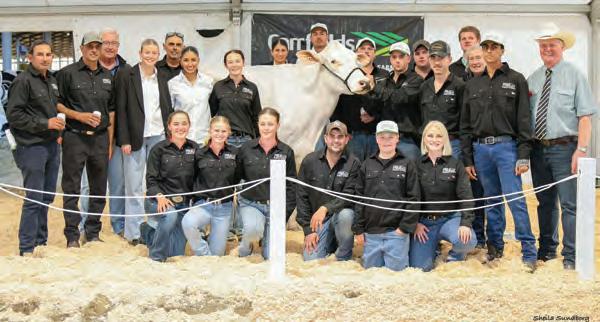
THE 2026 Holstein Friesian sales season has already delivered outstanding results across New Zealand and Australia – including a new Australasian record.
Waikato Holstein Friesian breeders Arjun, Anjena and Amreeta Singh, who own and operate Lawwal Holsteins, achieved an average sale price of $12,330 at their Land at Lawwal Sale, a new Australasian record for a single vendor sale.
Held on farm on April 24, the sale saw a top price of $40,000 for Lawwal A2P2 Miranda P-ET VG89 max, and Lot 50: Pick of the Lambdas went for $16,000, the proceeds of which went to the Starship Foundation.
“We are incredibly humbled by
the support we received,” Amreeta said.
“Thank you to all the purchasers for backing our breeding programme; your support means a great deal to us.”
Earlier in April, several other high-profile Holstein Friesian sales were held.
On April 10, the Best of Busybrook sale was held on farm at Nathan and Amanda Bayne’s property in Oamaru.
The top price was $40,000 for an in-calf heifer, sired by Farnear Delta Lambda-ET and from the renowned Caught Eye cow family, closely followed by $38,000 for the choice of an unborn calf out of the worldfamous Erbacres Snapple Shakira.
Notably, 13 Westcoast Alcove daughters were sold for an average of $13,000, with the overall sale

• High Flow
• Compact/Robust
• New Pilot Flow Filter
• Side/Bottom Mount
• Detach to Clean
average hitting $11,540.
On April 20, the Welcome to Waiokura sale was held on farm at Hawera. Owners Rhys and Tamara Parry said in the age of online sales, they appreciated the effort of all who came along, buyers or not.
“Animals have gone the length of the country, and it was pleasing to see a strong proportion stay local,” they said.
“We look forward to seeing how they perform.”
In milk cows averaged $3,812.50; in-calf R2 heifers averaged $3,957.50, and R1 heifers averaged $2,467, with an overall average of $3,639 average across all sale lots.
On April 22, Ferdon Genetics held its ‘Chase Your Dreams’ sale on farm at Otorohanga, with Holstein Friesian offerings averaging $7,000, and achieving a top price of $12,000
for a Farnear Delta Lambda-ET in-calf heifer.
And on April 23, the Welcome to Woodcote sale was held at Te Awamutu with Lot 12, a Westcoast Alcove in-calf heifer from the Lara cow family, topping the sales at $16,000, closely followed by a Sandy-Valley Icarus in-milk two-
Australian auctioneer
presided over all five sales.
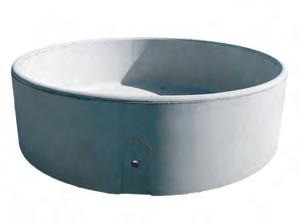
• For Water Storage Tanks
• Adjustable levels from 50mm-2.5m
• Minimises pump operation
•Available in 20/25/32/50mm
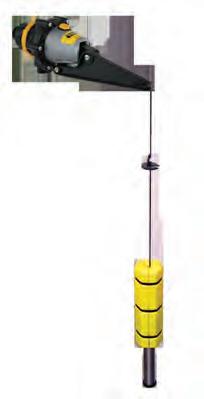
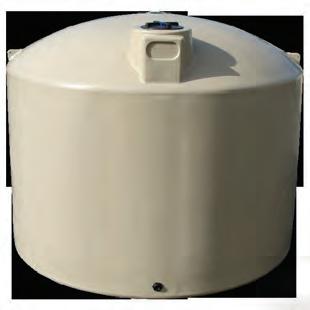

• Stainless steel bracket and Shaft
• Fits plastic and concrete tanks
• Rugged and long lasting

JESSICA MARSHALL jessica@ruralnews.co.nz
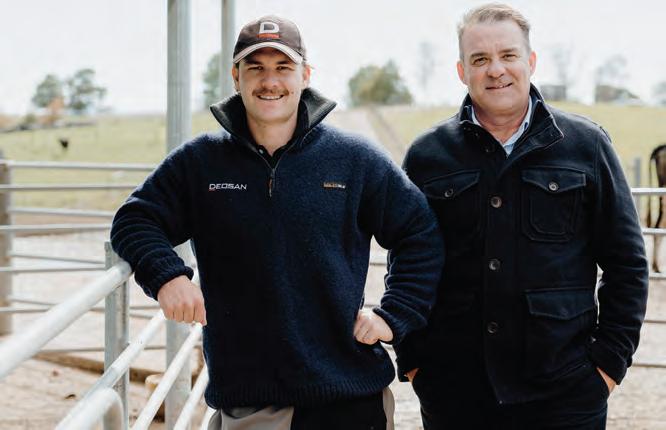
A NEW Zealand agritech and dairy services group has big plans as it expands its dairy services footprint across dairy hygiene, data, and milk cooling with the purchase of nationwide refrigeration business Dairy Technology Services (DTS).
Terravest - described by its owner as an investment company focused on farm milk quality - was established this year and is the parent company for wellestablished dairy hygiene company Deosan, digital telemetry and automation specialist Agora, and now DTS Refrigeration – a company with a long history and originally part of NDA National Dairy Association.
The move sees expertise and technology across dairy hygiene, data, and milk cooling consolidated – with the goal of offering a more integrated approach to milk quality on farm and being the leader in that space.
Terravest’s founder and CEO Kip Bodle says he wants the company to “be number one from teat to tank”.
While unified under one brand, the intent is that each business will retain its identity and
FARMERS SEEK CONNECTIONS
leadership.
Bodle will continue in his position as general manager of Deosan.
Meanwhile, Agora will be run by its current general manager, Hayden Walsh, and DTS will continue to be led by Luke Walker.
“I just think it makes sense to keep the DNA of each of those businesses as they are,” Bodle says.
The DTS Refrigeration acquisition means Terravest will have a combined customer base of approximately 6000 dairy farmers, equating to close to $11 billion in milksolids value.
“Part of our vision is that we will have some form of relationship with those 6000 customers,” Bodle says. “And obviously our primary objective is to play more of a role in caretaking the full value of that $11 billion.”
A pivotal part of Terravest’s plan is telemetry. Agora is a wireless on-farm telemetry business that will be a conduit between the two on-farm businesses through data and being able to focus on proactive maintenance to reduce bacteria risk in milk.
Bodle says Agora has come from nowhere to now have key vat telemetry contracts with Ofi and Westland.
“These contracts provide us with a critical
KIP BODLE says that within the agricultural sector, farmers are seeking connection with their industry partners.
“Dairy farmers are looking for connectivity – because they’re passionate about what they do and they care about relationships connected to their farm operation. That’s the trick – you’ve got to have the product and service arrangement that they see value in, but you also have to have the right people that are able to connect with them.”
Bodle sees opportunities in “providing more value to farmers in the milk quality space while meeting the growing trend of farmers needing to provide more information to enhance the NZ provenance story”.
He says one of his proudest achievements is now having his son Seb, who was just three when Bodle took over Deosan, join the new business.
“It’s nice to feel a responsibility to continue to support NZ dairy farmers and to have Deosan, and now Terravest, being a second-generation business. Being a NZ-owned family business is very important to us.”
platform for further growth over the next five years. Agora is the first vat telemetry provider to use wireless IoT technology for capturing on farm data.”
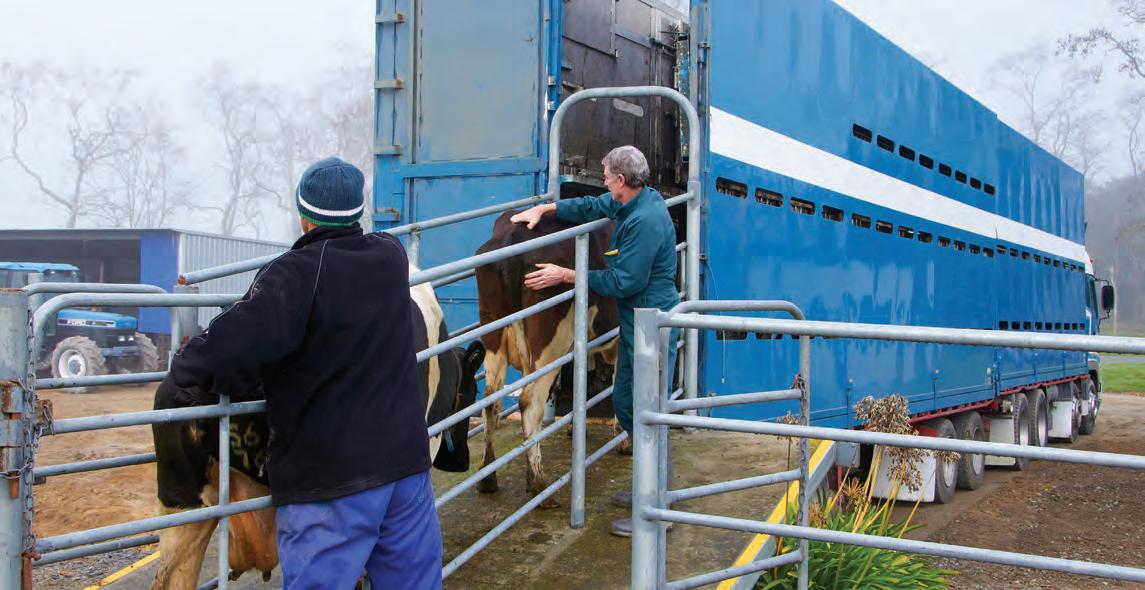
Remember the basics:
• if you’re transporting animals, register their movements in NAIT
• update your NAIT location if you’re moving farms
• make sure your contact details are up to date in NAIT. Visit ospri.co.nz for more, including checklists, guides, and how-to-videos. Everything’s there to make your move easier.
AS SPRING calving cows head into dry-off, the priority shifts to one thing: setting cows up to calve at the target body condition score (BCS).
The dry period is your best opportunity to correct body weight deficits, protect animal health, and build the platform for a strong start next season.
Getting the dry period right comes down to planning early: knowing your starting BCS, confirming your calving BCS targets, and matching feed supply to what dry cows can realistically eat. It’s also about discipline — consistent allocation, smart grouping, and regular checks so that cows are trending in the right direction well before calving. Don’t forget about cows that are grazing off farm or heifers.
For heifers, the target is 90% of mature cow weight by calving. Heifers that calve below target are more likely to have poorer milk production, reduced fertility and shorter herd life, whereas those that meet the target perform more like mature cows from their first lactation onwards.
Many farmers are using maize silage as a cornerstone of their dry-cow ration. When pasture supply is variable, maize brings consistency supporting steady intakes and a reliable energy supply, which is critical if you’re trying to hold or gain BCS through winter.
With the availability and spot price of bought-in feed often changing quickly, the advantage of maize silage is confidence: you can plan around known quality and known volume. That makes it easier to set a ration that meets requirements, which is exactly what dry cows need if they are to hit BCS targets.
Quality matters. Well managed maize silage with good starch levels, high digestibility and no heating delivers more usable energy per
kilogram of dry matter, helping you get more out of every mouthful –especially important when pasture is not meeting dry-cow needs.
At calving, target BCS 5.0 for mature cows and BCS 5.5 for first and second calvers. Don’t rely solely on the herd average, identify cows below target early and, where practical, manage them separately so allocation matches need. As a guide, aim for fewer than 15% of the herd to be below target by calving.
Dry period length should be set by two things: (1) how much BCS each cow needs to gain to reach calving targets, and (2) the amount and type of feed available to do it. Work backward from the planned start of calving, then set drying-off dates that give you enough time, especially for lighter cows.
As a rule of thumb, cows gain around 0.5 BCS per month under good management. Also factor in that there are typically 30–40 days across the dry period where little to no BCS gain occurs (often the first 10 days after drying off, and the month before calving). That means the ‘effective’ window to put condition on can be shorter than it looks on the calendar.
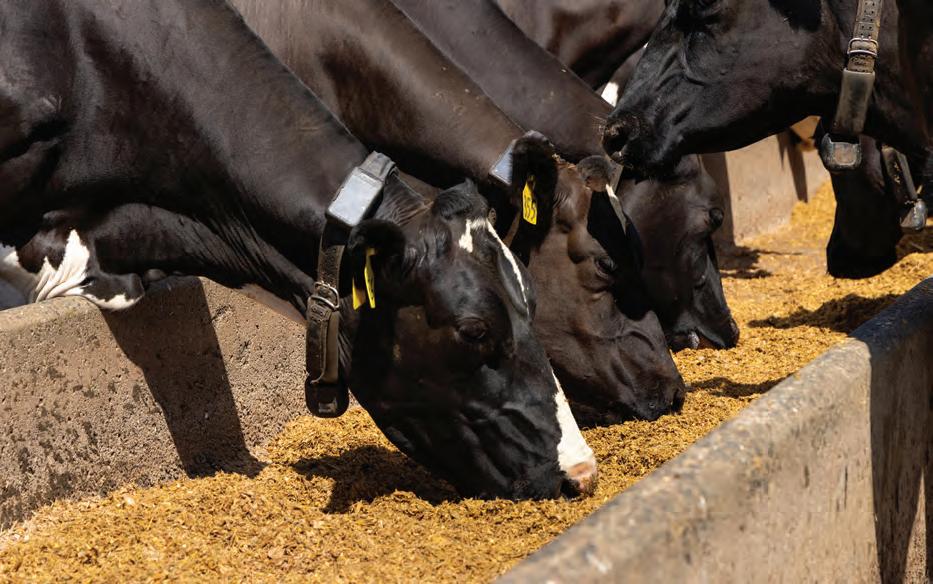

Table 1. Number of days needed between drying off and calving to meet target BCS when feeding either just pasture or pasture and a good quality supplement (includes no BCS gain for 10 days at drying off and 30 days before calving).
Adding in a supplement can also be an effective way of building pasture cover however if you are trying to build a feed wedge you need to consider the impact of supplement types on substitution. Research has shown that pasture substitution is at its lowest
in autumn In the spring substitution rates of around 50% are common, This means for every extra 1 kgDM supplement eaten, 0.5 kgDM pasture is left behind; in contrast, in autumn, the substitution rate is typically lower (say 30% which means 0.3 kgDM pasture not eaten). Feeding a forage like maize silage will create higher substitution than concentrates such as palm kernel expeller (PKE). If pasture alone won’t meet requirements, maize silage can help fill the gap without overcomplicating
the system. The practical focus is on consistency: keep the ration similar day-to-day, manage the silage face to protect quality, and feed it our carefully to ensure all cows get access. Check progress regularly (BCS scoring) and adjust feeding rates early if cows are not trending toward target — small changes made in June and July are far easier than big corrections in the weeks before calving.
Adding in a supplement can also be an e<ective way of building pasture cover however are trying to build a feed wedge you need to consider the impact of supplement types substitution. Research has shown that pasture substitution is at its lowest in autumn spring substitution rates of around 50% are common, This means for every extra 1 kgDM supplement eaten, 0.5 kgDM pasture is left behind; in contrast, in autumn, the substitution is typically lower (say 30% which means 0.3 kgDM pasture not eaten). Feeding a forage maize silage will create higher substitution than concentrates such as palm kernel expeller (PKE).
• Wade Bell is Genetic Technologies farm systems manager. Contact him at wbell@genetic.co.nz
If pasture alone won’t meet requirements, maize silage can help fill the gap without overcomplicating the system. The practical focus is on consistency: keep the ration to - day, manage the silage face to protect quality, and feed it our carefully to ensure all access. Check progress regularly (BCS scoring) and adjust feeding rates early if cows trending toward target small changes made in June and July are far easier than big corrections in the weeks before calving.
To see where maize silage can add the most value in your farm system, talk to one of Farm Systems Specialists, Wade Bell, Matt Dalley, or Grant Matthews. You can find their details at www.pioneer.co.nz.
GERRY HAMLIN
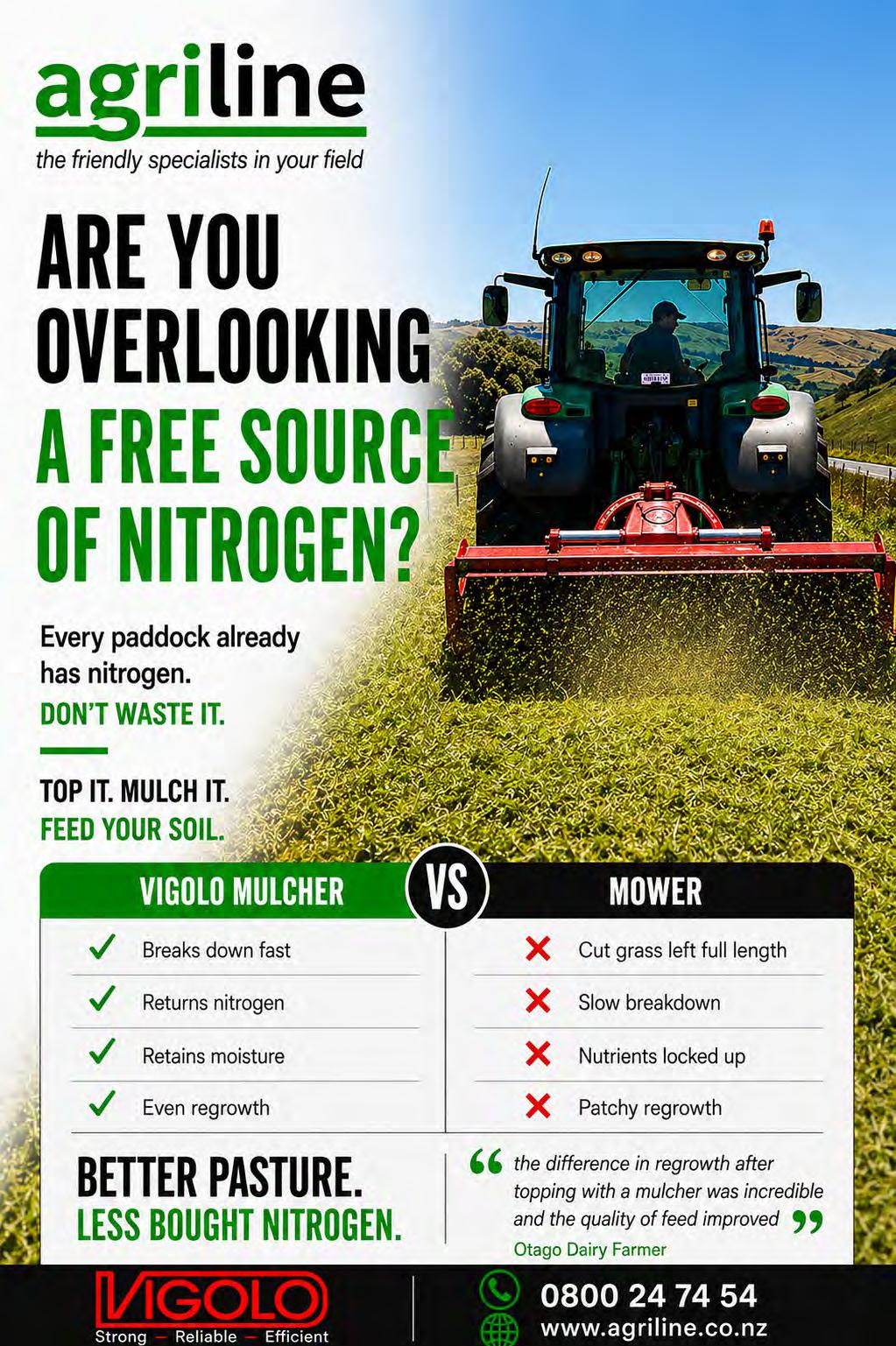
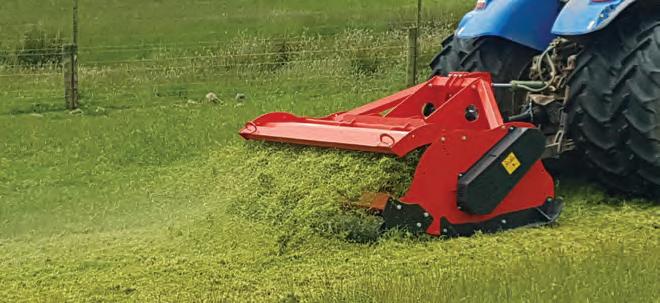
TOPPING GRASS with a mulcher is one of the simplest yet most effective ways New Zealand farmers can lift pasture performance, improve soil health, and increase overall productivity.
Done properly, topping isn’t just about tidying up paddocks, it actively enhances soil biology, boosts pasture growth, and reduces reliance on inputs.
One of the key benefits of topping with a mulcher is improved moisture retention. When grass is finely mulched, it creates an even layer of organic material across the soil surface. This acts as a protective barrier, reducing evaporation and helping retain moisture in the root zone. During dry periods, this can make a noticeable difference – keeping pastures greener for longer and maintaining growth when conditions turn tough.
Topping also delivers a strong growth boost to pasture. By removing seed heads and rank, unpalatable material, plants are pushed back into a vegetative growth phase. This encourages fresh, leafy regrowth –the type livestock prefer –leading to better pasture utilisation and improved feed quality. Instead of wasting energy on seed production, the plant focuses on producing new, high-quality leaf.
A major advantage of using a mulcher over a standard mower is how it handles the cut material. Mulched grass breaks down significantly faster than grass left behind by a conventional topper. A standard mower tends to leave longer clippings in rows or clumps, which can sit on the surface and smother regrowth. In contrast, a mulcher finely chops and evenly distributes the material, dramatically increasing the surface area exposed to microbes. This accelerates decomposition, allowing nutrients to be returned to the soil far more quickly and avoiding the patchy, uneven paddocks often seen after
conventional topping.
This faster breakdown plays a big role in natural nitrogen recycling. As the finely chopped material decomposes, it releases nutrients – particularly nitrogen – back into the soil in a form that plants can readily use. This natural recycling can significantly reduce the need for synthetic fertiliser, lowering costs while maintaining pasture performance.
Over time, this process contributes to healthier soils. The decomposing mulch feeds soil biology, increases organic matter, and improves soil structure. Better soil structure means improved water infiltration, stronger root systems, and more resilient pasture during both wet and dry conditions. The mulch layer also helps protect the soil surface from erosion and temperature extremes, creating a more stable growing environment.
Another benefit is greater paddock uniformity. Mulching removes rough, ungrazed patches and spreads material evenly across the entire working width. This results in consistent regrowth across the paddock, making grazing management easier and more predictable while maximising feed utilisation.
To fully realise these benefits, the quality of the machine matters.
This is where Agriline Ltd and their range of Vigolo mulchers stand out as the best option for New Zealand conditions. Vigolo mulchers are engineered to produce a fine, even mulch that maximises breakdown and nutrient return. Their superior rotor design and robust construction allow them to handle heavy pasture, weeds, and residue with ease, delivering a consistent, high-quality finish every time.
Unlike basic toppers that simply slash and leave clumps behind, Vigolo mulchers spread material evenly across the full width, ensuring rapid decomposition and all the associated benefits – moisture retention, nitrogen recycling, and improved soil health.
Backed by Agriline’s expertise as mulcher specialists, farmers can be confident they are using equipment that delivers real, measurable results.
In summary, topping with a mulcher is far more than a tidy-up job. It is a powerful pasture management tool that improves moisture
retention, boosts growth, accelerates nutrient cycling, and builds healthier soils. With a high-quality mulcher –particularly a Vigolo from Agriline – farmers can turn a routine task into a major driver of on-farm performance.
• Gerry Hamlin is general manager of Agriline.
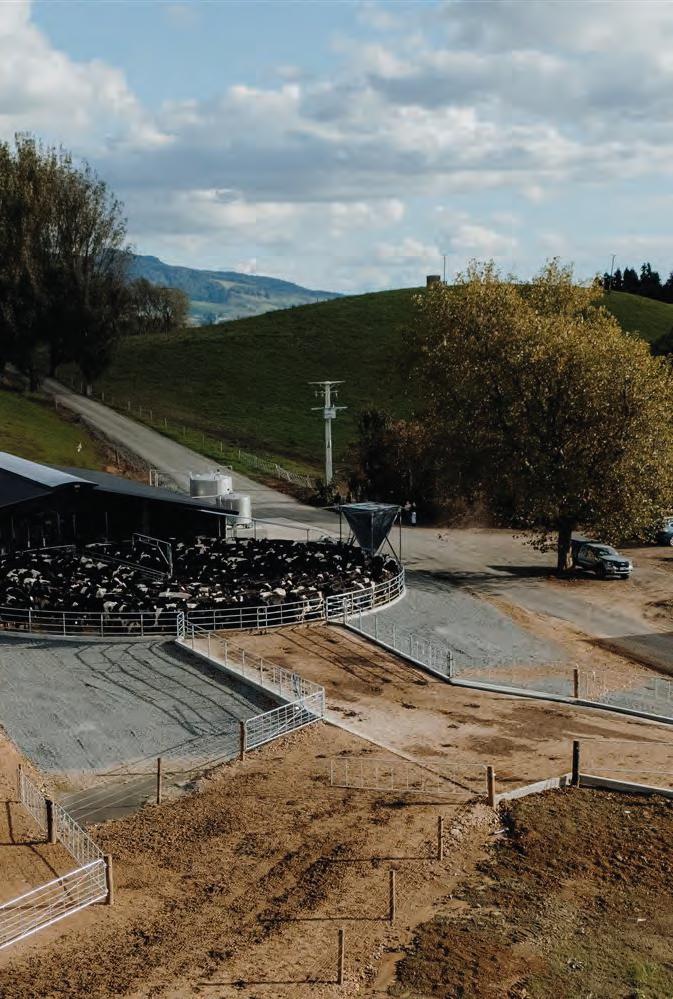
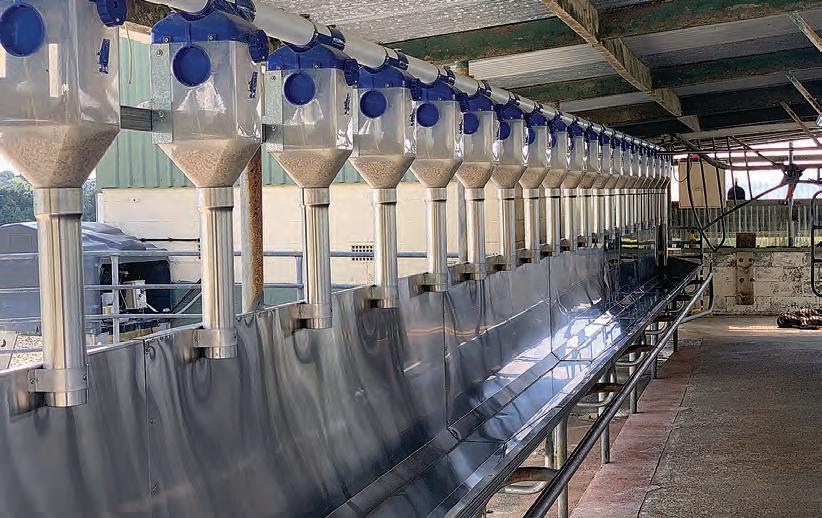
TERRAVEST PROTECTS MILK QUALITY ACROSS THREE CRITICAL AREAS: HYGIENE, REFRIGERATION, AND REAL-TIME MONITORING.

Dairy shed hygiene & animal health
Real-time dairy plant monitoring & data insights

Pre-cooling, on-farm refrigeration & vats

Mid-season on farm is where good habits are tested.
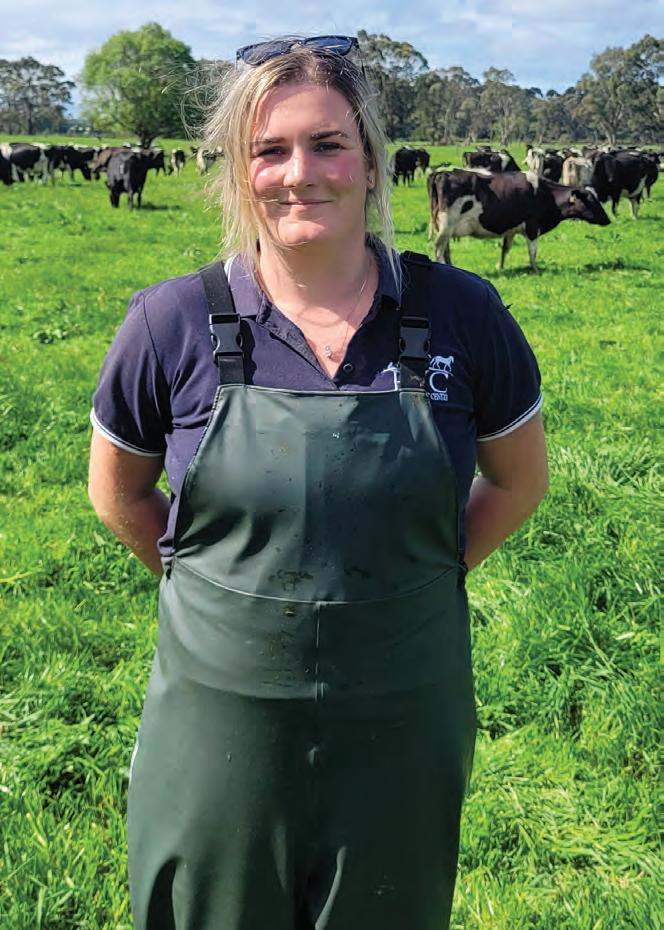
Workloads build, the days stack up, and what felt straightforward at the start of the season can begin to feel like a grind. It is also the point where small lapses in consistency can creep in, often without anyone noticing in the moment. To get a real-world view of how the season is tracking, animal health company Zoetis spoke with Kellie Grieve, large animal technician at Rangiora Vet Centre, who is currently in the thick of it.
WHILE COW dry-off has not fully ramped up yet, heifer teat sealing is well underway.
“We have sealed just over 5000 heifers so far, and it has been going really well,” says Kellie Grieve.
“Conditions have been relatively dry, so the heifers have been clean and easy to work with. They are in great body condition too, which makes a difference.”
It has been a smooth start so far, but she is clear that this is just the beginning.
As workload builds, pressure follows Early season energy does not last.
“At the start, you are mainly focused on heifer teat sealing and everyone is fresh,” she explains.
“As we move further into May and June, everything starts to stack up. We are doing body condition scoring, udder health checks, drying off herds, and milk sampling as well.”
That increase in workload brings a shift in focus. “For us, it becomes about being
efficient while still making sure we are getting the job done to a high standard and not cutting corners.”
Where things can start to slip
It is not usually knowledge that causes issues mid-season. It is fatigue.
“When time pressure builds and people get tired, that is when hygiene can slip,” Grieve says.
“Things like properly cleaning the teat end or washing and drying hands between animals can get rushed.”
Difficult animals can also test consistency.
“If you have a really kicky heifer and you are already exhausted, there can be a tendency to rush rather than taking the time to ask for help.”
Importantly, this is not limited to less experienced technicians.
“Even experienced technicians can become complacent as workloads increase. That is why consistency across the whole team is so important.”
The fundamentals
still make the biggest difference
Despite the pressure, the fundamentals have not changed.
“The biggest difference comes down to getting the basics right and being consistent with them,” says Grieve.
Hygiene remains one of the most important factors. “Making sure cleaning protocols are followed and not cutting corners when things get busy.”
Technique also plays a key role
“That includes wearing gloves and sleeves, keeping equipment clean, and taking the time with each animal to make sure it is done properly.”
For cow dry-off, it does not stop at administration.
“Aftercare is also very important. That includes having the dry-off diet sorted with the primary vet, returning cows to clean pastures, and avoiding unnecessary movement for at least a week. They also need to be monitored closely in the first 24 to
48 hours.”
Consistency is a team effort
Team culture plays a big role in maintaining standards.
“We work closely together, so communication makes a big difference,” Grieve explains.
“If you notice someone doing something slightly off, a quick reminder is often all it takes.”
That applies across all experience levels.
“Even experienced technicians can benefit from a reminder now and then.”
Managing fatigue is just as important.
“Some days can be a slog. Having a good team spirit, helping each other out, and staying positive can make a big difference,” she says.
One thing not to compromise on If there is one takeaway for the rest of the season, Grieve is clear.
“Hygiene. Take your time.” Even in less-thanideal situations. “If you have a difficult animal, do not rush it. Ask for
help. It is not worth cutting corners.”
Because at this stage of the season, those
ultimately show up at calving.

BOVINE RESPIRATORY
Disease (BRD) is one of the most common –and expensive – health challenges on dairy farms. Often referred to as pneumonia or “shipping fever” (a stress-triggered form that can develop after transport), BRD can hit calves hard and fast.
It’s not caused by a single bug. BRD is a complex mix of stress, viruses and bacteria that together compromise the lungs. Even calves that appear healthy can deteriorate quickly.
Typical signs include coughing, fever and laboured breathing. Calves may go off their feed, lie down more than usual, breathe faster, spike a temperature or simply look dull. The problem is timing – by the time these symptoms are obvious, the disease is often well established. Early identification and prompt treatment are critical to limiting long-term damage and losses.
Why BRD hits the bottom line
BRD isn’t just a health issue – it’s a profitability issue.
Calves that struggle with pneumonia rarely catch up completely. Poor early growth can impact future production and lifetime performance. That’s why prevention and early action matter.
Cattle have relatively small lung capacity for their body size, so protecting respiratory health from a young age is essential. When BRD takes hold, it can mean reduced milk yield later on, higher vet costs and, in severe cases, calf deaths. Those losses add up quickly.
Why visual checks aren’t enough
Relying on what you can see has its limits.
Coughing, nasal discharge or a calf falling behind the
mob can all signal BRD. But cattle are prey animals – they instinctively mask signs of weakness. By the time you notice something’s off, you may already be behind.
This is where monitoring technology changes the game.
Continuous tracking of behaviour and activity highlights subtle shifts long before clinical signs are obvious.
For example, earlystage pneumonia can sometimes be picked up on ultrasound when health alerts are triggered, even if a standard clinical exam doesn’t show clear results. That extra layer of insight can make all the difference.
Smarter calf monitoring
CowManager’s Youngstock solution is built specifically to monitor calf health. Using a single ear sensor, it records ear temperature, eating and rumination patterns, behaviour and activity levels – then flags irregularities.
When a calf shows changes linked to the BRD complex, you’re alerted early. That gives you time to act before the condition becomes severe.
Earlier intervention improves recovery rates, reduces reliance on antibiotics and lowers mortality. Healthier calves develop into stronger, more productive cows –protecting your herd and your margins.
The same sensor continues working as calves transition into the milking herd.
CowManager’s Health solution provides lifetime monitoring, allowing you to compare groups, analyse trends and make informed management decisions at every stage.
Combine strong management with realtime monitoring, and you give BRD far less chance to do damage.


DRY-OFF FEELS like a break. For the cow, it’s anything but.
In the weeks before calving, she’s simultaneously growing a calf - around 75% of its birth weight is gained in the final 90 days alone - producing colostrum antibodies, adjusting her calcium metabolism, and trying to hold condition through a significant diet change.
The energy demand outstrips what she can eat. That gap - negative energy balance - is where next season’s problems are seeded. The trouble is, on a NZ pasture-based farm, you’re unlikely to see it going wrong until it already has.
Research shows 85-95% of health events in the first 30 days in milk originate in the transition period, well before a cow shows anything visible. CowManager’s NZ data puts a number on what that costs: cows with repeated
transition alerts - those accumulating three or more alert days across the transition window - produce 5-8% less milk than herd mates who transition cleanly. Not just at peak. Across the full 300 days in milk. And the effect is strongest in cows on their third lactation or beyond, exactly the animals carrying the most production weight in your herd.
That’s not a bad week. It’s a bad season.
Two signals, not one
Most monitoring systems track behaviour. CowManager tracks behaviour and ear temperature simultaneously, from a single earmounted sensor. The distinction matters. Ear temperature reflects changes in blood flow and correlates with physiological stress before it alters how a cow moves or eats. That
earlier signal is the difference between an alert on day one and a problem you find on day five.
Neither ‘At Risk’ nor ‘Suspicious’ is a diagnosis. They’re prompts to take a closer look. Your vet still makes the call. Assign them visibility inside your portal and they have full access to your herd’s data. They’re working from a stronger starting point as the story is unfolding - not at the conclusion.
Your financial window opens at dry-off
CowManager monitors each cow from dry-off through to 25 days after calving - the full transition window, continuously, across the whole herd. Your team starts each day knowing which animals need attention, rather than which paddock to walk and hoping to spot it.
Every dry-off you go into without that visibility is a season of data you won’t get back. And on most herds, the return on closing that gap is more than most farmers expect.
Book a call with your local Cow-

CALF XTREME is a probiotic additive that improves calf health and enables faster growth rates in calves while on milk, resulting in rearing bigger heifers and bulls. By delivering probiotics efficiently through milk, it supports rumen health, protects against nutritional scours, and improves digestion and feed intake - setting calves up for success from day one. Compatible with once-a-day feeding, it reduces labour while maximising results.
"We’ve slashed our calf illness and deaths using Calf Xtreme. Just 212 in sick pens and only 8 losses out of 7,000 calves last year. This year is shaping up to be similar."
Chris, Okoroire
"Calves exceed growth rates and with improved immunity from Calf Xtreme, our calves are better equipped to handle rotavirus.
Out of 800 calves, we only had 2 unexplained deaths"
Brooke, Southland
Manager rep and run the numbers through our ROI calculator - see what your transition is costing you.
cowmanager.co.nz
0800 770 566
• Article supplied by CowManager
CHRIS BALEMI
WHEN
A cow goes down after calving, it is easy to blame the calving itself. Milk fever, calving stress, poor weather, bad luck. Yet many down cows are not caused by one dramatic event. They are the end result of poorly transitioned cows entering calving under nutritional pressure.
That pressure often starts in the three weeks before calving. Intake drops, calcium demand is about to surge, and cows that are overconditioned or poorly prepared nutritionally are unable to meet needs at this time. Without the correct balance of minerals, they are unable to initiate the hormonal responses required to make stored minerals available.
Over-conditioned cows also tend to eat less before and after calving, which puts them under more metabolic strain and slows recovery.
Our goal is to reduce the number of down cows, and the work starts before calving.
Why transition cows end up in trouble
A close-up cow is under a lot of strain. Commonly, dry matter intake decreases just as demand for calcium, magnesium and energy is increasing. The risk rises quickly if the ration is too rich, the cow is over-conditioned, or feed management is inconsistent.
Low intake before calving can leave the cow short of fuel and less able to regulate calcium effectively.
Deficiency in calcium affects muscle function, appetite, gut motility, and standing ability. At the same time, poor intake drives body fat mobilisation and can
lead to ketosis. NEFA and ketones rise, liver workload increases, and the cow is less able to bounce back after calving.
This is where many down cows are set up. The issue is often not calcium alone, but a combination of pressures that have been allowed to build up before calving.
The mistakes that build pressure
A lot of farms run into the same problems.
Over-conditioned springers can be a particular problem. Ideally, cows should be gradually conditioned in the last months of lactation. The challenge during the dry period is to feed springers at adequate levels in order to maintain their condition, but not to overcondition cows during this period. Cows overconditioned during the dry period tend to gain visceral, as opposed to adipose fat (internal fat around the organs, versus fat under the skin). Visceral fat slows metabolism and is much harder to mobilise when needed, hence it is far more likely to reduce appetite, increasing the risk of metabolic issues at calving.
We recommend feeding cows well during lactation in the autumn, in order to gain healthy condition and avoid overfeeding in the dry and close-up periods. Farmers should aim
to have cows calving at a body condition score of about 4.8 to 5.2. Transition length also matters, with around 18 to 21 days of targeted transition feeding required to give cows time to adjust to the feed and also allow sufficient time for hormones to be released in the lead up to calving.
Other common mistakes include poor effective fibre, sudden ration changes, irregular feed delivery, overcrowding, repeated regrouping, and long walking distances during early lactation. Successful transition is not just the three-week pre-calving but also the first six weeks of lactation. Get it wrong and you will increase the number of downer cows.
What to watch for on-farm
Down cows often give warning signs before they hit the ground. Watch for springers that are too fat, cows that are slow to come when fresh feed is offered, sorting, poor rumen fill, and sluggish fresh cows that never seem to get moving properly. Rumination is also a useful guide. It should be climbing back above about 400 minutes by day four after calving (dependent on cow size and monitoring technology). If cows are still sitting well below that, something is off.
A rise in retained
membranes, ketosis, displaced abomasum, slow milk lift, or cows losing too much condition in early lactation can also point to transition cows being under pressure.
Blood testing can help pick up subclinical issues before they become clinical ones. Calcium, magnesium, phosphorus, NEFA, BOHB, albumin and cholesterol can all help show where the system is coming unstuck.
• Chris Balemi is Agvance Nutrition founder and managing director.
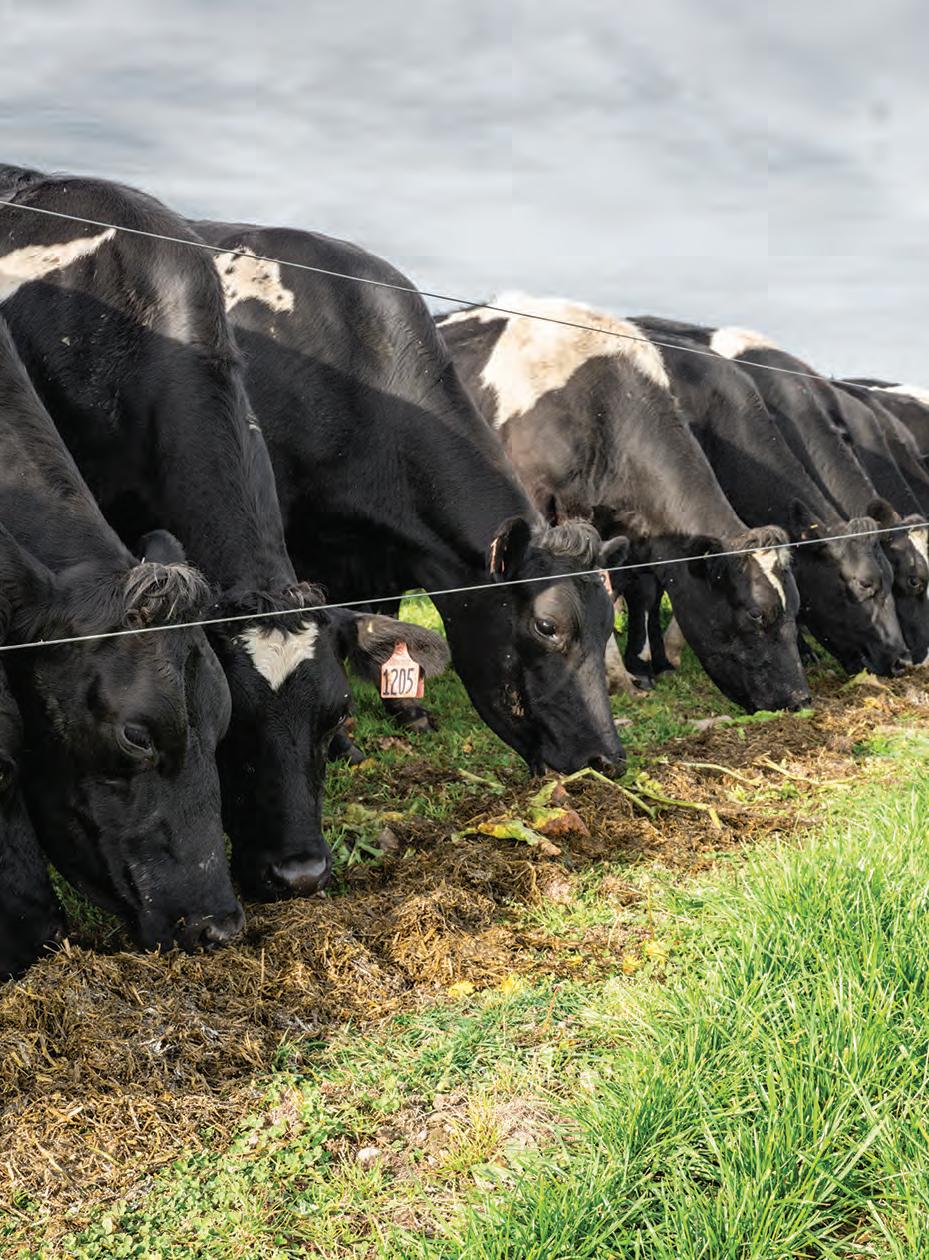
FOR DECADES,
probiotics in calf rearing have been treated as a reactive tool – something to reach for when illness strikes. That thinking, according to Matt Collier of Probiotic Revolution, is leaving significant money on the table.
“The biggest benefit isn’t just keeping calves healthy during a challenge,” Collier says.
“It’s achieving faster growth rates while calves are on milk — and setting them up for a lifetime of better performance.”
Rethinking the Role of Probiotics
At the heart of Probiotic Revolution’s approach is what Collier calls the advanced calf rearing system — a method that combines
high milk intake with consistent probiotic supplementation through their product, Calf Xtreme. The system is built on a straightforward biological principle: calves that grow faster between three and five weeks of age develop better mammary tissue, which directly translates to greater milk production later in life.
The mechanics behind it are equally practical. When milk is fed in volumes that exceed the abomasum’s capacity, the overflow passes into the rumen –carrying probiotics with it. This supports rumen microflora, improves digestion, and drives voluntary feed intake.
The result is calves that eat more meal, hay, and
grass, and reach target weaning weights up to two weeks ahead of schedule.
One farmer’s experience illustrates the effect clearly. Feeding
heifer calves three litres twice daily, he noticed they showed little interest in meal at two to three weeks of age.
On Collier’s advice, he shifted to four litres in
THE EVIDENCE building around advanced calf rearing points to a fundamental reassessment of where value is created in the dairy system. The calf shed, long treated as a cost centre to be managed rather than an opportunity to be captured, is emerging as one of the highest-leverage points on the farm.
As one Canterbury farmer discovered after a two-year break from Calf Xtreme – during which milk records showed a 40-kilogram milk solids drop in heifer production – the gains are real, measurable, and difficult to replicate by other means. He has since returned to the system.
The message from farmers who have adopted the approach is consistent: the investment in advanced calf rearing pays back not once, but across the entire productive life of the animal.
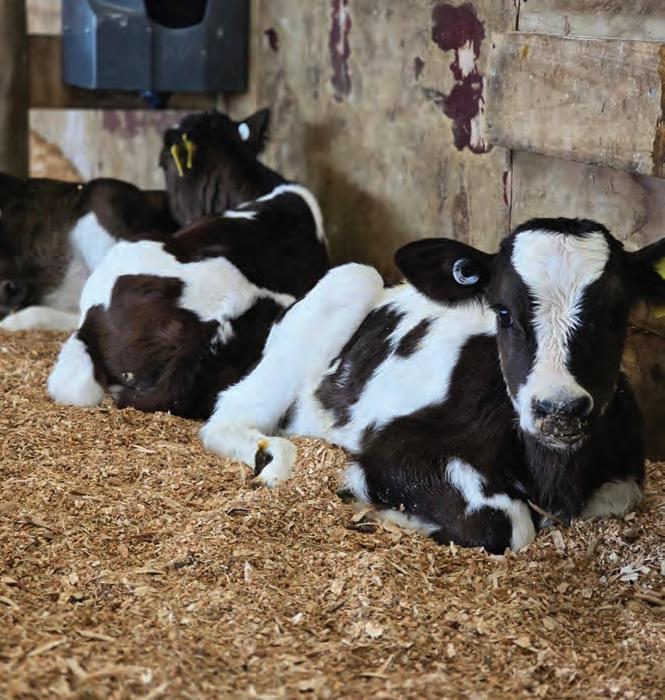
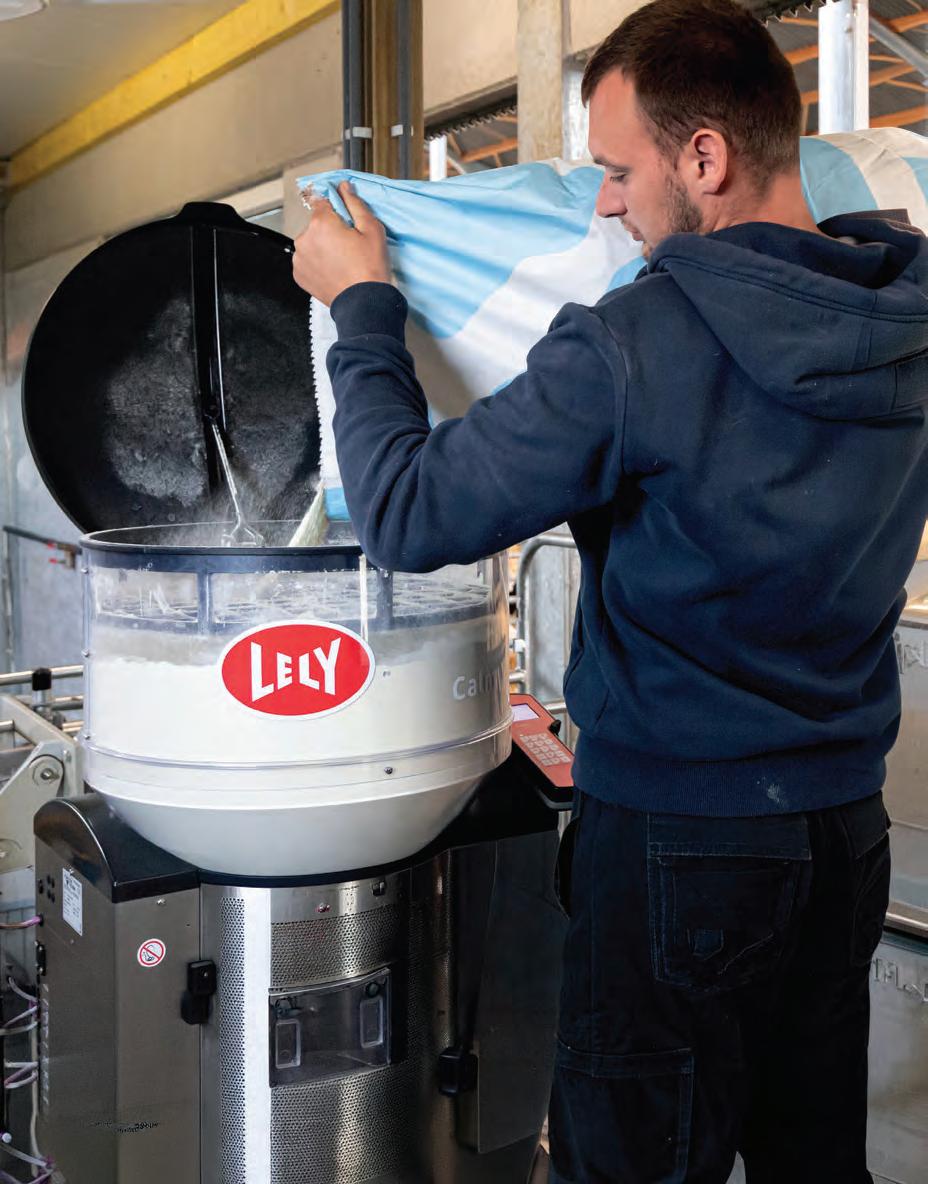

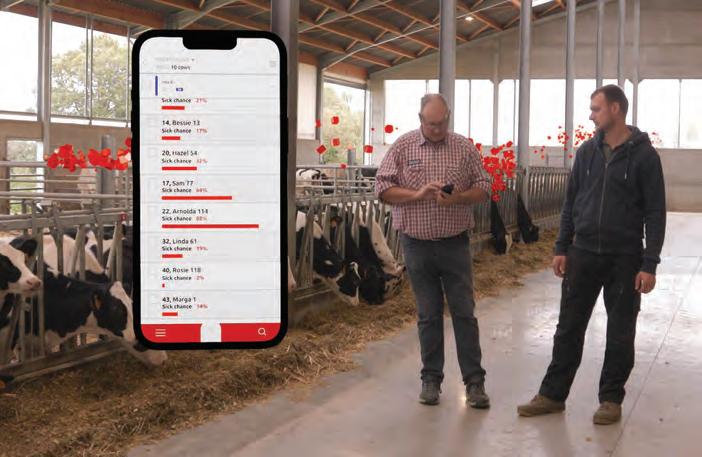
your calves consistently, monitoring them for a lifetime with Lely Horizon
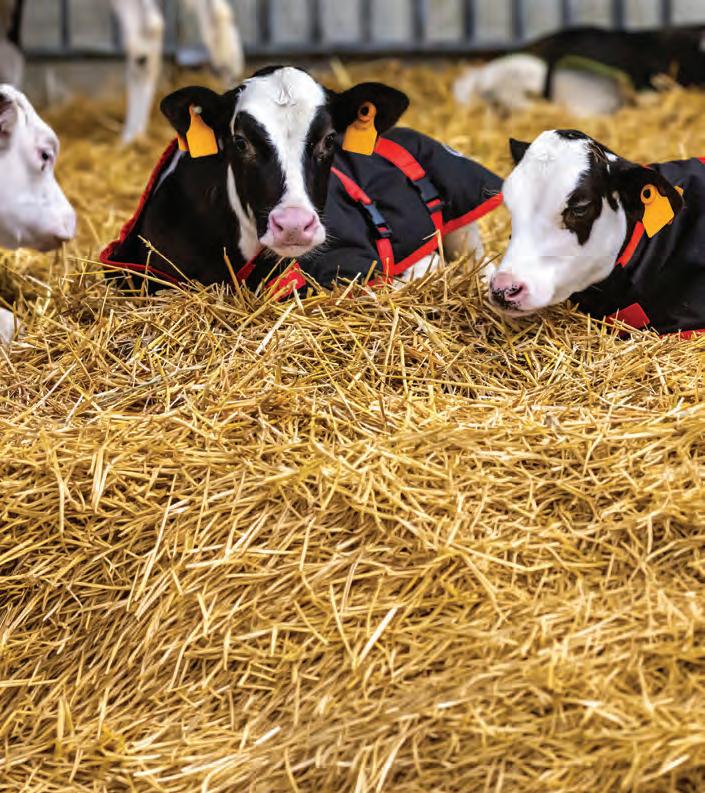
the morning with the Calf Xtreme and two at night – and meal consumption picked up immediately. Moving to six litres once a day produced even stronger results.
By day ten, farmers operating on this once-aday system are typically achieving intakes of five litres for Jerseys,
six to seven litres for Crossbreds, and seven to eight litres for Friesians.
The performance gains have been demonstrated across operations of varying sizes, but perhaps nowhere more strikingly than at Top-Notch Calves, run by Chris Horan. In
WHAT DISTINGUISHES the advanced rearing system from conventional approaches is that its benefits don’t stop at weaning. Calves raised on the system consistently outperform their peers in post-weaning growth, and farmers report reduced drenching requirements –suggesting the system may be building stronger natural resistance to worm burdens.
Collier believes the mechanism is twofold. “Initially I put the post-weaning gains down to better rumen development. Now I think it’s also about a stronger immune system providing earlier natural resistance to worm burdens.”
Heifer grazers operating in high-worm-burden environments have confirmed as much, noting that Calf Xtreme-reared calves deliver the best growth rates and require the least intervention.
The downstream impact on milk production is where the economics become compelling. Stratford dairy farmer John Weir shifted from two litres twice daily to seven to eight litres once a day by day ten. Milk production from those heifers, compared with mixed-age cows, rose by 50 kilograms of milk solids – worth $500 per heifer.
For Cambridge dairy farmer Joe McDonald, having bigger heifers at calving has changed his farming philosophy to go for higher per cow production, with no increase in feed inputs. “We always fed our calves a high rate of milk, so there was no change in volume, but hay consumption increased substantially for the 5 weeks they are in the shed. Our calves go out to grazing 7-10 days earlier in late November or early December, and they are 5 - 10 kgs heavier. While we are happy with these subtle improvements it’s the continued improvement thereafter in weight gains that results in substantially better heifers returning from grazing. On a weight gain contract, the grazier is so happy with their performance, and we get heifers back that are nearly indistinguishable in size from the mature herd. With better heifer production we now milk less cows – feed them better, and we’ve had to put in a bigger vat”
2024 – the first year Horan used Calf Xtreme – he reared 7,000 calves, with just 212 requiring treatment in sick pens and only eight deaths.
“With the cost of buying in calves, the savings from reduced
losses are significant,” Horan notes.
“We’ve largely avoided having a tail mob, they reach saleable weights earlier, and we get glowing reports from bull farmers on the subsequent growth rates of these calves.”
Many farmers are now aiming to have a target of 1kg liveweight gain from birth to Christmas. For Kapuka dairy farmers Brooke and Blair McKenzie, rearing 800 Friesian heifer and
bull calves, this target has become a reality. They get onto a 7 – 8 litre milk intake by day 10 and hold that level. Even when rotavirus moves through the shed – In-spite of their best-efforts to prevent it – tripling or
quadrupling the dose rate of Calf Xtreme sees calves recover within days. In 2024, the McKenzies recorded just two unexplained deaths after calves left the shed.
“CALVES GAINING 900G PER DAY INSTEAD OF 400G ARE AROUND 15–20% MORE PRODUCTIVE.” Right colostrum + Right milk + Right quantities = Better early growth. Proven to lift milk production across the first four lactations. For every additional +100g/day pre-weaning growth = +279kg milk per lactation.
Find out how you can make the right feeding decisions for your future herd’s productivity.
nzagbiz.co.nz/formula
IN CALF rearing, the smallest details often have the biggest impact. While feed and genetics remain critical, bedding is increasingly recognised as a key driver of calf health, growth, and overall performance.
Animal bedding products maker Goodwood NZ says their focus is on delivering bedding solutions that are not only practical but proven to perform in real farm conditions.
Goodwood says its animal bedding range has been developed with one clear goal – to create a healthier, drier environment for livestock. Their Premium Kiln-Dried Animal Bedding is at the centre of this offering.
Through a controlled drying and processing system, the product achieves exceptional absorbency while significantly reducing moisture retention.
The result is a bedding material that actively helps lower the risk of common calf health issues, including scours and respiratory challenges.
What sets this product apart is not just dryness, but consistency, it says.
Each load is processed to a


uniform standard, ensuring farmers can rely on the same performance every time.
“Combined with excellent odour control and reduced ammonia build-up – particularly when compared to traditional sawdust or shavings – this creates a noticeably cleaner and safer environment for young stock.”
Beyond calf sheds, Goodwood has expanded its offering to meet the wider needs of modern dairy systems.
Their Compost Barn Blends are designed to support optimal aeration and moisture balance, helping maintain ideal bedding conditions in high-use environments.
For stand-off pads, Goodwood says that it provides cost-effective bedding options that deliver strong absorbency and durability, giving farmers flexibility without compromising on quality.
Ease of use is another critical factor. Goodwood bedding is easy to spread, simple to manage, and efficient to remove. Its low-waste, long-lasting performance means less frequent replacement, reducing both
labour and overall costs – a practical advantage on busy farms.
Behind the product is a process grounded in sustainability and purpose.
Goodwood utilises recycled untreated wood, transforming it into high-performance bedding. This approach diverts waste while creating a circular system where used bedding can be repurposed as compost or soil conditioner.
Service is also central to the Goodwood offering, the company says. With operational yards in the Bay of Plenty and Waikato, the business provides reliable, responsive delivery and works closely with farmers to deliver tailored solutions.
As calf rearing practices continue to evolve, the importance of bedding is becoming harder to ignore. A dry, hygienic environment sets the foundation for healthier animals and stronger long-term performance.
Goodwood says its range reflects a shift toward smarter, more effective farm inputs – built for the future of dairy farming in New Zealand. sales@goodwoodnz.co.nz
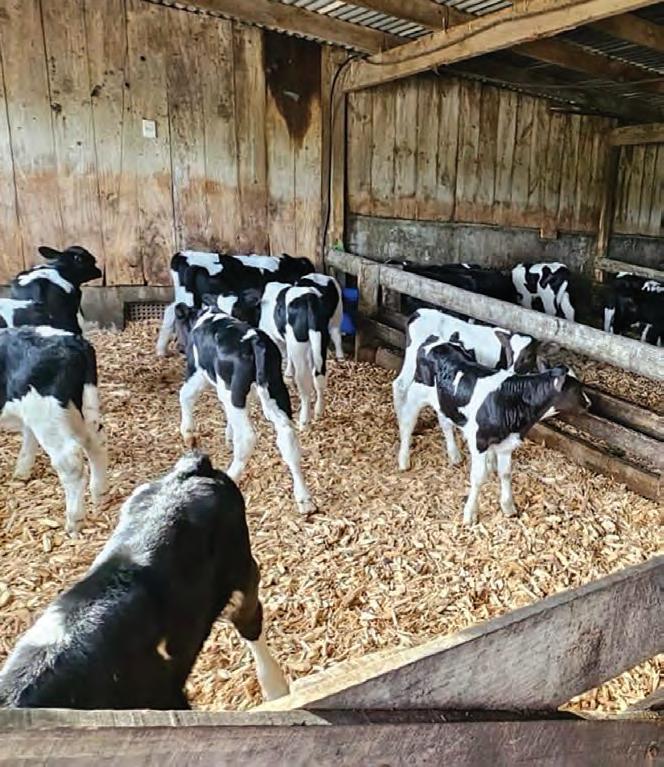






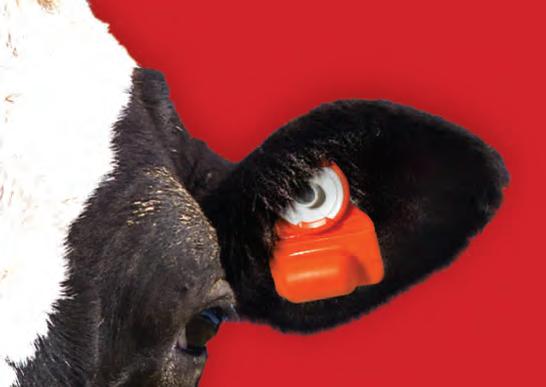










THE FIRST weeks of a calf’s life quietly shape the future of the entire herd.
Growth rates, health, and early nutrition all have a direct line to lifetime performance.
Yet on many farms, calf feeding remains one of the most labour-intensive and inconsistent parts of the system. That’s where Lely says it Lely Calm automatic calf feeder is changing the conversation.
At its core, Calm is about consistency, says Lely. It prepares milk at the right temperature and delivers it ad libitum, allowing calves to drink little and often
throughout the day. This feeding approach supports better nutrient uptake and encourages steady daily weight gain, something that’s difficult to achieve with traditional twice-a-day bucket feeding. Calves can drink according to their natural rhythm, reducing stress and supporting stronger development from the first day.
The company says the system is fully adjustable, giving farmers the flexibility to tailor feeding strategies to different groups.
Replacement heifers can be fed differently from beef calves, with settings
adapted to suit each goal. Replacement calves can receive unlimited milk for the first five to six weeks of life, while beef calves can be managed with set daily allowances. From there, a gradual step-down encourages roughage and concentrate intake, supporting rumen development and setting the foundation for improved vitality, fertility, and milk production later in life.
Hygiene, often a challenge in calf rearing, is another area where Lely says Calm stands out. The system is designed to clean itself automatically multiple times a day using
water and specialised detergents. For farms wanting an extra level of protection, the optional HygieneBox adds a twostep cleaning process, rinsing the teat after every visit and thoroughly cleaning the internal system. The result is consistently high milk quality and reduced bacterial build-up, both critical for calf health.
Beyond feeding and hygiene, Calm significantly reduces labour, says Lely. “The repetitive tasks of mixing milk, filling buckets, and feeding calves manually are largely eliminated. Farmers gain back valuable time while still
knowing their calves are being fed accurately and consistently. It also introduces calves to automated systems early, as they learn to enter a drinking station, an experience that can ease the transition to robotic milking later in life.”
What truly sets it apart, according to the company, is the integration with the Lely Horizon farm management platform, a digital monitoring and decision-support system working behind the scenes. Calm captures feeding data every time a calf drinks and converts it into practical, easy-to-use
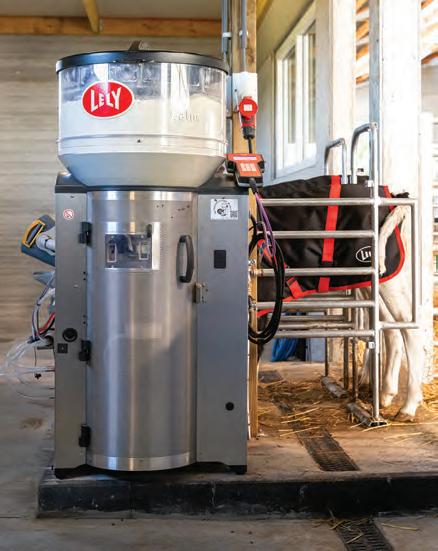
insights for the farmer.
This allows farmers to monitor drinking behaviour, pick up changes early, and track each calf’s growth and performance over time. When combined with the Lely Astronaut automated milking robots, it creates a complete digital record from calf to cow, helping farmers make better,
more informed decisions at every stage of life. In a sector increasingly focused on efficiency and animal wellbeing, Lely Calm offers a practical step forward, helping farmers raise healthier calves today, and more productive cows tomorrow.
www.lely.com
• Article supplied by Lely
MARK DANIEL markd@ruralnews.co.nz
NEW ZEALAND innovation company
Techion, best known for its animal diagnostics platform, FECPAK has signed an exclusive strategic partnership with Farmlands to bring independent animal health disease intelligence its customers.
The collaboration is an important step in supporting farm sustainability. Through the partnership, Farmlands customers will have easy access to FECPAK’s on farm and in-store diagnostic testing range, allowing timely and informed decisions when managing disease. The aim is also to slow the growing challenge of drench resistance while improving animal health, productivity and farm returns.
Techion founder
(FEC). “With FECPAK extending its test menu using its worldleading new digital and AI-enabled technology, we’re pleased to have a partner in Farmlands, who can work with us to give farmers access to faster, targeted, independent animal health information.”
“Knowing exactly what worm species are present allows farmers and animal health professionals to make informed and targeted drench decisions.”
Farmers visiting their local Farmlands store will see FECPAK’s new Animal Health Multi Test Kits in one and three sample options,
Facial Eczema (pasture and faecal), Liver Fluke and Worm ID – a new, cutting-edge test that identifies parasite species within hours of sample processing.
The FECPAK Animal Health Multi Test Kits are easy to use, with customers able to choose the test or tests they want, then have the cost of testing added to their Farmlands account. This makes accessing professionalgrade animal health diagnostics easily available. If they wish, farmers can share the test results with their Farmlands rep, veterinarian or animal health provider.
Among the expanded FECPAK test range, Worm ID is said to be a significant advance in parasite diagnostics. Traditionally, identifying the worm species relied on larval culture, which can be a slow, costly and labour-intensive process that could be taking up to two weeks. FECPAK
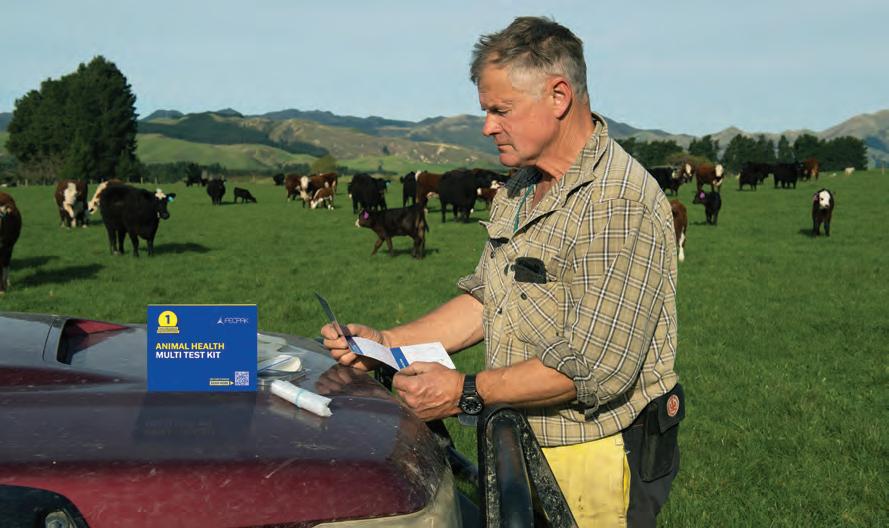
currently available for sheep, with cattle to follow shortly.
Greg Mirams continued, “knowing exactly what worm species are present allows farmers and animal health professionals to make informed and targeted drench decisions, offering a precision approach that is essential if we want to

(Faecal Egg Count Reduction Testing), a practical, independent tool that helps farmers confirm whether the drench they are using is still effective.
Delivered as a DIY on-farm kit, this allows farmers to test the effectiveness of their drenches more accessible and cost-effective, with regular testing helps
MARK DANIEL markd@ruralnews.co.nz
@rural_news facebook.com/ruralnews

GIVEN THAT current diesel pricing is a bit like a ride on a fairground roller coaster, it should be no surprise to hear that manufacturers are looking for alternatives.
At Brazil’s recent Agrishow 2026 - the largest in South America - Massey Ferguson introduced a new ethanol-powered engine concept, developed by AGCO Power as a purpose-built platform, rather than a modified diesel unit.
The project is said to be driven by a strategic decision towards the use of alternative fuels tailored to regional availability, particularly in markets such as Brazil, where ethanol production and distribution is widespread.
The engine is aimed at the 200–300hp range, making it ideal for agricultural applications such as row-crop tractors, planting operations, and heavy transport tasks. The concept has been driven by Brazilian engineering teams, involving over three years of R&D and over 10,000 hours of field testing, suggesting a strong focus on real-world durability and performance parity with diesel engines.
Unlike retrofit or conversion of existing diesel engines, the concept is designed from the ground up to handle ethanol’s specific combustion characteristics, including differences in energy density and lubrication behaviours. Sources report that the key objectives are to deliver comparable torque, responsiveness, and reliability under continuous high-load conditions typically seen in widespread agricultural use.
Ideally suited to regions with established bio-fuel ecosystems, particularly in the case of ethanol, which can be locally sourced or even produced on-farm from crops such as sugarcane or corn, the initiative suggests that AGCO is possibly looking at a multifuel platform strategy, typically including ethanol, hydrogen and electrification, rather than pursuing a single global solution.
MARK DANIEL
DESPITE DIFFICULT trading conditions for European machinery manufacturers brought about conflicts in Ukraine and Iran, alongside the United States imposing punitive tariffs, Italian manufacturer Maschio Gaspardo, has seen turnover increase 12% in 2025 to €390 million (NZ$775m) with a net profit of €11.2 million (NZ$22.3).
“Delivering double-digit growth in a year when the entire sector contracted is the result of a long-term vision and the trust that our customers and partners place in the Maschio Gaspardo brand,” says chairman Mirco Maschio.
Manufacturing in Italy and Europe continues to remain the key locations for the group, currently employing around 2000 staff across eight plants in Italy, China, India and Romania, while also operating through 15 commercial subsidiaries. The group invested over €12 million in plant, machinery,
equipment and software worldwide in 2025, continuing to modernise and digitalise its manufacturing base.
Over the medium to long term, the company vision is focused on further internationalisation, with the company having completed a series of transactions to strengthen its presence in high-growth markets overseas.
In North America, the company acquired a stake in Lynx Ag, a company behind some of the world’s largest strip-till machines, based at Churdan, Iowa, together establishing the joint venture, Maschio Gaspardo USA. Field testing is underway for the first large-scale planters designed for the North American market, with an official launch scheduled for the Farm Progress Show later in the year.
Among its future growth priorities, the group is also paying close attention to the South American market, particularly Brazil, where it is seeking partners to expand its presence. There are also aspirations to expand in India where €30 million (NZ$59.6m) has been invested in a 100,000m² site to build a new manufacturing plant, that will allow a doubling of local
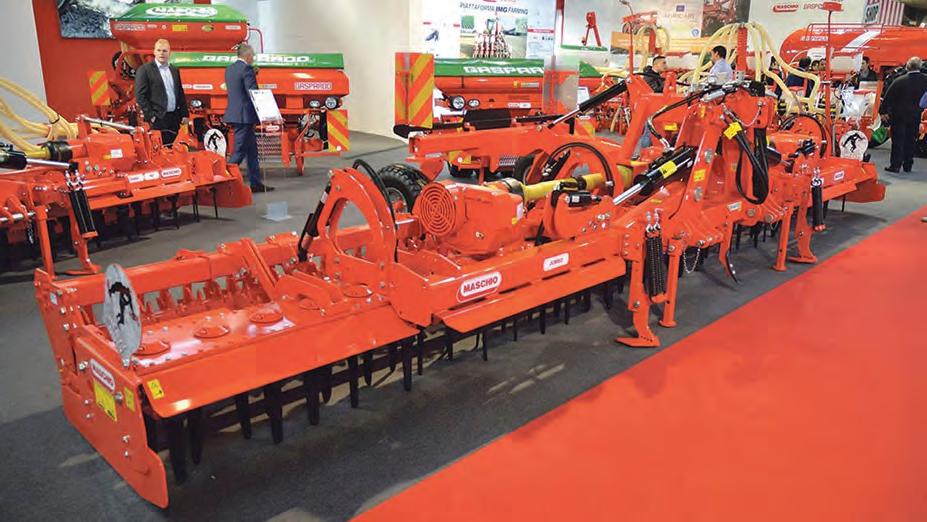
manufacturing capacity.
Elsewhere, the partnership with Grégoire Besson, in which Maschio Gaspardo holds a stake. In December 2025, saw the group’s Chinese and Canadian subsidies acquiring the respective Grégoire Besson business units, becoming exclusive importers
and distributors of the French brand in both countries.
The Italian manufacturer reports a slowdown in orders in 2026, but remains cautiously optimistic, provided that the international landscape moves towards gradual stabilisation. Strategic planning confirms a revenue growth
trajectory for the 2026–2030 period, with Italy, France, Germany, Austria, Switzerland, Spain, Portugal, Romania and China among the markets expected to deliver the strongest growth.
Visit www.powerfarming.co.nz
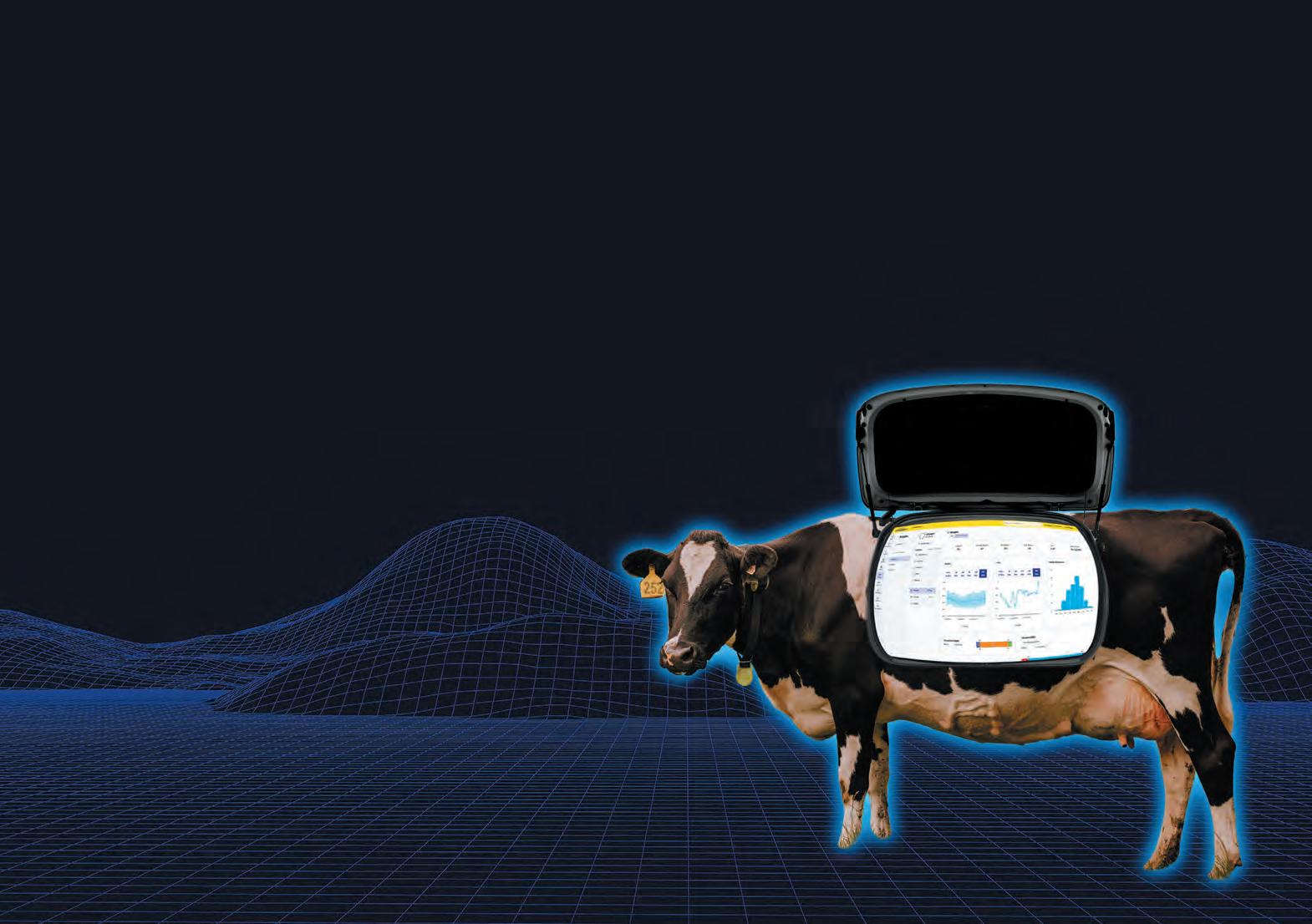
no data fees, payment terms available • Collar or Ear Tag options



MORE THAN 1200
exhibitors will showcase their products and services at next month’s National Fieldays, with sites nearly sold out.
Fieldays says visitors can expect a “diverse and engaging experience”, from innovative agritech and advanced farm machinery to artisan food and new vehicles. A wide range of financial and insurance products will also be on display.
The introduction of a new Fieldays Function Centre on the Village Green will create additional opportunities for businesses to host functions during the event.
Fieldays says a strong lineup of feature areas will give visitors the opportunity to explore
emerging technologies, career pathways, sector insights, and the latest developments shaping the future of agriculture and rural industries. These are showcased across the

1: Fastest Mixing Speed
- Asymmetrical mixing wedges
- Power mixing auger
- Rolled mixing chamber walls
- Consistent mix right through
2: Longest Lasting Mixer Wagon
- Double overlapped welding
- High quality German steel
- Robust truck style chassis
- Double anti spill ring
3: Nationwide Backup and Support
- Four branches nationwide
- Factory trained technicians
- Significant parts stock holding
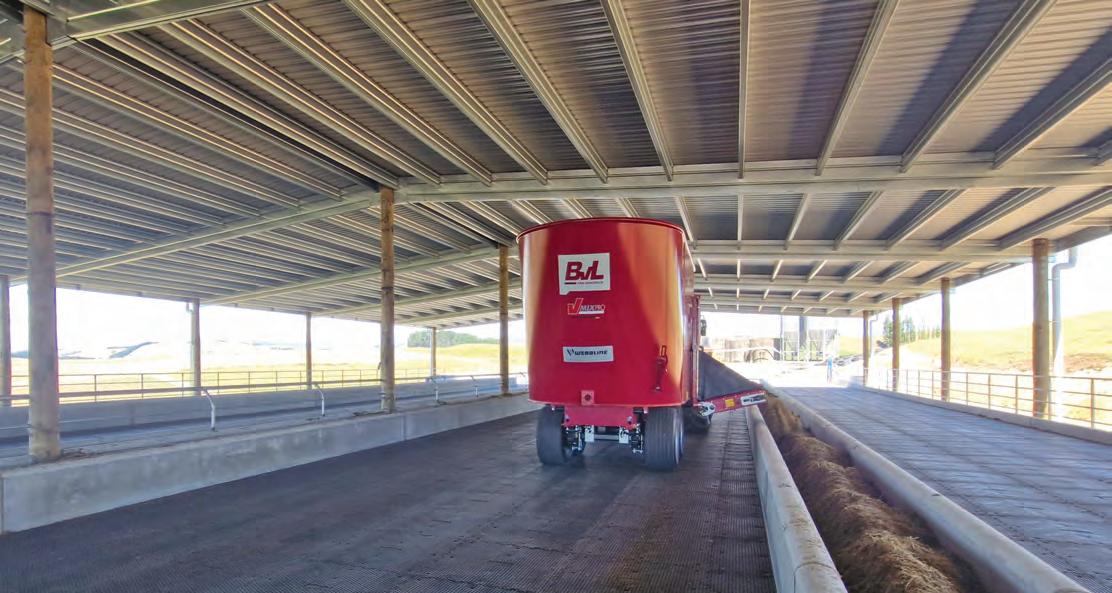

consistency
– WAIKATO DAIRY FARMER

More than 1,200 exhibitors will
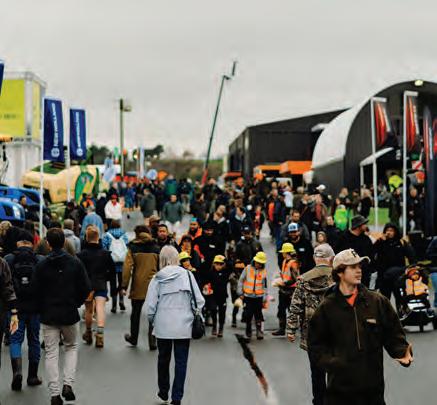
Fieldays Hubs, including Innovation, Careers & Education, Forestry, Hauora Taiwhenua Health & Wellbeing, Rural Advocacy, and the Drone Zone.
Several key features are also reaching important milestones, with the Fieldays Hauora Taiwhenua Health & Wellbeing Hub celebrating its 10-year anniversary and the Fieldays Forestry Hub marking five years as part of the Fieldays programme.
Competition highlights include Tractor Pull, Fencing and Excavator Competitions. These features continue to celebrate capability, skill, and a strong sense of grassroots entertainment, providing popular entertainment for visitors.

Families will find no shortage of action in the Fieldays Family Fun Zone, including a rock wall, bungy trampoline and a golf simulator. They can also visit the Heritage Village, which includes the historic church, the old Kihikihi jail, and the National Dairy Museum. For those interested in rural art, the Fieldays Creative Space, also located in the Heritage Village, offers visitors a chance to slow down and engage with the creative side of rural life, celebrating storytelling and humour inspired by artist David Henshaw.
Visitors can also vote for their favourite Fieldays Innovation Awards via the kiosk in the Innovation Hub and
Exhibitor Site Awards through the official Fieldays App.
The Gate Prize also returns, supported by JAC and Stoney Creek. Every personalised ticket that comes through the gates is a chance to win a JAC T9 Ute (RRP $49,990) and $10,000 of Stoney Creek gear. Visitors can triple their chances of winning during the event by visiting the JAC site at I30 and Stoney Creek at site F55.
General admission tickets are priced online at $36 for a one-day adult pass and $18 for a oneday child pass, with free entry for children under five. A family pass is available for $108. As part of ticket purchasing for 2026, customers have the option to donate during checkout to the Rural Support Trust.
“We’re proud to continue our longstanding relationship with Rural Support Trust through our donation initiative. Donations support the Trust’s vital work providing practical assistance and wellbeing support to farming families and rural communities across New Zealand,” said National Fieldays chief executive Richard Lindroos. Also on sale is the Fieldays Business Lounge ticket. This premium ticket option includes access to an all-inclusive lounge, VIP parking, complimentary meals, barista and beverage service, and dedicated meeting spaces with workstation facilities.
DANIEL
RELATIVELY NEW to the buoyant New Zealand ute market, JAC (pronounced Jack) first unveiled its T9 PHEV workhorse to NZ audiences at last year’s Fieldays, showcasing a bold orange prototype designed to capture attention and gather real-world feedback, fed directly back to the vehicle development team.
The company reports that it has officially begun its New Zealand pre-
launch testing program for the highly anticipated T9 Ute PHEV, marking the next step in bringing the electrified workhorse to Kiwi drivers at a time when sky high fuel prices are on everyone’s mind.
Backed by more than 60 years of truck manufacturing expertise, early indications suggest the performance, specification and technology on offer will position the T9 PHEV to be extremely competitive in a fast developing sector of the market.
Having already established a strong
presence in NZ with the Diesel T9 Ute variant launched early 2025, JAC’s EV tech credentials are already showing excellent market acceptance with its EV truck range, supporting local fleet operators, including Woolworths, KiwiHarvest, Kaibosh, Fieldays, and a Kiwi winery, while global operators include DHL, Heineken, Kraft Heinz, PepsiCo and IKEA.
The high-performance plug-in hybrid T9 will now undergo its local testing under the brand’s “Tested by Kiwis, for
Kiwis” philosophy, building on testing in Australia at facilities such as the former Holden LangLang proving grounds. JAC’s NZ team will apply the same approach taken with the T9 diesel prior to its local launch, completing hundreds of hours of testing across tarmac, mud, snow, sleet, gravel and river crossings.
Andrew Craw, general manager of JAC NZ, says the timing of a PHEV Ute for the local market couldn’t be better, given the huge interest in alternative fuel options.

“We’re excited to be putting the T9 PHEV through its paces here in NZ, putting it through real-world Kiwi conditions, which is
critical to making sure it delivers where it matters most – allowing us to say it does what it says on the tin!”
The test vehicle is
DANIEL markd@ruralnews.co.nz
WHILE EQUIPMENT sales teams bask in the glory when they sell a product, they often forget the designers and engineers who bring that product from an idea to production.
Case IH has been recognised on the international design stage, with its new Puma series tractor earning a Red Dot Product Design Award, described as one of the world’s most respected acknowledgements for outstanding design.
Judged by an independent jury of international design experts, the Red Dot Product Design Award is presented to products that excel in
aesthetic appeal, functionality and innovation, recognising the new Puma series tractor as delivering practical, operator-driven design.
Unveiled at Agritechnica in November 2025, the new Puma series tractor combines bold family styling with a significantly enhanced cab environment designed to support long working days. Key improvements include easier access, revised interior styling, increased storage and upgraded in-cab displays, each developed to enhance operator comfort and everyday ease of use.
Externally, a redesigned hood and lighting package improve forward visibility, while new LED fender taillights integrate safety with a distinctive visual signature. In the paddock, a clever design has
achieved a tighter turning radius to improve manoeuvrability, while integrated technology enhances ease of operation, including the Pro 1200 display, seamless connectivity with Case IH FieldOps, ISOBUS compatibility for intuitive implement control and Tractor Implement Management (TIM) compatibility.
The Red Dot judges were particularly impressed with how these key features are unified by the latest evolution of Case IH family styling, mirroring the clear design language introduced across the complete Case IH tractor portfolio, with consistent hood architecture and lighting layouts, developed by the in-house Case IH industrial design team based at the CNH Design Centre in Oak Brook, Illinois, USA.
set to travel from the far north to the deep south, with testing looking at duties including towing, off-roading, worksite and on-farm environments.
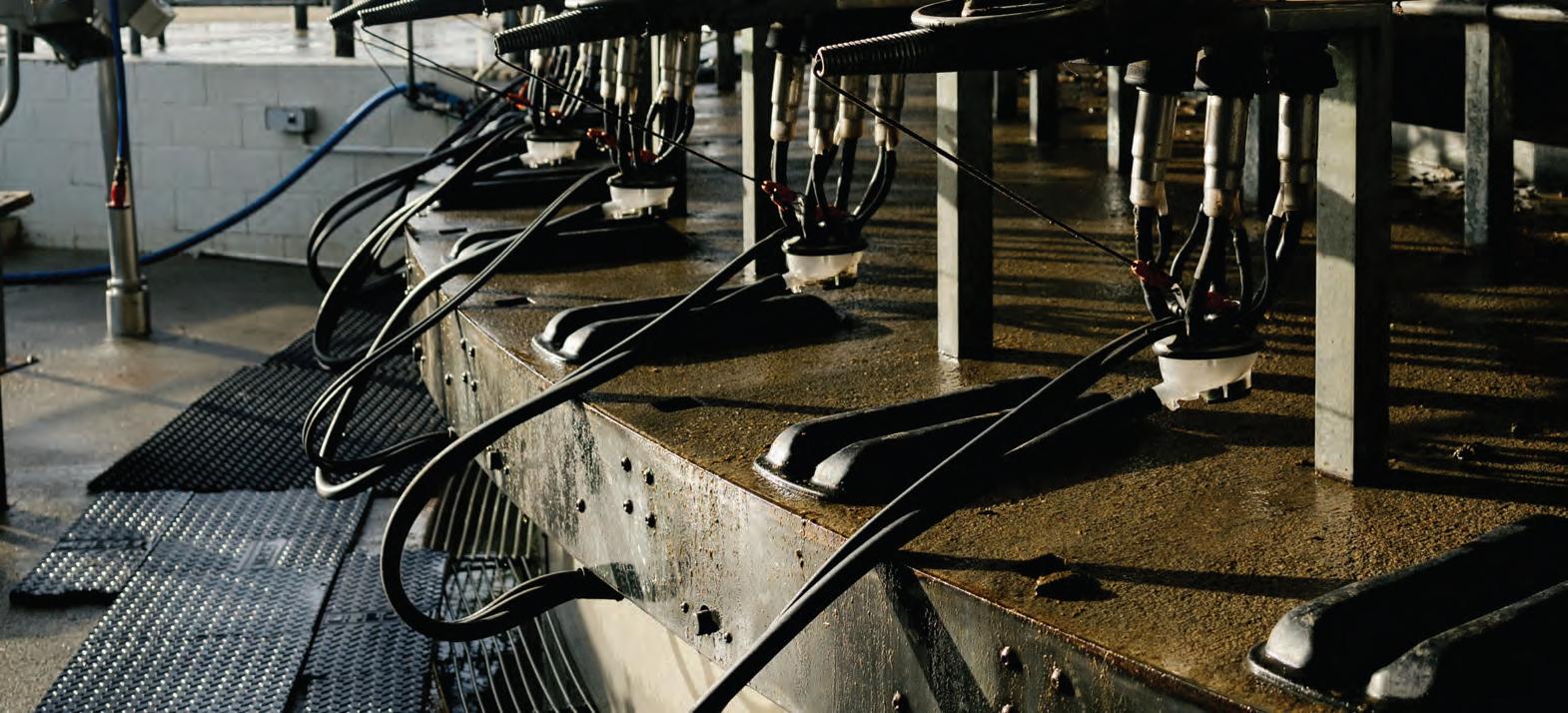




Premier Sires® teams are built on strict thresholds across every key trait. Not on averages. Every bull earns its place, so you can breed with confidence.