the line.
But it seems that the two main political parties are no closer to agreement.
An open letter signed by 28 exporters, including Beef + Lamb NZ, Meat Industry Association and Apples and Pears NZ, calls all MPs to support the agreement and provide certainty for growers, exporters and regional New Zealand.
National concluded the FTA in December but is yet to sign the deal because coalition partner New Zealand First withdrew support.
National needs Labour’s support to ratify the deal but is struggling to secure that, meaning the signing is still in limbo.
While the two main political parties are bickering, NZ exporters are eagerly waiting to tap into the market of 1.4 billion people.
Labour leader Chris Hipkins says he’s waiting for a government response to their concerns.
“There are issues and inconsistencies that still need to be clarified by the Government to ensure any deal works in the long-term interest of New Zealanders,” Hipkins told Rural News
“Once we’ve received the details and
worked through all the advice, we will discuss as a caucus and decide about whether to support the legislation.”
Trade Minister Todd McClay says that it was pleasing to see the business and export community come out in such strong support of the deal and the opportunities it brings to all of New Zealand.
“I note support is growing, with twice the number of organisations in support since Monday,” he told Rural News.
McClay says the Government will
follow the normal process as with all trade agreements through the select committee process.
“This offers the public and all parties the opportunity to scrutinise the agreement in open prior to implementing legislation being considered.
“We have engaged with Labour for four months and the Prime Minister has committed for Ministers and officials to remain engaged with them in good faith.”
But for farmers and growers, the
delay in getting the FTA over the line is frustrating.
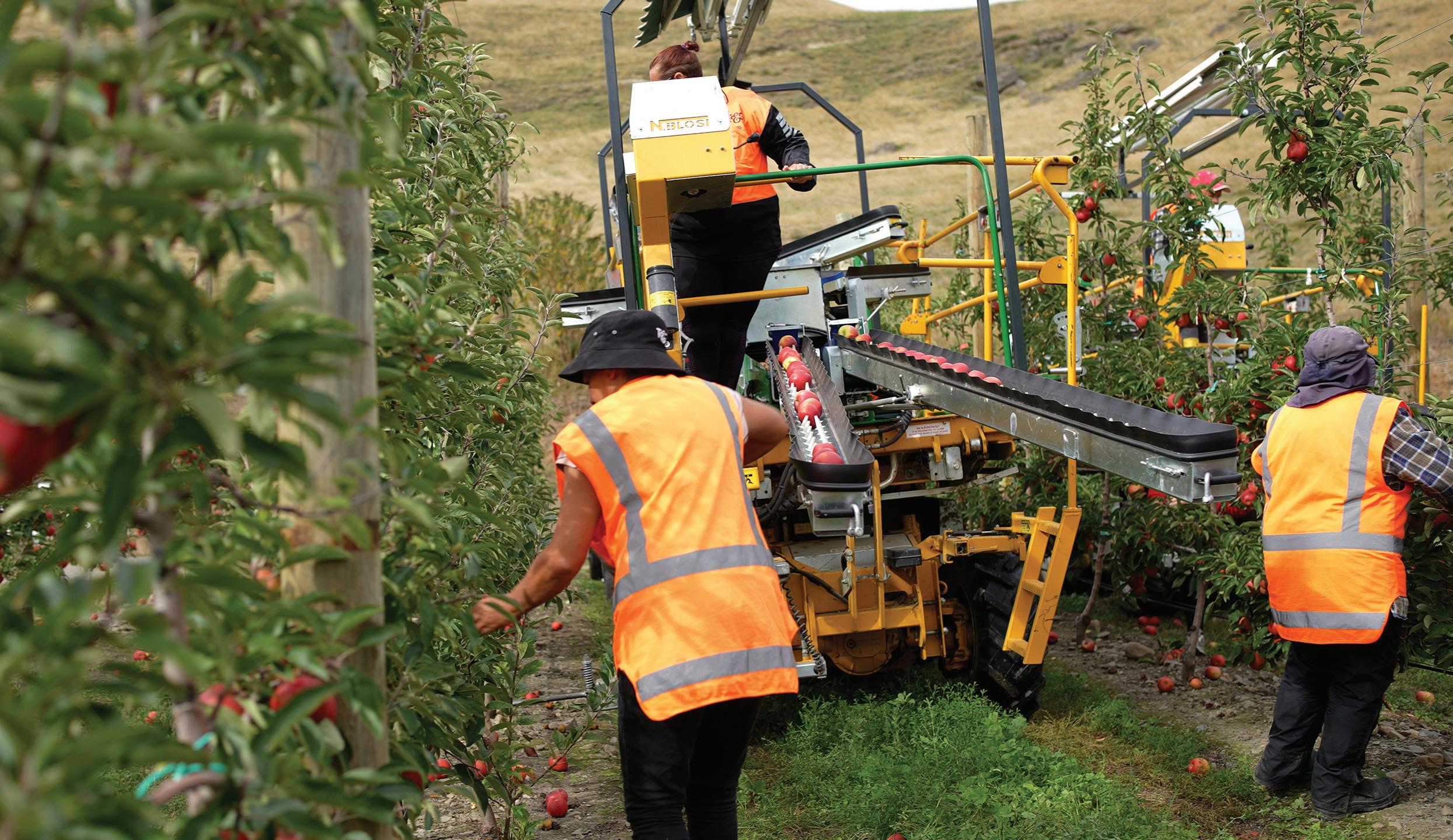
For the pipfruit sector, the milestone achievement in the proposed FTA includes a quota for New Zealand apples to receive a 50% reduction on tariffs, from 50% to 25%, during the window from 1 April to 31 August, focusing access on counter-seasonal supply to India’s own apple industry. The reasonable quota allows for significant growth over the next six years.
Pear access into India also received a
50% reduction on tariffs, with no quota limitations.
New Zealand was the first nation to secure the inclusion of apples within an FTA with India, something New Zealand Apples and Pears chief executive Danielle Adsett describes as “no small feat”.
“India has its own, vibrant apple industry that they are rightly protective of,” Adsett told Rural News
“The inclusion of apples within this FTA is a huge win for our sector. Our industry was deeply engaged with the negotiation team during discussions, and we are confident in the result for our sector.
“However, timing is critical. India has signed further agreements since ours and if the ratification of ours is pushed out to post election, then we run the very real risk of losing our edge.”
For his part, Winston Peters is doubling down on his opposition to the deal.
He’s also criticised the business sector for signing the open letter to politicians.
“How on earth can there be any sort of proper analysis of the FTA if they haven’t even read the agreement?
“This is tantamount to those businesses signing a contract blindfolded.
“This is an appalling image for the professionalism of New Zealand business leadership.”




Northland: Avoca | 09 4335 720
Waikato: Rorisons | 0800 401 400
Bay of Plenty: Fertco | 0800 232 733
Hawkes Bay: Dickie Direct | 0800 4 DICKIE
Canterbury: Top Soils | 027 432 0187
Marlborough: Taylor Quarries | 027 668 6073
Otago: Fertlink | 027 883 7141
Southland: Fertlink | 027 883 7141

Editorial: editor@ruralnews.co.nz
Advertising material: beckyw@ruralnews.co.nz
Rural News online: www.ruralnews.co.nz
Subscriptions: subsrndn@ruralnews.co.nz
1-8
SUDESH KISSUN sudeshk@ruralnews.co.nz
A FORMER Fonterra director with farming interests in India says he’s surprised with the political posturing over the Indian free trade agreement.
Earl Rattray, Waikato, told Rural News that he can’t recall a time when trade deals, which are vital to New Zealand interests, didn’t get bipartisan support.
“When it comes to trade matters, politicians must be one team, all pulling in the same direction,” he says.
“It will be helpful when the negotiated terms of the deal are released, so we can see what the fuss is about.”
National needs the support of Labour to get the FTA ratified in Parliament since coalition partner New Zealand First has withdrawn support over immigration concerns.
Rattray warns that New Zealand will be left further behind and become even less relevant globally as a trading nation if the FTA is delayed.
“It may take a long period to get re-engaged later, if they blow this chance, and then there’s no guarantee a future outcome will be any better. So, where are you at the end of all that?”
Rattray says his message to parliamentarians is ‘answer one question’.
“Does this deal, on balance, give New Zealand businesses more commercial opportunity than we have now?
“If the answer to that is yes, and I believe it is, then our politicians have a duty to us all to do the right thing and move forward.
“This deal is not perfect, we already know that, not all trade deals are, but it’s better to be in the room talking and making progress. The sun always comes up eventually.”
Rattray, in partnership with three Indian engineers, run Binsar Farms in Haryana state.
The farm “inherits traditional practices and International standards to produce best quality milk for our consumers’, it’s website says.
BEEF+LAMB NZ chair Kate Acland says that in these uncertain times, New Zealand needs to do everything it can to seize market access opportunities.
She says this is particularly in markets with great prospects in the future such as India.
“It has taken nearly 20 years to conclude this negotiation, and we would like to see it passed by the respective Parliaments.
“As with some of our other
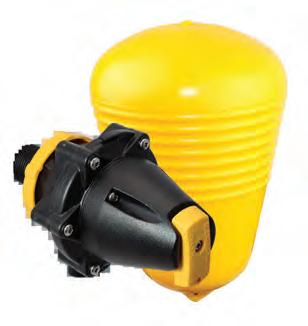
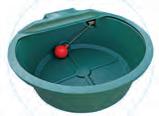
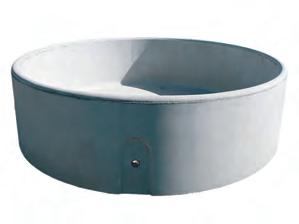
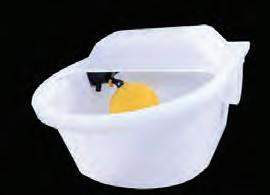
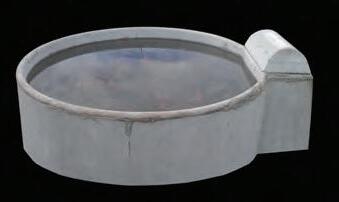
•Ideal for Cattle Troughs
Mount
to Clean
FTAs, it will be possible to negotiate improvements in the future.
“This year, India surpassed China as the most populous country in the world. It is projected to become the world’s third-largest economy within five years, and its middle class is growing.
“In addition to unlocking a promising market that has been constrained due to the 30% tariff currently on New Zealand sheepmeat,
an FTA will also deliver important additional options for our exporters, spread risk and provide greater stability.”
B+LNZ has signed an open letter to parliamentarians from BusinessNZ calling for the signing of the FTA.
Meat Industry Association (MIA) chair Nathan Guy says that FTA brings New Zealand’s red meat sector one step closer to unlocking new opportunities from a market with
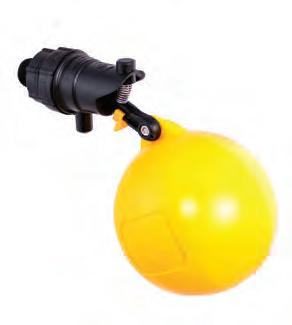
•Ideal for Small/Low Demand Troughs
Flow
considerable long-term potential.
“And we are calling on the Government to sign the FTA now to keep building momentum.
“Globally our exporters are facing rising protectionism, uncertainty and volatility. Access to different markets is key to help us weather market dynamics as it provides the sector with options and creates resilience supporting farm-gate returns and the national economy,” says Guy.

Water


THE COUNTRY’S
kiwifruit growers seemed to have escaped much of the predicted wrath of Cyclone Vaianu which hit the east coast of the North Island this month.
With a lot of fruit still to be harvested there were fears that the cyclone could severely damage fruit still on the vines. There were some nervous orchardists in the main kiwifruit growing regions of Bay of Plenty, Tairawhiti and Northland.
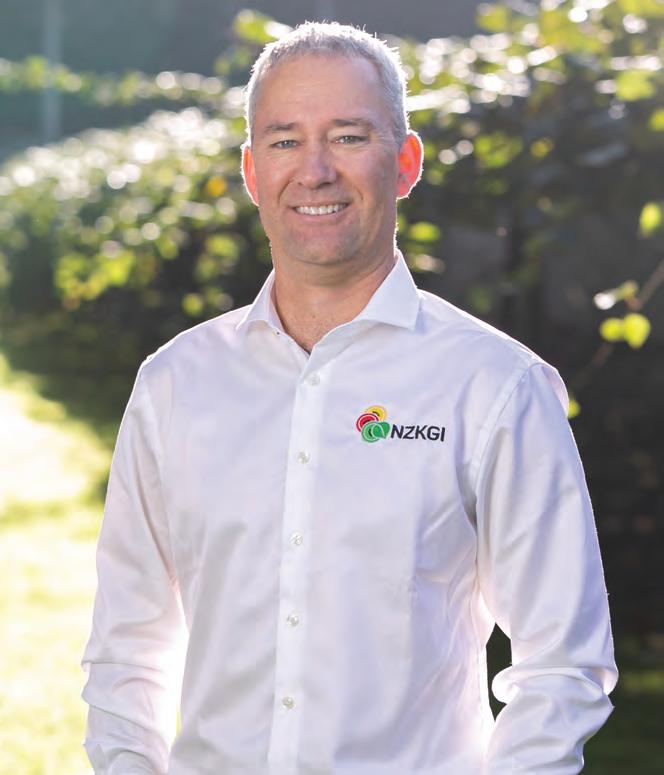
But NZ Kiwifruit Growers Incorporated, Colin Bond, says that
there was much less damage than predicted and, at a national level, what damage has occurred will not have an impact on the size of this year’s crop. He says damage appears to be limited mainly to shelter belts and some buildings and most of the fruit on the vines has not been affected by the cyclone.
“We have only heard of a few orchards in the eastern Bay of Plenty that might have had some fruit loss caused by kiwifruit being knocked off the vine or being damaged by wind,” he told Rural News
“This picture appears to be the same in all the
kiwifruit growing regions.
But like any event, there will be some individual growers who have had a worse than expected experience,” he says.
While the harvest has been going well, the rain from the cyclone and subsequent rain in the past week has slowed this down. But Bond points out that initially the harvest got off to a good start and growers are hoping the weather will fine up in the next few weeks.
As the Middle East crisis shows no sign of ending, kiwifruit growers, like others in the primary sector, are having to deal with rising fuel
and fertiliser prices –something Bond says is a challenge.
“But the reality is that we see ourselves as price takers. We only produce one crop a year and that is harvested; now we need to make money and get the fruit from the orchards to the supply chain, so the increasing fuel cost is a challenge. But by far the biggest challenge for growers is making sure their fruit gets to market, so we just must accept the fuel rises for now and hope that the government and the authorities are doing all that they can to make sure that we can continue to supply our markets,” he says.
Bond points out that while fuel is a cost to growers, by far the biggest cost to them is labour, which makes up between 60% and 70% of orchard costs.
He says the mood of growers is positive and the market signals are good. But he notes that there remain concerns in the long term about what effect the present crisis may have on the economies of nations that we export to, and what if any impact this may have on consumer demand.
bodies for 23 years before retiring two years ago from Potatoes NZ as deputy chair.
in all forms and practical advocacy for the industry as a whole,” he told Rural News
POTATOES NEW Zealand has become much more than a grower body, according to Pukekohe grower Bharat Bhana.
He says the organisation has evolved into an advocate and guardian for the sector and all its players, including growers and processors.
Bhana is a director of Hira Bhana and company, a family business involved in growing vegetables for over 60 years. He served on grower
Potatoes NZ was incorporated on April 17, 2012, and is celebrating its birthday with a series of events this week.
New Zealand has about 150 registered potato growers, producing the crop on over 10,000ha. Bhana says Potatoes NZ plays an important role in the sector.
“What began as a collective effort to represent growers has grown into a national voice championing potatoes
“They work on our behalf on R&D and help us tackle the challenges of pests and diseases.
“They are part and parcel of what we do.”
Kate Trufitt, chief executive of Potatoes New Zealand, says this birthday comes at a time when many growers are under real pressure.
Input costs remain high, markets are tight, and uncertainty continues to weigh heavily across the sector,
she says.
“While it’s important to acknowledge how far we’ve come as an organisation, our focus is firmly on supporting growers through the challenges they are facing right now — with practical tools, strong advocacy, and science-based solutions that help build resilience for the future.”
Trufitt says that as Potatoes New Zealand marks this milestone, it acknowledges the generations of growers, industry partners, researchers, and supporters who have shaped the sector through both good
seasons and difficult ones.
Their resilience and commitment continue to underpin the strength of the industry today, she adds.
Looking ahead, Potatoes New Zealand remains focused on building a resilient, sustainable, and viable future for growers.
“Our commitment is unwavering: to champion the industry, to advocate strongly during tough market conditions, and to work alongside growers to ensure the long-term strength of New Zealand’s potato sector,” says Trufitt.

of Richard Allen as Fonterra’s new chief executive signals execution, not strategy, according to agribusiness expert Dr Nic Lees.
Lees says Allen’s appointment, announced last week, suggests the board is not looking for reinvention.
“It is looking for execution,” says Lees, senior lecturer in agribusiness and markets at Lincoln University.
“That makes sense because Fonterra is no longer at the stage of redefining its direction.
“The co-op has
already narrowed its focus around ingredients and foodservice. The challenge now is to make that model perform consistently.”
Allen joined Fonterra as a graduate in 2008 and since then his career has spanned the co-operative’s global supply chain.
Like outgoing chief executive Miles Hurrell, Allen also led the co-op’s farmer facing business Farm Source for five years.
He has worked in China as vice president of Foodservice business, was the founding CEO of MyMilk, and more recently served as president Atlantic based

in Chicago, responsible for relationships with several global key accounts.
Lees says Allen’s background fits that task at hand well.
“He knows the ingredients business, understands international markets, and has led Farm Source in New Zealand.
“That gives him credibility across the full value chain, from farmers and milk supply through to global customers.
“So, this looks less like a change in strategy and more like a decision to back the current one.”
Lees also says that Fonterra’s move away from consumer markets does not mean the
opportunity to add value has disappeared.
That opportunity now sits in higher-value ingredients. Specialised proteins, functional ingredients, customised blends, and nutrition products can offer stronger margins while still fitting the co-op’s ingredients-based model.
Lees adds that a
RICHARD ALLEN says he is incredibly humbled to be appointed CEO and feels great pride to be leading the co-op.
“I’ve built my career with Fonterra and understand the important role the co-op plays both for farmers here in New Zealand and our customers around the world.
strategy built on discipline and focus leaves less room for underperformance.
“Fonterra now needs to show it can control costs, improve product mix, lift returns from milk, and perform consistently in a volatile global dairy market.
“So, the real significance of this appointment is not just
“I’m committed to maintaining the momentum in our performance, focused delivery of strategy and financial discipline that has been developed over recent years.
“Fonterra has a strong platform to build from and I’m excited by our
who Richard Allen is. It is what the board is signalling through him.”
Fonterra chair Peter McBride says Allen is an exceptional leader who will bring to the CEO role a strong connection with farmer shareholders and customers and a deep knowledge of Fonterra’s global operations and markets.
prospects as we move forward as a New Zealand farmer owned global B2B dairy provider,” says Allen. Allen steps in the role on May 1 with Hurrell staying with Fonterra in an advisory role until September 2026 to assist with the leadership transition.

Formulated to provide ultimate parasite protection and performance for your cattle. ECLIPSE offers the ability to withstand the elements, ensuring reliability in all conditions, much like this 90 L Gear Bag yours with qualifying purchases of ECLIPSE products this season.
SUDESH KISSUN
sudeshk@ruralnews.co.nz
cannabis sector has received a boost with the launch of a new grower body and an extraction facility in north Waikato.
NZ Grow Co is designed to boost the cannabis industry’s position as a high-value export sector.
It will provide an integrated model linking cultivation, processing, and export capability. It enables growers to participate in regulated international markets through a coordinated system, rather than operating as standalone producers.
Ora Pharm, the company behind NZ
Grow Co, already has 30 cultivators.
Chief executive Zoe Reece says they are getting new enquiries every week.
“We have and will be expanding our satellite grower program where we get the licenses for the growers to help streamline the process for them,” she told Rural News Reece believes that the sector is now moving beyond its early, fragmented phase.
“Regulatory clarity is critical to unlocking investment and participation. What we are seeing now is the opportunity to build a more coordinated, export-focused industry that delivers real
economic value.”
The new extraction facility in North Waikato is in the process of securing EU good manufacturing practice certification – positioning the business to meet the standards required in regulated export markets.
Reece said the focus must now shift from establishment to execution.
“New Zealand has strong fundamentals: trusted primary production, a reputation for quality, and a stable regulatory environment. The next step is building the infrastructure and systems that allow the sector to scale and compete internationally.”
Reece says with the new extraction facility
open, they will soon be able to offer “gate prices” to cultivators.
“This will take the uncertainty out of where the product can go. We also work closely with suppliers of the grow inputs to get discounts for the farmers to reduce the cost of growing. This adds up to high margins for the farmers.”
Farmers can grow cannabis as a supplementary crop but not have stock among the crops.
“They would be able to grow cannabis in rotation with other crops, like over summer and then veggies over winter.”
The new extraction facility, opened by Deputy Prime Minister David Seymour this month, can

process up to 400kg of flowers per day.
“We will be looking to process the majority of flower from this summer harvest and any that cultivators have from previous cycles too,” says Reece.
Ora Pharm executive chair Stuart Wilcox believes New Zealand’s
Labour MP Damien O’Connor, who previously held the seat, will also not be standing.
FORMER FEDERATED Farmers
president Katie Milne is National’s candidate for the West CoastTasman seat in this year’s general election.
Her selection follows current National MP Maureen Pugh’s decision to retire.
Milne is a fifth-generation family farmer from the West Coast and was the first woman to be elected president of Federated Farmers –serving from 2017 to 2020 in that role. Her career in farmer politics began in 1991 and she once told Rural News her initial role was in
the Feds dairy section, which she took on to help others understand why farmers do what they do and to correct a lot of misconceptions about the sector.
She also called out some of the rules farmers were subjected to, saying certain individuals had no idea of the consequences of their decisions at a practical level on farm.
In 2015 Milne was named Fonterra
opportunity lies in premium positioning.
“This is not a commodity play. With the right settings, New Zealand can build a high-quality, science-led export sector based on consistency, traceability, and compliance,” says Wilcox.
Seymour says the
Dairy Woman of the Year and later served on the National Animal Welfare Advisory Committee, chaired the West Coast TB Free Committee and was a member of the Farmer Mental Wellness Strategy Group and helped found the Lake Brunner Community Catchment Care Group.
Milne and her partner Ian own a dairy farm near Lake Brunner
medicinal cannabis sector has similar potential to the kiwifruit, honey and wine sectors.
“If you think about kiwifruit, about manuka honey, a couple of years ago, they were nothing.
“Now they’re worth millions and I think the same opportunity exists here.”
southeast of Greymouth. She says as a lifetime advocate for farming, she applauds the current government for its support for farming, including removing red tape and signing major trade deals
“As a fifth-generation coaster, I know that our region can be more productive, with more jobs and higher wages, which is why I am standing for National,” she says.



KELVIN WICKHAM
IF THERE’S one thing farmers understand better than most, it’s uncertainty.
You can do everything right, then a late frost, a weather event, or a sudden market shift rewrites the season overnight. Farming has always required resilience, but right now the level of global uncertainty facing New Zealand agriculture feels different in both scale and speed. Whether it be geopolitical tensions or shifting trade dynamics, the goalposts are moving faster than many of us have experienced before.
We’re operating in what leadership experts call a VUCA environment: volatile, uncertain, complex and ambiguous. But while the acronym may be relatively new, the mindset required to navigate it is not. Farmers have been managing VUCA conditions for generations.
Focus on what you can control
When seasons are unpredictable, farmers return to fundamentals. They focus on what they can control – soil health, pasture resilience, animal welfare and long-term productivity – rather than chasing every short-term signal.
The same principle applies at an industry
level.
At Ballance, our focus remains on helping farmers grow sustainably while building resilient farming systems for the future. Market conditions may shift, regulations evolve, and global events create disruption, but clarity of purpose provides stability when everything else feels uncertain.
Diversity, strong root systems, and careful nutrient management help it recover faster when conditions change.
The same thinking applies to farm business planning.
Global uncertainty highlights how interconnected agriculture has become.
Fertiliser production relies heavily on energy markets, shipping costs depend on geopolitical stability, export returns reflect global consumer confidence.
Farmers who continue investing in soil fertility and efficiency, as well as using data driven decision-making are often better positioned when markets stabilise again. In other words, resilience must be built before you need it.
Certainty doesn’t come from predicting the future perfectly, but from having a clear direction that allows you to adapt without losing momentum.
Planning for resilience, not perfection Farmers know there’s no such thing as a perfect season. The goal therefore is resilience.
When we view pasture management, a resilient pasture isn’t necessarily the highest producing in ideal conditions, it’s the one that performs consistently through drought, heavy rain, and temperature swings.
Reassurance matters through uncertain seasons
During challenging periods, one of the most important roles leaders play, whether you’re a rural professional or farm owner, is one of reassurance.
Farm teams, families, and rural communities take cues from those around them. Acknowledging uncertainty honestly, while reinforcing shared goals and values, helps prevent reactionary decision making driven by stress rather than strategy.
Farmers already

understand this instinctively. When a tough season hits, neighbours check in, share information and support each other. That collective resilience is one of rural New Zealand’s greatest strengths. The same principle applies across the sector as a whole. Communication and collaboration help everyone make better decisions when things are unclear.
Focus on what matters most Farming, like any business, is necessarily about prioritisation and responding to changes beyond your control.
Weather forecasts change. Markets fluctuate. Global politics shift. You can’t control the rain, but you can
prepare the soil. You can’t influence global tensions, but you can strengthen the resilience of your farming system. You can’t eliminate uncertainty, but you can build certainty into the decisions you make every day.
In a world where headlines change by the hour, focusing on the fundamentals, healthy soils, efficient nutrient use, strong planning, and connected communities becomes more important than ever.
Keeping calm and carrying on New Zealand farmers have navigated uncertainty before, from economic reforms to droughts and pandemics. Each time, resilience, innovation and long-term thinking

have carried the sector forward.
The current global environment is another reminder that while uncertainty may be unavoidable, preparedness is not. Certainty ultimately is about having the confidence that whatever comes, you’ve
built a system strong enough to respond. And that is something New Zealand farmers have always done exceptionally well.
• Kelvin Wickham, chief executive officer, Ballance Agri-Nutrients
@rural_news
facebook.com/ruralnews
PETER BURKE
GREAT WEATHER, a large turnout and positive feedback.
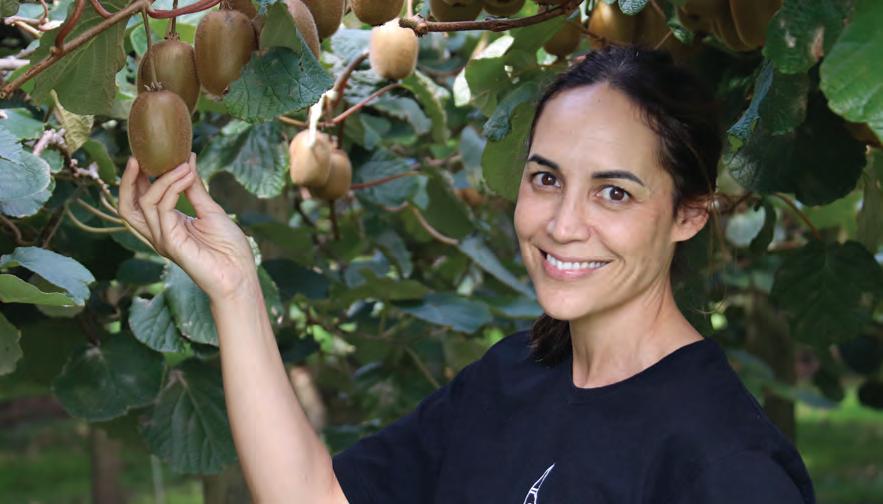
That’s how Otama Marere Advisory trustee Diane Berghan described the field day at their orchard, staged as part of the Ahuwhenua trophy competition to determine the top Māori horticulture entity in the 2026 competition.
Otama Marere Trust is one of three finalists in the competition and manages 45 hectares of Māori freehold land at Paengaroa near Te Puke in the Bay of Plenty. Their land was originally leased to the Te Puke Golf club before the trust took ownership of it in the 1980s and converted
it into an orchard.
Today’s operations include more than 21ha of kiwifruit, avocados, native plantings, and 6.3ha of protected wetlands. The Trust diversifies through commercial property investment and Māori partnerships.
More than 200 people turned up for the field day and heard presentations by trustees and staff about the operation of the trust, before being taken to two sites to see the orchard and how it is developing.
Among those present was Larissa WoodingNgata, one of the finalists in this year’s Ahuwhenua Young Māori Grower competition, run in conjunction with the main Ahuwhenua Trophy
event.
Berghan says she couldn’t be happier with the field day and says people were able to see that they are not just about growing kiwifruit but are also about restoring and giving back to the land.
“The day was also about acknowledging the owners of Otama Marere and the support they give the trustees and the decisions they are making now for future generations,” she says.
Another advisory trustee, Petera Tapsell, says he was ecstatic with the day, which was bigger than he thought it would be. He was especially pleased with the positive comments from attendees.
“That gave me a lot
of heart and I am very proud of where we have gotten to,” he told Rural News
Ahuwhenua Trophy chair Nukuhia Hadfield praised Otama Marere
Trust for running an enjoyable field day. She says they have worked hard establishing a diversity of crops and have taken a leading role in growing SunGold G3,
NEW ZEALAND farming history needs to be celebrated, says the New Zealand Century Farm and Station Awards (NZCFSA) national coordinator, Anne Barnett.
Now in its 20th year, the organisation runs an annual event to formally honour New Zealand families which have farmed their land for 100 years or more. With 36 Century Farms to be featured this year, some 300 people are expected at the event, to be held in Lawrence, Otago, on the weekend of May 15.
Another 12 farms will be honoured as SesquiCentennial farms, having clocked up 150 years.
The event includes a welcome
on the Friday night then a farm and town tour on the Saturday before the awards dinner that evening. It is not a competition, but all honourees are presented with a certificate and a bronze plaque suitable for mounting on their property.
“We need to celebrate farming.
Farming’s been a really big part, and still is a big part, of what makes New Zealand, and makes our income as a country,” said Barnett.
She said the history of farming families, the things they have been through and the things they’ve done, might otherwise be forgotten.
“Most farmers aren’t just stuck on a farm working their farm, a lot of them are a major part of their local communities.
“So often farming is seen in a
negative light and I think it’s good to reward those that have done great things and are still doing great things.”
Barnett said she and her husband spent 28 years on a 10-acre block, which was “nothing” compared with the Century farmers, but it gave an appreciation of the highs and the lows that farmers have been through.
NZCFSA chair Edward Fitzgerald said the NZCFSA team and Lawrence locals were looking forward to hosting the event.
“It is a real honour to acknowledge the families’ hard work and perseverance.”
To qualify, a farm has to have been held and farmed by the same family for over 100 years.
Dose all

being one of the first Māori owned orchards to grow this crop.
“This gave attendees a picture of what they have achieved by hard work and determination
Barnett said it doesn’t matter whether the farm is owned or leased, with many farms in the earlier days starting out as Crown or Māori lease, many of which had since converted to freehold.
She said many farms were balloted to returned servicemen after the first world war, in a process that continued into the 1920s.
“So that’s bringing out quite a few of our Century Farmers these days.”
Barnett said the movement was long established in the United States and Canada and was launched in New Zealand after “a key couple of people” heard about it.
The New Zealand movement is based in Lawrence partly because there is a good number of Century Farms in the area. Barnett said it
over many years,” she says.
The winner of the competition will be announced at a gala dinner in Whangarei in June.
was the site of New Zealand’s first major gold rush in 1861, and many miners who made their fortune from the Gabriel’s Gully gold used their earnings to buy land in the district.
“Our first awards in 2005 were a very quiet affair and it’s got bigger ever since.”
She said the 12 SesquiCentennial Farms was the highest number yet.
“Some of them are returns that have celebrated the farm as a Centennial farm and have since kicked over the 150 years.”
Farmlands has been the major sponsor throughout.
Meanwhile, NZCFSA is inviting applications for the next event, from families that have had worked their land since 1926 or earlier. The deadline is November 30.
Farming is built on resilience and planning beyond the season ahead. At ASB, we back farmers to make confident decisions on‑farm and bring that same disciplined, long‑term mindset to investing.
ASB Investment Funds are first for 12 month returns in the Conservative fund category.
This result reflects the strength of our local insight, combined with global expertise through our world‑class partner, BlackRock.
Speak to an ASB Rural Manager about how we can help support your hard‑earned gains on‑farm, to build long‑term wealth for you and your family.
POLITICAL PARTIES in New Zealand have a long history of supporting free trade agreements together.
Trade is critical to New Zealand’s prosperity, and the FTAs are regarded as the next significant step forward.
However, when it comes to the proposed FTA with India – concluded by National in December – no date has been set for the signing ceremony, normally a highprofile event hosted by one of the signatory countries.
That’s because the FTA faces a significant roadblock in NZ. Coalition partner New Zealand First won’t support it, claiming that the proposed FTA is a “low-quality deal” and has expressed reservations around its immigration aspects.
It means the Government needs Labour’s support to pass the deal through the House, but Labour is still to decide whether it will back the deal.
At a time when geopolitical issues threaten global trade and the International Monetary Fund is warning of a global recession, thanks to the Middle East unrest, NZ needs this FTA with India more than ever.
For NZ primary exporters, the benefits of an FTA with India would be huge. The deal would remove a 30% tariff for the sheep meat sector alone.
That’s why an open letter, organised by BusinessNZ, and signed by 28 exporters and industry associations, such as Federated Farmers, Zespri, Seafood New Zealand and Beef + Lamb New Zealand has been sent to politicians.
However, getting the FTA over the line won’t be straightforward for National.
The dairy sector – NZ’s biggest primary export earner – isn’t thrilled with the trade deal. Others feel the Indian FTA doesn’t deliver the typical level of market access into India like, say, the Chinese FTA.
Also, being an election year and with potential kingmaker Winston Peters doubling down in his opposition to the trade deal, the political optics are huge.
The open letter urges National to sign the deal and all political parties to back it but that’s easier said than done.
HEAD OFFICE POSTAL ADDRESS: PO Box 331100, Takapuna, Auckland 0740
Phone 09-307 0399
PUBLISHER: Brian Hight .......................................... Ph 09 307 0399
GENERAL MANAGER: Adam Fricker ....................................... Ph 021-842 226
EDITOR: Sudesh Kissun ......................................Ph 021-963 177 sudeshk@ruralnews.co.nz
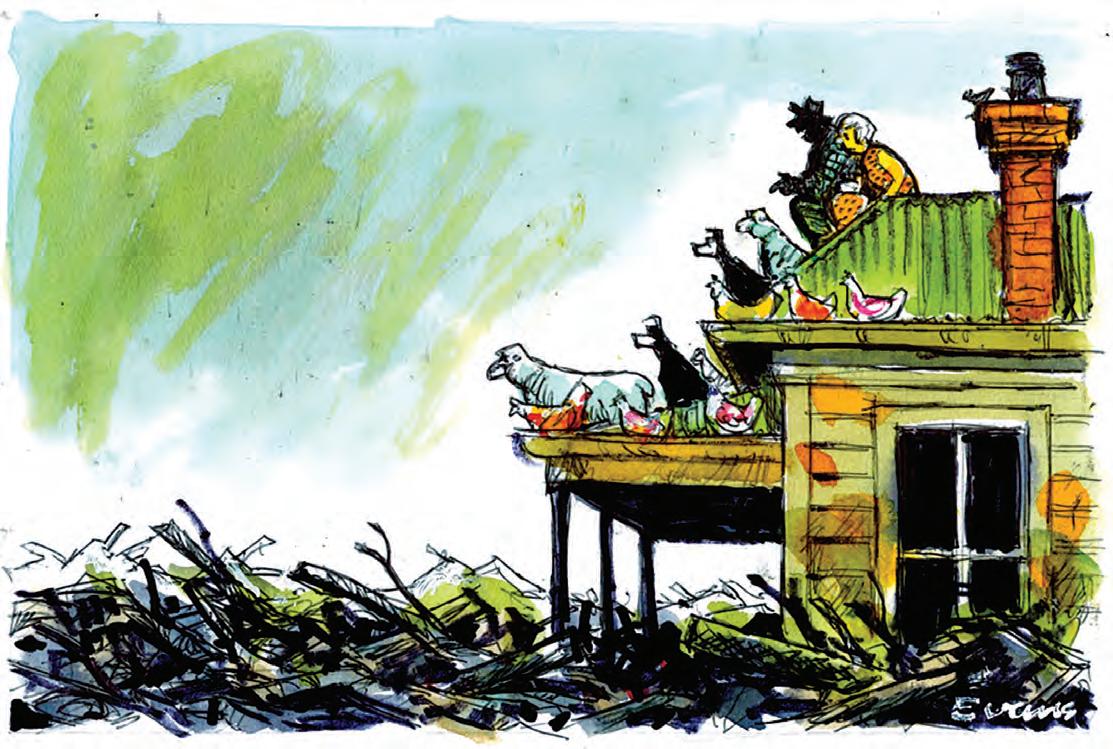
“On the bright side, we’ve got a once-in-a-hundred-year’s supply of firewood!”
IN WHAT world does old mate Christopher Luxon live? He can’t remember how many Māori are in cabinet and when pushed gets it all terribly wrong, then he ignores two new ministers who were about to get their ministerial warrants from the Governor General. Sure, it was a stupid ‘gotcha’ question about the Māori members, but the befuddled live performances from Luxon must be concerning his handlers. If he can’t remember who sits around the cabinet table, what else can’t he remember? In election year, this is serious. Would Chris Bishop make such a blunder? This old mutt doubts it. It will be interesting to see what impact Luxon’s ongoing blunders and management waffle speak have as the media pressure – and the ‘gotcha’ media tricks – intensify in the run-up to the election.

BOUQUETS THIS week from the old mutt for Fed Farmers and Groundswell for continuing to resist the proposed Gore District plan and its intention to apply costly “cultural values” across the district and a raft of land classifications that are unworkable and counterproductive. As Groundswell notes, when they first objected to the new plan, it was going to place the whole Gore District under the ‘Sites and Areas of Significance to Māori’ classification. “All they’ve done since is change the name to Cultural Values.” The ones who will benefit from this change and who are pushing for it rely on everyone being scared of being labelled ‘racist’ for daring to challenge the workability of such proposals, so kudos to these advocacy groups for trying to hold the line at Gore, before it spreads to other districts.
EDITOR-AT-LARGE: Peter Burke ...........................Ph 021 224 2184 peterb@ruralnews.co.nz
REPORTERS: Nigel Malthus ........................Ph 021-164 4258 Leo Argent
MACHINERY EDITOR: Mark Daniel ..............................Ph 021 906 723 markd@ruralnews.co.nz
PRODUCTION MANAGER: Becky Williams ......................Ph 021 100 4381 beckyw@ruralnews.co.nz
MEDIA TRUST has tanked because of what media’s more woke members do and say. But your old mate reckons it’s as much about what they don’t, or won’t, say that undermines public trust.
For example, One News recently ran a negative story about higher gang numbers, while ignoring the massive reduction in violent crime that was announced on the very same day. Stuff did the same thing in a recent story about a jump in EV sales. It quoted the far lower percentage changes for petrol, hybrid and diesel vehicles, but just the percentages – not how many units were sold. Why not? Because over 10 times as many non-EV vehicles (including hybrids) as pure EVs were sold. Which didn’t suit the narrative, did it?
AUCKLAND SALES CONTACT: Stephen Pollard .........................Ph 021 963 166 stephenp@ruralnews.co.nz
WAIKATO & WELLINGTON SALES
CONTACT: Lisa Wise .................................. Ph 027 369 9218 lisaw@ruralnews.co.nz
Want to share your opinion or gossip with the Hound? Send your emails to: hound@ruralnews.co.nz
WHEN DONALD Trump returned to the White House, many people with half a brain could see the results for the world might be a bit average, and our boy has been busy trying to prove them right. But to be fair, there were also plenty of people, also with half a brain, who thought it would be great. Spare a thought for these guys then as they perform mental backflips trying to justify their support for the Don as he upsets the world’s entire Christian population by posing as Jesus Christ himself and kicks off the biggest oil crisis since the 1970s. The war drags on as Trump orders a naval blockade to unblock the blockade that only needs unblocking because he started the war that caused the blockade. There’s a reason US presidents have until now avoided going into Iran. If Trump had half a brain, he would’ve too!
SOUTH ISLAND SALES CONTACT: Kaye Sutherland .......................Ph 021 221 1994 kayes@ruralnews.co.nz
DIGITAL STRATEGIST: Jessica Marshall ..............Ph 021 0232 6446
I HAVE to admit I do miss the swallows when they leave our place for the winter months. And I always look forward to their return every spring.
To me they are such happy little guys. I have yet to see any suffering from anxiety about tomorrow, or so uptight with fear and worry they’re not able to sleep. Every time I see them, they are hard-out enjoying life!
As a child, electrical storms totally freaked me. I pretty much trembled with fear. I pulled the blinds right down on the window in my room and then put books up against the bottom to shut out all the lightning.
In my teenage years, out on my horse one day, we got caught out in a massive storm. I promised the Lord all
and all the fear that got peddled along with it. I commented several times to my wife: “Look at that elderly couple over there, they look so broken!”
Yep, we bumped into fear-filled people many times over. And all the scare stuff to get you vaxed too. Don’t want to be the reason Grandma or Poppa died now do we?
mask when you are on your own, in your own car, out on a highway, miles from needing a stop! Each to their own, I guess. But I’d suggest fear has to be in the mix there somewhere.
kinds of stuff that day! Doesn’t bother me at all now though, and it hasn’t done for many years.
I was on a flight beside an electrical storm up in Papua New Guinea years ago. The light show through the clouds was spectacular! Truly I enjoyed that flight!
Talking about fear, like many of you will too, I vividly remember the covid lockdowns
A young truckie came in one day to pick up some livestock we were sending. He was fuming mad and made no attempt at all to hide it. He wanted to talk. He felt like he, his wife and young family had a gun to their head. Both of them would lose their jobs instantly if they refused the vax, he told me.
Now, I still don’t get the logic of wearing a

And as we all know so well, anger, fear and worry are just not a good mix when it comes to our overall health and wellbeing.
Something that amused us both happened recently. We noted a news headline that read: “NZ Bunker Inquiries Double Amid The Iran Conflict”.
Just a few days later we took a train trip on the Northern Express. Great Journeys New Zealand is what it’s called. We shared a table with a nice couple visiting here from Europe. They informed us that NZ was definitely the safest place to be if the world was going to end. Yes, that’s exactly what they said. That being the case, they and their family have made plans to all meet up here, if it looks like being curtains.
We surely have a great little country and a great place to live. However, I think they see us as offering the most remote
from trouble option possible. Antarctica just wouldn’t be as comfy!
When it comes to fear and worry, for sure, what you know is important.
Like for starters, is it even true? And what are my options?
But for me, I have learned even more important again is who you know. Yep, he’s the one who has calmed all my fears. Take care and God bless.
• To contact Colin Miller, email thefarmerschaplain@ gmail.com.







PETER BURKE peterb@ruralnews.co.nz
FOR THE first time in more than 30 years the Government has set a new set of radical priorities for the science it funds – including agriculture.
The Prime Minister’s
Science, Innovation and Technology Advisory Council was given a mandate by the Government to review the present system and to come up with a new set of priorities to build a strategic future focused system for science, innovation
and technology (SI&T). This links in with other recent changes to the structure and merger of government science institutes.
In its report, the council says government SI&T spending must, among many things, deliver high quality
and internationally benchmarked research and attract global partnerships and respond to end user needs.
It also says any research must be relevant to NZ’s needs, ensure that great ideas emerge and build a diverse future-ready
SI&T workforce.
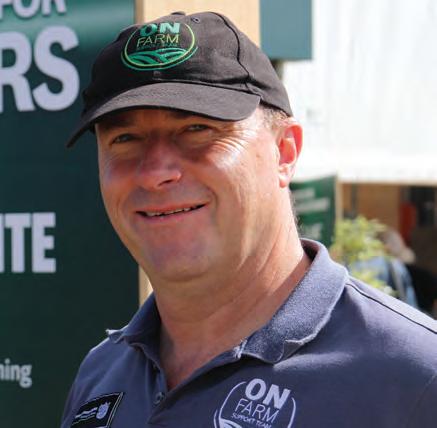
The Government’s chief science advisor Dr John Roche, who is a member of the Council, told Rural News that the changes are about providing very clear guidelines on where the $1.7 billion in government money


should be invested. In its report, the council notes that in the past funding has been fragmented, lacked strategic focus, was weak on commercialisation and struggled to develop, attract and retain good people.
Roche says the new system is about getting in behind those areas that NZ can grow to make the biggest difference, doing less better and creating a more flexible and nimble system for high impact areas.
“So those areas that are high risk but potentially high reward.
Our funding hasn’t really catered for that in the past, so there is a good opportunity there. Key is changing the narrative from funding research to investing in outcomes and a recognition that we underinvest in advanced technologies. There is a significant opportunity to grow our capability in that space,” he says.
To that end, the council has set four
thematic pillars for government-funded science: primary industry and the bioeconomy; technology for prosperity; environmental sustainability and resilience; and healthy people and a thriving society. Within this mix will be a greater emphasis than before on funding competitively funded, curiosity-driven research. In other words, more futuristic research and advanced technologies.
The council’s report notes that under the present system there is a bias towards funding agriculture and environmental research, which it says is a “misalignment with emerging opportunities and international benchmarks”. It’s possible that some of the money currently invested in these areas will be allocated over time to boost funding for “advanced technologies”, but agriculture may be an ultimate beneficiary of this.
AT PRESENT MBIE is the decision maker when it comes to dispensing government money for science. Over the years there have been constant complaints by scientist and researchers about the complexity and bureaucratic nature of the system and the time and cost of putting in bids. But this is set to change with the establishment of Research Funding NZ (RFNZ).
John Roche says the present funding process is rigid, with allocations only being made annually and everything lined up to that date.
“What we want now is to make the system more accessible and as nimble as possible. We want to make it similar to those small, advanced economies where we see their economies growing rapidly off the back of innovation and the IT sector,” he says.
Roche says the new strategy provides a new platform for NZ to get the best value from the money government invests in science.
PETER BURKE
peterb@ruralnews.co.nz
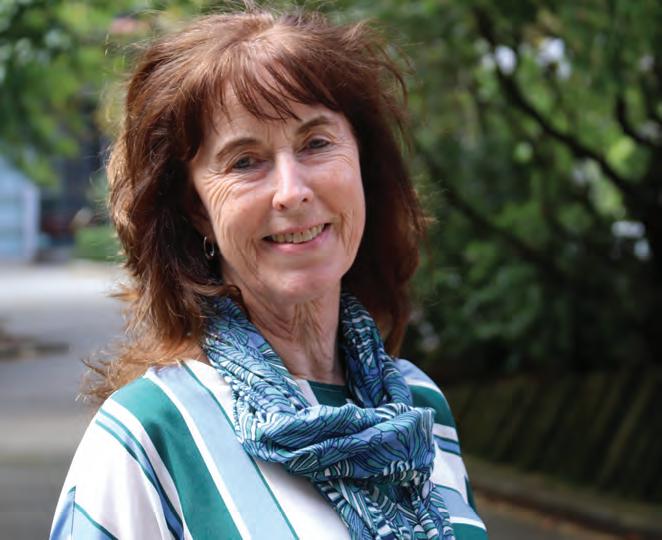
FINDING AND supporting ‘champion farmers’ – or top-quality farmers - is one of best ways of getting other farmers to take the appropriate measures to mitigate environmental issues, according to a leading Irish scientist Dr Mary Ryan.
She was in NZ recently as a keynote speaker at Massey University’s Farmed Landscape Research Centre Conference. While in NZ she was looking at how we are developing farmerrun catchment groups which Ireland is in the process of setting up.
Ryan is a specialist in agricultural economics and works for Teagasc – the Irish agricultural research organisation based near Galway in the west of Ireland.
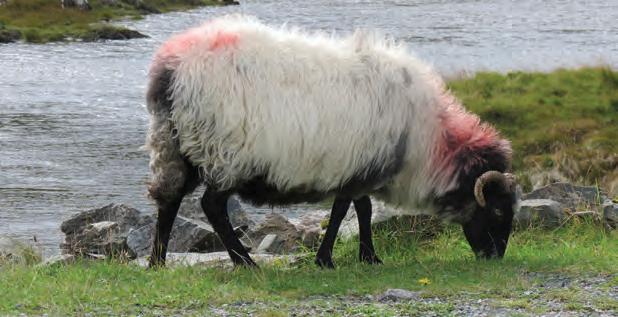
She says Ireland and NZ have very similar issues with nitrates leaching into lighter soils in the east of the country. But she says they have overland flow, phosphorus, sediment and pesticides that largely happens in the poorer, heavier soils and steeper country in the west coast of the Ireland where there is much more organic matter such as peat. These soils retain a lot of moisture which leads to
overland flow.
The EU sets the standards that member countries must achieve, but how they do this is left to the individual country. The issue for Ireland, says Dr Ryan, is similar to NZ – ensuring higher quality waterways and looking at ways of doing this. Obvious options include stock exclusion and reducing pollutants on the land.
Ireland has identified 97 priority catchments that need special attention and it’s to these that scientists are sent to determine the cause of the problem and the associated risks. Their findings are passed on to a group of Agricultural Sustainability, Support and Advisory Programme advisors (ASSAP) whose role is to engage with the farmer to get them to deal with any problem.
“Firstly, the ASSAP advisor prepares a dedicated farm plan, where they look at what’s happening in farmers’ yards and where the risks are, what is happening terms of nutrient management planning and seeing if they can they pull back in the application of chemical fertilisers.
“They also look to see if the farmer needs more storage for slurry, because in Ireland, we house animals the winter and sometimes we have very wet land coming out of the winter, so it’s not always possible to get slurry out into the land,” she says.
Ryan says having got all this data, the onus is now on the farmer to decide what mitigation strategies to adopt. While advisors can advise, she says the more effective
She
catchment groups are run and how effective they are.
Ryan says it is critical to make sure these are farmer led and well run but supported by scientists and other rural professionals.
She says in Ireland dairy farmers have taken the initiative and set up their own effective systems of dealing with environmental issues on their farms and

way is to involve what “champion farmers” – highly successful, innovative and respected farmers who help and mentor other farmers to make appropriate changes.
“The advisors do a dedicated farm plan in which they look at what’s happening in farmers yard and where the risks are,” she says.
Ryan says the farm plan is free, but the farmers don’t get any money for the mitigation work; that’s where the challenge begins and where the role of ‘champion farmers’ becomes important. She says in the first instance they are the ones most likely to understand the complexity of the issues and know that they have the wherewithal to do what is required.
“Those who feel that
are not claiming any government money to this. Ryan says they have access to catchment maps and are monitoring water quality themselves.
While in NZ, Ryan has spent time talking to catchment groups in both the North and South Island.
“In the Manawatu I saw Dr Margaret Brown, who is a scientist and a very successful farmer and who’s involved in a very successful catchment group. In the South Island it was about going to Canterbury and meeting catchment groups in the upland regions,” she says.
they may not do a good job and are fearful of what their fellow farmers may say about them are less likely to get involved at the beginning. So, they will look to someone they respect and who is already doing the work
well to motivate them to give it a go,” she says.
Ryan adds that the most successful farmer champions in influencing others are locals, not someone a hundred kilometres away who the local farmers don’t know. She says getting the local expert out on site and explaining the issues they’ve had to deal with, and the associated costs, is the best way of effecting the change in farmer behaviour on environmental issues.
MARK DANIEL
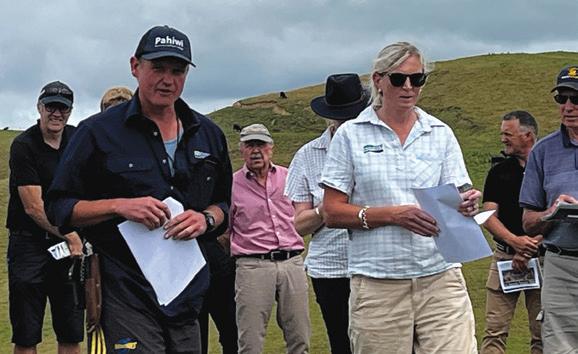
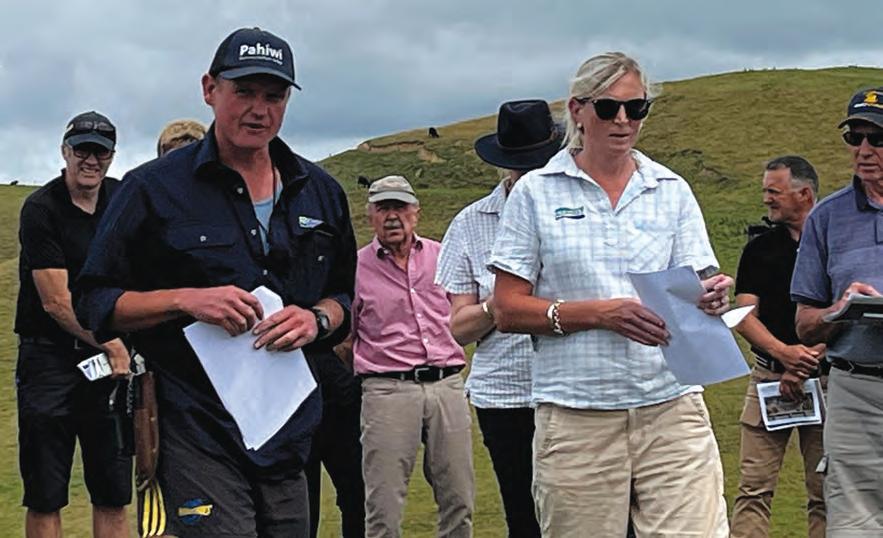
A RECENT Beef + Lamb New Zealand ‘Farming for Profit’ field day drew about 100 people keen to hear about the policies that drove performance at Erewhon Station, located on the Taihape to Napier Road.
Owned by Rimanui Farms Limited, the original Erewhon Station was purchased in 1992, followed by Springdale in 1994. From 1996 to 2005, both units were run as one, before some of Erewhon was absorbed by Springvale, resulting in the two blocks that operate today.
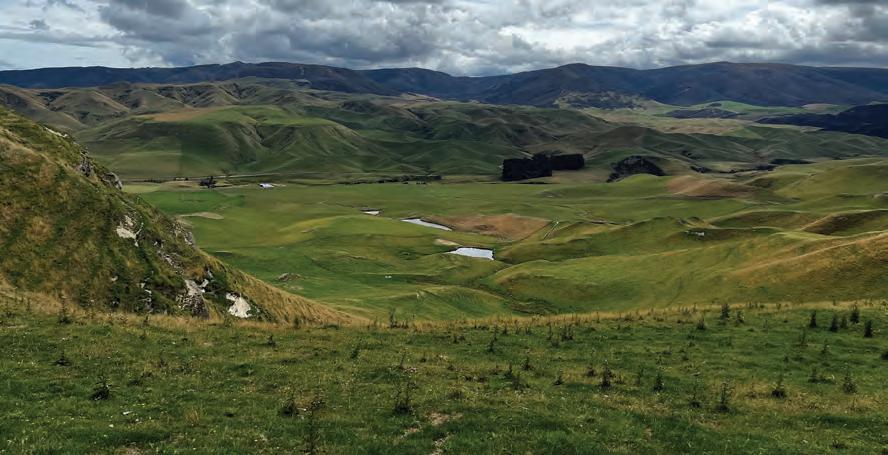
Erewhon is currently 3600 effective hectares, with 60% to the north and 40% south of the highway. The contour is described as 30% steep hill, 40% medium hill country and the
remainder dubbed as easy land.
The main buildings are located at 850 metres above sea level, the northern ‘flats’ sitting at around 500 metres, with the highest point at 1000m. Annual rainfall is a rather surprising 850mm, explained by living in the shadow of the mountain. The majority of stock water is collected via dams and waterways, with a small part of the property having access to reticulated water.
Winters are described as tough, lasting a full 150 days from May 1st to 30th September, with pasture growth averaging 10 kgDM per day.
Erewhon is managed by James Maher, one of nine staff, including a stock manager, four single shepherds, two general farm workers and a cook. The team is
complemented by a farm technician who operates across the company’s three Taihape properties, alongside casual labour brought in as necessary.
James says winters can be brutal, “while we also have to deal with the unique shape of the station, that means stock may have to walk up to 12km, to the central, single woolshed for shearing, as using trucks is not practical given the hilly topography”.
Due to a pasture deficit over winter, great emphasis is placed on May 1st pasture covers alongside a strong reliance on accurate feed budgeting of winter crops and bought-in supplements.
Typically, a tough winter is followed, in James’ words, “by an explosive spring, that means we have high winter stocking rates to
RWS and BLITZ CAPTIVE BOLT ACTIVATORS

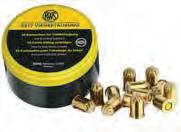
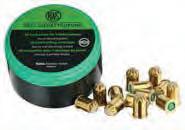
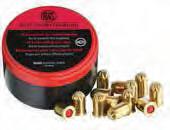
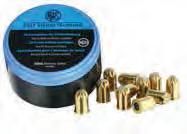
Product Name Shoof SKUBarcode
Captive Bolt Activator Blue
Captive Bolt Activator Green
50pk2010729417027004446
50pk2010739417027010911
Captive Bolt Activator Yellow 50pk2010749417027022426
Captive Bolt Activator Red 50pk2102179417027167837
Batch Identification
Affected products can be identified by the batch/lot number on the underside of the lid.
4-digit format:
• Ends with: N, O, P, Q, R, S, or T
10-digit format (DO 50 packs):
• Begins with: DAG24K, DAG24L, DAG25A, DAG25B, DAG25C, or DAG25D
Products impacted were sold by Farm Source, PGG Wrightson, Farmlands, Rural Co, and other Rural Retailers and Veterinary Clinics and Shoofdirect.co.nz between 2022 - 2026.
Defect: A manufacturing defect has been identified in certain batches of these cartridges.
Hazard: This defect may cause the cartridge to malfunction during use, including the risk of unintended discharge or explosion. This may result in serious injury to the user or damage to equipment.
What to do: Customers and users are asked to stop using the product immediately and return them to their place of purchase where they will receive the equivalent replacement.
Contact details:
Phone: Shoof Customer Service Team – 0800 800 801
Email: sales@shoof.co.nz
Online: shoofdirect.co.nz
New Zealand Importer/Distributor
Shoof International Ltd
224 Laurent Road North, Cambridge 3493, New Zealand
Website: www.shoofint.com
See www.recalls.govt.nz for other New Zealand consumer product recalls
take advantage of the spring flush, both in terms of feed utilisation and maintaining pasture quality”. Currently, that winter stocking rate sits at 11.5 SU/ha.
Erewhon’s sheep operation sees 5000 “B” ewes and 6-year olds covered by Rimanui-bred Suftex rams on 1st April, 7000 “A” ewes covered by Pahiwi Romsey rams on 29th April and 4500 twotooths mated to PahiwiRomney cross rams on 29th April. Finally, 5000 replacement hoggets are weighed in May, with around 3500 animals of more than 42kg mated to Suflex rams around the middle of the month.
Lambing performance across all MA and twotooths consistently sits at 145-150% to the ram, while hogget performance sits at 80%. Overall production sees around 22,000 trade lambs, alongside 5000 replacements. Stores versus prime numbers depends on feed levels, as well as store price levels, but typically the target is to finish between 60 and
80% of animals at 18kg before the start of May, when all lambs need to be away from the property.
Looking at shearing, ewes are shorn once a year in late January, lambs are shorn in February, then hoggets are shorn again in early September. Two-tooth animals are shorn in late March, then eventually fit into the typical shearing rotation.
On the cattle front, 1300 in-calf Angus cattle are over-wintered, made up of 250 R2 first-calving heifers and 1050 MA cows. These numbers include a fully recorded stud herd, including 270 females that are synchronised for AI annually. 70 bulls are sold to the other Rimanui farms as yearling or R2s in May, as well as 15 bulls retained for commercial use at Erewhon.
All steers are finished between 2 to 2.5 years old at a target carcase weight of 315kg. Replacement heifers for the herd are selected using modern genomic technology, while all surplus heifers are sold as stores in autumn.
CROPPING AND supplementary feed sees around 80ha of a swede/kale mix grown for winter feed, complemented by 40ha of straight kale for winter feed, but with the option of summer grazing for lambs as required. 80ha of Raphno - the kale and radish hybrid - is used for lamb feed through summer, then locked up for winter feed. Currently, the farm is trialling plantain for improved feed quality and volumes at either end of the season.
New grass cultivators are drilled depending on how individual paddocks fit into the overall rotation. 150ha of pasture is cut for baleage or clamp in December, while around 100 tonnes of palm kernel is fed as a supplement to two-year old steers.
The station fertiliser policy comprises of a DAP application if, as James explains, “it warms up early enough”, followed by between 30 to 40kg of nitrogen, depending on price, applied by plane using a nearby airstrip.
Pasture management also use a “chemical topping technique” using low-dose glyphosate applied in early November, when cover levels sit at 1200 to 1300kg DM/ha, knocking grass growth back, but promoting improved clover growth, providing valuable feed reserves two months later in January for weaning.
“We have to use a reasonable amount of nitrogen to grow the grass we need, while our greatest agronomy challenge is dealing with thistles,” says James. “Without a doubt, throughout the year our planning is always focused at looking 90 days ahead, with a need to ensure we set up the next block of feed, which in turn then drives all our selling decisions.”
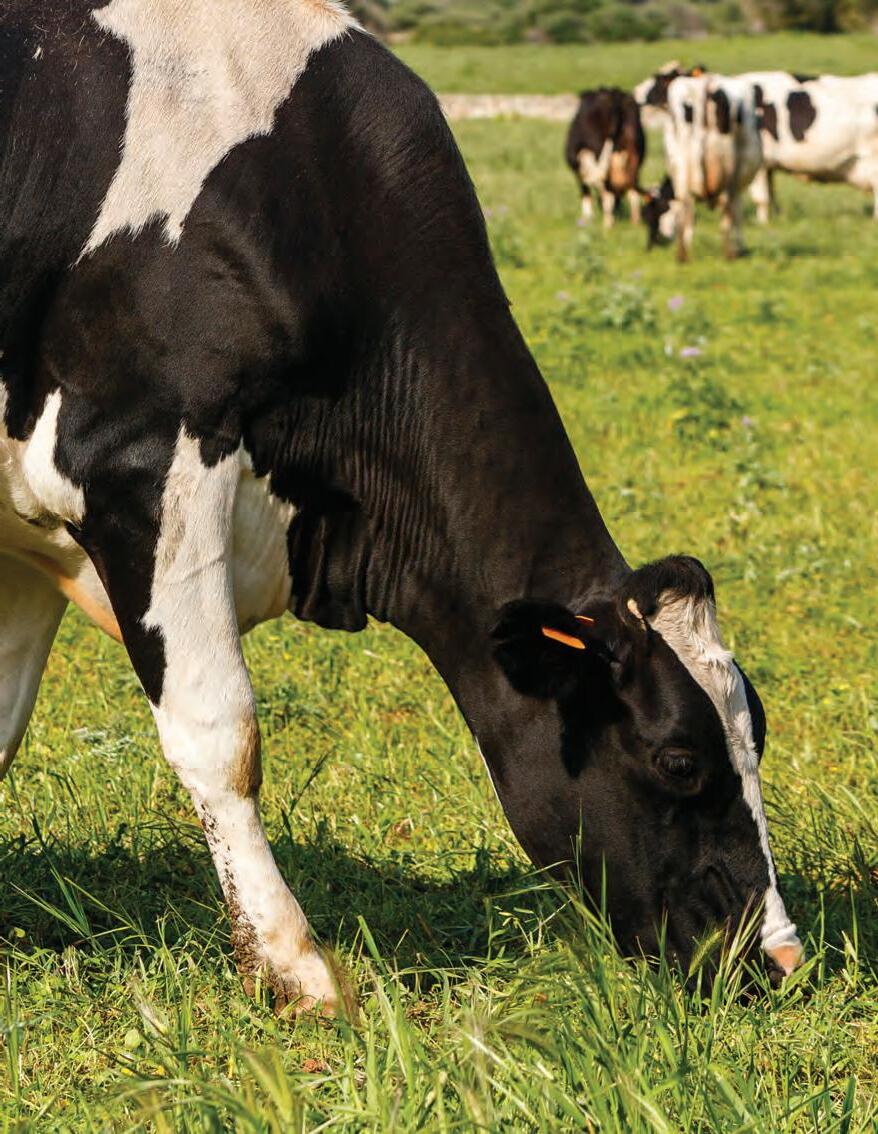
FEEDING STOCK well and drenching only those animals facing a parasite challenge are key tactics in managing parasites in cattle, especially in autumn and early winter.
The prevalence of drench resistance in cattle in New Zealand may not be as well understood as that in sheep, but there’s a high likelihood it is present, and farmers should be vigilant, says Zoetis veterinary advisor, livestock, Victoria Chapman.
Protecting youngstock, which are the future of our herds, is particularly important and the first step is always feeding animals well, which minimises parasites.
“That’s why monitoring is also so important. If they have been on high grazing residuals, maxed out their growth rates and they are exactly where you want them to be, do
you really need to drench them? Maybe you just do some or leave them for another week,” she explains.
A combination of weighing stock, faecal egg counts (FEC) and analysing the grazing history of animals should all factor into decision making on farm.
While FEC is important, it cannot be taken in isolation. “It is another valuable tool, taken into consideration with weights and pasture covers and how they are looking. It’s about using your stockmanship.”
Chapman explains that for cattle, the peak larval challenge on pasture happens later than for sheep, and is generally in late autumn and early winter. Each farm is different, and weather and when animals were born influence peak challenge times. A dairy platform where there are only adult cows will also be
This is the acronym Wormwise, our national parasite management body recommend (feed, avoid, refugia, monitor and effective drenching).
Feed. Ensure susceptible or young animals get good feed quality and quantity. Grazing higher residuals also keeps susceptible animals out of the parasite zone, or at least minimises their exposure. Use older stock classes to
different.
Traditionally, preventative treatment focused on treating animals every month to avoid a large peak, but times have changed and our approach needs to adapt to reflect that.
“The less parasites animals face, the better. It’s even more important for young and more susceptible animals to avoid a big challenge as they are more at risk than older, more immune ones. However, if pastures are very wormy, a long-acting drench used tactically at this time can be beneficial, as it protects them for longer. Ideally, we should not need to drench adult cows, that should be the bottom line, if they are in good condition and well fed, such as good conditioned beef cows.”
Chapman says for beef cows, the exception to the no-drench rule could be a first calver needing extra protection
maintain pasture quality. Avoid the parasites. The earlier point also covers this but it’s also about using older or different stock classes to vacuum up infective larvae to clean up paddocks. Or graze young animals on crops where there are less larvae. Refugia is a key point- leaving some animals untreated to enable susceptible parasites to reproduce. It’s a bit counterintuitive for

from parasites.
Dairy is different as adult cows tend to not be in as good a condition as an adult beef cow.
“Those cows that are dried off early are dried off for a reason; they are not as fat and fabulous as their herd mates who are still milking, or they may have mastitis. I would treat those animals. There are always exceptions, but I would be aiming to not blanket treat the herd.”
Chapman says it is okay to drench, if it is warranted, and it is a valuable tool in the toolkit if used wisely to improve production and aid in tight spots in the season.
“Drenches are a great tool, but they are only good as long as they are working, and the longer they are working, the better.”
• Article - Zoetis
production but can help delay resistance. Monitoring with FECs, assessing drench efficacy, weights, pasture residuals etc and making decisions on actual data, rather than the calendar or best guess is also key. Finally, use an effective drench and use it well (check dose delivery of gun, animal weights etc). Any drench is valuable if it is effective, so know what works on your farm.

WITH MOUNTING pressure on Australian farmers, driven by the increasingly fluid global uncertainty, the organisers of ‘FutureAg powered by Agritechnica’ have postponed the Melbourne event.
The exhibition and conference, scheduled for July, showcases agricultural machinery, farming technology and practical solutions for future farming in Australia. It will now be held next year.
The decision comes after extensive consultation with farmers and exhibitors in response to the ongoing global fuel crisis, as well as fertiliser shortages and the significant impact it is having on Australian farmers and the broader agricultural sector.
New Zealand Fieldays chief executive Richard Lindroos told Rural News that he wasn’t surprised by the decision of FutureAg organisers.
“Events come and go,” Lindroos says.
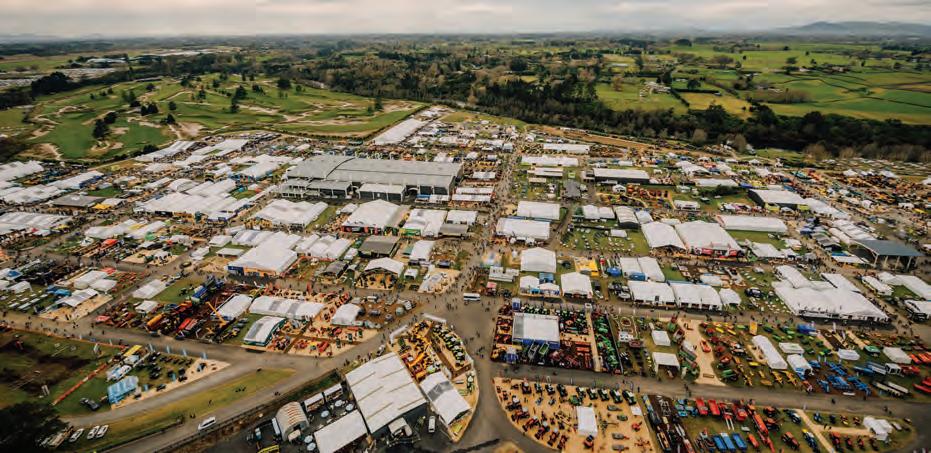
He says the National Fieldays is preparing in earnest for the four-day event at Mystery Creek.
On the possible impact of the geopolitical situation and fuel supplies
ADVERTORIAL
on the Fieldays, Lindroos says they are “aligned with government” on that.
Under the New Zealand Government’s National Fuel Plan, rationing measures would be taken if fuel supplies start running dry.
Resembling the Covid alert levels, the plan has four ‘phases’. New Zealand is at phase one.
Phase 2 would see homes, businesses and the public sector encouraged to conserve fuel.
The higher phases are still under consultation.
Phase 3 would see fuel prioritised for life-preserving services and phase 4 would see stricter intervention in fuel distribution.
Moving up or down levels is decided by a ministerial oversight group based on fuel stocks, restrictions and supply chain data.
Latest government figures show the country counted 59.7 days of petrol, 49.1 days of diesel and 50.7 days of jet fuel as part of its stocks
However, in Australia many farmers are currently facing sharply increased operational costs, higher uncertainty and greater day-to-day pressures, making it
difficult for them to commit the time and resources required to attend an exhibition in 2026.
As the uncertainty for farmers increases, the organisers also note that machinery manufacturers, importers and dealers are facing increased freight costs and longer transit times for machinery imports, leaving them with reduced planning reliability.
With the premise to serve the
agriculture industry, this decision reaffirms that priority, while as a show of support, DLG (German Agricultural Society) and Hannover Fairs Australia, co organisers, will jointly donate $5,000 to Rural Aid, Australia’s leading charity supporting farmers, their families and rural communities.
“We will relaunch the event in 2027, ensuring it takes place under conditions that support strong engagement
from farmers,” added Jens Kremer DLG Markets GmbH, managing director.
Tim Bostridge, managing director of Hannover Fairs Australia, says that FutureAg is built to create tangible value for farmers and agribusinesses alike.
“That’s why we are committed to delivering the event at a time when the industry can fully benefit from the innovation, investment, and connections it enables.”
Building on its reputation for rugged vertical mixer design, the introduction of Jaylor’s new 6000 Series focuses on improved feed flow, faster mixing, more efficient performance with lower horsepower requirements, alongside enhanced operator visibility, and practical durability upgrades.
Retaining the unique square cut auger design is still the key driving force behind performance and central to the companies 30-year success story. A patented upper face prevents bridging of round bales, allowing rapid cutting apart and an increased mixing action. The unique slide plate gently gathers feed into the auger for, lifting it vertically to decrease friction, and in turn, lowering when horsepower requirements by 20%, compared to machines with traditional round section augers.
New innovations for the new 6000 Series include a newly conveyor design, featuring galvanised steel and rust resistant materials, delivering smoother and faster unloading. Hydraulic lift cylinders, mounted above the new conveyor offer a wider working range, while also providing greater clearance under the conveyor during discharge, particularly into troughs. In addition, self-adjusting

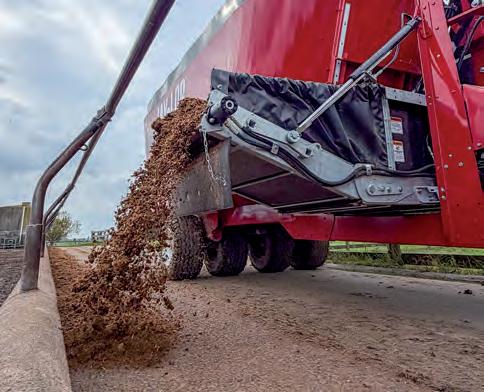
sprung shields along the conveyor edges eliminate feed loss and promote even unloading, while cleaning wipers fitted to the chain ensure all feed is cleared away from the conveyor system.
Improved visibility allows the operator to see directly into the new Seal Lock Door system, redesigned to provide a tighter, more consistent seal, reducing feed loss and improving control during unloading. By maintaining a cleaner discharge area and more predictable feed flow, operators can deliver rations with greater accuracy whilst minimizing waste.
Reduced friction, imparted by the square
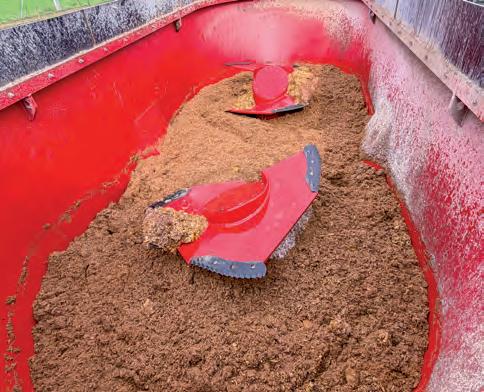
cut auger design, also creates low sidewall pressure, not only reduces wear on the mixer walls, but also allows the installation of a viewing window in the side of the tub, in the case of the new 6000 Series, increased by 50.0%, providing operators a better view of the mix from the ground level, without having to climb a ladder.
For operations over varied ground conditions, the new 6000 series is also available as an allterrain variant, featuring large flotation tires, complemented by a new axle configuration offering additional ground clearance and improved stability.
Power Farming – We keep you growing.
Tractors.
WITH EMISSION regulations meaning more tractors are incorporating engine technology such as exhaust gas recirculation and ad-blue, AGTEK set out to source a tractor that didn’t require these add-ons, featured more mechanical systems rather than electronics, and offered something a little more “bulletproof”.
To meet the needs of the New Zealand market, the Te Puke-based importer and distributor, led by industry stalwart Gayne Carroll, has launched the Basak orchard range.
It comes in three versions – the Kiwifruit Special ROPS, designed specifically for NZ kiwifruit conditions, alongside orchard models, in ROPS and air-conditioned cabin layouts.
Established in 1914, European-headquartered Basak is a part of ASKO Holdings, a group of companies in growth mode, who also own other well-known brands such as Versatile
Looking at the Basak tractors a little closer, a Tier3, 3-cylinder turbocharged Perkins engine, offers a punchy 80hp, with frugal fuel economy, complemented by an industry-leading 85 litre fuel tank, meaning less down time for refuelling. In turn, this is mated to a mechanical, Synchro transmission with 16 forward/8 reverse speeds, complemented by 4WD, with mechanical rear and limited-slip front diff locks.
At the business end of the tractor, a 3000kg, Cat 2, three-point linkage with hook ends is mechanically controlled, offered with 50 l/min hydraulic flow, two remotes and a 2-speed independent 540/540E system.
The 2080BB “Kiwifruit Special” version, while offering a low comfortable seat height for operators, is fitted with 20-inch wheels for greater ground clearance, improved traction and a faster road speed.
General manager Gayne Carroll says customers were always
efficiency and improved profitability.
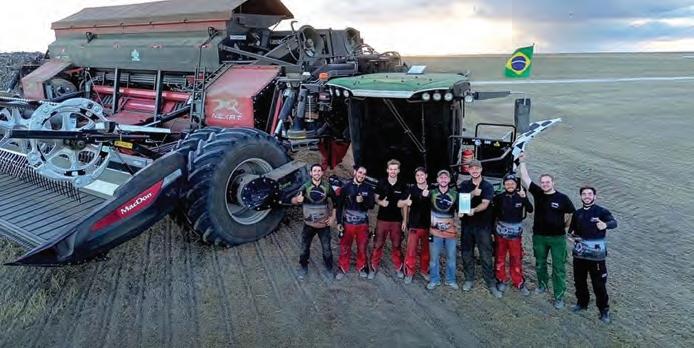
Featuring a gantry layout, with offset cabin, the Nexco harvesting module was designed to complement the main Nexat unit in 2019, setting the new world record less than seven years later.
Recently, its capability and performance saw a Nexat gantry set a new
asking for a more mechanically focused tractor that was simple to operate and not stopped by electronic faults.
To meet the needs of the New Zealand market, the Te Puke-based importer and distributor, led by industry stalwart Gayne Carroll, has launched the Basak orchard
“We spent time in Europe looking at options and found that Basak addressed that wishlist, but also offers a price position that sits around 20 – 25% below other European competitors, meaning it’s already generating a lot of interest.”
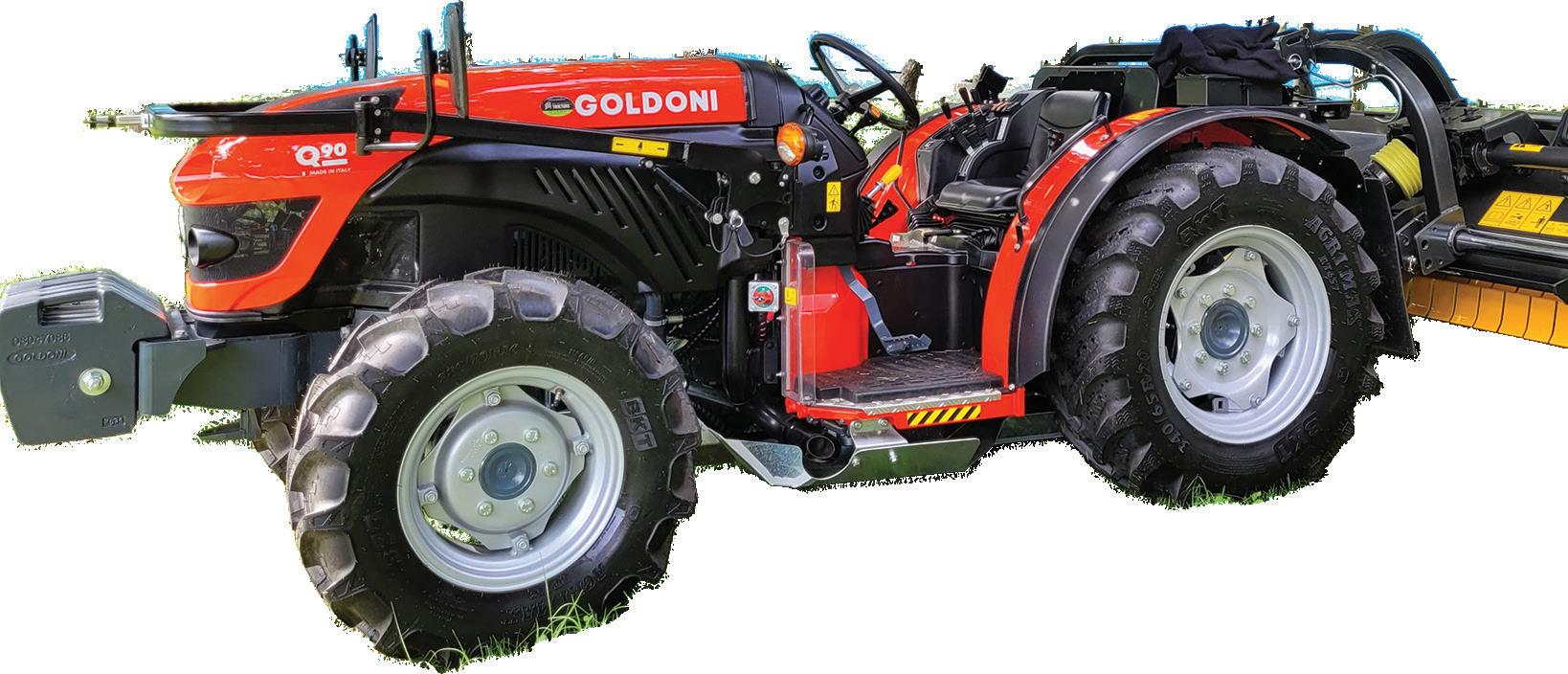
Complementing the Basak launch, the arrival of the all-new Goldoni Q
Series offers engineering excellence and an extensive redesign for ease of use and ultimate operator comfort.
It has the latest Hyundai Doosan 4-cylinder, Tier5 engines offering less emissions, higher performance and fuel savings. Other new features include cruise control, telescopic/tilting steering column and a new 24 forward & 12 reverse synchro shuttle, including a creep range offering speeds from 0.46 to 40kph road speed.
The new “Super Kiwi” Q Series is the first kiwifruit tractor to be able to offer a low seat height, for working under kiwifruit pergolas, with mechanical adjustment of suspension and still fitted on 20” wheels. All kiwifruit models come fitted with full underbody belly pan protection.
The Q Series is available in a Super Kiwi kiwifruit ROPS version, standard orchard ROPS and narrow, low-profile cab and standard cab options. Depending on wheel equipment, this can achieve an overall width as narrow as
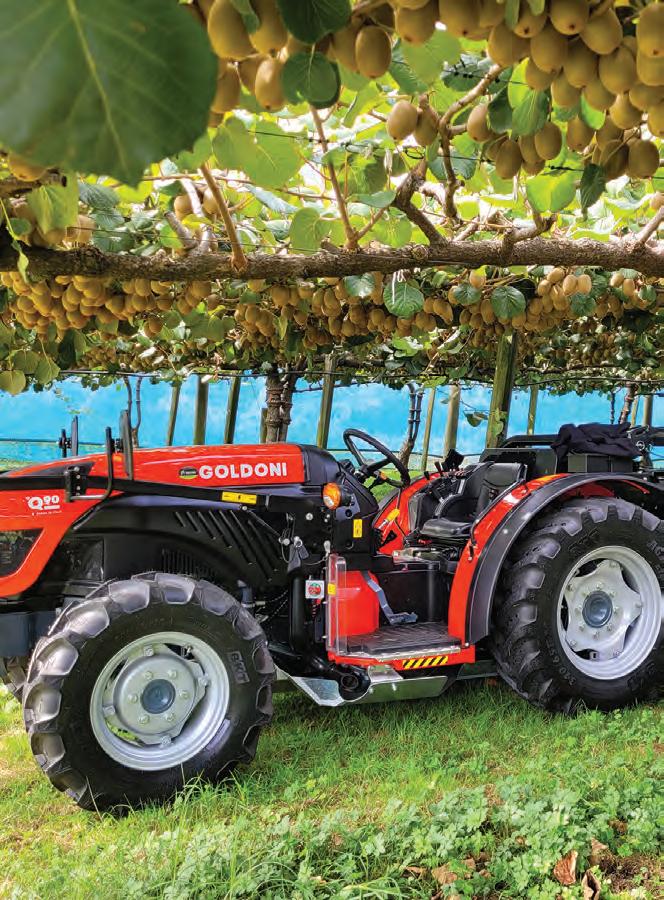
1250mm.
As part of the overall package the Q series comes with 2-speed PTO, three rear remotes and hydraulic lift arm levelling, Cat 1& 2 linkage arms, HD front axles, 280-70R16 and 340-65 R20 radial tyres, front weights and a 3-year or 3000-hour warranty. For info visit www.agtek.co.nz

CollarBoss,
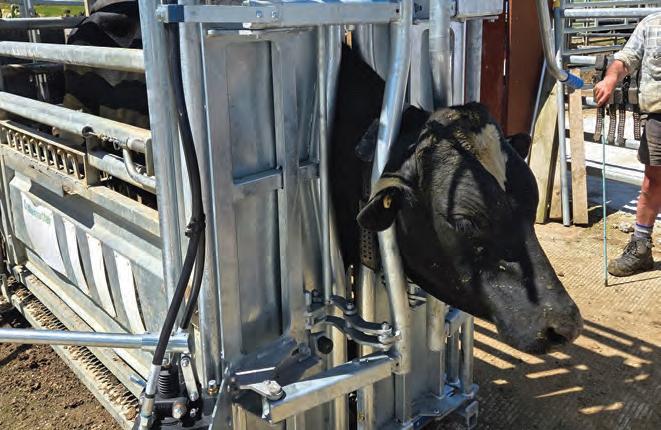
installing or adjusting cow collars.
Designed and manufactured to complement the proven Te Pari C1000 Head-bail – fitted as standard on the company’s manual and pneumatic cattle crushes – the accessory uses hydraulically-operated neck extenders to the front of the head-bail to gently and securely position the cow’s neck, to offer clear access to fit collars without putting operators in harm’s way.
CollarBoss makes the process straightforward and controlled, utilising a hand-operated hydraulic pump, removing the need
for a power supply or electric actuation, with the benefit of making the unit suitable for remote set-ups around a property.
Showcased at the recent Southern Field Days, the system was awarded 1st place in the Farm Innovation Awards, recognising the practical value it delivers to farmers considering adopting the use of wearable collar technology. The system can be retrofitted to existing compatible systems, allowing you to upgrade your setup without replacing the entire crush.
Visit www.tepari.com




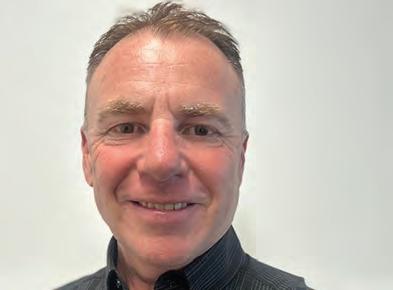
PENSKE AUSTRALIA & New Zealand has appointed Stephen Kelly as the general manager of its Penske NZ operations, effective immediately.
In this role he will oversee all NZ branch operations, including energy solutions, mining, commercial vehicles, defence, marine, and rail, while continuing to be based at Penske’s Christchurch branch.
“Having joined Penske in November, in his short time with the business, Stephen has made a strong impact at the branch level and as a member of the New Zealand leadership team,” said Hamish ChristieJohnston, managing director of Penske Australia & New Zealand. “He brings extensive experience from his time with Terra Cat and Miles Motor Group to Penske, having worked in both dealer and OEM environments, in on- and off-highway industries, and in sales, parts, and service.”


With the handover process already underway, passion was an evident theme from customers. “The key customers, partners and suppliers I have met over the past few months, have clearly demonstrated a genuine passion for the brands we represent and for our partnership,” said Kelly. Visit www.penskeanz.com