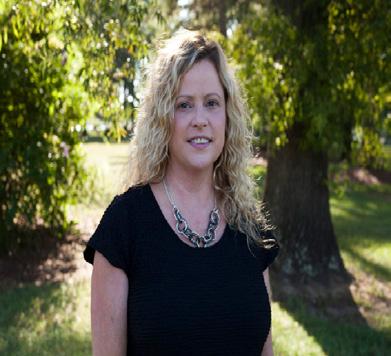
Inside this issue, there are a number of great articles about leadership best practices, building positive self-esteem and productivity! We hope you enjoy this issue.
As always, I hope you enjoy this issue and continue to follow us on Facebook, Twitter, Instagram, Google +, and LinkedIn.
Thanks again for your continual support!
Sincerely,
Kuanita E. Murphy, PhD Publisher/Editor-in-Chief
The Disaster of Displacement By Trimel Holloway,
While thousands of families and individuals from communities ravaged by recent hurricanes are now faced with the challenge of homelessness, there will be thousands of more people who have not had to deal with the life altering effects of a natural disaster but will still be displaced and left without a home because of domestic violence being perpetrated against them by a loved one or intimate partner.
Domestic violence is a form of violence that is often used in an attempt to gain power or control over another individual within a family or household setting. Different types of domestic violence may include physical, emotional, or financial abuses. According to the National Coalition for the Homeless, domestic violence is now the third leading cause of homelessness among families in our nation.
Victims of domestic violence in many cases can have several barriers and unmet for short-term and long-term housing. Service agencies and other organizations can provide shelters and vouchers for nights in hotels but it often takes domestic violence victims longer periods of time in order to find permanent housing. Victims of domestic violence often have poor credit records and employment histories because of the disruptive nature of the violence they have experienced.
Cities around the world are searching for solutions to address the challenges they face from growing populations of homeless but, if not careful, can overlook the fact that domestic violence is a major contributor to the levels of homelessness they are experiencing. Shelters are frequently filled to capacity and are forced to turn away battered victims of domestic violence each year. It has to be recognized that any effort to assist victims of domestic violence must also address the tremendous barrier to healthy housing that domestic violence presents.
As Domestic Violence Awareness Month comes and then goes again with the turning pages of our calendars, a large number of people who are homeless because of domestic violence will remain. Longterm efforts to address homelessness can include increasing the supply of affordable housing, advocating for adequate wages and income support, and providing necessary supportive services like violence prevention. There remains a critical need to prevent violence from ever occurring and re-occurring in the first place.
MBA
Each year, 10 million children are reported to be exposed to domestic violence according to the Center for Disease Control and Prevention. A heartbreaking 90% of those exposed are eyewitnesses to the violence, and will be affected by it for their entire lives.
The World Health Organization reports that globally, men who were exposed to domestic violence as children are three to four times more likely to perpetrate intimate partner violence as adult men who did not. An estimated half of those men will choose not to perpetrate the problems of violence in their own lives. Unfortunately, the other estimated half to those men will.
It is not an easy thing to admit, but I am a man who occupied the latter statistic. There have been times in my life when I have made some very poor choices to repeat many forms of the violence that I was exposed to during my youth. Eventually those poor choices led to some serious criminal penalties and ultimately my own family was displaced and left without a home.
So after having to endure the severe consequences of perpetrating violence and seeing firsthand the devastating effects that my bad behaviors have had on my family and other members of community, I am taking personal accountability and adopting the mission and everyday objective to advocate for violence prevention. My goal is to raise the overall level of awareness concerning this very serious public health problem and hopefully prevent others from making the same mistakes that I have.
No matter who you are or what you do, we all have an opportunity to stand up against domestic violence, and violence prevention can be everybody’s business. If you or someone you know is experiencing domestic violence, reach the National Domestic Violence Hotline at 1-800-799-7233.—
About the Author
Trimel Holloway is the founder of Davila Worldwide, a nonprofit organization that operates in violence prevention and economic development. For more information on the organization visit www.davilaworldwide.org.
Southwest Georgia Technical College Benefits Dr. Tanjula Petty
Technical or community college has become a primary option for many high school graduates and adult learners returning to school today. Also, community colleges serve first-generation students who face more challenges to graduate from college than students of parents who are college graduates. Moreover, one major obstacle that first-generation students encounter is the ability to function and thrive in two opposite worlds.
Regardless of what career field students are entering, there are several reasons why they may want to take the time to explore their local technical or community college option. Provided are the top reasons you should explore the community college option in the Southwest Georgia.
Flexibility
For upcoming and recent high school graduates, whose lifestyles lend them having dual roles to include working while in college, often realize that technical or community college schedules are more flexible than a four-year institution. For the most part technical or community college accommodate students of all ages and backgrounds. Technical or community college colleges are familiar to catering to adult students who are juggling professional and family responsibilities along with their studies. Technical or community college typically offer evening, weekend and online options to help these students work their academics around the rest of their activities.
Therefore, students find more options in class scheduling, including evening and weekend classes. In addition to distance learning opportunities. Technical or community colleges offer a multiplicity of courses online. As a college student, the flexibility and the option to take a full load or to the ability to take a few classes while concurrently focused on other pursuits to include a job or tend to familial obligations.
Transferability
The majority of technical or community college uphold transfer or "articulation" agreements with four-year colleges. The articulation agreements plan out exactly which courses will transfer to a particular four-year college. The four year colleges may even guarantee admission as a junior to students who fulfill certain course work and grade requirements.
Academic Quality
Technical and community colleges have always dedicated itself to quality education. In fact, quality is a part of the any community college's core values. Community colleges focus on the continuous quality improvement in academics and student support to integrate new technology, and new initiatives in the learning environment to improve the college Technical and community colleges offers students a chance to search both new and traditional majors from a new viewpoint. Additionally, most technical and community colleges offer smaller class sizes to support more individualized learning and increase the
supportive environment to ensure that students are prepared for success. Positively, it’s quite common for students to use an associates program as a stepping stone to a bachelor’s degree, which is a threeway win. The most important win is the student, the two-year college, and the four-year institution.
Economical
Tuition at public or private four-year institutions are astronomical, with the cost constantly increasing. Notably, technical and community colleges are more economical than all higher education options. The average annual rate to attend a four-year university in Alabama, Florida, and Georgia could cost as much as $20,000 or more, while the annual tuition at a technical or community college is below $5,000, according to the Alabama Commission on Higher Education, 2014-2015 Tuition Analysis.
With technical or community colleges being more affordable, students can easily finance their education without having to accrue a significant amount of debt preceding to graduation. This is a major advantage for students who attend technical or community colleges, as many students graduating currently rack up student loan debt to be paid after graduation.
If you are or have a high school graduate who are uncertain of what they want to study or intimated by the idea of a university, try your local technical or community college, which will guarantee to be an easier transition for recent high school graduates and adult learners. Students will have an opportunity to take a variety of general education courses to find their area of interest, in an environment that is often more supportive than four-year institutions. Also, once students spend two years at a technical or community college, they are typically better prepared to move to the next level, including a four-year school to finish a bachelor degree or transitioning into the professional workforce with the training they received from the technical or community college.
In addition, many technical or community college students continue to live at home while taking classes, saving money on room and board as well. —
About the Author
Dr. Tanjula Petty is Vice President of Academic Affairs at Albany Technical College in Georgia. For more info, write to tpetty@albanytech.edu.
Beyond the Blue Ribbon: Why
4-H is a Golden Opportunity for Your Child
Think about how your child spends their time outside of school. How do they use their free time and what goes into their minds?
What would happen if they put down the electronic devices and had real-life experiences that grew their minds, strengthened their character and built leadership skills?
Fall is the perfect time to look for 4-H programs right in your community. These clubs give kids a chance to do community service, develop a wide variety of projects, practice their leadership skills, build confidence and attend summer camp.
Another good thing about 4-H is that these programs are truly community driven. The kids work with adult volunteer mentors who live and work near you, and the programs are developed and backed by a public university in your state. 4-H also counts on the support of businesses and local organizations.
For example, Tractor Supply Company offers its Paper Clover in-store fundraiser twice a year, which gives customers a chance to make a donation during checkout to raise money to send kids to 4-H camp.
Since 2010, this fundraiser has raised $11 million, and last year more than 14,000 kids went to 4-H camp, thanks to the grants and scholarships made possible by the Paper Clover. Unlike other checkout fundraisers, 90 percent of the money raised at any given Tractor Supply Paper Clover fundraiser stays in the community.
According to Debra Smith, the Tractor Supply store manager in Chesapeake, Virginia, more than
120 kids regularly participate in 4-H activities at the store to support club projects focused on agriculture, STEM (science, technology, engineering and math), healthy living and citizenship.
"Our community really rallies behind Tractor Supply's Paper Clover campaign," Smith said. "When you meet these kids, it's easy to see how exceptional they are and the impact these programs have had in their lives."
With the many benefits of 4-H, now is a good time to get involved. Here are just four things kids gain from their involvement with 4-H.
They gain practical experience: The many projects and programs that 4-H offers helps kids learn and develop skills, many of which have real-life applications. For many 4-H'ers, their chosen projects may be the start of a lifelong hobby. For example, some states offer wildly popular photography programs, and you'll see 4-H'ers work on display at county and state fairs. Other programs can have a direct bearing on children's future careers, and provide them with an introduction to jobs in engineering, computer science, health care and more. In fact, for the 2.6 million 4-H youth who live in rural America, 4-H has a deep tradition of giving youth hands-on experience in agriculture programs, including biotechnology, veterinary sciences, forestry and raising animals.
They develop their leadership skills: Because 4-H is designed to empower youth, many gain opportunities to take on leadership roles in their clubs, whether they mentor younger members or help plan and ex-
ecute a community project. The valuable leadership skills youth gain from their experience in 4-H can be applied throughout their lifetime.
They learn healthy choices: Healthy living isn't the first thing that comes to mind when talking about 4-H. But the opportunities to learn about healthy living runs the gamut, including good nutrition and good physical health for individuals, plus food science and finding ways to make communities better places.
They build better communities: While kids are in 4-H, an important part of the program is looking for opportunities to give back. A recent study by Tufts
University shows that kids in 4-H are four times more likely to make a contribution to their community, and twice as likely to be civically active.
Whether you live on a farm, a small town, the suburbs or the city, chances are there is one or more 4-H club going strong in your community. To find a 4-H club in your area, visit 4-h.org/find/.
For more about Tractor Supply's partnership with 4-H, visit www.tractorsupply.com/4-h.—
Steps to Improve Cybersecurity
There was a time you could run a small business with a bank account, a telephone, an internet connection and some sort of physical base. These days, cybersecurity has been added to this list as a necessity nearly every small business owner needs to consider.
This is especially true for small businesses such as law offices or accounting firms that deal with a client’s highly sensitive information.
Despite recognizing the need for effective IT security to guard against the next cyberattack, 83 percent of businesses say organizational difficulties put their company at risk, according to a global survey conducted by Citrix. In addition, 74 percent of businesses say they need a new IT framework to improve security and reduce risk.
Because of the highly technical and complicated nature of cyberattacks, many small business owners don’t understand the enormity of these threats, and most learn the hard way.
For example, Dr. David Krier, whose Volunteer Voyages lost over $14,000 through fraudulent withdrawals, learned that banks do not always offer protection against these attacks. His organization was not reimbursed for the money the cyberthieves stole. The situation is not improving. Recently, CBS reported a drastic rise in phishing scams. In 2017, 200 organizations were victims of a phishing scam that resulted in the theft of the data of several hundred thousand employees.
“Because most of the news coverage happens when big companies like Equifax or Target are attacked, many small business owners mistakenly believe that only larger companies are at risk of a security breach,” says Nate Spilker, vice president, product management at Citrix. “The fact is, the majority of cyberattacks will have a detrimental impact on small businesses if they do not have a cybersecurity plan in place.”
Cybersecurity is a very real and very serious matter, but the more you know about it, the better you can prepare against an attack. These seven steps lay the groundwork for establishing an advanced and cost-effective way for small businesses to better guard against the ever-present reality of a cyberattack.
1. Assess current security tools
Your company’s data is only as safe as the technology it employs. Instead of thinking how well protected you are, consider bringing in an outside consultant to expose your vulnerabilities. This will help you to honestly analyze the current tools your company uses and understand where you can improve.
2. Invest in staffing
It can be challenging for a small business to hire new employees. But because the cyber threat is so real and potentially devastating, hiring knowledgeable and experienced security personnel might be the most important step you can take to protect your business.
3. Encrypt your data
You may trust your personal photos and music to the web, but your business’s and your clients’ data raises a whole other host of concerns. Many business-class cloud
services employ encryption technology, which transforms data in an indecipherable code that can only be opened with a specific key as it travels between secure destinations.
4. Think beyond passwords
It’s safe to say most people are unable to remember all their passwords. Not only are passwords cumbersome, but poor password practices can create major security problems. In fact, 91 percent of security professionals think passwords will be a thing of the past within a decade. Many security experts now recommend user authentication technology to make protecting data both easier and more effective.
5. Use a consolidated platform
By implementing a secure, company-wide tool such as Citrix ShareFile, which includes file sharing, storing and document signing as well as remote desktop access that integrates with common business apps like Microsoft Office 365, employees will be more collaborative and productive. They will also be able to work from anywhere, on any device, at any time.
6. Create and enforce a standard IT policy
Whether you have a traditional office setup, contractors working remotely or a bring-your-own-device policy, make it a priority for employees to understand the security risks involved with using unapproved applications.
7. Be proactive
Stay updated on the latest developments and concerns in the cybersecurity landscape and how you can improve your company’s defenses. For instance, take the time to review how the ever-expanding Internet of Things (IoT) can both benefit and add new security risks to your company.
A solution that takes into account many security measures involves implementing a cutting-edge file sync-andsharing system, like Citrix ShareFile.
With more than 80,000 business customers and 20 million business users, Citrix has developed their systems to be easy to use and capable of handling all types of files, from sensitive legal briefs to 3D architectural designs. Combining user experience with security, ShareFile safeguards data through leading industrial security standards.
To learn more about small business technology solutions, visit www.sharefile.com.—
Three Reasons to Go Cashless
The dollar, the euro, the pound, the yen... the currency people use around the world has many different names, but it all shares something in common. Paper forms of currency are out and digital payments are in. The security and convenience of card based electronic payments and digital payments are driving a global shift away from cash. As consumers and merchants around the world become more and more digitally connected this shift will continue to accelerate.
All over the world, the shift toward cashless payments is well underway. On the beaches of Cabo San Lucas, taco and tamale vendors are starting to offer their delicious food to customers with the swipe or tap of a card on a mobile phone. In Singapore, consumers can rent bikes, pay for their morning coffee and split their dinner bill without ever needing cash, and in Warsaw, as cashless payments are becoming increasingly accepted, tourists can start to tap and pay their way around the city without carrying cash.
Changes abroad, changes at home
The United States is seeing similar changes. Cash and checks are on their way out and swiping, dipping, tapping and clicking are filling the void - benefiting consumers and businesses alike.
A recent Cashless Cities study from Visa, set to be released later this year, finds that if businesses in the top 100 U.S. cities transitioned from cash to digital payments, those businesses and their cities would
experience net benefits of $312 billion per year. Businesses in New York City alone would net $6.8 billion while saving more than 186 million hours in labor. But the benefits of taking checks and cash out of the system do not stop at labor cost efficiencies. They include:
* Convenience. Consumers and businesses alike benefit from the speed and convenience of electronic and digital payments. Faster checkout times mean more sales for businesses and more time to spend on the important things in life for consumers.
* Security. Accepting cash payments has always placed businesses in a bind; as their revenue increases, so does their risk of falling victim to theft. Transitioning to cashless payment options enhances security and reduces risk for businesses and their customers.
* Reduced costs. Cash payments must be counted, stored and transported. There are costs associated with all of these processes. Adopting cashless payments saves businesses time and money.
Moving forward to take advantage of cashless opportunities
Many businesses across the country are already benefiting from going cashless, but for companies - particularly small businesses that have yet to take the leap - now is the perfect time to make such a change.—
50 FIFTY UNDER 2017 GAME CHANGER
You don't get into something to test the waters, you go into things to make waves.—
BE A GAME CHANGER
Rural Leader Magazine is pleased to present the 2017 Class of Fifty under Fifty Honorees. The Rural Leader 50 under 50 Honor was developed with the purpose to recognize exclusively leaders who live and work in small communities.
Now in its second year, once again, we received a number of nominations of worthy individuals from across the country. Each nominee was either self-nominated or nominated by an organization or group. To qualify, nominees must be at least 40 and
not older than 50 as of October 2017 AND reside in the United States.
This year's honorees are indeed game changers in their resepective genres. We are elated to showcase such a diversfied collection of individuals in Small Town America. Their collective contributions and achievements is a testament to the astonding level of talent in small communities. Congratulations to the 2017 Class of Rural Leader 50 under 50 Game Changers for a job well done!—
50 under 50 GAME CHANGER
Tawanda Lee
47
GA
(MSW)
Rich Thompson STATS Age 47
Hometown Cuthbert, GA
Profession Vice President Business Development at YouScience
Rena Timpson STATS
Age 41
Hometown Edison, GA
Profession Co-Pastor at Covenant Word Ministries in Edison, GA
Marc Veasey STATS Age 46
Hometown Fort Worth, TX
Profession
U.S. House of Representative Texas's 33rd District
Claudette Wilson STATS
Age 45
Hometown Foley, AL
Profession Chief Executive Officer at
International Eagles Fellowship, Inc. (IEF)
Lori M. Wilson STATS
Age 47
Hometown Cuthbert, GA
Profession
Bookkeeper at Randolph County Board of Education (GA)
Looking for hands-on activities to engage your kids? It's never too early to introduce them to important STEM subjects at home.
STEM stands for science, technology, engineering and mathematics. These subjects are critical for all students to learn because they are required for so many careers in the future. In fact, STEM jobs are growing faster than any other U.S. sector, according to Wired magazine.
If you're looking for fun, handson STEM projects to do with your child, 4-H is a tremendous resource! 4-H utilizes exciting topics like robotics, rocketry, computer science and even electrical engineering to teach youth problem solving, creative and critical thinking, and build excitement for technology and STEM careers.
To reach more youth with STEM programs, the National 4-H Council has partnered with HughesNet, America's #1 choice for satellite Internet, to help introduce youth to hands-on, community-based STEM learning. HughesNet is a national sponsor of 4-H National Youth Science Day (4-H NYSD), the world's largest youth-led STEM challenge. 4-H NYSD projects can be used by local clubs, families, homeschoolers and teachers to give youth a fun way to learn about STEM.
Three Easy DIY Projects for Kids
Here are three exciting NYSD STEM projects that are so much fun, your child will think it's playtime, not work time.
Project 1: Incredible Wearables
The FitBit and Apple Watch craze have inspired "Incredible Wearables" - the 2017 NYSD experiment. Designed by the University of Nebraska-Lincoln Extension, this project teaches students how circuits, sensors and health data can be blended with fashion to create a wearable tech product.
To get started, visit https:// shop4-h.org/ to order an affordable kit that provides everything needed for up to eight kids to make their very own wearable fitness devices. These wearables can track heart rate, steps and more! Best yet, the kits are reusable so they can have fun building, designing and testing their tracker time and time again.
Project 2: Drone Discovery
For children excited by aeronautics and design, Drone Discovery enables youth to explore how drone engineering and remote sensing can be used to solve real-world problems, such as helping a community develop climate change resiliency and energy sustainability. To succeed in this challenge, youth need to think like an engineer as they design,
build and test drones. There are many different kinds of engineers and different ways to approach a challenge. What kind of engineer do you think you'll need to be to master drone technology? The engineering design process has three basic steps: define, design and optimize.
Project 3: Rockets to the Rescue Rockets to the Rescue is a competitive project, enabling youth to design and build a rocket that could be used to transport food and deliver supplies to disaster victims. This project, which is incredibly timely with major storms hitting the United States, teaches engineering concepts, math skills, nutrition and how to help solve a relevant, global issue.
The possibilities are endless.
From simple building blocks to tackling science kits and constructing robots, there are plenty of STEM projects guaranteed to pique your child's interest. Not only are you spending quality time with them having fun, but you're also helping them learn critical STEM skills that will positively impact their future. To learn about other fun STEM activities, visit www.hughesnet.com/4h and www.4h.org.—BPT
CLASSIFIEDS
WANTED
Contributing Writers/ Journalists
Candidate must have a background in Journalism or creative writing Can work on tight deadlines and on assignment; Internship Scope: 6 months to a year Position is none paid. Interested individuals must submit a resume' and a writing sample to Rural Leader Magazine via email. Candidates will be notified promptly of application status.
WANTED
Photographers
Candidate must have background in photography
Be will willing to work on assignment and on tight deadline
The Internship scope lasts 6 months to a year Position is none paid or may barter for free advertising
Interested individuals must submit resume to Rural Leader Magazine via email. Candidates will be notified promptly of application status.
WANTED
Graphic Designers
Candidate must have background in graphic design and proficient in a wide-range of design applications such as Adobe InDesign, Illustrator, and Photoshop. Be willing to work on assignment and on tight deadline Position is none paid or may barter for free advertising Interested individuals must submit resume to Rural Leader Magazine via email. Candidates will be notified promptly of application status.
WANTED
Research Assistant
Candidate must be proficient in research skills
Duties entail fact verification and scouting unique story ideas Be willing to work on assignment and on tight deadline Position is none paid. Interested individuals must submit resume to Rural Leader Magazine via email. Candidates will be notified promptly of application status.
WANTED
Sales Associates
Candidate must be outgoing, personable, and a go-getter Must be willing to research targeted and/or prospective clients to sell advertising; Position is paid on commission. (Rate based on Experience) Interested individuals must submit resume to Rural Leader Magazine via email. Candidates will be notified promptly of application status.