The Root of Servant Leadership and How it Affects You•
What to work for a diverse company? Tips to tell the Factual from the Fake• Children and Summer Learning: 5 Building Block for Better Brains •
Special Feature: Leadership is a Marathon, not a Sprint
Publisher and Editor-in-Chief
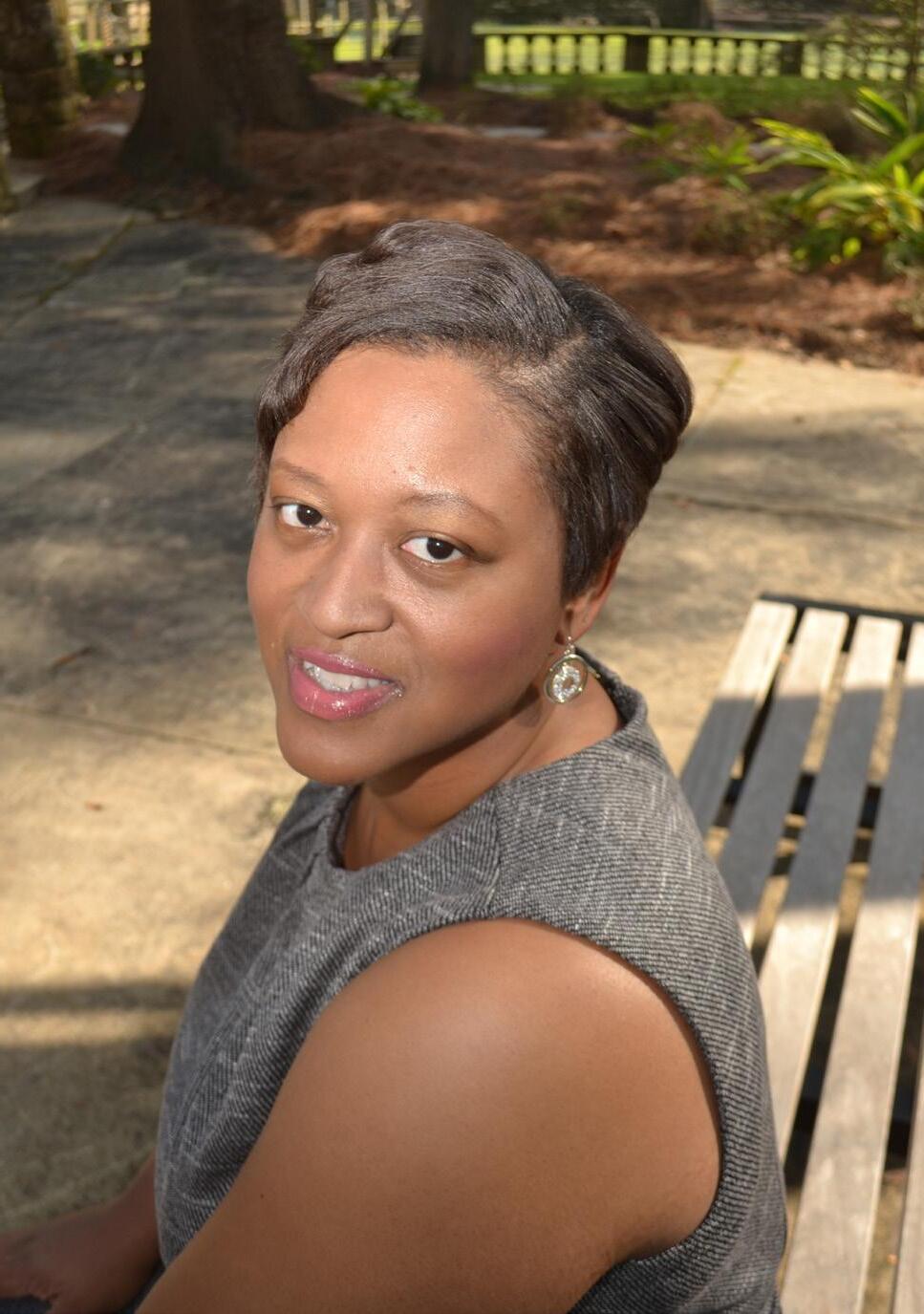
Kuanita E. Murphy, PhD
Rural Leader Magazine, LLC is a digital publication that highlights every day people doing extraordinary things nationally and abroad.
www.RuralLeaderMagazine.com
Guest Contributors
Jim Clemmer
International Best-Selling Author
Kevin Eikenberry
Leadership Guru
The Kevin Eikenberry Group
Gregory Frost Entrepreneur and Leadership Expert
Keith Lawrence-Miller Elite Pro Coach and Consultant
Lee Werrell Entrepreneur and Leader Guru
Tell us what you think about our publications, if you have a great idea for a story, or to just share. We may print your comments in Rural Leader Magazine. By sending us your comments, you’re giving permission to call you for an interview. Please be sure to include your name, address, email address, and phone number so we can reach you. Write to us at info@RuralLeaderMagazine.com—
5 Special Feature: Keith Eikenberry: Leadership is marathon, not a sprint
7 The Root of Servant Leadership and How it affects you
8 Children and Summer Learning: 5 Building Blocks for their Brains
9 Six Tips for a Successful Small Business
10 Keeping Teens on Track: National High School Graduation Rate Still Shows Room for Improvement
15 Want to work with a diverse company? Tips to Tell the Factual from the Fake
17 Two-year degree programs and 1-year certificates can open doors in-demand careers in Health Care Technology
19 Applying the Law of Attraction to your Thoughts
21 We are all Leaders
23 Classifieds Reproduction in any manner, in whole or in part, in English, or other languages, is prohibited without written consent. Send editorial ideas to Kuanita Murphy, PhD, Editor-in-Chief editor@ruralleadermagazine.com
Editor’s Note
Dear Readers,
Inside this edition, once more, we feature a compilation of leadership best practices (See pages 5, 7,12, and 19).
Also included is an article that consists of valuable information about children and summer learning (See page 8). Summer is an essential time to keep the learning embers burning. Education and career advancement articles are included as well (See page 10 and 17). And much, much more!
As always, I hope that you are inspired and encouraged! Please share this issue with your family and friends.
Happy Reading!
Sincerely,
Kuanita E. Murphy, PhD Publisher/Editor-in-Chief
Dear Rural Leader Magazine, Awesome publication! Can't wait to until the Forty under 40 issue is released.
—Mel W. Dothan, AL
Dear Rural Leader Magazine, Thank you for the special feature article, Your Attitude, Your Choice. It was timely and highlighted great tips.
—Kim L. Tallahassee, FL
Dear Rural Leader Magazine, Thanks for another great issue. Enjoyed the article, Creative College Savings. My daughter is a high school freshman. She is excited about starting her scholarship search early.
—Allana S. Nashville, TN
Reader's Voice
Dear Rural Leader Magazine, I saw a copy of last year's Small Town America's 100 Most Influential People. I just want to say thanks for recognizing people in small communities. The gesture is long overdue!
—Sabrina T. Columbia, SC
Dear Rural Leader Magazine, Thanks for another great issue!
—John E. Cuthbert, GA
Dear Rural Leader Magazine, I really enjoyed the article, How Self Confidence Impacts Your Leadership. I gained valuable tips to enhance my own. Thanks for a wonderful publication
—Katherine I. Selma, AL
Dear Rural Leader Magazine, I am requesting more articles like Three Simple Steps to Reducing Your Taxable Income. The article was a great read choke full with valuable information.
—Denise L. Savannah, GA
Dear Rural Leader Magazine, Finding the hole in the boat: The Four Essentials of Strategic Thinking was powerful. Publish more like it. Thanks in advance.
—Linda L. Seattle, WA
Dear Rural Leader Magazine, Just wanted to drop a few line to let you know: Rural Leader Magazine Rocks!!!
—Rhianna K. Atlanta, GA
Photo
Courtesy of TieFotos
Special Feature
Leadership is a Marathon Not a Sprint
Two of the most noted races in the track and field world are the 100 meter dash and the marathon. They are on opposite ends of the length spectrum – a sprint of 100 meters and a long trek of 42,195 meters (26 miles, 385 yards). Many times leaders work and act with an incredible sense of urgency, running faster, looking for every small edge and acting as if their hair is on fire. - Let’s call that leadership seen as a sprint. I believe we must think about leadership differently. I believe we must view our work as a leader over the long term, keeping the fires in perspective and always keeping the big picture in mind. Let’s call that leadership seen as a marathon. Let me give you some examples.
Perspective
Our job as a leader is to keep the big picture in mind at all times. If you drive your car looking just past the hood, your driving will be erratic, over-reactive and dangerous.
So too for the leaders-as-sprinters. When we look too closely we over-react, we shift our focus too often, and this can be dangerous. On the other hand if you are always driving with your eyes moving and looking as far ahead as possible, you will still see what is happening closer, but it will be seen in the proper perspective to make adjustments in view of the long term. Leadership is a marathon.
Coaching
If we give people feedback
Kevin Eikenberry
that they need to be on time with reports, but have a habit of working right up to and just past the deadline, it will likely take some time for the behavior to change. One coaching conversation seldom changes habits and behaviors immediately. Good leaders and coaches know that patience is a virtue. If you want to develop and grow your people, you do that consistently over time – not in a moment. Leadership is a marathon.
Goal Setting
While we certainly can (and should) have short term goals, most goals have a longer time horizon - a month, a quarter, a year. Sprinters wait until the deadline looms and do the best they can in the time remaining. The training plans I’ve seen can take you from starting to run to a marathon in 26 weeks. If you want to really reach any goals of merit and substance, you can’t cram it all into the last two weeks, and you know that. Leadership is a marathon.
Learning
Leadership is complex and is something we learn and strive to get better at over time. Not from one workshop. Not from one book. Not from one blog post. The best leaders know that the way for they and their teams to reach their goals is to be on a consistent path of learning from all sources (including mistakes) every day. Leadership is a marathon.
Productivity
Does all of this mean we don’t need a sense of urgency as a lead-
er? Not in the least. As leaders we must think about the immediate, respond as appropriate and keep forward momentum, but that doesn’t mean every day must be treated as a sprint. Even the best marathoners in the world pace themselves. The most productive people have a plan and work on long term efforts consistently, day after day, week after week.
They know there is a time to run faster, and they know they can’t sprint the full race. Neither can you and neither can your team. The best leaders know that they are in it with their teams for the long haul. They see the big picture, coach patiently, set big goals, learn continually, and are extremely productive. The best leaders see leadership as a marathon. —
About the Author
Kevin Eikenberry is a leadership expert and the Chief Potential Officer of The Kevin Eikenberry Group, a learning consulting company that helps clients reach their potential through a variety of training, consulting and speaking services. For more information, visit http://www.kevineikenberry. com/
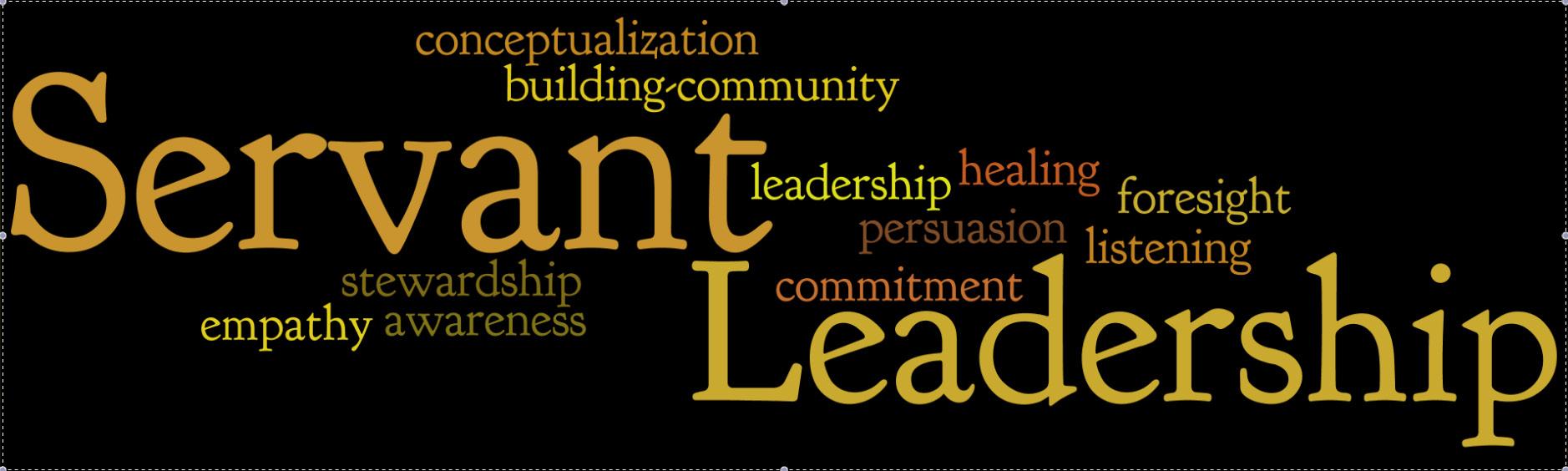
The Root of Servant Leadership And How it Affects You
Gregory Frost
Servant leadership is a type of mind control that is less hypnotizing than the usual type of mind control. This type of control focuses on changing someone’s brain from worrying only about them to being solely worried on the needs of those around them, specifically their “leader”. Servant leaders are said to be incredibly humble and will do just about anything for their leader.
Anything including acts of the human body, financial support, or anything physical can be performed by the servant leader without any excuse or unhappiness. Servant leaders are always willing to help their leader no matter what, which is not typical of a human being which is why this is noted as a form of mind control.
A servant leader will change your life drastically as you will be able to control someone for all of your needs; however this does not mean that you can treat your servant however you’d like. Servant leaders are known for showing their servants with magnificent respect and never allowing them to feel anything short of respected and important. The characteristics of a typical servant leader include the following:
subordinates. They must also be active in making their servants feel as happy as possible at all times and never letting them struggle through something on their own.
Helpful.
A servant leader must also be helpful and be actively trying to heal their servants whether they need help with personal relationships or are struggling through an illness. A servant leader is always willing to help those below him.
Persuasive.
A servant leader should never demand things of those around them. They must never take advantage of any of the things their subordinates do for them. Instead of demanding things of their followers, they should instead ask politely and persuade their servants into doing certain tasks.
Foresight.
A servant leader must be able to look into the future of a situation, and never ask their servants to do anything that may compromise the future. This means that the servant leader always strives to help protect his followers from anything that may happen in the future. While some people may not refer to
Servant leaders must pay close attention to what their servants have to say for a number of different reasons. For instance if the servant leader needs help with deciding something, they must listen and communicate with their subordinates to achieve the best decision. They must also listen to any complaints and work on these complaints with the servants. Humility.
As mentioned above, the servant leader must pay close attention to the needs and wants of their
servant leadership as a form of mind control, that is the furthest statement from the truth.
Servant leaders have the power to control their subordinates into doing almost anything for them, which is truly a form of mind control. Becoming a servant leader will change ones life dramatically as they have the power to control individuals in an all new respectful and aware way.—
Children and Summer Learning: 5 Building Blocks for their Brains
"No more pencils and no more books" is a chant heard on playgrounds across the country when the final bell releases students for the summer months. And while Alice Cooper's lyrics go on to showcase how excited the children are about their freedom from homework, they also highlight one of the biggest problems the American educational system faces each year: summer brain drain.
Sure, nobody wants to be in the classroom yeararound, but there are plenty of ways to keep your children's learning going strong - without the pencils and books! With the following suggestions, your children will have so much fun staying mentally engaged, they'll be looking forward to the next learning activity all summer long.
Nature programs
Nature and science go hand-in-hand, and many counties, cities and other types of municipalities have established educational centers or learning centers where residents of all ages can learn more about the plants, animals and natural elements that live in the region. During the summer months, they'll offer classes on fun and engaging subjects like bird banding, water ecology, surviving in the wilderness and star identification.
Theater productions
The stage contains so many avenues of learning potential, it will take more than just this summer to
experience them all. Start with the set construction, which provides a great opportunity to learn building and designing skills. Lighting and sound have their own electrical specialties. For the performance itself, line memorization, understanding the character and choreography all require intense training to keep the brain sharp all summer long. There are theater programs designed for children of all ages.
STEM camps
There are many camps that offer science, technology, engineering and math-based learning in a fun way for students. Take, for instance, the Bricks 4 Kidz camps, which focus on design and building skills using LEGO(R) Bricks. Camps are guided by experienced teachers around exciting themes like amusement parks, space and robotics, or even animated movie-making. All subjects feature hands-on building and designing using children's favorite toy, LEGO Bricks.
Music programs
Music education goes beyond just learning notes and scales, it's been proven in many different studies to improve students' learning abilities in other subjects as well. Additionally, music education is extremely diverse, making it available for any child with any talents. For example, your child might sound more like Kermit the Frog than Michael Buble, but when you give him a trumpet he can make music
come alive.
Create a book club
Educators say it's important for students to keep reading during the summer months. It doesn't have to be text books or even pleasure books. Comics are great for keeping the brain stimulated. Get your kids and their friends together once a week for book club to discuss something everyone in the group read. Rotate where the club meets to include community parks, the local ice cream shop and the community pool. Many libraries will host a summer reading program, and you can contact your local librarian for resources or ideas for keeping kids interested.
When looking for a summer educational program, make certain it has the following:
* Emphasis on cognitive development and building self-esteem in a fun environment.
* The use of relatable tools that children can learn with, such as LEGO Bricks.
* Time for working with groups as well as individually.
* Engaging lesson plans that promote creativity. Summer is almost here, so get your children signed up for ongoing educational programs so they'll be ready to jump right back into school when it starts up again next fall.—BPT
6 Tips for A Successful Small Business
Since its inception, the United States has always been considered "the land of opportunity" - a place where any individual with the motivation and drive can start a business and succeed. This notion still holds true today as 99 percent of all American companies are small businesses, according to Small Business Administration. But this doesn't mean being an entrepreneur or running a business is easy.
Each business has its own set of circumstances and variables that influence its success, but you control
more than you might think, especially the intangibles. We talked to Jessica Walsh, a graphic designer who by age 25 became a partner of a New York design firm (now called Sagmeister & Walsh), about what she does to stay at the top of her game. Below are Jessica's tips to lead entrepreneurs to the promise land.
*Don't be afraid to experiment. No business can get off the ground or grow without taking a few risks or trying new things. Continued on page 11
Keeping Teens on Track: National High School Graduation Rate Still Shows Room for Improvement
It's graduation season, and across the country many families will revel in their graduate's accomplishments. Nationally, there's reason to celebrate, too; 81 percent of American high school seniors are expected to graduate this year, the highest rate ever, according to the U.S. Department of Education (DOE). But there's sobering news as well. According to a StageofLife.com teen survey, nearly half of all high schoolers know someone who's not graduating.
With nearly 20 percent of teens expected not to graduate this year, educators and administrators are not the only ones responsible for closing this graduation gap. For example, youth advocates like Boys & Girls Clubs of America (BGCA) are collaborating with corporate initiatives, such as the Taco Bell Foundation(TM), to provide teens a critical pathway towards high school graduation and beyond that will inspire them to reach their full potential and achieve their educational and career goals.
"We know that failing to graduate high school has a severe long-term impact on a young person's ability to secure employment and affects virtually every aspect of his/her life," says Dr. Damon Williams, chief educational and youth development officer at BGCA. "Our Club's year-round programs at 4,100-plus locations across the country help ensure teens have the inspiration, tools and resources needed to stay on track to graduate high school on-time."
The national high school dropout rate affects not only the one million teens who fail to graduate and their families, but also our nation's economic stand-
ing as a whole. The American economy will lose nearly $159 billion in lost taxes and higher government expenditures over the students' lifetimes, according to Williams.
Teens fail to graduate for a number of reasons, including failing coursework, falling into the wrong crowd and traumatic home or school events causing chronic absenteeism, according to America's Promise Alliance. Yet when teens get the support they need, they are more likely to remain in or return to school; 41 percent of teens surveyed by the Alliance said encouragement from someone else inspired them to stay in or return to school.
"As a company that gives many young Americans their very first job, we're invested in supporting teens and young adults," says Brian Niccol, chief executive officer at Taco Bell Corp. "We're passionate about doing our part to instill in youth confidence to tackle the next big thing, to succeed, to be the best expression of themselves, to lead, to use their voice to go after a cause, and to have an impact in their communities-and this begins by supporting teens to ensure they graduate high school."
For nearly two decades, Boys & Girls Clubs of America has stood shoulder-to-shoulder with the non-profit Taco Bell Foundation to help teens steer their path and equip them with the resources needed to succeed in high school. In 2014, Taco Bell Foundation expanded its partnership with Boys & Girls Clubs with a goal of providing a $30 million grant over five years to bring its Graduate for Mas program
to Clubs across the country.
With the support of partners like the Taco Bell Foundation, Boys & Girls Clubs' programs help 1.4 million teens stay on track to graduate from high school, and 70 percent of Club seniors to be college-bound by 2018. Keeping just 10 Club members in school until graduation would add $2 million to the American economy over those members' lifetimes, the organization estimates.
To learn more about Boys & Girls Clubs of America and the organization's academic success programs, visit www.greatfutures.org. To learn more about the Taco Bell Foundation's Graduate for Mas program, visit the www.graduateformas.com.—BPT
6 Tips for a Successful Small Business
Continued from page 9
And the initial push to open a business is not enough. "A lot of what I do is try stuff out, experiment, fail, and try again," says Walsh. "When we take on any project, we allow a lot of time to play and experiment, fail many times and really allow ourselves that process."
*Good ideas can come from anyone. "The only true wisdom is in knowing you know nothing," as the great Greek philosopher Socrates once said. In other words, you have to be open to new ideas and ways of thinking, especially from sources other than yourself. Walsh ascribed to this mantra, saying "It's about coming up with the best possible products. So even if it's an intern that has a fantastic idea, we let them run with it."
*Stay organized and be efficient. A little organization can go a long way. Don't just think detailed spread sheets or databases with lists of customers or to-the-minute daily schedules. It can be simple things like how your desk is laid out or even the computer monitor you use. Walsh points out the utility in widescreen monitors, like hers from the line at LG Electronics, because the extra screen real estate allows her to be able to separate things like email, or chatting, with the more creative work on the screen. As a graphic designer, she gets bonus utility because of its acclaimed color accuracy which, for Walsh, is extremely important.
*Be committed, but keep it light. Owning and operating a business is a serious game; there is no doubt about that. However, you should still try to have some fun when the opportunity arises. "Humor is really an essential part of our practice. It's in our personalities, it's a part of all the work we do, and I really think that it's an important part of experimenting
and playing. If you take yourself too seriously, you're never going to just try something crazy or try something new," Walsh notes how humor opens doors for professionals surmising.
*Stimulate your mind always. One of the best ways to keep your mind fresh is to stimulate it in variety of ways through people, experiences and surroundings. "I think being in New York affects our work. It's such an amazing and inspiring city of so many diverse people, and cultural events going on at any one moment," Walsh explains in the context of being in a big city. "Just go out and meet various people any night of the week because there are so many talented and inspiring people out there."
*Don't become content. One of the oldest tricks that's true for all types of businesses is to never rest on your laurels. Even with all of Walsh's early success, she keeps pushing forward. "I wouldn't say I'm 100 percent satisfied," she says. "I think you have to be hungry: hungry for new work, new experiences and learning new things."
Owning your own business can be scary as there areso many roles to play. With the above tips in mind, you have a great framework for prosperity. If nothing else, embrace the madness to find a real recipe for success.—BPT
Celebration is the Pause that Refreshes
Jim Clemmer
"Success is every minute you live. It's the process of living. It's stopping for the moments of beauty, of pleasure; the moments of peace. Success is not a destination that you ever reach. Success is the quality of the journey." — Jennifer James, Success is the Quality of Your Journey
After forty-five years of hard work, the grizzled old rancher decided it was finally time to sell the ranch, retire, and really enjoy the rewards of his toil and sweat. So
he called a real estate agent to list the place for sale. The agent spent most of a day with the rancher, riding the range and getting a feel for the ranch he would be selling.
A few days later, the agent returned to finalize the listing and get approval for an ad he'd prepared. It was written to attract a city dweller from the large metropolitan area less then 100 miles away. The ad described the freedom of the open range. It talked in poetic terms about the river that
happily babbled to the lush green hills as it meandered by. The ad described heartbreakingly beautiful sunsets that painted the big open sky with an awesome array of reds, oranges, and crimsons. It spoke of the deep satisfaction and contentment of sitting on the big front porch and watching the young colts play in the corral.
After reading the ad, the seasoned, old rancher walked over to the huge picture window and Continued on page 16
Changing Healthcare Requirements Prompt Registered Nurses to Earn Bachelor's Degrees
Laura Gilmore earned her Bachelor of Science in Nursing (BSN) degree in 2012, more than five years after she got her first job as a nurse. Today, as the Magnet Coordinator for Cancer Treatment Centers of America (CTCA) in Zion, Illinois, Gilmore reflects on the decision to pursue her BSN. "I didn't need a bachelor's degree to be hired as a registered nurse (RN) when I started working in 2007," Gilmore says. "Today, the industry is changing, and many hospitals now require nurses to hold a bachelor's degree. I knew I needed to go back to school to stay competitive and to improve the quality of care I provide to my patients."
Healthcare leaders agree that nurses with a BSN degree or higher possess a broader knowledge base of patient care, quality standards, business acumen and other skills that result in improved patient outcomes.
A recent study from the American Association of Colleges of Nursing (AACN) indicates that increasing the percentage of nurses with bachelor's degrees in a hospital can significantly lower readmission rates and shorten lengths of stay. That is why nearly half of hospitals and other healthcare settings have begun to require incoming nurses to have a BSN, according to the study.
In 2013, when Gilmore's hospital earned magnet status, a prestigious designation by the American Nurses Credentialing Center (ANCC), it agreed to a magnet requirement that 80 percent of its RNs hold a BSN by 2020. According to the ANCC, healthcare organizations achieving Magnet status provide higher-quality patient care, foster innovations in the nursing practice and contribute to a more collaborative work culture.
Gilmore's path to earn her BSN is not uncommon, but her moti-
vation to provide her patients with high quality care is extraordinary. Gilmore decided she wanted to be a nurse during high school after her brother underwent an extensive hospital stay for a brain tumor.
"I had the opportunity to witness the extraordinary care my brother's nurses provided during his hospitalization," Gilmore says. "Their compassion and professionalism inspired me to attend nursing school in the first place."
After securing her certified nursing assistant credential, Gilmore chose to study for her RN license at a local technical school so she could help her mother care for her brother. He has since made a full recovery.
When Gilmore started working at the CTCA in 2008, the facility was already on track to earn magnet status. She quickly set her sights on going back to school, so she could become part of CTCA's
80 percent. Gilmore enrolled in Chamberlain College of Nursing's RN to BSN online degree completion option in 2010.
"Chamberlain's program is 100 percent online with eight-week class sessions, which allowed me to continue working full-time and take classes when my schedule permitted," Gilmore adds. "Plus, I was able to interact with my instructors as often as needed."
Gilmore credits Chamberlain's RN to BSN option with helping her advance her nursing education and develop the leadership, communication and critical thinking skills necessary to move ahead in her profession.
BSN-educated nurses are in demand. A 2013 national survey from the AACN found that 59 percent of new BSN graduates had job offers at the time of graduation. More than 43 percent of hospitals and other healthcare settings now require incoming nurses to have a bachelor's degree in nursing, and 78.6 percent say they prefer BSN graduates.
This heightened focus on baccalaureate educa-
tion puts a spotlight on nursing programs that offer continuing education or degree-completion opportunities for the many RNs who aspire to advance their careers. Nearly 700 RN to BSN programs are available nationwide, including more than 400 offered at least partially online, according to the AACN. While their lengths vary, programs such as Chamberlain's allow RNs to earn their BSN in as few as three semesters with year round, full time enrollment.
Gilmore says earning her BSN has made her more confident as a practitioner, and enhanced her credibility as a healthcare professional. She recently implemented a clinical update at her hospital that has improved care for a large number of patients.
"Having a BSN has helped me in my career path, and it's improved my ability to provide excellent care to our patients," Gilmore says. "I'm excited to see what the nursing profession will look like a decade from today."—BPT
Want to Work with a Diverse Company? Tips to Tell the Factual from the Fake
Americans are becoming more committed to diversity and inclusion than ever before. They look to do business with companies that are truly diverse, too. Not only does this align with their values, it offers a distinct advantage: companies with more diverse teams are also top financial performers, according to McKinsey & Company research.
How do you know if you are buying from, or even working for, a truly diverse company and not one that only pretends to be? Here are some tips from Lorie Valle-Yañez, vice president and chief diversity officer at Massachusetts Mutual Life insurance Company (MassMutual) - a DiversityInc. 2015 Top 50 Company.
1. Look at leadership
Diversity is a strong value that is woven into a company's culture. That culture is most often driven by the leaders at an organization. The best first step in determining if a company is truly diverse is to look at the makeup of those in leadership roles.
What is the makeup of the C-suite and board of directors? Are women and different ethnicities represented? In 2004, the majority of Fortune 100 companies had less than 30 percent Board diversity. By 2012 that number only slightly increased to 31 percent, according to the 2012 Alliance for Board Diversity Census.
2. Ask about initiatives
Diversity is an ongoing effort that requires dedication. Before working with or for a company, ask about diversity initiatives and how the company is structured to support a dedication to inclusion - both internally and externally - toward clients.
Is there a department and leader dedicated to serving the unique needs of diverse customers and employees? At MassMutual, the chief diversity officer supports cultural diversity for staff, suppliers and clients. Holistic efforts like these demonstrate a company's ongoing commitment to diversity.
3. Investigate inclusion
A culture of diversity is an ongoing effort that involves all employees. When looking at the authenticity of a company, inclusion is an important value. Company leaders must embrace diversity of thought and unique viewpoints while helping employees to develop professionally and maintain high engagement at work.
One indication of inclusion at a company is the presence of Employee Resource Groups. ERGs are great for promoting inclusion among all employees. Groups are created for people with similar characteristics, such as gender and religion, and some are even interest-based, focusing on topics such as the environment or parenting. MassMutual has nine
different ERGs that provide mentoring and volunteer opportunities to employees, and at the same time are involved in supporting the company's business strategy.
4. Seek strategic partnerships
A company that values diversity and has a mind for the future will look for strategic partnerships that provide insight into niche markets and unique cultures. Find out if a company has memberships to diverse organizations that represent different markets and groups of people. Additionally, learn whether the company strives to work with others who are equally committed to diversity.
For more information about what makes a company authentically diverse and the DiversityInc. 2015 Top 50 Companies visit www.diversityinc.com.— BPT
Celebration, Continued from page 12 silently gazed out. A few minutes later, he softly whispered, "This ranch isn't for sale after all." As the rancher turned to face the agent, a tear ran down his wrinkled, leathery cheek. "All my life I've dreamed of a place just like this. Now I finally realize what I've got here."
The relentless drive for ever-higher performance and reaching our next goal often leaves us too numb and exhausted to enjoy what we have achieved. Rather than pausing to appreciate what we have accomplished, we become narrowly focused on what we haven't yet attained. Dale Carnegie once observed that "one of the most tragic things I know about human nature it that all of us tend to put off living. We are all dreaming of some magical rose garden over the horizon — instead of enjoying the roses that bloom outside our windows today." I've been as guilty of this as anyone.
By not slowing down to savor successes along the way, each accomplishment becomes less fulfilling. When I have paused to savor and celebrate, life becomes richer and much more satisfying. I also find that it's a great "battery recharger." Savoring and celebrating is highly energizing. Paradoxically, it's when things are darkest and our goals seem farthest from reach that a focus on what's gone right and what we have to be thankful for can be the most invigorating. Radical change and aggressive breakthrough targets are often quite daunting. Continual change and constant improvement can be exhausting. That's why effective leaders break the endless improvement journey into a series of short exciting trips.
A key element of that is celebrating and savoring successes. It's how effective improvement leaders
reenergize everyone to strive for the next goal. Energizing leaders employ a multitude of creative ways to foster appreciation and recognition, giving among all team and organization members.
They also find numerous ways to hike energy and enjoyment levels by marking and celebrating milestones along the way. Energizing leaders constantly search for ways to make change and improvement fun and rewarding. They know that the Laughter Index is a key indicator of the health and vitality of a team or organization.
Taking on this important leadership role means you'll need to overcome deep conditioning that business is very serious stuff. Tom Peters has speculated on the cause of this energy-sapping view of organizational life. He claims that over the entrance to most business schools there's a giant stone lintel with these words deeply inscribed in it, "All ye who enter here shall never smile again." If suppressed laughter does spread the hips and produce gas, that may explain a few things. —
About the Author
Jim Clemmer's practical leadership and personal growth books, workshops, and team retreats have helped hundreds of thousands of people worldwide. An international best-selling author, his latest book is Growing @ the Speed of Change. Visit http://www. JimClemmer.com for more information.
Two-year degree Programs and One-Year Certificates can Open Doors to in-Demand Careers in Health Care Technology
Tiffany Fair initially ruled out a career in health care. She assumed most available positions were for nurses, and she knew she could never get past her fear of seeing blood. Fair's outlook on the industry changed quickly when she learned about the growing field of health information technology (HIT).
"HIT intrigued me because it enables individuals to play a key role in the health care system outside of the traditional clinical setting," she says. "The most satisfying career aspect of HIT is that it continues to evolve as new technology is introduced in the marketplace. That means my knowledge and skills are always changing and expanding."
Fair recently earned an associate degree in HIT from DeVry University and now works for a large health information management company processing patient's medical records for legal or personal reasons to ensure the information is valid and complies with state and hospital laws and bylaws.
The need for professionals in roles similar to Fair's is expected to rise as experts anticipate 11.7 million new patients will enroll in health care coverage in 2015 through provisions outlined in the Affordable Care Act.
"For those who want to quickly enter the workforce, an associate degree in HIT provides the education and skills preparation needed to break into emerging health care professions that provide career mobility and fulfillment," says Dasantila Sherifi, professor and HIT program chair at DeVry University.
The U.S. Census Bureau projects that the population of Americans 65 and older will more than double by 2060. An aging America will send more health care workers
into retirement, and expand the population that requires additional primary care services to address chronic health issues. Workforce projections and population shifts signal emerging health care career opportunities in a variety of roles, including:
Health information technicians
Individuals who are highly organized and detail-oriented can thrive in a career as a health information technician. These professionals are responsible for organizing and managing health information data in both paper and electronic systems, as well as coding and categorizing patient information for clinical care, research and insurance reimbursement.
Demand for health information technicians will continue to rise with growing use of electronic health records by hospitals and physician's offices, especially in the areas of data analytics and population health. Further compounding this demand is the pending implementation deadline of the new version of the International Classification of Diseases, which expands the number of diagnostic codes from 14,000 to 69,000.
Medical and clinical techni-
cians
A career as a medical or clinical technician requires both analytical and scientific skills for procedures and processes that can have significant impact on patient health. Responsibilities include the study and analysis of blood and tissue samples to determine normal and abnormal findings. Technicians are also accountable for logging data into a patient's medical records and discussing results of laboratory tests and procedures with physicians.
The growing aging population and diagnosis requests for chronic
diseases such as diabetes and terminal illnesses like cancer means careers in this field will continue to rise. According to the Bureau of Labor Statistics, employment within the medical records and health information technician field is projected to grow 22 percent from 2012 to 2022.
Radiologic and Magnetic Resonance Imaging (MRI) technologists
Americans are living longer, so their total lifetime health care needs are rising. Medical conditions such as broken bones and fractures caused by osteoporosis are common and frequent, as is the diagnosis of terminal illnesses, all of which can require imaging for correct diagnosis.
In these instances, radiologic and MRI technologists play a role in patient diagnosis and work closely with physicians to utilize X-rays, MRIs, computed tomography and other high-tech equipment to perform diagnostic imaging. Opportunities in the field are projected to grow 21 percent and 24 percent for MRI technologists and radiologic technologists respectively.
To secure a position in these fields, individuals should identify schools that offer degree programs or certificates that can prepare them for the constantly evolving field of health care and increase their marketability in the workforce. Certain states or employers may also require professional certification or licensure. "DeVry University's medical billing and coding certificate can be completed in one year of full-time, yearround study, allowing prospective HIT professionals to swiftly enter the field with the knowledge and skills preparation required to function as an entry-level coding specialist," says Sherifi.—BPT
Applying the Law of Attraction to Your Thoughts
Lee Werrell
Rhonda Byrnes best-selling book, “The Law of Attraction,” revealed a lot of things precisely how our thoughts establish what our way of life could very well be. The reasoning within the Law of Attraction claims that that which we project straight into the universe directly comes back to us to affect our way of life either positively or negatively. It’s that old adage of, “What goes around comes around.”
Developing a better life for yourself demonstrates that you should rid the mind of negative thoughts and thought process about things that are occurring or which could be imminent happenings in your own life. You develop into what you think about most of the time. Acknowledging that, you can see that your ideas probably have a primary force in your own life. So, reprogram your thought processes and you’ll change your life. That’s significantly less simple as you think.
In the same way winning a gold medal in the Olympics requires time and devotion, the same is true for thinking positive thoughts so that it becomes a habit in your daily life. Here are several “Law of Attraction” approaches to turn your mind around and acquire what you wish from life:
1. Think on what you've always dreamed of. Would you like a new career? A good relationship? Slim down? Then, you should think as if it’s already there rather than the wishing and the loss you're feeling of without having those things. How would you act if you were CEO of your very own company? What sort of clothing might you wear if perhaps you were thin? Picture yourself in those scenarios and think deeply about how exactly it might feel and how others would look at you. Feel those feelings. Keep practicing and the feelings will ultimately turn into reality if you happen to put action behind the ideas.
2. Think of emotions such as gratitude, passion
and love. They are positive thoughts that could invite positive things and reactions to you. The secret here is that if something happens that’s negative in your life - while you’re thinking positive - you need to be the one to take control and simply not let the negative happenings dictate your life.
3. Create positive thought patterns. Positive thinking exercises will enable you to get more of what you want. Should you contemplate it consciously, your unconscious mind starts to create situations thats liable to bring people and circumstances that you need into your life. There are many strategies to exercise your brain toward positive thinking. Online assistance is available, as are some very well-written books regarding the topic. Begin now to makes use of the Law of Attraction to transform your life in to the best it can be.
To fully understand the foundations of what you need to be able to provide robust and consistent leadership and management, to be a better leader, person, parent and teacher, go to the link below for a very special offer on a video course. Watch the video at http://goo.gl/dWVXeN —
About the Author
Lee Werrell is a compliance professional with over 25 years experience in the financial services industry, including roles at board and senior executive level for a bank, distribution channels including a major IFA. Lee has also advised numerous businesses and individuals on Financial Services Authority regulatory issues and personal developments including how to modify and adapt their strategy and procedures accordingly. Lee gives presentations on his philosophy o leadership and success as well as his take on how best to live life to the full. For more information, visit ImproveYourCondition.com.
We are All Leaders
by Keith Lawrence Miller
We are all leaders. Leadership is about influence. Leadership begins with the self and a valuable component of strong leadership is love. We specialize in leading ourselves and make choices to positively influence our present and future. To love anyone else we need to start with loving ourselves and to lead anyone else we need to begin by leading ourselves.
This challenge is bigger than first perceived and many people fail to make it past the starting gate because of initial poor choices that lead to social debt. Playing catch up mode in life prevents compounding growth of success from happening, but success is not unreachable if we start pushing the 200 ton bus today. The goal is to have something to show for life when it is all said and done.
Abraham Maslow's Hierarchy
of Needs is an important theory that outlines the progression of successful development. Briefly, we need basic needs such as food and water, and will strive to satisfy these needs at any cost. Poverty creates violence and we would all become animalistic if cast to the lower level of the hierarchy. Safety needs are next followed by the need to be liked by others or some would call it the need for love. This is the level most of us attempt to fulfill and fall short because of choices or faulty intentions. Strong leadership ability depends on satisfying this need and this need is fulfilled initially by loving ourselves. The following two levels are where history takes place and greatness is achieved. The need to be respected by others and the need to be accomplished are the fuel of higher level goals.
When Rocky reaches the top step we all feel his energy and identify with his determination because it is human nature to want to reach that top step. Leadership starts within us and providing others with positive influence is a priceless gift that transfers throughout generations. Once inner leadership is accomplished then greater leadership challenges exist.
The main prerequisite for organizational leadership is for the aspiring individual to be motivated to be a leader. A lack of motivation to handle the enormous task of leadership will certainly end in failure. The second prerequisite for leadership is for the leader to have followers. Without followers there is no leadership. Leadership is relational - Leadership is psychological - Leadership leverages power appropriately - Leadership
is an ART. Effective leadership greatly improves all business processes at all levels. Strong leadership provides product differentiation. Servant leadership builds trust within the organization. Today's leadership requirement has turned the hierarchical pyramid upside down. Influence, providing vision, fulfilling needs for acknowledgement, and creating meaningful work for employees is mandatory of current successful leadership. The pay differential for leaders vs. mid-level employees is vast and these higher salaries create higher expectations. Technology has created a world where work never stops and providing leadership around the ever-changing organizational variables is integral.
Organizational leadership has changed forever and soft skills such as relationship building, collaboration, and change management are the key metrics for producing success. This statement is uncomfortable for most organizational leaders because it clashes
with their leadership experience.
The previous statement is not a blanket statement for the leadership of yesterday, but rather, a harbinger of the leadership of our current future. Soft skills leadership will provide a competitive advantage and competing companies will rush to leverage the art of true leadership. As the environment changes so do leadership practices in order to be financially solvent. The ultimate goal of all business is to make a profit which starts and ends with successful leadership and all successful leadership starts and ends with the inner self.—
About the Author
The EliteProCoach Keith Lawrence Miller is an Elite ProCoach, Executive Career Coach, Consultant ICF Certified, and Credentialed Professional Business Coach. For more information, visit http://eliteprocoach.com/
CLASSIFIEDS
WANTED
Contributing Writers/ Journalists
Candidate must have a background in Journalism or creative writing Can work on tight deadlines and on assignment; Internship Scope: 6 months to a year Position is none paid. Interested individuals must submit a resume' and a writing sample to Rural Leader Magazine via email. Candidates will be notified promptly of application status.
WANTED
Photographers
Candidate must have background in photography
Be will willing to work on assignment and on tight deadline The Internship scope lasts 6 months to a year Position is none paid or may barter for free advertising
Interested individuals must submit resume to Rural Leader Magazine via email. Candidates will be notified promptly of application status.
WANTED
Graphic Designers
Candidate must have background in graphic design and proficient in a wide-range of design applications such as Adobe InDesign, Illustrator, and Photoshop. Be willing to work on assignment and on tight deadline Position is none paid or may barter for free advertising Interested individuals must submit resume to Rural Leader Magazine via email. Candidates will be notified promptly of application status.
WANTED
Research Assistant Candidate must be proficient in research skills
Duties entail fact verification and scouting unique story ideas Be willing to work on assignment and on tight deadline Position is none paid. Interested individuals must submit resume to Rural Leader Magazine via email. Candidates will be notified promptly of application status.
WANTED
Sales Associates
Candidate must be outgoing, personable, and a go-getter Must be willing to research targeted and/or prospective clients to sell advertising; Position is paid on commission. (Rate based on Experience) Interested individuals must submit resume to Rural Leader Magazine via email. Candidates will be notified promptly of application status.