



Seven months ago, my husband was offered a job at the University of Tennessee at Chattanooga, a city I had never set foot in. Before we uprooted our family of four, I took a weekend to check it out.
Driving in from St. Louis, a friend I’d connected with on Instagram called with a suggestion: Get yourself to the Scenic City Run Crew’s one-year anniversary run at Fast Break Athletics. I drove straight there with minutes to spare — and walked into something beautiful. A big group of runners, brand tents, food trucks and a genuine cross-section of humanity gathered to celebrate a local run crew that had been building community and representation in this Tennessee city.
I ran with strangers who became friends, finished on the nearby trails that Fast Break owner Alan Outlaw pointed me toward and came back dazzled. We didn’t have trails like this in St Louis!
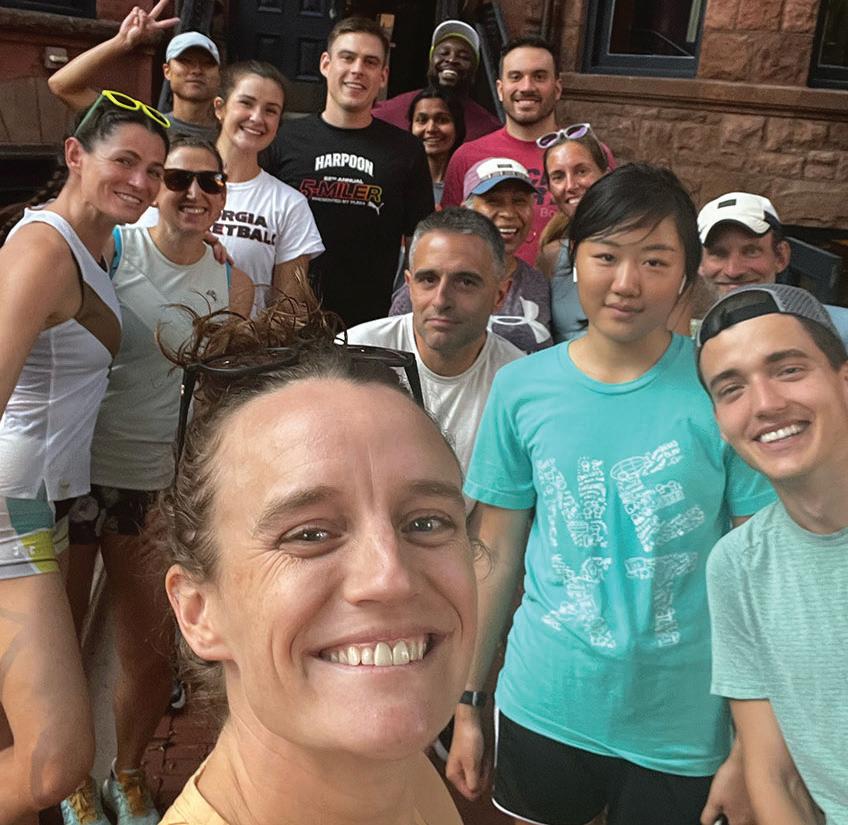
On my way back to the store, I spotted a group of people sitting in a pollinator garden within eyesight of Fast Break. Something told me to stop. I did, and many of those people have since become friends. They told me the store was a critical part of the neighborhood and they helped me understand the real weight of what I’d just witnessed — a run crew anniversary that meant something far beyond the miles.
That moment crystallized something I’d long believed but hadn’t fully seen in action — that specialty running stores can be the heart of a city’s running community. Not


Leading the Charge (continued)
just a place to buy shoes, but a place to give back, to feel connected, to do something good for the place you live and love.
I am now a regular in Fast Break. I drop off used shoes that go directly to a local shelter. I stop in for a glass of water mid-run when I’ve underplanned. I buy shoes for my family and show up to Fast Break hosted events. Each of those touchpoints, I’d argue, is a sustainability initiative, and a model other stores can look to.
Fast Break is but one shining example. There are many others doing this work thoughtfully and well.
A leader in this area is, of course, Palmetto Running Company, with two stores in Bluffton and Hilton Head Island, SC. Named the Best Running
Store in America in 2023 by The Running Event, Palmetto Running Company has been weaving sustainability into every business decision for years.
Co-owners Rob Fyfe, Christian Fyfe and Keri Straughn (a true family business!) understand that most runners want to do their part, but aren’t sure where to start. Palmetto meets them where they are at, stocking responsibly made products and becoming a genuine pillar in the South Carolina communities they call home.
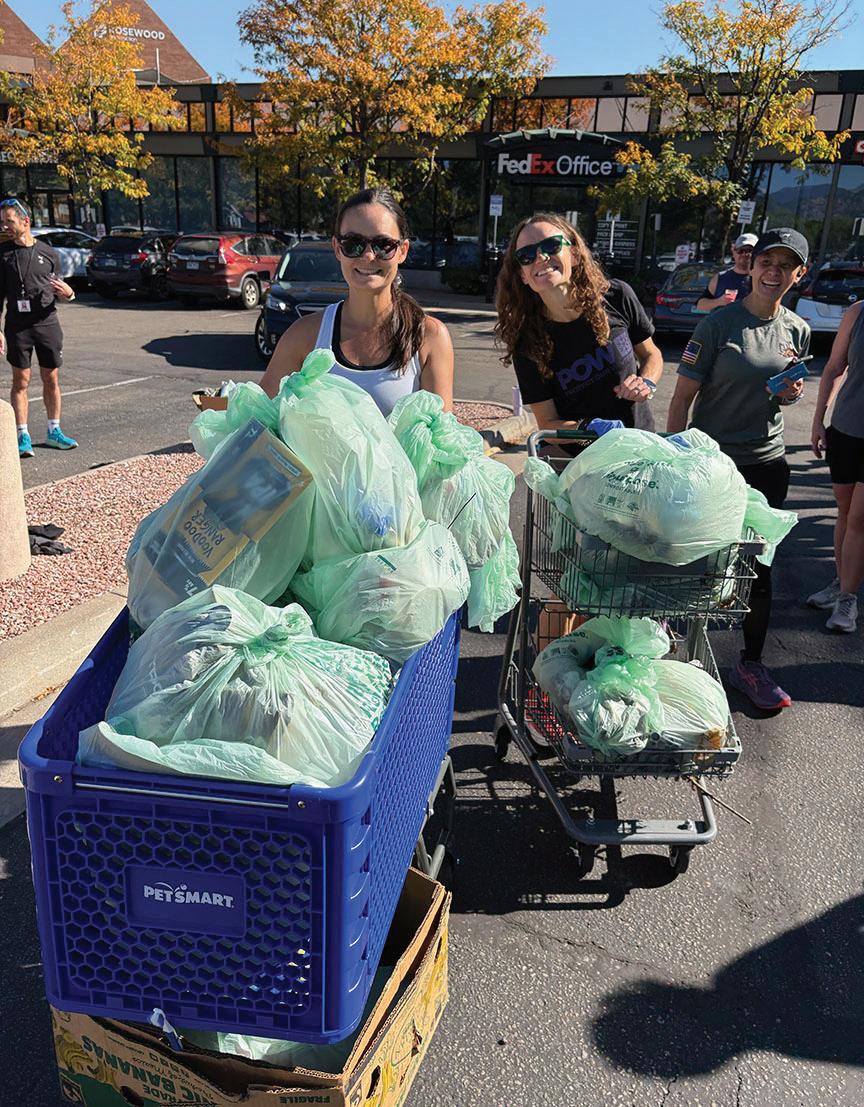
Their monthly trash pickup events and Care Comes Back program, which offers discounts to medical professionals, reflect a broader definition of sustainability: one that includes taking care of people and planet, two things that go hand in hand.
Another example of run specialty doing the work is
A Runner’s Mind, in Burlingame and San Francisco, CA. A Runner’s Mind has been putting in the work since 2015, earning recognition as one of the Best Running Stores in America nine times, including eight consecutive years.
Under the leadership of director of operations (and sustainability nerd like me) Nick Kovaleski, the store’s approach resonates deeply with my own style of activism: Bring people in rather than push them out. Guide runners gently toward better choices instead of shaming them for imperfection.
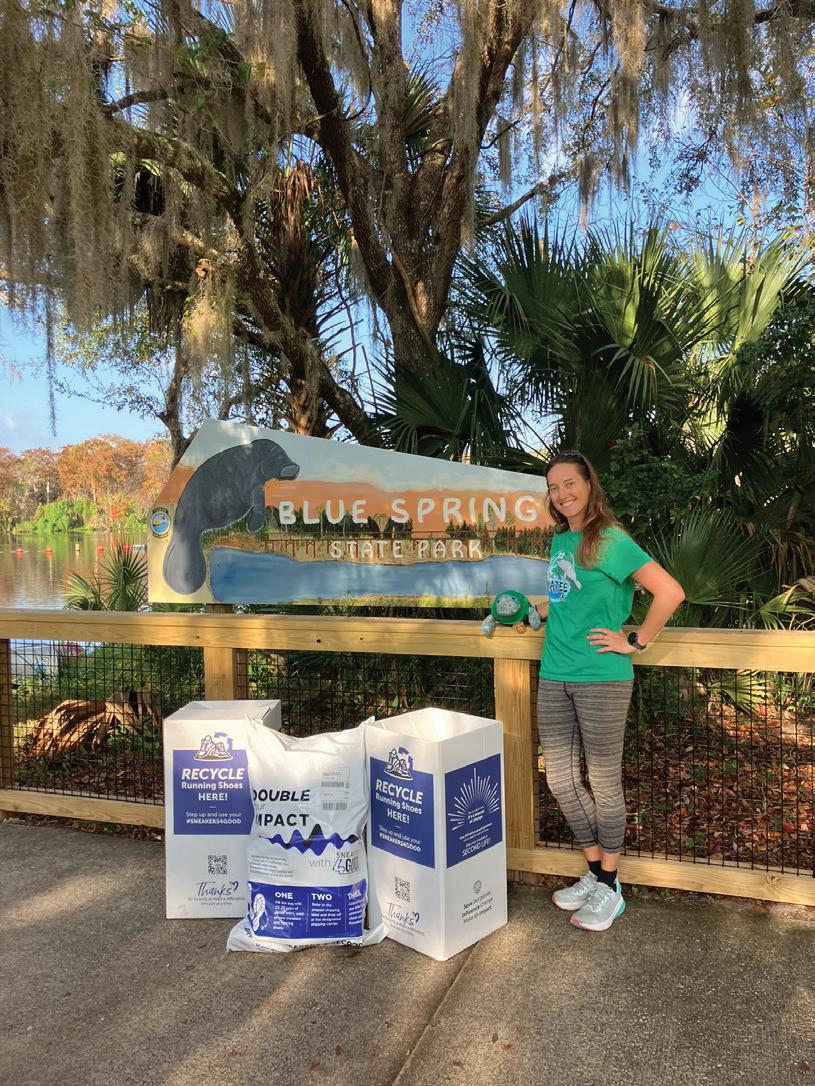
Beyond cutting operational waste, A Runner’s Mind functions as a community collection hub, accepting nutrition packages, pre-loved shoes, apparel and socks through a partnership with Sneaker Impact.
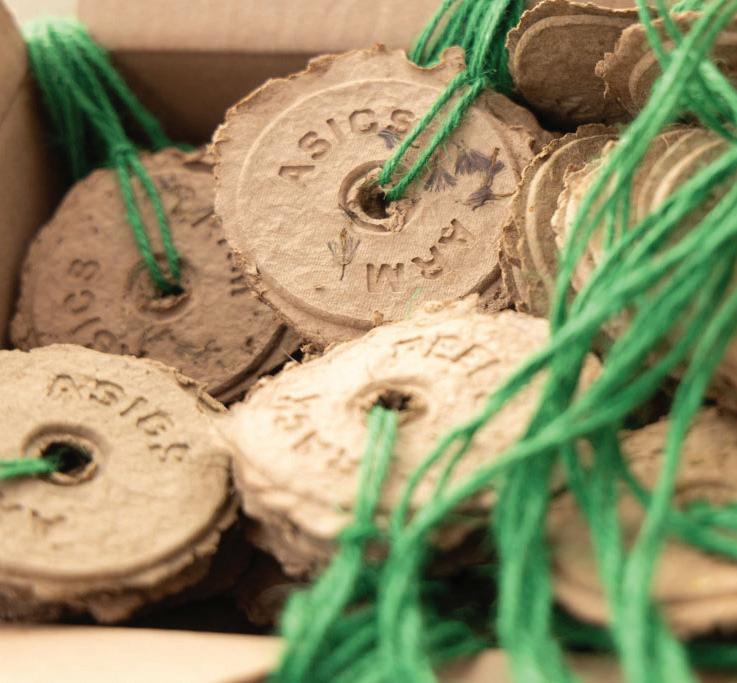
But my favorite initiative of ARM’s is the Trash Dash. In collaboration with Track and Feels, and inspired by local Instagram personality Mr. Bloom, they created participation medals for their plogging events. The twist: Those medals were made from cardboard shoe inserts embedded with local wildflower seeds. Runners love to receive something. A Runner’s Mind was innovative enough to make it something that gives back to the earth when you’re done with it.
• Then there is Fleet Feet Boulder, in Boulder, CO. While hosting a plogging event at this store last September during Boulderthon weekend, I found myself genuinely geeking out over the collection infrastructure. Got Sneakers? bins for
A
special moment crystallized something I’d long believed but hadn’t fully seen in action — that specialty running stores can be the heart of a city’s running community. Not just a place to buy shoes, but a place to give back, to feel connected, to do something good for the place you live and love.
collecting worn shoes and Terracycle bins for gel and nutrition wrappers are bins I love to see.
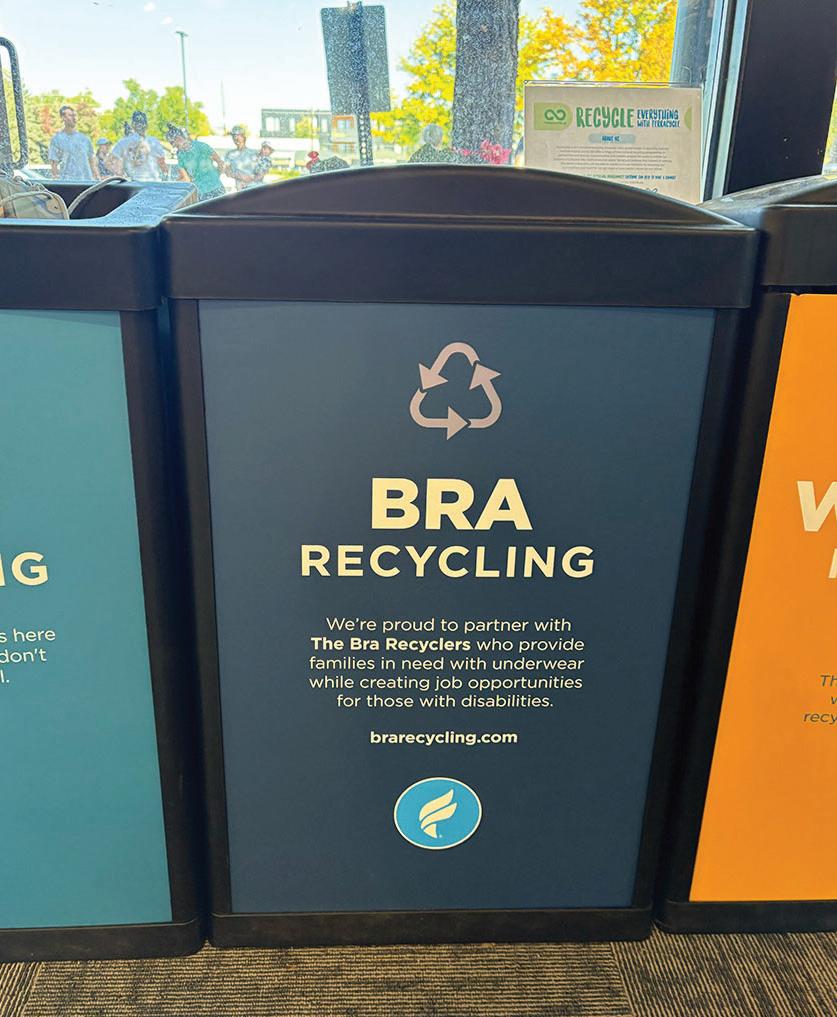
But it was their partnership with The Bra Recyclers that really caught my eye. The Bra Recyclers provide families in need with underwear while creating employment opportunities for people with disabilities. This is what a committed, multilayered approach to in-store sustainability actually looks like.
There is a lot of potential for specialty run stores as a community hub, and I believe sustainability can be the key to unlocking this.
• Back east at Tracksmith Trackhouse in Boston, sustainability isn’t only about environmental impact, it’s also about what you do for the broader running community.
Tracksmith has kept the upper floor of its Boston flagship, known as the Eliot Lounge, open as a gathering space for years. It’s where runners come to connect and learn about the history of the sport. My Boston book launch
for Becoming a Sustainable Runner was held there and it remains one of my favorites for the intimacy the Eliot Lounge creates around conversations that matter.
Tracksmith’s products also reflect long-term thinking. Their use of Merino wool in many garments means fewer petroleum-based synthetics — better for the planet, better for your body and genuinely better at handling sweat and odor.
• The brands a store chooses to carry is itself a sustainability statement and Duluth Running Company, in Duluth, MN, prioritizes brands like such as Hylo, Mount to Coast and Nnormal, companies that treat environmental impact as a core value, not an afterthought. By emphasizing environmentally conscious materials and ethical production, Duluth is making a quiet but meaningful choice every time they decide what goes on their shelves.
I am an environmental activist and it probably wouldn’t surprise anyone that I am not a fan of the one-click purchase forces pushing independent retail out of the picture. But I’m also a realist, knowing that sweeping statements are the fastest way to lose an audience.
So here’s the one I’ll stand behind: Specialty running stores are among the most powerful levers we have for nudging runners toward a more sustainable relationship with the sport and the communities they run through. They are gathering places, drop-off hubs, event hosts, and trusted voices.
The best ones, especially my favorites described here,
Specialty running stores are among the most powerful levers we have for nudging runners toward a more sustainable relationship with the sport and the communities they run through.
understand that sustainability is not a program you launch. It’s a choice you make, in every decision, every partnership, every event.
That’s not to say every decision can be or will be perfect, but just like the runners that these stores serve, what matters is that we take a step and work from there. That matters.
You likely have a running store that comes to mind for its potential in your city. How can you support them in becoming everything they could be? n
Racing For Sustainability is always looking for environmentally curious runners to come join our network of runners. From opportunities to run the Abbott World Marathon Majors with RFS to finding like-minded people who are also doing their best, come join us at docs.google.com/forms/d /e/1FAIpQLSf4cK32DLCqta5f pympDmj-I0LAgOUGmXQn_ MxeZwtYLwKN8w/viewform
The money raised by runners and brand support goes directly to financially supporting small to medium races transitioning to sustainable practices in their events. Race organizers can join Racing For Sustainability at runsignup.com/MemberOrg/ RacingforSustainability and we can start supporting your goals.
A conversation with Wayne Elsey, founder of Sneakers4Good, on the ‘Take-Make-Waste’ model and how the run specialty business can make a difference in advancing the effort.
Let’s start with this: What exactly is this thing called the “Reuse Economy?”
Wayne Elsey: The reuse economy is a modern model that shifts away from the unsustainable “take-makewaste” model. In the reuse economy, products are repurposed, redistributed and reused to extend their lifecycles rather than throwing them away in landfills. It means creating new value for consumers for products that already exist. It’s a hand UP, not a handout.
Can you give some examples of what this means, particularly to the running industry?
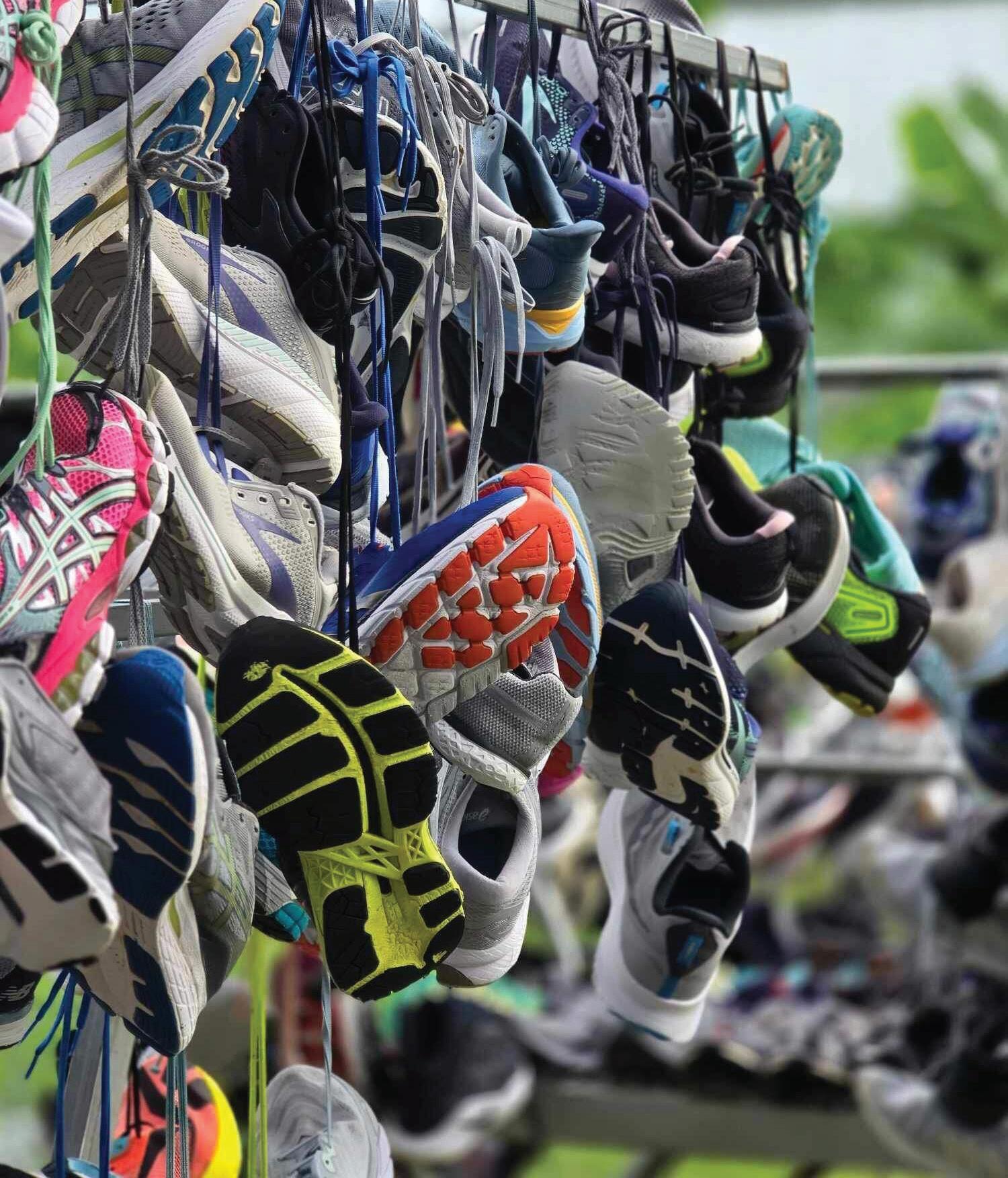
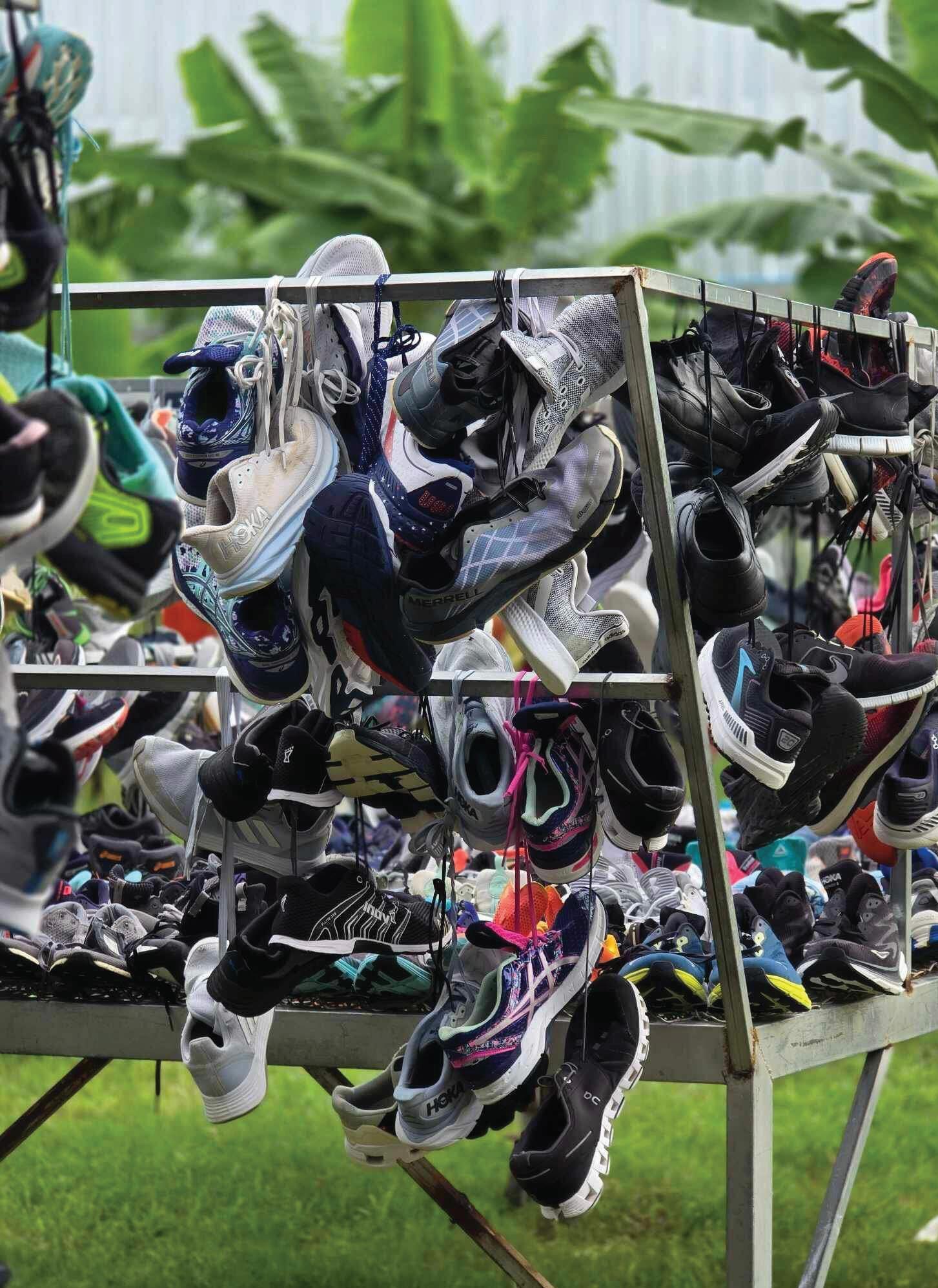
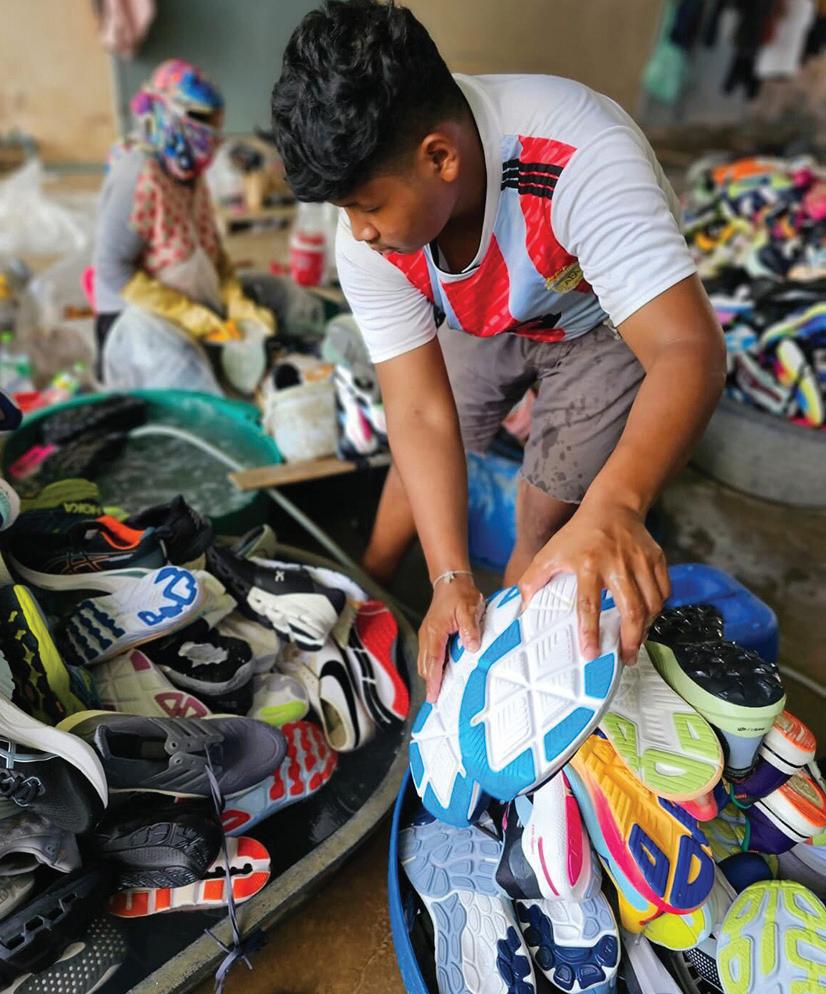
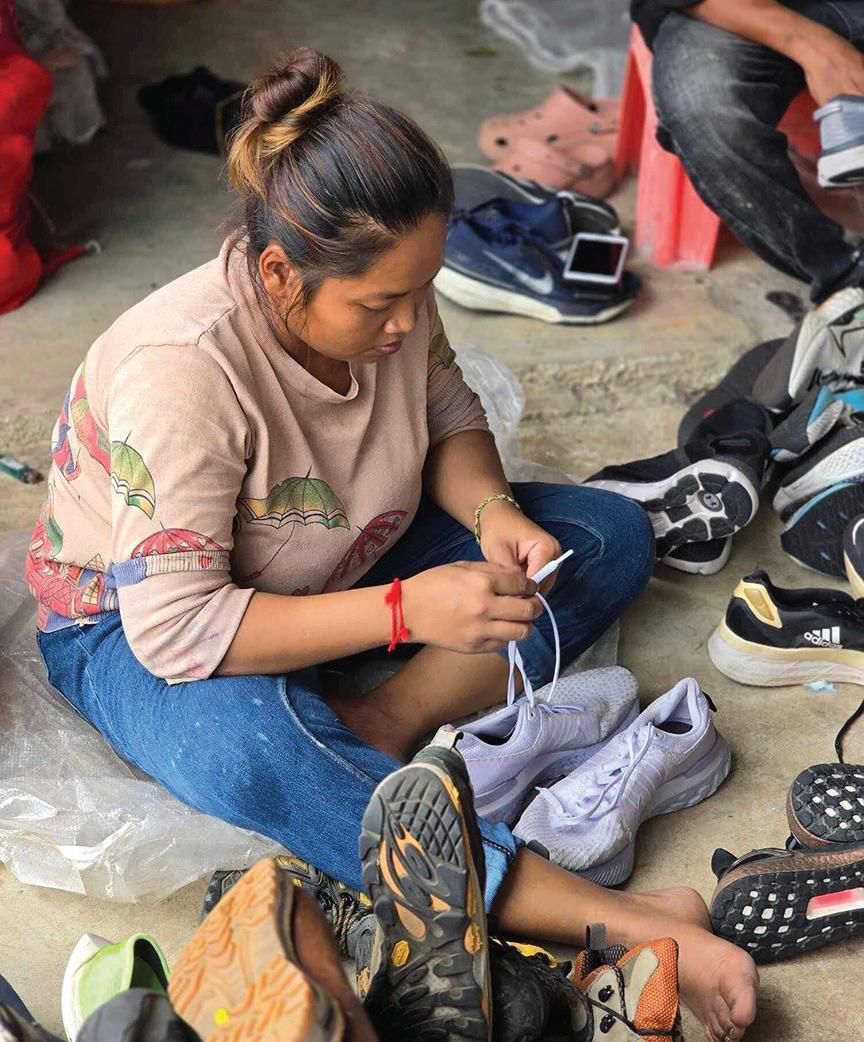
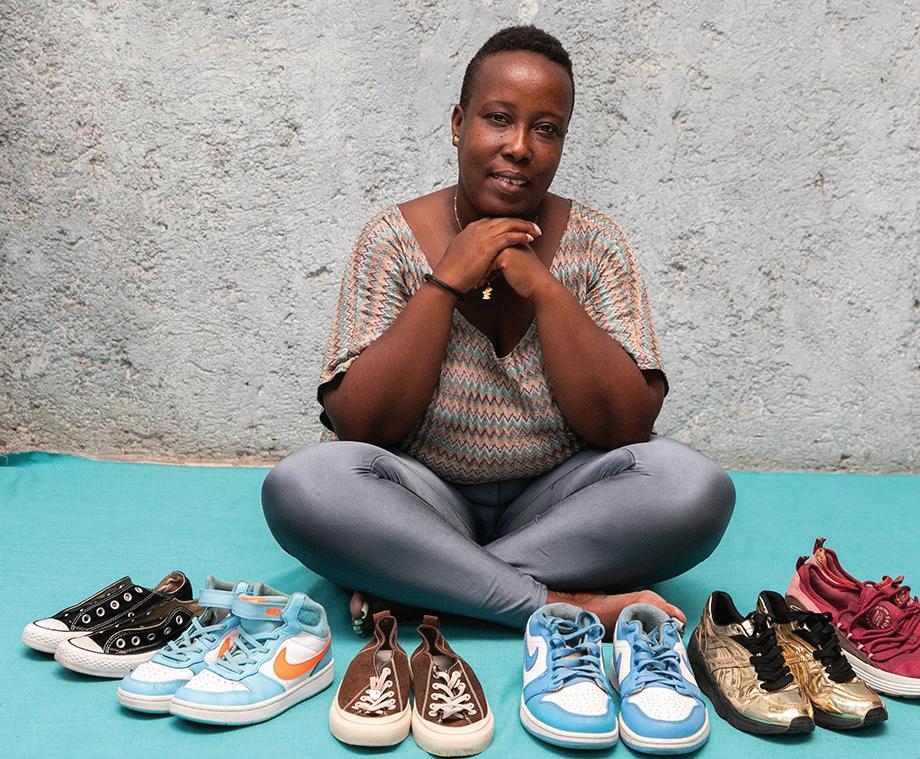
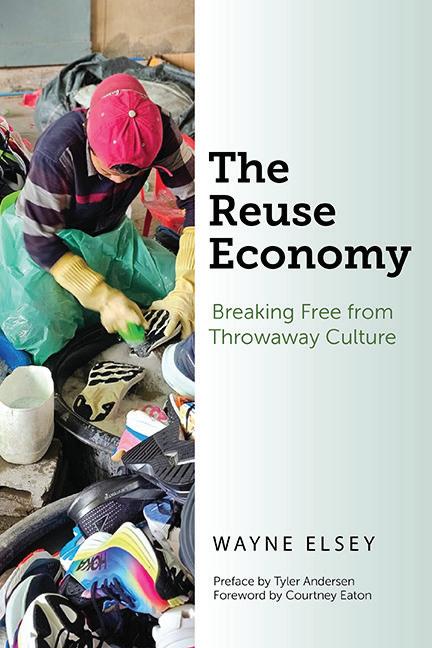
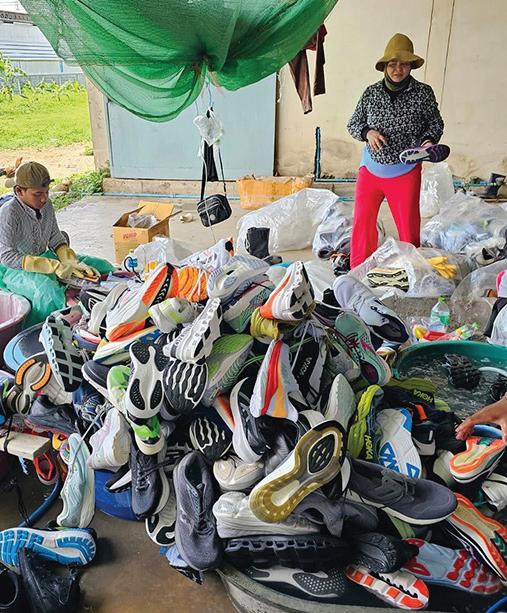
A great example of what it means for the running industry is athletic shoes. Runners rotate sneakers approximately every 300 miles. Often, those running shoes end up in the trash, but they still have value and a life in good condition. They can serve another person through ethical, proven reuse programs that deliver local community impact, payment and sustainability solutions for micro-entrepreneurs in developing nations who need an economic hand-up.
Is this a new concept or has it been around for a while?
The reuse economy has been with us for a very long time. The reality is that the majority of the global population wears second-hand sneakers and apparel.
That sounds like the vintage stores that are scattered around the country.
Yes, in a place like the U.S., we’ve had





on 150 to 180 take-offs and landings per minute They rely on our plant-based ingredients to sustain their billions of flights a year and we appreciate all their pre-flight purchases from run specialty retailers like you

loyal frequent flyers for 30+ years
“The reuse economy is an economic model that prioritizes extending the life of products and materials through repair, refurbishment, sharing and resale, rather than discarding them after one use. It moves away from the linear “take-makedispose” system, operating instead as a component of the circular economy to reduce waste, resource depletion, and carbon emissions.
• Fundamental Principles: Focuses on the “R” principles –
the concept of “vintage” and thrift shops for generations. What is new is that companies and the general public realize that the take-make-waste model is unsustainable, so the reuse model is now being integrated into companies, supply chains, and business strategies.
Why is this gaining traction now? Is it?
The reuse economy is absolutely gaining traction for two reasons. First, public sentiment and consumers have pushed for sustainable solutions because of the increased awareness of waste. Second, rising energy costs and inflation make manufacturing more expensive for companies.
And the footwear industry’s impact?
The footwear industry alone generates a significant carbon footprint, with hundreds of millions of shoes and sneakers sent to landfills each year. In that reality, extending the life of footwear and other
products is a practical and economic solution for people and businesses.
Has the run specialty business - both retailers and brands –embraced this concept? What grade would you give each?
I’d give retailers an A+ because they move faster, since they’re closer to consumers and understand the
specifically reuse, repair, refurbish and repurpose – to keep items in circulation.
• Infrastructure and Activity: Includes systems like returnable packaging, rental services, donation and sharing, rather than solely breaking down materials like traditional recycling.
• Sustainability Goal: Drastically decreases the demand for new production and virgin resources by maximizing the utility of existing goods.
• Economic Impact: Fosters localized, resilient economies by creating jobs focused on logistics, cleaning, and repairing items, often described as creating a “just” economy.
sentiment for sustainable solutions. Our reuse program grew exponentially because of run specialty stores along with road races that understand the demands and needs of consumers. For brands, I’d give them an A-.
And the shoe brands?
Some brands are certainly moving to manufacture and
create reuse programs, but large-scale design and supply chain changes take time.
How can run specialty retailers make an effort in this?
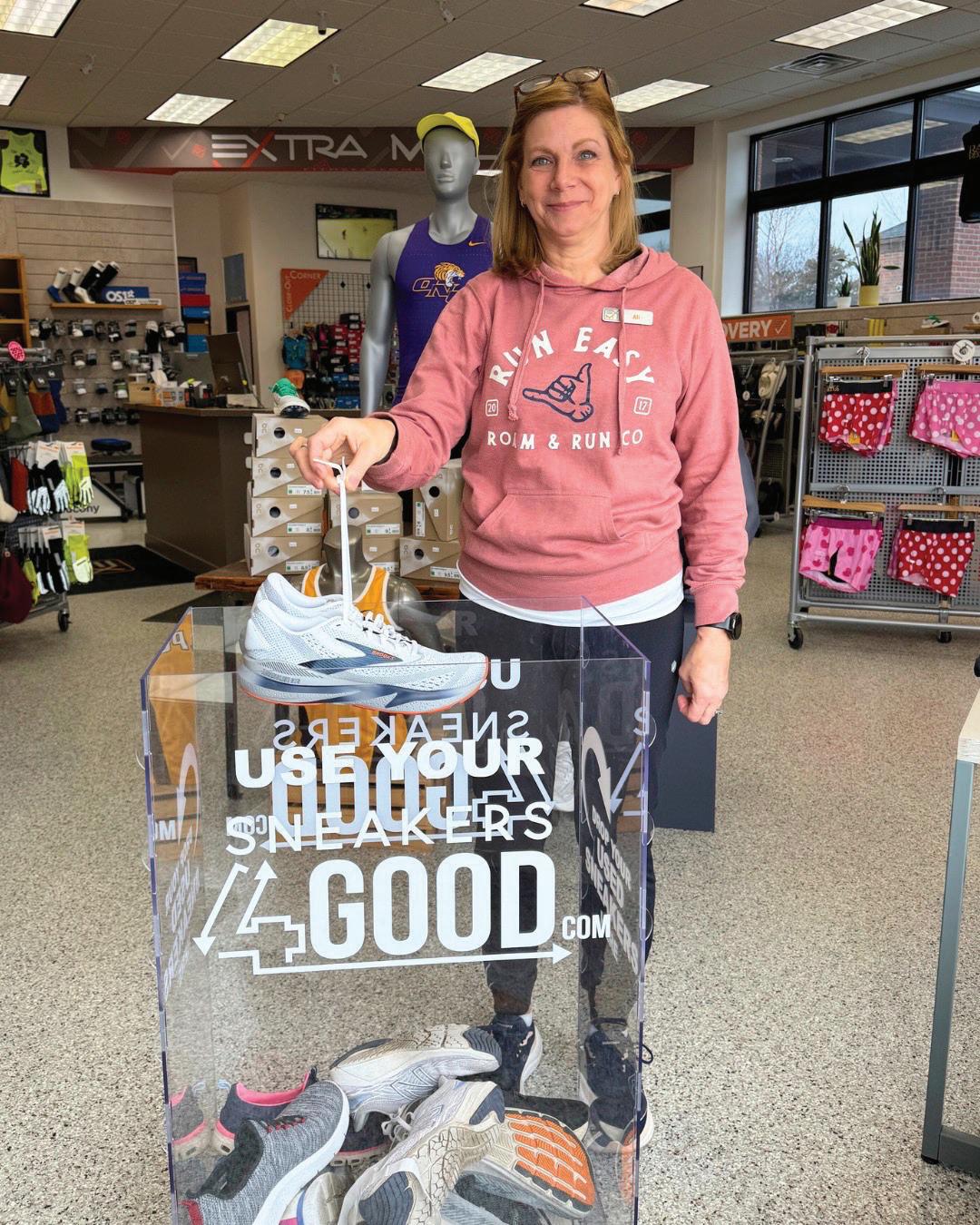
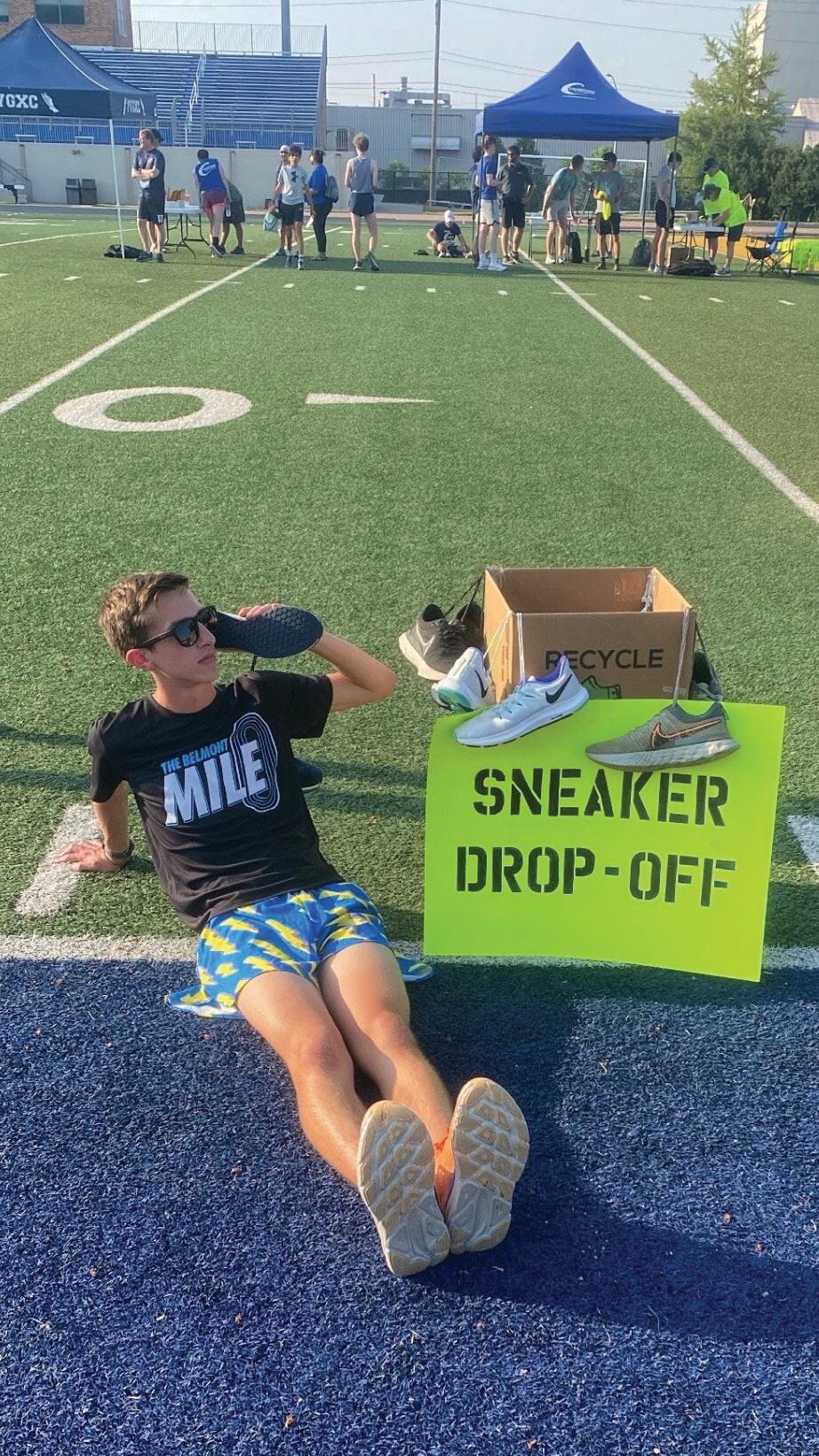
It’s easy for every run specialty retailer to become a reuse leader in the community. All they have to do is become a drop-off and collection point in their town for gently worn, used and new sneakers. When customers drop off sneakers, it’s an opportunity to engage and inform them about reuse, which builds loyalty for the retail brand and earns them even more trust in the community.
What kind of commitment is needed for an individual store to make a difference?
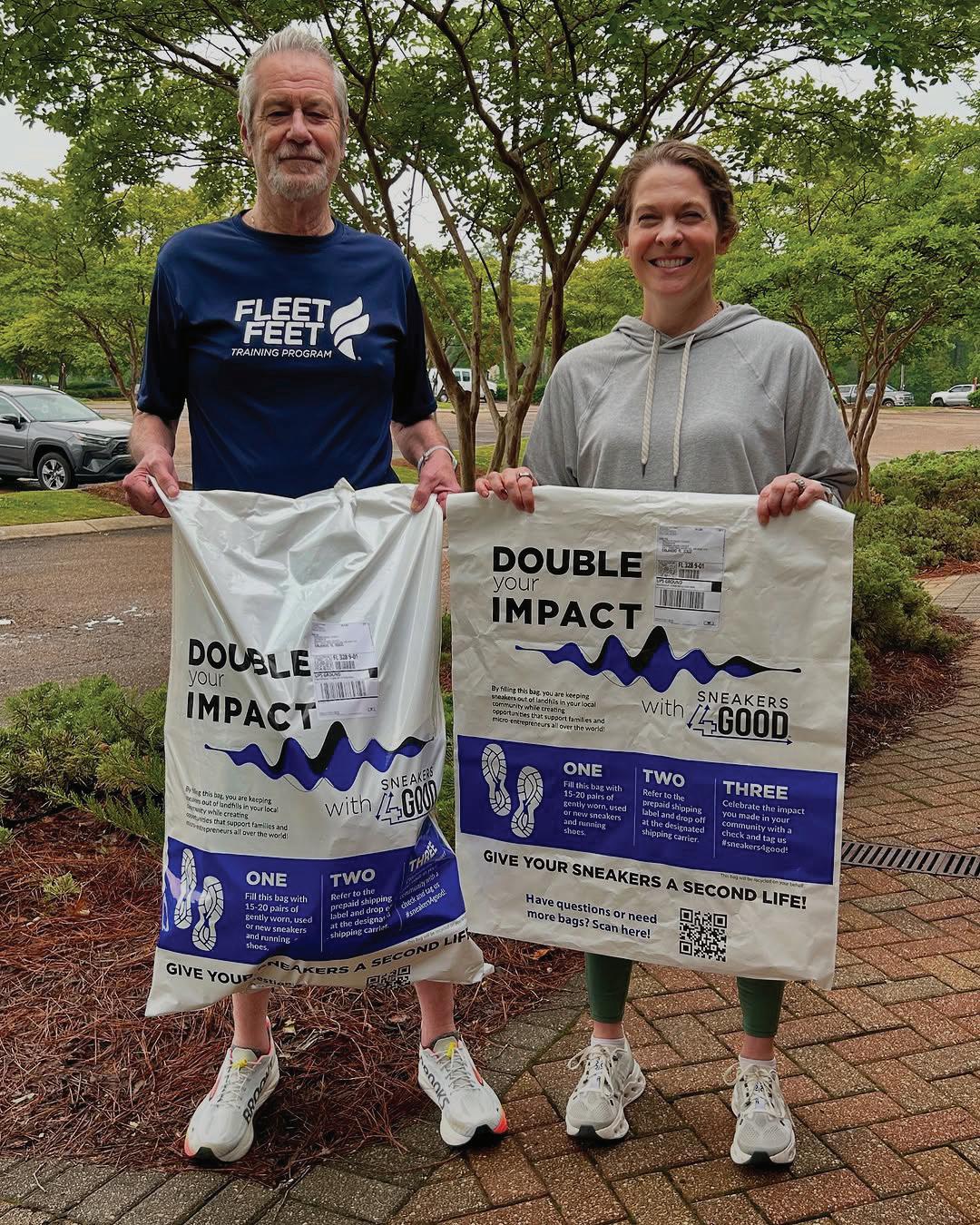
Candidly, all stores have to do is have the desire. Our company, for example, provides a free turnkey running shoe (sneaker) reuse solution, and they can become a certified sustainable store in their community with customer returns, gently worn sneakers,


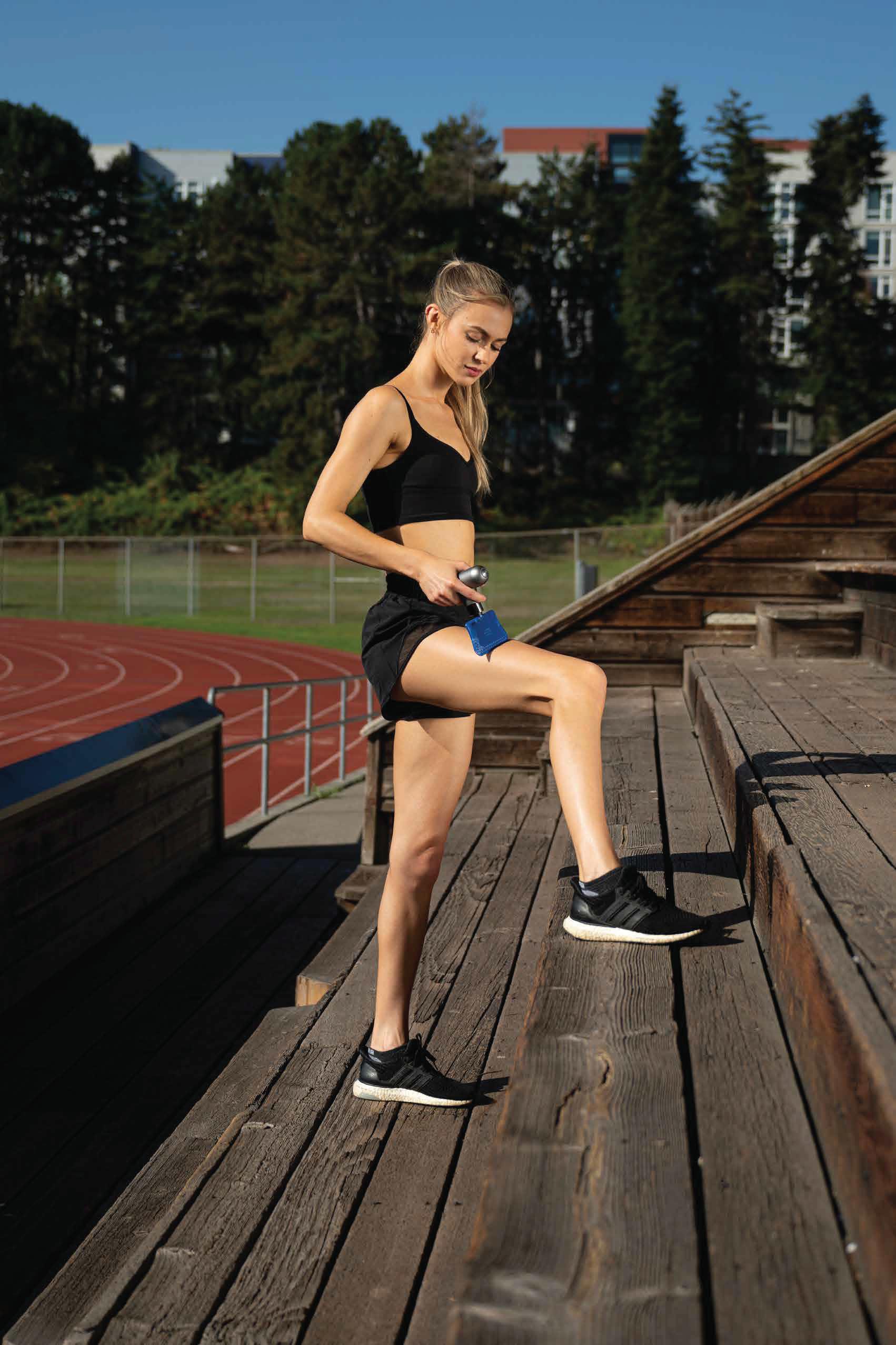
SCRAPING + VIBRATION!
• BREAKS UP ADHESIONS, MOBILIZING SOFT TISSUE
• PROMOTES FLEXIBILITY
Featuring FlexEdge® Attachment FLEXIBLE EDGE GOES DEEPER INTO FASCIA

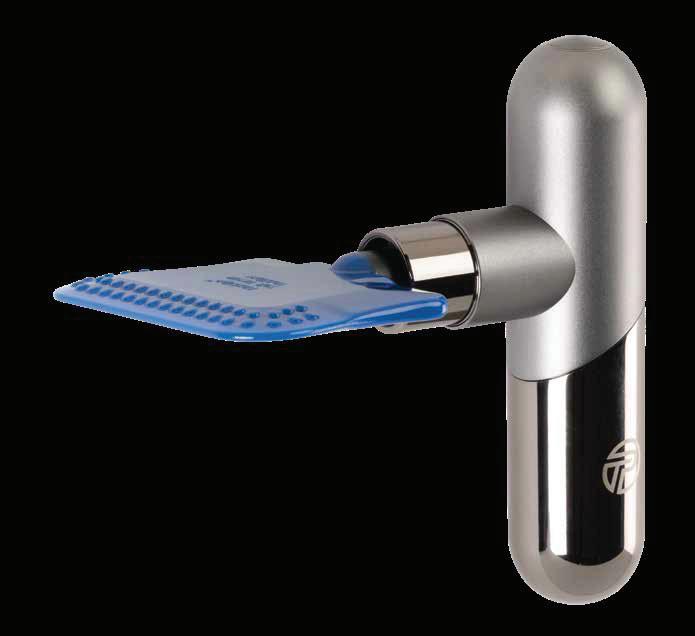

Powerful motor and long lasting battery within a light,
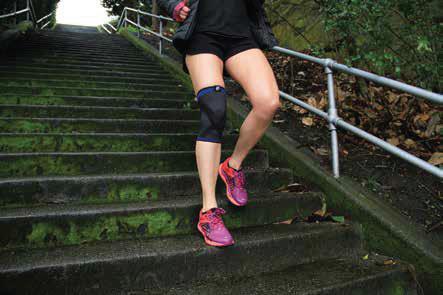


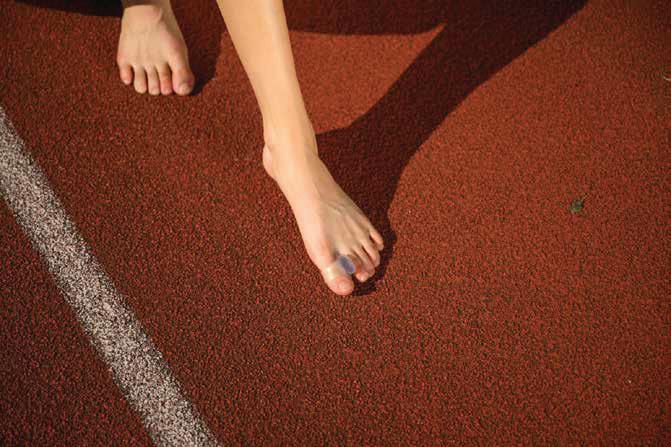
(continued)
excess inventory, etc. It takes minimal staff time, and it can be as easy as creating space for a collection box and informing customers that the store supports sustainability.
So, in other words, what’s in it for them?
When retailers lead sustainability and join the reuse economy movement, they create stronger community engagement and customer loyalty. Runners want to be part of something that supports and shares their values — and runners are a very sustainability-focused group. Reuse programs bring current and new customers into stores and that creates conversations, connections, and sales.
Intangibly, becoming part of the reuse movement builds and strengthens brand trust. Consumers and the public want to support socially responsible brands that are leaders and not followers. That makes becoming part of the reuse movement an easy win for brands that want to differentiate themselves as leaders.
What are the challenges you have come up against in
Same question, but for the running brands: What is the benefit for them? Is there an ROI that can be placed on any effort?
For brands, tangibly, reuse efforts can reduce waste, lower costs and strengthen supply chain and sustainability goals.
moving this concept forward?
The greatest single challenge is mindset and a lack of awareness of what to do with gently worn, used and new sneakers. We have to keep doing the work of letting people know that even when running shoes are past their prime for running, they still have value.
Any other challenges?
The other challenge for a company like mine is to continue promoting and letting runners and the running industry know that we serve as a bridge between them and the reuse economy, responsibly extending the life of athletic shoes. Our communication strategy and the absolute truth is that these sneakers are “the mode of transportation” in developing nations.
Here’s a big thought question: What happens if the concept of a Reuse Economy doesn’t keep moving forward?
Read All About It …. Wayne Elsey has a new book coming out about the Reuse Economy with a collection of visuals to put a bow around the concept for retailers, brands and consumers to bring awareness and attention to the need and reality.
Excerpt from the upcoming book: “The Reuse Economy: Breaking Free from Throwaway Culture”
Candidly, I can’t see it not moving forward because the “take-make-waste” model is simply not sustainable — and the size of the reuse economy is nearly $600 billion and is only growing. However, if, for some reason, it doesn’t grow, we’re in for very difficult economic and environmental times.
How’s that?
I don’t focus on that hypothetical because my headspace is focused only on the reuse market. The largest issue in most unregulated countries is the amount of “fakes” or “dupes” of the actual brands that look close but have very little life because of quality and the poor construction, prohibiting the comfort and durability needed and present in the authentic product.
“The insatiable appetite for cheap products resulting in overconsumption isn’t about trends, and unfortunately, most people don’t realize the systemic damage they’re causing. If they knew, many consumers would walk away from spending on the latest deal.”
What is your goal in the “reuse economy” and what is it going to take there?
My goal is to continue to make reuse a part of how companies and consumers think about products. For our company, that means continuing to expand our market share in the running industry in North America and with our global reuse partners in about 24 countries worldwide, to build economic opportunities.
And working with retailers and brands?
We intend to continue collaborating with retailers, brands, marathons, road races and the public to keep sneakers and running shoes in circulation for as long as possible and to keep making the reuse economy something easy for people to join. n
IN THIN AIRTM ,
Experience Thin Air
Give your customers the perfect performance upgrade— OS1st socks. Engineered for comfort, support, and blister-free movement, they’re the ultimate companion for any athletic shoe. Stock up today!
FREE shipping on qualifying orders. Fill out the form to learn more.
With its Second Cut program and an assist from retailers, Smartwool gives old socks a new life.
/ By Danny Smith
With a helping hand from run specialty retailers, Smartwool continues giving old socks a second life with its five-yearold Second Cut program.
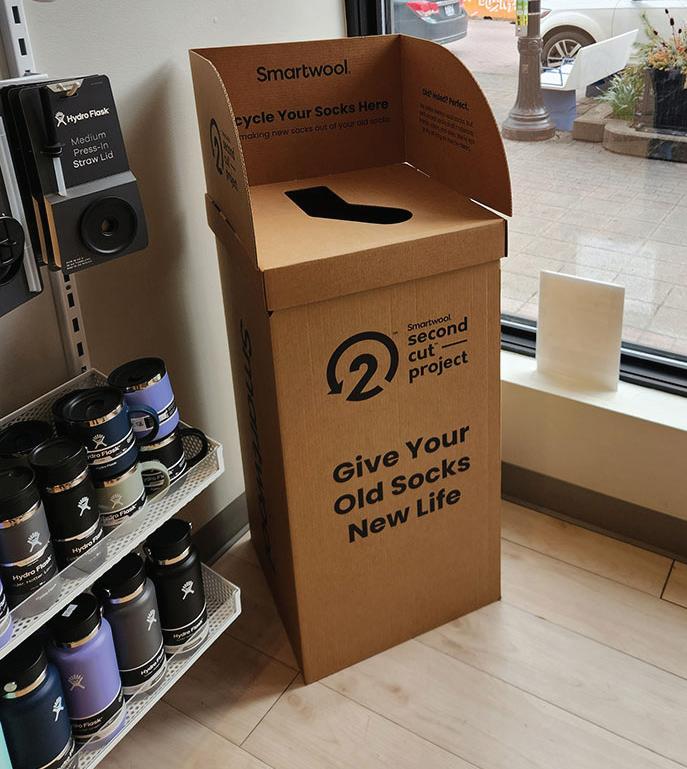
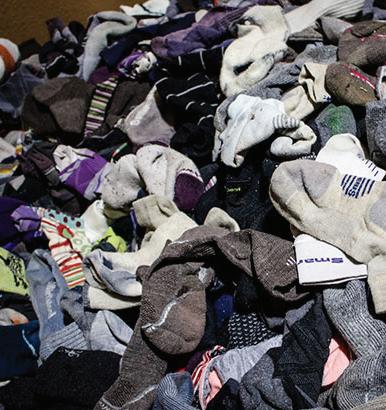
The Denver-based brand known for its high-performance Merino products collects socks of any brand, color, size and material through various avenues, including drop-off sites at running shops during an annual Take Back Event in April, before The Material Return – a custom circularity firm headquartered in Morganton, NC –deconstructs the socks and helps transform the textiles into new goods.
“Second Cut addresses a waste problem directly tied to one of our core product categories and long-term circularity goals,” Smartwool director of sustainability and social impact Alicia Chin says. “It provides us, our retail partners and customers with a practical way to keep materials in use longer, reduce landfill waste and move toward a more circular system.”
Though many textiles can be reused or recycled, an estimated 85 percent of used clothing nevertheless ends up in landfills or waste combustion facilities, according to the New York State Department of Environmental Conservation. And socks – a flagship product in the Smartwool universe – sit among the most frequently discarded, landfill-bound apparel items.
“As a brand, we knew we were part of the problem and therefore needed to be part of the solution,” Chin says.
Smartwool launched Second Cut in 2021 to keep worn-out socks out of landfills and further push Smartwool toward a more circular business model honoring the brand’s environmental ethos. The
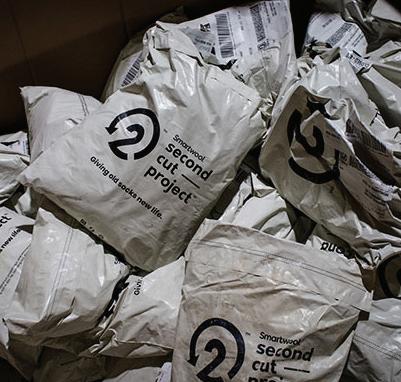
innovative program also gave many run shops an opportunity to contribute to a sustainable initiative with one of their key vendors.
Participating retailers serve as in-person drop-off points during the annual April Take Back Event, placing branded collection boxes in their showrooms to make Second Cut a more visible, on-the-ground circularity effort. Involvement with Second Cut helps retailers boost their own sustainability programming and facilitate a
meaningful customer-engagement moment built around a theme important to many consumers.
Smartwool currently works with more than 700 retail doors across North America to collect old socks, including run specialty stores like Gazelle Sports. The Michiganbased chain began participating in Second Cut in 2021, the program’s debut year.
“We were at a time where leaning into our values from a decision-making perspective was more important than ever,
and it seemed like an easy yes,” Gazelle co-owner and chief marketing officer Cara Cross says of the company’s involvement with Second Cut.
All seven Gazelle locations are participating in the program again this April. Throughout the month, the company is developing content for in-store and digital channels around the themes of zero waste products and sustainability-minded activations like Second Cut.
“The one-month activation creates urgency during a month where the community is paying attention to sustainability efforts,” Cross says.
‘Create a Movement’
With Second Cut, Smartwool creatively transforms waste into opportunities.
Materials from the brand’s old Merino socks become circular yarn used to produce Second Cut-designated gear in the Smartwool catalog. Initially limited to socks, Smartwool’s Second Cut product lineup now includes items such as the Second Cut Fleece. Chin says that single product alone has saved more than 350,000 pounds of Smartwool materials from falling into landfills.
However, non-Smartwool materials collected through the Second Cut program do not go to waste, either. Those materials become new goods as well, including insulation-filled products.
To date, Second Cut has collected more than two million socks and kept more than 175,000 pounds of material out of landfills.
“We hope to create a movement to extend the lifetime of our products and materials,” Chin says.
“We were at a time where leaning into our values from a decision-making perspective was more important than ever, and it seemed like an easy yes,” Gazelle co-owner and chief marketing officer Cara Cross says of the company’s involvement with Second Cut.
However, Chin insists Second Cut isn’t solely about recycling. It contributes to Smartwool’s circularity platform, which also includes an apparel resale program through ThredUp, and also supports the company’s broader move to a more circular business model. By 2030, in fact, the brand aims to use 100 percent regenerative, recycled or responsibly sourced renewable materials.
Smartwool’s mission resonates with environmentally conscious retailers such as Gazelle, whose commitment to sustainability also includes recycling shoes, producing zero waste events like She Runs Grand Rapids and utilizing recycled materials for its shopping bags. With Second Cut, Gazelle adds another environmental initiative to the mix.
“[Participating in the Second Cut program] gives us an opportunity to tell a sustainability story through a program partnership with a vendor that has real action tied to it,” Cross says. “Our communities want to feel like they can do something, and this allows us the opportunity to engage with them in the doing.” n
New Balance expands Reconsidered resale platform to include apparel.
Many large and small running brands are making important sustainability efforts and one of the biggest, New Balance, has taken a step beyond footwear to expand its Reconsidered resale program to include apparel. This is a major step and builds on strong customer response and momentum as the platform marks its two-year anniversary. Since launching, Reconsidered has helped to recirculate more than 100,000 pairs of New Balance shoes as the program. The impact should be even greater now that apparel has been added to the program.
“Reconsidered has been an impactful platform for New Balance consumers to access popular, like-new or gently worn styles while helping to extend the life of our footwear,” explains Tracy Knauer, VP–North America marketing and DTC for New Balance. “We’ve seen an influx of new customers come to us through Reconsidered, so we’re excited to continue offering them even more options through our expansion into the apparel category.”
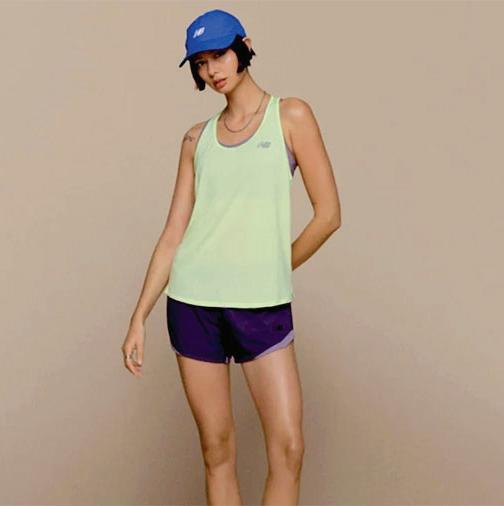
With the addition of apparel, Reconsidered now offers a wider selection of items for resale. Shoppers can purchase preowned New Balance footwear, as well as footwear and apparel from consumer returns with cosmetic imperfections that cannot be sold as new — all of which have been cleaned and inspected.
Customers can also trade in gently worn New Balance shoes by mail or at more than 100 retail locations and receive a voucher for accepted items toward their next purchase on NewBalance.com or at participating U.S. New Balance retail locations. Note: Apparel is not currently available for trade-in.
The New Balance Reconsidered resale experience is powered by Archive, a platform for branded resale. The company works with leading global brands – including The
North Face, Lululemon and Peloton – to launch and scale circular business models that keep products out of landfill, while simultaneously bringing in a significant new revenue stream, building customer loyalty, and driving customer acquisition.
Archive was founded in 2021 by Emily Gittins and Ryan Rowe and was named one of Fast Company’s Most Innovative Companies in Retail in 2024.
Cleaning, fulfillment and warehousing are handled by Tersus Solutions.
“With Reconsidered seeing strong engagement and continued growth, New Balance expanding into apparel is a natural next step,” adds Emily Gittins, CEO of Archive. “We’re proud to work with a brand that’s investing for the long term, building systems to help keep products in circulation at scale and proving that resale can be core to how a modern brand operates.” n
To learn more: www.newbalancereconsidered.com
Nike Re-Create x Renegade partner to create community and complete the apparel circle.
What if your next run kit was made from someone else’s old one? That’s the question asked and answered by the recently unveiled Nike Re-Create x Renegade apparel collection that “harmoniously blends iconic sport heritage and performance innovation with circular design.” The eco-friendly capsule features the first-ever Nike Re-Create performance-inspired tops and bottoms.
According to the brand, Nike Re-Create furthers its vision for a circular future by making the most of products already in existence, redefining value and turning pre-existing garments into “forwardthinking expressions of design.” Its mission is to extend the life of these products that are already in existence. This capsule is the culmination of that concept.
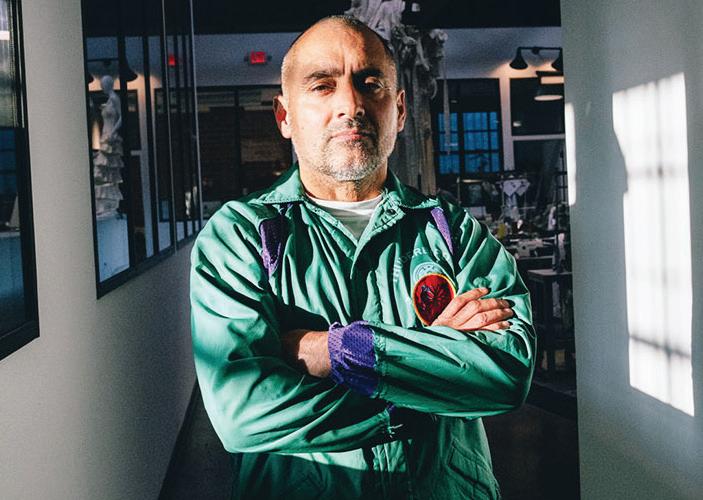
Created in partnership with Victor Diaz, founder of Renegade, a community-driven run club committed to making the sport more inclusive, the eight silhouette collection highlights sport and creativity’s ability to unite communities.
The collection also pays reverence to the stitched-up, patched-on clothes from Victor’s childhood. Varying inspirations such as indigenous Mexican cultures, avant-garde Japanese fashion and ‘90s Nike Running gear reflect Renegade’s mission to create a better future for their community.
The Nike Re-Create x Renegade apparel collection was created by sourcing local vintage and deadstock pieces and materials. Each piece is unique and available in limited quantities.
Part of the unique partnership was a series of early March Nike Re-Create and Renegade circular design workshops, powered by Are You Mad, at Renegade Los Angeles.
Aligned to Renegade’s mission to “create a better future for their community,” consumers had the opportunity to make custom designs from locally sourced vintage and leftover pieces and materials. The workshops ranged from screenprinting with Los Angeles-inspired graphics to yoga classes paired with recycled plastic, incense holder making sessions. n
Veteran run specialty retailers reflect on the necessary ingredients for long-term success. / By
Danny Smith
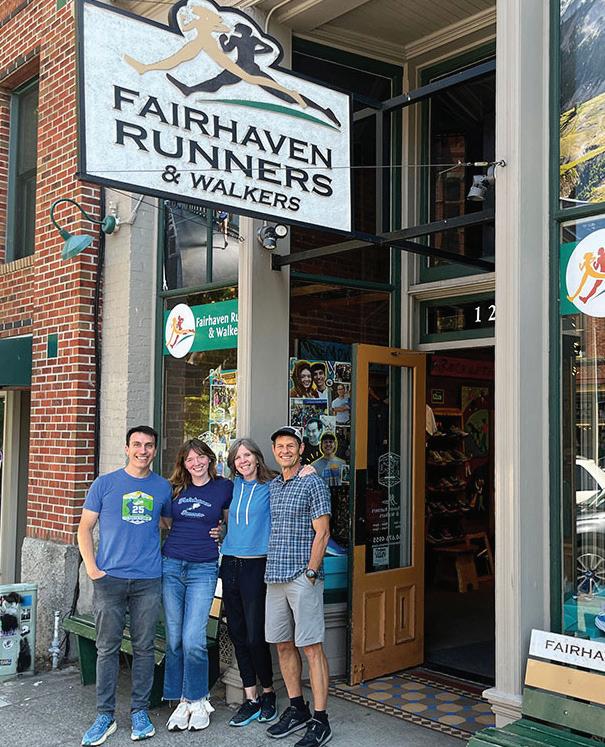
Steve Roguski knows a little about capturing long-term success in the run specialty retail game. In 1999, Roguski opened Fairhaven Runners & Walkers in Bellingham, WA. He and his wife, Genevie, owned the business for 25 years before “passing the baton” to longtime staffers Sierra Brisky and Dillon Quintana in August 2024.
From steady inventory control and financial stewardship to capable, connected staff and splashes of good fortune, Roguski understands various ingredients must coalesce to secure results in a competitive space – and even then, he acknowledges, there are no guarantees.
“Much has to come together for longterm businesses like ours,” Roguski allows.
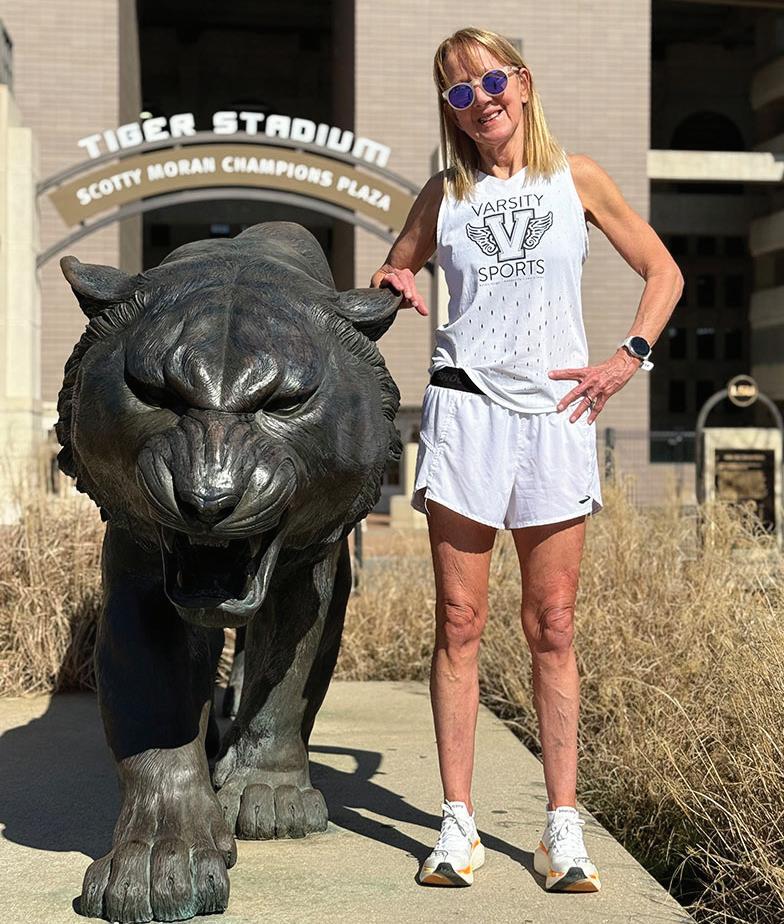
Here, Roguski and other seasoned running retailers – Ross McDowell of Wisconsin-based Run Away Shoes, Alfred Olivetti of South Carolina’s Hilton Head Running Company and Jenni Peters of Varsity Sports in Louisiana – reflect on eight key factors that have helped them earn staying power in running retail.
1. KNOW YOUR LANE.
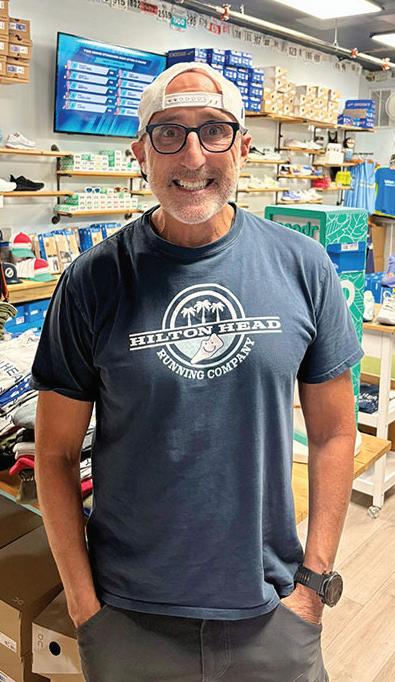
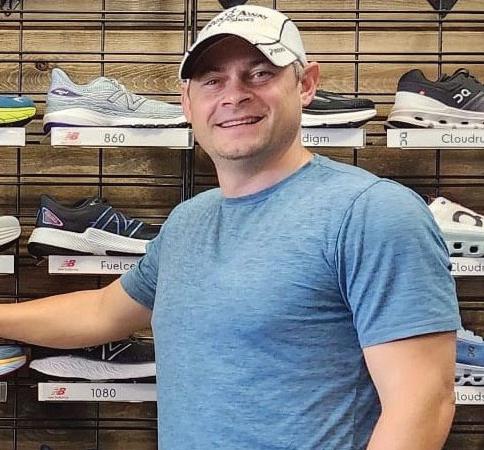
Olivetti, who opened Hilton Head Running Company in 2000, says “knowing who we are” has been critical to his shop’s 26-year run.
Hilton Head Island, for instance, hosts a large population of retirees and residents aged 60 and over are the island’s fastestgrowing demographic. It’s no surprise then that the vast majority of Olivetti’s customers seek a comfortable shoe for daily life, not a 5K personal best. So, Olivetti has largely sat on the super shoe sidelines even if those models represent the market’s sexiest product.
“So much of that stuff would be lost on our market,” he says, adding the same
rationale limits his investment in trail shoes.
“Knowing our market and having a defined focus has helped us out the last 10-15 years, in particular.”
Since Peters opened her first Varsity Sports location in 2000 so much has changed – technology, marketing, products,


You get paid per pair. Shipping is covered. Impact is measurable.
e-commerce and so on. While retaining Varsity’s roots as a community-first brick-and-mortar store, she’s adapted in the face of rampant change around her. To meet contemporary expectations, she’s deployed a more intense focus on merchandising, operations, marketing and customer service.
“It’s been a lot of on-the-job education at the School of Hard Knocks, but we’ve learned a lot from those around us and continued to refine what we do,” Peters says.
Likewise, McDowell touts the importance of adaptability. Two years after opening Run Away in 2004, he had one retail storefront, $130,000 in sales, $13,000 in product and $120,000 in debt.
He didn’t stick with the status, quo but rather adapted and moved forward with strategic purpose. He opened a second store to increase volume, then a third location. He added events and timing and a T-shirt company to diversify operations. If something wasn’t working, McDowell analyzed potential solutions.
“When three stores proved too much, I got a buyer and moved on,” he says. “Shifting to two stores, then, gave me more flexibility to double down on what was working.”
Running stores can undoubtedly be social, fun, festive, even wacky environments. When it comes to financial matters, however, diligence matters.
Roguski, for instance, prioritized living within his means at Fairhaven. From his “beautiful, just-big-enough historic building on Main Street” he recorded
The Summer 2026 Running Insight will publish its fourth annual Anniversary issue recognizing milestone anniversaries across the running industry. If you are a running retailer or brand celebrating a notable milestone anniversary in 2026 of at least 10 years, please share details with Running Insight senior writer Danny Smith at smithwriting@gmail.com.
more than $2 million in annual sales. Rent for the 900-squarefoot space was two percent of gross sales. He could’ve chased bigger, shinier, newer. He didn’t.
“Quite lucky for sure, but working toward a situation like this will go a long way toward business longevity,” he says.
Sticking on the fiscal
management front, cultivating personal relationships with banks helps if the business needs a loan. Paying vendors on time drives more productive partnerships. And regularly analyzing expenses ensures a healthier bottom line. With sound financial practices, a running shop can better endure
market fluctuations and the inevitable ebbs and flows of business.
“As local, regional or national downturns occurred, we had the financial strength, efficiencies and community support to be resilient,” Roguski says.
Much like distance running, Roguski says success in retail comes from putting one step in front of the other. Procedures, routines and systems reduce stress and drive consistency.
“Focus on being exceptional one customer at a time,” Roguski says. “Work to amaze the customer you are with – with enthusiasm, care and knowledge. Repeat. Repeat.”
Peters shares a similar sentiment.
“As we help one individual after another solve a problem, we gain trust and build relationships that feed our future,” Peters says.
5.
Labor is certainly among the biggest challenges today’s running stores face. Assembling a quality group of people can help minimize that challenge – but it takes intentional investment.
At Fairhaven, Roguski honored the saying, “hire for personality, train for skill.” Then, he trained them, supported them and empowered them. He also created opportunities for staff to grow and apply their unique talents to the business.
Through the years, different staff members embraced opportunities to create new initiatives, programs or events


at Fairhaven or tackled distinct sales, management or support areas of the business. This created “ownership” throughout the business, Roguski says, delivering longer-term employees with institutional knowledge and personal ties to the business – both of which contributed to Fairhaven’s viability.
6.
As Roguski recovered from surgery a few years back, he remembers feeling overwhelmed, stressed at how much was on his plate and wondering how he could juggle it all.
“Then, it dawned on me I could enlist our team to take leading roles in specific parts of the business,” he says.
Roguski assigned staff to lead particular areas of the business – “champions,” he called them. One directed the shop’s recycling program. Another was in charge of ordering shopping bags. Another oversaw IT issues. Another changed the air filters. He also began cross-training staff to ensure continuity and improve business resiliency.
“We can get locked into stasis and may need to remind ourselves that the feeling of being overwhelmed, for example, is something we likely brought on ourselves through previous choices or by thinking we need to do it all,” Roguski says.
7.
It’s natural for business owners to stress about every detail, but that’s not a sustainable act long term. A running shop, in particular, should be fun. It’s largely a social, creative, active and positive environment. But don’t park fun on the bleachers, Olivetti
suggests.
Hilton Head Running Company hosts about 40 events each year, most favoring the social over the serious. The Beach Bum Triathlon and Duathlon, for example, is a beachside event with a family-friendly vibe and low intimidation factor. The Scrap Iron 5K on a nearby remote island, meanwhile, pairs a 5K race with live music and drinks.
“We put a 5K on top of the party going on, which keeps it light for participants and us,” says Olivetti, who recorded his most profitable year at the running shop in 2025. “That helps us build goodwill and keeps our spirits high as a team, and those two things help keep us moving forward.”
The running retail business can be tough, McDowell acknowledges, but it’s important to avoid getting consumed by negative thoughts. That isn’t a recipe for healthy, long-term ownership, he reminds.
“It’s fun to be around the sport, promoting the sport and helping people, so remember to have fun,” he says.
8. HONOR THE GOLDEN RULE. At Fairhaven, Roguski made a concerted effort to maintain respectful relationships with customers, vendors, solicitors, neighbors, contractors and others with whom he interacted on behalf of the business.
“Reputation is a valuable asset and easy to lose, hard to recover,” he says. “Good works and good care of others have to come naturally and honestly, though. Otherwise, insincerity comes through and whatever you try to make happen will not be sustainable.” n
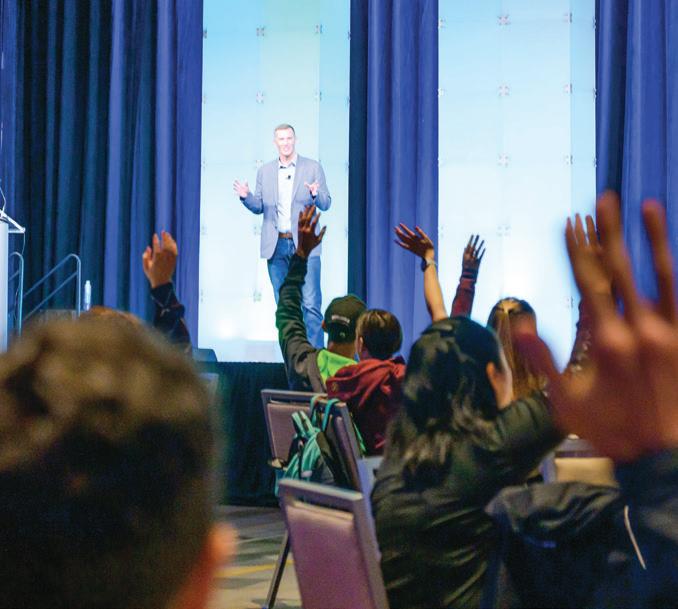
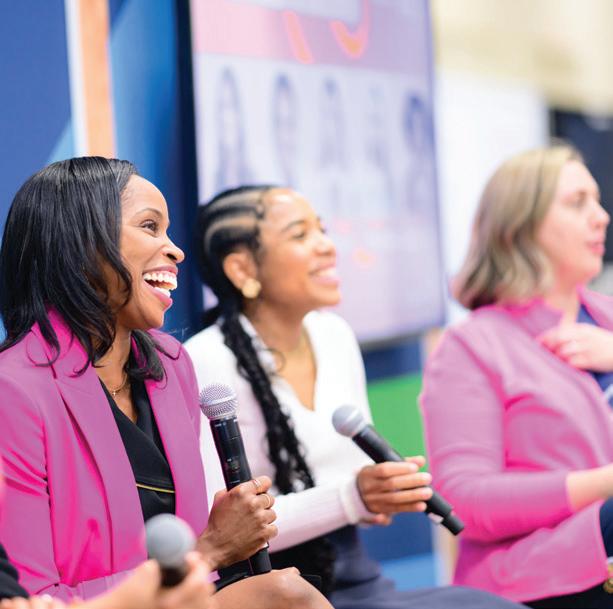
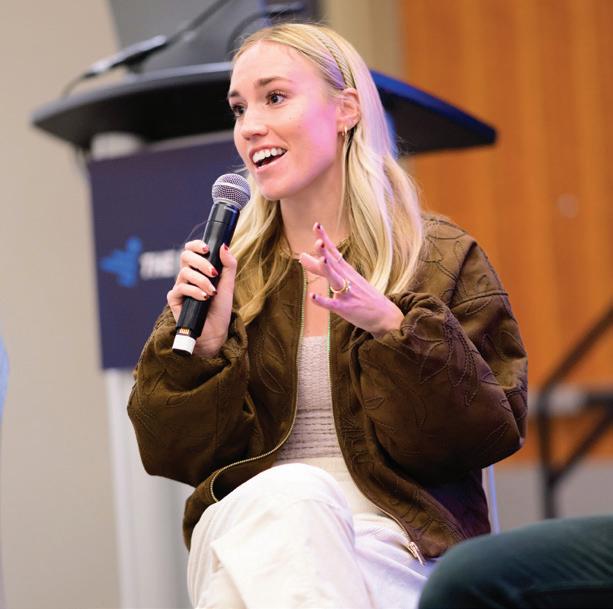
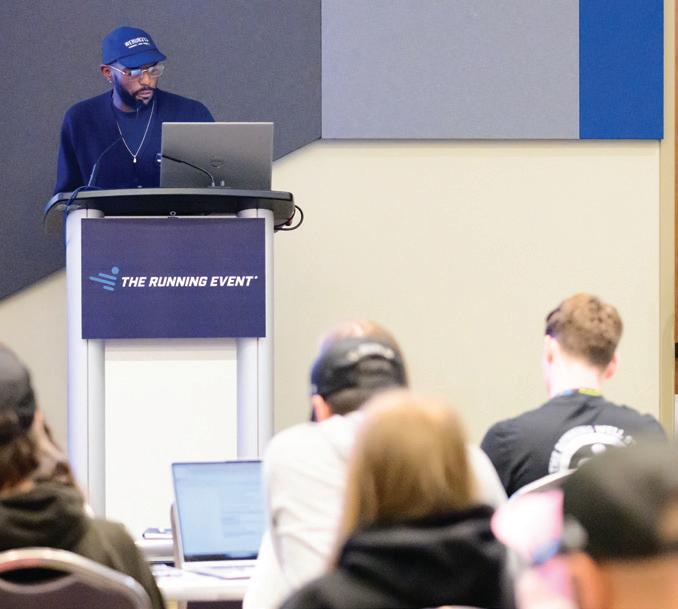
This year’s education program will center around the theme “Celebrating Run Specialty: Now and Tomorrow.”
We are seeking individuals with unique perspectives and industry knowledge to educate run specialty retail professionals at TRE this December.
Learn more and submit a proposal today: www.therunningevent.com/call-for-education

• AI & Modern Retail Efficiencies
• Run Clubs, Races, & Trail Running Opportunities
• Leadership, Hiring, & Training
• Data, Participation, & Consumer Insights
Proposals will be accepted through Sunday, April 19. Selected speakers will be notified this summer. DECEMBER 1-3, 2026
• Creative Buying, Merchandising, & Inventory Strategies
• Performance in Lifestyle & Fashion
• Access, Inclusion, & Retention 2026 education focus areas include:
Four running retailers detail the sudden strokes of good fortune that have energized their lives. /
By Danny Smith
Sometimes, in business as in life, luck happens. A fortuitous encounter unlocks latent potential. Being in the right place at the right time sparks an unforeseen opportunity. A serendipitous chain of events sparks a transformational journey. Four run specialty store owners recount one lucky break that changed their fortunes and altered the trajectory of their professional lives.
HIS LUCKY BREAK: AN UNEXPECTED JOB OFFER FROM AN RUNNING STORE OWNER
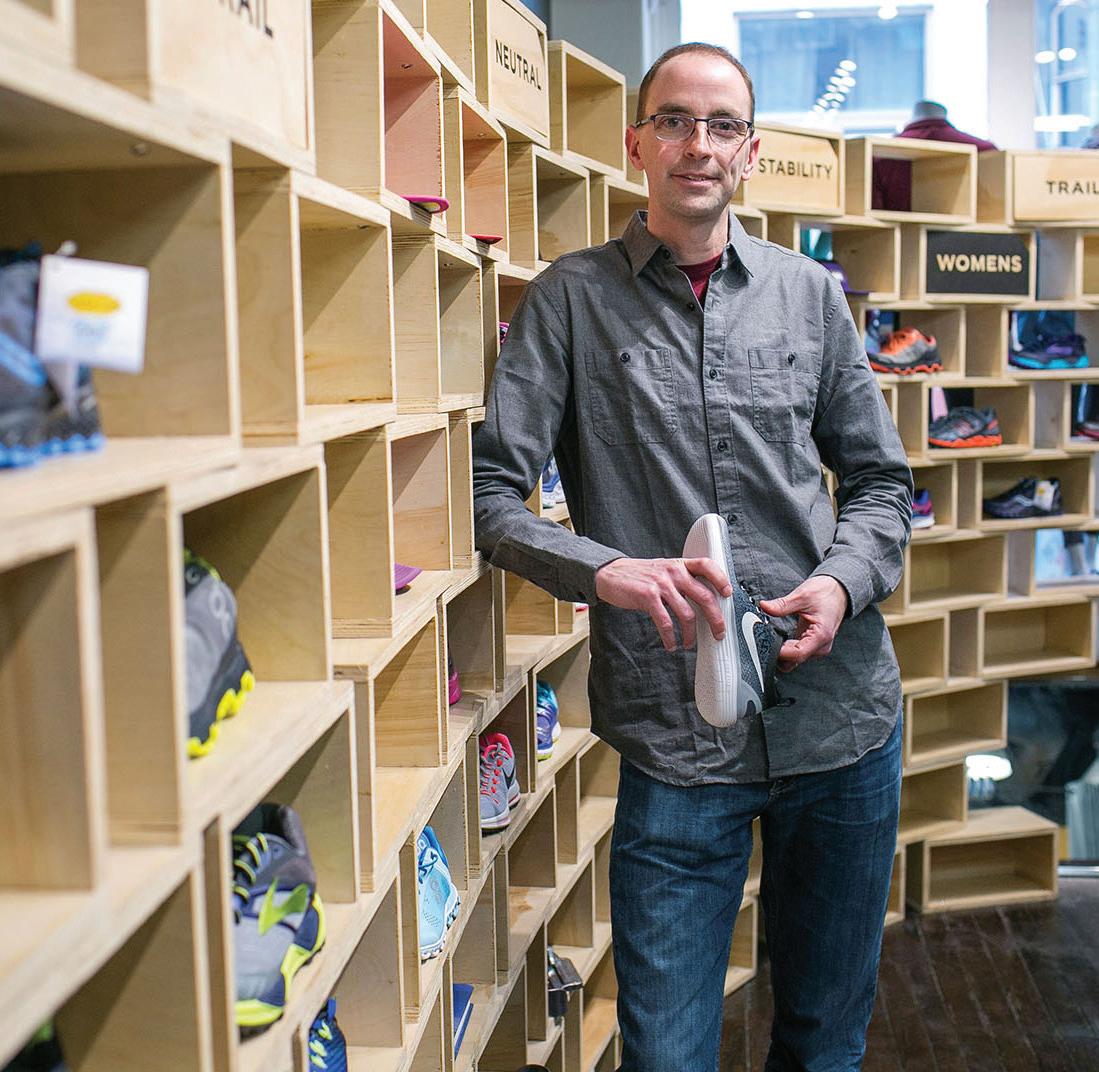
After graduating from the University of Wisconsin with a political science degree in 1991, former Badger cross-country and track standout John Long returned to his hometown of St. Paul, MN, and began coaching at a local high school. Thinking he’d pursue high school teaching, Long instead found himself with an unexpected job offer to head team sales at Run N Fun, an upstart local running shop helmed by Perry Bach.
“Perry took a chance on me when I was nothing more than a recent college grad coaching at a local high school,” Long says.
Working at Run N Fun opened Long’s eyes to the business potential of run specialty. Long says Bach was ahead of his time in many respects. He preached an inclusive, customer-first mentality at a time when run shops could afford to be exclusive and invested in enterprising ideas like purchasing a trailer to create a mobile store servicing teams.
“For me, I was in the right place at the right time with the right person in Perry,” says Long, who has been the sole owner of Fleet Feet Minneapolis (formerly Marathon Sports) since 2005.
HIS LUCKY BREAK: A COLLEGE TEAMMATE’S HANGOVER
As a high school runner in suburban
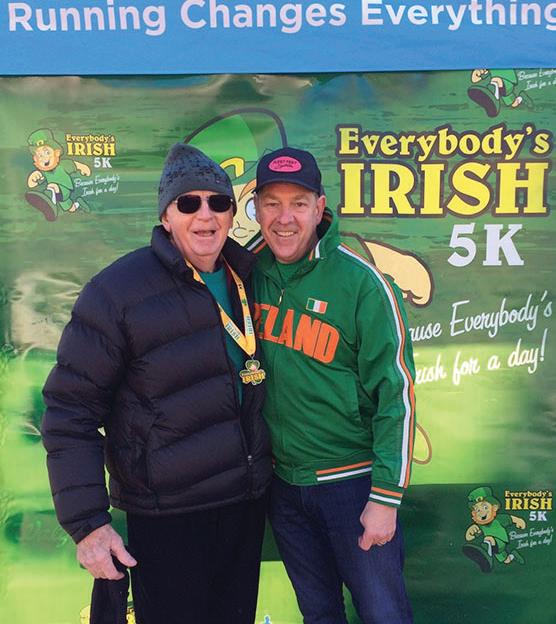
Philadelphia, Ross Martinson began shopping at Bryn Mawr Running Company not long after its opening in 1991. To a young Martinson, the staff of serious runners seemed like running gods.
“I remember seeing them in the row behind us at a Nirvana concert and thinking, ‘Those are the running store guys!’”
recalls Martinson, now the owner of the four-store Philadelphia Runner chain. While attending Saint Joseph’s University in Philadelphia, two of Martinson’s track teammates worked at Bryn Mawr. One particular Sunday, one of Martinson’s teammates was a bit too hungover to go into work, prompting the other Bryn Mawr
employee to ask Martinson if he wanted to fill in. Martinson obliged.
When Martinson arrived at the shop, the owner had just completed his long run, heard about his no-show employee, looked upon the sacrificial substitute before him and sighed, “Alright, I’ll train him.”
“Twenty minutes later,” Martinson says, “I was overcoming my shyness asking people if they needed help. And 29 years later, I’m still at a running store having found my place in life despite never applying.”
HER LUCKY BREAK: BEING POINTED TO PARKER KARNAN
With plans of opening a running store in Amarillo, TX, on her mind, Karen Roberts attended The Running Event in 2008 eager to meet and learn from industry veterans. Sitting at a barbeque restaurant, Roberts struck up a conversation with a few seasoned run specialty
retailers at her table. As Roberts detailed her entrepreneurial plans, Rich Wills, the owner of three FITniche stores in Florida, listened intently before
offering Roberts a life-shaping suggestion.
“If you want to open a running store,” Wills told Roberts, “then you need to talk to that man.”
That man was Parker Karnan, a former Brooks employeeturned-top notch industry consultant.
Over the last 17 years, Karnan has been a source of information, encouragement and guidance for Roberts. Karnan has helped Roberts navigate Get Fit’s opening in 2009, early growing pains, inventory issues and expansion plans, including the recent debut of a second Get Fit store in Amarillo.
“He has pointed me in the right direction and offered sage advice,” Roberts says of Karnan. “He has seen me and Get Fit blossom.”
HER LUCKY BREAK: AN
When Oklahoma native and
former Georgetown harrier Genie Beaver moved to Atlanta in 2000, she began running with the team at Phidippides, a local running store chain owned by former Olympian Jeff Galloway. Clutching visions of launching her own running shop in a different part of Atlanta, Beaver contacted Galloway directly to see if he might be willing to chat about the run specialty business.
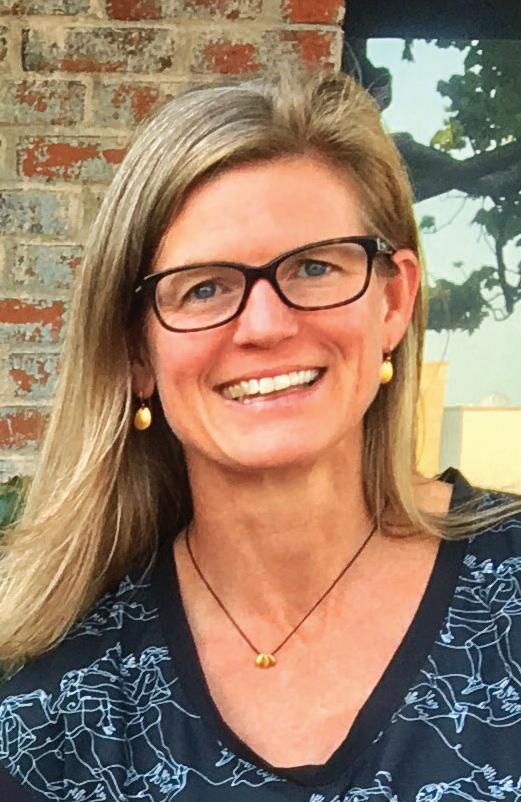
“Instead of seeing me as competition, he was incredibly generous,” Beaver says of Galloway, the running icon who passed away on February 25.
Galloway welcomed Beaver into his shop and allowed her to work alongside his team. Beaver credits Galloway’s openness and her experience in his store for giving her the confidence to open West Stride in 2008.
“While Jeff was fierce on the roads, he believed in community over competition in run specialty,” Beaver says. “That generosity, access and timing made a tremendous difference in my early career, and I’ll always be grateful for that.” n
Montane launches ‘Guaranteed for Life’ campaign to stand behind the lifetimes of its products.
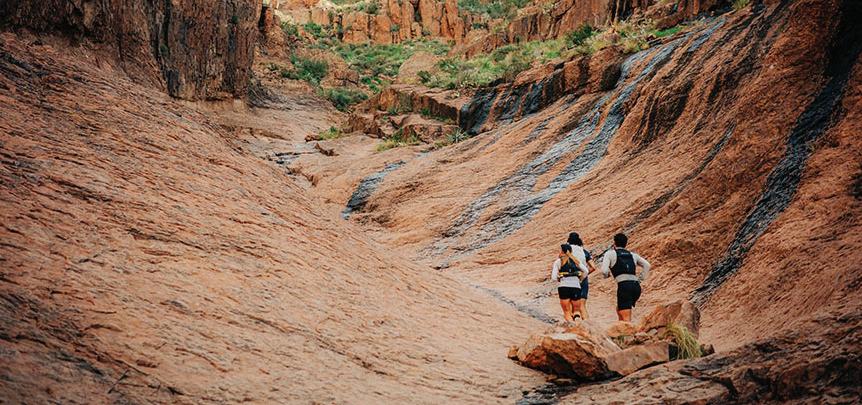
Labeling t it “a long-term brand platform that defines how the brand expresses its commitment to enduring mountain performance, apparel brand Montane recently launched its “Guaranteed for Life” policy. It is, says the company, “an articulation of how Montane builds and the responsibility that comes with it.”
The campaign brings clarity to a principle that has always shaped the brand — that gear should be tested in exposure, built to endure and made to go the distance.
Montane products are engineered for exposed outdoor environments where performance becomes protection. Every seam, zip and silhouette exists for a reason and are refined through testing and real-world use. The campaign reinforces that product approach, embedding durability and trust at the core of every collection.
At a practical level, Guaranteed for Life is a commitment to repairing or replacing any product that fails due to a manufacturing fault for its functional lifetime. Repair is prioritized wherever possible, reflecting a long-term philosophy that values continued use over disposability.
The launch of Guaranteed for Life is
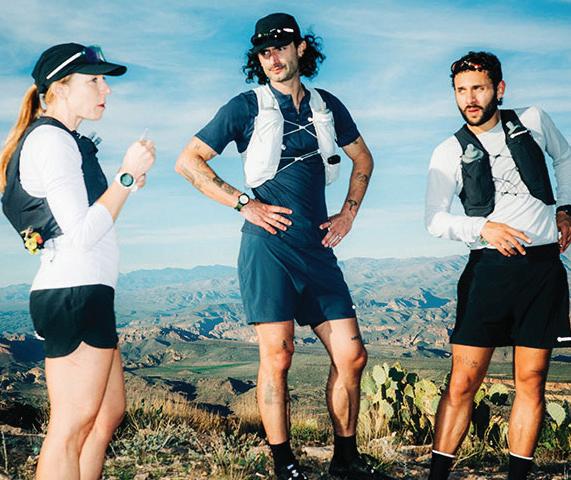
supported by a suite of still and motion assets capturing running and mountain life in its truest form — honest, immersive and grounded in real environments.
Shot across alpine climbs, technical hikes and exposed trail terrain, the visuals reflect the lived-in reality of Montane gear — used, relied upon and shaped by experience.
As an extension of this concept, Montane also sent 50 disposable cameras to members of the Montane Collective around the world. Each camera offers 27 exposures to document everyday routines, personal challenges and unscripted moments of mountain life through a deliberately raw lens.
Together, the campaign captures gear not as pristine products, but as trusted tools.
The campaign follows closely on the launch of Montane’s SS26 collection, reinforcing the principles that underpin its product design and development. n