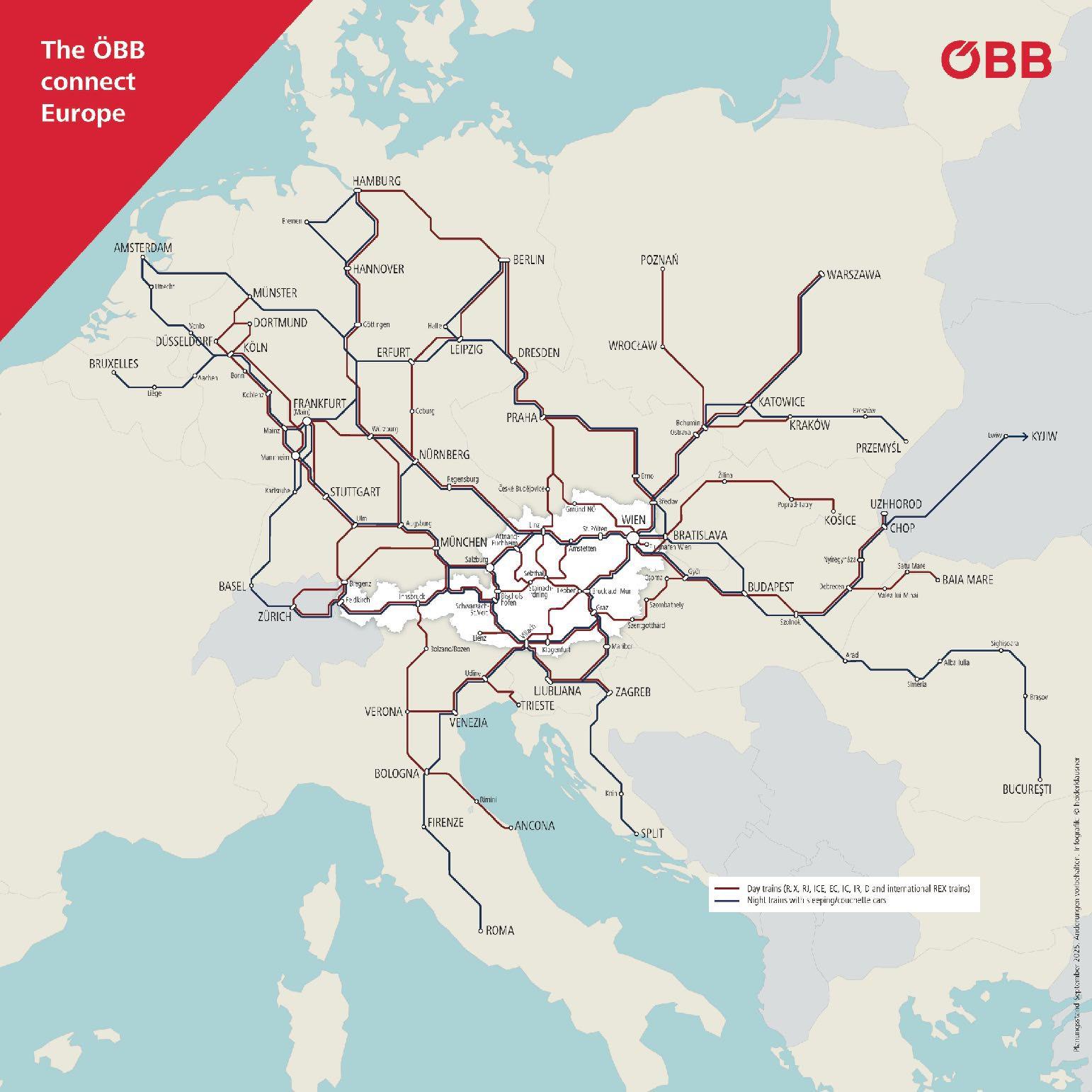

ÖBB connects numerous European cities with modern day and night services.
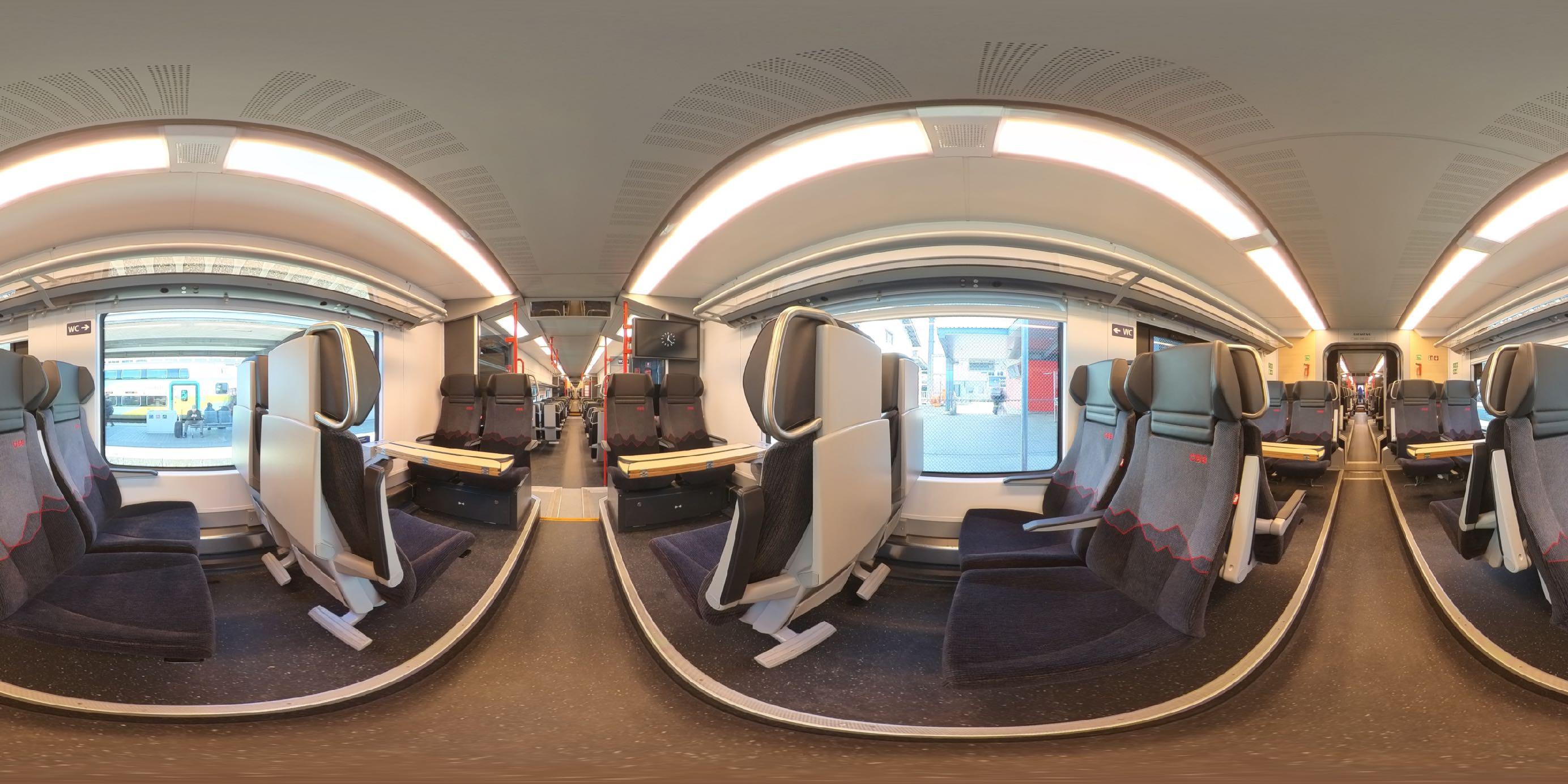
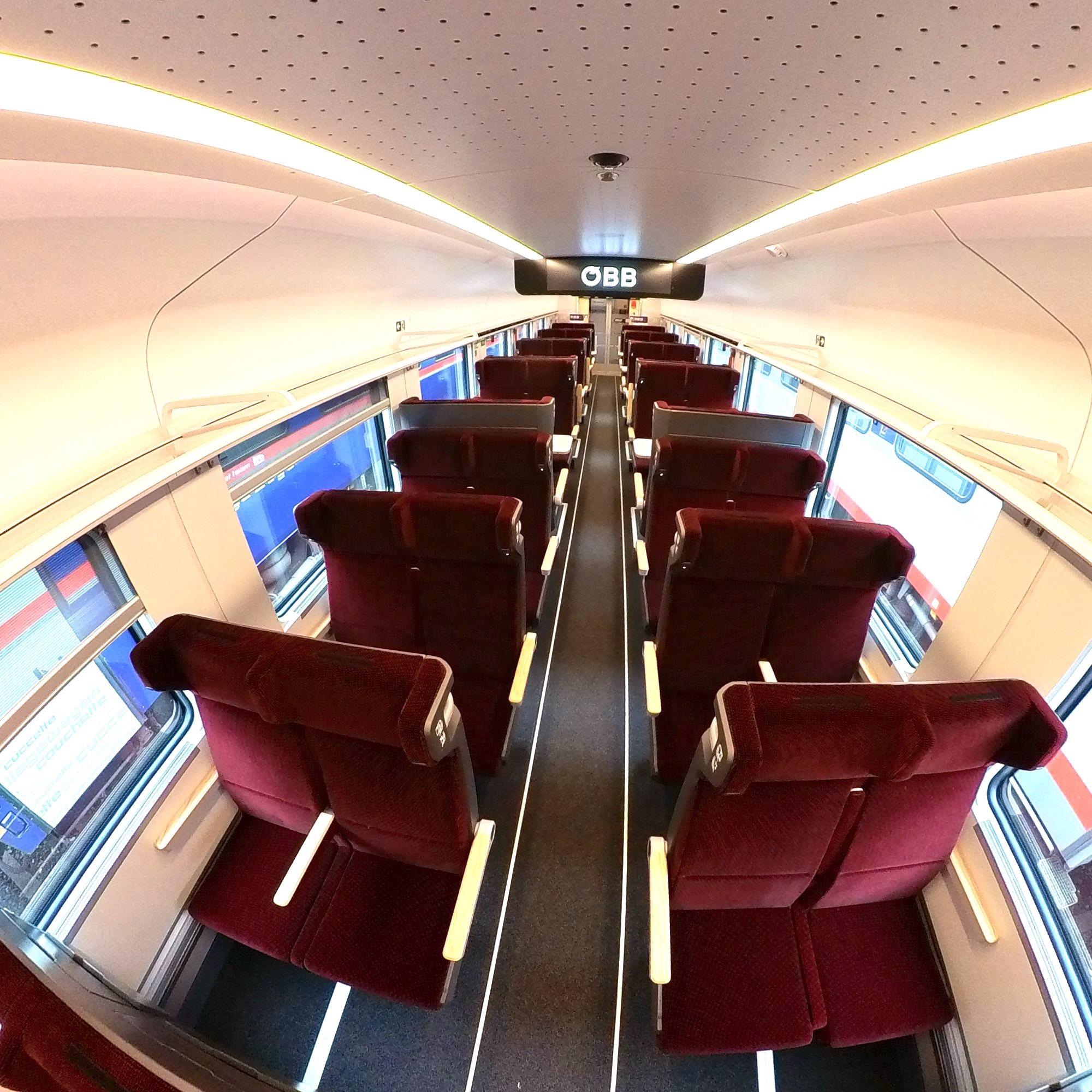
During the day, ÖBB Railjets offer fast and comfortable long-distance travel in Economy, First, and Business classes.
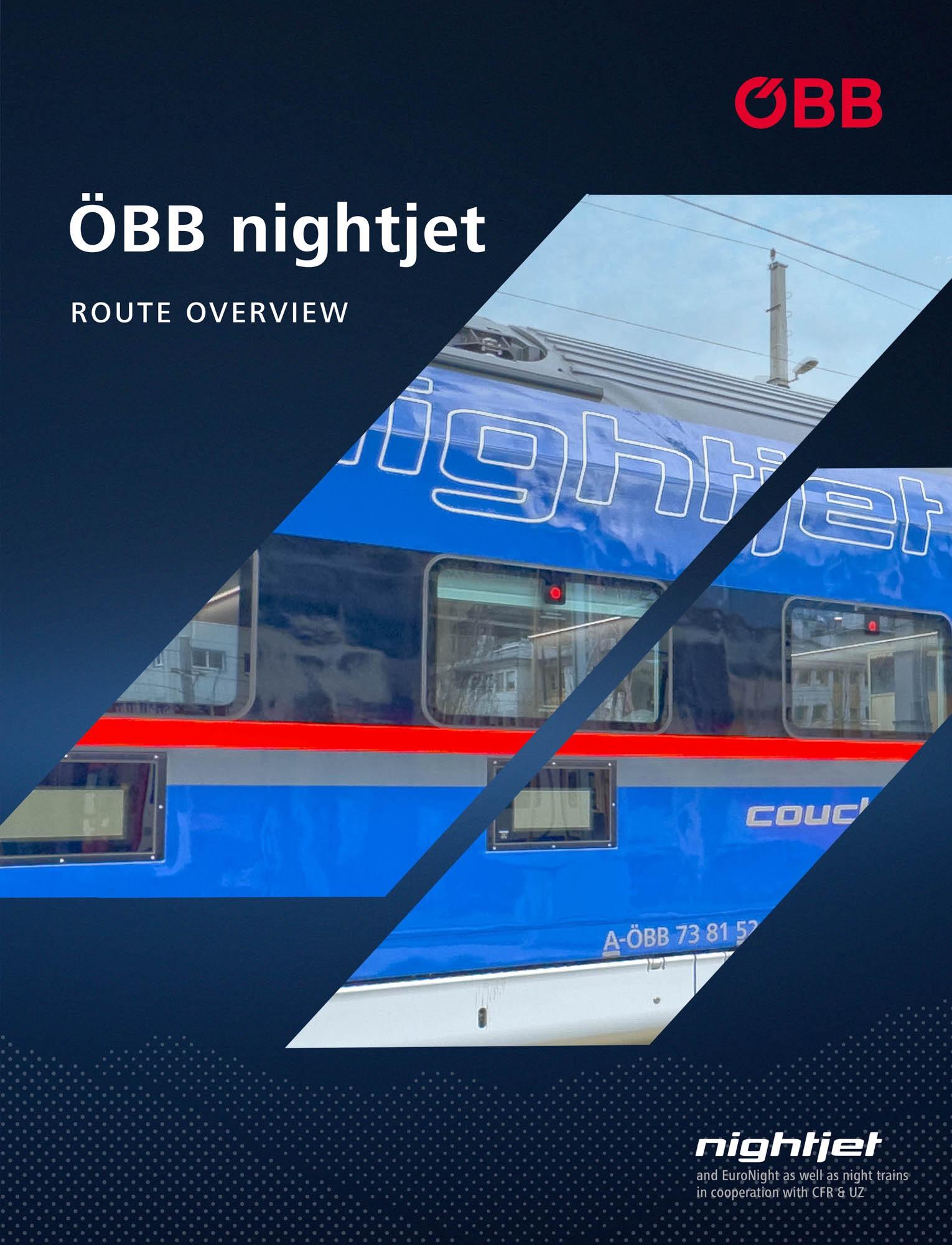
At night, the ÖBB Nightjet provides a relaxing and environmentally friendly journey across Europe. Whether
you prefer a seat, new Mini Cabins, or couchette and sleeper cars – every travel preference is catered for.
Within Austria, ÖBB Cityjets guarantee punctual and comfortable local and long-distance transport.
Further information and booking options can be found via the info button, which leads directly to the ÖBB booking page.


A RRIVAL
T HE C ITY
W ORTH S EEING
C HURCHES
M ONUMENTS
H ISTORICAL B UILDINGS
M ODERN S TRUCTURES
A RT & C ULTURE
P UBLIC T RANSPORT
I MPRINT

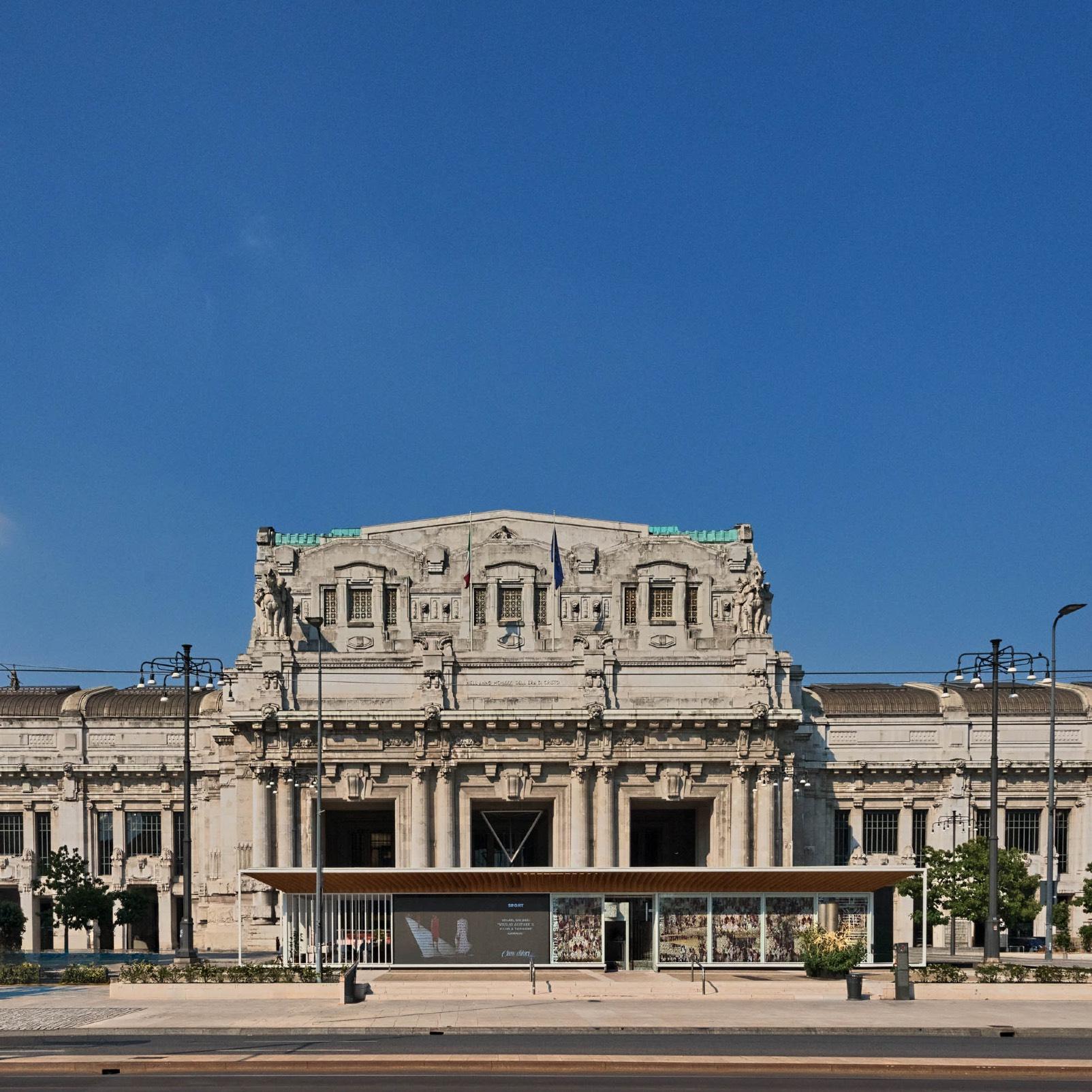
The direct ÖBB Nightjet connection between Vienna and Milan will no longer be offered from the 2026 timetable onwards.
As an ideal alternative, we recommend traveling from Vienna Central Station via Villach to Venezia Mestre. From Mestre, the journey continues with an Italian high-speed train (Frecciarossa or Italo) directly to Milano Centrale or Milano Porta Garibaldi station.
This connection offers you a comfortable and costeffective way to travel to Italy in an environmentally friendly manner. You also benefit from an attractive daytime connection with good transfer times, allowing for flexible travel planning.
This way, you can enjoy relaxed travel while experiencing the variety of rail connections between Austria and Italy.
The ÖBB Nightjet brings travelers safely, comfortably, and above all completely stress-free to Milan. Whether it's a business or vacation trip, traveling by train is not only more comfortable, it is also much more environmentally friendly.

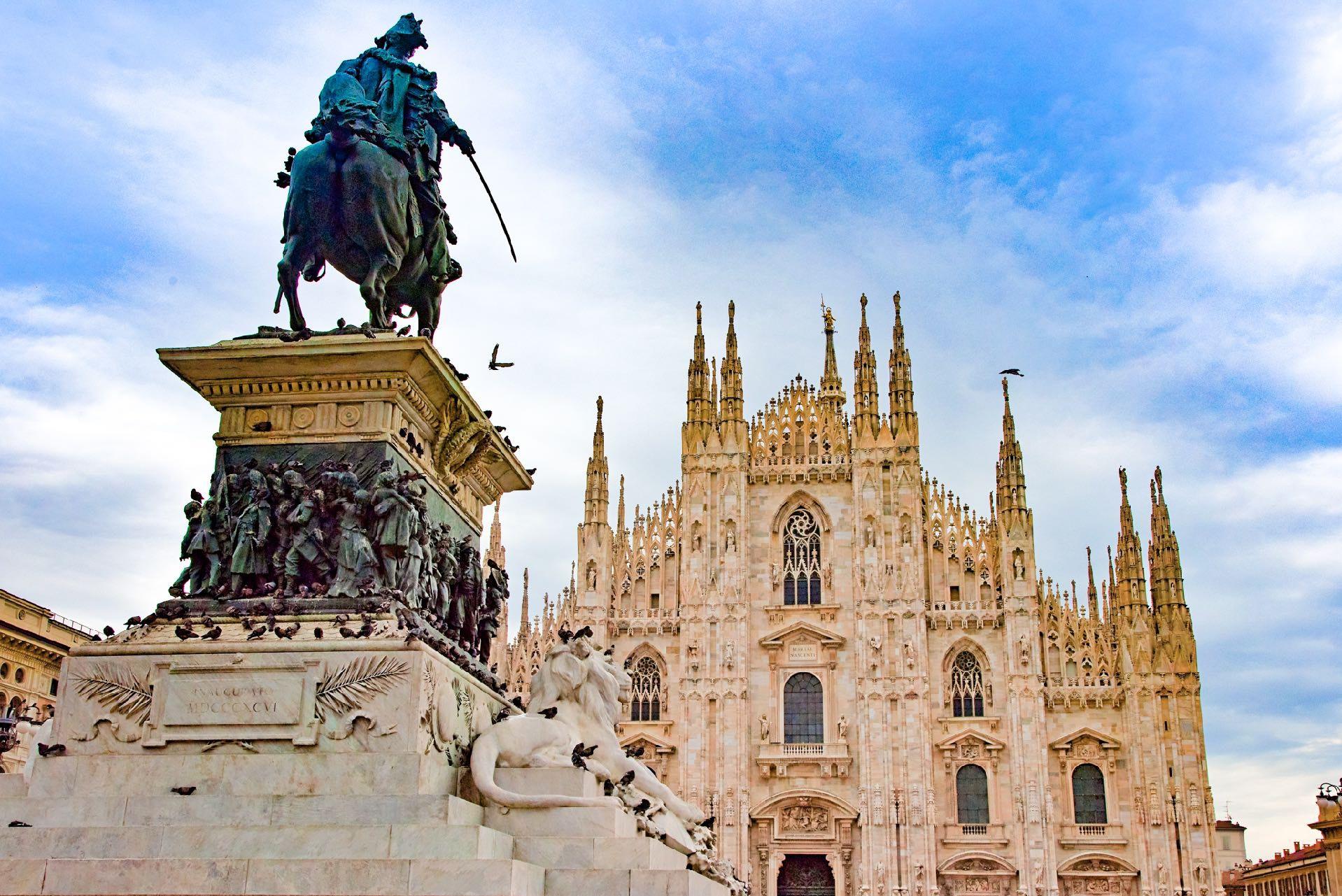
The capital of the Lombardy region is the second largest city in Italy. Historically, the city can be traced back to around 400 BC when the Celts settled the area. Over the centuries, Milan was ruled by German, French, and Austrian emperors. Far beyond Italy's borders, the city has established itself as a leading cultural and fashion metropolis. Milan is divided into nine city districts (zone). Art has always played a major role in the city. Especially its promotion by the Visconti family in the Middle Ages led to Milan developing into an art metropolis. Milan is not only a
fashion and cultural center but also of enormous economic importance.
A large number of the country's most important companies have their headquarters here. About 20% of Italy's gross domestic product is generated in the Lombardy region. Corporations like Alfa Romeo, Pirelli, Prada, Gucci, and Armani are based here. The city is also home to the Italian stock exchange (Borsa Italiana) and the headquarters of the public broadcaster (RAI).

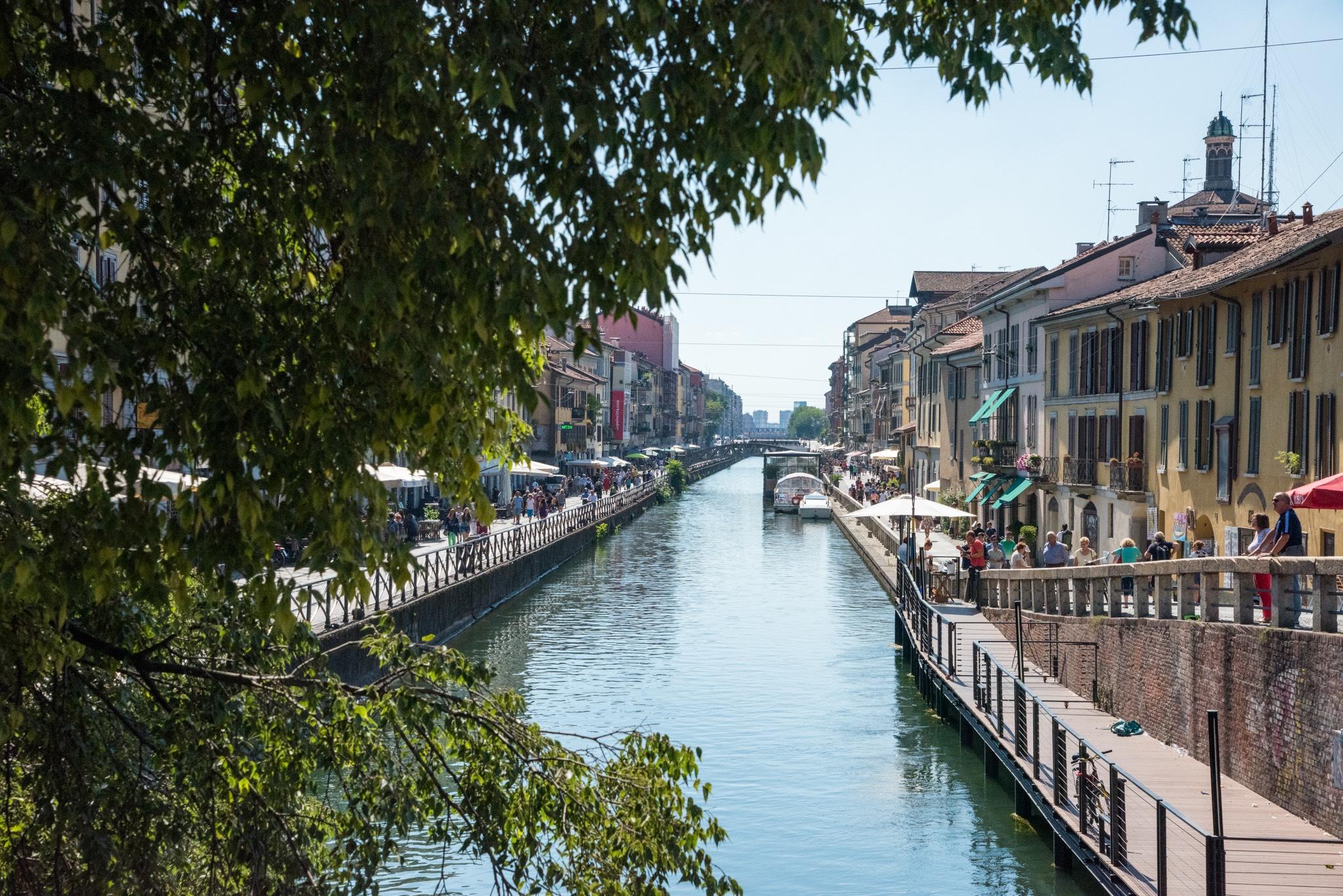
Construction of the Naviglio Grande began in 1177. The over 50 km long canal, which connects Milan to Lake Maggiore, was completed in 1257.
Until the 1960s, the canal was primarily used by barges. Along the banks, there are many venues that are especially popular on weekends.
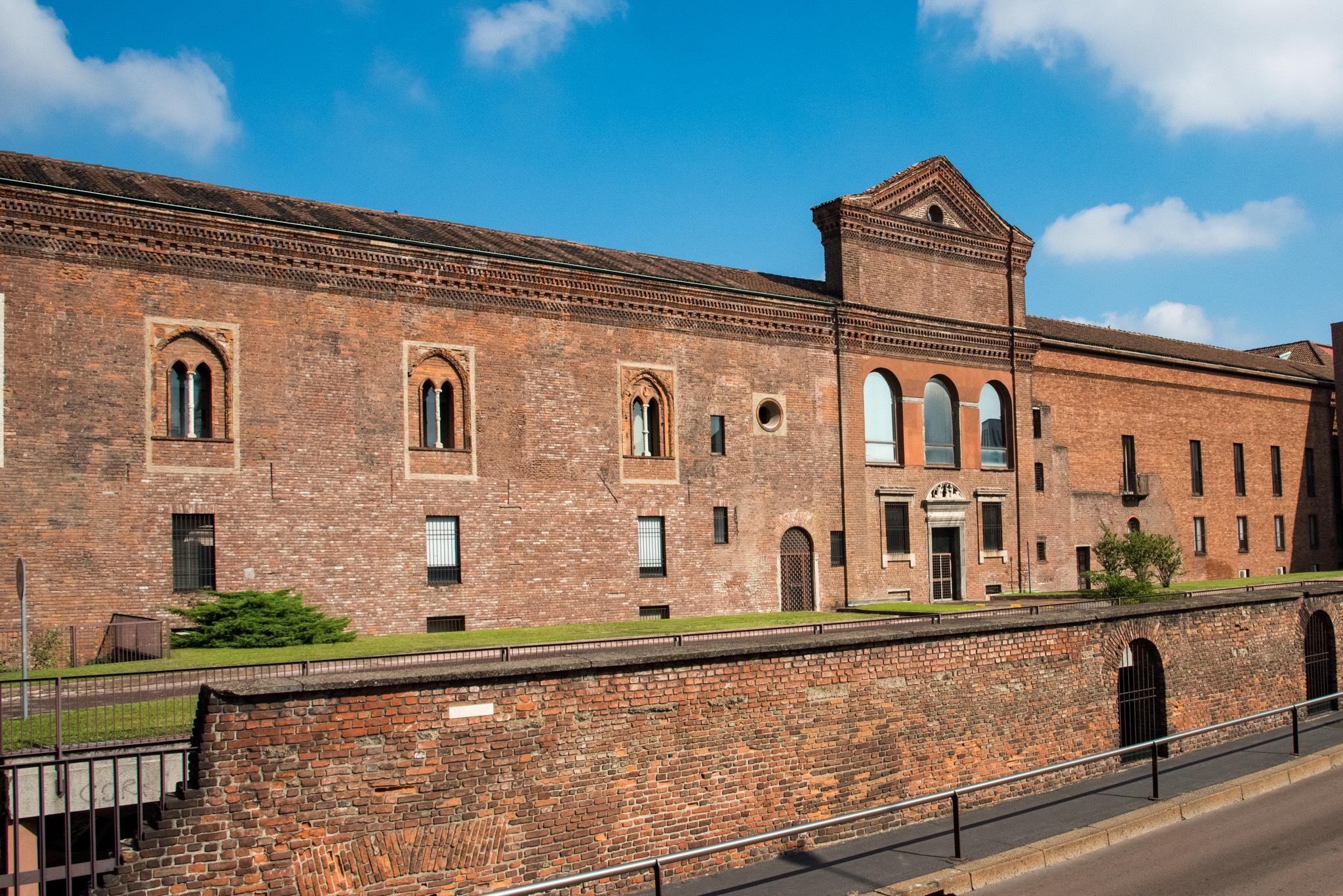
The Fondazione IRCCS Ca' Granda Ospedale Maggiore Policlinico (the university clinic) was built in 1456 and is thus the oldest hospital in the city.
The clinic was founded by Prince Francesco Sforza, who hoped to gain the favor of the population, who had previously been supporters of the Visconti family.
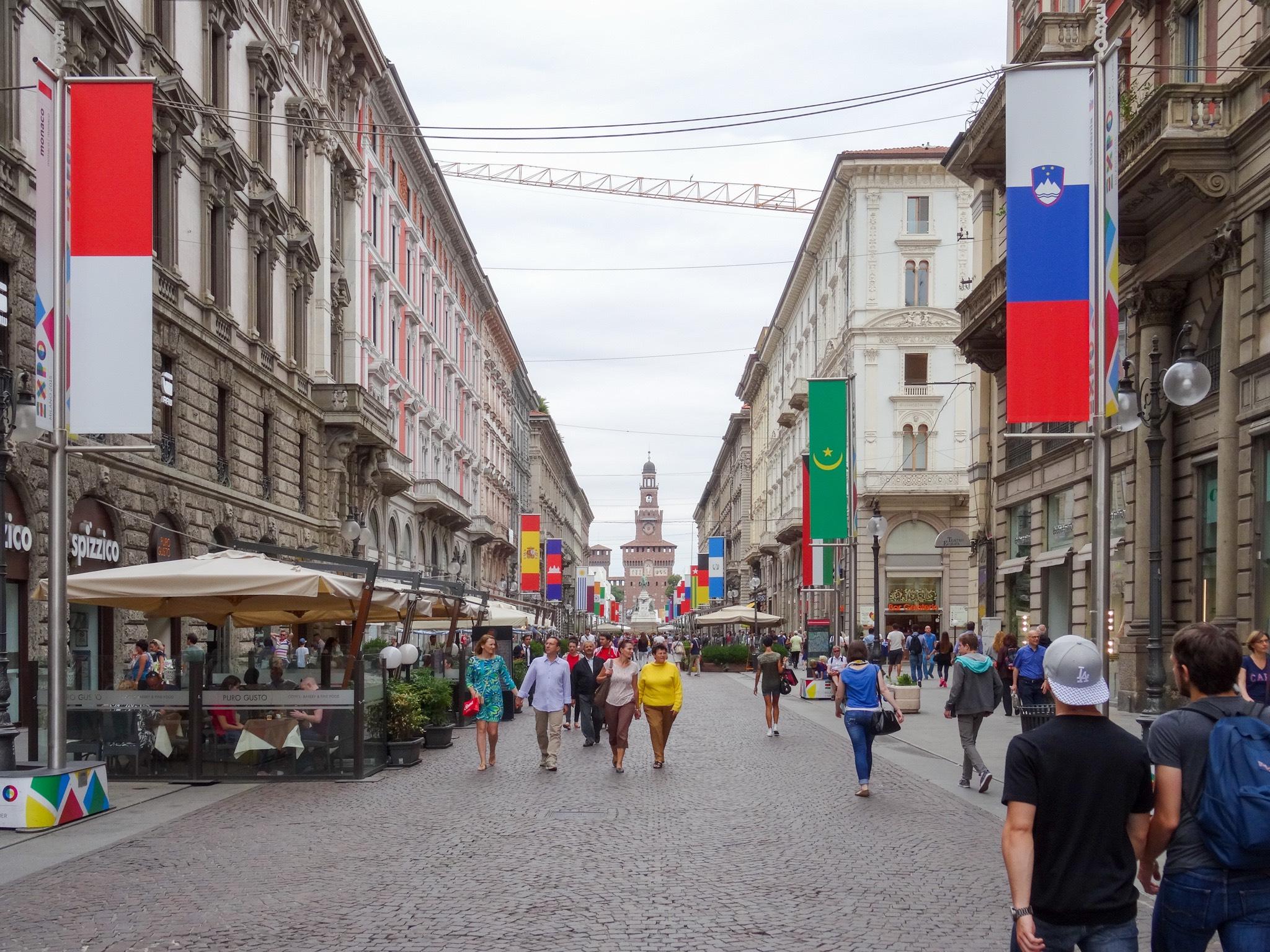
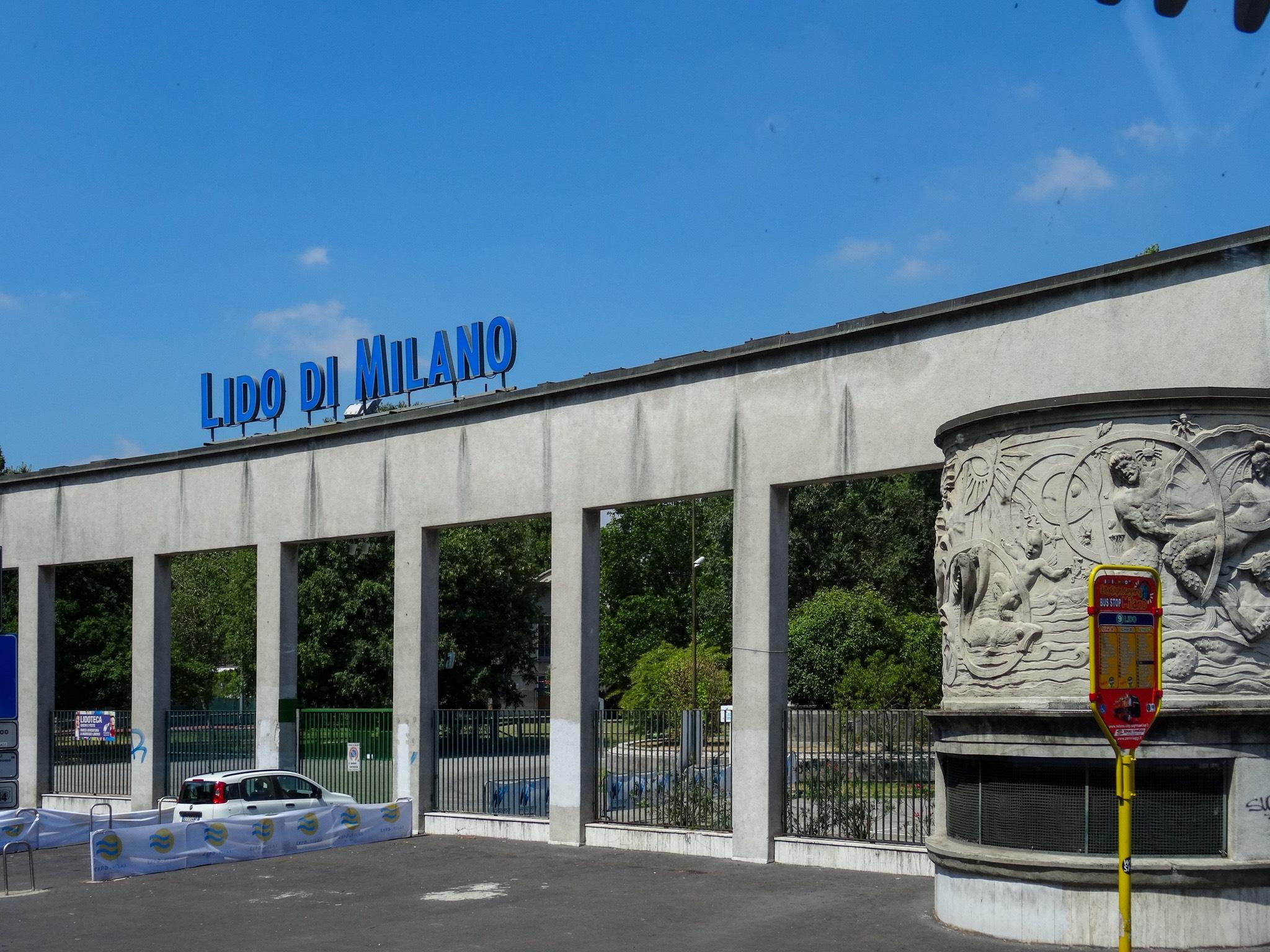
The Lido di Milano is a recreation and sports center in western Milan. Located near the San Siro horse racing track, the Lido di Milano offers tennis and soccer fields, a
mini-golf course, and an 8,000 m² outdoor pool. There is also a beach volleyball court on the premises.
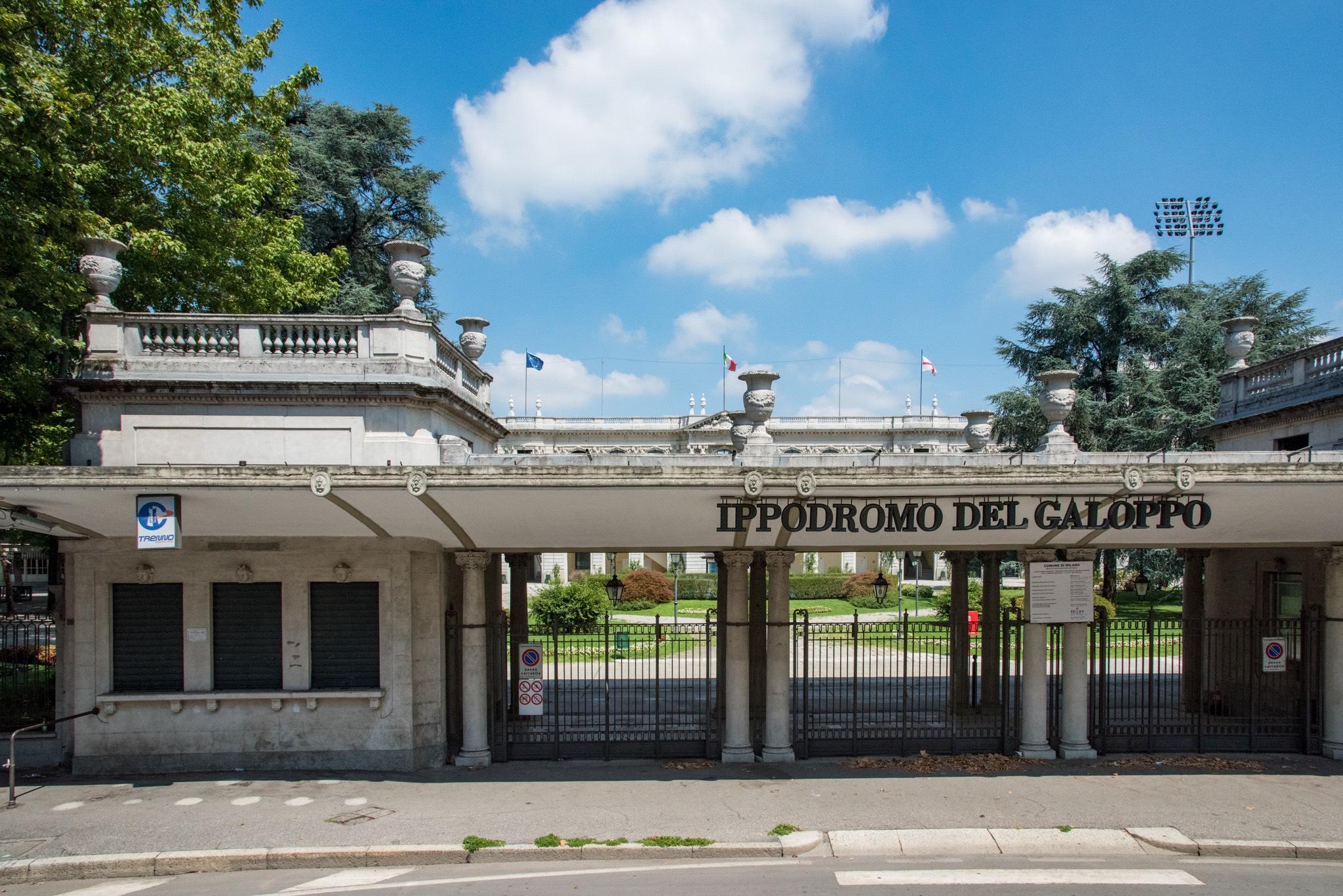
The “ippodromo del galoppo di San Siro” is Milan's horse racing track. Horse racing has a long tradition in Italy. The first races - apart from the Roman horse races - date back
to 1773. The San Siro racetrack was opened in the early 1920s and offers 20,000 seats.
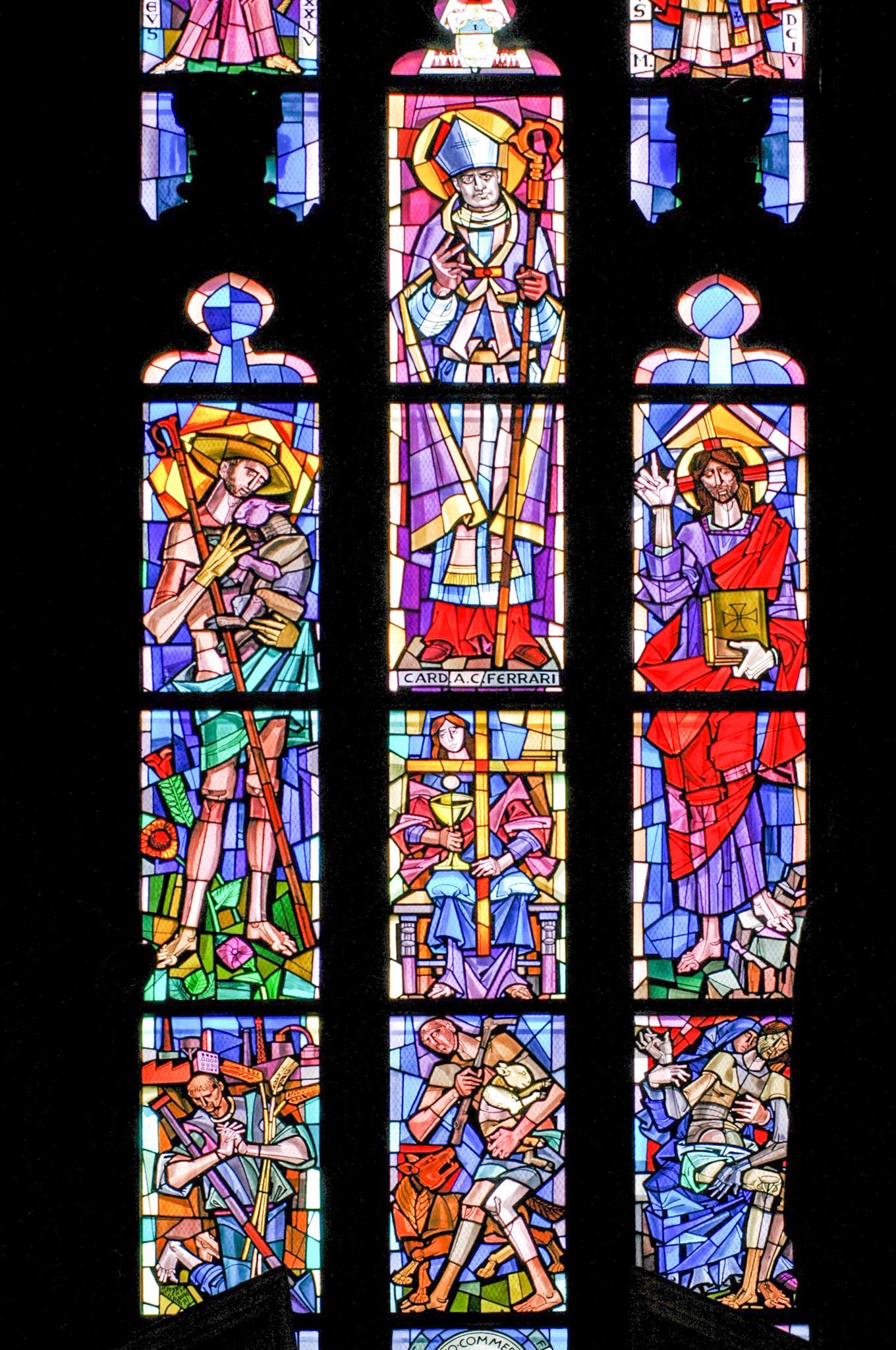

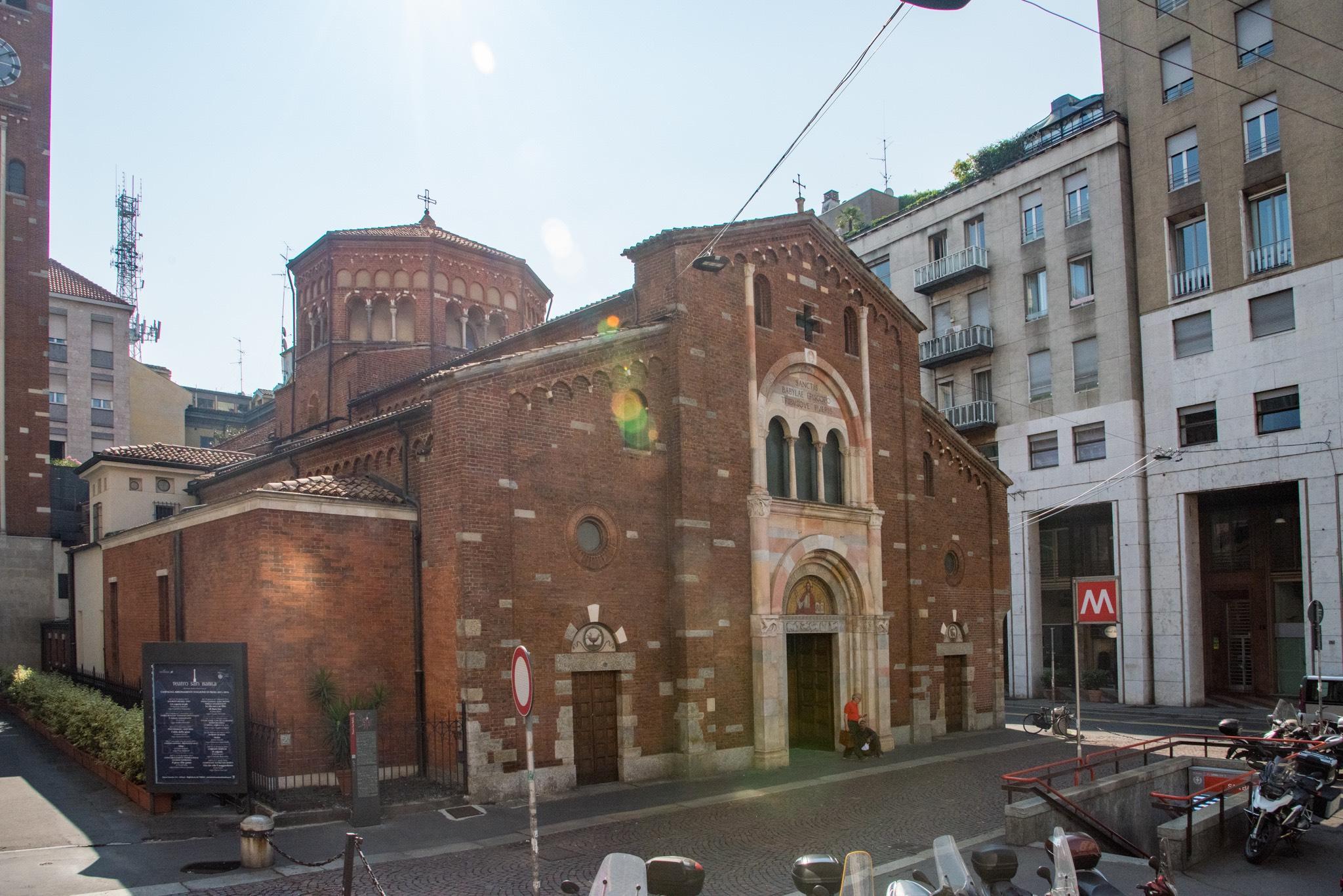
The basilica was built in 1095. In the 16th century, it was expanded and given a new facade. The Roman Catholic church is one of the most important churches in the city. It
is named after San Babila, the bishop of present-day Antakya (Turkey). Emperor Decius had him executed in 250.
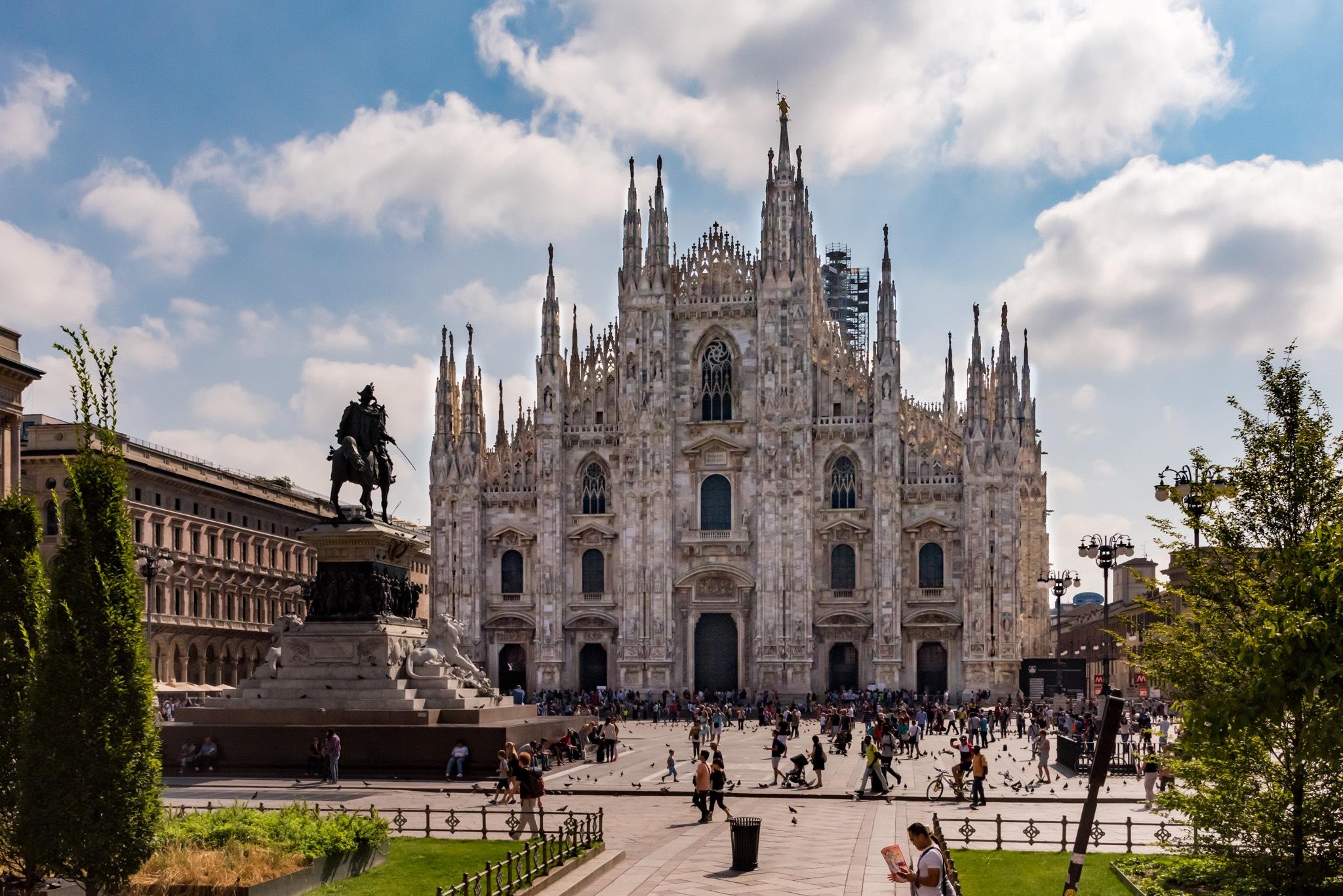
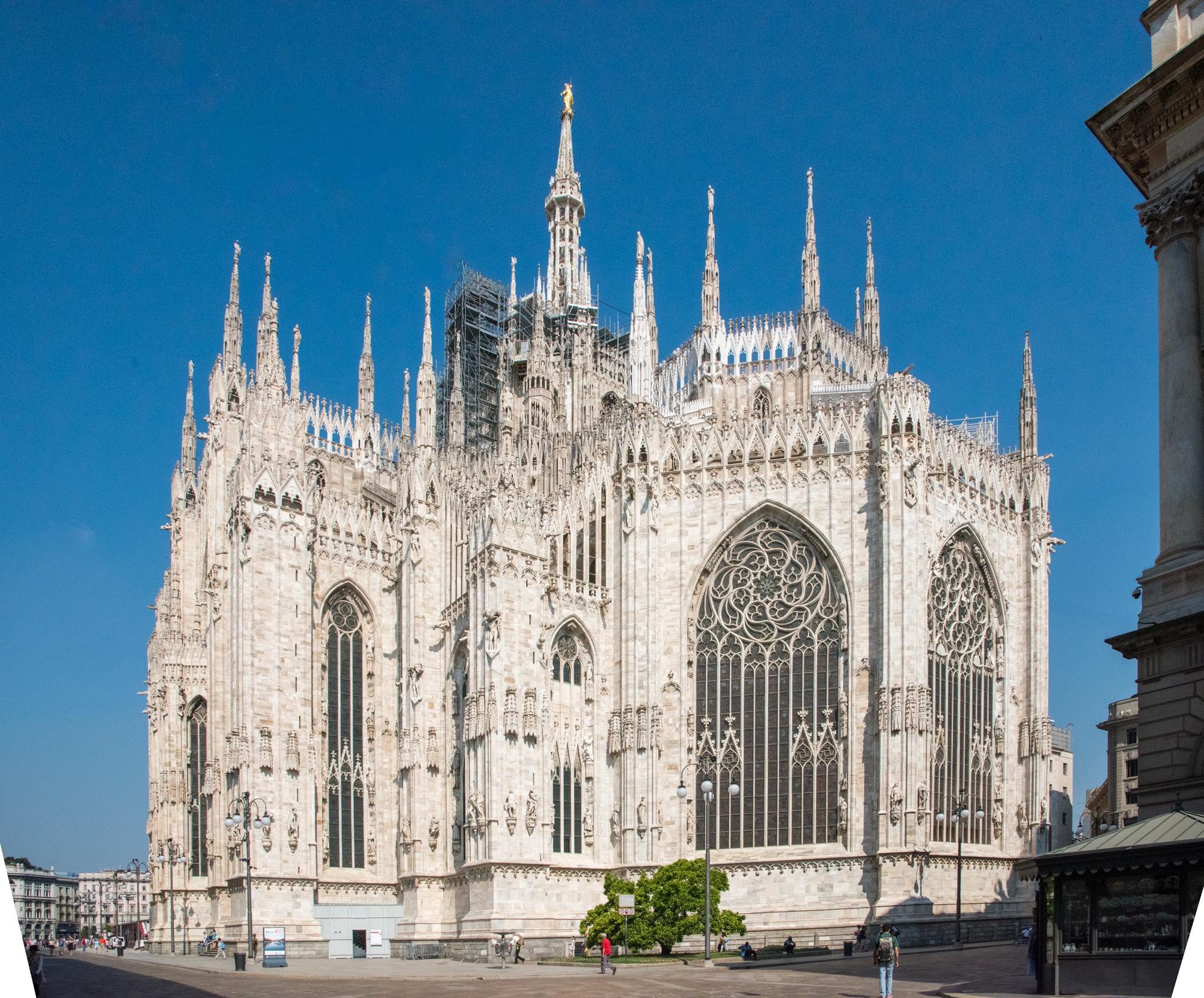
The cathedral stands on the ruins of a temple and a Roman basilica. Gian Galeazzo Visconti, the first Duke of Milan, commissioned its construction in 1386. Many disagreements led to Napoleon, who had himself crowned
King of Italy in the cathedral in 1805, giving the order to complete the facade.
Tickets for the cathedral: https://www.duomomilano.it/en
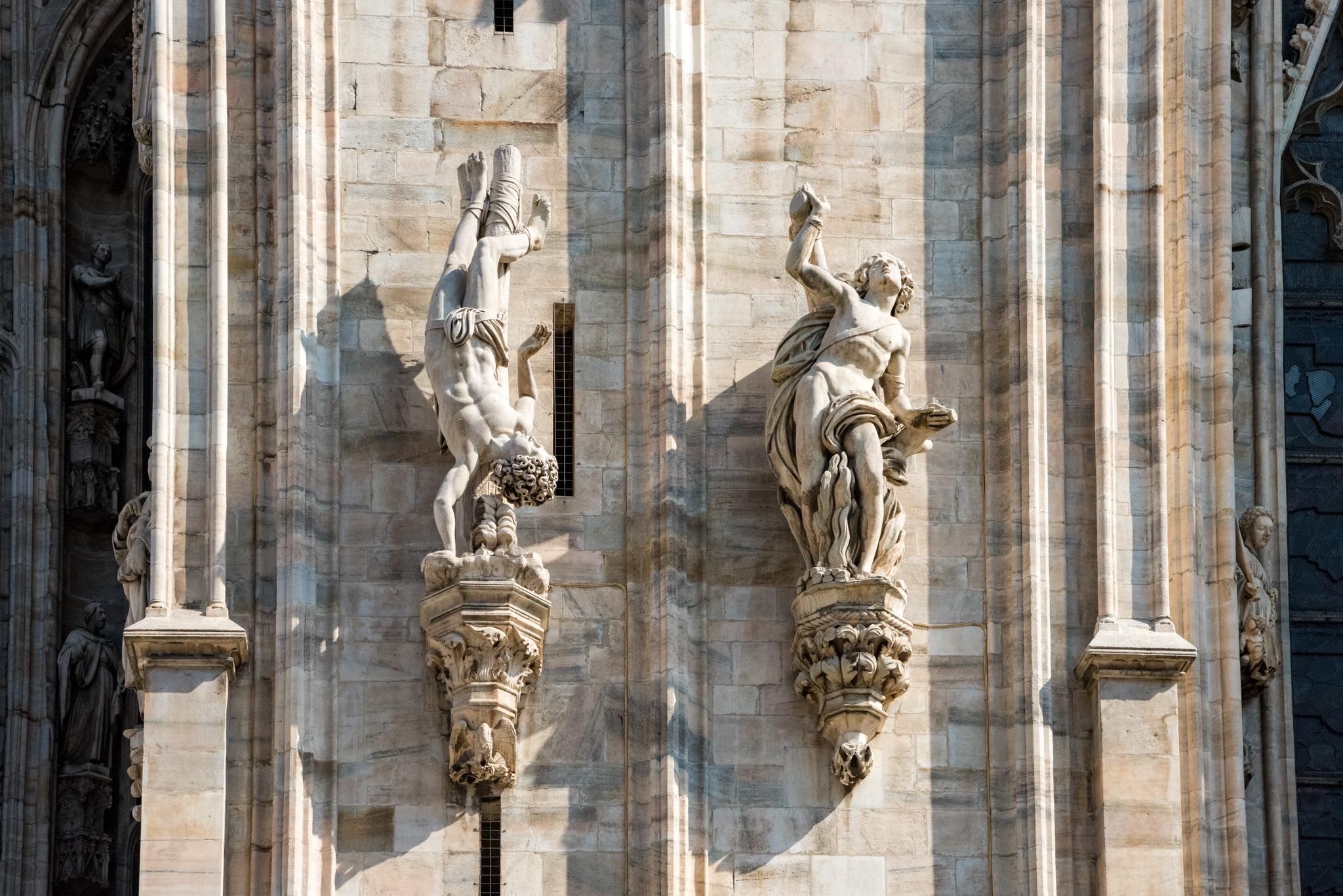
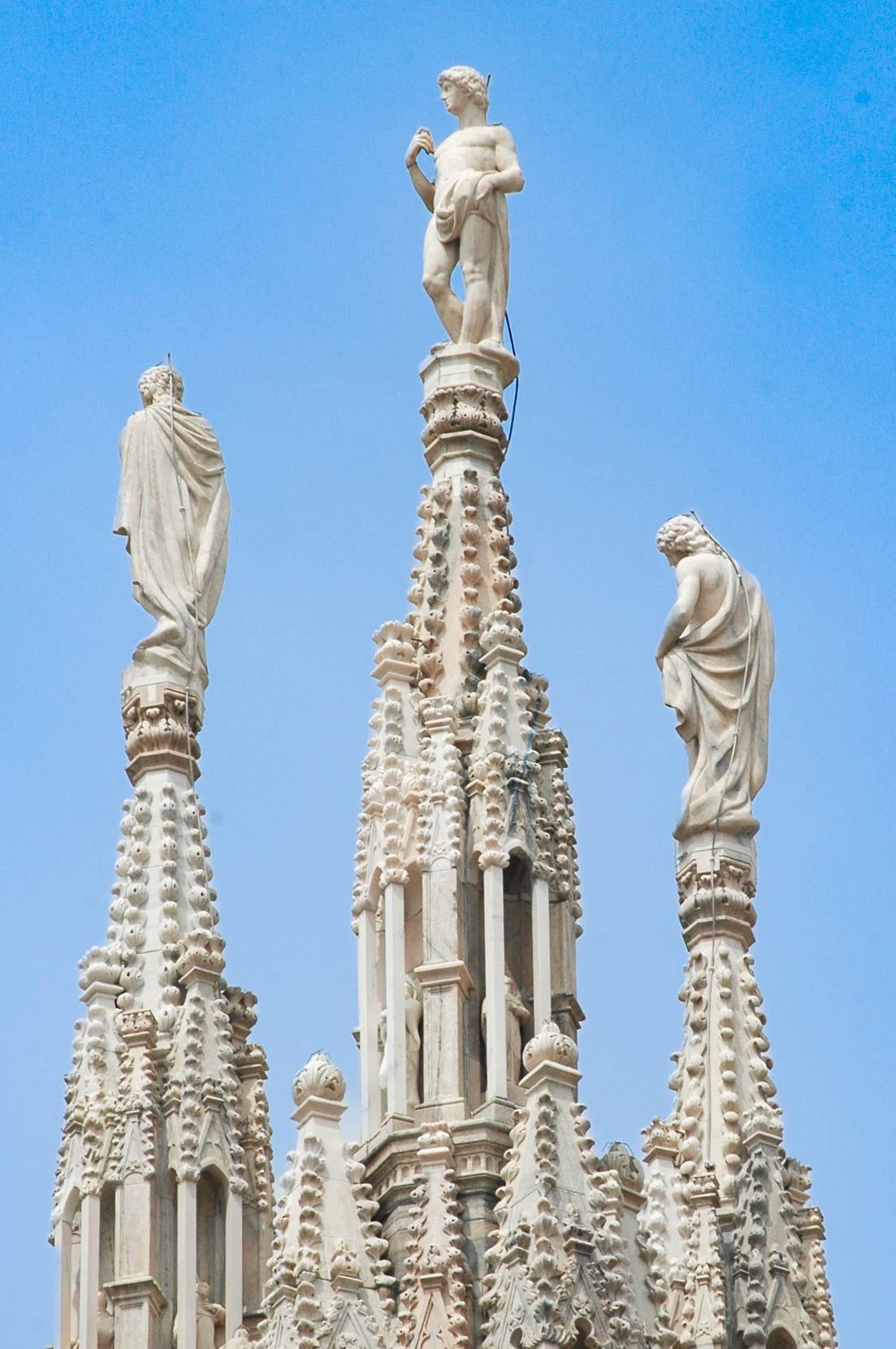
The cathedral is 158 m long and 93 m wide. The height to the head of the Madonna is 108.5 m. Overall, there is a covered area of 8,000 m². 3,500 sculptures adorn the cathedral, and 158 steps lead to the roof.
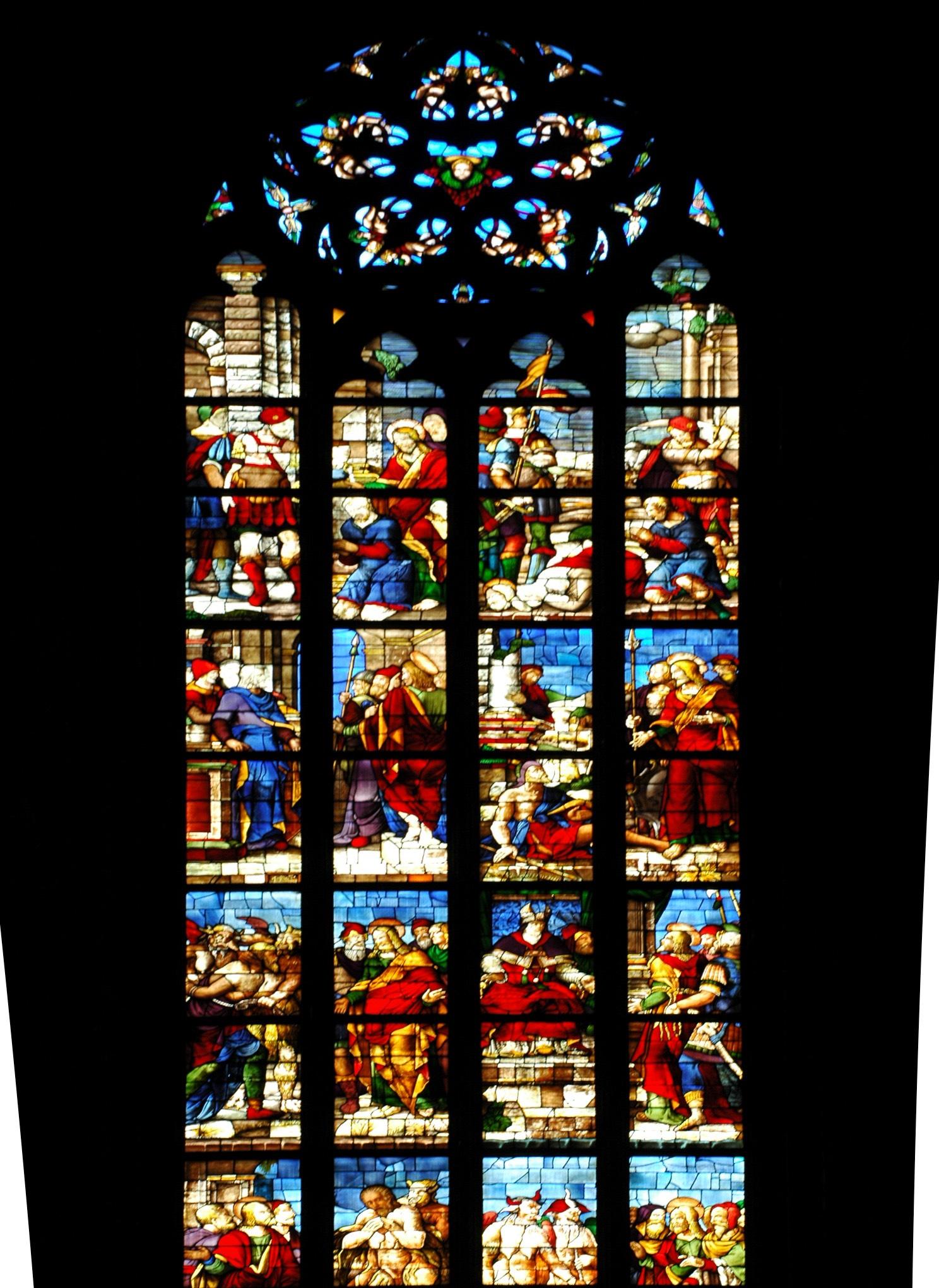
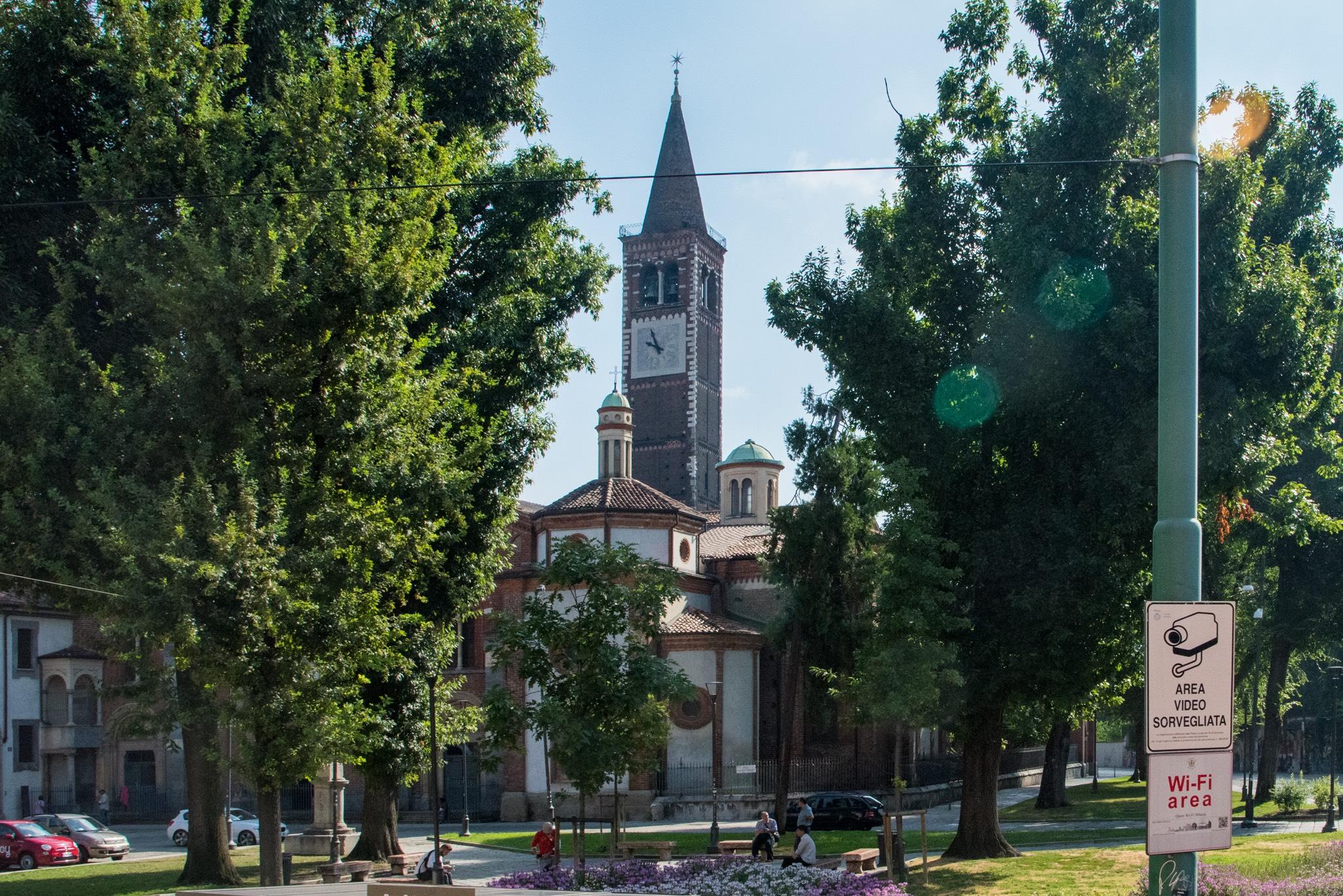
In 344, the relics of the Three Holy Kings were on their way to Milan. The load was too heavy for the oxen, and when they finally collapsed, Archbishop Eustorgio had a church built at this spot. Barbarossa ("Redbeard")
plundered the treasures and brought them to Cologne, where they still lie in the cathedral today.
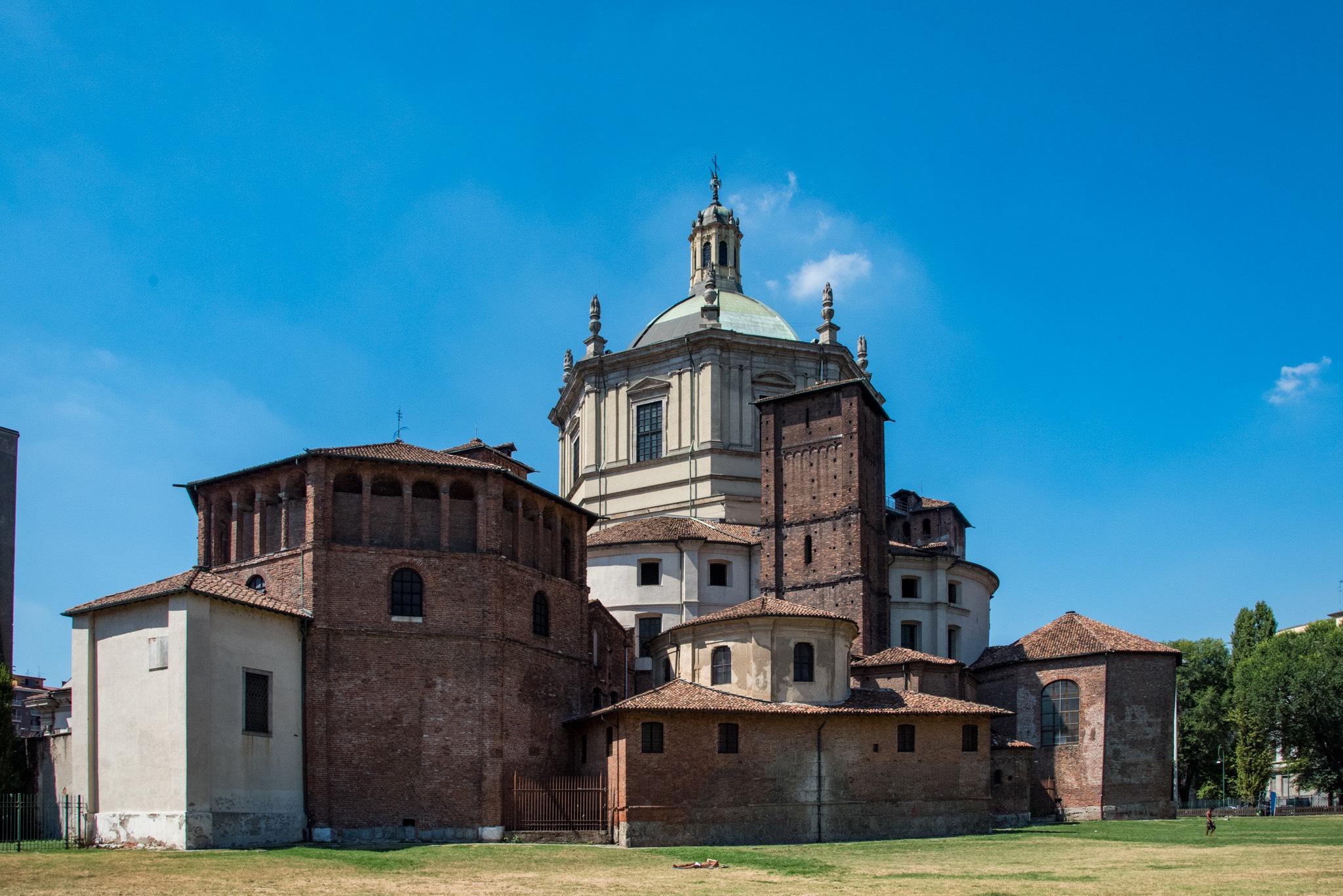
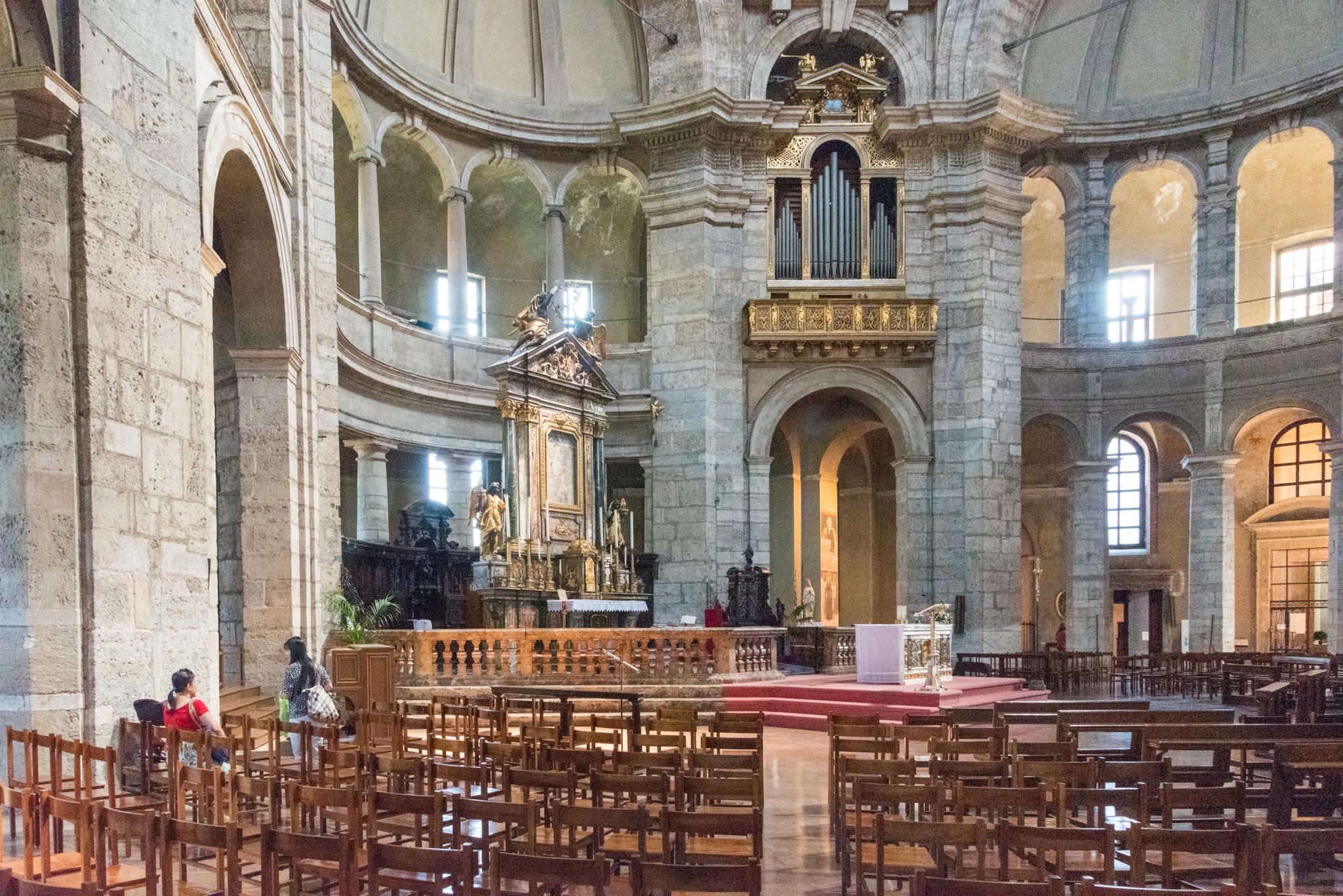
The Basilica San Lorenzo Maggiore dates from the 4th century. The early Christian church is dedicated to Lawrence of Rome. The building, originally designed as a
tetraconch from Roman times, was remodeled over the centuries and expanded with four corner towers.
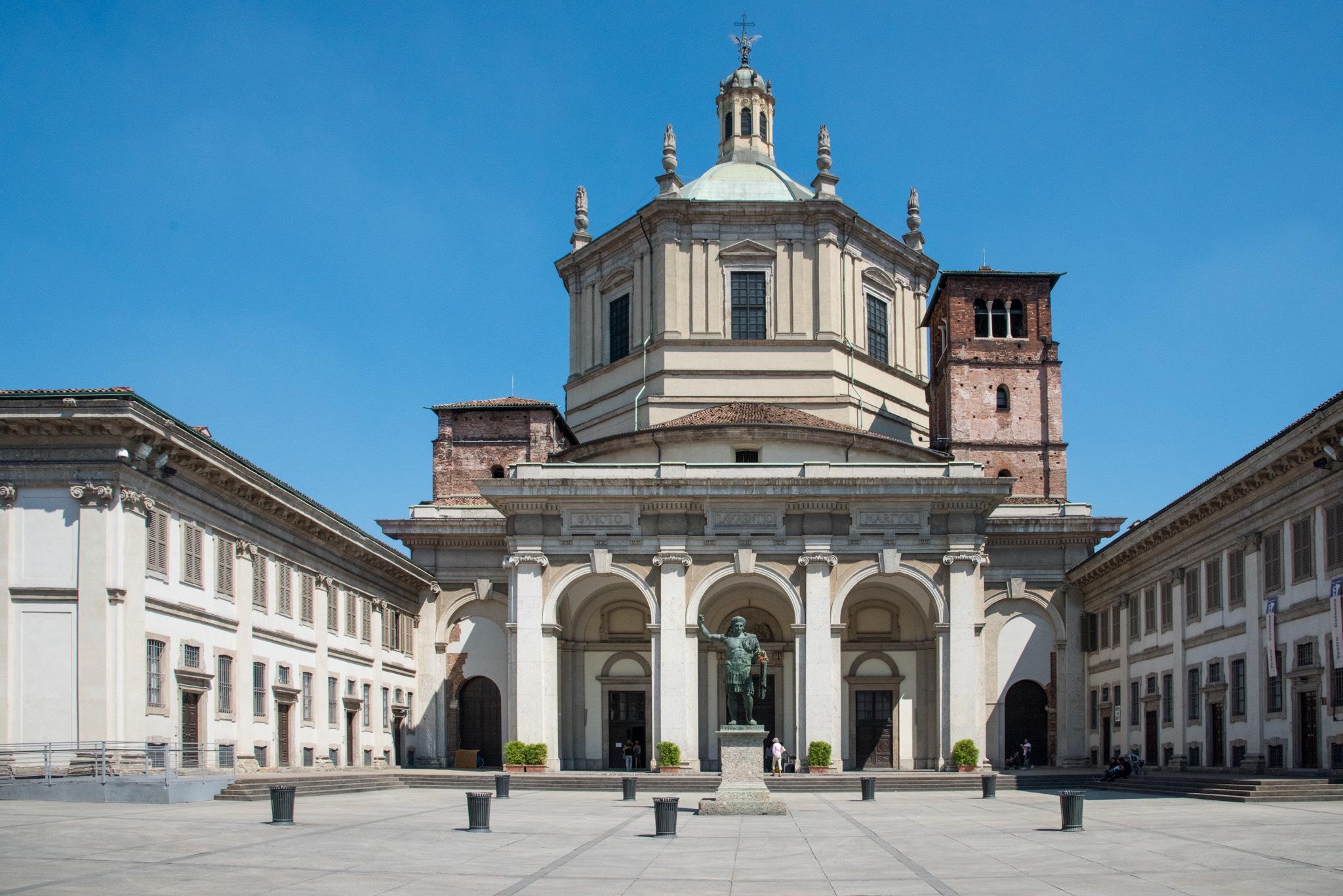
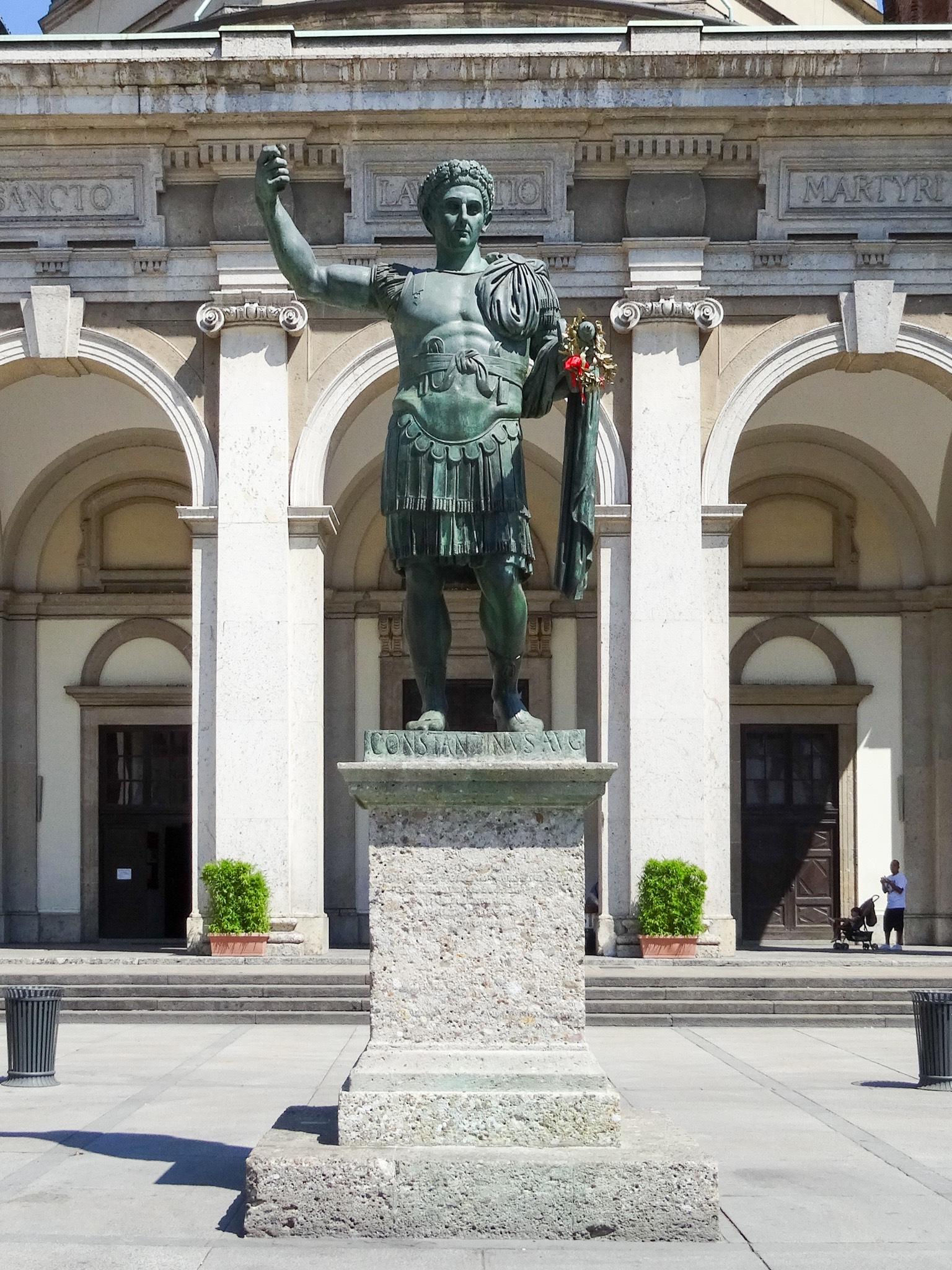
STATUE OF CONSTANTINE (STATUA DI COSTANTINO)
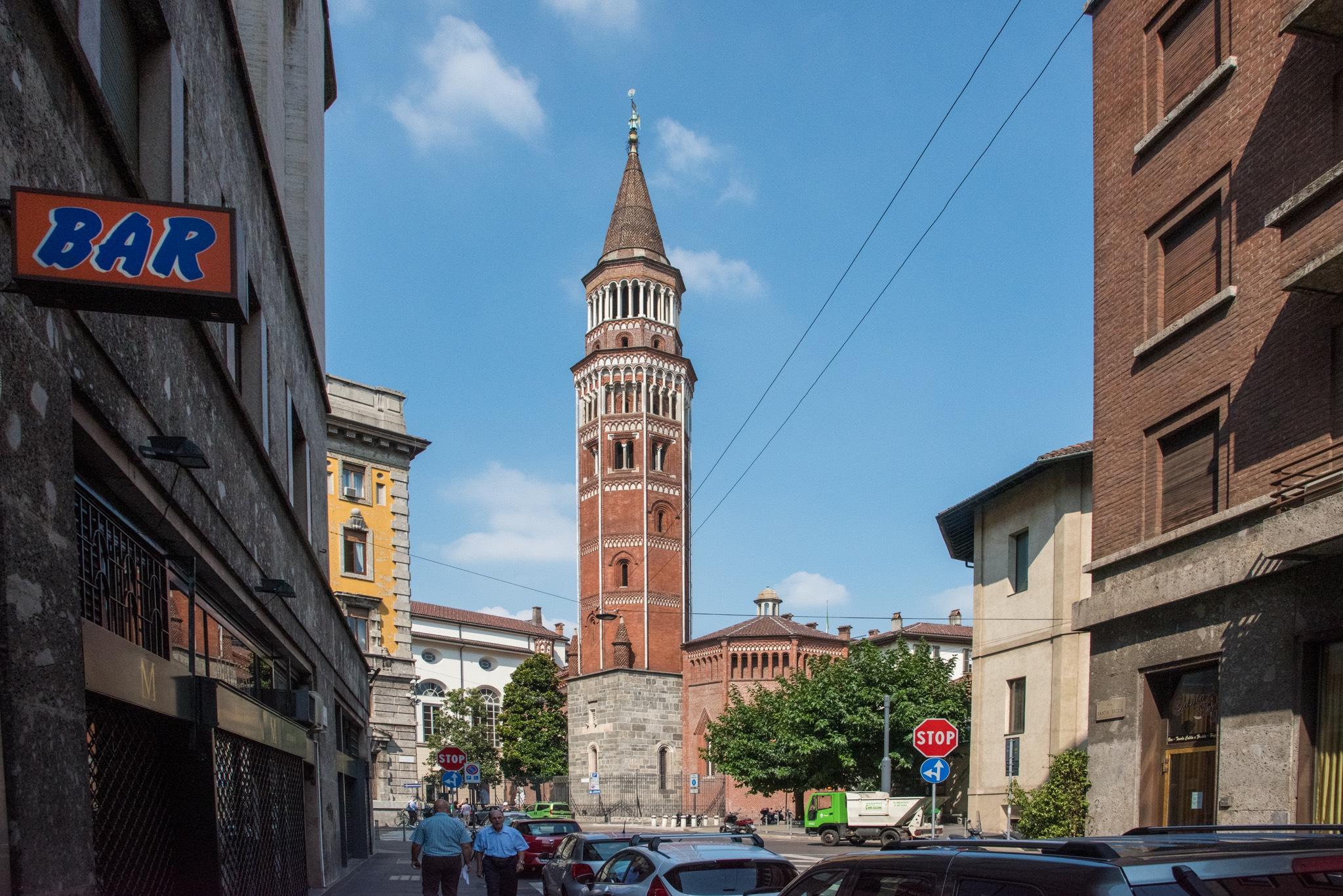
The ruler of Milan, Azzone Visconti, commissioned around 1336 the construction of the “Chiesa di San Gottardo in Corte al Palazzo Reale” next to the state palace. Particularly
noteworthy is the “campanile delle ore” - the Tower of Hours - on which the first public clock in Milan was attached.
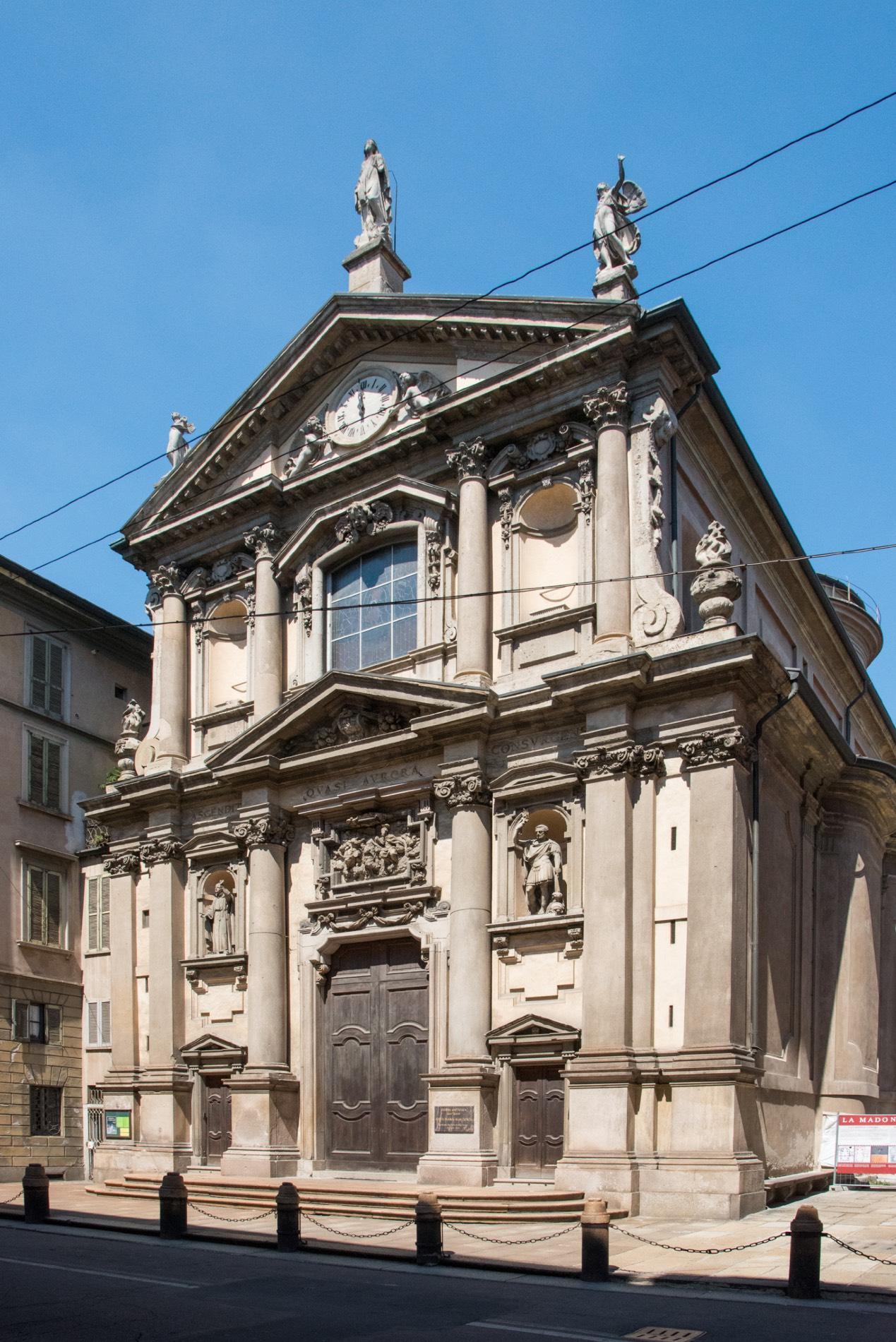
On the foundations of a church already existing in 1105, the current church was built in 1652 during the Spanish rule over Milan. Of the “Cappella della Madonna del
Grembiule,” only a few modest remains exist since a bombing raid in World War II.
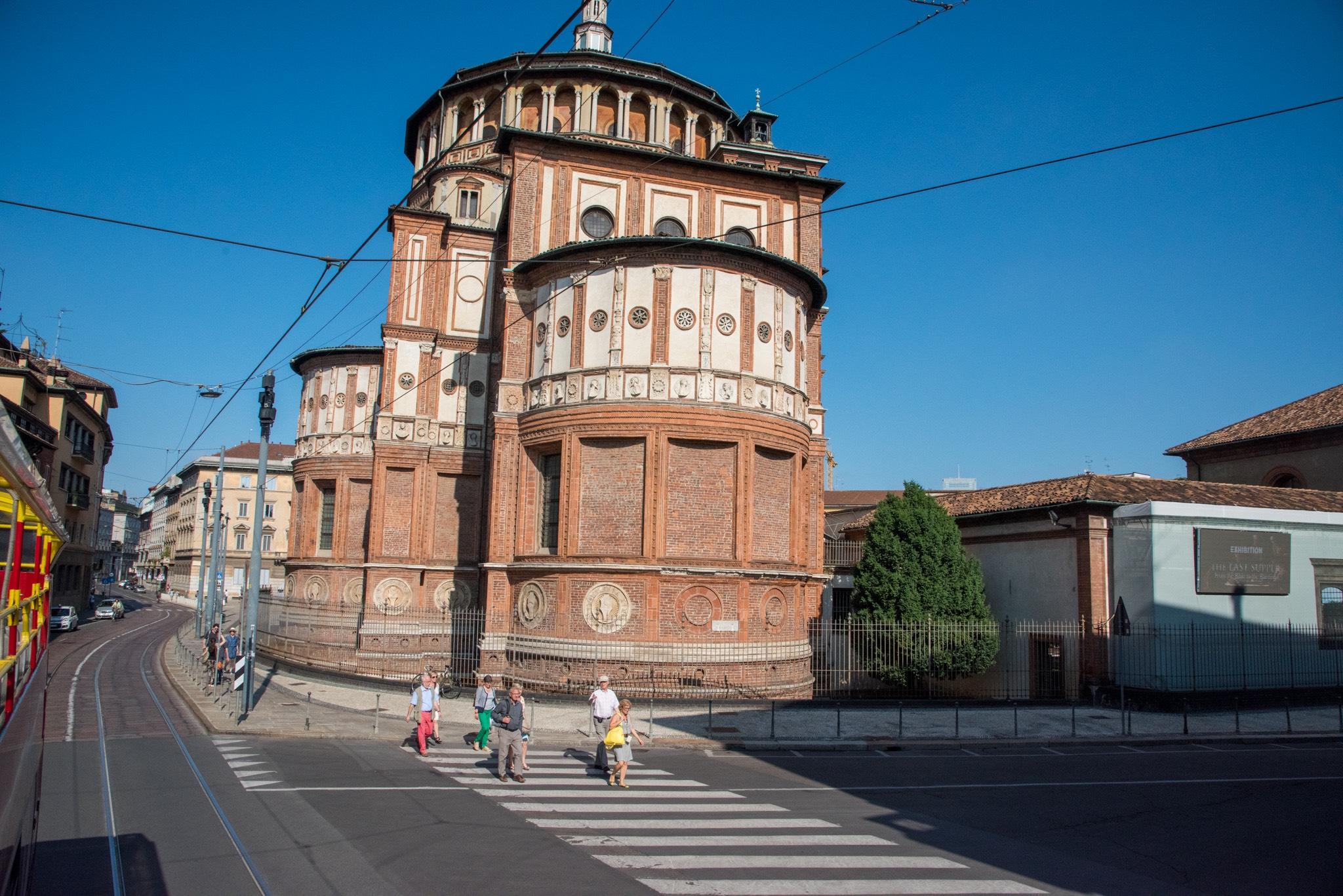
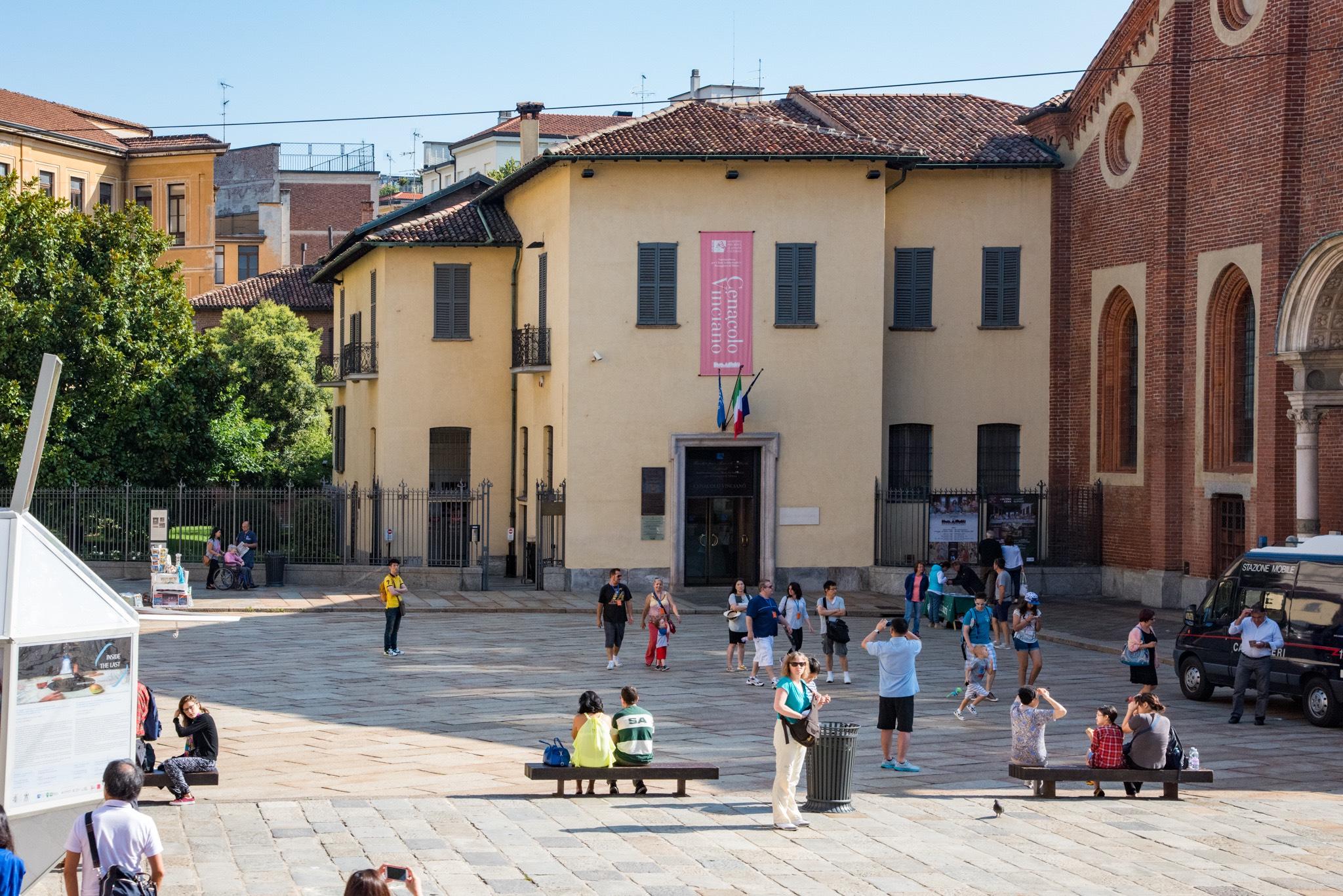
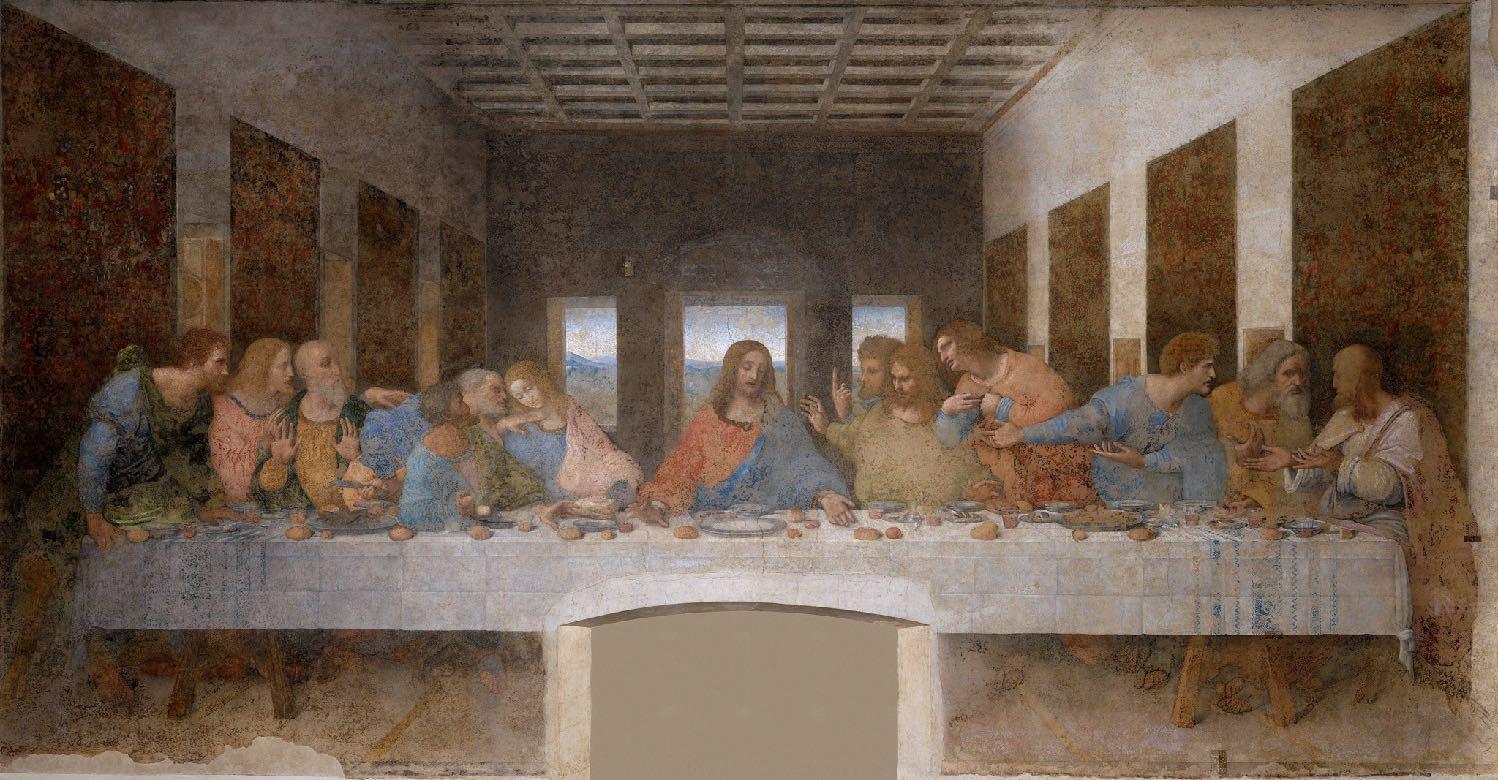
Francesco I. Sforza had a Dominican monastery and church built. Although the church and monastery appear rather unremarkable at first glance, one of the world's greatest
art treasures is located here. To view Leonardo's masterpiece, one must book an appointment in advance.

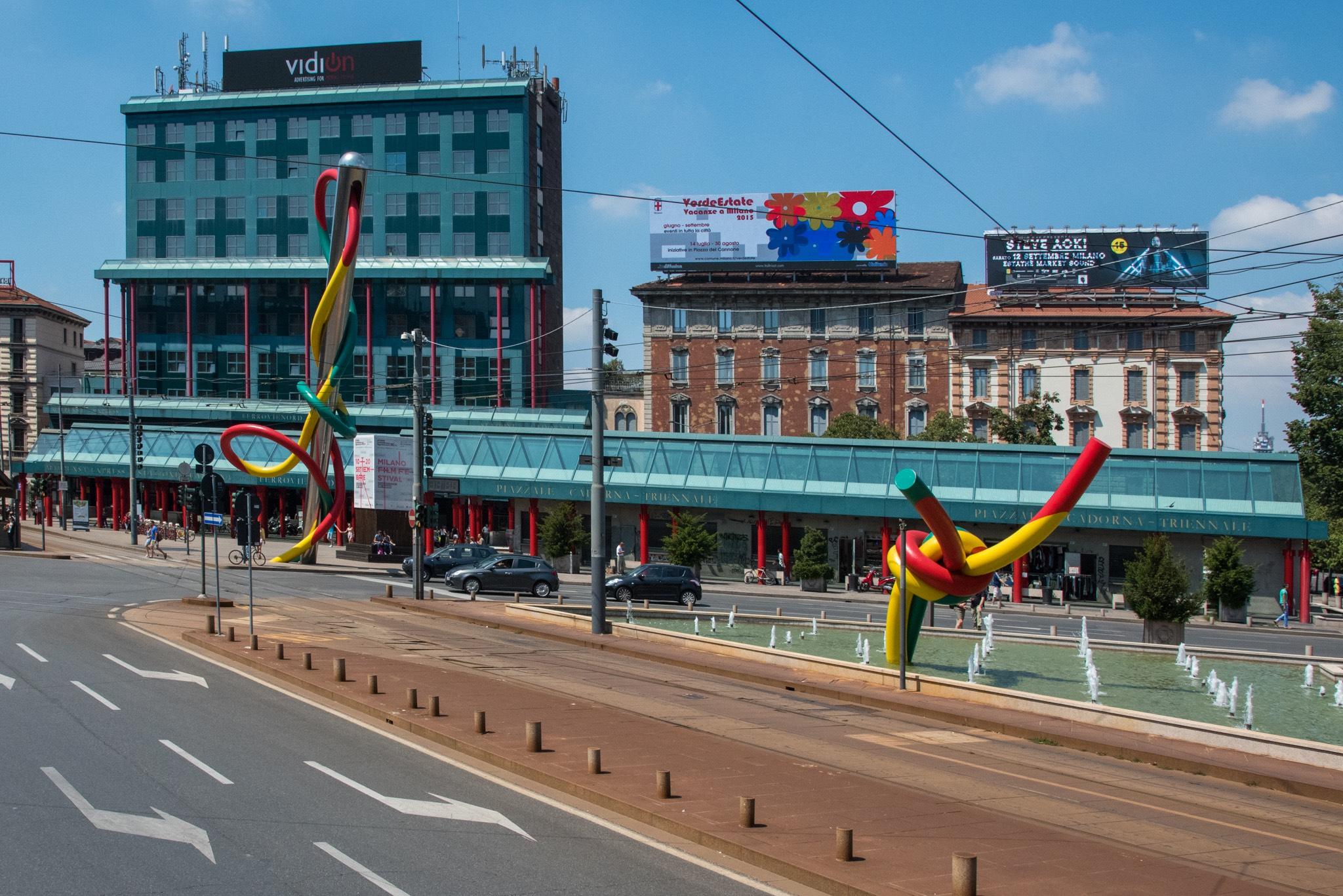
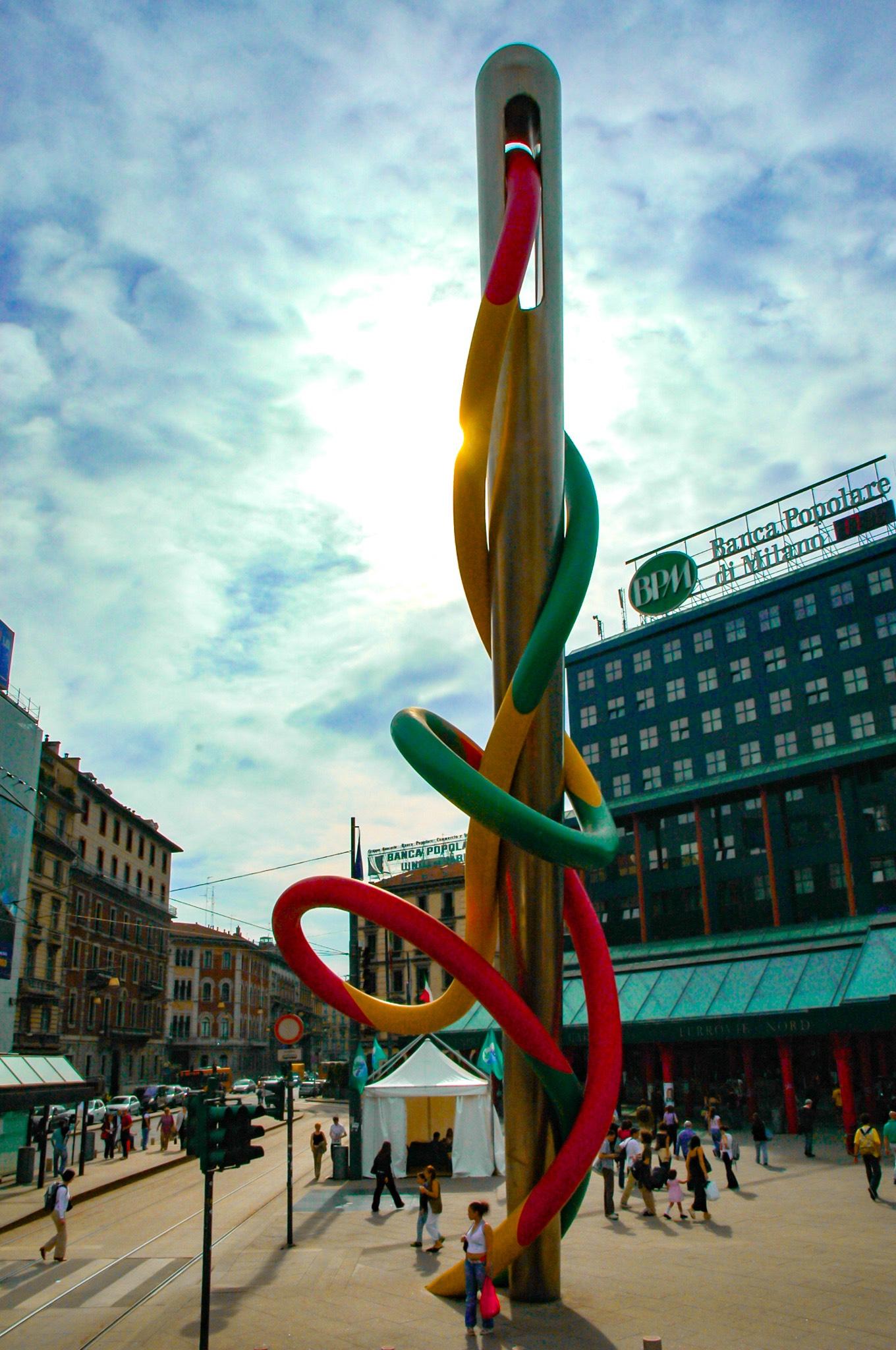
Since 2000, the two-part sculpture "Needle, Thread and Knot" has stood on Piazzale Cadorna. The colorful artwork was created by Claes Oldenburg and his wife Coosje van
Bruggen. The three colors of the thread refer to the three Milan subway lines.
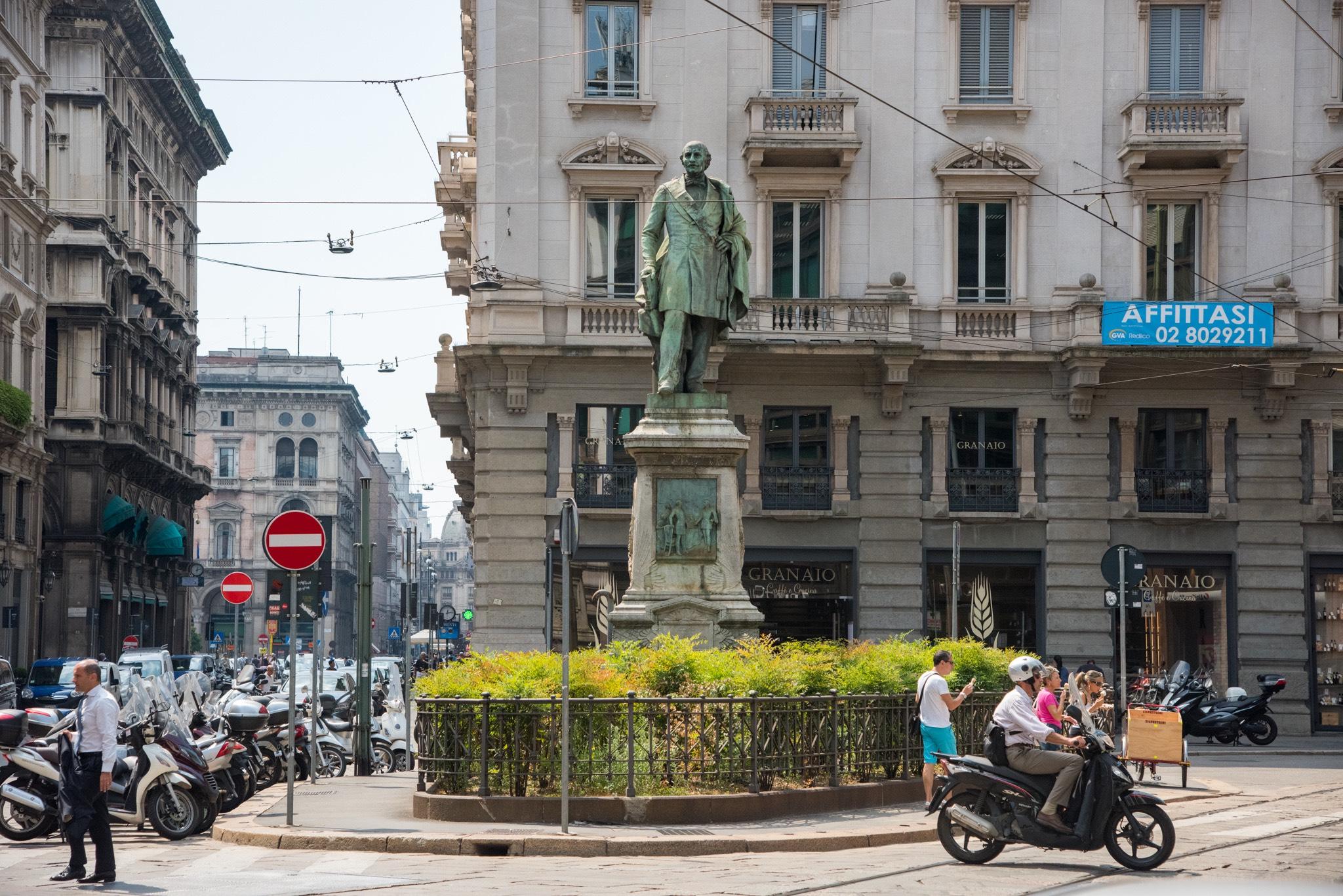
Revolution. The statue was erected in 1900 and is by the
a long time Grand Master of the Lodge.
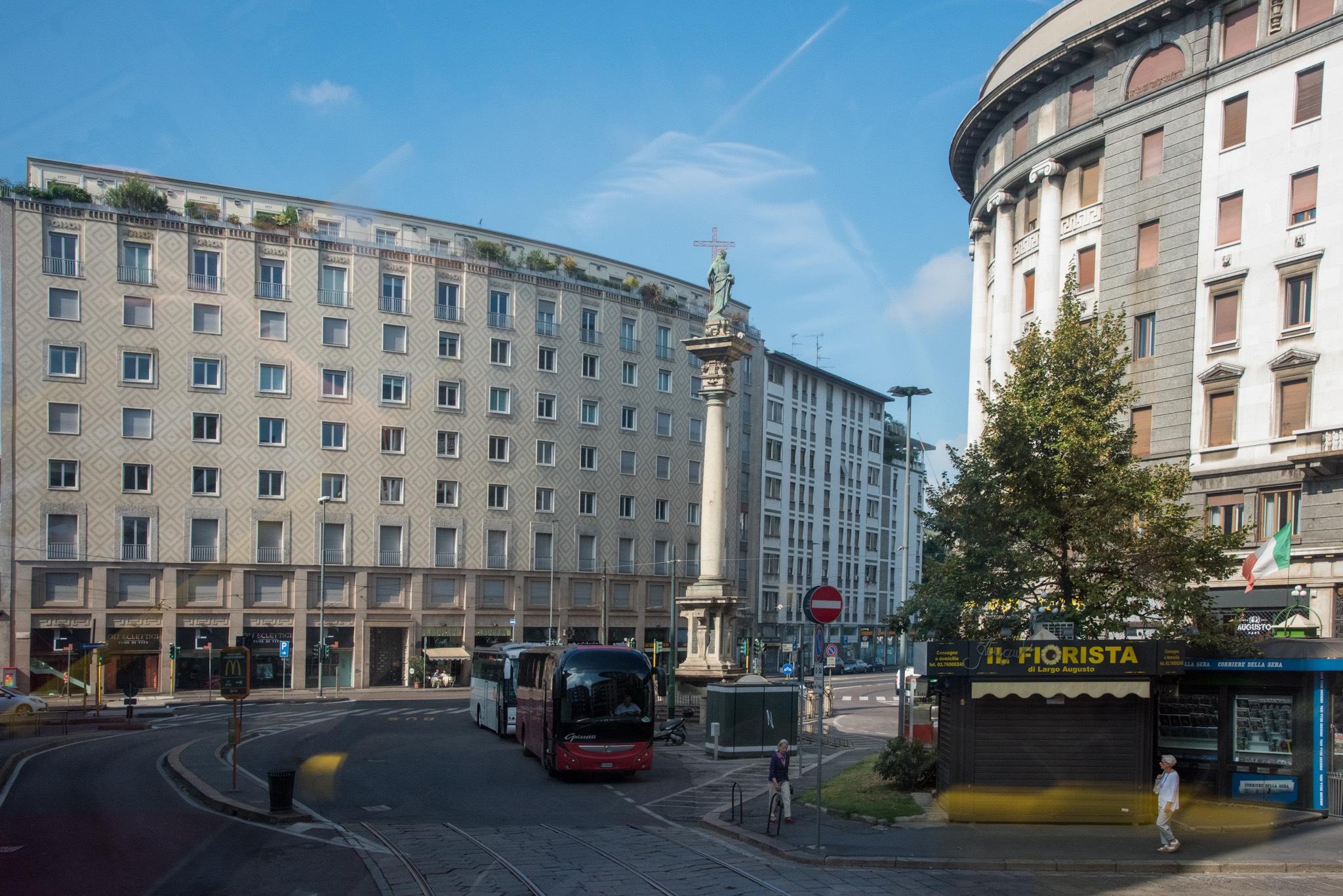
The column takes its name from the old fruit and vegetable market that was at this location. The granite column was erected in 1580 in thanks for the end of the plague. About a hundred years later, it was crowned with a statue of
Christ, created by Giuseppe and Gian Battista Vismara after a design by F. M. Richini.
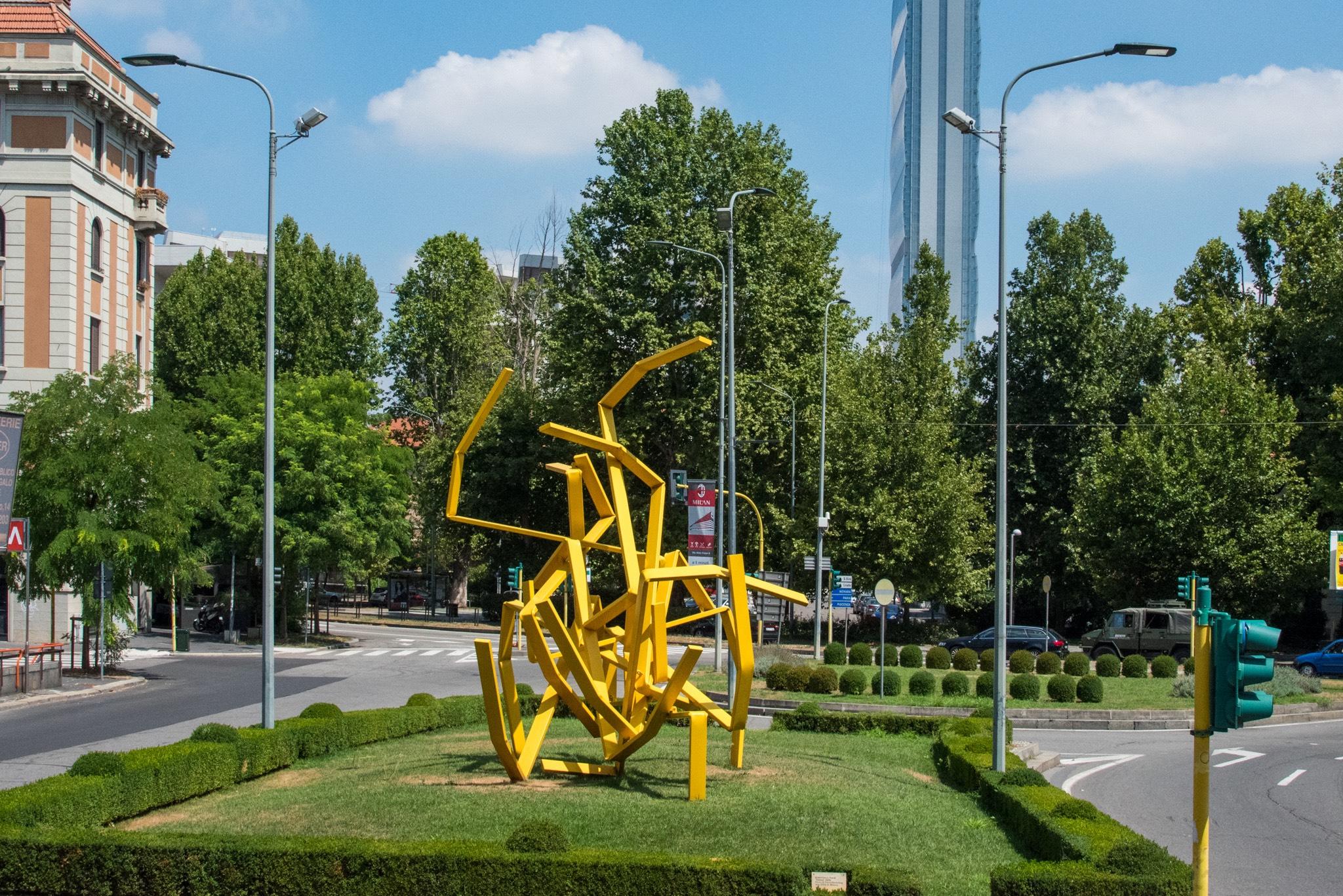
“Danza” 2006
The steel sculpture created by artist Gianfranco Pardi bears the name Danza (Dance). The monument was erected in May 2006 on Piazza Amendola. It represents the sequence
and individual movements of a dance based on the model of a stroboscopic photograph.
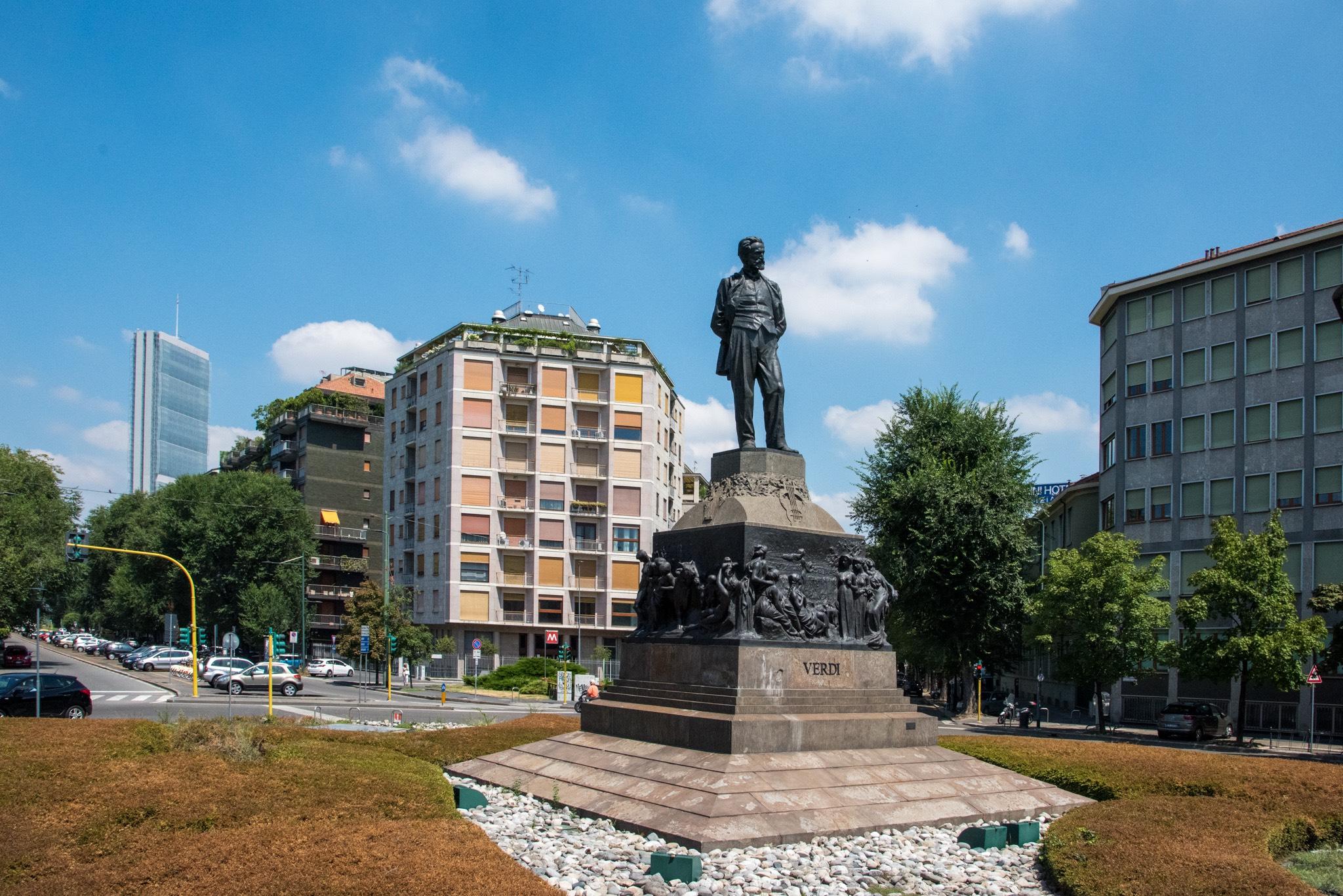
The statue of the master Giuseppe Verdi is located at the site where Casa Verdi (Piazza Buonarroti 29) is also situated. Casa Verdi is housed in a residence for musicians
who, like the great composer once, are not financially well off. Casa Verdi can be visited daily.
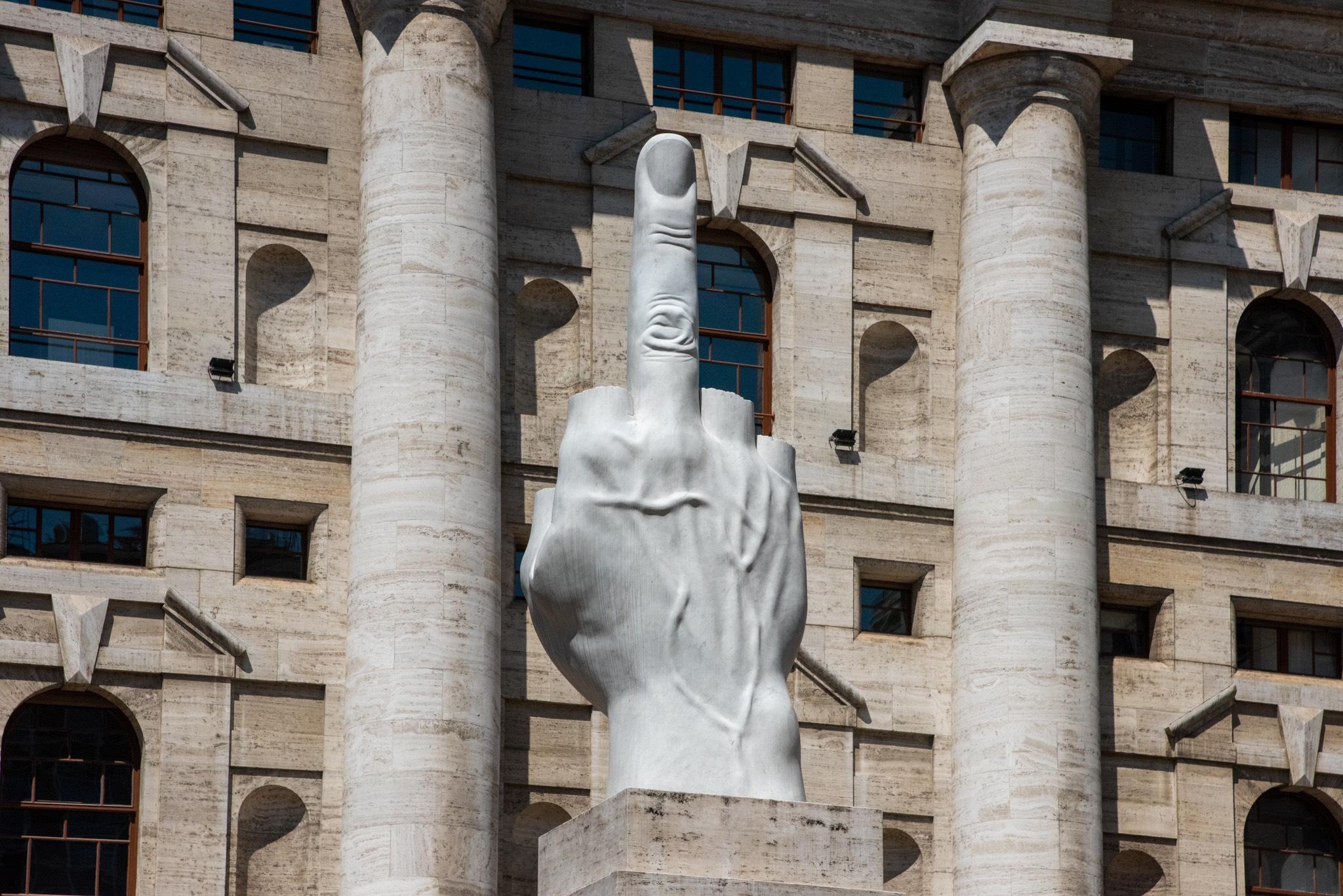
In Milan's financial center, directly in front of the stock exchange, stands the marble statue created by Maurizio Cattelan since 2010. The statue is called L.O.V.E., which stands for Libertà, Odio, Vendetta, and Eternità (Freedom,
Hate, Revenge, Eternity). Cattelan sends an unmistakable message to the bankers with it.
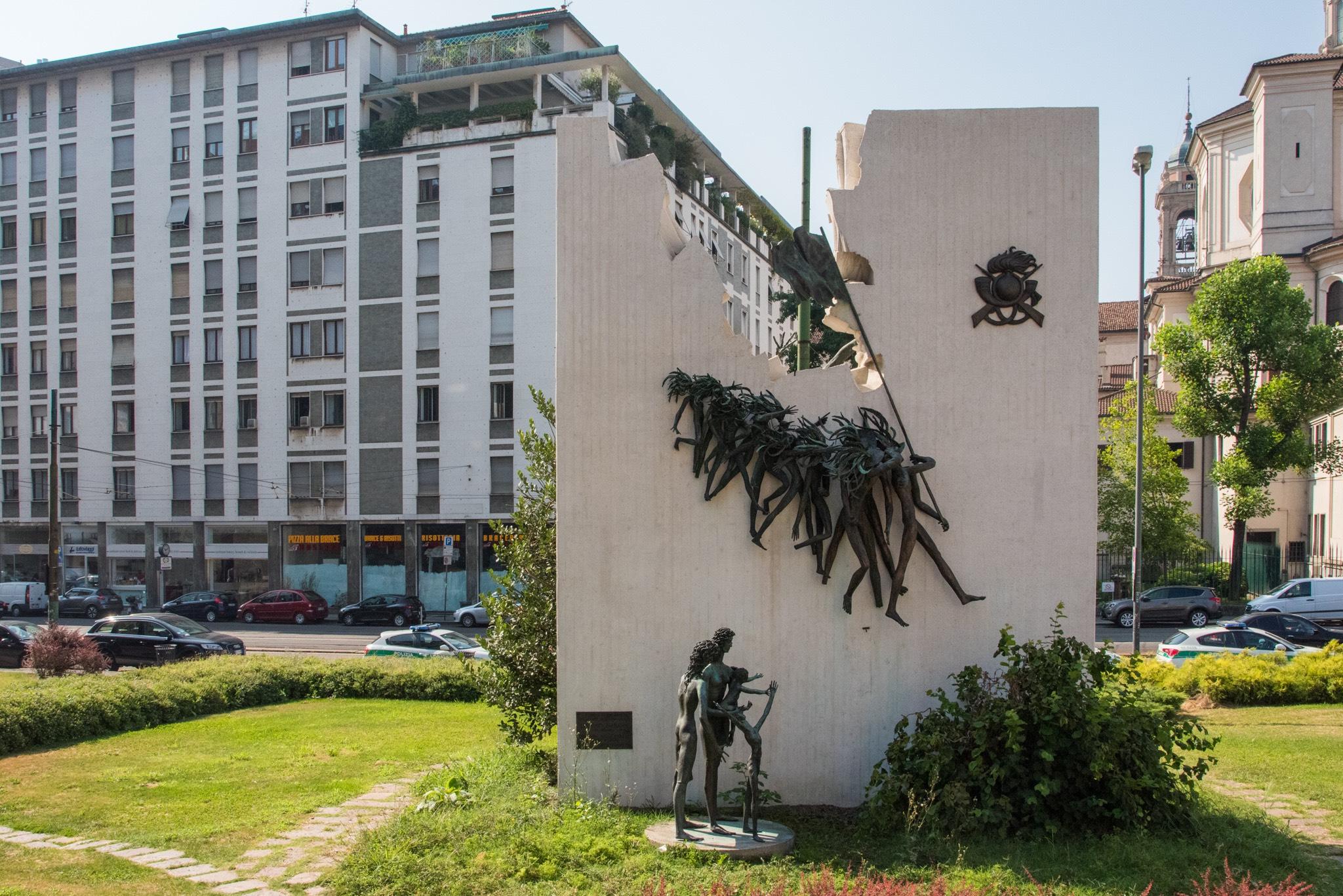
The “Bersaglieri” are a special unit of the Italian infantry. The artwork was created by Mario Robaudi. With the irregular cutout in the reinforced concrete wall, Robaudi
symbolically represents injuries. A group of bronze figures on the wall shows soldiers in front of whom a small family stands.
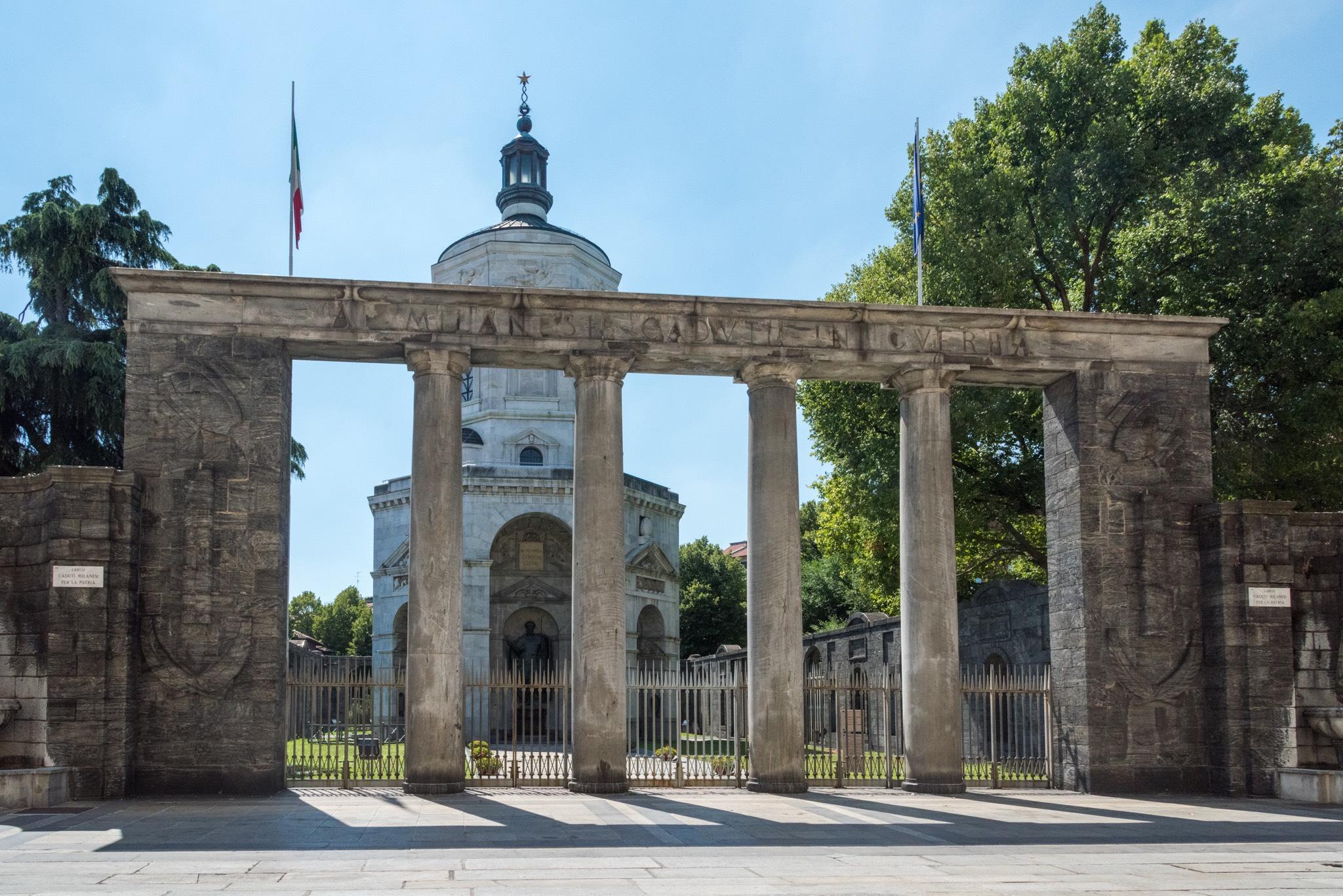
The memorial to the fallen Milanese (Sacrario dei Caduti Milanesi) bears the inscription “Ai Milanesi caduti in Guerra” (to the Milanese who fell in war). The eight sides
of the memorial recall the eight gates of Milan through which the soldiers departed to join the Italian troops.
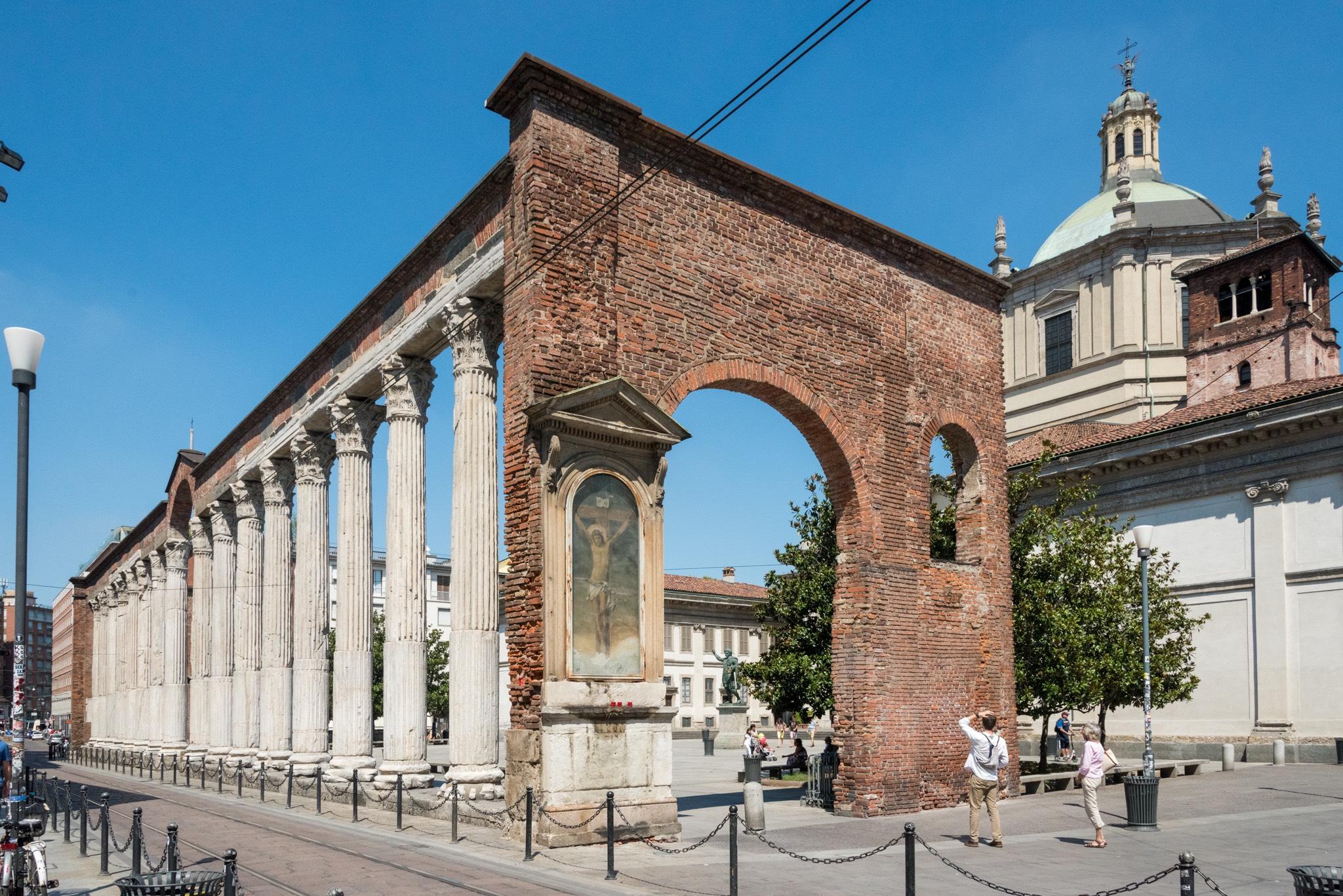
The “Colonne di San Lorenzo” (Columns of San Lorenzo) stand in front of the famous basilica. The 16 Corinthian marble columns were probably part of a supporting
structure of Emperor Maximilian's baths from the 4th century. The columns are rare remnants from Roman times.
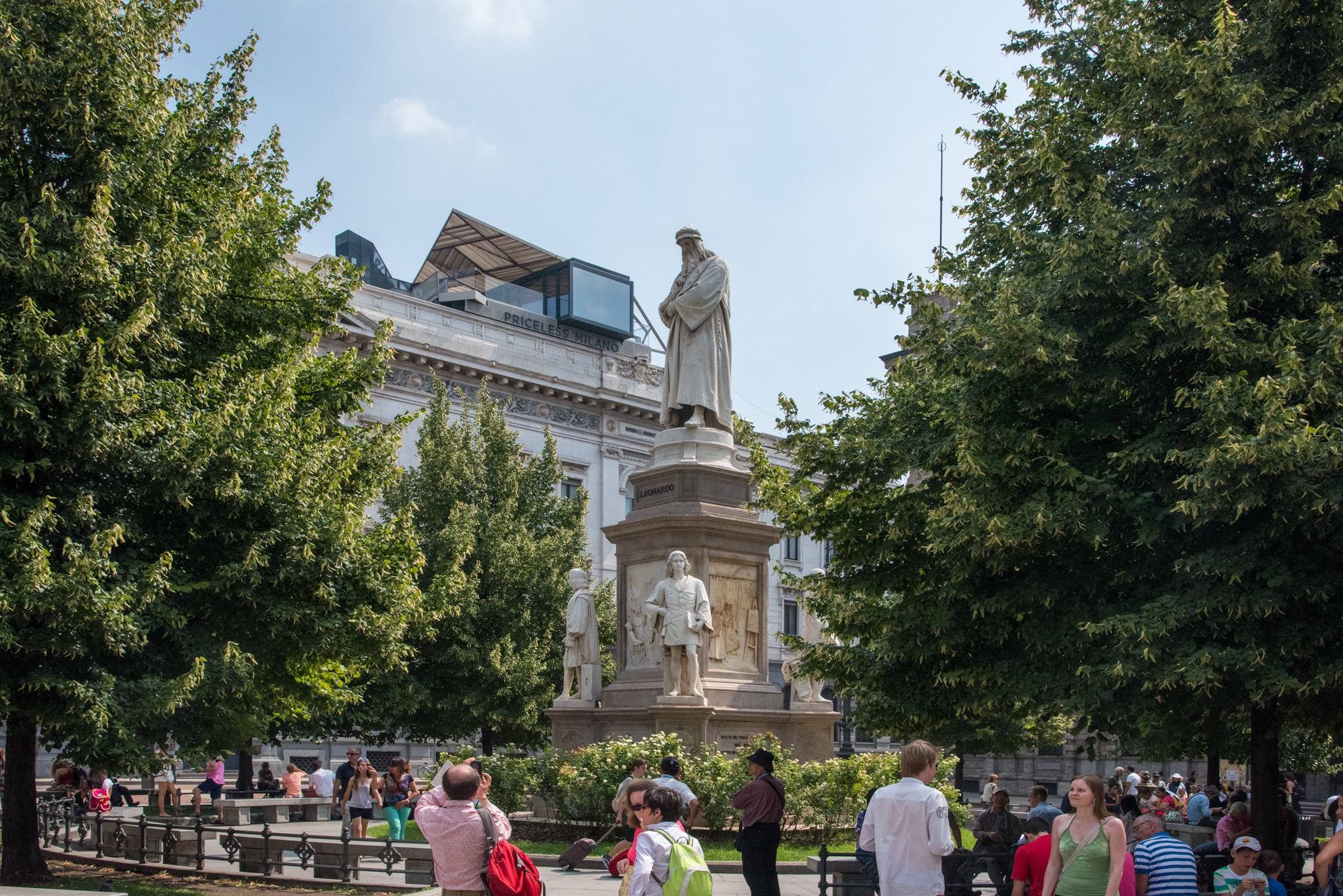
The sculptor Pietro Magni created this statue of the universal genius Leonardo da Vinci, unveiled in 1872. Right behind the statue is the oldest house on the square, Palazzo Marino from 1563. To the left behind Leonardo are
the shopping palace Galleria Vittorio Emanuele II and the Leonardo Museum; in front of him stands the famous Milan Scala.
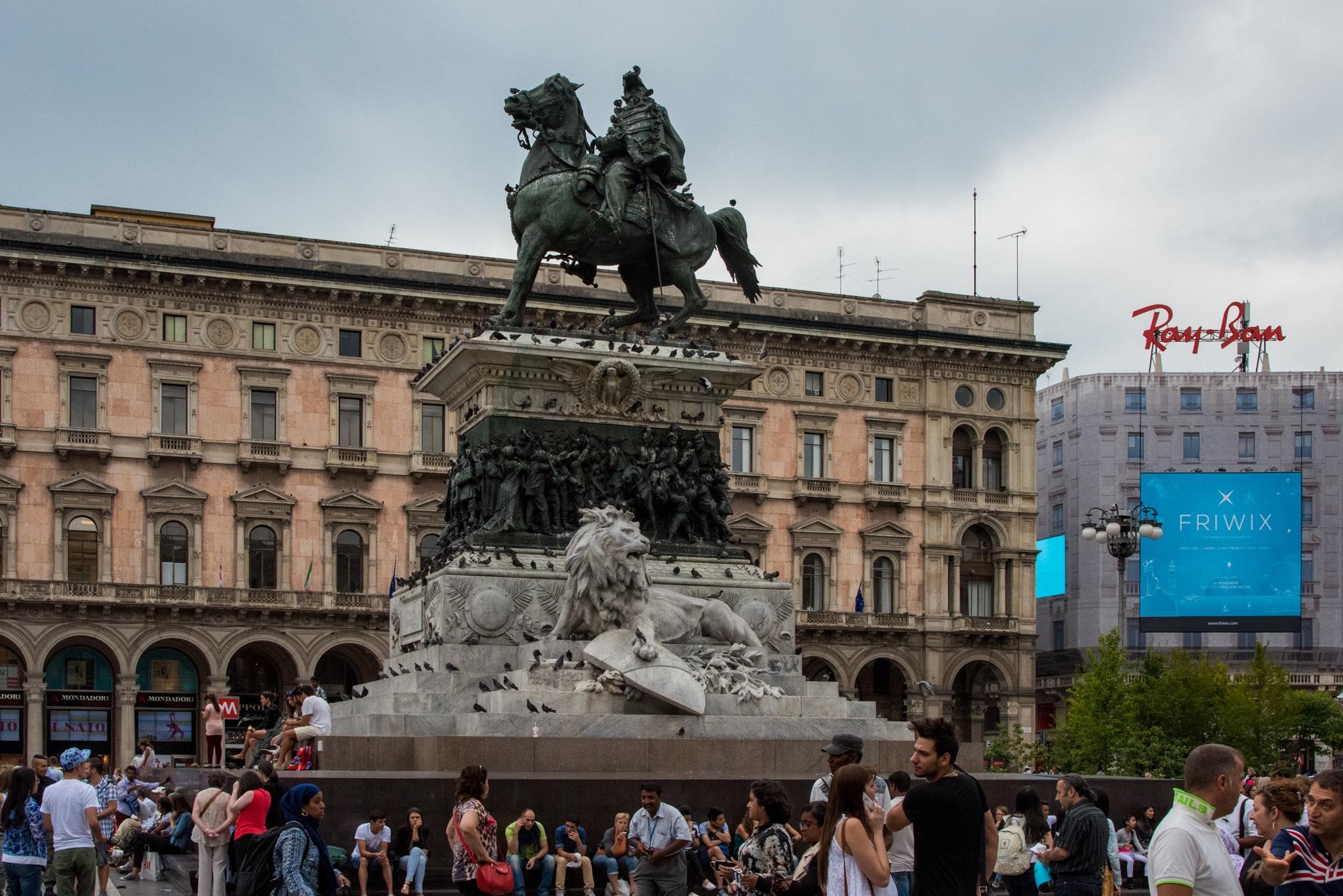
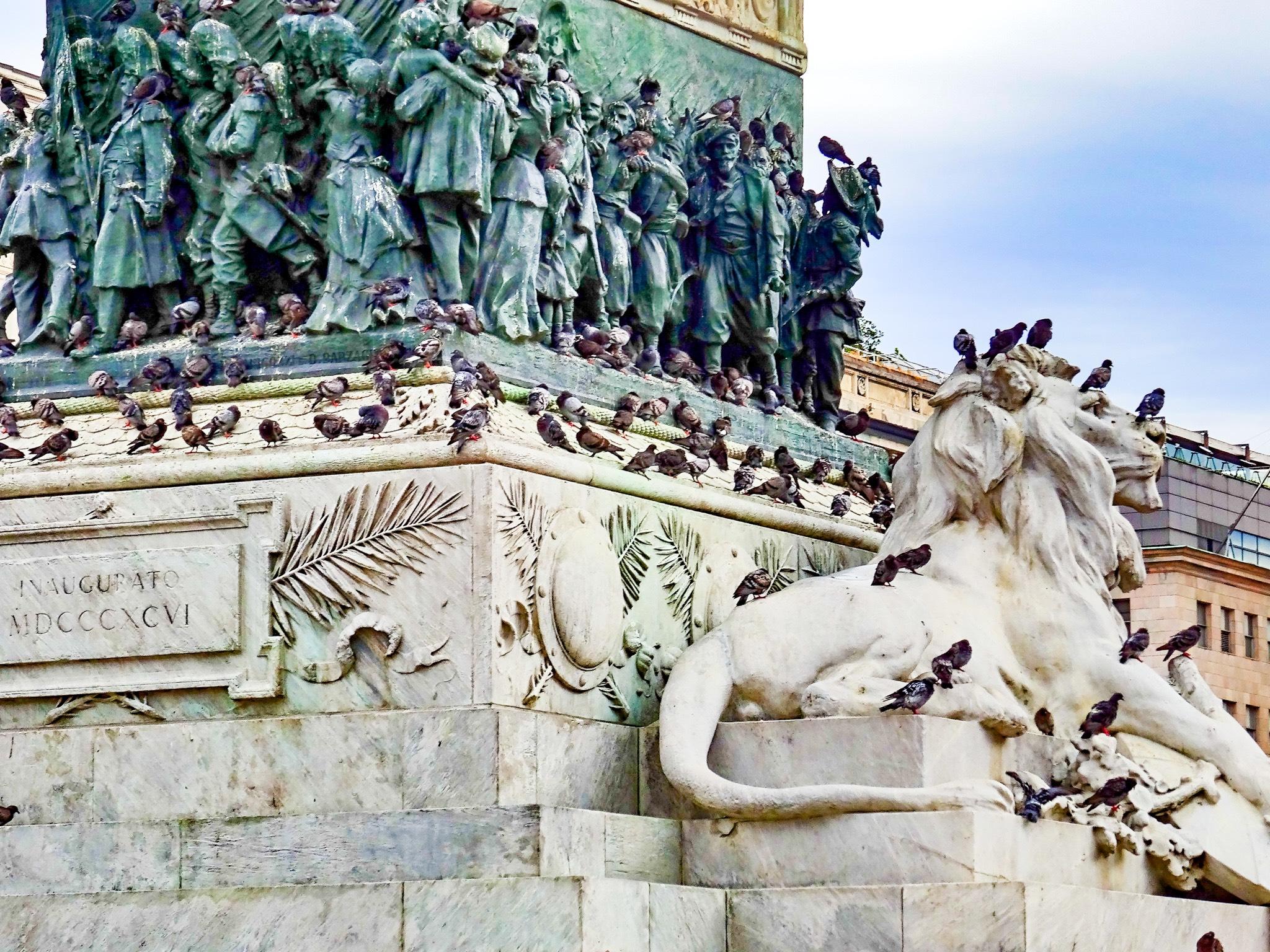
majestically on Piazza del Duomo in front of Milan Cathedral. In the year of Victor Emanuel II's death (1878), the sculptor Ercole Rosa was commissioned to create the inaugurated only in 1896.
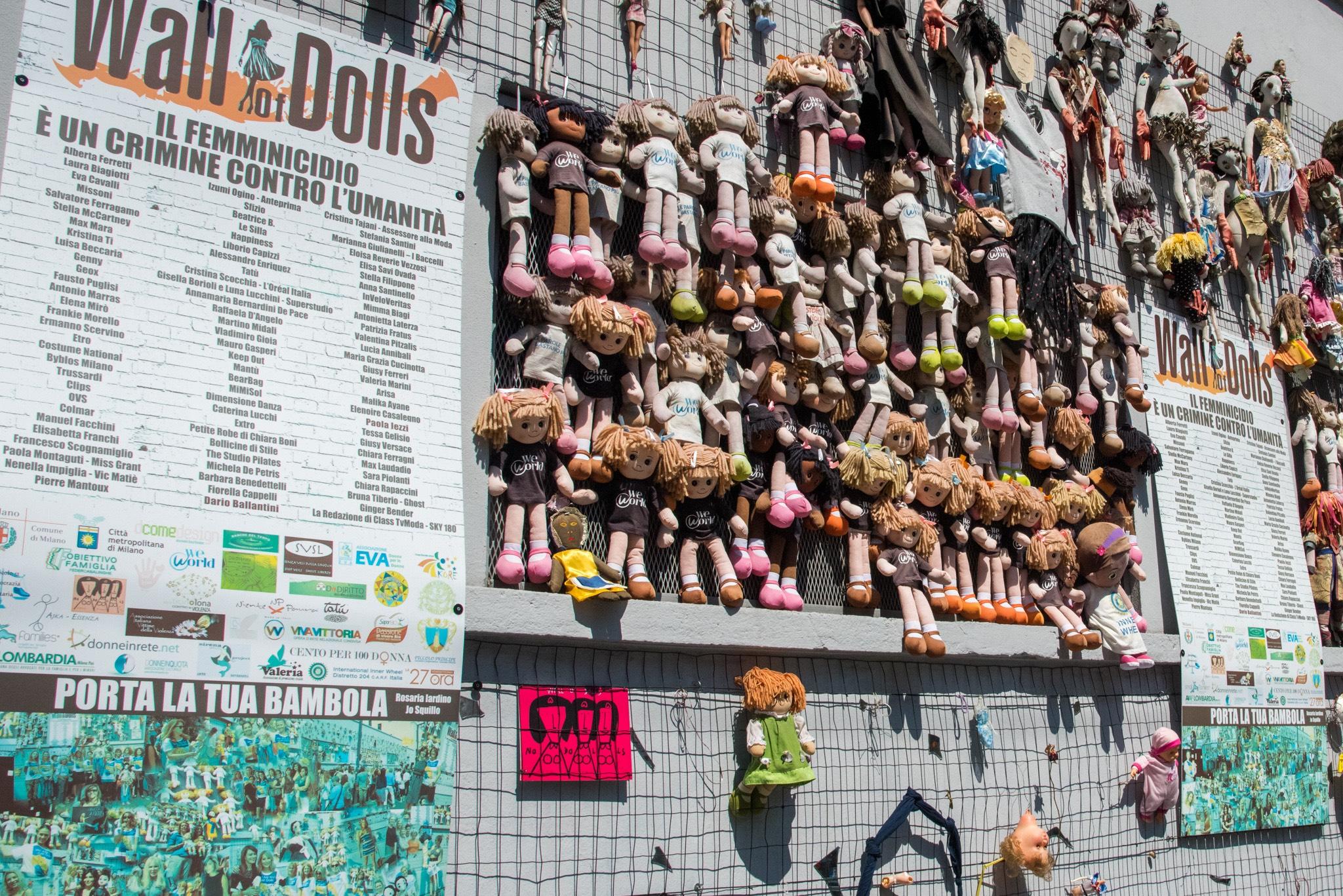
The “Wall of Dolls” dates back to an initiative by Jo Squillo, a composer and TV presenter from Milan. The artwork aims to draw attention to violence and crimes against
women in Italy. The wall, which began as an artistic installation, developed into a symbol and memorial.

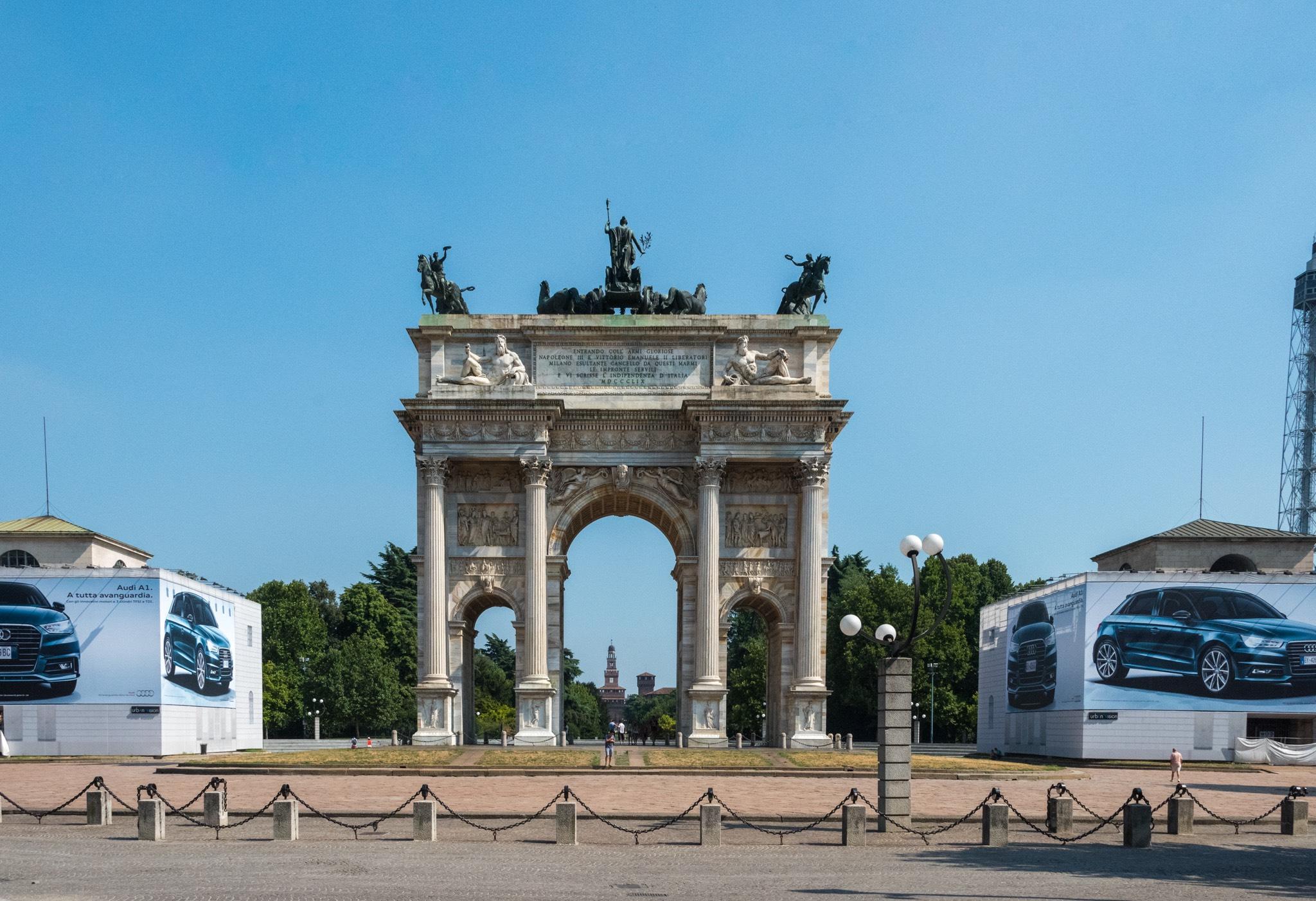
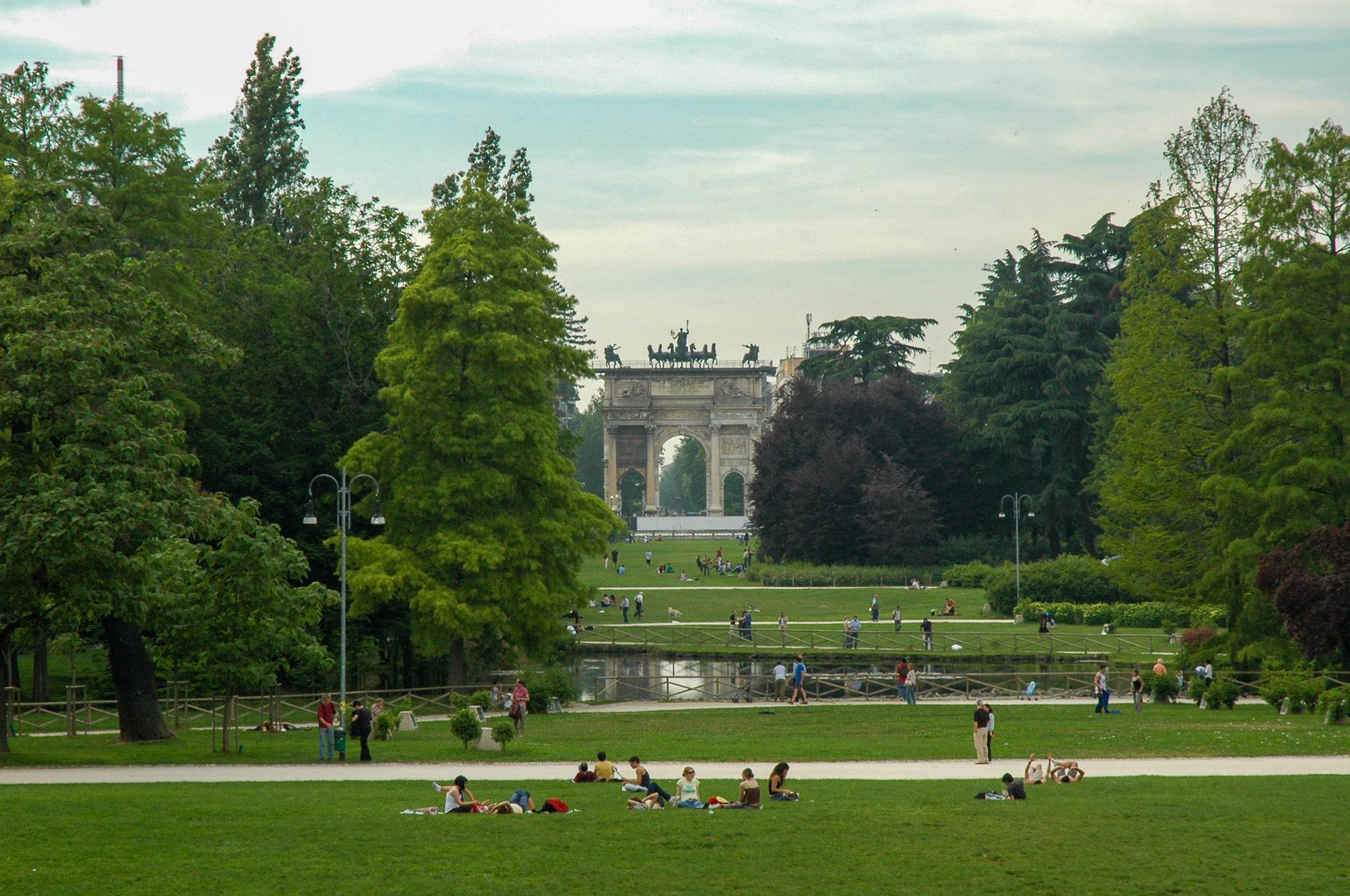
The Peace Arch stands on Piazza Sempione behind Castello Sforzesco. Construction began in 1807 in honor of Napoleon, but his Italian kingdom fell before completion.
Emperor Franz I dedicated the arch to the European Peace of 1815 and ordered its completion.
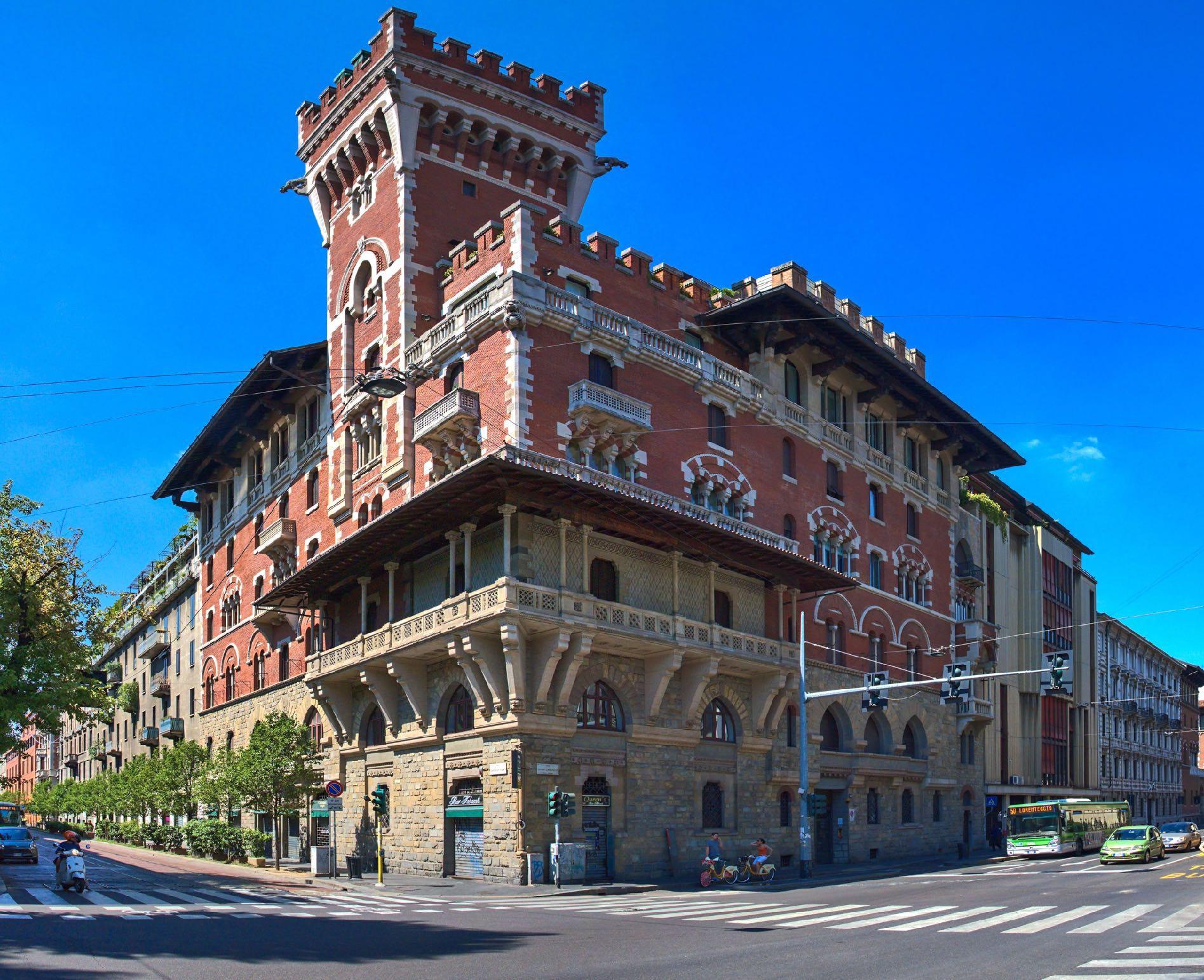
Castello Cova is also known as Palazzo Viviani Cova. The striking building was constructed from 1910 to 1915 by architect Adolfo Coppedè. It was built in a neo-medieval
style - with its red bricks, white decorations, and battlements, it resembles a medieval castle.
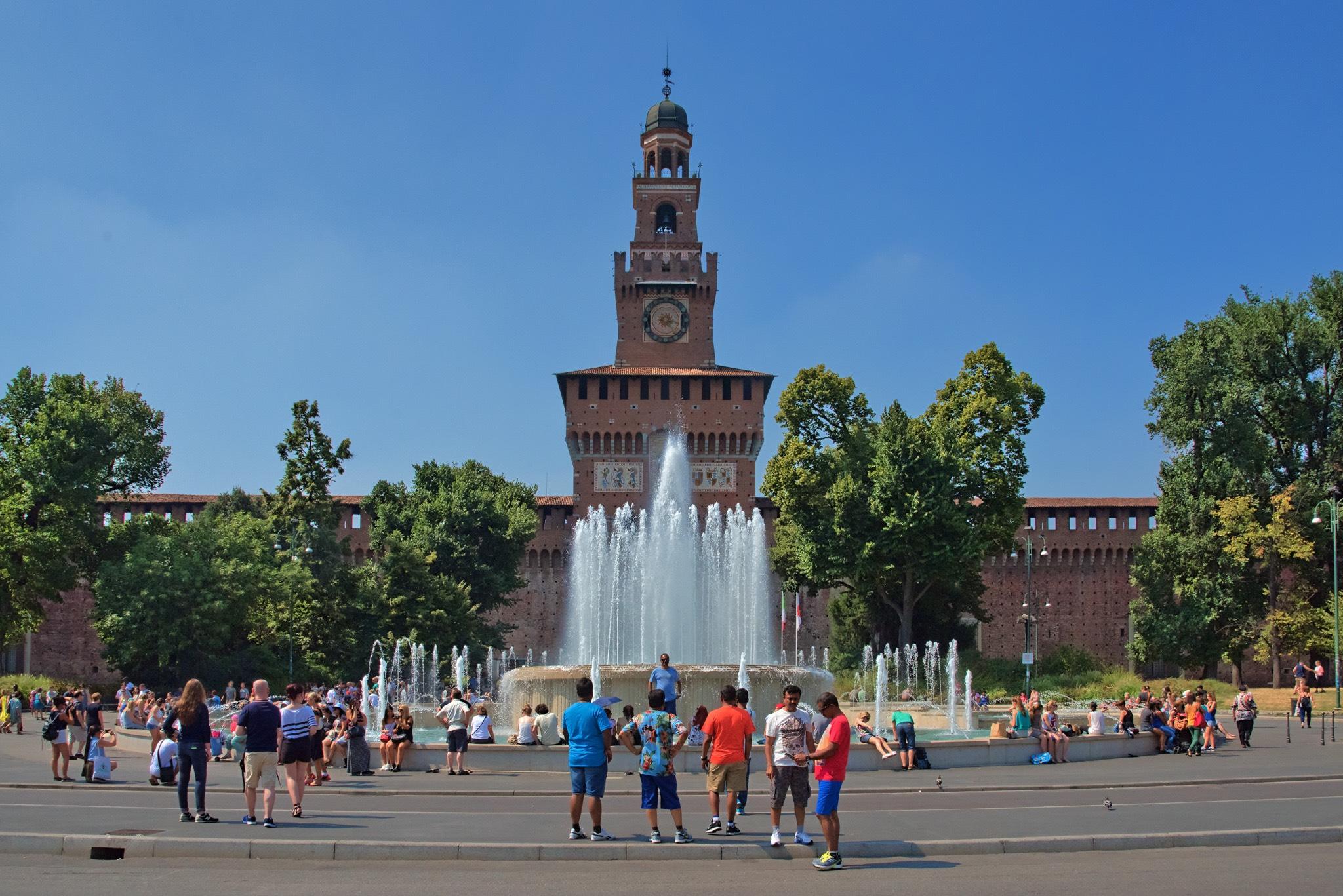
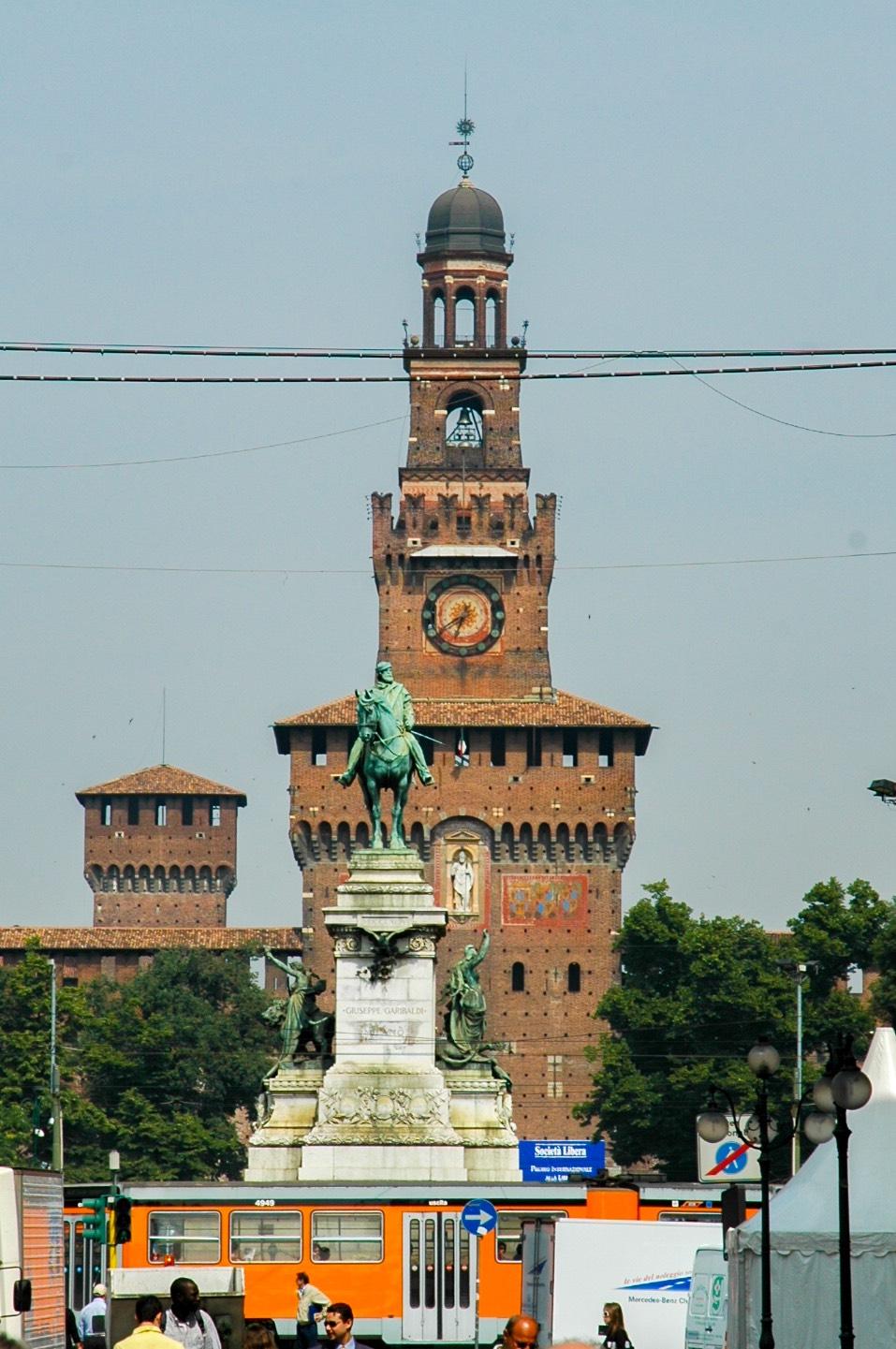
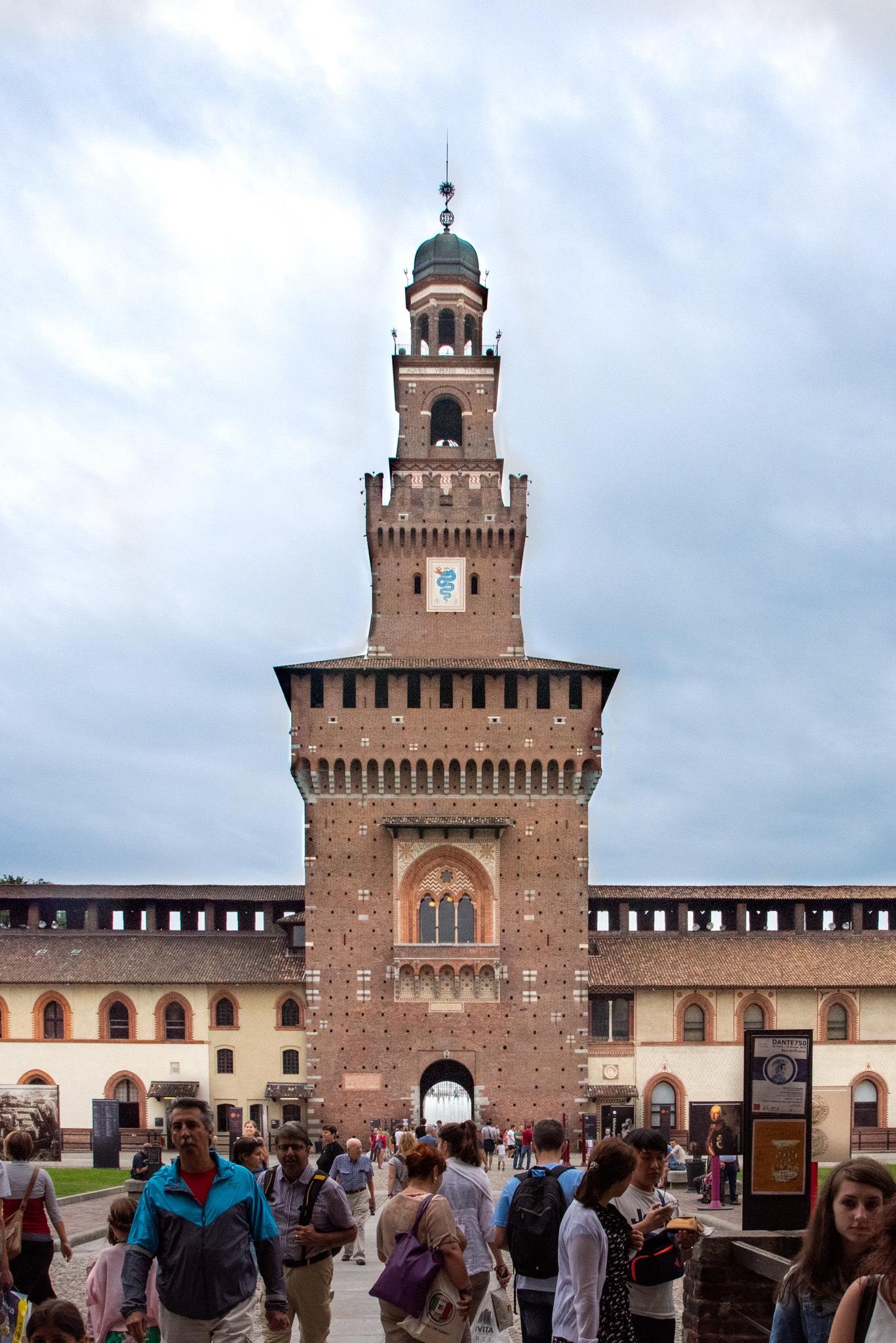
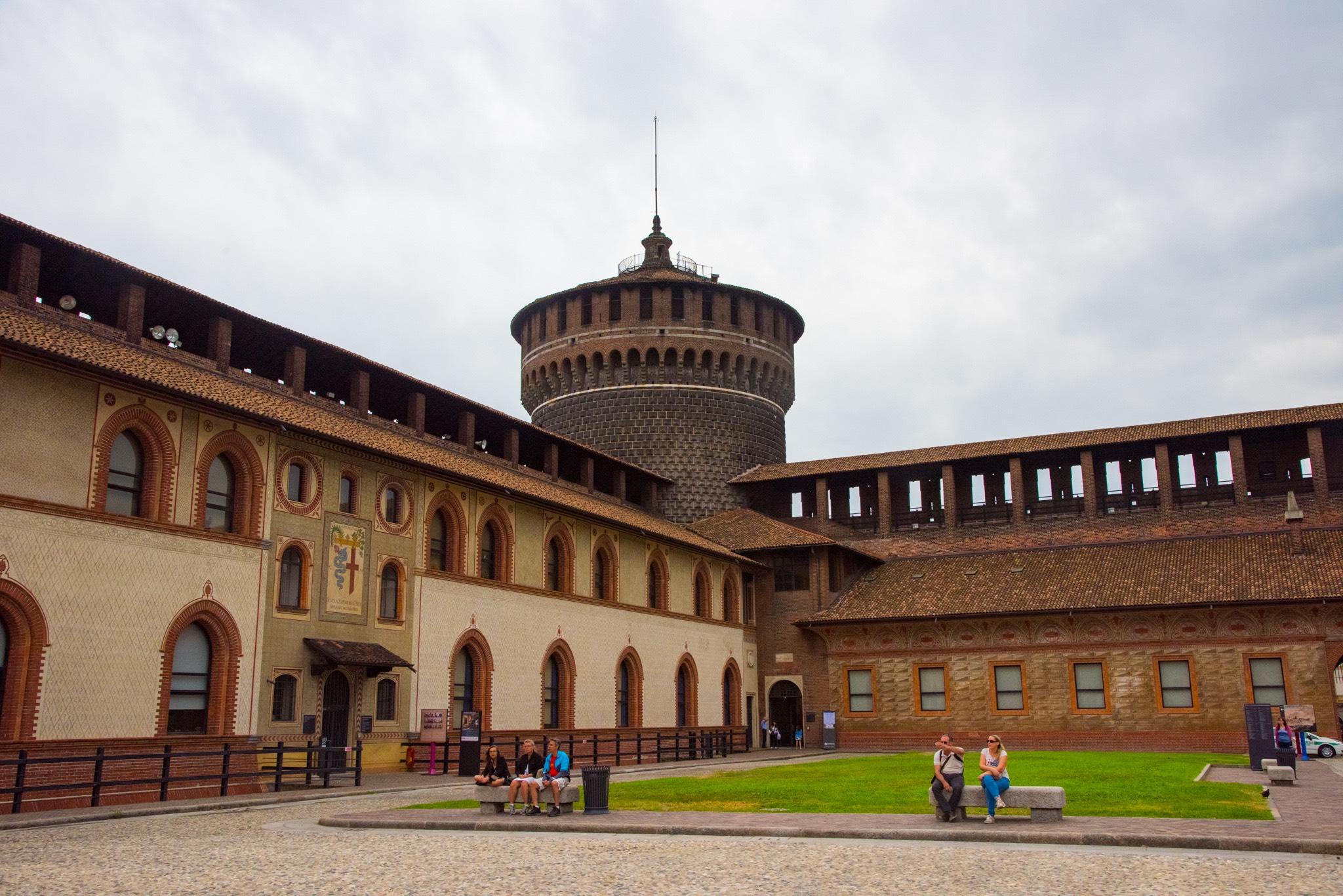
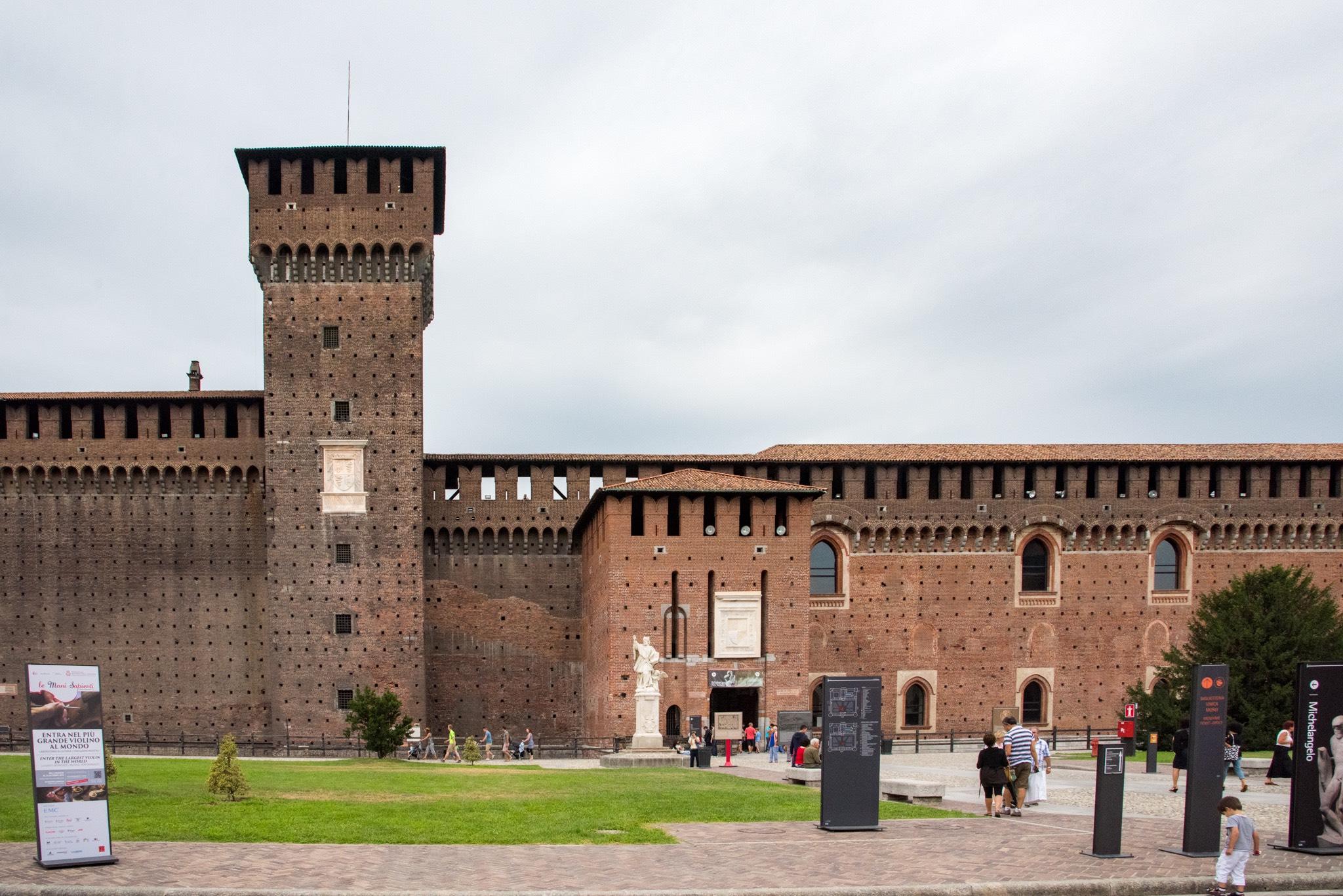
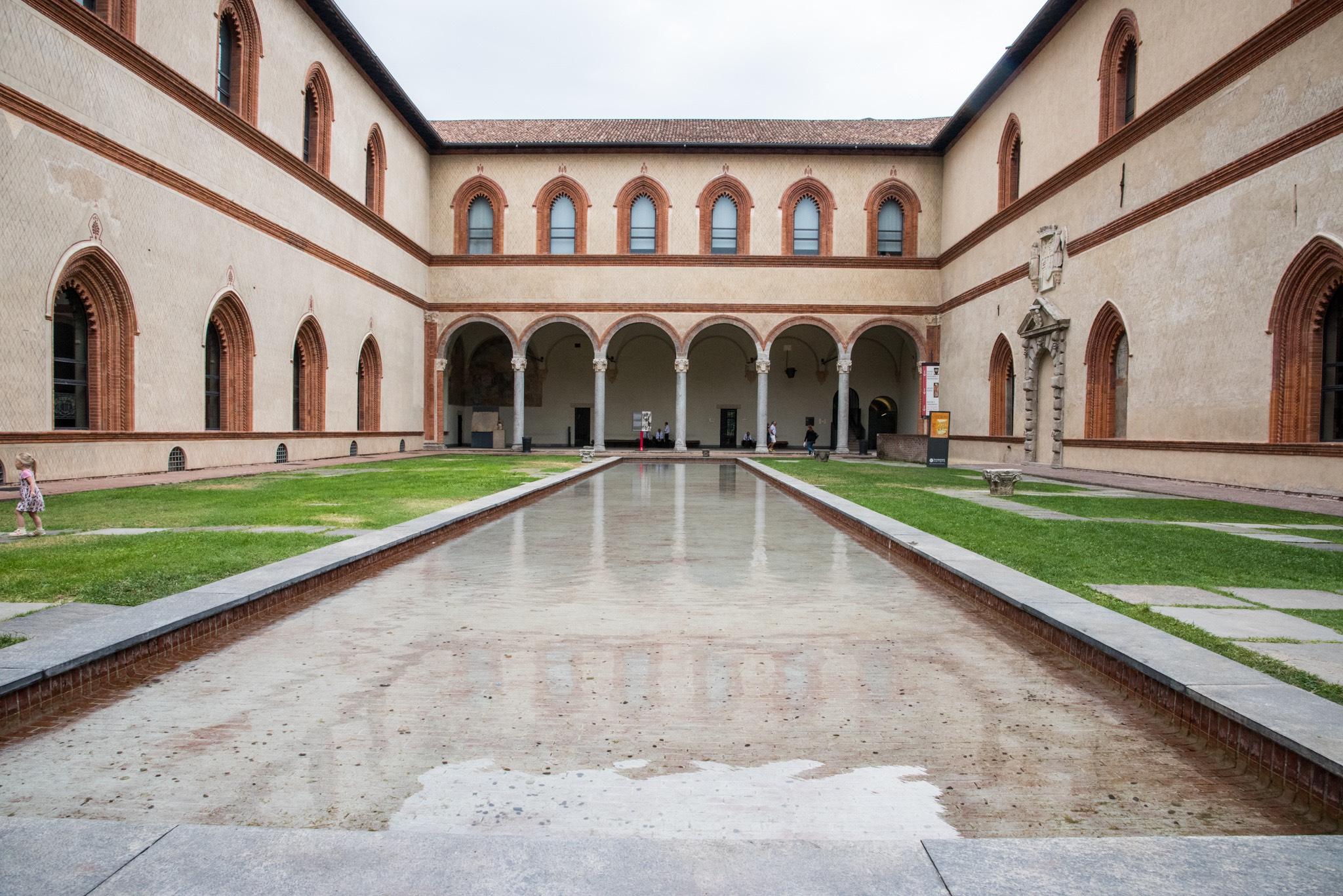
At the site where Castello Sforzesco was built in 1450, the castle of the Visconti family, destroyed in 1447, previously stood. Numerous architects were employed for the
construction of the complex, including Leonardo da Vinci. Napoleon had the bastion system leveled and later built over.
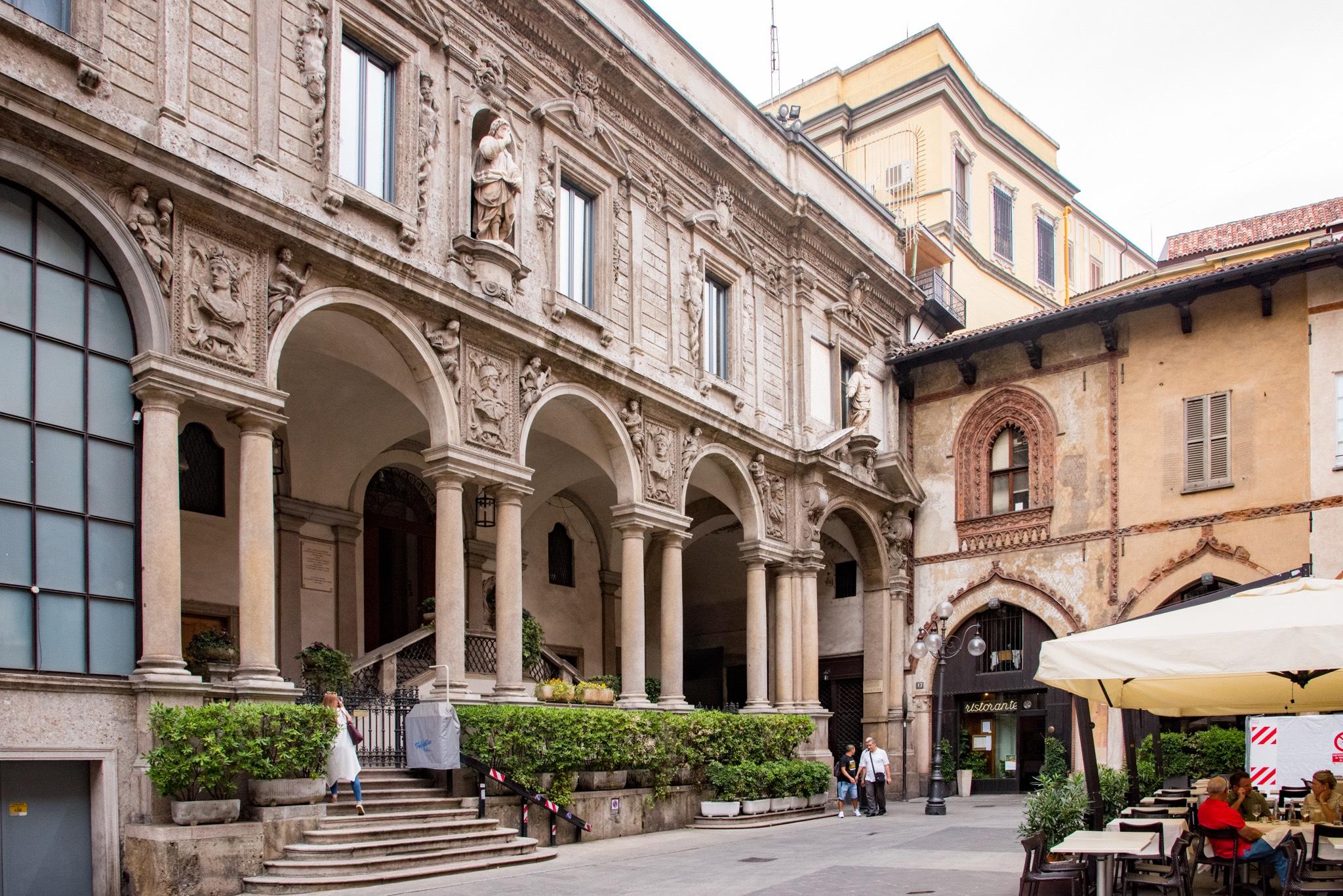
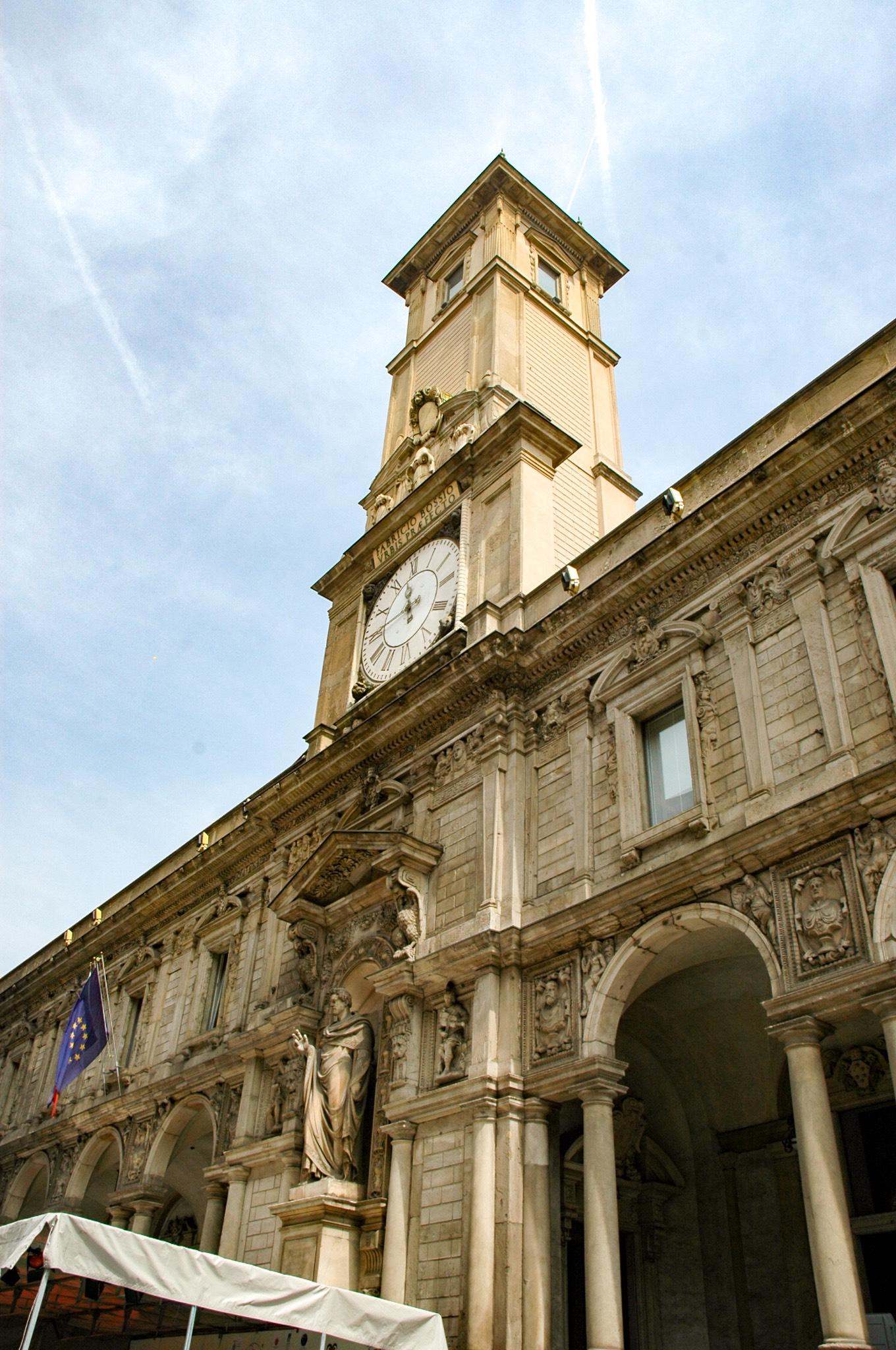
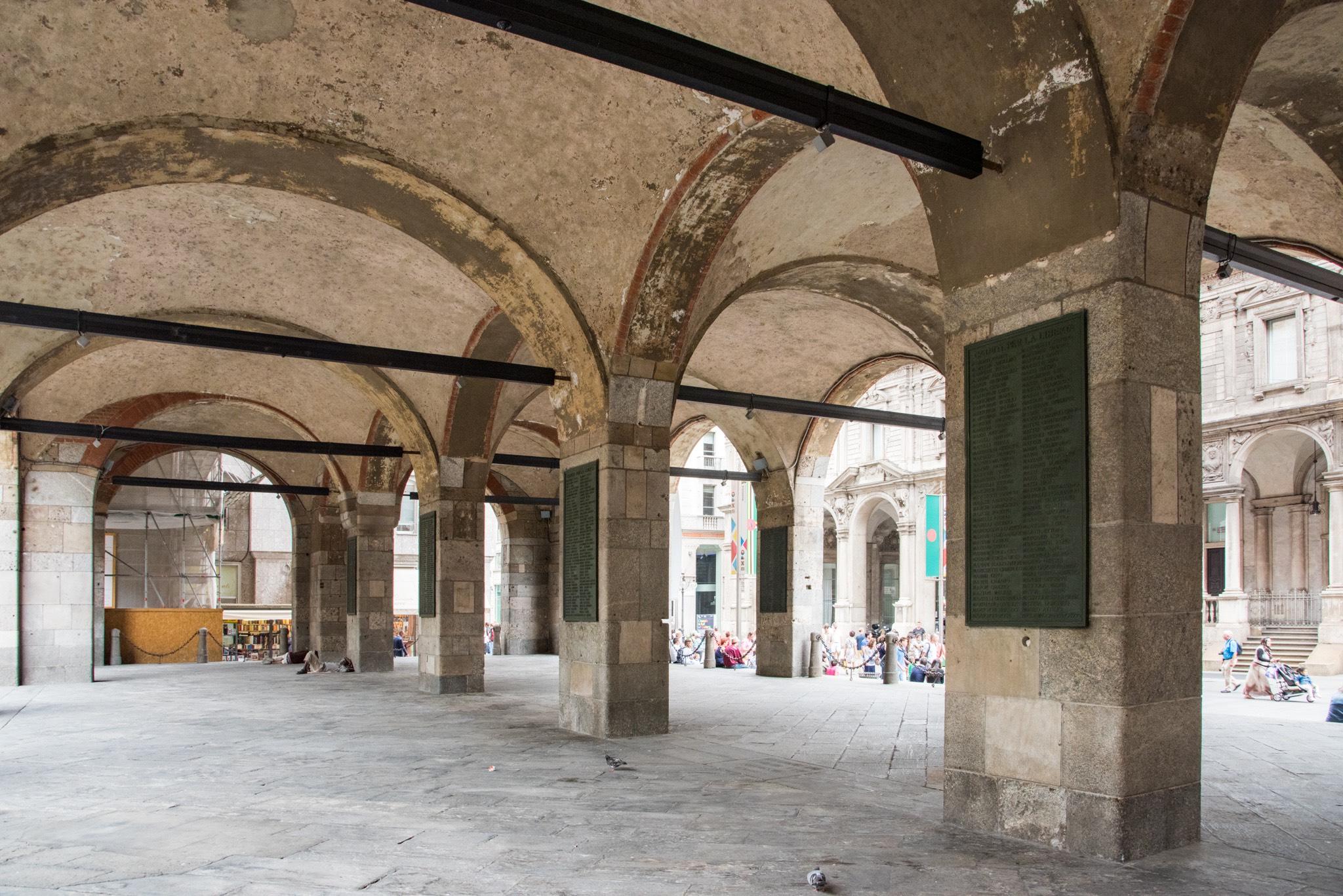
Palazzo delle Scuole Palatine stands in the medieval city center at Piazza Mercanti. Here was the city's most prestigious higher school. The original building was destroyed by fire and rebuilt in 1644. The statues of Augustine and Ausonius are by Pietro Lasagna.
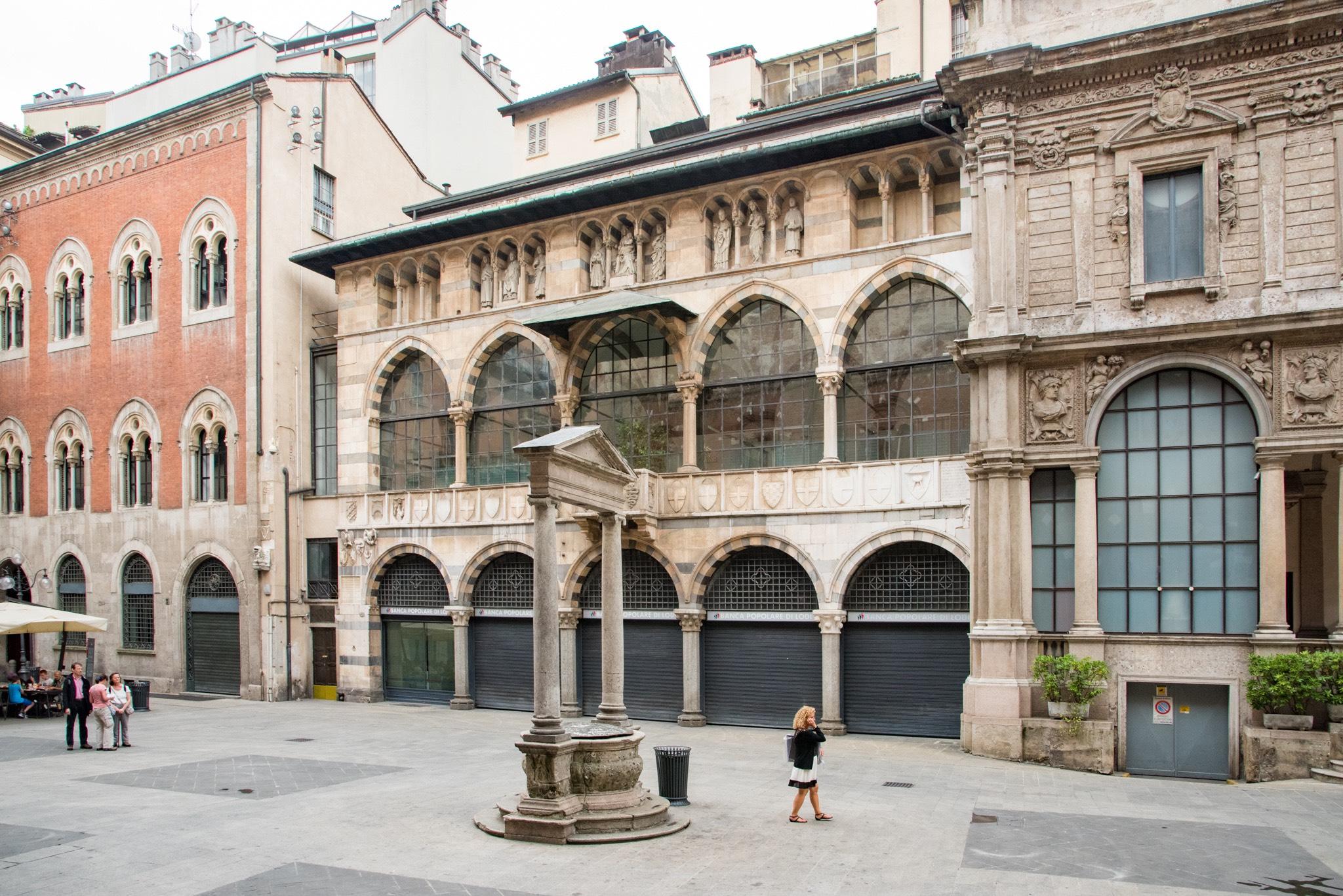
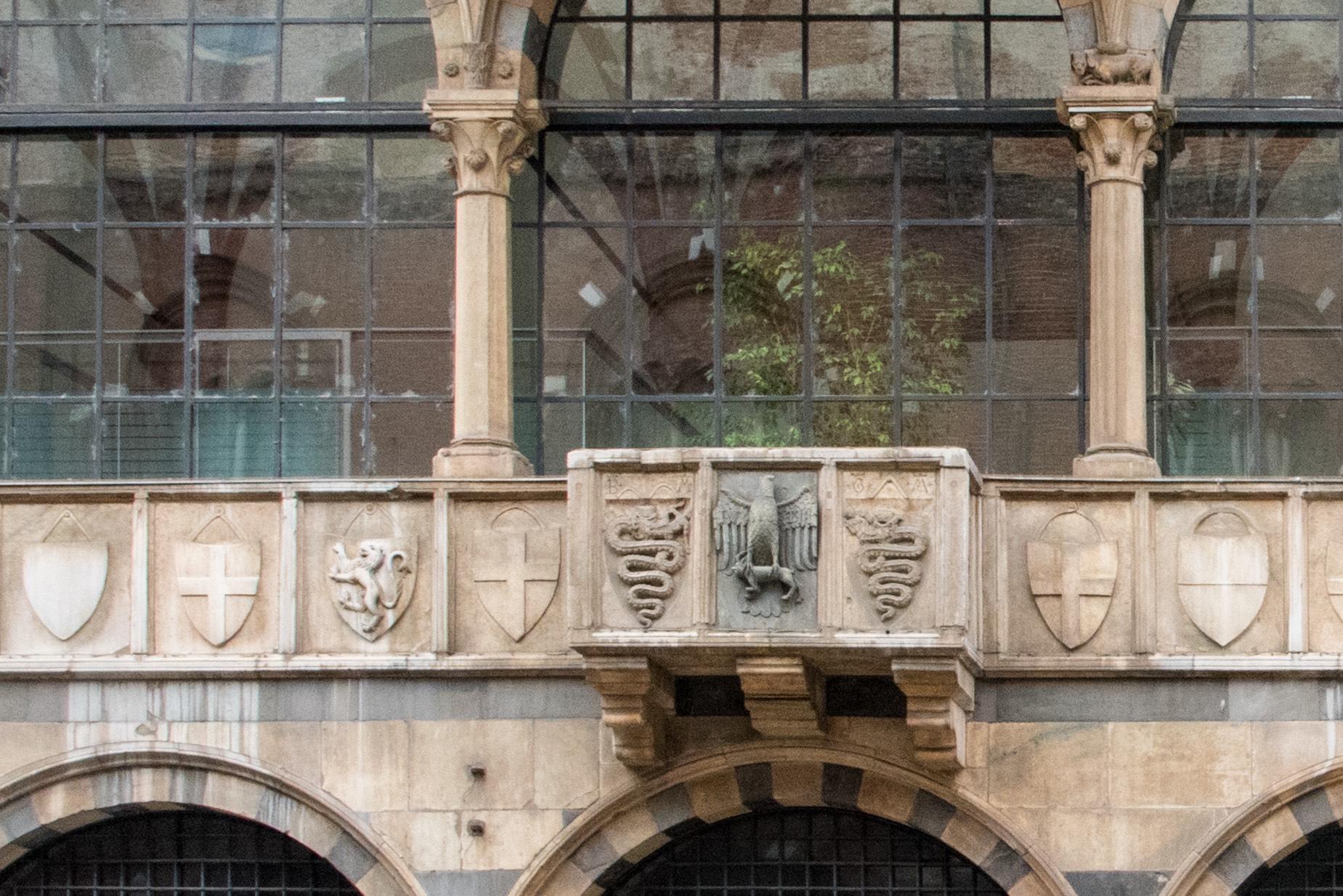
The Loggia degli Osii was the seat of Milan's jurisdiction in the mid-13th century. The judge announced his verdicts from the balcony. The design of the balcony in the form of
an eagle clutching its prey symbolically stands for justice. The eagle is flanked by two snakes.
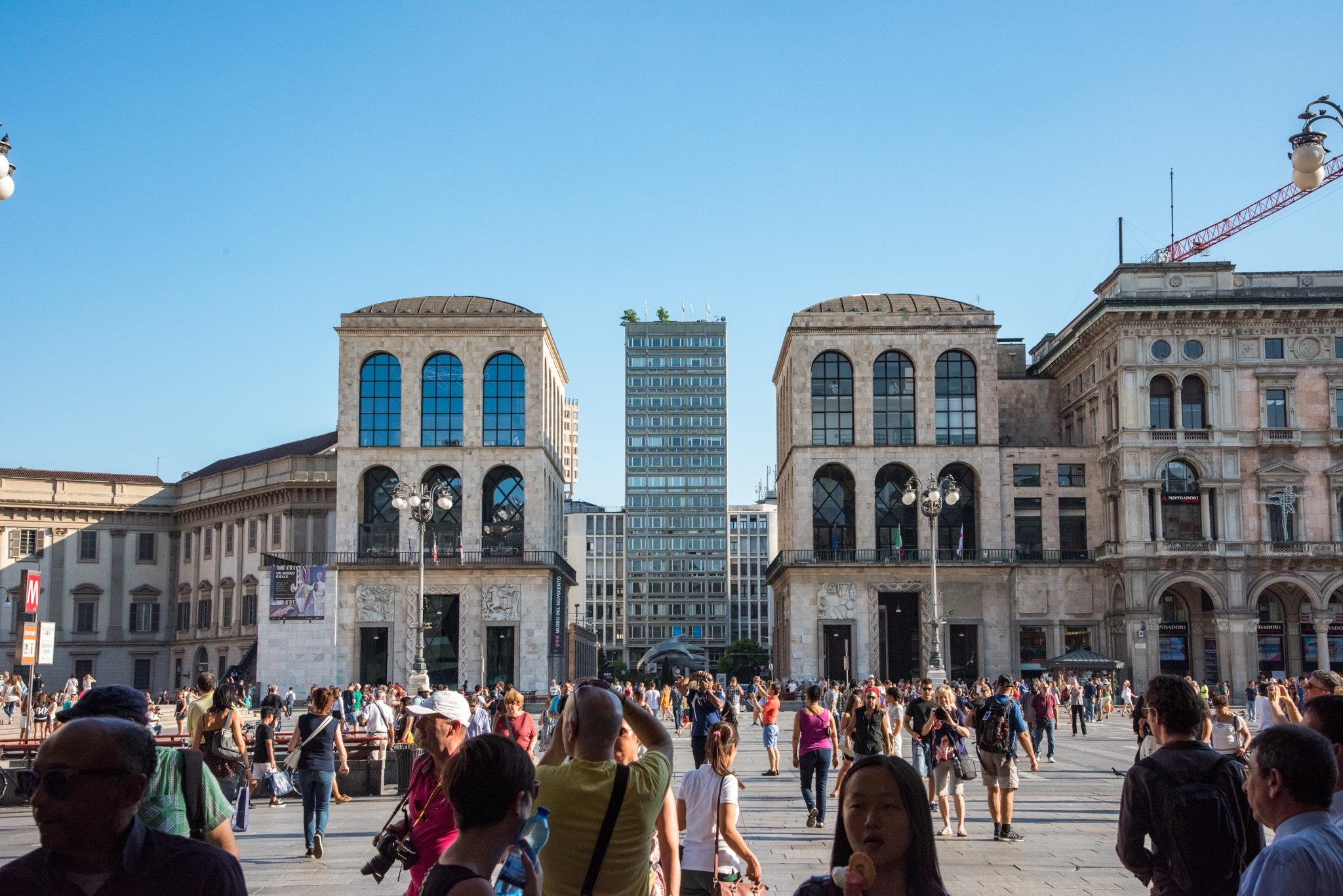
Construction work on Palazzo dell’Arengario began in 1939. Due to the interruption of construction during World War II, completion lasted until 1956. By dividing the palace
into two parts, the impression of a city gate was intended. The left building part houses a museum.
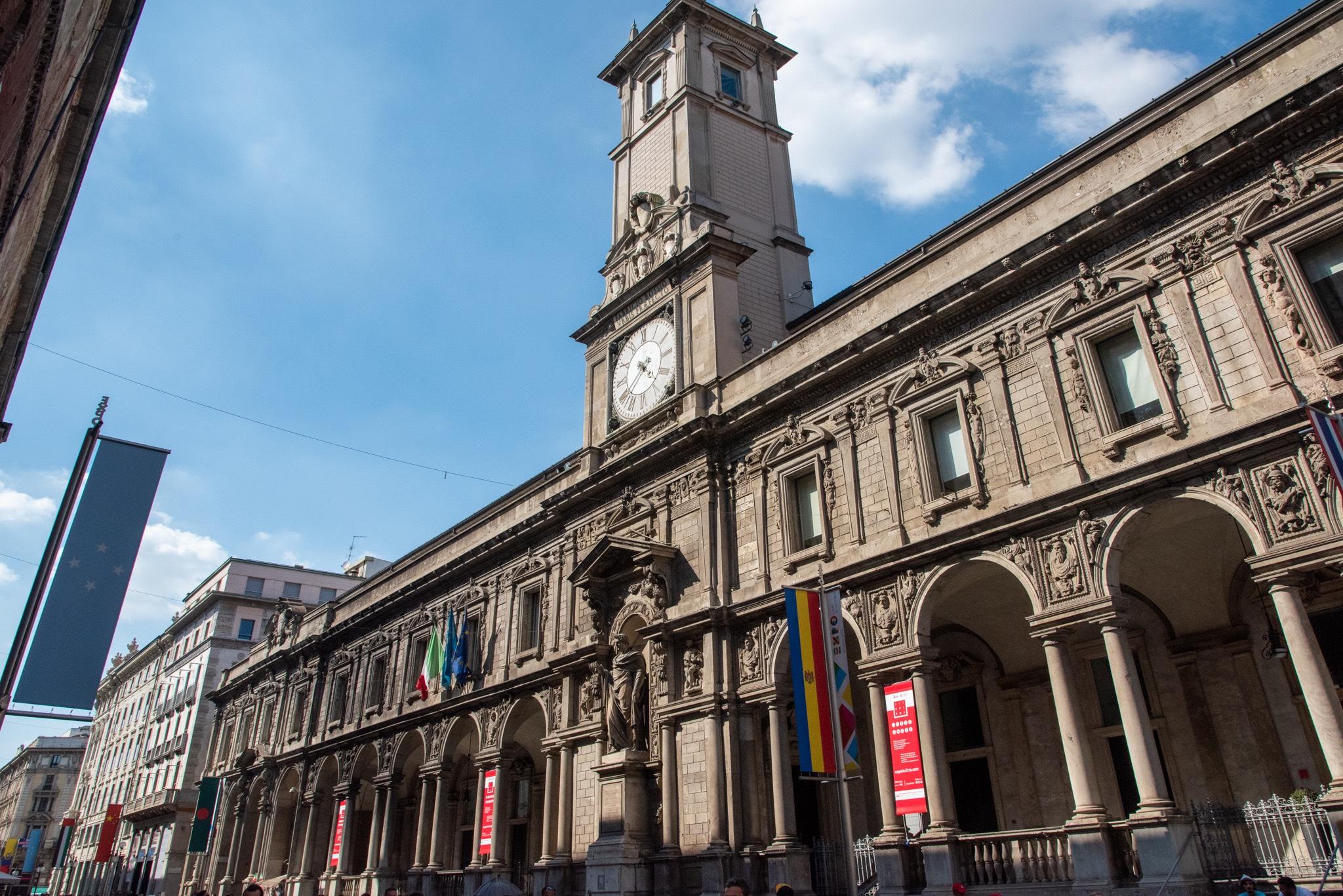
Palazzo Giureconsulti is one of the most important medieval buildings on Piazza dei Mercanti. This square was the center of the city and dates back to 1228; construction
of the palace began in 1562. Today, the palace is an event and conference center of the Camera di Commercio Milano.
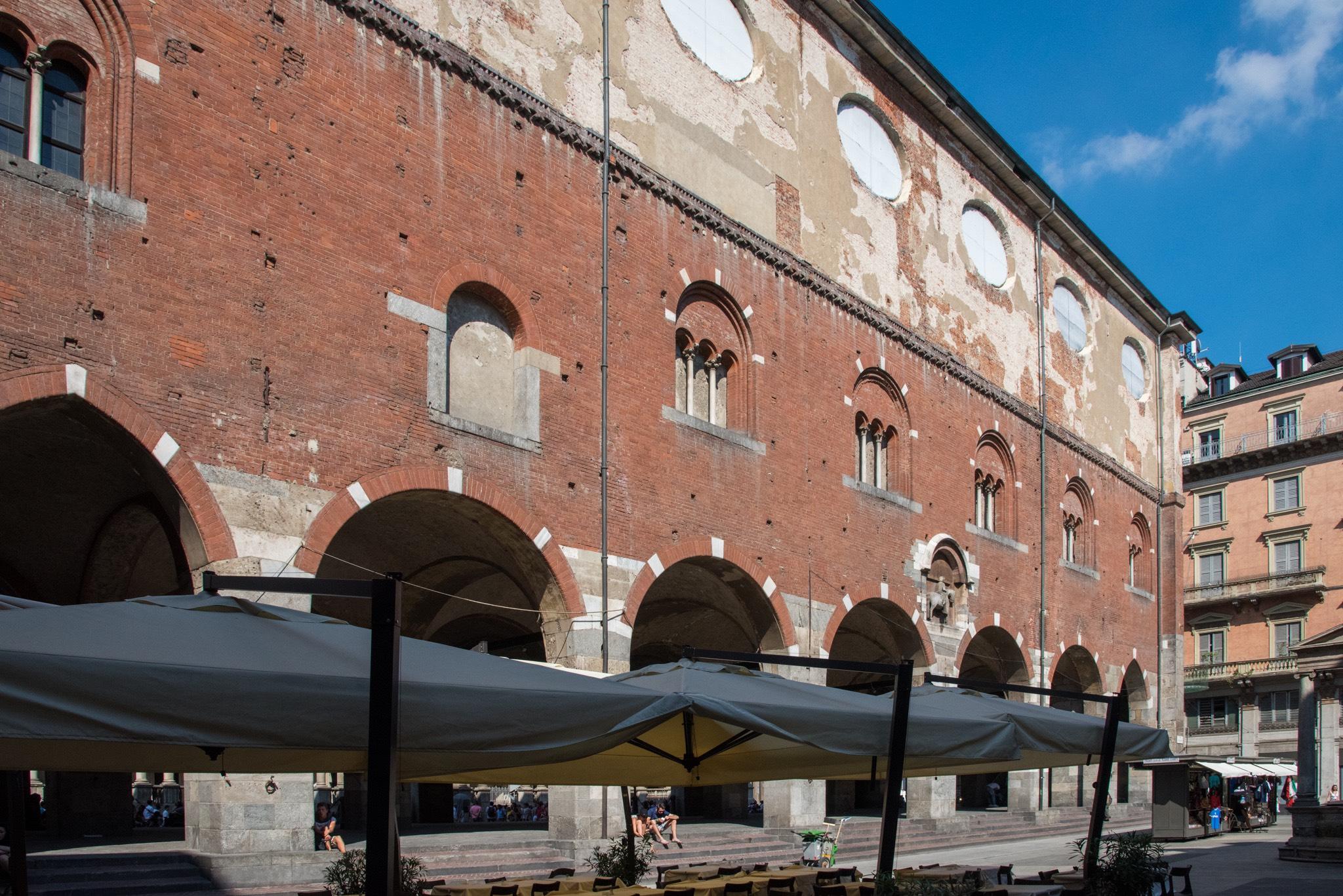
Palazzo della Ragione is also called Broletto. The building was erected under the then mayor Oldrado da Tresseno.
The equestrian statue from the 13th century shows the “Podestà” (governor).
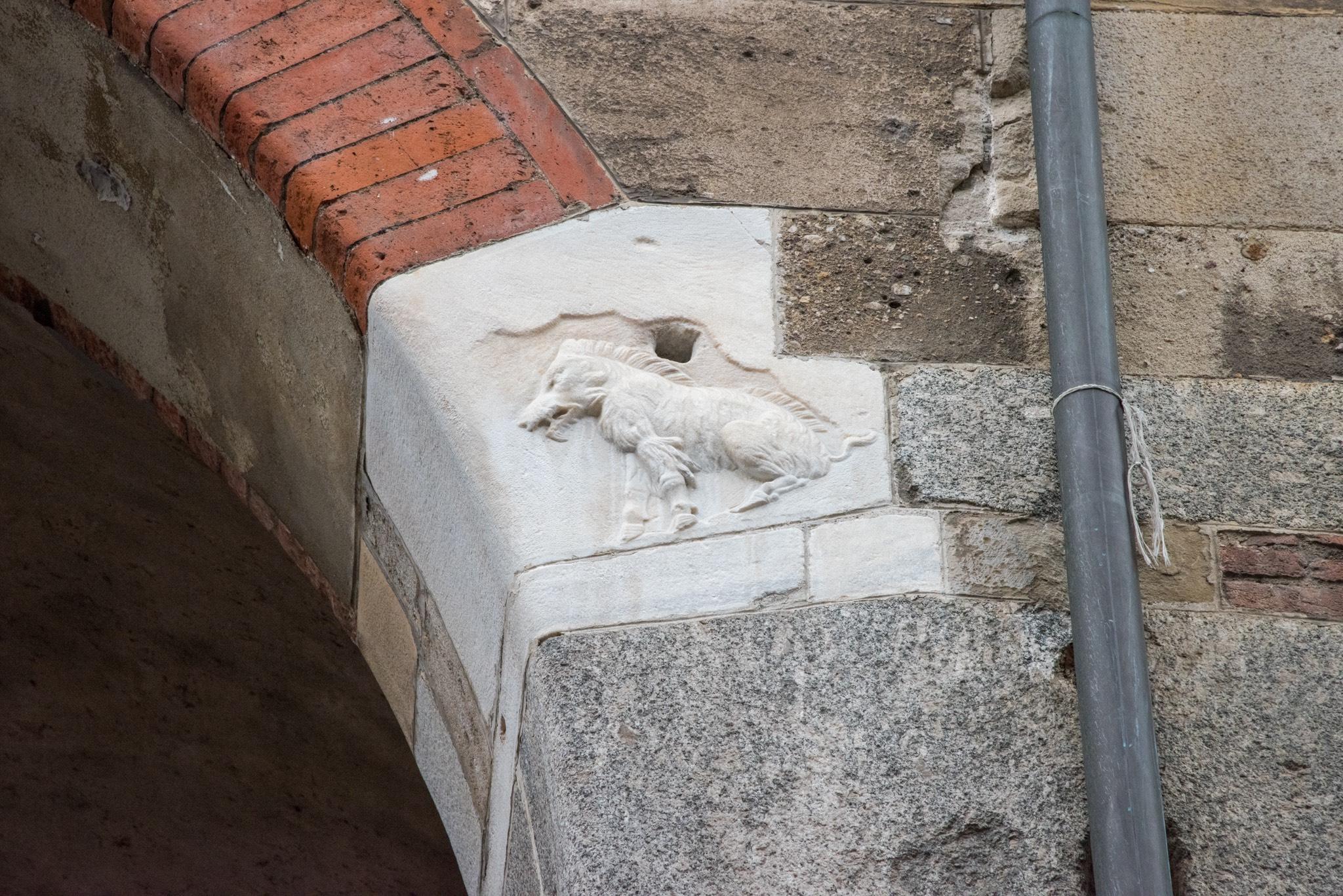
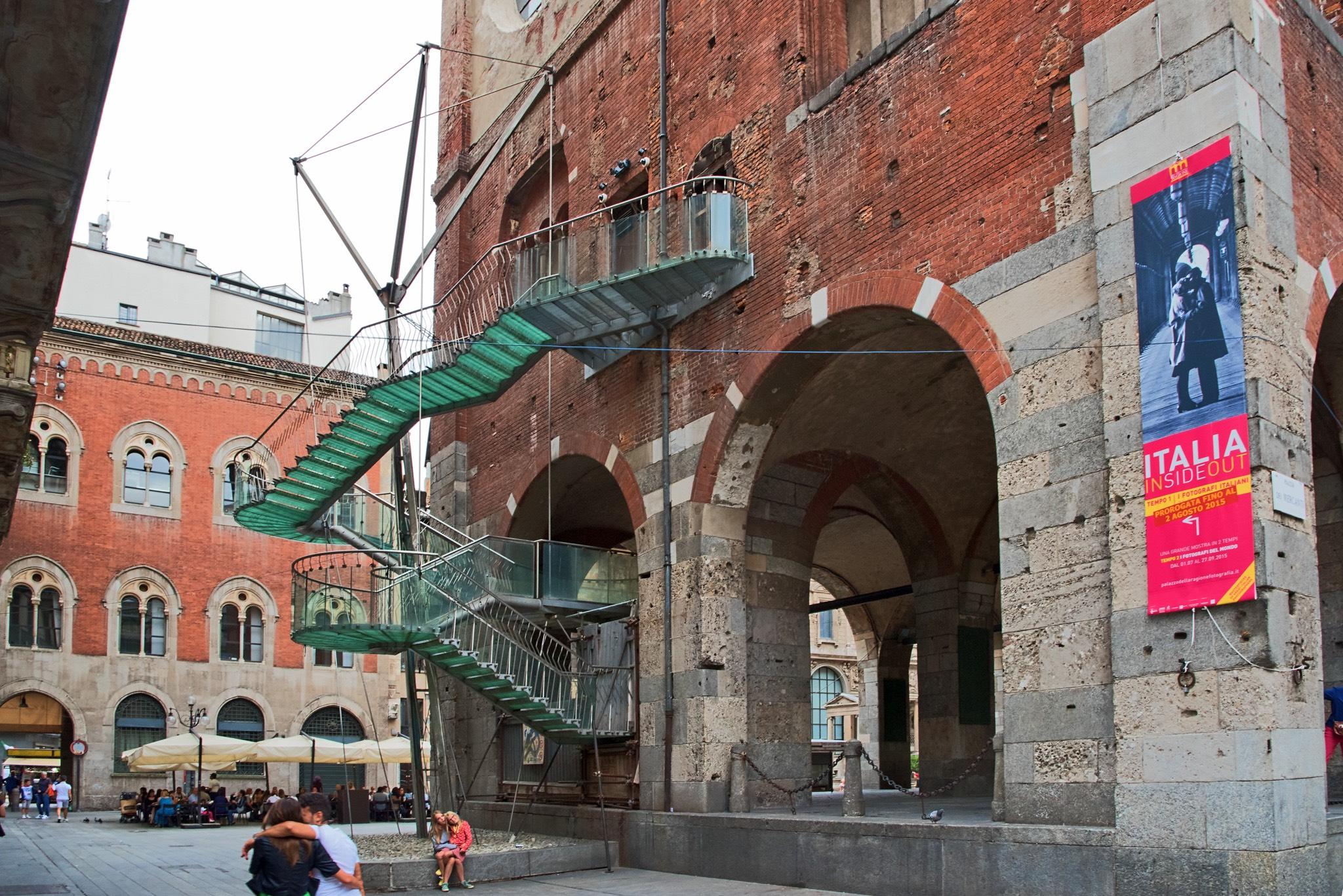
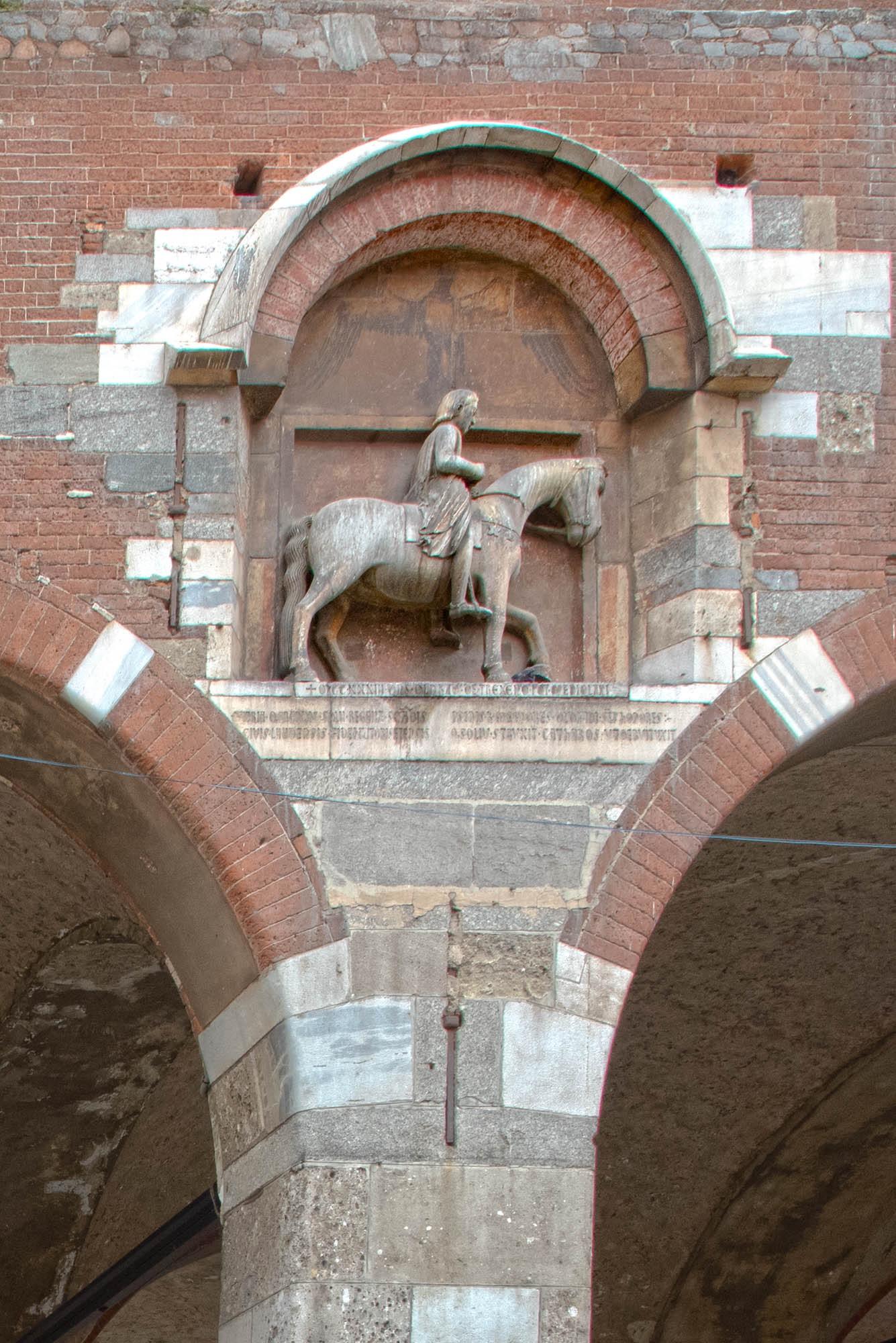
The equestrian statue of the mayor of Milan who advanced the construction of the palace. The artwork dates from the 13th century.
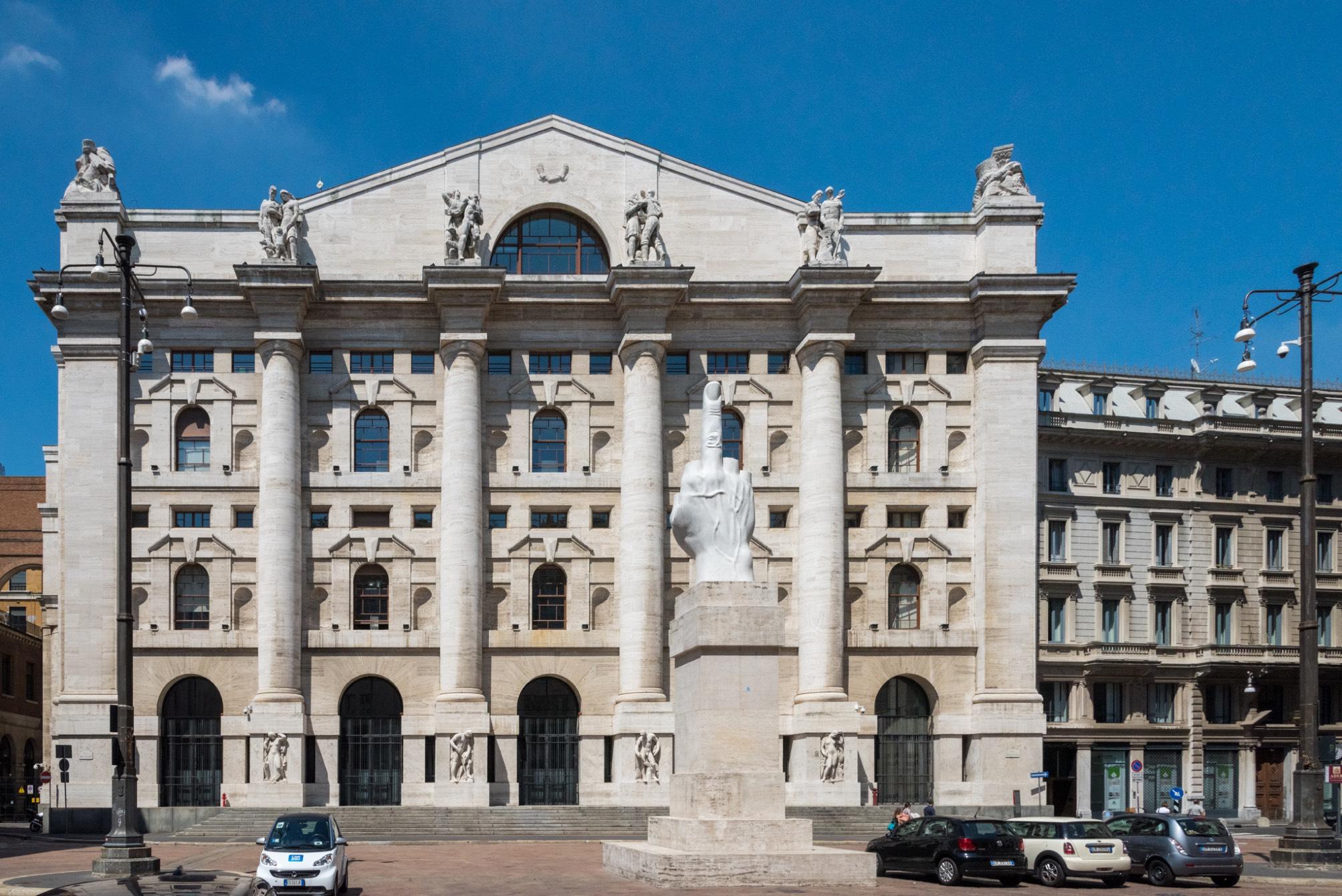
The Midnight Palace (Palazzo Mezzanotte) or also Palazzo della Borsa is the seat of the Milan stock exchange. The most important room was the “sala delle grida,” where business was conducted by shouts. From the 1990s, this activity was digitized; since then, mainly conferences are held here.
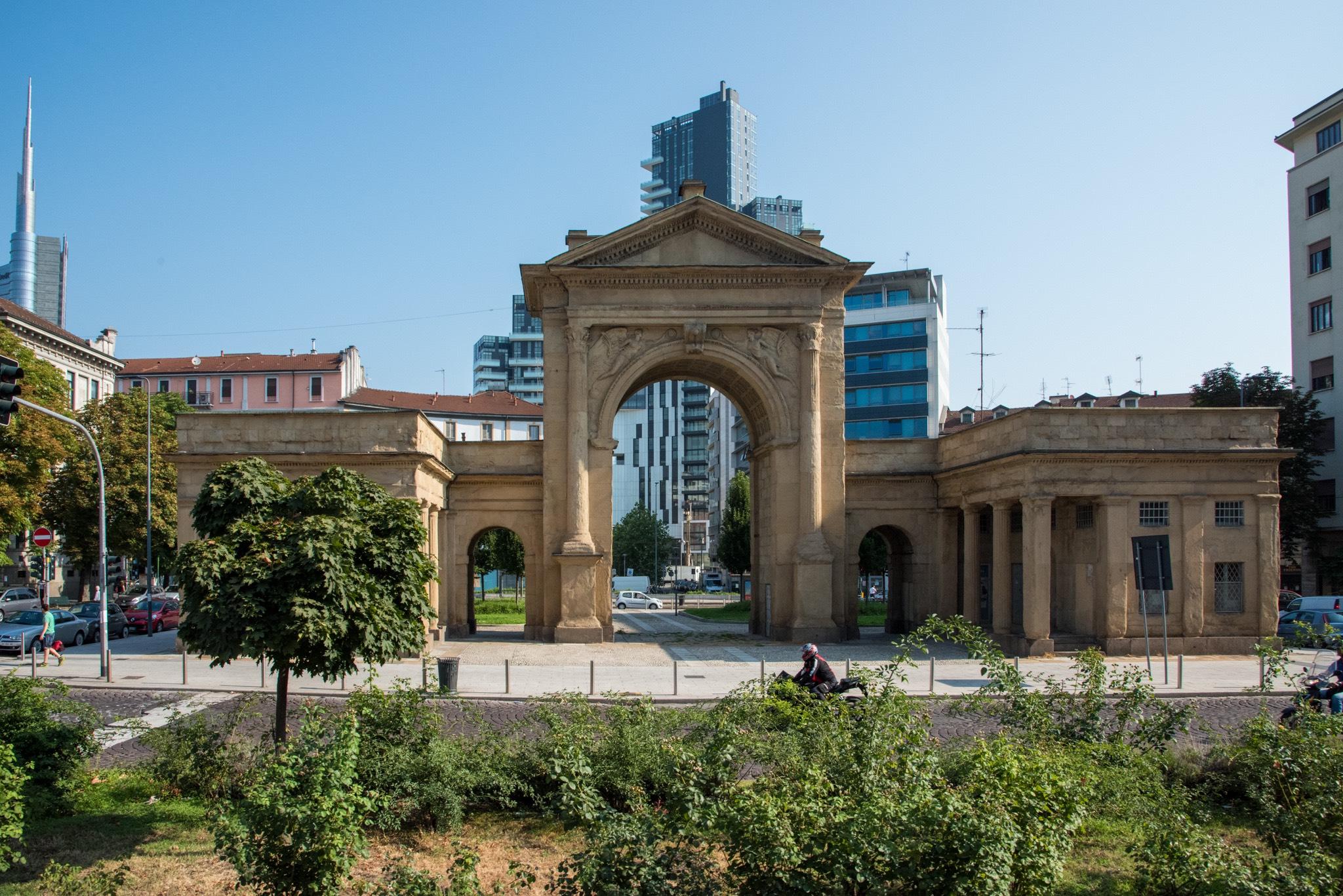
Porta Nuova is one of the great gates of the city of Milan. The “New Gate” led to the road to Monza. There are two “Porte Nuove” in Milan: the latter, built from 1810 to 1813, and a medieval gate. Porta Nuova is also the district where many impressive skyscrapers have been built since 2004.
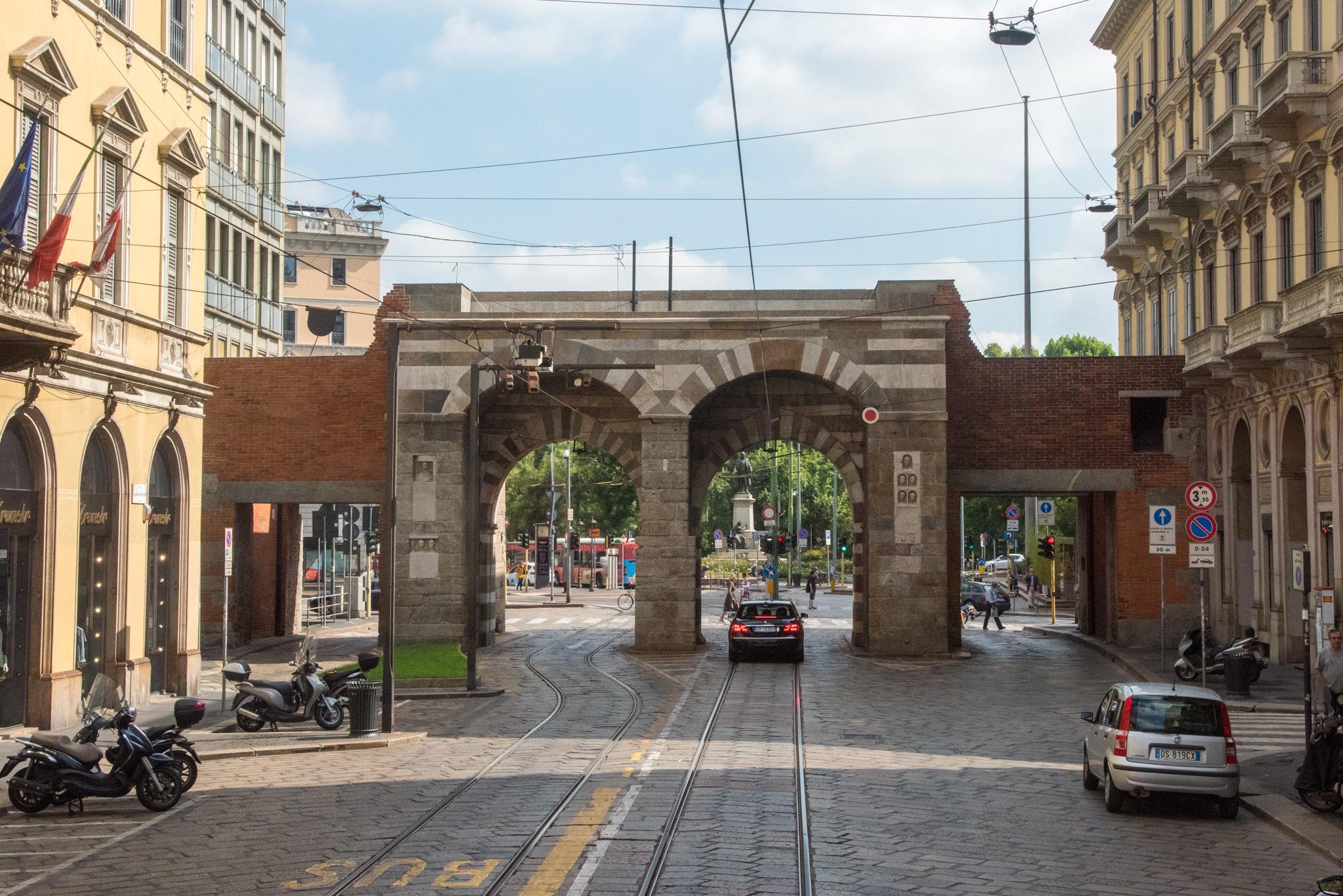
Two medieval gates are still preserved, the Porta Ticinese Antica and the Archi di Porta Nuova. This gate dates from the 12th century. On the side of the gate facing Piazza
one can admire the marble shrine of the Madonna with Child and Saints.
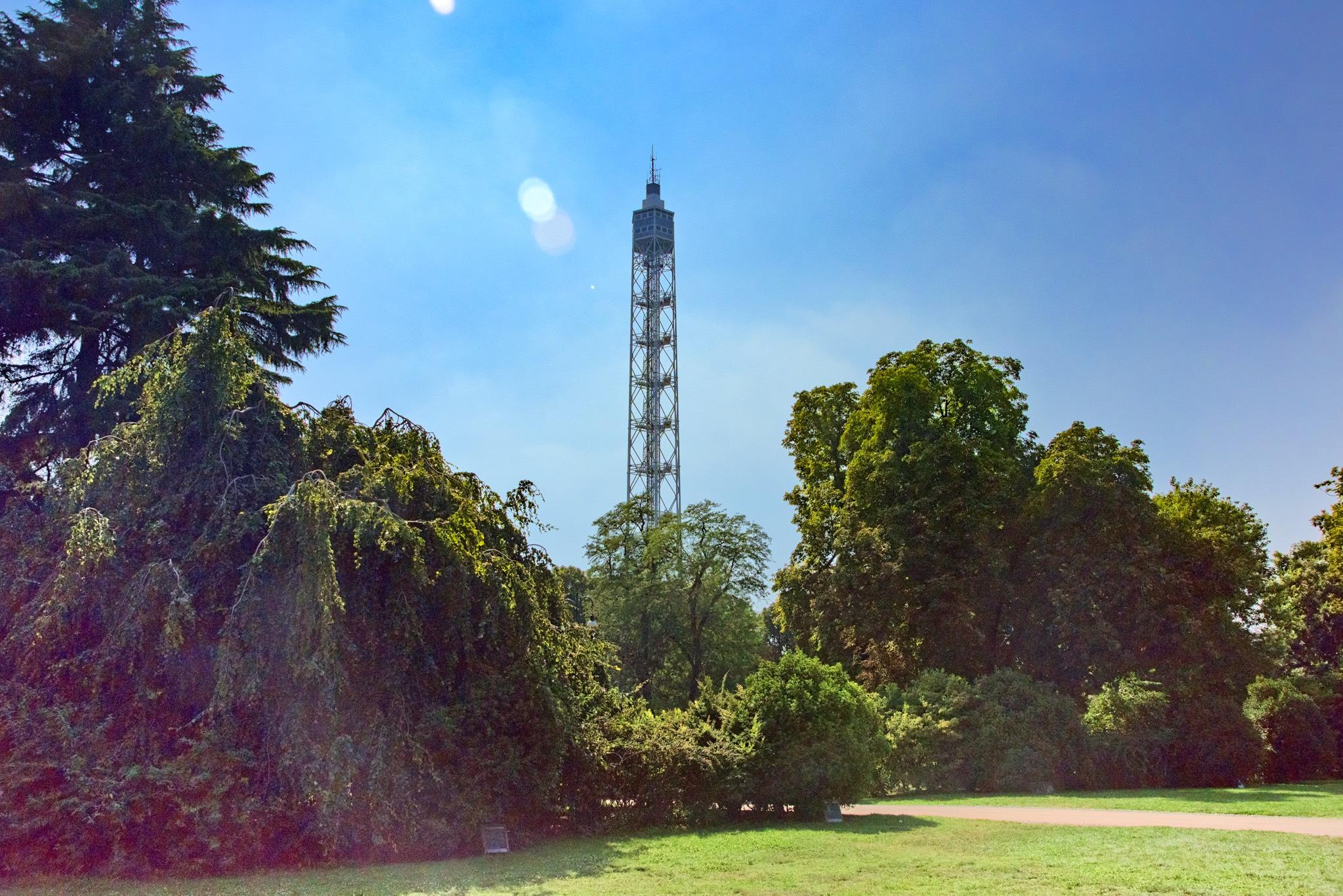
In 1933, the iron tower was inaugurated as Torre Littoria. Since the Branca distillery (Fernet Branca) restored the tower, it received their name. The elevator transports
visitors in 90 seconds to a height of 99 meters. From here, one has a fantastic view of Milan. Admission is free every Wednesday.
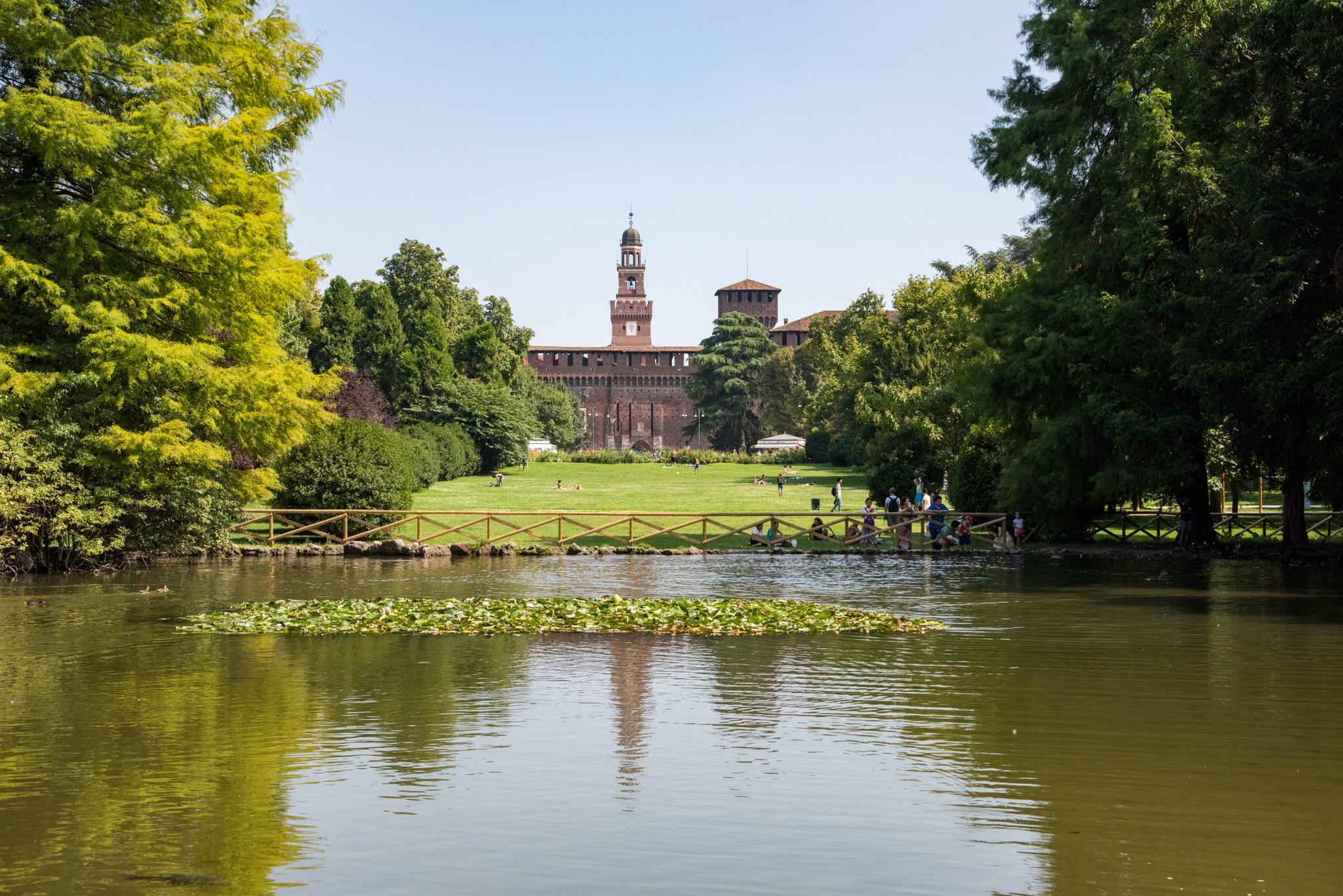
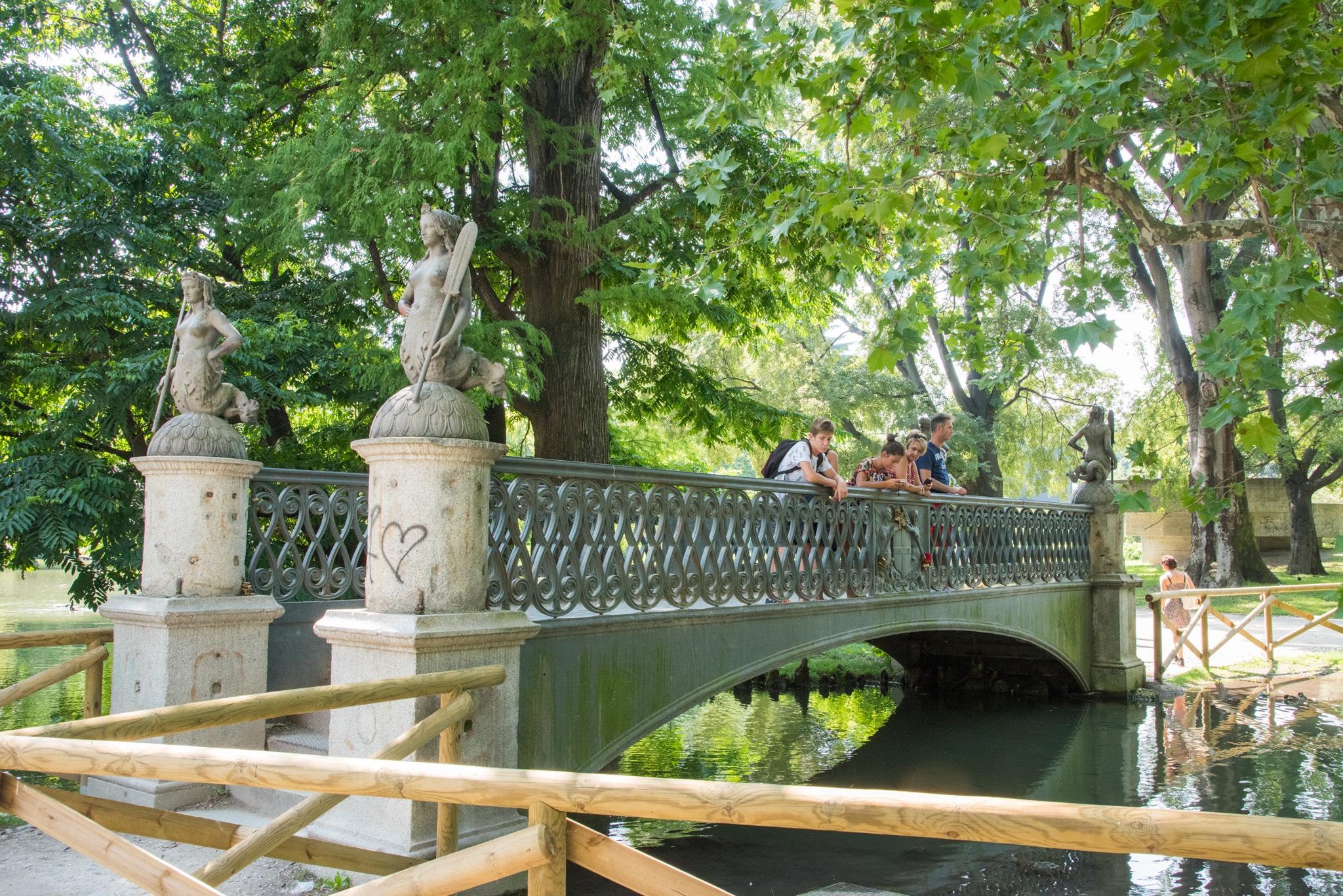
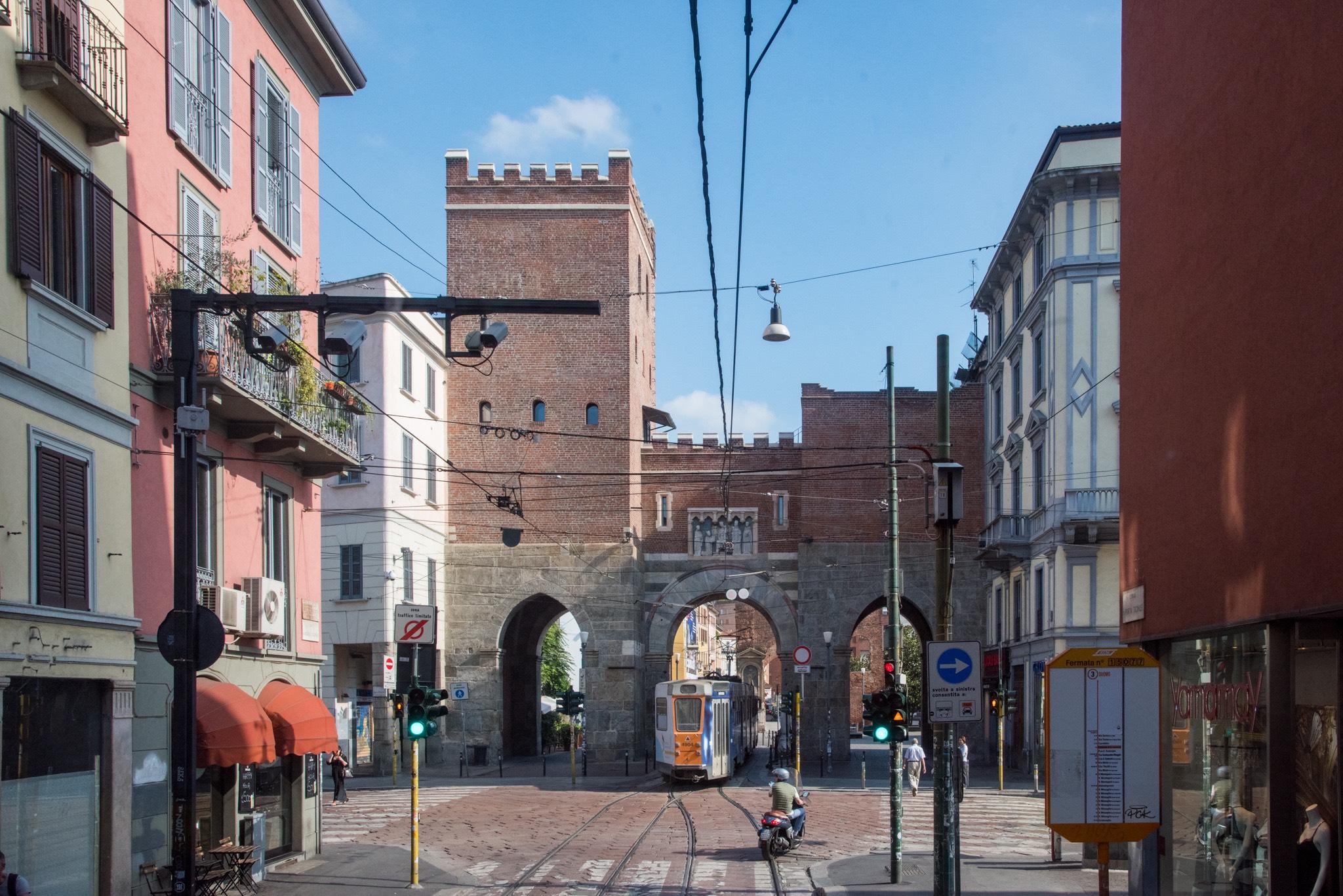
Porta Ticinese Antica is one of the medieval main gates in the former fortification of Milan. The gate is also known as Port Cicco. It was built in the 12th century, but in 1861 the
gate was reconstructed by Camillo Boito. During the reconstruction, the two side gates were also created.
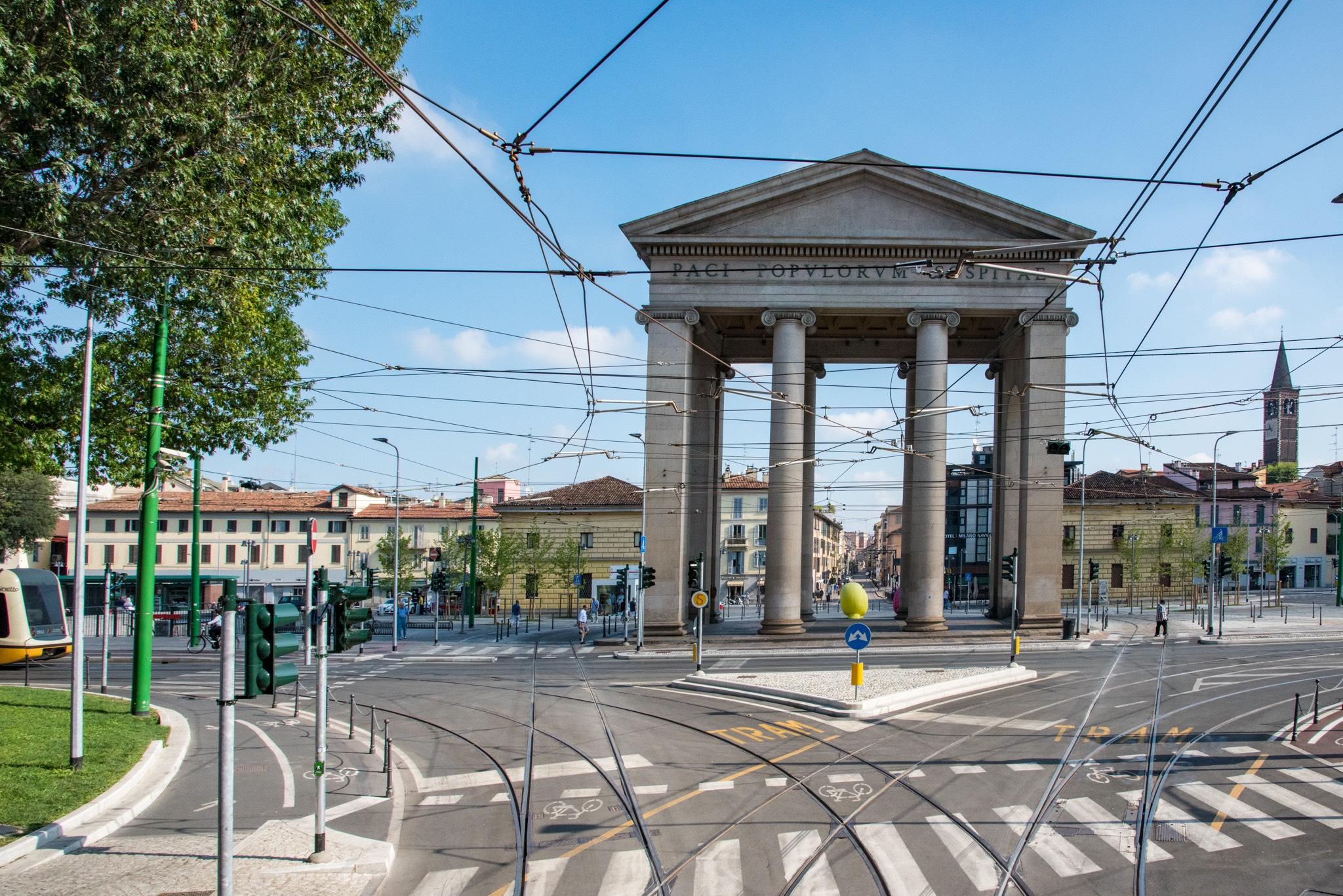
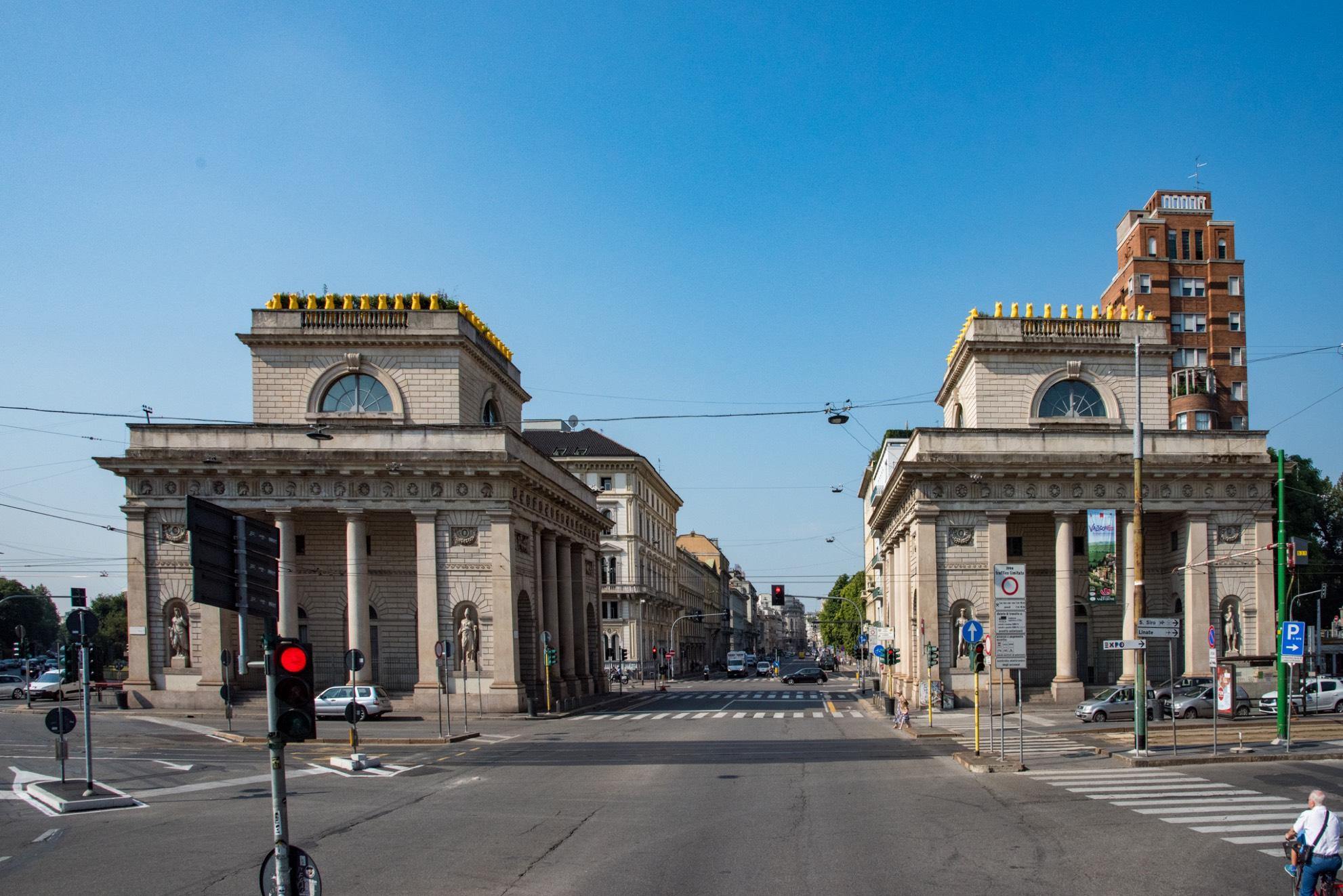
Until 1860, Porta Venezia was called Porta Orientale or Porta Renza. Toward the end of the 18th century, the ruling Habsburgs began transforming the area into a
recreational zone. The Giardino Pubblico Indro Montanelli next to Porta Venezia is the oldest city park in Milan.
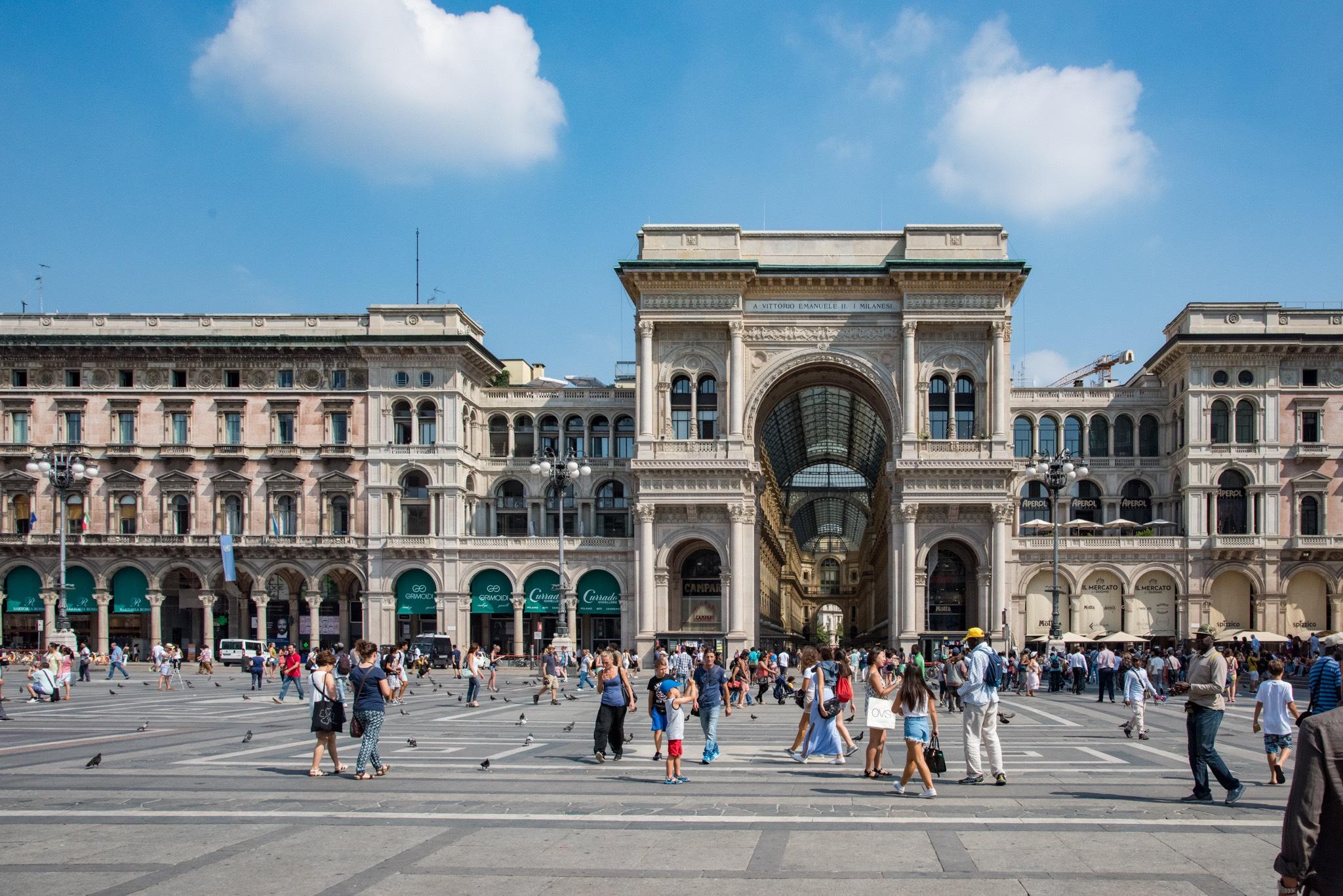
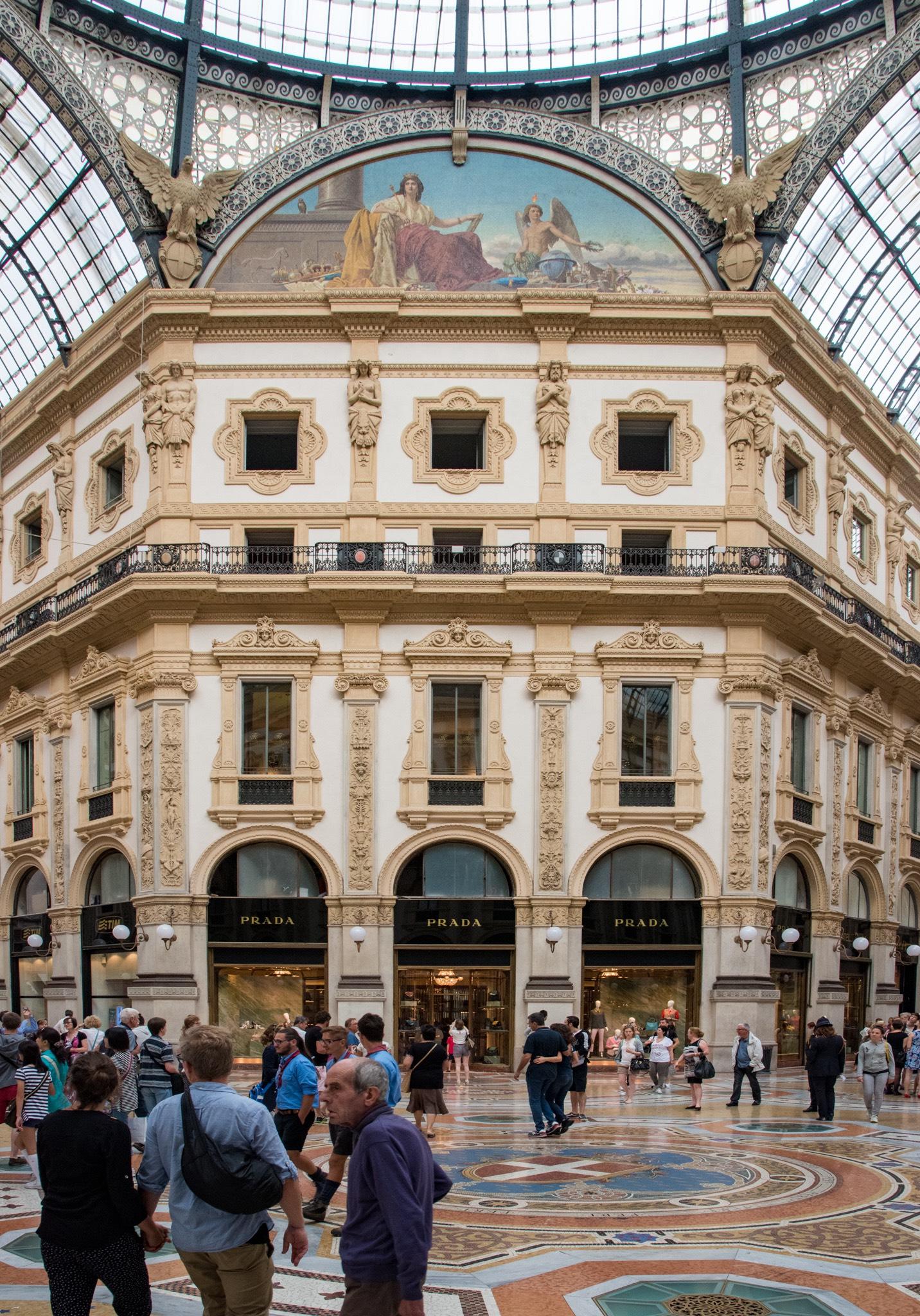
Galleria Vittorio Emanuele II is Milan's shopping arcade. The gallery was named after Victor Emanuel II, the King of Italy, who opened the impressive structure on September 15, 1867. The stylish shopping center houses a selection of
the finest luxury brands and is one of the oldest shopping temples in the world.
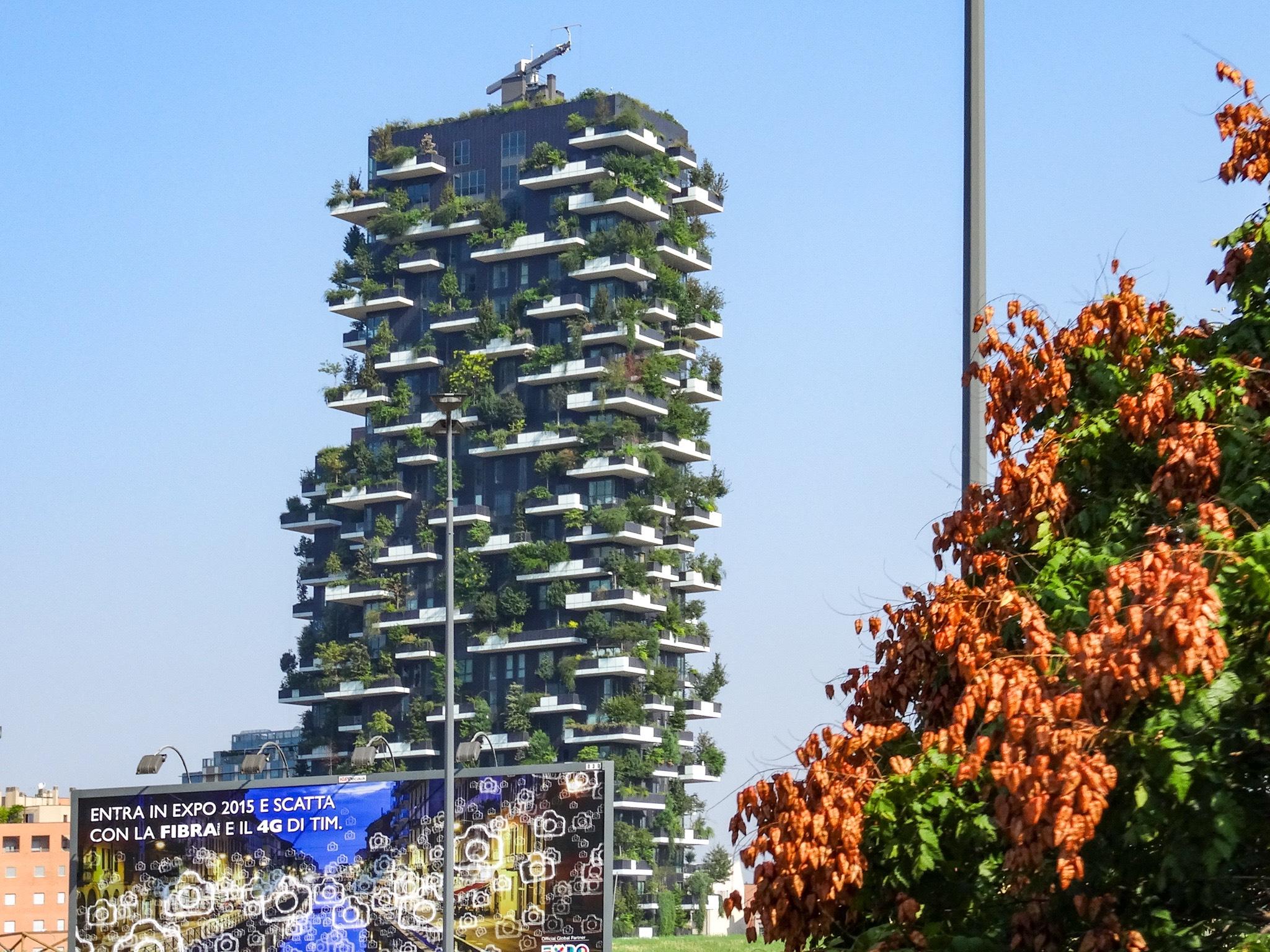
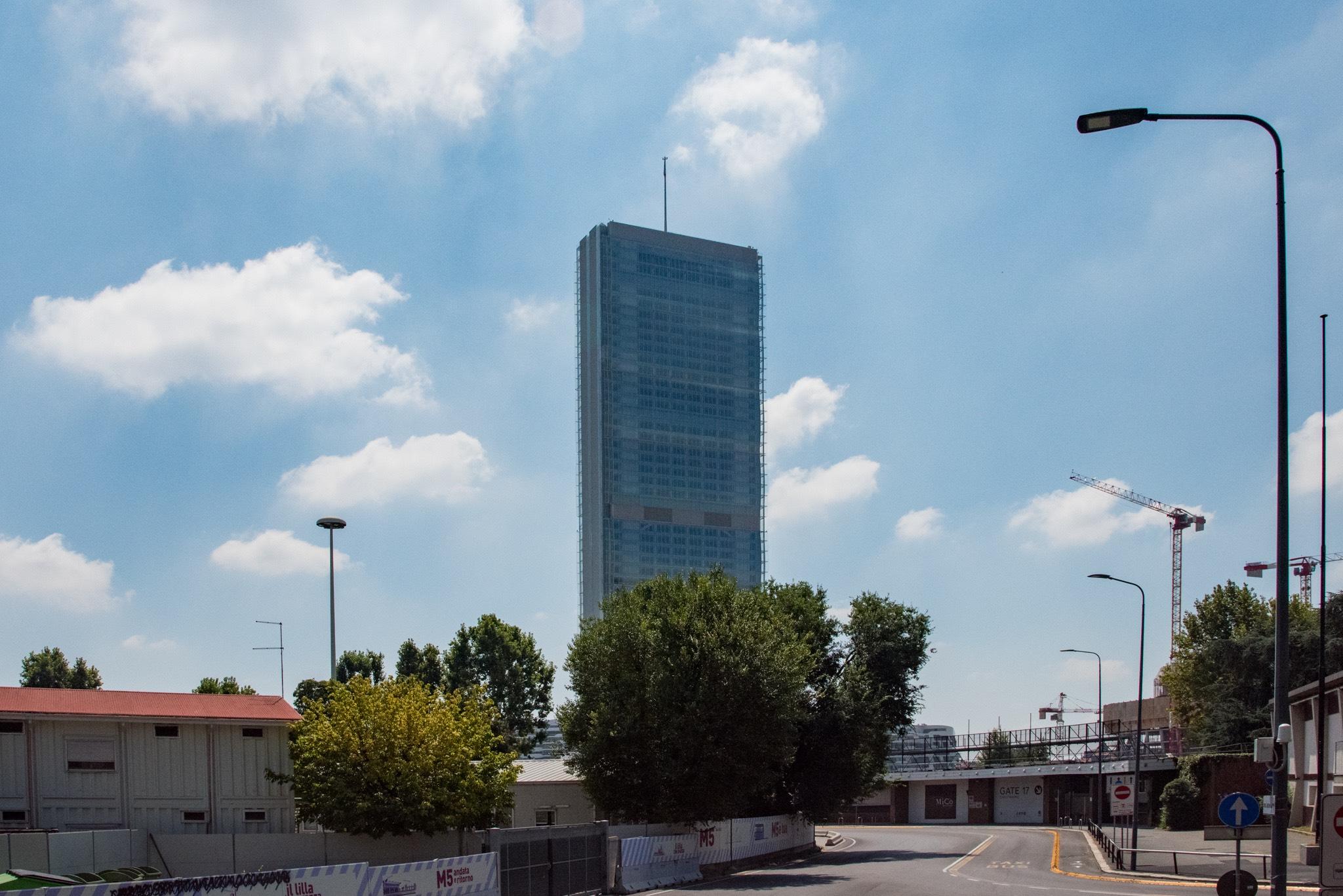
The Allianz Tower has 50 floors and is the second tallest building in Italy. It stands in the “CityLife Complex” (Tre Torri Fiera), which will consist of three buildings - the Allianz Tower, the Generali Tower, and the Libeskind Tower
(Il Curvo). The Allianz Tower is also called Torre Isozaki or Il Dritto after its architect.
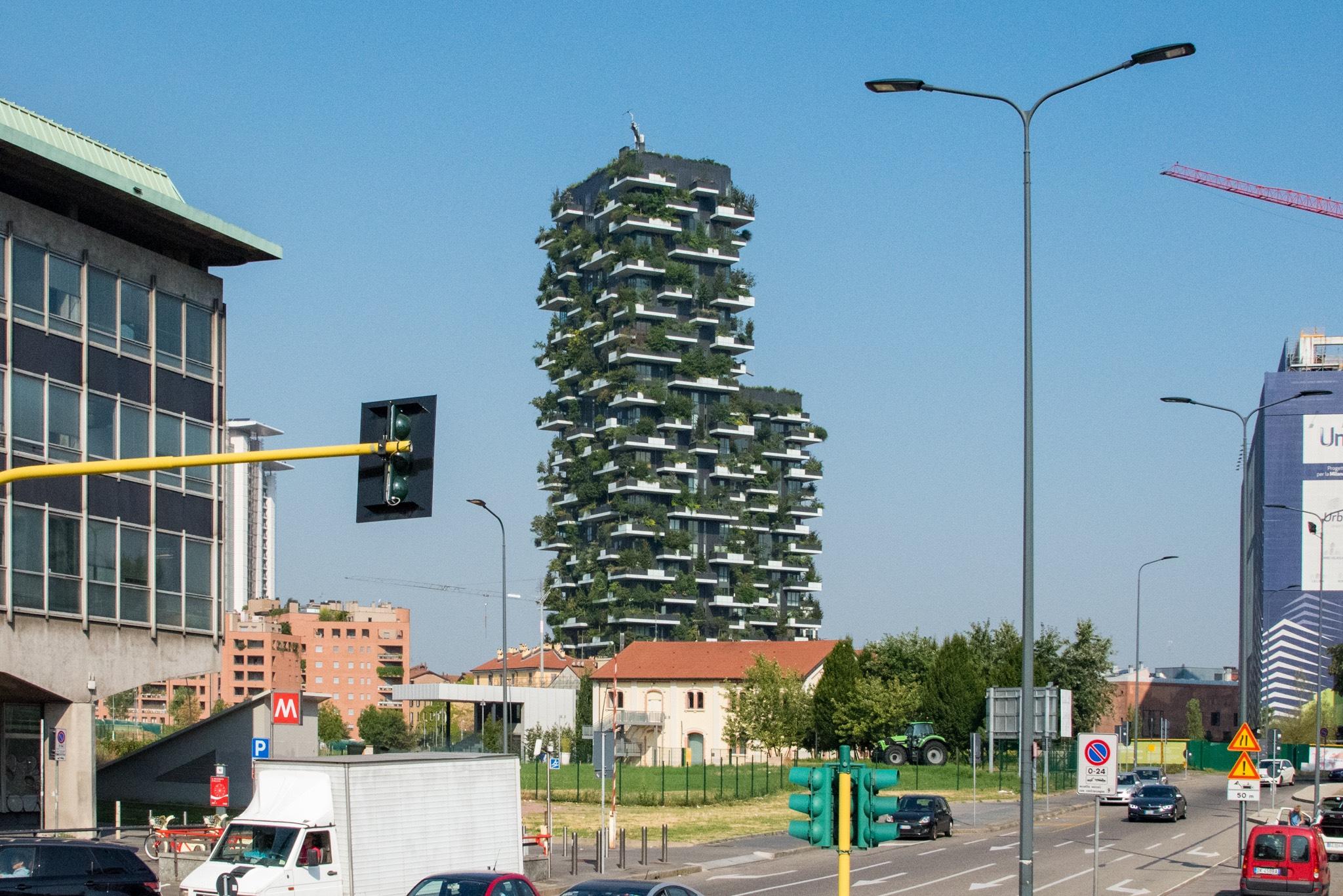
has 27 floors and Torre D comprises 19 floors. The “vertical forest” consists of about 2,000 trees and shrubs and guarantees a completely new and pleasant living
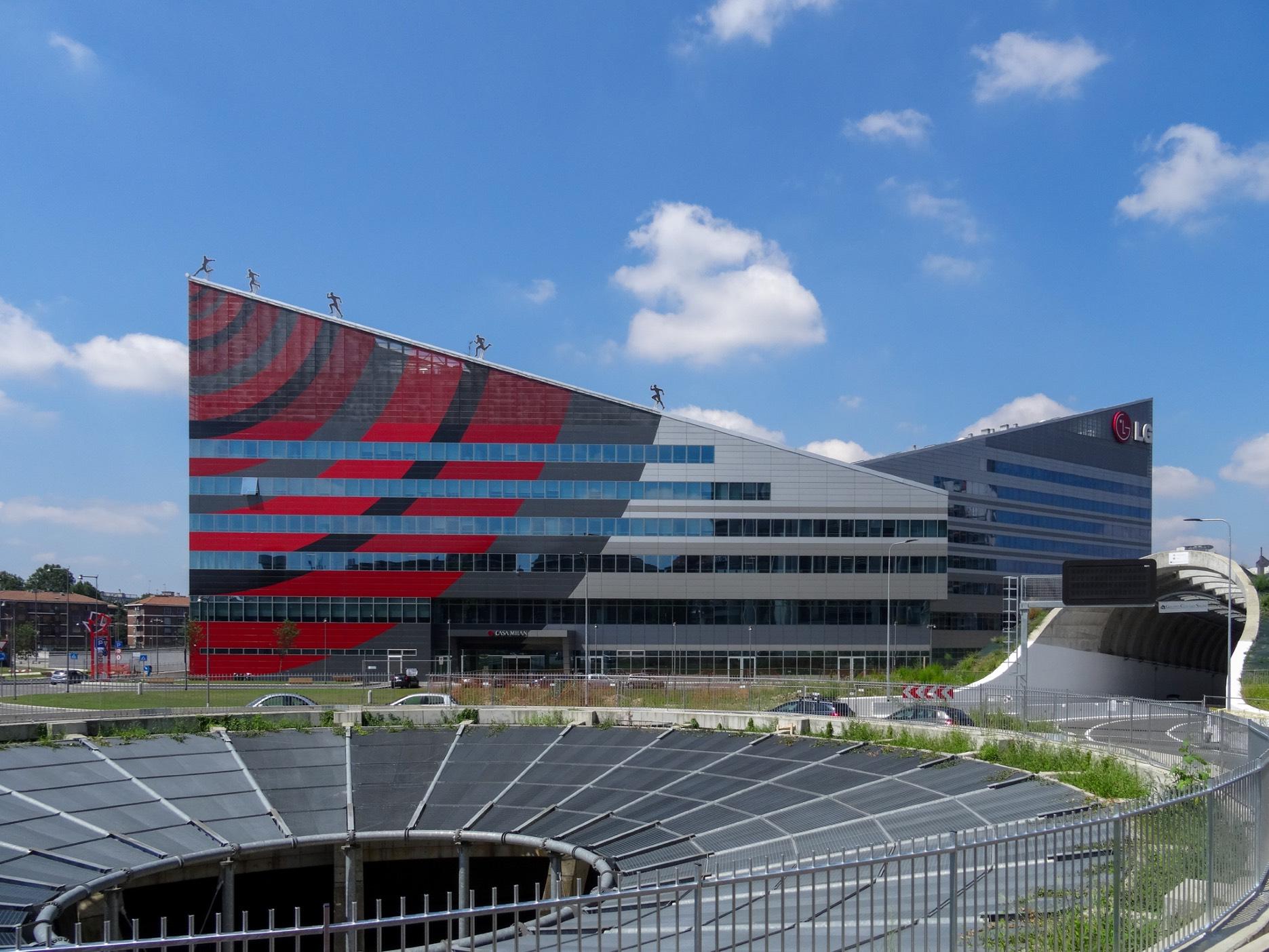
Barbara Berlusconi, Silvio Berlusconi's daughter, is vice president of AC Milan. She was one of the driving forces behind this prestige project. Casa Milan was opened in 2014; it is the official seat of the soccer club AC Milan.
Here are also the Mondo Milan Museum, a Milan Store, and Cucina Milanello.
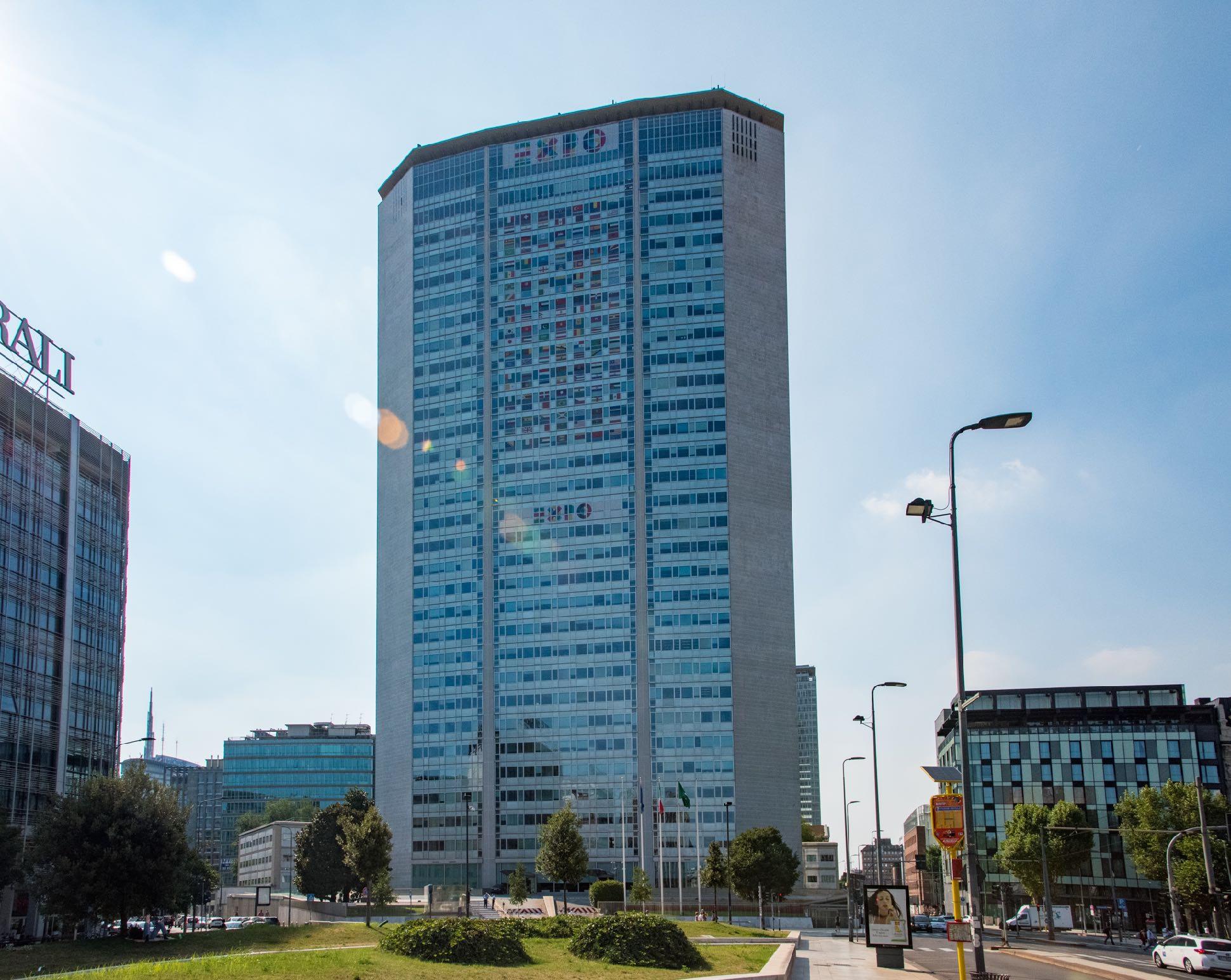
When the Pirellone (the big Pirelli) was opened in 1960, it was the second tallest building in Europe. Since 1978, it has been the seat of the government and parliament of the Lombardy region. When a small plane from Switzerland
crashed into the building in 2002, photos of the building went around the world.
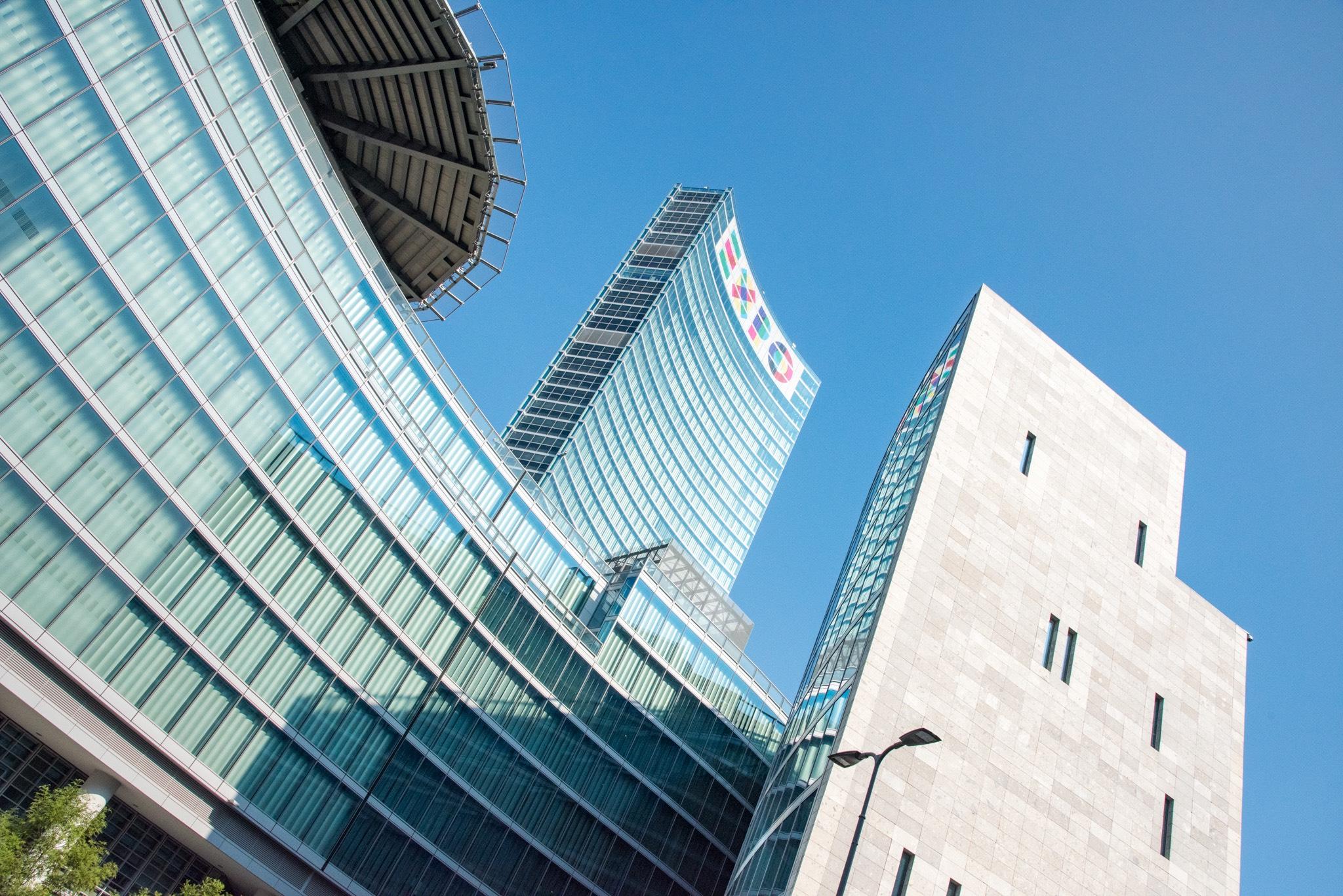
Palazzo Lombardia is composed of a group of seven- to nine-story buildings and a skyscraper over 160 meters high. Here is the seat of the regional government and administration of Lombardy. Bars, restaurants, and cafés as well as an auditorium complete the offering.
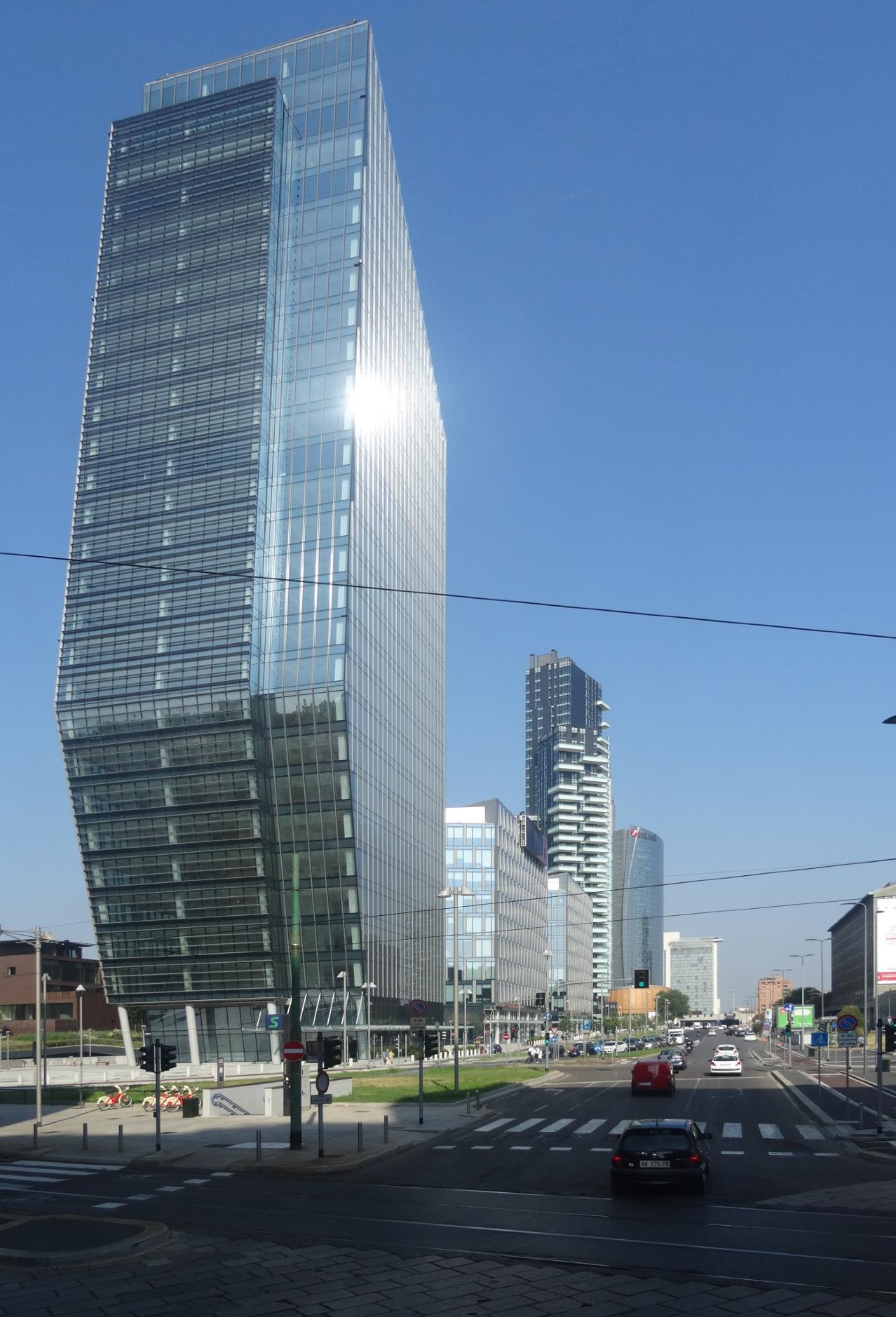
and was supported by architect Paolo Caputo. The energy management.
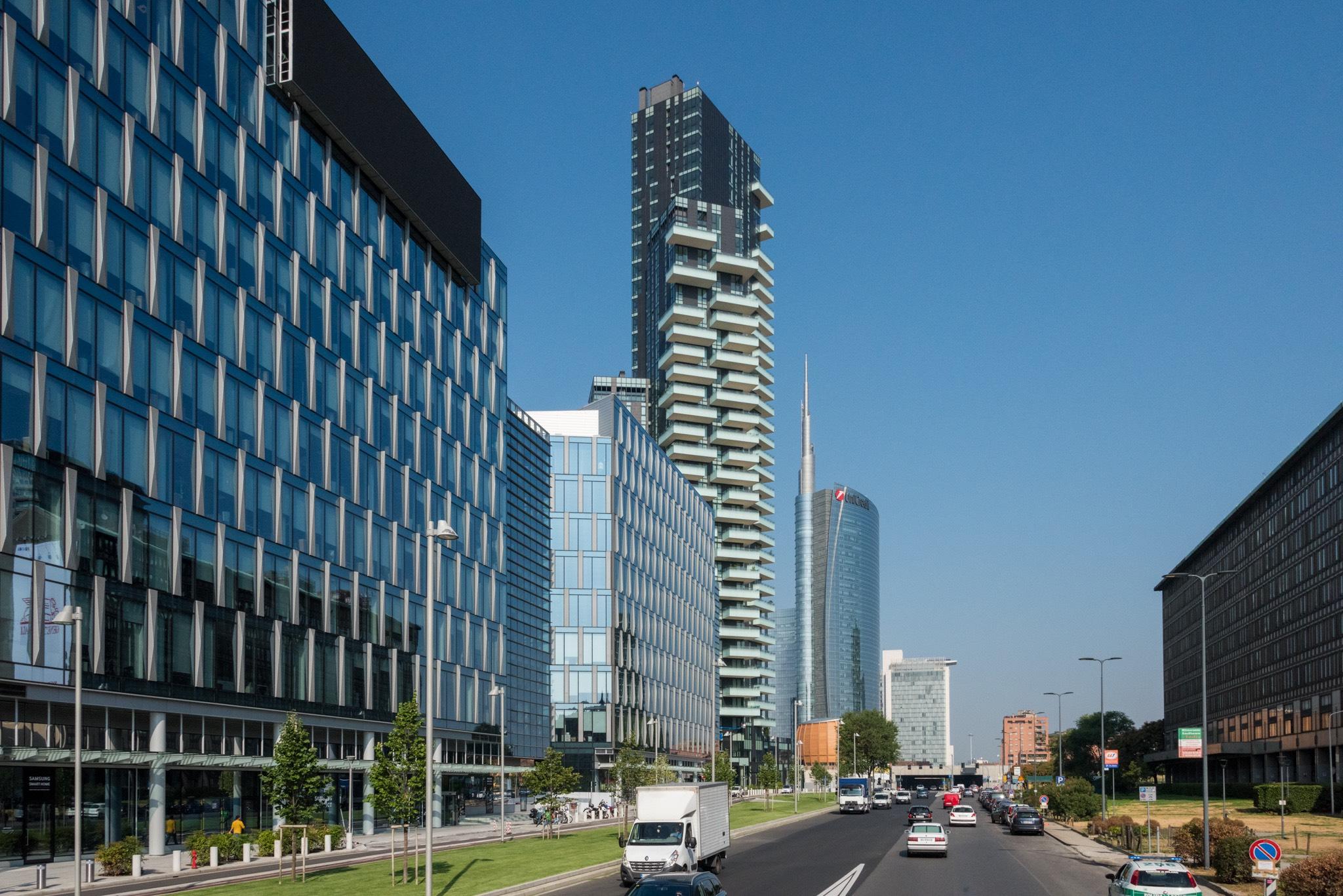
In the middle of the administrative district, the residential complex Torre Solaria was built. The building consists of three wings of different heights. Over a hundred units
were accommodated in the tower - including extremely luxurious apartments spanning two and three floors.
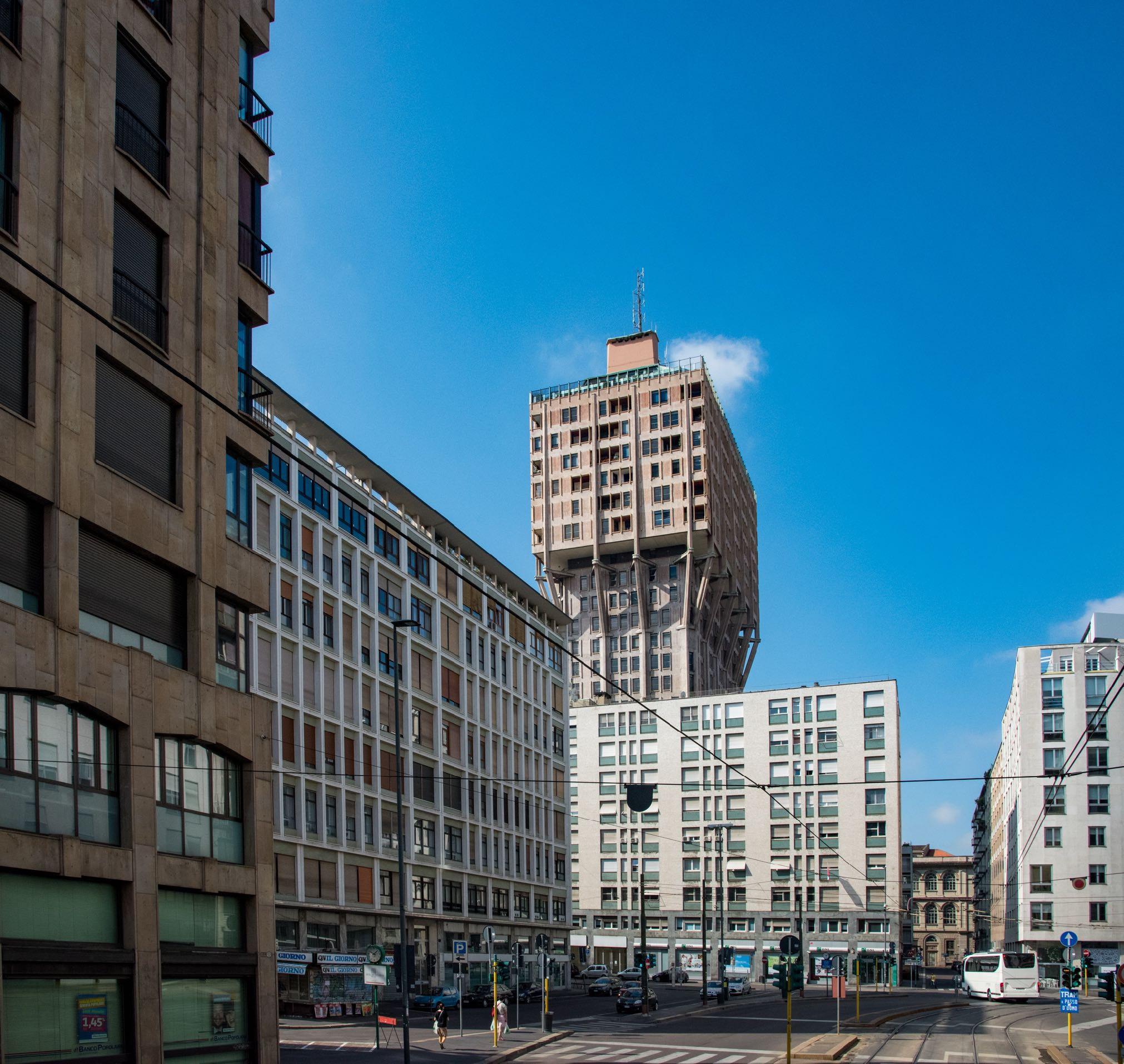
Although planned as early as 1950, the quirky skyscraper was only built in 1957. Completion of the building took only 292 days. It was named after Juan Fernández de Velasco, a Spanish governor of the Duchy of Milan in the 17th century. The shape of Torre Velasca is meant to recall Castello Sforzesco.
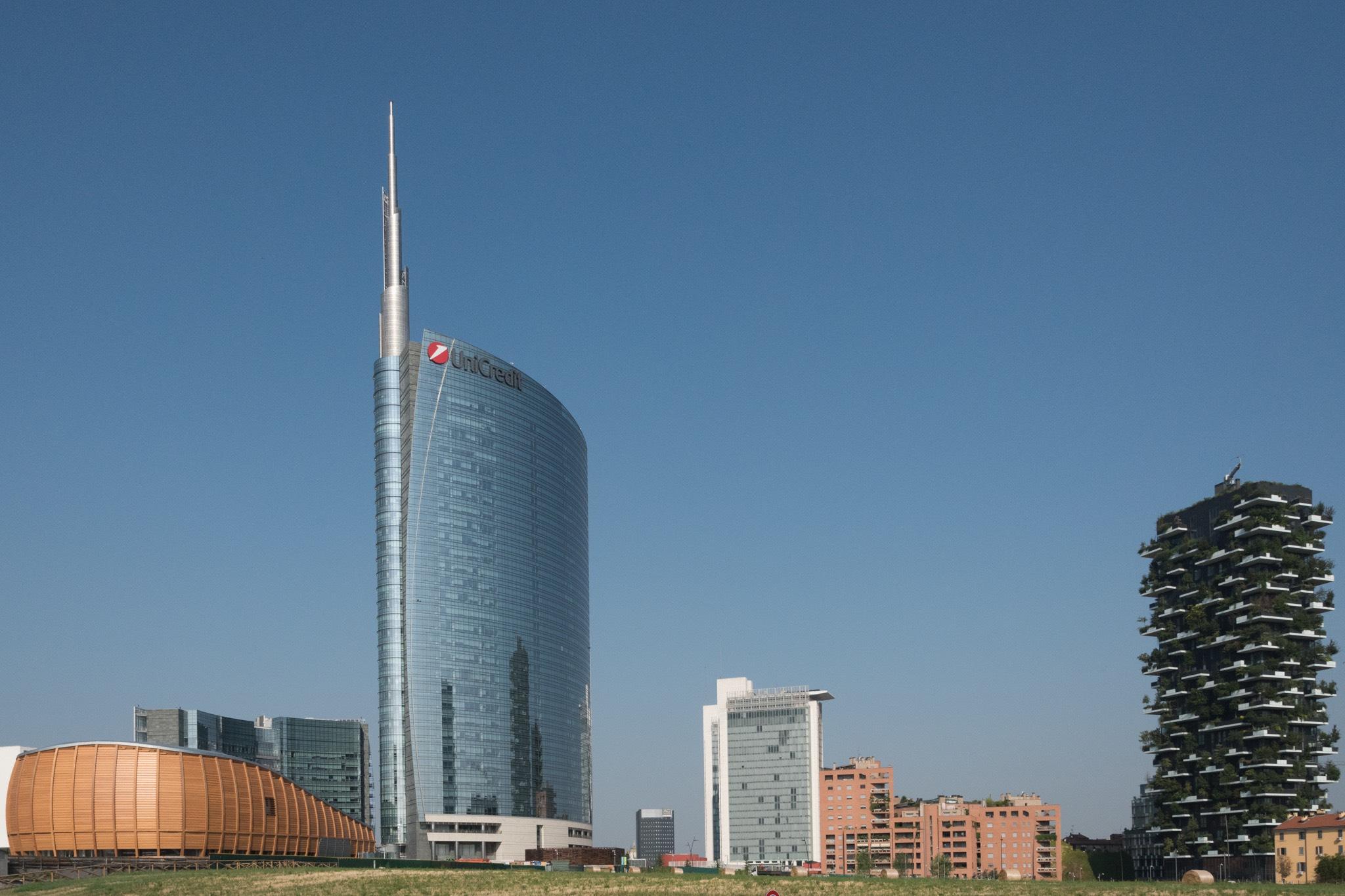
In 2012, the skyscraper complex designed by Argentine architect César Pelli was opened. At 231 meters, it is the tallest building in Italy. The Unicredit banking group has its
headquarters here. The parts of the skyscraper complex stand on a circular podium with a diameter of 100 meters.

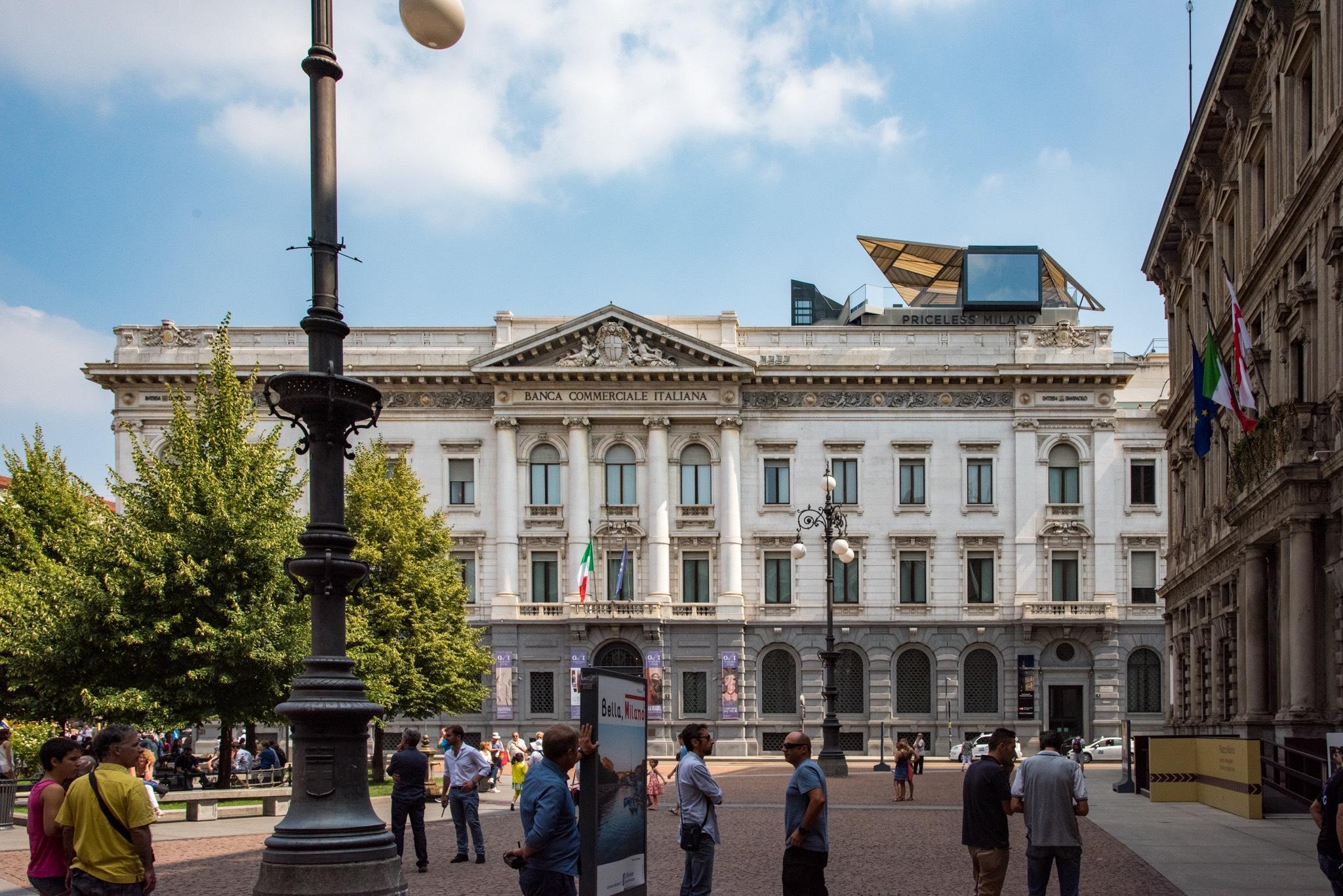
In the palace of the Milanese noble family Anguissola, built in the 17th century, paintings and sculptures by Italian artists from the 19th century are exhibited. Right next to it
is Palazzo Brentani, where one finds Italian art from the 20th century.
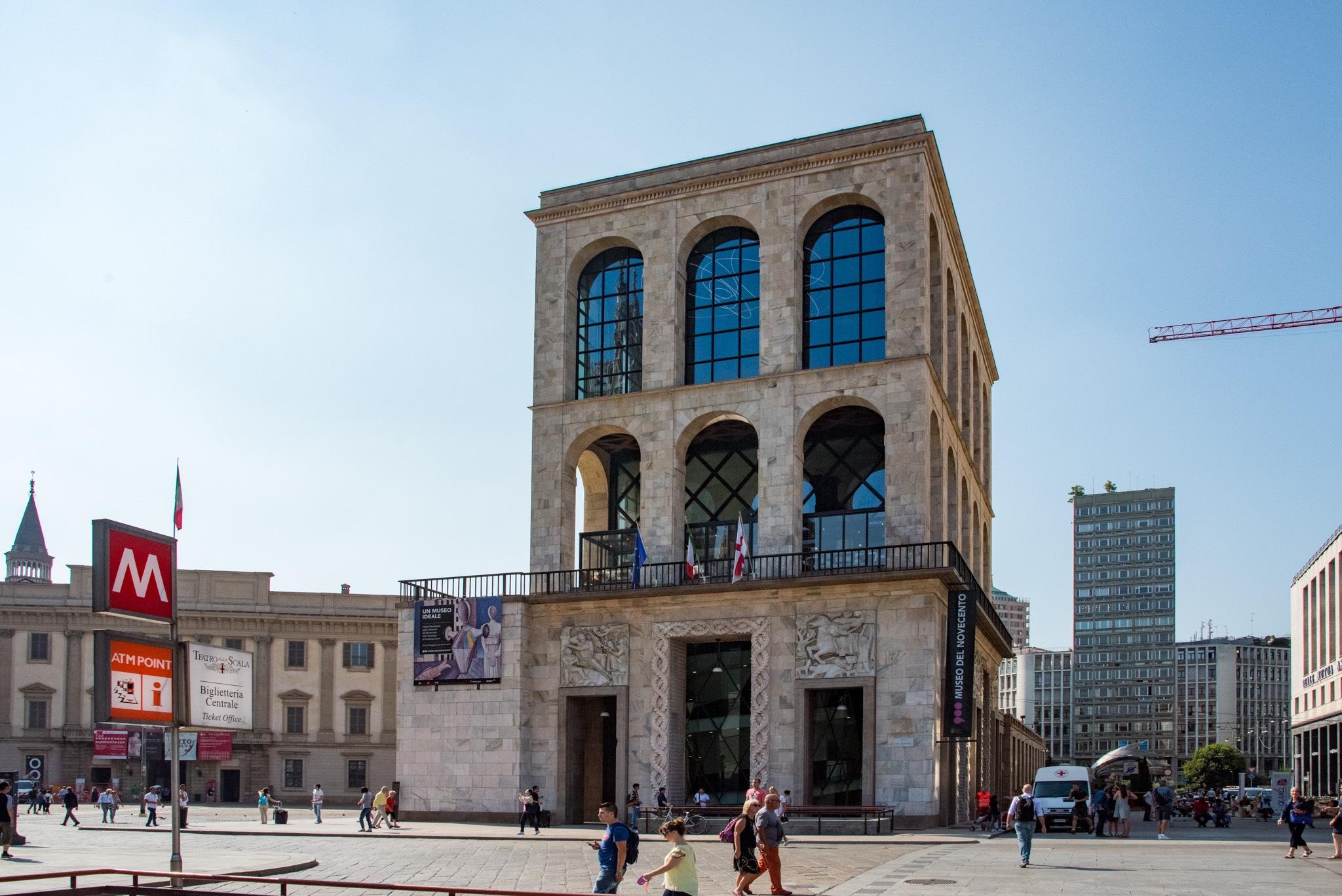
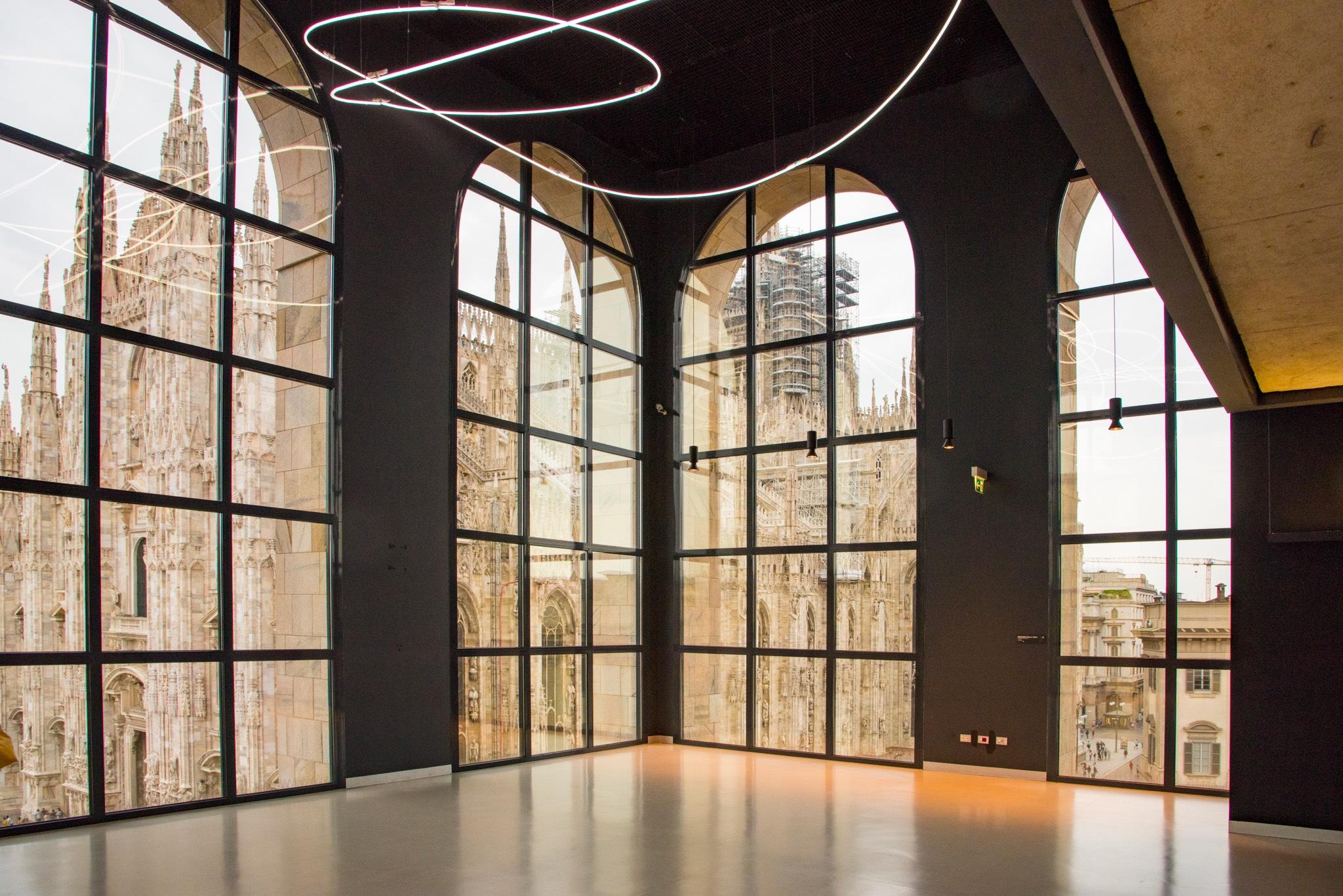
Museo del Novecento is housed in Palazzo dell'Arengario and the adjacent Palazzo Reale di Milano. Works from the 20th century are presented here. The former collection of
contemporary art housed in the Arengario Palace was integrated into Museo del Novecento.
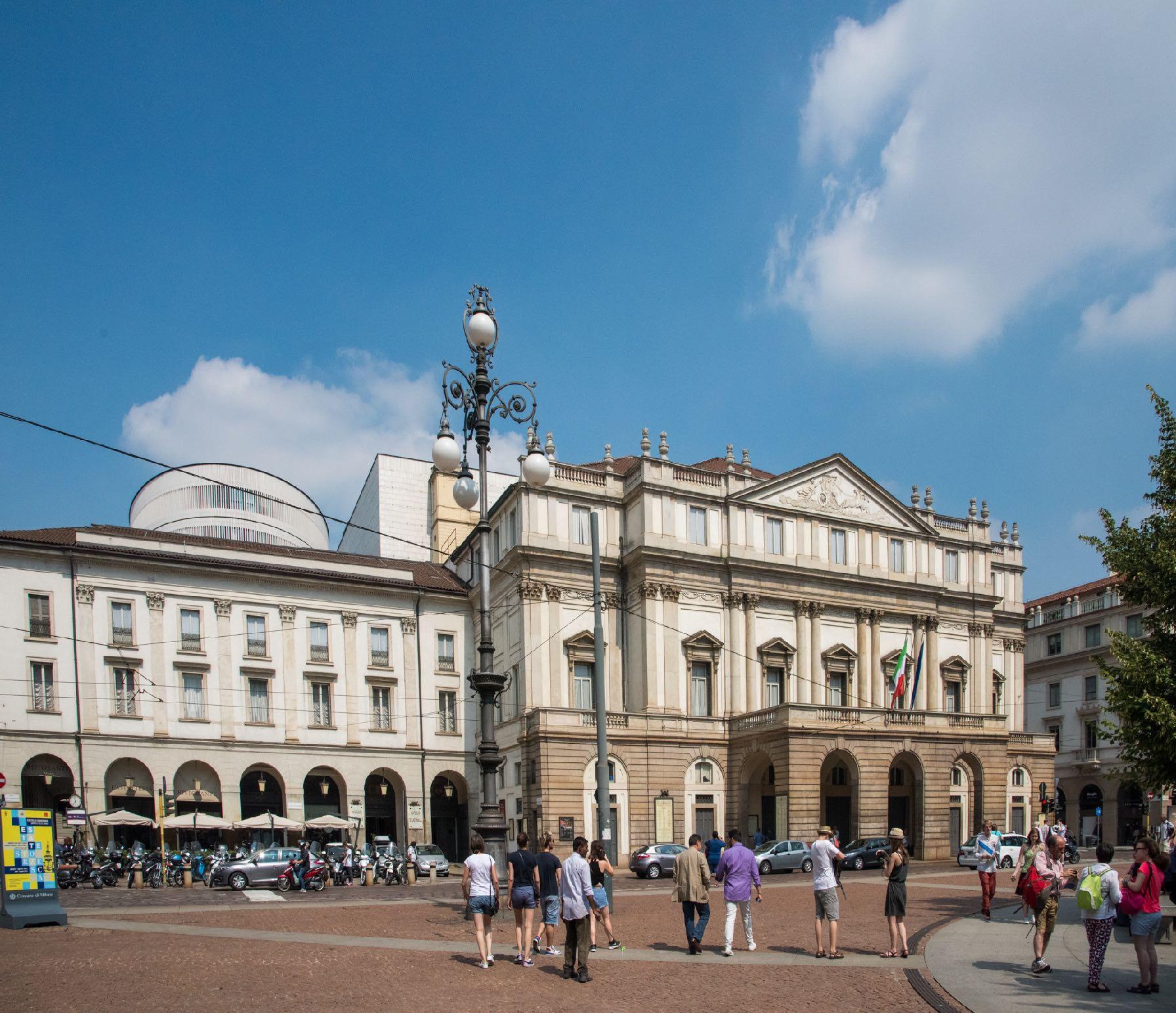
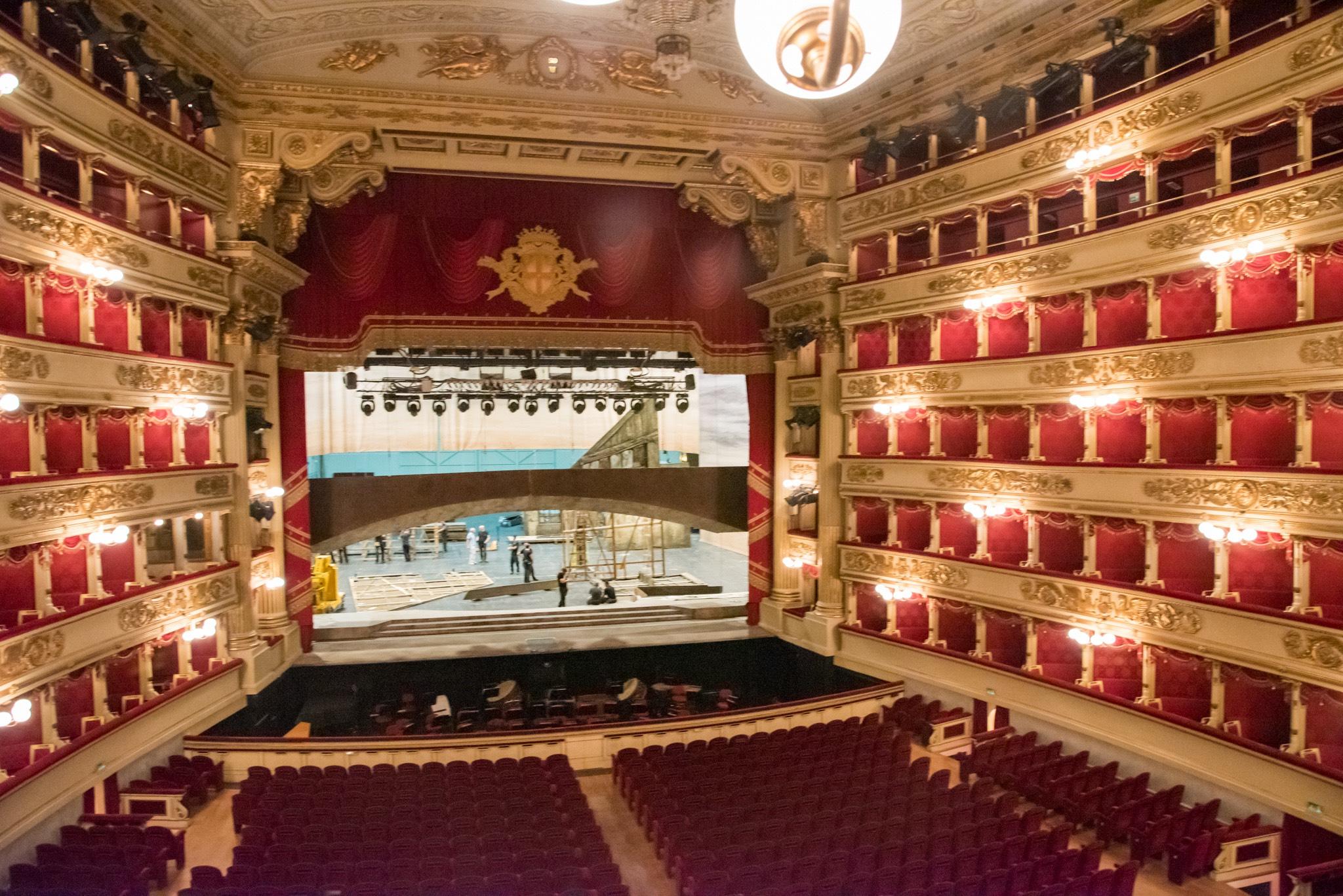
The Milan Scala, opened in 1778, is one of the most famous opera houses in the world. The construction dates back to Empress Maria Theresa, who commissioned
architect Giuseppe Piermarini in 1776 to build an opera house in the capital of the then Austrian Lombardy.
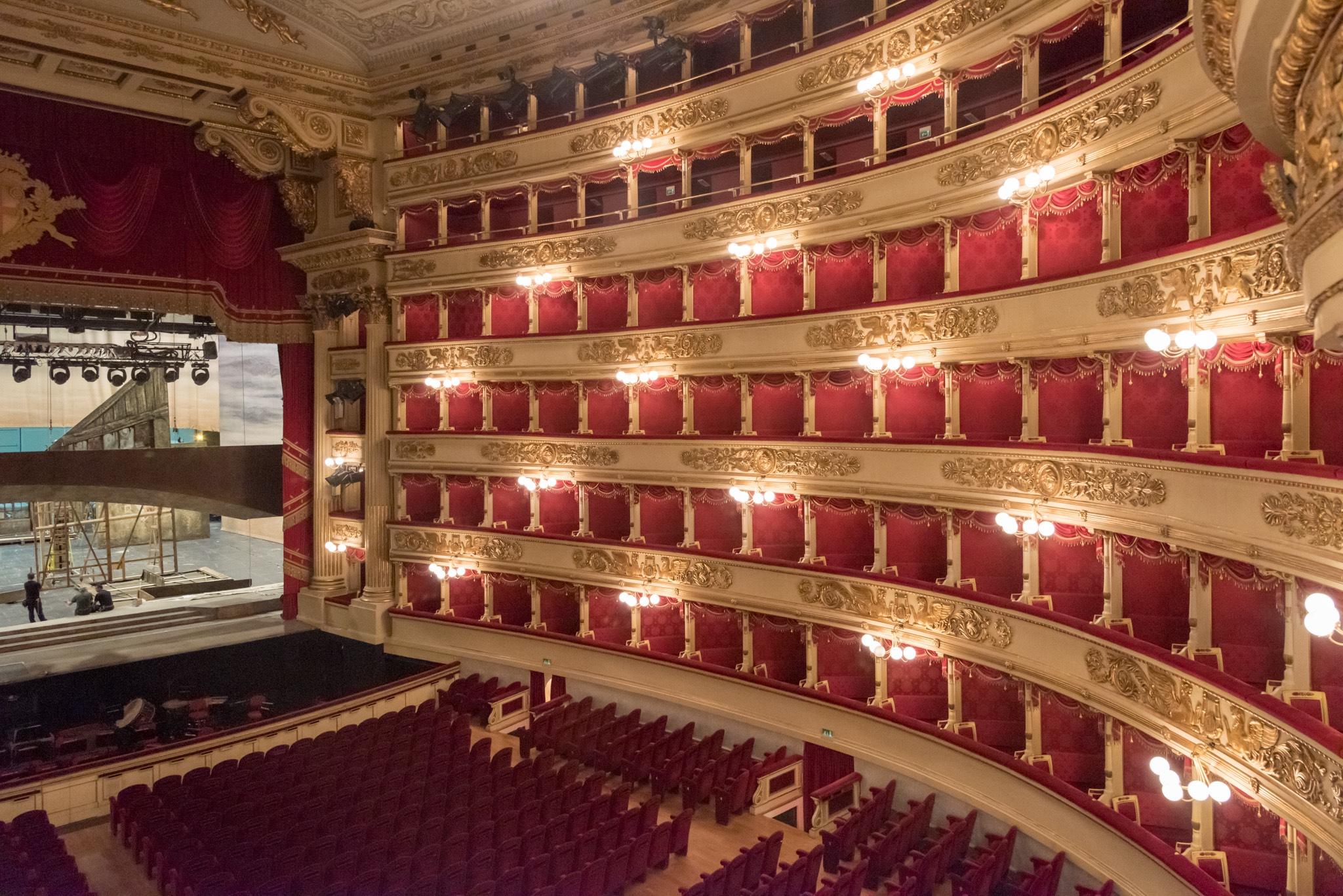
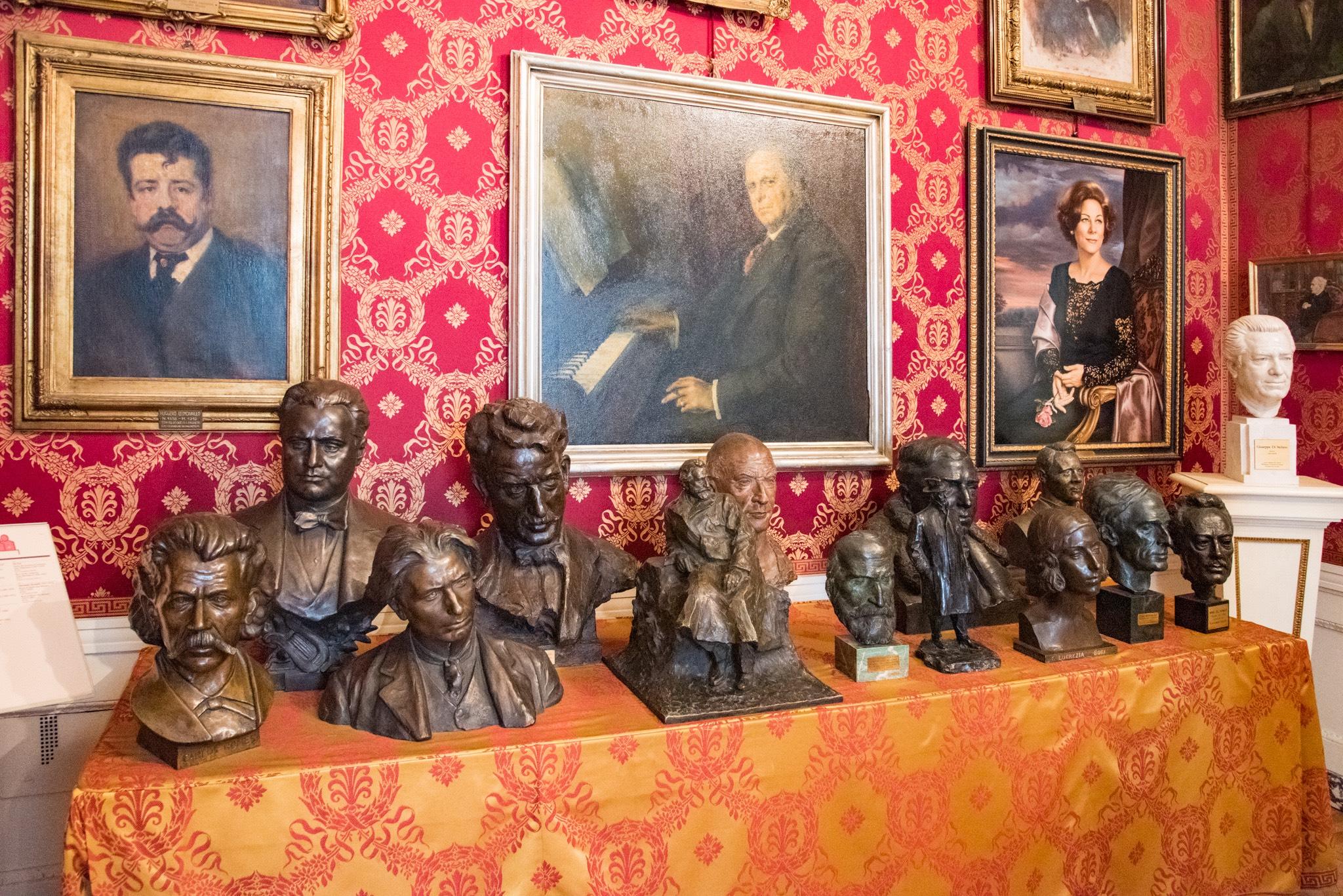
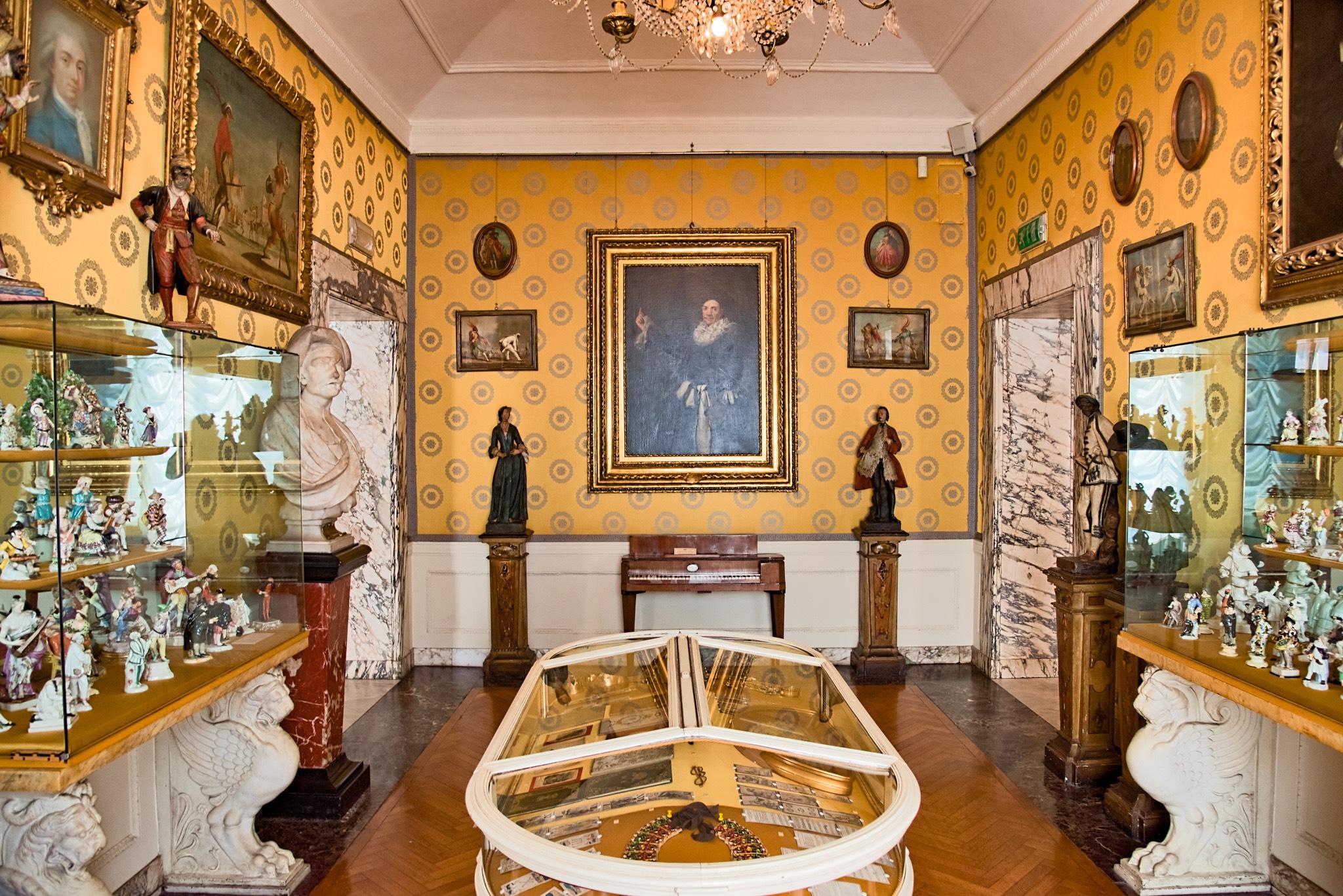
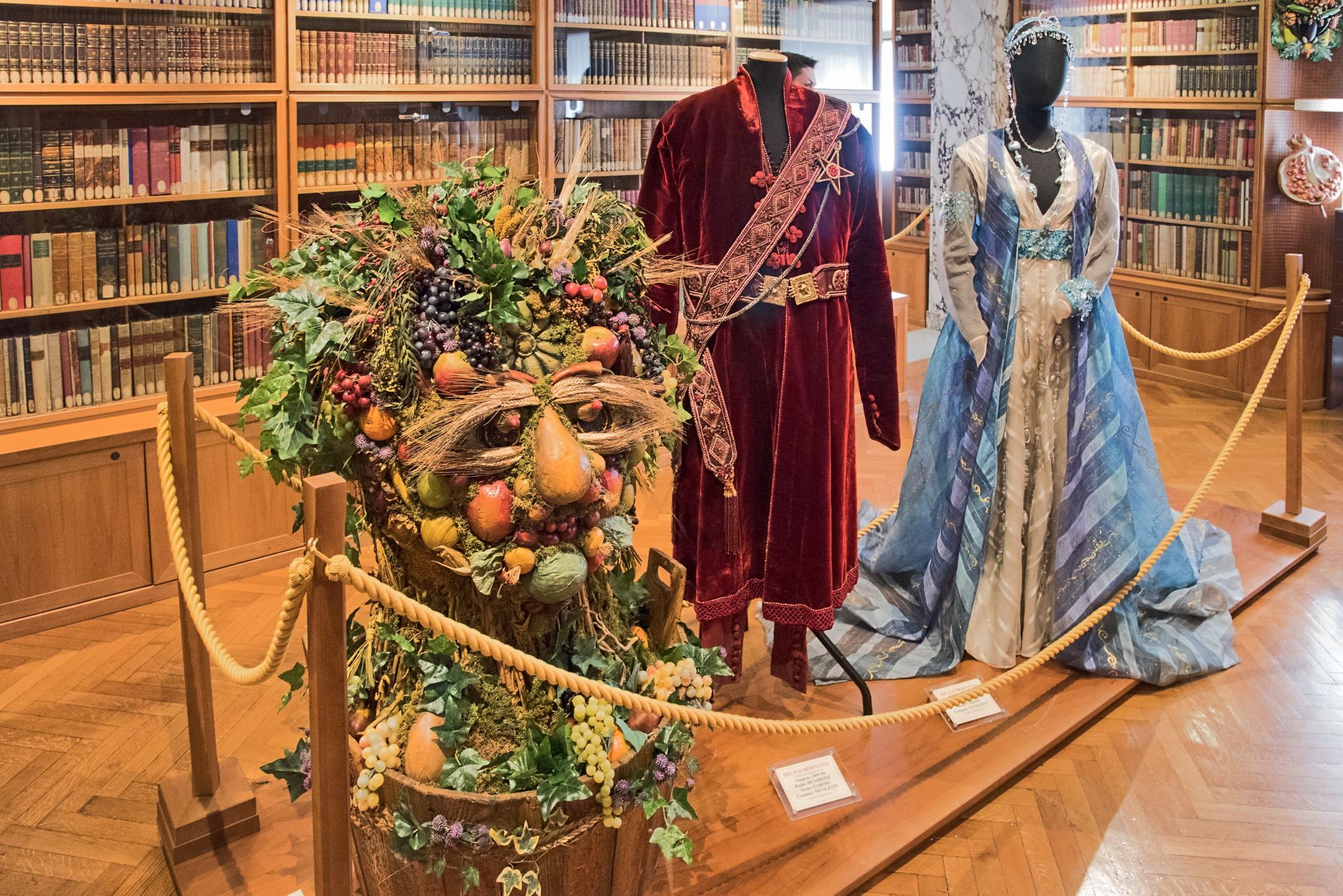
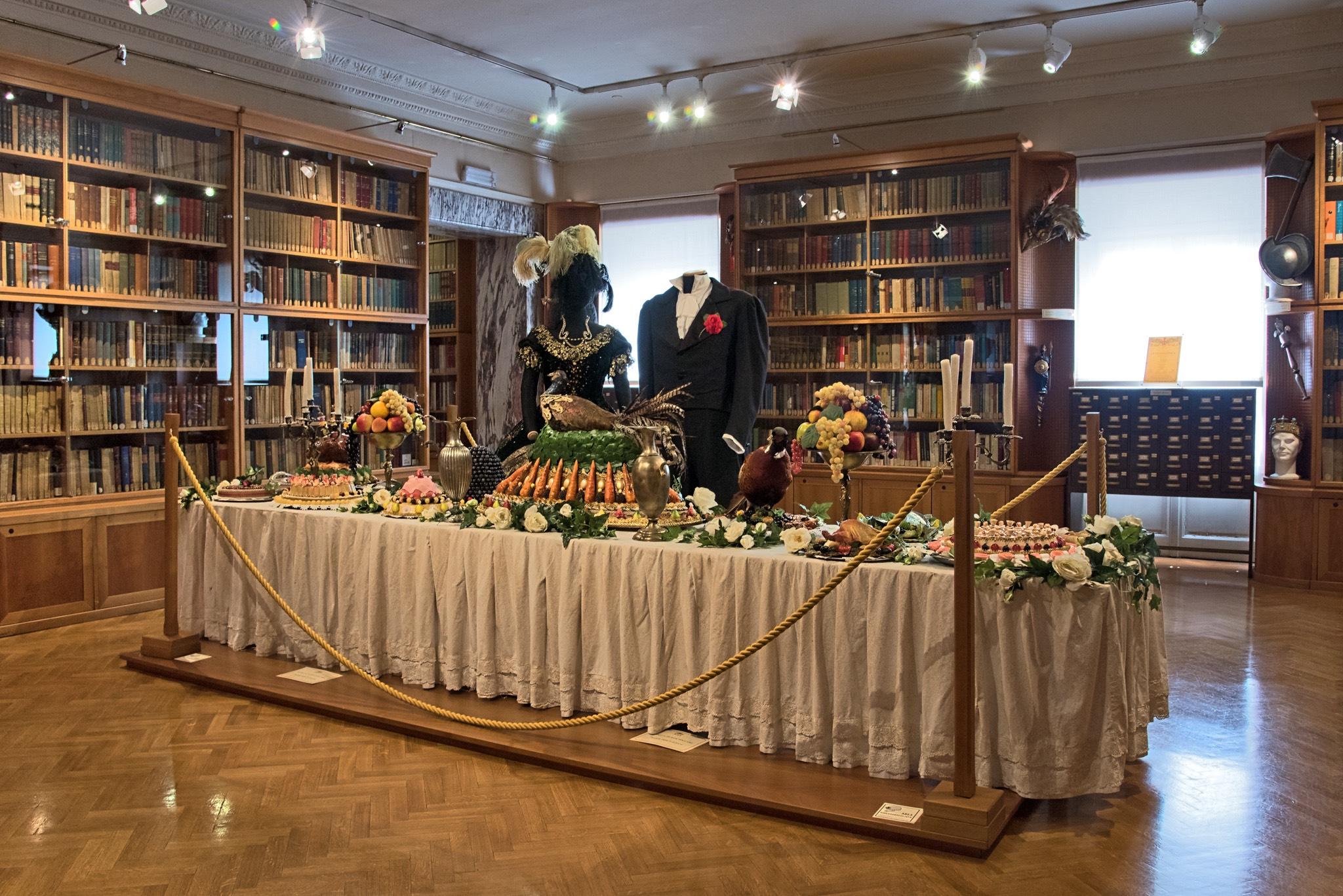
The museum of the Milan Scala offers a deep insight into the history of this renowned cultural site.
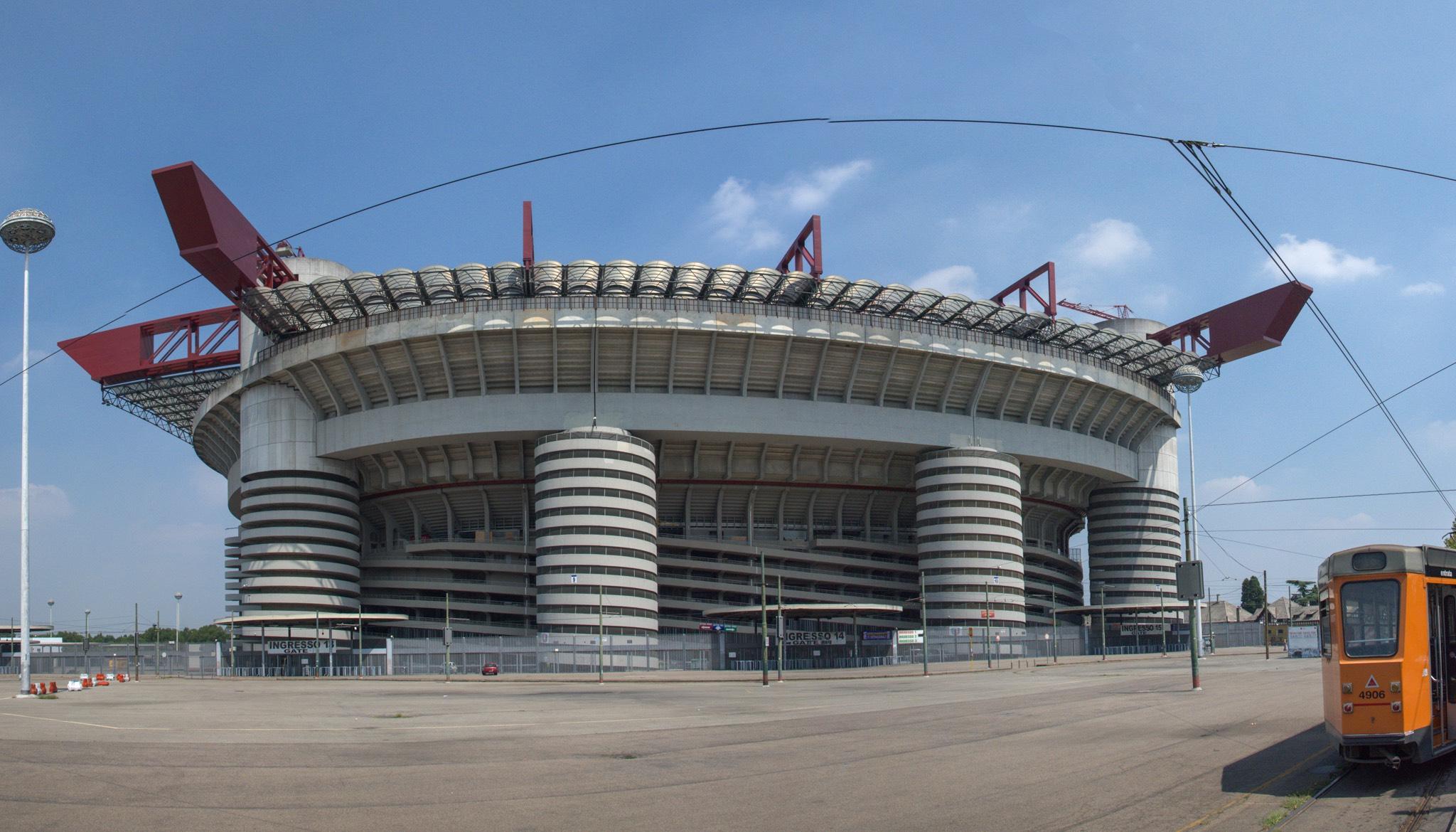
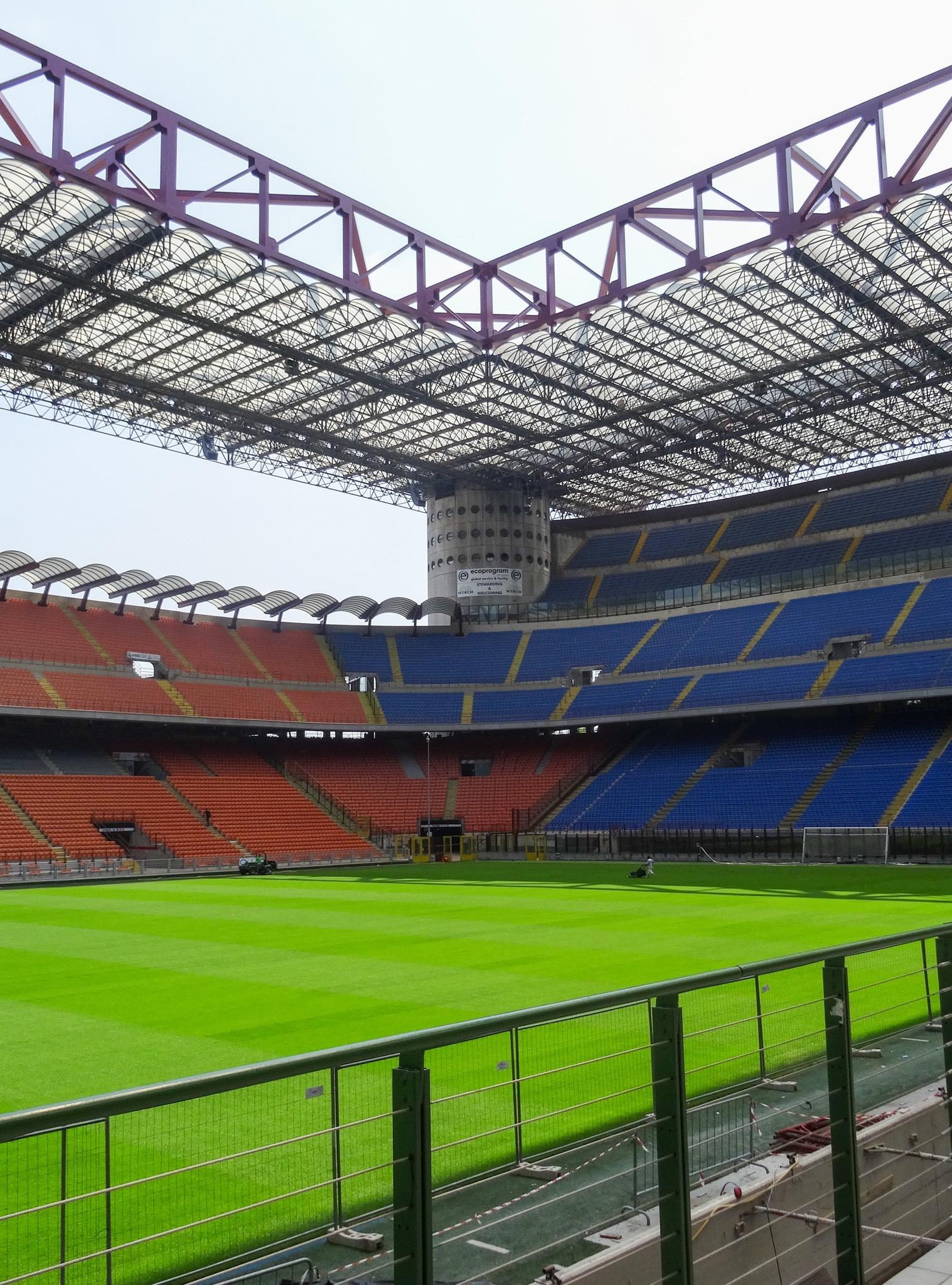
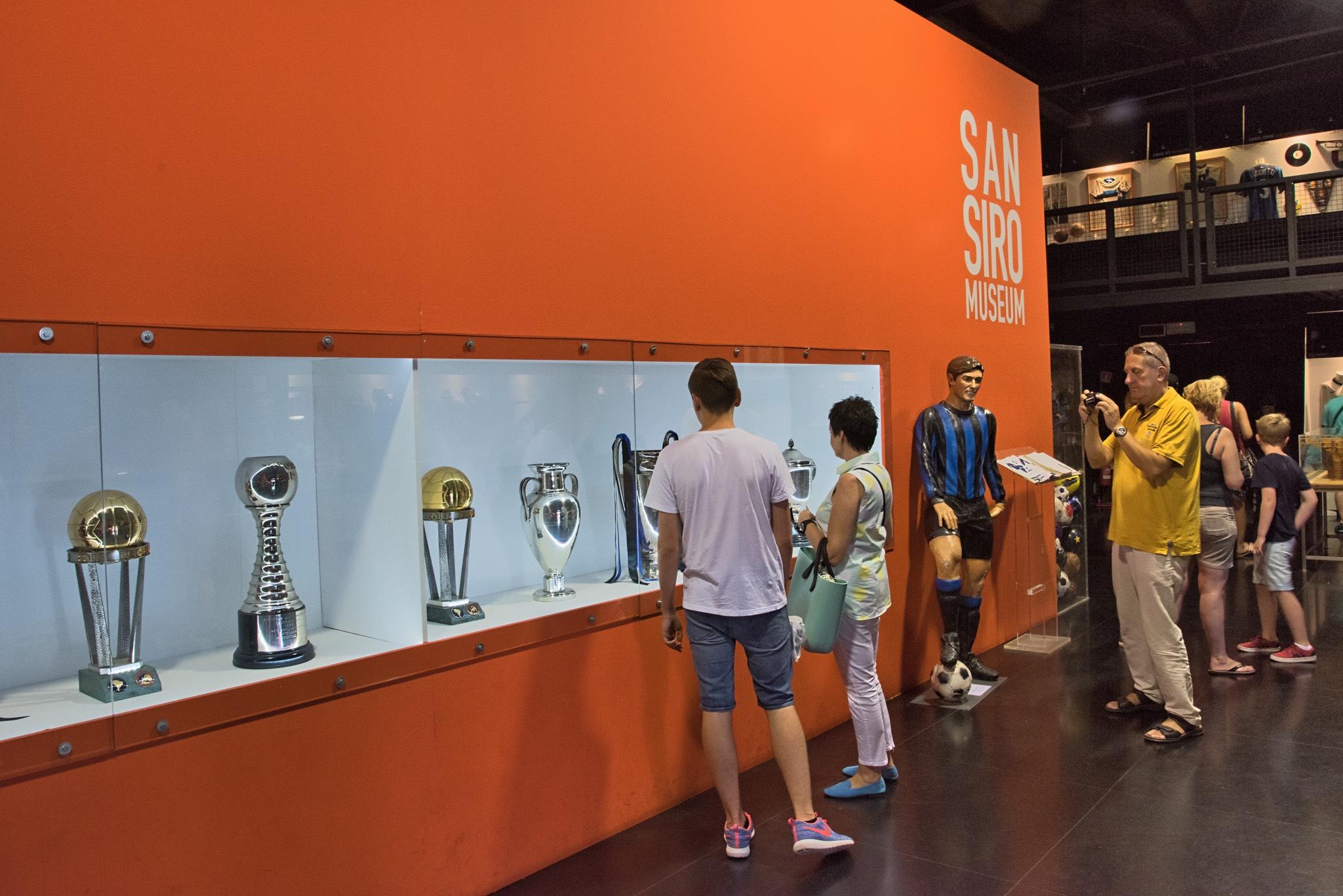
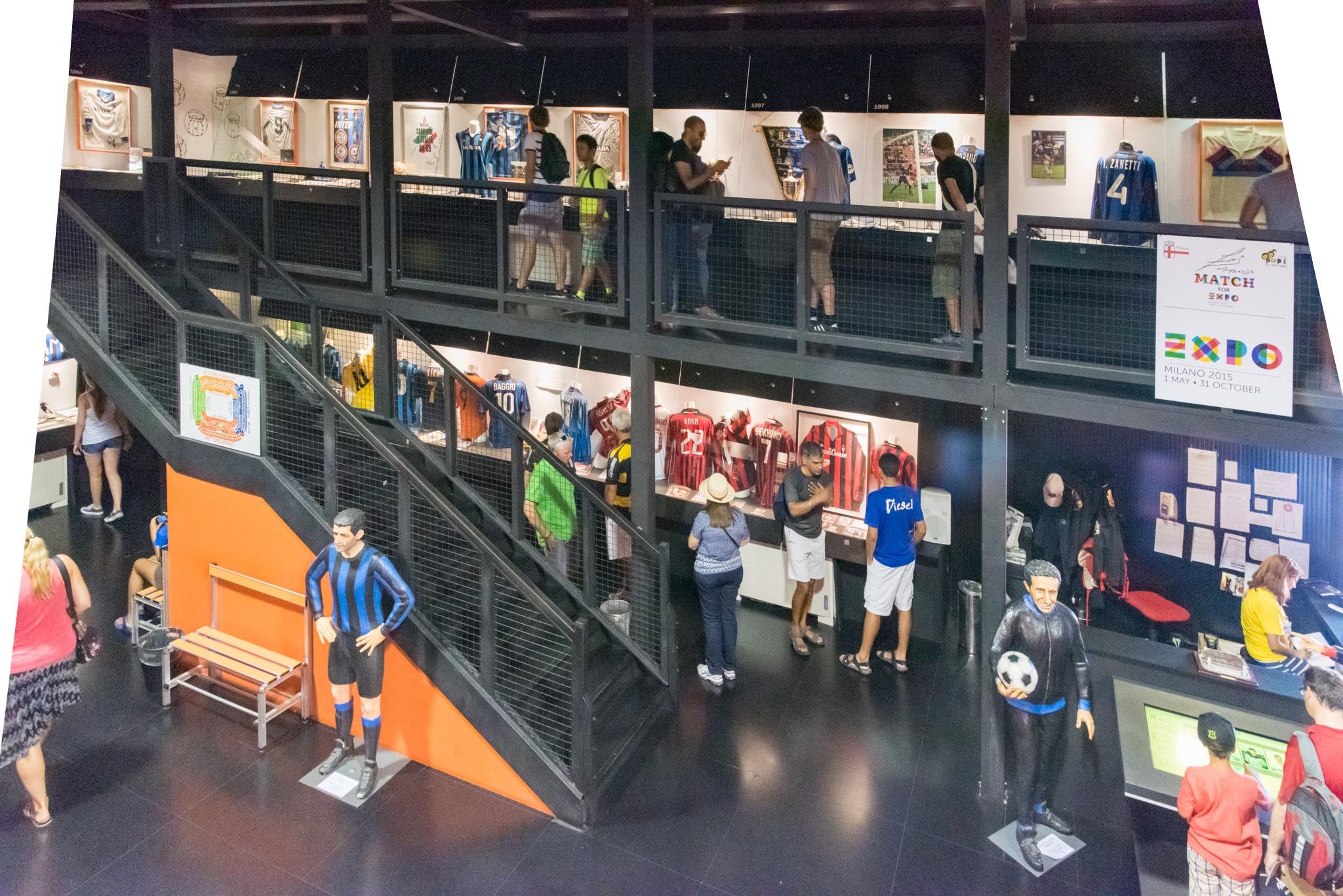
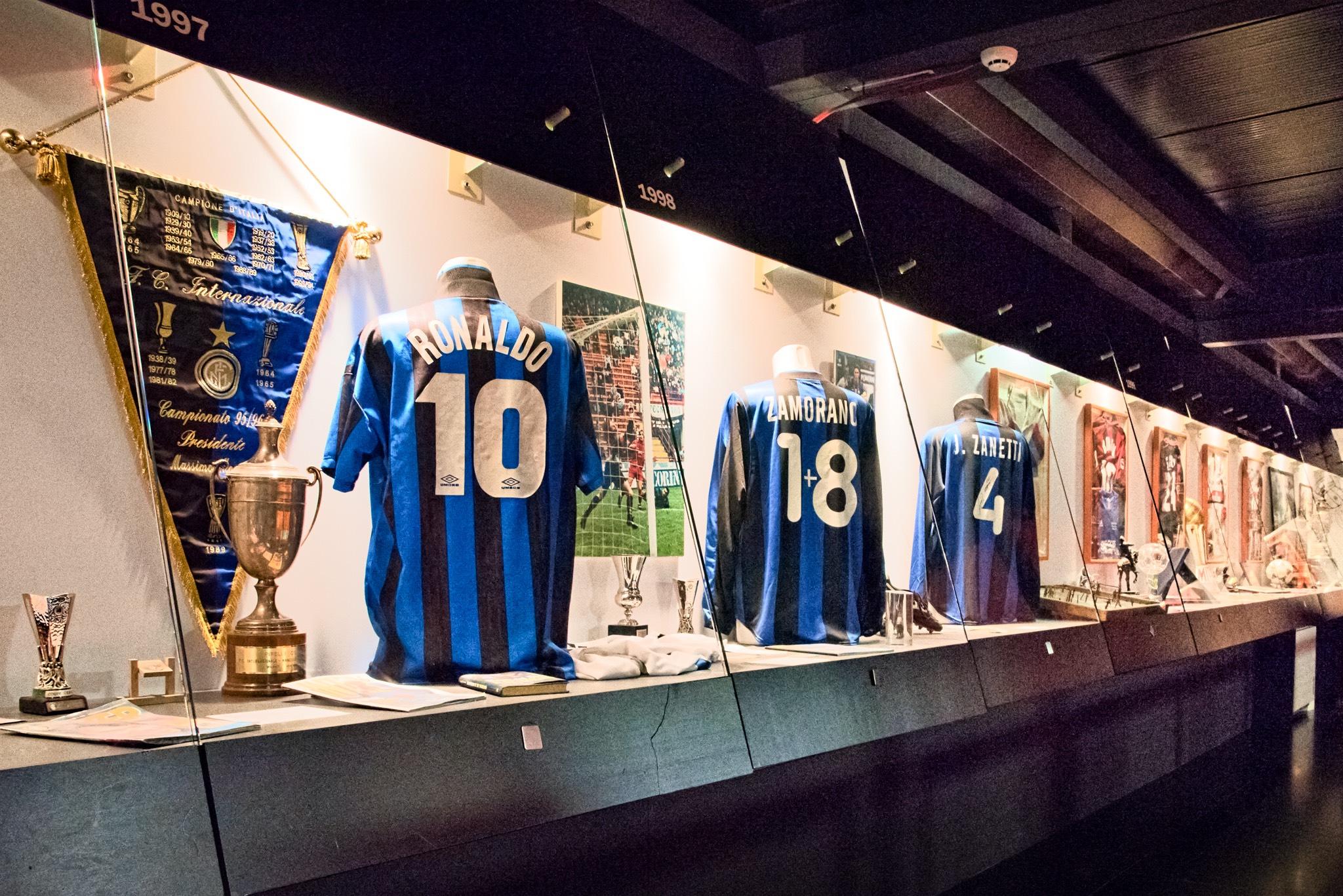
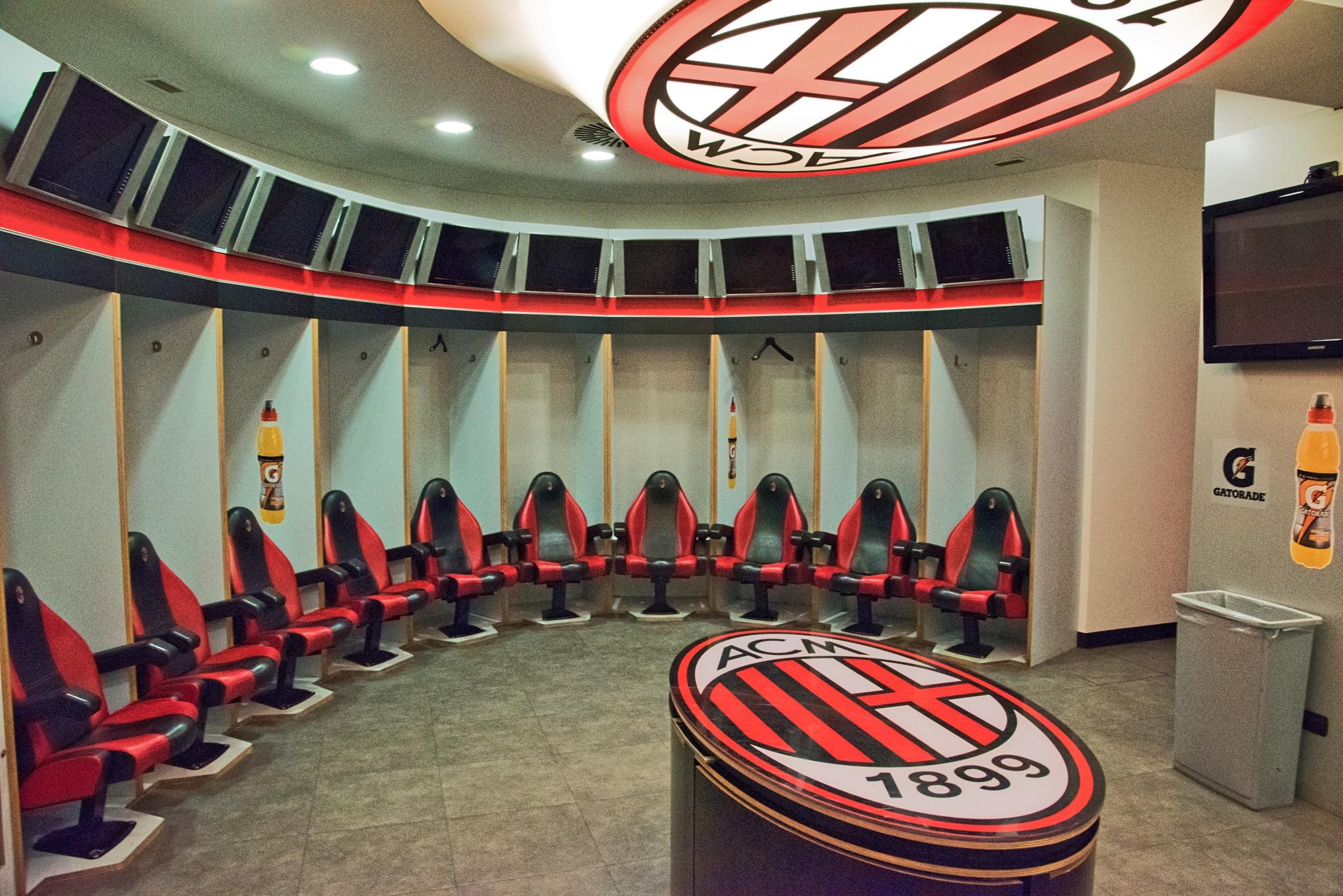
Classifying the topic of soccer under “Art & Culture” is a matter of course for sports-enthusiastic Italians. Stadio Giuseppe Meazza is still known by its old name “San Siro.”
It is the home of AC Milan and Inter Milan. The stadium, which seats over 80,000 spectators, also has an impressive museum.
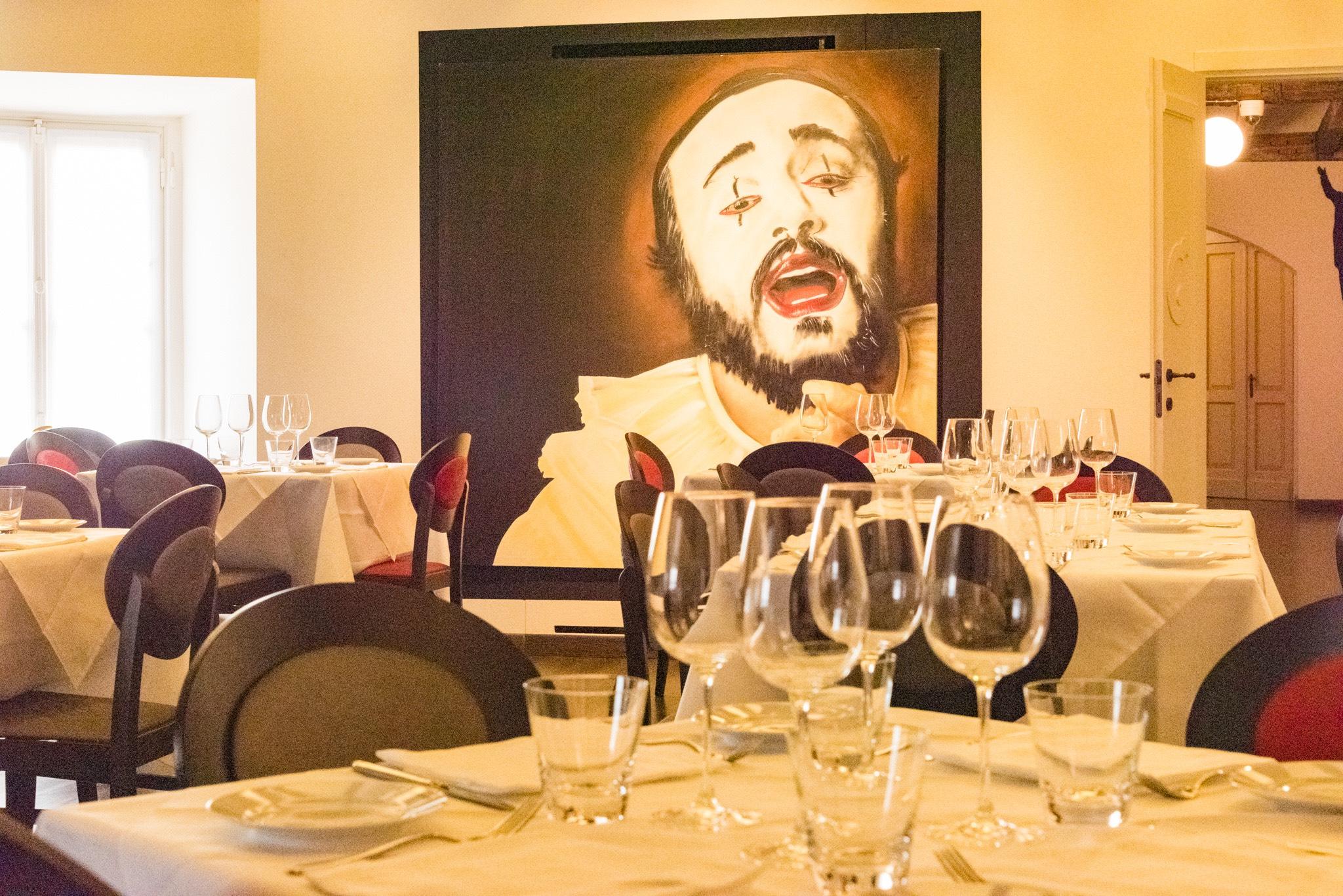
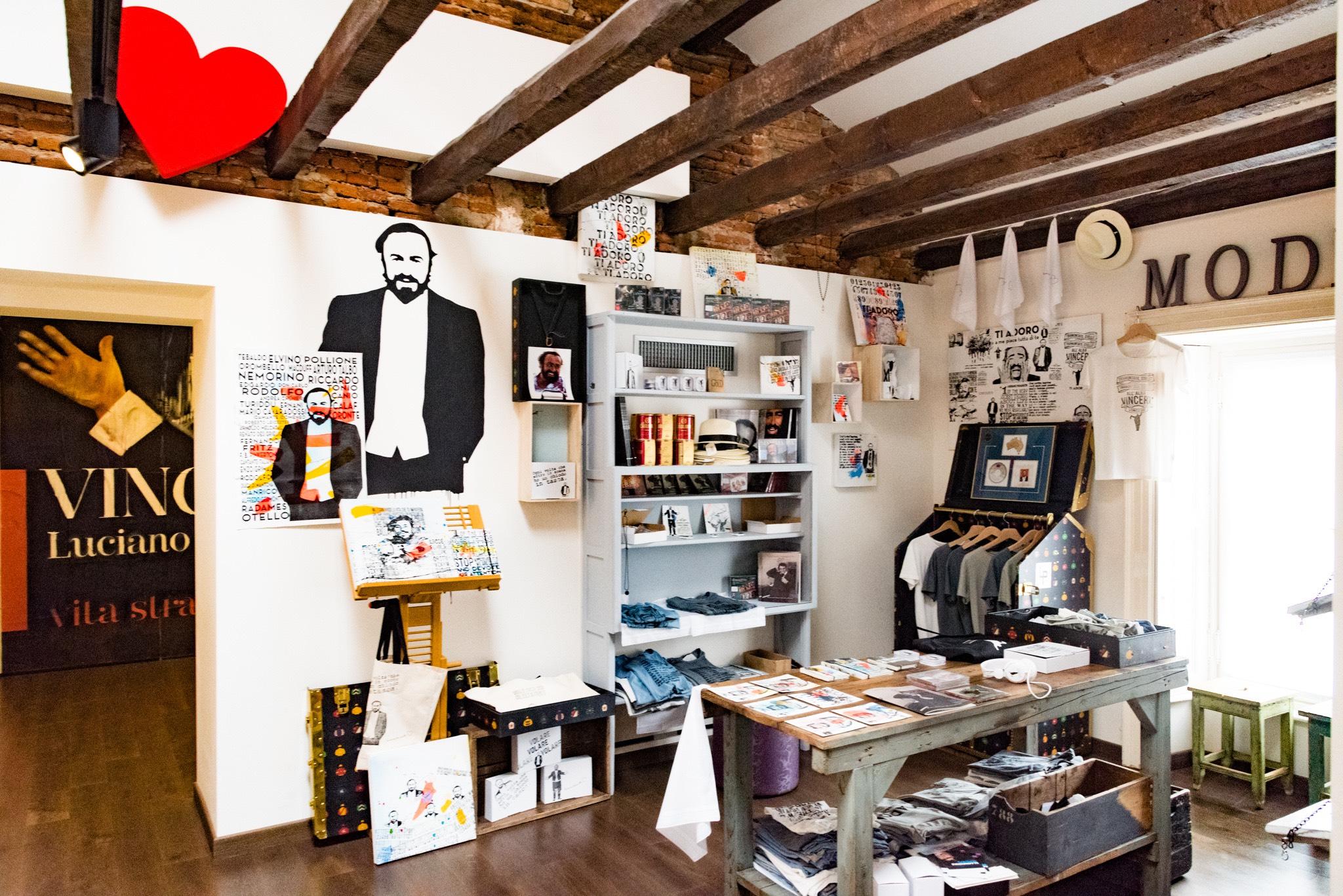
The Pavarotti restaurant and museum was opened on the occasion of the Expo in 2015. The restaurant also serves tortellini and tagliatelle al ragù, which Pavarotti particularly
enjoyed. The venue, located on the fourth floor of Galleria Vittorio Emanuele II, was opened by Pavarotti's widow Nicoletta Mantovani.



OBB Nightjet and OBB Nightjet Partner









This e-book was made possible through the kind support of the regional tourist offices and the OBB. German proofreading and editorial: Martin Andergassen.
References
Text, videos and photos by Rudolf J. Strutz unless otherwise stated. Timetables and travel information: OBB
Assistance from AI
Artificial intelligence applications are occasionally employed for image editing, including the elimination of undesirable components. Additionally, AI tools can enhance the clarity of images and diminish background noise.
The travel guides are also available free of charge on the OBB online entertainment and internet portal railnet, which is installed on all railjets, nightjets (NG) and cityjets
Copyright
This book was licensed under the Creative Commons License. Conditions of use: attribution, non-commercial, no editing and distribution under the same conditions only as a complete work! The use of individual photos and text is not permitted. This eBook is available free of charge.
All links provided are current at the time of publication of this ebook. Links to tickets usually lead directly to the exhibition location. For tickets and timetables, local public transportation services are linked.
All logos and company names are used for information purposes only; any use outside of this e-book must be approved by the copyright holders.

SCOTTY mobile shows the timetables for all public transport and helps you plan your travel route.

Book your trip online or view the current timetable online and directly on your mobile phone.