
April2026

HannaShaulBarNissim,PhD;ErikaBonnevie,MA;SierraSmith,BS
April2026
Thistermreferstobothin-personandonlinespacesassociatedwithcolleges.
ThesetermsareusedtorefercollectivelytocollegesanduniversitiesintheUnited States,includingpublicandprivateinstitutions,unlessotherwisenoted
Thistermreferstocentersthatprovidecollegementalhealthservices,giventhe widevariationincolleges’namingconventionsforthesecenters.
Thesetermsareusedbroadlytodescribeservices,programs,resources,or interactionsintendedtoassiststudentsinaddressingmentalhealthorwellbeing needs.
Wellbeingisapositivestateexperiencedbyindividualsandsocieties.Similartohealth, itisaresourcefordailylifeandisdeterminedbysocial,economic,andenvironmental conditions.Wellbeingencompassesqualityoflifeandtheabilityofpeopleand societiestocontributemeaningfullytotheworld.1
Thistermcantakeondifferentmeanings;however,mostdefinitionsincludeatleasta focusongoodphysicalhealthorotherspecificdimensionsofwellbeing2
SuggestedCitation:
ShaulBarNissim,H,Bonnevie,E,&Smith,S (2026)
Collegesarerespondingtogrowingstudentmentalhealthneedsandincreasing demandforservices,whichisbeingdrivenbychangingsocietalfactors,greater publicdiscoursearoundmentalhealth,andreducedstigma.Ascampusesexpand services,terminologyanddescriptionsofsupportsvarywidelyacrossinstitutions Acrossinstitutions,similarservicesareoftenlabeleddifferently,whilethesame termscanrefertodifferenttypesofsupport.Thisinconsistencymakesitharderfor studentsandfamiliestounderstandavailableresources,andforinstitutionsto identifygapsorcompareservicesacrosscampuses.Currently,thereisnoshared frameworkforcategorizingcampusmentalhealthservicesinawaythatisboth rigorousandeasytounderstandforstudentsandtheirfamilies.Thiswhitepaper examineshowservicedefinitionsandscopehaveevolvedacrossUSinstitutionsand proposesaconceptualmodelfororganizingsupportsfromwellnessandprevention toacutecareandrecovery.
Thisstudydrewfromfoursourcestoexaminehowmentalhealthservicesare defined,organized,andpubliclycommunicatedbyU.S.collegesanduniversities.
1Ananalysisofpeer-reviewedandgreyliteraturetoidentifyexistingconceptual frameworks,terminology,andmodelsrelevanttocollegementalhealthservices;
2Asecondaryanalysisofthe2024–2025PrincetonReviewandRudermanFamily FoundationCampusMentalHealthSurveyReports,examininghowU.S.colleges structure,deliver,andcommunicatementalhealthservicesandstudent awarenessofresources;
3.Astructuredscopingreviewofpublicwebsitesfrom50U.S.collegesand universities.Mostschoolsincludedwerehighlightedinthe2026MentalHealth ServicesHonorRoll,withadditionalschoolsincludedtoincreasediversityacross institutiontypes(eg,HBCUs,gender-specificcolleges,neurodivergent-serving institutions);
4.Semi-structuredinterviewswithfifteenprofessionalsworkinginU.S.college settings.Participantsincludedclinicians,programleads,seniorinstitutional leaders,andexpertsincollegementalhealth.InterviewswereconductedviaZoom andlastedaround45minuteseach.
Acrossinterviews,surveydata,andinstitutionalmaterials,sixmajorthemesemerged inhowcampusesareexpandingmentalhealthservices,organizingsupports,and communicatingaboutresources
Institutionsareexpandingpreventionandredesigningservicesinresponseto evolvingstudentneeds:
Institutionsareincreasinglyexpandingpreventionandearly-interventionstrategies toaddressincreasedstudentdemandforcounselingservices.Offeringlowerintensitysupports,suchasskill-buildingworkshopsandwellnessprogramming,aims toaddressconcernsearlier,reducepressureonclinicalservices,andensurethat studentswithhigher-intensityneedscanaccessappropriatecare.Findings suggestthatmostinstitutionsreviewednowtakeamulti-layeredapproachthat combinesbroadwellnessprograms,briefandstepped-careclinicalmodels,and partnershipswithtelehealthvendorsandcommunityproviderstoexpandaccess, managedemand,andmorefullyintegratementalhealthsupportintoeveryday campuslife
Responsibilityforstudentmentalhealthisincreasinglystructuredasashared institutionalfunction:
Intervieweesdescribedashifttowardredistributingprevention,early identification,andrelationship-basedsupportsacrossmanycampusroles,suchas faculty,advisors,residencelifestaff,coaches,andcampuspoliceThis redistributionissupportedbytrainingprograms,embeddedcounselormodels,and policiesthatformalizereferralpathwaysandcoordinatedresponses.Surveyand interviewdataindicatethatinstitutionsarereinforcingthisapproachthrough leadershipstructures,cross-campuscommittees,andexpandedpeer-support programsTheseeffortsintegratesupportthroughoutcampusenvironments,help normalizehelp-seeking,andenableearlierconnectiontoappropriateresources
Campusmentalhealthsystemsareevolving,butthosechangesarenotalways visibleorstraightforwardforstudents:
Whilehighereducationinstitutionsincreasinglyuseholisticframeworksto coordinateprevention,services,andcross-campuscollaboration,thesestructural changesmaynotregisterwithstudents,whooftenassociatementalhealth supportprimarilywithindividualtherapy.Consequently,studentsmaydefaultto counselingevenwhentheirchallenges,suchasfinancialstrain,loneliness,or academicstress,mightbeaddressedthroughothersupports.Toaddressthis issue,manyschoolsarecreatingmultipleentrypoints,suchaswellnesshubs,online portals,screenings,triageconsultations,andreferralsfromfacultyorstaff,to
facilitateconnectiontothebestsupport.However,capacitytocommunicate thesesystemsvariesbyinstitution,meaningthatexpandedservicesdonotalways translateintostudentawarenessoreffectiveuseofavailableresources
Thewaysmentalhealthservicesarelabeleddirectlyaffectstudentaccessand engagement:
Findingshighlightashiftawayfromdeficit-basedterminologytowardmore inclusive,wellbeing-orientedlanguagethatframesmentalhealthsupportas proactiveandaccessibleThishelpsnormalizehelp-seekingandencouragesearlier engagementwithlower-intensityresources.However,institutionallabelsand servicecategoriesdonotalwaysalignwithhowstudentsunderstandtheirneeds. Differencesinterminology,particularlyaroundcrisis,urgent,andemergency services,cancreateconfusionaboutwheretoseekhelp.Frequentrenamingof programsorrolestoreflectbroaderservicesormeetregulatoryrequirements alsoaffectshoweasilystudentsidentifyandnavigatesupports
Supportandoutreachareintensifiedaroundkeymomentsofstudentneed:
Campusesreinforceawarenessofavailableresourcesduringmomentssuchas orientation,midtermsandfinals,majordisruptions,andreentryfollowingaleaveof absence,recognizingthatstudentsmaybemorereceptiveandinneedofsupport atthesetimesManyinstitutionsalsobegincommunicatingaboutmentalhealth servicesduringtheadmissionsprocess,highlightingagrowinginterestfrom prospectivestudentsandfamiliesincampuswellbeingresources.Theseeffortsare oftenpairedwithexpandedoutreachstrategiessuchasscreenings,stress-relief programming,andyear-roundorreferral-basedservicesduringacademicbreaks.
Wellnessframeworksprovideaflexiblestructurefororganizingandproviding studentsupport:
Wellness-basedframeworkshavebeenwidelyusedtoorganizeandcommunicate campusmentalhealthefforts.Theseframeworksareadaptableandoften customizedtoreflectinstitutionalpriorities,whileemphasizingtheinterconnected natureofstudentwellbeingthatextendsbeyondthecounselingcenterWellness frameworksareusefulforbothstudentunderstandingandcampuscoordination. Byprovidingsharedlanguageaboutdifferentdimensionsofwellbeing,these modelshelpstudentsrecognizehowchallengesacrossareasoflifeaffectmental healthandencouragestaffacrossdepartmentstoviewstudentneedsholistically, promotingmorecoordinatedreferralsandresponsesacrosscampus.
CollegesanduniversitiesacrosstheU.S.arerespondingtoevolvingstudentmental healthneedsamidrisingdemandandexpandingapproachestocare. Overthepast fewdecades,stigma-reductioneffortsandgrowingpublicdiscourseaboutmental healthhavecontributedtogreaterwillingnessamongmorestudentstoseeksupport andtalkopenlyabouttheirwellbeing. Studentsarealsoarrivingwithmore significantmentalhealthhistoriesandtreatmentbackgrounds,andtheirpresenting concernsareincreasinglycomplex,oftenrequiringspecializedorhigherlevelsofcare thatexceedwhatcounselingcentersaredesignedtoprovide.Asinstitutionshave expandedservicesinresponsetotheseshifts,theterminologyusedtodiscuss mentalhealthandoverallwellbeinghasdevelopedunevenlyacrosshighereducation institutions. Similarservicesareoftenlabeleddifferentlyacrossinstitutions,while identicaltermsmayrefertosubstantivelydifferenttypesorintensitiesofsupport.
Thisinconsistencycomplicatestheabilityofstudentsandtheirfamiliesto understandavailableresources,limitsinstitutions’capacitytoassesscoverageand identifygaps,andmakesitmoredifficulttocompareservicesorlearnfrom practicesacrosscampuses
A wide range of models and frameworks inform how colleges conceptualize student mental health and wellbeing, reflecting a growing emphasis on whole-institution and systems-level approaches. The Okanagan Charter articulates a comprehensive vision for embedding health and wellbeing across campus culture, operations, and academic life and has been formally adopted by a growing number of U.S. institutions. Building on this foundation, the 2025 Limerick Framework for Action extends the Okanagan Charter’s 11–13 principles by outlining how systems-level commitments can be operationalized through coordinated, student-centered mental health supports. Alongside these frameworks, institutions often draw on conceptually distinct but related approaches, including public health prevention models such as the JED Campus; the THRIVE and LOCUS frameworks, which organize support based on level of need and intensity of care rather than diagnostic categories; service delivery strategies such as stepped care, triage, and embedded counseling; and accreditation, designation, and quality improvement efforts led by organizations such as the International Accreditation of 14
“There’s renewed energy around the idea that mental health is a community responsibility, not just the job of counseling services.”
-
Ryan Travia,
Associate Vice President for Student Success at Babson College
CounselingServicesandtheAmericanCollegeHealthAssociation. Together, theseeffortsshareacommonemphasisonholisticwellbeing,prevention,andshared responsibility.However,theyalsovaryinhowtheydefineservices,organizesupports, andapplyprinciplesinpractice.Importantly,theseframeworksareprimarilydesigned toguideinstitutionalstrategy,coordination,andservicedesignratherthantoprovide acommondescriptiveframeworkforcategorizingsupportsacrossinstitutions.
Despitesubstantialexpansionincampusmentalhealthandwellbeingefforts,there isnowidelyadoptedframeworkforcategorizingthespecifictypesofsupport institutionsprovideinaconsistentandanalyticallyrigorousway Existingapproaches useinconsistentterminologyandorganizeservicesindifferentways,makingit difficultforstudentsandfamiliestounderstandavailableoptions,forinstitutionsto assesscoverageandidentifygaps,andforresearcherstocomparepatternsacross campuses. Thiswhitepaperexamineshowdefinitionsandservicescopeshave evolvedacrossU.S.institutionsandproposesaconceptualmodelfororganizing supportsfromwellnessandpreventiontoacutecareandrecovery.Synthesizing insightsfrommultiplesources,thispaperidentifiespatternsinhowservicesare describedandaccessedandintroducesaconceptualmodeldesignedtocategorize mentalhealthandwellbeingsupportsusingaconsistentservice-levelframeworkthat spanswellnessandpreventionthroughacutecareandrecovery.
Thissimplifiedcontinuumillustrateshowcollegementalhealthandwellbeing supporthashistoricallybeenstructured,withservicesspanningfromwellbeingand preventionthroughclinicalcareandemergencyresponse Inthepast,clinicaland crisisserviceshavebeenthemostvisibleandclearlydefined,whileprevention,early support,andwellbeinghavebeenlessconsistentlyintegratedorrecognizedaspart ofthementalhealthsystem Asdescribedinthispaper,manyinstitutionsacrossthe US areshiftingtowardmorecomprehensive,prevention-orientedapproachesthat expandaccesspoints,supportearlierengagement,andintegratementalhealth acrosscampusenvironments.
Student has a problem
Early intervention Targeted clinical support
Counseling center as the primary entry point Crisis care Prevention
Broad efforts focused on mental health stigma and awareness
Support groups and one-off mental health workshops
Therapyfirst response and psychiatric care
Often not included in formal mental health systems
Flourishing
Rarely included in formal mental health framing
Emergencyonly response with limited entry points
Wellbeing
Often associated with physical health or general wellness
Now, many institutions across the U.S. are shifting toward more comprehensive, prevention-oriented approaches that expand access points, support earlier engagement, and integrate mental health across campus environments The conceptual model introduced in this paper builds on the traditional continuum by reframing these elements within a more interconnected system, moving from a single, counseling-centered pathway to a network of entry points across campus settings, roles, and services. However, this transition remains ongoing and is not yet consistently reflected across all institutions.
“We have made a shift to more environmental, community-level, and policy-level approaches. And we’ve shifted from a more pathogenic, disease-focused model to a more salutogenic, health-and wellbeing–focused model. Those are the biggest changes I’ve seen over the last 15 to 20 years.”
- Jordan Perry, Director, Wellness and Prevention Services at Appalachian State University
This white paper examines how definitions and service scopes have evolved across U.S. institutions and proposes a conceptual model for organizing supports from wellness and prevention to acute care and recovery. The approach combined literature review, structured analysis of institutional materials, secondary analysis of data on these issues, and qualitative interviews to triangulate findings.
Authorsconductedatargetedreviewofpeer-reviewedandgreyliterature publishedbypublichealth,highereducation,andmentalhealthorganizations toidentifyexistingconceptualframeworks,terminology,andmodels relevanttocollegementalhealthservices.Sourceswereselectedbasedon theirrelevancetohowservicesareorganizedanddescribedoncollege campuses,includingpreventionframeworks,needs-basedmodels,and systems-levelapproachesusedinpostsecondarysettings.
ThisanalysisdrawsonfindingsfromThePrincetonReviewandthe RudermanFamilyFoundationCampusMentalHealthSurveyReports, publishedin2024and2025. Thesenationalsurveyscollectself-reported informationfromU.S.collegesanduniversitiesabouthowmentalhealthand wellbeingservicesarestructured,delivered,andcommunicatedoncampus. Thereportsalsoincludestudent-reporteddataonawarenessofcampus mentalhealthresources.Asecondaryanalysisofdatafromthesereports wasalsoconducted.Wherepossible,resultsfromthe2024and2025 surveyswerecomparedtoidentifydirectionaltrendsovertime. Percentageswerecalculatedbasedonthenumberofinstitutionsthat respondedtoeachquestion.Surveydatawereusedtoprovideanational context,identifyemergingpatterns,andtriangulatethemesobservedin interviewsandthescopingreview “The2024survey”and“the2025survey” areusedtoreferencethesedatasourcesthroughoutthispaper
Tounderstandhowmentalhealthandwellbeingservicesarenamed, grouped,andpresentedtostudentsandfamilies,astructuredscoping
reviewofpubliclyavailablewebsiteswasconductedacross50US colleges anduniversities WhiletheCampusMentalHealthSurveysprovidedbroad, self-reportedinformationaboutservicestructure,thewebsitereview enabledcloserexaminationofhowinstitutionspubliclyorganize,label,and communicatesupportsinpractice.Thesampleincludedallinstitutions recognizedinthe2026MentalHealthServicesHonorRollandreflected variationinregion,enrollmentsize,governance(publicandprivate),and resourcecontext. AdditionalinstitutionsthatrespondedtotheCampus MentalHealthSurveybutwerenotincludedinthe2026HonorRollwere selectedtobroadenrepresentationacrossinstitutionaltypes.These includedgender-specificcolleges,acollegespecificallyserving neurodivergentstudents,andhistoricallyBlackcollegesanduniversities (HBCUs).
Thereviewfocusedonpubliclyaccessiblematerials,includingservice descriptions,programnames,navigationpathways,andorganizational structures.Usingastructuredcodebook,authorsdocumentedhow serviceswerecategorized,differentiated,andpositionedwithinbroader supportsystems.Codingconstructsincludedsupporttype,timing,delivery format,accesspathway,populationfocus,andcommunicationapproach. Terminologyidentifiedthroughthisreviewinformedthedevelopmentofthe conceptualmodel,helpingensurethatservicecategoriesreflected languagecommonlyusedinstudent-andfamily-facingmaterials.
Tobetterunderstandhowmentalhealthservicesareorganizedand communicatedinpractice,semi-structuredinterviewswereconducted withfifteenprofessionalswithexperienceworkingincollegesettings acrosstheU.S.Intervieweeswereselectedtorepresentarangeof perspectives,includingindividualsindirectstudent-facingroles(e.g., cliniciansandprogramleads),seniorleadersresponsibleforinstitutional strategyandpolicy,andresearcherswithexpertiseinschool-basedmental health.Thisapproachensuredrepresentationfromprofessionalswhowork directlywithstudentsaswellasthoseresponsibleforshapinginstitutional systemsandpolicies
Interviewswereconductedviavideoconferencingsoftware,lastedan averageof38minutes,andfollowedasemi-structuredinterviewguide.All interviewswererecordedandtranscribedwithparticipants’consent. TranscriptswereanalyzedusingDedoosequalitativeanalysissoftware. Authorsappliedaniterativethematicanalysisapproach,initiallydrawingon thecodingframeworkdevelopedduringthewebsitereviewandrefining
codesasnewthemesemerged Analyticmemosweremaintainedthroughout todocumentanalyticdecisionsandreduceindividualbias Interviewfindings wereusedbothtorefinethemodel’scategoriesandtoconfirmpatterns identifiedthroughtheliteraturereview,nationalsurveys,andwebsite analysis.Theinterviewsalsoprovidedpractitionerinsightsintohowcampus mentalhealthservicesareorganizedandcommunicatedinpractice.
Findingsfromtheliteraturereview,CampusMentalHealthSurveyReports, websitereview,andqualitativeinterviewswerecomparedtoidentify commonpatternsanddifferencesinhowinstitutionsdescribe,organize,and communicatementalhealthandwellbeingsupports.Basedonthese patterns,aconceptualframeworkwasdevelopedtoorganizetherangeof supportscommonlypresentacrosscampusmentalhealthsystems.The modelwasrefinedthroughmultipleroundsofreviewtoensureitreflected real-worldcampuspracticesandthestructuresthroughwhichsupportis deliveredacrossinstitutions.Particularattentionwasgiventohowservices aregrouped,howstudentstypicallyentersupportsystems,andhow differentcomponents,includingservicetypes,campuslocations,staffing roles,andinstitutionalpoliciesinteractwithinthebroadercampuswellbeing ecosystem
Severallimitationsshouldbeconsideredwheninterpretingthesefindings First,althoughthestudyincorporatedmultipledatasources,thequalitative interviewsreflecttheperspectivesofcampusprofessionalsandarenot intendedtorepresentstudentexperiencesorbegeneralizabletoall institutionalcontexts Second,theinterviewsampledidnotinclude representativesfromcommunitycolleges,HBCUs,orgender-specific colleges,whichmaylimittheapplicabilityofthefindingstothosesettings Third,theanalysisofinstitutionalwebsitesreliedonpubliclyavailable informationandmaynotfullycaptureinformalpractices,internalreferral processes,orservicesthatareintentionallycommunicatedthroughnonpublicchannels.Finally,thispaperdoesnotevaluateservicequality, effectiveness,utilization,orstudentoutcomes.Thefindingsshouldtherefore beinterpretedasinformingthestructure,organization,andcommunication ofcampusmentalhealthsystemsratherthantheirimpact.
Ourfindingspointtoshiftsinhowcollegesorganize,deliver,andcommunicatetheir mentalhealthandwellbeingservicestostudentsandfaculty.Intervieweesdescribed growinginstitutionalattentiontostudentmentalhealthfollowingtheCOVID-19 pandemicin2020,alongsideagradualreductioninstigmathathascontributedto greateropennessaroundhelp-seekinganddiscussionofmentalhealthacross campuses.Withinthiscontext,intervieweesdescribedongoingeffortsbycollege mentalhealthandwellbeingdepartmentstoreassessandupdateinstitutional approachestosupportingstudentwellbeing.Participantshighlightedframeworks suchastheLimerickFrameworkforActionandtheOkanaganCharterasexamples ofeffortstoaligninstitutionalstrategieswiththerangeofchallengesstudentsface Acrossinterviews,surveydata,andinstitutionalmaterials,severalcommonpatterns emergedinhowcampusesareexpandingservices,organizingsupports,and communicatingaboutmentalhealthresources.Thesepatternsaresummarizedinthe themesbelow.
Theme1: Institutionsareexpandingpreventionand redesigningservicesinresponsetoevolvingstudentneeds
Intervieweesdescribedtheexpansionofpreventioneffortsasapractical responsetosustainedincreasesinstudentutilization,particularlywithincounseling services Risingdemand,especiallysincetheCOVID-19pandemic,hasplacedmany counselingcentersunderpressure,promptinginstitutionstodeveloppreventiveand non-clinicalsupportsthatreducebottlenecks,balancecliniciancaseloads,and improveaccessforstudentswhorequirehigher-intensitycare Byofferingearlier andlower-intensityinterventions,campusesaimtoaddressconcernsbeforethey escalateandtobettermatchstudentneedswiththemostappropriatelevelof support Examplesincludeskill-buildingworkshopsthathelpstudentsmanagestress oranxiety,aswellaspracticalresourcesthataddresscommonsourcesofstudent strain.Intervieweesemphasizedthatsomestressors,suchasfinancialpressure relatedtotuitionorhousing,maybebestaddressedthroughresourceslikefinancial aidadvisingoremergencyeconomicassistanceratherthanclinicalcounseling.
According to the 2025 survey, nearly all reporting schools (99%) indicated that they offer a comprehensive wellness program that makes counseling, referral, and wellbeing services available to all students Interviewees described this broad access as a foundational principle, with core services designed to be widely available and additional supports tailored to specific student populations. Survey data show that many institutions train clinicians to work with diverse student backgrounds and experiences, including racial or ethnic minority students (93%), LGBTQIA+ students (93%), neurodivergent students (92%), students living with substance use disorders (91%), and those experiencing eating concerns (87%).
“Sometimes what a student really needs is a developmental intervention, like a workshop on building relationships, not individual psychotherapy. It’s like asking whether you need a surgeon to remove a splinter. Probably not.”
- Dr Kodee Walls, Director of Counseling and Psychological Services at Indiana University Bloomington
Inadditiontoexpandingformalservices,campuseshaveintroducedarangeof informalengagementopportunitiesthatpromoteconnection,buildcopingskills,and supportstudentwellbeinginnon-clinicalsettings.Thischangeisreflectedinnational surveydatafromThePrincetonReviewandRudermanFamilyFoundationCampus MentalHealthreports.Accordingtothe2025survey,institutionsreportedoffering programssuchaspettherapyevents,“Sip&Paint”nights,and“FreshCheck”wellness days,aswellasfor-creditcourseslike“Adulting101”thatteachpracticalcopingand lifeskills.Theseactivitiesareintentionallyframedasapproachablecampus experiencesratherthanclinicalservices,creatingopportunitiesforstudentstobuild
skills,reducestress,andconnectwithsupportinlow-pressureenvironments.By integratingtheseprogramsintoeverydaycampuslife,institutionsaimtoengage studentsearlierandintroducementalhealthresourcesinwaysthatfeelaccessible andnon-stigmatizing.
Thisbroaderprevention-orientedapproach wasalsoseeninsurveydata Inthe2025survey, 44%ofreportinginstitutionsidentifiedasaJED Campus,meaningtheyparticipateinamultiyearinitiativedesignedtostrengthenprevention, earlyidentification,andcoordinationacross campusmentalhealthservices. Interviewees alsoreferencedcampus-wideframeworks,such astheOkanaganCharterandtheHealthy CampusFramework,astoolsformovingbeyond atherapy-firstmodel.Manyinstitutionsreported implementingstepped-careortriagesystems thatmatchstudentstodifferentlevelsof supportbasedontheirneeds.
“Things like temporary support for housing or groceries…feel very wellness-oriented to me, and it’s clearly connected to mental health. You can’t be mentally healthy if you’re starving or homeless. So there’s been continued development of resources that support many areas of wellness.”
-Counselor
Clinicalservicedeliveryisalsoevolving.Institutionsincreasinglyrelyonshort-term orbrieftherapymodelstoexpandaccess.Theseapproachesfocusonaspecific concernorgoalandtypicallyinvolvealimitednumberofsessionsorlongerintervals betweensessions(e.g.,biweeklyratherthanweekly). Insomecases,thesetakethe formofbriefdrop-inconsultationsofferedinmultiplelocationsacrosscampus,often
Programs that help develop skills and manage stress, including workshops on coping skills, stress, and anxiety management, and life-skills, such as “Adulting 101”
Wellness education & skill building
Activities that create approachable entry points to support and reduce stigma, like pet therapy, “Sip & Paint” nights, and other everyday wellness programming.
Informal, lowpressure engagement
Resources that address common non-clinical sources of distress, such as basic needs like food, housing, and finances.
Support for everyday stressors
called “Let’s Talk” or “Let’s Chat” sessions When available and accessible, students who require more intensive, longer-term, or higher-frequency care are often referred to group services, community providers, or telehealth partners. This shift reflects a practical trade-off: using brief individual therapy and on-campus groups to preserve counseling center capacity, while relying on referrals and third-party partnerships for ongoing or specialized care. In addition, institutions increasingly emphasize skill-building workshops, support groups, and group counseling as complementary forms of support that can meet certain student needs while preserving capacity for individual counseling.
Digitalplatformsarealsoincreasinglyusedto deliverservices Inthe2025survey,92%of reportingschoolsindicatedthatmentalhealth serviceswereavailableeitherinpersonor throughtelehealth Theseofferingsincludelive servicessuchasteletherapyandvirtualsupport groups,aswellasasynchronousoptionslikepeersupportchatforumsorsecuremessagingwitha provider.Insomecases,digitalplatformsarealso usedtofacilitatecrisissupport,eitherthrough urgenttelehealthappointmentsorbydirecting studentstoexternalcrisisresourcessuchasthe 988SuicideandCrisisLifeline. Interviewparticipantsnotedthatthisflexibilityhelps institutionsmanagedemand,accommodatestudents’schedulesandgeographic locations,andmaintaincontinuityofcareduringacademicbreaksorother disruptions. 26
“The program [telehealth] helps us meet the diversity, equity, and inclusion priorities by ensuring students have access to providers mental health and health who share their identities.”
- Pacific Lutheran University, 2025 Survey
Manyinstitutionsnowrelyonpartnershipswiththird-partytelehealthvendorsand community-basedprovidersasacentralcomponentoftheirstrategy Accordingto the2025survey,96%ofreportingschoolsindicatedthattheyreferstudentstooffcampuscounselingservices Surveydataalsoshowedthattheaveragewaittimeto seeacounselorduringthe2023–2024academicyearwas42days,althoughsome institutionsreportedwaitsofupto24days Thisvariationinaccessreflects differencesininstitutionalcapacityandhelpsexplainthegrowingrelianceonexternal partnershipstoexpandavailability Intervieweesdescribedthesepartnershipsasa waytoreducewaittimes,increasesessionavailability,limitafter-hoursandon-call demandsthatcontributetoclinicianburnout,andprovidestudentswithaccessto moreintensiveorspecializedservicesthattheirinstitutionsmaynotbeabletooffer internally.Atthesametime,participantsnotedthatexpandedrelianceonexternal providersintroducesnewchallenges,includingtheneedtoclearlydistinguishcampusbasedservicesfromcontractedcareandthelimitedabilityofinstitutionstomonitor thequalityandcontinuityoftreatment.
“A culture of care means creating an environment where people know they matter, where it’s okay to ask for help, and where support is welcoming and nonjudgmental. Everyone has a role to play.”
-Laura Lewis, Assistant Director, Suicide Prevention Program at The Ohio State University
Asinstitutionsexpandpreventioneffortsand redesignclinicalservices,intervieweesdescribeda relatedshiftinhowresponsibilityforstudent mentalhealthisunderstoodacrosscampus. Ratherthanbeingviewedsolelyasthe responsibilityofcounselingcenters,supporting studentwellbeingisincreasinglyseenasashared responsibilityacrossmanycampusroles.Faculty, coaches,advisors,campuspolice,residencelife staff,andadministratorsweredescribedas playingactiverolesinrecognizingsignsofdistress, fosteringasenseofbelonging,andconnecting studentstoappropriateresources Interviewees emphasizedthatthisreflectsabroadershiftfromcrisis-onlyinvolvementtoward prevention,earlysupport,andrelationship-building.Atsomeinstitutions,campus policedepartmentsthatwereonceprimarilyinvolvedinemergencyresponsenow engagestudentsthroughproactivecommunity-buildinginitiativesdesignedtobuild familiarityandtrust.Forexample,oneintervieweedescribedhowtheircampuspolice departmentregularlybringsemotionalsupportanimalstocampusspaces,providing studentswithopportunitiesforstressreliefandinformalinteraction.
Surveydatafurtherillustratethisbroaderdistributionofsupport Accordingto the2025survey,93%ofreportingschoolsindicatedprovidingwellnesssupport withinresidentialprograms,upfrom79%inthe2024survey Byintegratingmental healthresourcesintoresidentiallife,institutionsplacesupportwithinstudents’ everydaylivingenvironments,reinforcingthatmentalhealthandwellbeingare addressedbeyondtraditionalclinicalsettings
“Embedded therapists work well because they understand the culture of specific sub-communities. At Harvard, embedded counselors in Athletics were incredibly effective because they understood the nuances of that environment coaches, recruitment, publicity.”
- Dr Addie Wyman, Director, Counseling Center at Brandeis University
Surveyresponsesandinterview dataalsohighlightedembedded counselormodelsasoneway institutionsdistributementalhealth supportacrosscampus Inthese models,cliniciansworkdirectlywithin specificcommunities,suchasathletics programs,academicdepartments,or culturalandidentity-basedresource centers Locatingserviceswithin familiarenvironmentscanincrease
visibility,reducestigma,andencourageearlierengagementwithsupport Intervieweesalsonotedthatembeddedcounselorsoftendevelopadeeper understandingofthespecificstressorsandculturaldynamicswithinthecommunities theyserve Qualitativeresponsesfromthe2025surveyindicatedthatmany institutionsviewembeddedmodelsasimprovingaccessibilityandresponsiveness, whileothersareintheprocessofexpandingtheseapproaches
Institutionalpoliciesalsohelpformalizeresponsibilityforstudentmentalhealth acrosscampus.Policiesrequiringsuicidepreventiontraining,nondiscrimination protections,academicflexibility,medicalleaveandreentryprocedures,and coordinatedemergencyresponseprotocolsclarifyreferralpathways,strengthen coordinationacrossdepartments,andexpandthenumberofcampusrolesequipped torespondwhenstudentsexperiencedistress.However,intervieweesnotedthat manyfacultymembersgobeyondtheseformalexpectations.Facultyweredescribed asincreasinglytakinganactiveroleinsupportingstudentwellbeing,including participatinginmentalhealthtaskforces,incorporatingcounselingcenterinformation intocoursesyllabi,initiatingreferrals,and,insomecases,personallyaccompanying studentstoservices.Severalintervieweesreportedthatreferralsfromfacultyand staffhaveincreasedinrecentyears,particularlyfollowingtheCOVID-19pandemic, whichtheydescribedasacatalystforbroadercampusengagementinstudent mentalhealth.Intervieweesalsoobservedgreaterfacultyparticipationintrainingand outreachefforts.
Thisshifttowardsharedresponsibilityisalso reflectedinhowinstitutionsorganizeleadership andcoordinationaroundstudentmentalhealth Accordingtothe2025survey,73%ofreporting schoolsindicatedthattheyhaveamentalhealth taskforce,committee,office,ordesignated coordinatorresponsibleforguidingcampus mentalhealthefforts Surveyresponsesalso showedan8percentage-pointincreasefrom 2024to2025inschoolsreportingaChief WellnessorBehavioralHealthOfficerrole. Intervieweessimilarlydescribedrecent restructuringwithinmentalhealthandwellness
“Since
the pandemic...faculty and staff are far more engaged and supportive. Referrals from them have doubled, and they’re more likely to walk students to our offices rather than just telling them where to go.”
- Dr. Jamie Davidson, Associate Vice President for Student Wellness at University of Nevada, Las Vegas
departments,includingthecreationofseniorleadershippositionssuchasVice PresidentsofWellbeing.Theserolesweredescribedashelpingcoordinateefforts acrossdepartmentsandensuringthatresponsibilityforstudentwellbeingisshared acrosscampusunitsratherthanconcentratedsolelywithincounselingservices.Many institutionsalsoreportedestablishingcross-campuscommitteesthatbringtogether administrators,clinicians,faculty,andstudentstoalignpriorities,coordinateinitiatives, andsupportamoreintegratedinstitutionalresponsetostudentmentalhealth.
Intervieweesalsodescribedstudentinvolvementasanincreasinglyvisible
Inparticular,peersupportwasdescribed asanareathathasreceivedrenewedfocus andexpansioninrecentyears.Schools reportingpeer-to-peerprogramsincreased from63%inthe2024surveyto73%in 2025.Intervieweesnotedthatstudentsare oftenmorelikelytoturntofriendsbefore seekingformalservices,positioningpeersas animportantsourceofearlyandinformal supportandasakeychannelforraising awarenessofavailableresources.Theyalso describedpeer-ledinitiativesashelping makesupportfeelmoreapproachable, normalizinghelp-seeking,andreaching
“Our CHAMPS program is our peer mentoring program…It’s a peer-topeer network supported by student success coordinators and staff. It’s a great space for students to connect with others who have navigated life events and academics, and leverage peer support.”
- Matt Galloway, Student Care Manager at University of Arizona Global Campus
componentofthisdistributedmodelofresponsibility Participantsnotedthat studentsareplayingamoreactiveroleinshapingcampusmentalhealtheffortsby servingonadvisorycommittees,contributingtowellnessleadershipgroups,and participatinginfocusgroupsthatprovideinputonoutreachmaterials,language,and programdesign Insomecases,intervieweesreportedthatstudentsthemselves initiateorleadwellness-relatedinitiativesthatinfluenceinstitutionalpriorities studentswhomaybehesitanttoengagewithcounselingorotherprofessional services Peermentoringprogramsandstudentgroupswerefrequentlycitedas providingconnectionandsharedexperiencewithoutbeingexplicitlyframedasmental healthservices
Severalintervieweesdescribedsuicidepreventioneffortsasanimportantdriverof thisbroaderdistributionofresponsibility.Institutionsincreasinglytrainfaculty,staff, andstudentstorecognizewarningsignsandrespondappropriately,reinforcingthe expectationthatearlyidentificationandreferralcanoccuracrossmanycampus rolesratherthansolelywithincounselingservices.Surveydatareflectthistrend:the mostcommonlyofferedtrainingsinthe2025surveywereQPR(“question,persuade, andrefer”)andMentalHealthFirstAid,bothofwhichequipnon-clinicianstorecognize distressandinitiatesupportiveconversations.27-28
Theme3:Campusmentalhealthsystemsareevolving,butthose changesarenotalwaysvisibleorstraightforwardforstudents
Ourfindingsrevealedagapbetweenhowinstitutionsorganizementalhealth systemsandhowstudentsrecognizeandseeksupport.Alloftheframeworks identifiedintheliteratureareprimarilydesignedforinstitutionalleaders, practitioners,andsystemplanners Thesemodelsguidecoordination,prevention strategies,andserviceintegrationacrosscampusunitsbutarenotintendedto functionasstudent-facingnavigationtools Intervieweesemphasizedthatalthough campusesincreasinglyrelyonholisticframeworksinternally,thesestructuresare largelyinvisibletostudentsbydesign
Asaresult,evenasinstitutions broadenservicesandexpand preventionefforts,studentsoften continuetoassociate“mentalhealth” primarilywithcounselingortherapy. Intervieweesnotedthatmanynonclinicalsupports,suchasacademic assistance,financialaid,basicneeds services,andwellnessprogramming,are integratedintoinstitutionalwellbeing strategiesbutarenotconsistently recognizedbystudentsaspartofa broadermentalhealthsystem.Thisdisconnectcanleadstudentstodefaultto counselingevenwhenthemostrelevantsolutionlieselsewhere.Forexample,a studentexperiencingstressrelatedtofoodinsecurityorhousinginstabilitymayneed emergencyfundingorbasicneedssupport.Whenthoseservicesarenotclearly visiblewithinthebroaderecosystemofstudentsupport,studentsmaystruggleto reachtheresourcesmostlikelytoresolvethesourceoftheirstress.
“Scope of practice is also important. Students need to understand what situations can be addressed in a university counseling center and those needing higher levels of care available elsewhere.”
- Dr. Aaron Jeffrey, Director, Counseling and Psychological Services at Weber State University
Thisdisconnectalsoreflectsdifferencesinhowstudentsexperienceandinterpret theirneeds.Intervieweesdescribedstudenthelp-seekingastypicallydrivenby immediate,concreteconcernssuchasacademicstress,housinginstability,financial strain,orinterpersonalconflict.Ratherthanapproachingcampussupportbytrying tounderstandhowservicesareorganizedorhowinstitutionalsystemsaredesigned, studentsgenerallyseekhelpinresponsetopressingproblems,oftenwithoutprecise languagetodescribewhattheyareexperiencing.Intervieweesnotedthatwhen mentalhealthservicesareintroducedduringorientation,theinformationmaynotbe especiallysalientbecausestudentsaretypicallyfocusedonimmediateprioritiessuch asacademics,housing,andbuildingsocialconnectionsastheytransitiontocampus life.
Students’ experience of support depends not only on the range of services available but also on how clearly they can identify where to begin and understand what happens next. Interviewees described institutions as increasingly creating multiple access points into support, including centralized wellness hubs, online resource portals, screenings, triage or consultation appointments, case management teams, referrals from faculty or staff, embedded providers, and crisis or emergency lines, rather than relying solely on students to schedule an appointment with the counseling center These entry points are designed to help students know where to start, reduce barriers to connection, and ensure that counseling centers are not the only gateway to care. Interviewees emphasized that these pathways are especially important because many students experience challenges best addressed by other forms of support, reserving intensive clinical services for those with more urgent or complex needs Some campuses are using tools such as “Red Folder” guides or similar quick-reference materials to help faculty and staff recognize signs of distress and connect students to appropriate support. Clear entry points and referral routes can help students connect more quickly to the most relevant office, such as basic needs services or financial aid, rather than defaulting to therapy. They also help reduce the burden on students who require urgent or higher levels of care, as navigating multiple offices and repeatedly explaining their situation can delay support and add additional stress
Our findings also indicate that institutions vary in their ability to clearly communicate mental health systems to students. While many campuses have broadened their strategies and services, interviewees noted that institutional resources shape how effectively those changes are described and promoted. Participants from institutions with dedicated communications teams and coordinated outreach strategies reported greater capacity to explain evolving services in clear, student-centered language. In contrast, interviewees from campuses operating with more limited staffing or smaller budgets described greater difficulty maintaining consistent communication about available supports. As a result, structural changes to campus mental health systems do not always translate into student awareness or understanding, and students at different institutions may have varying levels of familiarity with available resources even when comparable services exist
“Theirconcernsandneedsdon’talwaysalignwiththeinformationwe’re sharing.Whatwereallyneedtodo,andI’mnotsurewedothisparticularlywell, ismakesureinformationiseasytofindwhenstudentsactuallygolookingforit.”
-JordanPerry,Director,WellnessandPreventionServicesatAppalachianState University
Theme4:Thewaysmentalhealthservicesarelabeleddirectly affectstudentaccessandengagement
Intervieweesconsistentlydescribedlanguageasacentralfactorinwhether studentsrecognizeavailablesupports,understandtheirrelevance,andchooseto seekhelp Thetermsusedtodescribementalhealthresourcesshapestudents’ perceptionsofwhoservicesarefor,whattheyoffer,andwhetherengagingwith themfeelsappropriateorstigmatizing
Our findings are consistent with recent societal trends indicating a broader shift toward more inclusive, empowering, and solution-oriented language in describing mental health. Many interviewees reported moving away from deficit-based terminology, which frames mental health challenges primarily as illnesses or problems to be fixed. Instead, institutions are increasingly framing support as something students can engage with proactively to strengthen wellbeing. Interviewees suggested 29 thatthisapproachhelpsnormalizehelp-seekingandencouragesearlierengagement withself-guidedresourcesandlower-intensitysupports,suchasmentalhealth workshopsandpeersupportgroups Additionally,termslike“neurodivergent”are increasinglybeingusedbystudents,schools,andsocietytodescribepeoplewho havebeendiagnosedwithcertaincharacteristicsordiagnoses,suchasautismor dyslexia.30
“Forexample,studentsmight think,‘Idon’tneedmental healthsupport,’butfeel comfortablegoingtothe wellnesscenterbecauseit doesn’tfeellikeit’sabout theirmentalhealth.”
-Counselor
Additionally, interviewees noted that the institutional categories used to organize mental health services do not always align with how students recognize their needs or seek help. Students do not typically distinguish between formal categories such as prevention, outreach, and intervention, and institutional or technical labeling of programs, roles, or service levels may not match how students interpret their needs or where they should seek help. Confusion is particularly pronounced around crisis services, where definitions of “crisis,” “urgent,” and “emergency” vary across campuses and may notalignwithstudents’understandingofimmediateneed.Thiscancausestudentsin crisistoengagewithlow-intensitysupport,delayingtheiraccesstocare.
“I don’t hear many students saying, ‘I feel like I’m thriving’… When students hear terms like ‘flourish’ or ‘thrive,’ it can feel almost tone-deaf to them.”
- Dr. Natalie Hernandez, Senior Director, Counseling & Psychological Services at Pennsylvania State University
Many institutions are also renaming counseling centers or restructuring unit titles to better reflect the range of services they provide. For example, one campus replaced the title “Counseling Center” with “Mental Health Services” to signal that its offerings extend beyond individual therapy to include workshops, support groups, medication management, and crisis response. Some schools have also begun reserving the term “counselor” for licensed clinicians while renaming non-clinical roles, such as academic or career counselors, as advisors or coaches in order to reduce ambiguity. Interviewees noted, however, that institutional
“Even now, we ask people not to say, ‘You need to see a therapist,’ but instead, ‘Let’s see how CAPS can help you.’ Otherwise, students anchor on individual therapy, and expectations get misaligned.” - Dr. Kodee Walls, Director of Counseling and Psychological Services at Indiana University Bloomington
policies and external regulatory environments can influence how services and roles are labeled. Requirements related to funding, compliance, or professional credentialing may shape how programs are named and organized. As a result, campuses sometimes rename or restructure services to align with evolving federal or state guidance. While these adjustments help institutions remain compliant, interviewees observed that frequent changes in naming or organizational structure have also affected how easily students recognize and locate available supports
“Counseling Center” “Mental Health Services” “Academic Counselor” “Academic Advisor” or “Academic Coach”
Periodsofheightenedstressandkeytransitionsareusedbyinstitutionsas strategicopportunitiestoreinforceawarenessofmentalhealthsupport.Rather thanintroducingservicesonlyonce,campusesoftenrevisitandhighlightavailable resourcesatmomentswhenstudentsmaybemorereceptiveormorelikelytoneed assistance Theseeffortsmayoccurduringmajortransitions,suchastheperiod leadinguptograduation,duringpredictableacademicstresspointslikemidtermsand finals,followingdisruptionssuchasnaturaldisastersorcampuscrises,orwhena studenttakesaleaveofabsence
Intervieweesalsonotedthatcommunication aboutmentalhealthincreasinglybeginsbefore studentsarriveoncampus Severalparticipants describedagrowingtrendinwhichprospective studentsandtheirfamiliesconsidertheavailability ofmentalhealthsupportwhendecidingwhether toenrollataparticularinstitution.Asaresult, manycampusesnowdiscussmentalhealth servicesduringtheadmissionsprocessthrough openhouses,presentationsathighschools,and informationalmaterialssharedwithprospective studentsandfamilies.
“High school counselors are starting to ask college counseling directors to help prepare juniors and seniors for the mental health challenges of college. Mental health readiness is becoming part of college readiness.”
- Dr. Addie Wyman, Director, Counseling Center at Brandeis University
Oncestudentsenroll,orientationtypicallyservesasthefirstformalintroductionto campusmentalhealthresources.Accordingtothe2025survey,52%ofreporting schoolsrequiredfirst-yearstudentstoparticipateinorientationsessionsthat includedinformationaboutmentalhealthservices,and39%requiredsimilarsessions fortransferstudents.Recognizingthatorientationofteninvolvesahighvolumeof information,institutionsreportedsupplementingthesesessionswithfollow-up outreach,screenings,andproactivecontactwithstudentswhodisclosepriormental healthhistories.
Institutionsalsointensifyoutreachduringpredictableperiodsofacademicstress. Intervieweesnotedthatcampuseshaveincreasedmentalhealthprogramming aroundmidtermsandfinalsbyofferingrapid-accessappointments,workshops,and stressreliefevents.Responsesfromthe2025surveyindicatethatothercampus units,includingacademicdepartmentsandresidentiallifestaff,frequentlyrequest mentalhealthpresentationsduringtheseperiodsinrecognitionofheightenedstudent stress.Afewinstitutionsalsoincorporateformalwellnessscreeningsintotheir outreachstrategies.Inthe2025survey,17%ofschoolsreportedconducting screeningsevery9–12months,whileothersalignedscreeningeffortswithnational
Supportalsoextendstomomentsofdisruptionandreentry.Followingdistressing campusorcommunityevents,suchasnaturaldisasters,institutionsoften communicatewithstudentsthroughuniversity-widemessagesthathighlightsupport servicesandmentalhealthresources.Manyschoolsalsoallowstudentstotakea leaveofabsenceduringperiodsofsignificantpersonaldifficulty.Ratherthanleaving studentstonavigatethisprocessindependently,institutionsareincreasingly implementingformalreturn-from-leavesupportstructures Thepercentageof schoolsreportingformalreturn-from-leavesupportincreasedfrom48%inthe2024
“Itisstandardprocedurefora counselingcenterclinicianto meetwithstudentsseekingto returntoschoolfollowingmedical leave.Studentsreviewmental healthprogress,discussongoing treatmentifapplicable,and identifyanacademic/wellness successplan,includingcoping skillsandcampusresources.”
-FairfieldUniversity,2025Survey
surveyto61%inthe2025survey.Thisprogress reflectsyearsofadvocacyandknowledgesharingacrossthefield;researchersand practitionershaveelevatedleave-of-absence frameworksthroughnationalconferencesand directcollaborationwithinstitutions Directwork withschoolshasspannedfromlargeuniversities likeStanfordUniversityandTheOhioState UniversitytosmallerschoolsliketheUniversityof AlaskaandRowanUniversity,helpingcampuses ofallsizesdevelopmoreconsistentand compassionateapproaches Thesesupports oftenincludewellness,care,andsuccessplanning tohelpensurestudentsreceiveappropriate
accommodations, maintain regular contact with student support staff members, and continue receiving care if needed. Some institutions also offer policies such as tuition reimbursement, which can help reduce financial stress during these periods. Yet, as resources fluctuate year to year and fiscal pressures mount, the personnel and services that sustain these policies are increasingly vulnerable, underscoring the need for sustained institutional commitment rather than just formal policy adoption.
Institutionsalsoemphasizedtheimportanceof maintainingcontinuityofsupportacrossacademic breaks.Evenwhenin-houseservicesare unavailable,institutionalwebsitestypicallydirect studentstolocalornationalcrisisresources. Together,thesepatternssuggestthatinstitutions arenotonlyorganizingsupportbylevelofcare,but arealsoaligningtheavailabilityandcommunication ofserviceswithkeytransitions,stresspoints,and disruptionsintheacademiccalendar.
64% ofschoolsoffered year-roundcounseling inthe2025survey.
+8percentagepoints from2024
Theme6:Wellnessframeworksprovideaflexiblestructurefor organizingandprovidingstudentsupport
Ourfindingsindicatethatwellness-basedframeworkshaveemergedasoneofthe mostwidelyrecognizedapproachesfororganizingcampusmentalhealthand wellbeingefforts.Manyinstitutionsreporteddrawingonwellnessmodelstostructure
“SpartanWell-Beinghosts comprehensiveprogramming forwell-beingbasedontheeight dimensionsofwellness,including supportgroups,community building,skillsbuilding,drop-in spaces,mentalhealthtrainings, socialmediacampaigns,and well-beingcoaching.”
-TheUniversityofNorthCarolina atGreensboro,2025Survey
howservicesareorganizedandcommunicated, helpingcampusespresentstudentsupportasa broad,interconnectedsystemratherthanas counselingalone Theseframeworksareoften usedtohighlightthemultipledimensionsthat contributetostudentwellbeingandto emphasizethatsupportmaycomefrommany areasofcampuslife,includingacademic support,basicneedsresources,social connection,andphysicalhealth
Wellnessframeworksarealsovaluedfortheir adaptability.Acrossthe2024and2025surveys, SAMHSA’sEightDimensionsofWellnesswasthe mostfrequentlycitedmodelusedtoorganize
resourcesandmessagingaboutstudentwellbeing However,institutionsoftentailor boththenumberandnamingofdimensionstoreflectlocalprioritiesandstudent populations.Somecampusesorganizeservicesacrossfourorfivedomains,while othersexpandtotenormore.Thescopingreviewidentifiedexampleswhere institutionsaddeddimensionssuchas “creativewellness,”“digitalwellness,”or “culturalwellness”Evenwhentheunderlying conceptsaresimilar,terminologymayvary; forexample,someinstitutionsreferto“social wellness”whileothersuse“interpersonal wellness”todescribetheimportanceof relationshipsandconnection.Interviewees notedthatthisflexibilityallowsinstitutionsto organizesupportsinwaysthatreflectthe overlappingnatureofstudentneedsrather thanforcingservicesintorigidcategories.For instance,groupcounselingorpeersupport mayrelatetobothemotionalandsocial wellbeing,whilecrisisoremergencycaremay intersectwithemotionalandphysicalhealth.
“We offer optional self-check opportunities… including the WellBeing Assessment: It encompasses ten dimensions of well-being. Each of the dimensions of well-being features an individual set of questions. Scores within each dimension reflect your level of wellbeing within that dimension, with a higher score indicating better wellbeing.”
- University of Nebraska Lincoln, 2025 Survey
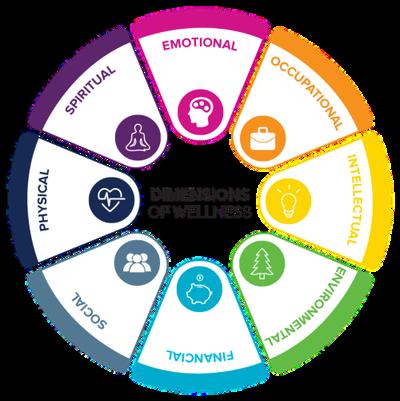
Source: reproduced from University of California, Davis Student Health and Counseling Services31
Wellnessframeworkswerealsodescribedaspracticaltoolsforpromotingaholistic understandingofstudentwellbeing.Intervieweesexplainedthatthesemodelshelp studentsrecognizetheimportanceofbalanceacrossdifferentareasoflifeandhow challengesinonedomaincanaffectothers.Severalparticipantsdescribedusing wellnessdimensionsinaneeds-basedway,encouragingstudentstovieweach dimensionasrepresentingasetofneedsthatmustbemettosupportoverall wellbeing.Forexample,whenastudent’senvironmentalneedsarenotmetduetoan unsafeorunstablelivingsituation,theirphysicalwellbeingmaysufferiftheyare unabletogetadequaterest Intervieweesalsonotedthatwellnessframeworks remainrelevantovertimebecausethecoredimensionsofhumanwellbeingtendto remainconsistent,evenasotherfactorsinaperson’slifemaychange Whilecertain needsmaybecomemoreprominentduringdifferentlifestagesorcircumstances, peoplewillalwaysexperienceinterconnectedneedsthatinfluencetheiroverallmental health Someinstitutionssupportthisapproachbyhelpingstudentsdevelop“Wellness ActionPlans”thatencouragereflectiononpersonalstrengthsandareaswhere additionalsupportmaybeneededacrossdifferentdomains.
Inadditiontosupportingstudentunderstanding,intervieweesdescribedwellness frameworksashelpingfacilitatecoordinationacrosscampusdepartments.These modelshelpstaffseehowtheirrolescontributetostudents’overallwellbeingrather thanviewingstudentconcernssolelythroughthelensoftheirspecificofficeor
professionalrole Oneintervieweenotedthat wellnessframeworksencouragestaffto“zoom out”andconsiderthestudentasawhole personwhosewellbeingisshapedbymultiple, interconnecteddimensions.Byproviding sharedlanguageacrossdepartments,these frameworkscanhelpshiftconversations beyondindividualtherapyastheprimary responsetomentalhealthconcernsand encouragestaffmemberstomakereferralsto otherresourcesthatmaybetteraddressa student’sneeds.
Intervieweesalsoemphasizedthatwellness frameworkscanbelayeredalongsideother modelsusedbyinstitutions Forexample,within awellnessdimensionsuchasemotional wellbeing,supportsmayspanarangeof serviceintensities,fromself-guidedresources
“It’s [the wellness wheel] a great way to help students, faculty, staff, and professionals see students holistically. It reinforces that someone might be excelling academically but struggling emotionally. It also helps professionals step outside their disciplinary silos and make appropriate referrals. The needs themselves don’t really change over time, but stressors do.”
-
Dr Jamie
Davidson,
Associate Vice President for Student Wellness at University of Nevada, Las Vegas
andworkshopstocounseling,crisisresponse,ormedicationmanagement.Inthisway, wellnessframeworksdonotreplaceexistingmodelssuchassteppedcareor preventionframeworksbutprovideanadditionalstructurethathelpsorganizeand communicatehowdifferentformsofsupportfittogether.
Collegesanduniversitiesareplacingincreasingemphasisonstudentmentalhealth, investinginexpandedservices,focusingonpreventionefforts,andpivotingtoward comprehensiveapproachestostudentwellbeing.Stigma-reductioninitiativesandthe emphasisonpreventionhaveexpandedtherangeofservicesandsupportsavailable onmanycampuses.Ourfindingssuggestthathighereducationinstitutionsarenot onlyaddingnewservicesbutalsocreatingadditionalpathwaysforstudentsto accesssupport.However,thesestructuralchangestoinstitutionalmentalhealth approachesarenotalwaysvisibleorstraightforwardfromastudentorfamily perspective.Manycontinuetoassociate“mentalhealth”primarilywithindividualor groupcounseling,evenwheninstitutionsofferotherformsofsupport,suchas financialsupport,academicresources,orhousingsolutions.Therefore,non-clinical supportsthatinstitutionsviewaspartofabroaderwellbeingstrategyarenot alwaysrecognizedorusedbystudents.
ThisstudyidentifiedsixthemesthatsummarizehowcollegesacrosstheU.S.are reshapingtheirapproachestostudentmentalhealthandwellbeing.Together,these themesindicateatransitioninthenatureandtypeofresponsetostudentmental healthneeds,givingrisetoanewmeaningforhowmentalhealthsupportisviewedby institutions.Institutionsappeartoberespondingtorisingdemandbyexpanding preventionstrategiesandredesigningclinicalservicessothatindividualtherapyisno longerthedefaultresponsetoeveryconcern.Thegrowingemphasisonprevention hasalsograduallyfosteredopennesstonewformsofsupport,includingservices deliveredthroughnonprofitandprivate-sectorpartnershipsfocusedonyoungadult mentalhealth.
Second,thistransitionhasalsoallowedforresourcesandsupporttobe redistributedacrosscampuses Thisfreshapproach,inwhichresponsibilityfor studentmentalhealthisincreasinglysupportedacrosscampusroles,isevident amongagrowingnumberofinstitutions.Faculty,residencelifestaff,peerleaders, andinstitutionalleadershipstructuresareplayingmoreactiverolesinrecognizing distressamongstudents(andothergroups)andconnectingthemtosupportacross variousdepartmentsanddivisionsoncampus,aswellastooff-campussupport.This movementawayfromcounselingcenter-centricmodelsreflectsthedevelopmentof campus-widesystemsofcareembeddedacrossmultipleinstitutionalfunctions.As institutionscontinuetoaddprograms,partnerships,andentrypointstomental healthservices,thechallengeincreasinglyextendsbeyondensuringthatsupport exists.Whilecampuseshaveexpandedarangeofservices,accessingthesenew
systemsremainsachallengeastheycanbedifficultforstudentsandfamiliesto navigate Multipleoffices,overlappingprograms,andinconsistentterminologycan createuncertaintyaboutwhichresourceismostappropriateforastudent’sgiven need.
Third,theseprocesseshavenotalwaysledtocolleges’desiredoutcomes,assome tensionpersistsacrossinstitutions.Whileinstitutionsarecreatingmoreopportunities forstudentstoaccesssupport,studentsdonotalwaysinterprettheseeffortsas partofmentalhealthorwellbeingsupport.Asaresult,availableservicesarenot alwaysusedasschoolsintend Increasinglycomplex,overlycoordinatedsystemscan contributetostudents’lackofawarenessorconfusionaboutavailablesupports Additionally,whileinstitutionsofferavarietyofresources,theymaylackclear languageandtoolsforcommunicatinghowthoseresourcesfittogether Students tendtoapproachsupportbasedontheirimmediateneeds,suchasacademic pressure,financialstrain,orloneliness,ratherthanthroughtheinstitutional frameworksusedtoorganizeservices Thiscanpreventstudentsfromrecognizing andusingthefullrangeofsupportsavailablethroughaninstitution’sbroaderwellness approach.Whenservicesarenotclearlyalignedwithstudents’livedexperiences, studentsmaydefaulttothemostvisibleoption,whichisoftencounseling,evenwhen otherresourcesmaybemoreappropriate.Thesechallengesunderscorethe importanceofnotonlyexpandingservicesbutalsoorganizingandcommunicating theminwaysthataremoreintuitive,accessible,andresponsivetohowstudents actuallyseeksupport.
Fourth,attimes,thelanguageusedtolabelservicesshapeswhetherstudents recognizesupportsasrelevanttotheirneeds Whenpreventionservicesareframed narrowlyaround“mentalhealth,”studentswhosestressstemsfromconcernssuchas lonelinessorfinancialinstabilitymaynotperceivethoseresourcesasrelevantentry points Consistencyacrosscommunicationsanddefinitionsappearstobean importantfactorinimplementingacomprehensivewellness-basedapproachto mentalhealth Interviewsrevealedthatemergencyandcrisis-basedterminology remainsaparticularpointofconfusionamongmanystudents.Campuspolicymakers andprofessionalsoftenusethesetermstorefertoseveresituations,whilestudents usethemtodescribeperiodsofdistress,suchasfeelingemotionallyoverwhelmed afterabreakuporexperiencingtestanxiety.Alternatively,somestudentsmaynot perceivetheirsituationstobeseriousenoughtowarrantaccessingtheseservices.To addressthischallenge,someinstitutionshaveaddedcleardefinitionstodistinguish emergency,crisis,andurgentservicesontheirwebpages.
Institutionsarealsoworkingtoalignsupportwithdifferentstagesofthestudent experience Collegesareincreasinglyaligningoutreachandmessagingwithcommon
stresspointsandtransitionalphasesintheacademiccalendar,helpingraise awarenessofsupportswhenstudentsmaybemostlikelytoneedorengagewith them.Marketingandoutreacheffortsthatembedschools’culturearoundmental healthintheadmissionsprocess andinsomecasesevenearlier suggestthat mentalhealthhasbecomeagrowingpriorityinthehighereducationsysteminrecent years.Thispatternisreflectedinoursixthandfinaltheme,whichhighlightstheuseof wellnessframeworkstoorganizesupportinmoreinterconnectedways.Organizing servicesaroundbroaderdimensionsofwellbeing,suchasacademic,social,physical, andemotionalneeds,framesmentalhealtharoundrecognizableareasofstudentlife. Wellnessmodelscanhelpmaketherangeofavailableresourcesmorelegibleto studentsandfamilies.Thisframinginfluenceshowmentalhealthisacknowledged, understood,discussed,funded,andmadeavailableandvisibleacrosscampuses These frameworksareanimportantsteptowardshiftingcampusmentalhealthcultureand strengtheningstudents'socialandacademicexperience
AConceptualModelforMentalHealthandWellbeingonCollegeCampusesisan approachaimedatfosteringresilience Itoffersafoundationfororganizingand communicatingmentalhealthandwellbeingeffortsinwaysthatbetteralignwith howstudentsexperiencestressandseeksupport.Collegesanduniversitiesare increasinglyprovidingarangeofresourcesandsupportsthatcanhelpstudents navigatechallenges,buildresilience,andthriveduringandbeyondtheiracademic experience.
Basedonthesefindings,weproposeamodelthatillustrateshowmentalhealth andwellbeingsupportsareimplementedthroughacampus-widewellbeingapproach Italsoshowshowinstitutionsdescribe,organize,andcommunicatedifferentforms ofsupport Themodelisorganizedtoillustratehowcampusmentalhealthand wellbeingsystemsarestructuredaroundstudents’areasofneed Atthecenterof themodelarestudentneeds,surroundedbyinterconnecteddomainsofsupport delivery,access,andnavigation,andinstitutionalconditionsthatshapehowsupport isprovided Resourceandservicedelivery includingindividualandgroupsupports, thelocationswheresupportisencountered,andthestaffingstructuresthat supportdelivery collectivelyenablenavigationpathwaysthathelpstudentsaccess appropriatecare.Allofthesecomponentsarefurthershapedbyinstitutional policies,whichinfluencehowsupportisdeliveredandexperiencedwithinthecampus environment.
laudividnI dna deroliaT stroppuS
tnedutS sdeeN
gnidnatsgnoL seicilop edulcni esoht detaler ytilibissecca ,snoitadommocca ytilaitnedifnoc ,noitanimircsid-itna dna laicnanif .seicilop xE seicilop edulcni erac noitanidrooc htiw ehelet ,sredivorp edicius dna esodrevo noitneverp ssenllew ,sni-kcehc dna demrofni-amuart na
gniebllew ,gnihcaoc reep ,troppus dediug-fles ,secruoser feirb ,snoitatlusnoc dipar ,erac dna dezilaiceps lacinilc .secivres
esnopser ,sgniniart gniebllew ,sesruoc slliks ,spuorg dna lanoitacudeohcysp .spohskrow
gniebllew ,sretnec htlaehelet ,smroftalp dna ytinummoc sredivorp
noitacidem tnemeganam gnidnapxE ro gnigreme stroppus edulcni

noitcennoc dna gnignoleb ,stneve ffats/tneduts noitneverp dna
noitaercer dna ecnediser efil ,secaps ,gnisivda ,gnirotut dna reerac ,sretnec erom detargetni desab-deen-tneduts ,seciffo ssenllew ro
,gnirotut sisirc ,troppus laudividni gnilesnuoc ro ,ypareht dna
ro gnigreme stroppus edulcni ni-pord ,troppus ERAC smaet ro esac ,tnemeganam dna syawhtap ot -no dna supmac-ffo .secivres
ro tneduts troppus ,smaet
ffats deniart no larrefer ,skrowten gniebllew pihsredael ,selor ERAC
gnigreme stroppus edulcni troppus-reep ,smargorp laicos
gnidnatsgnoL laudividni stroppus edulcni reerac dna cimedaca
gnidnatsgnoL syawetag edulcni ,gnilesnuoc tneduts ,htlaeh dna sisirc esnopser .secivres gnidnapxE ro gnigreme stroppus edulcni
stroppus edulcni reep ,sredael tneduts ,srodassabma ytlucaf dna
gnidnapxE ro gnigreme
gnidnatsgnoL ssecca dna noitagivan seigetarts edulcni ,egairt ,ekatni larrefer ,syawhtap dna sisirc esnopser .secivres gnidnapxE
,seitivitca pihsredael ,smargorp dna puorg .gnilesnuoc gnidnapxE ro
gnidnatsgnoL puorg stroppus edulcni tneduts ,snoitazinagro laicos
laudividnI dna deroliaT stroppuS
seiciloP gnipahS lanoitutitsnI tidnoC troppuS
deddebme ,srolesnuoc dna esac tnemeganam .selor syawetaG
,srosivda ,srotut tneduts sseccus ro sriaffa ,ffats ,ytlucaf ecnediser ,efil ,sehcaoc dna rehto gnicaf-tneduts .ffats
sseccA dna noitagivaN
puorG secivreS dna derahS stroppuS
gnidnatsgnoL troppus ffats sedulcni ,srolesnuoc tneduts htlaeh ,ffats
detacideD srekorB fo sseccA dna secivreS
Themodelhighlightstherelationshipbetweenstudentneedsandthemultiple campussystemsthroughwhichsupportisdelivered Itdistinguishesbetweenseveral expandingformsofsupportdeliverycommonlyfoundacrosscampusmentalhealth systems,includinggroup-basedsupports,individualortailoredservices,thelocations wheresupportisencountered,andthepeoplewhopromoteanddeliversupport. Group-basedsupportsincludesharedservicesdeliveredincollectivesettings, spanningthefullcontinuumfrompreventionandpromotiontohigher-intensityclinical care.Amonglongstandingapproaches,preventionandpromotioneffortsinclude studentorganizationsandcommunitygroups,campusevents,workshopsandskillbuildingsessions,interfaithprograms,socialprogramming,volunteerorservice opportunities,learningcommunitiesandseminars,andleadershipdevelopment programs.Withinthiscategory,higher-intensityservicesincludegroupcounselingor therapy.Morerecently,institutionshaveexpandedpreventionandpromotion offeringstoincludepeersupportprograms,initiativesfocusedonsocialconnection andbelonging,studentandstafftraininginsuicidepreventionandoverdoseresponse, for-creditwellbeingcourses,andotherpeer-orcommunity-basedactivities.Inthe clinicaldomain,newergroup-basedservicesincludeskillsgroups,whichare structured,short-termsessionsthatteachpracticalpsychologicalorbehavioral strategies,andpsychoeducationalworkshops
Individualandtailoredsupportsrefertoservicesdeliveredthroughone-to-one interactionorpersonalizedguidancedesignedtoaddressaspecificstudent’sneeds. Amonglongstandingapproaches,preventionandpromotionsupportsincludecareer coaching,academictutoring,mentorship,andotherformsofindividualizedguidance thathelpstudentsnavigateacademic,personal,anddevelopmentalchallenges.Within thiscategory,higher-intensityindividualizedsupportsincludecrisissupport,individual counselingortherapy,disabilityaccommodations,andmedicationmanagement. Institutionshavealsoexpandedarangeofnewerindividualizedsupports.Inprevention andpromotion,thesesupportsincludewellbeing-focusedcoachingmodels,peer supportapproaches,self-guideddigitalorself-helpresources,stafftrainingdesigned tosupportspecificstudentpopulations,andtechnologyorequipmentloanprograms thatfacilitateaccesstowellbeingresources.Intheclinicaldomain,newerapproaches includebriefconsultationmodels,expandedurgentorcrisisresponseoptions(eg, same-dayorrapid-accessservices),specializedclinicalservices,andmoreflexible pathwaysconnectingstudentstotelehealthorcommunity-basedproviders
Themodelalsohighlightstheimportanceofthesettingswheremanyformsof studentsupportaredelivered.Gatewaysreflectthesettingsinwhichgroupand individualsupportsareaccessed.Traditionally,higher-intensityclinicalserviceswere concentratedincentralizedlocationssuchascounselingcentersandstudenthealth centers,whichfunctionedasprimaryentrypointsformentalhealthcareandcrisis response.However,institutionsareincreasinglytakingacross-campusapproachto
promotingstudentwellbeing Inpreventionandpromotion,institutionsmore intentionallyframelocationssuchasrecreationcenters,housingandresidencelife offices,identity-basedculturalcenters,academicsupportspaces,careerservices offices,faithorspirituallifecenters,financialaidandbasicneedsoffices,campus greenorrelaxationspaces,andtelehealthplatformsaspartofthebroadercampus wellbeingecosystem.Bypositioningthesespacesalongsideservicetypes,themodel highlightsthatstudentsoftenencountersupportthroughtheenvironmentswhere theystudy,live,andbuildcommunity,reflectingabroadershifttowarddistributing mentalhealthandwellbeingresourcesacrosscampusratherthanconcentrating themsolelywithincounselingcenters.
Theroleofmentalhealth-relatedstaffhasalsoevolvedascampusesadopta broaderwellbeingapproach Inourmodel,thislayerisdefinedas“DedicatedBrokers ofAccessandServices”andincludesprofessionalsandtrainedpeerworkersacross campusservicecenters,departments,anddivisionswhoareincreasinglysupporting studentsinrecognizingchallenges,navigatingavailableresources,andcoordinating care.Insomecases,theyalsoprovidedirectsupporttostudents.Theserolesare closelyconnectedtosupportdelivery,reflectingthedualfunctionthatstaffandpeer supportersoftenserveacrosscampus.Someprimarilyguidestudentstoward appropriateresources,whileothersdeliverservicesdirectlythroughadvising, mentoring,counseling,orcasemanagement.
Amonglongstandingroles,preventionandpromotionsupportsaredeliveredby professionalswhoregularlyinteractwithstudentsinacademicandstudentaffairs contexts Theseincludeacademic,career,financialaid,andspiritualadvisors; academictutorsandstudentsuccessstaff;facultyadvisors;residencelifeand studentaffairsstaff;dedicatedacademicsupportstaff;andathleticcoaches While theseroleshavelongbeenpartofcampussupportsystems,institutionsare increasinglyengagingthemmoreintentionallyinstudentwellbeingefforts expanding theircapacitytorecognizedistressandconnectstudentstoappropriateresources Withinthissamecategory,higher-intensityclinicalserviceshavebeendeliveredby counselorsandstudenthealthcenterstaffwhoprovidementalhealthcareand relatedclinicalsupport.
Institutionshavealsoexpandedstaffingtoincludemorerecentoremergingroles designedtostrengthencoordinationandsupportaccess.Inpreventionand promotion,theserolesincludepeerleaders,educators,orambassadors;trained navigators;facultyandstafftrainedinreferralpathways;campuspoliceandsafety personnelengagedinwellbeinginitiatives;CAREorstudentsupportteams,andother staffpositionedtoconnectstudentsacrosscampusservices Intheclinicaldomain, newerrolesincludeembeddedcounselorslocatedwithindifferentlocationsand departmentsacrosscampus,andcasemanagementteamsthatcoordinatecare acrossservices Manyinstitutionsarealsoestablishingexecutive-levelleadership
positionsdedicatedtoadvancingstudentwellbeing,suchasVicePresidentsof Wellbeing.Bypositioningstaffasbothapointofaccessandacomponentofservice delivery,themodelhighlightsthatcampusmentalhealthsystemsrelyonthepeople whointeractwithstudentstohelpthemidentifyconcerns,connecttoresources,and sustainsupportacrosstheinstitution.
Accessandnavigationareanotherfoundationalcomponentofthemodel,reflecting the“nowrongdoor”approachincreasinglyadoptedbyinstitutions Studentscan enterthesupportsystemthroughmultiplepathwaysandbeguidedtoappropriate resourcesbasedontheirneeds,reducingrelianceonanysingleentrypoint,suchas counselingservices.Thisframingemphasizestheimportanceofhelpingstudents navigateexistingservicesmoreeasily,ratherthanrelyingsolelyonexpanding offerings.Italsoincludesmoreflexibleandsupportedreferralpathwaystotelehealth andcommunity-basedproviders,ensuringthatstudentscanaccessappropriatecare evenwheninstitutionalcapacityislimited.
Themodelalsorecognizesthatpoliciesshapetheinstitutionalconditionsthat influenceaccesstosupportandenablenewapproachestostudentmentalhealthand wellbeing Thislayerencompassesallothercomponentsofthemodeltoemphasize thatpoliciesestablishthestructuralenvironmentwithinwhichallotherformsof supportcanexistandoperate
Institutionalpoliciesinfluencehowstudentsaccessservices,howcampusoffices coordinatecare,andhowresourcesarecommunicatedanddeliveredacrossthe institution.Amonglongstandinginstitutionalconditions,somepoliciesaredirectly relatedtomentalhealth,includingthosegoverningdisabilityandaccessibility accommodations,privacyandconfidentialityprotections,academicflexibility,and leave-of-absenceandreturnprocedures.Thesepoliciesestablishcoreconditionsthat shapewhetherandhowstudentscanseekandreceivementalhealthsupport.Atthe sametime,abroadersetofinstitutionalpolicies,nowincreasinglyunderstoodaspart ofacampus-widewellbeingapproach,alsoplayacriticalrole.Thisincludestuition reimbursementorrefundpractices,anti-discriminationandharassmentprotections, campussafetyandhealthregulations,financialaidandbillingpractices,housingand residentialpolicies,andprovisionsforreligiousorculturalobservance Together,these policiesinfluencethebroadercontextinwhichstudentsexperiencestressandaccess support,expandingthedefinitionofwellbeingbeyondtraditionalmentalhealth services
Institutionshavealsointroducedmorerecentorexpandingpolicyapproachesto improvecoordinationandaccesstomentalhealthandwellbeingresources.These includereferralandcarecoordinationpoliciesrelatedtobasicneedsservicesand telehealthandcommunitypartners,regularwellnesscheck-insorscreenings,suicide preventionandresponsetrainingrequirements,overdosepreventionandresponse
training,trauma-informedresponseprocedures,biasresponseinitiatives,wellness committeesortaskforces,orientationoronboardingexpectationsrelatedto wellbeing,andinstitutionalpoliciesrelatedtoacademicdeadlinesorotherflexibility duringperiodsofstudentdistress.
Themodelalsosurfacesanimportant,andoftenunderexamined,dimensionof institutionalpolicy:therelationshipbetweenstatedvaluesandactualpractice.Most collegesanduniversitiesarticulateexplicitcommitmentstostudentwellbeing, belonging,andequityintheirmissionstatements,strategicplans,andpublic communications;yetmeaningfulgapscanexistbetweentheseespousedvaluesand therealitiesoncampus Wheninstitutionsexaminetheirmentalhealthefforts throughthelensofthismodel,thosegapsoftenbecomevisible Aninstitutionmay publiclychampionequityandinclusion,forexample,whilemaintainingfinancialaidor leave-of-absencepoliciesthatcreatebarriersforstudentsexperiencingmental healthcrises Takingthetimetoalignpolicieswithinstitutionalvaluescanleadto meaningfultransformationthatstudentscanexperience
Campusmentalhealthsystemsareshapedbyprograms,services,staffroles,and theinstitutionalpoliciesandconditionsthatdeterminehowsupportiscoordinated, accessed,andsustainedacrosscampusenvironments.Together,theselayers illustratehowstudentneedsareconnectedtonavigationpathways,servicedelivery, gateways,brokers,andinstitutionalpoliciesthatcollectivelyinfluencehowmental healthandwellbeingareaddressedacrosscampus.
Ascampusmentalhealthsystemscontinuetoevolve,institutionsmaybenefitfrom examiningseveralemergingareasthatcouldstrengthenhowsystemsfunctionin practice.Theareasbelowhighlightpromisingdirectionsforfutureworkbasedon patternsobservedacrossthisstudy’sdatasources.
Buildonexistingtrustnetworksacrosscampus.Studentsoftenfirstseek supportfrompeopletheyalreadyknowandtrustratherthanfromformal services.Peers,faculty,advisors,coaches,andresidencelifestafffrequently serveasthefirstpointofcontactwhenstudentsexperiencedistress As responsibilityforstudentwellbeingbecomesmoredistributedacrosscampus roles,institutionsmaybenefitfromstrengtheningthesenetworksbyensuring thatthepeoplestudentsturntofirsthaveclear,consistentinformationabout availableresourcesandreferralpathways
Definewhenwellnessframinghelpsandwhenspecificityisneeded.Many institutionshaveadoptedwellness-orientedlanguagetonormalizehelp-seeking andconnectmentalhealthtoawiderrangeofsupportsacrosscampuslife.This framingcanmakeservicesfeelmoreapproachableandreducetheperception thatsupportisonlyintendedforstudentsincrisis.However,institutionswould benefitfromconsideringhowlanguagechoicesfunctionwithintheirowncampus context.Thebalancebetweenwellnessframingandmorespecificdescriptionsof servicesmayvarydependingonstudentpopulations,campusculture,andhow mentalhealthresourcesareorganizedandcommunicated
Ensurecommunicationisclearandconsistenttoimprovestudentaccessto support.Institutionswithsimilarservicesoftencommunicateaboutthose resourcesinverydifferentways.Theclarity,organization,andvisibilityof informationaboutsupportscaninfluencewhetherstudentsrecognizeavailable optionsandknowwheretobegin.Clearerpublic-facingdescriptionsofservices, entrypoints,andreferralpathwayscanhelpensurethatexpandedsupports translateintoexpandedstudentaccess.
Expandstudentinvolvementinshapingmentalhealthsystems.Studentsare oftenconsultedthroughadvisorygroupsorcommittees,butthereachofthese effortsisoftenlimitedtostudentswhoarealreadyhighlyengagedorfamiliar withmentalhealthinitiatives.Broadeningstudentparticipationmayhelp institutionsbetterunderstandhowsupportsystemsappeartostudentsand whereconfusionorbarriersarise.Institutionscouldconsiderincorporating feedbackthroughawiderrangeofchannels,suchascampussurveys,listening sessions,openforums,user-testingofwebsitesandresourceguides,orfeedback collectedthroughorientation,residencelifeprograms,orcourse-basedactivities.
Campusmentalhealthsystemsareundergoingsignificanttransformation. Institutionsaremovingbeyondcounselingcenter–centricmodelstowardholistic, campus-wideapproachesthatallocateresponsibilityforstudentwellbeingacross manyroles,settings,andservicetypes.Awideswathofservicesisnowpartofthe fabricofhowinstitutionsrespondtostudentneeds,notafterthoughtsalongside individualtherapy.
Yetthegapbetweenhowinstitutionsorganizethesesystemsandhowstudents perceiveandnavigatethempersists Expandedservicesdonotautomatically translateintostudentawarenessoreffectiveuse Terminologythatfeelsintuitiveto administratorsorproviderscanconfuseordeterthestudentsthesesystemsare designedtoserve Further,structuralchangesthatappearsignificantfroman institutionalperspectivemaybelargelyinvisibletostudentsfocusedonimmediate concerns
Theconceptualmodelintroducedinthispaperoffersasharedframeworkfor thinkingabouthowcampusmentalhealthsupportsareorganized,delivered,and communicated.Bymappingtherelationshipbetweenstudentneeds,servicedelivery, navigationpathways,andinstitutionalpolicy,itprovidesatemplateforclearer communicationandmoreintentionalcoordinationacrossinstitutions.Ascampuses continuetoevolvetheirapproaches,centeringstudentexperiencewillbeessentialto thesuccessoftheseevolvingsystems
Thefollowinginstitutionsrepresenttheprofessionalaffiliationsofstaffmembers whoparticipatedinqualitativeinterviewsforthisstudy Intervieweeswereselected basedontheirrolesandexpertiserelatedtostudentmentalhealthandwellbeing services.Interviewsreflectindividualprofessionalperspectivesinformedby participants’rolesandexperiencesandarenotintendedtorepresentstudent perspectives,institutionalpositions,orofficialviewsofthelistedinstitutions.Inclusion inthisappendixindicatesaffiliationatthetimeoftheinterviewanddoesnotimply institutionalendorsementofthefindingsormodelpresentedinthispaper.
1.AppalachianStateUniversity
2.BabsonCollege
3.BrandeisUniversity
4.CoastalCarolinaUniversity
5.JohnsHopkinsUniversity
6.TheOhioStateUniversity
7.NorthDakotaStateUniversity
8.PennsylvaniaStateUniversity
9.SanDiegoStateUniversity
10.IndianaUniversityBloomington
11.UniversityofMaineatFarmington
12.UniversityofNevada,LasVegas
13.UniversityofArizona
14.WeberStateUniversity
1 Stoewen DL Dimensions of wellness: Change your habits, change your life The Canadian veterinary journal. 2017 Aug;58(8):861.
2. World Health Organization. Promoting well-being. Available from: https://www.who.int/activities/promoting-well-being
3. Wu F, Freeman G, Wang S, Flores I. The future of college student mental health: Student perspectives Journal of College Student Mental Health 2024 Oct 1;38(4):975-1010
4. Wicker PD. Well-being and support network affiliations for Black and Indigenous college students during the COVID-19 pandemic. Education Sciences. 2024 Jul 31;14(8):832.
5. Chen C, Jew A, Chui C, Horn J, Kim E, Melkonian D, Eisenberg D. Impact of the COVID-19 pandemic on college students’ mental health and lifestyle factors. Journal of American College Health 2025 Apr 21;73(4):1374-82
6. Abrams Z. Student mental health is in crisis. Campuses are rethinking their approach. Monitor on Psychology. 2022 Oct 12;53(7):60.
7. Cohen KA, Graham AK, Lattie EG. Aligning students and counseling centers on student mental health needs and treatment resources. Journal of American College Health 2022 Apr 3;70(3):724-32
8 Travia RM, Larcus JG, Andes S, Gomes PG Framing well-being in a college campus setting. Journal of American College Health. 2022 Apr 3;70(3):758-72.
9. Brozina C, Johri A, Chew A. A systematic review of research on nontraditional students reveals inconsistent definitions and a need for clarity: focus on US based studies. Frontiers in Education 2024 Dec 11 (Vol. 9, p. 1434494). Frontiers Media SA.
10 Osborn TG, Town R, Ellis R, Buckman JE, Saunders R, Fonagy P Implementing peer support in higher education: A feasibility study. SSM-Mental Health 2022 Dec 1;2:100175.
11. Bannigan G, McGrath D, Matthews J. Whole-university approaches to embedding well-being in the curriculum: a scoping review. Frontiers in Education 2025 Mar 20 (Vol. 10, p. 1534244). Frontiers Media SA.
12 Ginter PM, Kennedy R, Erwin PC, Reed W The Okanagan Charter to improve wellbeing in higher education: shifting the paradigm In Frontiers in Education 2024 Dec 9 (Vol. 9, p. 1443937). Frontiers Media SA.
13. U.S. Health Promoting Campuses Network. About. Available from: https://ushpcn.org/about/
14. McNally K, Noonan A, Norton C, Tierney A, Woods C, Kennedy S, Mahon C, O'Neill B, Venianakis K, Ben Abdelaziz F, Darker C The Limerick Framework for Action: Advancing the Global Health Promoting Campuses Agenda
15. The Jed Foundation. A decade of improving college mental health systems: JED Campus impact report 2023 [Internet]. New York (NY): The Jed Foundation; 2024. Available from: https://jedfoundation.org/jed-campus-impact-report-2024/
16 Wolpert M, Harris R, Hodges S, Fuggle P, James R, Wiener A, McKenna C, Law D, York A, Jones M, Fonagy P THRIVE framework for system change Anna Freud Centre; Tavistock and Portman NHS Foundation Trust; 2019 Nov.
17. District of Columbia Department of Mental Health. The level of care utilization system (LOCUS): implementation and practical application training. District of Columbia Department of Mental Health. Available from: https://dbhdcgov/sites/default/files/dc/sites/dmh/publication/attachments/LOCU SAgencyTrainingpdf
18. Warje K. Supporting mental health on college campuses. The Decision Lab. 2025 Mar 12. Available from: https://thedecisionlab.com/insights/health/mental-healthon-college-campuses
19. University of North Georgia. Stepped care model. University of North Georgia. Available from: https://ungedu/student-counseling/stepped-care-modelphp
20 Mughal S, Salmon A, Churchill A, Tee K, Jaouich A, Shah J Guiding principles for implementing stepped care in mental health: alignment on the bigger picture. Community Mental Health Journal. 2023 Aug; 59(6):1035-42.
21. Gardner JK, Gan JC. Mental Health and Well-Being. Health Promotion Moving Forward: A Population Health Approach. 2024 Aug 19:181.
22 Association for University and College Counseling Center Directors Annual survey for reporting period July 1, 2023–June 30, 2024 Association for University and College Counseling Center Directors; 2024. Available from: https://taucccd.memberclicks.net/assets/documents/Survey/20232024%20Annual%20Survey%20Report%20Public.pdf
23. The Princeton Review, Ruderman Family Foundation. 2025 campus mental health survey report New York (NY): The Princeton Review; 2025 Available from: https://wwwprincetonreviewcom/mental-health-on-college-campus
24. Boston University Student Health Services. Counseling. Boston (MA): Boston University. Available from: https://www.bu.edu/shs/mental-health/counseling/
25. University of California, San Francisco Student Mental Health and Wellbeing. Brief counseling. San Francisco (CA): University of California, San Francisco. Available from: https://studentmentalhealthucsfedu/services/brief-counseling
26 988 Suicide & Crisis Lifeline 988 Lifeline: 988 Suicide & Crisis Lifeline Available from: https://988lifeline.org/
27. Beshears M. A gatekeeper suicide prevention program to promote mental health on a college campus [dissertation on the Internet]. Lynchburg (VA): Liberty University; 2025 [cited 2026 Mar 24]. Available from: https://digitalcommonslibertyedu/doctoral/6449/
28. Liang,MDM,Chen,MDQ,Guo,MDJ,Mei,PhDZ,Wang,MDJ,Zhang,MDY,He, MDL,Li,PhDY.Mentalhealthfirstaidimprovesmentalhealthliteracyamong collegestudents:Ameta-analysis.JournalofAmericanCollegeHealth.2023May 4;71(4):1196-205.
29. Yarin,S.(2022,November29).Howistheconversationaroundmentalhealth changingamongcollegestudents?BostonUniversitySchoolofPublicHealth Availablefrom:https://wwwbuedu/sph/news/articles/2022/how-is-theconversation-around-mental-health-changing-among-college-students/
30 AmericanPsychologicalAssociation Inclusivelanguageguide 2nded Washington (DC):AmericanPsychologicalAssociation;2023 Availablefrom: https://wwwapaorg/about/apa/equity-diversity-inclusion/language-guidelines
31 UniversityofCalifornia,DavisStudentHealthandCounselingServices Eight dimensionsofwellness.Davis(CA):UCDavis.Availablefrom: https://shcs.ucdavis.edu/health-and-wellness/eight-dimensions-wellness



https://www.facebook.com/RudermanFamilyFoundation
https://www.instagram.com/rudermanfamilyfoundation/
https://twitter.com/RudermanFdn
https://www.linkedin.com/company/ruderman-family-foundation

https://www.youtube.com/@therudermanfamilyfoundation
https://www.facebook.com/PublicGoodProjects/
https://www.instagram.com/publicgoodprojects/
https://www.linkedin.com/company/the-public-good-projects/