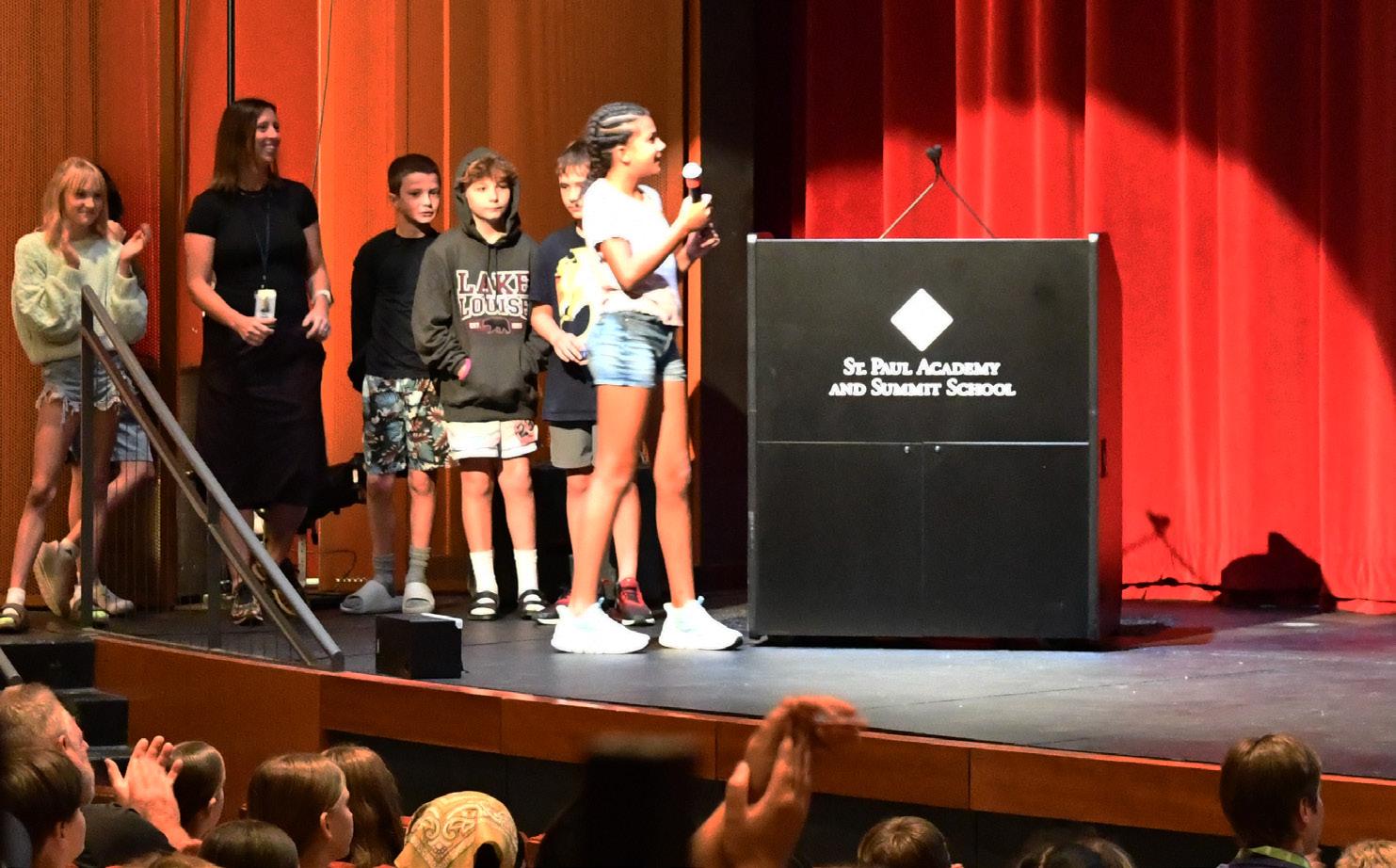
What is dyslexia? This was the first question posed by the sixth grade pathways class during their dyslexia awareness month presentation at the middle school assembly Oct. 3.
Middle School Learning Specialist Molly Oklobzija has been working with students in the pathways class to help them manage and understand their dyslexia. Oklobzija and her students created a presentation about what dyslexia means to them.
To share their learning, Oklobzija invited the pathways students onstage at the middle school assembly.
DEFINING DYSLEXIA
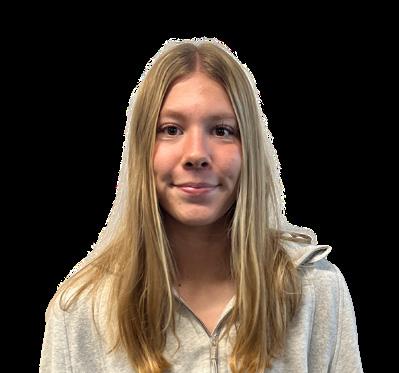
Sixth grader Paloma Ottley read from the slides of the presentation and described dyslexia as “a lifelong learning disability that primarily causes difficulties with reading, spelling and decoding words due to how the brain processes language.”
The presentation also focused on dispelling common misconceptions about dyslexia, reminding middle schoolers that dyslexia is not contagious, does not affect vision and has nothing to do with cognitive ability.
Oklobzija is beginning her first year at the school and is happy to join the new program.
“I’ve been [working] in middle schools for a
really long time. Most of the time middle schoolers are like, don’t look at me. Don’t call me out. I don’t want to be special or seen,” said Oklobzija. “At SPA, it is so unique to have a community that so largely supports and celebrates this neurodivergence.”
WHAT IS PATHWAYS?
Ottley and five others are the first participants in the middle school extension of the lower school’s pathways class that began last year.
In the program, students with dyslexia go to the pathways classrooms in small cohorts. They learn math and literacy skills so they can keep up with academic bench-
marks, while also replacing the time they would need to dedicate to after-school tutoring.
To be enrolled in the pathways class, students must first have a dyslexia diagnosis, which requires a neuropsychological evaluation. Psychologists run tests to determine if the student has a phonological processing disorder, meaning it is harder for the student to connect the letter they see on the page to the sound that letter represents.
At SPA, it is so unique to have a community that so largely supports and celebrates this neurodivergence. “
Middle School
Learning Specialist Molly
Oklobzija
“One of the flags of dyslexia is that you have high cognitive performance,” said Oklobzija. “You are a very intelligent child, and there’s this disconnect between how bright you are and your reading ability. And because of that, we have a disability.”
This year, the pathways program expanded on both sides, now incorporating courses for students in grades 2-6. The six sixth-graders enrolled
in the middle school pathways class go to Oklobzija’s classroom on the third floor to follow the English 6 curriculum in a smaller setting, with more individual attention. Instead of a foreign language class, the students also go to Oklobjiza’s class for Study Skills 6, a new course that, like the other pathways classes, follows an Orton-Gillingham curriculum.
CURIOUS CURRICULUM
According to the official Orton-Gillingham website, Dr. Samuel Orton and educator Anna Gillingham began developing the Orton-Gillingham teaching method nearly 100 years ago to aid students with dyslexia in their literacy education.
Orton-Gillingham is a highly researched, multisensory (auditory, visual and kinesthetic) teaching strategy, combined with sequential lessons on phonics.
Oklobzija closely follows these methods in her day-to-day lessons. “It may be things like we show a letter combination on the whiteboard, they say the sound that that letter combination makes, and then they’re tracing it on a pad,” said Oklobzija. These exercises allow students to memorize tricky phonetics by seeing, speaking and touching all at once.
As Oklobzija announced the pathways class in assembly, she made sure to note, “There are six kids in our sixth grade pathways program, but dyslexia affects one in five students. Just because we’re up here presenting about dyslexia, that doesn’t mean that there aren’t more of you out there that also have a difficult time with dyslexia.”
Oklobzija believes an important part of teaching kids with a disability is transparency, and the dyslexia awareness presentation was a big step forward.
“They had a chance to really think about how their brain processes words differently, and because of that, it allows them to be more vocal as advocates for themselves or others with dyslexia,” she said.
To wrap up the presentation, the pathways class shared a video they put together about their experiences with dyslexia.
The pathways class will continue their work and look forward to the future as they expand into seventh grade next school year.
School Instagram emphasizes belonging, community
PETER OSTREM THE RUBICON
Since the beginning of the school year, themed posts about belonging have appeared on students’ Instagram feeds, courtesy of the school’s official Instagram account. Quotes from administrators and teachers are highlighted in bold gold font and posted every few days to spotlight belonging in different parts of the community.
The Instagram posts reflect the addition of belonging to the school’s values, which aimed to better reflect current community priorities.
Director of Communications and Marketing
Megan O’Rourke has played a key role in this new mission, as she manages all of the school’s social media accounts.
O’Rourke comes from a communications and marketing background,
often with a focus on content marketing. She was hired this past summer to help the school with social media content and messaging.
O’Rourke was the originator behind the signature design of the belonging posts.
“I had the idea to start bringing in these straightforward but bold templates to share voices from the community,” she said.
O’Rourke’s intention for these posts is to make the student body feel supported and included.
“The first goal is to tell the story to our community, so that people feel like they’re represented, to show the truly wonderful things in people that are at this school and in this community,” she said.
She also said the posts have an external purpose.
“Certainly part of it is
when people look at SPA, will they get a sense of what we are about, what we believe and how we live our daily lives,” she said.
Senior Otto Rudolf has noticed the new Instagram content. He said the posts have made him feel more optimistic about the school’s culture.
It has made me notice that everyone has their interests they enjoy pursuing, and all of them have a place at SPA.
sophomore Lucy Byrnes
“It’s good to see the school put a focus on stuff like that, it feels like it’s needed,” he said.
Rudolf believes a sense of belonging in the classroom is critical for an enjoyable senior year.
“It felt like everyone needed to feel like they belonged to have a great senior year, and this has certainly helped,” he said.
Sophomore Lucy Byrnes has also observed the push for belonging and said it’s opened her up to more perspectives within the community.
“I enjoy reading the quotes from various teachers about their perspectives on how belonging is represented in the school,” she said.
She also believes it has given her a greater sense of belonging in the community. “It has made me notice that everyone has their interests they enjoy pursuing, and all of them have a place at SPA,” she said.
The emphasis on belonging has a few simple
INCLUSIVE INSTAGRAM. A series of ‘you belong’ posts fill the official school Instagram, displaying the update to community values. Quotes from featured teachers are highlighted alongside action shots. Senior Otto Rudolf said, “It’s good to see the school put a focus on stuff like that.”
goals: to make everyone feel welcome in the community and to draw attention to the school’s values. The social media content will continue throughout the school year.
Scan this QR code to read more about administrators’ role in creating joy in the classroom.
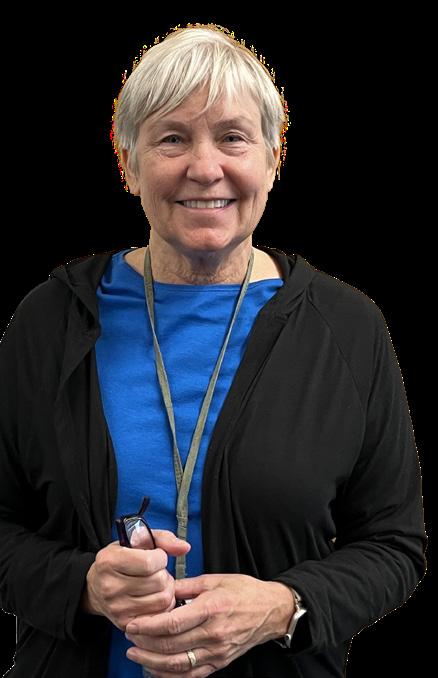
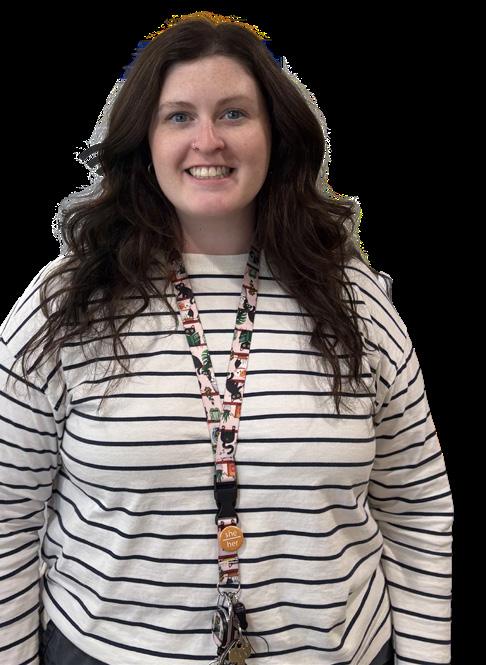
PATHWAYS PRESENTS. The middle school pathways class presented about dyslexia during the middle school assembly Oct. 3. “[Students] had a chance to really think about how their brain processes words differently,” said Middle School Learning Specialist Molly Oklobzija.
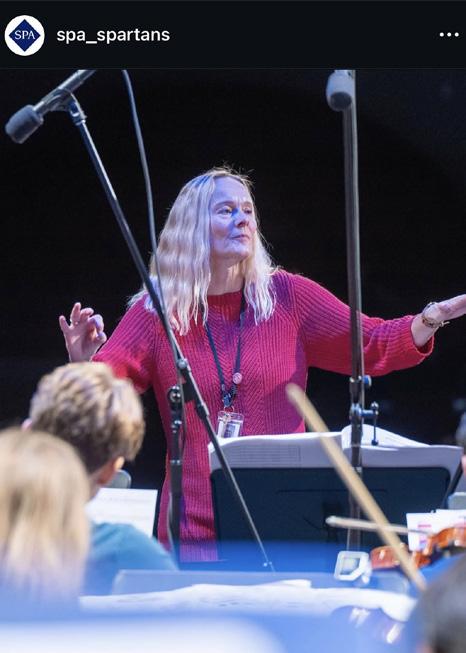
SCREEN CAPTURE: @spa_spartans on Instagram PHOTO: Scott Streble
Scan this QR code to watch the video played in the pathways presentation.
PHOTO: Sylvia Westra
Seeking a third term
Let’s make room for a new generation of leaders
People in power tend to stay in power unless acted upon by an outside force: voters. This is undoubtedly the case in the United States government and Minnesota, where a majority of leaders, no matter their political beliefs, tend to be of an older demographic and often are reelected to serve multiple terms.
While many of these leaders have made significant contributions and passed laws that have made considerable change, their central values are usually unchanging. However, the ideals of the general public are not: as new generations learn about the world and become more attuned to the political scene, their beliefs shift. American presidents are
only allowed two terms in office. Others, like governors, senators and representatives can serve indefinitely if re-elected. This practice is not in line with the idea of democracy. Without diversity in voices, the government cannot truly represent the people.
Minnesota lawmakers are a prime example of this trend. For instance, Gov. Tim Walz and the mayors of St. Paul and Minneapolis are each running for a third consecutive term. This tends to have a widespread effect: if lawmakers choose to ignore issues they care less about, they don’t develop new policies about them or make other changes. However, they are not the ones who will have to live with the policies created today in a few decades. That burden
falls to younger generations. Many people don’t realize just how much of an effect local policies, or lack thereof, have on the public, but it’s vast.
When
there is no variety in people with governmental power, the public lacks representation.
For example, after the shooting at Annunciation Catholic Church and School Aug. 27, many Minnesota leaders spoke about the injustice the shooter committed. They pledged to enact changes
to end gun violence not just in the Twin Cities, but statewide. However, politicians have taken no real action to combat the issue. Younger generations are highly involved in advocating for gun control, and have continued to speak out about the events of the shooting, but have little means to act without lawmakers doing so first.
These lawmakers shape new generations. When in power for too long, youth are exposed to a single story, and even if it is one of empathy and kindness, it’s essential to learn about more than one point of view to truly understand the world. With variation in leadership comes a heightened sense of community and a better society. However, this cannot be done without
U.S. POLITICIANS BY THE #s
57.5 years
average age of voting members in the House of Representatives
64.7 years
average age of voting members in the Senate
59.04 years
average age of governors as of 2024.
74% of Congress identifies as non-Hispanic white 58% of the U.S. population identifies as non-Hispanic white; this percentage gap is about as big as it was in 1981
INFORMATION: Pew Research Center, Eagleton Center
RELUCTANT REPRESENTATION. In this country, the political figures have started to portray the general population, but it is not enough. Age and identity of politicians should better match the citizens to have fairer representaion.
upcoming elections or assisting in campaigns is essential to elect leaders who bring new ideas and effective change.
Accountability prevails in state senator Nicole Mitchell burglary case
IZZY MIDDLEBROOK THE RUBICON
Actions have consequences, no matter who the consequences are inflicted upon. It’s refreshing to see this upheld with public figures.
Former Minnesota state senator Nicole Mitchell was sentenced Sept. 23 to six months in jail for burglary after she broke into her stepmother’s house, dressed in black and donning a flashlight last spring.
Mitchell’s reasons for being in her stepmother’s house proved inconsistent. Before her arrest, she told police officers that she had broken in to retrieve the belongings of her late father. After her arrest, the story changed to her needing to check on her stepmother, who has Alzheimer’s. The incongruous stories and lack of admitting the
truth after she had been caught are indicative of Mitchell’s character and the lack of guilt she felt.
After much urging from both parties in the Senate, Mitchell stepped down from her position in July.
It’s important to hold influential figures accountable, especially those who hold an integral part in government.
Mitchell’s assertions of innocence are important to note. Brian McDonald, a prosecutor on Mitchell’s case, said, “The people who deserve these breaks are ones who display accountability, remorse or both. Ms. Mitchell has displayed neither of these traits throughout this case.”
This rings true when examining her sentencing, one that Carol Mitchell, Nicole’s stepmother, said was not enough for
the emotional damage she experienced.
Throughout Mitchell’s trial, she asked for accommodations that would not have been provided to any ordinary citizen.
Mitchell’s lawyers asked the judge to grant a stay, for example, keeping her out of jail while her lawyers appealed the ruling. Mitchell’s desire to be treated above the law that her constituents have to abide by exemplifies her lack of remorse.
She eventually took accountability, admitting to the judge that “The things said and the harm I caused are real things. And I completely abide by whatever [the judge] feels is fair.” Mitchell’s statement in court is a moment of accountability that should be celebrated, but does not overshadow the reason she was in court.
CAUGHT IN COURT. The highest number of resignations over misconduct in the U.S. Congress was in the 2010s with 19.
Politicians are often let off easy. Take the infamous Watergate scandal: former President Richard Nixon resigned before he could be impeached, and then his successor gave him a full pardon.
Allegations of sexual misconduct against former President Bill Clinton never resulted in criminal charges, only impeachment when his affair was discovered.
While Mitchell’s crime was not as egregious or of national importance as in both examples, in an age where accountability is rare, the decision to hold Mitchell accountable for her actions is appreciated.
Minnesota Governor Tim Walz
St. Paul Mayor Melvin Carter
Minneapolis Mayor Jacob Frey
Minnesota Senator Amy Klobuchar
AMBITIOUS POLITICIANS. Congressional politicians have the privilege of no limits on the number of times they can be reelected. Allowing these positions to be occupied by the same individuals for decades inhibits the government’s ability to represent the people.
INFOGRAPHIC: Eva Burns
IVY EVANS THE RUBICON
junior Ivy Evans
the public’s help. Voting in
Witnessing the impact of vaccine advancements during periods of deadly disease is a leading reason why Baby Boomers feel confident in vaccines. 1946-1964
BABY BOOMERS:
Why do vaccines garner controversy?
Thanks to COVID-19, the majority of people alive on the planet today, and certainly everyone on Randolph Campus, can say that they have lived through a global pandemic. One of the most frequented topics during this time was the vaccine: what it was, who could get it and what it could do.
Over 80% of Generation X believe that vaccines are useful and effective; a lower number than the previous generation.
The millennial perspective on vaccines is quite similar to Gen X. They are largely unaffected by the increasing spread of misinformation in media. MILLENNIALS: 1981-1996
GEN Z:
Similar to Baby Boomers, by growing up in a widespread pandemic, Generation Z are most likely to trust vaccinations.
Immunizations often come back into conversation as flu season approaches, but this year there has been more reason for this to be true. According to a Sept. 23 article by The Independent, President Donald Trump and secretary of the Department of Health and Human Services Robert F. Kennedy, Jr., have made statements directly linking vaccines to rising rates of autism in the United States.
DISPUTED DATA
These claims have no doubt reached the ears of several students. When junior Miles Messier thinks of vaccines, the first thing on his mind is the recent news. “[I think of] RFK, Jr., for sure, but I also think of just going to Walgreens and getting my flu shot,” he said.
According to a 2011 editorial in the Indian Journal of Psychiatry titled “The MMR vaccine and autism, Sensation, refutation, retraction, and fraud,” a study published in 1998 by researcher Andrew Wakefield and several of his colleagues investigated the same correlation between vaccinations and autism, specifically with the measles, mumps and rubella vaccine.
The study declared evidence of causation and was published in Lancet, but after some controversy the paper was taken down in 2010 upon discovering inaccurate findings in addition to conflicts of interest held by Wakefield.
These concerns have been proposed as long as vaccination has been widely accessible. Again, the COVID-19 pandemic is a notable example of the questions and doubts that vaccines have commonly raised from the public.
STUDENT EXPERIENCES
Sophomore Claire Howard recalled being too young to get the vaccination when it was first becoming widespread, and hearing the concern around the vaccine.
“I feel like some people were a little bit more nervous to get [the vaccine] at first because they didn’t understand or know if it would be safe ... or didn’t believe that it was safe,” she said.
Messier remembers being eager to get the COVID-19 vaccine when it was first introduced.
“I remember hearing it on BBC News, and we were all in the car … And we were [glad],” he said, “but then I also remember there were … people who thought that there were microchips in the vaccines, and that that’s how the government was gonna track us. And that wasn’t anyone in my family, but I definitely remember that being a thing on Tiktok.”
Beyond the world of Tiktok users, there have long been many people who hold concerns about the adverse effects of vaccines. According to a 2022 Preventative Medicine article by Vivian Hsing-Chun Wang titled “Generational differences in beliefs about COVID-19 vaccines,” there are statistical differences in the ways that different age groups regard the subject.
The study found that the Silent Generation (born 1945 or earlier), Boomers (1946-1964) and Gen Z (born 19972012) had similar beliefs that vaccines were beneficial and unlikely to cause harm, while Gen X and Millennials were less likely to agree.
I remember there were ... people who thought that there were microchips in the vaccine.
junior Miles Messier
Serving as an example of the findings that older generations are more likely to advocate for the positive effects of vaccines, Grandparents for Vaccines was founded in 2025 as a volunteer-run organization dedicated to the importance of vaccinations, especially for children. Their mission stems from the desire to protect younger generations, as people who have experienced life without immunizations against diseases that are now preventable.
For these younger generations, the most high risk place for illness, especially during flu season, is school. The Minnesota Department of Health requires that all students, K-12, show proof of certain immunizations.
Messier is grateful that his school is included in this requirement. “I think we should all get vaccinated so that we don’t get sick,” he said. “Definitely, it feels like there’s a decline in knowledge of medicine and how it actually works, and that just makes me really scared … So, I just think everybody should get their shots regardless of what RFK Jr. says.”
As the weather grows colder, immunizations will likely creep out of the periphery and become a more prominent fixture not only in the thoughts of many, but on the news. In other words, flu season comes every year and it seems so does the conversation and controversy around vaccination.
LINA ABID THE RUBICON
GENES AND LIFESTYLE TOGETHER SHAPE TRAITS
THE DUALITY OF
continued from pg. 1
Height, like most traits, is not controlled by one gene but many. According to a 2022 genome-wide association study published in Nature, height is influenced by around 12,000 genetic variants. Still, studies have shown that 80% of variation in height can be attributed to genes.
In addition, Le, his dad and his grandfather all have a widow’s peak. There is one trait that Le worries about inheriting: baldness. His grandfather is going bald, and his dad’s hairline is receding. “I think I’m next,” Le said.
Le believes the question between nature and nurture has been settled: it’s both. His genetics class has reinforced his understanding of the complex factors behind each trait.
Still, he thinks that the desire to choose between nature or nurture comes from genetics’ real relationship with modern questions, as people wonder whether criminals and psychopaths are made or born.
“Those type[s] of questions, with the societal impact along with it, [are what] I think really captivates people,” Le said.
In Coleman’s family, genetics intersects with a personal history of oppression.
“My mom carries a couple of the genetic diseases that a lot Ashkenazi Jewish individuals carry, just because there was a lot of Ashkenazi Jewish inbreeding in the 1500s due to Christian persecution,” Coleman said.
She hopes to get genetic testing before she has children to identify whether she is a carrier for diseases such as cystic fibrosis or Tay-Sachs.
Like Le, Coleman thinks both nature and nurture play a role in an organism’s physical presentation.
She is particularly interested in the potential to reduce genetic predisposition through environmental changes: “Even though you might be predisposed to Alzheimer’s … if we limit chronic inflammation in the brain, and we limit environmental factors, how can we mitigate what we might be predisposed to?”
From height to the taste of cilantro, nature and nurture intersect in ways still being understood.
SPORTS
THE RUBICON - OCTOBER 2025
Teams highlight unity, success on social media accounts
EVIE GARDNER
THE RUBICON points, like if we get a good kill or an ace or we do something impressive,” she said.
Nearly every major accomplishment or event is documented on social media. High school sports are no exception. Sports teams have gone as far as having a designated role for social media managers who report on games, team gatherings and more.
Most professional sports teams and sports leagues have their own social media accounts. Over the past years, the school has followed suit, with every sport having its own Instagram account. Captains gain access to them throughout their season, but some teams have their own social media managers.
Volleyball player Naomi Mann recently stepped into the social media manager role after an injury.
“I started doing it about a couple weeks ago, but I just do it during games. I’ll video certain
I think it keeps everyone more connected, and even if you’re not on the team, you feel a little bit more informed. “
Social media usage isn’t used only to rally internal support, but also to encourage spectators to come to games.
Cross country captain Leah Passe enjoys posting to increase support for cross country runners.
“Letting people know when our meets are, or when there’s events that they could maybe show
up to to gain more support for the team and our events ... is really nice to help draw support for the team,” she said.
For most students who don’t play a fall sport or run the accounts, just viewing posts can help strengthen friendships.
Junior Mati Halloran explained his perspective on sports social media content.
“It reminds me to talk to my friends about the games, how it went, for example, and keeps me updated on things that my friends talk about in class.”
Even if students are unable to attend games, social media gives them insight on what it’s like to be part of the team.
“I think it keeps everyone more connected, and even if you’re not on the team, you feel a little bit more informed,” Halloran said.
Additionally, the accounts showcase a unique side of the team that may not otherwise be shown.
“You can get a feel of what it’s like to be sitting on the bench, and how it’s super exciting. It’s energized, and especially because we put [up] videos of big points, so people are celebrating, and kind of see, like, how we come together,” Mann said.
Passe believes posting online not only helps school unity, but also brings the teams together.
“To be able to have [photos] in front of me and recognize that we do have that team bond is a constant reminder of how I have a lot of people there on my team who aren’t just my teammates, but they’re my friends. They’re like my little cross country family,” Passe said.
The mere act of having an Instagram account may seem trivial in re-
gard to high school, but it can promote a surprising amount of togetherness in teams and around the broader community. Though the implications of social media are often a source of debate, for many fall teams, the platform gives light to the bonds created through sports, promoting team and school spirit.
Girls soccer players share impact of injury, recovery
Recovering from any injury takes time, but for athletes, injuries can instantly shorten seasons. According to the 2023-24 National High School Sports-Related Injury Surveillance Study, football had the highest injury rate in competition, followed by girls soccer and boys lacrosse.
With one of the highest injury rates, staying healthy throughout the season is essential to the girls soccer team’s success.
Girls varsity soccer player Sophia Obi has dealt with her fair share of injuries. She has been forced to sit out for periods of time due to a recurring hip injury.
“I don’t think I ever fully recovered from my injury after the initial break,” Obi said.
However, she was set on getting back on the field.
“I sprained my hip twice, but even after everything, I still tried to get back into playing by doing [physical therapy] and going to practices and games,” she said.
As she looks back on her injury, Obi recognizes that physical therapy and rest helped her recovery, but when she was on the sidelines, staying positive and upbeat was crucial to her healing as well.
“I think what helped the most was support from teammates, coaches, teachers, family and friends as they uplifted me through tough times,” Obi said.
Obi had to learn to take time off before jumping back into playing. “I learned that I am lucky enough to compete, [and] enjoy and value playing the sport whereas some people can’t come back from an injury,” she said.
Taking the time to recover and eventually return to the field taught her how to balance staying healthy and playing the sport she loves.
Sophomore Lucy Lowman, another girls varsity soccer player, also experienced a recent hip injury. Lowman’s injury was caused by overuse, which put stress on areas around her hip.
“I recovered by seeing a physical therapist and consistently doing the exercises,” she said. Lowman was out for two to three weeks before being cleared to
play again. She was able to get back in time to finish the season, but still had to be patient before she could play again.
It was difficult for Lowman to wait on the sidelines, but she also realizes the need to completely recover before getting back on the field.
“It’s important to rest and allow yourself to fully recover because it allows your body to completely heal and replenish your energy, and makes it so when you return to playing, you are as strong and healthy as you were before,” she said.
While recovering from an injury can take time and patience, it is crucial to being able to get back into the game. Watching from the sidelines while injured can be hard on athletes, but in this case, it pushed Lowman and Obi to work to fully heal and maintain their own health before getting back on the field.
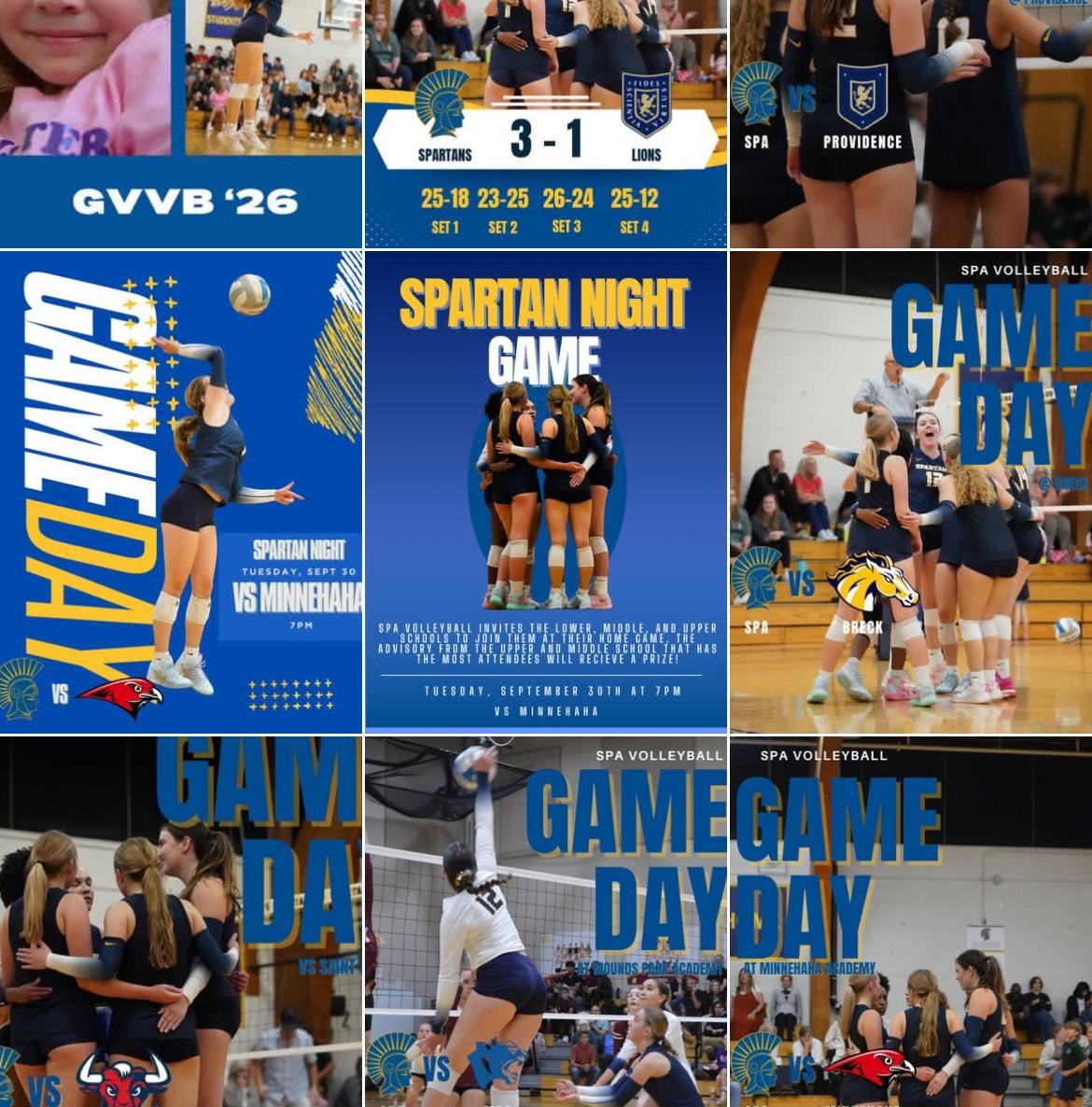
PUBLIC POST. The girls varsity volleyball team has a public Instagram updated with live game points, events and the season schedule. Many other fall sports use their Instagram accounts to highlight upcoming games and behind-the-scenes team content.
HARPER LARSEN THE RUBICON
junior Mati Halloran
SCREEN CAPTURE: @spavolleyball on Instagram
ARTS & ENTERTAINMENT 18
THE RUBICON - OCTOBER 2025
Autumn bites:
try these caramel apples
EVA BURNS THE RUBICON
Since there’s a lot of pumpkin and cinnamon in the autumn snacks, get ready to indulge in something a little more nostalgic. It’s time for a different classic fall treat: caramel apples. Caramel apples offer the perfect mix of fresh fruit, gooey in dulgence and a plethora of options. Whether coated in buttery caramel or decked out in toppings like crushed nuts, Oreos, sprinkles or chocolate drizzle, there’s a caramel apple for anyone looking for a taste of fall. Here’s a selection of the best found around the Twin Cities.
KOWALSKI’S
MARKET: CHOCOLATE CARAMEL APPLE
This apple was covered in a thin layer of dark chocolate, a very hard-to-chew layer of caramel and a white chocolate drizzle. The apple itself was a fresh and flavorful Honeycrisp. It was packaged in clear plastic and a twist-tie, so it was much eas ier to open than the Pine Tree Orchard caramel apple, and you could tell what you were getting into. It was priced relatively high at $10.28 after tax, but the apple was pretty big.
RATING: 4/5
PINE TREE APPLE ORCHARD: PLAIN CARAMEL APPLE
The bees at this orchard were very excited to taste this caramel apple, and they definitely enjoyed it the most. The base was a bright green Granny Smith apple, and the outside was slathered with caramel. The sourness of the apple slightly balanced out the overwhelming sweetness of the caramel. However, the paper packaging was quite inconvenient because it ripped somewhat and stuck to the apple while being opened. Attempting not to eat paper was more difficult without spreading caramel everywhere. It was reasonably priced at $5.16. On a more positive note, the simplicity of just apple and caramel without toppings made it stand out among the selection.
CANDYLAND: SALTY PEANUT CARAMEL APPLE
The toppings would make this Charlie Brown’s favorite caramel apple, and it was also the best-tasting out of this selection. A heavy layer of salty peanuts is apparently the best way to counter the sweetness of the caramel. The base was a Granny Smith apple, and the caramel was the most impressive out of the three. It was just the right amount of sticky. The packaging was also substantially better than the other options. Surrounding the apple was a thin layer of plastic, preventing a sticky mess. Around this was a paper bag with the Candyland logo, making it way more attractive. A nut-free caramel apple is only $5, but the addition of the peanuts raised it to $6. This $1 difference was definitely worth it for a more interesting,
RATING: 5/5
Inked at age 18: self expression through
PEONY STEELE THE RUBICON
Being a high school senior comes with its privileges, one of which is getting tattoos. While in the state of Minnesota, tattoos are allowed at 16 with parental consent, turning 18 marks a symbolic shift. Adulthood grants the freedom to make personal choices, such as expressing yourself through tattoos, entirely on your own terms.
As students begin to approach this age, some take advantage of the opportunity to get tattoos.
Senior Nellie Larson currently has two tattoos: a star on her thumb and an “X” on her hip.
“The one on my hand is just matching with my friends, and I was kind of the guinea pig test subject, but I like it a lot,” she said.
Senior Lilly Spurgeon has experimented with tattoos as well. When talking about a star tattoo on her hand, she expressed how connected it is.
“It just represents my youth. Another one is the sun because I really love summer,” she said.
Spurgeon appreciates the artistic aspect of tattoos and believes them to be a unique way of showing and doing art. Tattoos are permanent, and to carry
those designs on one’s body is, to her, a powerful way to honor talent, identity and personal growth.
“
Spurgeon [My tattoo] just represents my youth. Another one is the sun because I really summer.
Senior Fletcher Coblentz feels that tattoos serve as memorable journeys displayed permanently on the body.
“It’s a fun way to look at your body as a canvas, and have different works from different times in your life, different places that you visited or scenarios behind why you got them,” he said.
While some tattoos may be chosen for superficial reasons, others hold deep personal significance, serving as an effective form of self-expression.
“I’m planning to get some that represent my family’s birth
flowers, and another inspired by one of my favorite songs that means a lot to me,” Larson said.
She believes tattoos can reflect meaningful moments from someone’s past or express how they wish to be perceived by others.
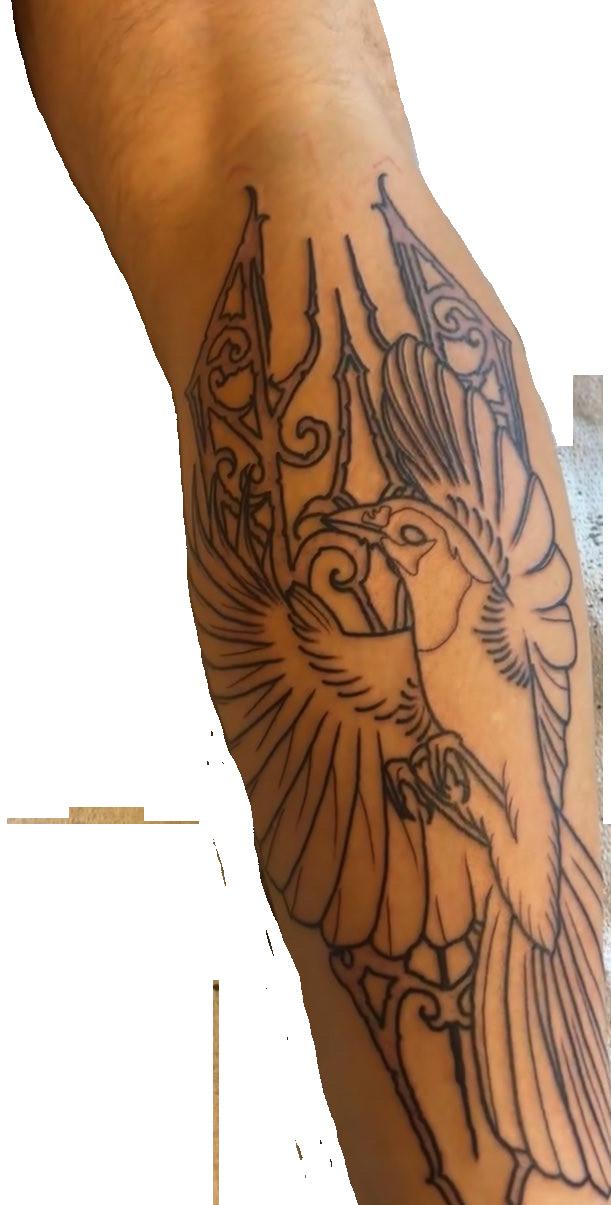
The story behind Coblentz’s recent tattoo is deeply personal and meaningful. He recently got a tattoo of a green jay on the back of his calf in honor of his late uncle. “The green jay is one of the few types of jays that use tools, and my uncle was an engineer,” Coblentz said. To some, it may appear as just a spectacular tattoo, but to him, it carries profound symbolic meaning, memorialized onto his skin as a tribute to his uncle’s ingenuity and lasting impact on his life.
The variety and individuality of tattoo styles are limitless, allowing for endless creative expression. “Some people have a full sleeve versus other people have small or simple tattoos,” Spurgeon said. She experienced two unsuccessful attempts, either due to poor placement or low-quality materials. Still, she has no regrets. To her, those tattoos represent a formative chapter in her life and the journey of self-improvement that will stick with her as she transitions into
tattoos
adulthood.
Coblentz was eager to get his tattoo right on his 18th birthday, but a packed sched ule delayed those plans. Nonetheless, the moment was just as pure: “I paid for it myself and I prepared everything myself, so it did feel like an adulting moment,” he said. Tattoos symbolize far more than ink on skin; they represent the threshold between ado lescence and adulthood. For seniors, it is the begin ning of owning their deci sions, expressing their iden tities and choosing how they want to carry their past into their future. As they prepare to leave behind the structured world of high school, these small but permanent choices mark a larger journey: growing up, claiming independence and stepping boldly into who they are becoming.
PHOTOS: Eva Burns
FASHION FORWARD
From shoe to beanie, personal style makes a statement
ARIELLA KIM THE RUBICON
Fashion can be a powerful part of identity. It carries more meaning than functionality; it influences the way people carry themselves and interact with others.
Fashion Club founder Maeve Duncan views fashion as a way to foster creativity, describing it as a way to bring people together and express identity. Duncan’s style doesn’t fit into one genre, with decisions made based on how she feels on any given day.
“I think because it changes so often, it reflects my creativity and how I try to tap into different aspects of fashion,” Duncan said.
Over the years, she has learned to make her own clothes. This skill gives her a feeling of individu-
ality and ties each piece in her closet to her personal identity.
Duncan believes that judgment around what someone wears is unnecessary and that experimenting with different types of outfits should be normalized.
“I think that people often judge, but it’s not necessary, because everyone has their own style that they feel good in,” she said.
In an effort to create a community where students feel comfortable expressing themselves openly through clothing, Duncan refounded the Fashion Club, which had existed in the past but died out when the previous leaders graduated.
Fashion Club is a space where students can share their own ideas about fashion in a more personal way.
CONCERT REVIEW
People often judge, but it’s not necessary, because everyone has their own style they feel good in. “
sophomore Miles Coates-Cush
Sophomore Miles
Coates-Cush uses clothing as a form of expression, taking inspiration from online platforms while still letting his own identity show through what he wears.
“I kind of see outfits in my closet that I can build off of stuff on Pinterest,” Coates-Cush said.
Though he likes to experiment with all pieces of clothing in his closet,
he has a special place in his heart for a specific pair of pants.
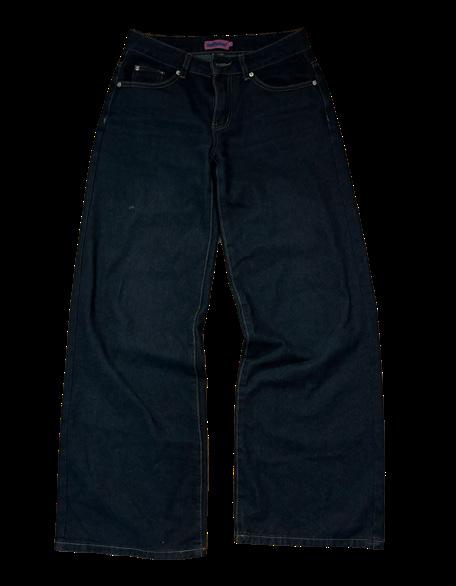
“I have these really big baggy jeans that I step on the heels of and [they] don’t fit me at all, but I just love them,” CoatesCush said.
Though his jeans aren’t the most practical clothing item he owns, they bring him joy and allow him to carry himself with confidence.
Clothing is one of the most visible ways people express themselves. A variety of styles within the school show the multifaceted identities, interests and personalities that make up the community. Whether it’s a way to boost confidence or an attempt at making a statement based on one’s beliefs, fashion is a valuable tool for self-expression.
Laufey stuns Minneapolis in sold out Target Center performance
MIGUEL ADAMS MANAGING EDITOR
Jazz musicians don’t usually sell out the Target Center. To be honest, they barely even show up there. But on Oct. 12, Laufey did exactly that, loudly, elegantly and without switching her genre.
Born in Reykjavik, Iceland, Laufey Lín Bing Jónsdóttir grew up immersed in classical music. She was playing piano and cello by age 4, and later earned a presidential scholarship to Berklee College of Music. Her rise to success didn’t come from traditional pathways, though. It began with covers on TikTok, eventually leading to her debut album, recorded in her dorm room, and now to millions of monthly listeners and sold-out arenas.
Touring her latest album, “A Matter of Time,” Laufey brought a performance to Minneapolis that felt far more intimate than the venue and crowd of over 18,000 would suggest.
Suki Waterhouse opened the night, playing some of her most popular songs and establishing that it was going to be a great night of music.
Then, after a wave of anticipation, Laufey appeared onstage, in a bedazzled dress, accompanied by four dancers and framed by a stage designed like a grand staircase. A large flat clock lay in the center, a visual nod to the album cover.
She opened with “Clockwork,” the first track off the new record. The crowd rose to their feet and stayed there. Her voice, sharp and strong, carried through the arena with ease. In person, there’s a clarity and power in her tone that recordings don’t fully capture. Her vibrato is subtle but adds emotion to every song.
What was most striking about Laufey, though, is her range—not just vocally, but instrumentally. Throughout the show, she moved between piano, guitar and cello effortlessly; each transition felt like it added to the audience’s respect for her musicianship beyond her voice. One standout moment came when she gathered with the rhythm section at center stage for what she called “my little jazz club.” There, she riffed off some of her older songs with a swing-infused jazz arrangement, putting on full display her musical roots and stylistic versatility.
Her ability to keep her jazz genre while reaching a mainstream audience is rare, especially since jazz has faded into fusion styles or been forgotten. Artists feel pressure to bend their sound to fit the charts; Laufey has found a way to do both. The orchestration of her
songs with strings, harmonies and occasionally solos, adds such a fun element to her set.
Emotionally, the concert moved between themes Laufey explores in her album, such as self-worth, vulnerability, what it means to be a woman, and romantic nostalgia. Hearing her live, it’s easy to tell that the audience deeply resonates. From early hits like “Falling Behind” to new favorites like “Mr. Eclectic,” fans sang along, not just to the radio-friendly lyrics, but to the
soft lyrical lines, too.
Even in an arena as large as the Target Center, Laufey managed to create something personal. One of the greatest achievements an artist can have is the ability to scale up in growth without losing the intimacy that drew the fans to listen in the first place.
RATING: 4.5/5
GREAT JEANS. Ariella Kim has great jeans, but they’re not the American Eagle denim of Sydney Sweeney variety; they’re Edikted.
JAUNTY JORTS Brett Favre famously wore a pair of these on NFL Draft Day in 1991.
LAUFEY LOVE. Over 18,000 fans filled the Target Center to hear the jazz musician.
JUAN
PHOTOS: Juan Miguel Adams
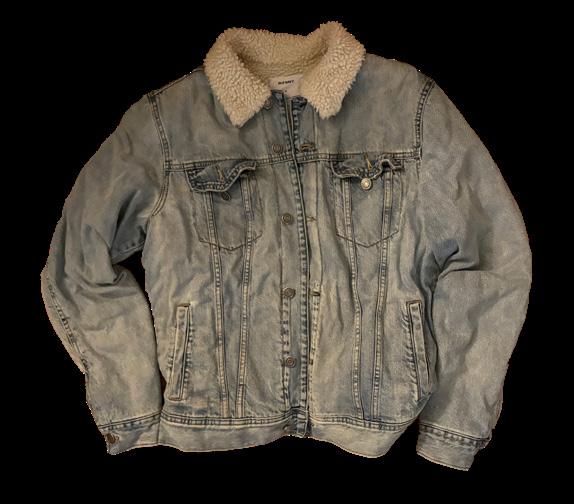
DARING DENIM. Denim jackets have been a key piece of American fashion for decades.
SUBMITTED PHOTOS: Ariella Kim
SWITCHING STYLES. One standout moment came when she gathered with the rhythm section at center stage for what she called “my little jazz club.”
TALENTED TECHNIQUE. Throughout the show, Laufey moved between piano, guitar and cello effortlessly.
BRAIN BREAKS WHEN ARE USEFUL?
SAM GALARNEAULT THE RUBICON
Brain breaks can mean many different things, but the idea of giving our brain a rest is an essential one. Their effectiveness depends on one’s use and how the implementation of brain breaks are added to one’s routine. Brain breaks mean many different things to different people when put in different situations.
Senior Roman Farley broke down his understanding of what a brain means to him. One example he referred to is the five or so minutes students are often given to take a mental break in the class in hopes of coming back with a more focused mind.
“I’m completely for it,” Farley said. “I think that especially with classes that are more intensive, it’s important to just take some time between activities to just take a break from the work ... that is completely fine.”
Farley describes how these breaks really help his attention and focus when switching between activities instead of doing all of it at once. He recalls that in math class, he has found that he understands more when he is able to take a step back and come back.
In contrast to brain breaks being completed in school, science teacher Stuart Arey believes that these breaks, when used commonly, are not as beneficial as students make them out to be. He uses brain breaks in his class when transitioning
between topics so our brain is not doing the same thing for too long. This type of brain break doesn’t take students out of the classroom, keeps them focused and their mind engaged but allows their brain to change topics to limit one’s mental strain.
“Class is 75 minutes long, you have a tutorial and lunch and X-period, you have a lot of breaks,” Arey said. He believes that it is okay to sometimes take breaks, but it really depends on how they are used.
Socializing in class is not a good use of a student’s time, but he does recommend doing whatever feels like a break and recharging their brain during other formal breaks during one’s day.
“
I
think that especially with classes that are more intensive, it’s important to just take some time between activities.
“As a teacher, the way I think about it is a brain break is when we’re changing the style of how we’re learning in a classroom so that we’re not doing the same thing every day,” he said. “Use time out of the classroom to recharge yourself.”
tivity, a micro-break less than 10 minutes has a good chance to help performance but when exercising a higher mental demand, a long break is needed to show a significant effect.
Farley describes a day where he spent a lot of time focusing on a specific task in his video game and wasn’t able to complete it.
“I took a five minute break, and I came back to it. Instantly I was able to do it. The same thing for music, I just kind of take a step back and then suddenly everything just
switching between tasks with the idea of efficiency. Task switching is going from one job to another. It is one’s brain going back and forth, which is ineffective because of the time lost in between each assignment and the time it takes to reorient back to the original task. The difference between these two ways of going between tasks is that frequently they are used to divert attention away from their original engagement. Task switching is less effective than fewer micro-breaks because of the amount of time
comes down to how efficiently they are used.
In connection to using brain breaks in school, junior Dagny Bruun finds active activity to help be a good outlet for herself.
“I use [brain breaks] at school by taking a walk around school. It really helps recharge my battery and then I am ready to refocus again,” she said. She believes that these brain breaks have helped her stay at her most engaged in class and even when studying out of class.
Arey wants students to be able to find whatever is best for them in their
can be a good way to be ready for class to learn and focus.
Whether you implement brain breaks at school, sports or even home, they can be beneficial when used appropriately. Bruun and Farley both find these short mental breaks to help their attention and mental processing. Arey argues that it is important to find the balance and personalize how one uses a brain break. It is important for students to give their mind a rest but it is also important to keep in mind how and how often you do.
Taking a 15-20 minute nap can help refresh and reenergize your brain.
To release tension in your body, try stretching out your wrists, arms, back and neck.
“Zoning-out” on purpose by listening to music can help your brain relax and refocus.
Getting something to eat is another good way to reenergize and take a purposeful break.
Taking a moment to declutter can help organize your inner thoughts and get you moving.
senior Roman Farley
PHOTO ILLUSTRATION: Ella Barlow, Lina Abid
REST AND RECONCENTRATION. For some, brain breaks serve as a way to reset their mind during a long period of work time.