
The Rubicon student newspaper of St. Paul Academy and Summit School 1712 Randolph Ave St. Paul, MN 55105
Volume 51, Issue 6 - Mar. 3, 2026

The Rubicon student newspaper of St. Paul Academy and Summit School 1712 Randolph Ave St. Paul, MN 55105
Volume 51, Issue 6 - Mar. 3, 2026

AMANDA HSU CHIEF VISUAL EDITOR
Winston Churchill seemed to understand the influence of human-designed environments when he declared after the bombing of the British House of Commons in 1943 that, “We shape our buildings, and afterwards, our buildings shape us.” While dated, Churchill’s statement on the influence of human-designed environments on psychology is still relevant today.
The intersection of architecture and psychology falls under the study of “neuro-architecture” or “psychoarchitecture,” in which buildings, rooms and spaces are designed to prioritize human emotion and response. A 2016 study conducted by Roddy M. Grieves and Kate J. Jeffery, entitled “The representation of space in the brain,” found that specialized hippocampal cells in the human brain are specifically attuned to the geometry and arrangement of the spaces they inhabit.
Senior Sophie Nguyen believes that personal inclinations play a significant role in the emotions someone experiences upon entering a space. “If you are trying to build a house for just one specific person, compared to a commercial building, that’s definitely based on personal preference and their own personal psychology and what they like, because I think that it could vary from person to person,” she said.
The study of psychoarchitecture can give a basic estimate of how a wider population might react upon seeing an environment, based on a few guiding principles. First, curves and organic shapes in spatial design create a sense of comfort and connection by mimicking naturally occurring forms, subconsciously directing a person through a space.
Students

Juniors William Drake and Langston Thompson and ninth-grader Elliott Hazzard take action on climate change with small steps. Read more in FEATURE.
Snacks around
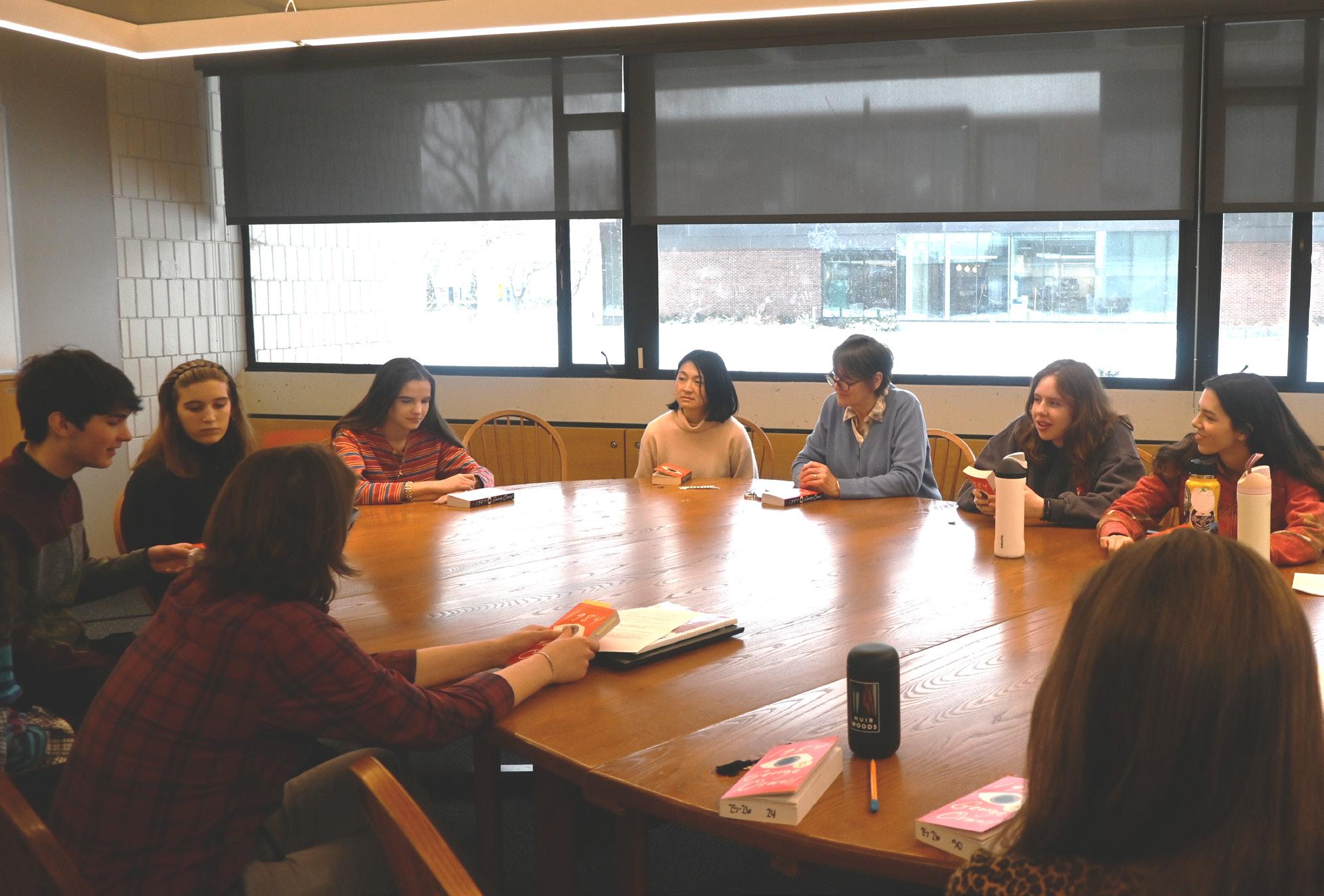
DYNAMIC DISCUSSION. Students gather around a Harkness table to discuss George Orwell’s 1949 novel “1984.” Assembled by English teachers Jessica Gokhberg and Julia Callander, the book club is open to all students and meets weekly. “[Orwell is] a pretty accessible writer. He’s pretty engaging,” Callander said.
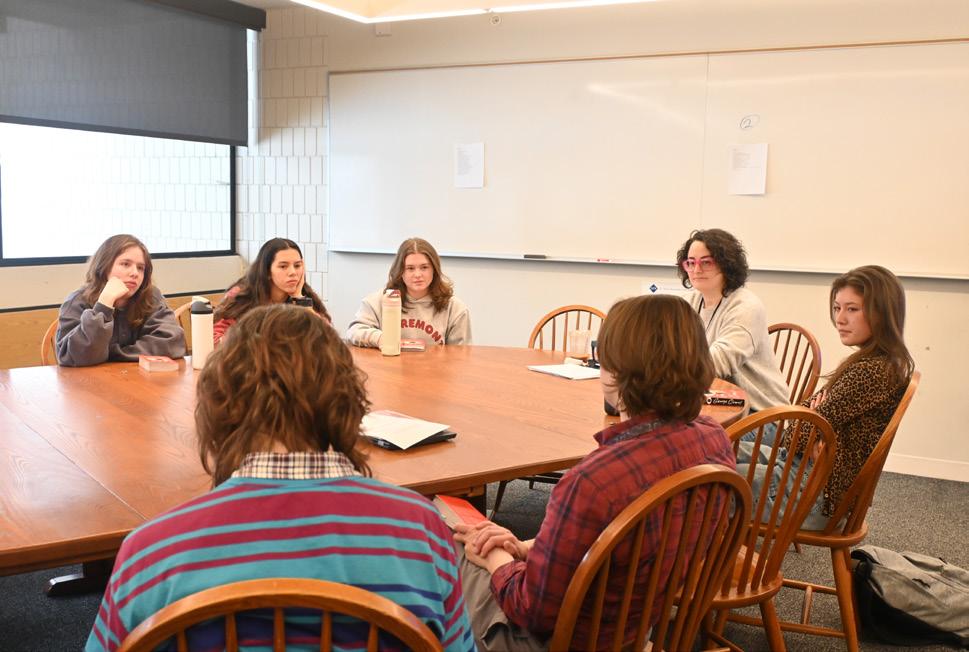
books were distributed and the first few pages were read aloud.

George Orwell’s novel “1984” was published in 1949. It follows protagonist Winston Smith, a government worker in a dystopian world with a totalitarian government. The tale warns against the dangers of censorship, government surveillance and authoritarianism.
LILLY PARR THE RUBICON
In times of chaos, everyone responds differently. Some may protest with signs and whistles. Others will call or email their local representatives, sharing their opinions in support of change. Maybe they donate to a cause, either with money or time. For English teachers Julia Callander and Jessica Gokhberg, the answer was a book club.
George Orwell’s “1984” is, according to the Orwell Foundation, “a testament to the potential power of modern political systems.” The book tells the story of Winston Smith, a low-ranking government worker in the dystopian world of Oceania, who is conflicted between living passively under a totalitarian regime or taking action against it.
Callander, with Gokhberg’s help, wanted to create a book club to demonstrate these ideas to students. They made it opt-in to allow the group to be more available to students and staff. “1984” felt, to them, like the perfect book.
“There are lots of other dystopian or political novels we could’ve read … [Orwell is] a pretty accessible writer. He’s pretty engaging,” Callander said.
The first meeting took place during tutorial on Feb. 12. Books, which were purchased by the school, were distributed, and the first 10 pages were read aloud by Gokhberg.
Junior Eli Perry has read “1984” in the past and appreciates literary discussions at school.
“I had a very pleasant experience in a large majority of my English class conversations. And I think one of the real strengths of SPA is our ability to have important discussions about literature and important topics,” he said.
Callander and Gokhberg felt compelled to create the group in light of the current political environment, specifically U.S. Immigration and Customs Enforcement’s presence in Minnesota.
In a society where othering is common, Gokhberg said, “It’s easier to hate someone when you don’t believe that they’re as human as you are. What I really value about ‘1984’ is that it lays bare the process by which a government can do that and the way in which an individual is both complicit and victim to that process.”
Sophomore Kieran Ahearne-Kroll joined the group, along with 59 oth-
er students and faculty members, to do just that.
“I really want to talk about the issues that relate to today … I feel like there’s not very many places … built into … classroom environments where we get to talk about it,” they said.
I think one of the real strengths of SPA is our ability to have important discussions about literature and important topics. “
junior Eli Perry

For Ahearne-Kroll, the line between action and discussion can blur. While they don’t believe discussion is action, they noted, “It can lead to action. [Action] starts with talking about the situation.”
Despite not having read “Animal Farm,” a staple of the English 10 curriculum, ninth-grader Brooke Spilseth joined the group looking to discuss more literature.
“I like reading books, and I like discussing books, and it seemed like a good opportunity,” she said.
Corrections are printed at the bottom of News p. 2. Corrections will be published in the month following the error and, if the story is also published online, will update following the online corrections policy.
However, Spilseth wasn’t sure if “1984” was the best book for these discussions.
“It’s similar to what’s happening now … but also, I think there are more current, more tailored to what’s actually happening now, books that we could be reading,” she said.
Responding to Spilseth’s comment, Gokhberg said, “That’s a really great point, and I would love to hear any recommendations.” However, they did acknowledge that the book’s historic qualities were intentional.
“I think what is really valuable about looking to books from the past is in creating some distance between the reader and the topic in a novel,” they said.
The book club will continue during Friday tutorials, from 9:30-9:55 a.m. Students and teachers will read the novel and discuss Orwell’s prose.
‘1984’
“The Party told you to reject the evidence of your eyes and ears. It was their final, most essential command.”
“Who controls the past controls the future. Who controls the present controls the past.”
“War is peace. Freedom is slavery. Ignorance is strength.”
“Freedom is the freedom to say that two plus two makes four. If that is granted, all else follows.”
“It’s a beautiful thing, the destruction of words.”
“The best books ... are those that tell you what you know already.”
“We shall meet in the place where there is no darkness.”

“Until they become conscious they will never rebel, and until after they have rebelled they cannot become conscious.”
ARCHIVE PHOTO: Alexis Irish
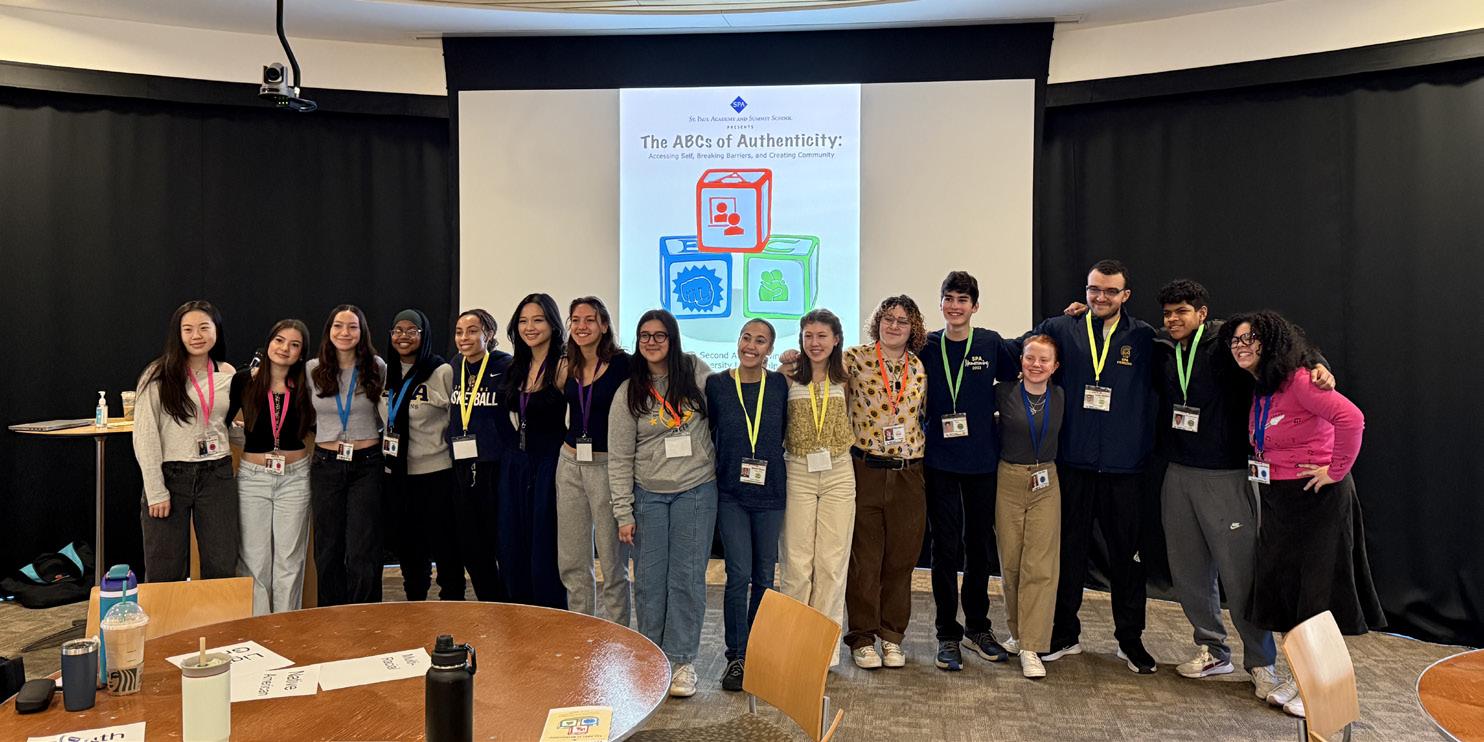
CONFERENCE CANCELLATION. Members of the Student Intercultural Life Committee gather at the Wilder Center for the 2025 Student Diversity Leadership Conference. After an increase in federal immigration activity in the Twin Cities, the 2026 conference was postponed to next year.
SYLVIA WESTRA
THE RUBICON
“Heartbroken” is the word Interim Director of Intercultural Life Eddie Moore, Jr., used to describe his feelings about the cancellation of the 2026 Student Diversity Leadership Conference.
The event was set to take place Feb. 20-21. However, due to the increased presence of U.S. Immigration and Customs Enforcement in the Twin Cities, the conference was canceled.
Since September, the Student Intercultural Life Committee, alongside Intercultural Life Program Specialist Alexis Irish and Moore, has been planning the conference, which was set to take place at the InterContinental hotel over a two-day period. On Jan. 24, Moore made the final decision to postpone the event to next year.
“We just thought it would probably be wise to postpone it, as opposed to cancel. Mainly out of
safety, mainly out of concern, but also mostly out of what was, what I like to call an unpredictable kind of circumstance,” he said.
Irish described the time when the decision was made as very uncertain; she didn’t know how long Operation Metro Surge would last and whether tensions would continue to rise.
There was concern about possible ICE activity at the hotel near the Minneapolis-St. Paul International Airport
and about students’ and workers’ safety at the event. Just four weeks away from the conference, Irish broke the news to SILC members.
“It was so sad to tell them, because … everything felt so out of our control,” she said.
Senior Sophie Nguyen was surprised to hear the news at first, but eventually understood the reasons behind the cancellation.
“I do think that it’s really important to kind of talk about those topics,” Nguyen said. “But I can also understand the fear and hesitation they have behind not wanting to have the conference, especially at this specific time, and how things are so heightened right now.”
Since the beginning of his second term, President Donald Trump has made it a goal to terminate diversity, equity and inclusion programs across the federal government.
With this cancellation, Moore feels the biggest impact is the loss of the opportunity to continue
to fight for the importance of diversity among youth.
Instead of just reacting, we thought it would be better to create something that helps people take action. “
ninth-grader Rohan Kavuru

“I think the success of any movement pursuing justice is successful because of the involvement of young people,” he said.
Ninth-grader Rohan Kavuru remarked that the shock of the cancellation prompted SILC to get the idea for what they could do to help the community.
“We realized we didn’t want to just stay upset about it. We wanted to turn that feeling into something useful. That’s how the idea for the poster and slides came up. Instead of just reacting, we
thought it would be better to create something that helps people take action,” he said.
The five-slide presentation outlines ways students can get involved in anti-ICE action, including resources for food assistance, organizations to donate to, ways to find support and voting resources. The goal of the slides was to make taking action feel less overwhelming.
“For SPA students, I hope it shows that you don’t have to wait until you’re older to make a difference,” Kavuru said.
“Even small actions matter. If students walk away feeling more informed and a little more motivated to do something, whether that’s volunteering, learning more or speaking up, then I think the slides did their job.”
The conference will be postponed until 2027, but until then, check out SILC’s guide to anti-ICE action posted on the student newsletter for the week of Feb. 22.
LINA ABID
It could be jarring for any student to see their state’s reputation of lakes, Paul Bunyan and the Mall of America become one of violence and uprising. The meaning of ‘ice in Minnesota’ has changed drastically since the launch of Operation Met ro Surge,
migration and Customs Enforcement in Minneapolis and St. Paul. Nevertheless, there have been consistent efforts from Minnesotans both directly against federal immigration operations and in support of those most directly threatened. In all cases, students have been on the front lines showcasing their resistance.
The upper school student body has shown initiative in organizing fundraisers for the cause. Individual students, as well as Latinos Unidos and the Upper School Council, have raised money for nonprofits assisting immigrants by selling baked goods or merchandise during lunch. During the week of Feb. 2, tables near the
filled with food and supplies for student-led donation drives to help those who are afraid to leave their homes. In addition, many students have found opportunities for action outside of school.
Senior Elzie Bieganek, co-organizer of a fundraising bake sale that took place in school on Feb. 2, has also been vol

ent forms, volunteering is one way Bieganek turns emotion into action.
“I just want to support as much as I can for this cause, because [what’s happening] is really sad,” she said.
In terms of direct demonstration, downtown Minneapolis has drawn thousands of protesters since the deaths of Renée Nicole Good and Alex Pretti. Musicians Bruce Springsteen and Tom Morello stood among them, but more consistently, hundreds of students participated in walk-outs or full strikes.
Like many, junior Gavin Leuthold has put his efforts into protesting and active demonstration.
“The day after Alex Pretti was killed, I went to a protest in downtown Minneapolis with my dad, and we marched through downtown,” he said.
The march downtown was not Leuthold’s only experience in these
SUBMITTED PHOTO: Megan O’Rourke
crowds. “I went to a vigil the next day at Randolph and Fairview, and then I went to another protest on [Jan. 31] at the Whipple Building with my sibling,” he said.
After instances of violence at protests, such as tear gassing, as reported by MPR News, at the protest following Pretti’s killing, safety was a factor Leuthold considered before committing to a large-scale demonstration.
“When I went to Whipple, there was someone handing out gas masks in the parking lot, so I got one of those, and I put it around my neck, but thankfully, I didn’t need it,” he said.
With Minnesota’s prominence in national headlines, youth involvement sets an example of civic duty across the country. Whatever the scale or stakes of student contributions, students are part of the bigger picture of a community that cares enough to show up. COMMUNAL CONTRIBUTIONS. Donations to the student-run diaper and food drives piled up on tables near the entrance to the Huss Center for the Performing Arts during the week of Feb. 2. Senior Elzie Bieganek said, “I just want to support as much as I can for this cause.”



SAM GALARNEAULT THE
After three months of Operation Metro Surge, White House Border Czar Tom Homan requested the withdrawal of 700 U.S. Immigration and Customs Enforcement agents and the end to the operation. The announcement came after the demotion of former Border Patrol commander-at-large Gregory Bovino. During a news conference at the
Whipple Federal Building on Feb. 12, Homan stated that the Trump administration is ending Operation Metro Surge due to the completion of their mission of deporting undocumented immigrants.
ICE agents arrived in Minnesota on Dec. 4, spurring controversy and national attention due to the killings of Alex Pretti and Renée Nicole Good and multiple reports of agents’ unconstitutional behavior.
According to a Jan. 27 article by PBS News, Bovino has led similar operations in the past in Los Angeles and Chicago and is known for his “turn and burn” tactics.
Senior Helen Frost finds Bovino’s leadership to have done more harm than good. “I think [his style of leadership] is harmful for everybody who lives in Minnesota,” she said.
Bovino was stripped of his title as Border Patrol commander-at-large and
reported to return to his former job in El Centro, California, as Chief Patrol Agent.
Although leadership has changed, Frost is still concerned about the safety of Minnesota.
“I think that it’s good that [Bovino] is leaving, but I don’t know if it’s actually gonna make anything better or change anything because there are still a lot of ICE agents in Minnesota,” she said.
According to a Feb. 22 article by The Minneso -
ta Star Tribune, federal immigration activity in Minnesota has decreased since the transition of power, with approximately 100 reports of ICE activity on Feb. 15.
Sophomore Jay Tilton feels that although the number of ICE agents is lessening, the long-term effects will still leave Minnesota’s community damaged and different.
“Rebuilding those communities that struggled will take a lot of time to get back to normal, like local business and school communities that were greatly affected,” she said.
Similar to Tilton, junior Quentin Sentz feels the lasting impact of ICE and Operation Metro Surge in his community and foresees effects in years to come, regardless of different leadership.
“I believe that for many it will be hard to move past the events, as [many] were detained whether or not they were illegal immigrants,” he said. “For some, it will be hard to resume regular life without hiding or having to worry about potential raids.”
Tilton believes that helping neighboring communities is still essential throughout the next couple of years as Minnesota recovers from this operation.
“I don’t think everything is gonna go back to the way the Twin Cities were before, but showing our focus to support those impacted the most is something that definitely needs to be prioritized,” she said.
With less federal agent activity in Minnesota, the lasting impact of dismantled communities still resonates among Minnesotans. After a transition in ICE leadership, many students are focusing on supporting and rebuilding a damaged city. Scan this QR code to read more about student action against ICE.

BY THE NUMBERS
SUNDE AUBERJONOIS THE RUBICON
The continual release of the files detailing the investigation of now-deceased former financier and sex offender Jeffrey Epstein, commonly known as the Epstein files, has been a point of contention since November 2025. Congress almost unanimously voted to allow the Department of Justice to release the files to the public.
The most recent release, which took place Feb. 3, contained around 3 million new documents, 2,000 videos and 180,000 images. Deputy Attorney General Todd Blanche has signaled that this is likely the last major drop of material to the public.
Another high-profile figure mentioned in the files is President Donald Trump. According to the New York Times, Trump is referenced around 38,000 times, more times than the words God and Jesus are mentioned in the Bible combined. Many Americans are contending with the nature of Trump’s appearances in the files.
“There is a lot of disturbing information in them,” junior Nikhil Ansite said.
isolated expression of this, but it’s further and further disappointing to see him in a party, which has historically put so much value in American values,” Moser said.
It
INFORMATION:
Controversy has surrounded the Epstein files, particularly around the lengthy list of celebrities and politicians mentioned in them. Notable names have appeared often in the files released Feb. 3, including deceased pop star Michael Jackson, former British royal Andrew Mountbatten and former president Bill Clinton.
Many of Trump’s mentions are related to his political career, his longtime friendship with Epstein and unverified tips pointing toward his involvement in acts of sexual assault. Although these claims remain unverified, as Trump’s legal team and the White House staff have repeated under public scrutiny, his close relationship with Epstein has led to questioning and disappointment.
Junior Eliana Moser expressed her despondency at Trump’s actions.
“It is so discouraging to see the lack of political tact that our president has. Obviously, the Epstein files are not the
stein files are an example of how powerful people are rarely held accountable for their actions.
of political tact that our president has. “
junior Eliana Moser
is so discouraging to see the lack
This rhetoric of dissatisfaction with public figures, especially after exposed involvement in Epstein’s activities, also resonates with sophomore Jack Gordon.
“A lot of them are very public, famous or powerful people. And that really doesn’t bode well for people’s trust in figures like that,” Gordon said.
According to a Feb. 18 poll by Reuters, titled “Americans believe Epstein files show the powerful get a pass,” 69% of Americans think the Ep -
A Feb. 12 Pew Research Center study titled “How Americans view key members of the Trump administration” indicated that 58% of Americans see Trump more negatively than they do positively. Similarly, 52% of respondents viewed Vice President JD Vance unfavorably.
Trump’s approval rate, as of Feb. 19, is at 38%. For Moser, Trump’s connection to the Epstein files contributed to the steady decline in public perception of political leaders.
“[It’s] just been shocking to see how truly far and separated from humanity’s standards these people who elevated from society are,” Moser said.
Feb. 3 marked the final release of the Epstein files. However, the DOJ has still removed and withheld files related to Trump.
OUR MISSION
We strive to capture the spirit of the community through its stories while inspiring deeper conversations. Above all, we stand for integrity in our pursuit to inform and engage our readers.
THE RUBICON
St. Paul Academy and Summit School 1712 Randolph Ave • St. Paul, MN 55105 rubicon.spa@gmail.com www.rubiconline.com @TheRubiconSPA
25-26 STAFF
EDITOR-IN-CHIEF MANAGING EDITOR
CHIEF VISUAL EDITOR
NEWS EDITORS
OPINIONS EDITORS
HEALTH & WELLNESS EDITOR
PAGE ONE/IN DEPTH EDITOR
FEATURE EDITORS
SPORTS EDITORS
A&E EDITORS
GOOD QUESTION EDITOR
COPY EDITOR DATA JOURNALIST THE RUBICON
Sonia Kharbanda
Juan Miguel Adams
Amanda Hsu
Evie Gardner
Wynter Feiner
Peony Steele
Eva Burns
Izzy Middlebrook
Peter Ostrem
Ariella Kim
Sylvia Westra
Sam Galarneault
Harper Larsen
Sunde Auberjonois
Tallulah Dogwill (S1) Lilly Parr (S2)
Lina Abid
Ivy Evans
Jack Gao
RUBICONLINE
DIRECTOR OF RUBICONLINE
PRODUCTION MANAGER
CREATIVE DESIGN MANAGER
DIVERSITY MANAGER
BEATS MANAGER NEWS EDITORS
OPINIONS EDITORS
FEATURE EDITORS
IN DEPTH EDITOR
A&E EDITORS
SPORTS EDITORS
COPY EDITOR
PODCAST EDITOR
RUBICON TV
SOCIAL MEDIA MANAGER
Thomas Chen
Greyson Sale
Zimo Xie
Lani Ngonethong
Elizabeth Tuttle
Peter Lipinsky
Ike Obi-Walker
Winston Arvidson
Audrey Jansen
Zahir Hassan
Naomi Zins
Shrey Nemani
Lani Ngonethong
Yassin Mokbel
Senetneb Theba
Allen Wang
Aiden Ruediger
Yasmin Khan
Nabeeha Qadri
Nora McKoy
Andrew Lipinsky
Audrey Peltier
CONTRIBUTORS
Dia Chaney, Carys Hsiung, Annika Kim, Kate Tuttle, Gwendolyn Uhlhorn, Huxley Westemeier
STAFF WRITERS
Grace Berger, Henry Childs, Maizy Henretta, Niko Lifton, Gisele Parnell, Auden Zheng
ADVISER
Kathryn Campbell, CJE
PUBLICATIONS ASSISTANT Scott Gillespie
MEMBERSHIPS
Columbia Scholastic Press Association
National Scholastic Press Association
Private School Journalism Association
MN High School Press Association Quill and Scroll Honor Society
CURRENT PUBLICATION AWARDS
2024 NSPA All-American
2025 Pacemaker Finalist (online)
2025 CSPA Hybrid Gold Crown Award Winner
2025 SNO Distinguished Site
2025 JEM All State Gold

AMPLIFYING ACTIVISM. In response to Operation Metro Surge, many Minnesotans have used social
and engage with meaningful efforts to support immigrant communities. Community resistance to federal immigrant
ations demonstrate that combining online and in person efforts maximizes impact; posting alone is not enough. of the staff
“Likes Don’t Save Lives.” This was the popular ad campaign slogan launched by UNICEF Sweden in April 2013, encouraging people to donate directly to a cause rather than just liking a post. The campaign identified a problem with the growing trend of online “slacktivism:” supporting a political or social cause solely through social media with minimal additional effort. It argued that social media often allows those who aren’t directly affected by an issue to feel involved without investing much energy in the cause.
As we’ve seen since U.S. Immigration and Customs Enforcement began its occupation, Minnesotans are having the greatest impact when social media platforms serve as a foundation for engaging directly with immigrant communities and providing support.
Most commonly, students engage on social media by reposting anti-ICE messages or sharing photos from protests in their Instagram stories to express their opinion. However, as UNICEF Sweden warned, a repost or a like does not help as much as participating in a food drive, organizing a carpool for affected families or volunteering time to the cause. These quiet acts of activism, which sometimes go unrecognized, are what really make a difference.
MINNESOTANS ARE HAVING THE GREATEST IMPACT WHEN SOCIAL MEDIA PLATFORMS SERVE AS A FOUNDATION FOR ENGAGING DIRECTLY.
While an Instagram story can showcase one’s stance on an issue, a post alone often fails to enact meaningful change. According to a 2023 Pew Research Center report, titled “Americans’ views of and experiences with activism on social media,” 46% of U.S. social media users had been politically active on social media in the past year, but only 14% had looked up information about protests or rallies in their area. Attention is not action. Activism is most effective when one unplugs from social media and makes an effort to contribute to change; otherwise, it risks being performative.
Over the last few months, Minnesotans who consciously avoided these pitfalls successfully used social media to organize a broader community effort against federal immigration operations.
For example, The Minnesota Star Tribune reported on Feb. 11 about a group of Minnesotan moms who communicate via Signal chats to mobilize residents to support immigrant families. Through their encrypted network, they have organized efforts to deliver food, volunteer for packing donations and spread a little joy to those staying inside for fear of ICE.
In another instance, five University of Minnesota student unions collaborated on social media to promote the nationwide shutdown on Jan. 30. Their post received nearly 34,000 likes on Instagram, and an estimated 50,000 participated in protests in downtown Minneapolis that day, sending a message that resonated across the country. These actions demonstrate how community members are successfully utilizing social media and digital activism to enact meaningful change.
On Feb. 12, White House Border Czar Tom Homan announced the gradual withdrawal of Operation Metro Surge. Still, Minnesotans will continue to feel the economic, social and psychological damage that federal agents inflicted upon the state. There is a need to continue community organizing for children who missed school, businesses struggling financially, workers who stayed home and so many others. Whether digital or in real life, the activism is far from over.
Keep donating, volunteering, protesting and organizing, whether it gets shared on social media or not. Post with intentionality instead of for proof, with the focus on recruiting others to join in the effort to make a direct impact on those affected. Through large and small acts of activism, continue to uplift Minnesota.
ARIELLA KIM THE RUBICON
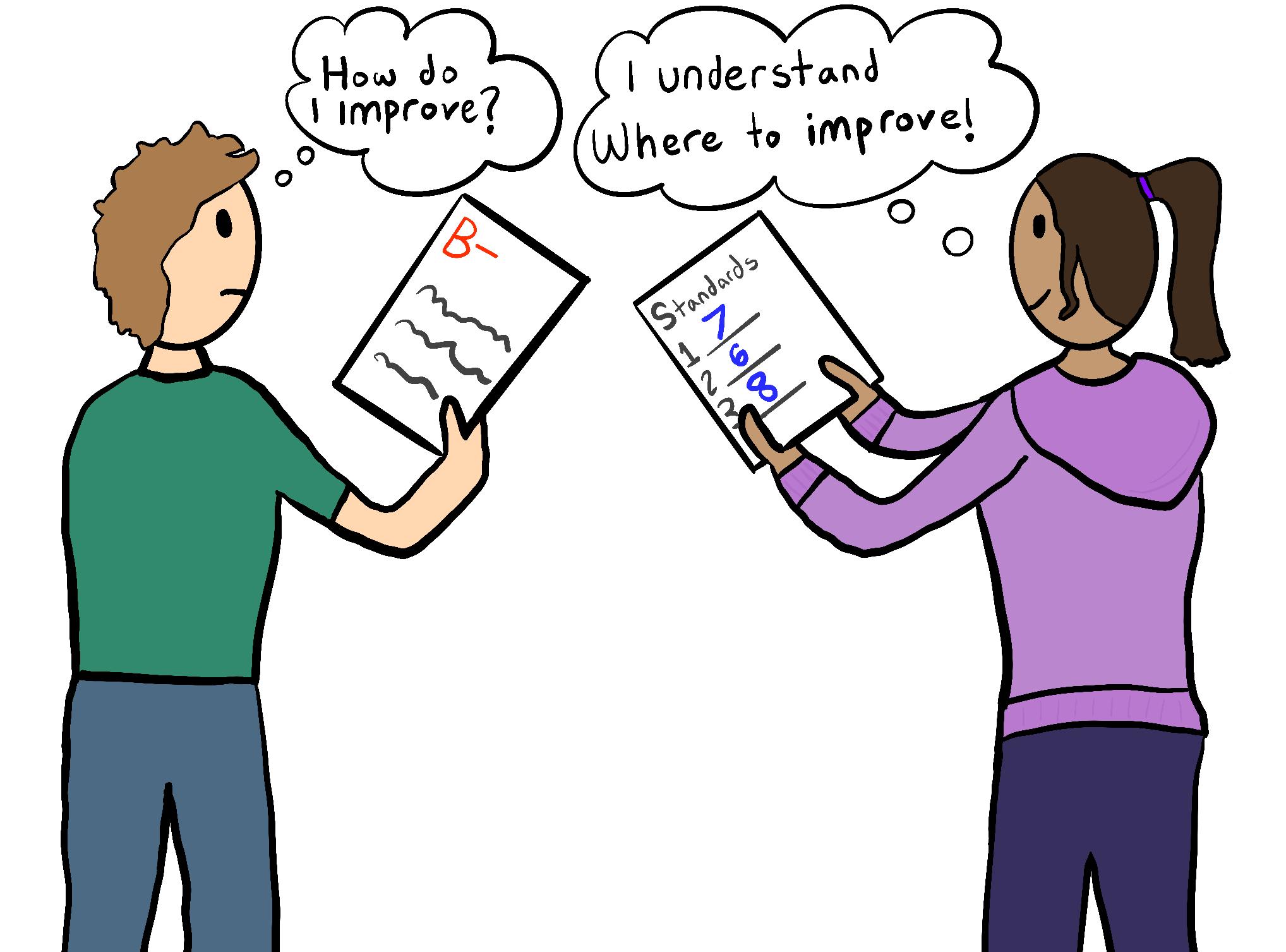
In many upper school classrooms, standards-based grading is used to assess a student’s learning and growth throughout the semester. Despite sometimes feeling overly complicated, SBG can help students focus on specific areas for improvement rather than chasing points. Learning is an ongoing process, not simply a checkpoint in an academic pathway. SBG can help promote this by encouraging students to focus on each standard and hone their skills as the semester progresses.
By revisiting standards and tracking growth over time, students can better identify areas for growth and take greater responsibility for their learning. Studying in order to check off points can often feel overwhelming, as students aren’t sure which sections to prioritize. In SBG, knowing exactly what to study feels easier.
SBG provides opportunities for organization, prioritization and efficiency skills useful in life beyond high school.

To some, SBG disadvantages students and fails to recognize the effort put into studying. However, effort is still acknowledged through opportunities for revision and continued growth. These standards simply provide a more efficient way of studying by allowing students to focus on topics that feel less familiar.
SBG can also benefit students who demonstrate a strong understanding. For example, it is used in many upper school STEM classes and some English courses to measure students on a scale from beginning to strong. Students may not need to answer every ques -
tion on an assessment perfectly to earn a strong score. They simply need to demonstrate clear, consistent mastery, not perfection. This allows students to be rewarded for having a clear understanding of the learning goal, without being penalized for a minor mistake. Education Week asked various education specialists about the benefits of different grading systems.
assignments. Furthermore, it provides opportunities for organization, prioritization and efficiency, skills useful in life beyond high school. Instead of training students to aim for perfection, SBG encourages students to demonstrate exceptional understanding, which can be achieved without perfectionism and with effective study habits.
Ultimately, SBG trains
According to George Farmer, an administrator and author dedicated to providing solutions to educational challenges, SBG is a great way to focus on students’ mastery of content, and gives students target standards, leading to productive conversations with teachers and parents. This mastery gives students an outline for future
students to demonstrate a deeper understanding of concepts, rather than just surface-level knowledge. While SBG may feel less straightforward than the traditional grading system, it encourages growth, responsibility and mastery of the content.
help students clearly identify strengths, target areas for growth and take ownership of their learning
JACK GAO THE RUBICON
For some, college is the next step after graduating from high school; however, it is not the choice for all. Especially as tuition is increasingly expensive, it is time for college prep schools to reconsider the perception of other options after high school.
Traditionally, college prep schools are educational institutions specifically designed to prepare students for higher education through rigorous academics, Advanced Placement courses and specialized college counseling. These schools typically feature smaller class sizes, high academic standards and comprehensive extracurricular activities to foster intellectual and personal development.
However, the accessibility of college has changed. Since President Donald Trump’s second term began, funding cuts have severely impacted student loan programs and university grants. According to an October 2025 article by Cecelia Smith-Schoenwalder for U.S. News and World Report, titled “Track-
ing Trump’s Crackdown on Higher Education,” Trump’s One Big Beautiful Bill set a total lifetime borrowing limit of $257,500 for all federal student loans. This means millions of students entering college do not have a way to pay tuition and are under greater debt pressure.
According to a November 2025 article by Cleo Krejci for Minnesota Post titled “Minnesota lawmakers spotlight impact of canceled federal higher education grants,” the state has been hit especially hard by funding cuts. At universities and colleges across Minnesota, over $50 million for student scholarships, educational development and research has been cut. As a result, the average student faces an increased risk of debt in undergraduate and graduate studies.
While other options for supporting students in low-income households exist, like QuestBridge, funding cuts ensure fewer students will receive the support needed to pay for college. Thus, the time is right not only to step back from
the college focus but also to promote other options that benefit the average student.
The time is right not only to step back from the college focus but also to promote other options.

Two other paths can be promoted to replace college. The first is with trade schools. Trade schools are postsecondary institutions that provide specialized, hands-on training for specific skilled trades and technical careers. Unlike traditional colleges, they focus entirely on practical skills, enabling students to enter fields such as welding, plumbing or healthcare in less than two years.
The second is with an apprenticeship. An apprenticeship is a career pathway that allows individuals to gain hands-on experience in manufac-
turing, energy, telecommunications and transportation, while learning under the guidance of experienced mentors. Unlike traditional college, apprenticeships combine practical training with classroom instruction, helping students develop real-world skills without accumulating student debt.
For both of these options, students who are committed have an easier time getting accustomed to their choice and can build skills needed for their future work much quicker than in college, without imposing massive amounts of debt on themselves.
While not as well known, options like trade school and apprenticeship can be promoted by increasing awareness in high schools, highlighting successful career stories, partnering with local businesses and educating parents and counselors about the high earning potential and job security available in skilled trades and technical careers.
Colleges and universities can also take similar actions. Rather than forcing students to commit to
a major they may be unsure of, additional methods for identifying their goals and wishes can be implemented to direct them towards the right path to success.
While college is treated as the primary route to higher education after high school, current administrative actions threaten to prevent students from pursuing their goals.
True college prep schools should consider other options, such as trade schools and apprenticeships, for the entire student body. After all, the goal for higher education is to promote success in later life, and each student achieves success in their own way.
INFORMATION: U.S. Department of Labor
APPRENTICESHIP AC-
CELERATION. In the past decade, apprenticeship graduation rates from registered programs have increased by 143%. This surge reflects expanding workforce development efforts and growing demand for hands-on career training across industries.
NUMBER OF APPRENTICE GRADUATES IN 2014 AND 2024



DIAPER DRIVE. Seniors Zoe Huelster and Helen Frost organized a diaper drive to collect diapers, wipes, formula and pull-ups. The event brought the community together to provide essential supplies to families who are afraid to leave their homes because of federal immigration operations.
HARPER LARSEN THE RUBICON
The Twin Cities have captured a national audience as Minnesotans across the state band together for a common cause. With the heightened U.S. Immigration and Customs Enforcement presence in Minnesota, residents have protested and spoken out against the violence and the impact that ICE is leaving on communities.
Protests in downtown Minneapolis have been among the most powerful statements and an important way for Minnesotans to remain a strong and connected community. While protests are essential, they are not the only way to push back against ICE’s violence and ideals.
Sometimes, the smaller ways of helping are just as important. The idea that if one does not attend a protest, they do not want to help is not always true and often does not foster connection and community, which are crucial in times like these.
As a high school student, achieving autonomy over decisions and actions is often difficult, whether because of parental control or even a lack of transportation. High school students cannot always make decisions for themselves and this should be taken into note before assuming someone does not care. Many parents are nervous about the violent tendencies that ICE agents have demonstrated and do not let their children attend protests; however, this does not mean that students do not help in other ways.
At the upper school, it is obvious that students are getting involved in other ways when looking at the organized diaper drives and bake sales that donate to
do what you can
families affected by ICE activity. Age, ability and race can all pose a challenge when making the choice to protest, and making someone feel shame about not going to protest is not a way to keep the people connected and on course for a common goal.
While protests are important, they are not the only way to push back against ICE’s violence and ideals.
sophomore Harper Larsen

Taking the time to help, even in a small way, is more important than feeling guilty about not being able to act in one single way.
If someone has a limited decision in the choice of whether or not to go to a protest, it is important that the outcome does not change one’s attitude about speaking up and helping out in the ways that one can. While the choice to not protest is not necessarily silence, doing nothing about an issue is.
If one cannot act in a specific way, remember that they could act in many other ways that make a difference. Whether buying something at the bake sale, dropping something off at a donation drive or finding a way to contribute outside of school, everything matters and contributes to communities in need, working toward change.
When the option to protest is taken away, it does not mean that the option to act is also removed.
LINA ABID THE RUBICON
To accept the idea that “we don’t owe anyone anything” is lazy and enabling by nature. The freeing feeling that this phrase incites is not empowerment or healing; it is a reprieve from the burden of others’ feelings, a thinly-veiled yet widely accepted excuse for a disregard of others.
The willingness to make sacrifices in the name of community is what builds a trusted, safe community in the first place.

Critiquing this language is not meant to challenge anyone who has ever employed it, but instead to emphasize that the larger culture surrounding it is harmful.
In a podcast by the American Psychological Association in 2025, counseling psychologist Taisha Caldwell-Harvey and clinical psychologist
Erin Parks discuss the rise of so-called therapy speak: terms like “gaslighting,” “toxic,” “boundaries” and “narcissist” have entered our daily vocabulary, often twisting the original meaning of the word.
The saying “you don’t owe anyone anything” seemingly began as a way to relieve the pressure of explaining one’s every action, especially in tense situations or within a conflict, but has grown to encompass the act of taking accountability or apologizing, and serves as an excuse to avoid confrontation.
This kind of terminology often becomes more general as it grows in popularity, changing its meaning despite its larger implications.
It is easy to imagine how the thought of not owing anyone could be introduced as a positive concept. Upon the right ears, those words may serve to reassure and build self-confidence.
However, the narrative has spread beyond its intended scope, going hand in hand with “protect your peace” and likely affirming far more selfish and careless behavior than any genuine inspiration.

ILLUSTRATION:
NO EXCUSES. Avoiding someone in need of assistance because of a slight inconvenience is selfish and harmful. You might not owe someone “anything,” but a community thrives when people sometimes make personal sacrifices to help those around them.
Countering this narrative is a quote that circulated the internet in 2025: “inconvenience is the price of community.”
It rings true in situations as varied as attending a famously chaotic family reunion, picking up a friend who lives far away, keeping up with texts or simply getting up to grab a worksheet for the entire table, despite having just sat down. These are all examples of
actions that, while requiring small amounts of discomfort, ultimately lead to stronger and healthier relationships.
It must be true that communities owe each other respect and decency now more than ever.
A bad mood does not mean that others are not owed politeness, nor does a rushed schedule excuse leaving or disregarding someone who is asking for help.
The willingness to make sacrifices in the name of community is what builds a trusted, safe community in the first place. It is much easier to believe that you do not owe anyone anything, but do not make the easy choice in place of the right one. Scan this QR
to see how you can support others during times of crisis.

Whenever I open my backpack, I have a choice. I’ve thought about this choice a lot: click or sharpen. Lead that advances with a quiet snap, or graphite that smells faintly of cedar and shavings. It sounds small, but the tool I write with shapes the way I think and see the paper.
Mechanical pencils win on precision. When you click one, the line stays even from the first word to the last. No thickto-thin shift as the tip dulls. No pause to sharpen in the middle of a sentence.
If you write small, tight notes in the margins of a textbook, a 0.5or 0.3-millimeter lead feels built for you. The letters stay clean and compact. Your diagrams look sharper. Your math problems line up without the fuzz of a worn tip.
They also feel different in your hand. A mechanical pencil carries more weight in the barrel. That weight grounds your grip. The lead glides smoothly across the page, almost

like the paper is cooperating with you.
When I draft something that demands control, like careful annotations or dense notes, the steady, even line keeps my thoughts from drifting. The pencil does not change on me. I press down, and it responds the same way each time.
But wood pencils respond differently every time. A wooden pencil changes as you use it. The tip softens. The stroke widens. You adjust your pressure without thinking. You can shade with the graphite side or press harder for a darker line.
I use this to underline, circle, and sketch in the margins. A wood pencil gives you range. Each stroke carries texture, unlike the mechanical one.
There is also the feel of it. The hexagonal edges press lightly against your fingers. The wood warms in your hand. When you sharpen it, the scent of cedar rises for a second and the spiral of shavings falls away.
It is simple and physical. You see the material wearing down as you
work. The pencil shortens over time, proof that you have used it.
Cost matters too. A pack of wooden pencils is cheap and complete. You buy them once. No refills. No tiny tubes of lead that run out at the worst moment. A sharpener sits in a drawer, and you are set for months. If you lose one, it does not sting.
Mechanical pencils feel engineered for consistency. Wooden pencils feel honest.
When I need control, I click. When I want variation, I sharpen. The hard part is knowing when to click and when to sharpen. One keeps my lines even and compact. The other lets my strokes breathe.
The debate should never have been about which is better. It should be about what kind of writing you want to do.

AUDEN ZHENG STAFF WRITER
Every weekday morning, millions of teenagers drag themselves out of bed before the sun rises, rushing to catch buses or beat traffic so they can sit in classrooms while their bodies are still half asleep. Somehow this is treated as normal.
Students joke about being exhausted, comparing how little sleep they got and wearing dark circles like tattoos on their faces. But this should not be normal. School should start later, and it is frustrating that this is still a debate.
Enter a first-period class. The atmosphere is uneasy. Students stare at slides that they can hardly take in and information is copied into notes without being understood. An 8:15 a.m. quiz does not ascertain intelligence, but instead measures who can function on little sleep.
Medical professionals who study adolescent health also support different school start times.
The American Psychological Association says teenagers need eight to
10 hours of sleep every night, and the American Academy of Pediatrics recommends that middle and high schools begin no earlier than 8:30 a.m.
If experts are clearly saying that teens need more sleep and later start times, schools that still have first period beginning at 8:00 a.m. are disregarding scientific facts.
The blame makes it worse for students. They are told to just go to bed earlier and put their phones down. Screen time does interfere with sleep. But biology is a factor, too, because during adolescence, the body clock shifts later. Melatonin is released later at night, so an early bedtime, like 9:30 p.m., isn’t always effective. With an 8:00 a.m. start, students wake up at 7:00 a.m. or earlier, depending on location. That schedule ignores the reality of how teenage bodies function.
For students who are stressed, overwhelmed or just burnt out, there are many negative effects. They may initially appear subtle, such as a racing heart before a presen-
tation, trembling hands while holding a pencil or an unexpected surge of anxiety over a task that would typically seem doable.
Lack of sleep increases stress, making minor issues seem like major ones and routine failures seem disastrous. When the brain doesn’t get enough sleep, it switches to survival mode. It reacts rather than processing information calmly. It spirals out of control instead of thinking rationally. Students are expected to juggle advanced classes, sports, clubs, parttime jobs, volunteering and college applications -- all on empty fuel. No athlete would be expected to compete without recovery; no machine is likely to function without maintenance, yet students are expected to perform at their peak while chronically tired. If schools care about students’ well-being, let them sleep. Let them think with clarity. Let them walk into their first period ready to learn, not just survive.
“Minnesota Nice” to “Minnesota strong”: kindness and community prevail during times of crisis


Lessons learned: what a minimum-wage paycheck teaches a teenager FROM
NEMANI RUBICONLINE


PUBLICATION INFO The Rubicon is the student news organization of St. Paul Academy and Summit School. We operate as a public forum for student expression, produced and edited for students by students. The Rubicon is published eight times a year; 500 copies of each issue are distributed on the Randolph Campus for free.
ADVERTISING The Rubicon does not accept advertisements.
ANONYMOUS SOURCES Although it is always preferable to use names when reporting, there are times when it is necessary to protect those we report on. Use of grade level or first name only are the most commonly used methods of anonymity.
BY LINES credit the individual who
conducted interviews, drafted, revised and fact-checked a story. Shared bylines are given to joint effort assignments. Stories that include supplemental materials include a credit at the bottom that states “Additional reporting by” followed by the name of the reporter.
EDITORIALS articulate the collective opinion of the staff, while minieditorials, opinions pieces, arts reviews, and columns belong to the author.
SUBMISSION GUIDELINES Opinions are welcomed as Letters to the Editor or Submitted Opinions and may be published in print or online. Letters should not exceed 400 words and opinions should not exceed 650 words. Both may be edited for length and
style. All pieces are published with a full name.
UPDATES AND CORRECTIONS
During the post-critique process, staff members identify inaccuracies and discuss reader feedback. The staff publishes corrections when an error is discovered during critique or reported to a staff member. Corrections should be directed to the Editor in Chief or appropriate section editor.
IN PRINT: Corrections are printed at the bottom of News p. 2. Corrections will be printed in the month following the error and, if the story is also published online, will be corrected following the online corrections policy.
PHOTO CREDITS Photos are labeled
with the photographer name, whether on staff or freelance. Images sourced outside the staff are credited with guidance from the National Press Photographers Association guides.
NAME AND PRONOUN USE
The Rubicon uses the name and pronouns shared by individual sources during interview. Each interview and survey begins with a request to say and spell the person’s name and to share the pronouns they would like to see published in the story, and the reporter is transparent about where the story will be published. If a mistake is made, a correction will be posted per the corrections policy.
CONFLICTS OF INTEREST The Rubicon news and Ibid yearbook avoid
conflicts of interest while honoring that our reporters are involved in the school and local community beyond their work on staff. Staff members avoid writing about students, teachers, student clubs, affinity groups, and organizations that they are closely involved with. The reporter is always responsible for disclosing conflicts of interest, but if a conflict of interest comes to light after publication, it does not warrant removal of the story. If it is in the best interest of a source to be interviewed by a close friend in the case of a sensitive topic, the interviewer will not write the story—they will solely conduct the interview. Unavoidable conflicts of interest are specifically mentioned at the top of a story. Photographing or videography of news events is never a conflict of interest.
‘No preservatives.’ ‘All-natural.’ ‘High protein.’ ‘Heart-healthy.’ These labels, along with various others, can be found on foods across the country, indicating any given product’s healthiness for the human body.
Although this tactic is often used to influence con sumers in the way they shop, eat and recommend brands to others, the labels are also true: and they can be a significant indicator of the importance of eating healthy.
It’s easy to take access to healthy food for granted. But eating healthy isn’t always an option, as many do not have access to these resources. Access to a grocery store is already difficult, let alone a healthy grocery store.
According to a 2026 article by Food Empowerment, nearly 2.3 million Americans live in areas of the coun try where grocery stores are not within convenient traveling distance, meaning within 10 miles of the nearest supermarket. They often do not have access to fruits, vegetables or other foods with important bene fits for one’s health.
This is not random: these areas, known as food des erts, are typically inhabited by Black, brown or low-in come families, who often can’t afford cars and com monly do not have access to public transportation.
Junior Aldegundo Brenneman has noticed that at titudes toward eating processed foods tend to be more negative, despite how common they are. “The norm in this country is not eating healthy; instead … indus trially processed foods dominate a typical palate here. But the blame often falls on the consumers for not ‘choosing’ a better option, when the real fault lies in the system … The norms around eating healthy are flawed and unrealistic, and they draw attention away from the real problem,” he said.
“
Fresh produce … and organic foods were already more expensive, but their prices have only worsened
availability.
junior Aldegundo Brenneman


There are consequences to primarily unhealthy diets like those in food deserts: diseases like cardiovascular disease, obesity, diabetes and certain cancers are linked directly to one’s diet.
While food deserts are an extreme example, options are often limited in other targeted areas. According to the same article by Food Empowerment Project, predominantly white neighborhoods tend to have up to four times as many grocery stores as predominantly Black neighborhoods do.
The grocery stores the latter do have tend to be smaller, and the products are typically less varied. This divide is also apparent in wealthy neighborhoods as compared to low-income ones.
Inflation and overall food prices have continued to rise during the second Trump administration, making it harder for Americans to eat right. The situation is more serious because U.S. wages, adjusted for inflation, have been stagnant for almost 15 years.
“I think the current administration in addition to inflation has made it harder to eat anything at all, but
To acquire a ‘high protein’ label, the product must have over 20% of the Daily Value for protein. A ‘high protein’ label does not guarantee high quality protein.
The label natural only requires for the product to be minimally processed. There are no strict legal definitions or certifications for the label of ‘natural’.
The ‘all organic’ label requires for 100% of the product to be certified by a U.S. Department of Agriculture accredited agent as having no synthetic fertilizers or genetically modified organisms.
INFORMATION: Food and Drug Administration
I would say the effect is stronger on the availability of healthier options,” Brenneman said. “Fresh produce … and organic foods were already more expensive, but their prices have only worsened while Big Food options, which are far less nutritious and way more likely to cause health issues, have stayed at a relatively accessible price.”
Additionally, consumer-oriented influences like health labels classify certain foods as ‘FDA healthy’ –but these foods tend to cost more than the ones typically seen as unhealthy. According to a 2015 study by the National Institutes of Health, conducted by Nalani Ranjit, et al., it becomes easier for families with higher incomes, often white, to maintain this idea of balanced diets.
In junior Emma Tan’s eyes, it’s up to the government to correct the issues of food insecurity and affordability in general.
“I think … funding from the government should be redirected to more food for everyone,” she said.
When it comes to what being healthy means, social media often dictates how people eat. With the rise of
I never really check for labels, they aren’t something I worry about a lot.
sophomore Amelia Dyrstad
TikTok and Instagram reels in the past decade, more creators have surfaced who promote their ideas of healthy eating.
Whether this is done in a nontoxic way or the opposite, those watching can feel as if their own habits are destructive or unhealthy, even if they have no control over the situation.
Despite the factors working against it, there are ways to get involved and work against the food insecurity that nearly 47 million American citizens experience. Some include installing community gardens, educating oneself and others about the issue and taking on volunteer work at food shelters.
The price and difficulty of eating healthy continues to increase. Governmental factors, systemic biases and wealth play huge roles in that process, and it’s unclear what the future of this issue will look like.
Labels like ‘no artificial flavorings’ are probably not going away anytime soon. But affordability and food insecurity are being combated in small ways and big, and the fight will likely not be stopped until considerable change is made.
- SPA THINKSDo you buy food based on labels?
UNHEALTHY ASSUMPTIONS. While labels can provide important information about food, whether people eat healthy is more nuanced than a distinction of ‘natural’ or ‘organic.’ Access to a healthy grocery store is often dependent on racial and socioeconomic barriers. “
If [a food product] is low sugar, I don’t normally eat it because it’s just fake sugar.
ninth-grader Jayani Nelson

“ “
I just look at the basic nutrition facts so I know what I’m eating.
sophomore Nime Snyder

continued from pg. 1
Second, harsh lines and angles, common in more modern or commercial buildings, create a colder, more sterile environment, evoking a sense of detachment. For example, Nguyen wants “something less modern” for her own house someday. “That type of architecture kind of gives more of an industrial or clean feeling,” she said.
Third, spaces with a directional flow tend to put people’s minds at ease while spaces lacking in this flow can feel isolating and disorienting. A famous example of disorienting architecture is the Seattle Public Library. Designed by Dutch architect Rem Koolhaas in partnership with local architects, the 11-floor library is constructed with steel and glass to form an hourglass shape. Despite earning many architectural distinctions, the interior design, shelving and pathway layouts create an awkward flow of movement that confuses visitors.
Beyond these three main principles, individuals are also strongly influenced by the facade, or outside impression, of a building or street. Their first impression can strongly influence how they perceive the rest of the building and, in turn, affect their mood. More monotonous or boring facades are usually associated with lower excitement and happiness, as flat surfaces lack points of interest or connections that catch people’s eyes.
If you are trying to build a house for one specific person ... that’s definitely based on personal preference and their own person pyschology.

Conversely, more lively, colorful and eye-catching facades are associated with a mood boost. Lighting, color and texture can all influence how a space is perceived.
Sophomore Hank Harp is most intrigued by Gothic architecture, fascinated by its ornate details and intricate points of interest. “I notice if [architecture looks] really cool, [for example] St. Peter’s Basilica. I really don’t like … brutalist or sometimes some hellacious building[s],” Harp said.
In city architecture, greenery and parks are also integral to lifting moods. Spaces that reconnect with nature and other people help with overall health. Park designers have even coined the term “triangulation” as a technique for designing green spaces with the specific intent of encouraging people to gather and interact more often.
These foundational principles of psychoarchitecture can be employed in many different ways, appearing in both popularly frequented places and in the media one consumes.
The most common example of psychoarchitecture utilized for a specific purpose is casinos. Casinos are designed with the intention of luring and keeping people in their buildings. Their extravagant facades, usually built with a theme, are purposefully loud and bright to draw attention. Conversely, the interiors of casinos are relatively tame and calm, with soft lighting, a maze of machines and furniture. No windows or clocks to make people stay longer and lose track of time, all the while funneling money into the casino.
“I’ve heard of the casino thing. I feel like [it’s] more of a money-making thing,” Nguyen said.
Beyond regular buildings, psychoarchitecture also appears in the media audiences watch, most notably in reality TV shows. “Big Brother” is a show where contestants live together in a specially built house, competing to win a cash prize.
Analysis by Stewart Hicks, an associate professor of architecture at the University of Illinois, reveals that the angles and rooms in the house are unique because they are specifically designed to minimize isolation and private spaces. While more connections and open areas might sound nice in a personal home, in a communal space housing 16 contestants, a lack of privacy and alone time breeds conflict.
Similarly, shows like “Love is Blind” and “The Circle” both utilize architecture purposefully to push
people together and apart at certain moments to orchestrate stronger emotional responses they can use to dramatize their content. “Love is Blind” uses its signature isolation pods when contestants first meet their prospects to lull them into feeling more comfortable expressing their feelings, while “The Circle” uses its minimalist apartment designs to further emotionally distance its contestants.
Movies, on the other hand, often hire professional concept artists to design settings that fit the aesthetics of the film. Well-incorporated environments add to the immersion of the movie, leaving a lasting impression on audiences. “Star Wars” is one such film for Harp. “In one of the Star Wars films, there’s a palace that has really, really nice architectural elements for [a] palace,” he said.
Like Harp, Nguyen believes there are benefits to paying attention to the visual environments that directors and creators deliberately create in media, whether in movies or TV. “My visual narratives class [is] doing a shot-by-shot project, and I think … just paying attention to different fictional architectures [is helpful],” Nguyen said.
Environments play a large role in how people feel and their emotions tend to reflect the mood of their surroundings, whether fictional or real. Looking at fantastical structures in real life or on a screen both impact the perceiver.

“ senior Lam Le
My aunt and uncle are architects, so I’ve been exposed to it as a child.

“
When I bump my head, it makes me think that this architecture was meant for a shorter generation.

JUAN MIGUEL ADAMS MANAGING EDITOR
Cross-cut edges. 15X14 dimension and exposed brick. To a student, small details like these can seem insignificant. After all, a small architectural incision on an entrance doesn’t scream intention.
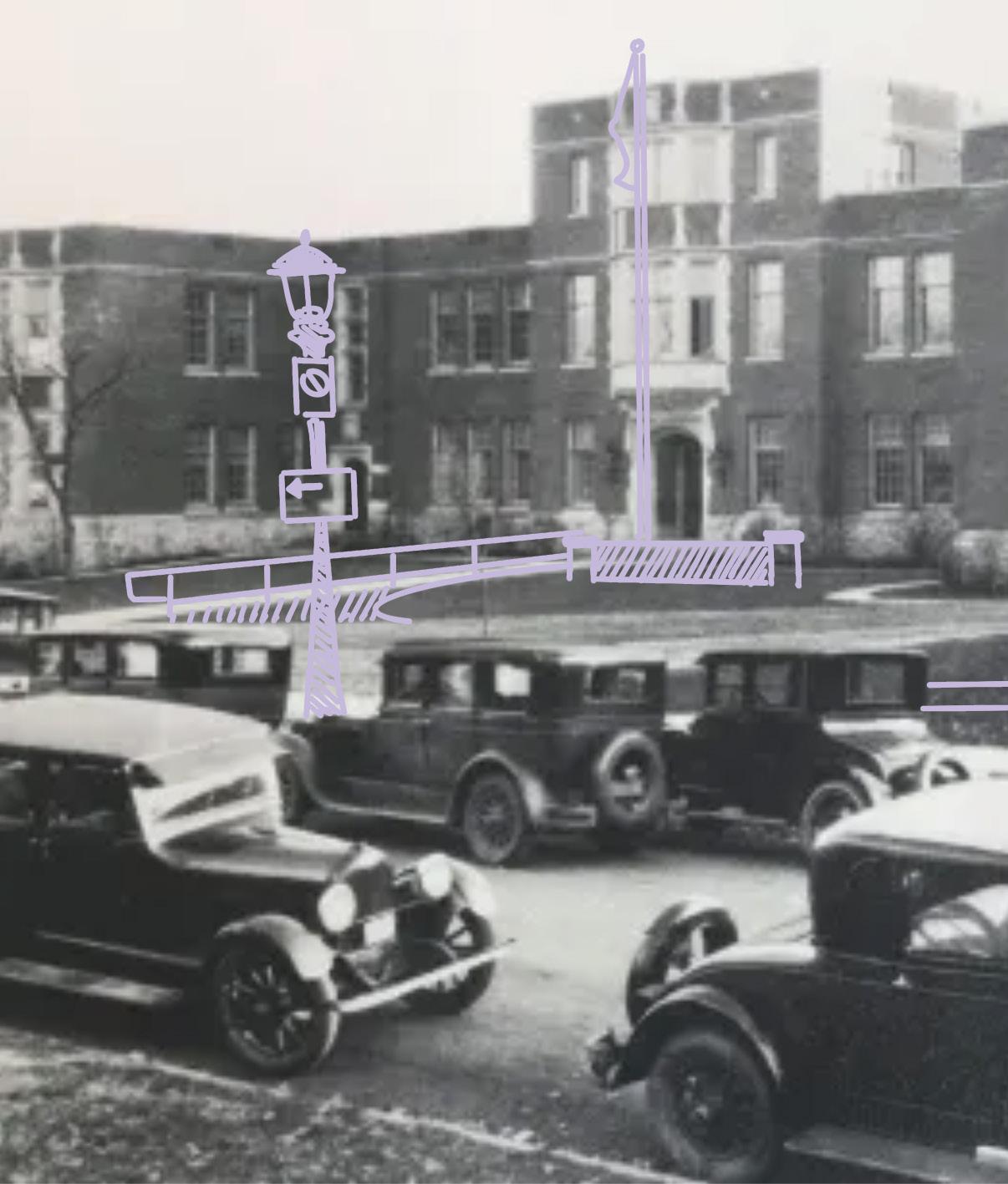
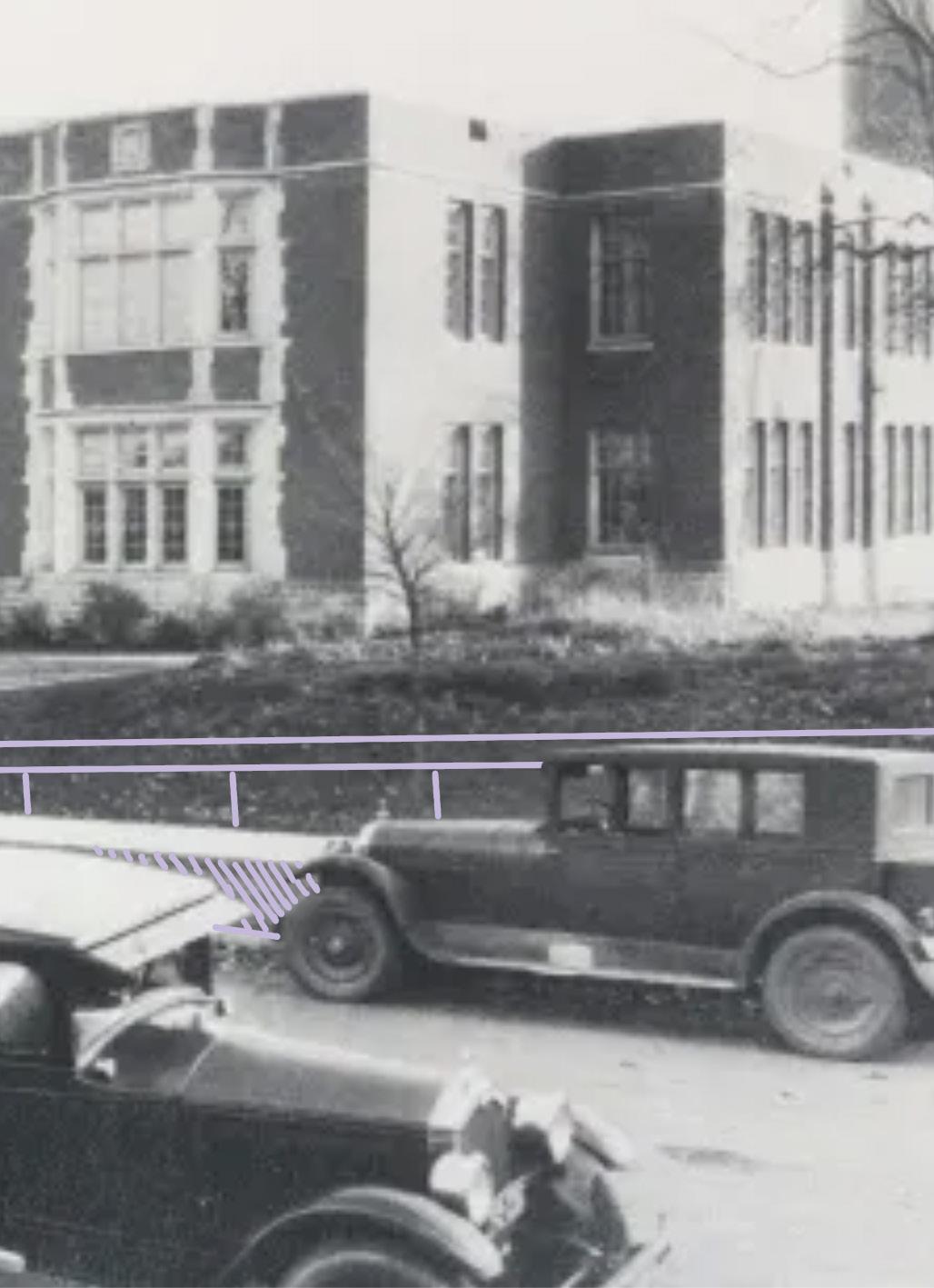
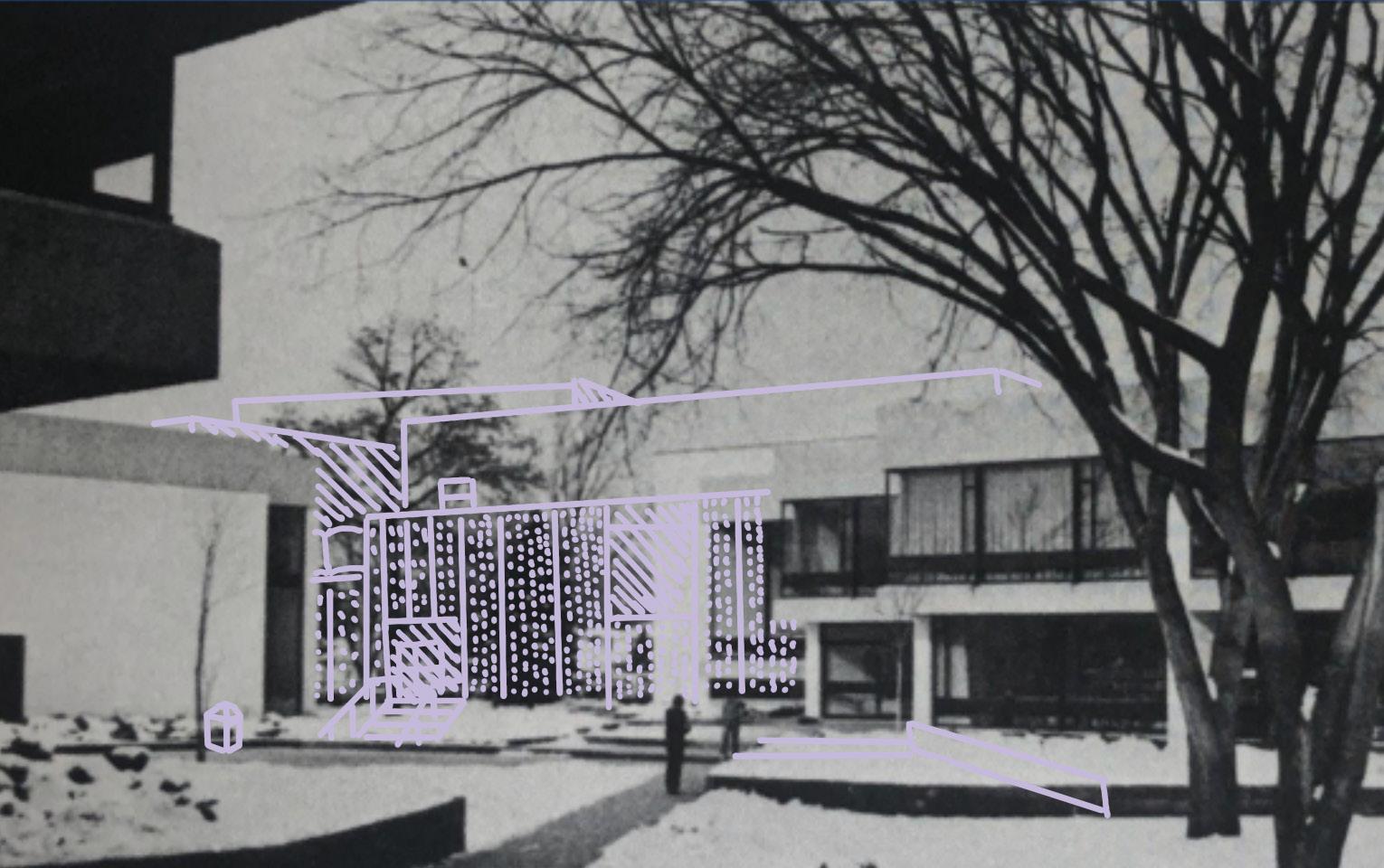
But the spaces students move through every day were never accidental. Many of them were born out of the moments when the school realized its programs had outgrown the rooms meant to hold them.
When Director of Institutional Advancement Sarah Johnson, who has worked at SPA for 16 years, first arrived in 2009, a major change was already underway. At the time, concerts were held in the gym, senior speeches were delivered under the fluorescent lights meant for athletics and theater productions were staged at the lower school or off campus. “We really wanted a facility that would support this incredible program and curriculum we have for music and the fine arts,” Johnson said. That desire eventually materialized into the Huss Center for the Performing Arts, which opened in 2015.
The design of the space was not simply aesthetic; it was intentional. Faculty met directly with architects from the Hammel, Green and Abrahamson design firm to outline what teaching actually required.
“Our performing arts faculty were in meetings with the architects and with the construction companies to share, ‘This is the vision. This is what we need to do, to support the kind of program we have,’” Johnson said. Elements, down to acoustic panels, that were installed with adjustable curtains to allow sound to be brightened or dampened, were thought out.
“Storage wings were built so sets would no longer be tucked into closets. Every technical decision reflected a pedagogical one,” Johnson said.
Brooks Chair in Visual and Performing Arts Almut Engelhardt found the process of working with architects relatively easy, because the department had spent years performing in different venues across the Twin Cities. “We had been in several halls before, because we couldn’t fit at the lower school anymore, and we didn’t have a hall here,” Engelhardt said.
“So what we could do was to say, here’s the hall that works really well for us here, and this is what’s in com-
mon. We want that.”
Rather than dictating elements of design, the faculty focused on function. “We’re not architects, so we couldn’t tell them what to do, but we can tell them what works for us … and they were good at taking that into consideration,” Engelhardt said.
Still, a few details that teachers played a role in including were the slight slant the auditorium has in Huss. Making rows in the back higher and slowly descending to lower spaces created room for chairs in the front. “We wanted a hall with a slant, so that everybody could see,” Engelhardt said. Other elements included soundboarding, which was needed to accommodate events ranging from jazz band performances and theater plays to senior speeches. HGA found a way to balance acoustics so the hall wouldn’t be too lively or too muffled.
However, the construction did not only bring a
We’re not architects, so we couldn’t tell them what to do, but we can tell them what works for us.
Brooks Chair in Visual and Performing Arts Alumt Engelhardt

flashy stage; other features include backstage access, a scene shop, rehearsal rooms, makeup spaces and fixed theatrical light rooms, a stark contrast from performing in a gymnasium. “We didn’t have a stage that had all the lighting and everything that you could need to put on a really nice performance,” Engelhardt said. “We didn’t have comfortable seats to sit on for the audience. We had bleachers. The difference is huge.”
The same pattern unfolded in the Schilling Math and Science Center. Before its construction, many math classrooms had no windows. Desks were fixed in place. Teachers prepped lab materials in the back of classrooms while other classes were in session because there was nowhere else to go.
“One of the stories I remember is that the math center used to be where World Languages is right now;
I think, in my daily life, I notice it [architecture] when it’s really interesting.

most of the classrooms didn’t have any windows, and they were really small rooms,” Johnson said. “What I’ve noticed in most of the intentions with facilities is that the program has grown and expanded to a point where we don’t have the facilities that support the incredible work.”
Now, whiteboard walls stretch across classrooms, leaving the remnants of students’ contributions. Screens allow students to present and share their thinking. Dedicated prep spaces in science classrooms separate planning from instruction.
The architecture throughout the school has responded to the emphasis on subjects and has allowed students many more luxuries. Programs no longer adjust to rooms, but spaces were designed with programs in mind.
Even stylistically, each addition to campus reflects a moment in the school’s evolution. “Each era and each facility has kind of nodded toward different areas,” Johnson said. The 1969 modern wing, or where the library and world languages classes are currently held, marked the merger of the formerly separate boys’ and girls’ schools.
The middle school nods to the original brick aesthetic of Old Main. The Huss and Schilling Center represents the sharper and modern style HGA brought in the 1970s.
Facilities Manager Pete Kilibarda has noticed a change in the community throughout his time. “Students and teachers have more spaces to meet, from small groups to large groups,” Kilibarda said.
However, alumni still sometimes return to school and find it unrecognizable. “They come into school, they’re like, ‘Where’s my school?’ They can’t recognize anything,” Johnson said. Trees were moved to make space for new construction. A former open student center in the fine arts area was closed in to create practice rooms. Small changes like these add up throughout the years.
In that way, the campus’s design tells two stories, one about the expansion and advancement of learning and the other about continuity and tradition. As students file through different wings, moving to get to their next obligation, each space they enter and leave reveals the school’s values since its beginning.

I think I notice architecture most when I’m on vacatin and I’m looking at all the older buildings.
Read more about the student reaction to the Schilling Math and Science Center when it was announced here.



how to manage a busy schedule is a shared challenge.
Aside from the rigorous courses that the upper school curriculum offers, students at the Randolph campus also navigate a wide range of extracurriculars. Whether participating in sports, volunteering, music or other hobbies, students dedicate significant time and effort into their interests outside the classroom. With such demanding schedules, they are often required to develop strong time management skills in order to balance their commitments.
While the experiences of extracurricular involvement may differ between students, learning
“
[Music] is just such a big part of my life, and I wanted to learn more ways to interpret it.



SUBMITTED
1. MULTI-SPORT MANAGING As a multi-sport athlete, senior Dia Chaney has implemented healthy study habits to avoid feeling overwhelmed. “Over the weekends, I’ll try and get ahead on homework so that the week is easier,” she said.
whelmed at times, she said, “Yeah, definitely, but not for long periods of time.”
Junior Aiden Esmaeelzadeh’s hobbies outside of school include playing and listening to music and skiing, but finds time management to be a challenge: “If I was better at that, I would definitely do better at school and everything else, but I think that’s something I need to work on,” he said.
When done in a healthy way, staying busy can be both purposeful and beneficial, helping students find effective strategies to balance academics with after-school activities.
Chaney has discovered habits that work best for her schedule: “I try to do
the homework the day it’s assigned, or over the weekends, I’ll try and get ahead on homework so that the week is easier,” she said.
Sophomore Baron Bailey, who plays three sports during the school year as well as participating in Boy Scouts, takes advantage of in-school time to get work done.
“I use my free period to do my work most of the time and then sometimes I use tutorials,” he said.
For many individuals, extracurricular activities serve as an outlet to explore passions and connect with peers who share similar interests. These activities can also play a role in shaping students’ identities and
future goals. Esmaeelzadeh’s interest in music led him to pick up playing piano and guitar.
“[Music] is just such a big part of my life, and I wanted to learn more ways to interpret it,” he said.
Though these activities require significant time and energy to build valuable skills, it’s also important for students to find ways to wind down and relax.
To prevent burnout during busy weekends, Chaney gives herself Friday nights off to decompress and leave time for herself.
“I try to give myself checkpoints, so I probably won’t do any work because that’s my free day,” she said.
In his free time, Bailey has learned to relax by reading. “It’s just something that I picked up,” he said.
For many upper school students, being busy has become a normal part of everyday life. Between classes, homework and extracurricular activities, schedules can quickly fill up. While this can be stressful at times, staying busy often pushes students to become more aware of their priorities and how they spend their time.
When students find a way to balance these extracurriculars with sources of relaxation, a packed schedule can keep them involved in activities they enjoy while still keeping up with academics.
SUNDE AUBERJONOIS THE RUBICON
In a world where headlines about climate change and crisis feel increasingly urgent, some of the most consistent environmental action is happening closer to home -- specifically, on the sidewalks leading to the Huss entrance.
For juniors William Drake and Langston Thompson, helping the environment doesn’t start with sweeping policy change; it starts with walking down the street.
“To help the environment, I walk to school whenever I can,” Drake said. “When driving, I try to carpool with friends and family as much as possible.” Thompson shares a similar routine. “I walk to school every day … It’s easy for me to do, and it releases a lot less pollution than driving,” he said. Even in harsh weather, Thompson sticks to his routine. He lives very close to school, and so unless his parents decide it’s too cold, he’s fine walking in any conditions. For him, the choice is simple. If it’s possible, it’s worth doing.
Small actions like walking to school every day may feel minor; both Drake and Thompson acknowledge that sometimes it feels like the bare minimum. However, consistency is key. As Drake put it, “If everybody does what they can to reduce their carbon footprint and help the environment, the effect will be much greater.”
Ninth-grader Elliott Hazzard is conscious of the environmental impact of getting to and from school. His family recently invested in an electric car, and that has become his main new mode of transportation. “It’s important to me because my commute used to be one of
INFORMATION: CSU Sustainability Research Laboratory
the biggest components of my carbon footprint, and to eliminate that is important to me,” he said.
Drake believes that the issue of climate change deserves more attention than it gets, especially within political spheres.
“[Climate change] is a very pressing issue that often gets buried and pushed aside when talking about other issues. For many people of privilege, including lawmakers, the effects of climate change are less direct and immediate, so they feel less compelled to take major action. However, the effects of climate change are increasingly present globally and disproportionately impact people in poverty,” he said.
Thompson echoed those concerns, noting that although it may not be felt by everyone, that doesn’t mean everyone isn’t impacted by climate change.
“We can see it now, [we]’ll have odd days of warmth and cold in places and seasons where they don’t feel like they belong,” he said. For Thompson, these serve as visible reminders that what is happening to the environment is unnatural.
ENVIRONMENTAL TRANSPORT. Students consider their daily commute to school in order to reduce their environmental impact. Ninth-grader Elliott Hazzard’s family recently bought an electric car. “It’s important to me because my commute used to be one of the biggest components of my carbon footprint,” Hazzard said.
The fate of public land under the Trump administration also worries Drake. “Recently, the Arctic National Wildlife Refuge was opened to drilling, and soon the Senate will vote on the Boundary Waters in Minnesota. Protecting areas like these is very closely tied to other environmental issues, including climate change,” he said. Decisions about land use, resource extraction and conservation all play a role in the bigger environmental picture.
Despite moments of fear and dismay around the current environmental crisis, Hazzard recommends that contributing in small ways is the best way to dispel worry.
“Turn off lights in your house when you’re not using them or pick up trash around your neighborhood. After that try carpooling or taking public transit … Committing to the goals you set for yourself as with anything will feel like you are doing something to help,” he said.
There are many steps one can take to minimize their carbon footprint. Often, it is best to start small.
THE RUBICON - MARCH 2026
Junior Nico Martin made a blueberry pie over the Presidents’ Day weekend. Martin looks forward to long weekends, when he has a enough free time to bake.


SONIA KHARBANDA EDITOR IN CHIEF
Many students eagerly await catching up on sleep or watching Netflix over the weekend. Junior Nico Martin looks forward to baking.
tions and asking his dad questions, but with time, he has become more comfortable changing the recipe.
These are cannolis made by Martin. “It’s nice to just be able to listen to music and bake something without having to worry about homework or anything,” he said.
Martin enjoys fudgy and dense brownies, and he often experiments with brownie recipes. “I made a brownie recipe that maximizes [those factors] for myself,” he said.

SUBMITTED PHOTOS: Nico Martin
Over the four-day Presidents’ Day break, Martin made a blueberry pie with a crisp, even crust oozing with purple filling. Pies are among his favorites to construct, along with brownies.
His time in the kitchen began during an era of peak boredom: the pandemic. The combination of an ingredient household, plenty of baking tools and watching his dad learn to bake bread produced the ideal environment for Martin to try making desserts – he always had everything he needed.
At first, Martin’s creations were the result of following precise direc-
“I get better and better, and I start to memorize how to do things, and I start tweaking things as well, like cook times and ingredients, or the order that I put the ingredients in,” he said.
In his six years of baking, Martin has experimented the most with brownies.
“I looked at a bunch of different recipes and articles on how different stuff changes things in brownies,” he said. “And I just took the elements that I like the best out of brownies, being super fudgy and dense, and so I made a brownie recipe that maximizes that for myself.”
Although his love for baking began alongside his dad, Martin prefers to bake alone – when he
collaborates with friends, they try to sneak in extra ingredients. Still, one of their baking ventures turned out to be a success: they challenged each other to add a different ingredient to a chocolate chip cookie and see how it turned out.
“I think I added cinnamon, someone added all-spice, someone added a filbert, which is a type of nut. And honestly, it turned out really, really good, just throwing random ingredients in there,” he said.
About half of the time, he’s baking for others. However, when baking for someone else, he strives to create a final product that is both personalized and visually appealing. Otherwise, he bakes for himself.
His selection process for what to bake is simple: “I think about how I would feel eating a dessert, and then rank it
based on how enjoyable it would be at that time. Basically, whatever I’m craving.”
Since quarantine sparked his interest in baking, Martin’s busy schedule has made it increasingly difficult to find time to bake. Long weekends and breaks are his solution, especially as many desserts take several hours.
Still, the joy and relaxation he feels through baking have remained constant.
“It’s nice to just be able to listen to music and bake something without having to worry about homework or anything,” he said, “and it’s nice to be in a place that I really know so well, like my kitchen.”
On the upcoming long weekend, Martin is ready to create: pillowy cinnamon rolls with cream cheese glaze are next on the menu.

community of Minnesotans has held firm.
“With the pandemic and in recent times, it’s kind of been hard for people to stick together. I feel like it’s really easy to lose your values,” Lambert said. “I’ve actually been able to see our state come together more and fight against something that we all know is wrong.”
Romans sees a bright side in the adversity Minnesota has faced in recent months.
Minnesotans have remained adamant in shifting the negative narrative. Thousands of protesters took to the streets to advocate for their neighbors and to make a difference in their communities. Romans described his thought process on attending the Jan. 23 “ICE Out of Minnesota: Day of Truth and Freedom” protest.
“
I
“Minnesota nice” is the concept and stereotype that has driven Midwestern culture for decades. However, violent and saddening headlines are now placing the state in a national line of fire. Minnesota is the topic of debates and news across the country, and students are left to grapple with a potential shift in their Minnesotan identities.
The “Minnesota nice” cliche originated with an influx of Scandinavian immigrants in the mid 19th century, where values like community and kindness were used to adapt to a more diverse community from their
home countries. Commonly associated practices of “Minnesota nice” include being caring, kind and attentive to social cues. However, it is also associated with passive aggression and an overall standard of avoiding conflict. Junior Richard Romans finds Minnesota Nice in his experience of Minnesotan culture.
“[When I think of Minnesota], there’s definitely that sort of welcoming culture. It’s a very ‘Minnesota nice’ thing, [it’s] real,” he said.
Over time, junior Ella Barlow has seen her Minnesotan identity evolve to reflect more kindness.
“When I was younger, to me, being a Minnesotan meant lots of snow…
Being a Minnesotan to me now means looking out for one another, whether that’s your neighbor, your friend, a family member. I think over time, especially now, that has grown as a priority,” she said.
However, “Minnesota nice” is often an external perspective of culturally Minnesotan values and practices. Sophomore Fiona Lambert’s identity digs deeper into connection.
“I think being Minnesotan is mostly about community. I’ve lived here my entire life, and I’ve had a pretty accepting and friendly community around me,” she said.
Throughout difficult times, the strength and
“Now, if you are in Minnesota, it feels like you really have to be out there and defending your state. I think there’s been a lot of love for the state, and the community has grown because of that,” he said.
Between the presence of U.S. Immigration and Customs Enforcement, the killings of Renée Nicole Good and Alex Pretti and subsequent protests in response, Minnesota has been the topic of national debate and commentary; simultaneously criticized by politicians and commended in its response to ICE. Barlow feels some of the representation isn’t correct.
“Some of the news paints the people trying to protect others as the villains. But there are also a bunch of articles about people protesting and helping each other,” she said.
think there’s been a lot of love for the state, and the community has grown because of that.
junior Richard Romans

“It was negative 30 or something when I was thinking about going [to the protest] with a few people,” he said. “[We thought] that maybe there weren’t going to be that many people, and it was kind of going to suck. But we went and it was huge. I think that shows the love that people have for their state and community here.”
The recent attention on Minnesota counters the conflict avoidant “Minnesota nice” stereotype. Recent violence
and fighting has changed the perception of what it means to be Minnesotan as resistance has increased, inspiring similar efforts nationwide. Movements around the country have cited Minnesota as an influence. Protesters in Boston chanted: “We’re not cold, we’re not afraid, Minnesotans taught us to be brave.”
Lambert is proud of Minnesota’s response to ICE, challenging the “Minnesota nice” stereotype.
“I’m really proud that we’ve been able to come together in this hard time … We have shown that we aren’t just nice. We don’t want people to just think of us as nice and compliant to everything,” Lambert said.
The initiatives led by Minnesotans did not go unnoticed. In late January, the city of Minneapolis was nominated for a Nobel Peace Prize. Recently, Operation Metro Surge was ordered to come to an end.
In an increasingly political and global landscape, Minnesotans know how to set an example for their country and defend their set of values. While “Minnesota nice” might be an old stereotype, Romans, Barlow and Lambert believe the values of community and caring for one another are alive and well.
PEONY STEELE THE RUBICON
Securing the state title, the girls Nordic ski team won with a total of 374 points. They began the season with a goal to place on the podium at sections and win conference, and they received a perfect score at both meets. The team made history at the state Nordic ski meet, but what led them to work so well together was passion and hard work.

Ninth-grader Grace Berger said, “Everybody on our team is really enthusiastic, and have their own reasons for leaving it all out there.”

After several injuries and falls throughout the season, boys Alpine skiing experienced hardships, but they continued to persevere and work hard during their season. Sophomore Pike Marthaler went up 20 spots on the chart at sections since last year, finishing 30th.
Despite some unfortunate losses, the team stayed strong mentally and physically. “I’m proud of our team. We lost our best skier, but we were still able to stay at the same position in the conference,” Marthaler said.
With an overall record of 7-17-0, the girls basketball team saw varied results throughout the regular season. Teammates and coaches continued to push each other in practice, focusing on ways to improve gameplay and individual skills for each player.
With this season being her first on the team, ninth-grader Brooke Spilseth has said she has noticed growth and support from the coaching staff. “They have done a better job of seeing the potential that we have and seeing who we are right now as players,” she said.
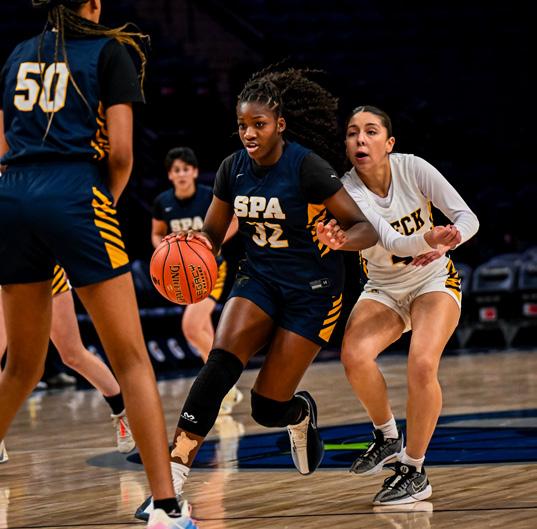
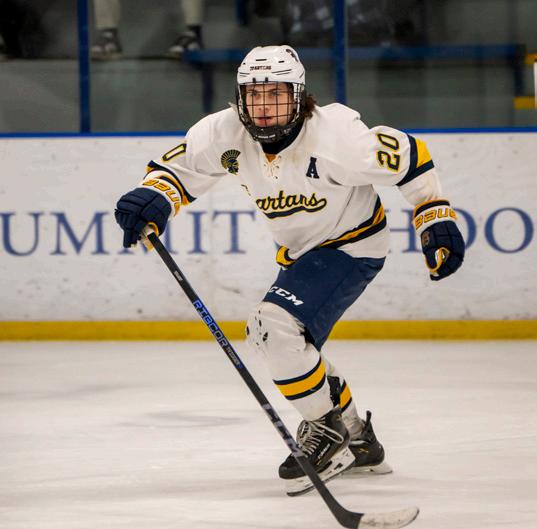
Despite some tough losses and a record of 1-240, boys hockey has experienced a positive and productive season marked by strong coaching and supportive team dynamics. Through effective coaching and consistent effort during both practices and games, the team had steadily improved its overall strategy and participation. Players have become more comfortable handling specific in-game situations, allowing them to respond with greater confidence and composure under pressure.
Sophomore Theo Salonek highlighted the team’s culture.
“When mistakes are made, it’s not people yelling at each other, they give positive critical advice,” he said.
8 FENCERS RECEIVED TOP 5 IN TOURNAMENTS
The fencing team was defined by growth and resilience. Despite busy schedules and limited tournaments appearing for some athletes, the team continued to improve across various weapons, especially among the younger saber fencers who showed development throughout the year. A distinct saber style is emerging, reflecting the leadership of the coaches and captains. More than results, this season highlighted the team’s commitment to learning from one another.
Senior Phillippe Cristobal said, “Fencing is an individual sport which makes it easy to doubt your own skill sometimes if you lose, but the sport requires you to react and adapt to an opponent in the moment so you’re always learning how to get better.”
The boys Nordic ski team has had one of their strongest seasons yet, with the boys competing at conference level. Sophomore Darien Hull and junior Sam Hilton won first in sections relay, with junior Aldegundo Brenneman placing 15th, junior Isaac Broderius placing 39th, junior William Drake placing 40th and senior Patrick Wall placing 42nd.

Skiers endured versatile Minnesota winter conditions during races, from a -30° windchill to 40° slush, but that didn’t stop them from strengthening their team dynamics. “It just feels really supportive and the captains are reaching out to all levels of skiers,” Broderius said.

Girls Alpine skiing had a successful season, with the team performing exceptionally at conference and sections. New head coach Corey Marthaler lead the team to success. The Spartans finished strong in their third conference race, placing second. Ninth-grader Sophia Wenberg placed sixth overall at sections and qualified for state. One of senior Ella England’s highlights from the season was the all-day annual invitational, where skiers got to spend time with each other and enjoy the slopes. “You’re there all day in your tent and there’s a bunch of food that people bring. It’s just a fun, nice break from school,” she said.
The boys basketball team has continued to show up for each other with an overall record of 16-7-0 with three games left in their season. The players have been practicing harder each week, focusing on conditioning and execution as players work to improve and compete more consistently.
A season highlight for sophomore Ayyaanno Tufaa was trailing by 10 points at halftime against Providence on Jan. 13 before coming back to win in overtime. “Everyone contributed a lot that game,” he said. The team continues to prepare for its remaining games with an emphasis on steady effort and teamwork.

The Blake Hockey team had a strong and successful season with an overall regular season record of 22-7-0. In addition to winning most of their regular season games, they also won their section championship against the Academy of Holy Angels, where many fans showed up to support. Losing in overtime in sections during the 2024-2025 season encouraged the girls to work together and train hard for the following season.
The work has been evident throughout their season, earning the team a spot at state. Senior Ella Bond said, “As a team, I would say we are most proud of getting to state because it has been a dream of so many of our players.”

The Trojans swim and dive team had a solid season defined by con sistent performances and a strong sense of team culture. With over 30 personal records recorded across the roster, the Trojans showed steady improvement from the first meet to the last. They placed third at the conference meet.
“I think our spirit is still pretty high and we have a lot of depth,” junior Adi Narayan said. Heading into sections, the Trojans carried confidence, momentum and unified team energy into the postseason.

SUBMITTED
The girls Nordic team secured the state championship for the first time in program history on Feb. 12, with Eleanor Mody placing third, Paloma Good in sixth, eighth-grader Elisabeth Hilton in thirty-fourth, sophomore Sophie Kannapiran in thirty-eighth and eighth-grader Isla Kim in eighty-first. Sophomore Alyda Overgaard and senior Maren Overgaard took first place in the relay, shaving 37 seconds off of their qualifying time. All in all, a historic end to an extremely impressive season.
The team went into state already highly-decorated and ranked second. In both the conference and section championships, the girls finished with a perfect score, sweeping the podium.
Alyda and Maren also dominated in the relay, winning twice. The team’s successes fueled excitement about a possible state championship run, and that excitement was proved justified.
Certain skiers stood out in bringing the team to its several victories.
In the final rankings released by the Minnesota High School Nordic Ski Coaches Association, Mody was ranked second, and Good was ranked seventh. Coming into the season, they were both unranked but quickly rose through the list over the past two months.
In her first appearance at state in ninth grade, Mody finished in 100th place. Her sophomore season, she jumped to 21st place and entered this year as one of the top contenders.
Mody felt proud and honored to be ranked
so highly. “It definitely means a lot that there are coaches out there that see I could do really well at state,” she said.
“ junior Paloma Good
I just try to block out the noise and focus on doing my best race.

Mody began skiing casually with family when she was younger, but didn’t begin focusing seriously on the sport until middle school, when she shifted her focus almost entirely from swimming to skiing.
“Switching my focus to skiing definitely made a big difference for improving,” she said.
Mody credits additional training through the
Minneapolis Ski Club for helping her development. The club offers year-round training opportunities and competitive races, allowing her to continue refining her technique outside of the high school season.
“I think that it’s definitely helped build my ability and my confidence and love for skiing,” she said.
Good said she appreciated the recognition but tries not to focus too heavily on rankings.
“It’s nice to know that I’m acknowledged as a competitive skier, but honestly, I try not to think about it too much because rankings can kind of get in my head,” she said.
Good also emphasized the importance of prioritizing the competition itself instead of the rankings. “I just try to block out the noise and focus

SISTER RELAY. Senior Maren Overgaard competes her leg in the girls Nordic state relay. Maren and her sister, sophomore Alyda Overgaard, won the state relay championship title.
on doing my best race,” she said.
Both skiers credit the importance of team support in their success this season.
“In the middle of those races, the ends can get really brutal and really hard to keep pushing. But then, when you have your team on the side, it definitely helps you lock
in a lot more and just go faster,” Mody said. With two state titles secured and multiple skiers finishing among top competitors, the girls Nordic team set a new standard for future seasons. What began as a winter of rising rankings ended as a memorable championship run.
“Why do I keep doing this to myself if it’s making me feel so bad?” Alpine skier Sophia Wenberg said, describing her feelings about skiing when the season gets hectic. This is not an uncommon sentiment among student athletes trying to balance their sports and academics.
Dealing with the myriad responsibilities stemming from classes, practice, homework and competition can very easily lead to burnout.
The National Athletic Trainers Association defines athletic burnout as a response to the demands of a sport, with no time for rest. Athletic burnout is characterized by athletic performance plateauing or diminishing, difficulty concentrating, declining performance in school, illnesses, irritability and low self-esteem.
This kind of burnout can be caused by a number of factors, either internal or external. Internal factors include perfectionism, loss of love for the sport and high expectations. External factors can include injury, physical exhaustion and excessive time commitments.
Dancer Aurora Schaffer believes that her many commitments are what may lead to her burnout.
“I’m just really tired and I don’t feel like going to dance,” Schaffer said. “I’m just so tired from everything on top of schoolwork.”
Balancing both school and sports is not a unique problem among student athletes. Being successful in a sport on top of at least 45 minutes of homework from six classes is no simple task.
“[I’m] just kind of scared that [I]’ll fail in either school or skiing,” Wenberg said.
Tennis player Luca Kempcke feels differently about balancing his sport with the other commitments of his life.
He appreciates the planning and organization being so involved in his sport forces upon him. “[Tennis] helps you manage both components of your life … which makes it a lot harder to get stressed about certain things,” Kempcke said.
School and other commitments are not the only reason for athletic burnout. This mental state can result from an increase in demand from the sport.
“[I] have four hour practices every single day, and then training days and races on the weekends. So it’s pretty easy to get burnt out,” Alpine skier Sophie Ferrer said.
The amount of practice can make a sport that was once loved feel frustrating.
Kempcke feels the onset of burnout from feeling stuck. “It’s kind of hard managing that I’m the best player on the court sometimes,” he said, “because then I feel like I can’t progress or learn anymore.”
When all of these stressors pile up, the pressure of burnout can weigh down an athlete.
“I found myself more irritable because then I just found myself harder to play within myself,” Kempcke said.
Schaffer feels the weight of burnout on her practice time.
“I feel like I love [dance], but sometimes it definitely makes me not want to go as long,” Schaffer said.
Ferrer shares that sentiment. She is able to acknowledge her love for the sport, but ends up trying to avoid practice, or fearing when the time comes to don her skis.
When burnout feels insurmountable, a cure of any sorts can feel impossible to find. That being said, the treatment for athletic burnout is rest. The time that rest takes relies on many factors, but taking breaks and stepping back is the only way to return to the sport at full force.
“I’ve started to take more breaks within the week. Instead of training four of the five days, I only trained three just to ease the pressure off my shoulders,” Wenberg said.
While the pressure of athletics can feel intense and all consuming, overtraining and stress is a gateway to burnout. “I think [sports are] easy to balance with mental health, if you just love what you’re doing so much,” Ferrer said.
When something that is well loved feels more like a struggle, these student athletes believe it’s okay to take a break.
Prioritize what matters most and be able to say no to a less important task. Make sure to find time for relaxation.
Sleep, nutrition, exercise and social connections are crucial to staying healthy. Pay attention to your mental and physical health and give your body what it needs.
To stay motivated and positive, keep a growth mindset and celebrate small victories. Focus on what is going well and avoid getting stuck in a negative mindset.
Ask for help
This might be the hardest skill to learn but it’s one of the most important. When you’re struggling or feel overwhelmed, asking for help can relieve the stress.
INFORMATION: American Psychiatric Association
Faster than fast, a sled races down the icy track. Soaring, as if a bird, a snowboarder flips through the air again and again. On the ice skating rink, a similar process occurs. Skaters twirl in circular motions, skating in unison with their partners, dancing on ice. The Winter Olympics are an event unlike any other.
Every four years, the world tunes in to experience the magic of these global sporting events. Viewers do so for different reasons. Maybe they want to see the host country’s landscape. Maybe it’s to witness the spectacular opening or closing ceremony. Or maybe they want to see the exhilarating athleticism.
Sophomore Mariya Chaudhary watches the Olympics for the sports. That is, unfamiliar sports.
“I don’t really know a lot of winter sports … like curling, for example, I did not know we had a curling team,” she said.
Team USA’s curling team was carried by Minnesota locals, including Duluth-natives Cory Thiesse and Korey Dropkin. The two won silver in mixed doubles on Feb. 10. The curling partners are longtime friends who work on their sport at Duluth Curling Club.
Junior Gus Hembre agrees with Chaudhary. He shared his reasons for watching the Olympics.
“I watch the Olympics mainly for enjoyment, but also because I like seeing different sports that aren’t usually shown on TV. I enjoy watching athletes compete at the highest level and learning about sports I don’t normally follow,” he said.
These sporting events offer a unique opportunity for viewers to witness new sports they don’t know and the ones they love.
For sophomore Elise Nelson, it’s the sports they love.
“Understanding the sport that I’m watching makes it a lot more enjoyable,” they said.
I watch the Olympics mainly for enjoyment, but also because I like seeing different sports that aren’t usually shown on TV.
junior Gus Hembre

The Winter Olympics have had quite a show regarding skiing. On Feb. 8, the first day of the Games, Breezy Johnson won the women’s alpine downhill for Team USA. This helped the U.S. start on a strong note.
The team also found success on the ice. Women’s hockey dominated their games, beating Canada in overtime to secure the gold medal. The U.S. men’s hockey team also defeated Canada and won gold.
But not every Olympic moment can be one of success.
Sophomore Ruby Fenton-Rutzic discussed American figure skater Ilia Malinin, who, despite being the only athlete in his competition to complete a fully rotated quadruple axel and win gold, fell multiple times.
“I felt really bad for Ilia … he did really well but the ice was softer than normal,” she said.
Many fans, including Fenton-Rutzic, were concerned that the ice conditions hindered Malinin and his competitors from flawless routines.
Despite some viewers’ critique of parts of the Olympics, they also promote connection.
“The Olympics provide a global event that brings countries together through sports. They allow people from different cultures to compete and celebrate hard work, dedication and talent. The Olympics are valuable because they promote unity, inspire people around the world and show what humans can achieve through discipline and teamwork,” Hembre said.
In a world consumed by conflicts, anger and violence, the Olympics offer an outlet for constructing a more united world. No matter if you watch the Olympics out of love, spite or curiosity, the Olympics contain something for everyone: they offer a community.
SAM GALARNEAULT
THE RUBICON
The Blake hockey team, co-oped with The Blake School, Minnehaha Academy and Heritage Christian Academy, won the Section 4A Championship title.
The Blake Bears competed in the state quarterfinals at Grand Casino Arena on Feb. 18. As the third seed, the Bears defeated the sixth seed, Mankato East, in the first round of competition.
On Feb. 20, the Bears lost in the state semifinals against The Breck School. They competed for third place on Feb. 21 and lost to Dodge County, finishing their season as fourth in the state. Eighth-grader Yi Salonek, wearing number 20, and senior Ella Bond, wearing number five, competed on the state team on behalf of St. Paul Academy and Summit School.


Girls hockey defeats Mankato East in state quarterfinal


Unite and unifying through the Olympics
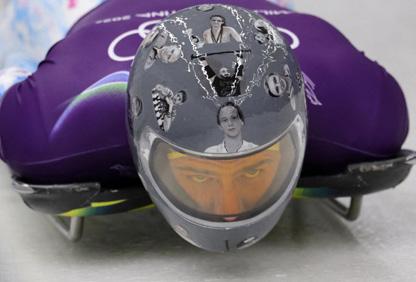





teacher Varsha Venkatasubramanian said.
“Heated Rivalry” has taken the world by storm; no matter who you are or what you watch, almost everybody has heard of ‘the gay hockey show.’ However, the impact of “Heated Rivalry” runs deeper than what meets the eye. It is not only popular because of its enthralling plot and fantastic characterization, but because of its unprecedented queer representation. In every aspect, “Heated Rivalry” is a game-changer.
The show takes place from 2008 to 2018 and centers around professional hockey players Shane Hollander and Ilya Rozanov. It follows them through their careers, relationship and evolving struggles with being queer in their potentially hostile work environment.
Junior Sofie Dogwill shared her thoughts on the show: “There had never been an openly queer person in their line of work, and they’re also at the very top, they’re icons of their sport. I thought it was a really special show, because it also put the spotlight on those two people that were in such a homophobic world and followed their relationship.”
One of the most valued aspects of “Heated Rivalry” is its combination of well-rounded characters, hockey and love.
“It is a love story between two equals; in the sense of patriarchy, there’s no power imbalance there. But it also is a love story between two athletes, two men in similar positions in life, dealing with similar struggles. And I think that’s why it’s done so well,” history
Many shows and movies have a singular theme that the storyline relies on: love, tragedy or action. “Heated Rivalry” blends these to create more complex characters and story arcs.
“It’s very clear the kind of pressures that go into being a professional athlete, as well as coming out and or being queer in America or being queer in the world,” Venkatasubramanian said. “‘[Heated Rivalry]’ did a really good job of sort of melding those two stories.”
Dogwill, too, noted the depth of characters through the cohesion of love and hockey, and how it’s impactful for society.
“It also shows someone with a queer identity isn’t their whole entire self, and I think ‘Heated Rivalry’ did a really good job of portraying that,” she said.
I thought it was a really special show, because it put the spotlight on two people that were in such a homophobic world. “

By creating a show with both professional and romantic storylines, author Rachel Reid and director Jacob Tierney nullified stereotypes that plague the gay community today. Junior Miles Messier noted the diversity in gay representation in the show.
“I think it did [dismantle stereotypes], because you don’t usually see a masculine gay guy,” he said.
For decades, stigma around gender and sexuality in Hollywood has been pronounced. In the 1920s, comedies like Charlie Chaplin films made queerness something to laugh at. An unspoken rule was instituted that characters had to have consequences for “immoral” actions, including queerness.
a character queer-coded, only hinted at being gay through stereotypical hobbies, personality traits or physical attributes. Queer-coding began as a way to encourage representation, but was built on by homophobic stereotypes and negative portrayals, and characters still were often villains or dead.
After decades of queerbaiting and queer-coded characters, an outwardly gay couple feels like a breath of fresh air.
Lina Abid
ILLUSTRATION:
REAL REPRESENTATION. “Heated Rivalry” is changing the game for queer representation in media. It has quickly become Crave’s most streamed show. Senior Thomas Ferguson said, “[‘Heated Rivalry’] made me realize how little [queer representation] there is.”
In 1930, the Hays Code was created. The Hays Code was a censorship system that prevented Hollywood filmmakers from promoting sympathy for those guilty of “crime, wrongdoing, evil or sin.” Some of these sins included “seduction, lustful embraces and openmouthed kissing.”
After this, the representation of queer characters significantly decreased; queerness was reserved for villains and characters who wound up dead.
An alternative to queer censorship was to make
“I feel like this is one of the first shows I’ve seen where it’s just there, and it’s not trying to have it be kind of mysterious and kind of iffy,” senior Thomas Ferguson said. “There have been shows recently that have kind of seemed like [queer people] might be represented, and then they don’t end up having that, which is really frustrating for people.”
The Hays Code was finally repealed in 1968, giving way to more queer representation. However, the societal response to being gay was still neg-
ative. Queer characters and relationships were often portrayed as predatory or evil, and the trope of a tragic ending carried through.
On the off-chance that queer people were put in a positive light, they were used as comedic relief, playing on stereotypes or developed one-dimensionally. The refusal to feed into stereotypes is one of the principal reasons that “Heated Rivalry” stands out. Even among increasingly positive representations in modern media, queer character arcs are often dulled to make their sexuality the focal point of the story. But not for Shane and Ilya. Venkatasubramanian noted character development as a valuable part of the story.
“It doesn’t flatten the characters or the characters’ struggles, and it doesn’t flatten the experience of being a man playing sports,” she said.
“Heated Rivalry” also counters the traditional trope of queer tragedy. Dogwill appreciated this change. “I like how it’s a queer story and has a good ending that’s not actually tragic like a lot of queer media is…it’s a queer love story, but successful,” she said.
The recognition and success of the show has the public excited and hopeful for more queer representation. This portrayal of queer athletes, specifically in hockey, encouraged former NHL player Jesse Korteum to come out publicly. Additionally, actor Hudson Williams, who plays Shane Hollander, said numerous athletes have reached out and thanked him.
Ferguson noted a gap in queer representation after watching the show.
“[‘Heated Rivalry’] made me realize how little [queer representation] there is. It’s something that’s talked about in politics a surprising amount for something that doesn’t really seem as apparent as it should be,” he said.
The show quickly garnered over 10.6 million U.S. viewers on streaming platform HBO Max, as of February. The success of the show is indicative of a change in the reception of queer representation in media, countering prior Hollywood beliefs.
“It shows you that good representation doesn’t have to be slapstick comedy to have a happy ending. Nor does it have to be incredibly tragic,” Venkatasubramanian said.
Dogwill hopes to see a more welcoming environment regarding gender and sexuality in the wake of “Heated Rivalry”’s success. “I feel like even in 2026, there’s such a stigma around sexuality. I think [‘Heated Rivalry’] is bringing, hopefully, more of a normalcy than there already is to queer people … I think it’s really impacting the world in the way that it’s showing that queerness isn’t some revolutionary thing, it’s normal,” she said.
Despite its risque reputation and dulled slogan as ‘the gay hockey show,’ “Heated Rivalry” sets a new precedent for queer representation in media, without death, tragedy or the softening of characters. “Heated Rivalry” not only offers quality entertainment and a beautiful love story, but an opportunity for a more inclusive media and world.
ARIELLA KIM & EVA BURNS THE RUBICON CATZEN COFFEE
Junior Solomon Beardsley’s family owns Catzen Coffee, a cat cafe located in St. Paul on Grand Avenue. Besides the obvious “ICE out” signs on the front door, Catzen has taken other actions to help the community, such as “accepting donations from people to give to those who are afraid to leave their homes and to make sure they have supplies,” he said.
During the Jan. 23 citywide and Jan. 30 national strike days, Catzen was closed as a business, but open to the public. “It was being held open so people can come in if they want, they can have a space to relax and feel safe,” Beardsley said.
On a heartwarming note, the drip coffee provided during these strike days was paid for by donations from people across the country, standing in solidarity with Minnesota.

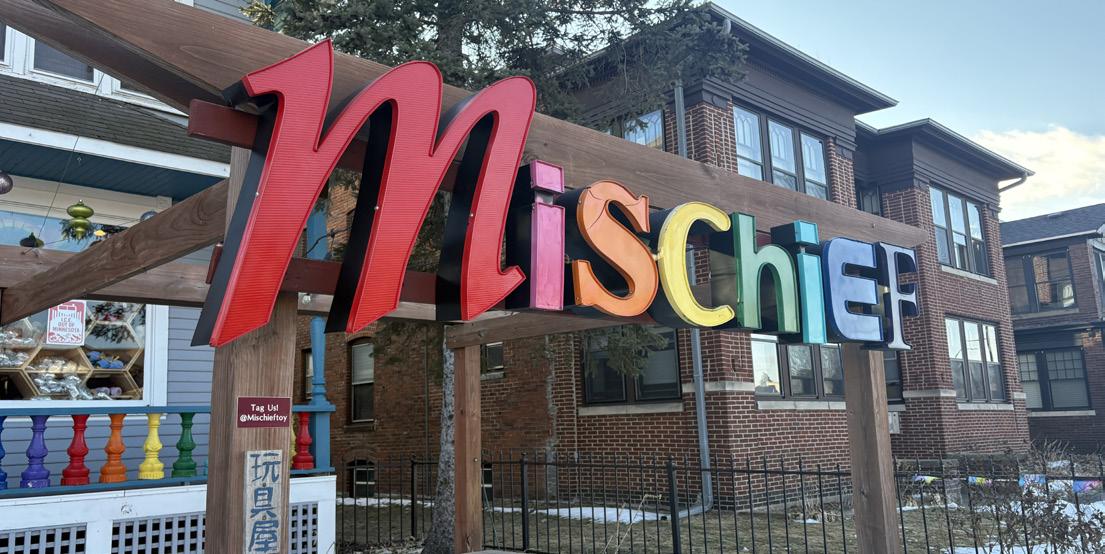
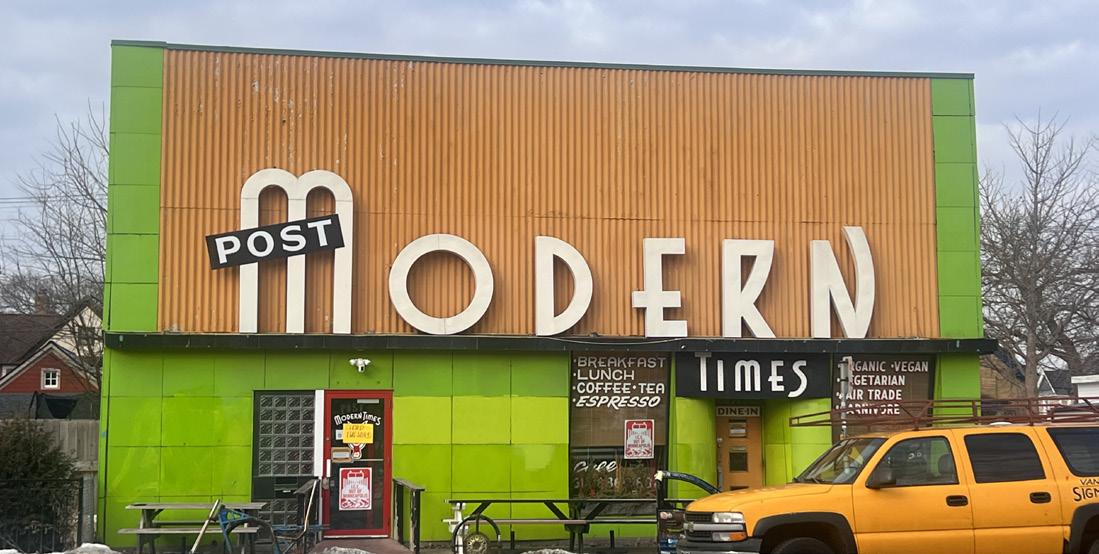
Similar to Catzen’s hospitality, Mischief Toy Store on Grand Avenue has mobilized its resources and customer base amid the increased presence of U.S. Immigration and Customs Enforcement. In contrast with other businesses, however, Mischief has faced a personal cost to its resistance.
On Jan. 23, co-owner Abigail Adelsheim publicly spoke out against ICE on ABC News. Three hours later, Department of Homeland Security agents arrived at the steps of their store, serving them with an audit.
“They came to the store and served us a notice of inspection, which basically means that they are auditing our I-9 paperwork for all of our five employees, which is not normally delivered in person,” Adelsheim said.
Despite these threats, the toy store has continued to thrive as a small business and has consistently stood up for the community. According to Adelsheim, Mischief has been handing out whistles, selling anti-ICE yard signs and posters and donating money to local non-profits that assist immigrants.
Adelsheim believes it is essential for small businesses to speak out against ICE, as they are a significant part of the community’s voice.
“If small businesses are speaking out, that really translates to the whole city speaking out,” she said. “[It is important] for us and all the other small businesses to connect with our customers and really stand up for our values and put our livelihoods on the line and our businesses on the line, and use the goodwill that we have built up over 10 years in business with our customers to really speak out in this moment.”
Adelsheim also expressed gratitude for the other businesses that have been speaking out about the ICE raids. “I think all of the small businesses speaking up
are also using as much power as they have to protect our immigrant neighbors and to speak out for the state of Minnesota,” she said.
Formerly known as Modern Times, the restaurant changed its name to Post Modern Times when ICE began occupying Minnesota.
A name change was a running joke among the restaurant’s workers, but once ICE’s presence increased in Minnesota, they realized “oh, actually this is Post Modern Times,” employee Dakota Temte said.
Taking a unique approach to community service, Post Modern Times has become a cost-free restaurant, asking patrons to pay only what they can.
“We’re a free restaurant now,” Temte said. “So if there are people who are affected by ICE or other situations and need free food, that’s one way that we are helping our community.”
The cafe has also worked with local nonprofits and a nearby grocery store to provide groceries for community members who are afraid to leave their homes.
Sitting at every table is a note from the owner, Dylan Alverson. The ending of the message reads, “Post Modern Times is a small stance amidst a gigantic fight that may shape the future of this country. I am inspired by the ways our community has grown together, our hearts breaking open, to give and receive care in all the ways we can. May we continue to see each other in the streets.”
From donating to protesting to providing free resources, small businesses have not only helped their neighbors during the ICE presence but have also inspired collective action. Their efforts and resistance continue to help the immigrant community and show how local action can create meaningful change.
The new year brings not only new tidings and opportunities, but also a variety of new art pieces to the Drake Gallery. This year’s Visual Arts Faculty Exhibition features work from upper school art teachers Spencer Legendre-Gillespie, Kate Clark and Daryn Lowman, along with lower school art teachers Anna Ruhland and Dede Hartmann and middle school art teacher Jessica Jones.
Legendre-Gillespie’s featured works include restitched textile design and painted pieces.
“

The paintings are particularly captivating; pieces 53-57 depict brightly colored globules with eyes and mouths dotting the frames, expressively conveying freeze-frame
A mix of ceramics, photography, canvaswork, and stitched collages can be found on display in the Drake; the exhibit paints its own picture of the diversity of mediums that the visual arts faculty have experience in. Each piece stands out in its own right, united in their attention to detail and the fact that they are all obvious works of masters.
pictures. Abstract in shape yet tangible in the conflicts and emotions they render, these pieces touch on relationships and dynamics that are simple, yet hard to define – dynamics that are best not explained in words.
Lowman’s work, all ceramics, have a naturalistic element to them.
Many pieces are wood-fired, which often results in natural ash glaze, earthier tones, varied textures and natural patterns. Each work is uniquely different, drawing from a different firing process that contributes to fascinating inconsistencies in color and surface texture. Lowman’s compositions are utterly captivating.
Another exceptional collection is Hartmann’s acrylic paintings. A set of four features brightly colored flowers against
a dark background, all beautifully contrasting images. At first glance, many of Hartmann’s pieces appear to be photographs. The smoothness of the canvas and realistic style are almost unidentifiable as paintings.
It is only when one approaches them up close that the brush strokes are visible. The attention to detail given, especially with subjects as delicate as flowers, meshes well with Hartmann’s use of bright colors, and many of these renderings seem like surrealist dreams once identified as paintings.
Kick off the new year with an exceptionally inspiring collection of faculty work in the Drake Gallery.
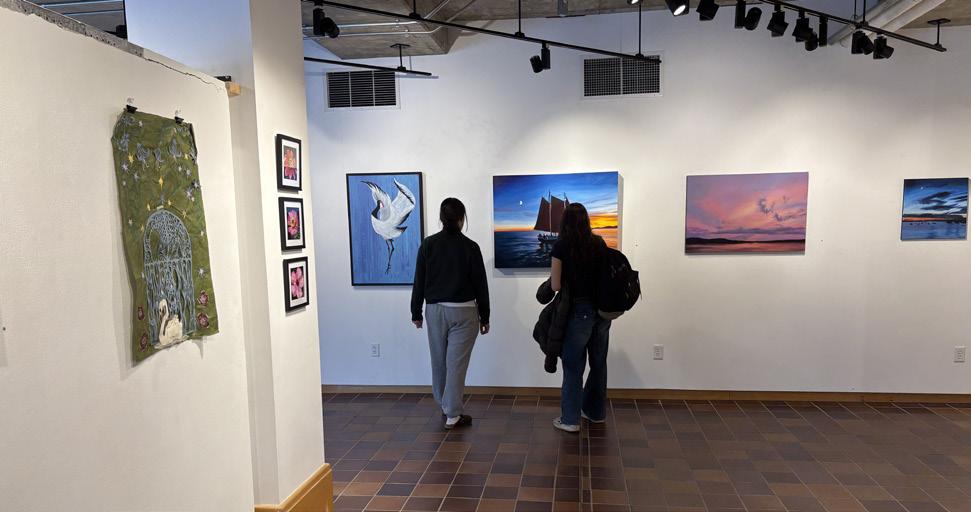
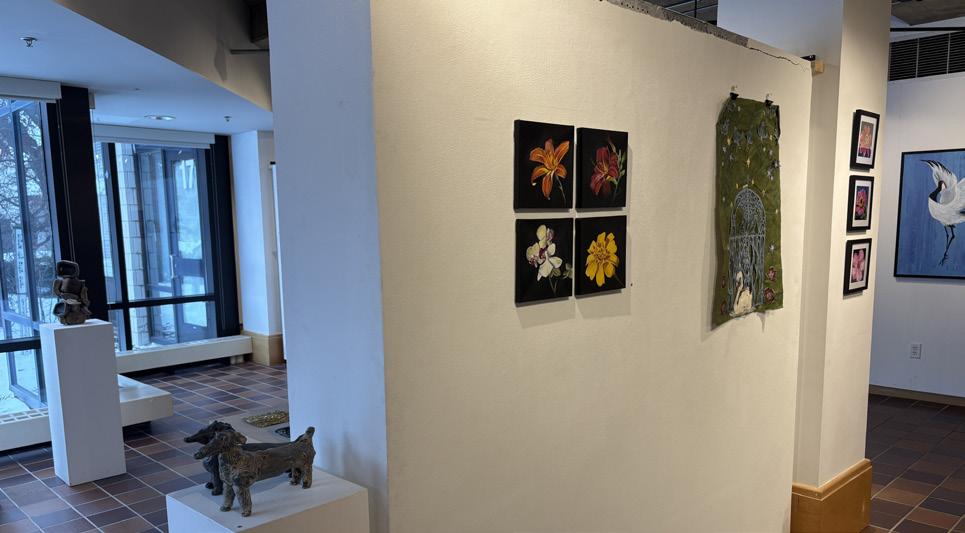
RUBICON - MARCH 2026
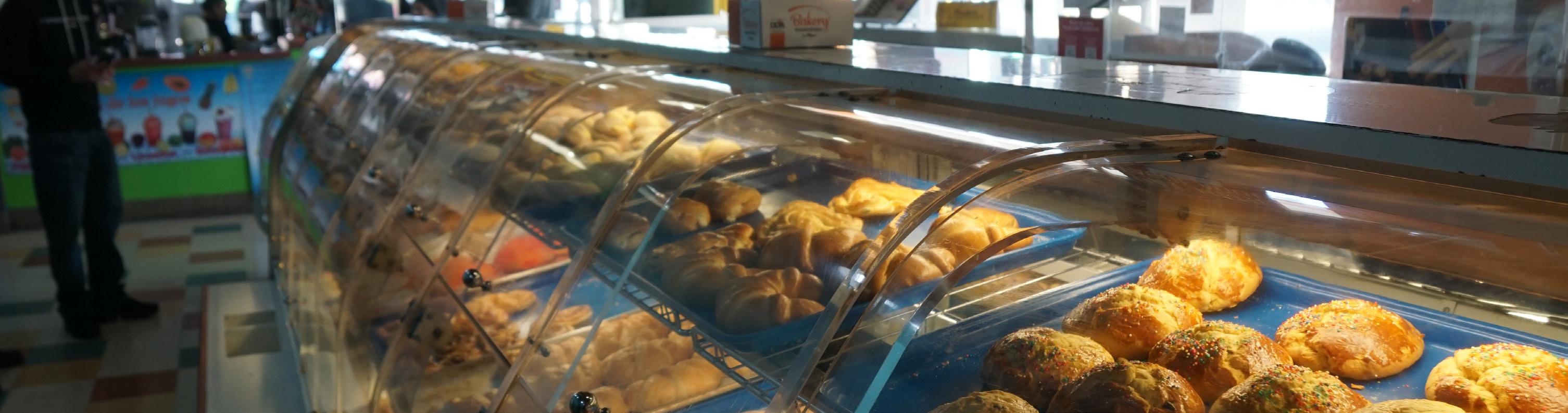
Turkish Delights are, as the name suggests, a traditional Turkish dessert, with origins tracing back to the late 18th century Ottoman Empire. The dessert is a gelatinous gummy-esque candy, with a base of sugar, water and starch, and traditionally flavored with rosewater, lemon, mint or topped with pistachios. The flavors we tried were pistachio-covered and orange-and-cream. The pistachio flavor was nutty and unique, while the orange-andcream flavor was subtly sweet. All in all, Turkish Delights are an enjoyable sweet treat for those who don’t mind the sticky texture.



Most Americans are very comfortable inside their realm of snacks -- think Oreos, Doritos and Goldfish. This comfort creates a blind spot to foreign snacks with global popularity, even though many offer familiar flavors. In an attempt to explore these missing delicacies, The Rubicon seniors set out on a mission to try various global snacks at different cultural markets (Midtown Global Market, Mercado Central, Holy Land, United Noodles) across the Twin Cities.
Baklava is a traditional Middle Eastern dessert, with several countries providing their own twist on this global pastry. Baklava is a thin phyllo dough layered around a variety of flavors and fillings. Traditional flavors include almond, chocolate and cherry. Out of the ones we tried, chocolate was by far the best, offering a moist and rich taste. Baklava is a multi-faceted and endlessly enjoyable dessert that can be enjoyed in any environment.
Bimbo Originals are a classic Egyptian chocolate wafer snack boasting multiple layers of biscuit and chocolate cream, all covered in a thick chocolate coating. Although it is a delectable snack, it tastes almost exactly like a Keebler Fudge Stripe Cookie, or a wide array of other traditional American desserts, which holds it back from being a fresh new experience like most of the other entries on this list.
Conchas are a Mexican pastry, more commonly known as a sweet bread, topped with a thick, crunchy icing, typically flavored with chocolate, vanilla or strawberry. They are well known for their signature airy interior, which is not unlike brioche bread, providing a light and delightful eating experience. A pleasant mix-up from typical American bakery offerings, the concha is a delicious treat, either for breakfast or a snack during the day.
Rice Crackers Party Mix is an Asian snack mix, consisting of a variety of rice crackers, nuts and other savory items. Similar to an unsweetened trail mix, it has the best snackability of anything on this list, as it is easy to continuously munch on this simple, savory treat.
Parle-G is an Indian biscuit cookie, and the world’s best-selling biscuit brand. Consisting of a base made of wheat, sugar and milk, it is a classic take on a sweet, prepackaged biscuit, similar to the Biscoff biscuits. Like the Rice Cracker Party Mix, its familiarity makes for an enjoyable snack.




RUBICON - MARCH 2026
WYNTER FEINER THE RUBICON
“People tell me things. I guess I have a face you can trust. I think it’s because of my low cheekbones.” While Dwight Schrute from “The Office” may have attributed his perceived trustworthiness to his appearance, looks aren’t the only quality that matters.
Gaining someone’s trust is not achieved through an action or a remark, but rather through a person’s natural disposition. Many times, those who are altruistic or have an inequality aversion were found to secure someone else’s trust more naturally, according to a 2016 study by the Journal of Medicine, Surgery and Public Health article by James C. Cox and Rudolf Kerschbamer et al.
Though trust is often gained intrinsically, a fundamental facet of trustworthiness is vulnerability-responsiveness, meaning that gaining trust from someone else can often be achieved by being receptive to an individual’s expressed needs, as a 2016 Cambridge Quarterly of Healthcare Ethics article by David Barnard indicates.
Junior Henrik Braude expressed the importance of having someone you can depend on during times of vulnerability. “A trustworthy person is dependable. Someone you know is going to do what you expect them to do,” he said. “It’s important to have someone you
trust and who is reliable when you’re struggling, because then you don’t have to feel so alone.”
Braude’s perspective is supported by a 2013 Michigan State University Extension article by Lisa Bottomley, which revealed that trust in relationships often stems from consistency.
Trustworthiness is not exclusive to interpersonal relationships; consistency also translates to how individuals establish trust in the media. A 2020 article by Taylor Nelson and Nicole Kagan et al. in Missouri Medicine reported that when exposed to misinformation in the media, confusion is a primary response.
I think in this political climate, people’s lives are constantly on the line, and that’s not a thing we can lie about. “

Consequently, individuals are often prone to making fear-based actions. In other words, the digestion of inconsistent or unreliable information can often lead consumers to make ill-conceived decisions, compounding the situation.
During the COVID-19 pandemic, when feelings of fear ran rampant, these
feelings were often intensified when absorbing inconsistent opinions from trusted authorities. Now, during a time with a similar sense of unrest, sophomore Oakley Schonwald stresses the importance of transparency in the media.
“I think in this political climate, people’s lives are constantly on the line, and that’s not a thing we can lie about. That’s not a thing that can be covered up, and I think if [authorities] push those lies, knowing that they’re lies, that should clearly be a sign that something’s going wrong in society,” shay said.
During tumultuous times, society is often more inclined to believe fake news. However, during times of rapid change or disarray, psychological factors can often hinder or even fully prevent an individual from exercising their critical thinking skills, leading individuals to subsequently succumb to believing fake news.
Schonwald reinforces this idea. “I think when people’s emotions are running as high as they are right now in society, we’re likely to believe anything and get angry, get upset, get scared, and that leads us to not use as much critical thinking,” Schonwald said. “I think, as much as we can navigate to find good sources, we should.”
Sometimes being informed may prove difficult. “Finding reliable sources is hard; there’s
How do you define trustworthiness?

“
I really think trustworthiness ties into loyalty, and just whether or not the person tells the truth.
no real way to determine if [a source] is reliable or not. And I feel like it’s not black and white,” Braude said. “Some sources are more biased than others, but everything contains some bias.”
Schonwald emphasizes the importance of engaging with factual information. “You obviously want to make sure you’re getting the truth, because I think if you’re blatantly ignoring what’s happening in society right now, that’s turning away from the truth, and turning away is the most dangerous thing you can do right now,” shay said. “This is a time when silence is viewed as agreement.”
Trustworthiness has many facets and different areas of application, but is ultimately critical to everyday life, providing a gateway to strong interpersonal relationships and allowing for the immersion of accurate information.
HELPING HAND. Reliability and consistency are crucial traits that establish trust in relationships.
I
feel like trustworthiness is consistency in the way someone acts.

I think that someone is trustworthy when you know that they’re gonna reliably act in your best interest.