

ALL EYES ON US





Rubicon student newspaper of
Paul Academy and Summit School
PHOTO: Nikolas Liepins
PHOTO: Nikolas Liepins
PHOTO: Amanda Hsu
PHOTO: Elizabeth Tuttle
PHOTO: Thomas Chen

all experts in their fields.”

and

WALK OUT HYPE. Senior Murray Goff presents his teammates to the audience as they walk onto the Huss Center for Performing Arts stage. Goff announced their names and their areas of interest. “It [was] all for fun, and I have a feeling, even if we [looked] bad, it [was] still enjoyable,” he said.
Quiz Bowl battles faculty in close match
ARIELLA KIM THE RUBICON FACULTY WINS IN PLAYOFF PREP TRADITION
Applause filled the Huss Center for Performing Arts as students took the stage, preparing to face their teachers in a Quiz Bowl showdown assembly on April 8. After rounds of fast-paced questioning and displays of knowledge across a diverse range of subjects, the faculty team took the win by four points.
Senior Murray Goff has been the captain of Quiz Bowl since his junior year. He had two main objectives heading into the match: to have fun and to give the school a chance to see the energy and appeal of Quiz Bowl at its best.
“It [was] all for fun, and I have a feeling, even if we [looked] bad, it [was] still enjoyable. I hope people [enjoyed] the fun of it, which is something I think SPA needs to appreciate,” he said.
That sense of enjoyment carried through the assembly and was felt by both teams. Math teacher Jack Kinseth noted appreciation for the event’s atmosphere.
“My favorite moment was just being in the presence of some really passionate and excited people, both faculty and students alike,” he said.
For Quiz Bowl team member Louis Fratzke, the students’ enthusiasm and expertise were not luck in any form; they were the product of months of preparation.
I think the entire year has been kind of rolling up to this point ... we’ve really been practicing. “

“I think the entire year has been kind of rolling up to this point. We’re planning on shipping out to Chicago for small school nationals in just a few weeks. So this [assembly] has kind of been co-opted in, but the whole year we’ve really been practicing for [these types of events],” he said. Preparation across a wide range of subjects
was evident throughout the match. From questions about March Madness results to complex math equations, the Quiz Bowl match offered a unique opportunity to showcase understanding of many disciplines in a fast-paced format.
Though the event mimicked an actual Quiz Bowl match, adjustments were made to increase audience engagement and fit within the assembly’s time frame. For one, “Lightning Rounds” were incorporated into the competition. In these rounds, each team had the opportunity to pick between the categories “Caribou,” “Starbucks” or “Spyhouse.” Each category had a set of questions whose answers related to the category name.
Junior Asha Peckosh enjoyed lightning rounds as they are quick and allow participants to focus on specific topics.
“I like the pace. They’re really fast-paced, and they’re normally one of the most random topics,” Peckosh said. The students chose the category “Spyhouse,” in which each answer was a movie with the word
CORRECTIONS POLICY
“spy” or “house” in them. The teachers chose the category “Caribou,” in which answers ended in two vowels, mimicking how Caribou ends in an O and a U.
Peckosh also appreciated how the event publicized Quiz Bowl.
“I would say we have very popular assembly announcements, thanks to Murray and William. But I feel like a lot of people don’t really know what Quiz Bowl is, and so I hope that they kind of have a better sense for what it actually is,” she said.
For Peckosh, the loss by only four points was a success in itself.
“[It was] close, and that was great, because they’re all experts in their fields,” she said.
Beyond this competition, Goff highlighted the community and enjoyment in Quiz Bowl.
“I think there is a real community … I trust that people will have a really fun time if you just let it be for fun,” Goff said.
The Quiz Bowl team will compete next on April 24 in Chicago for Small School Quiz Bowl
PLAYOFF RECAP
Spartan Quiz Bowl’s performance on Feb. 12.
ROUND 1: WIN
The Spartans took a 340-300 win against Chaska High School, beating them in not only points but toss-up questions, lightning rounds, bonuses and points per bonuses.
ROUND 2: LOSS
Following their victory, the team lost 230590 to Wayzata High School. The team earned 90 of their points through lightning rounds.
ROUND 3: LOSS
In their final round, the Spartans lost to The Blake School with a final score of 355-370. However, the team boasted an average of 20 points per bonus round, out of 30 points total.
OVERALL PLACE: 9TH
After a long day of competition at the Minnesota High School Quiz Bowl League Playoffs, the team placed ninth out of 16 schools.
NEXT STEPS: SMALL SCHOOL NATIONALS
Quiz Bowl’s victories at playoffs qualified them for small school nationals, set to take place April 24-26 in Chicago.
INFORMATION: National Academic Quiz Tournaments
Scan this QR code to read more about the Quiz Bowl team’s breakout season.

Nationals.
senior Louis Fratzke
THOUGHTFUL TEAM. Quiz Bowl teammates take turns answering questions. The April 8 assembly featured six student members and six faculty from various disciplines. Junior Asha Peckosh said that “[It was] close, and that was great, because they’re
BUZZ IN. Quiz Bowl advisor Kate Lockwood asks questions to both teams at the Quiz Bowl showdown assembly on April 8. “My favorite moment was just being in the presence of some really passionate
excited people,” math teacher Jack Kinseth said.
PHOTOS: Ariella Kim
‘Project Hail Mary’ book club encourages new habits
HARPER LARSEN
THE RUBICON science. I thought that was great,” she said.
The hit new movie “Project Hail Mary” originated as a book by Andy Weir. In response to excitement surrounding the school-wide reading of George Orwell’s “1984,” history teacher Varsha Venkatasubramanian was inspired to start another student book club, reading the novel-turned-blockbuster film.
The club isn’t just a forum to discuss a good book, but also an opportunity for students to make a habit of reading books that weren’t assigned for a class, according to Venkatasubramanian. She had already read the book, and the new movie gave it even more momentum in the school community.
On the other hand, sophomore Abigail Tilton’s curiosity began with the movie, which prompted her to read the book.
“I saw the movie … and loved it a lot. And I just thought it was insane, and I loved the science aspect of it. When I started reading the book, it went into more depth with the
Ninth-grader Henry Stenzel had already planned to read the book, but being a part of the book club made it even more appealing.
“I decided to join Dr. Venkat’s book club because I have heard many positive things about the book and I was planning to read it … I am excited for the sci-fi aspect of the book, a genre that I love, and for the suspense,” he said.
if you don’t make time for it, it’s not gonna become a daily thing,” she said.
This objective of learning to appreciate reading beyond assigned books for a class has resonated with Tilton.
“I think [the book club] increases reading habits because it’s just such a fun book, and not a lot of people who don’t read want to start reading. There’s got to be a little motivation there,” she said.
that in real life, I think it’s just important to … develop that skill set of being like an empathetic person as best as you can,” Tilton said.
The new student book club isn’t just intended to be a place where students can read a book and discuss it, but also a place for students to build habits and learn about important social skills.
“
SPA THINKS
What role does reading play in your life?
I read a lot in my life. I’ve always found that reading has allowed me to learn about other people’s perspectives.

“
SUNDE AUBERJONOIS THE RUBICON
Amid consistent disputes over birthright citizenship, reproductive rights and widespread U.S. Immigration and Customs Enforcement occupations, another issue has resurfaced in U.S. politics: transgender athletes in sports.
On March 30, President Donald Trump filed a lawsuit against the Minnesota Education Department and the Minnesota State High School League, claiming they violated Title IX protections for female athletes by allowing transgender girls to play in girls’ brackets.
Sophomore Hank Harp feels negatively about the lawsuit.
“It doesn’t seem like a really big enough deal to sue over,” Harp said.
Similarly, sophomore Amelia Dyrstad thinks that the lawsuit is pointless.
“I think that it is a frivolous lawsuit, and it should be thrown out by the courts,” she said.
I
am excited for the sci-fi aspect of the book, a genre that I love, and for the suspense.
“ ninthgrader Henry Stenzel

Venkatasubramanian said that one of the main goals for the club was to help students form stronger reading habits outside of school.
“I noticed this past year that not a lot of students have time to read for fun … and the main thing that I learned when I was in high school was,
Another reason Venkatasubramanian was invested in starting a student book club was because of what reading has done for people around the world. She believes reading a book is a way to connect with other people and build empathetic skills.
“A reason to read a book, especially if it’s a novel, is to really escape into another world and to think about yourself as another person,” she said.
Tilton agrees with this perspective on the power of reading.
“I feel like the more you read and the more you put yourselves in other people’s shoes, the more you’re prone to do
The first book club meeting will take place on April 24, and any stu dents who have read the book are encouraged to come. The club is expect ed to meet monthly with the next meeting in May.

Venkatasubramanian sent an email with information regarding this month’s meeting and a few details about the club’s future, including a form for future book club reads. Students are encouraged to vote on next month’s book using the form.

I use reading mostly for academic purposes ... but I also enjoy reading for entertainment over the summer.
senior Elle Williams
[Reading] gives me insights about the world and also gives me ... time to relax.

sophomore Ronan Keel

“
I like reading. I probably just don’t do it enough.
sophomore Archie Dougherty
Trump sues Minnesota over transgender student-athlete policy
Due to Saint Paul Academy and Summit School’s status as an independent institution, Trump’s actions regarding Title IX do not directly impact the school’s athletics. K-12 Director of Athletics Paul Moyer explained the distinction:
“[Title IX] allows for equal access in educational settings that accept federal funds, which therefore means it does not formally apply to SPA because we do not accept federal funds,” he said.
While the school upholds Title IX’s inclusive values as a member of the MSHSL, it is not legally bound to follow its requirements.
Dyrstad feels Trump’s efforts against Minnesota align with the many other strategies he has employed during his term thus far.
“I think the Trump administration is definitely trying to target all the perceived enemies,” she said. “He’s been talking about, of course, implementing certain voter registration requirements illegally. And so I think
he’s gonna continue doing this through the midterms and beyond.”
Many recent tensions have arisen between the Trump administration and Minnesota, which has consistently voted blue since 1972. It is also widely known as a sanctuary state for abortion access, immigration and trans people.
“
I think that it is a frivolous lawsuit, and it should be thrown out by the courts.
lizing the Department of Justice to advance political agendas.
Moyer does not see many benefits to barring transgender students from competing on teams that align with their gender identities.
“Proponents would say we would eliminate all possibility of a transitioning athlete competing unfairly,” Moyer said, adding that transgender athletes can compete in their identifying gender as long as the competition is fair.
Moyer believes it is still important to demonstrate support for trans athletes.
“When done right, it is fair, appropriate and comfortable for all athletes to participate where they identify, and are eli-
BY THE
gible to compete,” Moyer said.
As of March, the lawsuit is pending. MSHSL representative Phil Archer declined to comment on the league’s position on the lawsuit at this time.
NUMBERS
sophomore Amelia Dyrstad

During his second term, Trump has tried to alter the established systems and rights that correlate with each of these issues through his political initiative, Project 2025. The lawsuit is in alignment with the project’s strategy of mobi-
Dyrstad believes that allowing student athletes to compete on teams that align with their identities is crucial to building connections.
“I think that sports can be a very important place for students to build a community and form relationships, and I think by excluding trans athletes you are further isolating them, making it harder for them to be a part of the community,” she said.
While Trump’s attacks may not directly impact upper school athletics,
PERCENT OF TRANSGENDER PEOPLE of Olympic athletes identify as transgender 0.001% of students involved in college athletics identify as transgender 0.002% of the U.S. population identifies as transgender 1-2% of Minnesota high schoolers identify as transgender 3%
INFORMATION: San Francisco Department on the Status of Women (2025), Gender Justice (2021)
Scan this QR code to read an editorial about the importance of showing support for transgender peers.

junior Noah Abraham
Scan this QR code to read more about another recent book club centered around George Orwell’s “1984.”
Immigration agents deployed to airports amid shutdown

SUBMITTED PHOTO: James Welsh
TSA TAKEOVER. Senior James Welsh saw U.S. Immigration and Customs Enforcement agents patrol Southwest Florida International Airport. “There were five [agents] inside, just basically standing in a circle doing nothing,” he said.
SYLVIA WESTRA THE RUBICON of Homeland Security’s budget.
After returning from a two-week recess in mid-April, Democrats and Republicans in the U.S. House and Senate remain gridlocked and have yet to reach a compromise on a bill finalizing the Department
The congressional gridlock began in January due to backlash related to Operation Metro Surge and federal agents’ involvement in the deaths of Renée Nicole Good and Alex Pretti. The partial DHS government shutdown began on Feb.
14, just two days after White House border czar Tom Homan announced the end of Operation Metro Surge.
Sophomore Nime Snyder believes that Congress needs to work together to establish legislation.
“The fact that we literally can’t get anything done because our country and Congress [are] so polarized, I think is a big problem,” he said.
Spring break often creates bustling airports in March and April, but many were even busier this year due to the partial shutdown, which affected all DHS offices, including the Transportation Security Administration. Because the budget remained undecided, employees of these agencies worked without pay, only beginning to receive back pay in April.
Ninth-grader Lili Itzkowitz commented on the effects that the shutdown has had on TSA workers.
“I think that pausing pay for a job that should be stable and reliable for people that count on it is awful, especially because the people who are
causing these problems are not likely affected by the money problems,” she said.
Since the shutdown began, 480 TSA employees have quit, and thousands more have frequently called out sick from work due to a lack of income, according to the TSA deputy administrator. At understaffed major airports and security checkpoints, NPR reported that some security wait times exceeded four hours.
I think that pausing pay for a job that should be stable and reliable for people that count on it is awful. “
ninthgrader Lili Itzkowitz

To decrease airport wait times, the Trump administration deployed roughly 150 Immigration and Customs Enforcement agents to U.S. airports March 23, includ-
ing major hubs such as Chicago O’Hare, Atlanta and New York’s JFK. This was the same day senior James Welsh encountered about a dozen ICE agents at the Southwest Florida International Airport as he was returning home after a spring break trip to see some of the Minnesota Twins’ spring training sessions.
“There were five [agents] inside, just basically standing in a circle doing nothing,” Welsh said. Welsh feels that the shutdown needs to end.
“We can’t have TSA workers working without pay,” he said.
“The way Ed Bastian put it, he’s the CEO of Delta Airlines, is that we can’t use front line workers as bargaining chips with politics. And I think that’s absolutely true,” he said.
TSA workers began receiving back pay at the beginning of April, yet Homan indicated in a March 23 interview with “Face the Nation” that ICE agents may remain in airports until they are back to “100%.”
Itzkowitz said it is concerning that ICE could
have a continued presence in airports.
“I’m concerned that the stuff that’s been happening will just continue to happen, and that [ICE will] be at places with a lot of people, where people aren’t prepared, and just continue to interrupt people’s lives,” she said.
The Senate approved a bill to fund most of the DHS March 27, not including funding for ICE. The House, which is ruled by a Republican majority is unlikely to support this bill, but has yet to vote on it.
As of press time, the partial government shutdown continues past its 65th day, and it is unclear how long it will take for Congress to reach a budget compromise for the DHS.
Scan this QR code to read about the effects of previous government shutdowns.

Russian oil reaches Cuba, raising U.S. foreign policy questions
PEONY STEELE THE RUBICON
After decades of strict United States sanctions on Cuba, a recent decision by the Trump administration to allow a Russian oil tanker to reach the island has raised new questions about American foreign policy. The move suggests an easing in the enforcement of those sanctions despite the embargo officially remaining in place, sparking debate among policymakers and observers about the U.S.’s strategic priorities.
First imposed during the Cold War, the U.S. blockade has aimed to limit Cuba’s access to resources and pressure its government for political change, specifically to weaken its communist regime. However, the arrival of Russian oil suggests a shift in how those restrictions are being enforced. U.S. Foreign Policy Since World War II teacher Jon Peterson doesn’t see a clear motive behind the relaxation of restrictions.
“What’s happening seems a little bit random here. It doesn’t seem like it really follows a coherent policy or overall strategy,” he said.
Additionally, junior Olivia Andres said, “Because the U.S. doesn’t have a good relationship with Russia, people are just wondering why this shipment was carried out.”
The Russian ship was able to carry hundreds of thousands of barrels of crude oil to reach Cuba amid the island’s severe energy crisis, widespread blackouts, fuel shortages and economic instability. Aging infrastructure, limited domestic fuel production and reduced imports have strained the country’s ability to
generate consistent electricity, leading to prolonged outages that affect Cuban civilians. Although the Trump administration had previously warned countries not to send oil to Cuba, officials chose not to stop this shipment, describing it as a humanitarian exception to help Cuban civilians. The Russian vessel was able to reach Cuba despite earlier U.S. warnings discouraging such shipments.
I don’t think it’s good that we’re living in a time where this isn’t cared about more.
junior Lachlan Gaspard

According to a November 2025 Reuters article, the situation also highlights Cuba’s growing dependence on foreign allies for energy, particularly Russia, which has continued to supply oil and economic support despite U.S. opposition. As Cuba struggles with ongoing shortages, these partnerships have become increasingly important to keeping the country running. At the same time, the U.S. faces a difficult balancing act between maintaining pressure on Cuba’s government and avoiding further harm to its citizens, making decisions like this one especially complex.
“I think [the U.S. allowing oil in] is probably because it’s a humanitarian crisis,” Peterson said.
Andres explained her perspective: “Because [these tensions] have been going on for so long, it’s been sort
of normalized, and so the government is prioritizing other geopolitical conflicts.”
During the 1962 Cuban Missile Crisis, the U.S. forced Russia to remove nuclear missiles from Cuba by enforcing a naval quarantine for one month. An embargo has been placed on Cuba since the crisis. The recent move to allow oil shipment has sparked debate because it appears to contradict the administration’s uncompromising stance against Cuba’s government. Supporters say the decision was necessary to prevent further suffering among ordinary Cubans by easing acute energy shortages, while critics argue it weakens U.S. pressure on the Cuban regime.
As global events continue to escalate, junior Lachlan Gaspard believes it is important that students stay informed.
“I don’t think it’s good that we’re living in a time where this isn’t cared about more,” he said.
Additionally, Andres looks at the root of the lack of attention: “Due to the complex politics regarding America’s relationship with other countries, it’s not being brought to the surface as much,” she said.
The White House has emphasized that this does not signal a full policy change and that future shipments will be considered on a case-by-case basis.
Scan

OUR MISSION
We strive to capture the spirit of the community through its stories while inspiring deeper conversations. Above all, we stand for integrity in our pursuit to inform and engage our readers.
THE RUBICON
St. Paul Academy and Summit School 1712 Randolph Ave • St. Paul, MN 55105 rubicon.spa@gmail.com www.rubiconline.com @TheRubiconSPA
25-26 STAFF
THE RUBICON
EDITOR-IN-CHIEF
MANAGING EDITOR
CHIEF VISUAL EDITOR NEWS EDITORS
OPINIONS EDITORS
HEALTH & WELLNESS EDITOR
PAGE ONE/IN DEPTH EDITOR
FEATURE EDITORS
SPORTS EDITORS
A&E EDITORS
GOOD QUESTION EDITOR
COPY EDITOR
DATA JOURNALIST
Sonia Kharbanda
Juan Miguel Adams
Amanda Hsu
Evie Gardner
Wynter Feiner
Peony Steele
Eva Burns
Izzy Middlebrook
Peter Ostrem
Ariella Kim
Sylvia Westra
Sam Galarneault
Harper Larsen
Sunde Auberjonois
Tallulah Dogwill (S1)
Lilly Parr (S2)
Lina Abid
Ivy Evans
Jack Gao
RUBICONLINE
DIRECTOR OF RUBICONLINE
PRODUCTION MANAGER
CREATIVE DESIGN MANAGER
DIVERSITY MANAGER
BEATS MANAGER NEWS EDITORS
OPINIONS EDITORS
FEATURE EDITORS
IN DEPTH EDITOR
A&E EDITORS
SPORTS EDITORS
COPY EDITOR
PODCAST EDITOR
RUBICON TV
SOCIAL MEDIA MANAGER
Thomas Chen
Greyson Sale
Zimo Xie
Lani Ngonethong
Elizabeth Tuttle
Peter Lipinsky
Ike Obi-Walker
Winston Arvidson
Audrey Jansen
Zahir Hassan
Naomi Zins
Shrey Nemani
Lani Ngonethong
Yassin Mokbel
Senetneb Theba
Allen Wang
Aiden Ruediger
Yasmin Khan
Nabeeha Qadri
Nora McKoy
Andrew Lipinsky
Audrey Peltier
CONTRIBUTORS
Lily Bryan, Carys Hsiung, Annika Kim, Gavin Leuthold, Kate Tuttle, Gwendolyn Uhlhorn, Huxley Westemeier
STAFF WRITERS
Grace Berger, Henry Childs, Maizy Henretta, Niko Lifton, Gisele Parnell, Auden Zheng
ADVISER
Kathryn Campbell, CJE
PUBLICATIONS ASSISTANT
Scott Gillespie
MEMBERSHIPS
Columbia Scholastic Press Association
National Scholastic Press Association
Private School Journalism Association
MN High School Press Association
Quill and Scroll Honor Society
CURRENT PUBLICATION AWARDS
2024 NSPA All-American
2025 Pacemaker Finalist (online)
2025 CSPA Hybrid Gold Crown Award Winner
2025 SNO Distinguished Site
2025 JEM All State Gold

EDITORIAL CARTOON: Lily Bryan
SURVEY SUSPENSE. Every year, students answer an in-depth survey through Authentic Connections, with questions pertaining to details of their personal and academic lives. While students dedicate their time to filling out this long survey, data from it has never been disclosed, which would be instrumental in finding areas of growth in school culture.
Clarity needed on survey for school culture reset
EDITORIAL THE RUBICON
STAFF
When students are asked to share their thoughts on school culture, and the results are not shared, it creates a disconnect. This lack of transparency risks eroding rather than building trust between students and administrators that is necessary for true change.
Students in grades 2-12 were asked to take a survey on April 6 reflecting on school culture and community. The survey was designed by Authentic Connections, which, according to its website, uses scientific surveys to improve well-being in schools. After analyzing SPA’s survey results, the consultants will provide the school with a customized list of focus areas and next steps that may be implemented in planning for next year. It is important that students hear about those findings in a timely fashion.
Maintaining a healthy community is both challenging and important, so this survey offers a valuable opportunity to create expectations for how the school culture should look and feel.
THIS SURVEY OFFERS A VALUABLE OPPORTUNITY TO CREATE EXPECTATIONS FOR SCHOOL CULTURE.
While the goal and thoughtfulness behind the survey is admirable, the process risks becoming performative if students are not allowed to see the recommended next steps and collaborate with the school on the actions it will take. That’s essentially what happened last year, although head of school Dr. Luis Ottley said the administration hopes to discuss the results of the most recent survey next school year. Being transparent with the data would also reinforce the positive culture that the school already works hard to maintain. The positives can also be highlighted in the data, and seeing good results will help to reassure the community of its strengths. The survey does not need to be all about what we are doing wrong; it can and should include the data that students and faculty are proud of.
According to a 2025 study highlighted by the American Psychological Association, trust and community well-being are mutually reinforcing. For the school community to improve and change student and faculty welfare for the better, building trust is an essential first step. Trust is built through transparency, clear communication and collaborative engagement, making this survey a great chance to build trust between students and administrators.
By utilizing the class leadership councils and giving them more to do than plan some class meetings and retreats, they could offer feedback on the findings that are grade-specific and help share the next steps with their respective classes. Another way to help bridge the gap between students and administrators could be to bring back groups such as peer helpers, a selected group of students who worked with counselors on wellness initiatives around the school. These groups could meet with administrators and work on ways to share the data with the student body and plan activities and assemblies so that everybody can be engaged with improving wellness in the school community.
While some responsibility lies with the school, it is also the job of the students to take the opportunities that administrators have given us to give honest feedback so that the change that the school community wants to see happens. By answering the survey honestly and thoroughly, students earn the right not just to be researched but to be a part of the research and improvement for the school and community. Policy can’t be the only way students hope to see change in the school. Students have a responsibility to change their behavior if they want to alter the culture. When students’ actions reflect their words, change becomes not only possible but likely. Students and administrators both have work to do, and improving the school community needs balance to succeed. If students and administrators work together and communication remains transparent, then the responsibility of working towards change lies on the shoulders of the entire school community; if either students or administrators fail to do their part, this door will close. 100% of the staff agree
Partisan divides are holding Minnesota back
Rep. Melissa Hortman’s assassination, the shooting of Sen. John Hoffman, the shooting at Annunciation Catholic School and Church and Operation Metro Surge are major events that have impacted Minnesotans everywhere.
Even as Minnesotans make their voices heard and are clear about the kind of state they want to see through protests and calling their representatives, Democrats and Republicans remain static. They have not listened to the citizens they claim to represent; instead, they follow the increasing political polarization. Political polarization refers to the divergence of political attitudes towards extremes of both parties, and treat the other party as opposition.
On Feb. 17, the Legislature convened for the 2026 legislative session. Both the Senate and House are divided fairly evenly: the House is split 67-67, while in the Senate, the Republican Party has 33 seats to the DFL’s 34. With such a close divide in both chambers, bipartisanship and working across party lines is clearly necessary.
Their voting in lockstep only proves the polarization riddling Minnesota legislation.

The shootings of lawmakers and children in the past year have prompted gun control to become a central and divisive issue in the 2026 legislative session. However, to date legislators have failed to recognize how much gun violence has hurt Minnesota and how Minnesotans have rallied together in support of a ban on assault weapons. In early September, hundreds of people rallied at the State Capitol calling for gun re-

form. This was six months ago, yet no long-term action for students to feel safer in schools has been taken.
Even though there is a critical opportunity in this moment for legislation to enact meaningful change surrounding gun violence, polarization is preventing that action. On March 26, House Republicans all voted against legislation to ban assault weapons and high-capacity magazines.
Their voting in lockstep only proves the polarization riddling Minnesota legislation. Even though, according to a December 2025 poll by Lumaris, 79% of residents in Twin Cities suburbs support banning assault-style weapons, every Republican representative voted against this measure.
The Senate DFL has also developed a broad bill that tackles many issues Minnesotans had with Operation Metro Surge. Since this bill is a broad package, the bill does not need as many votes on the floor. Even though a Lumaris poll found 59% of Minnesotans think that Operation Metro Surge made the state less safe, the in-
ability to reach across party lines makes the possibility of a bill that would keep many Minnesotan citizens safe, very unlikely.
Belief polarization is to blame for much of the persistent disagreement. Belief polarization is a concept in which people associate only with others who already share their same ideas, inadvertently becoming more extreme versions of themselves. This phenomenon also leads to hatred toward those with different beliefs.
After months of stalling on important issues, this session needs to be a time when the Legislature delivers concrete long-term solutions to problems affecting the state. This lack of follow-through in a state where residents are fighting tooth and nail to be heard is a disheartening reflection of the legislative system.
Before the 2026 legislative session wraps up, both the House and the Senate must make the choices that make Minnesota safer for its citizens, not simply conforming to the polarization of the two parties.
Too many assemblies, too little time for connection
“Another assembly?” is a common rhetorical question heard when walking through the halls of the Randolph Campus, and it’s understandable. Every week during X-period, students gather in the Huss Center for Performing Arts to hear a range of topics discussed by panels, guest speakers, alumni, student groups or members of the administration.
While some of these presentations are undeniably important, the jampacked schedule of assemblies is beginning to take away from time that student interest groups
and affinity groups could be using to meet. If a student interest group plans to give a presentation at an assembly, for instance, they would need time to meet and plan beforehand – but the schedule has so far allowed for very little.
During shortened weeks or special schedules, club time typically gives way to assemblies, making it clear where the priorities land. An alternating schedule would be more beneficial: for example, if every other week were shorter than usual, meaning one X-period spot would be removed, then assemblies and club periods could alternate, rather than
assemblies taking clubs’ spot entirely.
Furthermore, some of the speakers are set up with little to no student input, leaving the community uninterested in the topics that are being presented.
Some speakers seem to have been selected at random, with no real relation or connection to the student body. One such speaker, an alumnus of the school and CEO and co-founder of Tabs, Ali Hussain, spoke to students about artificial intelligence, but did not draw much engagement from students. Another assembly, featuring a panel of teachers speaking on the integration of AI into
the classroom, seemed to repeat similar ideas, despite the less-than-enthusiastic reactions from the community.
More time should be allowed for these groups to meet, and assemblies should not be prioritized over clubs.

Covering the topic twice, despite the lack of excitement about the subject the first time
around, solidified the school’s apparent lack of regard for student input. The assemblies also tend to feel repetitive, as though they’re only there to fill an X-period. This can be harmful and disappointing for students who find safe spaces and important connections through their student interest groups.
According to the Centers for Disease Control, feeling connected at school and to peers makes teenagers less likely to experience health risks like substance abuse, violence and poor mental health. Affinity groups serve this purpose by creating a space where students can connect over a shared identity. These identities may be otherwise marginalized, making the time spent in those spaces all the more meaningful. If the school’s goal is to build community, the focus should be on activities that foster student connections, such as clubs and affinity groups. More time should be allowed for these groups to meet, and assemblies should not be prioritized over clubs and student organizations. Students cannot create connections when sitting quietly in the chairs at Huss, but they can do so when surrounded by peers and participating in activities they enjoy.
STUDENT ORGANIZATION MEETINGS COMPARED TO ASSEMBLIES THIS SCHOOL YEAR *as of press time
IVY EVANS THE RUBICON
IZZY MIDDLEBROOK THE RUBICON
TUG OF WAR. Amid a series of tragic events taking place in Minnesota, political polarization within the Minnesota legislature has inhibited change. The intransigence of politicians take away from prominent state issues, such as gun violence, that have been a strong source of instability for many Americans.
ILLUSTRATION: Kate Tuttle
junior Ivy Evans
sophomore Izzy Middlebrook
ETHICAL CONSUMPTION GUIDE
GOOGLE SEARCH
CHROME
GMAIL, ICLOUD OR OUTLOOK
MICROSOFT
IPHONE OR SAMSUNG
AMAZON
INSTAGRAM, TIKTOK OR X
CHAT GPT
TARGET
ECOSIA FIREFOX
SAFARI, EDGE OR TUTA
LIBREOFFICE
FAIRPHONE OR MURENA
VEO OR SHARED
EARTH
W OR MASTADON
MISTRAL OR ECOSIA AI
TRADER JOE’S
INFORMATION: Ethical Consumer and Resist and Unsubscribe
Take a stand: Boycott now to demand real accountability and change
GAVIN LEUTHOLD GUEST WRITER
Although the three nationwide No Kings protests have importantly helped mobilize people and showed immigrants they’re not alone, they do not directly pressure those in power for change.
Those in power must act and speak out immediately amid the growing threat to American democracy. This includes No Kings leaders (Indivisible and 50501, among others), wealthy influential people, pop stars and national politicians. Broad coalitions must be formed to engage in sustained political action.
The No Kings organizers should adamantly advocate for boycotts of corporations and their products that, according to the website resistandunsubscribe. com, exert excessive influence over the national economy and President Donald Trump. See the sidebar for detailed information. Find some products on these lists to start boycotting yourself.
In order to achieve effective change, the opposition should include a people-centered movement similar to Occupy Wall Street in 2011, but it should focus on establishing a unified coalition with a broad consensus and clear political demands in order to gain traction. General strikes, like the planned May 1 strike, are important, too. Additionally, engage in local mutual aid networks, share information on Signal and support your community. Additional powerful forms of resistance include supporting independent journalism and engaging in the arts.
Successful boycotts in history have included the South Africa Boycott and the 1955-56 Alabama bus boycott. Recent successful examples are the boycotts of AXA, Barclays, Pret, Baillie Gifford, Russia and Twitter/X in 2024.
The resistance should focus on dismantling the capitalist and oligarchic systems that enabled the rise of the Trump political structure in the first place, in-
stead of simply returning to the pre-Trump political structure. A revolutionary change is needed in the Democratic Party by replacing the center-left, corporate-aligned Democrats with progressive leaders who focus on economic fairness, affordability and fundamental Constitutional rights. The current U.S. capitalist system is fundamentally undemocratic because it concentrates economic power, allows wealth to greatly influence the federal government and creates high levels of inequality. If the No Kings are unable to take these important further steps, a new coalition should be formed to push for these boycotts and the dismantling of capitalism. Resistance to Trump that hopes to restore pre-Trump times is not enough.
Additional powerful forms of resistance include supporting independent journalists and engaging in the arts.
junior Gavin Leuthold

This may seem like a lot, and it is very difficult to do all this at once. The first places you should start are unsubscribing from and/or boycotting ChatGPT, Amazon, Target and Delta, participating in protests or walkouts (if you feel comfortable) and strikes, and engaging in mutual aid and helping your neighbors. You could start by removing one product at a time from your daily life or shopping habits. Then, look for ways to support and join progressive movements that aim to fight the entire capitalist system, not just Trump and ICE. For more information, visit ethicalconsumer. org and resistandunsubscribe.com.
Big Tech exploits vulnerable young users
Major technology companies face irresponsible authority, changing its narrative and creating more harm than good. As the world of technology and artificial intelligence becomes more prevalent and advanced, its influence and impact on the world grow.
With this increase in power, the conversation has turned to ask whether their benefits outweigh the negatives. Trust in major technology companies such as Meta, Google and TikTok has decreased as ongoing harms are revealed.
RATIONAL REPLACEMENTS. By holding corporations accountable, pressured is applied against capitalism. Invest in using ethical alternatives to reduce the funding of large corporations. 32% 48%
A 2025 study by the Journal of Psychiatry and Psychiatric Disorders titled “The Impact of Social Media & Technology on Child and Adolescent Mental Health” studied the vulnerability teenagers face when met with social media and technology. Though not all teenagers find a negative impact of social media, 24.4% of adolescents in
the study met the criteria for social media addiction. The same study also found that adolescents are vulnerable to an increase in anxiety and depression when they use social media for longer than three hours a day.
It is unethical to instill unhealthy practices into a product and these companies should lose the trust and respect of the public.
junior Sam Galarneault

These findings reveal a dark side to technology companies, as a substantial part of their audiences are youth. These companies who struggle with public backlash seem to poorly manage their response and little to no change is the result.
A 2021 investigative report by The Wall Street Journal, found how the
company is responsible for neglecting to maintain its ethical standards and harming its users. The Facebook and Instagram company, Meta Platforms, was found to be directly correlated to many mental health problems in teens and prioritizing its profit over user safety.
There have been similar cases with large companies struggling with user mental health, such as the ongoing multi-district lawsuit called “Social Media Adolescent Addiction/Personal Injury Products Liability Litigation.” It contains numerous lawsuits against many technology companies, including TikTok, Snapchat, Google and YouTube, and states that these companies encourage unhealthy behaviors in adolescents.
It is unethical to instill unhealthy practices into a product and these companies should lose the trust and respect of the public. The negatives outweigh the positives when the youth are put at risk
of unhealthy behaviors, and these companies seem reluctant to change.
The current and upcoming generations are those who are most vulnerable to this crisis. Social media and tech companies continue to have influence on people’s lives and learning how to stay protected from their exploitative tendencies is crucial.
UNETHICAL APPS. While extremely normalized, teens have only been using social media widely for less then two decades. Many of the commonly used platforms like Instagram and TikTok use addictive, data driven algorithms that are meant to maximize the time that the user will spend on their device. This leads to a cycle of dopamine-driven feedback loops, like infinite scrolling, which take advantage of immature teenage brain pathways.
PERCENTAGE OF TEENS WHO REPORT THAT SOCIAL MEDIA HARMS THEIR AGE GROUP 2022
INFORMATION: Pew Research Center
SAM GALARNEAULT THE RUBICON
OPINIONS
RUBICON - APRIL 2026
Hungary shows promise for democratic change
SUNDE AUBERJONOIS THE RUBICON
Since 2010, Hungary has had one prime minister; Viktor Orban, head of the far right Fidesz party. Orban’s Christian nationalist platform, bound by anti-immigration rhetoric and sympathetic attitudes toward authoritarian leaders like Vladimir Putin, has redefined Hungary’s political landscape.
In 2011, Orban drafted a new constitution for his home country. It was adopted by parliament late that same year and began practically affecting the
government in January 2012.
Orban has slowly and consistently chipped away Hungarian citizens’ freedom of choice in government. He has systematically abraded freedom of the press, weeding out the criticisms he faces from journalists. He has fundamentally changed the election system to ensure future elections fall in his favor - hence his 16 year rule. Viktor Orban has successfully gotten away with murder. The murder of a democratic system.
There were many watchful eyes observ-
ing the Hungarian parliamentary election on April 12. Finally, after 16 long years of Orban’s socalled ‘illiberal’ democracy, he was ejected from office. Peter Magyar of the Tisza party won by a two thirds majority in parliament, and will be the next prime minister. This electoral shift demonstrates the resilience of democratic agency, even after years of increasingly authoritarian erosion.
Hungary’s recent political dissonance reflects a broader global tension. Democracies can, and often do, falter under nationalist pressures,
but political systems can be reclaimed by citizens when they demand accountability.
The political shifts in Hungary reveal a universal societal goal: reclaiming democracy from external forces seeking to narrow it. Hungary’s rebound to democratic leadership after years of authoritarianism reflect a global desire for political systems that are not only free but just, where power is held accountable and democracy empowers its people equally.

REFORMIST RISE. Peter Magyr, the newly elected prime minister of Hungary, won by two-thirds of the vote. He rose to prominence in 2024 after breaking with the government and leading the Tisza party. During his campaign, he positioned himself as a reformist, pro-European leader.
Be open minded about beliefs, but hold others accountable
THE RUBICON
“Don’t yuck my yum” is a common phrase used by children to protect the integrity of their opinions. Beginning as early as elementary school, these beliefs forge an identity for each individual and are often reinforced without scrutiny. Beliefs are shaped by experience, knowledge, culture and surroundings, reflecting perspectives molded by upbringing.
In 2015, former Kentucky clerk Kim Davis refused to issue a marriage license to a same-sex couple. In response, the court affirmed its Obergefell v. Hodges decision, recognizing the constitutional right to samesex marriage, obliging Davis to issue the license. Despite these efforts, Davis stood by her refusal, landing her a lawsuit and a hefty fine of over $360,000. Davis appealed, arguing that her decision was made on a religious basis.
Maintaining an open mind and critically analyzing another’s opinion may actually expose one to an entirely new realm of thinking.

Davis’ case is just one example of how ideology can transcend personal opinion to ultimately broadcast hateful rhetoric and interfere with the lives of others. While Davis’ actions could be framed as a matter of personal belief shaped by her faith, her conviction actively prevented her from executing her job. Davis’ beliefs not only impacted the lives of the couple, but the action stemming from her views perpetuated a hate-
PUBLICATIONS POLICIES
PUBLICATION INFO The Rubicon is published eight times a year. We distribute 500 copies of each issue on the Randolph Campus which are available for free.
ADVERTISING The Rubicon does not accept advertisements.
ANONYMOUS SOURCES Although it is always preferable to use names when reporting, there are times when it is necessary to protect those we report on. Use of grade level or first name only are the most commonly used methods of anonymity.
BY LINES credit the individual who conducted interviews, drafted, revised and fact-checked an assigned story. Shared bylines are given to joint effort
ful and harmful message meant to hurt and ostracize an entire community.
Furthermore, Davis’ rejection of same-sex couples exposes the limitations of tolerance in opinion. When every belief is treated as equally deserving of respect, regardless of how it impacts others, the phrase “don’t yuck my yum” acts less as a call for kindness and more as a shield against accountability.
When an opinion is used to justify discrimination or to diminish the humanity of others, a willingness to prioritize personal conviction over another’s dignity is revealed. In these cases, ideology reflects a lack of empathy and moral grounding. Employing judgment becomes a way to draw the line and highlight that, though every individual is entitled to their own beliefs, those beliefs are not immune from moral evaluation.
While there are some times when judgment can be justified, for many, it is always the first instinct or response to an interaction, passed on to others for saying the “wrong” thing or wearing the “wrong” outfit. Often, these judgments are aimless and made solely to project insecurity or to critique a “violation” of social norms. When opinions differ, it’s easy to cast judgment and determine that one’s own opinion is the correct one; but,
sustaining this mindset may prove harmful and enable cancel culture, making it difficult to know when to exercise judgment. Remaining closed off to differing ideas and perspectives prevents the possibility of growth. Ideology not only reflects personal thinking patterns but also conveys culture and upbringing. Maintaining an open mind and critically analyzing another’s opinion may actually expose one to an entirely new realm of thinking,
Ultimately, when debating whether or not to cast judgment, consider the line between open-mindedness and complacency, employ constructive criticism and engage in civil discourse. Sometimes opinions act as a shortcut to dehumanization. Rejecting intolerance can help foster a sense of empathy over a shared humanity.

NO ASSUMPTIONS. It’s easy to sort people into boxes based on what they believe, but beliefs rarely tell the whole story. Assumptions may not account for the nuance, experiences and humanity behind each person.
assignments. Stories that include supplemental materials include a credit at the bottom that states “Additional reporting by” followed by the name of the reporter.
EDITORIALS articulate the collective opinion of the staff, while minieditorials, opinions pieces, arts reviews, and columns belong to the author.
SUBMISSION GUIDELINES Opinions are welcomed as Letters to the Editor or Submitted Opinions and may be published in print or online. Letters should not exceed 400 words and opinions should not exceed 650 words. Both may be edited for length and style. All pieces are published with a full name.
UPDATES AND CORRECTIONS
During the post-critique process, staff members identify inaccuracies and discuss reader feedback. The staff publishes corrections when an error is discovered during critique or reported to a staff member. Corrections should be directed to the Editor in Chief or appropriate section editor.
IN PRINT: Corrections are printed at the bottom of News p. 2. Corrections will be printed in the month following the error and, if the story is also published online, will be corrected following the online corrections policy.
PHOTO CREDITS Photos are labeled with the photographer name, whether on staff or freelance. Images sourced outside the staff are credited with
guidance from the National Press Photographers Association guides.
NAME AND PRONOUN USE
The Rubicon uses the name and pronouns shared by individual sources during interview. Each interview and survey begins with a request to say and spell the person’s name and to share the pronouns they would like to see published in the story, and the reporter is transparent about where the story will be published. If a mistake is made, a correction will be posted per the corrections policy.
CONFLICTS OF INTEREST The Rubicon news and Ibid yearbook avoid conflicts of interest while also honoring the fact that our reporters are involved in the school and local community
beyond their work on staff. Staff members avoid writing about students, teachers, student clubs, affinity groups, and organizations that they are closely involved with. The reporter is always responsible for disclosing conflicts of interest, but if a conflict of interest comes to light after publication, it does not warrant removal of the story. If it is in the best interest of a source to be interviewed by a close friend in the case of a sensitive topic, the interviewer will not write the story— they will solely conduct the interview. Unavoidable conflicts of interest are specifically mentioned at the top of a story. Photographing or videography of news events is never a conflict of interest.
WYNTER FEINER
junior Wynter Feiner
ILLUSTRATION:
Gwendolyn Uhlhorn
Reuters via SNO sites: Bernadett Szabo
LEARN THE LINGO OF ASCENDING
BLACK PILL
To “take the black pill” is to accept the idea that physical attractiveness is the only thing that matters in the dating sphere.
MEWING
This term refers to an oral training technique of proper tongue posture to reshape and strengthen one’s jaw structure over time.
BONESMASHING
This is a form of looksmaxxing in which individuals strike their face in order to cause microfractures. The goal is for the jaw to remodel.
PSL SCALE
Based on pseudoscience, this is a scale that measures attractiveness from 0.25-8. One example of a high-ranker is actor Cillian Murphy.
MOGGING
To mog is to threaten another man by having a better appearance than him. The term came from the acronym “Alpha Male of the Group.”
Looksmaxxing: beyond the memes
LINA ABID THE RUBICON
If it seems like all things jawline have had more airtime recently than in years past, it is not a coincidence, and it can all be owed to the internet’s introduction to “looksmaxxing.”
The emergence of “mewing,” the practice of pressing one’s tongue to the roof of their mouth to achieve a sharper jawline, marked the beginning of the growing internet presence of “looksmaxxers.” This online group consists largely of men who have dedicated themselves to maximizing their physical appearance according to societal standards.
The beginning of the movement came from a statistic of unknown origin that quickly spread within the emerging community online, which stated that only 20% of all men in

the dating sphere received the attention of 80% of all women.
With the goal of making it into the 20%, looksmaxxers have dissected conventional beauty standards to the point of establishing specific ideal physical ratios, including an ideal facial width to height or eye width to eye distance that should be targeted.
They also rank physical traits, such as philtrum length (the space between the nose and upper lip), recessed maxilla (or jawbone), canthal tilt (the angle of an eye) and countless others that most people likely could not name, let alone evaluate themselves on, if not for the rise of looksmaxxing.
HUMBLE BEGINNINGS
Ninth-grader Andreas Bauer has observed how looksmaxxing has changed over time.
“At first, I thought it was pretty funny. But then, as it evolved, as it went through multiple stages through social media, it became pretty serious, and pretty bad,” he said, adding that looksmaxxing “attacks people on their insecurities.”
IMPACT
One catalyst for the popularization of extreme looksmaxxing methods has been the influx of influencers dedicated specifically to this endeavor. Currently at the forefront of the looksmaxxing community is Braden Peters, known by his internet persona “Clavicular,” or affectionately “Clav.”
pact of Social Media on Adolescent Body Image” in the journal European Psychiatry, social media’s idealization and promotion of unrealistic body standards has a direct impact on mental health. That impact increases when involving platforms where harmful ideas are highly concentrated and monetized.
view from February 2026 with GQ Magazine, Peters told reporter Kieran Press-Reynolds that the testosterone shots that he began self-injecting at age 14 have resulted in infertility.
I don’t really care much. It all seems weird. “ Sometimes I mew to look good in a photo.

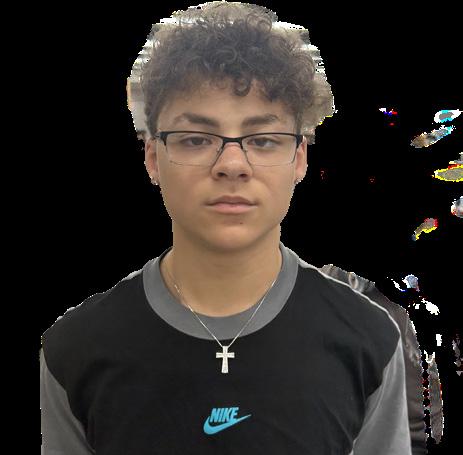
He rose to fame early this year for the drastic measures he took to enhance his appearance. In other words, there is not much Peters has not done in the name of facial harmony.
For upper school counselor Clare Roney, the online presence of these influencers raises questions about their motives.
“Some of these people have no regard for how their message impacts young and impressionable adults who are listening and paying attention in negative ways, because for them, it’s just money in their pockets … sometimes you wonder how much of it is true, and how much these influencers really believe this themselves,” she said.
As [looksmaxxing] went through multiple stages through social
media, it became pretty serious.
ninthgrader Andreas Bauer

While sophomore Annika King does not follow the happenings of the looksmaxxing sphere, she shares a similar impression of its purpose.
“I feel like they’re probably not doing it for themselves, like [Clavicular], if he keeps going, [it’s] because he’s getting famous for looksmaxxing,” she said.
DISTRESSING DANGER
According to a 2025 article by Michael Haplin and Meghan Gosse, et al., in the journal Sociology of Health & Illness, most male-targeted looksmaxxing or self-improvement spaces online ultimately encourage self-harm, whether intentionally or not, and have detrimental effects on the mental health of their participants. The study introduces the concept of looksmaxxing as “an emerging health and social issue.”
Sophomore Leo Mosenfelder is not inclined to take part in any of these influencers’ practices.
“It’s extremely messed up,” he said, “especially if you do it consistently, that’s going to cause a lot of long-term problems.”
There are several dangers introduced by the rise of looksmaxxing, but it has simultaneously resulted in a new area of jokes on the internet.
Roney recognizes the potential for varied reactions to such a movement.
“Hearing some of the other things that [Peters] is involved in, it was really clear to me really quickly that this person is not well … But, for some it might be laughter, like ‘this seems wild, this seems absurd,’” she said.
As for the future of looksmaxxing, Bauer does not see the movement lasting much longer.

In line with this system of assigning worth based on appearance, Peters and other online looksmaxxers frequently reference a specific scale in an attempt to determine one’s objective physical attractiveness. Some people may be more likely to internalize these standards praised online, especially adolescent boys who are targeted by these creators.
According to a 2025 article titled “The Im-
Additionally, in favor of correcting features that worsen one’s appearance by looksmaxxing standards, Peters and other influencers have gone far beyond promoting typical strategies for self-improvement, such as going to the gym and wearing heel lifts. They now encourage using hammers to reshape bones, dramatic leg-lengthening surgeries and hormone injections. In an inter-
“I think it will die down and more awareness will be brought to the bad parts,” he said.
Looksmaxxing as source material for humor is likely its least dangerous form, but while that may be the extent of most people’s interactions with these words and ideas, their existence is enough to create a health risk. ninth-grader Jeray Bass

ment officer Derek Chauvin in May 2020.
His parents were nervous about allowing him to attend but eventually agreed.He described these protests as an important part of the development of his political consciousness.
“I hated why Minnesota was in the national spotlight, and I hated the demonization and misrepresentation of the people that were speaking out … but I also thought that it was very impactful for me to see my home be in the national spotlight and be the center of attention for that reason,” he said.
that 67% of Americans said they supported Black Lives Matter in June 2020.
While some point to Floyd’s murder as the pivotal moment of Minnesota activism, the organizing started earlier – in 2015, two MPD officers fatally shot Jamar Clark; a St. Anthony Police Department officer shot and killed Philando Castile in 2016. For many, Floyd’s killing reopened old wounds and calls for justice previously unfulfilled. Chauvin was convicted on all charges, but no charges were filed after an MPD officer shot and killed Amir Locke, who was armed, in 2022.

campaign
Percentage of youth that say they have different civic actions



more a failure of our leg islators and our lawmakers that they allowed this to continue to happen and allowed police corruption to go on.”
Five years after Floyd’s death, a May 2025 Pew Research Center report noted that 72% of Americans believe the focus on race after Floyd’s killing did not lead to improvements for Black people.
Similarly, senior Hazel McCarthy noted the muted legislative response – at least so far – to the shooting at Annunciation Catholic Church and School on Aug. 27, 2025. She participated in a student walkout against gun
MINNESOTANVOICES

“I think it is discouraging that nothing has changed, but it’s also not surprising, given how many shootings there have been and how many protests there have been from every school shooting,” she said. McCarthy’s earliest experience with activism occurred at the Women’s March in 2017, when she joined with her mom. Eight years passed before she attended another demonstration, but since then, she has grown to appreciate the power of
my community being af fected … so then I went, so I want to try going to more protests, even when I don’t see what’s wrong directly.”
Students including Coblentz, McCarthy, sophomore Keian Bietz and ninth-grader Siri Holden all joined the movement in the Twin Cities against U.S. Immigration and Customs Enforcement.
The organized response to Operation Metro Surge encompassed marches, food and rent assistance, volunteer school patrols and statewide economic blackouts.
Bietz protested for the first time in the St.
empowered seeing young people from across St. Paul standing together for a common cause: “It’s important for youth to be involved in protests, because it kind of shows how [these issues are] affecting everyone, and not just certain people that want change, but the next generation [too],” he said. The coordinated movement against ICE helped pressure border czar Tom Homan to announce a drawdown and end to Operation Metro Surge. However, Holden and other activists are asking for greater legislative reform.
“I felt live in
“I wouldn’t say it [was] really [ICE] she said. To lization Paul was flagship No Kings tionwide by several ganizations to the tion. While preciated of Minnesotans’ she worries a clear No Kings change.
Hazel McCarthy
ILLUSTRATION: Amanda Hsu
of youth said they have attended a protest

Media distortion shifts attention from activism
aligns with their beliefs.
VOICESRISE




a victory … I want to stop in general,” said. honor the mobilization against ICE, St. was chosen as the flagship city for the third Kings protest, a nationwide movement led several progressive organizations in opposition Trump administraWhile McCarthy appreciated the recognition Minnesotans’ efforts, worries that without clear set of demands, Kings will fall short of change. felt really proud to in the Twin Cities
and to be in a place that’s doing good … [but] the best type of protests are the ones that actually ask something, like the ICE out ones,” she said. Reflecting on a school year full of activism, Holden said it can feel frustrating that so many crises have occurred so close to home: “It’s obviously disappointing that these things are happening, but I feel like the more stuff happens, the more people should be trying to speak up.” Silence, she said, is not the answer.
For example, on June 1, 2020, President Donald Trump issued a statement on the protests in Minnesota. “In recent days, our nation has been gripped by professional anarchists, violent mobs, arsonists, looters, criminals, rioters, Antifa and others,” he said.
After the No Kings protests, Sofen recalls a very positive response from many politicians, even though he thinks they may have an ulterior motive when describing it this way.
I
feel like a lot of the ways I saw it described in the news was that it was all riots and bad.

“I feel like it still kind of helps them to describe it that [positive] way because ... I feel like it’s the kind of protest that they think is good,” he said, “just people walking, and I think feeling better about themselves for participating.”
Sophomore Zoe Brenner mentioned Trump’s use of art generated by artificial intelligence in social media as a reaction to the recent No Kings protests. “I remember the post Trump made related to No Kings where he was wearing a crown and portraying himself as a king,” she said.
Politicians frequently express their opinions on demonstrations, sometimes to make fun of or delegitimize them. The flagship No Kings protest took place in St. Paul on March 28, and an estimated 100,000 to 200,000 people attended.
In recent statements, officials have dismissed the “No Kings” protests seen throughout the country and even throughout the world as “Hate America Rallies” or claimed they are sponsored by “leftist funding networks.” This danger-
ous language completely reframes protesters by describing them not as citizens who are exercising their rights, but as threats to democracy or extremists. When language is used to exaggerate, minimize or redirect attention, it can obscure the truth.
“Obviously, the president loves to antagonize the Democrats, so that’s one thing he would certainly benefit from,” Haupt said.
Minnesota saw a rise in protest misrepresentation during Operation Metro Surge from early January to Feb. 12. Trump was quoted as calling the response to U.S. Immigration and Customs Enforcement an insurgency, adding fuel to an already intense situation. While not participating directly in the protests, Haupt heard different perspectives on the news. “I was definitely hearing earlier this year about the protests ... and how the president was talking about how they were violent, even though it was a peaceful protest,” he said. Regarding politicians’ messaging about demonstrations, Brenner believes they try to highlight all of the negative aspects if they are against the cause.
“[Politicians] are cherry-picking, for sure. They’re cherry-picking to find stuff that they can use to make the side they’re against seem violent and out of control,” she said.
Haupt believes that protesting is important because it means you can’t be arrested or indicted for sharing your views.
“The right to protest means to be able to speak out against things that you don’t like, specifically the government,” he said. As a fundamental part of the First Amendment, the right to protest is exercised every day across the nation. When some protests garner substantially more attention or occur on a larger scale than others, it’s easy for politicians and the media to distort the core message. While no protest is without complexity, reducing it to a single narrative, whether peaceful or chaotic, fails to capture the full truth.
junior Eddie Sofen

Senior homecoming?
Check. Senior speech?
Check. Next up? Senior project.
With the final mo ments of high school just around the corner, the end evoked mixed feel ings for the Class of ‘26.

BITTERSWEET
I’m kind of sad to be leaving the people I’ve known for basically my whole life. “
For senior Luwam Mebrahtu, who joined the school in first grade, the finale is bittersweet.
“I’m kind of sad to be leaving the people I’ve known for basically my whole life, but I’m also really excited to meet new people and go to college and have that college experience,” she said.
She revealed that consistency is what she will miss most.
“I am definitely sad that I’m never gonna have the same routine. And coming to school, I’m never gonna be able to arrive with my sister anymore,” she said. “My favorite memories have been arriving at school. I always walk in with

For many, it’s simply the atmosphere they mourn. Senior Franny Wagner, who has been at the school since kindergarten, will miss the community most.
“I feel like I’ve really seen everyone grow throughout the years, which has been kind of crazy. I just think about these connections that I’ve had since I was five years old,” she said.
In an effort to cherish their last moments with
live in the moment a little bit more, not being so caught up in work or what’s going on in class, kind of just enjoying the time I have left with my teachers and then with my friends, just being with them is kind of enough for me,” he said.
Similarly, senior Lilly Spurgeon is cherishing her last weeks by engaging with the community.
“I’ve been spending a lot of time with my friends inside and outside of school, and I’ve been trying to talk to new people and make new friends,” she said. “I feel like I should spend the last time I have at SPA interacting with people, that’s really important to me.”
The commencement celebration is scheduled for June 7. However, seniors are obligated to complete an independent capstone project of their choice in the month leading up to the celebration.
All of the projects are unique and personal. For Spurgeon’s project, she is traveling to work on a farm in Alaska with several of her friends.
“I’m super excited for my senior project, I think it will be a cool opportunity, and I’m excited to spend time with [my friends] in the last moments of the school year,” she said.
The class of 2026 said their final goodbyes on April 24 when the upper school student body lined the hallways to bid farewell and departing seniors walked out the Huss exit and into four weeks of senior projects.


Kim reflects on her prolific years as an illustrator Seniors wrap up classes; begin projects
IZZY MIDDLEBROOK THE RUBICON
When looking at the many illustrations senior Annika Kim has created for publications, it is a common reaction to feel shocked at the sheer amount of what she has produced. She simply sees it as working on schedule.
Kim’s journey with art, specifically digital art, began before she can remember. She fondly recalls time spent doodling on her iPad. When Kim first started, she liked drawing characters and stylized objects.
DID YOU KNOW?
“If you look at all my The Rubicon illustrations, I try to use a lot of colors rather than trying to portray things realistically,” Kim said. She characterizes her art style by its extreme colors, distinct shapes and focus on emotion. However, this was not always the case.
However, what she remembers is not necessarily the drawing, but the opportunity to bring a unique idea to life. “It was one of the first times where someone was giving me their vision,” Kim said, “and then I had to kind of realize it more.”
That first experience led her to create a set process for making editorial cartoons.
Kim begins with a sketch from the team working on the editorial, outlining their ideas for the cartoon. She likes to read the editorial piece to truly understand the writer’s angle and pick out specific passages that have meaningful visual imagery. Kim then develops her own sketch and layers colors to get an idea of the final product.

“When I first started out, I leaned into a more realistic [art style] even though my art is more stylized and cartoony,” Kim said.
Her journey to illustrating for publications began with the Writing for Publications class in ninth grade. This led to Kim’s first role in publications as a contributing illustrator. “My main job was just working with people from all sorts of different sections and producing graphics, and then full on illustrations,” she said.
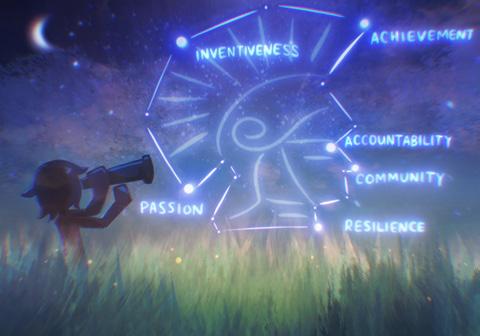
Once she has a draft of the editorial cartoon, she sends it to the opinions editors early on for feedback. “I like to upload different options for editors to choose, so if something doesn’t fit the page, they can easily pivot,” she said.
For Kim, the many awards she has received have not been the sole highlight of her illustrative publication journey. Instead, it was assembling a portfolio of her work in her sophomore year. “I had to compile all my illustrations, and I had made around 20 in one semester,” Kim said.
She also realized that she had made an illustration for every section in the print newspaper.


“I think being able to contribute to every single part of the paper throughout the years has been something really special,” she said. While Kim’s career illustrating for upper school publications comes to a close after April, her art will be preserved in The Rubicon, and the depth and beauty that her illustrations added to every story will remain.
PHOTOS: SPA SmugMug
PHOTO ILLUSTRATION: Izzy Middlebrook, Annika Kim EDITORIAL CARTOONS: Annika Kim
SPARTAN SPIRIT. US Council co-presidents greet the crowd at the spring All-School Assembly on April 21.
INFLUENTIAL ILLUSTRATOR. Senior Annika Kim has illustrated for The Rubicon since 2022, creating editorial cartoons on policy, school mission and values, and more.
BEGIN. END. Senior Huxley Westemeier high-5’s a kindergartner as the whole school applauds the class.
senior Luwam Mebrahtu
WYNTER FEINER THE RUBICON
Annika Kim illustrated cartoons for The Rubicon in 22-23 while living in South Korea for a year.
HOW TO:


3
STEP THREE: YOU CAN’T SIDESTEP THE SUDS
Despite the fun that spring cleaning can provide, Chaney knows from experience that it can get messy. “I remember cleaning out … a really dusty cabinet,” he said. “It was pretty bad.” Unfortunately, for step three, it’s time to get to the nitty-gritty. Get your water, towel or whatever you use to clean. The American Cleaning Institute recommends cleaning by starting high and progressively working your way downward. Begin with things like ceiling fans, high walls or windows. As you go lower, you can move on to items like furniture pieces and the floor. This method of cleaning helps you stay consistent and direct as you clean. You can’t go down before you’ve finished the above level.
SPRING CLEANING
LILLY
PARR THE RUBICON
With the changing of the seasons, it has become common practice to participate in cleaning out one’s spaces and possessions. After a brutal Minnesota winter, the task of tidying four to five months of chaos into a pristine and shiny spring cleaning job can be daunting. While there isn’t a one-size-fits-all plan to complete such an intimidating task, the following five steps can help you begin your mission.
2
STEP TWO: SPRINGIFYING
This step involves getting rid of or cleaning out winter items to prepare your space and possessions for spring. “You keep a lot of stuff in your house in the winter ... [it’s] kind of like dispelling all the winter out,” ninth-grader Dhru Chaney said. Ask yourself what items are used only in winter. Is it a bulky winter coat? A pair of boots? A shovel or sled sitting by the door? Items like these, used only per season, are the sort you can put away or organize because they won’t serve you much use in the coming months.
1
STEP ONE: PLAN OF ATTACK
Before you can get to actual cleaning, figure out how you want to approach the task. This plan will look different for everyone depending on what they want to accomplish. Consider what you want to get done, how long each task will take and where you need to be to complete them. Think about what rooms, spaces or areas you’ll focus on. Another strategy to plan is to use tools to help you along the way. For ninth-grader Delaney Anderson, listening to music with her mom helps her get in the mood for cleaning. Anderson has been spring cleaning since she was 8 years old, and music has stayed a consistent aid throughout the years. “It used to be … stereotypical 2016 music, and now it’s whatever’s on,” she said.
“

4
STEP FOUR: PUT IT AWAY
Now that you have cleaned your space and removed all the winter items, it’s time to organize. Put items where they belong, sort things and add labels. Organizing helps all your prior steps feel neat and tidy. “Spring cleaning is the perfect time for me to reorganize my bookshelf,” junior Emmet Mena-Larsen said. “I love to organize my Smiskis. I often use them to decorate around my fish tanks.” You can be creative with this step: color-code, create fun labels or store items in unique ways. The opportunities to show your style and creativity while organizing are endless.
You keep a lot of stuff in your house in the winter ... [It’s] kind of like dispelling all the winter out.
ninth-grader Dhru Chaney




5
STEP FIVE: REVEL IN YOUR FEAT
You did it! After four steps of hard work, you can finally celebrate your accomplishment. You can walk through the room without tripping over miscellaneous items, you can see the floors shining clean and you can look out the window into an exciting, new spring.
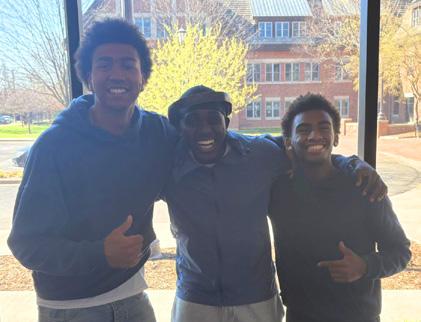

Spring cleaning is the perfect time for me to reorganize my bookshelf.
junior Emmet Mena-Larsen
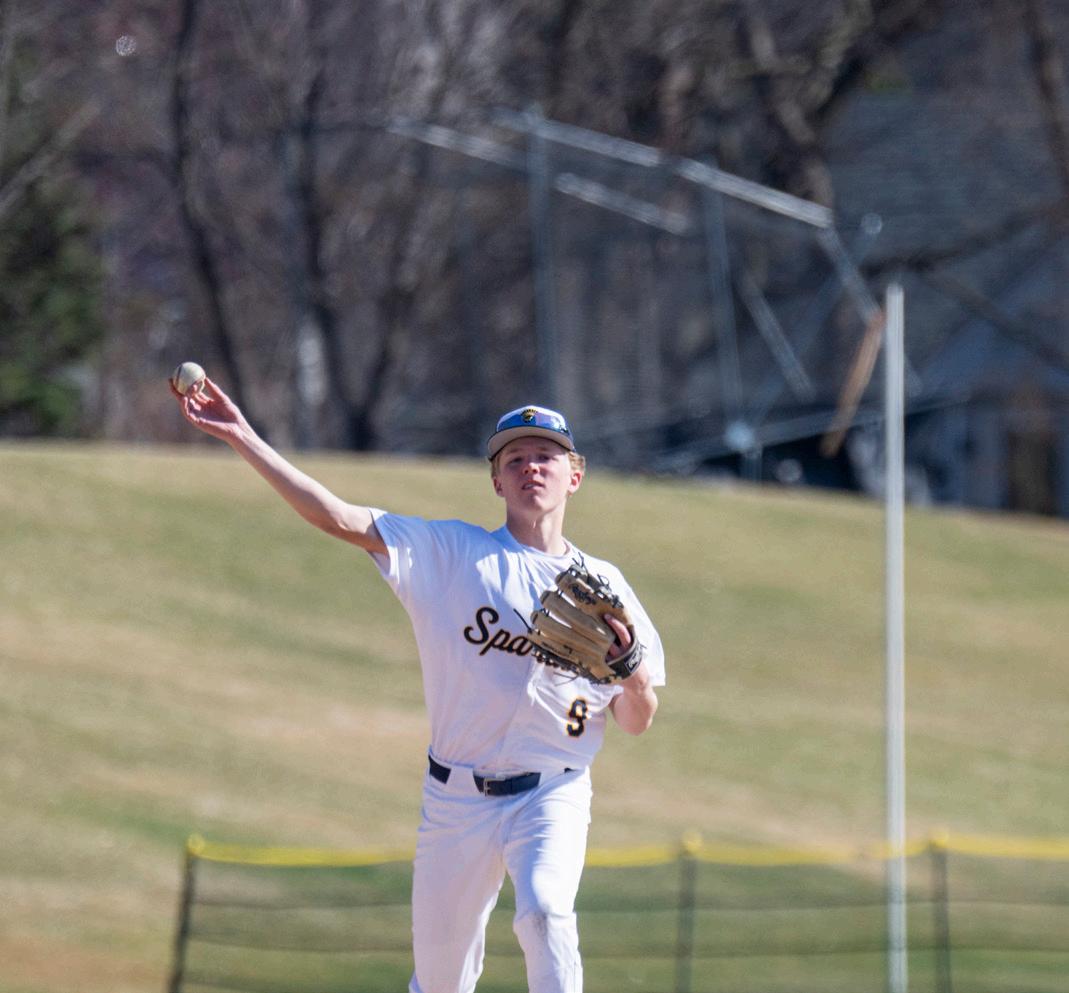
POWERFUL PITCH.
RUBICON - APRIL 2026
SPRING SPORTS FIND THEIR GROOVE
What’s next for each team?
BASEBALL
EVIE GARDNER
THE RUBICON
The boys baseball team looks to find strength through team cohesion. Junior Henry Fenlon has been playing the sport for 12 years and is excited to start this season off with his team. “[I’m looking forward to] hanging out with the guys again and hopefully being a little bit better than the last few years,” he said.
STEADY HAND.
Captain Quentin Sentz lines up his view before he aims to putt it in the hole.
DETERMINED.
Sophomore
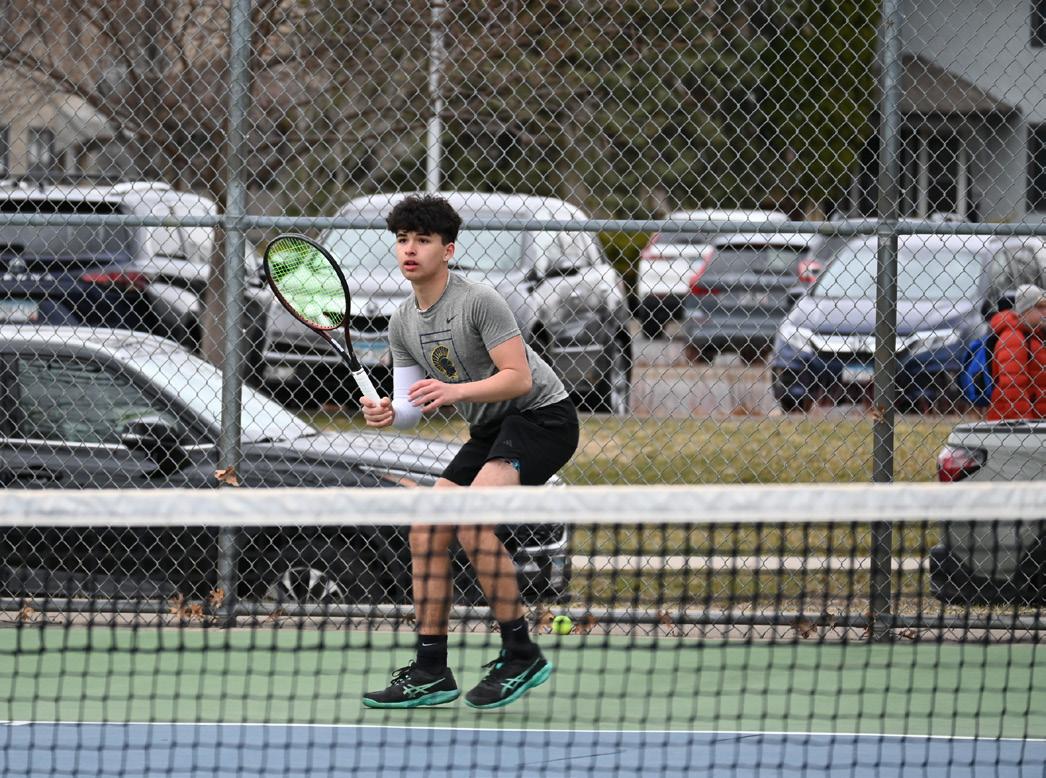

BOYS GOLF
ARIELLA KIM
THE RUBICON
According to boys’ golf captain Quentin Sentz, the team plans to implement fun team bonding activities alongside competitive matches and consistent opportunities for skill development this upcoming season.
The team’s new head coach, Colton Werner, has already made several positive adjustments to help with team culture. “Within a week, he has already implemented changes to the program, focusing on team spirit and bonding, as well as improving our skills, all of which I am looking forward to,” Sentz said.
BOYS LACROSSE
EVIE GARDNER
THE RUBICON
BOYS TENNIS
ARIELLA KIM
THE RUBICON
The boys tennis team looks forward to a season filled with opportunities for individual and team growth.
According to sophomore Lucas Laguna, this upcoming season will differ significantly from last season, including a new coaching staff and fewer players. However, Laguna feels these shifts will not negatively impact the team and instead will allow all players to improve. “With our new coaches this year, I think we’re looking at good opportunities for growth,” he said. “I think we’ll just be able to break down a lot more things individually with the players, especially with the really strong coaching staff.”
Additionally, Laguna hopes that these changes and improvements will lead the team to win the Class A state championship for the fifth consecutive year.
GIRLS GOLF
ARIELLA KIM
THE RUBICON
Ninth-grader Kasheng Thao looks forward to getting back onto the course and improving person to team connection. To achieve the closeness that Thao hopes they can reach, the team has incorporated ways to get to know teammates better. “We usually mix up groups during rounds of practice, which gives us time to learn more about each other and how we got into golf,” she said.
According to Thao, the team’s main challenge is beyond their control. “The obstacles my team will face are probably the weather. It greatly affects our practice time,” she said. However, taking advantage of the time they do have as a team, as well as practicing individually, will allow Thao to rise above this potential roadblock.
Last season, the team went 5-12, but Fenlon is optimistic. “We’ve been on the younger side, so hopefully in the next couple years, we will be solid,” he said. Regardless of their record, the team will continue to do their best and enjoy their season. “The whole team is pretty fun to be around. We have a good group of guys on it,” Fenlon said.
This is Fenlon’s third year on varsity, where his experience helps him to maintain positive attitude for the upcoming season.
Along with his excitement and hopefulness for the upcoming season, Sentz recognizes a challenge the team may face. “Many players are at a similar skill level across varsity and [junior varsity], so deciding who will play in which matches will be tough,” he said.
However, observing individuals’ dedication and implementing new ways of evaluating skill level, such as scoring days, will help coaches determine which players will play varsity matches. As a personal goal, Sentz hopes to lower his average score and act as a mentor to younger players.
Seven schools unite within Blackhawks lacrosse, fostering diversity, connection and adding strength to their team. Though the abundance of school backgrounds may daunt some, captain Richard Romans views the variation of the team as a strength. “I do think [having more people] matters, having different characters and qualities of people on a sports team, because it shows up in their game,” he said.
Romans is prioritizing team chemistry, with the ultimate goal of a strong performance. To combine these two goals, drills and activities have been implemented outside of practice into the team schedule. “Getting group bonding in outside of the established practice time is huge. So we’ve started doing team dinners, or team running and shoot around outside of practice and on the weekends,” Romans said.
After going 13-12 last year, the Blackhawks are using bonding, practice and Romans’ leadership to get through another solid season.
BOYS VOLLEYBALL
EVIE GARDNER THE RUBICON
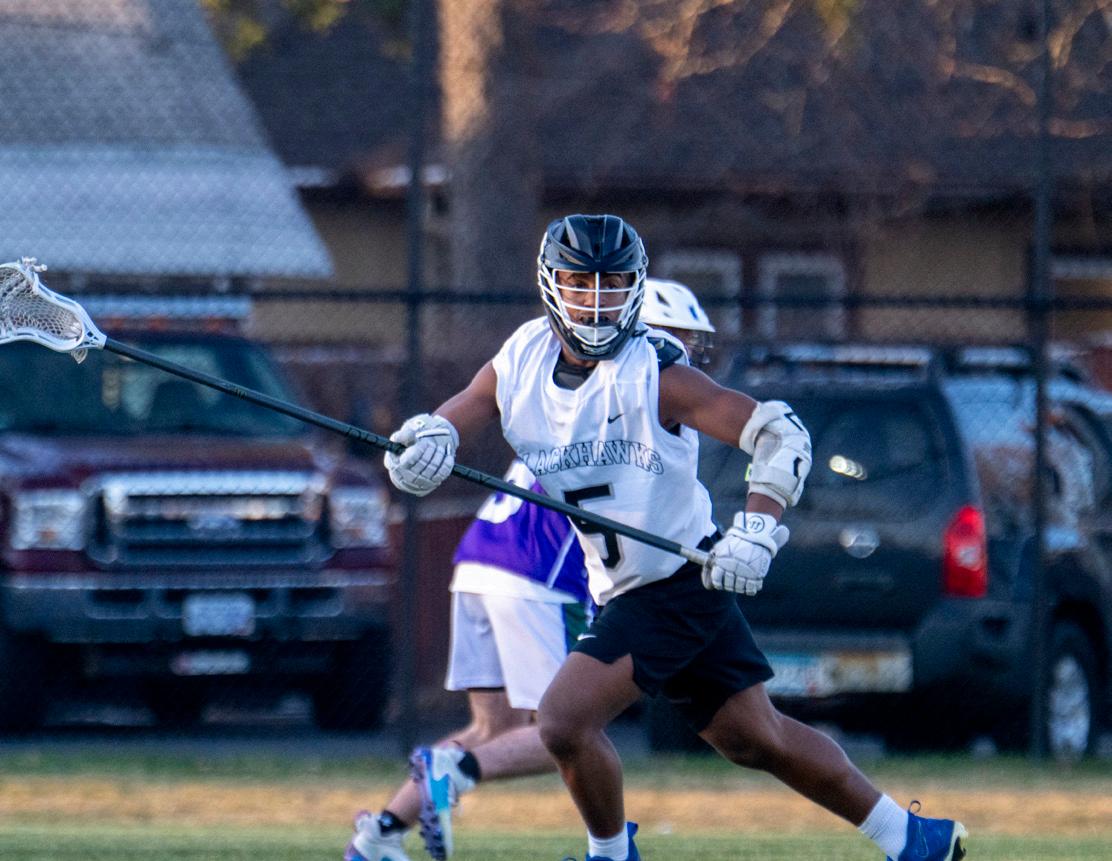
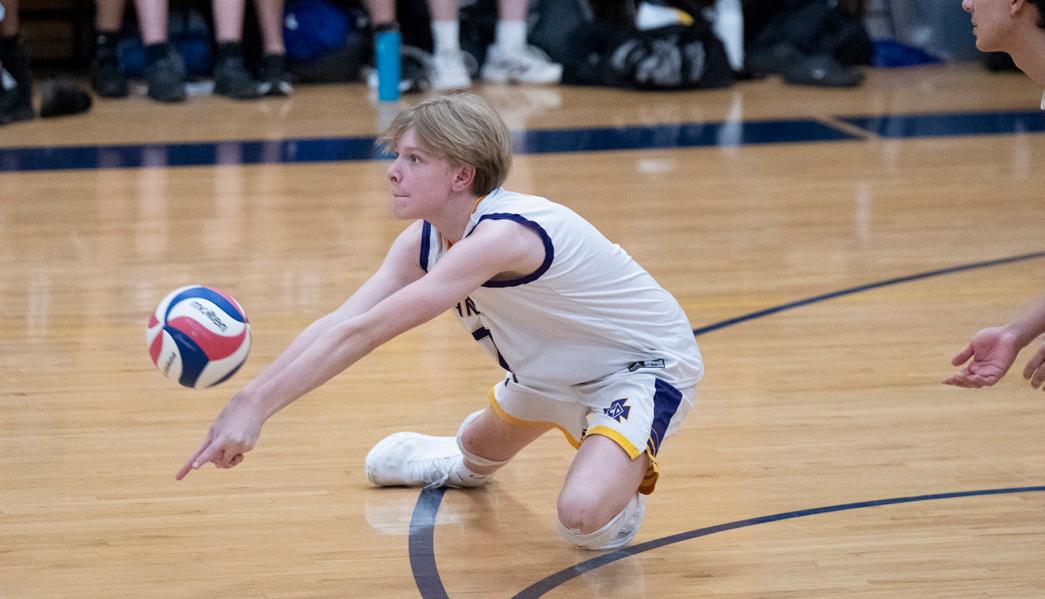
The brand new boys volleyball co-op team with neighboring high school Cretin-Derham Hall houses many new opportunities for growth and collaboration.
Ninth-grader Lucas Messier finds the team getting into their groove despite adjusting to the newness of a co-op. “I feel like our team culture is really good. We’re definitely starting to become a lot closer,”
In addition to practicing their sport, the team also emphasizes bonding, with the hope of improving cohesion and skills. Messier thinks this approach will work, and has seen improvement in the closeness of the team. “I remember the beginning. It was definitely very awkward,” he said, “I think we really just have to get used to each other … Our schools are really different. I think getting more used to each other and how we act will definitely help how we play.”
Overall, joining the team has been a positive experience for Messier. “I think it’s super fun,” he said, “since it is mainly new people, it’s really cool to meet a bunch of new people, and it’s definitely new to play high school sports. Definitely a fun experience.”
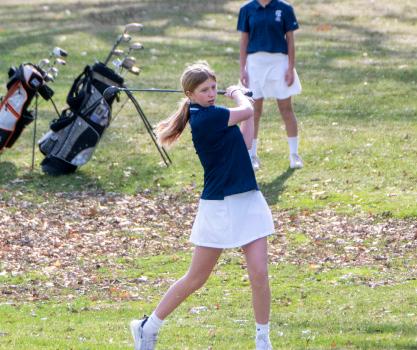
Messier, along with four other SPA volleyball, aim to make an
impact on the new sport for the future.
WATCH AND WAIT. Sophomore Miles Coates Cush runs with his stick in his hand and eyes glued on the ball.
PHOTO: SPA SmugMug
PHOTO: Keian Bietz
LOW LIBERO. Ninth-grader Lucas Messier, teams varsity libero, falls in effort to dig a ball spiked from the other team.
FOCUSED FORM. Ninth-grader Annika Bruun holds her form after striking a golf ball during a tournament.
PHOTOS: SPA SmugMug
Captain John Grimsrud pitches during a home game.
Luca Kempcke stands at the ready to receive the ball during a tennis match.
PHOTO: SPA SmugMug
- APRIL 2026
GIRLS LACROSSE
EVIE GARDNER
THE RUBICON
The girls lacrosse team is filled with new faces and talent every season, coming from three separate schools. Ninth-grader Solveig Emery is a prime example of this, having played for eight years but playing for the Spartans for the first time this season. Emery has enjoyed her experience so far. “Everyone is welcoming on the team, and it’s just a good environment to be in,” she said.
The girls lacrosse team - a co-op with St. Agnes School, Nova Classical Academy and St. Croix Lutheran Academy - has been practicing for weeks leading up to the start of the season. A highlight for Emery is traveling during the season“I’m looking forward to our trip up to Duluth … It’s a tournament, we play two teams up there,” Emery said.
Girls lacrosse has no lack of talent or enthusiasm, as the team continues to practice tirelessly in preparation for their matches and tournaments.
SOFTBALL
ARIELLA KIM
THE RUBICON
According to sophomore Zoe Wagner, the Redhawks softball co-op team with Minnehaha Academy hopes to build a tight-knit community and anticipates a season of development.
With only 16 girls enrolled, the program will have a slightly different format than last season, as many girls will be swing players, playing in both junior varsity and varsity games. “It’s going to be difficult because there are a lot of people without
SAILING
EVIE GARDNER THE RUBICON
After a loss of key senior crew members, the sailing team is looking to rebuild to continue its solid performance fall season. Junior Leif Rush has been involved with the club team since sixth grade, and is helping to attract new players.
“We are trying to get more middle school involvement for next year, and trying to get more people interested,” he said. The team is focused on creating a positive and welcoming environment for newer players.
“[Our team culture is] very supportive, we’re trying to have people go have fun, because a lot of people on the team are very new to sailing,” Rush said. Rush is excited for the team’s spring celebration.

very much experience,” Wagner said. “I think we’ll overcome this challenge, though, by being there for each other and helping everybody get better.” Wagner also plans to help foster a close-knit team and take advantage of the opportunity to build strong relationships within it. “Since there’s less people, hopefully that could lead to a healthy team dynamic, and we’ll do what we can with that, concerning things like team dinners and team bonding,” she said.
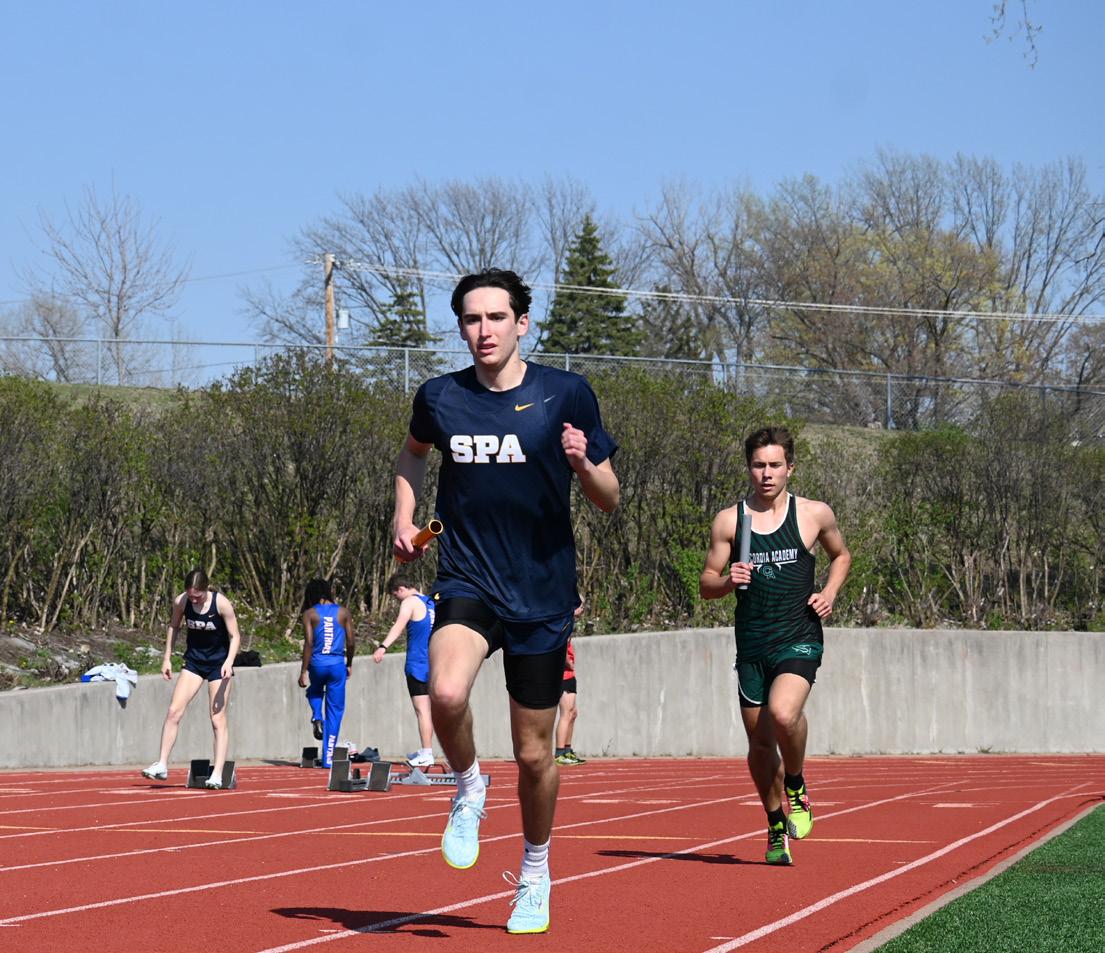
PHOTO:
TRACK AND FIELD
ARIELLA KIM
THE RUBICON
Sophomore Lucy Byrnes looks forward to the new connections she will form in the upcoming track and field season and hopes to increase team cohesion. “I think the biggest team goal for this season is to make the team more of a community. Since track is more of an individual sport, it’s harder to have everyday moments of team bonding,” she said.
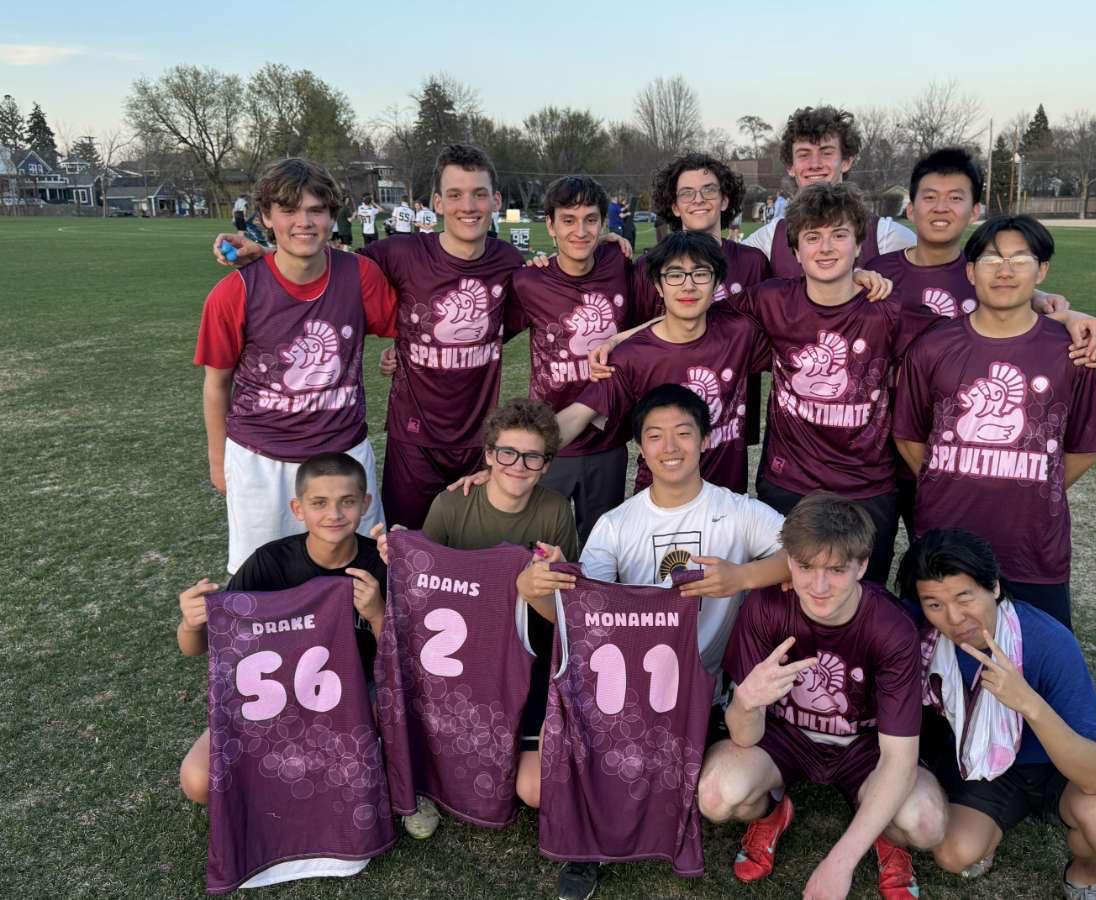

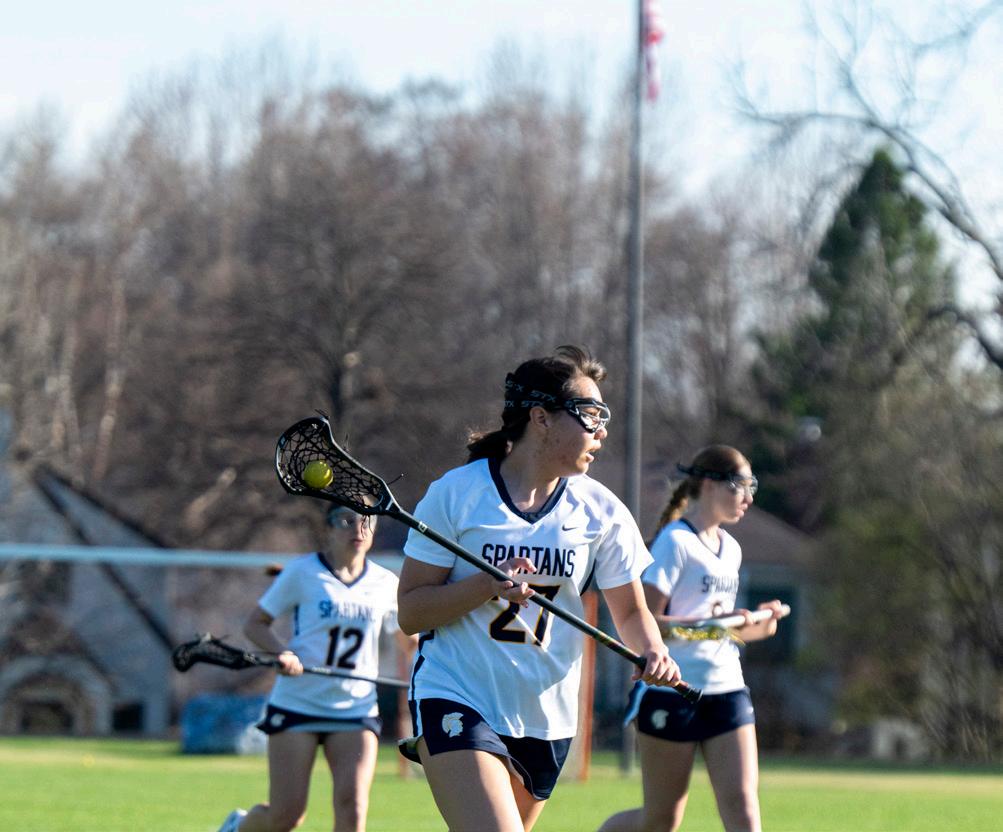
“At the end of the spring, we throw all the seniors into the water,” he said. The team has had two regattas so far, and is also looking forward to their state regatta, which will take place at the Minneapolis Sailing Center May 16-17, where the team practices. Scan
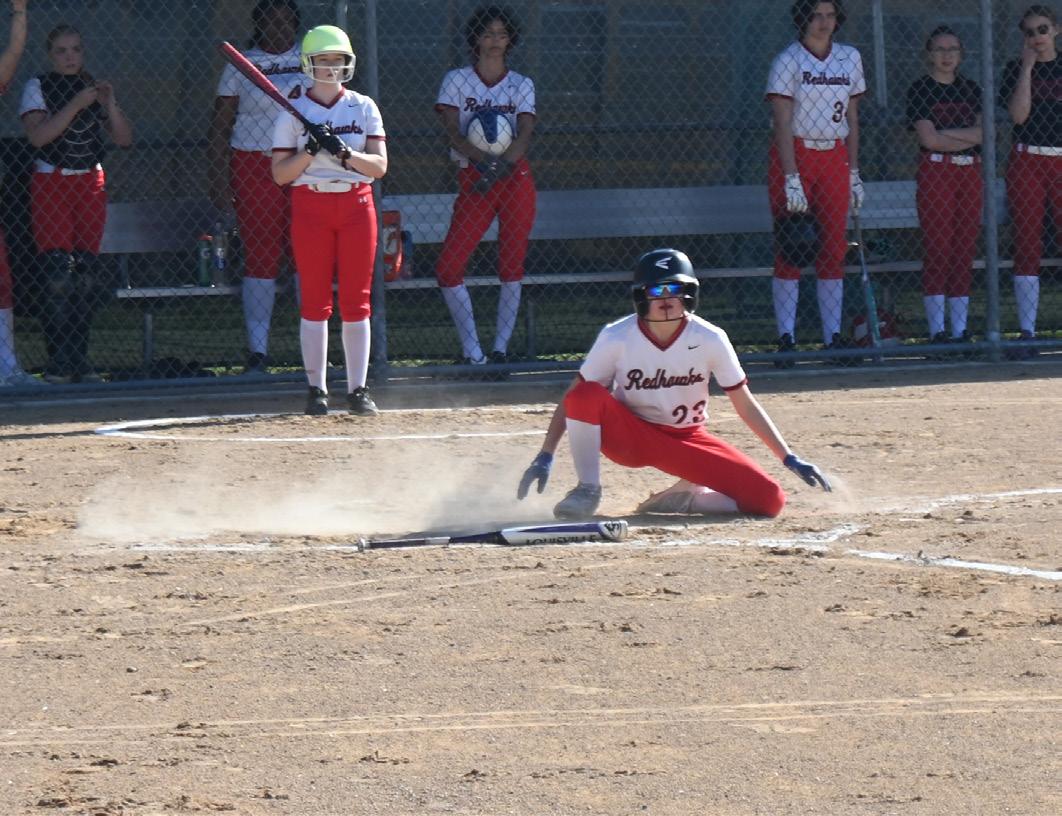
ULTIMATE
EVIE GARDNER
THE RUBICON
The track and field team has already implemented many ways to foster this sense of community, including a weekly activity called Barnyard Battles, in which the team splits into groups to complete various challenges. “It’s a super fun experience that helps grow connections,” Byrnes said.
She also has a personal goal to balance diligence with fun. “We definitely have a lot of hard workouts that are pretty draining, but the feeling of accomplishing these workouts is always great and the support from teammates makes it a more enjoyable experience.”
TRAP SHOOTING
EVIE GARDNER THE RUBICON
Junior William O’Brien is looking forward to the trap shooting season, hoping to continue personal success from last year.
“I got 25, a perfect score,” O’Brien said. Trap is a very individual sport, so athletes face lots of internal challenges in addition to physical ones. O’Brien foresees potential challenges with incoming pressure from the college application process. “A lot of trap shooting is mental, so especially with starting college searches, you can cloud up pretty fast,” he said.
As the season begins, O’Brien hopes to get aligned with his teammates while shooting. “With rhythm comes better shooting for everyone,” he said. O’Brien has been a key player on the team by earning high scores and hopes to see individual and collective achievement continue in his sixth year playing.
For ninth-grader Eamon Curran, ultimate frisbee is a new experience not only athletically, but also in terms of fresh connections.
Curran focuses on technical skills and learning the game during Monday, Tuesday and Wednesday practices. “I just started so I’m still kind of figuring it out, but it’s fun … I want to get better and learn more how to play,” he said.
Team synergy is also a priority for the athletes, which is focused on through small-group scrimmages. “We’ve been doing a lot of scrimmages with groups … I think it’s just to build relationships with the people on the team, while still getting practice,” he said. Curran looks forward to playing in real games, which are set to take place on Thursdays. “I think the games are going to be fun,” he said.
Despite ultimate frisbee being a first time experience for him, Curran is excited to see what the season brings, and improve his playing skills as he goes.


PHOTO: Grace Berger
PHOTO: SPA SmugMug
SUBMITTED
Ryan Shiroma
PHOTO: Michael Stone
PHOTO: Ellie Whitcomb RELAY RACE.
Junior Isaac Broderius competes in a relay race during a invitation at Roseville Area High School on April 22.
ULTIMATE UNIT The ultimate team poses with their jerseys April 17 after their third consecutive win.
TAKE AIM Junior William O’Brien competes in his sixth year of trap shooting and hopes to replicate his perfect score from last season.
CAREFUL CRADLE. Junior Stella Hunter cradles the ball as she runs towards the opposing team’s goal.
SKILLED SAILING. Junior Adi Narayan and his sailing partner guide their boat across bumpy waves.
SAFELY SECURED A Redhawks softball player sprints and secures their spot at third base.
PHOTO: SPA SmugMug
SPORTS
THE RUBICON - APRIL 2026
For the love of the climb
Windorski aspires to new heights
SYLVIA WESTRA THE RUBICON with friends, playing video games anymore. I’m more so just training all the time. My weekends are very full because I’m going out of state to do competitions, or I’m just going out of state to climb with other friends,” he said.
Sophomore Jianli Windorski loves everything about rock-climbing. For him, it is an emotional outlet. “If I feel stressed out, I can just discard everything that happened at school or the rest of my life. I can just go climbing and clear my head,” he said.
Windorski first started climbing at age four at a summer rock-climbing camp, where he became hooked. After many summers of climbing camps, he joined the Vertical Endeavors Minneapolis rock-climbing team five years ago and began competing.
Since joining the team, rock climbing has become a significant time commitment for Windorski.
“I’m not spending nearly as much time
Windorski has also made many of his closest friends through the sport and on his team. “It’s very fun, because we push each other to be better.”
Outside of his team, Windorski practices avidly. He uses the school’s weight room and even spends some of his free periods climbing the rock at the middle school. To improve his skills, he does hangboarding, which involves hanging from a small edge to build his grip strength and endurance.
Windorski competes frequently; this year, he placed first at regionals,
qualifying him for divi sionals in Illinois in midApril. He also placed in the top seven, qualifying him for nationals at the end of June, where he hopes to reach the finals.
I look up to a lot of the pros in my sport, but I also look up to just other people on my team. “
sophomore Jianli Windorski


Despite his frequent success in competitions, he admits that his dayof mental preparation is messy, as well as his nutrition.
“I drink half a gallon of strawberry milk and a bunch of potato chips,” he said. “And because
I’m a teenager still, my metabolism is able to keep up with that amount of sugar and that amount of carbs,” he said.
In comparison, Windorski admires those who have mastered what is an area of growth for him.
“I look up to a lot of the pros in my sport, but I also look up to just other people on my team, because their work ethic is a lot better than mine,” Windorski said. “I’m very impressed, or in awe, of people who are able to keep their cool under pressure, because that’s something I struggle personally with.”
Rock climbing made its Olympic debut at the 2020 Tokyo Olympics
(held in 2021). Windorski is excited about the growing attention the sport is receiving.
“I like more people getting into the sport, because that means I get more friends to climb with, even if they’re not as good as me
His advice for beginner rock climbers is to keep trying and go climbing a lot if you want to get better. “The harder you’re able to climb, the
more climbs you unlock,” he said.
Although one’s skin is likely to hurt at first, Windorski promises it gets more fun.
WNBA tips off, fans cheer compensation equity in new union pact
LILLY PARR THE RUBICON
In October 2024, the New York Liberty won their first Women’s National Basketball Association title against the Minnesota Lynx. That same month the WNBA player union, which supports all league players, announced that it was backing out from the Collective Bargaining Agreement.
WNBPA president Nneka Ogumike said, “If we stay in the current agreement, we fall behind. This is a new era and we are ready to lead transformational change.”
At that moment, the need for a new CBA that the WNBPA would agree to was present but not urgent. However, once the 2025 season came to a close a year later, the WNBA and WNBPA needed to come to an agreement before the 2026 season could begin.
After months of negotiations between the two groups, a unanimous decision by the WNBA’s governor board was reached and a new CBA was approved on March 24. Despite the length of time that the agreement took to be written, agreed upon and approved, sophomore Elise Nelson doesn’t see it as overdue.
“The league has grown significantly within the past five years and [the WNBA] … wasn’t getting the viewership that they are now,” Nelson said.
The WNBA’s viewership increased by 48% in 2024, according to a press release from that year.
Junior Eliana Moser, who has been a fan of basketball for many years, also noticed this increase in attention.
“The WNBA hasn’t been around for that long and I
think we’re … finally starting to see that it’s gaining … more, or as much, traction as the NBA,” she said.
The league’s growth is a key component to the new agreement. According to the 2026 official release from the WNBA, the first “comprehensive revenue-sharing model in women’s sports history” is included in it. That means that as the league gets bigger, and more successful, the players will be getting paid to account for that. As the WNBA expands, its success and growth is often compared to the National Basketball Association’s achievement.
“Compared to the men’s game and how [the NBA is] being treated … it puts more value on the WNBA,” Nelson said.
“
Players will have better incentive to play well and have more fun because they don’t have to worry about money.
ninth-grader Liv Cole

This new agreement, set to span seven years, will also allow for players to have their salaries raised up to $7 million, which is a large increase from the previous $1.5 million. The CBA will also contain benefits for rookies, raising their salaries by a great deal, even for pre-playing rookies. Finally, there will be retirement benefits, expansions of player 401(k)s and related plans, as well as veteran pay and recognition.
A timeline of the WNBA’s six Collective Bargaining Association deals
The league reached its first CBA deal, the first deal of its kind in all women’s sports leagues.


A second CBA gave the players a 4% pay increase and was negotiated for eight months.
A third agreement was reached after the addition of the Atlanta expansion team.
“[The CBA is] overall, making the league more professional, or as professional as the men’s league … I think that can help women’s sports, in general, be taken more seriously,” Moser said. “Especially with trailblazers like Catlin Clark, Paige Bueckers, Angle Reese .. all these players that have been in the media … for good or bad, it’s bringing attention to women’s sports in a way that we haven’t seen before.”
While the agreement’s benefits for the players are widely agreed upon, not everyone concurs on how it could affect fans. Considering the high number of players who watched the last two WNBA seasons, this year is expected to be well-attended. “It’s more fun to watch athletes that are given the resources they deserve,” Moser said. “The players are more fun to watch when they’re doing better outside the game.”
Ninth-grader Liv Cole disagrees on how it will affect fans. “There’s nothing in [the CBA] that really affects [fans],” they said. “The only way the fans will be affected is that the players will have better incentive to play well and have more fun because they don’t have to worry about money.”
As the WNBA gets closer to its first tip-off of the 2026 season, the new CBA is also ready to go. If the agreement’s purpose is realized, it will enhance players’ lives, build stronger teams and create a more well-rounded league. The passing of the new CBA offers lessons of care, equity and a bright future in all sports. To quote the iconic warm up shirt worn by players at the 2025 All-Star Games, “Pay Us What You Owe Us.”
A 50-50 revenue share was introduced, and players received paid maternity leave and better travel conditions.


A fourth CBA offered a time off bonus and a fine for players that took time off to play overseas games.

2008 2014 2020 2026

The most recent CBA was agreed upon this season; salary and revenue sharing were the main priorities.
SUBMITTED PHOTO: Jianli Windorski
NEW HEIGHTS. Sophomore Jianli Windorski climbs at the divisional competition. Windorski placed within the top seven and will compete at nationals this summer with his friends.
ARTS & ENTERTAINMENT
THE RUBICON - APRIL 2026
Platform for protest: music of resistance
IVY EVANS THE RUBICON
From Joni Mitchell’s anti-industrialism anthem “Big Yellow Taxi” to Bob Dylan’s vitriolic “Masters of War” and Billie Holiday’s haunting lament about racial violence in “Strange Fruit,” protest music has been omnipresent in U.S. culture for generations. Today, in response to the surge in U.S. Immigrations and Customs Enforcement
ence in Minneapolis, many artists have followed their predecessors and used their platforms to speak out.
Bruce Springsteen, for example, dedicated “Streets of Minneapolis” to, of course, the city. The song spoke out against ICE’s unjust actions toward civilians and their presence in the city in general, paying tribute to citizens Renee Nicole Good and Alex Pretti, who were killed by federal agents early this year. Springsteen also attended a recent No Kings protest in the Twin Cities on March 28, joining many



other big names in the music industry like Maggie Rogers, Joan Baez and Tom Morello.
Junior Anneli Wilson looks to classical music when thinking of protest in art. Wilson is an avid admirer of Dmitri Shostakovich, a Soviet-era composer who used his compositions to speak out against Joseph Stalin’s regime. He had gained widespread fame before Stalin took power, so when art began to be censored, Shostakovich used his music as resistance and his renown as protection. Wilson believes that Shostakovich’s example can translate to today’s art.


“You listen to the music now, and it’s so clear that it’s … full of anger, it’s full of disdain,” they said.
“I think that that’s something that we
can really look to today and take inspiration from, especially for the artists out there who have a platform, and who are able to make such bold statements like that, and will still be protected.”
Wilson also believes that it’s crucial for those who are able to to take advantage of those opportunities to do so: “I think it’s so important for people like that to use it, and not just use it to speak out, but create art that will last through the issue, so that … when inevitably something happens again, people can look to that for help.”
Ninth-grader Liv Cole shares a similar sentiment: they encourage artists to speak out and believe that freedom of expression is vital in the music scene.
“I think music is supposed to show feelings, and if the political state right now is making people feel things, I think [it’s] great that they’d like to express it. … It makes a better connection with the music artist, because they are people going through the same frustrations as you,” they said.
Junior Iris Luther-Suhr leans towards bands who
have been involved in protest music more recently, like Springsteen and U2. She recently attended a Springsteen concert in Minneapolis, and often listens to a Spotify playlist of protest music, appreciating the opportunity popular artists take to speak out.
“Art is political. It always has been, and always will be. And there’s some art that is not political, and it’s fine if people like their art to not be political, but you can’t silence an artist from creating their art by saying that politics doesn’t belong in the music industry,” she said, “I think that everything belongs in the music industry.”
Anti-war sentiments and arguments for civil rights tend to be the main themes of protest music, and have historically been unifying for the groups affected by the issues. But this socalled mainstream protest music, though it may be the first thing to come to mind for many, is not the only one. Wilson appreciates the punk and Riot Grrrl genres for their similarly unifying roots in social justice and activism.
“[Riot Grrrl was] a very strong, new-wave and radical … feminist ideology that these artists would use to … fuel their music and to create spaces that were just for women, that especially in the punk scene, where it’s so male dominant,” they said. Luther-Suhr believes that protest music is something that is often endangered, and, at the same time, something that should be protected.
“Art is kind of a tool of resistance and of freedom, and that theme is kind of present in a lot of what Spotify calls protest music, like this idea of art or music being something sacred and in danger that … the world is trying to take down,” Luther-Suhr said.
Protest music may be very diverse, but all its forms have one thing in common: they’re timeless. As long as artists continue to care about the events and issues that will affect the future, protest music will live on.
Rise in period pieces reinvents film landscape
Period films have always been a large part of the American film industry; from “Shakespeare in Love’s” sweeping Oscar to dominance in 1999 to “Barry Lyndon’s” delayed arthouse appreciation, the genre holds major ground in cinema culture. But in recent years, this filmmaking style has increased, with over half of the 2025’s Best Picture nominations being period films, ranging from late 16th-century England to mid-’70s Brazil. Aside from Oscars success, period films have also had a significant cultural impact, with Ryan Coogler’s mid-20th-century vampire thriller, “Sinners,” being the most prominent recent example. Other films like “The Holdovers,” “Oppenheimer,” “Killers of the Flower Moon” and “Licorice Pizza” have had a massive impact on American popular culture and success at the Academy Awards; some have achieved both.
Even in the early moviegoing months of 2026, one of the biggest movies the year has provided, so far, is another period piece, “Wuthering Heights.” Although it received mixed negative reviews, it became a massive cultural touchstone and had a surprisingly positive run at the domestic box office (given its middling critical feedback).
“
There’s only so much you can say from only a modern perspective.

Senior Eli Henretta believes that these period pieces are essential for maintaining consistent, interesting releases.
“I think it’s good to
see period-style movies because there’s only so much you can say from only a modern perspective,” he said. These period movies, paired with frequent contemporary-set films, can provide a strong balance in cinematic offerings, which gives the average viewer more options and types of films to see.
Sophomore Keian Bietz has a different view of period films.
“I enjoy movies set in present day more, I feel like period ones can be kind of boring,” he said. “When I think about my favorite movies that have been released recently, most of them aren’t period ones.”
Ninth-grader Echo Ernst shares a similar view to Bietz, preferring contemporary films over period ones, but she can still appreciate the latter.
“I personally like contemporary set movies more because I generally just turn to those when choosing something to watch, but I think if I watched a period film, I would enjoy it,” she said.
Besides the films themselves, she also appreciates their significance in shaping the modern film industry.
“I see that period films have a significant impact on the modern popular film industry because I believe older movies, such as history, influence and inspire people’s interests,” she said.
Period films are among the oldest styles in the history of movie-making, as some of the earliest films are classified as period films. They have been around longer than any other genre, yet their popularity and significance continue to grow. As the film industry continues to develop, maintaining period films’importance is essential to a healthy cinematic environment.





PETER OSTREM THE RUBICON
senior Eli Henretta
SINGING CHANGE. Artists like Sam Cooke, Joni Mitchell and Bob Dylan have all produced music calling for political and social change.
PERIOD PROLIFERATION. Many new period pieces have hit the big screen over the past few decades. “I enjoy movies set in present day more,” sophomore Keian Bietz said.
PHOTOS: Fair use images; Apple Studios, Miramax, Warner Bros.
Scan this QR code to read a review of “Sinners,” one of many recent period films.
ARTS & ENTERTAINMENT
THE RUBICON - APRIL 2026

SENIORS SHOWCASE “FISHY BUSINESS” GALLERY
AMANDA HSU CHIEF VISUAL EDITOR
There is something fishy about the Drake Gallery this month. Closing out their final semester, the senior art gallery is making waves, showcasing unique works loosely inspired by aquatic creatures.
With a grand opening on April 7, the annual senior art gallery hosted in the Drake Gallery is titled “Fishy Business.” The name is rooted in the loose theme of fish, with three pieces featuring them throughout the gallery.
“At some point … half our class was painting a fish, and so that really inspired me to paint a fish,” senior Ella Bond said.
Alongside her painting, senior Evy Sachs displayed a collection of her
pottery pieces inspired by goldfish, and senior Frances Conrod-Wovcha created a painting with a fish-patterned background. The fish theme idea was one of many the students had thrown around before voting on the theme.
The gallery showcases the art of three classes: Advanced 3D Art, Advanced 2D Art and Advanced Photography. Bond, who is enrolled in the 2D section, specializes in painting and, more recently, a new art trend, bedazzling. Bedazzling involves gluing on small jewels to cover the surface of an object or art piece.
With three bedazzled paintings of different animals in the gallery –a fish, a goose wearing sunglasses and a turtle –Bond combined the two art techniques to create

her pieces. This semester, she has also completed multiple regular acrylic paintings and bedazzled a 24K gold Labubu.
“I’m very inspired by whimsy and animals. I paint a lot of animals a lot of the time, and I like bedazzling, so I tried to work that in there this time,” Bond said.
The art wing’s supply of glue and multicolored jewels helps Bond create her pieces. But with every piece, her process differs.
“Usually, I would paint the background [and then] I would go over with my bedazzling,” Bond said, “I kind of just did it off of what I thought fit the painting the best.”
Advanced 3D art also has a host of students displaying their work, including seniors Kavita Deo and Kai Wetternach.
From mastering the pottery wheel to sculpting, 3D students most often work with the clay medium to harness their creativity.
senior Kai Wetternach “
sculptural work. Wetternach said his process “in total [took] five hours. I had to throw them, I had to trim them, I did like an initial firing, and then glazed them and then they were ready.”
You’re seeing the max of SPA art ... this is the culmination of all of our years.

Wetternach really wanted to focus on his cup-making skills and chose his most recent pieces finished with new glazes to submit, which include four cups and one
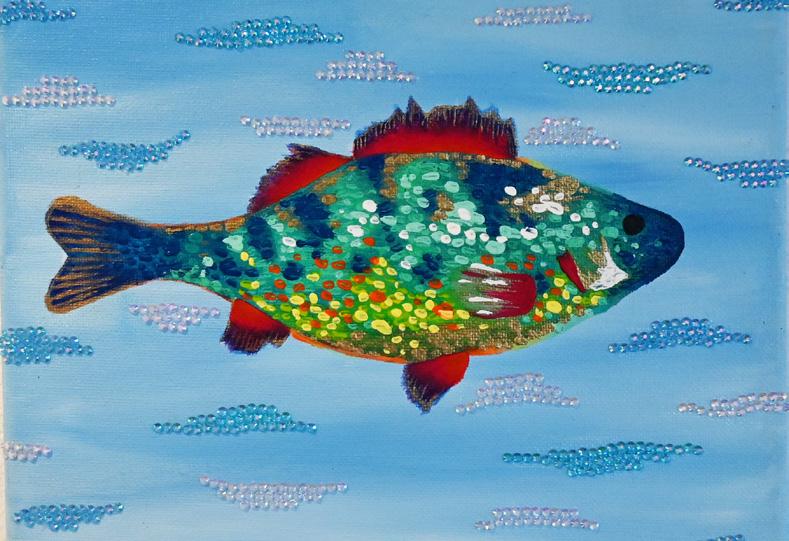

Similarly, Deo chose three works of pottery to showcase, all inspired by flowers. Two were thrown on the wheel and one was made in a slump mold, a process that involves flattening a slab of clay and laying it on a curved surface to achieve the desired shape.
“Honestly, I just put in my favorites that I’ve made so far this semester. I wanted to do more wheel stuff, but sometimes I need a break from the wheel, so I [tried a slump mold],” Deo said.
The variety of art on display in the gallery highlights the unique

thought fit the
styles that seniors choose to express themselves, from painting to mixed media to drawing to pottery and even bedazzling. Days away from finishing their high school careers, “Fishy Business” allows the student body to take a peek at their classmates at the height of their mastery, giving these artists the credit they deserve, as they gracefully bow out.
“You’re seeing the max of SPA art … this is the culmination of all of our years,” Wetternach said. With so many seniors enrolled in art classes, “Fishy Business” will close temporarily from May 1 to May 8 to refresh the exhibit with more student work. The next group’s exhibit will be open for visitors until May 30.
1 2 3 4 5 6 7 8 9 10

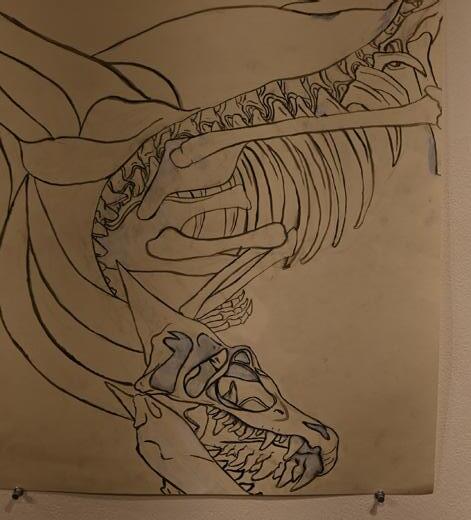


did
the

FISHY FRAMES. Seniors in various art electives showcase their works in the spring gallery. “I kind of just
it off of what I
painting
best,” senior Ella Bond said.
PHOTO: Amanda Hsu
JUAN MIGUEL ADAMS
MANAGING EDITOR
What comes to mind when people think of Minnesota foods often depends on who is being asked. For some, it leans Scandinavian toward dishes like lutefisk. For others, it is the state’s mashups like pickle pizza, the Juicy Lucy burger or even a fried stick of butter. But the foundation of Minnesota’s food culture runs far deeper and is rooted in the traditions of the Indigenous communities that have lived here for generations.
Long before restaurants and state fair inventions, Indigenous food in Minnesota was shaped by what the land and water provided, moving with the seasons. Wild rice, or manoomin in Anishinaabemowin, sits at the center of this food system. Around it are ingredients gathered and prepared with care, including bison, freshwater fish and berries like blueberries and raspber-
RASPBERRIES
NORTHWEST ANGLE WILD RICE -

INDIGENOUS FOODS: ARTS & ENTERTAINMENT

FRESHWATER FISH -

culinary CULTURE NATIVE NARRATIVES PRESERVE FLAVORS OF IDENTITY
WHITE SAGESOUTHEAST

ries. Plants such as sage, cedar and maple are also essential, for their flavor as well as nutritional and medicinal uses carried through generations.
Linda Black Elk, an ethnobotanist, educator and food sovereignty activist, said, “I would want someone in Minnesota to eat wild rice, but more importantly, to hear and understand the Indigenous relationship with wild rice, including how it has been valued historically and the multitude of ways in which Indigenous people are fighting to protect wild rice today.”
Junior Stella Hunter has grown up eating Indigenous food, and shared that they are not just everyday staples, but often tied to moments of gathering. “We’d mainly have them on special occasions, during community gatherings, like powwows,” she said. “When I go visit on the reservation, those are the foods that we’ll have.”
The sense of occasion is not just unique to Hunter’s experience.
Indigenous food is not just about consumption. It appears at powwows and funeral ceremonies, where food marks time and connection.
junior Stella Hunter “
It’s kind of funny having a restaurant made for Indigenous people and not being accessible to them.

In mourning traditions, food is not something an individual prepares alone. The community cooks and provides meals over several days to support the grieving family. Depending on the nation and the family, foods like venison, fish and corn-based dishes may also be served.
However, Indigenous food has evolved since colonial times, which has
brought forward dishes like fry bread. While fry bread is now a staple at many Indigenous gatherings, the food emerged from postcolonial times. It emerged in the mid1800s after the Long Walk of the Navajo, when the Navajo Nation and other Indigenous communities were forced to rely on government rations like flour and lard. Made from what was available, it became both a staple and a reminder of the resilience of Indigenous people. “Frybread is a deeply cherished survival food born out of a time when Native people were forbidden from harvesting and eating their traditional foods,” Elk said.
Still, Indigenous food is often misunderstood.
“There’s this mentality that we’re just hunter-gatherers eating sticks and berries,” Hunter said. “But that is not true.”
Agricultural systems like the Three Sisters, which involves planting corn, beans and squash together, show the depth of agricultural knowledge and
sustainability practices that Indigenous communities have maintained.
The sustainability associated with traditional Indigenous lifestyles is part of why some see Indigenous food as not just cultural, but necessary. “A lot of native people have intolerances to the food that we eat today in postcolonial times. My whole family is lactose intolerant, because we didn’t have cows, and there are a lot of gluten allergies, and sodium is very hard for a lot of native people,” Hunter said.
In the Twin Cities, there has been a growing effort to bring Indigenous food into the public sphere. Restaurants like Owamni, led by Sean Sherman, have gained national recognition for centering precolonial ingredients and preparations. But visibility does not always mean accessibility.
Hunter pointed out the contradiction. “It’s kind of funny having a restaurant made for Indigenous people and not
being accessible to them,” she said, noting the high prices.
Sherman does offer alternatives, such as the Indigenous Food Lab, which serves many of the same dishes but with the aim of being more affordable and community-focused.
For Hunter, the future of Indigenous food is not about exclusivity. “Everybody can have some … I really wish that we would switch as a whole society over to more Indigenous foods because it’s just way more sustainable,” she said.
Minnesota’s food identity is often tied to popular dishes and different communities. Beneath that is something older and still present. It lives in the lakes where wild rice grows and in the kitchens where it is prepared and shared, Indigenous food.