

The Rubicon student newspaper of St. Paul Academy and Summit School 1712 Randolph Ave St. Paul, MN 55105
Volume 50, Issue 7 - Apr. 22, 2025


The Rubicon student newspaper of St. Paul Academy and Summit School 1712 Randolph Ave St. Paul, MN 55105
Volume 50, Issue 7 - Apr. 22, 2025
Where we have been and where we are going.


8-9

ACCESSIBILITY ADVANCEMENT. Distraction-free color palettes, simplified digital layouts, voice-activated doors, touchless light fixtures, sensory-friendly spaces with noise dampening and adjustable lighting are a few examples of ways technology has become more accessible for differently-abled people after years of advocacy efforts.
A wheelchair ramp in the choir room. Elevators located throughout the school. A ramp in Redleaf to get to the main first floor. These are instances of naturally integrated accessibility. This ensures that when a student is on crutches and can’t go up the flights of stairs, they can take the elevator. With accessible design, every person has equal
access to all parts of the building. But accessible design was not and is not always a guarantee. In fact, it has a history of slow but steady change as people of all abilities fought to create environments that were inclusive and accessible for all. This history dates back to ancient times, with many well-documented instances over the last few centuries. According to a brief history by the
BOYCOTT? YES / NO
Corporate boycotts because of DEI rollbacks send a message, but are they huring more than the bottom line? Read more in OPINIONS.
ARE ... GOING TO BE DIFFICULT FOR ANYONE WITH MOBILITY ISSUES.
senior Veronica Dixon

University of Massachusetts, Formal schools were created for Dead and Deaf-Blind children in the 1800s. These schools prioritized those student’s needs in the classroom. In 1937, the bendy straw was invented by Joseph Friedman, who initially marketed it toward hospitals to help bedridden patients sit up more easily.
The Architectural Barriers Act was signed into
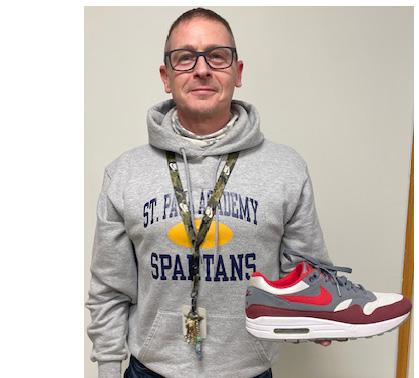
College Counseling Assistant Carey Otto joined the ranks of rookie collectors with a pair of Air Jordan 1s. Now? He’s a pro. Read more in FEATURE.
law in 1968. The law was created in an attempt to level the playing field for people of all physical abilities by President Lyndon B.Johnson. Johnson’s administration took the first dive into tackling accessibility on a federal scale.
In 1982, the Access Board published minimum guidelines for accessible design, serving as the first set of in-depth guidelines and criteria for removing barriers in design for differently abled people. Then in 1990, the system changed when the American Disabilities Act was passed. This banned discrimination beyond public jurisdiction and ensured access to all services, transportation and buildings for differently abled people.
VIEWING GIRLHOOD
Whether politics, education, health or fashion, museum-goers can choose their own adventure at the Minnesota History Center exhibit. Read more in
How is the community living the sexual harassment and misconduct policy this year?
“
SPA THINKS IT DEFINITELY NEEDS TO BE IMPROVED ... I PERSONALLY FELT HURT BY THE WAY THEY HANDLED IT.
JUAN MIGUEL ADAMS MANAGING EDITOR
SONIA KHARBANDA THE RUBICON


IT SEEMS LIKE A PRETTY GOOD POLICY BUT IT SEEMS LIKE IT’S NOT BEING IMPLEMENTED THAT WELL. “
junior Nora Seifert
“
I THINK WE SHOULD HAVE A ZERO TOLERANCE SEXUAL MISCONDUCT POLICY.
sophomore Aldegundo Brenneman
One year after its debut, the revamped sexual misconduct policy remains a work in progress. The policy, which Students Against Sexual Harassment unveiled during Community Day last February, marked a significant step forward in defining sexual misconduct, outlining reporting processes and centering student voices. However, students and administrators acknowledge there is still work to be done.
Sophomore Anessa Herzi appreciates that the policy broadens the scope of sexual misconduct but believes precedence can be challenging to establish.
“With a new policy, there comes the issue of well, ‘What’s the norm? How do we treat all these cases equally, if they’re similar?’” she said. “I do believe that a lot of the time there needs to be more work done on how to actually implement

The revised policy includes sections on definitions, instances of sexual harassment, interim and long-term disciplinary
actions and protocols for reporting and administrative response. The policy does not aim to have a one-size-fits-all disciplinary approach since sexual misconduct can vary from case to case.
Dean of Students Stacy Tepp emphasized the time and attention given to the policy; it had been in the works long before its introduction to the student body. When she started as dean three years ago, she and then-principal Ken Jaffe and the counselor at the time, Emily Barbee, met with a group of seniors nearly weekly to discuss concerns surrounding sexual misconduct.
Then, last year, Cerena Karmaliani, Serene Kalugdan and Naomi Kempcke (‘24) attended a summit on sexual misconduct at the Georgetown Day School. Upon learning that SPA was in the process of redrafting its sexual misconduct policy they wanted to be involved.
“One of the seminars that we attended was about how to create an effective policy,” Kalugdan said, “led by a school in Seattle that had a student-driven policy with a bunch of stuff like interim measures and how to report…and we wanted to implement those aspects in our school.”
Karmaliani, Kalugdan and Kempcke returned with a vision: to make a policy that was transparent and inclusive.
“Before, sexual harassment was just a short paragraph buried under bullying,” Kalugdan said. “We wanted students to understand their rights, and to know what support systems exist–especially interim measures to protect survivors during investigations.”
Karmaliani said that the policy provides the necessary framework in its wording. Given the number of people who helped create it—including law enforcement, lawyers, consultants from other independent schools, students, and administrators—she feels confident in the language. Its application, however, has been more challenging.
“For a new policy,
what the school tends to go upon is not only just the language that’s in the handbook but what they’ve done in the past. So you need some sort of precedence to make sure that you have the same consequences…When it’s a fully new policy that hasn’t been enacted, you can understand why there’s some confusion and lack of action there,” Karmaliani said.
Tepp sees room for improvement in the school’s overall culture to prevent sexual misconduct.
“I see a lot of competition among students, and I wish it was more care, like we’re in this together,” she said.
For sophomore Nico Martin, improvement of the sexual misconduct policy would involve more communication: “I think one big assembly is good, but also more little stuff throughout the year, to just keep it fresh in your mind,” Martin said.
Acknowledging that educating and supporting the community about sexual misconduct remains a priority, Tepp hopes that a group of students will attend the Georgetown Summit again next year and plans to continue assemblies and inviting input.
AMANDA HSU THE RUBICON
On March 25, Minnesota Gov. Tim Walz announced an update in the telework policy for state employees, requiring individuals working for the state government to spend 50% of their workdays in person, with an expectation for individuals who live more than 75 miles away from their primary office location.
BOTH OF MY PARENTS WORK FROM HOME, AND I FEEL LIKE IT’S A LITTLE HARDER TO [COMMUTE].
senior PJ Bohjanen

This switch comes after the long-lasting COVID guidelines that allowed employees to work from home. The official Minnesota state government website states that the regulation change is due to a renewed effort to boost “economic vitality” and “foot traffic,” supporting local businesses in the office districts.
“COVID is basically is so little of a threat now. It doesn’t make sense that people are still working from home unless they still need to, but I think if you’re not directly impacted by COVID or by anything else, then there’s no point in just staying home. Before COVID, it was the norm to go into work,” junior Hazel McCarthy said.
The press release also highlighted increased collaboration and work culture as additional reasons for the
switch. “This approach balances the flexibility of telework with the workplace advantages of being in office. Having more state employees in the office means that collaboration can happen more quickly and state agencies can build strong organizational cultures more easily,” Gov. Walz said on the Minnesota state government website.
However, this change could reduce some students’ time with their parents or limit their availability with an increased commute.
According to the state government website, around 60% of state employees consistently work in person. This policy is projected to affect around 40%, or 14,000, workers.
In response to the announcement, the Minnesota Association of Professional Employees organized protests March 29 and 30 in front of the Governor’s residence, garnering around 500 participants.
The protest opposed reverting from pandemic-imposed restrictions to stricter in-office guidelines. Many workers cited how the requirement would change their family responsibilities. They mentioned how much of their current work set-ups would require restructuring to accommodate the increased number of in-office employees.
“Both of my parents work from home, and I feel like it’s a little harder to [commute] because you need to make up more time to go to work and come back, and it’s harder to coordinate with the family,” junior Ethan He said.
This change is expected to officially go into effect on June 1.
of state employees have been working in person since the beginning of 2025.

homes or from low-income families.
Three months into U.S. president Donald Trump’s second term, a conflict has arisen: Trump vs. the Department of Education.
The department, established in 1979 by former President Jimmy Carter and Congress, provides federal funding for universities and schools nationwide as well as services for students with disabilities, without
If Linda McMahon, Trump’s secretary of education, dismantles the department, all educational authority would return to local and state governments. Education advocates argue this would harm civil rights protections for students, especially those from low-income communities. They believe that discrimination would increase without the department’s protections.
Although almost every school in the U.S. would feel the impact, dismantling the department would most affect public schools.
“A very small percentage of the [Department of Education] funding goes to private schools. However, it means that we would no longer have protections against discrimination…[against] trans kids and…people with disabilities,” sophomore Iris Luther-Suhr said. “Because that’s what
BY THE NUMBERS
44%
of U.S. adults report a favorable opinion of the Department of Education
0.2%
of overall federal employment was in the Education Department last year
9.9
million students received federal aid in fiscal year 2024
PUBLIC OPINION. In a short read by Drew Desilver titled “What the data says about the Department of Education” the agency created in 1979 has been stable.
the federal government does. It sees injustice and it … enforces civil rights.”
It would be difficult to dismantle the department altogether. Congress would have to act by passing a law, which is unlikely even though conservatives and right-leaning individuals have long advocated to get rid of the department.
“Ronald Reagan tried to close it legally with Congress. Donald Trump is using executive orders as a loophole…[But] none of this is legal. This is not how the government is supposed to function,” Luther-Suhr said.
The Trump administration has been working to dismantle the Department of Education for most of Trump’s current term. So far, Trump has signed an executive order calling for eradicating
“
sophomore Iris LutherSuhr

the department, allowed Immigration and Customs Enforcement raids on public schools, made many cuts to the department’s staff and stripped some schools of critical funding.
In the past, even as recently as last year, bipartisan support in the U.S. House has overturned calls for the department’s elimination.
In March, student advocate Ayaan Moledina
spoke at a news conference in Texas alongside many Democratic lawmakers to criticize the idea. Multiple lawsuits have also been filed. A coalition of advocacy organizations, like the NAACP and the National Education Association, has sued Trump for attempting to dismantle the department. So what can non-politicians do? “[People can] spread awareness about the issue, reach out to lawmakers, [and] aggregate to get Congress to intervene and … provide protections for the Department of Education,” Luther-Suhr said.
While the future of the Department of Education is uncertain, lawmakers and government officials are continuing to discuss possible solutions.
LINA ABID THE RUBICON
Whether the moment involves screaming, sighs of relief, disappointment, or tears, receiving an admissions decision can be an emotional ordeal. However, following the release of most decisions in late March, the choice of how to share their news is now up to students.
Announcing a college decision can be a great source of pride, but in some cases, it can amplify feelings of competition between students.
According to a 2010 report by Joyce A. Martin from the National Center for Health Statistics, 4,316,233 births were recorded in 2007, the most since the postwar baby boom of the 1950s. This spike makes the Class of 2025 a larger group of applicants than in previous
years, leading to a record number of applications at many colleges and universities. According to College MatchPoint, the Class of 2025 submitted over 8 million college applications through the Common App—a 6% increase from last year. This year, UT Austin experienced a 24% increase in applications, with NYU seeing a 53% increase over the past five years.
Senior Julia Taylor has generally felt this impact on her class: “I do know this year was definitely a more competitive year for college in terms of applicants, especially at popular universities,” Taylor said.
Recognizing the possibility for this kind of competition, college counselor Evan Hansell emphasizes the individuality of college decisions.
“One of the things we let all seniors know
IT’S HONESTLY JUST CHOOSING BETWEEN GOOD AND GOOD FOR ME. “
senior Julia Taylor

at the beginning is that the choice of where they choose to go to college is one that is a choice for them, and they are welcome to share that with whomever they feel comfortable sharing that with,” he said. “However, they should know that it is a private choice, so we don’t recommend overdoing it on social media.”
The social account dedicated to the Class of 2025 college decisions is @spaclassof2025. These posts became a popular

announcement method during the pandemic and have remained prevalent over the years.
“What I’ve seen on [the Instagram account] has always been a very tasteful way of announcing what they’re choosing to do next year. It’s always opt-in, so I think that’s a good thing too,” Hansell said.
One of the posts on the SPA decisions account is senior Leila Mosenfelder, who announced she will be attending Macalester College in the fall.
“I’ve told family and family friends…not many people at school, but then my mom told me about the Instagram posts, and I thought it was cool, so we did that… it felt good,” she said.
Mosenfelder chose to apply early decision, but others are still wrestling between choices. That’s where Taylor is.


“I was really fortunate to be able to get accepted in the places where I could see a future for myself, and I’m really excited. It’s honestly just choosing between good and good for me,” Taylor said.
“In terms of sharing,” she added, “I’m going to wait until I make a final
decision to share with the broader community. And of course, I’ll put it on the Insta.”
Whether it’s something they would rather keep quiet or if they find pride in a huge celebration, every senior will settle on a higher education plan by National College Decision Day on May 1.


OUR MISSION
We strive to capture the spirit of the community through its stories while inspiring deeper conversations. Above all, we stand for integrity in our pursuit to inform and engage our readers.
THE RUBICON
St. Paul Academy and Summit School 1712 Randolph Ave • St. Paul, MN 55105 rubicon.spa@gmail.com www.rubiconline.com @TheRubiconSPA
EDITOR-IN-CHIEF
MANAGING EDITOR
CHIEF
SPORTS EDITOR
MIXED MEDIA EDITOR
EDITOR CARTOON EDITOR THE RUBICON
Annie Zhang
Juan Miguel Adams
Georgia Ross
Johanna Pierach
Wynter Feiner
Sonia Kharbanda
Amanda Hsu
Grace Medrano
Lina Abid
Sam Galarneault
Peter Ostrem
Annika Kim
Ivy Evans
Alba Markowitz Mulet
DIRECTOR OF RUBICONLINE
PRODUCTION MANAGER
MLP BEATS MANAGER NEWS EDITORS
OPINIONS EDITOR
COLUMNIST
FEATURE EDITORS
A&E EDITORS
SPORTS EDITORS
CREATIVE DESIGN MANAGER
RUBICON TV
PHOTO EDITOR
SOCIAL MEDIA MANAGER
SOCIAL MEDIA ASST.
Aarushi Bahadur
Greyson Sale
Thomas Chen
Allan Wang
Peter Lipinsky
Audrey Jansen
Lani Ngonethong
Huxley Westemeier
Lucy Thomas Nabeeha Qadri
Andrew Lipinsky
Yassin Mokbel
Elizabeth Tuttle
Tamari Christopher (S1)
Ike Obi-Walker (S2)
Zimo Xie
Nora McKoy
Murphy Miltner
Mariam Malik
Audrey Peltier
CONTRIBUTORS
Chloe Kovarik, Eli Perry
STAFF WRITERS
Eva Burns, Henry Cammack, Olivia Fox, Evie Gardner, Zahir Hassan, Miles Huebner, Yasmin Khan, Izzy Middlebrook, Cadence Piper, Peony Steele, Senetneb Theba, Naomi Zins
ADVISER
Kathryn Campbell, CJE PUBLICATIONS ASSISTANT Scott Gillespie
MEMBERSHIPS
Columbia Scholastic Press Association
National Scholastic Press Association
MN High School Press Association Quill and Scroll Honor Society
CURRENT PUBLICATION AWARDS
2024 NSPA All-American
2023 Pacemaker Finalist (print), 2024 Winner (online) 2024 CSPA Hybrid Gold Crown Award Winner 2024 SNO Distinguished Site

EDITORIAL
THE RUBICON STAFF
“Nearly 300 students have had visas revoked and could face deportation.”
“Students protest Education Department closure in ‘Hands Off Our Schools’ rally.”
“Trump may seek judicial oversight of Columbia, potentially for years.”
These were just a few headlines from one early April day.
Students at SPA tend to stay informed. Whether through traditional newspapers, TikTok or newsletters, students pay attention to the decisions made in their community and across the globe.
STUDENTS ARE EQUIPPED WITH THE RESOURCES AND COMMUNITY SUPPORT TO DO MORE THAN TALK.
In the years before the pandemic, student-organized activism at SPA was not an uncommon response to current events. In April 2021, students organized a school-wide protest against police brutality in the wake of Daunte Wright’s killing in Brooklyn Center. In April 2018 and on the anniversary of the Columbine shooting, students gathered with posters and bullhorns in front of the Huss Center and marched to the State Capitol to speak out against gun violence. But today, in the face of a deep political divide, student protest initiatives have dwindled.
It is important to keep in mind the ways the pandemic redefined acceptable forms of protest. During the months of isolation, student activists did not vanish, rather they moved their focus onto social media. Young people became fluent with video, photo and captions to raise awareness. In 2020, their methods gained serious recognition after nearly 28 million people posted black squares with #BlackoutTuesday on Instagram accounts in response to George Floyd’s murder.
At the same time, while digital protest allowed students to reach an extended audience, young Americans also grew increasingly worried about the future. The Harvard Making Caring Common Project reported in 2021 that 61% of survey respondents aged 18-25 described serious loneliness. A lesser-known benefit of protesting is that it can combat these feelings of isolation and helplessness.
Dr. David Reiss, a professor at the Yale Child Study Center, finds that activities that support feelings of agency and reduce hopelessness, such as protesting, can disrupt feelings like fear and frustration. Dr. Bandy X. Lee, a psychiatrist at Yale University, adds that protesting alone can be therapeutic, especially for those who have faced discrimination. By voicing their concerns, students can transform negative experiences into positive ones. There is a sense of empowerment just from acting and feeling seen.
Activism does not have to be a traditional protest with signs and chants, as long as it is a statement or action expressing disapproval or objection. It could involve buying products that use practices the student supports, or volunteering with a campaign by phone-banking or letter writing. As many athletes have showed, protest can be as simple as kneeling during the national anthem.
Questioning peers and community members and engaging in challenging dialogue takes courage. But students are equipped with the resources and community support to do more than talk. By drawing on inspiration from the young activists who came before us and incorporating tools from today, students can take a stand.
PETER OSTREM THE RUBICON
“We are the economy. Every dollar is a vote,” reads the website of the People’s Union USA, an advocacy organization and organizer of recent economic boycotts. Boycotting has long been a form of political revolution and protest, particularly in the U.S. Going all the way back to the Montgomery Bus Boycott in 1955 and 1956, the long-standing tradition of using boycotting as political resistance is apparent.
The most recent boycotts have been conducted in response to Donald Trump’s second presidency and the rollback of nationwide Diversity, Equity and Inclusion programs. Major corporations like Target, Amazon, Meta, Walmart and McDonald’s have abolished or rolled back their DEI policies. In response, activist groups and in-the-loop progressives have boycotted some of these companies. Target, Amazon and Tesla (due to owner Elon Musk’s involvement in the Trump administration) have been the main targets. Numerous “economic blackouts” have been organized by various groups, the largest occurring Feb 28. According to the data analytics firm Similarweb, during this blackout, Target saw a drop of 9% in foot traffic and 14% in web traffic. Tesla has had the most considerable negative impact from the boycott, with a 13% drop in vehi cle sales in the first quarter of 2025, according to Reu ters. Alternatively, Forbes reported that Amazon has actually seen a 6% growth during the boycotts and economic blackouts. The varying data on the boycotts have led many to question their effectiveness.
Boycotts have become an increasingly popular form of activism, with several successful efforts surrounding the Israel-Hamas war. In November 2024, the brand Sabra Hummus was boycotted into removing itself from The Strauss Group, a corporation that provided funding for Israeli Defense Forces. The corporations AXA, Barclay, Pret, Baillie Gifford and Puma were also targeted by boycotts for their involvement in funding the war. These notable boycotts demonstrate that boycotts in the modern age can still have a significant impact.
Despite the varying data, the larger message boycotts send is a successful one. Boycotts help raise awareness and drive attention to the misdeeds of major corporations, especially in a time of extreme wealth concentration for the high elites.
ANNIKA KIM THE RUBICON
As companies continue rolling back Diversity, Equity and Inclusion policies after President Donald Trump’s executive order earlier this year, nationwide outrage against brands has become increasingly prevalent. While users on social media post about spending blackouts, economic resets and boycotting large corporations daily, the impact does not seem to translate to sales.
The primary goal of many current boycotts is to inflict economic damage toward corporations. Beyond theory, however, this is hard to accomplish. The unfortunate reality of many boycotts is that in most cases, only a small percentage of the population will truly participate. In turn, the financial loss faced by large companies is often not great enough to create a meaningful impact on the business.
Making an impact by boycotting brands is difficult because many large conglomerates have a wide variety of income sources. A small dent in financial gains from those protesting specific brands may go unnoticed under the large umbrella of products that a boycotting consumer may be unintentionally supporting through another source of a company’s income.

The Montgomery Bus Boycott stands out as the most significant and successful example. Following Rosa Parks’s arrest for sitting in the “white section” of the bus, Black citizens in Montgomery, Alabama, refused to ride the city buses for a little over a year. This caused the Supreme Court to rule that segregation on buses was unconstitutional. The Montgomery Bus Boycott is a powerful example of a major boycott making significant changes to American culture and government, and shows that there is room for boycotts to be successful. Boycotts make headlines and draw conversation, which helps spread information about important issues. Boycotts also send a message to the corporations that the public is noticing and drawing attention to their issues and attempts to sweep them under the rug.
As the Trump administration makes policies influencing companies, boycotts will continue to be a vital part of hopeful resistance. Although some have had mixed results recently, there are many opportunities for boycotts to have massively positive effects.
BOYCOTTS OVER TIME
civil rights
Boycotts can also have unintended consequences for the people and communities surrounding such companies. Oftentimes when a company is facing losses from a boycott, it will instead opt to lay off employees. Additionally, when corporations with multiple locations lose money, they more often than not begin by closing down stores in areas that need their resources the most.
Boycotts against retailers can also negatively impact businesses that have products on retailer’s shelves that shoppers participating in the current boycotts will want to support, including minority-owned businesses that will be affected by the decrease in sales.
Several Black company founders have spoken out on social media about the boycott over Target’s DEI rollback, urging people to consider the consequences faced by Black-owned businesses.
The disconnect between actual purchasers of brands being boycotted and those who take to social media calling for change further contributes to the lack of significant losses these companies face. When boycotts and protests using purchasing power do not last for more than a day to a few weeks, the message sent is undermined through the lack of impact that the companies actually face. The Feb. 28 oneday blackout to protest company policies saw little to no change in sales at Amazon, whose sales were actually 3% higher than average.
The nature of social media has made it easier for boycotts to fall into the trap of performative activism–reducing the spread of informative content and meaningful change in favor of visibility on social media, which often does not translate to real change offline. Nuanced conversation is overlooked by an online algorithm that will amplify the outraged voices starting boycotts based on misinformation.
To promote real change offline and toward companies, support locations and organizations that align with your values. Diversifying shopping options will help reduce a public overreliance on the products of specific corporations and sustain local businesses for periods much longer than a day or week-long blackout will. Bring activism and conversation offline by giving money to the places where it does matter.
ILLUSTRATION: Amanda Hsu
The Boycott, Divestment and Sanctions movement formed in 2005 and continues to organize boycotts and campaigns against businesses with economic ties to Israel.
ELI PERRY CONTRIBUTOR
As a default, trigger warnings are incredibly important. Letting audiences know what potentially triggering things are present in every media form is a nice thing to have. However, I believe it can go too far. For example, if someone who faints at the sight of blood goes to see a horror movie, then yes, I believe they should get to know ahead of time if that movie has graphic violence. In contrast, if someone sees a movie named “Horror Mcbloodyguts the Serial Killer,” there should be some personal responsibility in self-selecting what media you interact with based on your own knowledge of your brain.
As a final point, if you, the reader, ever create a piece of media you intend to share with anyone, and it contains something that might be triggering, put a trigger warning. It does not matter how redundant it seems. If you have to choose between an extra two minutes of effort and potentially triggering your audience, always err on the side of caution. To wrap this up, I don’t control you. You can go see a movie you know will trigger you. But I ask for people to take trigger warnings a bit more seriously. Also, I do control the rights to “Horror Mcbloodyguts the Serial Killer.” I will be copyrighting it later this year; it’s mine.

DISCUSSING DISCOMFORT. The use of trigger warnings in daily life and media can spur mixed reactions.
view the warnings as preventing conversations about controversial subjects, while others see them as necessary to promote safety and allow people to choose the content with which they engage.
Trigger warnings prevent outright censorship, give students freedom of choice over content
CHLOE KOVARIK CONTRIBUTOR
In the words of Pink Floyd: “We don’t need no thought control” (as stated in “Another Brick in the Wall, Part 2”). School censorship is a very important issue, but it mainly boils down to the restriction of information, views and beliefs within school walls. There are several arguments on whether it is a good thing for students, and it is essential to look at both sides to understand what school censorship really means.
Some upsides and pros to school censorship are that it protects students from content that may be harmful to them or others, such as violent, explicit or inappropriate behavior from out-of-school sources. It can also prevent bullying and hate speech towards students, creating a safer and more inclusive learning environment and increasing students’ learning ability.
The cons of school censorship are just as important to look at as the pros, telling two sides to the story.
One of the biggest cons is that school censorship limits the freedom of student expression in schools, making students unable to share and express their beliefs with classmates and peers, leading them to have narrow-minded thinking later down the line. It also restricts students from discussing important topics that may need to be addressed, even if they may be seen as controversial, like race, gender and politics, which could cause students to be underprepared for life after school. Another con of school censorship is that if students are not allowed to discuss some topics in school, they may turn to faulty sources on the internet that don’t give them appropriate answers and just cause the spread of misinformation should students share what they find online.
A good response to school censorship and censorship in general is the use of trigger warnings. They can help give students warnings about the content they are about to consume, giving them a good idea of what they would and wouldn’t want to hear. Trigger warnings allow students to opt out of something they


PUBLICATION INFO The Rubicon is published eight times a year. We distribute 450 copies of each issue on the Randolph Campus which are available for free.
ADVERTISING The Rubicon does not accept advertisements.
ANONYMOUS SOURCES Although it is always preferable to use names when reporting, there are times when it is necessary to protect those we report on. Use of grade level or first name only are the most commonly used methods of anonymity.
BY LINES credit the individual who conducted interviews, drafted, revised and fact-checked an assigned story. Shared bylines are given to joint effort
assignments. Stories that include supplemental materials include a credit at the bottom that states “Additional reporting by” followed by the name of the reporter.
EDITORIALS articulate the collective opinion of the staff, while minieditorials, opinions pieces, arts reviews, and columns belong to the author.
SUBMISSION GUIDELINES Opinions are welcomed as Letters to the Editor or Submitted Opinions and may be published in print or online. Letters should not exceed 400 words and opinions should not exceed 650 words. Both may be edited for length and style. All pieces are published with a full name.
UPDATES AND CORRECTIONS
may not want to be a part of, allowing the students who do want to discuss something to do it freely without the risk of offending someone else.
[TRIGGER WARNINGS] HELP GIVE STUDENTS WARNINGS ABOUT THE CONTENT THEY ARE ABOUT TO CONSUME.
sophomore Chloe Kovarik

Weighing both the pros and cons to decide what should and shouldn’t be censored in a school setting is very important to keeping students safe and letting them learn in an environment that benefits them. Students will find information no matter what, but what they do with that information usually depends on the guidelines they’ve learned to follow at school.
The Nintendo Switch 2: worth the wait?
HUXLEY WESTEMEIER COLUMNIST
During the post-critique process, staff members identify inaccuracies and discuss reader feedback. The staff publishes corrections when an error is discovered during critique or reported to a staff member. Corrections should be directed to the Editor in Chief or appropriate section editor.
IN PRINT: Corrections are printed at the bottom of News p. 2. Corrections will be printed in the month following the error and, if the story is also published online, will be corrected following the online corrections policy.
PHOTO CREDITS Photos are labeled with the photographer name, whether on staff or freelance. Images sourced outside the staff are credited with


guidance from the National Press Photographers Association guides.
NAME AND PRONOUN USE
The Rubicon uses the name and pronouns shared by individual sources during interview. Each interview and survey begins with a request to say and spell the person’s name and to share the pronouns they would like to see published in the story, and the reporter is transparent about where the story will be published. If a mistake is made, a correction will be posted per the corrections policy.
CONFLICTS OF INTEREST The Rubicon news and Ibid yearbook avoid conflicts of interest while also honoring the fact that our reporters are involved in the school and local community
beyond their work on staff. Staff members avoid writing about students, teachers, student clubs, affinity groups, and organizations that they are closely involved with. The reporter is always responsible for disclosing conflicts of interest, but if a conflict of interest comes to light after publication, it does not warrant removal of the story. If it is in the best interest of a source to be interviewed by a close friend in the case of a sensitive topic, the interviewer will not write the story— they will solely conduct the interview. Unavoidable conflicts of interest are specifically mentioned at the top of a story. Photographing or videography of news events is never a conflict of interest.
“An apple a day keeps the doctor away” is a phrase that is not scientifically accurate and does not eliminate visits to the doctor, however, it does encoursge the consumption of apples, which are rich in nutrients and can lead to long-term health benefits.

“Chewing gum stays in your stomach for seven years” a myth perpetuates the idea that swallowing gum damages the digestive system. This myth is completely false as gum passes through the digestive system as any other food would.

“Sunscreen causes skin cancer” A myth deters that people from using sunscreen and protecting their skin. Quite the contrary, the usage of sunscreen is essential for protecting against melanoma and sun

SAM GALARNEAULT THE RUBICON
An apple a day keeps the doctor away. Cracking joints causes arthritis. Wait an hour after eating before swimming. All of this advice has one thing in common: misinformation.
These misconceptions, mostly spread by word of mouth, all create false recommendations that stem from places of little truth.
For example, the saying that sitting too close to the television will ruin one’s eyesight isn’t true. According to an Ophthalmology and Therapy Journal published in July 2022, scientists concluded that this common misconception has no scientific support, making this claim false. They also explain that the habit is more of a concern than its effect on the eyes. The article explains that digital eye strain has temporary effects that are correlated to watching TV, but there are no permanent effects. Myths similar to this one, where fear is attached to the claim, are often found to be completely false.
Junior Jack Hickman believes medical myths catch on because some people are gullible and don’t question misinformation. Hickman refers to a myth he has heard that vaccines cause autism. He wishes that people had more awareness of these forms of undercover propaganda.
-
“[Vaccines] do not correlate with autism whatsoever, and when I hear people say this, I feel very irritated,” Hickman said.
While it’s tempting to believe some myths, many can cause damage with their false meanings meaning to people believing in false information. On the other hand, many myths are well-intentioned but still inaccurate.
THERE IS SOME DIRECTION WITHIN THIS SAYING, AS YOU ... SHOULD EAT YOUR FRUIT AND VEGETABLES. “
ninthgrader Lily Parr

Ninth-grader Lily Parr was taught some medical myths in an effort to guide her in a certain direction, such as, “An apple a day keeps the doctor away.”
“There is some direction within this saying as you probably should eat your fruit and vegetables, but the saying is exaggerated,” she said, “I’ve been told this saying by my parents, from TV, and from people around me a lot”.
Parr thinks that it’s risky to believe medical myths and that many people are susceptible to taking them serious -
SPA
ly, which could lead to people believing false informacion. Parr recommends not relying solely on someone’s word or advice.
There are some medical myths that stray from abnormal places. Sophomore Maggie SampsellJones has heard these sayings that have made her second guess these myths .
“I heard that if you eat a cherry pit, you die, so you have to spit it out,” Sampsell-Jones said. “If you eat a seed, like a pumpkin seed, it grows inside you.”
Sampsell-Jones believes that a lot of misinformation is spread through false beliefs and bad advice.
She does not know exactly why people believe these myths or why these sayings were created, but she has seen the effects when misinformation spreads.
Some of these sayings range from harmful to helpful and even sometimes random. It is likely that almost everyone has either been told a myth when they were younger and believed it.
The degree how obscure and believable the myth is depends on the truth of the myth and how it affects someone’s lifestyle. The next time advice is given, make sure to recheck the veracity of it.
THINKSAre medical myths harmful?
“ IF YOU HAVE A MEDICAL PROBLEM, YOU SHOULD GO TO TO A DOCTOR AND GET IT OFFICIALLY CHECKED OUT RATHER THAN RESORTING TO A HACK.
senior PJ

“ I THINK [MEDICAL MYTHS] SPREAD A LOT OF MISINFORMATION.
sophomore Maggie Sampsell-Jones

“ I THINK [MYTHS HAVE] A BAD EFFECT, BECAUSE THEY MAKE PEOPLE THINK SOMETHING WORKS THAT DOESN’T. sophomore Noah Abraham

ACCESS DENIED: THE FIGHT FOR INCLUSIVE DESIGN
continued from pg. 1
A year later, the ADA Accessibility Guidelines were published, setting the rules for public and private transportation, as well as the building guidelines published in the Access Board’s initial guidebook, which ensured that buses, trains and new buildings would be physically accessible to people of all ability.
“Most buildings I go into have wheelchair accessible entrances, electronic door openers and braille signs on doors. I just went on a college tour with a wheelchair accessible route,” junior Rowan Moore said.
This work is also the result of activists such as Judy Heumann, a woman dubbed the “mother of the disability rights movement,” who founded a group called Disabled in Action. The New York-based institution, founded in 1970, committed to ending discrimination against people with disabilities. Heumann herself suffered polio as a child and became confined to a wheelchair. Heumann helped fight for accessibility and anti-discrimination rights
across the New York area, pushing for accessibility in the city, such as challenging entrance barriers like a single-step to wheelchair users.
At SPA, despite the accessibility present, there are problems. For example, the elevators to the third floor.
a day of crutches I realized the world isn’t designed to accommodate for disability,” Windorski said.
10,442,000

cognitive disability
I’LL NOTICE WHEN DOORS OR ENTRYWAYS WOULDN’T
BE EASILY ... ACCESSIBLE. “
junior Rowan Moore

“Taking those elevators is going to be difficult for anyone with mobility issues, but especially if you have a five-minute passing period, it’s pretty difficult to get from first floor English to third floor history,” senior Veronica Dixon said.
Similarly, sophomore Meili Windorski opened up about their experiences with accessibility at SPA, as they are currently on crutches. “I never really thought about accessibility until a couple months ago, but after just
Windorski agrees with Dixon on navigating the layout of SPA. “[Until you experience a disability] you don’t notice how spread out the elevators and bathrooms are from the classrooms. I’ve had to double my journey just to get to the elevator,” Windorski said. “Another really inaccessible part of the school is the auditorium. The crowdedness and crutches don’t go well.”
Accessibility does not always have to mean completely redesigning a wing of a building, however. Not many people think about accessible inventions and environments on a daily basis.
Accessibility is an issue that has been tackled for hundreds of years, with slow but steady progress being made due to the people who are always striving for a better experience for themselves or their loved ones.
“I think about accessibility pretty regularly ... I’ll notice when doors or entryways wouldn’t be easily accessible for wheelchair users, or when they’re not accessible at all,” Moore said.
The path to more accessible buildings and architecture is further paved every day. New foundations and inventions are created that will continue the history of accessible design for the next generations.
“Whether it be temporary or permanent, accessibility should always be available. People’s lives shouldn’t revolve on something they can’t control.” Windorski said.
Accessibility has a long history of advocacy that still requires further progress and work. Cre ating more accessible spaces is still a work in progress, but it is an issue that people advocate for and continue to fight for every day.


ANNIE ZHANG EDITOR IN CHIEF
Every day, people navigate spaces built for the “average” user: doors that can be pushed, screens that can be swiped and flights of stairs to climb. However, according to a 2020 study published by Dr. Ciara Siobhan Brennan, an estimated 1.3 billion people, or roughly 16% of the global population, live with some form of disability, making everyday tasks that seem simple a challenge.
“I don’t think [I think about accessibility] enough now … I think I really take it for granted because I’m able to go up the stairs, I don’t need to ride in an elevator and I don’t need to use ramps,” sophomore Miles Messier said.
Accessible design is a form of inclusive design; it improves the experience for all users, not just those with disabilities. For example, curb cuts on sidewalks were originally designed for wheelchair users, but now benefit parents wielding strollers, travelers rolling suitcases and workers pushing carts. Similarly, closed captions on videos not only support individuals who are deaf or hard of hearing, but also benefit language learners or anyone trying to follow along in a noisy environment.

3,334,000
In addition to physical spaces, where accessibility is often associated with ramps and railings, accessible design can extend into digital environments through high color contrast and legible fonts for readability, into architecture through wider hallways and support for mobility aids, and into product design through features like tactile markers. However, at SPA, visible examples of accessibility remain largely centered around physical disability.
“I guess in school there are a lot of elevators for people to use. In Huss, there [are] both stairs and just a ramp for people to use,” senior Sophia Bietz said. But physical disability isn’t the only reason accessible design matters. It also includes consideration for those with invisible or cognitive disabilities, such as dyslexia or ADHD. For these individuals, accessible design could mean using clear, distraction-free layouts in digital spaces, offering audio options for written content or allowing flexible methods to complete assignments in educational settings.
One company putting these digital principles into practice is Microsoft, who integrates accessible design


features into products like Word and OneNote. Their Immersive Reader tool aims to support individuals with dyslexia and ADHD through offering customizable text spacing, syllable breakdowns, adjustable background colors to reduce visual stress and a readaloud function. These features help create a distraction-free environment that enhances comprehension and usability.
As conversations around inclusion continue to grow, accessible design remains a critical step toward equity. When environments, not just physical, are designed with the intention to accommodate a wide range of abilities, the result is a more functional and welcoming space for all.
New technologies and ideas are always growing, and the field of accessible design is no exception. From adaptive hardware to AI-driven personalization, emerging tools are reshaping how accessibility is currently approached across digital platforms, architecture and everyday products.
Physical environments are also becoming more responsive. Voice-activated doors, touchless fixtures and beacon-based wayfinding apps like RightHear provide navigation for users with mobility or sensory disabilities. In schools and public buildings, sensory-friendly spaces equipped with adjustable lighting and sound-dampening materials help accommodate neurodiverse individuals, including those with Autism Spectrum Disorder or sensory processing disorders.
As accessibility continues to shape the future of design, the most impactful ideas often stem from the simplest ones. With each innovation, the gap between ability and access shrinks.
Partnering with Casa Colina Research Institute to come up with dexterity-friendly packaging, Rare Beauty wants to ensure individuals with limited hand and arm mobility still have access to their products and the ability to partake in the beauty community.

sophomore Miles Messier “
I DON’T THINK [I THINK ABOUT ACCESSIBILITY] ENOUGH NOW … I THINK I REALLY TAKE IT FOR GRANTED.

Even the most subtle of design choices can make a world of difference for users with disabilities. Apple’s VoiceOver and haptic feedback system on iPhones allows visually impaired users to navigate touchscreens through a combination of spoken descriptions and vibration cues. Apps such as Be My Eyes connect users with sighted volunteers who can assist them in navigating everyday situations by providing real-time visual support through video calls.
“I feel like making more things using braille, because I feel like I don’t usually encounter braille in my daily life hardly ever, but obviously there’s a lot of people who need it, so I feel like just having that used more widely [would improve accessibility],” junior Devi Nelson said.
As accessibility gains more attention in technology and design, researchers and designers are also confronting new challenges. One major hurdle is moving beyond surface-level compliance and instead toward creating digital experiences that are truly functional. Many products check the boxes for accessibility, but still frustrate users with features that are confusing, inconsistent or overwhelming. This is especially true for neurodiverse individuals, whose needs, such as predictable navigation, minimal sensory overload and flexible user settings, are often overlooked in traditional accessibility frameworks.
Emerging technologies such as AI, virtual reality and wearable devices also present accessibility gaps. These innovations are oftentimes launched without considering how users with mobility, sensory or cognitive impairments will interact with them. In response, research aims to focus on making these tools more inclusive through developing new interfaces, training AI with diverse datasets and designing with accessible elements from the start.
One of the most important shifts in the field is the growing emphasis on co-design, or bringing designers with disabilities into the process. Co-design spotlights the voices of those who navigate barriers overlooked by society’s majority, helping uncover issues that often go unnoticed while also contributing a more diverse dataset for training software models. By centering lived experiences and designing with inclusion from the beginning, the future of accessibility shifts from reactive fixes to proactive innovation, which in turn, builds a world where everyone can fully participate.

Partnering with Muscular Dystrophy Association and other non-profits, Degree created an applicator that allows one-handed use. Its hooked container, enhanced grip placement and magnetic cap makes it accessible to a wider demographic.
CURVD earplugs are specifically made for individuals sensitive to noise. The soft flexible design helps people with ADHD, autism, misophonia and other conditions.


Spring is in the air, and junior Louis Fratzke, a longtime bird enthusiast, is excited to get back outside to observe one of his favorite animals.
Fratzke has been interested in birds since the pandemic hit in early 2020. This was partly inspired by his dad’s interest in birds and partly inspired by the animals themselves.
“I had my online learning desk right in front of the window. Right in front of the window was a bird feeder and a water [dispenser],” he said. “And so I saw a bunch of birds going in and out, especially during migration season.”
Fratzke was excited to have the opportunity to learn about birds he never knew about. And this fascination grew as he traveled throughout the Twin Cities to bird-watch alongside his father.
“My dad and I go to various parks around the Twin Cities. There [are] a lot … along the Mississippi River that … are completely free to go in and have a bunch of fields that are a great habitat,” Fratzke said.
His favorite kind of bird above all is ducks–the birds he’s spent the most time observing and learning about. In Minnesota, there are 23 species of ducks and geese in total, such as mallards, wood ducks, Canada geese and snow geese. Fratzke is familiar with nearly all 23.

buffleheads are typically greyish-brown with a white patch on the side of their heads, while adult males are black and white with shiny iridescent heads and a larger white patch on the back and sides.
“I think it’s just interesting how many different kinds of ducks there are because more people only know the generic green mallards,” Fratzke said.
But he’s not the only one who’s fascinated by the wide variety of creatures that live in nature. Senior Ada LaTarte has found a passion for bugs, and that passion was also partly cultivated by a parent.

The rarest duck he’s seen while birding was a bufflehead: a small duck with a large round head. Female
“I was first seriously introduced to bugs be cause my mother was a butterfly scientist,” she said. “I spent a lot of time in her lab as a kid and became very comfortable with bugs.”
LaTarte spent four months at Chewonki, a semester away program on the Maine Coast, in the first semester of the 2023-24 school year. Semester away programs are oppor tunities for students to spend half of their school year at another location and ex perience a new learning style or focus on a specific area of interest. With up to 45 students enrolled at a time, Chewonki focuses mainly on stewardship and ap preciation for the natural world, as well as sustainability and other environmentally-geared ideas. LaTarte’s love for bugs was also inspired by her
She was glad to be exposed to so many unique species of bugs and to have the opportunity to observe them at any time.

“My time at Chewonki cultivated a deeper appreciation for bugs, separate from my experiences with my mother,” she said
As leader of the Art in Nature Club, LaTarte has found joy in combining her two passions: creating art and observing and learning about bugs.
“I find now that I usually interact with bugs through my artwork. I think this appreciation for bugs, and more generally nature, has been something that has been with me for most of my life, but it’s definitely evolved,” LaTarte
Junior Ethan He shares both LaTarte and Fratzke’s passions. “I think that I’ve always been drawn to both bugs and birds since I was little because of how they’re so different from us. They always seem like a rare occurrence when you see a colorful bird or a large beetle. That’s what I think makes them special,”
He’s appreciation for bugs stems from the ability to go out and observe.
“You can just flip a rock and find multiple species of bugs living under there,” He said.
As an outdoor-creature enthusiast, He is gearing up for another season of bird-watching and bug observation, and as spring begins, more and more opportunities arise.


WYNTER FEINER THE RUBICON
What started as a dream became a reality Jan. 1, 2025 when Catzen Coffee hosted its grand opening.
Owner and founder Vanessa Beardsley proposed the idea of creating a cat cafe to her husband, son and friends.
“She wanted to make a cat cafe. So she decided she’d do that,” son of Vanessa Solomon Beardsley said. “The cafe is meant to be a calming space, you can sit and relax and have a conversation with some friends, or just spend some time not thinking about anything ... troubling you.”
Solomon Beardsley emphasizes the familial aspects of running the cat cafe. “It’s given [my family] something where we can all in our own ways, with our own different levels of experience and different skills, contribute
to building one thing,” he said.
Beardsley works at the cafe and emphasizes the productive environment.
“It’s a nice environment. All the other employees are really helpful. And so whenever you need help with something, they’re willing to be there for you,” he said.
THERE’S ONE CAT NAMED RAT.
[HE’S] VERY OUTGOING AND VERY PLAYFUL COMPARED TO THE OTHER CATS.
sophomore Lachlan Gaspard

The cafe contains two parts, one being the cafe itself, which serves drinks and pastries, and the oth-
er being the living room, which contains various pieces of furniture for lounging, cat toys and the cats themselves. The cats are free to move between the basement and the living room throughout the day.
The Catzen Cafe hosts many weekly events, such as “Low Sensory Wednesdays.” Every Wednesday, there are two reservation blocks at 9:15 a.m. and 2:30 p.m. reserved for a maximum of six people to spend time in the living room with low sensory accommodations. On Thursdays, the cafe hosts “Thursday Night X-Files” where they arrange an “in-order” rewatch of Chris-Carter’s 1993 TV series.
The shop also features many special events like yoga on some Sundays, dedicated to “finding your inner cat.” This activity relaxes customers through guided deep
breathing, stretching and chair movement. Unlike traditional cat cafes, the Catzen Cafe’s cats are not for sale. Beardsley highlights his connection to the cats.
“Most of the cats, if not all the cats, have at one point, stayed in our house overnight, usually if we have to take them to the vet in the morning. So I have been with most of the cats in a more personal environment than just in the workplace,” he said.
Catzen Cafe employee Lachlan Gaspard expresses a similar connection to the cats in the cafe. “There’s one cat named Rat. [He] is very outgoing and very extroverted and playful compared to the other cats,” Gaspard said. Being a passion project of the Beardsley family since New Years, Catzen aims to provide a comforting environment for all.
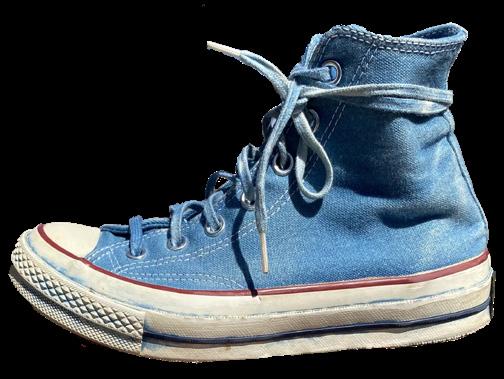
dye, giving them their unique color and texture.

NIKE AIR FORCE 90s. Air Force 90s are a shoe Otto has multiple styles of, ranging across various styles and decades. They’re one of Otto’s favorite styles of sneaker that he has a fondness for.
NIKE AIR FORCE 360s. These 2006 Air Force 360s are a style Otto enjoys. Nike is the brand he tends to collect the most of, but Otto has no strong brand preference and collects based on the look of the shoe.

JUAN MIGUEL ADAMS MANAGING EDITOR
In 1985, Rookie Michael Jordan released his first pair of sneakers, the Air Jordan 1s. For millions of people, they became more than just shoes—they were a cultural phenomenon. College Counseling Administrative Assistant Carey Otto, at age five, was hooked.
“It was right when Nike was really starting to make their way into the shoe industry,” Otto said. “Michael Jordan was a rookie in the NBA, and at that impressionable age, I got captivated by shoes.”
His fascination grew as the NBA banned the Air Jordan 1s. “You find out that professional athletes can’t wear a specific shoe or face a fine, and you get even more invested,” he said.
I’LL
Today, his collection is a testament to decades of sneaker culture. “I’ve got shoes that are 30-plus years old,” he said. “I’ve still got shoe boxes in storage … that have never been used or opened.”
Among them are rare finds, like Nikes from mid1996, and one of his favorite Air Max 90 styles—updated with an Air Max 360 version released in 2002, which he ordered the day they dropped. However, he has stayed loyal to the Air Max 90s style throughout his love for sneakers.
When choosing brands, Otto has some favorites but doesn’t have ties to one brand. “I really like the Air Max 90s, I like retro Jordans and I enjoy the Jordan 1s,” Otto said.
CARYS HSIUNG CONTRIBUTOR
Whether viewed as an end to four grueling years of schoolwork, a hopeful beginning for new opportunities or somewhere in between, Apr. 25 serves as a long-awaited milestone for many seniors. For seniors Mason Hang and Ben Lorenz-Meyer, who have attended SPA since the LS, the last day of classes also sparks a period of reflection and nostalgia surrounding the teachers who first shaped their experiences at school.
[SEÑORA KATHY] SUPPORTED ME [AND] MADE ME FEEL MORE COMFORTABLE.
senior Ben LorenzMeyer

For Hang, one of the most impactful teachers at the LS was Homeroom teacher Jill Chang, who
taught Hang’s 3/4B class in third and fourth grade with Homeroom 3/4 teacher Tim Rongstad, who students referred to as Mr. R.
“She was very nice, and I don’t know, I always felt a familial kind of connection to her,” Hang said.
“She was also very helpful, and she would laugh at jokes, and she was not afraid to have fun with us when we’re there.”
The LS is packed with memorable experiences that many students still recall today. In particular, Hang recalls the field trips to the farm owned by his family’s organization, the Hmong American Farmers Association. Through their shared connection to the farm, Hang built a long-lasting relationship with Ms. Chang that he still cherishes to this day.
“I remember it was the first year we went to the farm for the field trip, and [Ms. Chang and I] kind of built that connection with the school, and it was … nice to have something familiar,” Hang said.
College Counseling Administrative Assistant Carey Otto “
NEVER EVER FORGET ... THE NUMBER OF HOURS I JUST SAT THERE LOOKING AT A NEW SHOE ... AND DRAWING FROM EVERY ANGLE.

That curiosity soon evolved into a deeper appreciation not just for the sneakers themselves, but for the stories and design behind them.
Over time, this passion found an outlet in sneaker illustration, a niche within the culture where collectors and artists draw or paint sneakers, aiming to capture the intricate details of the shoe design and their value as more than just footwear.
Otto shared his love for sneakers and illustration with his best friend, “There’s something kind of magical about kids going home and taking this physical creation and then turning into a 2D image … I’ll never ever forget ... the number of hours I just sat there looking at a new shoe and turning it around and drawing from every angle,” he said.
Otto’s first pair of sneakers were the infamous Air Jordan 1s. “That was the first pair where I would be like, ‘Yeah, I wanted to get it,’ and my mom and dad made me do some chores to get it,” he said.
When Otto looks for new additions to his collection, it’s not about chasing the rarest or most exclusive pairs, it’s simply about what he likes, admitting that his sneaker purchases aren’t exactly a necessity anymore, but more about finding what’s new and what will add to his collection. “I don’t really have a strong brand allegiance,” he said. “I grew up wearing Nike and Adidas, but it’s really about what catches my eye.”
Despite his deep-rooted love for sneakers, Otto isn’t one to resell his shoes on marketplaces at the moment. “I don’t really take advantage of any of the technological benefits [in shoe reselling],” he said.
He stores his collection in a large walk-in closet packed with sneakers. Some remain untouched in their original boxes, while others are out on display, waiting for the right moment to make an appearance.
For Otto, sneakers are more than just footwear; they’re memories and a childhood passion of a culture that continues to evolve.
“I think probably the most lasting impression that sneakers have had on my life is just like the joy that it brought to a couple of young kids that were just finding out about something that they really didn’t understand and could never forecast what the sneaker world was going to become,” he said.
What started as a five-year-old’s fascination with a pair of Jordans has since evolved into a lifelong passion, collecting, creating and deepening his interest in sneaker culture, with each new pair adding another story to his walk-in closet.
Eight years later, Hang still keeps in touch with Ms. Chang through his two younger siblings who currently attend the LS. Whenever he visits the campus, he makes sure to greet and catch up with Ms. Chang.
“It was just two long years, and it was really sad for me to kind of move on and go at a young age. [It felt] like this is where I should stay,” Hang said. “I feel like third and fourth grade was a long time ago, but it … shaped a lot of who I am today, and Ms. Chang and Mr. R both did play a big role in that.”
Like Hang, Lorenz-Meyer found comfort in teachers who built meaningful connections with students, especially Spanish teacher Kathy Olson-Studler and STEM teacher Rick Magnuson.
“[Señora Kathy] was … very supportive. When I was at [Concordia Language Villages] in fifth grade, she really helped me out,” Lorenz-Meyer said. “The first night I was there, I was pretty home-

sick and didn’t feel very happy. She … took me out and supported me, made me feel more comfortable.”
Mr. Magnuson, Lorenz-Meyer’s fourth and fifth grade science teacher, was another teacher
who frequently made Lorenz-Meyer’s day. “He was ... very funny, and definitely tried to make each science class enjoyable,” Lorenz-Meyer said.
13 years later, Hang and Lorenz-Meyer will step through the doors of
the US for the last time with the rest of the senior class, leaving behind the school that they spent the bulk of their lives at, but preserving the memories of the teachers who first shaped their hearts and minds at SPA.


After an off-season of recovery, training and rest, the returning state track champions and participating athletes are back, armed with their hard-earned experiences and goals to qualify for the state meet again. Last year, the 2024 state track meet was held at St. Michael-Albertville High School June 7. Nine SPA athletes participated across seven events, with two athletes placing first.
Track captain Oliver Thompson ran the 400-meter dash, placing first. Thompson also ran with sophomores Langston Thompson, Roman Hozalski and Nico Martin in the 4x400-meter relay.
“Going to state last year was kind of a big surprise. It was my first year doing the 400 [meter race and] I did surprisingly well,” Oliver Thompson said.
Alongside Oliver Thompson, junior Elizabeth Tuttle ran the 100-meter hurdles and 300-meter hurdles, placing first in the 300-meter hurdles.
Aside from the two first-place finishers, captain Maren Overgaard, captain Clare Ryan Bradley, sophomore Paloma Good and ninth-grader Sophie Kannapiran competed as a team in the 4x800-meter relay. Good also participated in the 800-meter dash, and
Ryan-Bradley participated in the long jump, placing 12th overall.
For the younger athletes, state proved to be an exhilarating yet scary experience. “It was very nerve-wracking because … I was pretty new to US track, and there were a bunch of really good teams. Our team had three freshmen, so [we] kind of felt like the underdogs,” Hozalski said.
IT
WAS VERY NERVEWRACKING BECAUSE ... I WAS PRETTY NEW TO US TRACK.
sophomore Roman Hozalski

Kannapiran found it to be a little less daunting running the 4x800 with her older relay group. “[State] was cool; it was low pressure, but I got to [have] the experience anyways,” Kannapiran said.
After their success last year, all of the athletes are returning to this new season looking to continue to improve by setting new goals for themselves.
“[Last year] I felt a lot of pressure, [but this year] all of my college stuff is done with track. I will hopeful-
ly do well in some new events [and] hopefully drop down a few seconds,” Oliver Thompson said.
Next year, he will be continuing his track career at Harvey Mudd College.
With some of the intimidation removed, Hozalski is looking to return to state, new and improved. “I would like to go back to state and hopefully do better than we did last year, and maybe even win, and then maybe make state for another event, but that’s probably a little out of my reach,” Hozalski said.
Similarly, Kannapiran is looking to return to state in the 4x800-meter relay, but also, if possible, branch out and try to qualify in an individual event.
“I’d like to go on the relay again. It’d be cool if I was able to go individually instead,” Kannapiran said.
The track state section qualifiers this year are May 29 and 31. The state meet will be held June 10-11 at St. Michael-Albertville High School.
Scan this QR code to see the full results from the 2024 state track meet.


LINA ABID THE RUBICON
“It’s like riding a bike,” meaning that once you learn it, it’s easy to pick it back up again after long stretches of time. While this is a commonly held truth, the simpler option would be to never have forgotten it in the first place.
Club sports, or sports programs run outside of school, offer this consistency in year-round training, providing opportunities in between each school season to practice and compete, but are not financially feasible for many families.
Sophomore Lila Montgomery has been a part of Keliix Intra Soccer Club since the end of 2024.
“It keeps my skills sort
of refreshed year-round and I’m always learning and progressing...instead of just, at the tryouts for school, just being kind of like thrown in after not playing soccer for about a year,” she said.
Coaching staff on club teams may also offer additional guidance for athletes looking to compete in their sport in college during the recruitment process. Long-time sophomore swimmer Josepha Mody has already had conversations with club coaches regarding recruitment.
“I can reach out to [college coaches] end of May, and then they can reach out to me June 15, but I can’t meet them in person or talk to them on the phone until August,”
the
she said. These timelines may be difficult to navigate without the individual guidance club coaches can offer.
“
[THE CULTURE] IS DEFINITELY MORE POSITIVE IN SCHOOL TEAM SWIMMING.
ninth-grader Kaya Cayci

Despite the possible technical advantages of year-round coaching and training, the culture of a sports team has the potential to make or break an athlete’s attitude and even performance as a result. Mody values the
environment of her club sport because it is separate from school life.
“You have this group of friends outside of school, and share this really… tight connection because we share this sport, and we do it so much. … You just put school apart from your sport, like, it’s not connected. It’s two totally different things, which I really appreciate,” she said.
Alternatively, having experienced both club and school sports teams, ninth-grader Kaya Cayci values the connection of his sport to his school.
“Being on a school team is, in my opinion, just a lot more enjoyable because you’re a lot closer with the people you do your sport with. I do
swimming, and [there’s more] motivation to go to practice when you’re on a school team,” he said.
A potential advantage to playing club sports is that they often offer travel opportunities that are not plausible for school teams. According to an article from the Next College Student Athlete (NCSA) website on understanding club sports, recruiting, nearly 90% of all students who end up competing at a college-level in their sport were a part of a club team during the recruitment process.
Montgomery has been on a few trips during her time at Keliix Intra. “Duluth or Appleton, Wisconsin... Those are the
furthest trips we’ve taken … I think my team went to Norway last year before I was on it,” she said. Having also attended invitationals around the state and in Wisconsin, Cayci experienced a noticeable difference between the culture surrounding competition on his school and club teams. “[The culture] is definitely more positive in school team swimming, I don’t think the culture in club swimming is the best,” he said. Though it is likely that no team sport will return as easily like riding a bike. There are definite advantages to athletes who are able to participate in a club sport, but the experience also depends entirely on the individual.
JOHANNA PIERACH THE RUBICON
$40 billion is the estimated amount U.S. parents spend on youth sports annually.
$1,500 for one average child’s annual sports experience.
54.6% of children played an organized sport in 20222023. Pre-pandemic, these numbers were a bit higher (56.1%) and during the pandemic they were lower (48.5%).
77% of SPA students play on at least one sports team.
For young athletes, scoring that goal, sinking that basket or hitting that home run are experiences that can’t be bought. Well… sort of.
Now more than ever, participation in organized youth sports can be a pricey endeavor for families. The commitment of spending hours training, shuttling to practices and competitions, and acquiring the proper equipment can come at a price tag of at least $1,000. According to a survey from the Aspen Institute, the average U.S. family spent $1,016 on their child’s primary sport in 2024— a 46% increase from 2019. Additionally, with an average of $475 going to another sport, the average family spent nearly $1,500. Parents spend more than $40 billion annually on their children’s athletic pursuits, which is around twice the amount of revenue annually flowing through the NFL.
A study led by Chris Knoester, professor of sociology at Ohio State University, found that youth from privileged families are increasingly dominating organized sports. With support for public extracurricular activities dwindling, many favor club sports over their local rec league. But the costs associated with team registration, travel and lodging, individual camps and private instruction are hefty and often inaccessible to many families.
Ninth-grader Sophie Kannapiran trains and races with Loppet Nordic Racing skiing, a cross-country ski
racing program through the Loppet Foundation. Kannapiran also competes on the varsity Nordic ski team, which she describes as a “much different vibe.”
“School skiing is a bigger range of skills, it’s a lot more beginners… people know more about skiing in club,” Kannapiran said. She says that her club is better tailored to her skill level, with others more focused on training. While Kannapiran admits that “club has more to offer,” she understands those benefits are a significant monetary commitment.
The reasoning behind why families are willing to spend so much on improving their child’s athletic performance could link to broader achievement culture such as preparing for their future. For Kannapiran, this planning includes learning more about the recruiting process through her club team. For cross-country skiing, colleges and universities pay attention to one’s performance at Junior National Qualifier races, which can’t be completed through a high school team.
With less emphasis on joy and more on competition, youth are dropping out of sports at a higher rate than they used to. For those born in the ‘50s, just over 50% quit playing before turning 18. However, over 70% of those born in the ‘90s quit before reaching the same age.
While there’s many things money cannot buy, there are others that come with a price tag— and athletic success may make the list.



1 EXCELLENT EXHIBIT. The Minnesota Historical Society’s “Girlhood (It’s Complicated)” exhibit highlights women in a variety of fields throughout American history. 2 LOVELY LAYOUT. The exhibit has a large, open-concept layout filled to the brim with information on the history of women in the U.S. 3 ESSENTIAL EDUCATION. This section of the exhibit features prominent women from American history in the field of education.
SONIA KHARBANDA THE RUBICON
Colorful, compelling and comprehensive: three words that come to mind while exploring the Minnesota History Center’s “Girlhood (It’s Complicated)” special exhibit. Created by the National Museum of American History and the Smithsonian Institution Traveling Exhibition Service, the exhibit analyzes the history of women in the U.S. across five sectors: politics, education, health, work and fashion.
Though dimly lit and almost overwhelmingly full of information, the open floor plan facilitates a chooseyour-own-adventure experience. Each of the five subcategories has a specific location and color palette, but the areas are overlapping and
related, indicating certain commonalities of girlhood that rise above an individual sector. For example, the fashion section examines girls’ use of clothing to break established expectations, tying into the emphasis on female advocacy in the politics zone. Health and wellness highlights the ways in which the media scrutinizes female bodies, similar to historical references about girls’ abilities
VISITORS OF ALL AGES WILL APPRECIATE THE EXHIBIT’S INTERACTIVITY.

in math and science in the education section. Furthermore, visitors of all ages will appreciate the exhibit’s interactivity; TV screens playing informative videos the length of a TikTok can be found in each section. The fashion wing features a DIY station with coloring sheets of outfits from different eras, while the education zone delves into coding with an iPad available to play games developed by women. The health area even offers museum-goers an opportunity to write themselves into history, as viewers are invited to respond to sample questions-- “What did you learn in school about how to be a girl?” and “What do politicians need to know about girls today?”-- and post their comments on the wall display.
Of course, the exhibit
also boasts more typical artifacts, including diary entries and a gigantic throstle used to spin wool and cotton, but the user-friendly elements add modernity to timelessness.
A highlight of the exhibit is the Minnesota Historical Society’s curated section on the history of girls basketball in Minnesota. Various display cases tell the stories of influential women’s basketball players and the early Minnesota teams. The SPA gym and girls basketball team even make an appearance; the back wall features a projected highlight reel of clips from Minnesota high school girls basketball games, including a few from a game several years ago against Minneapolis Edison.
Although the exhibit often discusses events and
issues from a century ago, it remains as fitting and relevant as ever. The curators’ commitment to an intersectional understanding of girlhood shines, with examinations of racial, financial and regional barriers that impact girls’ experiences. In addition, the exhibit takes care to celebrate women’s diverse contributions in every role they play: workers, activists, athletes, artists and more.
With its range and sheer scale of content, the museum doors do not lead to a clear definition of girlhood. Rather, the exhibit asserts the ways, both everyday and extraordinary, that girls have changed the course of history.
“Girlhood (It’s Complicated)” is on display until June 1.
THE RUBICON - APRIL 2025
ANNIKA KIM THE RUBICON
From schoolyard trades to mobile battles, Pokémon has evolved with each generation. On top of a constant stream of new Pokémon for the Pokédex and animated media furthering the story of the franchise’s world, the games continue to gain users through new platforms, genres and mechanics with each new release.
The Pokémon franchise began as a pair of role-playing games in 1996 and became a massive global phenomenon in the years following. The core concept revolves around the player catching and training the titular creatures, which one can then use to battle others. This idea is explored through various forms of media, including video games, animated series and a trading card game.
“It’s a really complex concept, and there’s a lot of ways to get into it, because you can watch the show and play the games and collect the cards. There’s just a lot of outlets for it,” senior Duncan Lang said.
While Pokémon has remained popular since its first rise to fame, a resurgence in Pokémon cards has taken place in the past few years– including at SPA. From nostalgic adults who grew up with Pokémon rekindling their childhood interest to popular streamers recording themselves opening packs for a new young audience, the trading card game has experienced increased traction.
The newest release in the franchise, “Pokémon TCG Pocket,” brings the cards to mobile by combining the traditional cards’ familiar game play experience with a digital selection of collectible Pokémon cards with unique abilities to build decks and battle others.
For junior Echo Dayton, “Pokémon TCG Pocket” is her first interaction with the franchise. “I get to live out this game that I didn’t get to play when I was a kid,” she said. “I was kind of worried, especially because I hadn’t done anything with Pokémon before, that [the game] was gonna be really hard to figure out. But … it’s very accessible. And there are just so many different things that you can do.”
As with the physical game, “Pokémon TCG Pocket” is enjoyed by many for its wide variety of unique cards. Free packs of cards are openable daily, and the game includes features that allow players to create collections and binders to showcase their favorite pulls.
Junior Ethan He believes that this aspect of the new mobile game helps bring back a sentiment from the physical trading cards. “A lot of people only care about making their money with the real cards,” he said. “It used to be [that] you collect them because it looks cool. And I think that’s kind of brought back with the online version because you’re not really selling your collection. You’re just collecting.”
Sophomore Eli Perry first got into Pokémon when his parents got him his first pack of cards at age 4, and he has continued to enjoy the games since. “I still play because I just love the franchise,” he said. “It’s important to me. It’s been important to me for years. Like, I am buying the new Pokémon game as soon as it comes out.”
The next main game in the franchise, “Pokémon Legends: Z-A,” continues the franchise’s foray into open world game play and is set to release in late 2025 for the Nintendo Switch.
$857 MILLION
grossed via Pokemon trading cards
$30 BILLION
grossed via Pokemon video games
$1.8 BILLION
grossed via Pokemon films
$100 BILLION
grossed via Pokemon merchandise INFORMATION: PocketGamer
“A Minecraft Movie”? more like “mine”-dless Hitchcock’s “Rear Window” is a must watch
THOMAS FERGUSON CONTRIBUTOR
“A Minecraft Movie” (2025) truly has something for everyone.
Over my many years as a cinephile, I have rarely come across a piece so cinematically gratifying. The story may seem derivative at first, following a motley crew of misfits as they get sucked into the world of the “Minecraft” video game. For instance, fans of modern spectacle-based filmmaking will love the film for its use of intense action set pieces and masterful James Cameron-esque CGI.
Furthermore, the combat sequences in “A Minecraft Movie” are highly stylistic, being reminiscent of films like “Mad Max: Fury Road” (2015) and “Oldboy” (2013).
When it comes to storytelling content, “A Minecraft Movie” is the brainchild of three writers. Some may argue that such a large team could make the film feel disjointed and awkward, and anyone who does argue that would be correct. Speaking of the plot, it stands on the shoulders of previous great works of cinema–it hinges around a plot device called the MacGuffin, which is an object or event that drives the narrative, used most

notably in “The Lord of the Rings.” “A Minecraft Movie” manages to feel, somehow, just as long. Sure, jokes and explosions are the two most important parts of any movie, but it’s hard to argue against the film’s cast and crew being a close third. There are no complaints to be made against director Jared Hess, who has directed projects such as “Napoleon Dynamite” and “Nacho Libre,” but I believe Jennifer Coolidge had one of the most underrated and important roles in the production. If her name doesn’t ring a bell, fans of Kino cinema will know her as the woman who says “You look like the Fourth of July” in “Legally Blonde.” In “A Minecraft Movie,” her character becomes enamored with a Nit-
wit, which is probably a subtle reference to her aforementioned role in “Legally Blonde”. Jason Momoa and Jack Black perform several demanding scenes together, with a level of emotional realism on display rivaled only by “Marriage Story” (which seems impressive, until you remember Jack Black is a member of the legendary rock duo known as “Tenacious D,” who can kind of do anything).
“A Minecraft Movie” is probably one of the worst films you will ever see, but it’s also some of the most fun I’ve ever had in a movie theater. I just hope you get something out of it because I know I didn’t.

DAUNTLESS DIRECTOR. Alfred Hitchcock’s 1954 film “Rear Window” is regarded by many as the best film from the greatest director of all time.
HOWARD HUELSTER CONTRIBUTOR
Alfred Hitchcock’s 1954 classic thriller film “Rear Window” is one of my favorite films ever made. It’s a masterclass in utilizing a simplistic narrative idea with an equally simple set design to create one of the most tense films I’ve ever seen.
The last time I saw the movie was at AMC Rosedale for its 70th anniversary re-release. I went with my Mom. My mom’s love of cinema has one hundred percent been the cause of my love of cinema. Her
favorite director is Alfred Hitchcock. I remember being a kid and being forced to watch his 1963 movie “The Birds” with my family and being absolutely horrified. I thought going into Rear Window I wouldn’t feel the same fear I did when I was a lot younger. But I was wrong. Hitchcock’s carefully crafted tense atmosphere worked really well on me, for many reasons. The biggest reason is the claustrophobic nature of the film. The entire movie takes place in the apartment of an injured photographer
named Jeff. During an intense heat wave, Jeff uses his camera equipment to look through the open windows of his neighbors’ apartments, where he starts to believe that one of his neighbors murdered their wife.
The set of the movie looks simple, but in reality, it is an extremely complex set. It’s entirely indoors and replicates a city block. The greatest part of the set, in my opinion, is the use of the open windows. The framing of the open windows always shows you the bare minimum of what you need to see. Especially for the presumed murderer. You spend the entire movie just like the protagonist, Jeff, having to constantly analyze every tiny thing you see, and always second-guessing yourself. on what you see. Anything suspicious you see could always just be something normal. It creates this tense atmosphere I’ve been mentioning, and it really hooks you into the movie. It’s why I love it so much. Hitchcock is called the “Master of Suspense” for a reason, and “Rear Window” is the greatest example of why. The movie keeps you engaged with the hair on the back of your neck standing on edge from start to finish.
The Rubicon staff editor Johanna Pierach and Chief Visual Editor Georgia Ross explored the Twin Cities to review various restaurants and hangout spots. This is how they recommend passing 36 hours in the area.
Macarons, tarts, croissants, coffee cake, sourdough--any kind of pastry or bread you want, chances are Patisserie 46 does it well. Snug in the King Field neighborhood of Minneapolis and a three minute drive from Lake Harriet, the authentic French patisserie is the perfect spot to grab a croissant and latte to stay or to go.


Do not let the quiet beige exterior dissuade you from discovering the bustling marketplace with clothes, medicines, services and an impressive row of Hmong food stalls inside. With crab papaya salad, spicy chicken lab, steaming purple sticky rice, fresh homemade tofu, sesame rolls, egg rolls and more, this lunch spot is both affordable being around $5-$15 per dish that will be some of the best food you will eat in the Twin Cities.

EDWARDS DESSERT KITCHEN
A short walk from Lake of the Isles, Birchbark Books & Native Arts is a neighborhood hidden gem. Founded by Ojibwe author Louise Erdrich, the books and special inventory (quillwork, traditional basketry, dreamcatchers, Indigenous paintings and more) harbor stories and spark conversation. With a hanging wooden canoe and numerous reading nooks that set a cozy atmosphere, it’s tempting to sit down right down and dive into your newest book on-site.
A Minneapolis must-stop, Lake of the Isles is a cornerstone of outdoor activity in all four seasons. Connected to lakes such as Bde Maka Ska and Harriet, visitors can spend an afternoon walking or biking. In true northern fashion, the lake becomes a skating rink when the temperature drops. During the summer, fishing piers and canoes provide a wilderness experience in the midst of a bustling city.



The home of the Juicy Lucy, a burger with cheese hidden inside the patty, is a classic Minnesotan pitstop that even former President Barack Obama could not miss when he visited the Twin Cities. The jukebox by the door and row of booths bordering every wall give the bar a retro feel. The line can be long on weekend nights, but typically moves fast. The hot fries, burger with onions and pickles and cold coke is a combo just under $20 that is well worth the wait.
First impression? This is the place to be for anyone with a sweet tooth. Located in the North Loop neighborhood, Edwards Dessert Kitchen features the talent of Executive Chef and General Manager Jasmine Weiser, who brings her experience and artistic style to create delectable and visually stunning dishes. Every dessert is worth a taste, but if you’re limited to just one, the Rhubarb & Custard Ice Cream Pie is a safe bet.
No matter how you choose to appreciate it, art is for everyone--an ideology that the Walker Art Center evidently embraces. In addition to the iconic Spoonbridge and Cherry sculpture, the art center houses rotating exhibitions, various long-term installations, a theater, free family programming, a shop and the restaurant Cardamom. Come for stylish entry pins and stay for whatever catches your eye.
At the Blair Arcade, a fashionably Victorian-styled building founded in 1887, you will find energetic and relaxing heated yoga that Onx + Amelia offers inside. For some midday movement, try the fast-paced and musical Yoga Sculpt of Circuit classes. For some slower stretching, try the SloFlow or Power yoga classes in a quieter, but still challenging, environment.


ROOTS ROASTING
Nestled off the beaten path of Snelling Avenue, it’s easy to miss the coffee shop Roots Roasting--but that doesn’t mean you should pass it by. In addition to the basic coffee options (espresso, cold brew and cappuccino) non-coffee and special drinks are a unique and welcome change of pace from the cookie-cutter menus of prominent chains.
You can trust that the six films Trylon screens per week in their cozy 90-seat theater will be of quality. With a variety of classic, contemporary, independent and foreign films, Trylon is the perfect place to see something besides the mainstream movies shown in most theaters. Tickets are set affordably at $8, and popular items include a selection featuring curated the glass bottle coke, ginger beer and kombucha.

