
THE PLACES, PHRASES, AND RAMIFICATIONS OF



A student sits in a common space working on English homework. A teacher comes up to them and, seeing their traditionally Hispanic name on the side of a novel, begins speaking to them in Spanish.
During a history lecture on Japanese internment, all eyes turn towards the one Asian student in class, regardless of whether or not they are Japanese.
These are examples of day-to-day microaggressions. According to Vox, microaggressions occur when a person’s implicit or explicit biases towards a marginalized group results in discomfort or insult. Microaggressions can take the form of stereotypes, snide remarks, or even talking over someone else in a discussion.
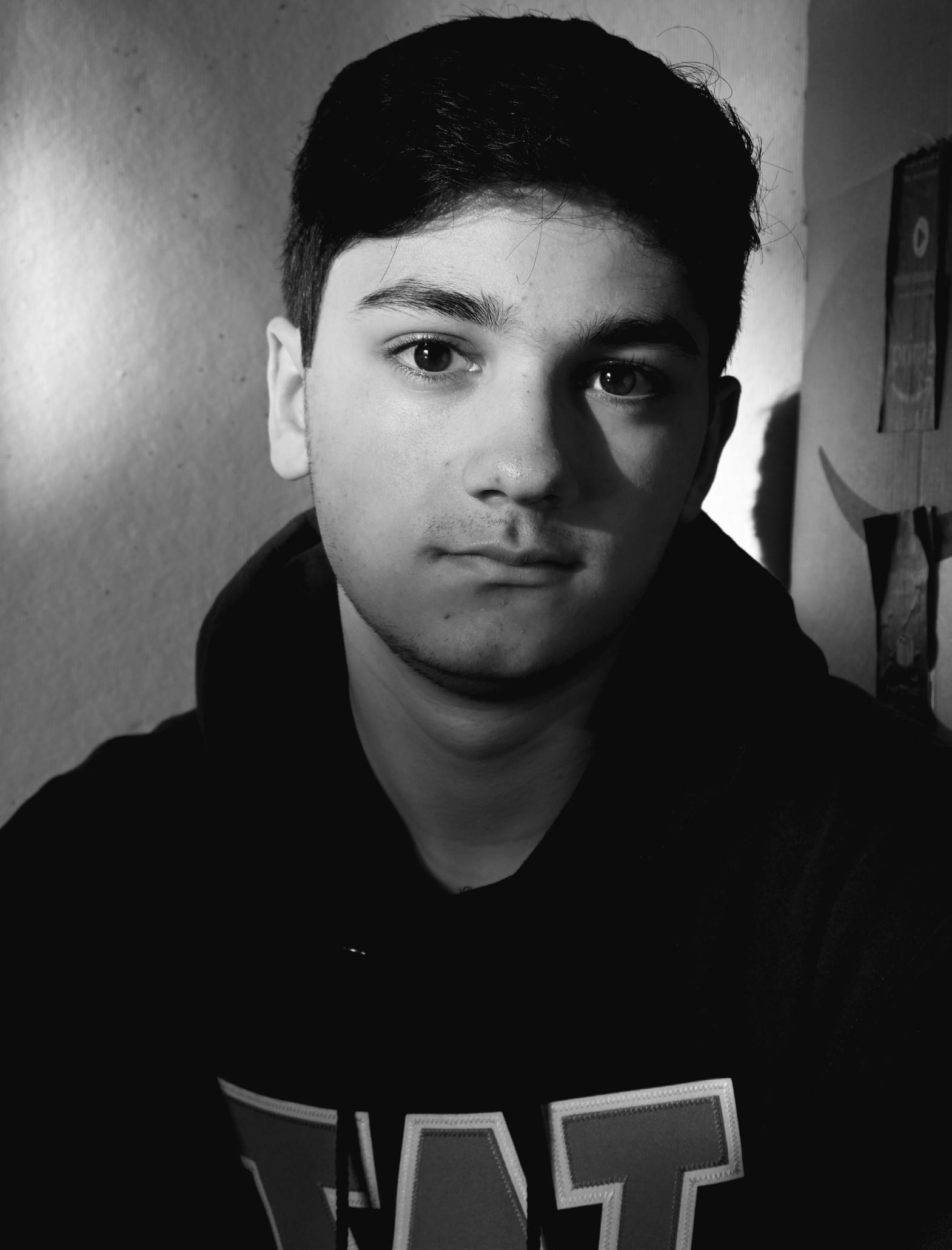
“When I first arrived at this school, I did face some microaggressions related to my ethnicity and last
In response to a recent whooping cough outbreak, administration attempts to minimize spread and support students in quarantine. Read more in NEWS.
name. Some people at the beginning assum[ed] my last name was Hispanic and jok[ed] about it,” senior Ben Macedo said.
These microaggressions can take their own prevalent forms within the school system. According to Enrique Espinoza, an instructor in the counseling program at UC Riverside, the most common microaggressions against students of color include name pronunciation, low expectations, and the myth of meritocracy. The myth of meritocracy is the idea that if one works hard enough, they’ll succeed no matter their social position. However, this is not inherently true. Due to institutionalized concepts, like the opportunity gap, it can be incredibly difficult for POC students to gain equal footing when it comes to achievement.
Espinoza states that these problems can cause students to feel humiliated, disengaged, unsupported
Growing up on a farm, LS Maintenance Supervisor Eugene St. Pierre found a proclivity for fixing, a skill central to his work today. Read more in FEATURE.


and devalued. These issues can also lead to psychological stressors like racial battle fatigue and impostor syndrome.
Within school, combating microaggressions can be a challenge. It can be difficult to battle covert prejudice that is sometimes hard to recognize, especially when it comes from peers, leaders and educators.
These are tangible social and academic symptoms of microaggression. However, the true problem, the root of microaggressions, is implicit bias. Implicit bias, according to the National Institutes of Health, is “the subconscious feelings, attitudes, prejudices, and stereotypes an individual has developed due to prior influences and imprints throughout their lives. Individuals are unaware that subconscious perceptions, instead of facts and observations, affect their decision-making.” Story continued on pg. 8
TURKEY TORMENT
We’ve moved in. The turkeys won’t move out. How do we share the
AMANDA HSU THE RUBICON
Native American Studies is a new course offered this semester covering Indigenous communities as they have existed in the past and continue to resist in the present. History teacher Dr. Sushmita Hodges designed the class during her sabbatical last year.
I THINK IT WOULD BE NICE TO HAVE HAD MORE TIME TO HAVE THIS AS THE FULL FOCUS OF THE CLASS ... “

As a new course, the class’s final project was a surprise. Currently, students are paired up and completing an oral history component and digital archive for a chosen topic of focus.
“We are researching different aspects of Indigenous sovereignty and Native American culture and movements … picking a specific movement
and organization to focus on [looking at] their involvement in the world,” senior Cassandra Overholt said.
Groups are covering a wide range of topics. For example, Overholt is researching Indigenous language revitalization, and senior Ava Schluender is investigating Indigenous women’s health and safety with a specific focus on the Missing and Murdered Indigenous Women movement. Additionally, senior Ethan Peltier is looking into the Land Back Movement.
“We chose [the Land Back Movement] because we found it to be most interesting and still super relevant with the government starting to give land back,” Peltier said.
So far, students have enjoyed learning more about their focus areas, primarily through firsthand accounts. The class welcomed three speakers to share their personal experiences, including Serene Lawrence (‘07), a member of the NDN Collective, Lonna Stevens-Hunter, Director of Native American Affairs for U.S. Senator Tina Smith, and J. White, an Indigenous artist.
“[The most interesting part of research] is just talking with people … we just got to learn all about [their] life,” Schluender said.
As for the two components of the project, the oral history aspect can be either a video, podcast, or presentation relating to the topic of study. Many students have used interviews with visiting speak-
ers or outside sources to complete this requirement. The digital archive requires students to find historical information and artifacts relating to their topic and compile these items and resources in an organized chart.
“You find photographs, you find personal documents, publications and ephemera, and those are the four aspects of the
digital archive,” Overholt said.
One thing some in the class wished was more apparent was clarifications on the guidelines for the project. As a course debuting this year, many students need clarification on the curriculum expectations.
“I still don’t really know what we’re doing … I think [our project]
is going on a website, but I don’t know. I think it would be nice to have had more time to have this as the full focus of the class for the semester, so it could be more fleshed out,” Overholt said.
The official project start date was Sept. 27, The due date for the oral history was Nov. 18. The podcast or video was due Nov. 22.
JUAN MIGUEL ADAMS MANAGING EDITOR
Chess Club approaches its new season with a changed mindset. Last year, the team secured fifth place out of 32 teams in the Minnesota High School Chess League, finishing with four wins, two losses, and one tie.
They have kicked off the new season with one preseason win and a first-round win against the co-op team of New Century School and Mayo High School. This year, the team is not only playing to compete; they’re planning to win it all.
Senior Theo Su is the leader of Chess Club and is in charge of setting up the team’s matches. “I think we have a good chance of winning this year because last year, we got really close, but since I was new to being the club leader, I didn’t know how things worked,” Su said.
The chess club has four players with alternates; however, the alternates do not contribute to the team’s overall match score. In team chess, boards one, two and three correlate to the players on the team, usually with the best player on board one, the second best on board two, and so on. The current seed for the chess team is junior Ryan Shiroma on board one, senior Theo Su on board two, senior Amir Dahm on board three and depending on rounds, senior Jacob Colton or sophomore Luke Phillips occupy the board four spot. In a match, either team must reach 2.5 points to win; 1 point is for every individual match win and 0.5 points for every draw.
The team’s strategy involves relying on their most vital players. Su plays the second board with a chess rating of 1,700, while the average second-seed player in other schools is around 1,500. “As a 1,700, I am our second seed, which is a good 200 rating points higher than any other second seed… which is a little unfair, but you do what you do to win,” Su said.
Shiroma is ranked 59th in the state and had a record of 3-2 last season. Shiroma and Su’s strong ability usually leaves the final two boards to determine the match’s outcome by winning both games or a win and tie.
I THINK WE HAVE A GOOD CHANCE OF WINNING THIS YEAR BECAUSE LAST YEAR WE GOT REALLY CLOSE ...
senior Theo Su
“I’m feeling really good. I think last year our team made some strides in the right direction, but we have the opportunity to do something really special this year,” Shiroma said.
The team has developed a new mindset with the possibility of a win as Shiroma has begun to focus mainly on chess.
Since the team’s meetings are sparse within the semester schedule, the players find other ways to stay
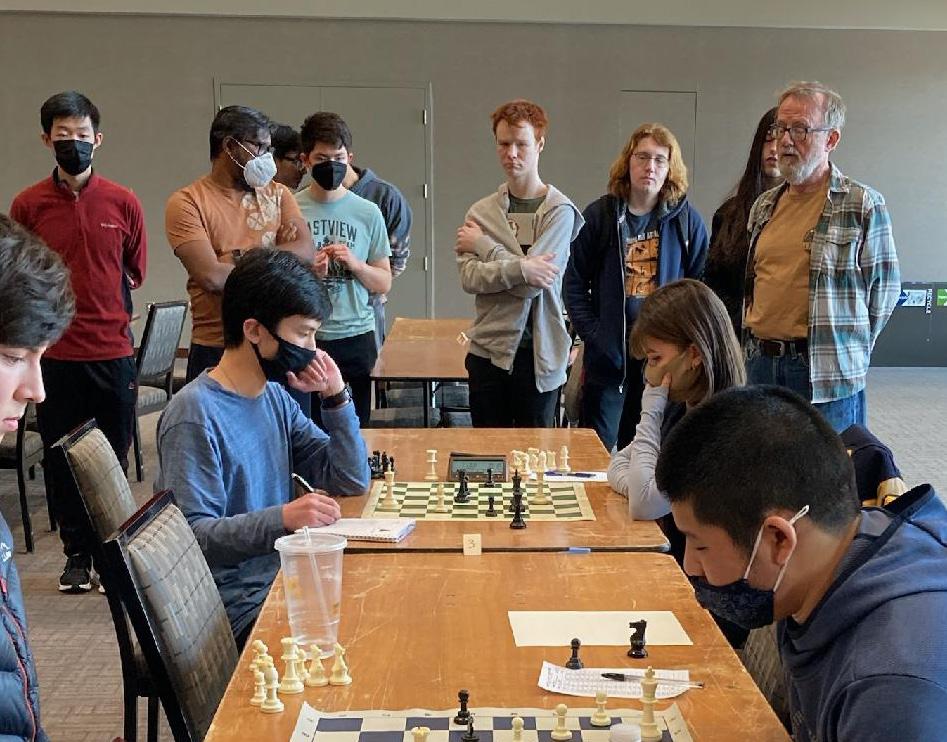
on top of their abilities. Su and Shiroma both play in tournaments outside of school.
Everyone on the team partakes in online chess, whether against their friends or with random players. Chess.com, an online chess platform, is where they refine their skills.
“I think [online chess] can be very helpful to practice new openings or ideas online, but playing online for fun doesn’t always help you improve,” Shiroma said.
The team’s next match is at 3:30 p.m. on Dec. 6 in the math center.
WATCH” section; NEWS 2 - Bryan Yanagita was spelled incorrectly; OPINIONS 5 - Ella Barlow was not listed as a contributor; OPINIONS 6 - Caption should say “40%” instead of “7%”; OPINIONS 7 - Ellie Camp
IVY
EVANS THE RUBICON
“The Whoop” has arrived, and it’s created an atmosphere of anxiety throughout the community.
Pertussis, also known as whooping cough, first showed up at SPA a little over a month ago, and it is a bacterial infection that affects the lungs. It’s a highly contagious disease, spread by coughing and sneezing, and causes a severe cough to develop that can last for four to six weeks or, in some cases, even longer. The cough, per its namesake, comes with a loud “whoop” sound and, if severe enough, can result in vomiting. The MN Department of Health (MDH) reports 1,622 total cases in Minnesota as
of Nov. 7, 2024, with over 500 cases occurring in Hennepin County.
The administration took immediate action once the first case was reported, contacting the MDH to determine the next step in resolving the issue. They used the Department’s Vaccine Preventable Disease Reporting Form, which allows schools to report outbreaks or singular cases of common diseases, to do so.
The administration is working to ensure the community’s current and future safety around similar issues. “We’re carefully documenting what we are doing now, so we can continually improve our plan to monitor communicable diseases and significant illness in our
school community,” principal Minnie Lee said.
I WOULD SAY JUST BE CAUTIOUS ... IF YOU’RE NERVOUS WEAR A MASK ... “
Lee called on SPA to do their part in keeping their peers and families safe. “Situations like this call for a community-wide effort. We rely on students and families to ... [follow] the guidelines and [report] symptoms and positive pertussis
tests to the Health Office, so we can do our part in minimizing spread and mitigating this outbreak,” she said.
However, one way to stay safe if a case has already been confirmed is to stay away from others to stop the spread of the disease. SPA recommends that individuals with confirmed cases of pertussis quarantine for five days, the amount of time it takes for azithromycin, the antibiotic that combats the disease, to run its course. Because of this, students have expressed concern over missing school and falling behind on academic work.
“It really sucked, not because I was so sick, but because I didn’t feel that sick [and] had to quarantine and not do anything
anyway,” sophomore Soren Zuehlke said.
For Zuehlke, it was not only a boring experience but a stress-inducing one; missing out on an extensive amount of school led to a buildup of academic work. Lee sympathized with this perspective but also recognized the importance of staying safe.
“Juggling academics and extracurricular activities is difficult to begin with,” she said.
Zuehlke advised students to be as careful as they see fit but encouraged them to prioritize their health. “I would say just be cautious,” he said. “If you’re nervous, wear a mask ... whooping cough is only transmitted through cough germs, meaning you can’t get it by touching someone.”
Wearing a mask isn’t the only way to prevent the spread of the disease; the most reliable method is to get vaccinated. The Tdap vaccine grants immunization to pertussis, tetanus and diphtheria. The MDH recommends the vaccine for 11-12-yearolds and 13-19-year-olds who aren’t vaccinated.
“I’m hoping everyone can stay safe, and I understand that illness spreading like this can be nerve-wracking, but it’s important to, like, do our part in keeping the school healthy,” sophomore January Cook said.
The administration continues to work towards eliminating pertussis from the community, and students and families are doing their part in that process.
WYNTER FEINER
THE RUBICON
The 38th Annual MinneApple Debate Tournament from Nov. 8-10 drew students from all over the nation. While some traveled from another state, the SPA public forum debaters made a 24-minute drive to Apple Valley High School.
“Teams come from all over the country to compete, which is something you don’t see in the tournaments SPA typically attends,” sophomore Mattias Hollaran said.
All divisions could participate in this tournament: varsity, high-level competition, and novice or beginners.
The opportunity to qualify for larger national tournaments slims as the number of participants increases, with 260 varsity public forum debaters.
Sophomore Zahir Hassan participated in this
tournament last year: “When I did this tournament last year, I looked forward to the different debaters we would come across. The level is naturally higher at a higher level tournament, and I remember being really nervous for this experience,” he said.
I THINK BOTH OF US HAD REALLY GOOD COMMUNICATION THROUGHOUT THE ROUND. “

Ninth-grader Sophie Karmaliani, who entered the MinneApple Debate Tournament as a firsttime debater, shared this
mixed anticipation. “I [was] excited, but also really nervous to see the types of debaters that come to this tournament from all over the country, but I know that this just [meant] that I [had] to work even harder and try and put my best effort in,” Karmaliani said.
The tournament wasn’t solely unique because of its widespread competitors; it also offered the opportunity to earn a “bid,” given to select competitors at circuit debate tournaments throughout the year. By attaining two bids, students can qualify for the Tournament of Champions, a prestigious tournament held for top debaters in the last week of April at the University of Kentucky.
Despite the pressure of a more competitive environment, Director of Speech and Debate
Marit Warren praised the supportive community of debaters. “The team dynamic was awesome. … They gather together before and after rounds to get ready and unpack what happened in their rounds,” Warren said. “It’s really supportive, and they are able to improve their arguments as they move through the tournament with feedback from their judges and each other,”
Working alongside her sister, ninth-grader Sara Karmaliani, Sophie had an advantage.
“I think both of us had really good communication throughout the round because I feel like we have the twin telepathy,” she said.
Sophie and Sara Karmaliani went 5-1 before eliminations and broke to the next round. Despite losing the first elimination round, they were
Sophie and Sara Karmaliani were octafinalists in the novice division in 2024
Shefali Meagher and Carys Hsiung were semifinalists in the novice division in 2022
Deling Chen and Zain Kizilbash earned a bid to the Tournament of Champions as octafinalists in the varsity division in 2023
and
the only team from SPA to place. No varsity teams made it to the elimination rounds. The only team to advance was the novice division; Sophie Karmaliani and Sara Karmaliani were octafinalists in the novice division. Second-time participant sophomore Isaak Sen-
aratna reflected on the tournament’s outcome: “I think for our teams in varsity, including me, there was a lot of positive growth that happened. I think we all learned a lot, and overall, it was totally worth it,” Senaratna said. The next tournament is Dec. 6 at Eagan High School.
RUBICON - NOVEMBER 2024
OUR MISSION
We strive to capture the spirit of the community through its stories while inspiring deeper conversations. Above all, we stand for integrity in our pursuit to inform and engage our readers.
THE RUBICON
St. Paul Academy and Summit School 1712 Randolph Ave • St. Paul, MN 55105 rubicon.spa@gmail.com www.rubiconline.com @TheRubiconSPA
EDITOR-IN-CHIEF
MANAGING EDITOR
CHIEF VISUAL EDITOR
NEWS EDITOR
GOOD QUESTION EDITOR
OPINIONS EDITOR IN DEPTH EDITOR
FEATURE EDITORS
SPORTS EDITOR
A&E EDITOR
MIXED MEDIA EDITOR
COPY EDITOR
CARTOON EDITOR THE RUBICON
Annie Zhang
Juan Miguel Adams
Georgia Ross
Johanna Pierach
Wynter Feiner
Sonia Kharbanda
Amanda Hsu
Grace Medrano
Lina Abid
Sam Galarneault
Peter Ostrem
Annika Kim
Ivy Evans
Alba Markowitz Mulet
RUBICONLINE
DIRECTOR OF RUBICONLINE
PRODUCTION MANAGER
MLP BEATS MANAGER NEWS EDITORS
OPINIONS EDITOR
FEATURE EDITORS
A&E EDITORS
SPORTS EDITORS
PHOTOJOURNALIST
CREATIVE DESIGN MANAGER
RUBICON TV
PHOTO EDITOR
SOCIAL MEDIA MANAGER
Aarushi Bahadur
Greyson Sale
Thomas Chen
Allan Wang
Peter Lipinsky
Audrey Jansen
Lani Ngonethong
Lucy Thomas Nabeeha Qadri
Andrew Lipinsky
Yassin Mokbel
Tamari Christopher
Elizabeth Tuttle
Audrey Peltier
Zimo Xie
Nora McKoy
Murphy Miltner
Mariam Malik
CONTRIBUTORS
Zack Berchenko, Via Campbell, January Cook, Carys Hsiung, Zain Kizilbash, Huxley Westemeier
Winston Arvidson, Sunde Auberjonois, Tallulah Dogwill, Jack Gao, Jack Gordon, Luca Kempcke, Ariella Kim, Chloe Kovarik, Harper Larsen, Shrey Nemani, Ike Obi-Walker, Alyda Overgaard, Juliet Pickens, Aiden Ruediger, Sylvia Westra
ADVISER Kathryn Campbell, CJE
MEMBERSHIPS
Columbia Scholastic Press Association
National Scholastic Press Association
MN High School Press Association Quill and Scroll Honor Society
CURRENT PUBLICATION AWARDS
2024 NSPA All-American
2023 Pacemaker Finalist (print), 2024 Winner (online)
2024 CSPA Hybrid Gold Crown Award Winner
2024 SNO Distinguished Site
2024 JEM All State Gold

EDITORIAL THE RUBICON STAFF
“This is not a democracy.” Dean of Students Stacy Tepp’s clear message, shared at the Nov. 1 assembly launching the phone-free month, illuminated the fraught relationship between students and administrators.
As this trial run comes to a close, the reception has not been as negative to the policy as it has been to the administration’s false display of valuing student input. Despite an overwhelming 76% of students sharing their opposition to the policy in an October survey, the administration continued with its plans, causing many to question if the survey was merely performative. If the purpose of the survey was only to gauge students’ feelings and was never intended to be used to influence policy-making, that needed to be clearly stated in the directions. It is also notable that the administration’s presentation of data at the assembly was misleading, as data from students and adults who responded neutral was categorized as supportive to the policy. The mid-month survey didn’t even include a space for students to share their narrative nor did it include context about whether responses should be in reaction to a month of going phone-free or to the viability of a permanent shift to a phonefree campus.
Students’ loss of trust and discontent with the administration following these policies isn’t blameless on either side; the administration has made choices to create this dynamic, and the student body often over-dramatizes the effects of changes.
Still, the initial student responses to the phone-free policy reflected students’ tendency to see every new policy as an attack on the student-centered decision-making the school is rooted in, rather than recognizing the end value of some of these top-down decisions.
It is important to understand that these reactions to new policies are a result of feeling unheard by the administration. This, in turn, prevents future dialogue and sets up an “us versus them” mentality.
[STUDENT] REACTIONS TO NEW POLICIES ARE A RESULT OF FEELING UNHEARD BY THE ADMINISTRATION.
“No-Phone-Vember” is just the latest in a series of policies enforced by the administration limiting small freedoms valued by the student body. Others include mandatory all-day exam attendance, strict lunch times and frequently structured X-periods.
Moving forward, wait to see the effects of new policies instead of immediately assuming the worst.
Students understanding the administration’s intent to create positive change-while accepting that there will always be some dissatisfaction with their decisions, no matter what systems are in effect--will be crucial to improving this relationship.
The most important step, however, needs to come from the administration: prioritize transparency and value student voice in decision-making processes. Regardless of the outcome of the phone-free policy, the administration has work to do in regaining students’ trust and showing that they value student input.
To note: Publications have an administration-approved exception to the phone policy, allowing publications staff members access to their phones for reporting during the school day.
WHAT CAN ADMIN DO TO RESTORE TRUST?
-Increase transparency
-Present data accurately -Use student input to make decisions -Give back unstructured time that provided more opportunities to meet with teachers and student groups -Provide students and student groups the tools to help write policies (as they have in the past)
-Communicate with understanding and respect
WHAT CAN STUDENTS DO?
-Keep an open mind to new policies
-Continue voicing opinions and advocating for change
SAM GALARNEAULT THE RUBICON
Convening a strategic planning committee for athletics has been a long time coming and serves as the next big step in the school’s effort to create a program that complements its academic offerings. But this collection of parents, alumni, faculty and administrators left out one critical voice–current student-athletes. The committee is filled with a range of adult stakeholders who each provide different values and knowledge, but no representatives from the athletes themselves.
In not including student-athlete perspectives, the committee missed the chance to learn from their valuable firsthand experience and their unique, creative and original voices. They have direct exposure to the current facilities and equipment, living the sport and experiencing the existing culture–all areas which the committee will discuss and reimagine.
Student voice is able to fill a hole in the committee to create a more
diverse group. Relevant ideas about the changes that could enhance the athletics experience and culture are beneficial when the frame of reference is from the people living it. Student-athletes can provide insight into what is missing, what the culture feels like and what can be changed to ensure that sports at SPA can thrive. Adding current student-athletes to these discussions will be beneficial to their understanding of their role in shaping the future of SPA athletics.
STUDENT VOICES ARE AUTHENTIC AND INNOVATIVE FROM THE DISTINCT PERSPECTIVE THEY HOLD.
sophomore Sam Galarneault
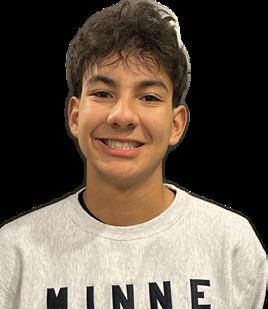
Student-athletes can also bring knowledge from other aspects from their athletic career. In
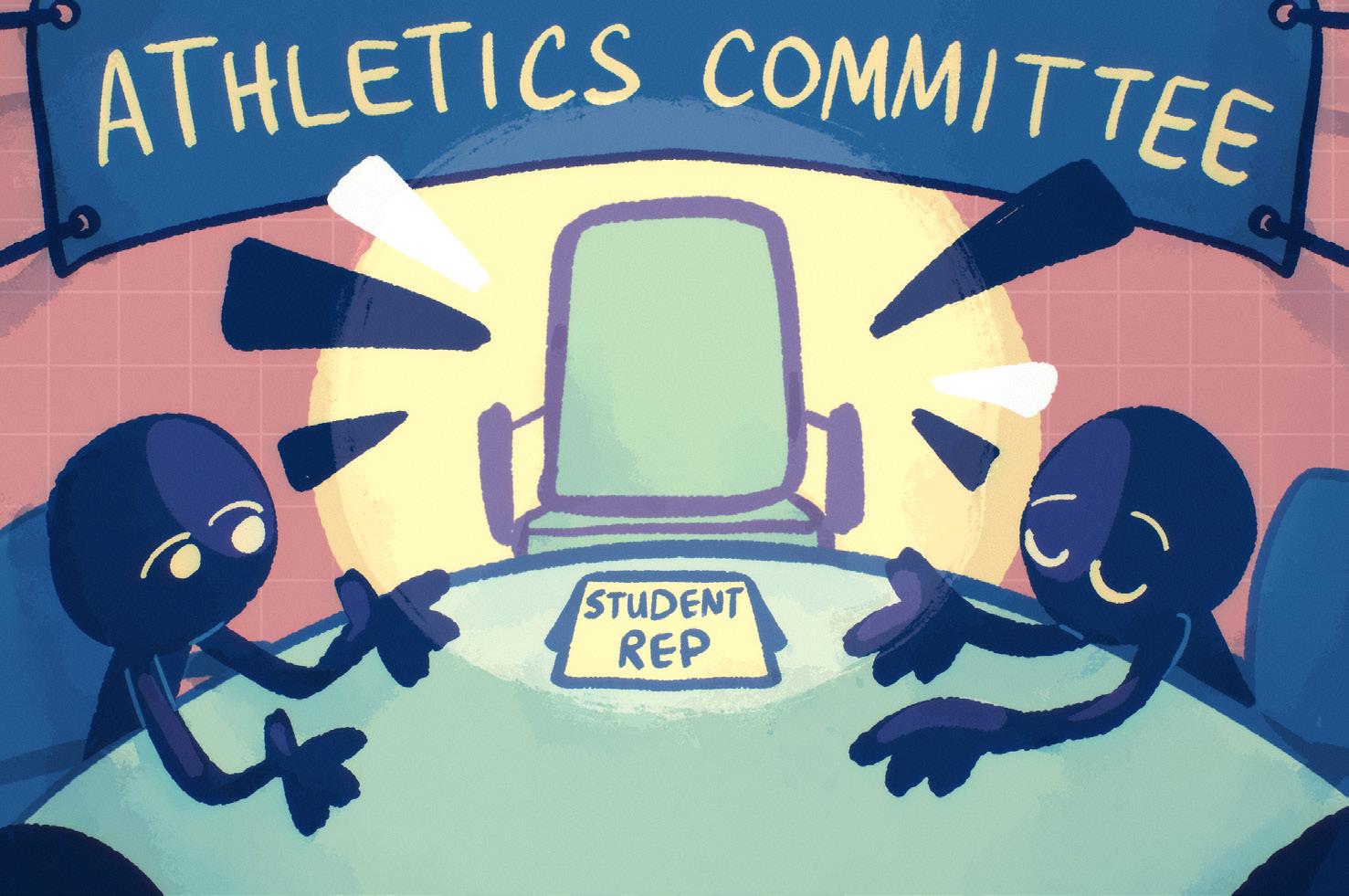
OMITTED OUTLOOK. The new
brought
any current student-athletes.
have a valuable perspective to add to the discussions from their firsthand experience with school facilities, teams and coaches.
their participation in school and other club sports, they have experienced comparable facilities, coaches and teams, which can help them identify areas for improvement at SPA.
Many student-athletes already have experience fighting for improvements for their team. For example, last year, the
girls volleyball team and their coach advocated to the athletic department to improve their equipment, which had limited their abilities that year. The athletic department was able to provide brand-new equipment, including volleyballs, nets, posts and post pads for them this year, which will benefit the team for
years to come. The entire volleyball program greatly benefited from the newer equipment, as it gave them a better opportunity to thrive.
Student voices are authentic and innovative from the distinct perspective they hold and the future they hope to create for them, their peers and future athletes. The
Student-Athlete Development
Team Culture
Building the Spartan Community
Coaching
Operations
Facilities
athletic department must incorporate student-athletes in this committee and future planning groups. It would be a waste of an opportunity not to include their voices to solidify a more well-rounded committee.
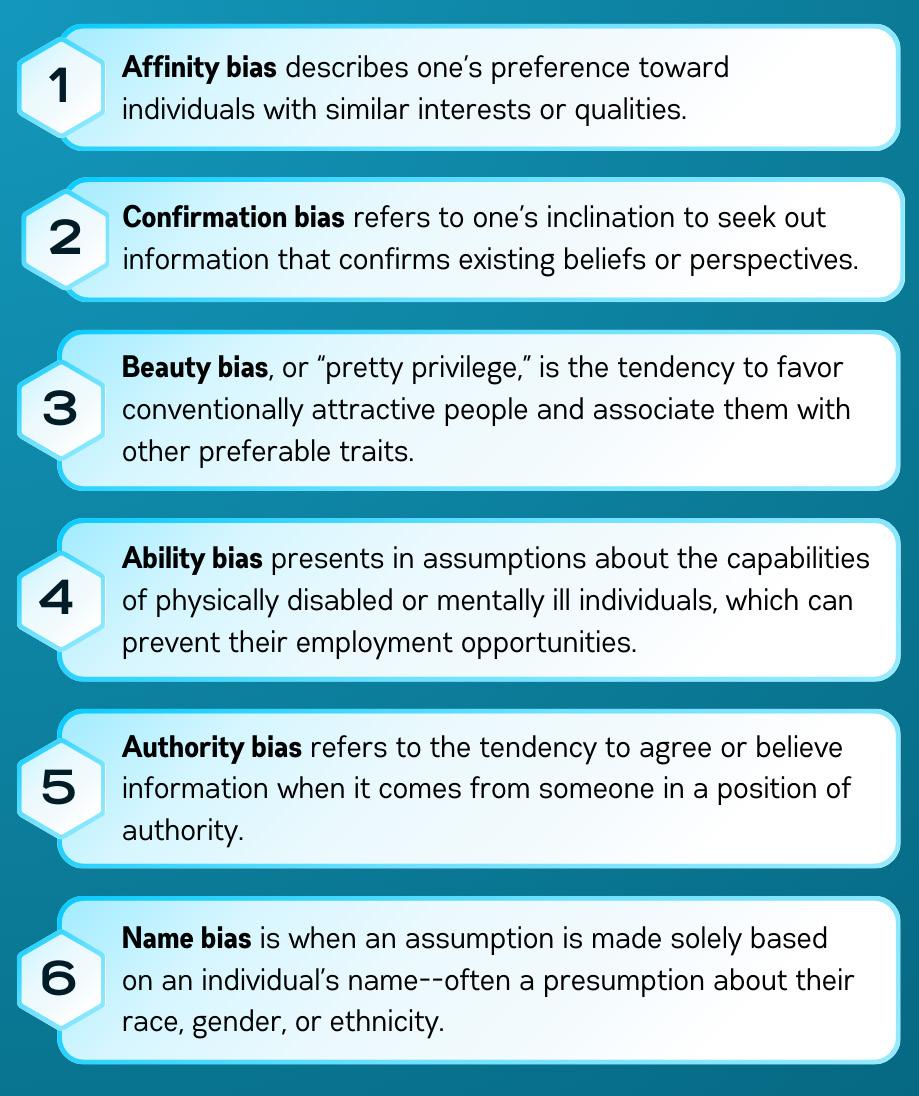
INFOGRAPHIC: Sonia Kharbanda INFORMATION: National School of Healthcare Science, Maryville University blog SUBCONSCIOUS STEREOTYPING. These biases, as well as many others, can show up in casual conversation and daily interactions. Interrupting implicit bias requires acknowledgment and awareness to prevent harm.
A friend’s tightened hold on their purse when a person of color enters the elevator. A family member’s quick assumption about a questionable driver’s gender. While these situations may seem like normal comments or explainable responses, they are often reflective of an unconscious bias. Implicit bias refers to the stereotypes and prejudices that individuals unconsciously carry against a certain group of people. These biases are unavoidable in today’s society, but the potential hurt that these assumptions cause can be easily avoided. So, how can these offhand remarks or actions be called out in a respectful manner, in oneself or in others?
Most importantly, if someone reverts to a generalization, the least effective response is to label them “racist,” “sexist,” or otherwise and end the conversation there. This will only lead to more distress, and if either person is put in a defensive position, communication and eventual understanding will become much more difficult.
According to a 2023 article by Kiana Atkins, Principal Strategist in the Office of Equity, Diversity, and Health at the National Institutes of Health, the first step to confronting bias is to acknowledge its presence. Atkins, and many other sources, suggests taking a test calibrated to inform respondents of their biases.
However, asking someone to take an online test to determine their personal bias is not the most applicable solution in day-to-day, casual conversation.
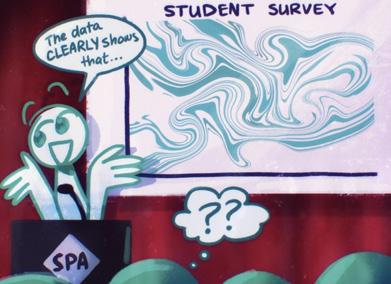

Still, acknowledgment is a good place to start. Everyone has biases; the goal is not to single out or shame anyone. Most likely, this person did not speak or act with harmful intentions. When interrupting these thoughts, it is important that everyone involved remains understanding.
Calling someone out for their bias is likely going to be uncomfortable. Sharing feedback in private may be easier and make the other person more receptive. Avoid calling someone out in a large group setting or anywhere that will only add tension to the situation.
In confronting these biases, prioritize personal safety. In many situations, this interaction can be awkward but both parties are well-meaning. When there is hostility from either side, the situation may surpass discomfort and become unsafe. If there is any possibility that this will be the case, hold off on confrontation. Ideally, both participants are able to discuss the issue respectfully in the moment and at least one person walks away having learned something. If this seems unlikely or impossible, finding someone better equipped to address the situation may be necessary. Ultimately, having grace for oneself and for others is crucial if and when these unconscious biases show up. Acknowledging their presence and their potential for harm is the best way to move forward. Once they are called out into the open, it becomes easier to both recognize them and prevent them from affecting future judgments.



ILLUSTRATION: Via Campbell
POINTS PANIC. While the official policy on gradebooks is to keep them closed, some teachers choose to make students’ scores always available on Google Classroom. These inconsistencies have contributed to student support for completely open gradebooks, while others argue that constant access to grades would increase anxiety.
ZACK BERCHENKO CONTRIBUTOR
A common saying used at school is “learning is more important than grades.” This seems confusing, because better learning and better grades should be equivalent. In particular, if a student is able to improve their understanding of a specific subject, their grade in that class will also improve. It is for this reason that an open gradebook policy will help improve students’ learning and help them achieve higher grades.
Open gradebooks increase transparency. SPA has many resources for improving learning, but it is often hard to make the most of them. For instance, tutorial
ZAIN KIZILBASH CONTRIBUTOR
With the end of the first semester quickly approaching, grades are at the forefront of many students’ minds. However, one question regarding how students interact with our grades on a daily basis remains: should SPA implement an open gradebook policy? In the minds of many students, the answer is yes.
The most important benefit of an open gradebook would be students’ ability to act on their education. The current system for checking one’s grades–finding a teacher or advisor and asking for a Veracross grade sheet–is not only a hassle for students and teachers alike but is also not clearly communicated to the student body. Many students are unaware that they can ask their teachers for their grades, and as a result, re-
PUBLICATION INFO The Rubicon is published eight times a year. We distribute 500 copies of each issue on the Randolph Campus which are available for free.
ADVERTISING The Rubicon does not accept advertisements.
ANONYMOUS SOURCES Although it is always preferable to use names when reporting, there are times when it is necessary to protect those we report on. Use of grade level or first name only are the most commonly used methods of anonymity.
BY LINES credit the individual who conducted interviews, drafted, revised and fact-checked an assigned story. Shared bylines are given to joint effort
allows students to meet with teachers in classes they need help with. However, the limited tutorial time caps the number of teachers students can work with, forcing them to try and prioritize which classes they want the most help in. Without knowing grades, students are left to guess which classes these should be, and oftentimes, decide to meet with no teachers at all. The transparency that comes with open gradebooks would allow students to be more efficient and accurate with their tutorial time and studying. It is also important to acknowledge the counterargument that adopting an open gradebook policy could increase academic competitiveness. In particular, since SPA is already quite academically rigorous, added competitiveness could hurt students’ mental health. However, students already receive their grades on tests and quizzes. Many students already compare
THE MOST IMPORTANT BENEFIT OF AN OPEN GRADEBOOK WOULD BE THE STUDENTS’ ABILITY TO ACT ON THEIR EDUCATION.
junior Zain Kizilbash

main uninformed of the status of their grades until mid-semester, when grade sheets are distributed. This is detrimental to a student’s ability to improve their grade. A student who doesn’t know that their grades are either slipping or lower than desired will be unable to act and improve their academics to their desired level.
Consequently, they may be unable to act until it is too late. An open gradebook eliminates this issue by allowing students access to their grades at all times. Increasing education and students’ ability to change their academic success ought to be at the forefront of
assignments. Stories that include supplemental materials include a credit at the bottom that states “Additional reporting by” followed by the name of the reporter.
EDITORIALS articulate the collective opinion of the staff, while minieditorials, opinions pieces, arts reviews, and columns belong to the author.
SUBMISSION GUIDELINES Opinions are welcomed as Letters to the Editor or Submitted Opinions and may be published in print or online. Letters should not exceed 400 words and opinions should not exceed 650 words. Both may be edited for length and style. All pieces are published with a full name.
UPDATES AND CORRECTIONS
During the post-critique process, staff members identify inaccuracies and discuss reader feedback. The staff publishes corrections when an error is discovered during critique or reported to a staff member. Corrections should be directed to the Editor in Chief or appropriate section editor.
IN PRINT: Corrections are printed at the bottom of News p. 2. Corrections will be printed in the month following the error and, if the story is also published online, will be corrected following the online corrections policy.
PHOTO CREDITS Photos are labeled with the photographer name, whether on staff or freelance. Images sourced outside the staff are credited with
their grades on these, which has contributed to the current competitive culture. While open gradebooks would allow students to compare amongst themselves more directly, the fact that tests and quiz grades are already being compared shows that open gradebooks would only minorly increase competition. Though added competitiveness is bad nonetheless, the benefits from improved learning greatly outweigh this downside.
SPA must adopt an open gradebook policy. The policy will increase transparency and allow for more efficient studying. This will improve students’ learning, leading to increased understanding and improved grades. If you want to support SPA in adopting this policy, the best way is to discuss the benefits with your teachers and class representatives.
SPA’s policy, and there is little reason to suggest that an open grade book would be anything but positive for students’ learning.
Most of the arguments brought in opposition to an open gradebook policy are easily solvable. While some express concern with feasibility, some teachers have already implemented a pseudo-open gradebook through Google Classroom, which has the option to make grades visible in the “view your work” tab. There is no reason for this option not to be implemented in every class.
Finally, the student body seems to want it. Every year, students who promise to introduce an open gradebook policy are elected into the Upper School Council, clearly showing that the issue is one students deem important. For some, implementing the policy has become a serious voting issue.
If the student body wants an open gradebook, the real question is: why not?
guidance from the National Press Photographers Association guides.
NAME AND PRONOUN USE
The Rubicon uses the name and pronouns shared by individual sources during interview. Each interview and survey begins with a request to say and spell the person’s name and to share the pronouns they would like to see published in the story, and the reporter is transparent about where the story will be published. If a mistake is made, a correction will be posted per the corrections policy.
CONFLICTS OF INTEREST The Rubicon news and Ibid yearbook avoid conflicts of interest while also honoring the fact that our reporters are involved in the school and local community
beyond their work on staff. Staff members avoid writing about students, teachers, student clubs, affinity groups, and organizations that they are closely involved with. The reporter is always responsible for disclosing conflicts of interest, but if a conflict of interest comes to light after publication, it does not warrant removal of the story. If it is in the best interest of a source to be interviewed by a close friend in the case of a sensitive topic, the interviewer will not write the story— they will solely conduct the interview. Unavoidable conflicts of interest are specifically mentioned at the top of a story. Photographing or videography of news events is never a conflict of interest.
THE RUBICON - NOVEMBER 2024
What happens in the brain when you receive a compliment or an act of kindness?
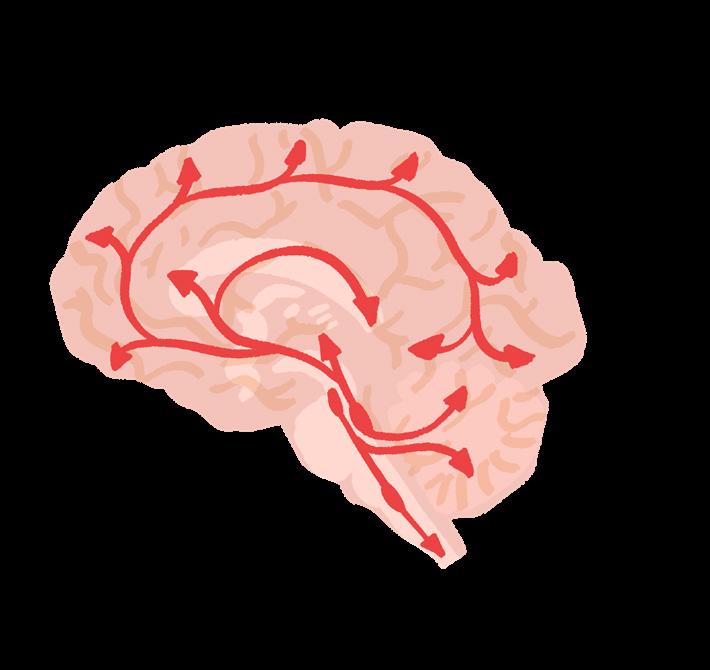
ILLUSTRATION: Annika Kim
BRAIN BOOST. Receiving a compliment activates the same areas of the brain as receiving a reward.
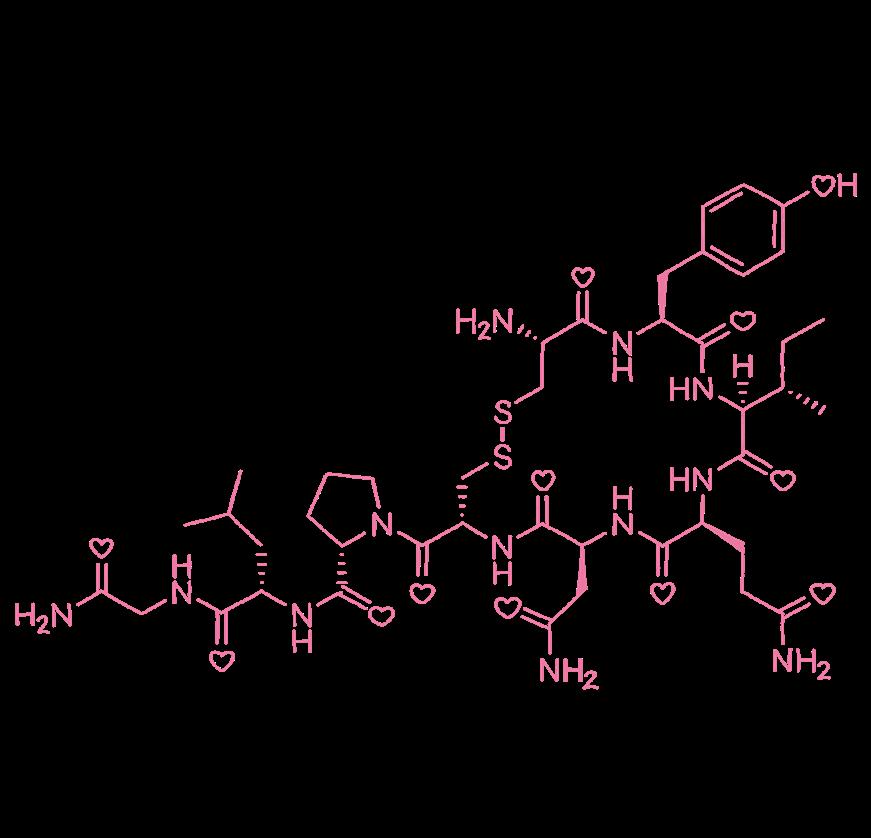

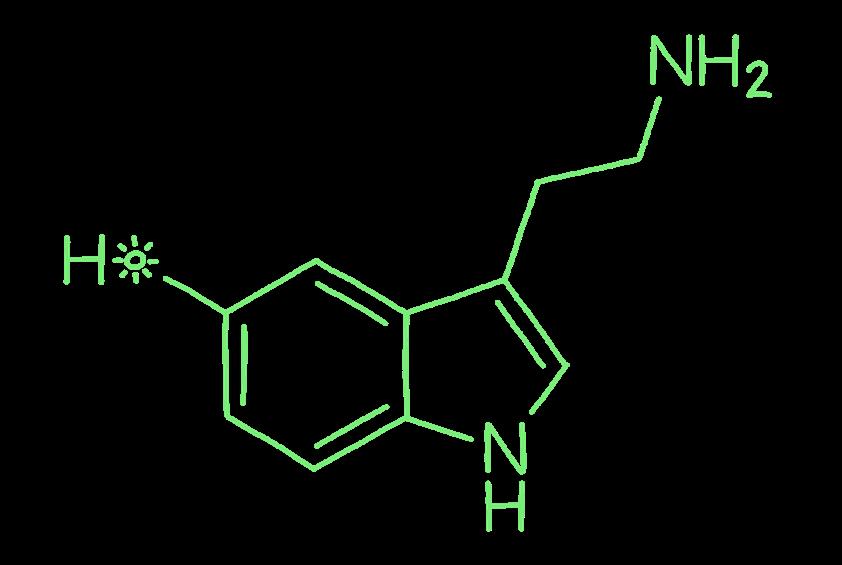
DOPAMINE is also released when you receive a compliment. Dopamine is a chemical that encourages you to repeat a habit or behavior. is released when you receive a compliment.
Serotonin is a chemical that helps regulate mood, improving focus and emotional stability.
ILLUSTRATIONS: Via Campbell
SONIA KHARBANDA THE RUBICON
As a barista, senior June Dalton spends much of her day interacting with strangers. She sees these moments as opportunities to make someone’s day better by giving them a compliment.
“When you feel appreciated or noticed by someone when there’s no reason to, it’s just such a nice feeling,” Dalton said.
She enjoys providing these acts of kindness for others, especially because she knows the impact receiving a compliment has on her own self-confidence: “Getting told something by someone else really sticks in your head, or like if [something is] perceived by others, it can be easier to acknowledge that for yourself,” Dalton said.
Similarly, junior Carsten Bauer sees compliments as important for spreading positivity and choosing kindness. His favorite compliment that he’s received was about his fashion sense.
“It made me feel pretty good. It made me feel like I was probably doing something right,” Bauer said.
There is science to back up those feelings: receiving a compliment releases dopamine in the brain. One study conducted by Japanese researchers Keise Izuma, Daisuke Saito and Norihiro Sadato in 2008 found that positive social feedback caused similar reactions in the participants’ brains as receiving a monetary reward.
Furthermore, a 2020 study in the Personality and Social Psychology Bulletin by Erica Boothby and Vanessa Bohns noted that people often underestimate the impact of compliments on their recipients and even believe that their compliments make recipients uncomfortable.
They aren’t all wrong; compliments do not have a universally positive impact. Sophomore William Drake appreciates when positive feedback comes from someone he knows well, but other times, the comments can feel forced: “It doesn’t always feel genuine … In a way, compliments sometimes make me feel more guilty than good,” Drake said.
Instead of providing a confidence boost, backhanded and ingenuine compliments make Drake feel like he’s being judged or excluded from an inside joke.
“
“GETTING TOLD SOMETHING BY SOMEONE ELSE REALLY STICKS IN YOUR HEAD.
senior June Dalton
Dalton also notes the discomfort that compliments can bring when someone puts themselves down in the process. She sees those comments as in conflict with the goal of a compliment–instead of pointing out something positive in another person, they reflect a desire for validation.
“A compliment should be a way to connect with someone … it’s not about you when you give a compliment,” she said.
Most people know that thoughtful words make them feel good, but they are less likely to take the initiative to compliment others.
Ninth-grader Elise Nelson tries to offer praise whenever something kind comes to mind and, specifically, they aim to “give compliments more on personality rather than outfits or appearance.”
Sometimes, Dalton’s compliments to her customers only elicit a “thank you,” but other times, they are the catalyst for deeper conversations.
“Those little moments,” she said, “... where you just genuinely connect with someone,” make her efforts worthwhile.
Sometimes, Dalton’s compliments to her customers only elicit a “thank you,” but other times, they are the catalyst for deeper conversations. “Those little moments,” she said, “... where you just genuinely connect with someone,” brighten both their days.
Whether a compliment comes in the form of casual approval of an outfit, appreciation for hard work, or a shoutout to a large group, genuine comments create positive impact.
“THANK YOU”
What are some of the compliments that people appreciate most?
“
senior Carsten Bauer I LIKE WHEN PEOPLE GIVE ME COMPLIMENTS ON MY CLOTHES.

“ I TRY TO GIVE COMPLIMENTS MORE ON PERSONALITY RATHER THAN OUTFITS OR APPEARANCE.
ninth-grader Elise Nelson
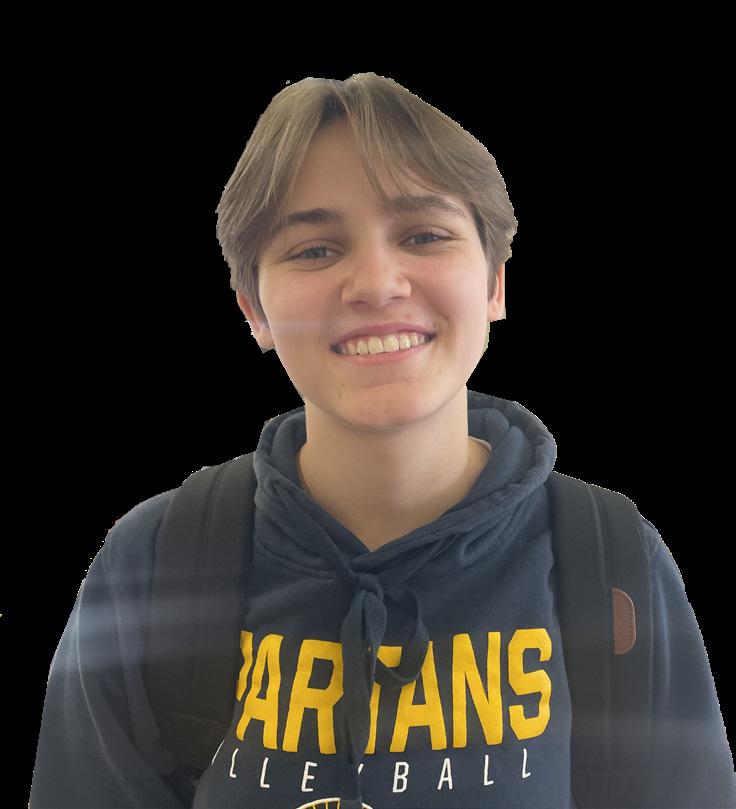
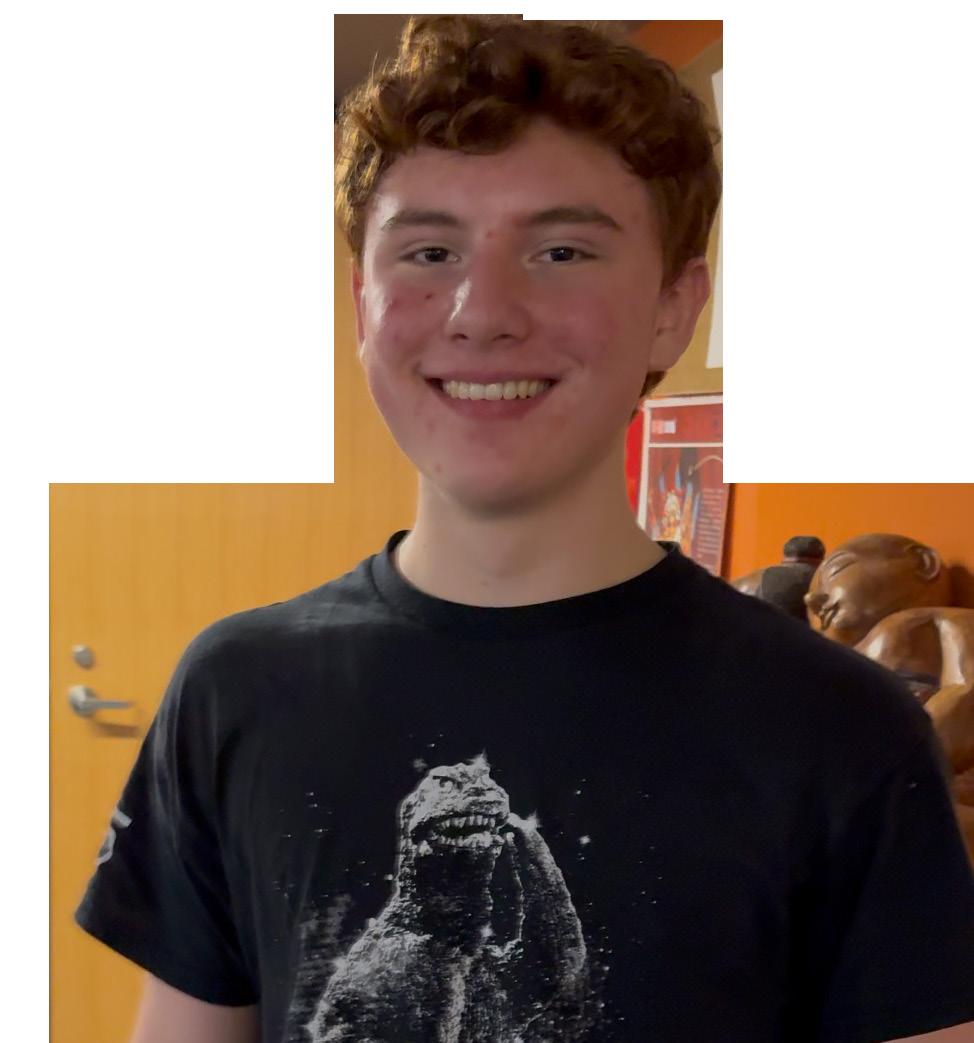
“
MY FAVORITE COMPLIMENT TO RECEIVE IS A COMPLIMENT ABOUT MY STRENGTH.
sophomore Solomon Beardsley
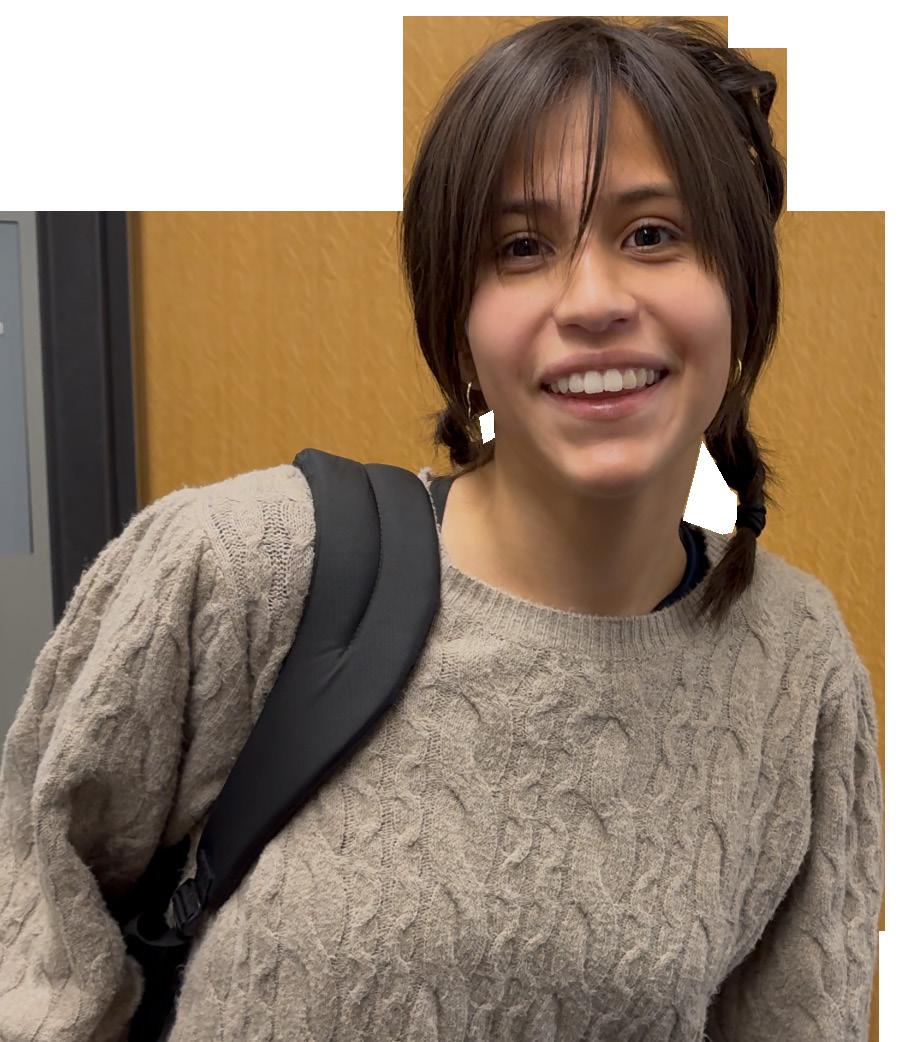
“ MY FAVORITE COMPLIMENT TO RECEIVE IS ... ANYTHING THAT SOUNDS GENUINE.
sophomore Florence Barrera
continued from pg. 1
According to a study done by St Olaf College, of the students who experienced racial mi croaggressions in the classroom, 33.3% felt un comfortable asking a pro fessor for help outside of the classroom, 57.9% re ported having less desire to socialize with their classmates and 54.6% al reported feeling less mo tivated to participate.
Implicit bias leads to the subconscious judg ments students and fac ulty make about other community members, which in turn leads to disciplinary bias, micro aggressions, and curricu lum decisions.
However, there are steps one can take to fight against these moments of racism and combat bias.
An effective starting step is to name the prob lem. Address the pres ence of microaggressions, and ensure students and teachers are educated on the meaning and impact of them.
“
The problem arises ... unintentionally ... microaggressions come from more uninformed people.
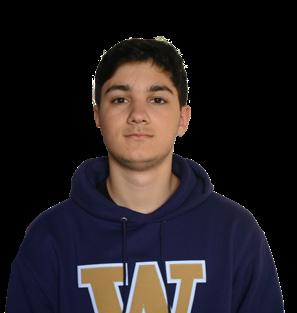
“The best way to com bat microaggressions is education; that’s [also] how microaggressions are [perpetuated],” junior Phillippe Cristobal said.
If a situation arises that requires immediate attention, impactful steps include addressing and intervening when micro aggressions arise.
Teaching communi ty members the skills to properly speak up when they hear or see some thing that raises alarm bells will help combat the lasting effects of harmful language.
It is a step that has the potential to automatically make students feel safer, help those involved exam ine the situation, and ensure the perpetrator un derstands why what happened was harmful.



ANNIE ZHANG EDITOR IN CHIEF
Violent acts, slurs and hate crimes are clear indicators of discrimination, which remains all too prevalent in the world. Yet, beneath these overt actions, even compliments, a passing remark, assumptions, and everyday interactions can carry subtle undertones of unconscious racism.
Colorism, or prejudice towards individuals with a darker skin tone, is prevalent -- often among members of the same ethnic group. Differing from racism, colorism operates within communities rather than being driven by discrimination between racial groups. Even in the beauty standards of many cultures, colorism remains an underlying bias. For instance, in Western beauty ideals, having light or moderately tanned skin is often seen as more attractive while darker skin tones are associated with a lower socioeconomic status or a lack of education.

However, while darker skin tones are often stigmatized, tanning has become a popular beauty practice in the Western world and is associated with health and affluence, creating a double standard in relation to colorism.
The trend highlights how privilege allows certain groups to selectively adopt aspects of appearance while people of color continue to face discrimination for naturally dark skin tones. This prejudice extends beyond Western cultures to other ethnic groups, even those with a lighter array of racial
“Colorism is perpetuated through beauty standards [where] being lighter is more favorable for many people, and oftentimes, colorism is masked through dating preferences which inherently are harmful and full of stereotypes,” sophomore Anessa Herzi said. “Having a preference that excludes darker complexions pushes forward a message that being lighter is a positive trait while being darker is a negative trait.”
In everyday life, unconscious colorism can manifest through casual conversations, where people compliment lighter skin without understanding the deeper implications, or in professional settings where individuals with darker skin may encounter unconscious discrimination in hiring practices.
A seemingly small, passing remark can promote unhealthy beauty practices, including skin bleaching, an industry estimated to make over $15 million this year in product revenue according to . It involves toxic substances like mercury that ultimately lighten skin tone -- even as they harm consumers.
“I’ve seen progress in my own community where African stores who used to sell skin bleach have stopped because the demand has gone down,” Herzi said.
Understanding the impacts of colorism allows society to challenge biased beliefs and promote critical thinking. It fosters empathy and reduces stigma, encouraging self-acceptance and respect for all skin tones.
Technology racial bias refers to the unintentional or systematic discrimination against specific racial or ethnic groups within the development or use of technology. Algorithmic discrimination can stem from a number of sources including underrepresented data sets, lack of diversity on development teams or even implicit biases developers carry that subtly influence their work. Since technology is developed by humans, the implicit biases of its creators eventually get passed down to the final product.
“[Unconscious racism] just happens a lot due to the STEM space also being primarily white, so testing on yourself so you only have that data,” senior Adam Ebert said.
Automatic paper towel dispensers and facial recognition software are common examples of racial bias in technology. Dispensers often fail to detect darker skin tones due to inadequate testing, while facial recognition has higher error rates for people with darker skin, leading to misidentifications—particularly harmful in law enforcement. Because AI-driven technology depends on data sets that may lack diverse representation, these systems can reflect unconscious racial biases.
including through societal biases reflected in stories and characters or imagery that marginalize, misrepresent or exclude certain minority groups. White savior narratives, tokenism and fetishization of non-Western cultures don’t exist in isolation; cultural marginalization stems from deeper systematic tendencies in media production.
Media often falls back on stereotypes when depicting certain racial groups, which consequently leads to limited and repetitive narratives. Much like technological advancements, authors, filmmakers and content creators bring their own limited worldviews and inherent biases to their work, which shapes the content they produce.
Another aspect of unconscious bias in media representations is the underrepresentation or complete omission of racial groups. Notably, in literary media, there is often an unspoken assumption that characters are white unless specified otherwise—a phenomenon known as white normativity. Such patterns occur when minority groups are completely excluded or merely play minor, background roles, therefore reinforcing that their stories and experiences are less important.
“I often notice that some ethnic groups are still being mocked as a source of humor in some shows and movies, such as normalized stereotypes and racism against Asians and especially South Asians,” junior Ethan He said.
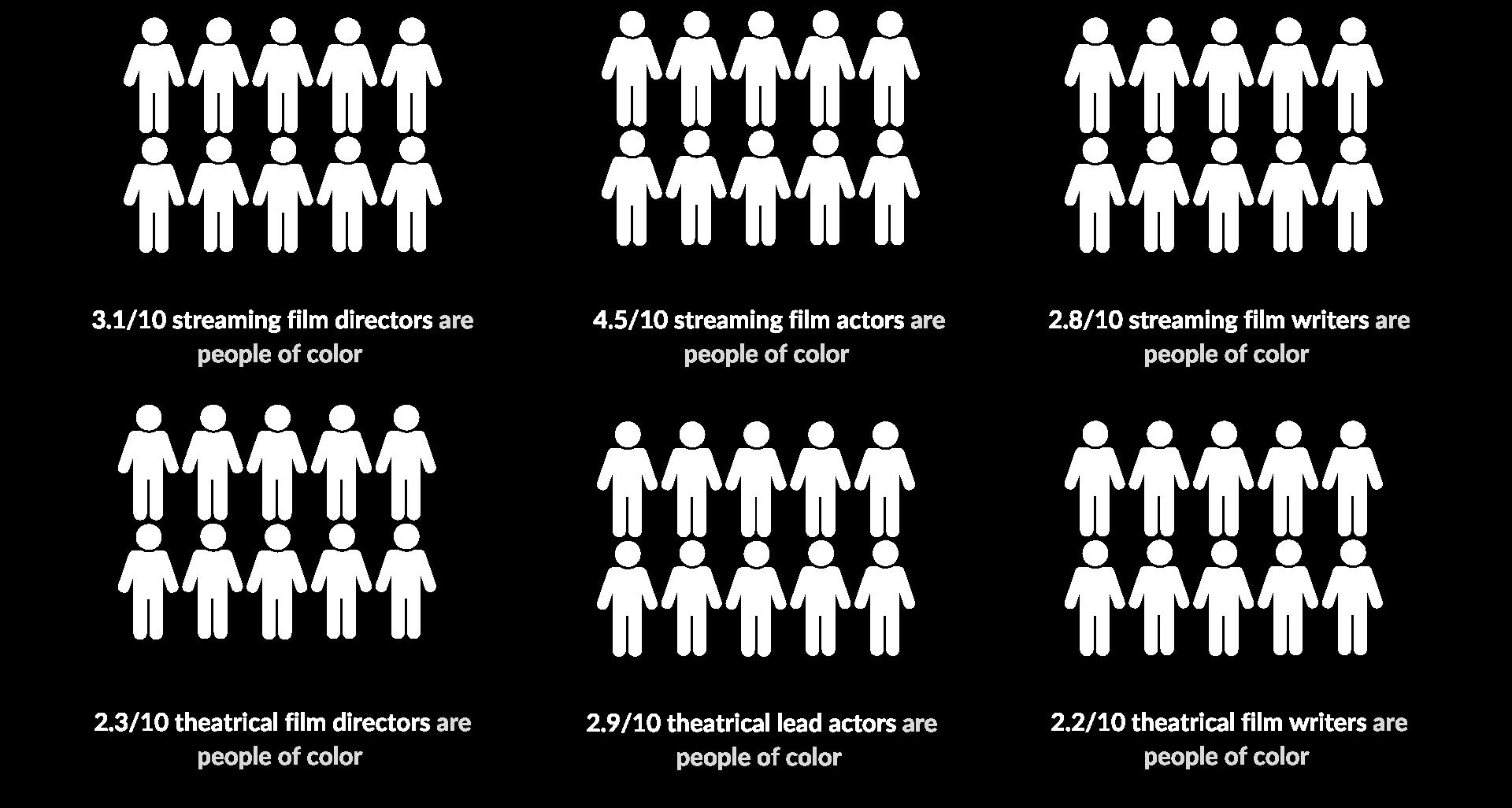
INFORMATION: UCLA Social Sciences
UNDER THE SPOTLIGHT. A report done as a part of the UCLA Entertainment and Media Research Initiative found people of color make up less than half of the staff and cast in movies and TV. Lack of representation when creating any type of media leads to more exaggerated stereotypes and exclusion of marginalized communities.
In recognition of this racial bias, Ebert’s Advanced Technology Projects class project utilized various sensors to detect the presence of a human being, with part of his engineering process intentionally involving simulating darker skin tones to test whether his robot could operate accurately and without errors.
“Because I was using a LIDAR sensor, if [the robot] didn’t detect your legs, it would hit your legs. And I realized ‘Wait, was it not working when I was wearing black pants?’” he said.
His solution? Scrap the entire design and start over. “Because when you’re trying to make something that’s going to work for everybody, you’re going to have to test on everybody,” Ebert said. “You can’t just test with a small group of people, especially for things that are going to be implemented beyond a small niche.”
Ebert’s line of thinking exemplifies a mindset that all engineers can adopt: designing inclusively to ensure that technology works for everyone. By redesigning his project to account for diversity, he demonstrates the importance of proactively addressing bias in technology development.
On-screen, in literary media or plastered on a billboard, unconscious racism lurks in the subtle perpetuation of racial biases within mainstream media
In a real-world context, a lack of or incorrectly portrayed narrative of people of color results in misinformation while fortifying a sense of inferiority or danger associated with certain groups. Over time, such misrepresentations compound systemic inequalities, hindering social progress and mutual understanding.
junior Ethan He “
Ethnic groups are still being mocked as a source of humor in some shows and movies, such as normalized stereotypes and racism against Asians.

While explicit acts of racism can be easy to recognize, unconscious bias operates quietly, silently shaping perceptions in subtle ways that go unnoticed. Whether in everyday interactions, technology or media representation, bringing attention to these hidden patterns allows for questioning assumptions, challenging stereotypes and encouraging open dialogue. Recognizing unconscious racism isn’t assigning blame, but rather fostering awareness and sparking meaningful change to build a more inclusive society.
1 2 3
GEORGIA ROSS
CHIEF VISUAL EDITOR
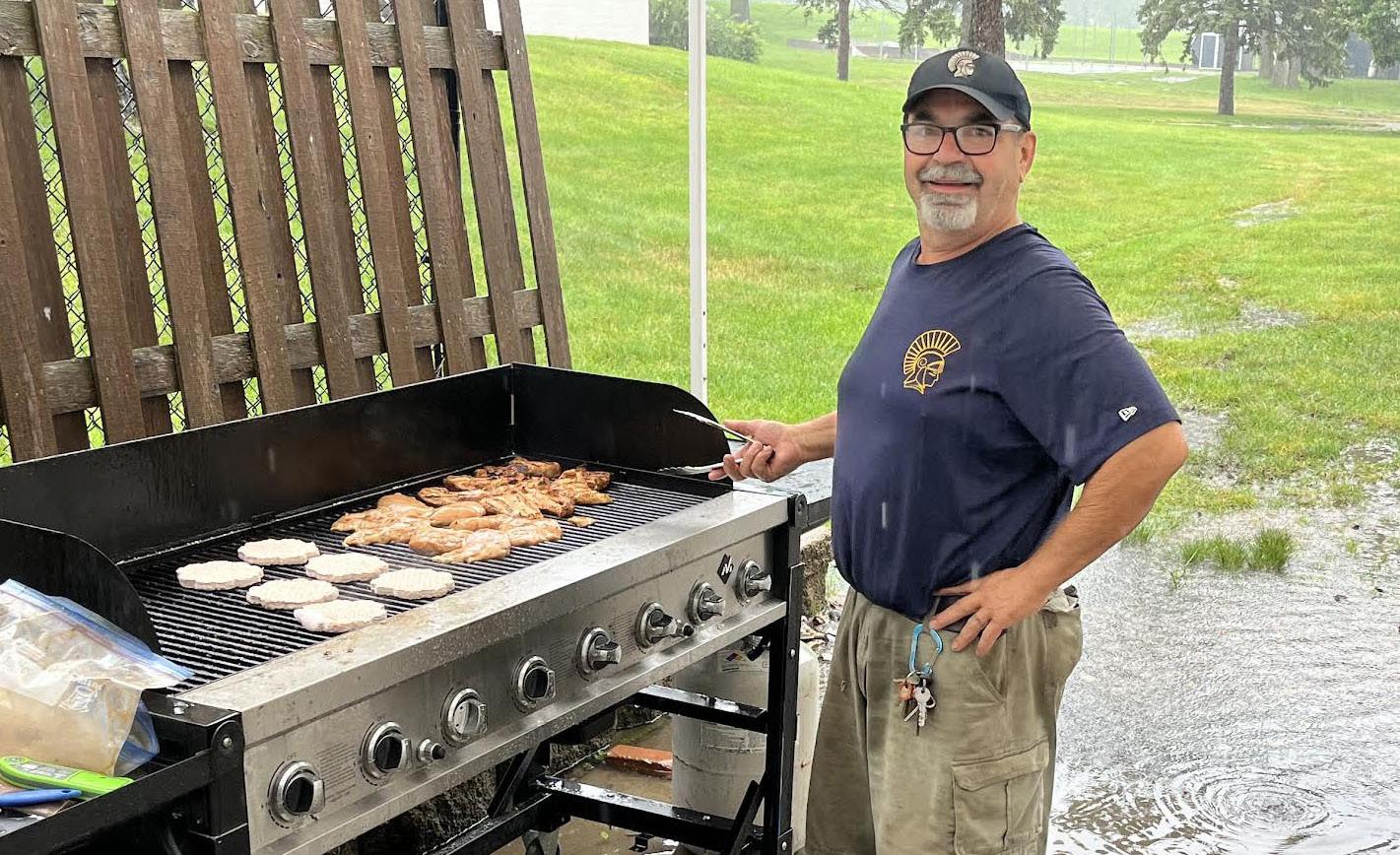
Lower School Maintenance Supervisor Eugene St.Pierre is a fixer.
His proclivity for fixing started in his rural hometown of Crown Points, N.Y. From a young age, he learned all of the tasks his family’s dairy farm had to offer.
The dairy farm is situated on the line between New York and Vermont. There was the view of both Lake Champlain and the Adirondack Mountains. In the spring and fall, St.Pierre and his friends backpacked through the woods, and in the winter, they snowmobiled.
“We’d bring … some beer, build a fire, and just get away from everything for a little,” he said.
As the youngest of 16, St.Pierre learned his place on the farm quickly. When he was five years old, his uncle helped him build a stool so that he could milk the cows.
“I should have waited a little longer. … Once you start doing something on the farm, then it’s expected of you,” he said.
As St.Pierre got older, his parents recognized his ability to identify and fix issues on the farm.
“I liked driving the tractors, but once … my parents … figured out that I could fix things, then everybody else got to have the fun jobs,” St.Pierre said.
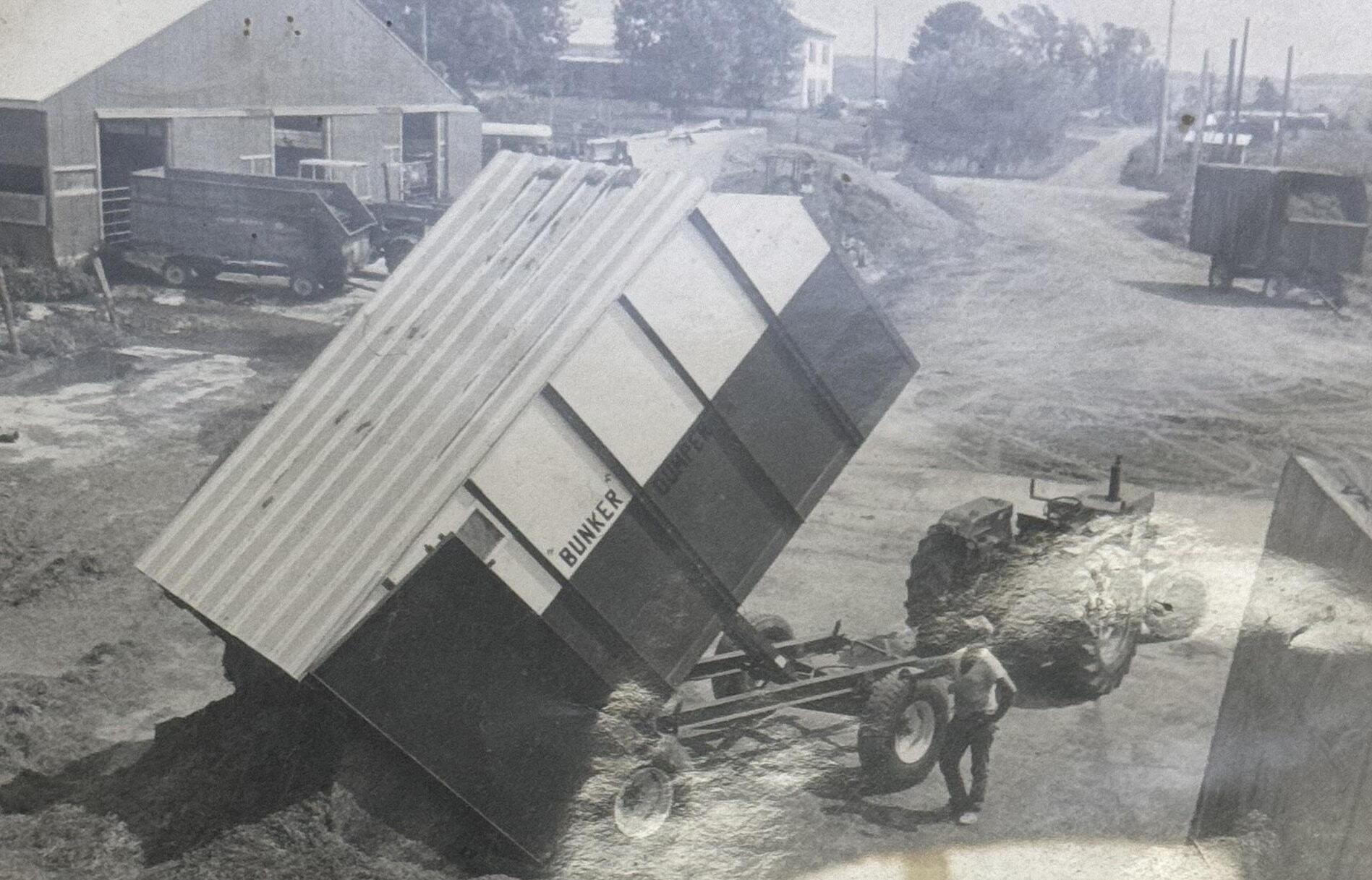
His family used “chuck wagons” to haul feed from one place to another on the farm. The contraption required feed to be loaded on and off the wagon by hand. St.Pierre engineered a chuck wagon that functioned similarly to a dump truck, where the feed easily slid out of the wagon and onto the ground. He presented his idea to the annual Addison County fair. The next year, John Deere and New Holland both came out with a version of their own.
“We actually built the first bunker dumper; that’s what we called it,” he said.
He remembers when the local drive-in movie theater shut down, him and his dad were asked to take down the remaining metal structure. It didn’t scare them that it was an 80-foot structure; they
disassembled it anyway. Afterward, they repurposed the steel for new machinery around the farm.
“My dad always had me fixing things … I’d say, ‘I don’t know how.’ And he’d say, ‘well, figure it out,’” St.Pierre said.
After meeting his wife, he moved to Minnesota, where he managed a wholesale picture framing warehouse. One day, the owner brought in a variety of new materials for the frames.
“I went out and asked him to talk to him about the quality of the materials we were bringing in. He said, ‘Well, what do people expect for 25 cents a foot?’” St.Pierre said.
That’s when he decided to leave that job. His sister worked in the business office at SPA and mentioned a job opening in the school’s maintenance team. St.Pierre applied and started working at SPA in 2005.
In the beginning, he was the groundskeeper. He noticed general neglect around the trees, bushes and shrubs. So, he spent most of that first year cutting and hauling brush, generally improv-
ing green environments on campus.
The next year, he transitioned to Lower School Supervisor, the position which he still holds today. St.Pierre’s favorite part of the job is problem-solving and designing.
For years, the maintenance team used a trailer for leaves that required a bobcat, pallet, someone to pick up the load and two people lining up screws and bolts. Last year, they purchased a new leaf trailer. St.Pierre designed a leaf box for the trailer that could be efficiently used by one person.
Like scrap metal from the drive-in, after designing new solutions, St.Pierre holds onto material scraps and finds a new life for them elsewhere. Sometimes, they make their way into the hands of art students.
“A lot of times the art teacher will say, ‘We want to make this. What do you think?” And I’ll say, “Hey, I have been saving these for some reason, not knowing what,’” he said.
St.Pierre’s office is also home to the infamous “snake eggs” nest. On
days, students sprint to his office after lunch to retrieve one gobstopper (aka snake egg) from his wooden candy machine.
LOWER SCHOOL MAINTENANCE SUPERVISOR EUGENE ST. PIERRE:
- Grew up on a dairy farm in rural New York.
- Has been at SPA for 19 years.
- Helped design and engineer a chuck wagon later picked up by John Deere and New Holland.
“I get to see the different little personalities, and … listen to some of the conversations. The kids are kind of funny to … watch how they are growing up,” he said.
While he enjoys his time with the students, St.Pierre spends the majority of the day with other members of the maintenance team.
“Everybody seems to actually care for everybody else … Until last
year when Som left, nobody had left this crew for 17 years… that speaks for something,” he said.
St.Pierre recalls fond memories from years past with his colleagues Pete, Bill, and Warren. One day, as the team left the break room and returned to work, Pete, Bill, and Warren stayed behind. St.Pierre sensed tension and he slowly peddled back into the room.
“Pete looked at me, walked by, slapped me on the back, and said, tag, you’re it. And he left me to deal with Warren and Bill,” St.Pierre said.
“We’ve all kind of grown together. We all learn as we go … I think we have the same kind of mindset … Let’s figure this out. Let’s work together,” he said.
In his chapters after SPA, St.Pierre wants to put his skills towards helping people who need them most.
“I’ll go and help older people that can’t do odds and ends … I’d like to be able to help people out for nothing. I’d like to be able to volunteer to go help people fix things that they can’t do themselves,” St.Pierre said.
CHLOE KOVARIK STAFF WRITER
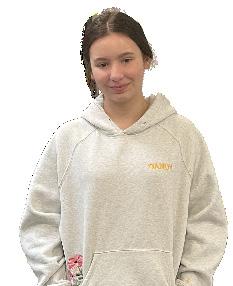
Sophomore Hannah Sanders comes home from school. She does the homework she was assigned, she eats a snack, and then she whips out the camera. She says she doesn’t want to be a photographer, but it has always been something she’s loved. Not sure what she wants to do after high school and even after college, Sanders thinks of her photography skills more as a hobby than a job.
“I don’t think that I want to do it as a job, but maybe a hobby on the side,” she said.
Sanders has taken Photography I and is registered for Photography II next semester, as she has seen photography as something she’s loved her whole life. She tried taking Principles of Engineering but dropped it in favor of a different hobby; she just wasn’t interested in it.
In truth, Sanders isn’t quite sure what she even wants to take at SPA because she doesn’t particularly like thinking about the future.
Sanders may not know what she wants to do after high school, but even going into the unknown, she will have photography in her back pocket to whip out -- just as fast as her camera.
HAPPINESS HABIT. Sophomore Hannah Sanders regularly takes photos after finishing homework. “I don’t think I want to do it as a job, but maybe a hobby on the side,” she said.
ARIELLA KIM STAFF WRITER
Coming home from a trip to Brazil, Olivia Fox feels closer to her family than ever. She was captivated by the anecdotes told by her relatives and felt fortunate to form deeper bonds with people she had heard so many stories about. Fox’s biggest inspiration though, is her mother. Traveling to the place where her mom grew up made her reflect on how hard work can get you far.
“My mom is like a role model to me, and an amazing person. She was raised with very little in Brazil, but she moved here and worked very hard,” Fox said.
Learning more about her mother’s journey shaped Fox’s view of her and made her realize how important it is to know your family’s roots.
Fox thinks back on her memorable childhood. From her clearest memories, she misses being a little kid.
“One of my favorite moments was when I was two years old before my
sister was born. My grandma and grandpa came from Brazil to visit, and they got me my first bike,” Fox said. “I just have a very clear memory of being pushed around on one of those little Barbie tricycles.”
Fox recognizes that her pleasant childhood is due to her parent’s diligence in creating fulfilled lives for generations to come.
As Fox navigates her hopes and dreams for the future, including going to law school and becoming a domestic violence or immigration lawyer, she promises to herself to always be grate ful for her family’s hard work and drive that led them to where they are today.
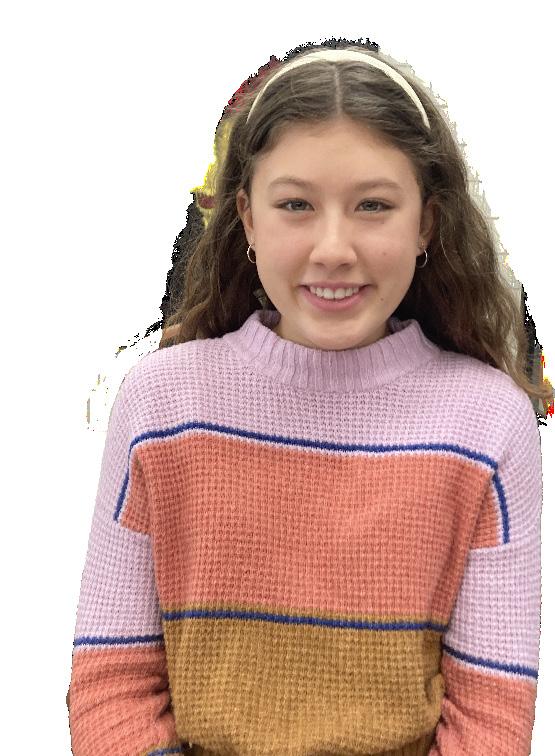
GENERATIONAL GIFTS. ”I have very clear memories of being pushed around on one of those little Barbie tricycles,” ninth-grader Olivia Fox said. She received the bike from her grandparents.
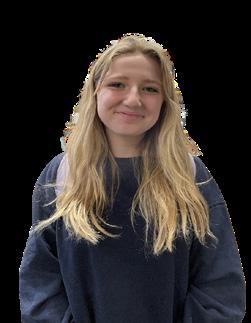
Inspiration strikes at unlikely moments: in class, on a drive, playing a sport, or—in junior Shefali Meagher’s case—on the elliptical machine at the gym. This is where Sincerely Gen 1.5 was born.
“Generation 1.5 refers to a group of kids who grew up -- in part -- in another country,” Meagher said. “The nonprofit is like our communication to them.”
Their purpose, essentially, is to provide guidance for families who may be navigating the U.S. school system for the first time.
Junior Sophie Donahue was working out beside Meagher when the idea struck, and helped her brainstorm.
“[Shefali] had this idea that was not very fully formed … it was like Steve Jobs in his garage making Apple, but it was Shefali on the elliptical,” Donahue said.
Meagher’s idea of starting an organization offering tutoring services was fueled by her desire to help the large population of immigrant youth in Minnesota.
She brought her plan to a group of friends: Carys Hsiung, Lani Ngonethong, Zimo Xie and Donahue.
“We decided that we wanted to … make something happen. You know what I mean? Not just
have an idea and just let it linger,” Donahue said.
Running with Meagher’s starting idea, the group met a few times every month throughout the summer to iron out their goals and priorities. They devised a timeline and planned out each step of their creation process.
IT WAS LIKE STEVE JOBS IN HIS GARAGE MAKING APPLE, BUT IT WAS SHEFALI ON THE ELLIPTICAL. “
“[We came] up with what we wanted this organization to look like first: the mission statement, what we wanted [to do], who we wanted to reach,” Meagher said.
Nearing the end of summer, the group finalized the “designing phase.” This included creating all social media accounts, emails and official websites.
Donahue, in the process, inherited the role of social media manager.
“My favorite part has been the social media because it makes me feel like an influencer,” Donahue said.
At the start of the school year, the group
felt ready to reach out to established organizations in immigrant communities to build partnerships. Most of the group’s tutoring services will be provided where similar adult tutoring is already happening or directly in the schools the immigrant students attend.
Together, they visited a few locations on University Avenue in St. Paul, including the Hmong Cultural Center, the Hmong American Partnership, the International Institute of Minnesota and Vietnamese Social Services.
“We reached out to the Hmong Cultural Center because Carys had worked there,” Meagher said.
The group also connected with a few organizations over email, such as Clues, a nonprofit providing services for Latino youth and adults, and Neighborhood House, an organization that has immigrant housing and food services.
After discussing their idea with a few faculty members, history teacher Mollie Ward also connected them with the principal of LEAP High School in East St. Paul.
“That kind of outreach [is to] see who would be willing to volunteer … or who wants our services,” Meagher said.
With the help of volunteers, they plan to offer tutoring services in English as a second
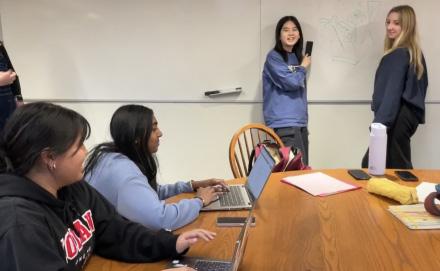
website designs together. “We decided
something happen, you know what
said.
language (ESL), general core subjects like math, science, and history, and college guidance.
“None of us are experts, per se … but we’re all going through [the college process],” Meagher said.
The group hopes to start offering services at the beginning of the new year and suggests the best way for students to get involved with Sincerely Gen 1.5 is to volunteer their time by filling out the Google form on posters around the school and in the student newsletter.
Simply spreading the word about the nonprofit is also helpful.
“The most important
thing is that it doesn’t die out when we’re not here anymore, “ Meagher said.
Meagher hopes volunteers will create a positive experience by making new connections with the immigrant students they work with.
Generation 1.5 is an invitation to “be more open-minded and learn about things that happen in Minnesota or [about] people in Minnesota that you don’t frequently interact with,” Meagher said.
Donahue is excited by the progress they have made and is excited to see how far they can continue to take their idea.
“To think it all start-
ed with me and Shefali walking around the JCC basketball courts,” Donahue said.
Find Sincerely Gen 1.5 on Instagram, X, LinkedIn, and Linktree @sincerelygen1.5

IVY EVANS THE RUBICON
Winter can be draining. Between gloomy weather, harsh road conditions, and sometimes, sub-zero temperatures, it can feel like the longest season of all.
Especially for off-season athletes, finding ways to stay active and healthy in the cold weather can be a taxing job. There’s simply less incentive to go outside, not to mention fewer opportunities for outdoor activities when not participating in a competitive sport.
However, staying active in the winter months is not only achievable; it can be simple.
According to the American Psychological Association, it’s been proven that exercise triggers a release of dopamine and serotonin, which are chemical messengers that play a role in increasing happiness levels.
for your serotonin levels,” Tvedt said. “Just getting any type of movement can help physically and mentally.”
These are Tvedt’s Tips for staying active in the winter:
1. Set a schedule.
“Making sure that you’re building that time to move or to exercise can really help, especially if you can lock in something a regular time slot,” she said.
2. Bring a friend.
“I think having an accountability partner is good. Even if you can just find … a buddy that’s willing to work out with you–maybe you’re joining a gym together. Maybe you’re even going to the weight room that we have on campus here,” Tvedt said.
ESPECIALLY FOR OFFSEASON ATHLETES, FINDING WAYS TO STAY ACTIVE AND HEALTHY CAN BE A TAXING JOB.
The National Library of Medicine further explains that this occurs when serotonin neurons’ firing rates increase while exercising, causing an increase in the chemical overall–and therefore, a higher level of happiness.
LS and MS athletic director and physical education teacher Taylor Tvedt believes the solution is, in essence: keep moving.
“There’s so much research to back the fact that … athletics [and] exercise in general [are] super important
3. Get outside. The Twin Cities have plenty of winter activities to offer like ice skating, which is available for free in Maple Grove and Centennial Lakes Park, the St. Paul Winter Carnival or even a winter light show at the Minnesota Landscape Arboretum.
“You’re never too old to, like, hit a sledding hill,” Tvedt said.
Tvedt acknowledges that it can be difficult: “January can be really challenging after we’ve had the winter break, and sometimes it feels like that’s the longest part of winter,” she said. “Don’t forget that winter is temporary. ”
1. SET A SCHEDULE
MAKING SURE THAT YOU’RE BUILDING THAT TIME TO MOVE OR TO EXERCISE CAN REALLY HELP, ESPECIALLY IF YOU CAN LOCK IN SOMETHING LIKE A REGULAR TIME SLOT.
2. BRING A FRIEND
I THINK HAVING AN ACCOUNTABILITY PARTNER IS GOOD. MAYBE YOU’RE EVEN GOING TO THE WEIGHT ROOM THAT WE HAVE ON CAMPUS HERE.
3. GET OUTSIDE
YOU’RE NEVER TOO OLD TO, LIKE, HIT A SLEDDING HILL.
TAYLOR’S TIPS. LS and MS Athletic Director and physical education teacher Taylor Tvedt is passionate about teaching youth the importance of athletics while enjoying every second of it.

IVY EVANS
THE RUBICON
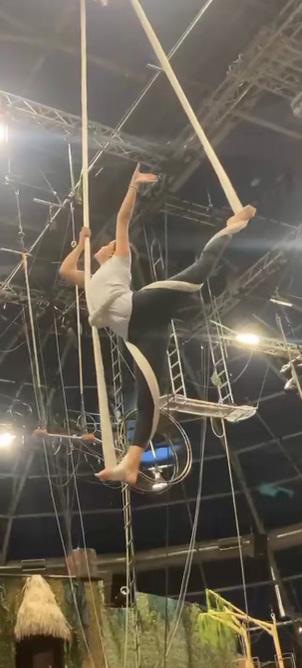
Sophomore Asha Peckosh is a double threat: all throughout the winter months, she’s not only a member of the alpine ski team, but a performer with Circus Juventas, a performing arts circus school for youth aged 2-22.
The classes there, which run for the majority of the winter, are based inside, making it an easy activity to take part in no matter the weather.
Both the alpine ski team and Circus Juventas begin training in mid-November and run until the middle of February, so it’s a long–not to mention busy–winter for Peckosh. She finds that it’s a good way to get exercise when the weather is too cold to take part in activities like soccer, tennis and other spring or fall sports. She also notes that circus is a great way to enjoy winter when the season starts to feel especially long.
Peckosh enjoys both
circus and skiing, but she advises other students not to overwork themselves when juggling two sports at once.
“Taking breaks, even if they aren’t vacations, are very helpful so you don’t burn yourself out … in the winter. Staying committed to your sport can be excellent for mental health as a break from school,” she said.
STAYING COMMITTED CAN BE EXCELLENT FOR YOUR MENTAL HEALTH AS A BREAK FROM [ACADEMIC WORK].
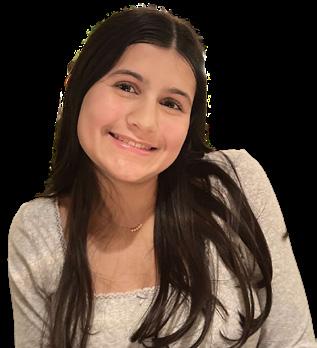
While two sports can cause her schedule to be hectic sometimes, Peck-
osh believes that taking up multiple activities can benefit athletes greatly by helping them to stay motivated, enjoy the time they’re using to maintain their health and remember that not all of winter needs to be difficult.
“Keep in mind all the good parts of winter, as well as that it’s still possible to get fresh air and be outside when it’s cold,” Peckosh said.
She acknowledges that doing multiple activities can be difficult, between maintaining a balanced schedule and having less free time overall, but she believes that commitment is crucial to stay engaged in activities and to have activities to look forward to outside of school.
“Staying committed can be excellent for your mental health as a break from [academic work],” Peckosh said.

GEORGIA ROSS CHIEF VISUAL EDITOR
Question: What does it mean for the boys varsity soccer team to win the state championship three years in a row? How are sport levels even determined in the first place and what are their purposes? Currently, all sports at SPA, excluding co-ops, are in the single A division–is that a good or a bad thing?
These are the questions many students have been contemplating from the cheering section to the playing field in light of the recent victories and losses.
To put it simply, all school sports in Minnesota are governed by the Minnesota State High School League, an organization that aims to place school sports teams in competition divisions based on school size and geography. However, how the sectional competitions are determined is a process that even some sports players themselves on’t fully understand.
“It’s all but impossible to go from single A to double A … like, we’ve won state three times in a row, and we’re still in single A,” senior captain Arlo Zirps said.
“Hill-Murray is a good example of a school that is smaller in size, but plays double A hockey with the biggest schools in the state, but that’s the only sport that they do that in,” Athletic Director Randy Comfort said.
However, the process of shifting to a higher division requires time and conversations from various facets of the school.
“Ultimately, it is the school that has to decide if they want to petition for that … That’s a combination of the coach, the athletic department and the upper administration as well,” Comfort said.
Schools have varying reasons for why they choose to play up, but competition is often the biggest driver of making the switch.
“[Our section placement makes soccer] more boring. [The teams we play are] just not at our level. They can’t compare to our brilliance,” Zirps said.
On the other hand, some athletes like ninth-grader Sophie Kannapiran appreciate the MSHSL competition process.
“If all the good teams were competing against each other, the worst teams are gonna lose funding … because everybody’s gonna watch the better games,” she said.
Additionally, Kannapiran appreciates that “some players in smaller schools get more opportunities,” she said.
senior Arlo Zirps “
[THE TEAMS WE PLAY ARE] JUST NOT AT OUR LEVEL. THEY CAN’T COMPARE TO OUR BRILLIANCE.

While leveling up to a higher sports division is a lengthy process that includes administrative and coach collaboration, a petition to the MSHSL and a two-year binding commitment, it is not necessarily unheard of.
For sports that fewer schools offer, the MSHSL offers fewer divisions. In these cases, there can be a greater variation of competition levels within a single division. In other words, sports with greater state-wide participation are better matched with teams with similar competition levels.
Answer: In any division, winning a Minnesota State Title is an achievement. With the option to level up depending on the desires of the coaches, school and admin, students compete in a sports division recommended to them by the MSHSL based on the geography and student population of the school.
“The goal is always education-based athletics, not just winning … you know they’re learning things for your entire life when you do athletics,” Comfort said.
With additional reporting from Juan Miguel Adams and Annie Zhang.
For the first time in 15 years, SPA has made a big change to improve its sports, taking the initiative to form a committee dedicated to bettering the school’s athletics. The committee was created after receiving results from the Independent Schools Association of the Central States survey, a form sent out to the SPA community looking for feedback about improvements.
The committee is divided into six subcommittees, ensuring every aspect of athletics has an opportunity to be improved based on feedback provided by the community; the subcommittees consist of student-athlete development, program culture, athletics operations, coaching, athletics community and athletics facilities.
K-12 Director of Athletics Paul Moyer leads the
RESOURCES CAN REALLY DETERMINE HOW YOU FEEL ABOUT BEING ABLE TO PLAY.

committee The committee comprises around 75 parents, faculty administration, staff, and alumni, “Six groups are meeting to discuss goals and strategic initiatives in each of the focus areas,” Moyer said.
“We are working towards athletes being involved within the SPA community and outside of the school. For example, … expanding activities like Dig Pink in other sports,” Member of the committee, and mother
of ‘24 alum, Mary Carter said.“Next, we are looking at how to create a community within each sport [and] how to create equitable experience for athletes in all sports.”
Moyer fuels the vision of the school’s sports: “The goal is to chart a vision and strategic plan that will carry SPA athletics into the future and set us on course for continued excellence,” Moyer said.
Girls varsity soccer parent and ‘89 alum Anupam Kharbanda is working on the facilities subcommittee, examining existing athletic facilities and providing a recommendation for which should be repaired or rebuilt. This particular committee then selects engineers and architects to estimate costs and recommend new amenities.
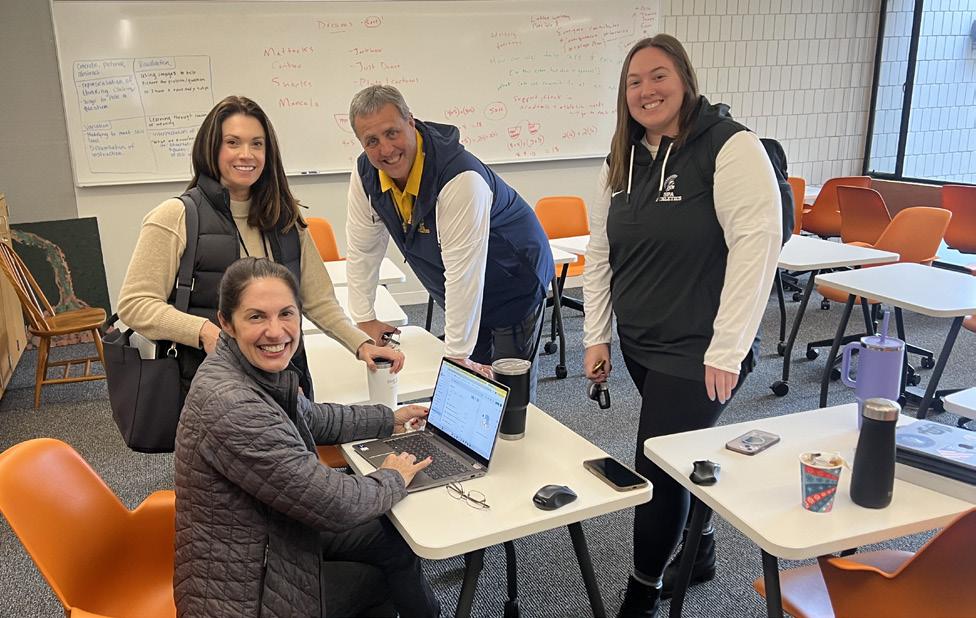
“As an alum and parent, I have long felt that our facilities could be improved. Of course, our first priority is education, but my kids have benefited from
being engaged in soccer, tennis, and track, and I want others to have even more opportunities,” Kharbanda said. “My hope is that SPA can work to improve the athletic facilities so that students have improved access to strength and conditioning training.”
From a student’s perspective, senior and girls varsity basketball captain Julia Taylor agrees with the facilities subcommittee, “I guess resources that are there can really determine how you feel just being able to play. So I think [they should upgrade] the facilities,” Taylor said.
Taylor also expresses her desire for more school spirit: “I know it’s like a student thing, you know, you can’t control or make students go to certain games, but I think [the committee could] just encourage more turnout to girls’ games,” she said.
The feeling is mutual between students and committee members. “As a parent, I hope to see planning and changes that create a sense of pride and an increase in school spirit around SPA athletics,” boy’s varsity swim parent and committee member Stephanie Galarneault said.
A strong academic program sets high expectations, as SPA works to match the athletics program to the academics. “My hope is that we can make sure SPA’s high standards will be upheld throughout every co-op sport, regardless of whoever leads,” Galarneault said.
The committee incorporates many members of the community to better the athletics of SPA by staying attentive to the program, striving to foster a more equal, community oriented, and prideful environment. The facilities subcommittee is visiting the current facilities and creating lists about amenities that could use improvement, while the operations subcommittee is working on the athletics website.
RUBICON - NOVEMBER 2024
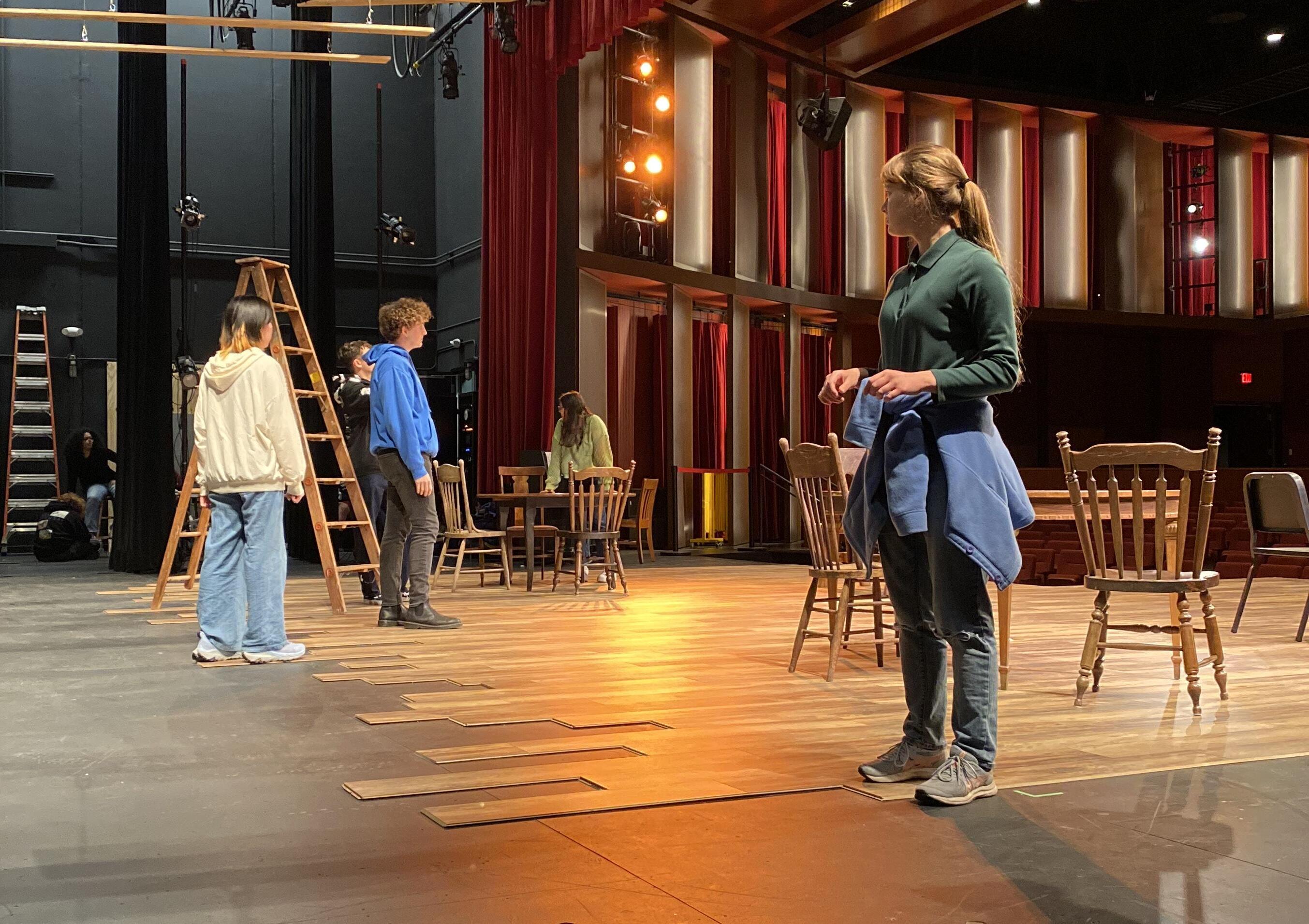
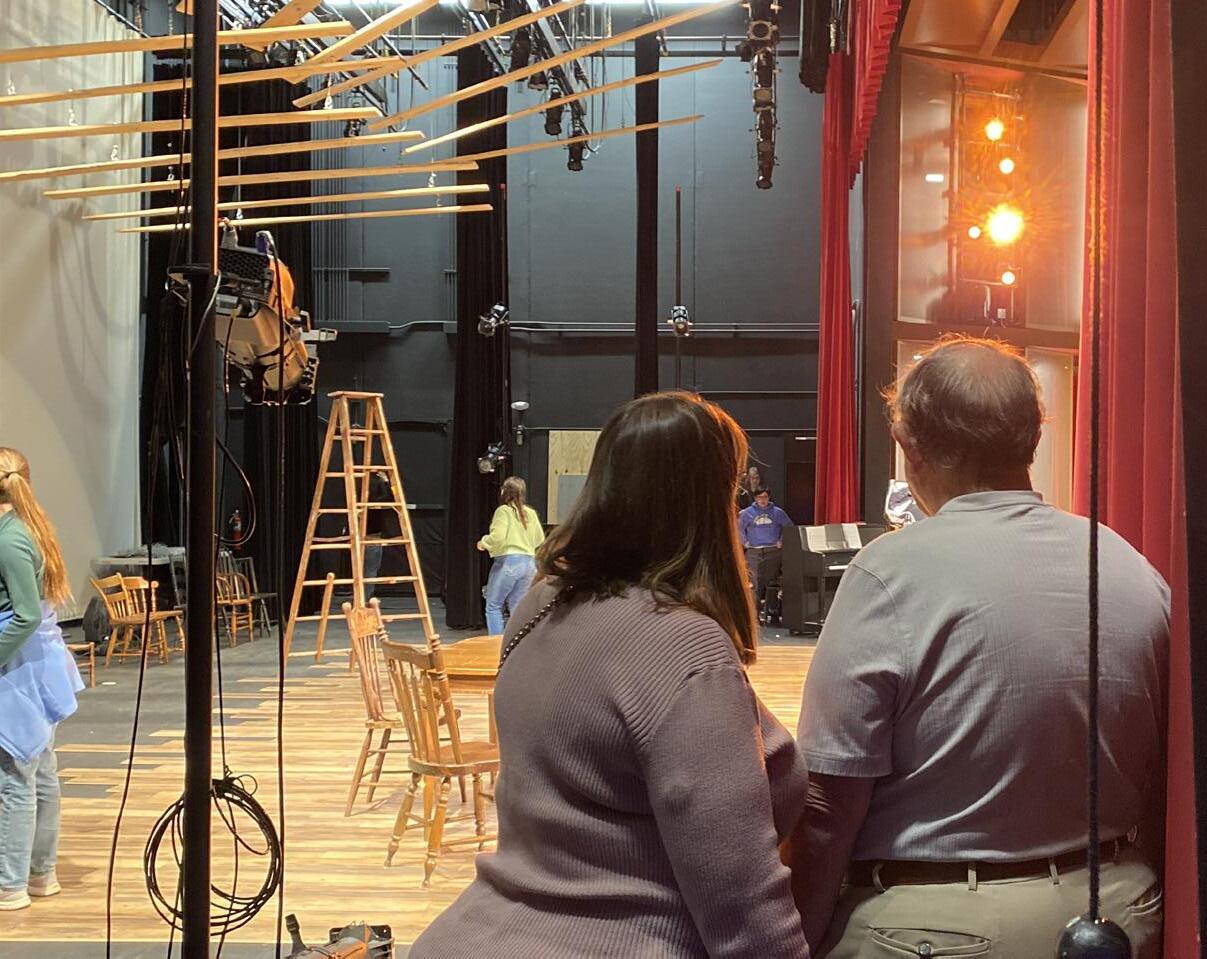
Our Town is a new kind of play for students to perform. Cast and crew are adjusting to new minimalistic set, lighting- including a large projection of a moon onto the stage, types of characters that require more understated acting and larger quantities of lines. But there is always a constant for the theater department: the support. SPA alumni and families have been donating and otherwise supporting the school’s arts program for years.
On Tuesday, Nov. 12, the Huss Auditorium held a donor appreciation event titled “Behind the Curtain,” allowing visitors full access to the auditorium and backstage
area. The event was set up in stations, each one component of production.
When alumni walked through the scene shop, they were taken through the process of designing and building a set, from how long it takes, to navigating set-up with school assemblies often utilizing the stage.
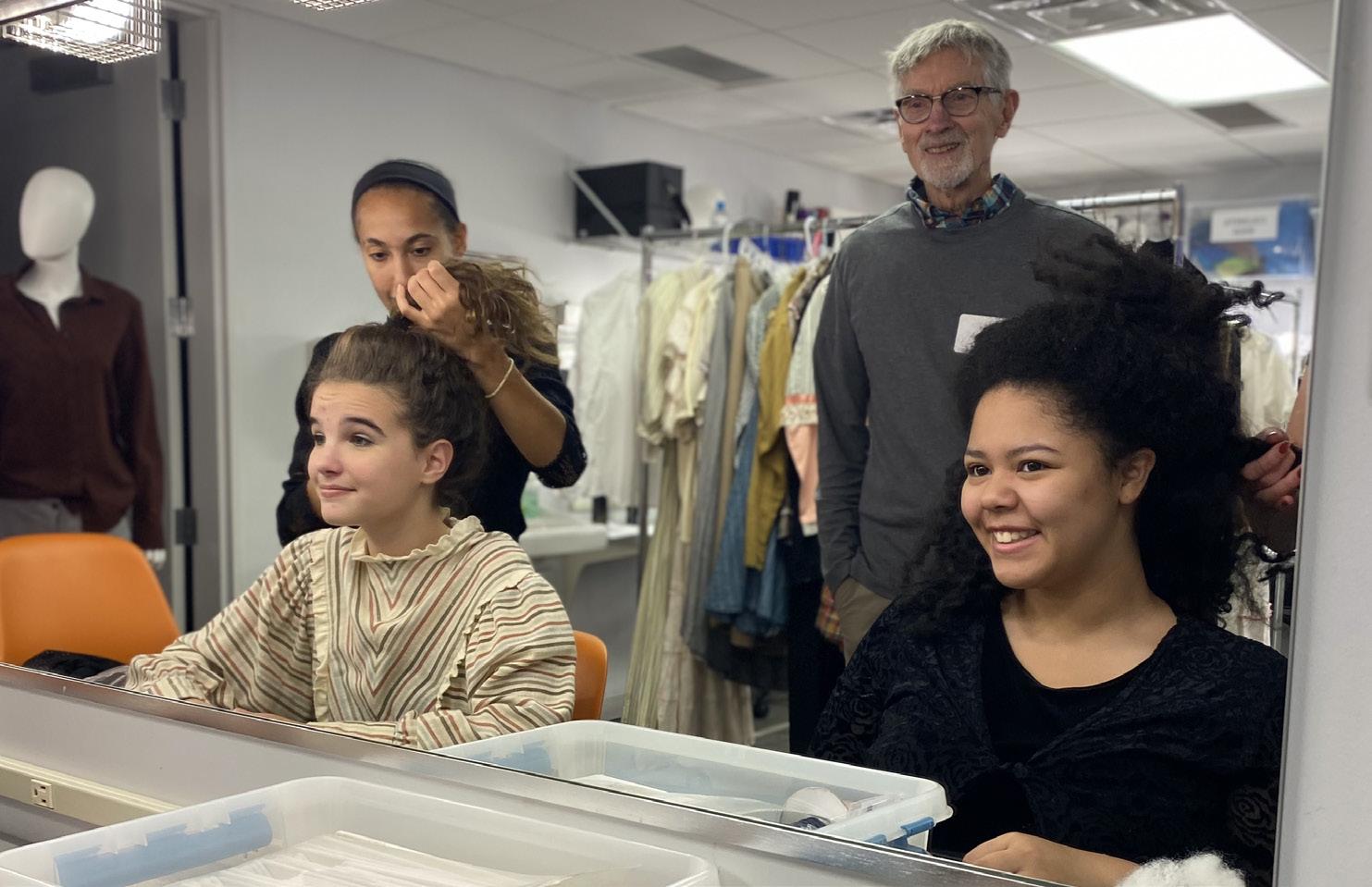
Students at the costume fitting station answered questions as they tried on costumes and attempted Edwardian Gibson Girl hairstyles, as traditionally seen in Our Town, by wrapping their hair around cotton-stuffed nylons.
During rehearsal, the audience witnessed live lighting adjustments narrated and explained by Severson.
“We … designed a sunrise/sunset background with a light that has a moon design,” senior and lighting designer Josh Holloway said.
“If I had already graduated from SPA,” , “I would definitely come back [for this event] because each year we do something bolder and more complex with the lighting design,” he said.
Guests also witnessed the use of Foley sound effects: noises created live and amplified from backstage as opposed to sound effects played from a computer. “There’s weird things that they have figured out that make sounds,” director Eric Severson said, “you know, an old school
and a
like an old push mower. Holding onto a bell and trying to make it sound like a crack of an egg.”
I SAW .... THE AUDIENCE RESPONDING .... AND THAT MADE IT ALL WORTHWHILE.
senior Aarushi Bahadur

“Behind the Curtain” offered alumni, parents, and former teachers a glimpse of the current culture of the school, specifically the community within the theater.
“The other piece of the choice of Our Town is that I have the most racially and gender identity diverse group of theater kids right now,” Severson said, “And the thought of the most iconic, classic Americana play being populated by what I see America looking like now really excited me.”
Senior Aarushi Bahadur’s role exemplifies the difference in SPA’s interpretation of the play. She took on the role that was originally written for a man, but has worked with Severson to appropriately adapt the character.
“Seves has given me some amazing notes that have really helped guide the character and find her within these lines written
in the 1930s, and that’s what’s been the most exciting and challenging part for me,” she said.
Bahadur also enjoyed the “Behind the Curtain,” event; “When I gave my little monologue and I saw … the audience responding to the things I was saying, that made it all worthwhile,” she said.
Donor appreciation event “Behind the Curtain,” celebrated the school community and its connectedness, support, and commitment to the arts.
“Thank you for what you do,” Severson said, addressing the audience. “You allow me to play and create with some of the most incredible students ever.”
Since the existence of musical theater as an art form known to break the boundaries of genres, it is no surprise that many productions on Broadway are stage adaptations of existing films.
Movies, in comparison to other forms of media, are more closely tied to the stage, with their already visual narratives. The existence of movie musicals and movie adaptations of existing musical theater productions attest to this connection. In addition, adapting an already successful film with a recognizable title and a fan base serves to easily attract commercial attention.
Though it may seem like every well-known film is getting a musical adaptation and vice versa, the phenomenon actually reaches further into the past. The first known re-tellings of this kind were both released in 1953, in which Nothing Sacred and Carnival in Flanders received Broadway adaptations. In the present day, shows performed on Broadway yearly have never failed to include film adaptations. The current highest-grossing Broadway show of all time is The Lion King,


a stage musical based on the Disney movie of the same name, in which the animal characters are portrayed by people in costumes ranging from puppets to headpieces.
“
THOUGH
IT MAY SEEM LIKE EVERY WELL-KNOWN FILM IS GETTING A MUSICAL ADAPTATION, THIS PHENOMENON ACTUALLY REACHES FURTHER INTO THE PAST.
junior Annika Kim
While similarities between the two mediums are initially apparent, the nature of theater itself allows for Broadway productions of films to shine in their own right. On a single stage, a musical must structure its plot without edited cuts or instant scene changes; the adaptation of Moulin Rouge! misses the fast-paced

editing style of the original film as a result of being a stage production. Additionally, the runtime of musicals tends to average longer than movies, where adaptations often use the opportunity to delve deeper into subjects that were only briefly covered in a film, for example, the musical version of Beauty and the Beast adds new songs to the existing film that expand on the characters’ development.
However, the changes that need to be made for a film to find a successful run on the stage are not always easy to come by, and the commercial safety that an already popular movie gives to its Broadway adaptation may have contributed to the over saturation in adaptation media. Despite this, as entertainment continues to evolve, the enduring success of movie to musical adaptations demonstrates the potential of a stage production.
Upcoming adaptations on Broadway include Elf, the revival of the musical based on the 2003 movie opens Nov. 17, and Death Becomes Her, a musical adapted from the 1992 film of the same name, opening Nov. 21.



It’s finally starting. The lights dim and the audience settles in, eager to see the show. Anticipation builds as the music swells. And then… someone’s phone goes off.
Though theatergoing is a staple outing for many, basic etiquette doesn’t come with the ticket. Here are some tips to ensure the discussion afterward is about the show, not the rude audience member. Before going out to the theater, pick an outfit that matches the atmosphere. A suit or gown isn’t necessary, but it may be nice to step up from casual attire. Remember the essentials -- wallet, keys, and (obviously) ticket -- but keep all unnecessary baggage to a minimum. Bags are often searched at theaters and orchestra halls, so pack light to avoid holding up entry.
BEFORE GOING OUT, PICK AN OUTFIT THAT MATCHES THE ATMOSPHERE ... A SUIT OR GOWN ISN’T NECESSARY.
Arrive a few minutes early to use the bathroom, get a snack, or shop for merchandise. On Broadway, doors open 30 minutes before curtain, which is generally a good rule of thumb for a minimum arrival time. The key: don’t be late. If doors have closed, expect to watch the show on a lobby monitor or risk ticking off people in the row while stumbling in the dark to get to a seat. Always,
start to finish. Don’t take photos during the show (it’s likely a copyright violation), especially with flash photography. Engage with the production in other ways, including generous clapping. High-profile actors know to pause when they enter, as they hold lines to be heard over customary applause. With musicals, applaud after musical numbers; for plays, applaud when the stage goes dark (a blackout). If a scene ends without a blackout, follow the audience’s lead.
When exiting a theatrical production, keep audible reviews neutral or positive, avoid sounding stuck-up or hurting the feelings of other patrons.
Being casual at the movies is the norm, but still, only bring what you need. Exclude large, unnecessary items. It’s best not to clog up the aisles or spaces between seats
with big bags or coats people have to step over. At AMC Theaters, previews usually run about 20 minutes from the ticketed start time. Although earlier is better to avoid snack lines and tripping in the dark, if the movie starts earlier than assumed, arriving anytime within this window is generally acceptable. Listen to the pre-movie announcement and silence your phone before the show starts until the credits roll. Avoid distracting anyone from the big screen with your smaller one. That includes taking photos and flash photography. It can be fun to draw a collective gasp or laugh, but keep reactions courteous and appropriate. Don’t be that person drawing obnoxiously declaring your thoughts on every scene. This etiquette also applies after the movie ends. Voice your opinion, but wait until after you leave the theater.
&
• Wear appropriate attire
• Arrive on time
• React to the show
• Applaud
• Make sure you have tickets ahead of time
• Photograph or record
• Bring unnecessary items
• Use phones during the production
• Make unnecessary noise
• Block others’ views
• Make an early exit
JUAN MIGUEL ADAMS MANAGING EDITOR
Urban turkeys make themselves at home, strutting through neighborhoods and surprising residents with their bold presence. Across the state, an abundance of urban turkeys has taken over Minnesota.
Junior Ryan Kari encounters them whenever he takes walks on Summit Avenue or downtown St. Paul.
“I don’t try to bother them so I don’t have that many interactions … but I think they look cool,” Kari said.
According to the Department of National Resources, urban turkeys were reintroduced into Minnesota in 1971. Since the modest beginning of 29 turkeys over 30 years ago, the population has grown to more than 70,000 today.
“When I am driving to volleyball in Lake Elmo, I will often see a group of turkeys on the side of the road; one time my mom almost hit one,” ninth-grader Naomi Mann said.
Like it or not, urban turkeys are part of the fabric of living in Minnesota; however, admirers of the birds have gone to new levels. A flock that hangs out near the University of Minnesota campus is so beloved that the students created @turkeysofumn on Instagram for the turkeys. The account’s 4,700+ followers enjoy videos and photos of urban turkeys roaming the campus, blocking roads and roosting in trees.
Their peculiar nature has created strange inter-

actions. English teacher Akie Kutsunai has had turkeys impede her ability to get to school.
“There were some turkeys very sedately crossing the road from someone’s yard into the forest on the hill, so I slowed down to let them cross … [then] a dog bolted across the road in front of me, determined to chase the turkeys into the woods,” Kutsunai said.
They added that “They were completely unimpressed and flew further up the hill, scolding the dog the whole time … I felt like I was watching a cartoon.”
Like any wild animal, feeding turkeys can cause them to be comfortable with humans and may lead to aggressive behavior.
Pick up leftover seeds around bird feeders, as they can attract wild animals. Put the bird feeders away if turkeys become a nuisance.
Without proper fencing or deterrents, turkeys will eat from gardens. Scare devices and sprin klers are effective to chase them away.
INFORMATION: Minnesota Department of Natural Resources
The growth of the urban turkey population has not only brewed fascination. As the number of turkeys increases, harmful interactions also occur. Some turkeys have acclimated to urban living and thus have become too comfortable with humans, displaying aggressive behavior by chasing homeowners, children, and pets.
“Sometimes they even fly up to our tall trees and look down at us.”
In spring and early summer, urban turkeys congregate on busy highways, dodging vehicles and blocking traffic. Turkeys on the roads are not quickly forced away either; they often have to
that move out of the road as soon as a car approaches.
The illegal practice of raising and releasing turkeys has only aggravated the situation. Minnesota State law prohibits the release of pen-raised turkeys due to the possibility of introducing disease and contaminating the gene pool of urban turkeys.
Sophomore Roman Hozalski echoes the experience of a lot of faculty and staff: “[I see turkeys] in people’s back yards, in the street, in tennis and basketball courts, in parks.”
To manage this growing issue, the DNR’s urban life experts suggest never intentionally feeding urban turkeys. Use deterrents such as loud noises, water spray, or even a leashed dog to discourage aggressive behavior. Community education and implementing these proper urban life management strategies will ensure that humans and turkeys coexist.


JOHANNA PIERACH THE RUBICON
Some people prefer to sleep in on Thanksgiving morning, watch the parade, or get an early start for meal prep. But others head out into the brisk fall morning to embark on a race. Before the big meal, numerous Turkey Trot races occur across the Twin Cities in varying lengths: 5K, 6K, or 10K.
“I think it’s just a super fun experience to be out there, and there’s so many people who get up and race,” junior Maren Overgaard said.
Last year, Overgaard ran the 10K with her sister, while her mother ran
the 5K, and the rest of her family cheered from the sidelines.
A regular runner, Overgaard was able to enjoy the experience by relying on her recent cross country training.
“It’s fun to see all the people in turkey costumes and all the festive outfits, and of course, the free snacks and drinks at the end are a plus,” she said.
The costumes are no small part of the experience. In fact, they are a significant component of senior Taylor Barkwell’s memories from running the 5K race last year. The crowd was larger than she
“
IF YOU’RE OUT THERE ... THAT’S ALL THAT REALLY MATTERS.
junior Maren Overgaard
expected, and it took her family a bit to find the starting point.
“I was expecting maybe a couple hundred, but that felt like more than a couple hundred,” she said.
Beyond that, most of the runners took their attire seriously.
“Everyone was crazy dressed up … some people were literally just massive turkeys. One dude was an eagle, which made no sense,” Barkwell said.
Overgaard observed a similar vibe at her race.
“People dress up as Thanksgiving foods, or I see the turkey hats a lot. There [are] the costumes where it makes you look like you’re riding a turkey,” she said.
Both girls approached the race as a fun opportunity to incorporate movement into Thanksgiving morning. Although Barkwell recalled a lot of other runners taking it more
seriously, for her, it was about getting “through the 5K and congratulating yourself afterward.”
Finishing the race with the relief of hot chocolate and the extra validation of a medal was just another perk.
Beyond the motions of running a 10K, Overgaard appreciates the community created by races like these.
“It’s more than just the run; the run is just a small part of it. Events like that bring the community together,” she said.
For those who are not regular runners but are considering participating in a Turkey Trot, Over-
gaard insists that there is a place for them within this race. Finding the will to appear at the starting line is all it takes.
“I think there’s a special group of people who decide to wake up early on Thanksgiving morning and go out in the cold and run miles. If you’re out there … that’s all that really matters,” she said.
As a chill sets into the air, many runners see a Turkey Trot as the last chance to grab their running shoes (along with a turkey costume) and gather for a race before snow falls on the ground.