YYANKEE ANKEE PPROSE ROSE



May 2-3, 2026
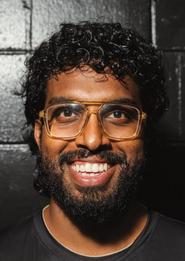
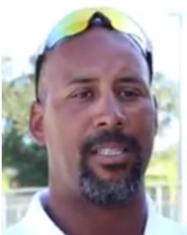

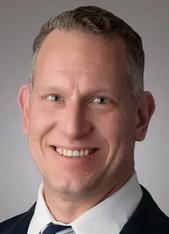
Darius Greenbacher
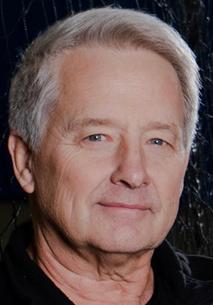
Greg Moran
Michele Krause
Lex Carrington
Tracy Almeda Singian
Bharat Karunakaran

May 2-3, 2026
Division President: Milan Kubala stowemiles@gmail.com
Regional Vice President: Wilbur Shardlow shardlowtennis@roadrunner com
Treasurer: Stu Lehr stuartklehr@gmail.com
Secretary: Nestor Bernabe nestortennis@gmail.com
Vice President: Glenny Hay glennychay@gmail.com
Vice President: Dan McCormick danmccormick1@comcast.net
Past President: Lisa Wilcott metennis@comcast.net

NE Executive Director: Pam Dodman pam.dodman@rspa.net

Dear RSPA Community,
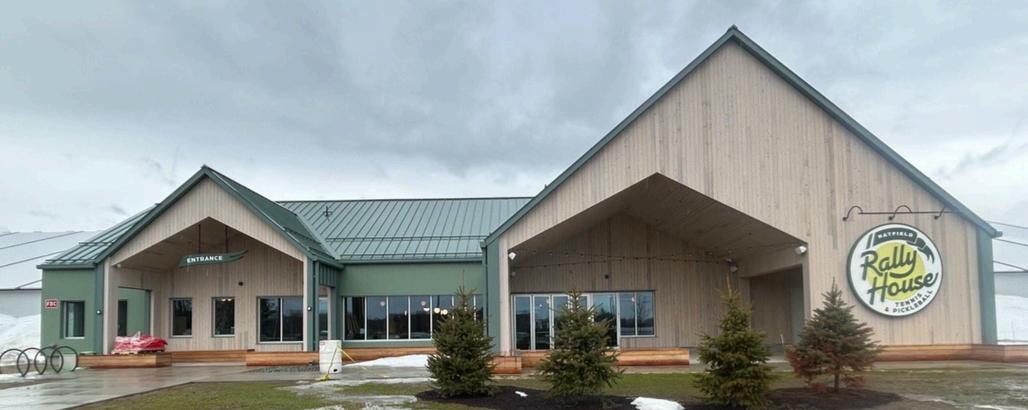
As president of RSPA New England, I am pleased to personally invite you to join us for the 2026 RSPA New England Conference, taking place May 2–3 at the brand-new Hatfield Rally House.
This two-day gathering is designed specifically for racquet sports professionals across New England, bringing together teaching pros, club leaders, coaches, and industry partners for meaningful education, collaboration, and connection.
The Summit will feature a mix of on-court and off-court workshops, practical learning sessions, and ample time to connect with fellow professionals who share a passion for growing the game Whether you are looking to sharpen your coaching skills, exchange ideas with peers, or expand your professional network, the Summit offers a valuable and energizing experience.
Highlights include:
Educational workshops led by experienced racquet sports professionals
On-court sessions and demonstrations focused on coaching, programming, and player development
Networking opportunities with peers from across the New England racquet sports community
The opportunity to experience the new Hatfield Rally House, an exciting new facility for racquet sports programming
Ourgoalistocreateacollaborativeenvironmentwhere professionalscanlearnfromoneanother,sharebest practices,andstrengthentheracquetsportscommunity throughoutNewEngland.
Ihopeyouwilljoinusforwhatpromisestobeaninspiring andengagingweekend.
Pleasesavethedate:May2–3.
IlookforwardtoseeingyouinHatfield
Warmregards, MilanKubala President,RSPANewEngland
RacquetSportsProfessionalsAssociation
EliteProfessional



2026 RSPA New England Division Conference
May 2-3

Michele Krause

Bharat Karunakaran
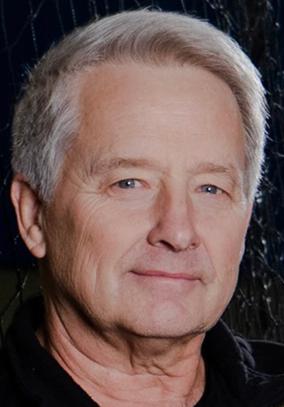
Greg Moran
Lex Carrington
Tracy Almeda Singian
Saturday, May 2
7:30 a.m. – Registration
8:30–9:15 a.m. – Women’s Roundtable (open to all)
9:30–10:30 a.m. – Tracy Almeida Singian: Lessons From My Coaches—Drills That Still Deliver
10:45–11:15 a.m. – RSPA Membership Meeting
11:30 a.m.–12:30 p.m. – Michele Krause: Cardio Tennis—Signature Games
12:45–2:15 p.m. – AWARDS LUNCH
2:30–3:30 p.m. – Lex Carrington: Privates, Parents, and Programs
3:45–4:45 p.m. – Greg Moran: Beyond Hours and Dollars
5–6:00 p.m. – Bharat Karunakaran: The Impact of Paddle Technology
6–7:30 p.m. – Cardio Feeding Contest, Happy Hour, Networking, and Raffle
7:30 p.m. – RSPA After Hours
Sunday, May 3
7:30 a.m. – Registration
8:30–9:30 a.m. – Michele Krause: Cardio Tennis—The Triples Experience
9:45–10:45 a.m. – Bharat Karunakaran: Pickleball Trends in Strategy and Shot Selection
11 a.m.–12 p.m. – Session to Be Announced
12:15–1:15 p.m. – Darius Greenbacher: Career Longevity in Our Physically Demanding Role
1:30 p.m. – Closing Remarks
2–6 p.m. – Pickleball Certification (separate registration required)
Hotel Information: Must be booked by April 4 for the discounted rates. th
TownePlace Suites by Marriott Hadley Amherst, 237 Russell Street, Hadley (800445-2661)
Reservation-Link
$175/night + tax
Hampton Inn Hadley-Amherst, 24 Bay Road, Hadley (800-426-7866)
Available Rooms link
$174/night + tax

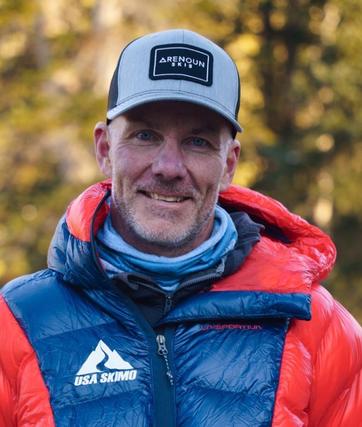
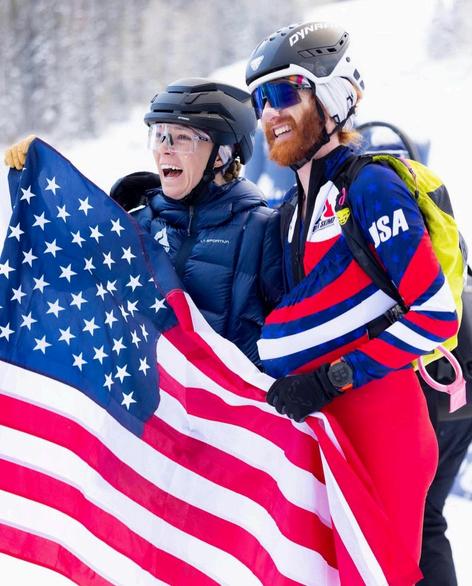
2026 Olympic SkiMo Coach 4th Place 2026
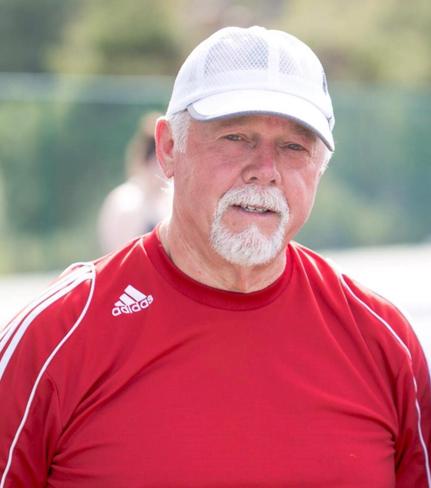
USTA New England Hall of Fame Class of 2026
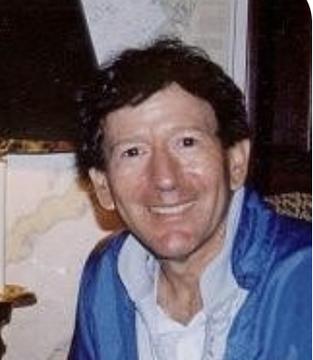
Maine Tennis Association Hall of Fame Class of 2026
Paul Fein
2025 Sports Media Award Longlist Recognition
by Milan Kubala; RSPA Elite Professional, RSPA NE Board President, USA Ski Mountaineering National Team Coach
When people hear that I coach ski mountaineering at the Olympic level, their first reaction is usually curiosity. Their second reaction is surprise when they learn that I’ve spent more than 25 years in the tennis industry as a coach and teaching professional At first glance, tennis courts and alpine ridgelines seem worlds apart One is measured in baselines and service boxes; the other in vertical meters and time.
But in reality, coaching excellence travels well across sports The journey to the Olympics in ski mountaineering has reinforced many of the same principles that guided my decades in tennis: preparation, adaptability, resilience, and the ability to help athletes perform their best when the stakes are highest.
Ski mountaineering often called “skimo” demands a rare combination of endurance, technical skill, and mountain judgment. Athletes race uphill on lightweight skis using climbing skins, transition quickly at summits, and descend at speed through demanding terrain At the Olympic level, every detail matters: endurance, equipment, transition efficiency, pacing strategy, and technical downhill execution.
Continued
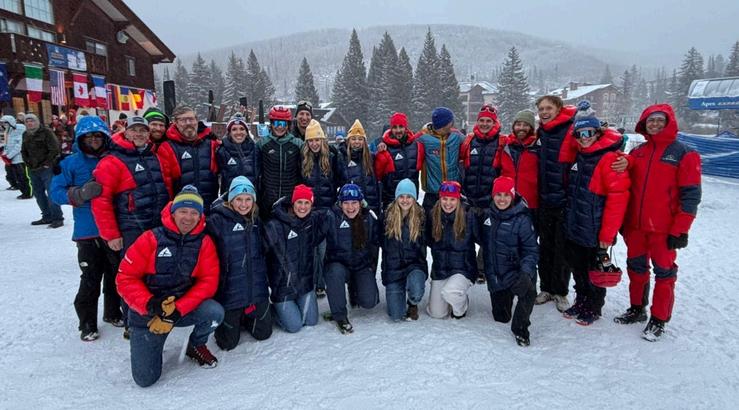
The route to Olympic competition is long and demanding Athletes progress through national events, continental races, and the international circuit, where they accumulate experience against the best competitors in the world. For many of them, the journey begins in small mountain towns, early morning training sessions, and local races that test both fitness and mental toughness.
As a coach, guiding athletes along this path is about more than writing training plans It means helping them navigate years of incremental improvement Success in elite skimo is rarely sudden it’s the product of disciplined training, careful recovery, and a deep understanding of how to move efficiently in the mountains.
This is where coaching becomes both science and craft.
At the national team level, the margin between podium and pack can be incredibly small. Coaching in this environment means paying attention to the details that compound over time. Training programs are built around endurance development, vertical climbing strength, and technical downhill skill. But beyond physiology, we focus heavily on transitions the moments where races are won or lost Removing skins, switching boots from climb mode to ski mode, grabbing poles, and dropping into the descent must happen almost automatically. In skimo racing, transitions can take only seconds. Those seconds are the result of hundreds of repetitions in training.
Continued
Another critical element is decision-making under stress Race environments are dynamic: weather changes, snow conditions shift, and courses demand quick tactical choices. Athletes must learn to process information quickly while their heart rate is near maximum. Developing that composure is a key part of coaching.
Lessons from the Tennis Court
My years in tennis coaching provided the foundation for how I approach athlete development today. While the sports look different, the coaching principles remain remarkably similar.
In tennis, players learn to handle pressure point by point. They develop routines, manage emotions, and build resilience after mistakes The same mental skills are essential in ski mountaineering A missed transition or a stumble on a climb can cost valuable time What matters most is how quickly an athlete resets.
The parallels go even deeper.
Technical mastery through repetition
In tennis, thousands of forehands and backhands create reliable mechanics In skimo, thousands of vertical meters and transitions build efficiency.
Tactical awareness
Tennis players read opponents and adjust strategy. Skimo racers read terrain, pacing, and competitors
Mental endurance
Long tennis matches test focus and emotional control. Skimo races test persistence and pain tolerance.
The athlete who succeeds is often the one who manages these elements best
Continued
One of the greatest gifts from 25 years in tennis instruction is learning how to communicate complex ideas simply. Coaching is not about how much knowledge you have it’s about how effectively you transfer that knowledge to an athlete Whether I’m explaining body positioning on a steep climb or discussing pacing strategy for a long race, the principle is the same as teaching a tennis serve: break the movement down, focus on key fundamentals, and build confidence step by step Athletes improve fastest when they understand the “why” behind their training
In both sports, the best coaching relationships are collaborative. Athletes bring insight from their own experience how their body responds to training, how they feel during races, what strategies work for them mentally When coach and athlete communicate openly, performance accelerates.
If there’s one trait that defines elite athletes across all sports, it’s resilience
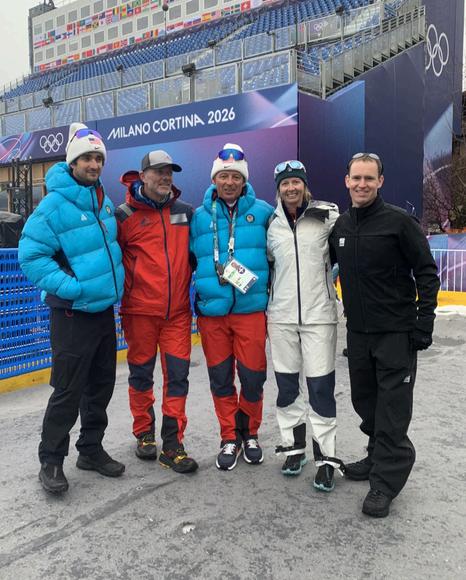
Training for ski mountaineering involves early mornings, harsh weather, and long climbs that test both physical and mental strength. Not every race goes according to plan. Injuries happen Equipment breaks Conditions change The same is true in tennis: matches are lost, rankings fluctuate, and progress can feel slow
Over decades of coaching, I’ve learned that resilience is built through process-oriented training. When athletes focus on daily improvement rather than outcomes, they develop a deeper confidence. They trust their preparation. That mindset is invaluable when standing on a start line at the highest level of competition.
Continued
At its core, coaching is about unlocking potential The best athletes already possess talent, work ethic, and determination. A coach’s role is to guide those qualities into a system that produces consistent excellence.
In ski mountaineering, that means balancing physical training with technical development and race awareness In tennis, it means blending biomechanics, strategy, and mental discipline
After decades in both worlds, I’ve come to appreciate that coaching is less about the sport itself and more about the athlete’s journey.
Looking back, my path from tennis courts to skimo race courses feels less like a career shift and more like an evolution. Both sports demand precision, commitment, and the ability to perform under pressure. Both reward athletes who embrace the process. And both remind us that progress whether measured in vertical meters and time or match points comes from the same place: dedication, curiosity, and the pursuit of excellence.
For me, coaching athletes toward the Olympic stage in ski mountaineering is simply another chapter in a lifelong commitment to helping competitors reach their highest potential.
Whether on a court or a mountain, the principles remain the same: prepare well, adapt quickly, trust the process and always keep climbing

Milan has over 25 years of experience in managing, marketing, public relations, and coaching in the tennis industry. His experience includes being the former Director of Tennis at the Topnotch Resort in Stove, Vermont, and the Midland Community Tennis Center in Midland, Michigan. He has served as the RSPA Michigan and Vermont State President, Division Vice President, and as an executive member of the USPTA Midwest and New England Division since 2000. Milan has been a popular lecturer on tennis marketing, teaching, coaching, and facility management at the RSPA tennis conventions since 1999. Milan attended the PSK Olympic Prague Tennis Academy in the Czech Republic and was a member of the 1991 Czech National Championship Team


by Lisa Wilcott; RSPA Elite Professional, immediate RSPA NE Board Past President
For the past 25 years, I have returned to Barbados each February to teach tennis to hotel guests and local students as a visiting professional. It is always a unique winter experience and a welcome break from Maine’s cold
Years ago, I volunteered with Alexine Marshall, a top female tennis professional in Barbados who ran weekly lessons for local schoolchildren on rough park courts Escorted by their gym teacher, the students arrived in uniform and lined up for structured classes Over time, I learned that Alexine was certified, had a daughter who played college tennis in the United States, and officiated at Davis Cup matches We became friends, and I supported her efforts whenever possible
Sadly, after battling breast cancer for several years, Alexine passed away, bringing an end to her tennis program and the weekly classes for the children.
To honor her memory and her love of the game, I have continued supporting youth tennis in Barbados. During the COVID-19 pandemic, I donated supplies when in-person classes were not possible. In recent years, we have held tennis clinics on the school’s grass field, an experience the children truly enjoy. This year, students eagerly asked if they could participate again, and I recognized many familiar faces still smiling.
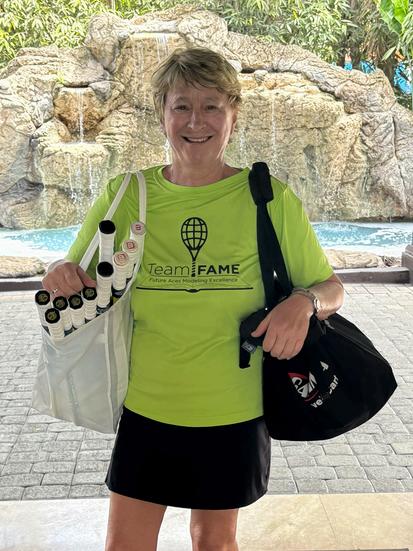
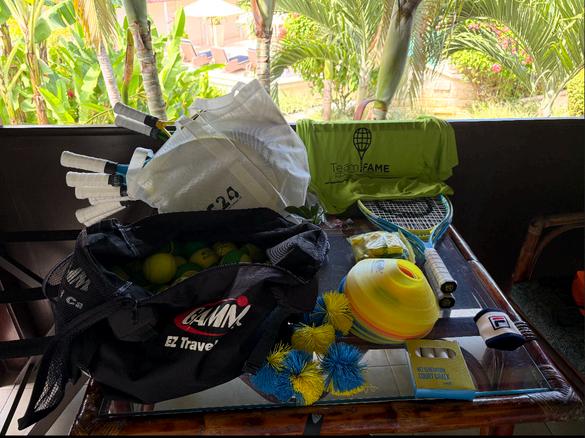
I have developed a strong relationship with the Team FAME program at the International Tennis Hall of Fame in Newport, Rhode Island, where I worked as a tennis instructor for two years after spending three decades as tennis director at York Golf & Tennis in Maine
Lisa in 2014 in Barbados!
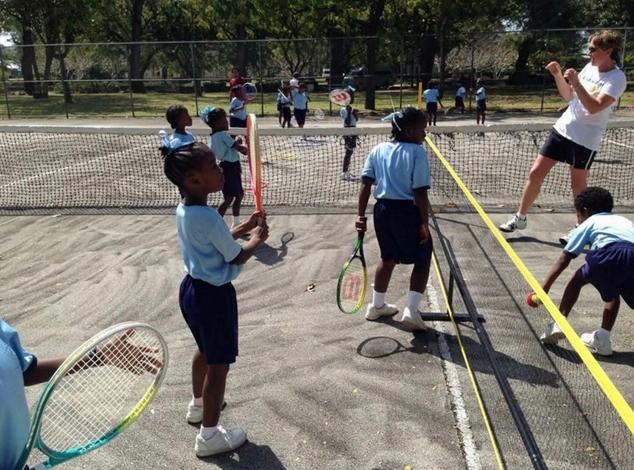
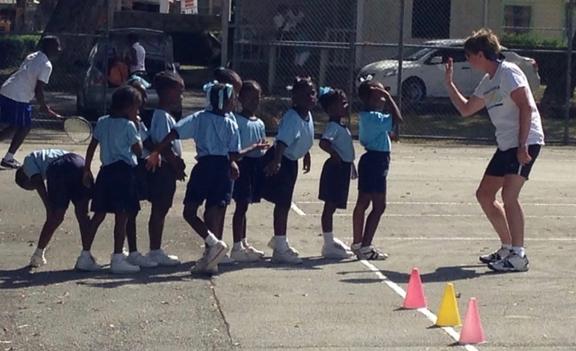


In recent years, each new Team FAME class has participated in a pen pal exchange with students in Barbados While exchanging letters can occasionally be challenging, the dedication of teachers and supporters in both countries keeps the program going. I assure the Barbados students that I will personally deliver their letters, and that the Team FAME students will respond
This year, we had over 30 eight- and nine-yearolds playing relays and practicing ball skills under the hot sun, introducing tennis to another group of students. I explained the pen pal project, shared information about tennis and the Team Fame program, and responded to many questions. Additionally, I brought valentines and candy boxes for each Team Fame student, which they thoroughly enjoyed. To further support tennis at their school, I donated more than a dozen racquets, targets, cones, balls, and a teaching bag this year
Four days after returning home, I gave the letters to Team Fame class and watched the kids enjoy messages from their new friends in Barbados I'm sure they'll write back, and I look forward to repeating this next year
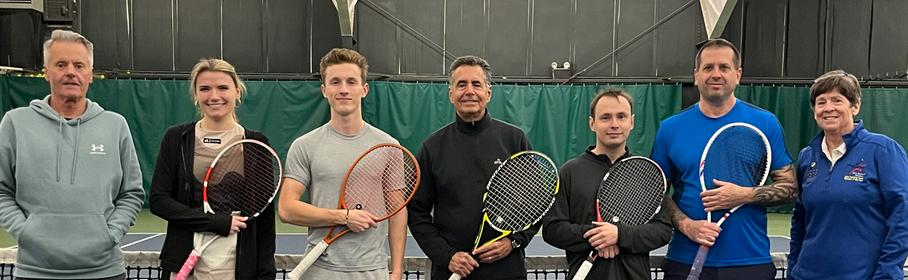
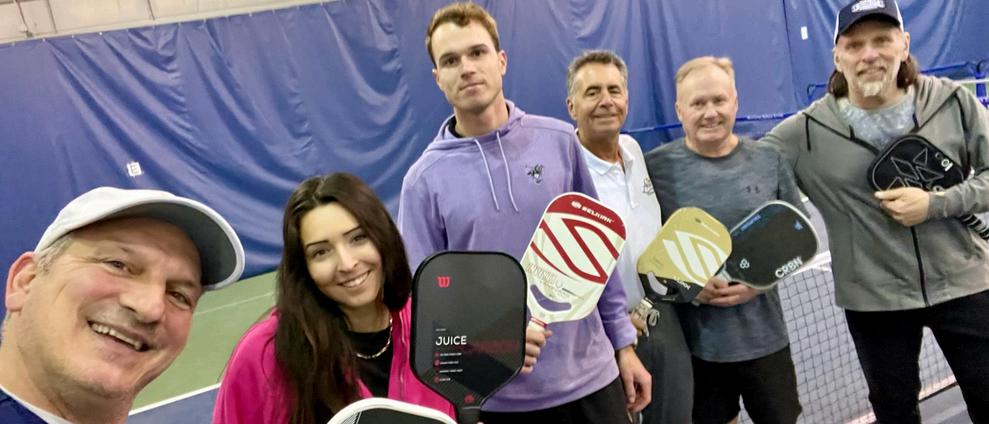
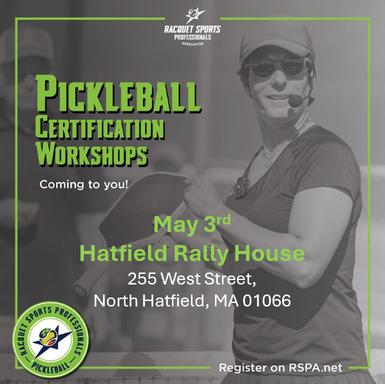
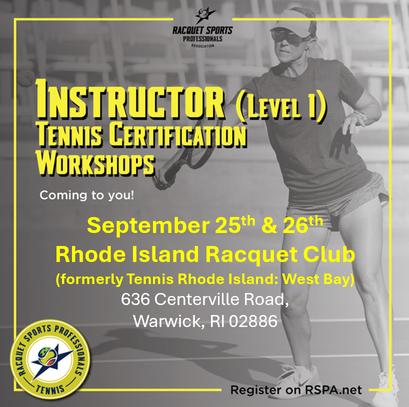
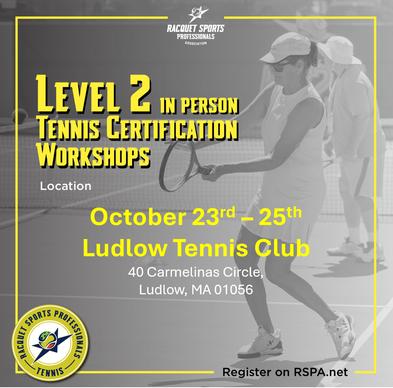
Once again, the RSPA New England is fortunate to have passionate and knowledgeable professionals wanting to join our organization! We continue to offer certification workshops in a variety of racquet sports You can find upcoming certification workshops on the next page.
Encourage friends or colleagues, that are net yet certified, to look into all the benefits the RSPA has to offer!
by Chris Nordenson; RSPA Elite Professional
With the growing availability of match statistics and more recently, AI analytics it has become increasingly important for players and coaches to understand how to interpret and apply data effectively. Understanding which serve metrics actually impact winning can help players train more efficiently and make better in match decisions. Among the many performance indicators in tennis, serve statistics remain one of the most influential.
Over a 16 month period, match data was collected from more than 200 singles sets of Bates Men’s and Women’s Tennis, with player UTRs ranging from 5 to 12. The dataset included both men’s and women’s matches and was analyzed at the set level rather than by full match Analyzing by set allowed for more detailed understanding as performance can vary significantly within a match. The findings point to a clear performance profile associated with winning. Players were significantly more likely to win sets when they:
Had over 60% of first serves in
Won at least 65% of first serve points
Won at least 50% of second serve points
In practical terms, players who consistently met these benchmarks - first serve percentage, first serve points won, second serve points wonoperated within a “winning zone” for serve performance. Rather than relying on one dominant statistic, success was most often tied to being solid across all three benchmark areas.

Among these benchmarks, second serve performance emerged as the most influential When players won approximately 55% or more of their second serve points, their likelihood of winning increased substantially. Conversely, when that number fell below 45%, losses became far more common This made second serve points won the single strongest separator between winning and losing in this dataset.
The analysis also challenges a common assumption about first serve percentage. While often emphasized, first serve percentage alone showed limited correlation with winning. Players were able to win sets with first serve percentages near 50%, while others lost despite landing 70–80% of their first serves. The data suggests that effectiveness measured by points won matters far more than simply putting the serve in play.
Further supporting this, first serve points won showed a much stronger relationship with outcomes. Players who won around 70% of first serve points were consistently in a strong position to win, while those dropping below 60% saw a noticeable decline in success. In other words, higher serve performance (winning first serve points) directly translated to an increased likelihood of winning sets.
A practical example reinforces this point. In one tracked match, a player landed over 85% of first serves but won less than 40% of those points Despite the high first serve percentage, the lack of effectiveness made it difficult to win points. This highlights the gap between consistency and effectiveness.
Overall, the findings reinforce a key takeaway: serve effectiveness is more important than serve consistency alone. This is especially true on the second serve, where performance appears to have the greatest impact on match results. The data also suggests the existence of a performance “floor” approximately 60% on first serve points won and 40% on second serve points won below which winning becomes significantly less likely.
While this dataset is limited to one college and a specific UTR range, the trends align with broader patterns seen across competitive tennis. These results highlight the need for players and coaches to move beyond the “just get it in” mentality and instead focus on developing serves that consistently win points.
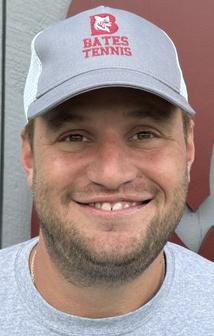
Chris Nordenson is an RSPA Elite Pro with nearly 15 years of coaching experience across club, high school, and collegiate levels, working with players ranging from beginners to advanced competitors. In addition to his coaching background, he brings over 25 years of experience as a competitive player, actively participating in leagues and tournaments Since Fall 2024, Chris has served as the assistant coach for both the men’s and women’s tennis programs at Bates College, where he specializes in video analysis and performance analytics

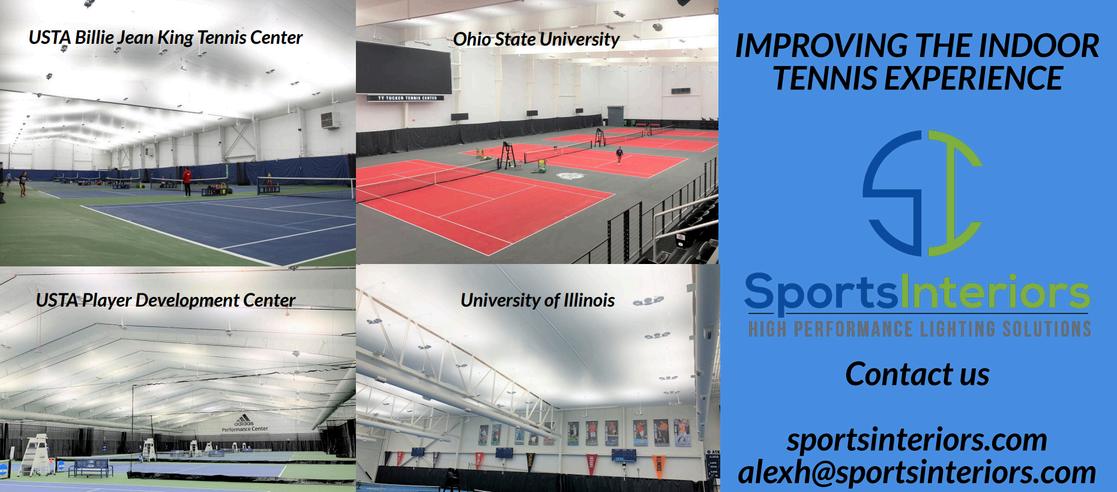

In addition to the ability to get certified in 5 racquet sports for one membership fee, in addition to the “nonstop professional development” from industry leaders, in addition to being part of a connected community of colleagues, in addition to the liability insurance and health insurance options, there are over 24 endorsees that provide you discounts in a wide range of products and services.
IT’S A TON OF STUFF and the RSPA continually looks for more ways to increase the value of your membership!!
Click here to see all the benefits, and click on these press releases to see some of the newest benefits!
Hightlights Include: