
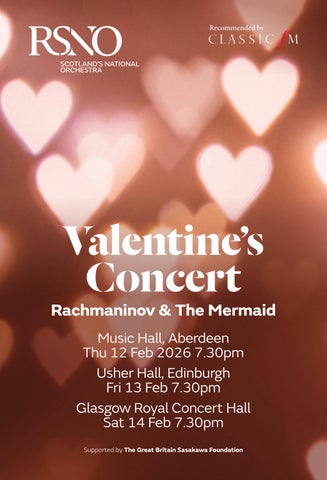
Rachmaninov & The Mermaid
Music Hall, Aberdeen Thu 12 Feb 2026 7.30pm
Usher Hall, Edinburgh Fri 13 Feb 7.30pm
Glasgow Royal Concert Hall Sat 14 Feb 7.30pm
Supported





return train travel Kids for a Quid



Music Hall, Aberdeen Thu 12 Feb 2026 7.30pm
Usher Hall, Edinburgh Fri 13 Feb 7.30pm
Glasgow Royal Concert Hall Sat 14 Feb 7.30pm
What would you do for love? Romeo and Juliet risked everything, and Tchaikovsky poured all of this passion into his music. The Little Mermaid also followed her heart, and Zemlinsky’s gorgeous retelling of Hans Christian Andersen’s classic fairy tale is a colourful – and gripping – masterpiece. Kevin John Edusei conducts, Gillian Moore hosts, and RSNO favourite Makoto Ozone is the soloist in Rachmaninov’s dazzling, deliriously romantic Rhapsody on a Theme of Paganini
TCHAIKOVSKY Romeo and Juliet Fantasy Overture [21’]
RACHMANINOV Rhapsody on a Theme of Paganini Op43 [23’]
ZEMLINSKY The Mermaid [45’]
Kevin John Edusei Conductor
Makoto Ozone Piano
Royal Scottish National Orchestra
The Glasgow performance will be recorded for the RSNO Archive. Supported by the Iain and Pamela Sinclair Legacy.
Supported by

If viewing these notes at the concert, please do so considerately and not during performances. Please silence all mobile telephones and alerts, and refrain from taking photographs, without flash, until the end of each piece.
Thank you for joining us for this very special Valentine’s Concert.
We’re thrilled to welcome back pianist Makoto Ozone following his performance in 2024 when he blew audiences away with an arrangement of Gershwin’s Rhapsody in Blue alongside the Scottish National Jazz Orchestra. Kevin John Edusei, our conductor, joined us during our 2021 Digital Season, so it’s a real pleasure to have him back to perform in front of a live audience this evening.
Last week, the RSNO was announced as the winner of the Association of British Orchestras’ Innovation Award for the creation of our studio, which now competes internationally for film, TV and videogame soundtrack recordings. You can hear us on the soundtracks for the recent films Nuremberg and Now You See Me: Now You Don’t. I am delighted that we have been recognised by the ABO and our industry colleagues for the transformation and diversification of our space and Orchestra, which has in turn enabled us to fund our extensive community engagement programme.
In fact, a couple of weeks ago we launched the latest addition to the engagement programme – a choir in Dundee dedicated to new parents and carers. It builds on the success of our Buggy Choir in Glasgow, where parents/carers of babies under one join together to sing in a baby-friendly, adult-focused environment. For more information about all our community singing opportunities, head to rsno.org.uk/singers
This past Wednesday marked the 100th anniversary of the inimitable Sir Alexander Gibson’s birth. Sir Alex was a remarkable figure in the Scottish musical landscape and served as Principal Conductor and Music Director of the RSNO for 25 years. His legacy and life’s work will be celebrated at our concert, Felix Klieser Plays Strauss, next week. I hope to see you there as we remember this brilliant man.
Alistair Mackie CHIEF EXECUTIVE
Keep in touch with the RSNO
Royal Scottish National Orchestra 19 Killermont Street Glasgow G2 3NX T: +44 (0)141 226 3868
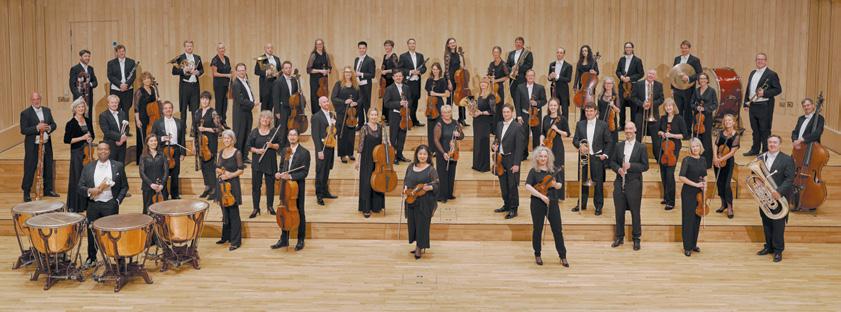
Formed in 1891, the Royal Scottish National Orchestra (RSNO) is one of Europe’s leading symphony orchestras. Awarded royal patronage by Her Late Majesty The Queen in 1977, its special status in the UK’s cultural life was cemented in 2007 when it was recognised as one of Scotland’s five National Performing Companies, supported by the Scottish Government.
Led by Music Director Thomas Søndergård, the Orchestra performs across Scotland, including concerts in Glasgow, Edinburgh, Dundee, Aberdeen, Perth and Inverness, and appears regularly at the Edinburgh International Festival and BBC Proms. The RSNO tours internationally, most recently visiting China and Europe.
The RSNO has a worldwide reputation for the quality of its recordings, receiving a 2020 Gramophone Classical Music Award for Chopin’s Piano Concertos (soloist: Benjamin Grosvenor), conducted by Elim Chan, two Diapason d’Or awards (Denève/Roussel 2007; Denève/Debussy 2012) and eight GRAMMY Award nominations. In recent years, the RSNO has cultivated an international reputation for world-class film, television and videogame soundtrack recording. The Orchestra has recorded for BAFTA-winning
series Silo (Apple TV) and worked with the likes of GRAMMY Award-winning composer Lorne Balfe on Life on Our Planet (Netflix). Other notable titles include Nuremberg (Sony Pictures), Now You See Me: Now You Don’t (Lionsgate), Horizon: An American Saga (Warner Bros) and Star Wars Outlaws (Ubisoft). The Orchestra records at its bespoke in-house facility in Glasgow.
The RSNO believes that music can enrich lives and aims to inspire, educate and entertain people throughout Scotland and beyond with its performances, recordings and engagement programmes. Supporting schools, families, young professionals and wider communities, the RSNO delivers high-quality initiatives for all ages and abilities. The RSNO’s engagement offering includes its singing strand, encompassing a Buggy Choir and Chorus Academy in both Dundee and Glasgow and a lunchtime Workplace Choir, which complements the well-established and highly respected RSNO Youth Choruses and RSNO Chorus. The community choruses are designed with the benefits of group singing for health and wellbeing at their core and are open to all.
FIRST VIOLIN
Maya Iwabuchi LEADER
Lena Zeliszewska ASSOCIATE LEADER
Patrick Curlett
Caroline Parry
Ursula Heidecker Allen
Elizabeth Bamping
Lorna Rough
Susannah Lowdon
Alan Manson
Liam Lynch
Veronica Marziano
Joana Rodriguez
Laura Ghiro
Catherine James
SECOND VIOLIN
Anna Smith
GUEST PRINCIPAL
Marion Wilson
Nigel Mason
Paul Medd
Anne Bünemann
Sophie Lang
Robin Wilson
Kirstin Drew
Colin McKee
Helena Rose
Seona Glen
Joe Hodson
VIOLA
Tom Dunn
PRINCIPAL
Felix Tanner
Asher Zaccardelli
Susan Buchan
Nicola McWhirter
Claire Dunn
Lisa Rourke
Maria Trittinger
Francesca Hunt
Beth Woodford
CELLO
Pei-Jee Ng PRINCIPAL
Betsy Taylor
Kennedy Leitch
Yuuki Bouterey-Ishido
Rachael Lee
Sarah Digger
Robert Anderson
Gunda Baranauskaitė
DOUBLE BASS
Nikita Naumov
PRINCIPAL
Michael Rae
Moray Jones
Alexandre Cruz dos Santos
Cole Morrison
Kirsty Matheson
FLUTE
Katherine Bryan PRINCIPAL
Oliver Roberts
Janet Richardson
PRINCIPAL PICCOLO
Adam Richardson
OBOE
Adrian Wilson
PRINCIPAL
Peter Dykes
Henry Clay
PRINCIPAL COR ANGLAIS
CLARINET
Timothy Orpen PRINCIPAL
Becky Whitener
Duncan Swindells
PRINCIPAL BASS CLARINET
William Knight
BASSOON
David Hubbard
PRINCIPAL
Tom Donkin
Paolo Dutto
PRINCIPAL CONTRABASSOON
HORN
Amadea Dazeley-Gaist
PRINCIPAL
Alison Murray
Andrew McLean
David McClenaghan
Martin Murphy
Andrew Saunders
Alec Ross
TRUMPET
Christopher Hart PRINCIPAL
Gideon Brooks
Jason Lewis
TROMBONE
Dávur Juul Magnussen PRINCIPAL
Cillian Ó Ceallacháin
Alastair Sinclair
PRINCIPAL BASS TROMBONE
Emma Close
TUBA
John Whitener PRINCIPAL
TIMPANI
Tomo Ando
GUEST PRINCIPAL
PERCUSSION
Simon Lowdon
PRINCIPAL
Tom Hunter
Phil Hague
Stuart Semple
HARP
Pippa Tunnell
Teresa Barros Pereira Romao
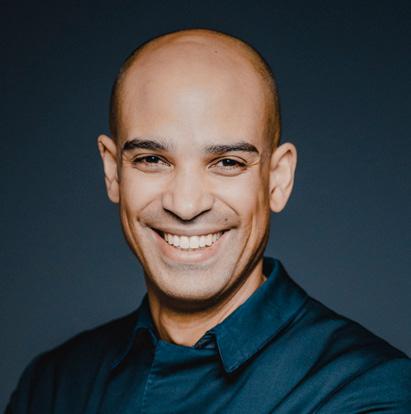
German conductor Kevin John Edusei is praised repeatedly for the drama and tension in his music-making and the sense of architecture, warmth and stylistic insight that he brings to his performances.
For the 2025/26 season, Edusei is Conductorin-Residence with the Royal Philharmonic Orchestra, which will include three specially curated programmes at London’s Cadogan Hall. He continues to be in high demand in North America, where he debuts with the Atlanta and St Louis Symphony orchestras and returns to the Kansas City, Colorado, Indianapolis and Seattle Symphony orchestras. Other engagements this season include returns to the Sydney Symphony Orchestra, Deutsche Radio Philharmonie and RSNO as well as debuts with the Prague Symphony Orchestra and Orquesta Sinfónica de Castilla y León.
Highlights of Edusei’s guest conducting in recent years have included his critically acclaimed debut with the New York Philharmonic, and concerts with the Los Angeles Philharmonic Orchestra, London Philharmonic Orchestra, Netherlands
Radio Philharmonic, Munich Philharmonic, and with the Vienna Radio Symphony Orchestra at the Musikverein. In 2024 he conducted the Berlin Konzerthaus Orchestra in the Opus Klassik Awards ceremony and recently made his Asian debut with the Taiwan Philharmonic.
In 2022 Edusei made his debut at the Royal Ballet and Opera conducting Puccini’s La bohème, which was streamed across cinemas worldwide, and in 2023/24 he returned for Madama Butterfly Previously he has enjoyed great success with productions at the Semperoper Dresden, English National Opera, Hamburg State Opera, Volksoper Wien and Komische Oper Berlin. During his tenure at the Bern Opera House he led highly acclaimed new productions, including Peter Grimes, Salome, Bluebeard’s Castle, Kátya Kabanová, Tannhäuser, Tristan und Isolde and a cycle of the Mozart-Da Ponte operas.
Edusei studied orchestral conducting at the University of the Arts Berlin and the Royal Conservatory The Hague. In 2004 he was awarded a conducting fellowship at the Aspen Music Festival by David Zinman, in 2007 he was a prize-winner at the Lucerne Festival conducting competition under the artistic direction of Pierre Boulez, and in 2008 he won the first prize of the Dimitri Mitropoulos Competition in Athens. Edusei is an alumnus of the Deutsche Bank Akademie Musiktheater heute and the Dirigentenforum of the German Music Council. He is the former Chief Conductor of the Munich Symphony Orchestra and Bern Opera House. He resides with his family in Munich.
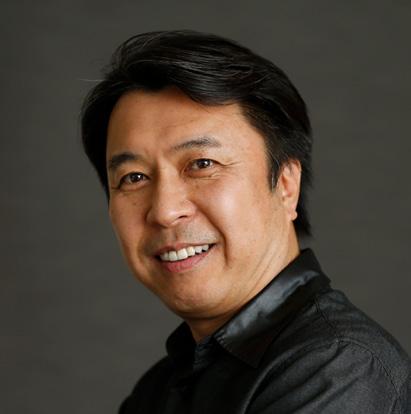
Makoto Ozone is a unique force in both jazz and classical music, blending sound worlds and a host of influences into his performances. Born in Kobe, Japan, he was self-taught in jazz, under his father’s guidance, first on the organ, then piano. He first came to public attention when he gave his solo recital at New York’s Carnegie Hall in 1983, following his graduation from Berklee College of Music. Makoto became the first Japanese artist to sign an exclusive contract with CBS and released his first album, Ozone, a year after his Carnegie debut.
His stellar career in jazz, which earned him a GRAMMY nomination in 2003, has brought him regularly to the forefront of the international jazz scene, recording and touring with musicians such as Gary Burton, Chick Corea, Paquito D’Rivera, Anna Maria Jopek and Branford Marsalis. In 2004 he formed his own big band in Japan, No Name Horses, which has regularly toured Europe, North America and Asia.
In more recent years, Makoto has expanded into classical repertoire. Having first performed Gershwin’s Rhapsody in Blue in 1996, he now performs concertos by Mozart, Bernstein, Prokofiev, Shostakovich and Rachmaninov with major orchestras. Alongside his performing schedule Makoto composes, with over 300 pieces to his name, many for No Name Horses, as well as a symphony and a piano concerto. His concerto MOGAMI received its European premiere in 2024 with the Berlin Radio Symphony Orchestra and Duncan Ward.
In the 2025/26 season Ozone tours Europe and Japan with the Tokyo Philharmonic and Myungwhun Chung, and makes his debut with the Colorado and Indianapolis Symphony orchestras, both under Jun Märkl. He also performs with other guest artists at Toronto’s Koerner Hall as part of a concert to celebrate 100 years since Oscar Peterson’s birth. Ozone makes his London concerto debut with the Royal Philharmonic Orchestra this spring. His trio TRiNFiNiTY tours Australia after their hugely successful UK and Europe tour during the 24/25 season.
Makoto has an extensive discography, releasing over 30 albums, as well as performing as a collaborator on many others. His latest album is TRiNFiNiTY (Universal Music), featuring Shimpei Ogawa on bass and Kunito Kitai on drums.
In 2018 Makoto received the Medal of Honour with Purple Ribbon from the Government of Japan. This is Japan’s highest award to individuals who have made significant contributions to the nation’s academic or cultural life.
Moscow, 16 March 1870
DURATION 21 minutes
With its rapturous and instantly recognisable love theme, Tchaikovsky’s Romeo and Juliet Fantasy Overture is one of the composer’s best-known works. Beginning in quasiecclesiastical quiet (the theme associated with Friar Laurence) and tussling between the warring motifs of the Montagues and Capulets and the overwhelming passion of the young lovers themselves, the work had a long-drawn gestation, and was twice revised after its premiere in 1870. ‘Nothing is more suitable to my musical character,’ wrote Tchaikovsky some years later, returning to Shakespeare’s play for an unrelated opera. ‘No kings, no marches, no boring old grand opera. Just love, love, love!’
The Overture had been suggested to Tchaikovsky by Mily Balakirev, then one of Russia’s pre-eminent composers and a member of ‘The Five’ (including also Rimsky-Korsakov, Borodin, Cui and Mussorgsky), after the 28-year-old composer, yet to make his mark, had dedicated his symphonic poem Fatum to him. Once the prevaricating Tchaikovsky had succumbed to Balakirev’s piqued badgering –while generous, he was not a man who liked his ideas ignored – the older composer outlined an in-depth scheme, including some bars of music outlining how he himself would open the work. ‘Begin straight away – allegro – with fierce sword clashes!’ he wrote enthusiastically.
Tchaikovsky, who was to find Shakespeare a huge source of inspiration throughout his composing life, ignored such prescriptive suggestions, but Balakirev’s energetic and frequently sharp criticism encouraged him
in an increasingly imaginative interpretation and, crucially, helped him develop his ideas on structure. When he sent the composer his first draft in 1870, Balakirev went into rhapsodies over the love theme. ‘I want to hug you for it!’ he wrote (before proceeding to suggest revisions).
And yet luck was not with Tchaikovsky, still to find public success and privately rattled –albeit probably briefly, given his preference for men – by the surprise marriage of star Belgian soprano Désirée Artôt, to whom he was all but engaged. When the Overture’s premiere came, it was overshadowed by a scandal involving the conductor, Nikolai Rubinstein. ‘No one said a single word to me about the Overture the whole evening,’ wrote a deflated Tchaikovsky.
That summer, abroad, he reworked the opening section – evidence of his developing ability to write evocatively and expansively rather than contain his ‘characters’ in a musical straitjacket. The second premiere in 1871 was even less successful, and yet Tchaikovsky, dogged by the continuing poor reception of his works, could not let it go. In 1880, with three symphonies, Swan Lake, Eugene Onegin and another Shakespeare overture, The Tempest, under his belt, he rewrote the ending to Romeo and Juliet, composing the work’s exquisite, shattering coda and refining, definitively, what is now his first acknowledged masterpiece.
© Sarah Urwin Jones
If you enjoyed Tchaikovsky’s Romeo and Juliet Fantasy Overture, why not try his Fourth Symphony [performances on 19-21 Mar 2026].
Baltimore, 7 November 1934
DURATION 23 minutes
When Rachmaninov and his family fled Russia in the wake of the Revolution, his composing output dwindled as he poured all his efforts into a more lucrative career as a piano virtuoso. Between 1918 and his death in 1943, Rachmaninov composed just six new pieces. One of them was the Rhapsody on a Theme of Paganini, his brilliant set of variations on Paganini’s A Minor Caprice, written in a concentrated burst in 1934 at the Villar Senar, his summer home on the shores of Lake Lucerne. Working non-stop from ‘literally morn to night’, he premiered the piece on 7 November with the Philadelphia Orchestra, conducted by Leopold Stokowski. It was an instant success.
No wonder. This is Rachmaninov at his most sparkling, inventive and economical, conjuring a dazzling array of moods. He was far from the only composer to draw inspiration from Paganini’s simple theme, which was published along with a set of variations in his 24 Caprices for solo violin. Liszt and Brahms had also written solo piano pieces based on it, both of which Rachmaninov played. Perhaps he was also fired up by the legend surrounding the 19th-century violin virtuoso, which held that Paganini’s breathtaking talent came from selling his soul to the devil. Later, the Rhapsody became the score to a ballet telling the Paganini legend, choreographed by Michel Fokine.
Whatever the exact reason, Rachmaninov’s imagination was sparked. He immediately surprises the listener with a brief attentiongrabbing introduction that leads not to the traditional statement of the theme itself, but instead the pointillistic first variation. After this playful piece of wrong-footing, we hear
the theme in the strings and head into the first batch of variations, which fly by with deft virtuosity. The mood changes in Variation 7 with the introduction of the Dies irae – the medieval chant for the Day of Wrath – and we move into even darker territory in Variations 8-10. It shifts yet again with the dreamy Variation 11, while the subsequent variations offer a rollercoaster ride from the balletic grace of the 12th to the heroism of the 14th to the ominous brooding of the 17th.
Most famous of all is the 18th variation, in which Rachmaninov turns Paganini’s theme upside down and recasts it in a major key. The result is gorgeous, a sublime moment of reflective beauty that contrasts with the rest of the piece’s rhythmic energy. After this, the music hurtles towards the fiendish final variation, which goes out not with a bang but with delightful wit.
© Rebecca Franks
Listen again to the RSNO Rachmaninov Rhapsody on a Theme of Paganini Plus Piano Concertos Nos 1 and 4
Howard Shelley Piano
Bryden Thomson Conductor
More information rsno.org.uk/recordings
If you enjoyed Rachmaninov’s Rhapsody on a Theme of Paganini, why not try his Piano Concerto No1 played by Sir Stephen Hough [performances on 23-25 Apr 2026].
FIRST PERFORMANCE
Vienna, 25 January 1905
DURATION 45 minutes
1. Sehr mäßig bewegt [Moving moderately]
2. Sehr bewegt, rauschend [Very turbulent, like the sound of the sea]
3. Sehr gedehnt, mit schmerzvollem Ausdruck [Very expansive, anguished]
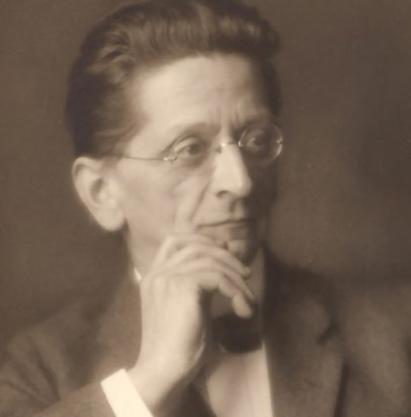
At the turn of the 20th century, Zemlinsky was in a difficult place. He had begun a romantic relationship with his composition student Alma Schindler, but she broke it off in November 1901 after meeting Gustav Mahler – whom she married just four months later.
Die Seejungfrau (The Mermaid) was an expression of Zemlinsky ’s heartbreak and rejection, based on Hans Christian Andersen’s fairy tale The Little Mermaid, more recently popularised by the 1989 Disney film.
One of Zemlinsky ’s most evocative and richly orchestrated works, The Mermaid began taking shape in February 1902, with its full orchestration completed in March 1903. Given its roots in an existing tale, The Mermaid could easily be thought of as a symphonic poem, but it tends to be billed as a fantasy because it lacks programmatic references to the source material. There was originally a 14-page section in the middle movement titled In the realm of the MerWitch, but Zemlinsky removed it.
In Andersen’s fairy tale, the Mermaid falls in love with the Prince when she saves him from drowning. The Witch makes the mermaid human in exchange for her voice – but if the Mermaid fails to win the prince’s love, she will die and turn into sea foam. The Prince marries another, so the Witch says the Mermaid must kill the Prince to save herself. When she jumps into the sea, heartbroken, the Mermaid transforms into a spirit, a ‘daughter of the air ’. Because of her sacrifice, she is given another chance to regain her immortal soul.
In 2013 musicologist Antony Beaumont edited a new critical edition of the work and speculated that the story of The Little Mermaid resonated with Zemlinsky because he might have seen himself as the Mermaid and Alma as the Prince.
The first movement opens with a deep, ominous sea-like soundscape, with the Mermaid’s story
told through a series of motifs. As the Prince falls overboard, we hear a turbulent, dramatic storm, before a more lyrical, buoyantly optimistic version of the Mermaid’s theme returns.
A dazzling scherzo sits at the heart of The Mermaid, showcasing the glittering atmosphere of the ball at the palace – but with a tinge of mystery, and perhaps even tragedy. The final movement sees the Mermaid taking her first tentative steps on land, revisiting themes from earlier in the work.
The Mermaid was first performed in January 1905 at the Musikverein in Vienna, in a concert which also included the premiere of Schoenberg ’s symphonic poem Pelleas und Melisande. Its journey since then has been a rocky one, however. After additional performances in Berlin in December 1906 and Prague in November 1907, Zemlinsky withdrew the work. He gave a score of the first movement to his friend Marie Pappenheim – a socialist, writer, librettist and doctor – as a gift. He later took the second and third movements with him to New York after he fled the Nazi regime in Austria in 1938. Along with the rest of Zemlinsky ’s manuscripts, these latter two movements ended up in the Library of Congress in Washington, DC. His wife Louise believed them to be surviving fragments of a symphony, so for many years after Zemlinsky ’s death The Mermaid’s score was presumed to be lost or destroyed.
It wasn’t until the 1980s that two British PhD students compared the scores in Vienna and Washington and realised they were part of the same work. The first modern performance of The Mermaid after its reconstruction was in 1984, and since then it’s become one of Zemlinsky ’s most widely admired works, celebrated for its impressionist style and yearning mood.
© Freya Parr
In Music
Kindertotenlieder by Gustav Mahler
Introduction and Allegro for Strings by Edward Elgar
La Mer by Claude Debussy
Salome by Richard Strauss
In Literature
Where Angels Fear to Tread by E M Forster
White Fang by Jack London
Kipps by H G Wells
The Tale of Mrs Tiggy-Winkle by Beatrix Potter
Major Barbara by George Bernard Shaw
In Art
Still Life with Geraniums by Henri Matisse
Family of Saltimbanques by Pablo Picasso
The Hungry Lion throws Itself on the Antelope by Henri Rousseau
In Architecture
Berlin Cathedral by Julius Raschdorff
Darwin D Martin House in Buffalo, US by Frank Lloyd Wright
We are grateful to all our individual supporters for their generous philanthropy and loyalty. Your support enables the Orchestra to achieve its most ambitious goals and to continue inspiring people across Scotland both on and off the concert stage.
RSNO Benefactors
Sir Ewan and Lady Brown
Gavin and Kate Gemmell
Kat Heathcote and Iain Macneil
Ms Chris Grace Hartness
RSNO Patrons
Geoff and Mary Ball
Lady Rebecca Fraser
Walter and Janet Reid Charitable Trust
George Ritchie
Stephen Sweeney
Valerie Wells
Chair Patrons
Assistant Conductor
Celia Llácer
The Solti Foundation Chair
First Violin
Maya Iwabuchi LEADER Dunard Fund Chair
Tamás Fejes ASSISTANT LEADER
The Bill and Rosalind Gregson Chair
Ursula Heidecker Allen
The James and Iris Miller Chair
Elizabeth Bamping
The WL and Vera Heywood Chair
Alan Manson
The Hugh and Linda Bruce-Watt Chair
Liam Lynch
Mr Kyle Anderson Weir
Lorna Rough
The Sir Richard Dunbar Chair
RSNO Conductors’ Circle
Ardgowan Charitable Trust
Stina Bruce Jones
Ian and Evelyn Crombie
Kenneth and Julia Greig
Shirley Murray
David and Alix Stevenson
Eric and Karen Young
Learning and Engagement Patrons
William Brown, W.S
The Dundee RSNO Circle Committee
Neil and Nicola Gordon
Professor Gillian Mead, FRSE
Nicholas and Alison Muntz
Maurice and Nicola Taylor Charitable Trust
Second Violin
Marion Wilson ASSOCIATE PRINCIPAL
The Nigel & Margot Russell Chair
Sophie Lang
The Ian & Evelyn Crombie Chair
Emily Nenniger
Mr Jamie & Kyle Anderson Weir
Viola
Tom Dunn PRINCIPAL
The Cathy & Keith MacGillivray Chair
Lisa Rourke SUB PRINCIPAL
The Meta Ramsay Chair
Francesca Hunt
The Rolf and Celia Thornqvist Chair
Beth Woodford
Mr Jamie & Kyle Anderson Weir
Cello
Pei-Jee Ng PRINCIPAL
Mr Jamie & Kyle Anderson Weir
Betsy Taylor ASSOCIATE PRINCIPAL
The Maxwell Armstrong Chair
Kennedy Leitch ASSISTANT PRINCIPAL
The David and Anne Smith Chair
Rachael Lee
The Christine and Arthur Hamilton Chair
Double Bass
Nikita Naumov PRINCIPAL
The Gregor Forbes John Clark Chair
Michael Rae ASSISTANT PRINCIPAL
James Wood Bequest Fund Chair
Flute
Katherine Bryan PRINCIPAL
The David and Anne Smith Chair
Oboe
Adrian Wilson PRINCIPAL
The Hedley Wright Chair
Peter Dykes ASSOCIATE PRINCIPAL
Witherby Publishing Group Charitable Trust Chair
Cor Anglais
Henry Clay PRINCIPAL
In memory of a dear friend, Fiona H
Clarinet
Timothy Orpen PRINCIPAL
The Shirley Murray Chair
William Knight
The Turcan Connell Chair
Horn
David McClenaghan SUB-PRINCIPAL
The Springbank Distillers Chair
Alison Murray ASSISTANT PRINCIPAL
Mr & Mrs Pierre and Alison Girard
Martin Murphy ASSISTANT PRINCIPAL
The Gordon Fraser Charitable Trust Chair
Andrew McLean
The Catherine McLagan Chair
Trumpet
Christopher Hart PRINCIPAL
Ms Chris Grace Hartness
Timpani
Paul Philbert PRINCIPAL
Ms Chris Grace Hartness
Staff
Chiko Parkinson
COMMUNITY SINGING ASSISTANT
Supported by ScotRail
We are also grateful to those who give but who wish to remain anonymous.
If you would like to discuss how you can become an RSNO Patron, please contact Constance Fraser, Head of Development (Individuals and Partnerships), at constance.fraser@rsno.org.uk
Virtuoso
Ms Catherine Y Alexander
Mrs A M Bennett
Mr Alan and Mrs Carolyn Bonnyman
Dame Susan and Mr John Bruce
Stephen and Morny Carter
Francesca and Eoghan Contini Mackie
Dr Clive Criper
Martin and Carola Gordon
Scott and Frieda Grier
Judith and David Halkerston
Iain MacNeil and Kat Heathcote
MBE
Ian and Sarah Lister
Miss A McGrory
Maureen Michie
Mr James Miller CBE
Mrs Abigail Morrison
Nicholas and Alison Muntz
Meta Ramsay
Mr and Mrs W Semple
Gregor and Lesley Stewart
Mr Ian Taft
Claire and Mark Urquhart
Raymond and Brenda Williamson
Margaret Duffy and Peter Williamson
Symphony
Mr John Brownlie
Mr A Campbell
Dr K Chapman and Ms S Adam
Sir Sandy and Lady Crombie
Mr W G Geddes
Elizabeth Gibb
Dr Robert Gibb
Mr I Gow
Mr J D Home
Christine Lessels
Katharine M E Liston
Philip Whitely and Robert H Mackay
Hon Lord McGhie
Mrs A McQueen
Mr Iain Percival
Mr and Mrs David Robinson
Mrs Henrietta Simpson
Ian and Janet Szymanski
Dr C Cradock and Dr S Todd
Nelson and Barbara Waters
Concerto
Neil Barton
Mrs Mary Black
Miss D Blackie
Dr C M Bronte-Stewart
Dr F L Brown
Mr and Mrs Burnside
David Caldwell
Ms H Calvert
Ross Cavanagh
Myk Cichla
Terry and Joan Cole
Dr J Coleiro
Mr and Mrs B H Cross
Christine and Jo Danbolt
Mr P Davidson
Steven J Davis
Mr and Mrs K B Dietz
Mr C Ffoulkes
William Findlay
Mr and Mrs M Gilbert
Lord and Lady Hamilton
Mrs S Hawthorn
P Hayes
David G Henderson
Dr and Mrs P Heywood
Ms H Kay
Mr and Mrs W Kean
Nicholas Kilpatrick
Morag MacCormick
Mr and Mrs Marwick
Mr S Marwick
Mrs Sandra Maxwell
Mr and Mrs G McAllister
Mrs M McDonald
Dr A H McKee
Mr Rod McLoughlin
Morag Millar
Mrs B Morinaud
Dr and Mrs D Mowle
Mr KR and Dr CC Parish
Ms A and Miss I Reeve
Mrs E M Robertson
Sheriff Linda Ruxton
Dr and Mrs G K Simpson
Dr Norma H Smith
Mr and Mrs A Stewart
Jenny Stewart
David and Helen Strachan
Mr I Strachan
Dr G R Sutherland
Mr and Mrs J B Watson
Mr and Mrs D Weetman
Helen and Peter Wilde
David W Wren
Roderick Wylie
Sonata
Mr and Mrs G H Ainsley
Mr K Allen
Dr A D Beattie
Mrs H Benzie
Mr R Billingham
Lord and Lady Borthwick
John Bradshaw and Shiona Mackie
Mrs Bryan
Andrew Burrows
Mrs C M Campbell
Miss S M Carlyon
Amanda Carter-Fraser
Alan Clevett
Lady Coulsfield
Adam and Lesley Cumming
Mrs C Donald
J Donald and L Knifton
Mr John Duffy
Mr R M Duncan
Brigadier and Mrs C C Dunphie
Mrs E Egan
Mr R Ellis
Mr R B Erskine
Dr E Evans
Dr A Ewing
David Ferrier
Kenneth Forbes
Mr D Fraser
Philip and Karen Gaskell
Mrs M Gibson
Mrs M Gillan
Mrs J K Gowans
Dr J and Mrs H Graham
Professor and Mrs A R Grieve
Simon and Fiona Guest
Dr P J Harper
Dr N Harrison
Mr and Mrs R J Hart
Bobby and Rhona Hogg
Mr and Mrs F Howell
Mrs A Hunter
Inez Hutchison
Professor R N Ibbett
Thomas Jakobsen Burns
Geoffrey and Elizabeth Johnston
Ms K Lang
Dr Dorothy A Lunt
Mrs Jean C Martin
Mr and Mrs J Martin
Ms S McArthur
Jean McCutcheon
Rhyse McDermid
Mr M McGarvie
Mrs S McGeachan
Dr Colin McHardy
Ms H L McLaren
Margaret McLay
Libby McLean
Mr and Mrs B Mellon
Kathryn Michael
Simon Michaelson
Mr I Mills
Mrs P Molyneaux
Kenneth M Murray
Bruce and Christine Nelson
Alastair Ogilvie
Mr and Mrs K O’Hare
Mr and Mrs K Osborne
Dr G Osbourne
Mr A Ownsworth
Mr R Parry
John Paterson
Misses J and M Penman
Mr J W Pottinger
Miss J A Raiker
Alastair Reid
Ms F Reith
Dr and Mrs D Robb
Anne Robertson
Mr I Robertson
Ms A Robson
Mrs J Shanks
Mr J A Shipley
Dr M J and Mrs J A Shirreffs
Richard and Gillian Shirreffs
Ana Smith
Mrs E Smith
Mr M Smith
Dr and Mrs B Stack
Mrs Lorna Statham
Mrs R F Stewart
Mr and Mrs B Tait
Lisbeth Thoms
Dr and Mrs T Thomson
Dr Morag Ward
Dr Alex Watson
Mr W Watters
Alan Weddell
Mr and Mrs D Weetman
Mr R Young
Thank you to all our members of the Circle, including Overture members and those who wish to remain anonymous.
If you would like to discuss how you can become an RSNO Circle member, please contact Polly Lightbody, Individual Giving and Partnerships Officer, at polly.lightbody@rsno.org.uk

Charitable trusts and foundations have a distinguished history of supporting the RSNO, both on and off the stage. From one-off donations for specific concerts and musicians’ chairs, to multi-year funding for our community engagement initiatives, including our Schools Programme, every grant in support of our work is truly appreciated. We are grateful to the following trusts and foundations for their generosity:
Aberdeen Endowments Trust
ABO Sirens Fund
Adam Mickiewicz Institute
Alexander Moncur Charitable Trust
Alma & Leslie Wolfson Charitable Trust
Adam Mickiewicz Institute
Balgay Children’s Society
Boris Karloff Charitable Foundation
Brownlie Charitable Trust
Castansa Trust
CMS Charitable Trust
Common Humanity Arts Trust
Cookie Matheson Charitable Trust
Cruden Foundation
David and June Gordon Memorial Trust
Dunclay Charitable Trust
Educational Institute of Scotland
Ettrick Charitable Trust
Fidelio Charitable Trust
Forteviot Charitable Trust
Gannochy Trust
Gaelic Language Promotion Trust
Gordon Fraser Charitable Trust
Great Britain Sasakawa Foundation
Harbinson Charitable Trust
Hobart Charitable Trust
Hugh Fraser Foundation
James Wood Bequest Fund
Jennie S Gordon Memorial Foundation
Jean & Roger Miller’s Charitable Trust
Jimmie Cairncross Charitable Trust
John Scott Trust Fund
John Mather Trust
Jones Family Charitable Trust
JTH Charitable Trust
Leach Family Charitable Trust
Leng Charitable Trust
Lethendy Charitable Trust
Marchus Trust
McGlashan Charitable Trust
Meikle Foundation
Mickel Fund
Miss E C Hendry Charitable Trust
Miss Jean R Stirrat’s Charitable Trust
Murdoch Forrest Charitable Trust
N Smith Charitable Settlement
Nancie Massey Charitable Trust
Noel Coward Foundation
Northwood Charitable Trust
Nugee Foundation
Pear Tree Fund for Music
PF Charitable Trust
Pump House Trust
Q Charitable Trust
R J Larg Family Trust
Ronald Miller Foundation
Rowena Alison Goffin Charitable Trust
Russell Trust
Scops Arts Trust
Scott Davidson Charitable Trust
Scottish Enterprise
Solti Foundation
Souter Charitable Trust
Stanley Morrison Charitable Trust
Stevenston Charitable Trust
Sylvia Aitken Charitable Trust
Tay Charitable Trust
Thriplow Charitable Trust
Tillyloss Trust
W A Cargill Fund
W M Mann Foundation
W M Sword Charitable Trust
Walter Scott Giving Group
Wavendon Foundation
Weir Charitable Trust
Zich Trust
We are also grateful to a number of trusts that wish to stay anonymous.
If you would like more information about our work and how you can make a difference, please contact Niamh Kelly, Trusts and Projects Manager, at niamh.kelly@rsno.org.uk
FUNDERS





PRINCIPAL MEDIA PARTNER



CORPORATE SUPPORTERS



PRINCIPAL TRANSPORT PARTNER


BROADCAST PARTNER

PARTNERS
Adelaide Place • Age Scotland • Black Lives in Music • Charanga • Children’s Classic Concerts
Children’s Hospices Across Scotland • Classic FM • Douglas Academy • Dundee Science Centre
Dunedin Consort • Edinburgh Zoo • Education Scotland • Fanzclub • Gig Buddies • GMAC Film
Heads of Instrumental Teaching Scotland • Hebrides Ensemble Kibble • Luminate • Marine Conservation Society
MARSM • Music Education Partnership Group • ParentZone • The Pyramid at Anderston
Royal Conservatoire of Scotland • Scottish Book Trust • Scottish Chamber Orchestra
Scottish Refugee Council • Sistema Scotland • St Mary’s Music School • Tayside Healthcare Arts Trust Trees for Life • University of Glasgow • V&A Dundee • Visible Fictions
With thanks to Mr Hedley G Wright and the Springbank Distillery for their support of the RSNO
If you would like more information about sponsorships, corporate partnerships or fundraising events with the RSNO, please contact Constance Fraser, Head of Development (Individuals and Partnerships), at constance.fraser@rsno.org.uk
PATRON
His Majesty The King
ARTISTIC TEAM
Thomas Søndergård
MUSIC DIRECTOR
Patrick Hahn
PRINCIPAL GUEST CONDUCTOR
Celia Llácer
ASSISTANT CONDUCTOR
Ellie Slorach
ENGAGEMENT CONDUCTOR
Kellen Gray
ASSOCIATE ARTIST
Neeme Järvi
CONDUCTOR LAUREATE
Alexander Lazarev
CONDUCTOR EMERITUS
Stephen Doughty DIRECTOR, RSNO CHORUS
Patrick Barrett DIRECTOR, RSNO YOUTH CHORUSES
CHIEF EXECUTIVE
Alistair Mackie
CHIEF EXECUTIVE
Dr Jane Donald
DEPUTY CHIEF EXECUTIVE
Charlotte Jennings
EXECUTIVE ASSISTANT (MATERNITY LEAVE COVER)
Nicola Kelman
EXECUTIVE ASSISTANT (MATERNITY LEAVE)
PLANNING
Tammo Schuelke
DIRECTOR OF ARTISTIC PLANNING
Xander van Vliet
ARTISTIC PLANNING MANAGER
Rachel Pullin
ARTISTIC PLANNING OFFICER
Richard Payne
HEAD OF LIBRARY SERVICES
Megan Bousfield
LIBRARY ASSISTANT
Christine Walker
CHORUS MANAGER
ORCHESTRA MANAGEMENT
Matthias Van Der Swaagh
HEAD OF ORCHESTRA MANAGEMENT
Brodie Smith
DEPUTY ORCHESTRA MANAGER
Megan Walker
ORCHESTRA AND PROJECTS OFFICER
OPERATIONS AND PRODUCTION
Craig Swindells
HEAD OF PRODUCTION
Ashley Holland
STAGE MANAGER
RSNO BOARD OF DIRECTORS
Elected Directors
Gregor Stewart
CHAIR
Gail Blain
HONORARY TREASURER
Ruth Binks
Kayla-Megan Burns
Ken Hay
Kat Heathcote MBE
Don Macleod
David Robinson
John Stewart
David Strachan
Cllr Edward Thornley
NOMINATED DIRECTOR
Julia Miller
COMPANY SECRETARY
Dylan Findlay
ASSISTANT STAGE MANAGER
Ted Howie
FACILITIES MANAGER
LEARNING AND ENGAGEMENT
Andrew Stevenson
DIRECTOR OF ENGAGEMENT
Anna Crawford
ENGAGEMENT DELIVERY MANAGER (MATERNITY LEAVE)
Rachel Naismith
ENGAGEMENT DELIVERY MANAGER (MATERNITY COVER)
Maisie Leddy
ENGAGEMENT PRODUCER
Chiko Parkinson
COMMUNITY CHORUS AND PARTNERSHIPS
COORDINATOR SUPPORTED BY SCOTRAIL
EXTERNAL RELATIONS
Dr Jane Donald
DIRECTOR OF EXTERNAL RELATIONS
Carol Fleming
HEAD OF MARKETING
Constance Fraser
HEAD OF DEVELOPMENT (INDIVIDUALS AND PARTNERSHIPS)
Kirsten Reid
HEAD OF DEVELOPMENT (TRUSTS AND PROJECTS) (MATERNITY LEAVE)
Lisa Ballantyne
PARTNERSHIPS OFFICER
Keilidh Bradley
GRADUATE ANIMATOR
Ian Brooke
PROGRAMMES EDITOR
Fred Bruce
TRUSTS AND PROJECTS ADMINISTRATOR
Clara Cowen
MARKETING MANAGER
Player Directors
Katherine Bryan
Christopher Hart
David Hubbard
William Knight
David McClenaghan
Lorna Rough
SCHOOLS ADVISORY GROUP
Ruth Binks
Pam Black
Norman Bolton
Martin Greig
Neil Millar
Mae Murray
Seonaid Eadie
EXTERNAL RELATIONS OFFICER
Katie Kean
COMMUNICATIONS AND MARKETING OFFICER
Niamh Kelly
TRUSTS AND PROJECTS MANAGER
Polly Lightbody
INDIVIDUAL GIVING AND PARTNERSHIPS OFFICER
Graham Ramage
GRAPHIC DESIGNER
Sam Stone
INFORMATION SERVICES MANAGER
Ross Williamson
VIDEO PRODUCER (MARKETING)
AUDIO
Hedd Morfett-Jones
STUDIO MANAGER
Sam McErlean
MEDIA MANAGER AND AUDIO ENGINEER
Ahan Sengupta
TRAINEE AUDIO ENGINEER
FINANCE AND CORPORATE SERVICES
Nicola Mills
DIRECTOR OF FINANCE AND CORPORATE SERVICES
Susan Rennie
HEAD OF FINANCE
Jade Wilson
FINANCE OFFICER
Abby Dennison
FINANCE ADMINISTRATOR
Phoebe Connolly
FINANCE ASSISTANT
Contents © Copyright RSNO and named authors.