
Music Hall, Aberdeen
Thu 23 Apr 2026 7.30pm
Usher Hall, Edinburgh
Fri 24 Apr 7.30pm
Glasgow Royal Concert Hall
Sat 25 Apr 7.30pm




return train travel Kids for a Quid




Music Hall, Aberdeen Thu 23 Apr 2026 7.30pm
Usher Hall, Edinburgh Fri 24 Apr 7.30pm
Glasgow Royal Concert Hall Sat 25 Apr 7.30pm
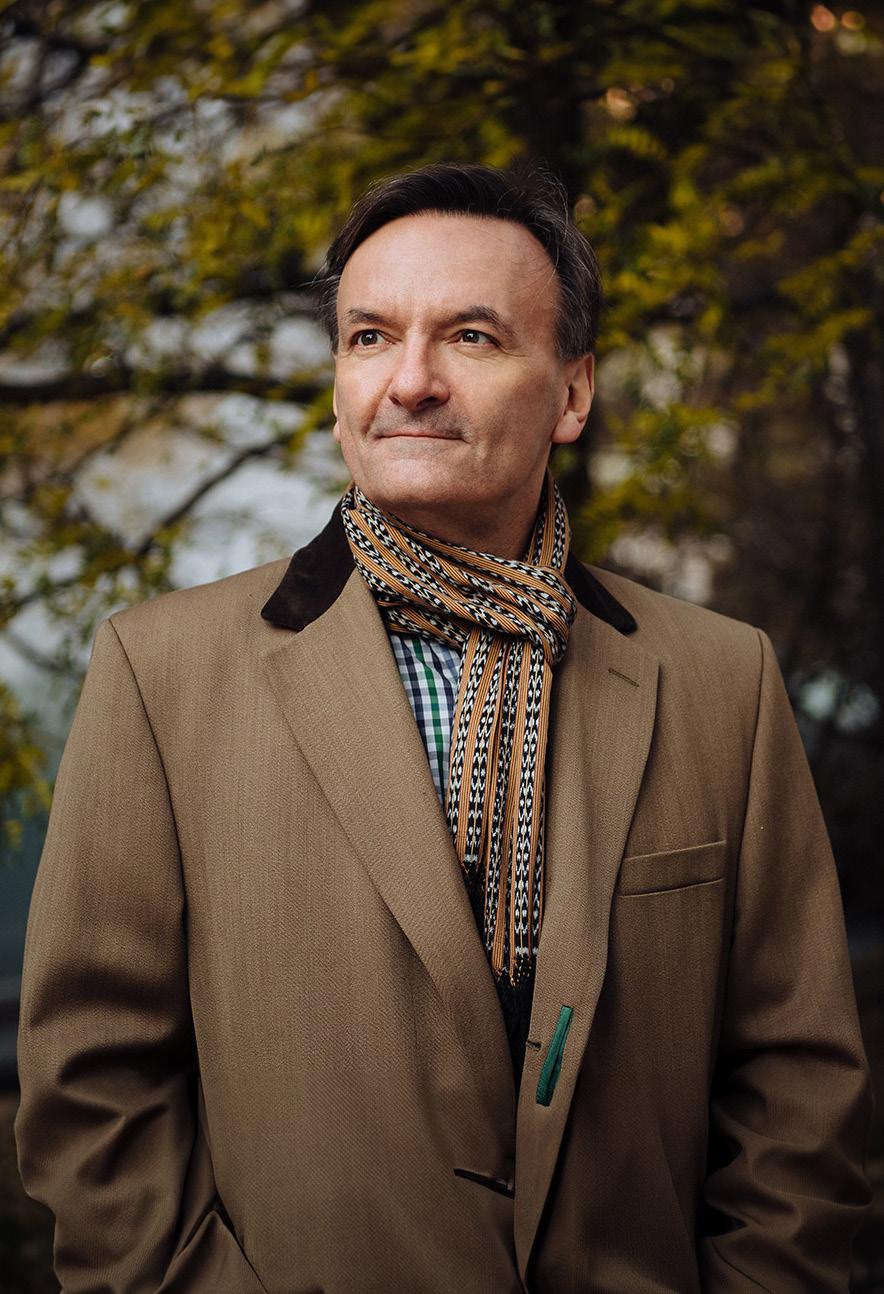
Sir Stephen Hough: a pianist whose effortless brilliance at the keyboard has been described as little short of genius. John Wilson: the Newcastle-born conductor who knows how to make an orchestra sound like a million dollars. Put them together and sparks will fly – whether in Rachmaninov’s showstopping concerto, Ravel’s sumptuous dream waltz or Vaughan Williams’ glorious technicolour portrait of a great city in all its bustling, glittering life. Trust us: this is going to be special.
BARTÓK Romanian Folk Dances [7’]
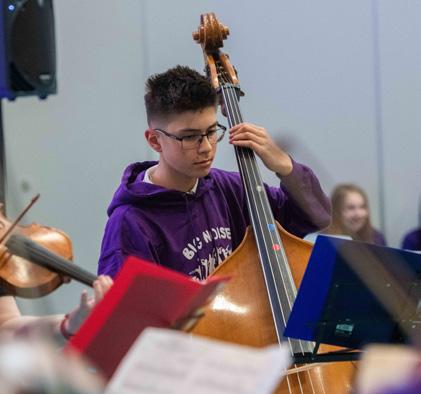
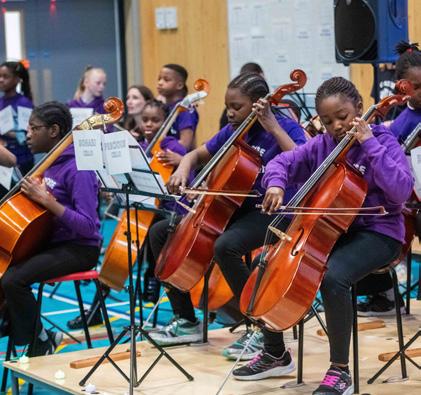
Side-by-Side with Big Noise Torry (Aberdeen only)
RAVEL La valse [13’]
RACHMANINOV Piano Concerto No1 in F sharp Minor Op1 [27’]
INTERVAL
VAUGHAN WILLIAMS Symphony No2 in G Major A London Symphony [51’]
John Wilson Conductor
Sir Stephen Hough Piano
Big Noise Torry
Royal Scottish National Orchestra
The Glasgow performance will be recorded for the RSNO Archive. Supported by the Iain and Pamela Sinclair Legacy.
If viewing these notes at the concert, please do so considerately and not during performances. Please silence all mobile telephones and alerts, and refrain from taking photographs, without flash, until the end of each piece.
DUNDEE THU 14 MAY: 7.30pm
EDINBURGH FRI 15 MAY: 7.30pm
GLASGOW SAT 16 MAY: 7.30pm
Franghiz Ali-Zadeh Nagillar
Elgar Violin Concerto
Stravinsky The Firebird
Kirill Karabits Conductor
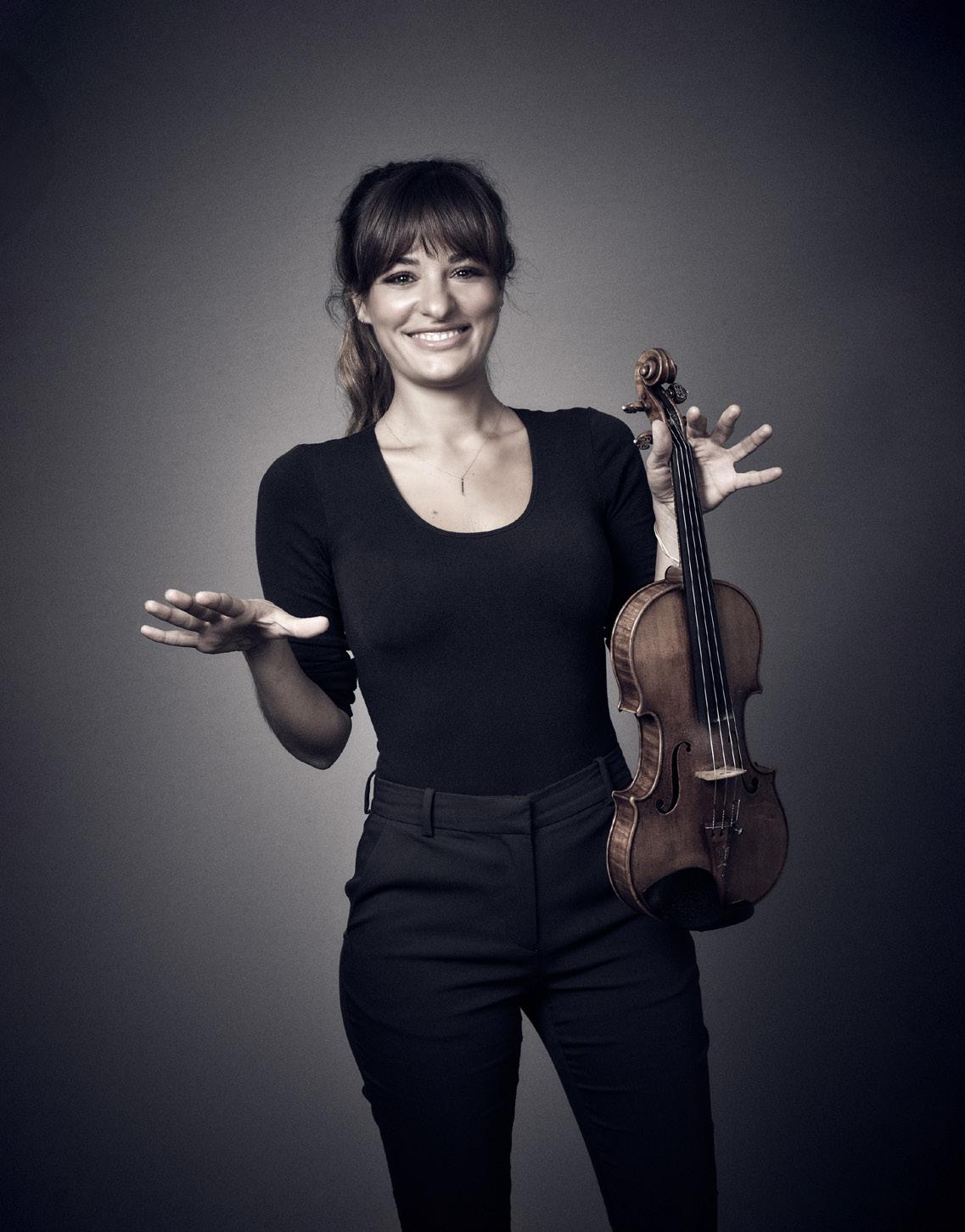
Nicola Benedetti Violin Book online at
You’ll notice a new logo on the front cover of tonight’s programme celebrating the RSNO as the recipient of the 2026 RPS Ensemble Award. As an orchestra working hard to bring world-class music to audiences and communities across Scotland, we are immensely proud of this recognition from the Royal Philharmonic Society.
Another 2026 RPS Award winner joins us on stage this evening –conductor John Wilson. John has performed with us often over the years and is a real ambassador for British music, as you’ll hear with Vaughan Williams’ A London Symphony. Previously John has conducted Elgar, Ireland and Holst with us, and you can still watch our performance of Holst’s The Planets with John conducting on our YouTube channel.
Although it has been some years since Sir Stephen Hough last performed with us, I am thrilled to welcome him back. I am certain he will blow us away with his performance of Rachmaninov’s First Piano Concerto, a composer whose work he is renowned for playing.
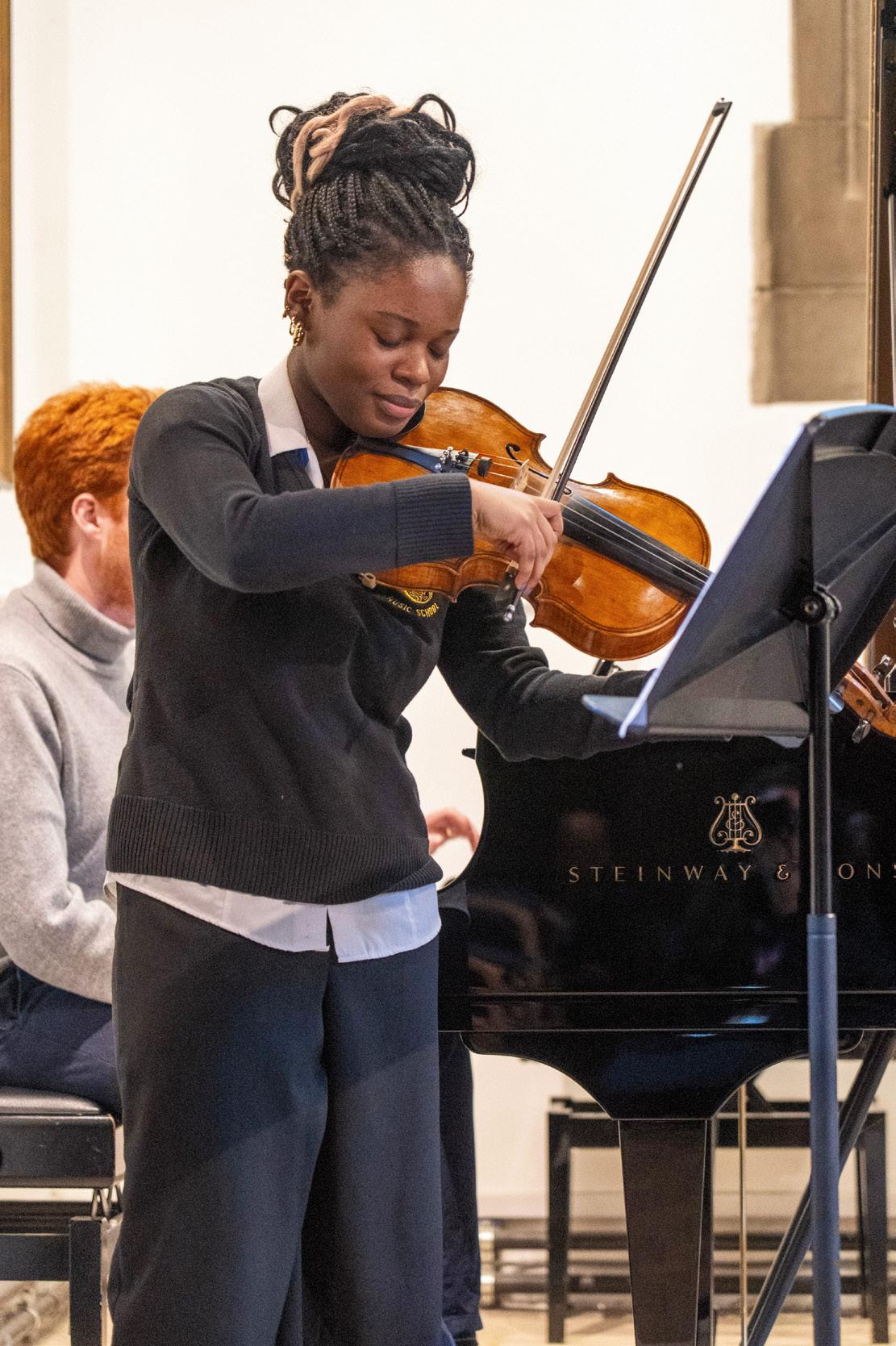
Those of you in Aberdeen will hear the young musicians of Sistema Scotland’s Big Noise Torry perform side-by-side with the Orchestra. It is always such a privilege to see these young people take to the stage with our musicians and I’m certain there are future RSNO players among them.
Our Aberdeen Concert Series 2026:27 launched today in collaboration with the Scottish Chamber Orchestra. We have some brilliant concerts coming your way, including Brahms’ Violin Concerto with our Leader Maya Iwabuchi and Mendelssohn’s Scottish Symphony under the baton of Jörg Widmann. I encourage you to browse the brochure or our website and mark your diary –general ticket sales open on Wednesday 13 May.
I hope you enjoy tonight’s concert!
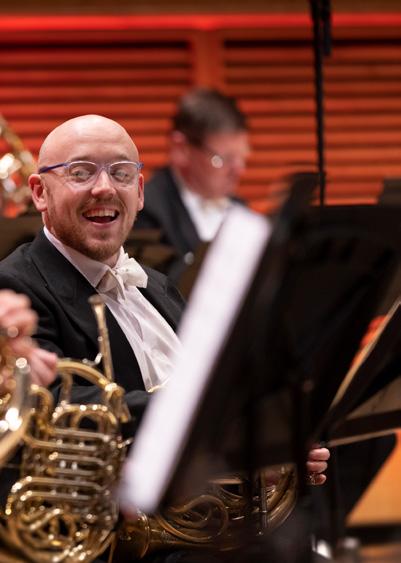
Alistair Mackie CHIEF EXECUTIVE
Keep in touch with the RSNO
Royal Scottish National Orchestra
19 Killermont Street
Glasgow G2 3NX T: +44 (0)141 226 3868
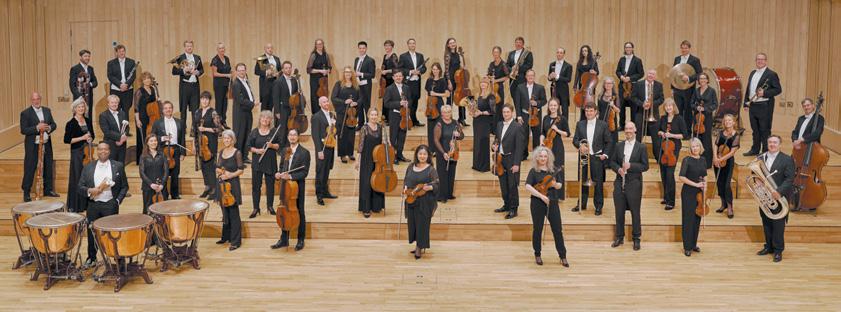
Formed in 1891, the Royal Scottish National Orchestra (RSNO) is one of Europe’s leading symphony orchestras. Awarded royal patronage by Her Late Majesty The Queen in 1977, its special status in the UK’s cultural life was cemented in 2007 when it was recognised as one of Scotland’s five National Performing Companies, supported by the Scottish Government.
Led by Music Director Thomas Søndergård, the Orchestra performs across Scotland, including concerts in Glasgow, Edinburgh, Dundee, Aberdeen, Perth and Inverness, and appears regularly at the Edinburgh International Festival and the BBC Proms. The RSNO tours internationally, most recently visiting China and Europe. In 2026 the RSNO was the first professional symphony orchestra to be awarded the Royal Philharmonic Society’s Ensemble Award since 2014. The award recognises musical ensembles for outstanding quality and scope of performances and work.
The RSNO has a worldwide reputation for the quality of its recordings, receiving a 2020 Gramophone Classical Music Award for Chopin’s Piano Concertos (soloist: Benjamin Grosvenor), conducted by Elim Chan, two Diapason d’Or awards (Denève/Roussel 2007; Denève/Debussy 2012) and eight GRAMMY Award nominations. In
recent years, the RSNO has cultivated an international reputation for world-class film, television and videogame soundtrack recording. The Orchestra has recorded for BAFTA-winning series Silo (Apple TV) and worked with the likes of GRAMMY Award-winning composer Lorne Balfe on Life on Our Planet (Netflix). Other notable titles include Nuremberg (Sony Pictures), Now You See Me: Now You Don’t (Lionsgate), Horizon: An American Saga (Warner Bros) and Star Wars Outlaws (Ubisoft). The Orchestra records at its bespoke in-house facility in Glasgow.
The RSNO believes that music can enrich lives and aims to inspire, educate and entertain people throughout Scotland and beyond with its performances, recordings and engagement programmes. Supporting schools, families, young professionals and wider communities, the RSNO delivers high-quality initiatives for all ages and abilities. The RSNO’s engagement offering includes its singing strand, encompassing a Buggy Choir and Chorus Academy in both Dundee and Glasgow and a lunchtime Workplace Choir, which complements the well-established and highly respected RSNO Youth Choruses and RSNO Chorus. The community choruses are designed with the benefits of group singing for health and wellbeing at their core and are open to all.
FIRST VIOLIN
Maya Iwabuchi LEADER
Lena Zeliszewska ASSOCIATE LEADER
Tamás Fejes ASSISTANT LEADER
Patrick Curlett
Caroline Parry
Ursula Heidecker Allen
Elizabeth Bamping
Liam Lynch
Alan Manson
Gill Risi
Sharon Haslam
Helena Quispe
Jessica Hall
Elana Eisen
SECOND VIOLIN
Benjamin Roskams
GUEST PRINCIPAL
Marion Wilson
Jacqueline Speirs
Robin Wilson
Nigel Mason
Paul Medd
Sophie Lang
Anne Bünemann
Kirstin Drew
Colin McKee
Helena Rose
Fiona Stephen
VIOLA
Tom Dunn
PRINCIPAL
Felix Tanner
Asher Zaccardelli
Lisa Rourke
Susan Buchan
Claire Dunn
Nicola McWhirter
Maria Trittinger
Francesca Hunt
Beth Woodford
CELLO
Pei-Jee Ng PRINCIPAL
Betsy Taylor
Kennedy Leitch
Yuuki Bouterey-Ishido
Sarah Digger
Robert Anderson
Gunda Baranauskaitė
Neil Sild
DOUBLE BASS
Nikita Naumov
PRINCIPAL
Michael Rae
Moray Jones
Alexandre Cruz dos Santos
Olaya Garcia Alvarez
Kirsty Matheson
FLUTE
Katherine Bryan PRINCIPAL
Oliver Roberts
Jack Welch
PRINCIPAL PICCOLO
OBOE
Adrian Wilson
PRINCIPAL
Peter Dykes
Rosie Staniforth
GUEST PRINCIPAL COR ANGLAIS
CLARINET
Timothy Orpen
PRINCIPAL
William Knight
Duncan Swindells
PRINCIPAL BASS CLARINET
BASSOON
David Hubbard
PRINCIPAL
Hugo Mak
Paolo Dutto
PRINCIPAL CONTRABASSOON
HORN
Amadea Dazeley-Gaist
PRINCIPAL
Alison Murray
Martin Murphy
Neil Mitchell
Alec Ross
TRUMPET
Jason Lewis
ASSOCIATE PRINCIPAL
Andrew Connell-Smith
Christian Barraclough
Imogen Timmins
TROMBONE
Cillian Ó Ceallacháin
ASSOCIATE PRINCIPAL
Emma Close
Alastair Sinclair
PRINCIPAL BASS TROMBONE
TUBA
John Whitener
PRINCIPAL
TIMPANI
Tom Hunter
GUEST PRINCIPAL
PERCUSSION
Simon Lowdon
PRINCIPAL
Stuart Semple
Phil Hague
Colin Hyson
Robbie Bremner
Peter Murch
HARP
Pippa Tunnell
Sharron Griffiths
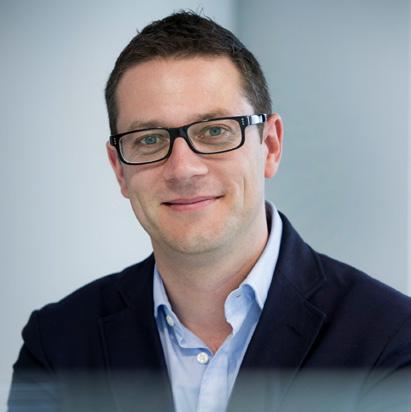
John Wilson is in demand at the highest level across the globe, having conducted many of the world’s finest orchestras over the past 30 years. In 2018 he relaunched Sinfonia of London: described as ‘the most exciting thing currently happening on the British orchestral scene’ (The Arts Desk), Wilson and the Sinfonia’s much-anticipated BBC Proms debut in 2021 was praised as ‘truly outstanding’ (The Guardian) with its ‘revelatory music-making’ (The Times). They are now highly sought-after across the UK, regularly returning to the BBC Proms, Aldeburgh Festival and London’s Barbican Centre, among other festivals.
Wilson’s large and varied discography with Sinfonia of London has received near-universal critical acclaim, and in the autumn of 2025 they released their twenty-ninth album since 2019. Their recordings have earned several awards, including numerous BBC Music Magazine Awards for recordings of Korngold’s Symphony in F sharp (2020), Respighi’s Roman Trilogy (2021), Dutilleux’s Le Loup (2022), Oklahoma! (2024) and a disc of works by Vaughan Williams, Howells, Delius and Elgar which won both the Orchestral Award and Recording of the Year. The Observer described the Respighi recording as ‘Massive, audacious and vividly played’, and The Times declared it one of the three ‘truly outstanding accounts of this trilogy’ of all time, after those by Toscanini (1949) and Muti (1984).
Born in Gateshead, Wilson studied composition and conducting at the Royal College of Music where, in 2011, he was made a Fellow. In March 2019 he was awarded the prestigious ISM Distinguished Musician Award for his services to music, and in 2021 was appointed Henry Wood Chair of Conducting at the Royal Academy of Music. In March 2026 he won the Royal Philharmonic Society’s Conductor Award for his work with the Sinfonia of London.
Do you wish to support the Orchestra on a regular basis, hear behind the scenes news, and attend open rehearsals?
Becoming a Circle member is for you.
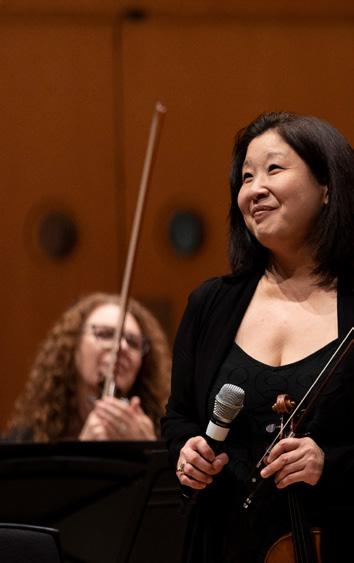
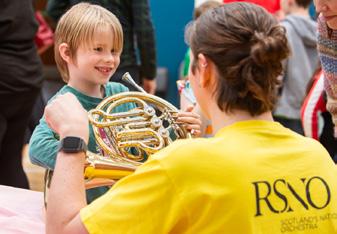
This year we launched our Every Child, Every Community appeal, with funds directly supporting our work in musical education, from early years to young professionals. If you would like to support the next generation of young professionals please donate at rsno.org.uk/every-child

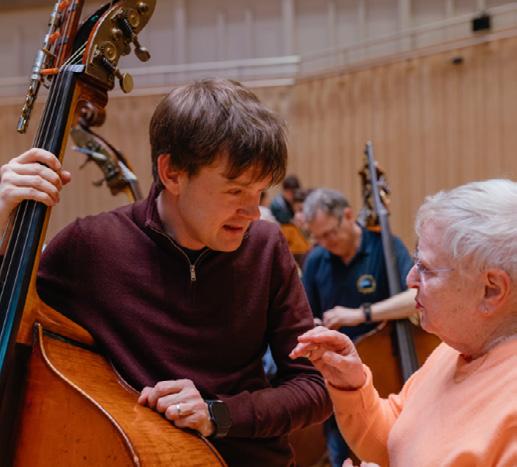
By becoming an RSNO Circle Member or Patron, donating to our appeal or leaving a gi in your Will, you are helping to keep Scotland’s National Orchestra on stage and in communities across the country.
To find out more please contact polly.lightbody@rsno.org.uk
RSNO Patrons support the Orchestra by aligning their giving to a specific area of interest, from individual musicians and our Engagement activity through to new commissions and international touring. Being a Patron brings you closer to our community of supporters, with access to our members’ bar and exclusive events.
FIRST PERFORMANCE
Piano version: 1915
DURATION 7 minutes
Jocul cu bâta (Stick Dance)
Buciumeana (Horn Dance)
Poarga Româneasca (Romanian Polka)
Mâruntel (Fast Dance)
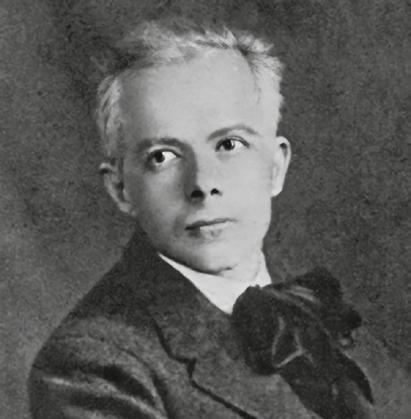
In the early 1900s, Bartók came to realise that what had until then generally passed as Romanian and Hungarian folk music was actually the rather meretricious collection of gypsy melodies that Brahms, Liszt and others had arranged. The real folk music, he discovered, had a harder texture, was cruder in technique, more severe in line, more austere in spirit. The melodies, written in modal scales, had an exotic character; the rhythms were irregular. He was also attracted to the variety and colours of instruments used: violins, peasant flutes (panpipes), guitars and bagpipes.
His interest and curiosity aroused, Bartók – along with fellow composer Zoltán Kodály – set about systematically collecting and analysing the folk music of the region in expeditions that took them from the Carpathian Mountains to the Adriatic, and from Western Slovakia to the Black Sea. This collaboration resulted in the unearthing of several thousand folk songs and dances eventually published in 12 monumental volumes.
Bartók’s intensive study of this music greatly influenced his own creative work, as he became convinced that the folk art he had helped to discover could, as he said, ‘serve as the foundations for a renaissance of Hungarian art music’. The Romanian Folk Dances, written originally for solo piano in 1915, were some of the first fruits of this new approach to composing. A number of the dances were later arranged for string orchestra by the Czech composer Arthur Willner. The dances are played without a break, the last three in particular forming a coda of increasing energy and excitement.
© Mark Fielding
Cally Gray Violin
David Xue Cello
Emilia Kot Cello
Evelina Varakina Double Bass
Kacey He Violin
Krista Varganova Cello
Maja Babiarz Violin
Michael Legend Onyewuchi Cello
Michelle Uwaifo Violin
Munachiso Aji Viola
Nikola Gloc Violin
Olivia Skulska Violin
Praise Oladapo Viola
Prevail Akintokun Cello
Ryan Aurang Violin
Serena Pearce Violin
Somina Sodienye-Cookey Violin
Teanna A Egbedi Double Bass
Theo Farr Cello
Veronica Silova Violin
Veronica Skulska Violin
Yaroslav Chernobai Cello

Paris, 12 December 1920
DURATION 13 minutes
If any great musical work is a reflection of its times – and indeed how those times can change – then Ravel’s La valse (The Waltz) is it. Although the piece was completed in 1920, Ravel made his first sketches for an orchestral reimagining of the waltz as early as 1906. With its inherent gaiety and flounce, the dance must have felt like a natural musical habitat to the Frenchman, given the pleasure he took in the beautiful and the delicate. Entitling his original work Wien (Vienna), he intended it as a tribute to waltz king Johann Strauss, and wrote a fragmentary, dreamlike, gracefully rising and falling main theme.
However, his sketches then sat in limbo. In 1911 he used their main theme in his suite of piano waltzes Valses nobles et sentimentales, but it wasn’t until 1919 that the impetus to realise his full orchestral ambitions came along, when the great Russian impresario and choreographer Sergei Diaghilev asked him for a ballet score.
Over the years between 1906 and 1919, the world had gone through seismic changes. Vienna and France had been on opposing sides in the First World War, and animosity remained. Ravel had served in the War as an ambulance driver, so had seen the horrors of the battlefields for himself. Furthermore, waltzing Vienna was itself on its knees, the cataclysm of war having been followed first by famine, then by the Spanish Flu pandemic, which carried off prominent artists including the painter Gustav Klimt. Careless, frothy frivolity no longer fitted the context, no matter how tongue-in-cheek.
Ravel’s written ballet scenario sets the scene in an imperial court, about 1855. ‘Swirling clouds afford glimpses, through rifts, of waltzing couples,’ he wrote. ‘The clouds scatter little by little; one can distinguish an immense hall with a whirling crowd. The scene grows progressively brighter. The light of the chandeliers bursts forth at the fortissimo.’ The music gives us all of this, but perhaps the most descriptive words of all were Ravel’s quotation from 19th-century French politician the Comte de Salvandy: ‘We are dancing on the edge of a volcano.’ For while that graceful melody from way back in 1906 remains the thematic basis for La valse, it enters menacingly overshadowed, and although it breaks free for a while, it does so with an air of fin-de-siècle desperation, before being eventually engulfed in a dark, apocalyptic whirlpool from which there is no recovery.
When Diaghilev received the work, he refused to stage it, claiming: ‘This is not a ballet – it is a portrait of a ballet.’ Ravel, clinging to the balletic idea, published the work as a ‘choreographic poem for orchestra’. In the late 1920s it was finally danced by Ida Rubinstein’s troupe, but today it exists most regularly in the form you hear it in this evening: an extremely powerful, purely orchestral work.
© Charlotte Gardner
Revised version: New York, 29 January 1919
DURATION 27 minutes
1. Vivace – Moderato
2. Andante
3. Allegro vivace
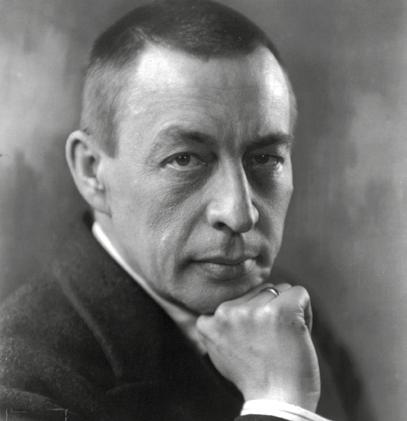
In 1890, at the age of 17, Sergei Rachmaninov, a genius at the piano who had once struggled with motivation, was attempting to get an accelerated graduation in composition from the Moscow Conservatoire. His tutor, the composer Anton Arensky, was amenable, but under strict terms: Rachmaninov must produce his first symphony and his first opera in the final year. Rachmaninov agreed and having graduated with honours from his piano studies in the spring, spent the summer in the first flush of a new focus on composition, sketching out the first two movements of what would become his Piano Concerto No1. He first mentions it in a letter in March the following year. ‘I am writing a piano concerto,’ he tells a close friend. ‘Two movements are finished, and the last one is not
yet on paper but has been composed. By the beginning of the summer, I will probably have finished the entire concerto, so that I can spend the summer orchestrating it.’
The first movement was premiered in 1892 at the Conservatoire (from which he did indeed graduate a year early, with the Gold Medal), with Rachmaninov at the piano, followed by complete performances elsewhere. Modelled clearly on Grieg’s Piano Concerto, it already evoked the lyricism and flourish of Rachmaninov’s mature voice. But Rachmaninov was dissatisfied, feeling the Concerto too ‘episodic’. He made a number of early attempts at revision – it was symptomatic of his composing style. However, these petered out when Aleko, the highly successful opera he had written for his graduation, transferred immediately to Moscow’s Bolshoi Theatre. Whether Rachmaninov was ready or not, his career had launched straight into the fast lane.
It was new works, now, on which he concentrated, a roller coaster from the everpopular Prelude in C sharp Minor to the devastating failure of the premiere of his First Symphony in 1897, and the great success of his Piano Concerto No2 after the subsequent fouryear hiatus in composing. A third piano concerto followed, and it was not until September 1917 that Rachmaninov found time and the inclination to return to his First. He signed off the manuscript two months later after comprehensive and radical cuts and revisions which were made as the Bolshevik Revolution swept the old regime from power – and Rachmaninov left Russia for good.
‘I have rewritten my First Concerto,’ he told a friend. ‘It is really good now. All the youthful freshness is there, and yet it plays itself so much more easily.’ The revisions cut the most blatant nods to Grieg, and what is newly made is
quintessential Rachmaninov, surveying so productively the Romantic horizons that many composers had left in the 19th century.
The opening is announced with a fanfare in horns and wind before the piano hurls itself, in a cascade of notes, off the opening precipice, tumbling into a rhapsodic theme before a slow movement which has that characteristic melting Romantic nature so familiar from the composer’s later works. The finale races to its finish in an exhilarating series of ravishing pianistic variations with a dreamlike interlude midway, before the orchestra announces a return to the opening bravura with glittering virtuosity as the pianist skitters over the keyboard, flinging piano and orchestra at full force towards the final chords.
© Sarah Urwin Jones
Listen again to the RSNO
Rachmaninov
Piano Concerto No1
Plus Piano Concerto No4 and Rhapsody on a Theme of Paganini
Howard Shelley Piano
Bryden Thomson Conductor
More information rsno.org.uk/recordings
15 Jan The Great Molasses Flood killed 21 people when a storage tank exploded in Boston, Massachusetts
16 Jan Pianist and composer Ignacy Jan Paderewski became the second Prime Minister of Poland
18 Jan The Paris Peace Conference, attended by 27 nations, opened at Versailles
31 Jan Striking workers and the City of Glasgow Police violently confronted each other in ‘The Battle of George Square’; tanks and government troops were brought into the city but did not clash with the rioters
13 April At least 379 protesters were killed by troops under Brigadier-General Reginald Dyer at the Jallianwala Bagh near the Golden Temple in Amritsar, British India
15 April The Save the Children Fund was founded to raise money for German and Austrian children
25 April The Bauhaus architectural and design movement was founded in Weimar, Germany
14-15 Jun Alcock and Brown made the first nonstop transatlantic flight, from Newfoundland to Ireland
30 Nov Health officials declared that the ‘Spanish’ flu epidemic was over
1 Dec Nancy Astor was the first woman to take her seat as an MP in the House of Commons; she was the second woman to be elected
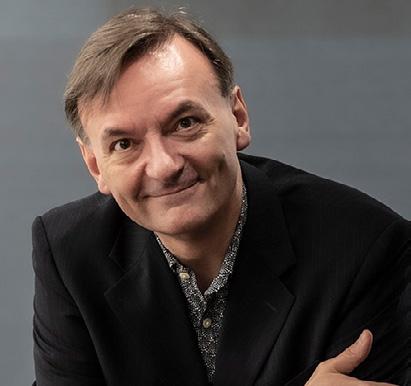
Named by The Economist as one of Twenty Living Polymaths, Sir Stephen Hough combines a distinguished career as a concert pianist with those of a composer and writer. In recognition of his contribution to cultural life, he became the first classical performer to be given a MacArthur Fellowship and was awarded a Knighthood for Services to Music in the Queen’s Birthday Honours 2022.
In a career spanning over 40 years, Hough has played regularly with most of the world’s leading orchestras, and has been a regular guest of recital series and festivals worldwide.
He opened his 2025/26 season at the Elbphilharmonie, launching the Hamburg Staatsorchester’s season under its new music director Omer Meir Wellber with Beethoven’s Piano Concerto No3, for which he composed a brand-new second movement. Over the 12 months, he gives more than 60 concerts/recitals across three continents. This season also marks the Asian premiere of his Piano Concerto The World of Yesterday with the Singapore Symphony Orchestra, followed by its Korean premiere with Symphony S.O.N.G. His Piano Quintet Les Noces Rouges, commissioned by the Lincoln Center
Chamber Music Society in 2024, receives its European and UK premieres at the National Concert Hall Dublin and Southbank Centre London.
Hough’s discography of over 70 recordings has garnered awards including the Diapason d’Or de l’Année, several GRAMMY nominations and eight Gramophone Awards, including Record of the Year and the Gold Disc. Recent releases include an album of Hough’s Piano Concerto with the Hallé Orchestra and Sir Mark Elder.
As a composer, Hough’s Fanfare Toccata was commissioned for the 2022 Van Cliburn International Piano Competition and performed by all 30 competitors. His 2021 String Quartet No1 Les Six Rencontres was written for and recorded by the Takács Quartet for Hyperion Records. Hough’s body of songs, choral and instrumental works have been commissioned by the Musée du Louvre, National Gallery of London, Westminster Abbey, Westminster Cathedral, Wigmore Hall, Genesis Foundation, Gilmore International Keyboard Festival, Walter W Naumburg Foundation, BBC Sounds and Berlin Philharmonic Wind Quintet. His music is published by Josef Weinberger Ltd.
Hough’s memoir Enough: Scenes from Childhood was published by Faber & Faber in 2023. It follows his 2019 collection of essays Rough Ideas: Reflections on Music and More which received a Royal Philharmonic Society Award and was named one of the Financial Times’ Books of the Year. His novel The Final Retreat was published in 2018 by Sylph Editions.
Hough is an Honorary Bencher of the Middle Temple, an Honorary Member of the RPS, an Honorary Fellow of Cambridge University’s Girton College, the International Chair of Piano Studies and a Companion of the Royal Northern College of Music, and is on the faculty of The Juilliard School in New York.
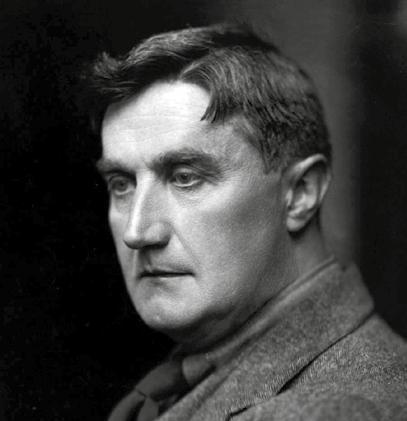
FIRST
London, 27 March 1914; final revised version, London, 22 February 1934
DURATION 51 minutes
1. Lento – Allegro risoluto
2. Lento
3. Scherzo (Nocturne): Allegro vivace
4. Andante con moto – Epilogue: Andante sostenuto
Despite the breakthrough success of his choral Sea Symphony in 1910, Vaughan Williams still held back from writing a purely orchestral symphony. At this stage in his career, he steered largely clear of abstract forms, feeling that his imagination worked best when it had a poetic idea to get it working. But his younger friend and fellow-composer George Butterworth urged him on, until the idea struck that some sketches he’d made for a symphonic poem about London might be reworked into a highly unusual fourmovement symphony. Once the idea had taken root it took shape quickly, and by 1913 the score was finished.
Vaughan Williams wasn’t an out-and-out Mahler fan (in later years he was quite dismissive of Mahler), and yet the conception of the London Symphony is actually very Mahlerian. For Mahler a symphony had to ‘be like the world. It must embrace everything!’ Vaughan Williams presents a wonderfully vibrant, stirring collage of sounds and impressions – street-vendors’ cries, tavern music, the kaleidoscopic bustle of busy streets and, framing it all, the eternal ebb and flow of the city’s great river. In the words of the famous old newspaper tagline, ‘All human life is here’. At the same time though, it’s a triumph of symphonic engineering, or rather it is in the familiar revised version of 1933, which Vaughan Williams regarded as definitive. (The original score is even more colourful, but it does tend to sprawl.) What we’re listening to here isn’t simply an illustrative tone-poem; there’s a current, like that of the River Thames itself, which not only carries the ideas forward, but also challenges us to seek out deeper meanings as vivid impression follows vivid impression. Is there some kind of narrative, perhaps even a political message, here?
When it came to explaining what his music was ‘about’, Vaughan Williams tended to be evasive, but he couldn’t resist dropping hints to trusted friends, and on one occasion he compared the
Symphony’s ending to that of H G Wells’ TonoBungay, a half-comic, half-tragic novel about the rise and fall of a snake-oil salesman and the decay of the old Imperial world in which he makes his dubious living. Vaughan Williams quoted some words from the closing pages of Tono-Bungay: ‘The river passes – London passes, England passes …’ What Vaughan Williams didn’t mention is that the novel’s hero is sailing away in a destroyer, and that his last look back at the Imperial capital is dark-edged. Tono-Bungay also contains a grim depiction of a hunger march, and the increasingly tragic march in the finale of the London Symphony is surely Vaughan Williams’ response to that. London here stands for life itself, in all its glory, but also in its pain and terrible sadness.
A proverbial London fog lies over the Thames at the Symphony’s opening, through which the muffled chimes of Big Ben can be heard –this is clearly still early morning. Then the city bursts into life, harshly at first, but with growing tenderness towards its heart, and culminating in a great shout of joy. Vaughan Williams described the moody second movement as ‘Bloomsbury Square on a November afternoon’; in this ‘pastoral of grey skies’ a lavender-seller’s cry can be heard on viola (Vaughan Williams’ own instrument) – a hauntingly lonely, fragile, alienated voice. Westminster Embankment at night ‘with its crowded streets and flaring lights’ is the scene for the nocturnal Scherzo, bustling at first, but hushed and troubled towards its end. Then the finale begins its tragic procession, climaxing in a great shout of grief and rage. But then comes stillness, Big Ben chimes again, and night descends as the river’s current carries the listener steadily away from the capital, and away from its superabundant human joy and grief.
© Stephen Johnson
In Music
Rhapsody on a Theme of Paganini by Sergei Rachmaninov
Lady Macbeth of the Mtsensk District by Dmitri Shostakovich
Mathis der Maler Symphony by Paul Hindemith
Lieutenant Kijé by Sergei Prokofiev
Anything Goes by Cole Porter
The Very Thought of You by Ray Noble
The Continental by Leo Reisman
In Literature
Tender is the Night by F Scott Fitzgerald I, Claudius by Robert Graves
A Handful of Dust by Evelyn Waugh
The Postman Always Rings Twice by James M Cain
Murder on the Orient Express by Agatha Christie
Mary Poppins by P L Travers
In Art
Colonel Blimp, David Low’s cartoon character, appeared in the Evening Standard
Minotauromachy by Pablo Picasso
1934 (relief) by Ben Nicholson
East Wind over Weehawken by Edward Hopper
Man, Controller of the Universe by Diego Rivera
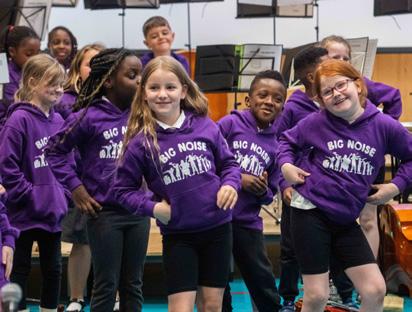
Sistema Scotland is the charity that delivers the Big Noise social change and music education programmes, working with more than 3,500 children and families to improve lives and strengthen communities across Scotland. Its immersive and long-term Big Noise programmes use music and nurturing relationships to help children and young people fulfil their potential.
At Big Noise the symphony orchestra becomes a community which supports young people to gain an invaluable range of life skills. Independent evaluation shows that Big Noise supports children to improve their learning, wellbeing and confidence, bringing communities together and paving the way for positive futures. The programmes are delivered by inspirational staff musicians who act as role models and mentors, and foster supportive, long-term relationships.
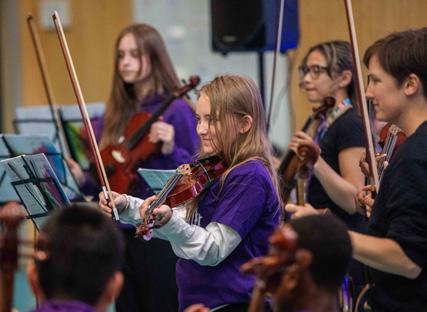
Big Noise is delivered by Sistema Scotland with support from a range of public partners, trusts, foundations and individuals. Sistema Scotland runs Big Noise programmes in the targeted communities of Big Noise Raploch & Fallin (Stirling), Govanhill (Glasgow), Torry (Aberdeen), Douglas (Dundee) and Wester Hailes (Edinburgh).
Please support Big Noise by visiting www.makeabignoise.org.uk or by scanning the QR code.






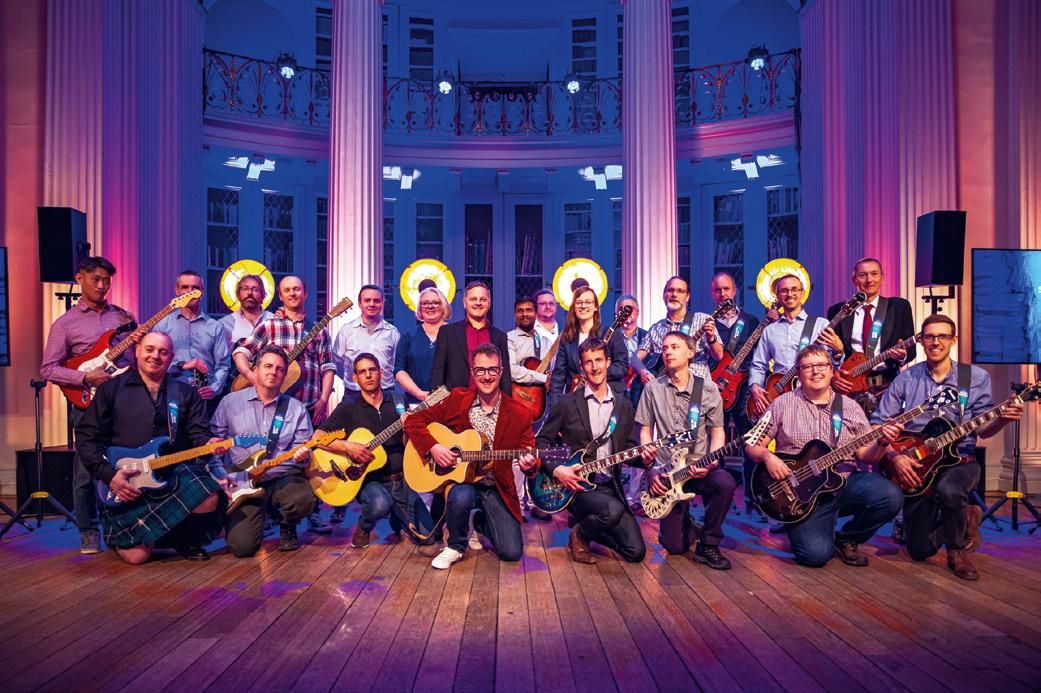

We are grateful to all our individual supporters for their generous philanthropy and loyalty. Your support enables the Orchestra to achieve its most ambitious goals and to continue inspiring people across Scotland both on and off the concert stage.
RSNO Benefactors
Sir Ewan and Lady Brown
Gavin and Kate Gemmell
Kat Heathcote and Iain Macneil
Ms Chris Grace Hartness
RSNO Conductors’ Circle
Ardgowan Charitable Trust
Stina Bruce Jones
Ian and Evelyn Crombie
Kenneth and Julia Greig
Shirley Murray
David and Alix Stevenson
Eric and Karen Young
Learning and Engagement Patrons
William Brown, W.S
The Dundee RSNO Circle Committee
Neil and Nicola Gordon
Professor Gillian Mead, FRSE
Nicholas and Alison Muntz
Maurice and Nicola Taylor Charitable Trust
Chair Patrons
Assistant Conductor
Celia Llácer
The Solti Foundation Chair
First Violin
Maya Iwabuchi LEADER Dunard Fund Chair
Tamás Fejes ASSISTANT LEADER
The Bill and Rosalind Gregson Chair
Ursula Heidecker Allen
The James and Iris Miller Chair
Elizabeth Bamping
The WL and Vera Heywood Chair
Alan Manson
The Hugh and Linda Bruce-Watt Chair
Liam Lynch
Ms Chris Grace Hartness Chair
Lorna Rough
The Sir Richard Dunbar Chair
Second Violin
Marion Wilson ASSOCIATE PRINCIPAL
The Nigel & Margot Russell Chair
Sophie Lang
The Ian & Evelyn Crombie Chair
Emily Nenniger
Mr Jamie & Kyle Anderson Weir
Viola
Tom Dunn PRINCIPAL
The Cathy & Keith MacGillivray Chair
Lisa Rourke SUB PRINCIPAL
The Meta Ramsay Chair
Francesca Hunt
The Rolf and Celia Thornqvist Chair
RSNO Patrons
Geoff and Mary Ball
Lady Rebecca Fraser
Don and Lois Macleod
Walter and Janet Reid Charitable Trust
George Ritchie
Stephen Sweeney
Valerie Wells
Cello
Pei-Jee Ng PRINCIPAL
Ms Chris Grace Hartness Chair
Betsy Taylor ASSOCIATE PRINCIPAL
The Maxwell Armstrong Chair
Kennedy Leitch ASSISTANT PRINCIPAL
The David and Anne Smith Chair
Rachael Lee
The Christine and Arthur Hamilton Chair
Double Bass
Nikita Naumov PRINCIPAL
The Gregor Forbes John Clark Chair
Michael Rae ASSISTANT PRINCIPAL
James Wood Bequest Fund Chair
Flute
Katherine Bryan PRINCIPAL
The David and Anne Smith Chair
Oboe
Adrian Wilson PRINCIPAL
The Hedley Wright Chair
Peter Dykes ASSOCIATE PRINCIPAL
Witherby Publishing Group
Charitable Trust Chair
Cor Anglais
Henry Clay PRINCIPAL
In memory of a dear friend, Fiona H
Clarinet
Timothy Orpen PRINCIPAL
The Shirley Murray Chair
William Knight
The Turcan Connell Chair
Horn
David McClenaghan SUB-PRINCIPAL
The Springbank Distillers Chair
Alison Murray ASSISTANT PRINCIPAL
Mr & Mrs Pierre and Alison Girard
Martin Murphy ASSISTANT PRINCIPAL
The Gordon Fraser Charitable Trust Chair
Andrew McLean
The Catherine McLagan Chair
Trumpet
Christopher Hart PRINCIPAL
Ms Chris Grace Hartness
Timpani
Paul Philbert PRINCIPAL
Ms Chris Grace Hartness
Staff
Chiko Parkinson COMMUNITY SINGING ASSISTANT
Supported by ScotRail
We are also grateful to those who give but who wish to remain anonymous.
If you would like to discuss how you can become an RSNO Patron, please contact Constance Fraser, Head of Development (Individuals and Partnerships), at constance.fraser@rsno.org.uk
Virtuoso
Ms Catherine Y Alexander
Mrs A M Bennett
Mr Alan and Mrs Carolyn Bonnyman
Dame Susan and Mr John Bruce
Stephen and Morny Carter
Francesca and Eoghan Contini Mackie
Dr Clive Criper
Martin and Carola Gordon
Scott and Frieda Grier
Judith and David Halkerston
Iain MacNeil and Kat Heathcote MBE
Ian and Sarah Lister
Miss A McGrory
Maureen Michie
Mr James Miller CBE
Mrs Abigail Morrison
Nicholas and Alison Muntz
Bernard and Jane Nelson
Meta Ramsay
Mr and Mrs W Semple
Gregor and Lesley Stewart
Mr Ian Taft
Claire and Mark Urquhart
Raymond and Brenda Williamson
Margaret Duffy and Peter Williamson
Symphony
Mr John Brownlie
Mr A Campbell
Dr K Chapman and Ms S Adam
Sir Sandy and Lady Crombie
Mr W G Geddes
Elizabeth Gibb
Dr Robert Gibb
Mr I Gow
Mr J D Home
Christine Lessels
Katharine M E Liston
Philip Whitely and Robert H Mackay
Hon Lord McGhie
Mrs A McQueen
Mr Iain Percival
Mr and Mrs David Robinson
Mrs Henrietta Simpson
Ian and Janet Szymanski
Dr C Cradock and Dr S Todd
Nelson and Barbara Waters
Tom and Lisa Watson
Concerto
Neil Barton
Mrs Mary Black
Miss D Blackie
Dr C M Bronte-Stewart
Dr F L Brown
Mr and Mrs Burnside
David Caldwell
Ms H Calvert
Ross Cavanagh
Myk Cichla
Terry and Joan Cole
Dr J Coleiro
Christine and Jo Danbolt
Mr P Davidson
Steven J Davis
Mr and Mrs K B Dietz
David and Sheila Ferrier
Mr C Ffoulkes
William Findlay
Mr and Mrs M Gilbert
Lord and Lady Hamilton
Mrs S Hawthorn
P Hayes
David G Henderson
Dr and Mrs P Heywood
Ms H Kay
Mr and Mrs W Kean
Nicholas Kilpatrick
Morag MacCormick
Mr and Mrs Marwick
Mr S Marwick
Mrs Sandra Maxwell
Mr and Mrs G McAllister
Mrs M McDonald
Dr A H McKee
Mr Rod McLoughlin
Morag Millar
Mrs B Morinaud
Dr and Mrs D Mowle
Mr KR and Dr CC Parish
Ms A and Miss I Reeve
Mrs E M Robertson
Sheriff Linda Ruxton
Dr and Mrs G K Simpson
Dr Norma H Smith
Mr and Mrs A Stewart
Jenny Stewart
David and Helen Strachan
Mr I Strachan
Dr G R Sutherland
Mr and Mrs J B Watson
Mr and Mrs D Weetman
Helen and Peter Wilde
David W Wren
Roderick Wylie
Sonata
Mr and Mrs G H Ainsley
Mr K Allen
Dr A D Beattie
Mrs H Benzie
Mr R Billingham
Lord and Lady Borthwick
John Bradshaw and Shiona Mackie
Mrs Bryan
Andrew Burrows
Mrs C M Campbell
Miss S M Carlyon
Amanda Carter-Fraser
Alan Clevett
Lady Coulsfield
Adam and Lesley Cumming
Mrs C Donald
J Donald and L Knifton
Mr John Duffy
Mr R M Duncan
Brigadier and Mrs C C Dunphie
Mrs E Egan
Mr R Ellis
Mr R B Erskine
Dr E Evans
Dr A Ewing
Kenneth Forbes
Mr D Fraser
Philip and Karen Gaskell
Mrs M Gibson
Mrs M Gillan
Mrs J K Gowans
Dr J and Mrs H Graham
Professor and Mrs A R Grieve
Simon and Fiona Guest
Mr Martin Hammick
Dr P J Harper
Dr N Harrison
Mr and Mrs R J Hart
Bobby and Rhona Hogg
Mr and Mrs F Howell
Mrs A Hunter
Inez Hutchison
Professor R N Ibbett
Thomas Jakobsen Burns
Geoffrey and Elizabeth Johnston
Ms K Lang
Dr Dorothy A Lunt
Mrs Jean C Martin
Mr and Mrs J Martin
Ms S McArthur
Jean McCutcheon
Rhyse McDermid
Mr M McGarvie
Mrs S McGeachan
Dr Colin McHardy
Ms H L McLaren
Margaret McLay
Libby McLean
Mr and Mrs B Mellon
Kathryn Michael
Simon Michaelson
Mr I Mills
Mrs P Molyneaux
Kenneth M Murray
Bruce and Christine Nelson
Alastair Ogilvie
Mr and Mrs K O’Hare
Mr and Mrs K Osborne
Dr G Osbourne
Mr A Ownsworth
Mr R Parry
John Paterson
Misses J and M Penman
Mr J W Pottinger
Miss J A Raiker
Alastair Reid
Ms F Reith
Dr and Mrs D Robb
Anne Robertson
Ms A Robson
Mrs J Shanks
Mr J A Shipley
Dr M J and Mrs J A Shirreffs
Richard and Gillian Shirreffs
Ana Smith
Mrs E Smith
Mr M Smith
Dr and Mrs B Stack
Mrs Lorna Statham
Mrs R F Stewart
Mr and Mrs B Tait
Lisbeth Thoms
Dr and Mrs T Thomson
Dr Morag Ward
Dr Alex Watson
Mr W Watters
Alan Weddell
Mr and Mrs D Weetman
Mr R Young
Thank you to all our members of the Circle, including Overture members and those who wish to remain anonymous.
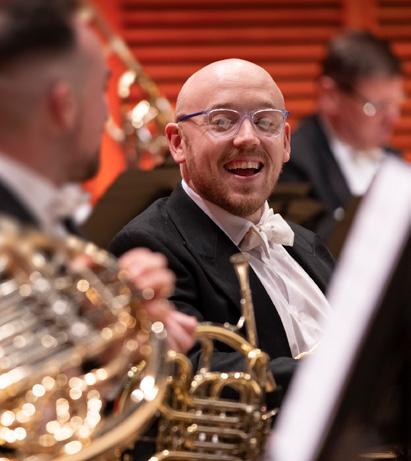
If you would like to discuss how you can become an RSNO Circle member, please contact Polly Lightbody, Individual Giving and Partnerships Officer, at polly.lightbody@rsno.org.uk

Charitable trusts and foundations have a distinguished history of supporting the RSNO, both on and off the stage. From one-off donations for specific concerts and musicians’ chairs, to multi-year funding for our community engagement initiatives, including our Schools Programme, every grant in support of our work is truly appreciated. We are grateful to the following trusts and foundations for their generosity:
Aberdeen Endowments Trust
ABO Sirens Fund
Adam Mickiewicz Institute
Alexander Moncur Charitable Trust
Alma & Leslie Wolfson Charitable Trust
Adam Mickiewicz Institute
Balgay Children’s Society
Boris Karloff Charitable Foundation
Brownlie Charitable Trust
Castansa Trust
CMS Charitable Trust
Common Humanity Arts Trust
Cookie Matheson Charitable Trust
Cruden Foundation
David and June Gordon Memorial Trust
Dunclay Charitable Trust
Educational Institute of Scotland
Ettrick Charitable Trust
Fidelio Charitable Trust
Forteviot Charitable Trust
Gannochy Trust
Gaelic Language Promotion Trust
Gordon Fraser Charitable Trust
Great Britain Sasakawa Foundation
Harbinson Charitable Trust
Hobart Charitable Trust
Hugh Fraser Foundation
James Wood Bequest Fund
Jennie S Gordon Memorial Foundation
Jean & Roger Miller’s Charitable Trust
Jimmie Cairncross Charitable Trust
John Scott Trust Fund
John Mather Trust
Jones Family Charitable Trust
JTH Charitable Trust
Leach Family Charitable Trust
Leng Charitable Trust
Lethendy Charitable Trust
Marchus Trust
McGlashan Charitable Trust
Meikle Foundation
Mickel Fund
Miss E C Hendry Charitable Trust
Miss Jean R Stirrat’s Charitable Trust
Murdoch Forrest Charitable Trust
N Smith Charitable Settlement
Nancie Massey Charitable Trust
Noel Coward Foundation
Northwood Charitable Trust
Nugee Foundation
Pear Tree Fund for Music
PF Charitable Trust
Pump House Trust
Q Charitable Trust
R J Larg Family Trust
Ronald Miller Foundation
Rowena Alison Goffin Charitable Trust
Russell Trust
Scops Arts Trust
Scott Davidson Charitable Trust
Scottish Enterprise
Solti Foundation
Souter Charitable Trust
Stanley Morrison Charitable Trust
Stevenston Charitable Trust
Sylvia Aitken Charitable Trust
Tay Charitable Trust
Thriplow Charitable Trust
Tillyloss Trust
W A Cargill Fund
W M Mann Foundation
W M Sword Charitable Trust
Walter Scott Giving Group
Wavendon Foundation
Weir Charitable Trust
Zich Trust
We are also grateful to a number of trusts that wish to stay anonymous.
If you would like more information about our work and how you can make a difference, please contact Niamh Kelly, Trusts and Projects Manager, at niamh.kelly@rsno.org.uk
FUNDERS





PRINCIPAL MEDIA PARTNER



CORPORATE SUPPORTERS



PRINCIPAL TRANSPORT PARTNER


BROADCAST PARTNER

PARTNERS
Adelaide Place • Age Scotland • Black Lives in Music • Charanga • Children’s Classic Concerts
Children’s Hospices Across Scotland • Classic FM • Douglas Academy • Dundee Science Centre
Dunedin Consort • Edinburgh Zoo • Education Scotland • Fanzclub • Gig Buddies • GMAC Film
Heads of Instrumental Teaching Scotland • Hebrides Ensemble • Kibble • Luminate • Marine Conservation Society
MARSM • Music Education Partnership Group • ParentZone • The Pyramid at Anderston
Royal Conservatoire of Scotland • Scottish Book Trust • Scottish Chamber Orchestra
Scottish Refugee Council • Sistema Scotland • St Mary’s Music School • Tayside Healthcare Arts Trust
Trees for Life • University of Glasgow • V&A Dundee • Visible Fictions
With thanks to Mr Hedley G Wright and the Springbank Distillery for their support of the RSNO
If you would like more information about sponsorships, corporate partnerships or fundraising events with the RSNO, please contact Constance Fraser, Head of Development (Individuals and Partnerships), at constance.fraser@rsno.org.uk
PATRON
His Majesty The King
ARTISTIC TEAM
Thomas Søndergård
MUSIC DIRECTOR
Patrick Hahn
PRINCIPAL GUEST CONDUCTOR
Celia Llácer
ASSISTANT CONDUCTOR
Ellie Slorach
ENGAGEMENT CONDUCTOR
Kellen Gray
ASSOCIATE ARTIST
Neeme Järvi
CONDUCTOR LAUREATE
Alexander Lazarev
CONDUCTOR EMERITUS
Stephen Doughty
DIRECTOR, RSNO CHORUS
Patrick Barrett DIRECTOR, RSNO YOUTH CHORUSES
CHIEF EXECUTIVE
Alistair Mackie
CHIEF EXECUTIVE
Dr Jane Donald
DEPUTY CHIEF EXECUTIVE
Nicola Kelman
EXECUTIVE ASSISTANT
PLANNING
Tammo Schuelke
DIRECTOR OF ARTISTIC PLANNING
Xander van Vliet
ARTISTIC PLANNING MANAGER
Rachel Pullin
ARTISTIC PLANNING OFFICER
Richard Payne
HEAD OF LIBRARY SERVICES
Megan Bousfield
LIBRARY ASSISTANT
Christine Walker
CHORUS MANAGER
ORCHESTRA MANAGEMENT
Matthias Van Der Swaagh
HEAD OF ORCHESTRA MANAGEMENT
Brodie Smith
DEPUTY ORCHESTRA MANAGER
Megan Walker
ORCHESTRA AND PROJECTS OFFICER
OPERATIONS AND PRODUCTION
Craig Swindells
HEAD OF PRODUCTION
Dylan Findlay
ASSISTANT STAGE MANAGER
Ted Howie
FACILITIES MANAGER
RSNO BOARD OF DIRECTORS
Elected Directors
Gregor Stewart
CHAIR
Gail Blain
HONORARY TREASURER
Kayla-Megan Burns
Ken Hay
Kat Heathcote MBE
Don Macleod
David Robinson
John Stewart
David Strachan
Cllr Edward Thornley
NOMINATED DIRECTOR
Julia Miller
COMPANY SECRETARY
Player Directors
Katherine Bryan
Christopher Hart
David Hubbard
William Knight
David McClenaghan
Lorna Rough
SCHOOLS ADVISORY GROUP
Pam Black
Norman Bolton
Martin Greig
Neil Millar
Mae Murray
Andrew Stevenson
DIRECTOR OF ENGAGEMENT
Anna Crawford
ENGAGEMENT DELIVERY MANAGER (MATERNITY LEAVE)
Rachel Naismith
ENGAGEMENT DELIVERY MANAGER (MATERNITY COVER)
Maisie Leddy
ENGAGEMENT PRODUCER
Chiko Parkinson
COMMUNITY CHORUS AND PARTNERSHIPS COORDINATOR SUPPORTED BY SCOTRAIL
EXTERNAL RELATIONS
Dr Jane Donald
DIRECTOR OF EXTERNAL RELATIONS
Carol Fleming
HEAD OF MARKETING
Constance Fraser
HEAD OF DEVELOPMENT
Ian Brooke
PROGRAMMES EDITOR
Fred Bruce
TRUSTS AND PROJECTS ADMINISTRATOR
Clara Cowen
MARKETING MANAGER
Seonaid Eadie
EXTERNAL RELATIONS OFFICER
Katie Kean
COMMUNICATIONS AND MARKETING OFFICER
Niamh Kelly
HEAD OF TRUSTS AND PROJECTS
Polly Lightbody
DEVELOPMENT MANAGER
Graham Ramage
GRAPHIC DESIGNER
Sam Stone
INFORMATION SERVICES MANAGER
Ross Williamson
VIDEO PRODUCER (MARKETING)
Hedd Morfett-Jones
STUDIO MANAGER
Sam McErlean
MEDIA MANAGER AND AUDIO ENGINEER
Ahan Sengupta
TRAINEE AUDIO ENGINEER
CORPORATE SERVICES
Nicola Mills
DIRECTOR OF FINANCE AND CORPORATE SERVICES
Susan Rennie
HEAD OF FINANCE
Jade Wilson
FINANCE OFFICER
Abby Dennison
FINANCE ADMINISTRATOR
Phoebe Connolly
FINANCE ASSISTANT
Contents © Copyright RSNO and named authors.