Carmina Burana Come and Sing
Stephen Doughty Conductor
Alison McNeill Soprano
Christian Schneeberger Tenor
Phil Gault Bass
RSNO Youth Chorus 1
Royal Scottish National Orchestra
And featuring: The Come and Sing Carmina Burana Chorus
Glasgow Royal Concert Hall Sat 24 Jan 2026 7.30pm
Welcome
It is my great pleasure to welcome you to the RSNO’s Come and Sing Carmina Burana, during which we will discover, relearn and rehearse one of the most popular choral works in the repertoire, a piece bursting with rhythm, drive and some truly spectacular moments.
Whether you are a participant in our wonderful Come and Sing Chorus or a member of our audience, you are all very welcome.
There are various pieces of music which are instantly recognisable, even to those who have no interest in classical music – the introduction to Handel’s Zadok the Priest, for example, or perhaps the Hallelujah Chorus from Handel’s Messiah, sung in this very concert hall just a few weeks ago. It might be that this evening you’re reminded of the Old Spice adverts or indeed The X Factor – there’s no escaping the power and impact of Carmina Burana’s opening chords, so I am thrilled that we are joined by the RSNO, Scotland’s National Orchestra, a stellar line-up of soloists and members of the RSNO Youth Chorus to perform the piece in its entirely.
If you’ve never attended a Come and Sing event before, I’m delighted you’ve taken the plunge today! These singing days are a wonderful opportunity to meet like-minded people, make new friends and perform amazing music together. I hope you enjoy yourselves!
Stephen Doughty DIRECTOR, RSNO CHORUS
Keep in touch with the RSNO
Royal Scottish National Orchestra 19 Killermont Street Glasgow G2 3NX T: +44 (0)141 226 3868
rsno.org.uk
Scottish Company No. 27809
Scottish Charity No. SC010702
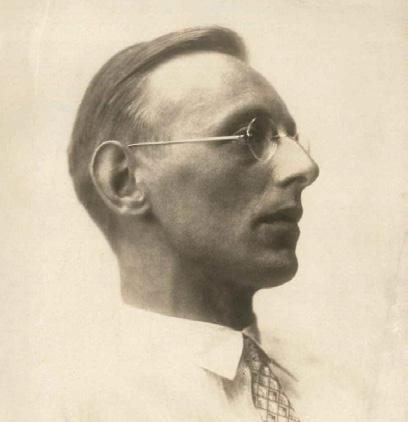
Carl Orff (1895-1982)
Carmina Burana
FIRST PERFORMANCE
Frankfurt, 8 June 1937
DURATION 65 minutes
FORTUNA IMPERATRIX MUNDI (Fortune, Empress of the World)
1. O fortuna
2. Fortune plango vulnera
I. PRIMO VERE (Springtime)
3. Veris leta facies
4. Omnia sol temperat
5. Ecce gratum
Uf dem Anger (On the Green)
6. Tanz
7. Floret silva nobilis
8. Chramer, gip die varwe mir
9. Reie: Swaz hie gat umbe
10. Were diu werlt alle min
II. IN TABERNA (In the Tavern)
11. Estuans interius
12. Olim lacus colueram
13. Ego sum abbas Cucaniensis
14. In taberna quando sumus
III. COURS D’AMOURS (Court of Love)
15. Amor volat undique
16. Dies, nox et omnia
17. Stetit puella
18. Circa mea pectora
19. Si puer cum puellula
20. Veni, veni, venias
21. In trutina mentis dubia
22. Tempus est iocundum
23. Dulcissime
Blanziflor et Helena (Blanziflor and Helena)
24. Ave formosissima
25. O fortuna
Despite a thorough musical training as a child and graduating from the Munich Academy of Music in 1914, Carl Orff composed relatively little during the first 40 years of his life. The music of Debussy had a profound impact on his early work, although it was the likes of Schoenberg, Richard Strauss and Pfitzner who were to leave the most lasting impressions. Otherwise, Orff was largely occupied with his ‘true’ vocation as one of Germany’s most important music educators.
Following military service towards the end of the Great War, in 1924 Orff joined forces with Dorothee Günther to inaugurate Munich’s Güntherschule, a progressive institution dedicated to finding complementary areas of discipline within the arts – principally music, dance and gymnastics. As a result, Orff began work on his mammoth Schulwerk, the first volume of which was published in 1930 and on which he was still working right up to the time of his death.
Orff’s practical music skills came into their own between 1930 and 1933, when he was appointed conductor of the Munich Bach Society, although it was as the composer of Carmina Burana (1937) that he first won fame. The rest of his long life was devoted to his educational work and a series of music dramas, most notably Antigonae (1949), Oedipus (1959) and Prometheus (1968).
The fact that Carmina Burana – arguably the most popular choral piece of the 20th century –came into existence at all was serendipitous in the extreme. It was on Maundy Thursday 1934 that Orff received an anthology of medieval poetry from a Würzburg second-hand bookseller, who thought he might find them diverting. The original had been published in 1847 by the Court Librarian at Munich, Johann Schmeller, itself based on a manuscript dating from around the middle of the 13th century which had been unearthed in a Bavarian abbey. Indeed, it was
Schmeller who originally devised the work’s title: Carmina Burana (Songs of Buren).
The manuscript that had so fortuitously come into Orff’s possession contained some 200 ancient songs and poems, meticulously categorised according to subject matter and then alphabetised. Some were in Latin, others Middle High German, and a number in a curious amalgam of the two. But perhaps the most extraordinary feature of this collection is its breathtaking range of moral tone. Some are religious stories and poems expressing strong disapproval of the decline in standards among the clergy and those in authority, while others are of a more sensual nature, extolling the virtues of a life based on eating, drinking, gambling – and making love.
Orff fell instantly in love with the collection, citing in particular ‘the infectious rhythms and vividness of the poems and, not least, the musicality and peculiar concision of the Latin language with its high density of vowels’ With the help of archivist Michael Hofmann, he set to work on producing a collection of texts that suggested themselves as particularly suitable for musical settings. He then arranged the poems into a ‘happening’, subtitled ‘Secular songs for soloists and choruses, accompanied by instruments and magical images’. The actual music itself appears to have caused Orff very few problems: ‘The whole work was playable within a matter of weeks,’ he later enthused. ‘The music was already in my head. So vivid was it, indeed, that I had no need of any written aid.’
In complete contrast to the complexity of innumerable scores of the period, Orff went back to basics in terms of the rhythms, harmonies and textures he employed. Most of the work is strongly key-centred and the material is predominantly sequential or based on reiterated rhythmic ostinati, which give the piece a distinctly ‘primitivist’ feel. There is an almost total avoidance of contrapuntal or fugal devices
and a clear emphasis on unison writing. Equally revolutionary is Orff’s handling of the orchestra, with its concentration on crystal-clear textures and strong differentiation of the various vocal and instrumental groups – percussion in particular. Indeed, simplicity is the watchword here, yet such is the sheer quality of Orff’s invention that the music never becomes merely facile.
The triumphant premiere was given as a staged production on 8 June 1937 at the Frankfurt Opera under Oskar Waelterlin. Such was its success around the world that Orff promptly instructed his publisher to destroy ‘everything that I have written so far and which you’ve unfortunately published. … My collected works now begin with Carmina Burana.’
There are 25 numbers in all, framed by the score’s most celebrated passage, O fortuna, a physically imposing, breathtakingly resplendent invocation to the goddess of Fate and Fortune. The remainder is subdivided into three main sections dealing with Springtime (Primo Vere), In the Tavern (In Taberna) and Love (Cours d’amours).
The first three numbers of Primo Vere combine as a celebration of the delights of springtime, progressing from the semi-liturgical unisons of Veris leta facies to Ecce gratum, in which a boundlessly energetic chorus invites the listener to taste freely in the joys of love. The orchestral dance that follows is a riot of exuberant rhythmic misplacements and constantly changing metre. The central section features a duet for flute and timpani, a reference to an old Bavarian tradition known as Aufspielen, in which the literal meaning ‘playing up’ should be interpreted more as representing a musical accompaniment to the dance tune proper. This metrical unpredictability spills over into Floret silva nobilis, a maiden’s lament of moving simplicity.
Chramer, gip die varve mir finds a group of young coquettish maidens attempting to seduce the
menfolk with fine displays of the art of make-up, to the accompaniment of sleigh bells. Their male counterparts respond in less than enthusiastic terms, opening an excited sequence that climaxes in Were diu werlt alle min, an orgiastic invocation to the Queen of England. Exactly which ‘queen’ we are not told, although the latest research would appear to indicate Eleanor of Aquitaine, who was apparently forlorn at being separated from her husband, Henry II of England.
If the first part of Carmina Burana is generally full of high spirits, In Taberna is positively riotous a great deal of the time. The baritone solo, Estuans interius, is a tongue-in-cheek confession of having worshipped the ribald way of life. We hear the falsetto voice of the swan as it slowly braises in the pot (Olim lacus colueram, a delightful takeoff of buffa tenor stratospherics), the patron saint of gambling in a thoroughly inebriated state appointing himself the ‘Abbot of CloudCuckoo Land’ (Ego sum abbas Cucaniensis), and a gloriously unbuttoned chorus (In taberna quando sumus) that revels in the joys of drinking.
Finally, the Cours d’amours, in which the atmosphere becomes altogether more restrained, the art of courtly love winning (in this case) the upper hand. This does not mean that the language pulls any punches, as the no-holdsbarred men’s chorus Si puer cum puellula plainly shows. It is instructive to place this beside the quiet composure and sophistication of In trutina mentis dubia, a lady’s confession of love for her knight. The final O fortuna finds the wheel coming full circle – a musical depiction of the wheel of fate emblazoned on the front cover of the 1847 edition of Carmina Burana that had inspired this stirring masterpiece into being in the first place.
© Julian Haylock
Alison McNeill Soprano

Alison McNeill is a trailblazing Scottish artist whose work blurs boundaries between classical, folk and world music. A soprano, conductor and fiddle player, she has built a richly diverse career shaped by cross-disciplinary and immersive performance. A graduate of the Royal Conservatoire of Scotland with a Masters in Performance, Alison further honed her artistry in Spain studying with the late Teresa Berganza.
Career highlights include solo work with Ditirambo Early Music Ensemble in Mexico, performances of Verdi’s Requiem with the RSNO and winning the Andrés Segovia Prize for Spanish Song in Spain as the only non-native speaker to receive the award. She has headlined international festivals with folk-rock band Reely Jiggered, collaborated with acclaimed folk-pop band Beluga Lagoon, broadcast on BBC Radio nan Gàidheal, BBC Radio Scotland and BBC Radio 4, and appeared on Pakistani and Mexican national television.
Alison is Youth Chorus Master at Opera North, Associate Director of RSNO Youth Choruses, Conductor of the NYCOS National Boys Choir (Treble Voices) and Director of the RCS Summer Short Courses Choral Programme.
Christian Schneeberger Tenor
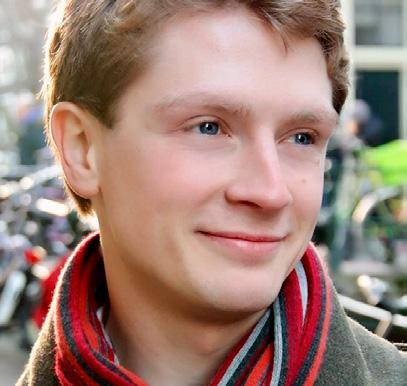
Christian Schneeberger was born in Glasgow and studied at the Royal Conservatoire of Scotland, where he won the Glasgow Grand Society Opera Cup, the Hugh S Roberton Prize for Scottish Singing and the William Allan Prize.
Christian’s solo highlights include Verdi’s Requiem with the RSNO, Rossini’s Petite Messe Solennelle with the Newton Stewart Singers, Schumann’s Das Paradies und die Peri in Dundee’s Caird Hall, Finzi’s Dies Natalis with the Scottish Sinfonia, Puccini’s Messa di Gloria and Handel’s Chandos Anthem No2. In Bach’s St John Passion with Stonehaven Chorus, he performed the Evangelist to critical acclaim.
Christian achieved a Distinction in the NOMEA International and Neapolitan Masters competitions, and reached the second round of the prestigious Neue Stimmen competition. He performs regularly with Scottish Opera, most recently in La bohème and currently in the world premiere of The Great Wave. He also appears with Opera Bohemia, Opera Alba and Scozzesi.
Alongside performing, Christian is a voice teacher at Hutchesons’ Grammar School, George Heriot’s School and the University of St Andrews.
Phil Gault
Bass
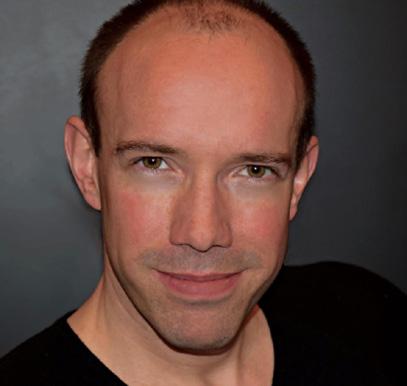
Welsh-Irish baritone Phil has performed internationally in roles ranging from the Count (Mozart’s Il nozze di Figaro), Dandini (Rossini’s La Cenerentola) and Tarquinius (Britten’s The Rape of Lucretia) to the eponymous Don Giovanni, King Roger and even Carmen (in the critically acclaimed all-male CarMen). His concert repertoire includes Dichterliebe, Chansons Gaillardes, Songs of Travel, Carmina Burana, A Sea Symphony and the Bach Passions and cantatas. TV includes live broadcast recordings of the title roles in the award-nominated Macbeth and Barbwr Sefil with Opra Cymru. CDs include Breathe Freely (Wagstaff), A Brontë Mass (Wilby) and Breathless Alleluia (Wilby), the latter two with the Black Dyke Band.
RSNO Chorus All-Night Vigil
Fri 6 Mar 2026: 8pm GREYFRIARS KIRK, EDINBURGH Sat 7 Mar 2026: 8pm ST ALOYSIUS’ CHURCH, GLASGOW*
Rachmaninov All-Night Vigil (Vespers)
Stephen Doughty Conductor
RSNO Chorus
Paul Whittaker BSL Performer*
Royal Scottish National Orchestra
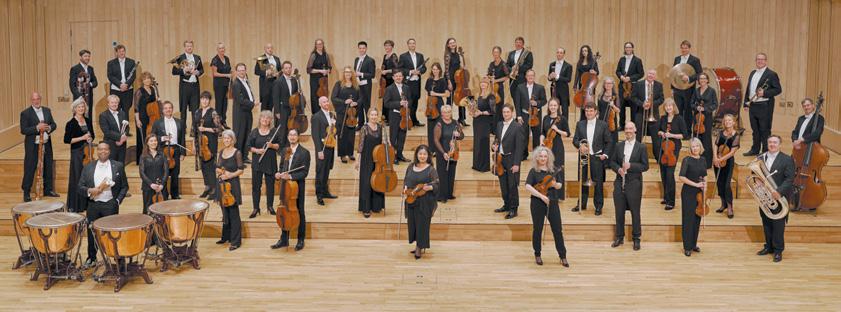
Formed in 1891, the Royal Scottish National Orchestra (RSNO) plays an integral part in Scotland’s musical life, with regular concerts in Glasgow, Edinburgh, Dundee, Aberdeen, Perth and Inverness. The Orchestra’s artistic team is led by Danish conductor Thomas Søndergård, who was appointed Music Director in 2018.
The RSNO is supported by the Scottish Government and is one of Scotland’s five National Performing Companies. The Orchestra appears regularly at the Edinburgh International
Festival and the BBC Proms, and has made recent tours to the USA, China and Europe.
The RSNO believes music can enrich lives, and aims to inspire, educate and entertain people throughout Scotland and beyond with its performances, recordings and engagement programmes. Supporting schools, families, young professionals and wider communities, the RSNO delivers high-quality initiatives for all ages and abilities.
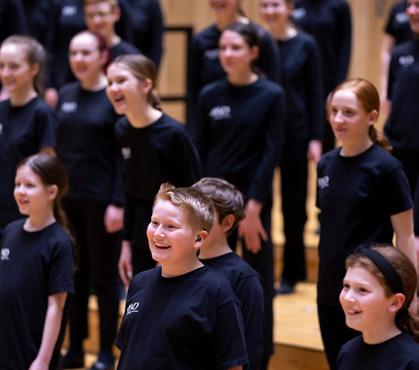
RSNO Youth Chorus
The RSNO Youth Chorus is one of the leading children and youth choirs in the UK. Formed in 1978 by Jean Kidd, the Youth Chorus is currently led by director Patrick Barrett and boasts over 400 members aged 7 to 18. It has built up a considerable reputation singing under some of the world’s most distinguished conductors and appearing on radio and television.
RSNO Youth Chorus members sing regularly with Scotland’s National Orchestra in major concert halls and festivals throughout the country, and in
2021 performed at COP26 in Glasgow. The Youth Chorus has also sung at BBC concerts and regularly appears at the Edinburgh International Festival.
The RSNO Youth Chorus gratefully acknowledges support from Dunclay Charitable Trust, Rowena Alison Goffin Charitable Trust, W A Cargill Fund and W M Mann Foundation
Stephen Doughty Conductor
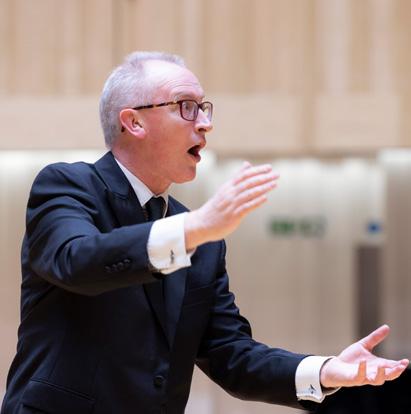
Stephen Doughty has been Chorus Director of the RSNO Chorus since the start of the 2022:23 Season. Since his arrival the Chorus has seen an influx of new members, and an abundance of varied and critically acclaimed performances, including Verdi’s Requiem, Britten’s War Requiem, Bruckner’s E Minor Mass and the Scottish premiere of Sir James MacMillan’s Christmas Oratorio. He has also directed the Chorus in new and imaginative programmes in their own right, including Rheinberger’s Mass in E flat for double choir, and concerts with percussion and organ featuring Bernstein’s Chichester Psalms, the European premiere of McIntyre’s Missa Brevis and Ives’ final major choral work, Psalm 90
Stephen’s previous 12-year tenure as Chorus Master of Belfast Philharmonic Choir included a number of world premieres, most significantly James Whitbourn’s The Seven Heavens and Philip Hammond’s Requiem for the Lost Souls of the Titanic, performed exactly 100 years since the liner went down, and further European premieres of both Stuart Scott’s Requiem Brevis, which saw
the 100-strong choir separated into eight choirs spaced around the audience, and Christopher Marshall’s Earthsong
Stephen particularly enjoys working with amateur singers, not least leading regular singing days frequently involving up to 800 amateur singers. He was Musical Director of Edinburgh Bach Choir for seven years and has enjoyed directing the Garleton Singers for over 30 years, performing with them recently at the Lammermuir Festival.
Stephen plays harpsichord/organ continuo and orchestral piano and has given frequent organ recitals, including several on the grand Mulholland Organ in the Ulster Hall, Belfast. He is also in demand as an arranger and orchestrator, with a large portfolio of work particularly for young voices. He has produced a plethora of arrangements of the music of pianist Christopher Norton, including two publications of piano duets and a suite for wind sextet, and has received commissions from Children’s Classic Concerts, the Ulster Orchestra and the RSNO. Commissions from the BBC have seen his work being performed on BBC Alba and at the Last Night of the Proms, and his pieces feature on several recordings, including with the RSNO Chorus.
Stephen is an Examiner for the Associated Board of the Royal Schools of Music.
FIRST VIOLIN
Igor Yuzefovich LEADER
Shlomy Dobrinsky
ASSOCIATE LEADER
Tamás Fejes
ASSISTANT LEADER
Patrick Curlett
Liam Lynch
Veronica Marziano
Susannah Lowdon
Elizabeth Bamping
Lorna Rough
Joana Rodriguez
Alan Manson
Ursula Heidecker Allen
Sharon Haslam
Freya Hall
SECOND VIOLIN
Marion Wilson
ASSOCIATE PRINCIPAL
Nigel Mason
Paul Medd
Anne Bünemann
Sophie Lang
Robin Wilson
Kirstin Drew
Colin McKee
Helena Rose
John Robinson
Helena Quispe
Sophie Hamilton
VIOLA
Felix Tanner
ASSOCIATE PRINCIPAL
Asher Zaccardelli
Susan Buchan
Nicola McWhirter
Claire Dunn
Maria Trittinger
Francesca Hunt
Beth Woodford
Elaine Koene
David McCreadie
RSNO
CELLO
Pei-Jee Ng
PRINCIPAL
Betsy Taylor
Yuuki Bouterey-Ishido
Sarah Digger
Rachael Lee
Robert Anderson
Gunda Baranauskaitė
Joseph Donmall
DOUBLE BASS
Nikita Naumov
PRINCIPAL
Michael Rae
Moray Jones
Alexandre Cruz dos Santos
Olaya Garcia Alvarez
George Podkolzin
FLUTE
Katherine Bryan PRINCIPAL
Oliver Roberts
Janet Richardson PRINCIPAL PICCOLO
OBOE
Adrian Wilson
PRINCIPAL
Peter Dykes
Henry Clay
PRINCIPAL COR ANGLAIS
CLARINET
Timothy Orpen
PRINCIPAL
William Knight
Duncan Swindells
PRINCIPAL BASS CLARINET
BASSOON
Tom Donkin
GUEST PRINCIPAL
Rebecca Roberts
Paolo Dutto
PRINCIPAL CONTRABASSOON
HORN
Amadea Dazeley-Gaist
PRINCIPAL
Alison Murray
Andrew McLean
David McClenaghan
Martin Murphy
TRUMPET
Christopher Hart PRINCIPAL
Katie Bannister
Mark Elwis
TROMBONE
Dávur Juul Magnussen
PRINCIPAL
Cillian Ó Ceallacháin
Alastair Sinclair
PRINCIPAL BASS TROMBONE
TUBA
John Whitener PRINCIPAL
TIMPANI
Adrian Bending
GUEST PRINCIPAL
PERCUSSION
Simon Lowdon
PRINCIPAL
Tom Hunter
Phil Hague
Stuart Semple
Colin Hyson
Catriona Duncan
HARP
Pippa Tunnell
PIANO/CELESTE
Hebba Benyaghla
Edward Cohen
Aarnav Bhaat
Anna Davis
Ayva Kyle
Bernadette Xin-Ying Kho
Bronagh McKnight
Bushan Gaddale
Cara Thomson
Catrin Ogle
Colette Balmer
Daisy Quinn
Elise Job
Elishka Foster
Eunice Oyedokun
Faith Junyen Wong
Fiamma Milligan
Forbes Louden
Gabriella Mills
Grace Nickson
Grace Romans
Honor Osmond
Ingrid McGilvery
Joy Lam
Kiaan Kadwe
Youth Chorus 1
Kirsty McLean
Layan Shaaban
Lilianna Nemeth
Lucia Fernandez-McCann
Melissa Maffia
Molly Kerr
Neave Maclachlan
Nethra Mantrala
Netra Gaikwad
Olivia Tang
Osazee Orhionkapayo
Penelope Leithead
Rachel Ayers
Rebecca Penman
Rhea Elizabeth Oommen
Rita El Obbadi
Rory Cameron
Saffron Spybey
Sofia Jorge
Sophie Waller
Yiyi Myler
Zach Baxter
Zara Patel
CONDUCTOR
Alison McNeill
PIANIST
Edward Cohen
RSNO CHORUS
VOCAL COACH
Polly Beck
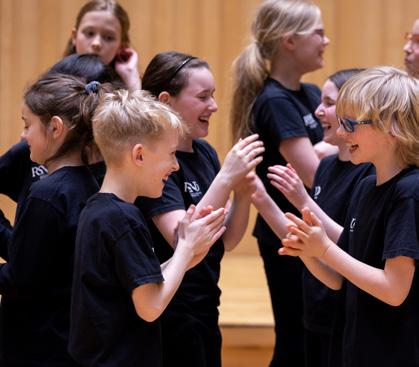

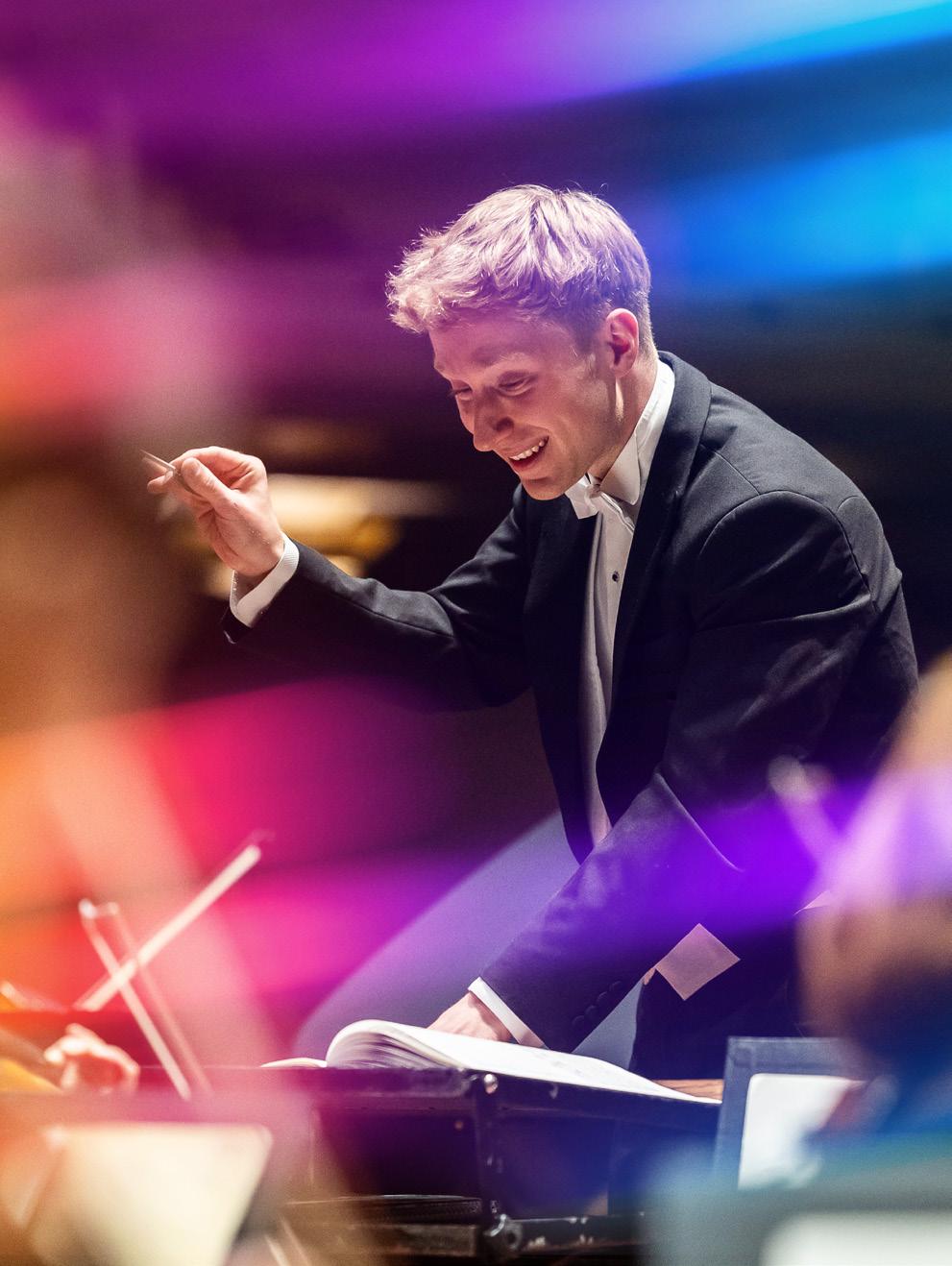
Ode to Joy Season Finale
EDINBURGH
FRI 12 JUN: 7.30pm GLASGOW SAT 13 JUN: 7.30pm

Mendelssohn The Hebrides Overture
Fingal’s Cave
Sir James MacMillan Three Scottish Songs
Beethoven Symphony No9 Choral
Patrick Hahn Conductor
Eleanor Dennis Soprano
Karen Cargill Mezzo-soprano
Joshua Ellicott Tenor
Andrew Hamilton Bass
RSNO Chorus
Stephen Doughty Director, RSNO Chorus
Paul Whittaker BSL Performer