How insights from members are being used to map the strategic direction of RSL NSW.
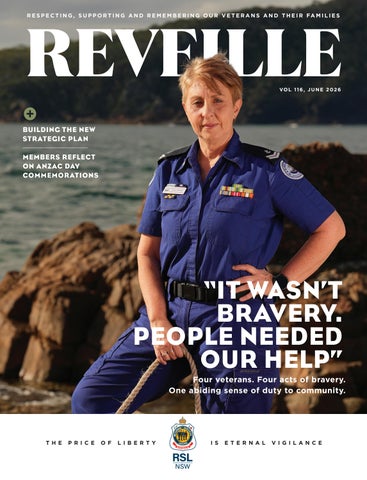
VETERAN BRAVERY
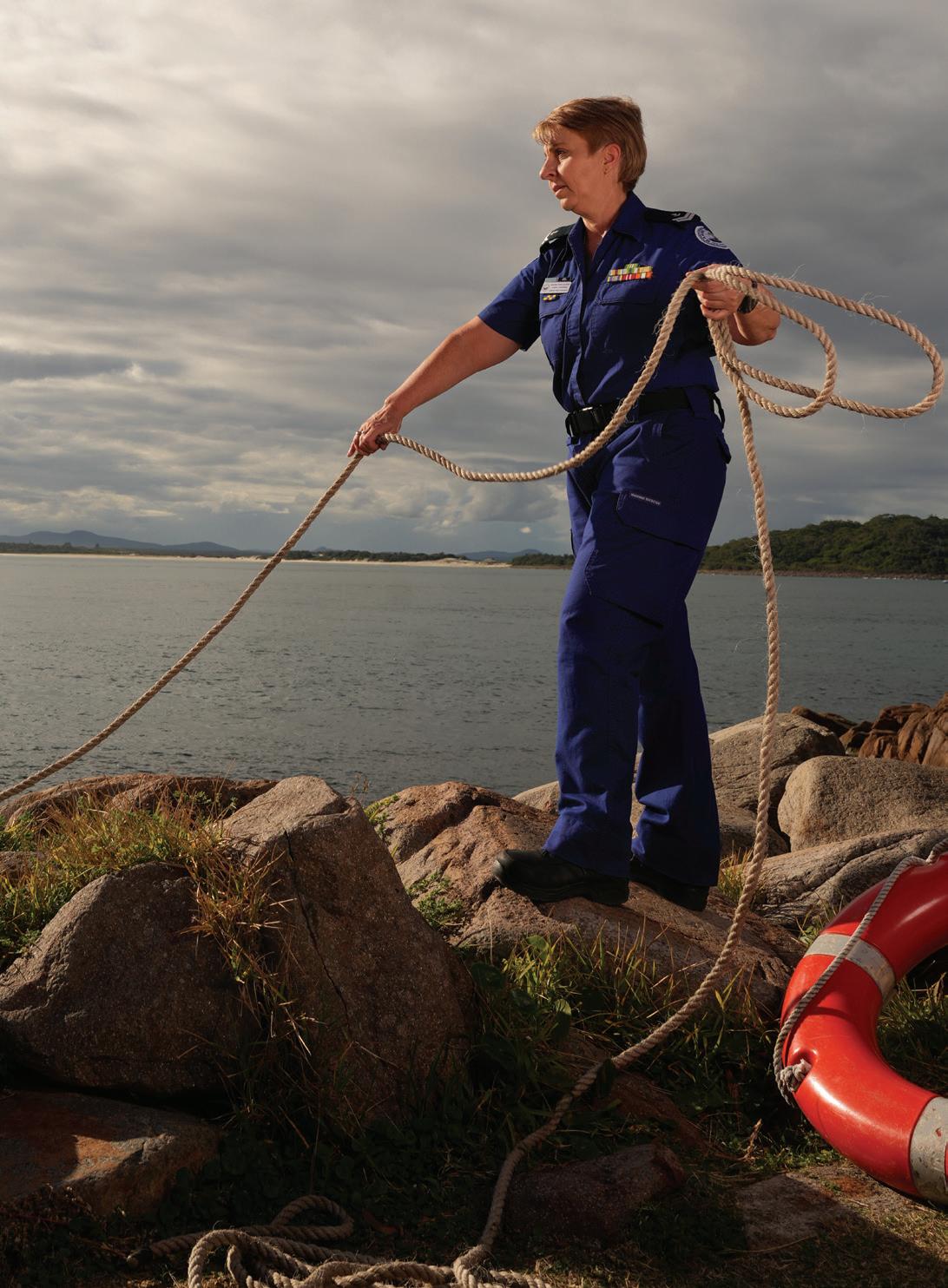
Upon learning that others were in danger, these four veterans leapt into action to help.
ANZAC DAY 2026
In their own words, veterans and families reflect on the vital meaning behind our most important day.
A new executive team is preparing the Wangi Wangi RSL sub-Branch to be ready for the future.
RSL NSW
Peter Tinley chats with Reveille, wellbeing hub opens, new-look District Presidents’ Council and more.
Acting President Vince Williams and Acting CEO Trina Constable on the Strategic Plan, Board election and more.
Events and stories from sub-Branches and their members across the state.
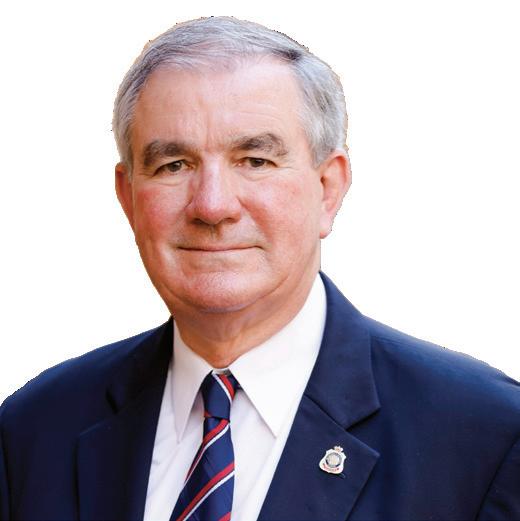
VINCE WILLIAMS ACTING PRESIDENT, RSL NSW
“I have heard firsthand about the challenges many sub-Branches face as they work to provide camaraderie, commemoration, advocacy and practical support in their local communities.”
While travelling across the state for the RSL NSW Listening Tour, it has been a privilege to meet members at RSL sub-Branches large and small, in regional communities and metropolitan centres alike.
I have heard first-hand about the challenges many sub-Branches face as they work to provide camaraderie, commemoration, advocacy and practical support in their local communities. Those conversations are helping to shape the development of the new RSL NSW Strategic Plan and the future direction of our organisation.
RSL NSW welcomes the Albanese Government’s continued investment in veteran health and wellbeing in the 2026-27 Federal Budget, while also expressing cautious optimism around increased Defence spending.
We acknowledge longoverdue investment in veteran health care and increased investment in Defence capability. At the same time, concerns remain regarding several proposed savings
measures and reforms announced in the Budget, including proposed caps on allied health services for Veteran Card holders.
Strategic intent must translate into capability, resilience and support for those who serve.
That principle underpins our advocacy on the future of the Defence estate. RSL NSW has been clear that Victoria Barracks – the spiritual home of the Australian Army –should remain in public hands and continue operating as a Defence base. Its military heritage and ongoing strategic importance must be protected for future generations.
RSL NSW will continue working collaboratively with RSL Australia and other State Branches to advocate for practical, veteran-centric policy outcomes that improve support, wellbeing and national security capability.
We are, and always will be, better together.
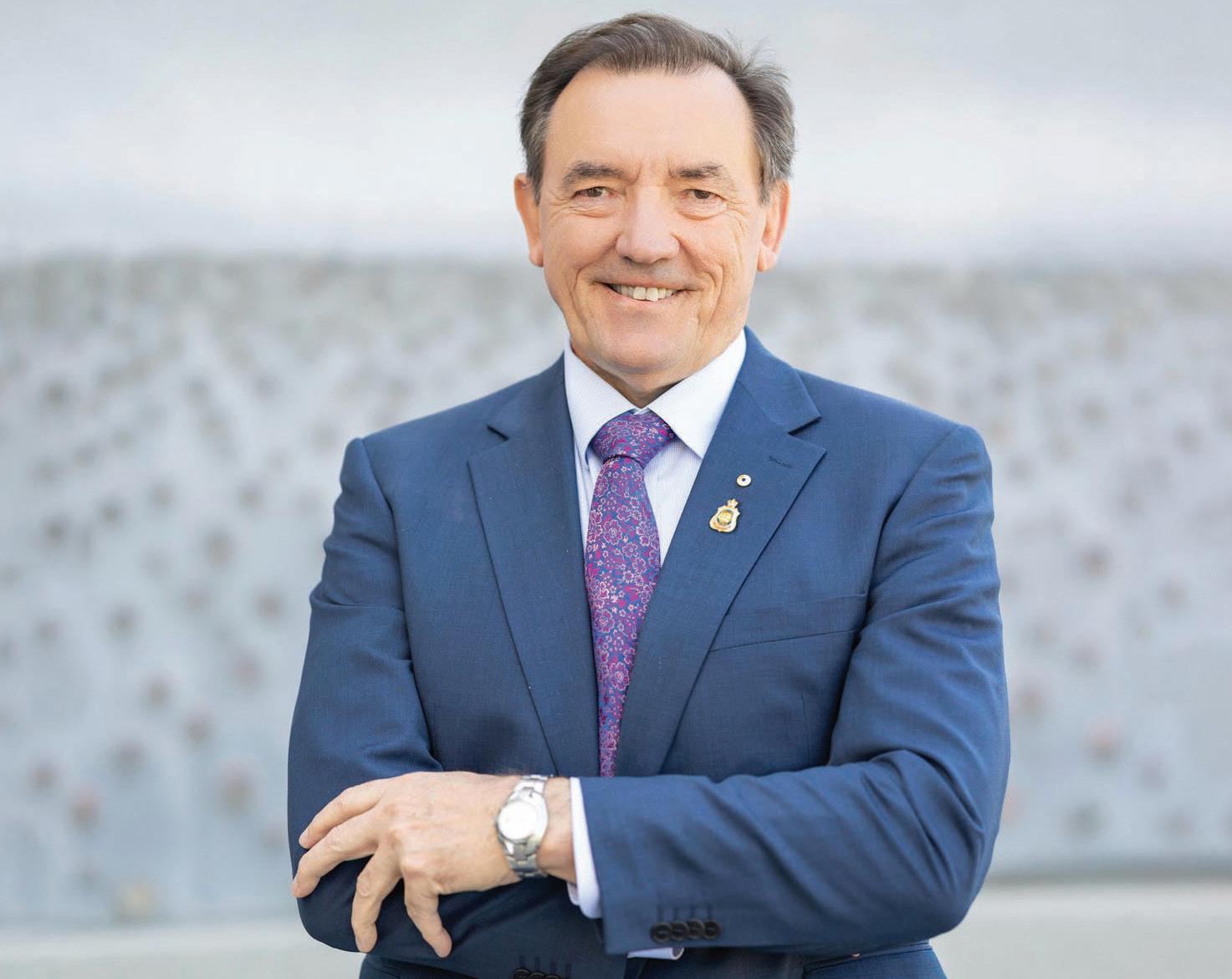
TRINA CONSTABLE ACTING CEO, RSL NSW
During the Listening Tour, RSL NSW members have spoken passionately about the need for greater clarity around the RSL brand and a stronger shared understanding of what the League stands for today.
For many, there remains confusion between RSL subBranches – registered charities that support veterans and their families – and the licensed Clubs operating hospitality businesses under the RSL name. That confusion can prevent veterans and families from seeking support when they need it most.
Our brand is one of the most trusted and recognised in Australia. It represents service, sacrifice, camaraderie and care. Protecting that identity is critical if we are to ensure the next generation of veterans understands the RSL is here to
support them throughout life, not only in times of crisis.
Nominations for the RSL NSW Board of Directors will open in July, and I encourage members who have experience leading organisations at a C-suite level, implementing risk management or compliance frameworks and driving organisational change to put their name forward.
There's never been a better time to take on a leadership role on the RSL NSW Board. Passion and sub-Branch experience matter as much as formal credentials – and director training is available.
Keep an eye on the RSL NSW website and social platforms for more information.
THE RETURNED AND SERVICES LEAGUE OF AUSTRALIA (NEW SOUTH WALES BRANCH)
RSL Australia National President Peter Tinley has set a new vision for the League. We spoke to him about what that looks like for veterans and families on the ground.
As President of RSL Australia, your philosophy is ‘Better Together’. What will that look like for the typical veteran on a day-to-day basis?
Put in those terms – ‘dayto-day’ – veterans might not see too much. But when they look at what ex-service organisations such as the RSL are doing in Australia, they’ll
see an interconnected sector that goes way beyond just the RSL, that works not only for the vulnerable but for the majority of veterans who are thriving.
You used the old military adage ‘nose in, hands out’ to describe how RSL Australia will interact with State Branches. Could you expand on that?
Peter Tinley AM
There are seven di erent branches of the RSL. They all have their own constitution and are autonomous.
We had a national workshop in Canberra in March where we brought together many of the senior sta from the states. Nobody can remember the last time that was done. At one point we went around the grounds, as they say, and each state spoke about the projects and services they were most proud of.
We want to ensure that when one RSL State Branch does a good thing, we support and promote it. And other states need to know about it so they can potentially replicate that success.
If someone in the veteran community reading this likes the sound of ‘Better Together’ as a philosophy, but wanted to know how they could contribute, what would you say?
We need to understand what drives people to contribute. My personal view is that it’s meaning, purpose and mission. We need those three things in everything we do.
SCAN the QR code to read the full interview.
SUPPORT AND SERVICES
DIVING DEEP
FOR PERSONAL WELLBEING
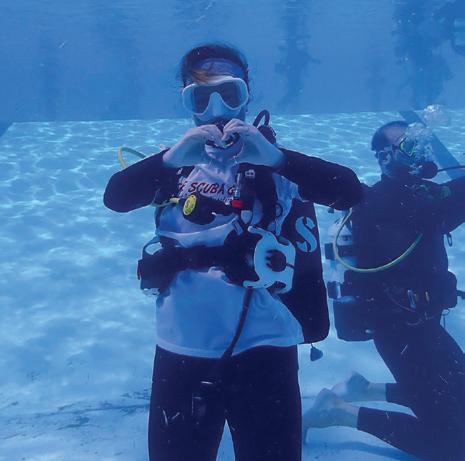
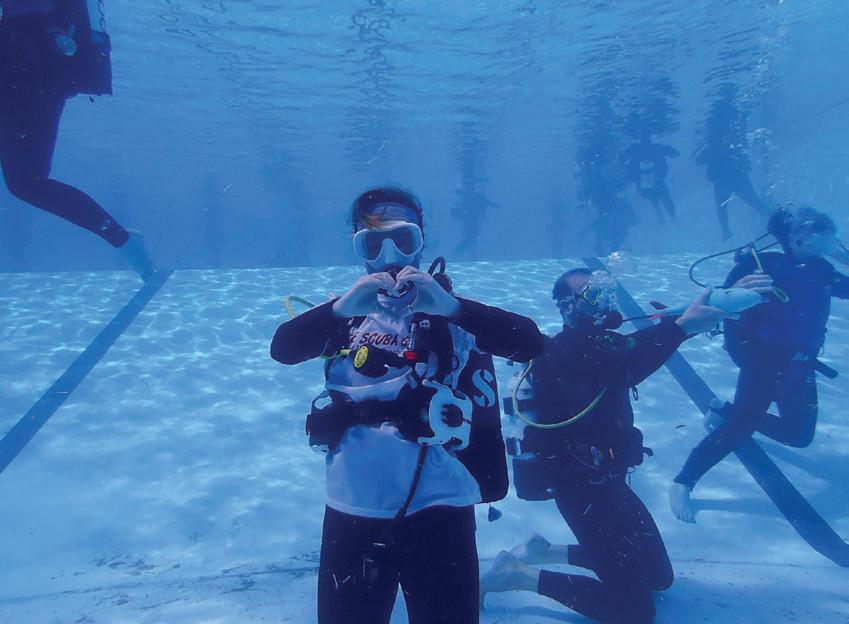
RSL NSW is supporting scuba therapy sessions to help improve the health and wellbeing of veterans and families.
Bronte Pollard, RSL NSW Liaison O cer at the National Centre for Veterans’ Healthcare (NCVH), has organised for veterans receiving treatment at the centre to take part in scuba therapy sessions at the Sydney Olympic Park Aquatic Centre.
Those sessions were funded by RSL sub-Branch donations to the RSL NSW Veteran Support Fund.
“RSL NSW is sponsoring programs that are critical to the care of veterans while they’re undertaking treatment at the NCVH,” said Pollard.
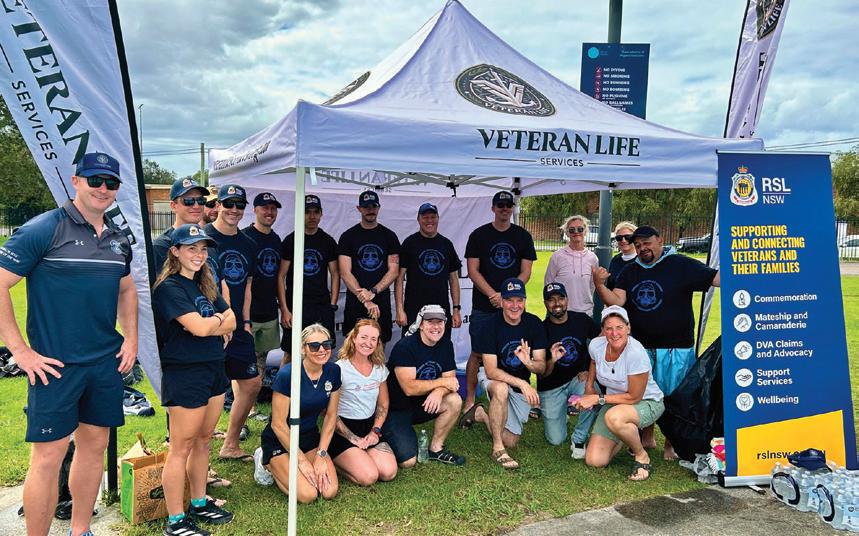
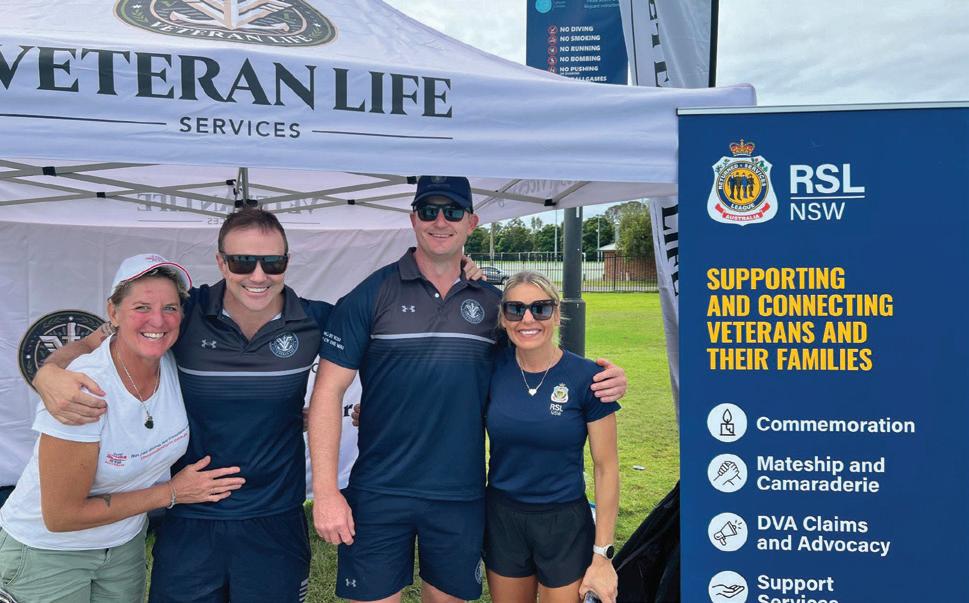
The sessions are hosted by The Scuba Gym at di erent locations, also with the support of other like-minded ex-service organisations such as Veteran Life Services.
Army veteran Daniel Dring described an event he took part in as an opportunity to meet veterans living in the area.
“I was able to confidently and safely experience my first scuba dive,” he said. “This is something I have always wanted to try.
“I will definitely look at pursuing other dive courses after such an amazing first experience.”
DISTRICT PRESIDENTS’ COUNCIL
INAUGURAL DPC CHAIR STEPS DOWN
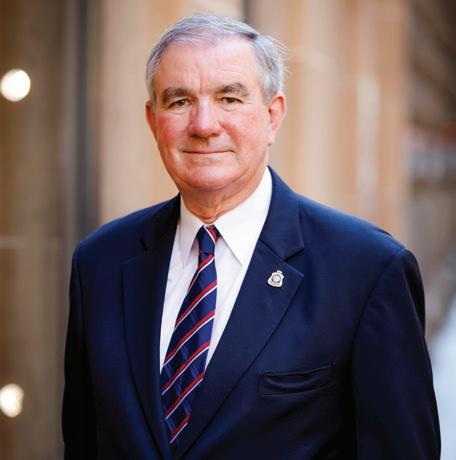
Derek Leslie's tenure as the Chair of the District Presidents' Council has come to an end. He was the first person to hold the position, starting in 2019.
The RSL NSW Board of Directors noted Leslie’s work was not always visible to the broader membership, but was nonetheless “deeply appreciated” by his peers.
“Under our Constitution, the roles of the Board and DPC are intentionally distinct, with Derek and the DPC providing an important check and balance,” the Board said in a statement. “Throughout that time, his integrity and principled approach were unquestioned, providing calm and steady guidance when it was needed most.”
David Ingram, the former President of the Windsor and District RSL sub-Branch, has been named as Leslie’s replacement.
One recent diving activity was designed to attract current Defence personnel.
Derek Leslie served in the role for seven years.
WELLBEING SUPPORT DOORS OPEN AT HUNTER VETERAN AND FAMILY HUB
The Hunter Veteran and Family Hub, located in Maitland, o cially opened on 17 March.
The Hub will provide essential support and services to veterans and their families in a region
home to around 22,000 veterans. The statewide network of Hubs is supported by RSL NSW, the charity partner of RSL LifeCare Veteran Services, via the RSL NSW Veteran Support Fund.
RSL NSW has provided approximately $11.6 million to RSL LifeCare Veteran Services over the past four years to support the expansion of the network across NSW.
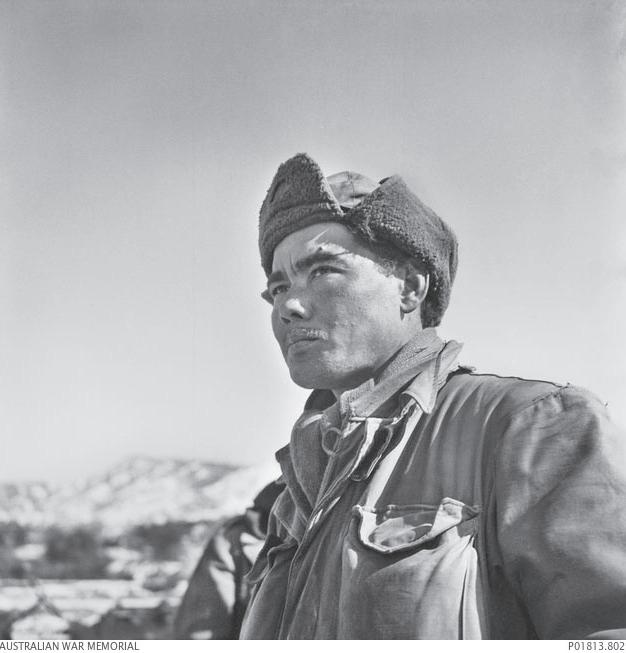
Aboriginal serviceman Sergeant Sta ord Kenny James Lenoy was killed in action during the battle on 24 April 1951.
75 YEARS SINCE THE BATTLE OF KAPYONG
RSL sub-Branches have held services commemorating the service and sacrifice of veterans in the Battle of Kapyong from 2227 April 1951.
The Korean War conflict saw more than 32 soldiers killed during a night of fierce fighting, during which time Australian forces helped to stall the advance of Chinese forces through the Kapyong Valley.
ADVOCACY
RSL NSW LEADS NATIONAL PRE-BUDGET PUSH
RSL NSW took the lead in drafting RSL Australia’s pre-Budget submission, calling on the Federal Government to prioritise veterans in funding decisions.
The recommendations outlined in the submission include:
• Reviewing and increasing the Department of Veterans’ A airs fee schedule to align with the NDIS rate framework
• Allocating funding within the Veteran and Family Wellbeing Agency's $78 million appropriation to support ex-service organisation sector coordination infrastructure
• Mandating Advocacy Training and Development Program accreditation for all compensation advocates READ RSL Australia’s pre-Budget submission in full.
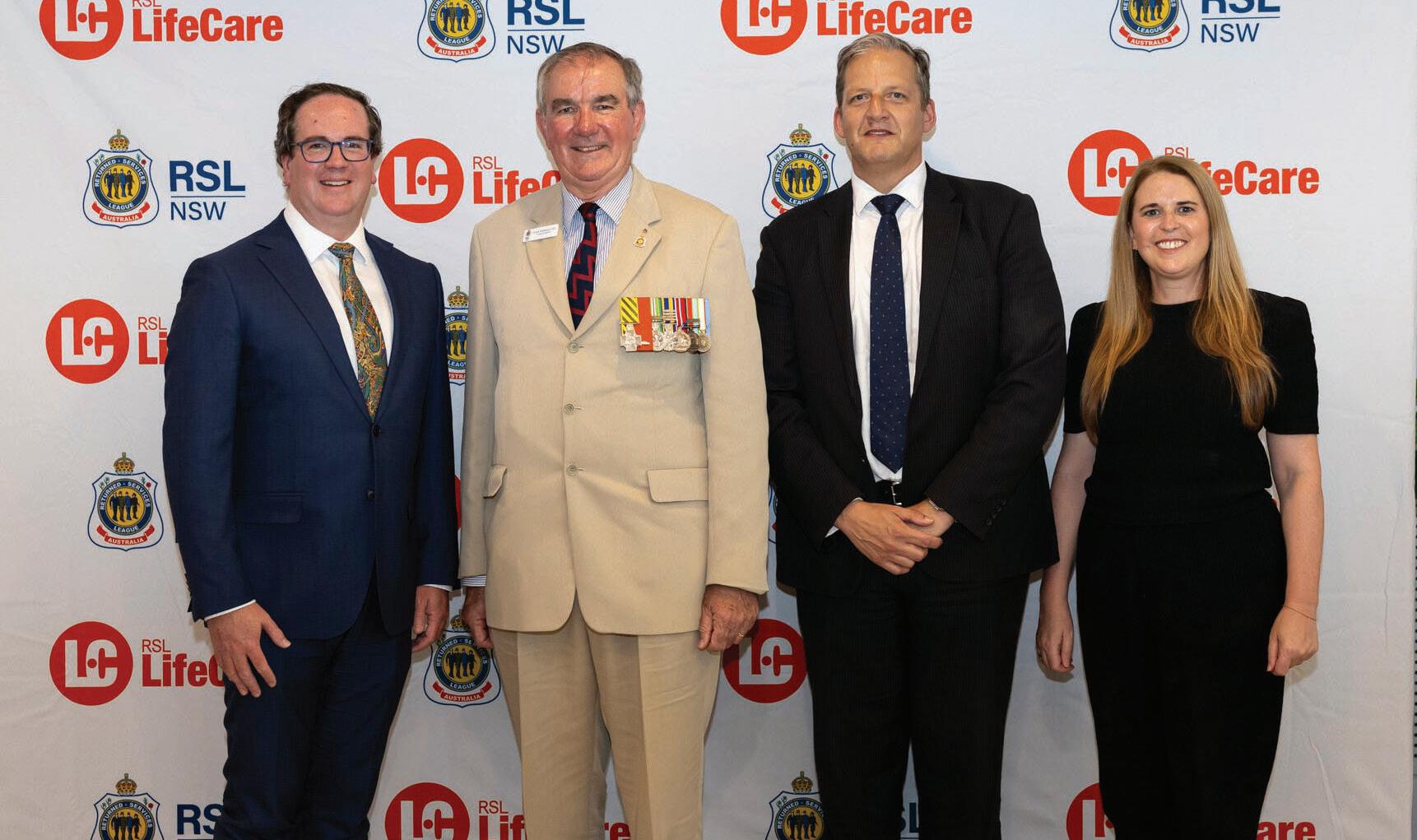
Minister for Veterans' A airs Matt Keogh MP, RSL NSW Acting President Vince Williams, RSL LifeCare CEO Drew Pearce and RSL NSW Acting CEO Trina Constable
Connecting veterans and their families to essential support and services – all in one place
One search, thousands of services
Localised results
Access on the go, anytime, anywhere
Veteran and family support in one easy-to-use tool
rslnsw.org.au/find-help/
10 Strategic Plan
EAR TO THE GROUND
Fresh from the final leg of the Listening Tour, RSL NSW Acting President Vince Williams shares
what members have told him and the ANZAC House team while
on the road.
Words by Lachlan Haycock
When asked about his motivation for embarking on the months-long Listening Tour throughout the state, RSL NSW Acting President Vince Williams describes a desire to meet with members on their own terms.
“It’s fair to say there’s a healthy level of scepticism among members and the wider veteran
community as a result of the changes to RSL NSW leadership over the past 12 months,” he tells Reveille. “It’s extremely important for us to continue to rebuild trust with members and sub-Branches.”
Stopping at 15 locations across February, March, April and May, and attracting more than 500 registered attendees from nearly 200 sub-Branches,
The ANZAC House team meeting RSL NSW members in Queanbeyan
the roadshow-style sessions stemmed from a personal commitment Williams made following his appointment as Acting President at the RSL NSW State Congress and AGM in Tamworth last October.
“I’ve enjoyed meeting as many members as I can in person. It's been greatly beneficial to see them in their own ‘home environments’, rather than as a face on a screen or in a massive room at Congress.”
Planning with purpose
ANZAC House sta shared insights into RSL NSW organisational goals, and heard input from participants during group discussions and one-onone chats. The team gauged member responses to issues mid-session using an electronic polling system – the same used to vote at the AGM – with the results analysed “as we went along” and fed back into subsequent sessions.
“We couldn't turn up with a blank piece of paper at each of the sessions. There needed to be a plan,” says Williams. “The Listening Tour has been an opportunity for members to be heard and to share their thoughts, within a structure that guides the discussion to concrete outcomes.”
Cardi RSL sub-Branch President Geo Kelly attended the session in Newcastle.
“The session started with members sharing a range of views,” he says.
“But the structured discussion helped us see how our input was being taken on board to help shape the future of the organisation – and show why sub-Branches and ANZAC House need to work together.”
“The ability to be on the ground and listen as people express their concerns ... has been an enormous privilege.”
— Vince Williams, RSL NSW Acting President
THEMES FROM THE LISTENING TOUR
“Each sub-Branch has its own issues a ecting veterans locally,” says RSL NSW Acting President Vince Williams. “But some of their concerns are also universal, and feed into the bigger picture of how RSL NSW needs to evolve to better work in favour of veterans and families across the state.”
Williams points to four key themes that emerged from discussions with members during the Listening Tour.
Members are seeking change. “There is strong support for the overall direction of the new RSL NSW Strategic Plan 2026–31, and for the key pillars of Connect, Commemorate and Champion.”
Brand confusion is a barrier to seeking help. “We're hearing enduring confusion, even among RSL NSW members, about the di erence between charitable RSL sub-Branches, licensed RSL Clubs and the support provider RSL LifeCare Veteran Services. That confusion is slowing veterans’ access to support and services in the RSL NSW network – which is putting them at risk.”
Veterans value face-to-face connection.
“This remains one of the League's biggest strengths. It's about Districts talking to subBranches, sub-Branches talking to members, members talking to each other. We want veterans to know there's no 'wrong door' as far as assistance is concerned. We can assist them with their issues.”
Engaging younger veterans remains a priority.
“Attracting younger veterans is a predictor of a sub-Branch’s sustainability, and it’s especially important in rural areas, where there are fewer veterans compared to the city. Part of getting more young veterans involved is understanding that many don’t necessarily become a member to serve on committees, but rather as a means of networking with peers.”
Strategic Plan
WHAT DID MEMBERS SAY?
Here are select insights from four of the 15 sessions.
WAGGA WAGGA
Delivering flagship commemoration events must continue to be a leading priority.
More e ort should be given to education e orts.
NEW SOUTH WALES
TAMWORTH
RSL NSW should work with other ex-service organisations to deliver commemoration events.
It should also work with sub-Branches to collectively contribute to policy.
QUEANBEYAN
RSL NSW should ensure the value of face-to-face interaction is balanced with the convenience and accessibility of digital delivery of information and events.
Your League
All of this work isn’t for nothing. It’s for a good reason: building a better future for the League by developing the new RSL NSW Strategic Plan.
The previous plan, covering 2021–26, was a marked success, with more than 80 per cent of its goals now complete. The next plan is currently being designed and will chart the course of the League in NSW across the next five years.
“We are in the process of analysing all the data from Listening Tour sessions and building out a draft plan, which
ROOTY HILL
There is still confusion between RSL sub-Branches, RSL Clubs and RSL LifeCare Veteran Services.
Brand clarity is linked to the level of trust veterans have in the RSL as an institution.
will be refined ahead of and delivered at this year’s Congress,” says Williams. “As I always remind members, this is your Strategic Plan. Not mine, not ANZAC House’s. Yours.
“The following phase, delivery, will again require interaction with sub-Branches about how to best deliver change. To ensure the plan is delivered e ectively, it's essential to allow members ownership.”
Looking back at the past nine months, Williams describes his tenure as Acting President as a “real pleasure”.
“Like any not-for-profit, we have the full gamut of people and perspectives. The vast majority of members want the organisation to be successful.
“Each sub-Branch, and each District, has its own issues and challenges. So the ability to be on the ground and listen as people express their concerns – not to mention their positivity for the future of the League – has been an enormous privilege.
“There have been no sessions where I've come away disappointed.”
Four RSL NSW members on diving into the deep end, sometimes literally, to help people in danger.
BRAVE NEW
Words by Lachlan Haycock
WORLD
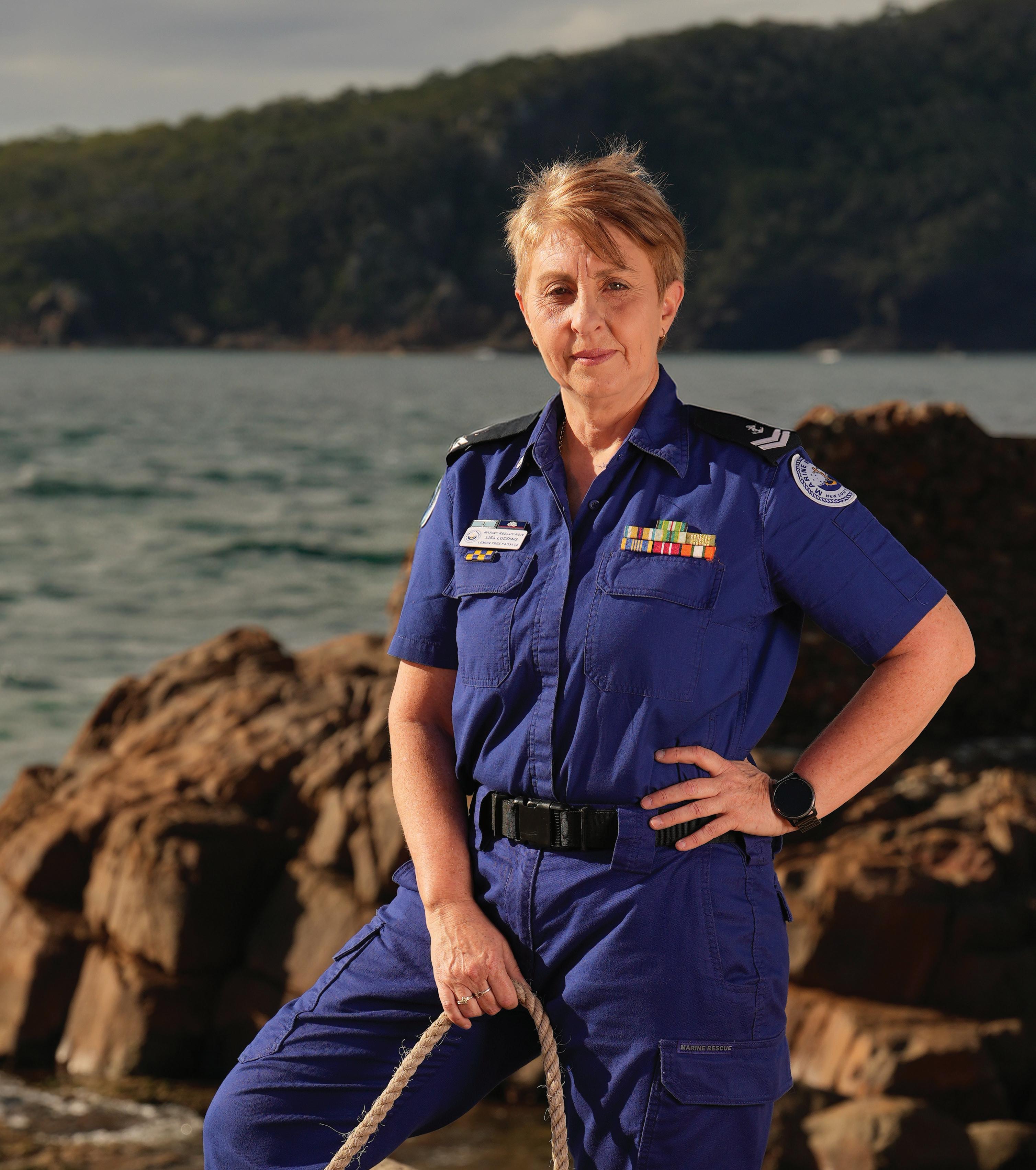
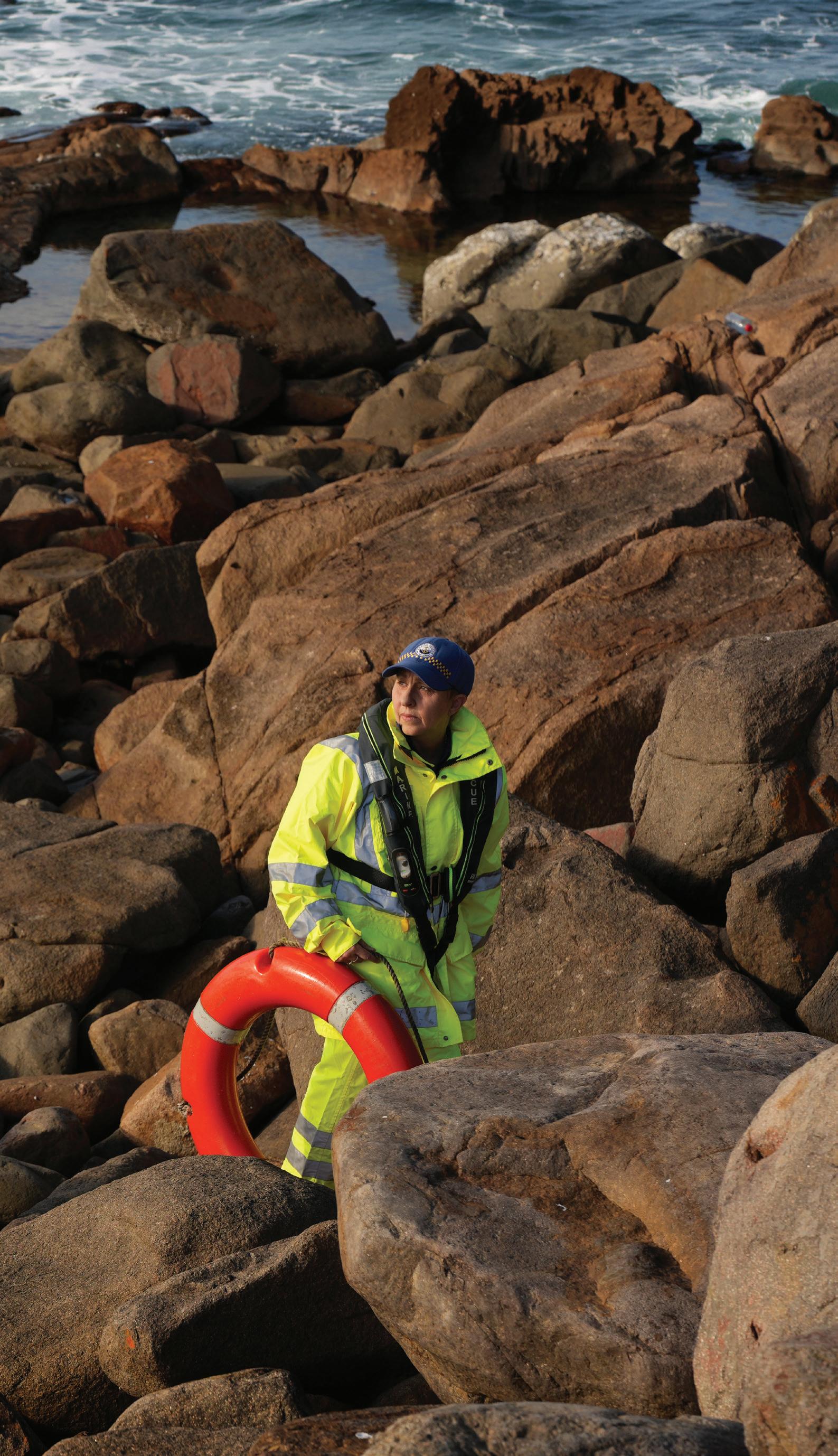
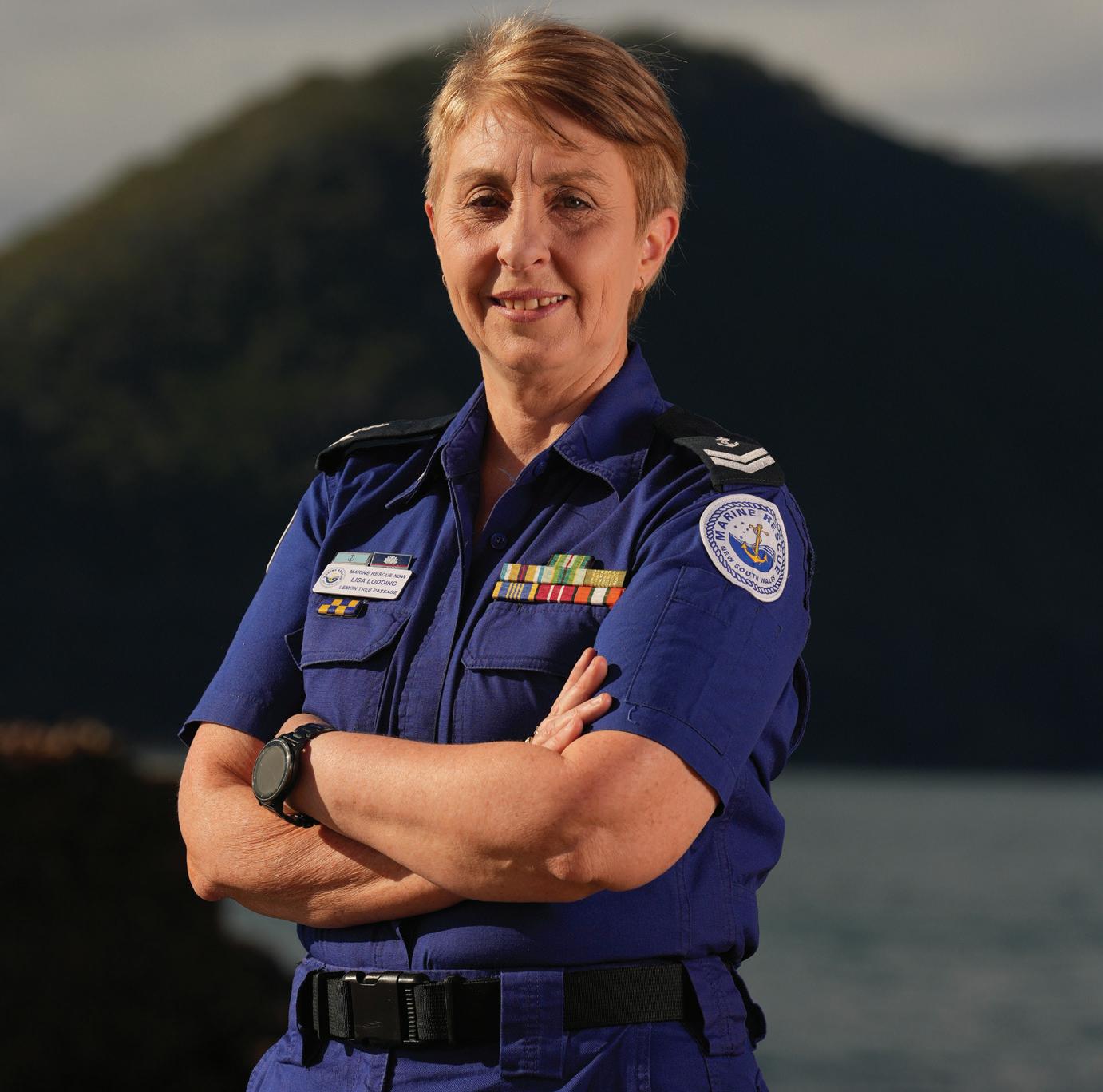
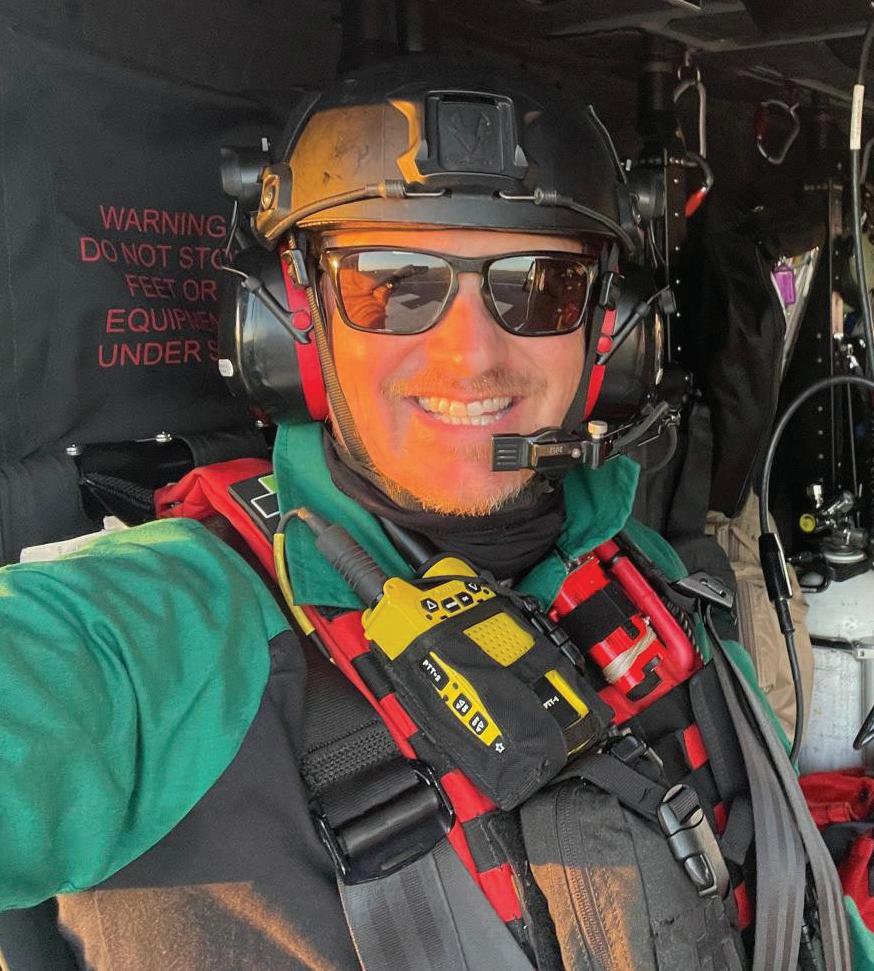
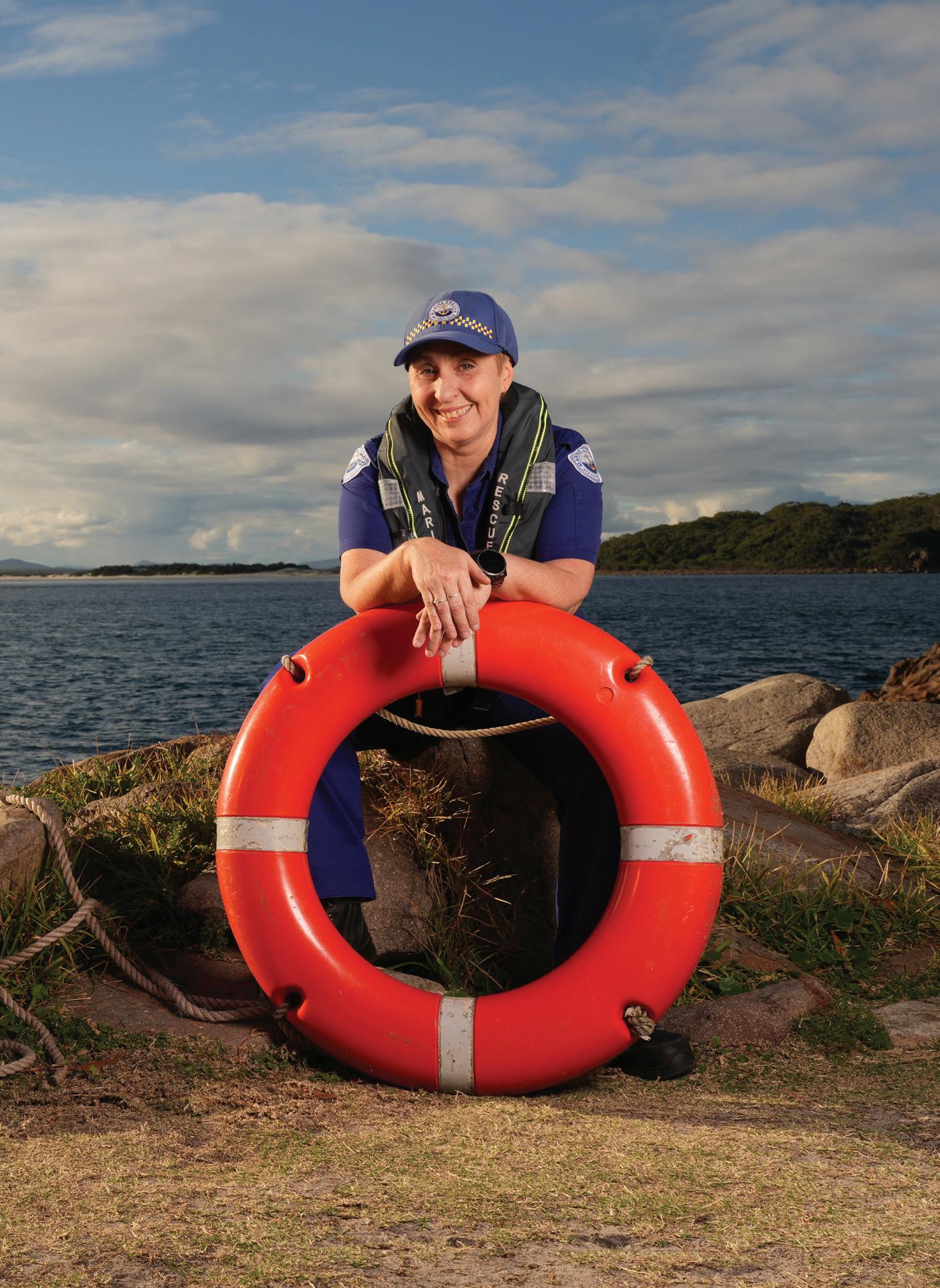
As the cliché goes, it was a dark and stormy night when Army and Air Force veteran Lisa Lodding was called in to help four people in danger o the coast of Broughton Island, northeast of Port Stephens.
A runabout had capsized, leaving the crew stranded in the water, with one of them injured and bleeding.
The Marine Rescue NSW volunteer, who was at home at the time, leapt into action, dropping everything “as I so often need to do”, racing to put her uniform on and jump in the car.
“I pulled up at the marina and proceeded to the rescue vessel at the dock,” she tells Reveille “The skipper and three other colleagues from Marine Rescue were ready to go. We cast o and headed out into the night.
“The sky and water were pitchblack, the wind was blowing a gale and the swell was so big we couldn’t find them for some time. Eventually, we heard through the radio that they could see our spotlights and we should stay on that course.
“We found them clinging to the upturned vessel. We pulled alongside as close as we could, trying to avoid debris floating in the water, and cast a line to retrieve them one by one.” »
Lodding’s job was to triage the crew members as they were brought onboard. One of them had severed a tendon in his hand when activating the craft’s positioning beacon, and another wasn’t wearing a wetsuit and was hypothermic.
In the end, they made it back to shore, and all four crew members survived, with one taken to hospital.
Although Lodding, an RSL NSW member, and the rest of her team were awarded the Marine Rescue NSW Commissioner’s Citation in recognition of their e orts that night, she confesses she doesn’t see what they did as an act of bravery.
“It was our job,” she says. “We did it because people needed our help.
“More than anything, the citation is a recognition of the e orts of the team. The radio operators, the skipper, the crew throwing the heaving lines – everybody played their part.”
Teams such as Lodding's spring into action and take measured risks to help save lives. Rescue attempts sometimes end in tragedy, however.
Marine Rescue NSW volunteers Bill Ewen and Frank Petsch died in May when their rescue craft capsized in heavy sea o Ballina.
Marine Rescue NSW Commissioner Todd Andrews said in a statement that the tragedy
“Veterans aren’t inherently broken … veterans leave Defence with worthwhile skills that help them forge meaningful careers after transition.”
— Lisa Lodding, Nelson Bay RSL sub-Branch
is a “solemn reminder” of the risks faced by volunteers.
“These two men were serving their local community and have made the ultimate sacrifice to help others.”
Duty of care
Regardless of whether they acknowledge the valour of their actions, veterans expose
themselves to danger to assist the community time and again – including in the civilian world, outside of their o cial Defence capacities.
Their actions reflect an innate urge to be of service, help those in need and do good in society, an ethos fostered across years of training.
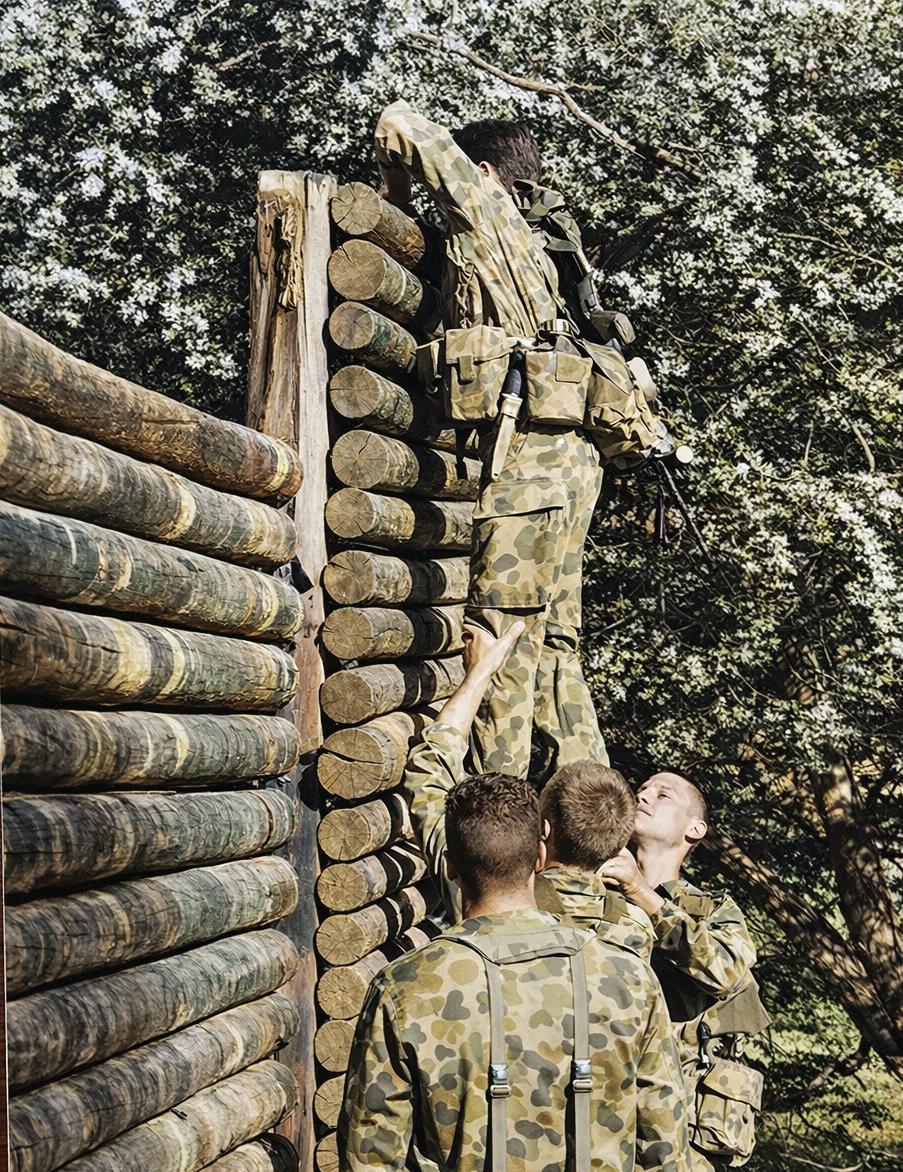
Lisa Lodding's Army training started her on a path to leadership.
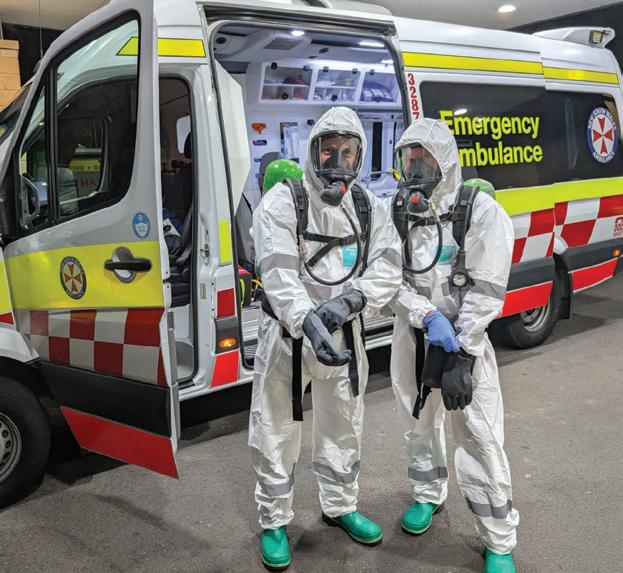
This perspective is one that Scott McNamara, an RSL NSW member attached to the Engadine RSL sub-Branch, has taken throughout his career.
“I originally wanted to be a firefighter,” he recalls. “I joined the local volunteer fire brigade when I was 14, going on weekends and after school. My father was a firefighter for 41 years and I wanted to follow in his footsteps.
“After finishing grade 12, Dad and his mates told me to get some life experience – like a
trade – before applying for an o cial role at Fire and Rescue NSW (FRNSW). So I got my first aid certificate, a path that led to applying to become a medic in the Army.”
McNamara, who signed up in 1998 and transitioned to the Army Reserve in 2003, says his experience left him feeling underutilised.
“I remember being stationed at Holsworthy when I heard about some bushfires that had started up elsewhere in the state, and really wanted to
be released to go and help fight them. But because of my commitment to 4RAR (Commando), I wasn’t allowed to go. So once I had gained the operational experience I wanted, I left the Army.”
Now a Specialist Training O cer at NSW Ambulance, he’s seen all manner of lifethreatening emergency scenarios, including a jetski accident in a stretch of the Georges River, in southern Sydney, known for shark sightings. The event is etched into his memory. »
“A lot of people have said to me that, if they were in the same situation, they wouldn't have gotten into the water. But I find it hard to believe that you wouldn't."
— Scott McNamara, Engadine RSL sub-Branch
Scott
McNamara's post-Defence career has been characterised by danger and excitement.
18 On the cover
“I was in my special operations responder vehicle when I heard over the radio a report of two young boys who were in the water. I looked at the clock and saw there were 15 minutes left in my shift, so I called in to say I was nearby and could respond.
“As any of my mates will tell you, I’m petrified of sharks. So when I arrived on the scene, I immediately looked for any nearby fishing boats or surfboards I could commandeer. There weren’t any. This was just before six o’clock in the middle of winter, so it was already dark.
“I swam out with a police o cer who was on the scene, and reached one of the boys. He was semi-conscious, and his left arm was missing below the elbow.”
McNamara and the o cer brought the first boy back to shore before going out again for the second. A water police vessel then arrived and pulled the boy on board. While the crew attempted CPR, McNamara could see the boy was critically injured.
“He'd been face-down in the water for probably 40 minutes by that stage, so I announced him deceased.”
The event received extensive media coverage, with McNamara appearing in a number of breakfast TV interviews, but he describes a far more humble motivation for his actions.
“A lot of people have said to me that, if they were in the same
situation, they wouldn't have gotten into the water,” he says. “But I find it hard to believe that you wouldn't. There were young guys who needed help.
“If it was one of my kids, I’d hope that someone else would swim out to rescue them.”
Seamless transition
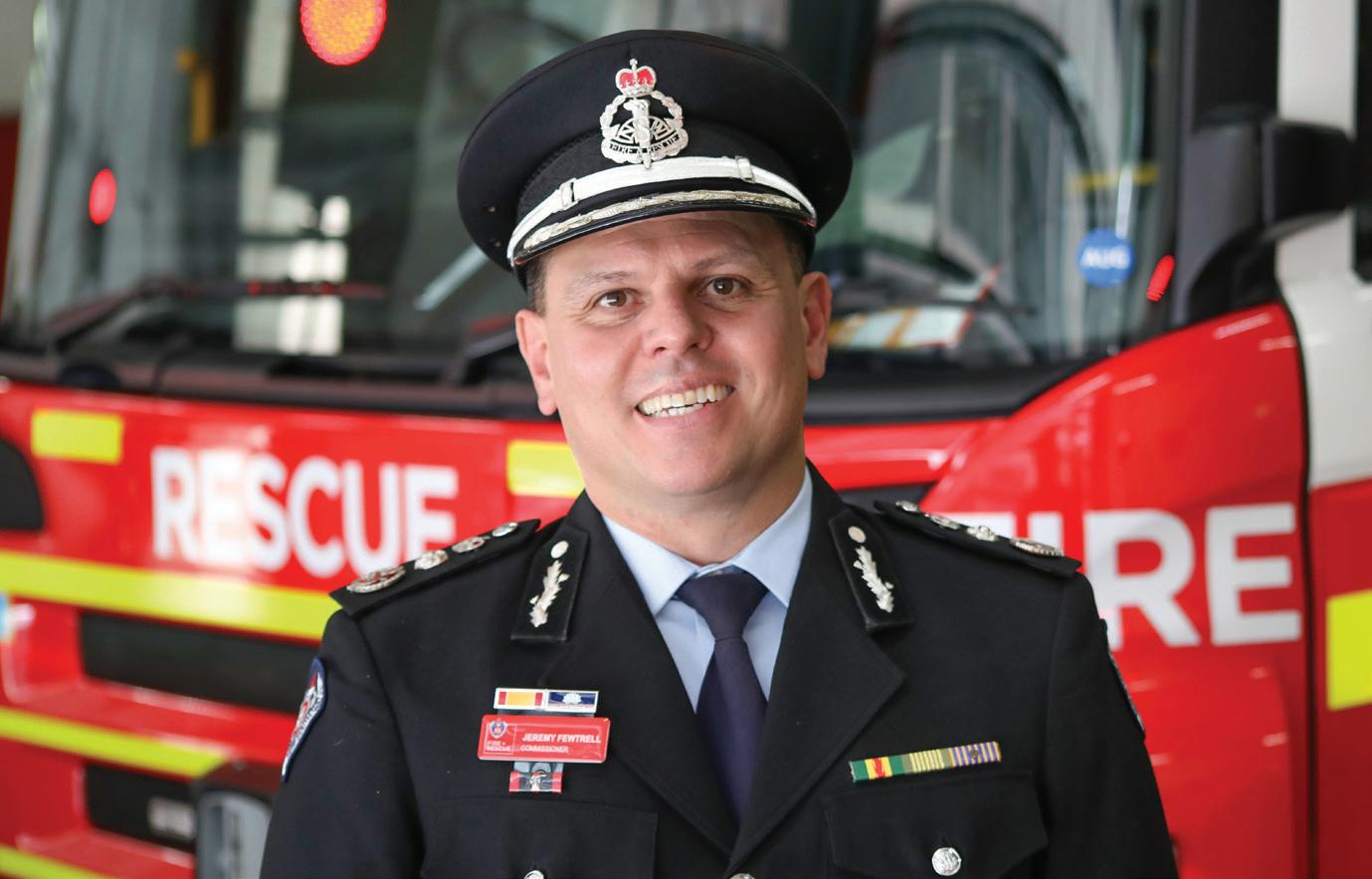
Unlike McNamara, Jeremy Fewtrell did join FRNSW upon leaving Defence in the mid1990s. He’s since risen up the ranks and now holds the role of Commissioner.
Fewtrell says the skills garnered from his tenure in the Army Reserve greatly influenced his career progression.
“I was only 22 when I started at FRNSW,” he tells Reveille. “My Defence experience helped me navigate joining the organisation at such a young age. I brought with me the ability to know what
TRAINED TO RESPOND
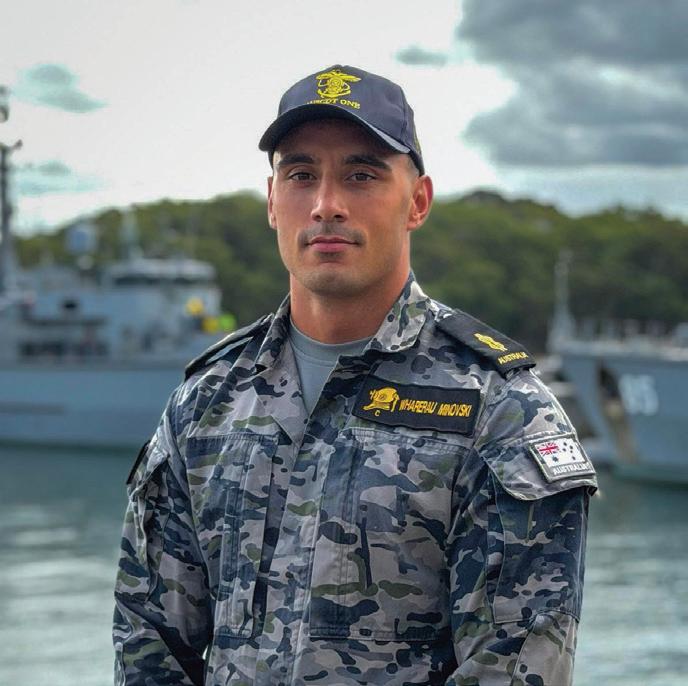
Able seaman Jaydan Minovski was present during the attack at Bondi Beach in Sydney last December. Defence Media reports that Minovski assisted first responders in transporting victims, including a police o cer who had been shot, away from the danger zone. He credited his clearance diver training as helping him stay level-headed in a dangerous, high-risk scenario.
hard work is, how to lock in as part of a team and get things done, and be undaunted by challenging situations.
“I’d already developed the ability to improvise, adapt and overcome the unknown. So I came to the FRNSW job with a greater degree of confidence than others might have.”
One incident where Fewtrell needed to put those skills to good use was a boarding house fire less than 12 months into his time at the organisation.
“It was one of the most impressive examples of firefighting I've ever seen,” he recalls. “As we pulled up, a group of firefighters was bringing an unconscious civilian down the ladder. People were literally jumping out of windows to escape. There was black smoke pouring out of every window and door.
Able Seaman Jaydan Minovski
“Coming at such a formative stage in my career, that moment reinforced the importance of knowing how to do your job well, under pressure and with an appreciation of the critical nature of the situation. Everything clicked into gear. Our boss had trained us hard so we knew what we needed to do, and it was seamless.”
Life saver
Volatile, high-risk disaster scenarios that demand quick thinking and displays of teamwork are also familiar territory for Major Michelle De Friskbom, a volunteer with the NSW State Emergency Service (SES).
She signed up after moving from Darwin to the Bega Valley, where she and her husband had just bought a property.
“Bega flooded a few times, including during a big east coast low in 2016,” says De Friskbom, an RSL NSW member attached to the Queanbeyan RSL sub-Branch.
“At this point I was doing Reserve work, so had the capacity to contact the local SES unit to see how I could help.
“I was put to work scribing for the incident controller, and watching the flood rescue technicians and other volunteers working around the clock. The chaos of being involved in such a major event was clear, but I knew I wanted to do more of this.
“I signed up o cially pretty much straight after that.” »
LIKE-MINDED GROUP
Commissioner Jeremy Fewtrell is the patron of the NSW Fire Brigades RSL sub-Branch, for veterans working within Fire and Rescue NSW.
“For new people coming into the organisation – who may still be dealing with the challenge of the Defence transition – the sub-Branch can help to make the process smoother,” he explains.
“There’s often a lot of common ground between their colleagues here and their time in Defence – and the same opportunity for camaraderie. It also means that if people need support, they’re more likely to be able to access it.”
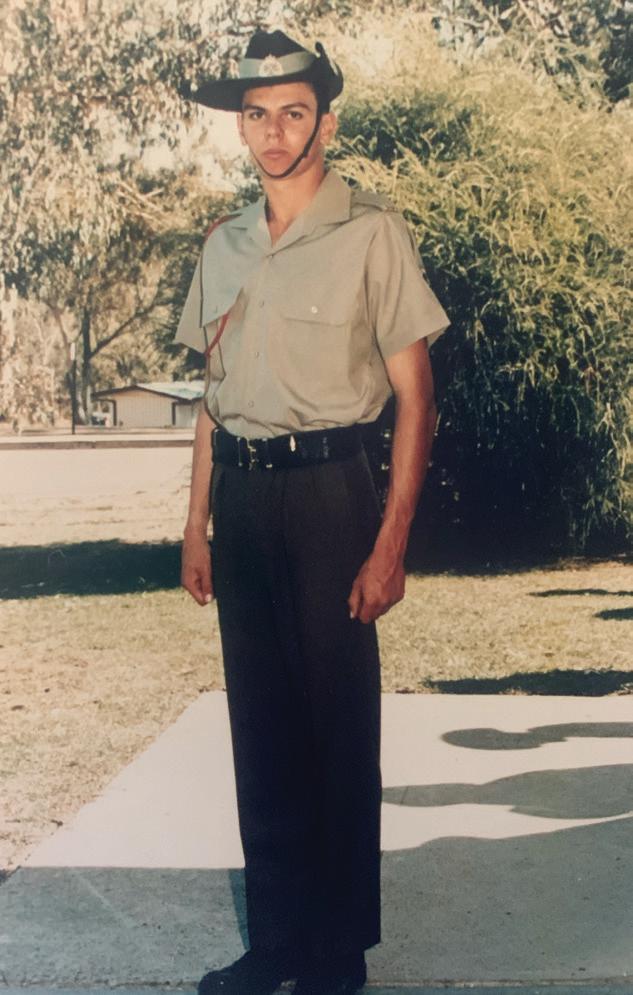
Jeremy Fewtrell finished his recruit training at Kapooka in 1993.
“I’d already developed the ability to improvise, adapt and overcome the unknown. So I came to the FRNSW job with a greater degree of confidence.”
— Jeremy Fewtrell, Fire & Rescue NSW Commissioner and Patron of the NSW Fire Brigades RSL sub-Branch
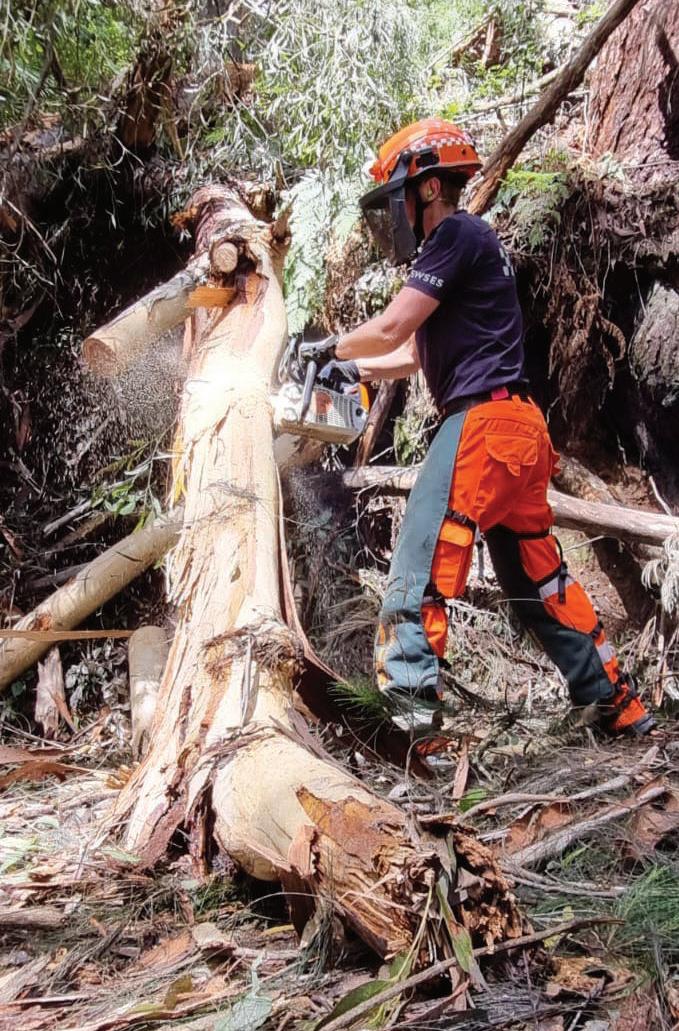
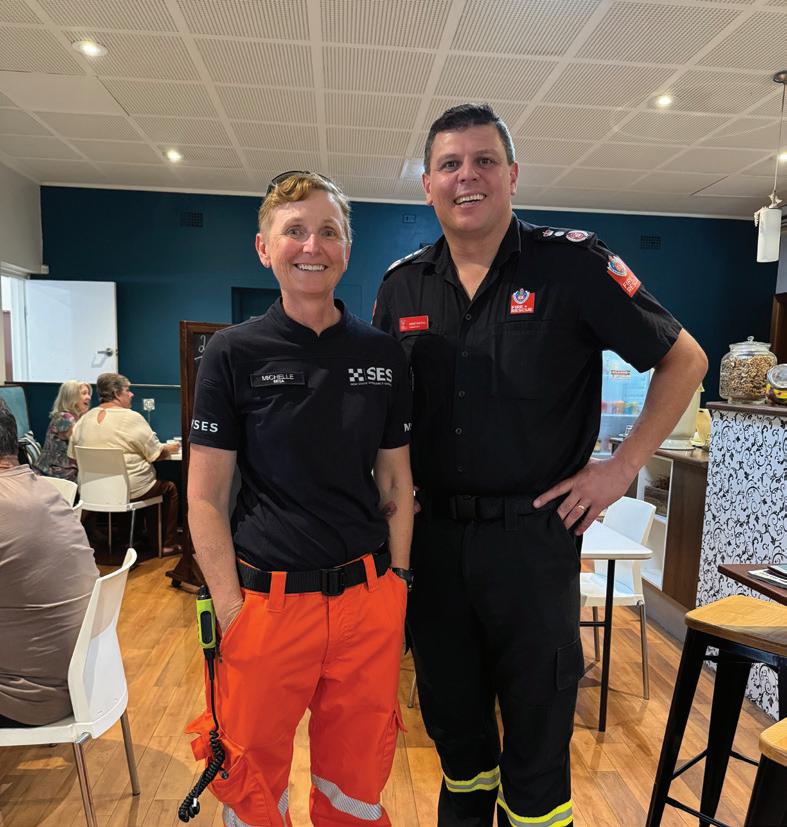
TOP: Michelle De Friskbom and Jeremy Fewtrell during Tropical Cyclone Alfred.
RIGHT: De Friskbom at work during the cyclone
The avid volunteer moved from a training coordinator role to deputy unit commander to region commander for the Sapphire Coast, before stepping down from the latter role in 2024.
“The skills we bring across from Defence include leadership, adaptability and quick decisionmaking. We learn how to deliver outcomes in complex situations. Personally, I think those skills translate well from Defence not only to emergency services but also to civilian life in general.”
These skills are critical during rescue operations, such as the flooding of the Brogo River in 2021.
“It was about 4:00 in the morning,” she explains. “We were alerted to the fact that a man was clinging to a tree in the middle of the river, and had been for some time.
“Another operator had been able to get a safety line out to the tree before I arrived. I then threw a rescue line and the man grabbed hold. I convinced him to let go of the tree he’d been clinging to and hauled him back with me to the riverbank, where police and ambulance workers were waiting for him.”
From the moment they arrived to the moment the man was in the back of the ambulance, says De Friskbom, the entire operation took just 11 minutes.
“The event stands out to me because I know we saved a life that day.”
No one stands alone
Our interviewees’ anecdotes reflect the reality that the majority of veterans – as high as 80 per cent – are considered to have successful and meaningful careers post-transition.
This is particularly the case for Lodding, who recently became the first female President of the Nelson Bay RSL sub-Branch in its 95-year history.
“Behind every veteran, behind every emergency service worker, there is someone … who stands beside them through the long hours.”
— Major Michelle De Friskbom, Queanbeyan RSL sub-Branch
“Veterans aren’t inherently broken,” she says. “We may seek assistance – and RSL sub-Branches like mine are there to help where needed –but veterans leave Defence with worthwhile skills that help them forge meaningful careers after transition.
“In my case, my peers at the sub-Branch saw the worth of my administrative abilities, which I now use in the role of President. I hope I can help encourage younger veterans to put their skills to use like I have. Because although I have a history in leadership positions, here at the sub-Branch, I’m just a veteran making sure no one has to navigate the storm alone.”
As for McNamara, he’s now set on passing on his expertise to the next generation.
“I got plenty of injuries,” he laughs. “My back and knees are always sore. I can't pretend I'm young anymore. My body’s telling me to slow down.
“So I'm at a point now where, considering my background and experience, it’s time to share
my specialist capabilities with younger recruits.”
One’s success later in life goes to show the power of a good mentor, says Fewtrell.
“Bosses at very formative stages in my career have stressed to me that, once you get to a point of mastery in your field, you should ask yourself what’s next,” he says. “I knew I’d become a competent firefighter, so I realised I could start leading a crew, and share with them what I know.”
De Friskbom, meanwhile, o ers a poignant reminder that no single person, even those who put themselves in danger on the daily, stands alone.
“Behind every veteran, behind every emergency service worker, there is someone – a parent, a sibling, a child, a friend – who stands beside them through the long hours, the uncertainty and the sacrifice,” she says. “My family has always been there for me through uncertain times and big life decisions.
“I couldn’t do what I do without them.”
IN THEIR OWN WORDS
INTERESTED in learning more about the actions of our four veteran heroes?
Scan the QR codes below to read their stories in more detail.
Lisa Lodding
Scott McNamara Jeremy Fewtrell
Michelle De Friskbom
ANZAC DAY 2026
A MOMENT TO REMEMBER
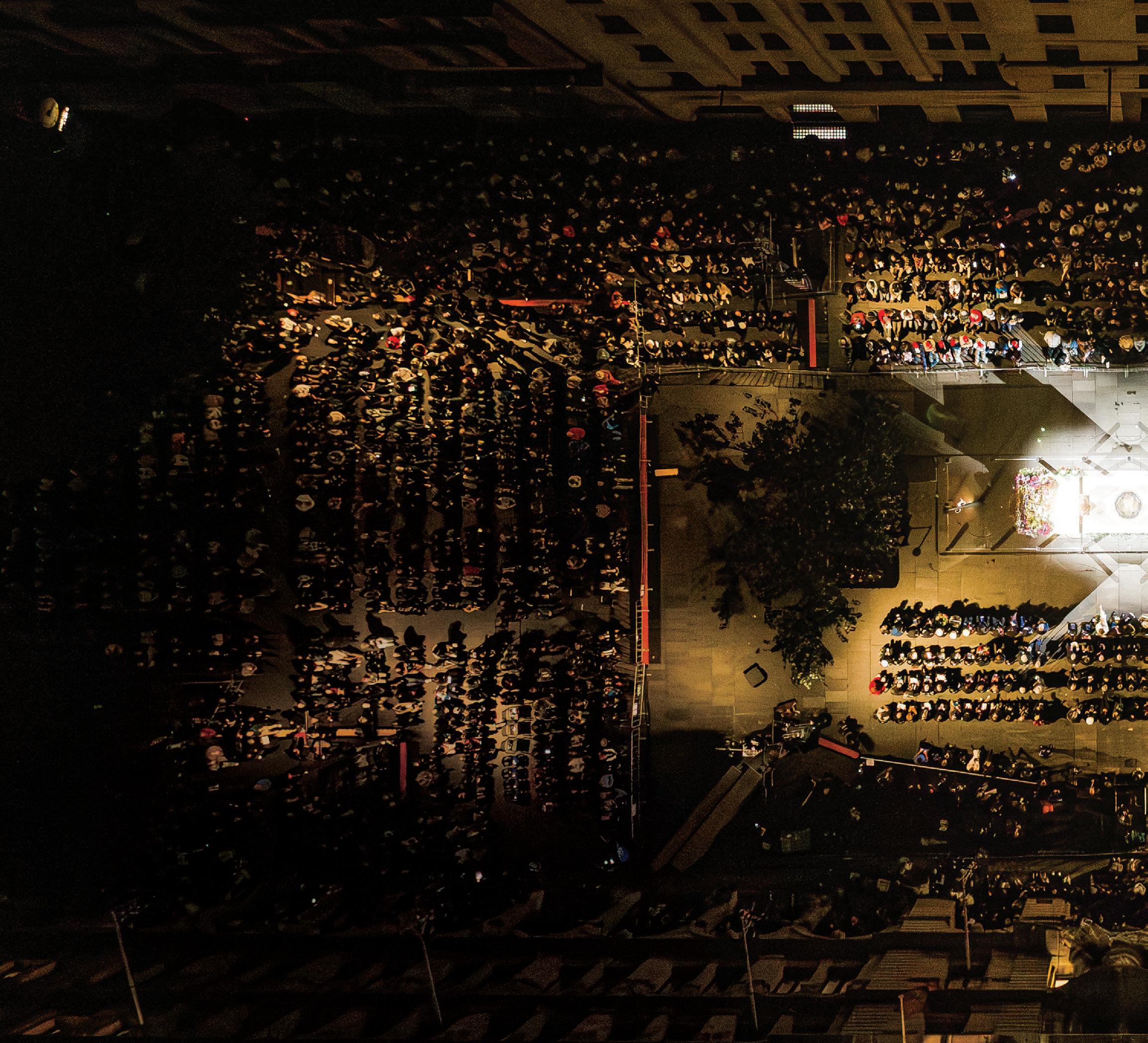
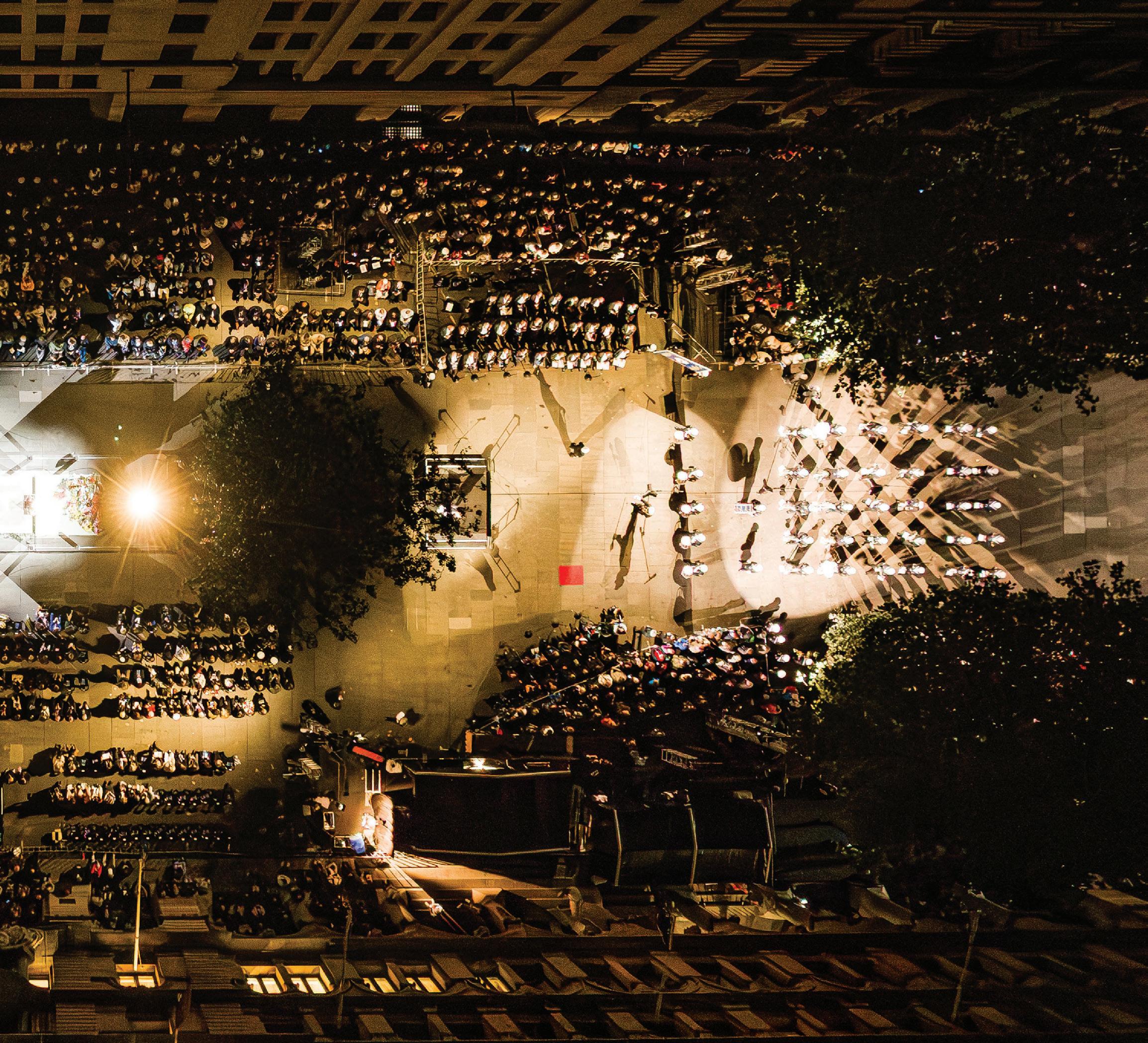
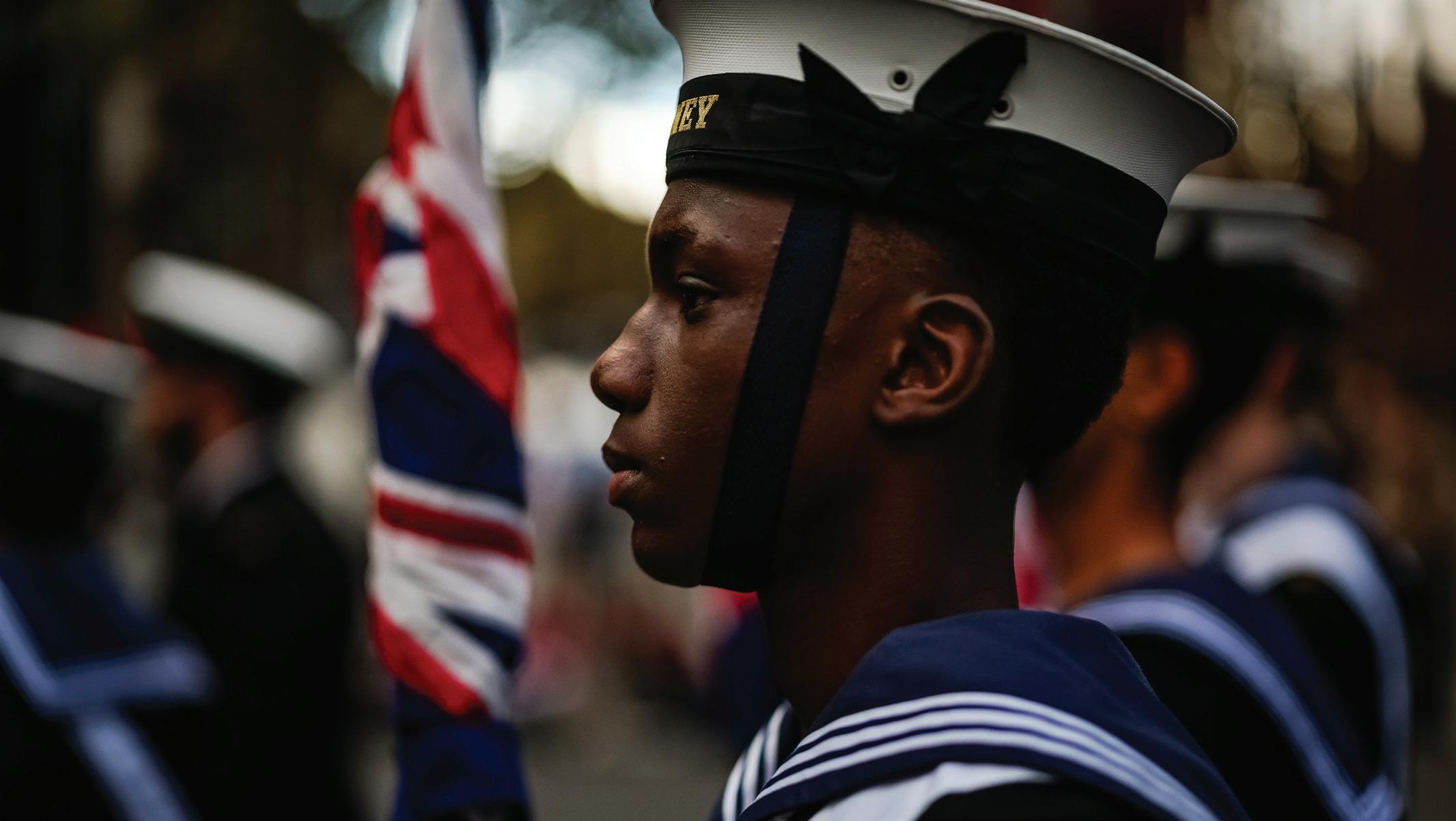
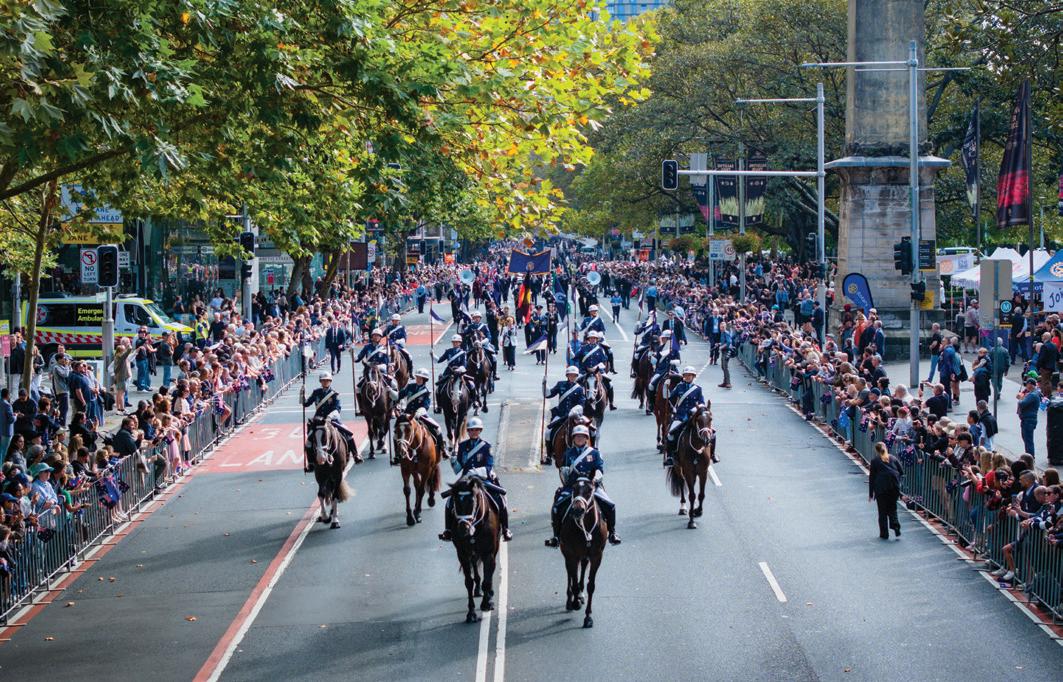
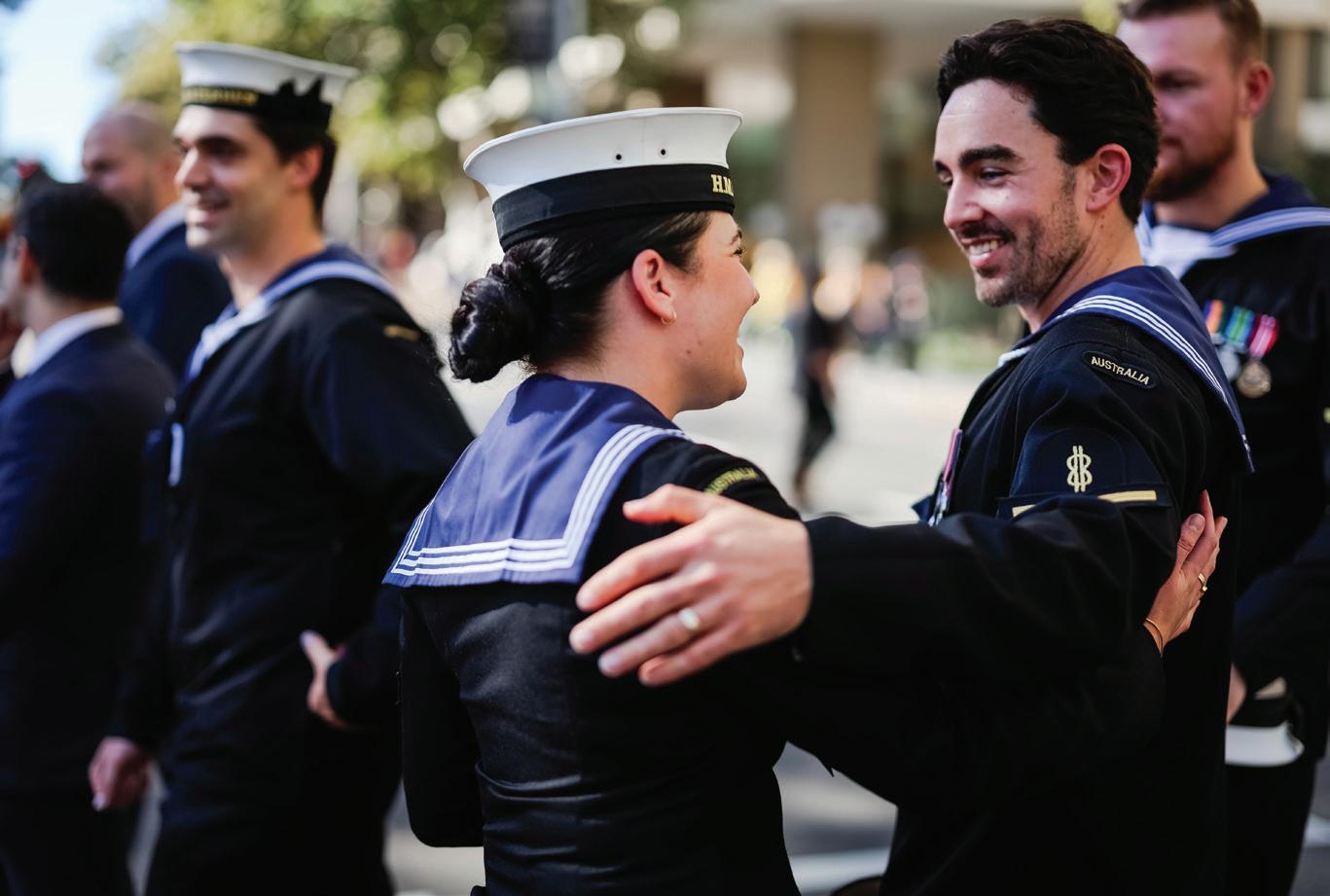
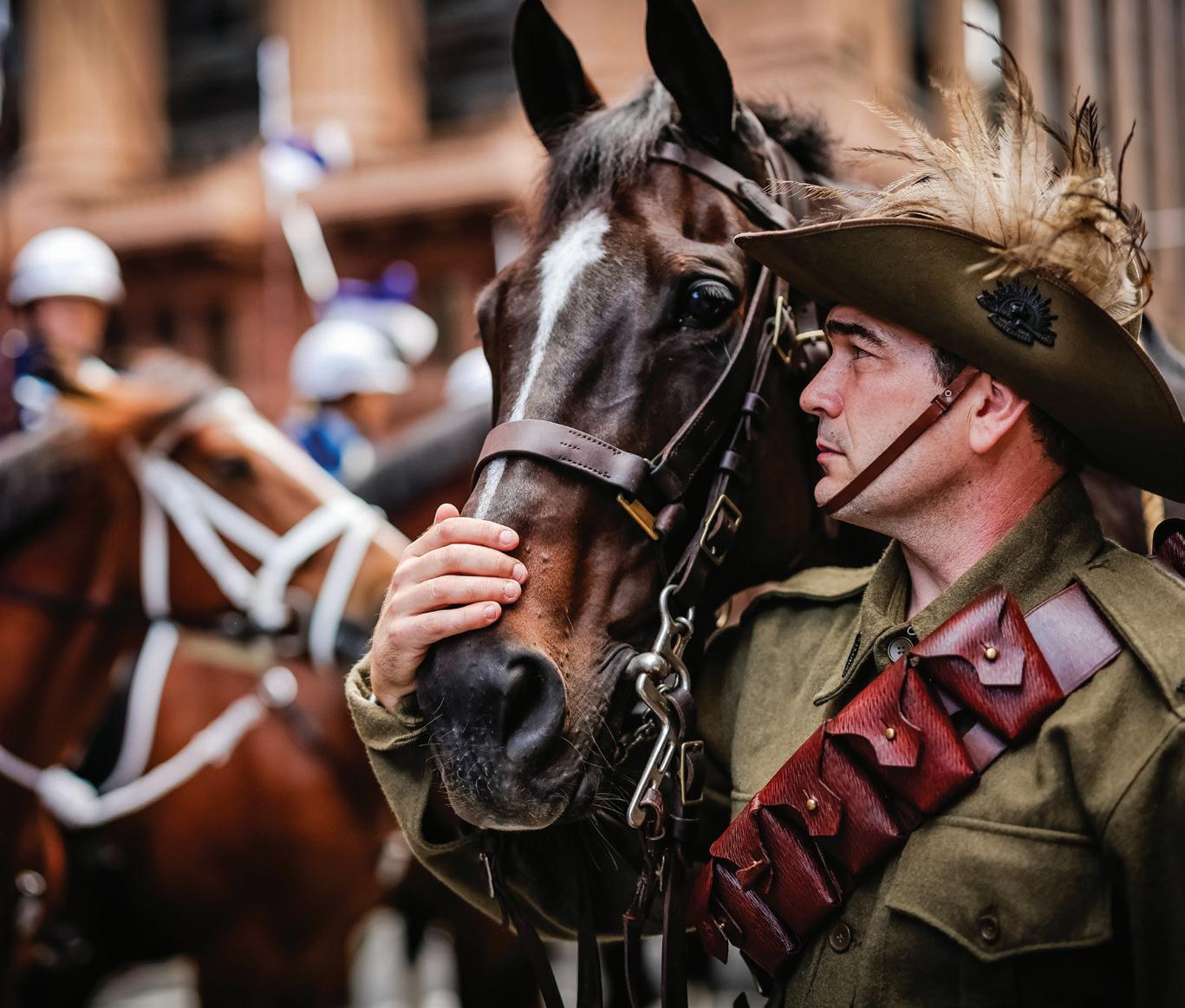
Current and ex-serving Defence personnel, their families and the general public lined the streets of the Sydney CBD for ANZAC Day commemorations in a show of community and camaraderie.
This year’s ANZAC Day Dawn Service marked almost a century since the first o cial service was held at the Martin Place Cenotaph in 1928, when a small group gathered for a wreath-laying ceremony. Over time, the crowd has grown
significantly. This year’s service saw more than 11,000 people attend, up from 7,300 last year.
First, an Acknowledgement of Country was given by Pastor and Uncle Ray Minniecon. A small number of hecklers was drowned out by the large crowd,
who a orded Minniecon a rousing round of applause after his address.
Rear Admiral Chris Smith AM, Commander Australian Fleet, provided the commemoration address, while Her Excellency the Hon Margaret Beazley AC
The 11,000-strong crowd at the Martin Place Cenotaph
KC, Governor of NSW, gave the Dedication. RSL NSW Acting President Vince Williams recited ‘The Ode’.
A special Star Service for ConsulsGeneral was hosted by RSL NSW at the Anzac Memorial in Hyde Park, before the focus shifted to Elizabeth
Street for the annual ANZAC Day March through the CBD.
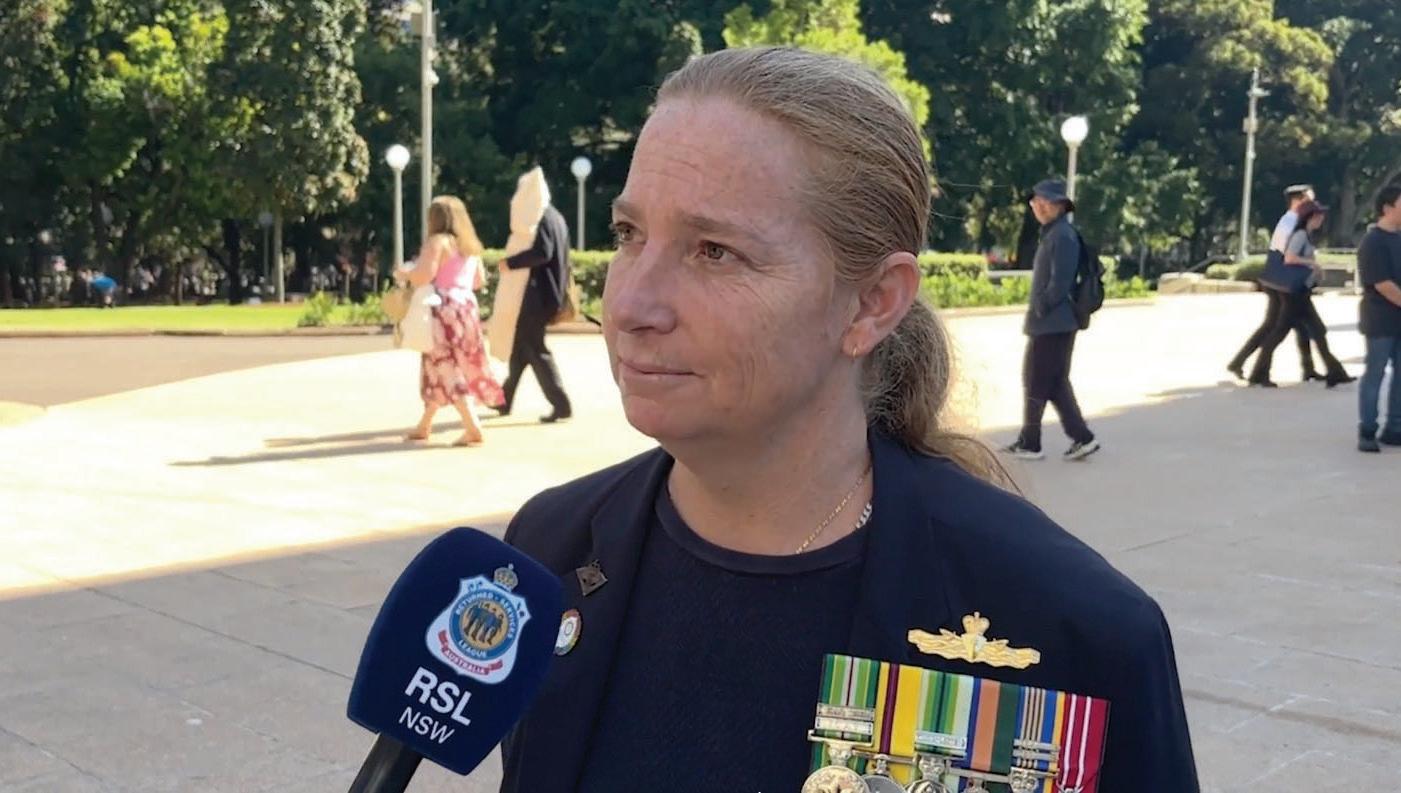
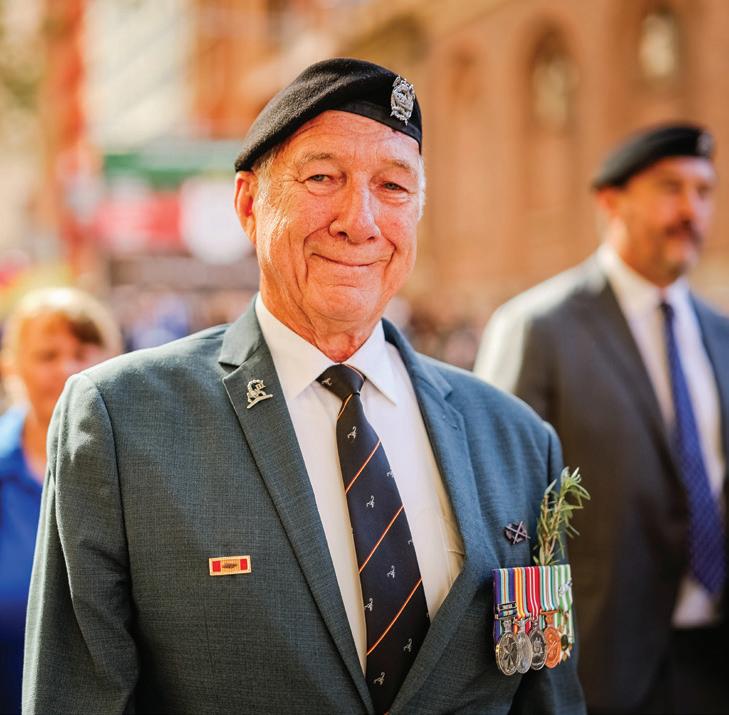
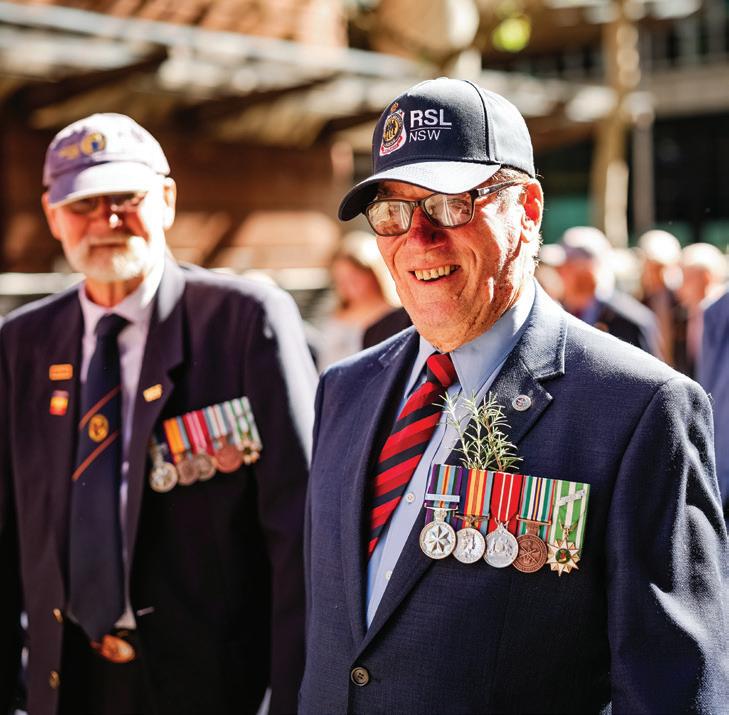
Reveille spoke to veterans during the March about what the ANZAC spirit means to them, what they think about while marching, and how the veteran community can be better when it works together.
You can read some of their responses on the following pages.
After the March, a commemoration service was held at the Anzac Memorial, and in the evening, a sunset service at the Martin Place Cenotaph brought the day’s commemorations to a close. »
“Sometimes, I lie in bed at night and think about how lucky I am to be alive.”
— Brian Barry
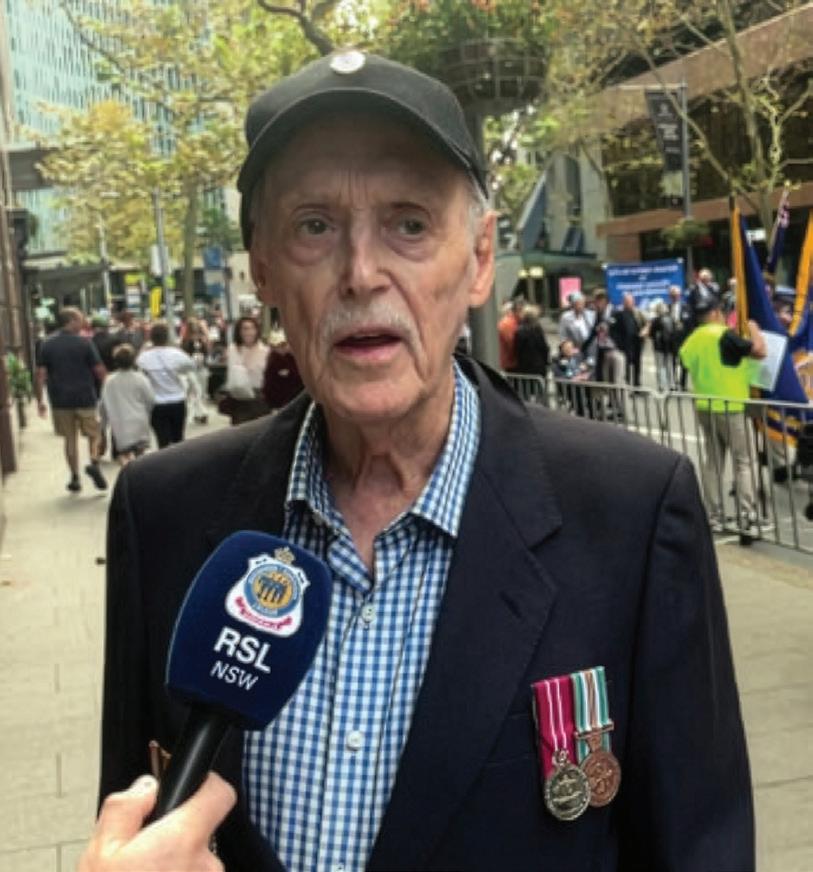
Peter Hussey
FORMER NATIONAL SERVICEMAN
“I marched with both my medals and my father’s. He earned a Gallipoli star in World War I and was in the garrison during World War II. He lived a good life until he was 88.
Brian Barry
Mosman RSL sub-Branch
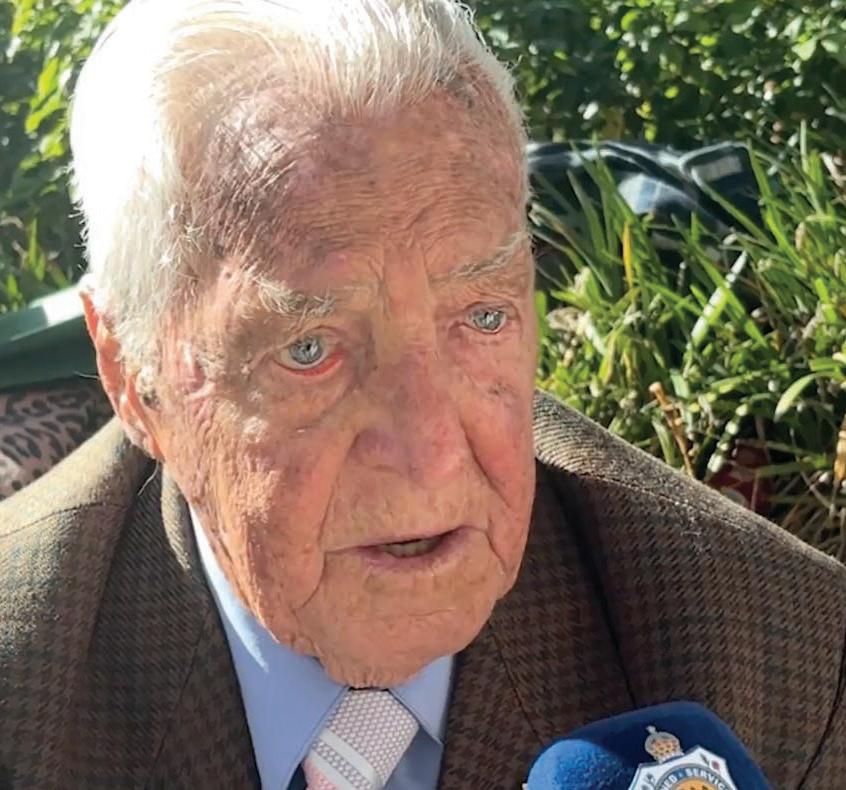
102-YEAR-OLD WORLD WAR II VETERAN
“I met my wife Rose at a picnic when I was 15. We later got married just before I left for New Guinea during World War II, aged 18.
“She became the backbone of our family. We’d been married for 73 years when she passed away.
“I get quite emotional on ANZAC Day, remembering how there are a lot of blokes who should be here but aren’t, which is a shame. The old saying, about being here today and gone tomorrow, it’s true.
“Sometimes, I lie in bed at night and think about how lucky I am to be alive. Then I wake up in the morning and thank the Lord for giving me another day.”
“Until recently I didn’t give ANZAC Day much thought. But for the past two or three years, I’ve been taking an interest in it. I live on Park Street in the CBD, so it’s been a good experience.
“ANZAC Day is a good thing for people. It refreshes their memory about what’s happened before. I think you have to learn from past events.”
“ANZAC Day is a good thing for people. It refreshes their memory about what’s happened before.” — Peter Hussey
Rachael Cosgrove-White
President, Mascot RSL sub-Branch
SENIOR VETERAN ADVISOR FOR THE REPATRIATION COMMISSIONER, DEPARTMENT OF VETERANS’ AFFAIRS
“As a veteran with 25 years of service in the Navy, I’m proud to see so many people attend the march in the best city in the world. It’s also heartwarming to see all the kids with their parents coming out to learn what ‘ANZAC’ means to us veterans.
“My message to the veteran community is pretty simple. Familiarise yourself with what it means to be an ANZAC, where the word came from and the legacy it will continue to have forever, I hope.
“Show your support to the rest of the veteran community – and not just on ANZAC Day. Veterans are everywhere – at workplaces, at schools, at volunteer organisations. Spare us a thought, not only today but on all other days of the year as well.
“Because to me, the ANZAC spirit means mateship. It means sticking together, staying together and never letting anyone down.” »
“Show your support to the rest of the veteran community – and not just on ANZAC Day.”
— Rachael Cosgrove-White
MOMENT OF PRIDE
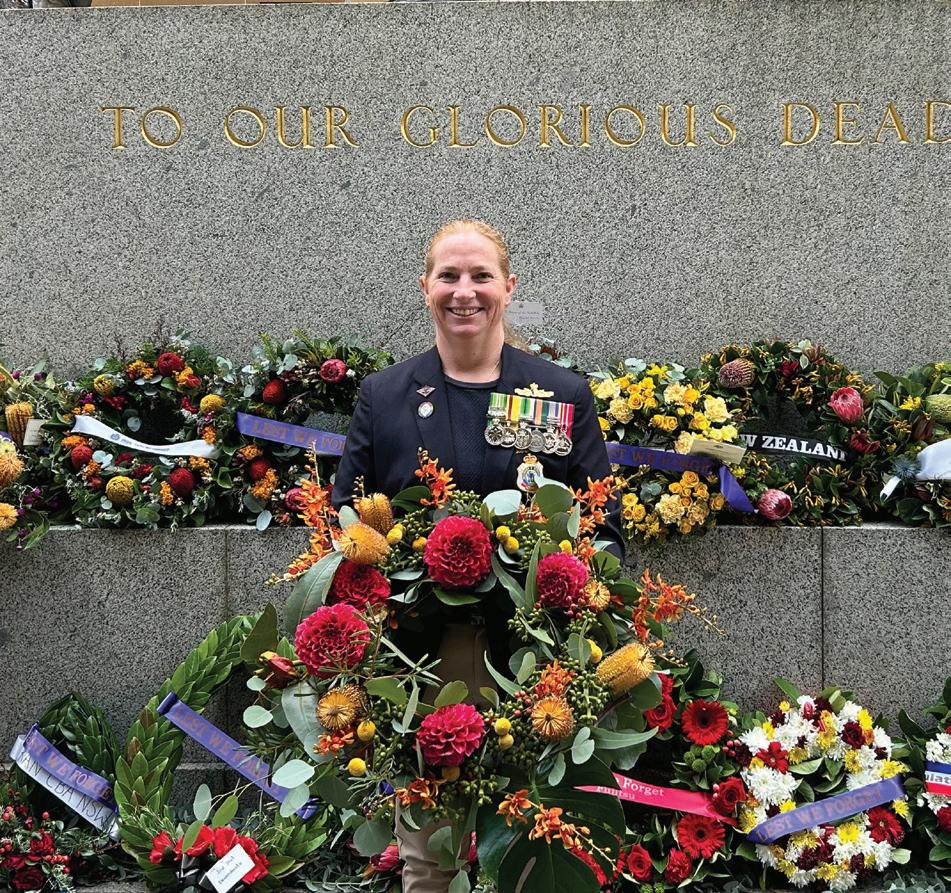
Around 50 members of DEFGLIS, a support and advocacy organisation for LGBTIQA+ veterans, laid rainbow wreaths at ceremonies across the country, including in Sydney, marking one of the largest coordinated wreath-laying e orts by the organisation to date.
DEFGLIS President and RSL NSW member Rachael Cosgrove-White said the wreaths represent not only remembrance but also the resilience of LGBTIQA+ veterans in and out of Defence, many of whom were forced to hide their identity while serving.
WATCH vox-pop interviews on the ground at the ANZAC Day March. Just scan the QR code.
A UNIFIED COMMUNITY
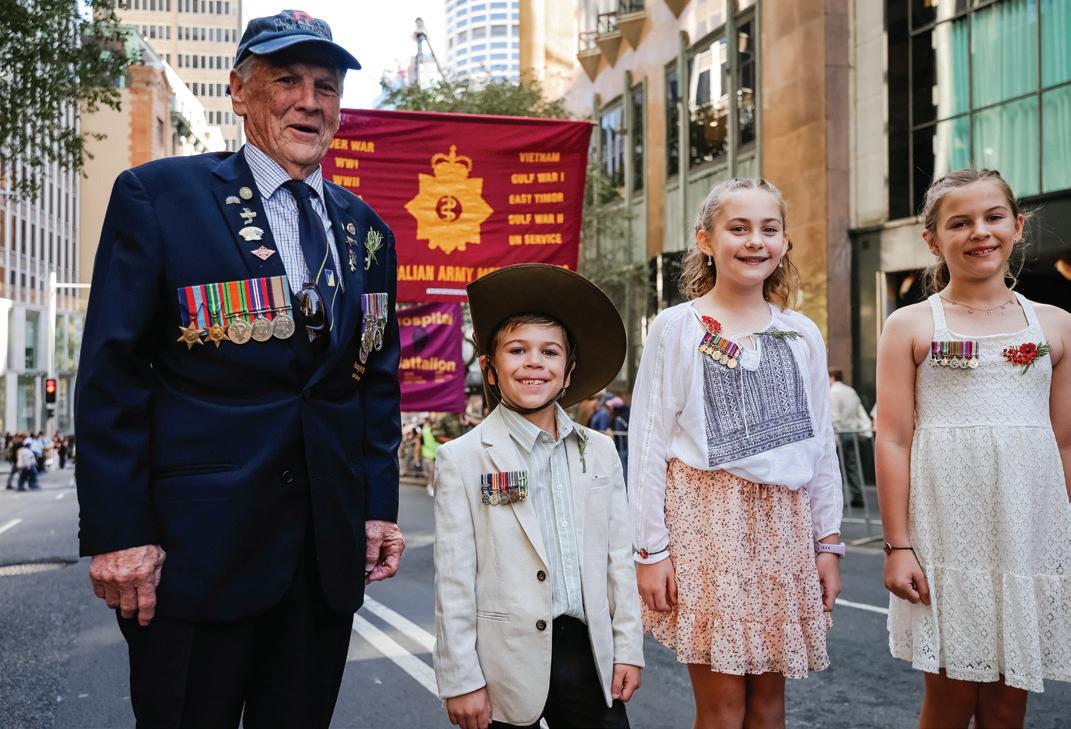
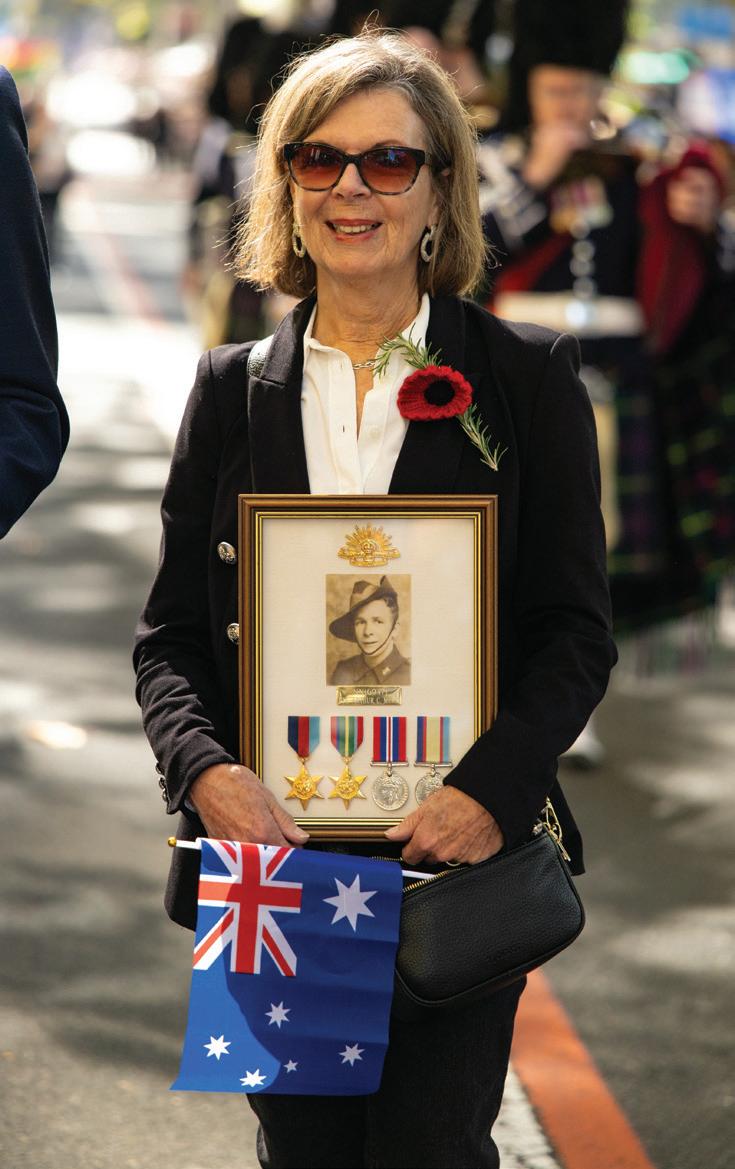
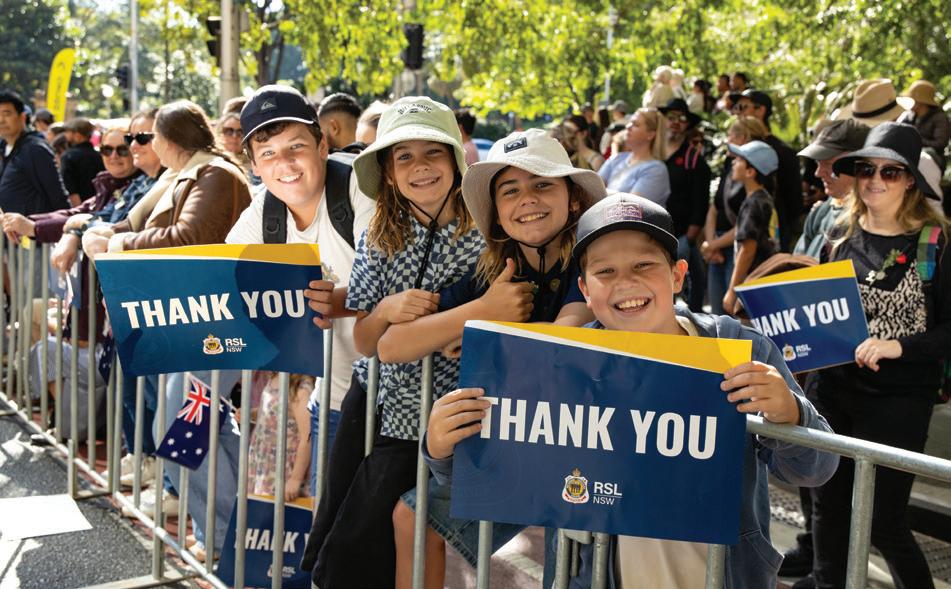
Many children lined the route or marched alongside family members, proudly wearing their ancestors' medals on the right breast.
Members of the public held up 'thank you' signs and cheered when veterans passed.
SUB-BRANCH SERVICES
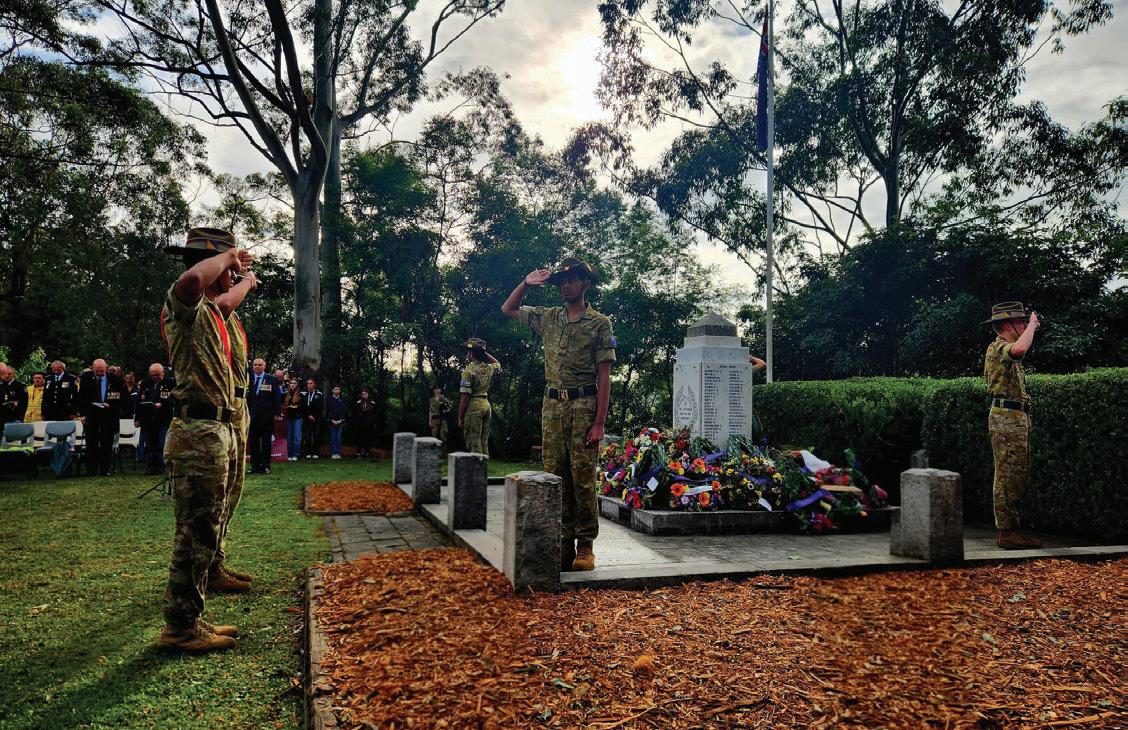
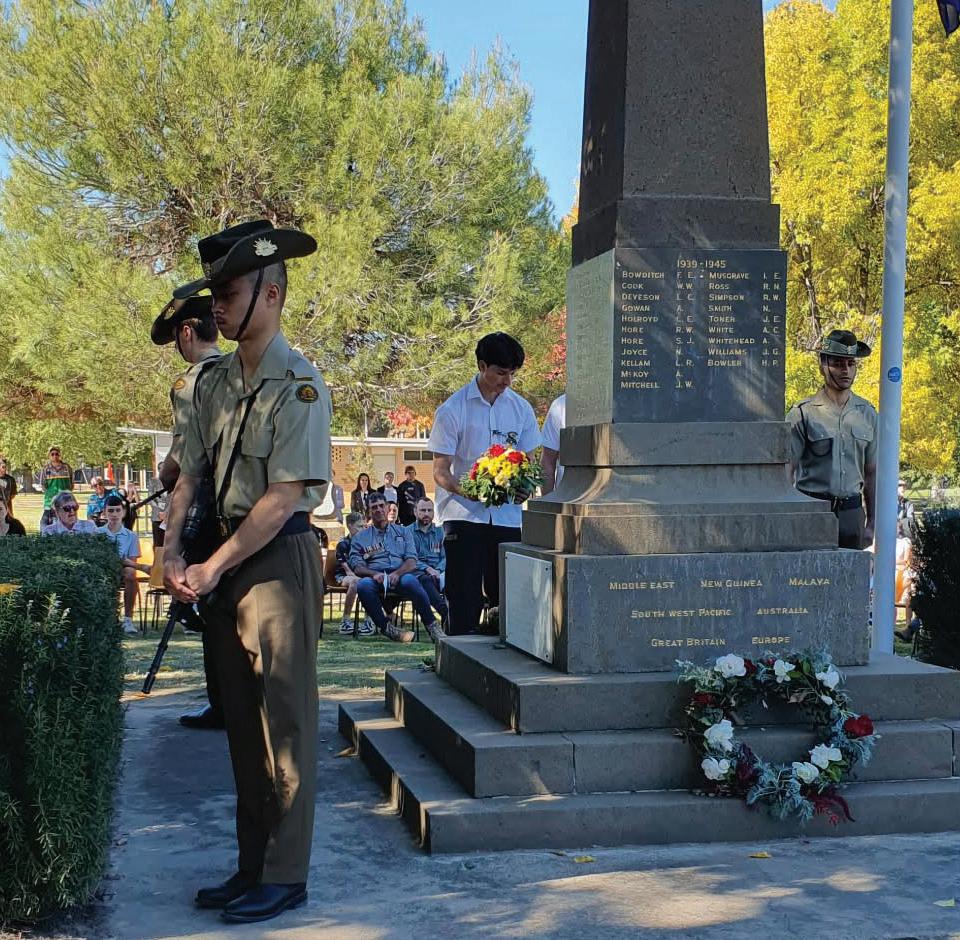
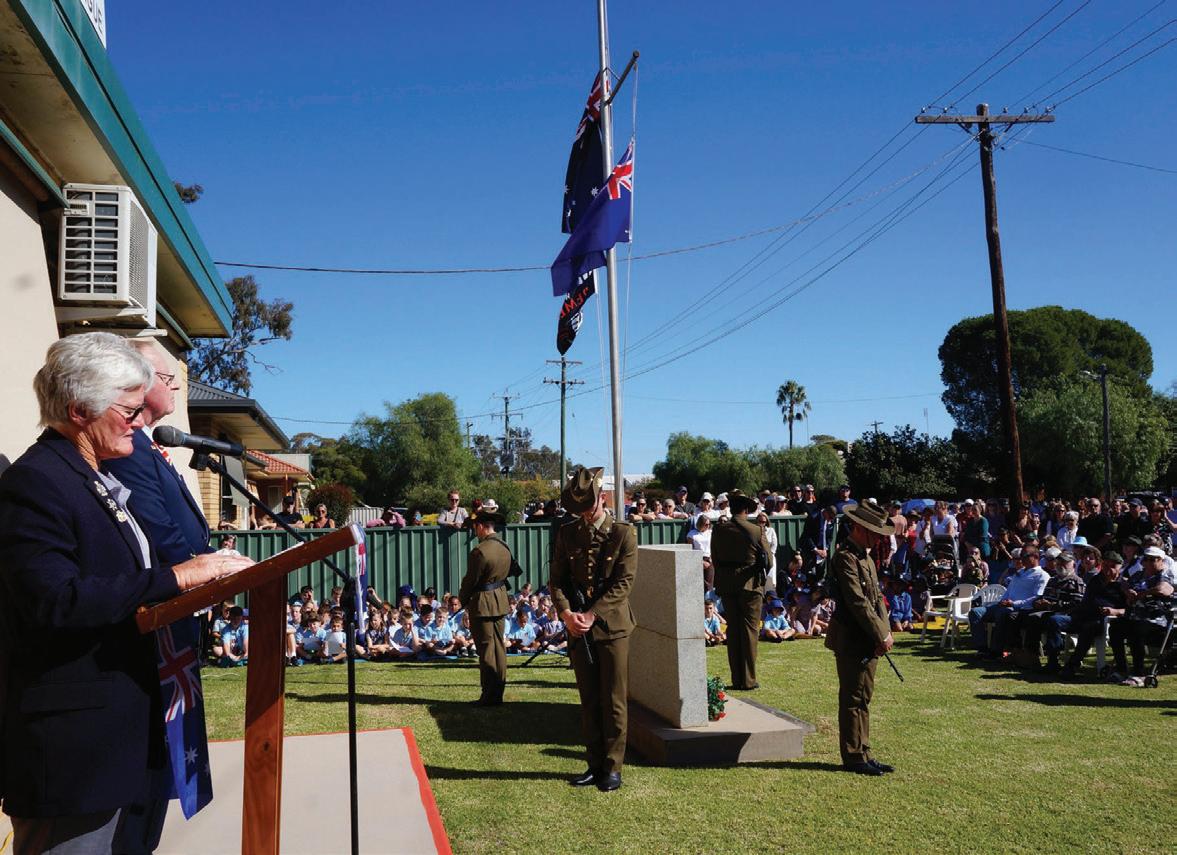
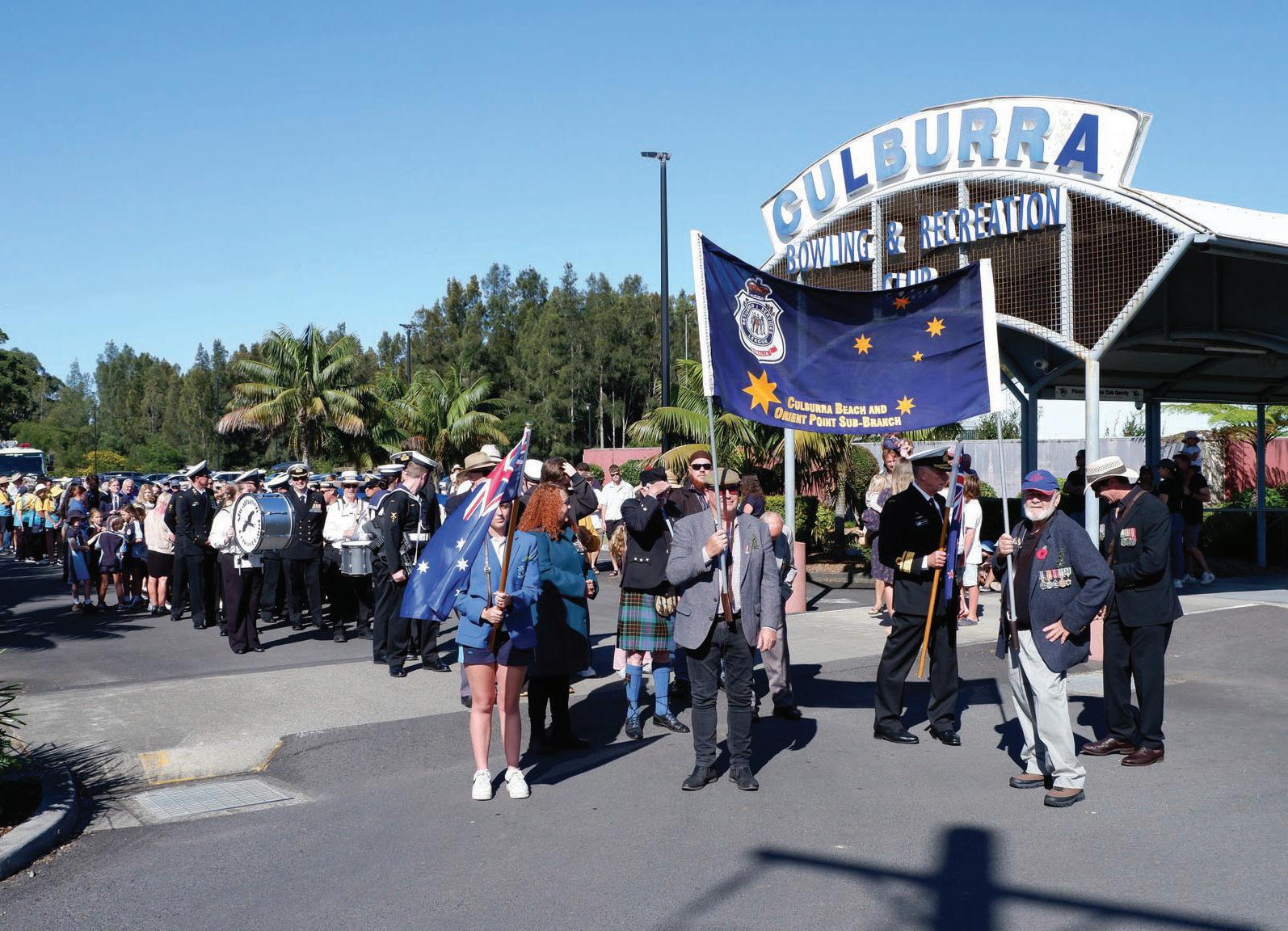
ANZAC Day services organised by RSL sub-Branches across NSW brought communities together to honour the service and sacrifice of current and former Defence personnel, and keep the ANZAC spirit alive.
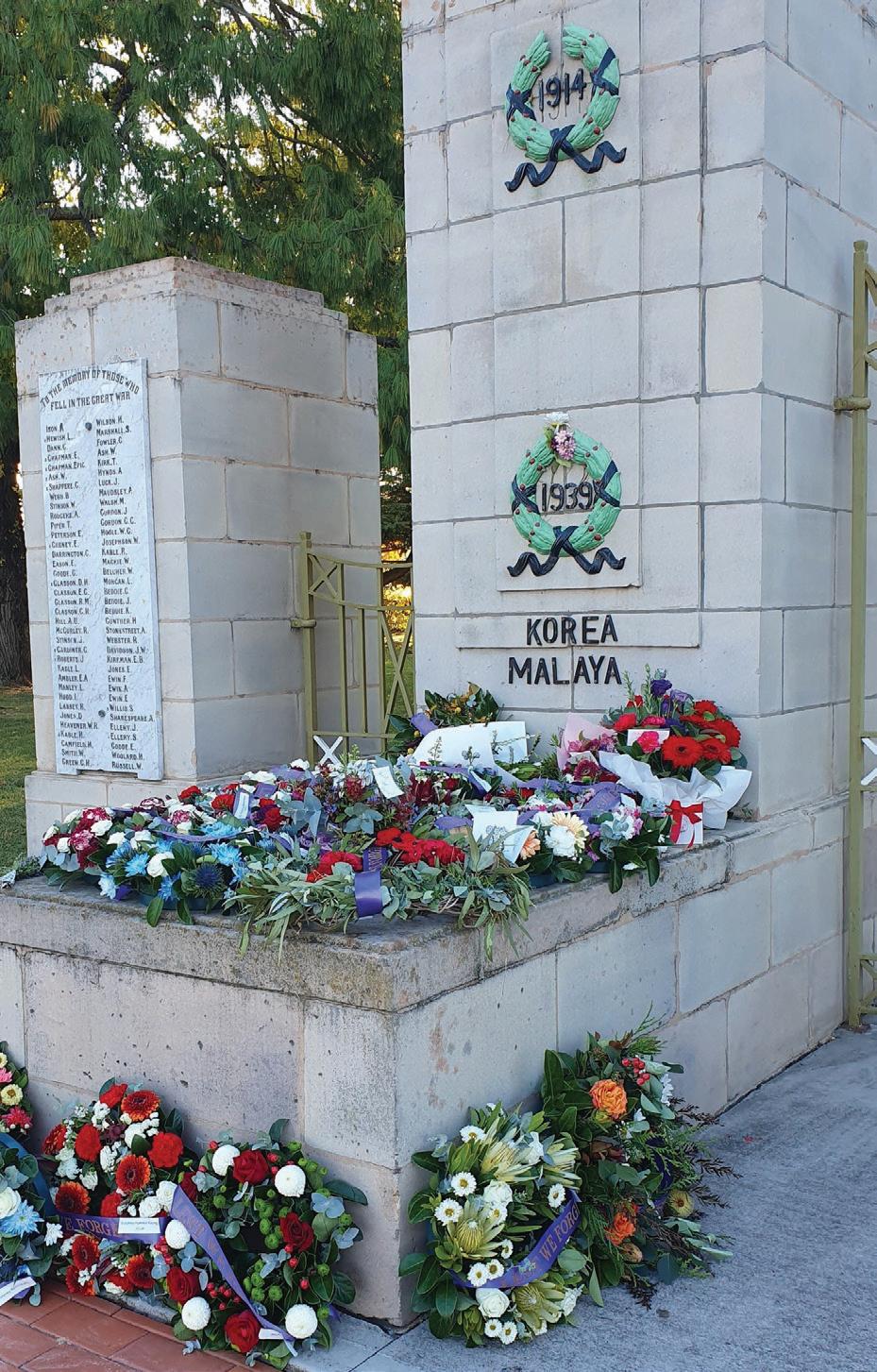
BLAYNEY
A service organised by the City of Orange RSL subBranch in the nearby town of Blayney included the laying of many wreaths at the Blayney War Memorial Gates.
BEROWRA
The Berowra RSL sub-Branch's service provided a special opportunity for local residents to share a meaningful moment of remembrance.
HOLBROOK
On Facebook, the Holbrook RSL sub-Branch called the turnout for its ANZAC Day service “magnificent”.
TOCUMWAL
Jan McCarthy, former Matron-in Chief of the Royal Australian Army Nursing Corps, spoke at a service in Tocumwal, on the NSW-Victoria border.
CULBURRA BEACH-ORIENT POINT
In the Shoalhaven, the Culburra Beach-Orient Point RSL sub-Branch saw a record attendance this year, with more than 200 people attending the Dawn Service and up to 400 at the March.
STAR SERVICE
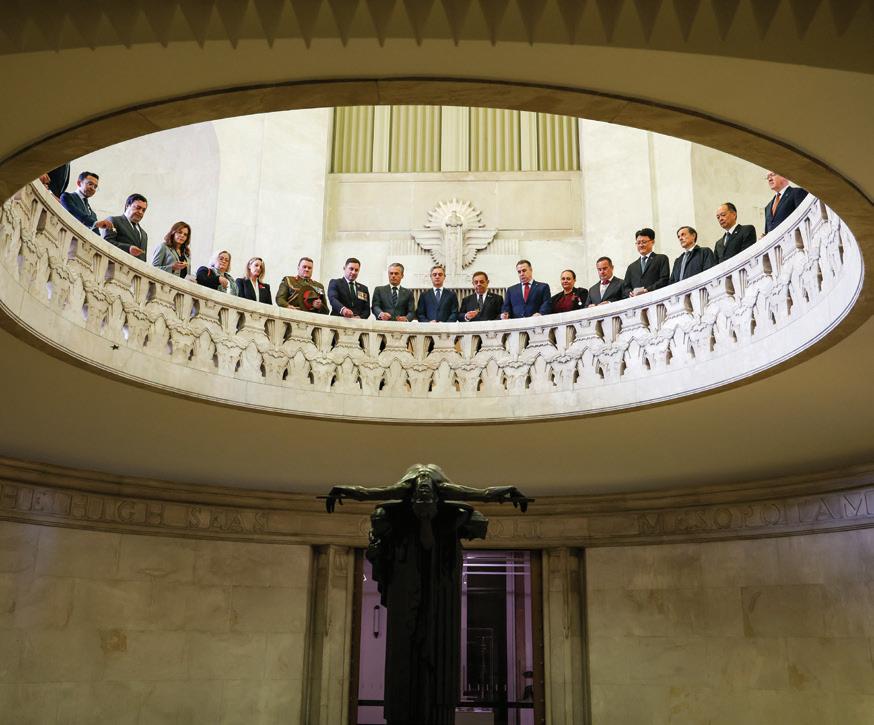
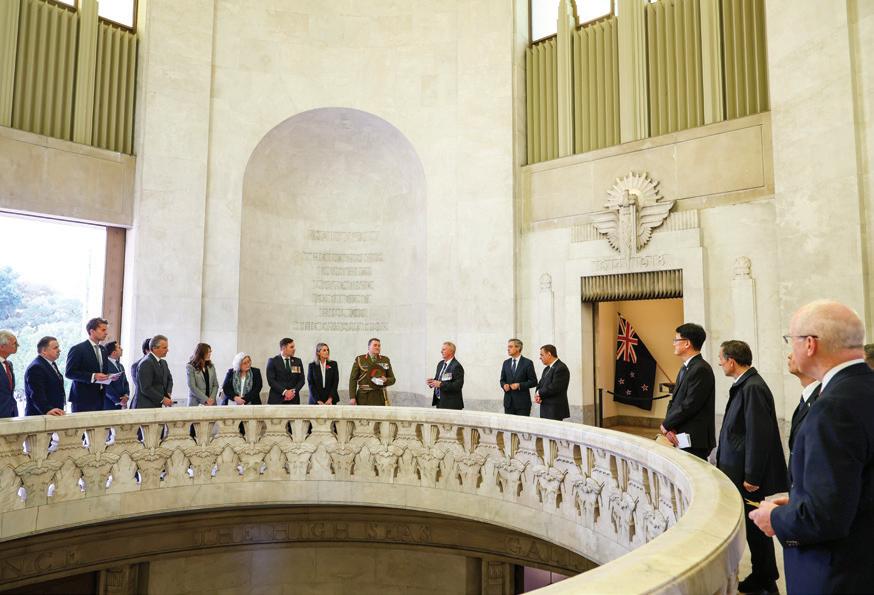
In Sydney prior to the start of the March, Consuls-General from around the world gathered for the annual Consular Star Service, reflecting the virtues of international cooperation and collaboration.
Louise Sullivan, Chair of the RSL NSW Board of Directors, hosted representatives from Belgium, Canada, Egypt, France, Germany, Ireland, Japan, Namibia, New Zealand, the Netherlands, South Korea, Türkiye, the United States and the United Kingdom.
The service saw stars released from the Hall of Memory balcony down into the Hall of Silence.
TOGETHER WE STAND
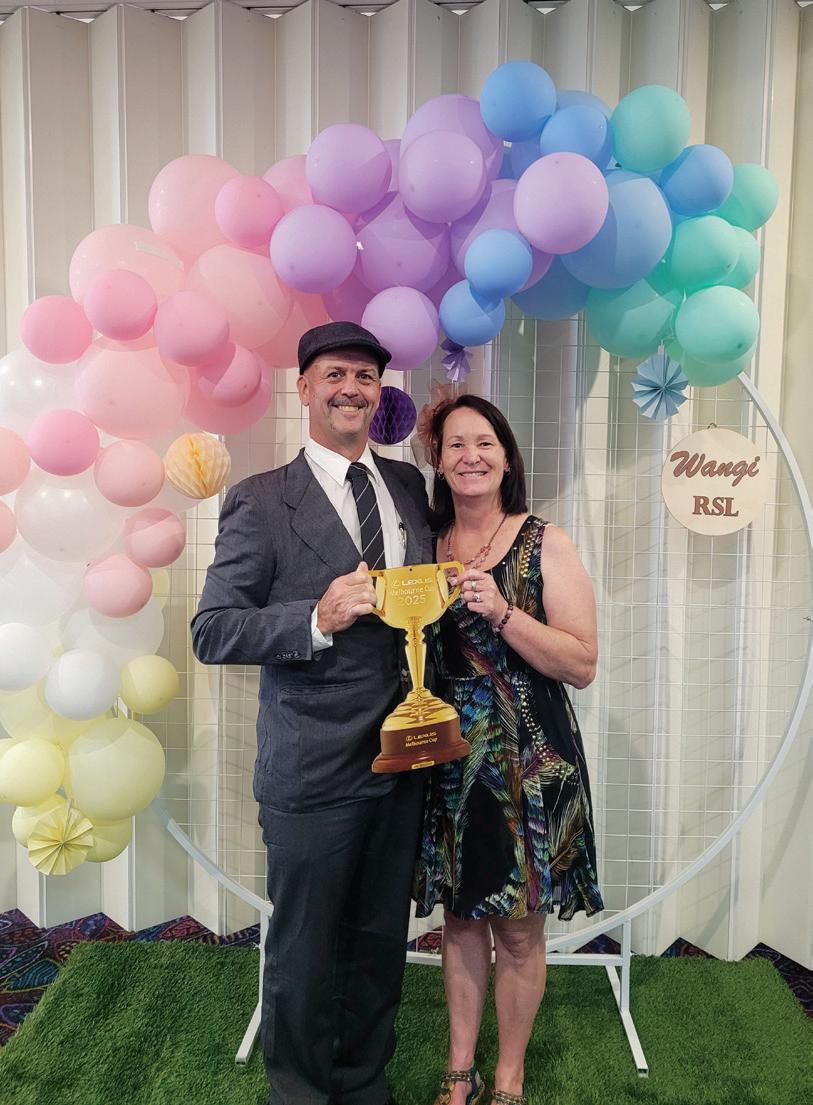
Wellbeing support, an all-are-welcome approach to membership and activities, and transparent succession planning are transforming the future of the Wangi Wangi RSL sub-Branch for the better.
Words by Chris Sheedy
Andrew Freame
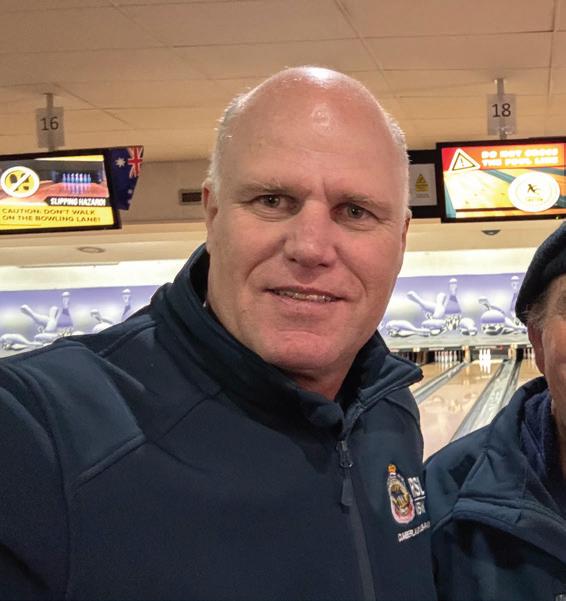
President Andrew Freame brings 50 years' experience in the Navy to the sub-Branch, alongside an appreciation of the energy brought by younger veterans.
Ijoined as a junior recruit in October 1974 and served for half a century. So when I discharged, I had to find something that gave me purpose again.
For me, the sub-Branch became an anchor point. A place where I could reconnect. Being part of commemorations, catching up with old mates and making new ones, that keeps me grounded. Service doesn’t stop when you take the uniform o!. It just changes shape.
The skills I brought from Defence – leadership, planning, communication, staying calm when things get complicated –I used every day in the Navy, but I didn’t really appreciate how transferable they were until I got involved at the sub-
Branch. They translate well into community work.
When I stepped into the role of President, one of the key focuses was engaging younger veterans and current Defence personnel. There can be a perception that the RSL isn’t for them, so we wanted to change that, make the sub-Branch more inclusive and reflective of today’s Defence community.
That’s where working with people such as Kristy has been so important. We share the same vision around making the subBranch more welcoming and connected to the community.
We’ve introduced activities that bring people together. The barefoot bowls day, organised via the RSL NSW Sport & Recreation Program, was a
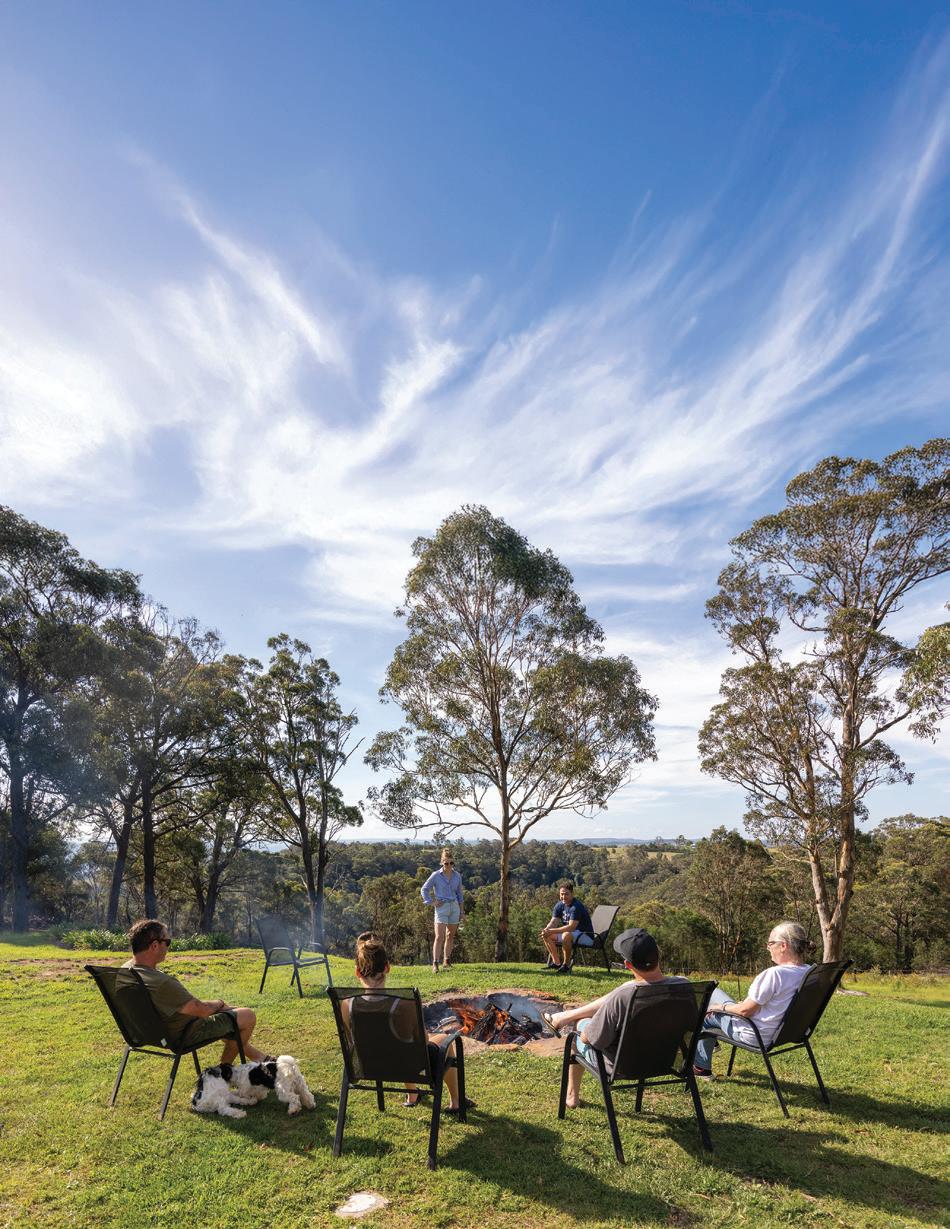
great success, and we’ve started a weekly walk-and-talk over breakfast every Sunday. It’s open to everyone, not just members. Dogs can come, too.
The idea is to create opportunities where people feel comfortable to be there, regardless of their circumstances. Inclusion is key.
Standing up the RSL Auxiliary is an important step too. Veterans don’t exist in isolation. They have families, partners and supporters who are part of their journey. The Auxiliary gives those people a way to contribute. It strengthens our volunteer base, brings in new skills and perspectives and helps us run better events.
“The Auxiliary … strengthens our volunteer base, brings in new skills and perspectives.”
— Andrew Freame, Wangi Wangi RSL
sub-Branch
I think other sub-Branches can learn from opening the door wider. We work closely with schools and community groups. Whether through commemorations or projects, it helps build understanding and connection. It plants the seed for the future.
For me, it’s all about looking after people. The RSL gives you the platform to do that. »
Community
Kristy Cotter
Having suffered PTSD since discharging from the Army, Kristy Cotter’s connection with the Wangi Wangi RSL sub-Branch brings her great comfort in knowing she can help others – and that others are also there for her.
Ijoined the Army in 1999 and served until 2005. I didn’t come straight out and get involved with RSL NSW. It was my husband Matt who pushed me to do it. He joined, then I started going along to support him.
I’m a committee member and help where I can. As I’m unwell and housebound some of the time, I don’t have a formal role at the sub-Branch. But I’ve found a place where I can still contribute, and that has been really important.
For me, joining the sub-Branch has widened my social circle. I’ve met a lot of people. I help the ladies put the ra es together, and come along when Matt’s doing ra es for ANZAC Day or Remembrance Day.
There’s something special about the environment. After you get chatting to someone once, you end up talking with them every time you see them. It’s very easy to make friends and feel like you’re a part of something.
The skills from my Defence career have carried over. There’s a similar structure in the way things are run and when talking about standard operating procedures, for example. That familiarity helps us understand expectations and how to work together.
At the same time, what we’re doing feels di!erent in a really positive way. We’re bringing more people in and making activities more accessible. Everything from our Australia Day barbecue, barefoot bowls days and even a stand-up paddleboarding day on the lake. People loved the paddleboarding event, and those who couldn’t come have asked when we’ll do it again!
If a local veteran has an accident or ends up in hospital, we’ll organise a care package. It takes
the pressure o! and shows them that they’re being looked after. That’s the most rewarding part.
Importantly, we’re opening things up to the broader community. There are veterans and families out there who don’t always feel comfortable coming along, so we’re thinking about how to make it easier for them. Including through the Auxiliary, which is being brought back so people who don’t have a direct connection to Defence can still be involved.
It’s about inclusion, making sure people feel like they belong.
“The skills from my Defence career have carried over. There’s a similar structure in the way things are run.”
— Kristy Cotter, Wangi Wangi RSL sub-Branch
Free tools to help you reach local veterans
A range of promotional tools is available to sub-Branches to reach out to veterans in their community, promote services and support, and encourage them to join RSL NSW
Download, print or order on-brand resources from the RSL NSW Member Portal. Visit the ‘Events and Promotional Tools’ section to find:
ro ot onal ater al, including signage, posters, and banners, to help you promote your sub-Branch to local veterans and their families
oc al e a resources, templates and guides to make it easier for your sub-Branch to connect with community online
vent collateral to promote your meetings, Sport & Recreation Program, and social events and build your veteran community
ne e er elco e t, to turn interest into membership and active sub-Branch involvement
Scan the QR code to view the Member Recruitment Toolkit and instructions on how to order Need help accessing the
STATEWIDE
THREE YEARS OF THE RSL NSW SPORT & RECREATION PROGRAM
The RSL NSW Sport & Recreation Program is Australia's largest veteran sports program, setting the standard for social and wellbeing-focused activities for veterans and families.
The Hill to Harbour event was supported by RSL NSW.
Activities can be small or large, and range from simple (but e ective), such as a walk along the river or a chat over co ee, to more
energy-intensive, such as a family games day or a dance workshop.
Lea Tibbey, RSL NSW Sport & Recreation State Coordinator, said veterans have a renewed sense of community.
“I was at the City of Penrith RSL sub-Branch for their co ee catchup recently, which brought along 30 locals, including 30-year-olds through to 90-year-olds. It was phenomenal to see how they built connections even without doing anything ‘major’ – sitting down for a casual chat was enough to get veterans out of bed in the
morning and along to the event.”
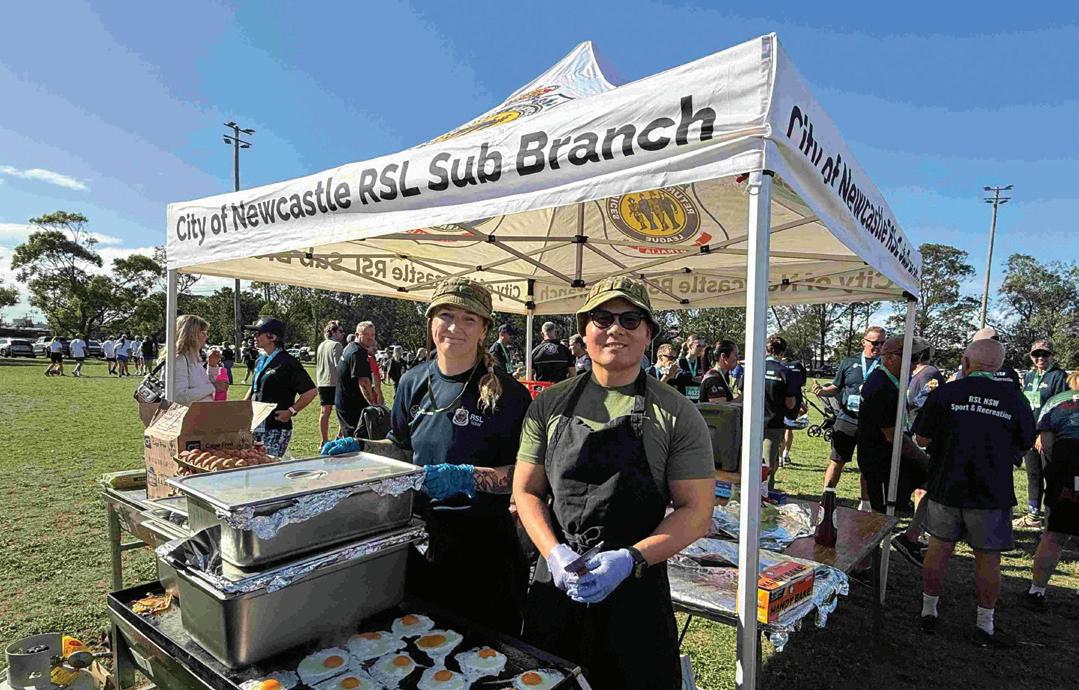
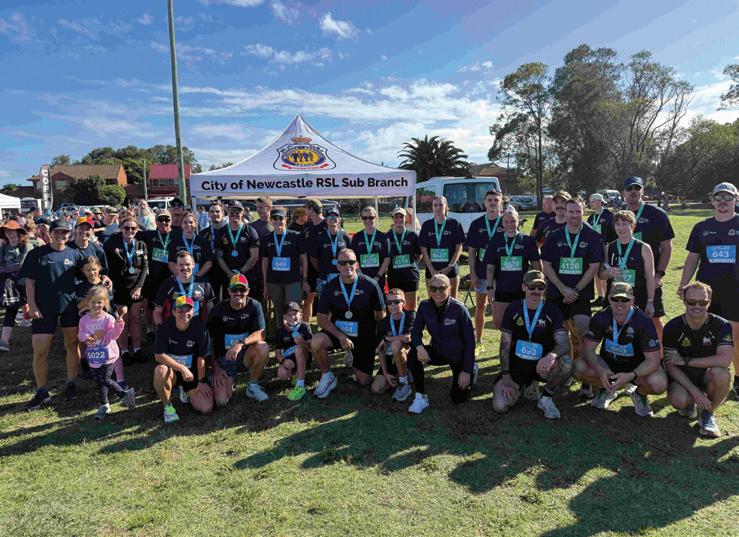
RSL NSW supported the 12-kilometre Hill to Harbour run in Newcastle in March, an event that attracted more than 130 current and former Defence personnel, many of whom wore branded RSL NSW Sport & Recreation gear.
“It was our inaugural year sponsoring the event, so we were proud to have so many runners and walkers take part,” said Tibbey, who added that the event builds upon existing relationships between RSL NSW and Defence bases,
The City of Newcastle was among the sub-Branches represented at the Hill to Harbour fun run.
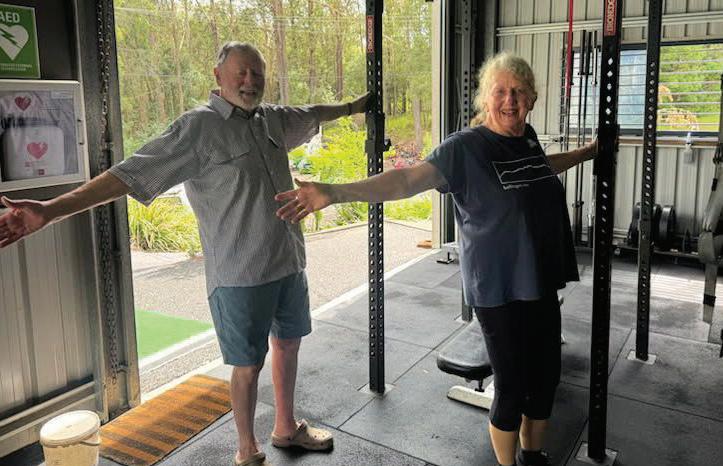
RSL NSW members Kevin Franklin and Moira Franklin OAM joined a Bellinger River sub-Branch fitness activity.
BY THE NUMBERS
RSL sub-Branches have signed up for the program – that’s almost one in two sub-Branches
91%
of the state is covered by the program
3,000+ activities were organised by RSL sub-Branches in 2025
including Bullecourt Barracks in Adamstown, Lone Pine Barracks near Singleton and the RAAF bases in Richmond and Williamtown.
Those relationships are set to encourage more Defence personnel to attend RSL subBranch events – further expanding the RSL NSW community.
SCAN the QR code for three tips to organise successful activities.
CUMBERLAND
LOOKING OUT FOR THEIR NEIGHBOURS
The Cumberland RSL sub-Branch assists veterans and families via the RSL NSW Support and Assistance Fund.
President Matt Jones
The fund enables sub-Branches with su cient means to share their financial resources with sub-Branches in need, helping them to continue their service to the veteran community.
There are three funding streams:
Sub-Branch Support and Assistance stream, for donations to sub-Branches lacking the income to cover operational expenses for commemorative events and administration
Wellbeing Support stream, to support veterans and their families experiencing poor health, social isolation, homelessness and more
Sport & Recreation Program stream, for funding recreational activities
Cumberland has recently donated to both the Balmain-Rozelle and Old Bar Beach RSL sub-Branches via the fund.
President Matt Jones described the sale of Club Auburn, formerly a sub-Branch asset, as a major factor in the sub-Branch’s decision to contribute to the fund.
“We have a very large financial endowment as a result of this sale, which gives us an opportunity to support the veteran community outside the sub-Branch itself,” he said.
“I’ve had some great talks with our members about this at our most recent annual general meeting, to get them involved in the decisionmaking of the sub-Branch, so they’re on board with this approach.”
In November 2022, the Cumberland sub-Branch donated $2 million to the RSL NSW Veteran Support Fund to help fund the operational requirements of the RSL NSW Strategic Plan 2021-2026.
SCAN the QR code to access the Support and Assistance application form.
SPORT & RECREATION PROGRAM
Get involved in Australia’s largest sport and recreation program for veterans and their families
The RSL NSW Sport & Recreation Program has set a gold standard encouraging the physical and social wellbeing of veterans and f
It’s free to all RSL sub-Branches to take part. Benefits of sig program include access to:
Funding support to assist your sub-Branch to organise activities
A regular newsletter full of inspiration for your events
Events in partnership with local sub-Branches and ADF bases
Free resources to help sub-Branches plan and promote local events
Scan the QR code to find an activity near you
Sub-Branch news
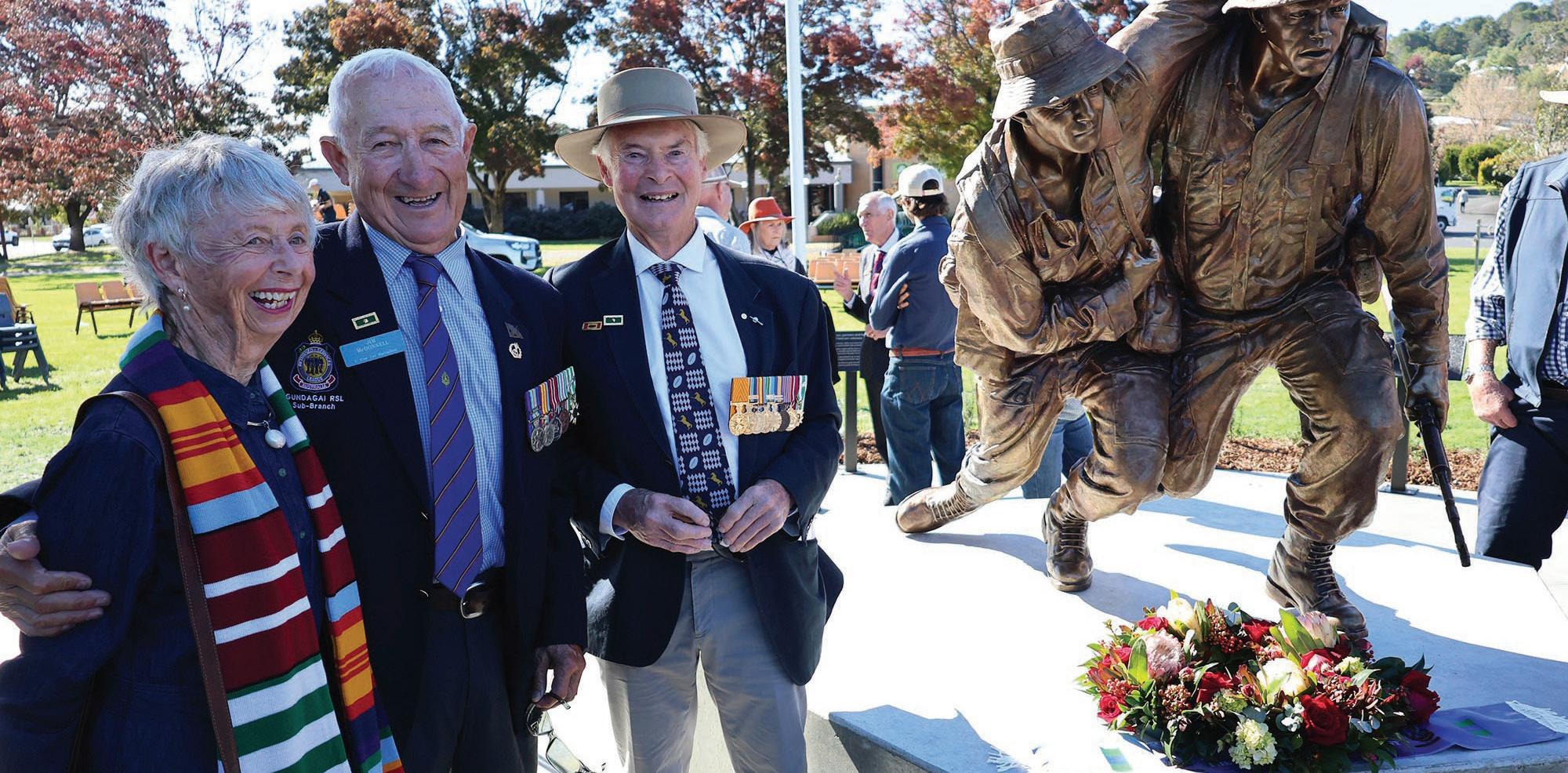
The new memorial for Vietnam-era veterans opened on 14 May.
GUNDAGAI
REGIONAL TOWN HONOURS HOMEGROWN HERO
The Gundagai RSL sub-Branch has unveiled a new memorial commemorating veterans of the Battle of Coral–Balmoral in the Vietnam War.
The memorial recognises the outstanding actions of Private Richard Norden, a Victoria Cross recipient and a Gundagai local, during the battle.
Norden was posthumously awarded the VC in November 2024 in recognition of his e orts, which included rescuing a wounded soldier under heavy fire.
The Gundagai RSL sub-Branch successfully applied for $150,000 in funding via the Saluting Their Service Commemorative Grants Program from the Department of Veterans’ A airs.
“This project has brought together veterans, families, the local council and community to ensure that when people stand here –whether they knew Richard or are learning his story for the first time – they understand the cost of that service and the character of the man this town is so proud to call its own,” said sub-Branch Secretary Paul Vercoe.
POST YOUR EVENT ON OUR COMMUNITY NOTICEBOARD
We welcome contributions to the community noticeboard on the Member Portal. It’s a place for both RSL sub-Branches and members of other ex-service organisations to share word of events, reunions, activities and other information that may be of interest to RSL NSW members. The information may be shared in a future edition of Reveille.
SCAN the QR code to access the noticeboard.
“LEST WE FORGET”
Remembering the service and bravery of those who have served our country.
NAVY
ARUNDELL, DT 276694
BAGGOTT, AA W86290
BARTLETT, CG 103229
CHAFFEY, J R53771
CONNOLLY, DJ R66773
COOKE, GS R39445
DAVEY, HS R29110
DUNCAN, JD 1699NS
FITZGERALD, WJ R39887
FRENCH, KB R111621
GRAHAM, LC R59787
HALE, JW PM6973
HARMAN, JH R42682
HAYWARD, SR R96512
HIMBURY, R R54361
ILES, JJ R63982
INGLEDEW, RJ R93412
MCKAY, DR R95619
NEWMAN, DN R66598
O’BRIEN, S R35507
PIRIE, HM W85901
PUGH, JA R52803
RICHEY, RJ R50011
SANKEY, E D/JX557115
SCOTT, AA A54297
SHAW, WM O42192
SMITH, TR R53659
STEWART, WW R103703
WHITTEN, AC R56768
YABSLEY, TW R64540
YOUNG, RF R130807
ARMY
APPS, FT T14431658
ARMITAGE, JC 22764738
ATKIN, JN 215174
BALL, JF 22672208
BENNETT, DV 2789389
BOLGER, JJ 314686
BOON, WA 2798890
BRIDLE, JD 250209
BROWN, AY 37500
BURNARD, RL 235022
CAMPBELL, ND 2781846
CARLSON, M 2146762
CASEY, MW 2/751578
CHAPMAN, AG 224138
CIEZAK, HJ 2789195
CLARK, DH 342690
COBB, DC 2757563
CORCORAN, NW 2140422
COUSINS, RW 2/4589
DARWON, MJ 2774312
DAVIES, JH 22729563
DRISCOLL, GMJ 2161753
EDWARDS, PJ 2135053
EGGERT, GW 2801161
FALKINGHAM, PH 3786857
FENTON, JC 242848
FINCH, R 2/706843
FURNESS, WJ 2/740519
GALLAGHER, PN 2794225
GEORGE, RF 3757538
GERAGHTY, PT 2787223
GLIDDON, JJ 2/410340
GORDON, KS 2788312
GOUDGE, BE NF443382
GREEN, MJA 2783443
GREENWAY, MJ 56050
HALE, AH NF463463
HILLS, JR 2784776
HINDLEY, P 2138613
HORTON, J 1732454
HUGHES, RA 2791776
JURD, CJ 3411912
KEARNS, PC 2790399
KENNEDY, VJ 216531
KING, TD 8511023
LADMORE, JF 214239
LING, GH 1730833
LLEWELLYN, SJ 219292
MAHER, PF 1200755
MCINERNEY, KJ 219718
MELOUNEY, BM 2/5766
MILLS, JM 2793590
MOLONEY, M 16566
MOLONEY, CM 226213
MOONEY, NJ 217078
MOSS, DR 218523
NOBLE, TJ 2/748274
O’BRIEN, RP 229984
O’BRIEN, JJ 42417
O’CONNELL, IW QSS14432
O’DONOVAN, BP 2108431
O’REGAN, JA 329762
OSBORNE, KB 222423
PAXTON, DJ 2783084
PILE, GG 2788858
PRUSKOCKI, P F2301044
PURTLE, RH NX201670
QUANTOCK, GW 342722
RALPH, SD 4401206
RAMADON, J 2787558
RICHARD-PRESTON, DK 1734700
ROURKE, AJ 236504
SIMON, LS 299680
SPARKES, GW 2400676
STEWART, RB 2/755823
TAYLOR, HMJ NX191281
TOWNSEND, M 238051
WEBSTER, PJ 2787807
WILBY, AD NSM68459
WILLIAMS, RJ 38976
WOOLDRIDGE, BM 1411196
AIR FORCE
ABERDEEN, DM 101300
ATKINSON, PJ 387655
BANNERMAN, IE A118815
BENTON, SW 130338
BURGESS, HG A314211
BURKE, BJ 440056
COX, GA A136505
FARA, MJ A316392
FROST, KJ A310839
GUY, DW A311712
HISCOX, DM A23288
MASON, AF 444022
MORTIMER, MJ A315731
ORTON, E 138086
OSBORN, PG A124678
OWEN, RG A32591
PETERSON, EJ A220811
SMITH, GHW 31217
STEVENSON, IR 432610
STONE, KR A218823
TAYLOR, F 164387
TAYMOR, AR A218910
TURNBURLL, CD A61537
TURNER, DP A222235
WHITE, JK A223367
The information contained in the Last Post has been provided by the DVA and RSL members. Where possible we have attempted to provide all service details. We regret any missing information.
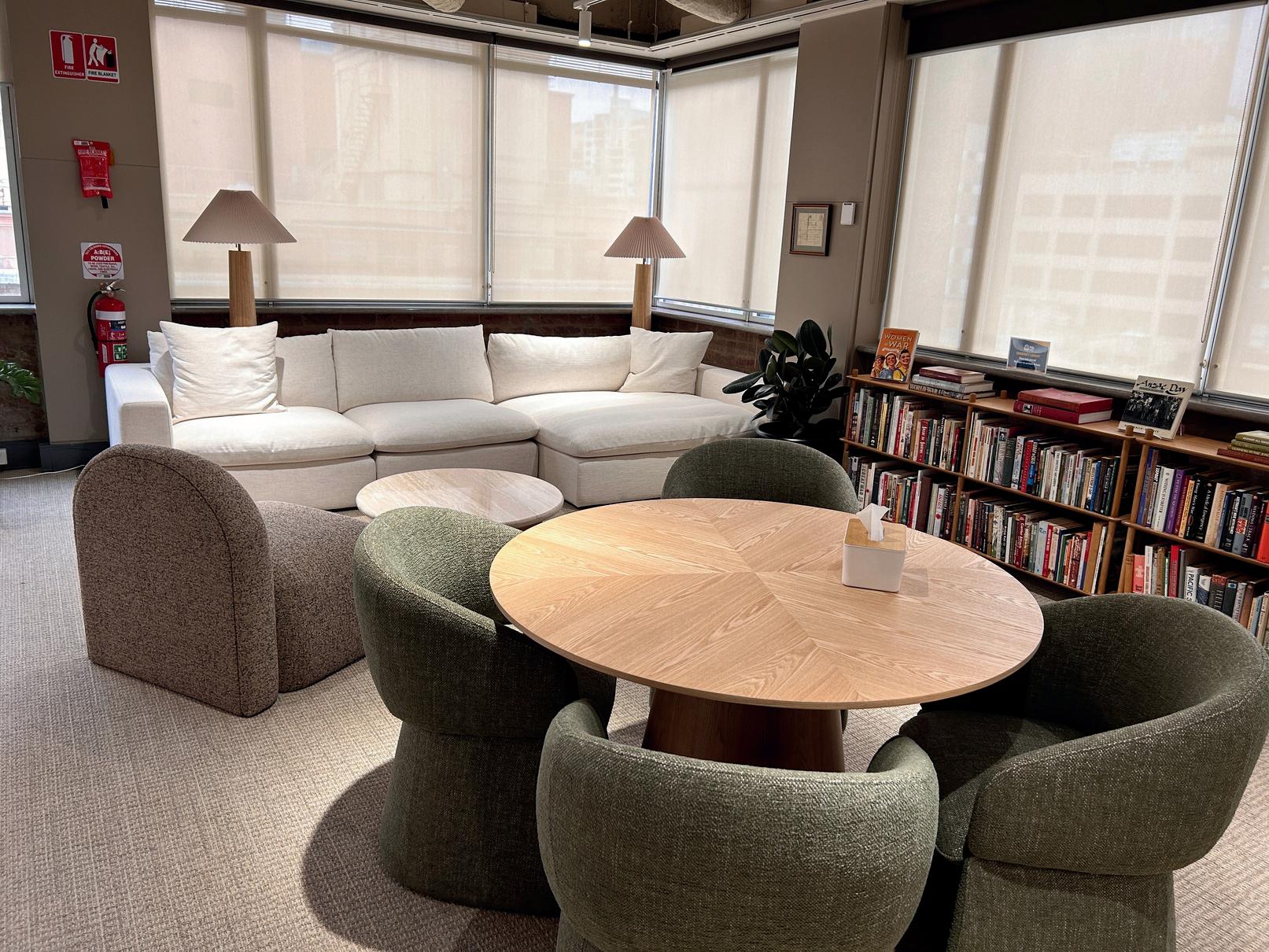
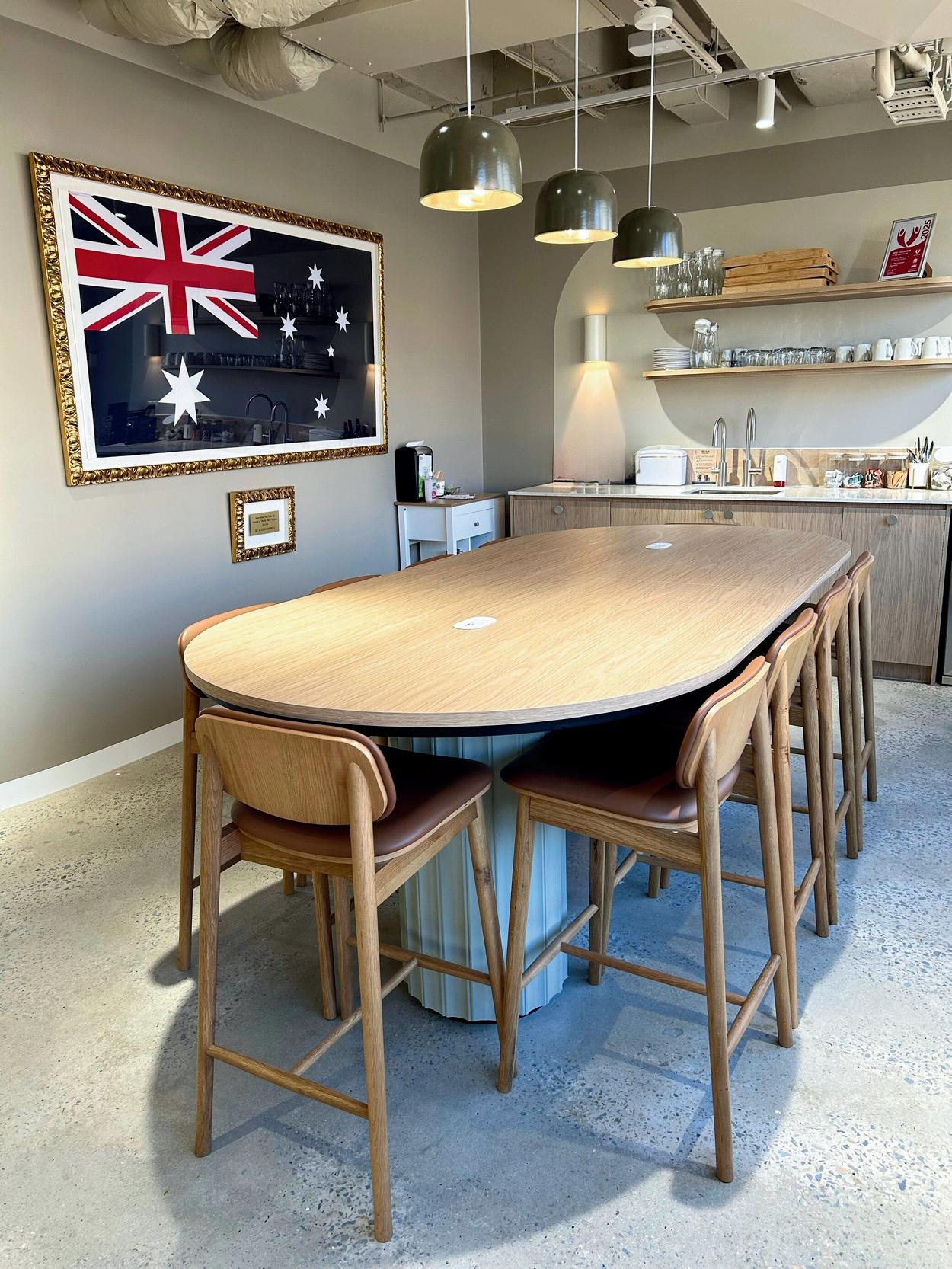
Welcome to your ANZAC House
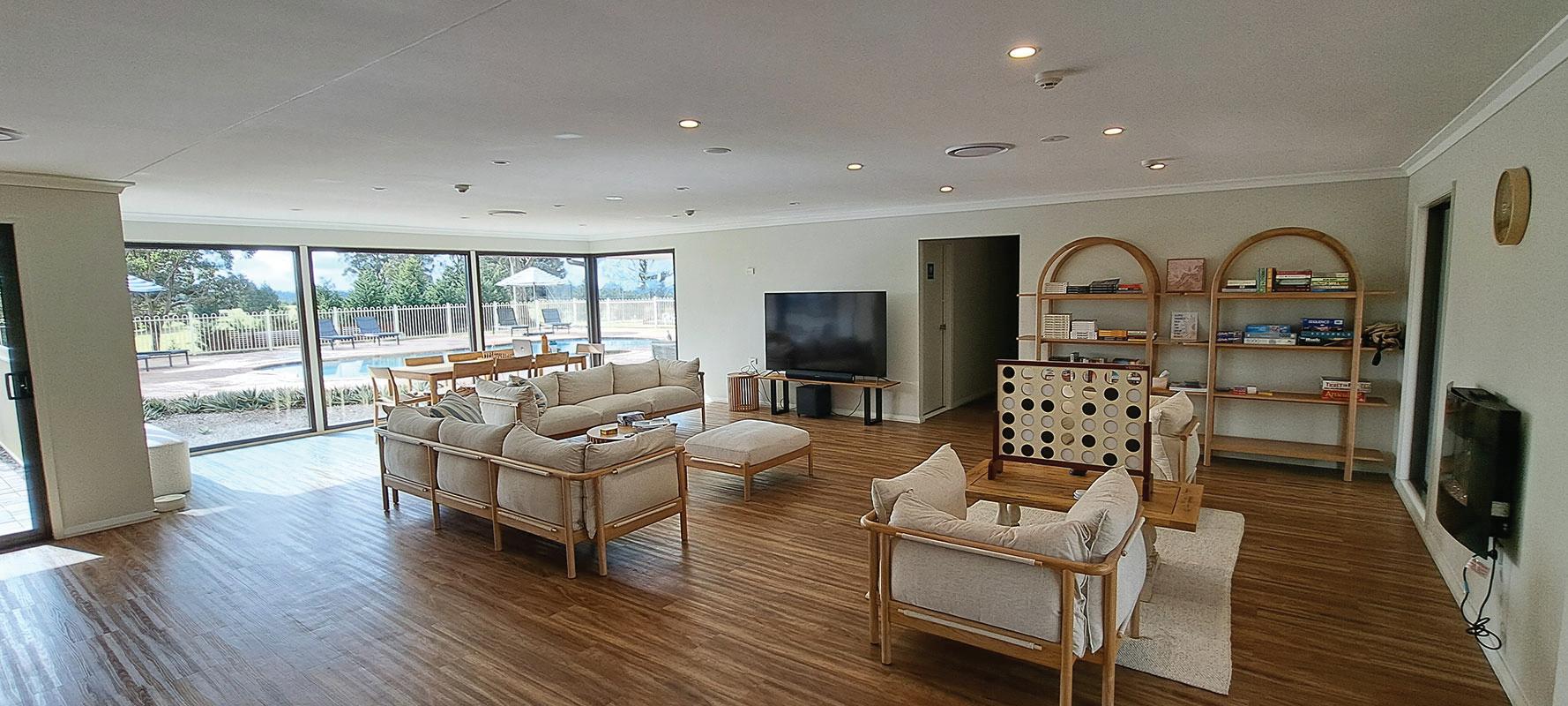
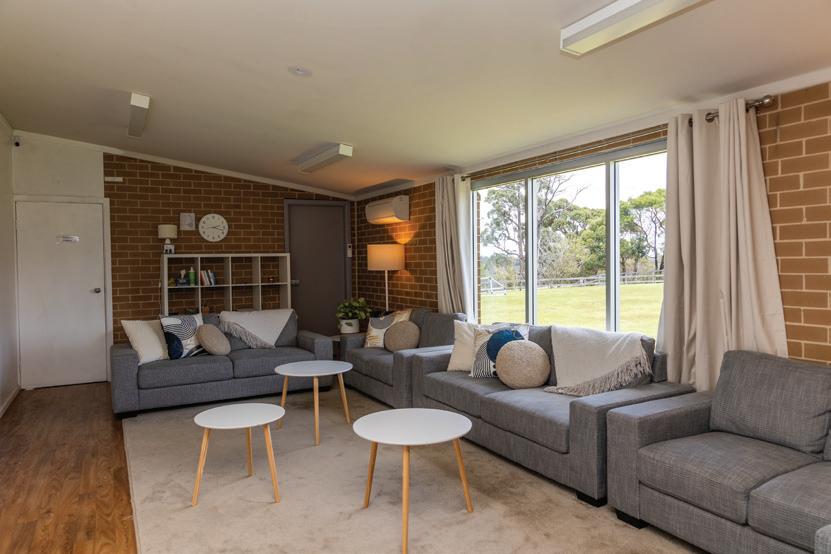
Level 12, 60 Carrington Street, Sydney is now home to a refreshed space designed for RSL NSW staff, members, veterans, and their families.
Drop in to relax in the lounge, have a brew, or browse the library.
Nee l ce to meet
Book one of our five modern, AVequipped meeting rooms. They are perfect for catch-ups, planning sessions, or sub-Branch business, and are free to use.
ANZAC House is open to welcome you Monday to Friday between 9.00am - 5.00pm.
To book a room, contact the Member Support Team our s ce our commu t our ANZAC House upport r n or au
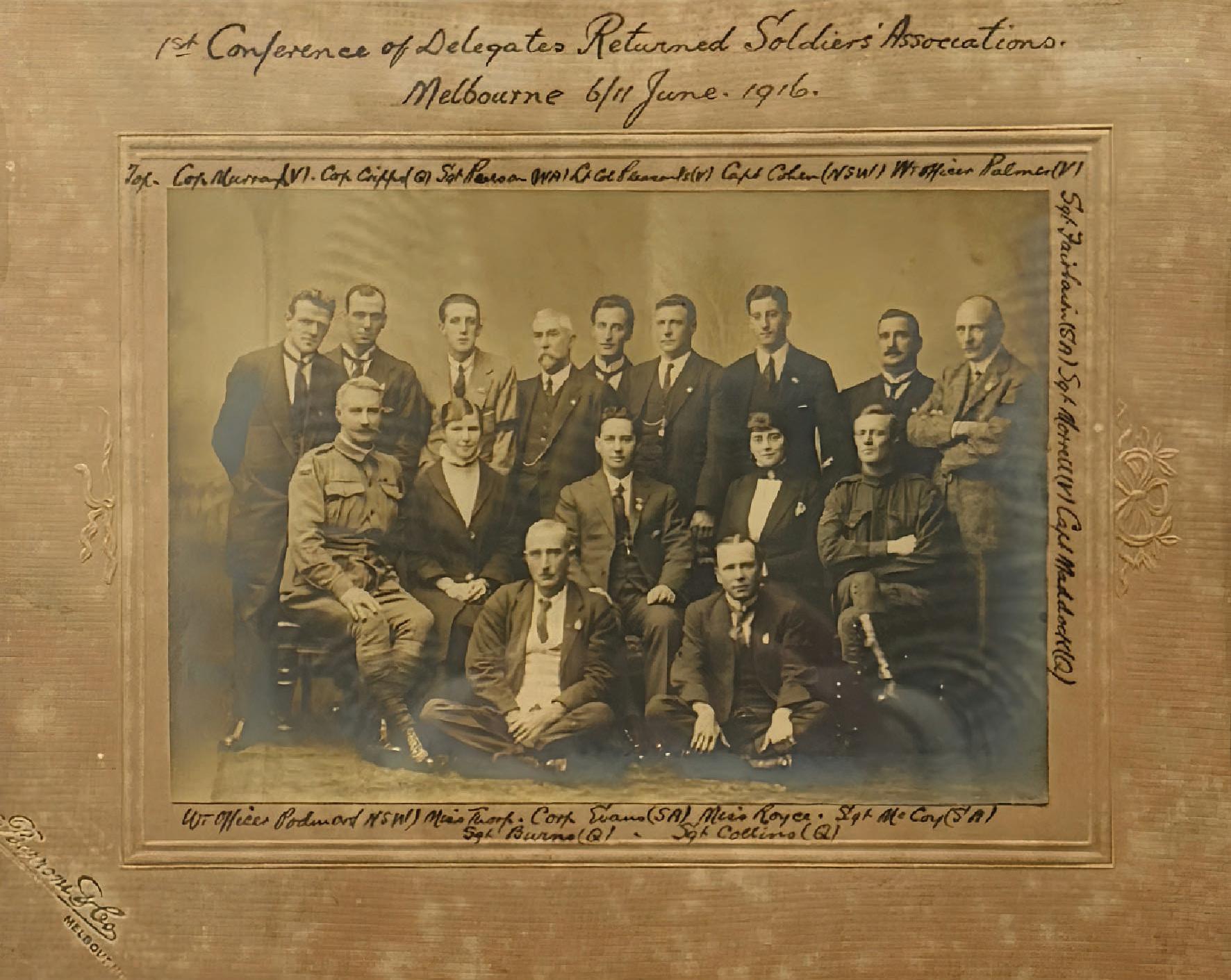
110 YEARS OF RSL AUSTRALIA
SATURDAY 6 JUNE 2026
Originally known as the Returned Sailors and Soldiers Imperial League, the RSL, which turns 110 this month, has grown into the nation's most respected ex-service organisation with more than 153,000 members. Pictured above are delegates at the Returned Soldiers' Associations Conference in Melbourne in June 1916.
As a veteran, you may be eligible for Dialysis at home at no cost.
For veterans living with kidney disease, dialysis no longer means hours of travel and ongoing hospital visits. With Dialysis Australia, full treatment of Haemodialysis and Peritoneal Dialysis can be delivered in the comfort of your own home with a nurse by your side. Home dialysis o ers you flexible treatment times, improved quality of life, lower costs and more time for what matters.
As a DVA Gold Card holder, you’re fully covered with no out-of-pocket costs while you receive your dialysis treatment at home.
For more information call Dialysis Australia today on 1800 994 244 or visit www.dialysisaustralia.com.au